



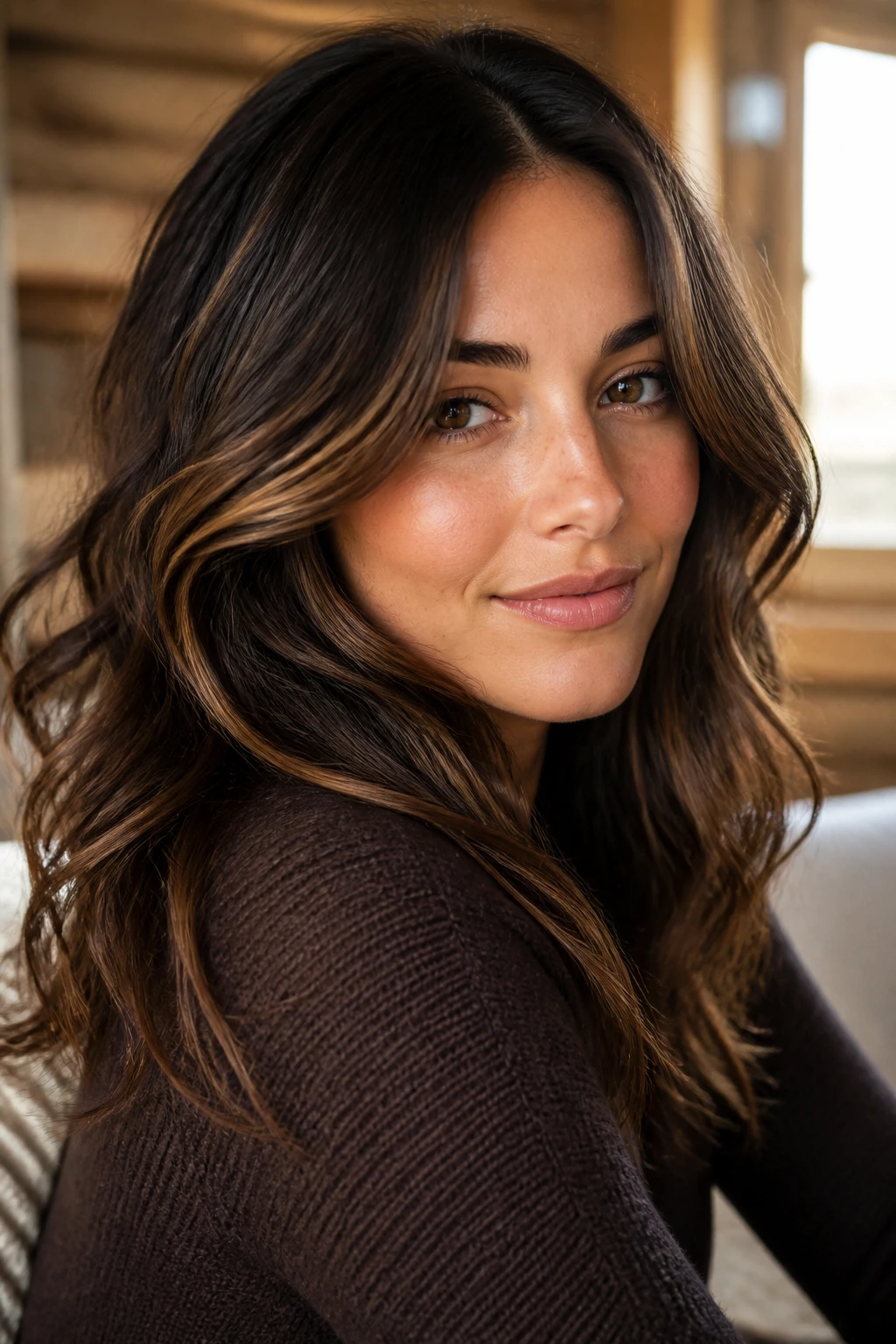
Caramel light brown highlights for dark hair work best when they look like movement, not stripes. That’s the whole trick. On a deep brunette base, the right caramel pieces don’t shout; they slide through the hair like warm light caught at just the right angle, especially when the colorist leaves some depth at the root and avoids lifting every strand to the same place.
Dark hair is picky. It shows harsh placement fast, and it can turn brassier than people expect if the lightening is pushed too far or toned too cool. That’s why the best caramel work usually lives somewhere between level 6 and level 8: light enough to read as brown-gold, dark enough to keep the hair looking rich. Push beyond that and you’re not in caramel country anymore. You’re flirting with blonde, and the whole mood changes.
I’ve always liked brunette color that keeps a little shadow. It gives the highlights somewhere to land. A flat, all-over lightening job can erase the good parts of dark hair — the shine, the depth, the density — while a smart mix of highlights and lowlights keeps the hair looking full even when the light catches it hard. That’s where these 25 looks come in.
Why These Caramel Highlights Work So Well on Dark Hair
-
They keep the base rich: Dark brown roots and mids do half the work, so the caramel only has to add lift instead of carrying the whole color story.
-
They suit more than one undertone: Some versions lean golden, some lean beige, and some sit in that soft toffee lane that flatters warm and neutral skin without going orange.
-
They can be subtle or loud: A few thin ribbons read as soft dimension; chunkier panels or face-framing money pieces change the whole haircut fast.
-
They work with lowlights too: Adding a few deeper strands underneath stops the highlights from floating on top like disconnected stripes.
-
They grow out better than all-over color: A rooted balayage or veil highlight can hold its shape for weeks without making your part line look harsh.
-
They give dark hair motion: On waves, curls, and layered cuts, caramel pieces show where the hair bends, which is why the color looks more alive in movement than in a flat swatch.
1. Whisper-Soft Caramel Ribbons
These are the kind of caramel light brown highlights for dark hair that make people lean in, not stare. The pieces are thin, fine, and scattered through the top half of the head so the brunette base still runs the show. You get a soft shimmer instead of an obvious stripe pattern, which is exactly why this version works so well on medium-dark brunettes who want dimension without a big color commitment.
Why It Works on Dark Hair
The thinness matters. A ribbon that’s barely wider than a shoelace can lift dark hair enough to catch light, but not so much that it looks bleached out. That small contrast keeps the color warm and expensive-looking instead of streaky.
What to Ask For
- Fine, woven highlights through the crown and sides
- Caramel tone with a beige-golden finish, not orange
- A slightly darker root area so the top doesn’t look frosted
Best for: Straight hair, soft waves, and shoulder-length cuts where movement shows the shine. If your hair is thick, this keeps the result from getting bulky or obvious.
2. Face-Framing Money Pieces
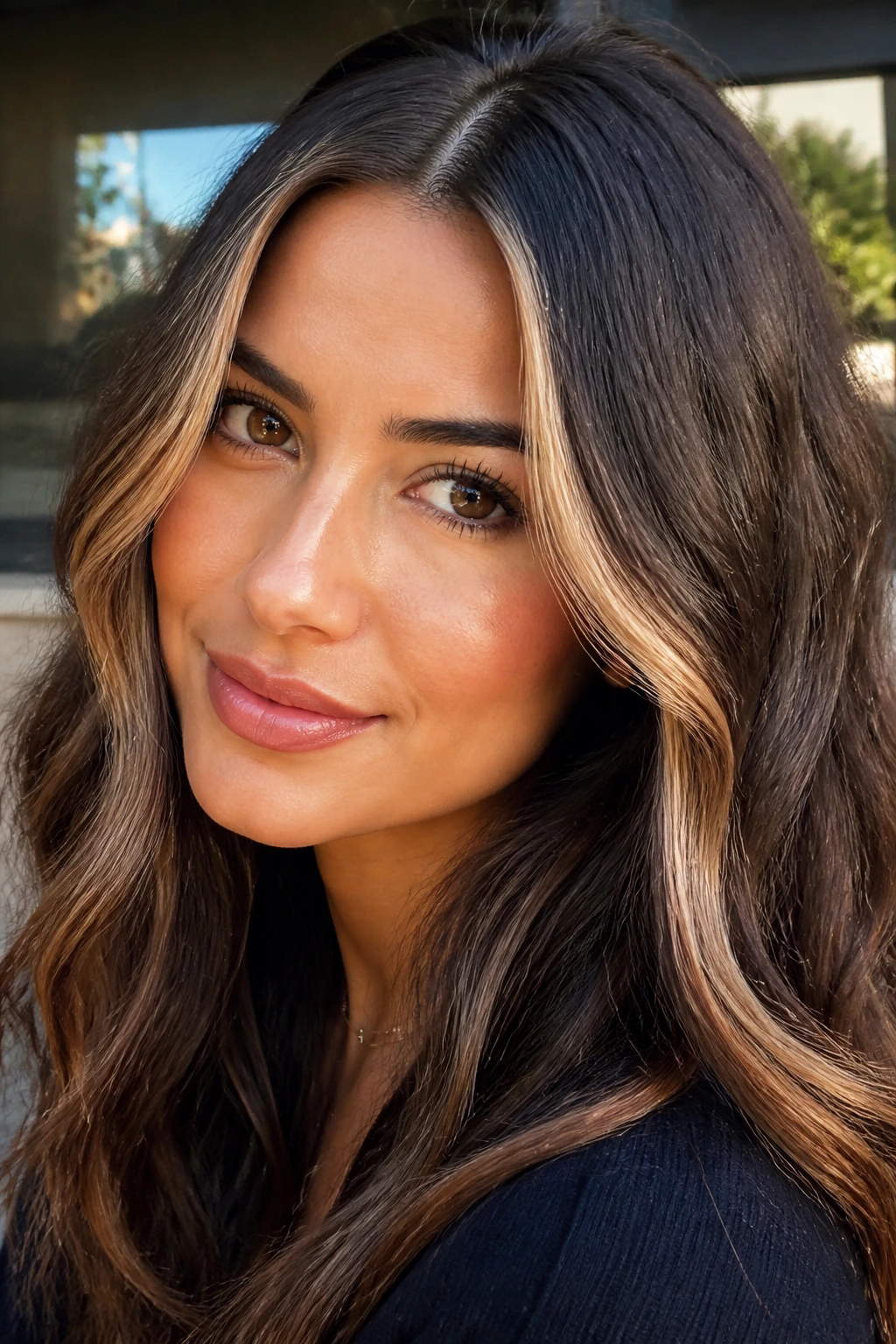
If you want the front of your hair to do the heavy lifting, this is the one. Two brighter caramel pieces, usually about half an inch to an inch wide, sit at the front hairline and run from cheekbone level down through the ends. On dark hair, those front pieces can change the whole face in one appointment.
The reason I like this look is simple: it gives you brightness where people actually look first. You don’t have to lighten the entire head to get a visible result. And because the rest of the hair stays deeper, the caramel pieces look richer than they would on an all-over lightened base.
Tip: Ask your colorist to keep the money pieces slightly softer at the root and brighter near the midlengths. That little fade makes them look less like a stripe and more like a deliberate frame.
3. Rooted Caramel Balayage Melt
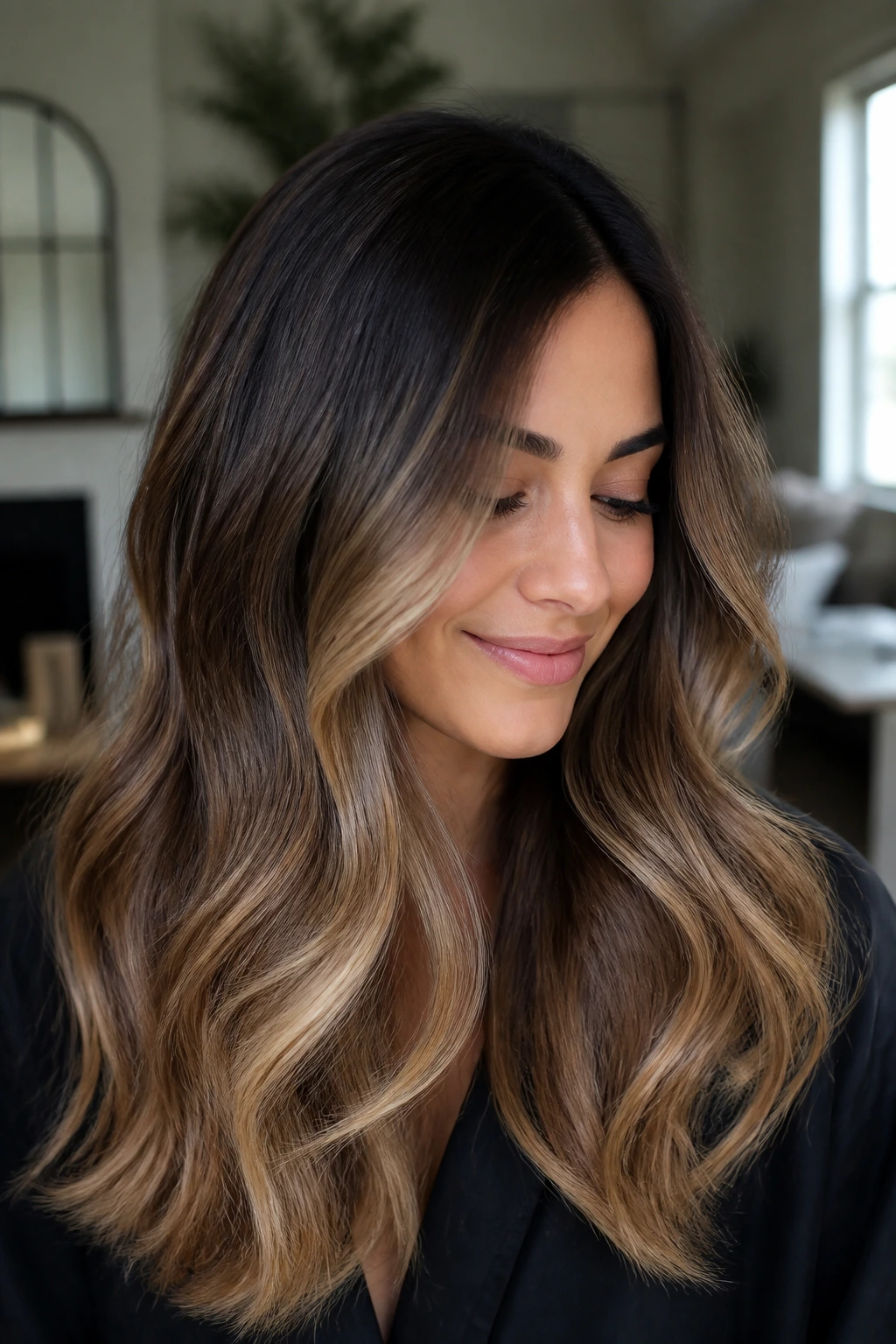
Want lightness that doesn’t scream for attention? This is the safest bet. The root stays dark, the midlengths get hand-painted with caramel, and the ends carry the most visible light. The transition should be smooth enough that you can’t point to one hard line where the dark stops and the warm brown begins.
Balayage like this works because it respects the hair’s natural depth. On a brunette base, that shadow at the root prevents the whole style from turning flat. It also buys you time between salon visits, which matters if you hate obvious regrowth.
How to Ask for It
- Painted pieces through the midlengths and ends
- One or two brighter swipes around the face
- Soft beige-caramel toner over lifted sections
This is the look I’d send to anyone who wants dimension first and brightness second. It reads polished on straight hair and even better on loose bends.
4. Chunky ’90s Caramel Streaks
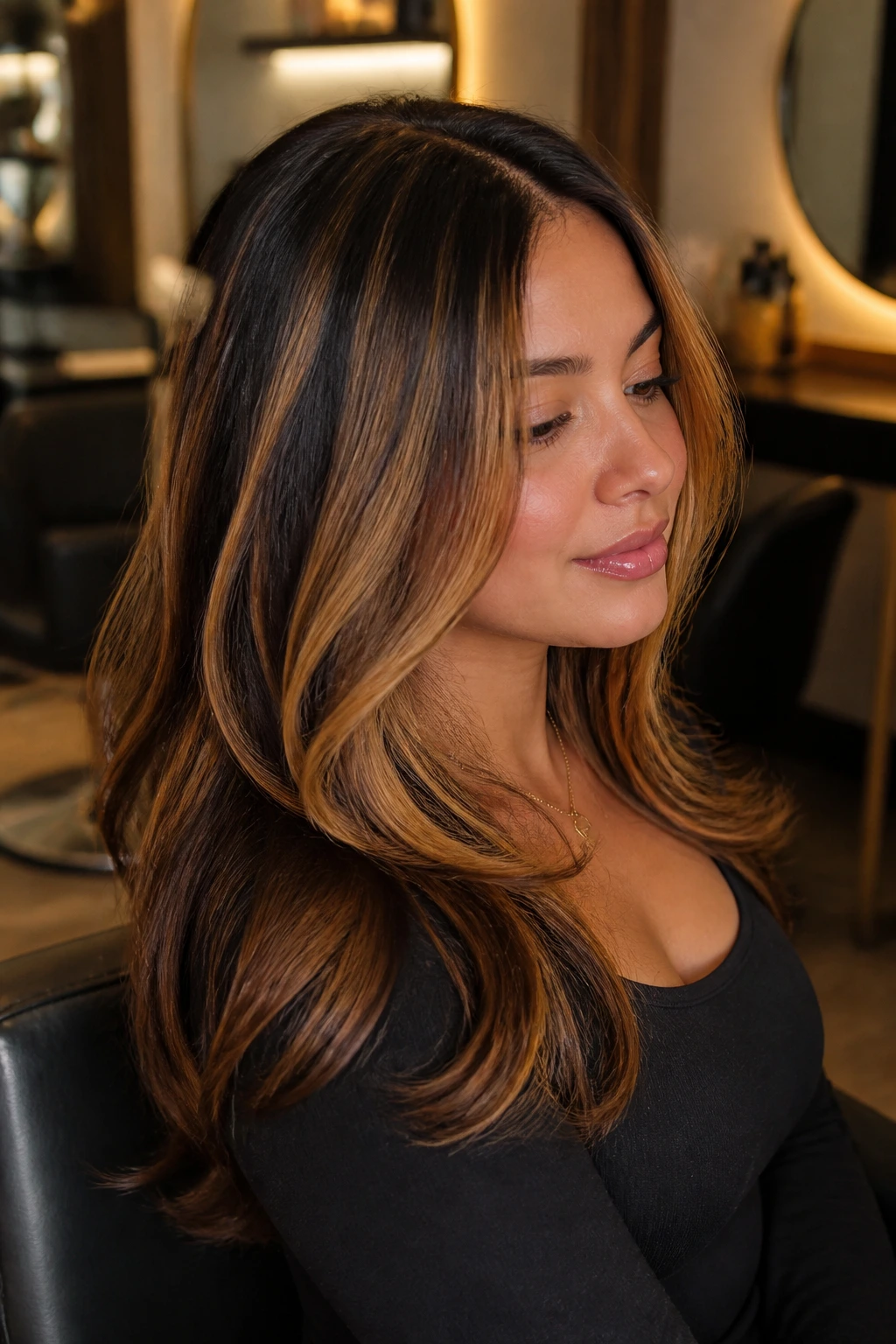
This one has attitude. Bigger panels of caramel, usually placed with a stronger contrast against the dark base, give you that late-’90s feel without going full zebra stripe. On thick hair, especially blunt cuts or long layers, chunky highlights can actually look cleaner than a bunch of tiny pieces because the color has room to breathe.
A lot of people are scared of chunky highlights because they remember the bad versions. Fair. The bad versions were too light, too cool, and too evenly spaced. The good version leaves some dark hair between the sections, uses a caramel tone instead of pale blonde, and keeps the placement intentional around the face and crown.
Works best on: Thick hair, long bobs, layered shags, and anyone who wants the highlight to be seen from across the room.
5. Toffee Babylights
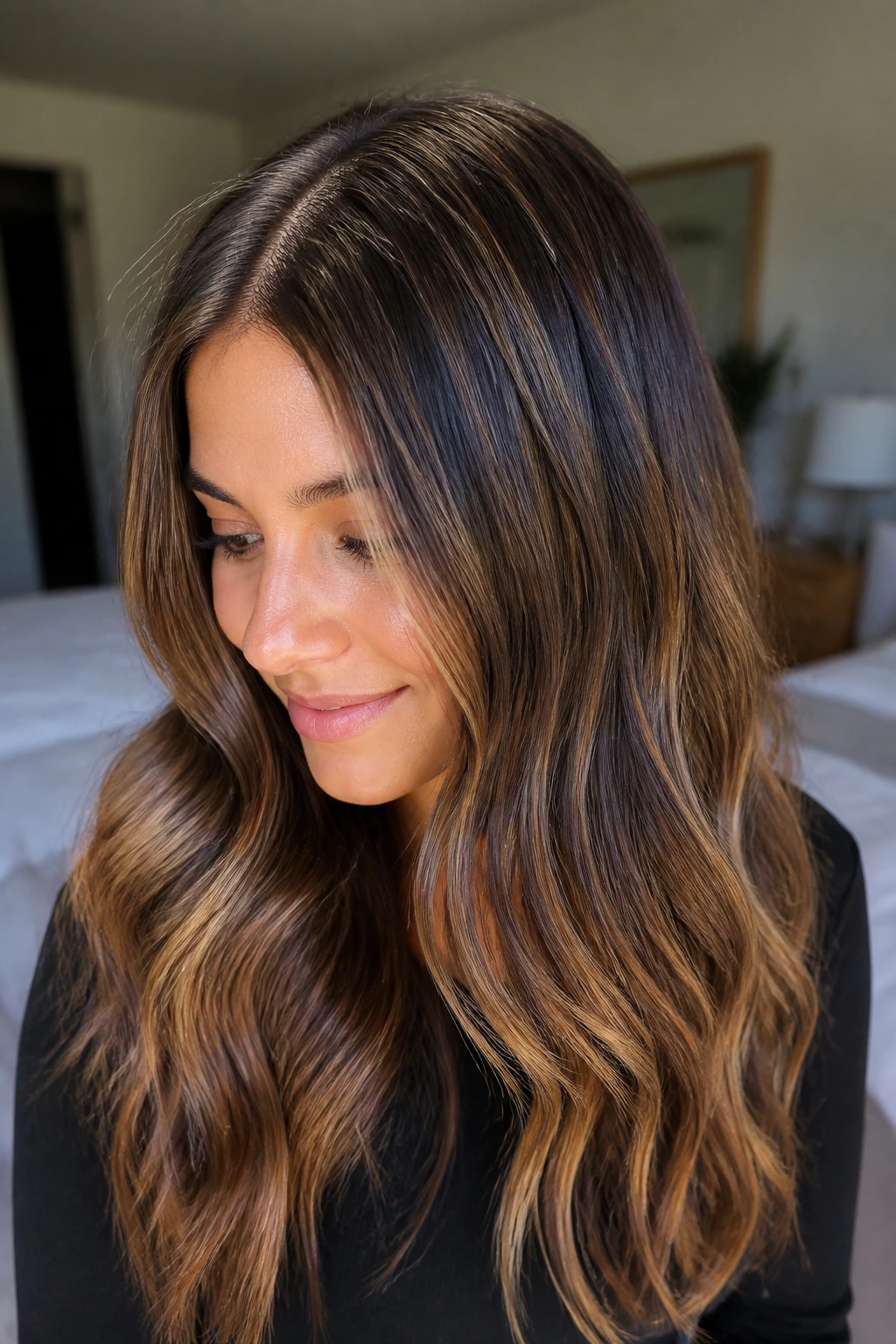
Babylights are tiny. That’s the whole point. On dark hair, toffee babylights create a soft glow that looks more expensive than dramatic, especially if your goal is “I spend time on my hair” rather than “I changed my whole color.”
These are painted or foiled in very fine sections, often closer together than people expect. Because they’re so delicate, they can take longer in the chair, but the finish is worth it. You get dozens of tiny warm threads instead of big blocks of color, and the effect is much easier to live with day to day.
Quick Notes
- Ask for a level 6 to 7 caramel tone if your base is dark brown
- Keep the pieces very fine near the part line
- Finish with a gloss, not an icy toner
If your hair is fine, babylights are a smart choice. They add movement without making the hair look sparse.
6. Smoky Brunette with Warm Caramel Ends
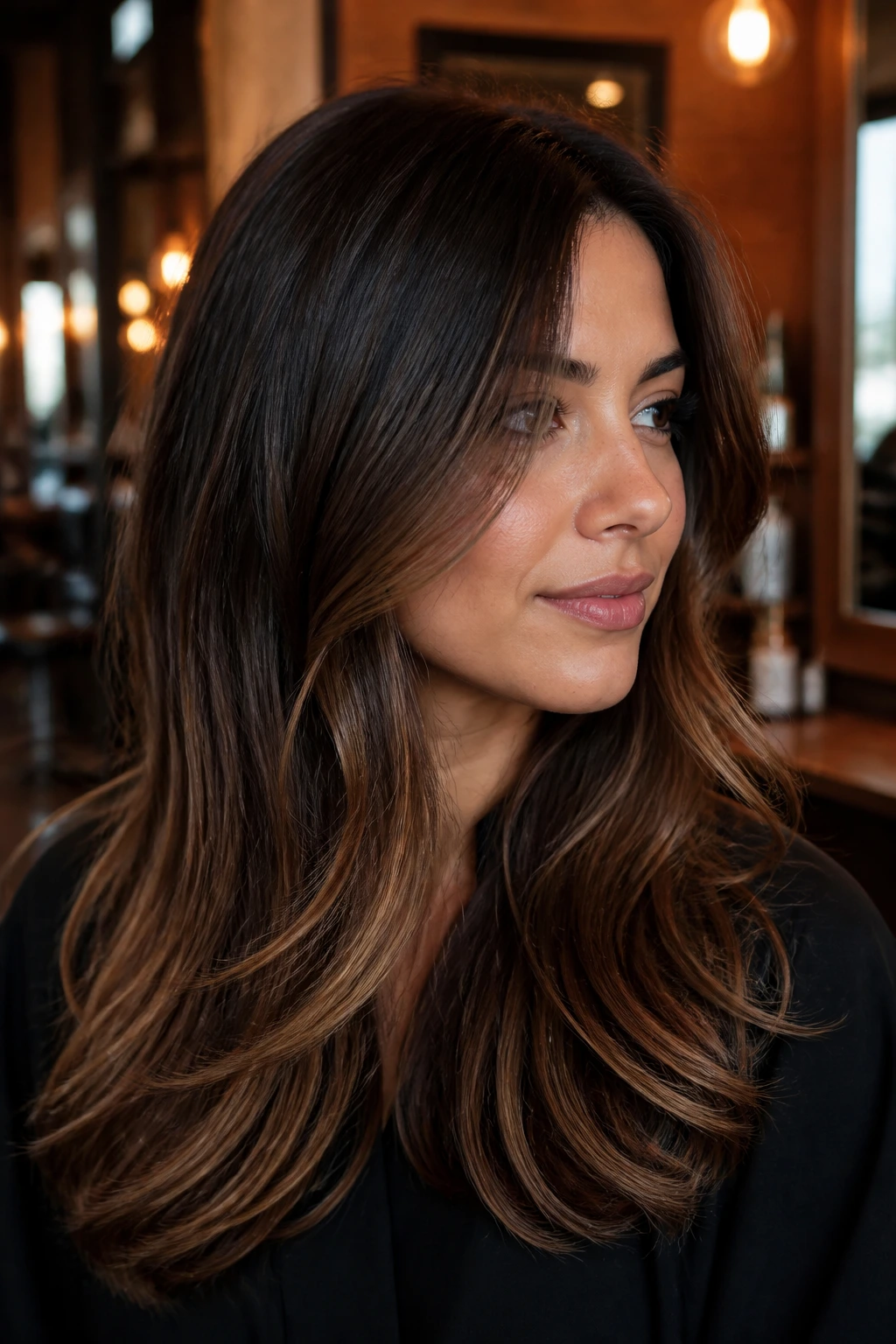
This one is for people who like contrast but don’t want it loud. The base stays smoky and deep, while the ends pick up a warm caramel light brown that softens the whole cut. It’s a good move on layered hair because the ends naturally fall into view when you walk or turn your head.
I like this style because it doesn’t need perfect styling to make sense. A little bend at the ends is enough. Even air-dried hair still shows the color shift if the placement is right, which is more than I can say for some high-maintenance highlight jobs that only look good in a salon blowout.
The key is tone. If the caramel leans too orange, the smoky base and warm ends fight each other. Keep the ends beige-gold, and the whole thing feels deliberate.
7. Curly Ribbon Highlights
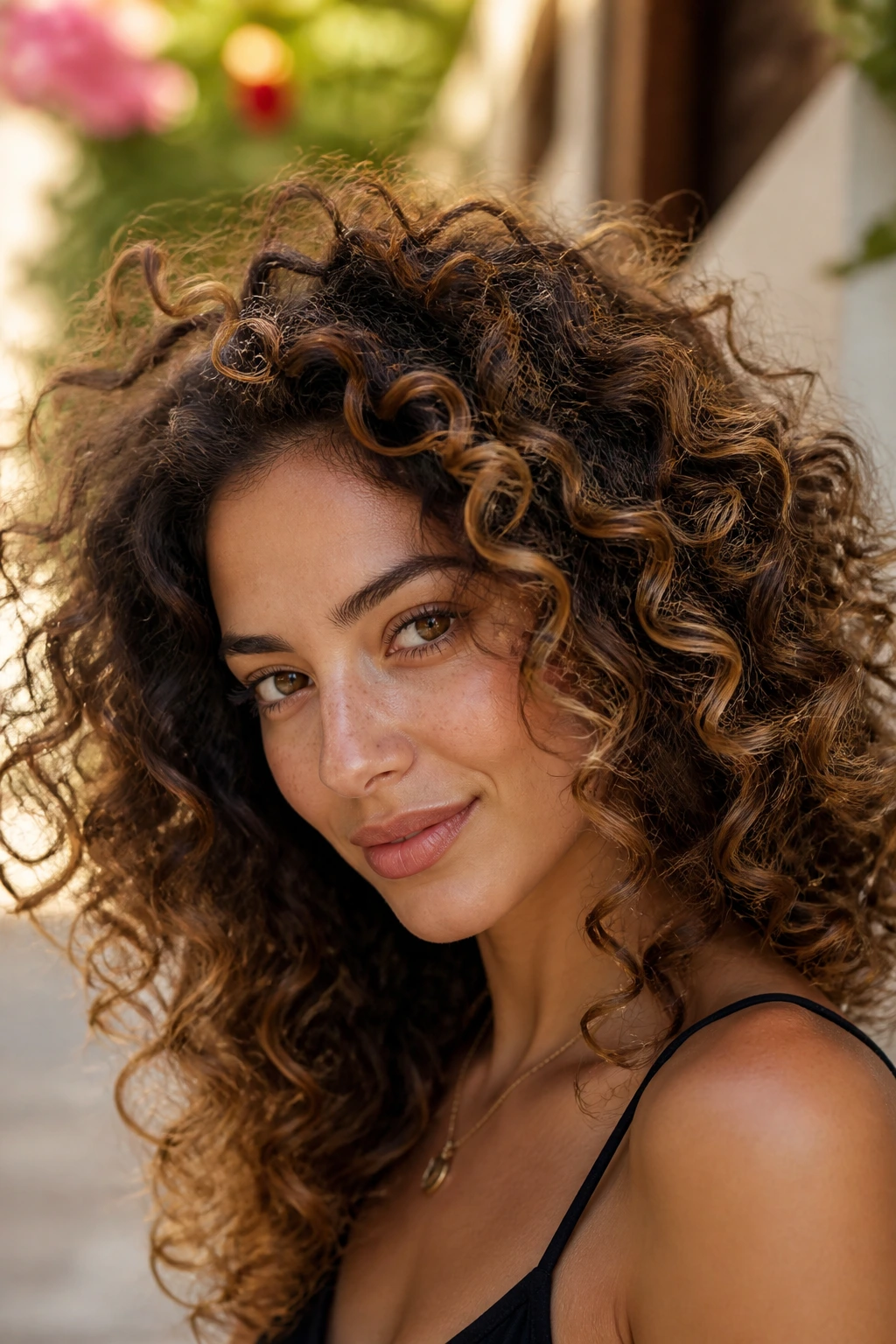
Curly hair needs a different hand. Instead of carving out straight lines of color, the best caramel ribbons follow the curl pattern so the highlights sit on the bends and loops where light naturally lands. That gives the curls shape without breaking them into frizzier-looking pieces.
Where the Color Should Land
- Around the face, where curls open up first
- On the outer layer of the crown
- Along the curve of larger ringlets, not deep inside the curl clump
The payoff is huge. Dark curls with well-placed caramel look fuller because the color creates tiny shifts from one curl family to the next. And if the pieces are too wide? The curls can start to look separated in a bad way, almost like the haircut is wearing the color instead of the other way around.
Ask for painted highlights that respect curl clumps. That one sentence saves a lot of bad appointments.
8. Chestnut-to-Caramel Ombré
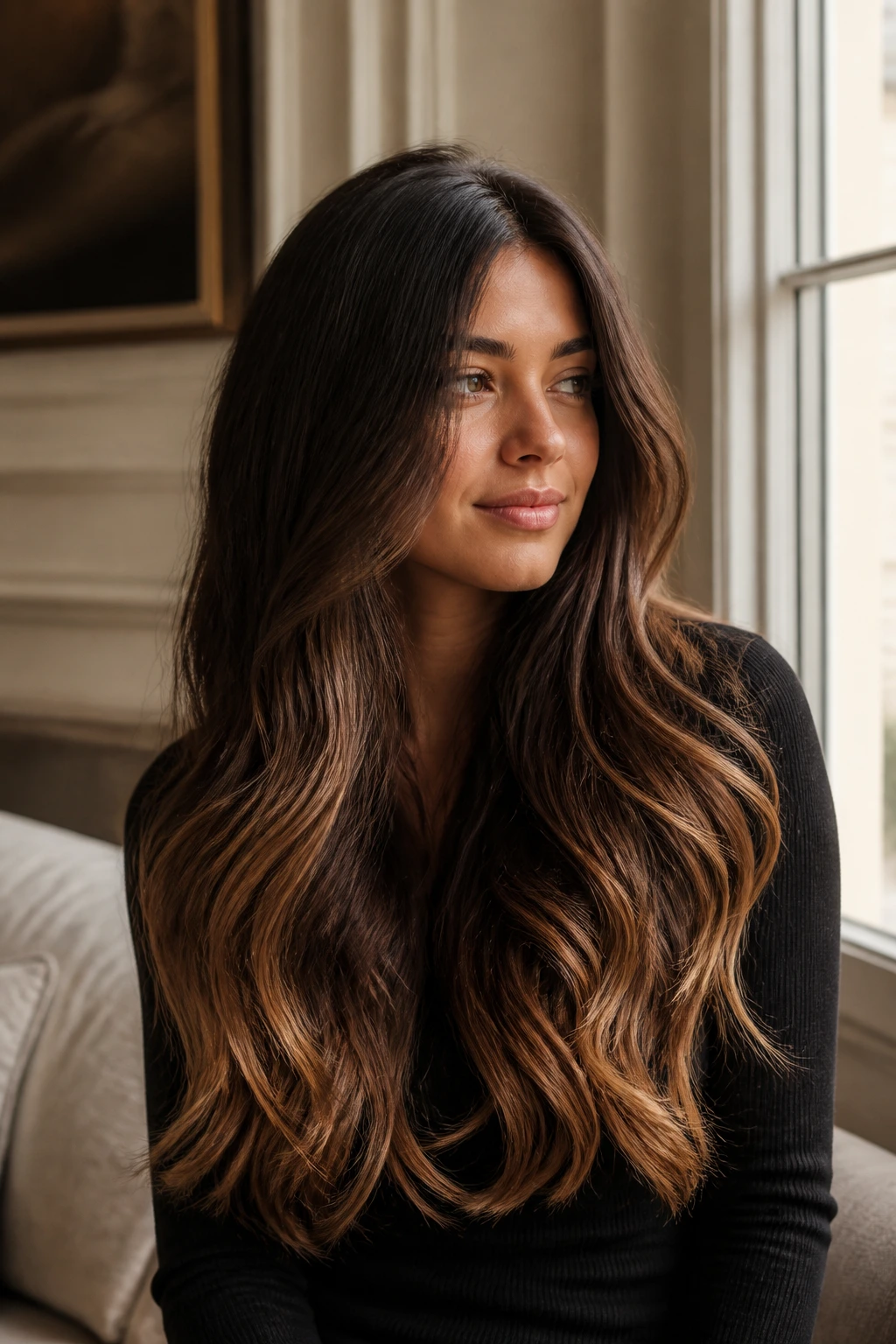
Ombré still has a place, and on dark hair it can look elegant when the fade is gradual. Chestnut near the roots and midlengths, caramel at the bottom third, no harsh line in the middle. The look is cleaner on longer hair because there’s enough length to show the full transition.
This style works when you want brightness but not constant upkeep. The darker top grows out with less fuss, and the caramel ends can be refreshed with a gloss when they start to look flat. It’s also forgiving if your hair has been colored before, because the lightness stays near the ends where hair is usually healthiest and easiest to lift.
A good ombré should read like a slow change, not a dip-dye. If someone can spot the dividing line from ten feet away, the blend needs more work.
9. Espresso Hair with Light Brown Veils
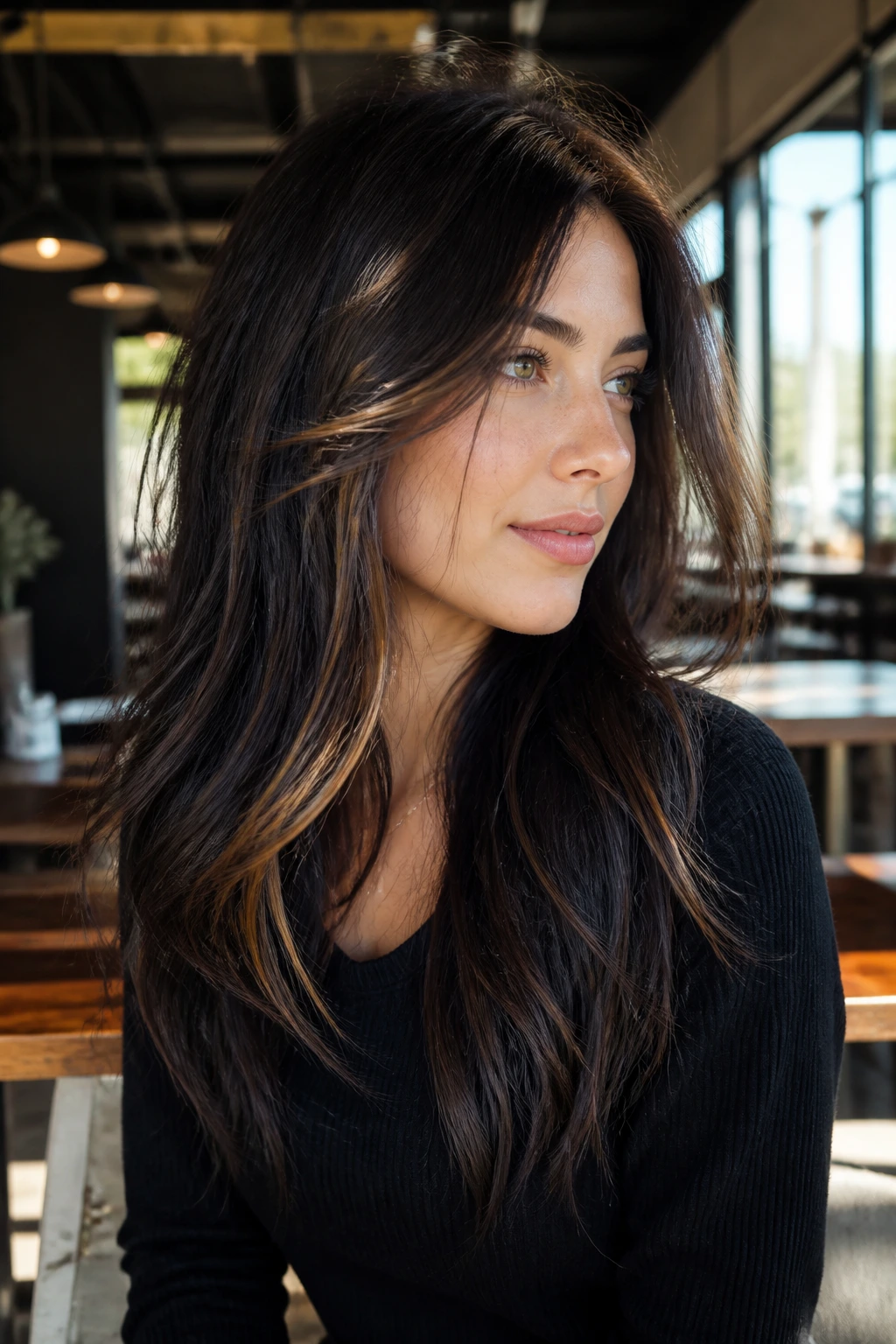
Have you ever seen dark espresso hair that looks almost unchanged until the light hits it? That’s the whole appeal here. Veil highlights sit on the surface layer of the hair and peek through just enough to add warmth without breaking the dark base apart.
This is one of my favorite looks for people who want a low-key change. The pieces are delicate, often placed in the top layers and around the crown, so they move when the hair moves. Straight hair catches them in flashes. Wavy hair shows them in soft bands. Either way, the color reads as texture.
The trick is restraint. Too many veils and the hair loses its mystery. Too few and you won’t notice them unless the sun is out, which defeats the point.
10. Bronde Money Piece and Soft Face Lights
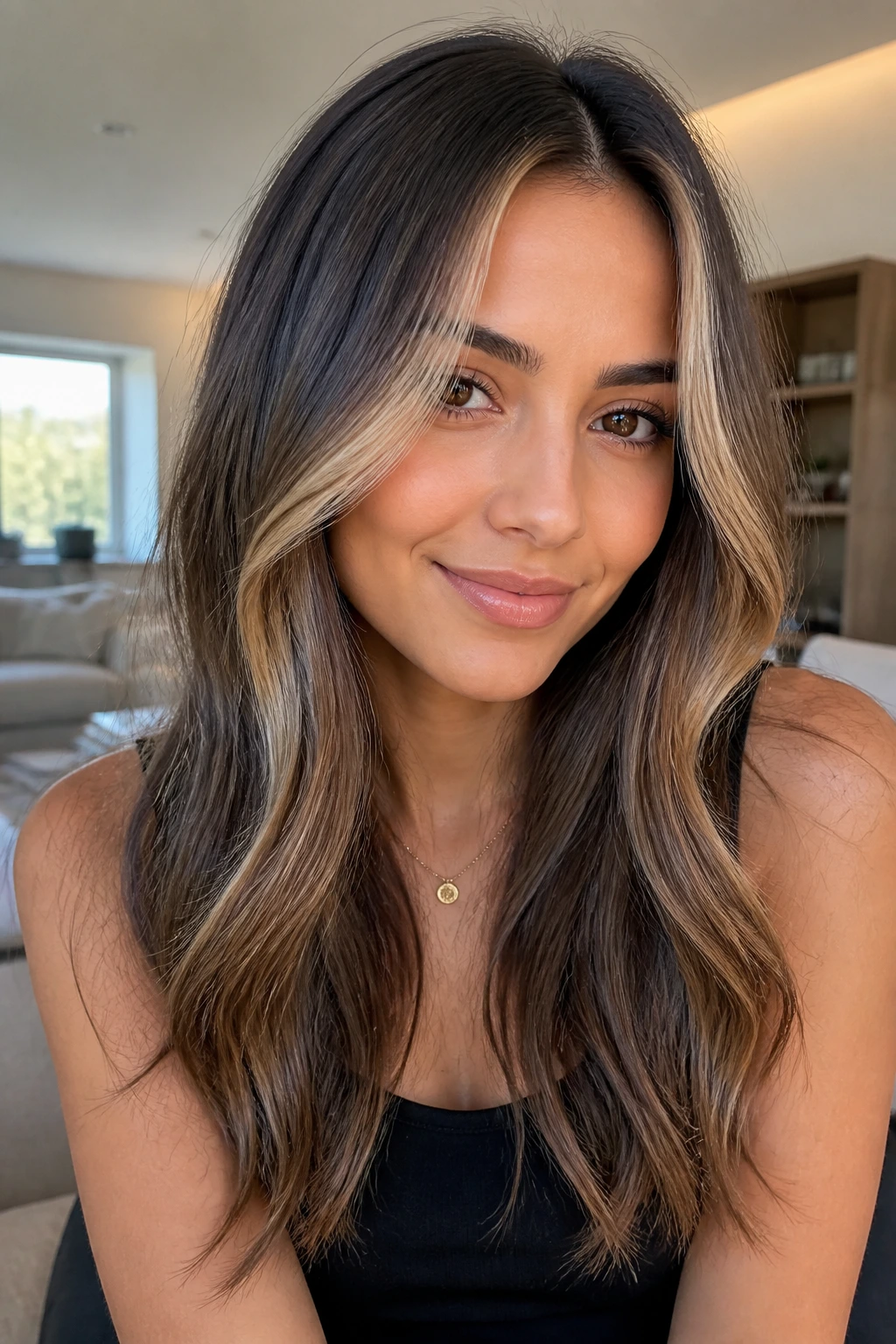
Bronde sits in that middle lane between brunette and blonde, and on dark hair it often shows up as a lifted caramel-brown face frame with just enough beige to feel bright. The contrast lives mostly in the front, which keeps the rest of the hair grounded and rich.
This is a strong pick if you want a visible change without committing to full-head lightening. Ask for the front section to be one level lighter than the rest, then feather the lighter pieces back a few inches so they don’t stop dead at the hairline. That soft edge keeps the front from looking blocky.
Good to Know
- Works well with curtain bangs
- Looks better with soft waves than poker-straight hair
- Needs a gloss if the front starts to turn gold
The real win here is framing. The haircut and color start working together instead of fighting for attention.
11. Cinnamon-Caramel Layer Highlights
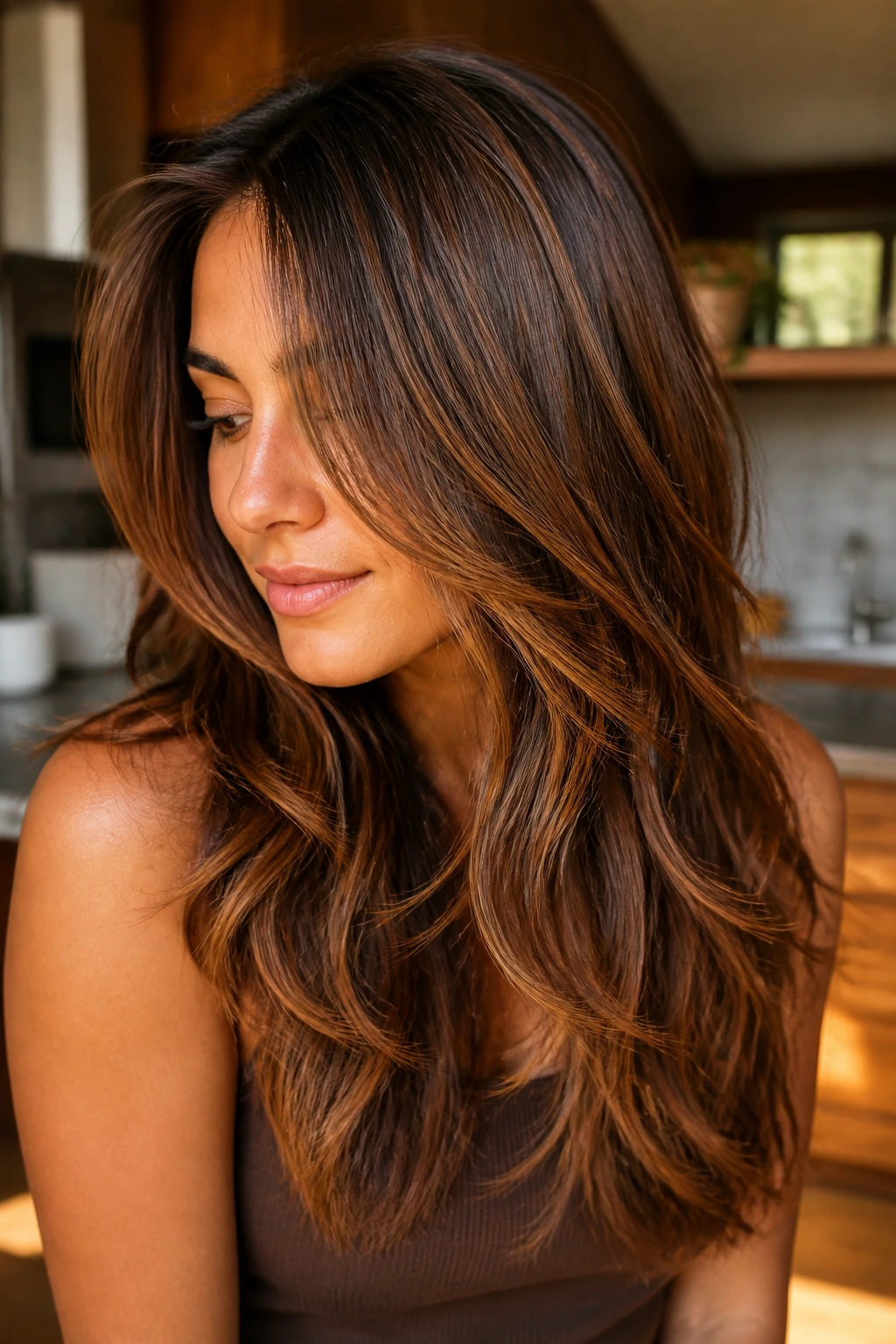
Cinnamon is the warmest cousin in this family. It sits a touch redder than classic caramel, which makes it a smart choice if your dark hair has red or copper undertones already. On layered cuts, the color lands on the different lengths in a way that makes the haircut look more expensive than it probably was.
I like this version because it solves a common problem: dark hair can go flat near the ends, especially after repeated trims. Cinnamon-caramel pieces bring the lower layers back into the story. The whole head feels more connected.
If your skin leans warm, this color can look rich and glowy. If you’re cool-toned, keep the cinnamon faint and let the caramel do most of the work.
12. Mushroom Brown with Caramel Threads
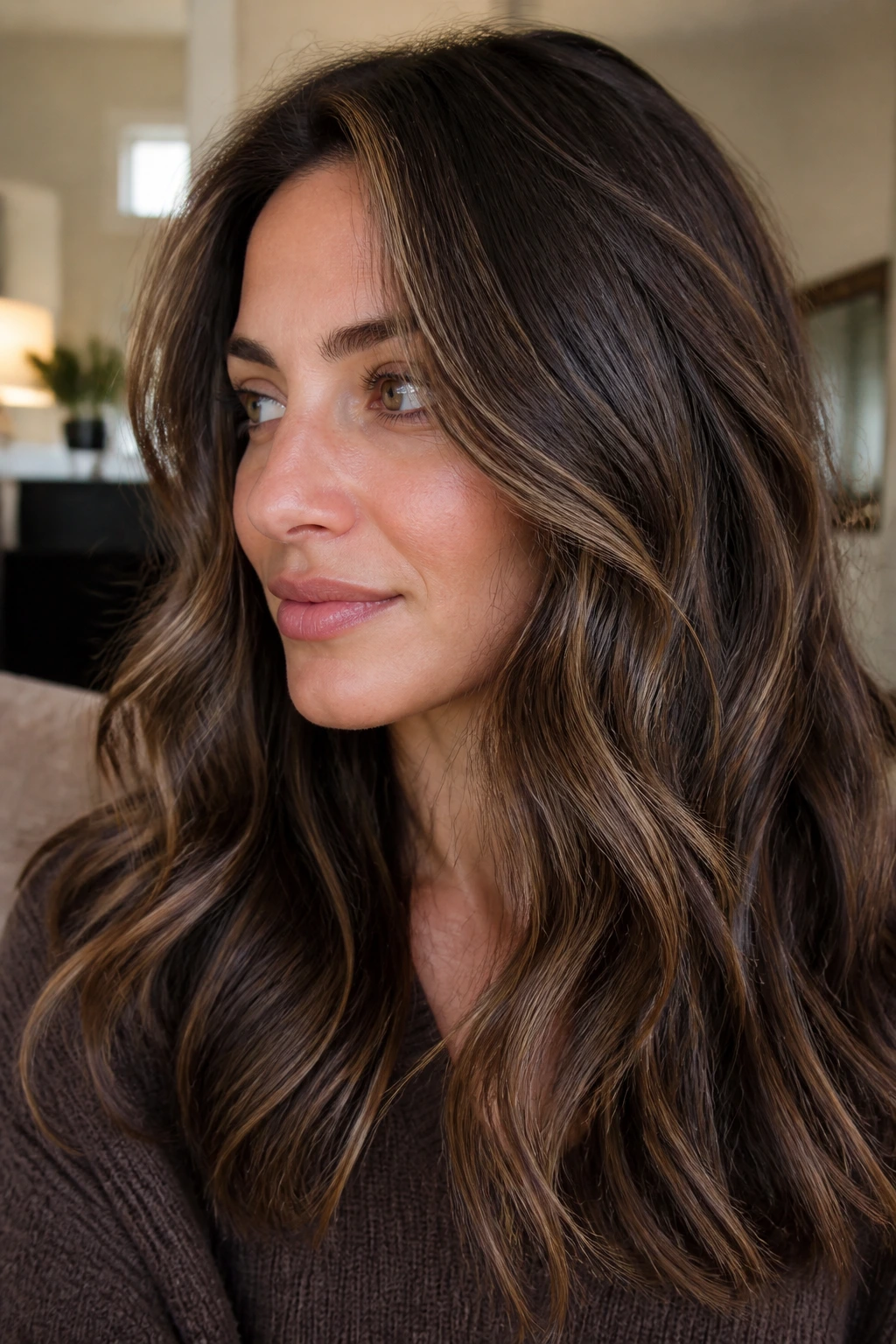
Mushroom brown sounds cooler than it is. In practice, it’s a soft neutral brunette with a slightly muted finish, and the caramel threads running through it keep the color from looking dull or muddy. On dark hair, this is a smart way to add light without making the warmth too loud.
The best thing about this look is its balance. Too much gold on a dark base can veer brassy fast. Mushroom brown with a few caramel threads gives you movement but still leaves the color in the brown family where it belongs.
This is one of the better options if you wear a lot of black, charcoal, olive, or cream. The hair doesn’t fight the wardrobe. It sits next to it.
13. Glossed Caramel Ends on a Lob
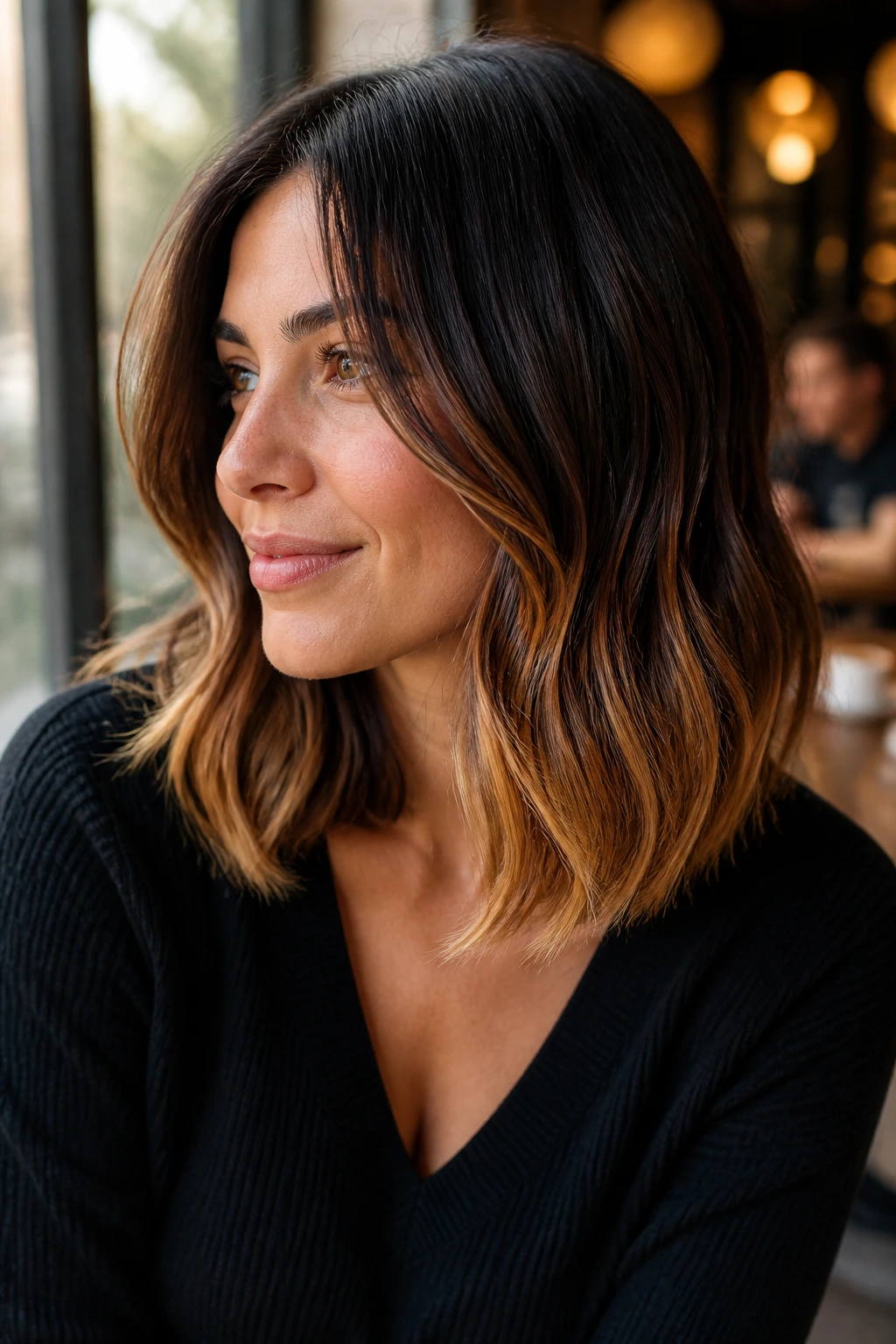
A lob gives color room to move, and a glossed caramel finish on the ends makes the cut look crisp. The top stays brunette, the bottom third gets painted or lightened to a light brown-caramel, and then everything is finished with a shine glaze so the ends don’t look dry.
This look has a nice practical side. The lighter ends are the part people notice when you wear the hair tucked behind the ears or bent under with a round brush. A good gloss keeps them from going dull after a few washes, which is where a lot of similar looks fall apart.
If the lob is blunt, keep the lightness soft. Too much contrast at the edge of a straight line can feel harsh. On a textured lob, you can push it a little brighter.
14. Peekaboo Caramel Panels
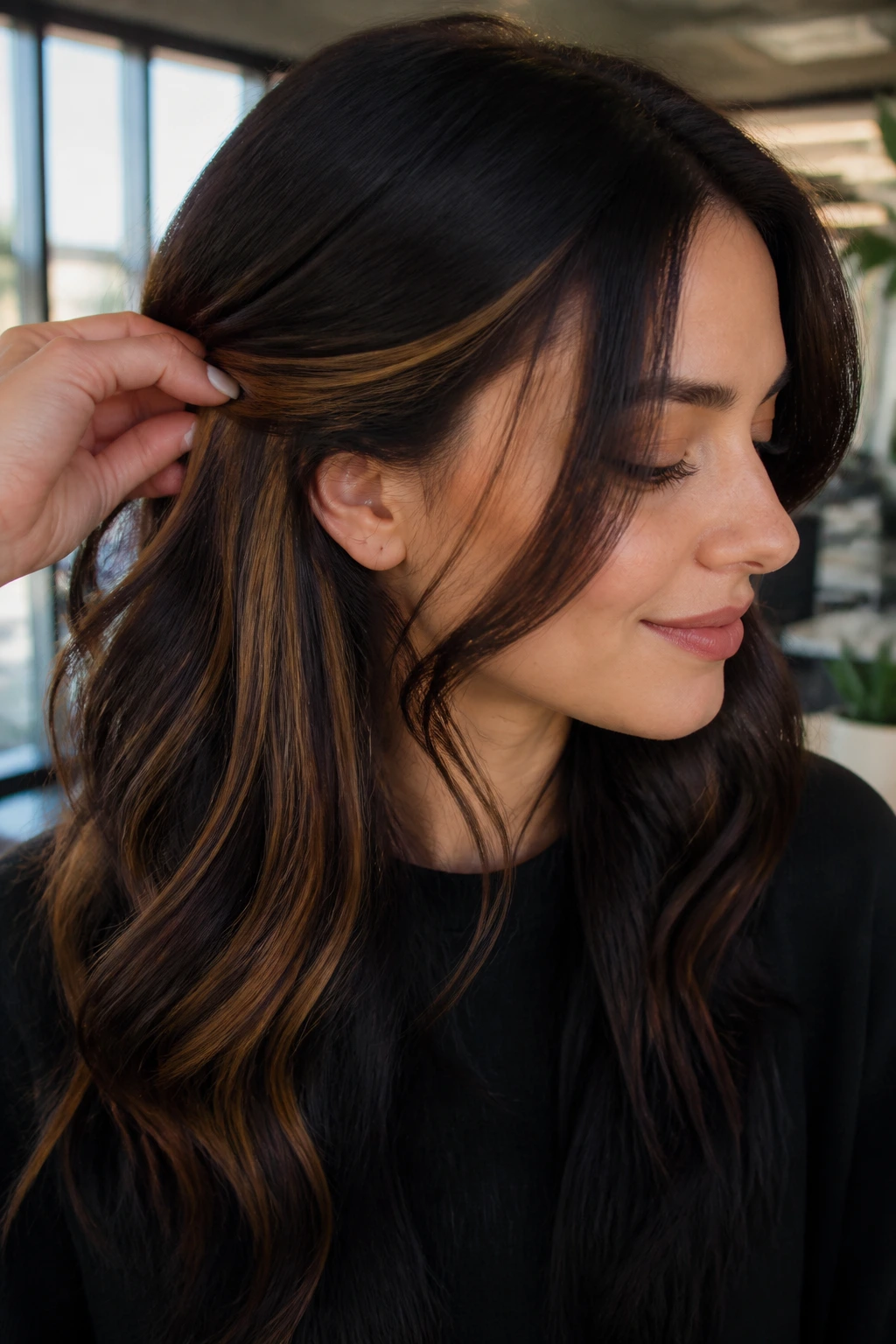
Peekaboo highlights live underneath the top layer, which means the caramel only shows when the hair moves, flips, or gets tucked behind the ear. On dark hair, that hidden brightness is a fun trick. It gives you the color payoff without forcing you to live with it front and center.
I’d recommend this to anyone who likes a quieter office look but still wants a little edge. Braids, ponytails, half-up styles — all of them expose the color in different ways. If you do a braid and the caramel threads show through the weave, that’s when this style really earns its spot.
It’s also a good option if you’re nervous about the maintenance of brighter highlights. Because most of the color sits underneath, the grow-out is softer.
15. Contour Highlights for Rounder Faces
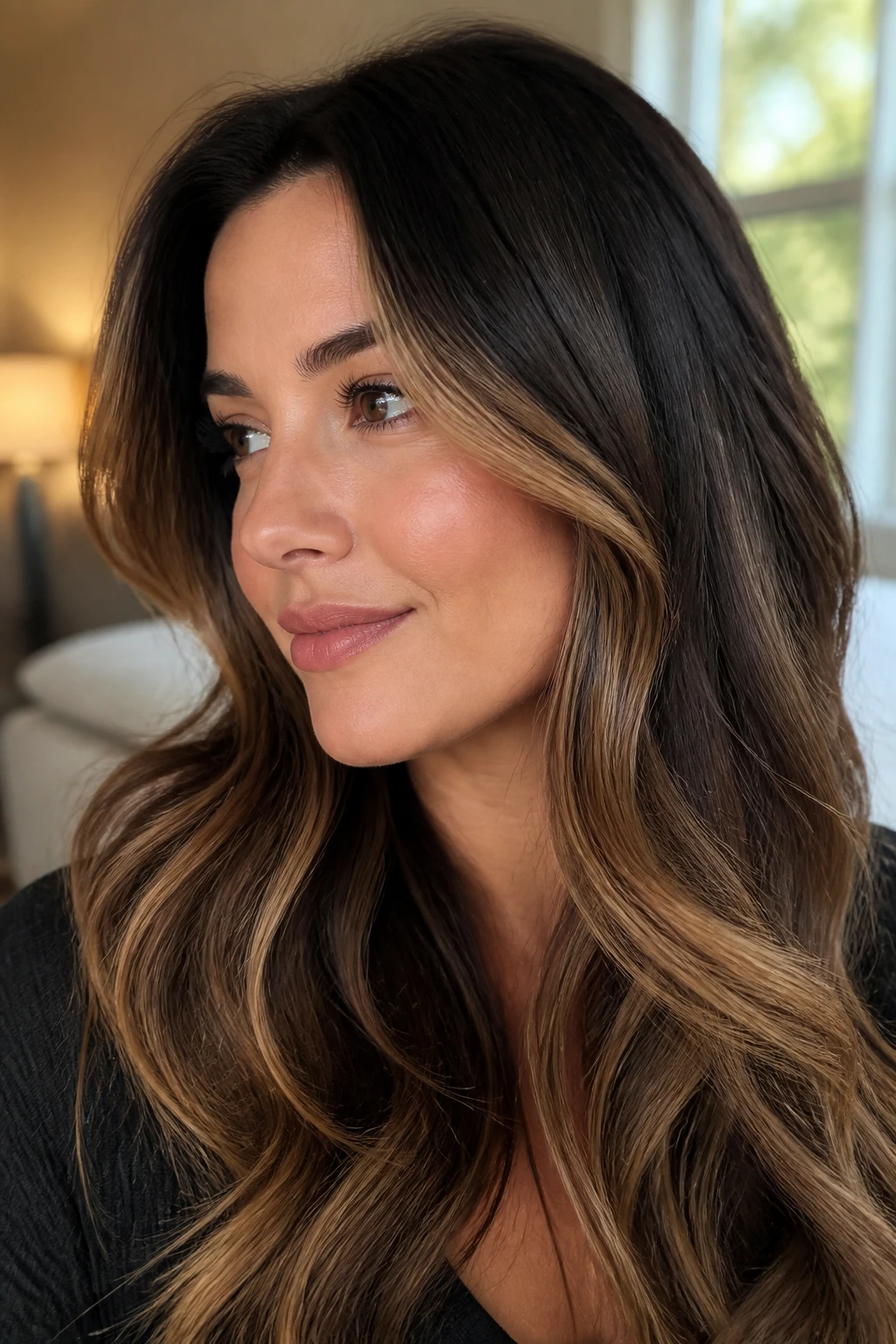
Contour placement is less about the color itself and more about where it lands. On dark hair, caramel highlights placed along the cheekbones, jawline, and outer crown can pull the eye upward and outward, which softens rounder face shapes without changing the haircut much at all.
The best contour highlights don’t look like stripes at the front. They should taper. A brighter piece near the cheekbone, a softer one at the temple, and a few lighter threads through the side layers are usually enough. Too much front brightness can make the face frame look boxy, and that’s not the goal.
This style works especially well if you wear your hair parted slightly off-center. The highlights shift with the part, so the color never feels locked in one flat position.
16. Sunlit Crown Highlights
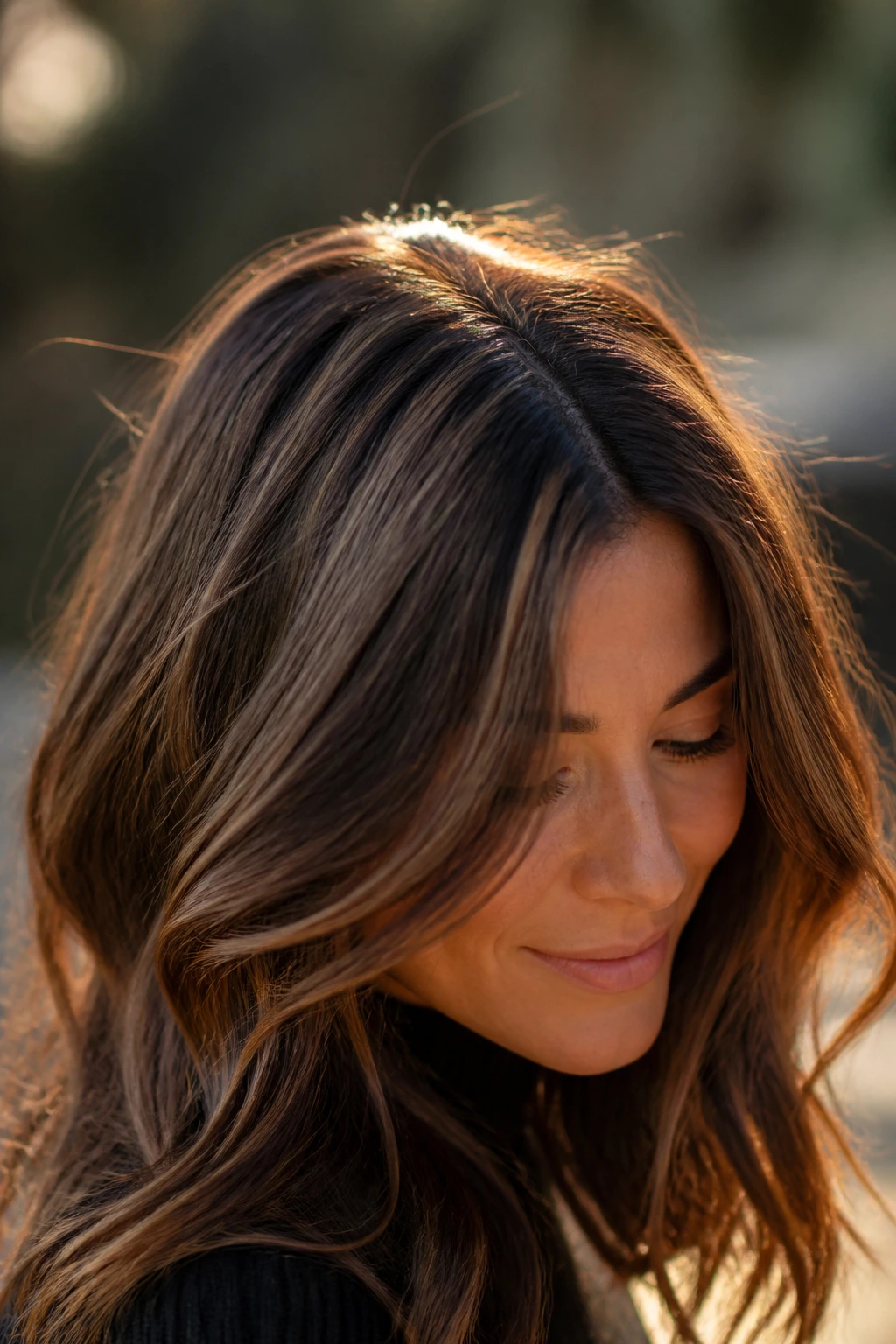
Some color looks best from the front. This one looks best from above. Sunlit crown highlights are placed through the top layer and the upper back of the head so the color flashes when light hits the crown — the part of the hair that gets the most movement and the most glare.
There’s a reason this style photographs so well in person, even if I’m trying not to overdo the word. The crown is where the eye lands when hair is lifted, brushed back, or twisted into a clip. A few caramel pieces there make the whole brunette base look brighter.
If your haircut is layered, ask for the highlights to follow the long layers, not just the part line. That keeps the color from disappearing once the hair is moved around.
17. Thick Wavy Ribbon Highlights
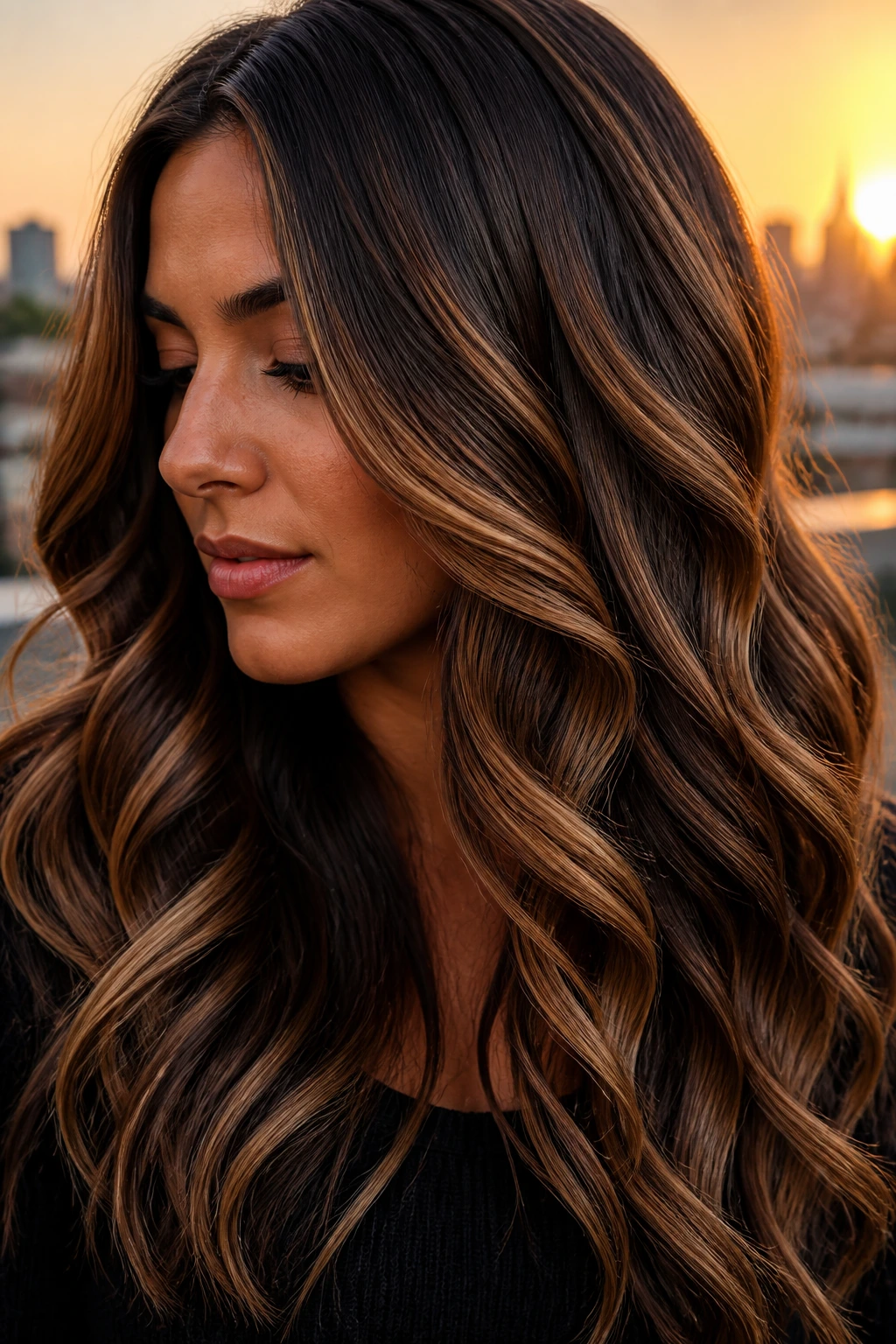
Waves can handle bigger pieces of color than straight hair can. Thick ribbon highlights spread across the bends of the hair and create broad swaths of caramel that look especially good when the hair is loose and textured. On a dark base, the contrast is strong but still wearable because the wavy shape breaks it up.
What to Keep in Mind
- Bigger ribbons need softer tone, or they start looking stripey
- A level 6 caramel usually reads richer than a pale golden brown
- A loose wave or bend helps blend the edges
This is a good style for hair that has real body. Thick strands and broad waves need bolder color placements or the highlights disappear. If your hair is dense, this kind of ribboning gives the cut some shape from a distance.
18. Warm Honey Caramel on Layered Cuts
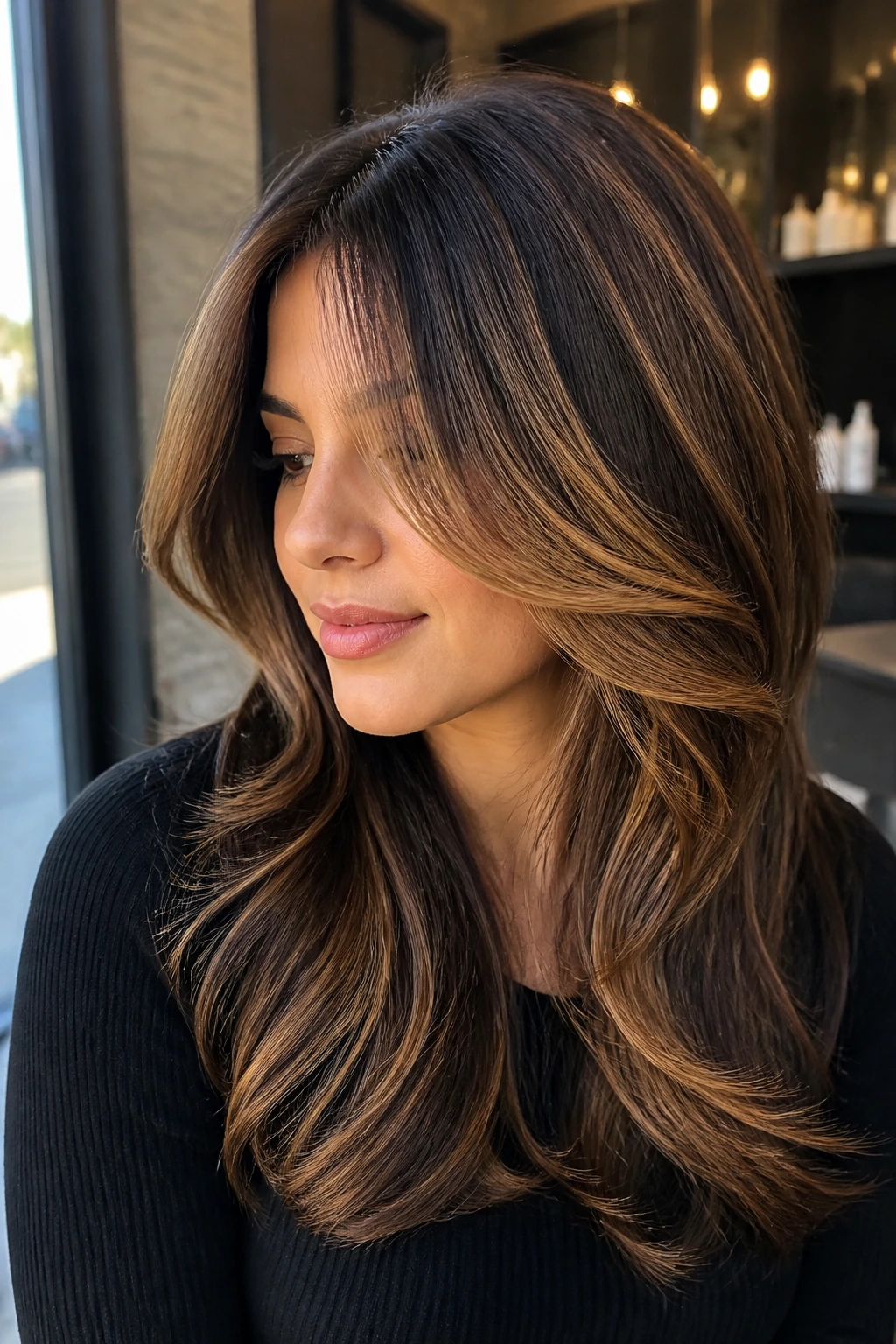
Honey caramel is warmer than beige caramel and softer than copper, which gives it a nice middle ground on layered brunettes. The layers show the movement, and the honey tone picks up the ends and face frame without taking over the whole head.
This style works because layers naturally create little shelves of light. The color catches on the raised pieces and looks different from one section to the next. That gives you depth without needing a dramatic stripe pattern. It also grows out kindly, which matters if your haircut is already doing a lot of visual work.
If your hair tends to feel heavy, honey caramel can make it look a little lighter and more open. It does not lighten the actual weight, obviously. But visually, it trims the bulk.
19. Invisible Highlights for Fine Hair
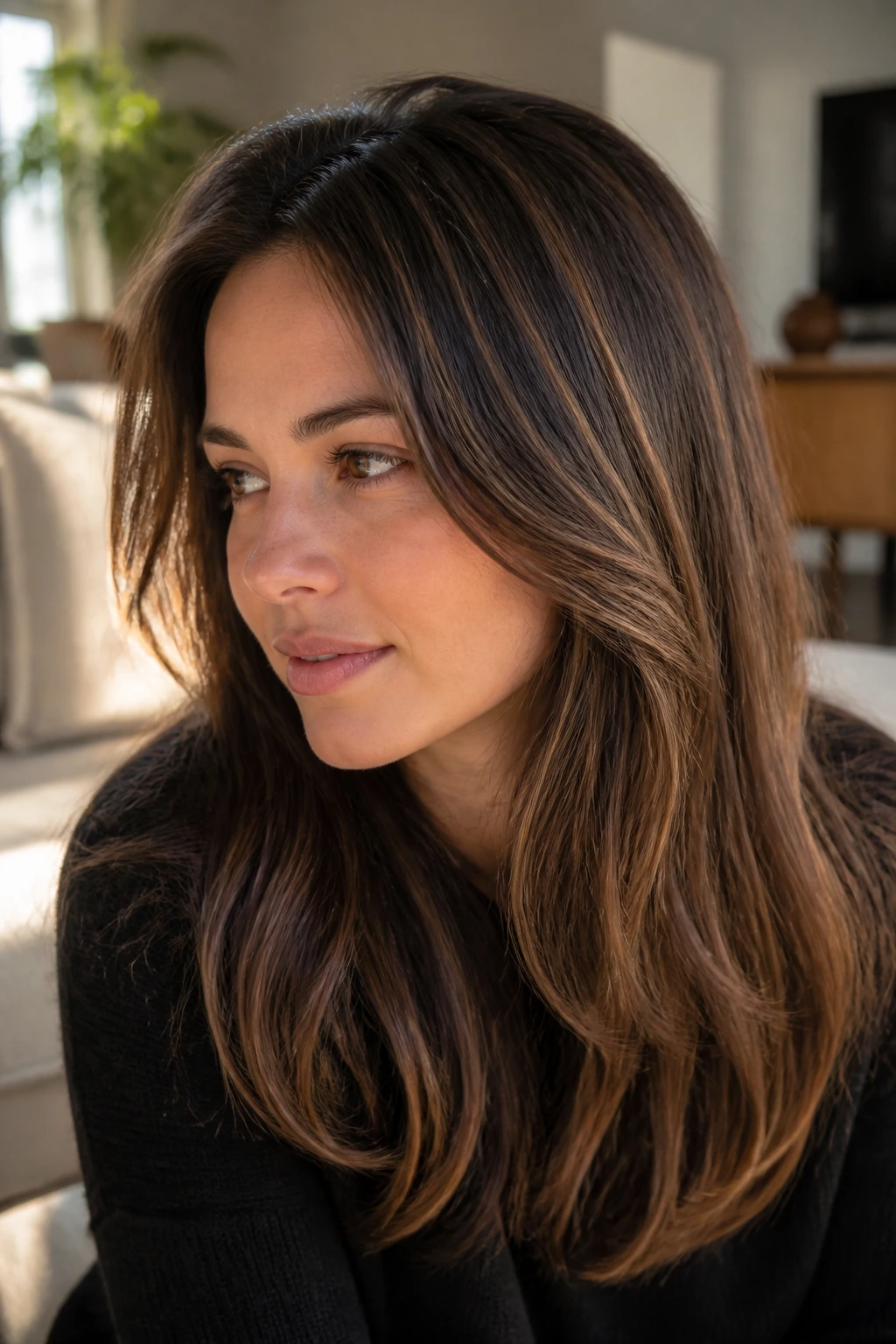
Fine hair doesn’t always want obvious highlights. Sometimes the best move is a barely-there weave of caramel and light brown that sits close to the base shade and adds shine more than contrast. That way the hair looks denser, not thinner.
The mistake people make with fine hair is going too wide with the pieces. Big, chunky highlights can make the scalp line and sectioning more obvious, which is the opposite of what you want. Tiny, close-set highlights create a soft shift instead, and the whole head looks fuller when it moves.
A gloss matters here. Fine hair can lose tone fast if it’s porous, and a soft caramel gloss keeps the pieces from looking faded after the first few washes.
20. High-Contrast Panels for Straight Hair
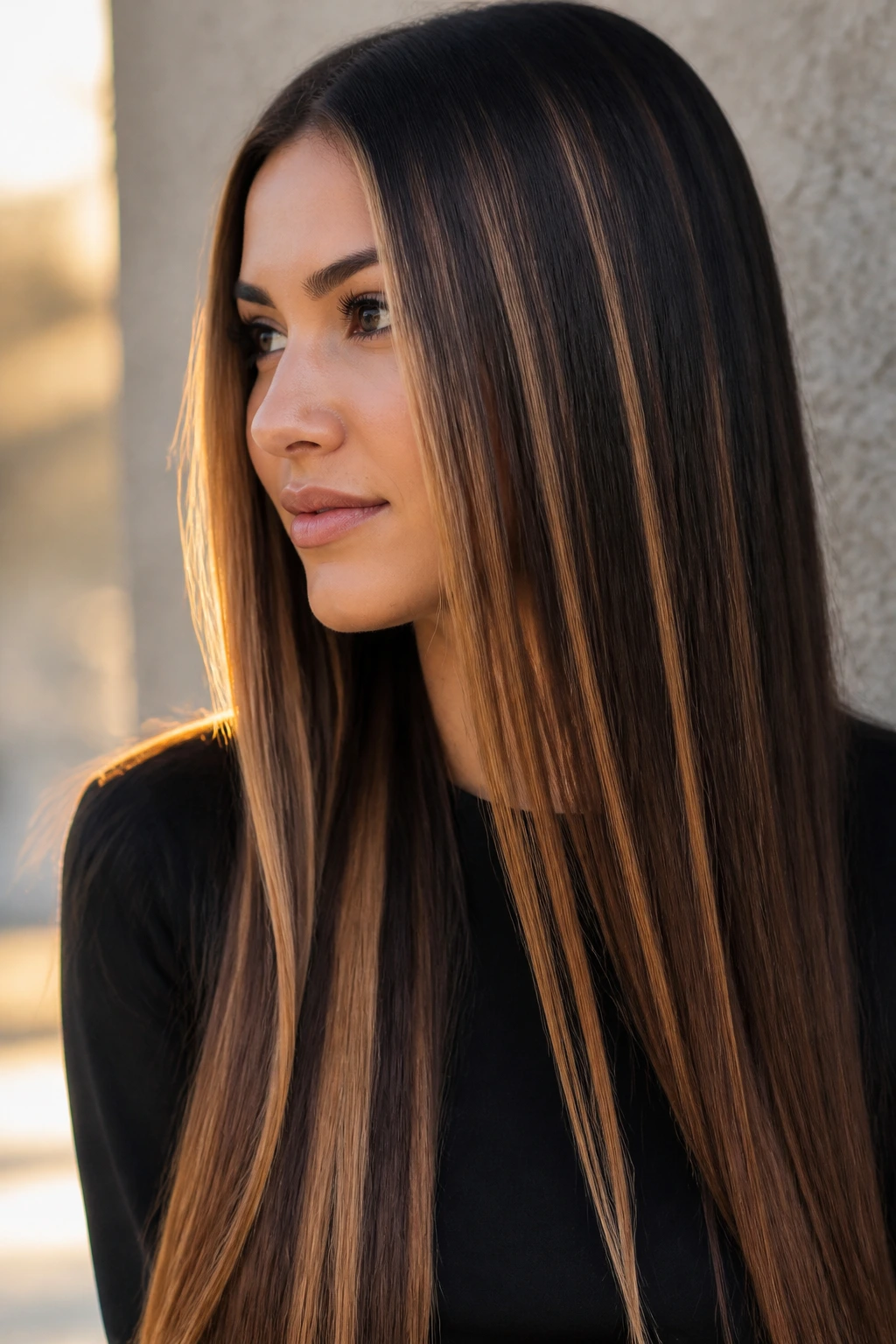
Straight hair tells the truth. Every placement shows. That’s why high-contrast caramel panels can be so satisfying on long, straight brunettes — the lines are crisp, the color blocks are clean, and the light catches them in sharp bands instead of soft bends.
This look needs confidence and good placement. Put the panels too close together and the hair starts looking busy. Space them out, keep the base dark, and use caramel that’s warm enough to read as brown rather than pale gold. The result is graphic in a good way.
It’s also a strong option if you like sleek styles, center parts, and smooth finishes. When the hair lies flat, the contrast becomes the feature.
21. Curly Halo Lights
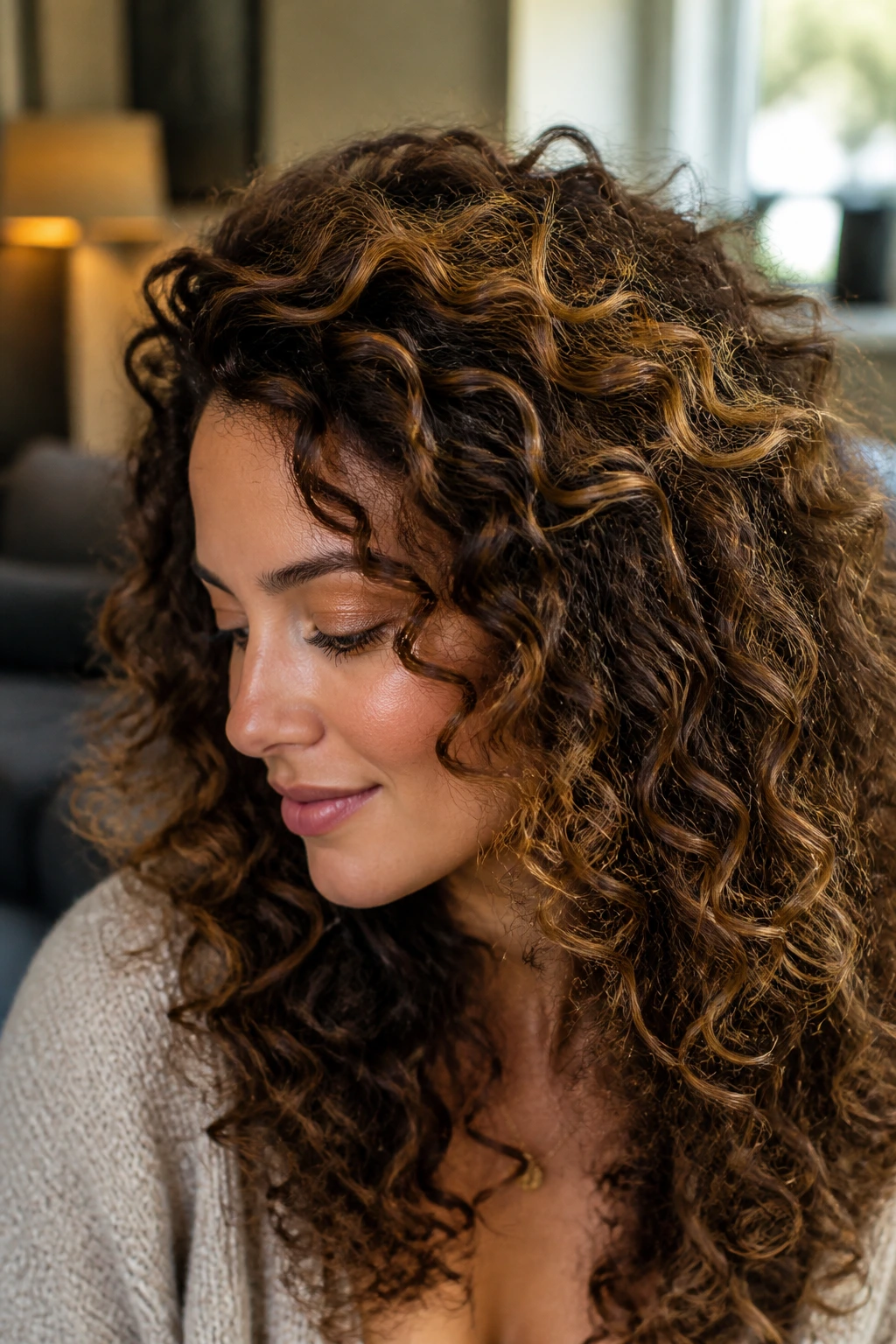
What happens when curly hair gets too many highlights underneath? The curl pattern starts to look tired. That’s why halo lights are such a smart fix. The caramel pieces circle the top and outer frame of the curls, leaving the interior darker so the hair still looks full.
How to Keep Curl Clumps Intact
- Paint the lighter pieces on the outside of the curl family
- Avoid slicing through every curl in the same place
- Use a diffused finish so the color sits on the shape, not against it
The halo effect gives curls a lifted edge. It brightens the silhouette without destroying the definition. I’d choose this over random full-head foils almost every time on dark curly hair.
22. Melted Caramel Gloss on Dark Chocolate Hair
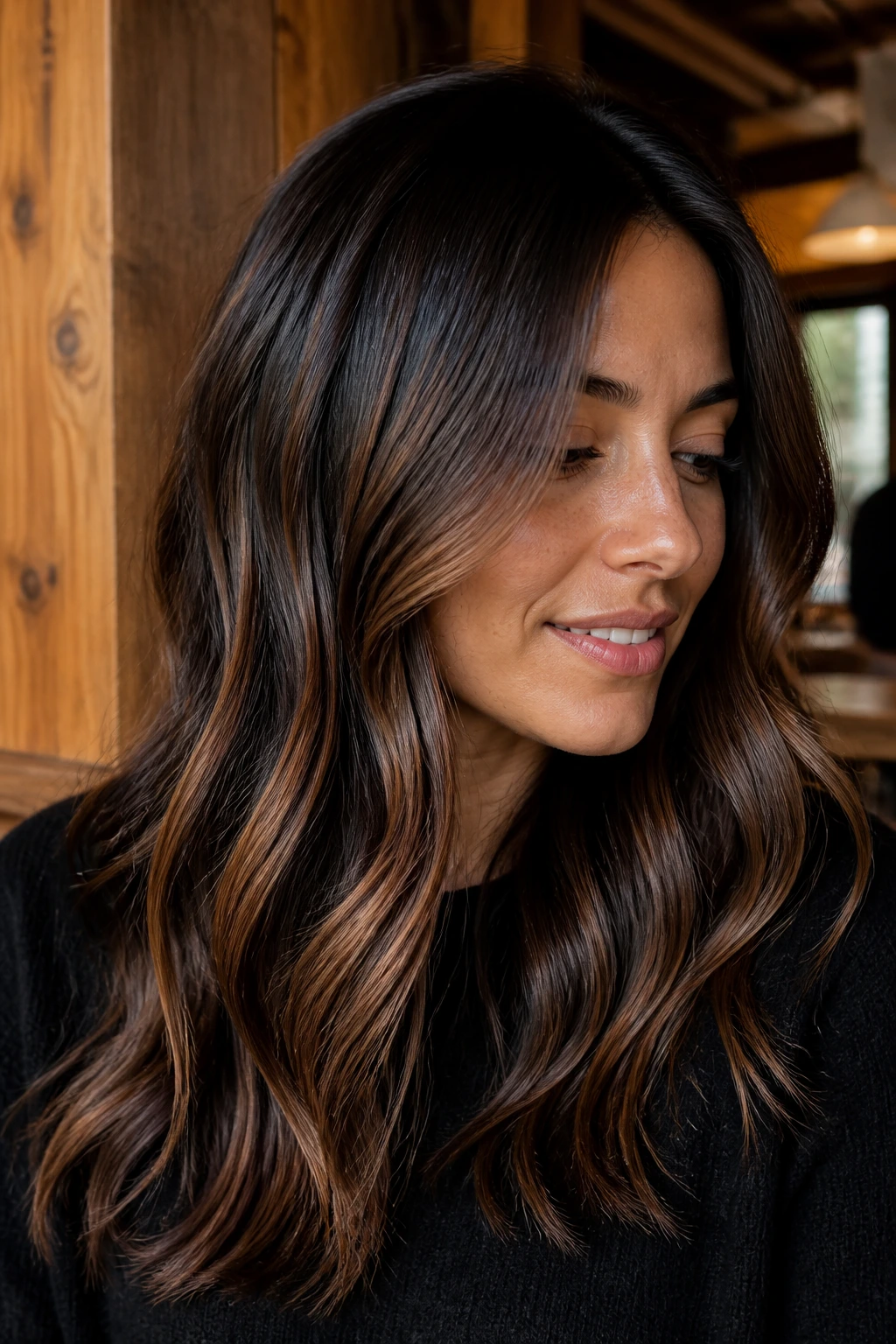
This one is all about softness. Dark chocolate hair gets a few lifted pieces, then the whole thing is glossed into a smooth caramel-brown melt so the highlight doesn’t look like a separate event. The final result is shiny, warm, and deeply brunette — which is exactly the sweet spot for a lot of people.
The gloss is the part that makes it feel finished. Without it, lightened strands can look patchy or too orange. With it, they settle into the base and give the hair a polished, unified look. The difference is obvious in person, especially on medium and long hair.
If you’re after a subtle transformation, this is one of the best bets. It changes the mood of the hair without making it look overworked.
23. Deep Brunette with Caramel Lacing
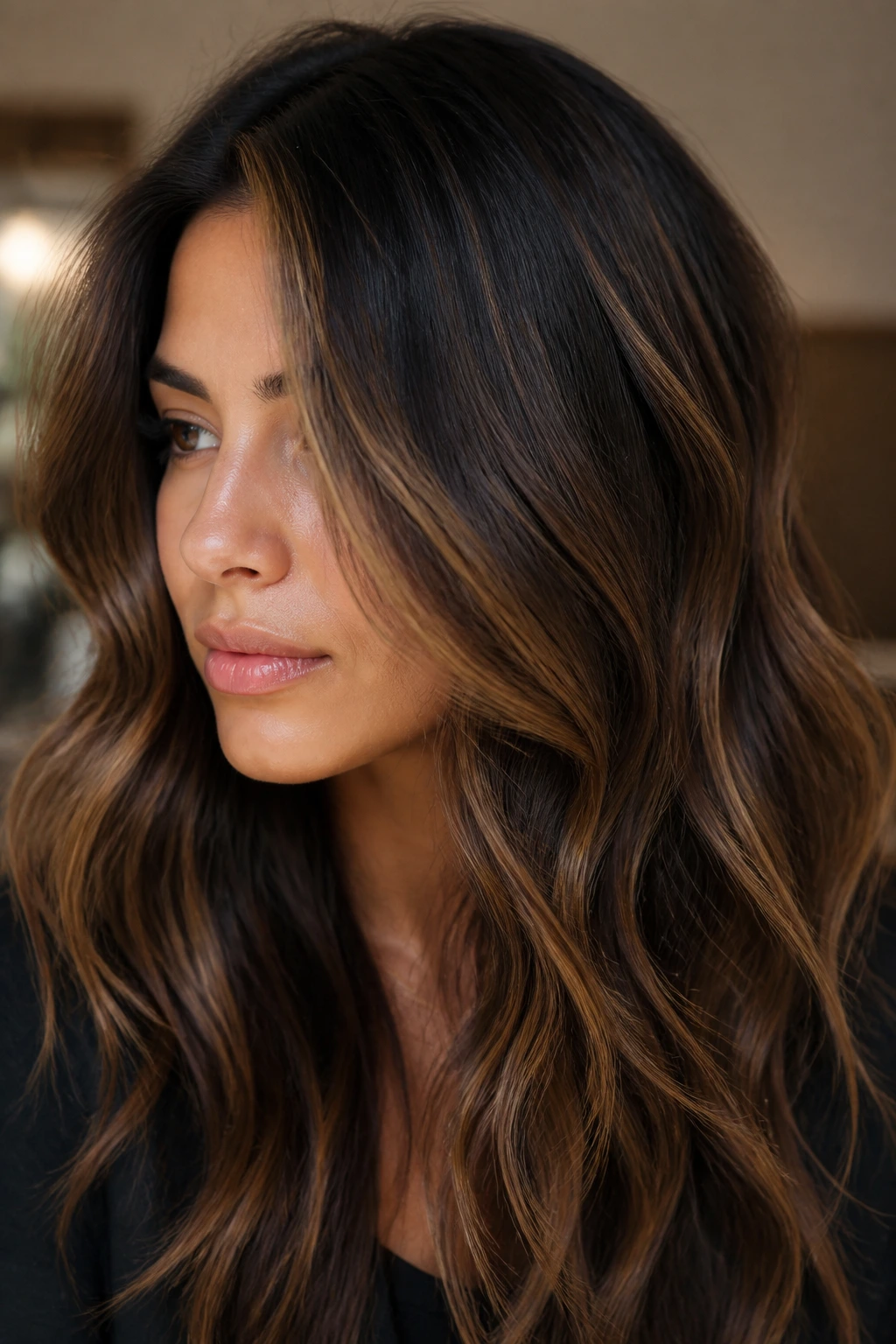
This is where lowlights earn their keep. A deep brunette base gets just enough caramel lacing through the mids and a few darker strands tucked back in underneath so the overall color keeps its depth. It’s a smarter, richer version of highlights for people who hate the flatness that can happen when everything gets lightened.
The lacing should look woven, not pasted on. Think narrow, irregular strands that show up as the hair moves. The darker pieces underneath matter because they stop the caramel from taking over the whole look, and that contrast makes the bright strands pop more than they would on their own.
Best for
- Thick hair that can handle dimension
- Long layers or a shag
- Anyone who wants highlight movement with shadow left in place
This is one of the few looks that still feels luxurious on cloudy days and in indoor light. It doesn’t need perfect sunshine to work.
24. Soft Slices for Long Blunt Cuts
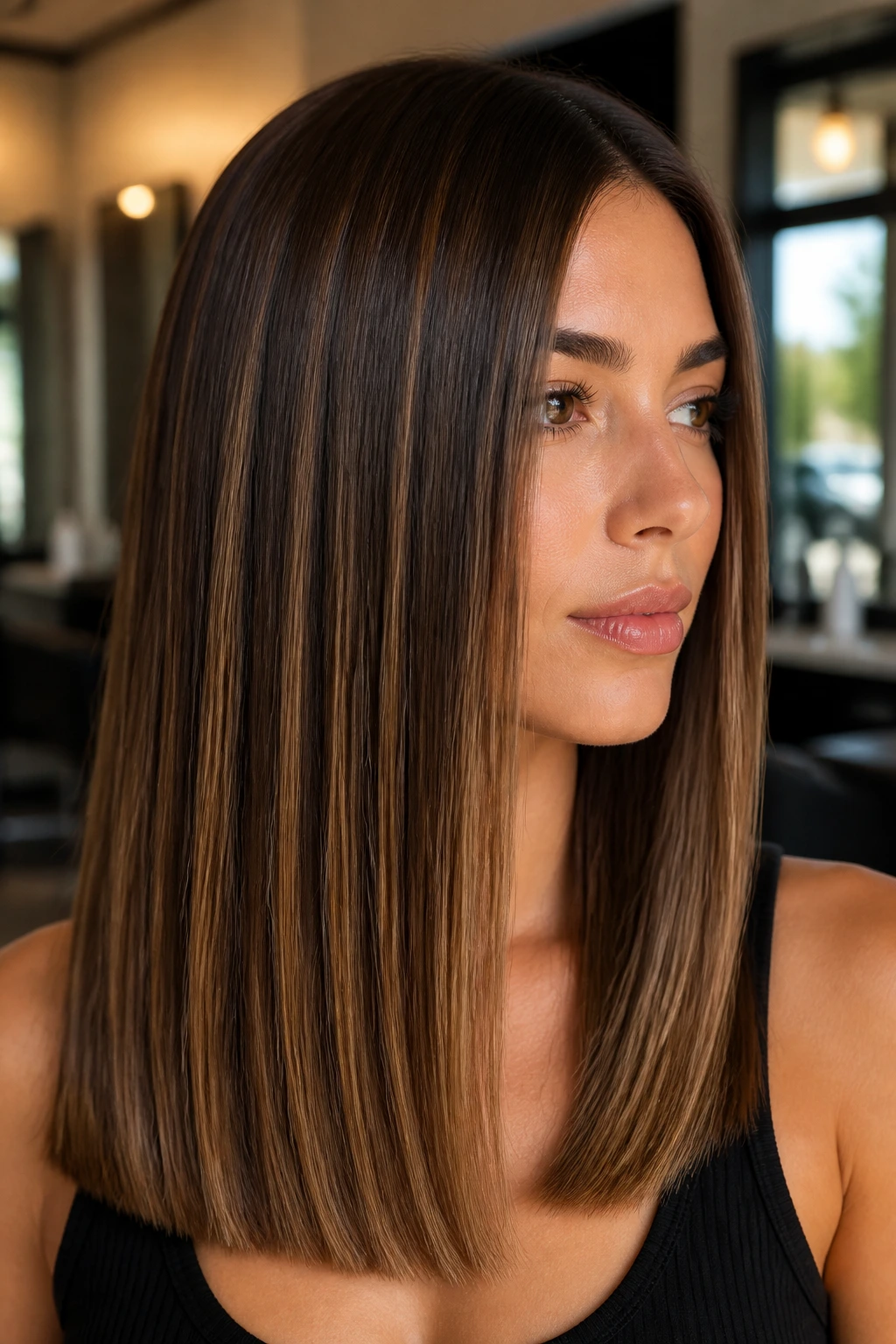
Long blunt cuts can go flat if the color is too timid. Soft slices of caramel and light brown give the cut some life without ruining the sharp line at the ends. The trick is to keep the slices long and vertical so they move with the shape of the cut instead of breaking it apart.
I like this style because it respects the architecture of the haircut. The blunt edge stays blunt. The color adds motion through the body of the hair and a little brightness at the perimeter. That’s a cleaner solution than flooding the whole head with too many fine foils, which can make a blunt cut look fuzzy.
If your hair is pin-straight, these slices are even more effective. The contrast shows right away, especially when you tuck one side behind the ear.
25. Milk-Tea Caramel Ribbon Blend
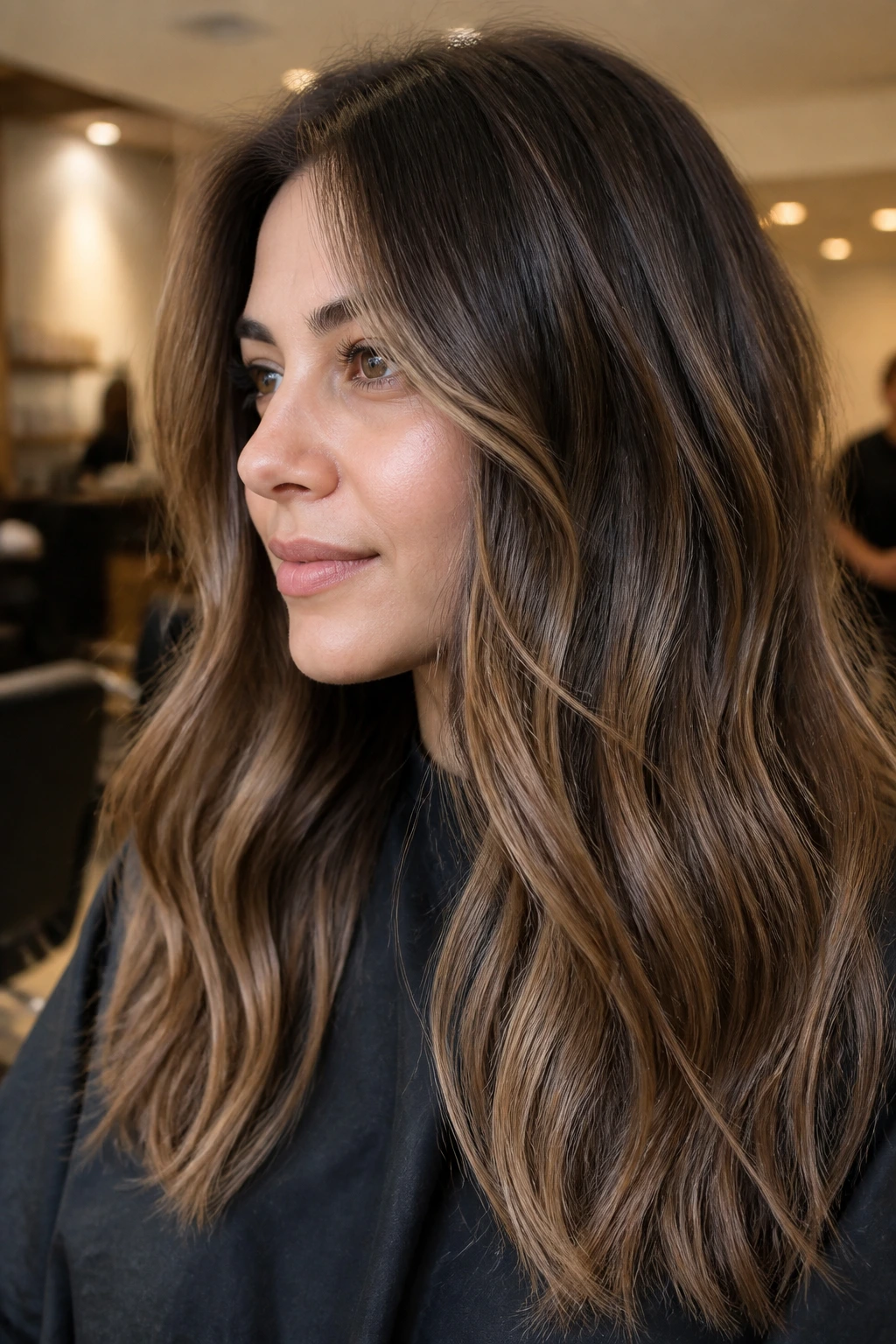
Milk-tea caramel sits in that soft beige-brown zone that flatters dark hair when you don’t want either brass or blonde. The ribbons are muted, slightly creamy, and blended enough to keep the brunette base in charge. It feels a little cooler than classic caramel, which is helpful if gold tones tend to dominate your hair fast.
This is one of the most wearable options in the whole set because it doesn’t fight your natural shade. It can look understated in low light and still catch enough shine to feel intentional in brighter light. If you want color that says “done” without saying “lightened,” this is the lane.
A subtle root shadow helps here. Keep the top darker, let the ribbons soften through the mids, and finish with a beige gloss if the hair wants to turn too warm.
Why Caramel and Light Brown Work on Dark Bases
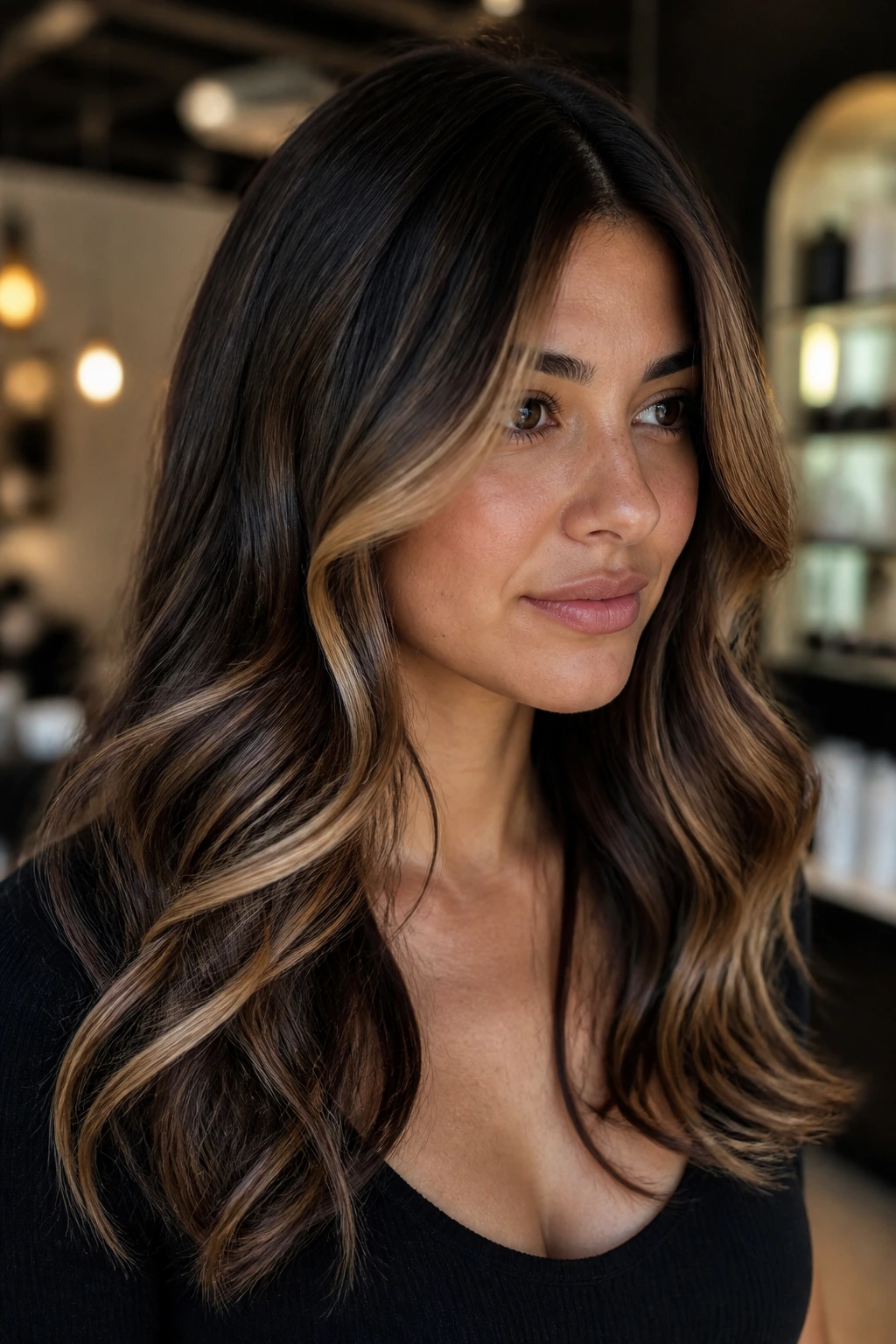
Dark hair has a built-in advantage: shine. When you lift it to caramel or light brown, you’re not just changing the color. You’re changing how the light moves across the hair shaft. That’s why a good brunette highlight can look more expensive than a full blonde overhaul. The shadow underneath gives the lighter pieces a frame.
There’s a technical catch, though, and it matters. Dark hair usually lifts warm first. That means the lightening stage can pass through orange or copper before it lands in caramel territory. If a colorist stops too early, you get brass. If they push too far and then tone too cold, the hair can look dusty. The sweet spot is a warm beige-brown that still feels connected to the base.
Lowlights help more than people think. A few deeper strands placed underneath or between the highlights keep the whole head from turning flat, and they make the caramel pieces stand out without needing extra brightness. That’s why the best blonde-adjacent brunette color often looks like a mix of light and shadow, not a single flat shade.
Dark hair also benefits from placement more than pure lightness. A face frame, crown lightening, or a ribbon through the wave pattern can do more than a blanket of foils ever will. You want the light where the hair bends, parts, and moves. That’s the part people actually notice.
Essential Tools for the Salon Chair and the Bathroom Mirror
-
Color-safe shampoo: A sulfate-free formula helps keep caramel tones from stripping too fast, especially if your hair was lightened first.
-
Blue shampoo: Use it sparingly if the highlights skew orange or copper; it can knock back brass on brunette bases better than purple shampoo in many cases.
-
Deep conditioner or mask: Lightened ends need moisture once a week, or the caramel starts looking dry and dull.
-
Heat protectant spray: If you blow-dry or curl your hair, this keeps the finish smoother and helps the tone hold its shine.
-
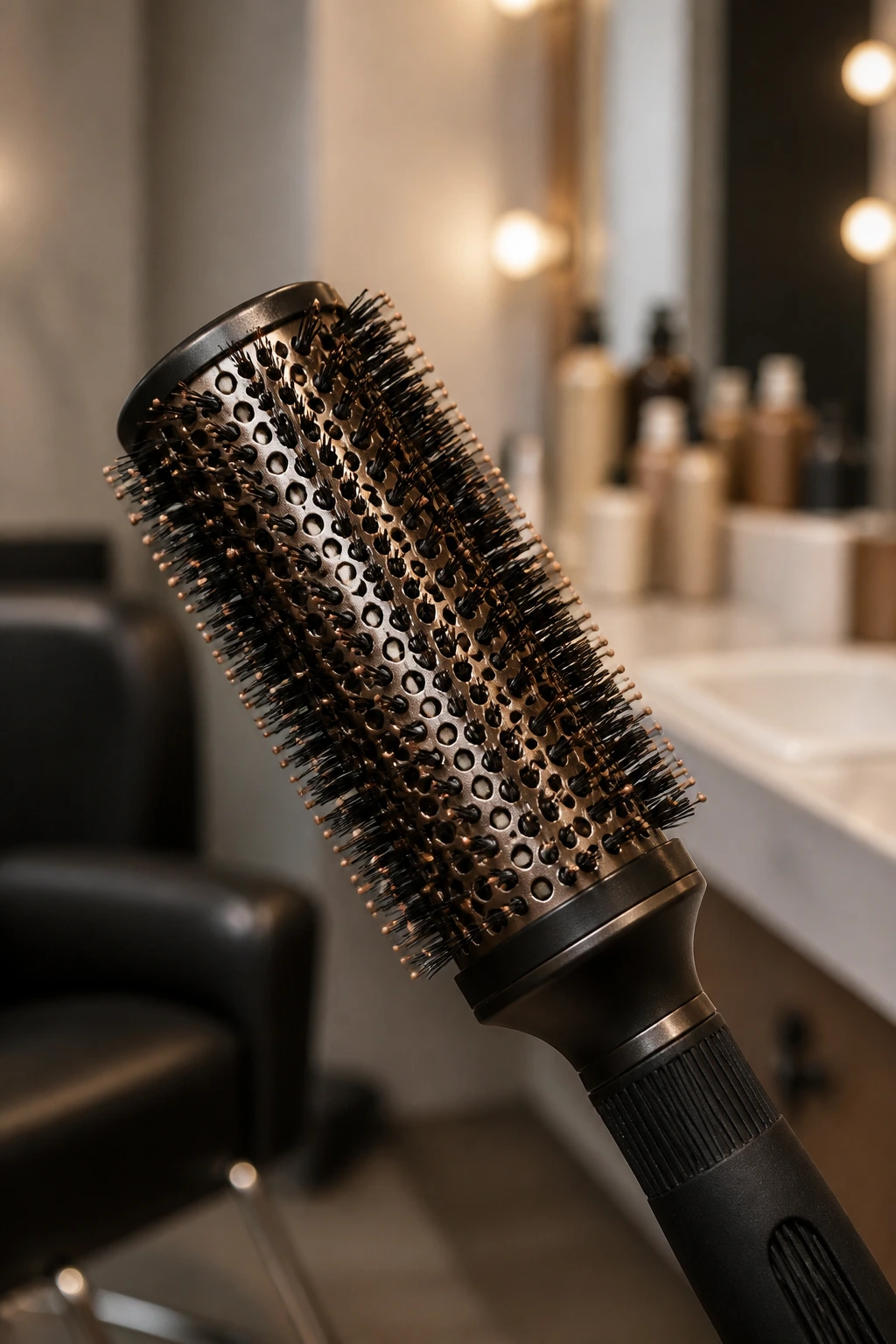
Round brush: Useful for showing off face-framing pieces and crown highlights during a blowout.
-
1-inch curling iron or wand: Loose bends reveal ribbons and balayage better than pin-straight hair.
-
Wide-tooth comb: Good for detangling after washing without roughing up highlighted strands.
-
Sectioning clips: Helpful for styling at home and for anyone checking placement in the mirror before a salon visit.
-
Microfiber towel or soft T-shirt: Cuts down on frizz and keeps porous highlights from getting rough while drying.
-
Glossing treatment or salon glaze: A quick refresh between color appointments can soften warmth and bring the caramel back to life.
How to Choose the Right Caramel Shade for Your Base Color
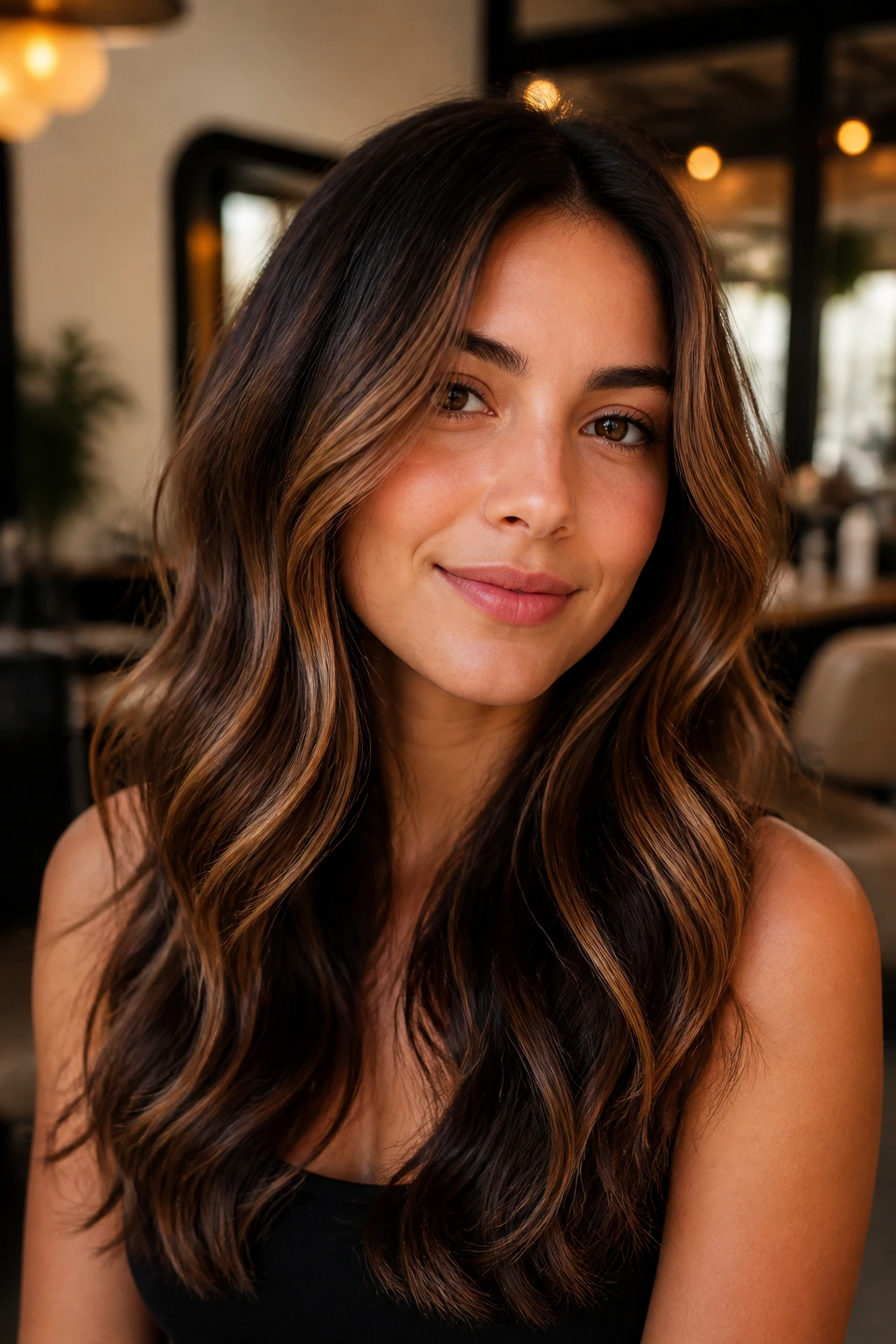
Not all caramel is the same, and that’s where a lot of bad highlights start. If your base is a soft dark brown, you can usually handle a brighter caramel without the hair looking disconnected. If your hair is almost black, stay closer to toffee, milk tea, or deep beige brown unless you want real contrast. The darker the base, the more careful the lift needs to be.
Undertone matters more than people want to admit. Warm skin usually tolerates gold caramel, honey caramel, and cinnamon-brown very easily. Neutral skin can take beige caramel, toffee, or milk-tea tones without the hair reading too yellow. Cooler skin often looks better with muted caramel that has a beige or mushroom undertone rather than a loud gold.
The haircut should shape the choice too. A layered cut can handle more placement because the pieces break up naturally. A blunt cut likes fewer, longer slices so the color doesn’t look chopped up. Curly hair wants painted placement that follows curl families. Straight hair can wear more obvious contrast because the shape won’t blur it away.
If you’re nervous, start one level darker than you think you need. Caramel that’s slightly muted often looks richer than caramel that’s too bright and too yellow. And if it feels too soft? A gloss or a brighter front frame can always add punch later.
How to Style These Highlights So They Actually Show
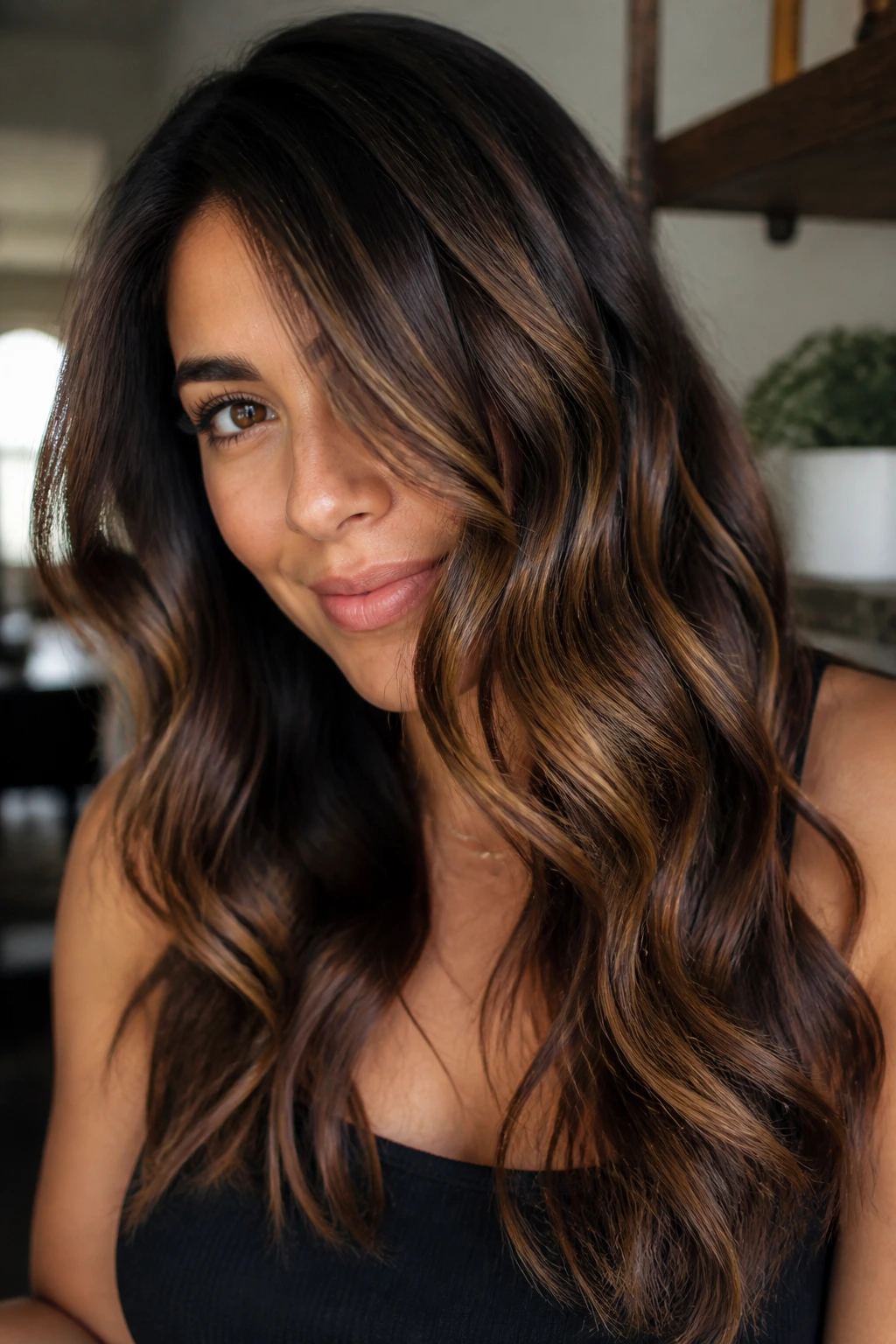
Dark hair with caramel pieces can disappear if you air-dry it into a soft blob. That’s not a color problem. That’s a styling problem. The easiest fix is movement: loose bends, a side part, or a blowout with a lifted crown will show the contrast much better than a heavy matte finish.
Loose waves are the safest bet. Wrap 1-inch sections away from the face, leave the ends slightly straighter, and brush them out once they cool. That spreads the caramel through the hair instead of bunching it into a few obvious curls. On straight styles, tuck one side behind the ear or switch to a soft off-center part so the highlights shift.
A few styling habits help more than people expect
- Use a shine spray, not a heavy oil, on the top layer
- Keep hot tools below 350°F if your hair is already lightened
- Finish with a light hold cream or texture spray, not a sticky paste
The worst thing you can do to caramel highlights is bury them under a dull, powdery finish. Dark hair already has depth. The light pieces need shine to stand out. If the hair looks clean but flat, the color will look flatter too.
Extra Shade Boosters and Styling Tricks
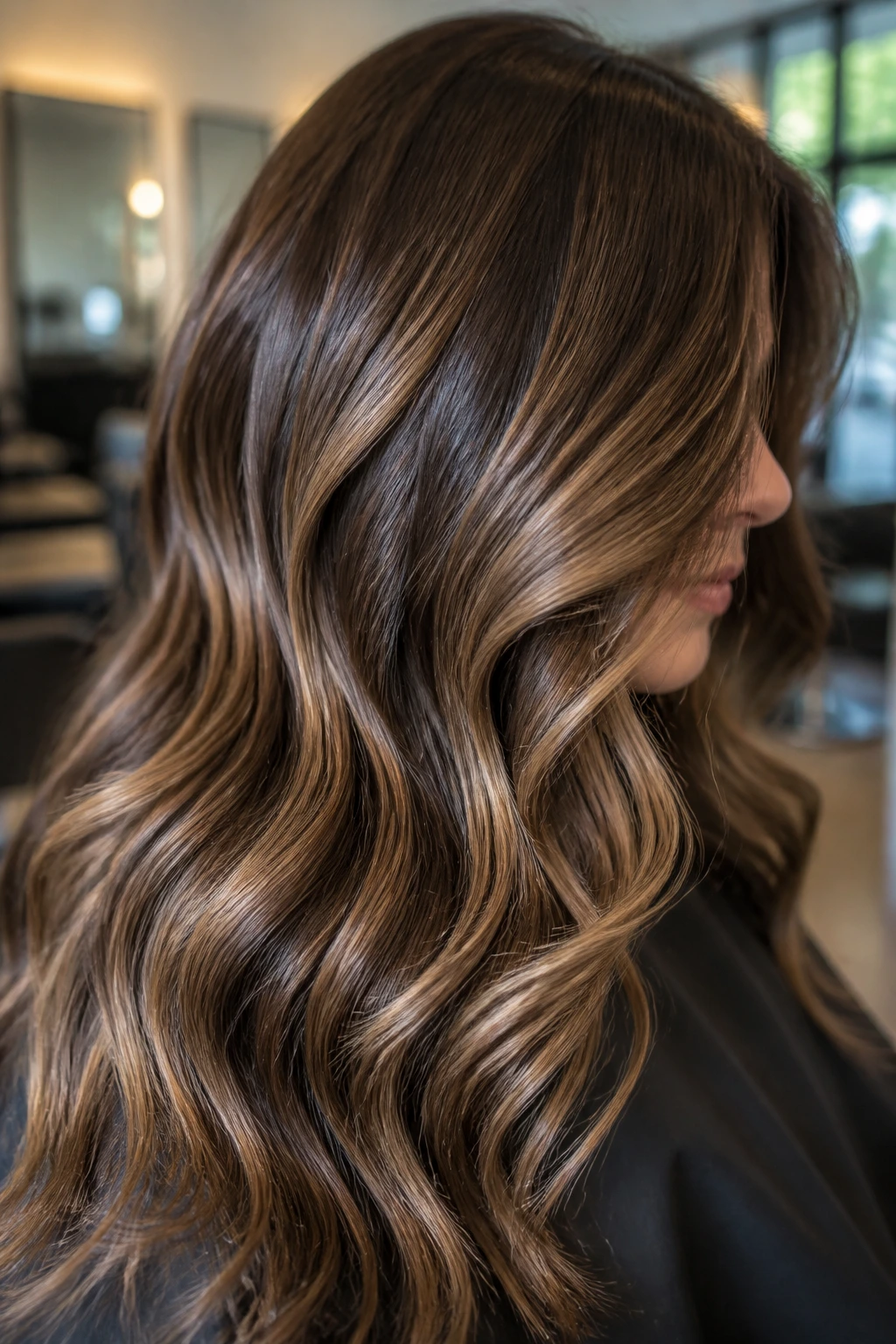
Gloss Enhancement: If the caramel starts leaning brassy, a beige or neutral gloss can pull it back without making the hair look muddy. Ask for a semi-permanent glaze that sits one shade above the base and one shade below the lightest pieces.
Placement Control: Keep some darkness under the surface. It sounds counterintuitive, but those hidden darker strands make the caramel look brighter because the eye gets contrast where it needs it.
Texture Match: Fine hair usually looks best with smaller ribbons or babylights. Thick hair can carry chunkier panels or brighter money pieces without losing balance.
Tone Choice: Warm caramel flatters golden undertones and olive skin easily. Beige caramel is safer if your complexion runs cool or if your hair tends to grab orange fast.
Make-It-Yours: If you want less maintenance, stay rooted and soft at the crown. If you want more drama, brighten only the front and the lower third. Both can live in the same haircut. They just tell different stories.
Common Mistakes That Make Dark-Hair Highlights Fall Flat
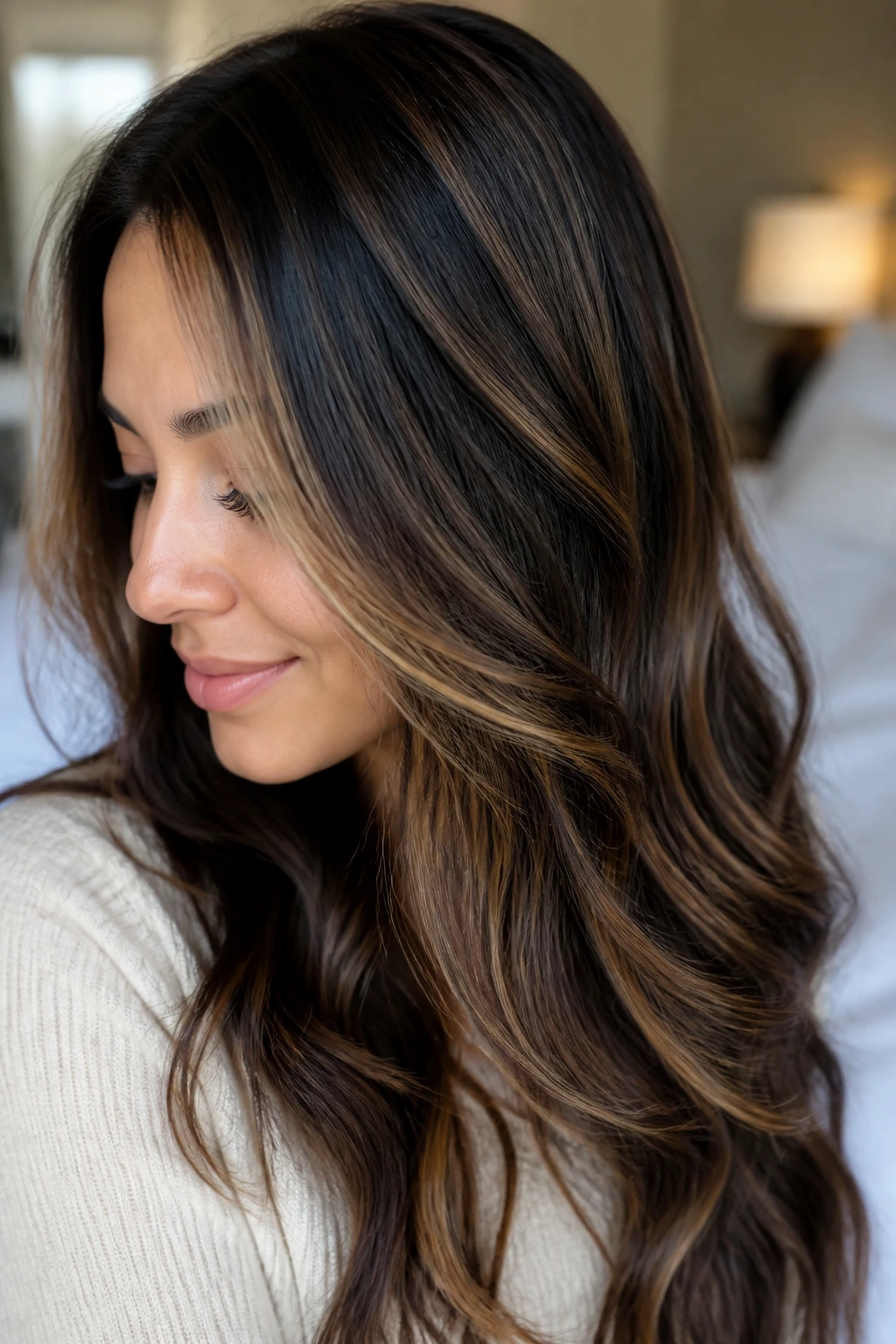
The first mistake is going too light too fast. On dark hair, a caramel highlight that gets pushed all the way to a pale blonde endpoint can lose the richness that makes brunette dimension special. The fix is simple: stop at warm brown-gold, then tone carefully instead of chasing brightness.
Another common problem is ignoring undertone. Hair that naturally leans red or copper can turn loud in a hurry if the highlights are too warm. Hair with cool undertones can go flat if the caramel is too beige and muddy. The answer is not guessing. It’s looking at how your hair lifts and choosing the toner with that in mind.
A third mistake is overpacking the top layer. If every highlight sits on the visible surface, the hair can look striped and thin. Leave some depth underneath. Add lowlights if needed. Give the color somewhere to disappear and reappear.
Don’t skip aftercare either. Lightened brunette hair gets thirsty fast, and dry ends make even good caramel look dull. A weekly mask, lukewarm water, and a heat protectant spray do more than fancy serums that sit on top of the hair looking shiny for about six minutes.
Variations and Adaptations to Try
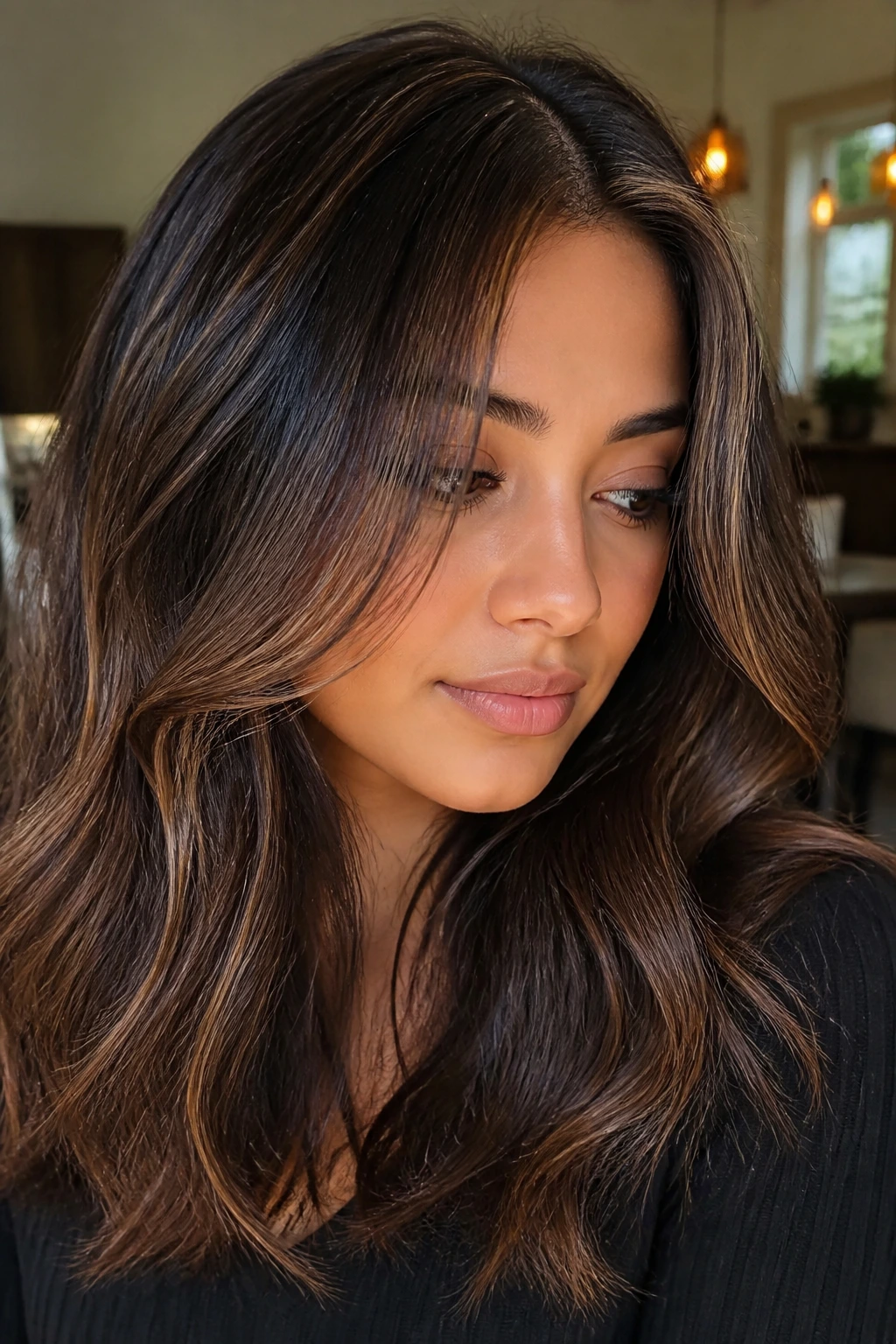
Soft Bronze Blend: Swap a brighter caramel for a bronze-brown glaze if your hair likes warmth but not gold. This keeps the finish rich and a little deeper, which works well on very dark brunettes.
Cool Beige Caramel: If gold tones pull too orange on you, ask for beige caramel with a mushroom-brown gloss. The result is softer and less sunny, with enough warmth to stay in the brown family.
Bold Front Frame: Keep the rest of the head subtle and brighten only the face frame and part line. This gives you a stronger contrast without forcing full-head lightening.
Curly Dimension Map: For curls, concentrate light on the outer surface and around the crown. Skip random foils deep inside the curl pattern or the definition can break apart.
Low-Maintenance Root Melt: Leave more of your natural root untouched and fade the caramel only through the mids and ends. This is the move if you want the color to grow out slowly and without a harsh line.
Gloss-Only Refresh: If your highlights already exist but look tired, a salon gloss can revive the tone without adding more lightness. That’s often smarter than re-highlighting the hair.
Make-Ahead, Maintenance, and Grow-Out Care
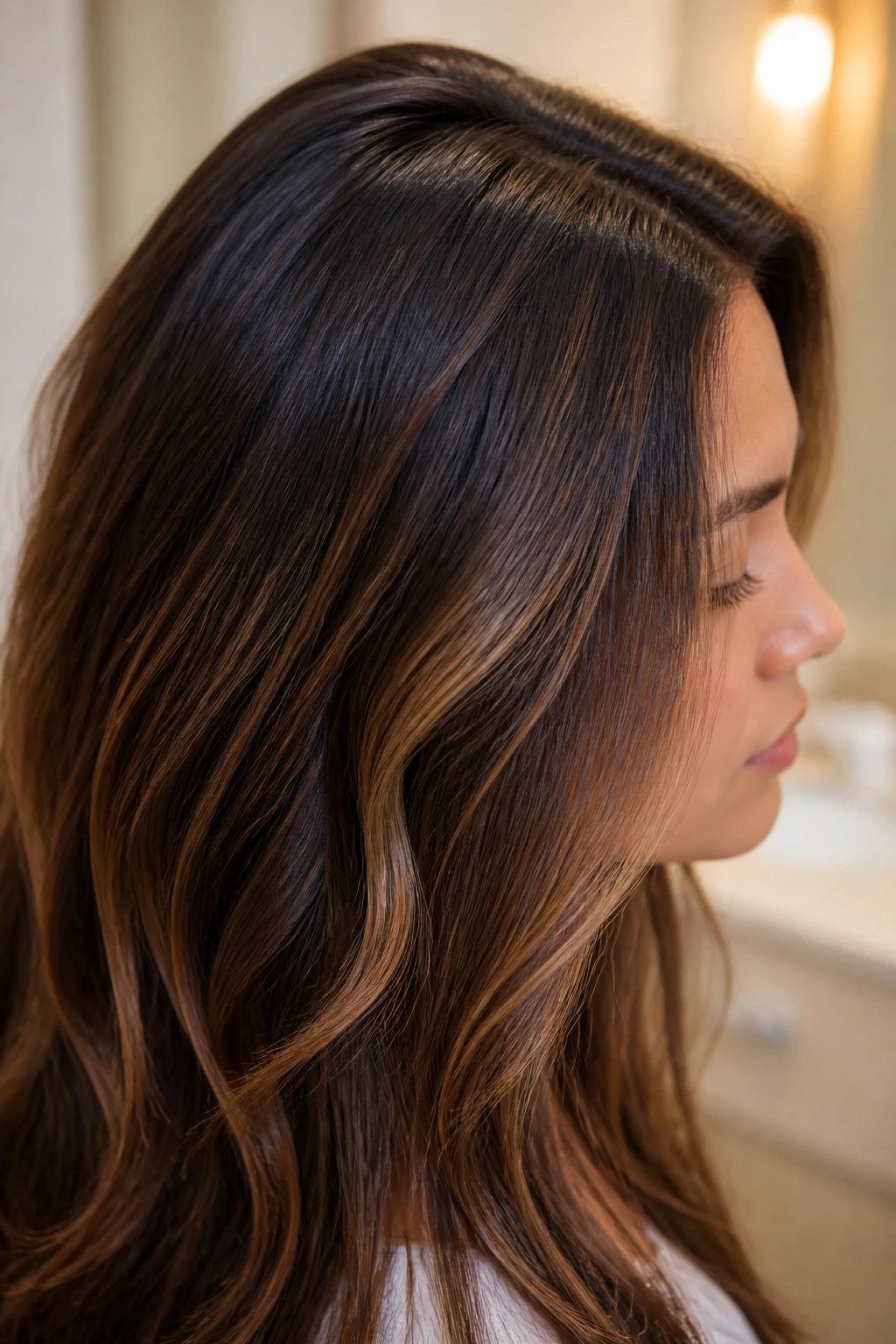
Highlights are not a one-and-done affair, and dark hair especially needs a little upkeep to keep the caramel from fading into dull orange. After a fresh appointment, wait 24 to 48 hours before the first wash unless your colorist gives different instructions. That gives the cuticle time to settle and helps the tone hold longer.
After that, wash two or three times a week if you can. More washing usually means faster fade, especially on lightened brunette hair. Use lukewarm water, because hot water opens the cuticle and sends the warm tone down the drain faster than people expect. A color-safe shampoo and a rich conditioner are the basics; a mask once a week is the part most people skip and then wonder why the ends feel rough.
Gloss or toner refreshes usually land every 6 to 8 weeks if you want the caramel to stay clean and warm. Some hair needs it sooner, especially porous or previously lightened hair. Root touch-ups depend on the placement. A rooted balayage can go 10 to 14 weeks before it looks obvious. Face-framing money pieces usually need more frequent attention if you keep them bright.
Heat styling matters too. Keep curling irons and flat irons on the lower side, and use a heat protectant every time. Dark hair with highlights can survive a surprising amount, but the shine disappears faster when the ends are fried. A microfiber towel, a silk pillowcase, or even just gentler towel drying can stretch the life of the color more than people think. Hard water can also make caramel read brassy faster, so if your shower leaves mineral spots on glass, a shower filter is worth considering.
Frequently Asked Questions
How light should caramel highlights be on dark hair?
Usually one to three levels lighter than the base is enough. That keeps the color in the caramel and light brown family instead of pushing it into blonde territory, which can look harsh on darker brunettes.
Will caramel highlights work on black hair?
Yes, but the lift has to be handled carefully. On very dark hair, the first warm stage can look copper or orange before it settles, so the toner and placement matter a lot more than they do on lighter brunettes.
What’s the difference between balayage and regular highlights here?
Balayage is painted for a softer, more blended grow-out, while foil highlights usually give more lift and more obvious contrast. On dark hair, balayage is better if you want a melt; foils are better if you want brighter, cleaner light pieces.
Do caramel highlights need bleach?
Most of the time, yes, because dark hair usually needs to be lifted before the caramel tone can show. The amount of lift depends on your base color, previous dye, and how light you want the finish to be.
How do I keep caramel highlights from turning brassy?
Use color-safe shampoo, wash with lukewarm water, and ask for a beige or neutral gloss if your hair tends to pull orange. Blue shampoo can help on brunette bases, but it should be used sparingly so the hair doesn’t look flat.
Can I get this look on curly hair without losing definition?
Absolutely, as long as the placement follows the curl pattern. Painted ribbons around the outer layer and crown work much better than random lightening through every curl clump.
What should I tell my stylist if I want something low maintenance?
Ask for a rooted balayage or soft veil highlights with a deeper base left intact. Mention that you want the grow-out to stay soft for at least several weeks, and ask them to avoid bright strips at the part line.
Why do my highlights look orange instead of caramel?
That usually means the hair was lifted enough to show warmth but not toned enough to soften it. A gloss in the right beige-brown range usually fixes it, though sometimes the color needs a slightly deeper re-tone rather than more lightness.
Can I do this at home?
You can touch up tone at home, but lifting dark hair into believable caramel is where things get tricky. Placement, section size, and undertone control matter a lot, so home kits can go patchy fast if you’re starting from a deep brunette base.
Soft Light, Dark Base
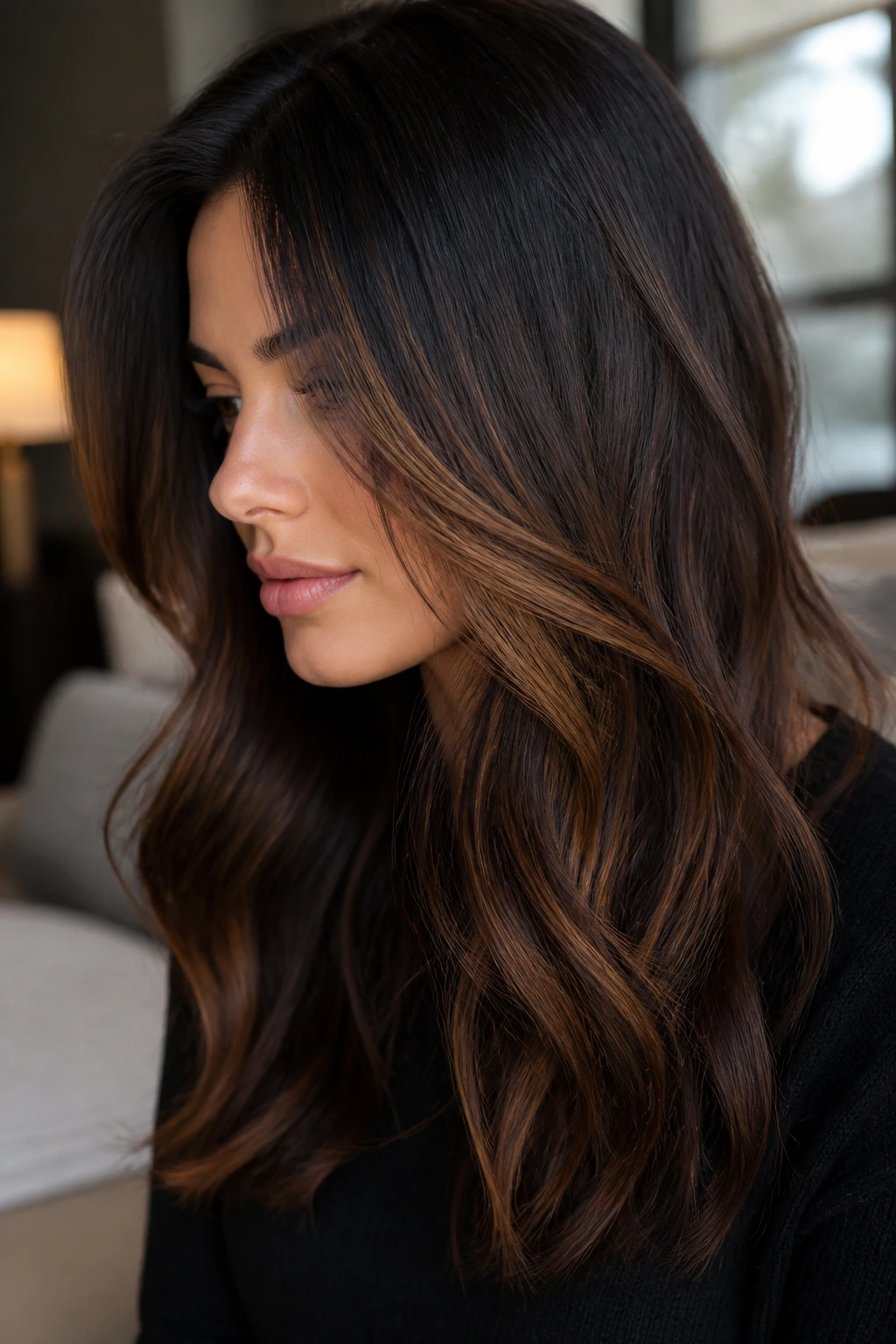
Caramel on dark hair works because it respects contrast. You do not need to erase the brunette to make it feel fresh. A smart ribbon here, a face frame there, a little lowlight underneath — that’s enough to give the hair movement without sanding off the depth that makes dark hair look good in the first place.
If you’re choosing between subtle and bold, start with the shape of the haircut and the amount of upkeep you’re willing to live with. The best version is the one that still looks intentional when you’ve skipped one wash, tucked it behind your ears, and walked into a room with flat light. That’s the real test.