



Platinum blonde long lowlights for brunettes are the kind of color choice that looks simple from across the room and very specific up close. On long hair, every inch matters: a pale ribbon near the cheekbone can brighten the face, while a deeper lowlight under the crown keeps the whole head from turning into a flat sheet of light.
That balance is why long brunette hair is such a good canvas for platinum. Short cuts can lose the detail. Long layers keep it moving. The brighter pieces catch the bend of a wave, and the darker ones give the eye somewhere to rest — without them, platinum can start reading as stripes instead of dimension.
One small note before the ideas start: salon language gets messy here. People often say “lowlights” when they really want platinum highlights with brunette depth, or a brunette base with platinum panels and darker shadowing around them. I’m using the phrase in that practical sense, because that’s how these looks actually get worn.
Why These Platinum-Brunette Looks Work on Long Hair
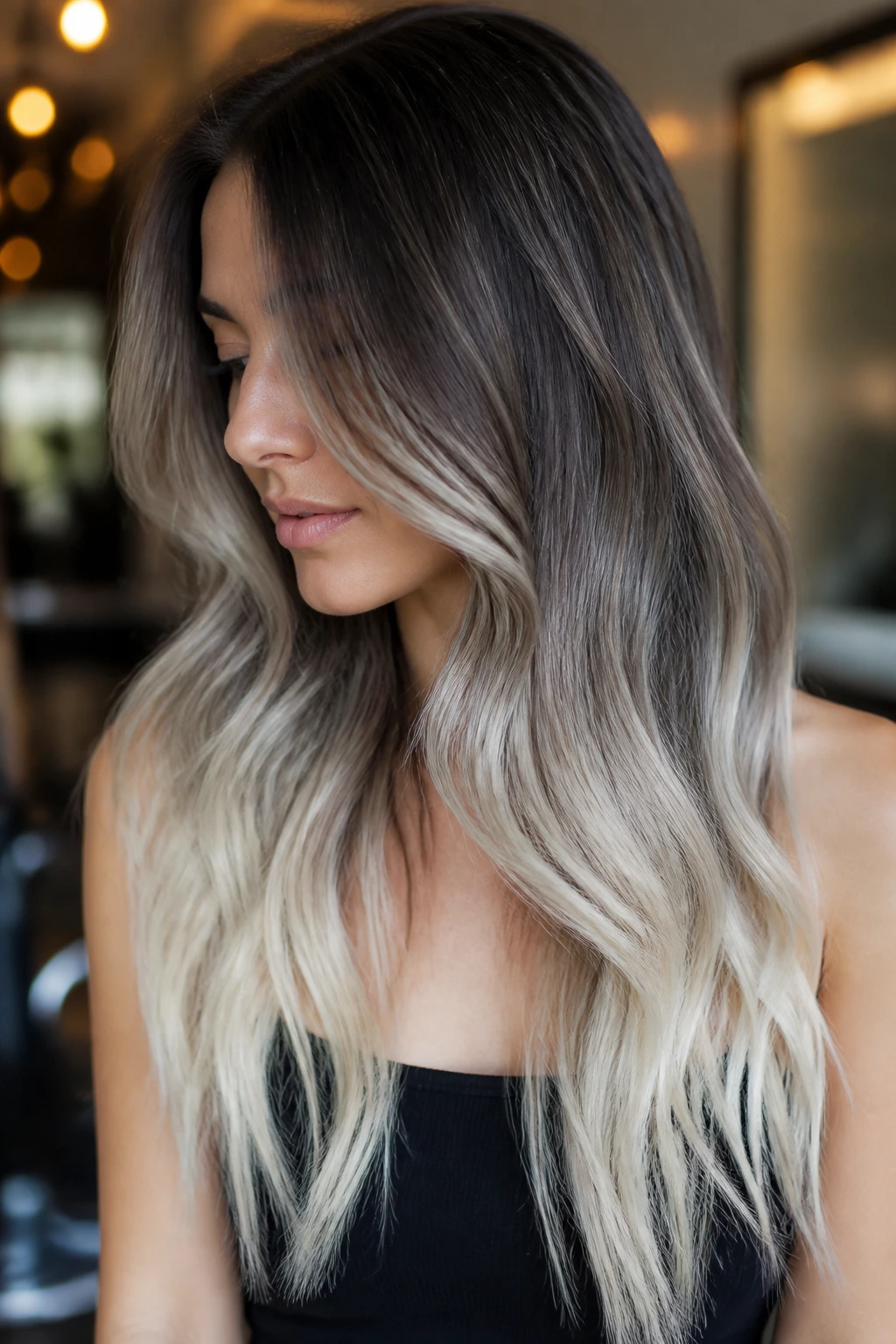
- Built for length: Long hair gives platinum room to breathe, so the light pieces can travel from root to end without looking chopped off.
- Depth keeps it expensive-looking: A few darker lowlights through the crown and inner layers stop the blonde from turning chalky or one-note.
- The grow-out is softer: A shadow root buys you time, and it keeps the line at the scalp from screaming for attention two weeks after the appointment.
- Texture changes everything: Waves make ribbons look softer, straight hair makes panels look sharper, and curls turn tiny placement choices into big visual shifts.
- You can go bold or subtle: Some versions here live for contrast; others are closer to a whisper. That’s the point. Platinum doesn’t have to mean all-or-nothing.
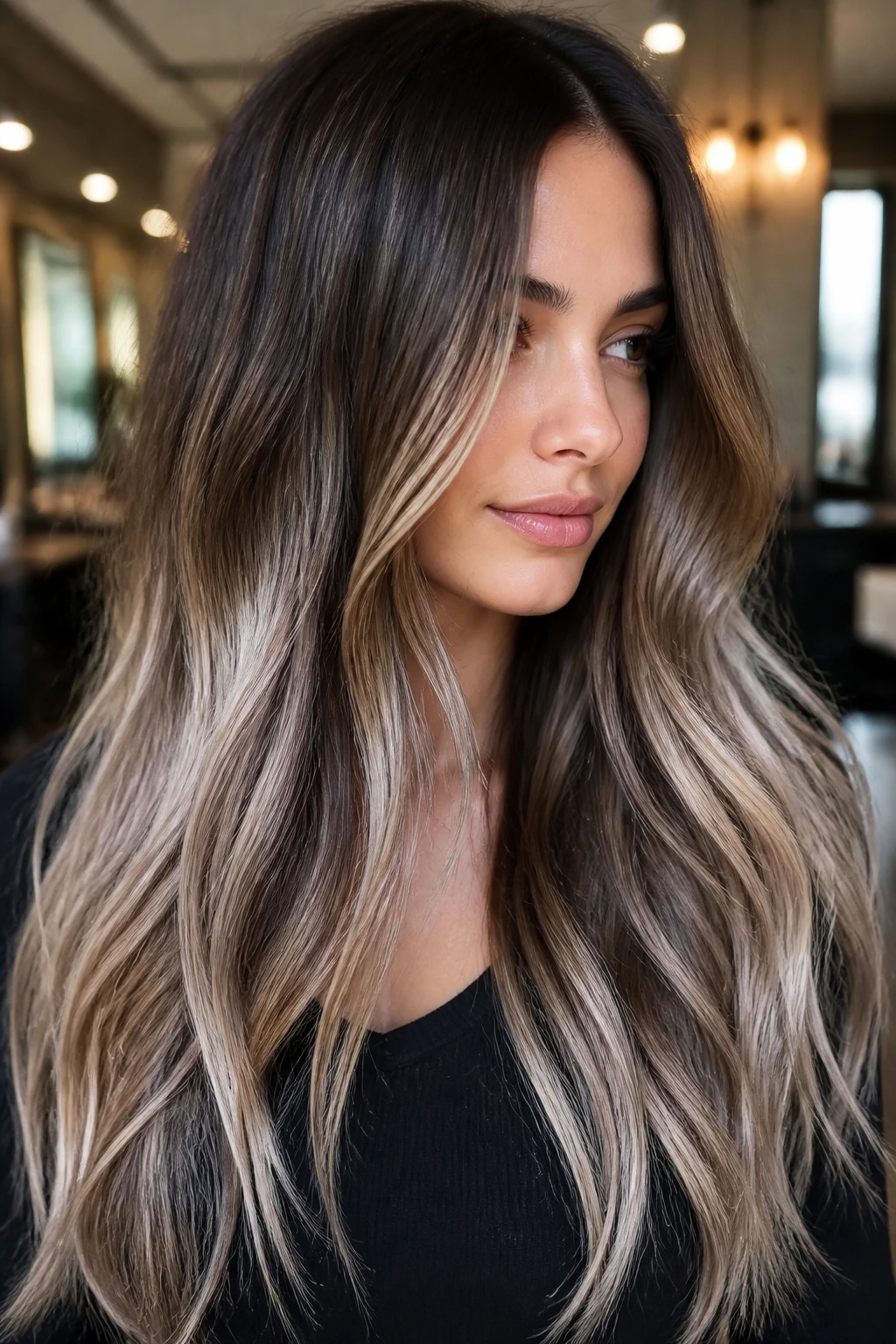
1. Smoky Root Melt with Platinum Ends
This is the version I reach for when someone wants brightness but flinches at obvious grow-out. The crown stays a deep espresso or chestnut, then the color drifts into a smoky brunette midsection before the ends turn icy and pale. On long hair, that melt has room to actually read — the color shift is gradual enough that it feels intentional instead of patched together.
Salon Ask
- Keep the root at least 1 to 2 levels deeper than the mids.
- Place the brightest lift from the cheekbone down.
- Tone the ends to pearl or soft beige if silver feels too harsh.
- Leave the very top layer softer so regrowth doesn’t flash out at you.
The best part is movement. Loose waves make the fade look plush, and even a simple blowout gives you that dark-to-light sweep without a hard line. If your hair is thick, this is one of the easiest ways to keep platinum from swallowing all the depth.
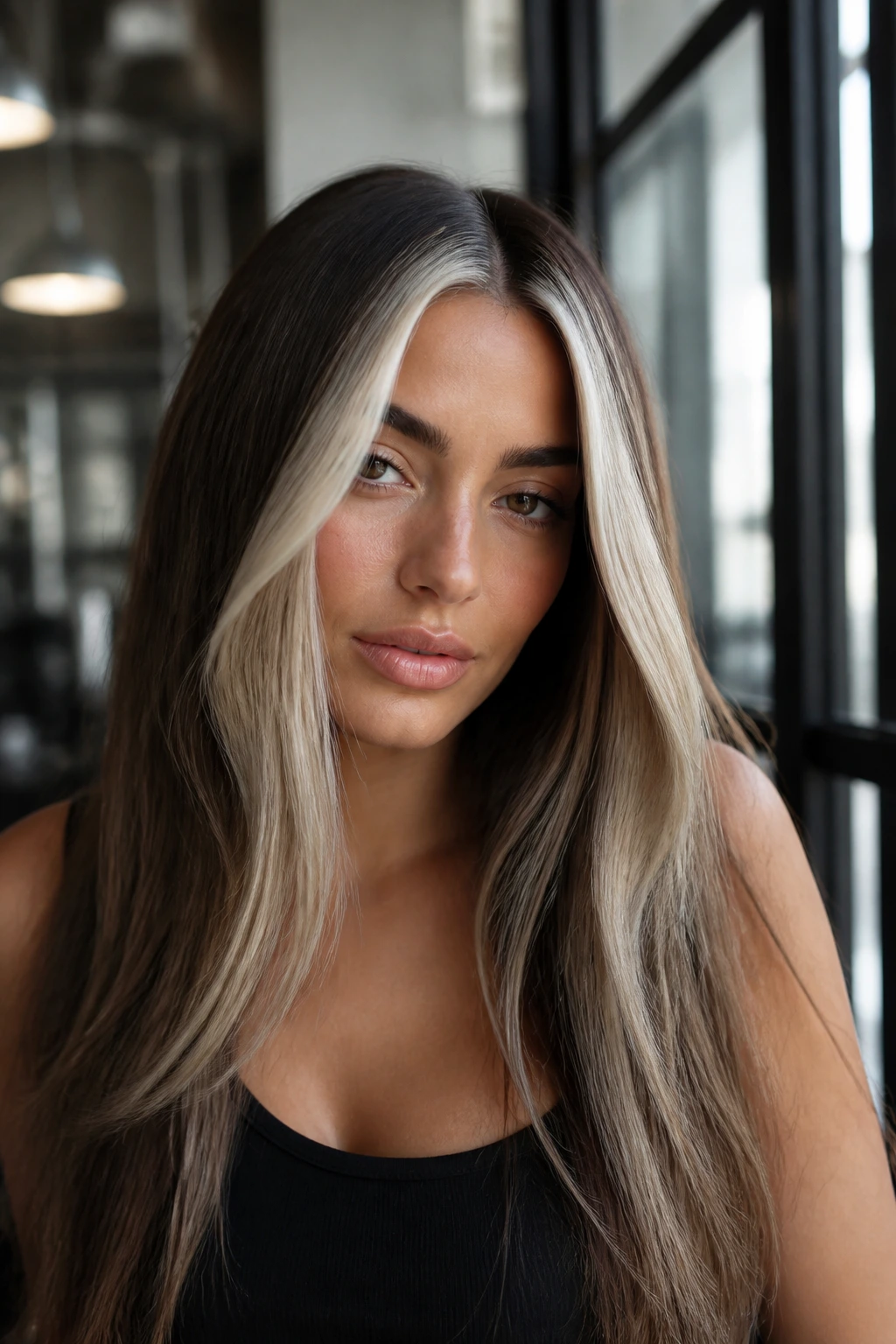
2. Ice Money Piece and Shadowed Crown
If you like the front of your hair to do all the talking, this is the one. The crown stays shaded, sometimes almost walnut-dark, while the two face-framing sections are lifted to a cool, pale platinum that sits right beside the cheeks. Long brunette lengths in the back keep the whole thing from tipping into costume territory.
The trick is width. Too wide, and the money piece starts looking like a strip. Too narrow, and it disappears once you curl it. I like this best on a center part with a loose bend through the mid-lengths, because the bright front pieces land right where the eye looks first. It’s a strong look. No apology needed.
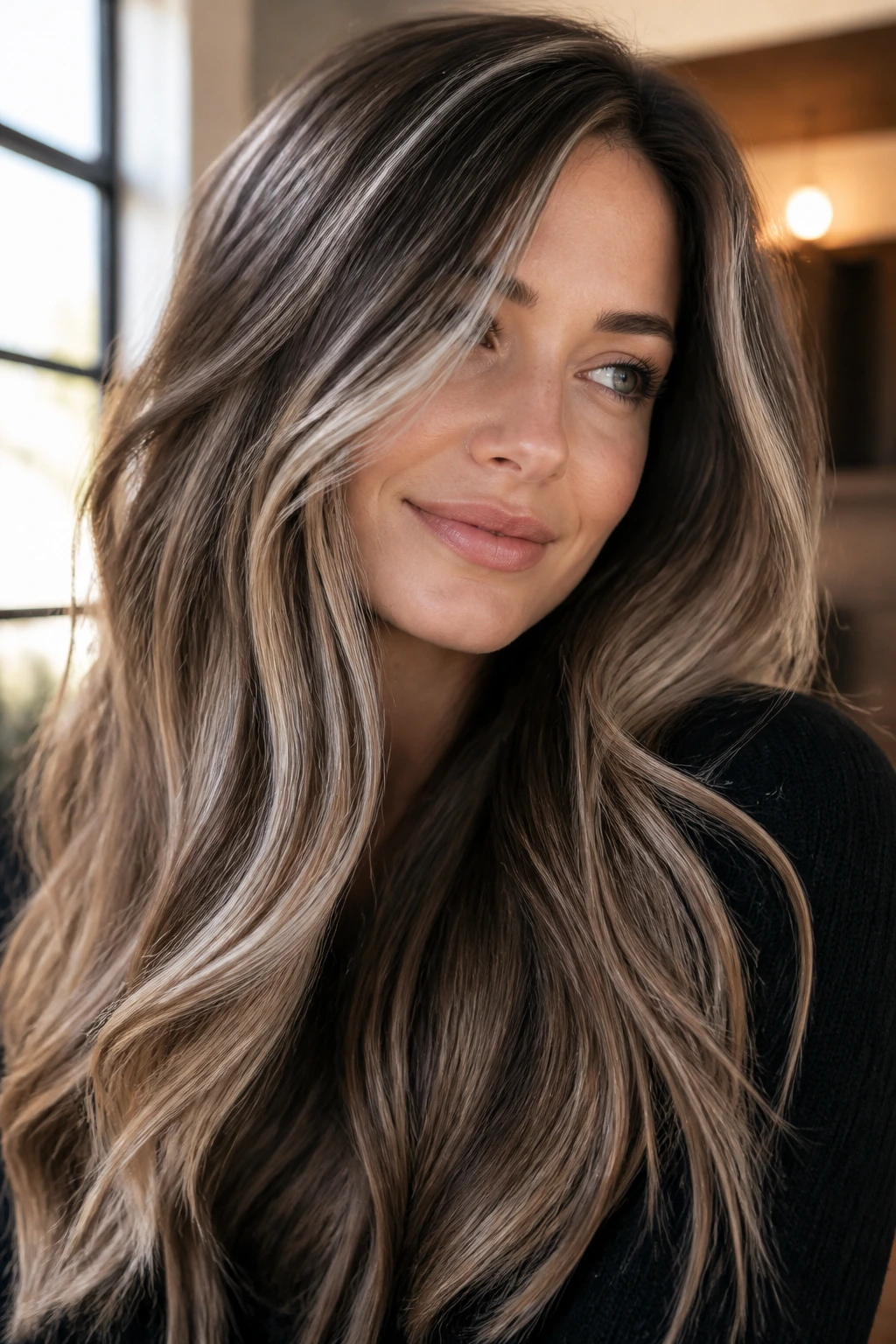
3. Ribboned Balayage Through Chestnut Lengths
This one is softer, and I mean that in a good way. Think hand-painted platinum ribbons laid through a chestnut base, with the darker brunette still visible between them. On long hair, the ribbons can travel farther, which keeps the blonde from looking chopped into little disconnected bits.
The lowlight work matters here. Without a few deeper strands tucked between the lighter ones, the color can go stringy fast, especially on fine hair. I like this shape on layered cuts where the ends move a little when you walk. It’s the sort of color that looks prettier after you’ve worn it for a day, not after you’ve stared at it in the mirror for five minutes.
4. Hidden Underlights for a Blonde Flash in Braids
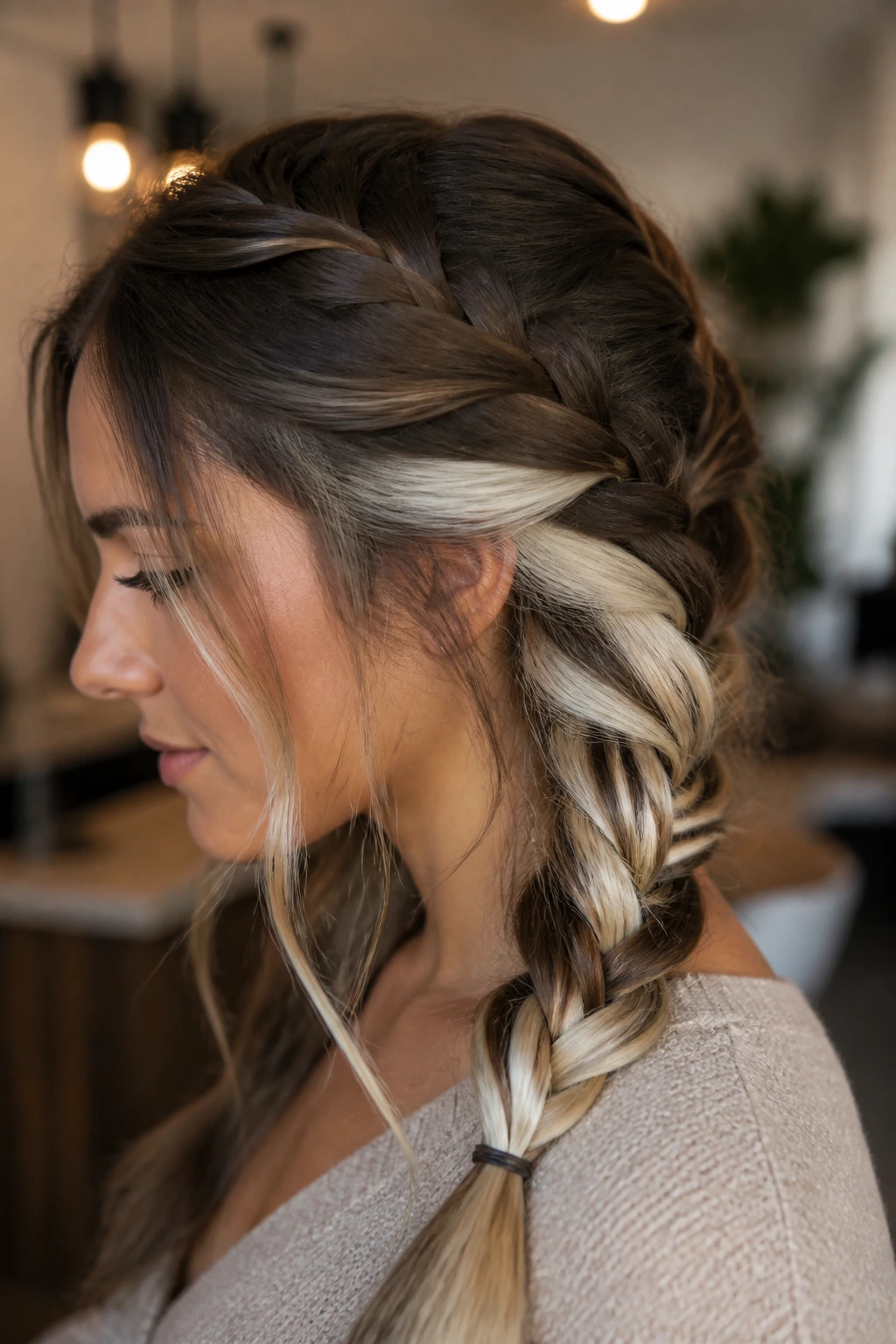
A lot of people underestimate underlights because they don’t show much when the hair hangs loose. That’s the point. Long brunette hair can stay mostly dark on top, with platinum pieces hidden underneath so they flash out in braids, ponytails, half-ups, and twists. It’s the color version of a good surprise.
Where It Shows Up
- The underside of long layers
- The nape, especially in high ponytails
- Braids where the weave opens up
- Loose buns with a few pulled-out pieces
This is the best choice if you wear your hair up often and hate the idea of your whole head looking bright all the time. It also helps if your hair is thick, because the platinum has room to peek through without taking over.
5. Mushroom Brunette with Pearl-Platinum Surface Pieces
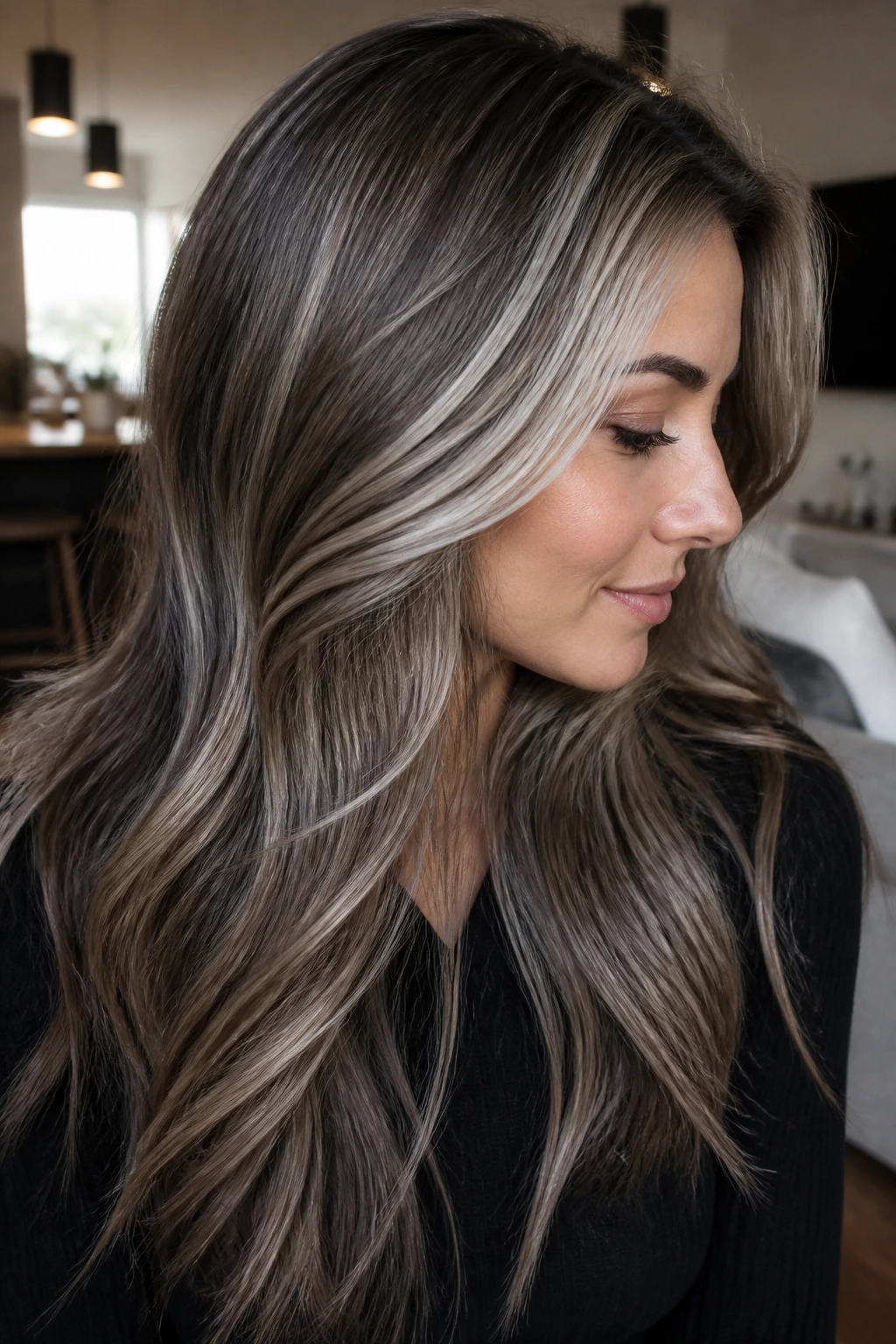
Mushroom brunette has that cool, earthy base that makes platinum look cleaner by contrast. Add pearl-toned surface pieces, and the whole thing starts reading polished rather than streaky. The darker root and midsection keep the color grounded, while the pale top pieces catch light around the crown and face.
I like this on long hair that has a little natural wave. Straight hair can make every placement line feel more obvious, but a bend softens the edges and lets the colors overlap. If you hate warmth in blonde, this is one of the safest places to live. It still needs toner, though. Cool tones drift fast on porous ends.
6. Chunky Platinum Panels with Espresso Separation
This one is not shy. Thick platinum panels sit beside deep espresso sections, and the distance between them is what makes the whole look work. On long brunette hair, those wider panels have enough length to look deliberate, almost editorial, instead of like old-school stripey highlights that stop too soon.
I’d keep this away from ultra-fine hair if you want a soft finish. Fine strands can lose the separation and start looking too busy. But on dense, heavy hair? It’s sharp. It looks especially good in a straight blowout or a clean, brushed-out wave because the panels stay visible from root to tip.
7. Feather-Light Babylights from Mid-Lengths Down
This is the quietest look in the group, and honestly, one of the smartest. Tiny platinum babylights start around mid-length and feather down through the ends, with only a few lowlights near the crown to keep the brunette base from flattening. Long hair is perfect for this because the tiny pieces have time to blend into something much softer than a foil line.
Why It Works
- The brightness looks natural at a distance.
- Grow-out stays softer than with chunkier highlights.
- The ends get light without the root becoming a maintenance project.
- The result works on straight, wavy, and loosely curled hair.
If you want platinum without the obvious platinum look, this is your lane. It’s subtle on purpose. That restraint is what makes it elegant.
8. Beige-Platinum Veil over Dark Mocha
Beige platinum sits between ice and cream, which makes it friendlier on darker brunettes than a stark silver tone. On a dark mocha base, the effect is like a soft veil over the length of the hair — bright enough to catch the eye, but not so pale that it loses the brunette underneath. The lowlights are what keep it from going flat.
This version is especially good if your skin leans warm or neutral and you don’t love the look of blue-toned blonde. Beige tones tend to sit more naturally against the face, and they fade more gracefully than very cool blondes. Still, you’ll want a gloss to keep the finish from turning dull and muddy.
9. Contour Highlights That Trace the Cheekbones
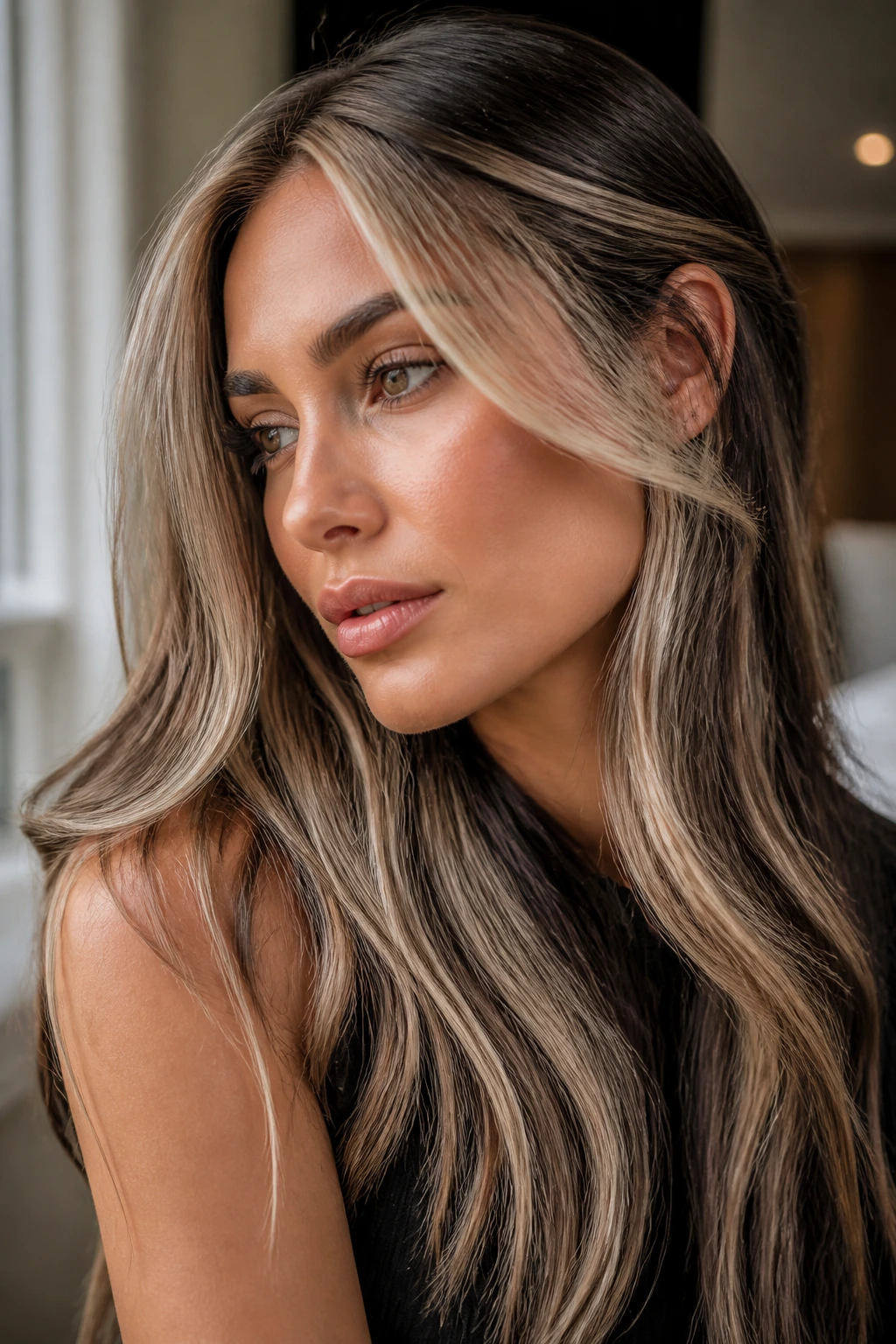
Placing brightness to contour the face is one of those salon moves that sounds fussy until you see it on long hair. The platinum pieces follow the cheekbones, temples, and jawline, so the eye moves along the face instead of getting stuck at the scalp. The rest of the brunette length stays richer, with lowlights tucked inside the layers for depth.
This works best when the hair has movement near the front — a soft bend, a wave, even a tucked-behind-the-ear shape. I wouldn’t make the face frame too broad. Keep it slim enough to follow the face, not wrap it. That tiny bit of restraint keeps the whole thing looking expensive instead of loud.
10. Peekaboo Platinum in the Underlayers
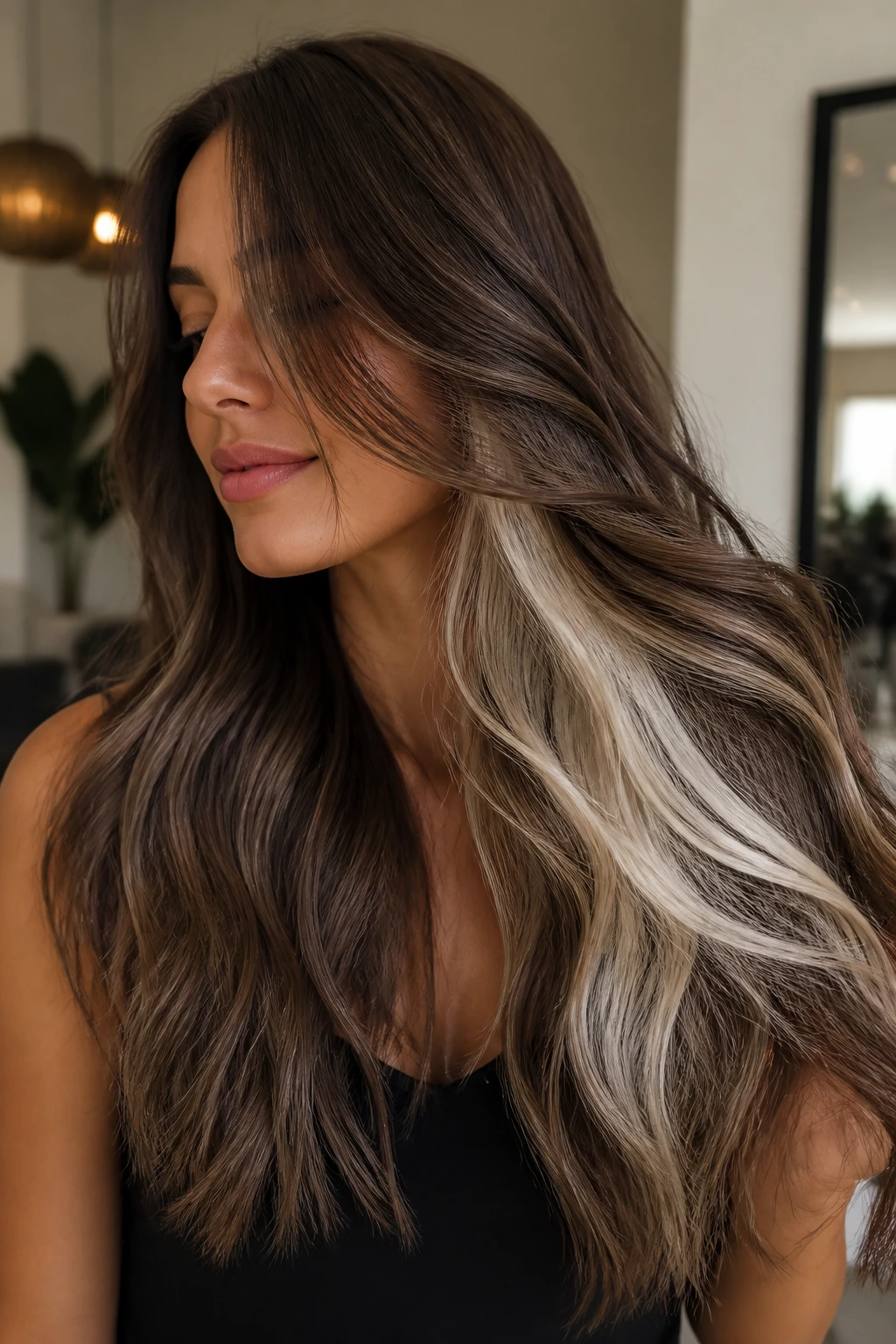
If you love the idea of platinum but want the top layer to stay brunette, peekaboo placement is the clean answer. The underlayers carry the blonde, often with a few lowlights mixed in so the brightness doesn’t turn blunt. Long hair gives you enough depth for the surprise to show only when the hair moves.
It’s a strong option for people who live in ponytails, clips, and half-up knots. The blonde flashes at the nape and through the lower sections, then disappears again when the hair is down. That contrast is what makes it fun. It’s also a little kinder to maintenance, because the visible regrowth is less obvious.
11. Soft Ombré from Brunette Roots to Bright Tips
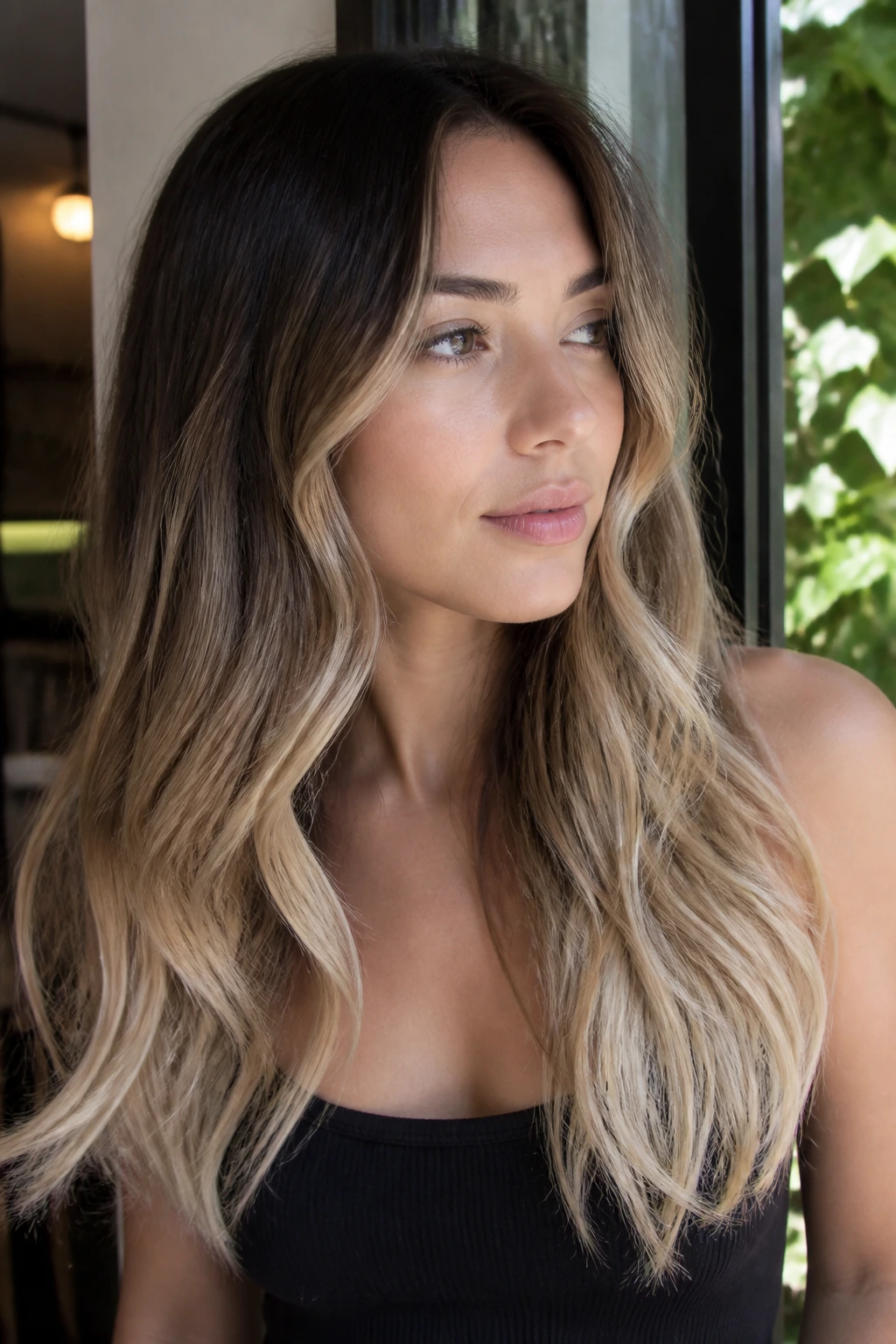
An ombré needs space, and long hair gives it exactly that. The brunette root stays dark and stable, the mids warm up into a softer transition, and the ends reach that pale platinum finish that looks almost lit from inside. A few deeper lowlights through the transition zone keep the fade from turning foggy.
This is the look for someone who wants brightness without regular foiling at the scalp. It grows out easier than most platinum looks because the transition is built into the shape. The only catch is end health. If the tips are fried or see-through, the platinum will expose every broken bit. You need strong ends for this one.
12. Ashy Bronde with Strategic Platinum Streaks
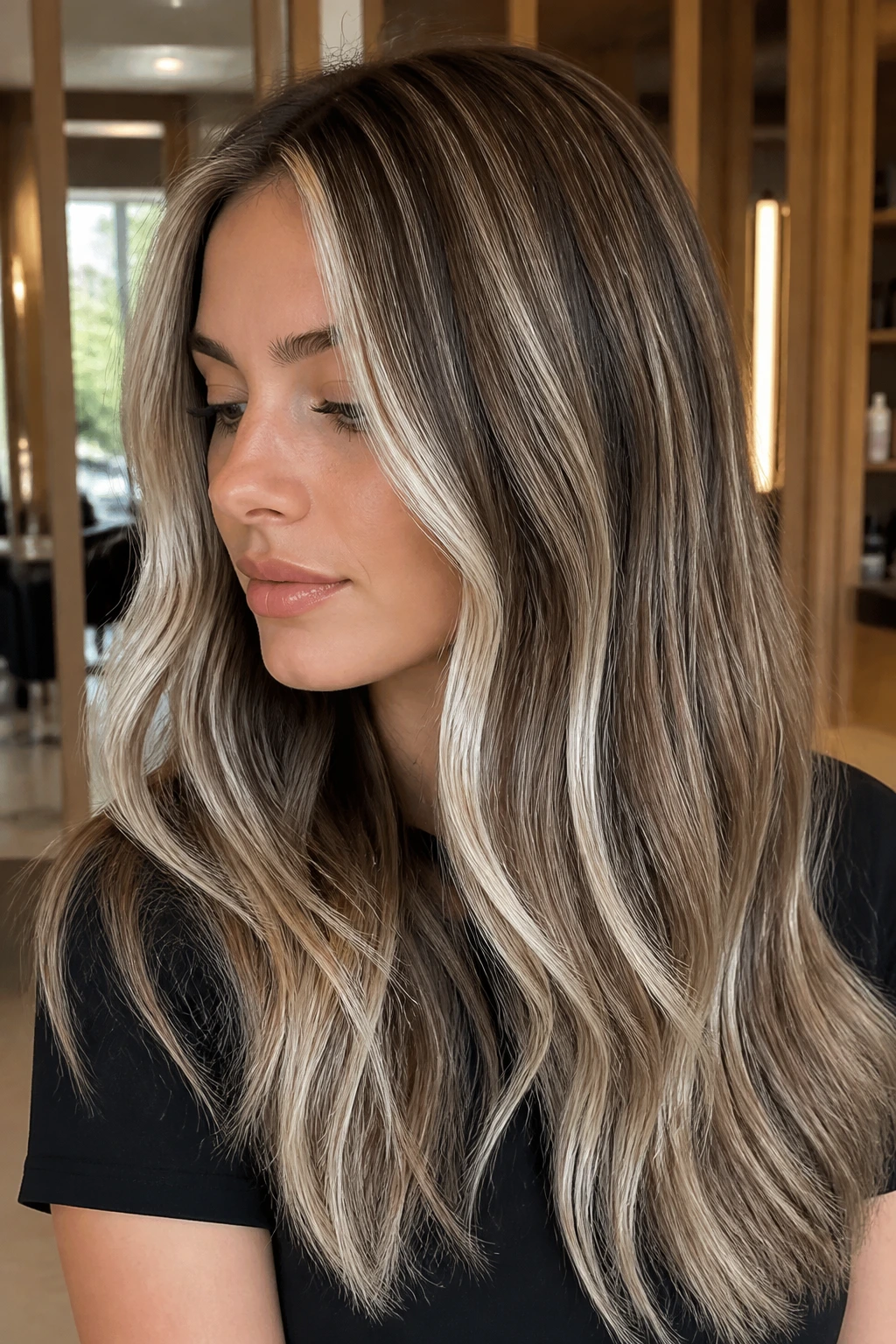
Bronde lives in the middle ground, and the platinum streaks are what keep it from looking too safe. The base stays ash-brown or cool mocha, then thin streaks of platinum cut through the surface in a few carefully chosen spots. Long hair makes that balance easier, because the darker expanse has room to hold the color story together.
This is a solid pick if you don’t want to commit to a full blonde head. The platinum reads as accent, not the main event. On long layers, it looks especially good when the front and the outer surface are lighter than the interior. That keeps the color from puffing out visually.
13. Vintage Stripey Blonde with a Modern Root Smudge
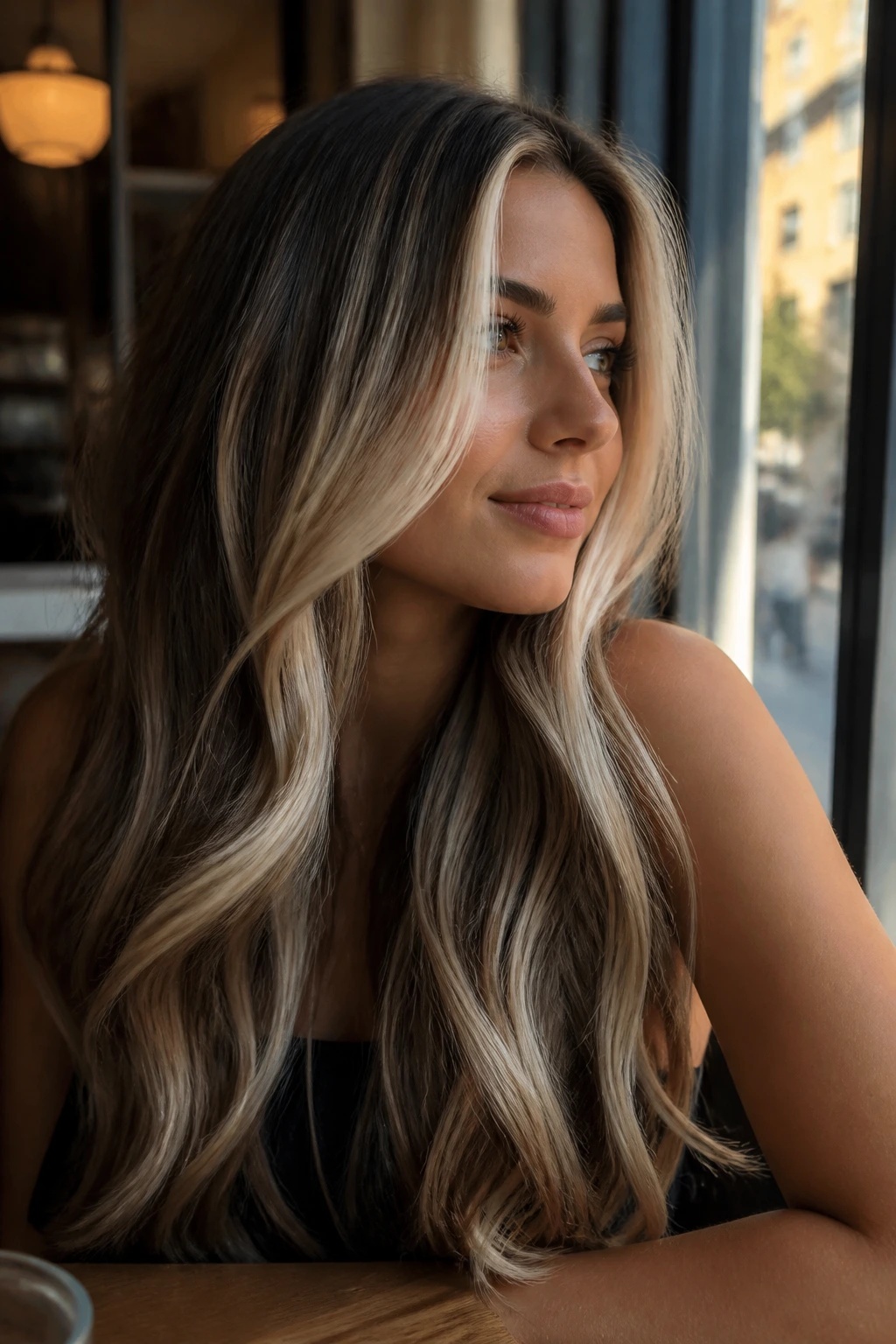
Old-school blonde stripes can look harsh fast, but the modern root smudge changes the entire mood. The platinum sections are a little broader and more obvious, then the root shadow softens the line at the scalp so the look doesn’t feel frozen in place. Long brunette hair makes this style work because the stripes have enough length to relax.
Best for the Right Person
- You like visible contrast.
- You wear your hair in sleek waves or a polished blowout.
- You don’t mind a color that reads from across the room.
- You want a bit of retro energy without the full 90s helmet effect.
I’d keep the blonde tone creamy or neutral here, not flat silver. The root shadow does the heavy lifting; the toner should simply keep the platinum clean.
14. Platinum Veil on Curly Brunette Lengths
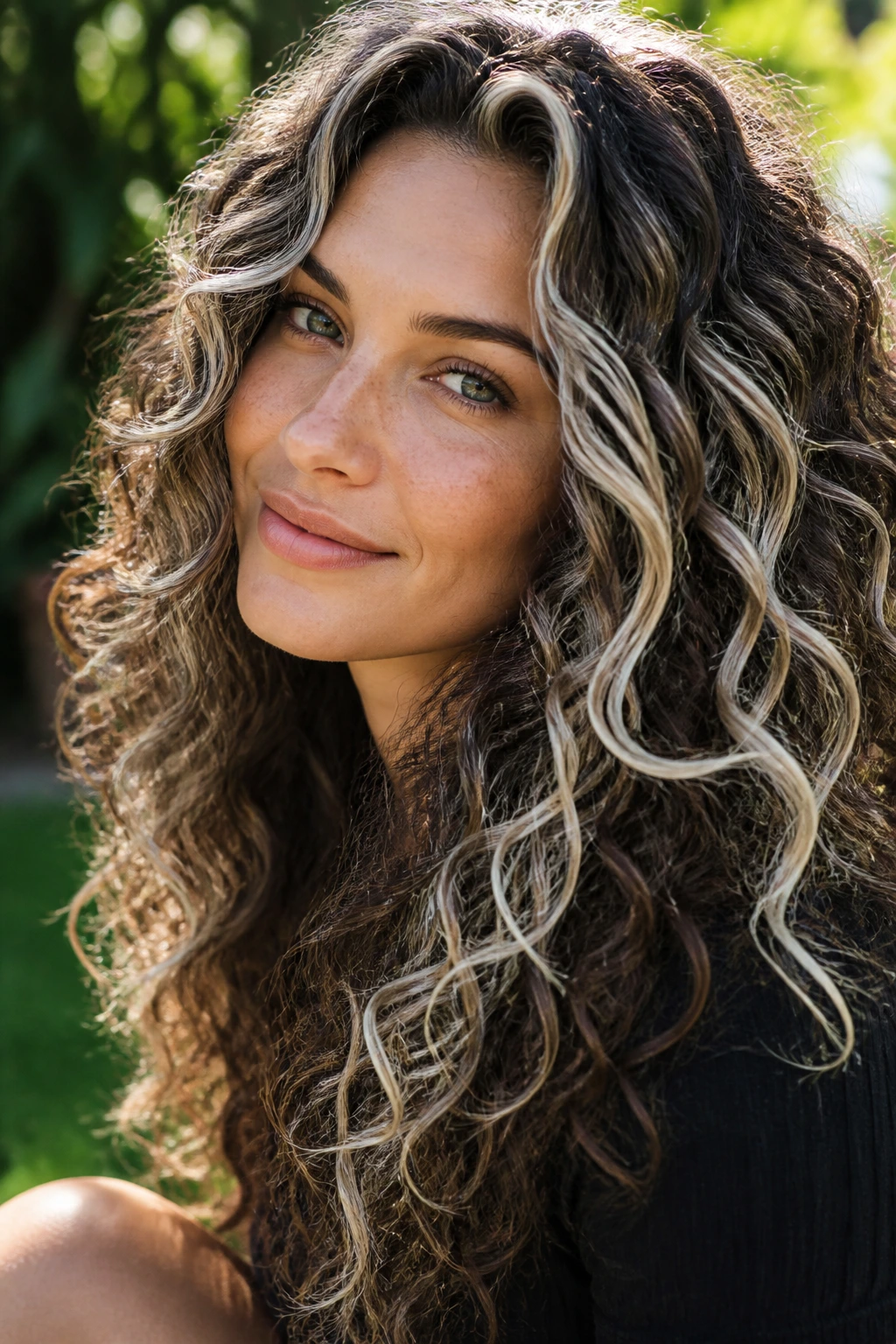
Curly hair changes the placement game. A platinum veil on curls has to follow the way the hair bends, not the way it lies flat on the cape. That means the light pieces land where the curl opens, while lowlights tuck into the darker interior so the shape doesn’t blow out into one giant pale mass.
This look is gorgeous on long curls because the color catches each loop differently. A curl that’s stretched by gravity will show one piece of platinum, then hide it, then show it again two inches lower. That flicker is half the appeal. It does need a careful stylist, though. Curly platinum is not a guessing game.
15. Frosted Ends on Sun-Warmed Brunette Waves
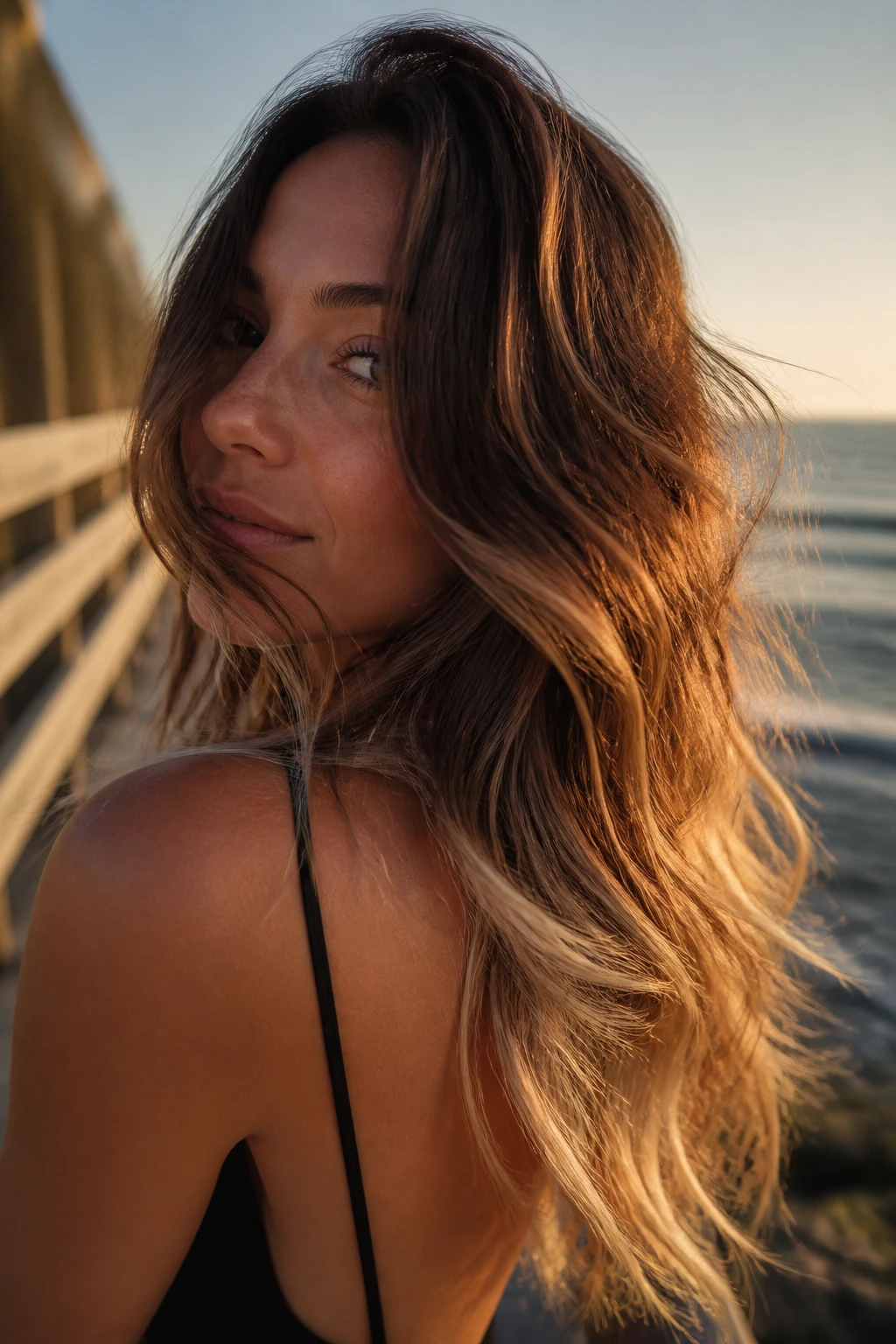
Here, the brightness lives mostly at the ends. The brunette lengths stay warmer and richer through the top and middle, while the lower few inches turn frosted and pale. It’s a nice way to get the feeling of blonde without bleaching every inch of the hair from root to tip.
I like this one on layered waves because the ends lift and separate when the hair moves. That lets the platinum catch the light without making the crown look thin. The lowlights are usually buried higher up in this style, where they help the transition feel smooth. If your hair is long and dense, it can look almost watercolored.
16. Caramel Base with Platinum Flickers
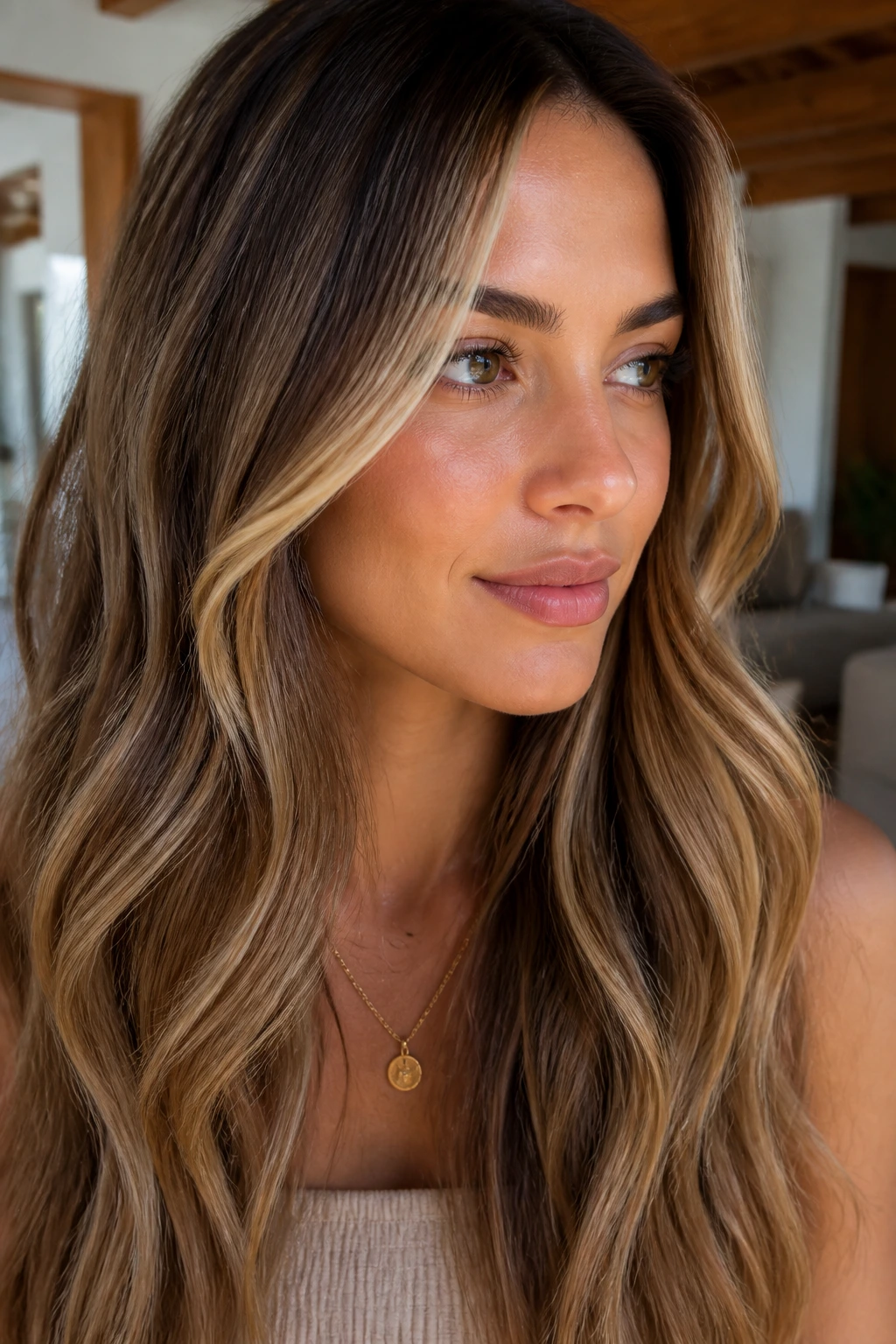
This is a warmer brunette look with a few cold flashes running through it. The base stays caramel or warm mocha, then tiny platinum flickers are placed in the top layer and around the face. The lowlights matter here because they stop the warmth from turning brassy next to the cool pieces.
What Makes It Easy to Wear
- The platinum is small enough to blend.
- Warm brunette shades keep the hair from feeling washed out.
- The pieces can be placed more densely around the face and lighter through the back.
- Grow-out stays softer than with a full platinum panel.
It’s a good compromise if you want brightness but don’t want your hair to lose its richness. On long hair, those tiny flickers can look very expensive when they’re done with restraint.
17. High-Contrast Crown Shadow and Money Piece
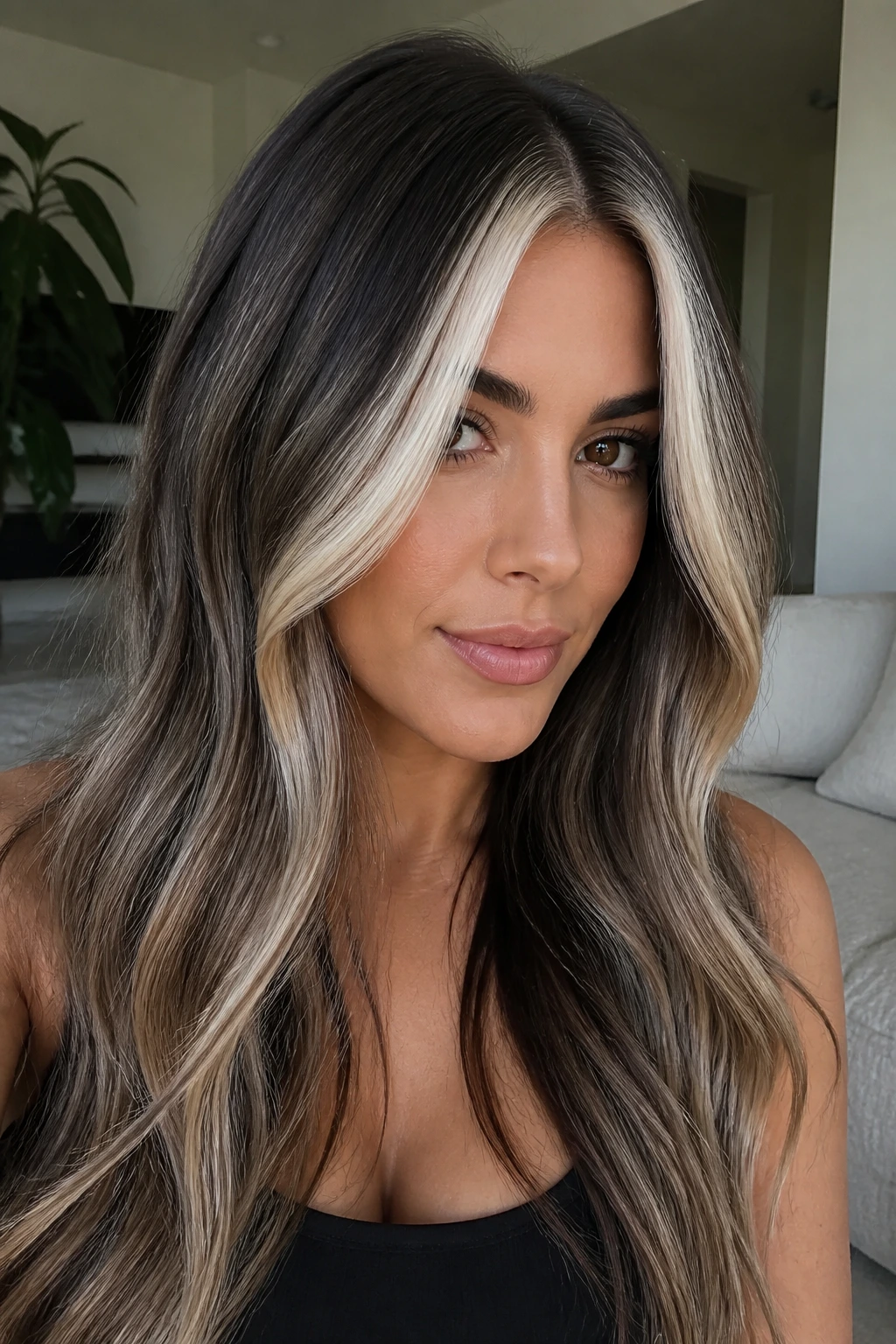
This one leans dramatic. The crown stays dark, almost shadowed on purpose, and the money piece pops forward in a very bright platinum that lands right at the front. Long brunette hair gives the back enough mass to hold the contrast, so the front doesn’t feel disconnected.
It’s best if you wear your hair with a center part or a tidy side part, because the contrast wants structure. If you flip your part every hour, the brightness will move around and the shape gets less precise. I’d call this a good choice for people who like their hair to look styled even on ordinary days.
18. Champagne Ribbons on Long Layers
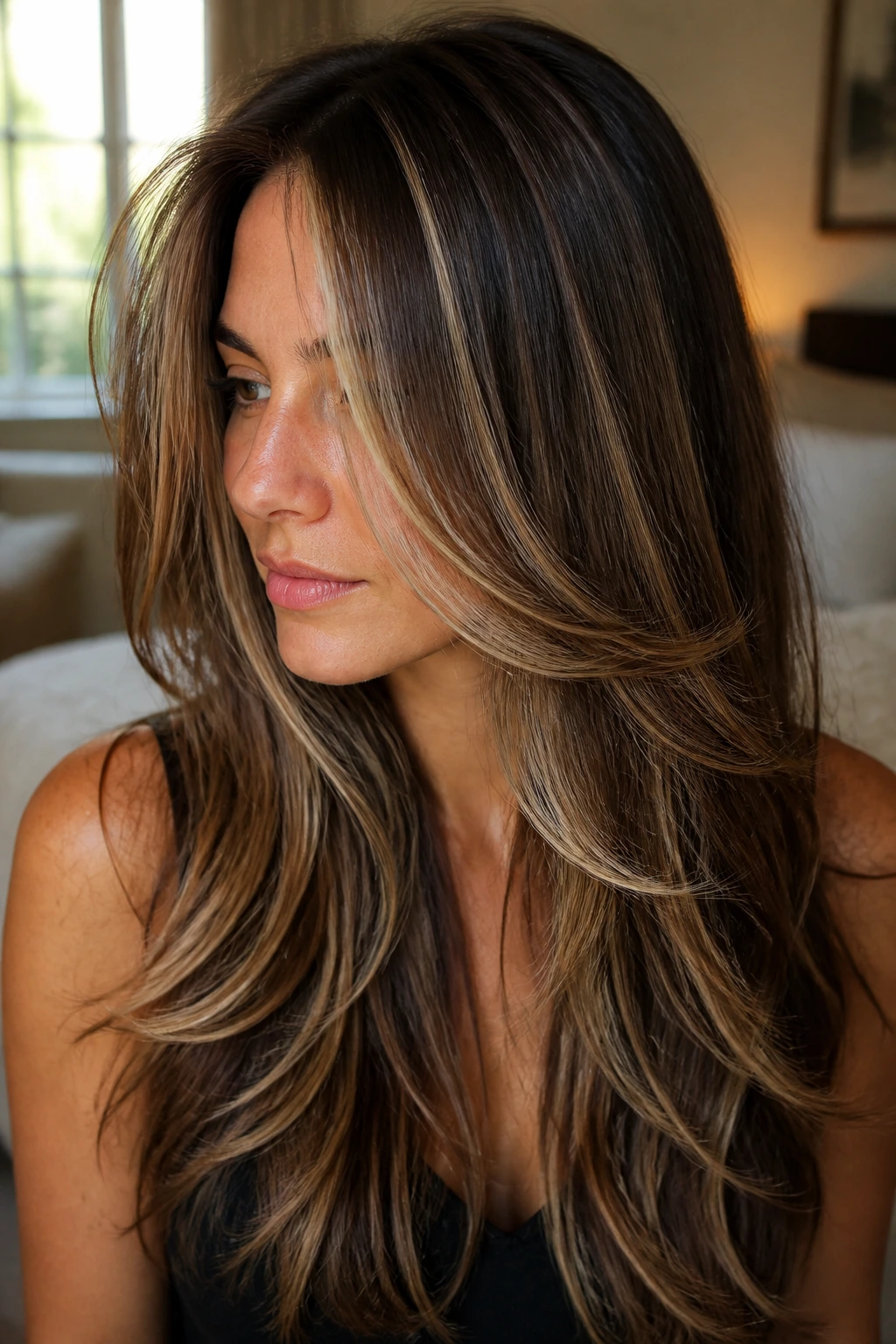
Champagne blonde is softer than ice, and that softness is what makes it useful on brunettes. The ribbons are fine, loose, and a little warmer than platinum, so they sit inside long layers without demanding attention at every turn. A few deeper lowlights through the interior keep the color from getting too airy.
This is one of my favorites for long hair that already has movement. The ribbons slip through the layers instead of sitting on top of them, which gives the cut a lighter look without sacrificing depth. If your hair is very dark, the colorist may need to lift more carefully so the champagne tone doesn’t land dull.
19. Halo Lights Around the Top Layer
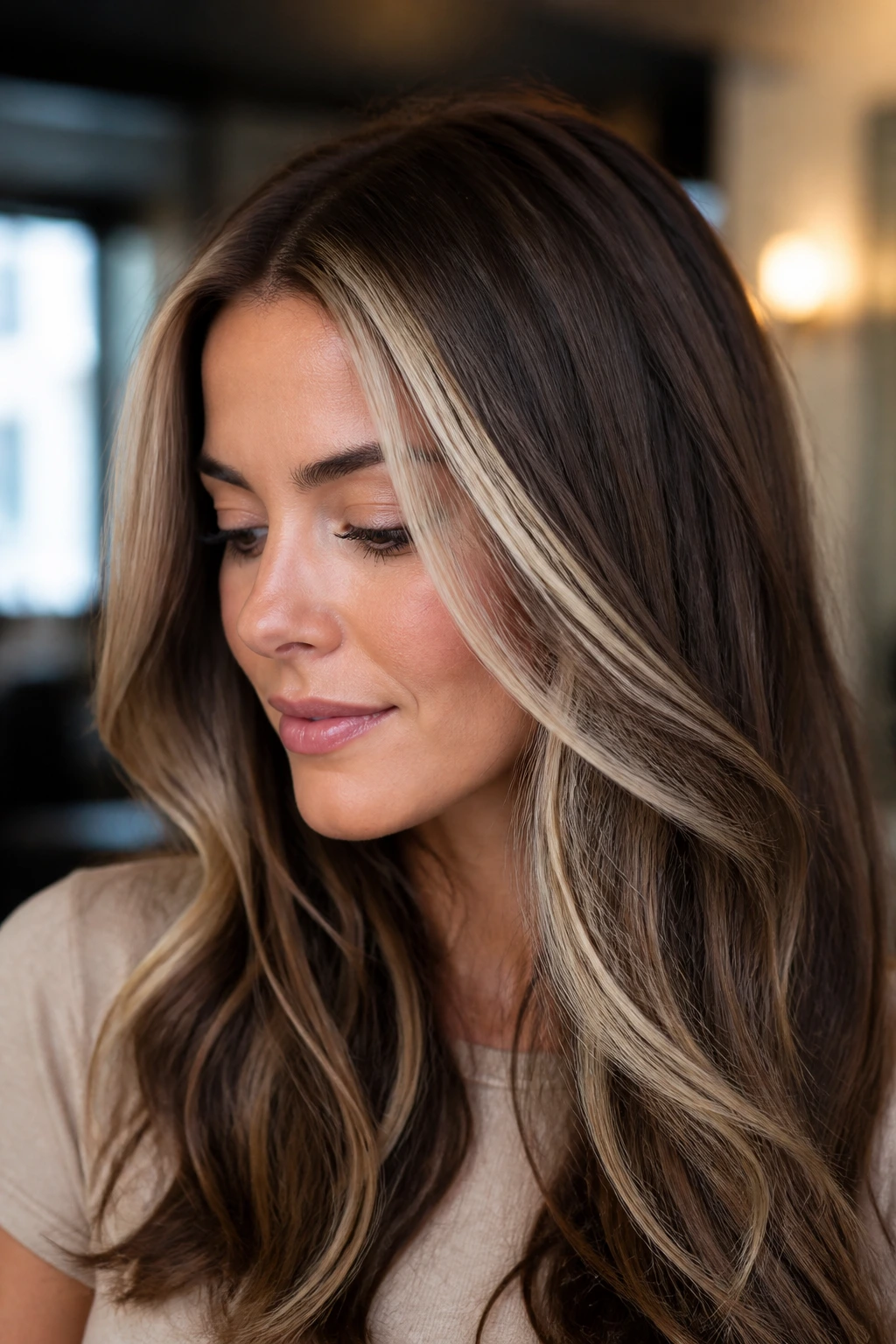
Halo lights are placed where the eye naturally lands: around the upper surface, the part, and the sides that frame the face. On long brunette hair, that placement keeps the interior rich and the outside bright, which makes the whole head look fuller. The lowlights live underneath, where they stop the platinum from spreading everywhere.
Where to Ask for Brightness
- Around the part line
- At the temples
- On the outer top layer
- A little at the front ends for movement
This style works because it respects the shape of long hair instead of fighting it. You get light where the cut needs lift, not just where the foil happened to sit.
20. Platinum-Dipped Face Frame with Dark Interior
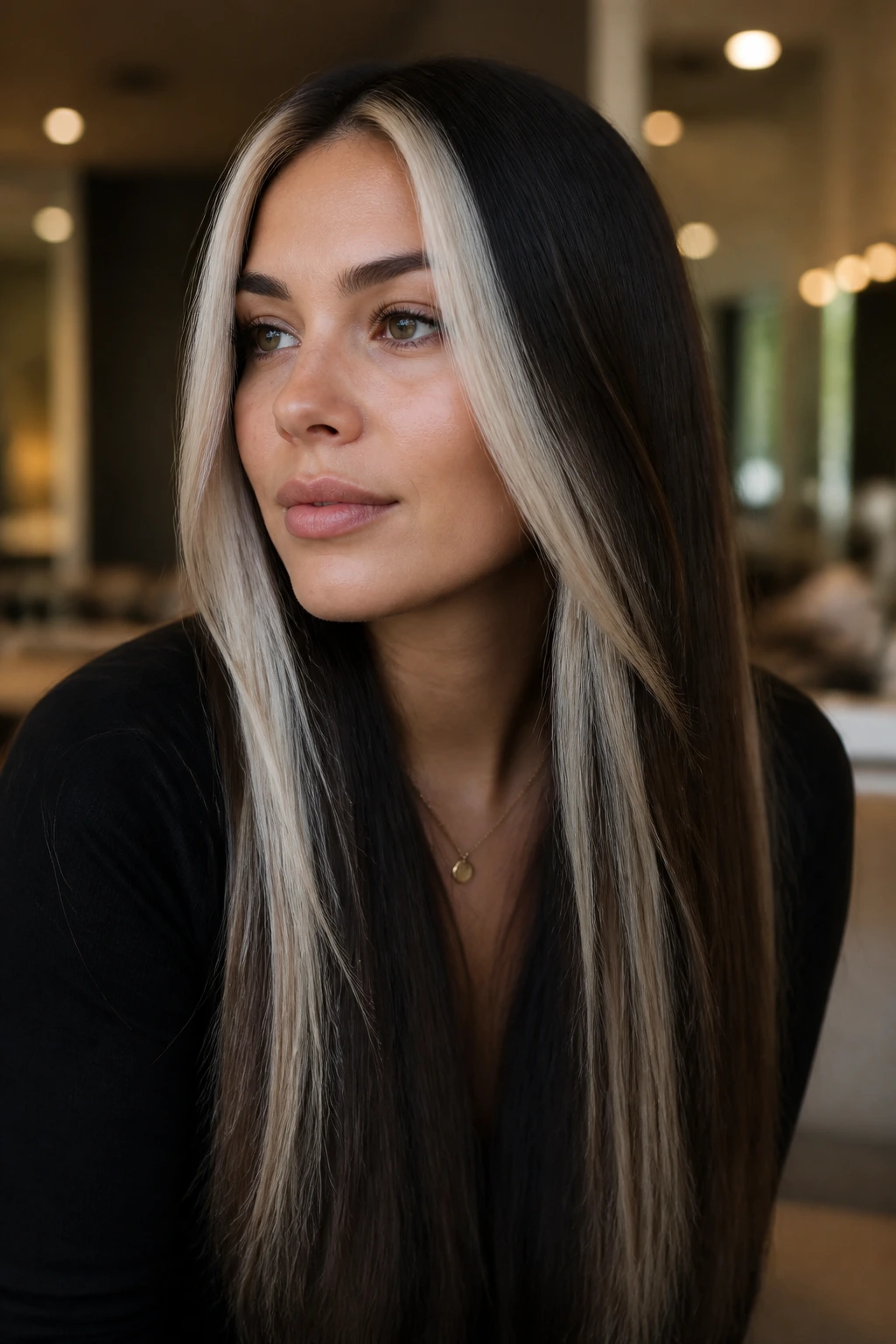
This is the bolder cousin of the money piece. The face frame starts bright, often almost white at the front edges, then the rest of the hair stays dark inside so the platinum looks even stronger by comparison. Long hair helps because the dark interior has enough length to act like a backdrop.
I’d choose this when you want a statement but don’t want to color the entire head into submission. It’s especially sharp on straight styles, where the contrast is uninterrupted. A little wave softens it, but the edge is still there. That edge is the point.
21. Smudged Brunette Root with Bright Clean Ends
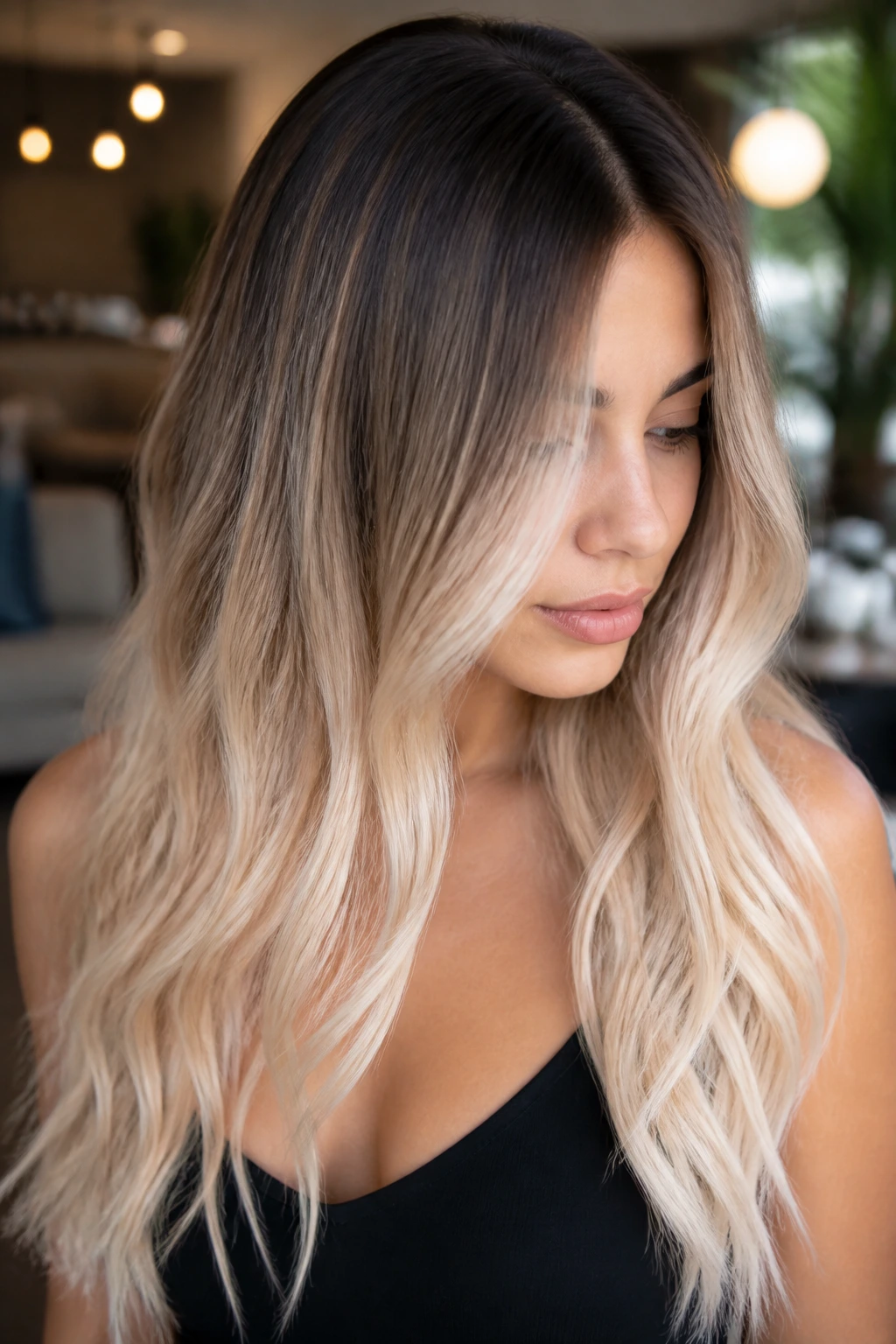
Some people love a very clean finish at the ends but want the scalp area to stay soft. A smudged root solves that. The brunette root is blended just enough to erase a hard line, then the mids and ends turn bright and clean, with platinum strongest toward the bottom. It’s a classic long-hair move because the length supports the fade.
The clean ends matter. If the tips are porous and uneven, this style loses its polish fast. A good gloss helps, and so does trimming off the scraggly bits before you ask for very pale blonde. Long hair can carry brightness beautifully, but it also punishes damage.
22. Feathered Lowlights Around Platinum Ribbons
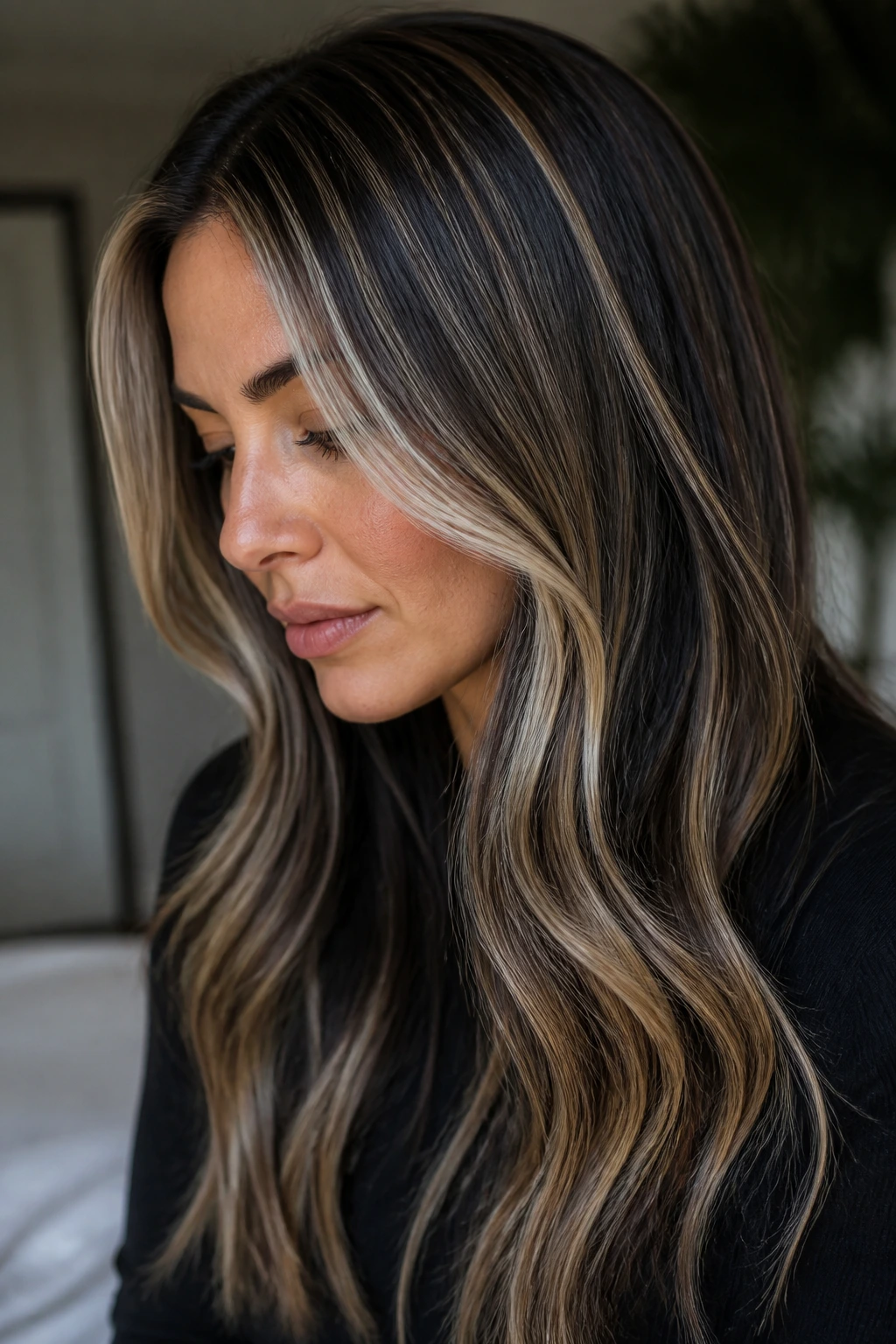
This is one of the few looks where the lowlights are the star, even if the platinum gets all the attention. Thin feathered lowlights run around and between the lighter ribbons, so the blonde has depth to sit in. On long brunette hair, that kind of layering is what keeps the color from looking painted on.
Why It Feels Softer
- The dark pieces break up big blonde sections.
- The platinum reads brighter because it has contrast beside it.
- Long hair keeps the placement from feeling cramped.
- The overall finish looks closer to blended light than striped color.
I like this when the hair is already quite light and needs grounding. It’s the fix for hair that has gone too blonde and lost its shape.
23. Glossy Espresso with Frosted Contour Pieces
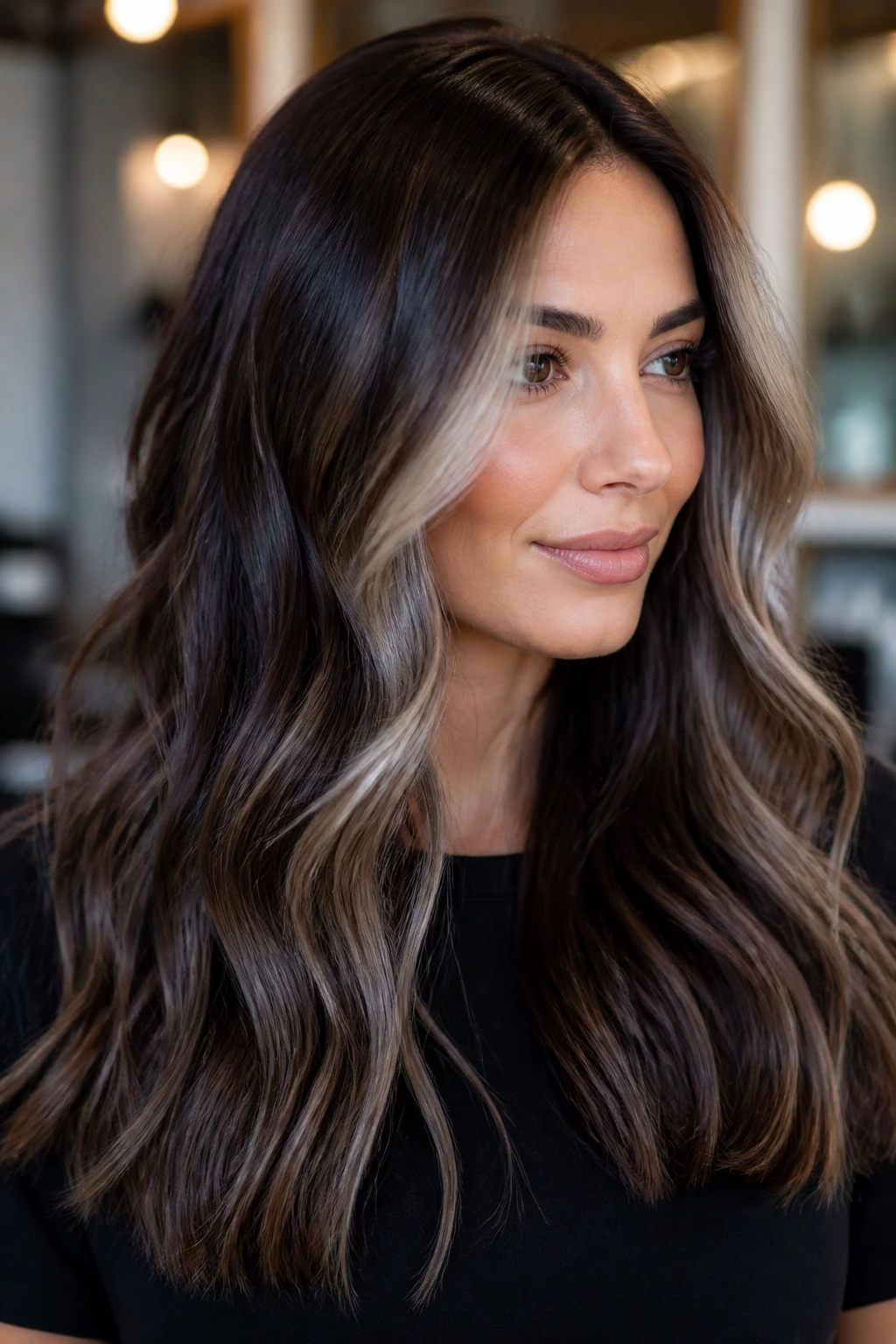
Espresso brunette is a strong base, and gloss is what makes it shine instead of sink. Add frosted contour pieces near the face and along the front layers, and you get a rich dark finish with just enough platinum to brighten the skin. The lowlights can be nearly invisible here because the base already has so much depth.
This works especially well if you’re not chasing all-over brightness. The platinum stays controlled and specific. That precision makes the whole style look deliberate, not accidental. If your hair is long and thick, this is a good way to avoid the “too much bleach, not enough shape” problem.
24. Beachy Long Layers with Ice-Tipped Ends
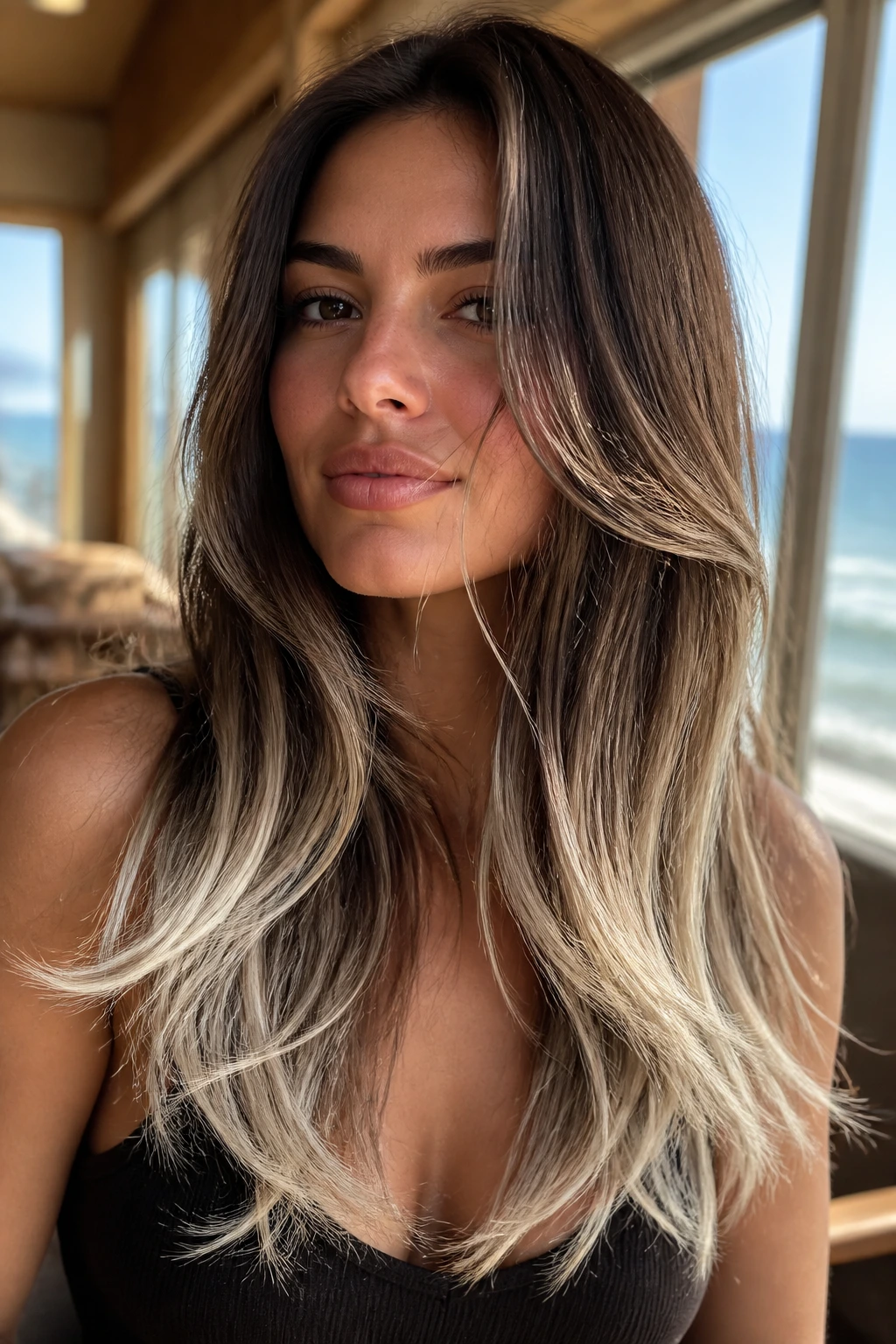
The beachy part is about texture, not season. Long layers let the ends move, and icy tips give that movement a sharper finish. The brunette root and midsection remain full of depth, while the lower inch or two turn pale enough to stand out when the hair flips around.
This look is easiest on hair with a natural wave or a loose curling-iron bend. Straight hair can make the transition too obvious unless the ends are softened with a gloss. I’d keep the top color richer, because once the entire length starts getting light, the lowlights at the root lose their job.
25. Dimensional Cocoa Base with Pearl Pieces
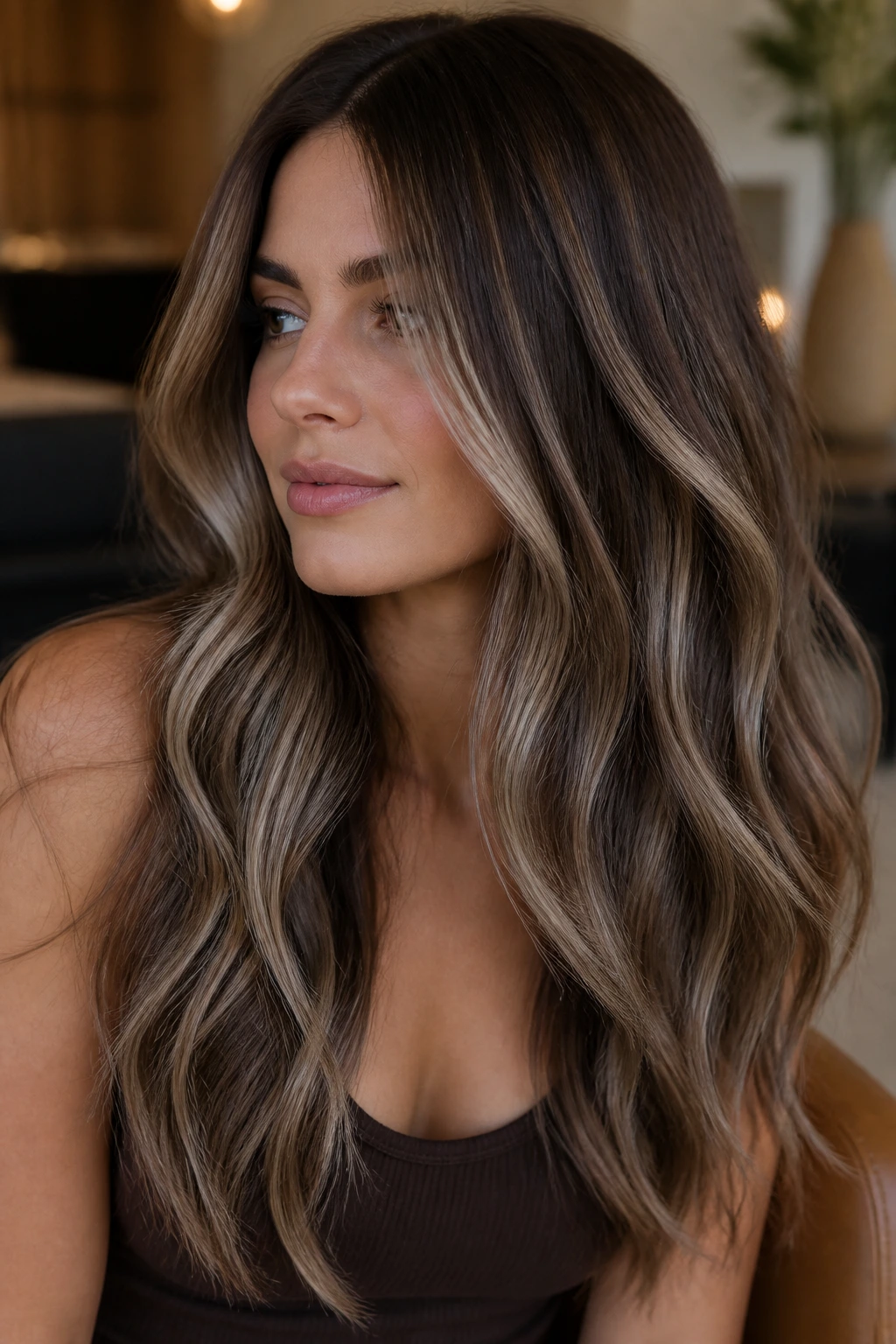
Cocoa brunette has a velvety feel that plays nicely with pearly blonde. The pearl pieces are thin, scattered, and a little cooler than beige, so they shine without going full icy. Long hair gives those pieces room to disperse, which keeps the look dimensional instead of overworked.
Best Things About It
- It looks good in motion.
- The brunette base stays visible.
- The pearl tone feels softer than white-blonde.
- The lowlight depth can be built in without stealing the show.
This is a quiet luxury kind of color, if that phrase meant something practical. It’s refined because nothing is shoved too hard.
26. Mocha Melt with a Clean Platinum Edge
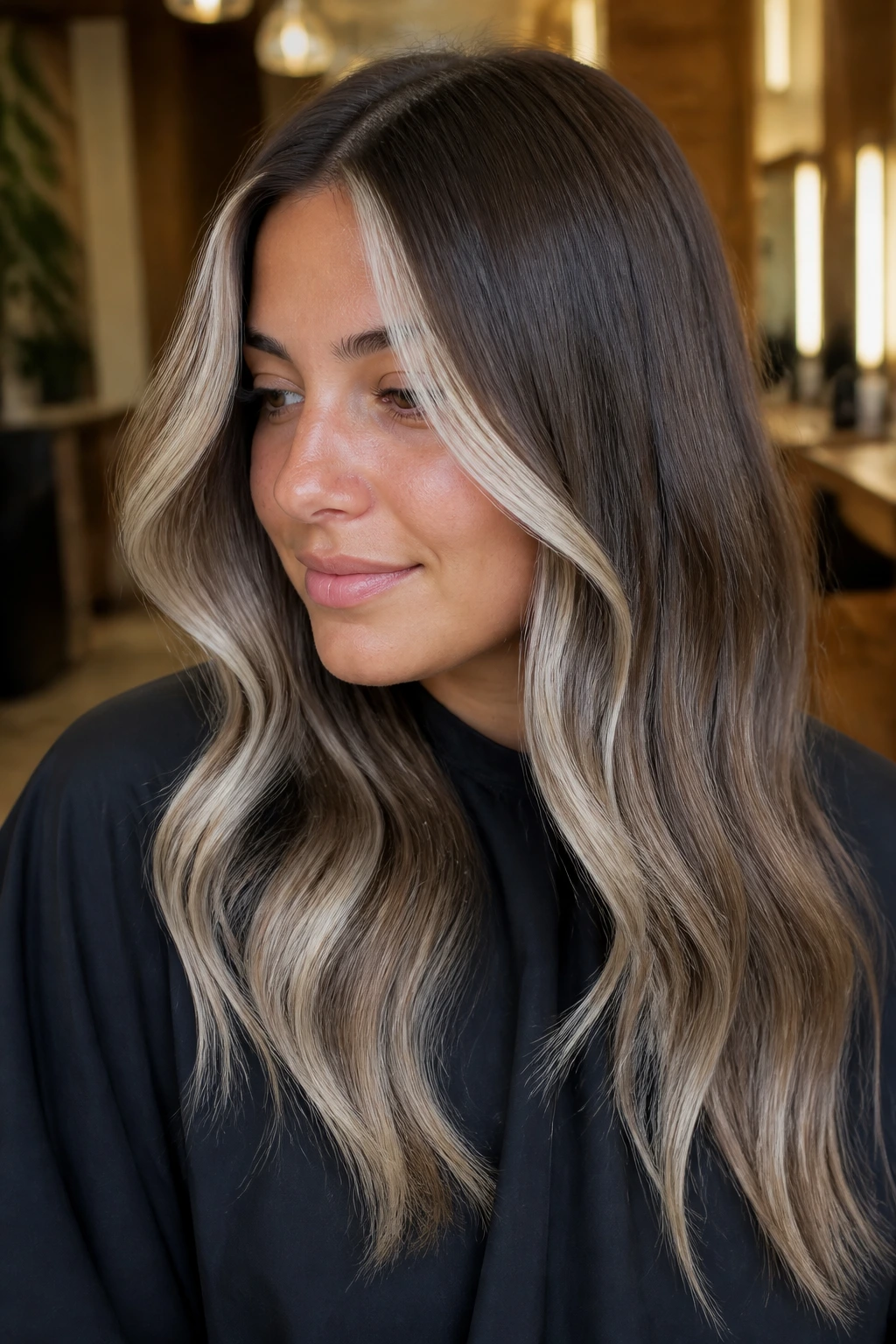
The mocha melt is all about smoothness, but the clean platinum edge keeps it from drifting into boring territory. You get soft brunette through most of the length, then the brightest pieces land at the outer edge of the face frame, the ends, or both. Long hair is the right place for this because the contrast has room to finish the sentence.
It’s a strong option if you wear your hair in one signature part. The edge becomes part of your shape. I’d avoid making the platinum too thick here. The style works best when the blonde looks like a controlled border, not a blanket.
27. Center-Part Statement with Bright Panels
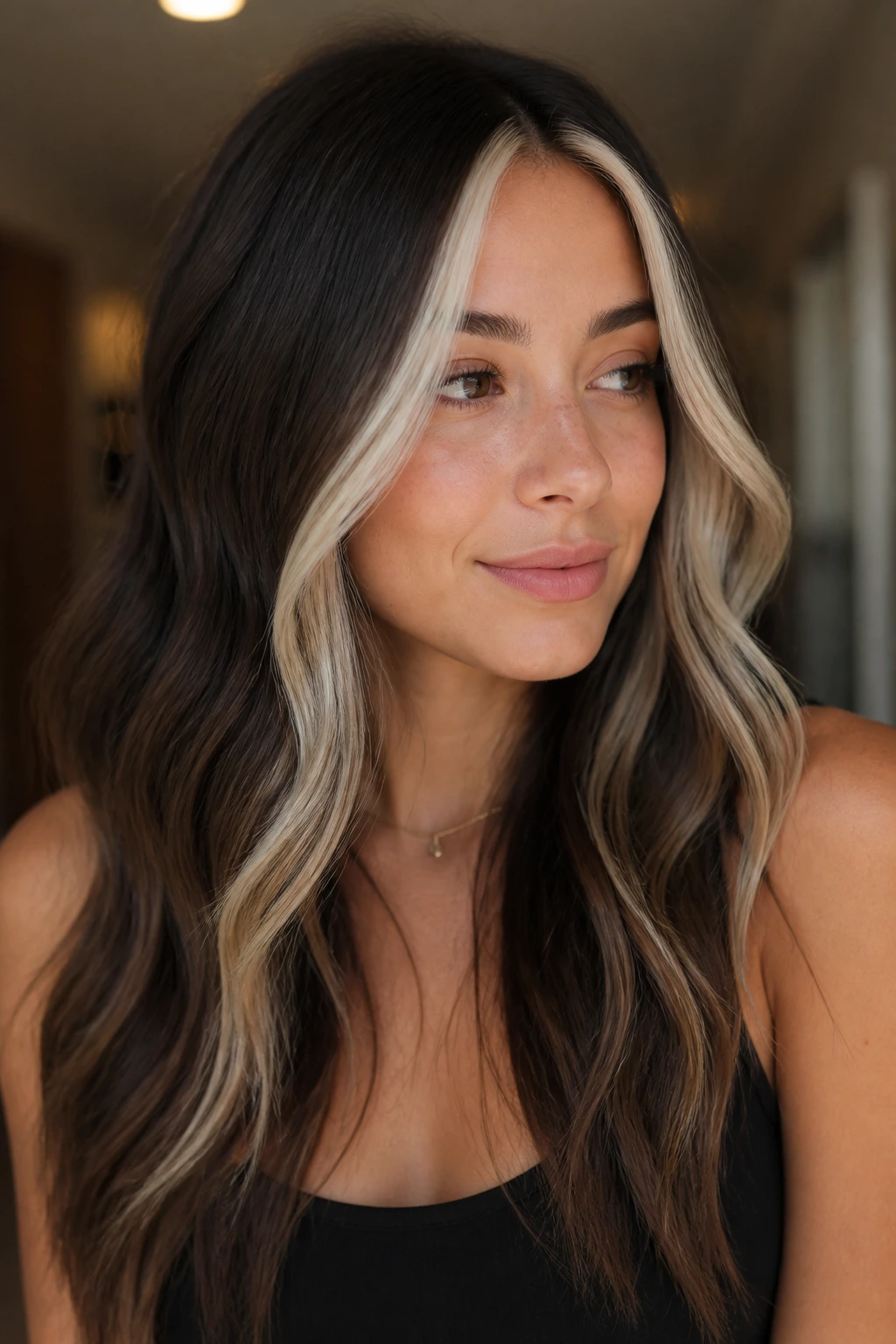
A center part gives you symmetry, and symmetry loves high contrast. Bright platinum panels on either side of the part create a strong visual line, while the rest of the brunette hair stays deeper and cooler. On long lengths, the panels can extend enough to look clean rather than abrupt.
This is one of the more fashion-forward ideas in the mix. It looks best when the hair is sleek enough to show the part clearly, even if the ends bend a little. If you like your color to feel polished and a little dramatic, this is an easy one to understand at a glance.
28. Shadow Root with a Platinum Dusting
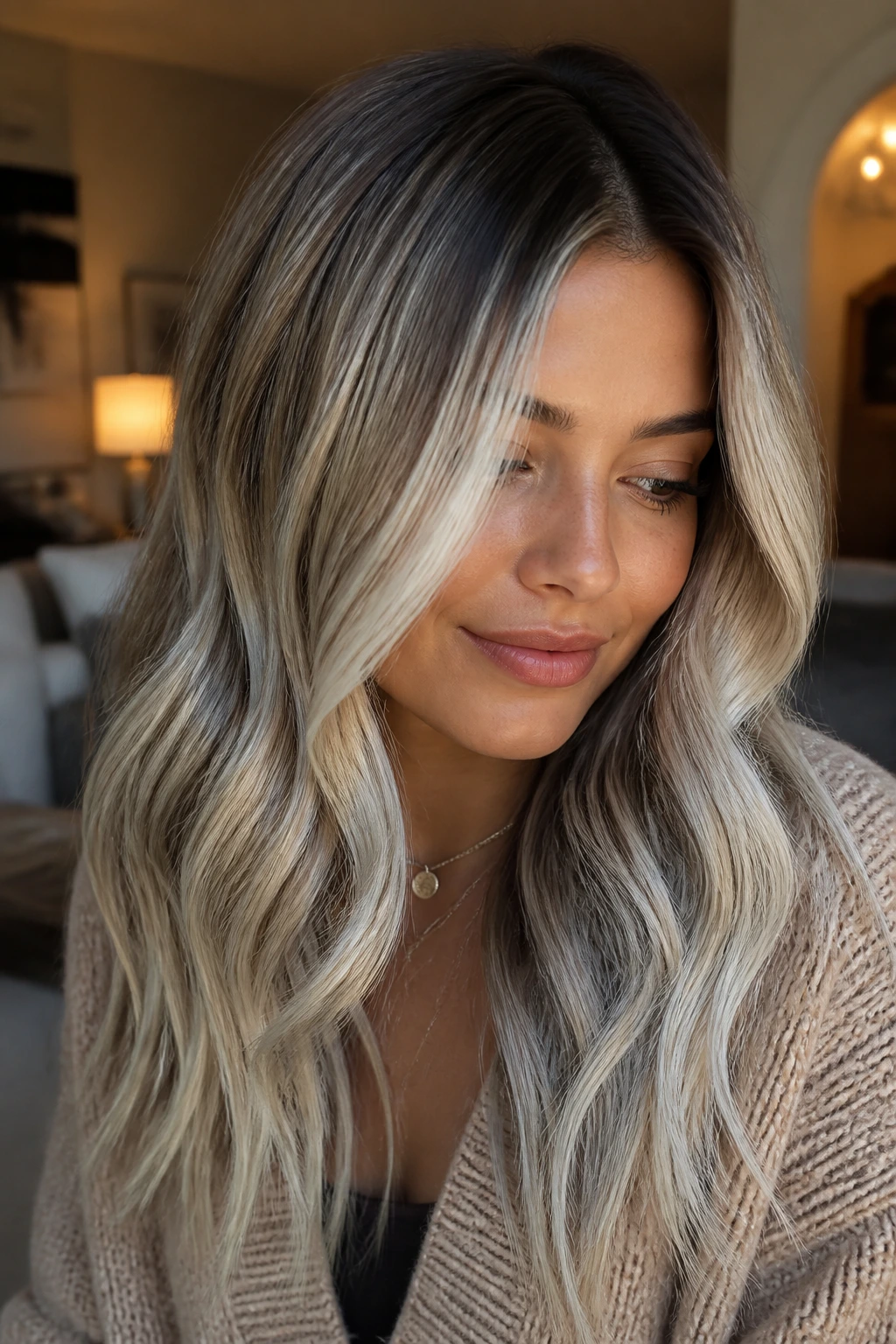
This is the least demanding look here, and I mean that in the best way. The shadow root stays natural-looking and deeper at the scalp, then the platinum appears in a light dusting through the lengths and around the face. Long brunette hair handles this especially well because the dark foundation does half the visual work for you.
A few carefully placed lowlights keep the dusting from looking too thin. I like this on people who want brightness but don’t want the maintenance calendar to run their life. It’s softer than a full blonde, easier to grow out, and still gives you that pale shimmer when the light hits it.
Why Long Brunette Hair Needs Both Brightness and Shadow
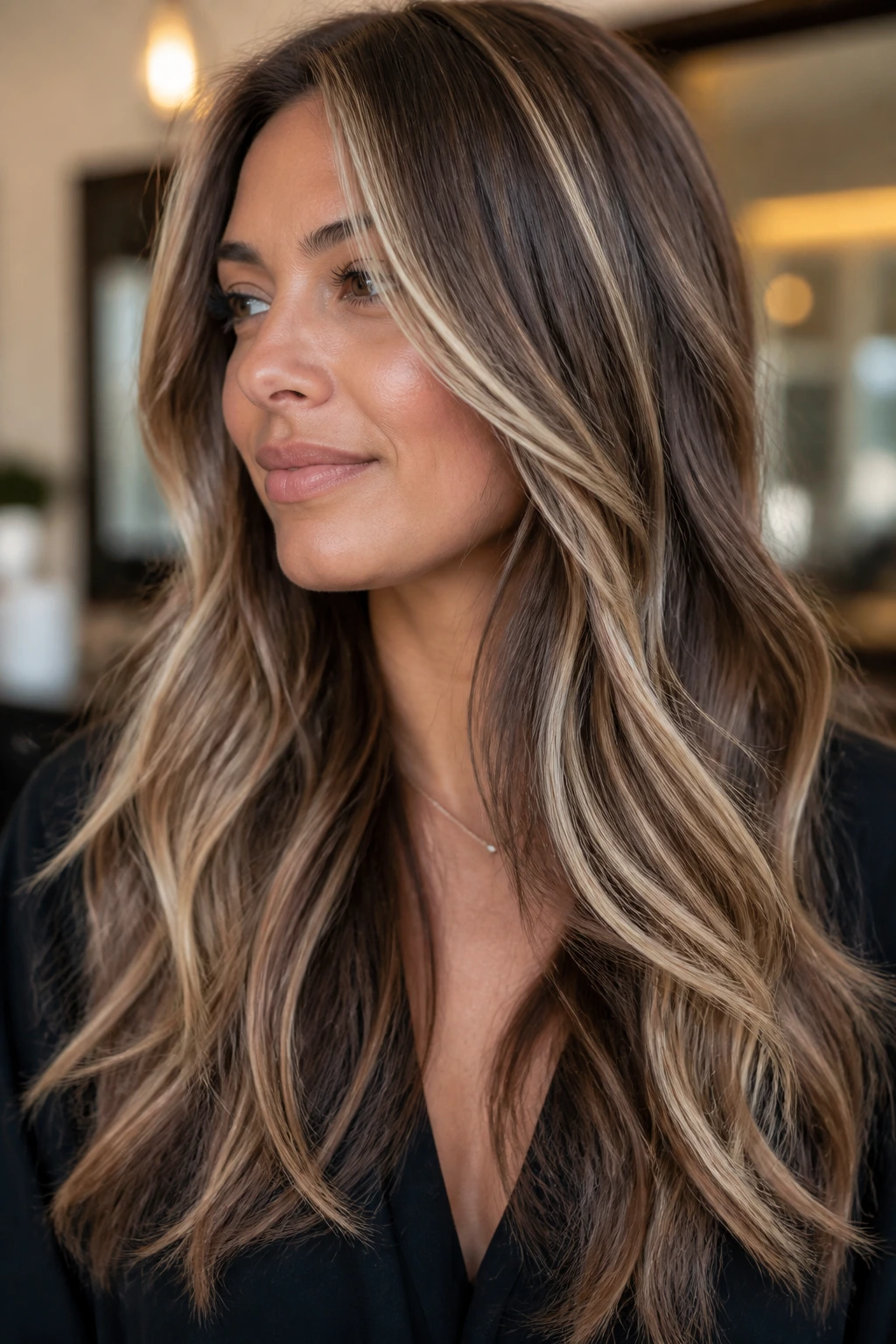
Platinum on brunette hair can look gorgeous, but on long lengths it can also look a little empty if you don’t give it something darker to sit against. Hair is not a static surface. It moves, splits, sways, and catches light at different angles, which means one flat tone across eighteen inches of hair starts to feel heavy fast.
That’s why lowlights matter so much here. A few deeper sections through the crown, inner layers, and undercarriage keep the blonde from turning into a pale sheet. They also make the brighter pieces look brighter. The eye needs contrast. Without it, even expensive color can read like a missed appointment.
Long hair gives colorists room to place the light where it counts: around the face, on the top layer, and down through the ends where motion shows up best. The result is less “one big blonde job” and more a map of brightness. That map is what makes the hair feel lived-in instead of painted on.
What to Tell Your Colorist Before the Foils Go In
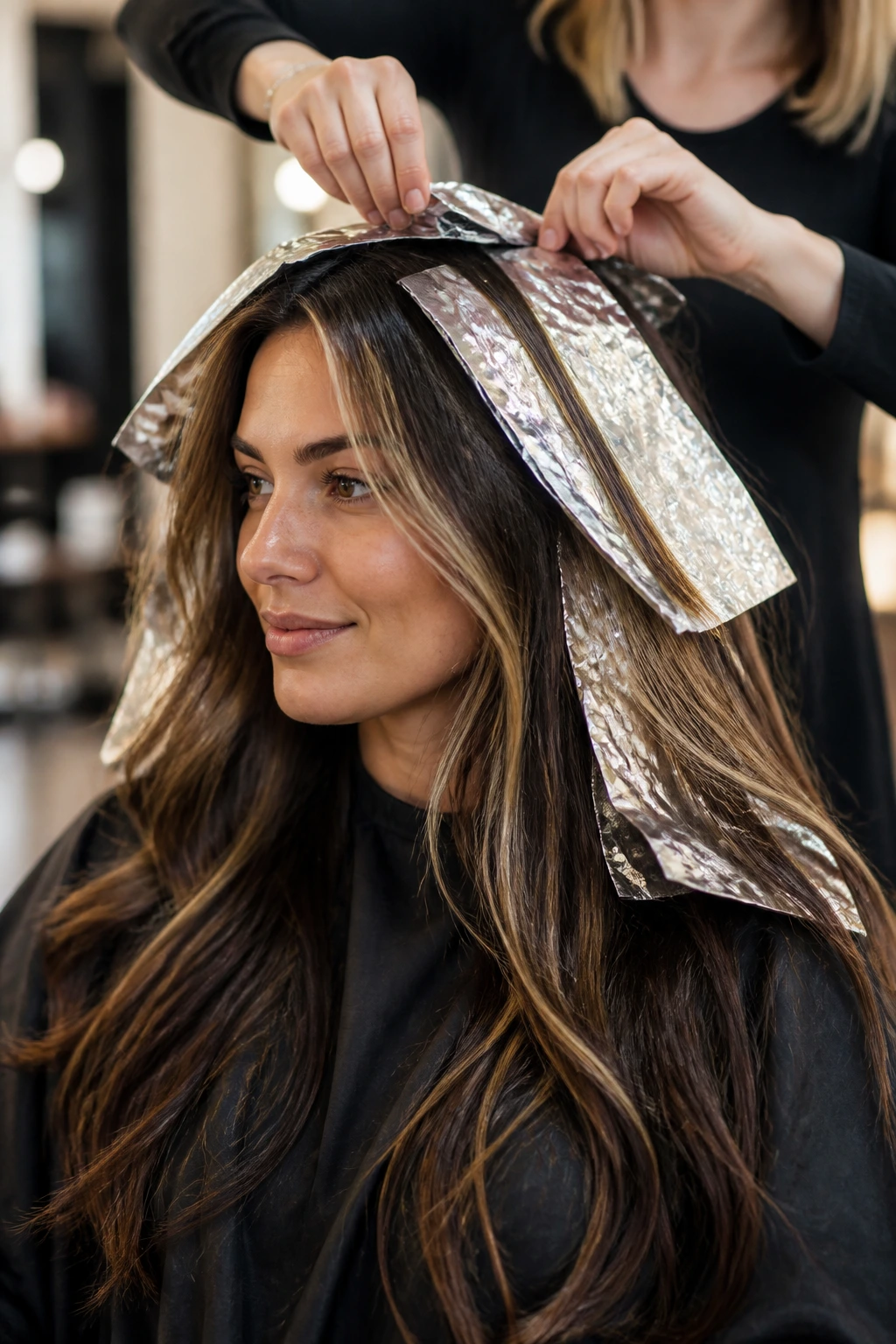
Start with your base level. That matters more than the screenshot you saved from somebody else’s hair. A level 4 brunette with previously colored ends needs a different plan from a virgin level 6 brunette, and the difference changes both the amount of lift and the tone you can safely reach.
Be specific about where you want the light. Say whether you want brightness at the money piece, through the ends, or hidden underneath. If you love a center part, say it. If you wear your hair in braids and ponytails all the time, say that too. Placement makes a bigger difference than people expect, especially on long hair.
Tone is the other big piece. Platinum can mean cool pearl, icy silver, beige, or creamy blonde, and those aren’t the same thing. If your skin gets washed out by blue-white blonde, ask for a softer pearl or beige finish. If your hair tends to go orange, a cooler toner and a stronger pre-lightening plan may be necessary. And if your hair is porous, a strand test saves everyone a lot of drama.
Tools and Products That Make the Color Last
- Color-safe shampoo: Use a gentle sulfate-free shampoo so the toner doesn’t rinse out in three washes.
- Purple shampoo: This helps knock yellow out of pale blonde pieces; use it once a week, not every day.
- Blue shampoo: Better for brunette areas that pull orange or copper instead of yellow.
- Bond-building treatment: A weekly repair mask helps hair that’s been lightened multiple levels.
- Deep conditioner: Keep one rich mask on hand for the mids and ends, especially if the hair feels rough after heat styling.
- Heat protectant: Necessary before blow-drying, curling, or straightening; platinum shows heat damage fast.
- Microfiber towel: Less friction means fewer broken ends and less frizz.
- Wide-tooth comb: Useful on wet hair so you’re not tearing through fragile blonde sections.
- Shower filter: Optional, but hard water can make light hair look dull and brassy sooner than you’d like.
- Sectioning clips: Handy if you retouch waves or apply gloss at home.
How to Style the Contrast Without Overworking It
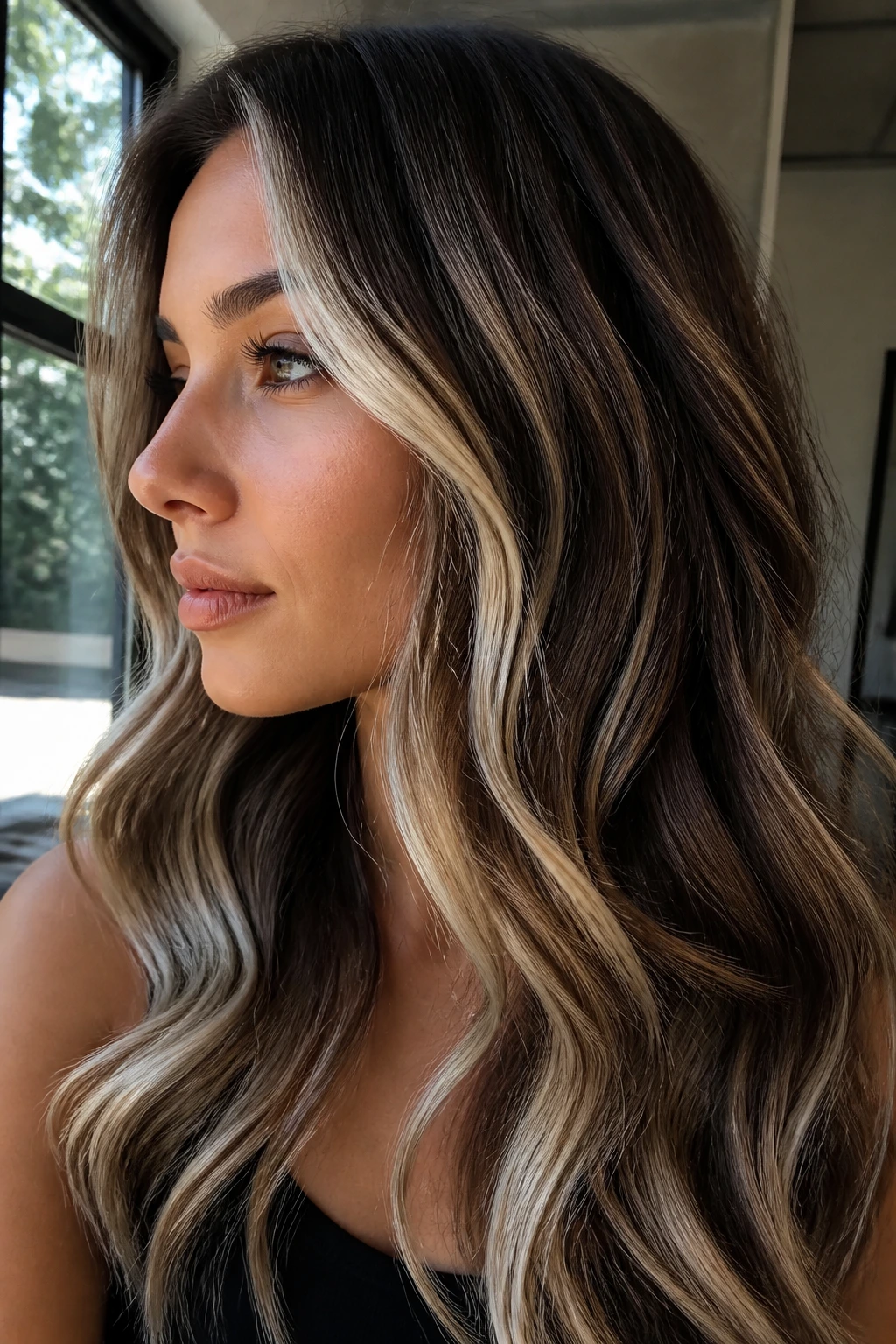
Loose waves are the easiest win. A 1.25-inch curling iron or wand gives the platinum ribbons a bend to sit in, and the lowlights show up better when the hair isn’t a straight curtain. Keep the heat around 300 to 350°F if your hair is lightened, and always use a heat protectant.
Straight and glossy hair makes money pieces and panel placement look sharper. Use a smoothing cream on the mids and a lightweight oil only on the last few inches, or the blonde can get greasy-looking fast. A center part gives the cleanest read for high-contrast color.
Half-up styles and braids are where underlights and peekaboo placement earn their keep. Pull the top section tight enough to show the contrast underneath, but not so tight that the haircut loses shape. A soft clip or low knot often shows more dimension than a high ponytail.
Loose, brushed-out curls are my favorite for broad balayage and ribboned color. The brush softens the striping and lets the lowlights fill in the gaps. That’s the version that looks expensive with the least fuss.
The Maintenance Rhythm That Keeps Platinum from Going Muddy
Platinum on brunette hair is not a set-it-and-forget-it color. The toner starts fading the first time it meets shampoo, so plan for a gloss or toner refresh every 6 to 8 weeks if you want the blonde to stay clean. If your hair is porous or you wash often, that schedule can shrink.
Root touch-ups usually land around 8 to 12 weeks, but the exact timing depends on how bold the placement is. Shadow roots buy you more breathing room. High-contrast money pieces and bright panels show regrowth sooner, especially around the part and temples.
Purple shampoo is useful, but too much of it can leave the blonde dull or even slightly purple. Once a week is enough for most people. If the blonde starts turning yellow between salon visits, use a purple mask for 5 to 10 minutes, then rinse well.
Heat tools also matter. If you’re blow-drying or curling more than a few times a week, use a repair mask weekly and keep your hottest tools away from the fragile ends. A chelating shampoo every 2 to 4 weeks helps if your water is hard and the blonde keeps looking lifeless.
Common Mistakes That Make the Color Look Patchy
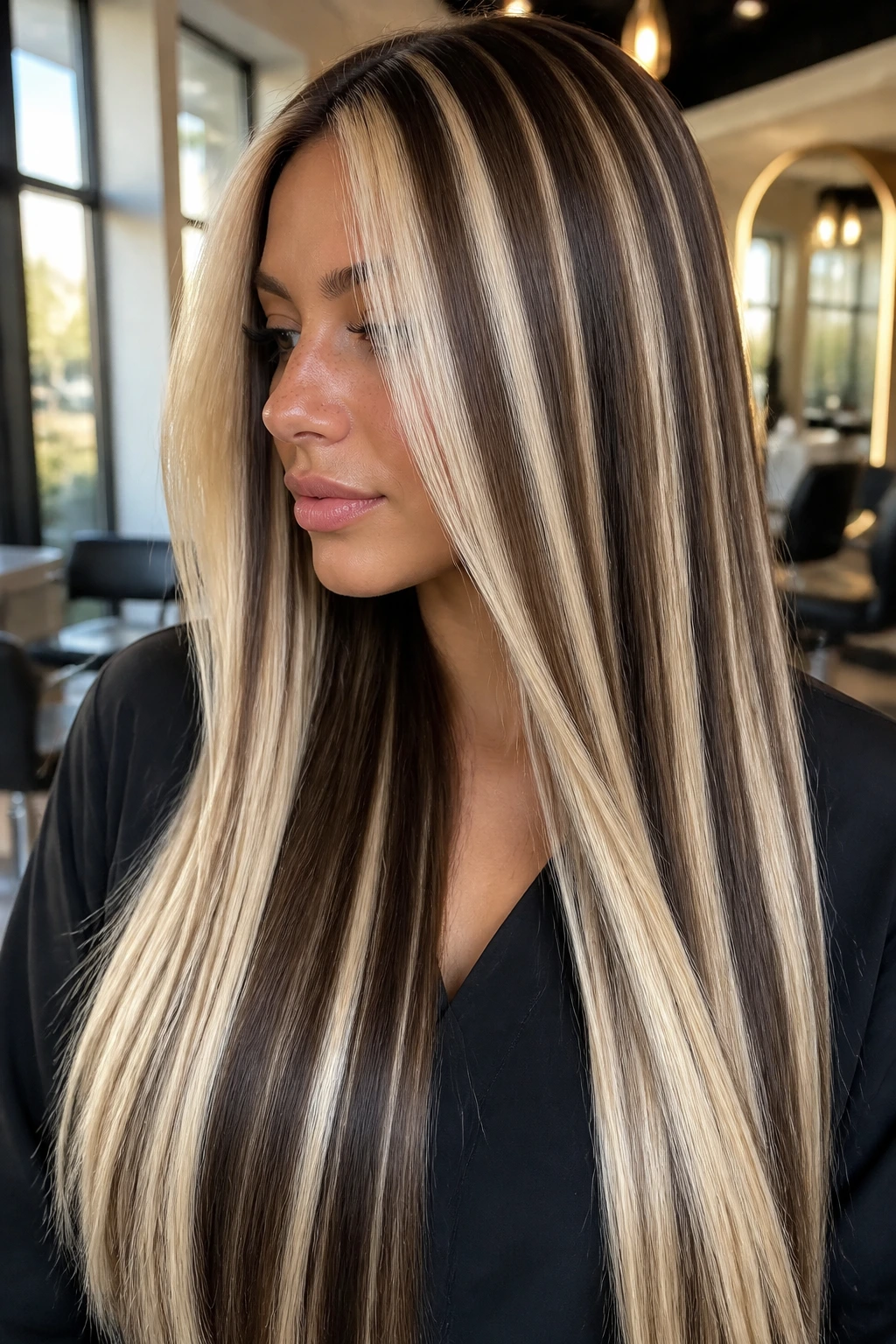
- Making the platinum too wide at the front: A huge money piece can look harsh and stripy. Keep the brightest sections controlled unless you want a bold editorial feel.
- Skipping lowlights entirely: Long hair with only light pieces can flatten out fast. A few deeper strands give the blonde shape and stop it from floating on top.
- Toning too cool too soon: If your hair is lifted only to pale yellow, silver toner can make it look muddy. Match the toner to the actual lift level, not the inspiration photo.
- Ignoring porosity: Damaged ends grab pigment fast and release it fast. That’s why one section can look clean while another turns dull after one wash.
- Overusing purple shampoo: Too much can dry the hair out and leave the blonde lifeless. Use it like seasoning, not a main ingredient.
- Forgetting the haircut: Long layers show off dimension. A blunt cut with the wrong placement can make even good color feel heavy.
Variations and Texture Swaps to Try
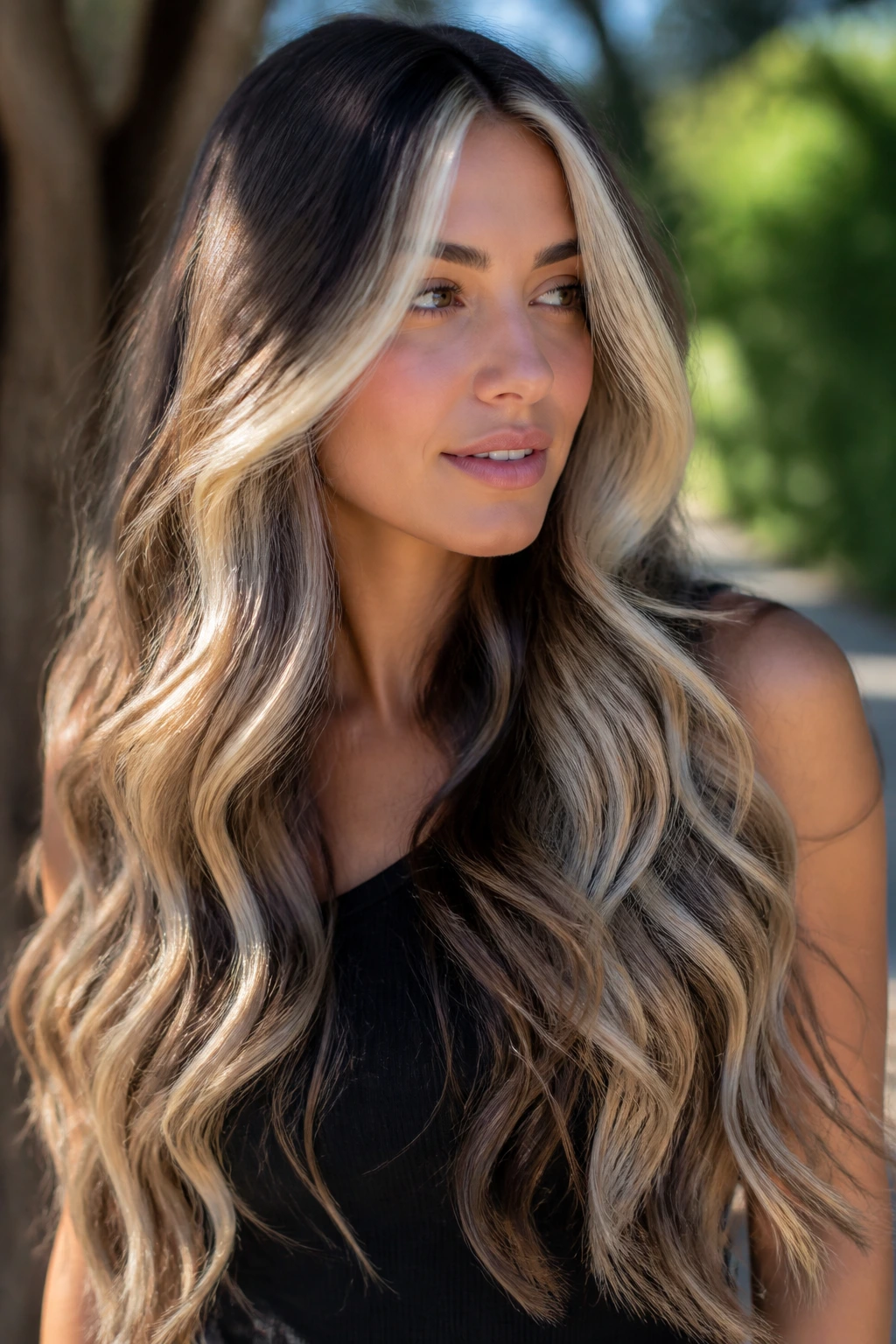
The Cool-Ice Edit: Choose pearl or silver toner, keep the lowlights ash-brown, and let the platinum read crisp. This suits cooler skin tones and straight styles.
The Beige Softening Edit: Swap icy toner for beige-blonde and use neutral brunette lowlights. It’s friendlier on warm skin and easier to wear if you don’t love stark contrast.
The Curly-Hair Placement Edit: Put the brightest pieces where the curl opens and the lowlights where the curl stacks. That keeps the pattern visible instead of hidden in the coil.
The Low-Maintenance Shadow Edit: Ask for a deeper root smudge and thinner platinum pieces. The grow-out is calmer, and you can stretch appointments a bit farther.
The Statement Panel Edit: Use wider platinum sections at the front and a darker interior behind them. It’s bolder, cleaner, and better on hair that’s thick enough to hold the contrast.
Frequently Asked Questions About Platinum-Brunette Lengths
Can brunette hair really go platinum without looking fried?
Yes, but the hair has to be lifted carefully and the ends need to be in decent shape before the bleach goes on. If the ends are already rough, ask for a phased plan instead of pushing for full platinum in one visit.
Do lowlights make platinum hair look darker?
They make it look deeper, which is not the same thing. A few brunette lowlights add shape and keep the blonde from flattening out, especially on long hair where every section sits next to a lot of other hair.
How often should I tone platinum pieces?
Most people need a gloss or toner refresh every 6 to 8 weeks. If your hair is porous or you shampoo often, the pale pieces can start going yellow sooner, and a purple mask can help bridge the gap.
What if my hair is curly?
Curly hair can wear this color beautifully, but placement has to follow the curl pattern. Bright pieces should land where the curls open, or the blonde gets swallowed up once the hair dries.
Can I do this on previously box-dyed brunette hair?
Sometimes, but it’s a conversation for a colorist with a strand test. Box dye can react unpredictably, and long hair that’s been colored at home often lifts in patches.
Which looks are the easiest to maintain?
Shadow roots, peekaboo underlights, and soft babylights are usually the calmest. High-contrast money pieces and broad platinum panels show regrowth faster and need more toner attention.
Will purple shampoo fix brassiness if the blonde turns yellow?
It helps with yellow, but it won’t fix orange or patchy lift. If the blonde is turning orange, that usually means it needs a salon gloss or a better lift plan, not more purple shampoo.
A Better Way to Wear Platinum on Brunette Lengths
Long brunette hair can take platinum in a hundred different directions, but the looks that hold up best are the ones with some shadow left in them. That’s the part people forget. Brightness gets the attention. Depth gives it shape.
If you’re bringing one of these ideas to a salon chair, bring the texture of your life with you too — how you part your hair, how often you heat-style, whether you wear it up, and how much grow-out you can tolerate before it annoys you. The right platinum look on brunette hair is never just about the photo. It’s about where the light lands when you actually move.
Give the colorist a little room to build contrast, and long hair does the rest.