



Brunette ombre on long curly hair can look like liquid ribbon sliding through a coil pattern, or like a stripe someone painted across the surface and hoped would behave. The difference is placement, not luck.
Curly hair changes the rules. A curl lifts the color, a bend hides the color, and the ends—especially on long hair—can drink up toner faster than the rest of the strand. That’s why the prettiest brunette ombre for long hair with curly hair tends to live a little lower, blend a little softer, and keep the root depth intact.
When the fade is right, the shape does something straight hair can’t fake. Every spiral throws its own shadow, every layer catches a different tone, and the whole head looks fuller without a single harsh line. Some looks lean caramel and warm; others stay smoky and cool. The fun part is finding the shade that makes your curls look like they’ve got their own lighting crew.
Why These Brunette Ombres Feel Right on Long Curls
-
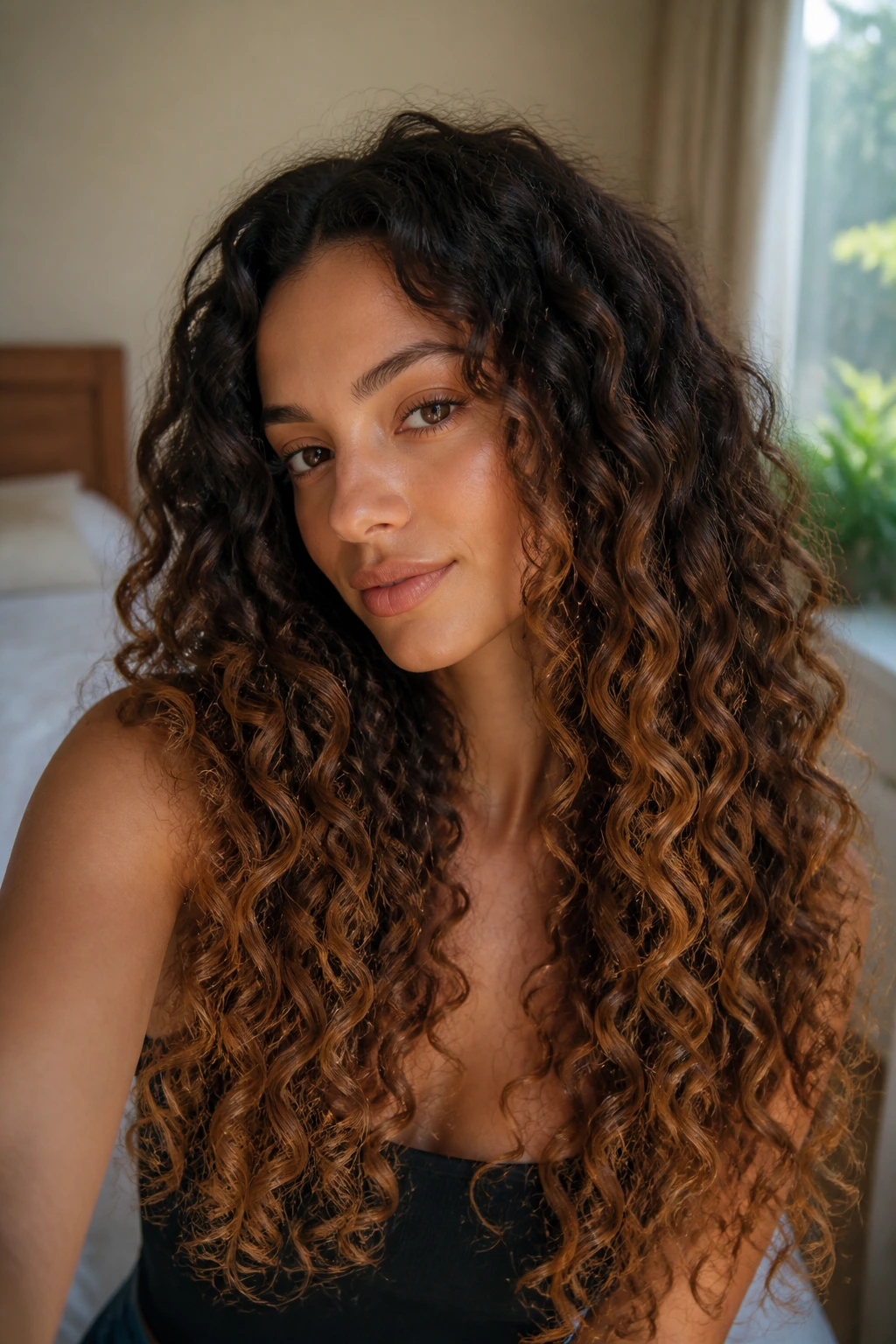
Built for curl shrinkage: The fade sits low enough that the lighter pieces still show when a 3A ringlet springs upward an inch or two after drying.
-
Soft regrowth: Dark roots keep the top of the head looking dense, so new growth blends in instead of making the color look unfinished.
-
Real dimension: Long curls catch light on the outer curve, which makes caramel, bronze, and chestnut read as movement instead of flat streaks.
-
Flexible warmth: You can stay firmly in brunette territory and still choose caramel, mushroom, bronze, copper, or cherry notes without losing depth.
-
Easy to style: A diffuser, a clip, or a half-up twist shows off the fade without forcing a blowout or a lot of fuss.
1. Espresso Root Melt with Caramel Ends
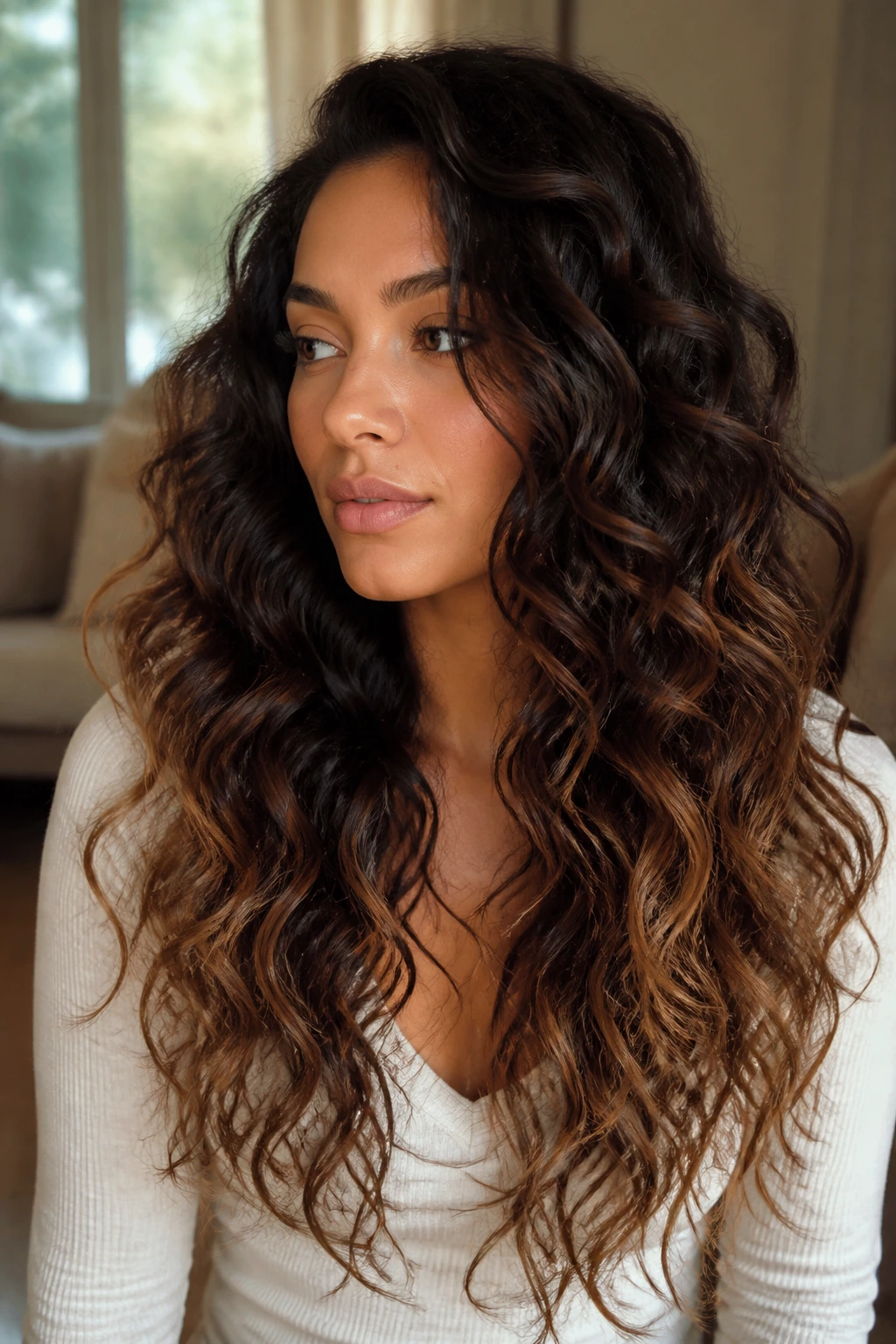
This is the one I’d hand to someone who wants the roots to look plush and the ends to feel sun-touched, not bleached-out. The espresso base keeps the crown rich, then the caramel comes in low and slow on the last several inches, where long curls move the most. It’s a strong choice if your hair is thick or coarse, because that depth at the top stops the style from looking stringy.
Ask for the lightest pieces to begin below the collarbone, not at the cheek. On curly hair, that lower placement matters more than people think. A curl will bounce upward once it dries, and if the transition is too high, the fade can turn into a band.
The nicest version of this look has a glossy finish, not a dry one. Caramel on curls looks especially good when the ends have been trimmed clean and the shape still has a bit of movement.
2. Mocha Ribbon Ombre Through Spiral Curls
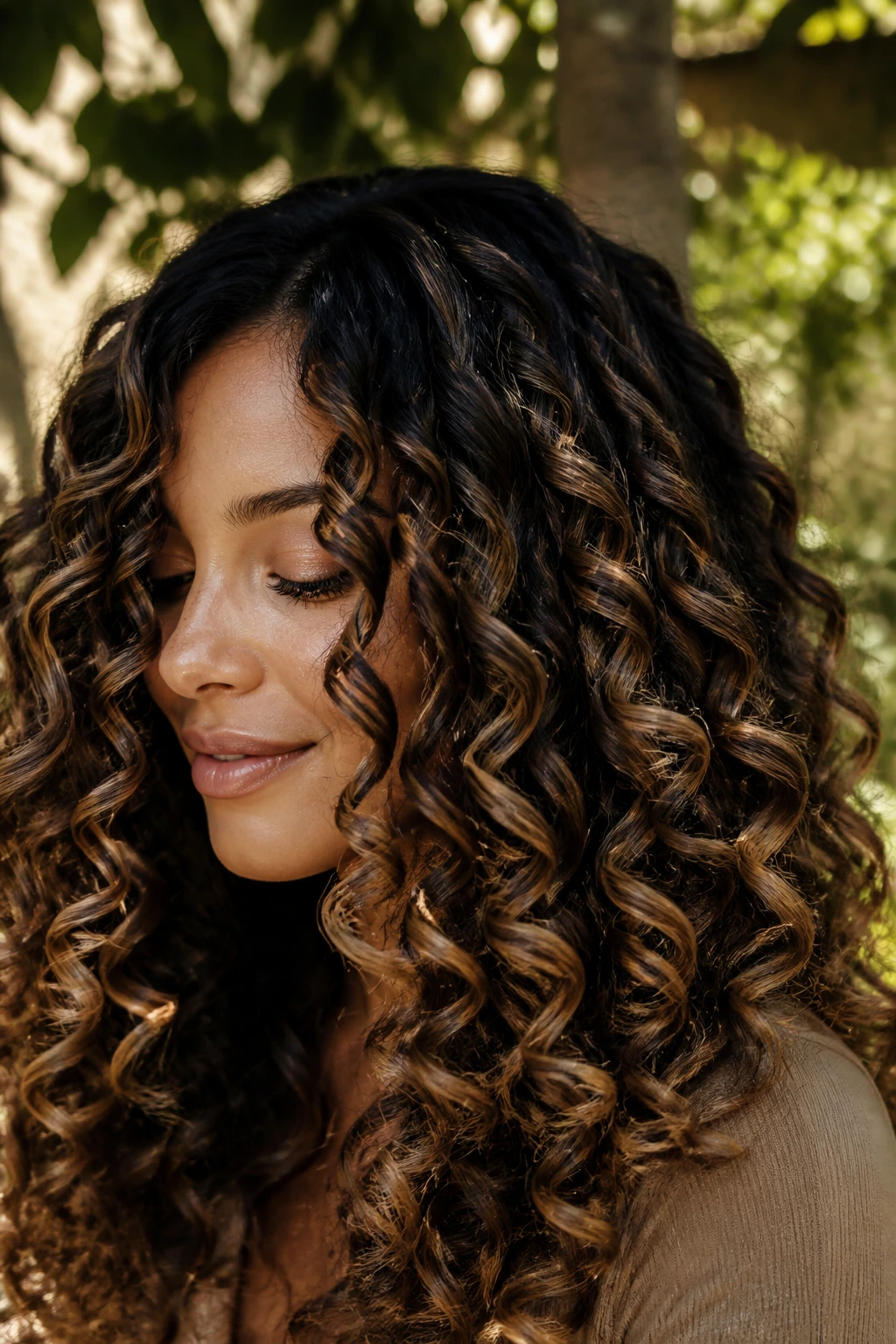
Why does this one work so well on spirals? Because ribbon placement follows the curl, instead of fighting it. The mocha shades sit in narrow painted panels, then melt into lighter coffee-and-cream tones on the outside edge of the curl clumps. You don’t get a loud contrast line. You get movement.
Best curl pattern for it
This look really wakes up on 3A to 3B curls, where the spirals are defined enough to show the color shift but loose enough to let the ribbons breathe. If the panels are too wide, the result starts to look busy. If they’re too tiny, you lose the point.
- Keep the lighter ribbons about pencil-width.
- Leave some darker hair between sections.
- Let the ends carry most of the lightness.
- Ask for a soft gloss after lightening so the mocha doesn’t go muddy.
The whole effect is subtle until the light hits it. Then the curls separate, and the color opens up in layers.
3. Chestnut Face-Framing Lights on Long Layers
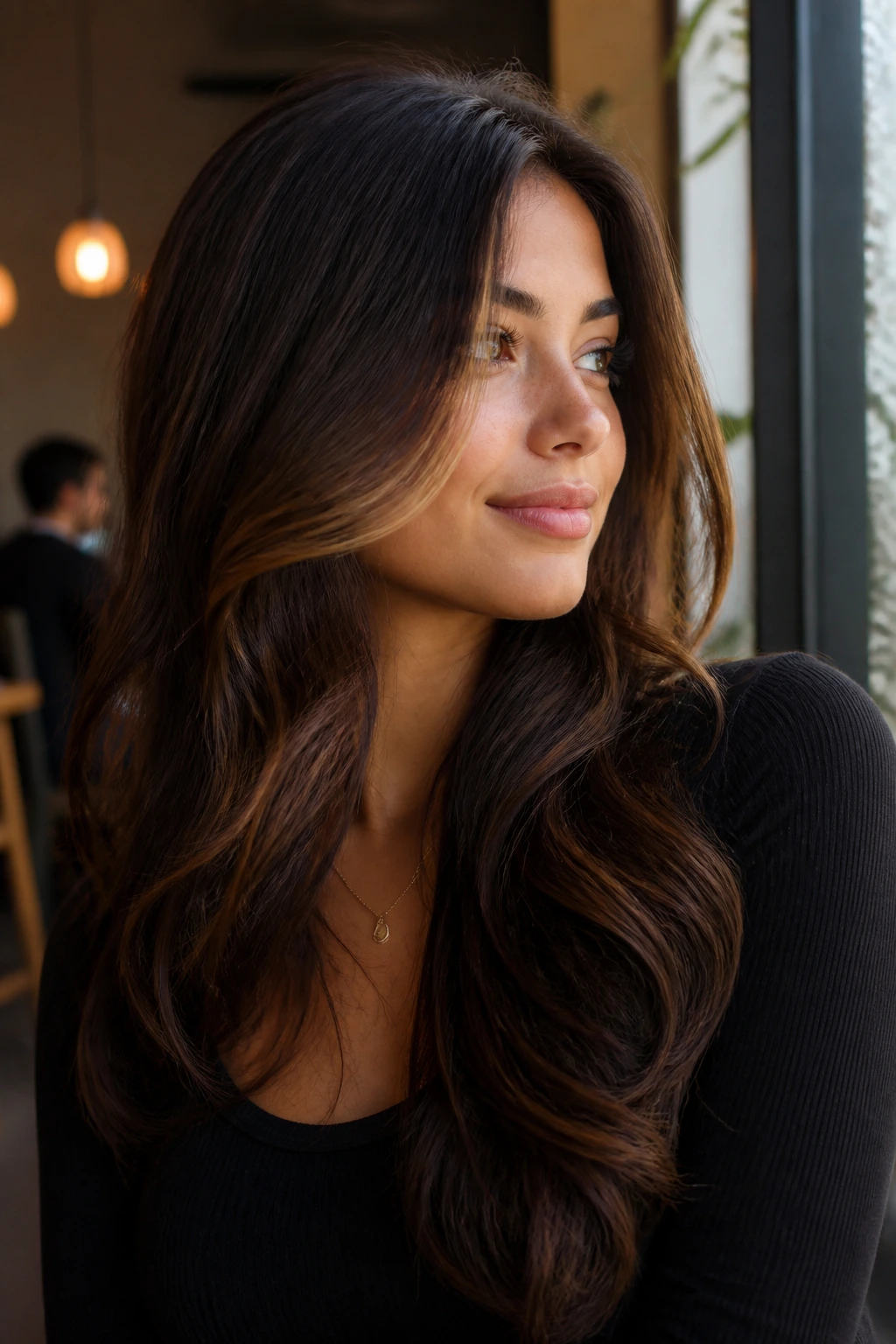
Pull long curls into a half-up clip and this is the look that does the talking. The chestnut frame sits around the cheekbones and jaw, then slides into a deeper brunette body through the lengths. It’s a smart pick if you wear your hair over one shoulder a lot, because the front pieces stay visible even when the rest of the hair is piled back.
The trick is to keep the face frame bright enough to matter, but not so bright that it floats on top of the rest of the hair. Chestnut works because it stays in the same brown family. The color feels connected, not pasted on.
This is also one of the better options for round or heart-shaped faces. The lighter front pieces pull the eye downward, and long layers stop the color from sitting in one heavy curtain.
4. Cocoa-to-Toffee Fade with Soft Ringlets
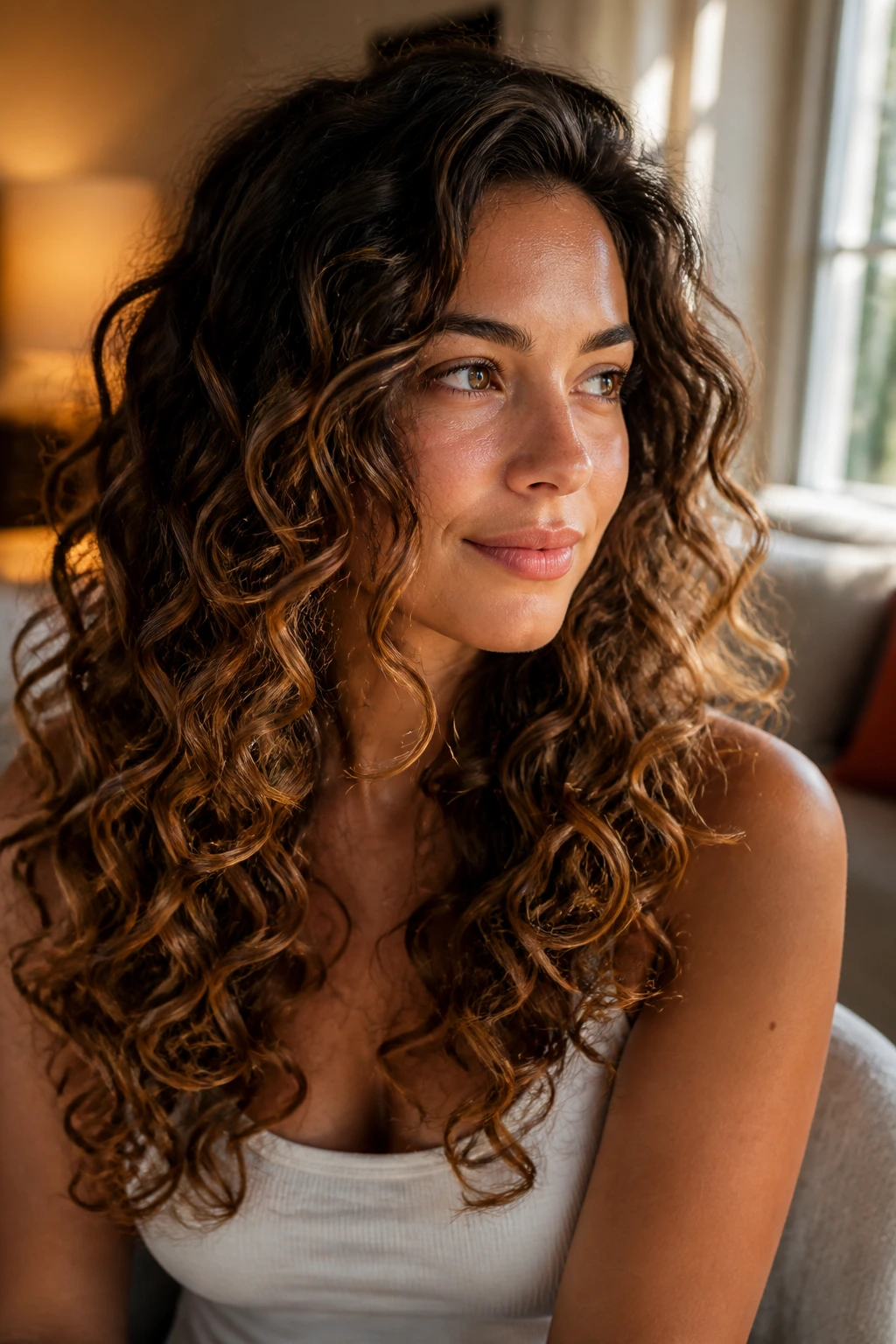
Warm shades like this can look syrupy in the best way when the ringlets are defined. Cocoa at the roots gives the hair a deep, almost velvety base, while the toffee starts midlength and deepens toward the last third of the hair. The fade should feel gradual enough that you notice the shine before you notice the color change.
Long curly hair does one useful thing here: it hides the exact point where the dye stops. That makes the ombre feel softer than it would on straight strands. If your curls shrink a lot, ask the colorist to place the toffee a little lower than looks right when the hair is wet. Wet curls lie.
This version looks best with a clean trim and a light hand on the leave-in. Too much product at the ends can make the toffee look dull, and this shade wants a little sparkle.
5. Mushroom Brunette Ombre for Cool-Toned Curls
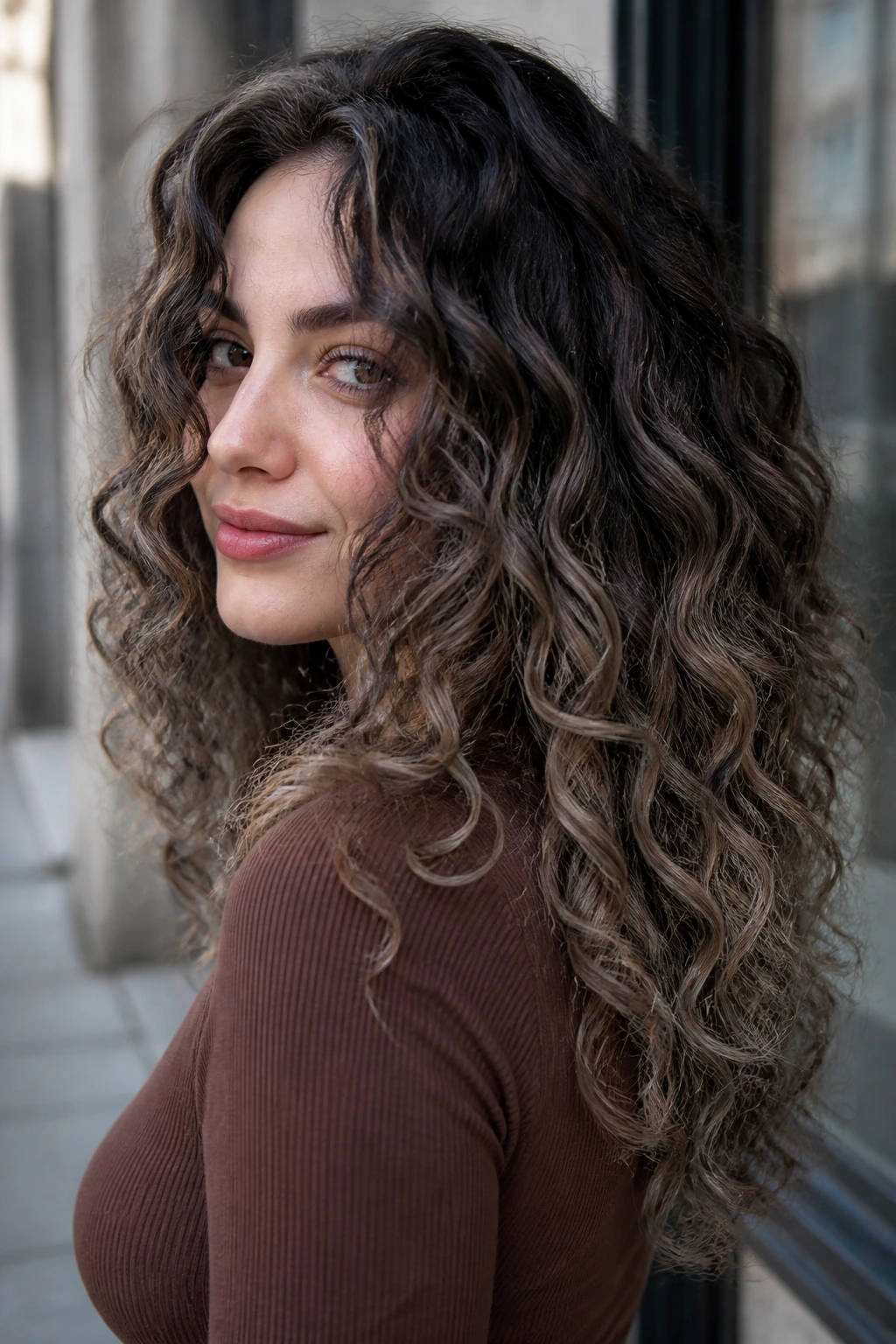
Not every brunette needs warmth. Mushroom brunette is the cooler, quieter answer for curls that lean ash, beige, or smoky brown. The base stays dark, the mids soften into taupe, and the ends finish in a muted beige-brown that never wanders into orange territory.
Tone note
This is the look to choose if brass makes you grumpy. The catch is that curly ends can be porous, so they grab toner fast. Ask for a soft neutral gloss rather than an aggressive ash blast, because too much ash on curls can go flat and chalky.
The styling side matters here too. Use a curl cream with a clean finish, not a heavy butter that hides the tonal shift. Mushroom brunette is all about the quiet contrast between shades. It shouldn’t look muddy, and it shouldn’t look overly silver either. The best version sits right in the middle.
6. Hazelnut Balayage Over a Dark Base
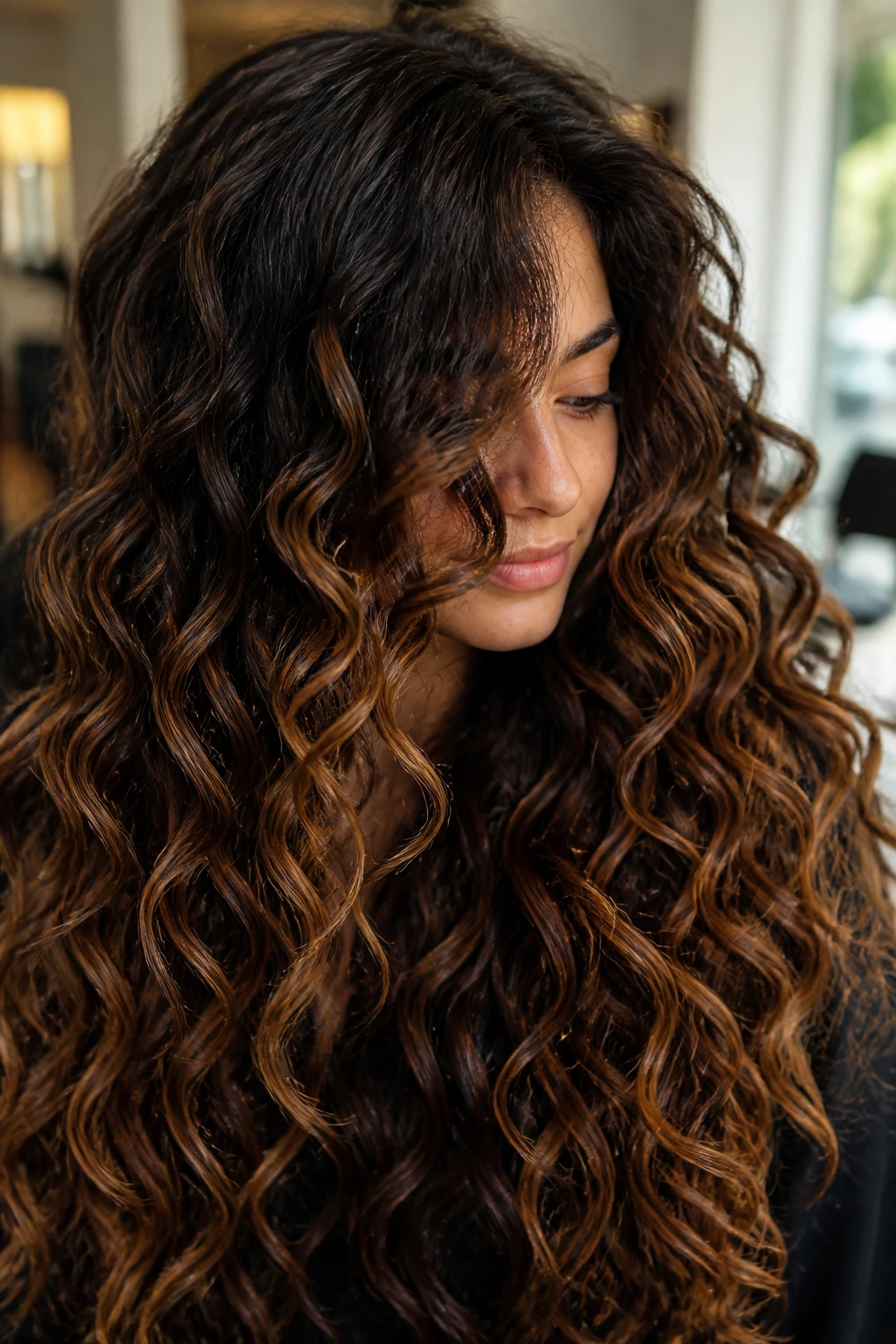
Want dimension without a dramatic shift? This is the easy yes. Hazelnut balayage keeps the base dark and painted with scattered ribbons of warm brown that sit just a shade or two lighter than the natural color. On long curls, that slight lift is enough to catch light in motion.
It’s a good first color service because the grow-out is soft and the maintenance isn’t fussy. You’re not chasing a pale finish. You’re just waking up the texture. On dense curls, those hazelnut ribbons prevent the style from collapsing into one heavy block.
What to ask for: hand-painted pieces that start around the midlengths, a little brighter around the outer curl clumps, and a soft gloss at the bowl. That keeps the finish smooth instead of stripy.
7. Cinnamon Brown Ombre with Golden Tips
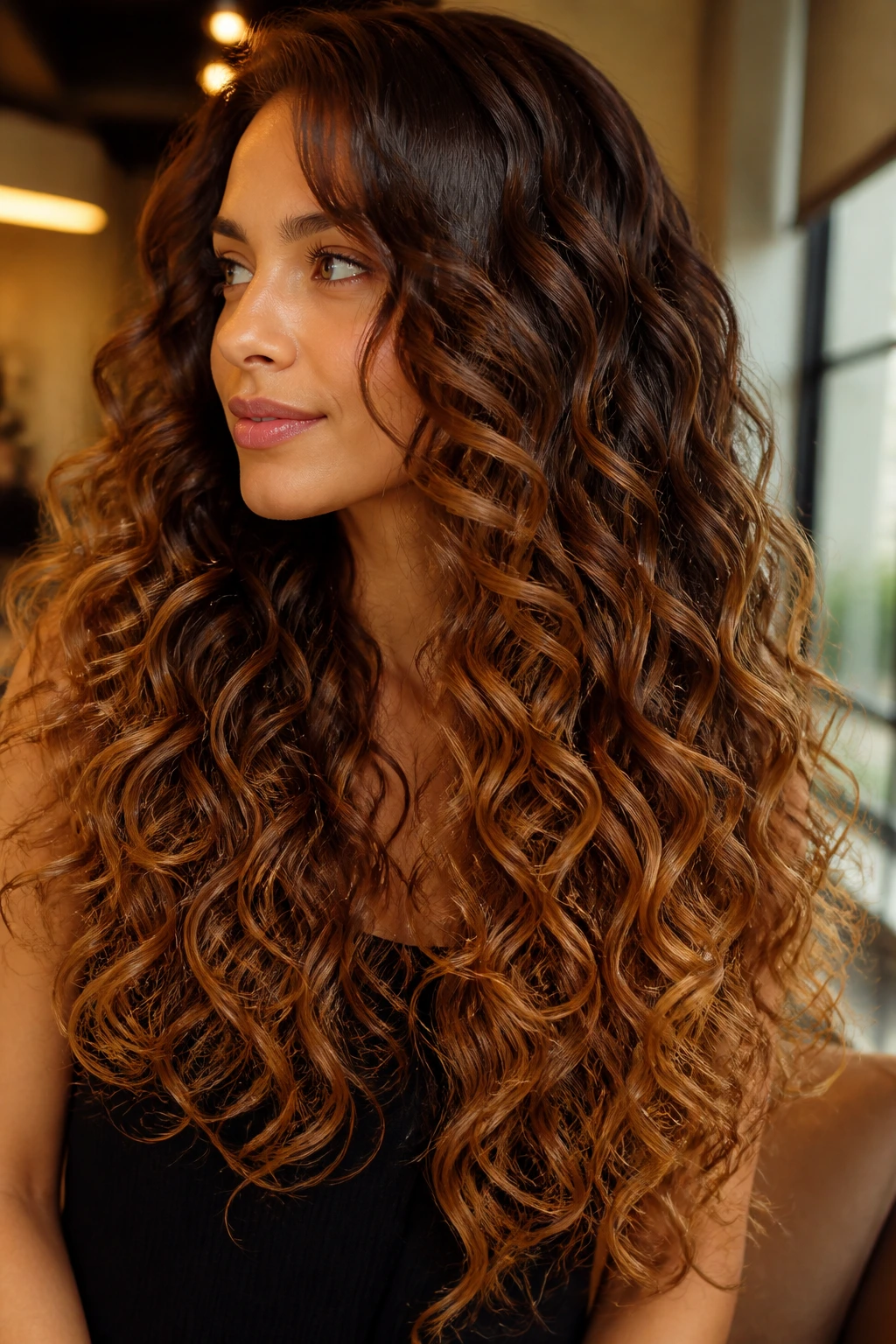
Cinnamon reads first, then the gold shows up when the curls swing. That’s the whole charm of this look. The brown stays rich near the root, the midlengths pick up a spicy warmth, and the tips land in a soft golden-brown that never tips into yellow if the formula is handled well.
This shade loves long layered curls because layers expose more of the gradient. On one-length hair, the fade can disappear under the weight. On layered curls, it moves.
If your skin runs golden or olive, this is one of the easiest brunette ombre options to wear. The warmth sits in the same family as the complexion, so it looks connected rather than painted on. Keep the ends glossy, though. Cinnamon color with dry tips looks tired fast.
8. Sable Hair with Bronze Midlengths
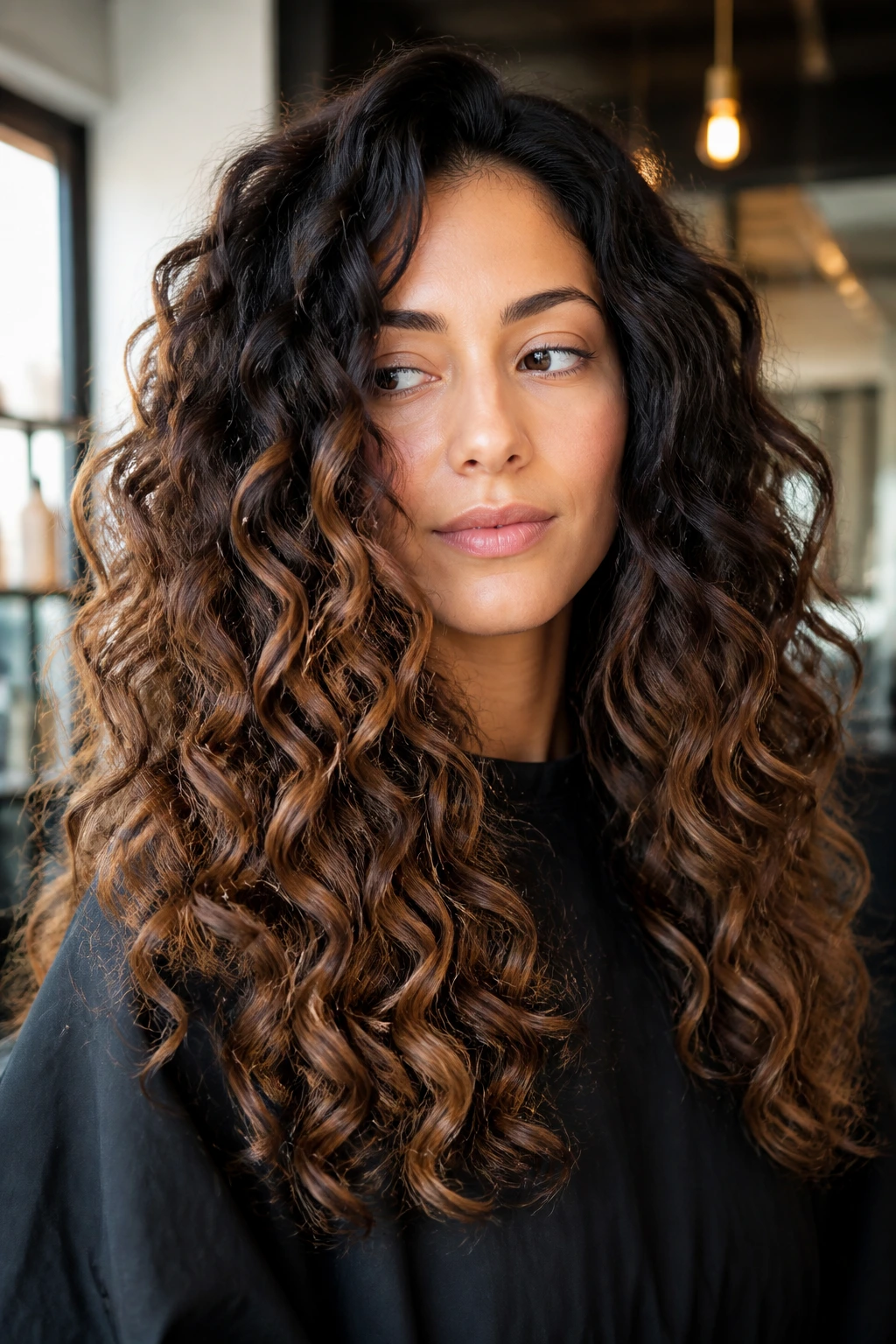
When hair lives in buns, clips, and half-up twists, bronze midlengths earn their keep. The sable root stays dark and grounded, then the bronze hides just under the top layer so it flashes when the curls shift. It’s understated from the front and much more interesting once the hair moves.
That underpainting effect works beautifully on long curly hair because the top layer doesn’t have to do all the work. You get dimension from the inside of the shape, not just the surface. I like this one on hair that has a lot of volume, because the bronze peeks through instead of shouting.
The practical upside is that it grows out quietly. Bronze is forgiving. Even if the curl pattern changes a little between wash days, the color still looks intentional.
9. Chocolate Cherry Brunette for Deep Curls
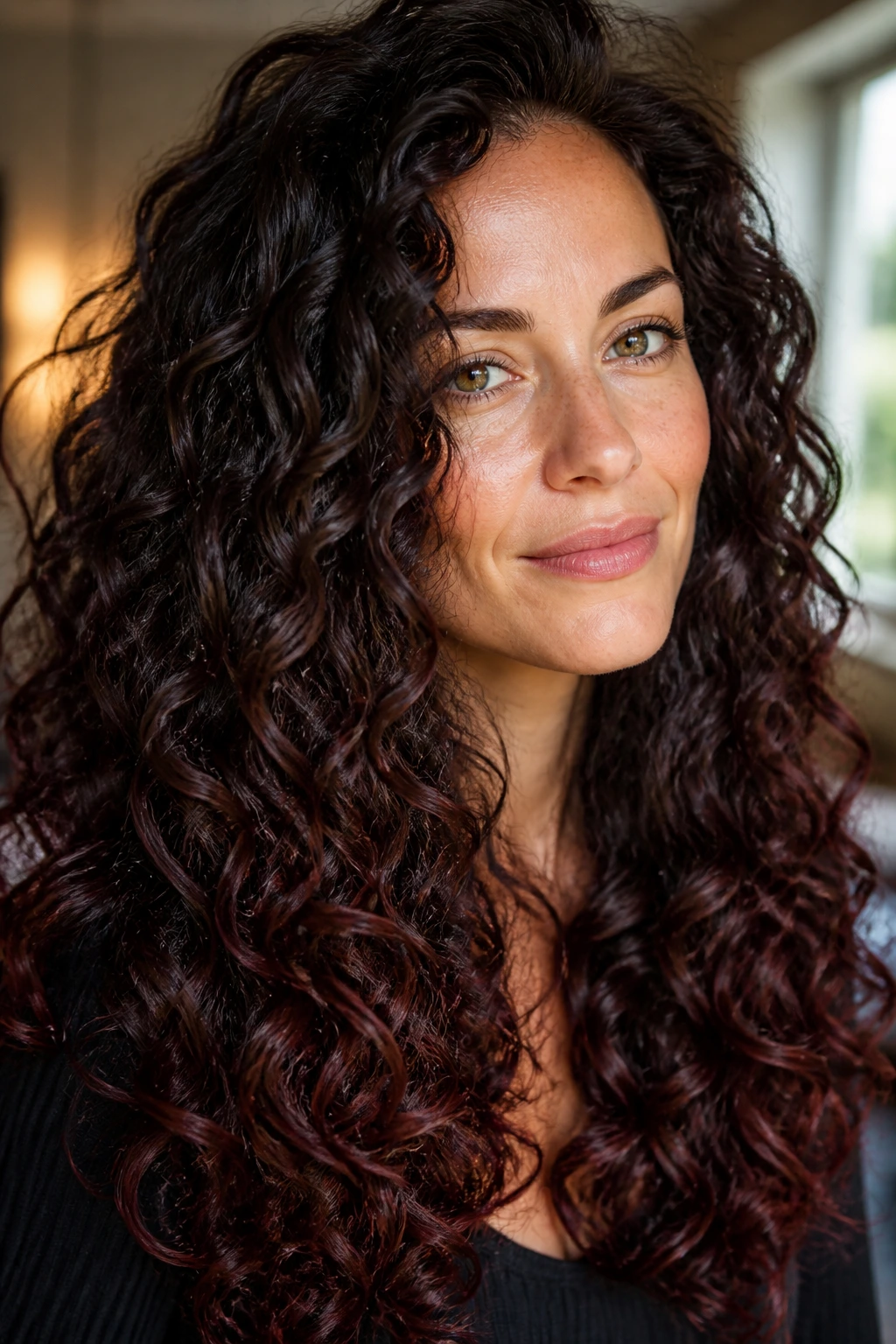
A hint of cherry keeps deep brown from going flat. That’s the appeal here. The base stays chocolate, but a red-brown or burgundy-brown gloss gets layered into the ends so the color flashes in indoor light and turns richer near a window. On deep curls, that extra undertone can be gorgeous.
This is a smart pick for thick hair or tighter curl patterns because the extra depth helps the shape hold together. The cherry note doesn’t need to be loud. In fact, it’s better when it isn’t. You want that little shift of warmth when the hair turns.
If you’ve never tried red-brown before, start with a gloss rather than a permanent shift. It gives you the feel of the color without locking you into a strong commitment.
10. Latte Brunette with Shadow Roots
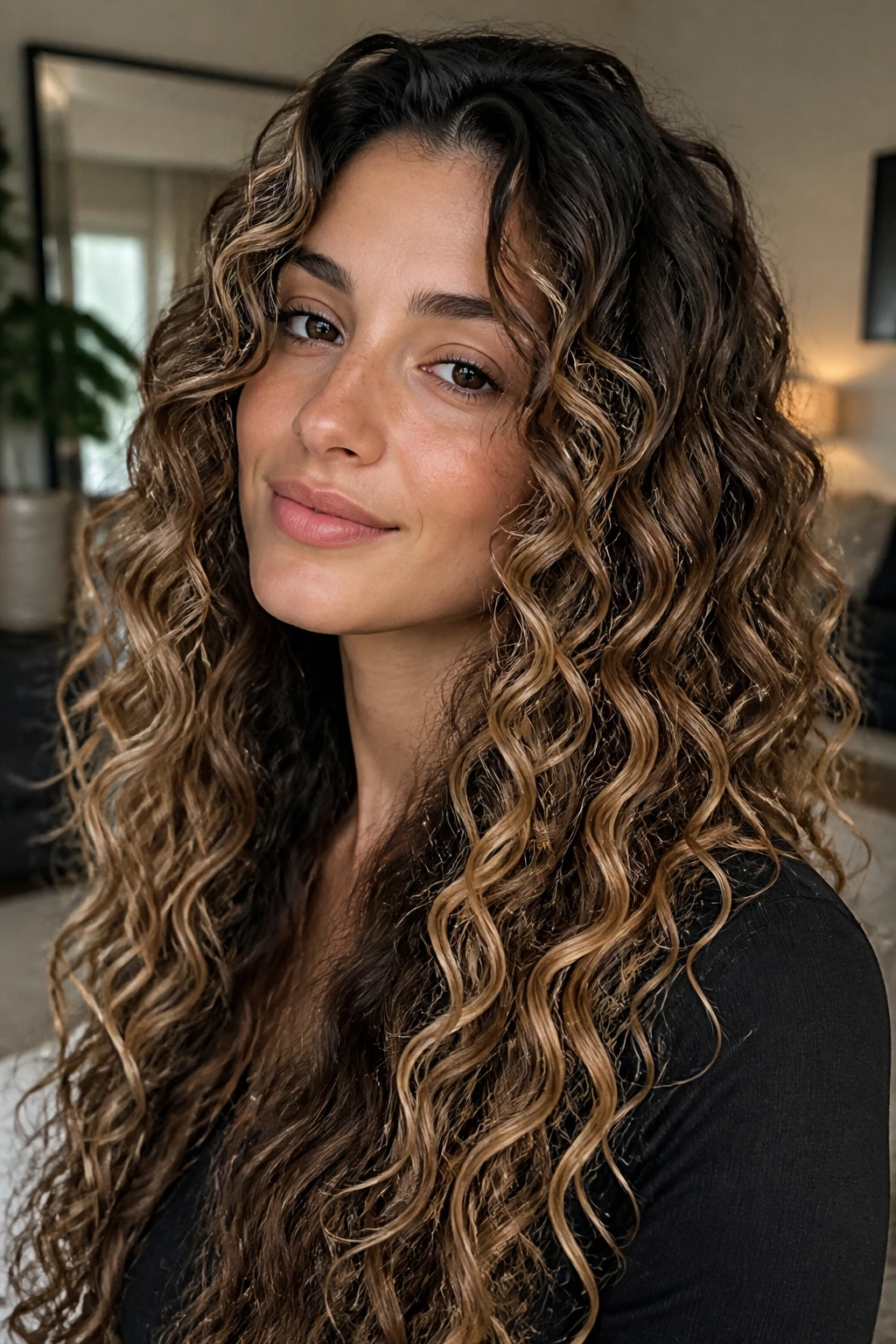
What if you want brightness but hate obvious grow-out? Shadow roots fix that. The dark root melts into latte midlengths, then the lighter pieces stay soft and creamy instead of white-hot. On long curls, this has a very calm look. Nothing snaps. Nothing yells.
This works well for people who air-dry a lot, because the gradient still reads without a polished blowout. A shadow root also makes the crown look fuller, which matters when curls flatten at the top after sleeping or clip wear.
Keep the face frame a touch brighter than the rest. Otherwise the whole style can get a little flat. The contrast near the front is what keeps latte brunette from blending into one smooth brown sheet.
11. Walnut Ombre with Chunky Curl Definition
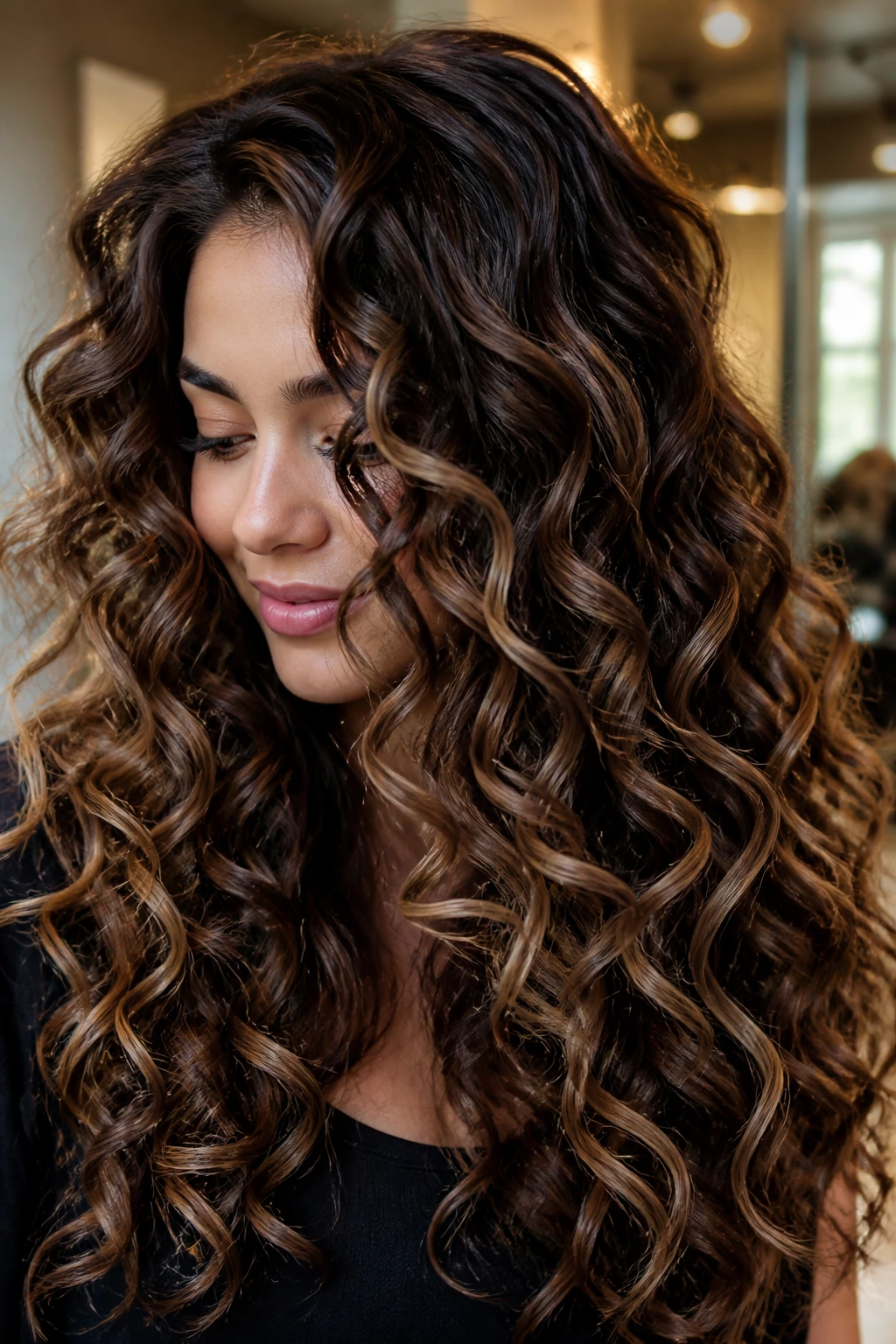
If your curls form big S-curves, chunky panels usually look better than tiny ribbons. Walnut ombre leans into that. The color changes happen in broader sections, so the pattern shows up clearly when the curls separate. It’s richer, bolder, and a little less precious than a whisper-soft balayage.
Why it reads well on thick hair
Thick hair needs enough contrast to show up through the density. Walnut gives that contrast without jumping into blonde territory. The shade is deep enough to stay in the brunette family, but the lighter panels still matter when the light hits the side of the head.
Ask for the color to begin below the widest part of the curl bundle. That keeps the top from looking striped. And if your curls are very tight, go wider on the painted sections so the color can survive shrinkage.
12. Ashy Brown Melt with Beige Finish
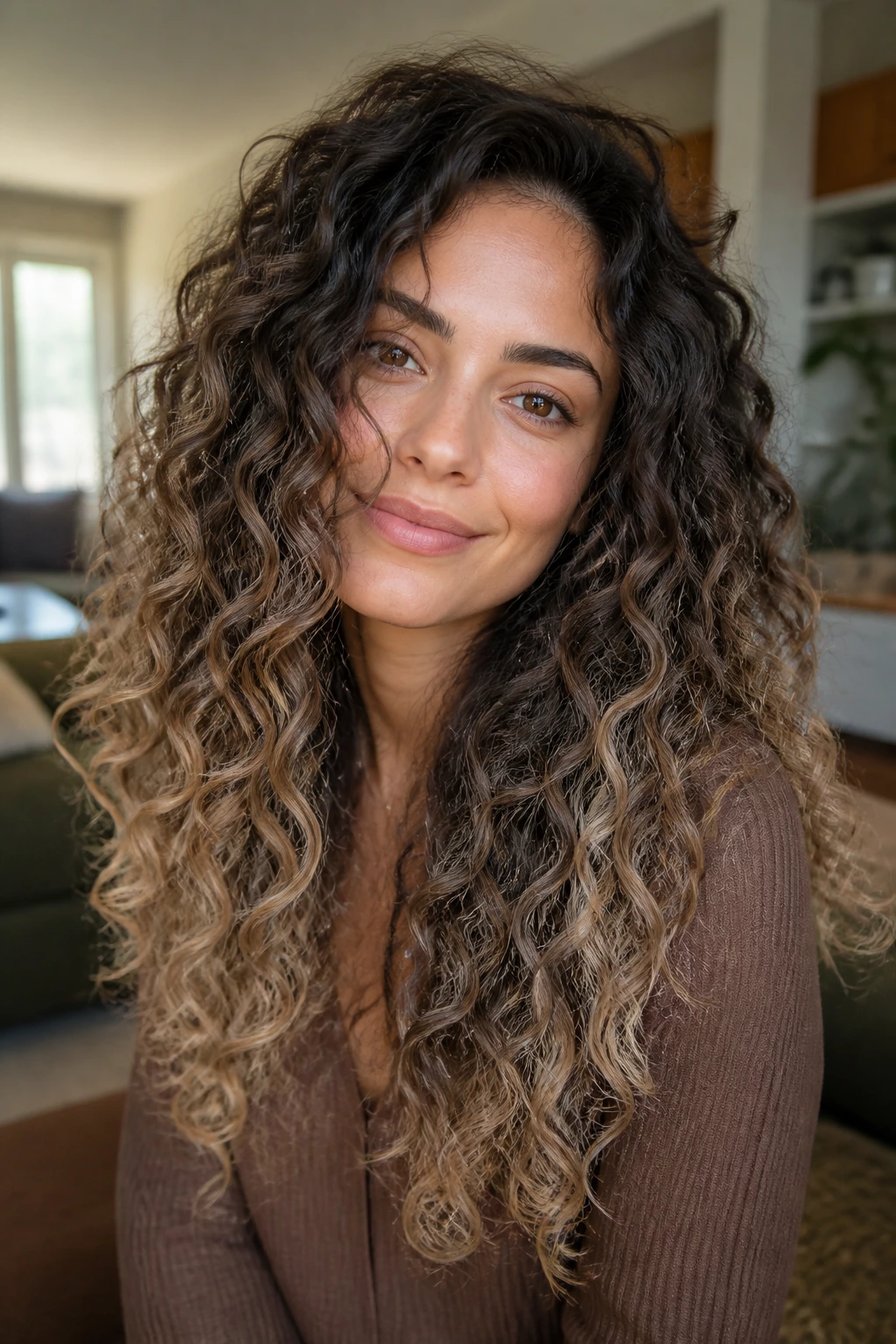
Ash doesn’t have to look dull. In the right formula, it looks clean. The root stays a smoky brunette, the mids cool down, and the ends settle into a beige finish that softens the whole head. If orange undertones drive you mad, this is the answer.
The trick is restraint. Too much ash turns curly hair flat and thirsty-looking, especially on porous ends. A beige finish gives you the cooler tone without the dusty result. That balance matters more on curls, where dryness shows faster.
This shade pairs well with sleek outfits and simple makeup because the hair already does the quiet work. It doesn’t need extra drama. It just needs a toner that respects the curl pattern instead of sanding it down.
13. Honeyed Brunette with Curly Curtain Bangs
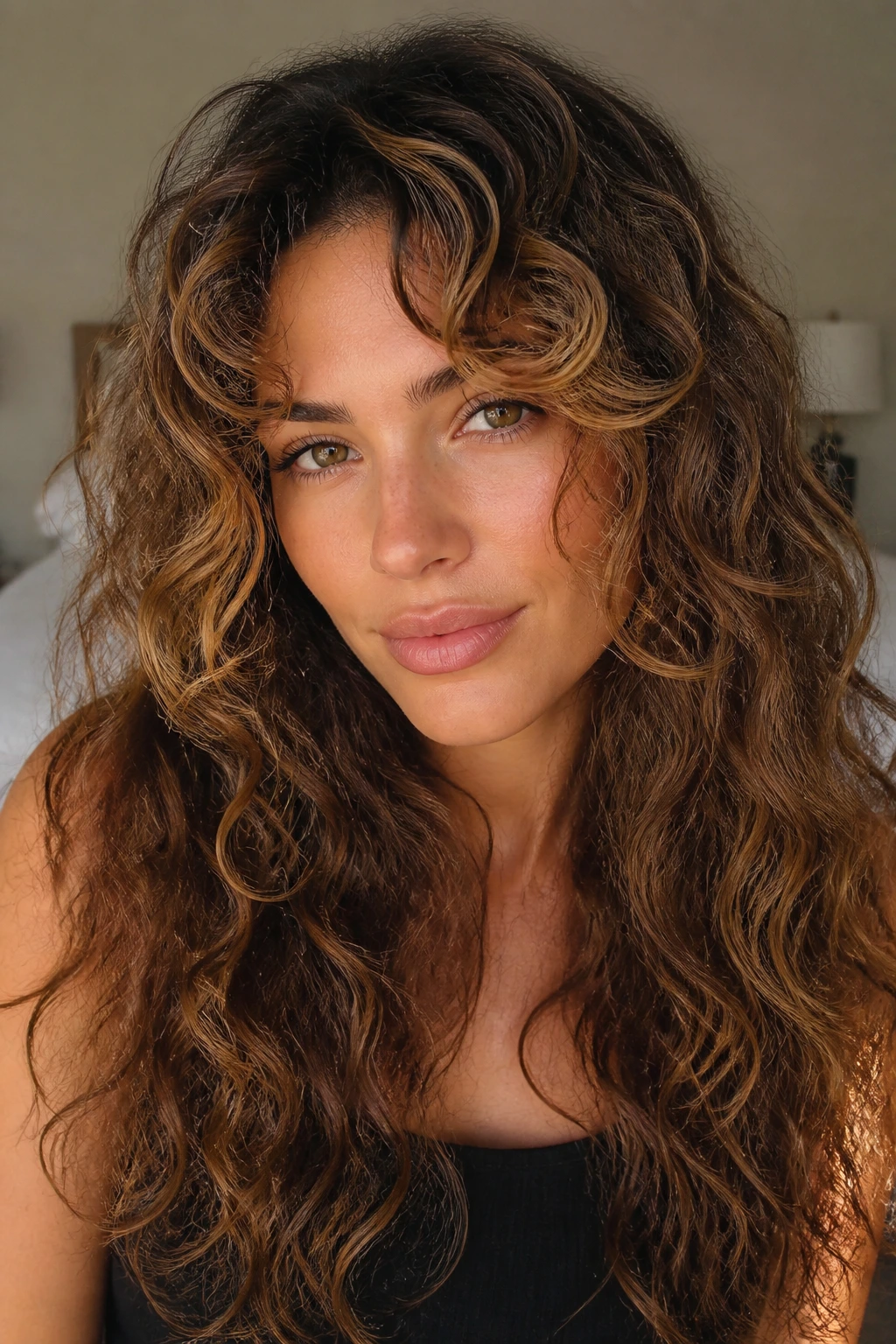
Curtain bangs and long curls can fight each other if the color is all wrong. Honeyed brunette keeps them on the same team. The lighter pieces live around the eyes and temples, then soften into a warmer brunette through the lengths. The bang area gets enough brightness to open the face without turning into a neon frame.
This look is good when you want the color to feel fresh but not heavy. Curly curtain bangs usually need a little more moisture and a little less product, so the lighter shade should be placed where it can move cleanly. If the bangs get too bright, they can look frizzy before the rest of the hair does.
Keep the crown darker than the front. That contrast lets the bangs pop while the rest of the shape stays full.
14. Smoked Chestnut with Lived-In Ends
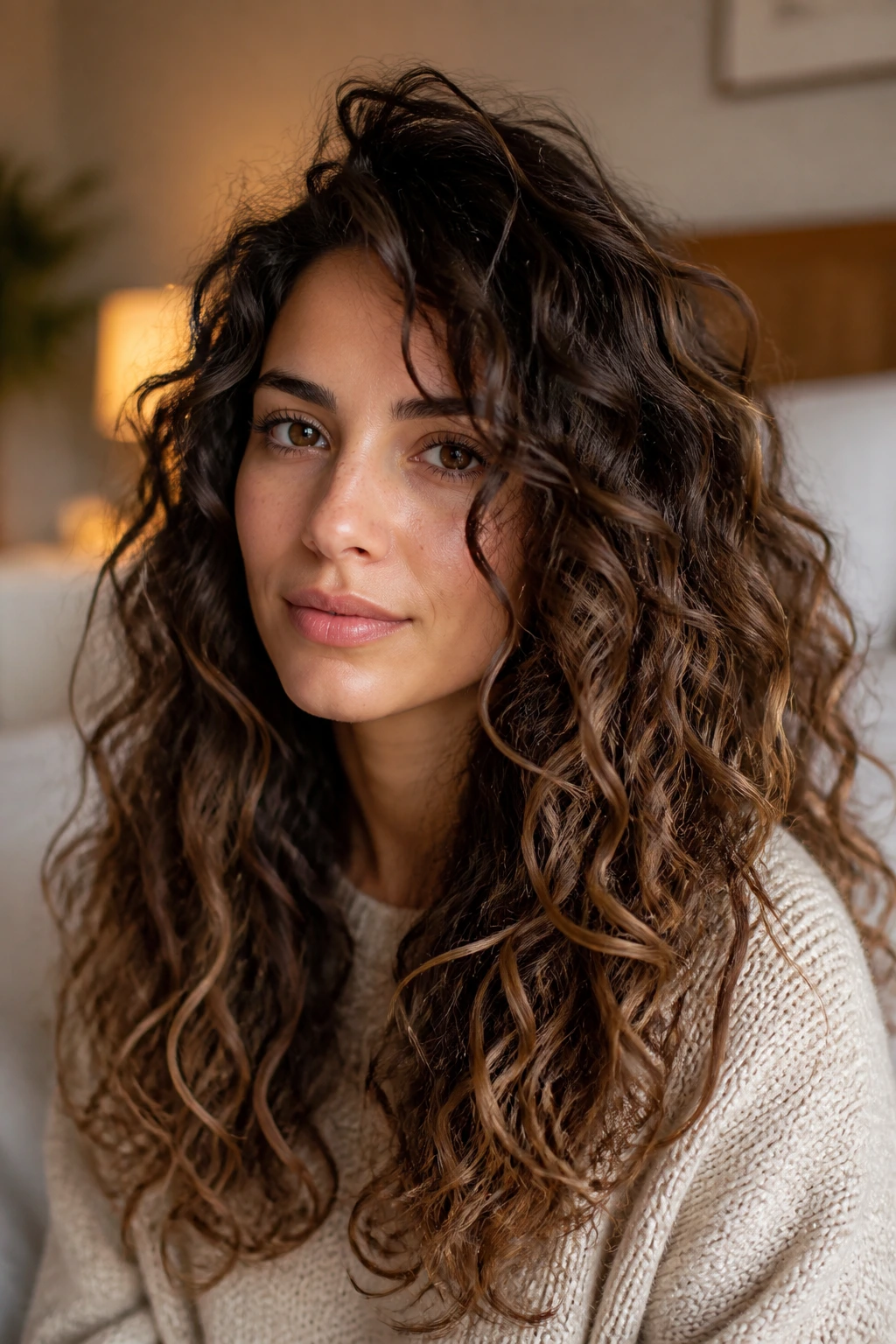
When you want color that survives a lazy ponytail, smoked chestnut is the easy pick. It’s neutral, slightly smoky, and only a shade or two lighter at the ends. Nothing about it feels overdone. It looks like the hair has simply spent time in good light.
Best for low-maintenance wearers
This is the one I’d suggest to anyone who likes to stretch salon visits. Because the contrast is gentle, regrowth doesn’t break the look apart. The ends still get enough lightness to keep the curls from looking heavy, but the fade stays quiet.
If your hair is already a little dry at the ends, this shade is kind. You don’t need to chase a high-lift finish to make it work. Smoked chestnut is more about polish than drama, and that makes it useful.
15. Toffee Drizzle on Extra-Long Waves and Curls
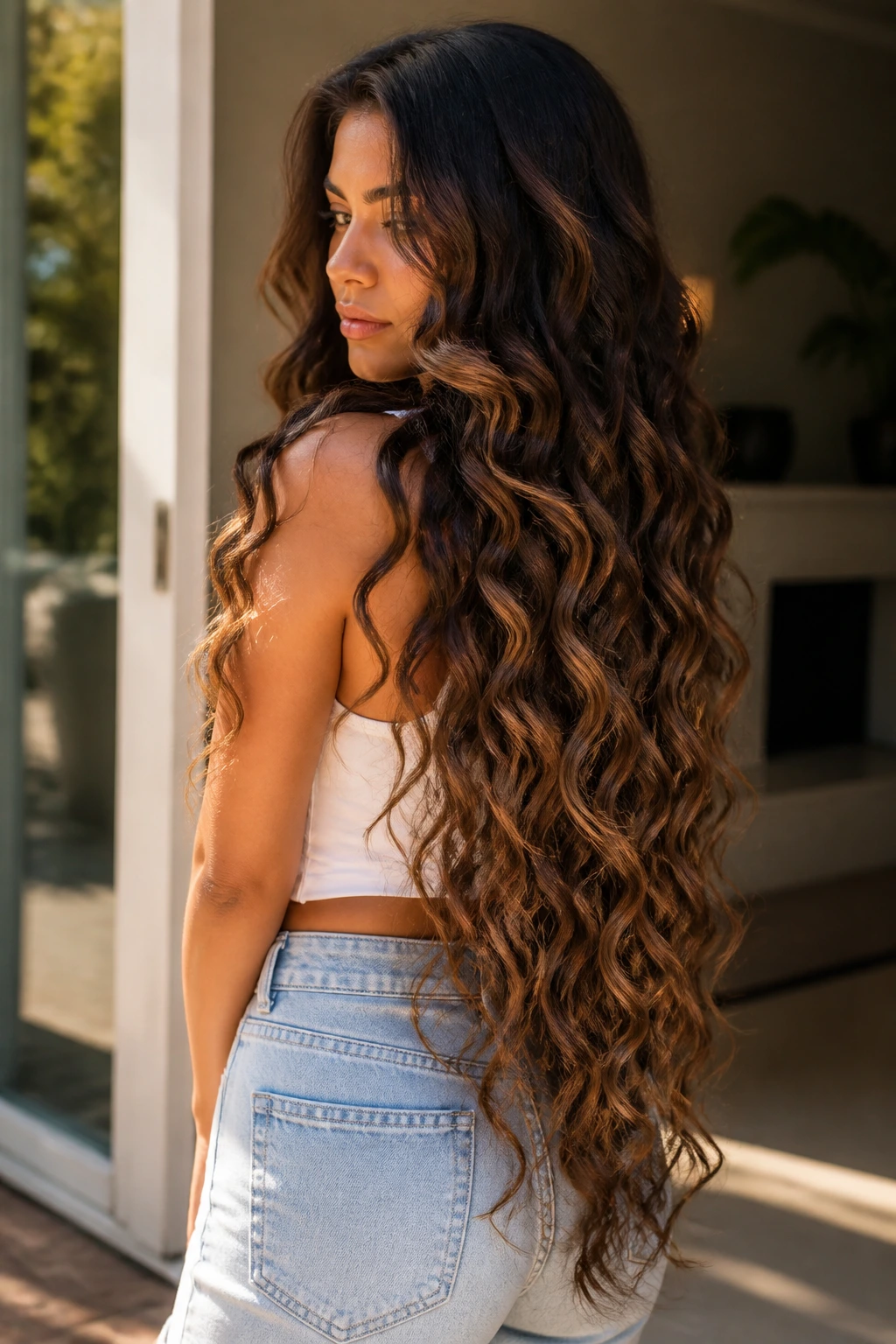
Extra-long hair needs a different map. If the lightness starts too high, the shape can look top-heavy. Toffee drizzle keeps the root deep, lets the mids breathe, and puts the brightest pieces from midback down through the ends. That placement works because the lower half of the hair carries the motion.
It’s a nice choice for waist-length curls, long layered waves, or anyone who wears braids and ponytails often. The ends stay visible when the hair is gathered, which is half the point. If your hair shrinks a lot, ask for the toffee to sit lower than expected when wet.
The best result looks soft from across the room and more detailed up close. That’s the sweet spot.
16. Brunette Ombre with Money Pieces and Depth
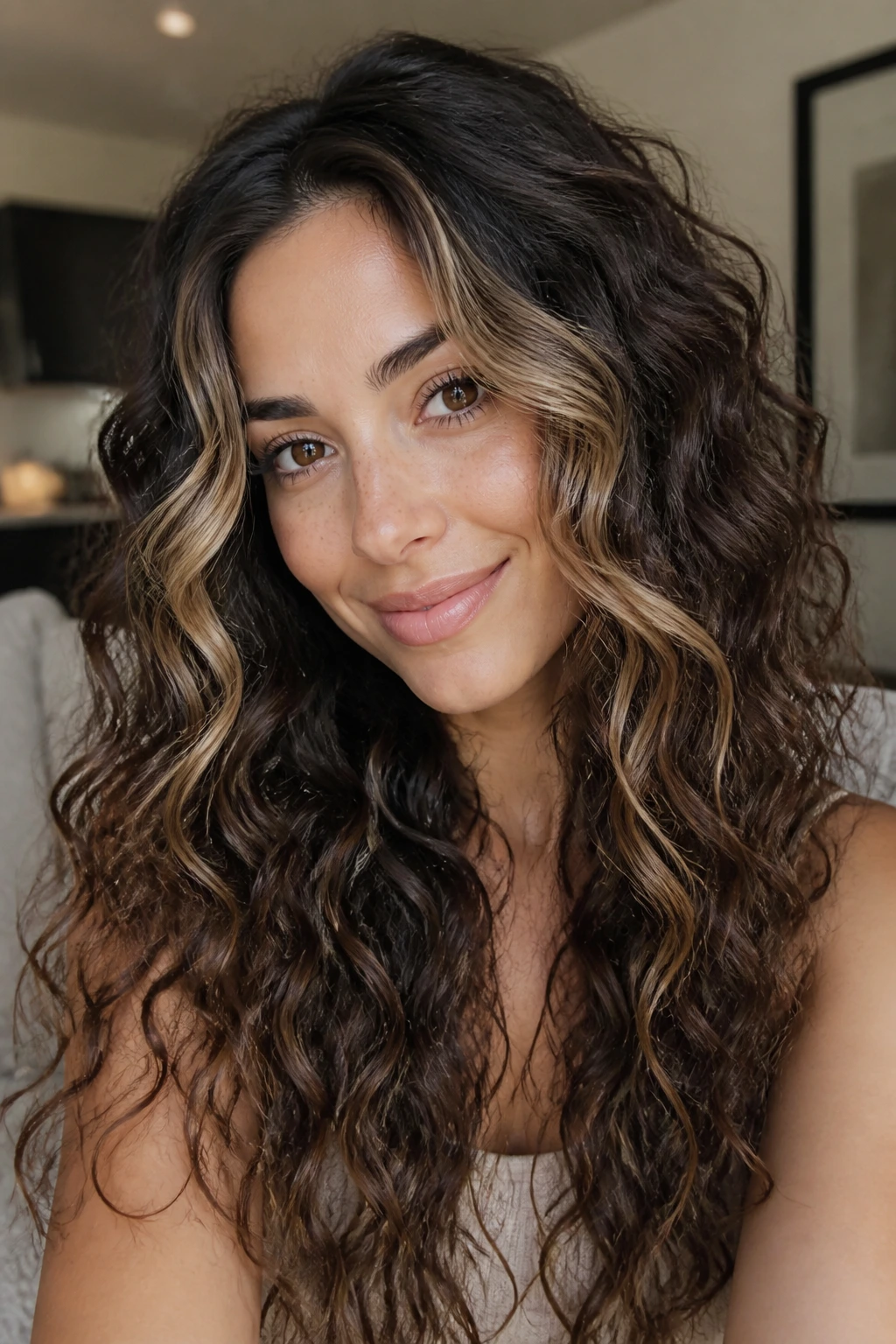
Want the front to wake up the face while the rest stays dark? Money pieces handle that job. This version keeps the body of the hair deep brunette, then places brighter face-framing strands around the temples and cheekbones. The contrast is high enough to matter, but the whole head doesn’t need to be lightened.
Face-framing without the halo effect
Keep the money pieces narrow. If they spread too wide, they can create a halo that fights the curl pattern. Narrow pieces around the front hairline, plus a softer lightening through the ends, look much cleaner on long curls.
This is a good choice if you like updos, because the front pieces stay visible even when the rest is twisted back. It also gives the face a little lift without asking the color to do all the talking.
17. Cola Brown with Soft Copper Flickers
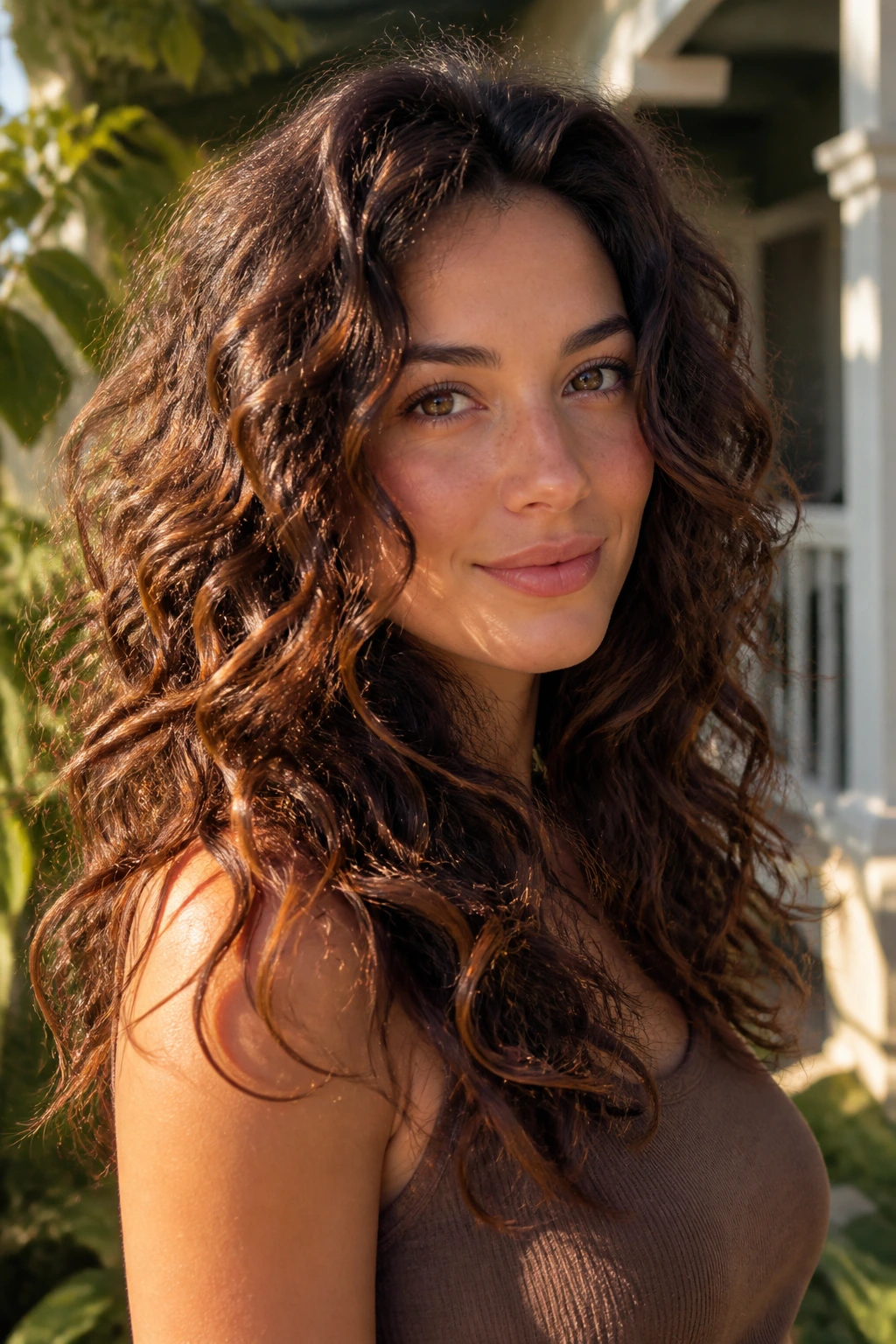
Cola brown is the shade that catches you by surprise. At first it reads as deep brunette. Then the copper flickers show up in afternoon light, especially on curls that swing and separate. It’s not a redhead look. It’s a brunette look with a little warmth in the engine.
That softness matters. Full copper can be a lot on long curly hair, and it can fade fast if the hair is porous. A cola brown glaze with copper undertones is easier to live with. It gives you warmth without turning the whole head red.
I like this on hair that wears a little frizz. The copper catches the texture in a flattering way, so the color looks alive rather than puffy.
18. Velvet Espresso with Milk-Chocolate Ends
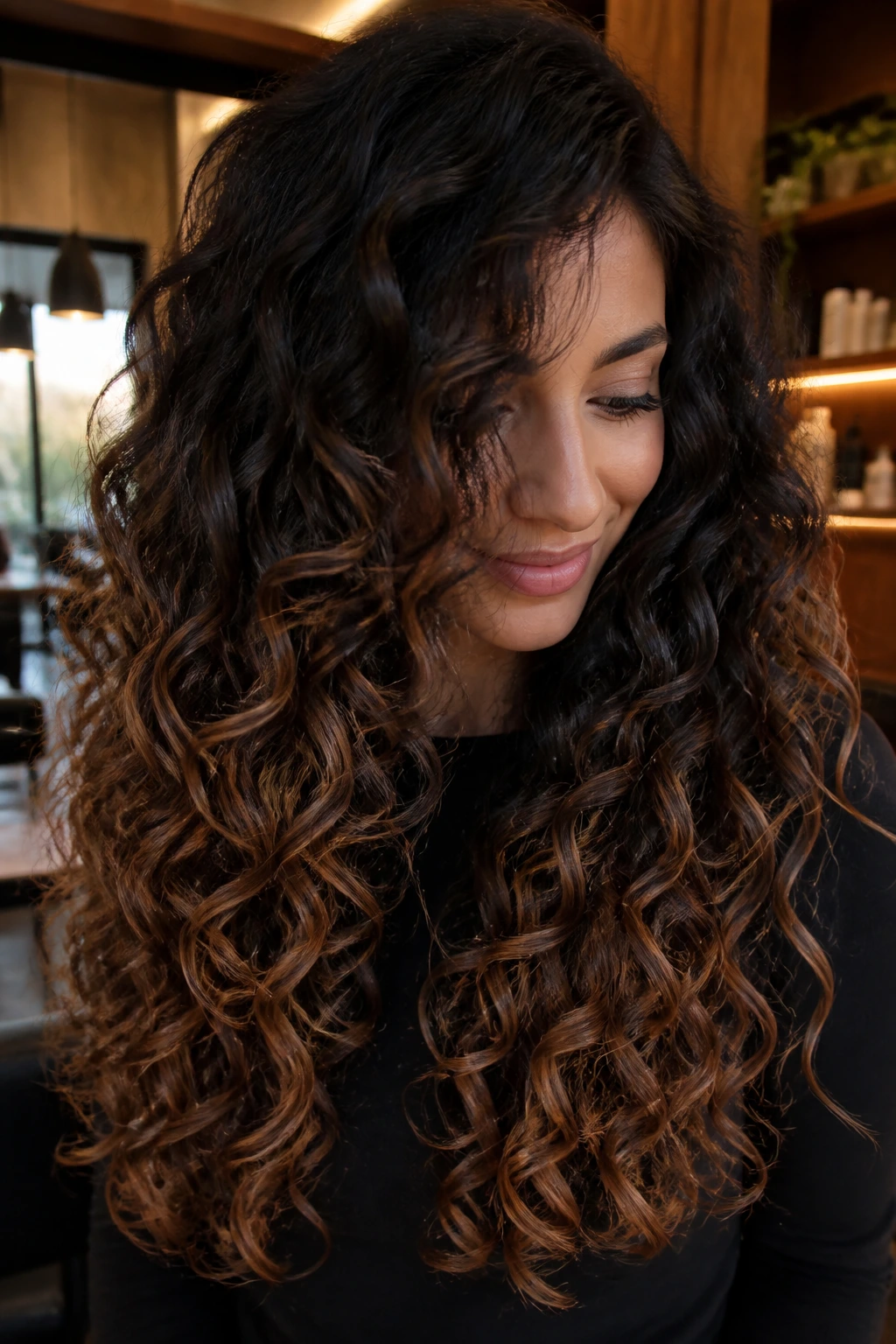
High contrast works when the transition stays soft. Velvet espresso at the top gives the curls a dark, plush base, while milk-chocolate ends keep the bottom from looking heavy. The fade is more noticeable than some of the softer options here, but it still belongs in the brunette family.
What to ask for at the sink
Ask for a gradual melt, not a hard ombre line. A few baby-lights between the root and the ends help the color transition feel smooth. On thick curls, that in-between softness is what keeps the whole style from looking blocky.
If your ends are already rough, don’t chase them too light. Milk-chocolate is enough. You want the curl to stay glossy, not brittle.
19. Almond Brown Balayage on Defined Coils
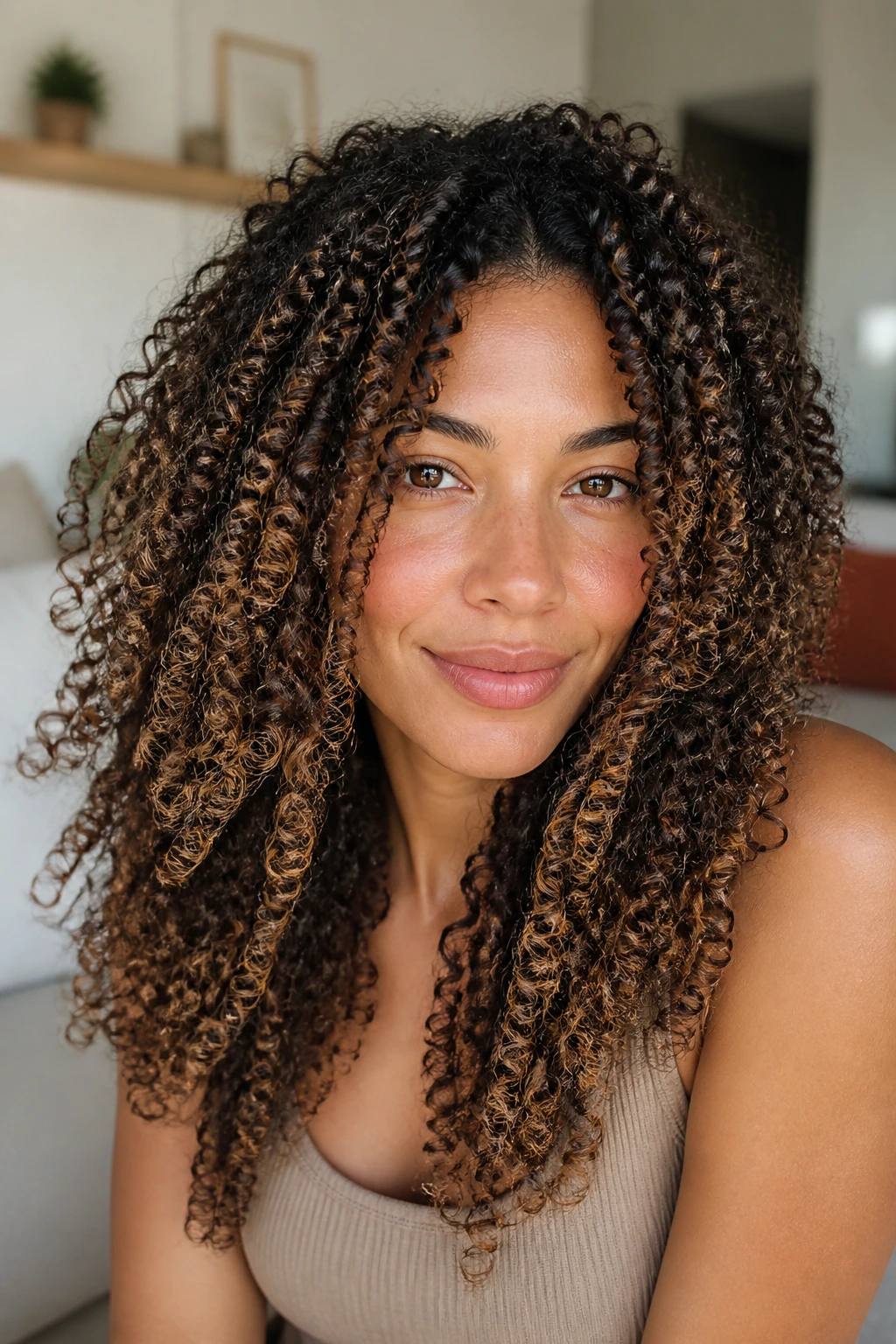
Defined coils show color in bands, so the paint has to respect the curl map. Almond brown works because it’s soft and creamy, not glaring. The lighter pieces should be small enough to wrap around the coil without making it look broken up.
Small sections, better payoff
This look works best when the colorist uses smaller sections and leaves natural darkness between them. That contrast keeps the coil definition crisp. If the panels are too wide, the pattern can blur.
Moisture matters here. Almond tones look nicest when the hair has good slip and the coils clump cleanly. A rich leave-in and a gentle diffuser setting make more difference than people expect.
20. Tobacco Brunette with Sandy Highlights
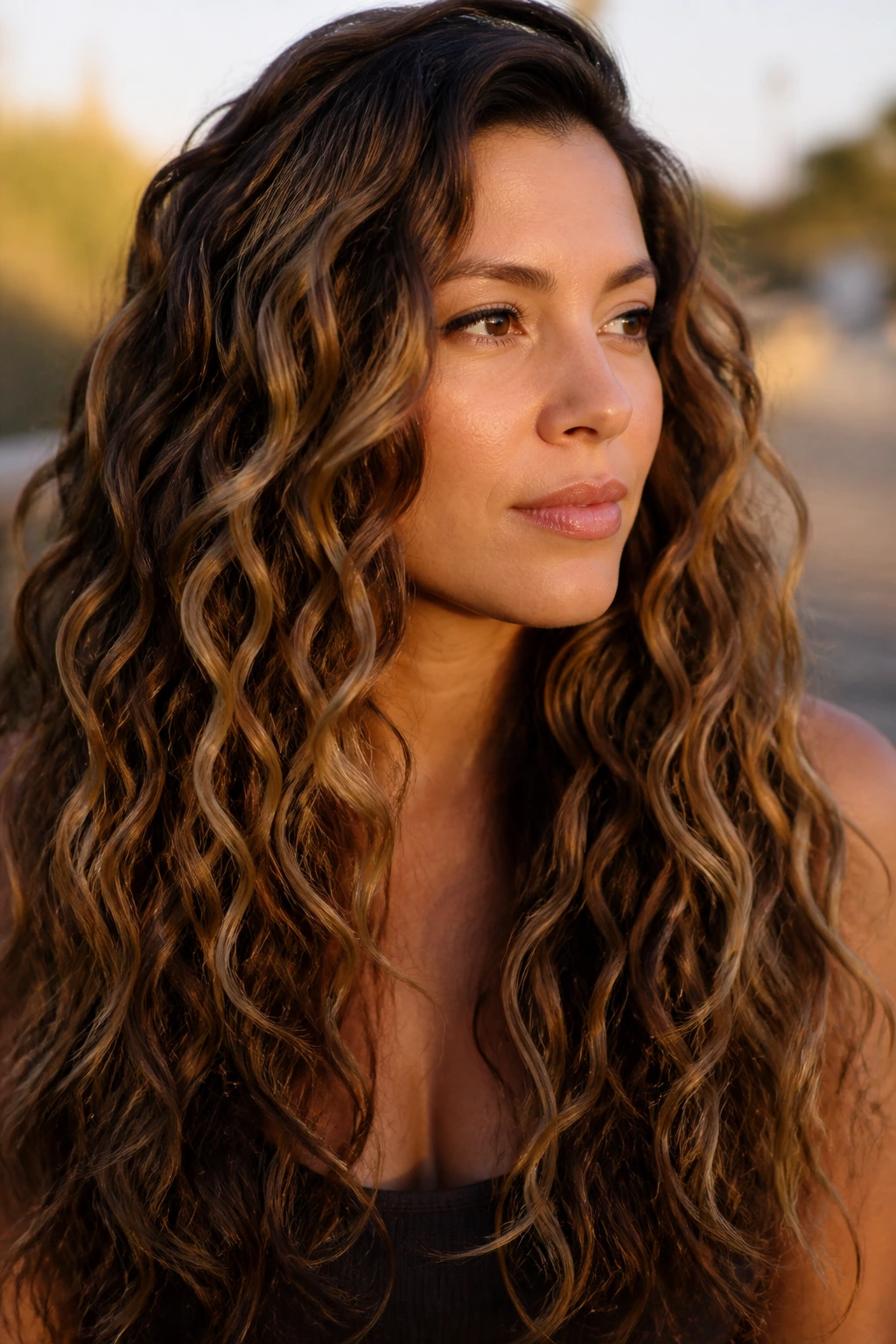
Warm doesn’t have to mean brassy. Tobacco brunette proves that point. The base stays earthy and deep, then sandy highlights sit on top in a muted gold-brown that reads soft, not yellow. It’s a grounded color, which is why it suits long curly hair so well.
This is a good shape for shag cuts, airy layers, or curls that need a little brightness without becoming lighter all over. The sandy pieces should feel like sun on the surface of the hair, not like a separate stripe. If the tone goes too golden, the whole look can lose that clean finish.
The color wears nicely with everyday makeup and simple clothes. It isn’t fussy. That’s half the charm.
21. Blackberry Brunette Ombre for Rich Depth
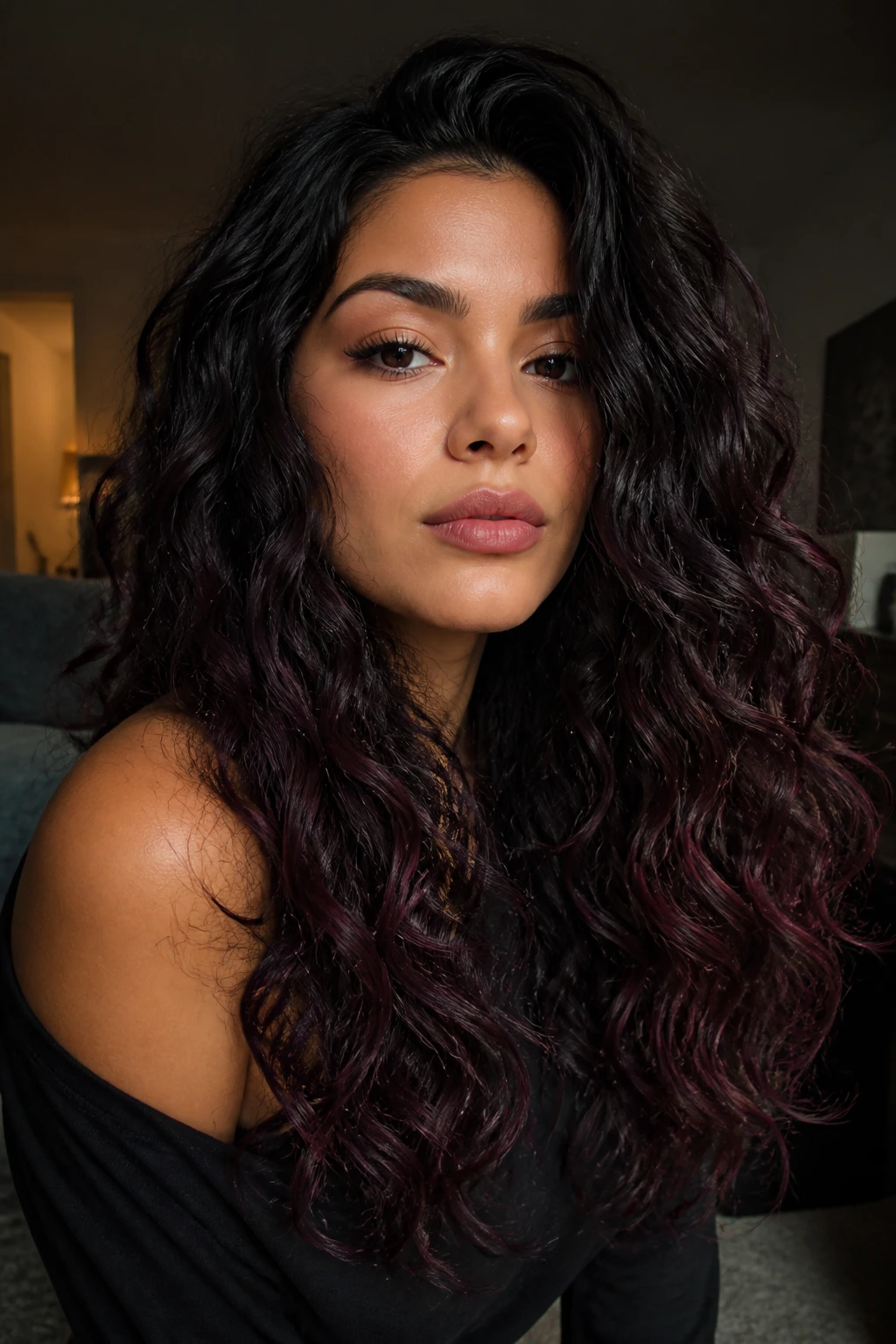
A berry tint can be the reason deep brown suddenly looks alive. Blackberry brunette keeps the base nearly espresso-dark, then lets plum-brown or berry-brown notes show up toward the ends. On curls, the color shifts when the hair moves, which makes it feel richer than a plain brown fade.
This one is especially good for cooler complexions or dark eyes, but it can work anywhere if the shade stays brown-first. The trick is not to go too purple. A whisper of berry is enough. Too much and the look turns costume-like.
If you like your hair to feel a little moody and not too sweet, this is a strong choice. It’s brunette, but it has edge.
22. Dark Roast to Bronde Gradient on Long Curls
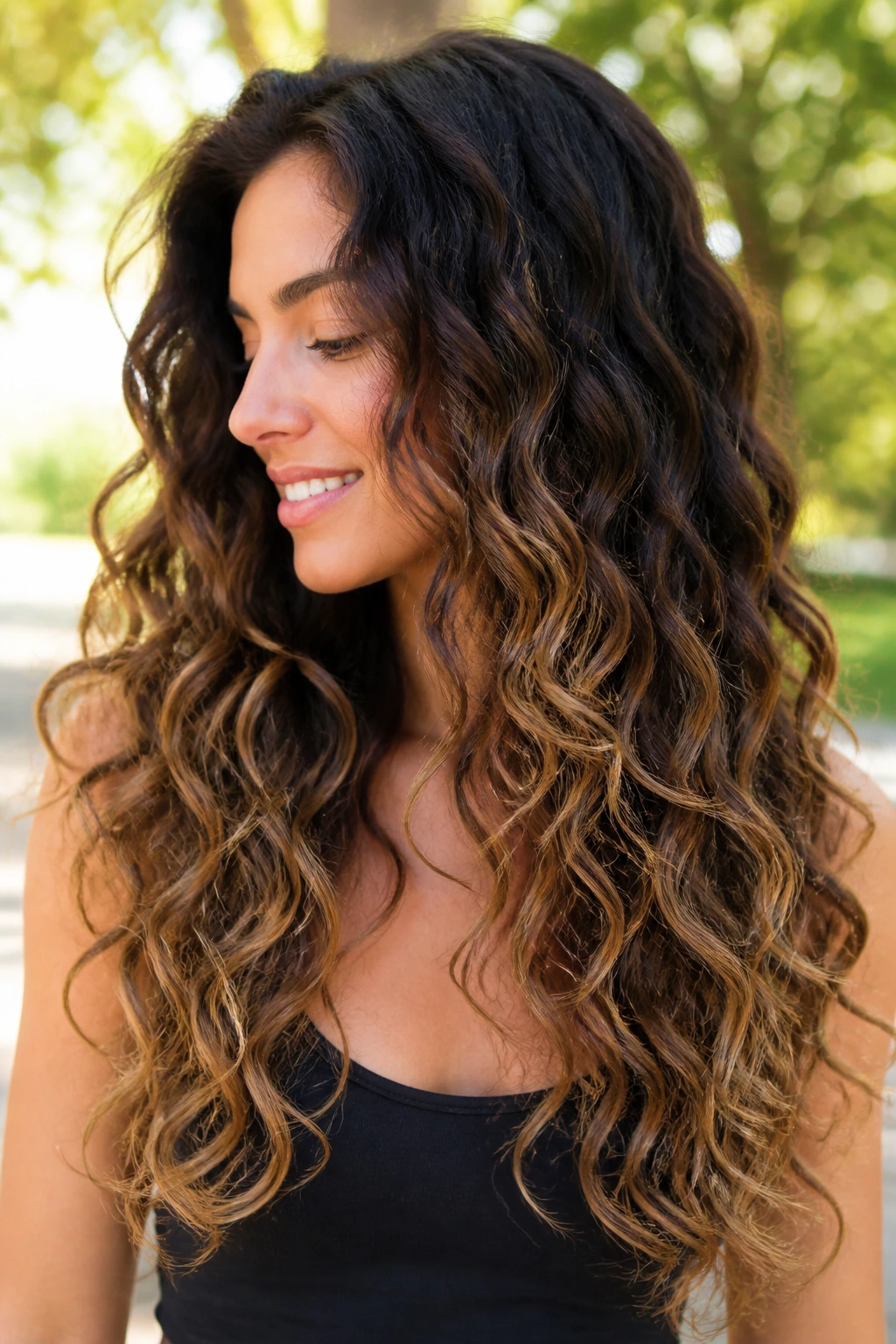
This is the biggest visual change in the set, and it needs the most discipline. Dark roast keeps the roots deep and glossy, then the ends slide into bronde—a brunette-blonde middle ground that reads lighter without losing warmth. On long curls, the gradient can look dramatic in the best possible way.
- Keep the top several inches dark so the crown stays full.
- Ask for the bronde only through the last third of the length.
- Use bond care if your curls have already been lightened before.
- Finish with a gloss that keeps the bronde from turning dry or flat.
This is the look for someone who wants the color to be obvious even when the hair is tied back. It’s also the least forgiving, so the cut and condition of the ends matter. Healthy curls make this shine. Frayed ends make it wobble.
Why Brunette Ombre and Curly Texture Work So Well Together
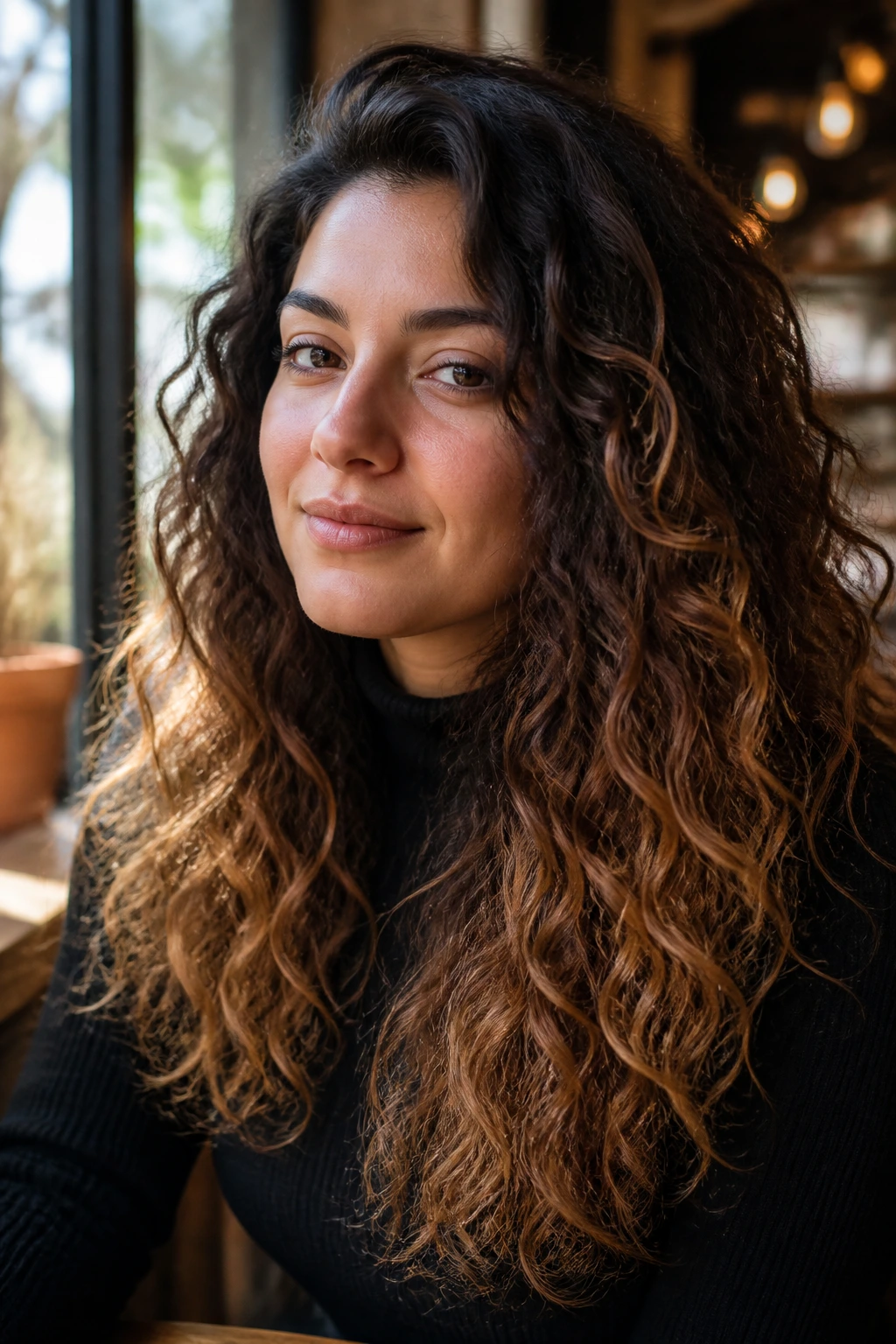
Curly hair gives brunette ombre something straight hair has to fake: depth built into the shape itself. Every bend catches light a little differently. Every curl clump hides and reveals the lighter pieces at its own pace. That means a brown-to-caramel fade can feel richer on curls than it does on sleek hair, even when the lift is modest.
Long hair matters because it gives the color room to breathe. A short curly cut can make the transition feel abrupt if the lightened section starts too high. On longer lengths, the fade can live below the widest point of the curl bundle, where it looks soft instead of banded. That lower placement also keeps the crown dense, which is a small thing until you see the alternative: a top-heavy ombre that makes the whole head look flat.
Porosity is the quiet villain here. The ends of long curls are older, dryer, and more likely to soak up toner too fast. That’s why the best brunette ombre for long hair with curly hair usually leans on gloss, careful lightening, and a shade plan that respects what the hair can actually hold. You do not need the ends to be the palest part of the room. You need them to look intentional.
And honestly, that’s why these shades are so satisfying. They don’t fight the curl pattern. They work with it.
Essential Tools for Long Curly Ombre Care
A good color job still needs the right tools at home. Otherwise the shape gets fuzzy, the finish gets dull, and the gradient disappears under frizz.
-
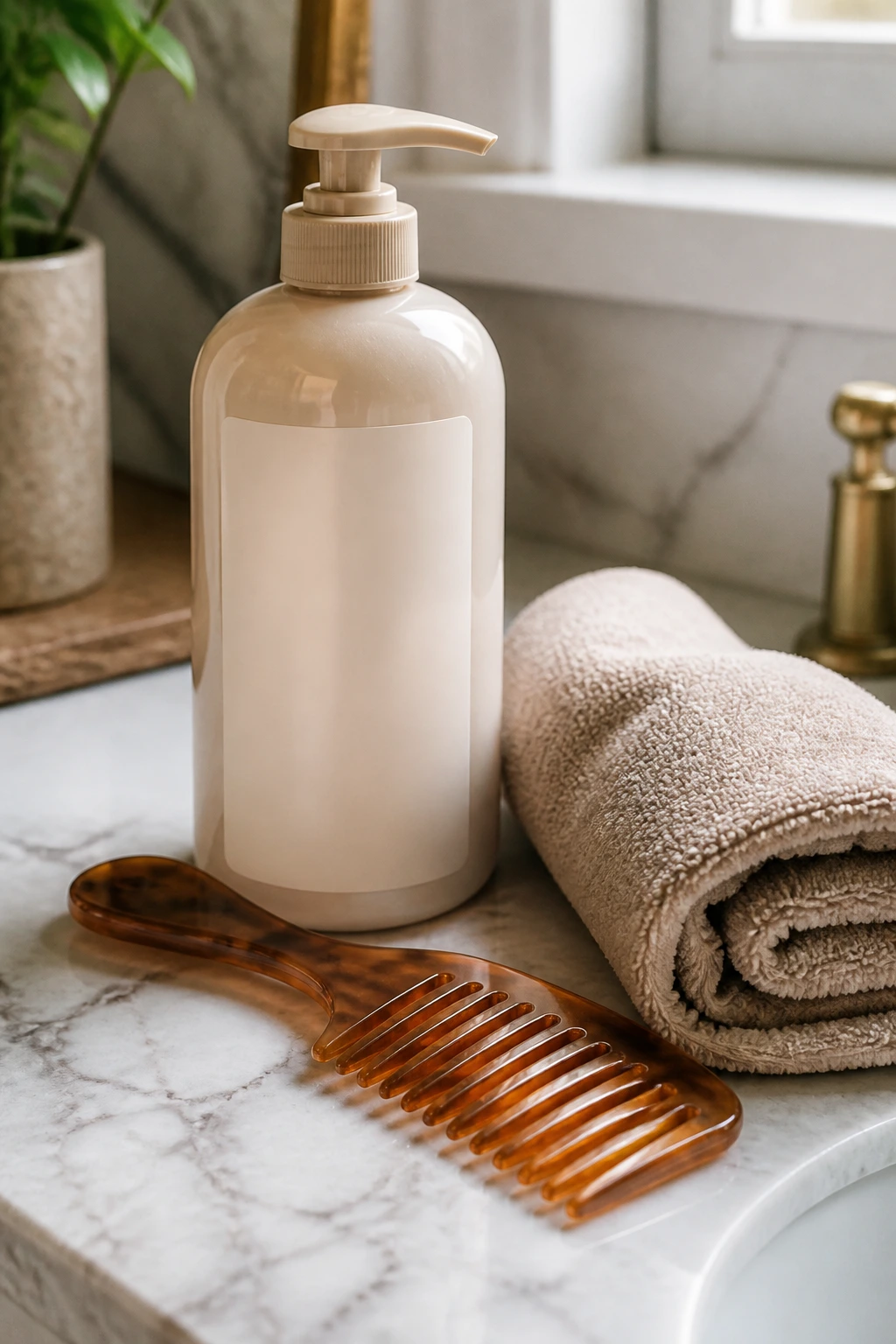
Color-safe sulfate-free shampoo: Keeps brunette tones from stripping too fast and is gentler on lightened ends.
-
Rich conditioner or mask: The ends of long curls need slip, especially if they’ve been lightened even a little.
-
Wide-tooth comb: Helps detangle wet curls without pulling the lighter sections apart.
-
Microfiber towel or cotton T-shirt: Cuts down on friction, which matters when the ends are porous.
-
Diffuser attachment: Helps the color read clearly by keeping curl clumps intact while they dry.
-
Heat protectant spray or cream: Non-negotiable if you use a blow dryer, flat iron, or hot tools at all.
-
Leave-in conditioner: Keeps the ombre soft and stops the ends from looking rough by day two.
-
Silk or satin pillowcase: Reduces roughing-up overnight, which is when many curly styles lose their polish.
-
Hair clips for sectioning: Useful for styling, refreshing, and keeping product where it belongs.
-
Glossing treatment or color-depositing mask: Optional, but worth it if your ends tend to fade warm or look dull between appointments.
Choosing the Right Brunette Undertone and Placement
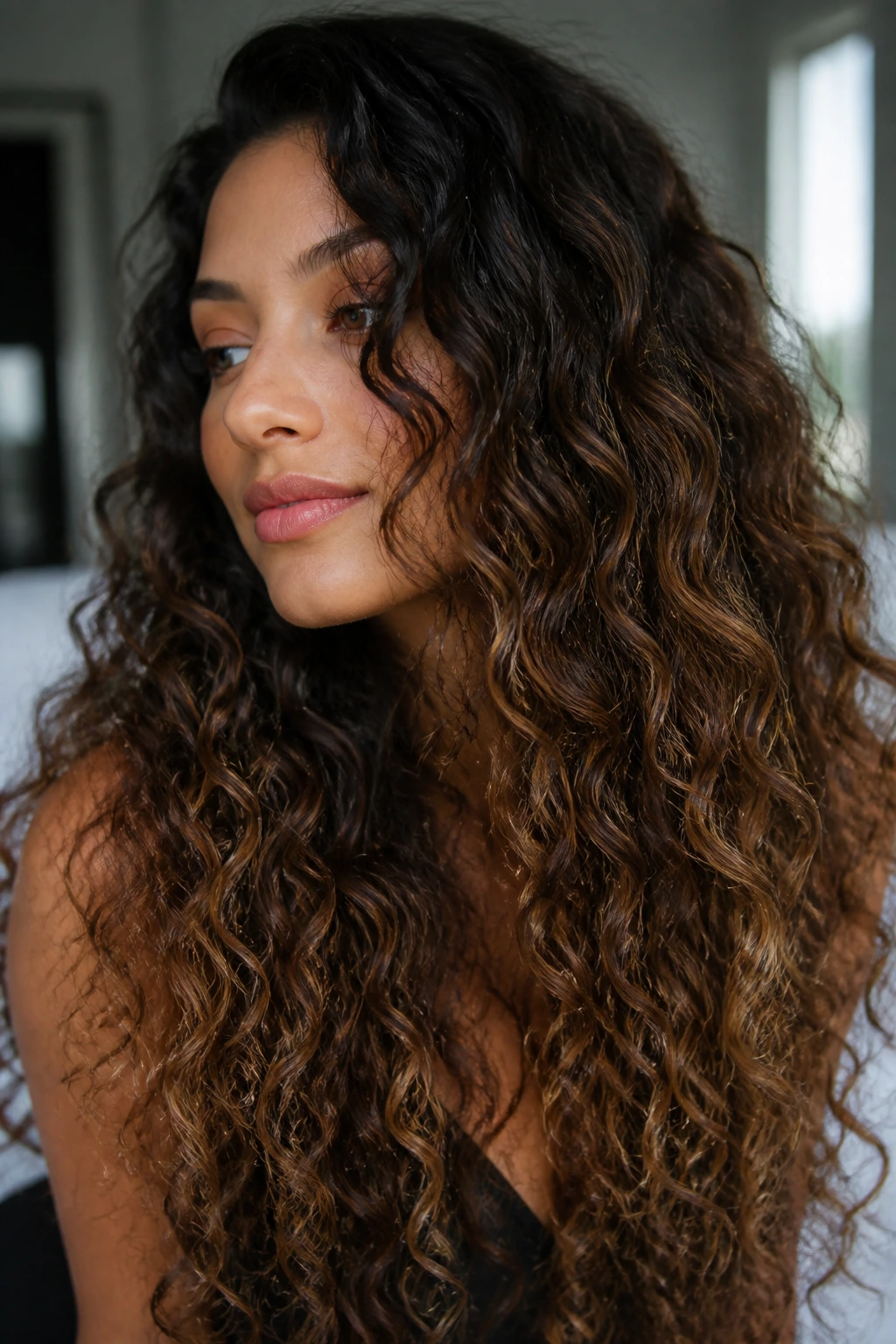
Warm brunettes, cool brunettes, and neutral brunettes all behave a little differently on curly hair. The trick is matching the undertone to both your complexion and the way your curls reflect light. Warm shades—caramel, toffee, bronze, cinnamon—make the hair feel sunlit. Cool shades—mushroom, beige, ash, smoky chestnut—look cleaner and softer. Neutral shades sit in the middle and are usually the easiest to live with.
Warm brunettes
These are the shades to choose if your skin runs golden, olive, or peach. They bring heat back into the hair without turning it orange. Caramel, honey, bronze, and cinnamon all sit here, and each one gives long curls a little more glow when the light hits the outer bend.
Cool brunettes
If brass bothers you, go cooler. Mushroom, ash-beige, smoked chestnut, and blackberry-brown keep the look controlled. On curly hair, cool shades need careful toning, because porous ends can pick up pigment too fast and look flat. A soft gloss usually wears better than a heavy toner.
Placement on curls
This part matters more than the exact shade. On long curly hair, the lightest pieces usually look best below the chin, often below the collarbone, and sometimes even lower if your curls shrink a lot. Face-framing can start higher, but the broad fade should stay low enough that the crown remains dense and the gradient has room to show.
If you bring reference photos to a color appointment, bring ones with the same curl pattern or at least the same density. A photo of straight hair tells only half the story.
How to Show the Gradient When You Style It
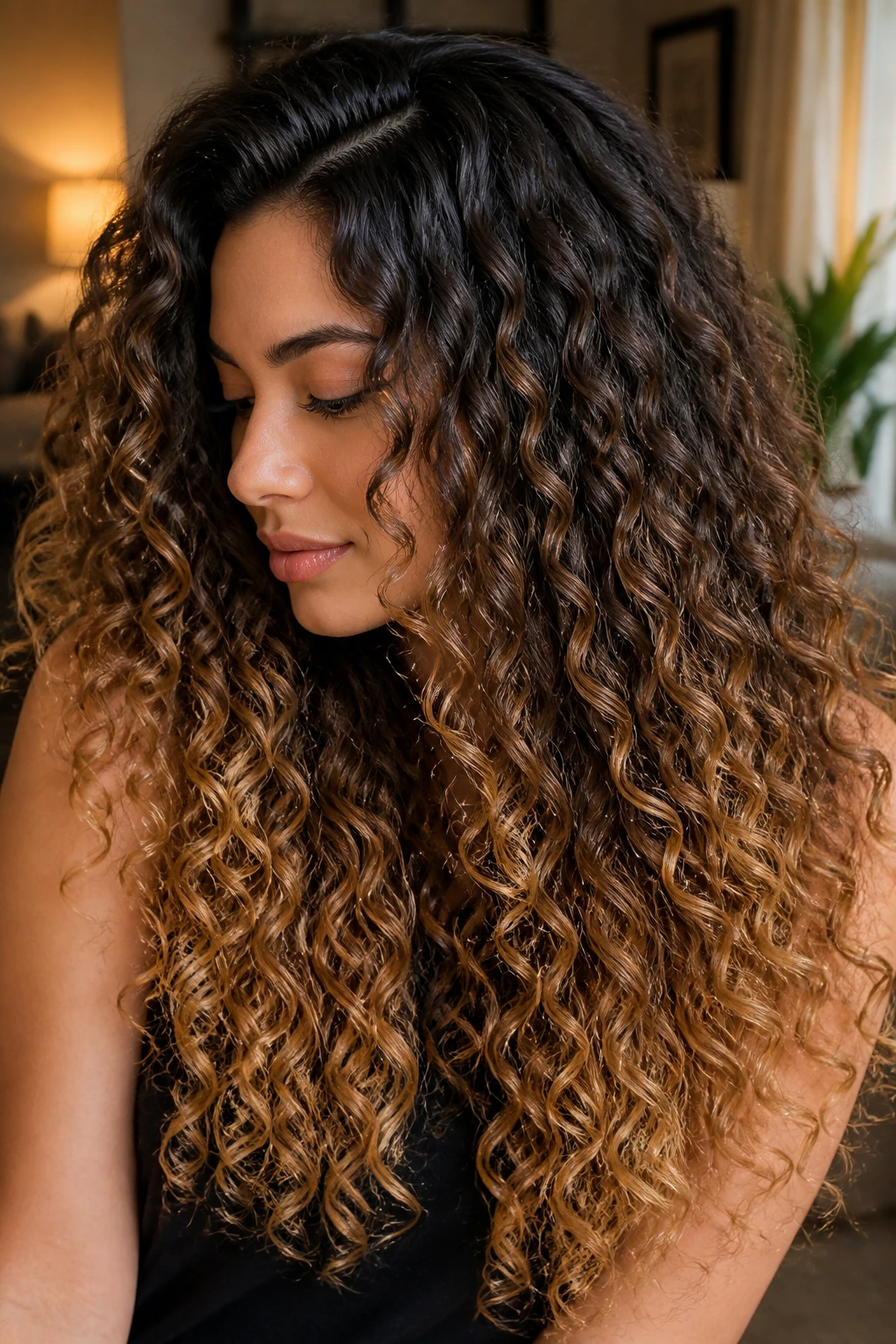
Parting: An off-center part gives brunette ombre a little more shape at the root, which helps the darker base look full instead of heavy. A middle part shows the symmetry better, especially on face-framing looks like chestnut lights or money pieces.
Drying: Diffuse on low heat and low airflow if you want the color to stay in clean ribbons. High heat blasts apart the curl clumps and makes the lighter pieces look scattered. Air-drying works too, but you’ll usually get a softer, less defined read.
Definition: Use curl cream or gel where the color is supposed to show, not piled on top of the crown. Too much product near the roots collapses the shadow root and makes the top of the head look greasy instead of deep.
Finish: A tiny amount of serum on the last few inches of hair can make the ombre look smoother. Go easy. You want sheen, not a slick finish that hides the variation.
Second-day hair: Scrunch in a little water with your hands, reshape the front pieces, and use a diffuser for a minute or two if the ends have gone flat. Curly ombre often looks better on day two because the shape loosens and the gradient becomes easier to see.
Small Upgrades That Make the Color Read Better
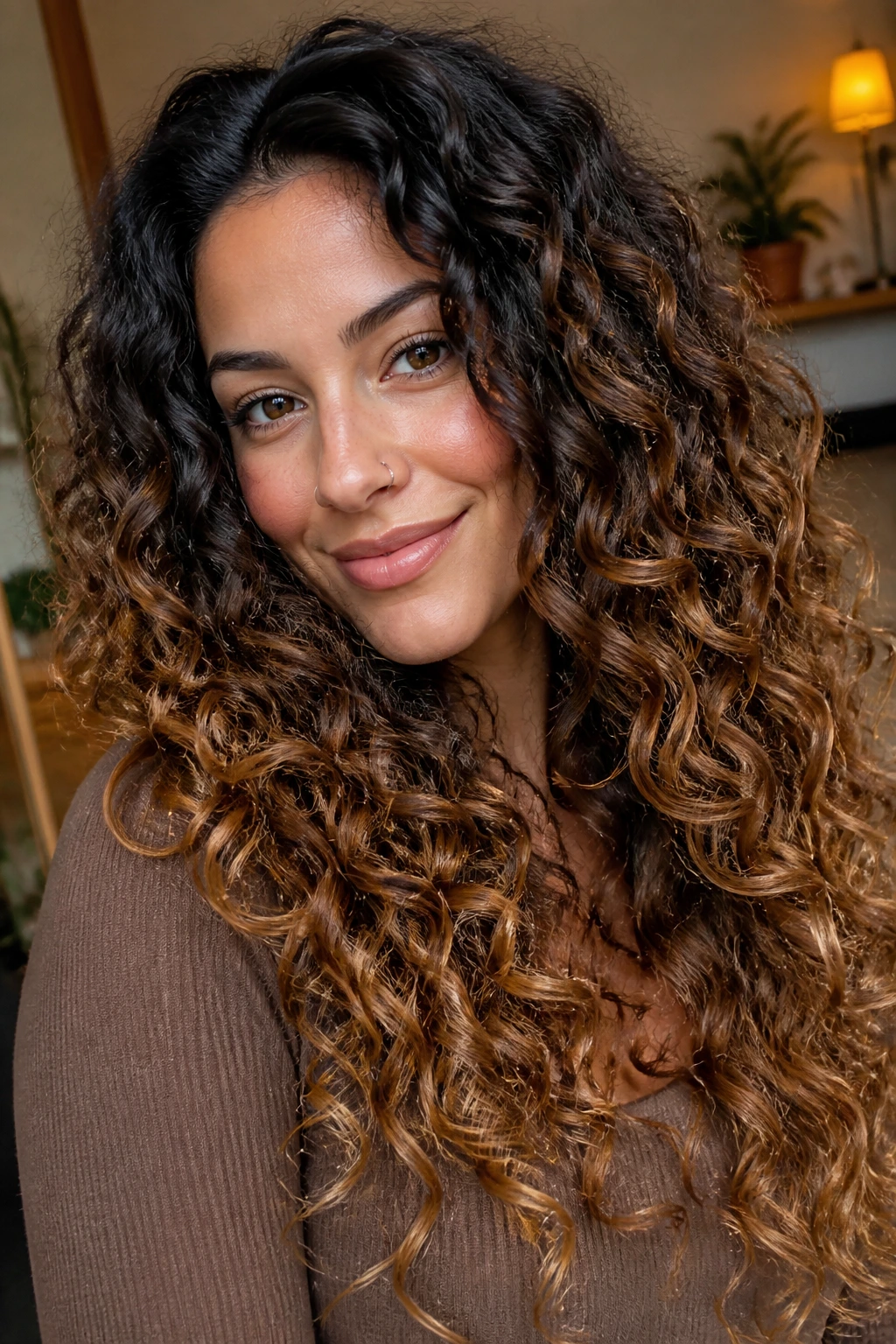
Gloss refresh: A clear or brunette gloss every 6 to 8 weeks keeps the ends from looking chalky. On porous curls, gloss usually looks better than piling on more toner.
Shape control: Long layers, soft face framing, or a gentle U-shaped cut help the fade show. A blunt hemline can hide the gradient and make the lighter ends disappear into one block.
Product choice: Lightweight curl cream on top, richer moisture on the ends. That split keeps the crown clean and the lighter pieces smooth. Heavy butter all over the hair tends to mute the dimension you paid for.
Color tweaks: Caramel, bronze, and honey suit warmer skin; beige, mushroom, and ash fit cooler undertones; berry-brown and cola tones give dark curls a richer edge. You do not need to go dramatically lighter to make the style noticeable.
Budget move: If you want a smaller service, ask for face-framing pieces plus a soft ombre through the bottom 6 inches. That gives you visible dimension without a full head of lightening.
Common Errors That Flatten Brunette Ombre on Curls
-
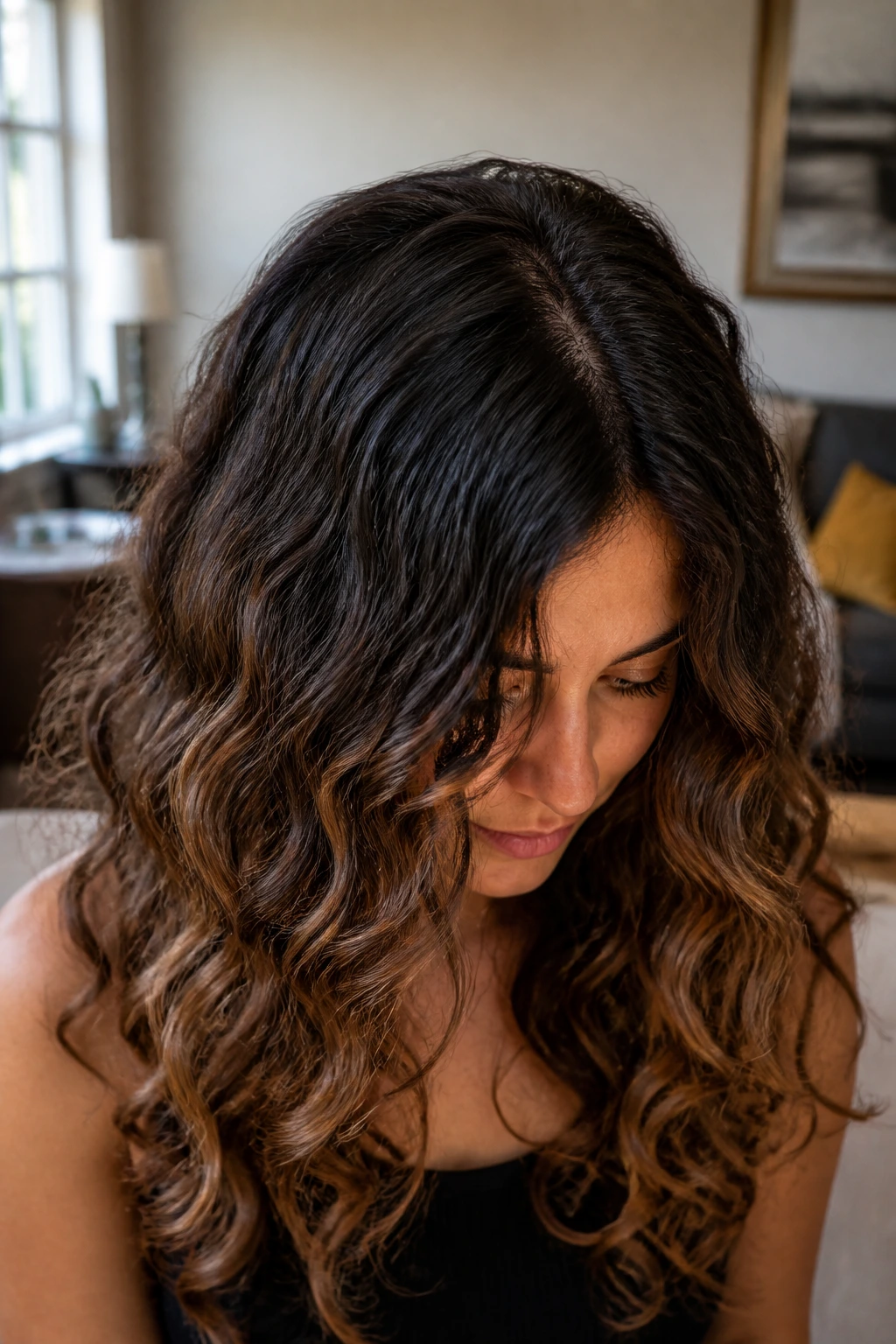
Starting the fade too high: The result is a hard band around the head instead of a soft melt. Keep the transition lower, especially if your curls spring up after drying.
-
Lightening the ends too far: When the tips go too pale, they get dry, puffy, and hard to style. A rich caramel, toffee, or bronde finish often looks better on curls than a near-blonde one.
-
Using the wrong toner: Heavy ash on already porous curls can look muddy. A neutral or beige gloss is often safer if your hair tends to grab pigment fast.
-
Coloring only for straight hair photos: Curly hair needs its own map. If you don’t show your colorist your natural curl pattern, the placement can land in the wrong spot once the hair shrinks.
-
Skipping trims: Split ends catch light badly and make ombre look frayed. A trim every 8 to 10 weeks keeps the gradient clean and stops the bottom from puffing out.
Variations and Adaptations to Try
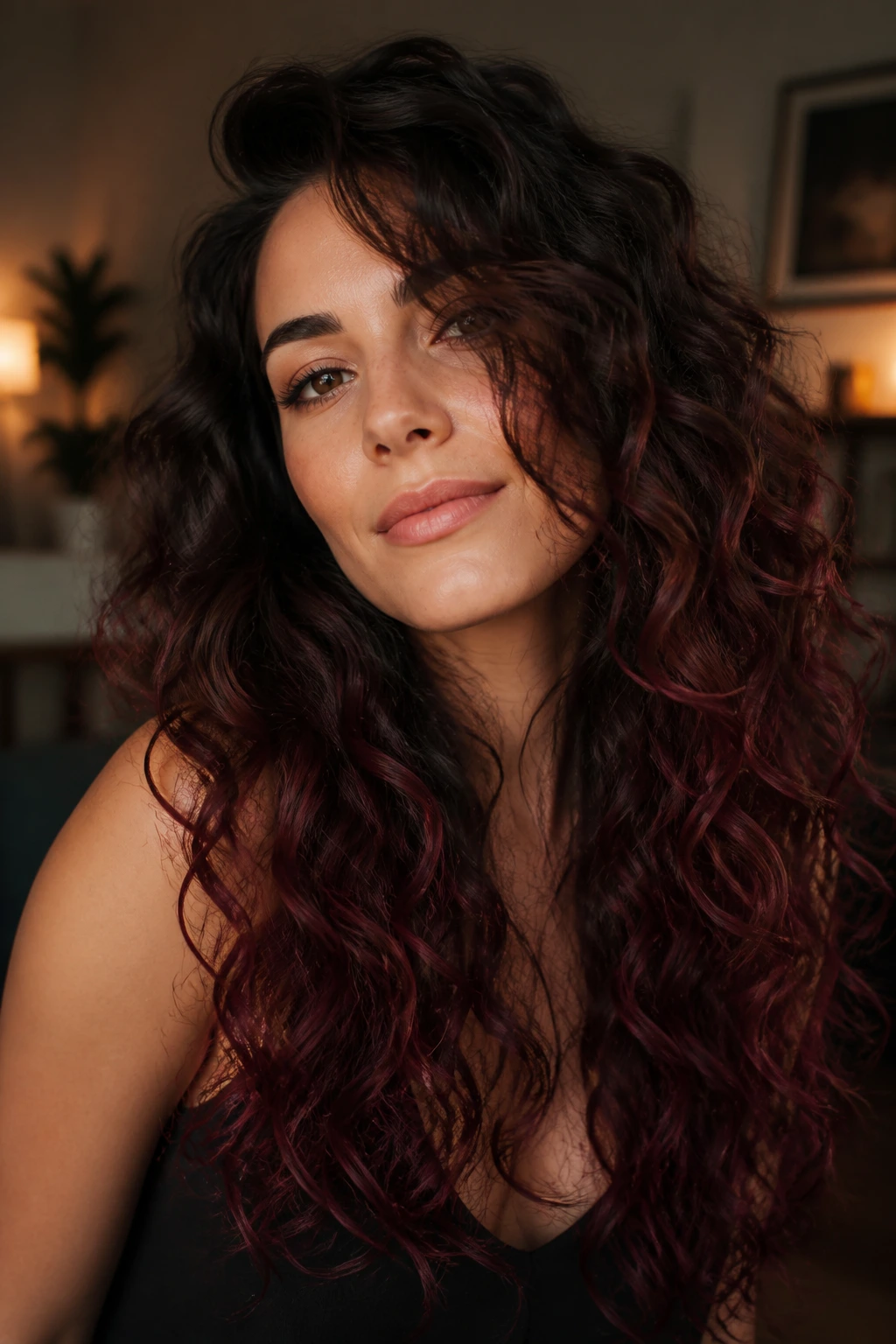
The Soft Grow-Out Edit: Keep the lightness only 1 to 2 shades above your base and let the fade stay low. This is the version to choose if you want dimension without obvious maintenance.
The High-Contrast Ribbon Set: Ask for wider painted ribbons and a darker root melt. It gives long curls a bolder look, especially when you wear the hair down and separated.
The Warm Honey Shift: Swap cooler beige pieces for caramel, honey, or bronze. This is a smart move for golden or olive skin tones and hair that already runs warm.
The Cool Smoke Melt: Replace the caramel tones with mushroom, ash-beige, or smoked chestnut. It’s cleaner, quieter, and better if you hate brass.
The Berry Brunette Twist: Add blackberry or chocolate-cherry tones to the ends. The result feels deeper and a little moodier, which is especially nice on dark eyes and dense curls.
The Budget-Savvy Partial Ombre: Focus the lighter color on the face frame and the lower third of the hair only. It still gives movement, and the grow-out is easier to manage between visits.
Care, Refreshing, and Heat Protection
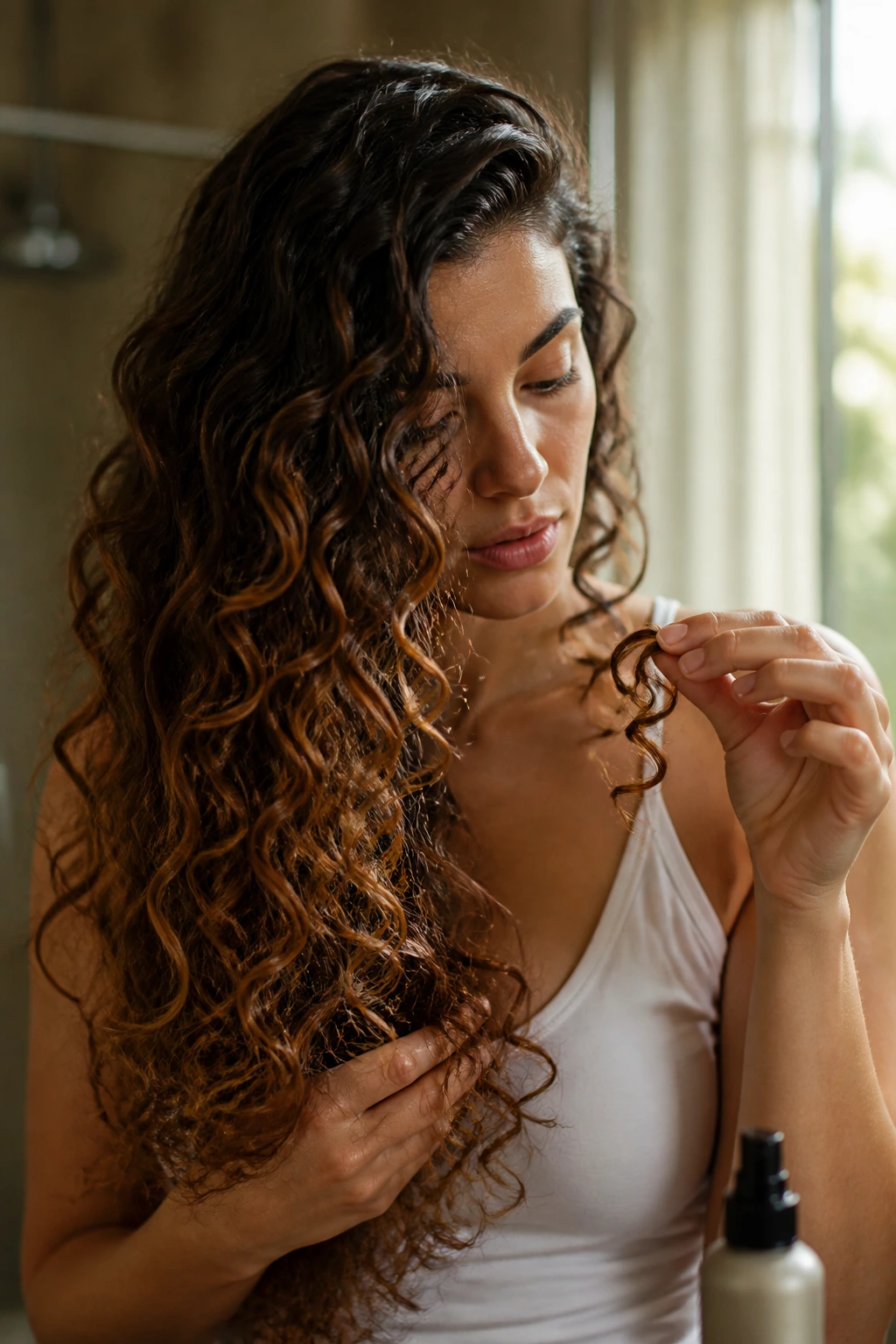
Long curly ombre keeps looking good when the routine stays simple and steady. Wash as often as your scalp needs—usually every 2 to 4 days for most curl patterns—but keep the cleansing gentle. A sulfate-free shampoo helps the brunette tones last longer and keeps the lightened ends from getting stripped out.
A deep conditioner or mask once a week is a good baseline, especially if the ends were lightened more than a shade or two. Put the richer product on the last 4 to 6 inches and use less at the root. Heavy product at the scalp kills lift fast.
If you heat style, use a protectant every single time. That is the part people skip and then regret later. Even a diffuser can rough up porous ends if the heat is too high. Low to medium heat, low airflow, and a little patience usually give better results than blasting the hair dry.
For salon maintenance, a gloss every 6 to 8 weeks keeps the brunette tones fresh. A full color refresh usually lands somewhere around 8 to 12 weeks, depending on how much lightening you have at the ends and how fast your curls fade warm. If the hair is very porous, you may need quicker glossing and slightly longer between lightening services.
Hard water can dull brunette ombre faster than people expect. If that’s part of your reality, a chelating wash every 4 to 6 weeks helps pull mineral buildup off the hair so the color can read clean again.
Frequently Asked Questions About Brunette Ombre for Long Curly Hair
How high should brunette ombre start on long curly hair?
Usually lower than people think. For long curls, the transition often looks best below the collarbone or even lower if your hair shrinks a lot when it dries. The face frame can start higher, but the main fade should stay low enough to keep the crown full.
Is balayage better than ombre for curls?
They solve slightly different problems. Balayage gives you painted ribbons and soft movement through the body of the hair, while ombre gives you a clearer gradient from darker roots to lighter ends. On long curly hair, many of the best looks mix both.
Can I keep my natural brown roots and still get dimension?
Yes, and that’s usually the smartest move. A shadow root or your natural base keeps regrowth soft and preserves density at the top. The lighter work can live on the mids and ends where curls show it best.
Will brunette ombre damage my curls?
Any lightening changes the hair a bit, but damage depends on how much lift you ask for and how well the hair is cared for after. If your ends are already dry, a softer caramel, chestnut, or bronde finish is gentler than chasing a pale blonde result.
How often do I need to tone it?
Most brunette ombre curls need a refresh every 6 to 8 weeks if you want the shade to stay clean. If the ends lean warm or brassy, a gloss or color-depositing treatment between salon visits can help without overprocessing the hair.
What if my ends are very porous?
Go lighter with the lightening and richer with the gloss. Porous ends grab pigment fast, so they often look better with caramel, toffee, mushroom, or milk-chocolate finishes than with a pale finish. They also need more slip from conditioner and leave-in products.
Can this work on tighter curl patterns?
Yes, but the sections need to be smaller and the placement needs to respect shrinkage. Tighter curls often show color in bands, so broad, careful ribbons tend to look better than tiny stripes. Moisture also matters more because porous coils can dull out fast.
What styling product shows the color best?
A lightweight curl cream or gel that defines without coating the hair usually works best. Heavy butters and thick oils can blur the contrast, which is fine if that’s the look you want, but not ideal if you want the ombre to show clearly.
The Shade That Lets Curls Move
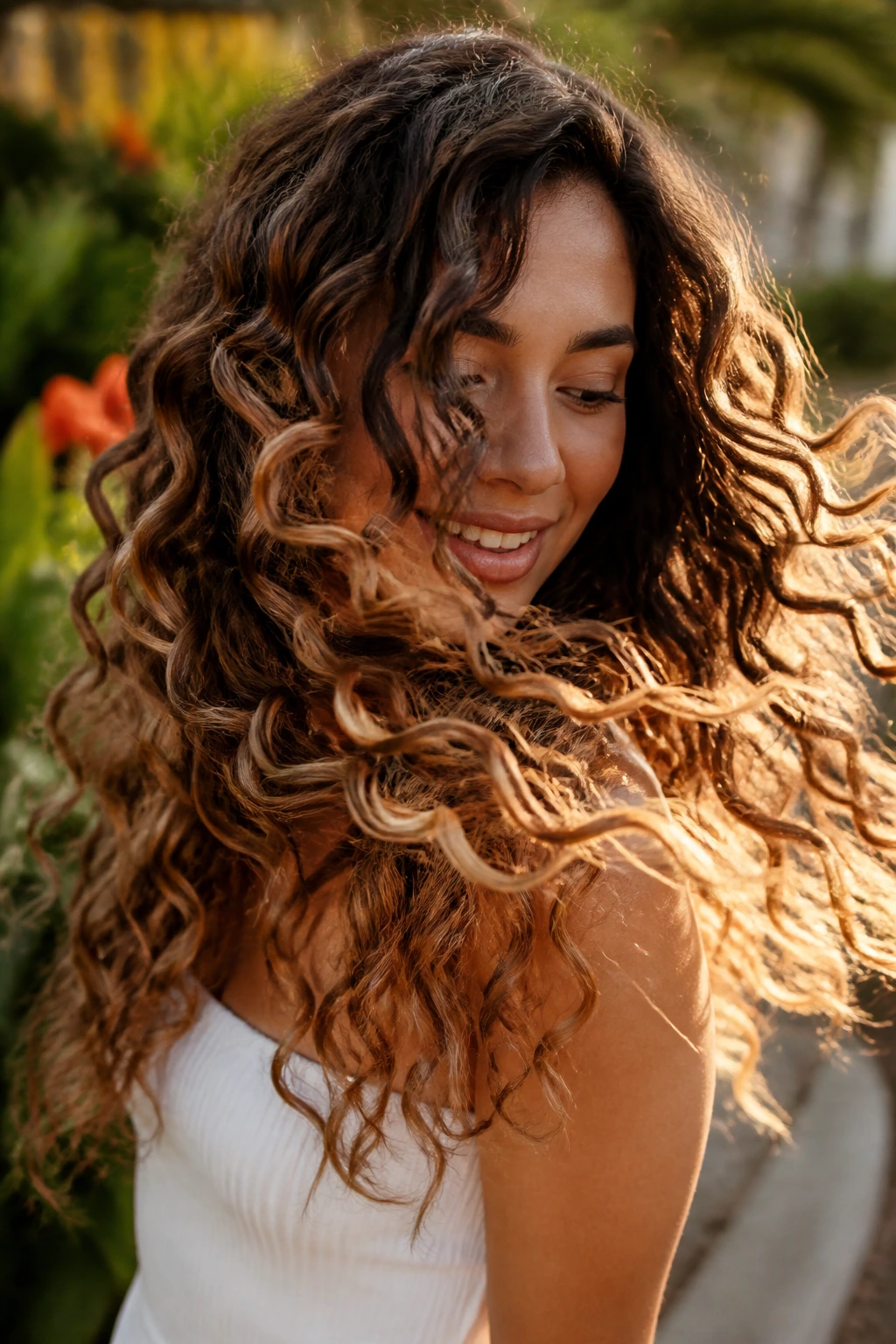
The best brunette ombre for long hair with curly hair doesn’t try to tame the curl pattern. It gives the curls a better path to follow. Dark roots hold the shape. Softer mids and ends catch the light. The whole thing looks richer when the hair moves and still holds together when it doesn’t.
Bring photos, but bring the right ones. Show your curl pattern, your length, and the kind of brightness you actually wear in real life, not the fantasy version you saw in a straightened salon shot. That one detail saves a lot of disappointment.
And if you’re torn between two shades, I’d pick the one that keeps the ends glossy and the root deep. Curly hair tells the truth fast. The right brunette ombre will keep telling a good one.