



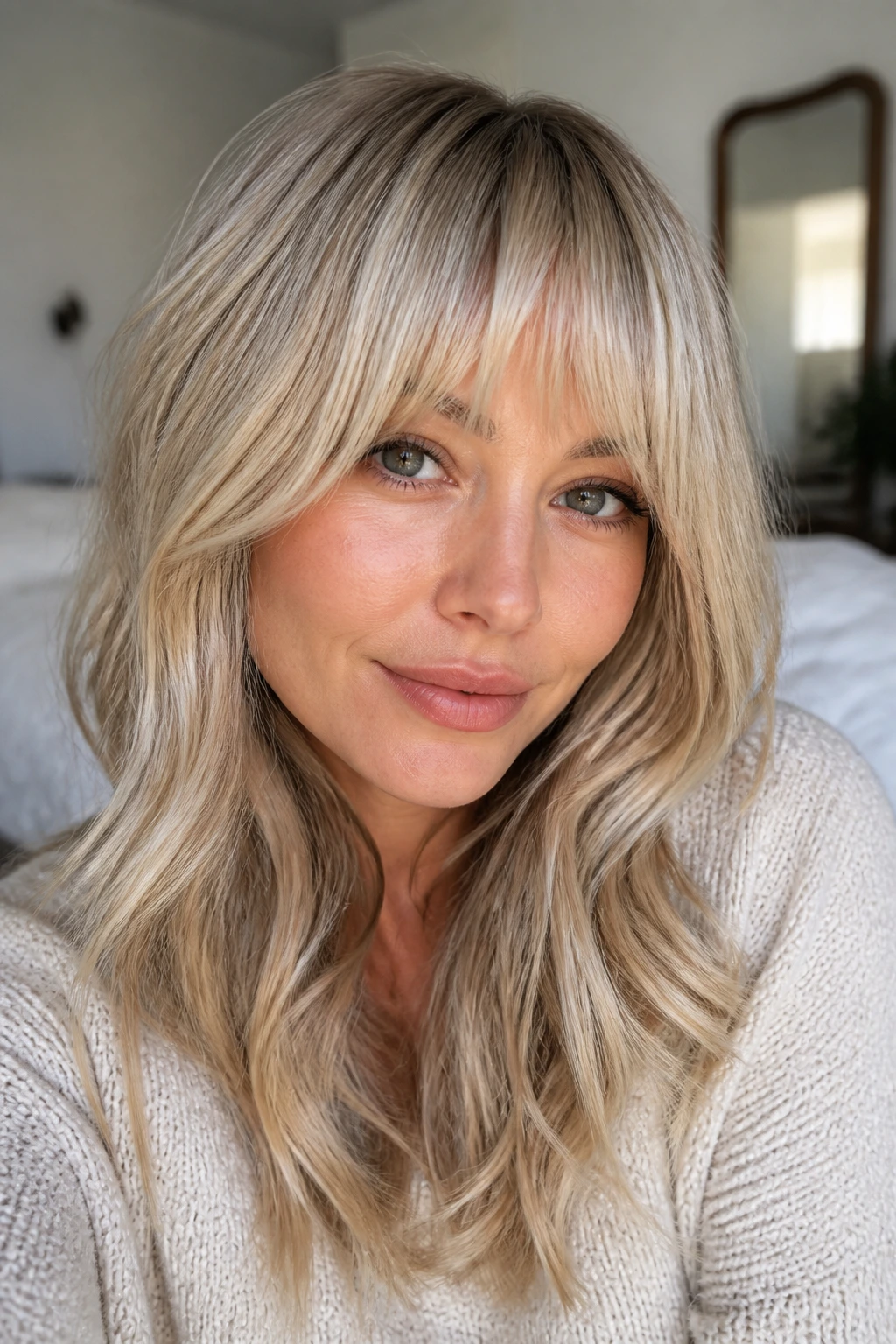
Blonde long bangs for thin hair with babylights can look airy in the best possible way, or a little too see-through if the cut and color are working against each other. Thin hair is unforgiving about heavy lines. It shows every blunt edge, every chunky stripe of color, every spot where the front has been thinned to the point of giving up.
Babylights change that math. Those tiny, closely woven highlights break up flatness at the part and around the face, so the hair reads as softer, fuller, and more dimensional without looking striped. The trick is restraint. When the bangs are cut too short or the blonde is pushed too bright at the root, the front can suddenly feel sparse instead of delicate.
The styles below are built for real life, not a salon photo that only works from one angle. Some lean blowout-soft, some are piecey and cool, some rely on a little root shadow to keep the crown from looking washed out. A good version of this look should move when you turn your head. A bad one sits there like paper.
Why These Blonde Bangs Work So Well on Thin Hair
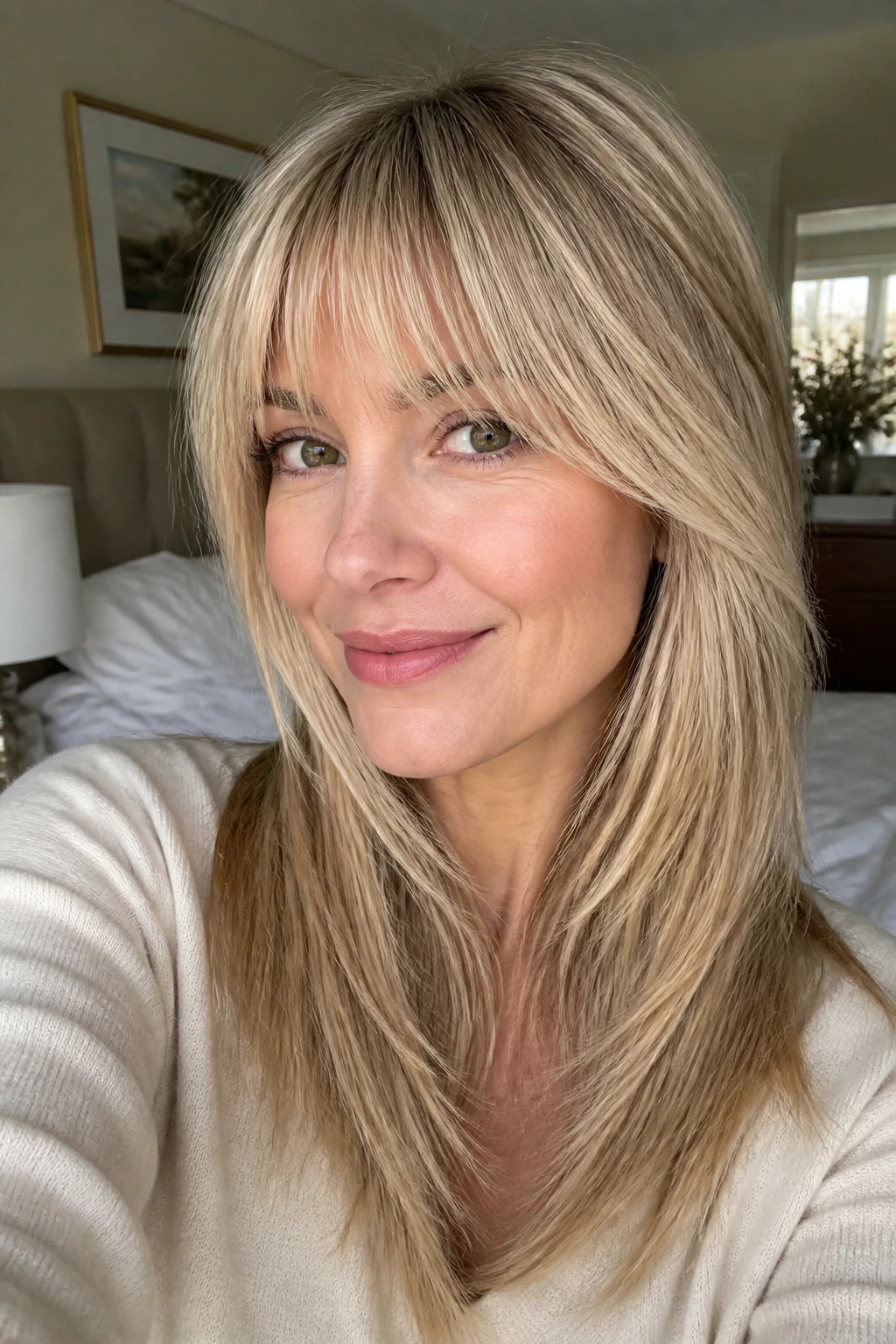
-
Babylights create the illusion of density: Tiny highlight threads keep the eye moving, which matters when one flat blonde tone makes fine strands look more obvious.
-
Long bangs give the front room to bend: A cheekbone- or lip-skimming fringe can split, tuck, sweep, or curve instead of hanging as one hard line.
-
Soft root shadow helps the crown: Leaving the root just a half-shade deeper stops the scalp from flashing through the part.
-
Face-framing brightness pulls the eye forward: Lighter pieces around the temples and cheekbones make the front feel thicker even when the hair itself is fine.
-
Grow-out looks softer: Babylights blur the regrowth line, so you don’t get that harsh stripe that chunky highlights leave behind.
-
The cut and the color do different jobs: The cut supplies movement; the babylights supply visual fullness. When both are done lightly, thin hair usually looks better, not worse.
1. Feathered Curtain Bangs with Champagne Babylights
Feathered curtain bangs are the safest place to start if you want softness without fuss. The longest pieces graze the cheekbones, the center stays split, and the whole front bends away from the face instead of sitting flat across the forehead. Champagne babylights make the fringe look lighter and more expensive-looking without turning it into a bright stripe.
What makes this version work on thin hair is the feathering. A blunt curtain bang can separate in the middle and expose too much forehead. Feathered ends blur that line, so the bang reads as movement instead of a chunk of hair that has been cut too hard.
A round brush and a quick pass of the blow dryer are enough here. Direct the bangs forward first, then wrap the outer sections away from the face and let them cool for a few seconds before you touch them. That little cooling pause matters more than people think. It sets the bend.
2. Bottleneck Bangs with Beige Ribbon Lights
Bottleneck bangs are a clever shape for thin hair because they start narrow near the brow, then open out near the cheekbones. That narrowing at the top keeps the fringe from swallowing the forehead, while the wider outer pieces give the face some frame. Beige ribbon lights add a soft glow without making the front look stripped.
This style is especially good if your hairline is a little sparse at the center. The shape doesn’t demand a thick, heavy bang line, so it feels lighter and more forgiving. I like it when the bangs are cut long enough to tuck behind one ear if you get tired of wearing them down.
Ask for the inner section to stay airy, not chunky. The whole point is that the bang should open like a small bottle neck — tight at the center, looser at the edges. If the ends are overtexturized, though, it can go ragged fast, so the thinning should be subtle.
3. Side-Swept Fringe with Honey Face Frame
A deep side part does half the styling work for you. It hides a little crown weakness, gives the fringe a built-in lift, and lets the front pieces sweep across the face in one clean motion. Honey babylights around the hairline keep the sweep bright without looking harsh.
This is the version I’d choose for anyone who hates having hair in their eyes but still wants the softness of bangs. The side sweep can be tucked, clipped, or brushed forward after a quick blow-dry. It’s also one of the easiest styles to live with if your hair falls flat by midday, because the part itself adds height.
Why it gives thin hair more shape
The front is doing three jobs at once: covering part of the forehead, softening the cheek line, and disguising any lack of density at the roots. That’s a lot of work for a few pieces of hair, so the cut needs to stay long enough to move. If the bang gets chopped too high, it loses the sweep and starts to look like a sad little flip.
4. Piecey Long Bangs with Invisible Layers
Piecey bangs are not the same thing as thin bangs. That difference matters. Thin bangs can look accidental, while piecey bangs look deliberate because the strands are separated on purpose and supported by a few invisible layers underneath. Babylights help each piece show up against the next one, which gives the front a little visual spark.
This version works best when you don’t mind a slightly undone finish. It likes a rough-dry, not a polished helmet of blowout spray. A pea-size bit of lightweight texture cream at the very ends can keep the pieces from merging into one flat curtain.
If your hair gets greasy fast, keep product away from the roots. That’s the mistake people make with piecey bangs all the time. They build the texture at the front and then accidentally weigh it down at the base.
5. Wispy Full Bangs with Pearl Blonde Dimension
A wispy full bang can be beautiful on thin hair if the line stays soft enough to breathe. You want enough coverage to frame the eyes, but not so much density that it turns into a solid block. Pearl blonde babylights break up the surface so the fringe looks lighter around the edges and fuller through the middle.
The trick here is the ends. They should be point-cut or softly beveled, never chopped into a hard shelf. That little bit of translucence at the tips stops the bang from looking heavy, which is the danger with a fuller fringe on fine hair.
I like this shape for someone who wants a bit of drama but not a severe look. Blow dry the fringe straight down first, then brush it side to side before setting it in place. That side-to-side motion keeps it from drying into a sticky line on the forehead.
6. Razor-Soft Fringe with Root Shadow
A razor-soft fringe can look expensive on straight, fine hair, but only if the cut is handled gently. The razor should remove weight at the ends, not shred the entire bang into nothing. A soft root shadow keeps the color from looking bleached-out at the scalp, which matters a lot when the hair is thin enough for every part to show.
This is one of those styles that looks simple and isn’t. The front needs precision. Too much razor work and the bangs fray; too much lightening and the hairline starts to glow in a way that makes density issues more obvious.
What to ask for
- A long, soft fringe that still reaches the cheekbone
- Babylights that stay fine around the part and temples
- A root shadow one shade deeper than the mids
- Soft beveling at the ends, not a shredded finish
That combination gives the front a little edge without sacrificing the shape.
7. Butterfly Bangs with Airy Mid-Length Layers
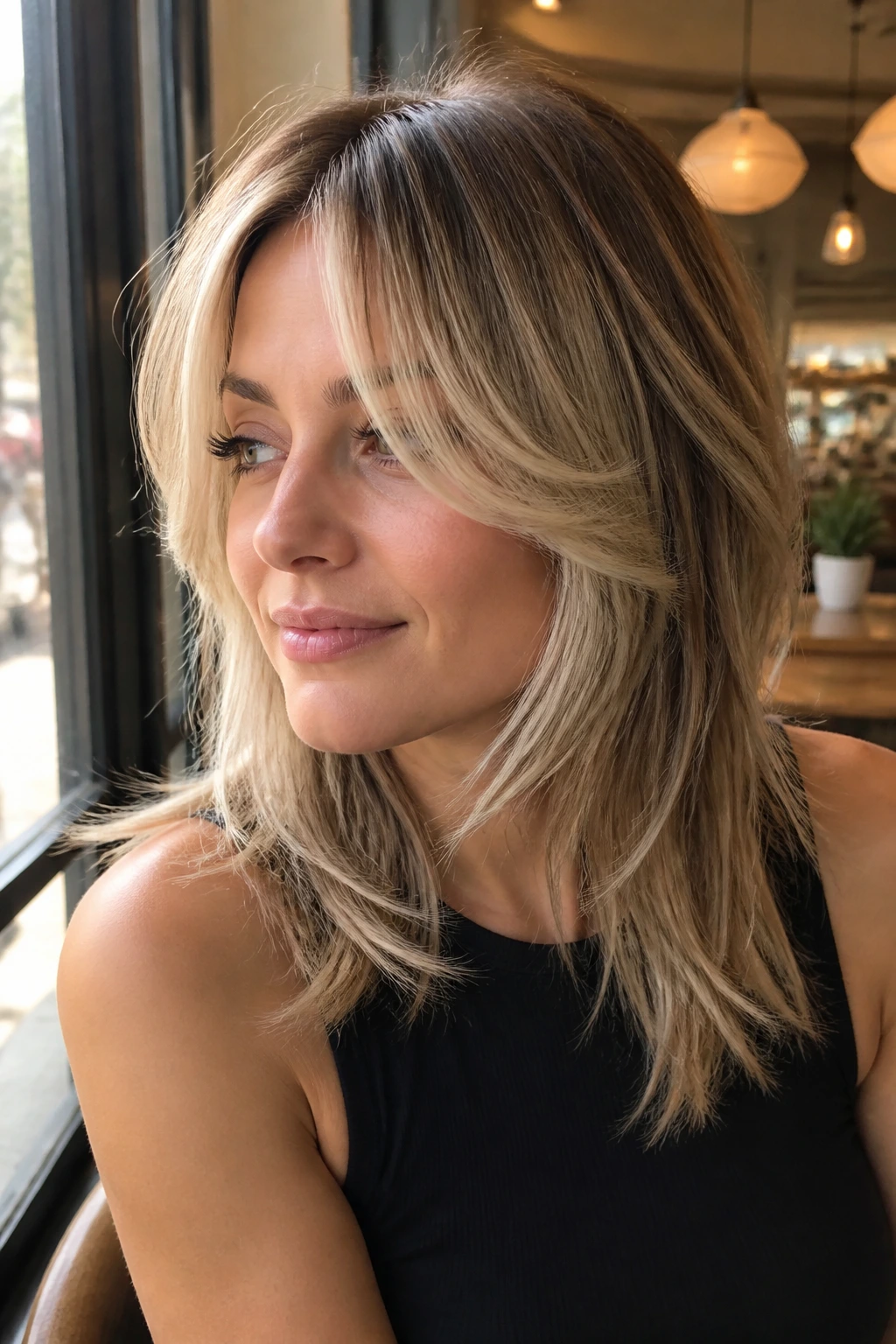
Butterfly bangs are the friendliest option if you want the front to feel full without being heavy. The short pieces lift around the cheekbones, then melt into longer layers that swing back with the rest of the hair. Babylights at the outer edge of the bang and the front layers make that movement easy to see.
This style makes thin hair look better because the layers are doing the illusion work. The front doesn’t need to carry all the weight. It can be light, even slightly airy, as long as the layers behind it are long enough to keep the shape from collapsing.
A large round brush is enough for styling. Lift the bangs away from the face, roll the ends back, and let the hair cool in the brush or clipped up for a few minutes. If you skip the cooling stage, the bend will fall out fast.
8. Deep Side-Part Bangs with Sunlit Balayage
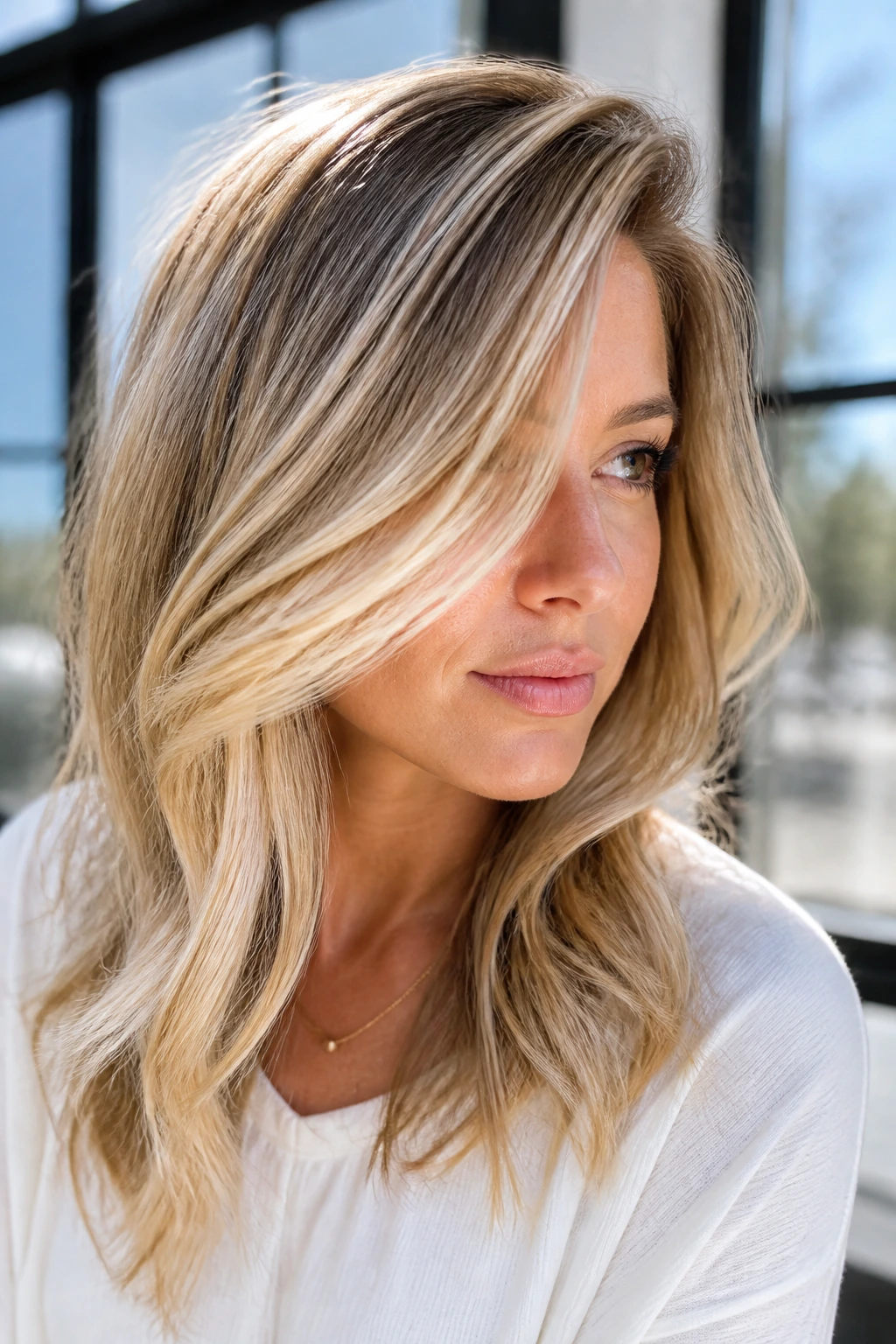
A deep side part is an old trick because it works. It creates lift at the crown, sweeps the front over the forehead, and gives thin hair a stronger shape right where people notice flatness first. Sunlit balayage paired with babylights keeps the color soft, so the front looks bright rather than striped.
This is a good choice if your hair wants to expose the scalp at the top. The heavier side of the fringe helps cover that area, and the lighter face frame draws the eye away from the part. It’s a practical fix disguised as a style choice.
If you wear glasses, this version is especially kind. The side sweep won’t keep colliding with the frames the way a blunt bang often does. And if the sweep falls during the day, one pass with a vent brush and a blast of cool air usually brings it back.
9. Collarbone Lob with Long Sweeping Bangs
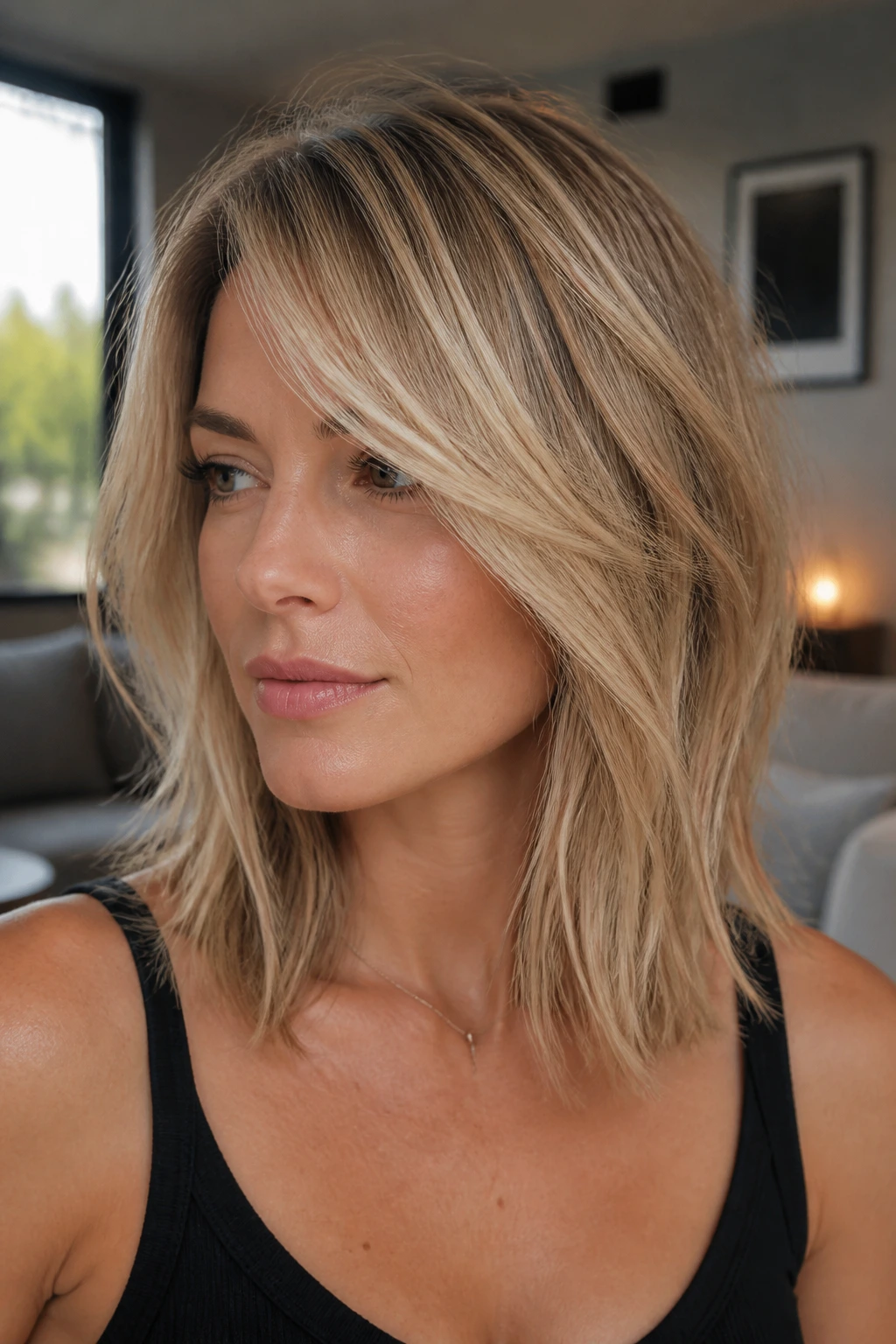
A collarbone lob gives thin hair a little backbone. The length is short enough to keep the ends from looking stringy, but long enough to let the front pieces curve and swing. Long sweeping bangs add softness at the front without taking away that extra bit of weight at the perimeter.
Babylights here should stay concentrated through the top layers and face frame, not scattered randomly from root to tip. You want a sense of bright movement, not a washed-out all-over blonde that makes the cut look smaller. That’s a common mistake with finer hair.
I like this shape if your hair bends easily on its own. A quick pass with a 1-inch iron on just the front pieces gives the lob enough bend to look intentional. Leave the ends slightly undone. That tiny imperfection keeps it from reading as too polished for the amount of hair it has.
10. Shaggy Bangs with Smudged Caramel Lowlights
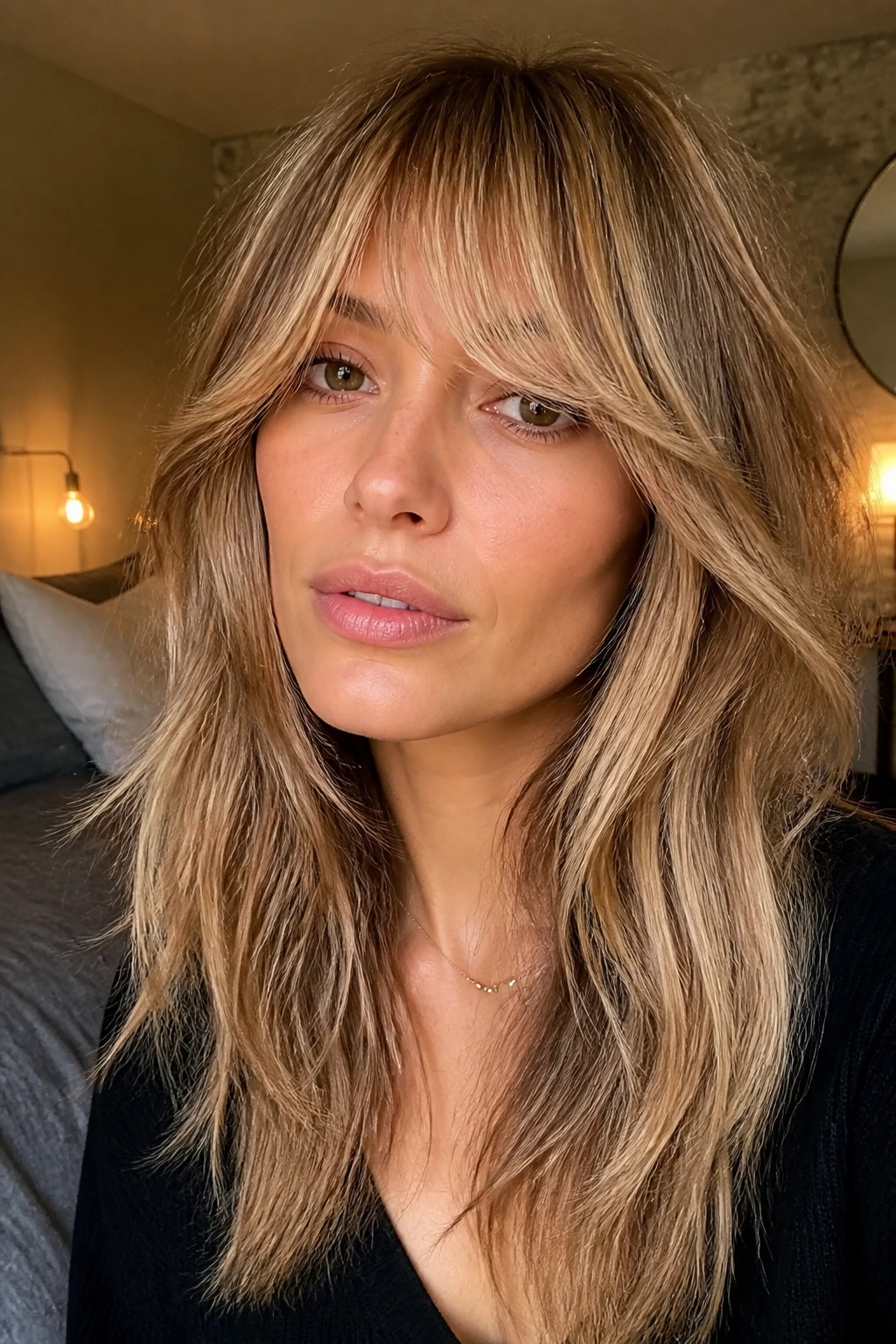
A soft shag can be a smart move on thin hair, but only when the layers are handled with restraint. Too many shag cuts turn fine hair into scraps. The good version keeps enough length to preserve movement and uses smudged caramel lowlights under the babylights so the blonde has some depth.
That deeper thread of color matters more than people realize. Thin hair often looks fuller when there’s a slight shadow beneath the lightest pieces. The eye reads contrast as volume, even when the actual density hasn’t changed.
This shape works best if you like a little mess in the finish. It does not need to be glossy or perfectly brushed. A diffuser, a little mousse, and a scrunch with your fingers is often enough. If you overcomb it, the shag stops looking shaggy and starts looking limp.
11. Sleek Straight Bangs with Polished Platinum Babylights
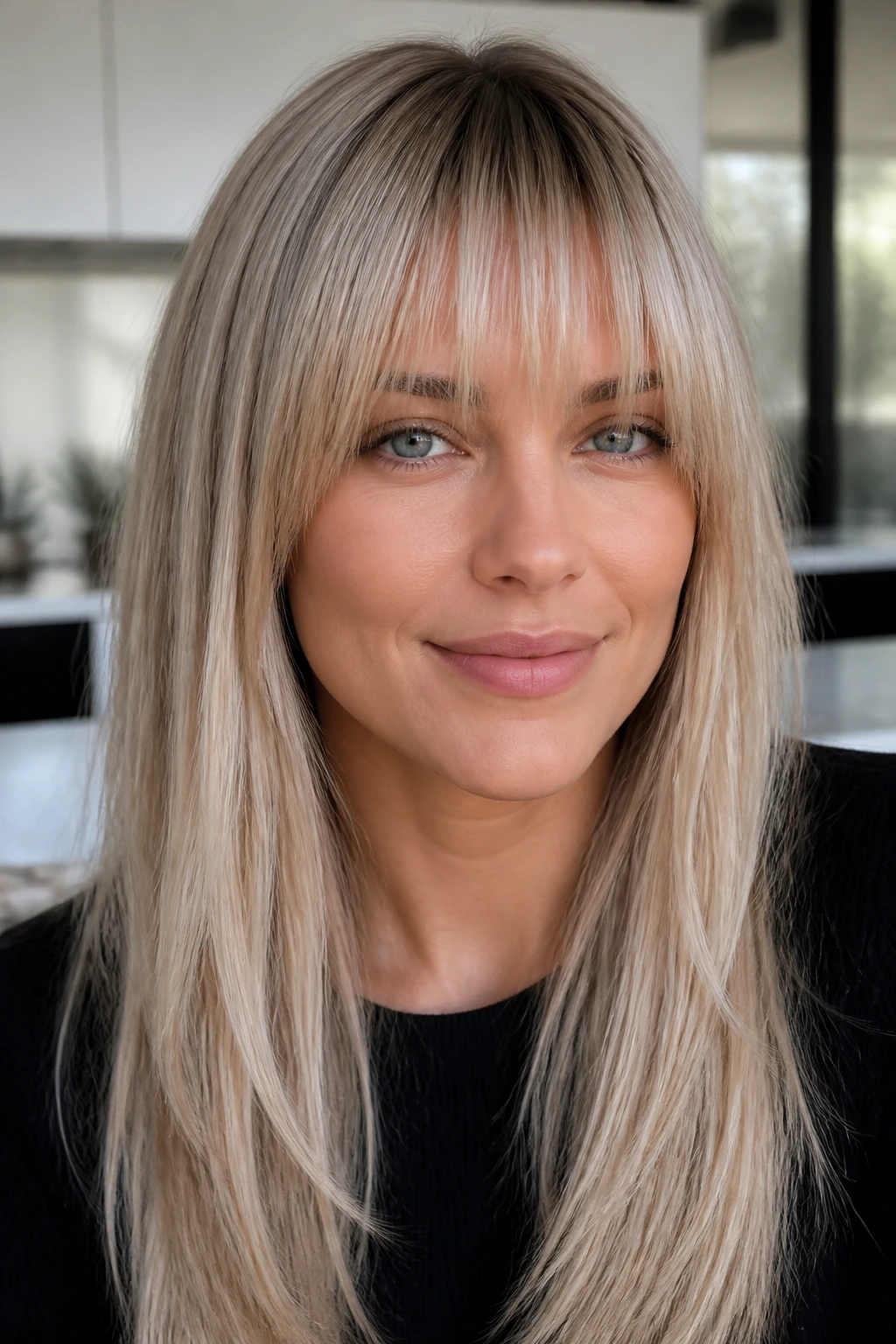
Straight bangs can work on thin hair, but they have to be cut with discipline. The front should be long enough to soften the forehead, and the line should stay light at the edges. Platinum babylights add brightness, but a soft root shadow keeps the style from turning harsh.
This version is for someone who likes a cleaner finish. It’s less “piecey and undone,” more sharp and deliberate. The danger is over-smoothing it. If the hair is flattened too hard with a flat iron and too much serum, thin hair starts to look smaller, not sleeker.
A small styling rule
Keep shine products off the roots. Use them from mid-shaft down, then comb the bang with a fine-tooth comb once the heat is out of it. That leaves the fringe smooth without making the scalp look slick.
12. Wavy Fringe with Soft Mocha Shadow
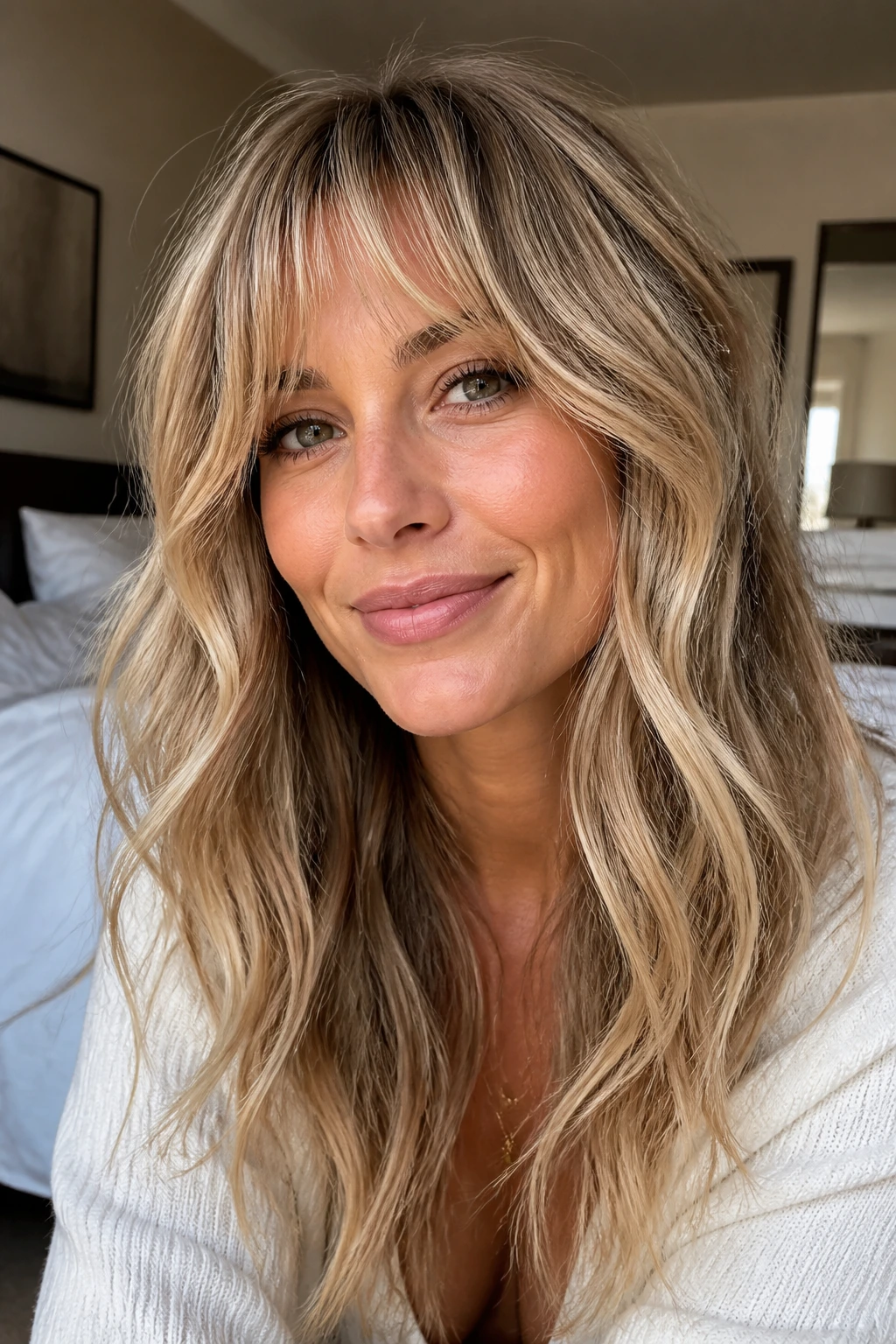
Wavy hair and long bangs can be a nice match when the bang is kept just loose enough to move. Soft mocha shadow underneath the blonde keeps the waves from blending into a pale blur, which is a real risk with thin hair. You want the waves to show texture, not erase it.
This is the sort of fringe that looks better after a few hours of wear. Freshly styled, it can feel almost too tidy. Give it time. The tiny bends around the face settle in, and the babylights pick up the light in a way that makes the hair feel fuller.
Use a small barrel if your wave pattern is weak, but don’t curl the bangs into a coil. You want a bend, not a curl. The difference sounds minor until you see the result on fine hair. One looks soft; the other looks set.
13. Grown-Out Curtain Bangs with Bronde Melt
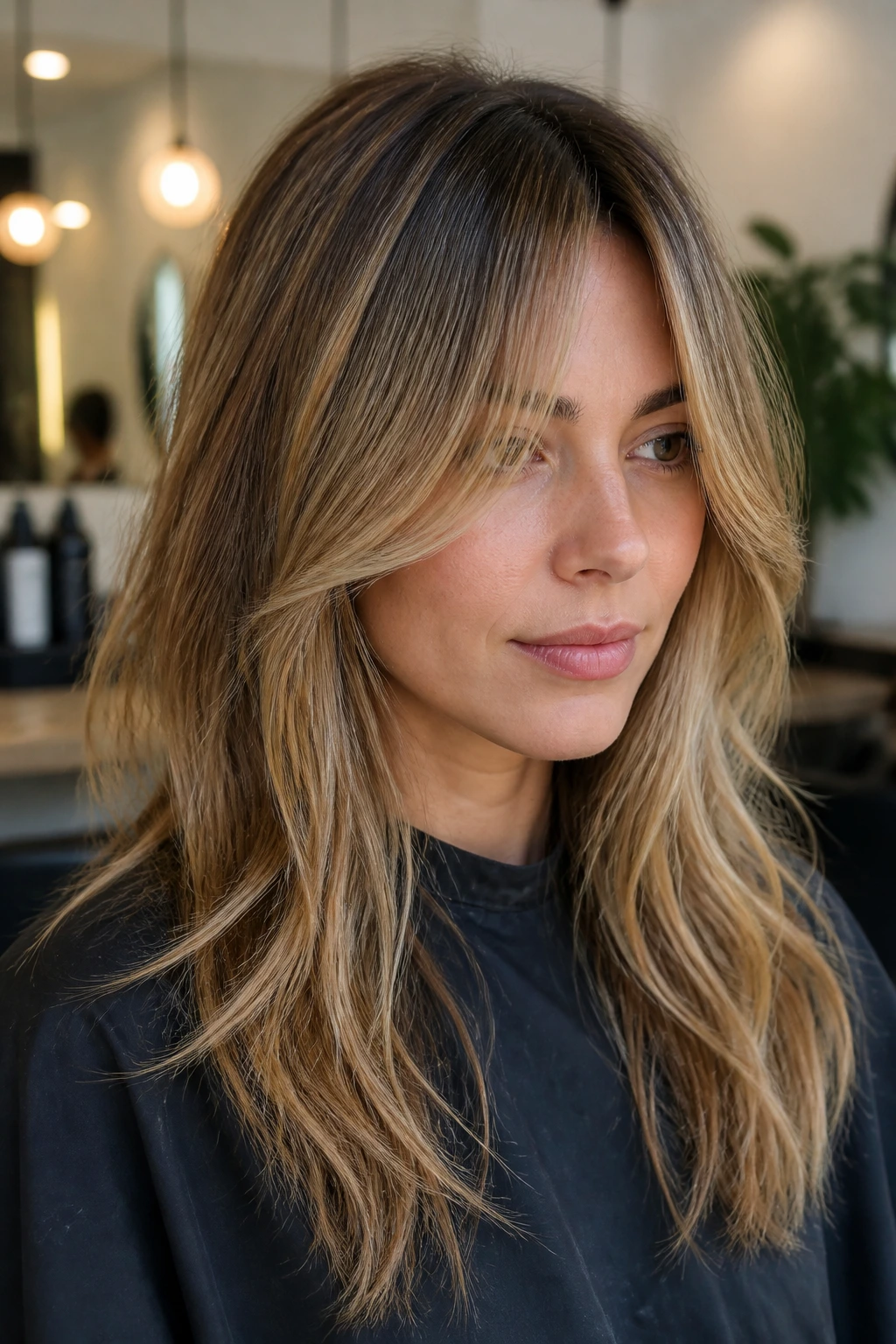
This is the version for people who don’t want to babysit their bangs every three weeks. Grown-out curtain bangs sit longer at the sides, split in the middle, and blend into a bronde melt that softens the whole front. The root and mids stay close enough in tone that the grow-out reads as intentional.
Thin hair usually looks better in a grown-out shape than in a strict, freshly cut fringe. The extra length gives the front a little drape, and the bronde tone prevents the bangs from standing apart from the rest of the head. That means less contrast, less fuss, and fewer awkward stages between salon visits.
It’s not a lazy cut, though. A grown-out curtain bang still needs a shape line through the cheekbones. If it’s left too long and too blunt, it just becomes a lost strand in the front of the face.
14. Rounded Blowout Bangs with Vanilla Blonde
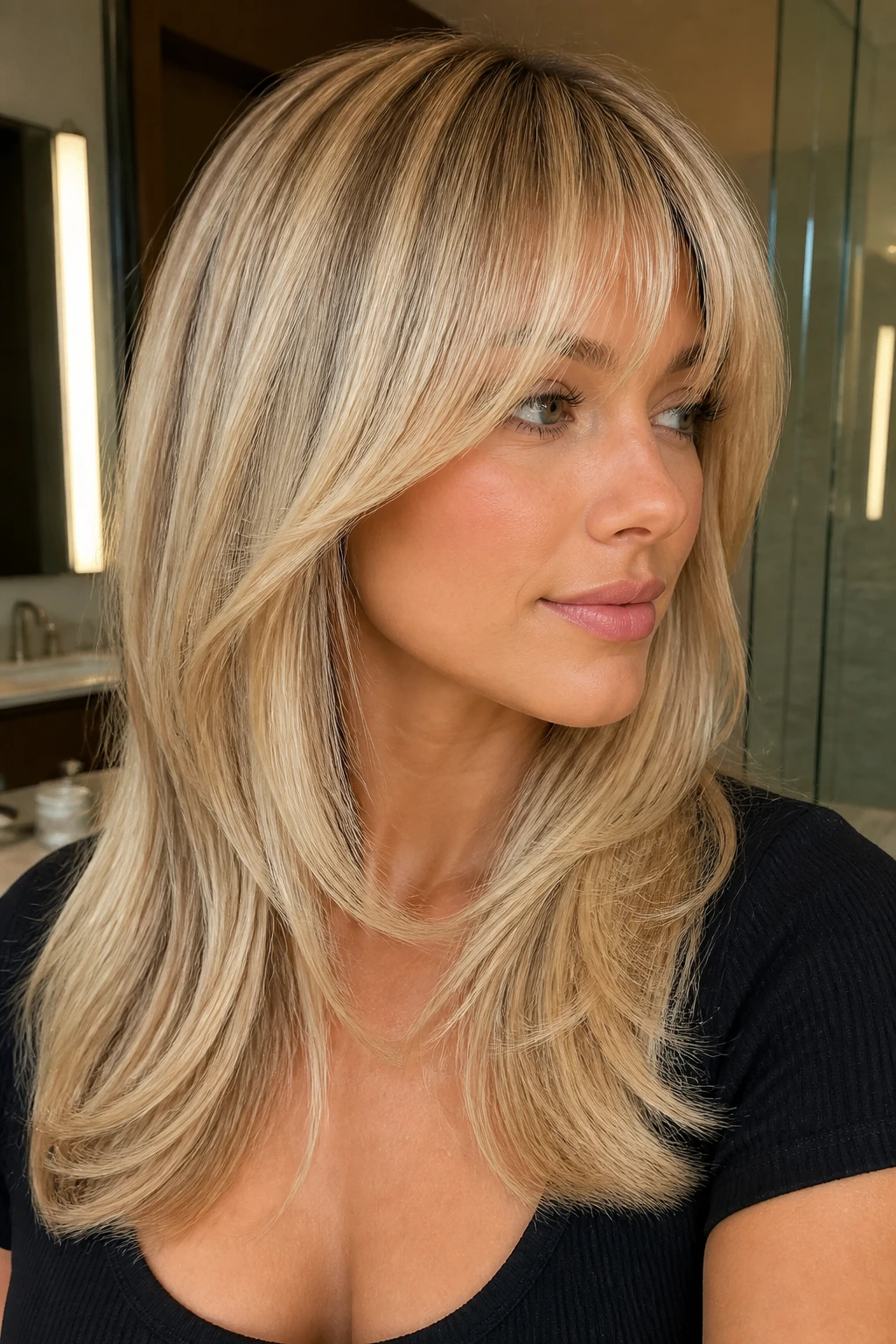
Rounded blowout bangs have a very specific feel: soft at the forehead, lifted through the center, and curved just enough to show the cheekbones. Vanilla blonde babylights make the curve look smooth and bright, which is useful when the hair is fine and needs a little visual oomph.
This style depends on the brush. A medium round brush gives the bang its roundness without over-curling it. Pull the front upward and slightly back, then direct the ends under for a gentle arc. Clip the bangs while they cool if you want the shape to last past lunch.
I’d choose this if you like a polished finish and don’t mind spending five extra minutes at the mirror. It’s not a wash-and-run look. It’s a set-and-go look.
15. Choppy Bangs with Textured Ends
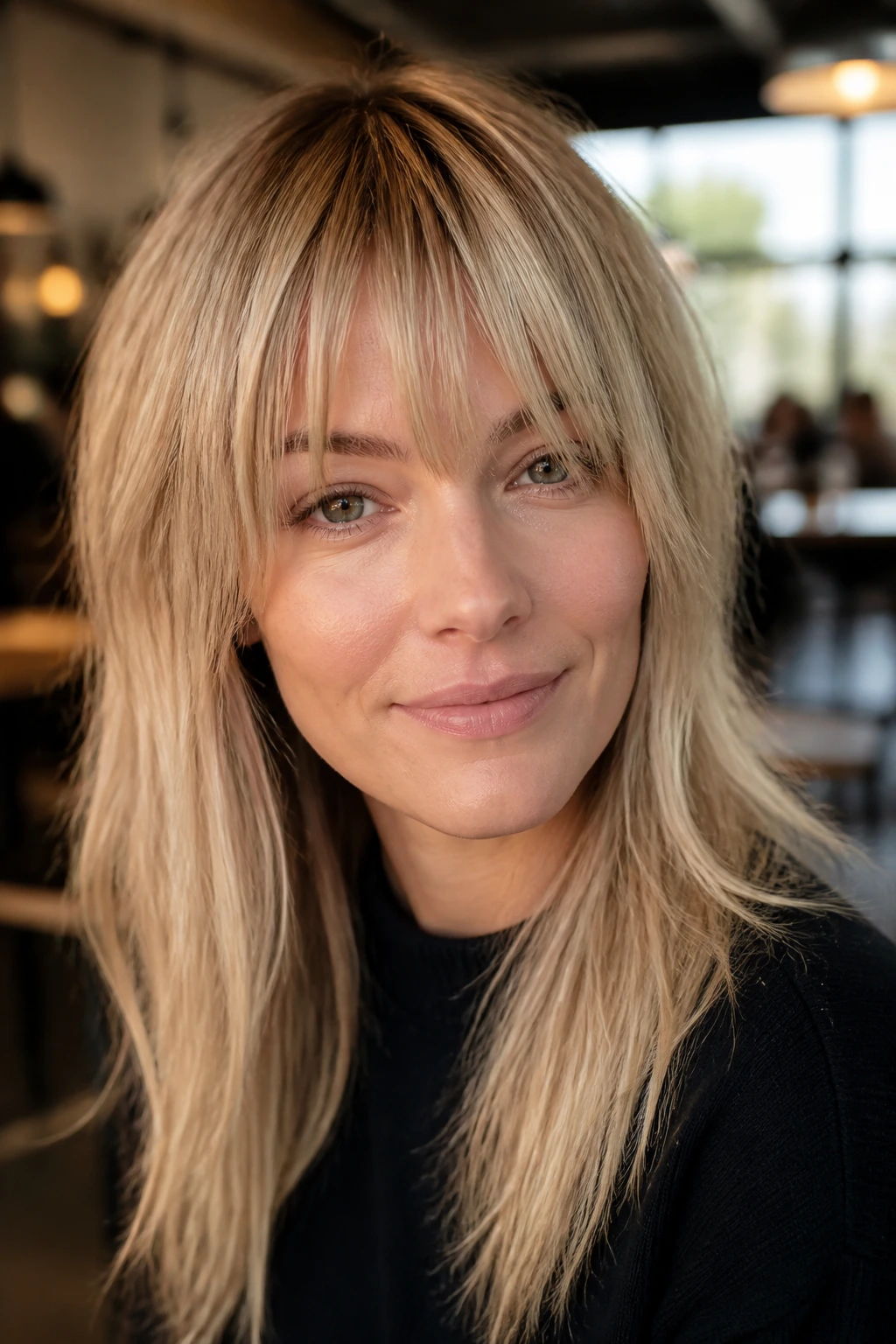
Choppy bangs can be useful on thin hair when the texture is controlled, not hacked up. The point is to create small separations at the ends so the fringe doesn’t sit as one flat sheet. Babylights make each little section visible, which gives the cut some personality.
The line between piecey and patchy is thin. If the ends are overcut, the bang starts to look broken. The safer move is to keep the length long and use light texturizing only at the bottom edge.
What to watch for
- The bang should still fall together when brushed
- The ends need movement, not holes
- Texture paste should touch only the tips
- Babylights should stay soft near the roots
That’s enough to get the effect without losing the shape.
16. Underbent Bangs with Money-Piece Lift
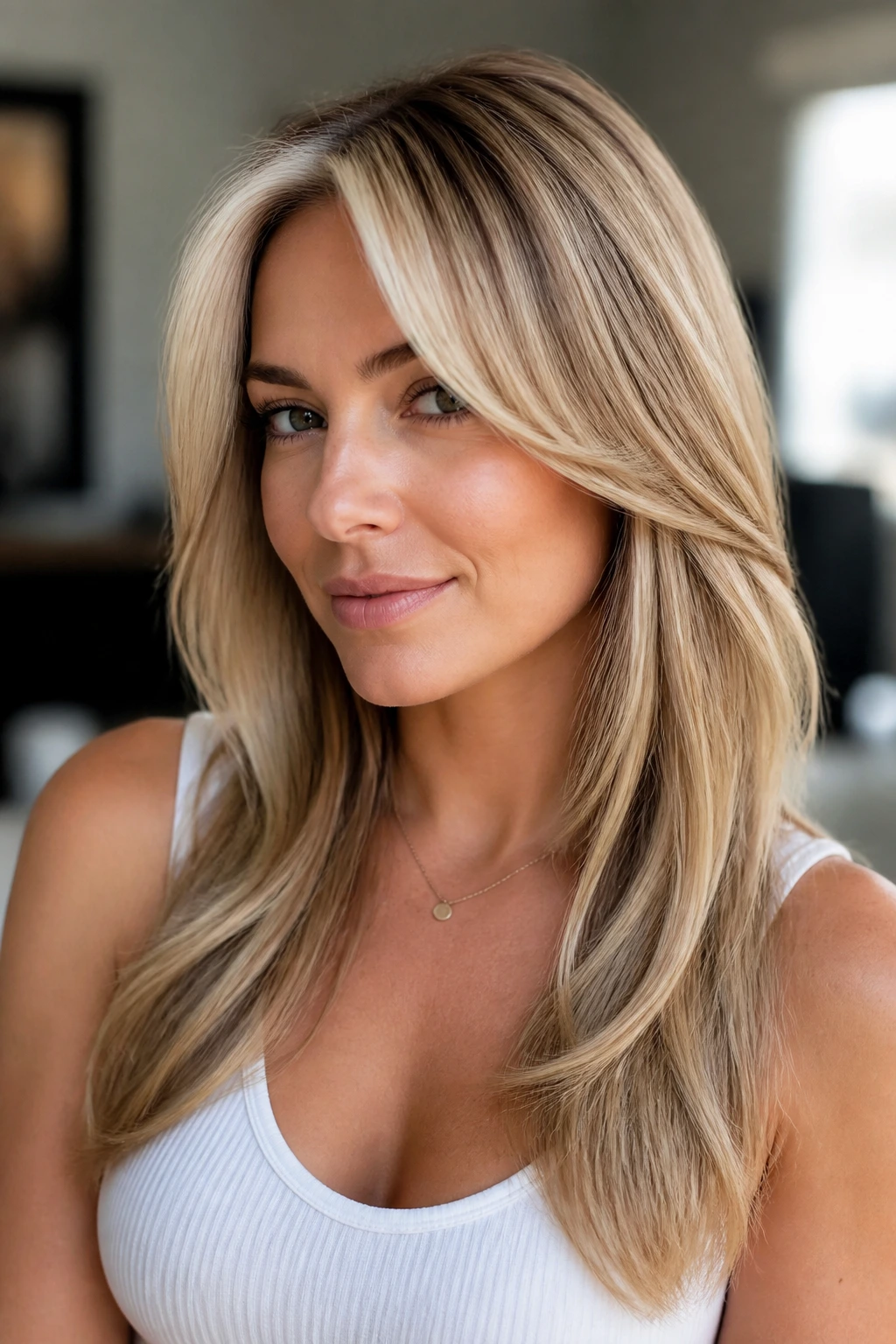
Underbent bangs curve gently under at the ends, which makes the front feel thicker and more controlled. Pair that with a bright money piece at the front hairline and you get lift right where the eye lands first. On thin hair, that front brightness can be useful, but only if it stays soft.
A money piece that’s too wide or too pale can expose the hairline in an ugly way. Keep it fine. Think of it as a highlight thread, not a billboard. The rest of the babylights should blend into the front so the lightest area feels like a highlight, not a gap.
This style is easy to refresh in the morning with a round brush and a cool shot. If the ends flip the wrong way, dampen them lightly and reset them under the brush. It’s a small thing, but it saves the whole front from looking messy.
17. Air-Dried Tousled Bangs with Dusty Champagne
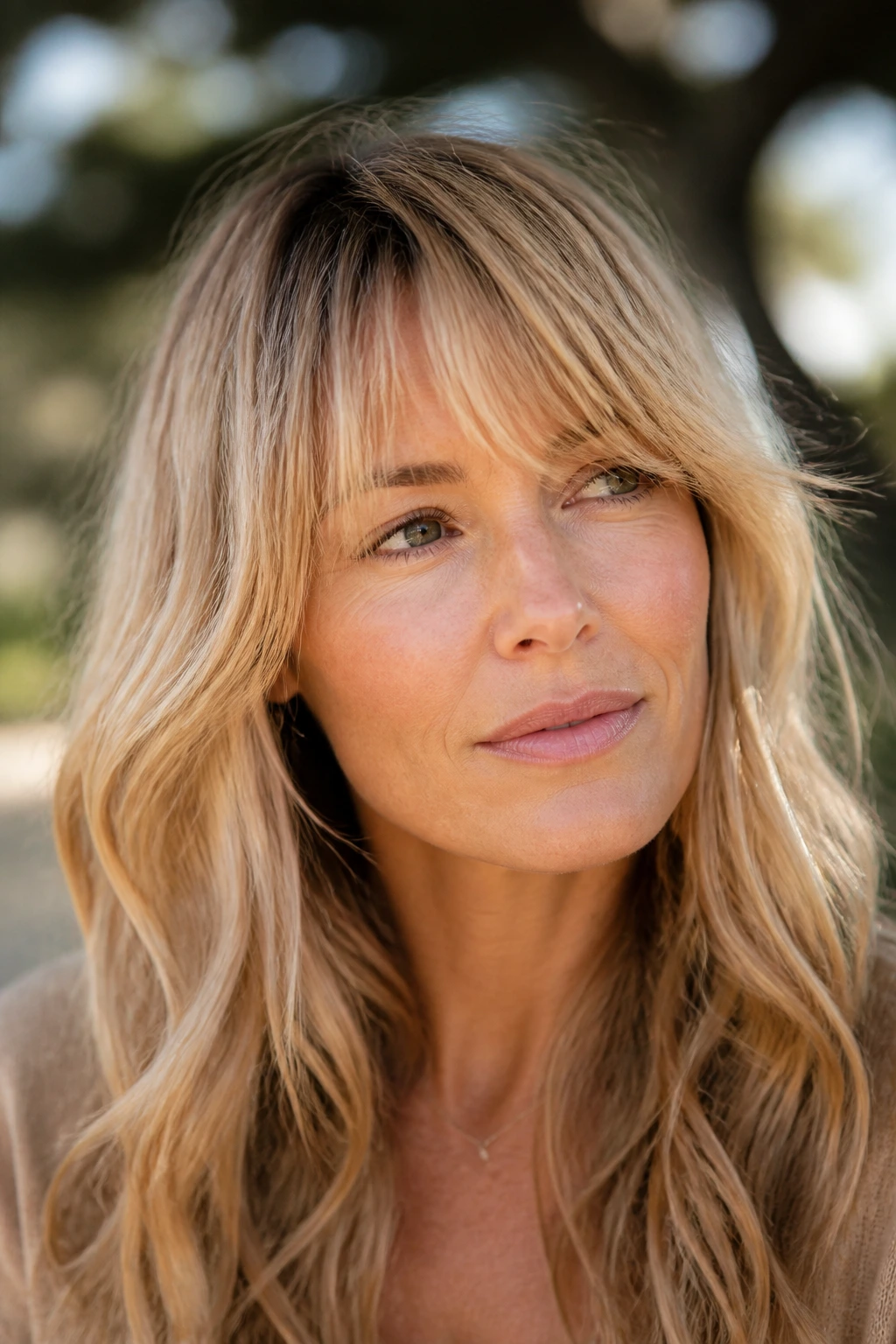
Not everyone wants to blow dry bangs every day, and that’s fair. Air-dried tousled bangs can work on thin hair when the cut is soft enough to bend on its own and the color has enough dimension to show the texture. Dusty champagne babylights keep the front from looking dull once it dries.
The key is product. A light mousse at the roots and a little scrunch through the ends gives the hair enough memory to dry in a bend rather than a straight droop. If your hair is naturally straight and slippery, this style will need a clip or two while it dries.
It’s a good weekend look, or a good “I have five minutes” look. Not every fringe needs a blowout to look decent. Some just need a better plan than towel-drying and hoping for the best.
18. U-Shaped Layers with Blended Fringe
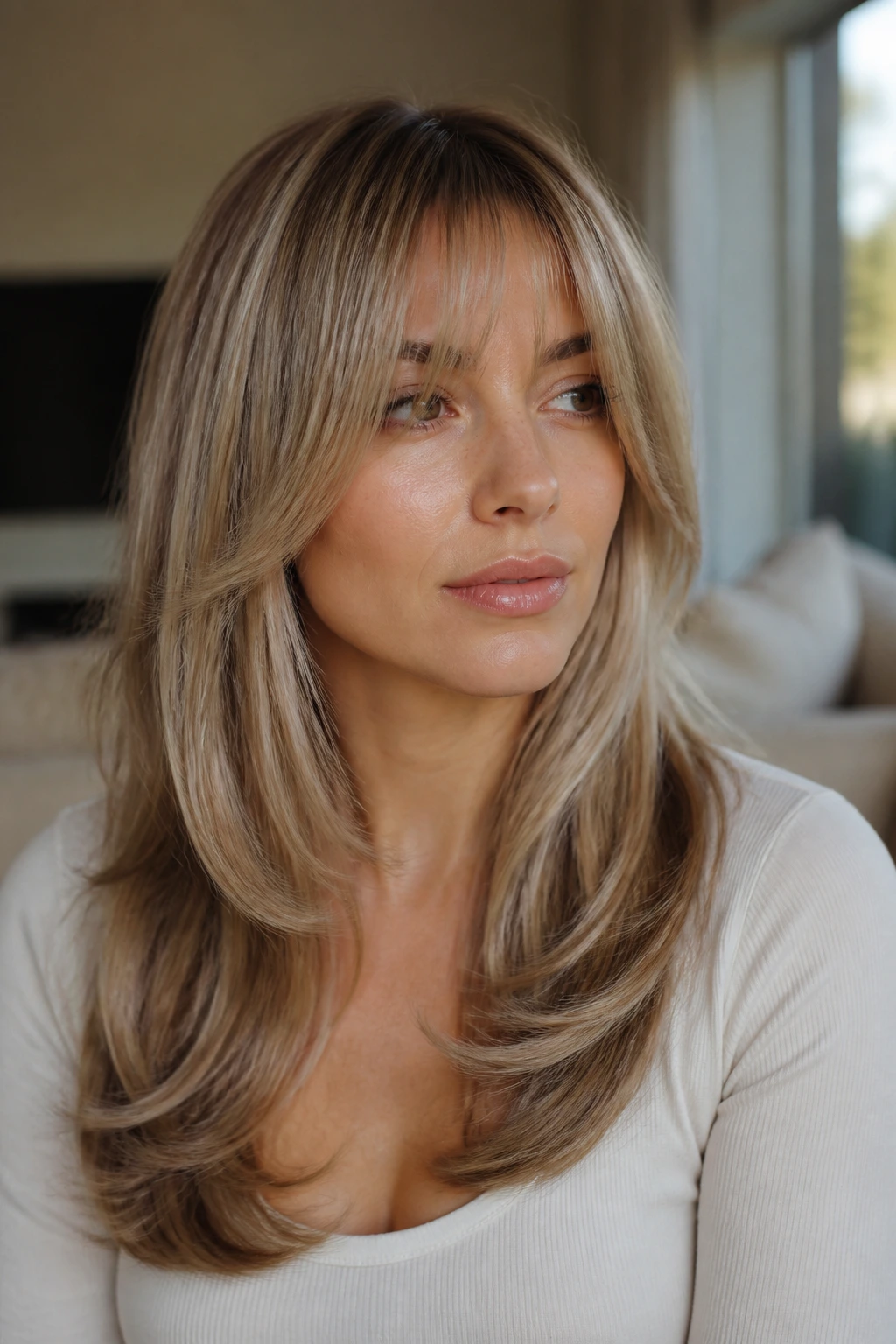
A U-shaped cut keeps more weight at the back and sides, which thin hair usually needs. The fringe blends into those longer layers instead of ending in a hard line, so the whole front feels connected. Babylights follow the curve of the cut and make the shape easier to read.
This is one of the quietest looks in the group, and I mean that in a good way. Nothing shouts. The hair falls in a soft frame, the layers keep the perimeter full, and the front pieces can tuck or swing depending on how you wear it that day.
If you want the look to stay balanced, don’t over-layer the crown. Thin hair needs a little support there. Cut too much weight out of the top and the whole U loses its body.
19. Fine-Straight Bangs with Minimal Root Contrast
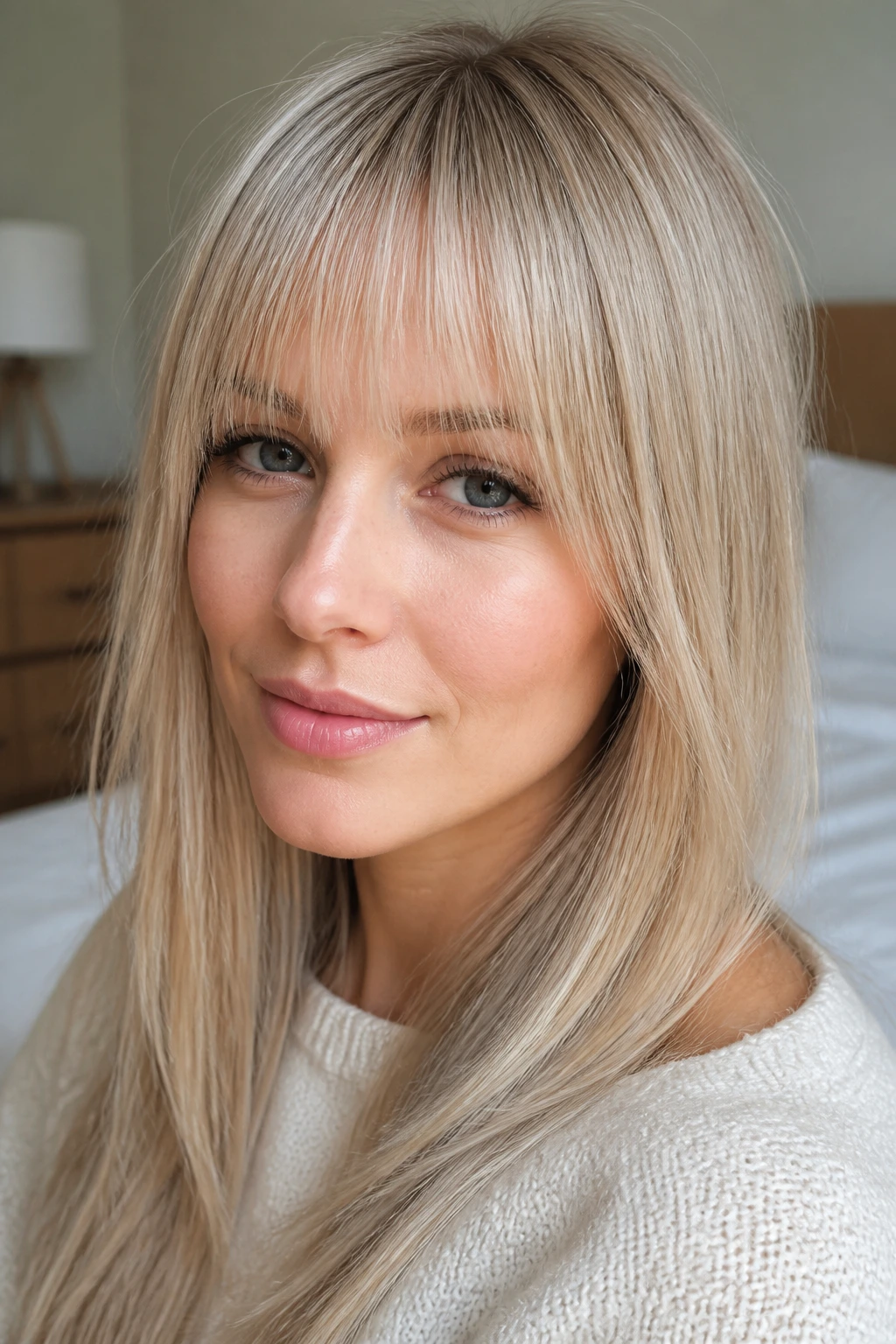
Sometimes the smartest color choice is the least dramatic one. Fine-straight bangs with minimal root contrast keep the transition soft so the hair doesn’t look patchy along the scalp. Babylights are still present, but they stay close to the base tone rather than jumping several shades brighter.
This is especially useful if your hair is both fine and naturally straight. Straight strands show everything. A hard contrast at the root can make the part look wider, while a gentle shift keeps the fringe readable without exposing too much scalp.
Keep it subtle
The biggest mistake here is over-lightening the front and then wondering why it looks thinner. The answer is the contrast. Thin hair usually looks more generous when the blonde is softly blurred, not when it’s pushed toward a crisp, high-contrast stripe.
20. Center-Part Fringe with Soft Mirror Shine
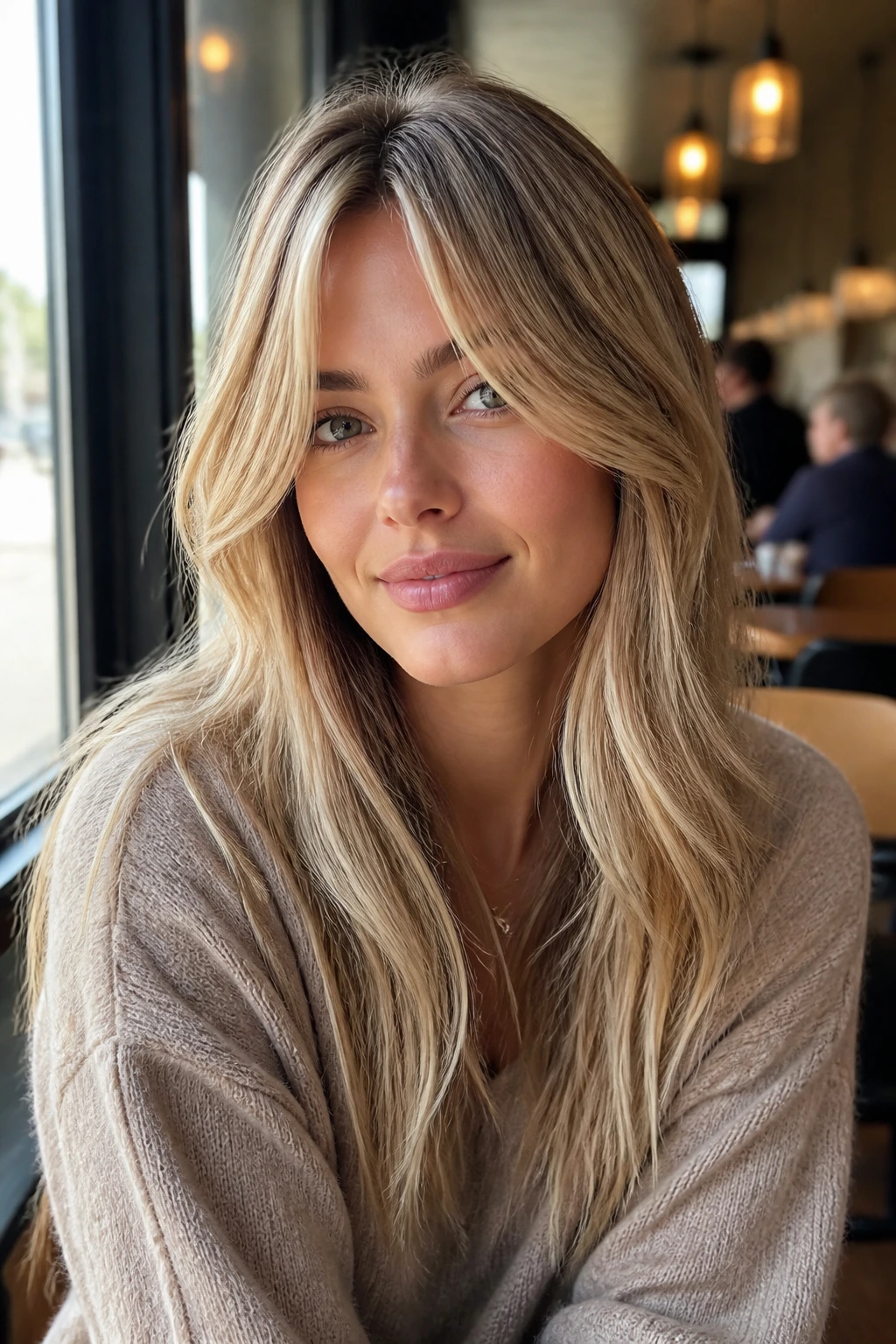
A center-part fringe can look delicate or gorgeous depending on how much shine and structure it has. Soft mirror shine gives the front a polished surface, while babylights prevent the style from reading as one smooth, flat sheet. That mix is what makes it work on fine hair.
This look needs control. Not stiffness, control. Dry the bangs side to side, then split them cleanly in the center and let the ends skim the face. If the pieces are too short, the center part can fall apart fast. If they’re too long, they stop framing and just hang there.
I like this version on hair that already has some swing. The shine enhances what’s there. It does not create movement out of nowhere.
21. Retro Flip Bangs with Soft Beige Brightening
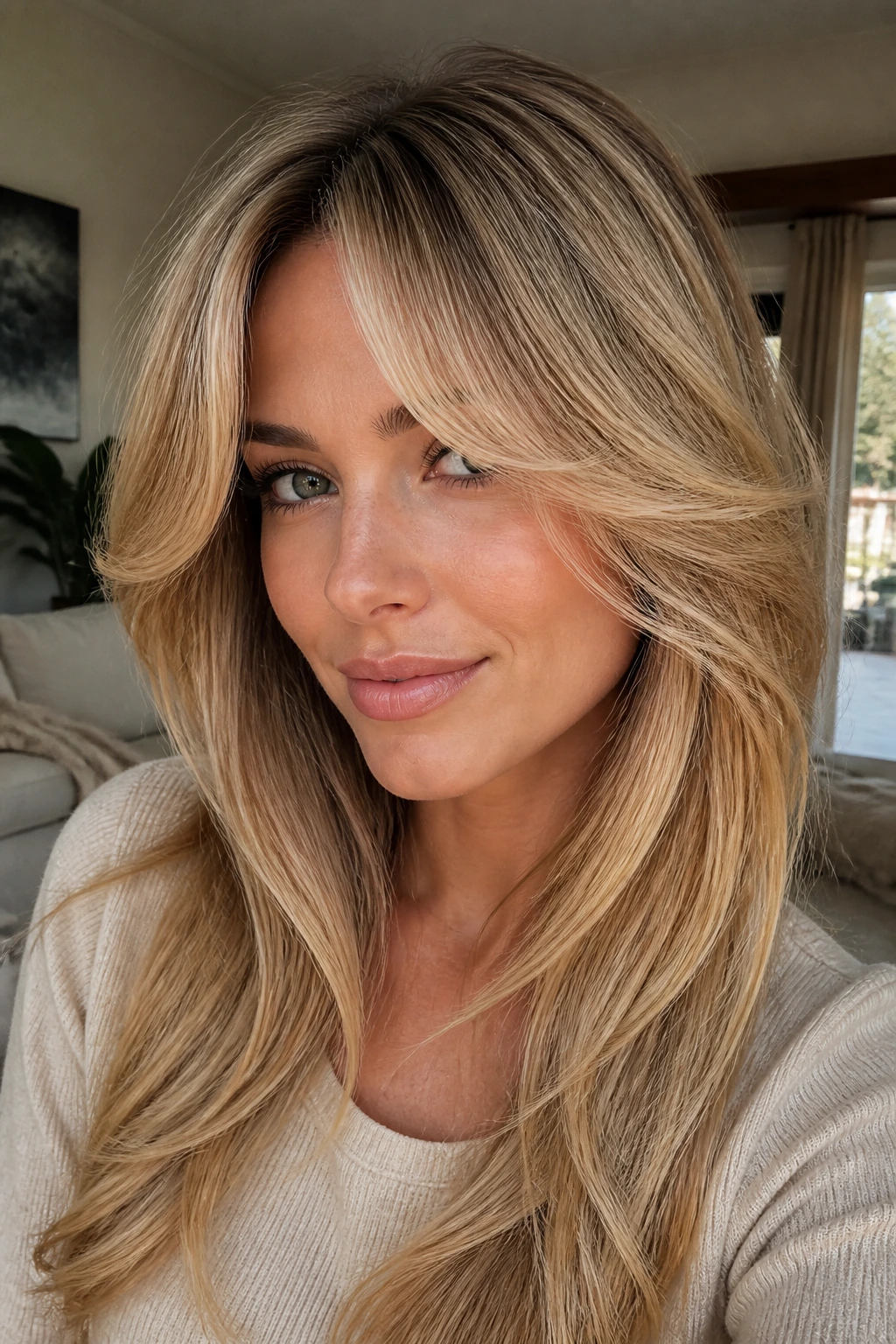
Retro flip bangs bring a little curve and lift to the front of the face. The ends sweep away from the cheeks instead of falling straight down, which can make thin hair look fuller because the shape has more visible air in it. Soft beige brightening keeps the flip light, not heavy.
This works best with a large round brush and a cool finish. Pull the hair up and around the brush, then flip the ends out just a touch. Don’t overdo the flip. A small bend looks modern. A big one can feel costume-y fast.
If your forehead is broad and you like a bit of framing without a true curtain bang, this is a very good middle ground. It gives shape without committing to a lot of hair in the front.
22. Lived-In Long Bangs with Sandy Beige Highlights
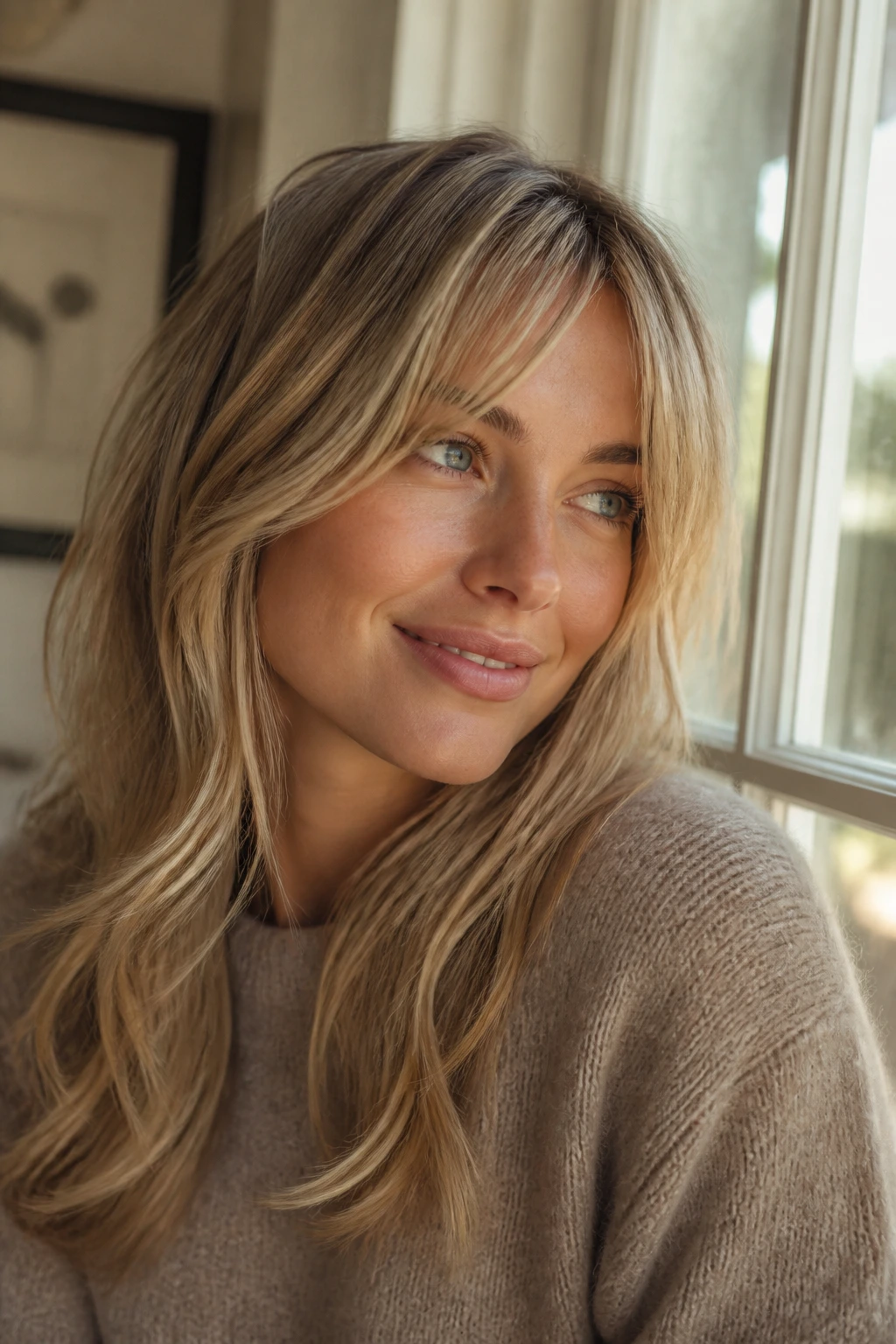
Lived-in bangs are the antidote to overworked hair. The fringe stays long, the part can shift a little, and the sandy beige highlights are soft enough to grow out without a harsh line. Thin hair usually looks better with a relaxed finish than with a fussed-over one.
This version is strong because it doesn’t ask the hair to be perfect. It can be tucked behind one ear, split loosely in the center, or pushed off the face when you want the forehead open. The babylights give the front enough detail that even an easy style still looks finished.
A little dry shampoo at the roots helps on day two. Not a cloud of it. A light mist, rubbed in, is enough. If you pile it on, the bangs lose movement and start to feel chalky.
23. Feathered Long Bangs with Butter Blonde and Lowlights
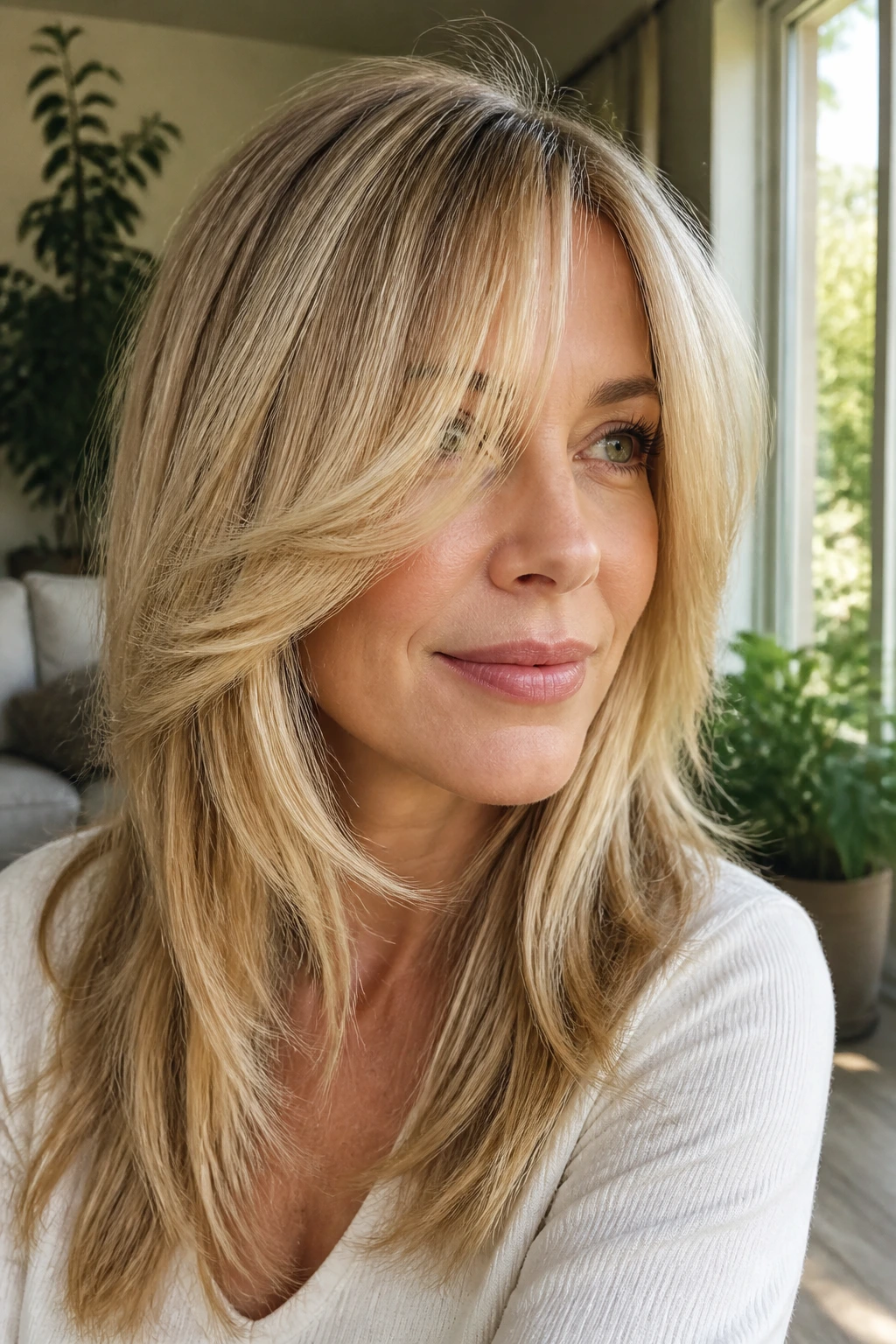
Butter blonde is one of the easiest tones to wear on thin hair because it adds warmth without going brassy. Feathered long bangs keep the front soft and light, while a few lowlights underneath prevent the blonde from washing the hair out completely. That contrast gives the style a little depth.
The feathering should be felt more than seen. If the strands are chopped up too hard, the bang loses that soft sweep and starts looking ragged. Ask for airy ends that can slide across the cheekbones and blend into the sides.
This is a good choice if your complexion looks tired under very pale blonde. Butter blonde brightens, but it does not bleach the life out of your face. That matters more than people admit.
24. Soft Wave Bangs with Frosted Honey Babylights
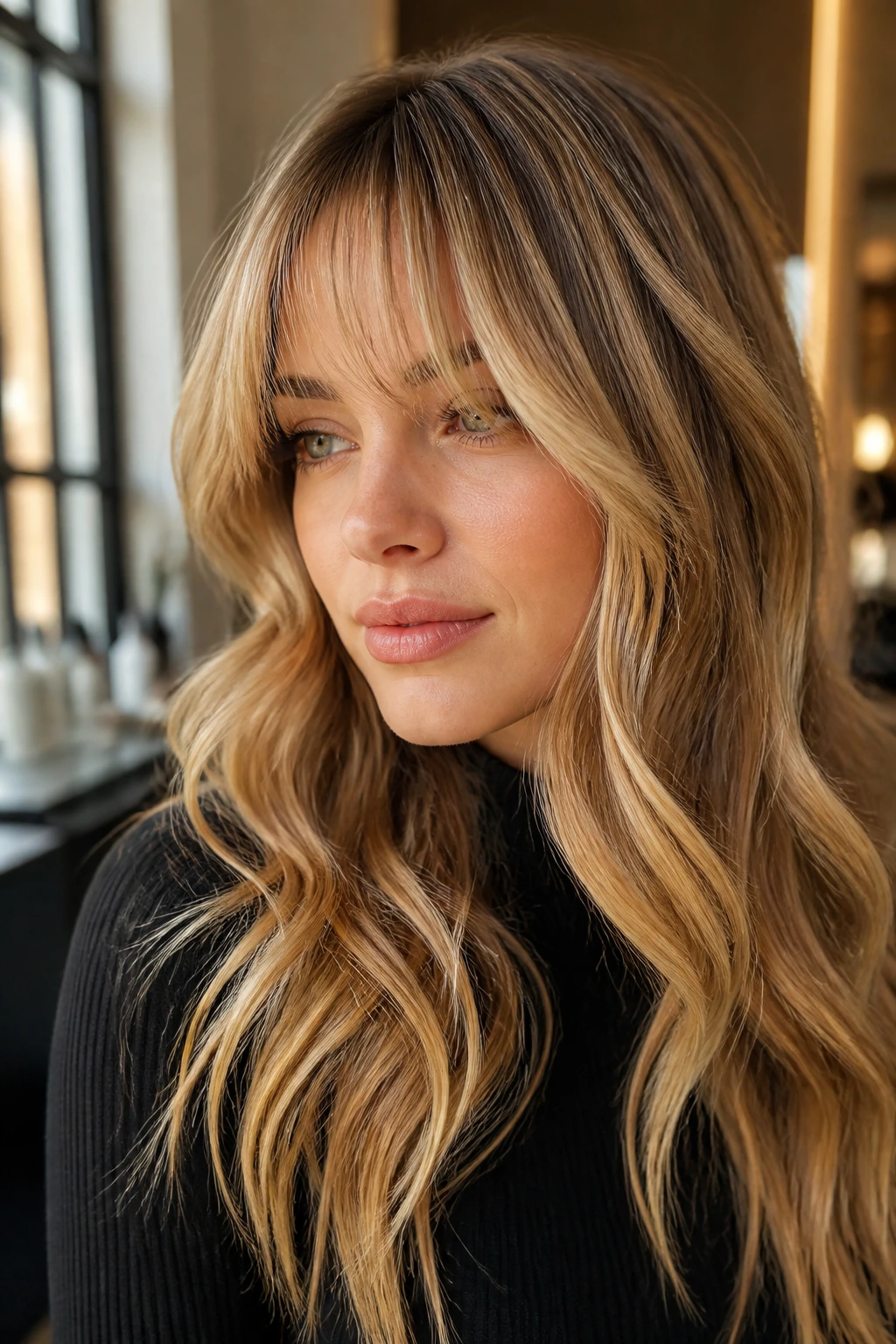
Soft waves give thin hair one of its best volume tricks, because the bends create visual width. Frosted honey babylights catch that movement and keep the front from looking like a single flat mass. The result is easy to read, even from a distance.
I like this style when the bangs are long enough to sit with the wave pattern instead of fighting it. If they’re too short, the wave turns springy and can stand up oddly at the forehead. Keep the length grazing the brow or just below it, and let the wave push them slightly aside.
A 1.25-inch curling iron gives this shape a nice loose bend. Brush the waves out once they cool. That one step keeps them soft instead of ringlet-like.
25. Low-Maintenance Grow-Out Bangs with Seamless Root Shadow
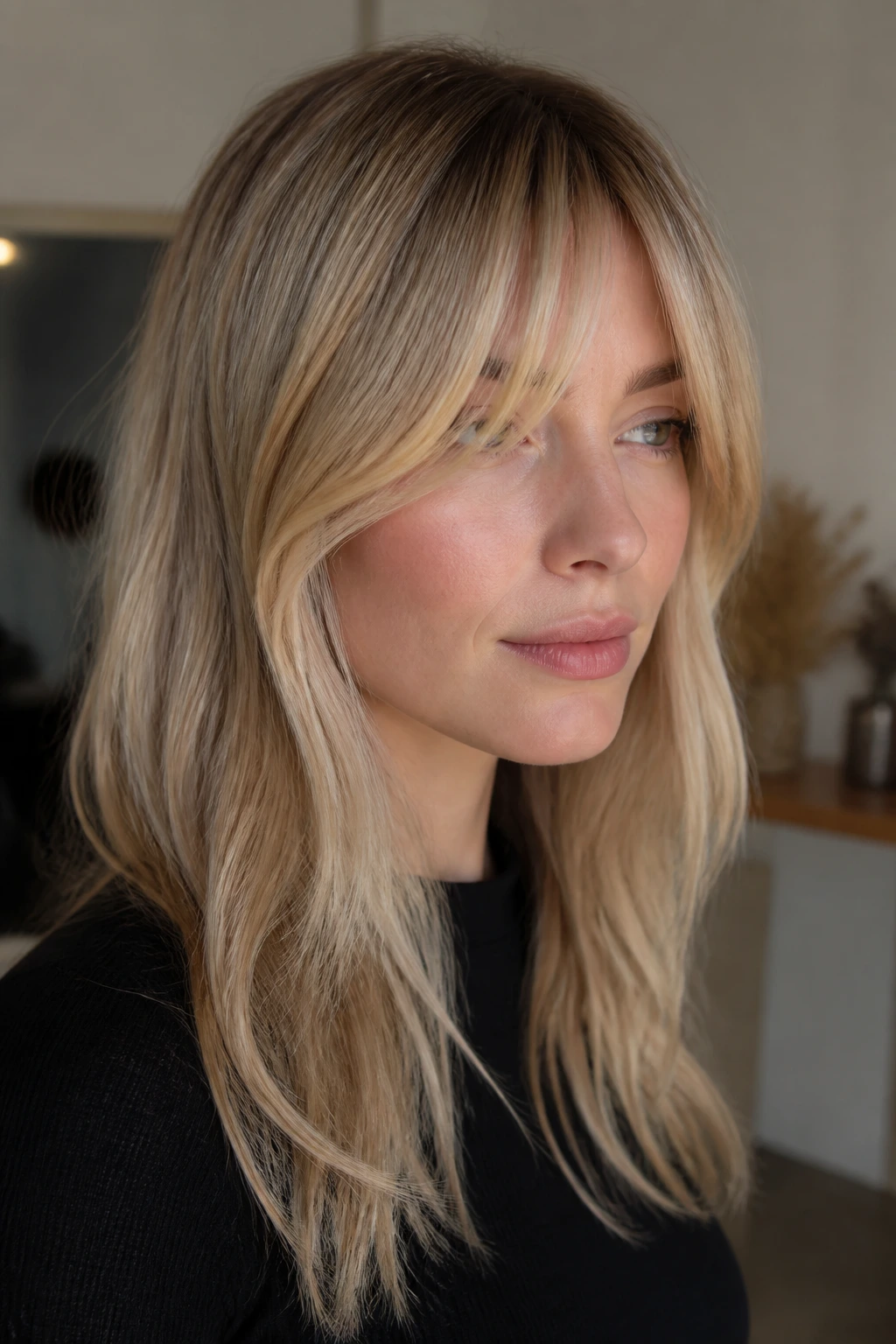
If you want the easiest version of blonde long bangs for thin hair with babylights, this is the one to keep in your back pocket. The bangs stay long enough to tuck, the root shadow keeps the regrowth soft, and the babylights are placed so they fade out without a hard edge. Nothing about the front looks forced.
This is the style I’d choose for someone who likes the idea of bangs more than the maintenance of bangs. It still frames the face, still gives lift, still looks intentional. It just doesn’t demand a strict trim schedule to stay wearable.
The real advantage is flexibility. One day the bangs can split in the middle. The next day they can sweep off to one side. If the front is cut right, the grow-out becomes part of the look instead of a problem to fix.
Why Babylights Give Thin Hair More Visual Weight
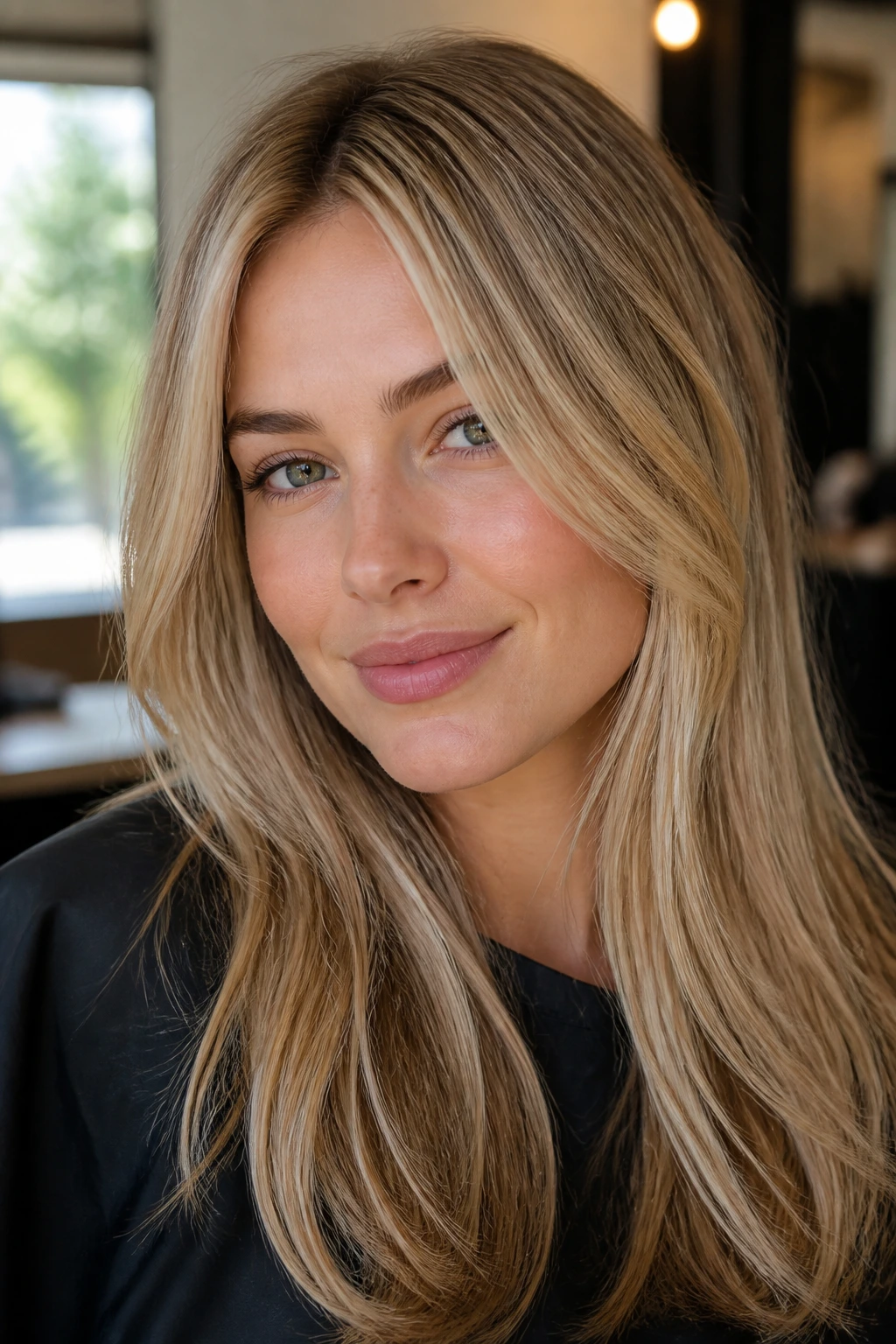
Thin hair doesn’t always need more hair. It often needs better contrast. That’s the part people miss when they ask for highlights and then wonder why the front looks flatter than it did in the chair.
Babylights work because they’re tiny. They’re woven close together, so the blonde reads as soft flickers instead of stripes. Around the part and temples, that fine mix of light and shadow can make the hair look denser without adding any actual bulk.
The other reason they help is placement. On thin hair, the brightest pieces should usually live near the face and just off the root, not all the way through the scalp area. A soft root shadow keeps the crown from looking exposed, and a few lowlights underneath stop the blonde from washing out the shape. That’s the difference between “light hair” and “hair that looks lighter than it really is.”
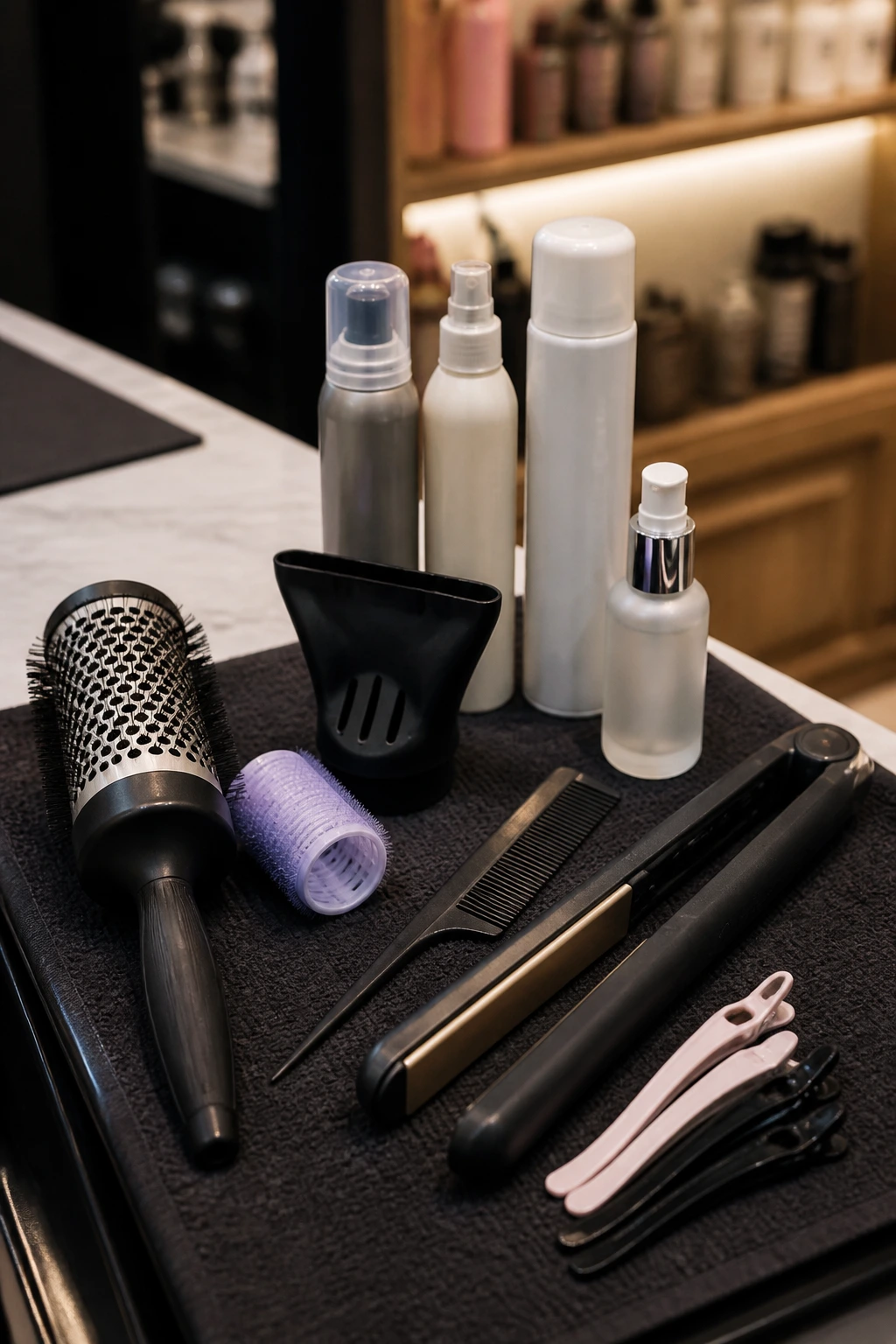
Essential Tools for Styling These Looks
-
1¼-inch round brush: The safest size for most of these fringe shapes; it bends bangs without curling them into a tube.
-
Vented blow-dryer nozzle: Directs the airflow and keeps the front from frizzing while you shape it.
-
Small Velcro roller: Excellent for setting curtain bangs, side sweeps, and rounded blowout fringe while they cool.
-
Lightweight mousse: Gives thin hair a little memory at the root without that crunchy, old-school feel.
-
Heat protectant spray: Non-negotiable if you blow dry the bangs most days; fine hair shows heat damage fast.
-
Dry shampoo: Best at the roots and part line, where oil makes bangs collapse first.
-
Fine-tooth comb: Useful for parting, separating piecey bangs, and smoothing the front before the final set.
-
Flat iron with narrow plates: Handy for the sleek or underbent versions, but keep the heat moderate and the passes quick.
-
Light finishing cream or serum: Use the smallest amount on the mids and ends only; too much will flatten the fringe.
-
Salon clips: Help set the bang shape while it cools, which is one of the easiest ways to make the style last.
What to Ask for at the Salon Chair
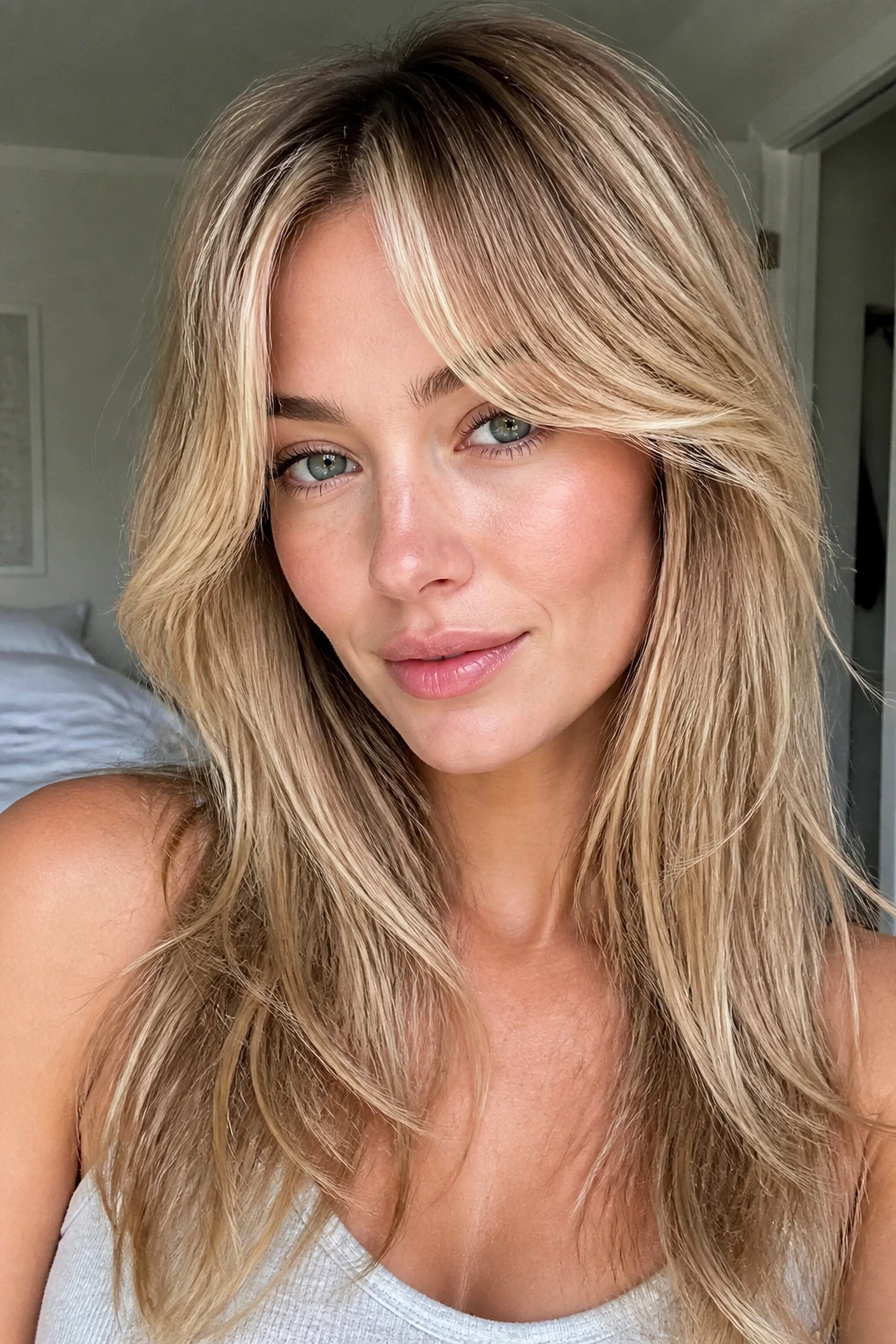
Bring photos, yes, but also bring language. Photos tell the shape; words tell the stylist what not to do. On thin hair, that matters. One inch too short at the front can change the entire feel of the cut.
Say you want long bangs that can split, tuck, or sweep rather than a heavy fringe that sits across the forehead. If you like babylights, ask for them to be fine and close-set around the part, temples, and face frame, not chunky through the crown. Ask for a soft root shadow if your scalp shows easily or your hair is very light at the base.
If you know your hair goes flat, say that out loud. A stylist can keep more weight at the perimeter and avoid over-thinning the ends. If your hair is fragile, say that too, because razor work and aggressive lightening are not friends of delicate strands.
Smart Shade and Placement Choices
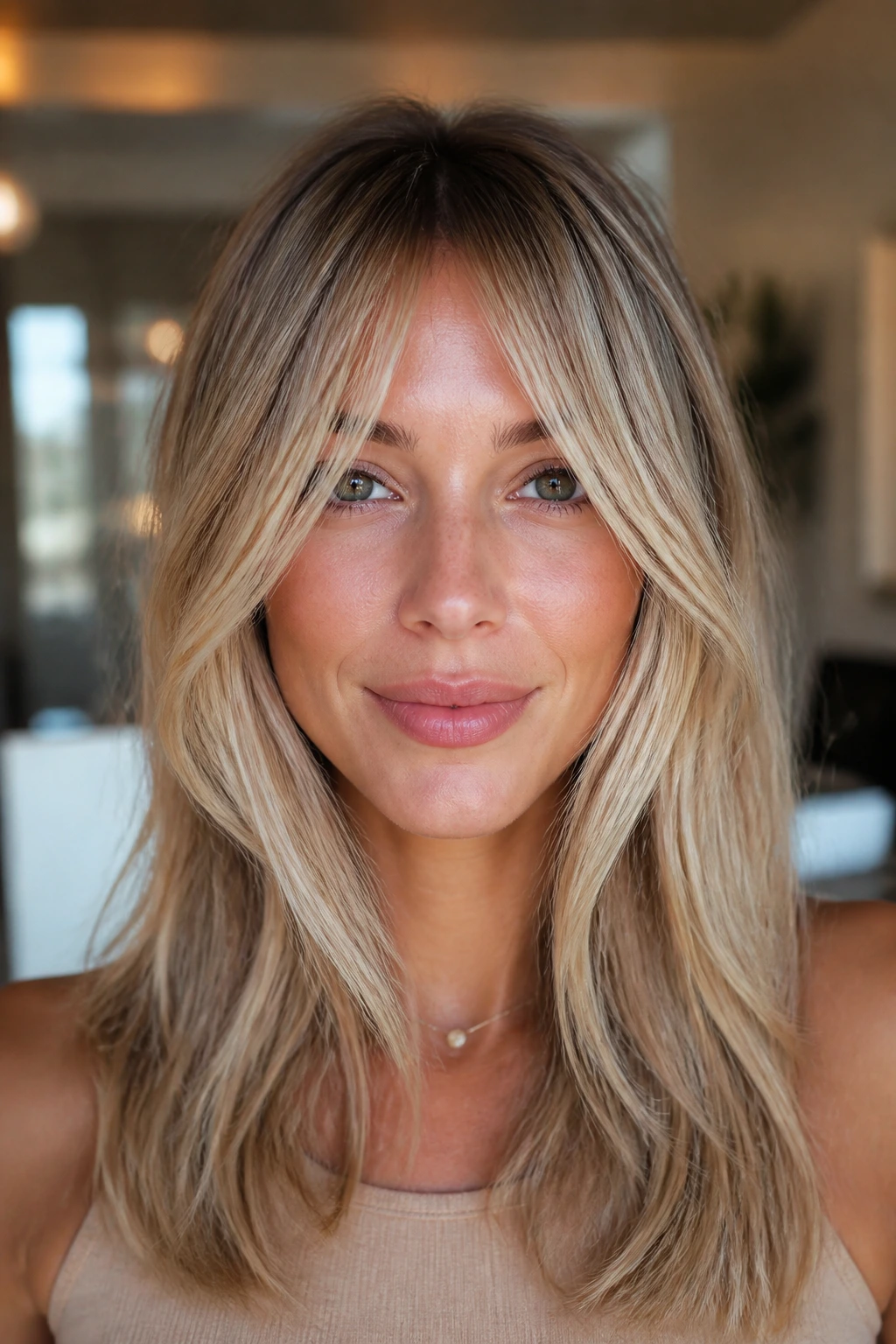
The best blonde for thin hair is the one that gives you depth, not just brightness. Soft beige, champagne, vanilla, honey, and pearl tones usually play well because they keep the hair from looking harsh around the hairline. If the blonde is pushed too icy at the front, the scalp can start to show more.
Placement matters as much as tone. Put the lightest babylights around the bangs, temples, and cheekbones. Keep the crown softer and the underlayers slightly deeper if the hair is truly sparse. That little bit of shadow under the top layer helps the style hold shape.
There’s also a difference between bright and brightened. A bright money piece can look lovely, but too much of it on thin hair can expose the front line. A brightened front, with soft beige or champagne woven through it, usually ages better and looks thicker in motion.
How to Style the Fringe So It Stays Airy
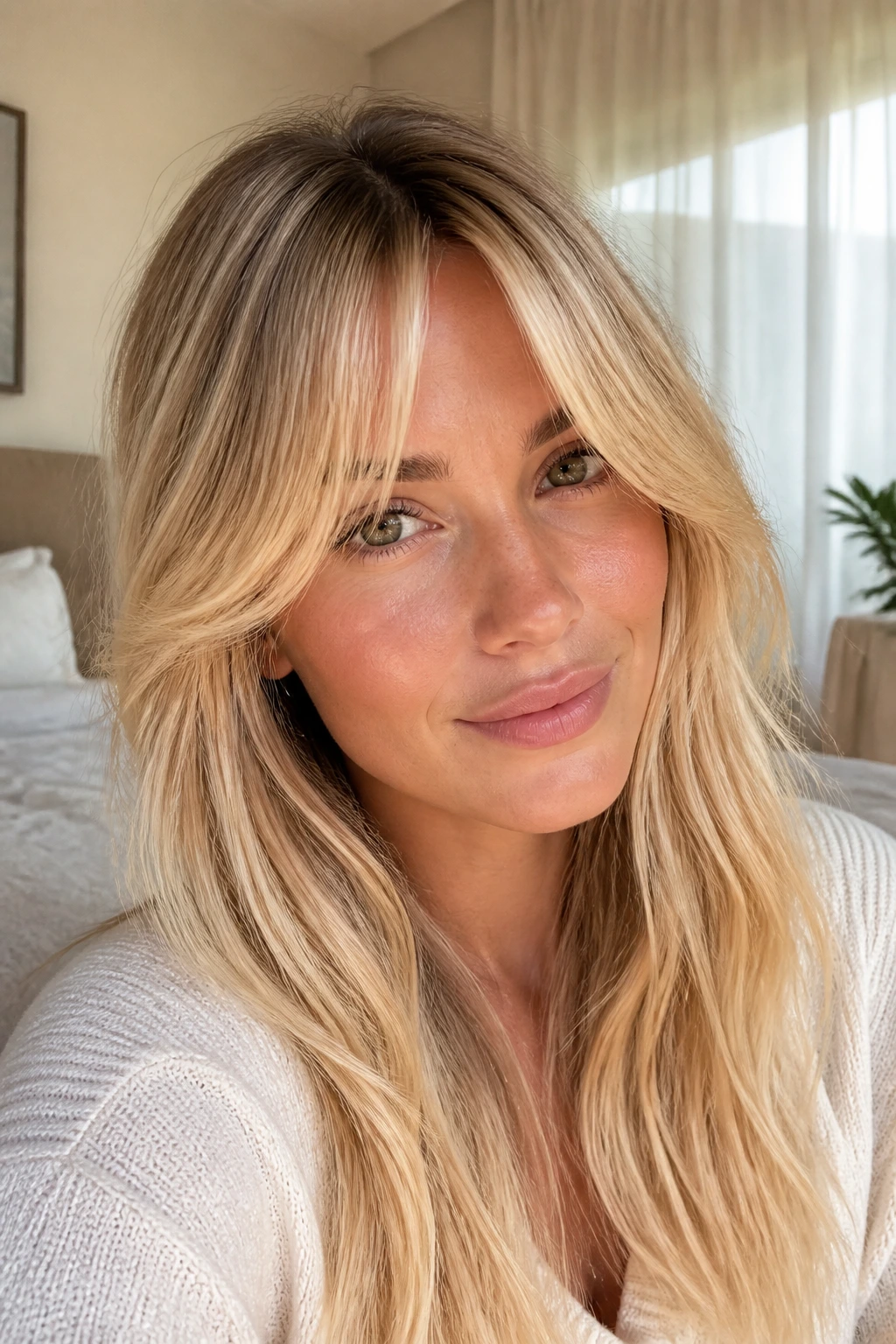
Root lift: Start with damp bangs and a small amount of mousse at the root. Lift the hair up and forward with your fingers first, then switch to a brush once the shape is halfway dry. That keeps the front from drying plastered to the forehead.
Direction: Dry the bangs from side to side before settling them where you want them. This stops the root from setting in one flat direction and gives the fringe a little bend. It’s a tiny thing, but it changes the whole front.
Product load: Keep finishing products light. If you need more hold, add a mist of flexible hairspray after the bangs are set. Heavy oils, waxy creams, and thick serums make fine hair collapse fast.
Refresh: If the bangs bend weirdly overnight, mist them with water, rewrap them around a brush or roller for a few minutes, and hit them with cool air. Don’t rewash the whole head every time the fringe misbehaves. That’s exhausting, and it usually doesn’t help.
Common Mistakes That Make Thin Hair Look Flatter
-
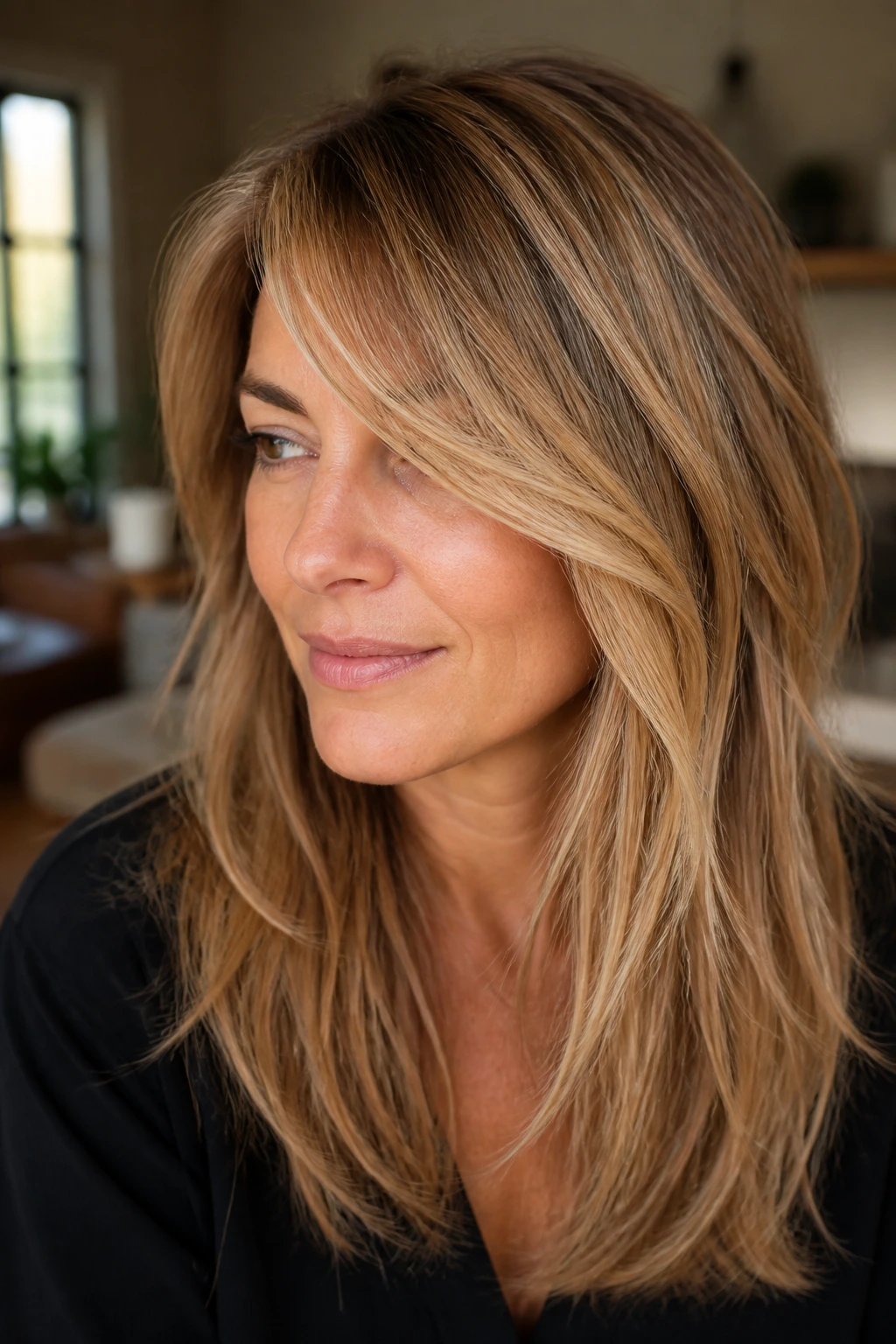
Cutting the bangs too short: Short bangs can spring up and expose more forehead, which makes thin hair look even finer. Keep the longest pieces at cheekbone or lip length unless the hair is very dense.
-
Using chunky highlights instead of babylights: Thick blonde stripes can show the spaces between strands. Fine, close-set highlights blur better and feel softer around the part.
-
Thinning the fringe too much: Over-texturizing creates holes. The bang should move, not disappear.
-
Loading on heavy oils and creams: Fine hair drinks up product and then hangs limp. Use the smallest amount you can get away with.
-
Leaving the part frozen in one place: A hard part can make the crown look sparse. Shift it a quarter inch from time to time so the roots don’t train themselves into a flat line.
-
Ignoring the cooling stage after blow-drying: Hair sets as it cools. If you let the bangs fall before they cool, they usually fall the wrong way.
Variations and Adaptations to Try
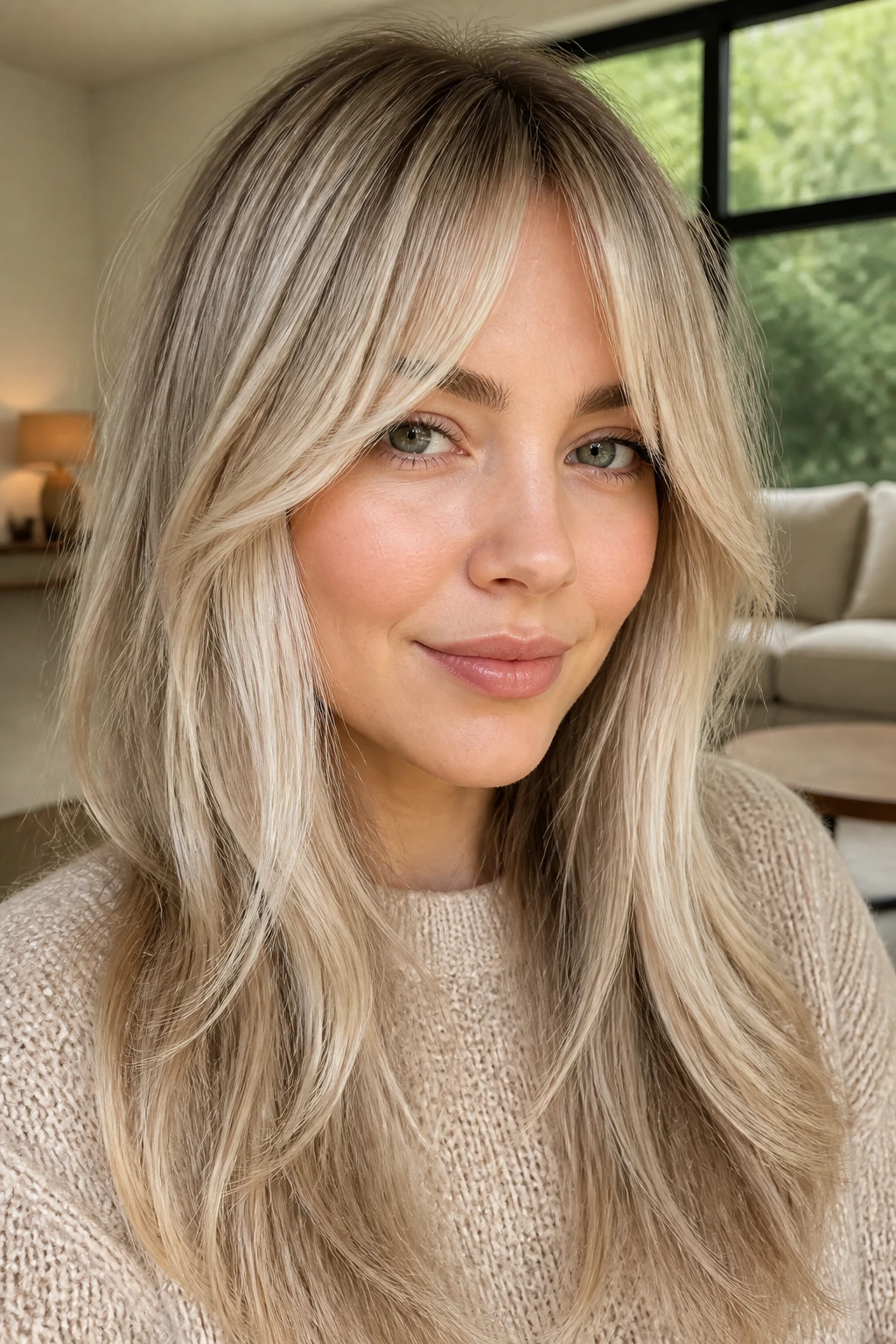
Cool Pearl Edit: If you prefer an icy blonde, keep the babylights very fine and add a soft root shadow. The contrast should stay gentle; otherwise the front can start to look brittle.
Honey Glow Version: Warm honey babylights are kinder to thin hair when you want a softer, richer look. They’re especially good if your skin looks washed out under ash or platinum tones.
Bronde Grow-Out: Mix blonde with a little light brown through the mids and underlayers. This gives the front depth and cuts down on the need for constant toner.
Sleek Glass Finish: Keep the fringe straight, smooth, and just barely bent at the ends. Use shine spray sparingly and avoid too much layering so the front reads clean.
Air-Dry Fringe: Ask for a softer, longer cut with feathered ends and a little more length through the temples. This version behaves better when you skip heat and let the hair dry with natural bend.
Keeping the Cut and Color Fresh Between Visits
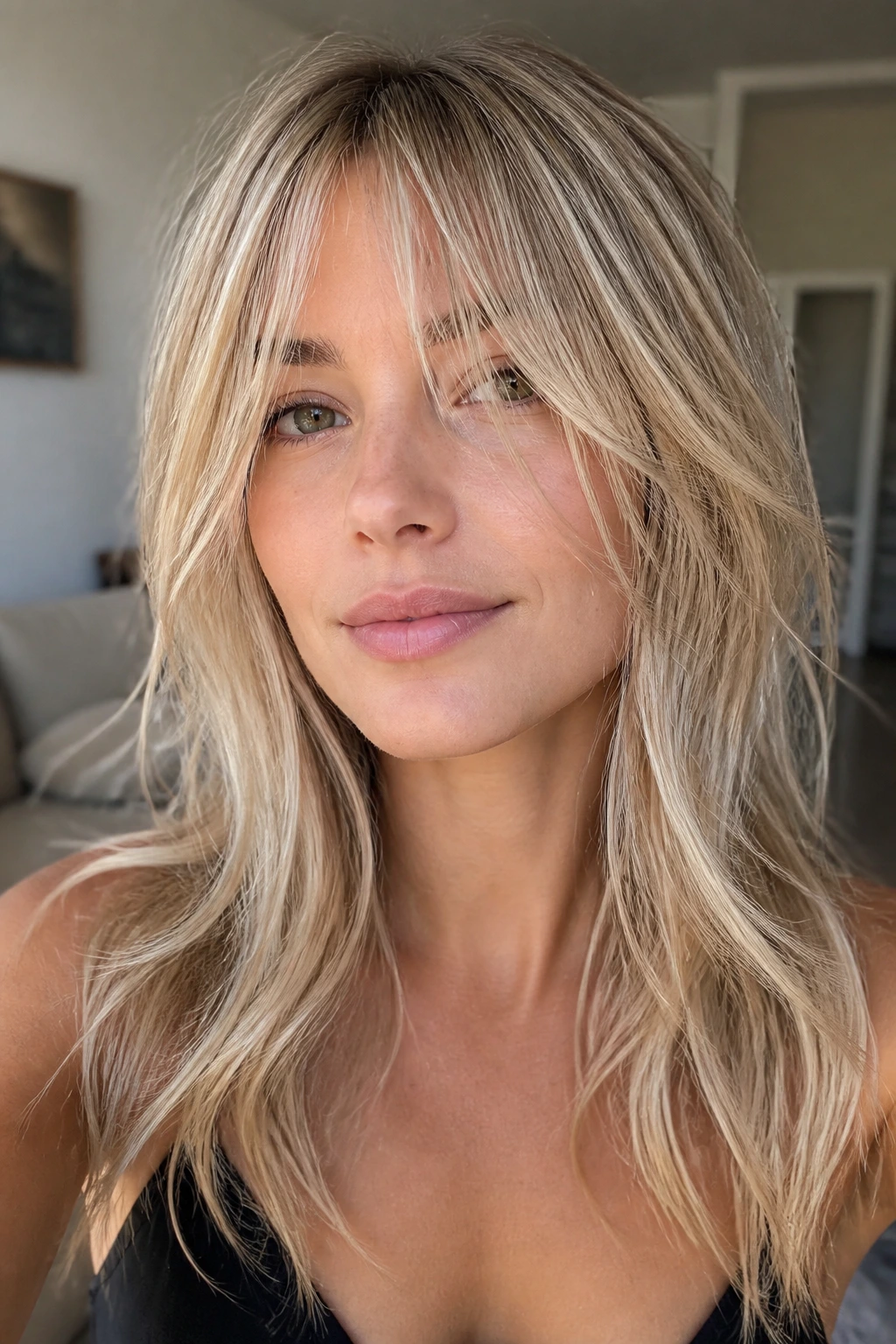
Long bangs need a trim rhythm, or they slide into your eyes and lose their shape. For most of these styles, a bang trim every 4 to 6 weeks keeps the front where it belongs. Grown-out curtain or bottleneck versions can stretch a bit longer, closer to 6 to 8 weeks, because the shape is built to move.
Babylights fade differently depending on tone and wash frequency. A soft toner or gloss every 6 to 10 weeks keeps the blonde from going dull or brassy. Cool blondes may need a violet shampoo once a week or every other week, but don’t overuse it. Too much violet can make fine blonde hair look dusty.
Washing matters too. Thin hair often does better with 2 to 3 washes per week, especially if the fringe gets oily fast. If you sweat at the hairline or wear bangs against the forehead a lot, a quick rinse just at the front can buy you another day without stripping the lengths.
At night, clip the bangs loosely off the face or wrap them around a soft roller if you want a blowout finish in the morning. Sleeping directly on them tends to flatten the root and bend the ends in awkward directions. That’s not a mystery. It’s just fabric and friction.
Frequently Asked Questions
Do babylights really make thin hair look fuller?
Yes, when they’re placed well. Tiny highlight threads break up flat color and give the eye more to read, which makes the hair seem denser. The effect is strongest around the part, temples, and bang area.
What bang length is best for thin hair?
Cheekbone to lip length is usually the safest range. That length gives the fringe room to split, sweep, or tuck without exposing too much forehead. Super-short bangs tend to lose that flexibility.
Should I choose curtain bangs or side-swept bangs?
Curtain bangs work well if you like a center part and a softer shape around the face. Side-swept bangs are better if your crown needs help or if you prefer one-sided movement. The better choice is usually the one that matches how your hair naturally falls.
Can fine hair handle bangs and highlights at the same time?
It can, as long as both are done lightly. Thin hair needs a softer cut line, smaller babylights, and a color plan that doesn’t over-lighten the hairline. Heavy bangs plus heavy highlights is where things go sideways.
How do I stop my bangs from splitting apart?
Start with a little root lift, dry them side to side, and let them cool while shaped in place. A tiny bit of dry shampoo at the roots can help on day two. If the cut is too short or too sparse, though, no product will fully fix it.
Is cool blonde or warm blonde better for thin hair?
Neither wins every time. Warm blonde often feels softer and more forgiving, while cool blonde can look cleaner if the root shadow is done well. The most important part is keeping the tone dimensional rather than flat.
Can I air-dry this look?
Yes, but the cut has to be supportive. Air-dried versions work best when the bangs are long, feathered, and backed by a little mousse. If your hair is stick-straight and slippery, a clip or roller during drying helps a lot.
Will long bangs work if my forehead is very small?
They can, as long as the center stays lighter and the sides are longer. Bottleneck and side-swept shapes are usually kinder than a heavy full fringe. The goal is to open the face, not swallow it.
The Softest Way to Wear It
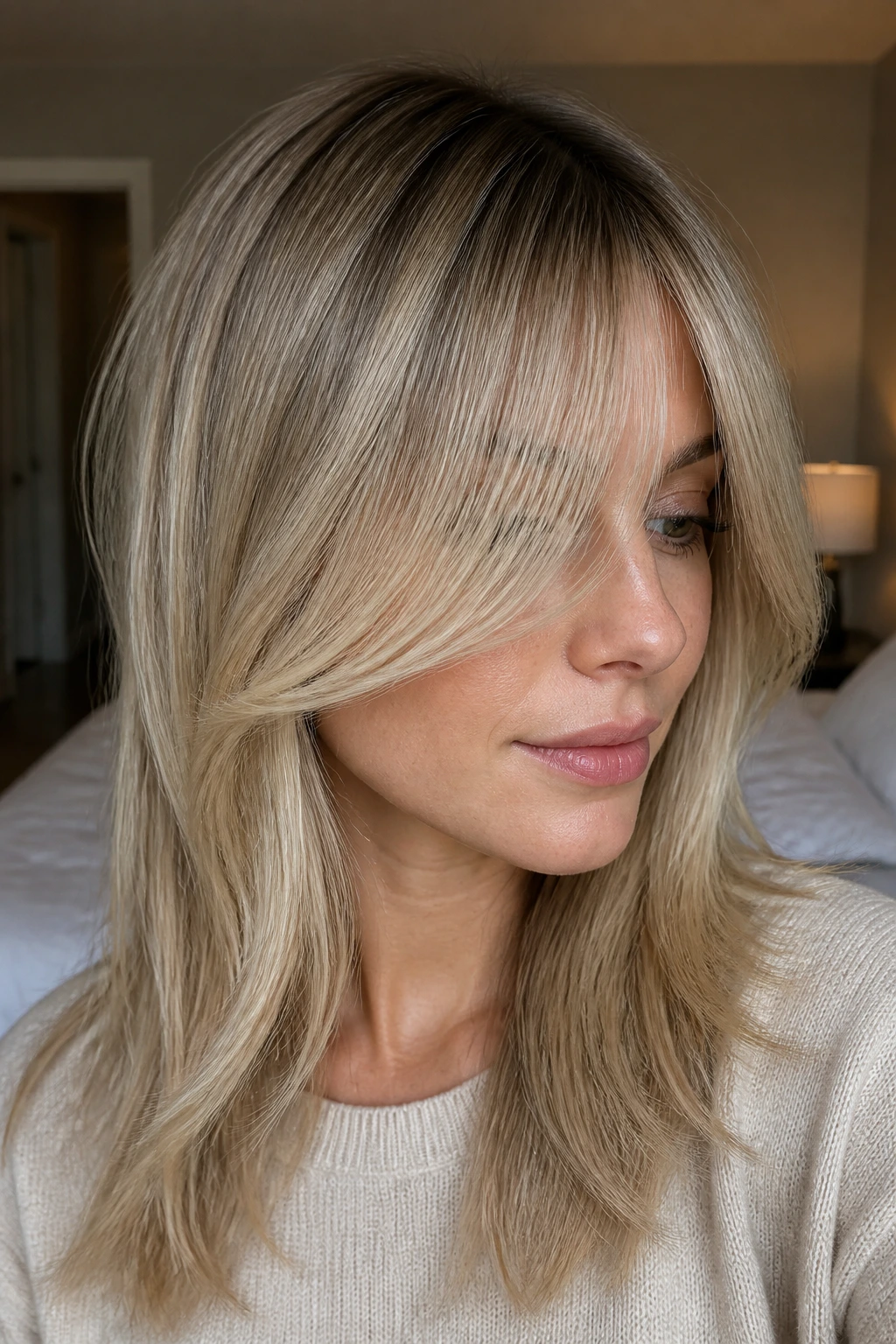
The strongest versions of blonde long bangs for thin hair with babylights never feel overloaded. They move. They bend. They let the color do part of the work, which is exactly what fine hair needs when the front of the head is doing all the talking.
If you’re heading to the salon, bring one photo for the shape and one for the tone. That tiny bit of specificity saves a lot of awkward guesswork, and it’s usually the difference between bangs that sit there and bangs that actually live a little.