



Fair skin can make flat blonde look a little too clean, almost chalky, especially when the hair is lifted high and the color sits at one note from root to ends. The fix is usually not “go darker” or “go blonder.” It’s contrast. That’s why blonde lowlights with highlights for fair skin work so well: the brighter pieces keep the hair luminous, while the deeper ribbons give your complexion somewhere to rest instead of letting your face disappear into a sheet of pale color.
The best versions don’t look striped. They look like light falling through layers of silk. A few level 6 or level 7 lowlights tucked under level 9 or 10 highlights can make fine hair look thicker, keep icy blondes from reading flat, and soften the harshness that sometimes shows up around a porcelain or rosy face when every strand is the same pale tone.
The trick is choosing the right blonde family for your undertone, then placing it where the eye naturally moves — around the part, through the underlayers, in a soft frame around the face, or under the crown so the top still looks bright. Some of these looks lean cool and pearly. Some are beige, mushroom, or honey. A few are deliberately higher contrast, which is useful if your skin needs a little depth next to it.
Why This Blended Blonde Works on Fair Skin
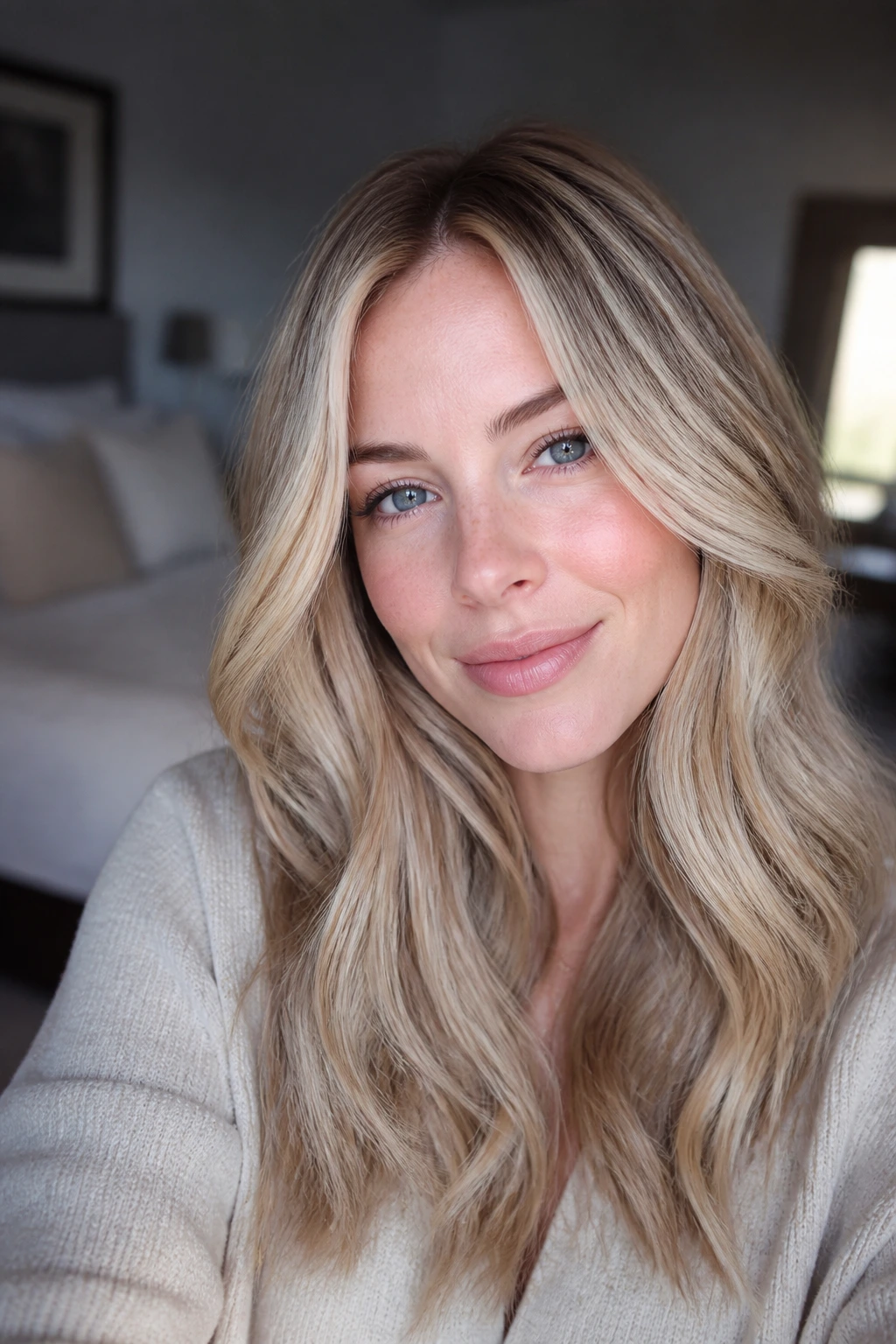
- It breaks up the “washed out” effect: A few deeper ribbons keep pale skin from sitting next to one flat blonde field, which is where a lot of blondes start looking thin or chalky.
- It gives the face a frame: Highlights near the cheekbones and lowlights under the crown create a soft border that makes features look more defined without harsh lines.
- It helps fine hair look fuller: Two or three tones layered together create the illusion of density, especially when the lowlights live underneath and around the interior.
- It’s easier to live with than solid platinum: Soft depth at the root and mids makes grow-out look intentional instead of like a hard line of regrowth.
- It can be tuned to your undertone: Cool beige, taupe, ash, honey, or mushroom lowlights each pull a different mood against fair skin, and the wrong one can make all the difference.
- It works in daylight and indoor light: Strong single-process blonde often looks fine in the salon mirror and flat at home. Contrast keeps it alive under fluorescent light, sun, and every bad dressing-room bulb in between.
1. Champagne Beige Blonde With Smoky Lowlights
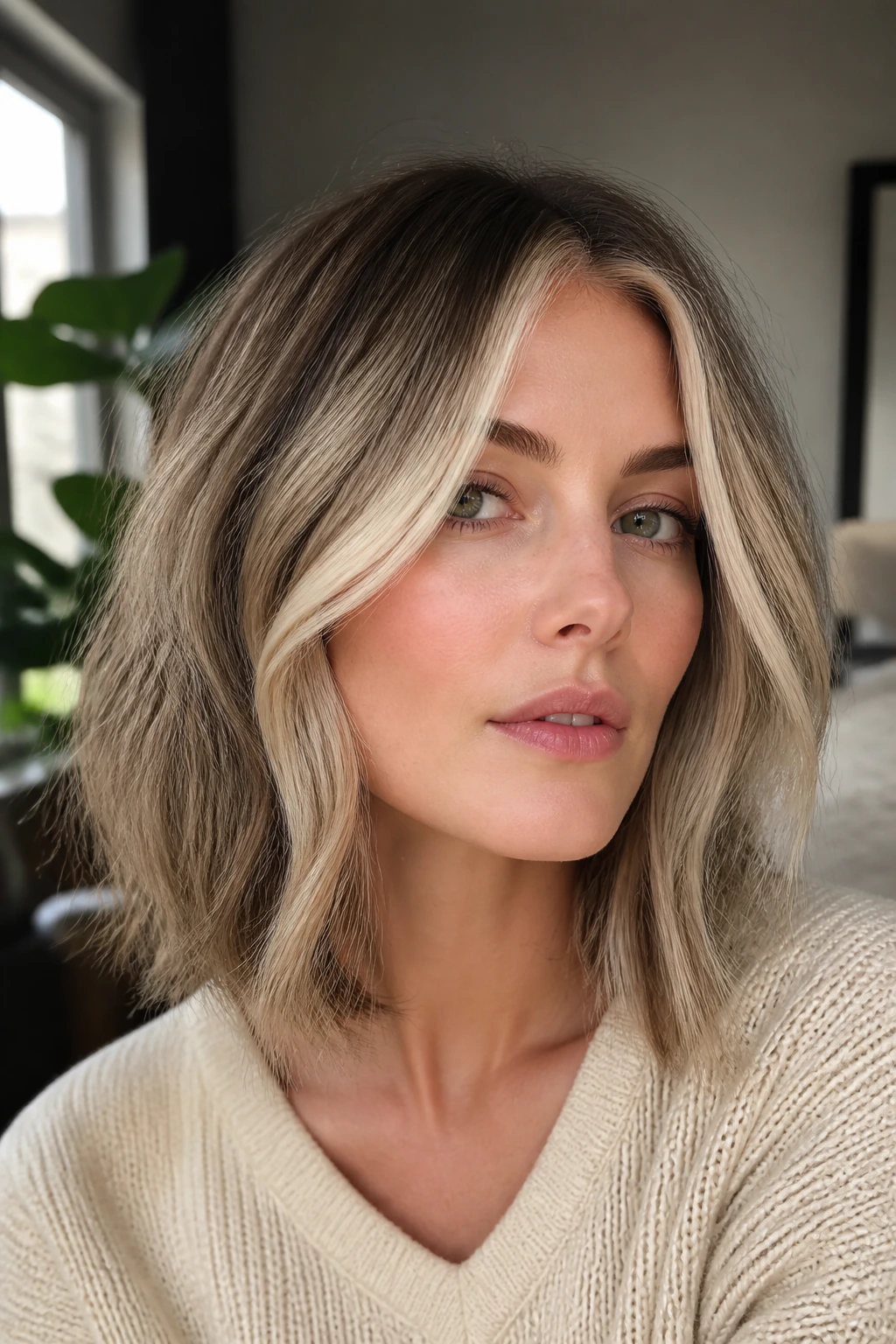
This is the blonde I reach for when fair skin has a little pink in it and needs something softer than pure platinum. The champagne pieces stay bright near the front, while the smoky beige lowlights drop into the mid-lengths and underneath so the color never looks icy in a harsh way. It’s polished without turning stiff.
Why It Flatters Fair Skin
The beige keeps things airy, but the smoky depth stops the shade from going flat against a pale face. Ask for lowlights that sit one to two levels deeper than your highlight base, not a dark brown stripe that sits on top of the hair like marker lines.
- Best base: Level 9 champagne or beige blonde
- Lowlight tone: Mushroom beige, soft taupe, or cool sand
- Best placement: Under the crown, around the nape, and in a few face-framing ribbons
- Works especially well on: Shoulder-length cuts and soft waves
Pro tip: Keep the front pieces brighter than the back. That small shift makes the whole color look expensive instead of overworked.
2. Mushroom Blonde With Creamy Face-Framing Pieces
Mushroom blonde is the quietest kind of blonde, and that’s exactly why it suits fair skin so well. It has enough beige and ash to cool down redness, but it doesn’t go muddy if the highlights stay creamy around the face. Think of it as a soft shadow under a pale linen curtain.
The color works best when the lowlights live in the interior and at the root shadow, not on the outermost top layer. You want the bright pieces to catch light first, then notice the deeper undertone a second later. That delay is what makes the hair look dimensional.
If your skin leans rosy, ask for a neutral mushroom formula instead of a strong ash. Too much ash can pull the whole look gray, and gray hair color next to fair skin is a specific kind of unforgiving.
3. Pearl Blonde With Taupe Depth
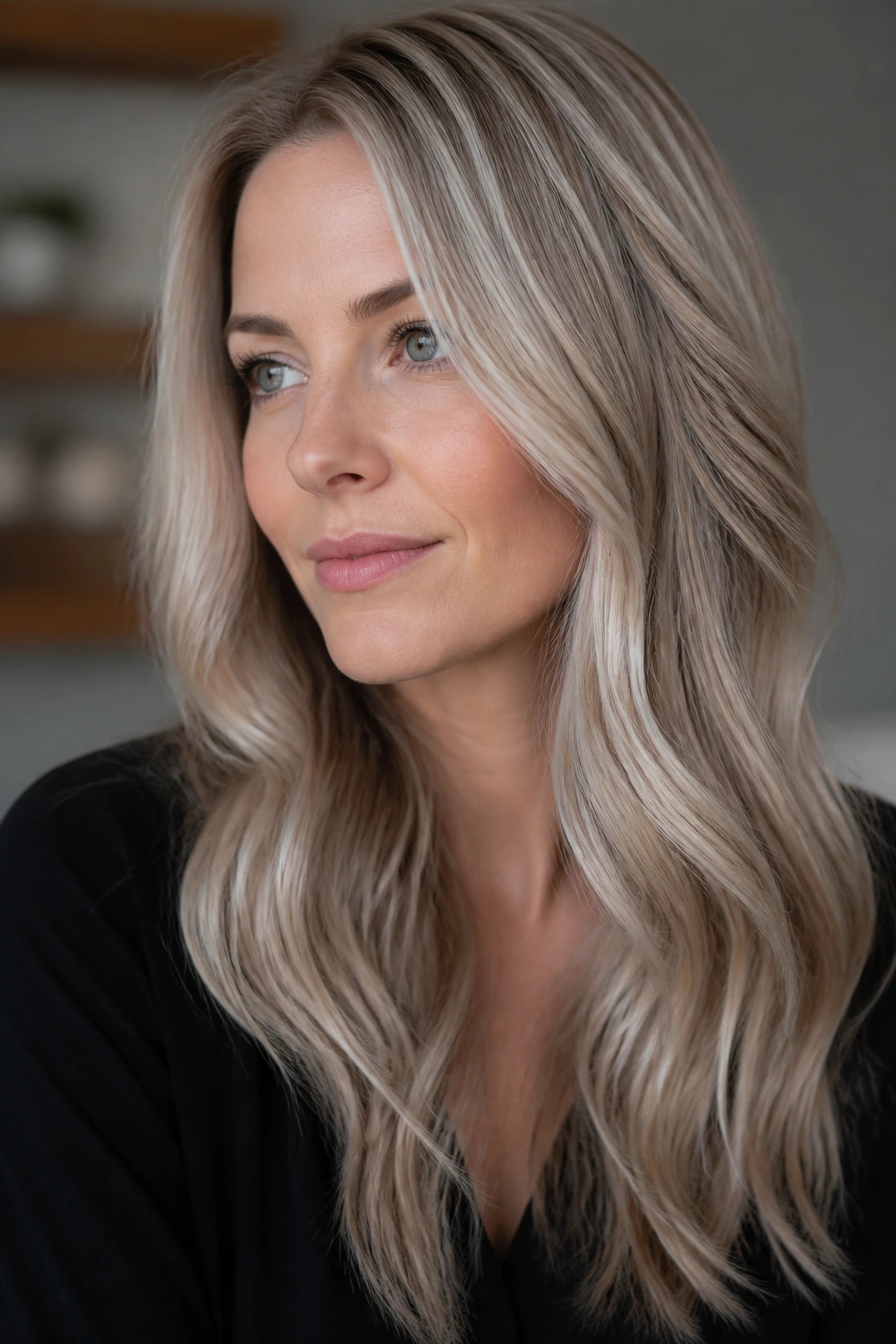
Ever notice how pearl jewelry looks different on skin that’s already pale? This is that effect, but for hair. Pearl blonde gives you a soft, luminous finish, and the taupe lowlights keep it from drifting into a color that only photographs well from one angle.
What Makes It Different
Pearl tones usually sit somewhere between cool beige and soft silver. On fair skin, that middle ground can look almost expensive in the old-fashioned sense — quiet, refined, and a little cool at the edges. Taupe lowlights prevent the crown from looking like a helmet and give the underside more weight.
- Ask for: Pearl blonde highlights plus taupe lowlights through the mids
- Avoid: Very dark espresso pieces; they’ll jump too hard against pale skin
- Best hair texture: Fine or medium hair that needs visual density
- Best finish: Soft bend, polished wave, or a tucked-behind-the-ear style
4. Butter Blonde With Root Shadow
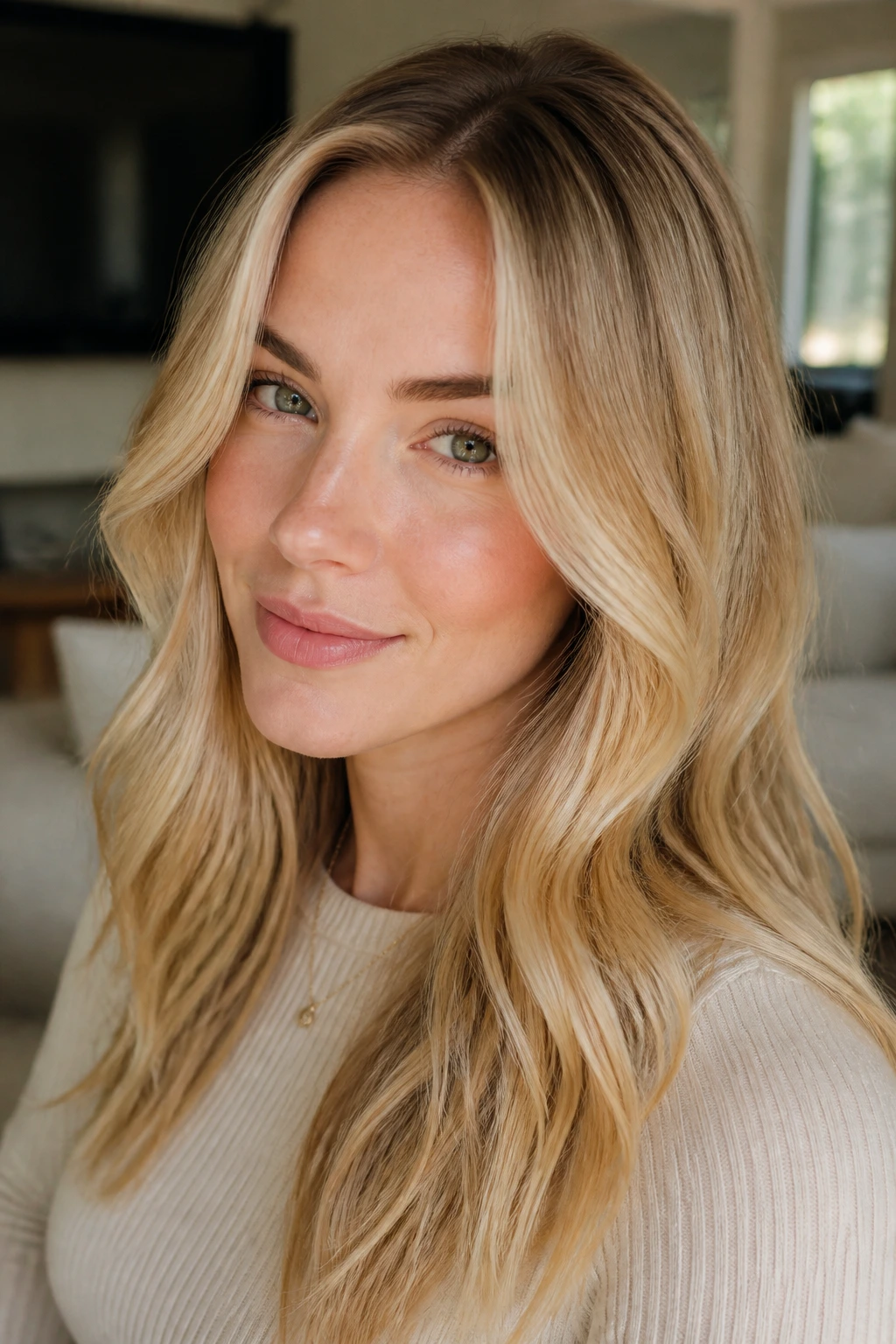
Butter blonde is warmer, softer, and more forgiving than a pale ash blonde when your complexion is fair and a little muted. The root shadow gives it shape. Without that deeper base, butter blonde can read too flat at the scalp, which is the fastest way to make the whole style look unfinished.
A good root shadow here should fade, not stop. The lowlights should melt into the mid-lengths with no visible line, then let the brightest butter pieces live through the front and ends. It is a very specific balance, and that balance is the whole point.
This one is especially good if you like your makeup a little warmer — peach blush, soft nude lips, that sort of thing. The blonde picks up those tones instead of fighting them.
5. Sandy Blonde With Wheat Lowlights
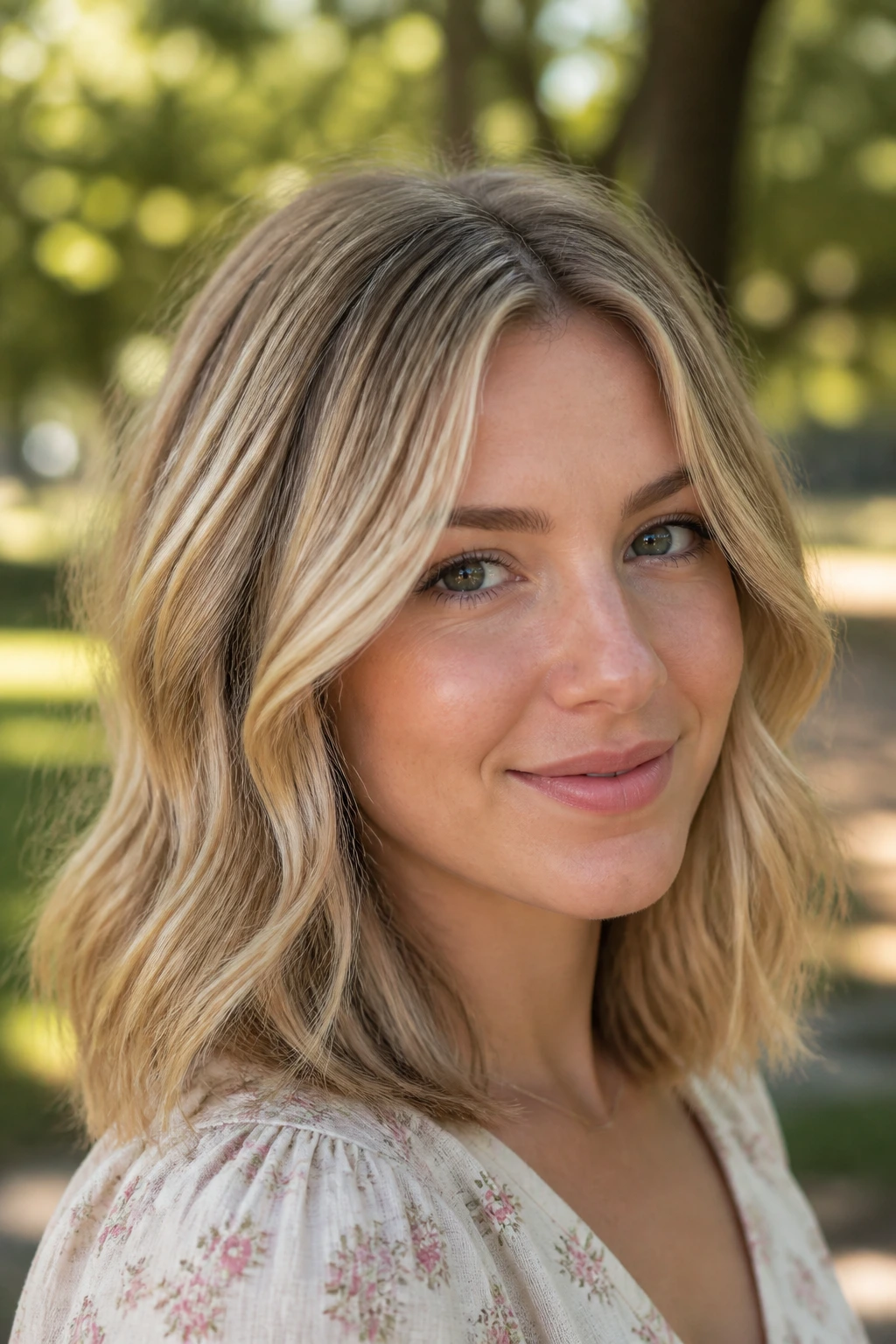
Sandy blonde sits in the middle of the road, which is why it’s useful for fair skin that doesn’t want anything too icy or too golden. Add wheat-toned lowlights and the whole color gains a softer, lived-in feel. The result is less “salon fresh” and more “this color has a natural grain to it.”
The best thing about wheat lowlights is that they don’t scream dark. They whisper. That matters on lighter skin, where a chunk of darker color can look much harsher than it really is.
How to Ask for It
Tell your colorist you want a level 7 wheat or beige lowlight, with lighter ribbons around the face and through the top layer. Keep the ends a touch brighter than the mid-shaft so the hair doesn’t look heavy.
6. Platinum Blonde With Ice and Charcoal Ribbons
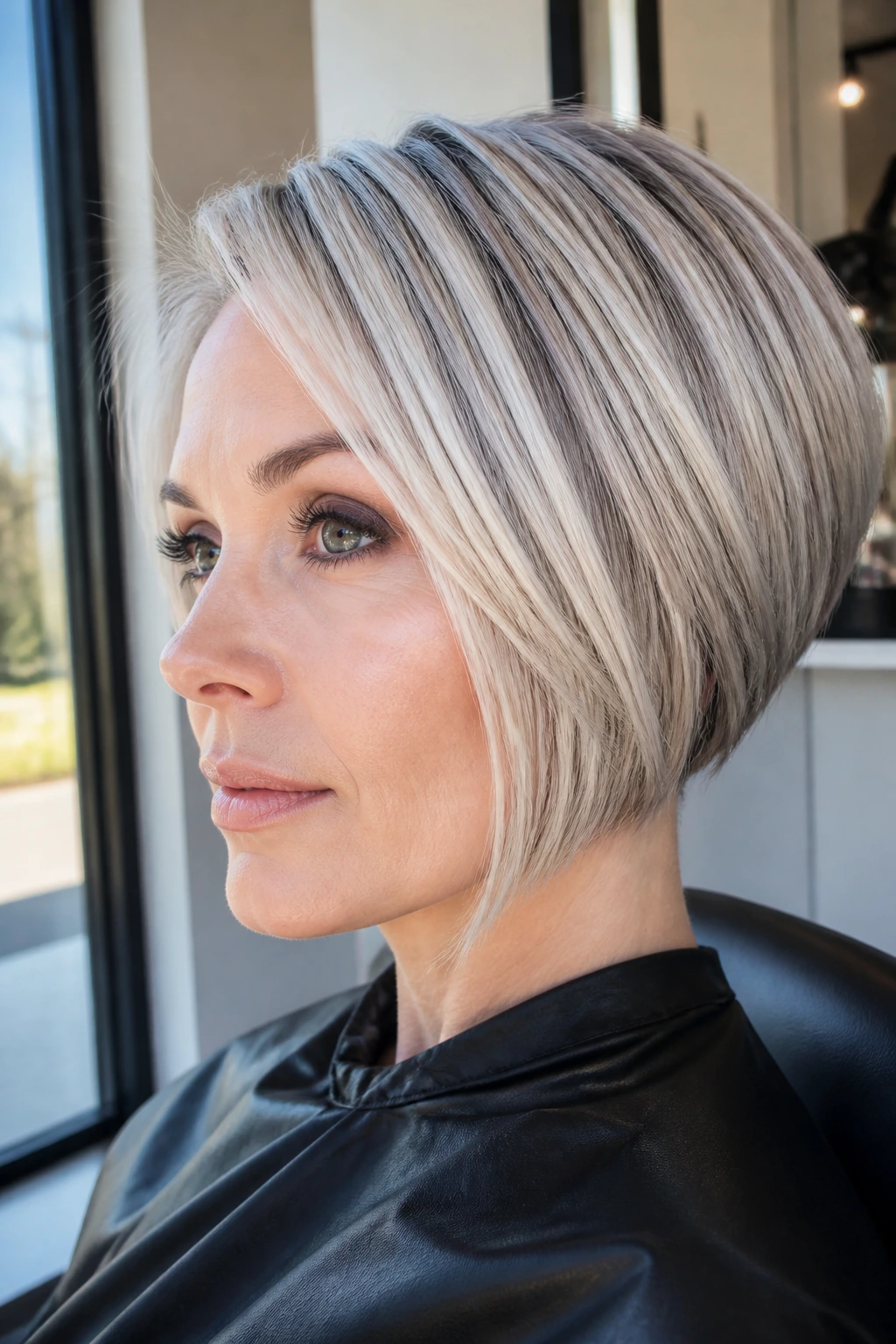
Platinum can be brutal on fair skin if it’s all one shade. Put a few ice and charcoal ribbons into the mix, though, and the whole thing gets shape. The charcoal doesn’t mean black; it means a cool depth that reads as shadow, not dye block.
This look is for people who like a sharper finish. It suits fair skin with cool undertones, especially if your eyebrows, lashes, and makeup already live in the cool family. If your complexion skews warm or peachy, keep the charcoal pieces thin and tucked underneath.
It’s also a strong option for short cuts. A blunt bob or a pixie with pale platinum on top and slightly darker interior ribbons looks crisp instead of washed out.
7. Vanilla Blonde With Underlit Honey
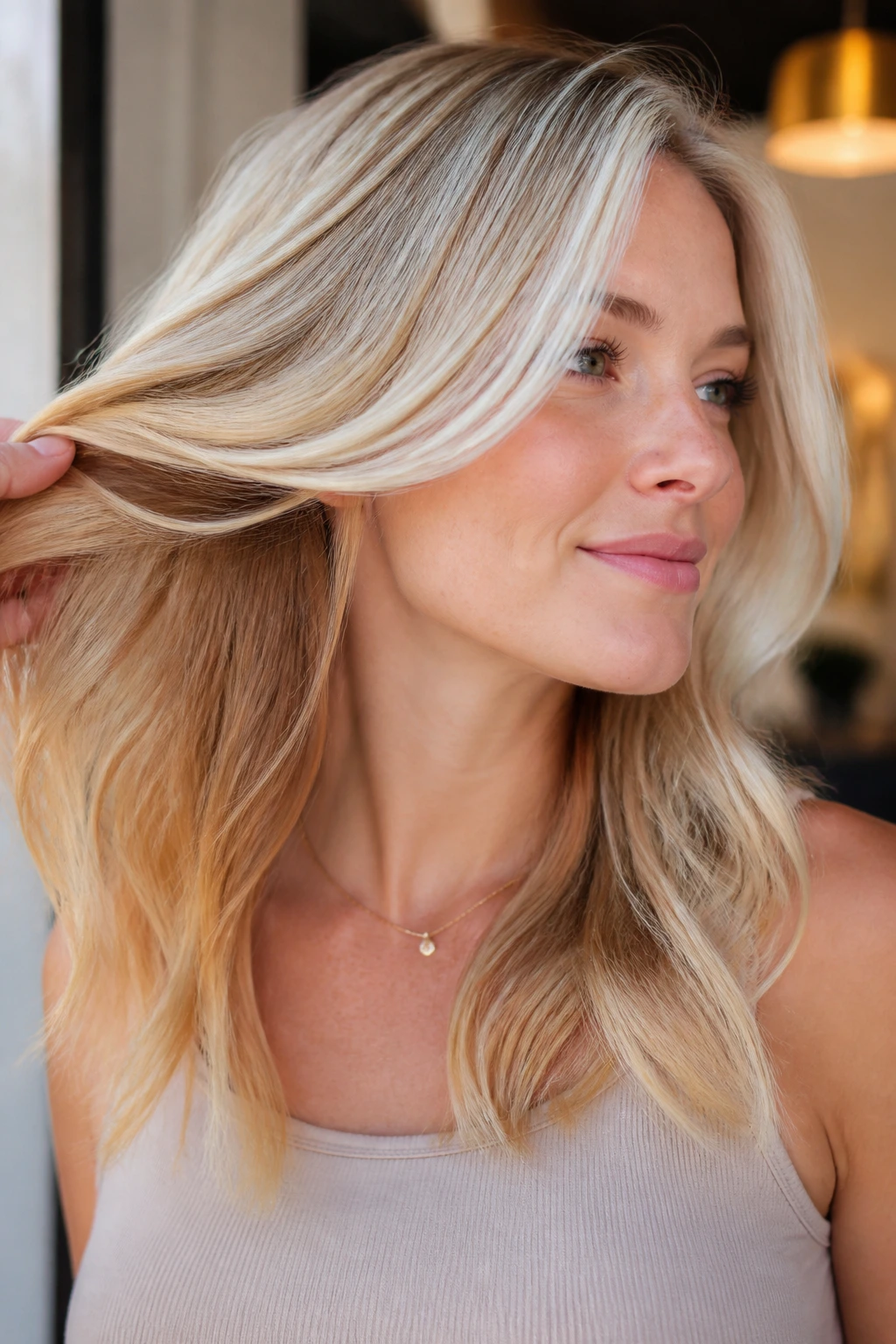
Vanilla blonde can go flat fast, so the honey has to live underneath where it warms the color without taking over. That’s the whole game here. The top layer stays soft and creamy; the lower layers carry the golden depth.
This is one of my favorite choices for fair skin with neutral or lightly peachy undertones. Honey underlighting gives the face a little warmth near the jaw and neck, which can stop a pale complexion from looking drained. Keep the honey pieces diffuse. Hard streaks turn the whole thing brassy.
A good version of this color looks almost simple at first glance. Then you move your head and the warm underlayer shows through. That little shift is what keeps it from reading one-note.
8. Beige Blonde With Chestnut Underpainting
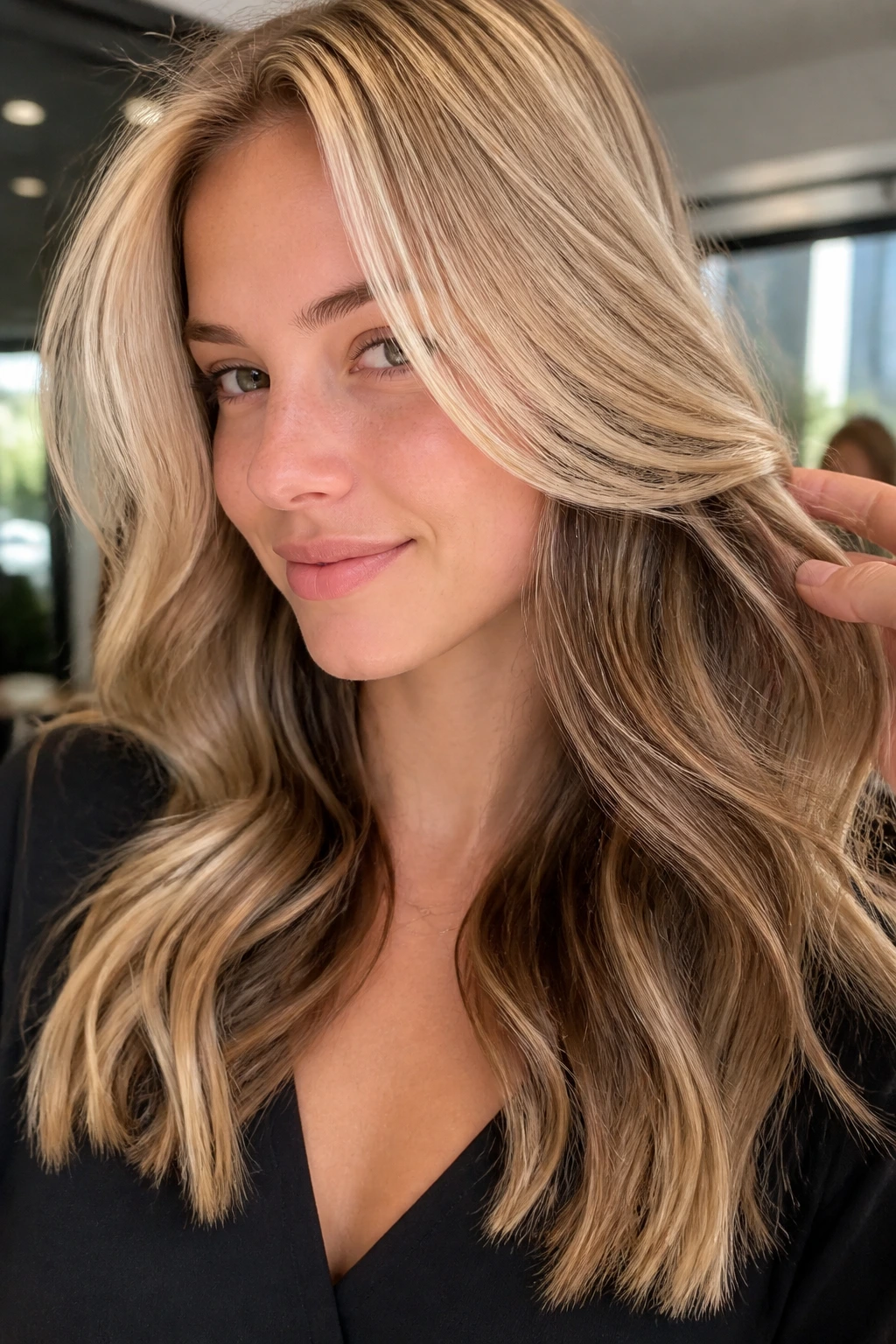
Chestnut underpainting is one of those tricks that makes more sense in a chair than on a mood board. You do not see chestnut first. You see beige blonde, then a hint of brown depth peeking through the interior when the hair moves.
That’s ideal for fair skin if you want softness, not drama. The beige stays close to the skin tone without matching it exactly, while the chestnut gives the whole style a richer base. It works best on longer layers where the movement can actually show.
Best for:
- Fair skin that looks better in beige than ash
- Medium to thick hair that can hold layered color
- Anyone who wants a blonde that grows out gracefully
- Cuts with movement, like long layers or a shag
9. Buttery Balayage With Mocha Lowlights
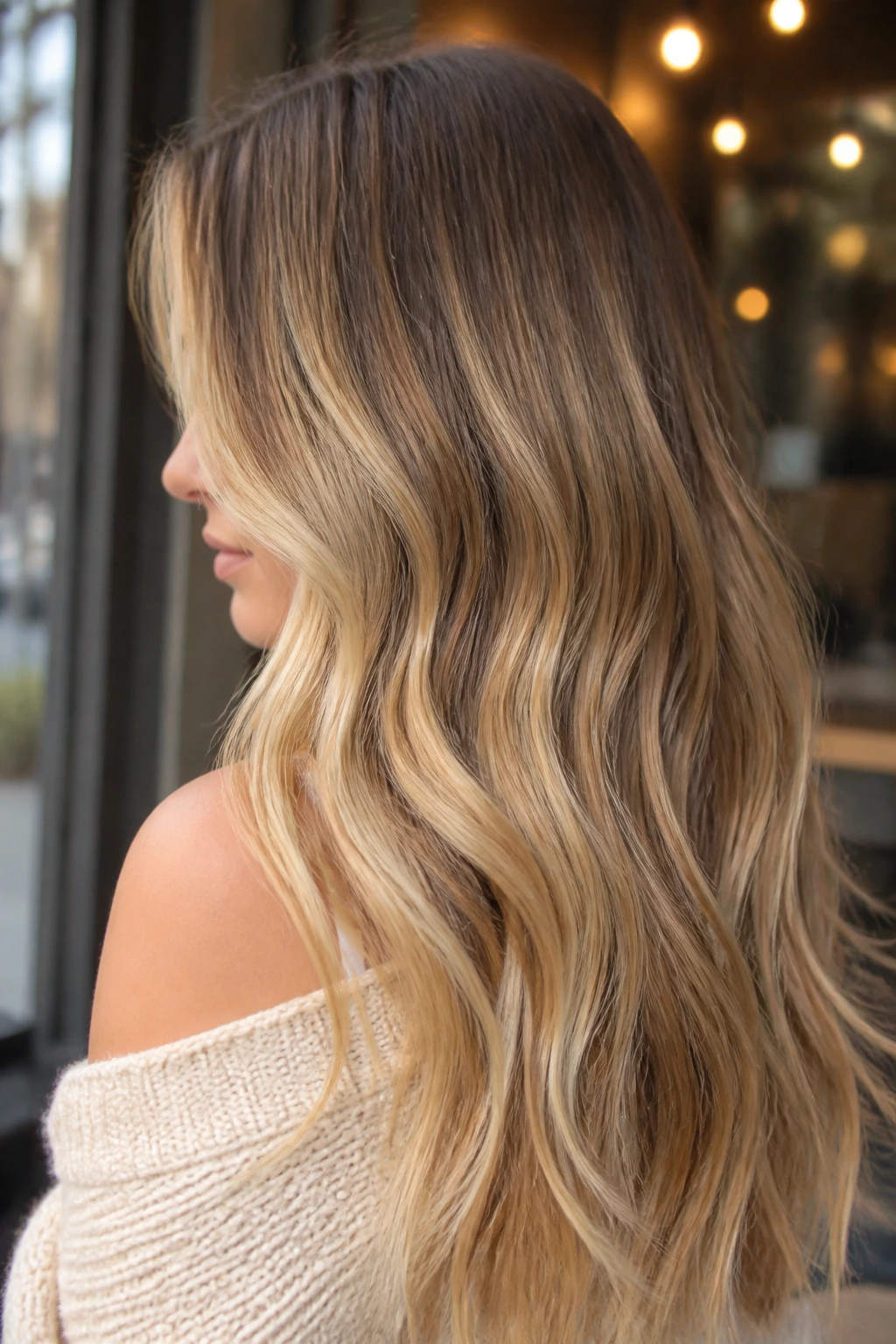
Buttery balayage can look like a bowl of melted light if the lowlights are done badly. With mocha ribbons placed through the mid-lengths and back sections, though, the hair gets a deeper spine. The blonde still reads bright, but it has somewhere to go.
This pairing is good if your fair skin needs some contrast but you don’t want anything as cool as ash or mushroom. Mocha adds depth without making the hair feel heavy, and balayage placement keeps the lowlights soft around the face. The result is less stripe, more sweep.
If your hair is thick, ask for broader, hand-painted sections. Thin hair needs finer pieces so the contrast doesn’t look like blocks.
10. Scandinavian Blonde With Mushroom Melt
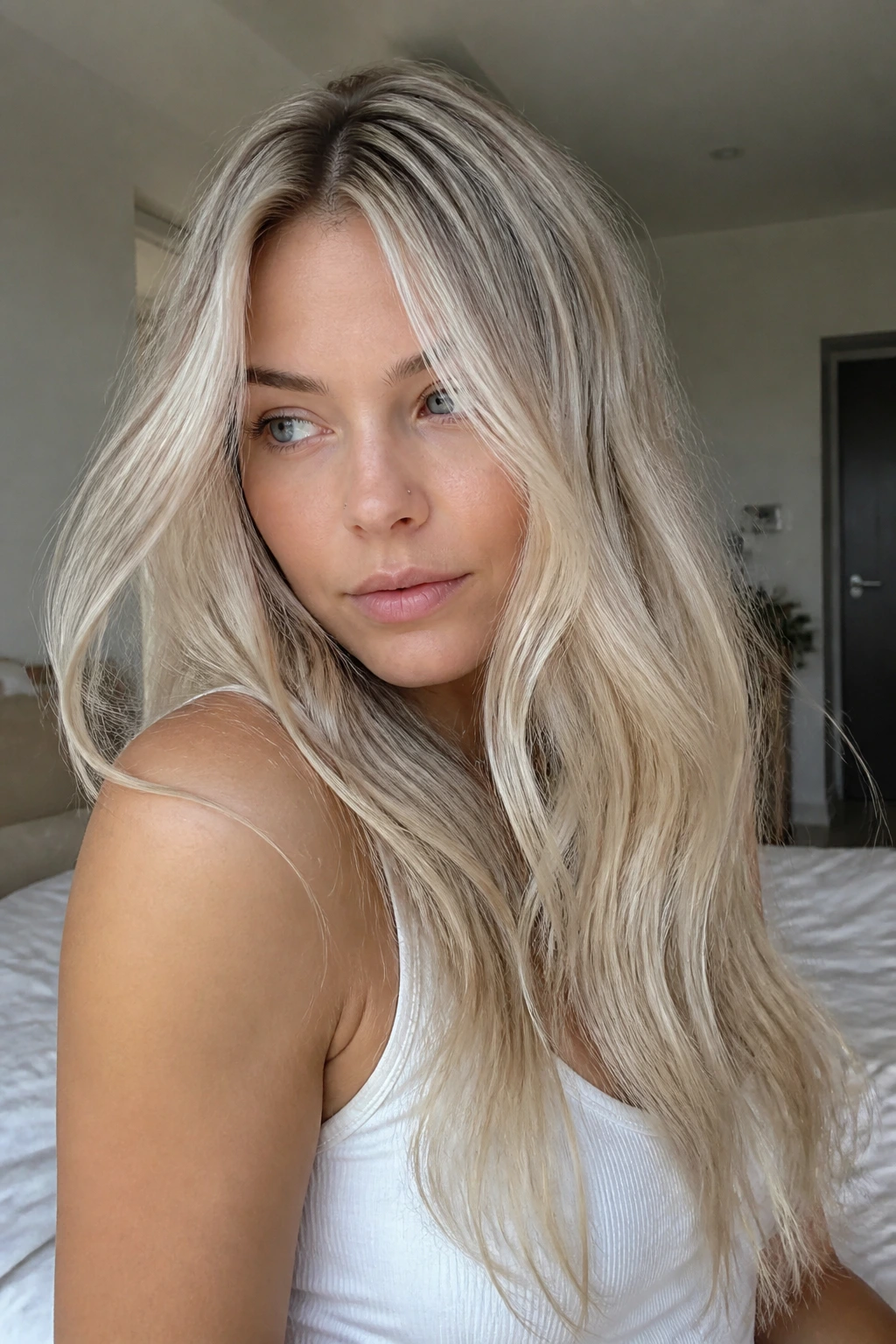
Scandi blonde gets copied a lot and worn badly just as often. The real version is pale, airy, and faintly shadowed at the root so it doesn’t look like one continuous bleach job. Mushroom melt lowlights are what make it usable on fair skin without turning into a paper-white sheet.
The color sits well on cool and neutral skin because it never goes too yellow. It’s also practical if you like a cleaner grow-out. A mushroom melt at the root softens the transition, and that means fewer obvious lines after a few weeks.
What to tell your colorist
Ask for a pale blonde with a soft smoky root and muted beige interior lowlights. If they start talking about strong ash, steer it back toward neutral. Mushroom should look like shadow, not gray paint.
11. Honey Beige Blonde With Soft Walnut Depth
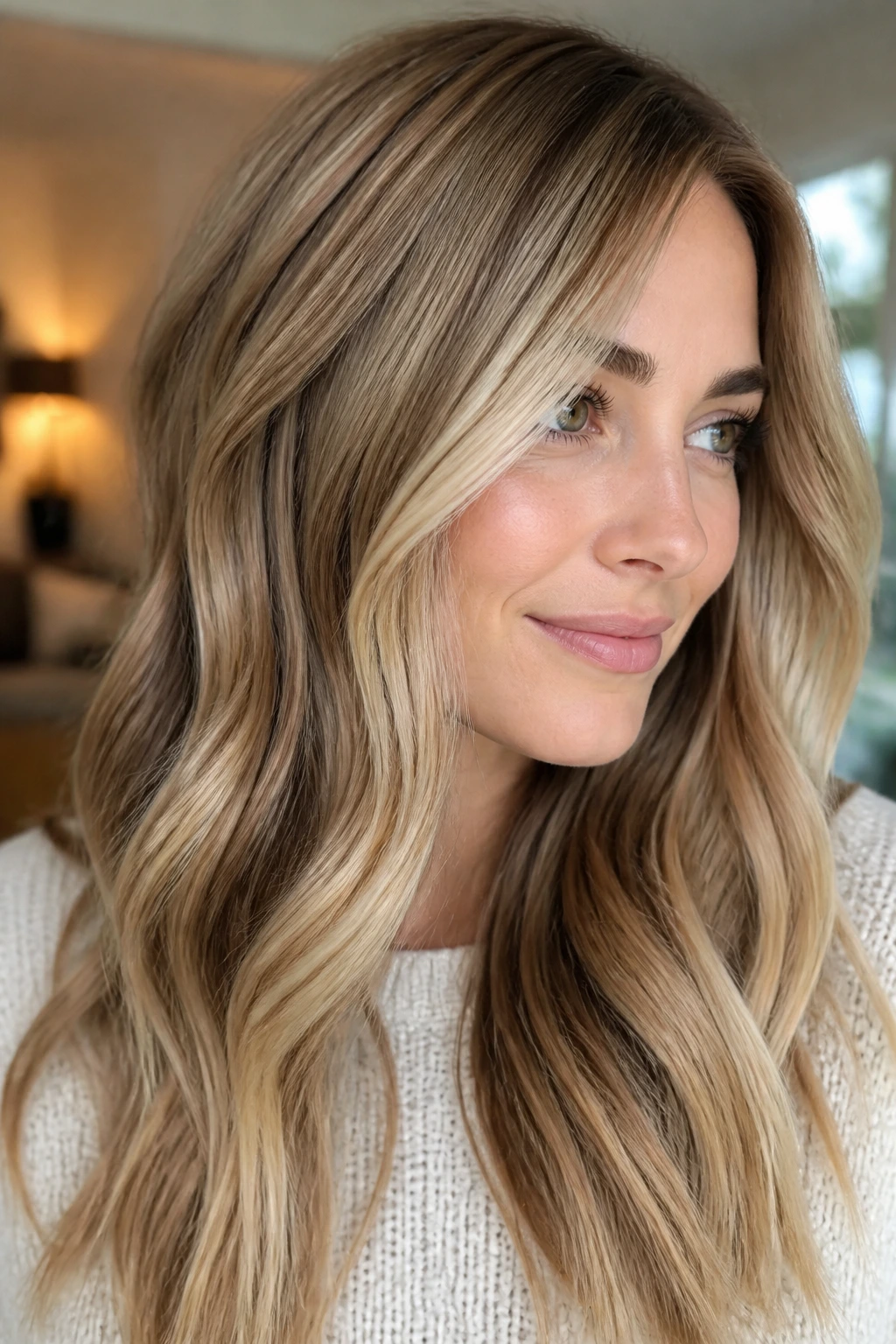
Honey beige is the friendliest warm blonde in the bunch. On fair skin, it can keep the face from looking drained, especially if your natural color is darker blond or light brown and you’re trying to stay in a believable blonde family. Add soft walnut depth underneath, and the warmth gets structure.
The walnut should sit in thin, scattered ribbons. Thick dark pieces will overpower the honey and make the blonde feel stale. Used lightly, though, walnut gives the hair a richer underside and makes the lighter pieces near the temple glow by comparison.
This is the kind of blonde that looks good with a cream sweater, gold jewelry, and not much else. It carries itself.
12. Cream Soda Blonde With Cinnamon Ribbons
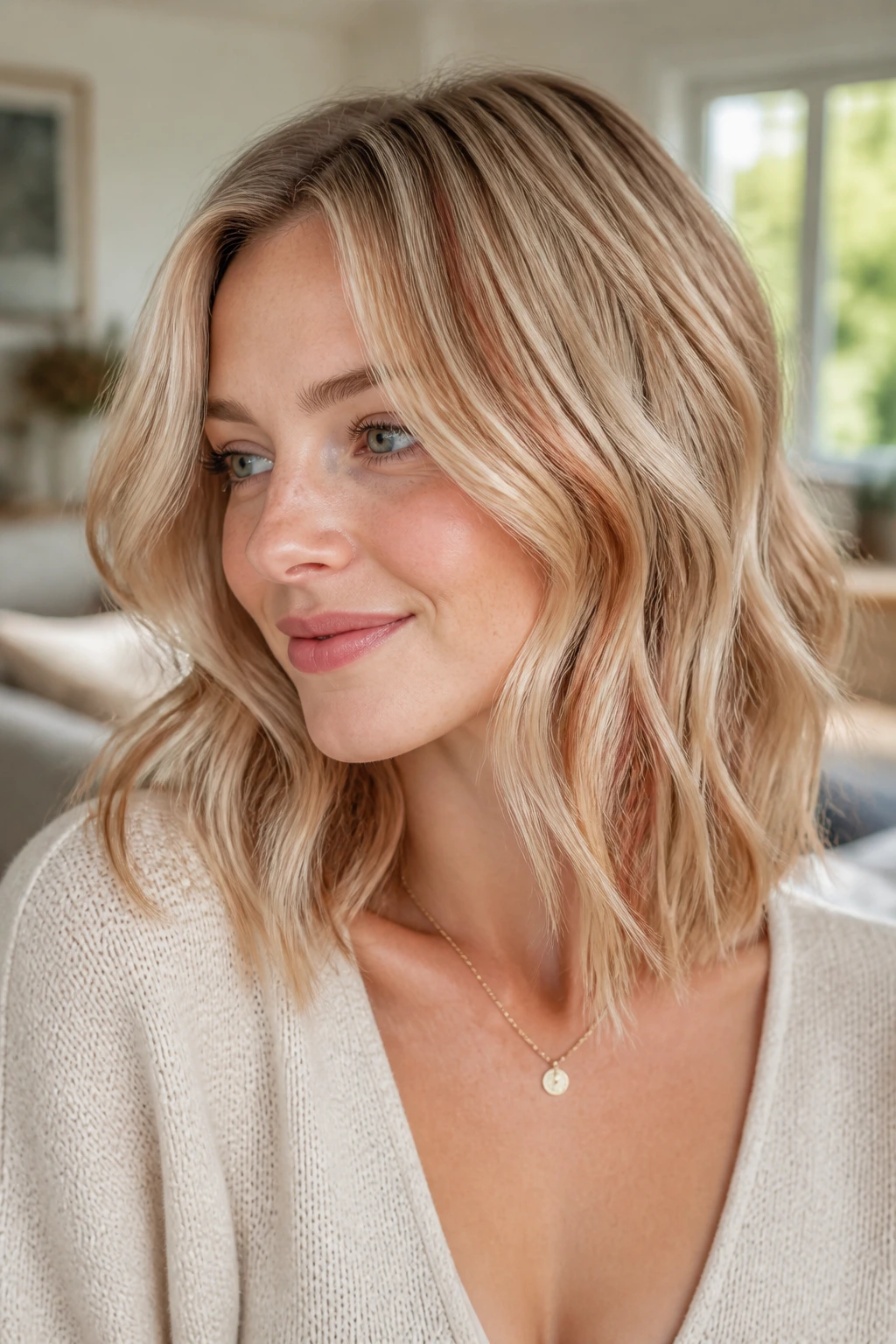
Cream soda blonde is a little warmer and more playful than beige, and cinnamon ribbons give it a spiced-up finish without sending it into full copper territory. On fair skin, that can be the sweet spot if cool blondes make you look tired.
The cinnamon should be thin and feathered, not painted as a solid band. You want a warm thread running through the blonde, not a stripe that pulls the eye away from your face. If your skin is very pink, keep the cinnamon close to the ends and underlayers.
This look is especially nice on wavy hair because the bend shows off the ribbons. Straight hair can wear it too, but the color has to be placed with more care or it can disappear in one flat sheet.
13. Ash Blonde With Champagne Money Pieces
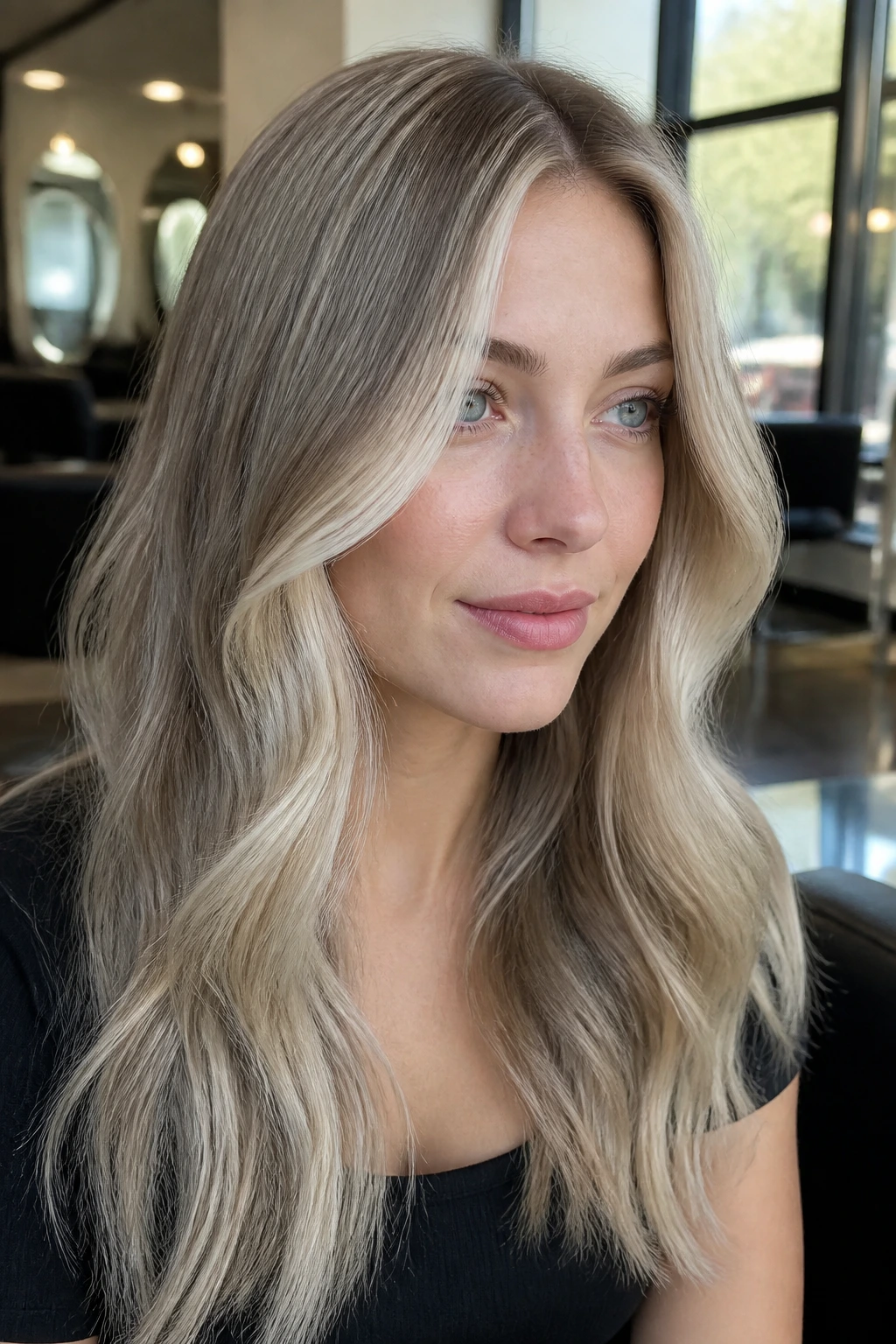
Ash blonde near the face can wash out fair skin if the whole head goes too cool. Champagne money pieces fix that problem fast. The front stays bright and slightly warm, while the rest of the hair keeps the ash depth that makes the style feel crisp.
That front brightness matters more than people think. Money pieces act like a frame around the face, so the exact tone there shapes how your skin reads. Champagne adds a little life near the cheekbones and forehead, which keeps the cooler ash from looking sleepy.
If you’ve ever tried an all-ash blonde and felt it looked a little flat, this is the better version. You get the cool mood without the deadened finish.
14. Baby Blonde With Caramel Veil
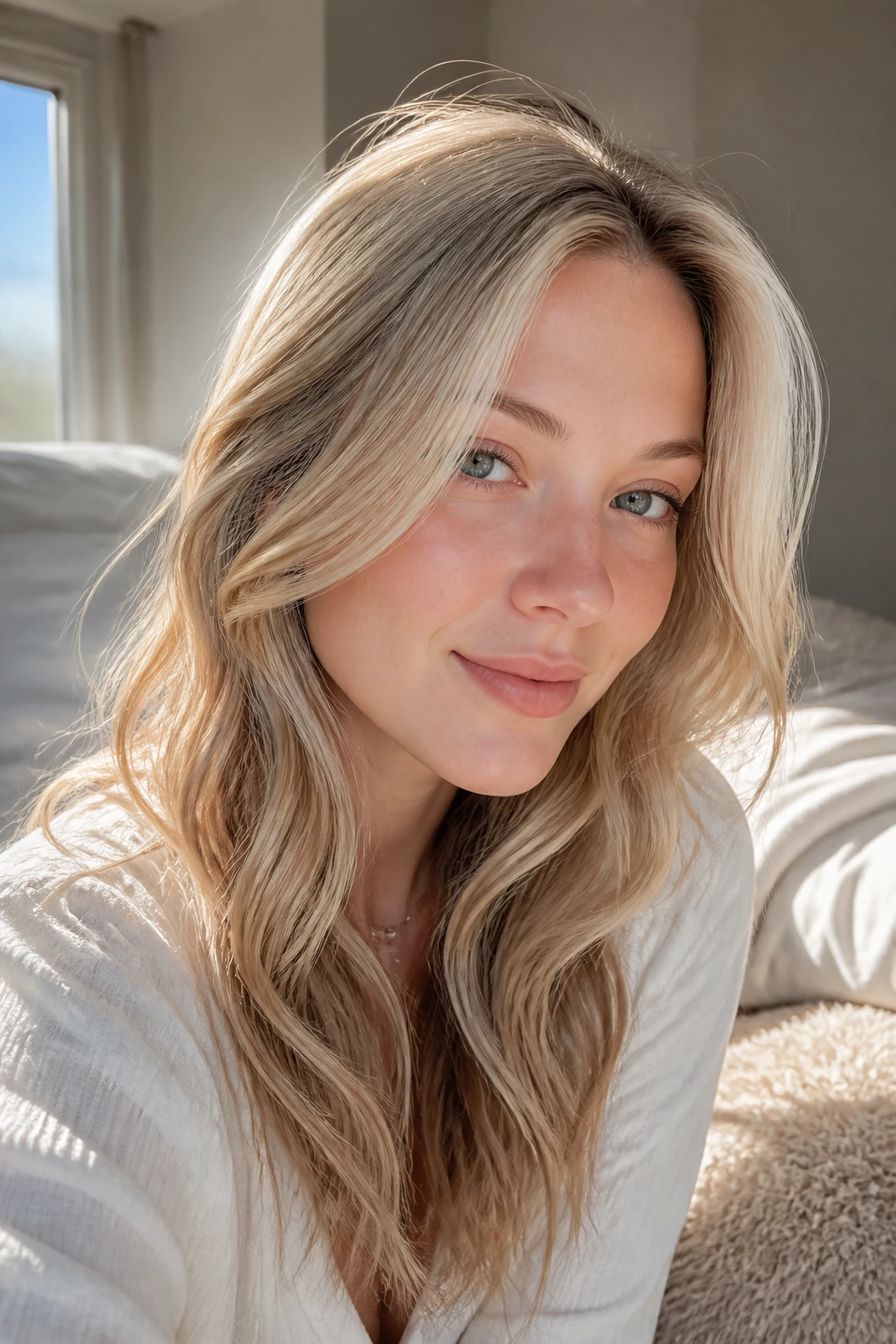
Baby blonde usually means tiny highlights, soft lift, and very fine placement. Add a caramel veil underneath, and the whole head gets a subtle glow that reads especially well on fair skin with warmer undertones.
The caramel here is not a chunky highlight. It’s a sheer veil that sits under the brighter pieces so the blonde doesn’t turn paper pale. That kind of depth helps if your hair is fine and your complexion is light enough that a too-bright blonde would erase your features.
A useful rule of thumb
If your eyebrows are light and your skin is pale, keep the caramel soft. If your brows are a touch darker, you can push the veil a shade deeper and get away with more contrast.
15. Cool Vanilla Blonde With Dusty Mushroom Ends
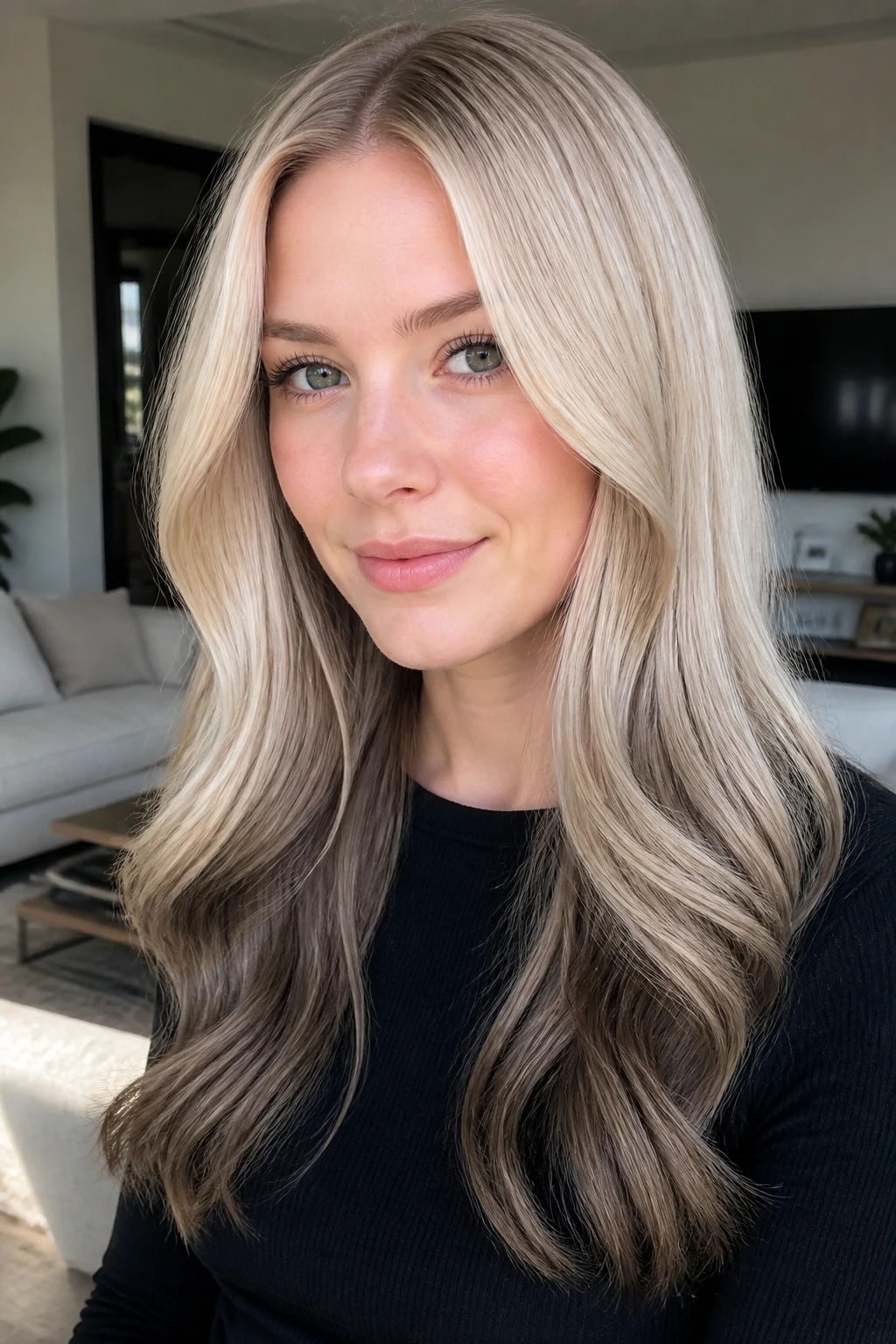
This is the cleanest blonde in the bunch, but it only works because the mushroom ends keep it from floating away from the face. Cool vanilla near the top gives you brightness; dusty mushroom at the ends adds a bit of gravity. Without that lower depth, the style can look unfinished on fair skin.
This is a strong option if you like tidy, polished hair and don’t want obvious streaks. It suits straight hair, blunt lobs, and layered mid-length cuts that show the tone shift near the bottom. The ends shouldn’t go dark. They should just have enough smoke in them to hold the shape.
A gloss every few weeks helps here. Cool vanilla can drift yellow faster than people expect.
16. Sunlit Beige Blonde With Walnut Lowlights
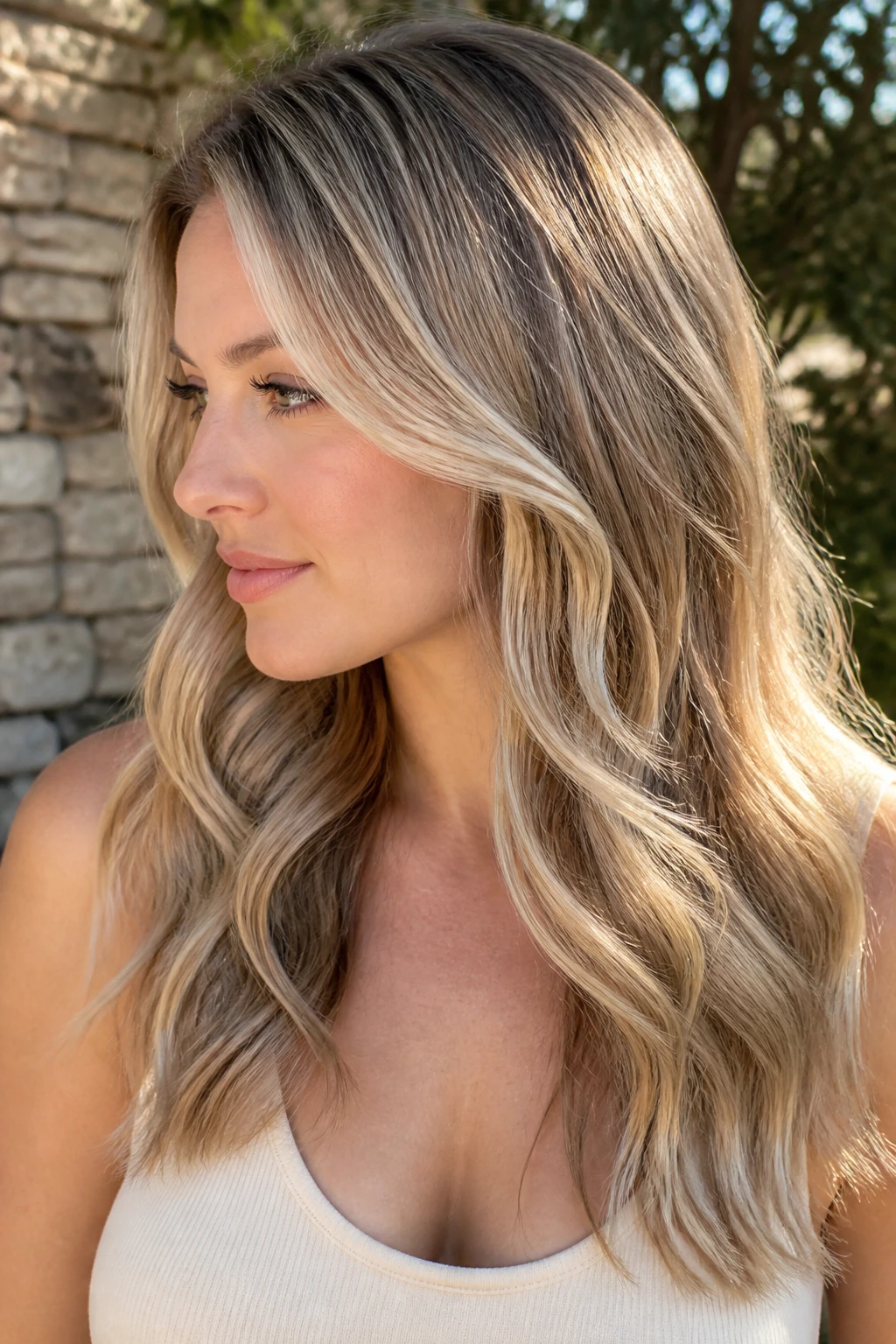
Sunlit beige is the sort of blonde that feels outdoorsy without looking brassy. Walnut lowlights add a little depth to the interior so the color doesn’t flatten out in soft indoor light. On fair skin, that balance is hard to beat.
The beige catches light along the top layer, while walnut underlayers keep the whole head from turning too pale. It’s a good choice if you want a softer brunette-to-blonde transition, or if your natural color is closer to dark blonde and you’re not interested in hard maintenance.
It also grows out in a nice, forgiving way. The walnut near the root and mids softens the line where regrowth begins, which matters more than most people admit.
17. Strawberry Blonde With Rose Gold Highlights
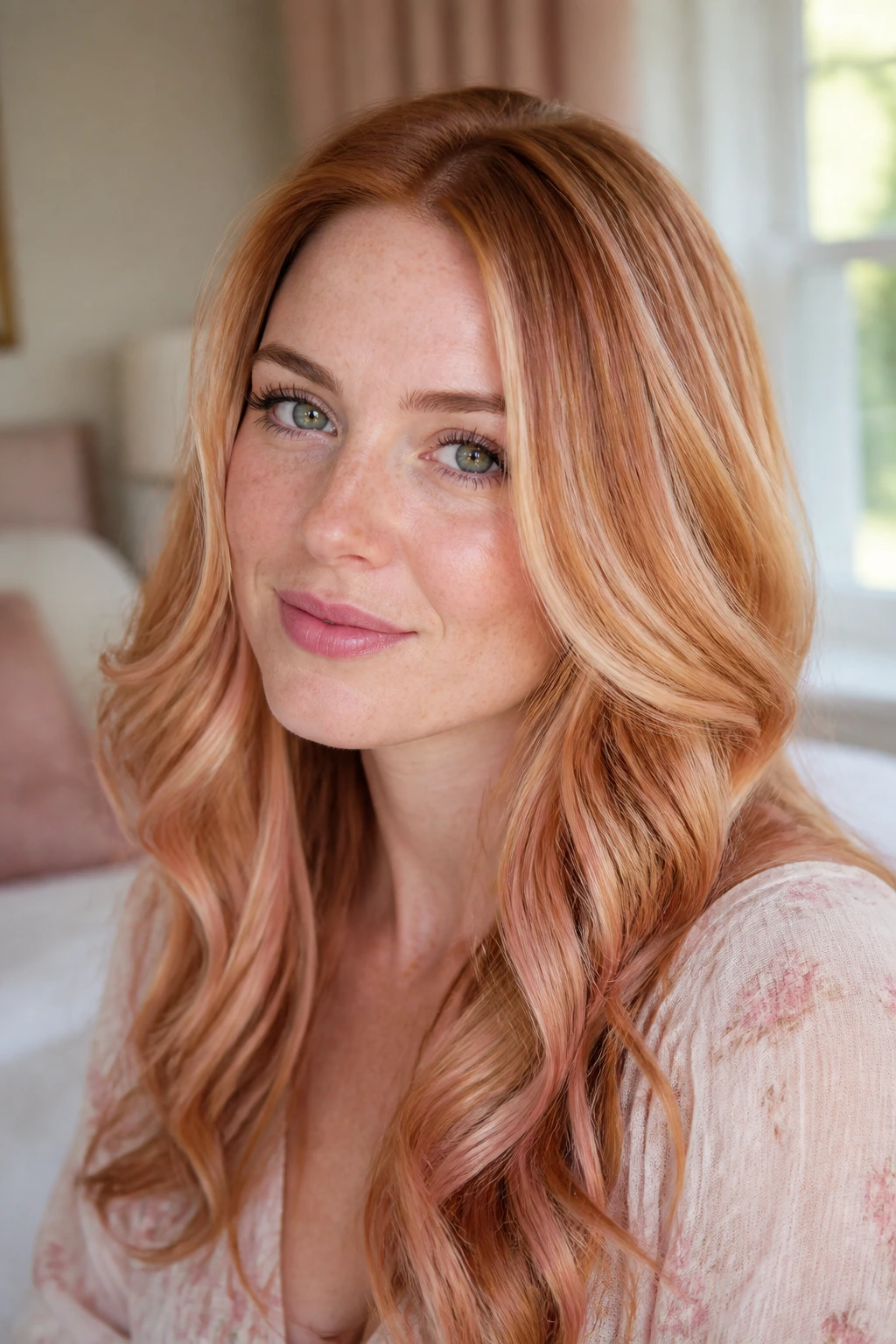
This one sits on the warmer edge of blonde, which is exactly why it works for fair skin that looks better with blush tones in the hair. Strawberry blonde paired with rose gold highlights gives the complexion a warmer echo instead of a cool contrast.
The rose gold pieces should be thin and scattered, almost like a glaze. Too much pink can look costume-y in a hurry. But the right amount makes the skin look fresh, especially if you wear soft peach or rose makeup.
If your natural hair is light but dull, this is one of the easiest ways to make it feel alive again. It has personality without forcing drama.
18. Icy Cream Blonde With Pewter Lowlights
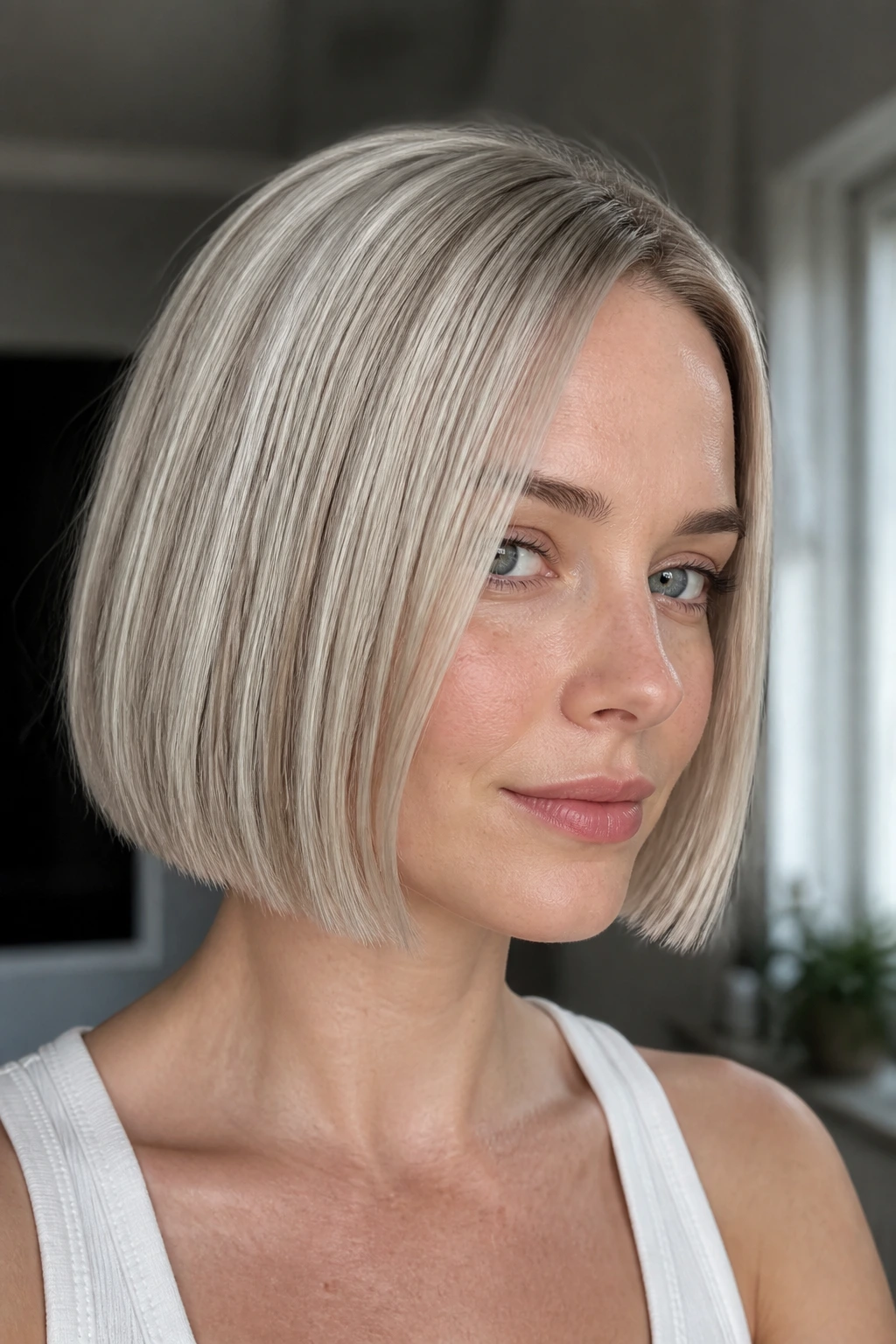
Icy cream blonde reads a little softer than platinum, which helps a lot on fair skin. Pewter lowlights add a smoky gray-brown depth that keeps the color from looking thin. The result is cool, modern, and slightly sharper than a beige blonde.
It works best on skin with cool or neutral undertones. If you’re very rosy, you may want the pewter kept underneath instead of in the face-framing sections. Otherwise, the hair can make the skin look flushed in an unhelpful way.
This is one of those colors that looks best when the cut is clean. A blunt bob, a textured lob, or a well-shaped long cut keeps the cool tones from feeling vague.
19. Bronde for Fair Skin With Brightening Ends
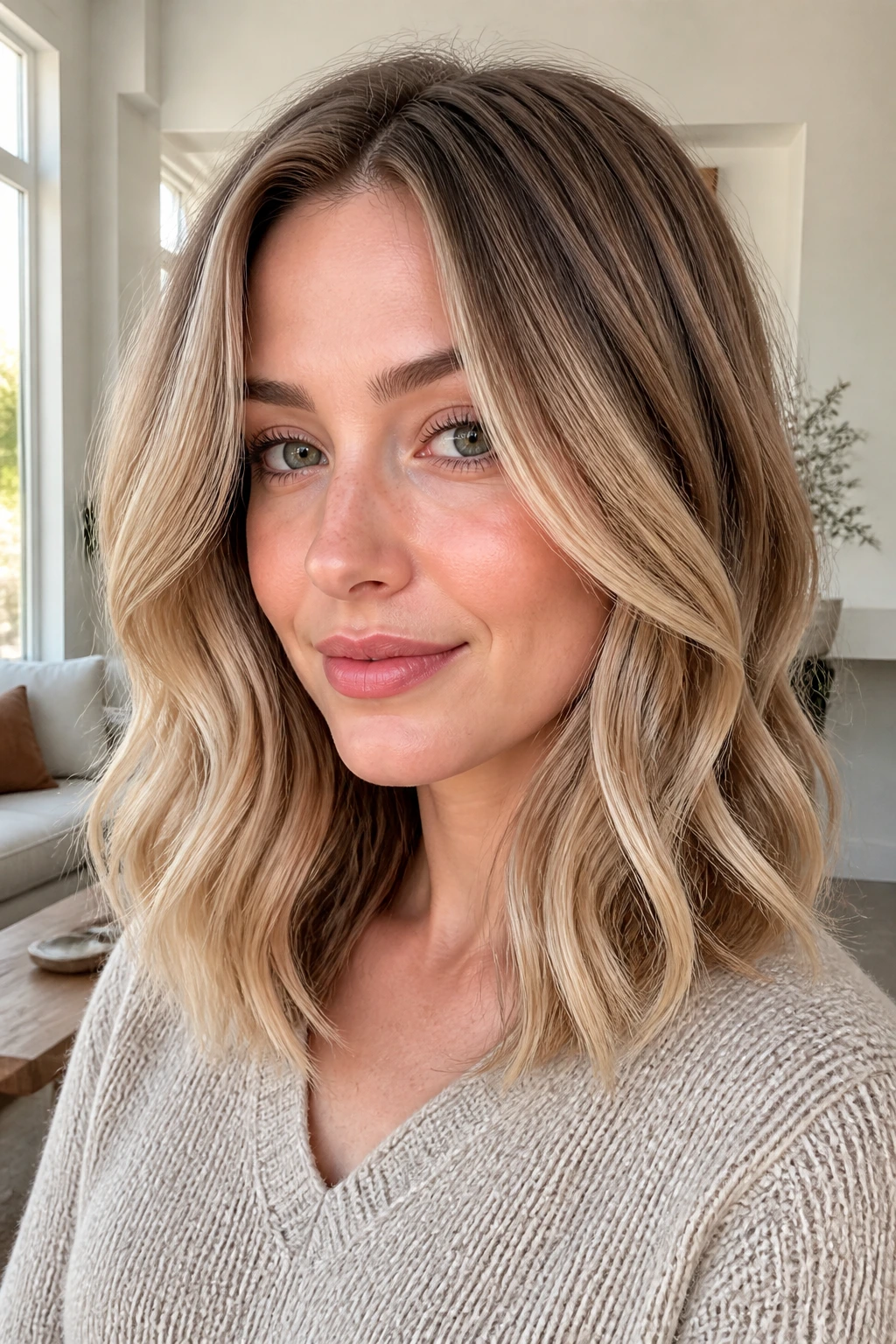
Bronde is useful when you want the comfort of depth without giving up blonde altogether. For fair skin, the key is keeping the ends bright enough that the overall look still reads blonde, not light brown. The lowlights live at the root, through the interior, and in a few hidden panels.
A lot of bronde goes too dark. This one shouldn’t. Think of it as a blonde with some brunette stitching underneath, not brunette with a blonde hat on top. That distinction matters more than the name.
If your hair has a slight wave, the color looks richer because the darker strands tuck in and out of view. Straight hair needs a little more placement discipline, or the contrast can look too tidy.
20. Butter Blonde With Shadow Roots
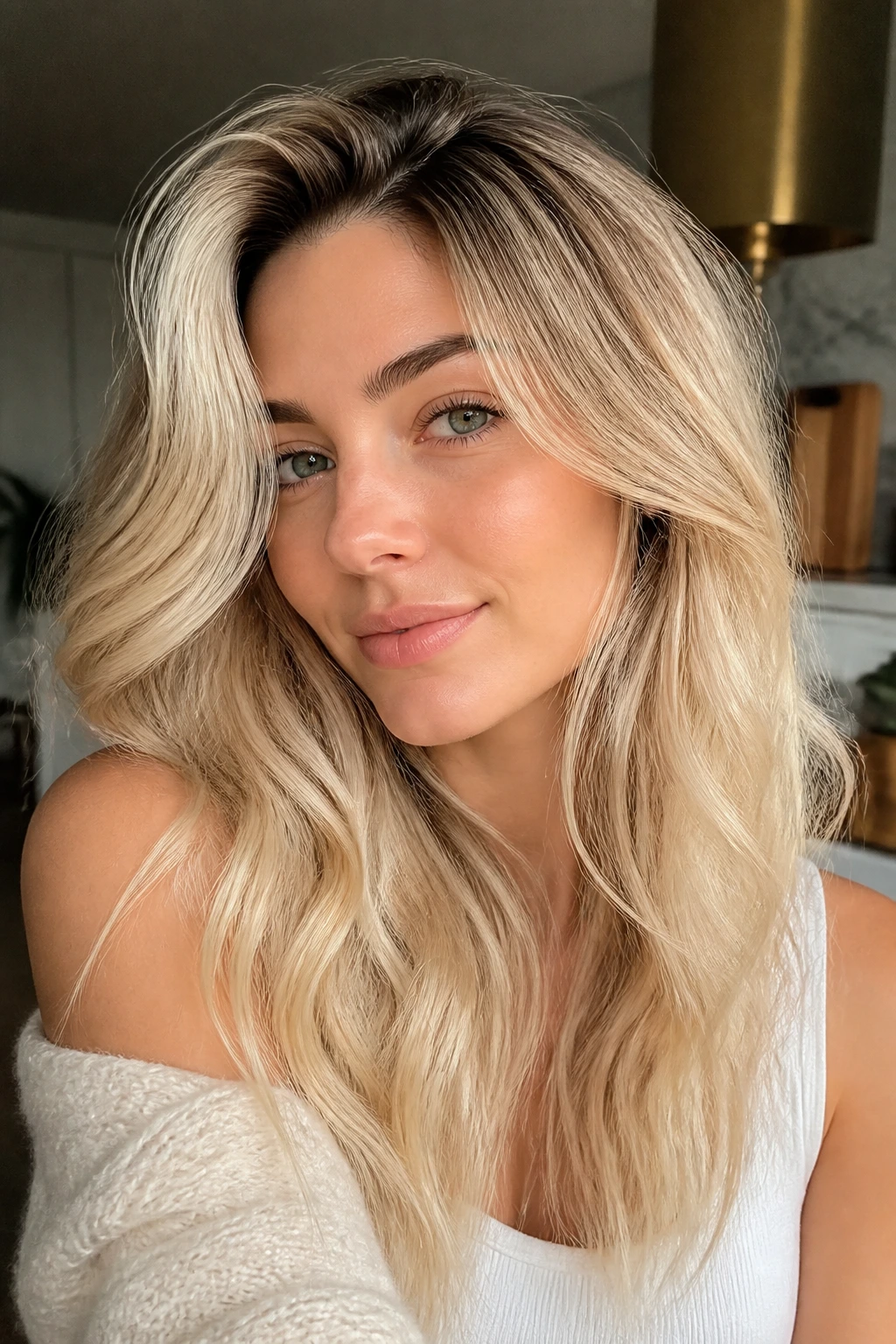
Shadow roots are not lazy. Done well, they make butter blonde look intentional instead of overprocessed. The darker root adds shape right where fair skin often needs it most — near the hairline, where a solid light blonde can wash the face out.
The butter pieces should stay soft and creamy through the mids and ends. If they go too yellow, the shadow root starts to feel disconnected. A subtle beige toner keeps the whole thing cohesive.
This is the look I’d pick for someone who wants low-stress grow-out and doesn’t want to book a toner every two weeks. It’s forgiving, but not boring.
21. Linen Blonde With Olive Lowlights
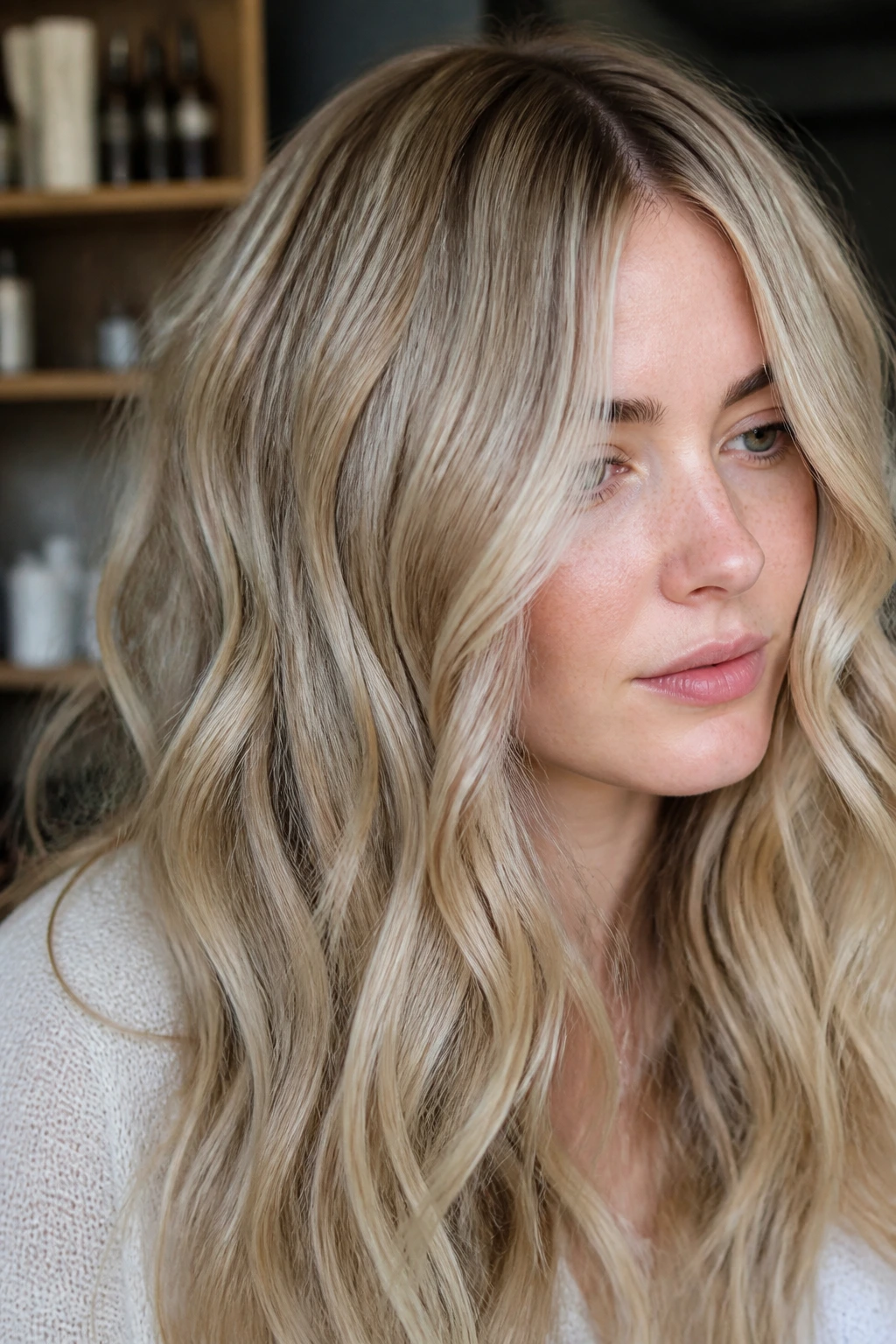
Linen blonde is pale, dry in the best way, and a little matte. Olive lowlights bring in a muted green-brown depth that can look surprisingly good on fair skin, especially if your complexion leans neutral and gets shiny easily in warm light.
This is not a flashy blonde. It’s more editorial, more texture-driven. The olive lowlights should be faint enough that they read as depth, not color blocking. On the right person, that gives the hair a cool, smoky finish that feels different from the usual ash-blonde routine.
If you like minimal makeup and neutral clothes, this shade sits nicely with that whole look. It doesn’t ask for much.
22. Golden Oat Blonde With Espresso Veins
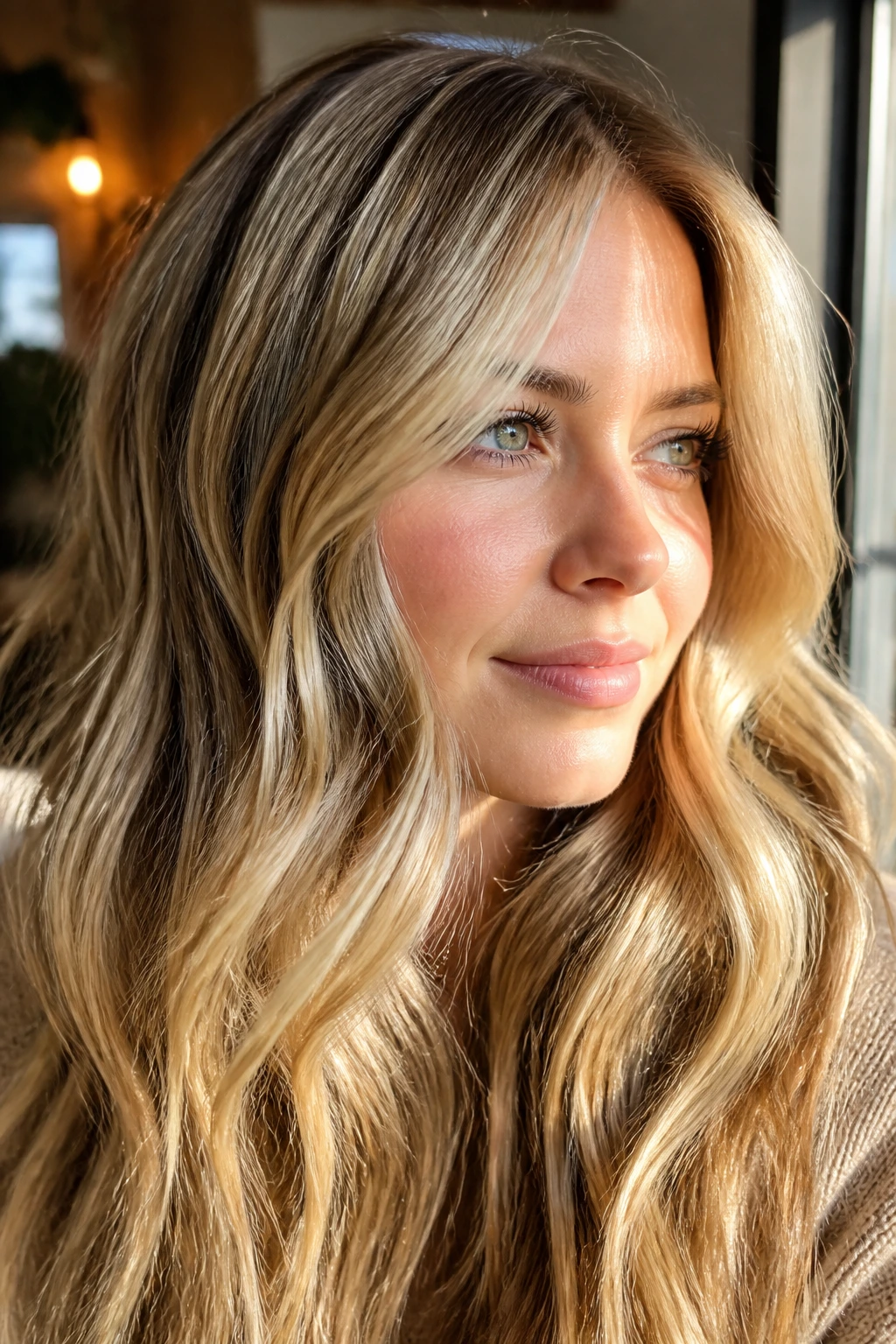
Golden oat blonde has a soft grainy warmth that keeps fair skin from looking stark. Add a few espresso veins underneath, and the blonde suddenly has a spine. The espresso should be used like line work, not like a full lowlight block.
This is a stronger contrast look, so it works best if your brows and lashes are visible enough to hold their own. If your features are very soft and your skin is extremely pale, use the espresso sparingly. Two or three well-placed veins can do the job.
It’s a good choice for longer layers, curls, or a thick blowout. The movement shows the depth, and that’s when the color starts earning its keep.
23. Feathered Platinum Bob With Beige Panels
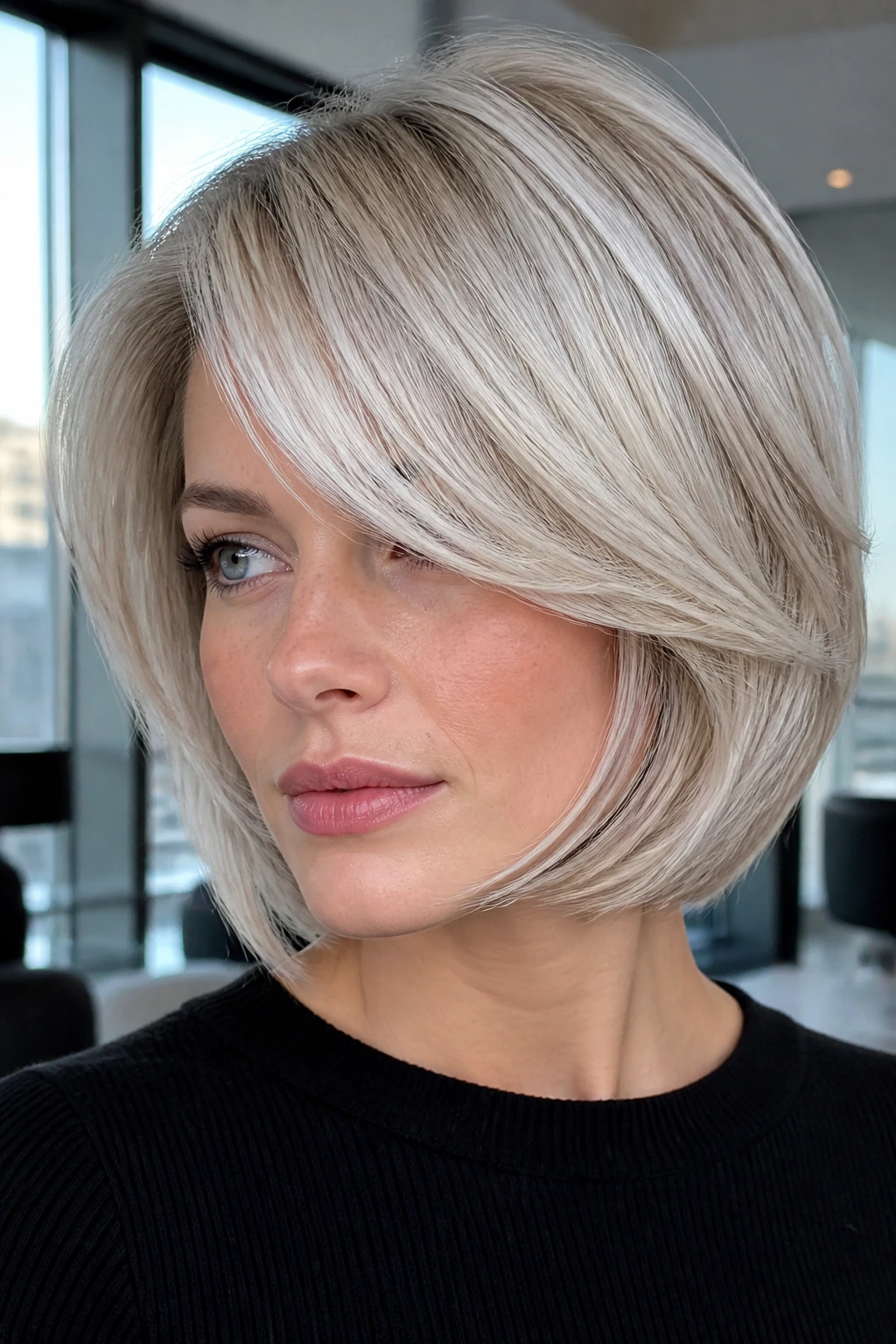
Short hair needs a different color strategy. A feathered platinum bob can look stunning on fair skin if the beige panels are positioned to break up the perimeter and stop the cut from reading like one bright block.
The beige panels should sit through the sides and underlayer, not all over the top. That keeps the bob crisp around the edges while giving it a little warmth where the light hits most. On a bob, color placement matters as much as the haircut itself.
Best when you want:
- A sharp cut with some softness
- Less maintenance than full platinum
- A blonde that still looks dimensional at chin length
- A style that holds shape without extra styling fuss
24. Lived-In Curl Blonde With Sand-And-Mocha Contrast
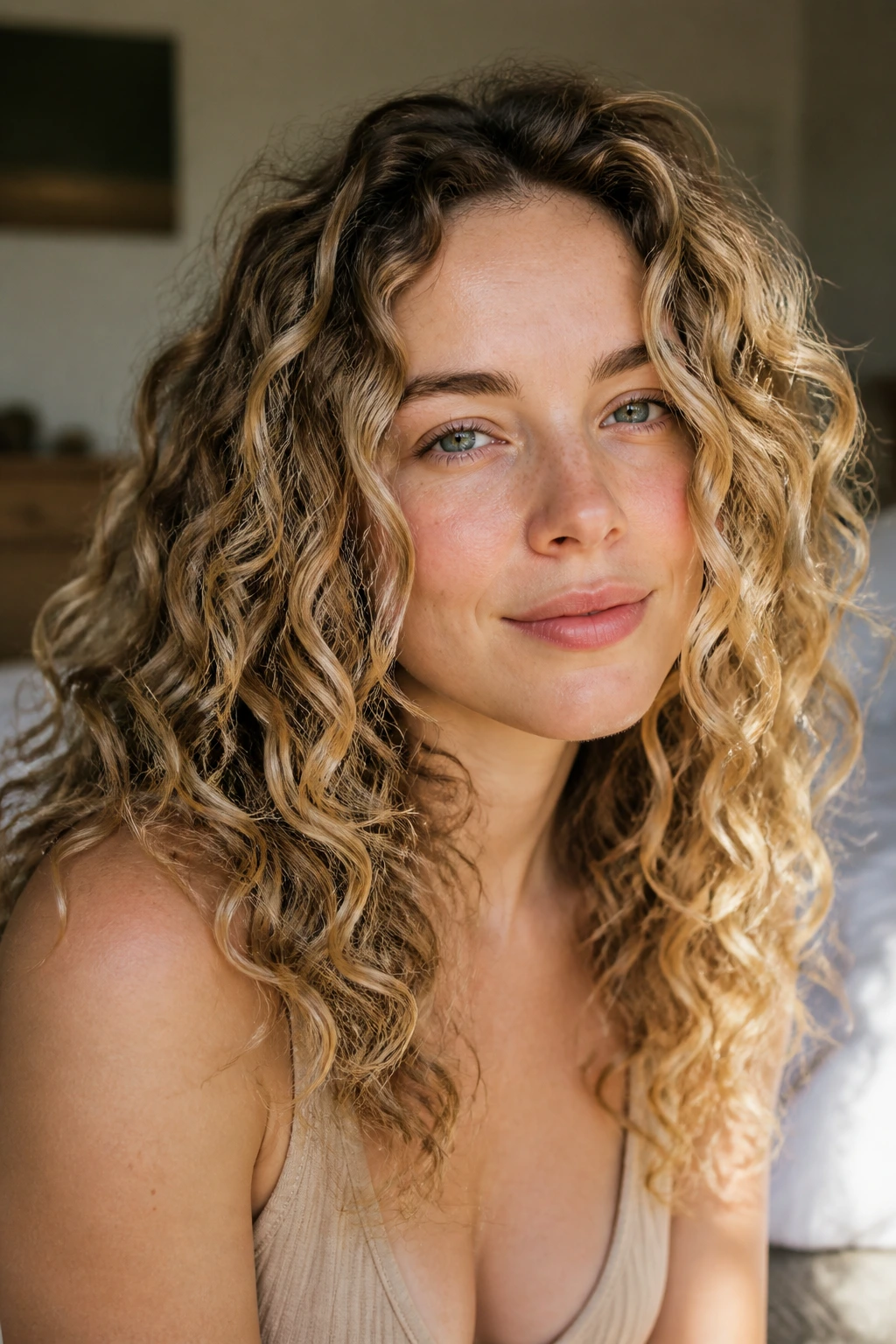
Curly hair can swallow color if the placement is too fine. Sand-and-mocha contrast solves that by giving the curls enough depth to show off the pattern without turning into a blur. On fair skin, the sand pieces keep things light while mocha adds visible structure in the bend.
This is one of the easiest looks to wear if you don’t want the “fresh salon” vibe every time you wash your hair. Curls naturally soften the color transitions, so even a fairly clear contrast still looks blended. That’s a gift.
Ask for brighter pieces around the top and front, with mocha tucked into the interior spirals. That gives the face the lift and lets the curls hold their shape.
25. High-Contrast Babylights With a Soft Root Melt
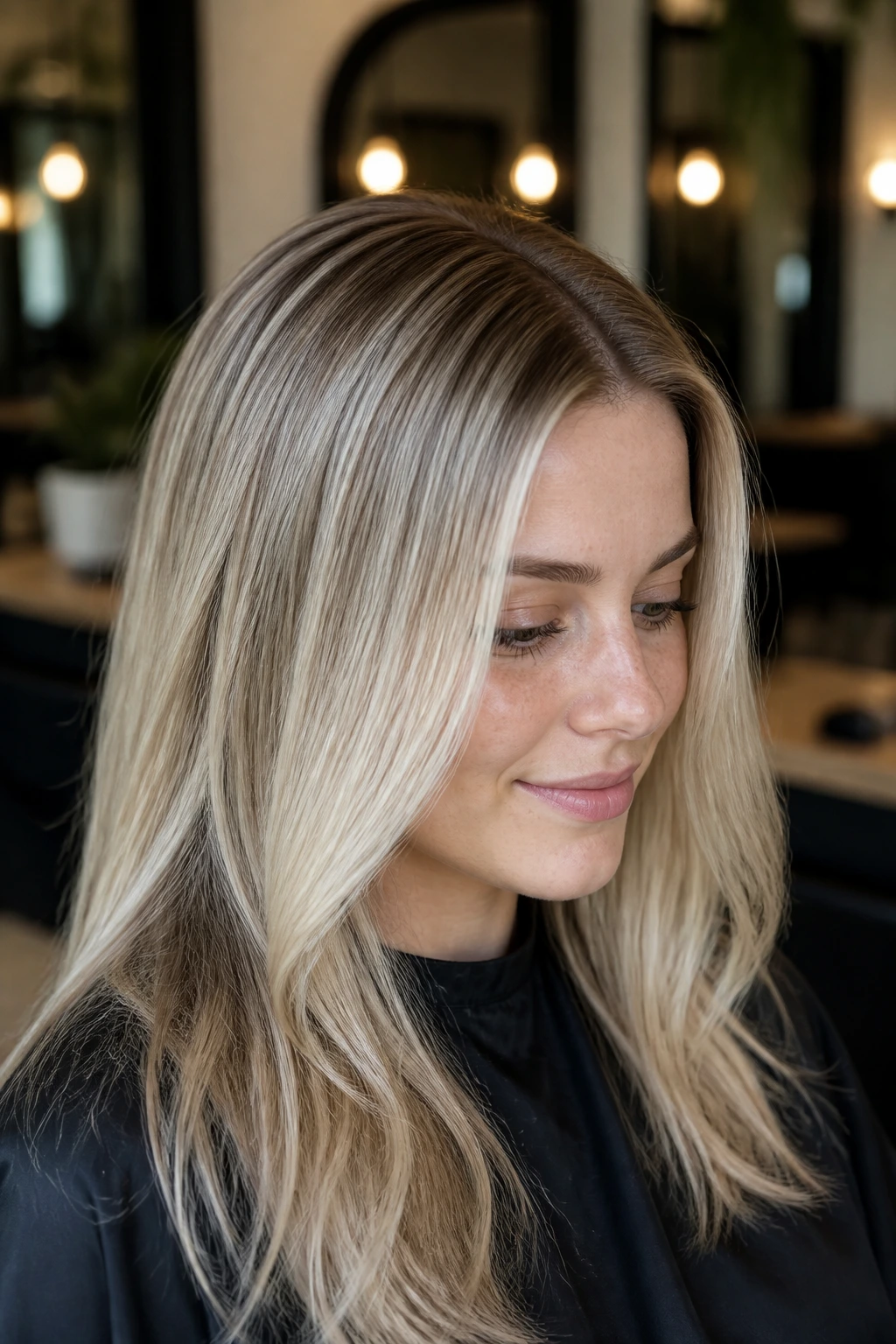
If you want fair-skin blonde that still has some edge, this is the move. Tiny babylights carry the brightness, and a soft root melt gives the whole style enough depth to avoid that over-bleached, see-through look. It’s a prettier version of contrast, not a harsher one.
The key is keeping the lowlight depth gentle. A root melt that drops one to two shades darker than the blonde is enough. Anything deeper starts to fight the babylights instead of supporting them. This look works beautifully on straight hair, airy waves, and layered cuts where the brightness can move.
If your skin is extremely pale, ask the colorist to keep the melt smoky and neutral rather than warm brown. That keeps the contrast clean instead of muddy.
Why Multi-Tonal Blonde Looks Better Than One Flat Shade
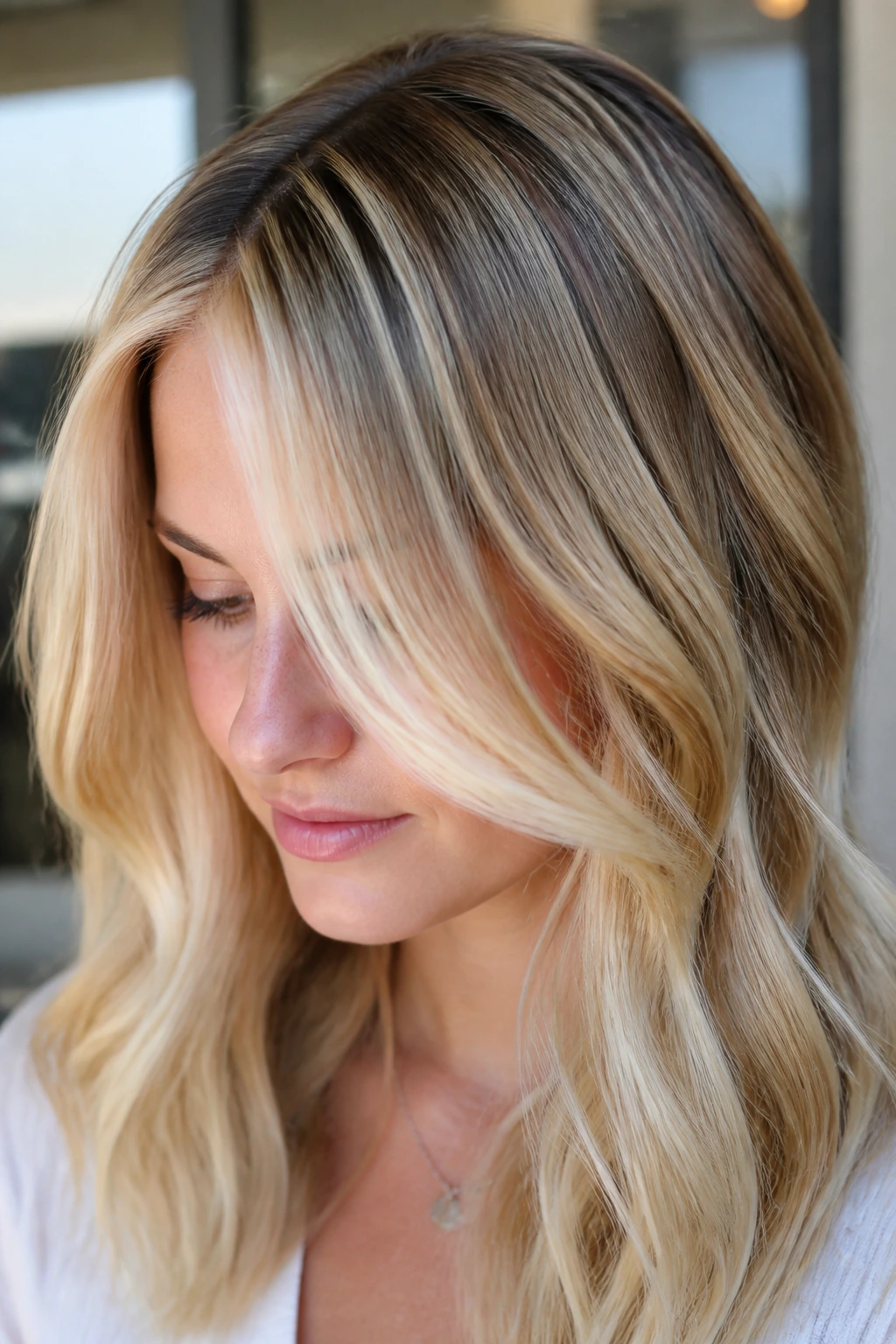
Fair skin tends to expose flat color faster than medium or deep complexions do. That’s not a flaw in the skin. It’s just how light behaves. When the hair and skin sit in the same pale range, the face can lose definition unless the hair carries some shadow, warmth, or both.
That’s why highlights and lowlights belong together here. The highlights lift the face and keep the blonde bright at the crown and front. The lowlights give the underside, root area, and interior some depth so the color has a shape when you turn your head. Without that deeper tone, a pale blonde can look thin in a way that has nothing to do with hair density.
Placement matters almost as much as shade choice. A lowlight that runs through the underlayer under a bright money piece does more for fair skin than a random dark ribbon pasted across the top. The eye reads the front first, then the movement underneath. If those layers are working together, the whole look feels softer and more expensive — yes, that word, because it fits — without needing a dramatic color change.
Essential Tools for Maintaining Dimensional Blonde
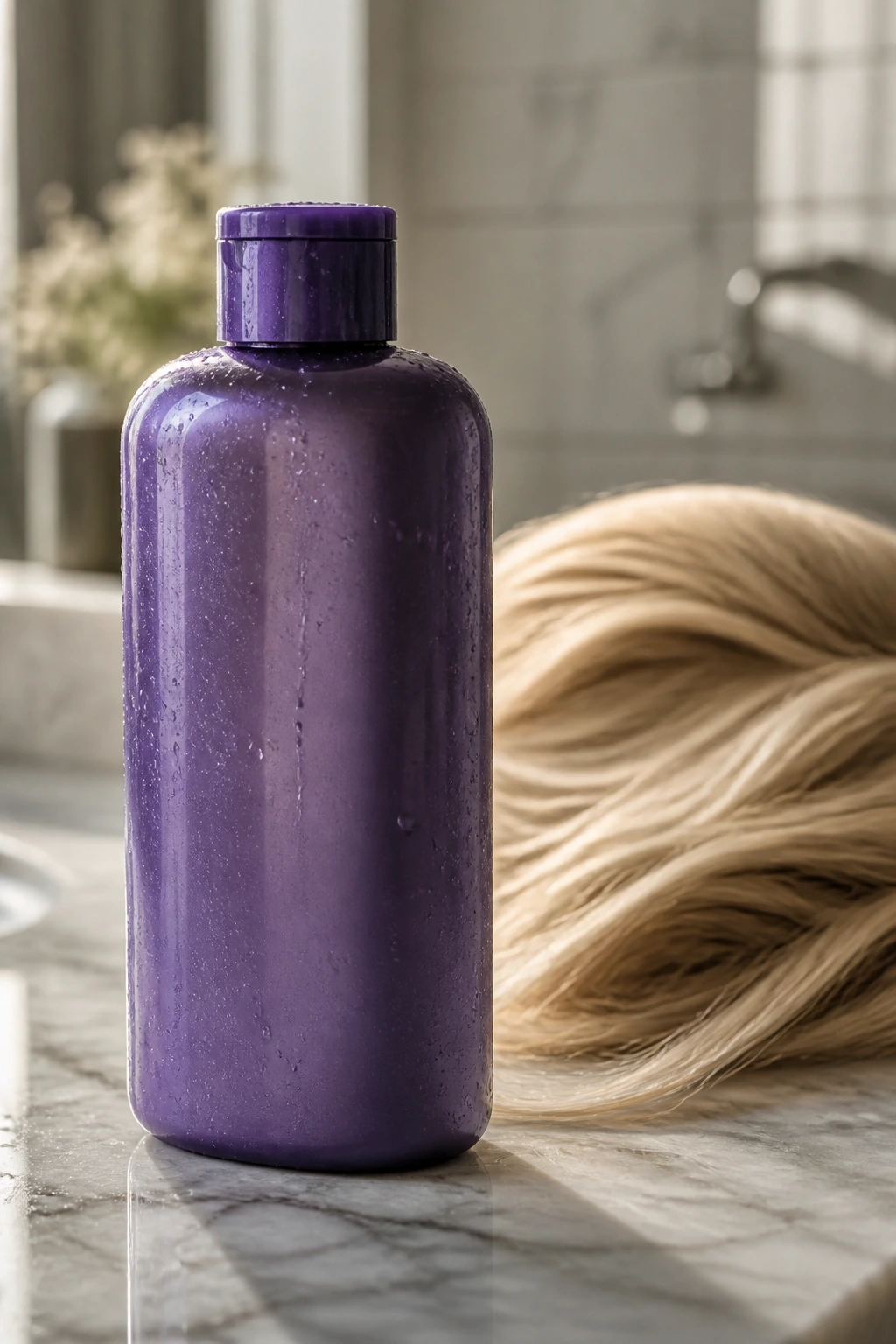
- Purple shampoo: Use it once a week or less if your blonde already leans cool; too much can leave fair hair dull and flat.
- Color-safe sulfate-free shampoo: This keeps highlights from stripping out fast, especially if your hair is fine or porous.
- Weekly deep conditioner: Blonding opens the cuticle, and a richer mask helps the ends stay smooth instead of strawy.
- Heat protectant spray: Flat irons and curling wands pull toner out faster than most people expect.
- Wide-tooth comb: Better than brushing wet blonde hair with a tight brush, which can snap fragile lightened strands.
- Tint brush or sectioning clips: Helpful if you glaze roots at home or want clean sections for a root concealer.
- Shower filter: Hard water can make blonde go dull, especially pale beige and pearl tones.
- Silk or satin pillowcase: Less friction means fewer rough ends and less color fade at the surface.
How to Pick the Right Blonde Lowlights for Your Undertone
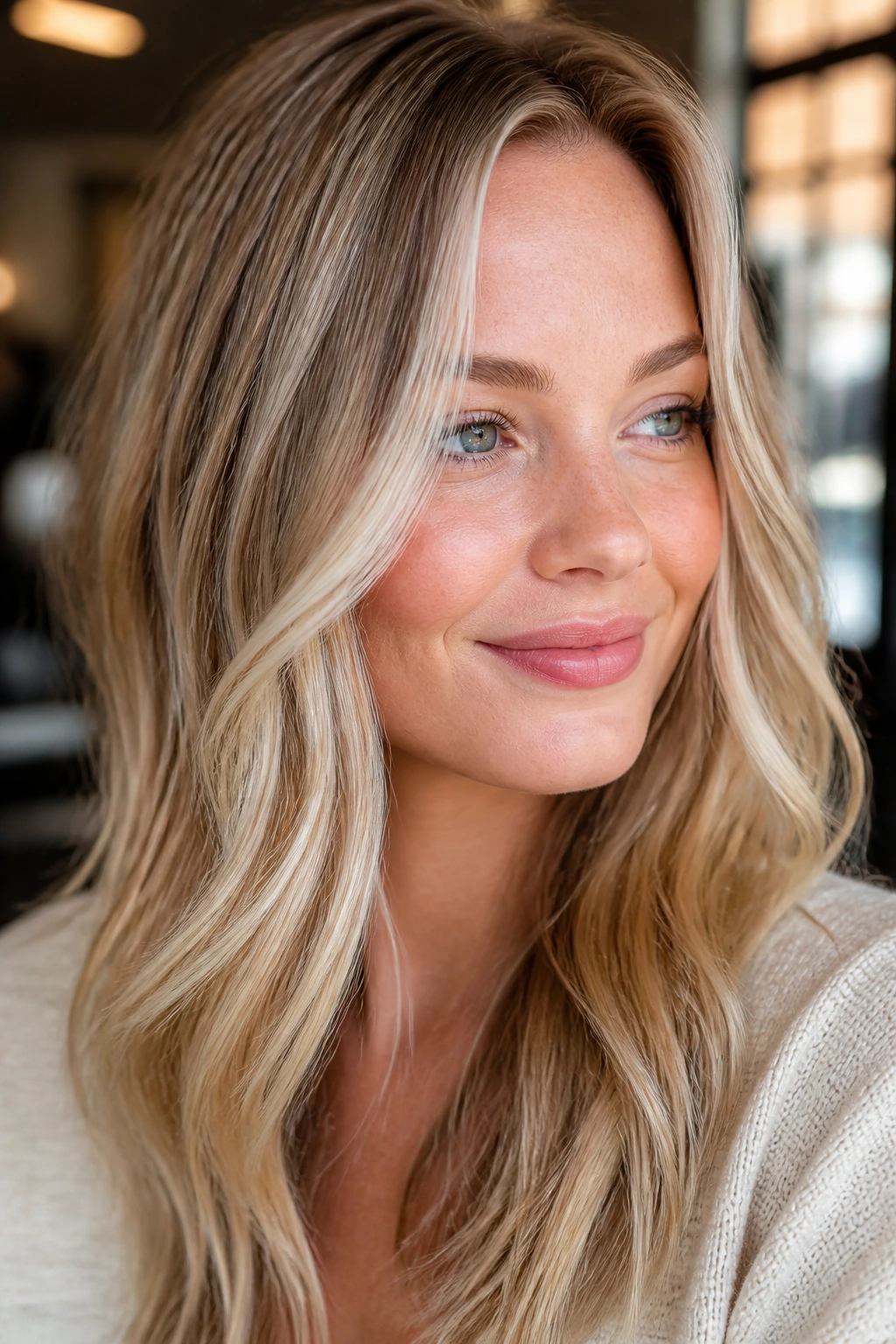
Fair skin isn’t one thing. A pink porcelain face needs something different from a peachy or olive-leaning one, and the wrong blonde can make all of them look tired. Cool undertones usually do well with pearl, ash, mushroom, taupe, or smoky beige lowlights. Warm undertones like honey, butter, wheat, cream soda, or beige with a soft golden edge.
Neutral fair skin has the easiest time because it can take either side, but even then, placement matters. If your face flushes easily, keep the brightest pieces away from the temple area and let the lowlights sit closer to the root and underlayer. If your complexion is pale and slightly sallow, a little honey or champagne near the face often helps more than an ash-heavy formula.
Bring photos, but bring the right photos. Show your colorist the tone, not just the model. Lighting in salon photos lies. Ask them to point out whether the look relies on a root melt, a beige gloss, or a cool toner, because those details change the result more than the photo itself.
How to Wear and Style These Shades So They Don’t Wash You Out
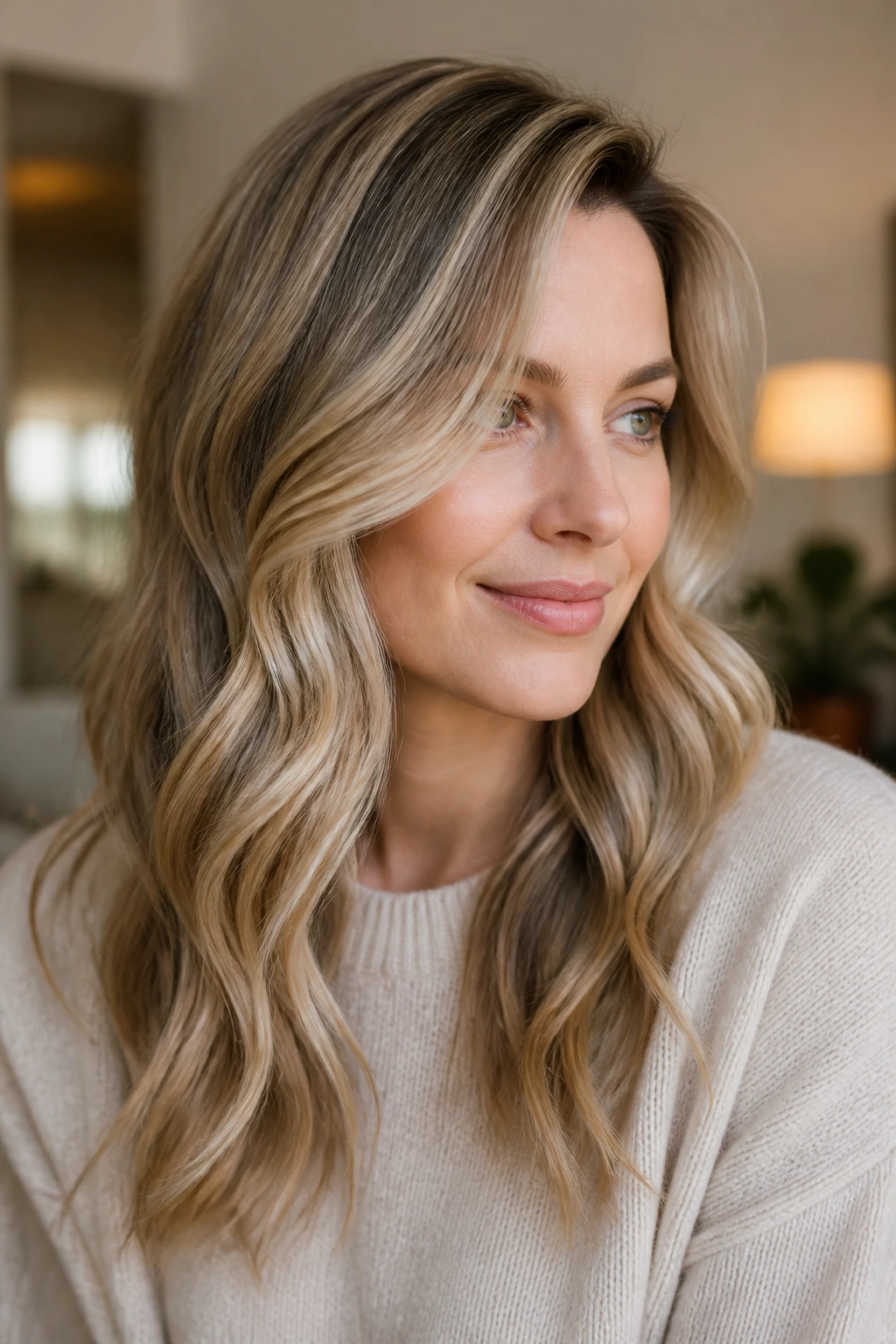
Parting: A soft side part can give fair skin more balance than a hard center part, especially with high-contrast blonde. The deeper side creates a little shadow near the forehead and keeps the face from looking too symmetrical and pale.
Finish: Loose bends, air-dried waves, or a polished blowout show off lowlights better than pin-straight hair. Straight hair can still work, but it asks more from the color placement because the tones sit on top of each other with less movement.
Makeup: Rosy cheeks, softly filled brows, and a lip color that has some depth keep pale skin from disappearing beside very light blonde. If the hair is cool, a mauve blush helps. If the hair is warm, peach or apricot looks more natural.
Clothes: Cream, soft gray, dusty blue, camel, and warm white are safer than stark optic white next to icy blonde on fair skin. The wrong white can make the hair look flat and the skin look flat too. That’s a lot of flat in one outfit.
Extra Tone Boosters and Personalization Tricks
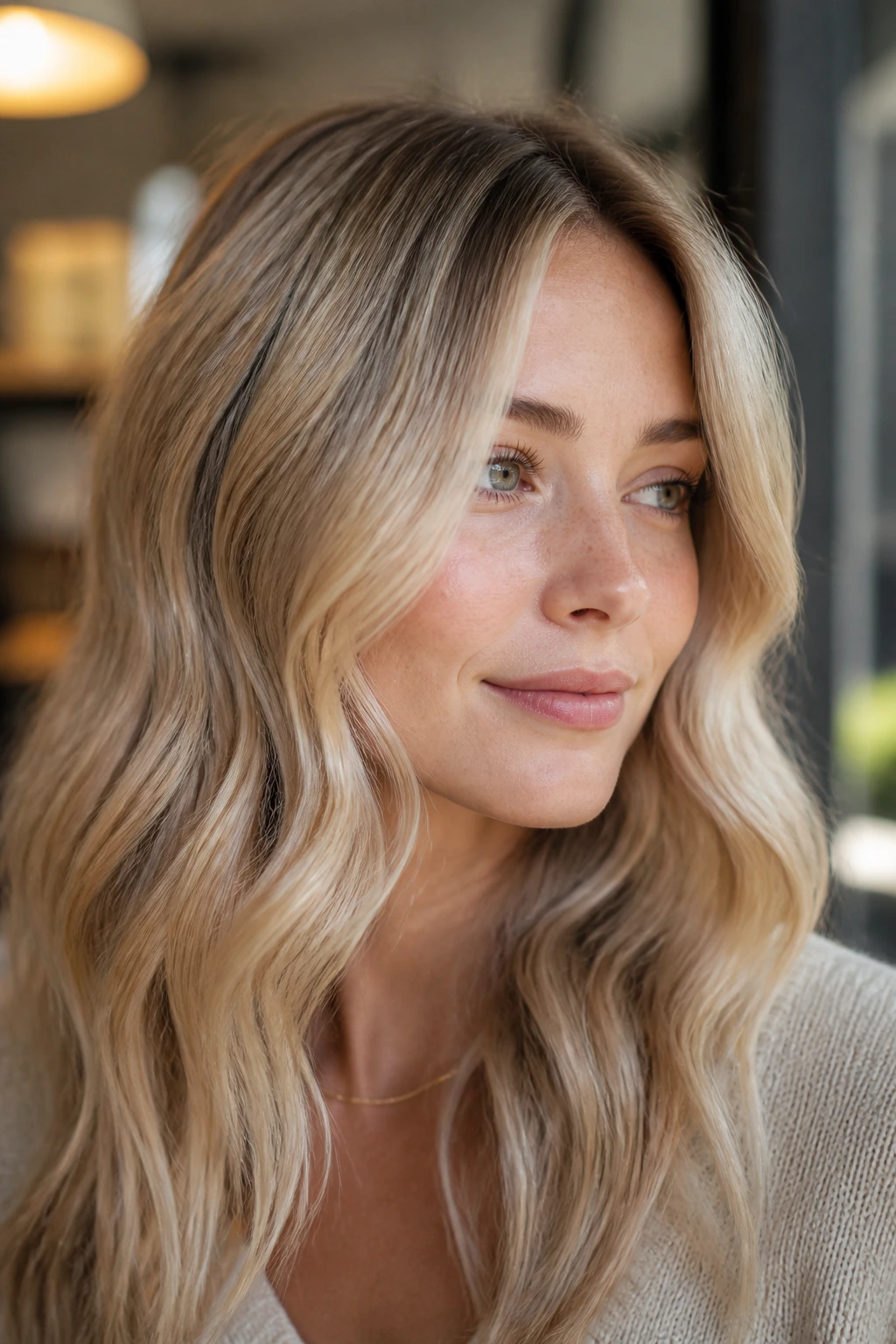
Flavor Enhancement: A clear or beige gloss between salon visits can keep the blonde shiny without darkening it. If the ends start to look tired, a quick gloss does more than another round of purple shampoo.
Customization: Face-framing money pieces are the fastest way to adjust any of these looks. Make them wider if you want more brightness around the face, or thinner if you want the color to stay soft and low-maintenance.
Serving Suggestions: Soft waves, tucked-behind-the-ear styling, and a bit of root lift at the crown show off the contrast best. A blunt finish can work too, but then the cut needs to be clean or the color looks choppy.
Make-It-Yours: If you wear little makeup, lean beige or honey. If you wear more makeup or have strong brows, ash, mushroom, or pearl can take more contrast and still look balanced.
Maintenance, Toning, and Grow-Out Rhythm
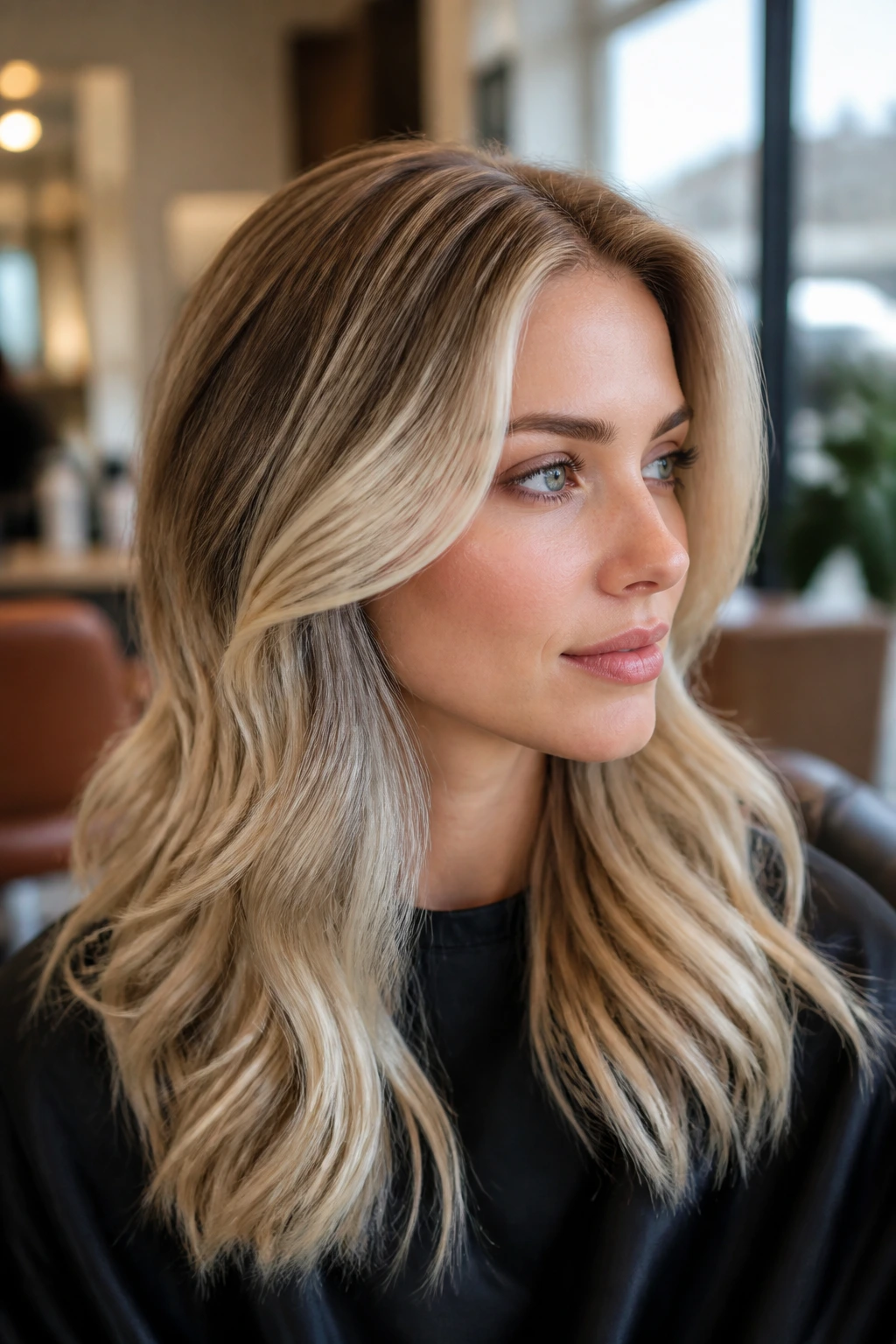
Dimensional blonde on fair skin usually looks best when the color is refreshed before it goes brassy, not after it has already turned. For most people, a gloss every 4 to 6 weeks keeps the highlights bright and the lowlights from fading into a muddy brown. If your hair is porous, or if you wash often, that rhythm can get shorter.
Purple shampoo is a helper, not a fix. Use it once a week if the blonde is pulling yellow; use it less if the shade is already beige or cool. Overusing purple shampoo can leave pale hair dull, and on fair skin that dullness reads fast.
The grow-out matters too. A soft root shadow can last 6 to 8 weeks before it starts to look obvious, while finer babylights often need a refresh closer to 8 to 12 weeks depending on how fast your hair grows and how sharp you want the contrast to stay. If your scalp is sensitive or your hair is fine, ask for a demi-permanent lowlight instead of something harsher. It fades more gracefully and doesn’t leave a blunt line.
Hard water, heat styling, and UV exposure all push blonde into a tired place faster than people realize. A shower filter and heat protectant are boring purchases. They also save the color.
Variations and Adaptations to Try
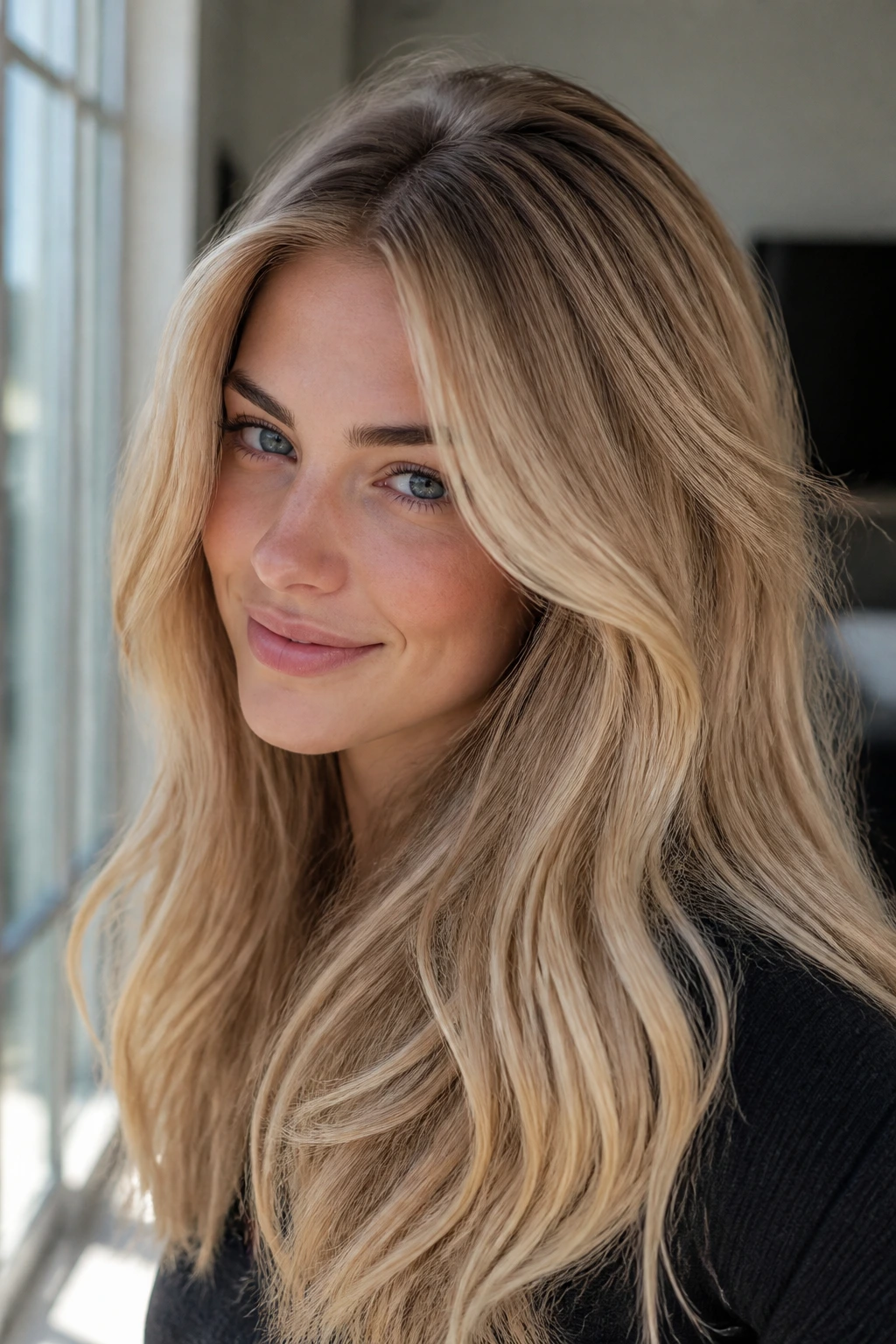
Soft Root Melt Blonde: Keep the lowlights concentrated at the root and upper mids, then let the blonde brighten toward the ends. This is the easiest version to grow out, and it suits fair skin that looks better with subtle shadow than strong contrast.
Money Piece Brightness: Make the front pieces 1 to 2 levels lighter than the rest of the blonde. This variation is useful if the complexion looks flat beside pale hair and needs a brighter frame without changing the whole head.
Cool-Girl Mushroom Blonde: Shift the lowlights toward taupe and mushroom, then keep the highlights beige instead of icy. It’s a strong choice for rosy skin because it reduces redness without turning gray.
Warm Honey Blend: Move the lowlights toward beige-gold, honey, and wheat. This works when fair skin looks washed out by ash or platinum and needs a warmer echo.
High-Contrast Editorial Blonde: Use very fine light babylights with deeper underlayer ribbons. This variation looks sharper and more deliberate, especially on shorter hair or hair with a strong cut.
Common Mistakes to Avoid With Blonde Lowlights and Highlights
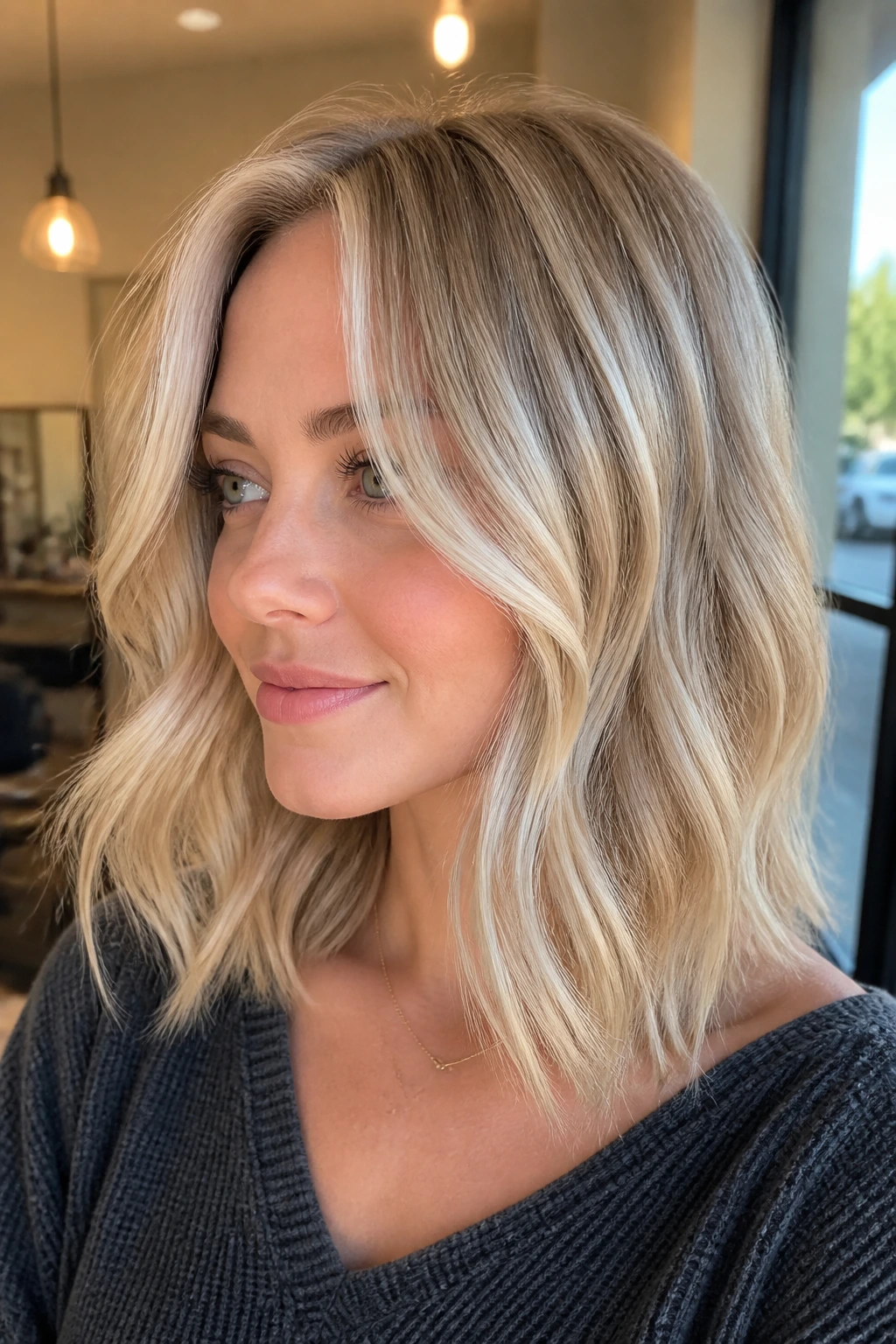
The most common mistake is making the lowlights too dark. On fair skin, a level 4 or 5 brown can sit like a hard stripe unless the placement is extremely thin and strategic. A level 6 or 7 lowlight usually gives enough depth without stealing the show.
Another trap is putting the brightest pieces too close to the root all over the head. That can make the scalp and forehead look bigger and erase the shape of the style. Brightness belongs around the face and top, but not as a solid helmet.
Over-toning is another ugly one. If the hair starts looking gray, flat, or dusty, the toner has gone too far or the purple shampoo is being used too often. Pull back, switch to a moisturizing cleanser, and let a clear gloss restore shine.
The fourth mistake is ignoring the haircut. A thick, one-length cut can swallow delicate lowlights, while a feathered or layered cut lets the contrast move. Hair color and cut need to speak the same language. If they don’t, the whole thing looks off.
Lastly, people forget that fair skin changes with makeup, clothes, and lighting. A blonde that looked great in one setting can look dead in another if the undertone is wrong. Check the color in daylight, near a window, and under indoor bulbs before you decide it’s working.
Frequently Asked Questions
Will blonde lowlights make fair skin look older?
Not if they’re placed well. The right lowlights add shape and keep blonde from looking washed out, which usually makes the face look fresher rather than older. The problem is heavy, dark lowlights that sit too close to the face.
Should fair skin choose cool or warm blonde lowlights?
Start with your undertone. Pink or rosy skin usually likes beige, mushroom, pearl, or taupe. Peachy or golden skin usually looks better with honey, cream, wheat, or soft caramel depth.
Can fine hair wear highlights and lowlights without looking chunky?
Yes, but the pieces need to be finer. Babylights, veil-like lowlights, and a soft root shadow work better than broad color blocks because they create density without obvious streaks.
How often should I tone blonde lowlights and highlights?
A gloss every 4 to 6 weeks is a solid rhythm for most blondes. If your hair is porous or you wash often, you may need it sooner. Purple shampoo can stretch the time between salon visits, but it should not replace toner.
What if my blonde starts to look brassy?
Use a purple shampoo once, not every wash, and follow it with a good conditioner. If the brass is strong and warm-orange rather than yellow, a salon gloss or toner will fix it faster than home products.
Can I do this look on naturally light brown hair?
Absolutely. Light brown or dark blonde hair often gives the best base for dimensional blonde because the lowlights blend more naturally. You usually get a softer grow-out too.
Is this a good idea for curly hair?
Yes, and curls often make the contrast look richer. The lowlights should be painted with the curl pattern in mind so the darker pieces don’t disappear inside the texture.
Do I need foils, balayage, or both?
Sometimes both. Foils give cleaner brightness, while balayage keeps the lowlights soft and blended. Many of the best fair-skin blondes use foils around the face and balayage or lowlight panels underneath.
What should I avoid if my skin is very pale and red?
Skip heavy ash that turns gray and skip dark brown lowlights near the face. Soft beige, mushroom, taupe, or champagne tend to be kinder because they add depth without making the skin look more flushed.
Soft Contrast, Better Blonde
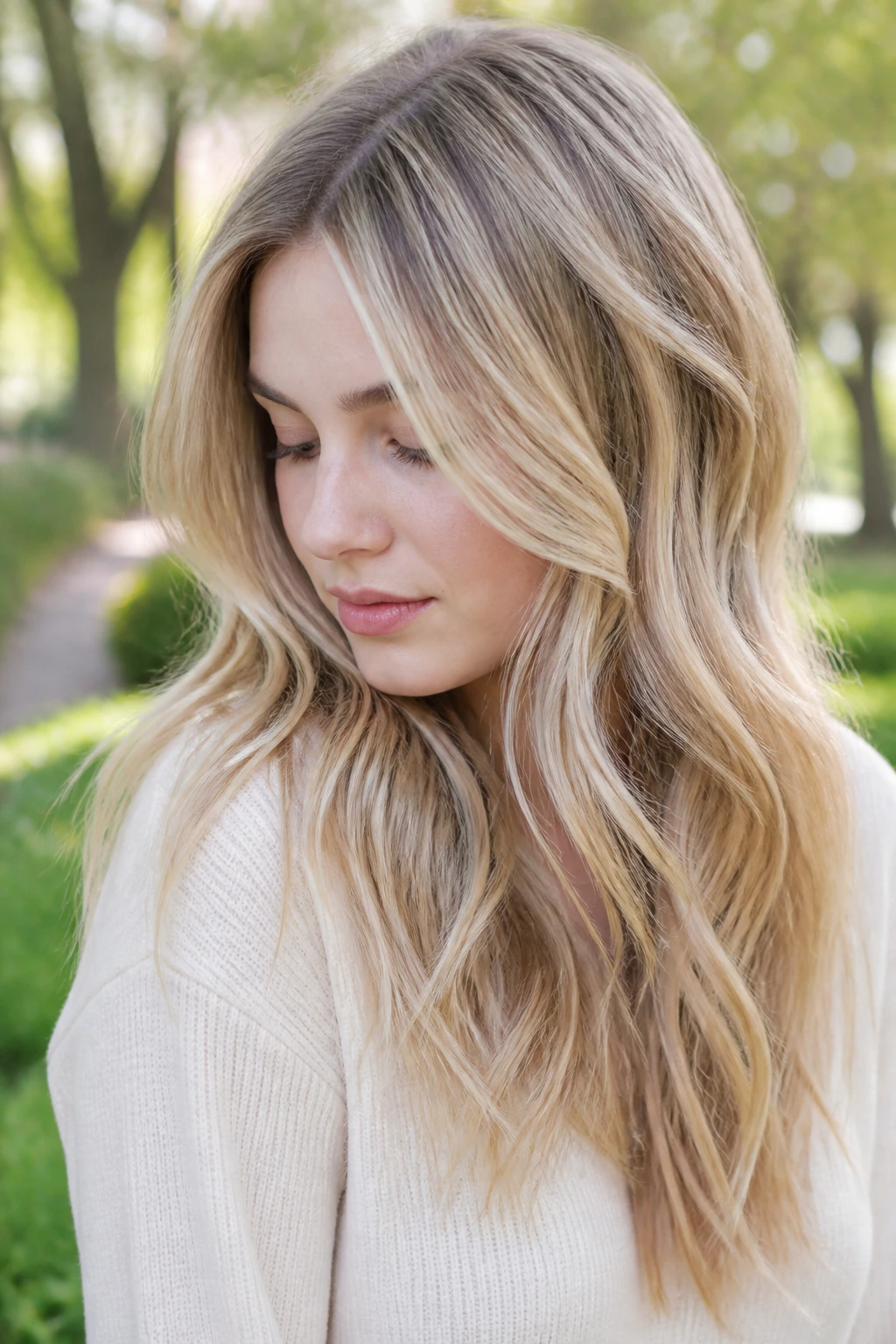
The best blonde for fair skin usually isn’t the palest one. It’s the one with enough shadow to shape the face and enough light to keep the color airy. That balance is what makes these looks work: the lowlights add weight where you need it, and the highlights keep the whole thing from turning dull.
If you remember one thing, make it this: placement beats intensity. A careful ribbon in the right place will do more for your face than a louder, darker stripe ever could. And once you see how much better fair skin looks with a little depth around it, flat blonde starts to feel unfinished.