



Dark hair can go flat in a hurry. Put it under kitchen light, office light, parking-lot light — all that deep brown can start feeling heavy at the ends, almost too solid. Brown caramel ombre for dark hair with wavy hair fixes that in the most flattering way: the waves break the color into ribbons, and the caramel catches along each bend instead of sitting there like a blunt stripe.
The trick is balance. Too much lightness at the top and the whole thing starts looking skunked. Too little contrast and you’ve spent hours in a chair for a color change nobody notices. The best versions live in the middle: a dark espresso root, a softened mocha mid-length, then caramel that slides from toasted sugar to honeyed beige depending on how warm or cool you want the finish.
Wavy hair is the real advantage here. Straight hair can expose every line of the blend, which is why ombre sometimes reads harsher on pin-straight lengths. Wavy hair hides the handoff. It lets the brunette base stay rich while the lighter pieces appear and disappear with movement. That’s the whole appeal, honestly. The color looks different every time you shake your hair out, tuck one side behind your ear, or let a few front pieces fall forward.
Why You’ll Love This Collection
-
Waves do the blending for you: Loose bends make brown-to-caramel shifts look softer, so the grow-out line stays calmer than a high-contrast dye job.
-
Dark roots stay useful: Keeping the base deep means you can stretch salon visits longer without the color looking abandoned halfway through.
-
Warmth is easy to control: You can lean golden, beige, chestnut, or maple depending on whether your skin looks better beside warmth or a cooler brown.
-
Face-framing pieces do a lot of work: A few lighter ribbons near the cheekbone can brighten the whole cut without turning the ends into a block of color.
-
It plays well with layered cuts: Long layers, curtain bangs, and soft shags all give the caramel more places to show up.
-
The look can be quiet or bold: Same family of color. Very different mood. The placement does most of the talking.
1. Soft Espresso-to-Toffee Melt
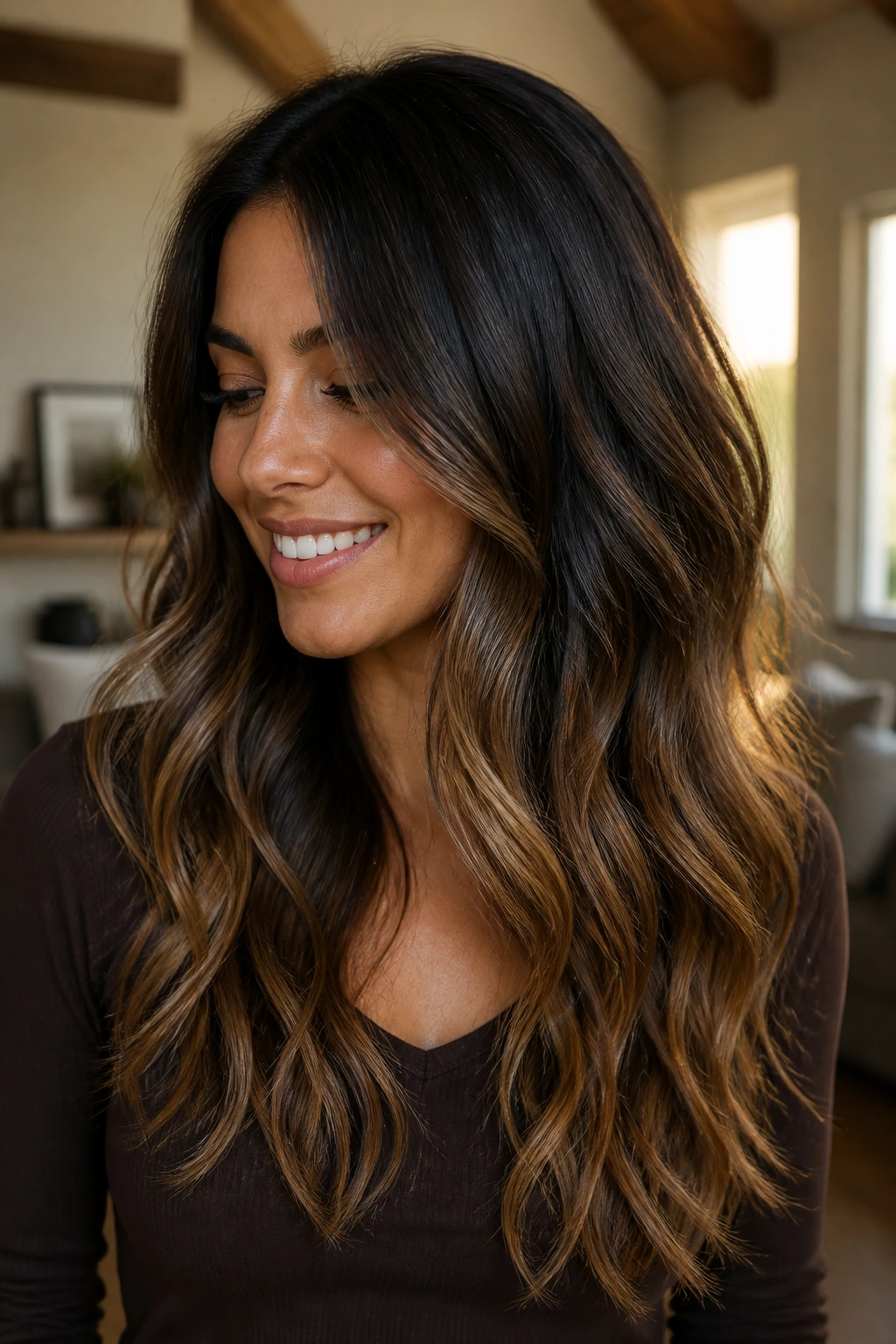
This is the version I reach for when someone wants caramel, but not the kind that shouts from across the room. The base stays close to espresso brown, then the ends drift into a warm toffee that looks almost melted into the hair rather than painted on. On waves, the lighter ends show up first at the bends, which keeps the whole thing from feeling blocky.
Why It Works
The contrast is gentle enough that you can wear it with minimal styling and still see the shape. That matters on dark hair, because a harsh lift can make the ends look dried out instead of dimensional.
A lift of about 2 to 3 levels is usually enough here. You want brown-gold, not orange. Ask for a soft root smudge and a gradual hand-painting through the mid-lengths so the caramel begins low enough to keep the top rich.
What Makes It Different
- The root line stays dark and glossy.
- The caramel is concentrated on the lower third.
- Waves make the transition read as movement, not banding.
Best if you want: a first-time ombre that still feels polished.
2. Honey-Frame Brunette Waves
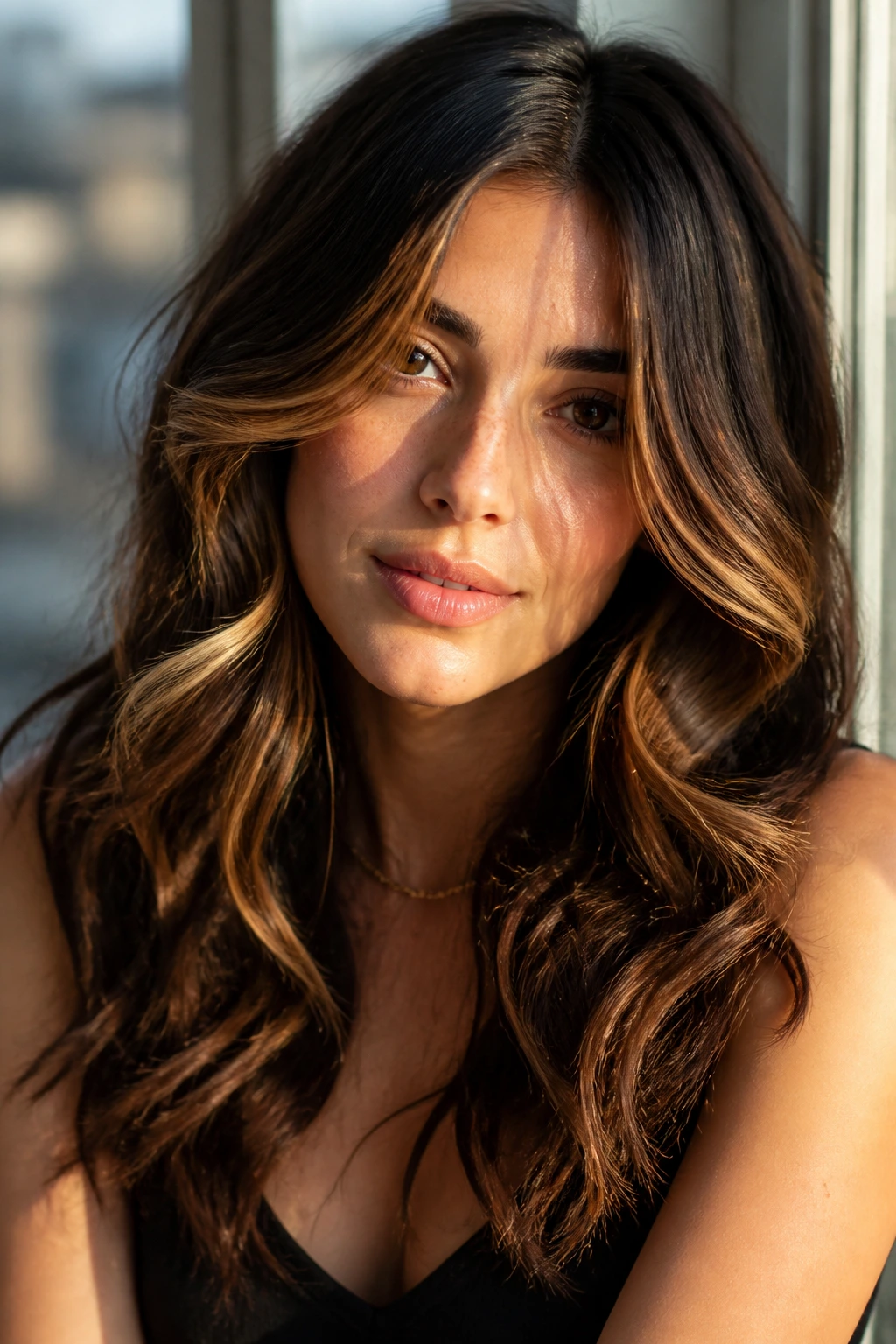
The front pieces do the flirting here. Honey caramel sits around the face, then the rest of the hair stays deeper and quieter so the bright sections have room to breathe. When the waves brush your cheekbones, you get that warm frame without bleaching half your head.
This one works especially well if you wear a middle part or a deep side part. Either way, the front ribbons catch light when you turn your head, which is half the fun. The color also plays nicely with layered cuts because the shortest pieces near the face get the most light.
Ask your colorist for brightness that starts around the cheekbone to jawline area. Any higher and the look can feel stripy. Any lower and the face-framing effect gets lost.
A clean finish matters here. A few smooth bends near the front and softer waves underneath make the honey pieces look deliberate instead of accidental.
3. Cinnamon Ribbon Balayage
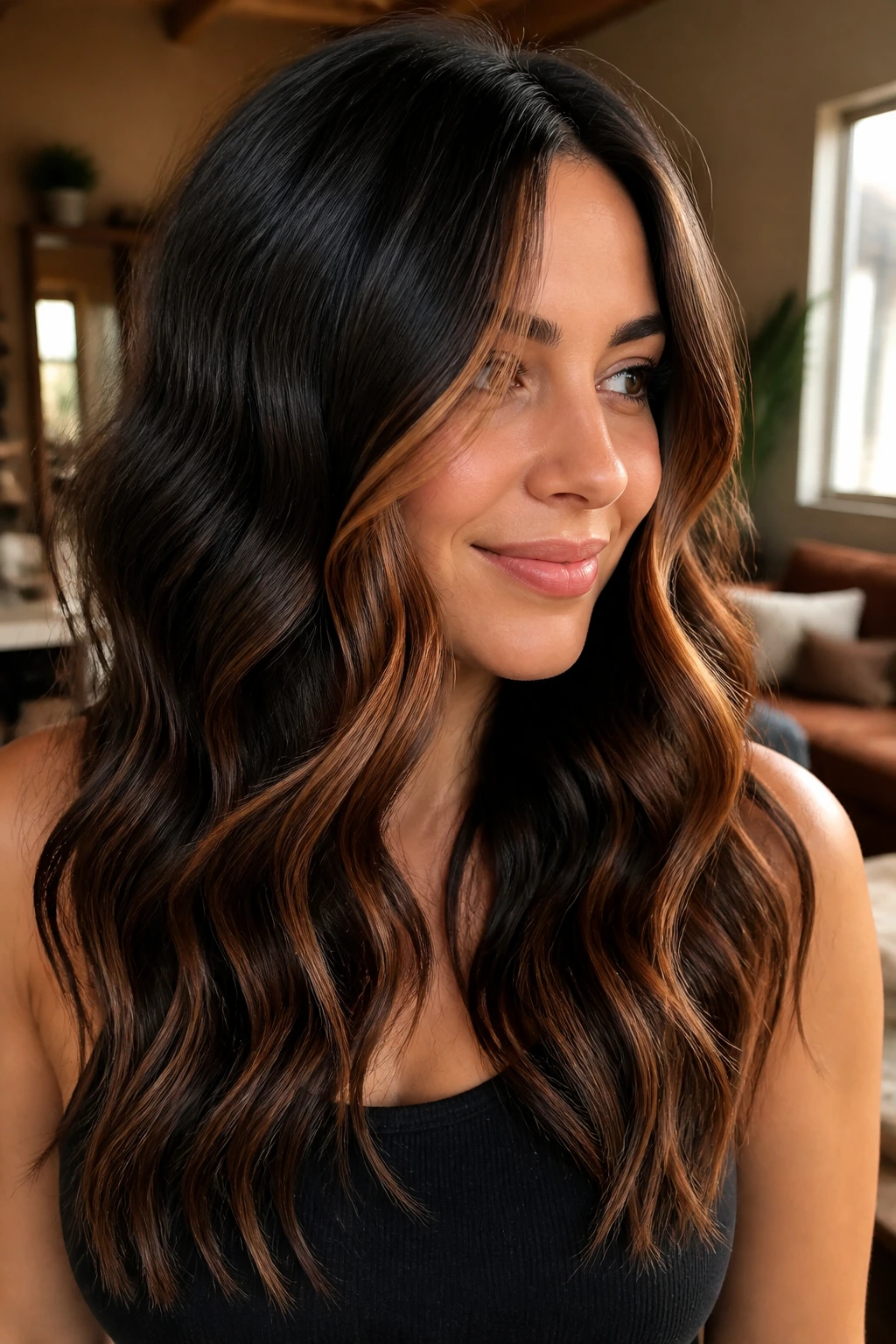
A little warmer. A little spicier. This version threads cinnamon-brown ribbons through dark hair so the caramel picks up a faint red-gold cast when the light hits it. On wavy hair, those ribbons peek out in slices, and the movement makes the red-brown warmth feel richer than a flat golden tone.
How It Reads on Wavy Hair
The wave pattern matters more than people think. Tight bends can make the highlights look chunkier; loose S-waves turn them into thin threads of color. That’s the sweet spot for cinnamon tones, because you want the warmth to glow, not dominate.
Best Placement
- Mid-lengths and ends only
- A few wider ribbons near the face
- Thin, scattered pieces beneath the top layer
I like this one for dark brunettes who want warmth but don’t want a yellow caramel finish. It feels seasonal without being costume-y. And the grow-out is kindest when the root stays close to your natural shade.
4. Root-Smudged Mocha Ombre
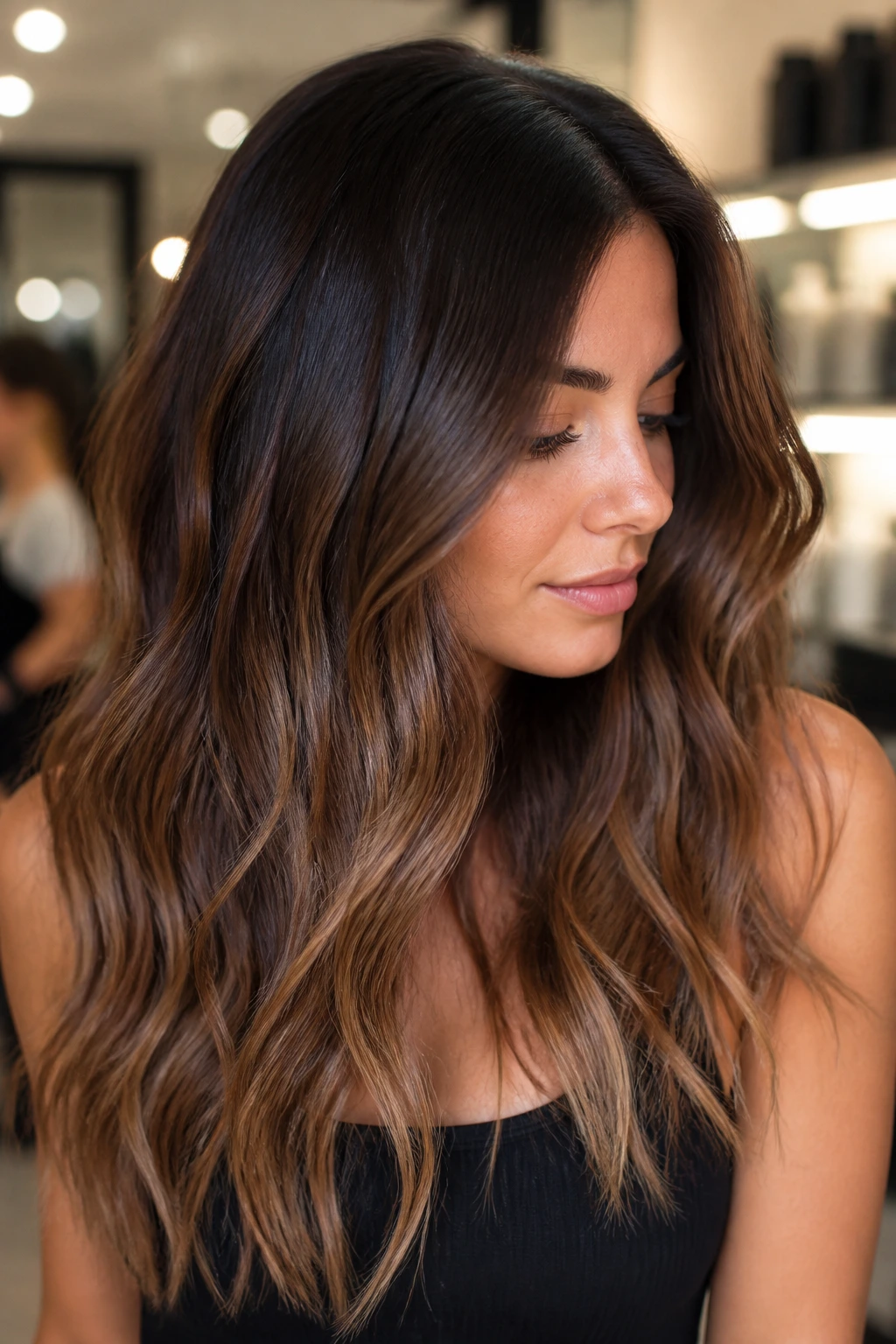
This is the low-stress brunette’s answer to ombre. The root is smudged a shade or two softer than the natural base, then the color opens into mocha and toasted caramel at the ends. Nothing about it looks rushed, which is why it’s such a good match for wavy hair that already has natural bend and body.
The root smudge keeps the first inch or two from looking harsh when new growth comes in. That’s not a minor detail. It’s the reason this style stays wearable for weeks without asking you to baby it in the mirror every morning.
Good To Know
- The darker root makes fine waves look thicker.
- The caramel should start below the eyes on medium-length hair.
- A gloss finish helps the mocha tone stay creamy instead of muddy.
If you like a color that can survive a messy bun and still look intentional when you pull it down, this is the one.
5. Mushroom Brown with Beige Caramel Veil
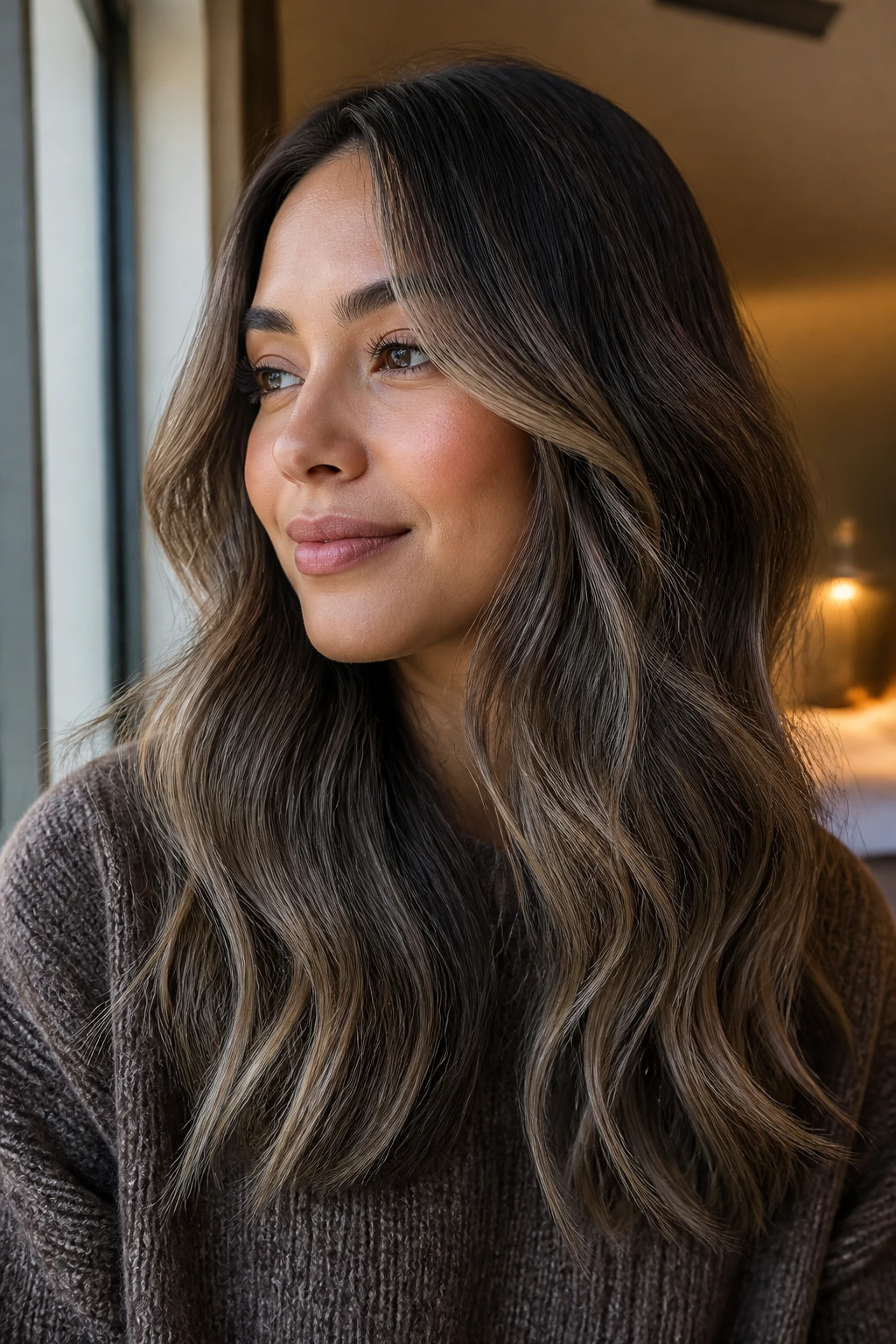
Cooler brunettes deserve a place at the table. Mushroom brown with a beige caramel veil keeps the warmth soft and slightly ashy, which is a nice move if gold turns too orange against your skin. On wavy hair, the cooler caramel reads almost like satin — not shiny in a loud way, just smooth and expensive-looking.
This is a quieter ombre. Not dull. Quiet. There’s a difference.
The best versions keep the beige pieces thin and diffused, especially on dark hair that lifts quickly. If you pile on too much warmth, the whole point disappears. Ask for a neutral-to-cool toner and keep the bright ends from going too pale.
It’s especially pretty on medium-density waves, where the color has room to spread out. Thicker hair can handle it too, but the sections need to be painted with a lighter hand so you don’t end up with obvious stripes.
6. Chestnut Shine Blend
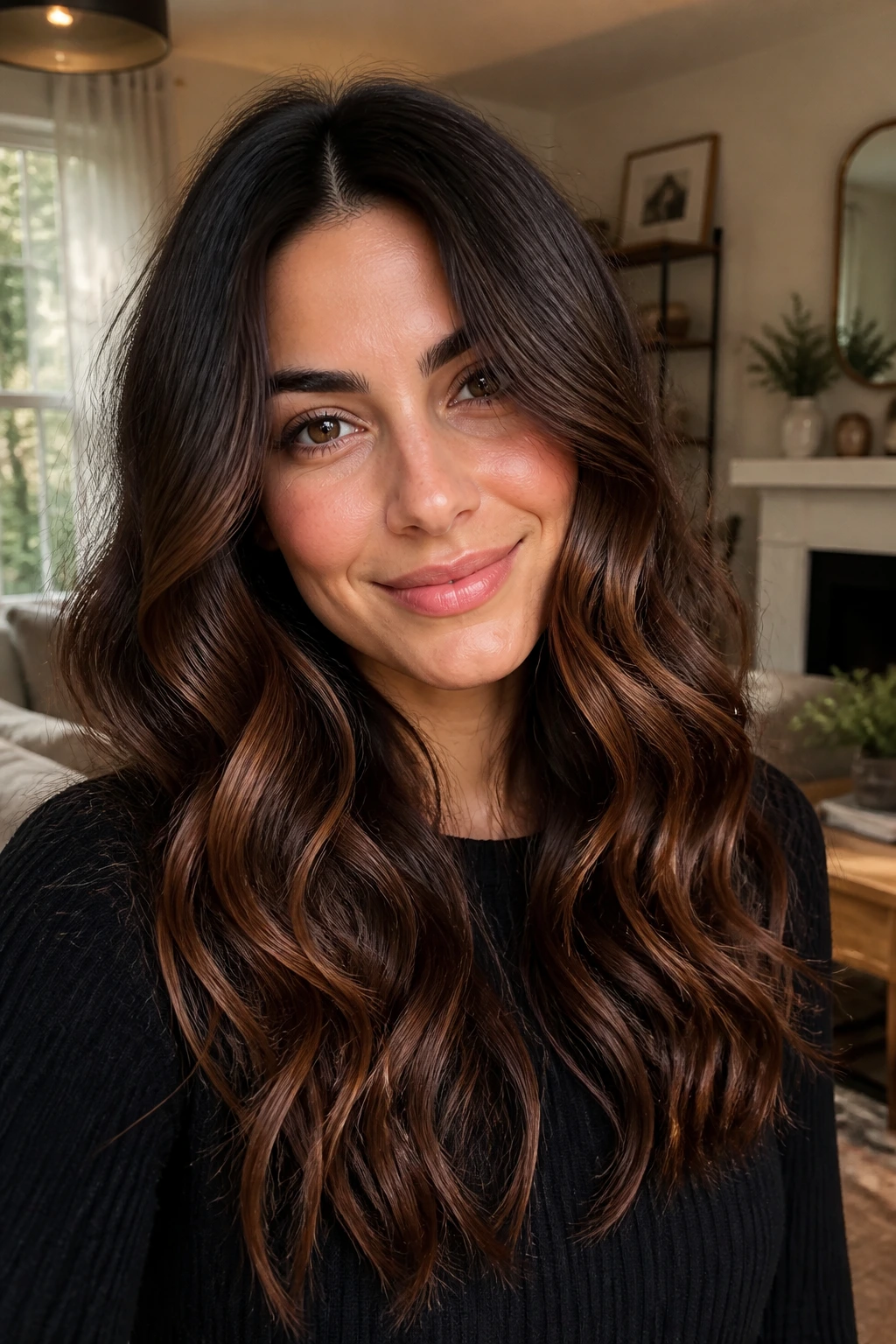
Chestnut caramel has a bit of red in it, and that tiny shift changes everything. On dark hair, chestnut adds depth first, then the caramel catches the light with a subtle auburn glow. Wavy hair turns the whole thing into a moving surface of warm brown, which is probably why this shade feels more lived-in than flat golden tones.
I like this one when someone says, “I want warmth, but I don’t want to look blonde.” Fair ask. Chestnut sits in that middle lane. It reads rich in indoor light and much softer outside, which gives the color some range without making it temperamental.
Why It’s Easy to Wear
- It flatters medium and deep brown bases.
- It softens rough ends because the warmth distracts from dryness.
- It doesn’t need ultra-light blonde pieces to make an impact.
A loose wave pattern helps the chestnut tones flicker between red-brown and caramel. Straight hair can flatten it. Waves make it sing.
7. Butterscotch Dip Ends
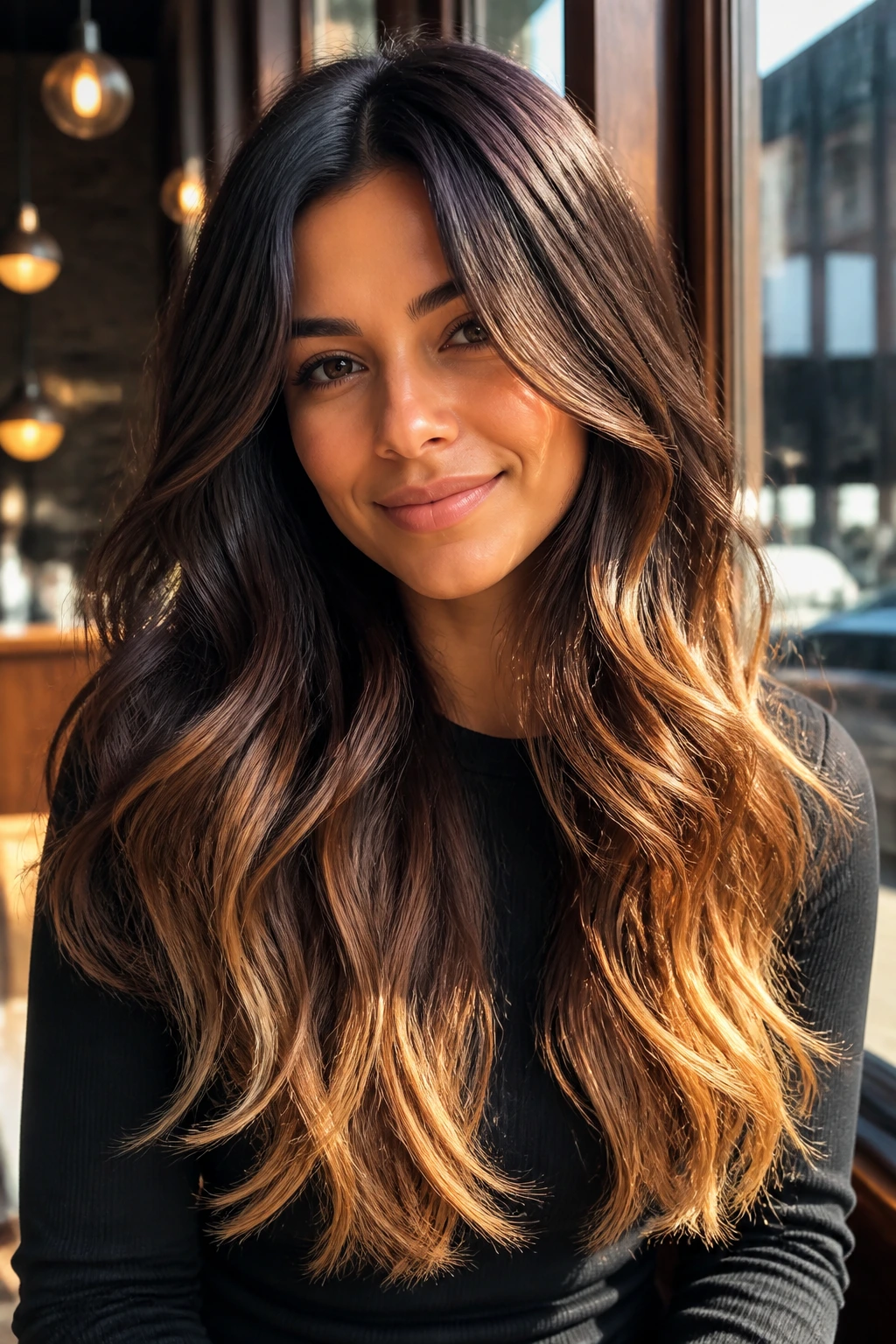
This one is more daring. The ends get lifted into a richer butterscotch that sits noticeably lighter than the base, and the contrast can be striking when the hair swings. On wavy lengths, the bright tips appear in flashes instead of one solid block, which keeps the style from veering into costume territory.
Long hair handles this best. You need enough length for the transition to feel gradual. On shorter cuts, the color can look too abrupt unless the blend is done with real restraint.
This is the version for people who actually want to see the ombre from across the room. If that sounds like a little much, skip it. If you’ve been playing it safe for years, this is the one that breaks the pattern in a good way.
A middle part with soft, brushed-out waves works better here than tight curls. The broader wave pattern lets the butterscotch ends fan out instead of clumping together.
8. Bronze Wave Slices
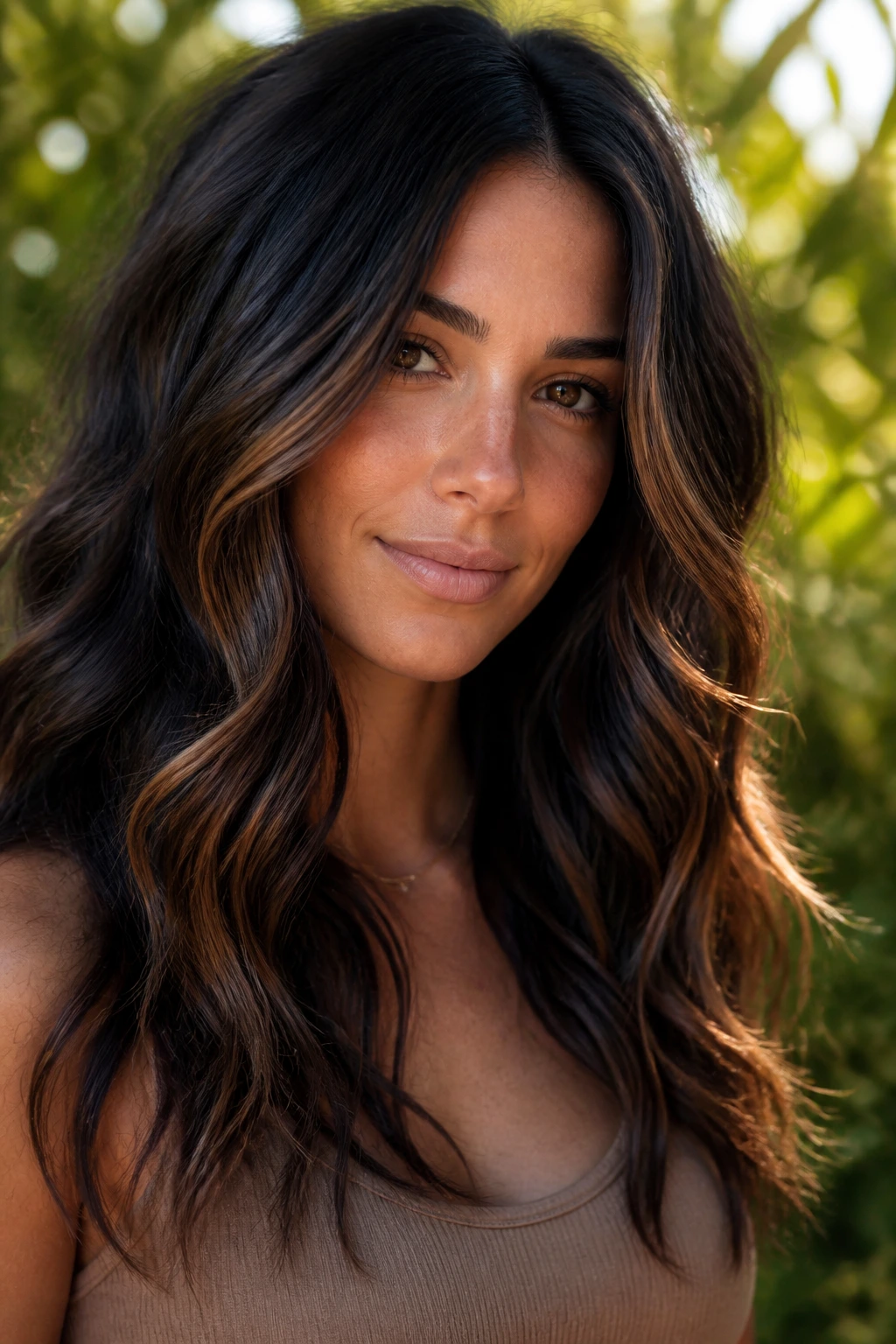
Bronze is the sleeper shade in this whole family. It’s warmer than ash, less sugary than honey, and a bit more grounded than gold. Painted in thin slices through dark waves, bronze gives you that sunlight-on-brown-hair effect without pushing the ends too blonde.
The placement matters more than the exact tone. Bronze pieces look best when they’re tucked under the top layer and then revealed as the hair moves. That hidden-depth effect is what makes the color feel richer than a surface highlight job.
Best for:
- Thick wavy hair that can hide and reveal sections
- Dark brown bases with warm or neutral undertones
- Anyone who wants dimension without a dramatic contrast
A bronze ombre can look expensive even when it’s subtle. That’s not a word I use lightly. It just works here because the warmth is controlled.
9. Maple Money Piece and Ends
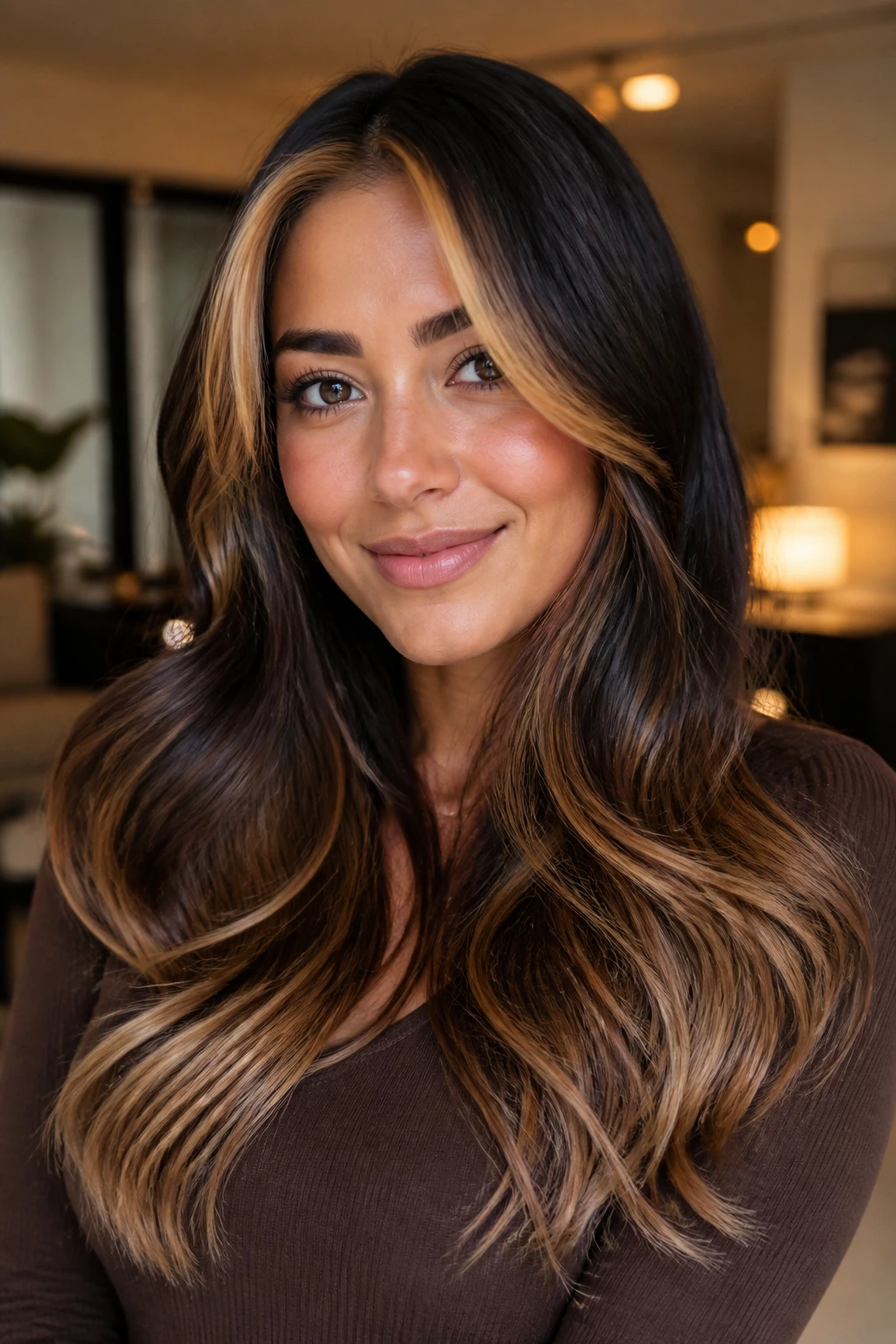
If you want the front bright and the back calmer, this is the one. A maple-toned money piece around the face gives you warmth right where the eye goes first, then the ends carry the same tone in a softer, more scattered way. On waves, the money piece frames the face without stealing the entire show.
This style is especially useful if you pull your hair back a lot. A ponytail, claw clip, or half-up twist still shows the lighter front sections, which keeps the color visible even on off-duty days.
Maple caramel tends to look best when the rest of the brunette base is left deeper. That contrast keeps the face-framing pieces from fading into the mid-lengths.
A small practical note
Ask for the brightest pieces to begin around the temple and cheekbone, not the crown. That way the color opens the face instead of making the top look over-lightened.
10. Walnut Lattice Highlights
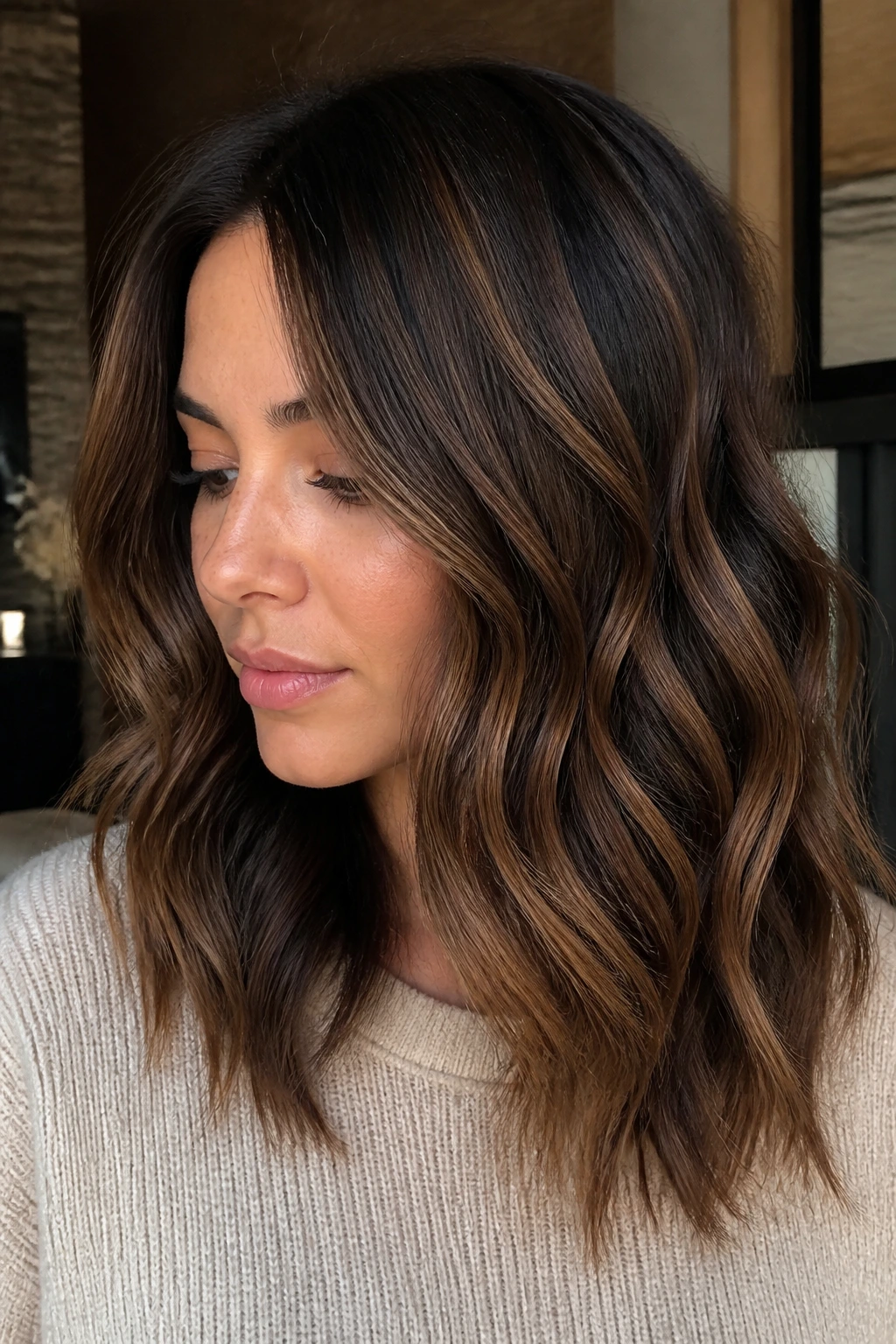
This is a woven, layered look, not a simple fade. Thin caramel ribbons are placed like a lattice through the mid-lengths, slipping in and out of the darker walnut base. On waves, the pieces stack visually, which gives the hair a thicker, fuller look without going dramatically lighter.
People with dense hair usually love this finish because it doesn’t rely on a huge ombre drop to create movement. The color is there. You just have to look twice to see all of it.
What Makes It Different
The caramel is distributed through the body of the hair instead of being reserved only for the ends. That creates a more expensive, salon-finished feel when the waves break apart.
A deep side part can make this color look especially layered. So can a loose bend with a flat iron, as long as the wave is soft and not crimped. The point is shimmer, not texture for texture’s sake.
11. Apricot-Caramel Glow
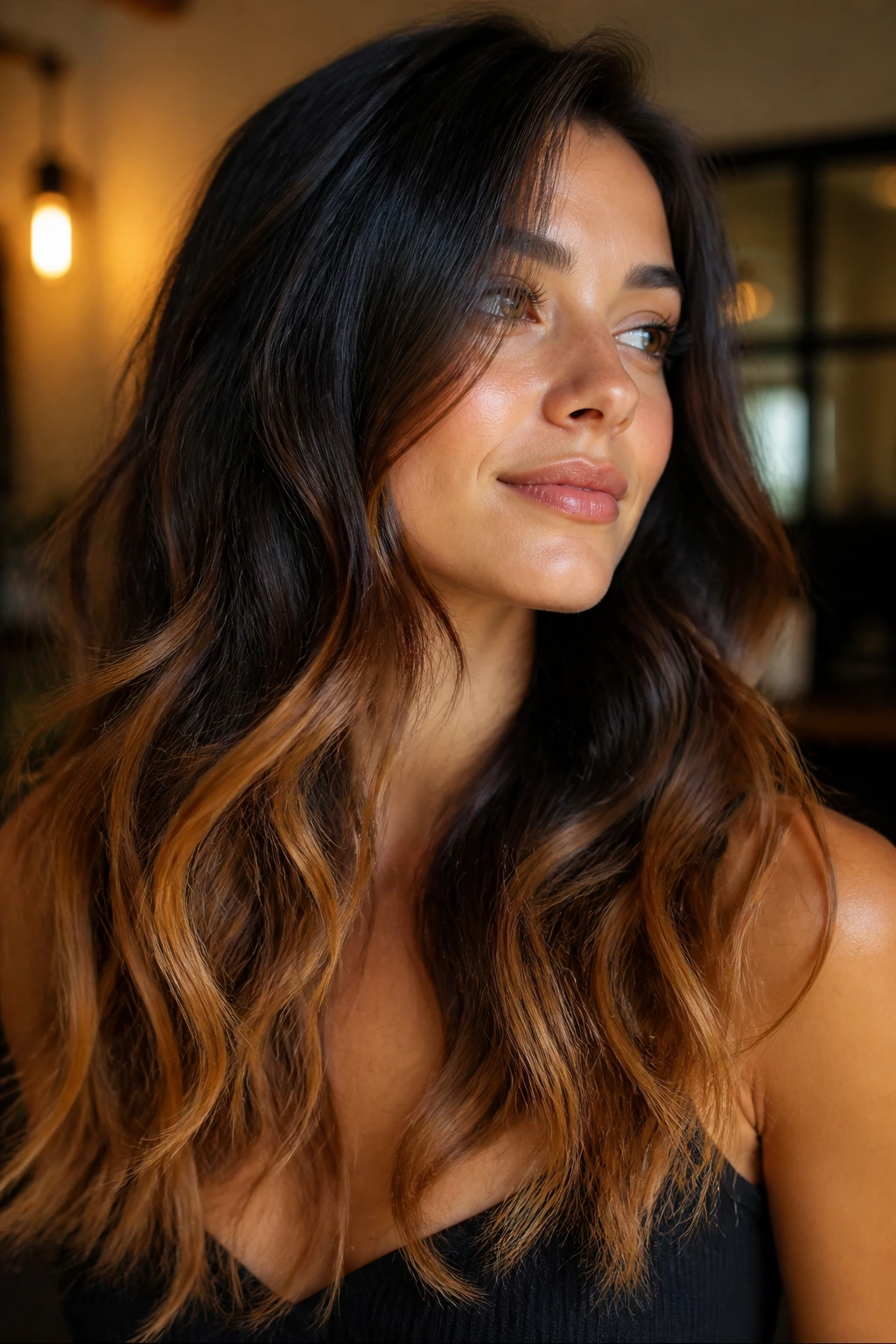
Apricot caramel has enough warmth to feel sunny, but it stops short of a copper-orange finish. On dark hair, it gives the ends a soft peach-brown glow that looks especially good when the waves catch low light. I like this shade on people who already wear warm makeup or gold jewelry, because the color echoes those tones instead of fighting them.
This one can go wrong if the caramel is pushed too orange. That’s why tone matters. A beige-gold base with a tiny apricot cast is usually safer than a full copper lift. You want the color to feel soft and warm, not like it’s trying too hard.
The style works beautifully on layered waves. Each bend flashes a slightly different tone, which makes the apricot read as movement instead of a flat tint.
12. Smoky Cocoa Melt
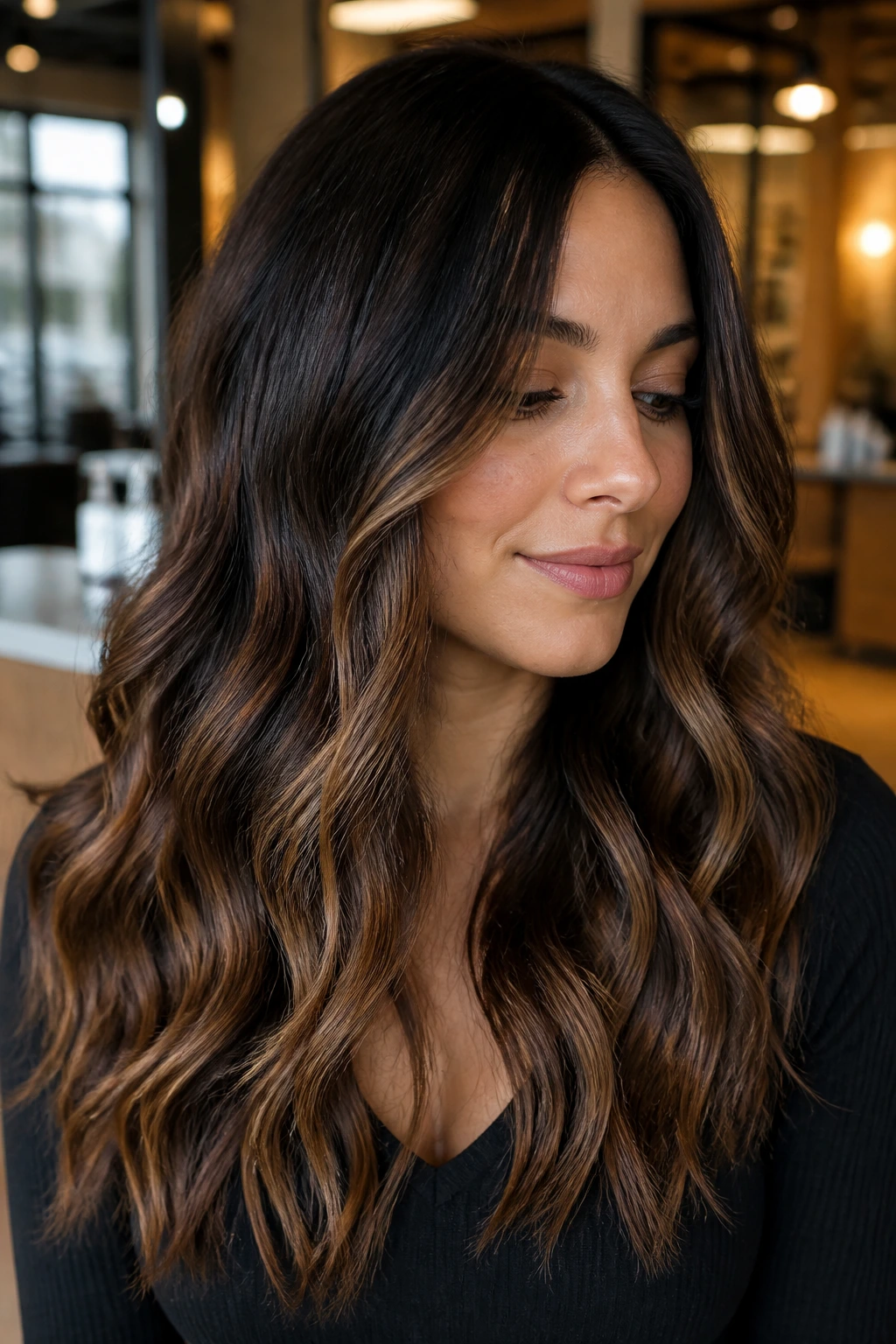
Here’s the cooler answer for people who hate brass. Smoky cocoa keeps the brunette base dark and plush, then eases into a muted caramel that looks more cocoa powder than syrup. The wave pattern keeps it from sinking into the background, which can happen with cooler tones on very dark hair.
This is one of the most forgiving styles in the bunch. Because the caramel stays muted, regrowth doesn’t feel glaring. And because the tone is smoky, not icy, it still belongs in the brown family instead of drifting into ash-blonde territory.
Ask for this if:
- Your skin gets washed out by golden blonde highlights
- You want movement, not obvious lightness
- You prefer a low-maintenance color that still looks styled
The finish is better when the waves are brushed out a little. Too-tight curls can hide the subtle shift.
13. Mahogany Bronze Ribbon
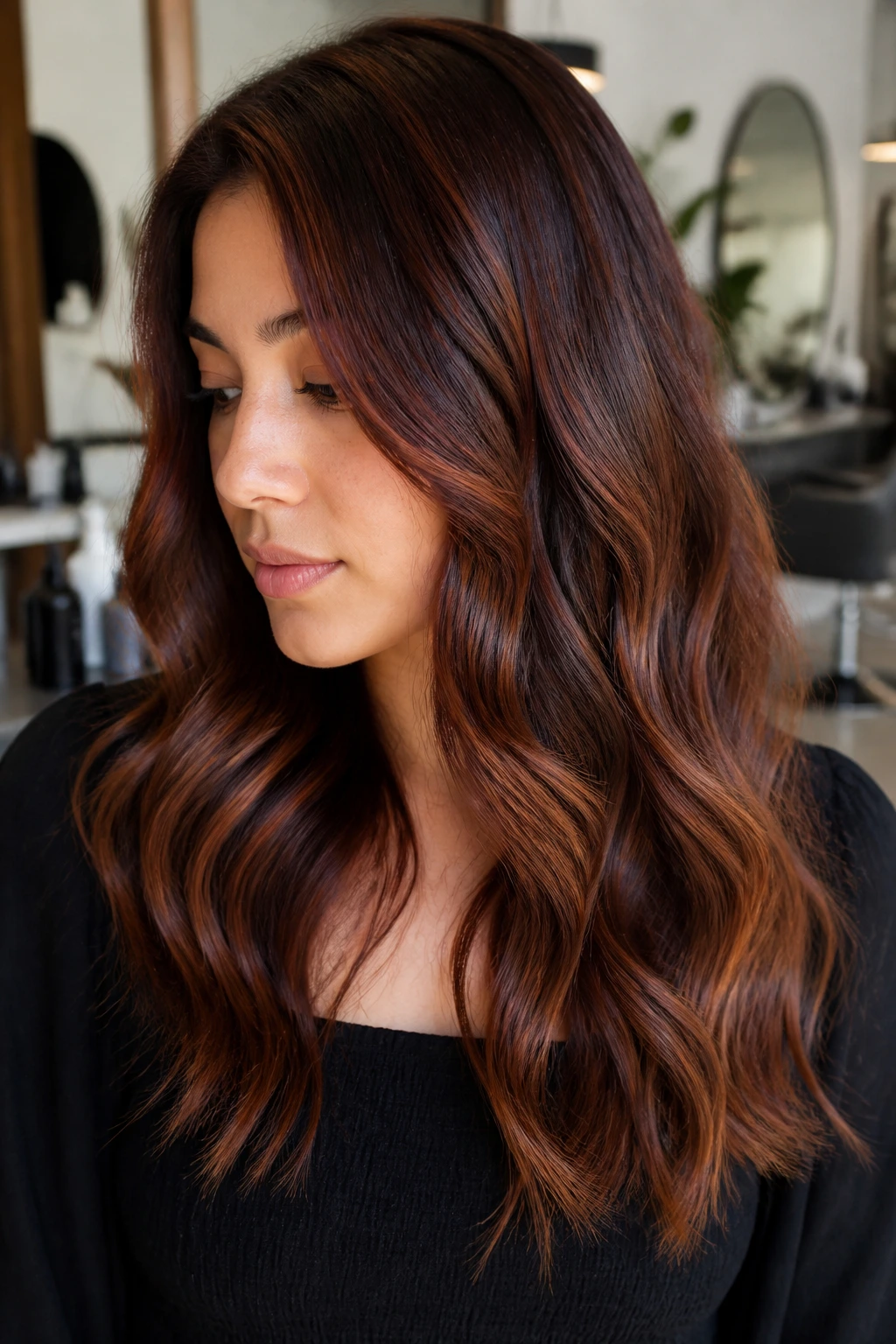
Mahogany and bronze together sound like a lot, but in practice they make a rich, almost velvet finish. The mahogany base carries red depth, while the bronze ribbons add a little shine through the waves. It’s dramatic without being flashy, and that’s a tough balance to get right on dark hair.
This one looks best when the caramel never goes too yellow. Keep the light pieces in the bronze zone and let the mahogany do the heavy lifting. You’ll get dimension that feels darker and more luxurious than a standard honey ombre.
A center part can make the color feel sleek. A side part gives it more movement. Either way, the waves should be loose enough to show both tones at once.
14. Almond Beige Sweep
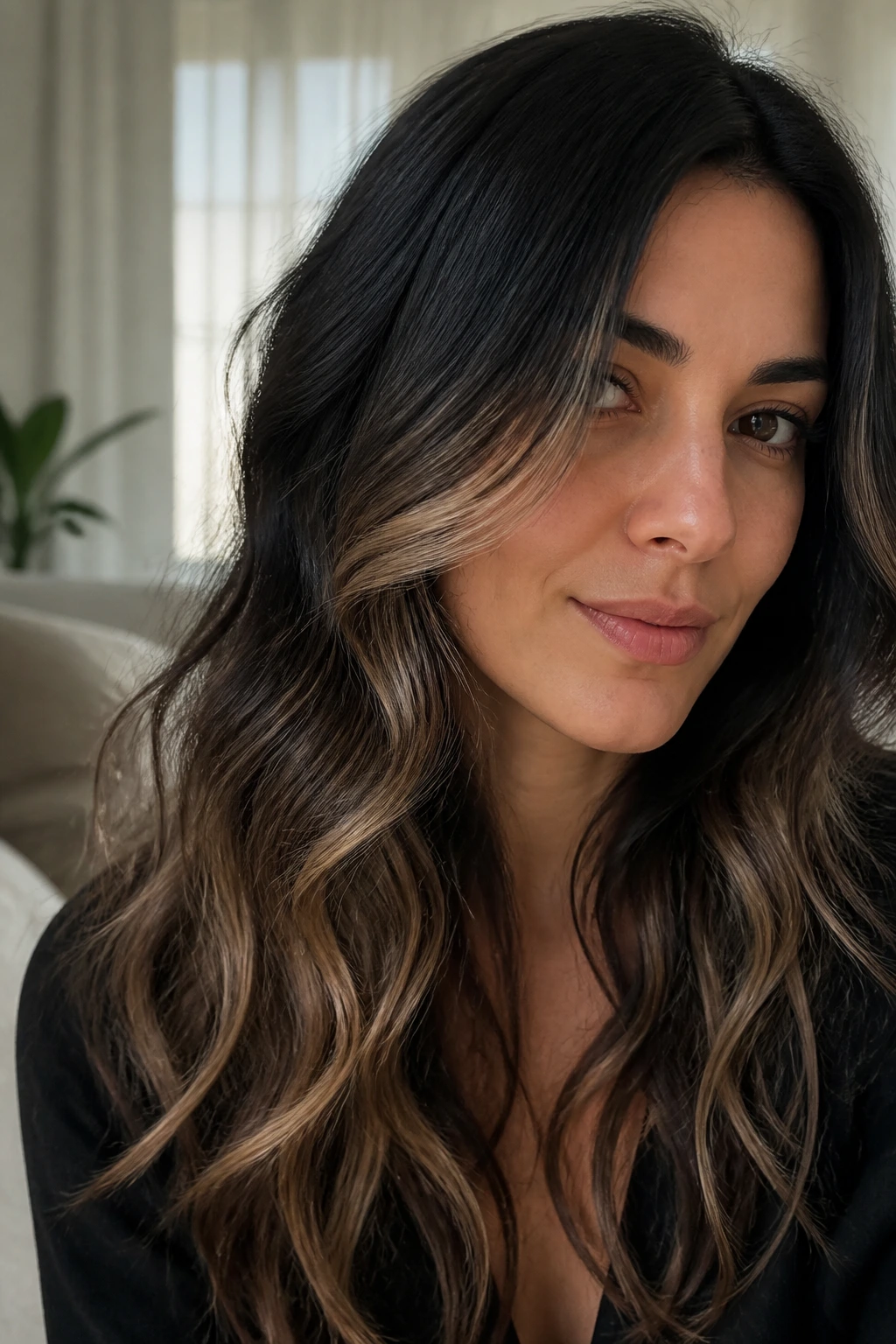
Almond beige is one of the cleanest ways to brighten dark hair without turning it loud. The sweep is soft, airy, and kept narrow through the lengths so the beige tone reads like a veil instead of a block. On wavy hair, the almond pieces spread themselves out naturally, which saves you from harsh lines.
This is a nice choice when you want something more polished than golden caramel, but not as cool as ash. The in-between tone does a lot of heavy lifting. It’s especially flattering on hair that already has a soft wave pattern, because the bends catch the beige in small flashes.
A gloss after coloring helps here. Beige tones can look muddy if they’re not finished cleanly. You want smooth. Not flat. There’s a difference, and it shows.
15. Toffee Dip-Lob
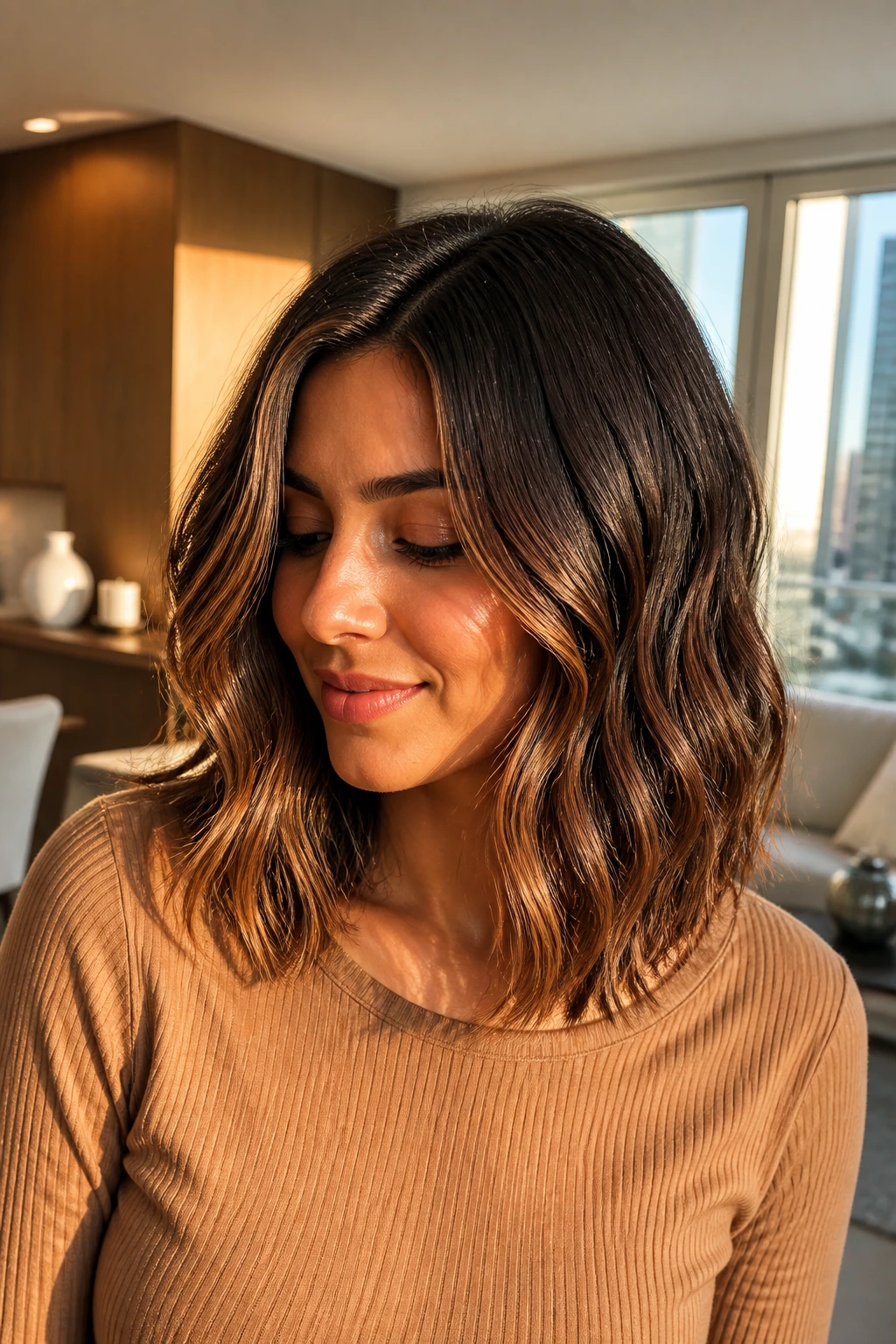
Shorter hair needs a different approach. On a lob, the color should concentrate lower, with toffee warmth landing mostly in the last few inches so the length doesn’t look chopped up. The result is punchier than a long-hair ombre, but still soft enough to suit waves.
The reason this works is simple: a lob doesn’t have the runway of long hair. The transition has to be shorter and smarter, or the color starts to feel crowded. When the wave pattern is loose, the toffee tips flick out at the edges and the cut looks fuller.
Best with
- Blunt lobs
- Wavy shags with soft ends
- Side parts that let the color move around the face
If you’ve got shoulder-length hair and think ombre only works on long lengths, this one proves otherwise.
16. Amber Brunette Cascade
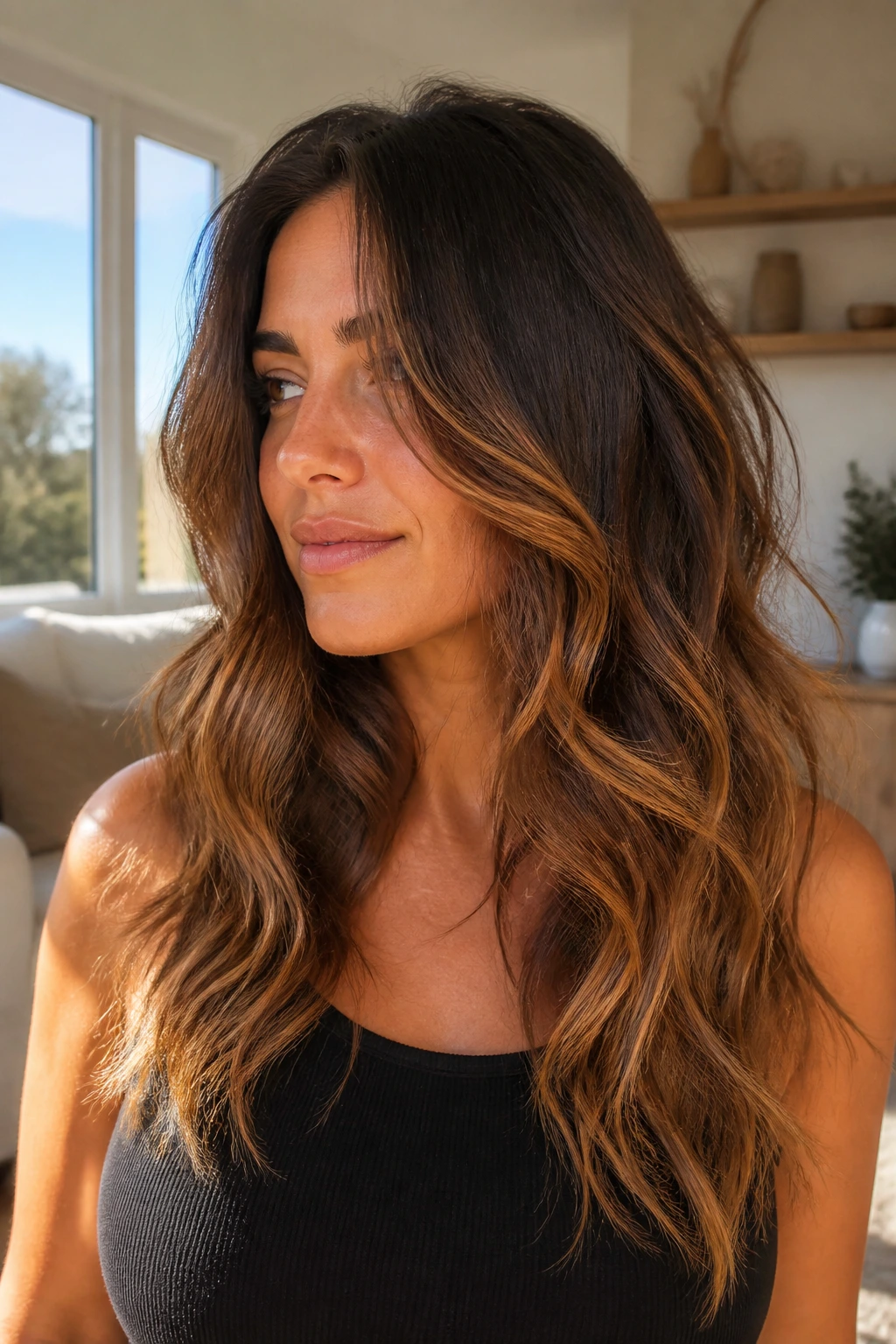
Amber caramel is warmer and more luminous than beige, and it has a way of making dark brown hair look lit from within. On waves, the amber pieces flow like thin streams through the cut — not noisy, not chunky, just bright enough to shift the whole mood of the hair.
This finish is especially good if your natural brunette leans warm already. If your hair pulls cool, the amber needs a careful toner so it doesn’t look orange. You want a liquid gold feel, not a pumpkin one.
The cascade effect comes from placement. Pieces begin mid-length and continue toward the ends, with a few face-framing strands carrying the warmth higher. That gives the color movement as the waves swing.
17. Salted Caramel Frame
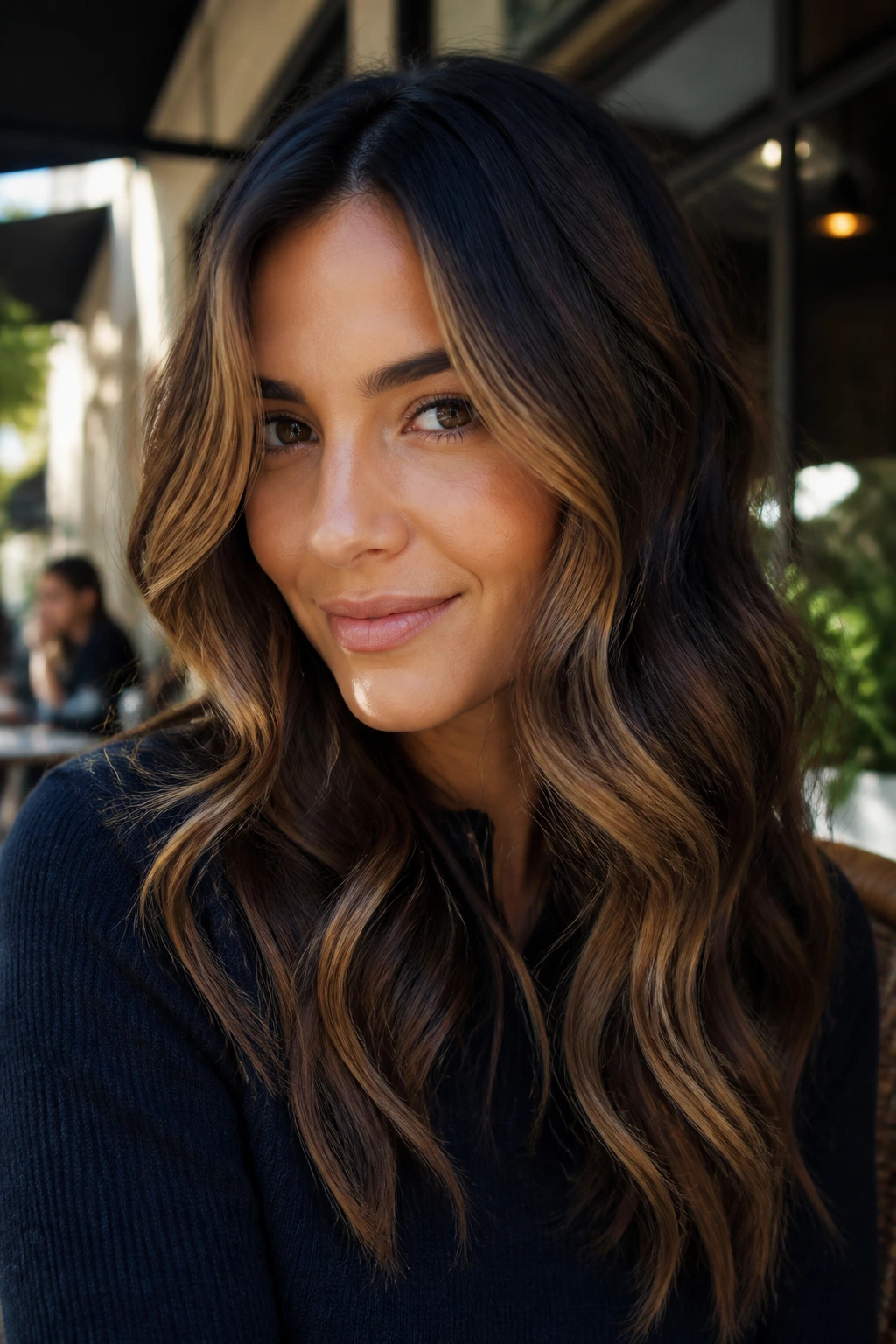
This one is all about contrast control. The “salted” part means the caramel isn’t fully warm or fully cool — it sits in a balanced middle zone that works beautifully around the face and along the lower lengths. On dark hair with waves, that mix stops the color from reading overly sweet or overly ashy.
The frame around the face should be slightly brighter than the rest. Not dramatically. Just enough to pull the eye. If you like wearing sunglasses, hats, or slicked-back roots, this style keeps the visible pieces doing the work.
Placement notes
- Brightest pieces start around the front layers
- Mid-lengths stay one shade deeper
- Ends get the softest, widest blend
This is one of those styles that looks even better the second week after coloring, once the tone settles and the gloss softens.
18. Velvet Mocha Ends
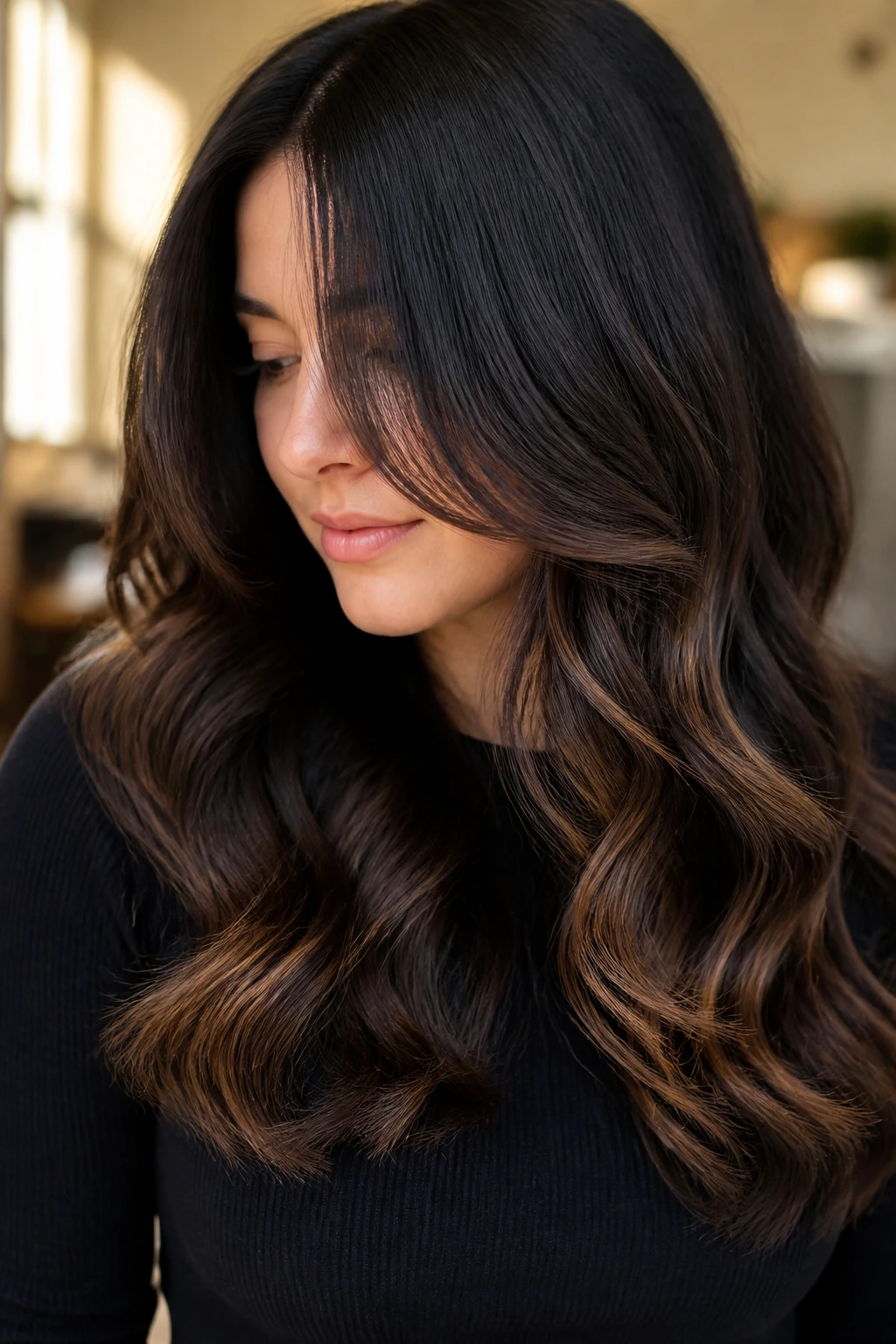
Velvet mocha is dark, smooth, and quietly rich. The caramel stays faint, almost like a haze at the bottom of the hair, which gives the ends a plush finish rather than a flashy one. On waves, that faint lightness still shows up because the texture catches the tone in the curves.
I like this look for people who want brunette hair with a little more shape but don’t want to chase brightness. It’s low-drama in the best way. The color doesn’t fight your outfit or your makeup. It just makes the hair feel fuller.
One sentence, because it matters: this is not the style for someone who wants obvious blonde ends. It’s for someone who wants depth first and light second.
19. Honeyed Layer Ribbon
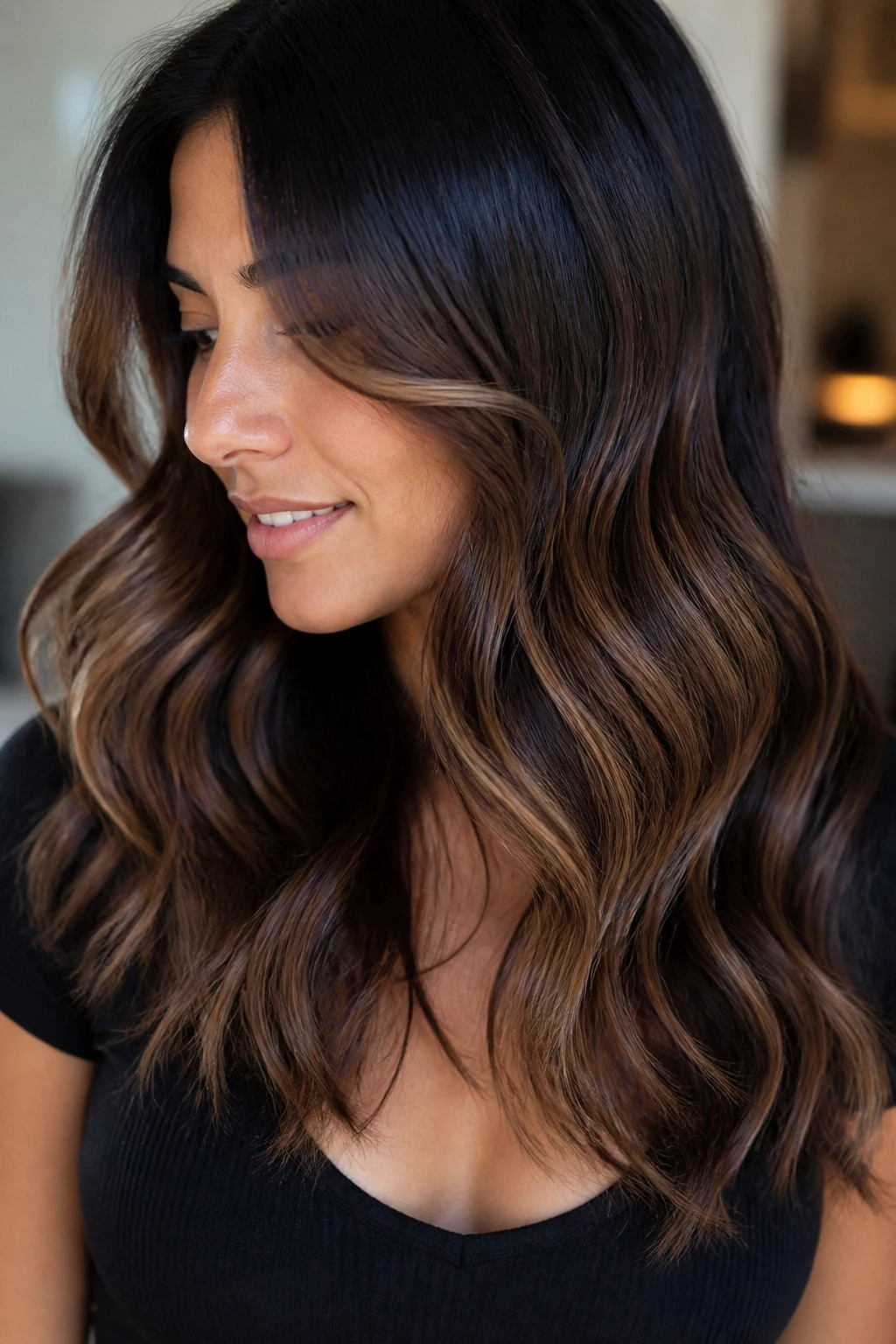
Layered cuts are made for this. The caramel follows the layers, so the brightest pieces land where the hair already moves — around the mid-lengths, around the shoulders, and through the lower bends. The honey tone gives the style a soft glow that looks different every time you shake the hair out.
This is a smart choice if your hair has natural wave but not a ton of density. The layered ribboning adds the illusion of fullness without forcing big color blocks into the cut. And because the caramel follows the shape of the layers, the grow-out stays graceful.
What to ask for
Ask for thin, hand-painted ribbons rather than chunky lightener. On dark bases, chunky pieces can look loud fast. Thin ribbons give you that soft movement that reads better on wavy hair.
20. Dark Roast with Sunlit Tips
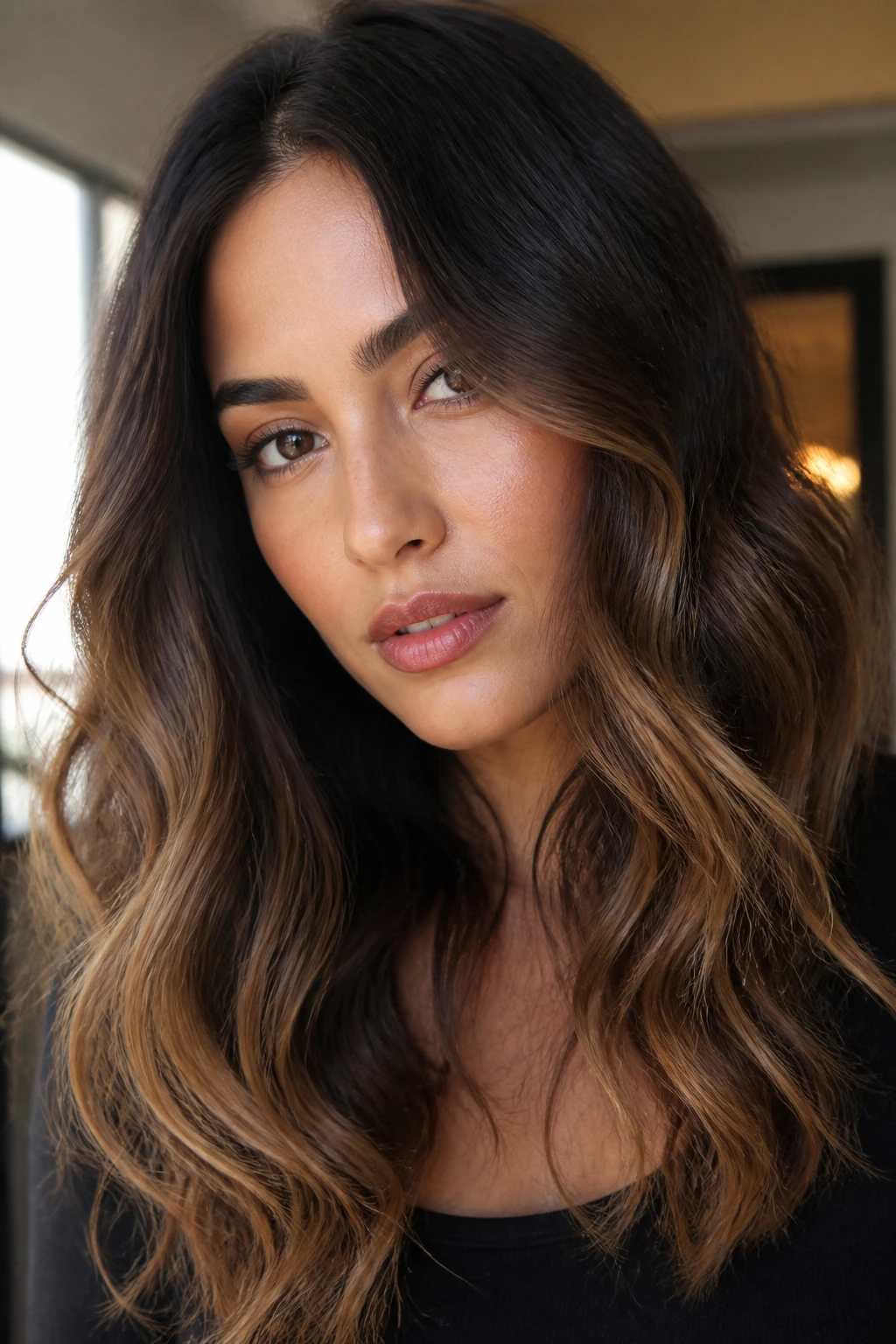
This is the quietest version of the whole group, and maybe my favorite for people who want a change without a full identity shift. The root and mid-lengths stay dark roast brown, then the very ends lighten into sunlit caramel tips that flash only when the waves move. It’s almost secretive.
The point is restraint. You’re not trying to remake the whole head. You’re giving the ends a small lift so they don’t disappear into the rest of the hair. That’s why it works so well on long, wavy brunettes: the color catches at the bottom, where the waves naturally fan out.
If you wear your hair half-up a lot, this version stays visible. If you wear it straight, it softens. If you wear it messy, it still looks intentional. That kind of flexibility is rare, and worth keeping.
Why Brown Caramel Ombre Feels Softer on Wavy Hair
Wavy hair breaks up color lines in a way straight hair usually doesn’t. That sounds simple, but it’s the whole reason brown caramel ombre looks so good on dark bases. Each bend in the wave catches a slightly different piece of the caramel, so the lightness doesn’t sit as one obvious stripe from root to end.
The other advantage is movement. On a dark brunette base, caramel can look a little flat if it’s painted too evenly. Waves solve that problem for free. They lift some sections toward the light and tuck others back into shadow, which makes the blend feel deeper and more expensive-looking without needing more bleach or a bigger contrast.
Colorists usually think in levels here. On a deep brown base, caramel that lands around level 7 or 8 gives enough brightness to show dimension without turning brassy in the first wash. Go much lighter and you need more upkeep; go much darker and the ombre barely registers. The sweet spot is the one that shows up in motion.
There’s also a practical side. Wavy hair doesn’t demand that the blend be perfect in every single section. A few softer ribbons, a gently smudged root, and a glossy finish are often enough. That’s one reason these shades age so well between appointments.
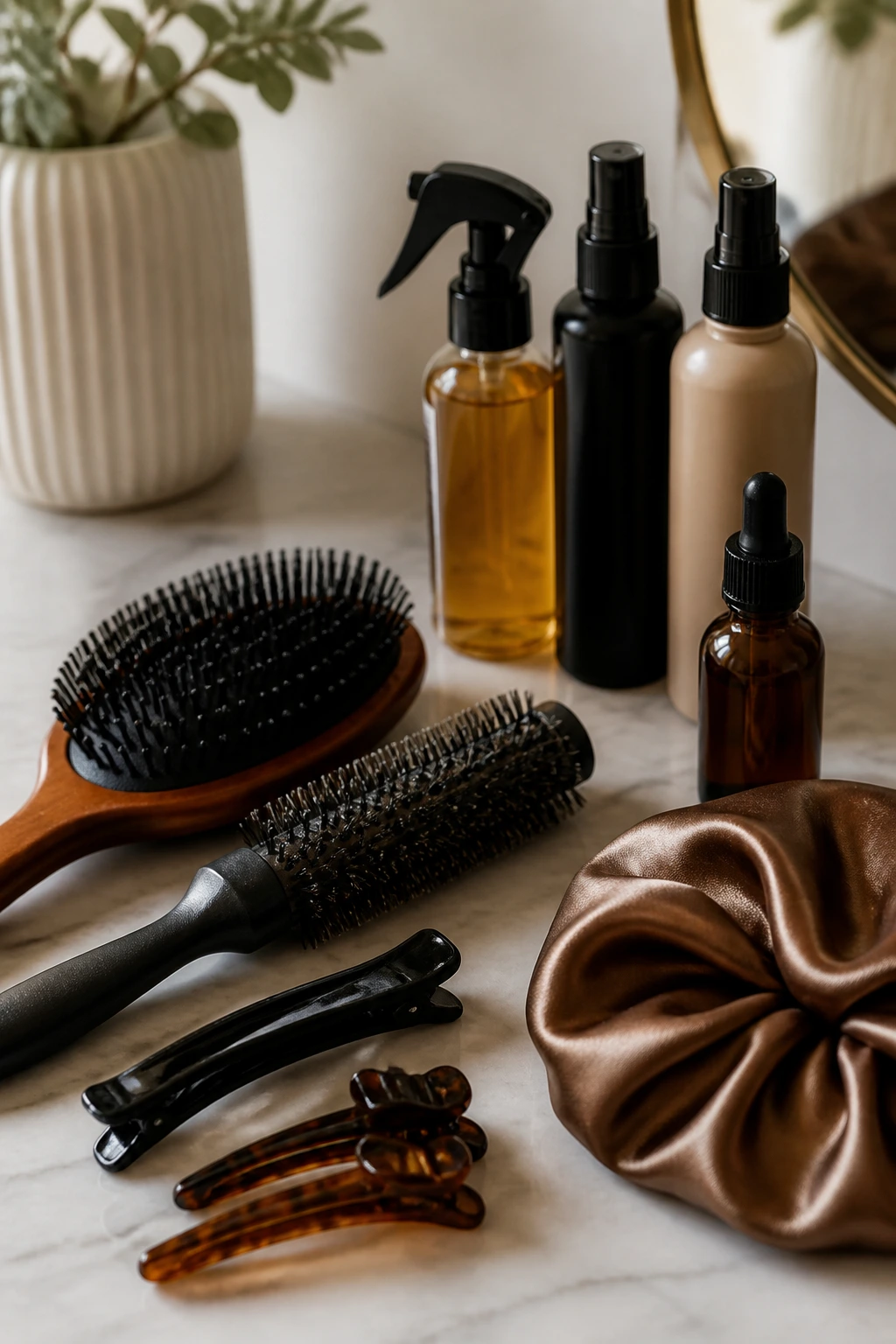
The Brushes, Clips, and Products Worth Having on Hand
You do not need a drawer full of gear to keep caramel ombre looking tidy, but a few things make a real difference.
- 1-inch curling iron or wand: Best for creating loose S-waves that show the color ribbons without making the hair look stiff.
- Heat protectant spray: Non-negotiable before any iron or blow-dry; caramel ends show damage fast.
- Wide-tooth comb: Helps separate waves without pulling the lighter pieces into frizz.
- Color-safe shampoo and conditioner: Keeps the brunette base from fading and the caramel from turning dull after a few washes.
- Glossing treatment or clear shine serum: Useful when the ends start to look dry or the tone loses that soft sheen.
- Sulfate-free cleanser: Especially helpful if your caramel leans warm and you don’t want the color stripping too quickly.
- Bond-building mask: Worth keeping around if you’ve lightened dark hair more than once; it helps the ends feel less brittle.
- Satin pillowcase or bonnet: Saves the wave pattern and cuts down on friction overnight.
- Sectioning clips: Make styling easier when you’re shaping waves around the face.
- Microfiber towel or cotton T-shirt: Better than a rough bath towel for keeping the wave clump clean.
Choosing the Right Caramel Shade for a Dark Base
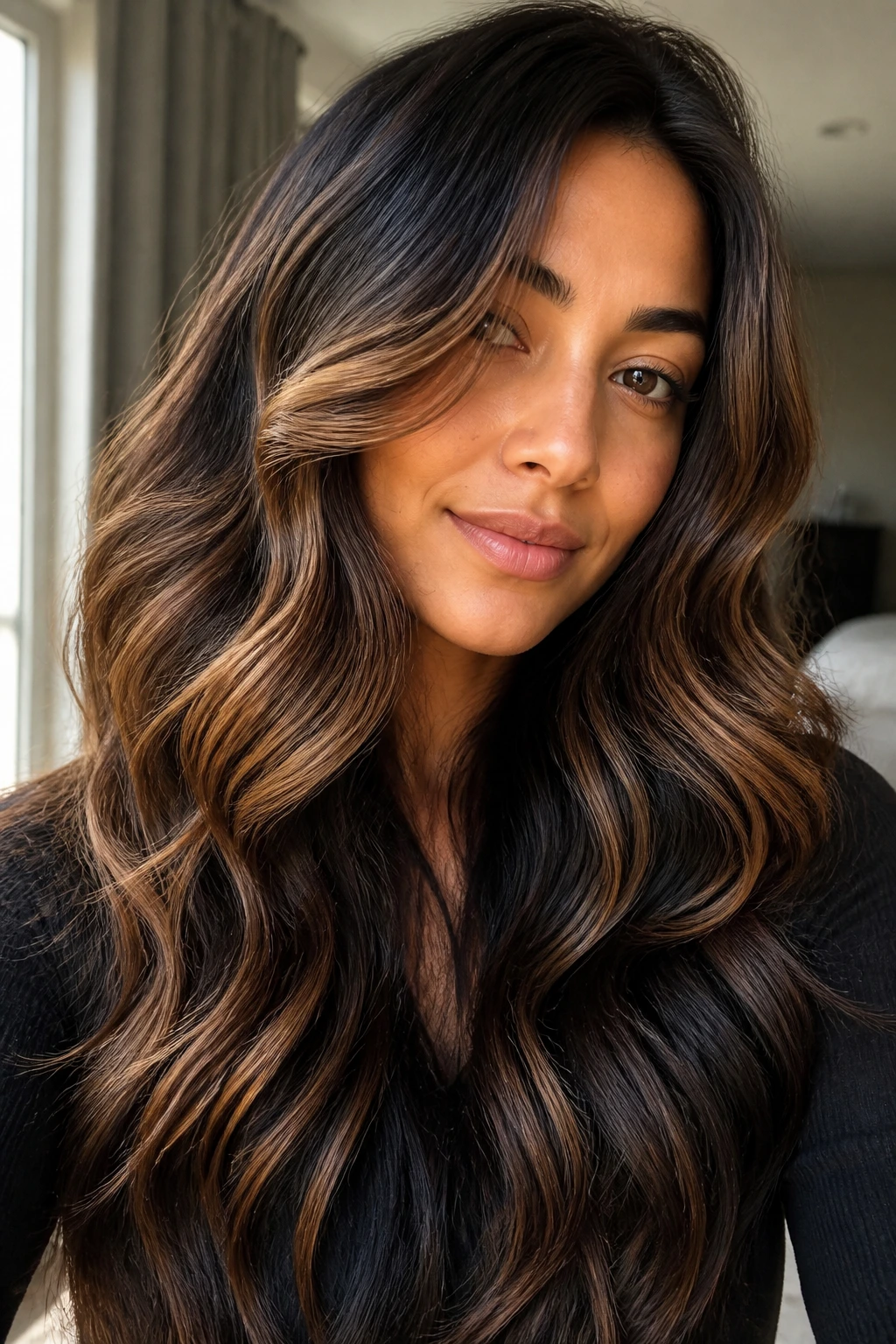
The color that looks gorgeous on one brunette can look orange, murky, or washed out on another. Undertone matters. A lot. If your skin leans warm, golden caramel, maple, and amber usually sit nicely beside it. If your skin leans cool or olive, beige caramel, smoky cocoa, and mushroom brown tend to look calmer.
The base color matters too. A level 3 espresso brunette can handle a softer caramel if you want a rich look with less contrast. A level 4 or 5 dark brown can carry brighter toffee or honey pieces without feeling stark. Once you move into very warm caramel territory on already-warm hair, the finish can tip into brass quickly unless the toner is controlled.
Hair history matters even more than people admit. If your lengths have been colored before, they may lift faster than the roots. That means the ends could grab too much warmth if the application is too heavy-handed. A good colorist will paint around that by keeping the lightener more diffused near the porous spots and using gloss to even things out later.
A simple rule helps: the darker and richer your natural base, the more careful you should be with the tone of the caramel. Don’t chase the brightest ribbon you can find. Chase the one that makes the whole head look intentional.
How to Style the Color So the Ribbons Show Up
Placement: The brightest pieces need a little room near the front and along the outer bends of the hair. If they’re buried too deep, you’ll see them only when the wind behaves. That’s not ideal.
Wave pattern: Loose S-waves show caramel best. Tight curls can crowd the ribbons together and make the color look busier than it really is. A 1-inch iron, brushed out after cooling, usually gives the cleanest finish.
Parting: A middle part makes the transition look centered and symmetrical. A deep side part pushes more light to one side, which can make the face-framing pieces feel brighter and a bit more dramatic.
Heat level: Keep styling tools on the lower side of what your hair can tolerate. Overheated ends turn caramel flat fast. A smoother wave at 300°F is better than a crispy bend at 400°F.
Best match: Long layers, curtain bangs, soft shags, and collarbone lobs all support the color because they create natural breaks where the lighter ribbons can appear. Blunt cuts can work too, but they need more careful placement.
The easiest way to ruin a good ombre is to style it in a way that hides the work. Flat ironed to death? The ribbons disappear. Overcurled? The color gets noisy. Loose, glossy, and a little undone is the sweet spot.
Extra Shine Tricks That Keep the Ends from Looking Flat
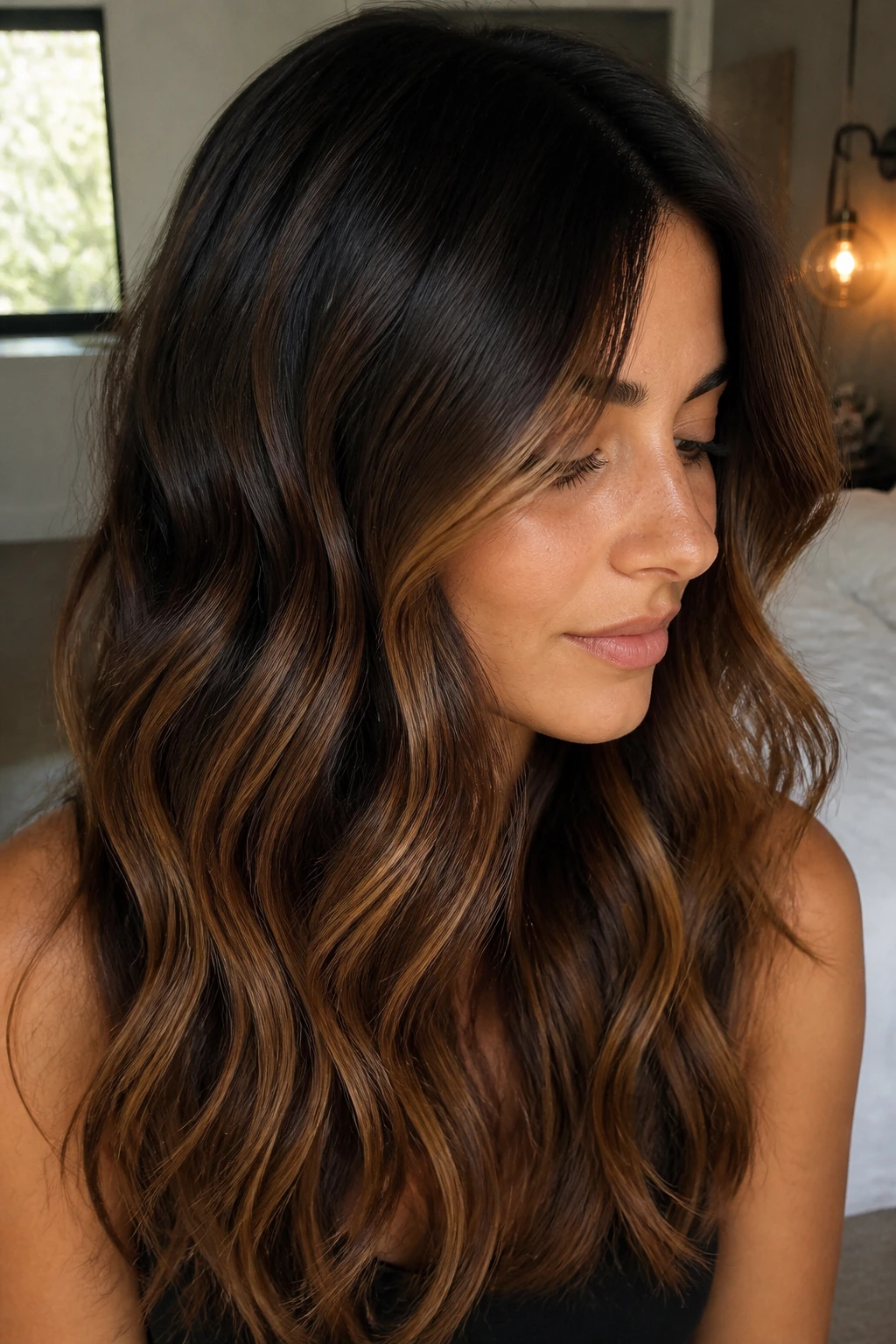
A caramel ombre can lose its charm fast if the ends dry out. Dark roots forgive a lot. Lightened ends do not. So the shine work matters.
Gloss Boost: Ask for or use a clear or beige-brown gloss every few weeks if the caramel starts to look dusty. Gloss doesn’t just add shine; it helps the tone stay soft instead of chalky.
Dimension Boost: If the hair looks good but a little one-note, add a few extra face-framing bends with a wand and pin them until they cool. Those set waves make the lighter pieces appear more defined.
Tone Boost: If the caramel turns too warm, a cool beige glaze can settle it. If it turns flat or muddy, a warm gold gloss can wake it back up. The point is to adjust the tone, not drown it in product.
Cost Saver: You do not need full head lightening every time. A partial refresh around the front and ends often keeps the style alive longer than you’d expect.
Make-It-Yours: If you like soft glam, add a few pearl clips or wear a sleek side tuck. If you want it lived-in, scrunch a tiny bit of lightweight cream into damp hair and let the waves air-dry.
Common Coloring Mistakes That Turn Caramel Patchy
The first mistake is starting the light pieces too high. When caramel sits near the root on dark hair, the whole thing can turn stripey fast. The fix is simple: keep the brightest parts lower and let a root smudge protect the top from harsh contrast.
Second, people often lift the ends too far in pursuit of “more dimension.” That usually backfires. The hair can look dry, especially on wavy textures where frizz makes the lighter ends jump out. A soft level 7 or 8 is enough in most cases.
Third, choosing the wrong warmth can make the whole head look off. Gold caramel on a cool complexion can read orange. Ash-brown caramel on warm skin can look muddy. Match the tone to the face and the base, not to a photo you saved from a different head of hair.
Fourth, styling the waves too tightly hides the blend. You paid for dimension; let the hair move. Brushed-out bends almost always show the color better than polished curls that clump the light pieces together.
Fifth, skipping toner or gloss after the service leaves the caramel raw. That’s where brass creeps in. A clean finish keeps the color buttery, not fried.
Variations and Adaptations to Try
Cool Brunette Smoke: Swap the honey caramel for beige and ash-brown tones if your skin likes cooler shades. This keeps the color soft and muted, which looks especially nice on dark waves with a lot of natural shine.
Honey Money-Piece Refresh: Keep the rest of the hair deep and brighten only the front ribbons. It’s a smaller commitment, easier to maintain, and still gives you that face-brightening effect when the hair is loose or tucked behind the ears.
Copper-Kissed Caramel: Add a tiny red note to the caramel if you want the finish warmer and richer. Use this when the base already has chestnut or auburn undertones; otherwise, it can run orange.
Lob-Length Dip Melt: Keep the ombre concentrated in the bottom third if your hair barely grazes the shoulders. Shorter lengths need a shorter transition, or the color can look crowded.
Low-Maintenance Shadow Melt: Leave more of the natural dark brown in place and soften the ends with a muted toffee glaze. This works best for people who like the idea of color more than the obligation of frequent touch-ups.
Maintenance, Re-Toning, and Grow-Out Timing
Brown caramel ombre ages best when you protect the light ends from the usual suspects: hot water, harsh shampoo, too much ironing, and rough towel drying. Wash in cooler water when you can. Not ice-cold. Just cooler than your shower setting would normally be. That alone can help the tone hold better.
For most brunettes, two to three washes a week is enough to keep the scalp happy without stripping the caramel dry. If your hair gets oily fast, use a gentle cleanser at the root and let the lather rinse through the ends rather than scrubbing the lighter parts directly. That’s where people go wrong; they treat the lengths like the scalp.
A gloss refresh every 4 to 6 weeks keeps the color from turning dull. A more substantial salon touch-up usually lands around 10 to 14 weeks, depending on how bold the lightness is and how fast your hair grows. The darker and softer the ombre, the longer you can push it. The brighter the toffee ends, the more often you’ll want to check in.
If the caramel starts to go orange, don’t reach for purple shampoo first. Purple mainly helps yellow. A blue-toned brunette shampoo or a beige-brown glaze is often a better fix for orange warmth. And if the ends feel dry, skip the heavy clarifying wash for a bit. Let the color breathe.
Weekly conditioning masks help too, especially on wavy hair, which can frizz when the ends lose moisture. Keep the mask on the mid-lengths and ends for 5 to 10 minutes, then rinse until the hair feels smooth, not coated.
Frequently Asked Questions
Will brown caramel ombre work on very dark hair?
Yes, but the finish depends on how much contrast you want. On a deep espresso base, caramel usually looks best when it lifts to a soft level 7 or 8, because that gives visible dimension without making the ends look too blonde or orange.
Do I need highlights, balayage, or both for this look?
Most of these styles use a mix of both. Balayage gives the soft hand-painted sweep, while a few finer highlights add brightness where the waves bend. The best results usually come from combining the two instead of relying on one technique alone.
Is caramel too warm for cool skin tones?
Not if you choose the right caramel. Beige, smoky, and mushroom-brown caramel tones tend to sit better on cool or olive undertones than golden honey shades. The wrong warmth can look brassy, which is why toner matters so much.
How do I keep the color from looking stripey?
Keep the brightest pieces lower, use thin ribbons instead of chunky sections, and style the hair in loose waves. Stripey color usually comes from placement that starts too high or from flat styling that exposes every line at once.
Can I ask for this if my hair is shoulder-length?
Absolutely. You just need a shorter transition. On lobs and shoulder-length cuts, the caramel should concentrate in the lower half or final third so the blend doesn’t feel cramped.
What if my caramel turns orange after a few washes?
That usually means the tone was too warm or the hair lifted too far. Use a blue-based brunette shampoo sparingly, or better yet, book a gloss to bring the shade back into a beige-brown lane. Don’t overdo the blue shampoo; it can make the hair look dull.
Does wavy hair need different placement than straight hair?
Yes. Waves let you spread the brightness in a softer, less obvious way, so you can often keep the light pieces lower and thinner. Straight hair shows the transition more plainly, which means the blend has to be cleaner at every point.
How can I style it without making the waves look crunchy?
Use a light heat protectant, a 1-inch iron at a moderate temperature, and let the curls cool before brushing them out. Finish with a tiny bit of serum on the ends only. If the hair feels stiff, you’ve used too much product or too much heat.
A Soft Finish That Grows Out Well
Brown caramel ombre for dark hair with wavy hair works because it respects the hair you already have. The brunette base stays rich. The caramel shows up where movement gives it room. And the whole thing looks better when it isn’t perfect, which is a refreshing change from color that needs constant fixing.
The best versions are the ones that match your wave pattern instead of fighting it. A soft root smudge, a thoughtful caramel tone, and a few well-placed ribbons around the face usually do more than a heavy-handed lift ever could. If you want a brunette color that feels warm, dimensional, and easy to wear past the first salon day, this is a very good place to start.