



Platinum blonde highlights on warm skin can look expensive, radiant, and sharp—or they can go chalky in a way that makes even a healthy complexion look tired. The difference usually has less to do with the blonde itself and more to do with where the light lands, how much depth is left at the root, and whether the toner leans pearl, champagne, or beige instead of blue-white.
That matters a lot if your skin runs golden, peachy, apricot, or olive. Those undertones can carry platinum beautifully, but they usually want contrast with some softness still left in the hair, not a flat sheet of ice from root to tip. A few strategic foils around the face can do more for the complexion than a whole head of bright pieces that start fighting your skin instead of framing it.
I keep coming back to that because the right platinum is not about making warm skin look cooler. It’s about making the blonde sit next to the skin in a way that feels deliberate: bright where you want lift, deeper where you want dimension, creamy where you want the whole thing to stay believable. The good versions have a clean edge without looking severe. The bad ones look like the toner skipped town.
How Platinum Highlights Stay Flattering on Warm Skin
- Placement beats pure brightness: A thin money piece, a soft halo, or frosted ends can wake up the face without flooding the whole head with icy color.
- Pearl and champagne tones are your friends: These softer platinum families echo warm undertones better than stark silver-white.
- Depth keeps the complexion alive: A root shadow, beige lowlight, or darker interior panel stops the blonde from flattening out warm skin.
- Texture changes everything: Waves, curls, and shags break up the light so platinum reads like movement, not a paint job.
- Maintenance should match the placement: A subtle face frame can grow out with less drama than a full-head frost, and that’s worth knowing before you book.
1. Soft Champagne Money Piece
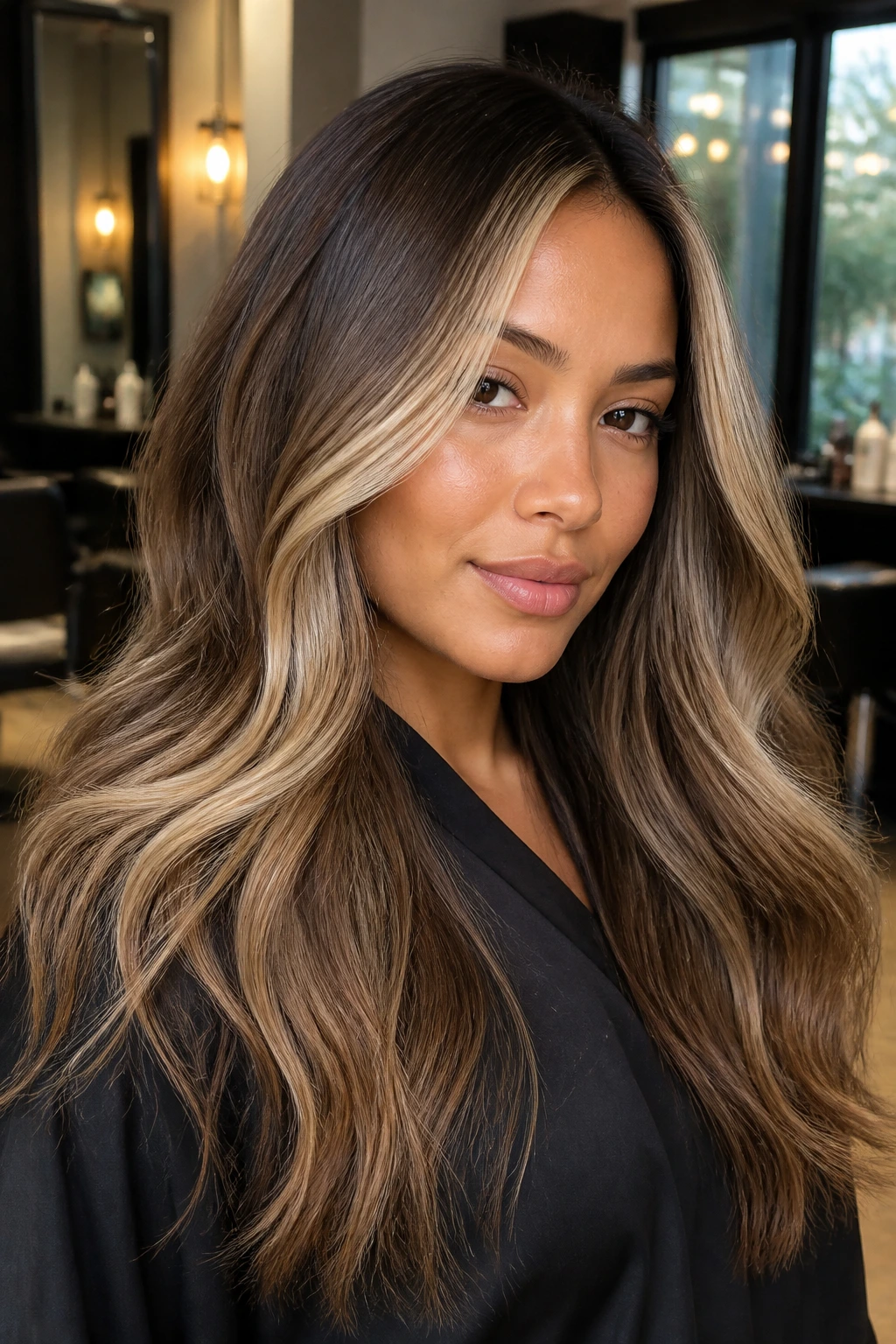
A soft champagne money piece is the easiest place to start if you want platinum blonde highlights for warm skin tones without committing to a full head of bright pieces. It puts the lightest color right around the hairline, where it lifts the face and gives the cheekbones a little more shape. The rest of the hair can stay deeper, which is exactly why this works so well.
The champagne tone matters. It sits between platinum and beige, so the blonde still looks bright but doesn’t turn the skin flat or chalky. I like this version on medium to deep warm undertones, especially if the natural base is brunette and the eyes already have some warmth in them.
Why It Works
The money piece does the visual heavy lifting in only two to four front foils on each side, so you get a strong effect without over-lightening the entire head. It also grows out cleanly because the root area stays darker and the contrast is intentional, not accidental.
Quick Notes
- Best for oval, heart, and round faces
- Looks sharp with a middle part or a soft off-center part
- Needs toner refreshes every 4 to 6 weeks if you want the champagne tone to stay clean
One small tip: ask for the front pieces to be painted slightly wider at the cheekbone than at the part; that little flare keeps the brightness from looking pinched at the roots.
2. Rooted Pearl Balayage
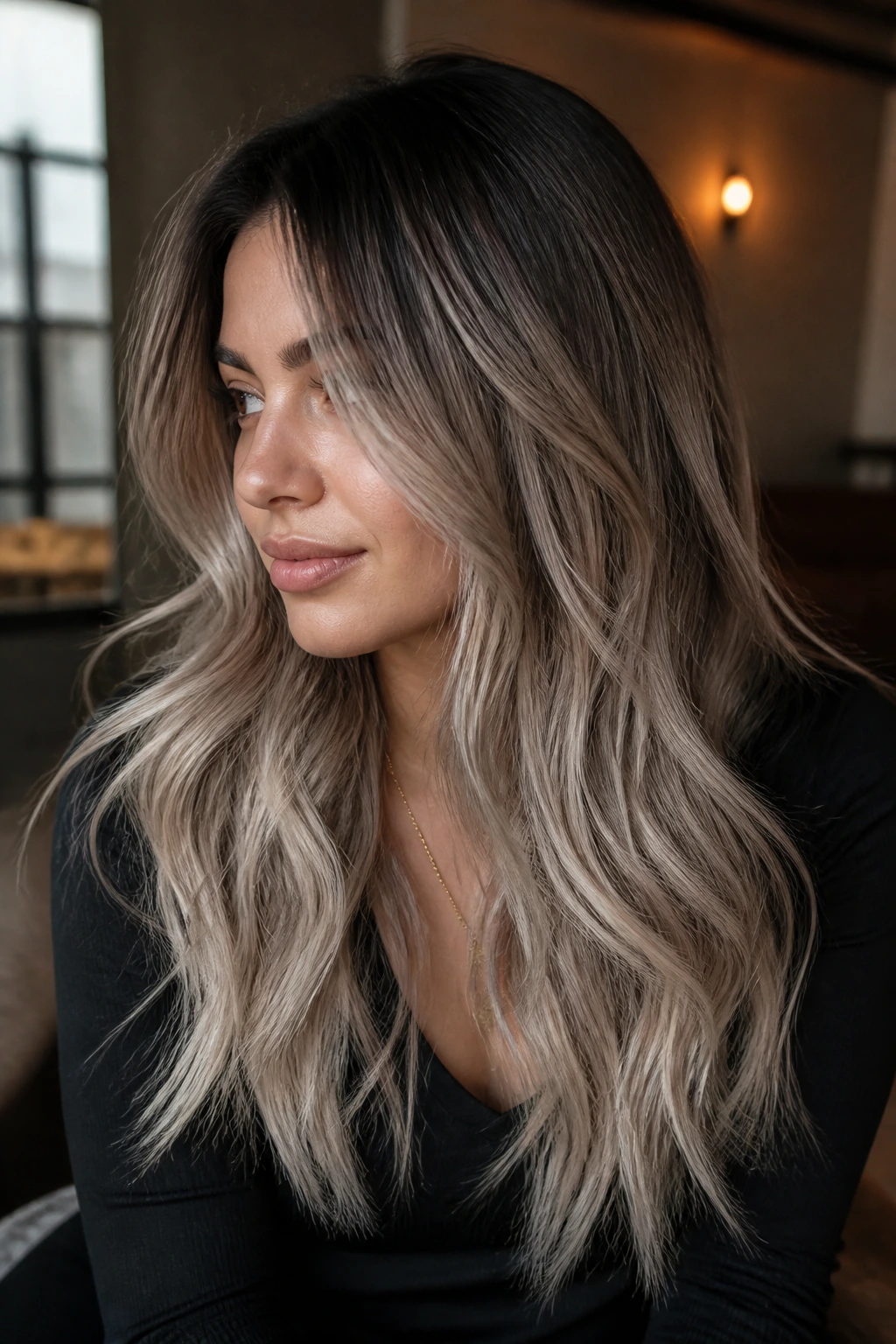
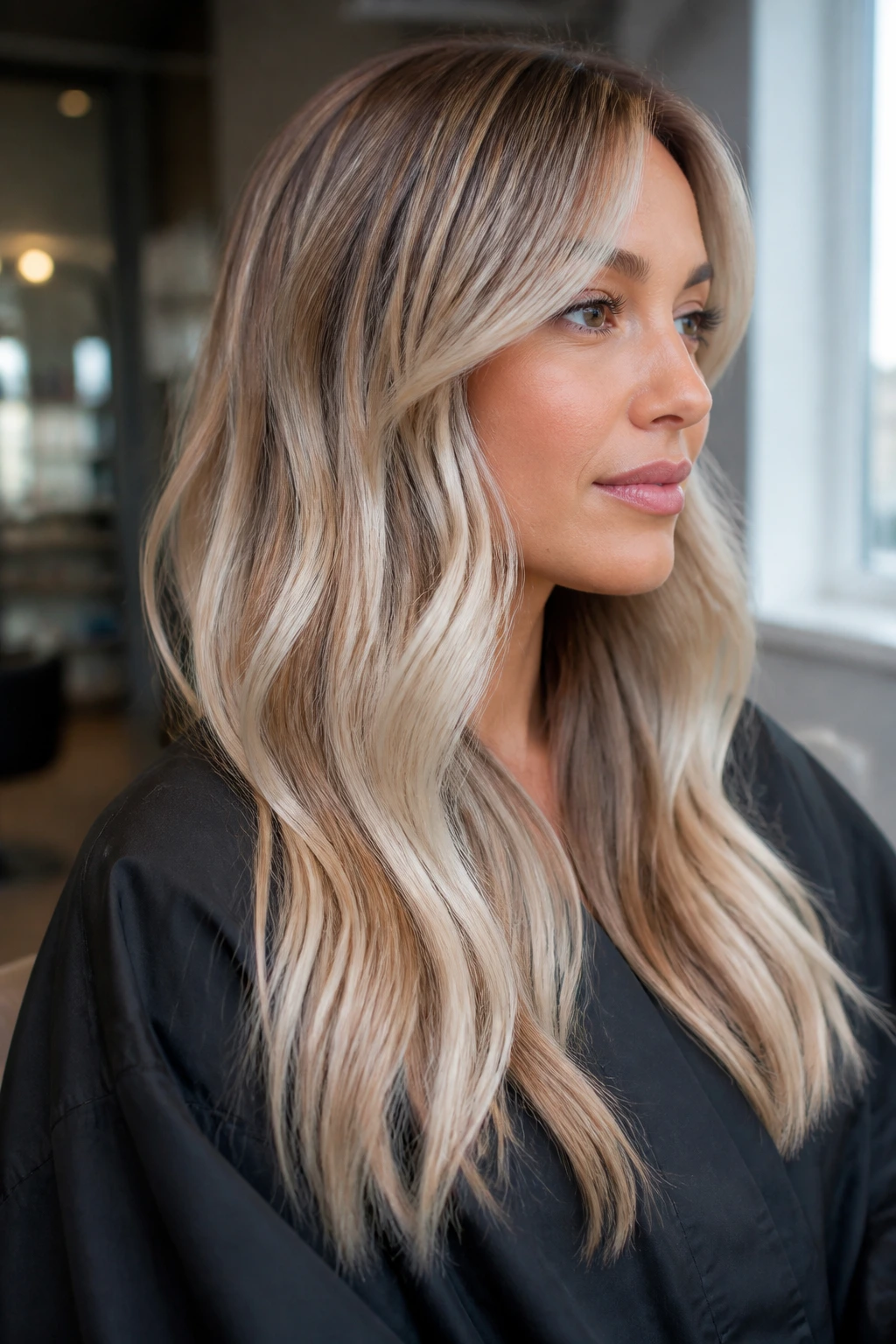
Why does a rooted pearl balayage look so expensive on warm skin? Because the dark base acts like an outline around the lighter pieces, and the pearl toner softens the lift just enough that the blonde doesn’t fight golden undertones. The result is bright, but not blinding.
This one is for people who want movement through the lengths, not a loud stripe around the face. The balayage placement keeps the platinum pieces feathered and diffused, while the root shadow gives the whole thing a little breathing room. On warm skin, that shadow is not a flaw. It’s the reason the color reads polished instead of harsh.
How to wear it
Loose waves show this best because the lifted pieces bend through the hair instead of sitting in one obvious band. If your hair is straight, keep the ends blunt enough to hold the contrast. Too much layering can make the blonde scatter and lose its shape.
What to ask for
- A soft root melt, not a hard line
- Pearl or neutral-platinum toner
- Brightness concentrated from mid-lengths down
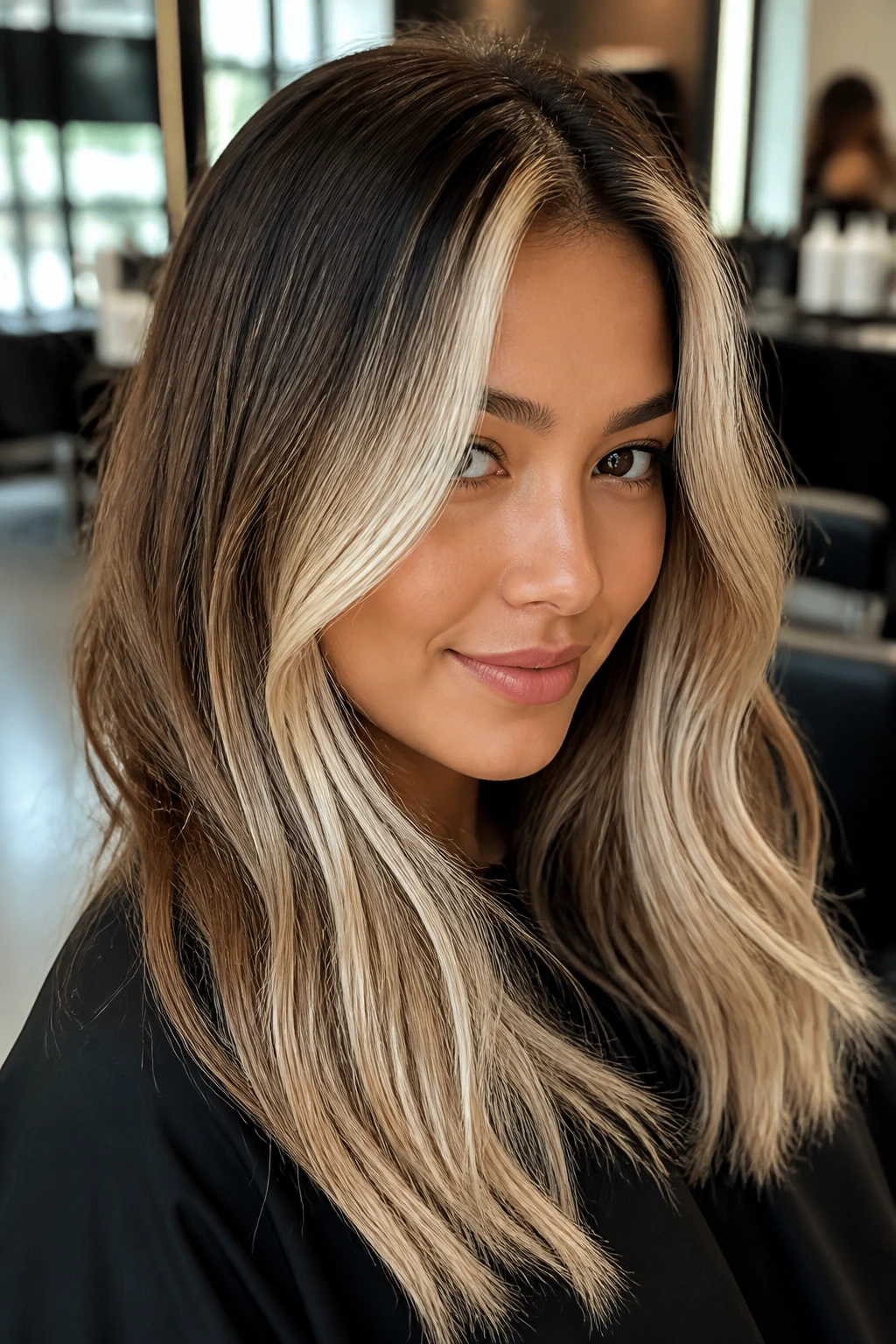
3. Beige-Blend Face Frame
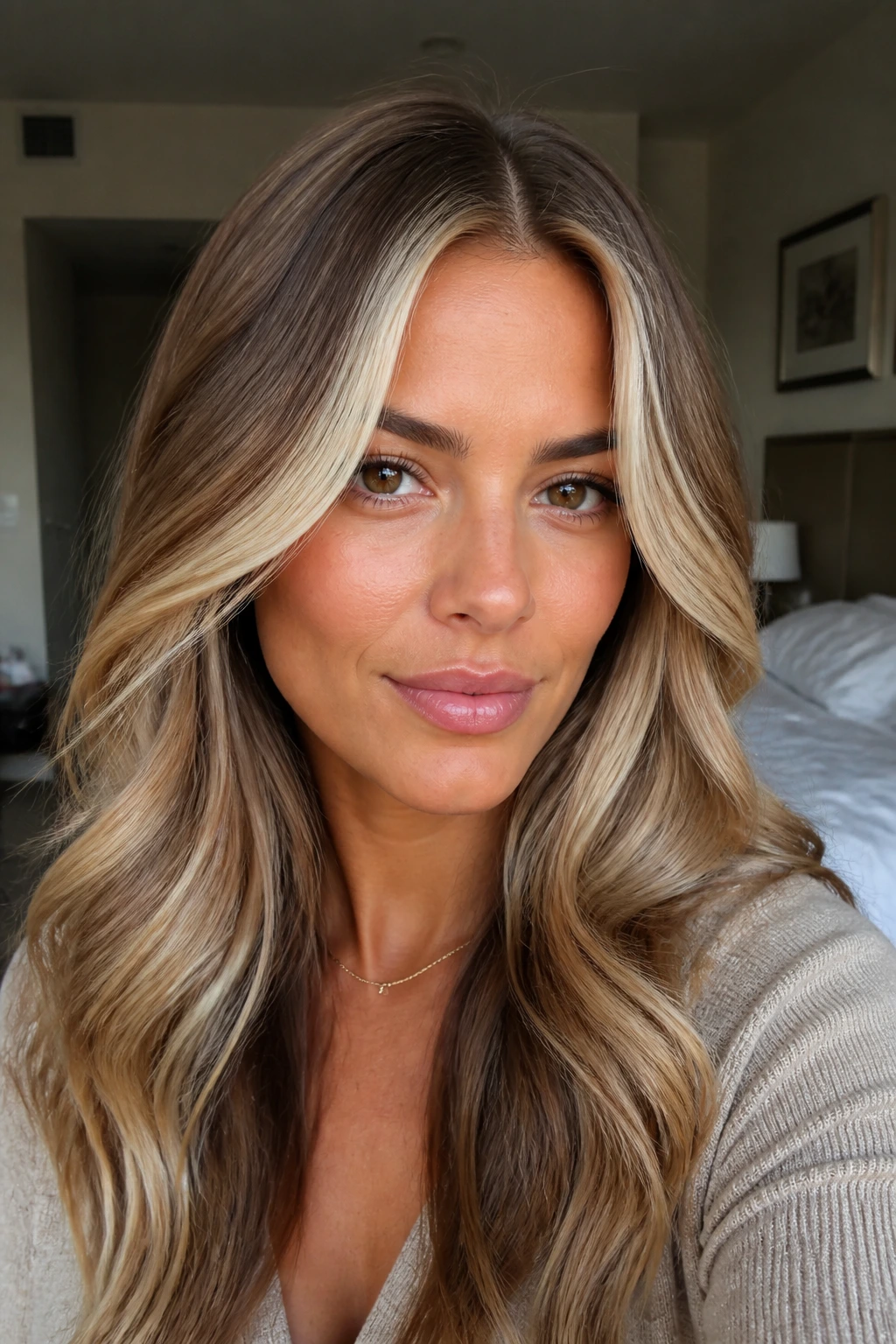
A beige-blend face frame is the version I’d point warm-skinned clients toward when they say, “I want platinum, but I do not want to look washed out.” That sentence comes up a lot, and it makes sense. Beige keeps the brightness wearable. Platinum gives it lift. Put them together near the face, and you get light without the glare.
This style works especially well if your base color is chestnut, dark blonde, or light brown. The face frame can be just two panels or a thicker sweep through the temples, depending on how bold you want it. The beige glaze is the quiet part that makes the whole thing behave.
A subtle side effect: it also plays well with warm makeup. Peach blush, soft bronze, and a neutral lip keep the face in the same family as the hair. That harmony matters more than people think.
4. Icy Babylights on a Honey Brown Base
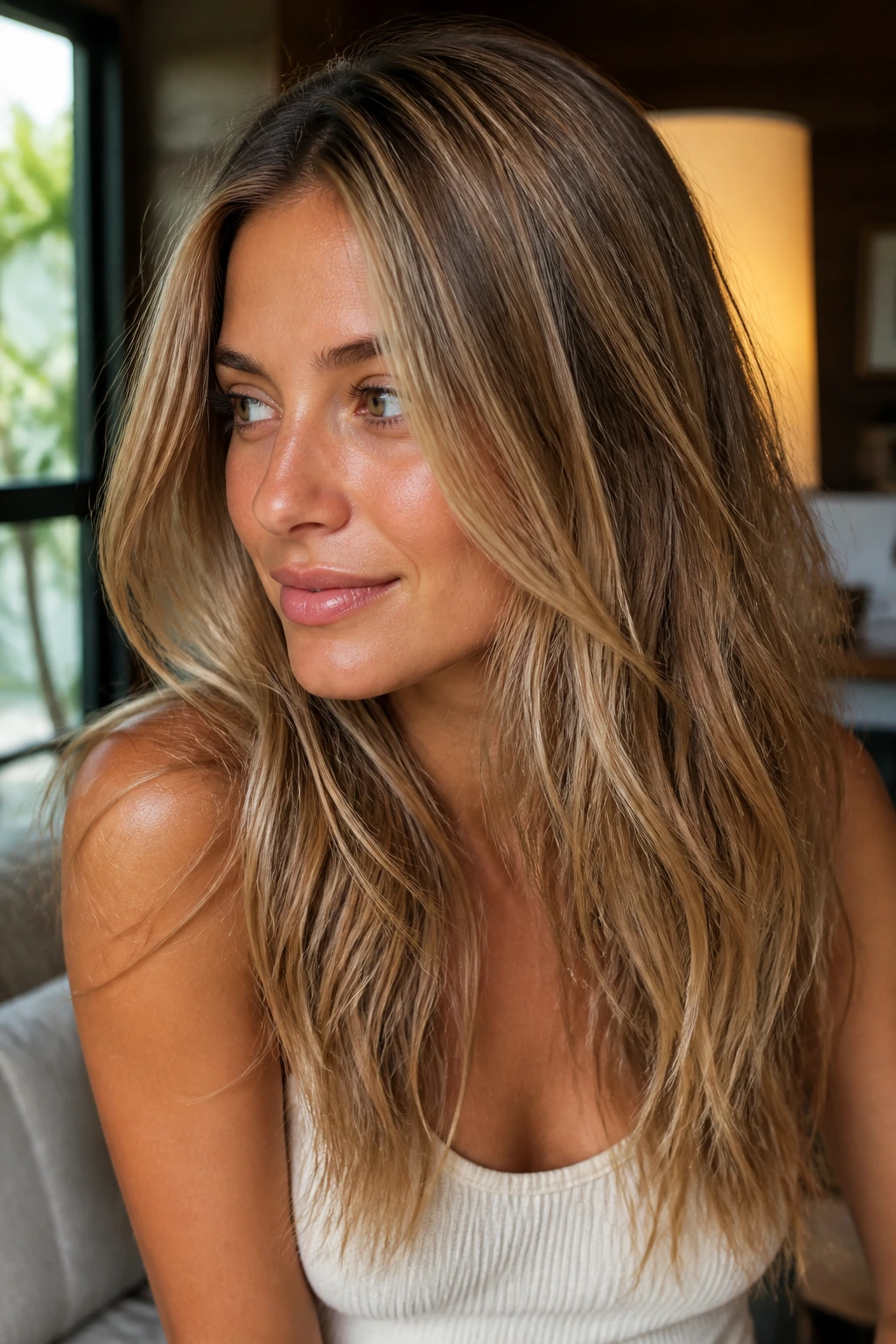
Babylights are tiny, fine foils, and on a honey brown base they give the hair that expensive, natural-looking shimmer that never tries too hard. The beauty here is scale. The pieces are thin enough that the platinum doesn’t take over; it just flickers through the hair when light hits it.
This is one of my favorite options for warm skin because the honey base keeps the complexion grounded. You get platinum energy without losing the warmth that makes skin look healthy. If the foils are placed around the part, crown, and top layers, the effect is lighter than a balayage but still much softer than chunky highlights.
The trick is to keep the toner clean, not blue. A cooler pearl or cream toner gives the light pieces that frosted look while the honey underneath keeps the face from going flat. It’s a good middle path when you want brightness but not drama.
5. Platinum Ribbon Highlights on Long Layers
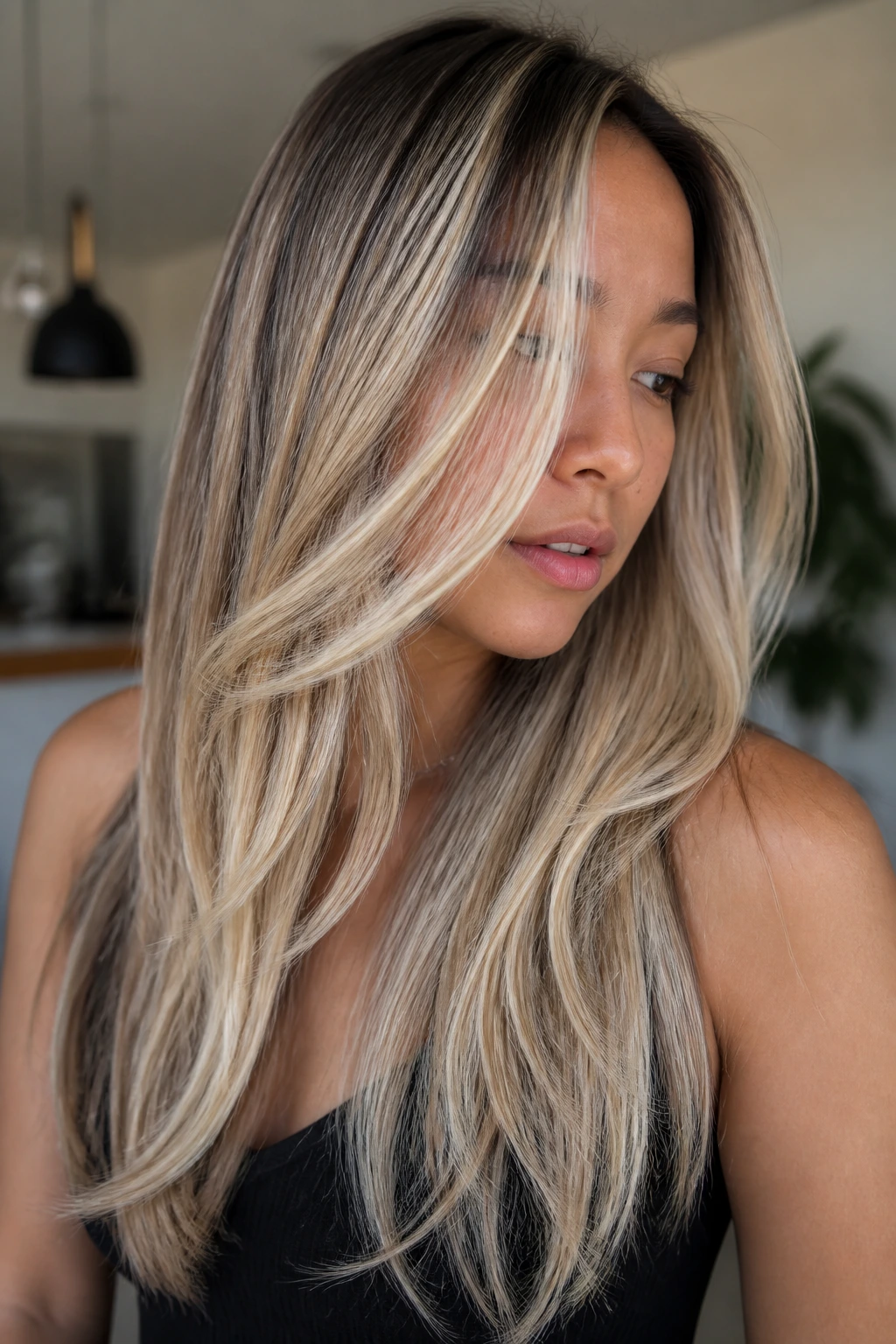
Long layers love ribbon highlights because the shape of the cut gives the color somewhere to move. Instead of tiny specks of blonde, you get longer, sleeker slices that bend through the hair and show up when the hair swings. On warm skin, that movement helps the platinum feel intentional rather than overexposed.
Unlike very fine babylights, ribbon highlights are bolder. The placement is a little wider, the lift reads faster, and the contrast shows up in photos and in daylight. That can be a good thing if your features are strong and your skin has golden depth. The longer pieces frame the face without flooding it.
Best styling match
- Soft blowout with a round brush
- Big waves from a 1.25-inch iron
- A center part if you want symmetry, or a side part if you want the pieces to cascade
My bias: this is one of the few platinum looks that actually gets better as the hair grows a little. The ribbons loosen up and start looking expensive instead of fresh-from-the-chair strict.
6. Platinum Pixie Frost
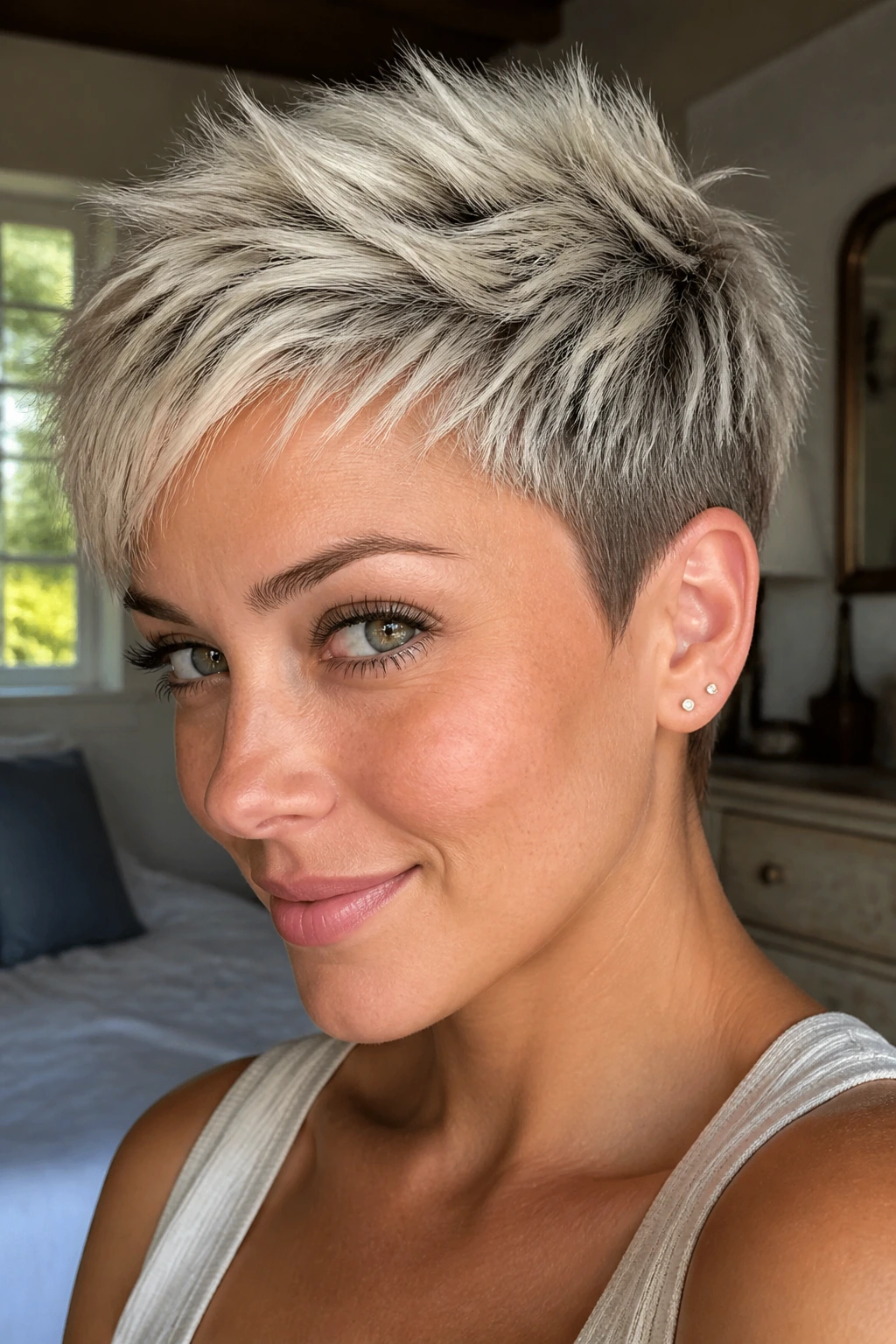
A pixie cut can carry platinum better than a lot of longer shapes because there’s nowhere for the color to hide. Every piece is visible, so the highlights need to be clean, crisp, and placed with a light hand. On warm skin, that means keeping the top bright and the sides a shade deeper so the face doesn’t disappear into the blonde.
The best version of this look usually has brighter texture on the crown and fringe, with softer pieces at the temples. That keeps the cut from becoming a helmet of light. It also makes the face look lifted, which is handy when the hair is cropped short and every line matters.
Maintenance is the catch. Short hair shows regrowth fast, especially around the hairline. If you like the look of a fresh edge, you’ll need trims and toner more often than you would with a lob or layered cut. Worth it, though, if you like hair with attitude.
7. Creamy Lob with Frosted Ends
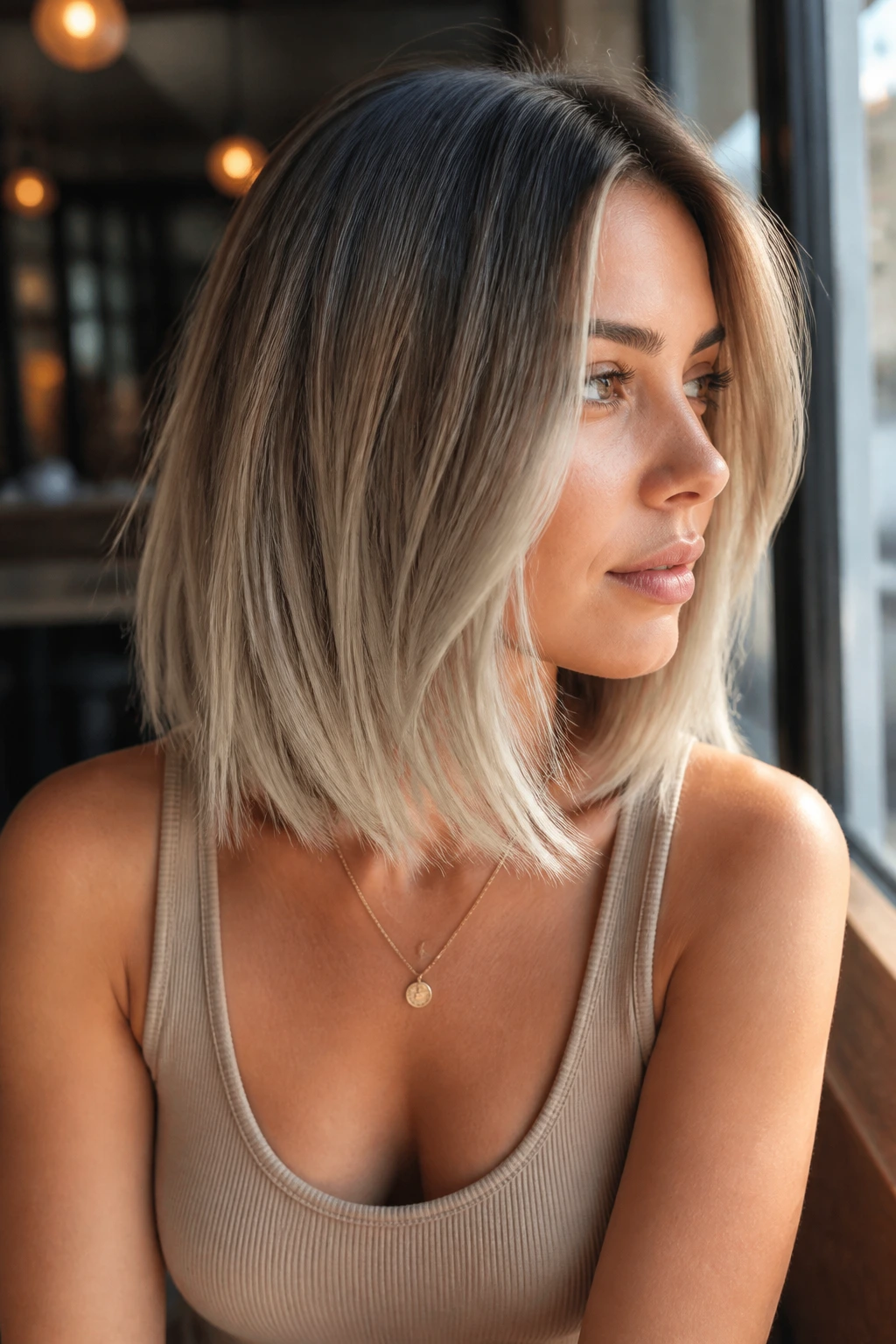
Can platinum blonde highlights work when you do not want brightness near the roots? Absolutely. A creamy lob with frosted ends gives warm skin a clean frame without turning the whole top section icy. The eye goes to the ends first, which is exactly what makes the style feel airy instead of heavy.
This one is good for shoulder-length cuts because the lob shape already gives the hair a sharp line. Frosting the lower few inches adds movement and keeps the cut from looking too one-note. The creamy toner is the difference between a soft finish and a sterile one.
I like this on warm skin when the wearer wants a low-drama grow-out. You can keep the root area deeper, let the mid-lengths blend, and make the ends carry the brightness. That balance tends to age well between salon visits.
8. Snowy Curtain Bangs
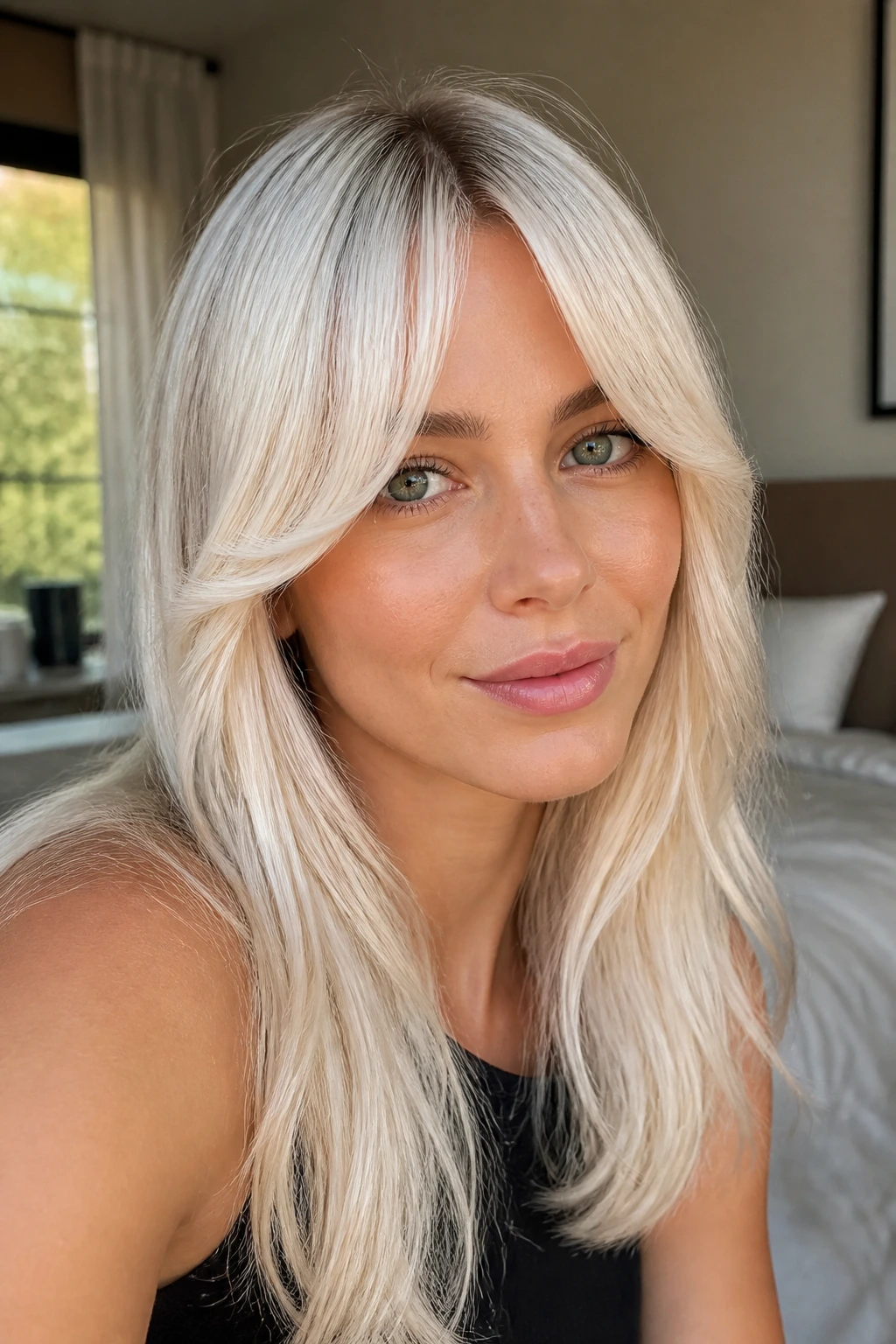
Curtain bangs are a tiny canvas, which is part of the appeal. You can test a platinum look there without committing the whole head to bleach, and the effect lands right where people look first. On warm skin, snowy curtain bangs should lean pearl or cream, not white-blue, or they can make the forehead area read a little stark.
The cut does a lot of work here. Because the bangs part in the center and sweep outward, the platinum has a soft drape instead of a harsh line. That shape frames the eyes and cheekbones while leaving the rest of the hair grounded.
What helps this style
- Soft blow-drying with a round brush
- A light, flexible spray, not a stiff helmet of hairspray
- A toner that stays neutral rather than ash-heavy
A fringe like this can be a nice entry point if you want to see how platinum behaves against your skin before lightening the lengths.
9. Peekaboo Platinum Panels
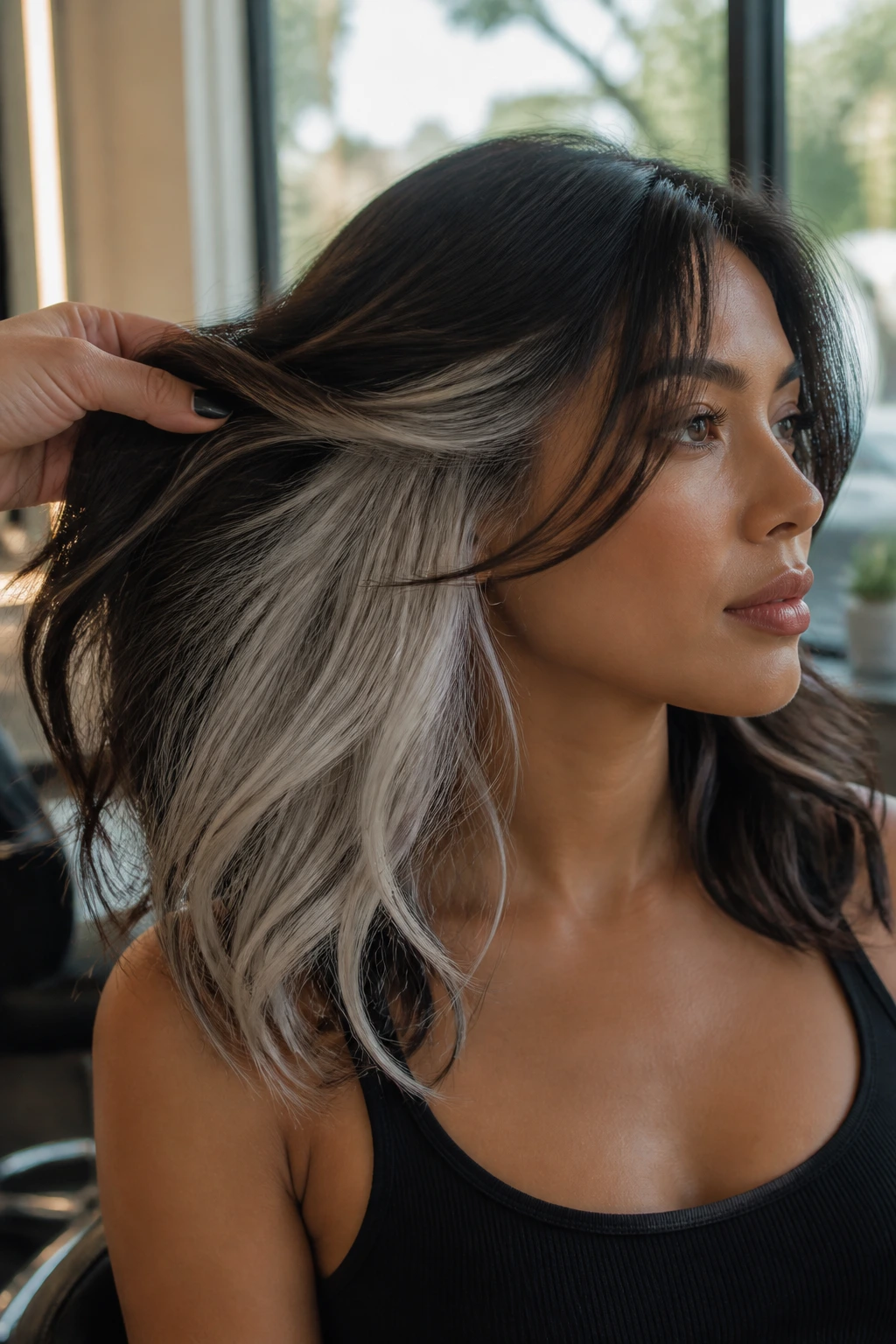
Peekaboo platinum is for the person who wants the surprise, not the full announcement. The bright sections live under the top layer or deeper inside the haircut, so they flash when the hair moves and disappear when it falls flat. That hidden placement is a gift for warm skin because it lets the brightness exist without constantly sitting beside the face.
This look is underrated. It’s cleaner than chunky highlights and more playful than a classic balayage. If your workplace is conservative or you just do not want the upkeep of visible roots, peekaboo panels make sense. They give you brightness where you can see it in motion, not all day every day.
The best part is how customizable it is. A few panels under the crown give a softer shimmer. More panels around the nape and interior layers create a bigger color shift when you tie your hair up.
10. Mushroom Blonde with Platinum Veil
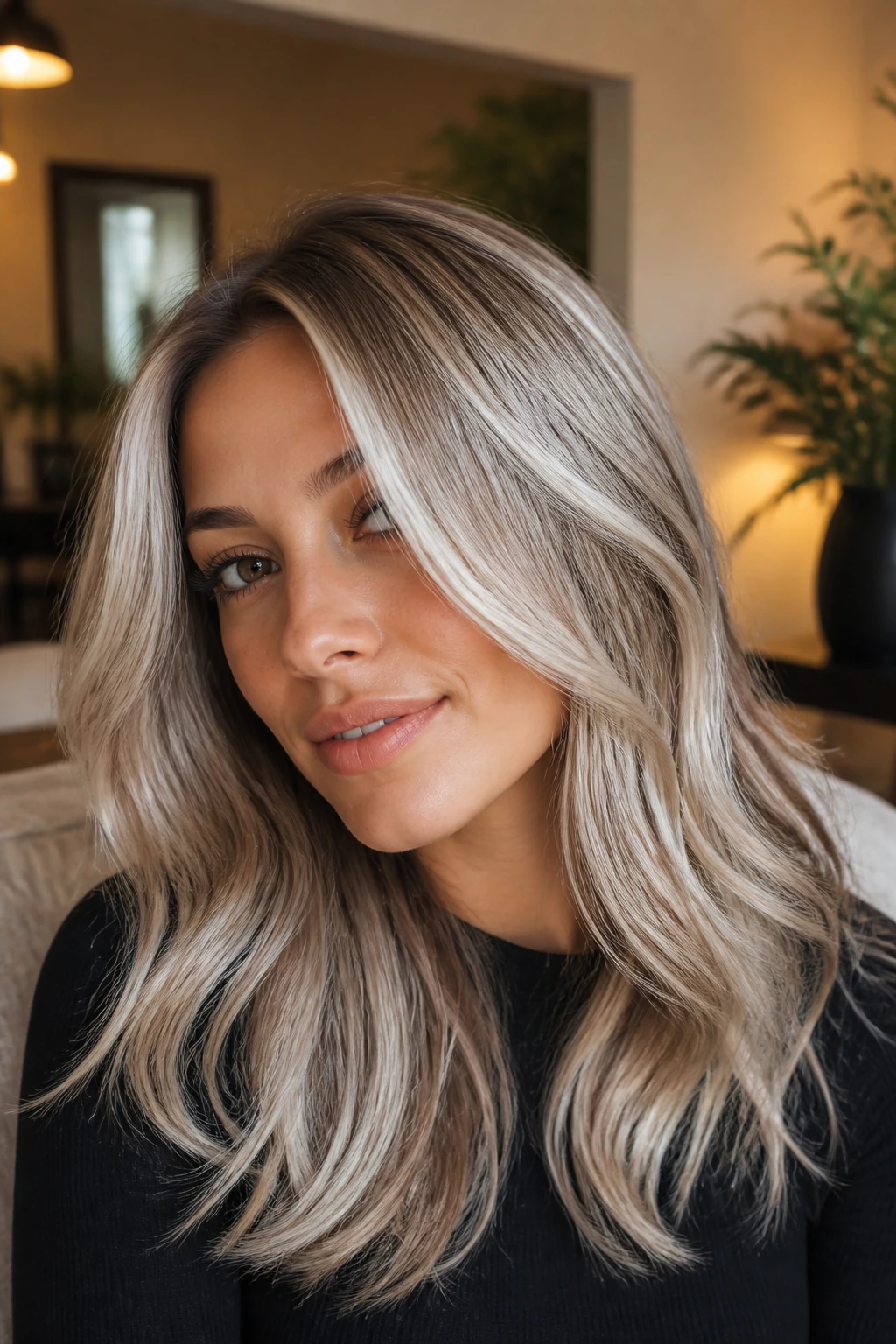
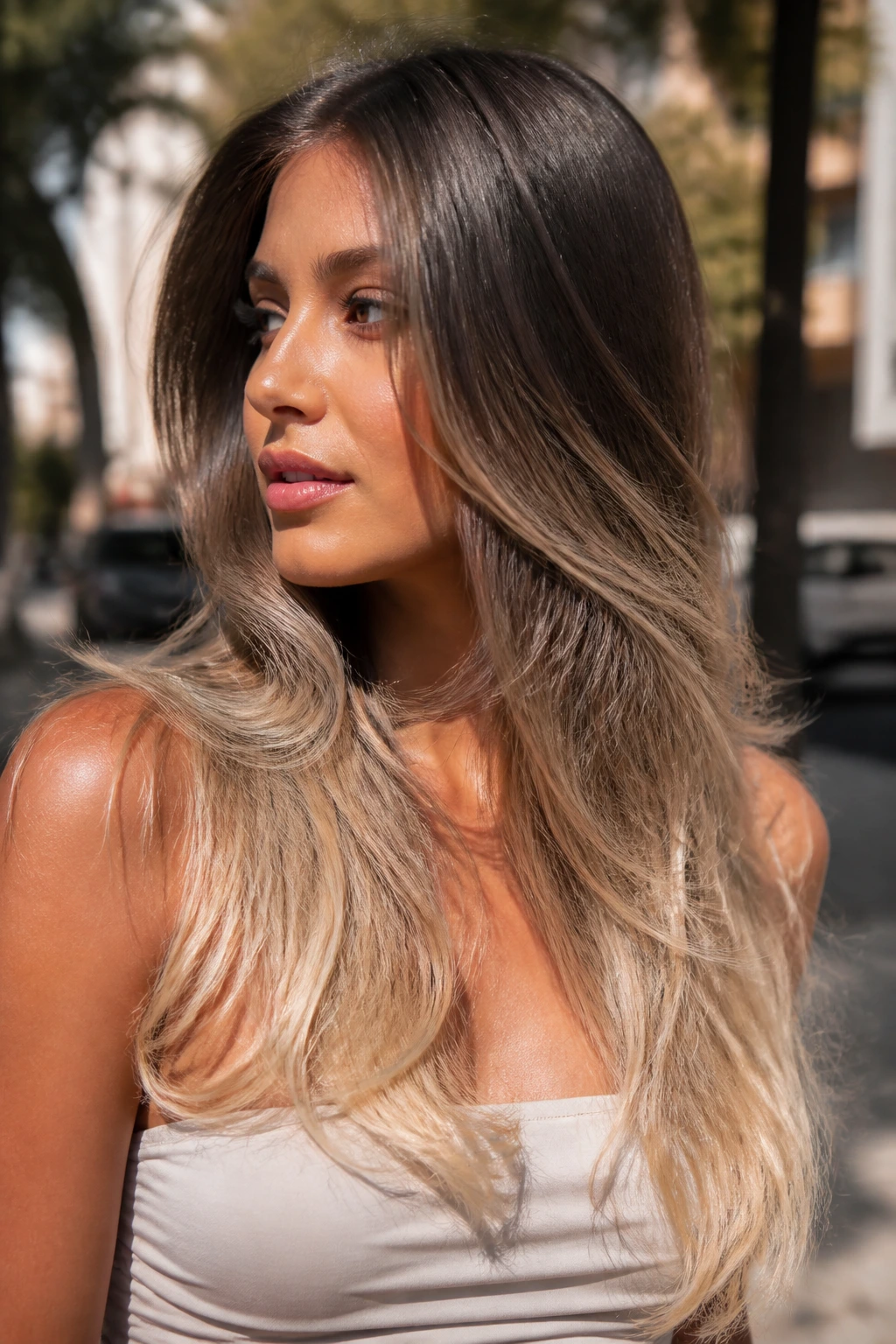
Mushroom blonde sounds cooler than it usually wears in real life. The trick is not to drown warm skin in ash; it’s to keep the mushroom base subdued and then lay a platinum veil over the top layers so the whole thing still has light. Used this way, the cooler base gives the blonde depth while the veil gives it lift.
This version suits people who like a muted finish more than a high-gloss blonde. If your skin leans olive, it can be especially flattering because the softness of the base keeps the face from going sallow. But the platinum pieces need to stay creamy, not gray. Gray is where this style goes wrong.
The veil effect works best when the top layers are the lightest and the underside stays richer. That contrast lets the color move when the hair swings, which is a lot more interesting than one flat tone.
11. Vanilla Platinum Dimension
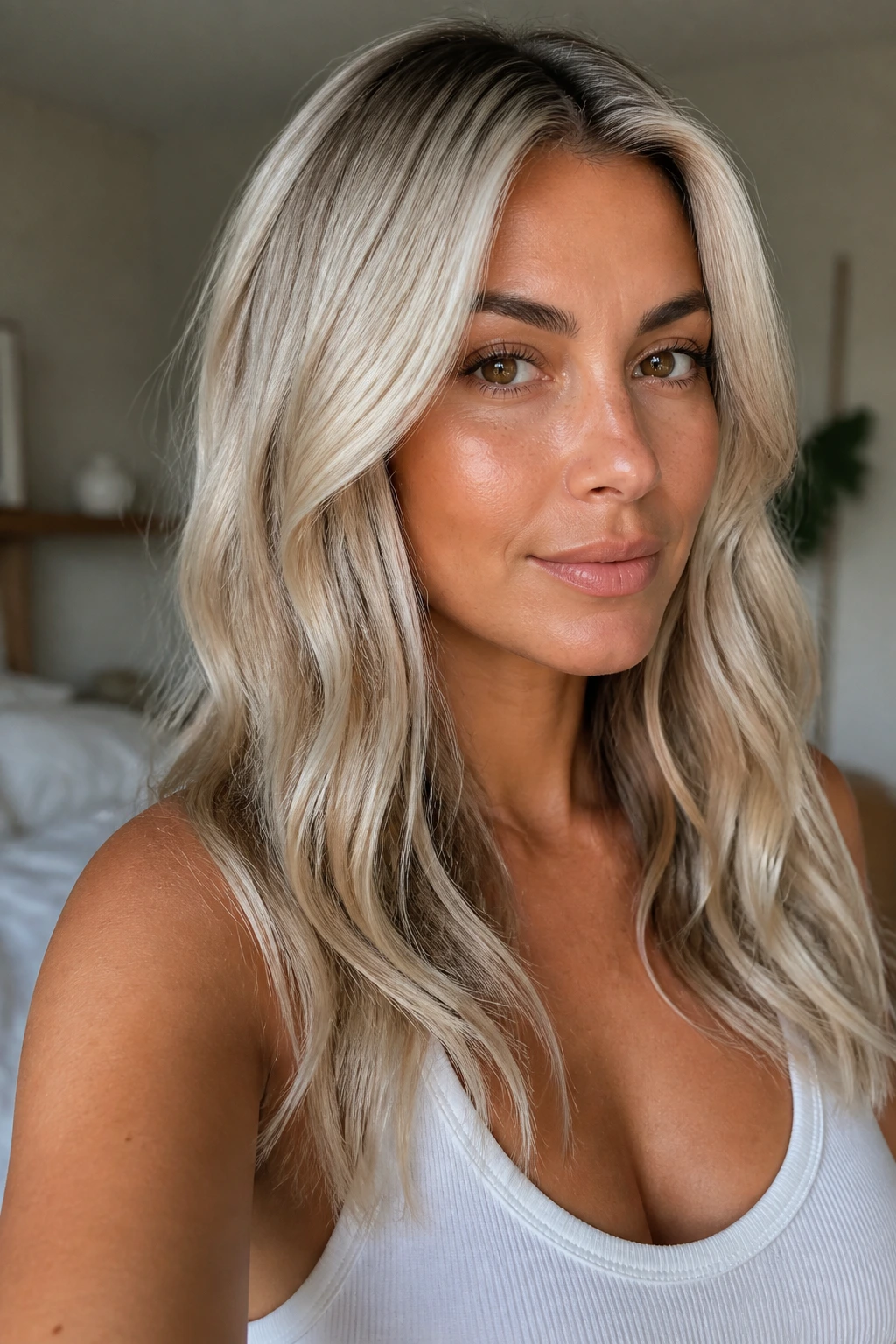
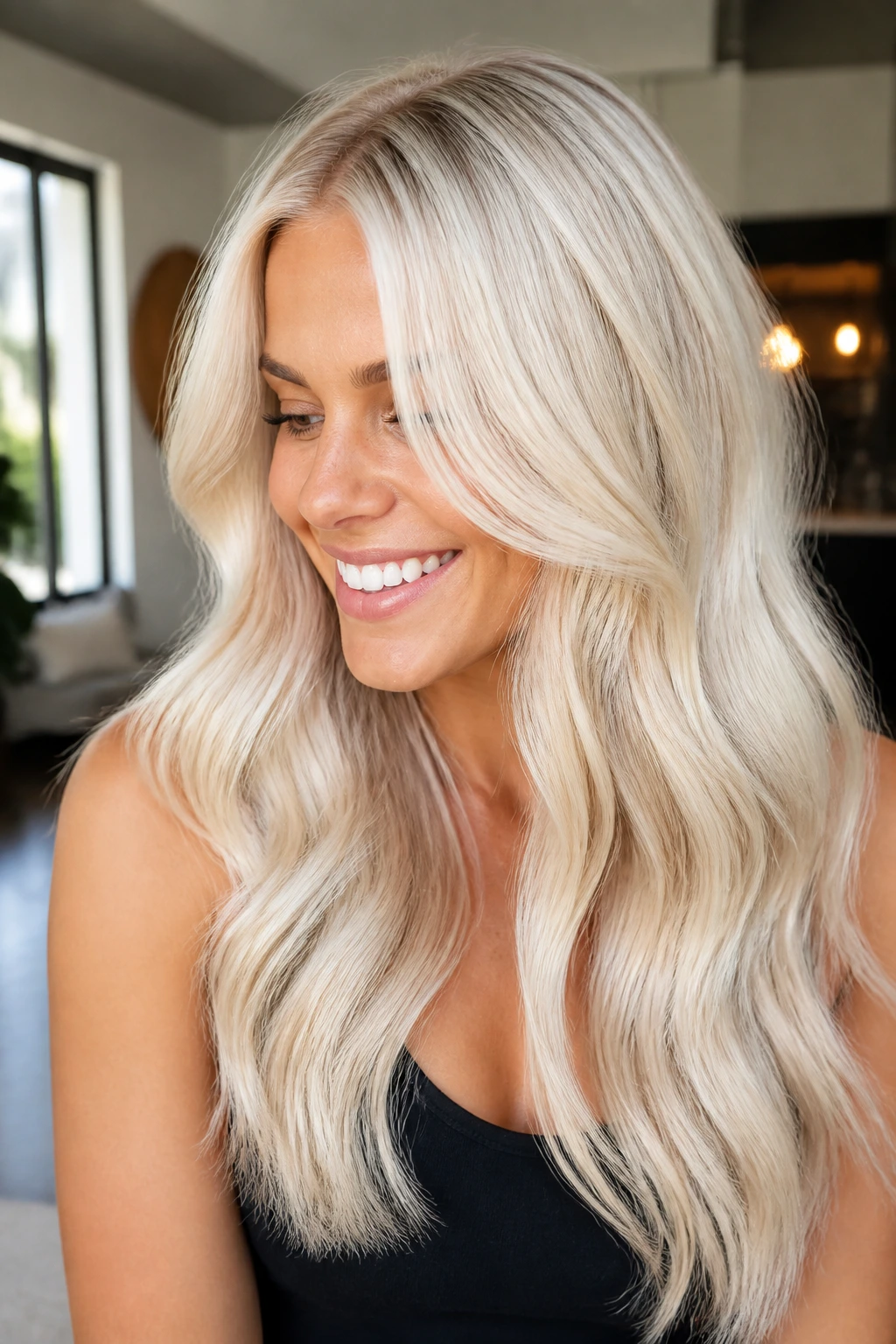
Vanilla platinum is the creamy cousin of pure ice blonde, and that’s exactly why it suits warm skin so well. It keeps the brightness high but takes the edge off the coolness. Think less chrome, more whipped cream with a little sheen to it.
Dimension matters here. If everything is lifted to the same level and toned the same way, the color can look dull even when it’s technically light. A few deeper panels underneath, plus a vanilla toner on the top layers, gives the blonde room to breathe.
I’d reach for this on finer hair, where too much contrast can make the ends look thin. The creamy tone makes the strands look fuller, and the warmth in the skin doesn’t have to compete with a brutal white cast.
12. Frosted Beach Waves
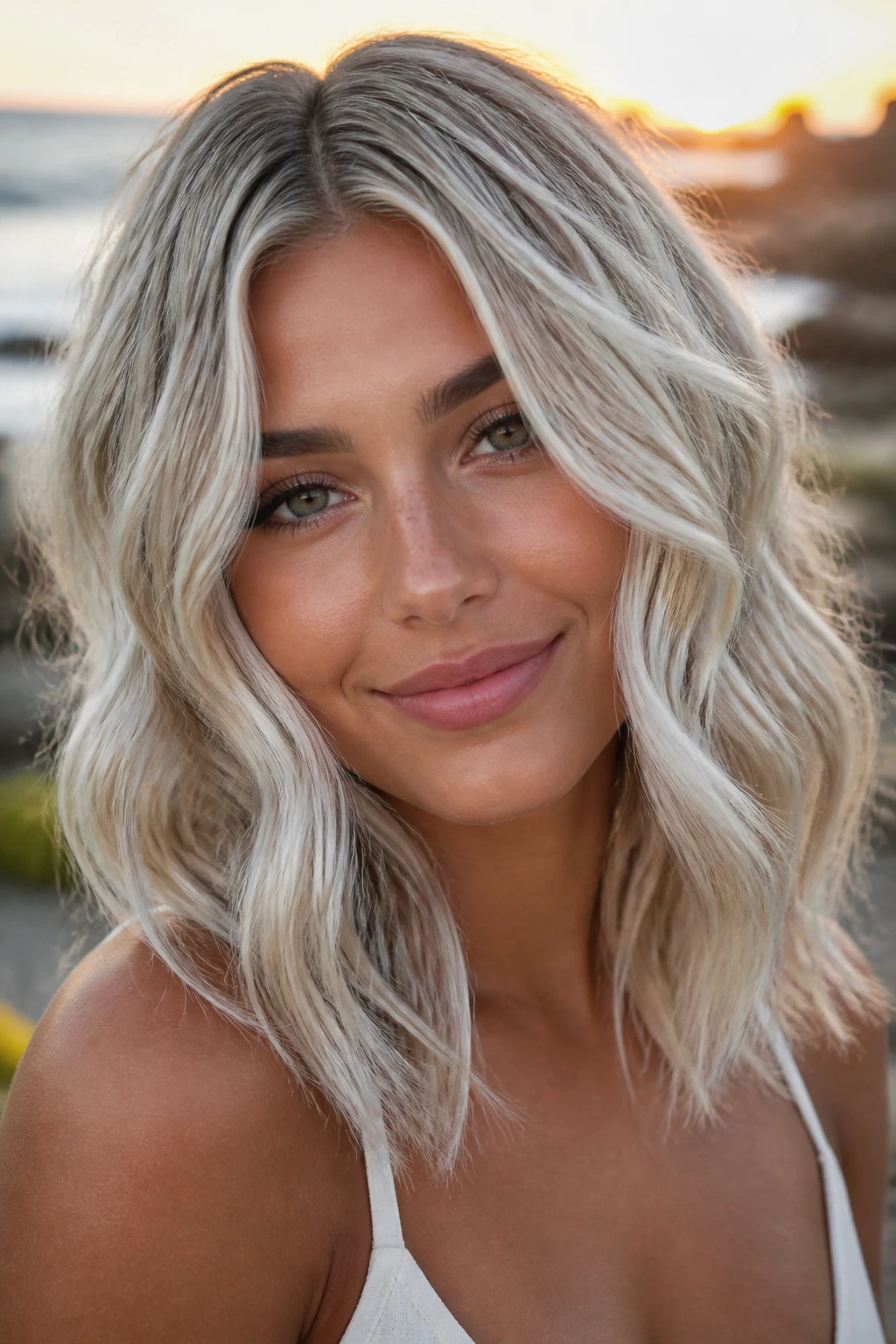
Beach waves and platinum have a very particular relationship. The wave pattern breaks the color into little flashes, so even a bright highlight looks softer than it would on pin-straight hair. On warm skin, that helps the blonde read sunlit rather than severe.
If you want this to work, the highlights need to be placed where the wave actually bends. That usually means around the face, through the upper sides, and in a few lower ribbons that peek through at the ends. A toner with pearl or champagne notes keeps the frost pretty instead of blue.
Styling notes
- Use a 1-inch iron if your hair is short or medium
- Use a 1.25-inch iron if the hair is long or thick
- Leave the ends a little straighter for a more lived-in finish
The hair should look touched by light, not glued into curls. That’s the line.
13. Platinum Teasylights for Depth
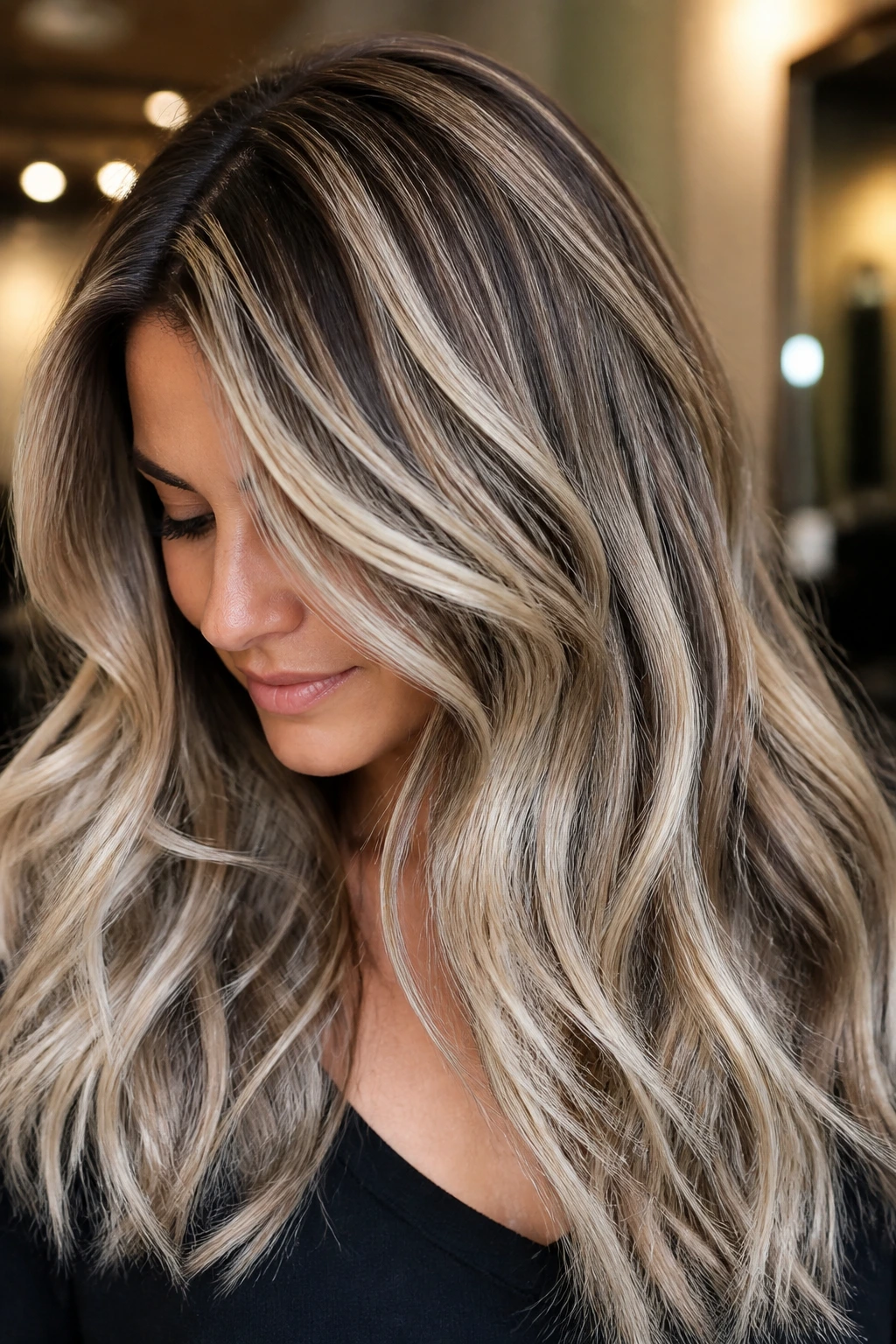
Teasylights are one of those techniques that sound fussy until you see the result. The stylist teases the section before foiling, which softens the line where the platinum starts and gives the grow-out a more blurred edge. On warm skin, that blur is useful because it stops the blonde from looking too hard against the complexion.
This is a smart choice for brunettes who want to go lighter without losing all of the natural depth. You keep dimension at the root and through the lower layers, while the teasy sections create a softer lift in the top and outer hair. The effect is more expensive-looking than obvious stripes.
How to get the most from it
- Ask for a neutral-platinum or pearl toner
- Keep a few darker pieces near the underside
- Pair it with loose styling so the diffused highlight pattern can show
It’s a subtle move. That’s the point.
14. Cool-Glow Bob
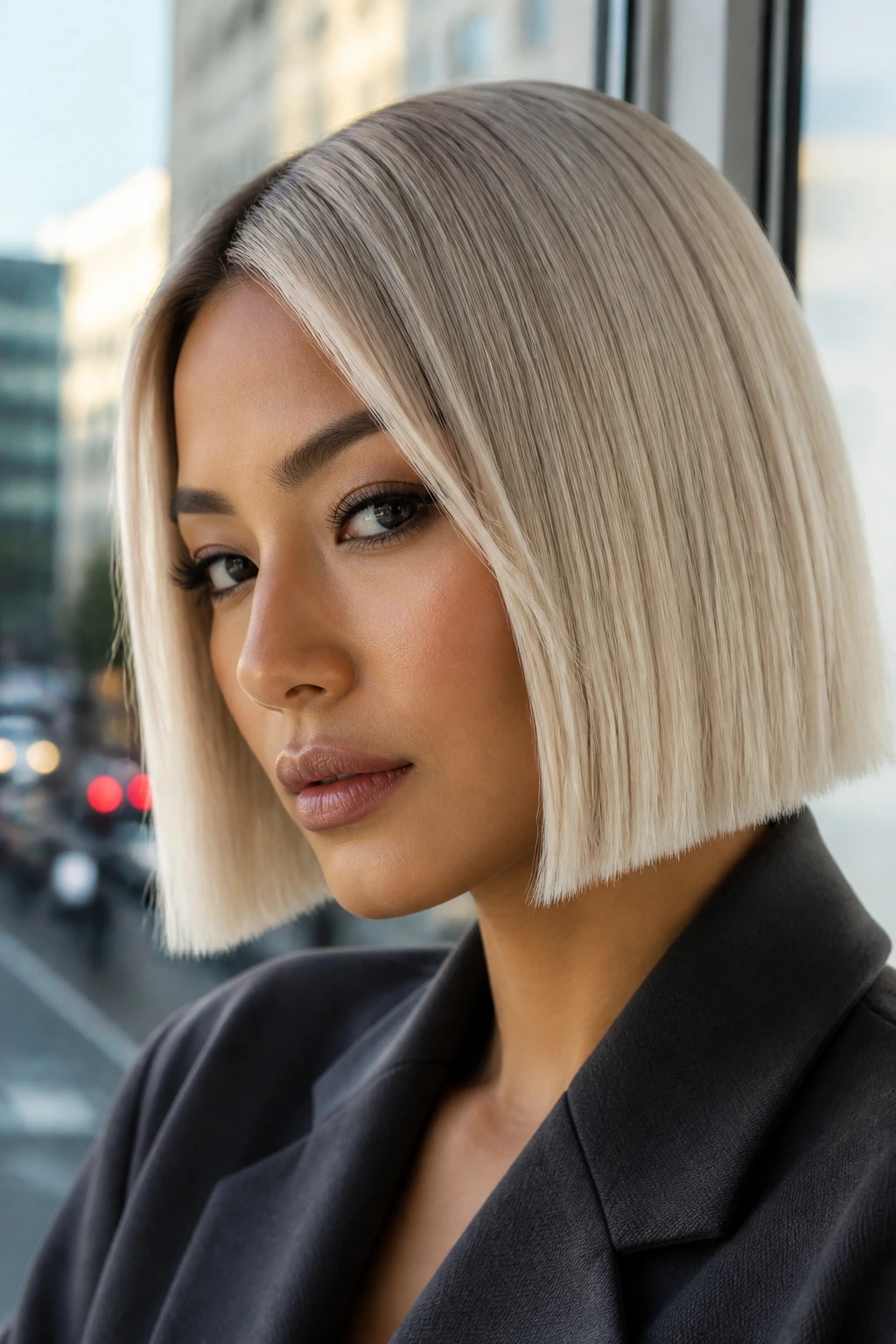
A blunt bob makes platinum look graphic. There’s no long hair to dilute the brightness, so the color shows up with more force, which is great if your warm skin can handle contrast. The trick is to keep the blonde clean and the root area soft enough that the face still has depth around it.
The bob cut loves precision, so the highlights should be just as deliberate. A brighter front panel, a few lighter pieces through the top, and a slightly darker interior keep the shape from looking like a one-tone block. Warm skin tends to benefit from that structure because the color frames the face instead of overwhelming it.
If you wear a bob tucked behind the ears, this style gets even better. The platinum catches the jawline and the cheekbones, and the haircut does the rest. Crisp. Fast. No fuss.
15. Silver-Platinum Streaks on Curls
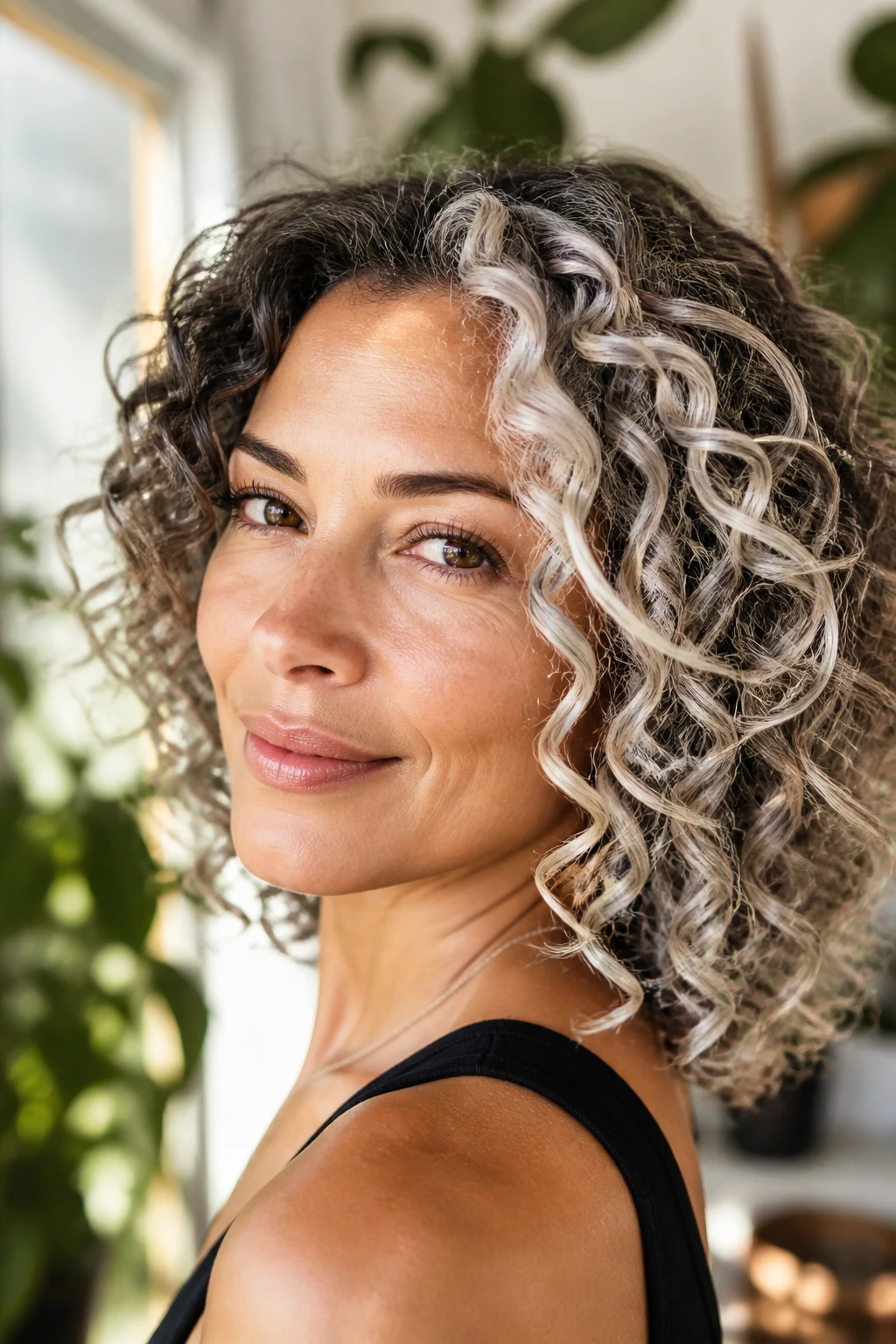
Curls change the whole conversation. A platinum streak on curly hair does not behave like a stripe on straight hair; it wraps and bends through the curl pattern, so the blonde shows up in little bright arcs. That means warm skin can wear cooler tones more easily, because the color is broken up by texture.
The key is placement. Curly hair needs hand-painted or curl-specific foiling so the light pieces follow the pattern instead of sitting in a straight band across the head. If the highlights are too linear, the effect can go stripey fast.
Best practices
- Keep some depth between the brighter curls
- Use a toner that lands silver-platinum, not blue-gray
- Diffuse or air-dry to let the highlight pattern show naturally
I prefer this on curls with a lot of movement. The brightness should look like it belongs to the curl, not pasted on top of it.
16. Ultra-Light Halo Highlights
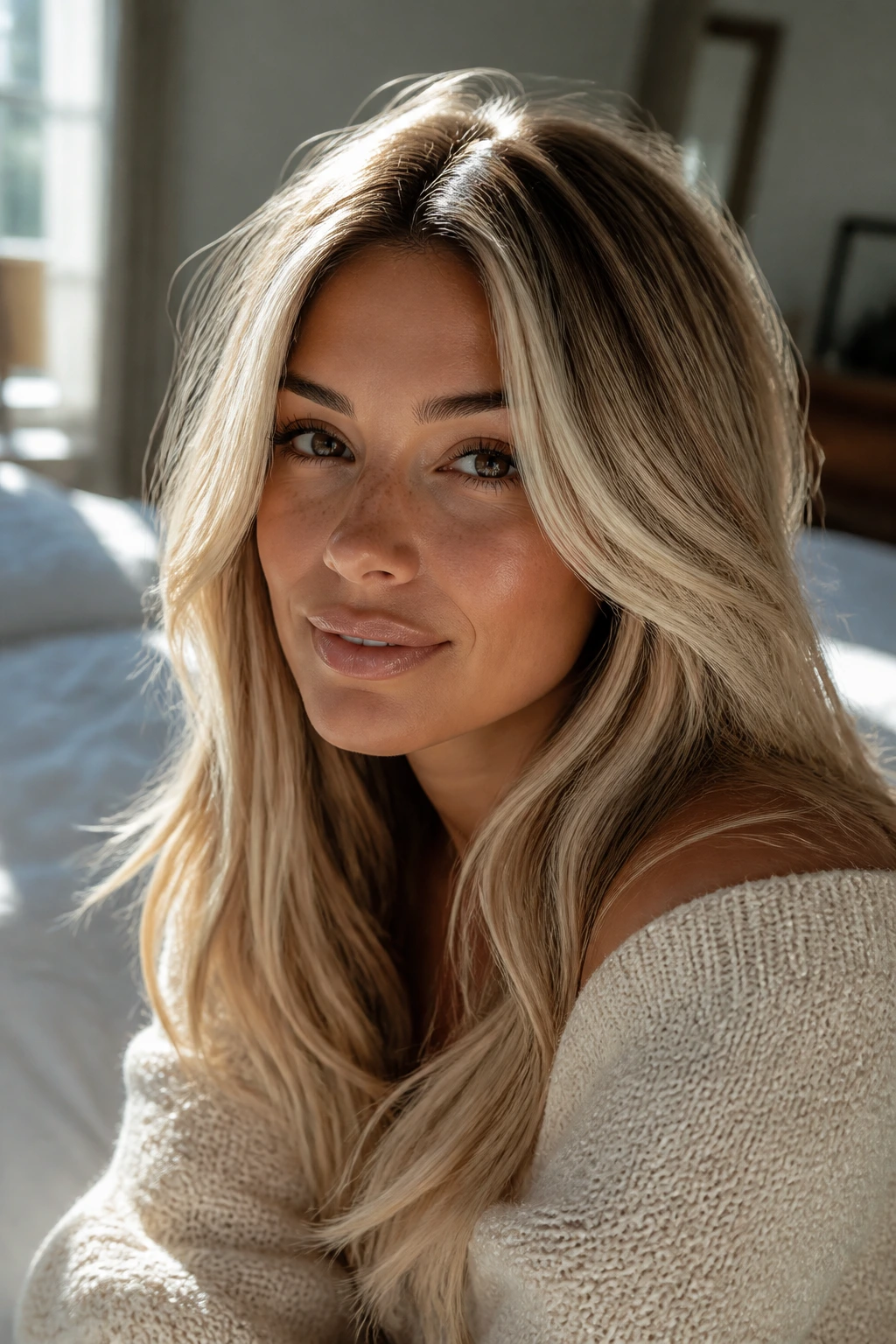
A halo highlight concentrates the brightest pieces around the crown and hairline, so the whole style looks lighter without needing all-over platinum. For warm skin, that’s a clever balance: the face gets lifted, but the lengths still carry enough depth to keep things grounded.
This is especially good if you wear your hair up a lot. Ponytails, clips, buns—those styles reveal the halo and make the color feel intentional. You get more visual payoff from the same pieces.
A halo also works when you want the top of the head to feel airy, not dark. Just don’t push the light too far back into the crown if your hairline is already prominent. The best version frames, it does not flood.
17. Champagne-Platinum Melt
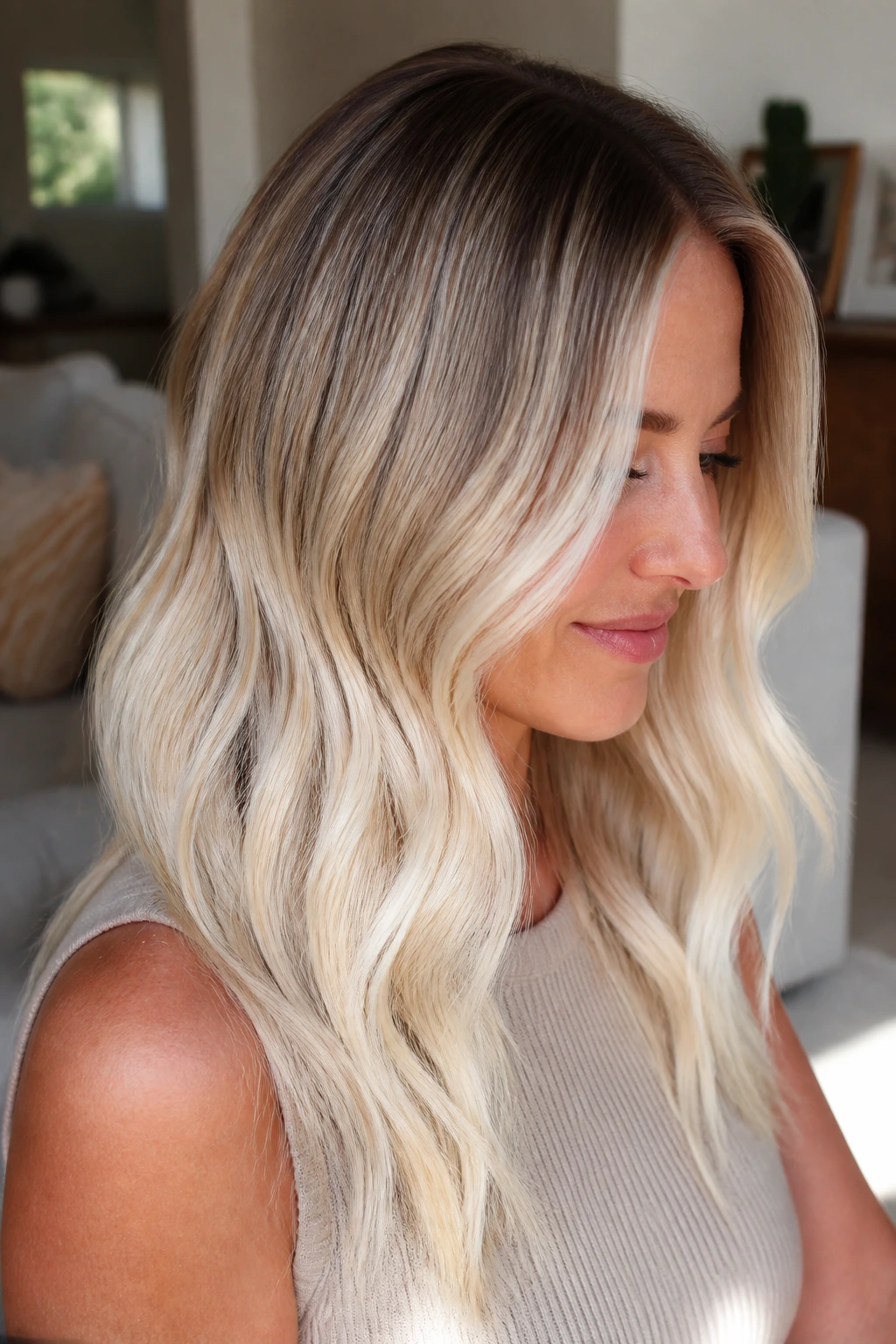
A champagne-platinum melt is the softest route between warmth and ice. The roots stay a little deeper and warmer, the mid-lengths turn champagne, and the brightest platinum sits through the ends or the outer surface. On warm skin, that gradual shift is a relief. Nothing is shouting at the face.
This look is particularly good for people who want brightness but hate hard lines. The melt hides the transition, so grow-out feels smoother and the hair keeps some depth even as it gets lighter. If you like to wear waves, the gradient becomes even prettier because the color rolls through the bends.
I’d call this one practical glamour. It looks deliberate, but it does not feel precious. That matters when you do not want to live inside a toner schedule.
18. Face-Framing Frost on Copper Brown Hair
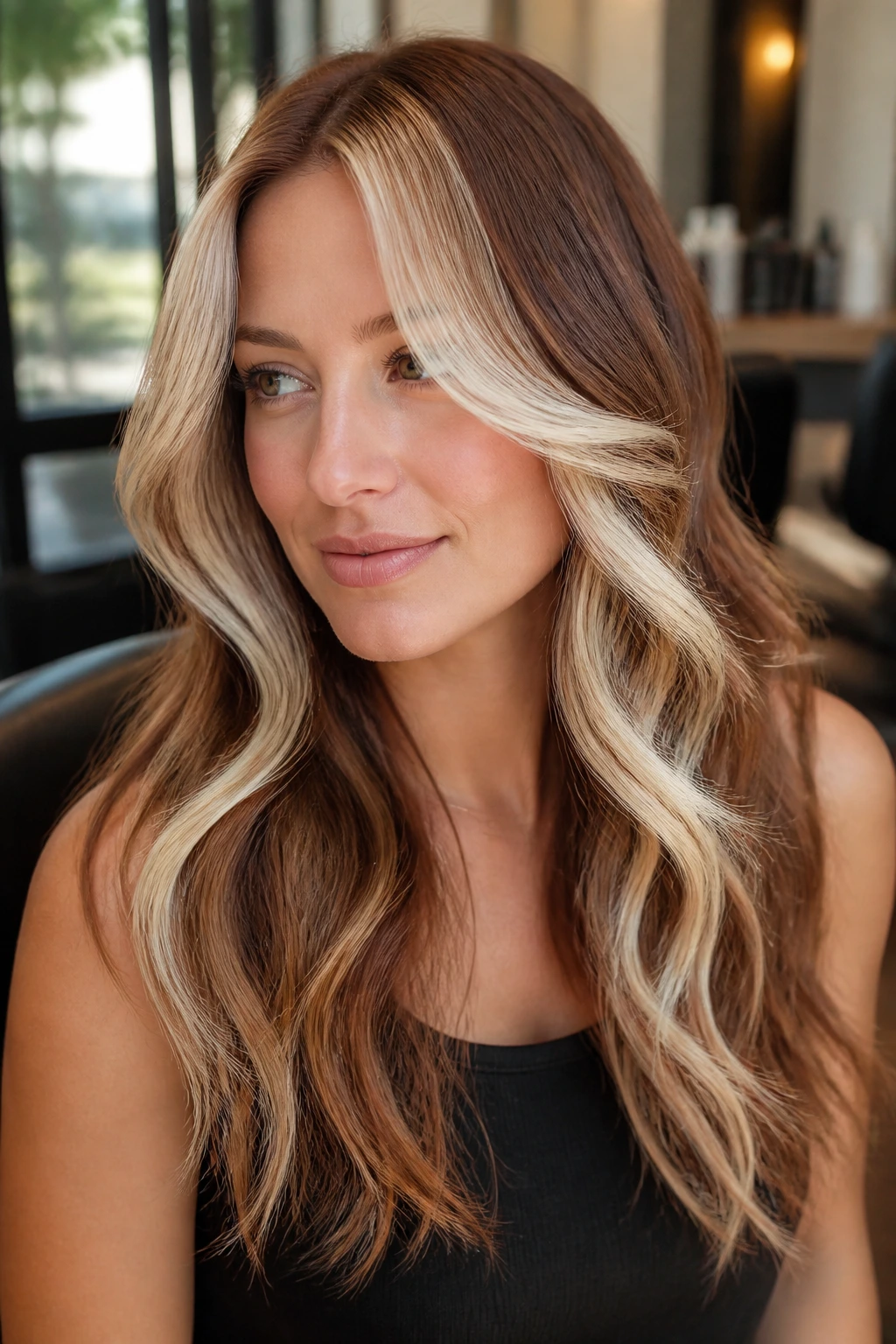
Copper brown and platinum are a strong pair, and they work because the contrast is honest. The warm copper base keeps the complexion alive, while the frosted face frame gives the front of the hair a clean, cool edge. On warm skin, the trick is to keep the platinum close to the face and leave the copper doing most of the background work.
This look can go loud fast, so the placement has to be disciplined. Two strong front pieces, a little brightness at the temples, and maybe a few connecting threads through the top are usually enough. If you overdo it, the copper loses its job and the color starts to feel noisy.
A peachy blush or a warm nude lip makes this combination behave. The hair is already doing a lot. Let the face stay soft.
19. Dimensional Platinum on Dark Blonde
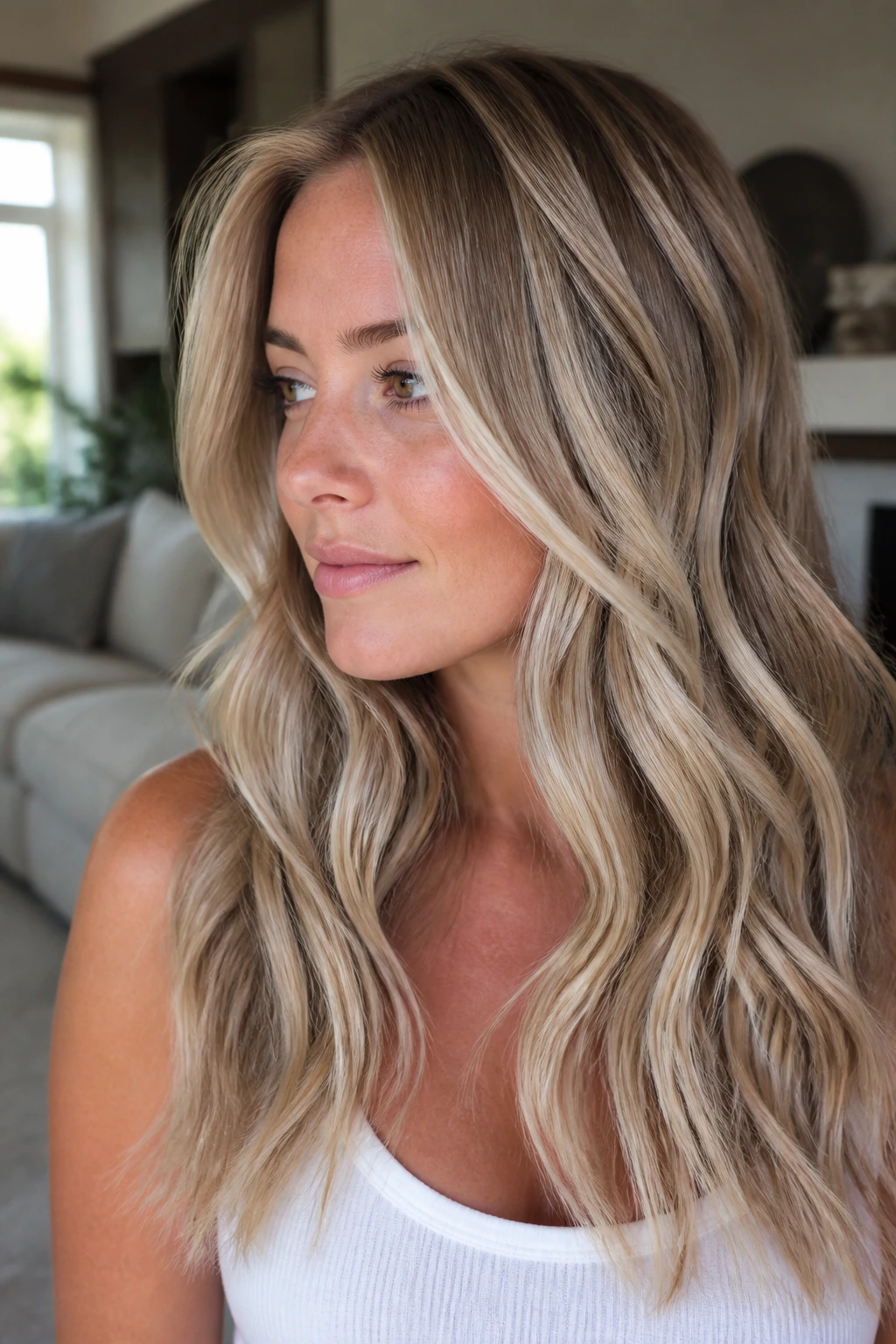
Dark blonde is one of the easiest bases to push into platinum territory because there is already enough lightness to avoid a brutal jump. Dimensional placement keeps the result from looking flat, which is a common problem on naturally lighter hair. The highlights read more expensive when a few darker strands remain underneath.
On warm skin, this is a strong option if you want to go lighter but not fully icy. The surface pieces can be lifted to pearl or beige-platinum, while the lower sections stay a shade deeper. That little bit of contrast helps the skin keep its color.
Why I like it
- Less processing than lifting a dark brunette all the way to white
- Easier grow-out than a solid platinum finish
- More movement in daylight and indoor light
It’s a clean, flexible look. Not flashy. Better than flashy.
20. Arctic Ends with Warm Root Shadow
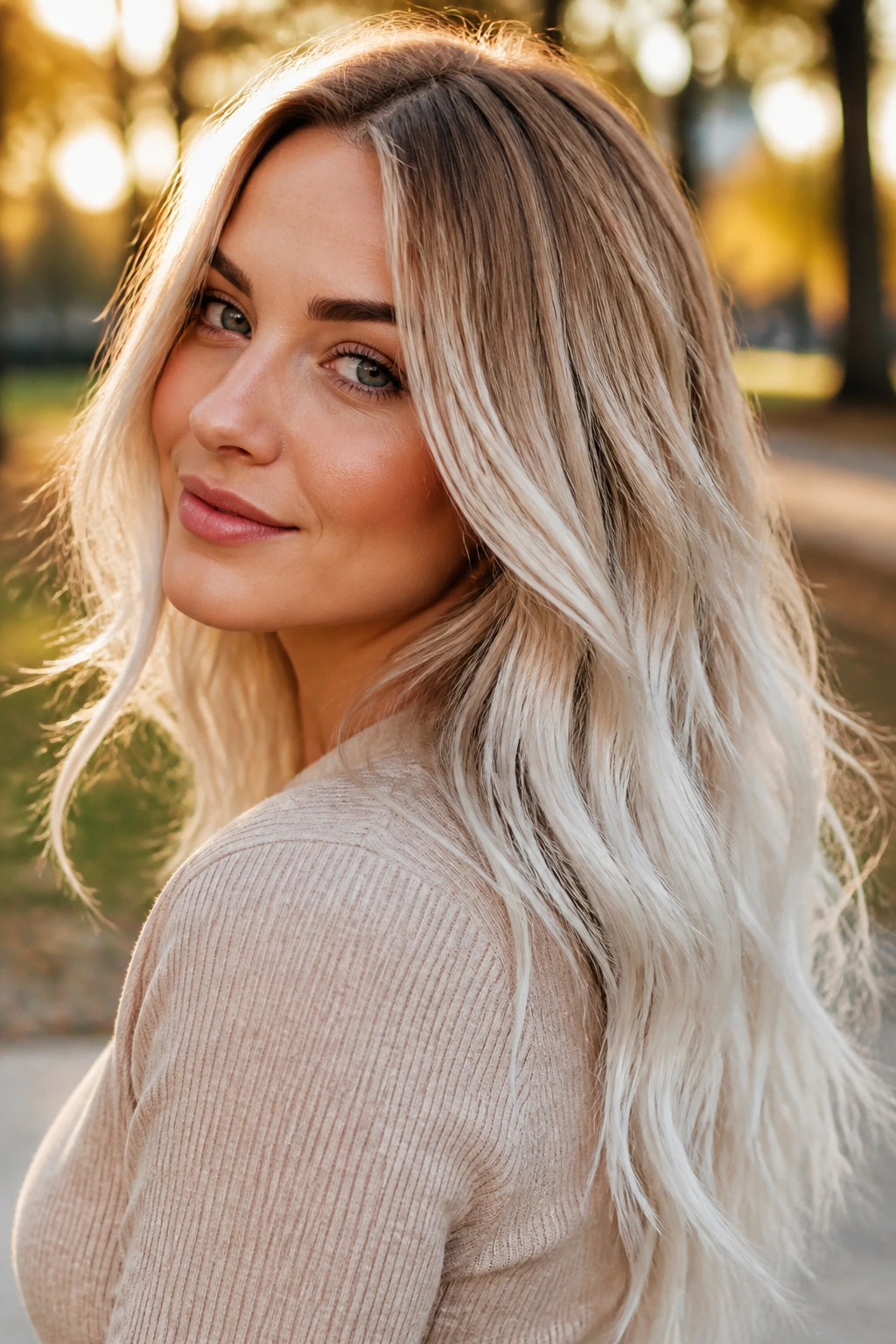
Arctic ends are for people who want the drama at the bottom and the comfort of darkness near the scalp. The warm root shadow keeps the top section soft, while the pale ends make the hair look lighter overall. On warm skin, that root shadow is the difference between “cool blonde” and “my face still looks like my face.”
This style works especially well on long layers and blunt cuts with a little movement. The ends catch light when the hair flips, and the darker top keeps the grow-out from feeling expensive in the wrong way. If your natural root is already a warm brown or dark blonde, even better.
The catch is hydration. Light ends show dryness fast. If you choose this look, you need to treat the ends like they’re the fragile part of the hair—because they are.
21. Scattered Micro-Highlights
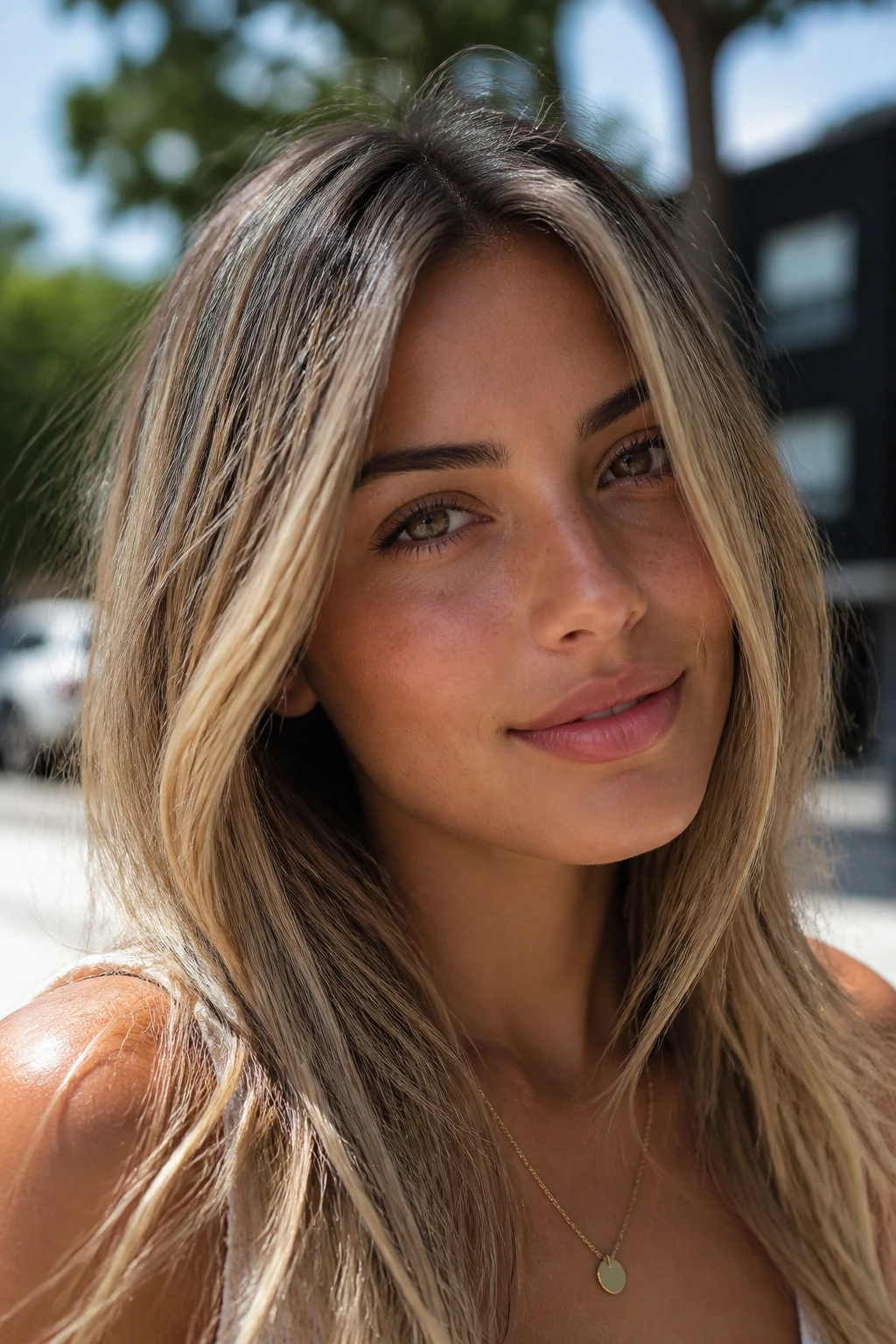
Scattered micro-highlights are the quietest platinum option in the bunch, and that’s exactly why they can be so flattering on warm skin. Instead of obvious stripes, you get tiny threads of brightness spread throughout the hair. The eye reads shimmer before it reads bleach.
This is a smart move if you want the hair to look sun-kissed in a cooler way, not overtly blonde. The pieces are small enough that the warmth in your skin still leads the conversation. The color just adds lift around the edges.
What makes it different
- The sections are thinner than classic highlights
- The lift is more diffused and softer at the grow-out
- The result looks best under natural light and soft indoor light
If you like hair that feels discreet until it moves, this one has a lot to offer.
22. Full-Head Frost with Soft Root Smudge
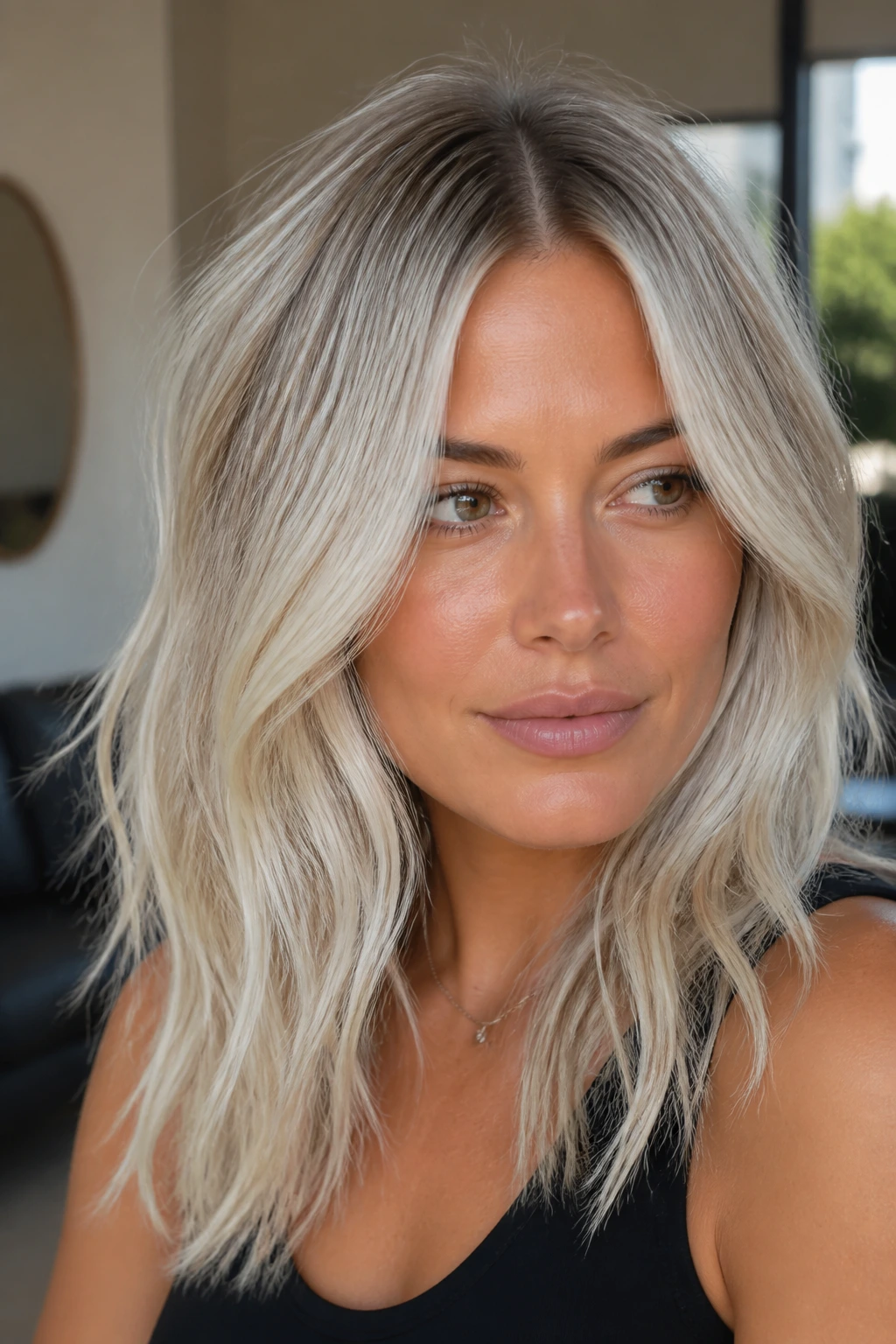
A full-head frost is the boldest end of the spectrum, but a soft root smudge keeps it wearable on warm skin. Without that smudge, the whole look can go too pale too fast. With it, you get brightness everywhere, but the scalp area still holds enough depth to frame the face.
This is the version for someone who wants a lighter overall finish and is comfortable with regular maintenance. It is not subtle. It does, however, look clean when it’s done with the right toner and a root that’s only blurred, not erased.
I’d avoid making this too white. Pearl, cream, and beige-platinum are kinder to warm undertones than a cold silver cast. The goal is light, not frostbite.
23. Platinum Streaks on a Shag
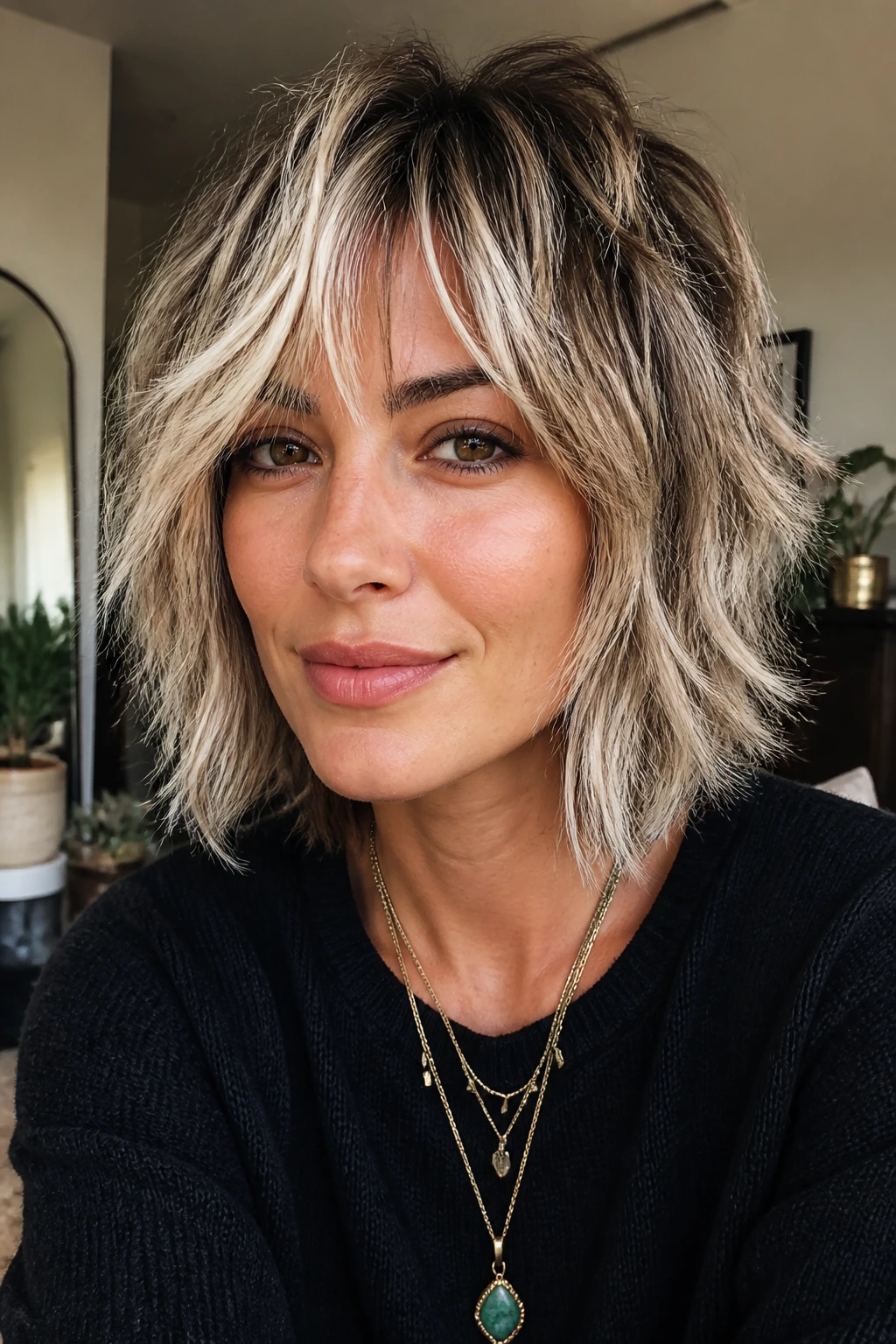
A shag cut loves broken color. The layers create built-in movement, so platinum streaks can sit in the hair without looking too neat or too rigid. On warm skin, that looseness is helpful because it keeps the bright pieces from forming one hard line around the face.
This style can be very cool-looking in the good sense. The texture does half the work. Bright streaks in the top layers, a few pieces around the fringe, and some lighter ends are usually enough to make the cut look intentional. If everything is equally bright, the shag loses its edge.
Styling note
Use a rough-dry, a little texturizing spray, and your fingers more than a brush. Shags like mess. Over-polishing them kills the point.
24. Pearl Money Pieces for Curly Hair
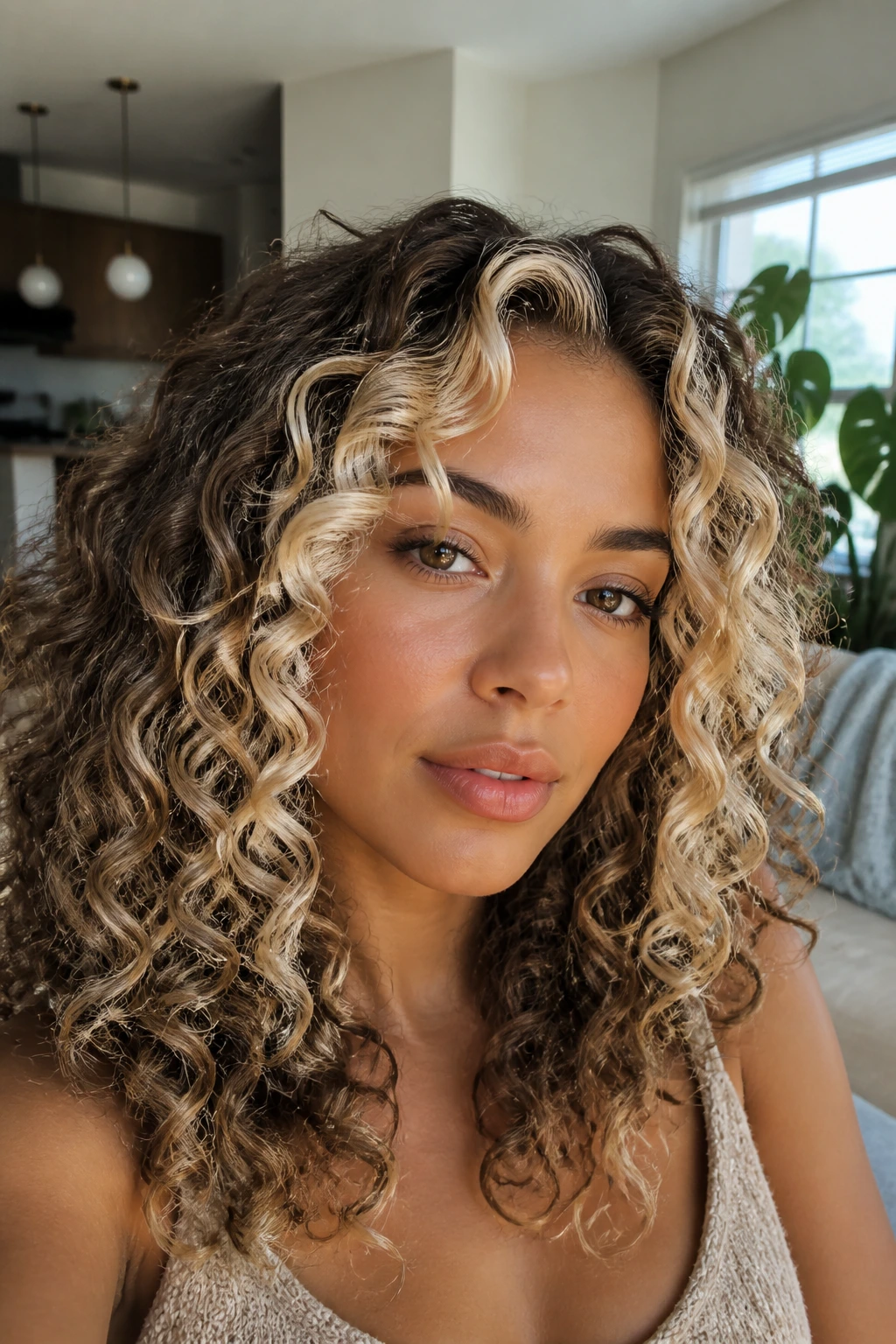
Curly hair and a pearl money piece make a strong pair when the placement respects the curl pattern. The bright front panels need to follow the coils around the face so the light looks like it belongs there. On warm skin, the pearl tone keeps the highlight crisp without turning the complexion flat.
This look is especially nice if you want one clear bright zone near the face and less processing through the rest of the head. Curly hair can hold contrast beautifully, but it needs enough depth left in the interior so the platinum does not turn into a ring of light.
If your curls shrink a lot, ask for the money piece to be placed slightly longer than you think you need. Shrinkage changes where the light lands. A good colorist plans for that instead of pretending it doesn’t exist.
25. Bright, Skimmed-Through Ends
Bright, skimmed-through ends are the least fussy way to wear platinum if you love warm skin and do not want the highlights sitting directly against the face. The lighter color lives mostly in the bottom half-inch to three inches, so the effect is more glow than spotlight. It’s quiet at the root and brightest where the hair swings.
This is a particularly good choice if your hair is long, thick, or heavily layered. The ends catch light in motion, braids, ponytails, and waves, which gives you a lot of visual payoff for a fairly restrained placement. The warm undertone in your skin stays front and center.
I like this for people who say they want blonde but still want their hair to look like hair. That’s not a small distinction.
Why Platinum Can Still Work on Golden and Peach Skin
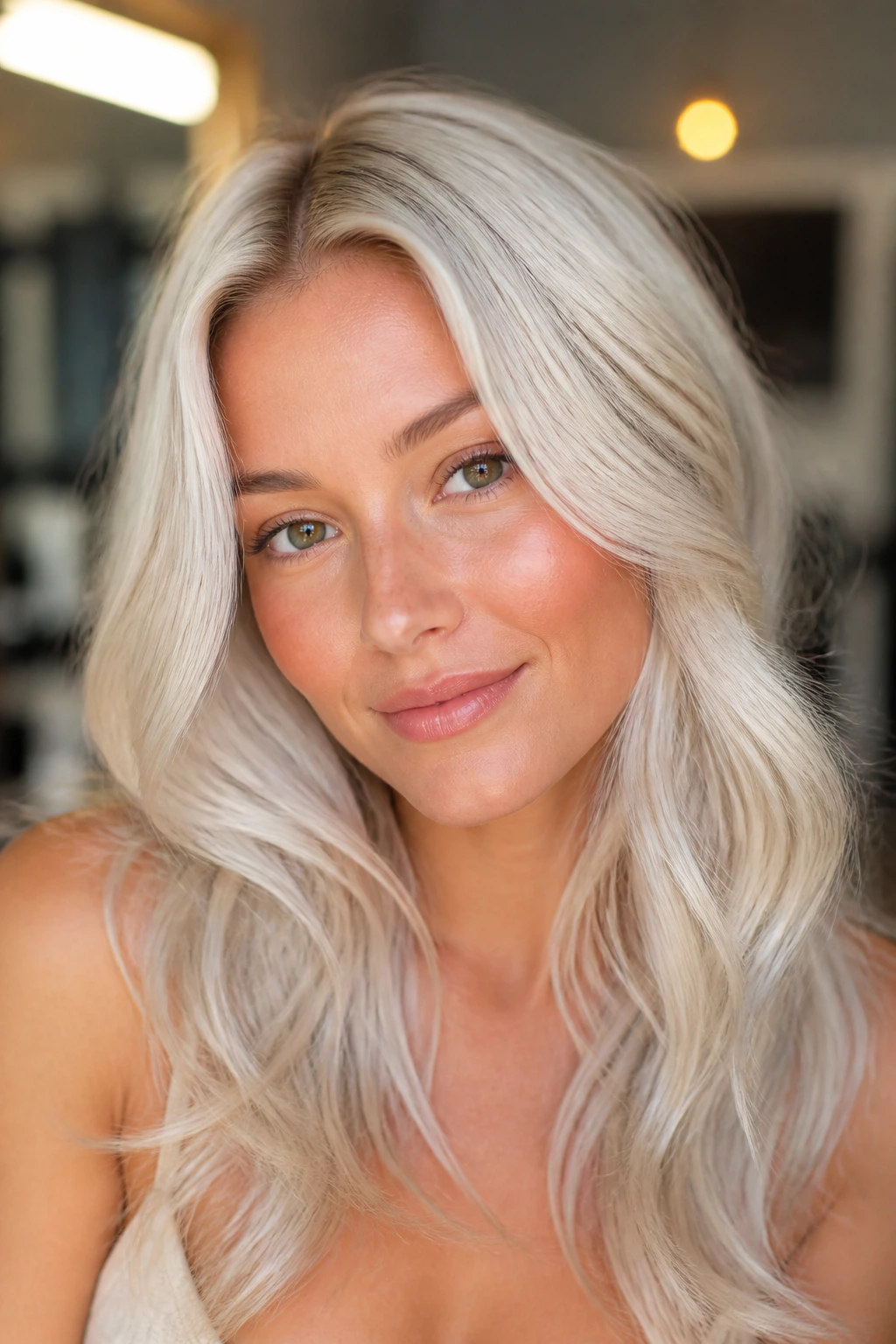
Warm skin and platinum are not a mismatch. They just need different handling than the flat, icy blondes that often get photographed on very cool complexions. Golden, peach, apricot, and olive undertones can all take platinum well if the blonde is balanced with root depth, pearl or champagne toning, and smart placement that leaves some softness around the face.
The biggest mistake I see is treating platinum like one single shade. It isn’t. A silver-platinum money piece, a vanilla blonde bob, and a rooted pearl balayage all read differently on warm skin because the amount of contrast changes. So does the finish. A cream tone near the face can feel flattering and bright, while a white-blue toner can make the same hair look icy in a way that steals color from the cheeks.
Lighting matters too. Indoor warm light, daylight, and camera flash all shift how the blonde sits against the skin. That is why a piece that looks perfect in a salon mirror can feel sharp or flat once you get home. The fix is not usually more lightness. It’s a better balance of depth, placement, and gloss.
Tools That Matter Before, During, and After the Appointment
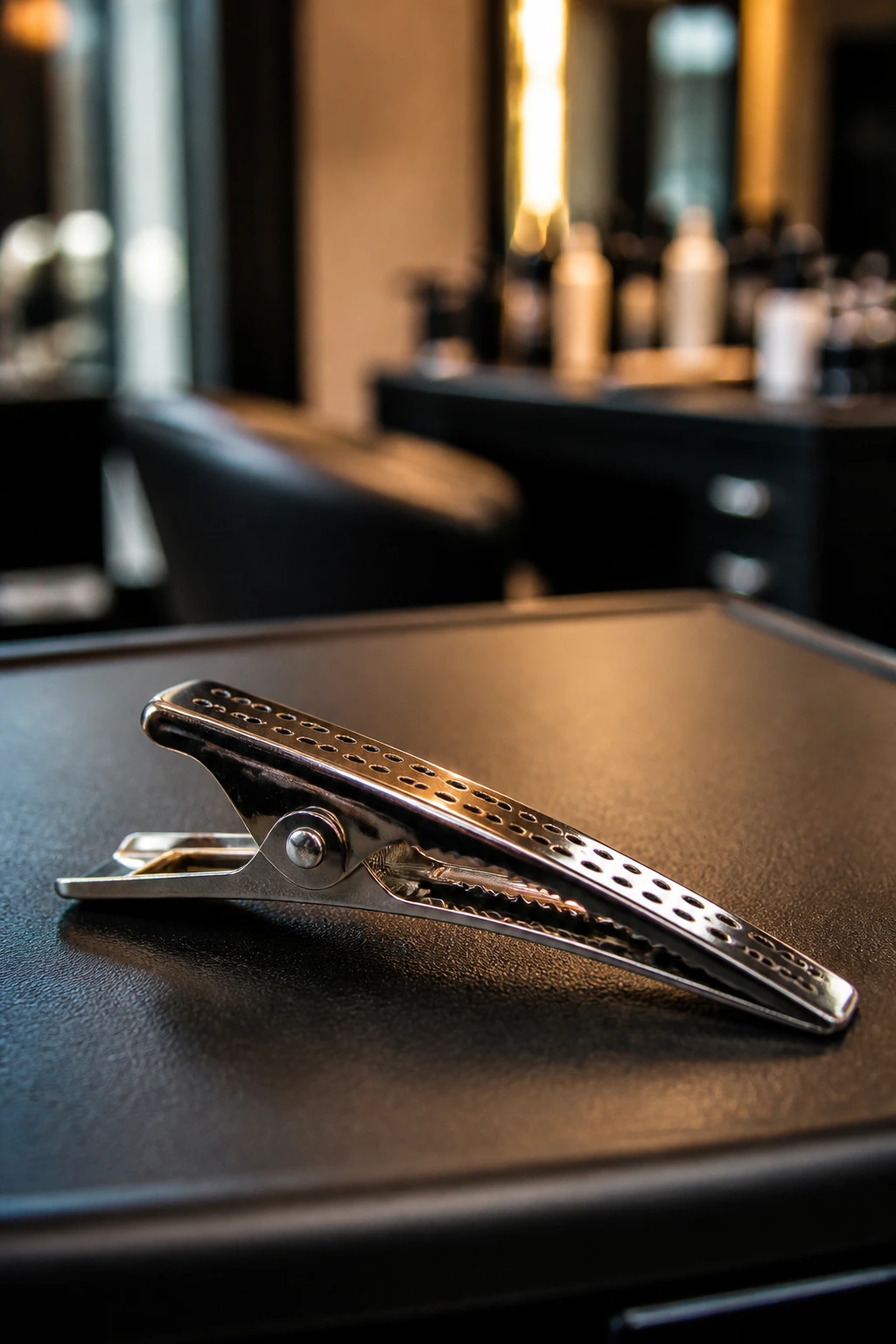
You do not need a bathroom full of gadgets to keep platinum highlights looking sane, but a few specific tools make the job easier.
- Tail comb: Helps separate clean sections for foils, face frames, and part-line brightness.
- Sectioning clips: Keep the hair from slipping while you work through the top, sides, and back.
- Tint brush and bowl: Useful for toner, gloss, and root-smudge applications.
- Foils or balayage board: Foils give brighter lift; a board helps keep hand-painted pieces neat and controlled.
- Color-safe shampoo: Keeps the blonde from fading faster than it needs to.
- Purple or blue shampoo: Use sparingly to keep brass in check without turning the hair dull.
- Moisturizing mask: Lightened hair gets rough fast if you ignore hydration.
- Heat protectant: Non-negotiable before blow-drying, curling, or flat-ironing.
- Wide-tooth comb: Gentler than a brush when the hair is wet and fragile.
- Microfiber towel or soft T-shirt: Cuts down on friction after washing.
If you’re going to invest in one thing, make it the mask. Dry platinum looks tired fast.
The Consultation Notes That Save the Shade
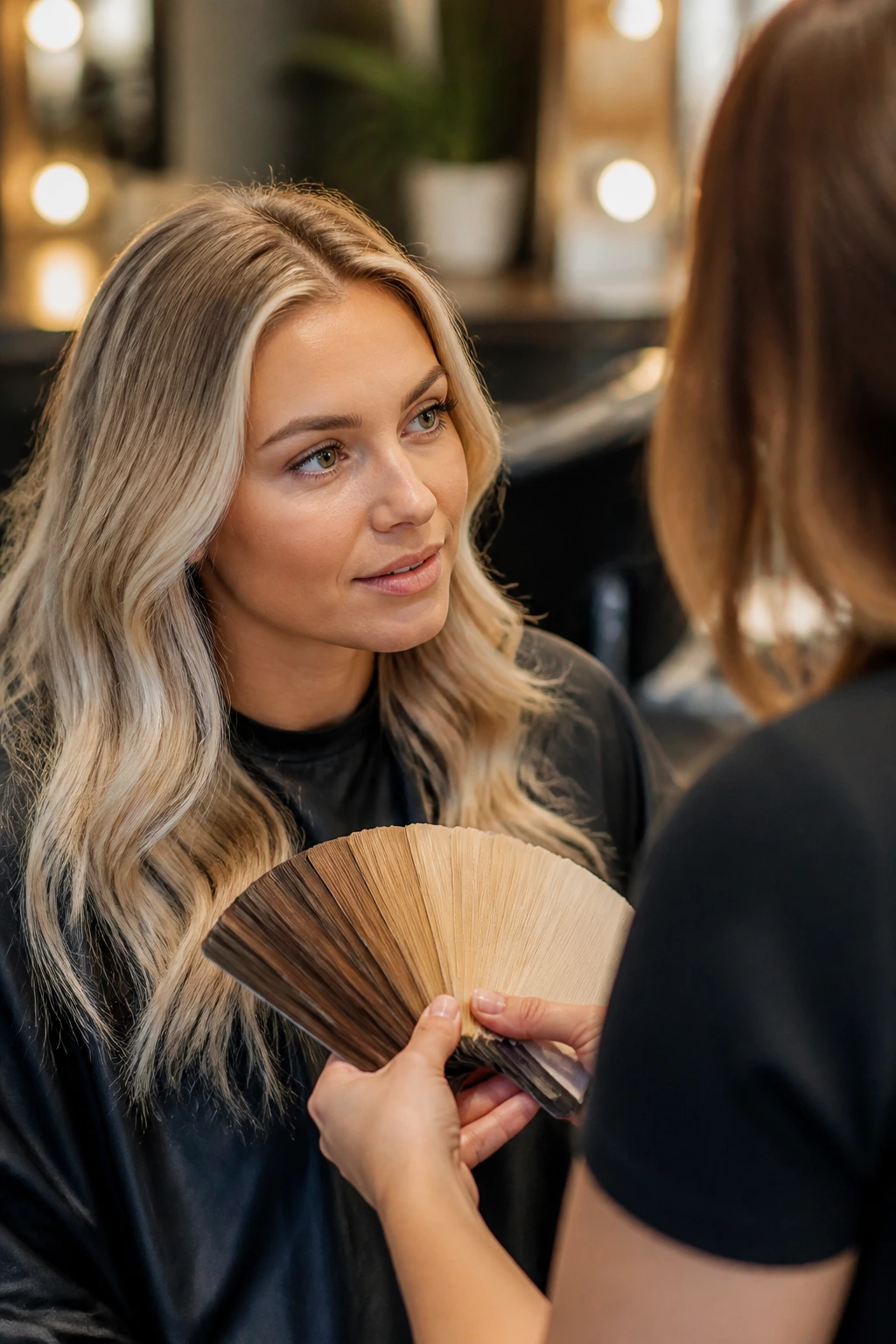
A good platinum consultation starts with three questions: how light can your hair safely go, how much maintenance will you tolerate, and how much contrast do you want against your skin? Those answers matter more than the photo you saved on your phone. A platinum that looks perfect on a cool, pale model can flatten a warm face if the toner and placement are wrong.
Bring pictures, yes. Bring more than one. And bring them in different light if you can—outdoors, indoor warm light, and a close-up of the tone you actually want. Then say what you do not want. If you hate brass, say so. If you do not want a stark white root, say that too. That part saves everybody time.
It also helps to mention your hair history with brutal honesty. Box dye, henna, keratin smoothing, frequent heat, dark permanent color—those things change how the hair lifts and how quickly it breaks. A stylist can work with almost anything, but only if they know what they’re starting from. Silence is expensive.
How to Wear Platinum Blonde Highlights Without Losing Warmth
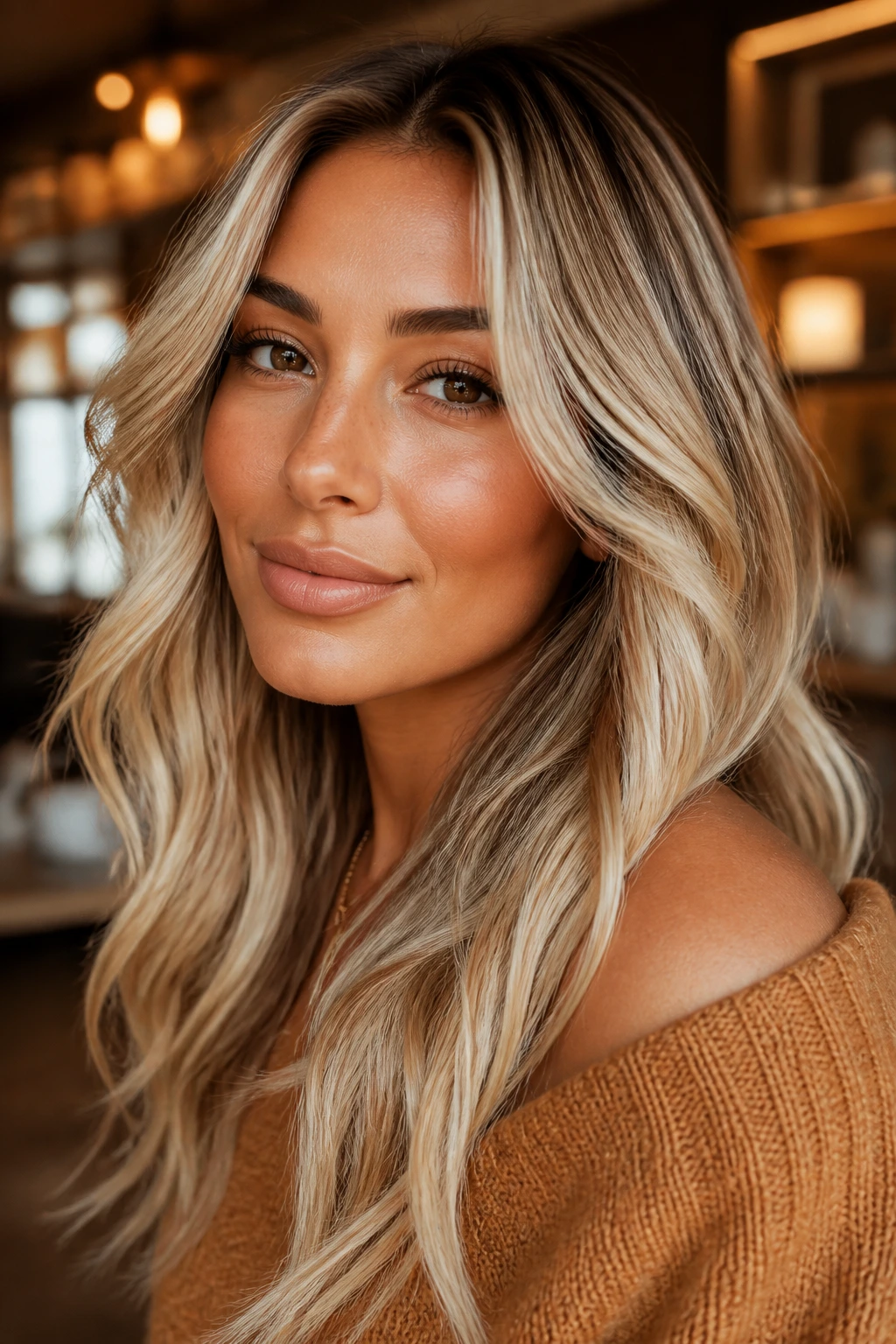
Haircut:
Platinum needs structure, so a blunt bob, long layers, shag, or soft lob usually wears it better than one shapeless length. The cut gives the highlights somewhere to live.
Makeup:
Peach blush, soft bronze, warm nude lips, and a brow color that isn’t too pale keep the face from looking washed out next to bright blonde.
Wardrobe:
Cream, camel, rust, olive, chocolate, and warm navy make the hair look rich. Stark white can be fine too, but it tends to push the blonde harder.
Styling:
Waves soften the look, straight hair sharpens it, and curls create shimmer. Pick the styling finish based on whether you want the blonde to whisper or speak up.
If you want one blunt opinion from me, it’s this: platinum on warm skin looks best when the whole look has some depth left in it. Hair, makeup, clothes, even brows. One bright element without support can feel disconnected. Two or three elements working together feel deliberate.
Small Tweaks That Change the Whole Finish
Tone Shift:
Ask for pearl, champagne, or beige-platinum instead of blue-white if you want the highlights to stay friendlier to warm undertones. That one choice changes the whole mood.
Placement Shift:
Move the brightest pieces to the money piece, halo, or ends if you want less contrast near the skin. The face still gets lifted, just not blasted.
Texture Shift:
Straighten the hair if you want sharper, more graphic lines. Add soft waves if you want the platinum to melt into the cut.
Make-It-Yours:
If you wear little makeup, keep the blonde creamier. If you like bold lips or bronzed skin, you can handle a cooler platinum edge more easily. Gold jewelry usually reinforces the warmth; mixed metals can keep things from feeling too matched.
None of these tweaks are dramatic. That’s the point. Small changes often make the color read better than a huge shift in shade.
Common Mistakes That Make Platinum Feel Too Harsh
The most common mistake is choosing a toner that is too icy for the complexion. The hair may look bright in the chair, but under normal light it can turn flat against warm skin. The fix is simple: ask for pearl, beige, or champagne rather than a blue-heavy finish.
Another problem is over-lightening the entire head. A full sheet of pale blonde can erase the dimension that warm undertones need. You usually get a better result by leaving darker panels in the interior or at the root.
People also forget that platinum needs moisture. Dry ends make the blonde look dull and brittle, no matter how expensive the color job was. Use a mask once a week, and keep heat under control.
The last big mistake is copying a photo without checking the model’s undertone. Skin is not one color, and neither is platinum. If the inspiration image has cool skin and the wearer has golden or olive skin, the same formula may need adjustment.
Five Ways to Bend the Formula
Champagne Softening:
If straight platinum feels too sharp, tone the highlights one shade softer with beige or champagne. This works especially well around the hairline.
Brunette Bridge:
Keep more depth at the root and through the underside if you are moving from brown hair toward blonde. It makes the grow-out less brutal and helps warm skin hold color.
Curly Coil Placement:
Place brighter pieces where the curls move away from the face rather than in a straight line around it. The shape will look more natural and less stripy.
Bold Face-Frame Only:
If you want maximum contrast with minimal upkeep, do the platinum only in the front panels and leave the rest deeper. It’s a sharper look, but easier to live with.
Cool-Girl Ends:
Push the lightest tone into the ends and keep the crown softly rooted. You’ll get that icy effect without making the whole scalp area go flat.
These are not radical changes. They’re adjustments. And hair color lives or dies on adjustments.
Keeping the Tone Bright Between Visits
Platinum highlights on warm skin look their best when they stay bright but not brassy, which means maintenance is part of the deal. Wash too often and the toner fades. Ignore moisture and the light pieces lose shine. Hit the balance, and the color stays cleaner for longer.
A good rhythm is to wash two to three times a week with a color-safe shampoo, then use purple shampoo only when the blonde starts leaning yellow. For many heads, that means once every 7 to 10 days, not every wash. Overusing violet shampoo can make the hair look dusty, and dusty platinum is not the same thing as creamy platinum.
Deep condition once a week, especially on ends that were lifted hard. If your hair is fragile or breaks easily, a bond-building treatment can help, but it should sit alongside moisturizing care, not replace it. Heat styling is fine in moderation. Just keep the tool moving, use protectant every time, and avoid frying the same section on repeat.
Roots and toner are the other part of the schedule. A root smudge or gloss can often stretch the life of the color for 4 to 8 weeks, depending on how visible your grow-out is and how bright the initial lift was. Short cuts and heavy face frames tend to show regrowth sooner. Subtle babylights and deeper root melts are more forgiving.
Questions People Ask Before Going Platinum
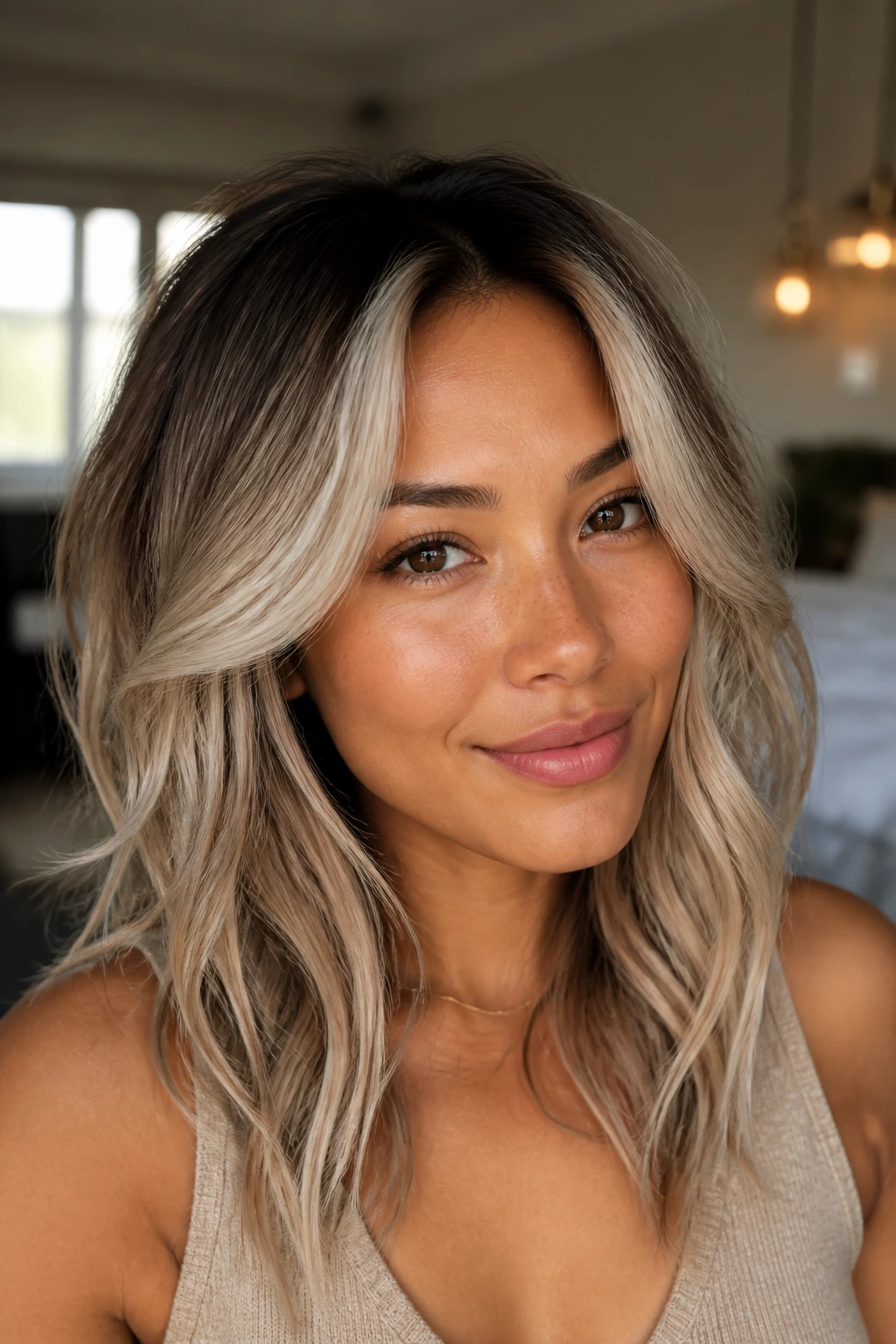
Can warm skin tones wear icy platinum, or should the blonde stay beige?
Warm skin can wear icy platinum, but the safest version usually has some pearl, champagne, or beige in the toner. A little softness keeps the complexion from looking flat. Pure blue-white is where many people run into trouble.
Is balayage better than foils for platinum highlights?
Foils usually give a brighter lift, which matters if you want true platinum pieces. Balayage is softer and more blended, so it’s better if you want the blonde to feel diffused and low-drama. Many good looks use both.
Will platinum highlights make my face look washed out?
They can if the color sits too close to white and there is no depth left around the face. A root shadow, beige lowlight, or softer face frame fixes most of that. Placement does the heavy lifting.
How often will I need toner?
Most platinum looks need toner somewhere around every 4 to 8 weeks, depending on how much you wash, how much heat you use, and how light the initial lift is. Face-framing pieces usually need attention sooner than hidden panels.
Can I get this look if my hair is dark brown?
Yes, but you may need more than one lightening session if the goal is true platinum. That’s not a failure; it’s chemistry and patience. The hair has to lift safely, not all at once.
What if I wear little makeup?
Go a little softer with the platinum. Creamy or champagne tones near the face tend to work better than stark ice when the rest of the look stays natural. That keeps the hair from doing all the work.
Is this a good option for curly hair?
Yes, as long as the highlights are placed with the curl pattern in mind. Curly hair can make platinum look richer and less stripey, but it needs thoughtful placement so the bright pieces follow the coil.
Can I maintain this at home without salon visits?
You can maintain the tone and moisture at home, but lifting the hair to real platinum is not a great first DIY project. A salon can control the lift, then you can handle shampoo, mask, and toner upkeep between visits.
Soft Contrast, Better Glow
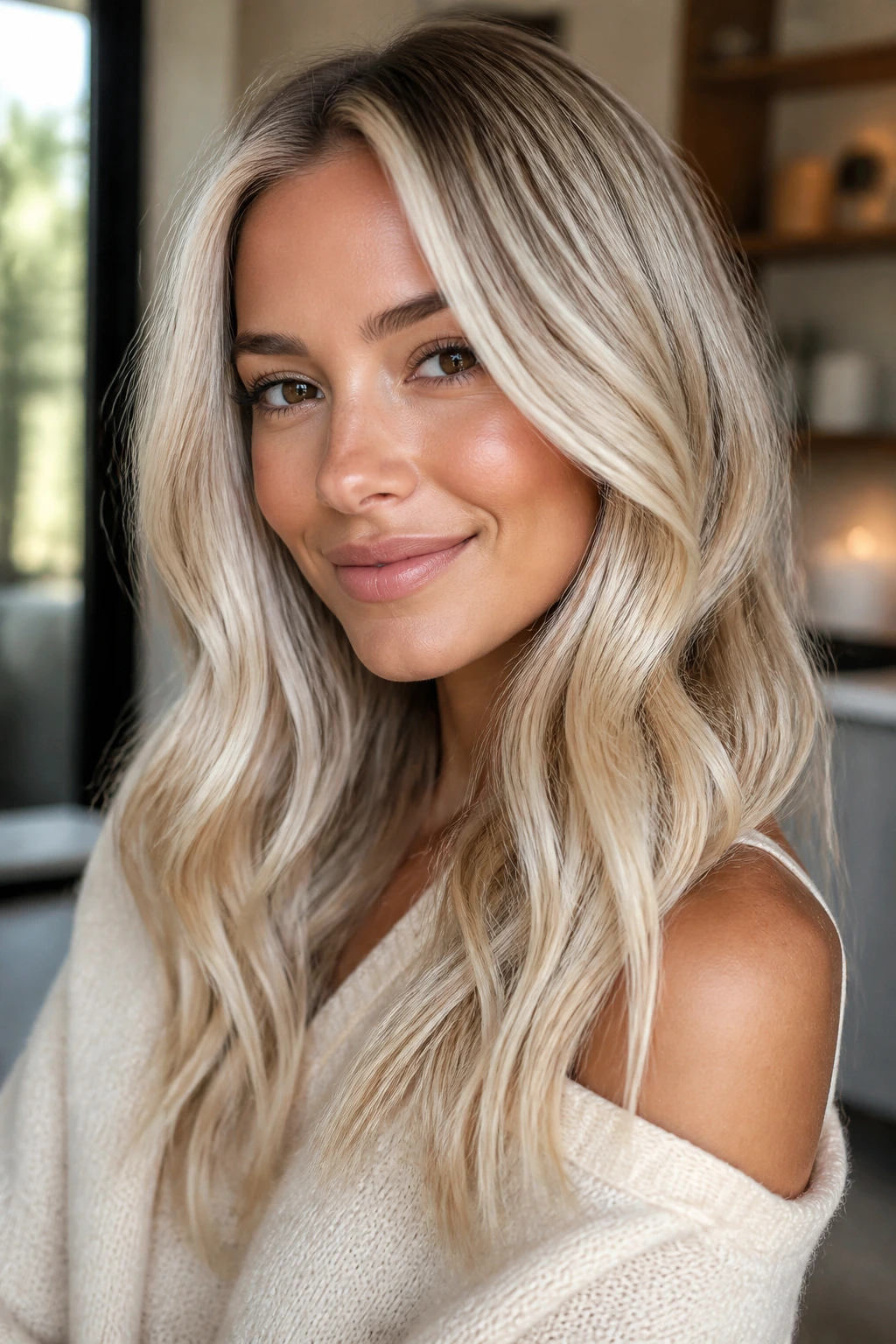
Platinum on warm skin works when the blonde has a little manners. Not timid. Just considerate. The right version gives you lift around the face, movement through the lengths, and enough depth left behind to keep your undertones looking alive.
That’s why these looks range from tiny babylights to harder-edged bobs and soft root melts. They are not all trying to do the same job. Some brighten the cheekbones. Some lighten the ends. Some just whisper platinum when the hair moves, which is often all you need.
Choose the version that matches how much upkeep you’re willing to live with, then let the tone and placement do the rest. The prettiest platinum rarely shouts. It catches the light, leaves the skin intact, and looks like it belongs there.