



Natural-looking brunette highlights for tan skin work because the color has to feel borrowed from the face, not pasted on top of the hair. A caramel ribbon that’s a touch too bright can turn orange in midday sun. A beige piece that leans too cool can look dusty and strange. The sweet spot is narrow, but once you hit it, the whole haircut starts to move.
That sweet spot usually lives in undertone and placement. Golden or peachy tan skin can carry caramel, bronze, amber, and honey with almost no effort; tan skin that leans olive often looks cleaner with mushroom, taupe, hazelnut, or neutral beige. I also like leaving a deeper root in place. It gives the lighter strands somewhere to land instead of making them float on top like stripes.
The 28 looks below lean soft, believable, and lived-in—the kind of brunette color that still looks good when the blowout falls and the roots start to show.
Why These Brunette Highlights Feel Right on Tan Skin
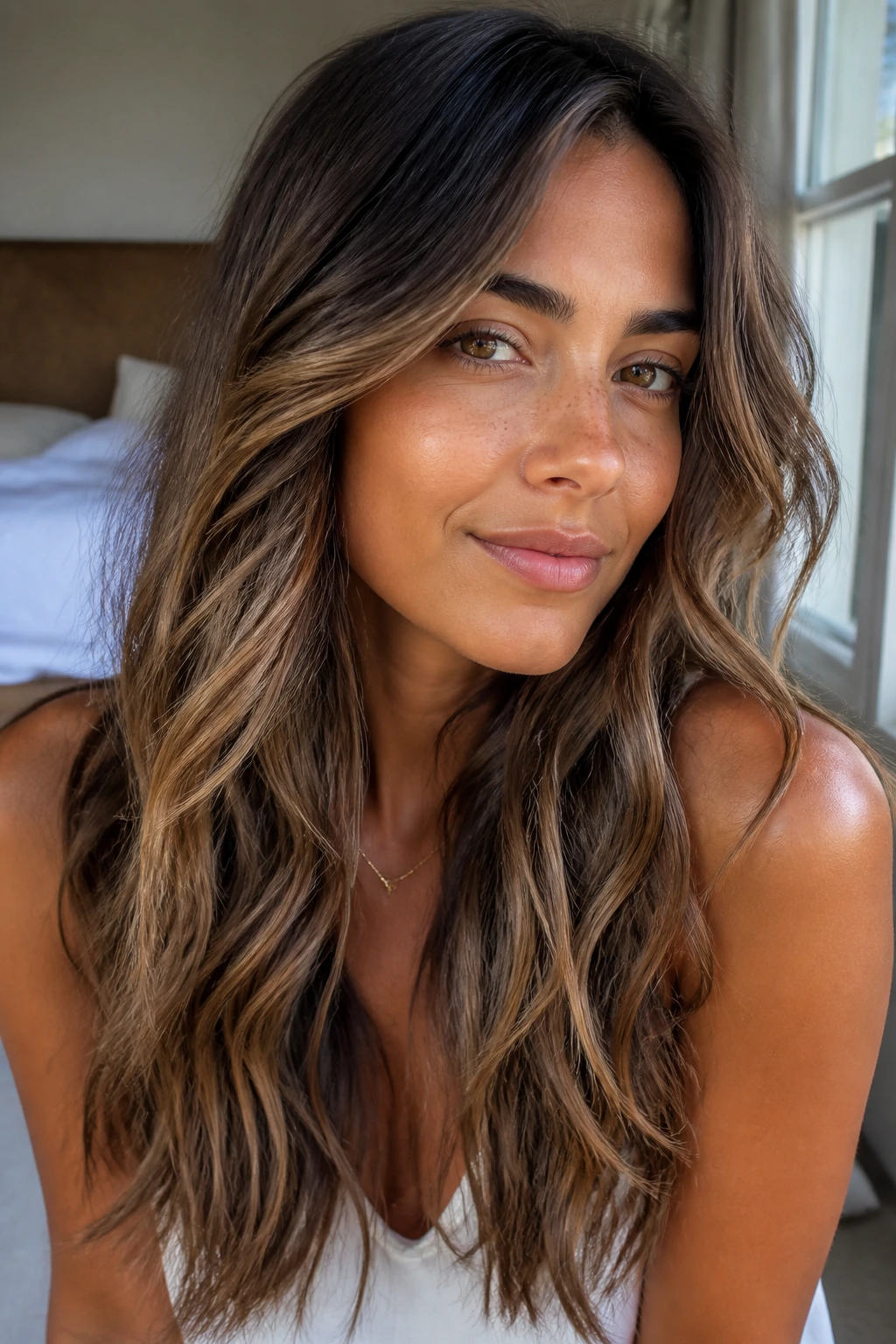
Warmth, when it’s controlled, does the heavy lifting here. Caramel, bronze, chestnut, and honey echo the glow in tan skin, so the hair reads as part of the face instead of fighting it.
- Low contrast keeps the finish believable: Fine ribbons and babylights soften the jump between base color and lightened pieces, which matters more than chasing a lighter shade.
- Neutral tones save olive undertones: Beige, taupe, and mushroom avoid the orange cast that can show up when the highlight is too golden.
- Root depth makes grow-out prettier: Leaving a darker root gives the hair shape after four or six weeks, not just on day one.
- Placement changes everything: Face-framing brightness reads softer than all-over lightness, especially on layered cuts and long waves.
- Glosses matter more than people think: A beige or amber glaze can turn a decent highlight into one that looks expensive and soft, not sharp.
1. Caramel Ribbon Balayage
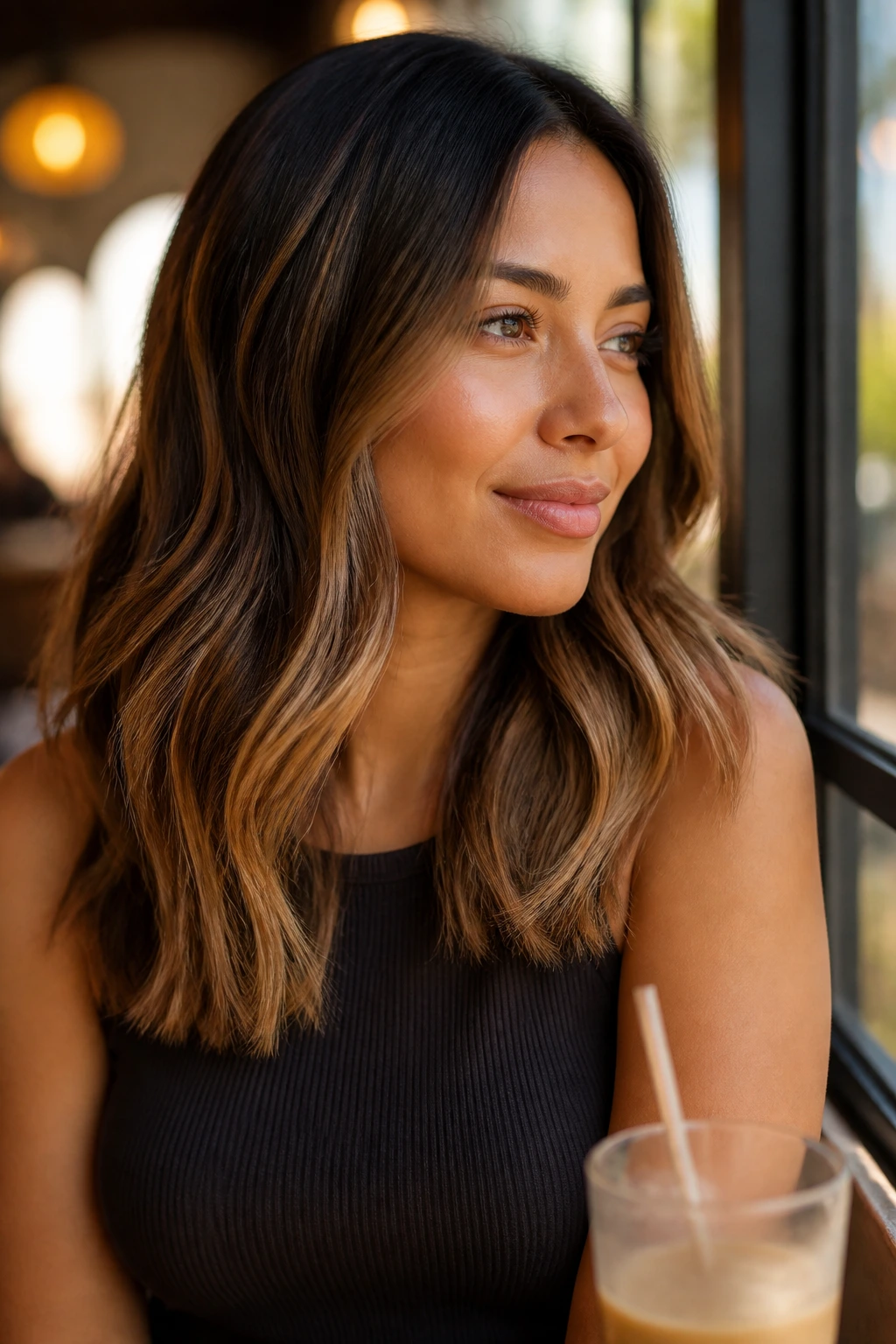
Caramel ribbon balayage is the classic move for a reason: it gives brunette hair movement without blowing it into full blonding territory. The ribbons sit in the mid-lengths and ends, so the roots stay rich and the finish looks sun-kissed rather than overprocessed.
Why it flatters tan skin
Caramel sits in that warm middle zone where tan skin tends to look healthiest. It picks up gold in the skin, but it does not scream yellow in the hair.
- Ask for level 6 to 7 caramel ribbons painted through the outer and inner layers.
- Keep a level 4 to 5 root shadow so the highlight has a soft landing.
- Finish with a beige-gold gloss instead of a bright blonde toner.
Best tip: If your skin leans peachy, keep the caramel a little deeper. It ages better than a pale blonde stripe.
2. Chestnut Babylights
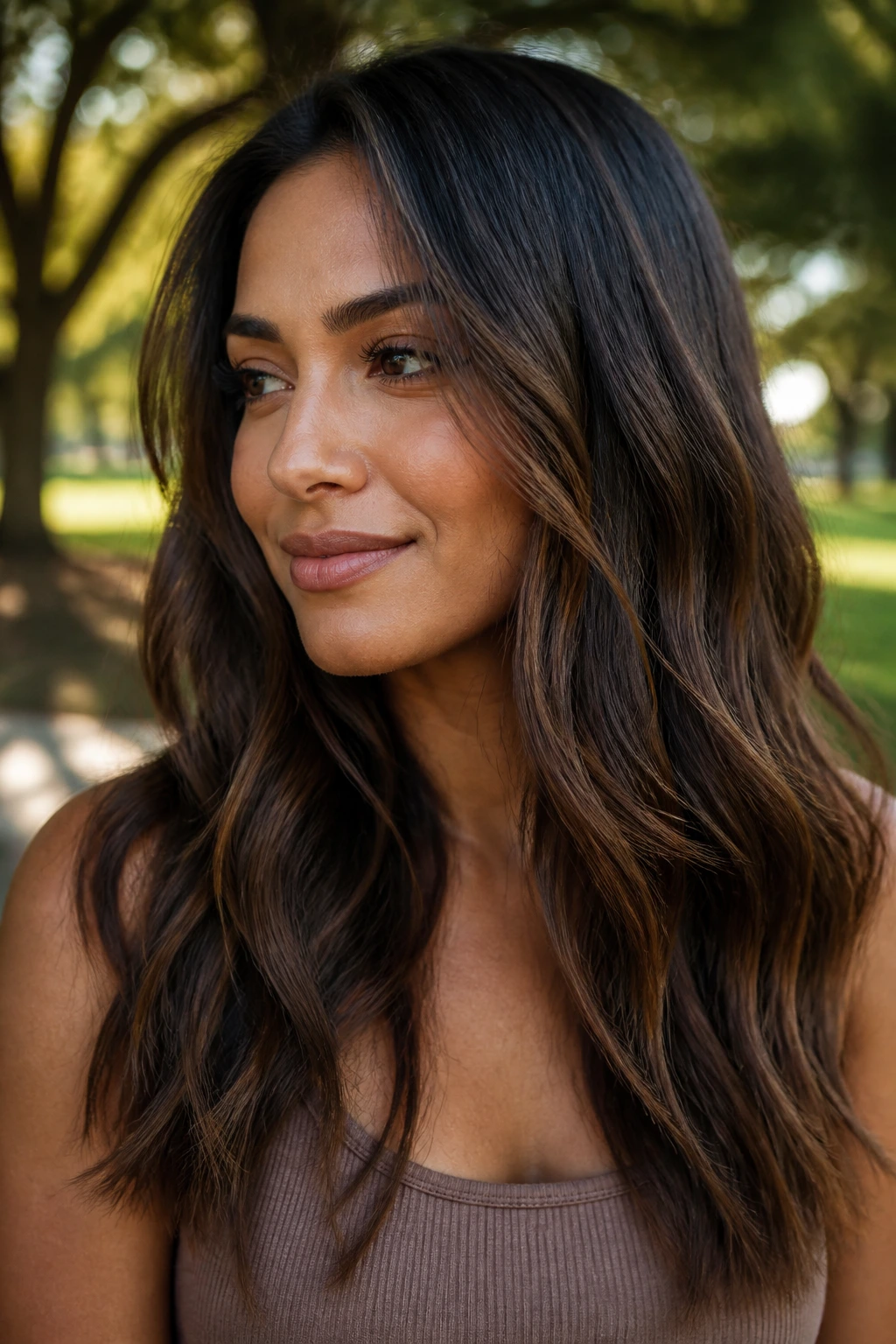
Chestnut babylights barely announce themselves, and that’s the charm. The strands are tiny, closely woven, and only a shade or two lighter than the base, so the hair looks fuller rather than obviously highlighted.
Tan skin that wants a softer, more polished finish usually loves this shade. It works especially well on finer hair, because the micro-lighting creates the illusion of thickness without obvious lines.
I like chestnut babylights on medium brunettes who wear their hair straight or in loose bends. The color catches when the light moves, then disappears back into the brunette base. That little shift is the whole point.
3. Honey Money Piece
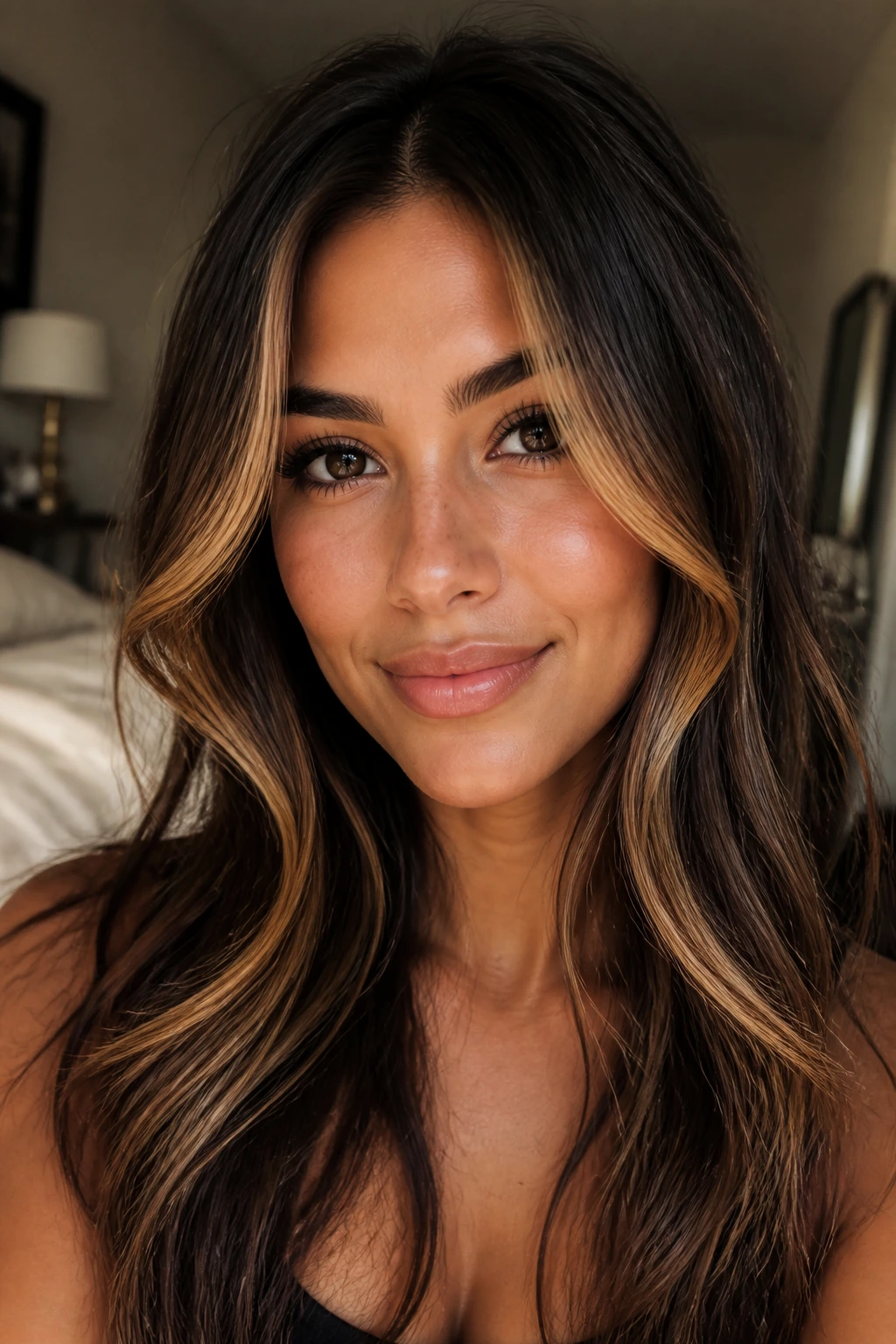
Want brightness near the face without turning the rest of your hair into a different color? A honey money piece does that job with almost no drama. It places warmth around the cheekbones and eyes, where tan skin usually benefits from a little lift.
How to keep it soft
The trick is width. Too wide and it looks like a strip. Too narrow and it vanishes. I like a soft section that starts a touch away from the hairline and blends into the front layers.
A honey money piece works best when the rest of the hair stays a few shades darker. That contrast gives the face light without making the whole style feel loud.
4. Mocha Lowlights
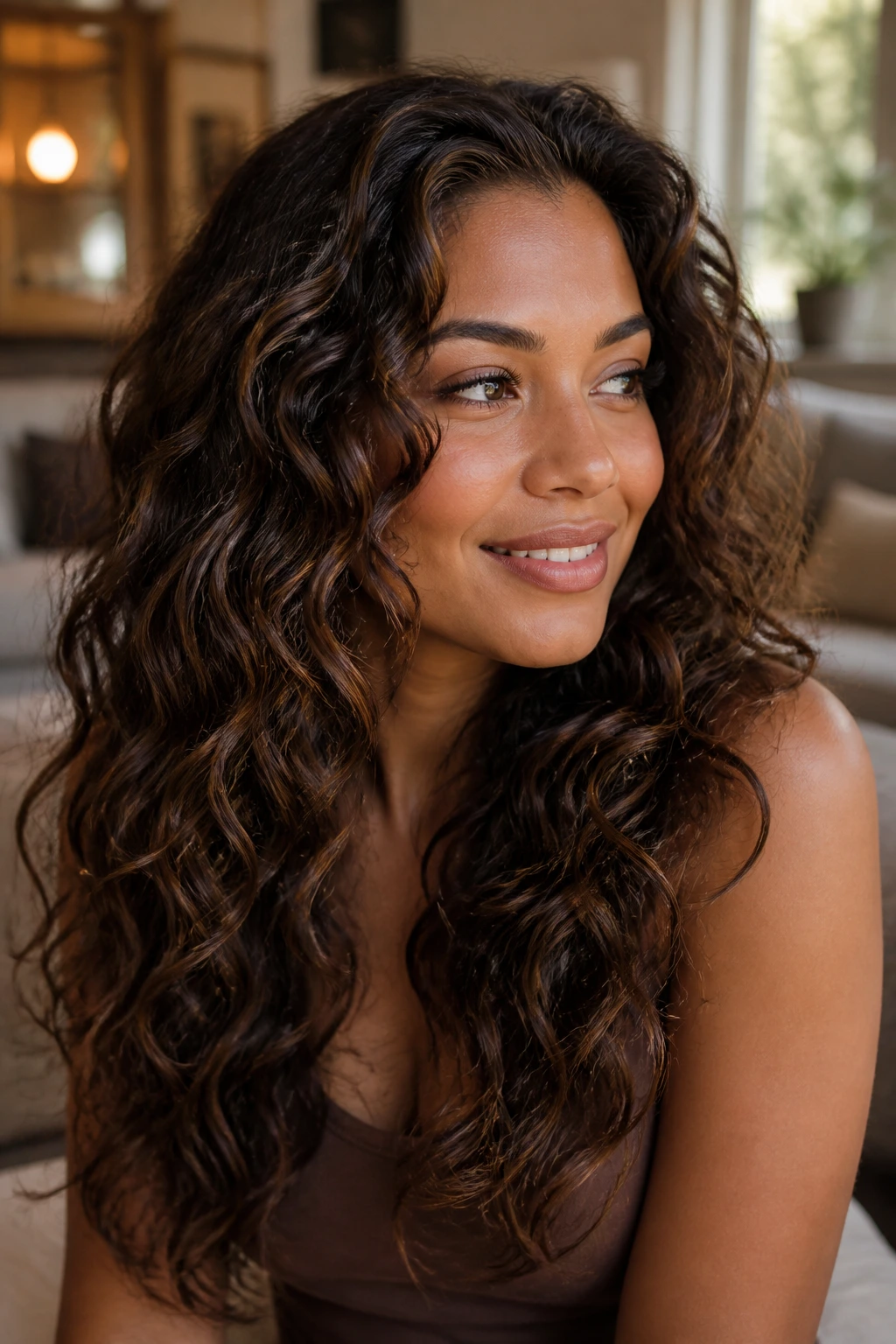
Mocha lowlights are the quiet fix when brunette hair starts to look flat. They tuck darker strands back into the hair so the lighter pieces have contrast, and tan skin usually reads richer because the overall color gets depth again.
This is the move for anyone who already has highlights that feel too bright or too washed out. A few mocha pieces underneath can make the top layer look more expensive in one appointment.
It’s also smart for curly hair. Curls need shadow and light to show shape, and mocha lowlights keep the pattern from turning into one flat brown sheet.
5. Cinnamon Swirl Highlights
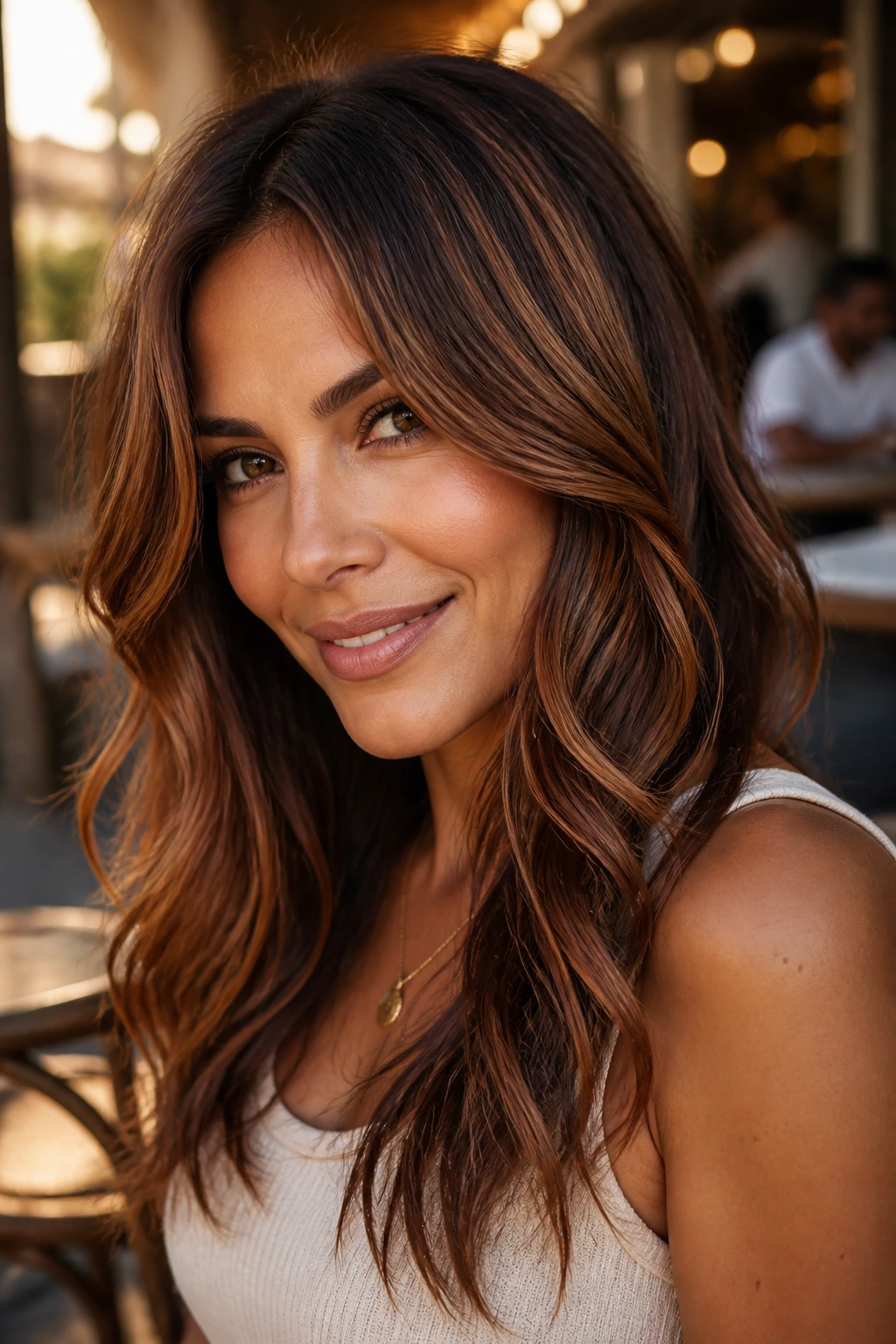
Cinnamon swirl highlights live in that warm red-brown lane that makes tan skin look lively without pushing into true auburn. They work best when the colorist keeps the cinnamon muted, not fire-engine bright.
The result is a brunette that looks toasted rather than dyed. Around the face, the warmth can make skin look a little brighter and eyes a little sharper.
If your tan leans golden, this shade is a nice fit. If your skin flushes easily or already reads very warm, keep the cinnamon mixed with chestnut so it doesn’t drift too copper.
6. Toffee Balayage Ends
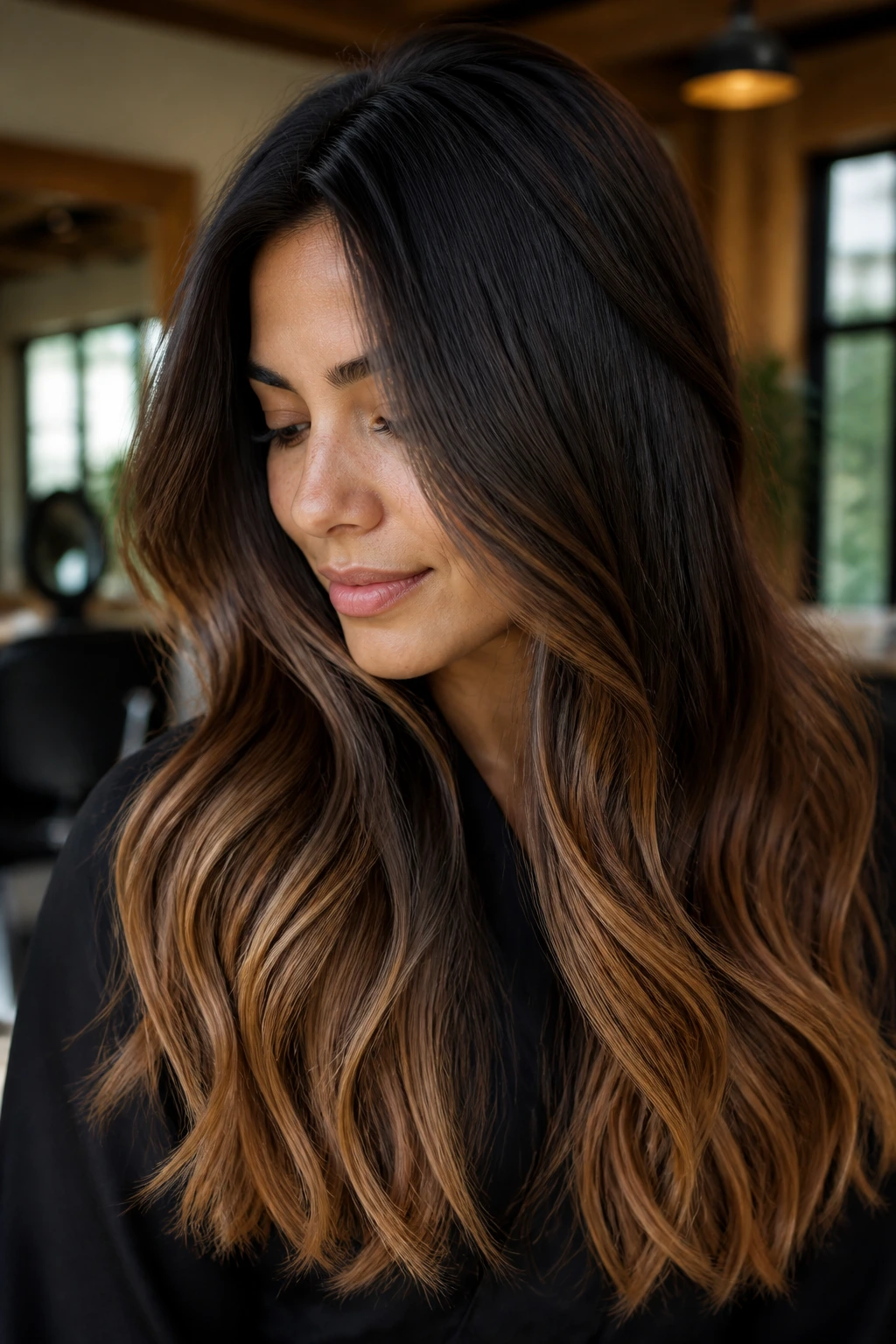
Toffee balayage ends do one thing very well: they keep the root dark and natural while the ends pick up enough warmth to show movement. That makes them a strong choice for low-maintenance brunettes who still want a visible change.
Because the lightness sits lower, the color reads softer on tan skin than a heavy face frame. The ends catch light when you move, but the haircut still looks grounded.
I like this look on long hair, especially if the ends are layered or slightly textured. The toffee pieces keep the length from looking heavy, which is a problem a lot of dark brunettes run into.
7. Mushroom Brown Ribbons
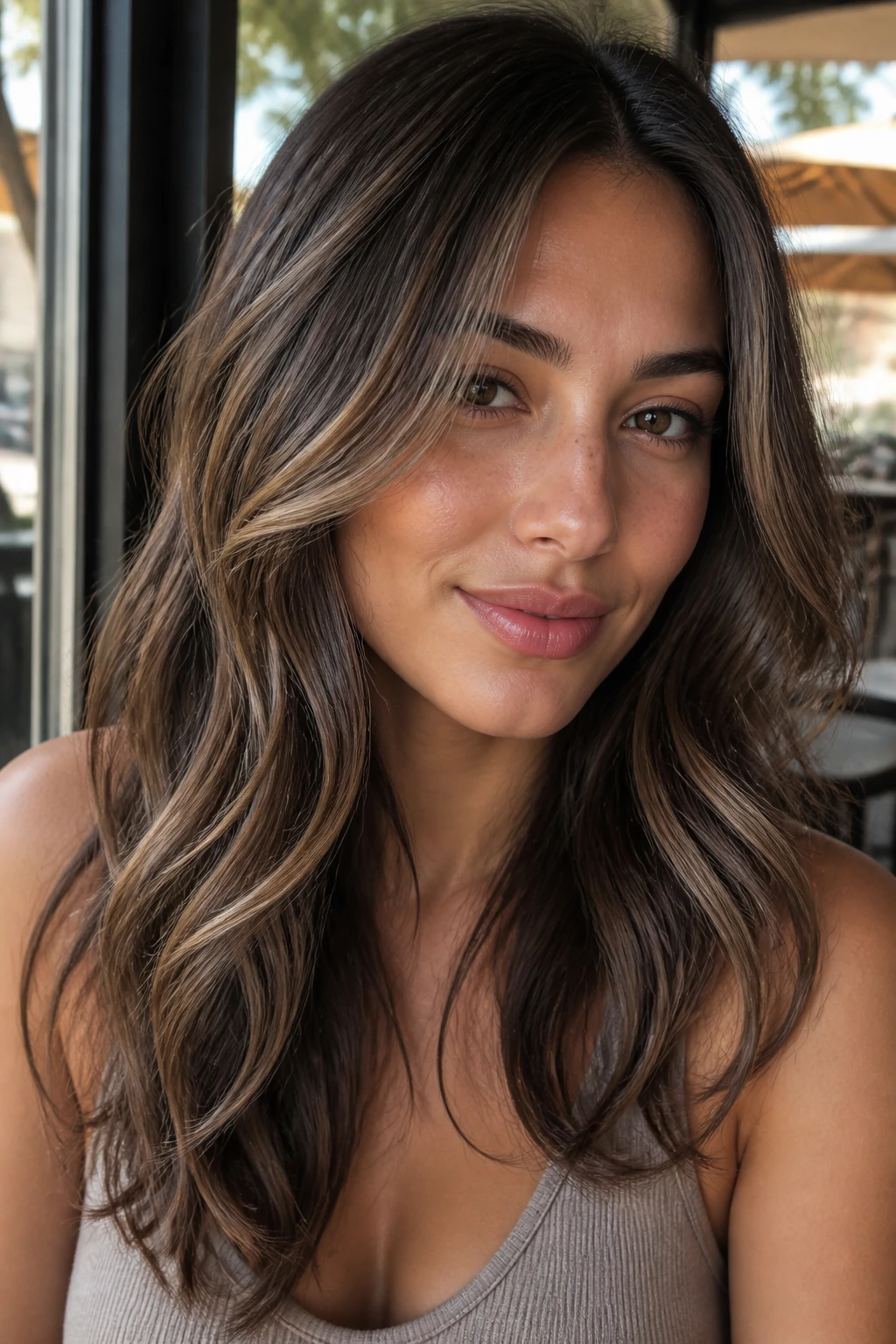
Can a cooler brunette still look soft on tan skin? Absolutely, if the tan leans olive or neutral. Mushroom brown ribbons give you beige-brown dimension without the orange that warmer highlights can bring out.
The shade sits between taupe and soft brown, which sounds plain until you see it move. In daylight, it has a smoky edge that feels modern without looking harsh.
What makes it work
Mushroom brown is best when the highlight stays fine and blended. Thick chunks make it look muddy. Thin ribbons, a neutral gloss, and a deeper base keep it clean.
8. Bronze Veil Highlights
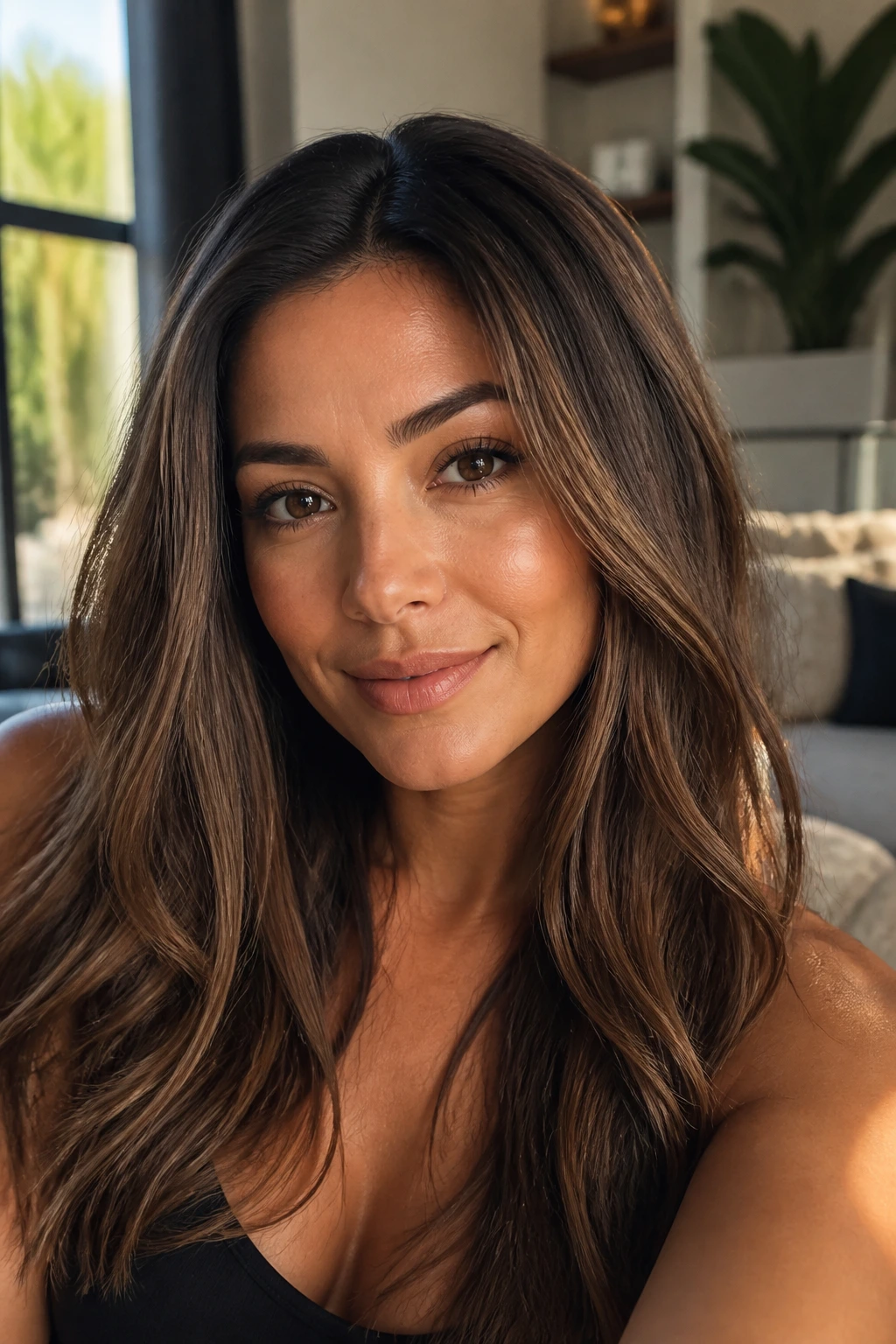
Bronze veil highlights are translucent and thin, almost like a soft shimmer running through chocolate brunette hair. They catch the light in a way that feels natural on tan skin because bronze has enough warmth to echo the skin without getting loud.
This is a good pick if you wear your hair straight or with a loose bend. The highlights show through the surface rather than shouting from the top layer.
I especially like bronze veils on medium-to-deep brunettes who want movement but not a major lift. The color can sit in the hair quietly, then show itself when the sun hits it.
9. Hazelnut Foilayage
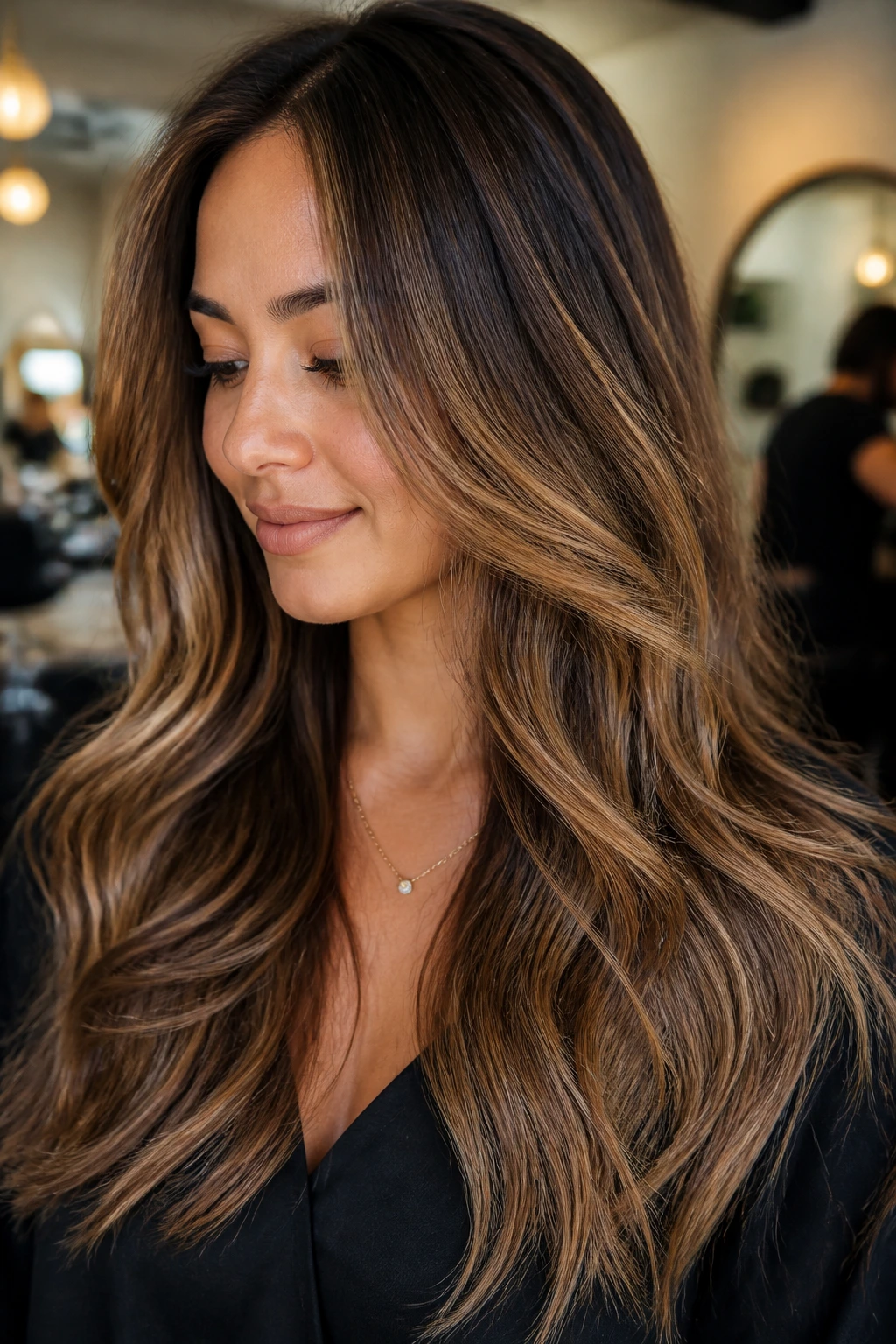
Hazelnut foilayage gives you a little more pop than pure balayage, but it still avoids that stripy foil look people worry about. The painted sections get a gentle lift, then the foils help the hazelnut tone show clearly.
Tan skin that wants warmth without full blonde usually does well here. Hazelnut has enough brown in it to stay believable, and enough gold to brighten the face.
This is a strong choice for layered cuts, because the different lengths let each hazelnut piece move. That movement keeps the color from sitting in one dull plane.
10. Espresso Dimension
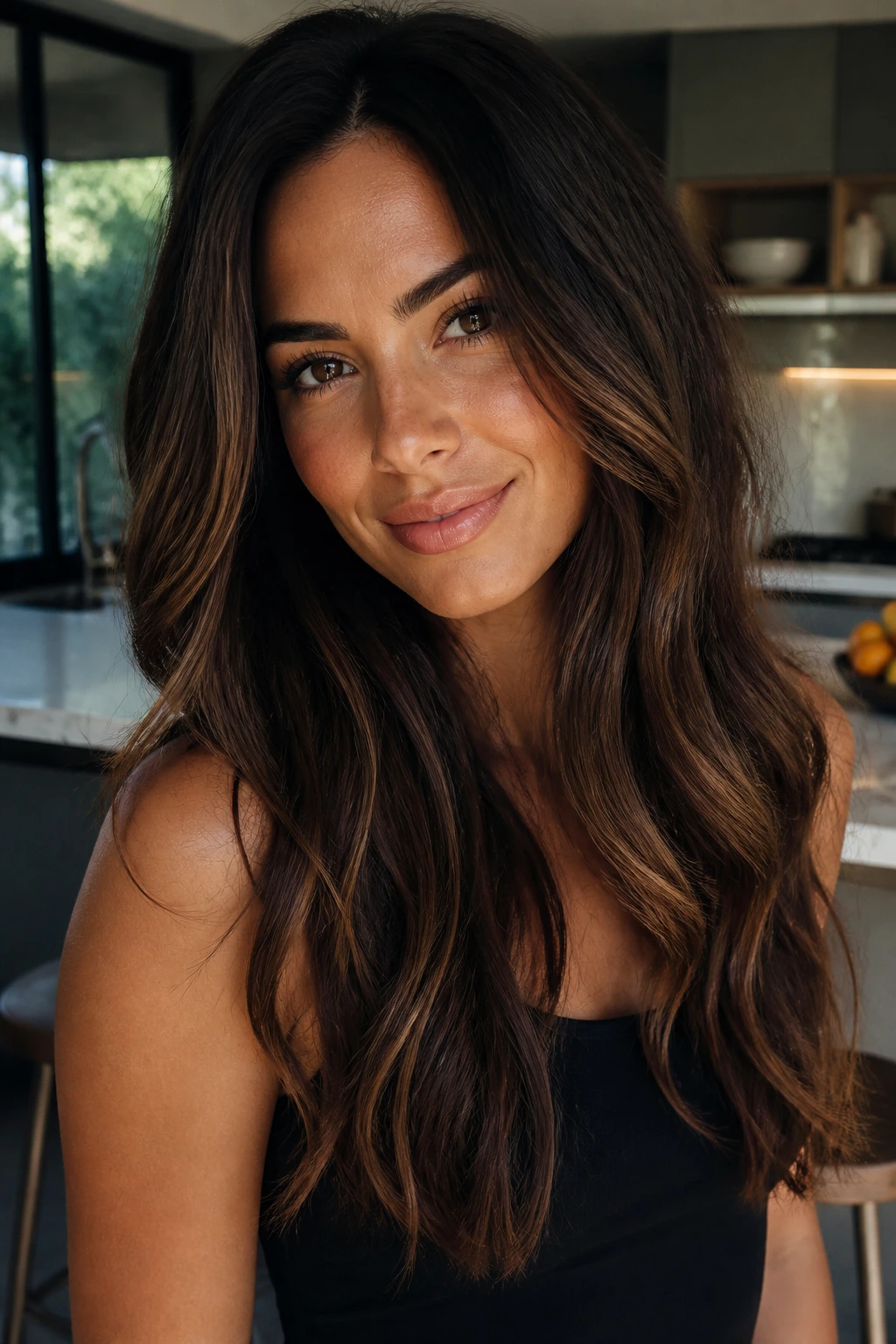
Espresso dimension is what I reach for when someone wants brunette hair to look deeper, not lighter. Dark espresso lowlights and a few strategic warm pieces give the hair a sense of thickness that flat single-process color rarely has.
On tan skin, the contrast can be a good thing. The deep espresso around the crown and underside makes the warmer surface pieces look richer, not brash.
This works especially well on thick hair and curly textures. Dense hair can carry shadow and brightness at the same time, and espresso keeps the result from looking too sweet or too pale.
11. Almond Beige Highlights
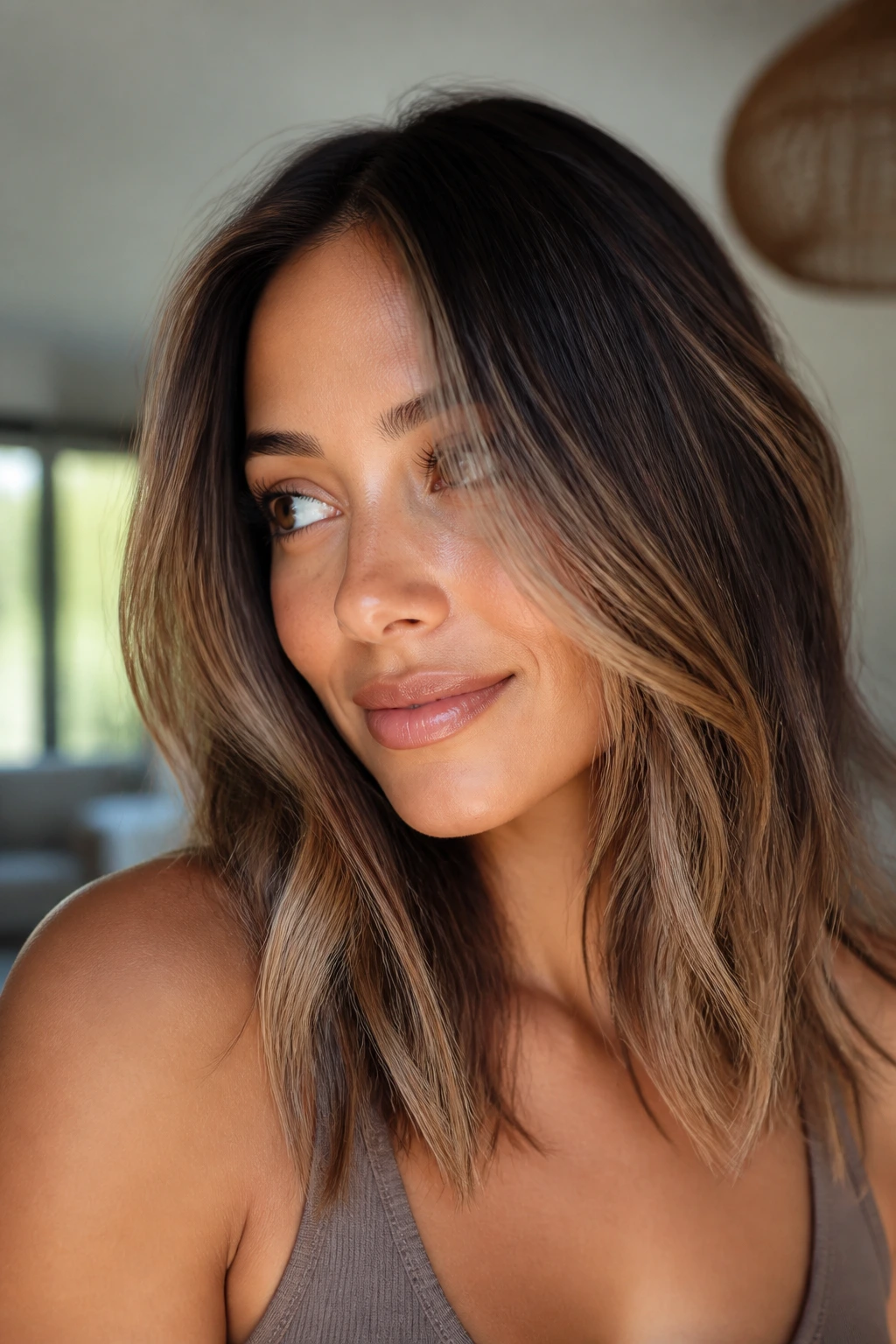
Almond beige highlights sit in a soft neutral lane that looks expensive on tan skin without drifting into blonde territory. They’re bright enough to lift the face, but beige keeps the finish from turning yellow or orange.
That neutral quality matters. If your skin tone shifts between warm and olive depending on the season, almond beige usually stays calm through both.
I like this shade on shoulder-length layers and long bobs. The ends show the tone well, and the lighter pieces around the face can make the whole haircut feel lighter without a major color commitment.
12. Amber Face-Framing Pieces
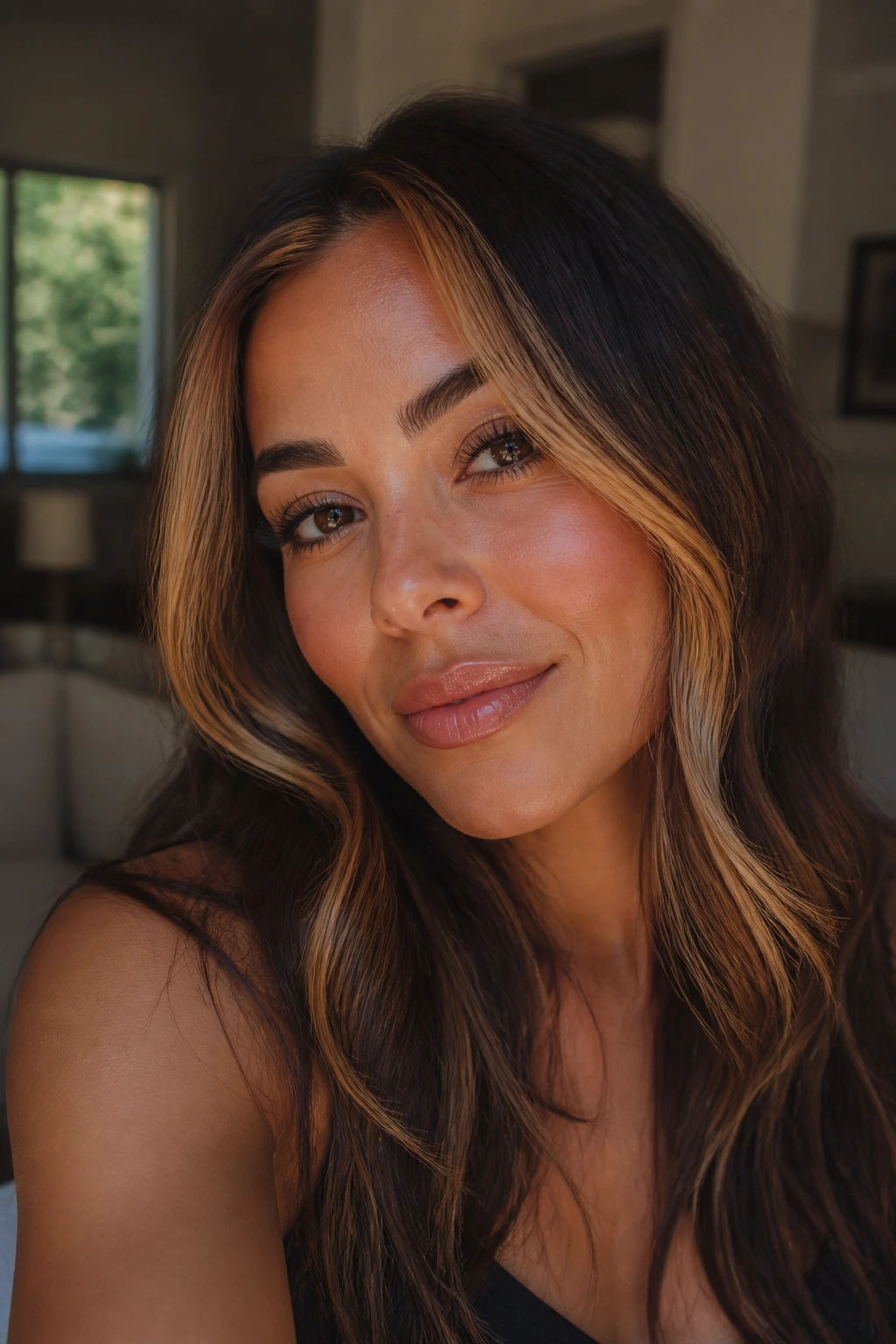
Amber face-framing pieces give a brunette enough glow near the front to make the rest of the color feel intentional. The amber tone is warm, but deeper than honey, so it reads soft against tan skin rather than bright.
This is a good move when you want a visible change but don’t want to fill the whole head with lighter strands. A few amber pieces around the temples and cheekbones can do a lot.
I prefer this look when the hair has movement—waves, bends, or a messy blow-dry. The pieces catch and release light as the hair moves, which keeps them from looking blocky.
13. Sandstone Brunette Melt
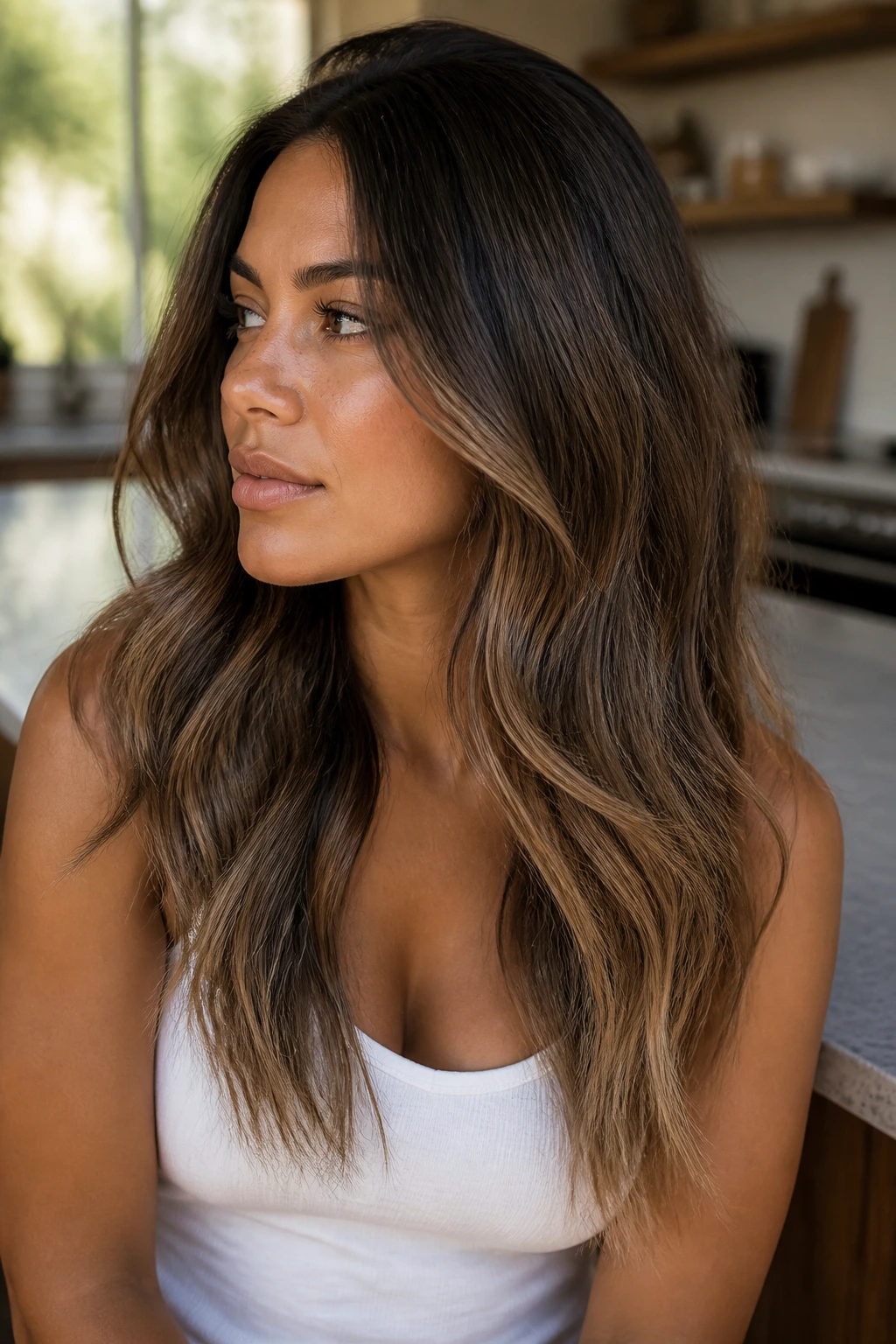
A sandstone brunette melt blends chocolate roots, soft mid-brown ribbons, and a beige-brown finish into one smooth gradient. There’s no hard line, which is why it looks so natural on tan skin.
The sandstone tone is useful when you want a slightly lighter result but refuse to lose depth. It keeps the brunette base in charge.
This one is especially good for thick or long hair, where a solid one-tone color can feel heavy. The melt breaks up that weight and makes the cut move.
14. Maple Glaze Ends
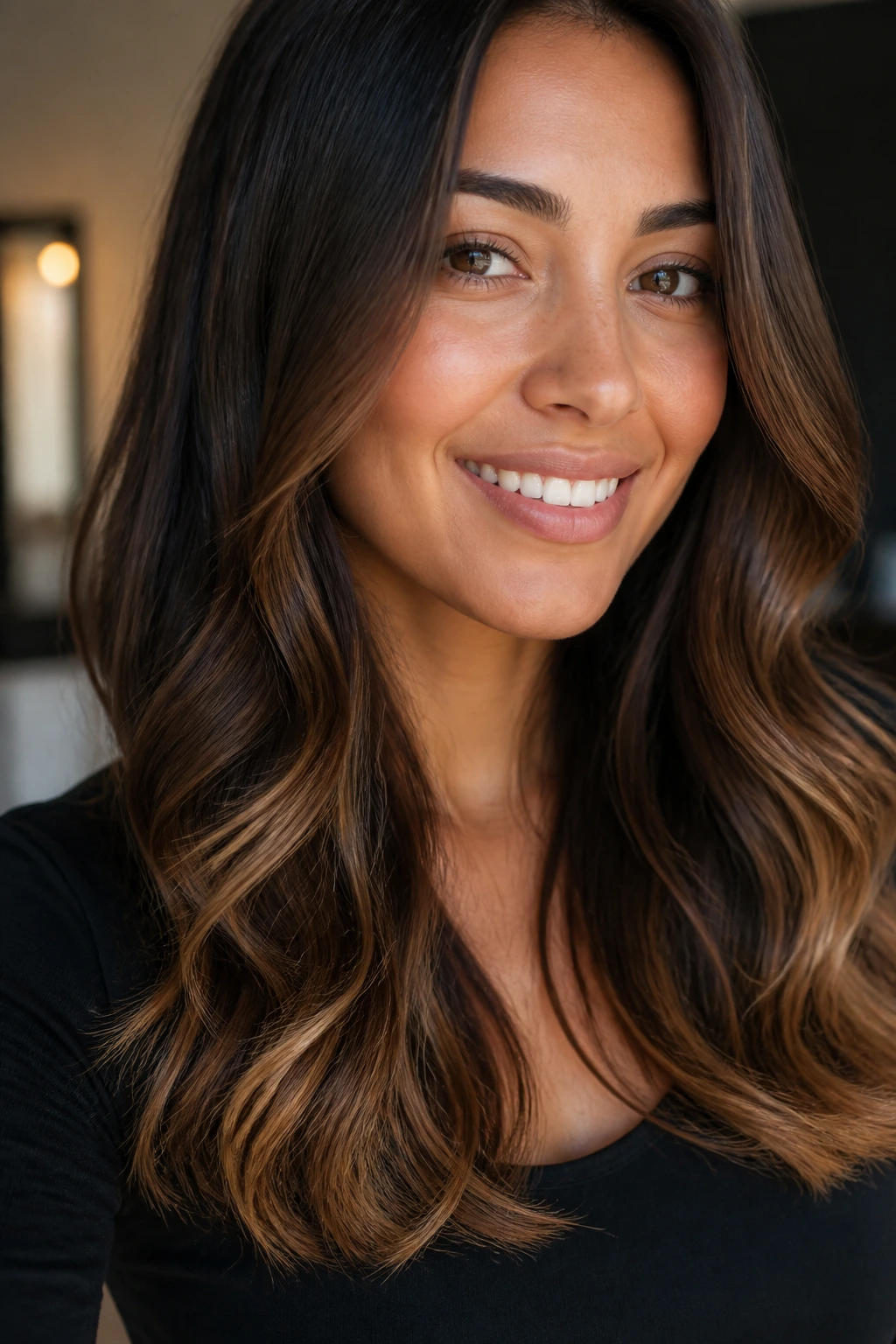
Maple glaze ends are deeper than honey and warmer than beige, which makes them a nice middle ground for brunette hair on tan skin. The color sits on the ends, so the effect is soft and a little glossy rather than overtly highlighted.
I like this when the base is already healthy and rich. You’re not trying to reinvent the head, just giving the ends a warmer finish so the whole style reads more alive.
It also works well if you wear your hair up a lot. The ends still show in ponytails, braids, and buns, and that little hit of warmth keeps the style from looking too severe.
15. Soft Bronde Balayage
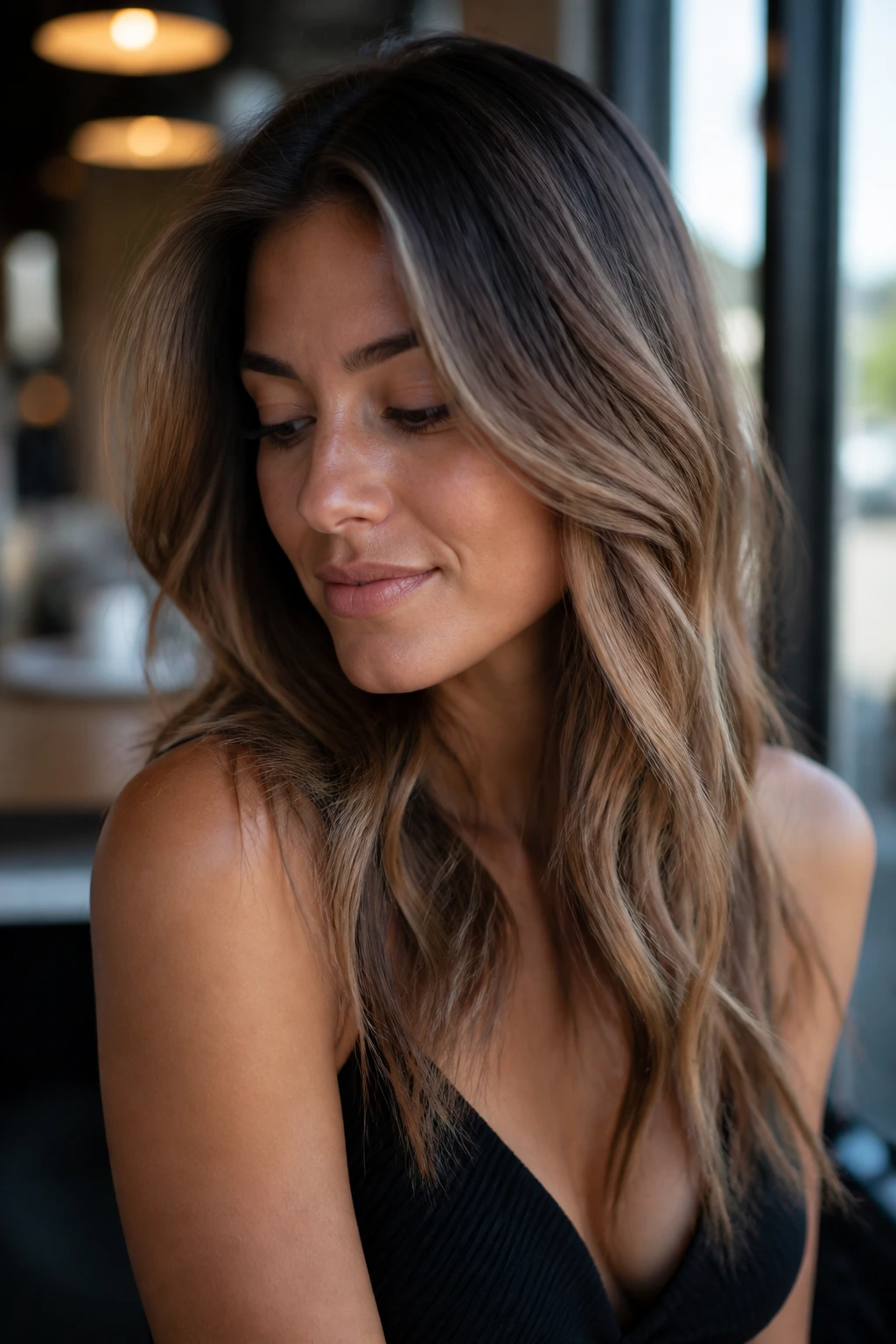
Soft bronde balayage only works when the brunette stays dominant. That’s the rule. The blonde should feel like a dusting, not the main event, and tan skin usually looks best when the contrast is gentle.
A soft bronde finish suits people who want one step brighter without tipping into obvious blonde. The secret is keeping the lift around level 6 or 7 and blending it with a neutral gloss.
It’s a nice bridge shade if you’re nervous about highlights. Bronde gives you movement, brightness, and a softer grow-out than a higher-contrast blonde streak.
16. Taupe Babylights
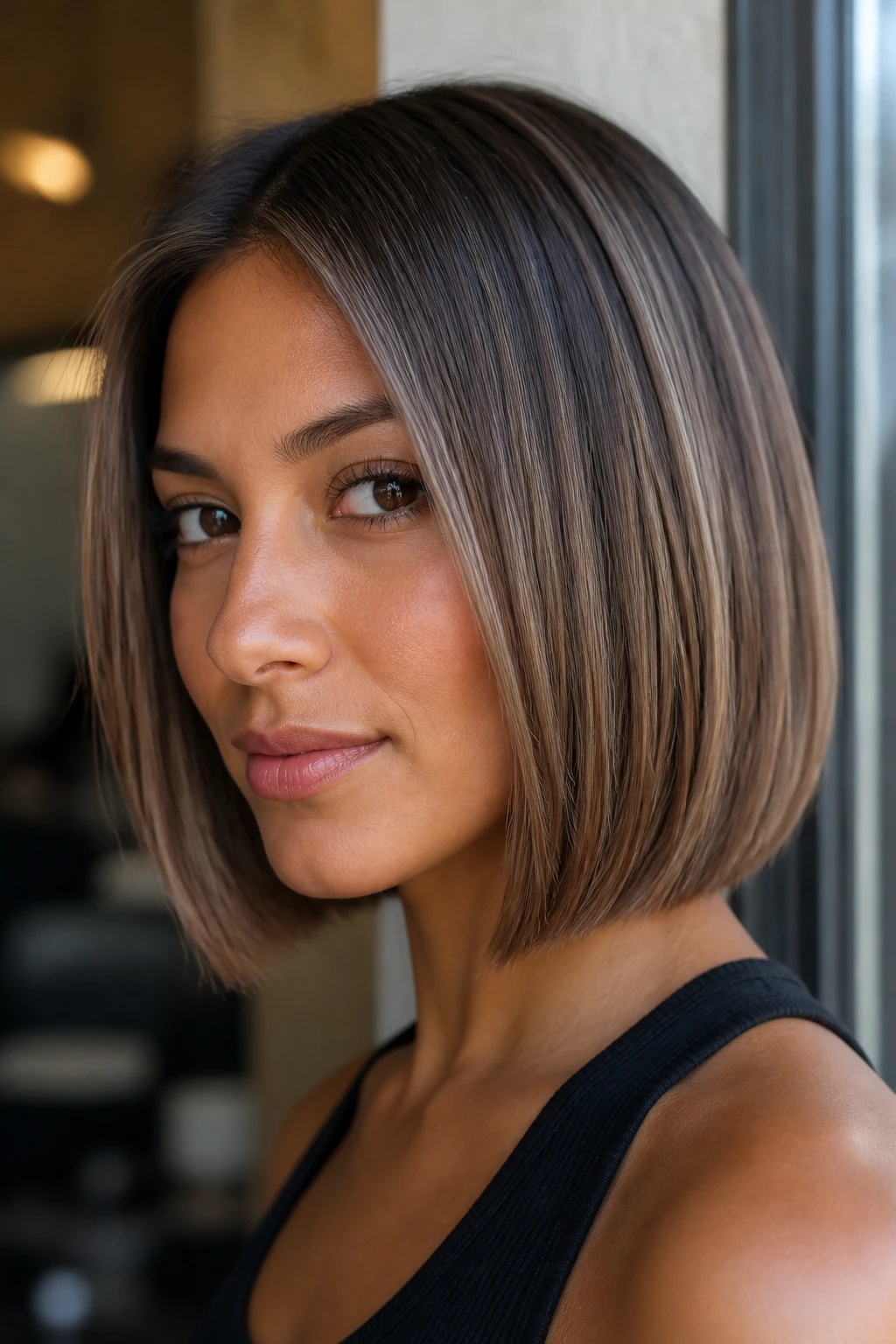
Taupe babylights are a smart pick for tan skin with olive undertones. Taupe has that cool-beige balance that keeps the hair from looking orange, but it’s not so ashy that it goes gray.
Because the strands are so fine, the color feels like a soft veil rather than a stripe pattern. That makes it especially good on sleek cuts, blunt bobs, and polished blowouts.
If your brunette base already has warmth in it, taupe can calm it down without flattening the whole head. That’s the part people tend to miss. A little neutrality goes a long way.
17. Rooted Honey Highlights
Rooted honey highlights give you brightness with a shadowed base, and that shadow is why they grow out so well. Tan skin likes the warmth of honey, but the root keeps the result from feeling too sweet or too flat.
This look is a favorite for people who do not want to run back to the salon every few weeks. The root blend softens the line between natural growth and color, so the style holds together longer.
I like this on wavy hair and casual blowouts. The honey shows most at the bends, which makes the color look lived-in instead of staged.
18. Toasted Pecan Slices
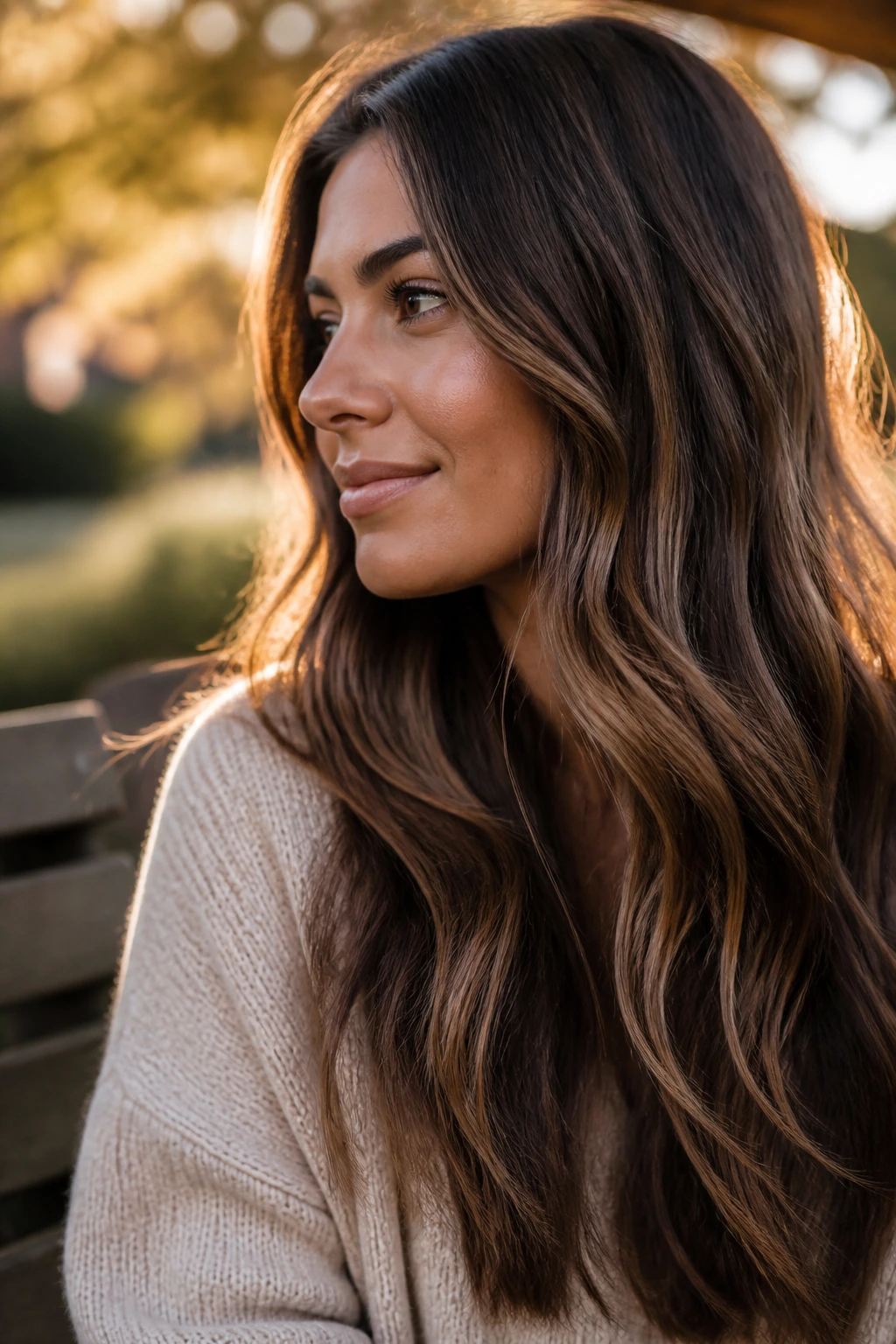
Toasted pecan slices are slightly wider than babylights and a touch warmer than ash brown, which gives the hair a more defined texture. On tan skin, pecan reads as a rich brunette accent, not a blonde one.
This works well when you want the highlight to be visible without being dominant. The slices should be placed with enough spacing that the brunette base still carries the look.
It’s a good style for layered cuts and round-brushed blowouts. The pieces catch across the bends, and the whole haircut gets a stronger shape.
19. Warm Sable Lights
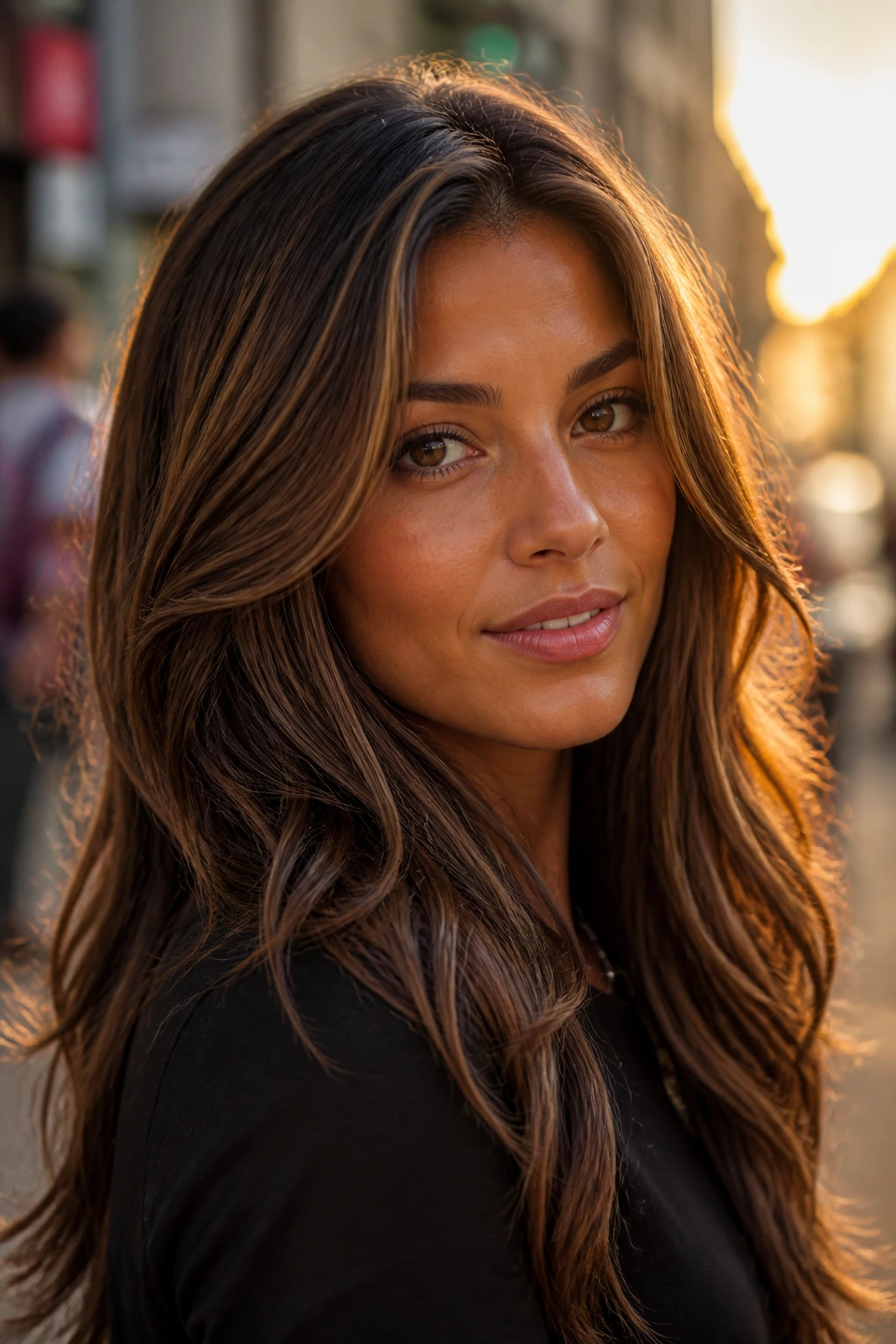
Warm sable lights are understated in the best way. They sit close to the brunette base, but the warmth keeps them from disappearing completely, which matters if you want dimension rather than a big color shift.
Tan skin tends to like sable because it deepens the overall palette. The hair looks richer, and the face does not get washed out by over-lightened pieces.
This shade is especially good for people who wear darker makeup or deeper lip colors. The hair supports the face instead of competing with it.
20. Chestnut-to-Caramel Ombré
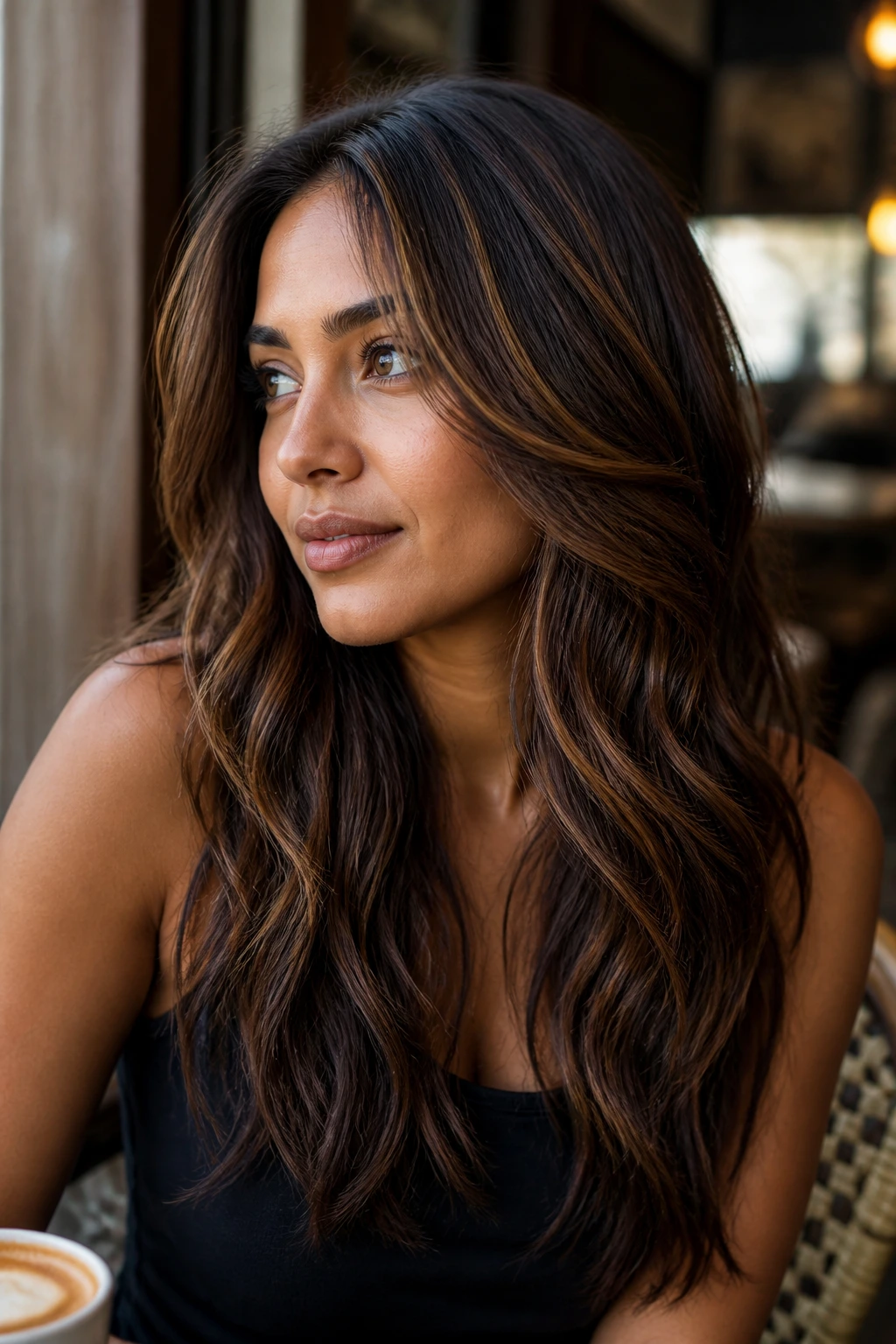
Chestnut-to-caramel ombré gives you a clear gradient without harsh lines. The roots stay chestnut, the mid-lengths warm up, and the ends drift into soft caramel. It’s a controlled shift, not a dramatic color jump.
That gradual change works well on tan skin because the lightness stays concentrated where it adds movement. The face gets lift, the ends get brightness, and the root keeps the hair grounded.
Longer hair makes this look especially pretty. There’s room for the gradient to breathe, which is half the point.
21. Cocoa and Gold Micro-Highlights
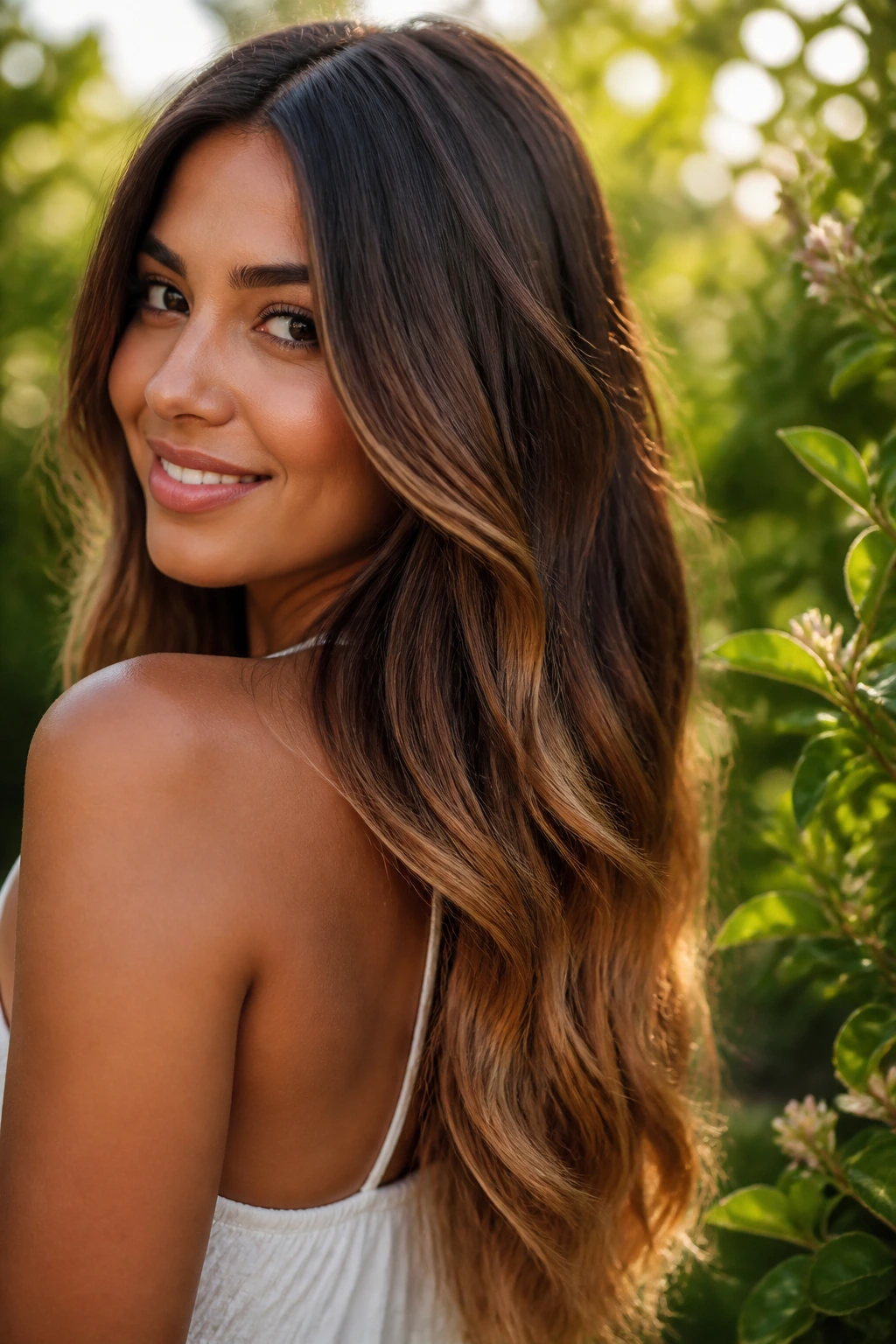
Cocoa and gold micro-highlights are tiny, but they do a lot. The cocoa keeps the brunette base rich, while the gold shows through in fine threads that catch light when you move.
This is one of my favorite options for fine hair. Big ribbons can overwhelm finer strands; micro-highlights build density and shimmer without making the head look patchy.
On tan skin, the gold should stay soft and muted. Too much brightness and you lose the quiet effect. Keep it tiny, and the color becomes a glow instead of a statement.
22. Butterscotch Peekaboo Pieces
Butterscotch peekaboo pieces hide under the top layer, which makes them a fun choice if you want a brunette that reads traditional from the front. Turn your head or pin the hair up, and the warm pieces show up underneath.
Tan skin usually likes this kind of surprise warmth because it keeps the front soft while still giving movement. It’s playful without being obvious.
I like peekaboo placement on shoulder-length cuts and layered lobs. The underlayers move enough to reveal the color, but the look still feels office-friendly if that matters to you.
23. Neutral Beige Sunkiss
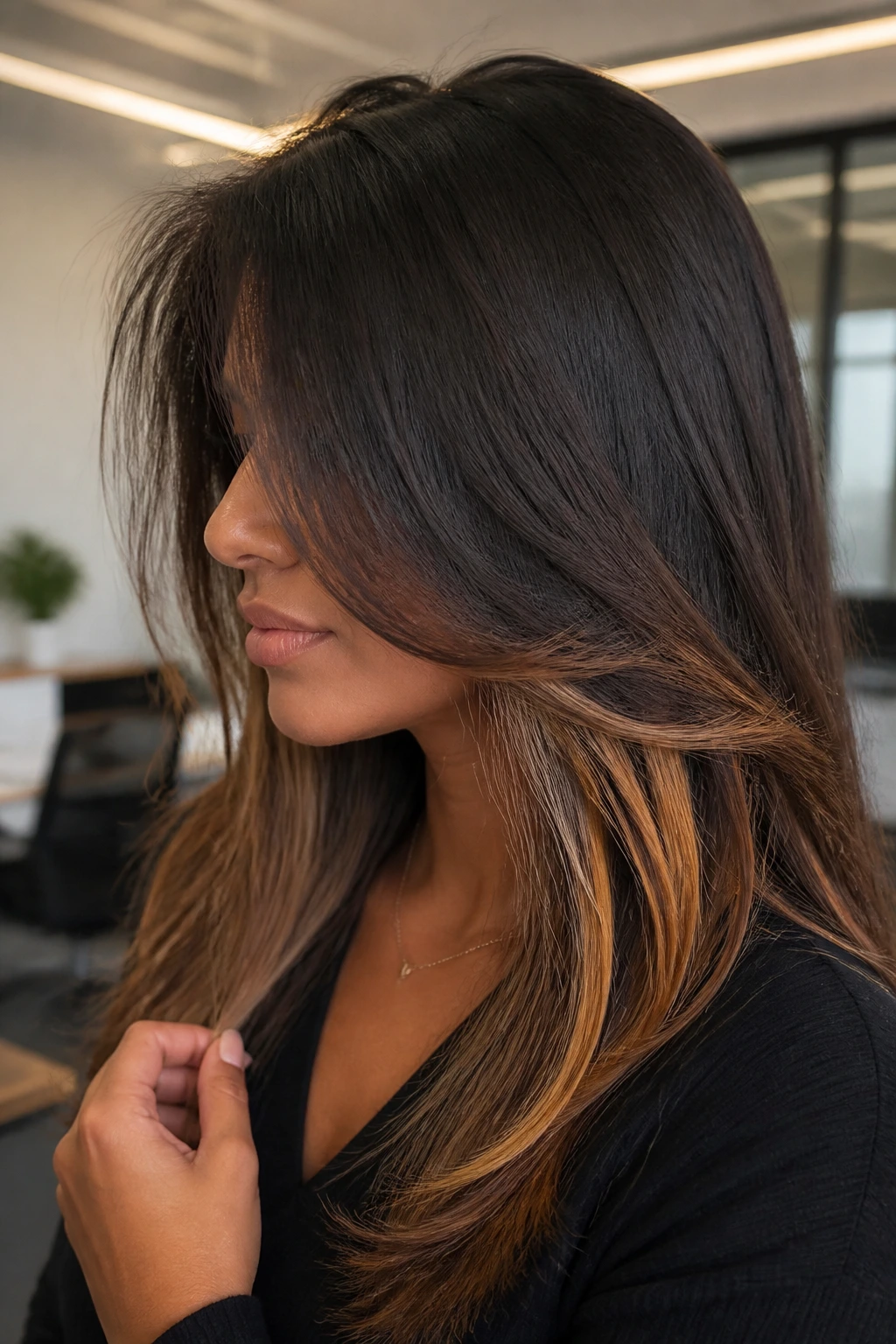
Neutral beige sunkiss is the color I’d pick for someone whose tan skin leans green, olive, or just plain hard to match. Beige takes the edge off warmth, and the result looks soft instead of brassy.
The placement should stay scattered and airy, not packed in. Think sunlight after a few days outside, not dramatic blonde streaks.
This shade also plays nicely with loose waves. The beige catches in the bends, and the brunette underneath keeps the whole style from looking dry.
24. Mahogany Dimension with Warm Lights
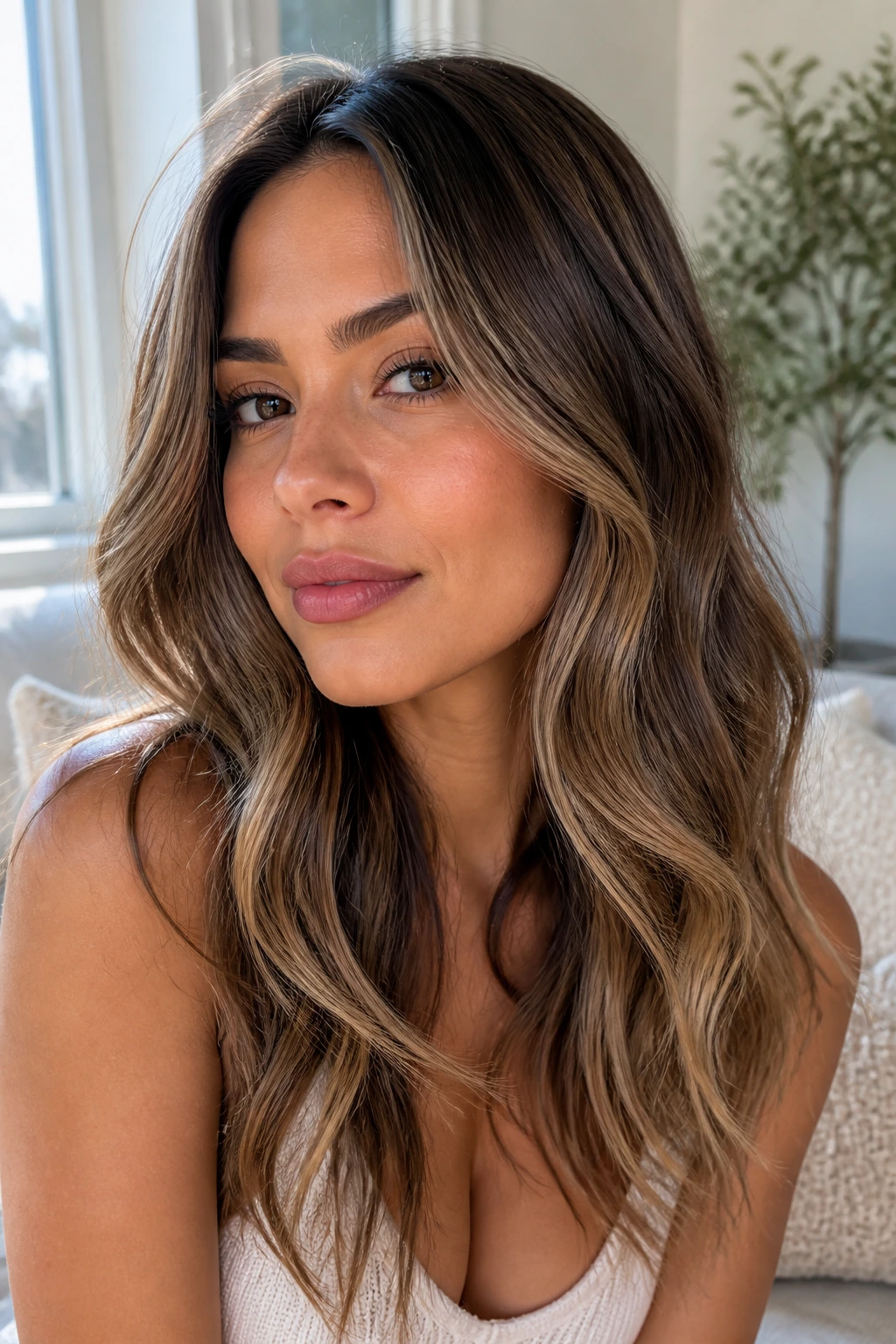
Mahogany dimension brings depth first, warmth second. That’s why it works so well on deeper tan skin or anyone who wants rich brunette hair with a little red-brown glow.
The warm lights should stay subtle and woven through the surface. If the mahogany base is too flat, the hair can look heavy. If the warmth is too bright, it starts to look coppery.
I like this look in glossy, slightly polished styles. Mahogany shines best when the cut has clean ends and a smooth finish.
25. Walnut Ribbon Highlights
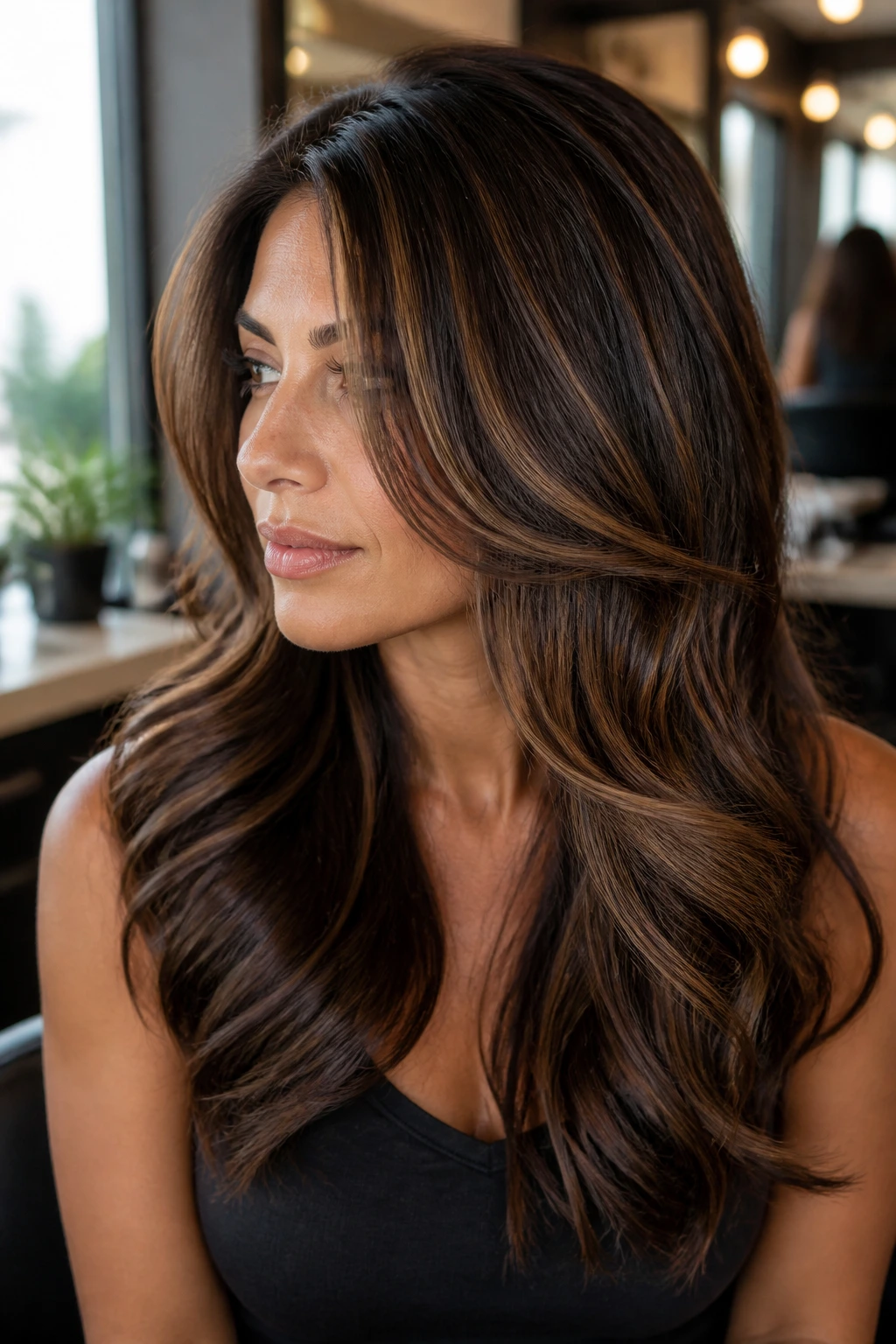
Walnut ribbon highlights are the kind of brunette color people notice only after they’ve stared for a second. The walnut tone is mid-brown and warm enough to soften tan skin without turning the hair light.
This is a strong choice if you want dimension that feels office-safe and low drama. It reads as polished, not flashy.
Walnut ribbons work especially well on long layers because the movement keeps the pieces from blending into one flat tone. The hair gets shape, and the color stays believable.
26. Honeyed Curtain Bang Accent
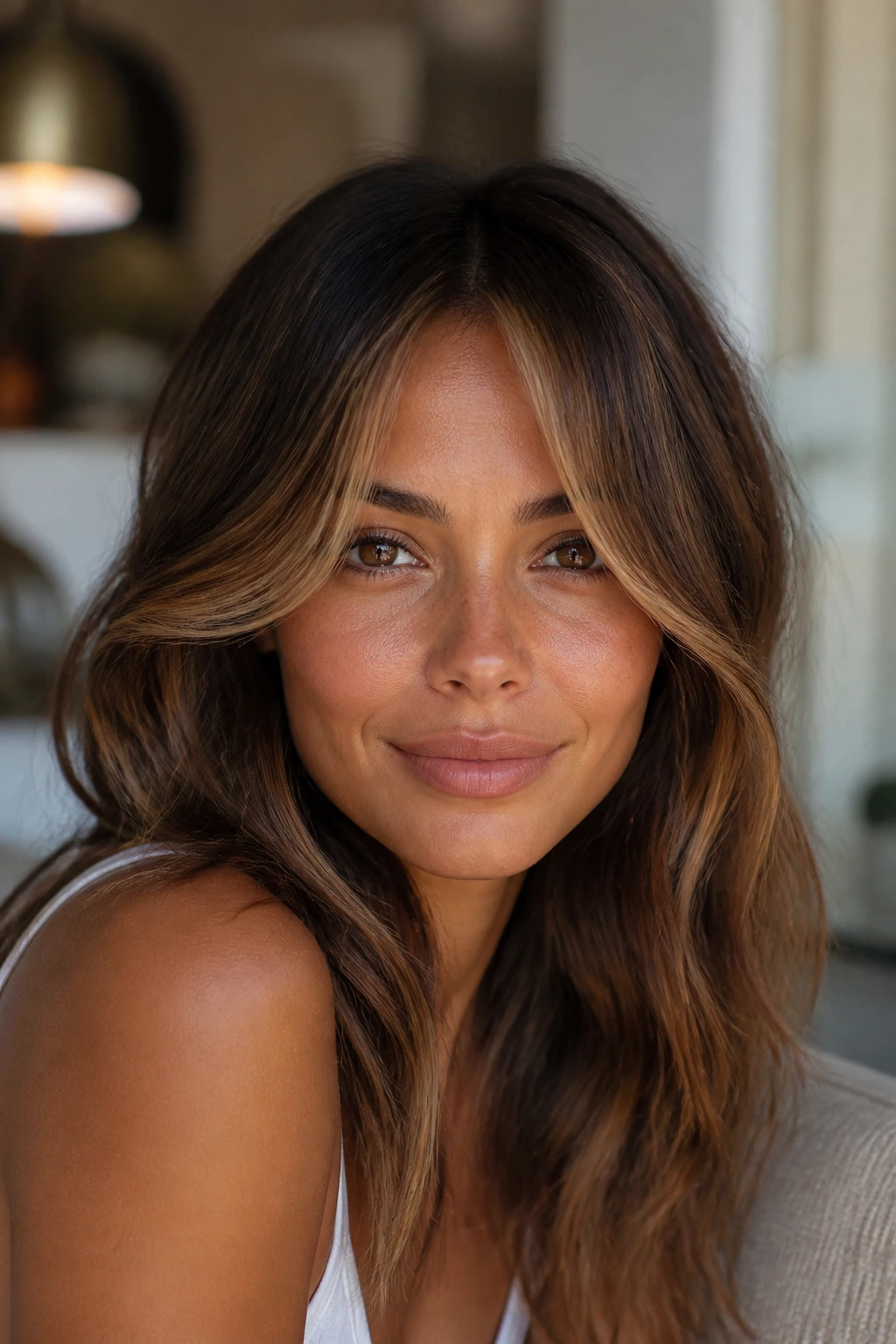
Honeyed curtain bang accent is one of the easiest ways to change your face without changing your whole head. The lighter pieces sit right where the bangs sweep away from the face, so the eyes and cheekbones get a little lift.
That placement is smart on tan skin because the brightness stays concentrated in the front. You get the warm effect without flooding the entire hairline.
It’s a good option for shags, lobs, and any cut with curtain bangs or soft face layers. The accent grows out gracefully because the color lives where the hair already moves.
27. Smoky Mushroom Melt
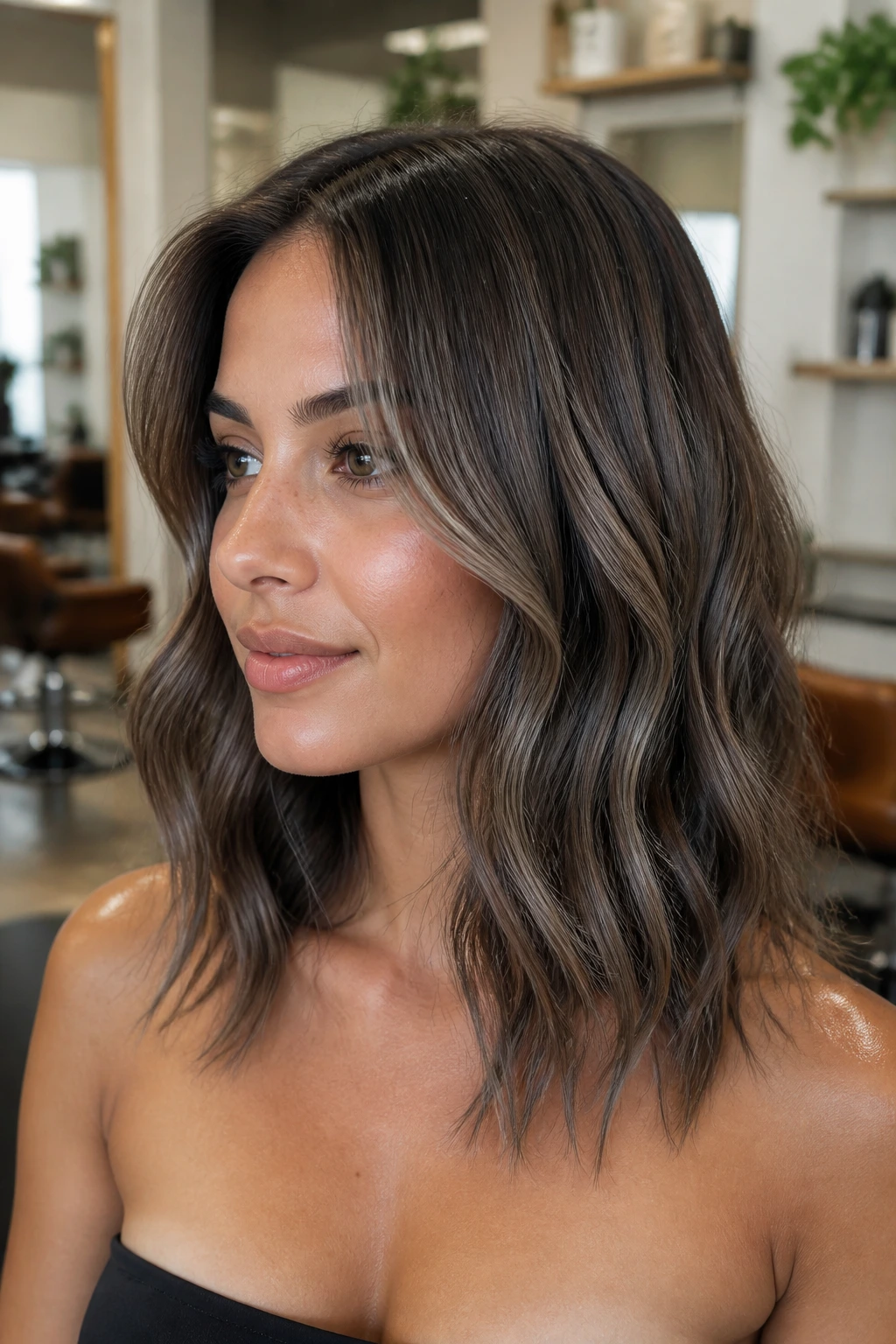
Smoky mushroom melt is for people who like cool brunette color but still want it to feel wearable on tan skin. The smoky tone stays neutral, the mushroom keeps it brown, and the melt keeps the whole thing soft.
I’d choose this when the skin tone leans olive or when warm highlights keep turning brassy on you. The goal is dimension, not warmth overload.
The finish works best with a neutral gloss and a darker root. Too much ash can make the hair look flat, so the root depth is what keeps the style alive.
28. Golden Brunette Gloss
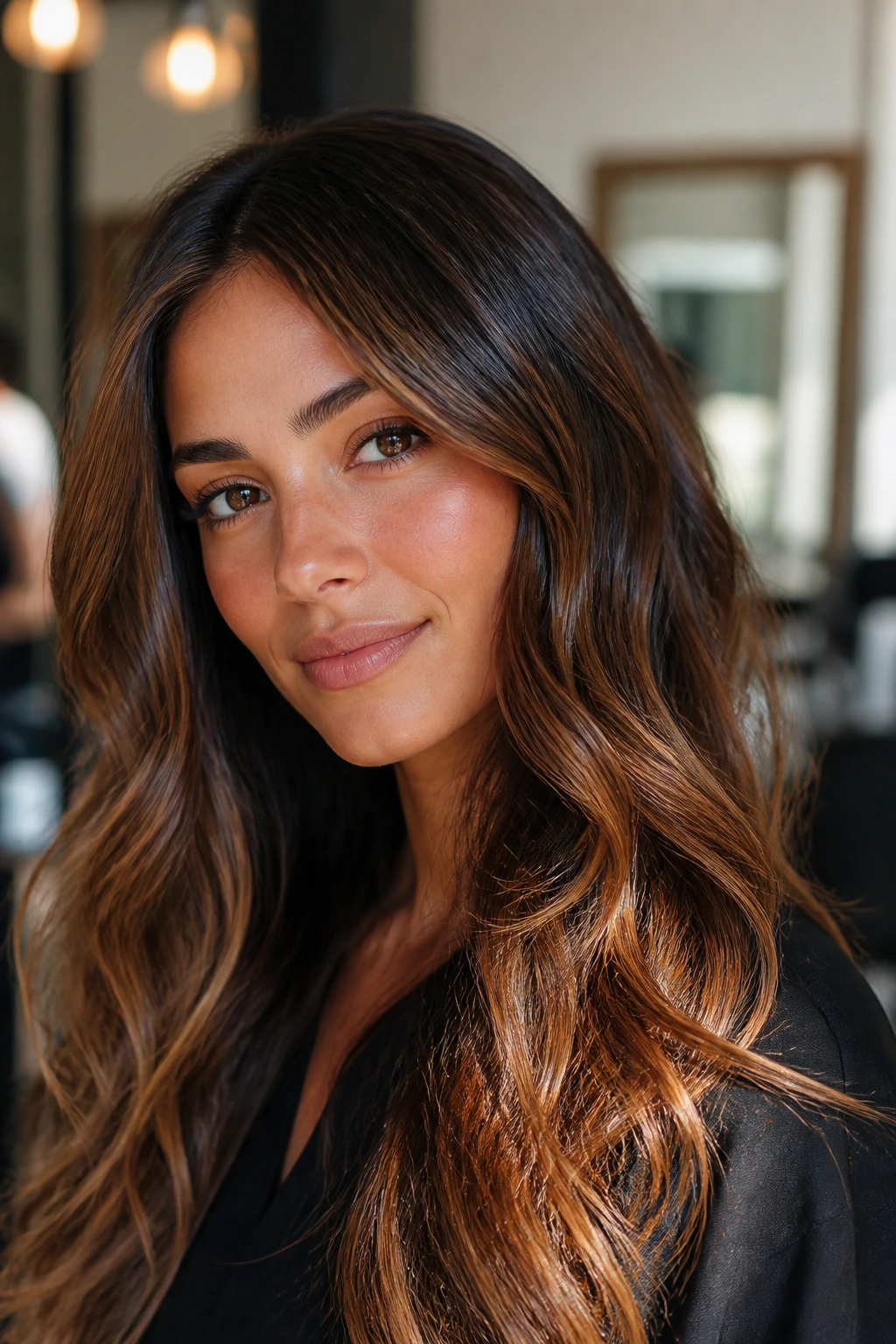
Golden brunette gloss is the final move when the hair already has shape and you just want a richer finish. It does not need heavy lightening to work. A warm gloss over brunette hair can catch tan skin in a softer, cleaner way than brighter highlights sometimes do.
This is the pick for someone who wants shine first and contrast second. The hair looks polished, the tone stays warm, and the grow-out is almost invisible.
I like this on healthy hair that doesn’t need a big chemical lift. Sometimes the prettiest brunette change is the one that stays close to home.
Why Undertone Matters More Than Trend Names
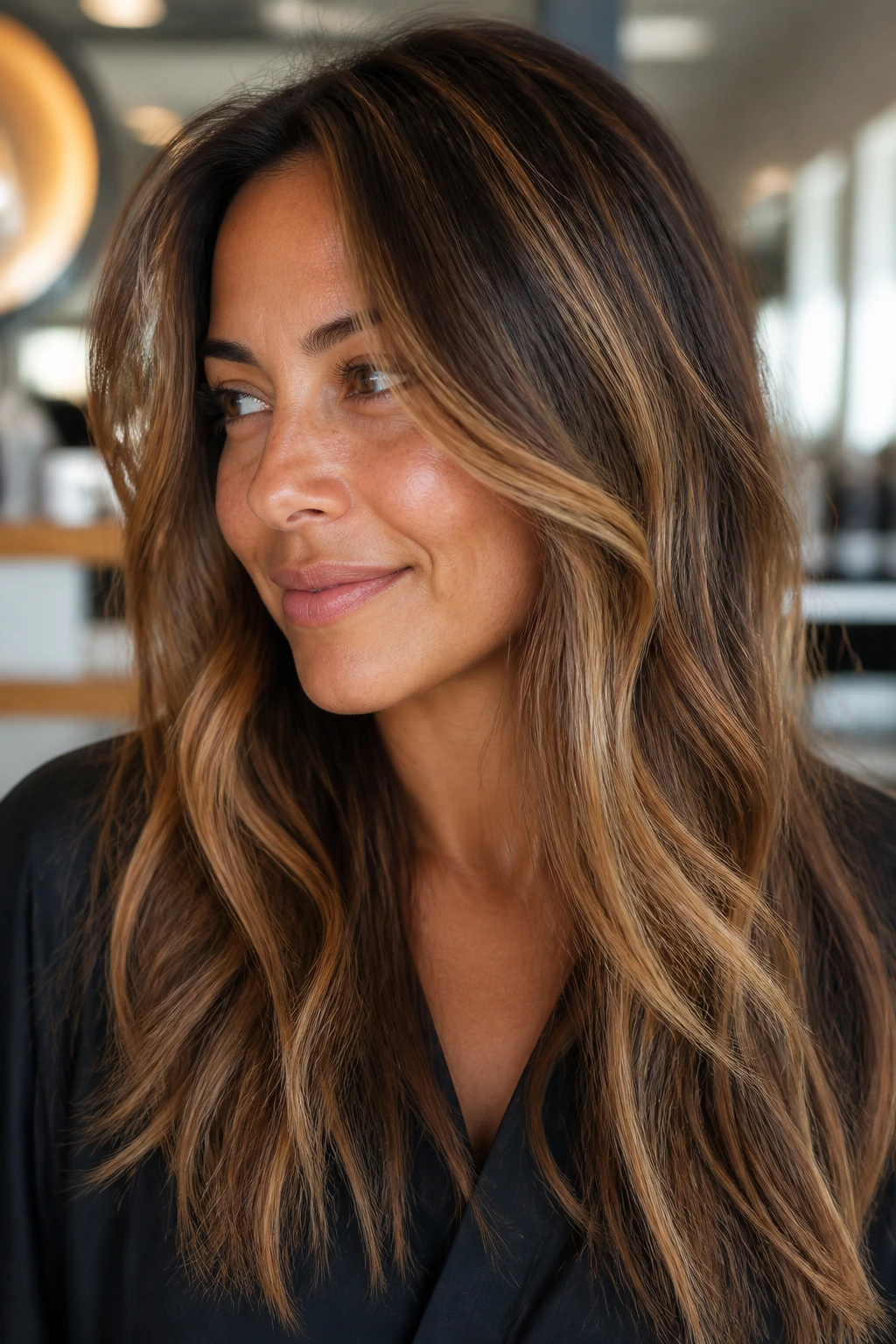
The shade name on a salon menu matters less than the undertone sitting under it. That’s the part a lot of people miss. Two caramel highlights can look completely different if one leans gold and the other leans beige, and tan skin will tell on both of them fast.
Golden and peachy tan skin
Golden tan skin usually likes caramel, amber, bronze, and honey because those tones echo the warmth already in the face. If the highlight starts getting too pale or too yellow, it can look disconnected. Keep the lift soft and the gloss warm but not brassy.
Olive tan skin
Olive tan skin can go strange with too much orange. Beige, taupe, mushroom, and hazelnut usually behave better because they soften the warmth instead of pushing it higher. I’d rather see a slightly cooler highlight with a glossy finish than a loud golden stripe that turns muddy later.
Deeper tan skin
Deeper tan skin often looks best with richer contrast: espresso, mahogany, walnut, sable, and deep caramel pieces that don’t get lost in the base. Bright blonde can be a lot. A deeper brunette with well-placed warmth tends to feel more natural and much easier to grow out.
What to Tell Your Colorist Before the Foils Go On
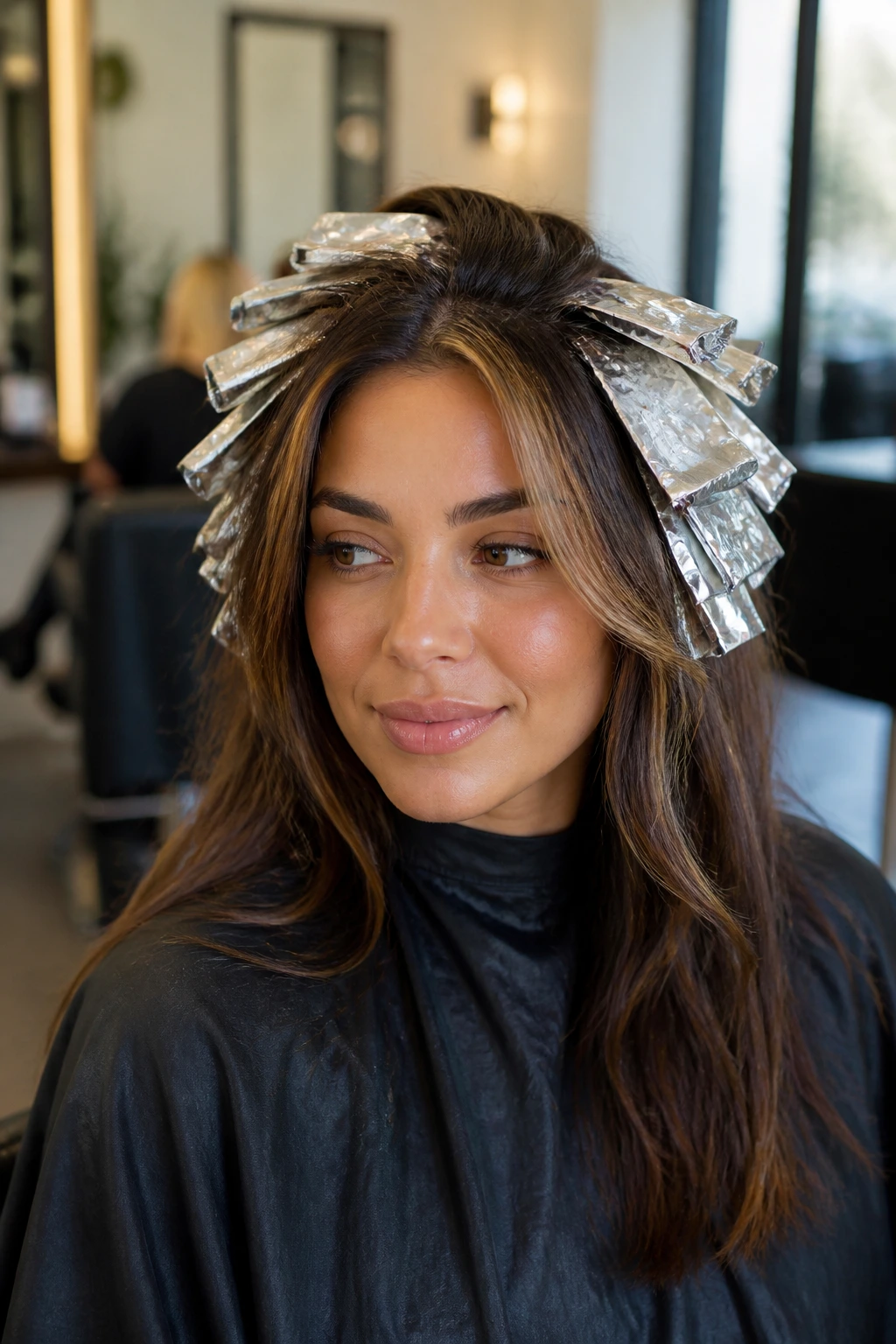
Bring photos, yes, but bring the right photos. A platinum brunette screenshot tells your colorist nothing useful if your base is a level 4 and your skin leans olive. What helps more is showing three looks that all share the same quality: soft placement, believable contrast, and a root that is still doing some work.
Be plain about upkeep. If you can come in every eight weeks, say that. If you want the color to last through a long stretch without looking ragged, say that too. That one sentence can change whether you leave with full highlights, a balayage, or a few face-framing ribbons.
Also say what your hair does in real life. Straight, wavy, curly, air-dried, blow-dried—those details matter. A color that looks subtle on loose waves can read much stronger on pin-straight hair, and a smart colorist will place the light accordingly.
Essential Tools and Products for These Looks
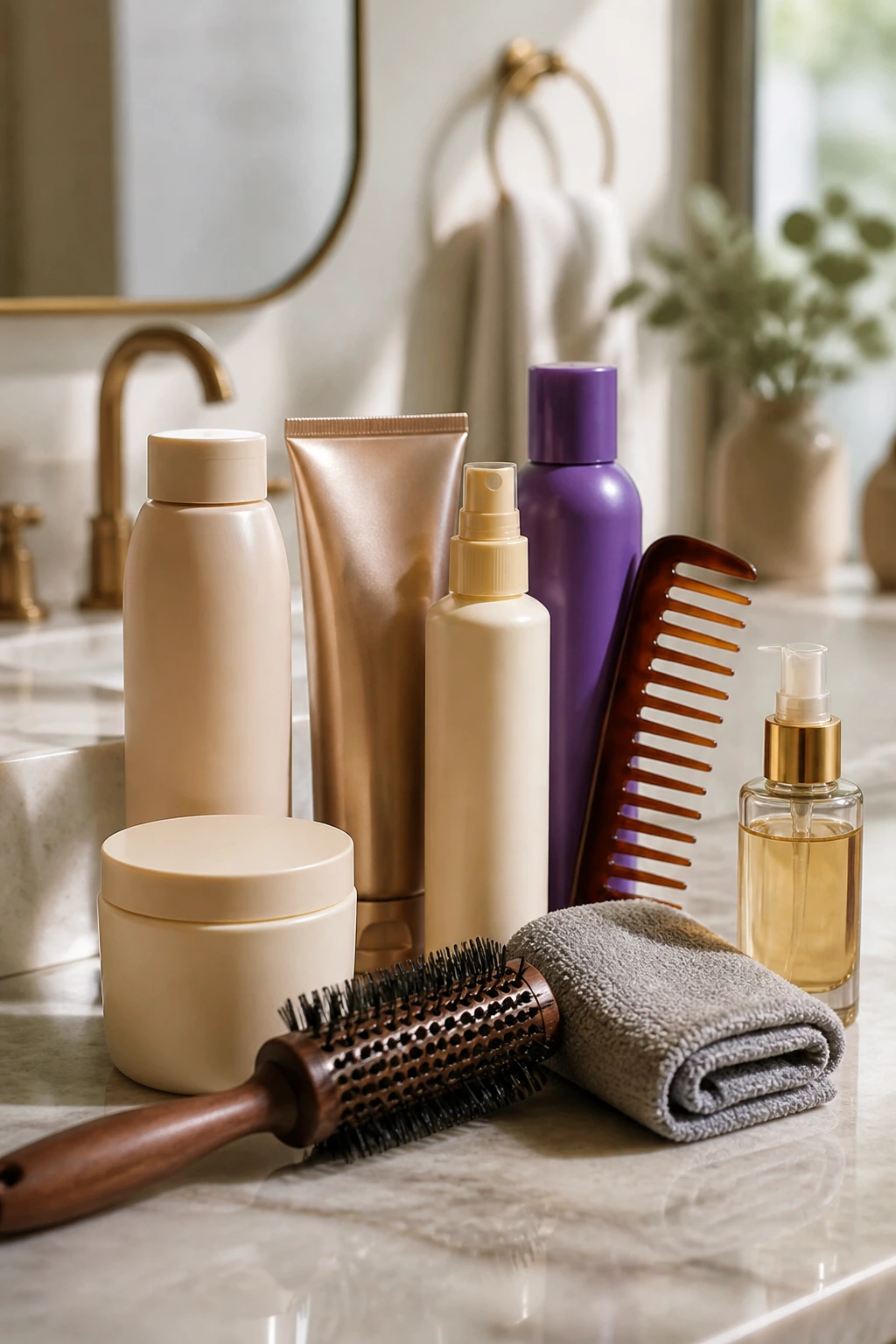
- Color-safe sulfate-free shampoo: Keeps brunette glosses from fading too fast and helps warm tones stay smooth.
- Deep conditioning mask: Use it weekly if your hair was lightened; the ends will feel less rough.
- Heat protectant spray: The little mist matters, especially around the face frame and crown where highlights show first.
- Purple or blue shampoo, used lightly: Helpful only when brass shows; overuse can flatten warm brunette tones.
- Wide-tooth comb: Less breakage, less frizz, and less tugging through freshly highlighted hair.
- Microfiber towel or soft T-shirt: Cuts down friction after washing, which helps the lighter pieces stay glossy.
- Round brush or blow-dry brush: Useful if you want ribbons and babylights to show cleanly.
- Shine serum or lightweight oil: One or two drops on the ends gives highlights a smoother finish without making them greasy.
How to Style Brunette Highlights So They Look Soft, Not Stripey
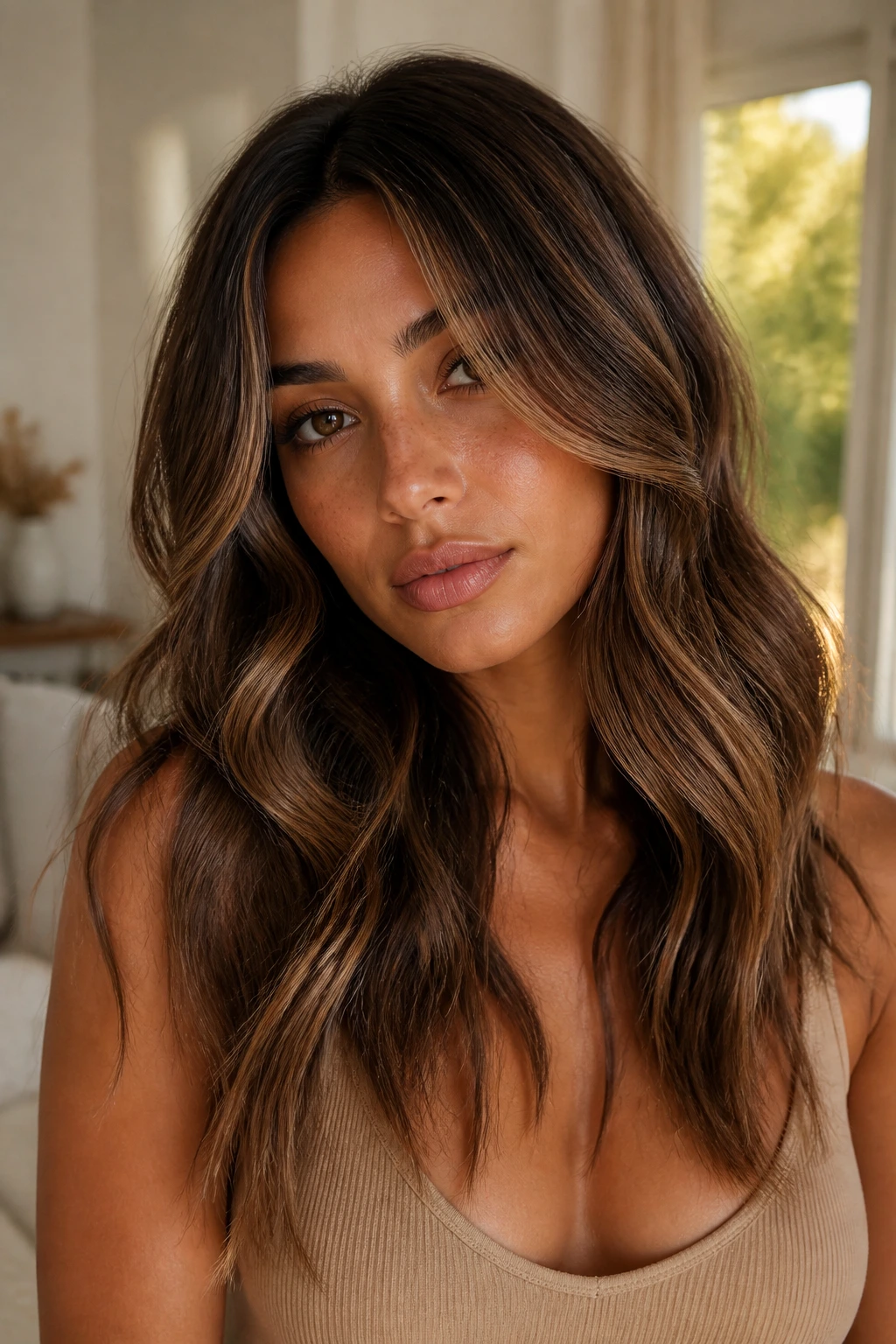
Loose waves are the easiest way to show off caramel, bronze, and honey pieces. A bend in the hair breaks up the light so the highlights read as ribbons, not lines. A 1-inch iron or a large round brush is enough; you do not need tight curls.
Straight and glossy hair works better for babylights, taupe, and mushroom tones. On smoother textures, the finer highlights look expensive because the color change is subtle and clean. Keep the finish sleek, then use a tiny bit of serum through the mid-lengths only.
Updos and half-up styles reveal interior dimension. That’s where lowlights, peekaboo pieces, and rooted highlights earn their keep. If you like wearing your hair back, ask for color placement under the top layers as well as on the surface.
Finish: A light shine spray or a pea-sized amount of cream on the ends is enough. Heavy product can muddy warm highlights fast, and once that happens, the whole thing loses the softness you paid for.
Extra Shine Boosters and Small Tweaks That Matter
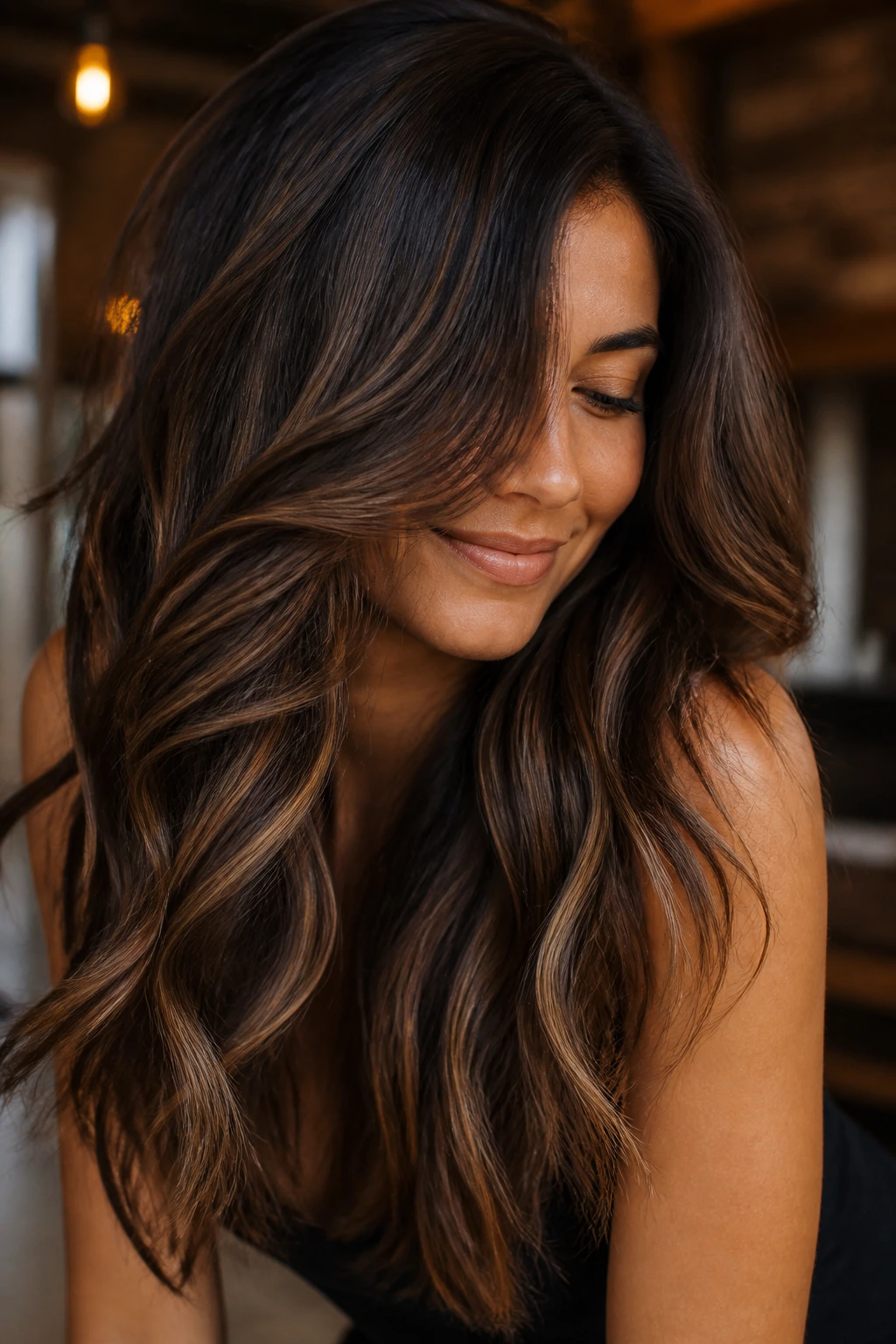
Gloss Finish: Ask for a beige, amber, or neutral gloss after the highlights are done. It softens the color jump and makes the brunette base look richer instead of dull.
Placement Trick: Keep the brightest pieces around the face and through the top third of the hair, but don’t pack them right at the root. That tiny gap keeps the grow-out cleaner.
Texture Match: Fine hair needs micro-lights or thin ribbons so the color does not look chunky. Thick hair can take wider panels, but even then I’d keep the highlight edges soft.
Make-It-Yours: If your tan leans warm, lean into caramel and honey. If it leans olive, stay with beige, mushroom, taupe, or smoky walnut. That one choice changes more than brand names or trendy color labels ever will.
Keeping the Color Fresh Between Appointments
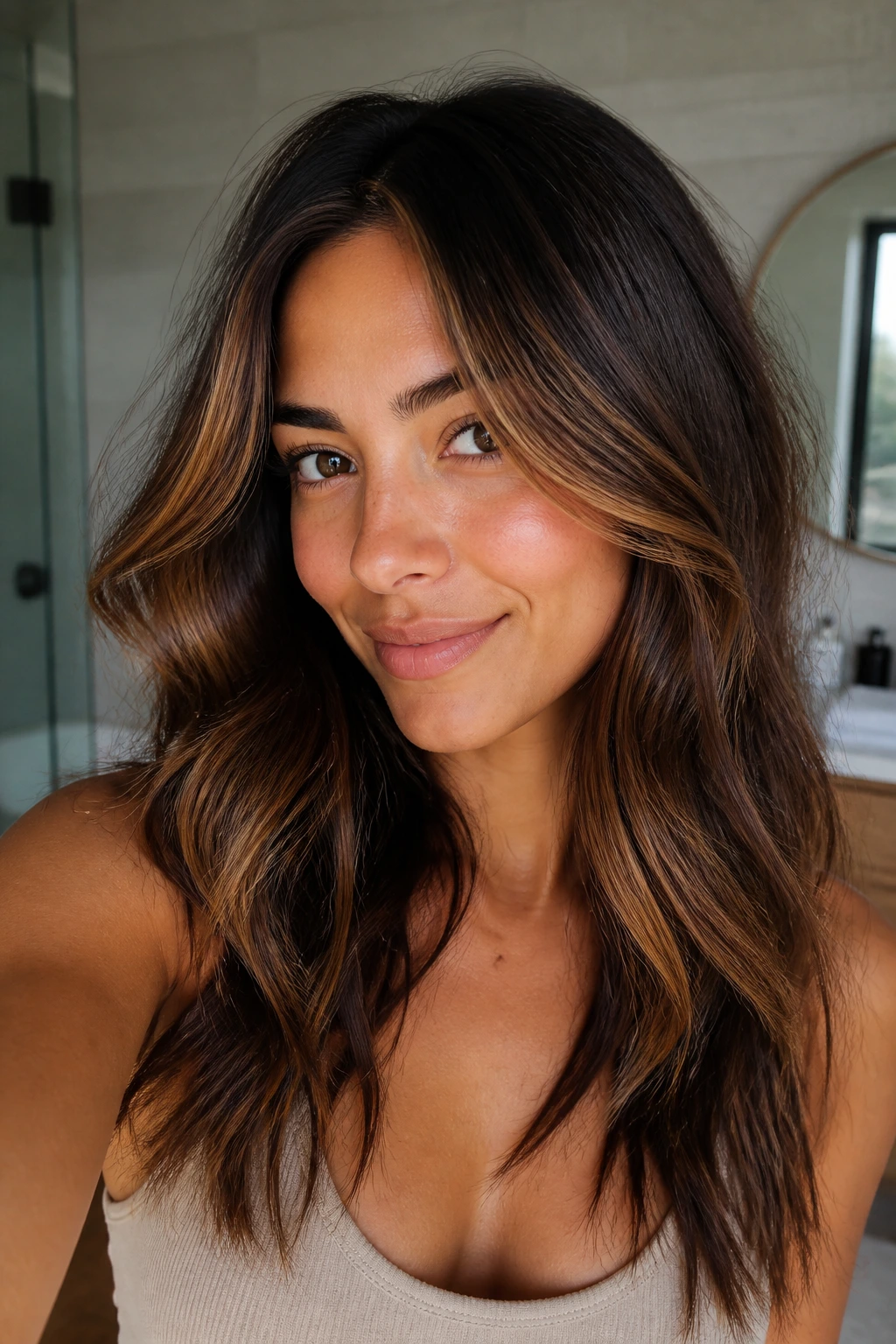
The first 48 hours matter more than people think. Skip shampoo right after a fresh gloss or highlight service so the tone has time to settle, and use cool or lukewarm water when you do wash. Hot water strips color fast and makes the ends feel rough.
After that, keep washing to a reasonable pace. Two or three shampoo days a week is plenty for most brunettes, especially if you use a color-safe cleanser and focus shampoo at the scalp instead of dragging it through the ends. A weekly mask helps the lighter pieces stay smooth, which matters because dry highlights look lighter in the worst possible way.
Heat is the other part people underestimate. Blow-dry, curl, or straighten if you want to, but put heat protectant on every time. If your highlights start to look brassy around the six- to eight-week mark, use a blue or purple conditioner sparingly and only where the brass is showing. Overdoing it can dull the warmth that made the color flattering in the first place.
For salon maintenance, glosses usually keep brunette highlights looking fresh better than repeated heavy lifting. Many people do well with a gloss refresh every 6 to 8 weeks and a bigger highlight touch-up somewhere around 10 to 12 weeks, depending on how fast their hair grows and how obvious they want the grow-out to be. A rooted balayage can stretch longer. A face-framing money piece usually asks for attention sooner.
Variations and Adaptations to Try
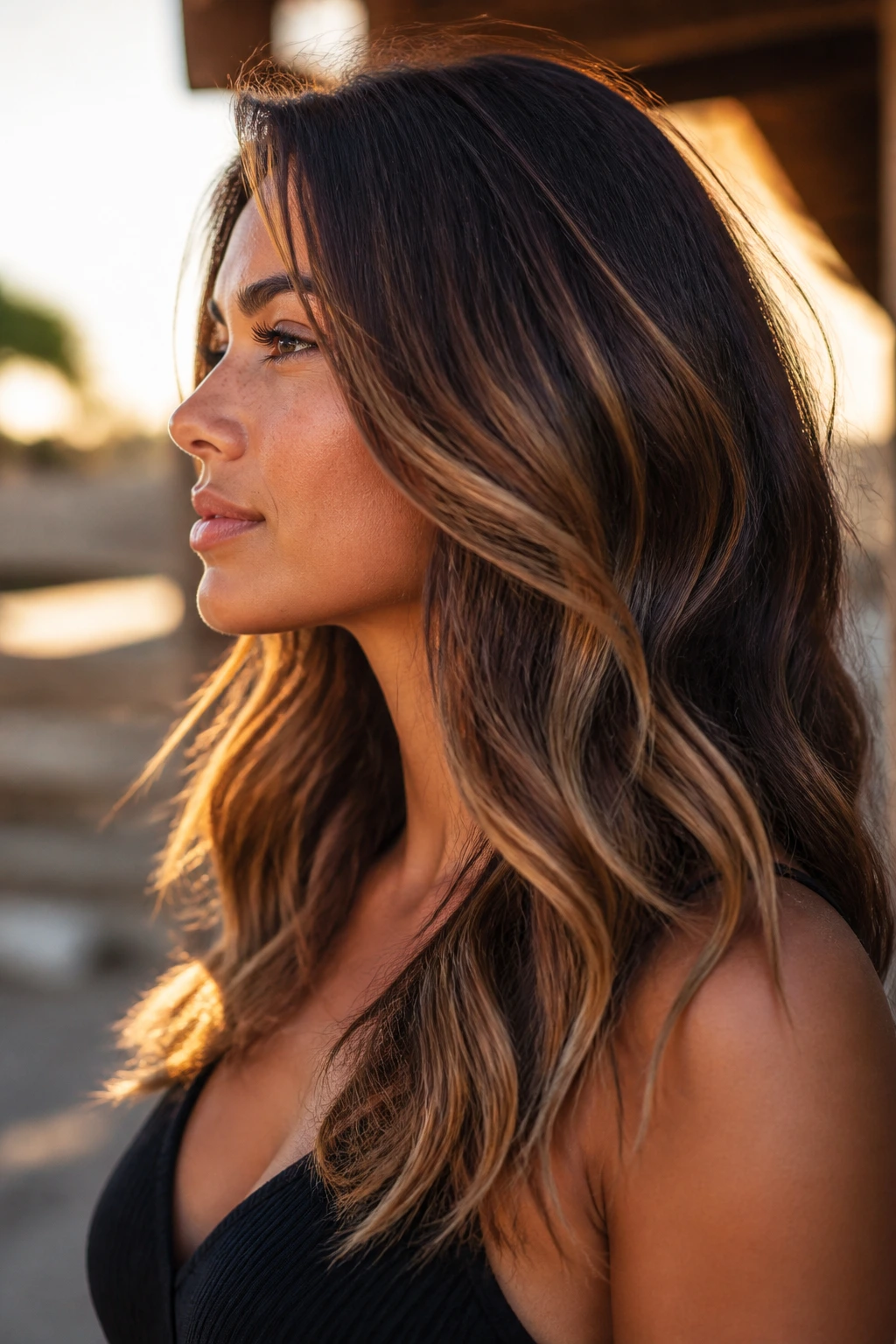
Golden Hour Caramel: Push the caramel a little warmer and place it mostly through the outer layers. This suits golden tan skin and soft waves, especially if you want the hair to catch light in motion.
Olive-Safe Mushroom: Shift the highlight tone toward taupe and mushroom with a neutral beige gloss. It works best on olive tan skin that turns orange with too much gold.
Curly Halo Lights: Concentrate the brightest strands around the top perimeter and front curves of the curls. The shape of the curl pattern does the rest, so you need less lightening than a straight style would.
Fine-Hair Micro-Lift: Use tiny babylights in chestnut, almond beige, or cocoa-gold tones. Fine hair can look thicker when the highlights are very small and closely spaced.
Low-Maintenance Rooted Melt: Keep the root deeper, blend through the mid-lengths, and finish with warm caramel or honey at the ends. This is the one to choose if you want the grow-out to stay soft for months, not weeks.
Short Bob Face Frame: Put the lightest pieces around the fringe and front corners of the bob, then keep the back more subdued. Short cuts need placement more than they need lots of color, and this version shows that off.
Common Mistakes That Make Brunette Highlights Look Off
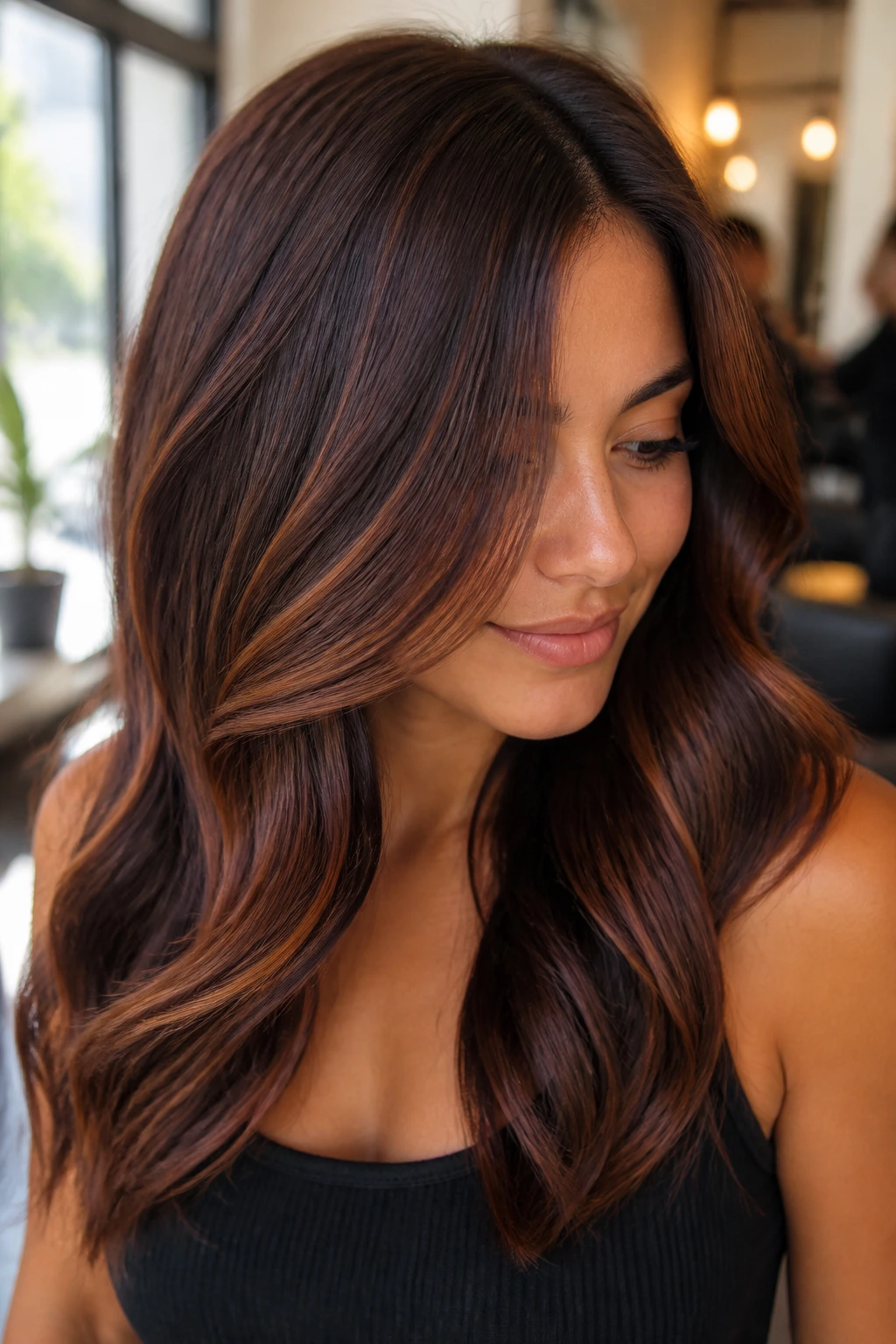
- Going too light too fast: The symptom is obvious—high-contrast stripes that sit on top of the brunette instead of inside it. The fix is staying within one or two levels of your base and keeping some root depth.
- Ignoring undertone: If the hair turns orange, muddy, or grayish, the shade probably fought the skin tone. Ask for a warmer gloss on golden skin and a beige or taupe gloss on olive skin.
- Highlighting only the top layer: That leaves the underneath flat and makes ponytails or updos look patchy. Ask for a few interior pieces so the color moves from every angle.
- Overusing purple shampoo: Too much violet or blue can mute the warmth that made the brunette flattering in the first place. Use it only when brass shows, not every wash.
- Skipping shine care: Dry ends make highlights look cheap fast. A weekly mask and heat protectant keep the lighter pieces smooth enough to reflect light properly.
Frequently Asked Questions
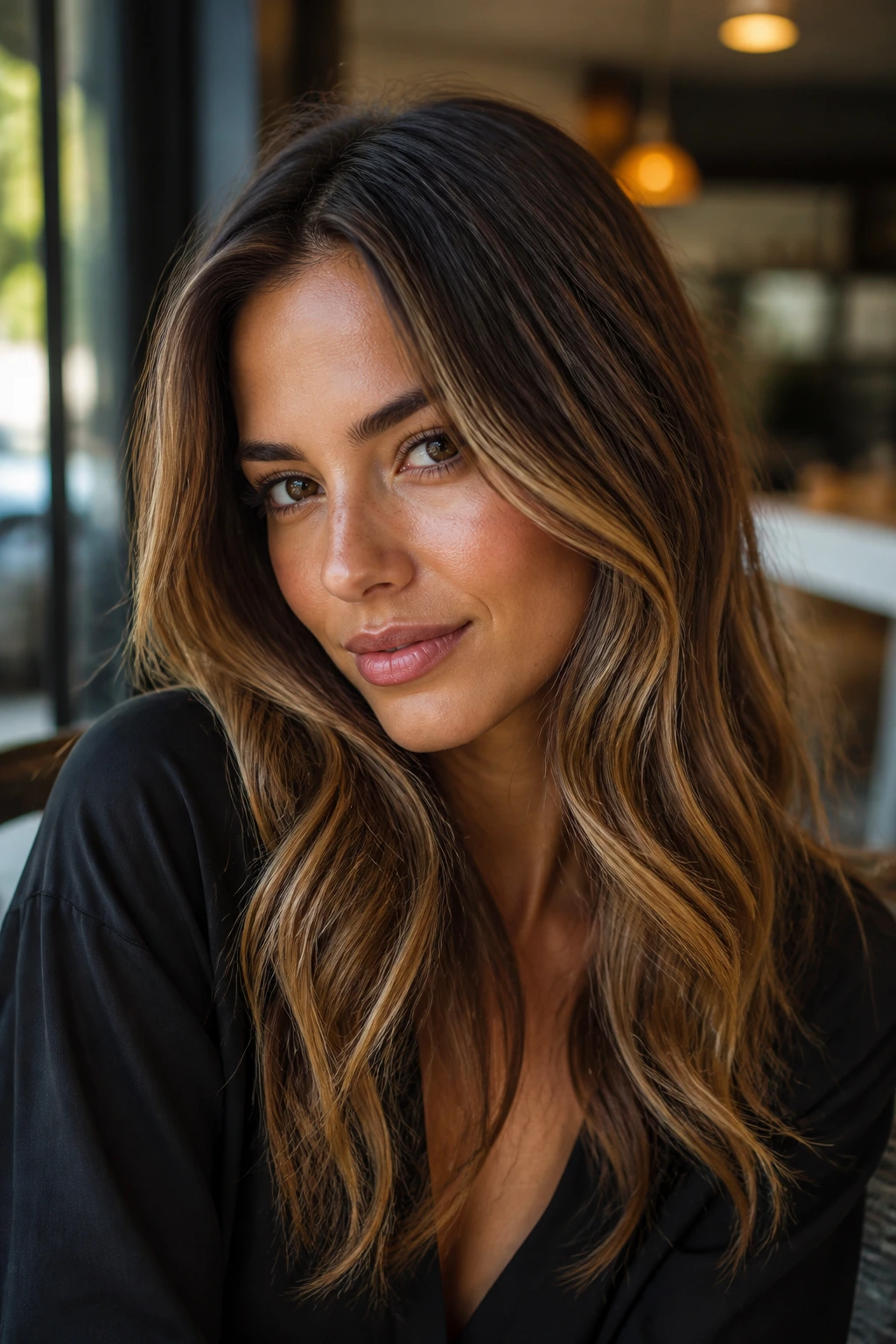
What brunette highlights look most natural on tan skin?
Caramel, honey, chestnut, beige, and bronze usually look the most believable because they sit close to the warmth already present in tan skin. If your skin leans olive, beige and mushroom tones often read softer than gold.
Are caramel highlights or honey highlights better for tan skin?
Caramel is usually the safer bet because it stays a little deeper and less yellow. Honey can be beautiful too, but it needs to be muted and blended so it doesn’t turn brassy.
Do ash brown highlights work on tan skin?
They can, especially on olive or neutral tan skin. The trick is keeping them smoky-beige rather than flat gray, or the hair can lose its warmth and look dull.
How often do brunette highlights need touching up?
Soft balayage can go 10 to 12 weeks, sometimes longer if the root is deep and the placement is low-contrast. Face-framing pieces usually need attention sooner because they grow out where everyone sees them first.
Can brunette highlights work on curly hair?
Yes, and often better than people expect. Curly hair already creates shadow and shine, so fine ribbons, lowlights, and dimensional placement can make the shape of the curls stand out.
What if my highlights turn orange or brassy?
First, stop using hot water and heavy clarifying shampoo. Then use a blue or purple conditioner sparingly and book a gloss service if the brass is strong; a toner alone is usually gentler than trying to fix it with more lightening.
Do I need bleach for natural-looking brunette highlights?
Usually some level of lightening is part of the process, but it does not need to be dramatic. Many soft brunette looks rely on controlled lift plus a demi-permanent gloss, which is much easier to wear than a full blonde service.
Balayage or foils — which is better for this look?
Balayage gives a softer grow-out and usually looks more natural on tan skin. Foils give more lift and a clearer contrast, so they’re useful when you want the highlights to show a bit more.
The Softest Glow Wins
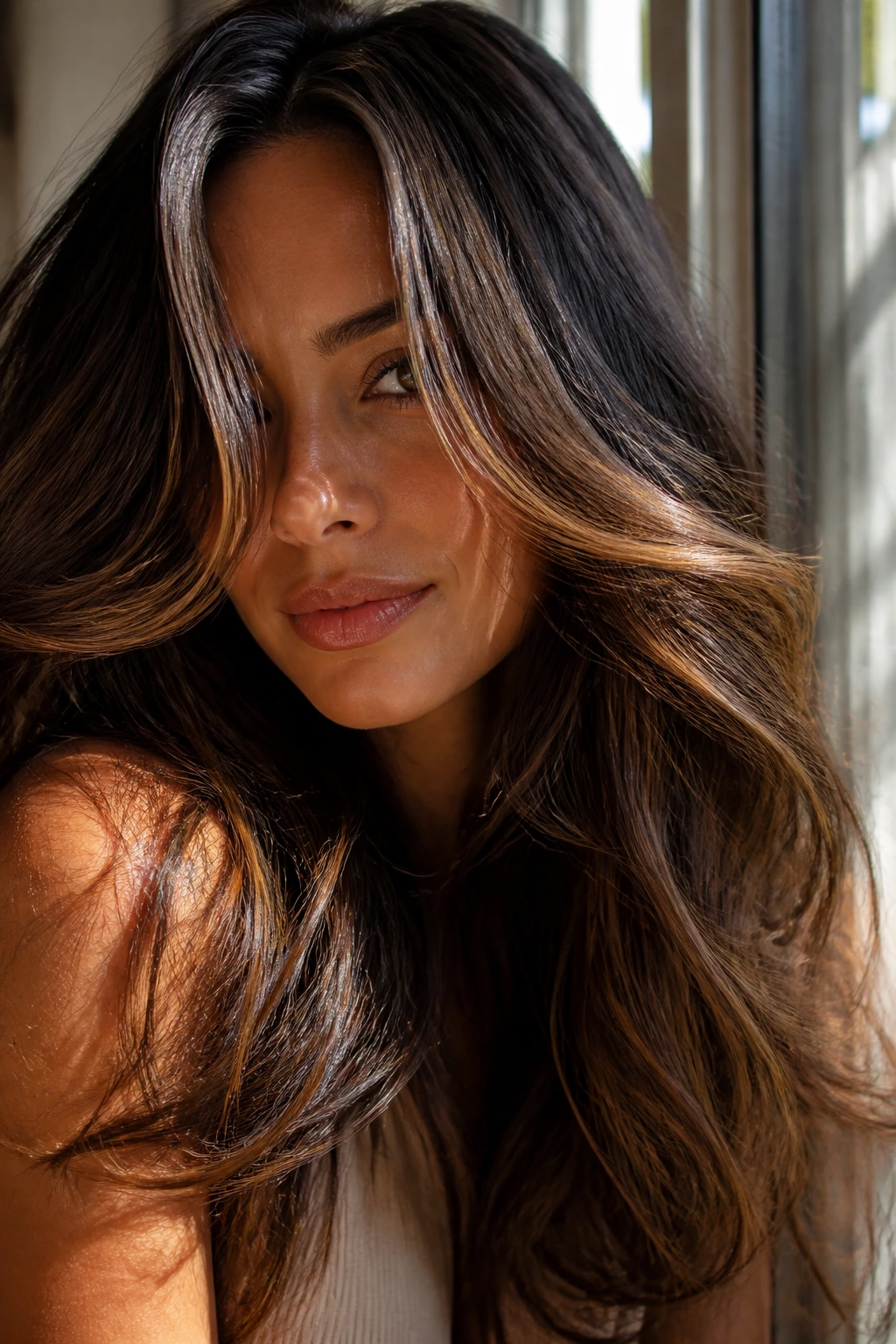
The prettiest brunette highlights on tan skin rarely look flashy in the chair. They look believable. That usually means a deeper root, a shade that respects your undertone, and enough placement variation to make the color move when you turn your head.
If you keep the contrast soft and the gloss thoughtful, brunette hair does this lovely thing where it looks richer in daylight than it did under the salon lights. That’s the finish worth chasing. Bring a few photos, know whether your skin runs golden or olive, and let the color sit close enough to feel like yours.