



Crown highlights for medium skin tones with fine hair live or die by placement. Put brightness too low and the whole head can look streaky. Put it too chunky and fine strands start to read like stripes instead of dimension. Get the crown right, though, and the hair gets this lifted, airy look that makes the part softer, the top fuller, and the color a lot more expensive-looking than a full head of bleach ever does.
Medium skin is generous, but it still asks for the right tone. Beige, honey, caramel, bronze, soft copper, mushroom brown — those shades have enough warmth or softness to sit comfortably against golden, olive, or neutral undertones. Go too icy and the face can look a little tired. Go too orange and you lose the balance. Fine hair has its own rules, too. It’s not the same thing as thin density, which people mix up all the time. You can have a lot of fine hair and still need feather-light foiling, micro-weaves, and a root shadow that keeps the scalp from showing through like a map.
The best crown highlight ideas don’t fight the hair you have. They work with strand size, skin tone, and the way light hits the top layer when you move. That’s the sweet spot. Soft lift up top. Enough depth underneath. No chalky blonde helmet. No flat brown sheet. Just color that does its job and gets out of the way.
Why These Crown Highlights Work So Well on Fine Hair
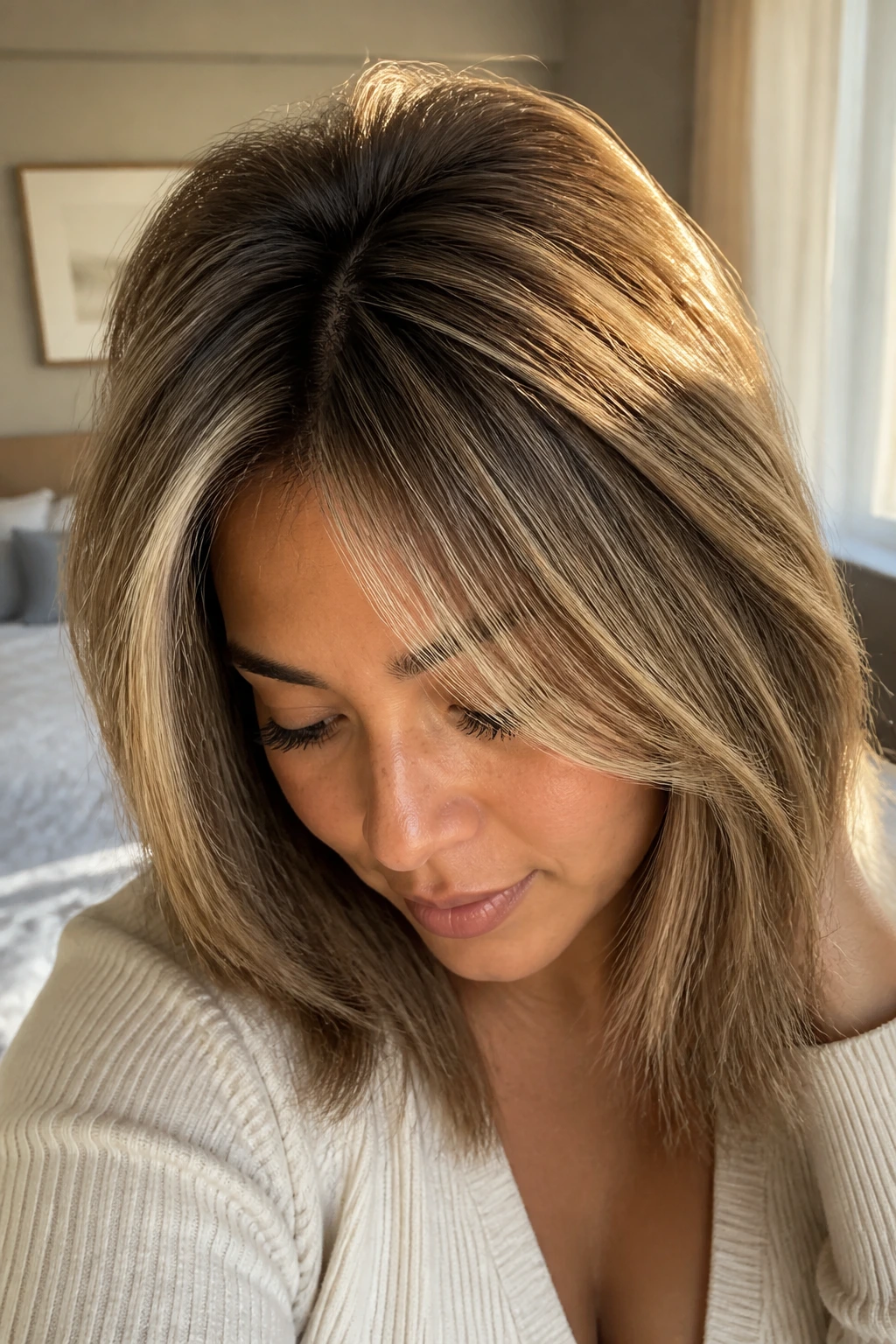
- The brightness sits where the eye looks first: Crown placement lifts the part and top layer, which is where fine hair most often looks flat or sparse.
- The tones are skin-friendly, not shouty: Beige, honey, caramel, bronze, and muted copper keep medium skin from looking washed out or oddly sallow.
- The weave stays narrow: Micro-weaves and babylights leave enough of the base showing that the hair still reads as full, not over-lightened.
- Grow-out is softer: A small root shadow or smudge keeps regrowth from drawing a hard line across the scalp.
- You can adjust the mood fast: One gloss can swing these looks warmer, cooler, richer, or brighter without a full recolor.
1. Honey Beige Crown Lights That Break Up the Part
Honey beige is the safe bet when you want lift without fuss. It sits in that sweet middle ground: warm enough to flatter medium skin, soft enough not to look brassy, and light enough to make the crown feel airy instead of heavy. On fine hair, that balance matters. You want the top to glow a little, not scream.
Ask for thin foils or babylights concentrated around the part and apex, then keep the pieces closer to beige than gold. If the base is medium brown, a soft root smudge helps the highlights blend instead of sitting on top like strips of tape. This is one of those looks that looks better with a slight bend in the hair than in a pin-straight finish. The movement makes the ribbons show.
What to ask for
- Micro-fine foils through the crown
- A level 8 honey-beige toner
- A soft root shadow one shade deeper than the base
Best for: warm and neutral medium skin tones that want visible light without a blonding commitment.
2. Caramel Ribbon Highlights With a Soft Root Smudge
Caramel ribbons are the move when you want color that reads rich from across the room but still stays gentle near the scalp. The warmth brings life to medium skin, especially if your undertone leans golden or olive. Fine hair gets a real favor here, because caramel pieces show up without needing thick slices that can make the top look busy.
The root smudge is doing a lot of work. It keeps the crown from looking too stark as the color grows out, and it gives the illusion of density right where fine hair tends to go see-through. I like this look best on layered cuts with a loose wave. Straight hair can wear it too, but the wave helps the caramel pieces separate in a way that feels deliberate.
If you tend to wear simple makeup, this shade does a nice job of warming the whole face without needing a bronze-heavy beauty routine. It’s the kind of color that quietly carries the style.
3. Mushroom Brown Crown Blend for Cooler Medium Skin
Mushroom brown is underrated on medium skin. Not everyone wants warmth, and not every medium tone wants gold sitting on top of it. If your skin has a neutral-cool or olive lean, a mushroom crown blend can make the hair feel expensive without tipping orange or yellow. It’s a cooler take, but not a flat one.
The trick is keeping the contrast soft. You want beige-brown and taupe-brown threads threaded through the crown, not a dense gray cast that drains the face. Fine hair likes this because the multi-tonal surface creates texture even when the strand count is modest. Add a slight root shadow and the whole thing looks fuller at the top.
How to wear it
A middle part gives mushroom brown a cleaner, sleeker feel. A deep side part gives more lift and lets the cooler dimension peek through in a less symmetrical way.
If you color-treat at home, a blue-toning shampoo used sparingly can help keep the brown from drifting too orange, but don’t overdo it. Fine hair turns murky fast if you go heavy-handed.
4. Bronde Babylights That Keep Fine Hair Looking Full
Bronde is one of the few color families that rarely argues with medium skin. It sits between brown and blonde, so the look feels bright without stealing all the depth from the hair. Babylights make it work on fine strands. Big sections can turn fine hair into a color block. Tiny weaves keep the texture alive.
This version should live mostly around the crown and the first few inches around the part, then taper softly through the sides. The effect is almost like sunlight finding the top layer first. Not a dramatic blonde. Just enough to make the hair look lifted and touched.
The nice thing about bronde on fine hair is that it holds up well even when the styling is minimal. A quick blow-dry with a round brush and a light mist of texturizing spray gives the color something to catch on. You don’t need a lot of volume for it to work. You just need a bit of bend.
5. Toffee Shadow Highlights With Deeper Ends
Toffee highlights are what I suggest when someone wants warmth but hates looking yellow. The shade has a browned-sugar quality that sits beautifully on medium skin, and it doesn’t fight the natural depth at the ends. That matters for fine hair, because keeping some darkness through the bottom makes the top look less sparse.
The shadow-root approach here is the whole story. Brightness starts near the crown, then melts into a deeper base before it reaches the ends. That fade helps the hair read thicker, especially if the cut has long layers. A blunt one-length cut can still wear this, but layers give the toffee pieces more movement.
A little shine serum goes a long way on this look. Too much product, though, and the fine strands collapse. Use the lightest hand you can manage. Seriously. A pea-sized amount is enough for most medium-length hair.
6. Copper-Gold Halo Lights for Warm Medium Skin
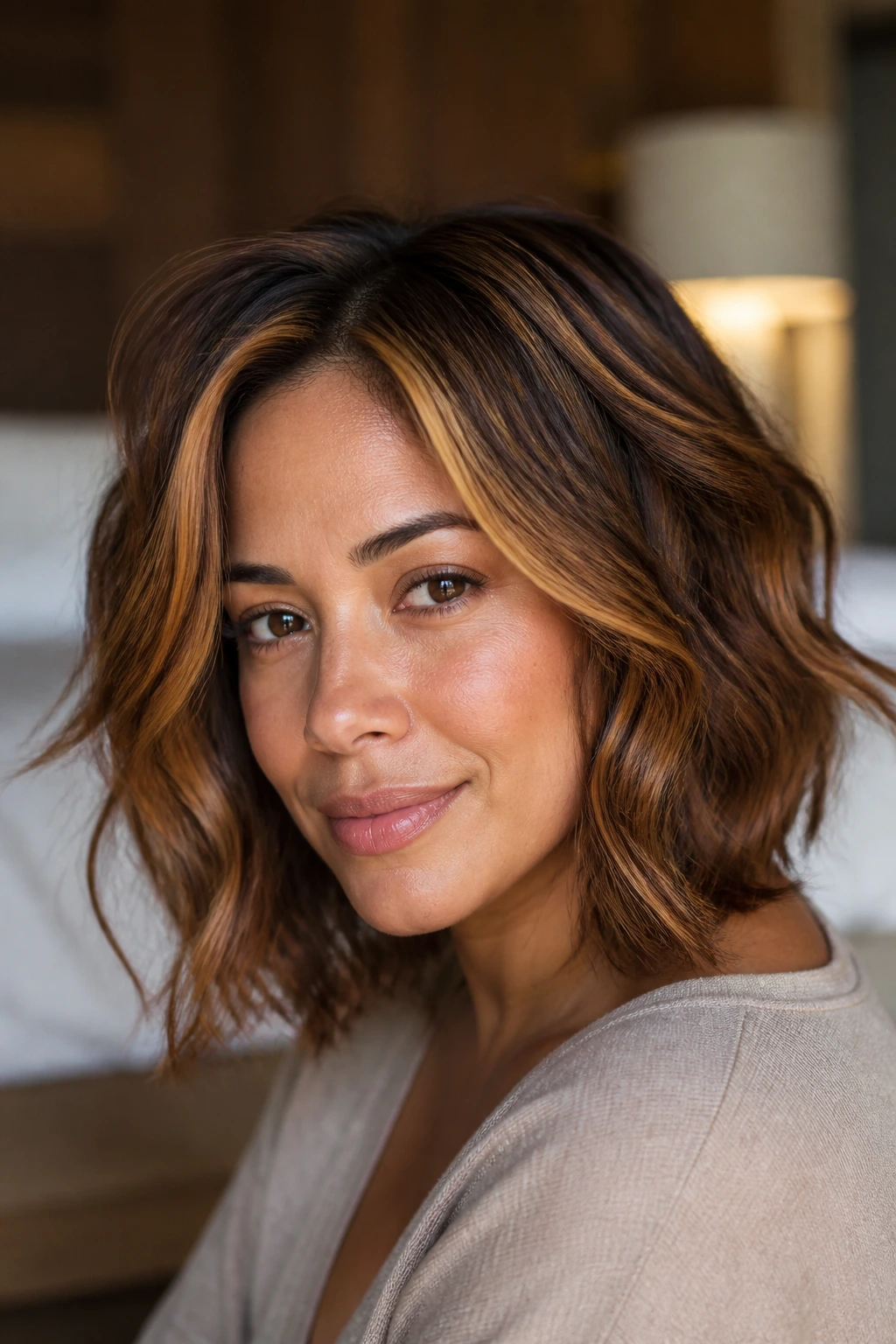
Copper-gold crown lights are not subtle, and that’s the point. When medium skin has a warm or golden base, a controlled dose of copper can make the complexion look awake in a way beige sometimes can’t. The halo effect around the crown catches light in a way that’s especially flattering on layered cuts and wavy bobs.
The danger with copper is going too orange. Keep it soft and metallic, not pumpkin. Fine hair benefits from that restraint because the shine reads more elegant when the pieces are thin. Ask for copper-gold ribbons at the top and a few narrower pieces near the temples so the warmth ties together instead of sitting only on the crown.
A small styling note
Loose curls show copper better than straight hair. The bends create little flashes of color that make the crown look fuller.
If your base is dark brown, this shade may need a few sessions to build cleanly. That’s fine. It often looks better layered up gradually than forced all at once.
7. Champagne Beige Microlights Around the Apex
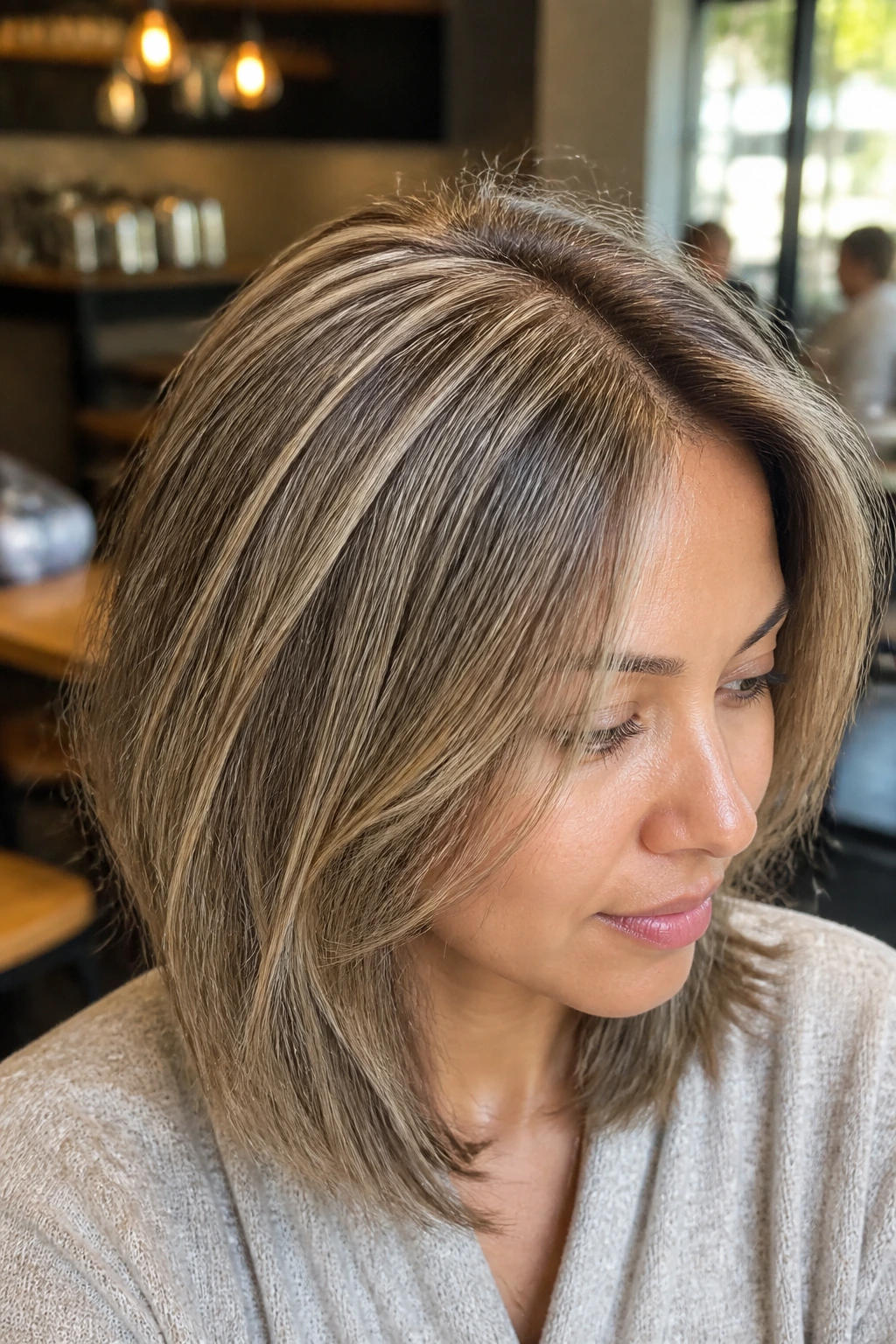
Champagne beige is what I reach for when someone wants brightness but not obvious blonde. It has a cooler sparkle than honey beige, but it still feels soft enough for medium skin. On fine hair, the champagne tone works best in microlights because the color itself is light; if the sections are too wide, the result can turn patchy.
Ask for the brightest pieces only at the apex — the highest point of the head — with finer threads as you move outward. That keeps the top lifted and lets the rest of the hair stay dimensional. It also prevents the “helmet” effect that happens when the entire crown is lightened evenly.
This is one of those looks that benefits from a gloss every few weeks. Champagne can drift dull if the cuticle gets rough. A clear or slightly beige glaze smooths the surface and keeps the shine crisp.
8. Cinnamon Glaze Ribbons That Add Movement
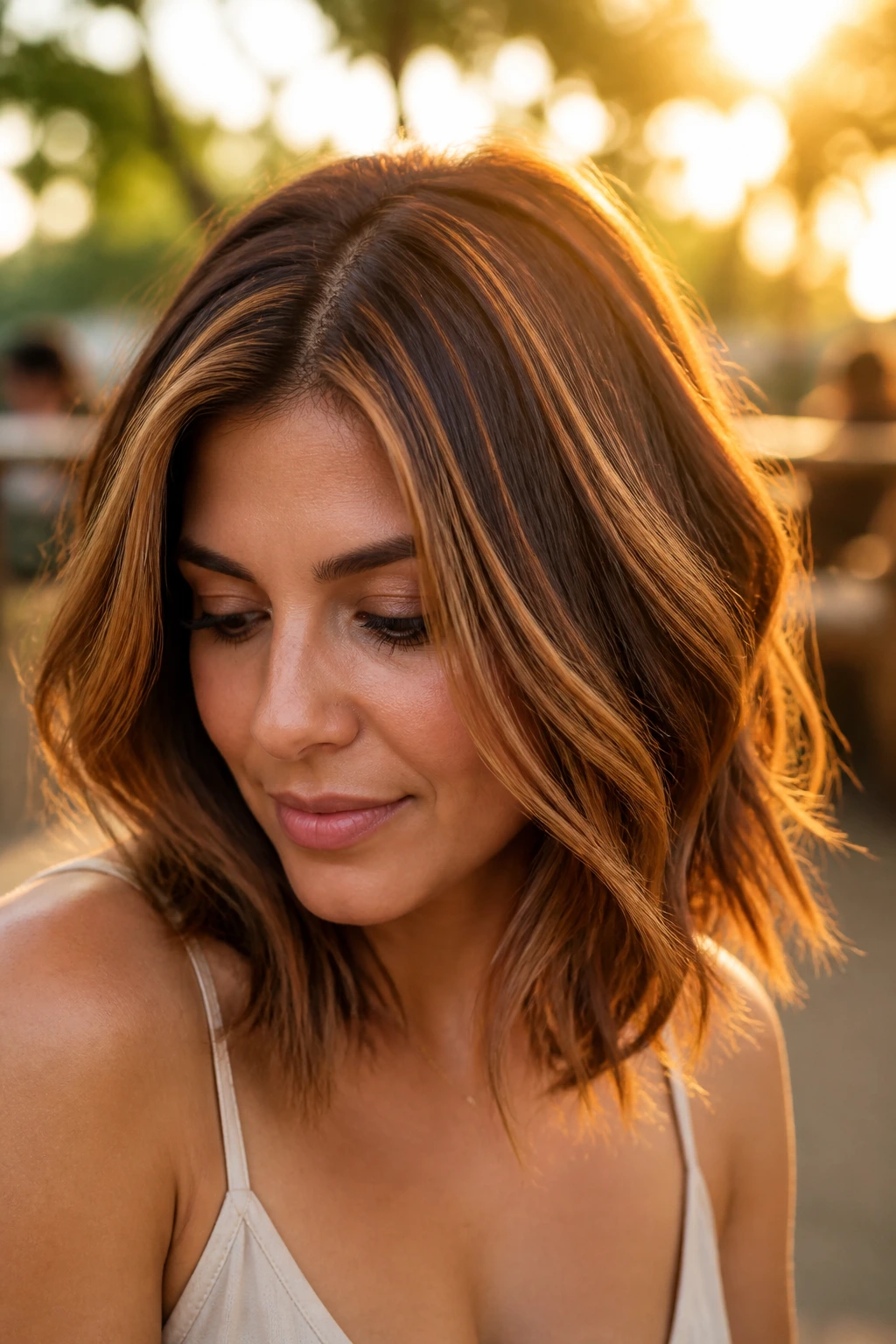
Cinnamon glaze is for the person who wants the hair to feel warm, polished, and a little bit spicy, but not red-red. The shade sits between auburn and brown, which is flattering on medium skin with golden undertones. It’s also a smart choice for fine hair because it deepens the visual texture without needing lots of lift.
What makes cinnamon work at the crown is the glaze itself. You’re not chasing platinum brightness. You’re adding warmth in thin ribbons that look even richer when the light hits them. That means the hair can keep more of its natural base and still look styled.
I like this look on shoulder-length cuts, especially if the ends are slightly piecey. It gives the whole cut more motion. A clean center part can make cinnamon feel modern. A side part makes it feel softer. Either way, the color does the heavy lifting.
9. Vanilla Cream Face-Frame Pieces With Crown Lift
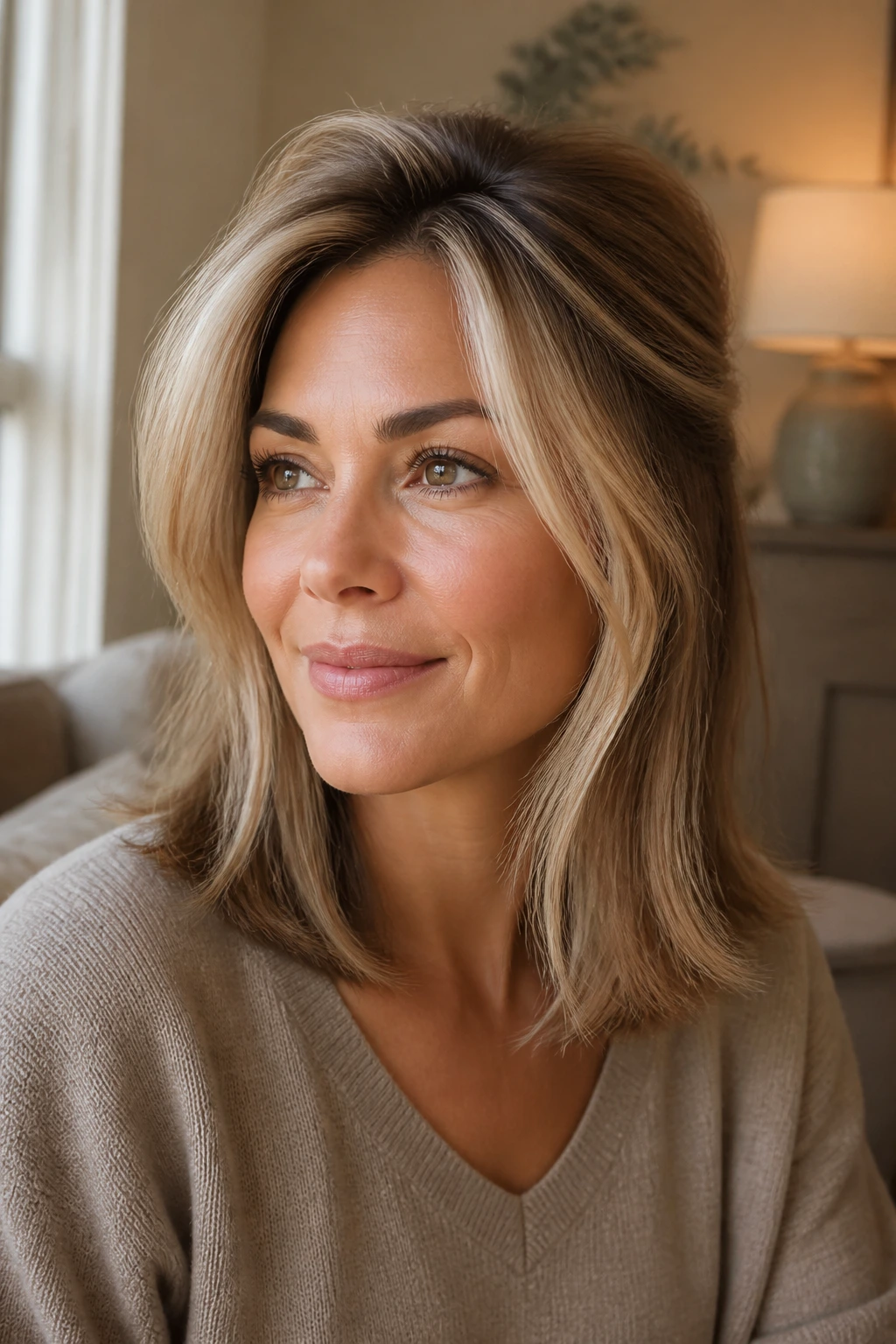
Vanilla cream pieces are the nearest thing to a brightening trick that still respects medium skin. They don’t have to be stark blonde to read fresh. Placed at the crown and just around the front, they can open the face while the rest of the hair stays grounded. Fine hair likes this because the lighter pieces are kept in a small zone instead of spreading everywhere.
The face frame should be narrow, not chunky. Think thin bands that sit just ahead of the ears and a few delicate pieces at the crown to echo them. If the contrast is too sharp, medium skin can start to look separate from the hair instead of woven into it.
How to ask for it
Ask your colorist for cream-toned babylights with a soft beige toner and a root shadow that keeps the top from looking harsh. That wording matters. “Vanilla” sounds pretty. “Cream-toned” tells them to stay away from icy white.
10. Toasted Almond Balayage Placed High
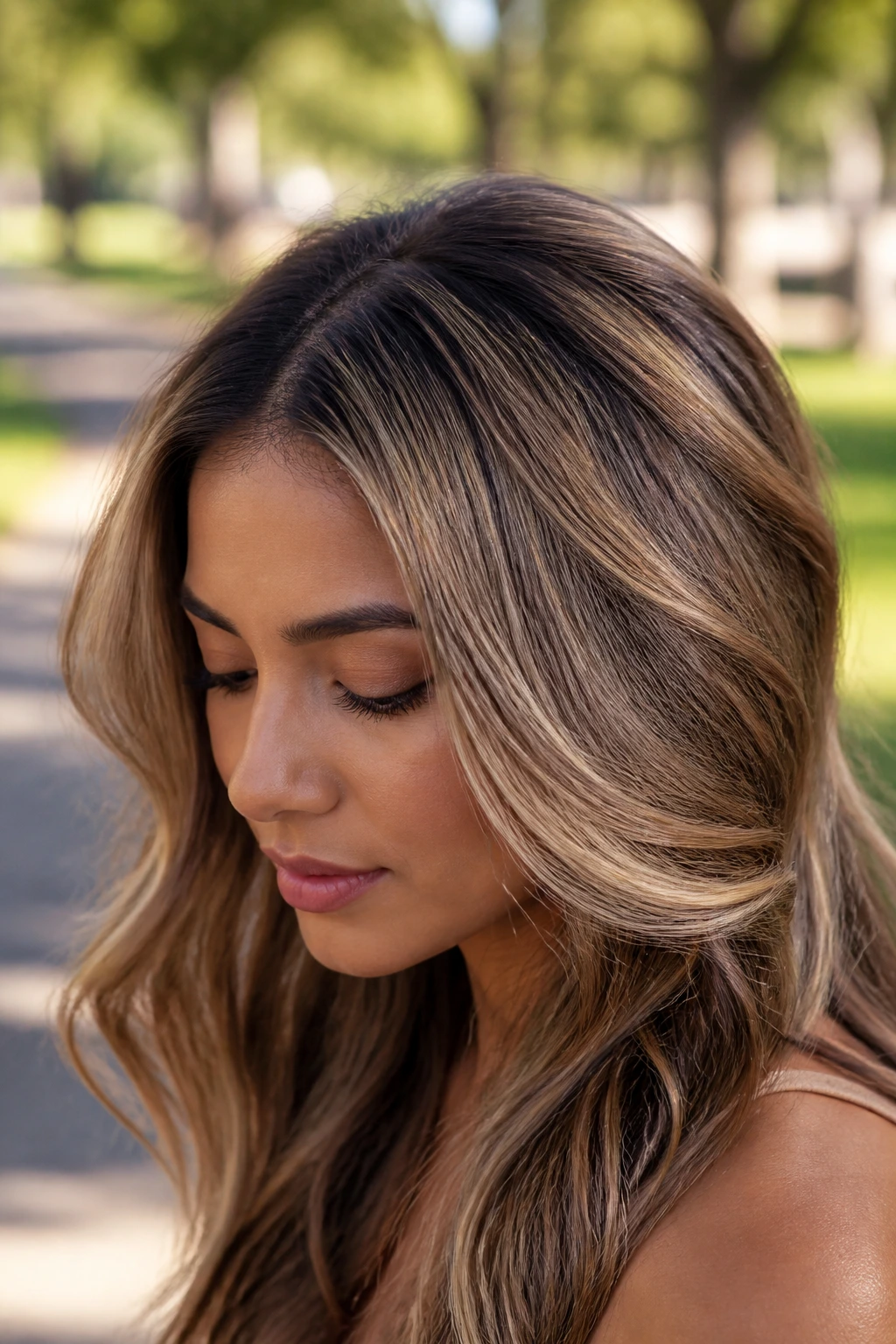
Toasted almond is a good color when you want something warmer than mushroom brown and less golden than caramel. It has a nutty, muted tone that sits comfortably on medium skin and doesn’t fight natural depth. On fine hair, high placement is the key. Keep the lighter pieces at the crown and upper surface so the hair gets lift without looking overdone.
Balayage tends to feel softer than foils, which can be useful if your hair is fine but not especially dense. The painted approach leaves edges less visible, so the crown looks blended. I like this on long bobs and shoulder-grazing cuts because the color shows through the movement rather than sitting in one obvious stripe.
A matte texture spray can make this shade look fuller, but go lightly. Too much grit can make fine hair feel dry and stringy. A tiny mist at the roots, then a quick finger fluff, is enough.
11. Chestnut Lowlights With Honey Threads
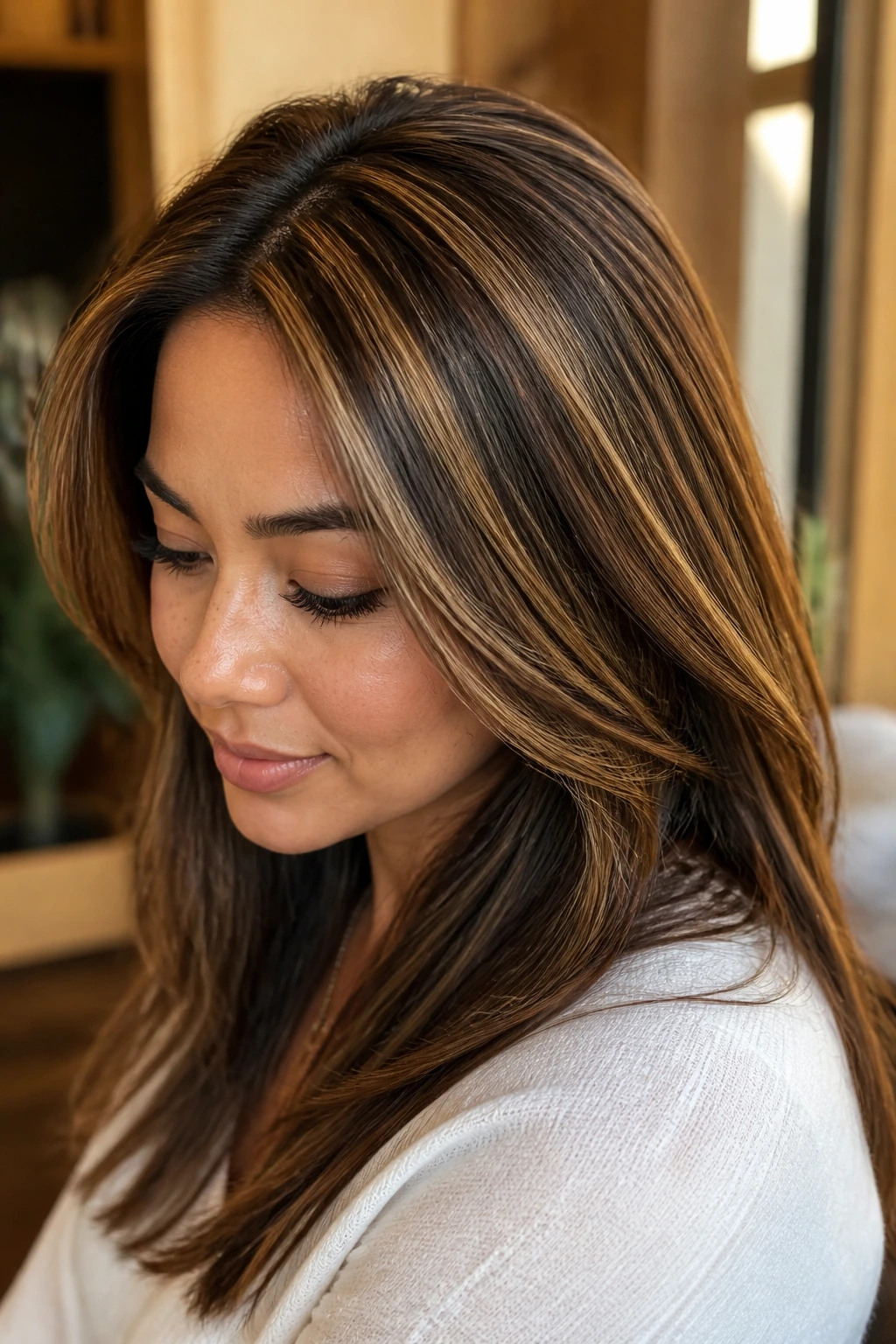
This is the one people skip, and they shouldn’t. Chestnut lowlights can save fine hair from looking too transparent after too many bright pieces. By dropping in a deeper brown through the crown and then threading a few honey lights over the top, you get dimension that reads fuller from a distance and more detailed up close.
Medium skin usually likes this because the warmer lowlights echo natural undertones instead of fighting them. The honey strands keep the face from going flat. The chestnut underneath keeps the crown from looking sparse. That balance is doing all the work.
It’s also a smart choice if your hair is finer at the top than at the back. The darker strands create the impression of density, which is often the whole game with this texture. Not flashy. Just useful.
12. Rose Gold Veil Highlights for a Soft Flush
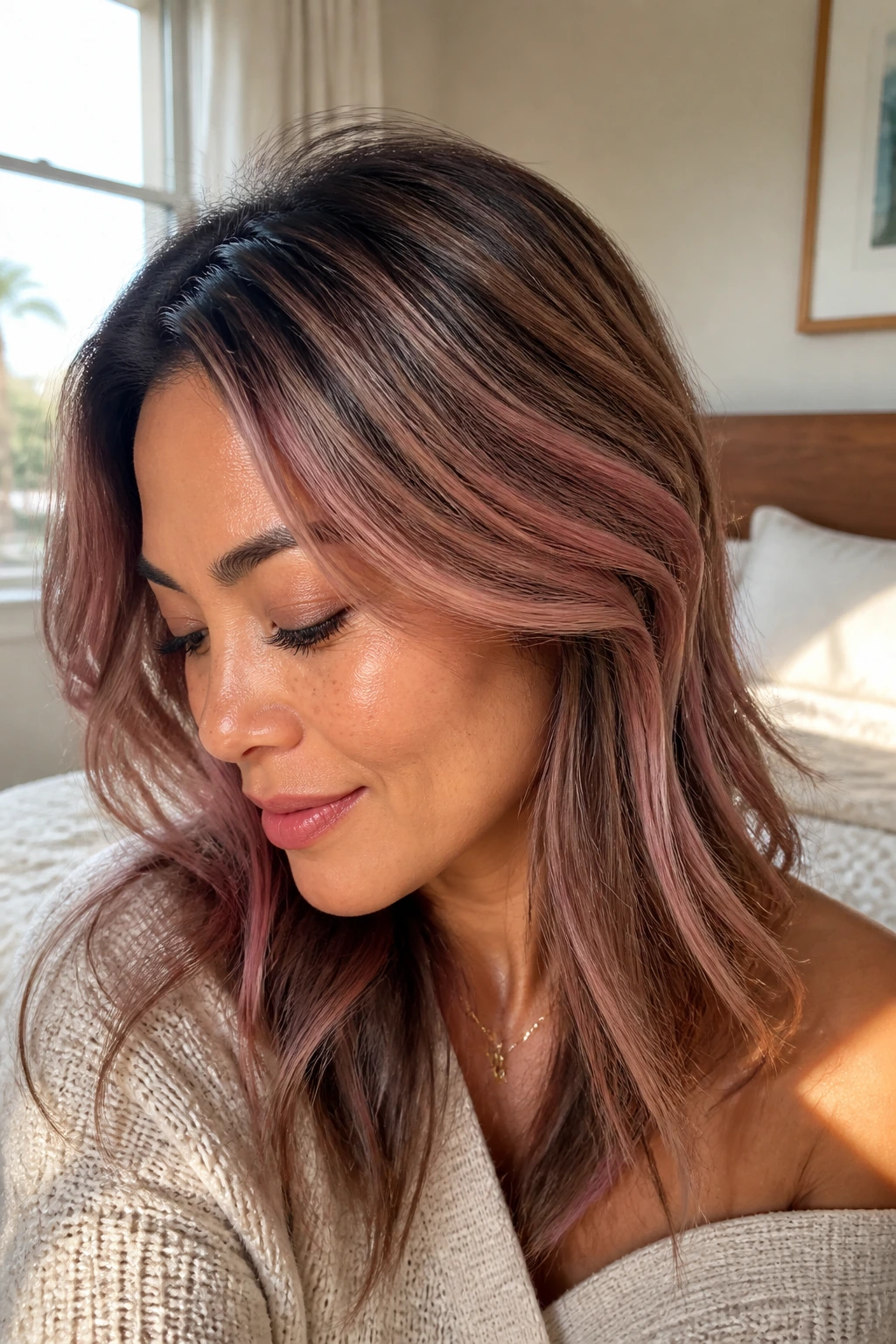
Rose gold can go wrong fast if it’s too pink, but a veil of rose-gold lights over medium skin can look fresh and slightly unexpected in the best way. Keep it whisper-soft. The color should read more peach-metal than candy pink. Fine hair handles this best when the placement is light and airy, mostly around the crown and top sides.
A veil technique means the highlights sit in a translucent layer rather than in obvious streaks. That suits fine hair because the lighter color doesn’t overpower the strand. It just tints it. The result is especially nice on layered lobs and soft waves, where the shimmer shifts as the hair moves.
If you wear warm makeup, rose gold can look surprisingly natural. If your makeup leans neutral, keep the rose tone muted and let the finish do the talking. Too much pink and medium skin can start to clash.
13. Mocha Melt With Ash Lowlights Underneath
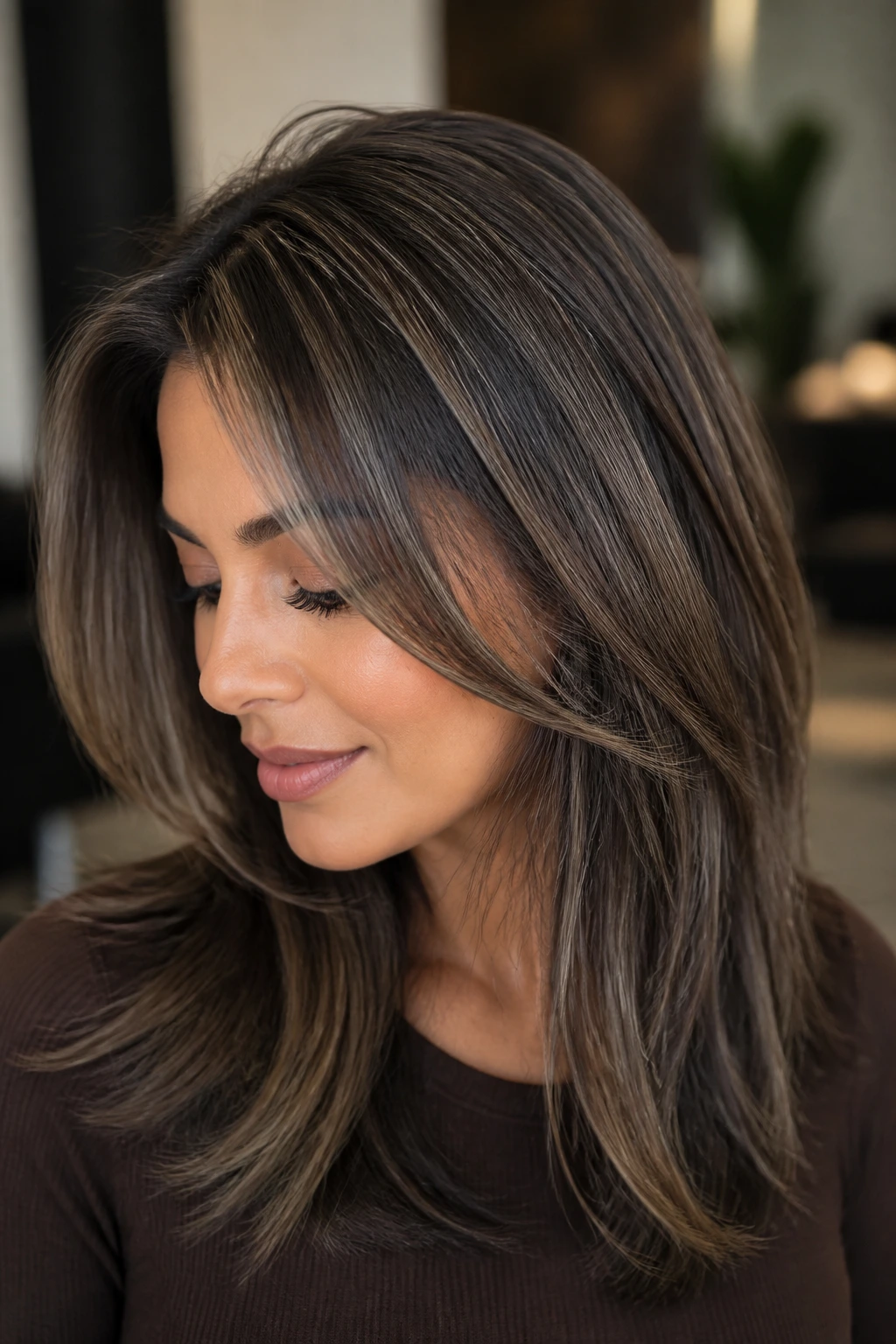
Mocha melt is a good answer if you want depth first and brightness second. It’s darker, cooler, and more grounded than caramel, which makes it a useful option for medium skin that doesn’t want a lot of gold. Ash lowlights underneath keep the crown from turning muddy, and the lighter mocha on top still gives the illusion of light.
Fine hair often looks thicker when the color has a strong base and only a few lighter threads. That’s exactly what this does. The layers underneath stay darker. The crown gets a soft lift. Nothing looks painted on.
What makes it different
Unlike brighter balayage, mocha melt doesn’t ask for much styling to look polished. A smooth blowout or a loose bend is enough. If you like low-effort color that still has movement, this one earns its keep.
14. Walnut Ribbons and a Slightly Darker Root
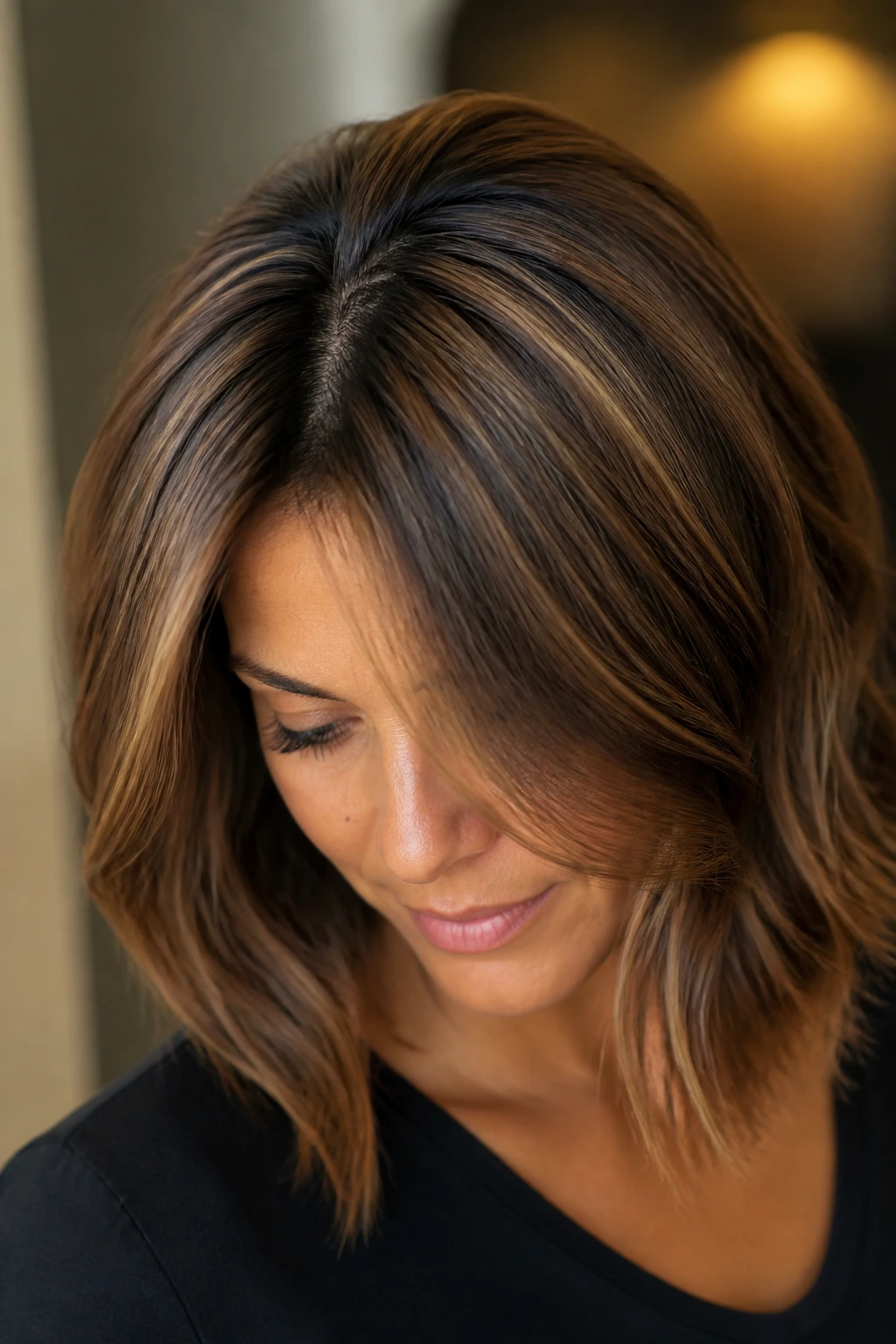
Walnut is one of my favorite quiet shades for medium skin. It’s brown, but not flat. It has enough warmth to avoid looking dull, and enough depth to make the hair look plush. Add a slightly darker root, and the whole crown looks fuller, especially if your fine hair tends to separate at the part.
The darker root is not a flaw here. It’s the point. It gives the lighter walnut ribbons something to sit against, which makes the color read more dimensional. Ask for ribbons rather than broad panels. Broad panels can make fine hair look thinner by comparison.
This is a nice middle path for anyone who doesn’t want obvious blonde or copper. It’s polished, low-drama, and very good at making the hair look like it has more of it. Which, frankly, is the whole reason people keep coming back to this kind of color.
15. Beige Blonde Airy Weave for Extra Brightness
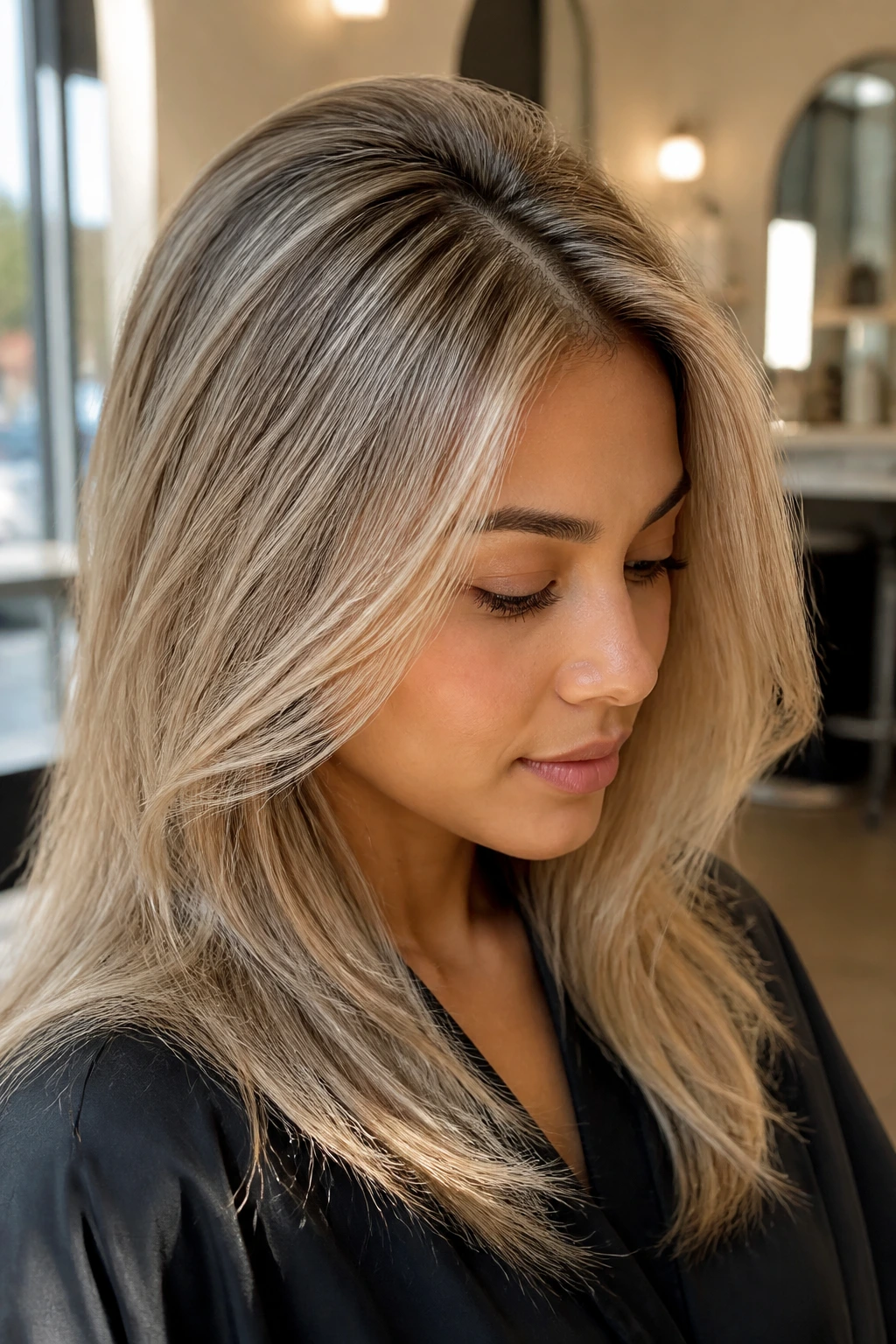
Beige blonde is for the person who wants the lighter end of the spectrum but doesn’t want to tip into icy. On medium skin, beige blonde works because it keeps the warmth in check while still giving brightness around the crown. Fine hair needs the weave to be airy, which means tiny sections and plenty of natural base left between them.
This look can get loud if the foils are too wide. Keep them narrow. Think soft flashes rather than big slabs of color. The crown should feel lifted, not bleached out. A beige toner on top keeps the blonde from going too yellow, and a root shadow keeps the regrowth soft.
A side part can help beige blonde look fuller on fine hair. It creates a little more movement at the root and stops the top from sitting too flat. That’s a small shift with a big payoff.
16. Sable Root With Buttery Crown Pieces
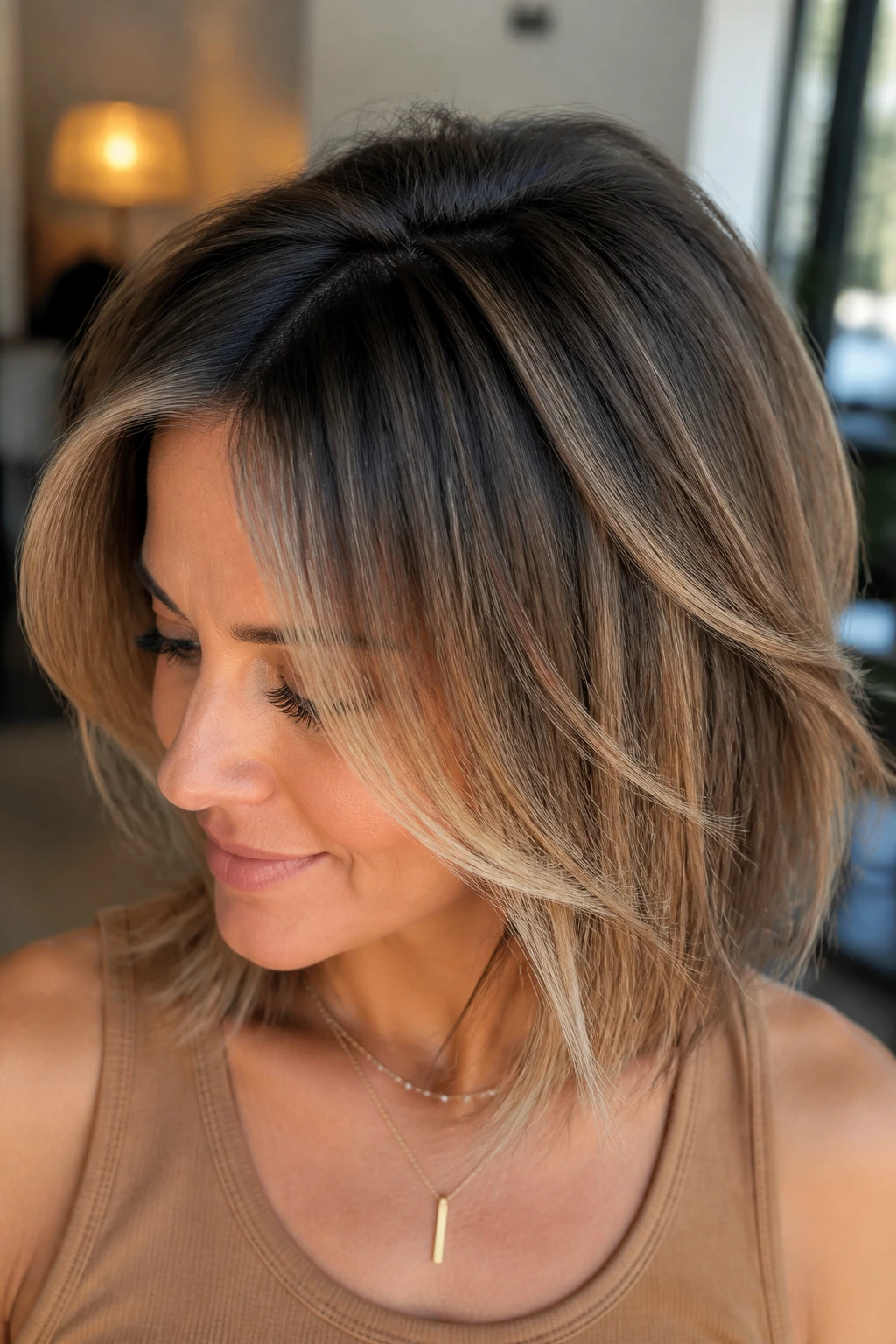
Sable root plus buttery pieces is a nice compromise when you want brightness but still like depth. The dark base keeps the hair from going wispy, and the buttery crown lights add warmth that flatters medium skin without shouting. It’s one of those combinations that feels richer than either shade alone.
The buttery pieces should be kept high and thin. Too many of them and the style loses its grounded look. Too few and you miss the lift. The sweet spot is a handful of ribbon-like highlights that catch the light at the crown and around the part.
For fine hair, this is a particularly smart choice if the ends are already lighter from previous color. The dark root and warmer top pieces help unify the overall look, which makes the hair appear thicker and more intentional. That extra density is more convincing than heavy brightness ever is.
17. Apricot Glaze Highlights for Golden Undertones
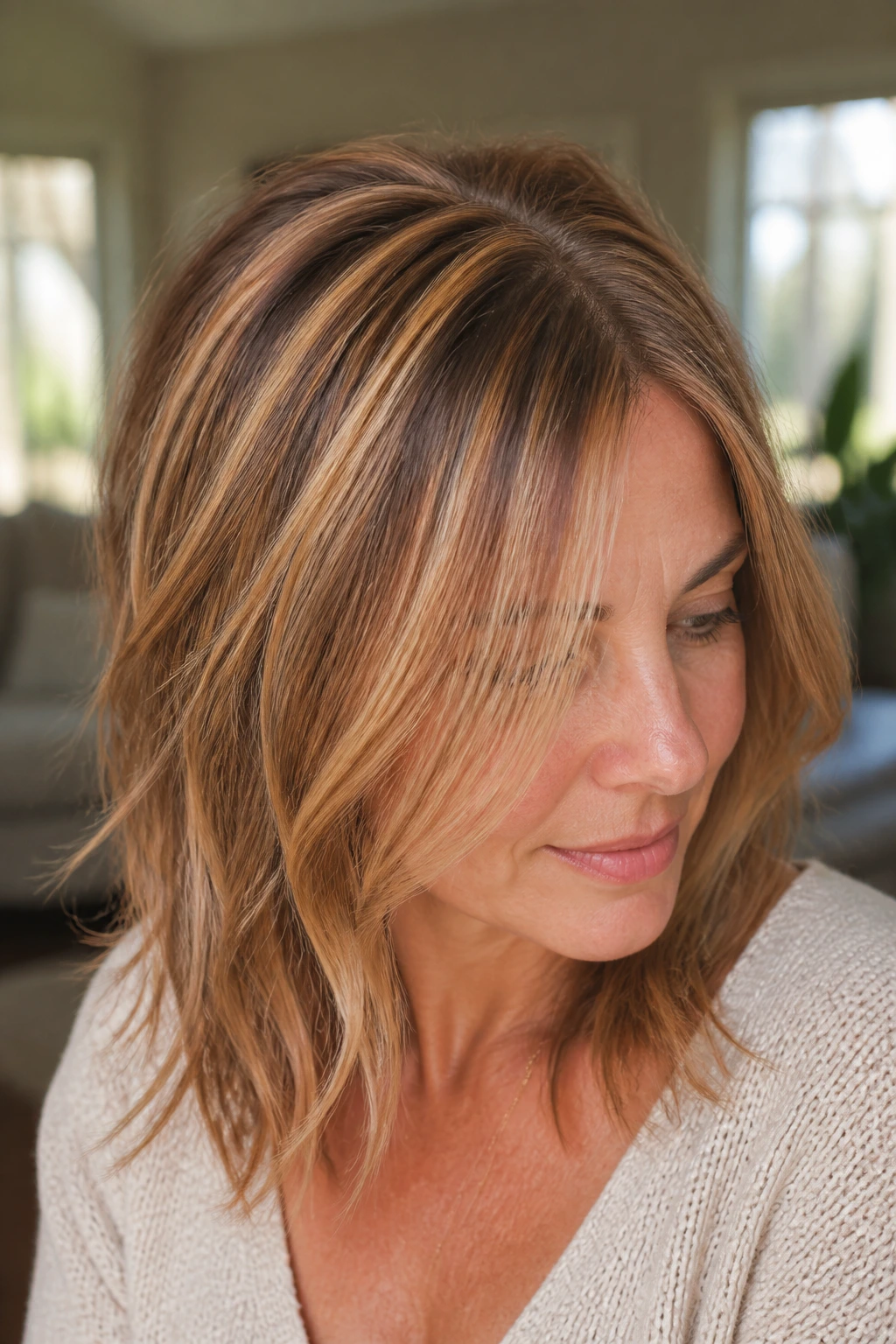
Apricot has a soft, sun-touched warmth that sits beautifully on medium skin with golden undertones. It’s brighter than caramel but gentler than copper, which makes it easier to wear if you want some color personality without going vivid. On fine hair, an apricot glaze can make the crown feel lit from underneath.
The best way to wear it is in delicate ribbons, not large blocks. The glaze should move through the top layer and around the part, then fade into the base. Because the color is warmer, it can make the hair look fuller even when the highlight count is modest. That’s a nice trick on fine hair, which doesn’t need a lot of light pieces to get dimension.
I’d keep the styling soft here. Loose waves or a round-brush blowout work better than pin-straight hair, because apricot has a way of looking richer when it bends.
18. Smoky Brunette Crown Shimmer
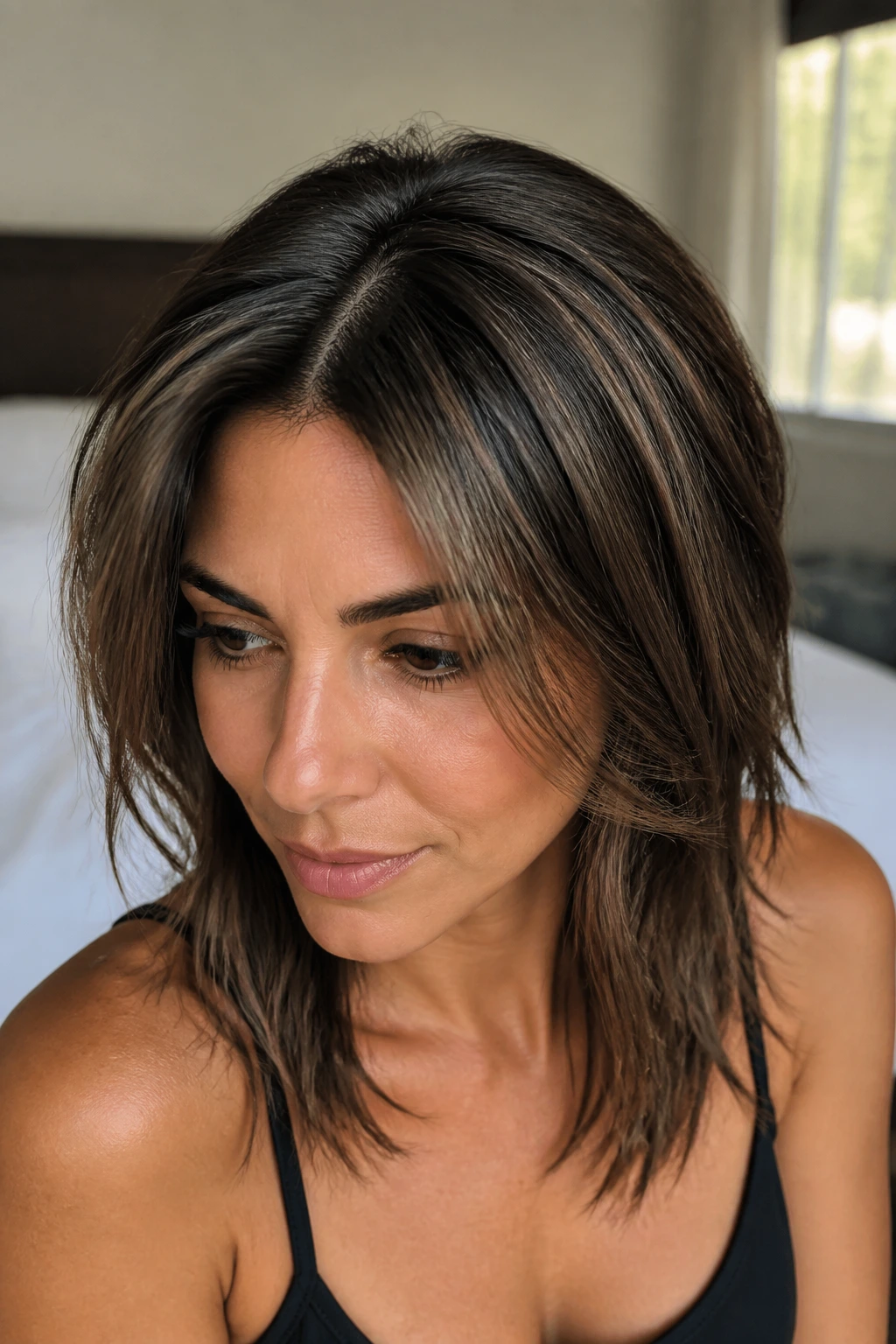
Smoky brunette is a quiet, polished way to add lift without leaving brown behind. It’s cooler than chocolate, softer than ash, and often the best answer for medium skin that wants depth but not warmth. For fine hair, the shimmer comes from contrast at the crown, not from obvious lightness.
This look often uses a few cool brown lights and lowlights mixed together so the crown doesn’t look one-note. The pieces should be fine enough that the hair still feels soft at the scalp. If you go too chunky, the smoky effect gets muddy. If you go too light, you lose the point.
A practical note
A shine spray or lightweight gloss serum suits this color better than heavy oils. Smoky brunette needs reflection, not grease. One mist, a brush-through, done.
19. Maple Syrup Ribbons With Soft Contrast
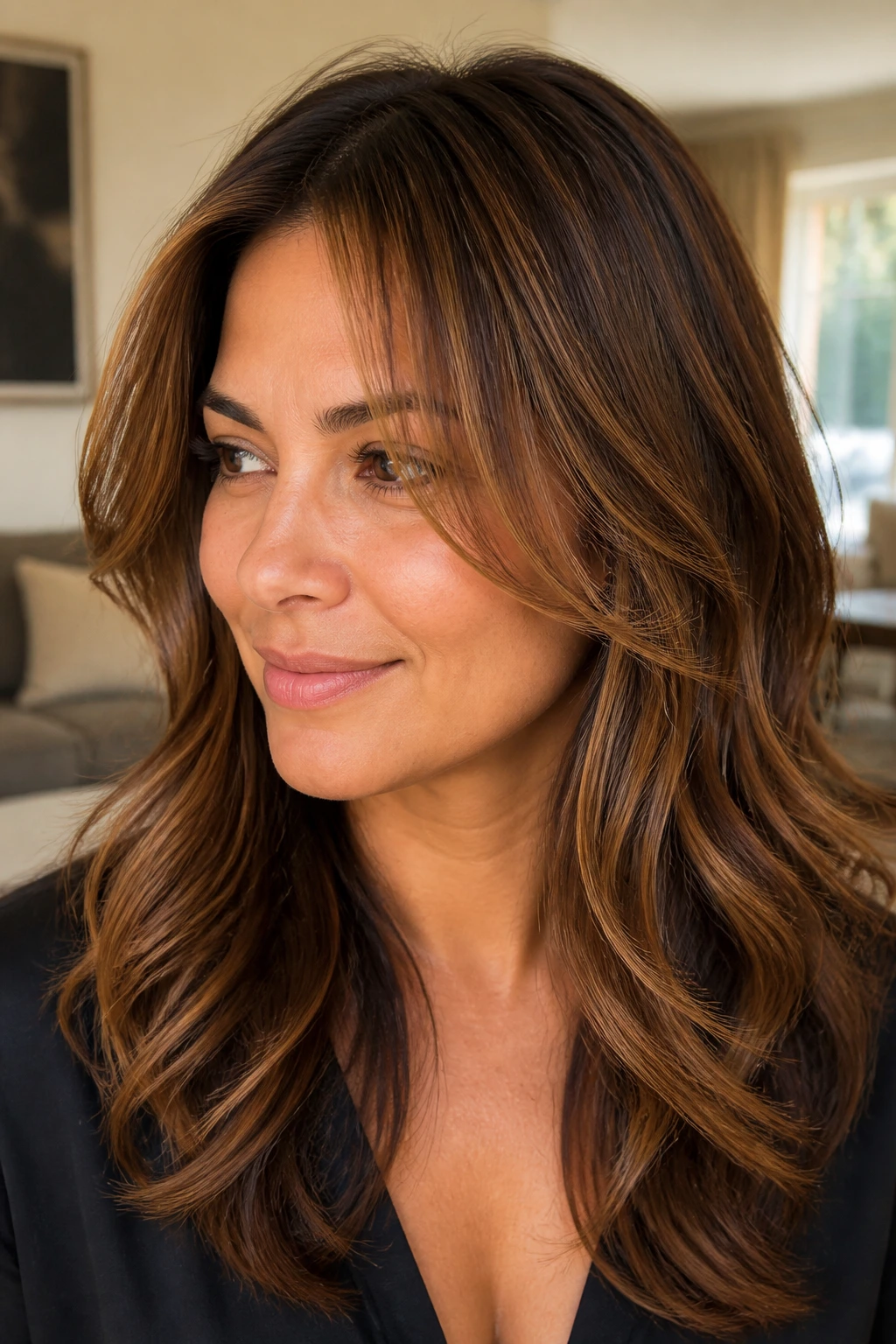
Maple syrup ribbons are rich, warm, and a little glossy in a way medium skin tends to love. The shade sits between caramel and auburn, which makes it a strong option if you want depth with a little fire in it. Fine hair benefits from the soft contrast because the lighter ribbons are thin and widely spaced enough to avoid a striped look.
The crown should be the brightest zone, with the ribbons feathered toward the front. That placement keeps the look lifted and prevents the ends from appearing too light for the hair density. If your natural base is medium brown, this is one of those shades that can make the texture look more substantial without adding weight.
I’d call this a very wearable warm look. Not basic. Not loud. Just warm enough to make the complexion come alive.
20. Pebble Brown and Taupe Dimension
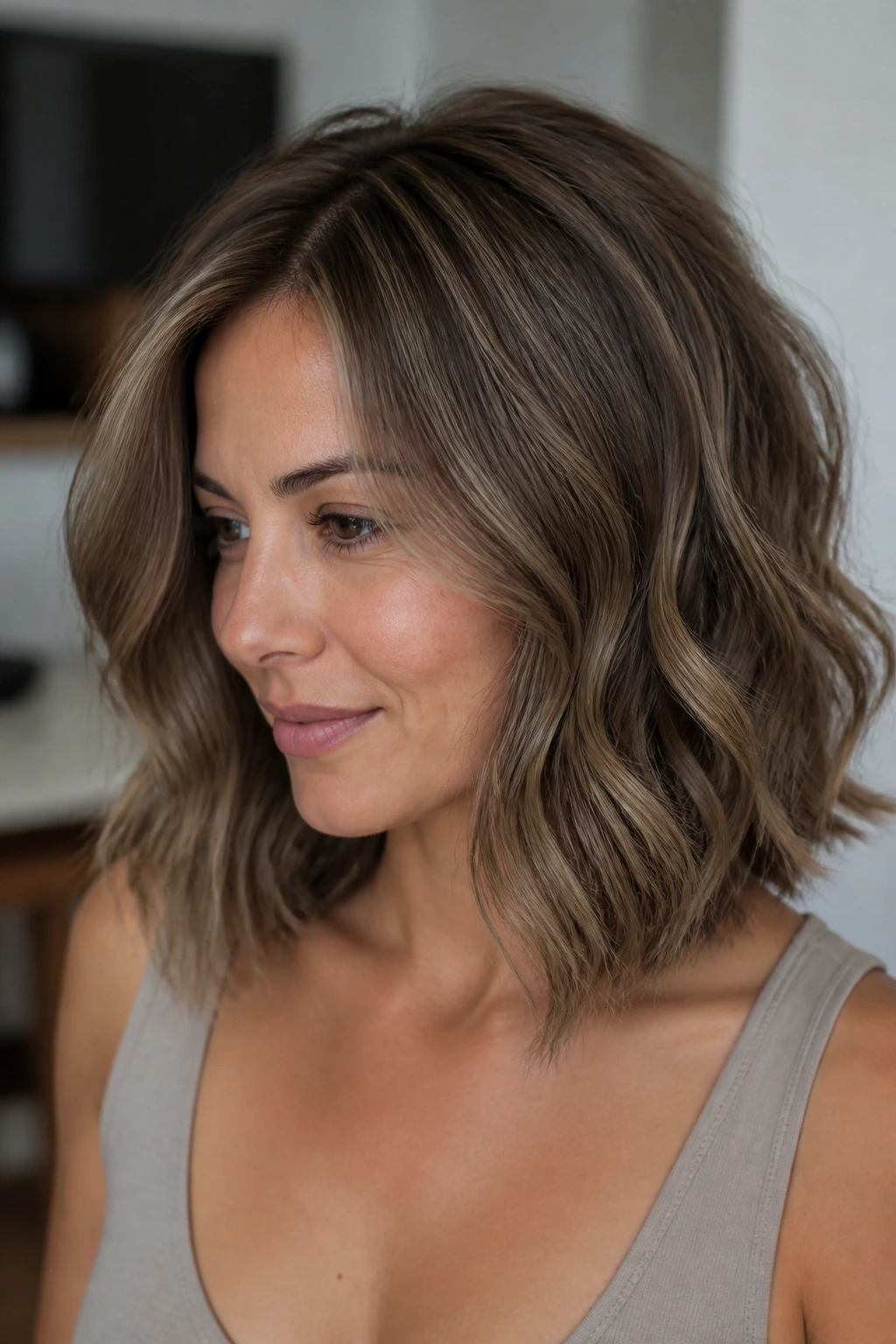
Pebble brown with taupe dimension is the cool-girl answer for medium skin that doesn’t want caramel or gold. The shade mix is muted, almost stone-like, and that’s what makes it work. Fine hair loves the mixed tones because they create surface texture without demanding a big color shift.
Ask for taupe lights at the crown and a pebble-brown base or lowlight underneath. The contrast should be subtle. You want movement when the hair moves, not blocks of color when it doesn’t. A blunt bob especially benefits from this because the cool tones sharpen the outline without making it feel harsh.
If your wardrobe leans black, gray, cream, or denim, pebble and taupe will probably feel easy to live with. The color sits back and lets the cut do more of the work.
21. Hazelnut Peekaboo Highlights at the Crown
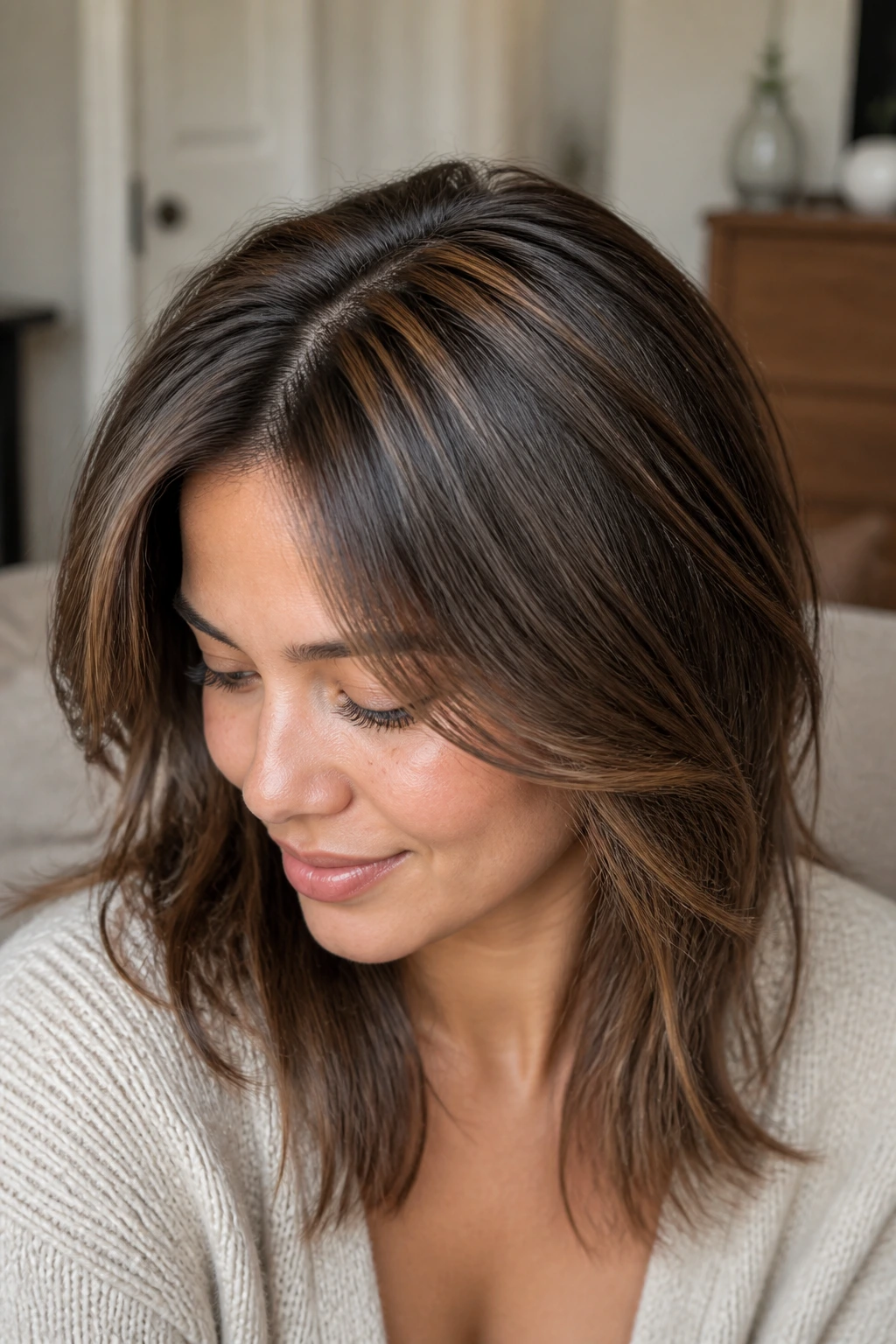
Peekaboo highlights are a clever choice when you want the surprise of lightness without broadcasting it from every angle. Hazelnut gives the crown some warmth, but because the pieces sit beneath a top veil of hair, the effect stays soft. On fine hair, that hidden placement can actually help the surface look fuller, because the base layer still shows through.
This is especially nice if your hair is layered or slightly wavy. The underneath ribbons appear and disappear as the hair moves, which makes the whole style feel less static. And because the lightness isn’t spread everywhere, you can keep more depth at the top and around the sides.
If you’re nervous about commitment, start here. It’s one of the easiest ways to test a lighter tone without fully handing over the whole crown to blonde.
22. Golden Sand Balayage Over Fine Layers
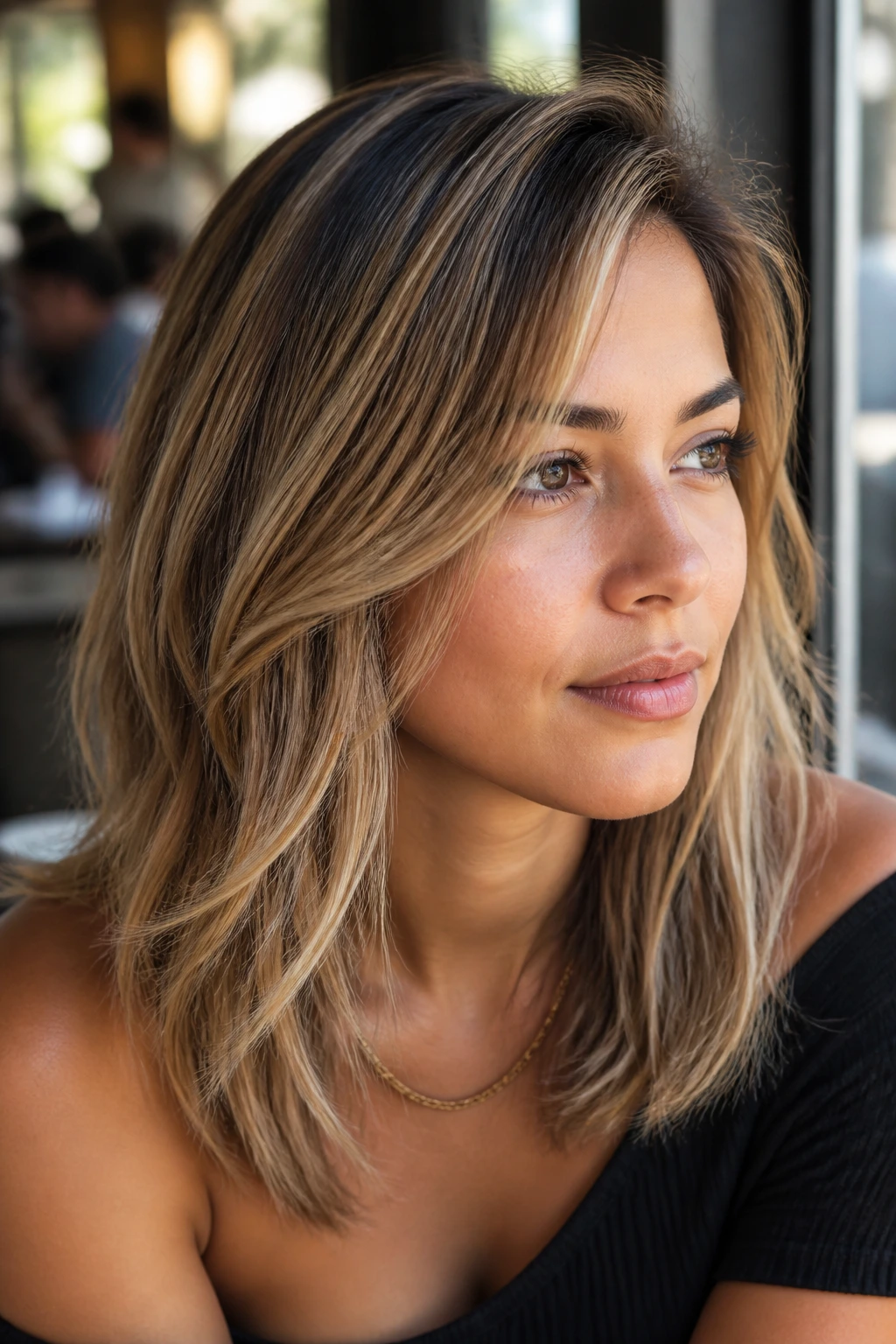
Golden sand is a softer take on blonde that doesn’t get too yellow or too stark. On medium skin, it brings enough warmth to flatter the complexion while staying gentle enough to wear with minimal makeup. Fine layers make the difference here, because balayage needs movement to show itself.
Have the lightest pieces concentrate on the top layers and crown, then taper them down through the sides. The goal is lift, not saturation. A golden sand tone looks especially good on hair that falls just past the shoulders, where the layers can separate and show the ribbons without exposing too much scalp.
A loose blowout is the best companion. Straight and flat can make the color look harder than it is. A bend in the ends softens everything.
23. Cocoa Swirl Lowlights to Add Depth
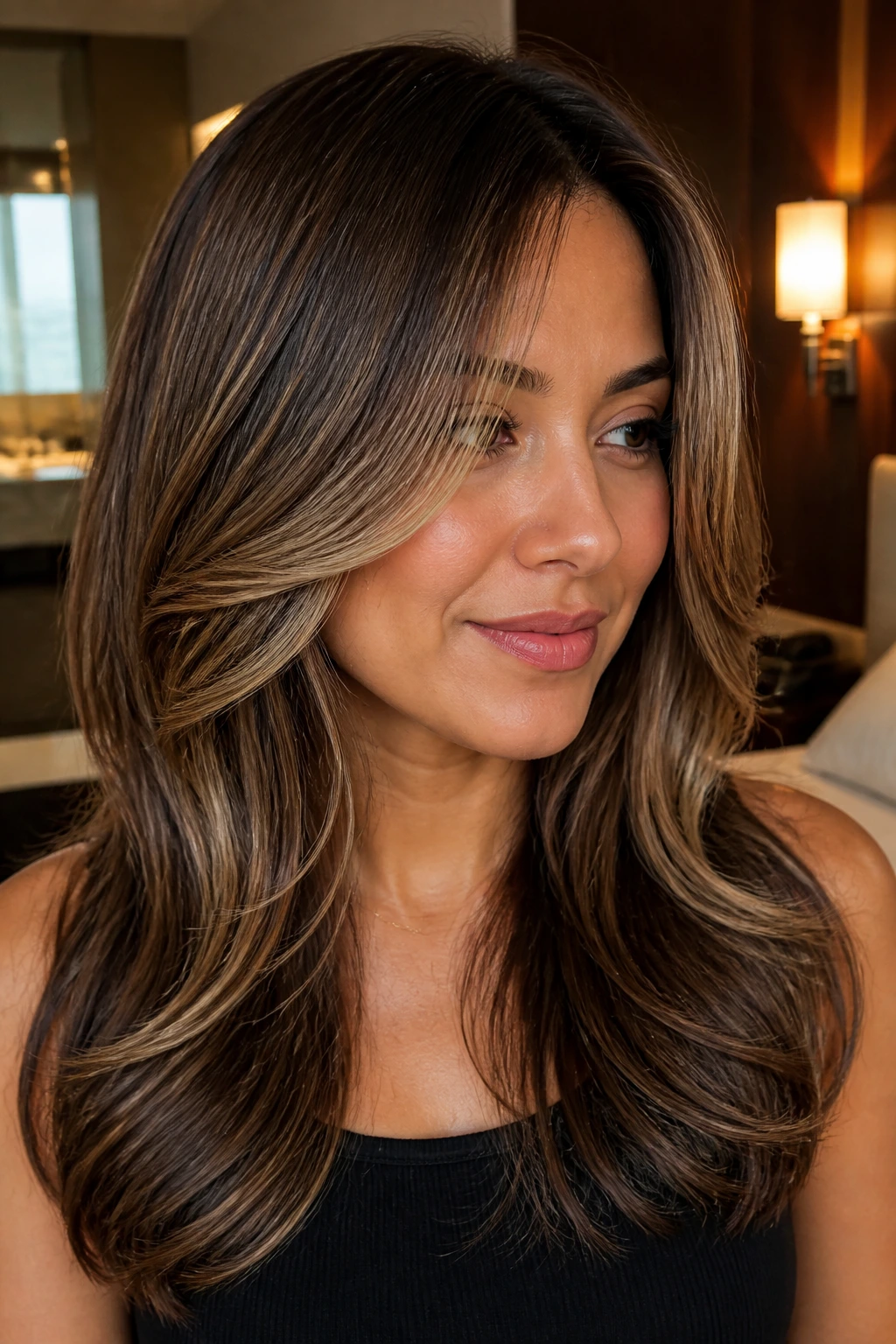
Cocoa swirl is what you reach for when the hair needs more body, not more brightness. Fine hair often benefits from a little darkness, and this is where lowlights earn their keep. Put cocoa swirls through the crown and mid-lengths, then leave just enough lightness around the face to keep the skin from looking shadowed.
Medium skin handles cocoa well because it tends to match the natural richness of the complexion. You’re not trying to cover the hair in brown. You’re building a deeper pattern so the highlight pieces have somewhere to sit. That creates a fuller-looking surface, which can be more useful than extra blonde.
This is also a smart fix if previous highlights went too pale. A few swirls of cocoa can pull the whole thing back together quickly.
24. Sandstone Bronde Sweep With Soft Lift
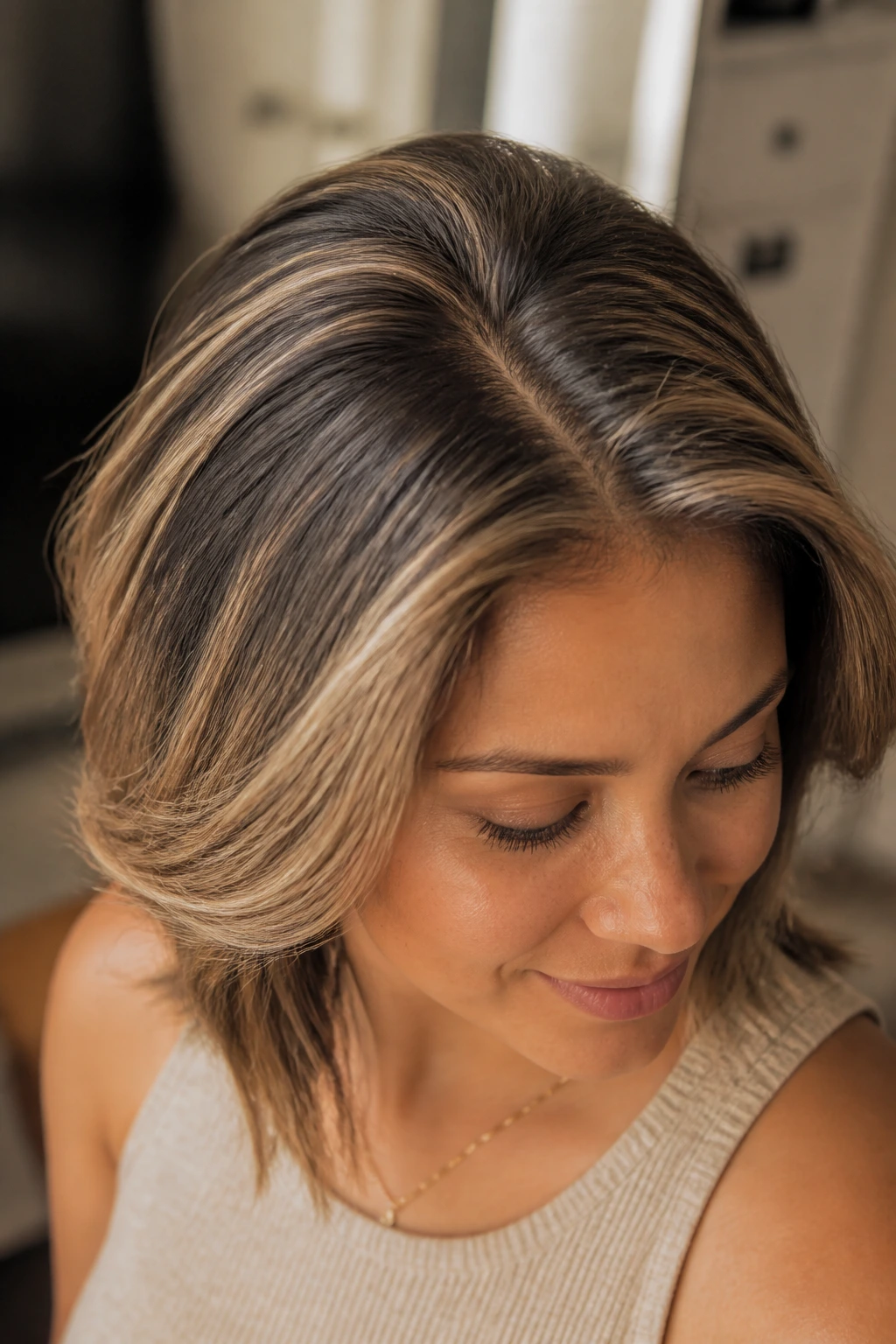
Sandstone bronde is one of the easiest shades to wear because it keeps both warmth and neutrality in play. It’s bright enough to lift the crown, but grounded enough that medium skin doesn’t lose its natural color. Fine hair gets the best result when the sweep is soft and narrow, almost like light brushing across the top.
The sweep should start near the part and drift outward in a gentle curve. No hard lines. No blocky foils. Just a soft path of lighter color that creates movement from root to crown. The reason this works is simple: the eye reads contrast before it reads strand count.
If you want something salon-friendly and not too precious, sandstone bronde is a good candidate. It grows out without drama and still looks intentional on day one.
25. Vanilla Latte Crown Glow With a Gloss Finish
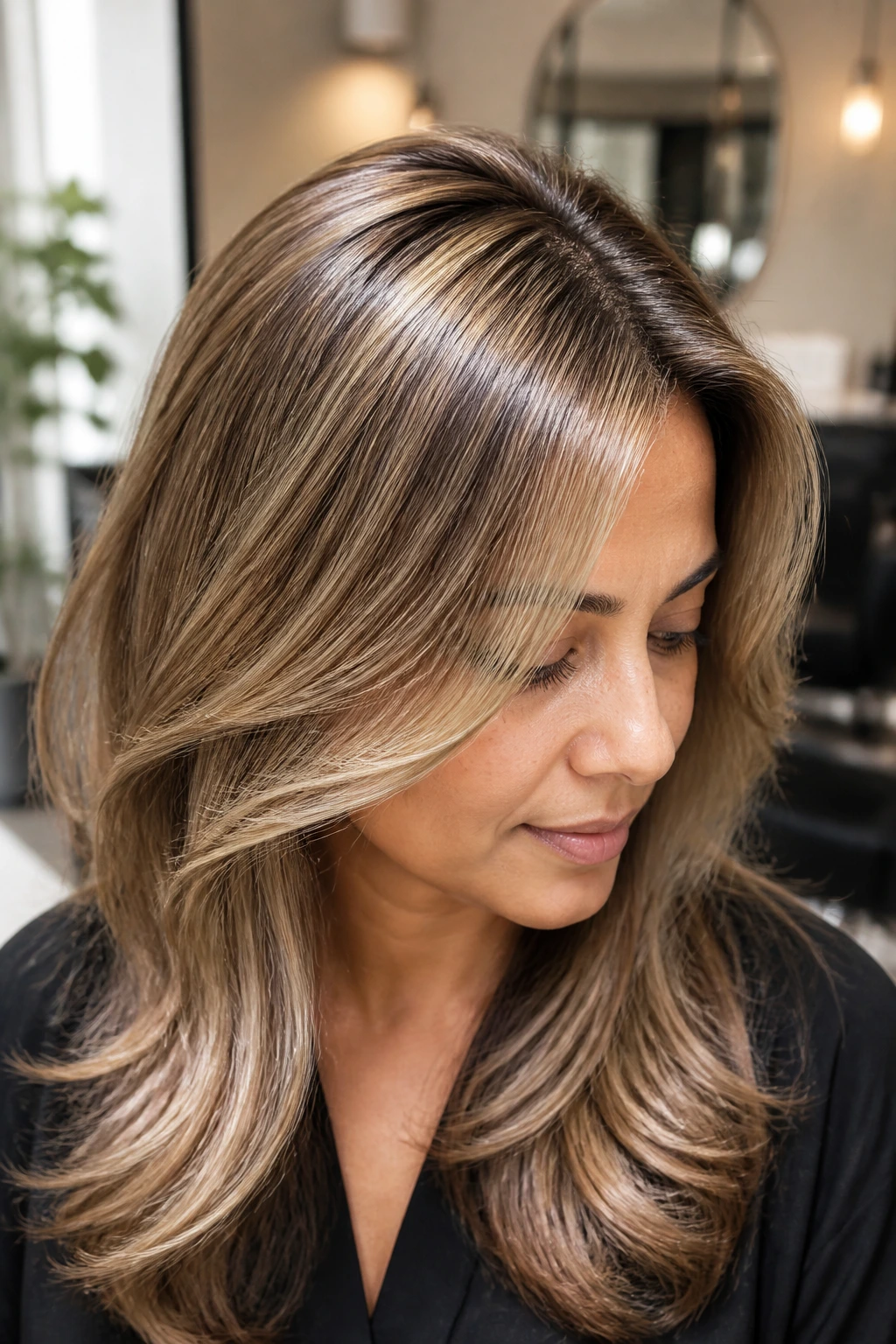
Vanilla latte is the prettiest way I know to ask for brightness without losing softness. The mix of beige, cream, and light brown sits beautifully on medium skin, especially when the undertone is neutral or slightly warm. On fine hair, the crown glow should stay delicate. Too much light and the top can look thin. Too little and you miss the point.
A gloss finish is what pulls this look together. It smooths the cuticle, softens the transition between shades, and gives the crown that clean, polished reflection you want from lighter pieces. The finish matters as much as the tone here. Without it, vanilla latte can look flat. With it, the hair looks considered.
This is the one I’d hand to someone who wants a softer first step into lighter highlights. It’s calm, wearable, and good at making fine hair look cared for rather than overworked.
Why Crown Placement Changes the Whole Look
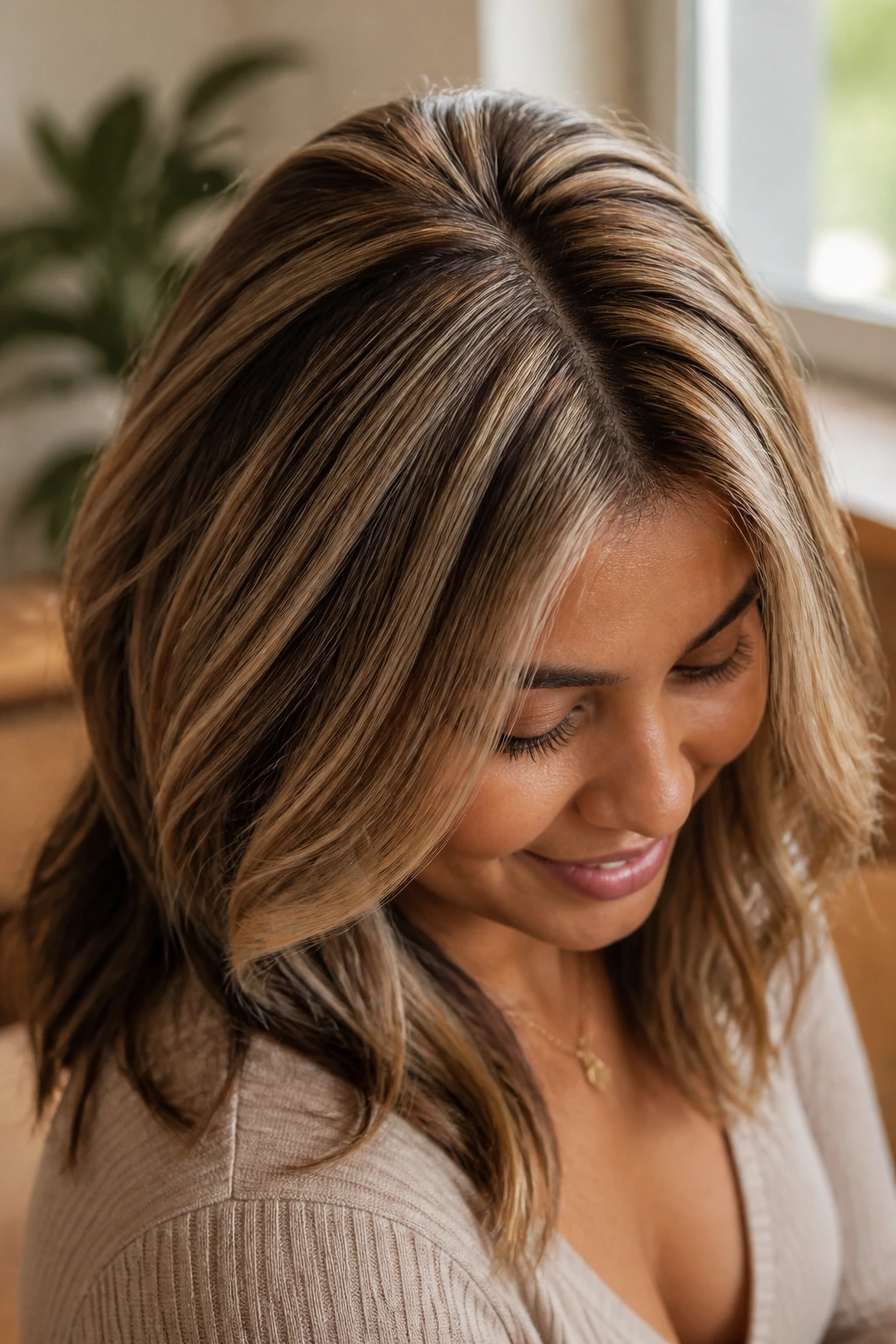
Crown highlights aren’t just about making the top brighter. They change how the eye reads the whole head. On fine hair, that’s a big deal. If light is scattered evenly from root to end, the hair can look frayed. If the brightness is concentrated where the part and top layers sit, the style gains lift, and the darker underlayers start doing useful work instead of disappearing.
That’s why placement matters more than sheer brightness. A few clean, narrow foils at the apex can make a haircut look fuller than a full head of broad highlights. The scalp doesn’t pop through as much. The crown doesn’t collapse as quickly after a day of wear. And medium skin gets a more natural transition because the face stays framed by a mix of depth and light instead of one flat tone.
Fine hair also tends to reflect light more quickly than coarse hair, which is one reason overly chunky highlights can look louder than expected. The strand is small. The color shows fast. Keep that in mind, because it’s usually the difference between “soft lift” and “why does my hair look zebra-striped?”
Essential Tools for These Looks
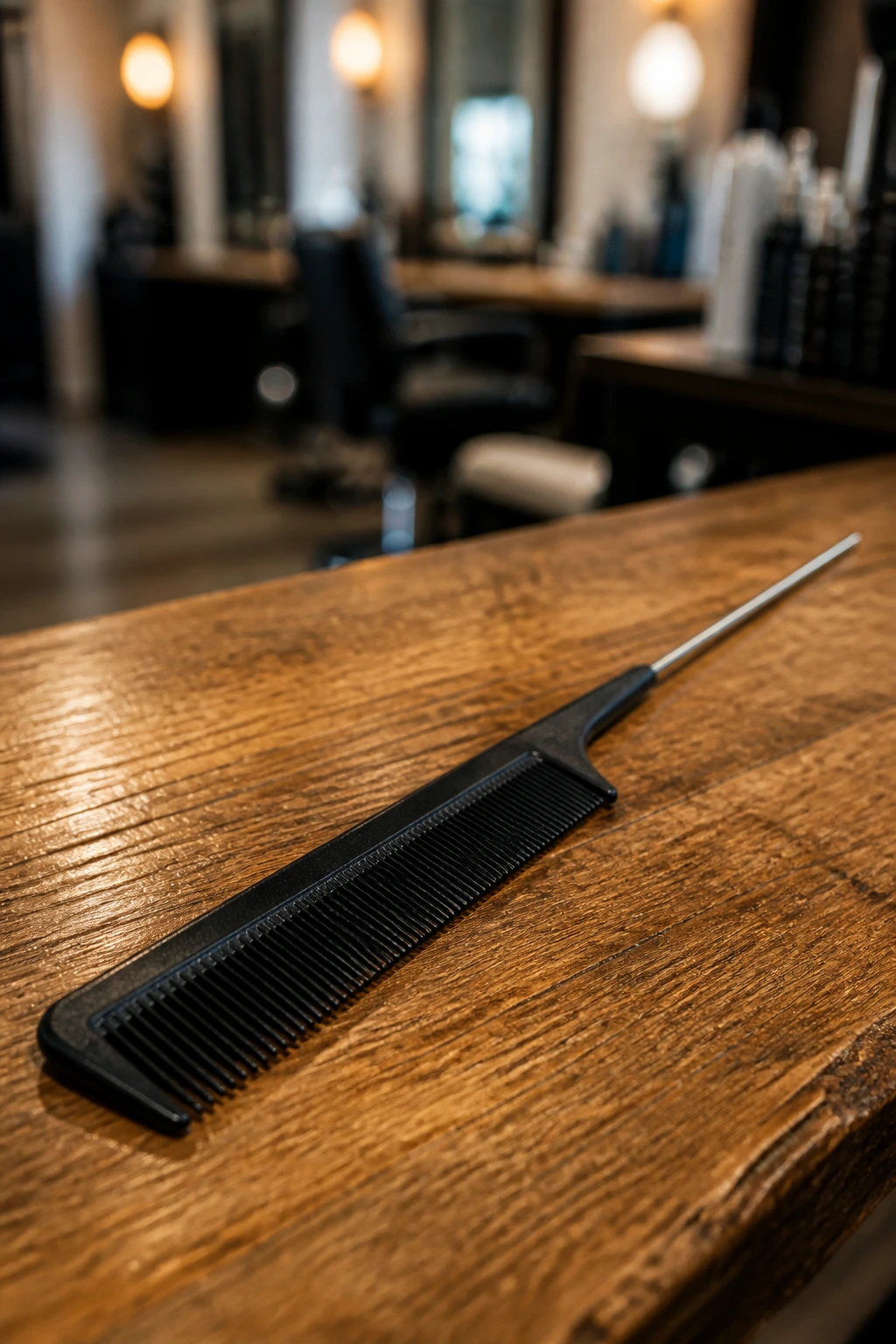
- Rat-tail comb: Helps section the crown cleanly and keeps part lines neat when you’re placing lights.
- Duckbill clips: Hold fine sections without crushing the top layer.
- Foils or balayage boards: Useful for precise foiling or hand-painted pieces, depending on the look.
- Tint brush and color bowl: Needed for toner, gloss, or root smudge application.
- Low-volume developer: Gentler on fine strands when lightening is required.
- Color-safe shampoo and conditioner: Keeps the tone from fading out too fast.
- Purple or blue shampoo: Use sparingly for beige and blonde looks, or for keeping brass in check.
- Lightweight volumizing mousse: Gives the crown some body without collapsing fine hair.
- Heat protectant spray: A must if you style with a blow dryer, flat iron, or curling iron.
- Round brush: Useful for lifting the crown while blow-drying so the highlights actually show.
Picking the Right Tone for Your Skin and Strand Size
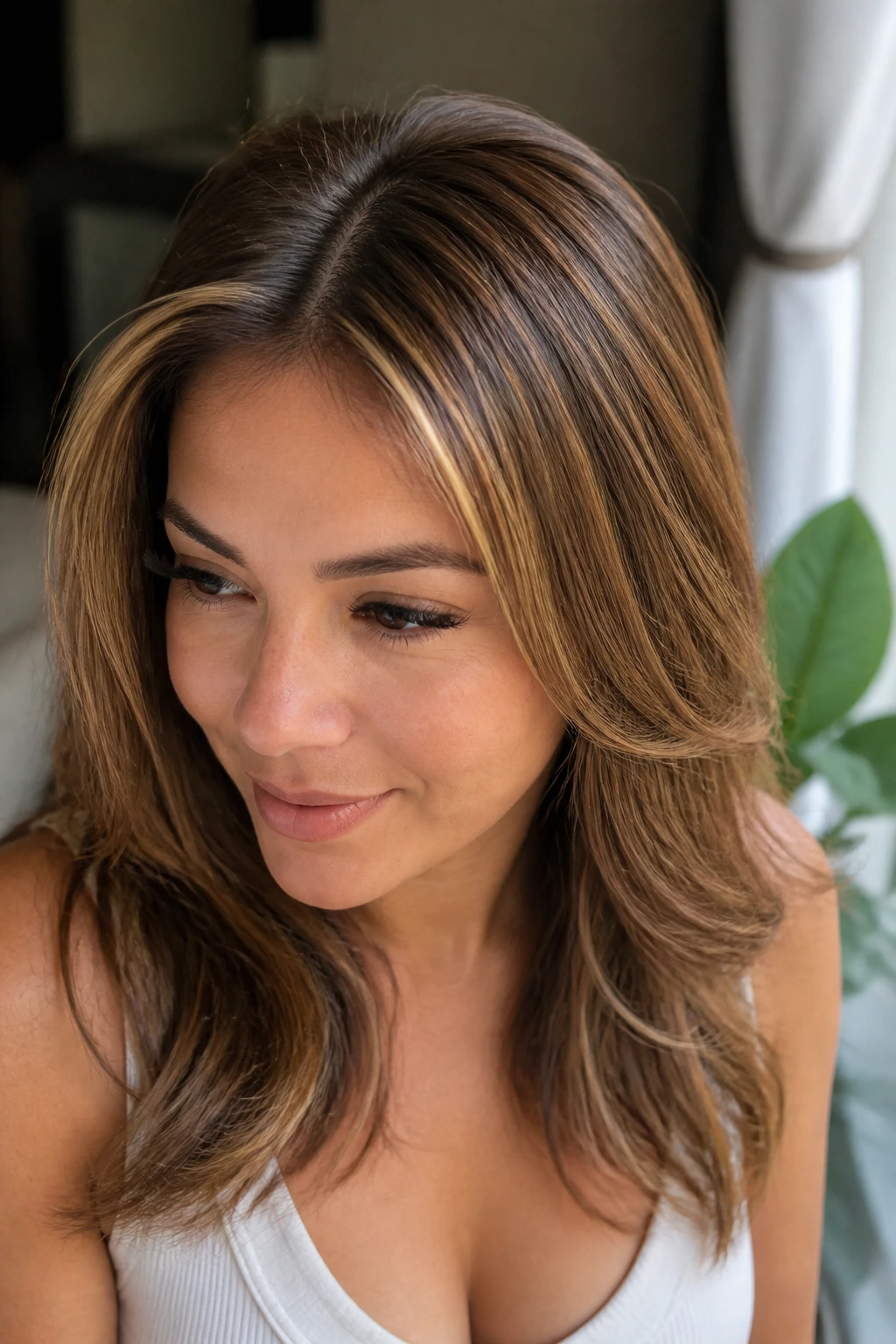
Medium skin is not one note. Some people have a golden cast, some lean olive, some sit neutral-beige, and some run slightly rosy. That matters. Honey, caramel, apricot, and copper flatter warmth. Mushroom, taupe, smoky brown, and champagne beige often sit better on cooler or olive tones. If you’re not sure where you land, look at how your skin reacts next to gold jewelry and cream clothes. That usually tells the truth faster than a vague mirror test.
Fine hair needs a second kind of filtering. Avoid anything too wide or too light unless the hair is already very dense. Micro-weaves, babylights, and soft root smudges preserve body. A few broader pieces can work, but they should be placed carefully, usually around the face or just at the apex, not scattered everywhere. The lighter the color, the tighter the section should be. That rule saves a lot of headaches.
And here’s the part people skip: toner choice changes everything. Beige toner keeps blonde soft. Gold toner warms up pale hair that went too cool. Ash toner can cool brass, but too much ash on fine hair can make the color look dusty. A good colorist knows when to stop one step before the shade feels finished. That’s usually the right stop.
How to Wear These Highlights With Your Cut and Style
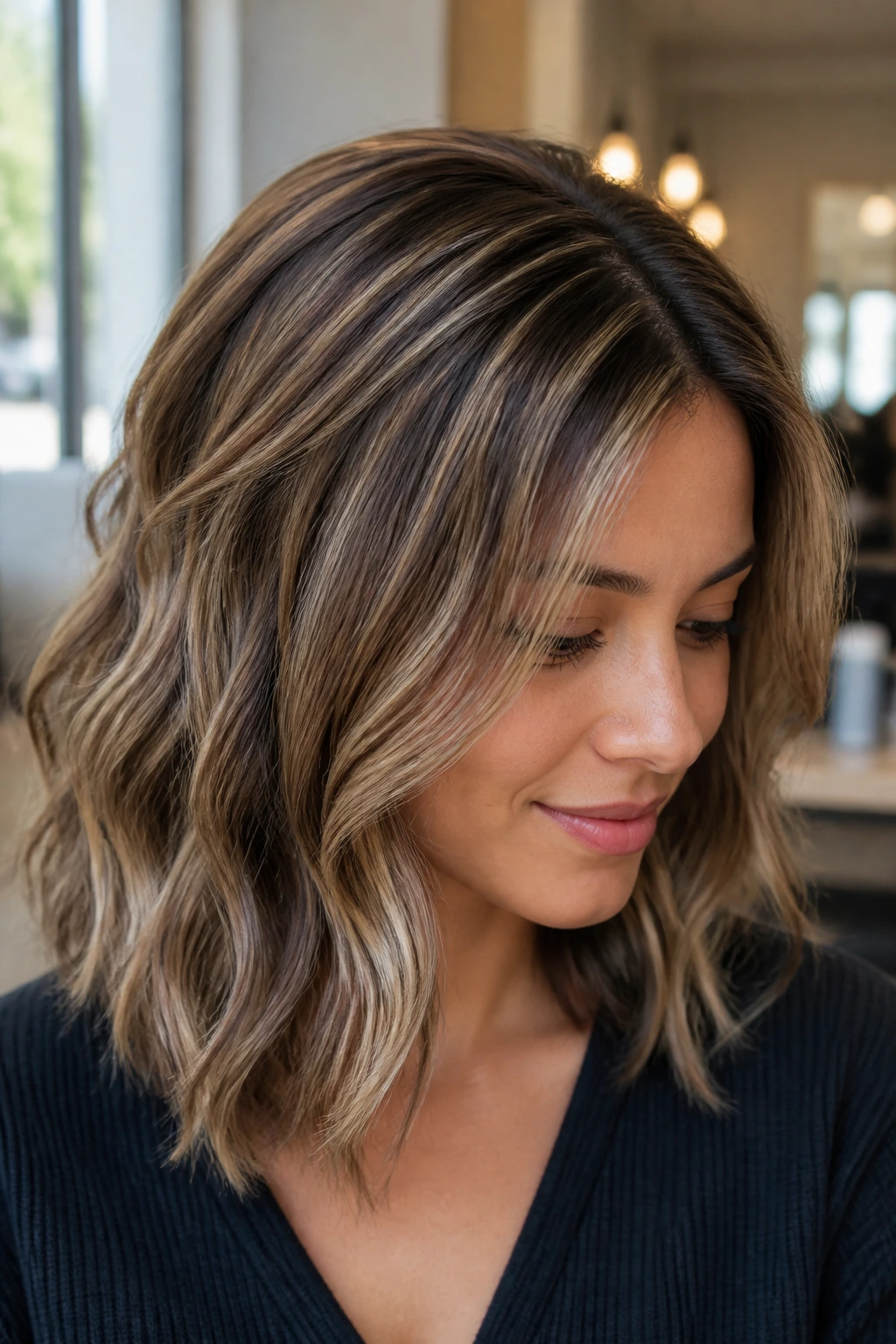
Parting: A deep side part gives the crown instant lift and shows off ribbon placement. A center part makes the color read cleaner and more symmetrical, which works well for beige and brunette blends.
Texture: Soft waves are the easiest way to show dimension, because the bends catch the lighter and darker pieces at different angles. Straight styles can still work, but they favor micro-lights and glossed finishes more than chunky ribbons.
Volume Trick: Blow-dry the crown upward with a round brush or a vent brush, then set it for a minute while it cools. Fine hair remembers shape better when it cools in the lifted position.
Accessories: Small clips, narrow headbands, and claw clips can either show or hide the crown lights depending on placement. Use that to your advantage. A clip set slightly off-center can reveal the brighter pieces near the part without flattening the top.
Small Changes That Make the Color Look Better for Longer
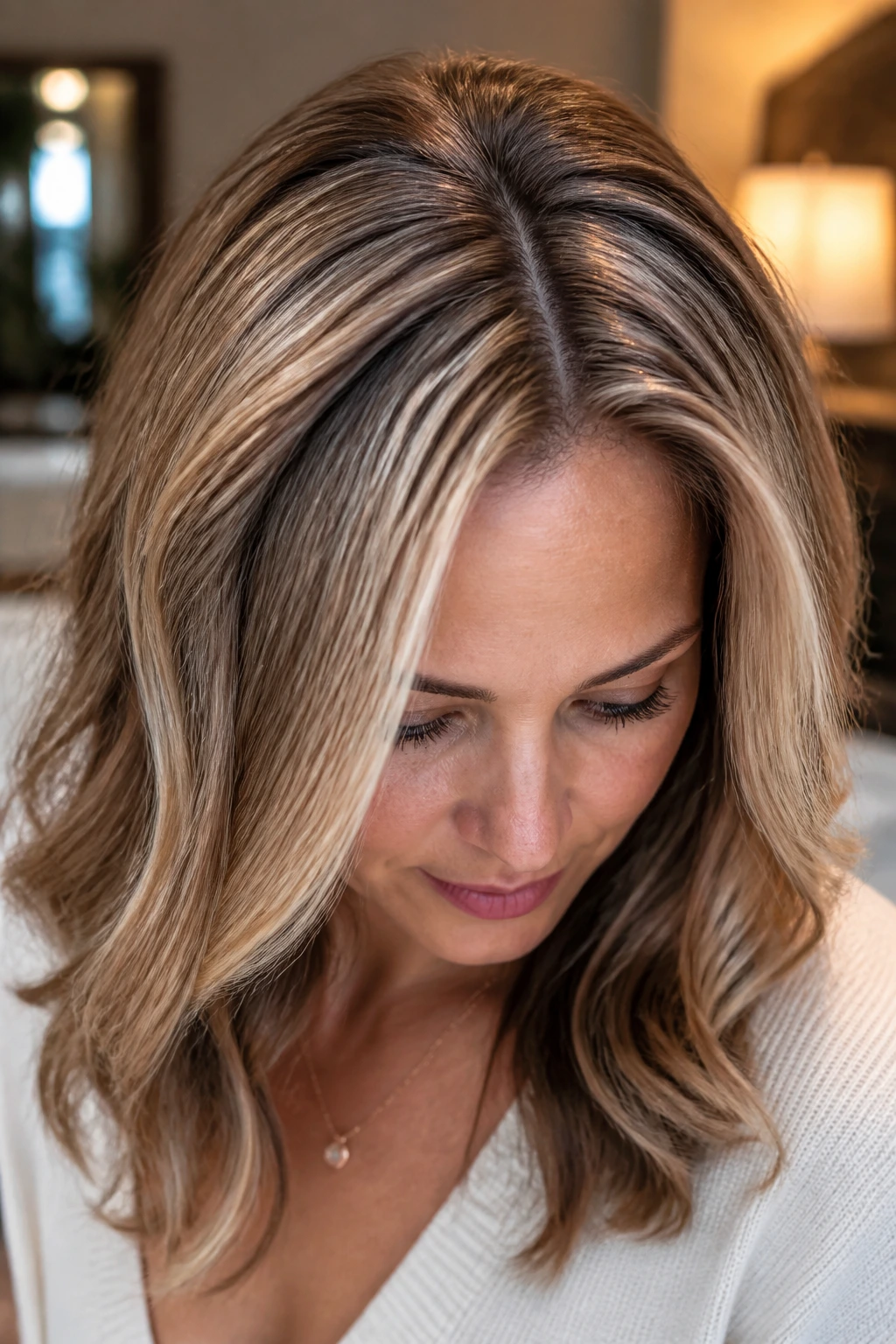
Tone Boost: A gloss every 4 to 6 weeks keeps beige, honey, and champagne shades from drifting dull. It also closes down the cuticle a bit, which makes fine hair feel smoother.
Density Trick: Leave a few darker threads between the lighter ones. Fine hair looks fuller when it has contrast, and that contrast needs some untouched base.
Styling Shortcut: Dry shampoo at the roots is not just for oil. A tiny bit at the crown can lift the hair enough to make the highlight placement visible again.
Make-It-Yours: Warm skin usually likes honey, caramel, apricot, or copper. Olive skin often looks good with mushroom, walnut, taupe, or smoky brown. Neutral skin can go either way, but the tone should still sit softly on the hair, not sit on top of it.
What Usually Goes Wrong With Crown Highlights on Fine Hair
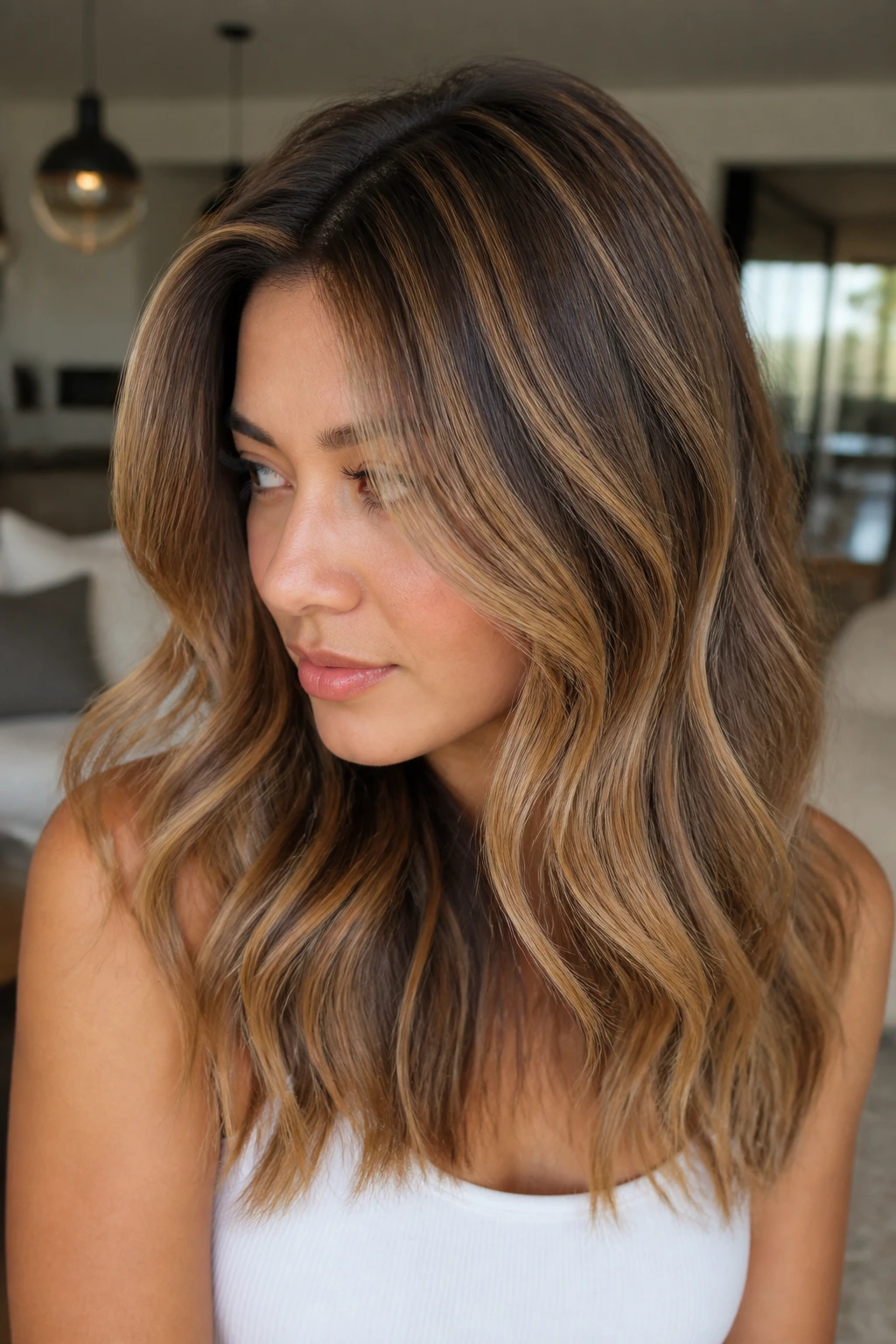
The easiest mistake is going too chunky. Big foils can look bold in the bowl and harsh on the head, especially on fine hair where every section shows. The fix is simple: ask for micro-weaves or baby-thin slices and keep the brightness concentrated at the crown rather than spread all over.
The second mistake is ignoring skin tone. A very ashy blonde on warm medium skin can make the face look flat. A too-gold caramel on cooler olive skin can turn brassy fast. Match the tone to the undertone, not to a screenshot.
Another problem is over-lightening the roots. Fine hair already shows its scalp more easily, so if the crown is pushed too pale, the part can look wider than it is. A shadow root or smudge gives the eye a softer landing place.
And then there’s maintenance denial. Light crown pieces grow out fast. If you want the color to keep reading soft, you need glosses, toning, and a plan for refreshes. No drama. Just upkeep.
Variations and Adaptations to Try
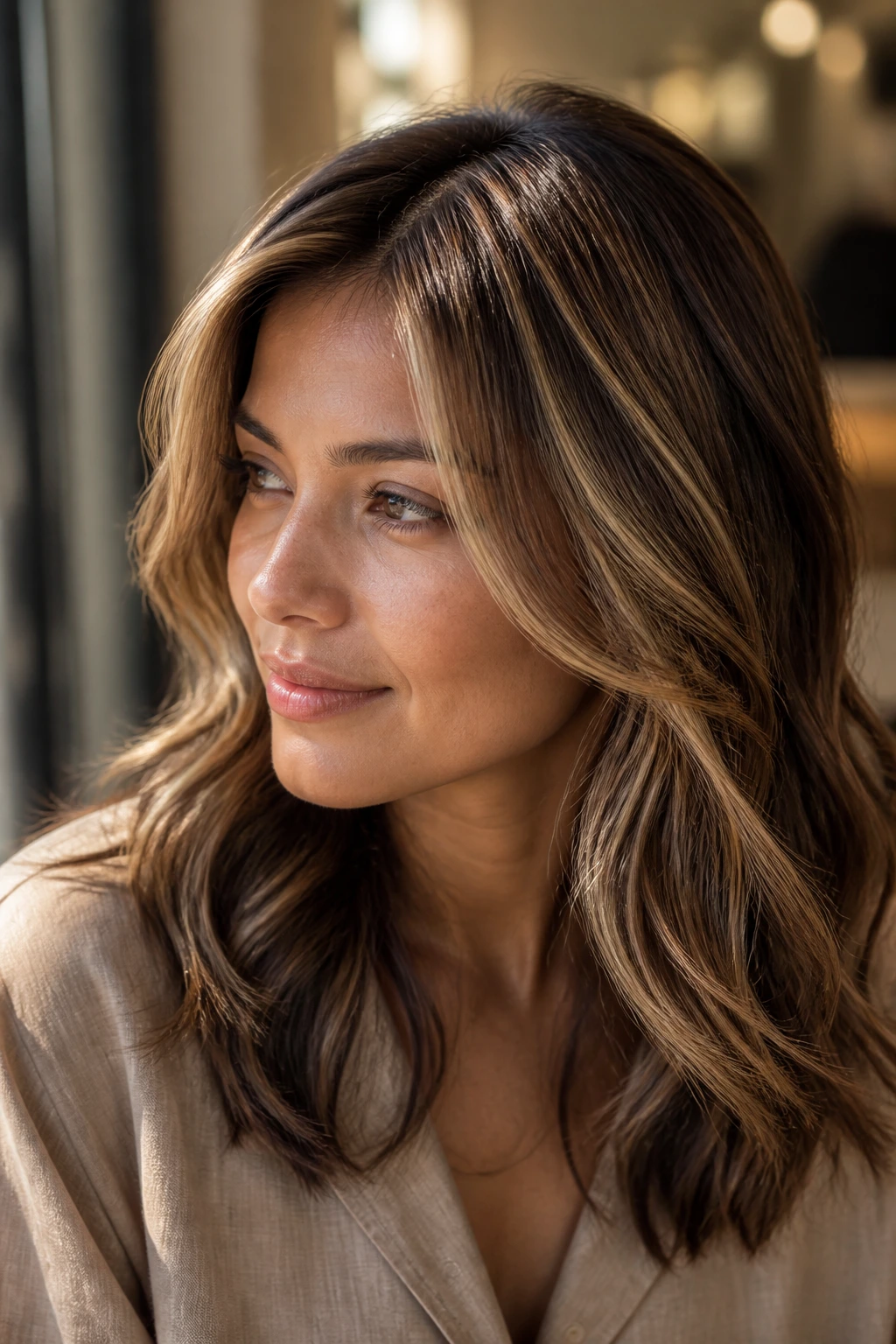
The Warm Honey Shift: Add more gold and beige, and keep the lightest pieces just around the face and crown. This is the easiest version for warm or neutral medium skin that wants to stay soft and sunny.
The Cool Smoke Edit: Push the palette toward mushroom, taupe, and smoky brown. It suits olive and cooler medium skin better, and it’s a good choice if you hate the look of orange undertones.
The Brunette-First Version: Keep most of the hair dark and use only narrow crown lights plus a few lowlights underneath. Fine hair often looks fuller this way than it does with an all-over lightening job.
The Copper Spark: Shift the lights toward apricot, copper, or cinnamon. Best on medium skin with a warm base, and especially nice if you want the color to feel a little more alive in sunlight.
The Soft Blonde Lift: Use beige blonde microlights with a root shadow. This is the brightest option in the group, but the narrow placement keeps it from overwhelming fine strands.
Keeping the Tone Fresh Without Overdoing It
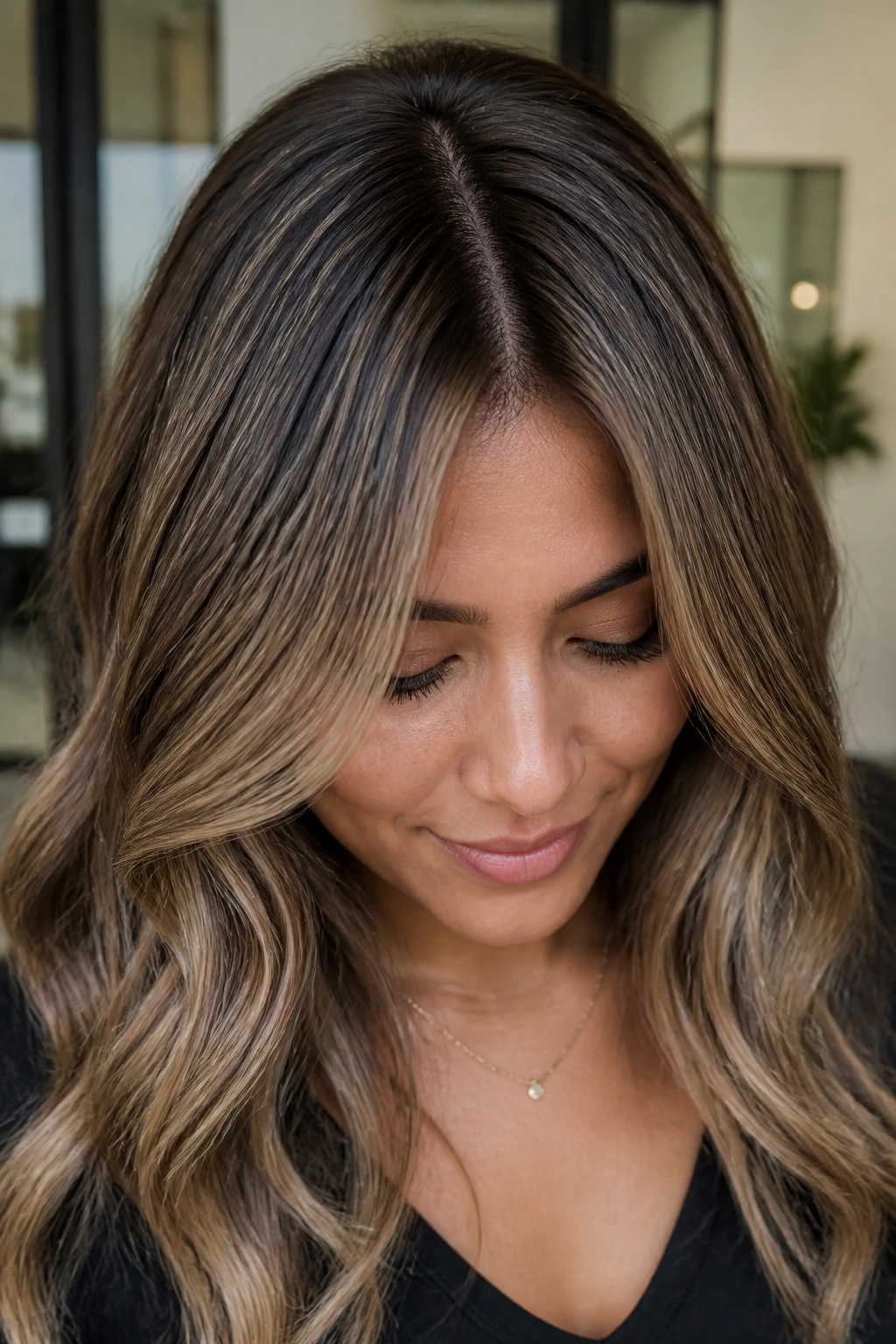
Fine hair can look tired faster than coarse hair after coloring, mostly because the cuticle shows wear sooner. That means you need a maintenance plan, not a rescue plan. Glosses, gentle shampoo, heat protection, and a light hand with hot tools do more for these looks than people think. A highlight can only stay crisp if the hair underneath is still healthy enough to reflect light.
If your color leans warm, a beige or gold gloss every few weeks will keep brass from taking over. If it leans cool, use blue or purple shampoo sparingly — once a week or even less, depending on how fast the tone shifts. Too much toning product can make fine hair dull and dry. That dullness shows up right at the crown, which is exactly where you do not want it.
Maintenance, Toning, and Grow-Out
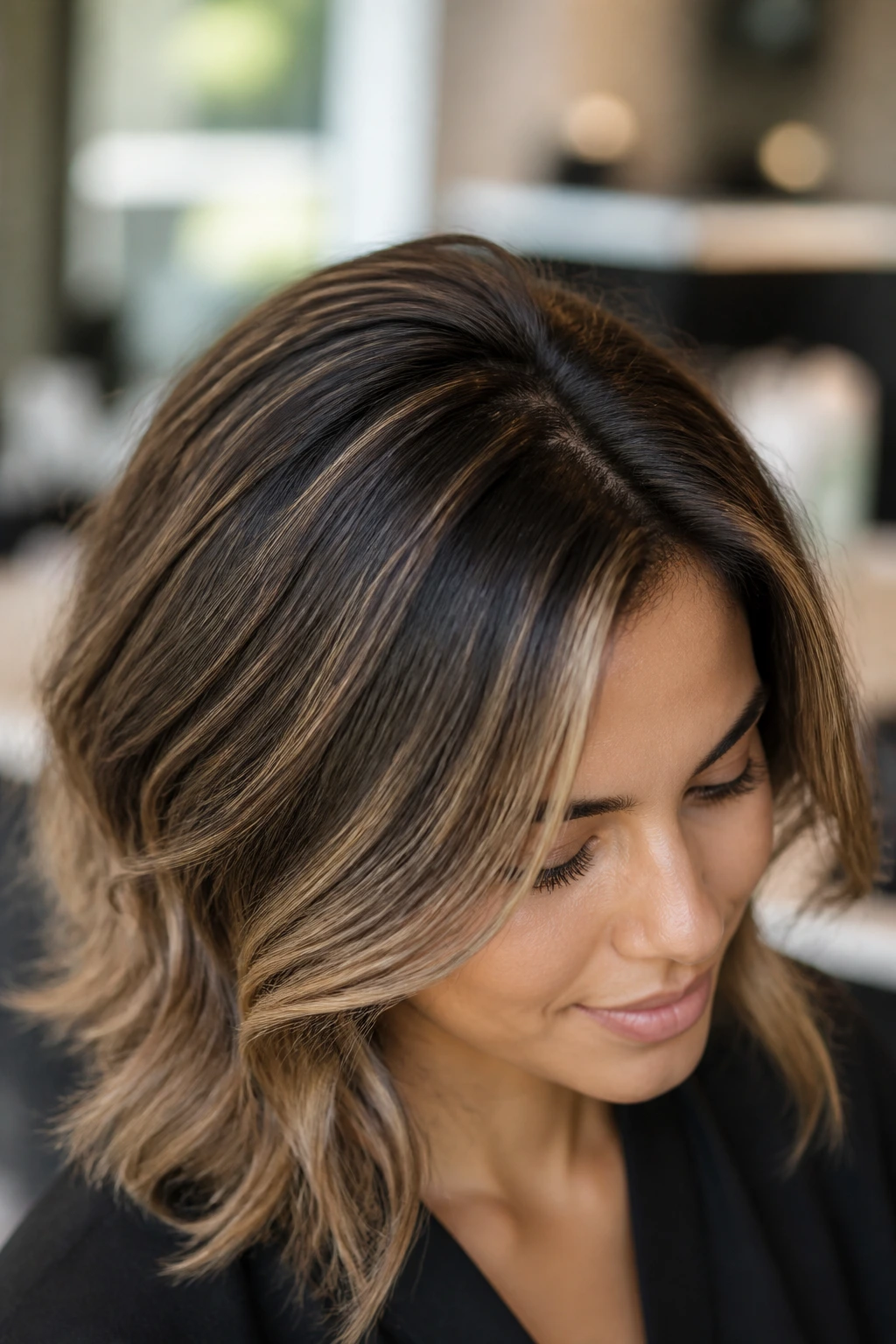
Most crown highlight looks for medium skin and fine hair need a refresh somewhere in the 6 to 10 week range, depending on how light the pieces are and how fast your hair grows. Softer brunette blends can stretch longer. Brighter beige or blonde looks usually need toning sooner because the warm and cool shifts show faster on lighter pieces.
If you gloss at home, keep it demure. A sheer beige or warm brown glaze can revive the tone without creating extra stress. If you use a purple shampoo, don’t leave it on long enough to chase out every hint of warmth unless that’s the look you want. Fine hair goes muddy fast when toners overstay their welcome. Twenty seconds can be enough. Sometimes less.
Grow-out is easier when the root is a shade or two deeper than the lightest pieces. That’s why shadow roots and smudges show up so often in these looks. They soften the line where new growth starts, which keeps the crown from looking sharp and obvious. If your hair is especially fragile, stretch the refreshes and focus on glossing the mids and ends instead of chasing a full re-foil every time.
Common Mistakes to Avoid
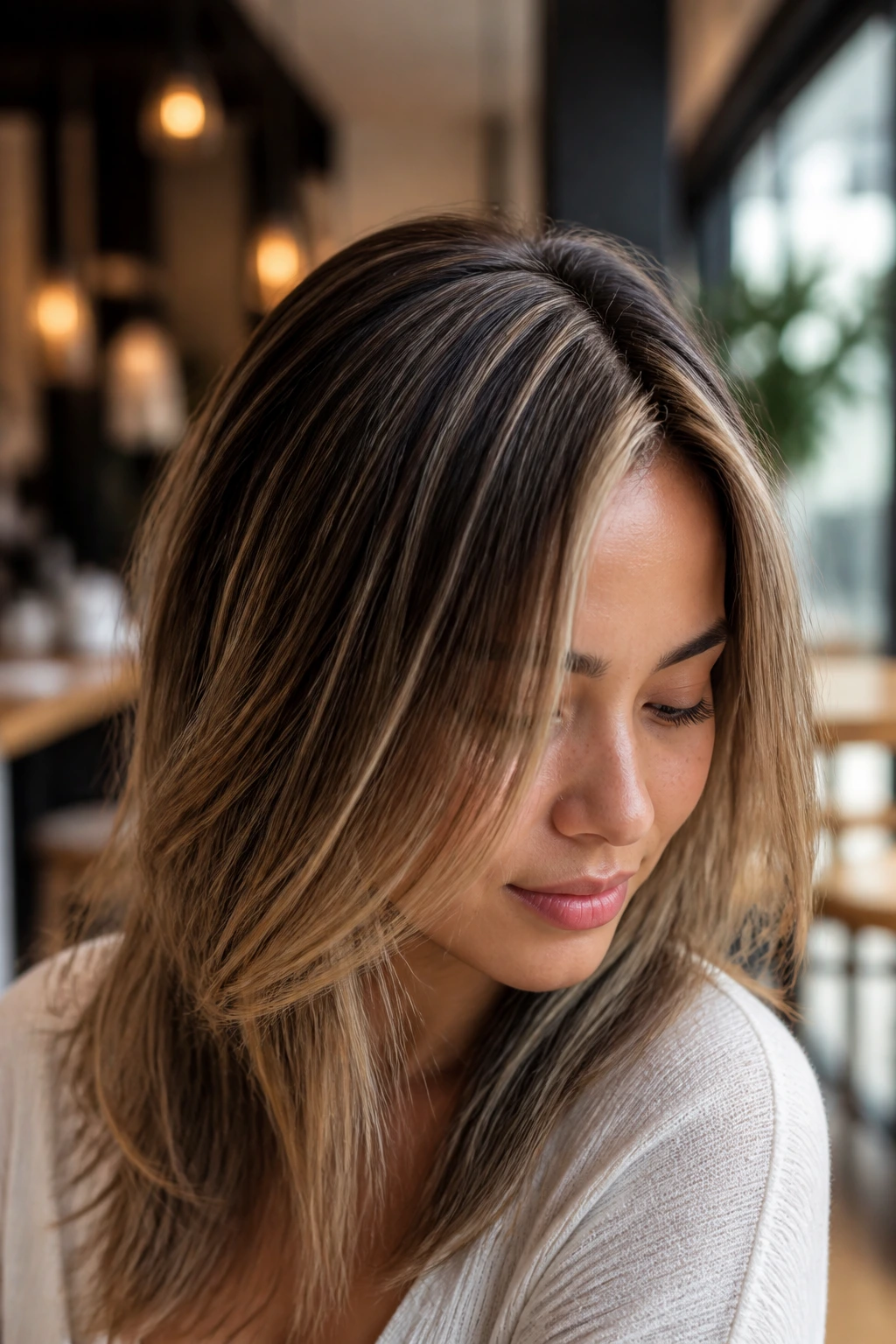
Chunky placement: Thick highlight panels make fine hair look thinner by comparison. Stick to small, woven sections.
Wrong tone for the skin: Too cool can drain medium skin; too warm can go orange. Match the undertone first.
Lightening the whole crown too much: A bright scalp line can widen the part. Keep some depth at the root.
Using heavy products: Thick creams and oils flatten fine strands fast. Choose lightweight leave-ins and use them sparingly.
Skipping lowlights: When everything is light, fine hair can lose its shape. A few deeper pieces create structure and make the highlights look better.
Ignoring maintenance: Toning fades. Brass creeps in. A quick gloss or toning shampoo schedule keeps the look from getting dull and patchy.
Frequently Asked Questions
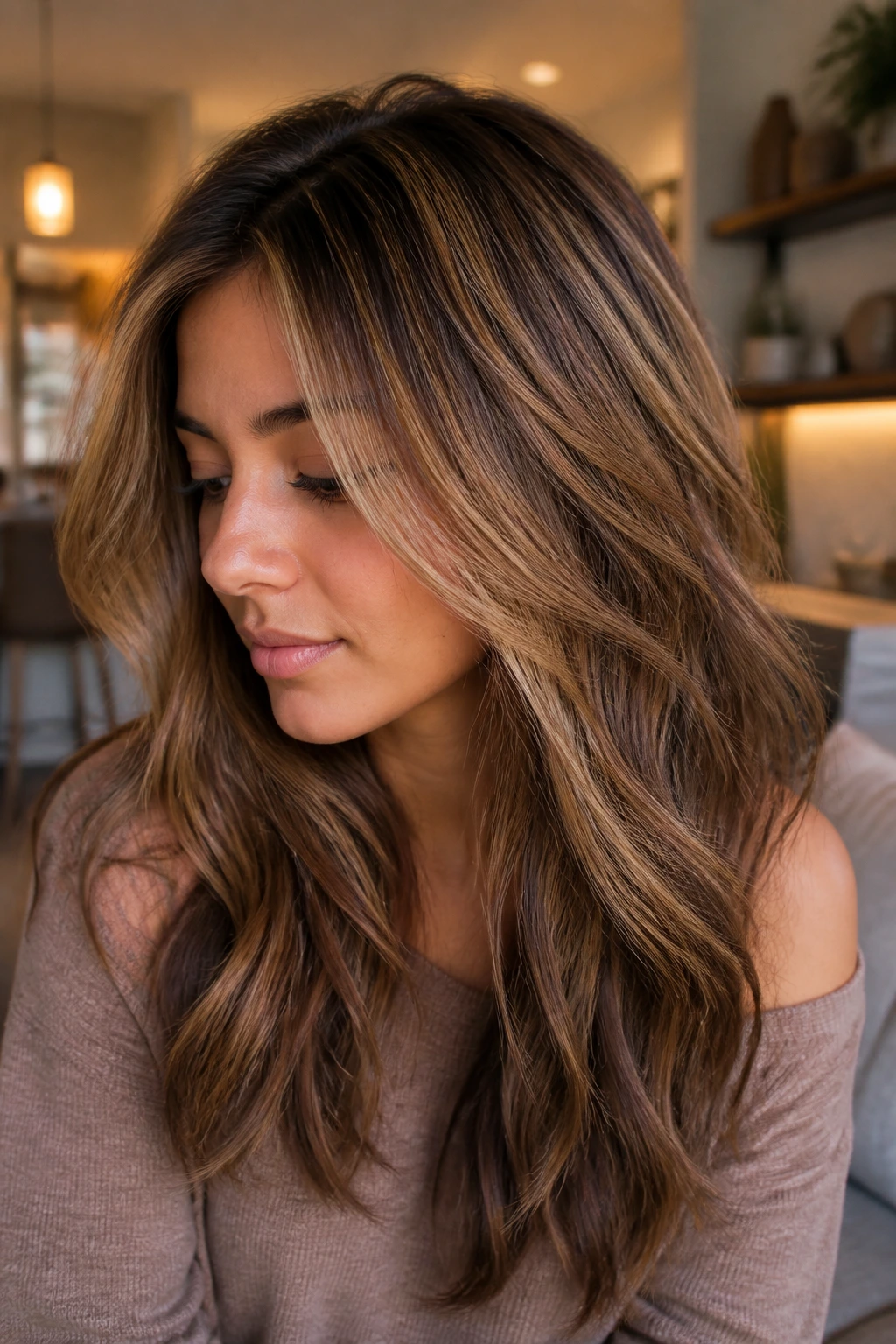
Are crown highlights better than full highlights for fine hair?
Often, yes. Crown placement gives lift where the eye notices it first, and it avoids over-lightening the lower lengths, which can make fine hair look wispy. Full highlights can still work, but they need a gentler hand and usually a lot more upkeep.
What shades flatter medium skin the most?
Honey beige, caramel, bronze, apricot, and soft copper are reliable if your undertone is warm. Mushroom brown, taupe, smoky brunette, and champagne beige usually work better if your skin leans neutral or olive. The right shade should make your face look awake, not pale or orange.
Can fine hair handle bleach?
Yes, but the sections need to be small and the process needs care. Fine strands are easier to over-process, so low-volume developer, careful timing, and a bond-building routine matter more than they do on coarse hair. If the hair is already fragile, a gloss or demi-permanent lift may be smarter than pushing for big blonde pieces.
Do I need lowlights too?
If your hair is very fine, lowlights help more than people expect. They create the illusion of thickness by giving the lighter pieces something to contrast against. Even a few pieces underneath can make the crown look denser.
How do I keep the highlights from turning brassy?
Use the right toner for the tone you want, then protect it with color-safe shampoo and occasional purple or blue shampoo if needed. Don’t overuse toning products. Too much can make the hair look dull instead of clean.
Will this work on curly or wavy hair?
Yes, and the texture can make the highlights look fuller. Curls and waves break up the color naturally, so crown placement can be softer and more forgiving. The key is still thin sections and a tone that suits the skin.
How often should I touch them up?
A gloss every 4 to 6 weeks keeps the tone fresh. Partial highlight refreshes usually land around 8 to 12 weeks, though softer brunette versions can go longer. If the regrowth line starts shouting, the crown is probably ready.
What if my hair looks too flat after coloring?
That usually means the sectioning was too dense or the styling was too heavy. Add lift at the root with a mousse or root spray, and avoid oils near the crown. Next time, ask for finer weaving and a little more depth left between the light pieces.
The Soft Lift Worth Keeping
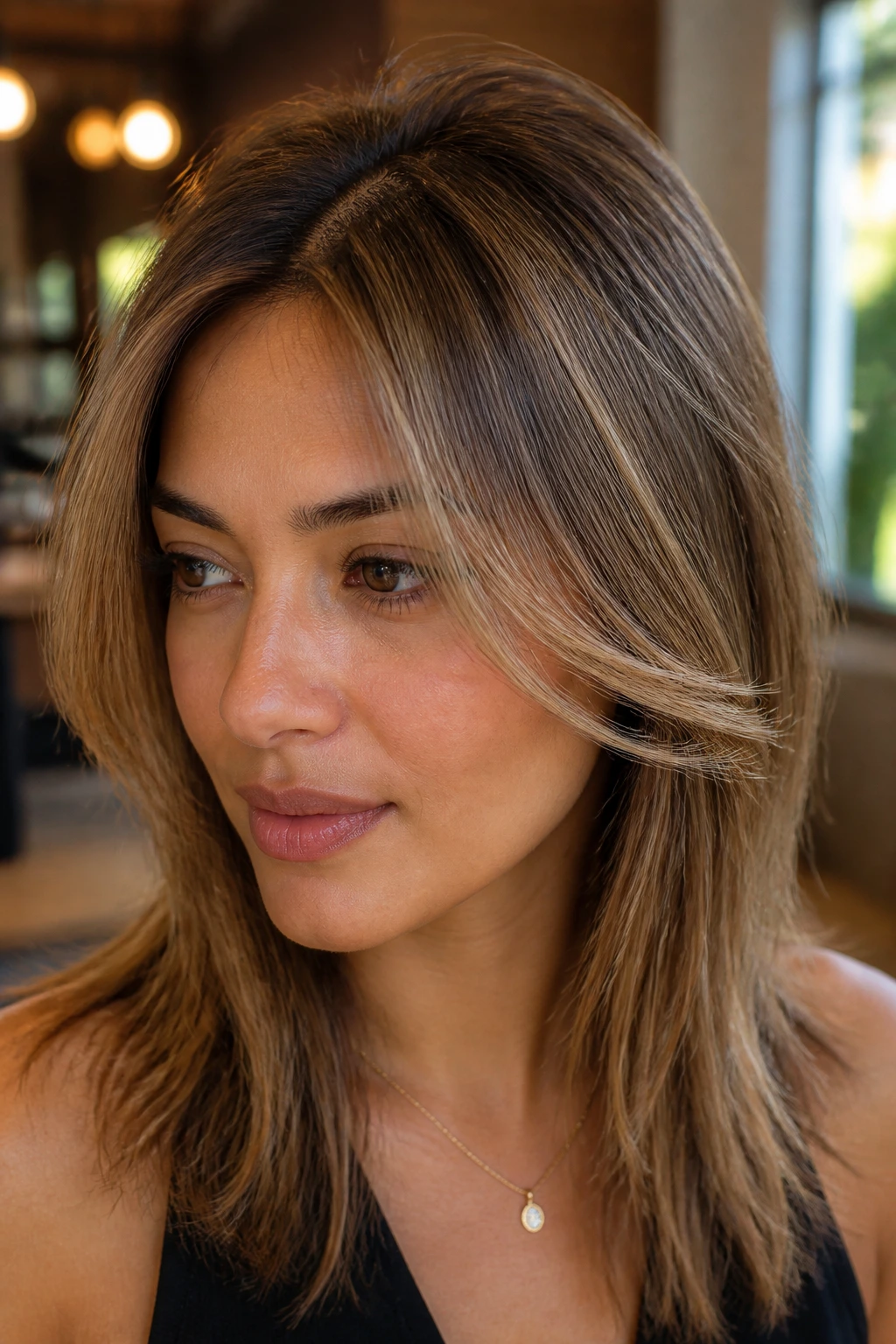
Crown highlights can do something very specific on medium skin with fine hair: they make the hair look lighter without making it look thinner. That’s the whole trick. The best versions keep depth where the hair needs it, brightness where the eye wants it, and enough softness that the color still feels like hair instead of an effect.
If you want the safest place to start, choose a beige, caramel, or honey version with a soft root shadow. If you want something cooler, mushroom, taupe, or smoky brunette will usually behave better than icy blonde. Either way, the winning move is the same: narrow placement, thoughtful tone, and a little restraint at the crown. That combination does more than a loud highlight job ever will.