



The fastest way to make pale skin look sharper is not to go blonder. It’s to go softer — finer placement, cleaner tone, and enough shadow left in the hair that the color still has shape. On fair complexions, chunky streaks can look loud fast, especially in daylight, where every line shows. The right highlights don’t shout. They look like light landed there by accident.
That’s why natural-looking highlights for pale skin live in a very narrow lane. Beige, champagne, mushroom, pearl, strawberry, and the faintest honey tones can all work, but only when the lift is gentle and the placement respects the face. A few millimeters can change the whole effect. A soft weave around the part can look expensive and airy; the same shade in wider slices can turn stripy in a hurry.
I always think hair color should still make sense when you throw it into a clip, tuck it behind one ear, or walk outside under a hard noon sky. If the blonde only behaves under salon lights, it’s too much. The best versions here brighten the eyes, soften the hairline, and keep enough depth in the mids and ends that the whole thing looks lived-in rather than painted on.
Why These Highlights Look Soft Instead of Stripey
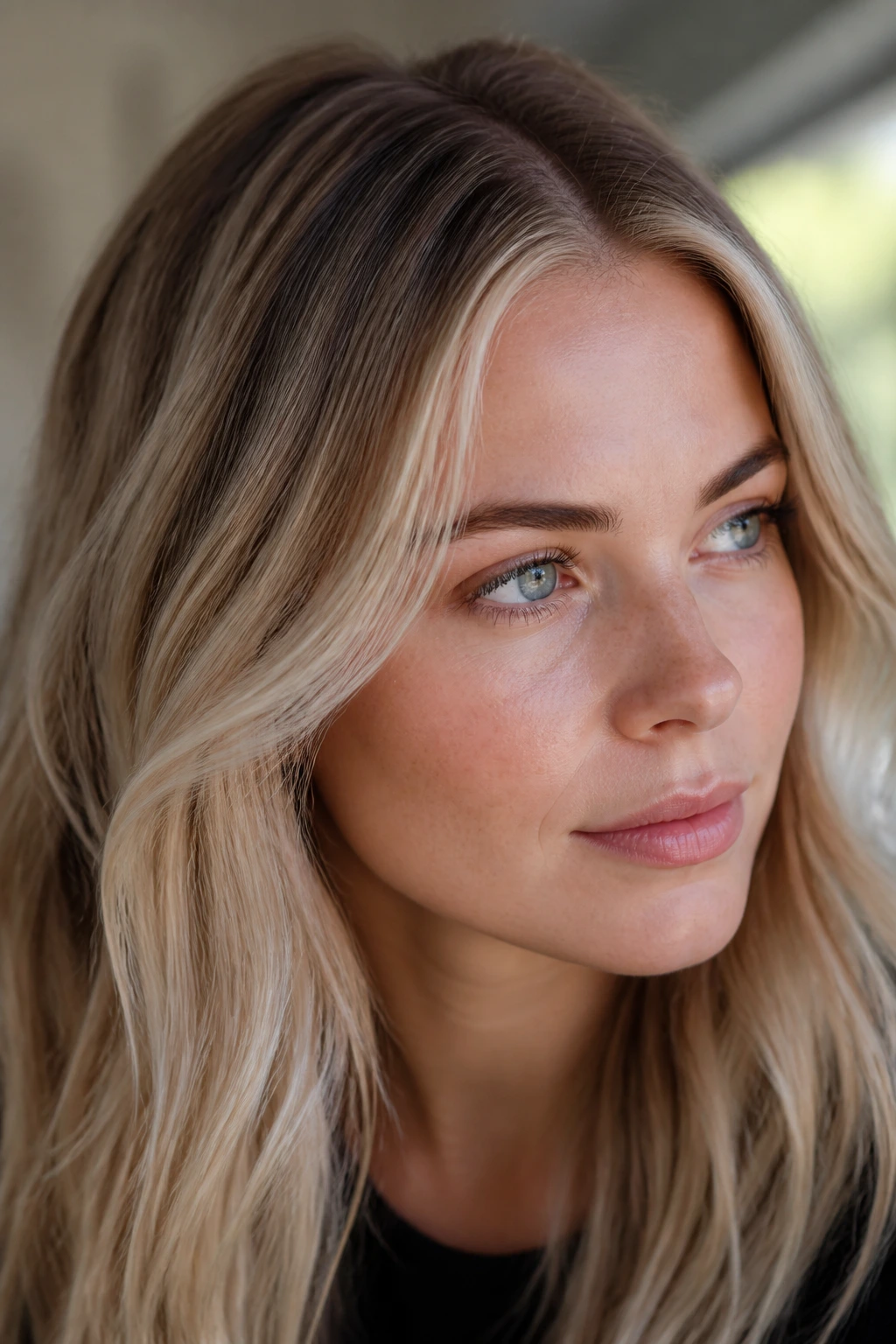
- Fine placement wins: Babylights, micro-foils, and whisper-thin balayage pieces break up light in tiny flashes instead of obvious bands.
- Tone matters more than brightness: Beige, champagne, mushroom, pearl, and soft strawberry shades usually sit more naturally on pale skin than flat yellow or icy white.
- Face-framing does the heavy lifting: A careful money piece near the temples often changes the whole face without needing a dramatic all-over lift.
- A root shadow keeps things believable: Leaving a little depth at the scalp stops fair hair from looking blown out and gives the grow-out a gentler edge.
- Gloss is part of the look: The toner or gloss is what keeps the highlights creamy, smoky, or pearly instead of brassy, chalky, or dull.
How to Brief a Colorist for Pale Skin
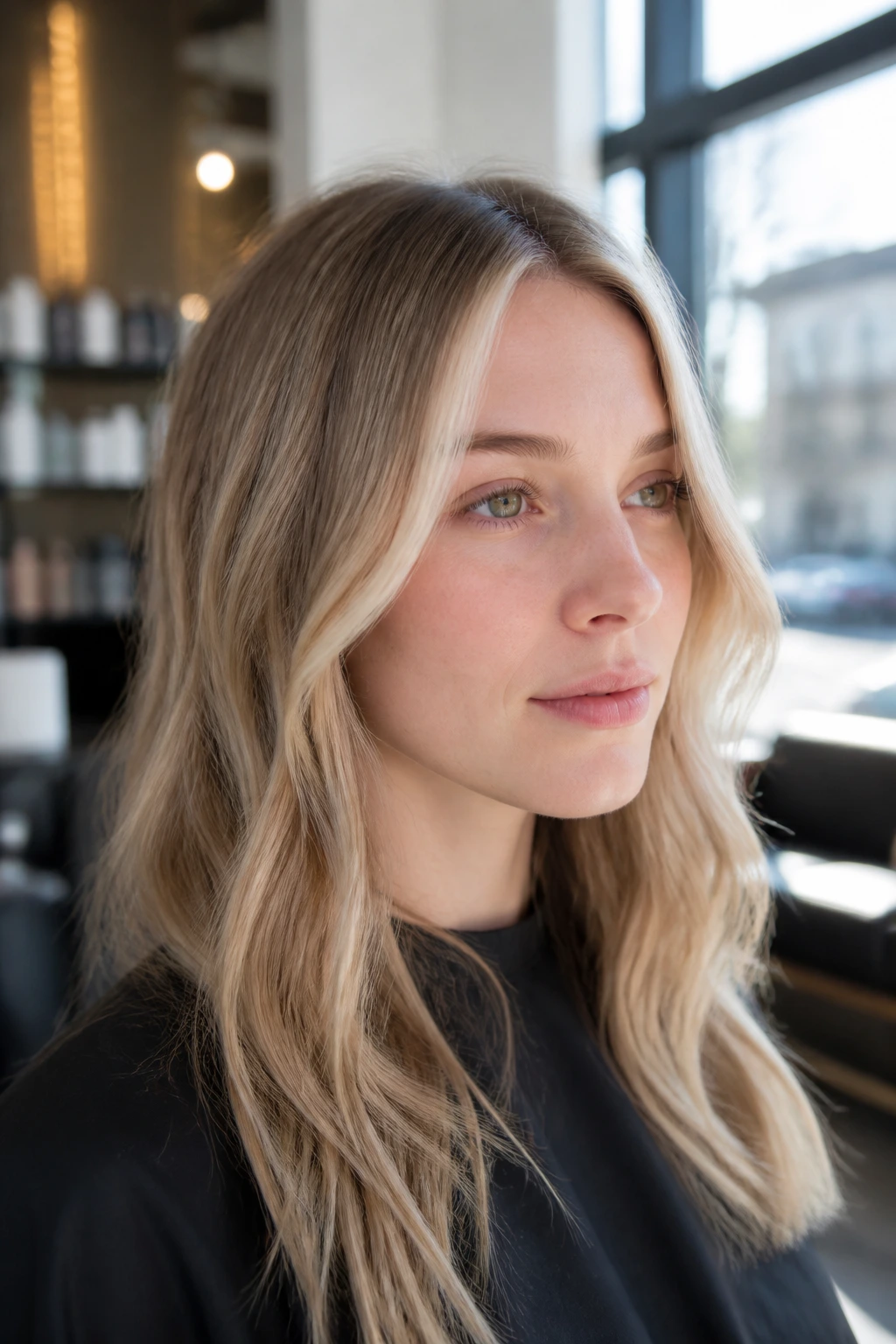
Bring photos, yes, but bring the right ones. A picture under ring lights can lie to you, and a filter can lie even harder. What you want is a photo taken in daylight that shows the placement you like, not just the color. Point to the part line, the face frame, and the ends. Those three spots decide whether the result looks soft or overcooked.
Ask for fine babylights, a soft root shadow, and a beige or champagne gloss if you want the safest route. If your skin leans rosy or cool, say you want the blonde to stay on the beige side rather than yellow. If your skin has a warm or peach cast, honey-beige, buttercream, or soft strawberry usually reads better than stark ash. That small distinction matters more than people think.
One more thing: pale skin often looks better with some depth left in the hair, especially near the crown and underneath layers. If every strand is pushed to the same brightness, the face can lose shape. A good colorist knows when to stop lifting and let shadow do its job.
1. Champagne Babylights
Champagne babylights are the cleanest place to start if you want brightness without obvious streaks. The strands are so fine they catch light in tiny flashes, which makes pale skin look fresher without turning the whole head pale and flat.
Why It Flatters Fair Skin
Champagne sits between beige and soft gold, so it brightens without leaning too yellow or too icy. On fair skin, that middle ground is gold. Too warm and the blonde can look brassy; too cool and the face can look drained.
- Ask for 1/16-inch weaves around the part and temples.
- Keep the lift to about 2 levels lighter than your base.
- Finish with a beige gloss, not a bright silver toner.
My favorite move: leave the underlayers a touch deeper so the top looks airy instead of overprocessed.
2. Mushroom Blonde Ribbons
Mushroom blonde is one of those shades that sounds odd until you see it on pale skin. Then it makes sense. The beige-gray mix keeps the blonde quiet, and quiet is often what fair complexions need.
This works especially well if your natural hair is dark blonde or light brown and you want dimension without a gold halo. The color reads cool-neutral, not flat, and the slight shadow near the root gives the hair some shape. I like it on straight cuts as much as on waves, because the tone stays interesting even when the texture is simple.
If your skin gets washed out by pure ash blonde, mushroom blonde usually feels softer. It has enough smoke to keep brass away, but not so much gray that the hair looks dusty.
3. Beige Balayage
Why does beige balayage look so clean on pale skin? Because the light is placed where the eye already wants it to go: around the face, through the mids, and on the ends. The color is hand-painted, so you don’t get the hard little lines that foils can leave behind when they’re too wide.
Beige is the shade family I reach for when someone wants “blonde, but not blonde-blonde.” It brightens the face without forcing the skin to compete with the hair. The trick is keeping the lift soft — usually one to three levels, not a dramatic jump.
Best Use Case
- Works well on bob lengths, collarbone cuts, and long layers.
- Stays softer if the colorist keeps the root area smudged for half an inch or so.
- Looks nicest when the ends are toned to a creamy beige, not banana gold.
4. Pearl Blonde Money Piece
A pearl money piece is for the person who wants a brighter front without turning the whole head icy. Just a few lighter strands at the temples and around the face can make pale skin look clear and awake.
This is one of my favorite choices for pale skin with cool undertones, because pearl reflects light without screaming “bleach.” It also works when the rest of the hair is kept a little deeper. That contrast matters. If the whole head goes too light, the face can lose definition, but if the front pieces are a shade brighter, the effect is crisp in a nice way.
Keep the money piece fine, not broad. You want a veil, not a stripe. The best version almost disappears when the hair is tucked back and then shows up again when it moves.
5. Ash Blonde Micro-Highlights
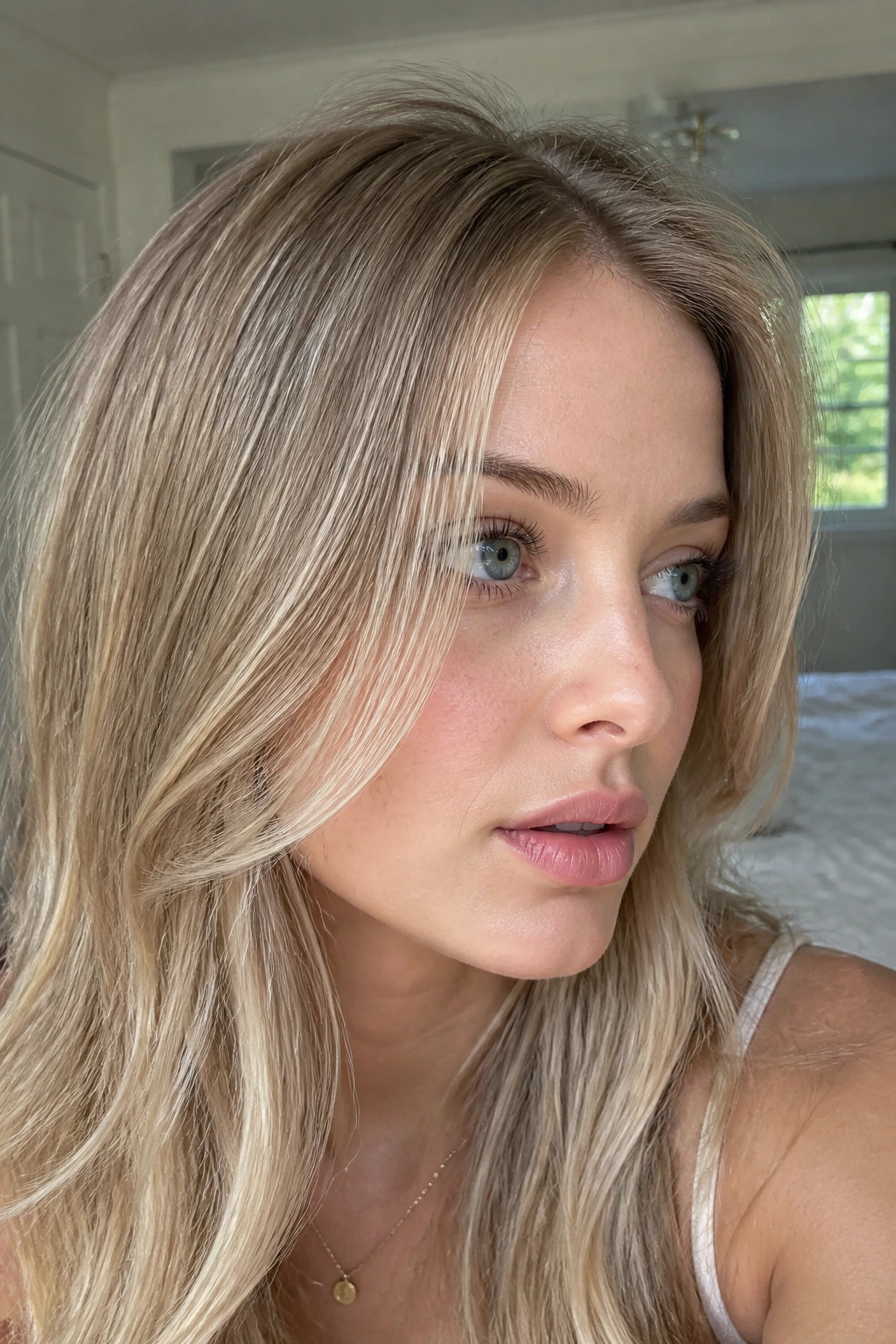
Ash blonde micro-highlights are the answer when warm tones keep turning orange on you. The pieces are tiny, the tone is cool, and the overall look stays understated instead of loud.
This is one of the better options for very fair skin that burns pink or red in daylight. The cool cast can calm the whole look, especially if your natural hair already has some ash in it. I wouldn’t use this if your skin is very olive or peachy, though. Too much ash can make the face look a bit tired.
The secret is restraint. Ask for thin, scattered placement through the crown and sides, then a soft toner that keeps the blonde from going flat. Skip heavy silver shampoo every wash; that’s how ash turns dull.
6. Vanilla Cream Foils
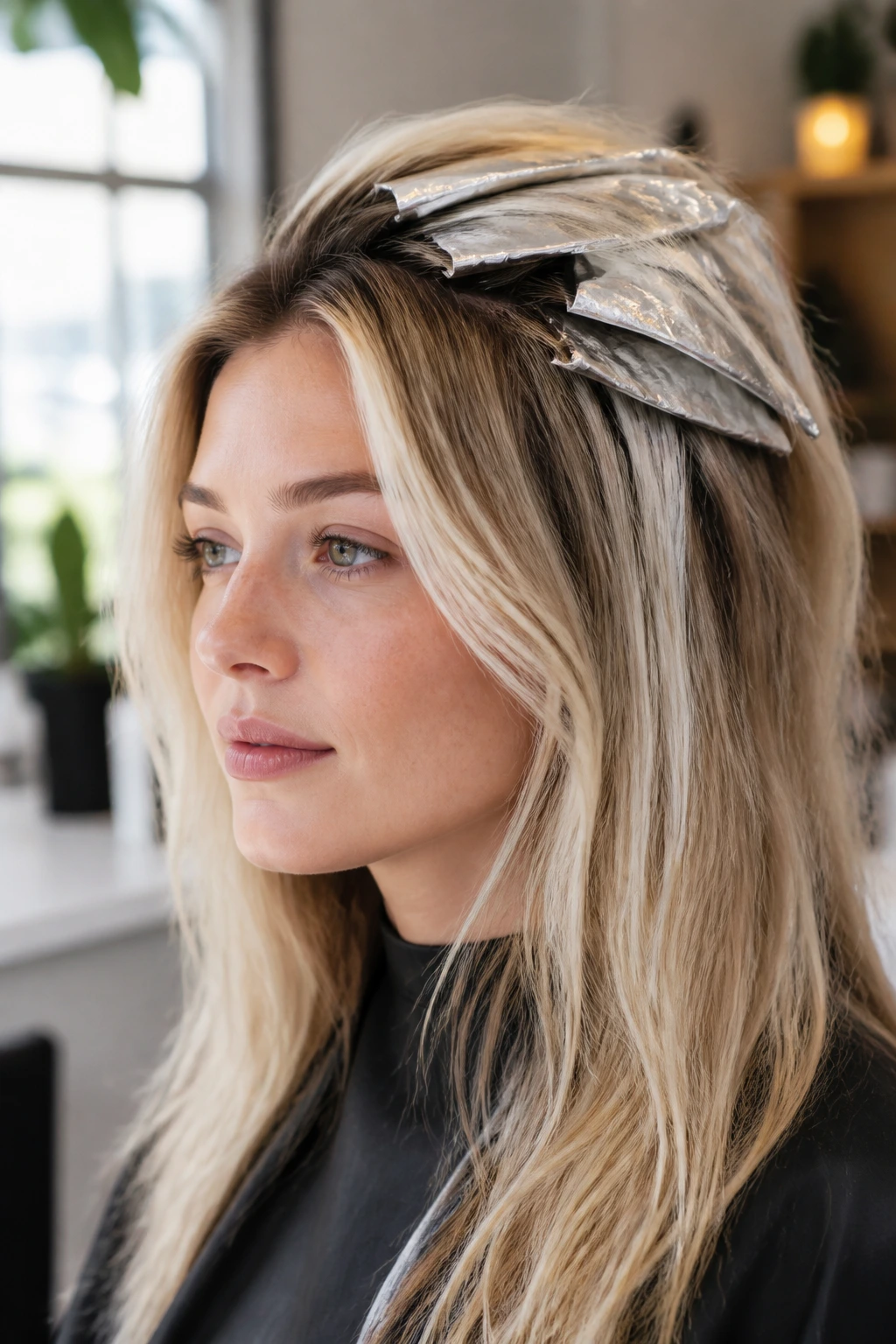
Vanilla cream foils give you a cleaner, more even lift than balayage, but they can still look soft if the foils are fine and tightly placed. Think of this as the polished cousin of babylights.
I like this on pale skin when the hair needs a little more visible brightness around the face and top layers. Vanilla cream is warmer than pearl and less beige than champagne, so it works well if your skin is neutral or slightly warm. The result should look creamy, not yellow. That’s the whole game.
Unlike balayage, which fades in a whispery way, fine foils give you a more deliberate pattern. If your hair is very fine, that can be a good thing because the lift doesn’t disappear into the texture.
7. Sandy Beige Ombre
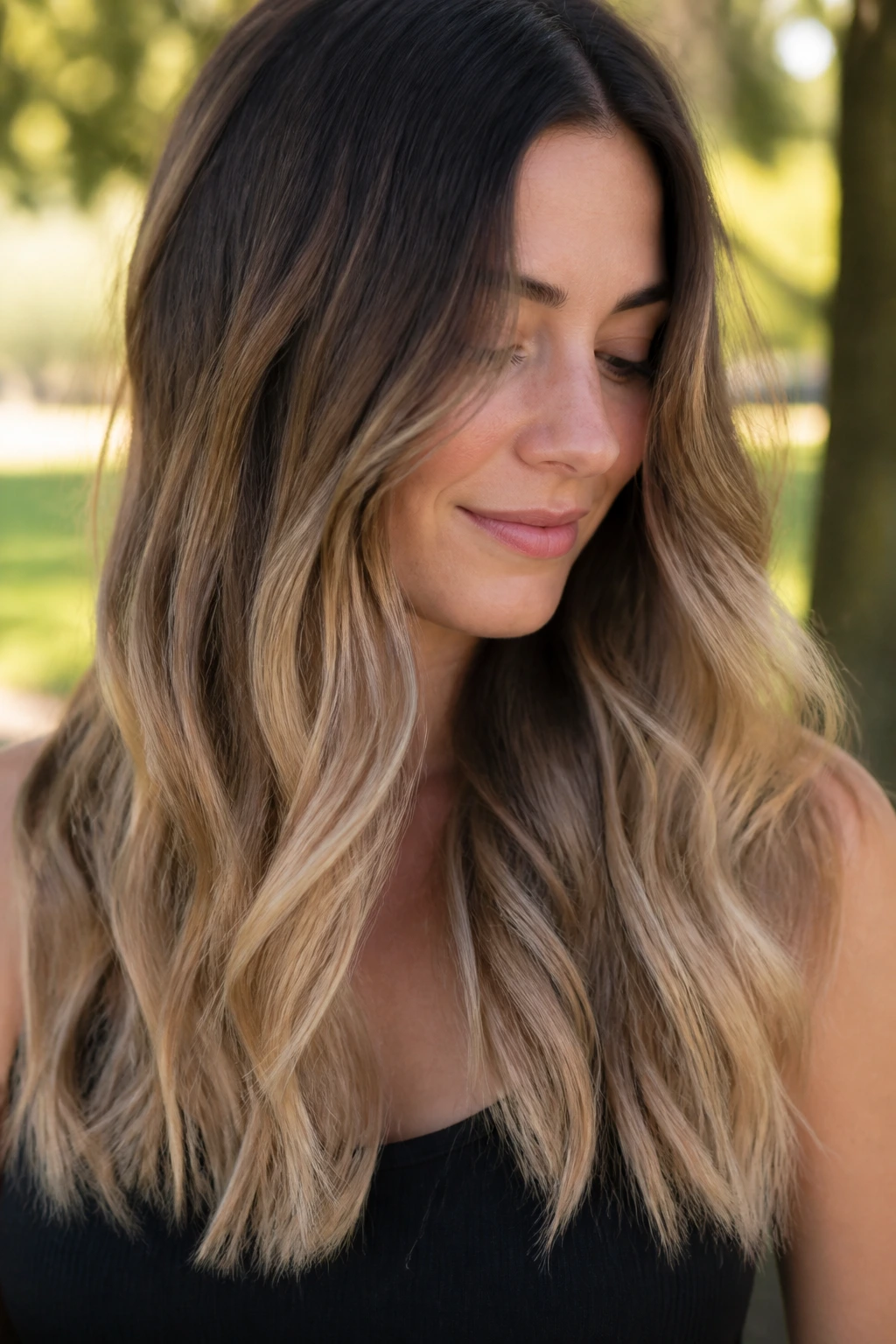
Sandy beige ombre is for anyone who wants lighter ends but doesn’t want to babysit the roots every few weeks. The darker top melts into a sandy, sun-faded finish that feels relaxed rather than trendy-for-trendy’s-sake.
On pale skin, this works best when the transition is slow. A fast ombre line can look harsh, especially on straight hair. Keep the fade stretched out through the mids so the ends carry the brightness and the top still has enough depth to frame the face.
The best sandy ombre doesn’t look like the hair was dipped in bleach. It looks like the color changed gradually over time, which is much easier on fair complexions.
8. Honeyed Face Frame
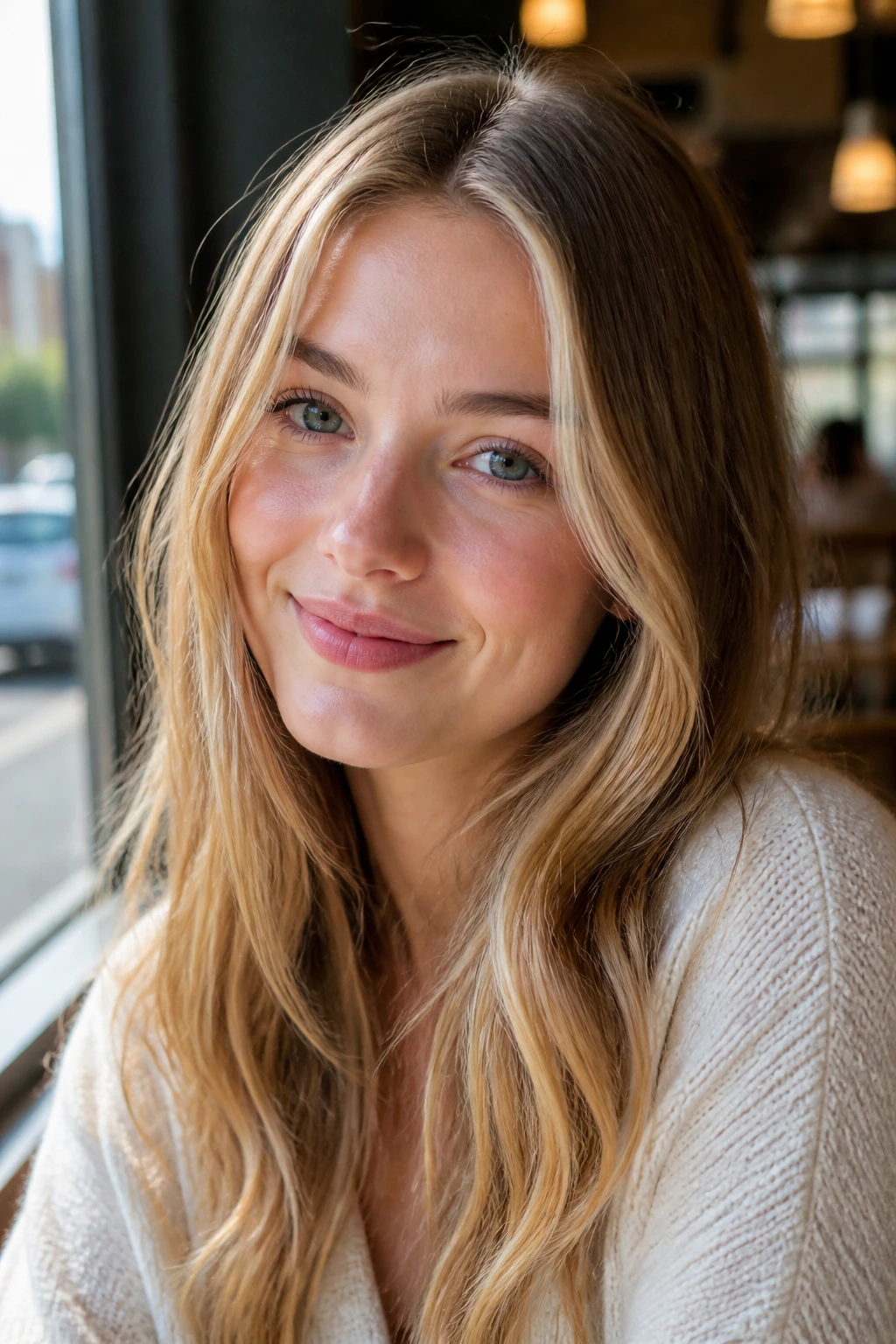
Honeyed face framing is one of the easiest ways to warm up pale skin without committing to a full warm blonde. The pieces around the hairline are just a little lighter and a little golden, while the rest of the hair stays softer and more neutral.
This is especially good if your skin is fair but not cool — think peach, beige, or lightly freckled. Too much honey everywhere can get loud fast, but around the face it can make the eyes look brighter and the complexion look less washed out. The key is keeping the face frame thin and blended, not broad and obvious.
It also grows out nicely. That matters. A face frame should look good six weeks later, not only on day one.
9. Icy Cream Weave
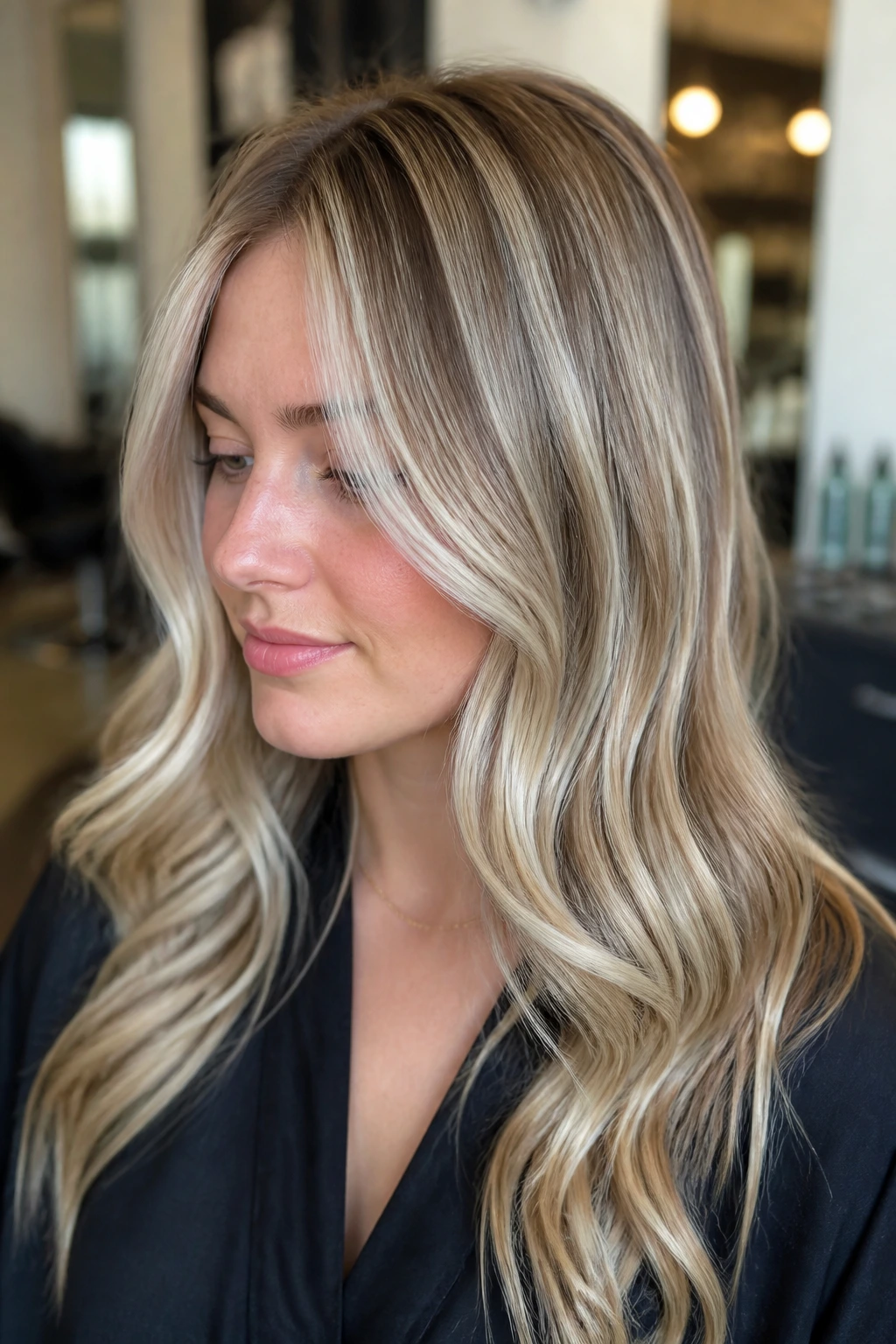
Icy cream weave works best when pale skin needs a sharper, cleaner edge. The highlights are cool, but not white, and the cream note keeps them from looking harsh against the face.
This is a smart move for very fair skin with cool undertones and naturally light hair. If your brows, lashes, and skin all lean soft and pale, a cool cream weave can give the hair enough contrast to keep the face from disappearing. The look is strongest when the pieces are woven delicately through the upper layers, not packed in thick blocks.
Use a gloss that keeps the tone pearly. If the hair turns blue-silver, you went too far. That’s one of those things that sounds dramatic in a photo but reads heavy in real life.
10. Strawberry Beige Glow
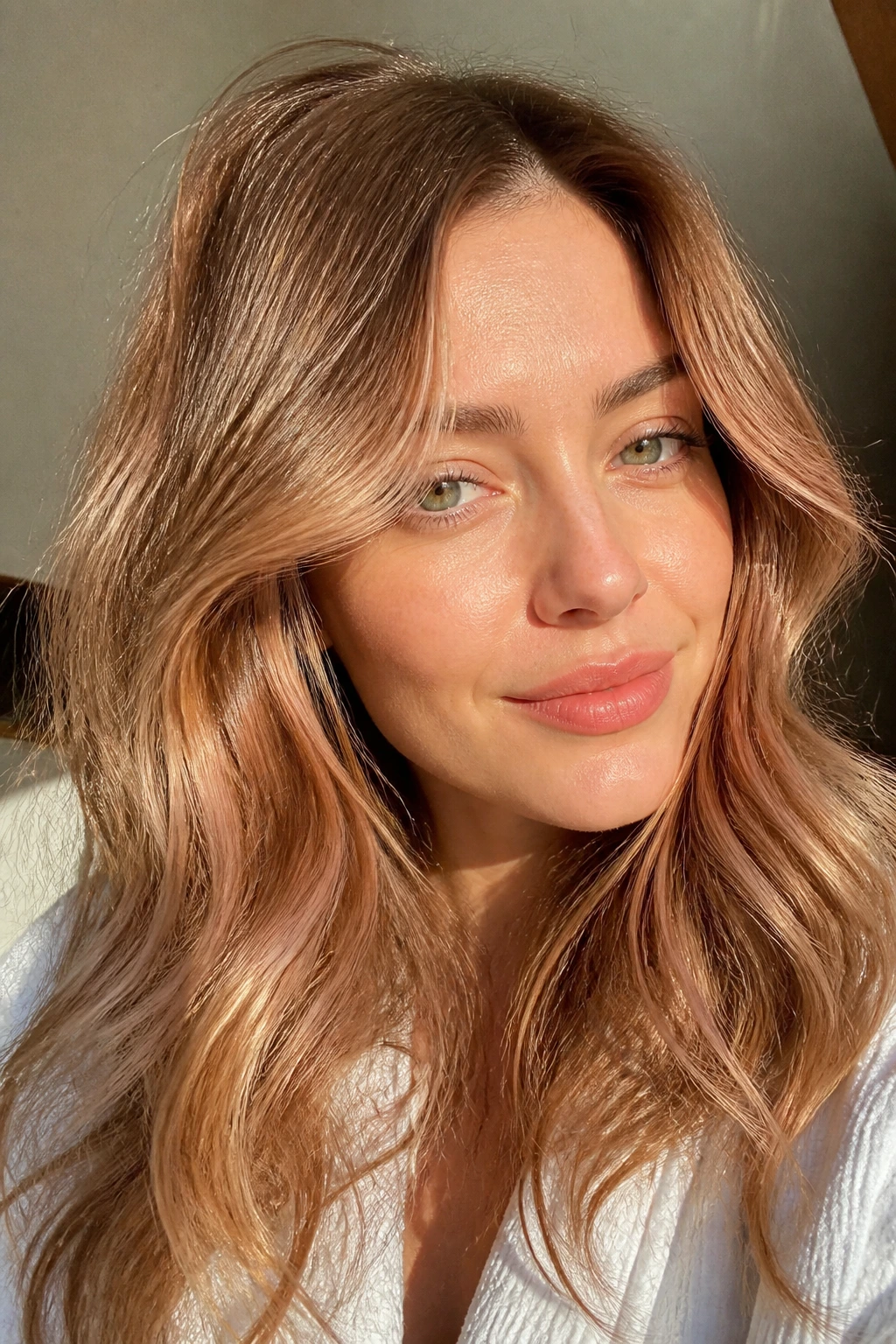
Strawberry beige is one of the most overlooked colors for pale skin, and that’s a shame. A whisper of peach-red warmth can make fair skin look fresher, especially if the complexion has a rosy cast or visible freckles.
The shade should stay beige at the base with only a soft strawberry reflect. If it turns copper, it stops looking subtle. A good version adds life to the hair without turning it into a redhead statement.
I like this best on loose waves, where the warmth picks up in the bends. Straight, it reads more muted; curled, it gets that soft glow people always try to describe and never quite nail down.
11. Buttercream Ribbon Highlights
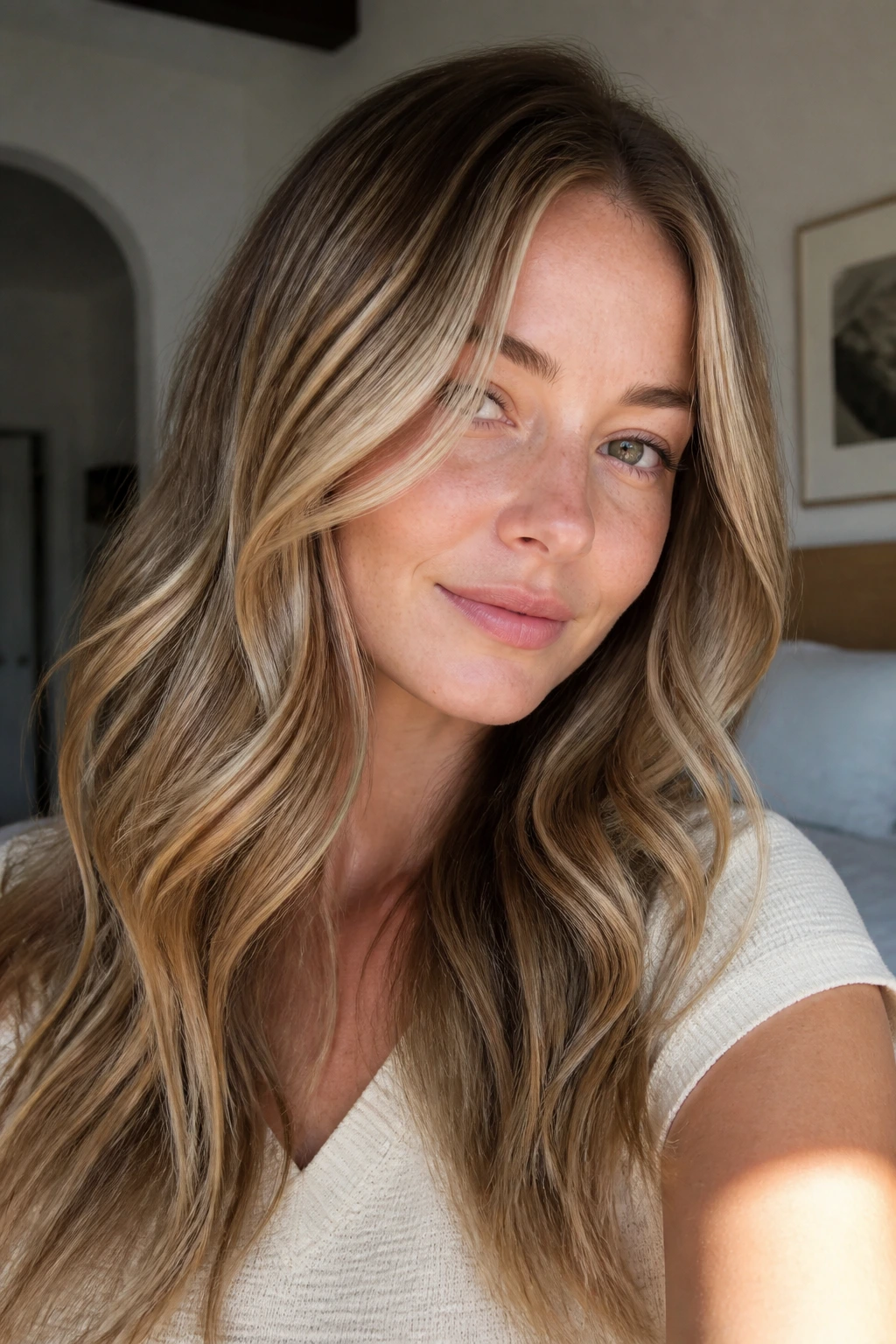
Buttercream ribbon highlights are warm enough to keep pale skin from looking flat, but soft enough that they don’t go full gold. The ribbons are wider than babylights, yet still blended through the hair so the effect feels airy.
This shade works well on pale skin with golden or neutral undertones. It’s also a good choice if your natural base is light brown and you don’t want the color to look too cool. Buttercream has a clean, creamy finish that plays well with layered cuts, especially when the ends move.
I prefer this over yellow-blonde highlights almost every time. Yellow is where things start looking cheap. Buttercream reads richer.
12. Taupe Lowlights and Beige Highlights
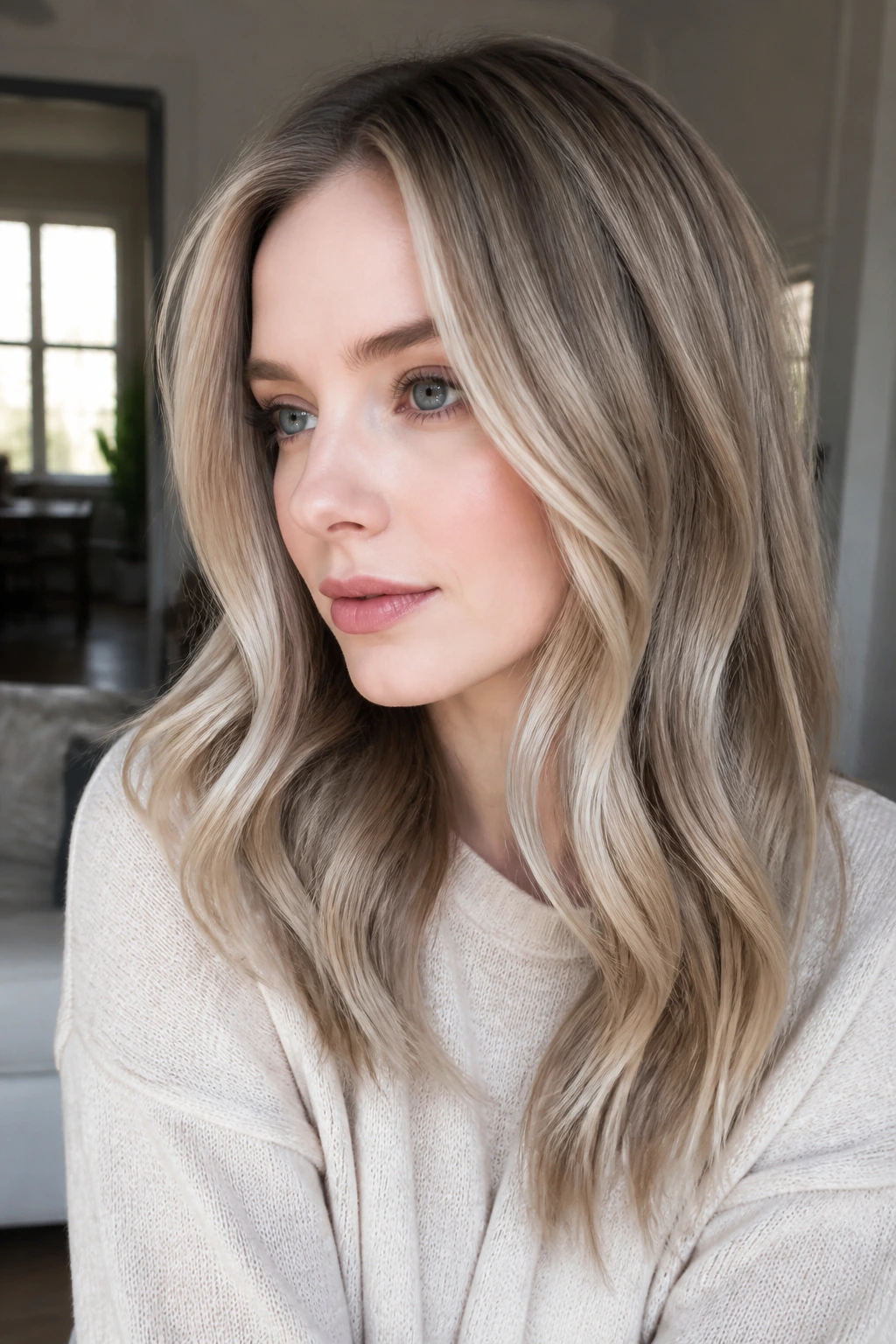
Sometimes the problem isn’t that the highlights are too light. It’s that they’re too one-note. Taupe lowlights solve that in a hurry by putting some depth back into the hair and giving the beige pieces something to sit against.
This is especially useful for very pale skin, where all-over brightness can make the hair look flat and the face look larger by comparison. A mix of taupe and beige creates contrast without making the color feel striped. The lowlights should be a shade or two deeper than the base, not dark brown blocks.
If you want the hair to look expensive rather than processed, this is one of the better tricks in the book.
13. Wheat Blonde Tips
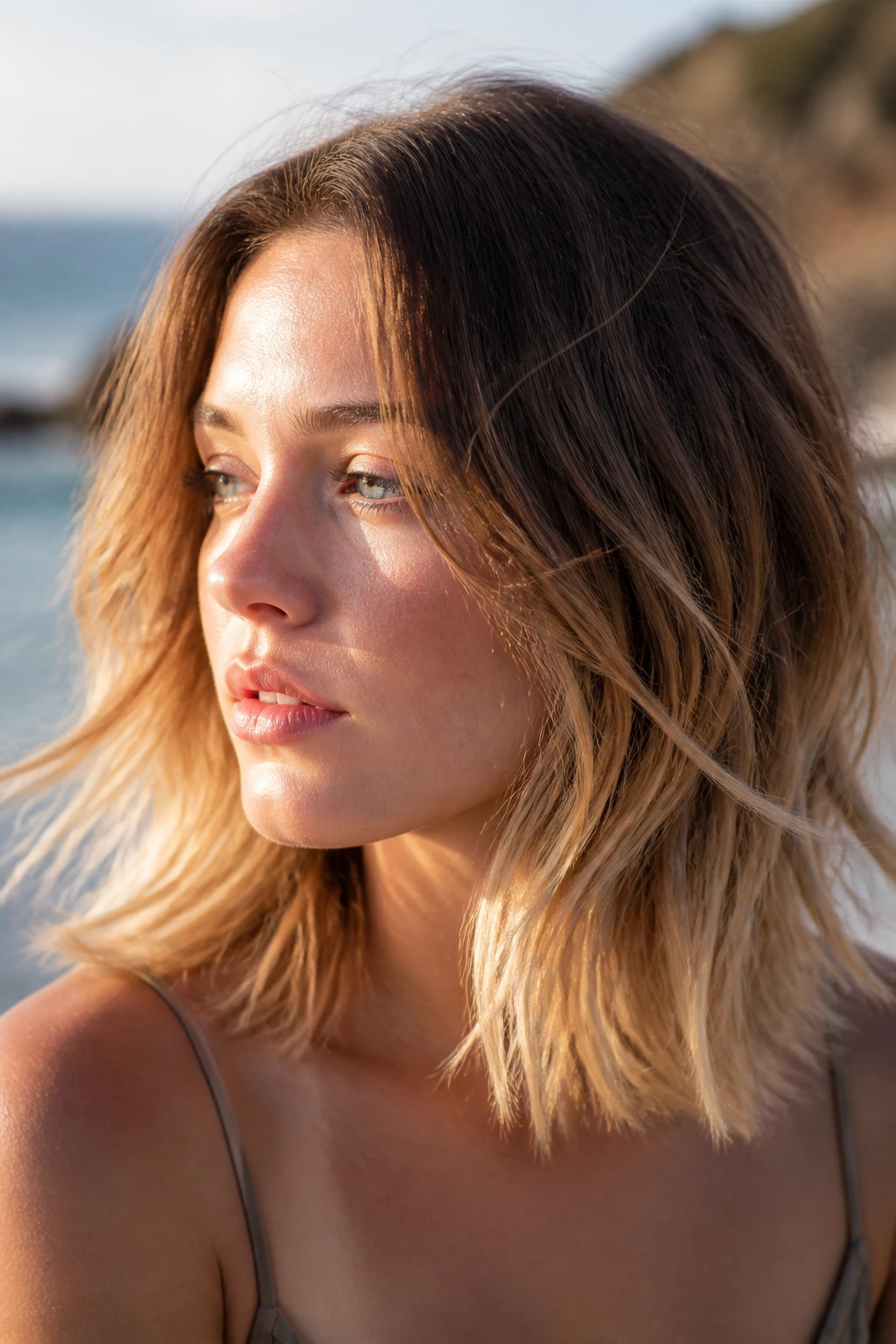
Wheat blonde tips give you a sun-faded effect that stays believable on pale skin. The color is soft gold-beige, never neon, and it works best when the ends are the brightest part of the hair.
This look makes a lot of sense on shoulder-length cuts and long layers, where the movement at the ends carries the light. The roots stay deeper, the mids soften the transition, and the tips get that pale wheat finish. It’s an easy way to brighten the hair without bleaching the whole head.
When It’s the Right Pick
- Good for neutral and warm pale skin.
- Better on wavy or textured hair than on pin-straight cuts.
- Ask for a soft root melt so the ends don’t look pasted on.
14. Bronze Beige Balayage
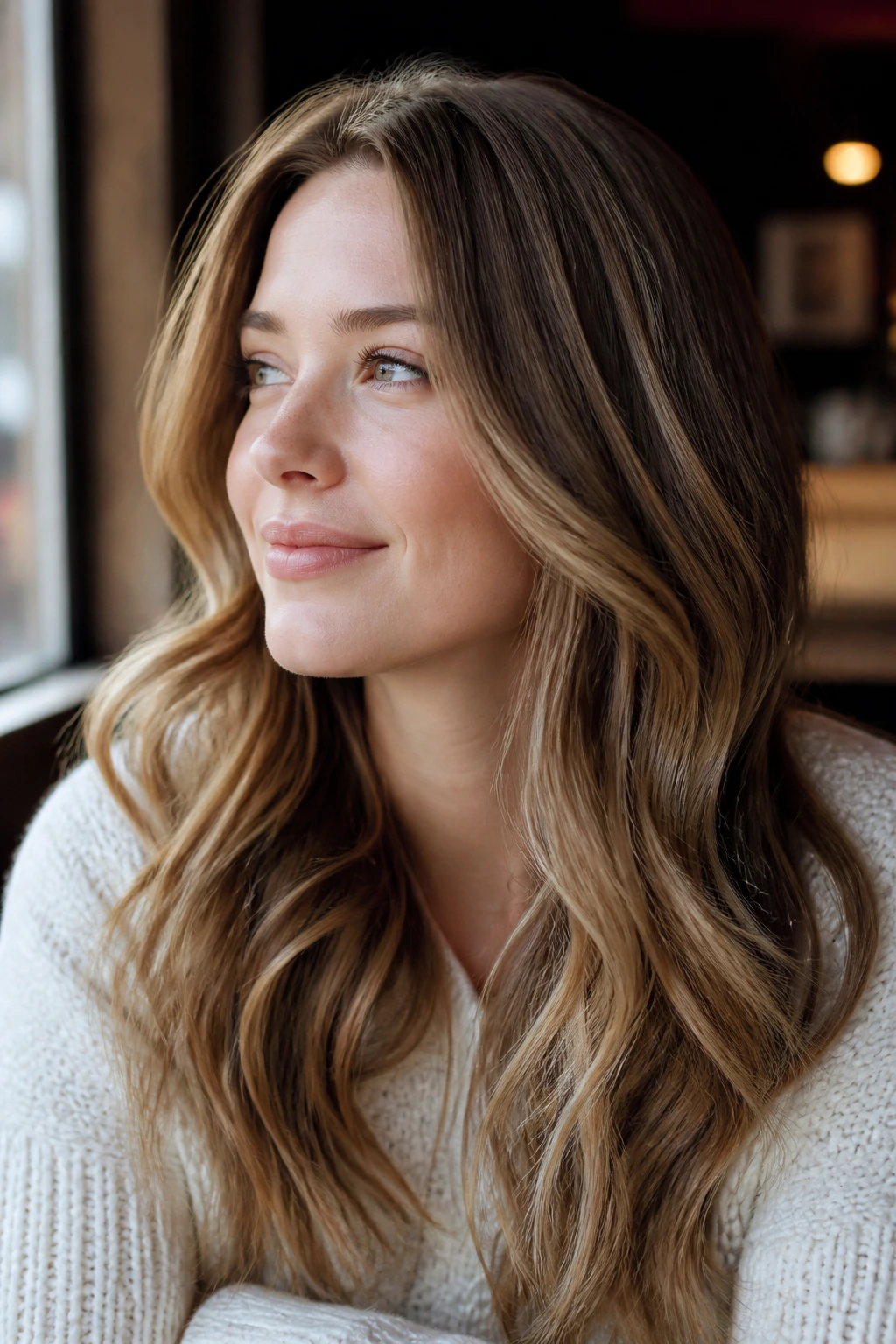
Bronze beige balayage gives pale skin warmth with a little more depth than a standard blonde. It’s not copper, and it’s not caramel; it sits in the middle, with a bronzed beige tone that keeps the hair from going flat.
This is a good fit for fair skin that can wear warmth without looking red. Think neutral or lightly olive undertones. The color is especially useful if you want the hair to feel richer in colder months or if bright blonde tends to wash you out. A thin bronze glaze over lighter ribbons can make the whole thing feel more grounded.
I wouldn’t push this shade too dark. The beauty is in the balance, not the intensity.
15. Linen Blonde Babylights
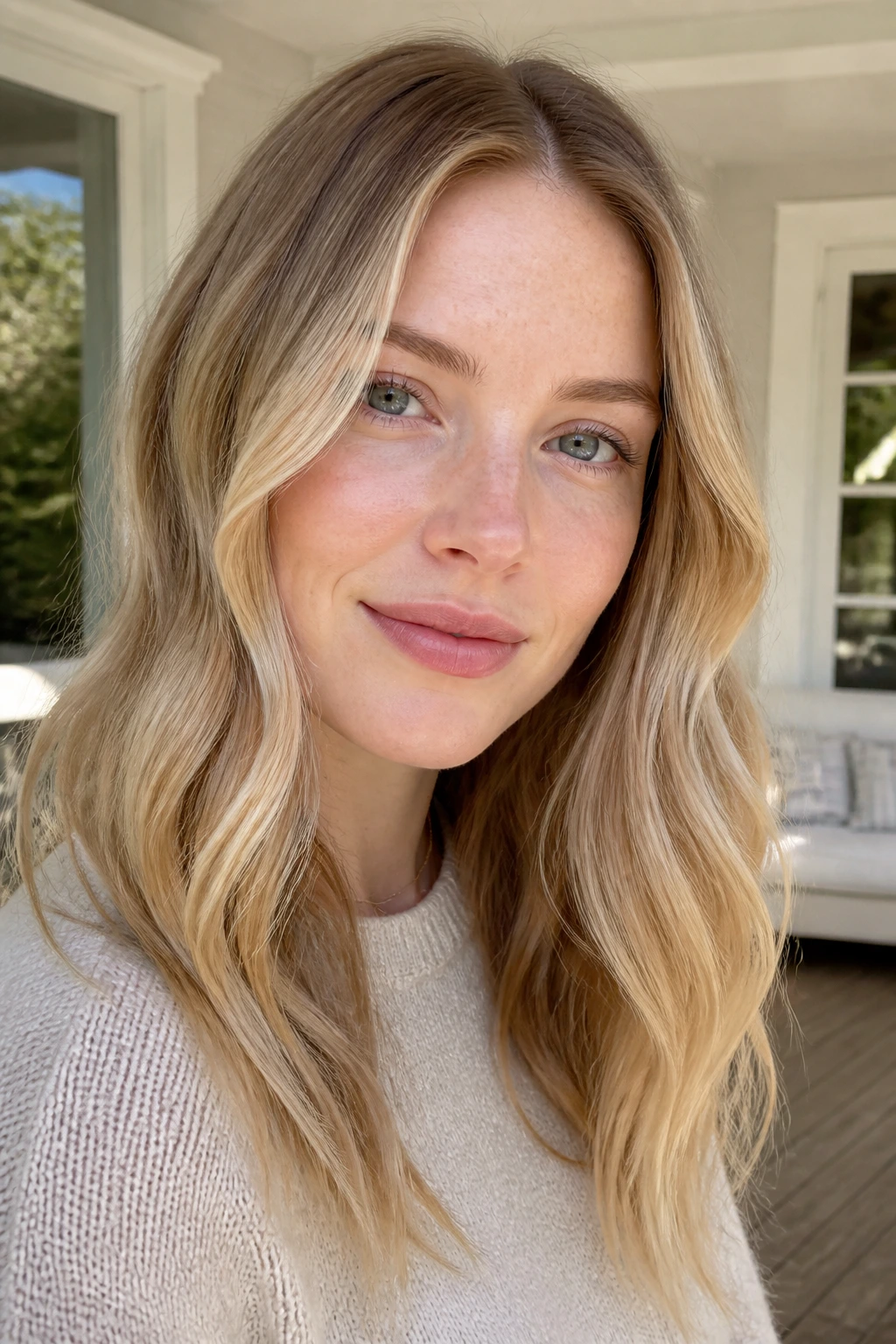
Linen blonde babylights are almost invisible in the best way. They don’t announce themselves; they just make the hair look cleaner, lighter, and a little airier around the face.
This is one of the most natural choices for very fair skin because the color sits close to the original base. It’s subtle enough for someone who hates obvious color change, but still useful if the hair feels dull or one-dimensional. Linen blonde is especially nice on blunt cuts, where too much contrast can make the line look heavy.
If your goal is “people notice I look better, but they can’t tell why,” this is a strong candidate.
16. Peach-Cream Face Frame
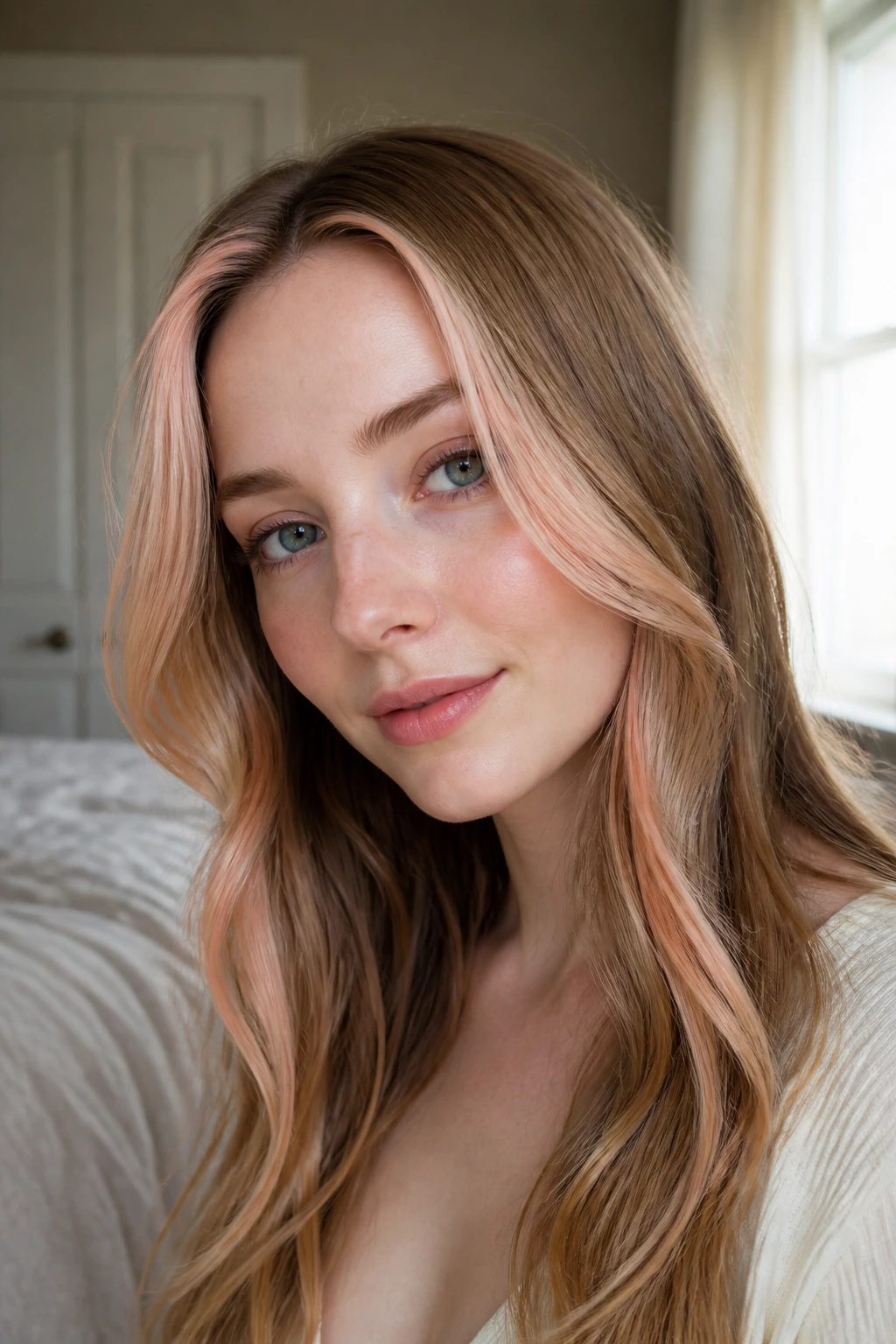
A peach-cream face frame is a small move with a big payoff. Just a few lighter strands near the temples and cheekbones can warm pale skin in a way that feels soft, not flashy.
This works beautifully on skin with pink or peach undertones, especially if the rest of the hair stays neutral. The peach note stops the face from looking drained, while the cream base keeps the color believable. I like it for curtain bangs, too, because the lighter pieces fall right where the eye lands first.
Don’t overdo the front pieces. Too many can start to look like a costume. A few thin ribbons are enough.
17. Rooted Champagne Melt
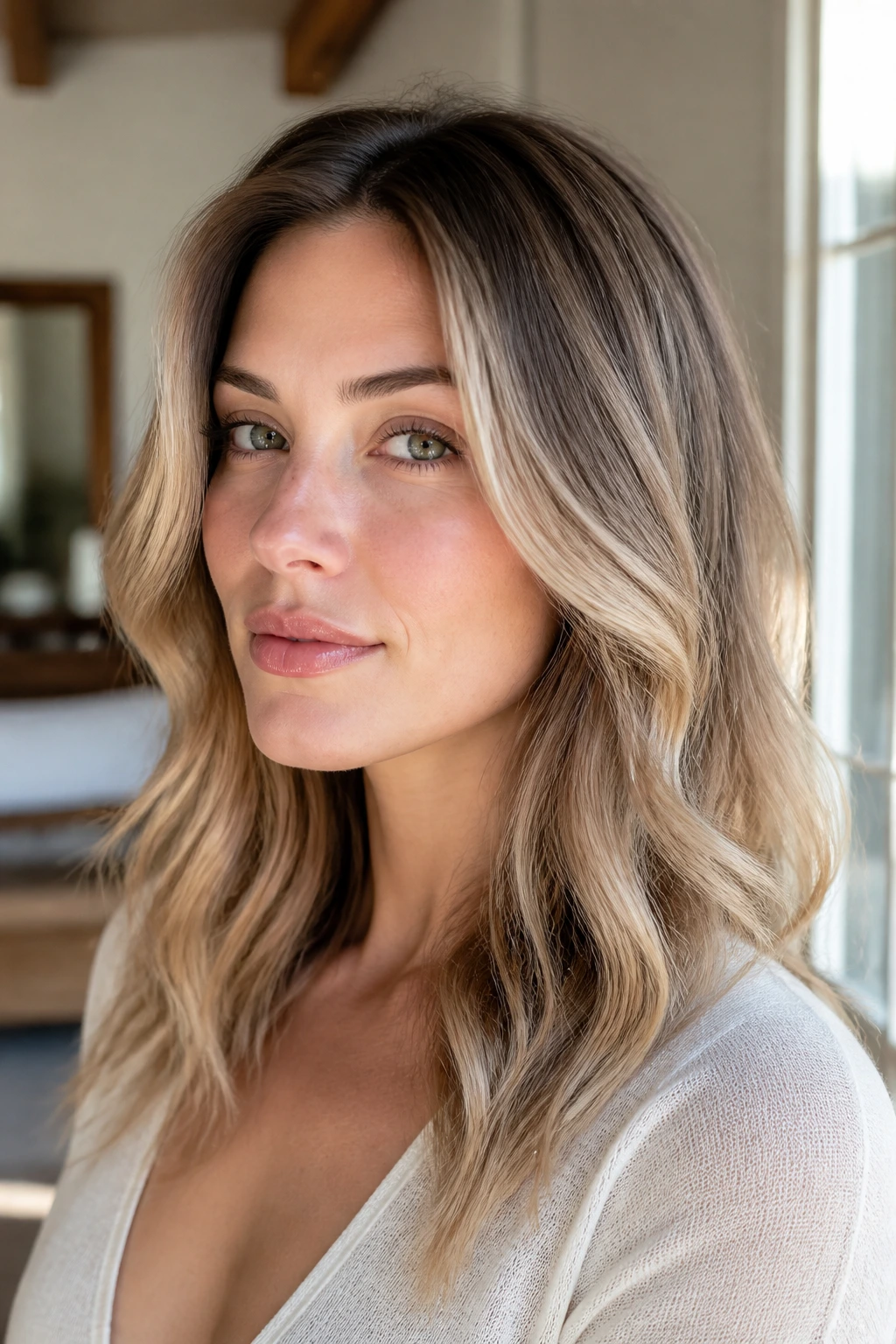
A rooted champagne melt is for anyone who wants the brightness of blonde without the commitment of all-over lightness. The root stays deeper, then the color melts into champagne through the mids and ends.
This is a good choice for pale skin because the shadow at the root gives the face some structure. The champagne end tone keeps it soft and clean. If the blend is done well, you don’t get a hard line — just a smooth shift that looks easier than it really is.
It’s one of the best grow-out-friendly options on this list, and that’s not a small thing. Hair that ages well is hair you’ll wear more often.
18. Coppery Strawberry Ribbons
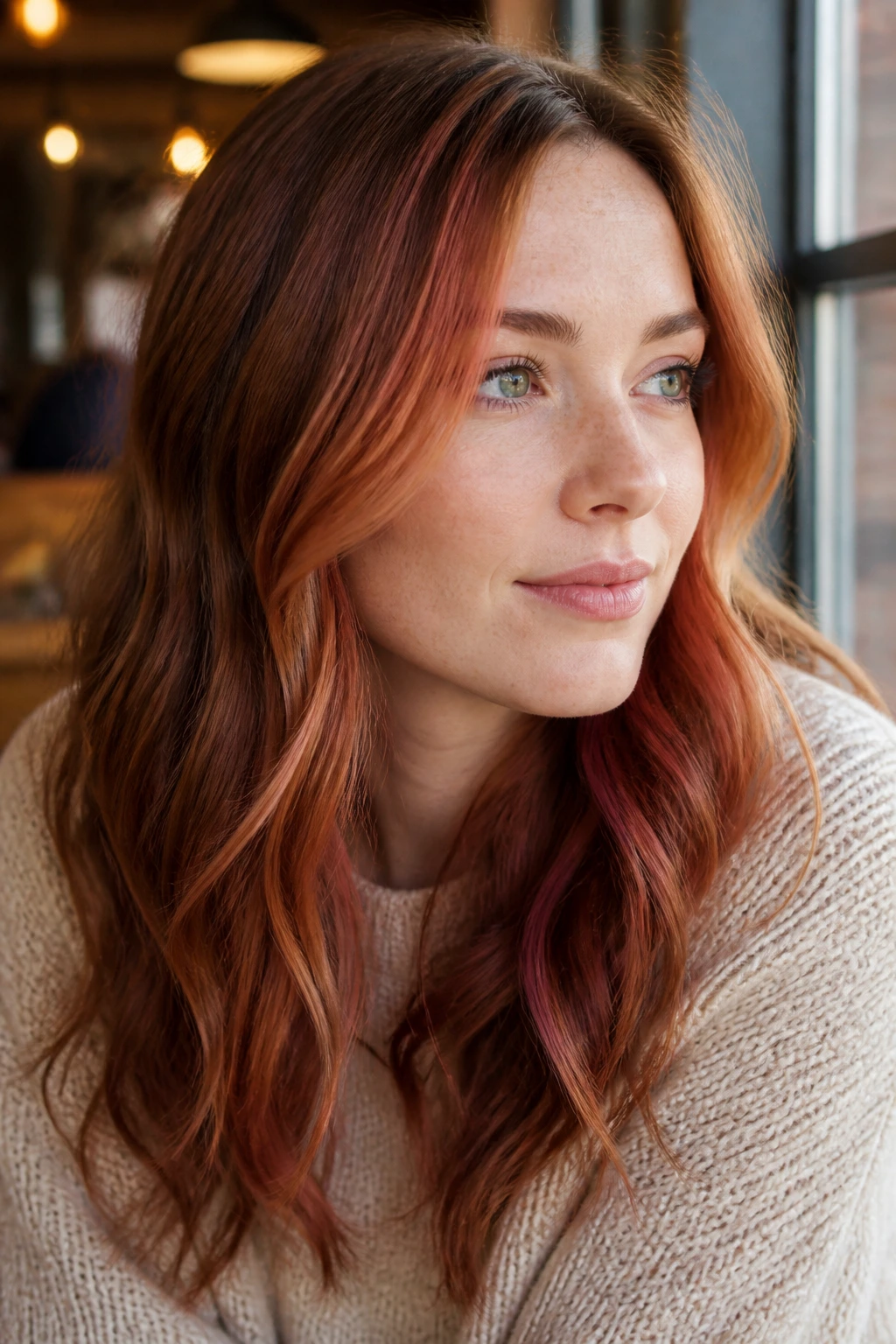
Coppery strawberry ribbons are for pale skin that can take a little warmth and still look clear. The shade sits between strawberry blonde and soft copper, but it should stay ribboned through the hair, not painted everywhere.
This gives a very pretty effect on freckles and rosy cheeks. The color adds warmth without making the skin look red. The trick is keeping the ribbons fine and mixing them with enough beige that the copper doesn’t dominate.
If you’ve ever felt washed out by ash blonde, this is worth trying. The warmer reflect can wake up the face in a way cool tones never quite manage.
19. Silver Pearl Highlights
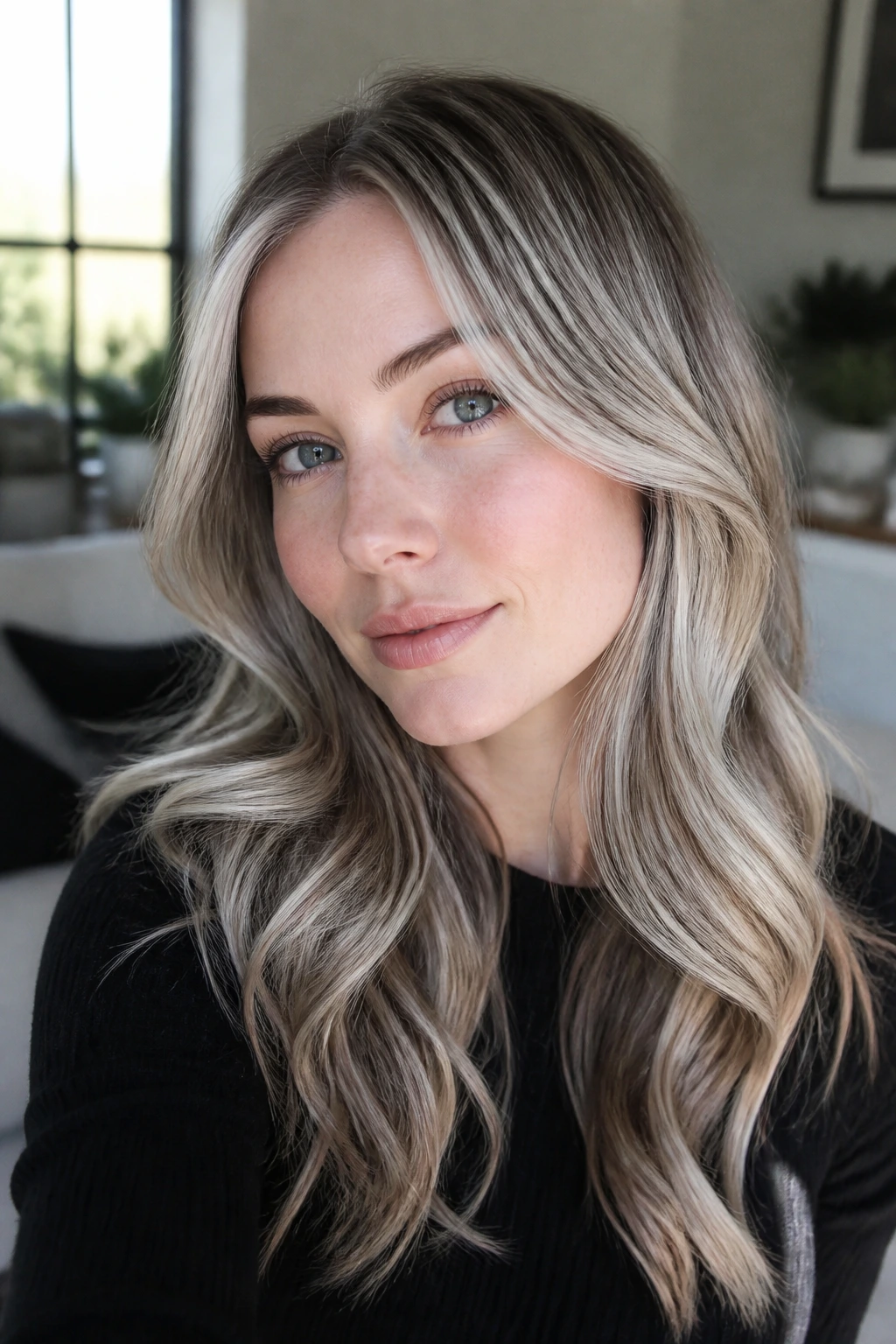
Silver pearl highlights are crisp, cool, and best used with restraint. On very fair skin with blue or pink undertones, they can look clean and modern without becoming stark.
The pearl note keeps them from tipping into steel, which is where a lot of cool blonding goes wrong. If the highlights are too silver, the hair starts feeling hard. Pearl softens that edge. I like this most when the pieces are very fine and placed mostly around the top layers, where they catch light without taking over.
The finish matters here. A glossy, reflective surface keeps silver pearl looking polished. Dry hair makes it look flat.
20. Toffee Swirl Highlights
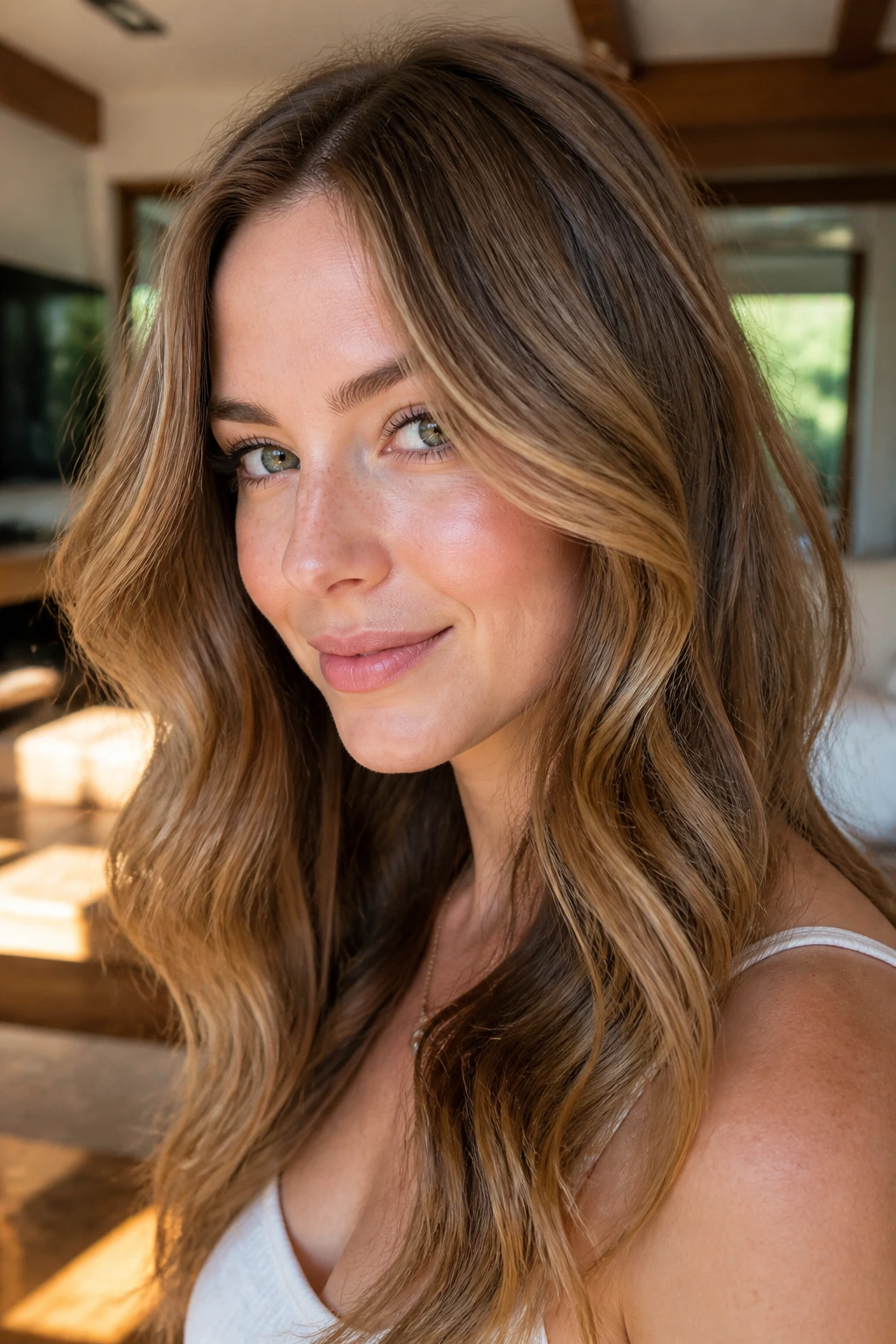
Toffee swirl highlights are warmer than beige, but not as heavy as caramel. The color is soft and rounded, which makes it a smart fit for pale skin that needs warmth but not a big color statement.
This works especially well on light brown hair. The toffee pieces blend into the base so the contrast stays gentle. On very fair skin, that kind of softness matters because sharp contrast can dominate the face. Swirling the tone through the mids gives the hair more movement than a simple root-to-end fade.
If you like warmth but hate yellow blonde, this is a good lane to stay in.
21. Soft Caramel Veil
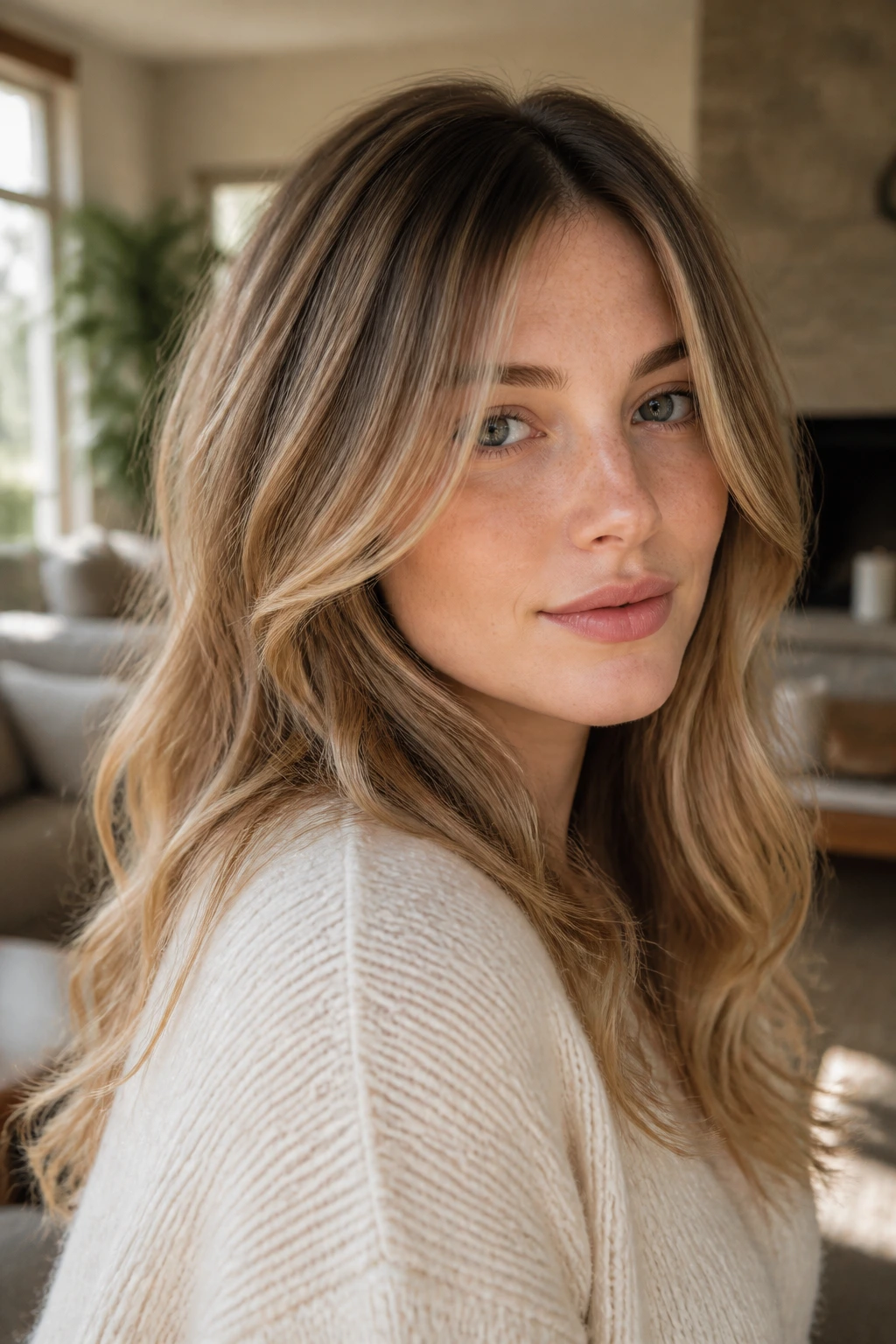
Soft caramel veils can look rich on pale skin, but only if the caramel is kept airy and broken up. One heavy caramel block is too much. A veil of thin pieces, placed through the surface layers, feels much more believable.
This is a nice option for fair skin with neutral or warm undertones, especially if the natural base is a medium blonde or light brunette. The caramel adds depth, and depth can be flattering on pale skin because it keeps the face from floating in a sea of light hair. It also looks better with loose texture than with hard curls.
The finish should be warm and smooth, not orange. If the color is glowing in the wrong way, tone it back.
22. Frosted Vanilla Lowlights
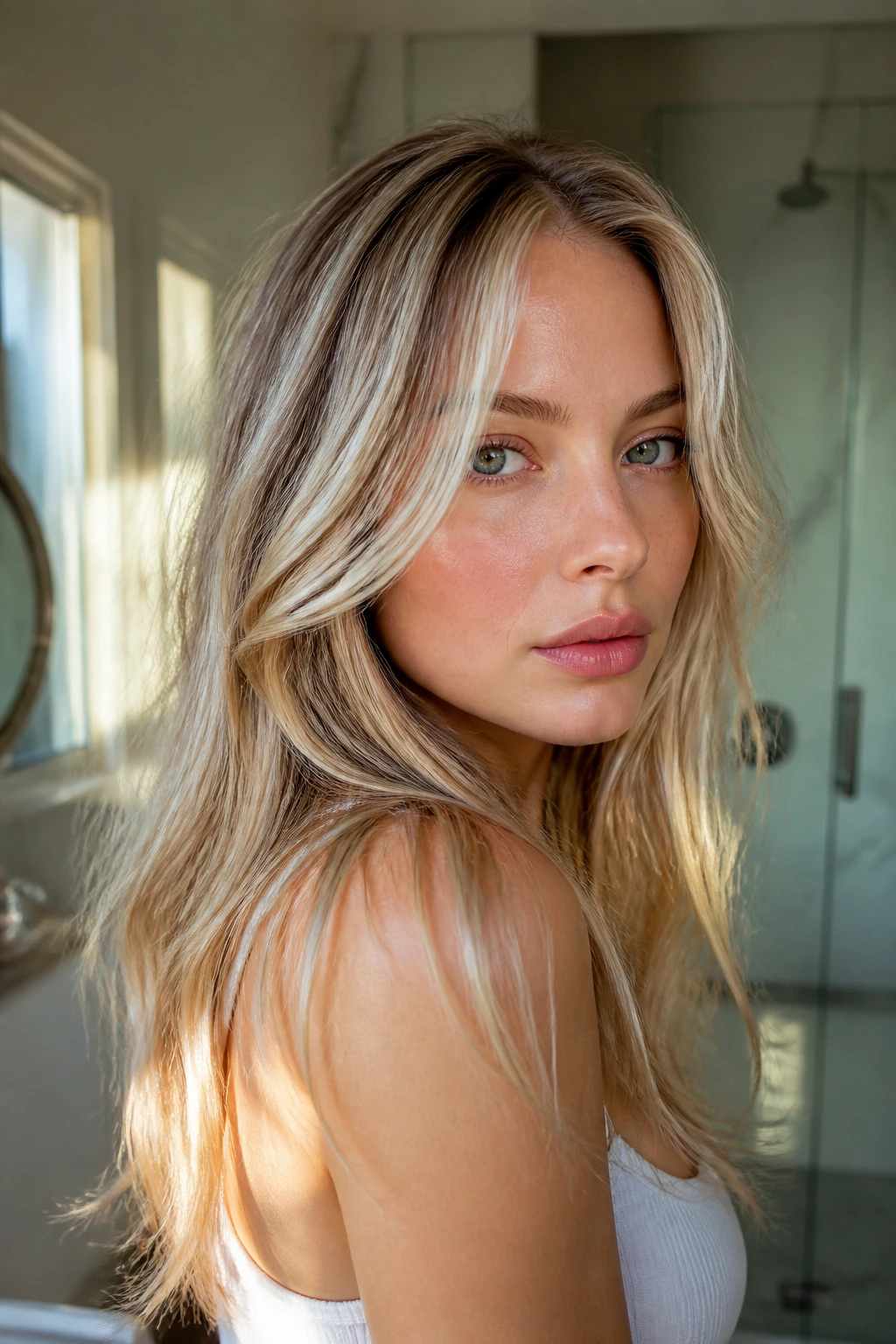
Frosted vanilla lowlights are the fix for hair that has gone too bright and lost its shape. Instead of adding more light, you add a few cooler beige pieces back into the hair so the highlights have something to sit against.
On pale skin, this can be a lifesaver. All-over blonde can flatten the face and make the hair feel hollow. Lowlights restore depth without making the hair dark again. Vanilla keeps the effect creamy, while the frosted note stops it from tipping yellow.
I use this idea whenever a blonde needs to look a little calmer. Sometimes the best move is subtraction, not more bleach.
23. Apricot Beige Glow
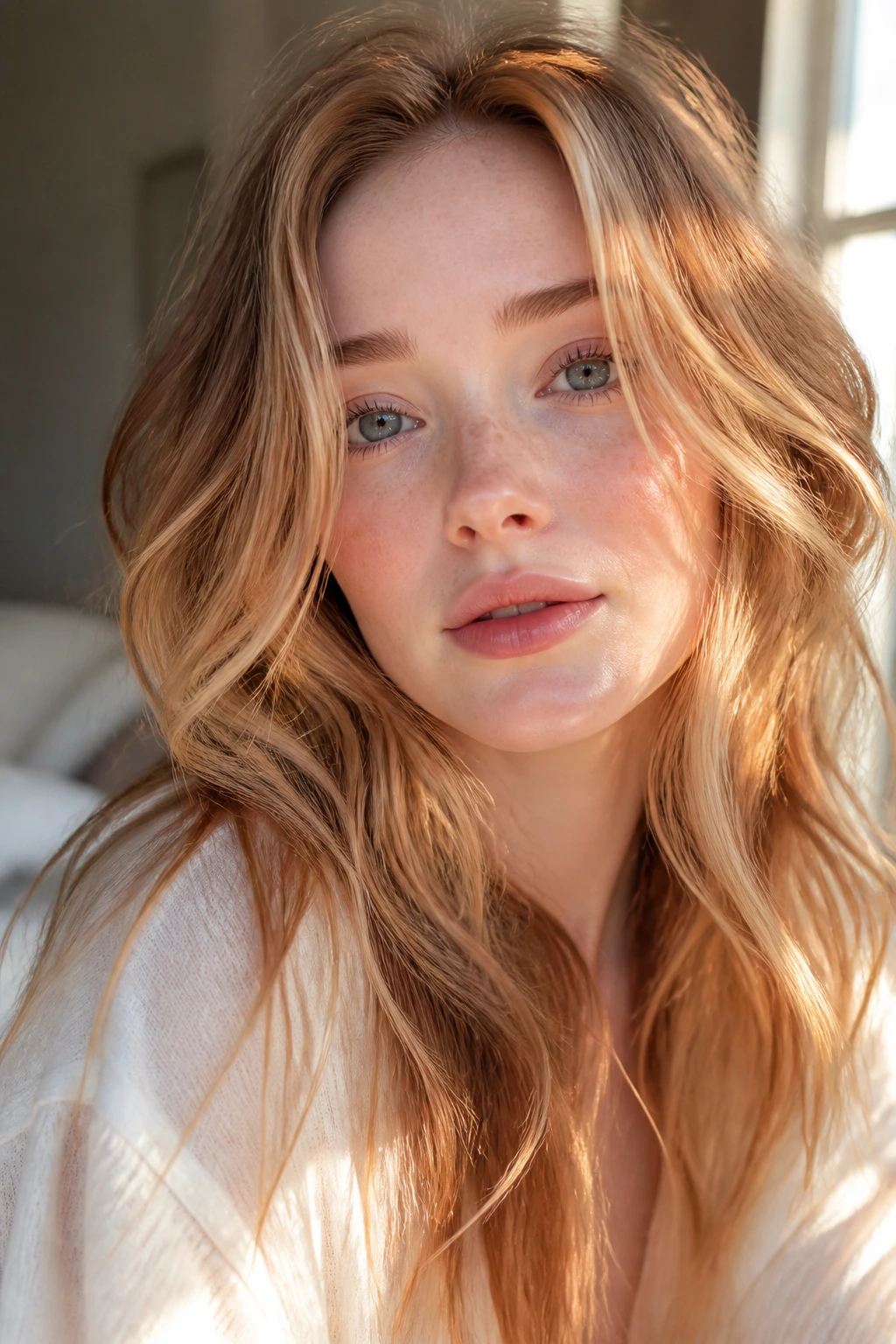
Apricot beige is one of those shades that looks gentle in a photo and even better in real life. It has enough warmth to wake up pale skin, but the beige base keeps it from getting sugary or loud.
This is a strong choice for very fair skin that leans rosy, especially if you already have soft peach in your cheeks. The apricot reflect can make the whole face look more alive, which is useful when cool blondes are too draining. Keep the ribbons thin and concentrated around the face and top layers.
It’s a pretty color. More than pretty, actually — it has a softness that flat blonde never gives you.
24. Dusty Blonde Slices
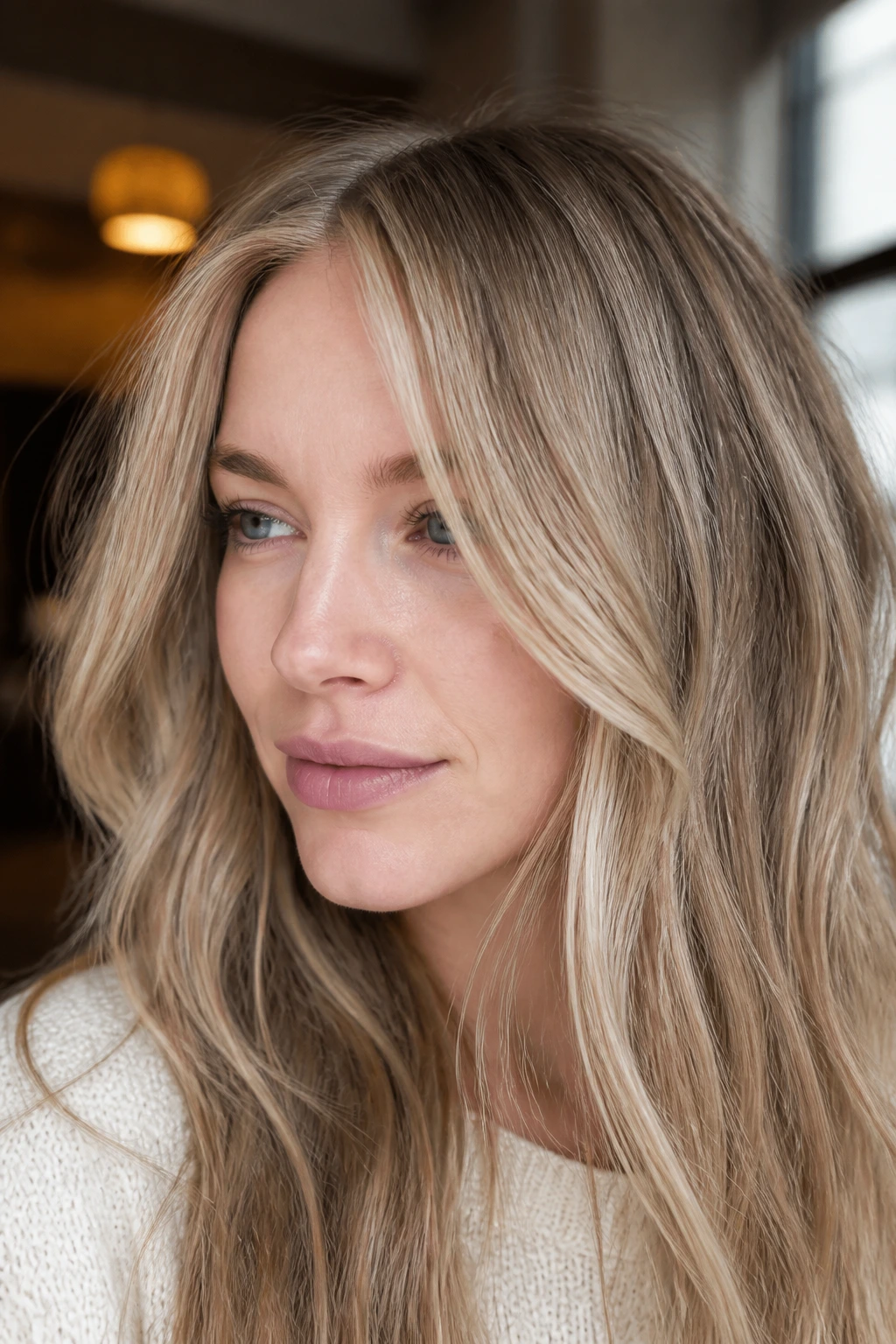
Dusty blonde slices are a little more visible than babylights, but still subtle enough to stay natural on pale skin. The “dusty” part keeps the blonde from going brassy or glaring.
This works when you want some shape in the hair, especially if the cut is blunt or the natural base is already light. Wider slices can look expensive when they’re placed with care and toned into a muted beige-blonde. They’re also good for straight hair, where tiny highlights can disappear.
If babylights feel too fussy and balayage feels too soft, this lands in the middle.
25. Cream Soda Highlights
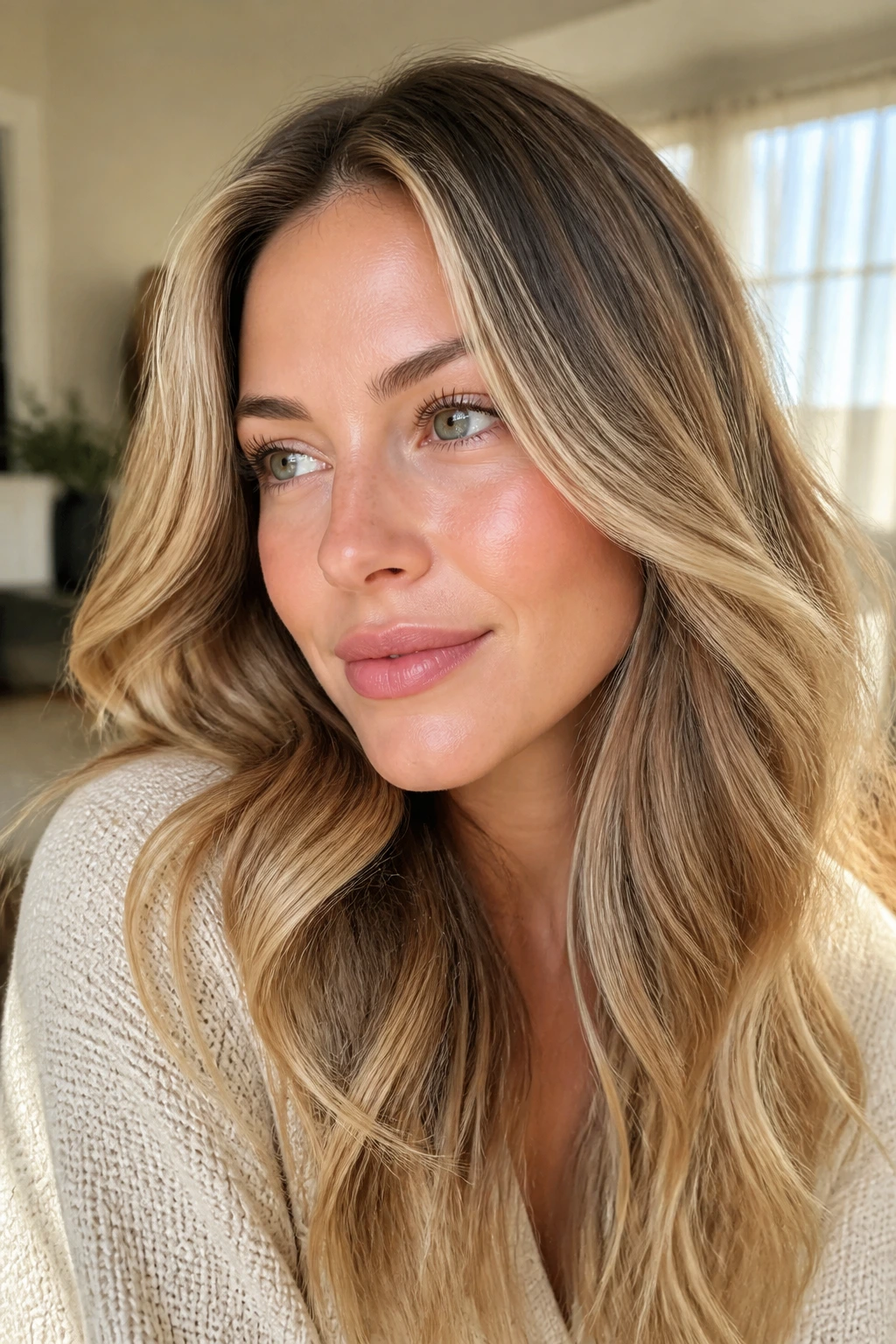
Cream soda highlights are a playful name for a very wearable shade. The color has a beige-blonde lift with a creamy finish, and the result feels soft rather than sugary.
This is a good pick for pale skin that needs a little more brightness than mushroom blonde but less warmth than honey. The root melt keeps the hair grounded, while the lighter ends do the lifting. On waves, cream soda color can look almost liquid. On straight hair, it reads cleaner and more graphic, though still gentle.
The point here is balance. You want creamy, not flat. Bright, not glaring.
26. Neutral Beige Dimension
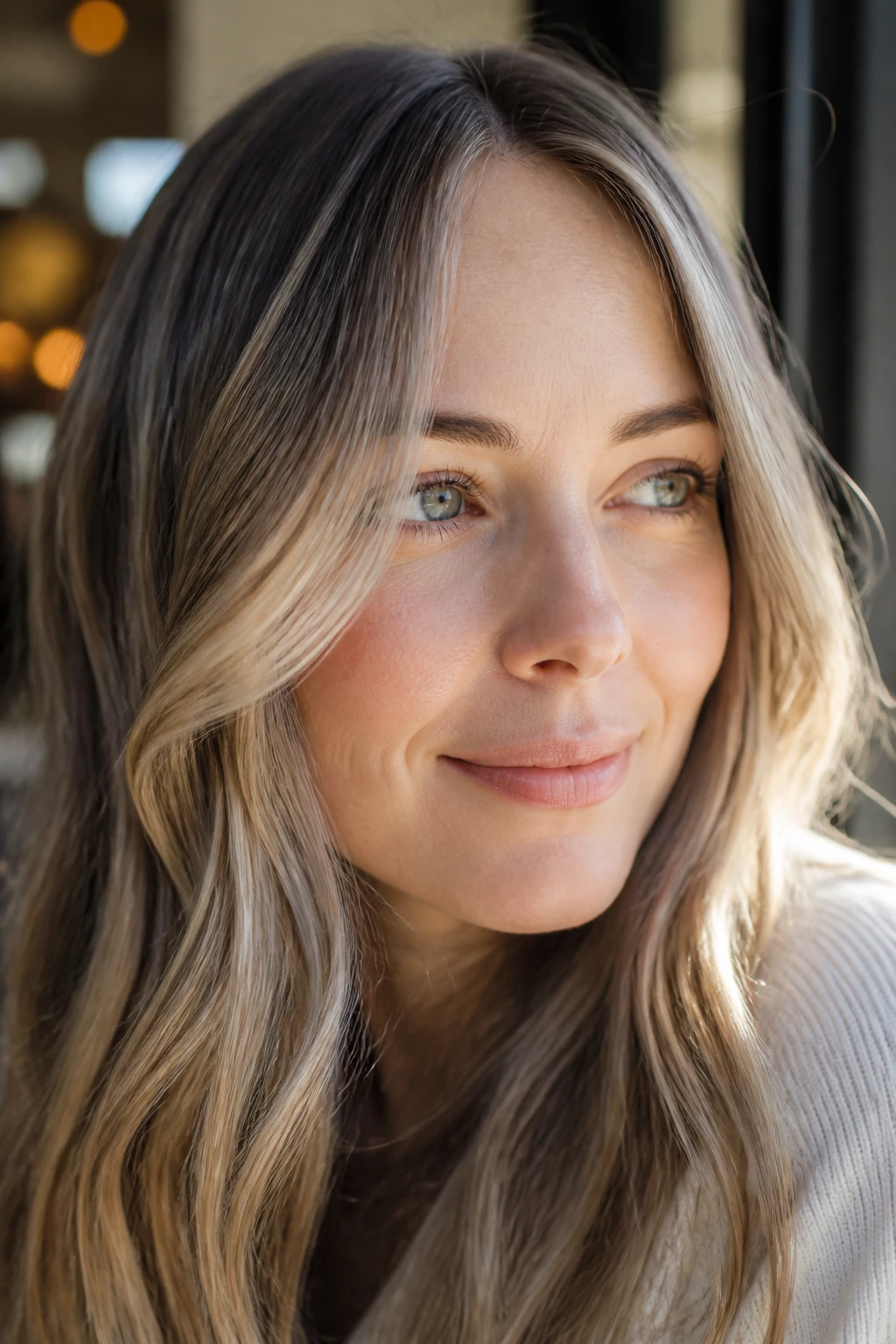
Neutral beige is the safest all-around choice on this list, and I mean that in a good way. It doesn’t lean too warm, too cool, or too golden, so it tends to sit well on pale skin with mixed undertones.
The dimension comes from placement as much as tone. Fine highlights, broken-up spacing, and a soft root shadow keep the hair from looking like one giant block of color. If your skin changes with the light — pink indoors, a little warmer outdoors — neutral beige usually handles that shift better than a more opinionated blonde.
Sometimes the smartest color is the one that doesn’t argue with your face.
27. Soft Brunette-and-Cream Contrast
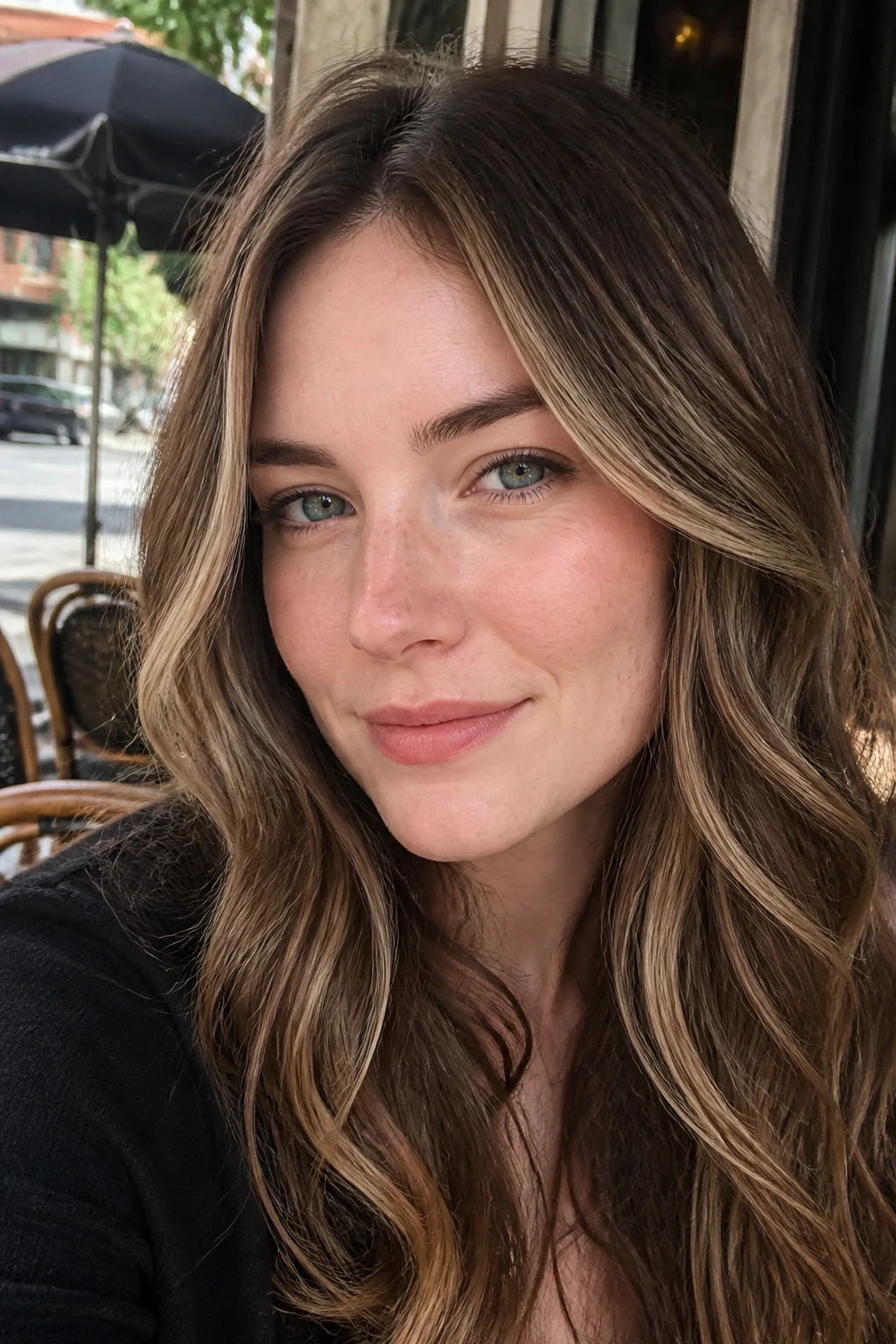
Soft brunette-and-cream contrast is for pale skin that wants brightness but not a full blonde conversion. The base stays brunette or dark blonde, and the cream pieces are thin enough to keep the look elegant rather than busy.
I like this on people who want their eyebrows and lashes to stay part of the picture. Too much lightness can make pale skin look disconnected from the rest of the face. A brunette base with cream ribbons gives you movement, depth, and enough brightness to lift the complexion without washing it out.
This is one of the best examples of why highlights do not have to be blonde to work.
28. Smoky Quartz Balayage
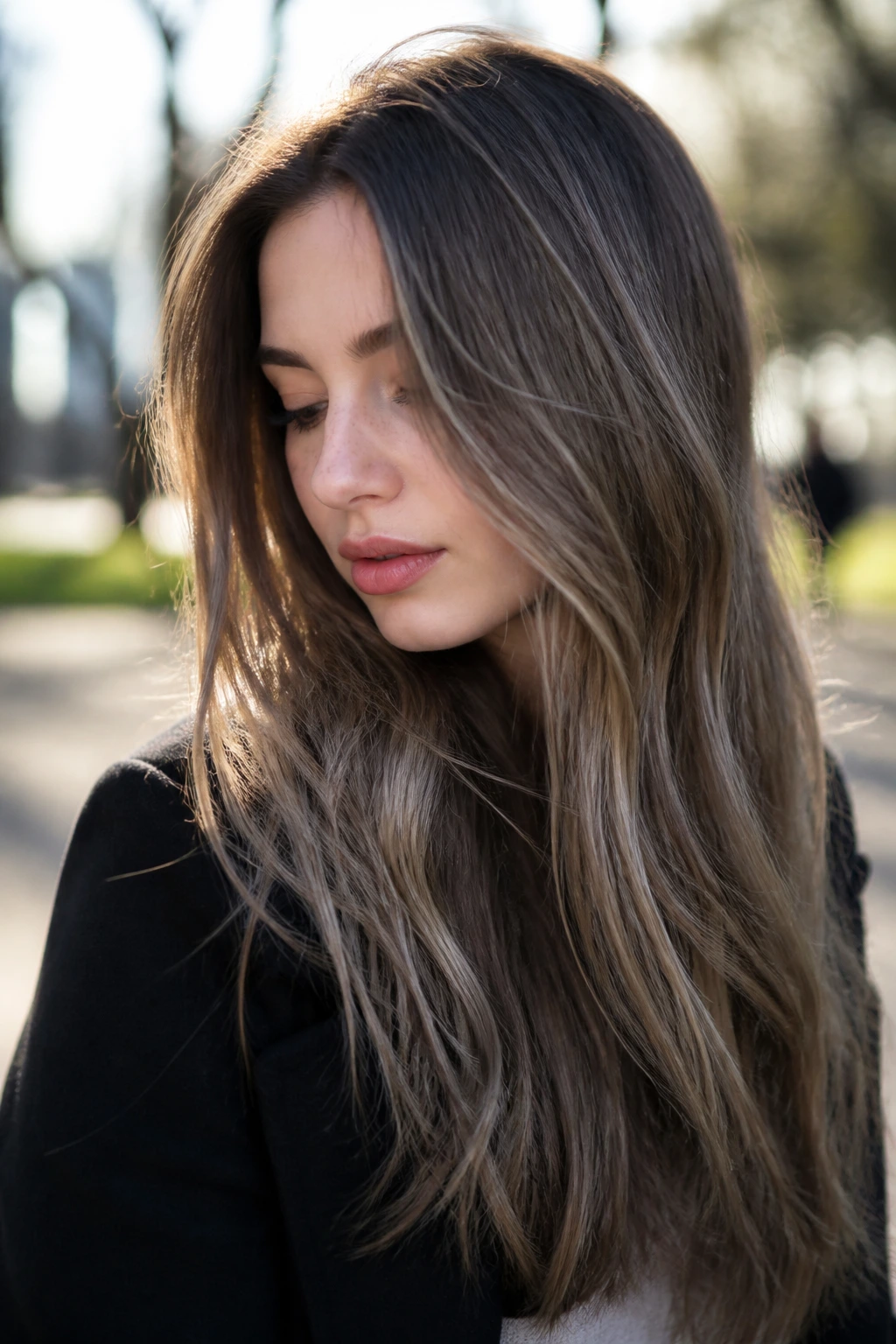
Smoky quartz balayage mixes cool beige, soft brown, and a little gray-brown smoke through the hair. On pale skin, that can look sleek and grounded, especially if you want something a touch moodier than champagne or vanilla.
This shade works best when the balayage stays fine and the ends aren’t pushed too light. The smoky note keeps the blonde from reading yellow, while the quartz-like sheen makes the finish look polished. It’s a strong choice for medium-length cuts with movement, because the tone shifts as the hair swings.
If you want dimension without sweetness, this is the one I’d point you to first.
How to Keep the Color Soft Instead of Harsh
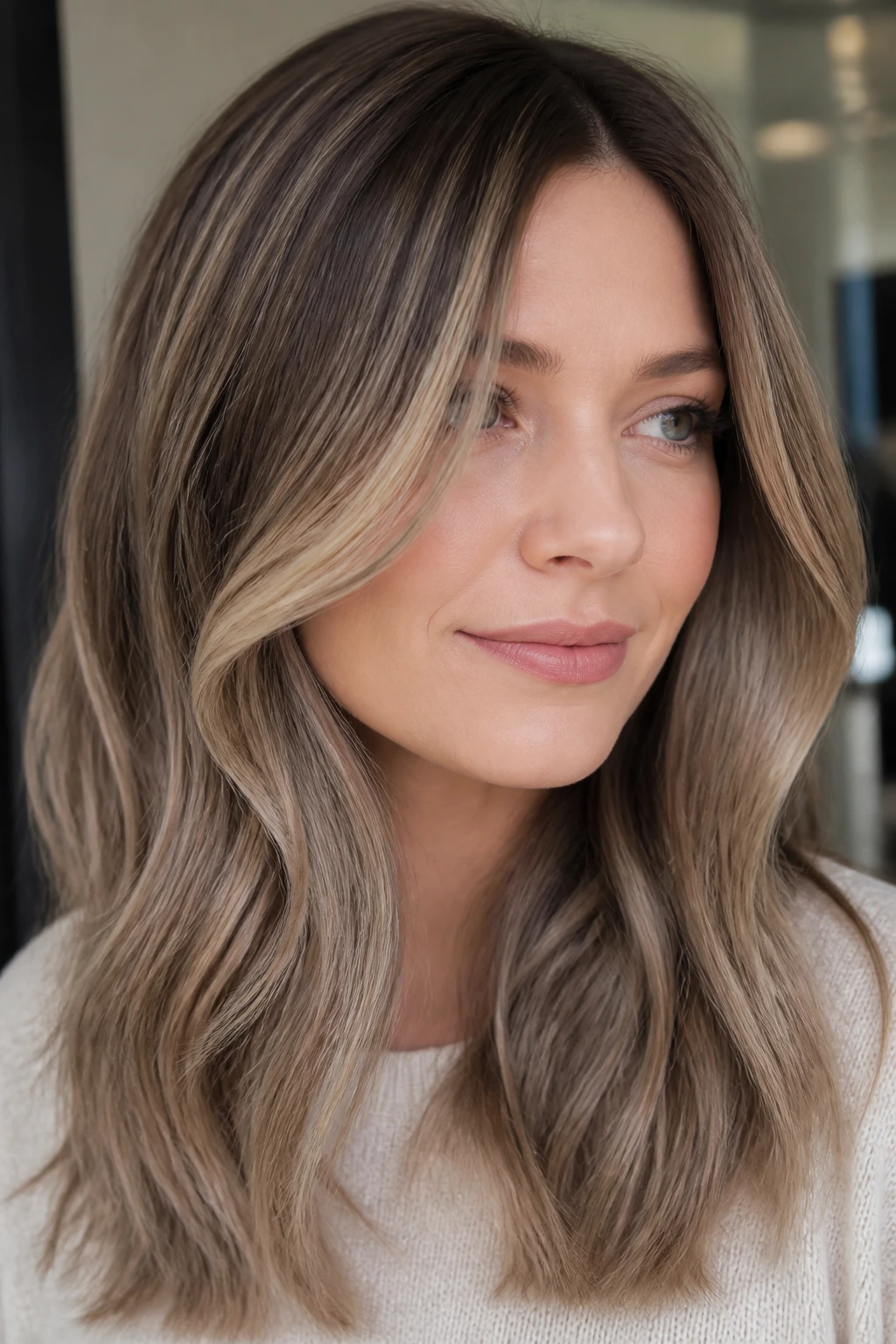
Pale skin shows hair color mistakes fast. That’s not a flaw in the skin; it’s just the truth of contrast. A highlight that looks fine on darker complexions can look stripy, yellow, or washed out on fair skin if the placement is too wide or the toner is wrong.
The simplest fix is to keep three things in mind: the tone family, the root depth, and the spacing between the light pieces. If one of those gets too aggressive, the whole look tilts. Beige and champagne are forgiving. Stark gold, neon ash, and white-blonde are not nearly as forgiving unless the colorist is very precise.
And don’t ignore the cut. Long layers can hide a lot. A blunt bob can expose a bad highlight pattern instantly.
Essential Tools for Soft Highlights and Grow-Out That Behaves
- Tail comb: Useful for separating fine sections and checking where the highlights sit near the part.
- Sectioning clips: Keep the hair controlled while you’re working with toner, gloss, or home mask treatments.
- Foil or balayage board: Needed if you’re doing any lightening service with a colorist or at home under professional guidance.
- Tint brush and bowl: Helps with gloss or toner application so the color lands evenly.
- Color-safe shampoo and conditioner: Keeps the tone from fading too fast and cuts down on brass.
- Purple or blue shampoo: Purple is better for pale blondes; blue is more useful when the hair drifts orange.
- Heat protectant: Absolutely worth using before blow-drying or flat ironing lightened hair.
- Microfiber towel: Less roughing up the cuticle, which matters once the hair has been lightened.
Shade Families and Product Notes That Keep Pale Skin Happy
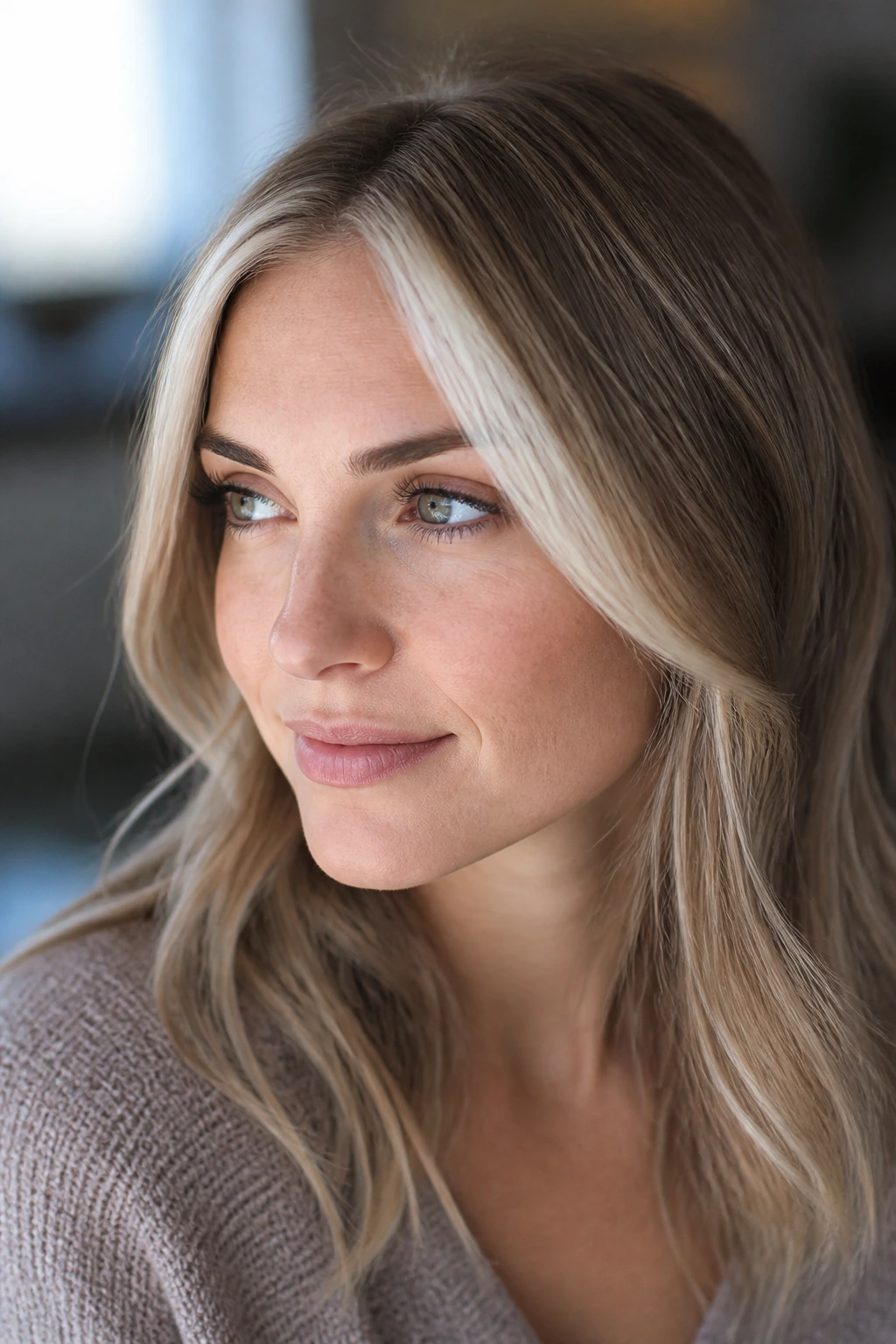
The easiest product mistake is using a toner that’s too strong for the shade you actually have. Pale hair doesn’t need a heavy hand. A beige gloss can do more than a super-pigmented silver mask if the goal is softness.
If your highlights lean cool, use purple shampoo once every 7 to 10 days, not every wash. Too much and the hair starts looking flat. If your color leans warm, skip the purple bottle and use a gentle, color-safe cleanser instead; otherwise you’ll keep sanding away the warmth that makes the shade flattering. For brassy orange tones, a blue shampoo can help, but only if the hair truly has that orange cast.
Hard water can be the secret villain here. It leaves mineral buildup that makes blonde look muddy. A chelating shampoo every few weeks, or a shower filter if your water is rough, can make a bigger difference than another toner appointment.
How to Keep Pale-Skin Highlights Fresh Between Visits
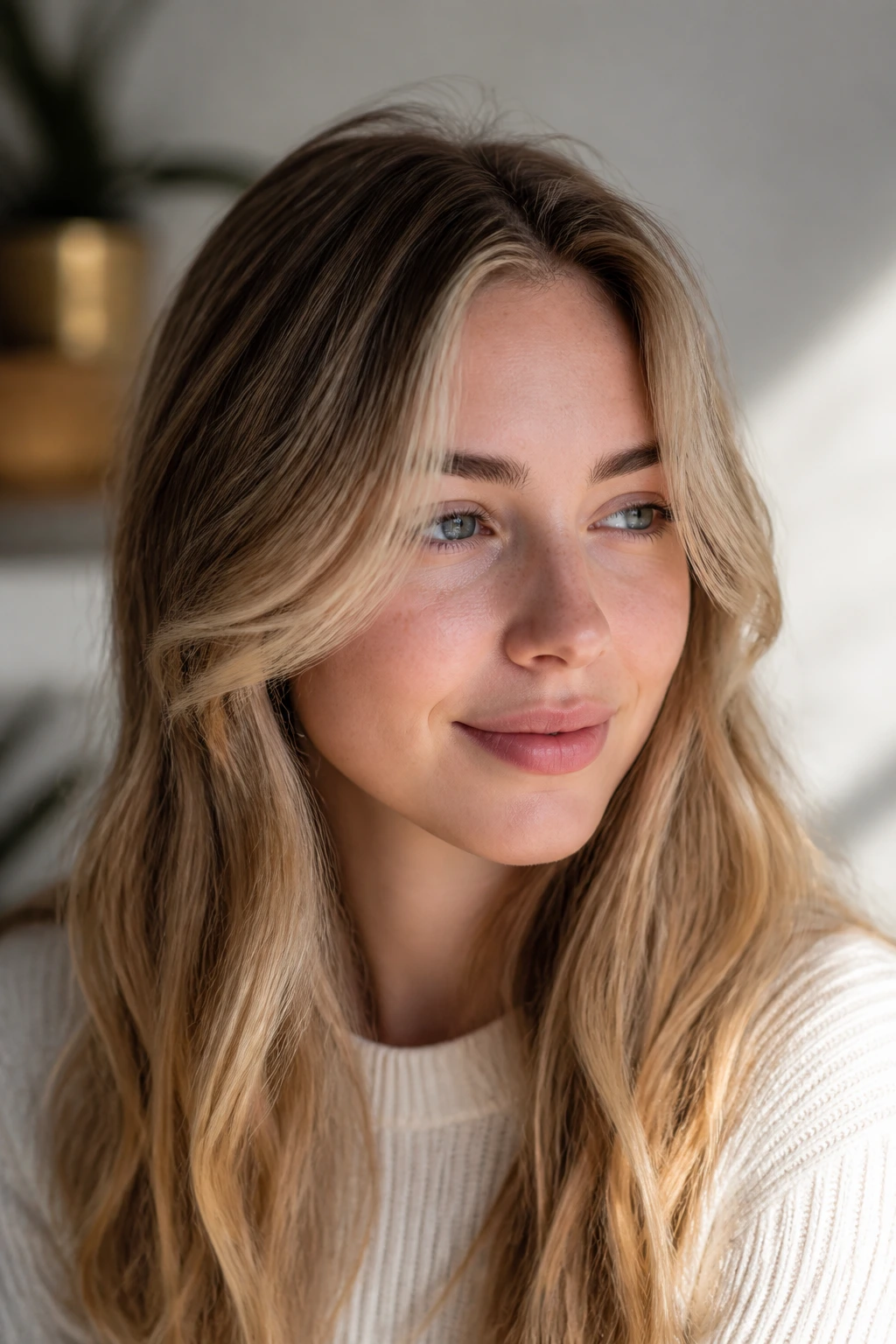
Soft highlights age better when you treat them like light fabric instead of gym clothes. Wash your hair two or three times a week if you can. Use lukewarm water, not hot. Hot water opens the cuticle too much and drains the tone faster than most people expect.
Glossing every 4 to 6 weeks keeps champagne, beige, pearl, and strawberry tones from going stale. If your highlights are very cool, a toner refresh may be needed on the same schedule. More porous hair fades faster, so lightened ends usually need the most attention. A leave-in conditioner on the mids and ends after every wash helps too.
For heat styling, keep the tool temperature under 375°F / 190°C unless your hairdresser told you otherwise. Lightened hair gets dry fast, and dry hair makes pale highlights look rough. A silk or satin pillowcase won’t change the color, but it will cut down on frizz, which matters because frizz makes soft highlights look fuzzy instead of smooth.
Common Mistakes That Make Fair Hair Look Harsh
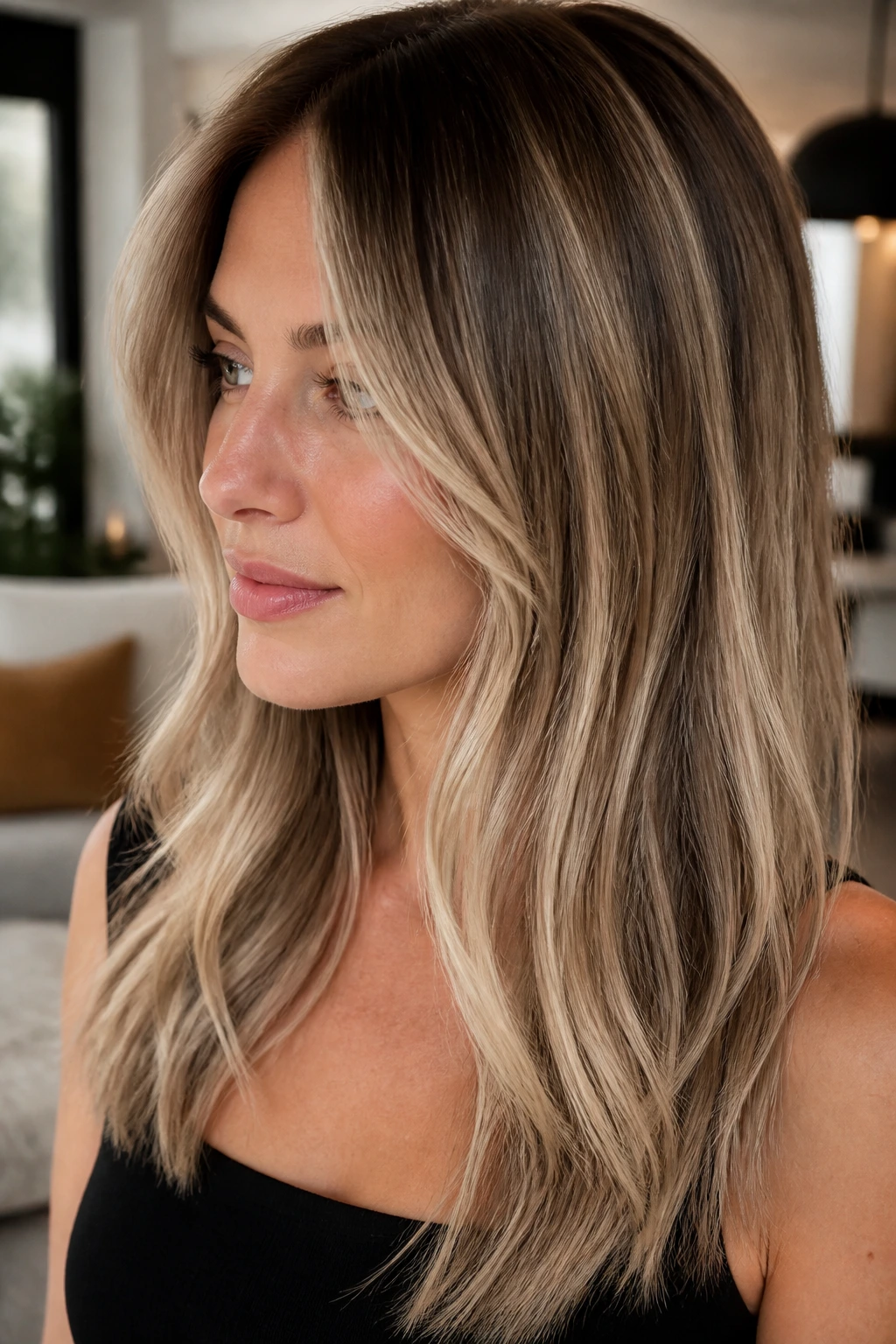
- Too-wide streaks: Big chunks of blonde show up first on pale skin. Fix it by asking for finer weaves or babylights instead of chunky foil lines.
- Wrong toner family: Ash on rosy skin can look gray; gold on very cool skin can look yellow. Match the tone to your undertone, not your mood.
- No root depth: When everything is light from scalp to ends, the hair can lose shape. Keep a soft shadow at the root so the color has somewhere to rest.
- Overusing purple shampoo: Too much violet pigment can make blonde look dull and chalky. Use it sparingly, then follow with a moisturizing conditioner.
- Skipping glosses: Lightened hair changes fast. Without a gloss, the color goes brassy or tired sooner than you want.
- Going too light too soon: Pale skin often looks better with a two-step lift than a giant jump. Rushing to platinum is how a lot of good hair color gets flattened.
Variations and Alternative Approaches
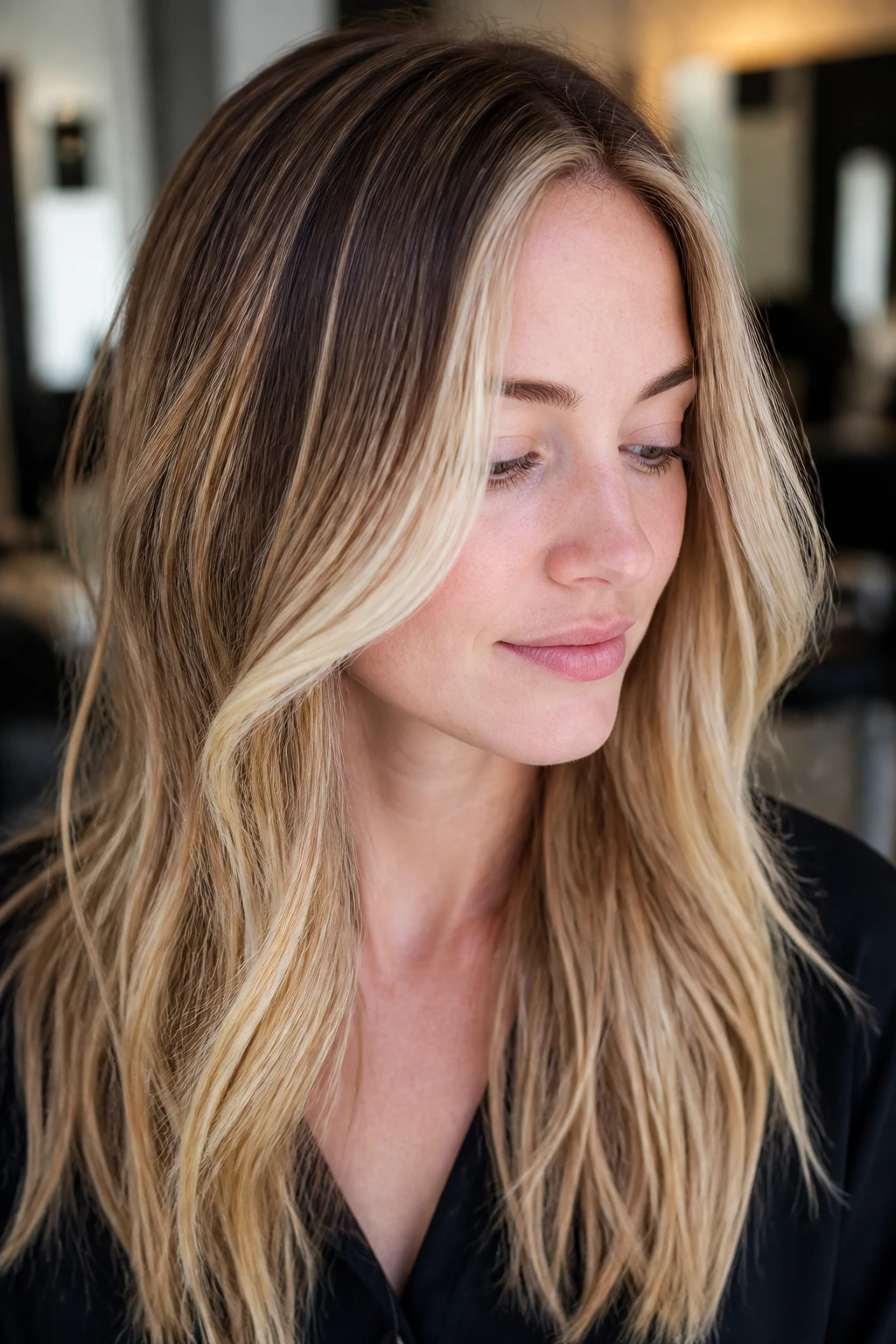
- The Barely-There Veil: Ask for ultra-fine babylights that stay within one to two levels of your base. This is the softest route and usually the easiest to grow out.
- The Bright Front Piece: Keep the back muted and brighten only the money piece. Good if you want change around the face without a full-color commitment.
- The Rooted Melt: Leave a deeper root and melt into champagne, beige, or buttercream through the ends. This is the friendliest option if you hate obvious regrowth.
- The Warm Lift: Use honey, toffee, apricot, or strawberry-beige tones for fair skin that looks drained by ash. Keep the pieces thin so the warmth stays believable.
- The Cool Smoke: Choose mushroom, ash, pearl, or silver-pearl tones if your skin leans pink or blue. A cool finish can sharpen the face, but it needs fine placement to stay soft.
- The No-Bleach Shortcut: On light brown or dark blonde hair, a high-lift tint plus gloss can add enough brightness for a natural effect without a full bleaching service. It won’t get you platinum, and that’s the point.
Frequently Asked Questions
What highlights look most natural on pale skin?
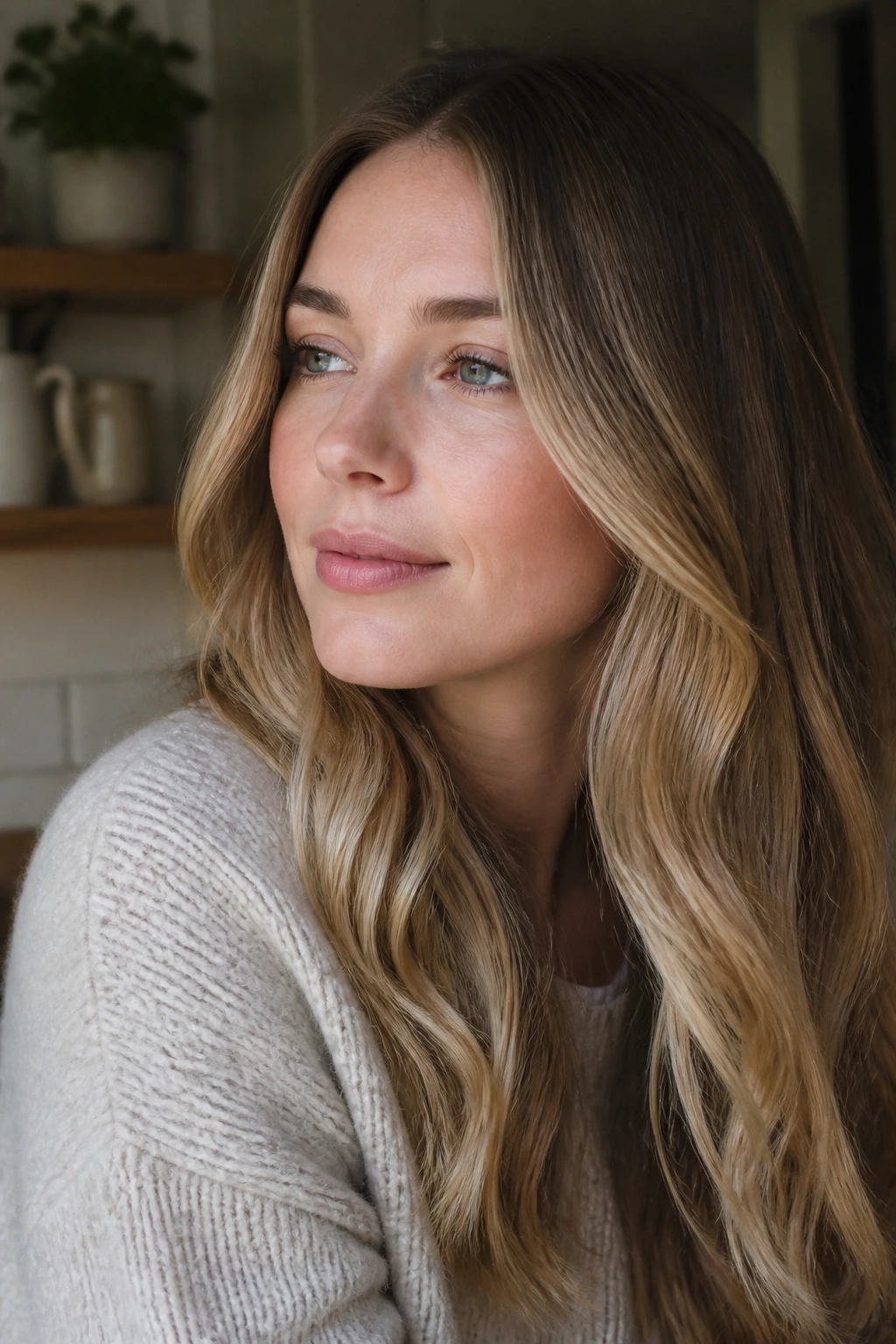
Babylights, beige balayage, champagne tones, and soft mushroom ribbons usually look the most believable because they don’t create hard contrast. The placement matters as much as the shade; fine pieces near the face and crown read softer than wide streaks.
Should pale skin choose warm or cool highlights?
Look at your undertone first. Rosy or blue-leaning skin often likes pearl, ash, and champagne; peachy, freckled, or neutral skin usually looks better with beige, honey, buttercream, or soft strawberry tones.
Are babylights better than chunky highlights for fair skin?
Most of the time, yes. Babylights give you movement without strong lines, which is a huge advantage on pale skin where chunkier highlights can look striped fast. Chunkier pieces can work, but they need very careful placement.
How light should highlights be on pale skin?
Usually one to three levels lighter than the natural base is enough for a soft look. Going much lighter can erase depth around the face and make the hair look processed unless the colorist balances it with shadow and gloss.
Can pale skin wear copper or strawberry highlights?
Absolutely, if the color stays soft and thin. Strawberry beige, coppery strawberry ribbons, and apricot-beige shades can wake up pale skin, especially when the tone is kept creamy rather than bright red-orange.
How often do highlights need to be toned or glossed?
A gloss every 4 to 6 weeks is a good rhythm for most lightened hair. If your hair is porous, very cool-toned, or washed often, you may need a refresh a little sooner.
Why do my highlights look yellow or orange after a few washes?
That usually means the toner has faded or your water is leaving mineral buildup on the hair. A color-safe shampoo, a periodic gloss, and the right purple or blue shampoo can keep the tone cleaner.
Can I make pale highlights look softer without changing the color again?
Yes. Add a small root shadow, mix in a few lowlights, or style the hair with soft waves instead of a pin-straight finish. Placement and texture can change the feel of the color more than people expect.
Soft Light Wins
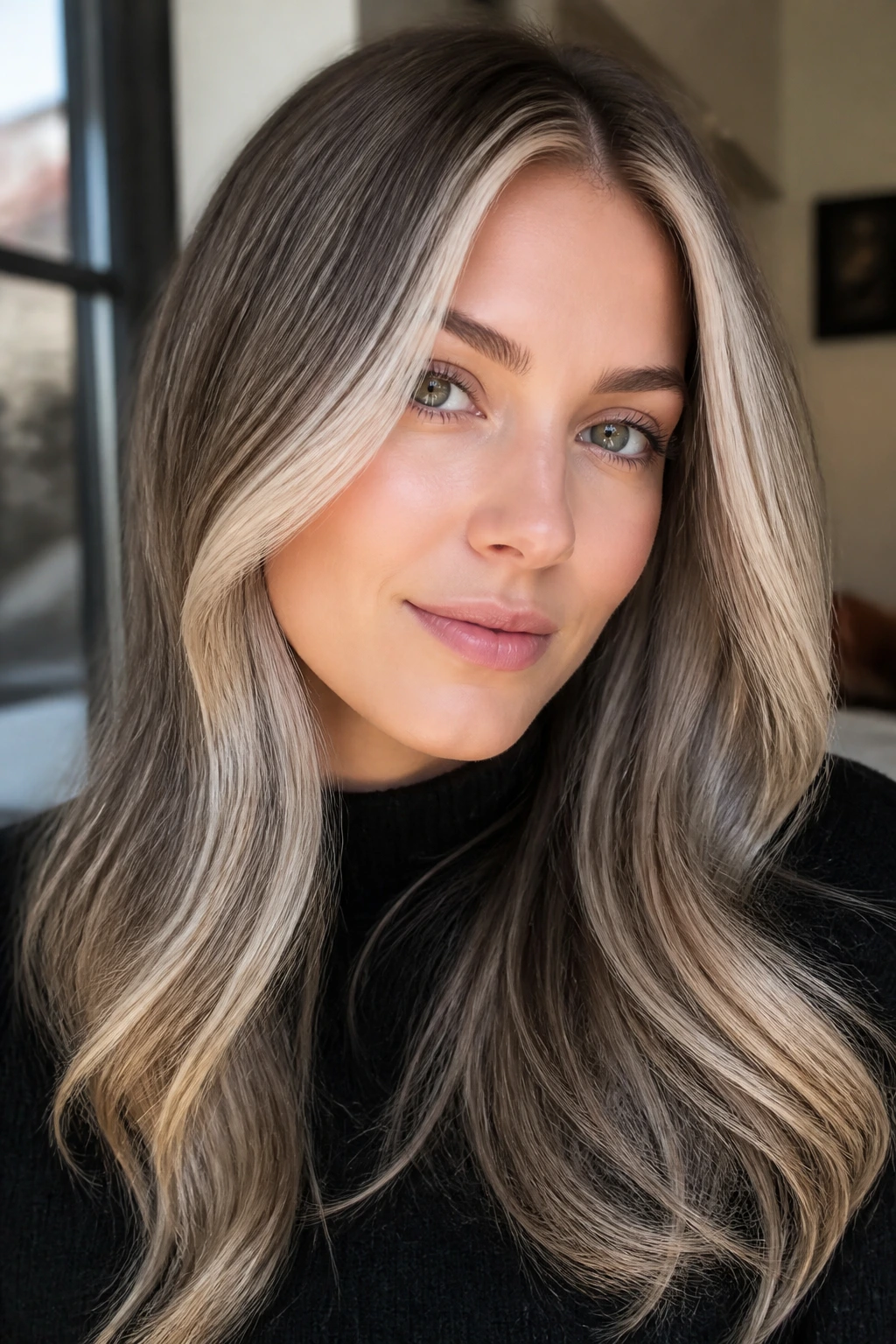
The prettiest highlights on pale skin rarely look dramatic in a loud way. They look believable. A little champagne around the face, a trace of mushroom through the mids, a rooted melt that lets the color breathe — those are the moves that keep fair skin bright without flattening it.
If you’re standing in front of the mirror trying to decide between “lighter” and “softer,” I’d choose softer nine times out of ten. The softer choice usually grows out better, photographs less harshly in daylight, and leaves more room for the skin to look like itself. That’s the part that matters when the color is done right.