



Thin hair can look remarkably polished at a wedding, but only if the style respects what the hair can actually do. Wedding hairstyles for thin hair are not about piling on product and hoping for the best. They’re about building a shape the strands can hold, then letting a few smart details do the heavy lifting. A low chignon, a soft wave, a braid, even a pixie with the right clip—each one works when the base is steady and the finish isn’t weighed down.
The mistake I see over and over is this: people try to make thin hair look thick everywhere at once. That usually turns into soft-looking roots, slippery lengths, and a style that starts sagging before dinner. Better to think in terms of lines and anchors. Where does the crown lift? Where do the pins bite? Where is the hair allowed to move a little? That’s where the good stuff lives.
What follows is a set of looks that do not need heroic density to feel wedding-ready. They just need a little strategy, a few honest products, and a willingness to let thin hair look airy instead of pretending it’s something it isn’t.
Why These Styles Hold Up on Thin Hair
Built on shape, not bulk: Every look here uses a clear outline—bun, braid, wave, twist, ponytail—so the hair reads intentional even when each strand is fine.
Friendly to pins and accessories: Thin hair often gives bobby pins and combs more grip than heavy hair does, which means a veil, pearl clip, or jeweled pin can stay put without a fight.
Better with a little texture: Smooth silkiness sounds nice until it slides apart. These styles rely on a bit of grit from mousse, dry shampoo, or texture spray so the hair has something to hold.
Flexible for different lengths: Short hair, a lob, and long layers all behave differently. That’s the point. The right wedding hairstyle for thin hair works with the cut you have, not the one you wish you had.
Photographs with movement: Thin hair can go flat fast, so the styles below keep some air at the edges, a little lift at the crown, or a soft bend through the lengths. In person, that reads as softness. In photos, it keeps the style from looking pasted down.
Easy to modify: If you want more drama, a few clip-ins or a hair filler can change the whole silhouette. If you want something quieter, you can strip the look back and it still holds together.
1. Lifted Low Chignon with a Soft Crown
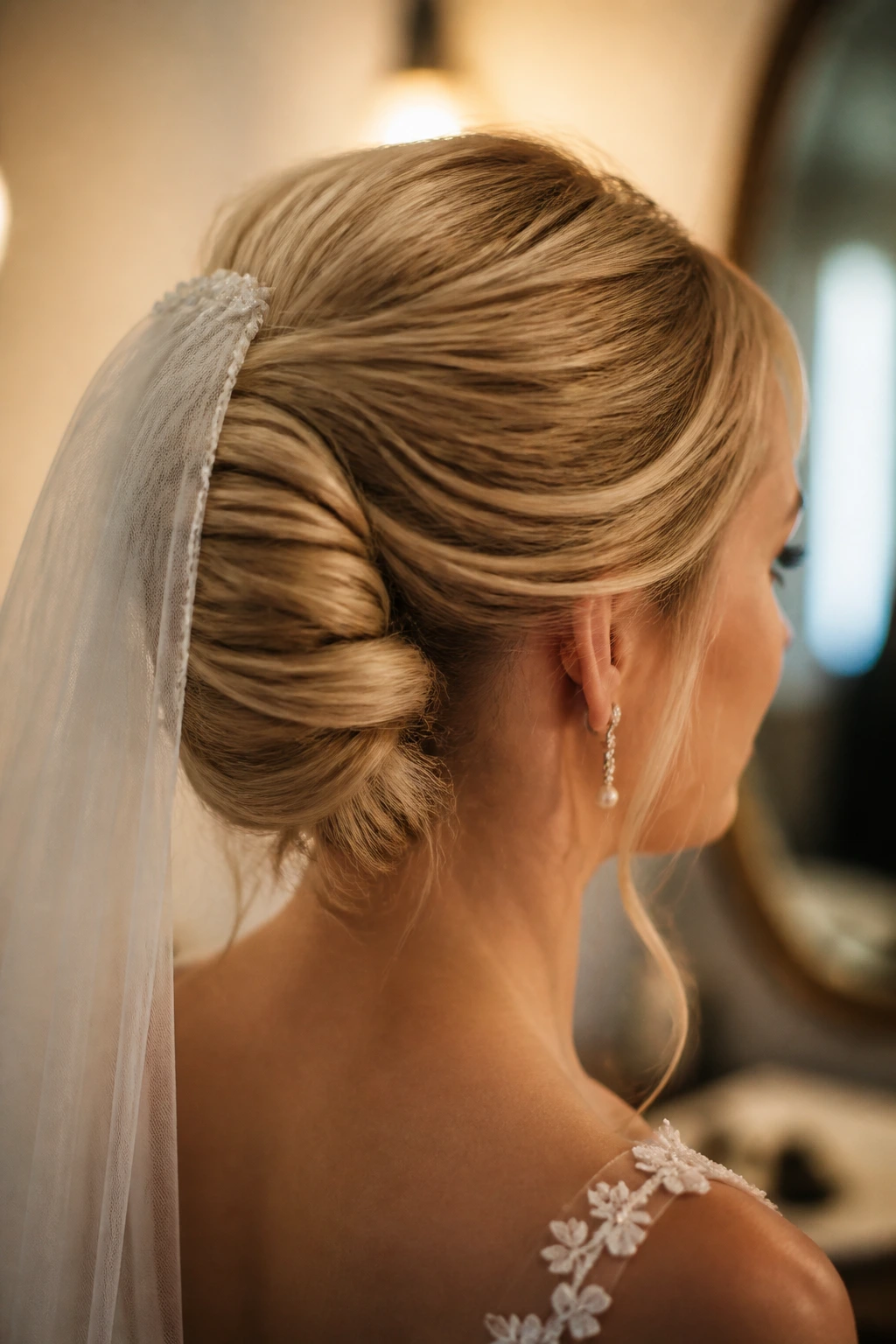
A low chignon is one of the most reliable wedding updos for thin hair because it doesn’t ask the hair to do too much at once. The crown gets a little lift, the nape stays neat, and the bun itself can be kept compact instead of bulky. That balance matters. Too big, and thin hair starts showing every pin. Too small, and the whole thing disappears.
Why it flatters thin hair
The crown lift creates the illusion of density where the eye expects it. A fine mist of root spray at the top, a gentle backcomb at the crown, and a clean twist into the nape are enough. You do not need a giant cushion of teasing. You need a controlled one.
This style looks especially good with a veil or a hair comb because the back of the head stays open and tidy. It also gives you room for earrings to do their job. If the dress has an open back, this is one of my favorite shapes. It frames the neckline without stealing attention from it.
- Keep the bun low and centered if the dress is detailed.
- Shift it slightly off-center if you want a softer profile.
- Leave two thin face-framing pieces if you want less severity.
Best tip: pin the chignon with the pins crossing each other inside the bun. Thin hair holds better when the pin structure is crisscrossed instead of stacked flat.
2. Half-Up Waves with Face-Framing Pieces
Half-up waves are often the safest answer for thin hair, and I mean that in the best possible way. The pinned top section gives the style structure, while the loose length keeps it from feeling overbuilt. If you want movement around the shoulders without sacrificing lift at the crown, this is a strong choice.
The key is not to make the waves too soft. Thin hair can swallow loose curls fast, so use a 1-inch or 1.25-inch iron, set the curl away from the face, and brush it out once it cools. That brushed-out bend looks fuller than tight ringlets, which tend to collapse.
Where it earns its keep
This style does a nice job with shoulder-length hair and longer bobs, especially when the top section is twisted back at the temples instead of gathered in one obvious clip. The eyes go to the upper half, which makes the hair feel more abundant.
A pearl barrette or a slim crystal comb can sit right where the pinned section meets the waves. That little seam matters. It hides the fact that the style is part secure, part loose.
3. Twisted French Roll with Airy Ends
A French roll can look severe if it’s packed too tightly. On thin hair, the better version is softer at the edges and a touch looser through the fold. You still get that long, elegant line down the back, but the finish feels more modern and less stiff.
The trick is to prep with texture first. A light mousse, blow-dried in, gives the hair enough body to roll without slipping. Then take the lengths, twist them upward, and tuck the ends into the roll rather than trying to hide every strand perfectly. A few airy ends at the nape can be lovely.
Why it works on fine strands
Because the style is vertical, it creates a long clean shape without requiring a lot of thickness. That’s useful. Thin hair tends to look better when it’s organized into a line than when it’s puffed into a blob.
This is one of the best looks for a formal dress with a high neckline or a structured bodice. It also takes a veil well if the comb sits above the roll. Keep the finish smooth, but not lacquered. The hair should look polished, not frozen.
4. Wrapped Low Ponytail with Hidden Volume
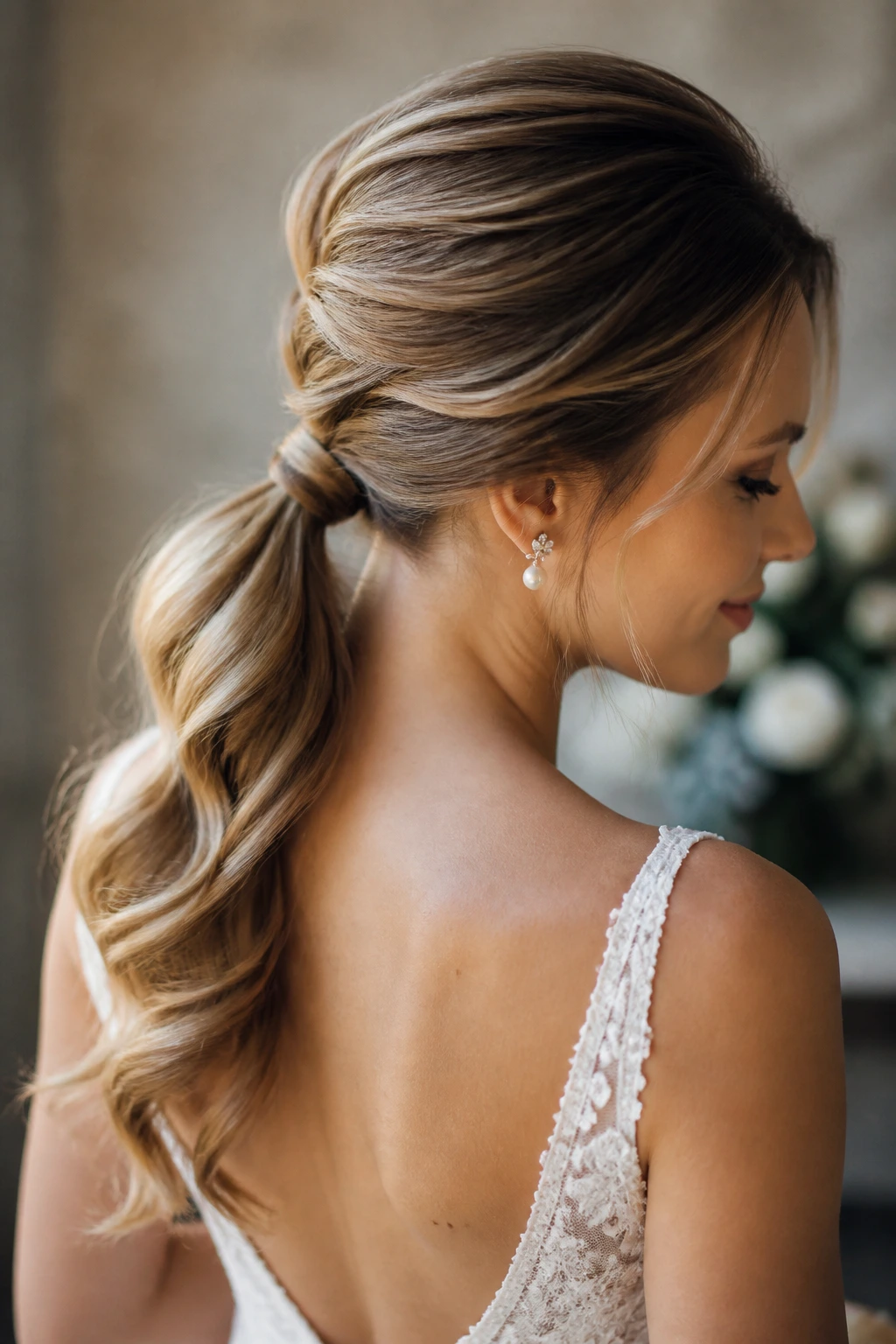
A low ponytail sounds plain until you build it the right way. On thin hair, the ponytail can become surprisingly elegant if the crown gets a little lift and the base is wrapped with a clean section of hair. That wrapper hides the elastic and makes the whole thing feel intentional.
Start by rough-drying with a root-lifting spray, then create a soft bend through the mids and ends. If the ponytail hangs too straight, it can look sparse. A loose wave makes it feel fuller without trying too hard. The wrap around the base should be smooth and snug, and the tail can be finished with a soft curl or a single bend from the iron.
If you want a longer silhouette, clip in a small weft beneath the crown before you gather the hair. That one move changes the shape more than another round of hairspray ever will.
Best for: brides who want a clean profile, a comfortable wear, and a style that won’t fight a high-collared dress or a statement necklace.
5. Crown Braid into a Low Bun
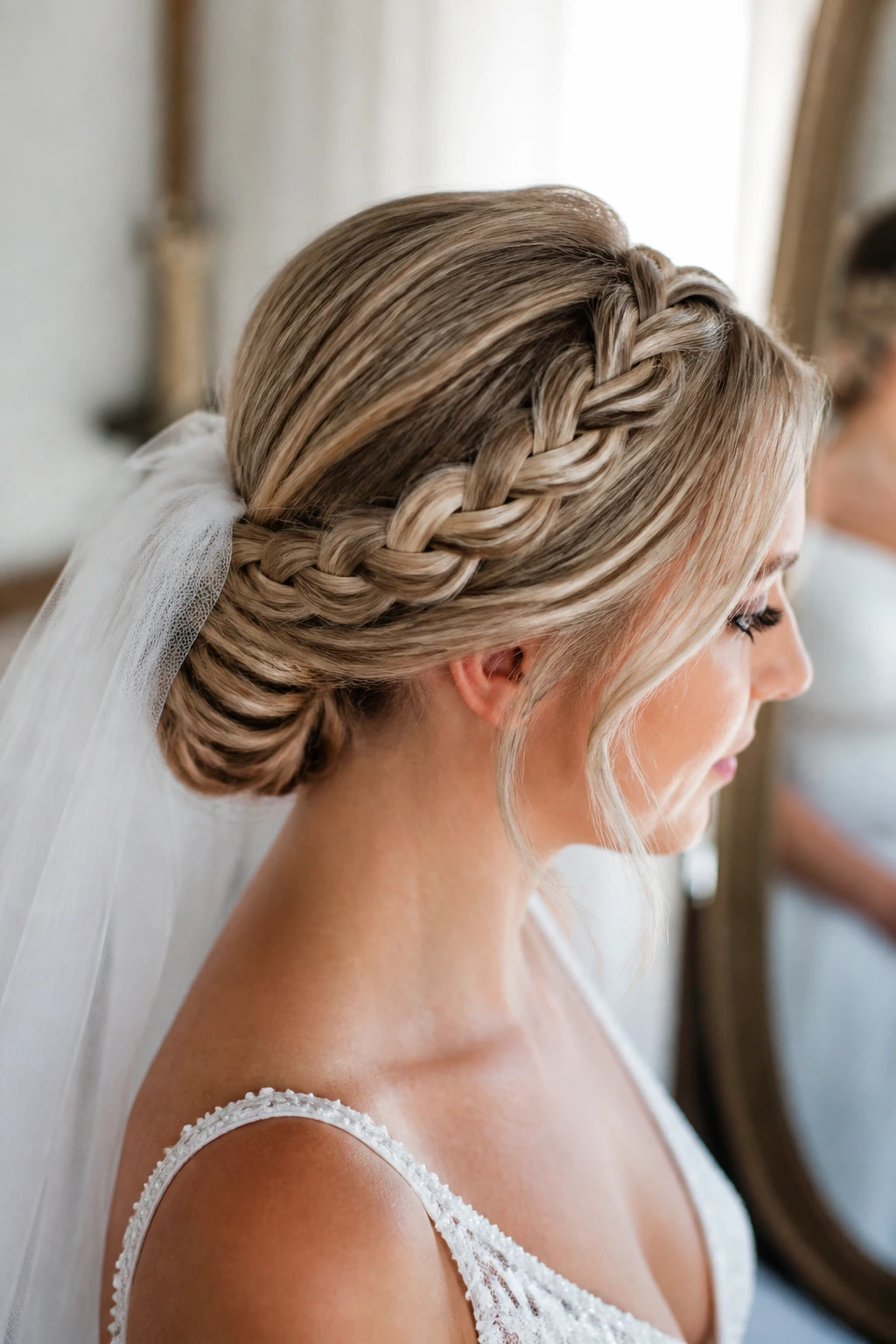
A crown braid is one of the best tricks in the book for thin hair because braiding creates its own texture. The braid gives the eye something to follow, and the low bun at the back gives the style a landing spot. Together, they make a fuller look than either one does alone.
Best when you need a veil anchor
If you’re wearing a veil, this style gives you a sensible place to secure it. Not a flimsy place. A sensible one. The braid adds friction, and the bun sits low enough to stay out of the way once the ceremony is over.
The braid should not be pulled too tight against the scalp. Leave a little looseness so the plaits can puff slightly after they’re pinned. That small bit of slack is what keeps it from reading flat. A satin ribbon tucked into the braid can soften the whole thing if the dress leans romantic.
- Use one or two invisible hairnets if the bun is very fine.
- Pull the braid edges apart gently after braiding.
- Secure the bun with U-pins rather than only bobby pins.
6. Side-Swept Old Hollywood Waves
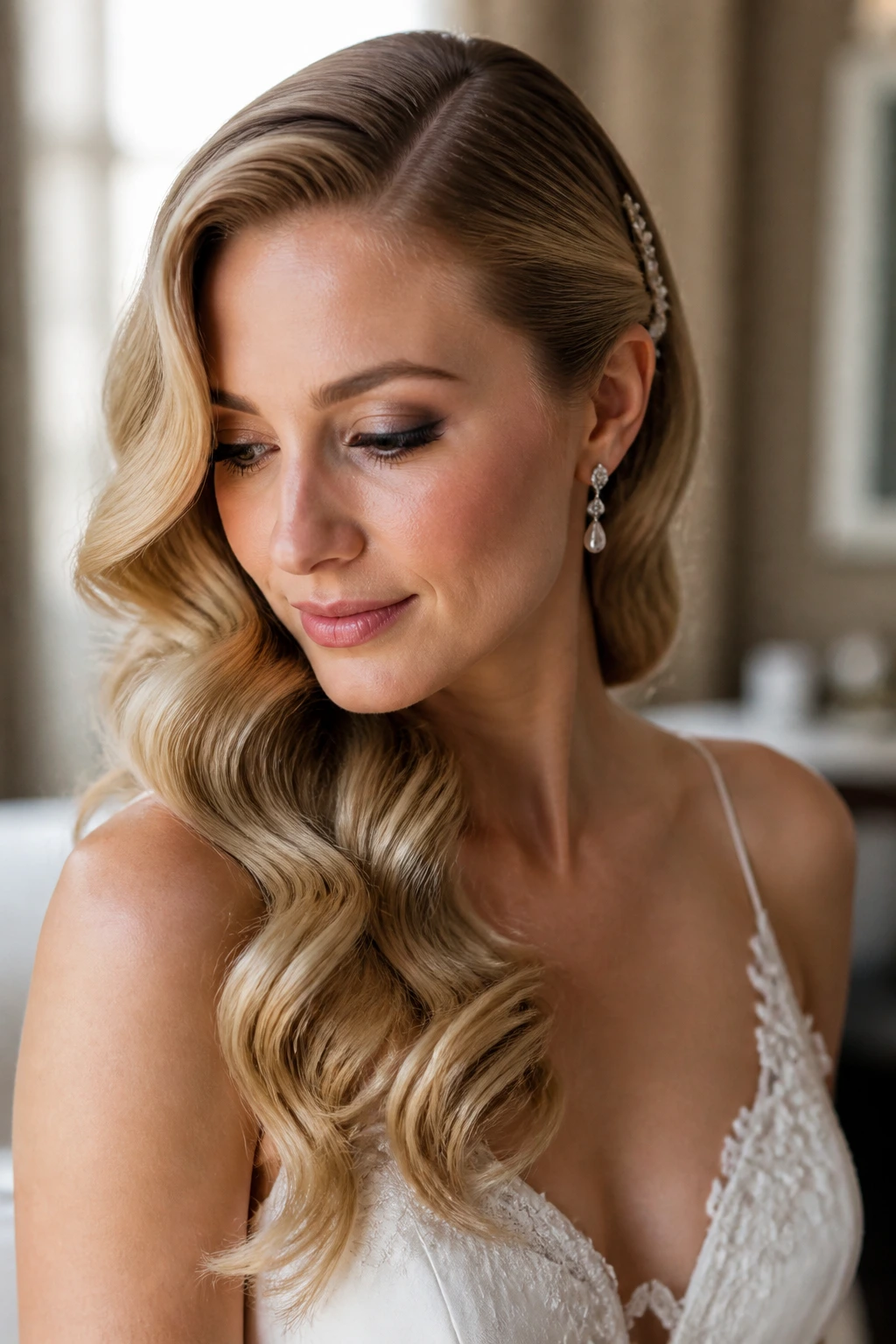
Old Hollywood waves are one of those styles that can make thin hair look expensive without making it look overloaded. The deep side part creates immediate drama, and the waves themselves follow a clean S-shape that reflects light in a way curls never quite do.
The trick with thin hair is not to chase big, fluffy volume. You want controlled shape. Set the waves with a 1.25-inch iron or hot rollers, let them cool completely, then brush them into a soft wave pattern. Pin one side back behind the ear with a comb or a couple of discreet pins. That side sweep is what makes the style feel formal.
The style plays beautifully with drop earrings and a dress that leaves the shoulders open. It also works when you want the face to read clearly in photos. No hair curtain. No fuss. Just a strong side part and a polished wave that holds its own.
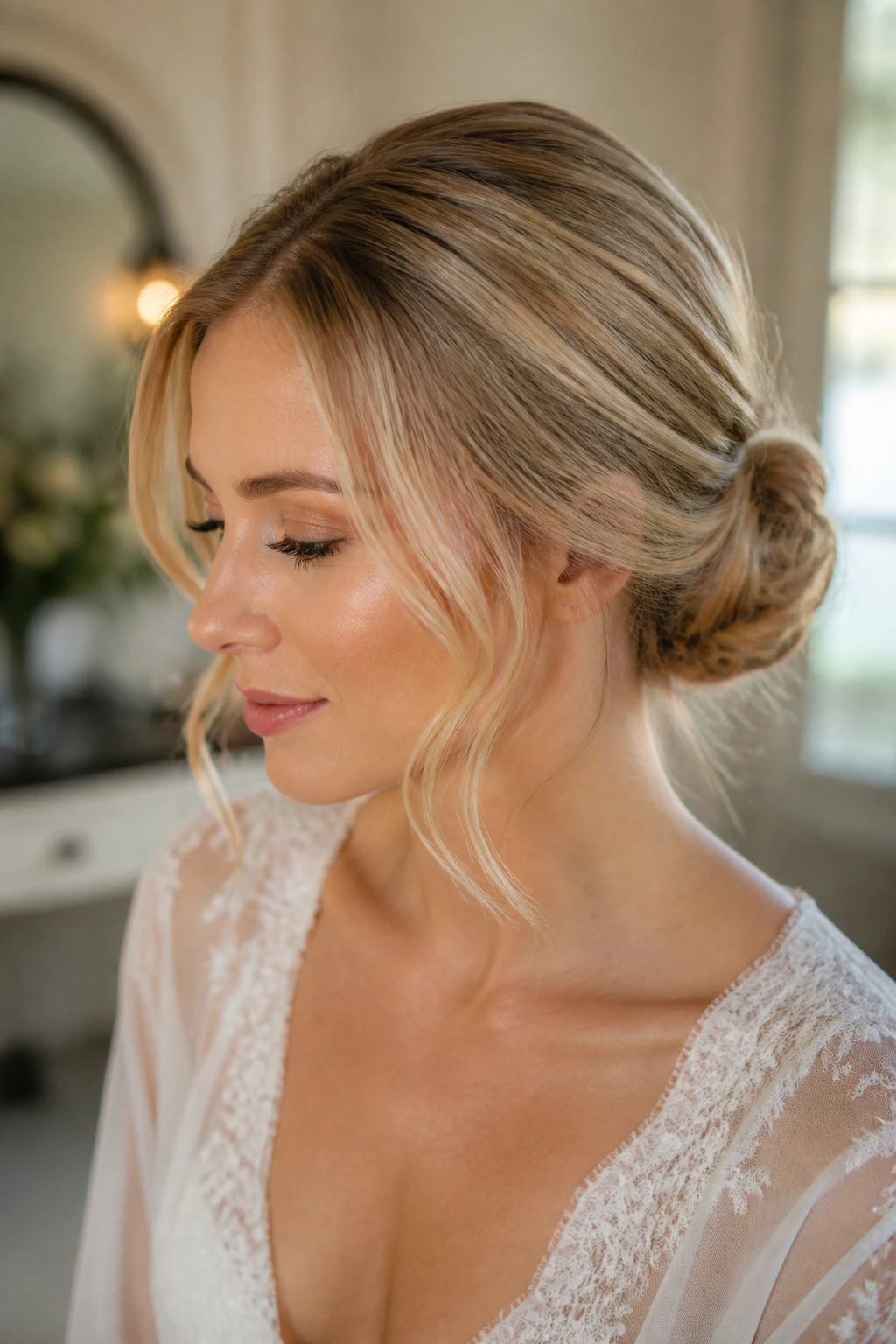
7. Soft Textured Bun with Loose Tendrils
This is the bun for people who want softness but not chaos. The textured bun sits at the nape or slightly above it, and a couple of loose tendrils soften the face without making the style look messy. On thin hair, that balance is everything.
Use texture spray on the mids before gathering the hair. Clean, slippery hair tends to escape, while slightly gritty hair stays where you tell it. Then twist the bun loosely so you can see a bit of shape rather than a perfectly sealed ball. The bun should look airy, not accidental.
A few tendrils near the cheekbones help break up the silhouette. Keep them thin. Too much hair left out can make the style look unfinished. A good textured bun looks deliberate from the front and secure from the back. That’s the sweet spot.
8. Rope-Braid Halo Half-Up
Rope braids are underrated. They’re quicker than a full braid, they look intricate, and they give thin hair a little extra width across the crown. That makes them especially useful in half-up wedding styles, where the goal is to add shape without pinning everything away.
Twist two sections from each temple backward, then wrap them around each other like a rope. Once they meet at the back, pin them in place and let the rest of the hair fall in waves. If the lengths are fine, one loose curl at the bottom can be enough. The braid detail creates the illusion of more going on up top.
This style is nice for outdoor ceremonies because it stays soft even when the wind catches it. It doesn’t need to be perfect. In fact, the slight looseness is the charm. If you like floral pins, place one where the rope braids meet. It gives the style a focal point and hides the pin cluster.
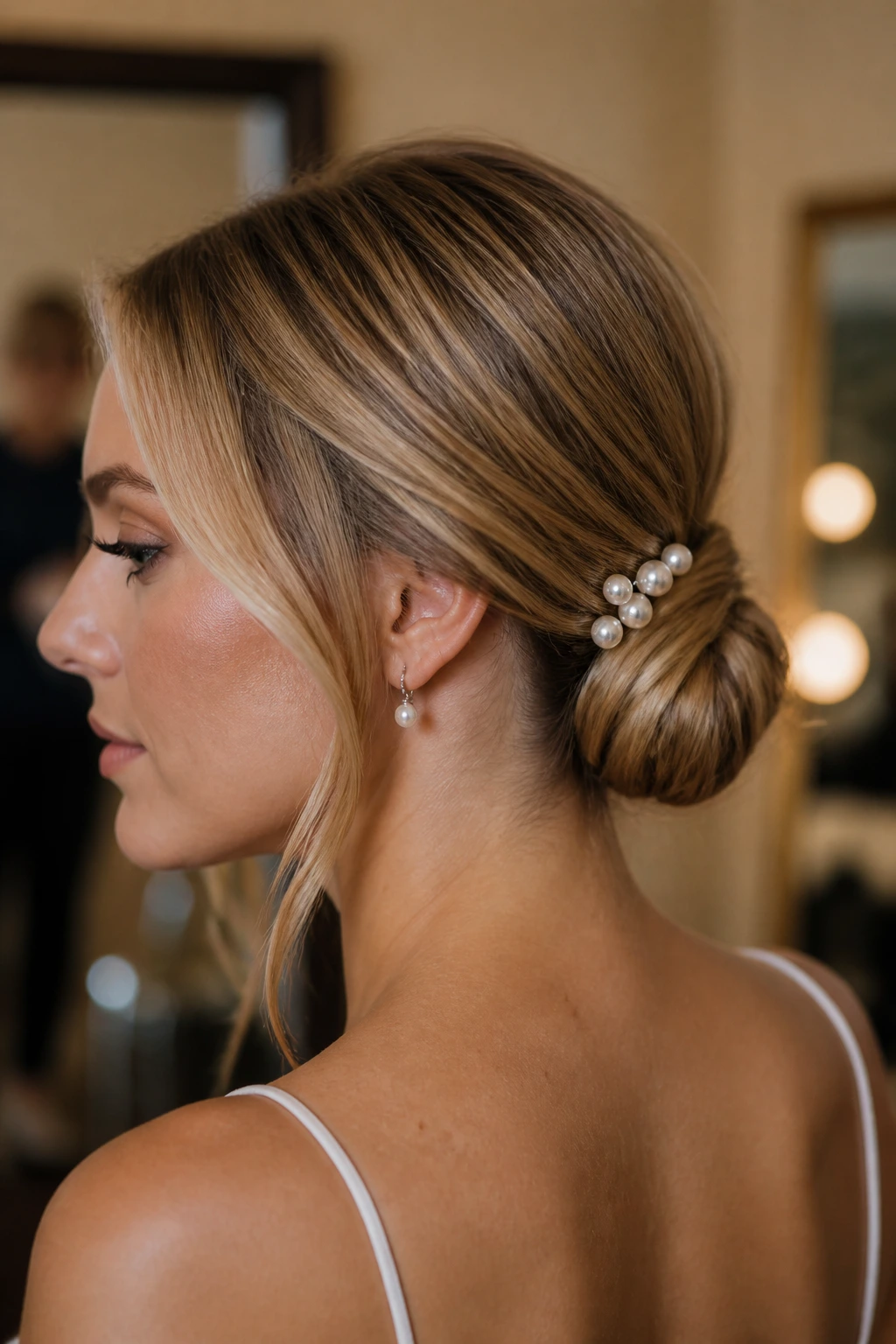
9. Pearl-Pinned Low Knot
Sometimes the best move is to stop trying to build height and instead make the small shape look rich. A low knot with pearl pins does exactly that. The knot stays compact, the silhouette stays neat, and the pins create enough sparkle to keep it from feeling plain.
What I like here is the control. Thin hair often looks best when it’s not dragged into a huge bun that needs half a can of spray to survive. A low knot uses the hair’s natural tendency to lie flat at the nape, then turns that into a virtue. Add pearl pins along one side of the knot and it instantly looks more deliberate.
Keep the knot slightly off-center if your dress has one-shoulder details or an asymmetrical neckline. Center it if the gown is classic and balanced. Either way, don’t overstuff it. The knot should feel taut and smooth, with just enough visible texture to keep the shape alive.
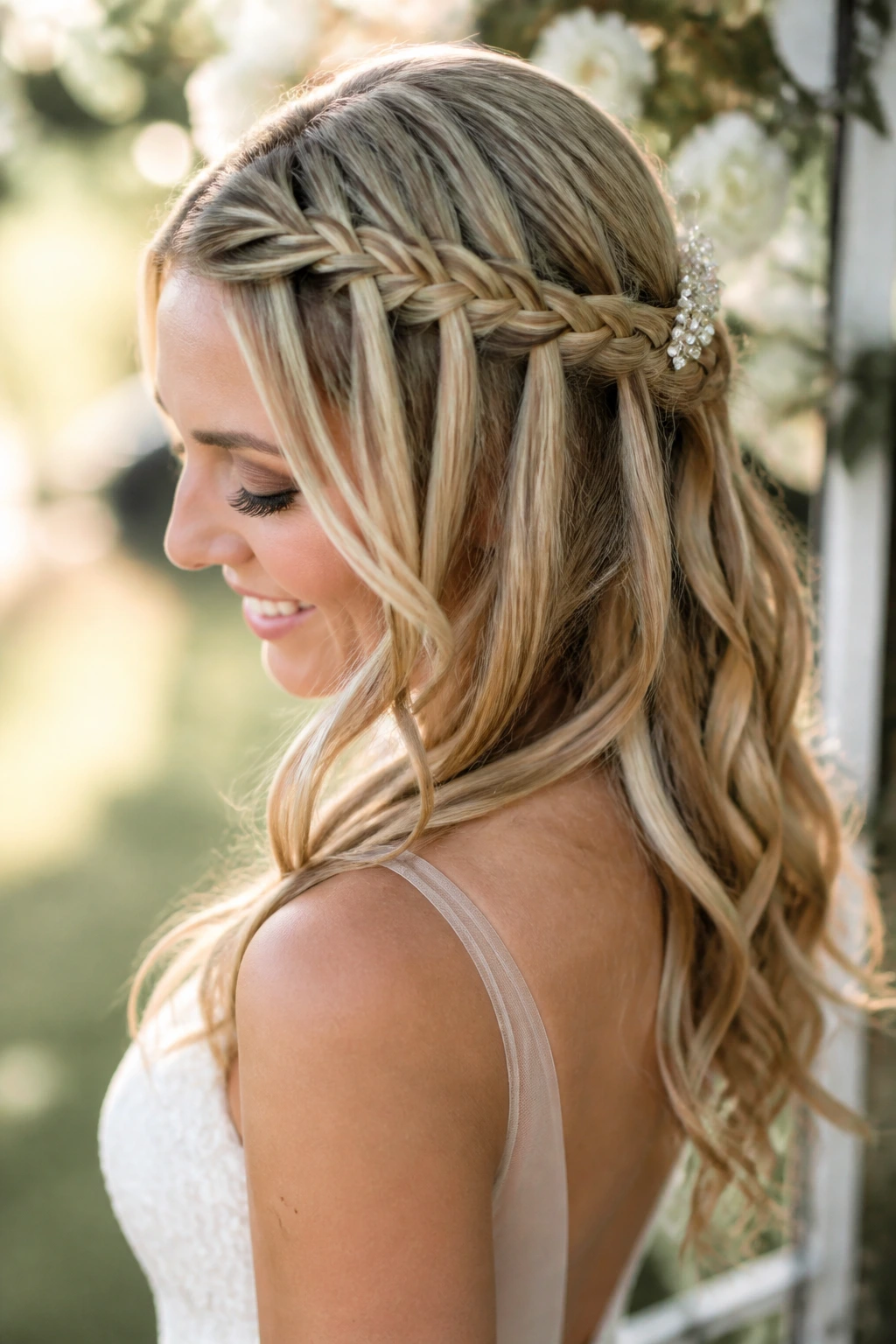
10. Waterfall Braid with Cascading Ends
Waterfall braids are good when you want the upper section to look detailed without sacrificing the rest of the length. Thin hair benefits from that split personality. The braid gives structure at the crown, and the loose lengths below keep the style from feeling pinned into a tiny idea of itself.
How to keep the braid from looking sparse
Use a clean side part and braid with shallow, even sections. If you make the braid too wide, the weave starts showing gaps. Smaller sections look tighter and more refined. Once the braid is done, gently tug the edges so the plait opens just enough to look fuller.
The cascading ends can be curled into soft ribbons or left in loose bends if the hair is shoulder-length. A small barrette at the end of the braid can hide the transition point. That’s the little place where thin hair tends to show its limits, so hide it with confidence.
This style suits bridesmaids, guests, and brides who want a softer profile than a full updo. It’s romantic without going sugary.
11. Teased Blowout with a Deep Side Part
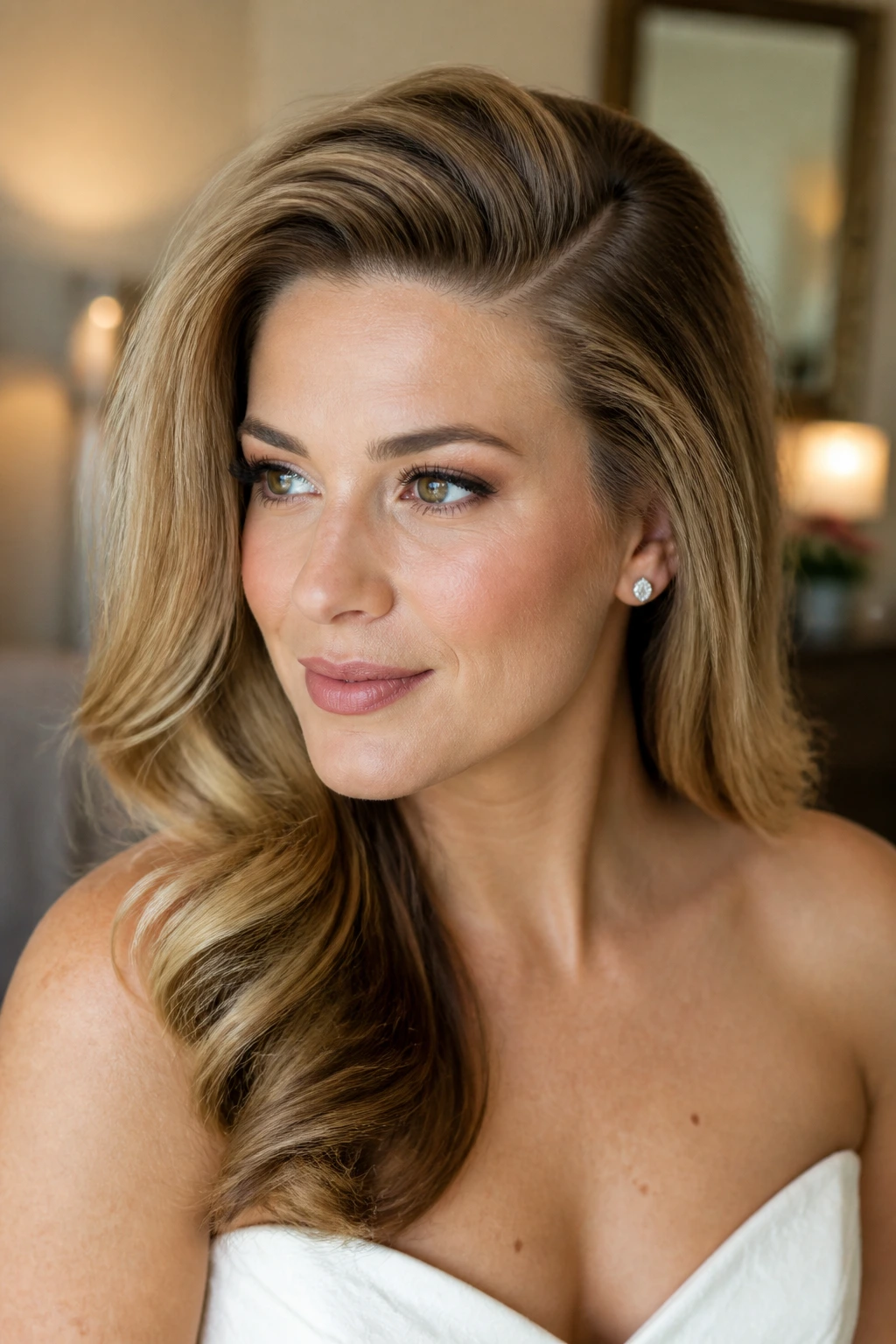
Not every wedding hairstyle for thin hair has to be pinned up. Sometimes the best answer is a blowout that looks expensive, shiny, and full of movement. A deep side part gives the crown immediate lift, and a careful tease at the root keeps the style from collapsing by the time the ceremony starts.
Blow-dry with a round brush and lift the roots in sections. Then use a 1.25-inch iron only on the mid-lengths and ends, leaving the top smooth enough to read polished. The goal is fullness, not frizz. Thin hair can get stringy if you overwork it, so stop once the bend looks soft and touchable.
Where this style shines
If you want your hair down because it feels more like you, this is a smart compromise. It’s especially good with a dress that has detail at the back, because the hair still moves when you turn. A side part, a bit of root lift, and brushed-out waves can do more than an overbuilt bun ever will.
A veil can still work here if it’s placed low and removed after the ceremony. Just make sure the part is strong enough to hold shape around the comb.
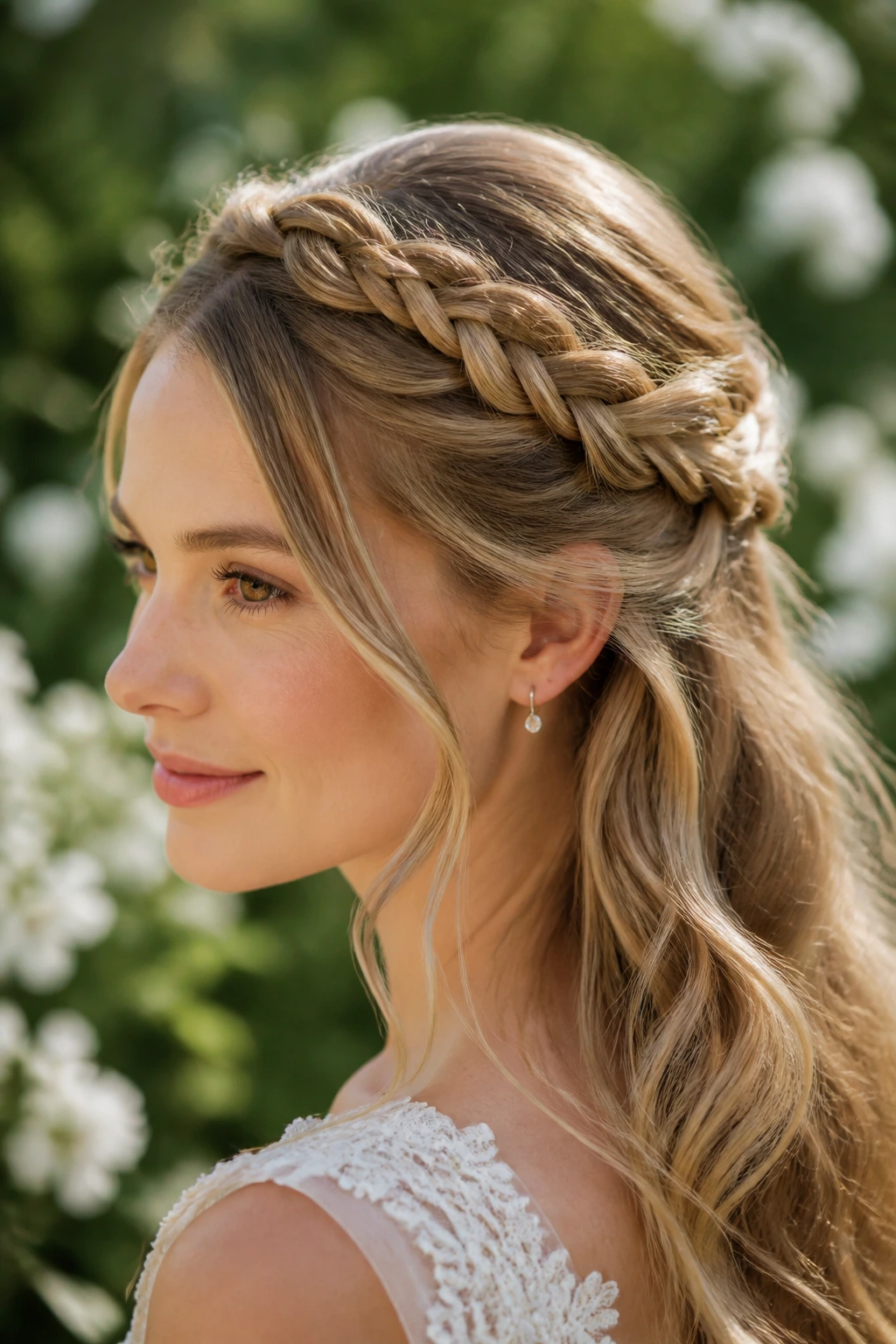
12. Halo Braid with Tucked Back Length
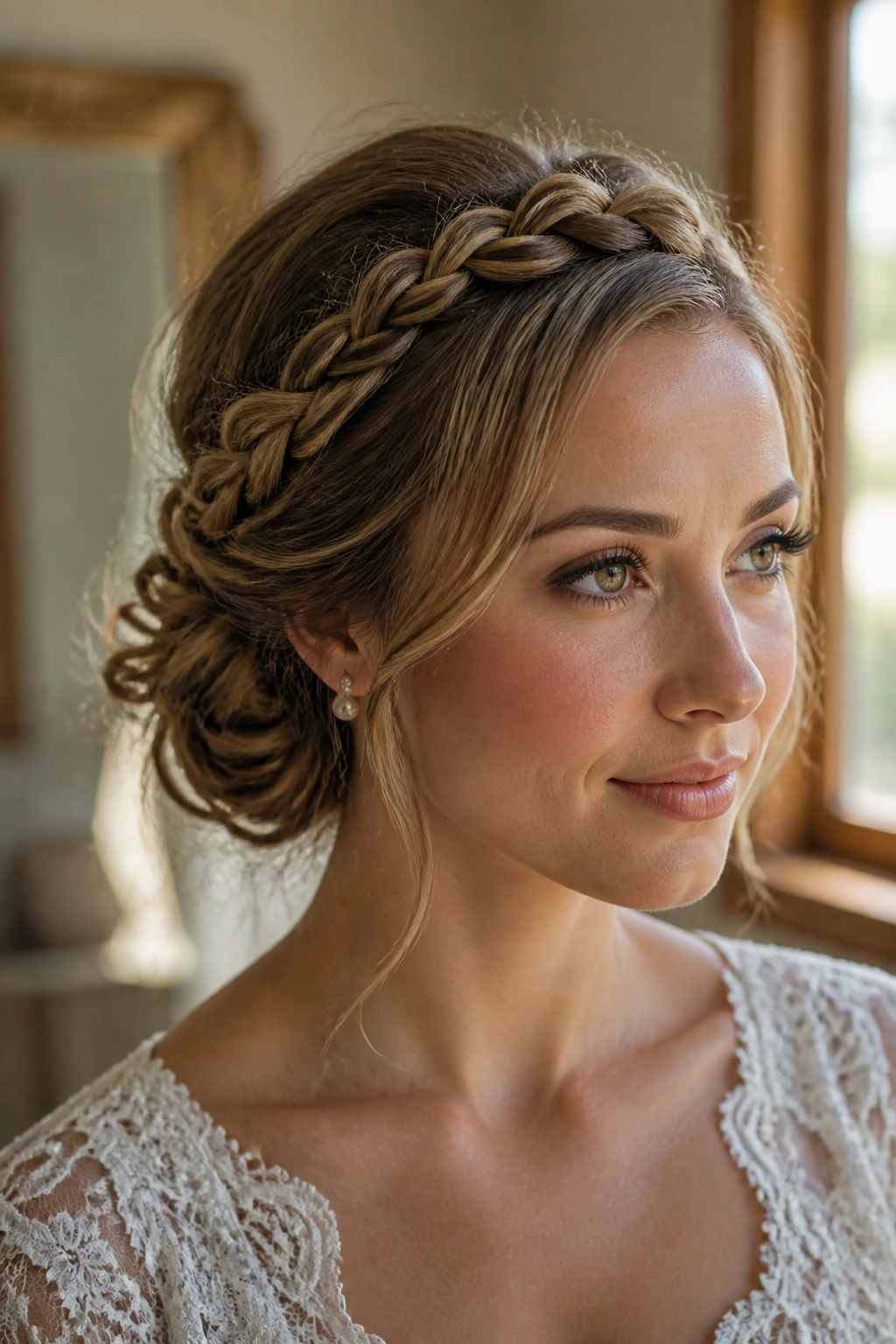
A halo braid gives thin hair a built-in frame. It creates visible texture around the hairline, which is exactly where flat hair tends to look its flattest. Then the lengths can be tucked, curled, or left soft at the back depending on how formal you want it to feel.
This style works best when the braid is not too tight. Let it sit a little proud of the head so the braid has dimension. Pull the edges open with your fingers once it’s secured. That tiny bit of widening makes the braid look fuller and saves it from looking like a rope drawn straight against the scalp.
A ribbon woven through the halo can be lovely, but don’t pick something so wide it takes over the whole look. Thin hair likes detail that adds texture, not weight. If the dress is airy or lace-trimmed, this style feels like a natural fit.
13. Faux Bob with a Veil-Safe Finish
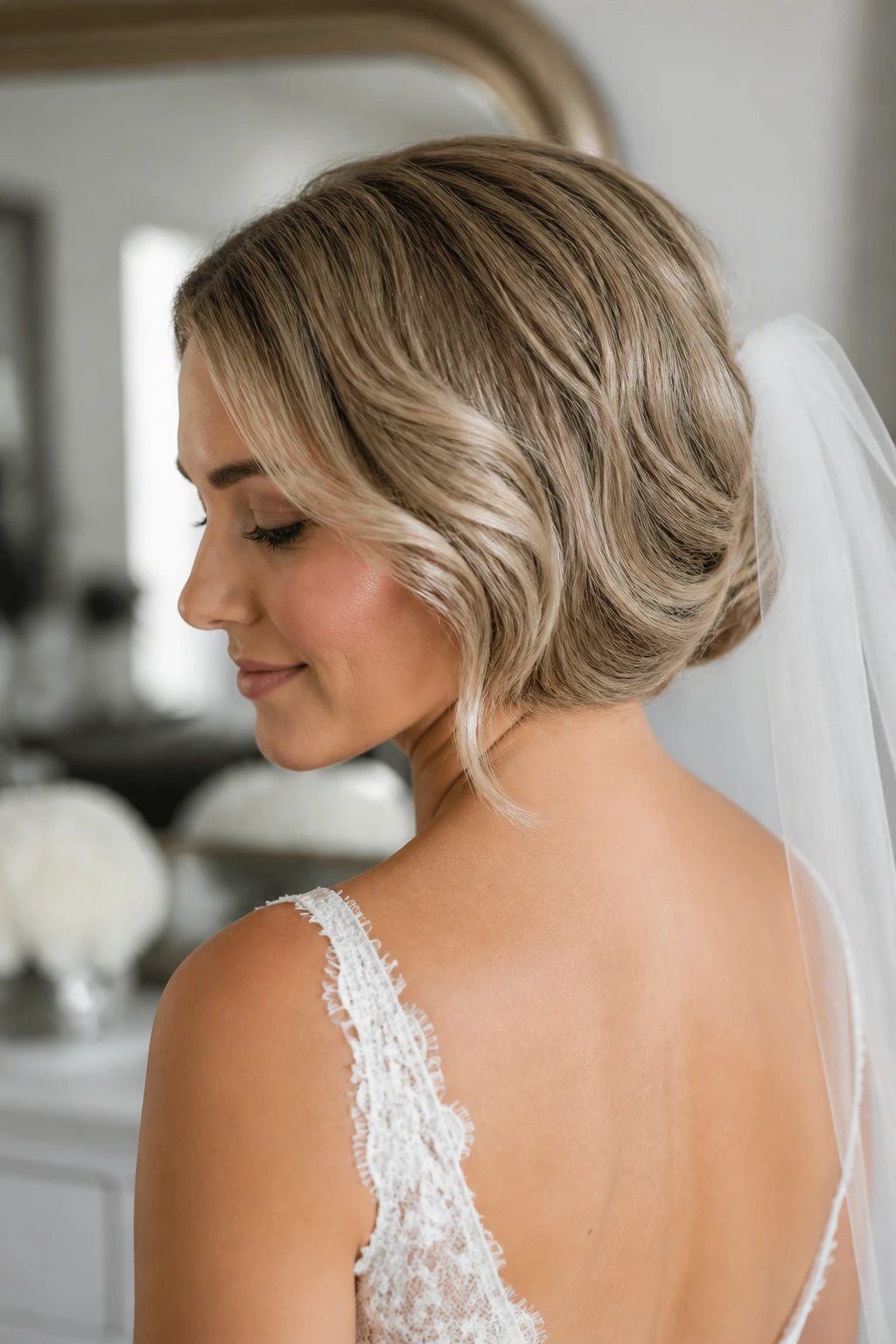
A faux bob is one of the smartest tricks for thin hair because it turns limited length into a feature. The style folds the ends under and pins them close to the neck, creating the illusion of a shorter, sculpted cut. It can feel very glamorous. Also, a little sneaky.
The best version starts with waves or curls that are fully cooled, then pinned upward and under at the nape in small sections. Thin hair is easier to manage in pieces than all at once. The shape should sit close enough to the neck to feel believable, but not so tight that it loses softness.
This is a strong choice for vintage-inspired gowns, tea-length dresses, and anyone who wants the neckline to stay open. It also works beautifully with a birdcage veil or a low comb. If you have layers, leave the shortest pieces around the face; they sell the illusion.
14. Braided Low Ponytail with Ribbon
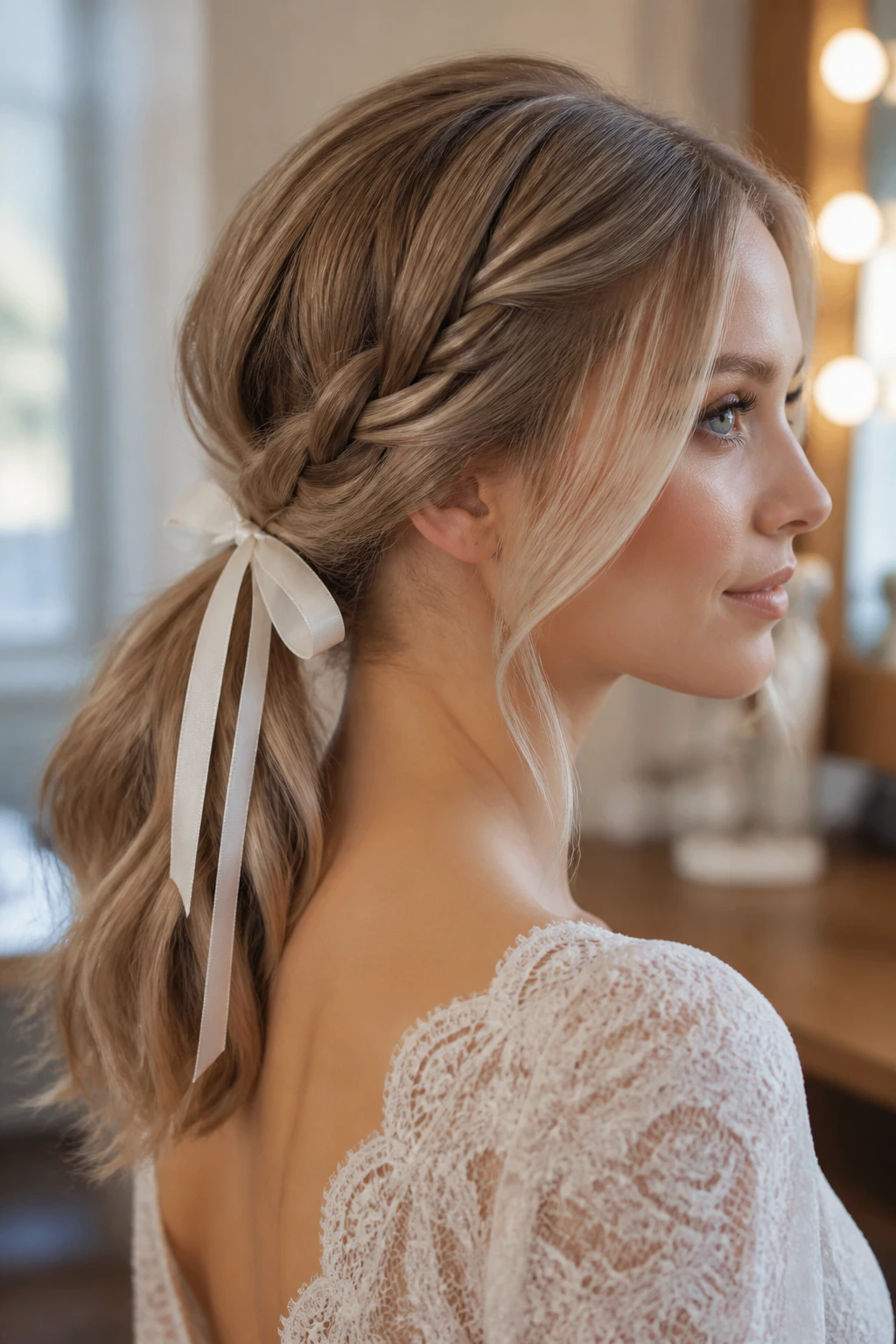
A low ponytail gets far more interesting when you braid part of the length and finish it with ribbon. The braid adds texture where thin hair usually looks most vulnerable, and the ribbon gives the ponytail a point of focus at the base.
Start with a soft side part or center part, depending on the dress. Gather the hair low, braid the tail halfway or all the way down, then tie off with satin or velvet ribbon. The ribbon should be thin enough to feel elegant, not like gift wrap. Think polished, not crafty.
If the hair is very fine, curl the ponytail first so the braid has some body. Straight, slender strands can look too narrow in a ponytail. A few face-framing pieces and a small crown lift keep the whole style from sinking visually.
15. Vintage Pin-Curled Updo
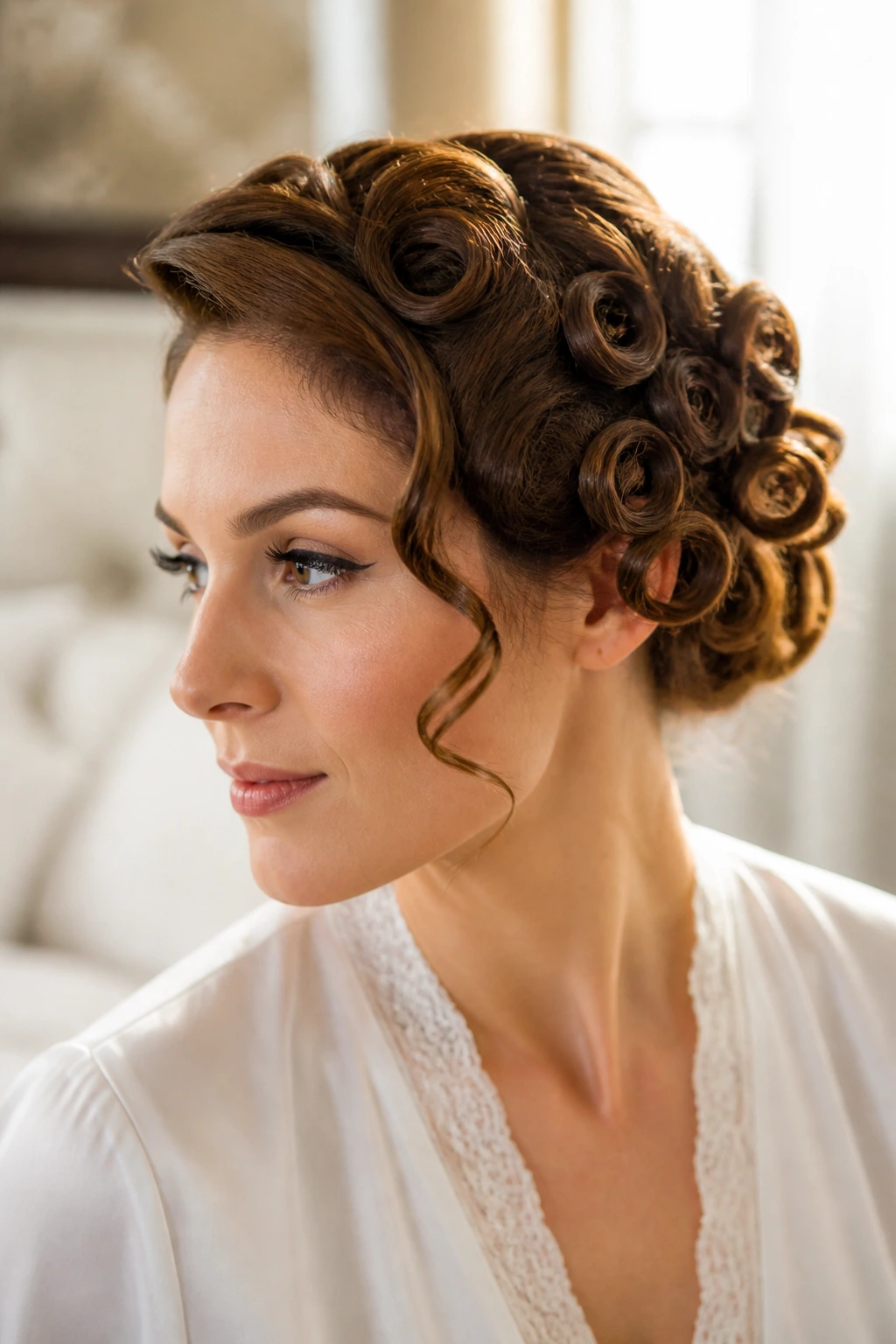
Pin curls are kind to thin hair because they work in small sections and build shape without requiring density all over the head. Each curl becomes a little unit of structure. Put them together, and you get an updo that looks detailed instead of flat.
Why pin curls are so useful
You can set the curls with a small iron or roller, let them cool, and then pin them into a compact arrangement at the back or side. That means the style holds better than one giant twist that wants to unravel. Thin hair often behaves better in pieces. This is one of those times where smaller is smarter.
A vintage pin-curl updo works well with a cat-eye liner, a clean neckline, and a dress that could use a little old-school romance. It’s also a good answer if your hair is layered or not very long, because the pins can disguise length limits easily.
Keep one or two curls looser near the temples if you want the style to feel softer. Too neat and it becomes costume-y. Too loose and it loses the point.
16. Dutch Braid Crown into Ponytail
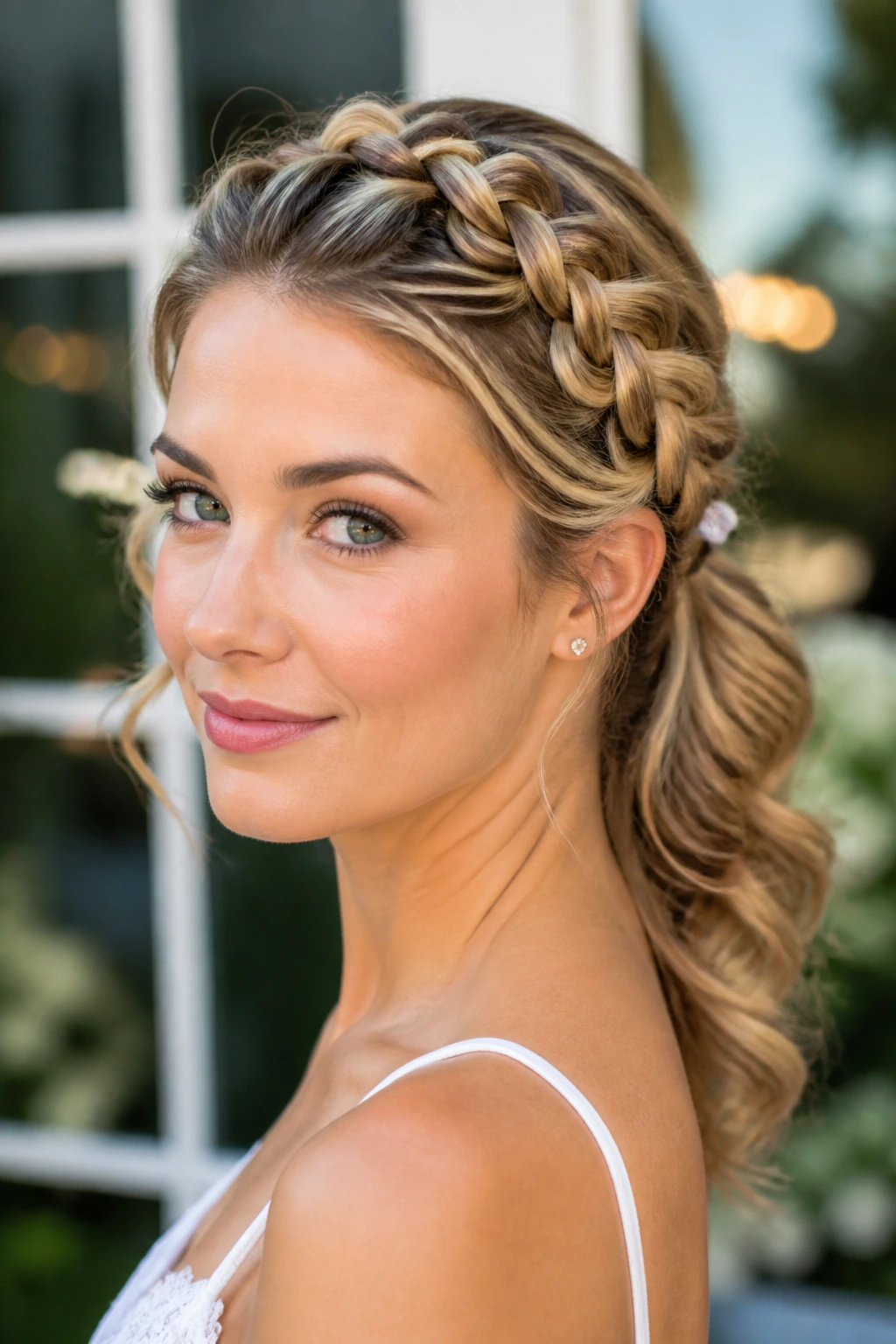
A Dutch braid gives visible height right away because the braid sits on top of the hair instead of sinking into it. That raised effect is gold for thin hair. Add a ponytail at the back, and you get movement without losing the crown structure.
This style works especially well if the hair is medium length or longer and you want something that feels polished but not stiff. Braid from the front hairline toward the back, keeping the braid snug enough to stay in place but loose enough to open a little once you’re done. Then gather the rest into a ponytail, curl the tail, and wrap a section around the elastic.
If you want a bit more fullness, insert a tiny ponytail extension or clip-in piece into the tail. You do not need much. One small addition is often enough to make the silhouette read bigger from the side.
17. Gibson Tuck with a Polished Finish
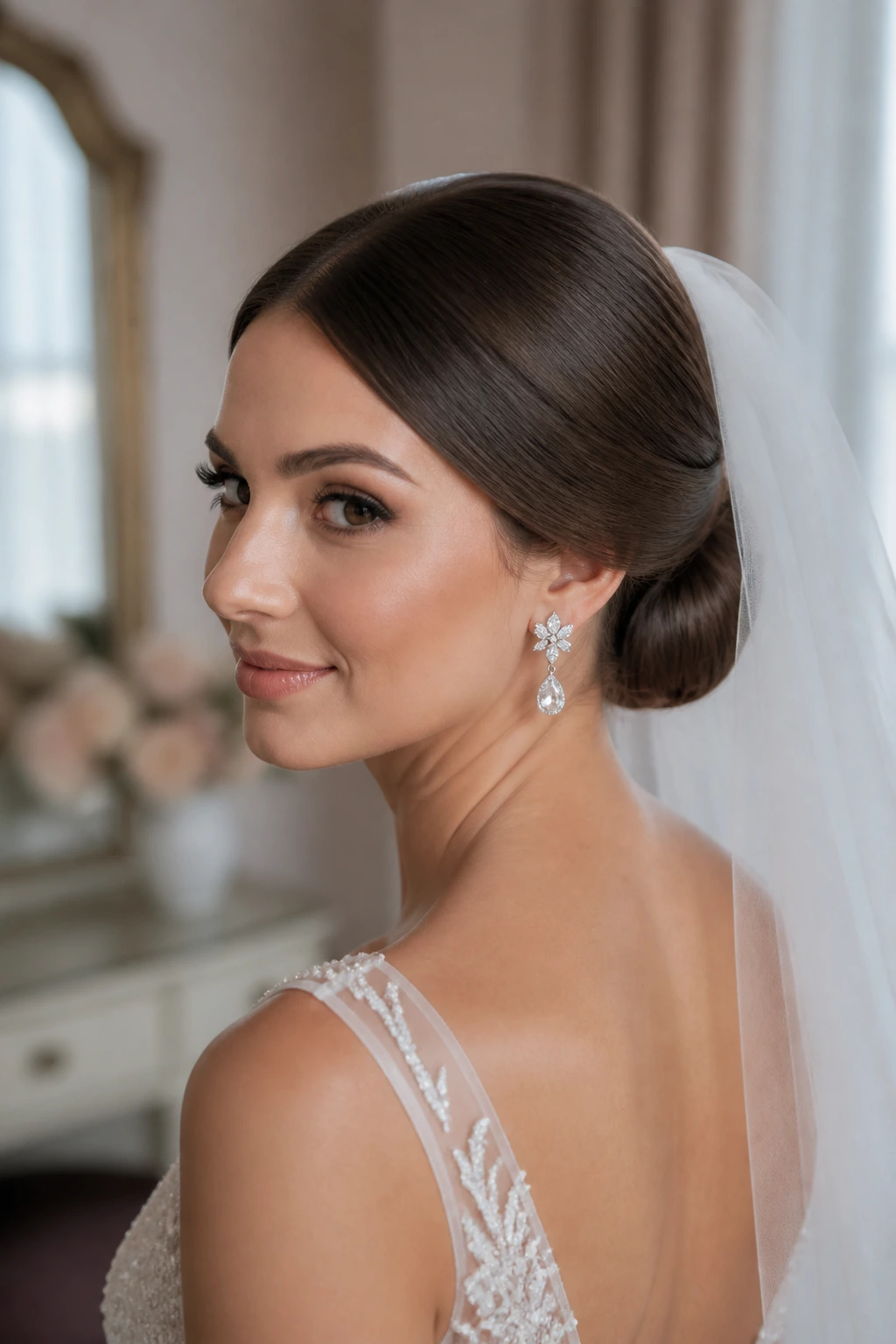
The Gibson tuck is quietly brilliant for thin hair. It rolls the length into itself at the nape, which means there’s no oversized bun to collapse and no loose ends to misbehave. The finished shape is smooth, graceful, and secure.
What makes it wedding-worthy is the finish. If you keep the top smooth and the tuck tight, the whole style looks controlled in a very good way. Use a small elastic or a couple of hidden pins to create the pocket, then tuck the lengths upward until the roll sits neatly against the neck. A decorative comb or a line of tiny pins can sit just above it.
This is a strong choice for a more formal ceremony because it’s tidy without feeling severe. It also holds up well under a veil if the comb is placed correctly. Thin hair doesn’t have to fight to look elegant here. The shape does the work.
18. Half-Up Top Knot with Soft Waves
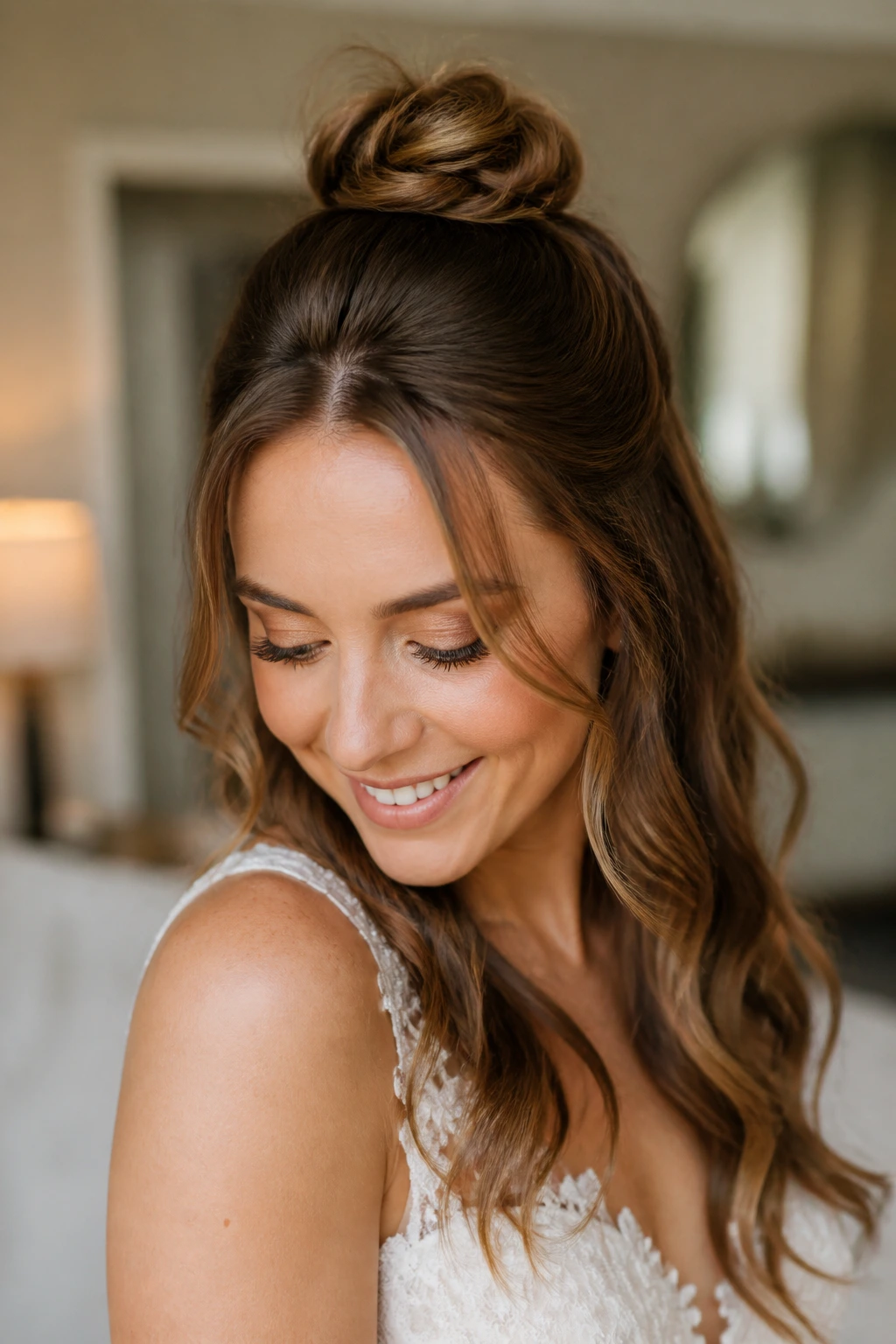
A half-up top knot sounds playful, but it can look surprisingly wedding-ready when the waves underneath are soft and controlled. The knot gives the crown a focal point, and the loose length below keeps the style from becoming too serious.
The knot itself should stay small. That’s the trick. If you build it too large, thin hair starts showing its tricks. A compact knot with a little lift at the base creates the impression of more hair around the top of the head. Below that, loose waves keep the shape romantic.
This is one of those styles that looks particularly good with a dress that has a simple bodice or clean lines. The hair carries the visual interest. Add a delicate clip at the base of the knot if you want a little sparkle. Or leave it plain and let the shape do the talking.
19. Sleek Center-Part Bun
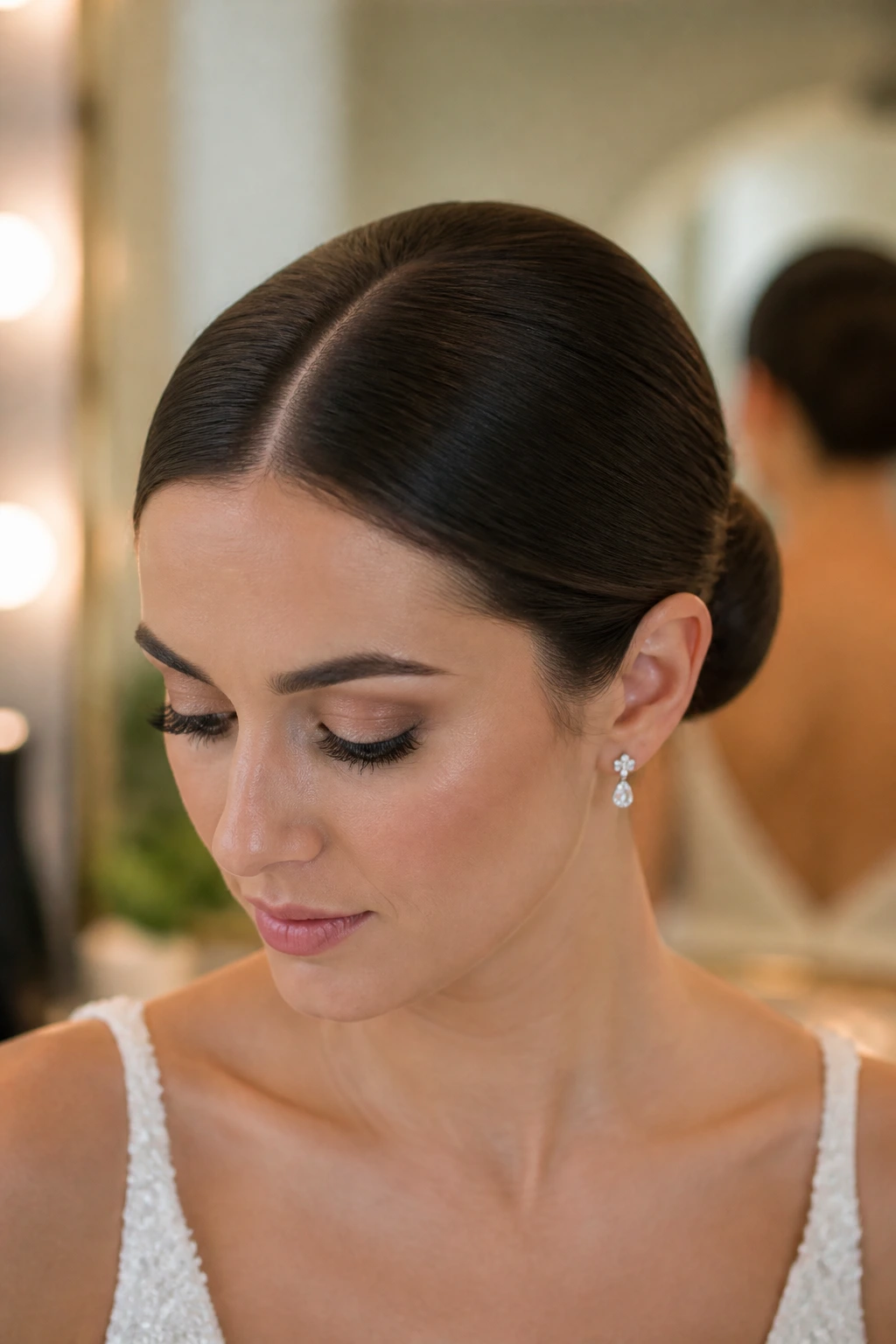
A sleek center-part bun is a bold choice, and thin hair can wear it beautifully because the style depends more on precision than volume. The middle part brings symmetry, the bun sits low and clean, and the finish reads modern instead of fussy.
The important part is not to drown the hair in shine products. A small amount of serum through the mids is enough. Too much and the hair starts slipping out of the bun. Thin hair needs control, not grease. Smooth the part carefully, gather the hair low, and twist into a neat bun that stays close to the head.
Why it works with formal clothes
This is one of the best looks for dramatic earrings, sharp tailoring, or a dress with strong lines. The clean center part opens the face and makes the rest of the styling feel deliberate. If the dress has a structured neckline, this bun gives it room to breathe.
If your hair is very fine, a hairnet under the bun can help keep the shape compact. It’s not glamorous to mention, but it’s useful. Useful wins.
20. Tousled Pixie with Jeweled Clips
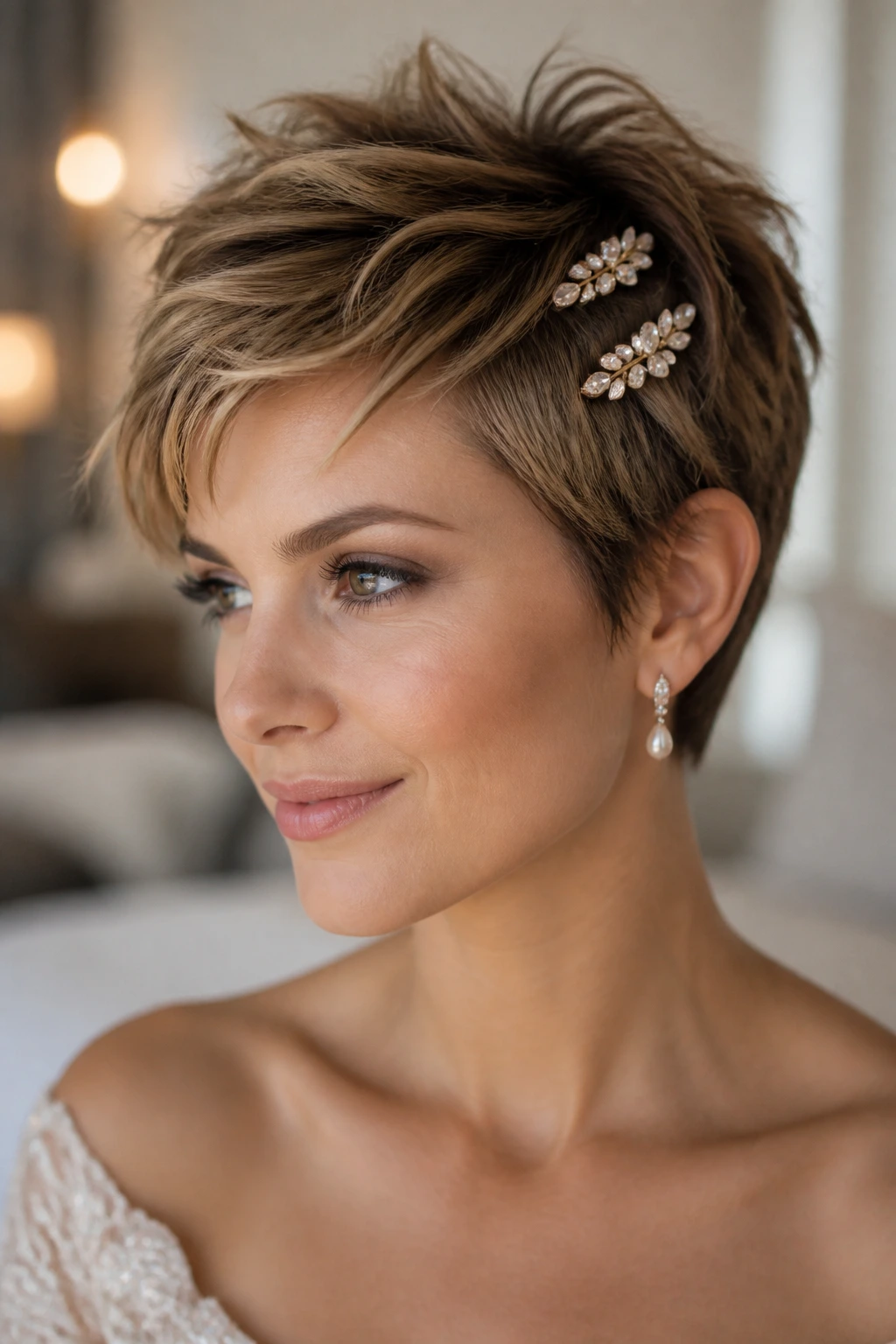
Short hair can absolutely belong in a wedding lineup. A textured pixie with jeweled clips proves the point. The style leans into the cut instead of trying to imitate longer hair, which is usually where people go wrong. Thin hair and short hair can look gorgeous when the shape is clear.
Use a small amount of paste or cream to separate the layers, then push the top slightly forward or to one side depending on the face shape. The clips should sit where the hair naturally falls, not fight it. A single crystal barrette near the temple can be enough. Two clips can work too, but keep them light.
For short hair, the cut matters more than volume
If the pixie has a little length on top, you can create a slight sweep or tuck one side behind the ear. If it’s closer to the head, go for a crisp, clean shape and let the accessories carry the formality. The charm here is that the hair looks intentional. No pretending. No awkward extensions. Just a strong, simple silhouette.
21. Lob Waves with One-Side Tuck
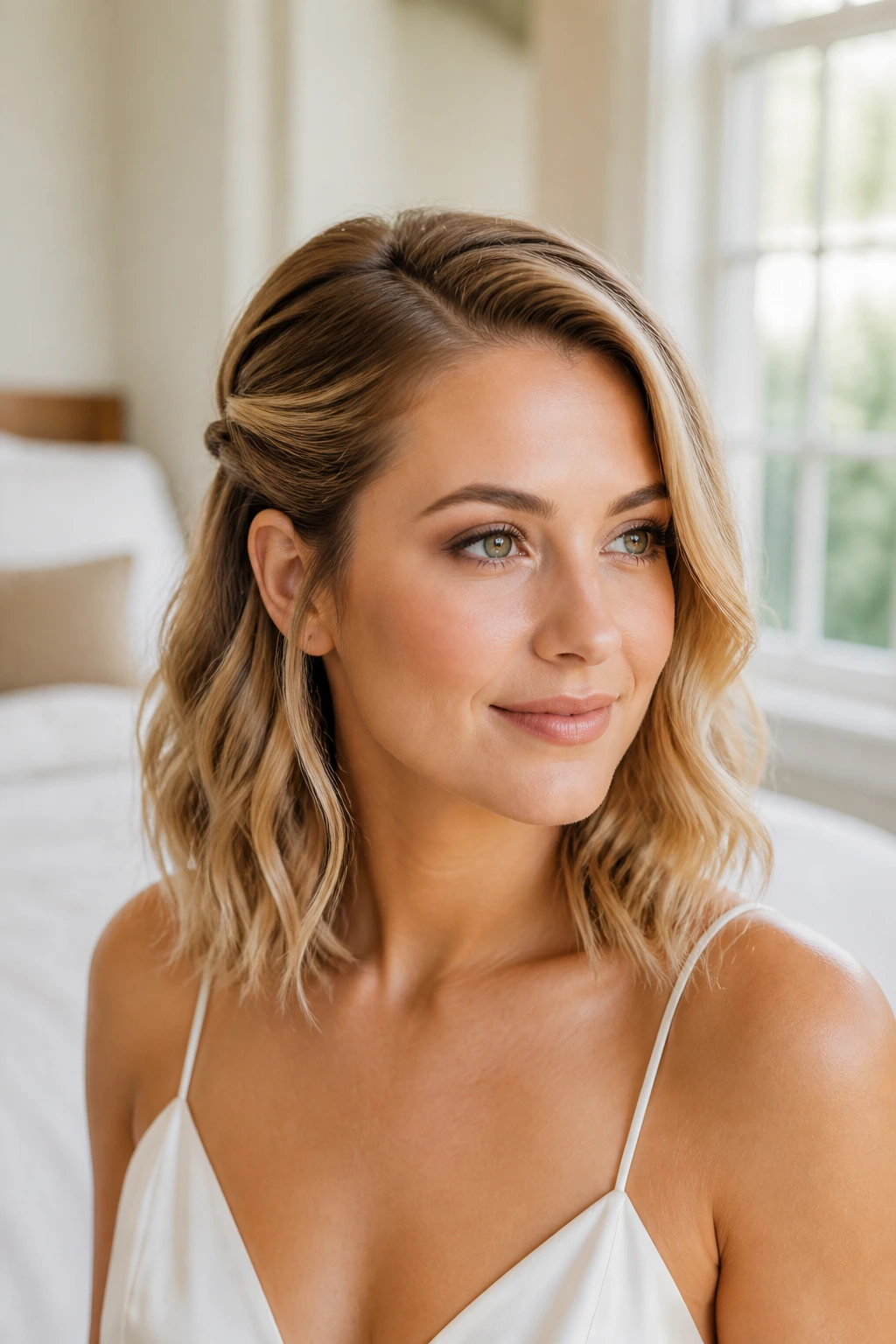
A lob is one of the easiest lengths for thin hair to dress up because it sits right in the middle between loose and structured. Add soft waves and tuck one side back, and you get a style that feels done without looking overworked.
The one-side tuck matters more than people think. It creates an asymmetry that gives the hair presence, especially from the side profile. Thin hair can flatten into a straight sheet if you’re not careful. A tucked side and a bit of bend through the ends keep the shape alive.
This works nicely with one statement earring or a comb placed just behind the ear. If the dress has a clean shoulder line, the tuck helps the neckline stay visible. That’s a good trade. The hair gets to frame the face, and the dress still gets a turn.
22. Braided Bun with Micro-Braid Detail
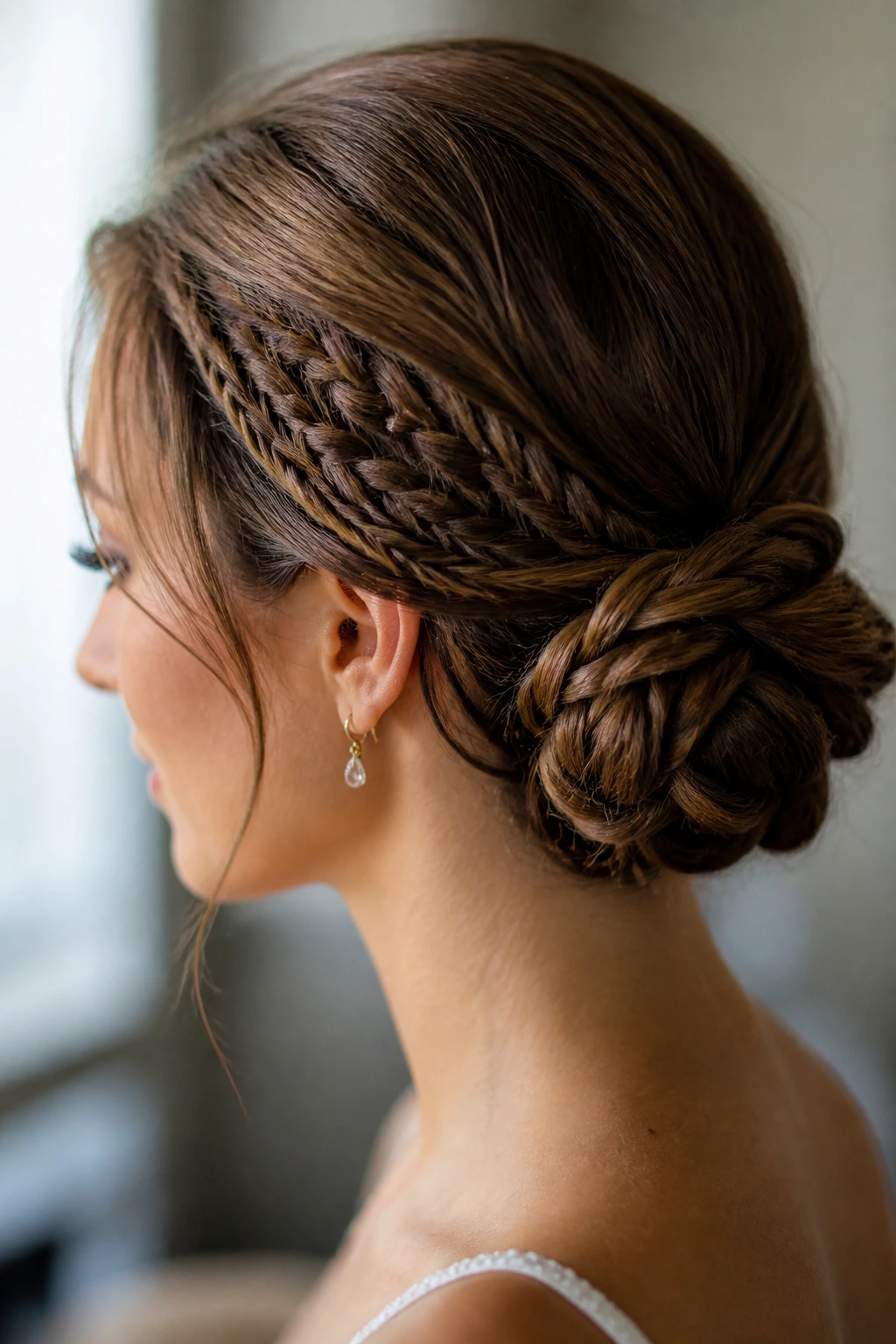
Small braids can make thin hair look far more textured than it really is. In a braided bun, the micro-braid detail serves two jobs at once: it hides sparse spots and gives the bun some visual complexity. That makes it useful for wedding hair, where the back of the head often gets as much attention as the front.
Start with one or two tiny braids near the temples or just above the ears. Bring them into a low bun or side bun and pin them in place. The rest of the hair can be smoothed, twisted, or lightly curled before gathering. The point is not to cover every inch with braid work. The point is to add enough detail that the style reads fuller from a distance.
If you want this to last through a long reception, anchor the bun with U-pins and finish with a firm spray only at the very end. Too much spray early on turns the micro-braids stiff, and stiff braids tend to look smaller than they are.
23. Ribbon-Tied Ponytail with Soft Ends
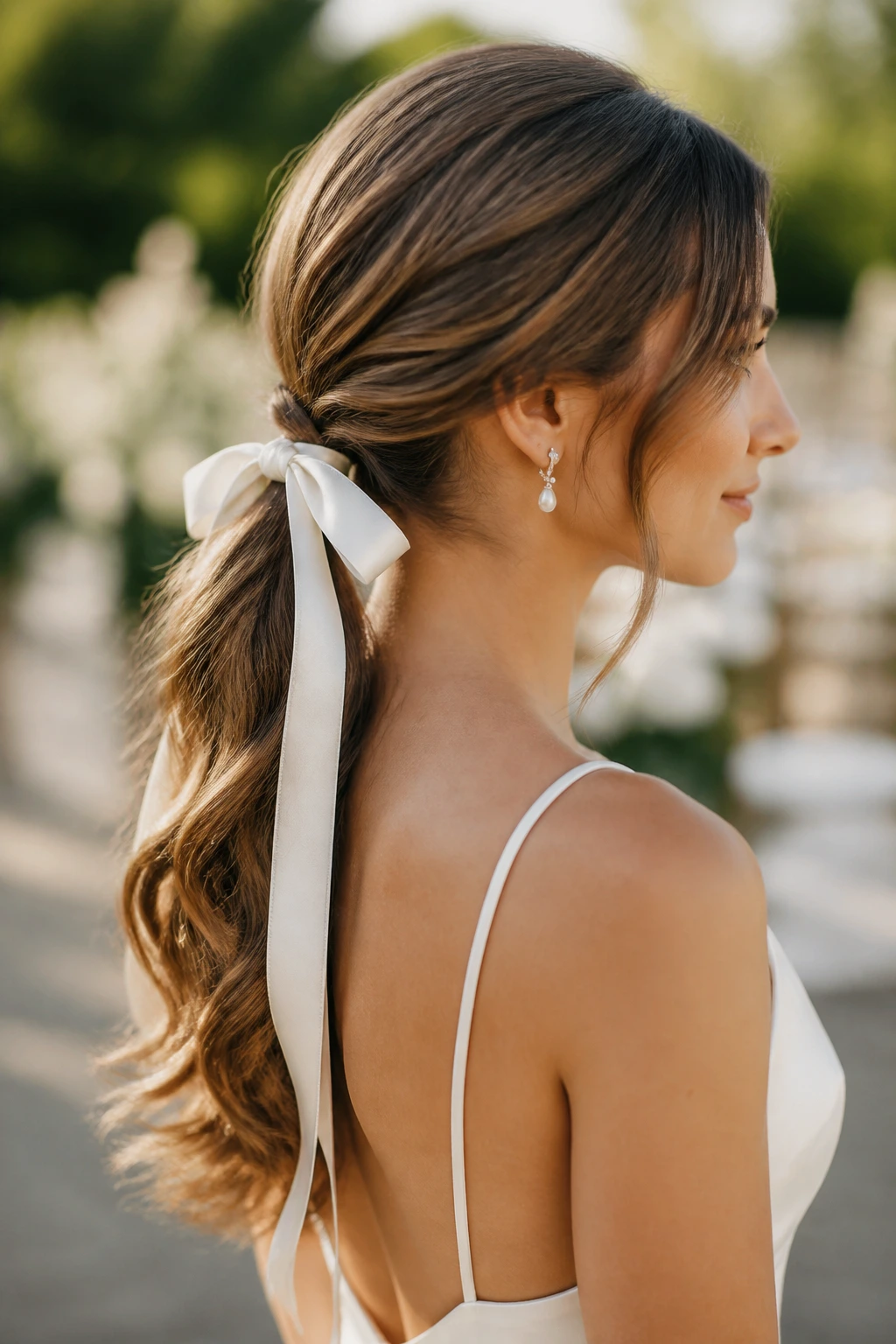
There’s something charming about a low ponytail tied with ribbon. It feels less severe than an updo and less casual than a plain elastic. For thin hair, the ribbon becomes part of the architecture, not just decoration.
The ponytail should sit low and slightly loose at the crown. Add a soft wave to the lengths so the tail has body, then tie a satin or velvet ribbon around the base. If the hair is very fine, a small hidden elastic under the ribbon keeps the tail from slipping. That part is worth doing. Otherwise the ribbon becomes the only thing holding the shape together, and that’s a bad plan.
This style suits garden ceremonies, daytime receptions, and dresses with softer lines. It also photographs nicely because the ribbon breaks up the straight line of the ponytail. If you want a more formal finish, choose a ribbon that matches the gown or the bouquet ribbon exactly.
24. Side Chignon with Wispy Tendrils
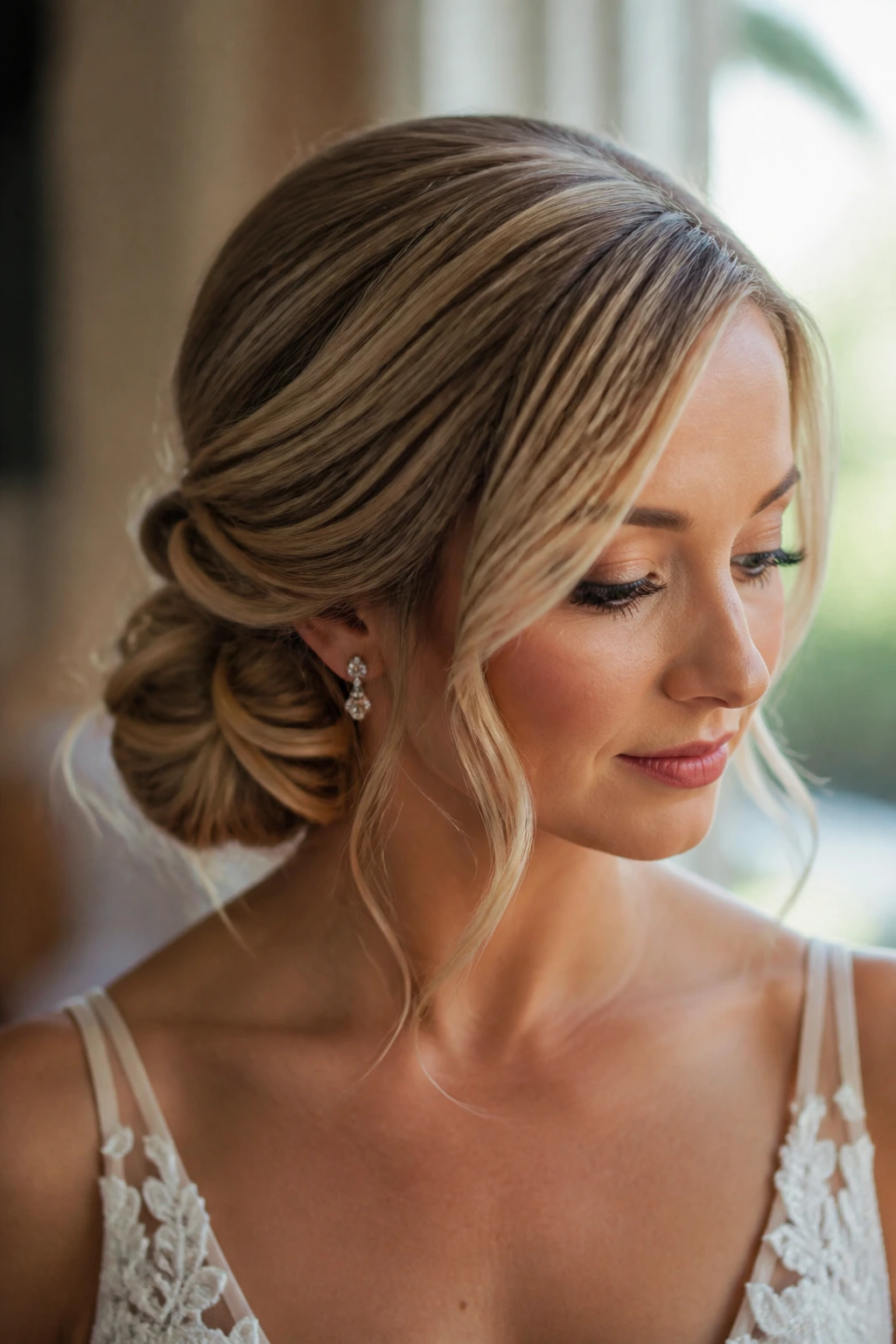
A side chignon has a little more personality than a centered bun. On thin hair, that shift can make all the difference. The side placement gives the eye something to follow, and the wispy tendrils at the front keep the style from feeling too boxed in.
A deep side part helps the whole look feel intentional. Gather the hair toward the lower side of the head, twist it into a chignon, and let a few fine pieces fall near the cheekbones. Those tendrils should be soft, not stringy. Curl them lightly if you want the shape to hold.
This is a nice choice when you want romance without a full cascade of waves. It works with asymmetrical necklines, off-the-shoulder dresses, and earrings that need a little space. The style has movement, but it still feels grounded.
25. Curly Volume Updo with Pin Support
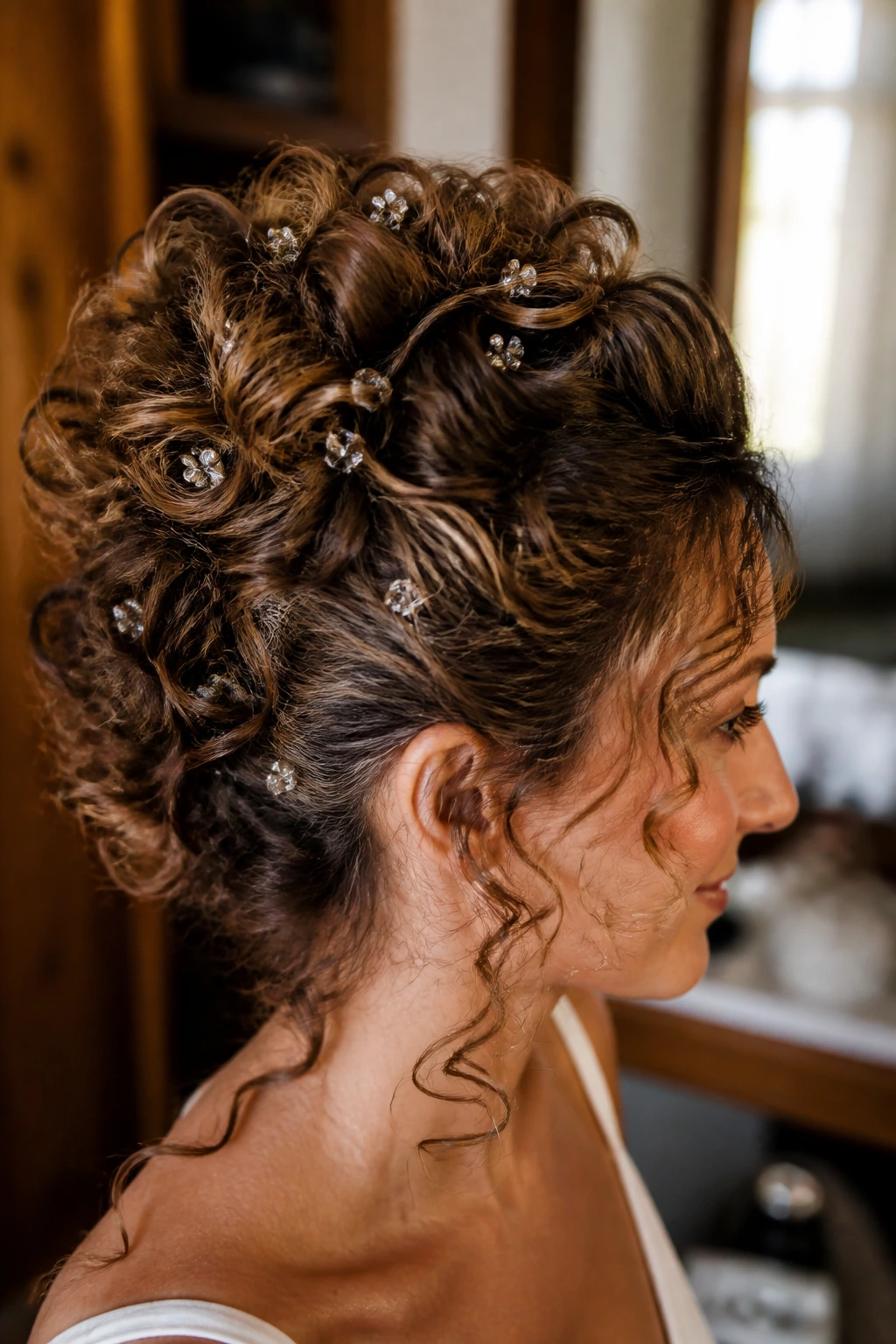
If your hair has natural curl or a bend that can be coaxed into shape, use it. Don’t flatten it into a punishment bun. A curly volume updo keeps the texture visible while lifting the curls upward and pinning them in a controlled cluster. Thin curly hair can look fuller than straight fine hair because the curl itself creates body.
Where the curl pattern does the work
The best version starts with well-defined curls, not brushed-out fuzz. Gather them loosely, lift them at the crown, and pin individual curl groups where they naturally want to sit. Let some pieces remain visible. The point is to show texture, not erase it.
This kind of updo looks beautiful with floral accents or a comb tucked into one side. It’s also forgiving, which I love. If one curl springs loose during the night, the style still looks lived-in and romantic. That is a feature, not a flaw.
Keep a few U-pins in the base rather than relying on one big twist. Curly hair has its own gravity, and it’s better to respect that than fight it.
26. Veil-Friendly Low Twist
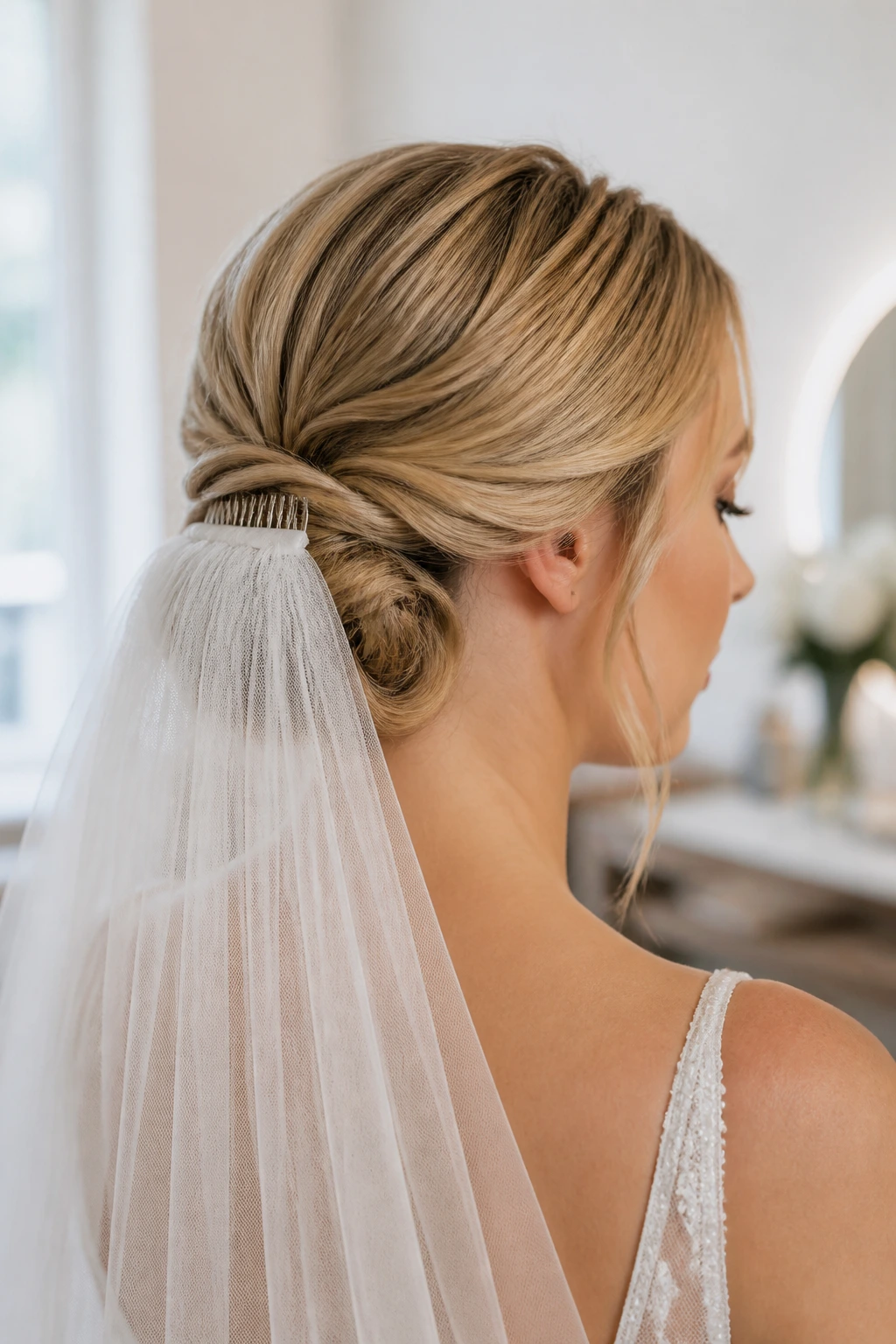
A low twist is one of the cleanest answers for a bride who needs both a veil and a secure style. The twist sits low enough to avoid the comb’s territory, and the shape stays smooth without needing much bulk. Thin hair benefits from that restraint.
The twist should be snug at the nape, with the ends tucked carefully inward. If the hair is layered, pin the shorter pieces first so they don’t escape. Then place the veil comb just above the twist, not inside it, unless your stylist is building the whole thing as a unit. That detail matters. A veil that pulls against the twist can loosen the style fast.
This look works with classic gowns, simple veils, and ceremonies where you want the hair to look polished from every angle. It’s not flashy. Good. Not every wedding hairstyle needs to be loud to be remembered.
27. Polished Twist with Decorative Comb
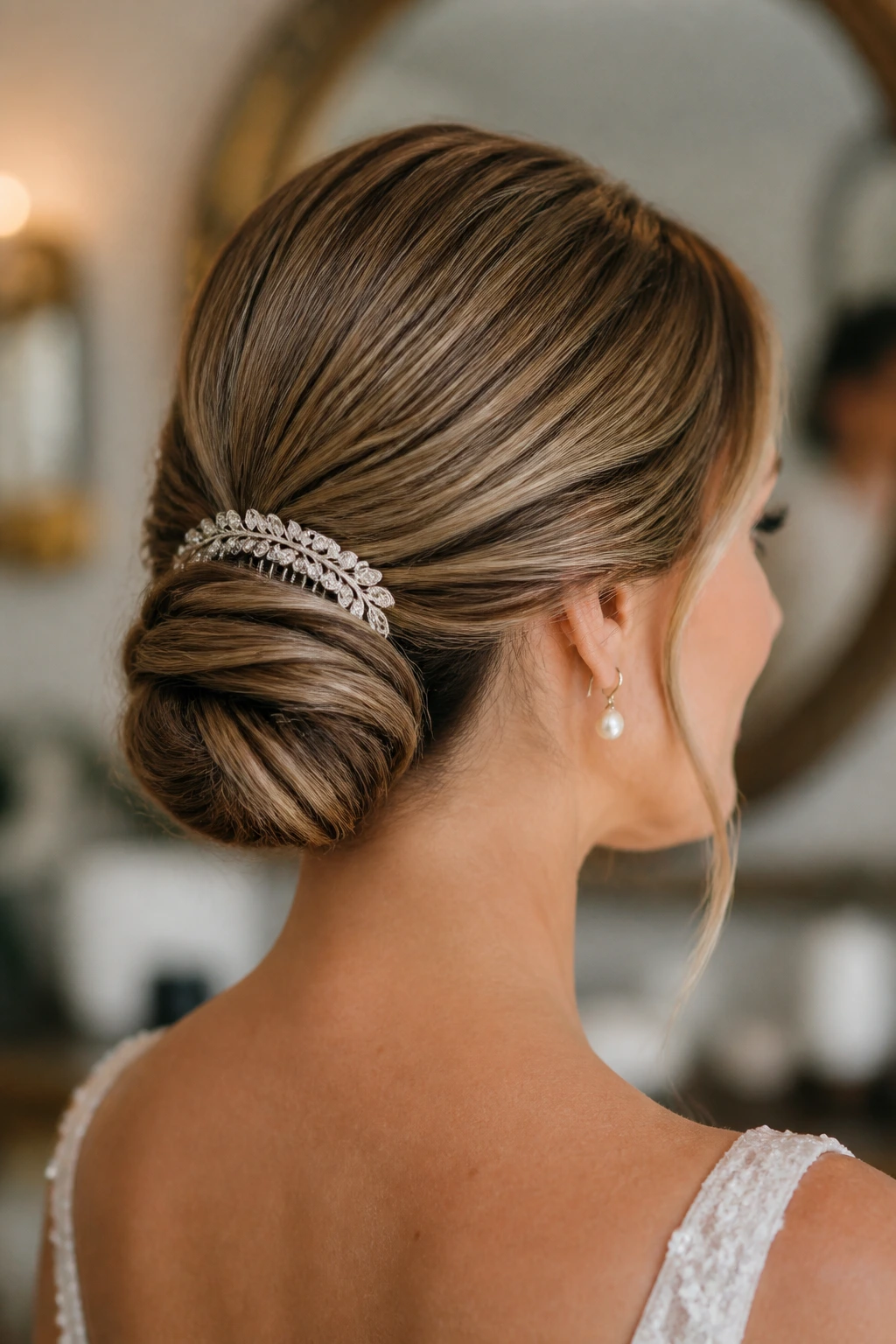
A polished twist can look almost architectural on thin hair. The strands are smoothed back, twisted neatly, and then anchored with a decorative comb that does the visual work the hair can’t do alone. That comb becomes part of the silhouette, which is exactly why it works.
You’ll want the twist to sit low and close to the head, with no loose fluff around the edges. Thin hair looks sharper when the shape is clean. Add a comb with a curved edge or a small row of stones, and place it where the twist begins to fold. It should feel like the comb belongs there, not like it was shoved on as an afterthought.
This is a strong pick for formal evening weddings or dresses with strong fabric and structure. The style reads refined, but not fussy. If you like neat lines and clear shapes, this one has a lot going for it.
28. Soft S-Waves with a Tucked Back Side
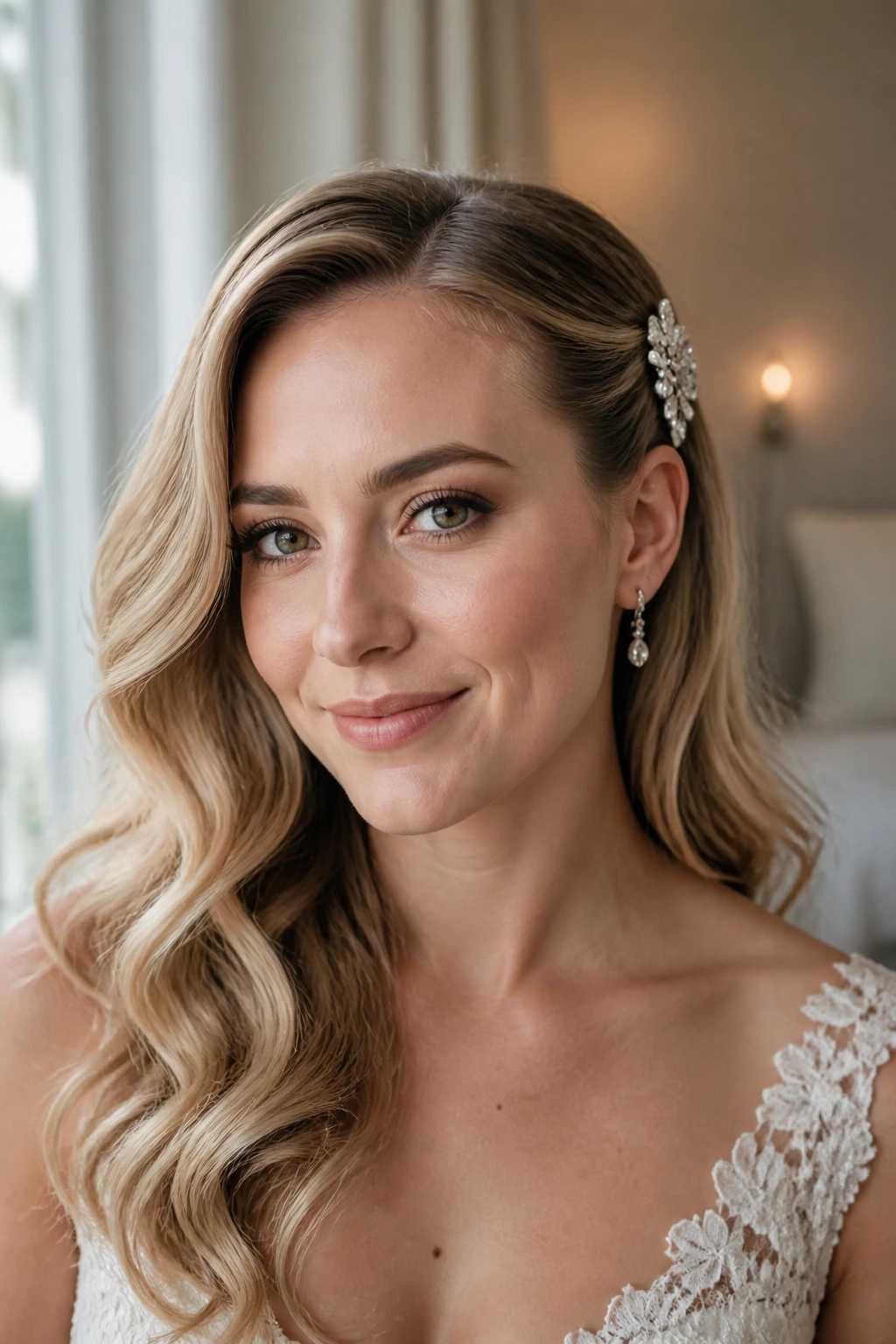
Soft S-waves are one of the prettiest choices for thin hair because they create movement without demanding volume you don’t have. The “S” pattern makes the hair look fuller than straight bends do, and tucking one side back gives the shape some lift near the face.
Use a medium iron or rollers to form a loose wave pattern, then brush gently so the bends soften into an S shape. One side can be pinned behind the ear with a jewel clip or comb, while the other side stays free. That asymmetry keeps the style from going limp. Thin hair loves a little imbalance. It keeps the eye moving.
This is a lovely choice for brides who want a soft, romantic finish without an updo. It also works well if you’re wearing a statement earring on only one side. Let the tucked side support the accessory, and the loose side carry the movement.
Why Thin Hair Needs Grip, Not Bulk
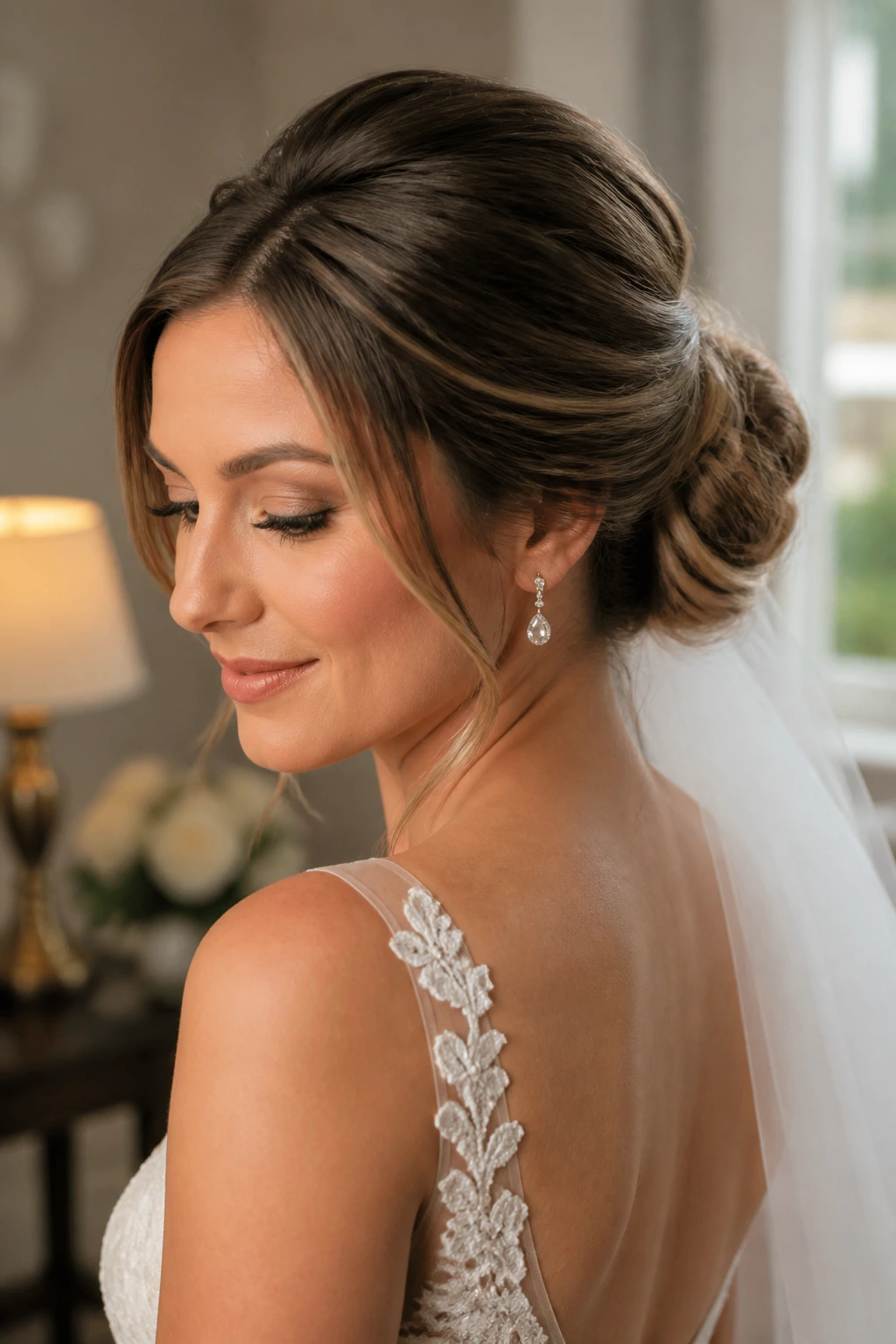
Thin hair does not need a fake mountain of volume. It needs grip, direction, and a shape that can survive the day without looking tired by dessert. That sounds almost too simple, but it’s the truth. The styles above work because they give the hair a job it can actually do. A braid becomes structure. A twist becomes an anchor. A wave becomes movement instead of limpness.
The other piece is balance. You want enough texture for pins to hold, but not so much product that the hair feels dusty or stiff. A little powder at the roots, a little bend through the mids, and a thoughtful finish are usually enough. Thin hair can look more refined than thick hair on camera because the lines stay clean. That’s a benefit. Use it.
If you’re planning a veil, an accessory, or a long ceremony followed by dancing, the real test is not how big the hair looks in the mirror. It’s how the shape behaves after a hug, a head turn, and two hours of being politely tugged on by weather, motion, and happy nerves.
Essential Tools for These Looks
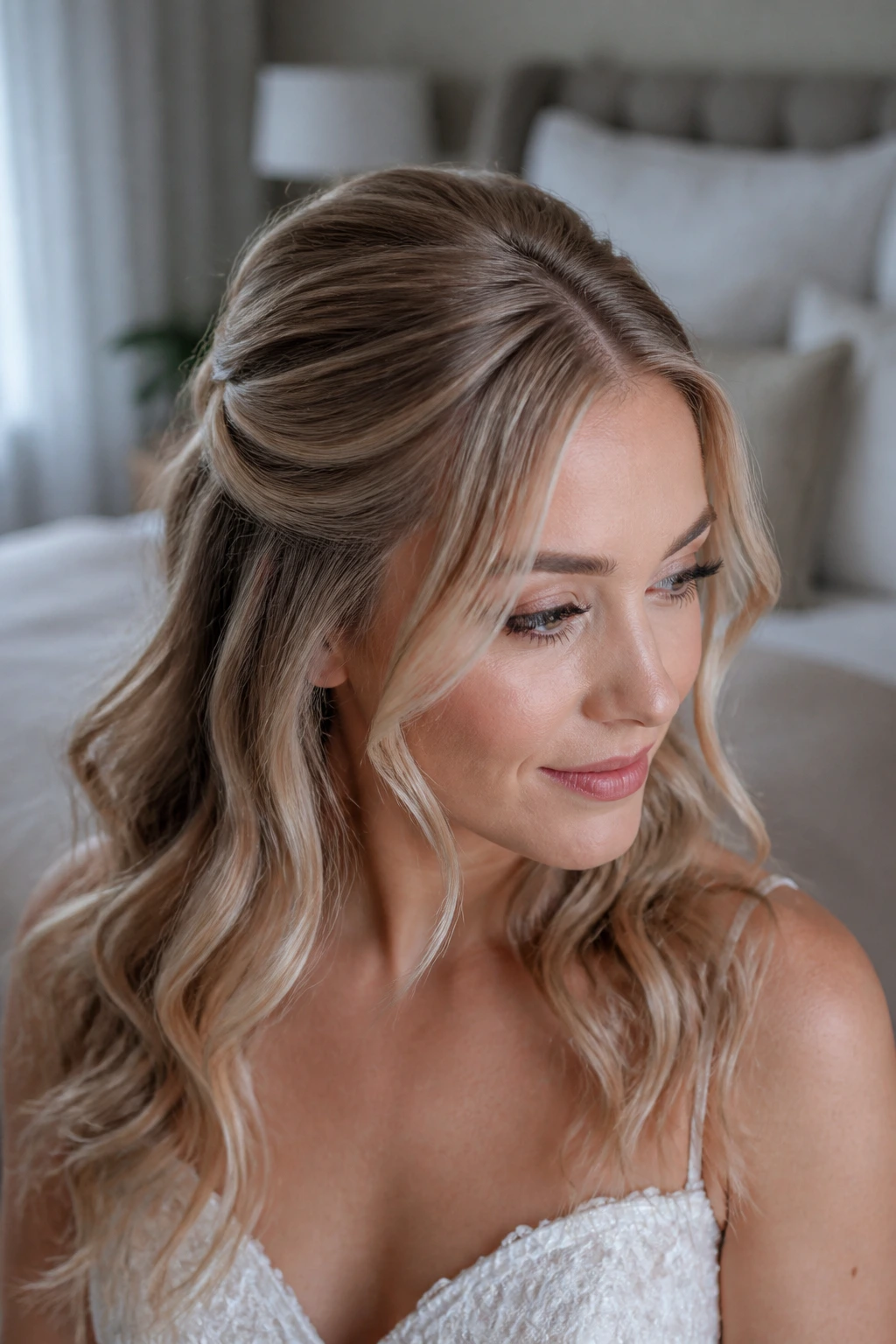
- Tail comb: Useful for clean parts, sectioning, and teasing the crown without wrecking the finish.
- Boar-bristle brush: Smooths thin hair without shredding the cuticle or flattening the shape too hard.
- Teasing brush or fine-tooth backcombing brush: Good for controlled lift at the crown and along the part.
- 1-inch or 1.25-inch curling iron: Best range for soft waves, S-waves, and brushed-out bends.
- Blow dryer with concentrator nozzle: Helps create root lift instead of puffing the hair everywhere.
- Strong-hold bobby pins: Wavy-grip pins hold better than slick ones, especially in fine hair.
- U-pins: Better than regular pins for buns, twists, and tucked styles that need internal support.
- Small clear elastics: Handy for low ponytails, mini braids, and hidden anchors.
- Texture spray or dry shampoo: Gives clean hair some bite so styles do not slide apart.
- Flexible-hold hairspray: Keeps movement while still locking the shape.
- Hairnet: Useful for compact buns and French rolls when the hair is very thin.
- Decorative combs, clips, or pins: These hide seams and help thin hair look styled instead of merely controlled.
- Clip-in extensions or a small topper, optional: Great if you want one of the fuller styles to read bigger from the side.
Product and Accessory Picks That Add Lift Without Stiffness
Thin hair gets easier when you choose products for grip rather than shine. A lightweight mousse at the roots before blow-drying gives the style a little memory, which matters more than it sounds. If the hair is too soft, every pin starts sliding around like it’s on ice.
Dry shampoo and texture spray are not just for dirty hair. On clean hair, they add the roughness thin strands need to hold shape. I use them differently depending on the style: dry shampoo for crown lift and root dulling, texture spray for braids, twists, and ponytails. Heavy creams, thick oils, and smoothing serums can all be useful—just not near the roots on a wedding hairstyle that needs to stay upright.
Accessories should match the size of the hairstyle. Tiny clips disappear in a full bun. Huge combs can look clumsy in a pixie. If your hair is very fine, choose pins and clips with a matte finish or a tone that matches the hair color closely. Shiny black pins in pale blonde hair are the kind of thing that shows up in every photo you do not want them in.
A small pack of clip-in extensions can be worth it if you want a low ponytail, a fuller wave, or a bun with more shape. You do not need a dramatic amount. One or two wefts placed well can change the silhouette more than another round of teasing ever will.
How to Match the Style to Your Dress, Veil, and Venue
Silhouette: A high neckline usually likes a low bun, French roll, or sleek twist because it clears the shoulders and lets the dress speak. Strapless or off-the-shoulder dresses often look better with waves, side sweeps, or half-up shapes that leave some softness near the face.
Accessories: If you want a veil, choose a style with a stable nape or crown anchor—low chignons, twists, and half-up looks are the least fussy. For big earrings or a statement comb, keep the hair cleaner and more controlled so the accessory does not compete with the hairstyle.
Scale: Thin hair tends to look best when the hairstyle is scaled to the actual amount of hair on the head. That does not mean small. It means proportionate. A compact bun with a strong accessory often looks richer than a large, airy shape that keeps collapsing.
Setting: Outdoor ceremonies invite styles that can survive humidity and wind. Braids, low twists, and textured buns are safer than slippery blowouts. Indoor black-tie rooms allow cleaner shine, sleeker lines, and smoother finishes. The venue matters more than people admit.
Additional Tips and Style Boosters
Root Lift: Blow-dry with your head upside down for the first few minutes, then switch to a round brush at the crown. That one-two move gives thin hair a better base than flat drying ever will.
Texture: Clean hair can be too slippery, especially on the day of the wedding. A puff of dry shampoo at the roots and a little texture spray through the mids make pins behave more predictably.
Anchor Points: Cross-pin where the style folds or twists. Thin hair holds better when pins grab from two directions. One pin is a suggestion. Two pins crossing each other is a plan.
Extension Trick: If you want more body without committing to a full set, add a tiny weft or a small halo piece only where the style needs it—often the crown, the tail, or the bun base. Keep the added hair close to your own texture so it blends instead of announcing itself.
Make-It-Yours: Want a softer look? Leave a few face-framing pieces and brush the curl out. Want something sharper? Keep the part clean and the finish smooth. A jeweled comb, satin ribbon, or one oversized pearl pin can change the whole mood without changing the structure.
Common Mistakes to Avoid
-
Loading the hair with heavy conditioner before styling: Thin hair turns slick fast when it’s coated with too much moisture or oil. Keep conditioner off the roots and use only a small amount from the ears down if your hair tends to fall flat.
-
Teasing the same section over and over: That can leave the crown fuzzy without adding useful height. Tease once, smooth the top layer back over it, and stop. If you need more lift, add a pinch of texture spray and another small tease at the root instead of wrecking the section.
-
Choosing a style that’s too big for the amount of hair you have: A giant bun built on very thin hair often looks padded from the side and sparse at the edges. Better to choose a smaller shape and make it look rich with pins, accessories, or a bit of extension hair.
-
Using smooth, slippery pins: If the pins slide in and out of your fingers too easily, they will probably slide out of your hair too. Wavy-grip pins, crisscrossed placement, and a little spray on the pin itself help a lot.
-
Forgetting about the veil path: A veil comb needs a secure, planned landing spot. If you’re wearing one, test the placement before the final spray so the comb does not fight the bun, twist, or braid.
-
Over-spraying too early: Hairspray can lock thin hair into a brittle shape before the style is fully set. Finish the shape first, then mist the surface lightly at the end. That keeps movement without turning the hair into plastic.
Variations and Adaptations to Try
Extension-Friendly Version: Add clip-ins at the crown or through the tail if you want extra fullness in a ponytail, wave set, or bun. Keep the added hair one shade and one texture type away from being obvious; blending matters more than quantity.
Humidity-Guarded Version: Use more texture spray, fewer glossy creams, and styles that rely on braids or twists rather than loose blowout volume. In damp weather, a low chignon, Gibson tuck, or braided crown will usually behave better than a soft down style.
Short-Hair Version: A pixie, crop, or very short bob can still look formal with jeweled clips, side sweeps, and a clean shine finish. Don’t fight the cut. Work with the shape you have and keep the accessories delicate.
Curly-Texture Version: Let the curl pattern stay visible and pin in small clusters instead of brushing everything smooth. Thin curly hair often looks fuller when the curl is respected, not flattened.
Minimalist Version: Pick one strong shape—a sleek bun, low twist, or side chignon—and use one accessory only. Thin hair often looks more polished when the styling is edited down instead of piled on.
Romantic Garden Version: Soften any of these looks with ribbon, tiny flowers, or a few pulled-out tendrils. The trick is to keep the base secure so the decoration feels intentional, not like the hair is slipping.
Make-Ahead, Prep, and Touch-Up Guidance
The smartest wedding hair prep starts before the styling chair. For most thin hair, washing the day before is enough. Freshly washed hair can be too soft and too slick, especially if the style depends on pins or braids. If your scalp gets oily fast, a very light root spray on clean hair can help, but do not saturate it.
For wave-based styles, set the bend the night before and leave the hair in loose rollers, clips, or braids depending on the shape you want. For updos, you can prep the texture and the crown lift the day before, then finish the actual twist or bun on the wedding day. That split approach keeps the hair from getting tired before the ceremony even starts.
Keep a small touch-up kit nearby: 6 to 10 bobby pins in your hair color, 2 U-pins, a travel hairspray, a tiny comb, and a few clear elastics. If you’re wearing a veil, ask someone to test the comb after placement and again after removal. The veil tug is the thing that reveals weak anchors.
If you know the day will be long, build the style with a little extra grip instead of a little extra shine. Thin hair usually survives a wedding better when the first hour is slightly firmer than you think you need. By the time photos, hugs, and dancing happen, it settles into place.
Frequently Asked Questions
Can thin hair really hold a wedding updo all day?
Yes, if the style is built with proper anchors and enough texture at the roots. A low twist, chignon, or pin-curl updo usually holds better than a huge puffed style because there’s less weight pulling it down.
Should I wash my hair the day of the wedding?
Usually, no. Thin hair often styles better on day-old hair because it has a little natural grip. If your scalp gets oily fast, use a light dry shampoo at the roots instead of washing right before styling.
Are clip-in extensions worth it for thin hair?
They can be, especially for ponytails, waves, and fuller buns. The important part is placement and weight—one small set blended well often looks better than too much hair added too high on the head.
What if my curls fall flat before the reception?
That usually means the hair was too soft, too clean, or too heavily conditioned before styling. Next time, use less smoothing product, more texture spray, and let the curls cool completely before brushing them out.
Can I wear a veil with a ponytail or half-up style?
Absolutely. A low ponytail, low twist, or half-up style can hold a veil very well if the comb sits on a stable section near the crown or nape. Just test the placement before the final spray.
What’s the best style for very short thin hair?
A jeweled pixie, side-swept crop, or faux bob usually works better than trying to fake length. Short hair looks elegant when the shape is clean and the accessory is chosen on purpose.
How do I keep bobby pins from showing in thin hair?
Match the pin color to the hair as closely as possible and slide the pin in with the wavy side against the scalp. Hide them inside the fold of a twist, braid, or bun rather than placing them on the surface.
Is teasing bad for thin hair?
Not when it’s controlled. A little teasing at the crown can give a wedding style the lift it needs. The damage happens when people keep raking over the same section until it frays.
What if my hair is shoulder-length and layers keep slipping out?
Pin the shortest layers first and build the style in smaller sections. A few escaped pieces are fine around the face, but the core shape needs to be anchored before you start styling the surface.
The Styles That Stay Put
Thin hair does not need to pretend it’s thick to look memorable on a wedding day. It needs shape, a little grip, and a finish that knows when to stop. That’s the real trick behind the best of these looks: they use the hair’s natural behavior instead of fighting it.
The styles that last are usually the ones with a clear anchor and a thoughtful outline. A low twist, a clean wave, a braid with a little looseness, a bun that sits where the pins can actually hold—those are the quiet winners. They survive the ceremony. They survive the hugs. They survive the dance floor, which is often where the honest test begins.
Pick the shape that suits your dress, your veil, and the amount of hair you actually have, then build from there. The result should feel like your hair, only better arranged. And that is usually enough.