



Fine hair does not need to be bullied into looking fuller. That usually backfires by the time the family photos start: the crown drops, the nape loosens, and a style that looked elegant in the mirror starts reading as tired from five feet away.
The best soft hairdos for mother of the bride with fine hair work with strand size, not against it. Fine hair likes a little grip, a little bend, and a shape that stays believable around the hairline. The trick is never to build one giant mound of volume and hope for the best. Better to make the style look intentional from the front, the side, and the back — because those are the angles people actually see.
That’s where soft shapes earn their keep. Low knots, brushed waves, tucked twists, and half-up styles can make fine hair look fuller than a stiff blowout ever will, especially when the crown gets a bit of lift and the ends are handled with restraint. The styles below lean on that logic. They’re polished, calm, and designed to survive hugs, dancing, and a few hours of warm indoor air without turning into a helmet.
Why These Styles Work for Fine Hair
-
They build shape where fine hair can hold it: A low twist or soft wave gives the hair a compact structure, which lasts longer than tall volume that collapses under its own weight.
-
They keep the hairline soft: Fine hair can look stringy when every strand is pulled tight, so these styles leave a little movement near the temples and ears.
-
They play nicely with accessories: Pearl pins, a comb, a veil, or a single jeweled clip can do a lot more than a heavy spray job on fine strands.
-
They work at different lengths: A few of these need collarbone length, but several work on a bob or long layers with almost no drama.
-
They photograph well from the side and back: That matters. A style can look lovely in the mirror and still fall flat once someone turns you toward the camera.
-
They avoid the crunchy-overdone finish: Soft hair should still move when you touch it. If it feels like lacquer, it’s already too much.
1. Low Twisted Chignon with Wispy Temples
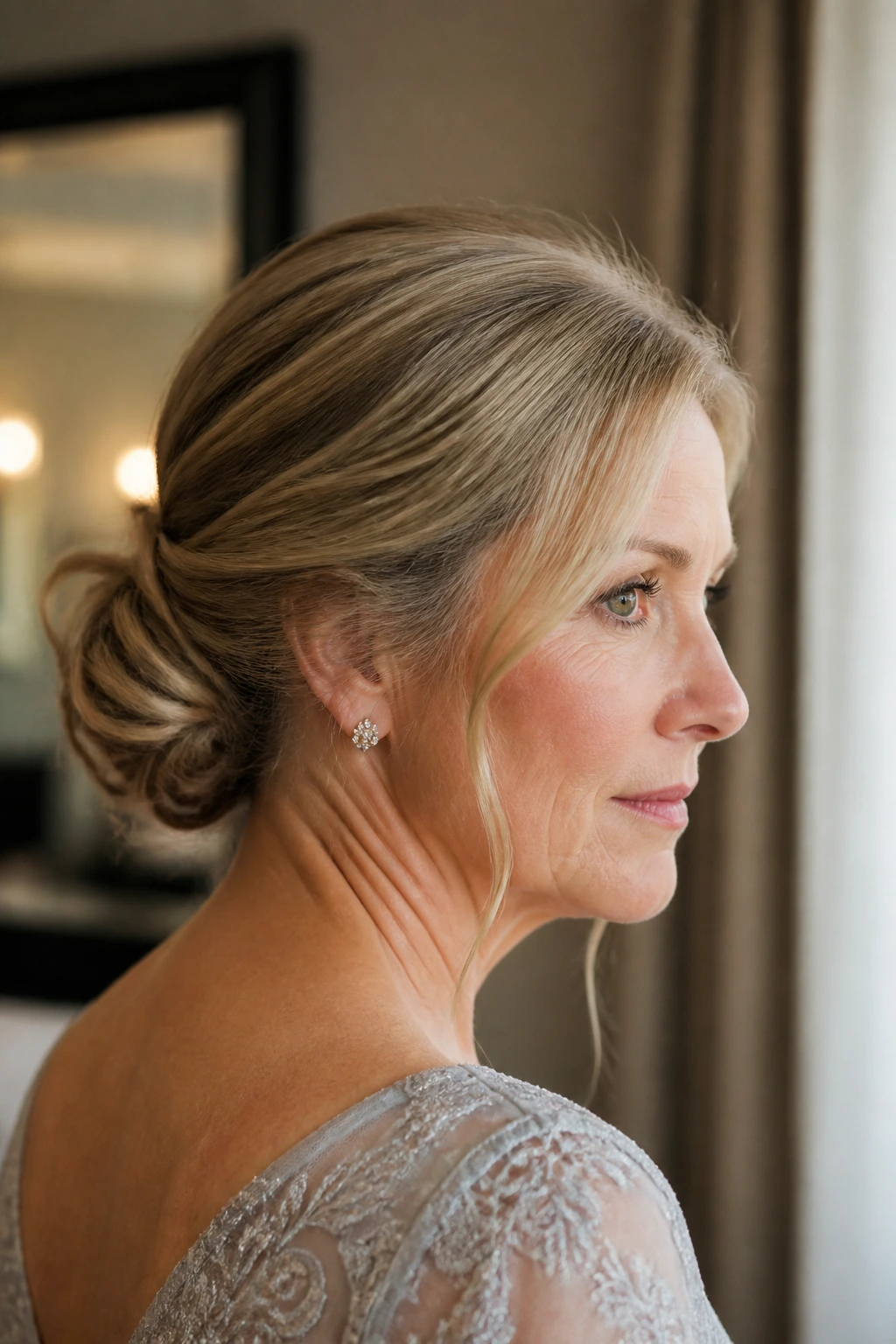
This is the style I’d reach for first if the dress has a clean neckline and the hair needs to stay composed for hours. The low twisted chignon sits close to the nape, which is exactly where fine hair tends to behave best, and the little wisps at the temples soften the whole shape so it never looks severe.
The real trick is in the prep. Give the roots a light pass of mousse, blow-dry with a round brush for a bit of lift, then split the hair into two low sections and twist them toward each other before pinning them into a compact knot. Keep the surface smooth, but not flat. That balance is what makes the style look expensive instead of overworked.
If the hair is especially slippery, mist the mid-lengths with texture spray before twisting. Fine hair needs a bit of friction to stay where you put it. A low chignon with a little face-framing softness has a quiet kind of presence, and that suits a mother of the bride beautifully.
2. Half-Up Crown Lift with Soft Waves
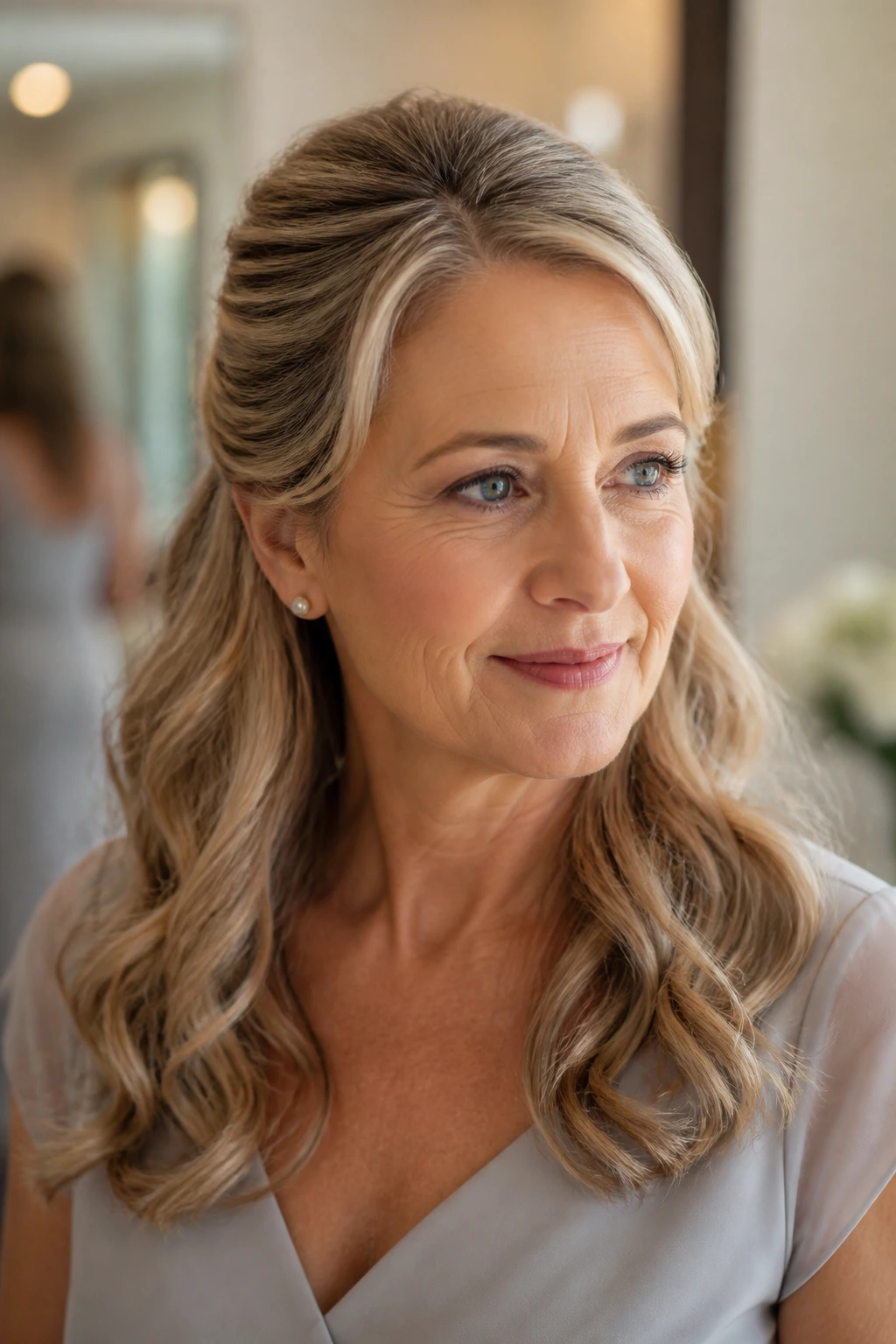
Half-up styles are often the smartest answer for fine hair because they let the lower half of the hair carry some weight while the top section gets the lift. That means less pressure on the crown, less collapse at the roots, and a shape that still looks soft after the ceremony.
The best version starts with brushed-out waves, not tight curls. Curl the hair in 1-inch sections with a 1-inch iron, let the curls cool fully, then brush them through until the shape turns into bends rather than ringlets. Pin back a small top section just behind the crown, tease only the underside of that section, and leave the surface smooth. Too much teasing shows through fast on fine hair. A little hidden support goes farther.
This is one of those styles that looks especially good when the ends are thin or layered. The half-up structure keeps the eye focused on the lifted crown and the soft front pieces instead of the sparsity at the bottom.
3. Deep-Side Low Bun with One Sweeping Front Section
Why does a side part matter so much on fine hair? Because it gives the style a built-in shift in volume without asking the hair to do something impossible. A deep side part creates height at the root, and that extra lift makes the whole head look fuller before you even touch a curling iron.
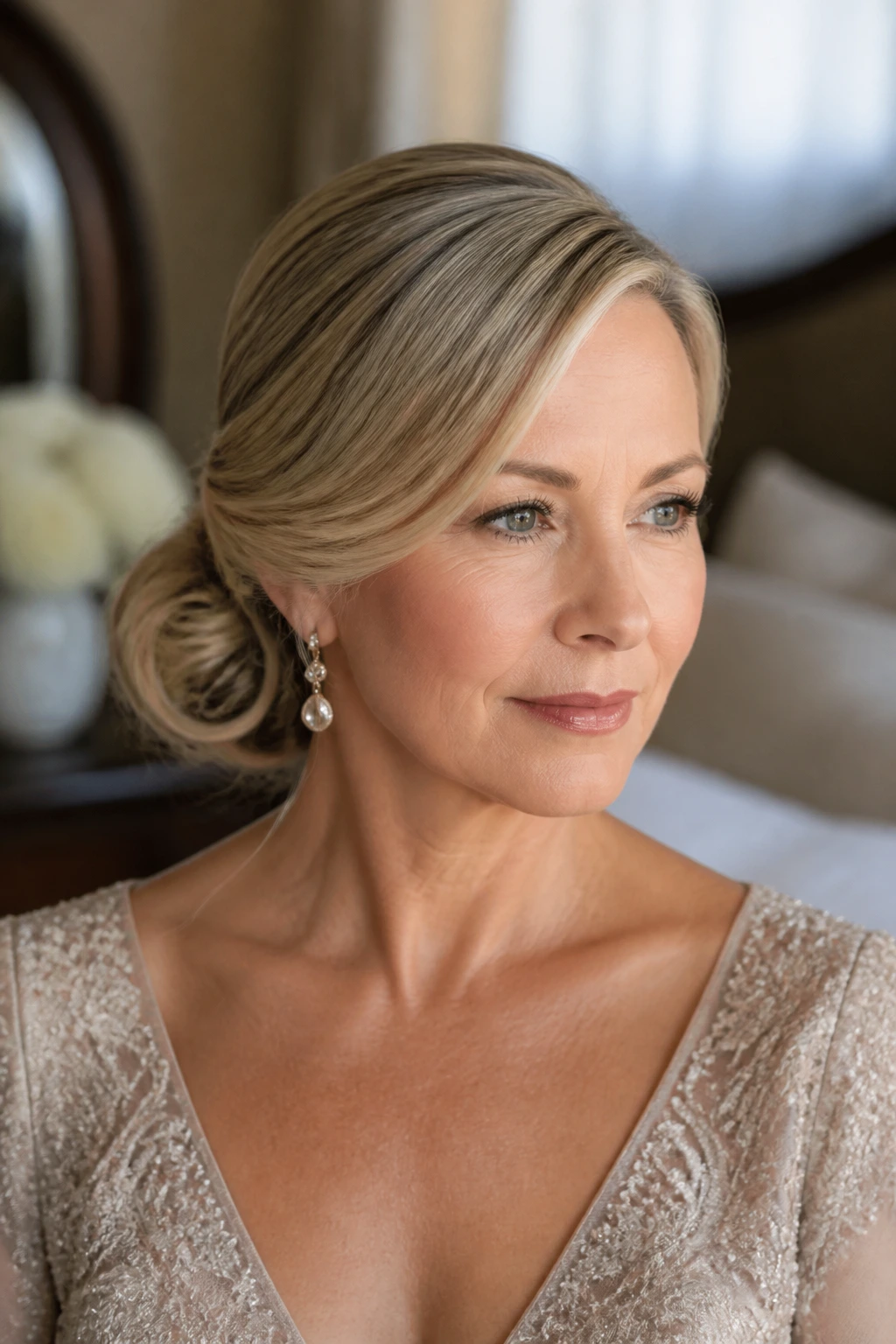
The bun itself should sit low and slightly to one side, not centered. Sweep one front section across the forehead and pin it behind the opposite ear, then let the rest of the hair gather into a soft knot near the base of the neck. That long front sweep is doing more work than it looks like it is — it draws the eye diagonally, which softens the face and gives the bun a more graceful shape.
This works especially well with statement earrings. The off-center balance leaves room for them, and the style doesn’t fight a dress with a V-neck or one-shoulder line. Fine hair likes that kind of quiet asymmetry. It reads as deliberate, not like the style ran out of volume halfway through.
4. Soft French Twist with Airy Crown
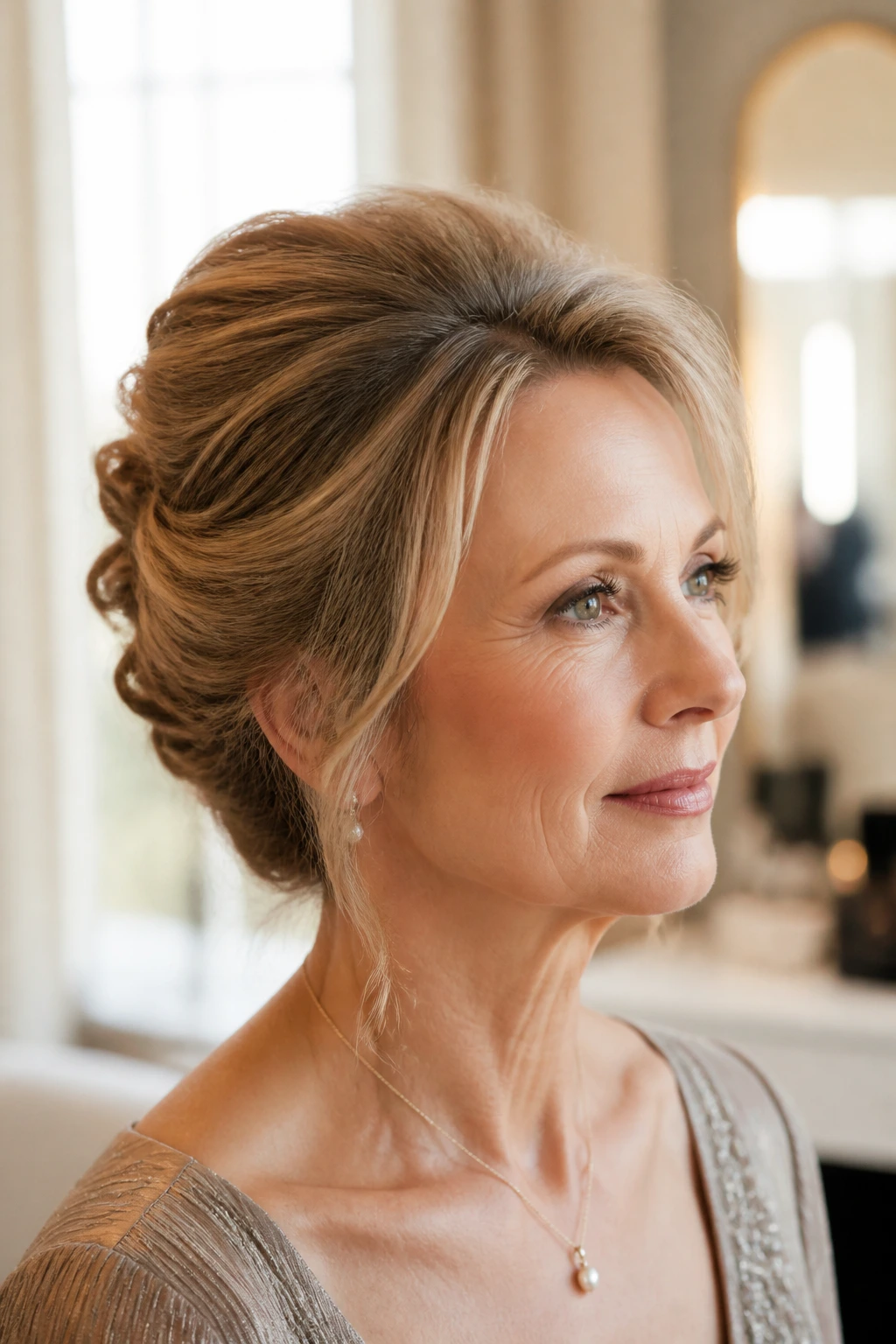
A French twist sounds formal, and it is, but it does not have to feel hard. The version that works for fine hair is the one with a little lift at the crown and a looser roll through the back, so the shape holds without looking pinned to the head.
Start by misting the roots with a root-lifting spray, then blow-dry with a nozzle and a round brush for direction. You want the hair to have enough bend to fold cleanly into the twist, not enough slip to slide loose. Gather the hair at the back, roll it upward, and tuck the ends into the vertical seam. A few hidden pins in an X-shape hold better than a neat line of pins, which is one of those annoyingly boring details that matters a lot.
What keeps it from looking severe
-
A lifted crown: Just a little height at the top keeps the twist from flattening the head shape.
-
Loose surface tension: Don’t polish every strand into place. A soft surface looks more natural and gives the twist room to breathe.
-
A few released pieces near the ears: One or two narrow strands are enough. Any more and the shape starts to lose its clean line.
This is a good choice when the dress is structured and the jewelry is simple. The twist carries the formality so the rest of the look can stay calm.
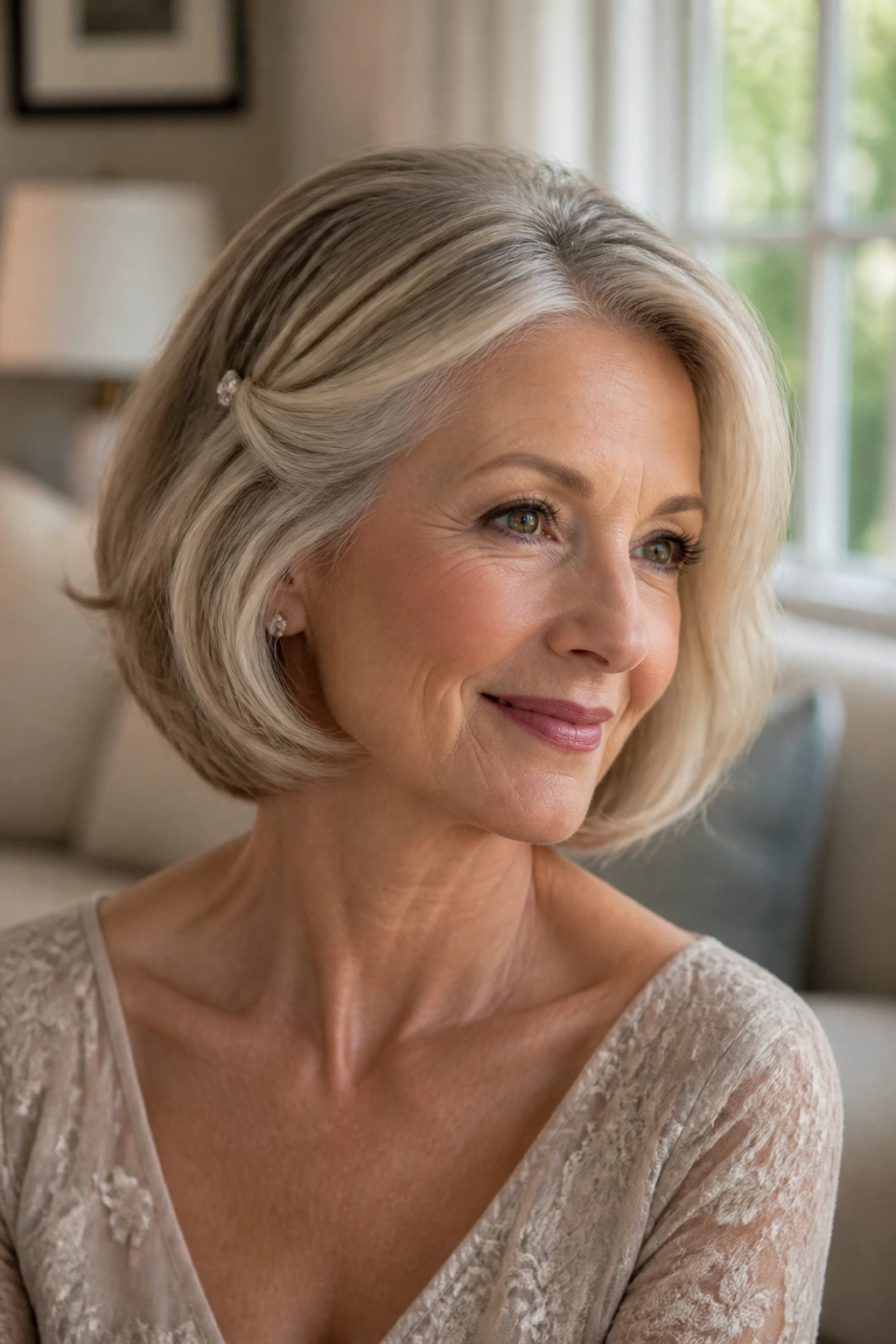
5. Brushed-Out Bob with Gentle Bends
Short fine hair can look sparse if it’s forced into a style that needs more length than it has. A brushed-out bob with gentle bends does the opposite. It gives the hair body without making you chase volume that isn’t there.
Set the bob with a 1.25-inch curling iron or medium Velcro rollers, then brush everything out once it cools. That brushed finish is the key; it turns separate curls into a soft wave pattern that reads fuller on camera. Keep the ends from flipping too sharply. Fine hair in a bob looks better when the movement is relaxed and a little irregular.
I like this with a side tuck on one side and a small pin just above the ear on the other. It keeps the face open and stops the bob from puffing out in a helmet shape. If she wears glasses, even better. The frame and the wave line work together, and the whole look feels polished without trying too hard.
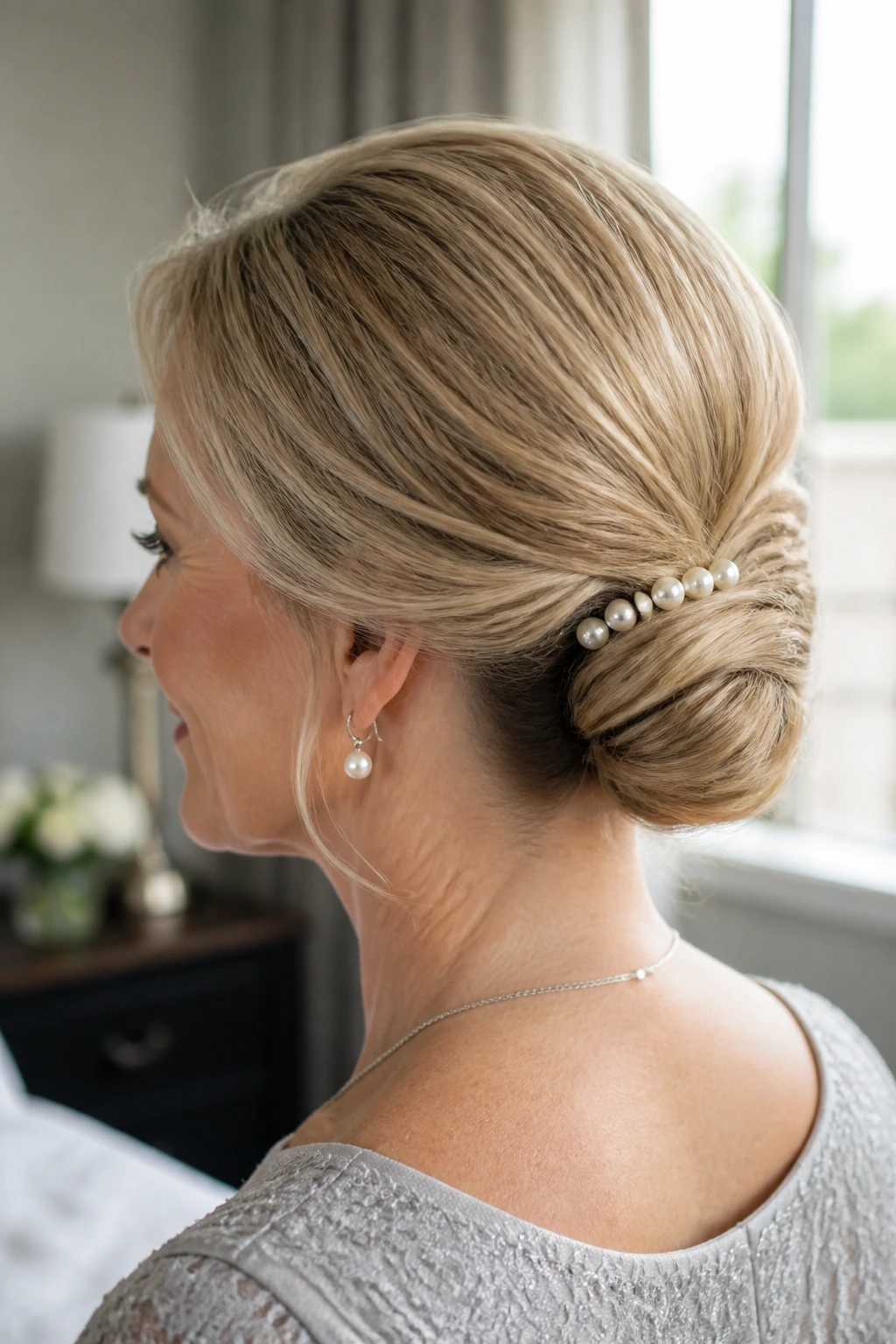
6. Rolled Low Knot with Pearl Pins
A rolled knot is a nice trick for fine hair because it creates the sense of fullness through shape instead of bulk. You roll the hair inward, almost like folding a ribbon, so the knot looks compact and clean rather than puffed out.
A few pearl pins change the whole mood. Use them sparingly — four to six pins placed where the roll meets the nape is usually enough. Too many pearls can make fine hair look busy, and busy is not the same thing as full. The pins should look like punctuation, not decoration spilling everywhere.
The best part is that this style stays close to the neck, which is where fine hair usually holds best once it’s been prepped properly. If the hair is shoulder length or slightly shorter, a tiny hidden bun form can help, but keep it covered with your own hair so it doesn’t show through. The shape should look like a real knot, not a prop.
7. Braided Halo with a Loose Center Part
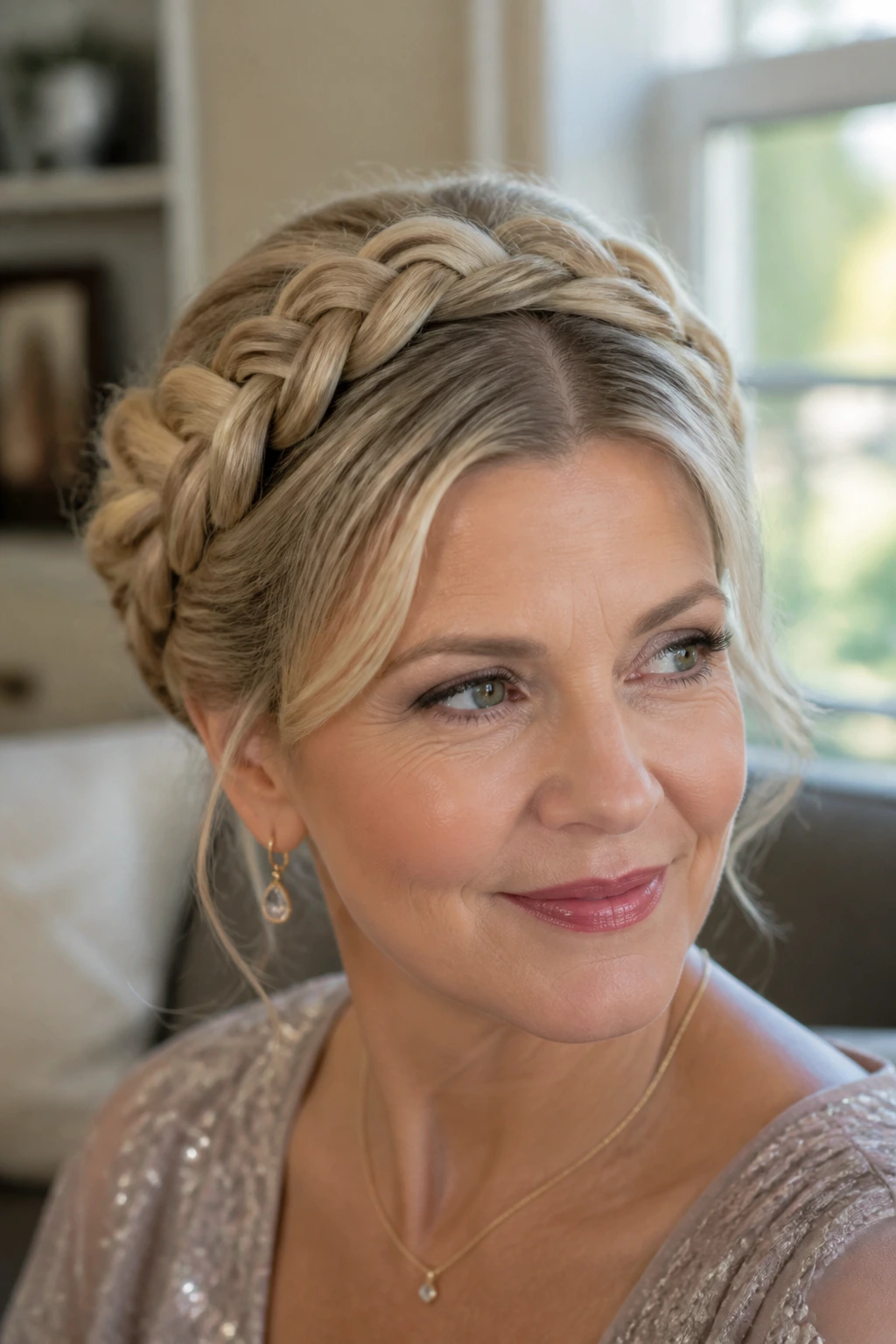
A braided halo can be lovely on fine hair if the braid is kept loose and the crown is not pulled into a hard ring. The soft version starts with a center part, then two low braids or twists that wrap back along the hairline and meet near the nape. Once the braid edges are gently loosened, the whole look turns airy instead of rigid.
The reason this works is simple: the braid gives the eye texture to follow. Fine hair can look thin when it’s all one plane, but a braid breaks that plane up and creates the illusion of density. Don’t pancake the braid until it falls apart. Just stretch it enough that the pattern reads from a normal distance.
This is a good style if the dress has a high neckline or a lace back and you want the hair to feel romantic without hanging loose. It also plays nicely with a small comb or a tiny cluster of flowers, though I’d keep the accessory modest. The braid already has enough to say.
8. Waterfall Braid into Curled Ends
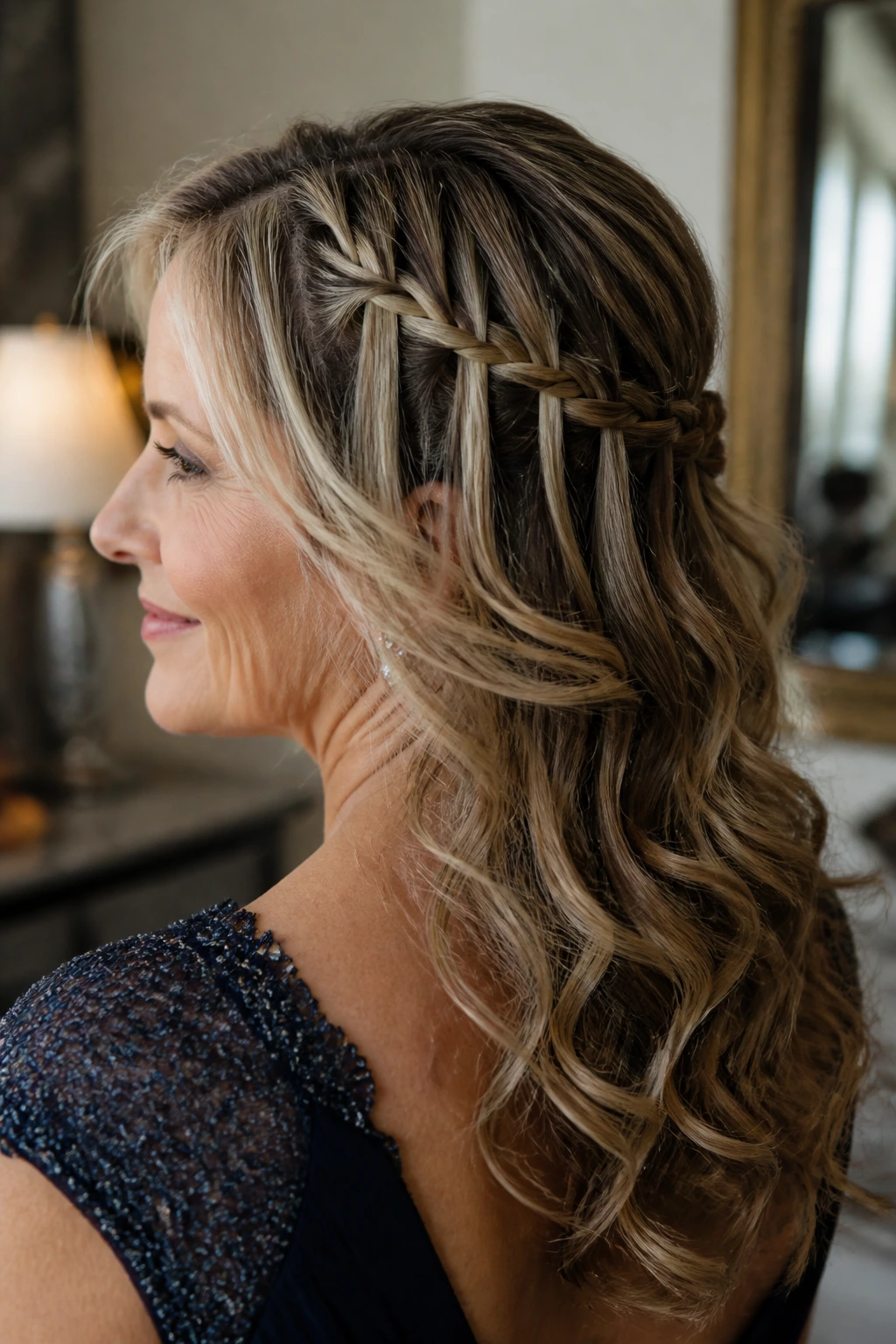
There’s a soft, almost ribbon-like feel to this one. The braid sits at the side or across the back, while the ends spill down in brushed-out curls, which gives fine hair more movement than a full braided crown ever could.
Curl the lower half first so the loose ends have shape before you start braiding. That step matters. If you braid first and curl later, the shorter layers usually escape and the whole thing starts to look fussy. Once the braid is in place, ease the loops slightly with your fingers and let the curled ends fall in a soft line. The contrast between woven texture and loose movement is what makes this style feel finished.
It’s especially good for shoulder-length hair or hair with layered ends, because the waterfall shape disguises the shorter pieces instead of exposing them. A side part helps too. It gives the braid a little more lift, which fine hair always appreciates.
9. Wrapped Ponytail with Crown Volume
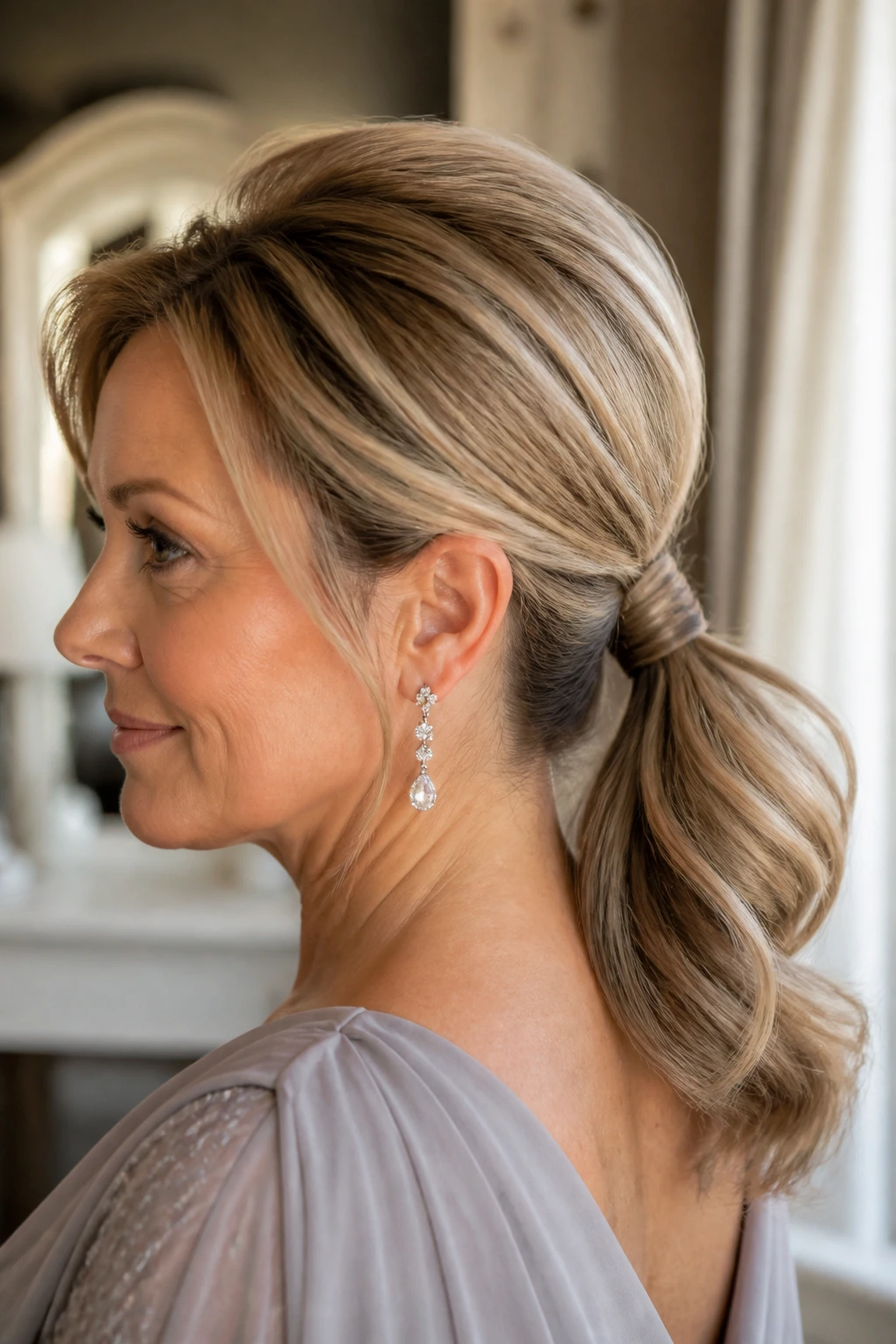
A ponytail is not too casual when the base is wrapped and the crown has a little lift. On fine hair, that’s the difference between “I tied it back” and “I chose this on purpose.”
Start by building a small foundation at the crown — not a huge tease, just enough lift to keep the top from sitting flat. Gather the ponytail low at the nape or a touch higher if the dress calls for it, secure it with a clear elastic, then wrap a slim section of hair around the base to hide the tie. Curl the tail in loose bends and brush them just enough to blur the sections.
The wrapped ponytail is one of my favorites for mothers of the bride who want movement but don’t want hair in the face all day. It looks especially good with a satin dress or anything with clean lines, because the shape stays neat while the ends keep some softness. If the hair is very fine, a tiny clip-in filler hidden inside the ponytail can give the whole style more body without being obvious.
10. Side Bun with a Long Face-Framing Wave
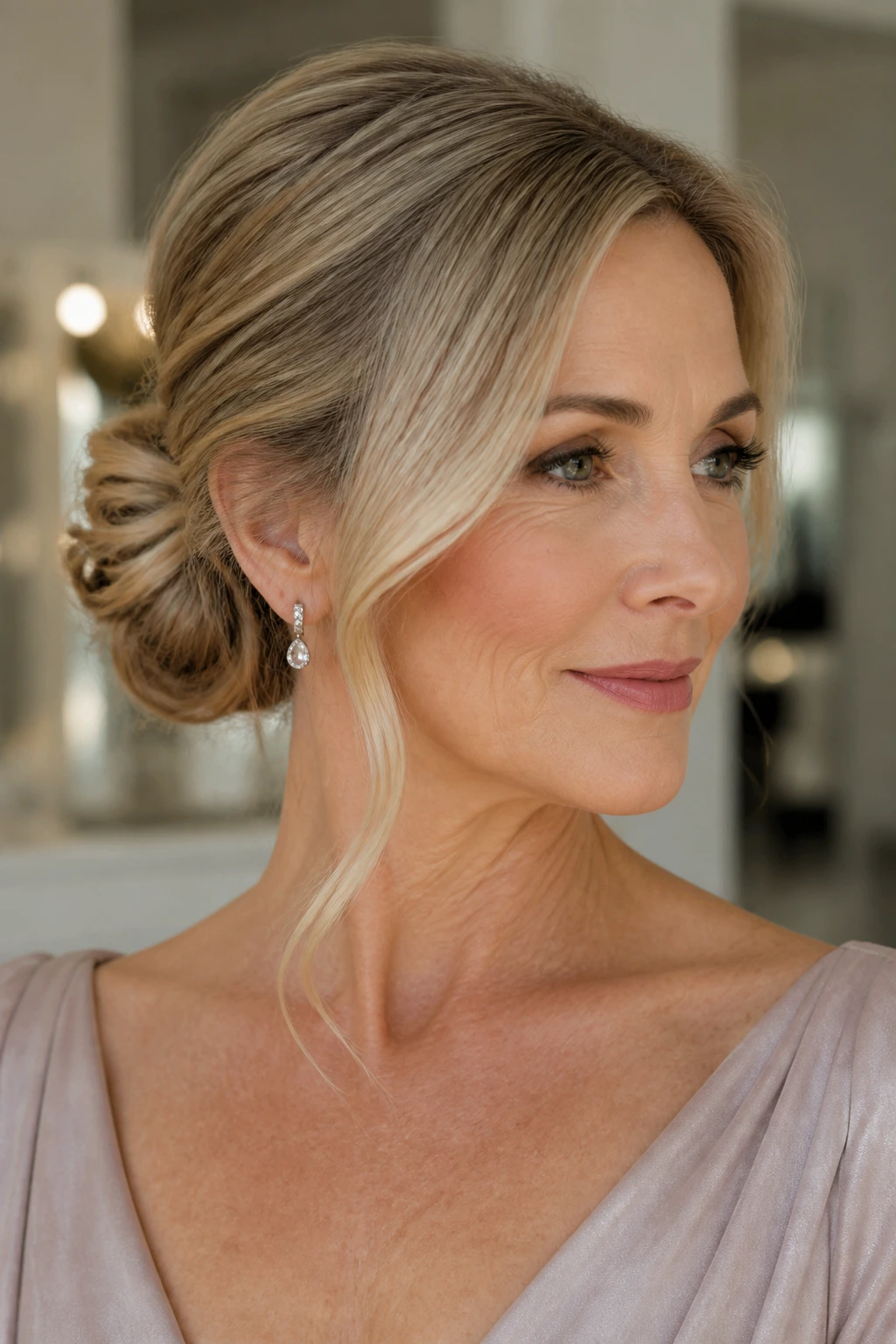
A side bun can be a lifesaver when the dress has one strong shoulder, a wide neckline, or a lot of detail on one side. The bun balances the look while the long wave at the front keeps the face from disappearing into the style.
The face-framing section should be longer than you think. Fine hair often needs that extra length to read as intentional, not accidental. Curl the front piece away from the face, let it cool, then smooth it into a soft wave before it’s pinned or left to drape. The bun itself should stay low and slightly tucked, with the bulk concentrated close to the ear rather than floating off the head.
This is one of those styles that looks expensive in a low-key way. Not flashy. Just balanced. If you want a little extra polish, add one pearl pin just above the bun, not inside it. That tiny shift can make the shape feel finished without crowding the hair.
11. Gibson Tuck with Gentle Height
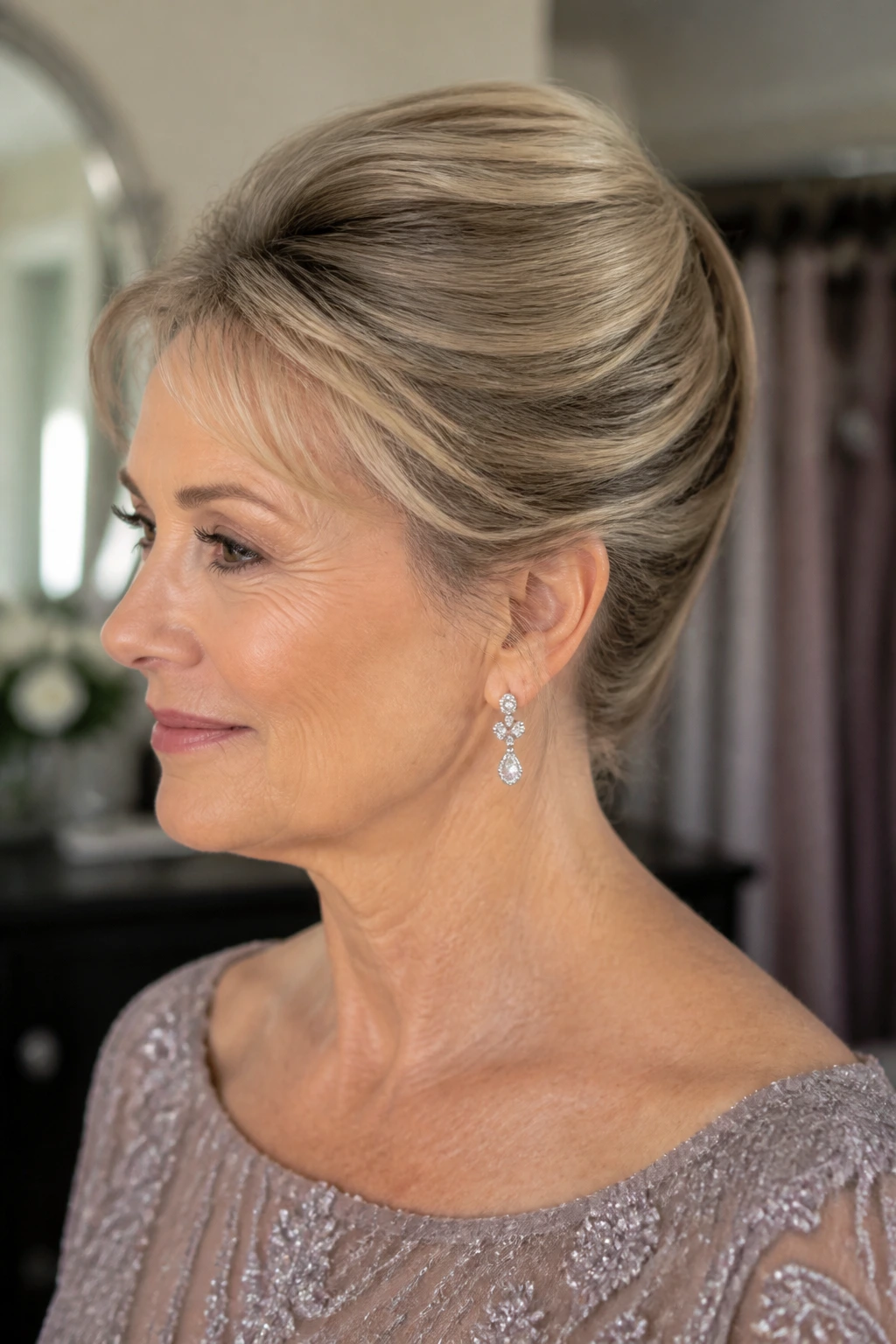
What if the hair is fine, not especially long, and still needs to look formal? The Gibson tuck answers that without asking for drama. It folds the length back into itself, which gives the illusion of a fuller style because the hair sits in a neat, rounded pocket.
Build a small lift at the crown, then bring the hair back into a low loose band or twist and tuck the ends upward into the fold. Secure with pins along the seam, not just one or two at the center. Fine hair likes multiple anchor points because they spread the weight out and keep the tuck from slipping.
This is a very good choice for a mother of the bride who wants a style that stays calm through the ceremony and still looks tidy after a few hours of conversation and photos. It also works well with a veil or a comb because the shape stays compact. Nothing fights for attention, which is often exactly the right move.
12. Loose Blowout with Tucked-Back Sides
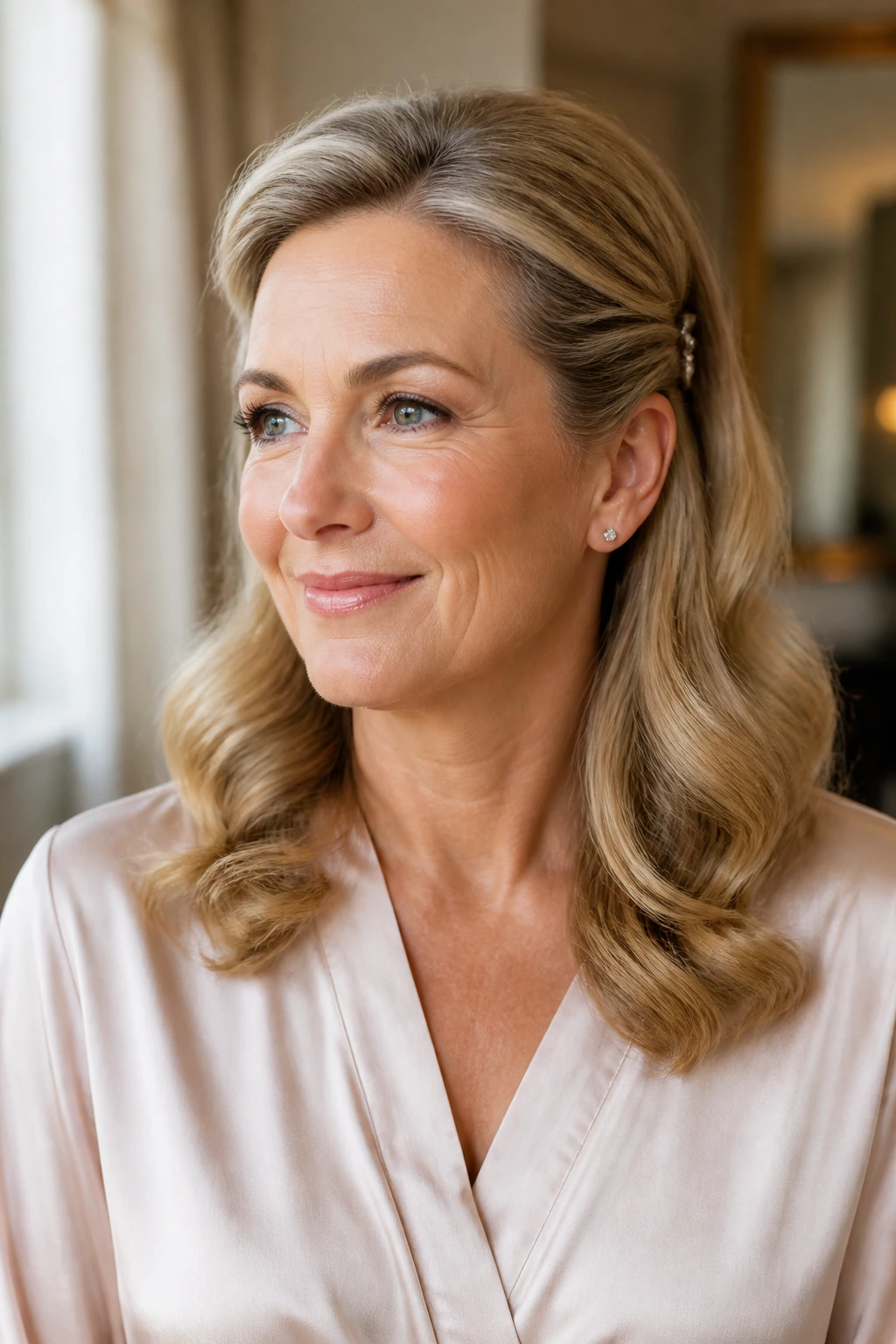
A soft blowout can be the best answer when you want hair down but not loose in the casual sense. The hair keeps movement around the shoulders, but the sides get tucked back just enough to open the face and stop the whole look from feeling unfinished.
Use a round brush or large Velcro rollers to build a bend from mid-lengths to ends, then brush the set out once it cools. The result should be smooth, not straight, with the ends curving under or out depending on the dress. Tuck the sides back with two small pins on each side, hidden just behind the ear. That gives the style structure without sacrificing softness.
Fine hair often looks best in this kind of finish because tight curls can break apart too easily. A blowout has more surface area, which means the hair reads fuller. If the event is less formal or the dress already has plenty of detail, this style keeps the hair elegant without turning it into a centerpiece.
13. Pin-Curled Faux Bob for Shorter Fine Hair
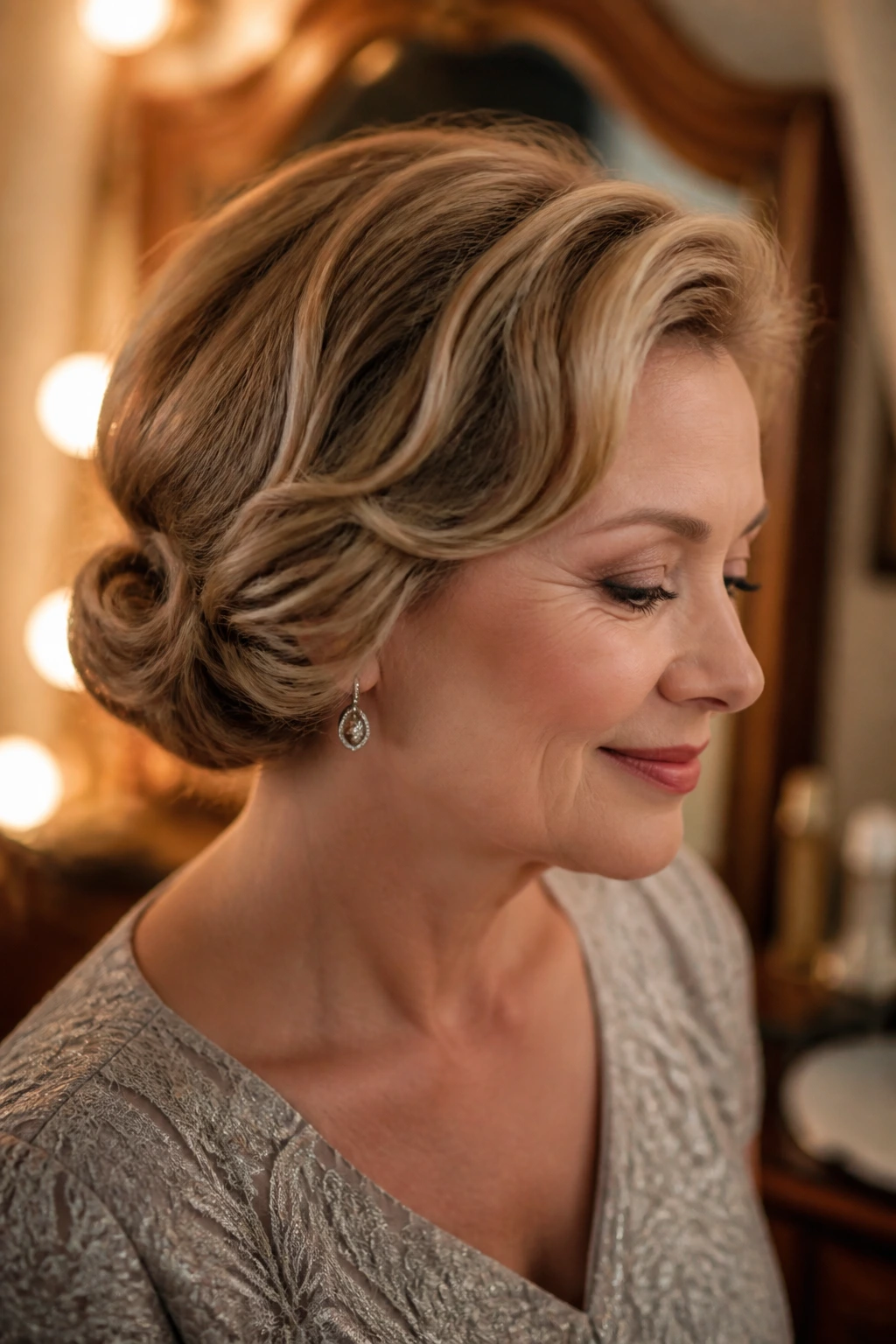
If the hair is chin length or barely past the jaw, a faux bob can be a smart little cheat. It folds the ends under and pins them in a way that creates the illusion of a shorter, sculpted shape with much more polish than a simple blow-dry.
Set the hair in loose curls first, then tuck the ends under in small sections and pin them close to the nape. The style works best when the top has a little lift and the side pieces are softly waved. Too much tightness at the bottom makes the bob look like it has been clipped in half. You want the line to feel deliberate.
This one has a vintage mood that suits a mother of the bride who likes a dress with clean tailoring or a little old-Hollywood detail. A small comb or a single rhinestone pin is enough. Anything larger starts to fight the shape, and the shape is already doing enough.
14. Twisted Half-Up Knot with Lifted Crown
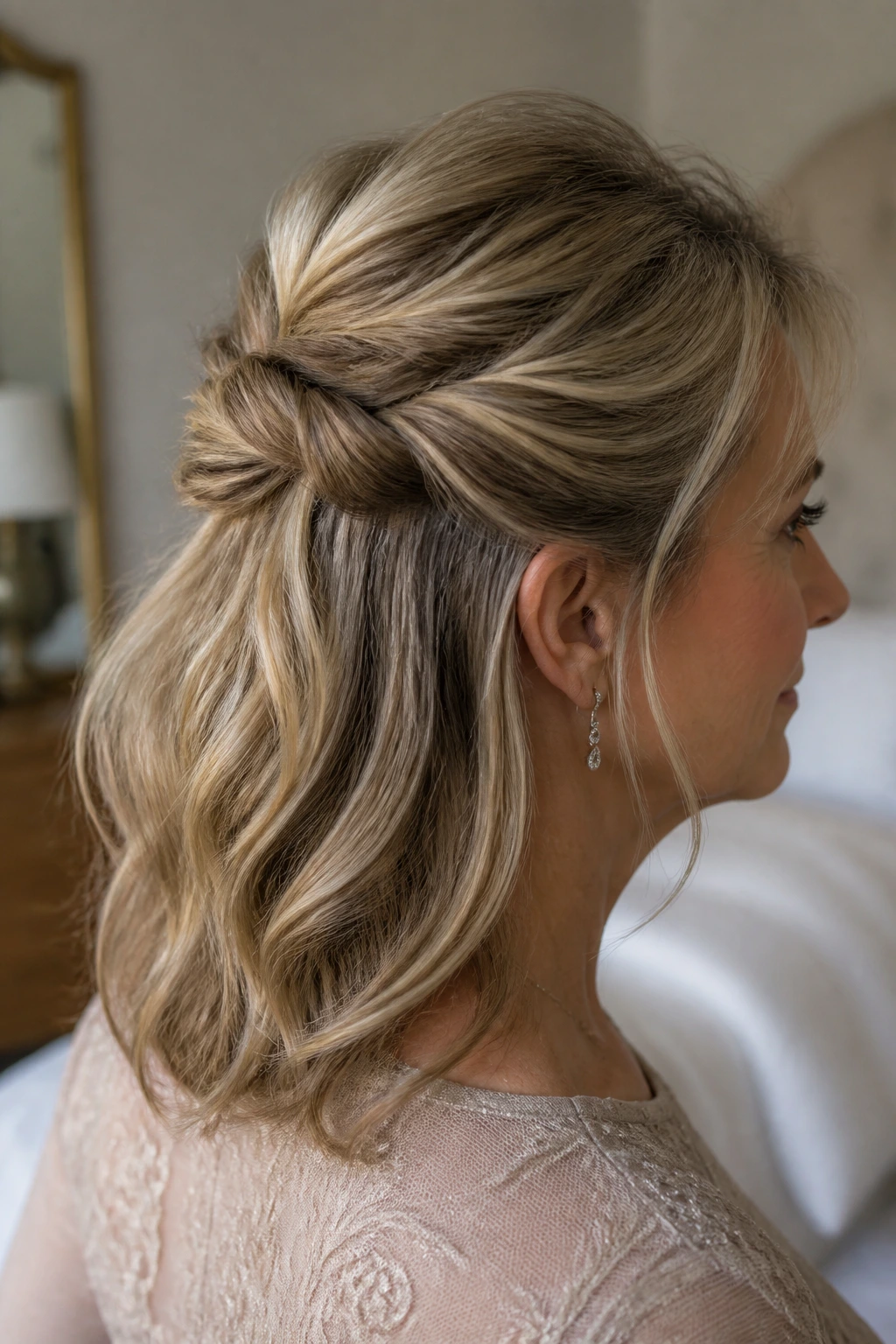
A twisted half-up knot gives you the best part of an updo and keeps the rest of the hair free. On fine hair, that’s a useful trade. The lifted crown creates body, the knot adds interest, and the loose back keeps the style from looking too sparse.
Why it flatters fine hair
-
It keeps volume concentrated near the top: That’s where fine hair needs help most, especially in photographs.
-
It leaves the ends relaxed: Thin ends are less noticeable when they’re not trying to support the whole shape.
-
It can be adjusted to the dress: More polished for satin, softer for lace, a little more texture for open necklines.
Twist two side sections back, knot them loosely at the crown or upper back of the head, and pin them flat against the base so the twist stays visible. A touch of texture spray at the roots before you start gives the twists something to grip. The result is sweet without leaning childish, which is a line worth respecting on a wedding day.
15. Soft Wave Bob with a Side Tuck
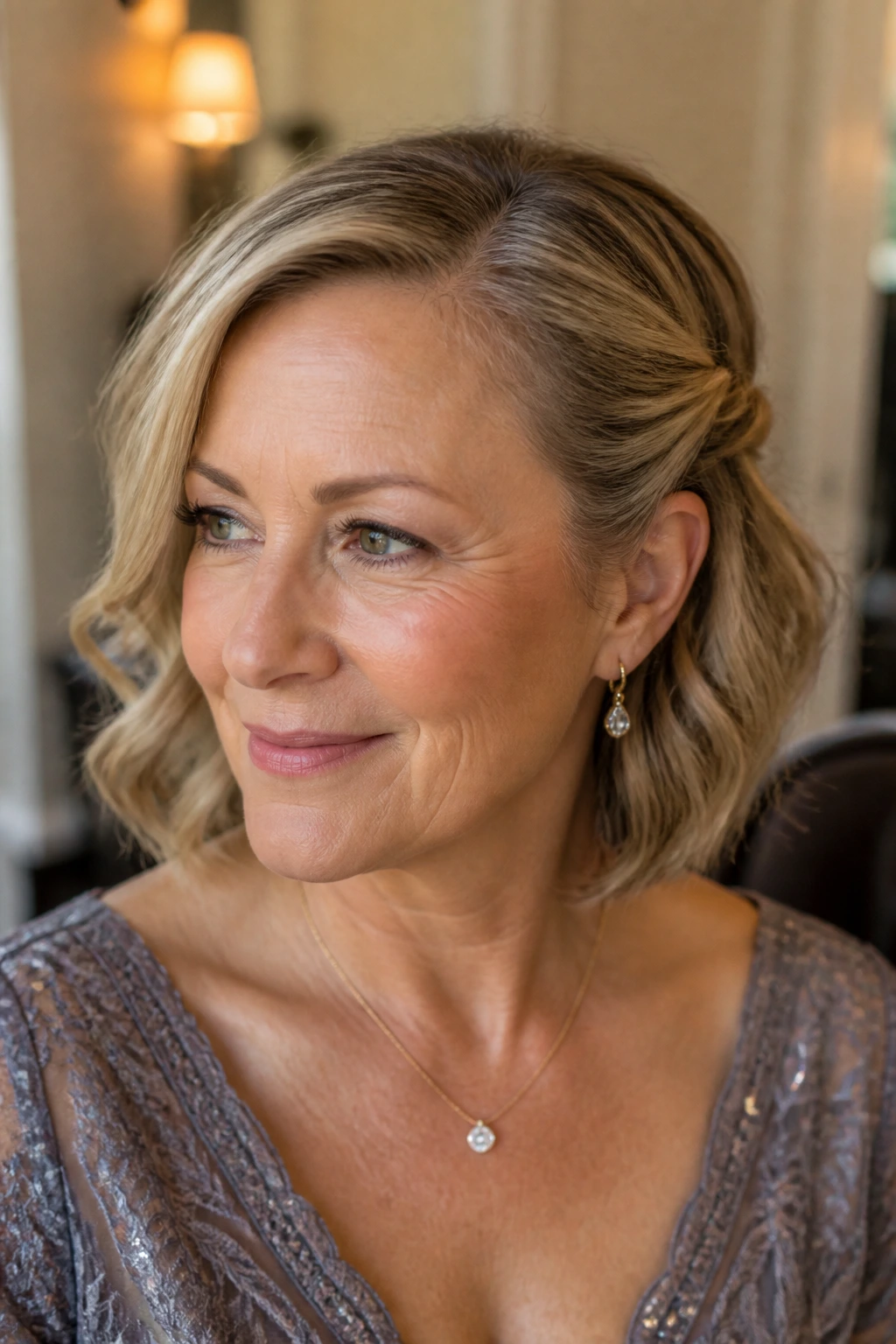
A bob can do more than people expect. With a deep side part, soft bends, and one side tucked neatly behind the ear, it can look cleaner and fuller than a style that tries to build height it does not have.
The key is movement, not curl. Set the bob with a medium iron, then brush the sections through so they become soft waves instead of spirals. Tuck one side behind the ear and secure it with a hidden pin if it slips. The exposed ear gives the style shape, and the tucked side creates a clean line that makes the other side look fuller by contrast.
This works well with glasses because the face stays open without looking bare. It also suits shorter fine hair that needs a little help staying in place. If the ends flip too much, smooth just the last inch with a light serum, but keep anything oily away from the roots. That’s where fine hair starts misbehaving.
16. Low Asymmetrical Knot
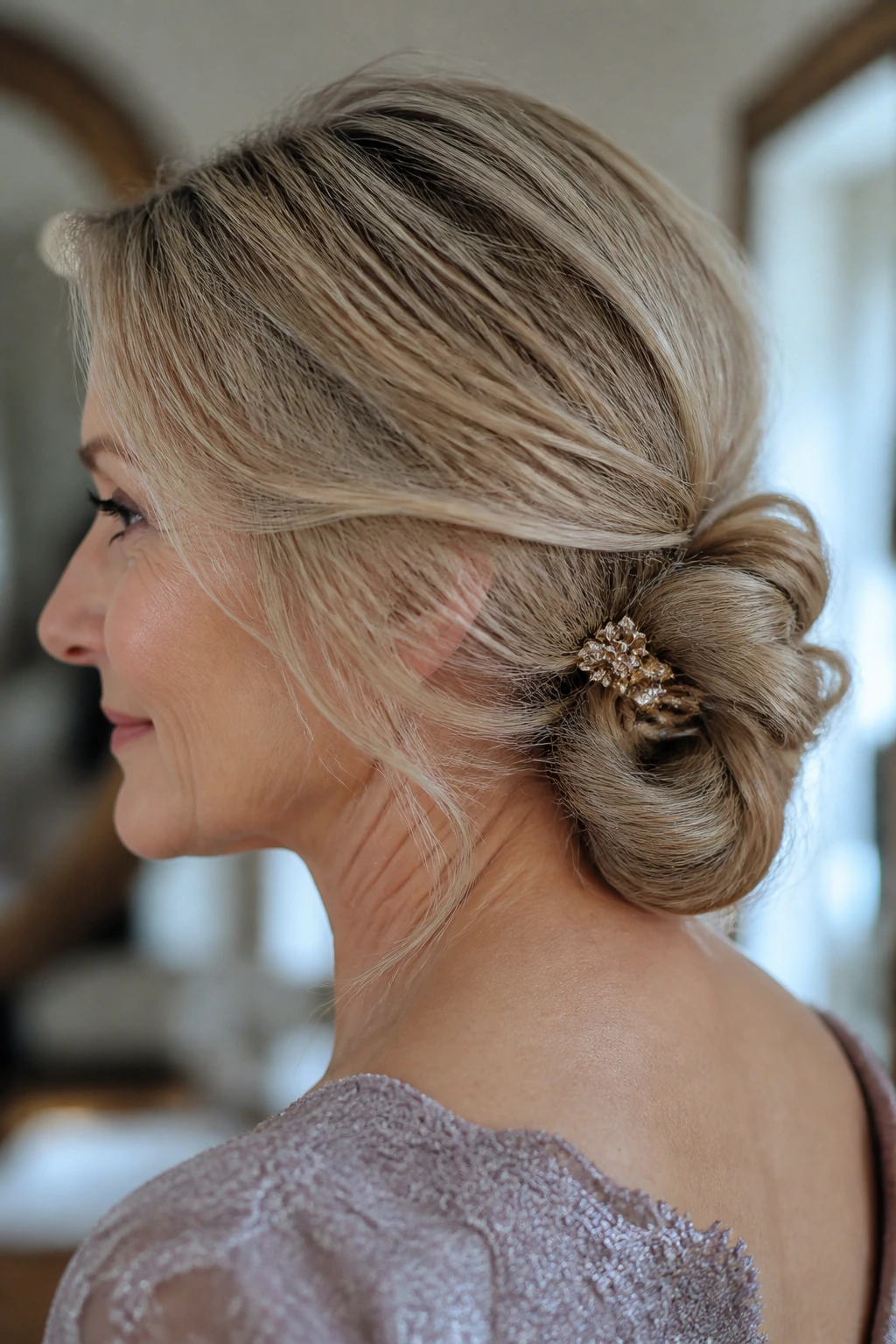
Unlike a centered bun, an asymmetrical knot makes fine hair feel more deliberate because the shape looks designed, not default. One side sits a touch lower or fuller than the other, which keeps the eye moving and stops the style from feeling flat across the back of the head.
Start with a slight side part, then gather the hair low and angle the knot off-center. Let one twisted section stay a little softer than the other. That slight imbalance is the point. Fine hair can disappear when everything is too neat; asymmetry creates visual weight without adding actual bulk.
This is a good match for modern dresses, especially ones with clean necklines or a sculpted shoulder. It gives the whole outfit some rhythm. A tiny decorative pin placed where the knot begins can help anchor the shape, but keep the accessory modest. The style is already doing the talking.
17. Cascading Curls with Selective Pinning
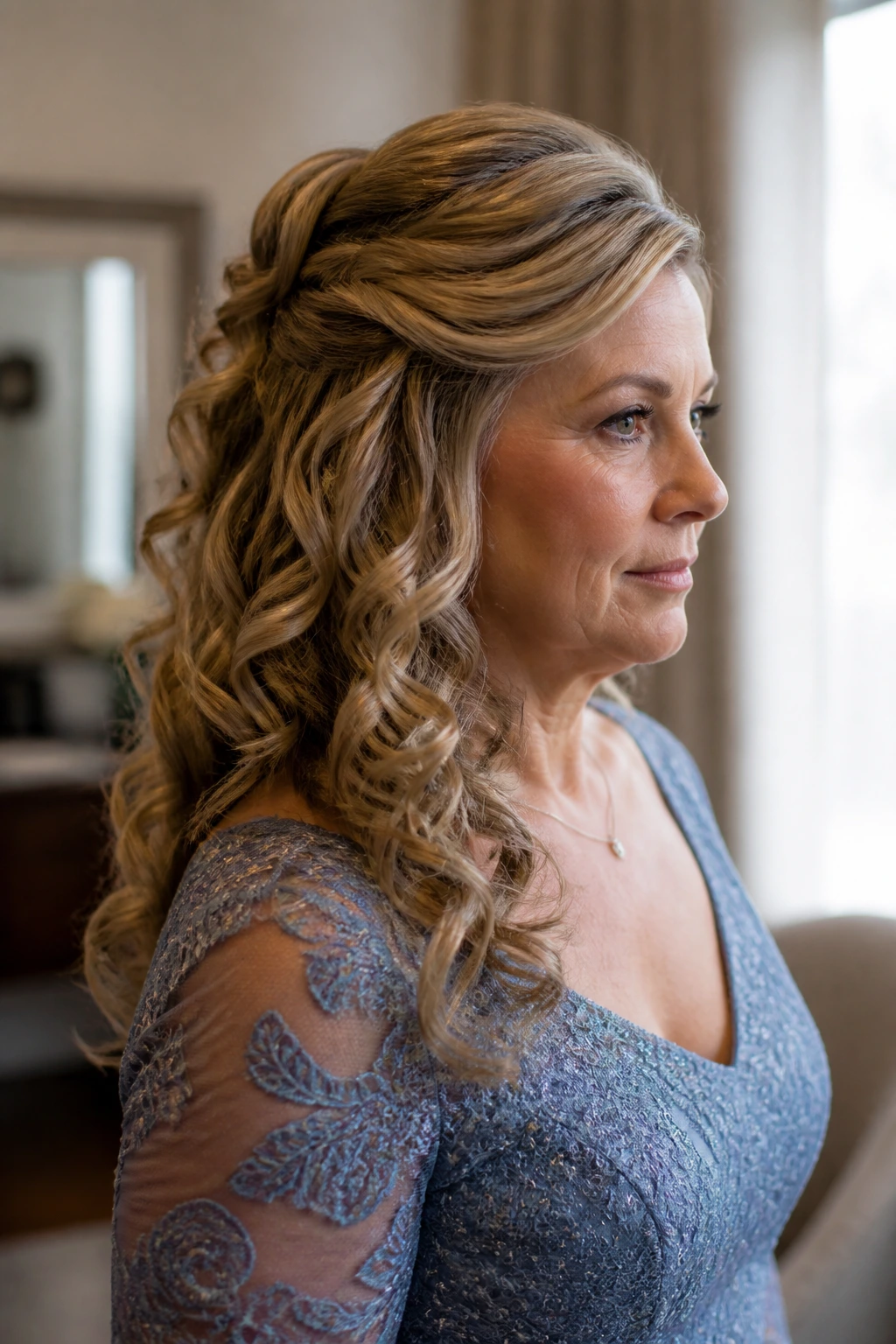
Not every mother of the bride wants her hair up, and fine hair does not need to be forced into a bun to look formal. Cascading curls keep the softness of hair down, while selective pinning at the temples and crown keeps the style from falling into the face or losing shape too fast.
Curl the whole head in medium sections, then brush the curls lightly so they become soft waves. Pin back only the top front sections and leave the rest flowing. That selective restraint matters. If you pin too much, the style loses its airy feel. If you pin too little, the front starts to collapse into the cheeks.
This is a good option when the dress or jacket is already structured and you want the hair to look romantic rather than severe. It also works nicely for hair that’s longer on one side or has grown-out layers, because the wave pattern smooths over those differences instead of exposing them.
18. Textured Chignon with a Smooth Top
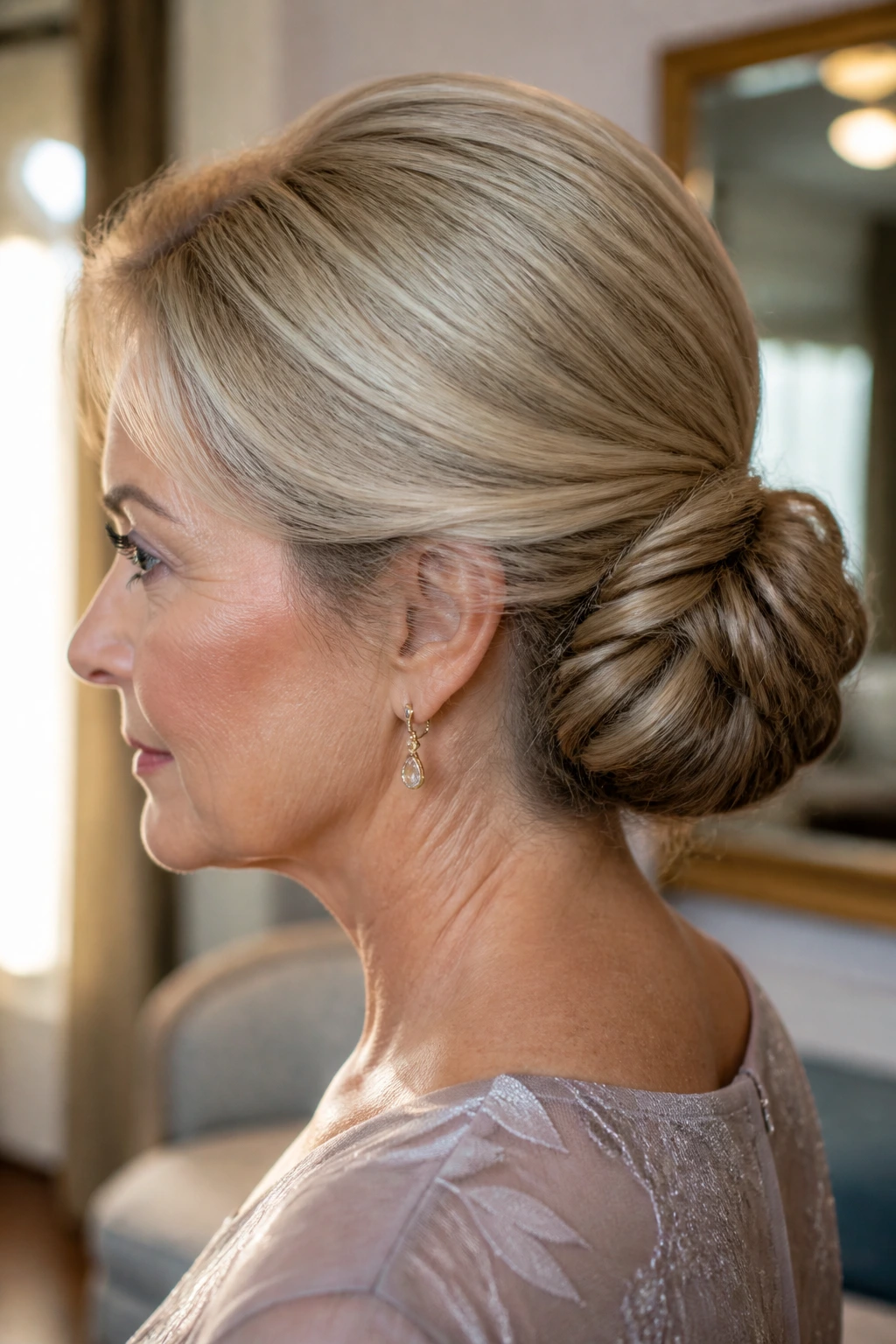
A textured chignon can look especially good on fine hair if the top stays smooth and the bun itself carries the texture. That split is what makes the style read as polished rather than messy. The smooth top gives the head shape; the textured bun gives the illusion of fullness.
Build the foundation first. A little mousse at the roots, a quick blow-dry with lift, and a light mist of texture spray through the mid-lengths are usually enough. Then twist the hair into a low chignon, letting some of the ends stay slightly loose so the bun has body. Pin from underneath so the shape stays rounded and not squashed.
This is one of the best styles for a formal evening dress, especially if the neckline is open and the jewelry is simple. It feels elegant without being stiff. Fine hair often looks best when one part of the style is controlled and the other part is relaxed — the contrast keeps it from looking too thin or too perfect.
19. Vintage Brushed Waves with a Side Comb
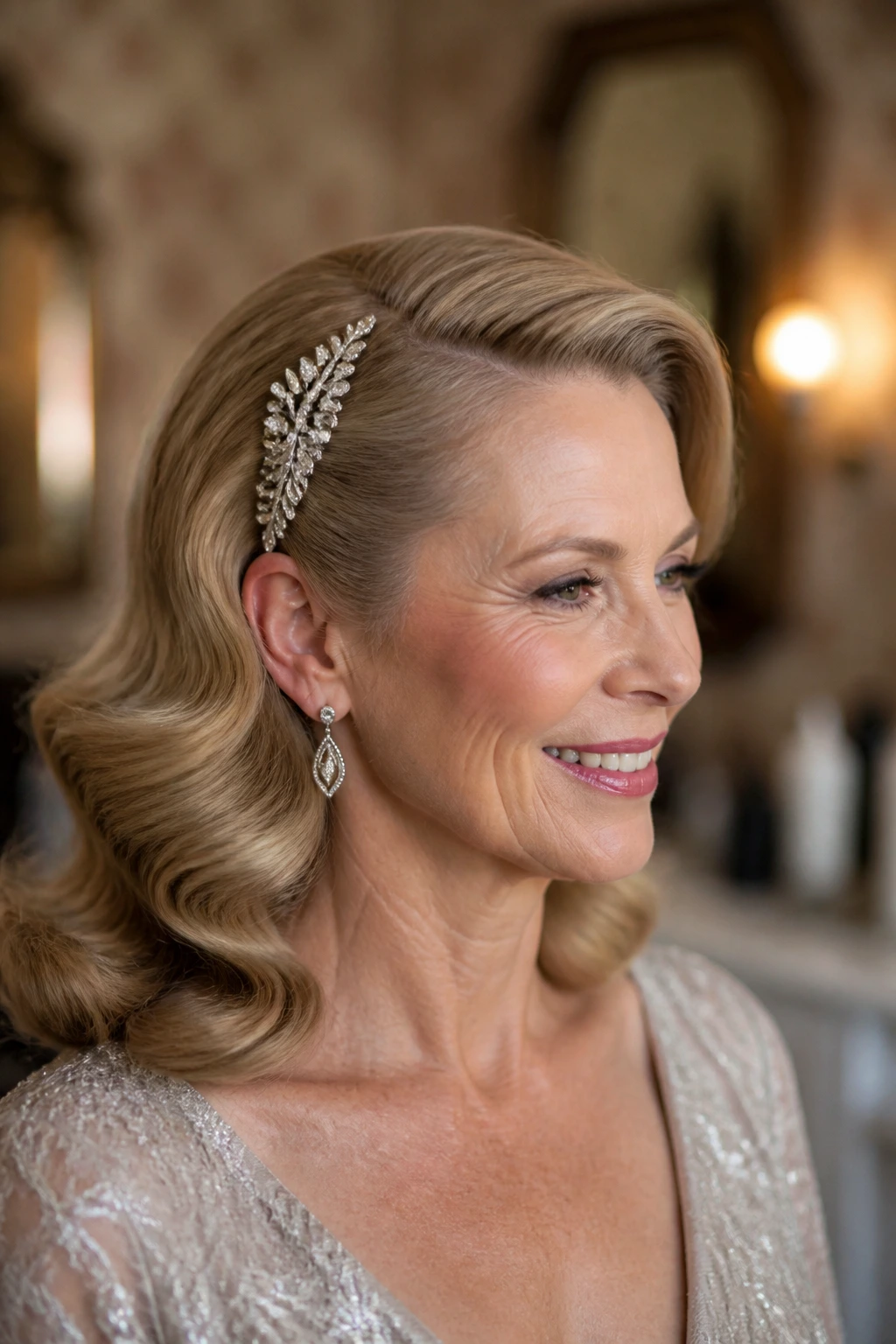
There is something about brushed waves that flatters fine hair in a way a tight curl never quite does. The wave pattern creates width, the side part brings lift, and a small comb at the temple gives the style a focal point without crowding the face.
Set the hair in large waves, let them cool, then brush them through until the shape softens into an old-Hollywood bend. Pin a decorative comb just above the ear or slightly behind it. That placement matters. Too low and it disappears; too high and it starts to look stuck on. A brushed wave should feel like a line, not a pile.
This is a lovely choice for a mother of the bride who wants something soft but not casual. It works especially well with satin, crepe, or any dress that has a little sheen. Fine hair tends to look its best when the wave pattern is broad and deliberate, not tiny and busy.
20. Veil-Friendly Low Nest Bun
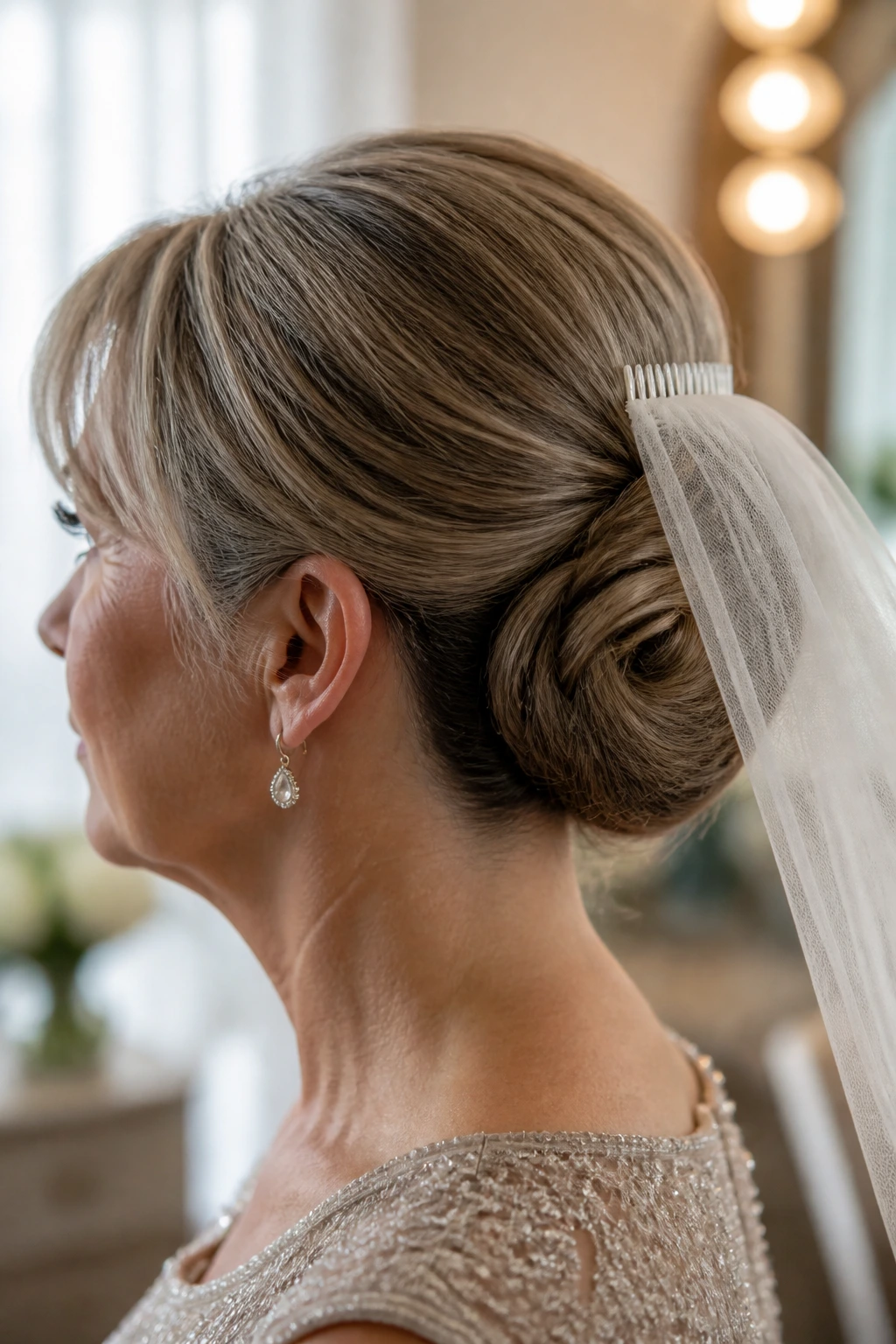
If a veil is part of the plan, the hairstyle needs to give it a solid place to live. A low nest bun does that without forcing the hair into a heavy shape. It sits close to the nape, stays compact, and leaves enough structure for the veil comb to anchor securely.
Build the bun first, then slide the veil comb into the hair above it, not through the bun itself. That upper placement helps the veil stay stable and keeps the bun from getting crushed. Fine hair usually needs two anchor points for a comb like this — one at the comb teeth and another hidden pin at the base. Don’t skip the second one. A veil can tug more than people expect.
This style is useful even if the veil comes off later. The bun still reads as finished on its own, which means the hair won’t feel like it was built for one short moment and then left to fend for itself. That matters on a day with a lot of moving pieces.
21. Braided Twist Bun with Airy Crown
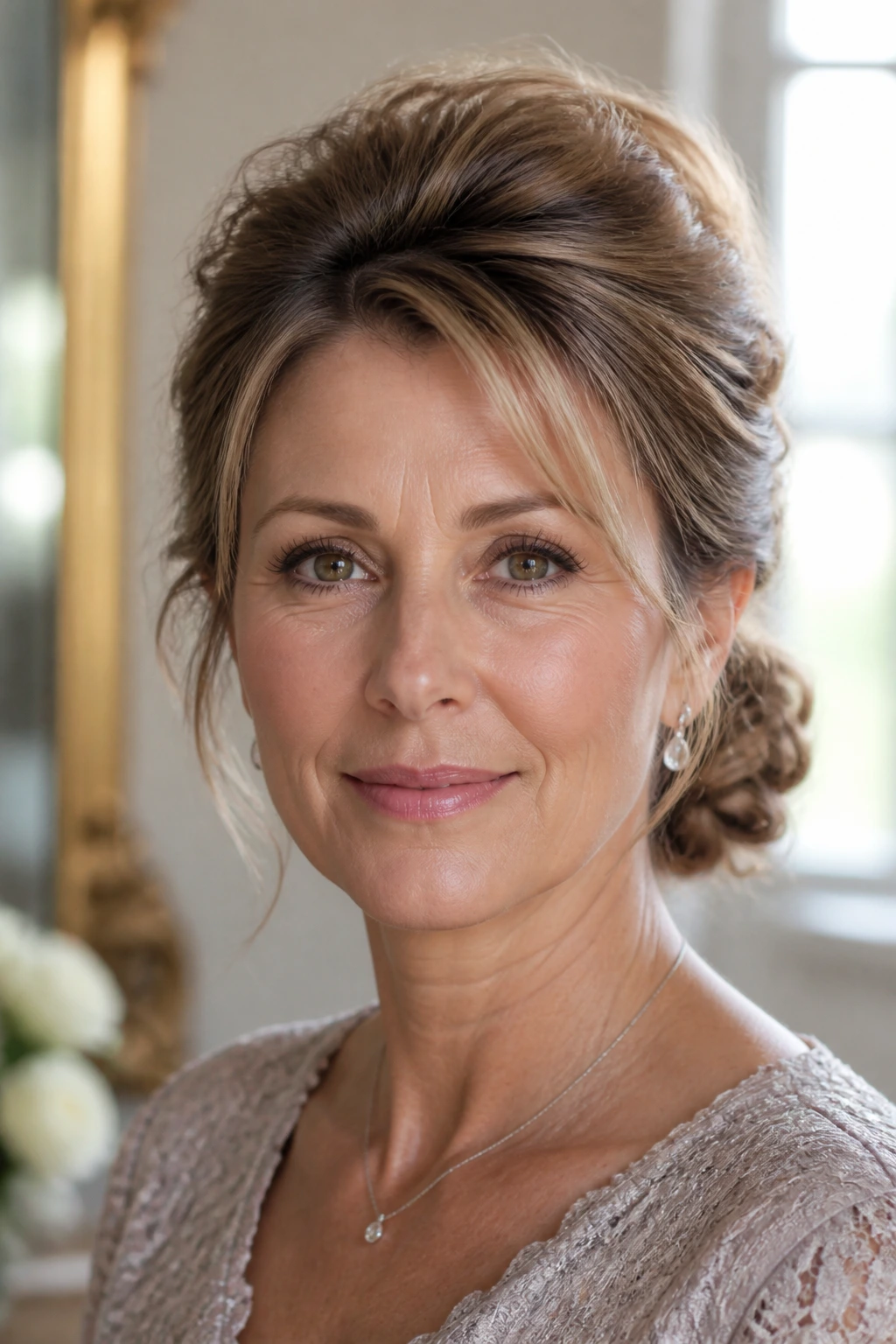
A braided twist bun gives fine hair some much-needed texture without making it look busy. The braid adds surface detail, the twist adds shape, and a lightly lifted crown keeps the whole style from sitting too close to the scalp.
Pull two loose sections from the sides, braid or twist them back, and gather everything into a bun at the nape. Loosen the braid edges a little, but stop before the pattern frays. You want the braid to read as texture, not as wear and tear. Fine hair loves a bit of pattern because it makes the strands look denser.
This style has a lovely balance for a wedding because it feels soft from the front and secure from the back. It works with pearl earrings, a slim necklace, or a pin placed slightly off-center near the base of the bun. If the hair is thin at the ends, tuck those ends inward rather than trying to spread them out. Spreading is what makes fine hair look sparse.
22. Jewel-Pin Low Roll with Satin Finish
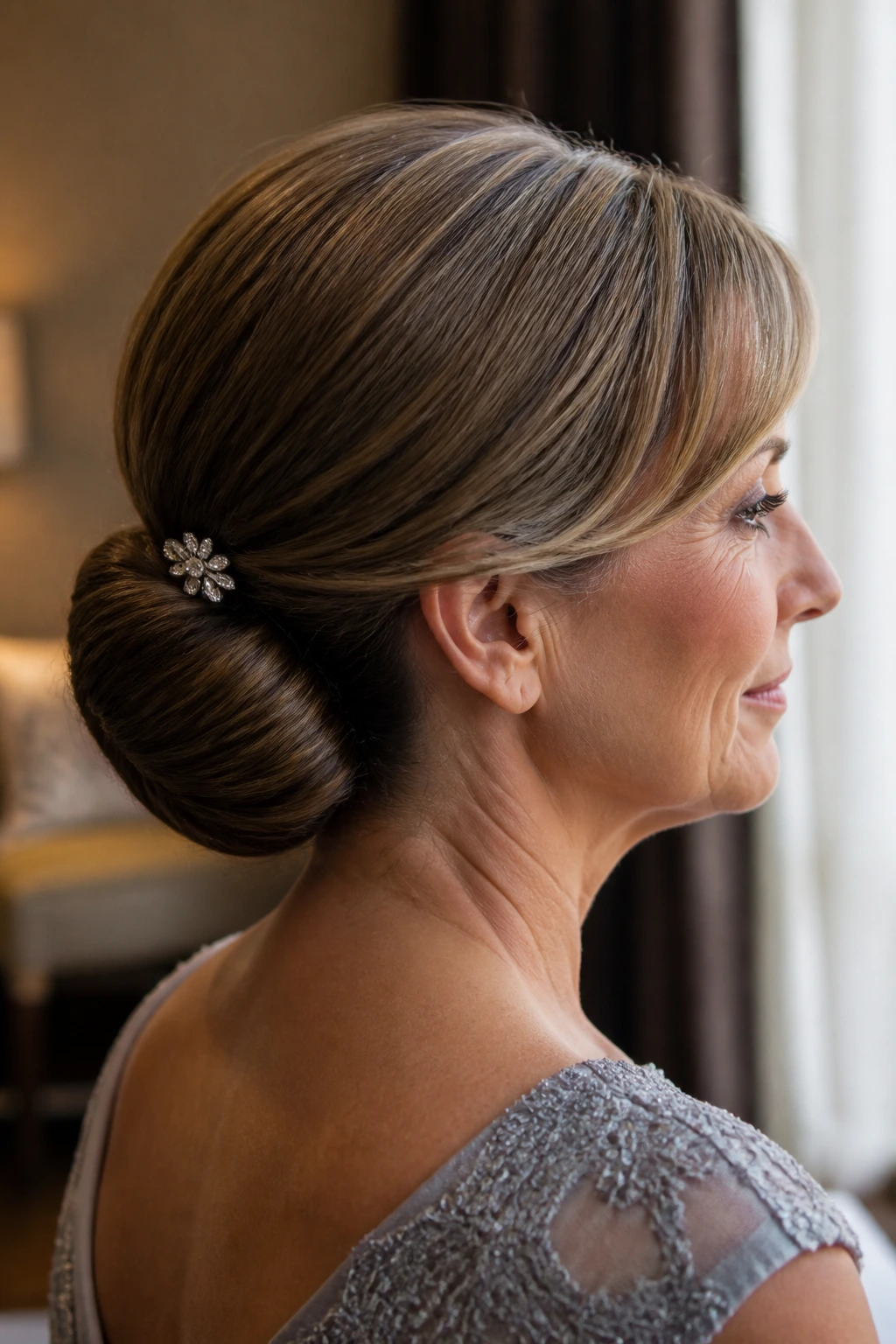
A jewel-pin low roll is one of those styles that looks calm even when the rest of the morning is not. The roll stays low and smooth, the shine is controlled rather than glossy, and one well-placed pin gives the whole look a point of focus.
Keep the surface of the hair brushed smooth, roll it inward at the nape, and pin it tightly underneath so the shape stays compact. Then set one small jewel pin or comb just off-center. That little offset keeps the style from feeling too symmetrical, which can make fine hair look flatter than it is. The roll itself should be neat but not stiff. Think satin finish, not shellac.
This is a very good last-stop style for a mother of the bride who wants something refined, soft, and easy to wear for several hours. It pairs nicely with a dress that already has texture, because the hair doesn’t compete with the fabric. The accessory should feel like punctuation. Nothing more.
Why Fine Hair Needs a Different Wedding-Day Strategy
Fine hair and thin hair are not the same thing, and that distinction matters more than people think. Fine hair means each strand has a smaller diameter, so it bends, slips, and collapses faster than coarse hair. You can have a lot of it and still need careful styling. You can also have less of it and still get a beautiful result. The strategy changes either way.
Heavy creams, thick serums, and oversized curls usually work against fine hair. They make the hair too smooth to hold a shape, or they weigh the roots down before the style has a chance to set. What fine hair tends to like instead is a light mousse at the roots, a bit of texture through the mid-lengths, and a shape that sits close enough to the head to keep its structure. That’s why low buns, half-up shapes, and soft waves show up so often in this kind of styling.
There’s also the matter of visual balance. A mother-of-the-bride style should feel graceful in person and clean in photos from the side, because those are the angles that catch light, earrings, and neckline details. A shape that is too tall or too loose can make fine hair look like it’s trying to be another texture altogether. Better to let the hair look like its best self, only neater, fuller, and a little more deliberate.
Essential Equipment for These Looks
-
Tail comb: Useful for clean parts, sectioning, and pulling up a small crown section without disturbing the rest of the style.
-
1-inch curling iron: Best for soft curls that can be brushed into waves; small enough to create hold, not tight ringlets.
-
1.25-inch curling iron or wand: Good for bob lengths and longer layers when you want a looser bend.
-
Blow dryer with nozzle attachment: Helps direct the roots and gives the hair more lift than air-drying ever will.
-
Round brush: A medium-size brush gives fine hair shape at the root and smoothness through the ends.
-
Velcro rollers: Handy for setting a crown or front sections while makeup is getting done.
-
Duckbill clips: These hold sections in place while you work and don’t leave the same dents as regular clips.
-
Bobby pins and U-pins: Bobby pins anchor the style; U-pins help with buns and twists that need a softer hold.
-
Clear elastics: Best for ponytails, half-up sections, and hidden foundations.
-
Texturizing spray: Gives fine hair some grit so pins and twists stay put.
-
Flexible-hold hairspray: Keeps movement in the hair instead of freezing it into a shell.
-
Root-lifting mousse: A little at the roots can change the whole shape of fine hair once it’s dried in.
-
Heat protectant spray: Non-negotiable if you’re curling or blow-drying; fine hair burns and frays faster than people expect.
-
Hand mirror or phone camera: You need a quick check of the back, because fine hair can look tidy from the front and messy at the nape.
Smart Product and Prep Tips for Fine Hair
Wash Day: Fine hair usually behaves better with a little natural grip, so many styles hold best on freshly washed hair that has been fully dried, or on hair washed the day before if the roots get too silky. If the scalp runs oily, dry shampoo at the roots can help. If the hair is very clean and slippery, a light mousse before blow-drying gives it more structure without the crunch.
Root Lift: Put the volume where it matters most — at the crown and part line. A small amount of mousse or root spray, worked in with your fingertips, does more than a heavy layer of thick product. Blow-dry with the nozzle pointed downward for smoothness, then lift the roots section by section with the brush and give each section a cool shot before moving on.
Texture: Use texture spray or a light dry shampoo only where the hair needs grip. Fine hair can go from soft to sticky fast if you spray everywhere. Mid-lengths and ends need a bit of roughness for pinning and braiding, but the surface should still look like hair, not powder.
Hold: Flexible hairspray is usually enough if the shape has been built well. Strong-hold spray has its place, but spraying the hair from six inches away in one thick blast tends to flatten the movement you just created. Better to mist in layers and let each pass dry before adding the next.
Accessory Choice: Small pins, slim combs, and lightweight clips sit better in fine hair than bulky ornaments. The accessory should support the style, not drag the section down. I always say the best hair jewelry on fine hair is the piece that disappears slightly from the front and does its job in the back.
How to Match the Style to the Dress, Veil, and Jewelry
Presentation: The shape should open the face and keep the neckline visible. A low bun, tucked wave, or soft half-up style works because it doesn’t crowd the dress; it frames it. If the dress has detail at the shoulders or collarbone, keep the hair softer and lower so the fabric can still be seen.
Accompaniments: Earrings, veils, combs, and even glasses all need room. A deep side bun or brushed wave is useful when the jewelry is already doing something interesting, while a veil-friendly low roll gives the comb a stable place to sit without swallowing the hair. If the neckline is busy, keep the hair quieter. If the dress is simple, the hair can carry a little more detail.
Portions: Fine hair often needs a smaller, tighter shape than thick hair to look balanced. A small chignon, a compact twist, or a low ponytail with wrapped base usually reads fuller than a style that spreads too wide. If the hair is shorter, choose a style that concentrates the volume near the crown or nape instead of trying to spread it all over the head.
Beverage Pairing: For hair, think of this as the mood pairing. A formal ballroom setting usually suits a smoother French twist or polished roll, while a garden ceremony often looks better with brushed waves, a soft braid, or a half-up style that can move a little in the air.
Additional Tips and Finish Moves
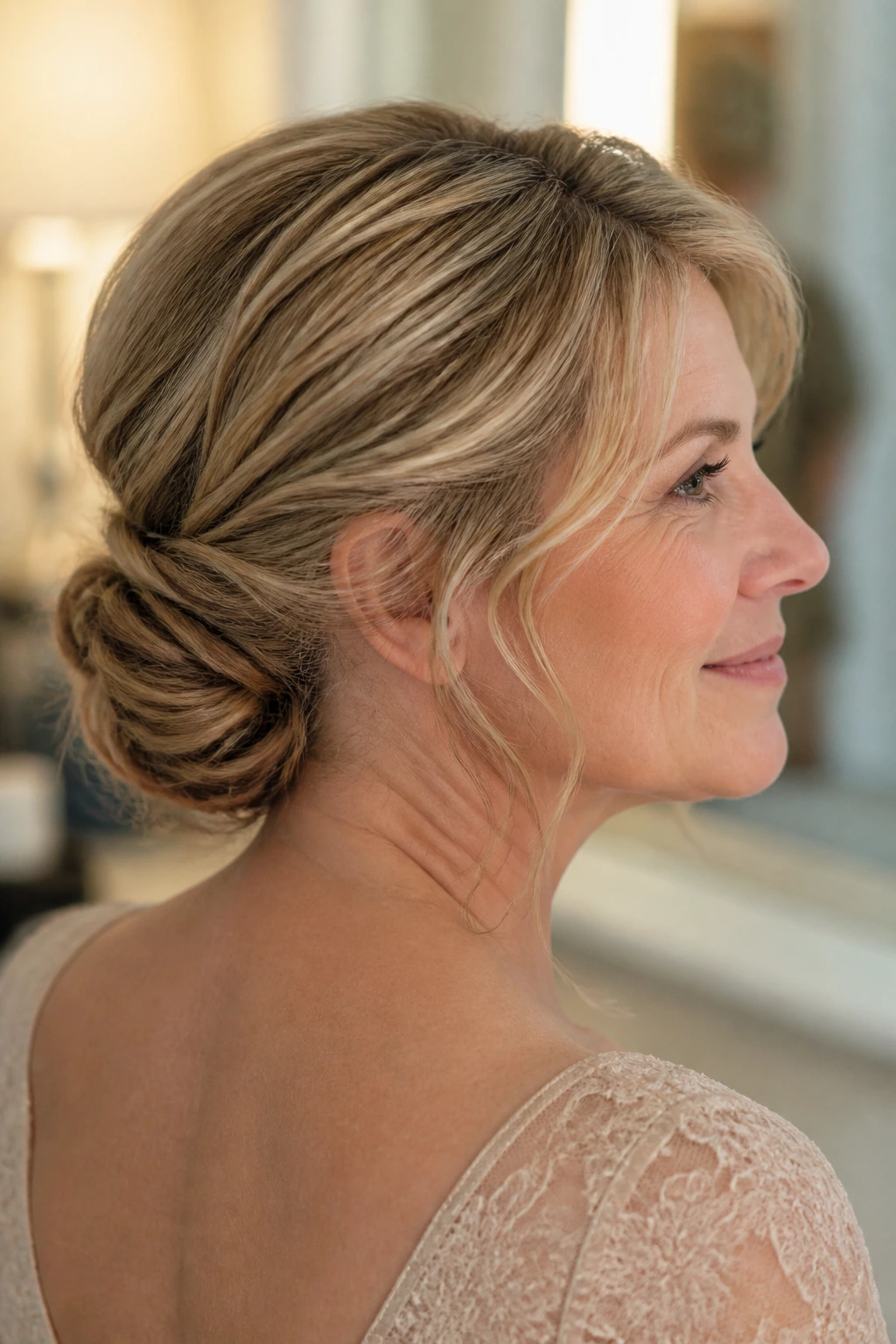
Lift Enhancement: Put the first bit of product at the roots, not the ends. Fine hair collapses from the top first, so that’s where the support should go. If you need more lift, set the crown on two Velcro rollers for 10 to 15 minutes while you do makeup.
Customization: If the face needs softness, leave one slim section around the cheekbone and curl it away from the face. If you want a cleaner look, pin that section back and let the neckline do the work. A small braid, pearl pin, or comb can shift the same base style into a different mood without changing the whole structure.
Serving Suggestions: On hair, the “serving” part is the finish. A satin-sheen spray on the lengths, one accessory placed deliberately, and a tiny bit of finger separation through the waves can make the style feel finished. Don’t rake your hands through everything. That’s how soft styles turn into loose ones.
Make-It-Yours: If you wear glasses, keep the sides tucked gently instead of piling hair near the temples. If your dress is ornate, pick a quieter hairstyle and let the fabric carry the drama. If the veil is coming off after the ceremony, choose a shape that still feels complete on its own. That extra planning saves you from reworking the whole head later.
Common Mistakes That Flatten Fine Hair
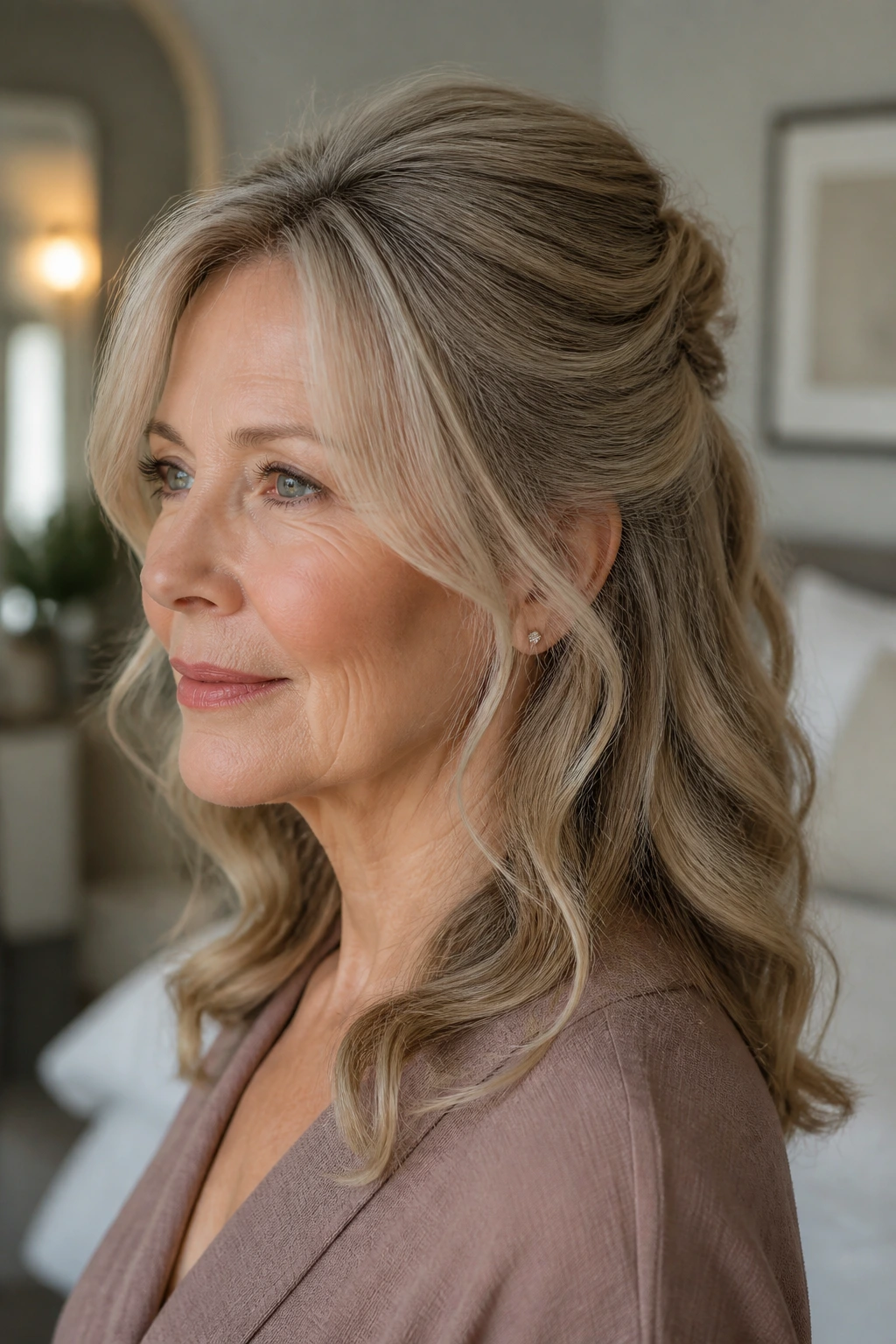
The biggest mistake is loading fine hair with heavy products. Thick oils, rich creams, and too much serum make the hair slip before it has time to set. The symptom is easy to spot: the roots lie flat, the pins slide, and the style starts shrinking by the time you’ve left the house. Use lighter products and keep them away from the crown.
Teasing every section is another one. Fine hair does need support, but if you rough up the whole head, the surface starts looking frizzy instead of full. Tease only the hidden underside of the crown or the inside of a twist. Then smooth the top layer back over it so the support stays invisible.
A third mistake is choosing curls that are too tight. Tight curls look smaller once they cool and brush out, and fine hair can end up looking thinner rather than fuller. Bigger sections, brushed-out bends, and soft waves usually hold a more believable shape.
Don’t ignore pin placement either. A few random pins shoved into the hair rarely hold for long. Cross them, anchor them into a bit of texture, and place them where the shape has weight. Fine hair needs structure, not guesswork. And if the style is pulling at the scalp, it’s too tight. That tension usually leads to slipping later, which is the opposite of what you want.
Ways to Adapt These Soft Styles
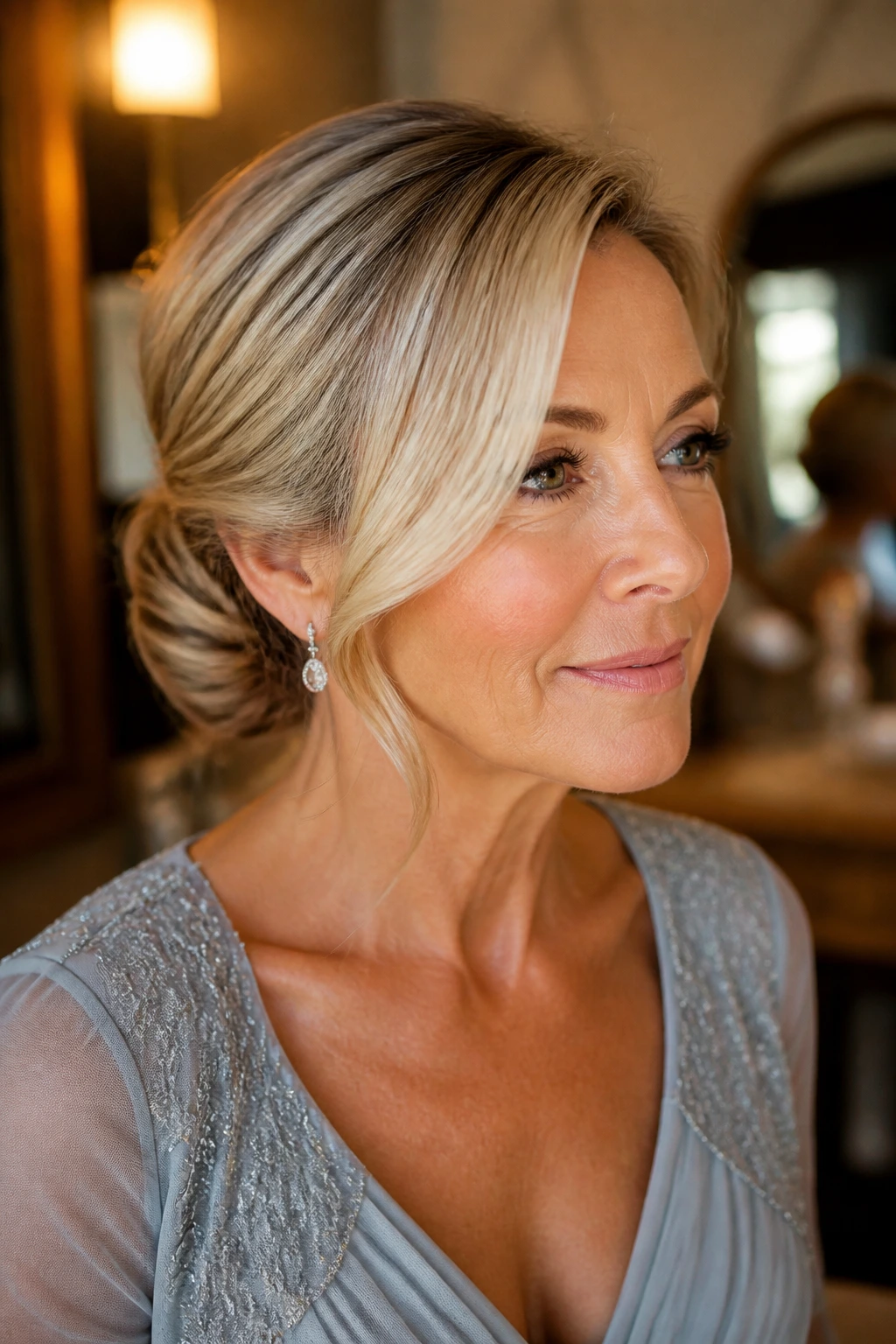
The Collarbone Cheat: If the hair stops around the collarbone, use half-up shapes, tucked waves, or a faux bob instead of trying to build a full chignon. Shorter fine hair looks best when the style works with the length it has.
The Glasses-Friendly Frame: Keep the temples softer and the sides slimmer so the frames don’t fight the hair. A side tuck or a deep part usually leaves enough room for the glasses to sit cleanly.
The Veil Anchor: Choose a low bun, roll, or tucked twist with a clear flat spot for the veil comb. The attachment should go in before the final spray, not after everything is lacquered into place.
The Humidity Guard: Add a little more root spray and a little less shine product. Fine hair can puff at the surface in damp air, so a flexible spray with some grit usually outperforms a glossy finish.
The Pearl Finish: If the dress is simple, swap the plain pins for one pearl comb or two small pearl pins. The shape stays the same, but the eye gets a little more to land on, which suits formal photos.
How to Keep Everything Fresh From Photos to Dancing
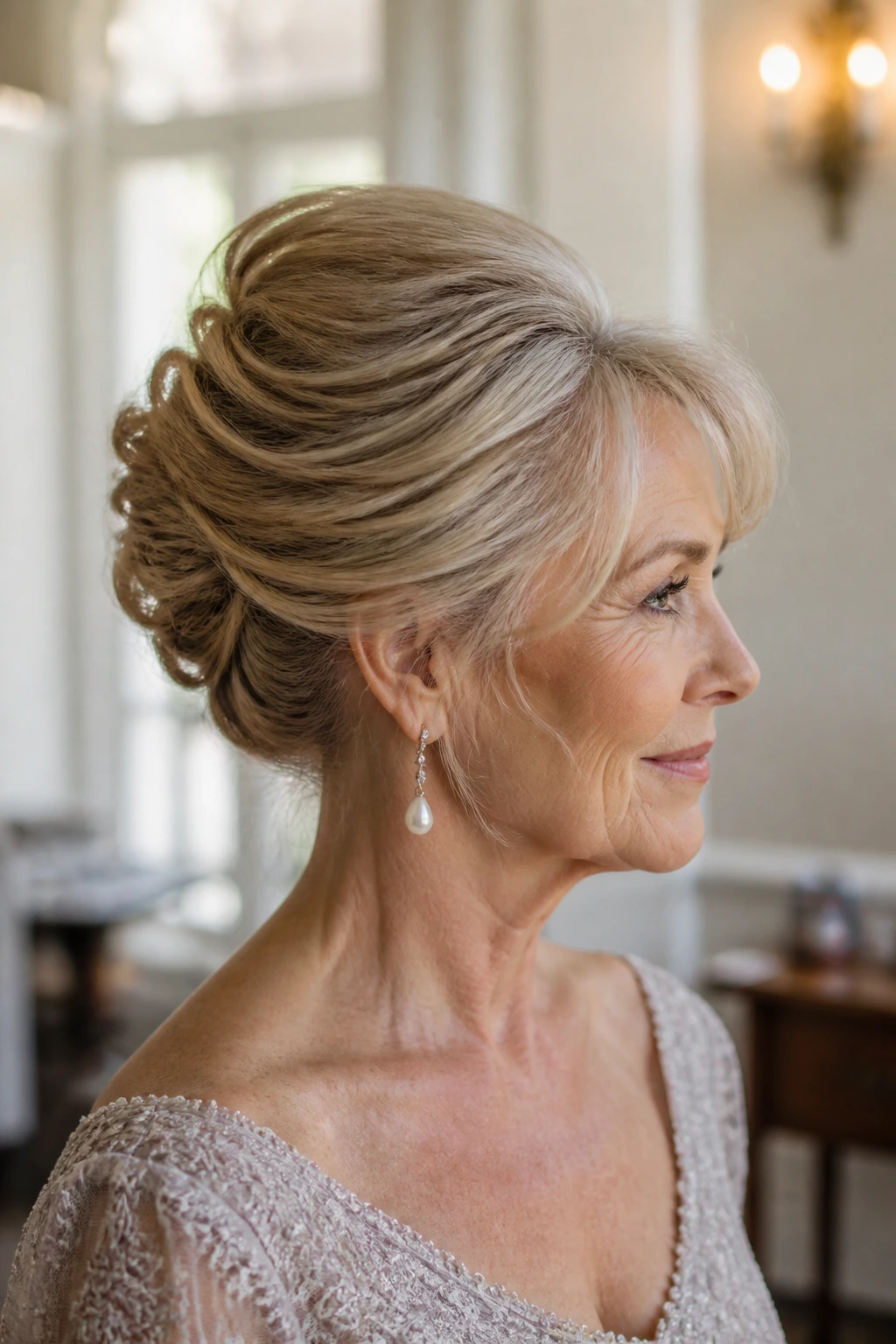
Fine hair rarely survives a big event by accident. It needs a tiny emergency kit and one or two touch-up habits. Keep a few bobby pins, two U-pins, a travel-size hairspray, and a small comb in the bridal suite or purse. That alone solves most of the common problems: a section loosening at the temple, a braid puffing out, or a bun slipping lower than it should.
If the roots start to go flat, don’t pile on more spray straight away. Lift the section slightly with your fingers, push a pin into the hidden base, and let the hair settle back into place. For waves, pinch the shape back into a curve instead of brushing. Brushing breaks the form faster than people expect.
If the style needs to be done ahead of time, finish the prep and heat styling early, but leave the final pinning and accessory placement for the last stretch before leaving. Fine hair loses shape as the hours pass, so a style built too early may look tired before the ceremony even starts. For long events, a quick mirror check after photos and before dinner is usually enough.
Frequently Asked Questions
Can fine hair really hold an updo without extensions?
Yes, if the style is built low and the pins are anchored well. Fine hair usually does better in compact shapes like chignons, rolls, and tucked buns than in tall styles that need a lot of support.
Should I wash fine hair on the day of the event?
Often, yes — but only if fresh-washed hair still has some grip after blow-drying. If your hair gets slippery right away, washing the day before and adding a touch of dry shampoo at the roots may give better hold.
Is backcombing bad for fine hair?
Light teasing at the hidden crown is fine. The problem comes from roughing up the whole head, which leaves the surface frayed and harder to smooth back down. Use teasing as a support layer, not a style in itself.
What if my hair falls flat before the reception?
Pin the base again before adding more spray. Flatness usually comes from lost support, not from a lack of product. A hidden pin at the crown or nape can bring the shape back faster than starting over.
Are clip-in extensions worth using for the mother of the bride?
They can be, especially for half-up styles or fuller buns, but they need to match the hair texture and be placed carefully. If the extensions feel too thick or too shiny, they can call attention to themselves in a way that fine hair usually does not.
Which styles work best with short fine hair?
Brushed-out bobs, faux bobs, vintage waves, and side-tucked styles tend to work best. They create shape without asking for more length than the hair has.
Can I wear glasses with a soft updo?
Absolutely. Just keep the sides light and avoid bulky volume near the temples. A low bun, side tuck, or brushed bob usually sits very comfortably with frames.
How much time should I leave for styling?
Plan on at least 45 minutes for heat styling and shaping, and longer if the style includes braiding, pinning, or a veil. Fine hair often needs one extra round of adjustment after the first pass, because a style that looks good at the mirror can settle differently once the pins are all in.
A Softer Finish
Soft hair on a wedding day does not mean fragile hair. It means the style has enough shape to stay put and enough movement to look like hair, not a shell. That distinction matters a lot for the mother of the bride, who usually wants to look polished without feeling overstyled.
Fine hair responds best to smart structure: low silhouettes, careful root lift, light texture, and pins that do their work quietly. Once you stop asking it to behave like thick hair, the whole process gets easier. And the result tends to look better, too.
Pick the shape that suits the neckline, the jewelry, and the way she actually wears her hair when she feels like herself. That’s the version that holds up in photos, in conversation, and in the few quiet moments before the ceremony starts.