



Thick hair has a funny way of making wedding hair feel like a negotiation. It won’t disappear into a flimsy twist. It won’t sit still in a wispy curl. And if the pins are too small, or the base is too soft, the whole thing starts to swell, slide, and puff out by the time the group photos begin. That’s why 22 sleek hairstyles for mother of the bride with thick hair matter so much: they work with the weight, not against it.
For this role, the sweet spot is polished, calm, and secure. You want the hair to look smooth from the front, tidy from the back, and strong enough to survive hugs, dancing, and a full afternoon of being on display from every angle. Thick hair can do all of that better than fine hair can, but only when the shape is chosen well. A low bun that would collapse on someone else can sit like armor on dense hair. A narrow twist can look expensive because the fullness stays controlled.
The styles below lean sleek on purpose. Some are classic and quiet. Some have a little sculpting or shine. A few use braids, knots, or a wrapped ponytail to keep the finish neat without making the hair look stiff. The common thread is control. Clean lines. Good balance. No fussy puff at the crown. Just hair that stays where it’s placed.
Why These Sleek Styles Feel Different on Thick Hair
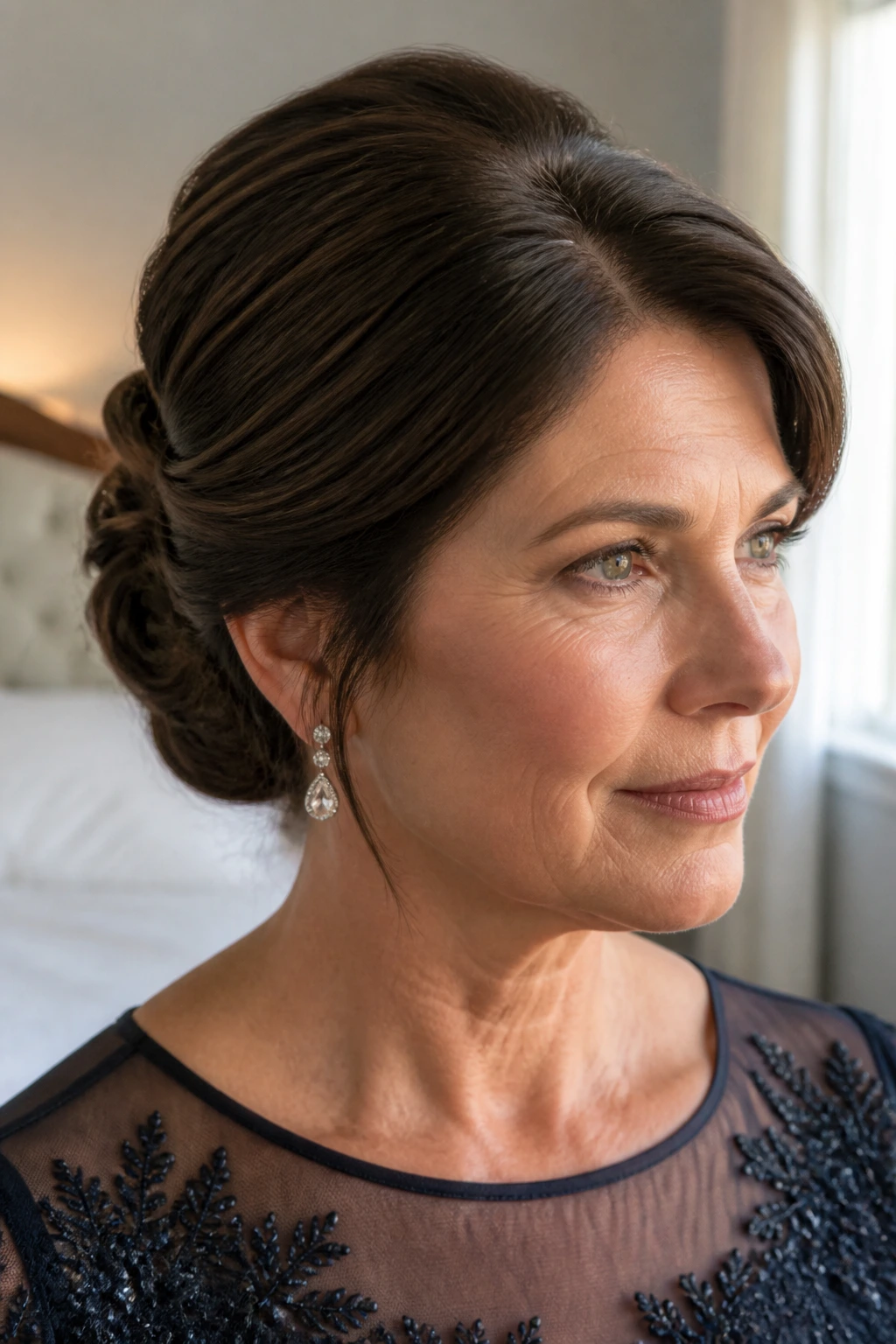
- The weight works for you: Thick hair gives buns, twists, and rolls real structure, so the style can stay anchored without a mountain of product.
- The finish reads cleaner in photos: Smooth sides and a controlled nape keep the eye on the face, earrings, and neckline instead of random flyaways.
- You can wear lower styles without them looking flat: Dense hair still shows shape when it’s tucked low, which means comfort and polish can live in the same style.
- Accessories stay put better: Combs, pearl pins, and veils grip more securely when they’re set into a solid base of hair.
- The shape lasts through the long part of the day: Thick hair does not need constant rebuilding if the parting, pinning, and smoothing are done properly the first time.
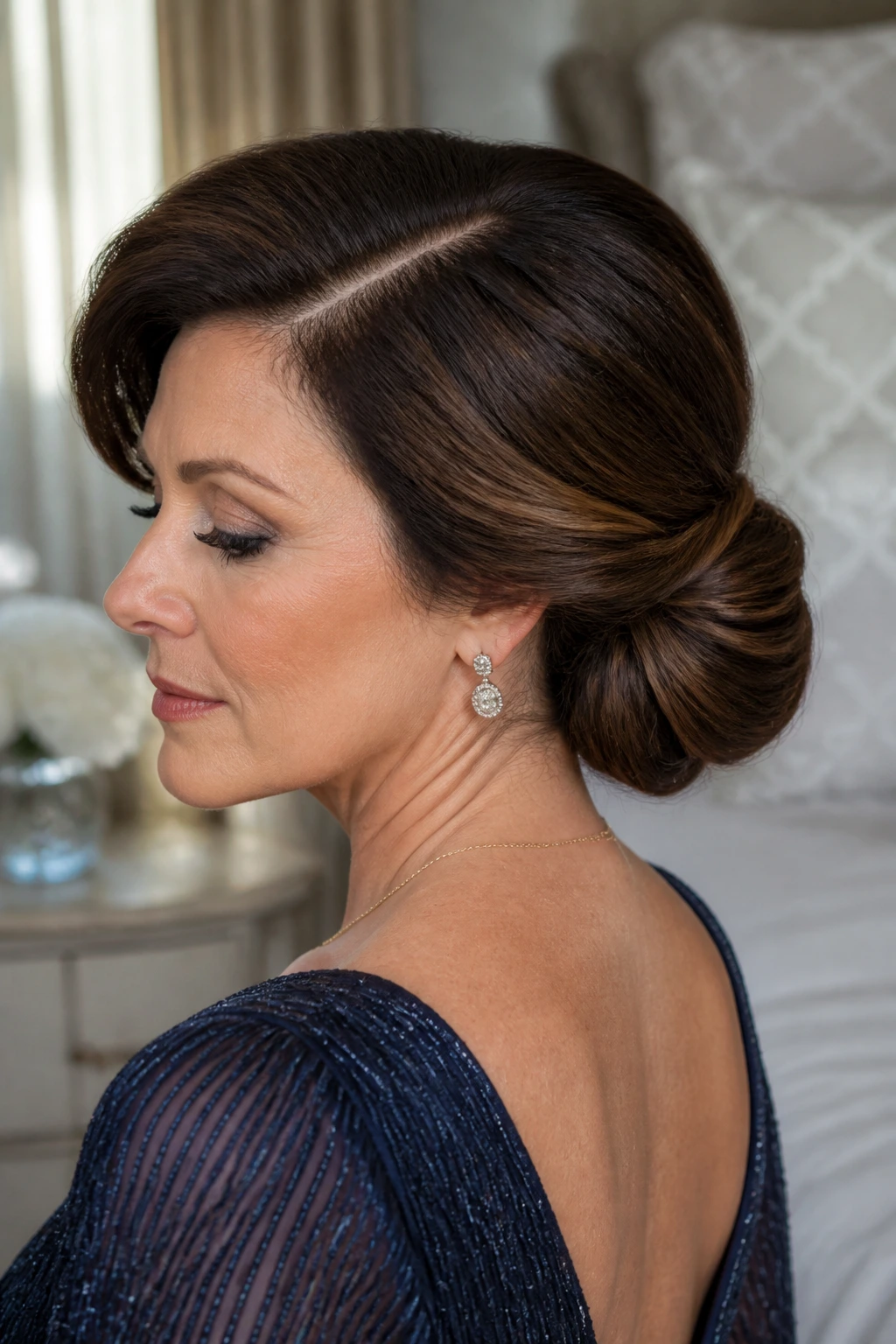
1. Deep Side-Part Low Chignon
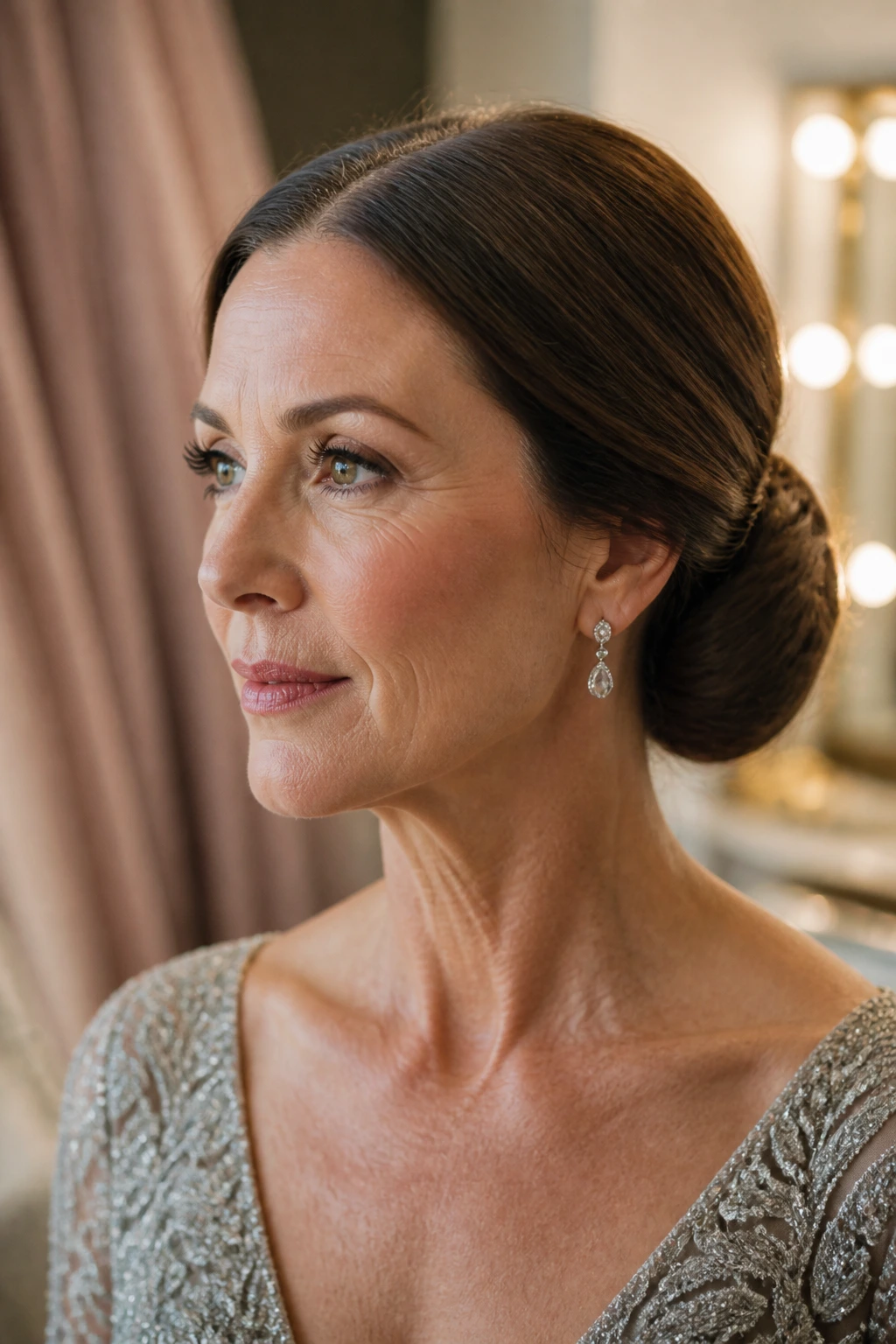
A deep side part gives thick hair direction before the bun even starts. That matters. Without a clear line, dense hair can fan out at the crown and look wider than you want. With the part set low and clean, the whole shape feels more elegant, and the chignon sits like it belongs there instead of fighting the head shape.
Why It Flatters Thick Hair
A low chignon compresses bulk without flattening the life out of the hair. That’s the trick. Thick hair keeps the bun full enough to look deliberate, while the side part softens the face and gives the front a little movement.
- Best with: off-the-shoulder gowns, bateau necklines, and dresses with beading at the bodice.
- Use: a smoothing cream, a fine-tooth comb, and 6 to 10 long pins.
- Skip: heavy root oil. It makes the front pieces separate and look greasy by the second photo.
Pro tip: leave the bun slightly off-center, not dead center at the nape. That small shift keeps thick hair from looking boxy.
2. Center-Part Wrapped Bun
A center-part wrapped bun is the cleanest answer when the dress has sharp lines or a structured collar. The whole look is calm. No visual clutter. No extra height. Just a narrow middle part, smooth sides, and a wrapped bun that sits low and neat.
Thick hair gives this style a pleasant weight. The bun does not feel flimsy or too small. It has enough body to look finished, which is why I like it with satin dresses, crepe, and anything that already has strong seams or a square neckline. Use a boar-bristle brush, a small elastic, and a thin strand from the ponytail to wrap the base so the finish looks intentional rather than tied on.
3. French Twist with a Soft Crown
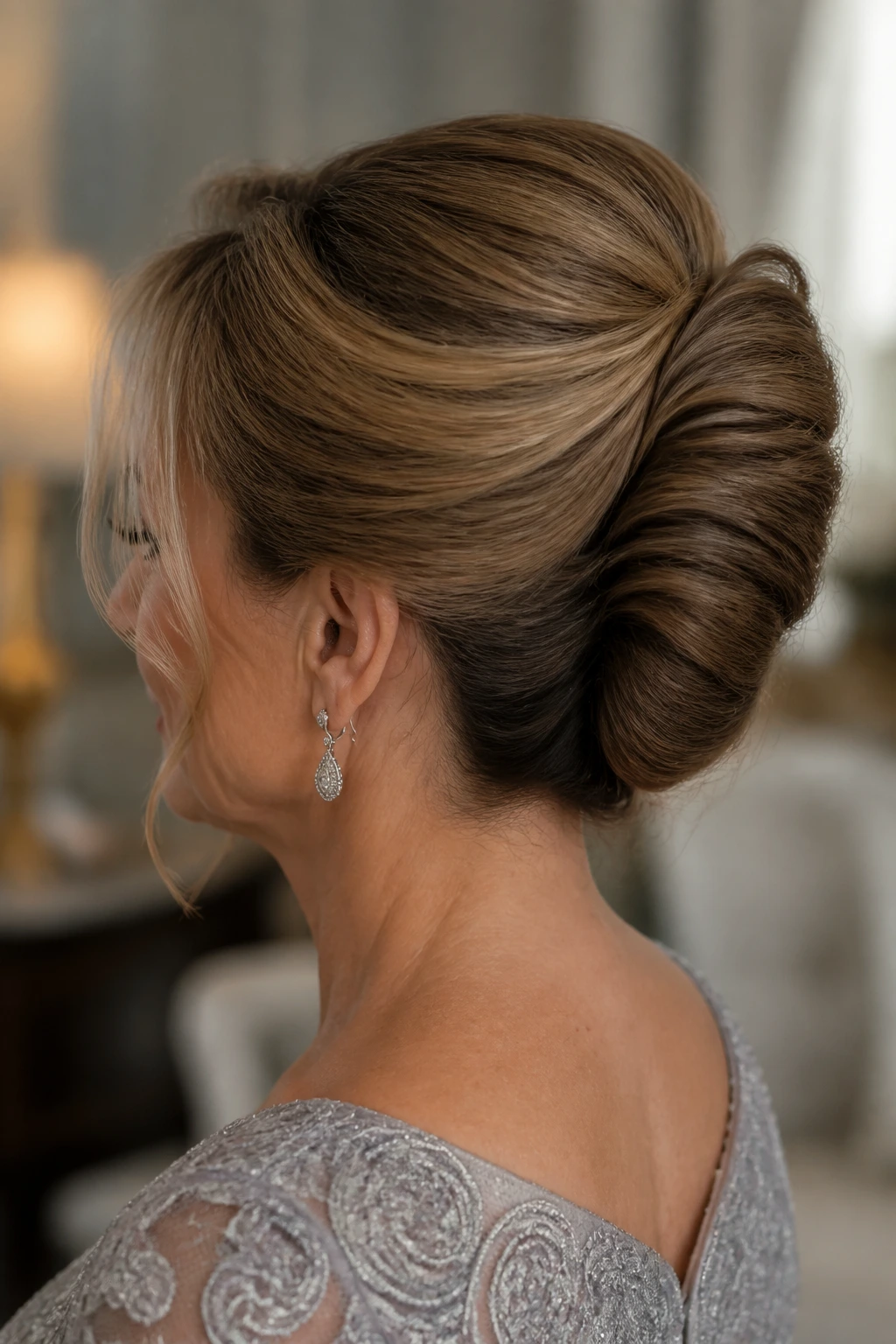
Can a French twist hold thick hair without turning into a shell of spray and pins? Absolutely, if the crown is smoothed first and the twist is anchored low enough to handle the weight. The key is not height. It’s control.
What Makes It Work
The front should stay close to the head, with just enough lift to avoid a flat silhouette. Thick hair gives the twist a satisfying fullness down the back, and that volume is what makes the style feel formal instead of severe.
How to Use It
Use a tail comb to set the part, then brush the hair back in sections before twisting. Long U-pins do more here than small bobby pins. If you’re wearing pearl earrings or a comb, this style leaves the frame open so the details can breathe.
4. Twisted Nape Knot
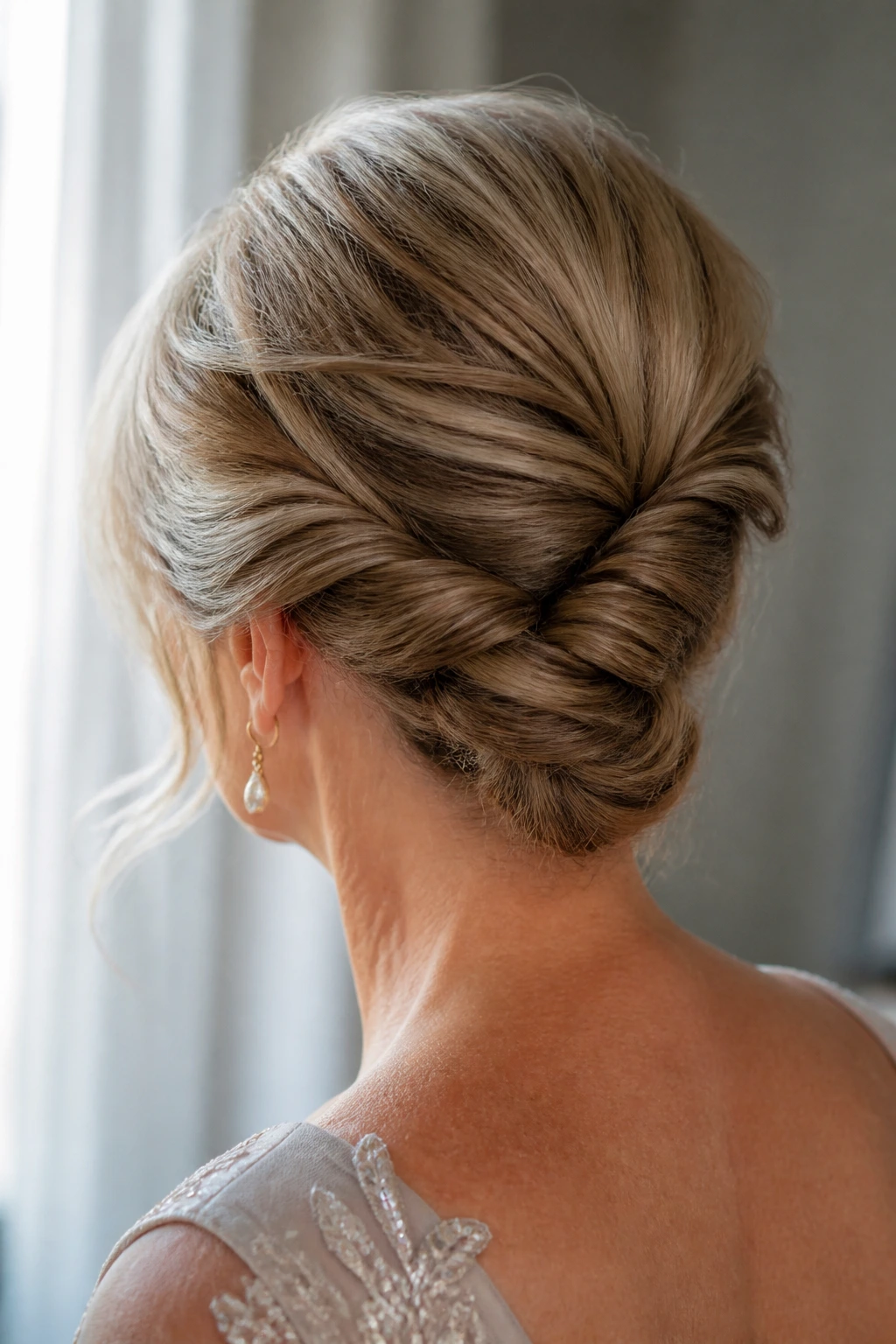
If your hair usually slips out of clips by lunchtime, the twisted nape knot is the style that stops the fight. It sits low, uses the thickness of the hair as its own support, and keeps the back of the neck clear. That last part matters more than people admit. Weddings run long, and a warm neck can ruin a nice dinner.
Two rope-like twists meet at the nape and fold into a knot that feels tidy, not fussy. Thick hair makes the knot look substantial, so it does not need extra padding. Keep the twists smooth, pin them where they cross, and finish with a light mist of flexible spray. It’s one of the best choices for a dress with a high back or a dramatic pair of earrings.
- What it hides: shorter layers near the neckline.
- What it shows: the line of the jaw and neck.
- What to avoid: twisting too tightly at the temples, which can make the front look strained.
5. Wrapped Low Ponytail
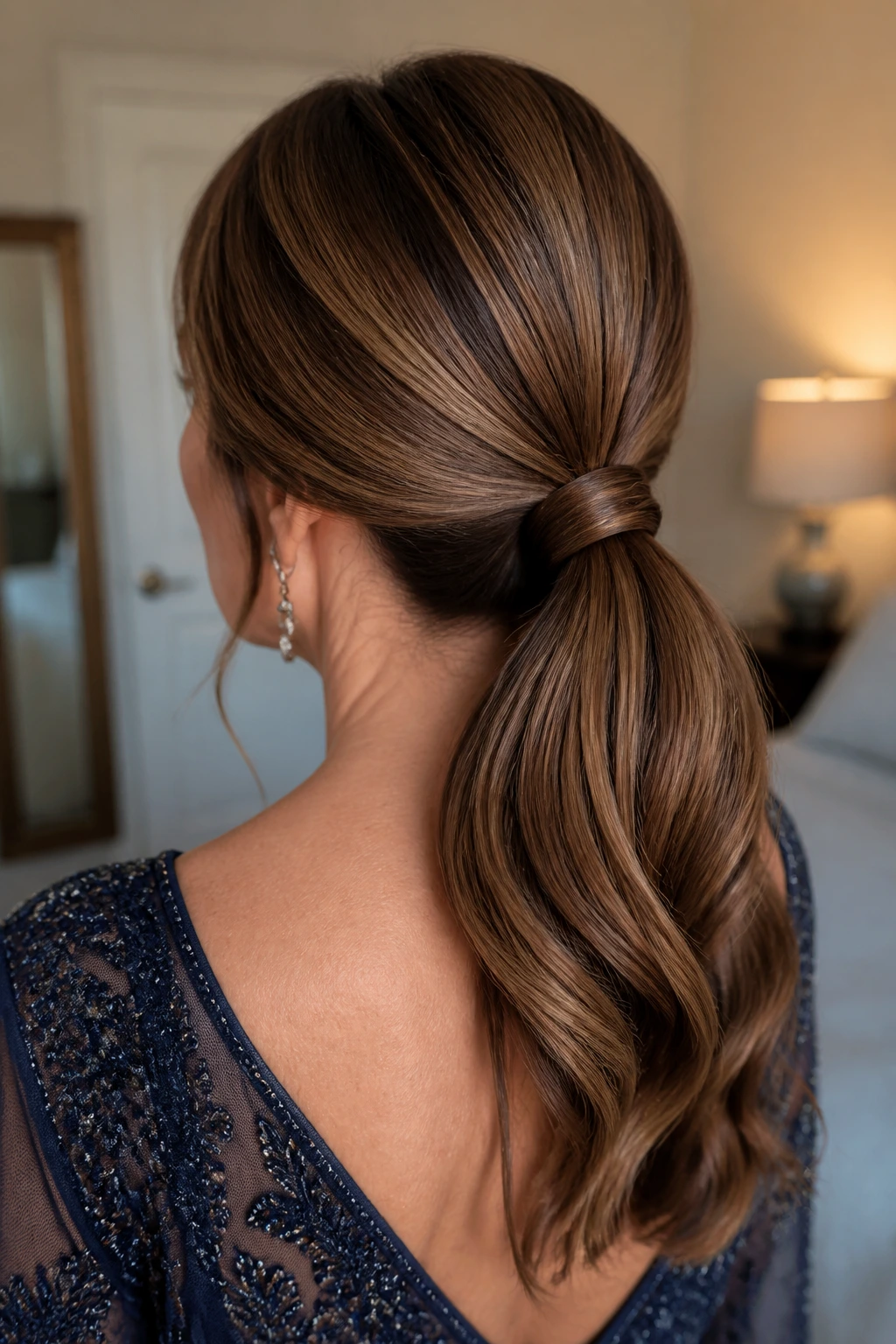
A polished low ponytail can look every bit as formal as an updo when the base is tight and the finish is smooth. Thick hair is actually an asset here. The tail has enough bulk to fall in one confident line, not a skinny strand that disappears into the dress.
This style works especially well when you want something modern but not severe. Use a small elastic matched to the hair color, wrap a narrow section around the band, and smooth the lengths with a flat iron or a round brush, depending on whether you want a straighter or softly curved finish. Keep the ponytail low and centered or just a touch off-center. That keeps the whole style calm.
6. Side-Swept Roll with Hidden Pins
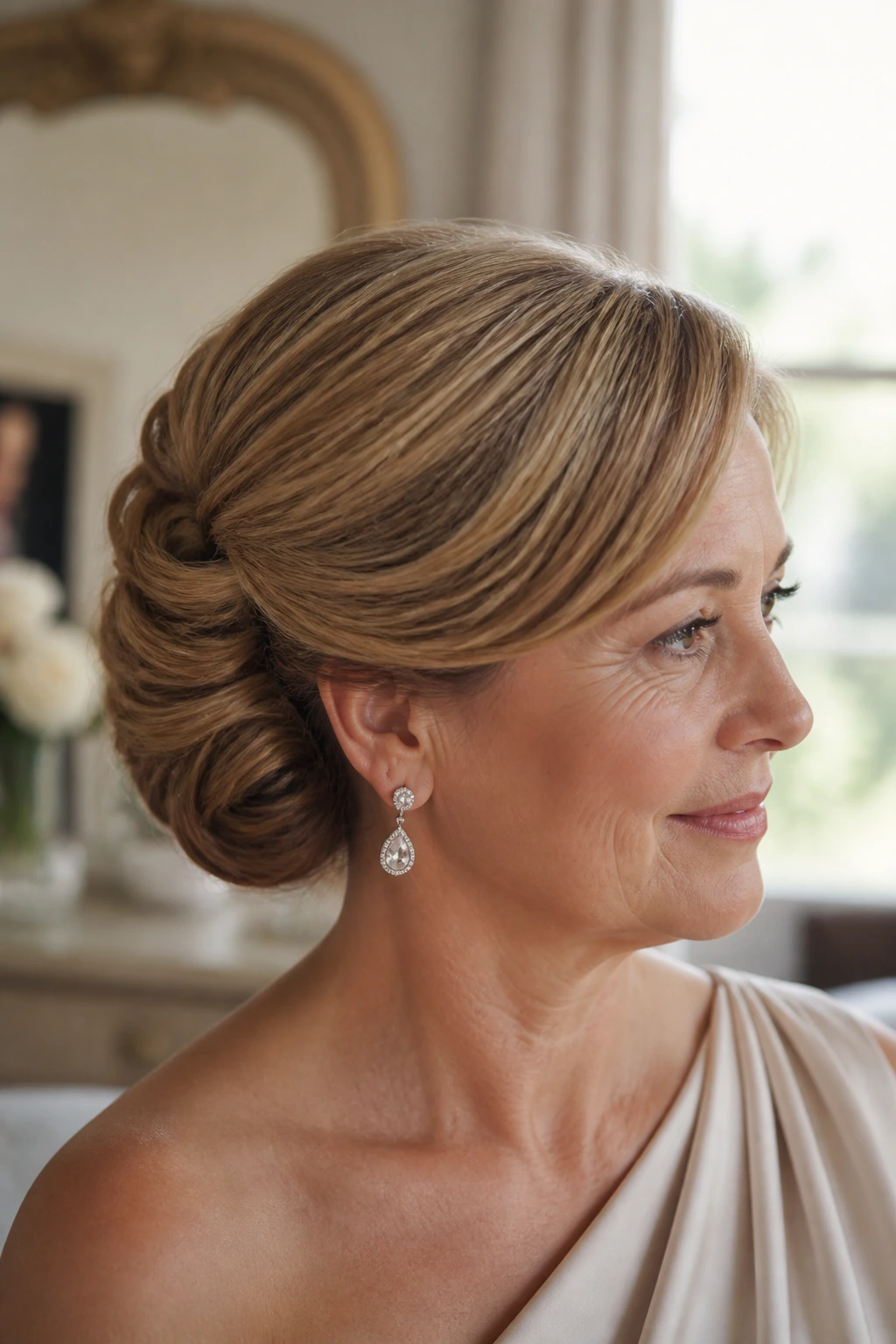
Unlike a plain bun, a side-swept roll gives you a little movement without letting the hair escape into puff. It’s one of my favorite options for one-shoulder dresses, because the front sweep echoes the shape of the gown instead of competing with it. The back stays compact. The side carries the interest.
Thick hair helps here because the roll has enough density to look sculpted. Hidden pins along the underside hold the bend, and the top surface stays smooth with a light pass of shine spray. The result should feel tailored, not shellacked. If the dress has a strong neckline, this style keeps the visual line clean.
7. Braided Bun
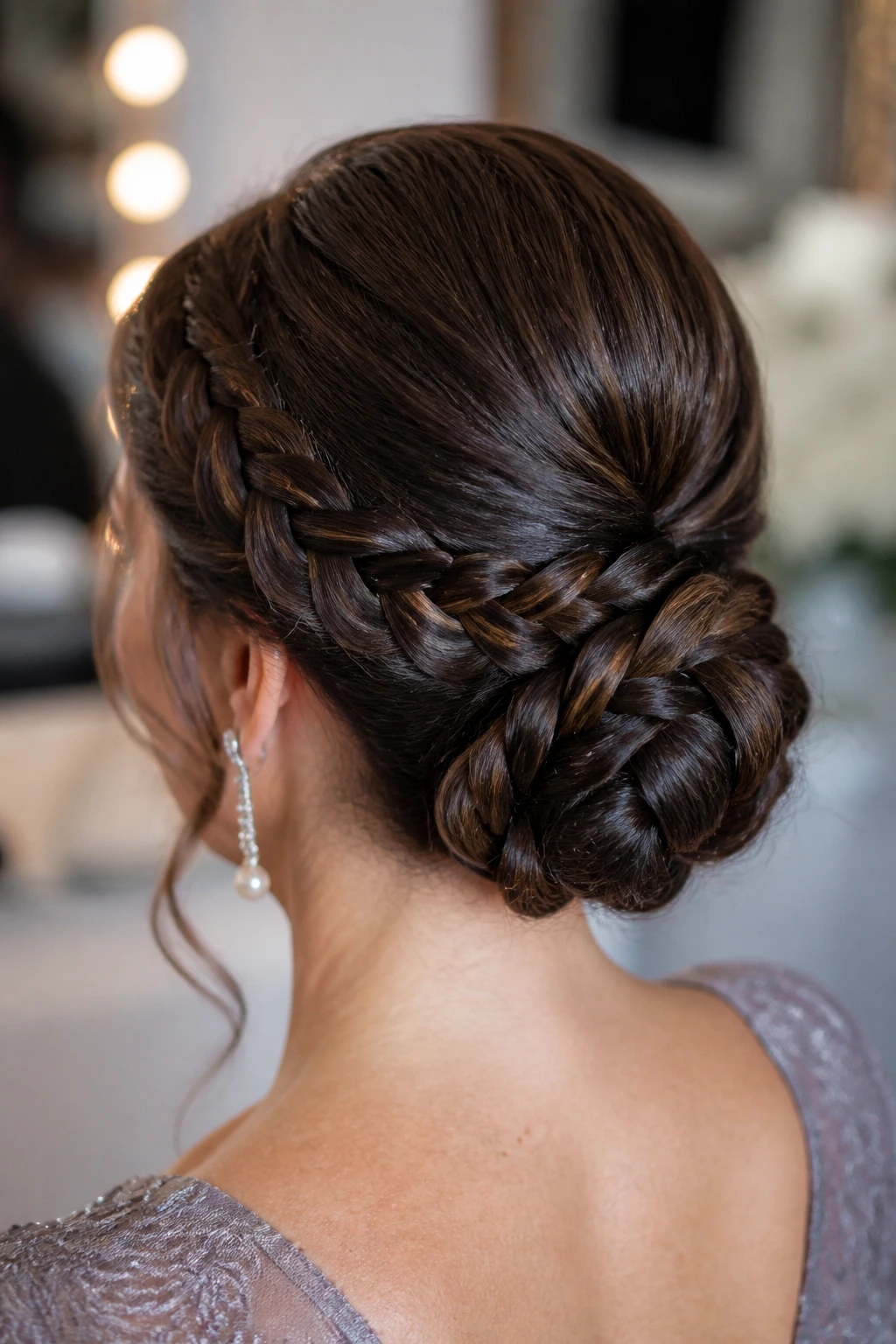
A braid is not just decoration on thick hair. It is structure. That’s why a braided bun works so well for mothers who want control without losing all texture. The braid compresses the bulk, and then the bun folds that thickness into a neat circle at the nape.
A simple three-strand braid or a low Dutch braid both work. The Dutch version gives a bit more visual detail, while the plain braid stays quieter under formal fabrics. Use it when the dress has lace, embroidery, or a textured bodice. It will echo the fabric without making the hair feel busy.
Best for
- Dresses with detail at the shoulders
- Hair that tends to frizz at the ends
- Anyone who wants a style that still reads polished after hours of wear
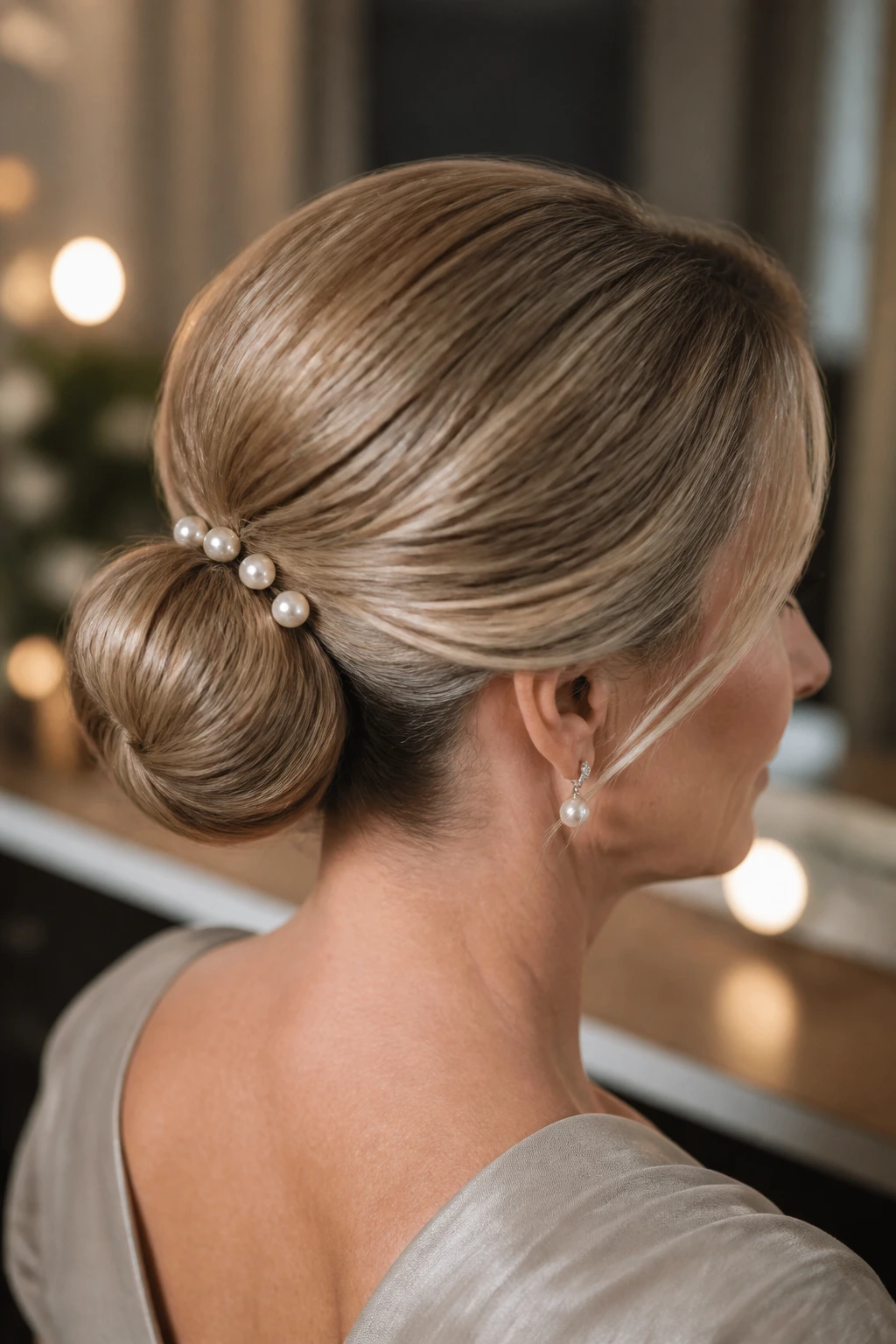
8. Pearl-Pin Chignon
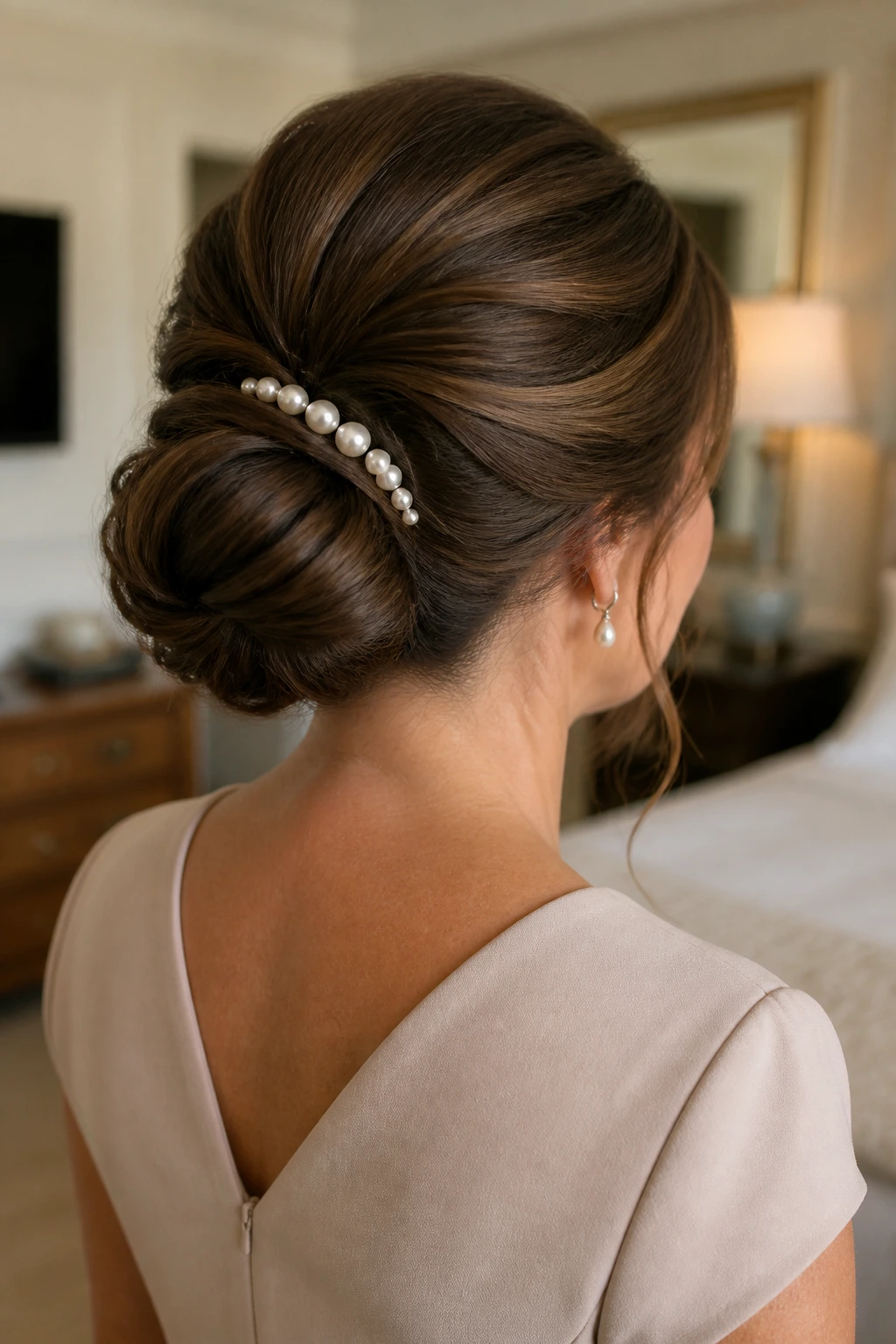
Pearl pins can be lovely, but only when they’re used like punctuation, not confetti. A pearl-pin chignon keeps the hair simple and lets the accessory do a small amount of talking. That restraint is what makes it feel adult and elegant rather than overly sweet.
Start with a smooth low chignon, then tuck three to five pearl pins along one curve of the bun or in a small cluster near the seam. Thick hair gives the chignon enough body that the pearls sit on top instead of sinking into the shape. It’s a good move when the dress already has clean lines and you want one soft detail near the back.
9. Half-Up Twist with Polished Length
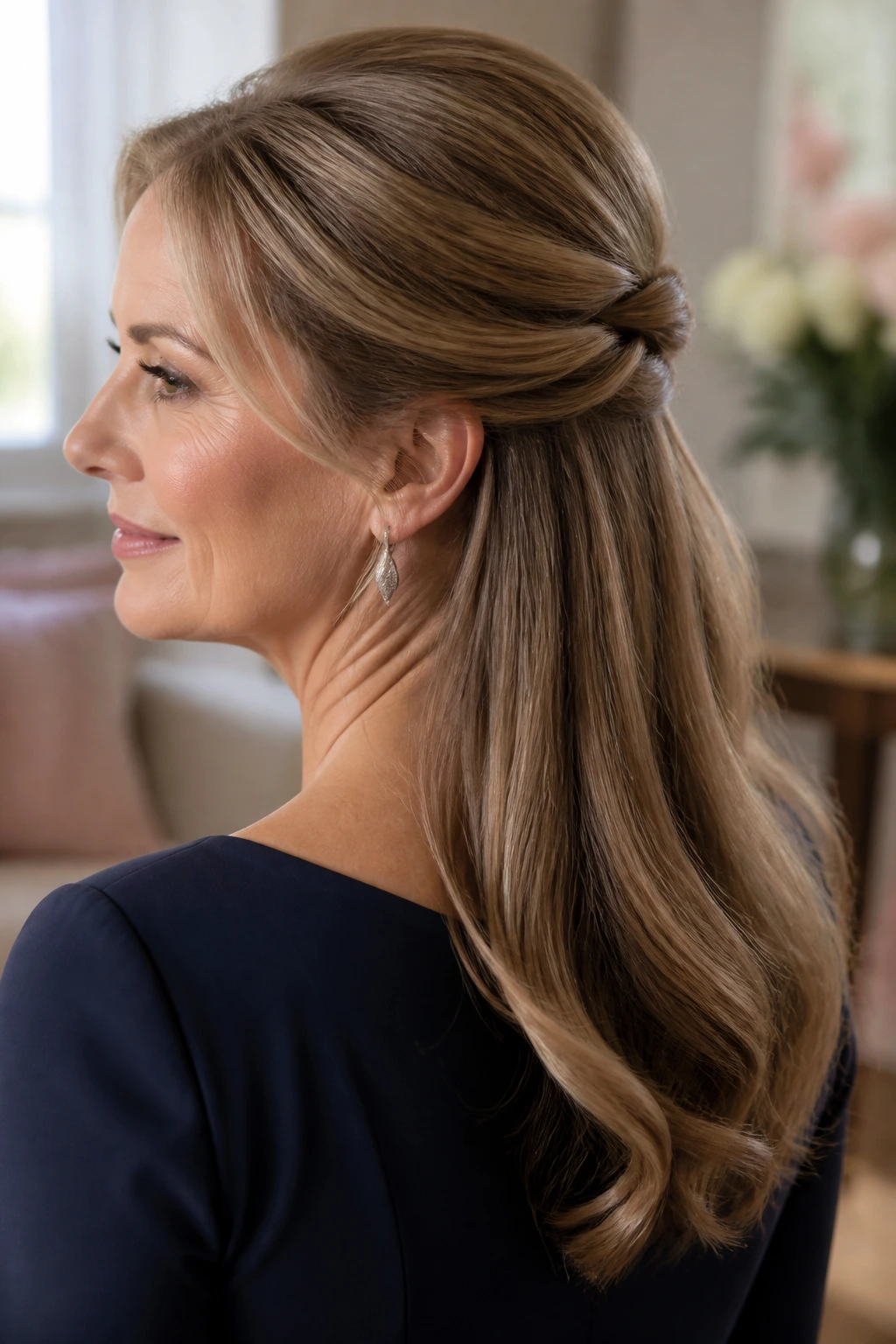
Can a half-up style still look formal? Yes, if the twist is low, smooth, and deliberate. For thick hair, the half-up approach solves a real problem: it removes weight from the face and crown while still letting the length show. That’s a nice balance when you do not want a full updo.
The top section should be controlled, not puffed. Twist both sides back from the temples, secure them at the back of the head, and smooth the remaining length so it falls cleanly. If the hair is very long, a slight bend at the ends keeps the look soft. The trick is to leave enough hair down that the style feels graceful, not half-finished.
10. Satin Bubble Ponytail
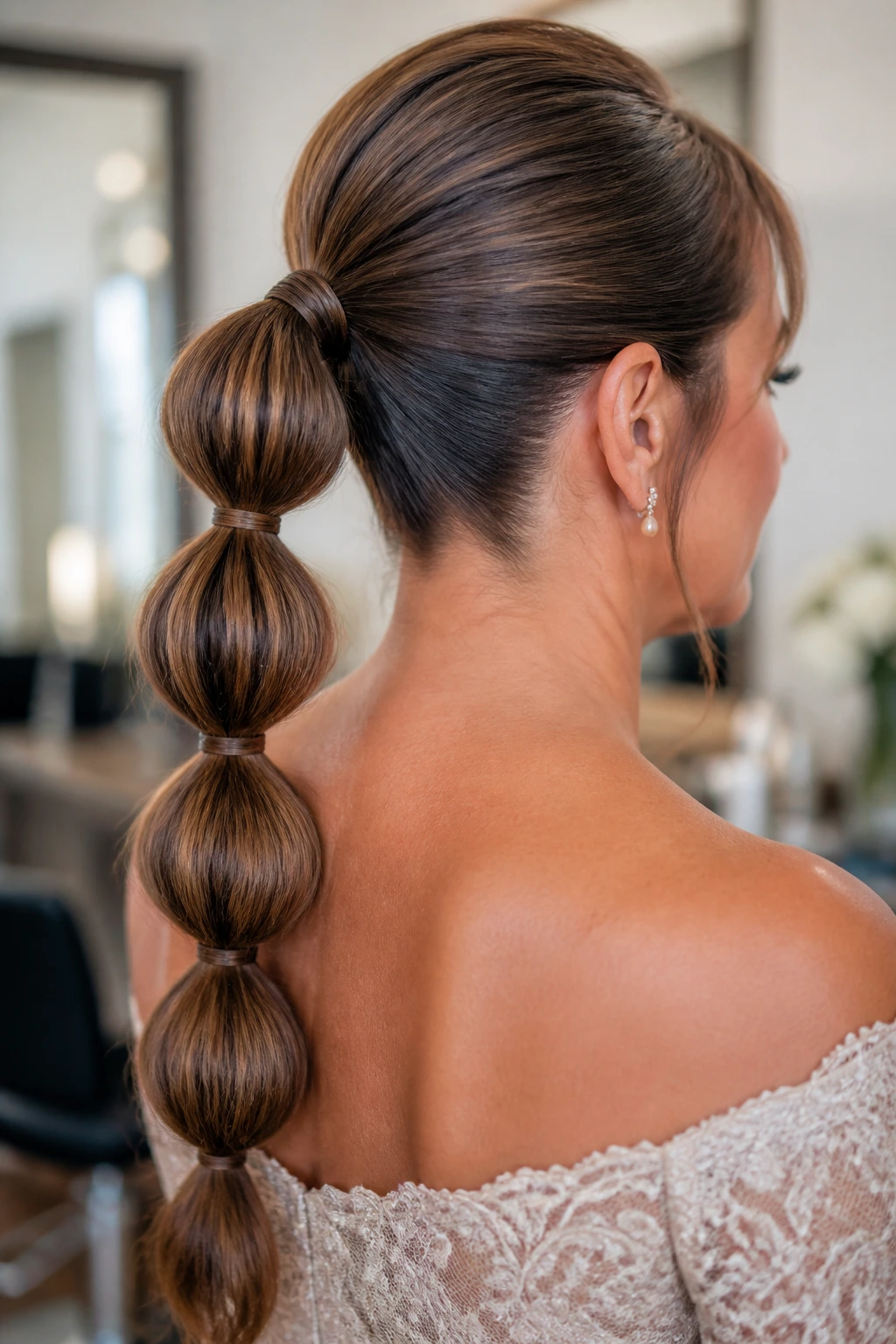
A bubble ponytail sounds playful, but on thick hair it can read surprisingly formal when the bubbles are spaced evenly and the surface stays satin-smooth. The fullness of thick hair gives each section shape, so you do not need to tease the ponytail into a puffball.
Use 3 to 5 elastics, spaced a few inches apart down the tail, then gently expand each segment with your fingers. Smooth the outer layer first, then shape the bubbles after. If the gown is simple, this style adds a little movement without dragging attention away from the dress. It’s modern, clean, and easier to wear than a lot of people expect.
11. Faux Bob with Tucked Ends
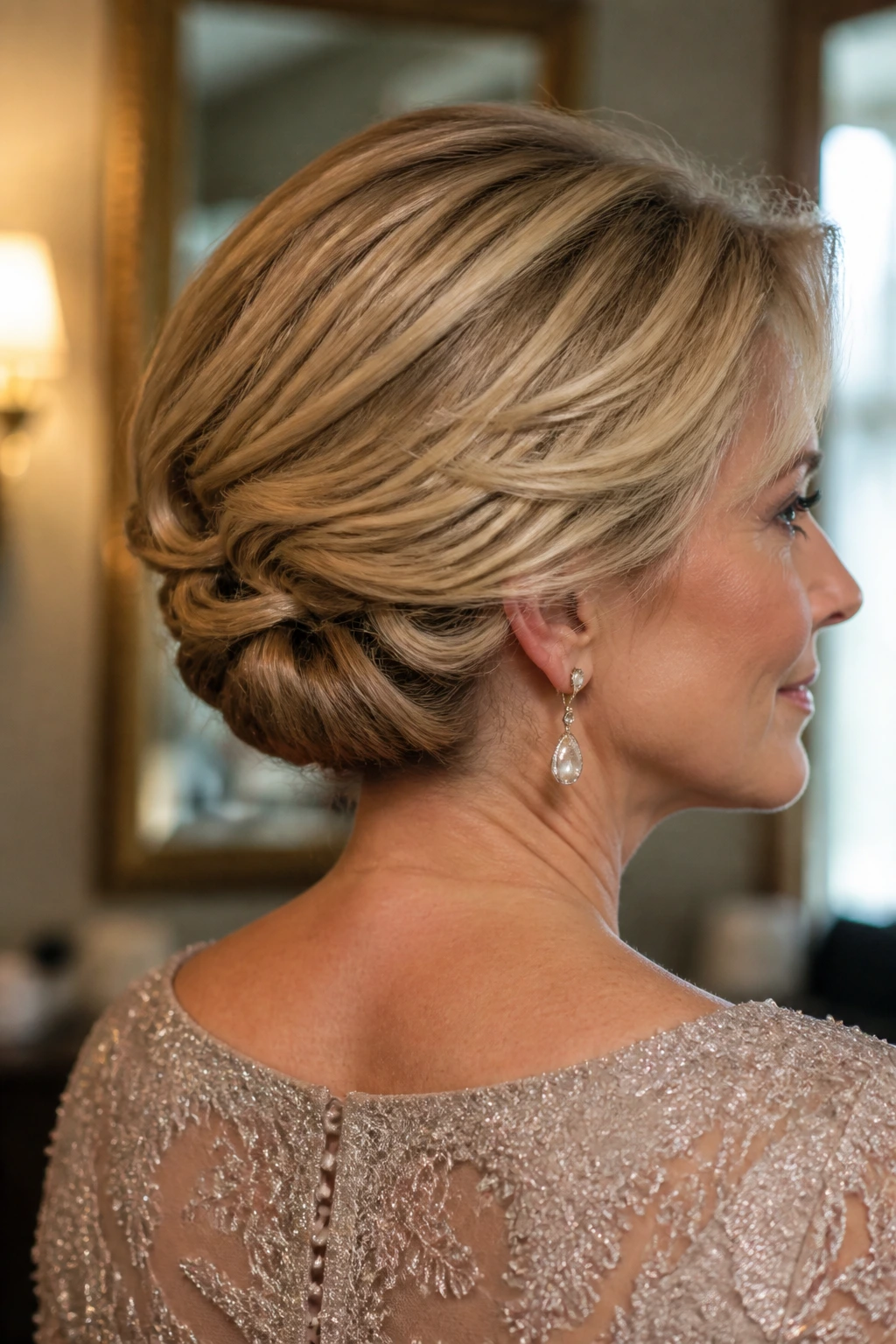
A faux bob is a little trickier than a low bun, but it pays off when you want the look of shorter hair without actually cutting a thing. Thick hair makes the illusion more convincing because the tucked ends can disappear into their own volume. Done well, it reads polished and slightly unexpected.
The hair is curled or smoothed, then folded under at the nape and pinned so the ends vanish beneath the visible layer. The front can stay soft and tidy, with a side part or a middle part depending on the face shape. This one is especially good if the dress has a beautiful back and you want the hairline to stop just above it.
12. Satin Low Knot
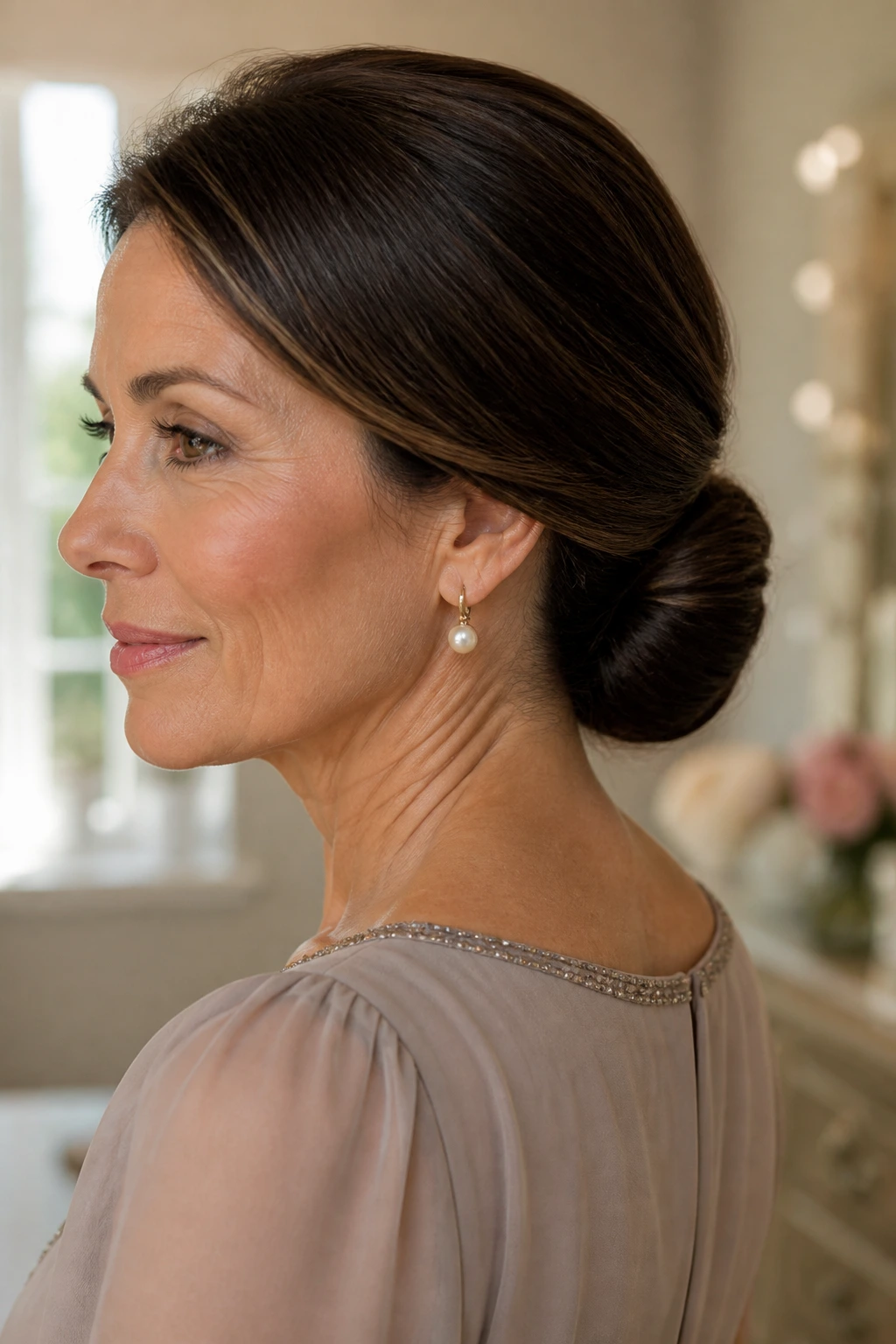
A satin low knot looks less formal than a classic chignon, which is exactly why I like it for some mother-of-the-bride outfits. It feels tailored and modern, not stiff. The knot sits low, the shape is narrow, and the surface stays smooth enough to catch the light without going glossy to the point of looking wet.
Thick hair helps the knot hold its form. You can wrap the tail around itself once or twice, pin the folds flat, and let the ends disappear underneath. Use this when the dress has a lot of detail already—beading, lace, a strong neckline—because the knot won’t argue with the rest of the outfit.
13. Rope-Braid Bun
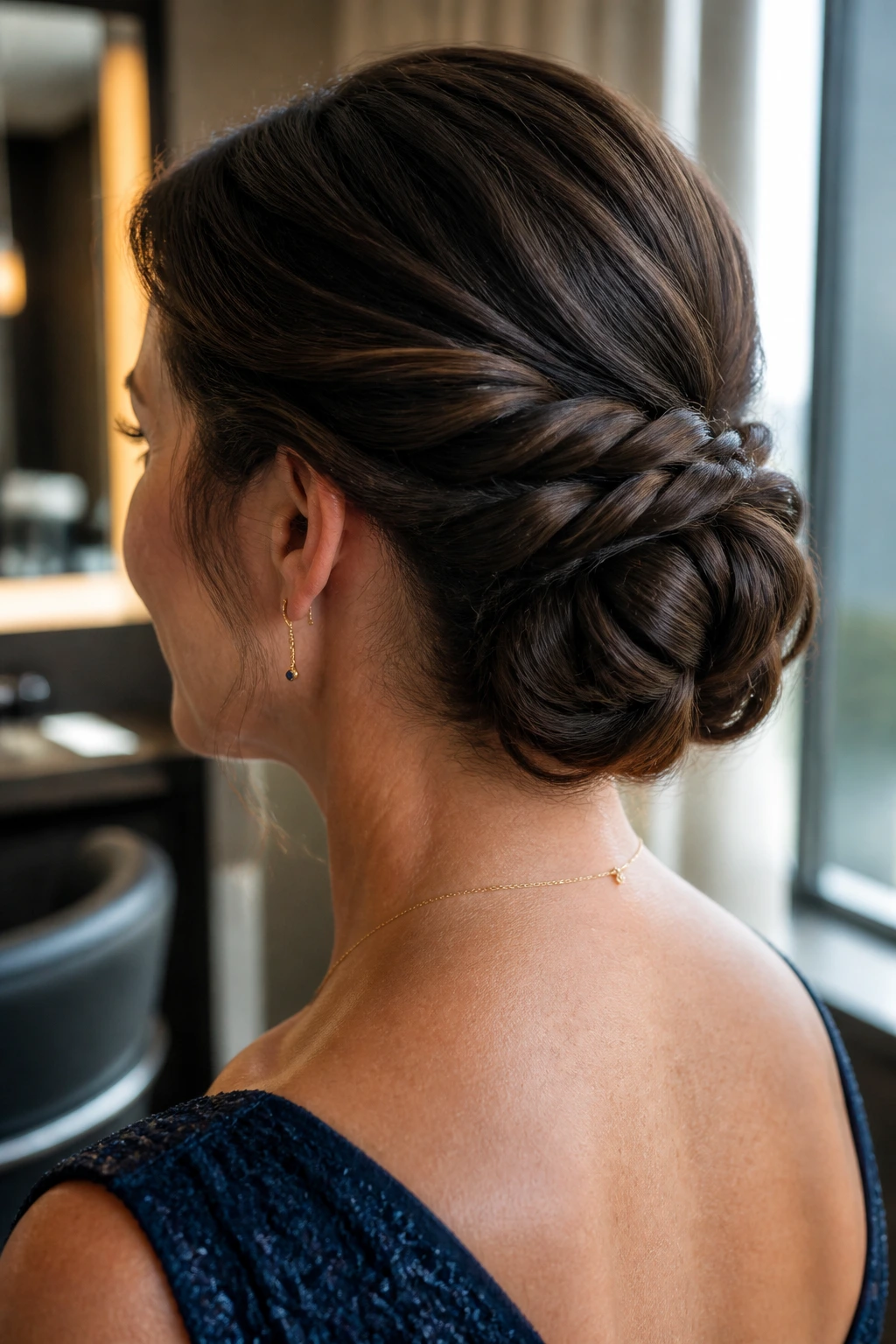
A rope braid bun has one of the nicest silhouettes for dense hair because the twisted sections show off the thickness instead of trying to hide it. The key is to twist each side in the same direction before wrapping them together in the opposite direction. That gives the rope braid its tight, polished texture.
Once the braid reaches the nape, coil it into a bun and pin it flat. The shape ends up looking compact, but not tiny. Thick hair gives the bun a strong edge, and that’s useful if the dress is minimal or if you want the hairstyle to look finished from the back without extra ornament. It’s one of the more secure options on this list.
14. Sculpted Side Bun
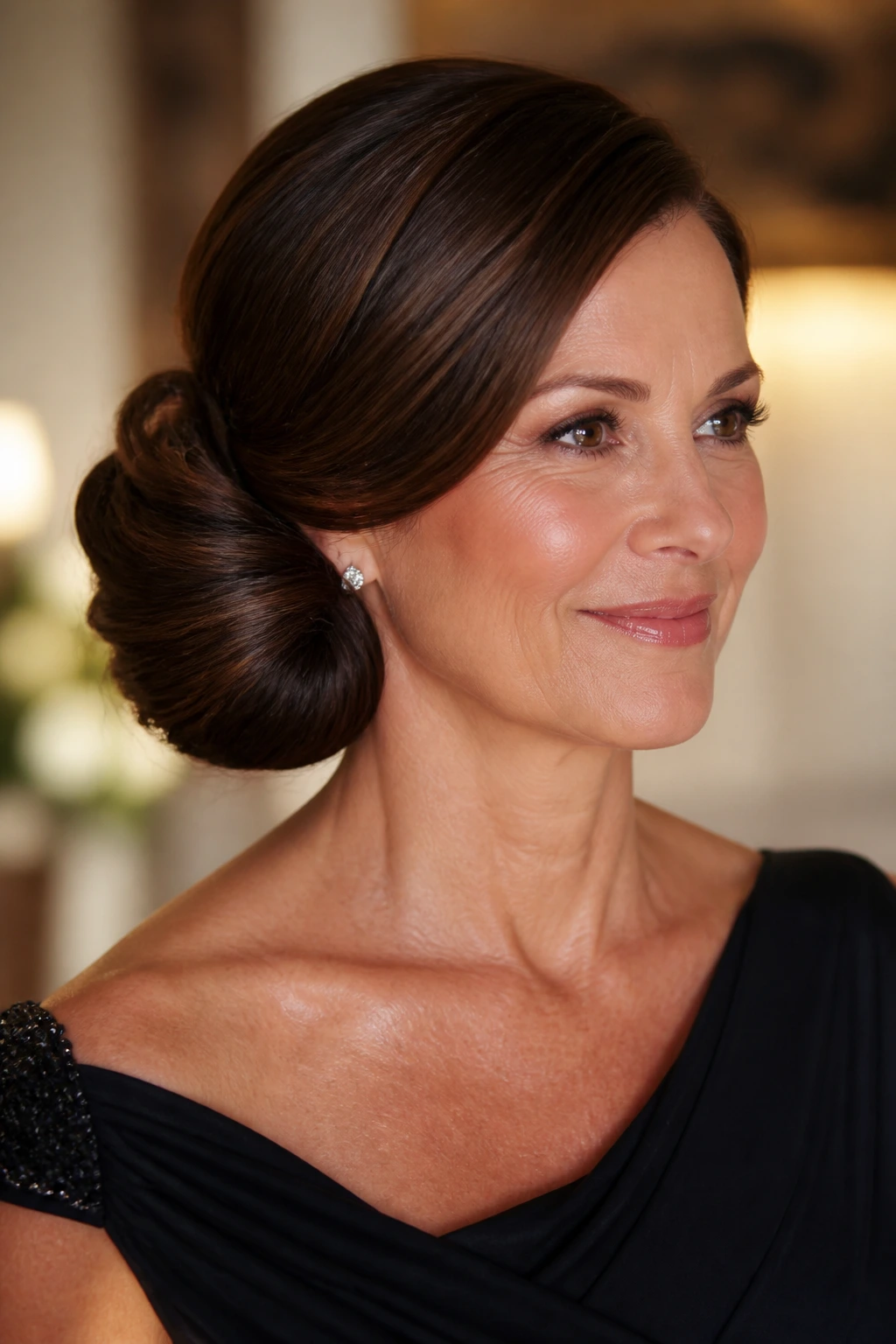
A sculpted side bun is the answer when the dress has one dramatic shoulder, asymmetry, or a neckline that needs a little visual balance. The bun sits lower and to one side, so the eye travels naturally across the face and down toward the jewelry.
Because thick hair has body, the bun can be shaped into a smooth curve rather than a loose puff. That curve is what gives the style its formal feel. Use a strong side part or a sleek sweep back from the temple, then pin the bun tightly at the lower side of the head. It’s elegant, but not sleepy. There’s a bit of drama in it.
15. Crown Braid into a Low Coil
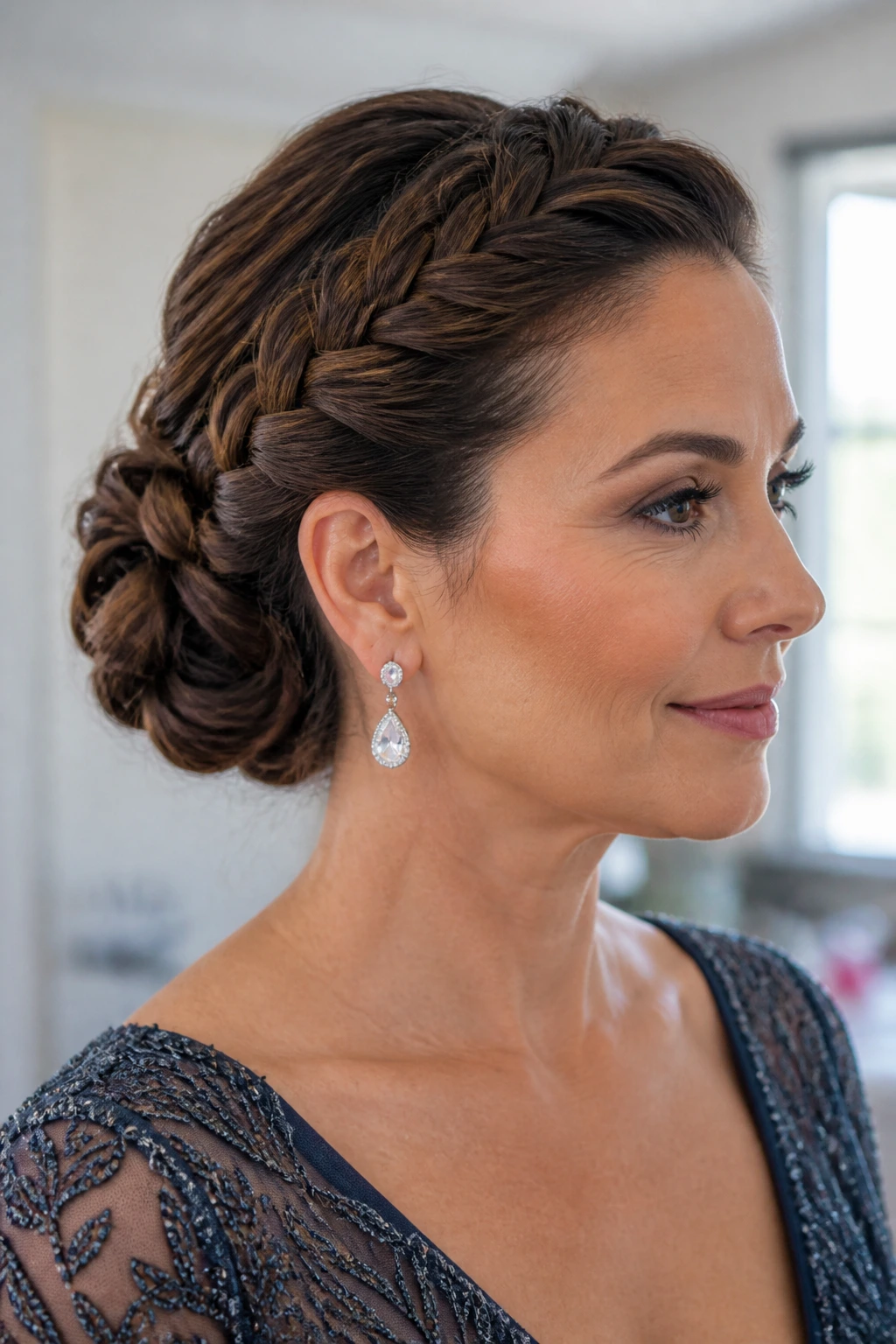
Can a braid still look sleek? Yes, when the braid stays close to the scalp and the coil at the nape is smooth. A crown braid into a low coil gives you control around the hairline, which is helpful if thick hair tends to puff around the temples by hour three.
The braid should be narrow, not oversized. That keeps the style formal instead of bohemian. Once the braid reaches the back, tuck it into a low coil or small bun and pin the base tightly. This style holds nicely in wind, under a hat, or with a veil clip. It also keeps shorter front pieces from wandering.
16. Minimalist Center-Part Twist
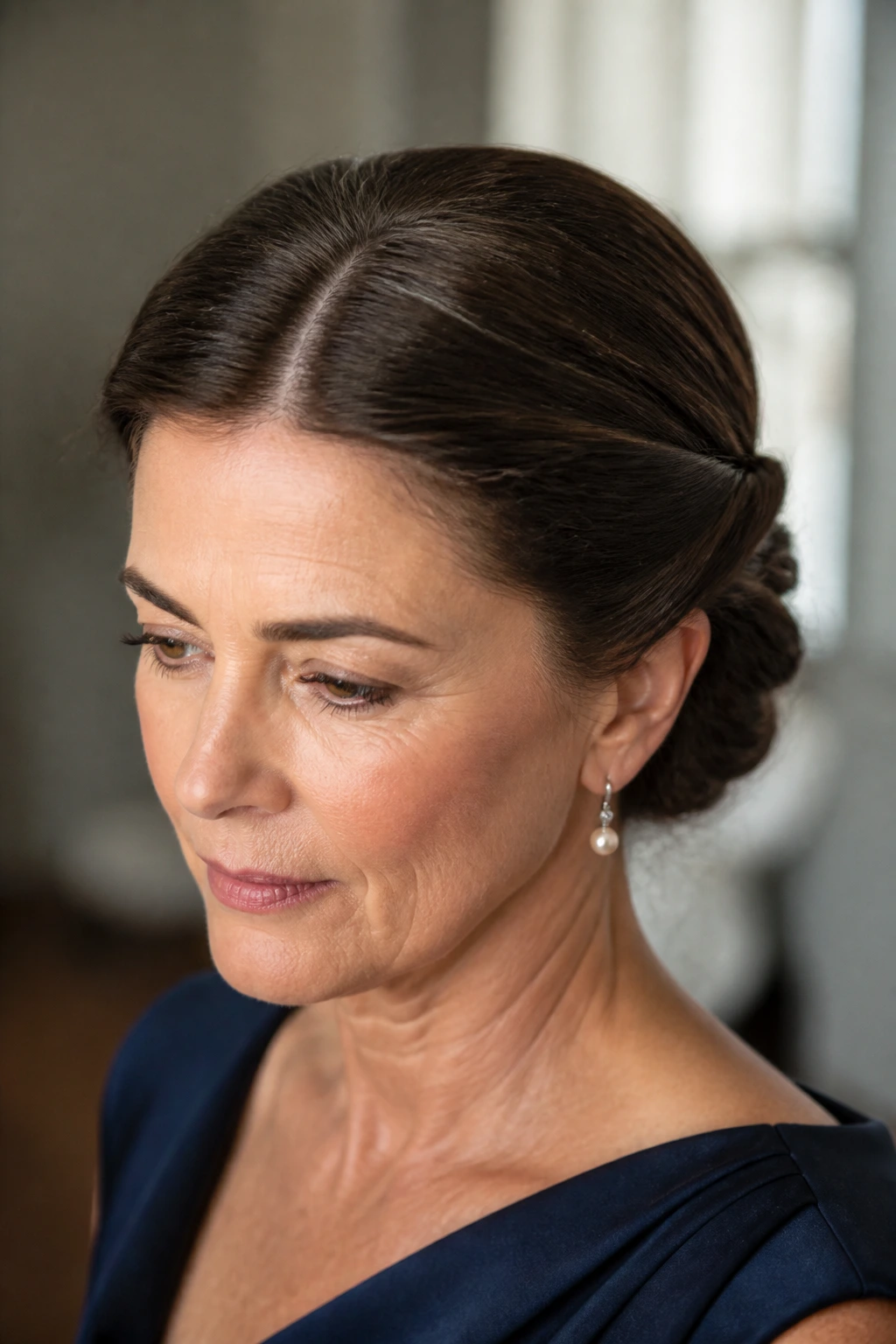
If you want the hair away from the face without committing to a full bun, the minimalist center-part twist is a clean middle ground. The center part gives the style a crisp line, and the two sides twist back into a low tuck that feels simple on purpose.
Thick hair can make this style look more sculptural than expected. The twists have enough weight to sit flat, and the back tuck stays hidden under the top layer. I like this one with geometric earrings or a column dress. It has a quiet kind of polish. No extra decoration needed.
17. Veil-Friendly Low Bun
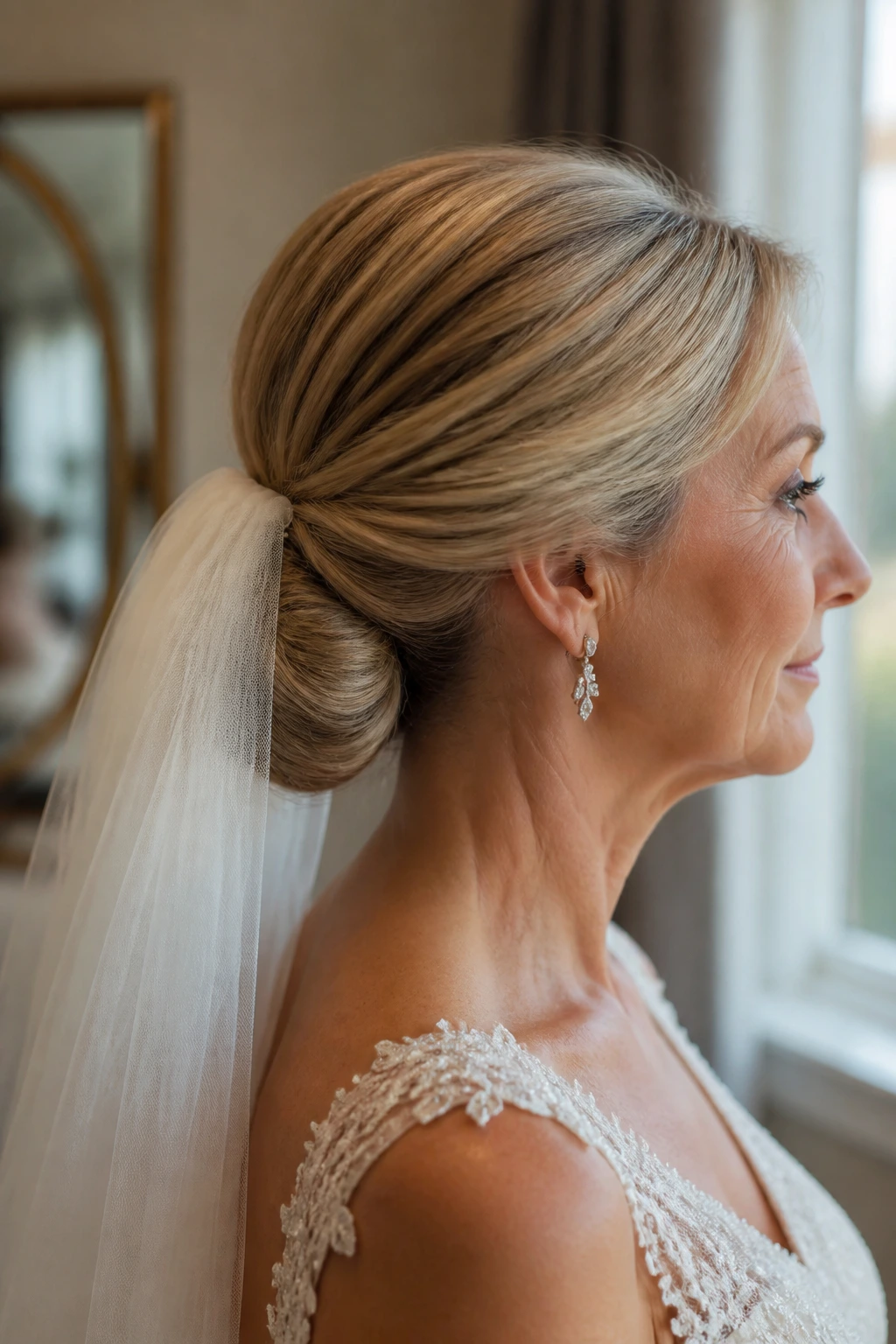
A veil-friendly low bun needs one thing above all else: a firm base. Thick hair gives you that base naturally, which is why this style is so useful for a ceremony that includes a comb, pin, or sheer veil attachment. The bun should sit low and smooth so the veil can slide in without snagging.
A thin hidden cushion or a carefully rolled base can help if the hair is very long. The point is not to build height. The point is to create a compact anchor that still looks neat after the veil comes off. Once the veil is removed, the bun should stand on its own and still look like a planned style, not a support system exposed.
18. Modern Tucked Chignon
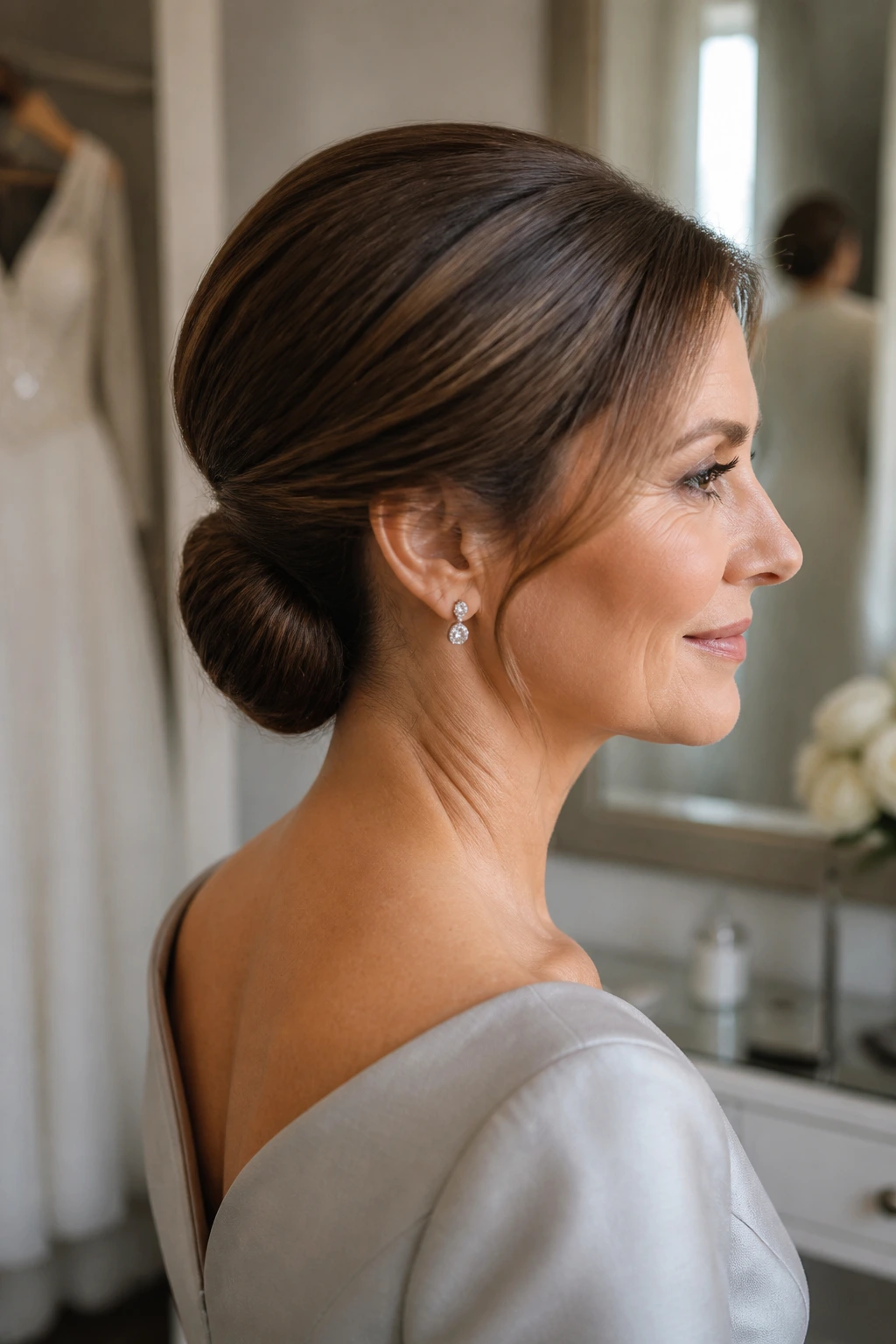
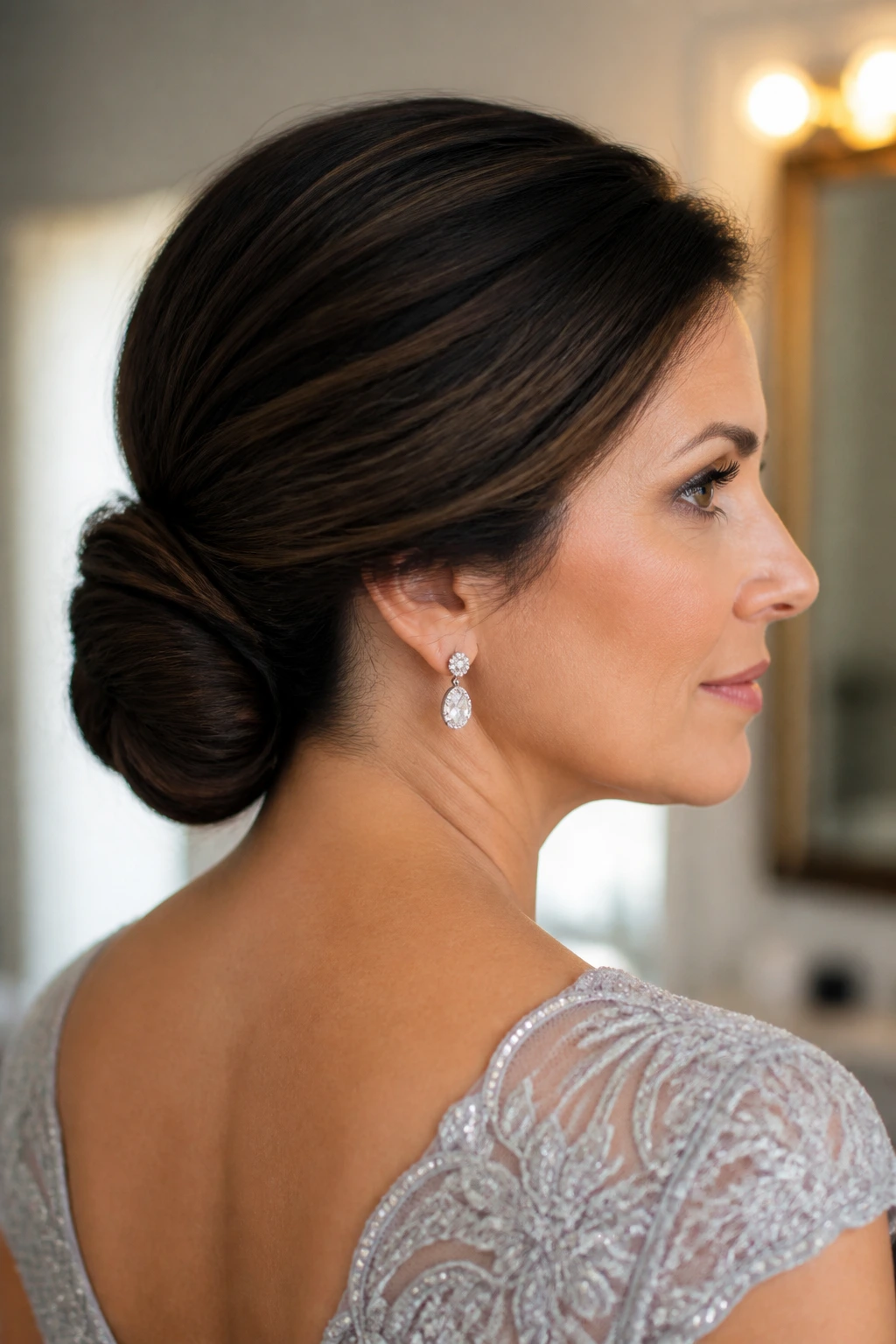
A modern tucked chignon is the quieter cousin of the classic chignon. It has flatter sides, a cleaner back, and a tucked edge that makes the whole style feel tailored. Thick hair is excellent for this because the bun does not shrink into nothing; it keeps shape even when pinned close to the neck.
This is the one I’d reach for with a minimalist dress or a gown that already has strong fabric lines. The shape should look smooth from every side. No puff at the crown. No loose tail hiding underneath. Just a neat fold of hair that feels precise.
19. Side-Part Ponytail with Curved Ends
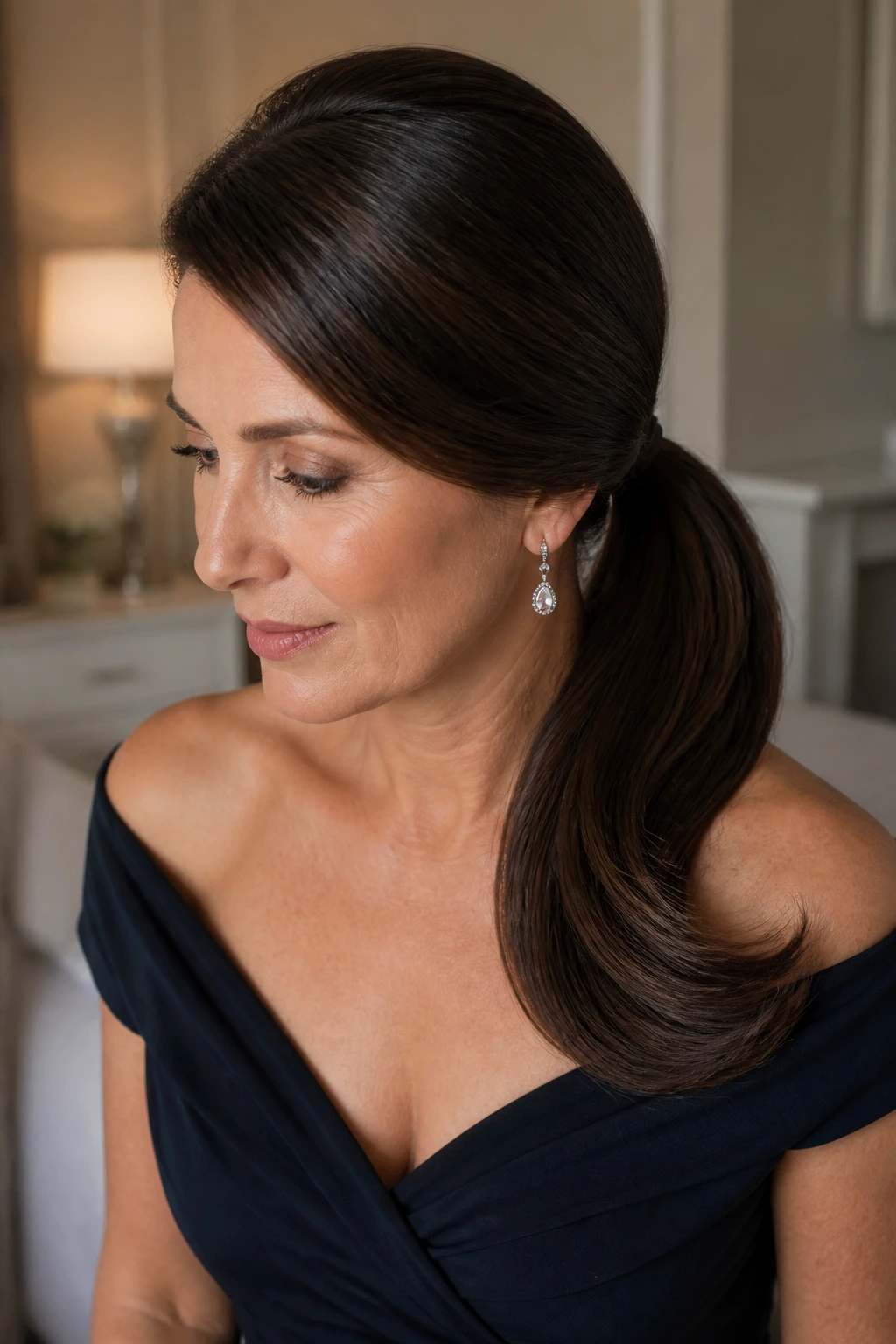
A ponytail can absolutely work for a formal wedding, especially on thick hair, if the part is clean and the ends are shaped instead of left blunt and frizzy. The side part softens the top, and the ponytail sits low enough to feel grown-up.
What Makes It Stand Out
A low ponytail with curved ends gives you length without fuss. Thick hair creates a full tail, so the shape looks intentional rather than casual.
How to Wear It Well
Use a 1.25-inch curling iron or a round brush to bend the ends under slightly. Wrap a strand around the elastic, smooth the top with a light brush, and keep the ponytail low so it rests against the neckline instead of fighting it. This one pairs well with long earrings and dresses that need a clean back view.
20. Shell Bun with Smooth Edges
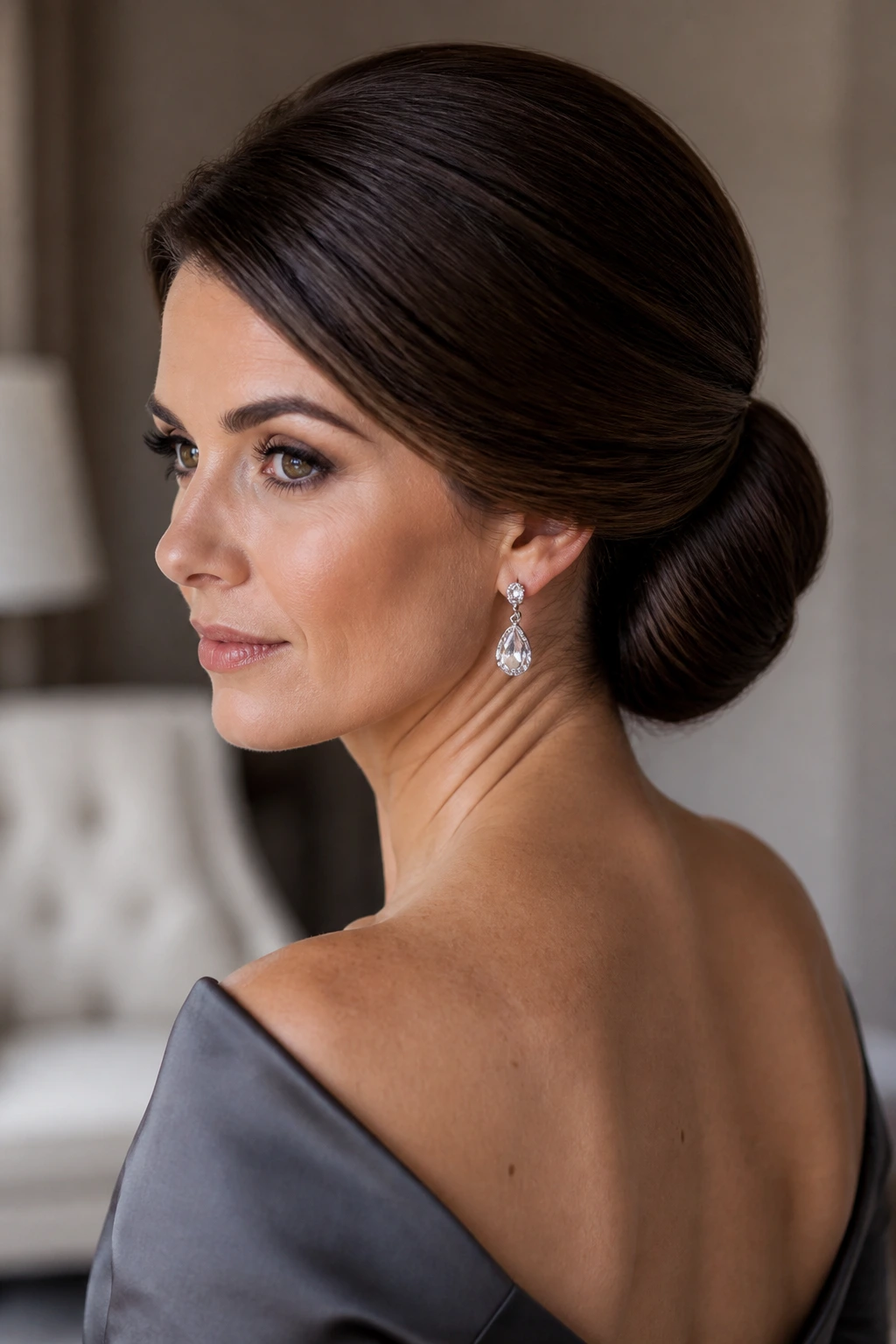
The shell bun has an architectural feel that suits thick hair because the hair folds into itself instead of sitting in a loose cloud. It resembles a low roll or a softly curved shell at the nape. That shape looks especially good when the dress is formal but not fussy.
Thick hair makes the bun feel sturdy. It can hold the curve without a lot of padding, and the edges stay smooth if you brush the hair into place in sections before pinning. I like this style when the outfit has a vintage touch or when the mother of the bride wants a formality level that feels traditional without being old-fashioned.
21. Half-Up Low Knot with Face-Framing Pieces
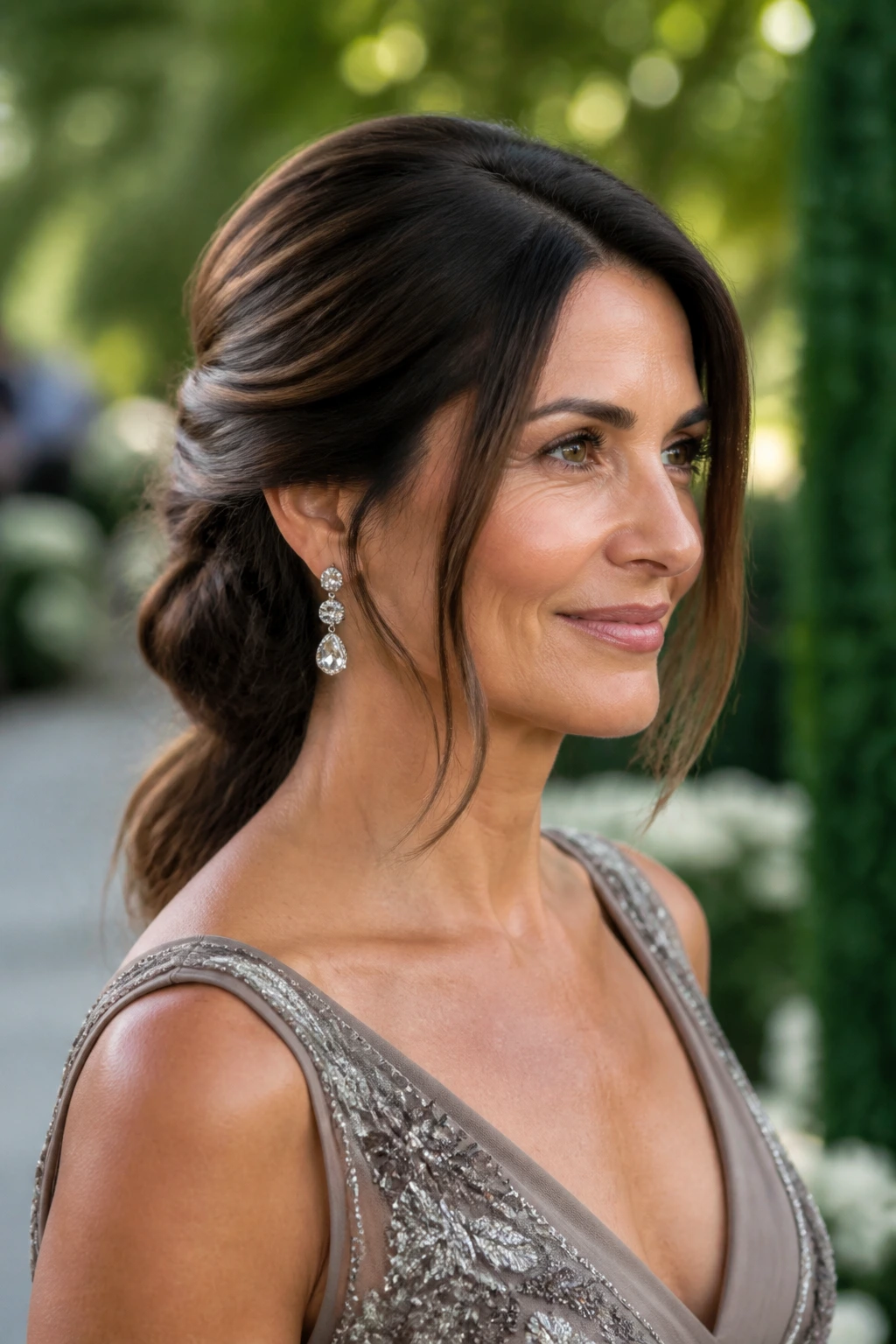
A half-up style can still feel sleek if the knot sits low and the front pieces are controlled rather than curled into ringlets. This is a smart choice for thick hair when you want some movement through the lengths but still need the face open for photos and conversation.
The lower section should stay brushed smooth or lightly bent, not overworked. The face-framing pieces can be left long and soft, but keep them narrow so they do not turn into little side curtains. This style is especially good with softer dresses, garden venues, or any look where a full updo feels too strict.
22. Polished French Roll with Volume at the Crown
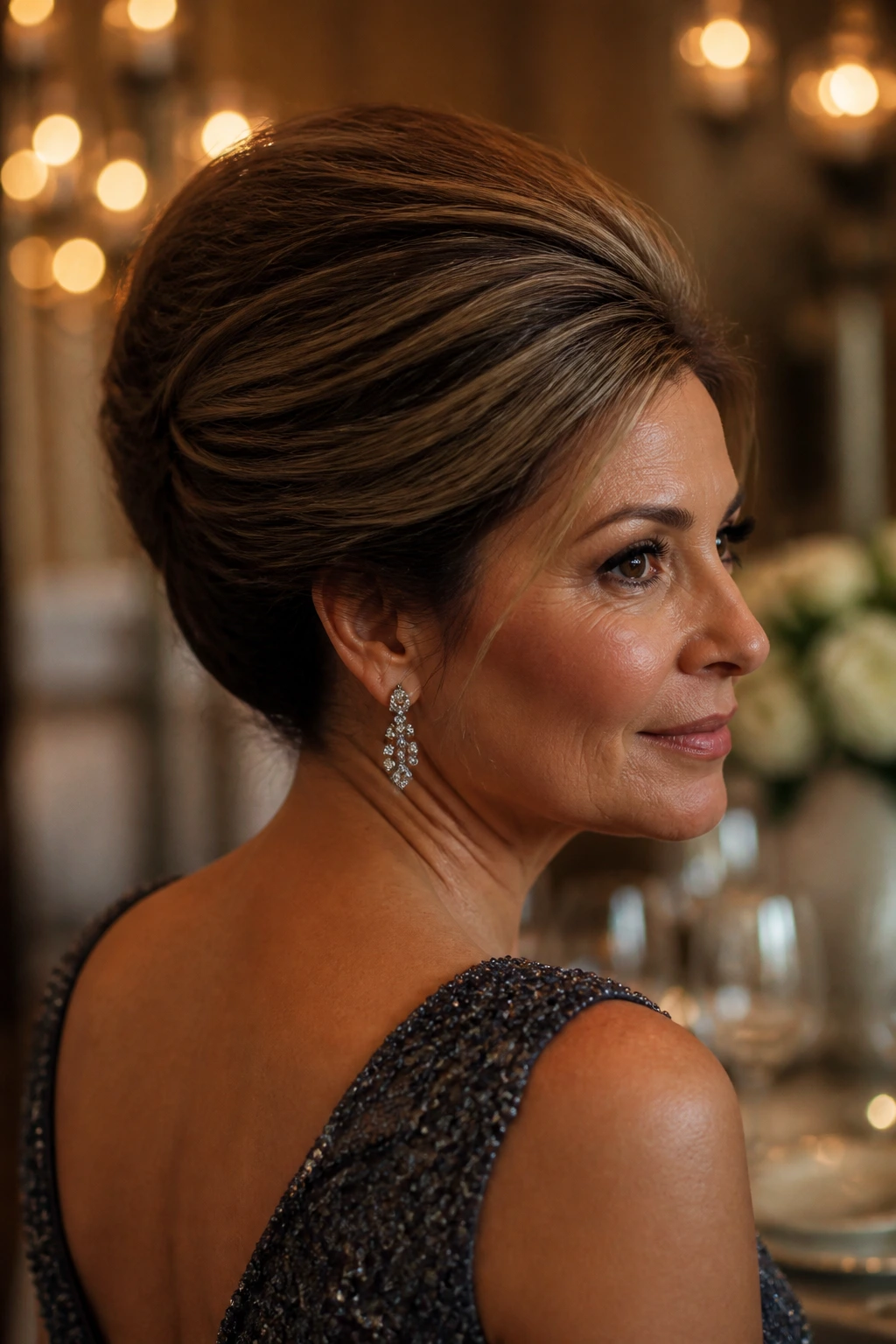
If I had to pick one style that says formal without looking stiff, the polished French roll would be near the top of the list. Thick hair gives the roll plenty of substance, so it can sit close to the head and still look full enough to matter. The volume belongs at the crown, not somewhere floating above it.
That’s what makes it so reliable for a long wedding day. The style stays neat, the back looks finished, and the side profile has real shape. It also works with almost any jewelry choice because the hairline stays controlled and the neck stays open. If the schedule is full and the dancing is long, this is one of the safest bets.
Why Sleek Hairstyles for Mother of the Bride with Thick Hair Hold Their Shape
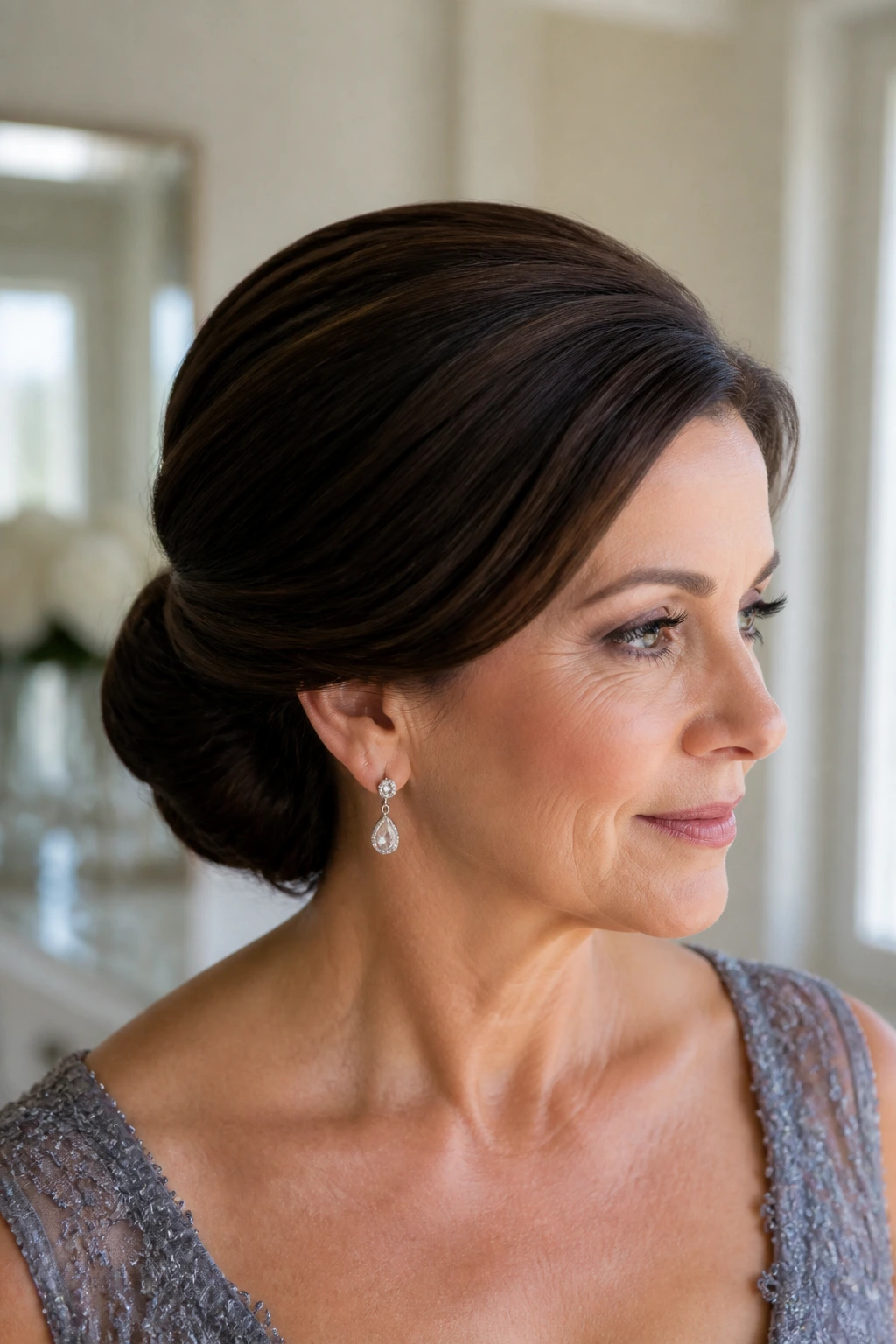
Thick hair needs a different kind of polish than fine hair. You do not tame it by piling on product and hoping for the best. That usually backfires. The better move is to give the hair a clear direction at the root, smooth the surface, and then lock the shape low to the head where the weight can help instead of hurt.
Low styles are especially kind to dense hair because they spread the mass out in a wider base. A high bun can start to lean. A low twist can sit still. A French roll or chignon on thick hair gets real support from the hair itself, which means fewer pins doing all the work. That is the difference between a style that survives the ceremony and one that collapses in the car on the way to the reception.
Shine matters too, but not in the syrupy, overdone sense. The goal is a satin finish. Smooth enough to look clean in flash photography, soft enough that the hair still looks like hair. One of the biggest mistakes I see is people trying to flatten thick hair into a shape meant for fine hair. It ends up looking tight at the top and puffy at the sides. Better to let the density show in a controlled way.
How to Prep Thick Hair for a Smooth Formal Finish
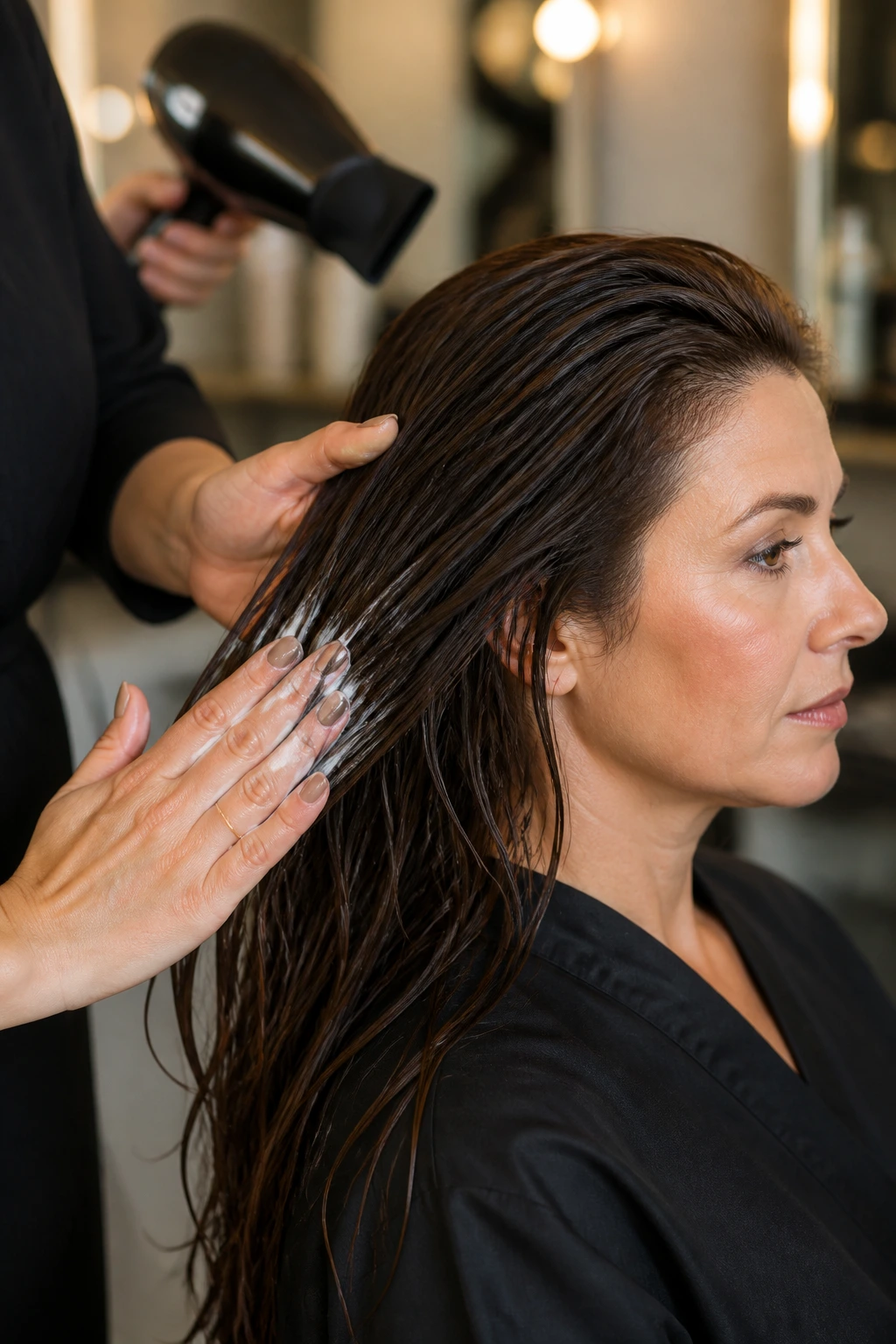
The prep begins before the curling iron or pins show up. Thick hair almost always behaves better when it is clean, dry, and set in the right direction from the start. For many heads of hair, that means washing the day before, not the morning of. Freshly washed thick hair can be too slippery or too airy, and both are annoying when you want a smooth wedding style.
Wash Timing: If your hair gets oily fast, wash the morning of with a light shampoo and skip the heavy conditioner near the roots. If your hair is coarse or dry, wash the day before and use conditioner only from the mid-lengths down.
Product Order: Start with heat protectant on damp hair, then use a small amount of smoothing cream or mousse depending on whether you need control or soft hold. Blow-dry with a nozzle pointed downward, using a boar-bristle brush to keep the cuticle flat.
Trial Run: Do one full practice run with the actual pins, accessories, and earrings. Thick hair can behave differently once a comb or barrette is added, and that little change can shift the whole shape.
Humidity Plan: In humid weather, keep the style lower and tighter. A loose crown on thick hair can turn puffy faster than you think. Finish with flexible-hold hairspray, then smooth any remaining flyaways with a pea-sized bit of serum on your palms.
Tools That Make Thick Hair Behave at a Wedding
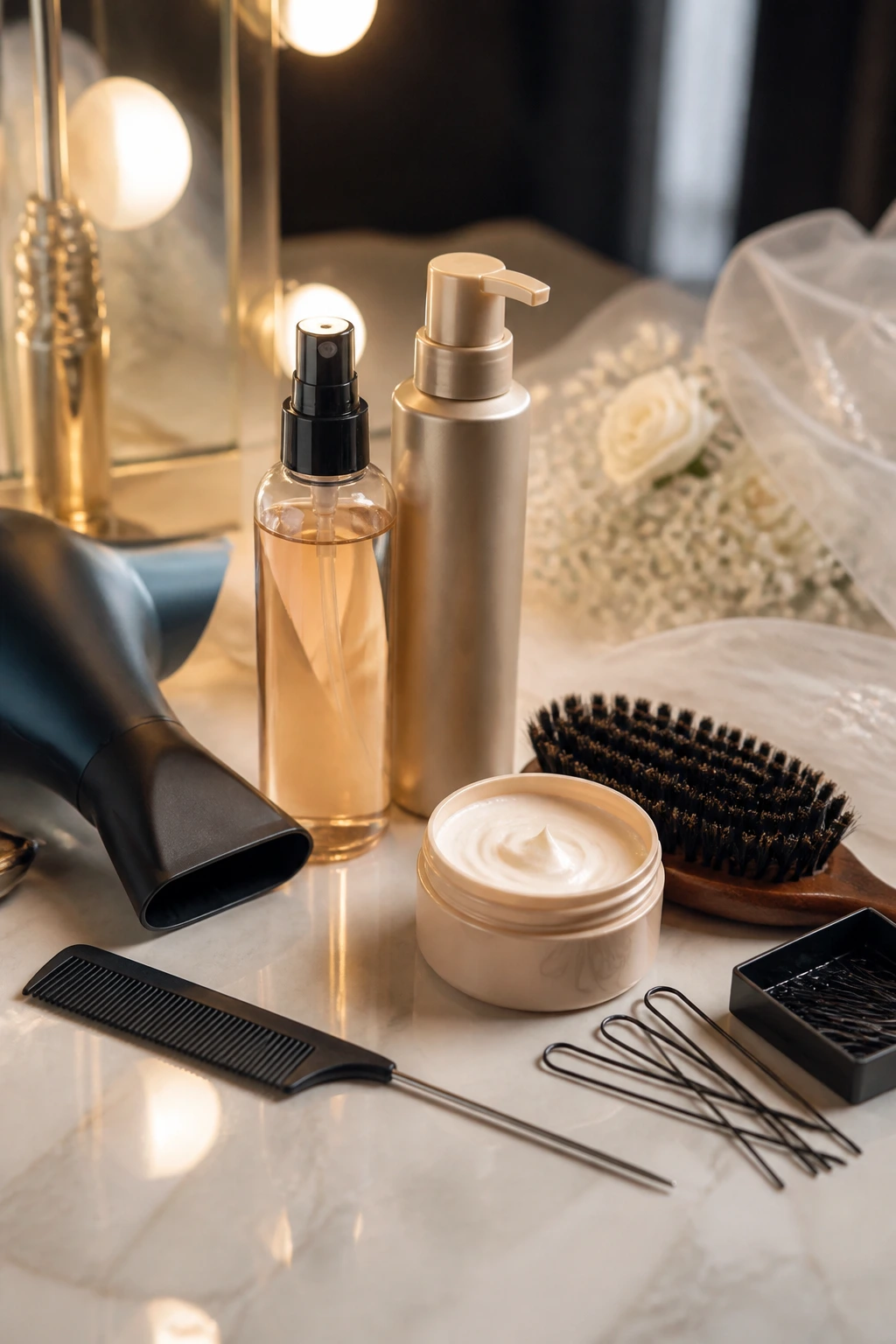
- Rat-tail comb: Gives you a crisp part and helps you section thick hair without dragging through it.
- Boar-bristle brush: Smooths the outer layer and makes the finish look flat in the right places.
- Blow-dryer with a nozzle attachment: Keeps airflow pointed where you want it instead of blasting the whole style apart.
- Heat protectant spray: Keeps the ends from turning dry and rough after smoothing or curling.
- Smoothing cream or balm: Good for coarse hair, flyaways, and hairlines that tend to puff.
- Strong elastic bands: Clear or hair-colored bands hold a heavy ponytail better than the flimsy ones that stretch out.
- Bobby pins in two lengths: Long pins are useful for thick buns and rolls; short pins help with detail work.
- U-pins: These are the quiet heroes for low buns and French twists.
- Hairnet: Optional, but very useful when the bun is dense and you want it to stay compact.
- Flexible-hold hairspray and shine spray: One keeps the style in place, the other gives the finish a clean sheen without stiffness.
- Sectioning clips: Handy during a trial run, especially if your hair is layered.
- Pearl pins or a slim comb: Best saved for the final step so they do not get buried under all the smoothing.
How to Pair a Sleek Style with the Dress, Veil, and Jewelry
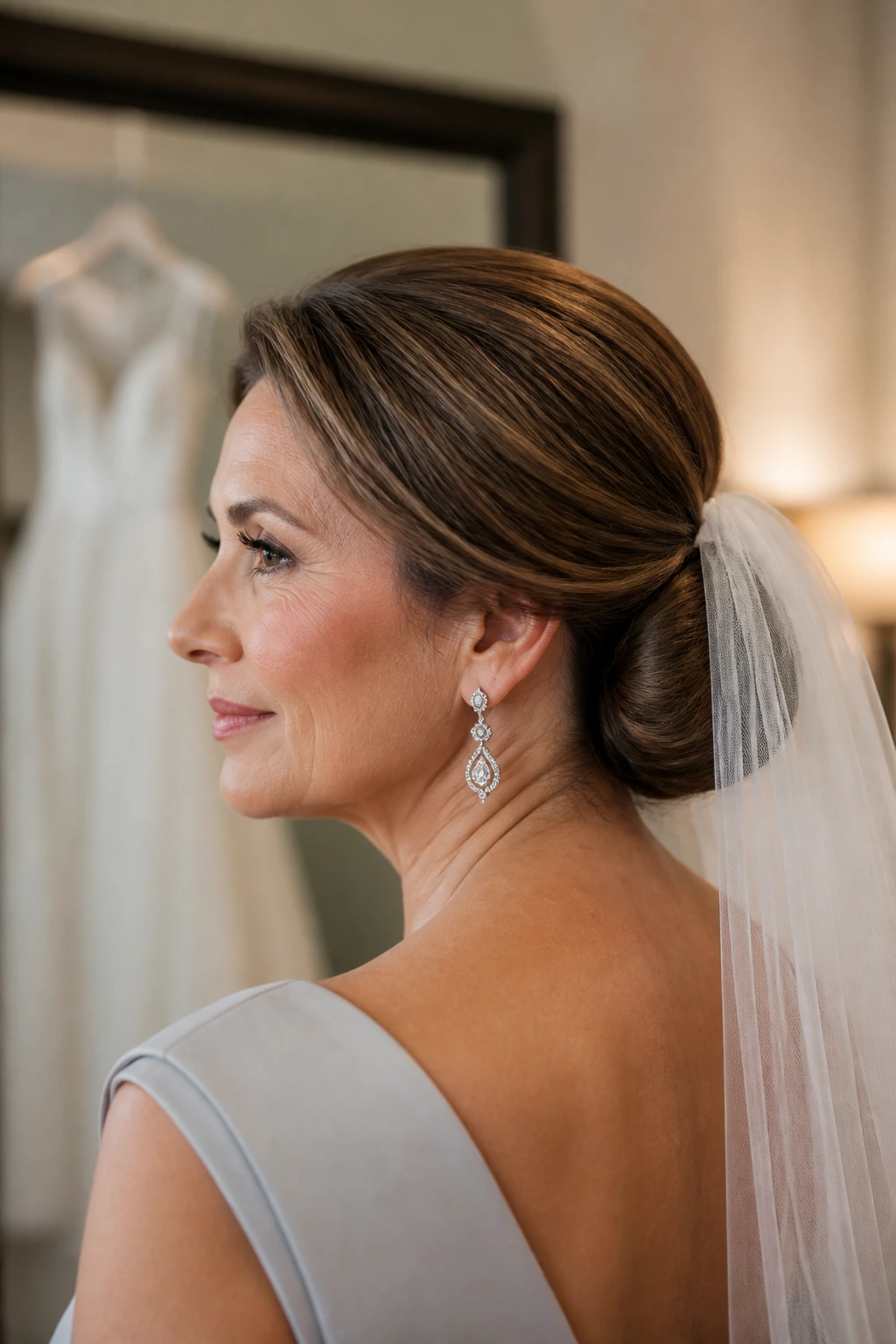
Necklines: High necks, illusion necklines, and dresses with ornate collars usually look best with low buns, shells, or French rolls. Those styles keep the fabric visible and stop the whole look from feeling crowded. One-shoulder dresses, meanwhile, benefit from a side-swept roll or sculpted side bun because the hair mirrors the shape instead of sitting flat and ignoring it.
Veils and hats: Anything that needs a comb or clip wants a firm, low anchor. That usually means a chignon, French twist, or veil-friendly bun. Hats and fascinators are easier when the crown is smooth and there’s no extra puff in the way.
Earrings: Long drop earrings need a calmer hairstyle. If the hair is already detailed with braids or pearls, keep the earrings simple. If the hairstyle is plain, you can push the jewelry a little harder. The balance should feel deliberate, not crowded.
Fabric matters too: Satin, crepe, and silk tend to look best next to a smoother hair finish. Lace, embroidery, and textured sleeves can handle a little braid detail or a twist with more shape. The goal is not matching everything exactly. It’s making sure the hair and dress speak the same language.
Common Mistakes That Turn Sleek Hair Puffy or Stiff
- Using too much product at the roots: Thick hair can look greasy fast when the scalp gets overloaded with serum or cream. The fix is simple: keep smoothing products on the mid-lengths and ends, then finish the surface lightly.
- Skipping the blow-dry direction: If the root dries in random directions, the style will fight you all day. Dry the hair in the part you plan to wear and use the nozzle to guide the strands downward.
- Choosing tiny pins for heavy hair: Small pins get swallowed by thick buns and twists. Reach for long pins or U-pins, and use more than you think you need at the base.
- Building too much height at the crown: A little lift is fine. A big bump can make thick hair look top-heavy and old-fashioned. Keep the volume close to the head unless the dress truly needs drama.
- Trying a new style on the wedding morning: That is a bad gamble. Thick hair needs a test run because one stubborn section can change the whole shape.
- Forgetting the back view: The nape is where many styles look either finished or forgotten. Always check the mirror from behind before you step away.
Variations and Alternate Finishes Worth Trying
Soft Satin Finish: If full shine feels too slick, keep the same structure and reduce the gloss. Use a light mist of shine spray only on the lengths and leave the roots matte enough to look natural. This works well with crepe, lace, and dresses that already have a soft texture.
Pearl-and-Pin Accent: Tuck in three pearl pins or one slim pearl comb and stop there. The shape should still be the main event. This version suits gowns with beading or a necklace that needs a little visual echo near the hair.
Modern Minimalist Sweep: Skip the braid detail and keep the whole style clean, center-parted, and low. This is the version for sharp necklines, minimalist dresses, and anyone who hates anything that looks too styled.
Low-Drama Volume: Add only a small lift at the crown so the face doesn’t look flattened. It’s a good choice if the mother of the bride wants polish but still likes a bit of body around the head.
Shorter-Length Adaptation: If the hair reaches the collarbone but not the middle of the back, use a tucked faux bun, a half-up knot, or a low roll with hidden ends. Thick hair at a shorter length can still read formal if the base is smooth and the pins are tight.
Keeping the Style Neat Before the Ceremony and After the Reception
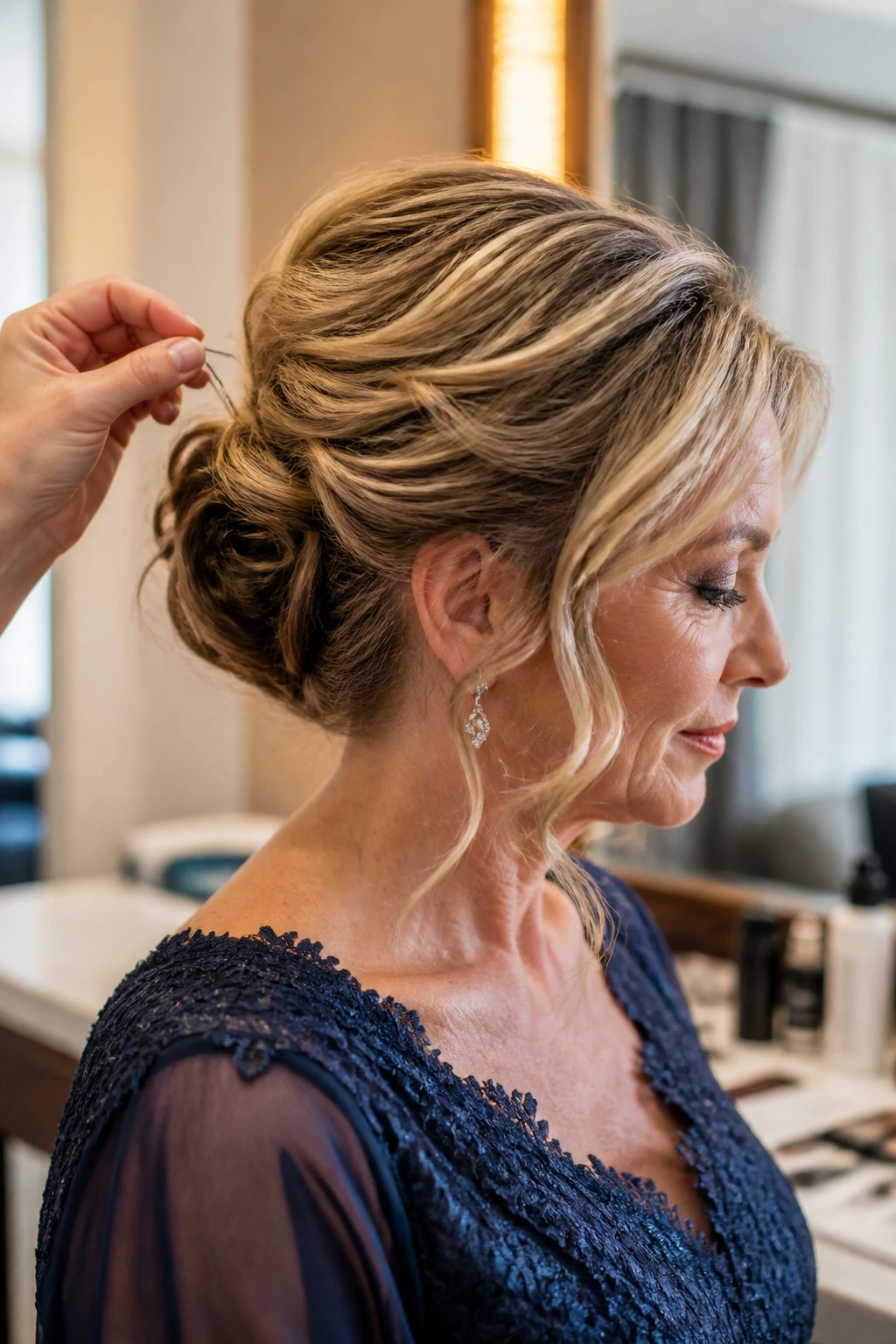
Once the style is in, the job is not over. It just changes shape. Before the ceremony, keep a small emergency kit with 4 long pins, a travel-size hairspray, and a compact brush. If the hair starts to loosen around the nape, press a pin into the base and let the shape settle; do not keep spraying the top layer over and over. That usually makes the finish sticky before it makes it secure.
For the hours before the event, a loose satin scarf or a clean cape can protect the hair while makeup gets finished. Thick hair holds shape well, but it still picks up dents from collars, zippers, and constant brushing. The less it gets handled, the better.
After the reception, remove the pins before bed. Always. Thick hair can hide a lot of hardware, but sleeping on pins is a terrible idea. If the style was a low bun or twist, the next morning it may brush out into soft waves with a little dry shampoo at the roots. Ponytails and rolls usually need a full re-smooth if you want them to look deliberate again. Store pearl pins, combs, and clips in a soft pouch so they do not scratch each other before the next event.
Questions People Ask Before the Trial Run
Which of these styles works best for very thick hair?
Low chignons, French rolls, and wrapped buns tend to hold the easiest because they keep the weight close to the head. If your hair is extra dense, avoid styles that depend on height alone.
Can thick hair look sleek without looking flat?
Yes, and that’s the sweet spot. Keep the crown smooth, not smashed, and let the bun, roll, or ponytail carry the fullness instead of the top of the head.
Should I wear my hair up or half-up?
If you want the most secure option, go up. If you want to keep some length visible and the dress is soft or romantic, a half-up twist or low knot can work well.
How far ahead should I do a trial run?
A few weeks before the wedding is sensible. That gives you time to adjust the part, change the pin placement, or swap one style for another without rushing.
How many pins does thick hair usually need?
More than most people expect. A low bun or French roll may need 10 to 20 pins depending on length and density, plus a few U-pins for support.
What if my hair frizzes in humidity?
Choose a lower style, smooth the hair while it is still warm from the blow-dryer, and use anti-humidity spray on the outer layer. The base matters more than a heavy spray coat.
Can I add a comb or fascinator?
Yes, as long as the style gives the accessory a flat, secure spot to sit. Low buns, French twists, and side-swept rolls are easiest for that.
What if the style starts slipping during the event?
Press a long pin into the base rather than covering the whole head in more spray. The problem is usually support, not shine.
A Finish That Still Feels Like You
Thick hair does not need to be bullied into a wedding style. It needs a shape that respects its weight and a finish that stays calm under pressure. The best looks in this group do exactly that: low, smooth, secure, and polished enough to hold their own beside a formal dress without stealing the scene.
If you choose the style that fits the neckline, the accessories, and your own patience level, the day gets easier fast. That matters. A mother of the bride should not spend the reception tugging at a pin or wondering whether the back of her head has started to frizz. Pick the shape that lets you forget about the hair after the first photo session, and let the rest of the day take care of itself.