



Thick hair at a wedding is a gift and a problem. The gift is obvious: body, shine, braid thickness, buns that don’t go flat before the cake is cut. The problem shows up after the first hour, when flimsy pins slide, curls swell, and a style that looked polished in the bathroom mirror starts looking like it has somewhere else to be.
Wedding guest hairstyles for thick hair need a different playbook than the styles people save from fine-hair mood boards. You want anchor points, enough control at the root, and a shape that still looks intentional after hugging relatives, sitting through a ceremony, and dancing under warm lights. Thick hair can absolutely do formal. It just needs a plan.
And that plan is often simpler than people expect. A 1-inch curling iron, a handful of strong bobby pins, a good brush, and a little patience with sectioning go a long way. When the sections are clean and the pins are crossed instead of stacked, the style stays put much longer. That’s the kind of detail that matters here.
Why This Collection Works on Thick Hair
-
Built for weight: These styles rely on low anchors, braids, twists, and wrapped bases, which keep dense hair from dragging everything downward by cocktail hour.
-
Room for movement: Thick hair looks stiff when it is forced into a tiny shape, so these looks leave enough softness at the ends, around the face, or through the crown to keep things lively.
-
Easy to dress up: A pearl pin, satin ribbon, or jeweled comb changes the tone fast, which matters when you need wedding-guest polish without looking overdressed.
-
Friendly to second-day texture: A little grit at the roots makes thick hair hold better. Freshly washed hair can be slippery and stubborn in all the wrong ways.
-
Works with different dress codes: Some of these styles lean formal and sculpted; others stay airy and romantic. That range matters when the invitation gives you a little mystery and a lot of pressure.
-
Better than fighting density: The smartest looks here use the thickness instead of trying to flatten it into submission. That’s the whole game.
A lot of styling advice forgets that thick hair has weight, memory, and a bit of attitude. You can’t treat it like a delicate ribbon. You have to build around it.
That means choosing shapes that stay readable from the back, not just pretty from the front. It also means using more pins than feels normal. Usually more. Sometimes a lot more.
How Thick Hair Changes the Styling Playbook
Thick hair doesn’t fail because it’s too much. It fails when the style is built like it’s carrying nothing.
The first thing to respect is gravity. Heavy hair pulls at the nape, loosens tiny elastics, and slowly opens weak twists. If you want a knot, chignon, or tuck to survive dinner, you need a broad base and pins that cross each other instead of sitting parallel like little escape artists.
The second thing is surface friction. Slick, freshly cleaned hair can slide clean out of a style, especially if the only thing holding it is one decorative clip. A bit of texture spray, a day of natural oils, or a very light veil of mousse gives the strands something to grab.
The third thing is shape. Thick hair can look gorgeous in a style that would seem too small on finer hair. A braid with wide panels. A bun with real dimension. A wave pattern that reads from across a room. Tiny details tend to disappear. Broad shapes survive.
Keep that in mind when you scroll through the looks below. The best one is not the fanciest. It’s the one that can stay standing after a long ceremony, a few photos, and a dance floor that gets warm faster than anyone expects.
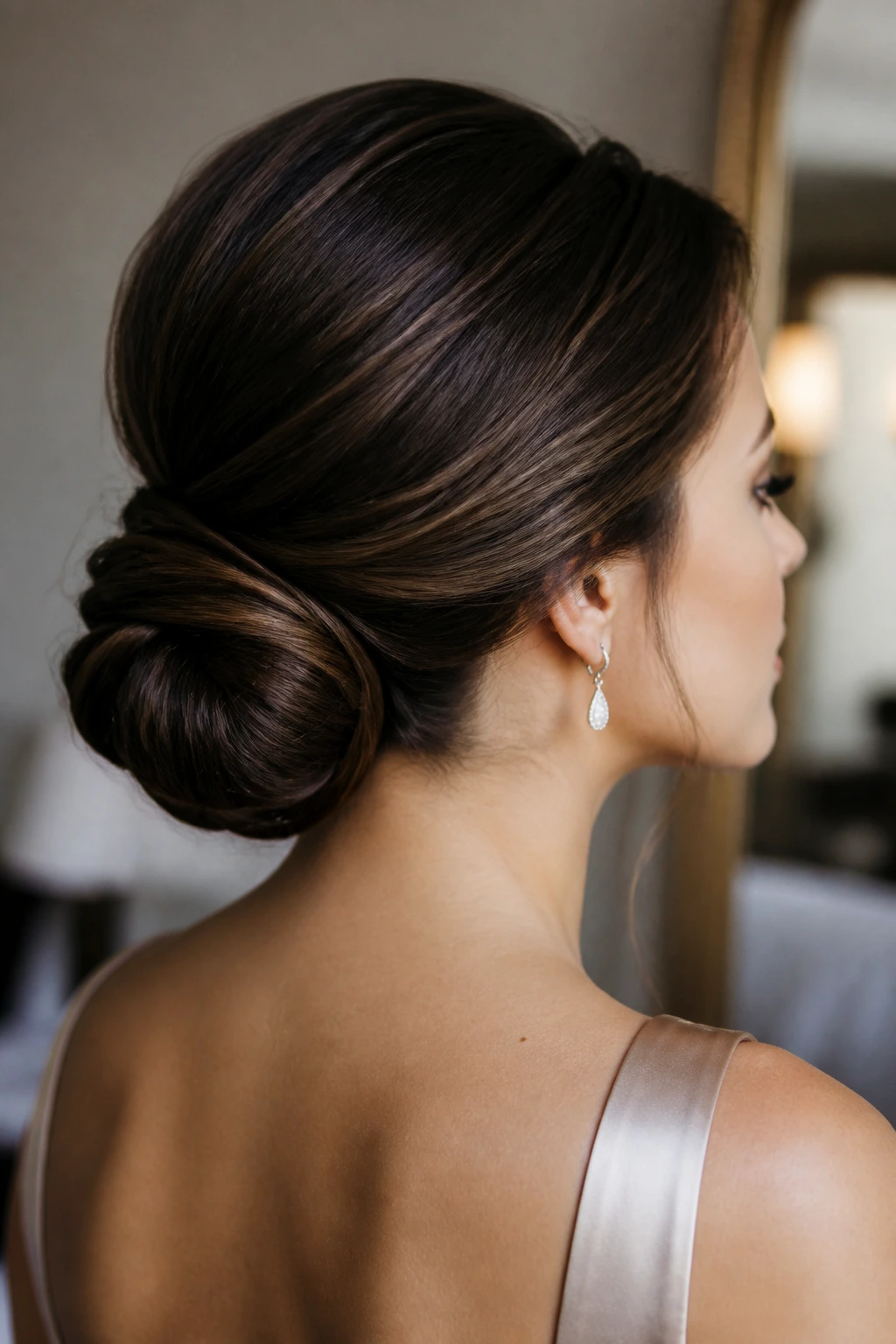
1. Polished Low Chignon
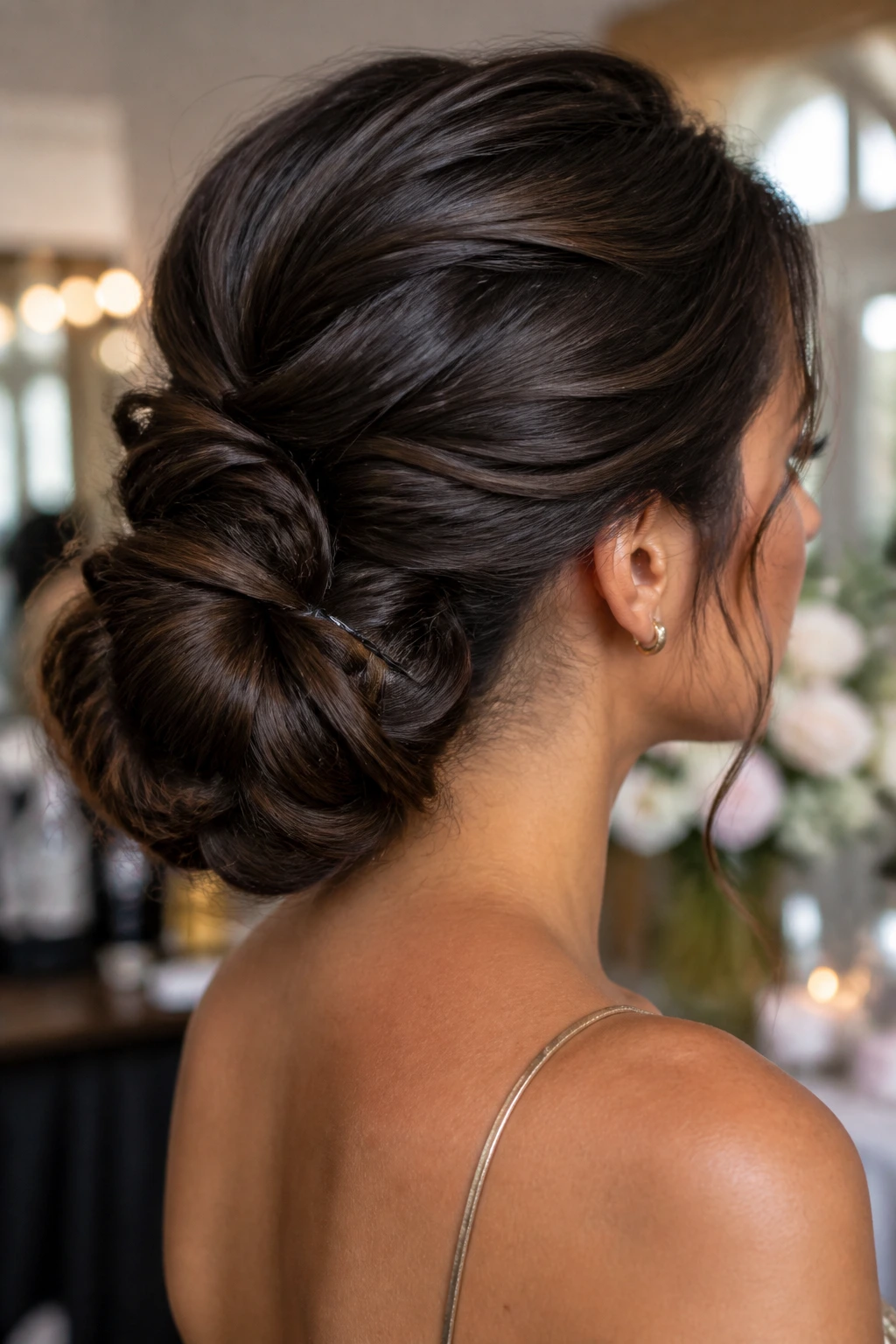
A polished low chignon is the kind of style that makes thick hair look deliberate instead of bulky. The shape sits close to the nape, so the weight has somewhere to go, and the clean coil at the back gives formal polish without needing a ton of ornament.
Why It Holds
A low chignon works because the hair is gathered where the head is widest and strongest. That matters. If you build the style too high, thick hair starts pulling loose at the base before the reception even starts.
- Use a low side part or center part for a sharper finish.
- Smooth the top with a light cream, not a heavy oil.
- Cross two bobby pins in an X where the coil meets the head.
- Hide the last few pins under the outer curve of the bun.
Best detail: leave the outer surface smooth, but don’t iron it flat. A little bend around the face keeps the style from looking stiff.
This is a good choice for satin dresses, clean necklines, and venues where the whole look should read quiet and tailored. It’s a workhorse. Not boring. Just reliable in the way formal hair should be.
2. Soft Half-Up Twist with Loose Waves
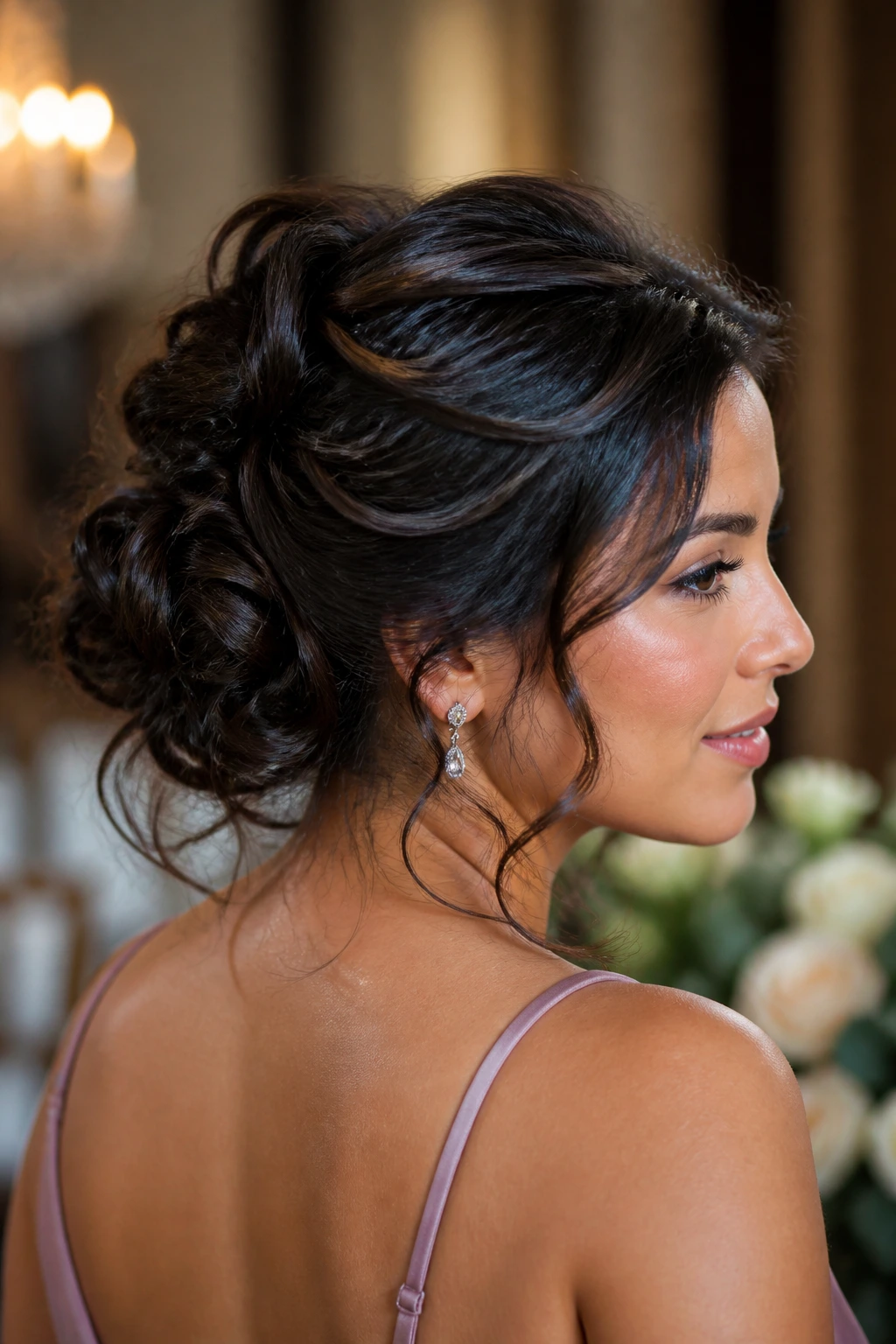
This is the easiest way to keep thick hair off your shoulders without surrendering length. The twist holds the top half in place, while the lower length still moves when you walk, which keeps the style from feeling boxed in.
The trick is to take two sections from just above the temples, twist them back, and pin them into each other before the crown gets too bulky. Thick hair helps here because the twist has enough body to look full instead of stringy. If the ends are waved with a 1.25-inch iron, the whole thing reads softer and more expensive-looking than a flat blowout.
For wedding guest hair, this is one of my favorites with open-back dresses and earrings that need room. You’re not hiding the hair. You’re framing the outfit with it. That little difference matters more than people think.
If your hair is extra heavy, mist the top section with texturizing spray before twisting. You want grip, not crunch. Crunch is the enemy.
3. Braided Crown with a Center Part
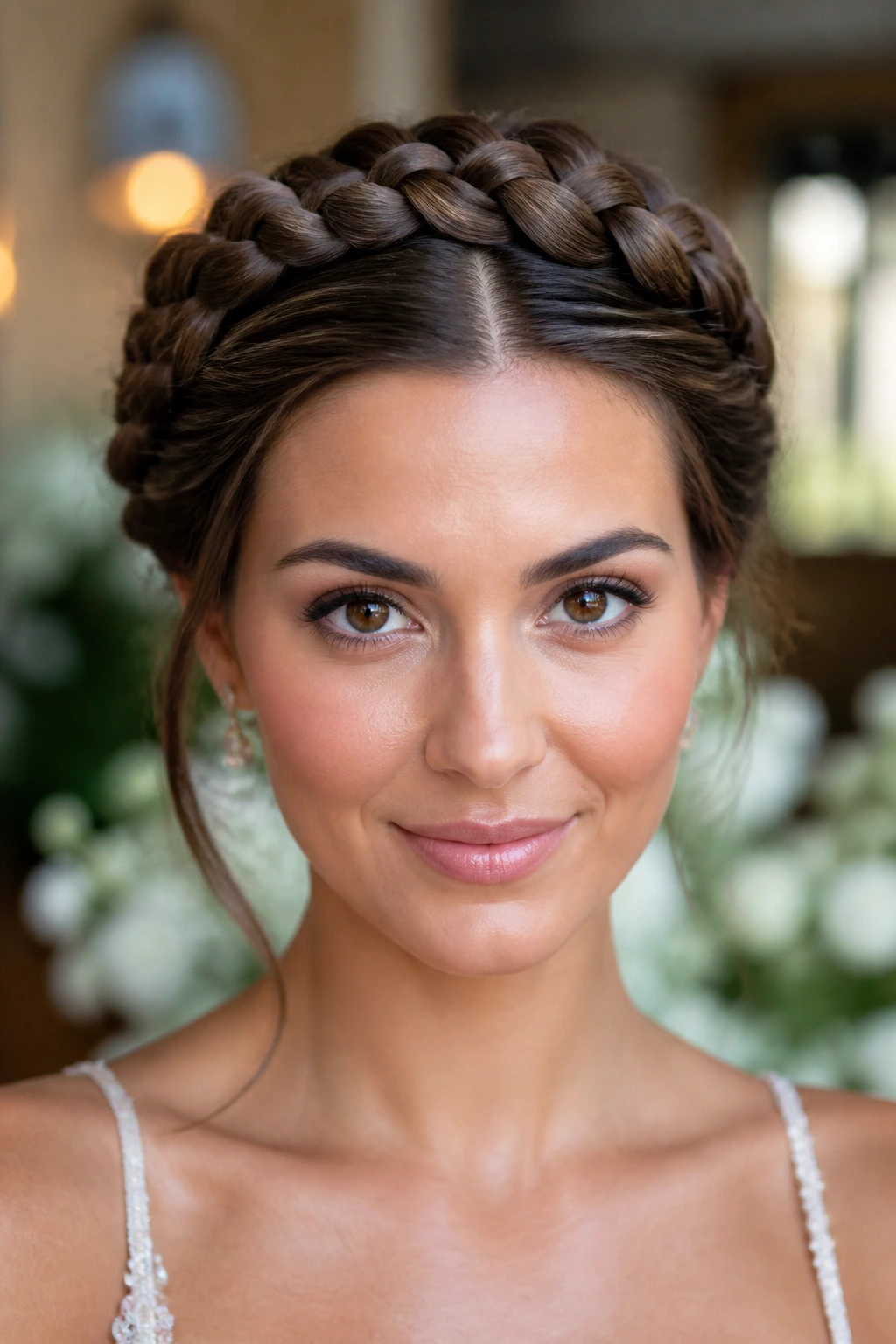
Why does a braided crown work so well on thick hair? Because the braid itself becomes the structure. Thin hair can make a crown braid look delicate and fussy. Thick hair gives it the width and texture it needs to read like an actual hairstyle instead of an attempt.
The center part keeps the look balanced, which is useful when you’re going for formal without turning the whole thing into a costume. Start the braid low at each temple, bring the sections back along the hairline, and pin them behind the ears before tucking the ends under a hidden bun or crossing them at the back.
How to Wear It
- Keep the braid wide rather than tight.
- Pull a few face-framing pieces loose if the dress feels severe.
- Add tiny pearl pins near one ear if the outfit needs dressing up.
- Use invisible pins under the braid, not just at the end.
It’s a good option for thick hair that wants to stay contained but not severe. The texture does half the work for you. The braid does the rest.
4. Glossy Blowout with Face-Framing Pieces
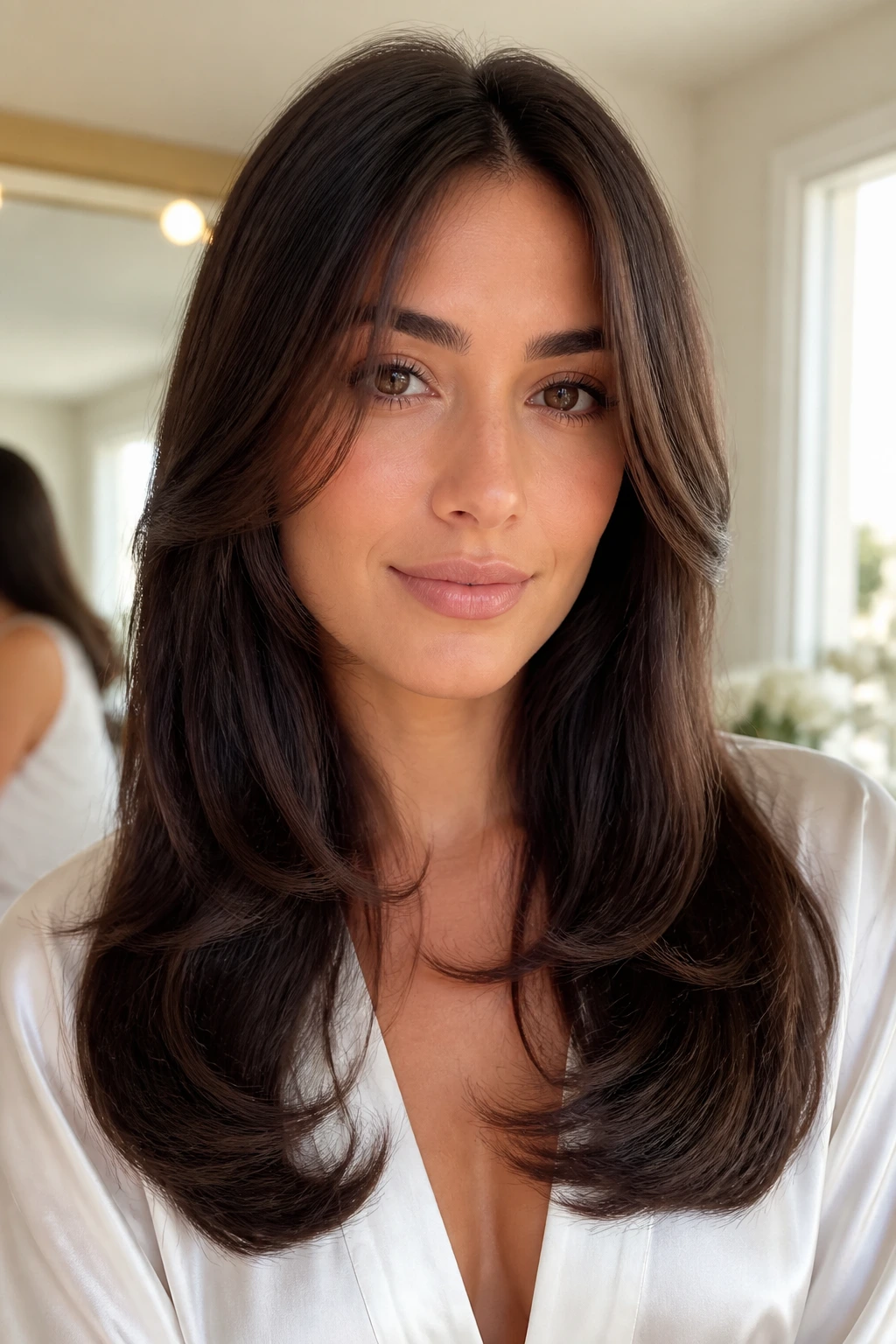
If your hair is long, thick, and already shiny, sometimes the smartest formal style is to do less. A glossy blowout with a clean face frame can look more polished than a complicated updo that starts collapsing the minute you sit down.
The reason it works is simple: thick hair can hold a bend. It doesn’t need to be turned into a sculpture to look finished. Blow it out in sections with a round brush, tuck the front pieces slightly away from the face, and let the ends curve softly under or out depending on the shape of your dress.
A few details matter here. Clip the crown while the hair cools so it keeps lift. Use heat protectant before the dryer. And don’t overload the ends with serum, or they’ll separate and look greasy by the time photos start.
- Dry in 4 sections for better tension.
- Use a large round brush near the top, not just at the ends.
- Mist a light hairspray on the face-framing pieces before they cool.
- Finish with a pea-sized amount of serum on the mid-lengths only.
This is the look for someone who wants movement and shine without much fuss. Clean, not plain.
5. French Twist with Soft Ends
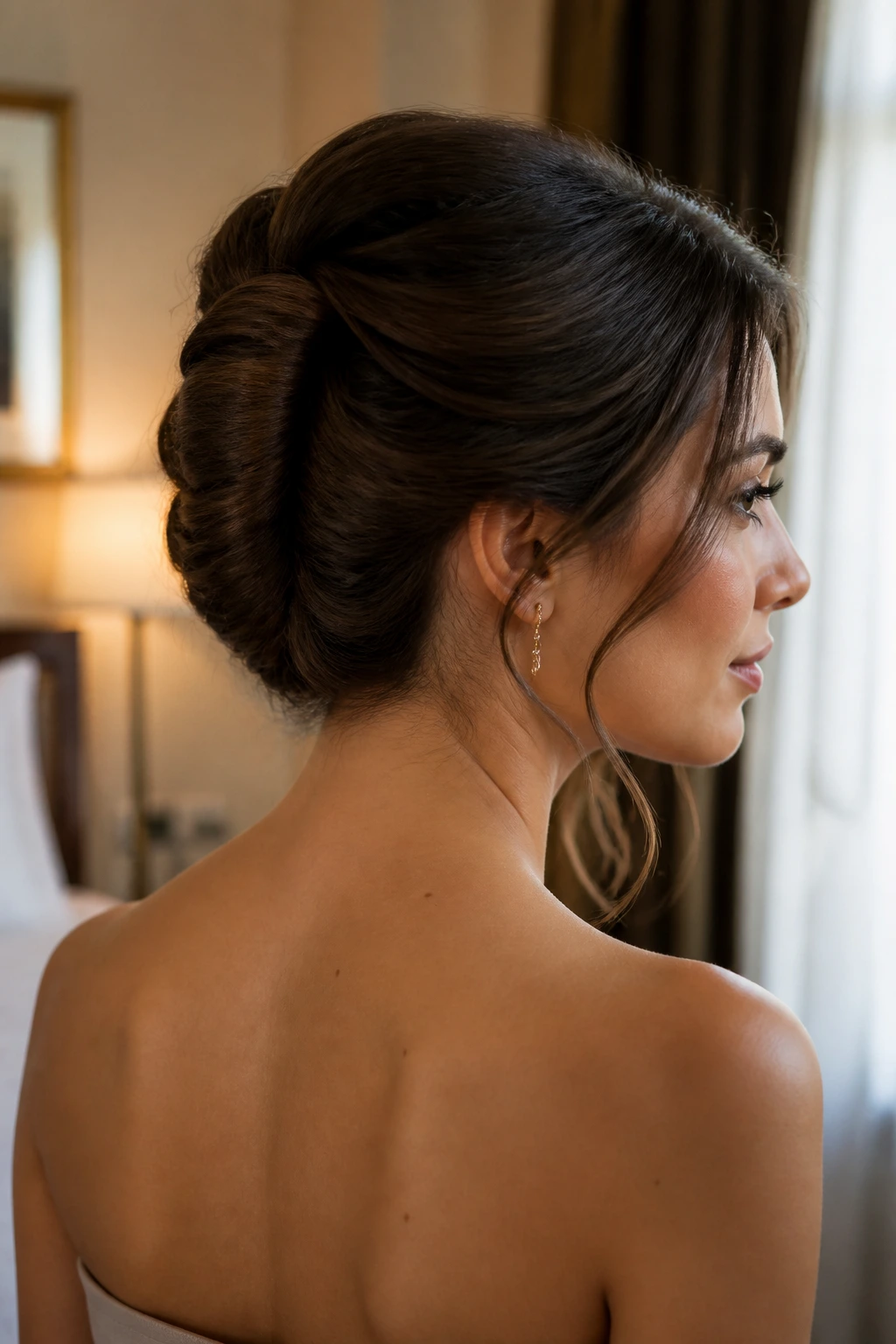
The French twist gets written off as too formal, but thick hair gives it a shape that fine hair often can’t. There’s enough density to fill the seam, enough weight to make the roll look anchored, and enough texture at the back to keep it from feeling like a shell.
I like this style when the dress has a lot going on at the front. Beading, lace, a strong neckline, a dramatic sleeve—those details can fight with loose hair. A French twist keeps the profile neat and lets the clothes do their thing.
The one catch is tension. Pulling thick hair too tight can make the twist feel harsh and can cause the top to puff awkwardly. Leave a little softness at the temple, smooth the crown with a brush, and use U-pins along the inner seam so the style doesn’t unravel while you’re eating.
A few wispy ends at the nape can help too. Not too many. Just enough to keep the look from becoming severe. This is a sharp, elegant choice, and it works best when every line feels intentional.
6. Ribbon-Tied Low Ponytail
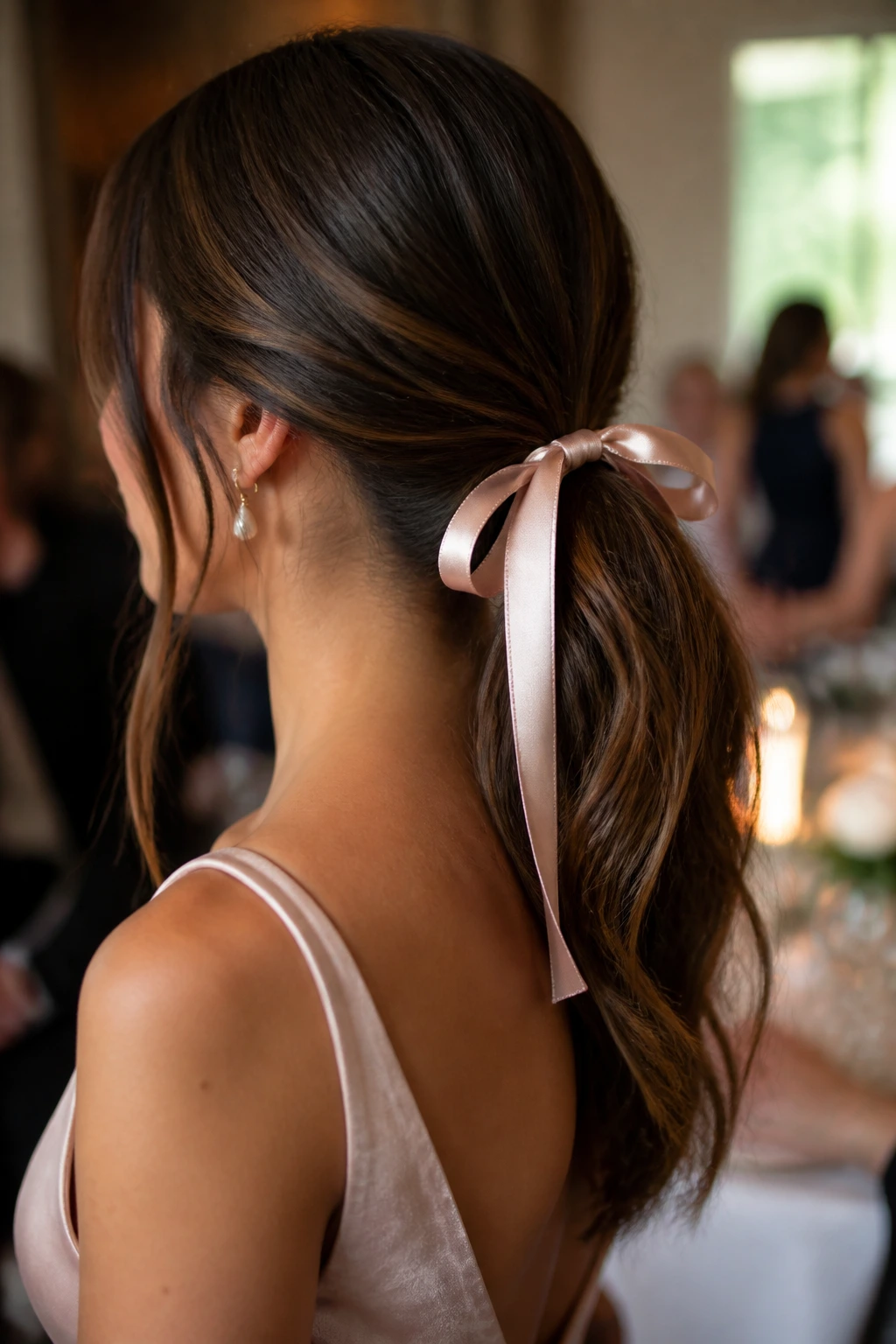
Unlike a sleek bun, a ribbon-tied low ponytail keeps movement in the hair. That movement matters for thick hair because it stops the style from feeling heavy or overworked.
The ponytail should sit at the nape, not halfway up the head. That lower placement lets the weight hang naturally, and the ribbon softens the elastic without adding another hard line. Satin works best if the dress is dressy; grosgrain feels a little more relaxed and holds its shape better if the hair is slippery.
This is one of the easiest wedding-guest styles to adjust for formality. A ribbon in a matching tone reads polished. A contrast ribbon reads a little more playful. Curl the tail into loose bends if the hair falls straight, or leave natural wave alone and focus on smoothing the crown.
It’s a smart pick when you want your neck clear but don’t want the zero-movement look of a bun. Some styles ask for drama. This one asks for clean lines and a little softness.
7. Side-Swept Old Hollywood Waves
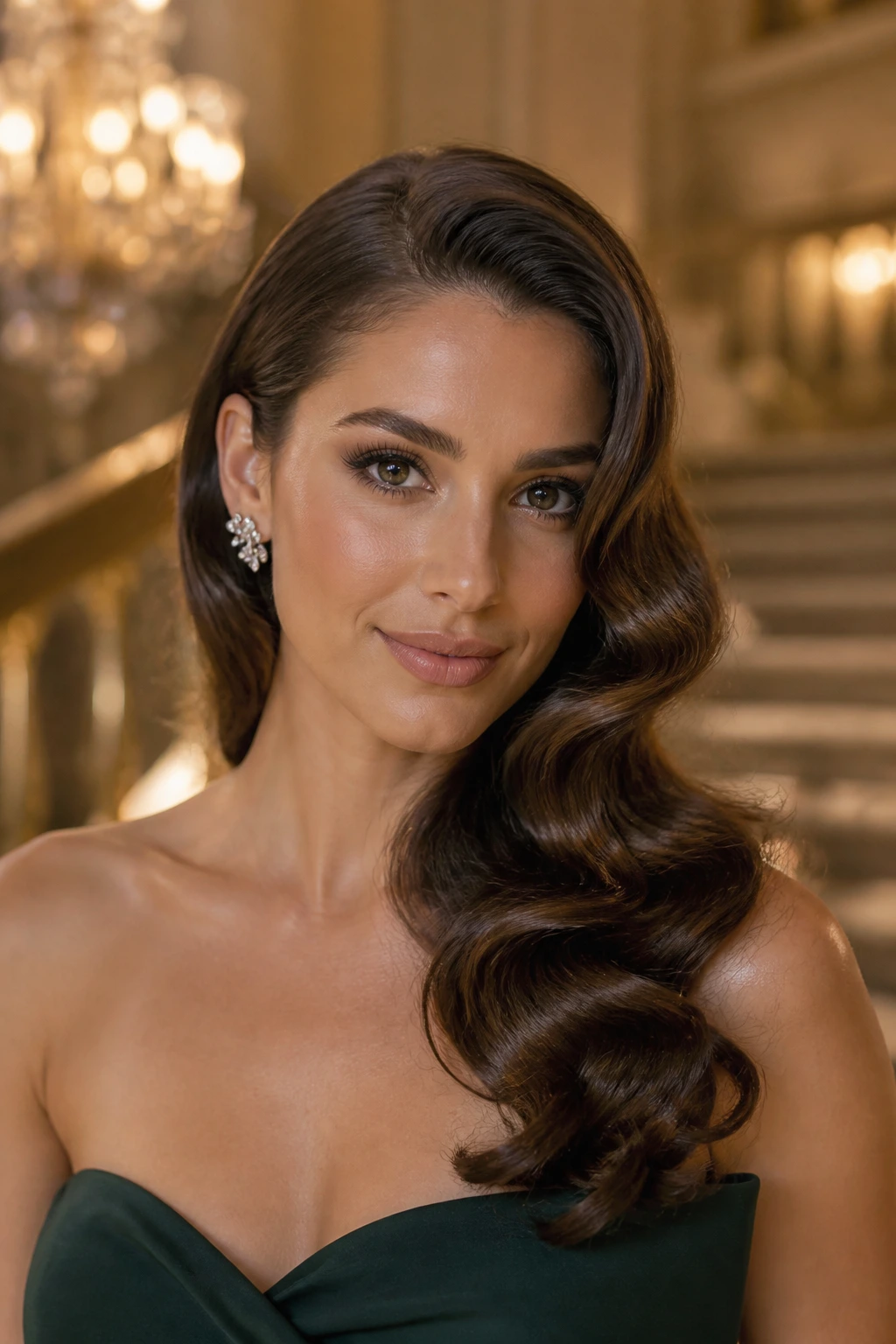
Thick hair gives old Hollywood waves the depth they need to look lush instead of flat. That’s why this style works so well at weddings. The pattern of the wave shows off density, and the sweep to one side gives the whole look a little red-carpet energy without trying too hard.
The part matters more than people think
A deeper side part creates the lift that makes the waves fall over one shoulder. If the part is too shallow, thick hair tends to sit like a curtain. You want the front to open the face and the rest to move in one smooth direction.
Set the curls in the same direction first, pin them to cool, then brush them into broad waves. Don’t rush that brushing stage. It’s what turns curls into a wave pattern instead of a series of frizzy loops.
- Use a 1.25-inch or 1.5-inch iron.
- Clip each curl until it cools.
- Brush with a soft boar-bristle brush or a very gentle paddle brush.
- Finish with a flexible hairspray, not a shellac finish.
My blunt opinion: this looks best when the ends are still soft. If the wave line gets too crispy, thick hair starts looking dated fast.
8. Textured Top Knot
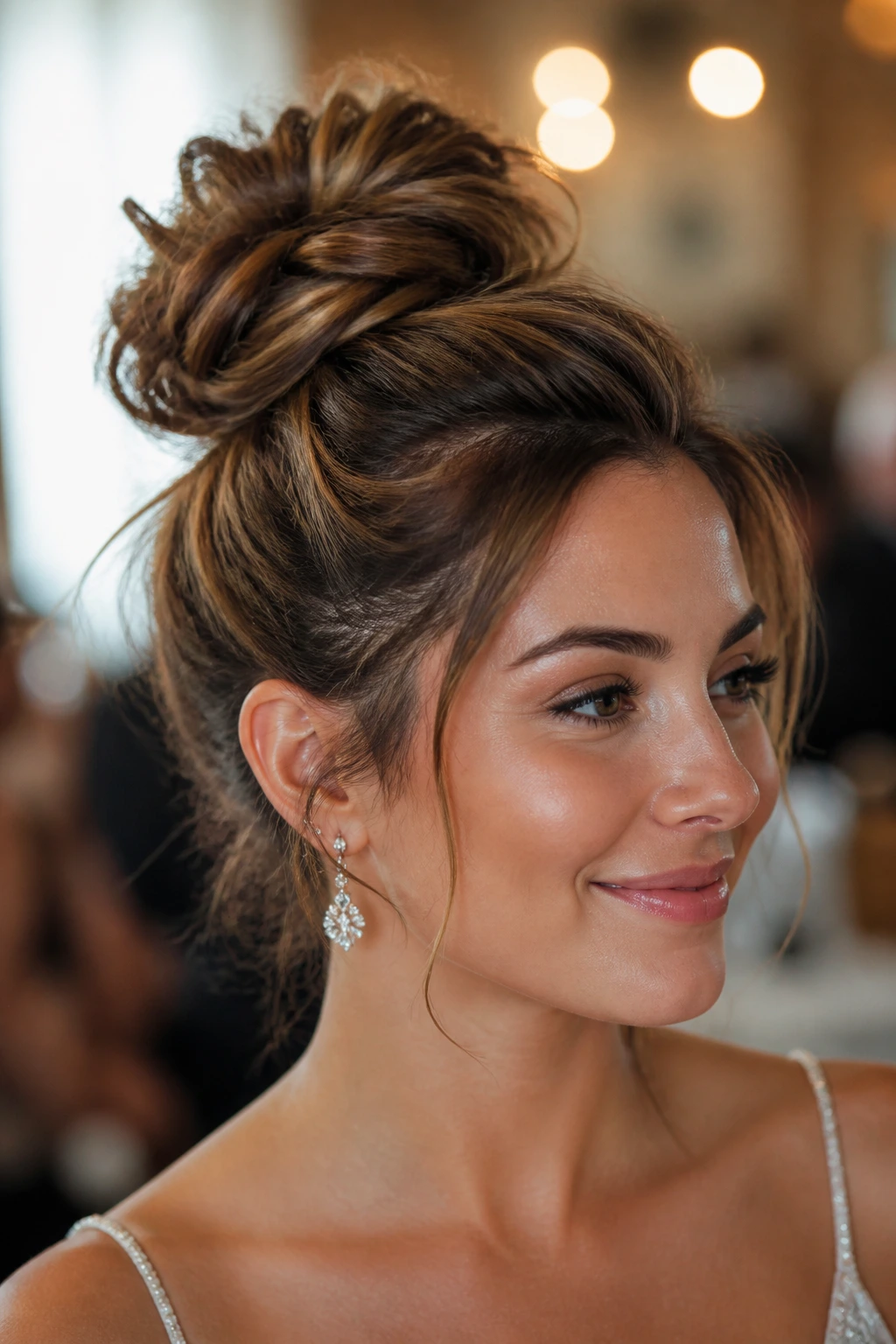
A top knot only looks boring when it’s too smooth and too small. On thick hair, a textured version can be one of the smartest wedding guest looks because it lifts the weight off the neck and keeps the shape from collapsing into the collar of your dress.
The key is to build the knot from rough-dried, lightly textured hair rather than freshly blown-out silk. A little dry shampoo at the roots, a quick bend through the ends, and a loose twist at the crown give the knot enough shape to feel modern. Don’t stack all the volume high like a cheerleading bun. Keep it centered and slightly soft.
This is the style I’d reach for if the venue is warm, the dress has a high neckline, or the event runs long and you know you’ll want your hair off your skin. Thick hair holds a top knot beautifully when the base is tight and the loop is not overpacked.
If the ends are too long to tuck cleanly, let a few pieces pin into the knot instead of forcing them under. A soft edge beats a lumpy finish every time.
9. Bubble Braid Ponytail
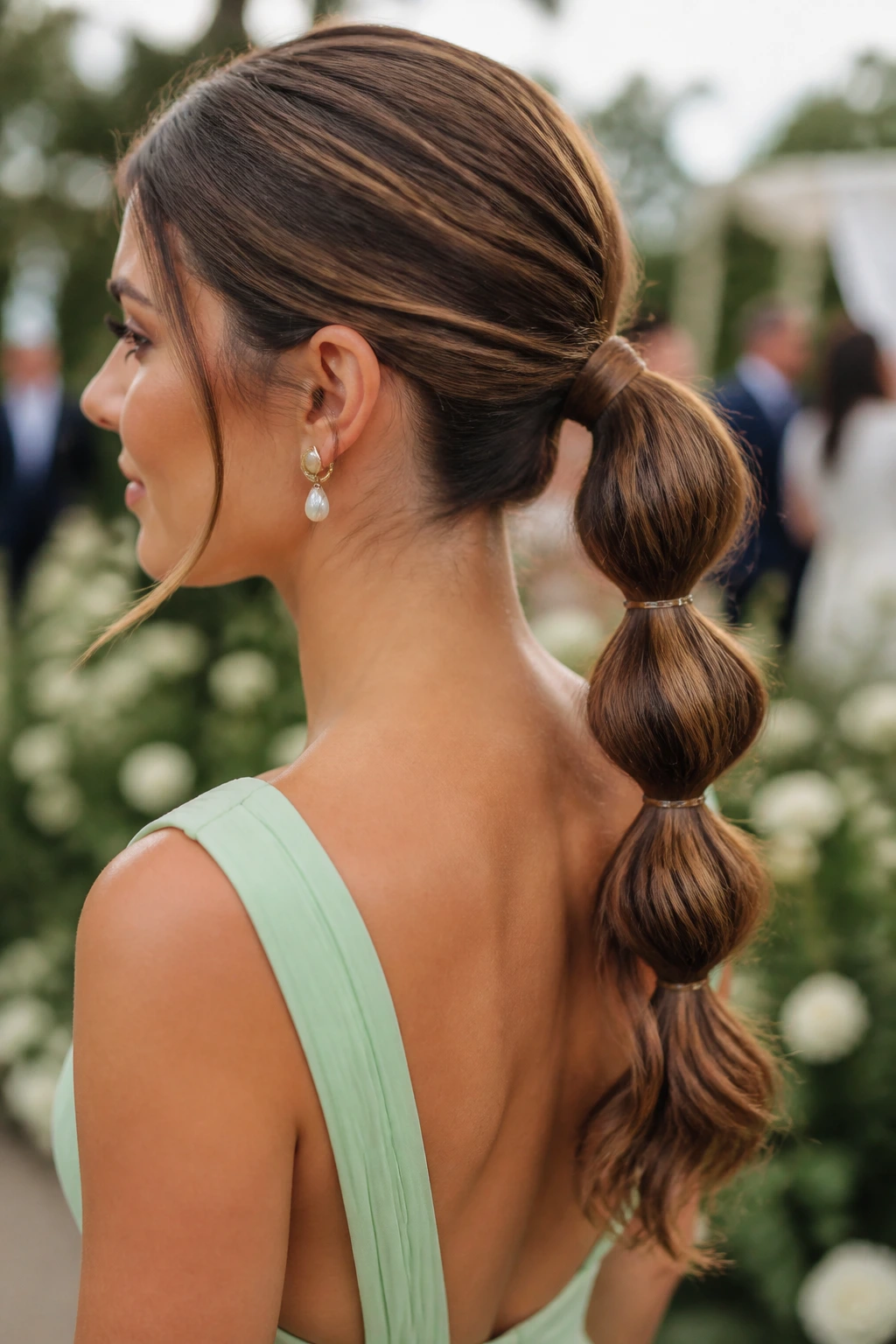
Need something playful that still looks dressed up? The bubble braid ponytail is a nice middle ground. Thick hair gives each bubble enough volume to look intentional, not flimsy, and the spacing of the elastics creates structure without a lot of braiding skill.
Start with a mid or low ponytail, secure it with a clear elastic, then add elastics every 2 to 3 inches down the tail. Gently tug each section outward to form the bubbles. That’s the part that makes the style. If you skip the tugging, you just have a row of little bands and a tail. Not the same thing.
How to use it
- Smooth the crown first so the bubbles feel polished.
- Keep the spacing even.
- Wrap a small strand of hair around the first elastic if you want a cleaner finish.
- Finish with a light mist of hairspray so the sections don’t puff apart.
This style works well for modern dresses, garden weddings, and anyone who wants movement without a full updo. It’s neat. It’s a little unexpected. And it gives thick hair a way to show off its own volume instead of fighting it.
10. Sleek High Ponytail with Wrapped Base
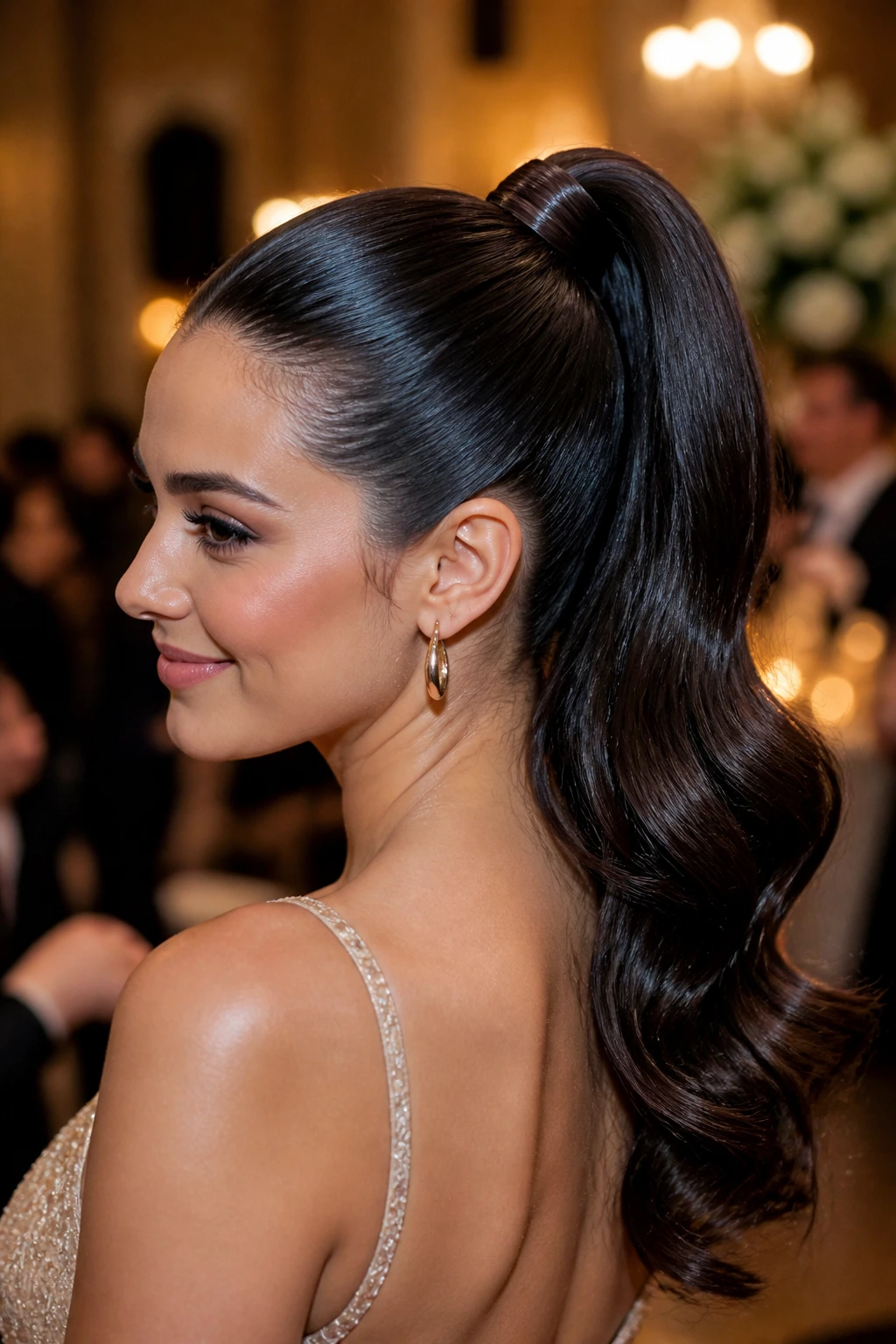
You see this style when the dress has an interesting back and the guest wants the hair out of the way but not hidden. Thick hair makes a high ponytail look rich and full, which is useful because a thin pony can look accidental in formal settings. A dense ponytail just reads better.
The base is the whole trick. Smooth the roots upward with a brush and a little styling gel, then secure the pony with a strong elastic or a bungee if the hair is very heavy. Wrap a small strand around the elastic so the finish looks clean. If you want the tail to feel dressed up, add a soft bend through the lengths rather than leaving it pin-straight.
- Use a toothbrush-sized brush for flyaways along the hairline.
- Anchor the pony with two elastics if the hair is extra thick.
- Curl the tail in 2-inch sections for movement.
- Keep the wrap strand tight so the base stays tidy.
This is a sharp, confident style. It looks best when the crown is smooth and the tail has enough body to swing without frizzing.
11. Half-Up Knot with Crown Volume
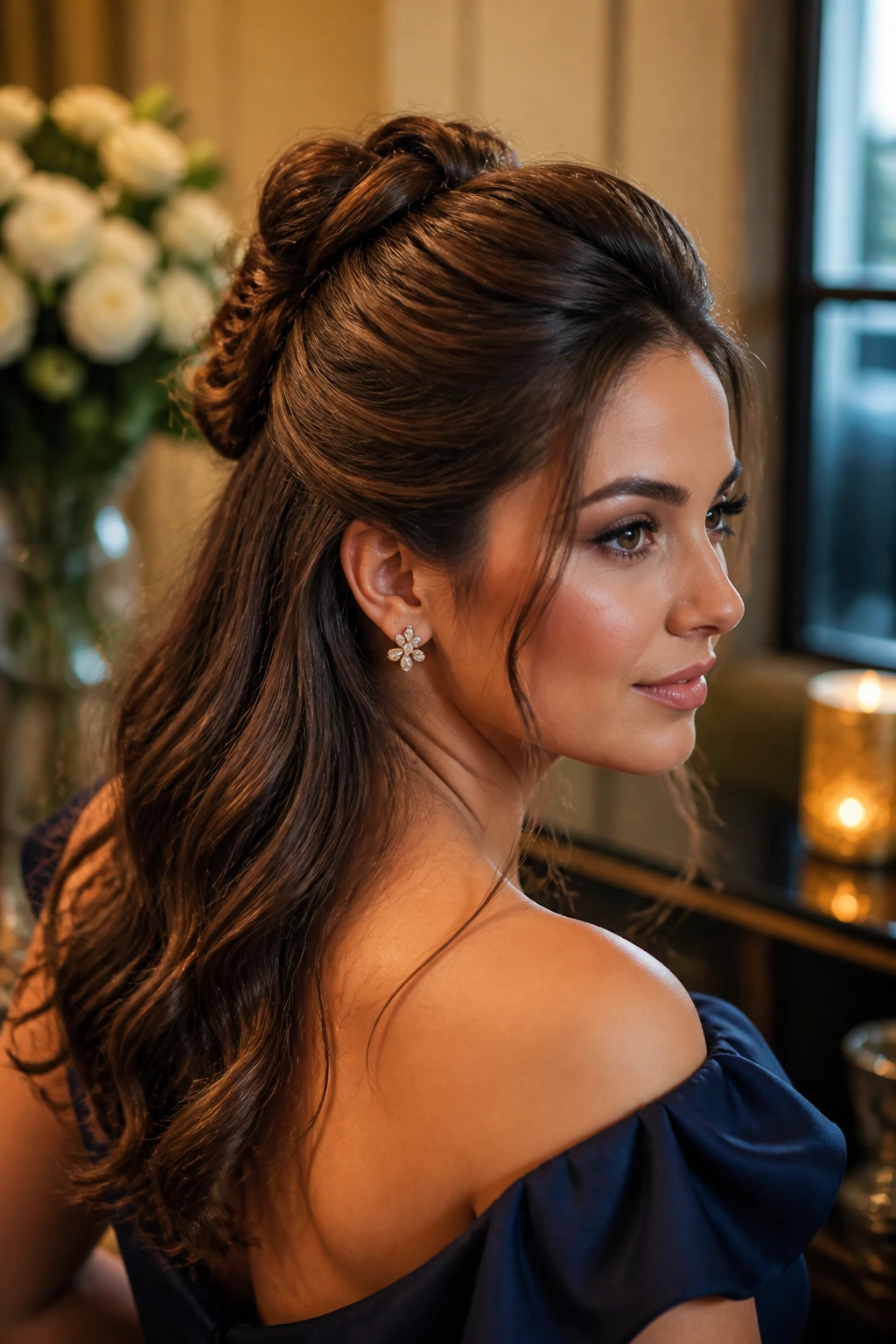
A half-up knot is one of those styles that sounds casual until you see it on thick hair. Then it looks sculpted. The volume at the crown gives the face lift, and the lower half stays loose enough to keep the style soft.
The reason thick hair suits this so well is that the knot at the top doesn’t disappear. With finer hair, the top section can seem too tiny or get lost against the rest of the hair. Thick hair gives the knot enough bulk to register from the front and the back.
I like this style when the dress has a busy skirt or when the jewelry is doing most of the talking. You don’t want hair competing with those details. A crown lift and a small knot keep the outline clean while leaving plenty of length in play.
If you tease, tease only the hidden section under the knot. That little bump is enough. Over-teasing thick hair turns the top into a helmet, and nobody needs that.
12. Waterfall Braid Over Loose Lengths
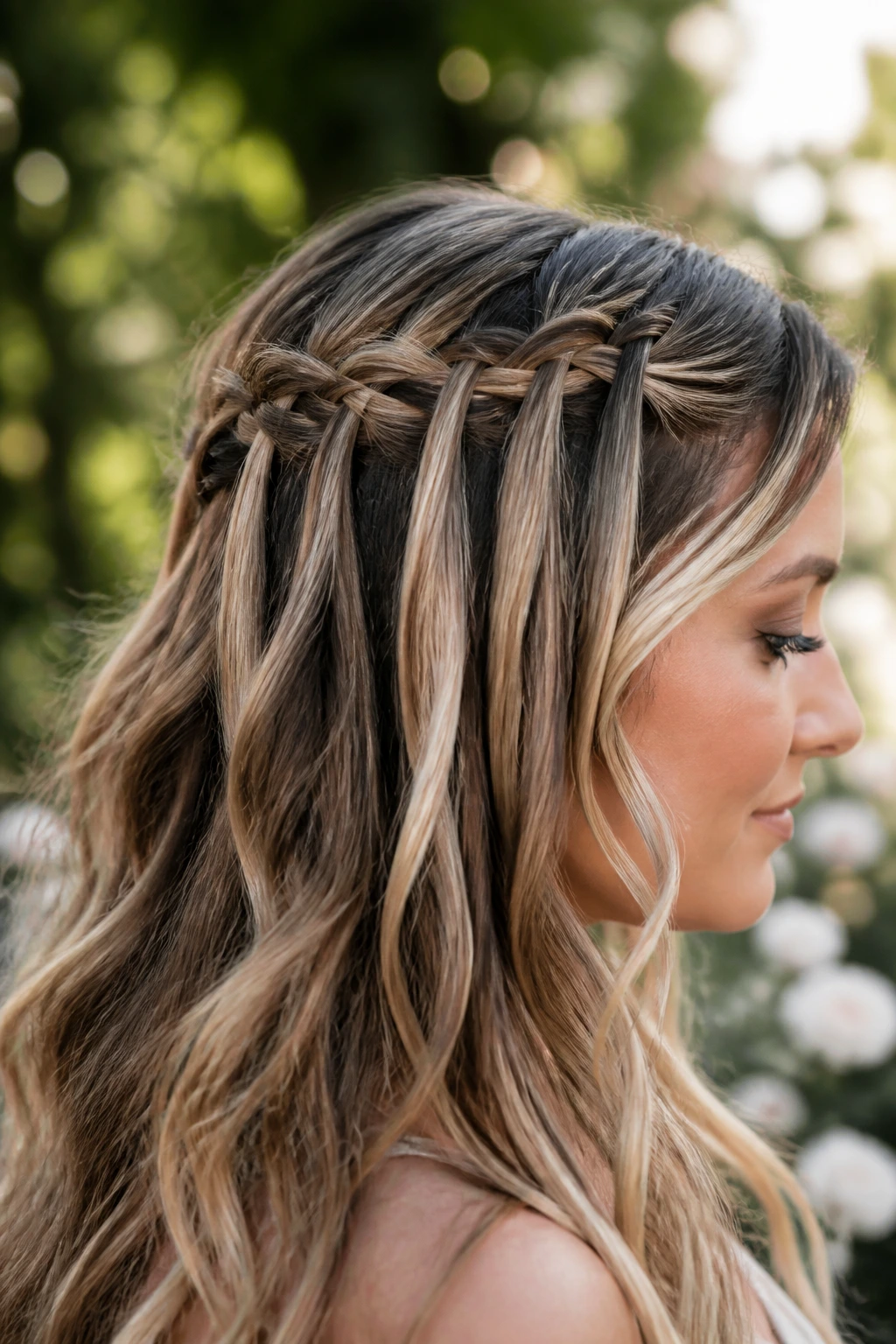
Unlike a full braid, a waterfall braid keeps the length visible. That matters for thick hair because the hair itself is part of the decoration. If you hide all of it in a braid, you lose the thing that makes the style impressive in the first place.
This look works especially well when the hair has highlights, balayage, or a natural mix of tones. The braid creates a line across the head, while the loose strands drop through it like soft ribbons. It’s romantic without feeling fussy.
The braid should be wide, not tiny. Small waterfall braids get swallowed by dense hair and can disappear by the time the photos start. Use medium sections, keep the pressure even, and secure the braid behind one ear or at the back of the head with invisible pins.
If you want the style to hold longer, mist the braid lightly before you start. Hair with a little grip is much easier to manage than silk-slick strands that slide apart between your fingers.
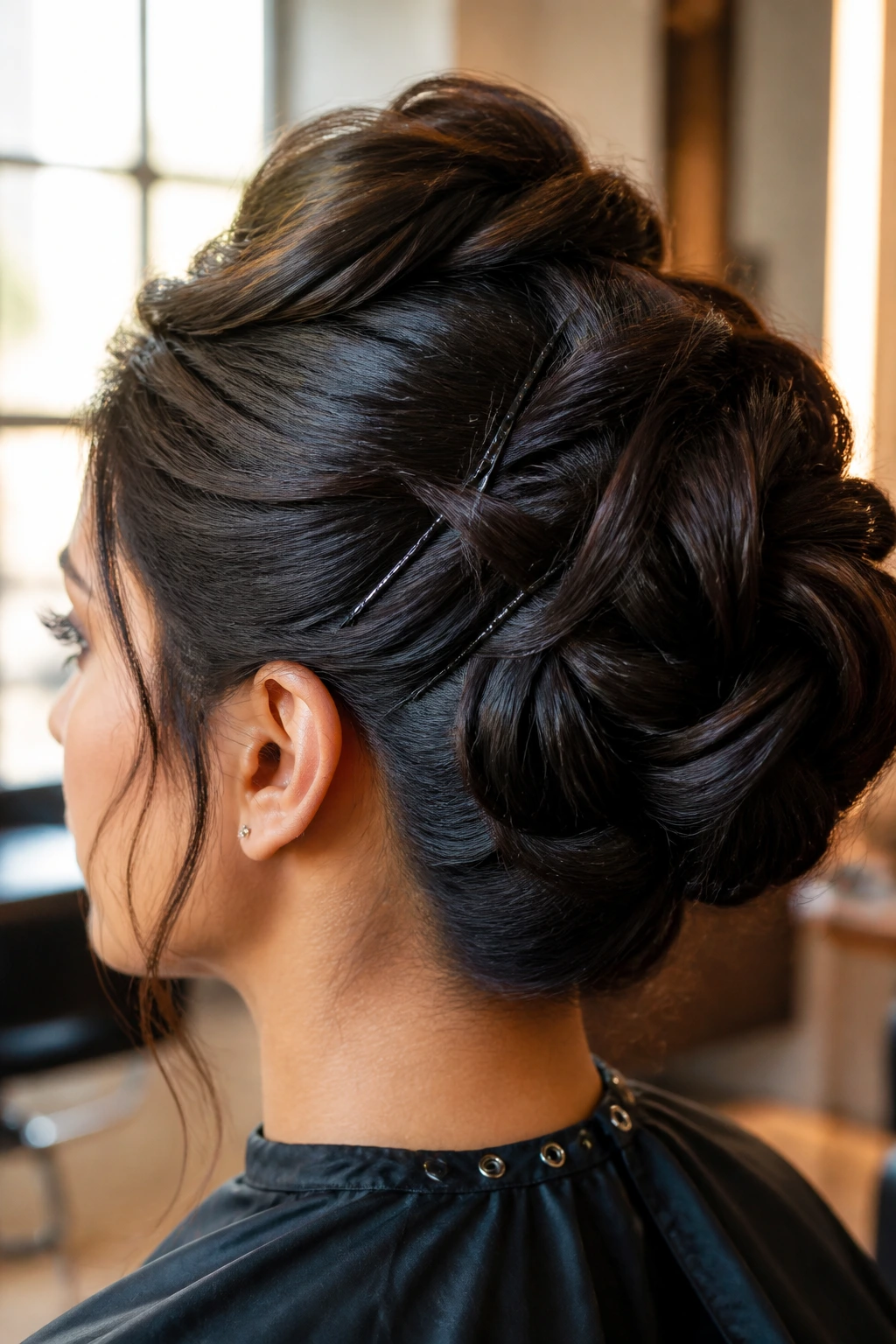
13. Braided Bun with Hidden Pins
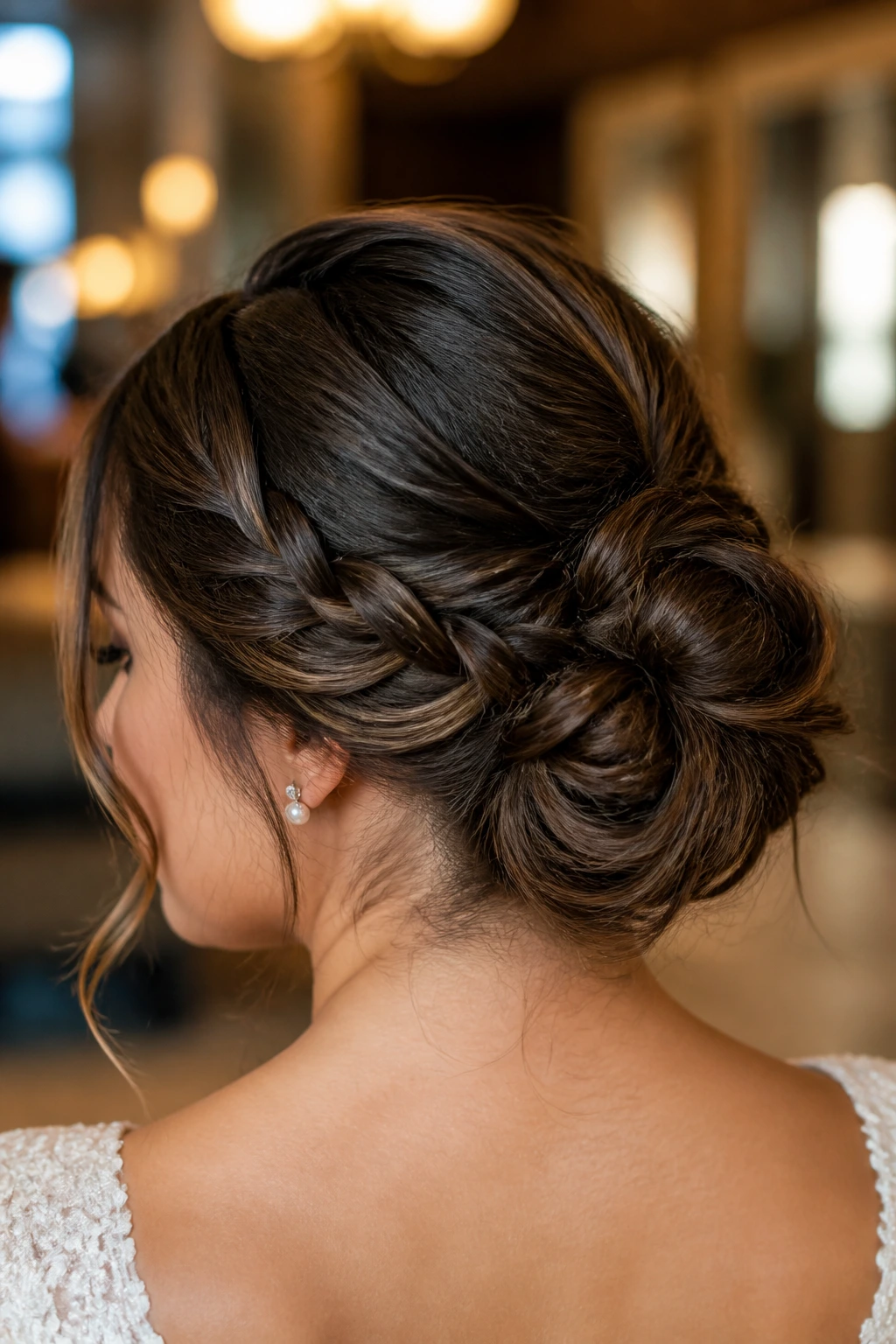
Hidden pins matter more here than the braid itself. A braided bun on thick hair has enough texture to look full, but it also needs smart anchoring or the whole thing will droop from the weight.
Start with a low braid, wrap it into a coil, and pin it in several places rather than relying on one or two pins at the outer edge. Cross the pins so they lock into the base. That crossing motion is boring to describe and extremely useful in practice.
Where the braid does the work
- A braid gives the bun grip.
- The coil creates shape.
- The hidden pins keep the weight from sliding.
- The textured surface makes the style look finished even if it softens a little later.
Do not flatten the braid after you wrap it. The ridges are what make the bun look interesting. Flattened braid = flat bun. It’s a bad trade.
This style is especially good for evening weddings, formal church ceremonies, and dresses with detailed backs. It has enough structure to look dressed up, but not so much that it feels severe.
14. Rope-Braid Halo Bun
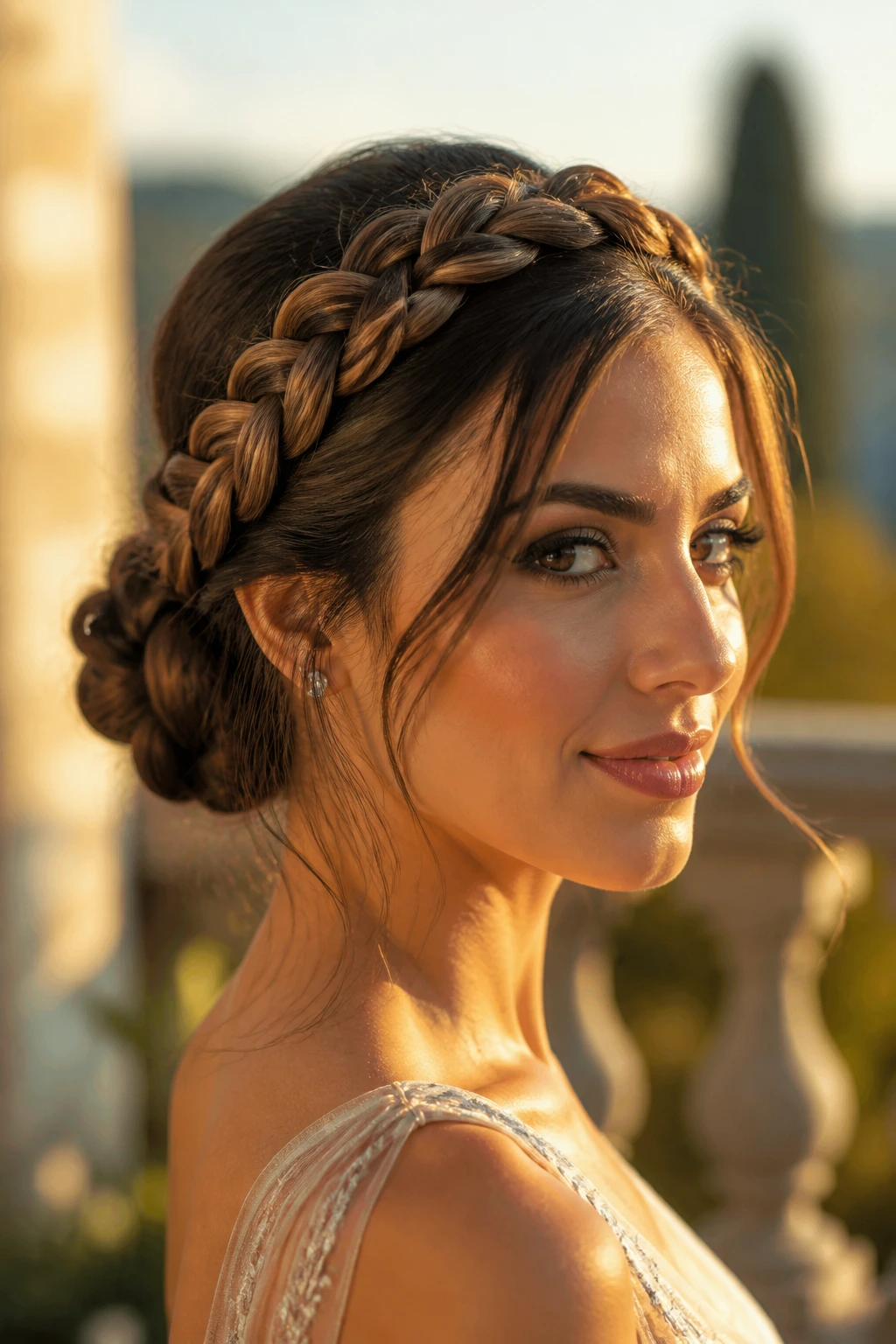
Rope braids are faster than classic braids, and thick hair makes them look richer than they do on fine hair. That’s the main reason this style deserves a spot here. The twisted strands build a halo around the head, and the bun at the back keeps the profile neat.
This is a nice choice when you want something romantic but slightly less intricate than a crown braid. Divide the front sections, twist each side tightly, and guide them around the head before tucking the ends into a low bun. If the hair is very dense, keep the twists a little looser at the start so they don’t pull uncomfortably at the temples.
It’s especially good with simple dresses that need a little texture up top. The braid line creates that texture without adding bulk around the face. And because the bun sits low, the style stays wearable for hours.
Use a few U-pins along the halo instead of relying on one big pin at the end. Thick hair needs spread-out support. Always has.
15. Deep Side Part with Soft Barrel Waves
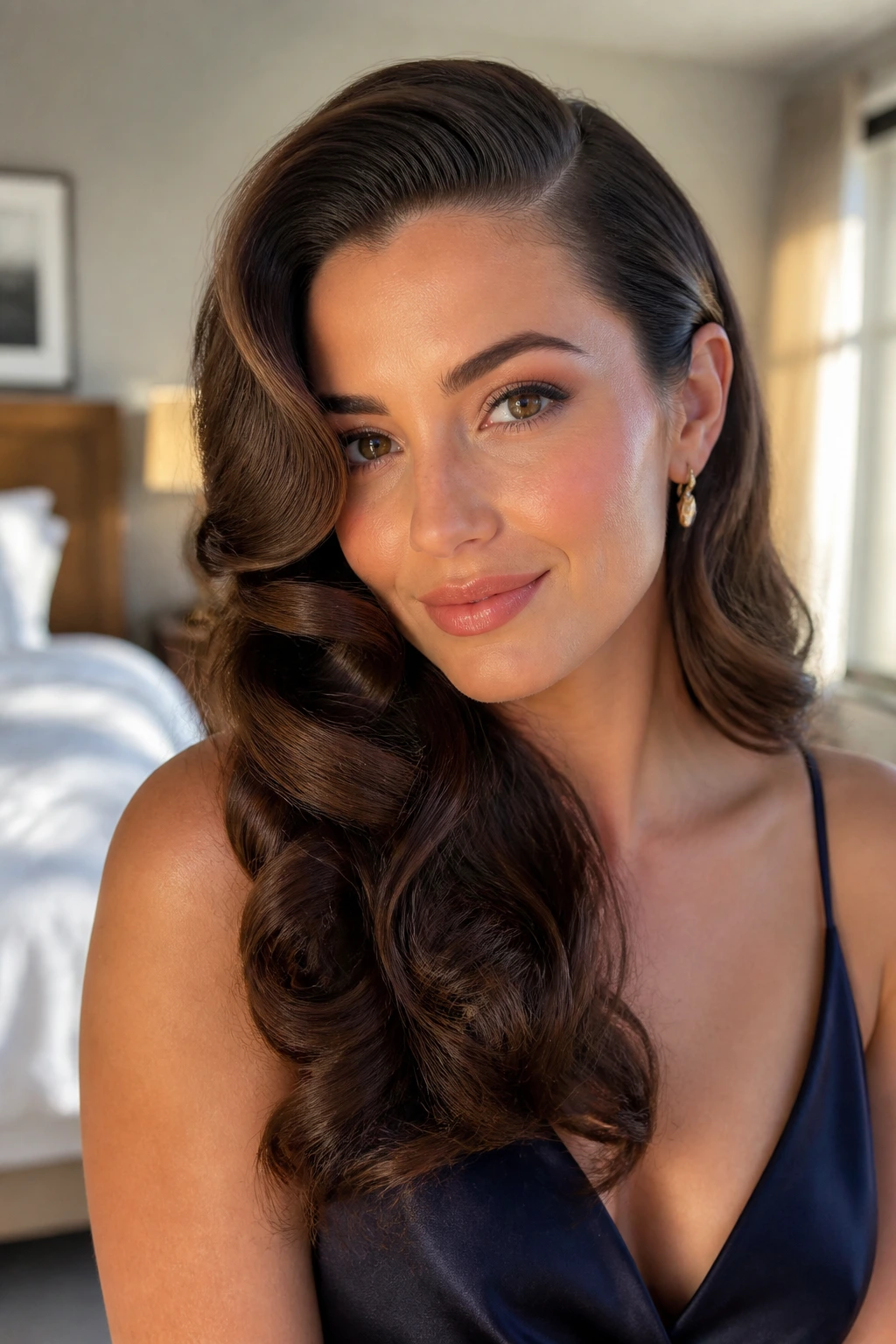
Want hair down without letting it feel plain? A deep side part with soft barrel waves is the easy answer. Thick hair gives the waves weight, so they fall in a way that looks deliberate rather than fluffy.
The side part creates asymmetry, which helps the style feel formal. One side can sit a little flatter and cleaner; the other gets the bulk and movement. That imbalance is what keeps the look interesting. If the part is too shallow, the whole shape loses its edge.
How to use it
- Part the hair while it’s still damp or lightly misted.
- Blow dry the front in the opposite direction first for lift.
- Curl away from the face in large sections.
- Pin the waves while they cool if you want them to hold longer.
This look is strong for cocktail dresses and gowns with one statement detail, like a shoulder bow or dramatic earring. The waves add softness. The side part adds structure. It’s a clean formula.
16. Gibson Tuck with Clean Finish
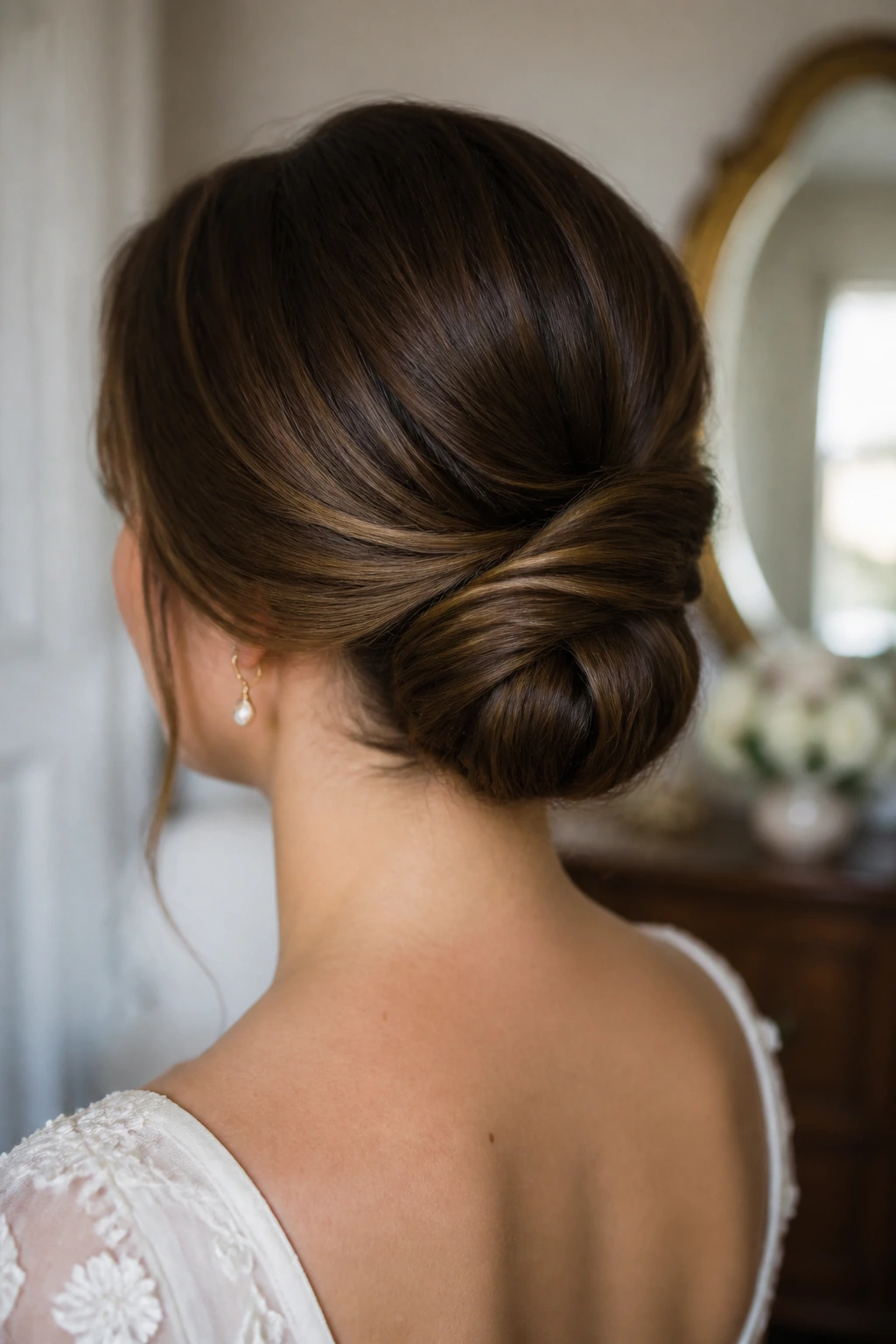
A Gibson tuck is what happens when you need your hair off the neck but not in a stiff bun. Thick hair fills out the roll so nicely that the style looks fuller and more finished than it does on smaller hair types.
The process is straightforward. Gather the hair low, create a loose pocket above the nape, and tuck the lengths upward into that pocket, securing the fold with pins as you go. The trick is not to over-tighten the front. You want the head shape to stay smooth, but not pulled into a hard line that feels dated.
It’s a smart choice for shoulder-length to long thick hair, especially when the dress has a neat neckline or a lot of texture in the fabric. The tuck keeps everything tidy, and the back becomes the focus.
If your hair is heavy, add a couple of clear elastics inside the fold before pinning. Nobody will see them, and they stop the tuck from loosening as the night goes on. That little move saves a lot of trouble.
17. Crown Braid into a Low Bun
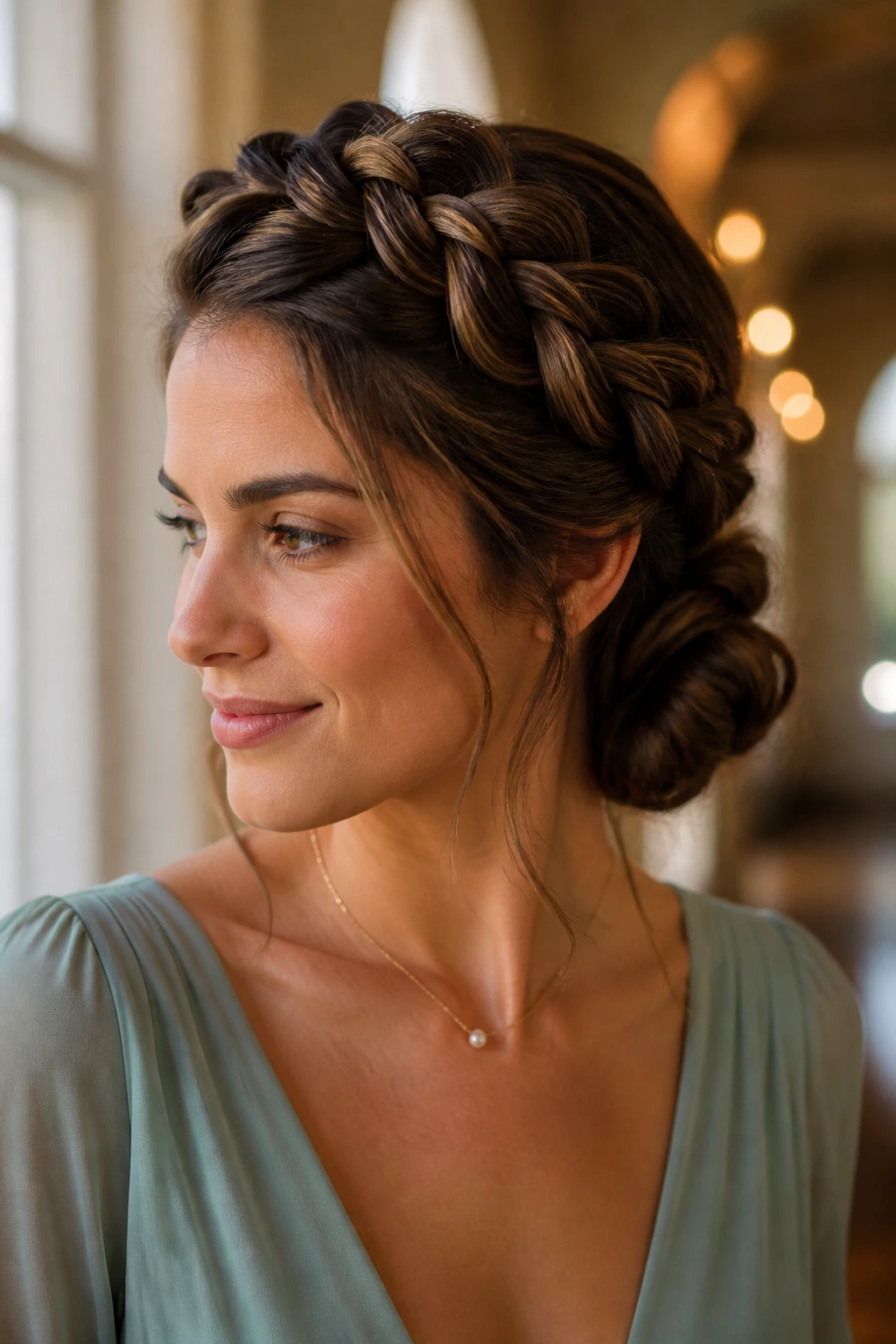
A crown braid into a low bun is one of those styles that looks more complicated than it is. Thick hair helps by making the braid visibly plush, so even a simple three-strand or Dutch braid reads like a formal detail.
The braid travels from one side of the crown around the back and into a low bun at the opposite side. That wrap-around line gives the style movement, while the bun keeps the silhouette grounded. It’s useful when the dress is simple and needs the hair to carry a little more visual weight.
Two mirrors help here. So does patience. Keep the braid fairly broad, and don’t pull every section tight; thick hair has enough body that the braid will still hold shape without being strangled down.
This is a good option if you want a look that stays in place but still feels soft. It has the structure of an updo and the romance of braided hair, which is a useful combination for weddings.
18. Twisted Halo Half-Up
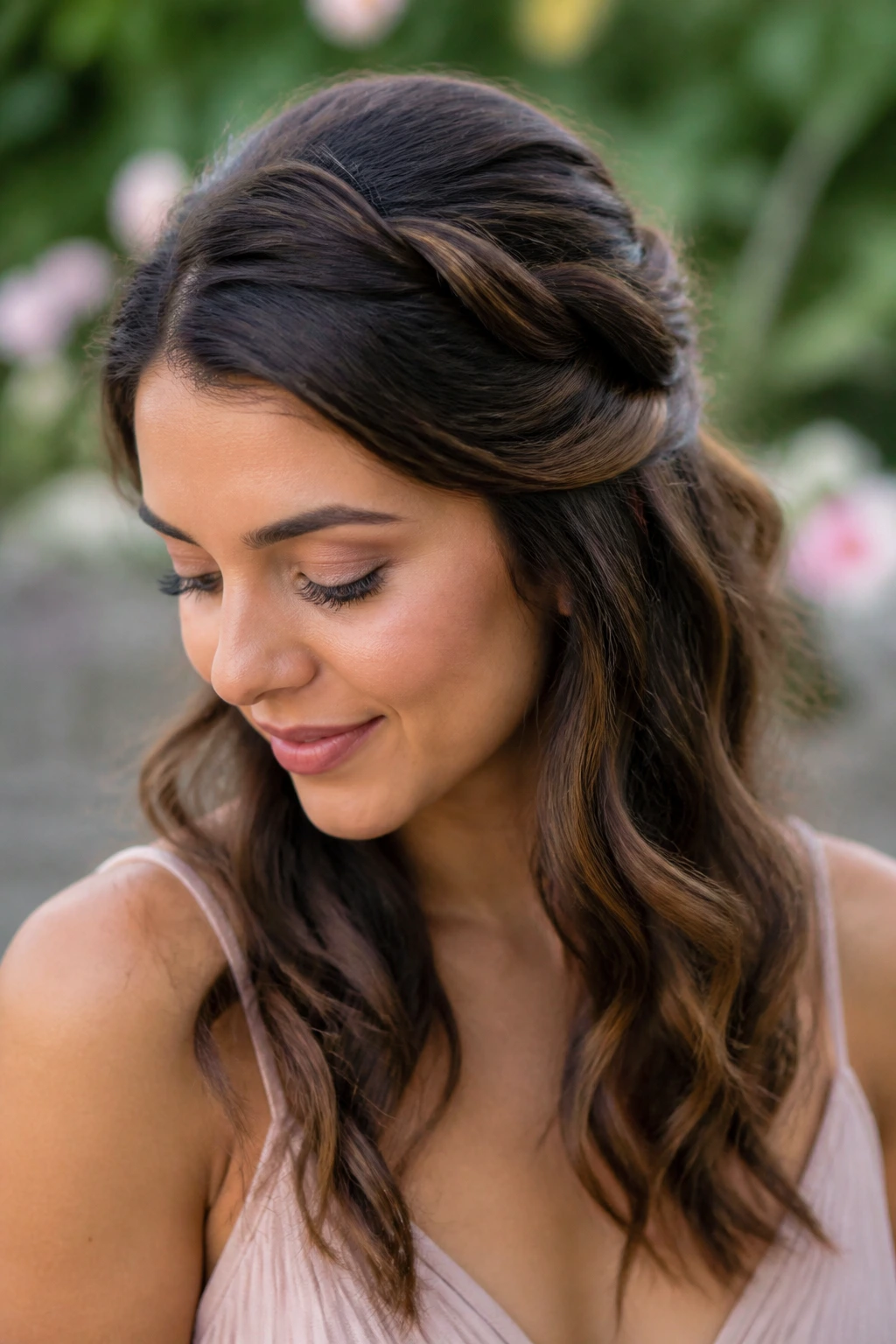
Unlike a crown braid, a twisted halo half-up is faster and softer. You still get the halo shape around the head, but the twists read more relaxed, which can be a better match for thick hair that already brings plenty of drama.
Take two sections from the temples, twist them back, and pin them under the crown rather than across it. Let the lower length stay loose, preferably with waves or a natural bend. The contrast between the pinned top and loose bottom keeps the style from feeling too heavy.
Best when you want softness
- Works well with wavy or curly thick hair.
- Pairs nicely with floral clips or a slim barrette.
- Keeps volume at the bottom, not just the crown.
- Easier to redo if a section slips.
This is one of the most forgiving looks in the group. It’s a nice choice when the event is outdoors, the dress is light, or the hair has texture you’d rather show than hide.
19. Sculpted Side Bun
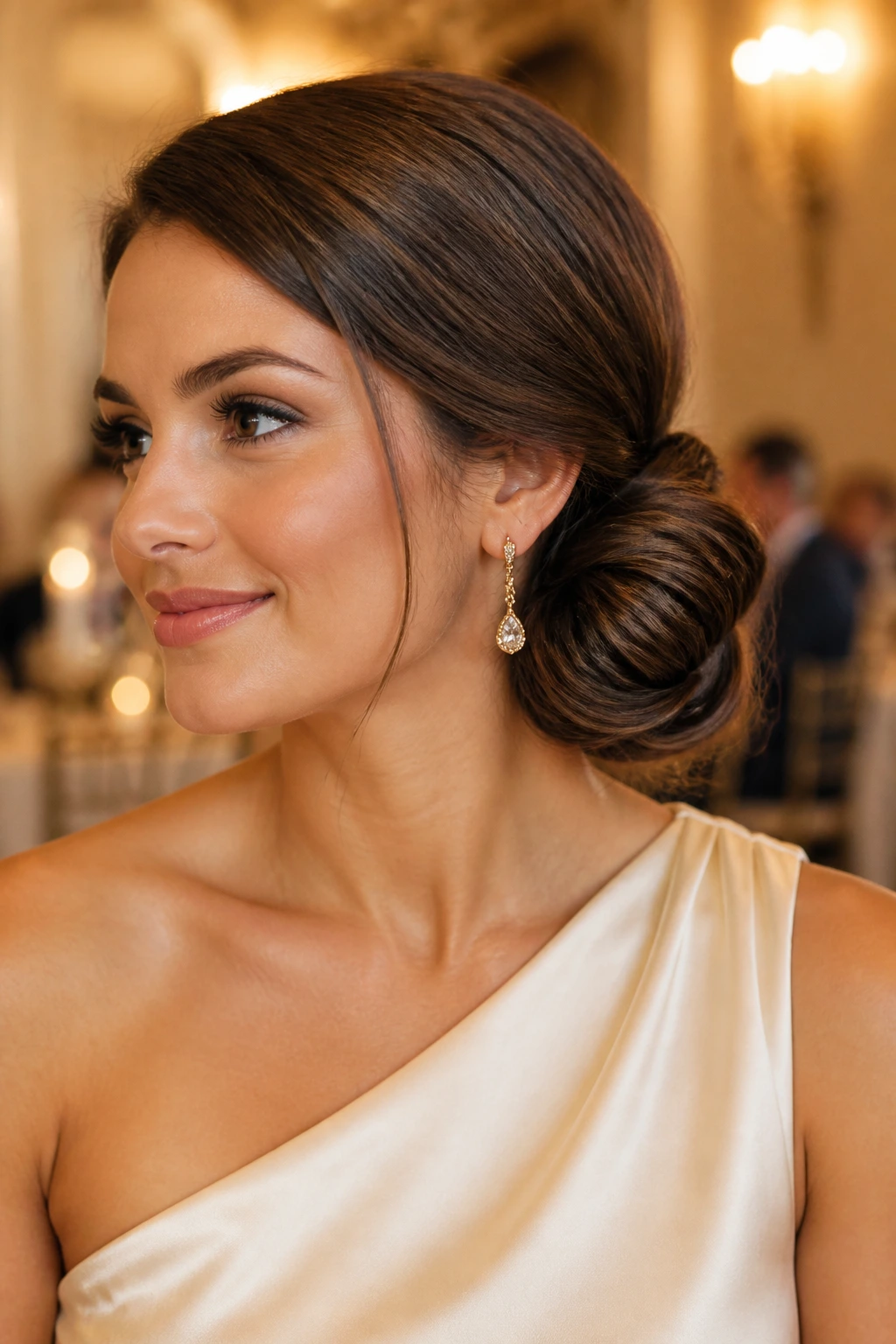
A side bun gives thick hair somewhere to go without stacking all the weight at the back. That makes the whole style feel lighter, and it also gives the face a little asymmetrical lift.
Why it suits thick hair
The side placement reduces bulk at the nape, which is where dense hair usually starts to fight back. Pull the hair into a low side pony, twist it into a bun just behind one ear, and anchor it with pins that cross through the base. If the bun is too tight, it loses shape. If it’s too loose, it slumps. You want the middle ground.
- Works well with one-shoulder or asymmetrical dresses.
- Lets long earrings show.
- Easier to soften with a few face pieces.
- Holds better when the hair has a little dry shampoo or texture spray.
The style feels formal without being stiff. It’s one of those looks that can handle a long day without turning into a mess, which is more useful than it sounds.
20. Low Knot with Pearl Pins
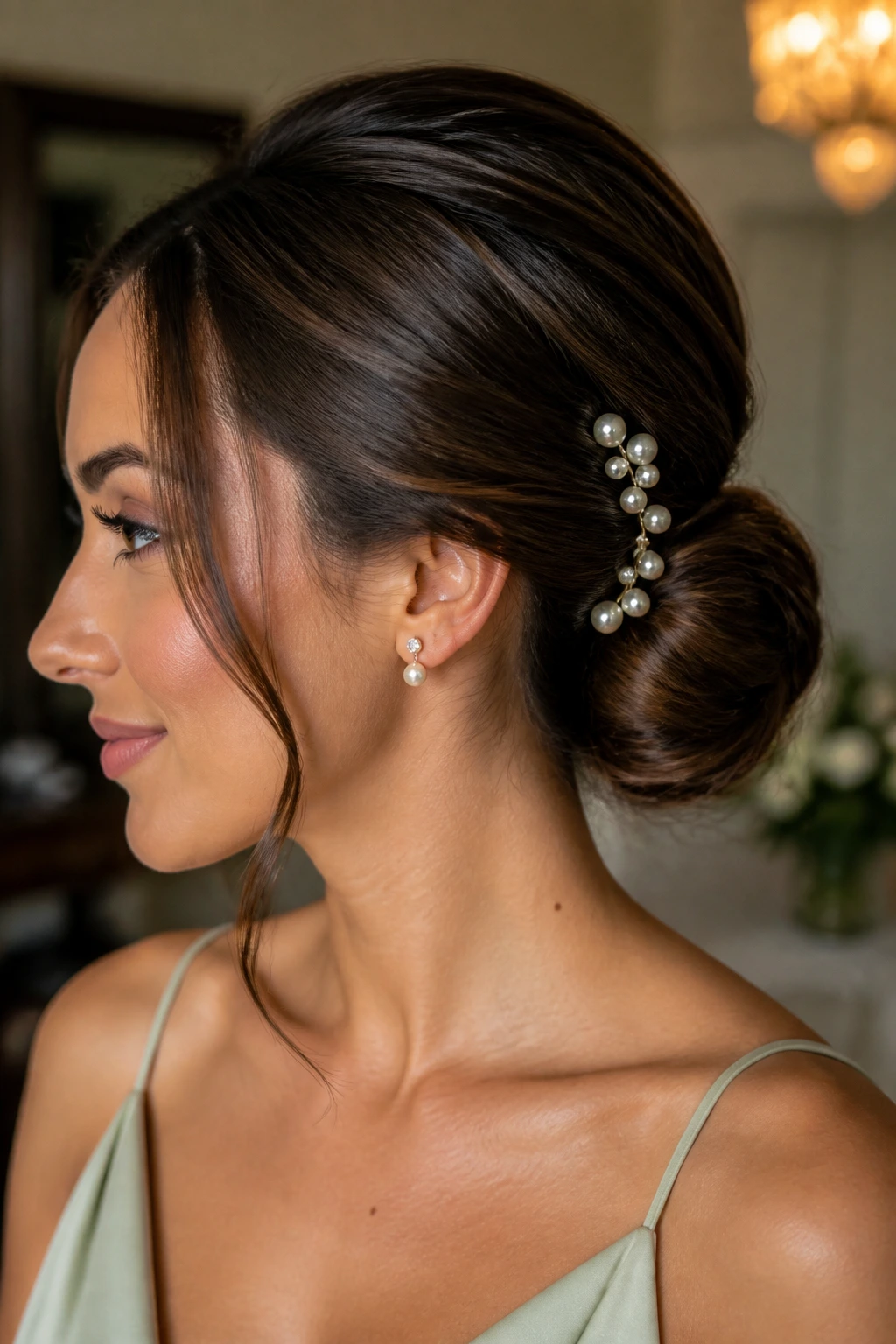
If you want elegance without looking overworked, a low knot with pearl pins is hard to beat. Thick hair gives the knot enough volume to feel substantial, while the pearl pins add the formal detail that turns it into occasion hair.
The knot itself should be low and compact, but not flattened into a tiny coin. Keep a little roundness in the shape. That roundness is what makes the style read as modern instead of severe. Place the pearl pins in a small arc or cluster along one side of the knot, not scattered all over the back.
This is the style I’d choose for a dress with a smooth fabric and one standout accessory, because it doesn’t compete. It just supports the rest of the look.
If you have extra-thick hair, use a thin elastic under the knot before you pin it. The elastic takes pressure off the bobby pins and keeps the style from drifting down over the course of the evening.
21. Shoulder-Grazing Blowout with Hair Jewelry
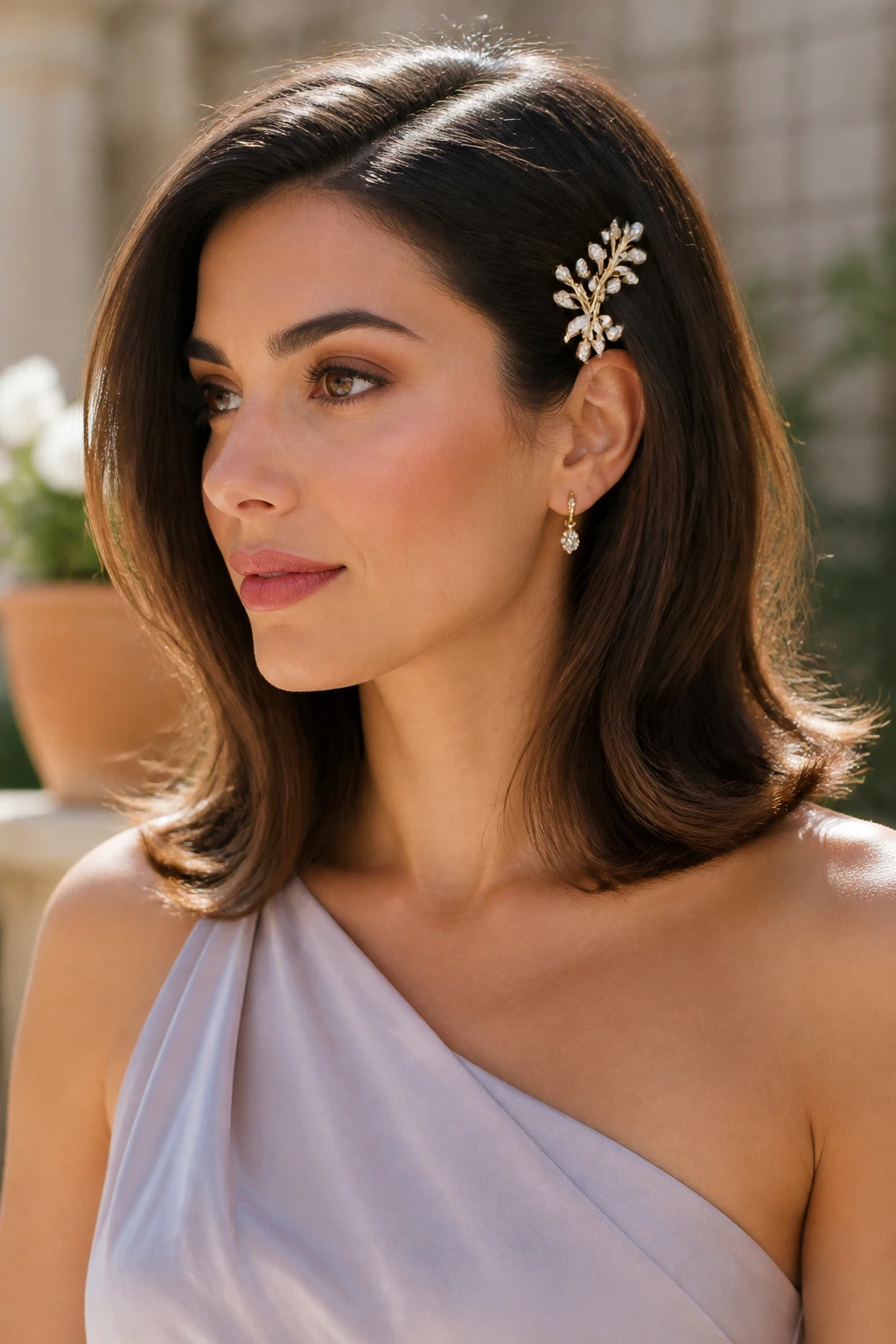
Who says an updo is required? A shoulder-grazing blowout can look dressed up enough for a wedding when the finish is glossy and the accessories are placed well. Thick hair makes this easier, not harder, because the volume gives the shape a full, rich outline.
The goal here is bounce, not bulk. Blow the hair smooth with rounded ends, keep the length just brushing the shoulders, and place a hair comb, jeweled clip, or slim barrette on one side. That small piece of hardware changes the tone fast. It signals that the hair was done on purpose.
How to wear it
- Leave the crown smooth but not flat.
- Curl the ends under for a refined finish.
- Use one accessory, not three.
- Tuck one side behind the ear to show earrings or neckline detail.
This is the right call for guests who want movement and softness more than structure. It’s relaxed, but not casual. That balance is harder to fake than it looks.
22. Soft Curly Updo with Tendrils
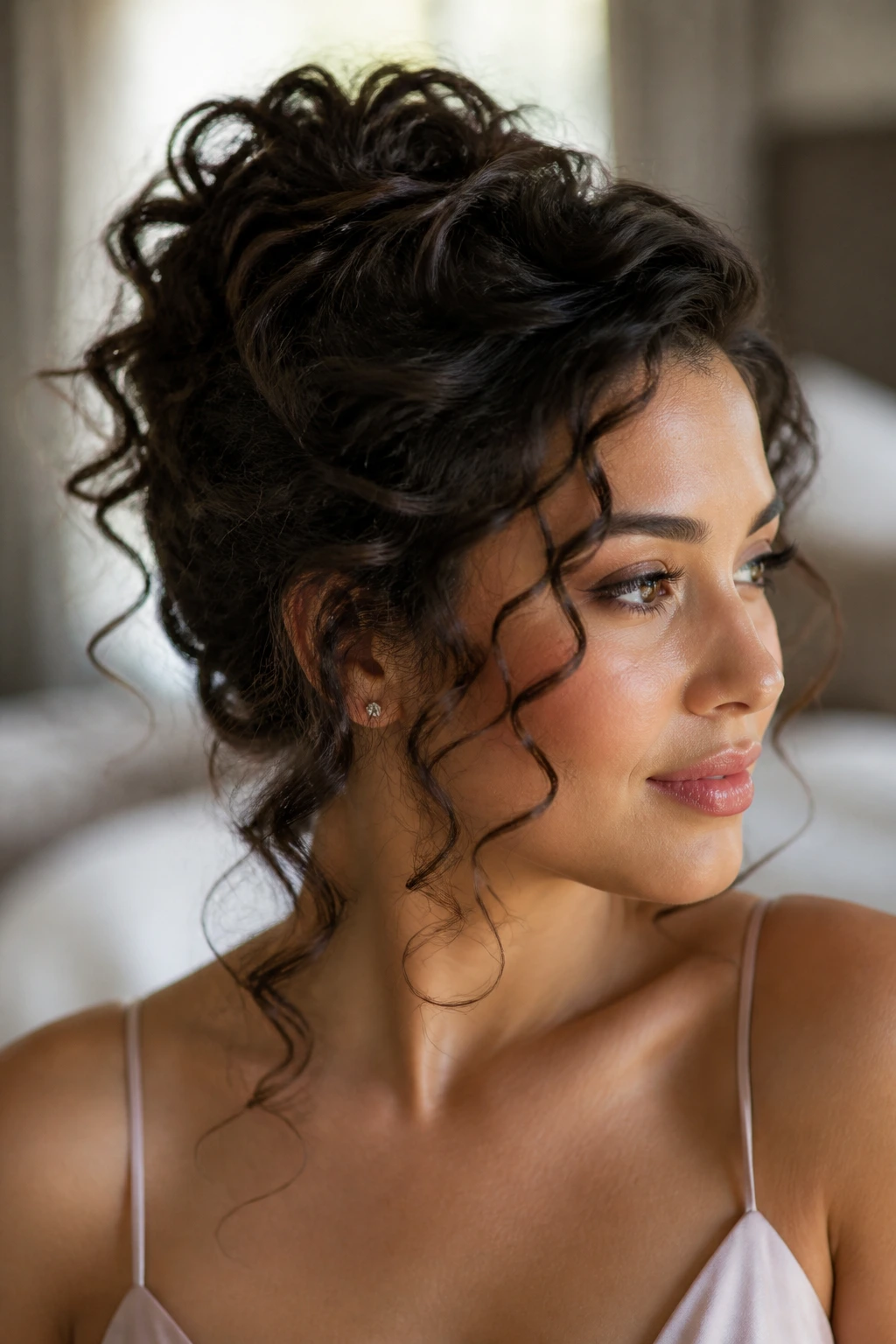
When thick curly hair is pinned too tight, it looks like it’s being negotiated with. A soft curly updo avoids that problem by letting the curls keep their shape while the bulk gets lifted off the neck.
Gather the curls loosely at the back or slightly high at the crown, pin them in sections, and leave a few tendrils around the temples and ears. Those pieces matter. They keep the style from looking hard and give the whole look a little movement when you turn your head.
A curl cream or lightweight gel helps before styling, but don’t drown the hair in product. You want definition, not a stiff shell. If some curls are longer than others, let them fall where they want. A curly updo always looks better when it respects the pattern already in the hair.
This is one of the best wedding guest hairstyles for thick hair because it honors texture instead of sanding it down. The result feels calm, not forced. That’s the whole point.
Why Thick Hair Needs Stronger Pins, Better Sections, and Less Guesswork
Thick hair is not hard to style. It’s hard to underspecify.
The biggest mistake people make is trying to build formal hair in big, lazy sections. Thick hair needs smaller, cleaner sections so the shape can lock together. A braid made from sloppy chunks loosens faster. A twist made from uneven pieces pops open. A bun built with no internal support slides down like it was never invited.
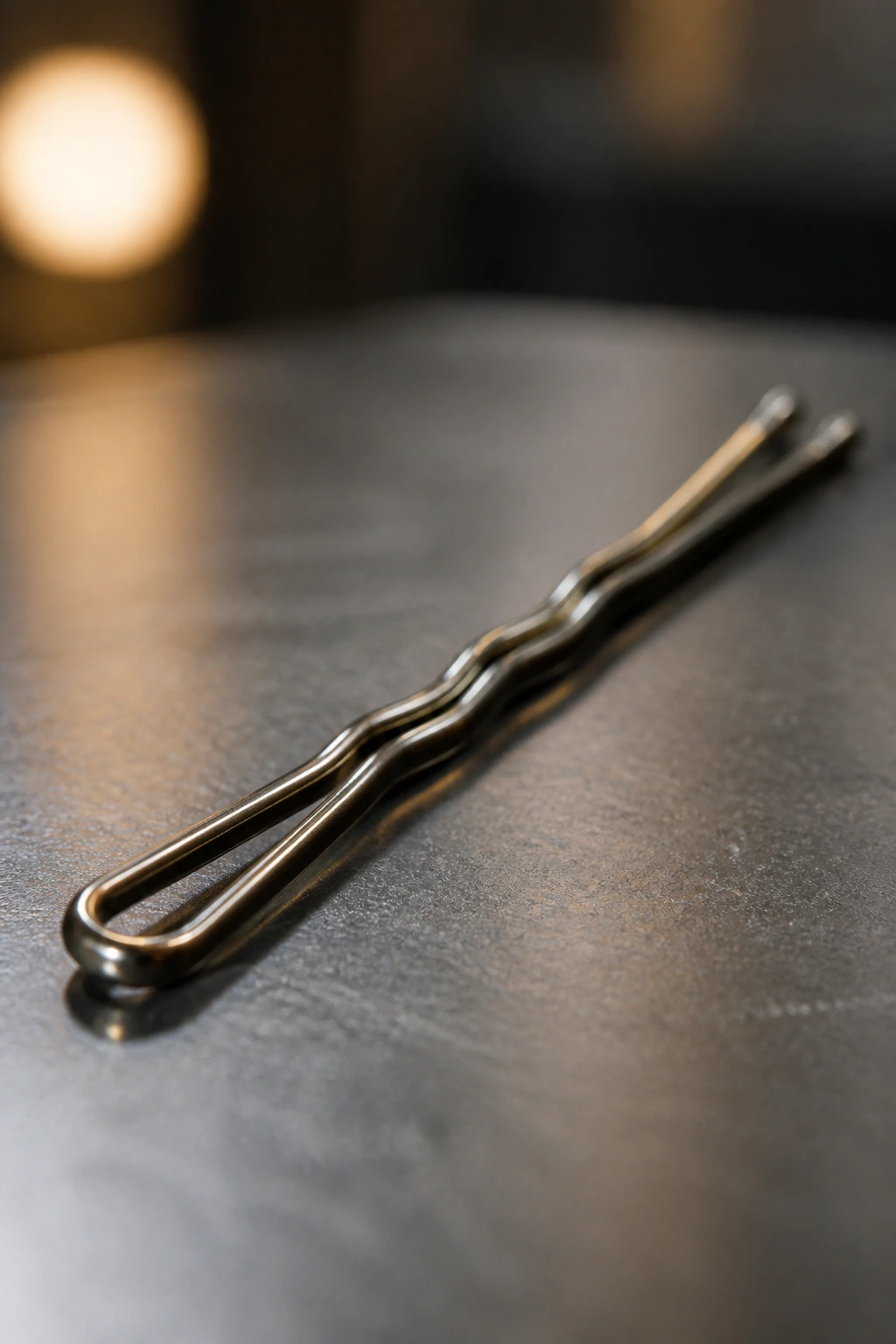
Another thing people underestimate is pin quality. Cheap pins with weak springs won’t hold dense hair for long. Look for longer bobby pins with a little bite, U-pins for buns, and small clear elastics that actually stretch and recover. If a pin bends in your fingers before it gets to your head, it’s not doing the job.
Hair prep matters too. Thick hair usually holds better with a little texture on it, but too much product can turn the surface gummy. The sweet spot is usually a light mousse or texture spray at the roots, then a smoother cream or serum on the mids and ends. Clean, but not slippery. Controlled, not coated.
That’s the balance. And once you get it, these styles stop feeling fussy and start feeling easy.
Essential Tools for These Styles
-
Long bobby pins: The extra length helps them grip through dense sections instead of skating off the surface.
-
U-pins: These are especially useful for buns, twists, and French twists because they hold the shape without crushing it.
-
Clear elastics: Best for bubble braids, ponytails, and hidden anchors inside tucked styles.
-
1-inch curling iron or wand: Small enough to create hold in thick hair, but not so small that the curls look stiff.
-
Large round brush: Good for blowouts, crown lift, and smoothing the top before an updo.
-
Tail comb: Makes clean parts, tidy sections, and neat crown lifts much easier.
-
Sectioning clips: Thick hair is easier to manage in layers; these keep the loose hair out of the way while you work.
-
Flexible hairspray: You want hold without turning the hair into cardboard.
-
Dry shampoo or texture spray: Adds the grip thick hair often needs before braiding or pinning.
-
Mirror with a second angle: A handheld mirror or two-way setup saves you from guessing what the back actually looks like.
Smart Product and Pin Choices for Thick Hair
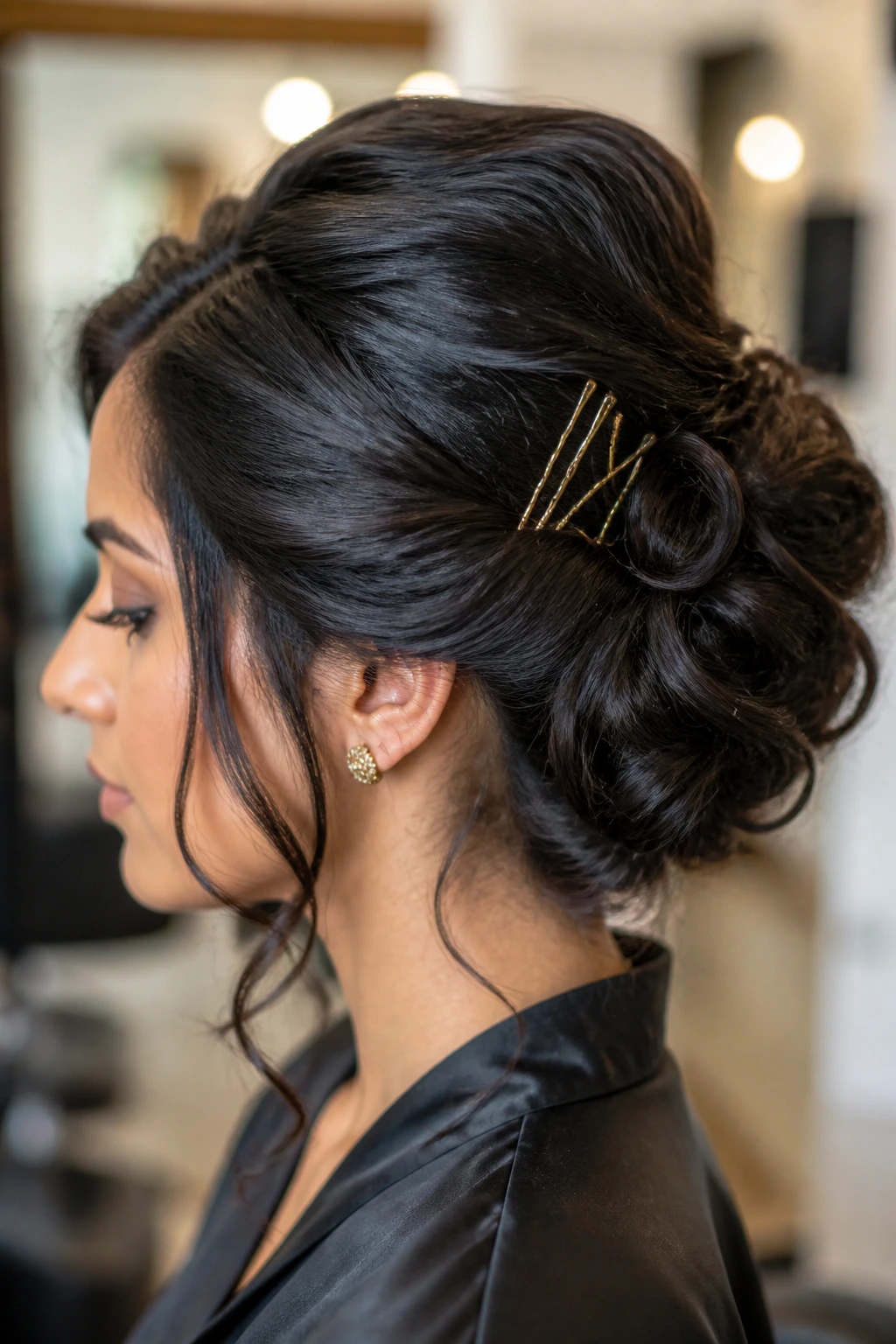
If you have thick hair, the shopping list matters more than the wish list. The wrong product can make a style collapse faster than bad technique.
Start with grip, not shine. A light mousse, root lift spray, or texture spray gives the hair something to hold onto. If your hair is very smooth, use a dry shampoo at the roots even if they are not oily. That little grit helps pins stay where you put them. On the other hand, heavy oils at the crown can make everything slide, and that’s a miserable trade.
For smoothing, pick a cream or serum and keep it to the mids and ends. The top needs control; the ends need polish. If you coat the whole head, the style gets slick in the wrong places. That’s especially annoying with low knots and twists, because the top is where the structure lives.
Pins deserve their own note. Go for longer bobby pins with a stronger spring, and don’t be shy about using more of them. Thick hair often needs support in layers, not one heroic pin at the center. Pearl pins, combs, and barrettes are nice, but they should decorate a style that already has a base. They are not the base.
For accessories, keep scale in mind. Small pins disappear in dense hair unless they’re grouped. A comb with a bit of width, a ribbon that is at least 1 inch wide, or a barrette with enough length to catch a full section tends to work better than tiny ornament pieces that get swallowed by the hair.
How to Match These Styles to the Dress, Venue, and Weather
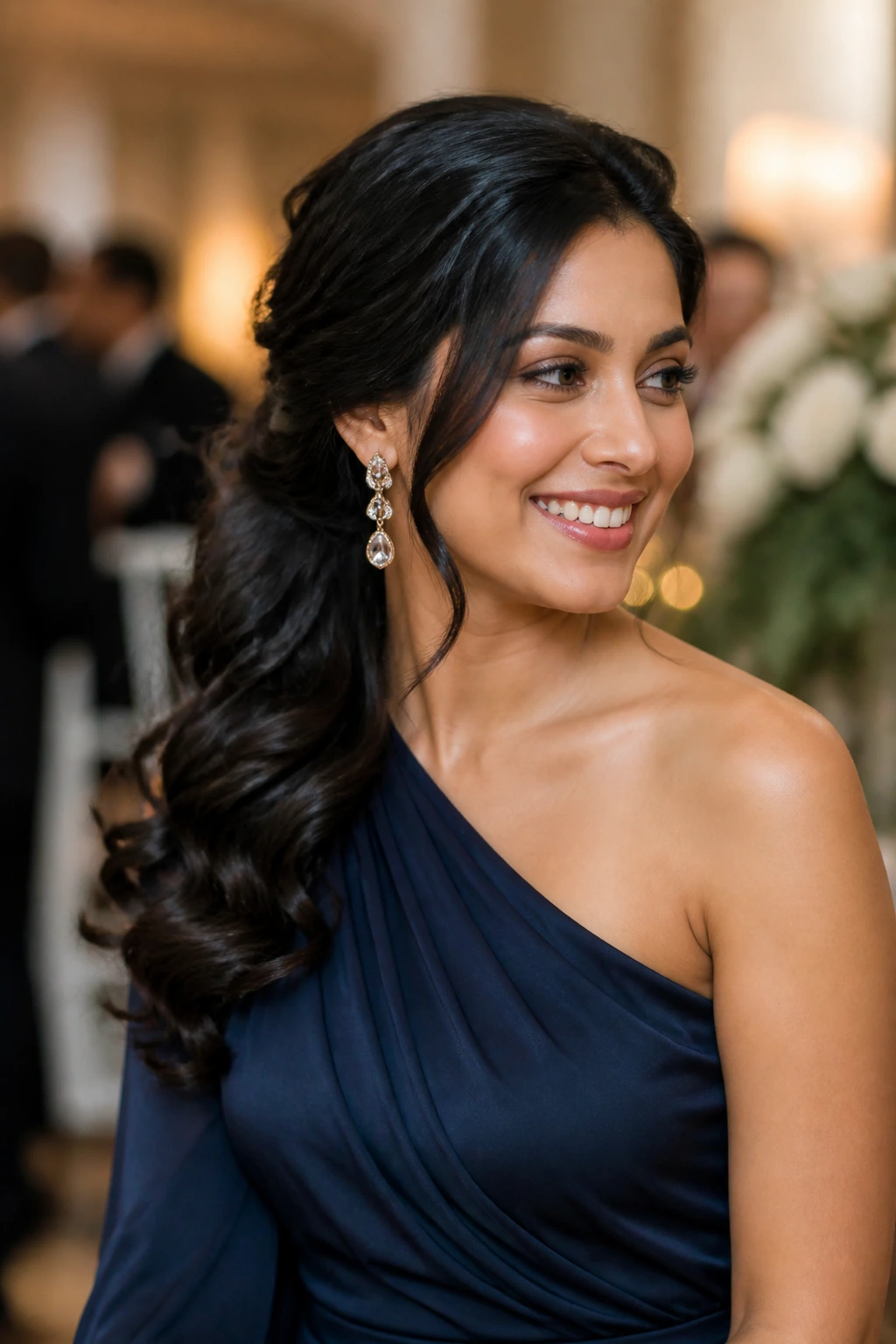
Presentation: If the dress has a high neckline, collar detail, or heavy embellishment, choose a style that clears the neck—low chignons, French twists, Gibson tucks, and side buns all keep the outfit readable. If the dress is simple or has an open back, a glossy blowout, a ponytail, or a half-up style can give you more movement without cluttering the silhouette.
Accessories: Earrings matter more than people admit. Big waves and a side-swept style leave room for statement earrings, while buns and twists pair well with pins or combs. If the outfit already has a lot going on, keep the hair finish smoother and skip the extra sparkle. If the dress is plain, one pearl barrette or jeweled comb can do a lot of work.
Balance: Thick hair can overpower a delicate dress if the shape is too wide or too high. A low knot, tucked roll, or ribbon ponytail usually keeps the scale in check. If the dress is dramatic and structured, you can afford a little more height or texture at the crown.
Weather Check: Outdoor ceremonies and warm rooms call for styles that do not depend on perfect humidity. Braids, knots, and tucked styles hold up better than loose curls when the air gets sticky. If the forecast is damp or windy, build more pins into the style than you think you need. You will probably use them.
Additional Tips and Finishers That Make Thick Hair Look Intentional
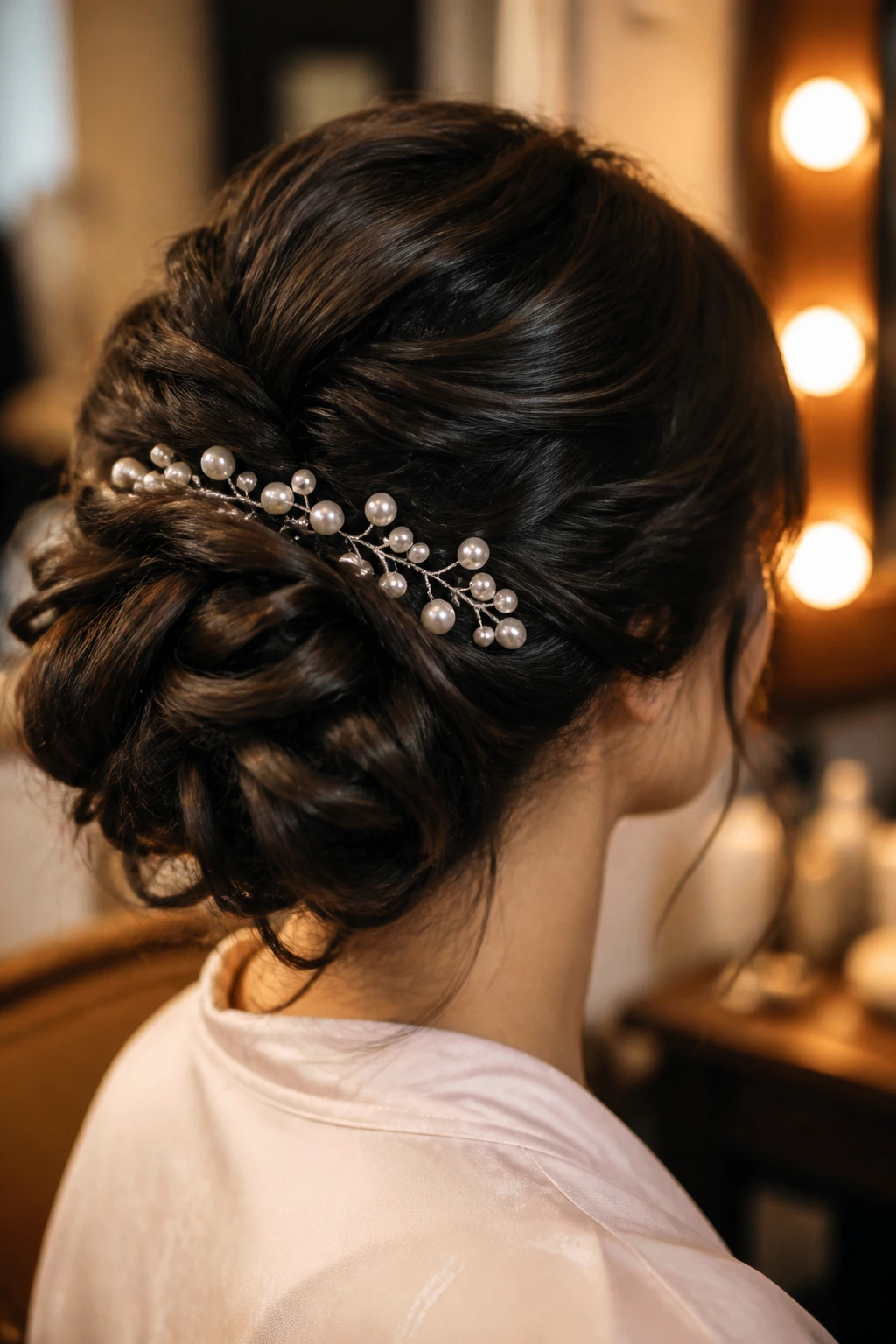
Texture Boost: If your hair is freshly washed and slippery, mist the roots with dry shampoo and let it sit for a few minutes before styling. Thick hair often behaves better on day-two texture, and this is the shortcut that gives you the same grip without waiting a day.
Sleekness Without Stiffness: A tiny bit of serum on the mids and ends keeps thick hair from fuzzing out under lights. Don’t use it near the roots. The crown needs movement, not shine slip.
Accessory Swap: Satin ribbons soften ponytails, pearl pins sharpen buns, and a slim comb can dress up a blowout in ten seconds. Pick one accessory family and stay with it. Mixing pearls, rhinestones, and ribbon all at once can make thick hair look busier than it is.
Face-Frame Fix: If a style feels too severe, pull two narrow pieces forward from the temples and curl them away from the face. That tiny change can save the whole look. It works especially well with chignons, French twists, and tightly pinned buns.
If Your Hair Is Extra Heavy: Build the style in layers. Anchor the hidden core first, then wrap or twist the outer sections around it. Thick hair falls apart when you try to pin the whole head in one go. It behaves much better when you give it a skeleton.
Common Mistakes to Avoid
-
Using too few pins: Thick hair can look secure for ten minutes and then start sliding. If the style feels too easy to pin, it probably is too easy to lose. Use more support under the surface.
-
Skipping sectioning: Tossing all the hair into one big twist or braid makes the style bulky in the wrong place and loose everywhere else. Clean sections give the hair shape and make the finished style last longer.
-
Overloading with product: Too much oil, cream, or shine spray near the crown turns thick hair into a slip hazard. Keep heavy products on the mids and ends, and use grip products up top.
-
Making curls too small: Tight little curls can look busy and puff up fast on dense hair. Larger sections with a smoother brush-out usually give a better wedding finish.
-
Forcing a style that fights the dress: A high bun with a high neckline can feel stacked; loose waves with a heavily decorated bodice can look unfinished. Let the outfit tell you whether the hair should rise, fall, or stay tucked.
-
Not testing the style before the event: Thick hair often looks fine in the mirror and then changes as it settles. Give yourself ten minutes to walk around, sit down, turn your head, and check the back. That tiny test catches a lot of problems early.
Variations and Adaptations to Try
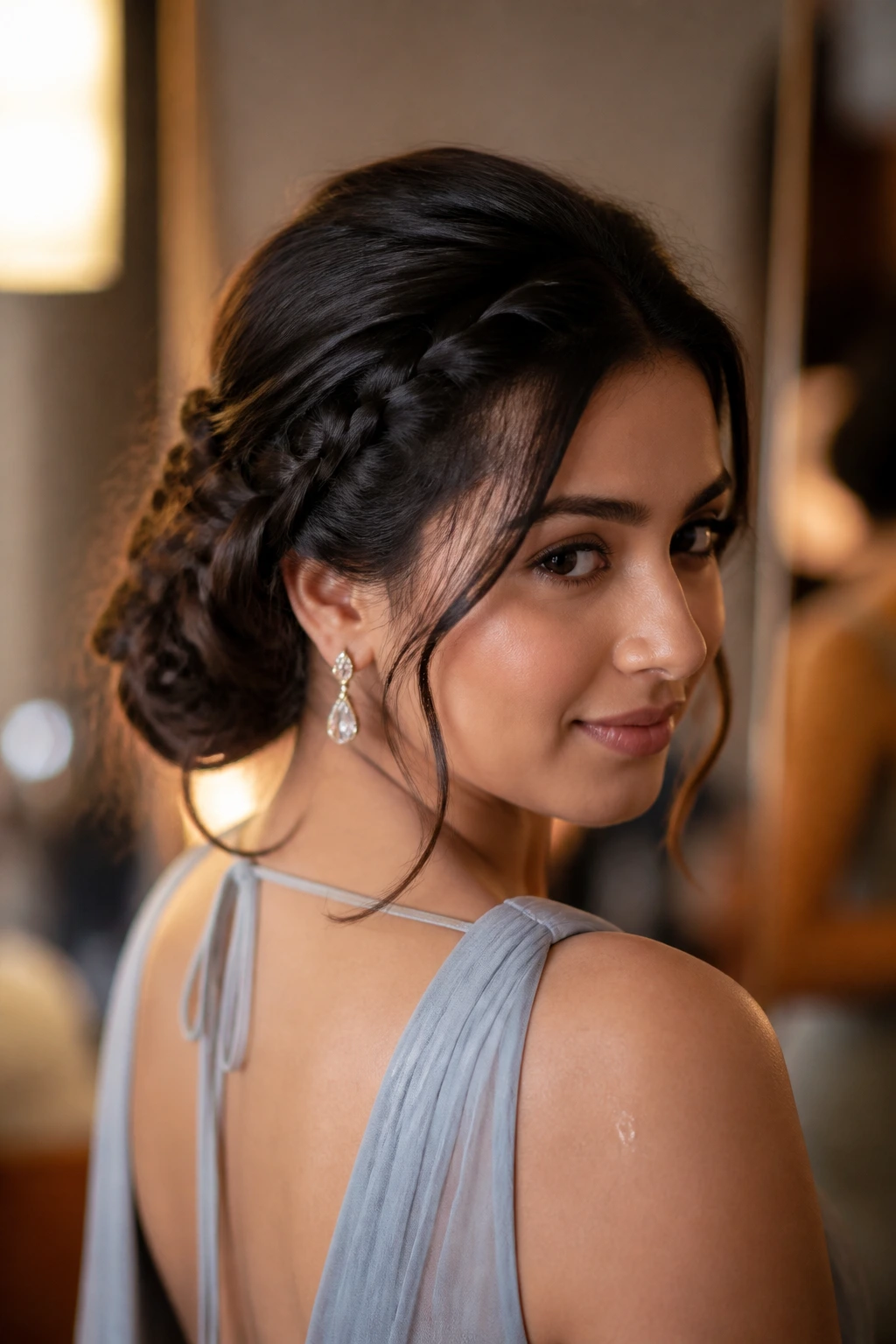
Humidity-Proof Guest Look: Choose a braid, low bun, or tucked style and build in extra texture spray at the roots. These shapes handle moisture better than loose curls because the structure is already doing most of the work.
Curly-Texture Celebration: Keep natural curls in a soft updo, half-up twist, or side-swept pin-up instead of forcing them into straight styles. Thick curls hold shape beautifully when they’re shaped, not flattened.
No-Heat Version: Use a braid set, twist set, or overnight rollers to create texture without hot tools. Thick hair often needs more time to dry, so plan ahead and use a setting product that won’t leave the hair crunchy.
Shorter-Length Workaround: If the hair is thick but not long enough for a full bun, go for half-up knots, twists, or a tucked roll. Those styles use the available length where it counts and avoid fake fullness that falls apart.
Accessory-First Finish: If the dress is simple, let a pearl comb, satin bow, or jeweled clip carry the formal note. Thick hair gives accessories a solid backdrop, which means even one piece can look enough.
Minimalist Slick Finish: If you like clean lines, try a sleek ponytail, French twist, or low knot with no loose pieces at all. The key is to smooth the crown well and keep the base firm so the simplicity looks deliberate.
Make It Last, Keep It Neat, and Undo It Without a Fight
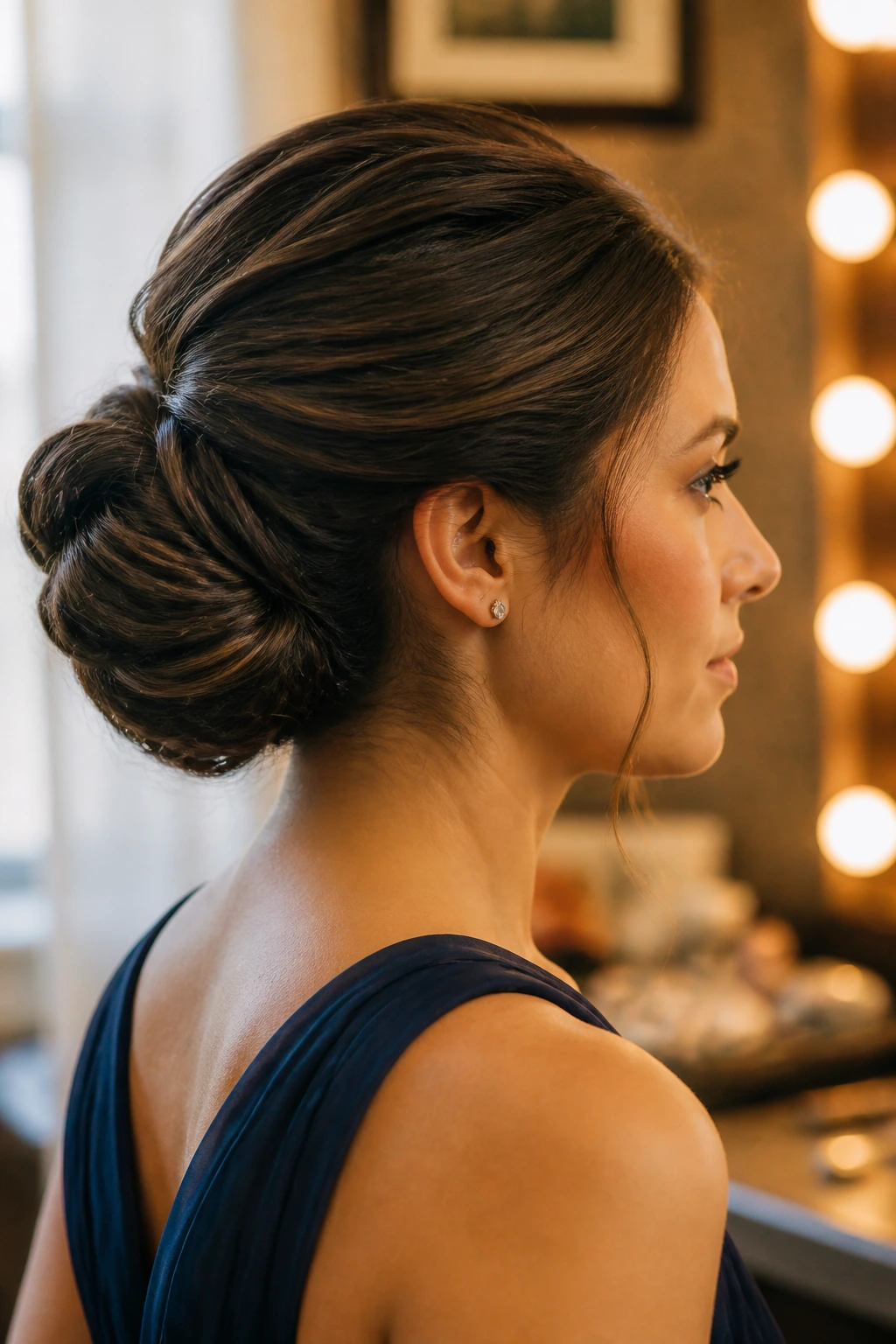
A style on thick hair usually does well for 8 to 12 hours if it’s pinned properly and prepped with enough grip. The real issue isn’t whether it starts out good. It’s whether it stays civilized after dinner, hugs, and a few turns on the dance floor.
Build a small touch-up kit if you can: 6 to 10 extra bobby pins, a travel hairspray, a mini comb, and a couple of clear elastics. That takes almost no space and saves you from the slow drift that thick hair can do when the evening runs long. If the front starts loosening, pin the hidden side first instead of spraying the whole head into stiffness. A little repair goes a long way.
For loose styles, carry one hair tie and one small clip. If the waves flatten a bit, you can pull the hair into a low pony for the late-night part of the event and still look polished. That is not a defeat. It’s smart.
If you’re styling the night before, keep the hair loosely prepped, not tightly finished. A soft curl set or a loose braid can survive overnight under a silk pillowcase or bonnet, but a fully finished updo usually needs fresh shaping the next day. Thick hair changes as it sits, so leave room for that.
Taking the style out matters too. Remove pins from the outside inward, not by yanking on the base. Thick hair tangles easily when a pin gets pulled the wrong direction. Once the structure is out, brush from the ends upward and add a little conditioner or detangling spray if the hair feels rough. Be gentle. No need to wrestle your own head after a long event.
Frequently Asked Questions
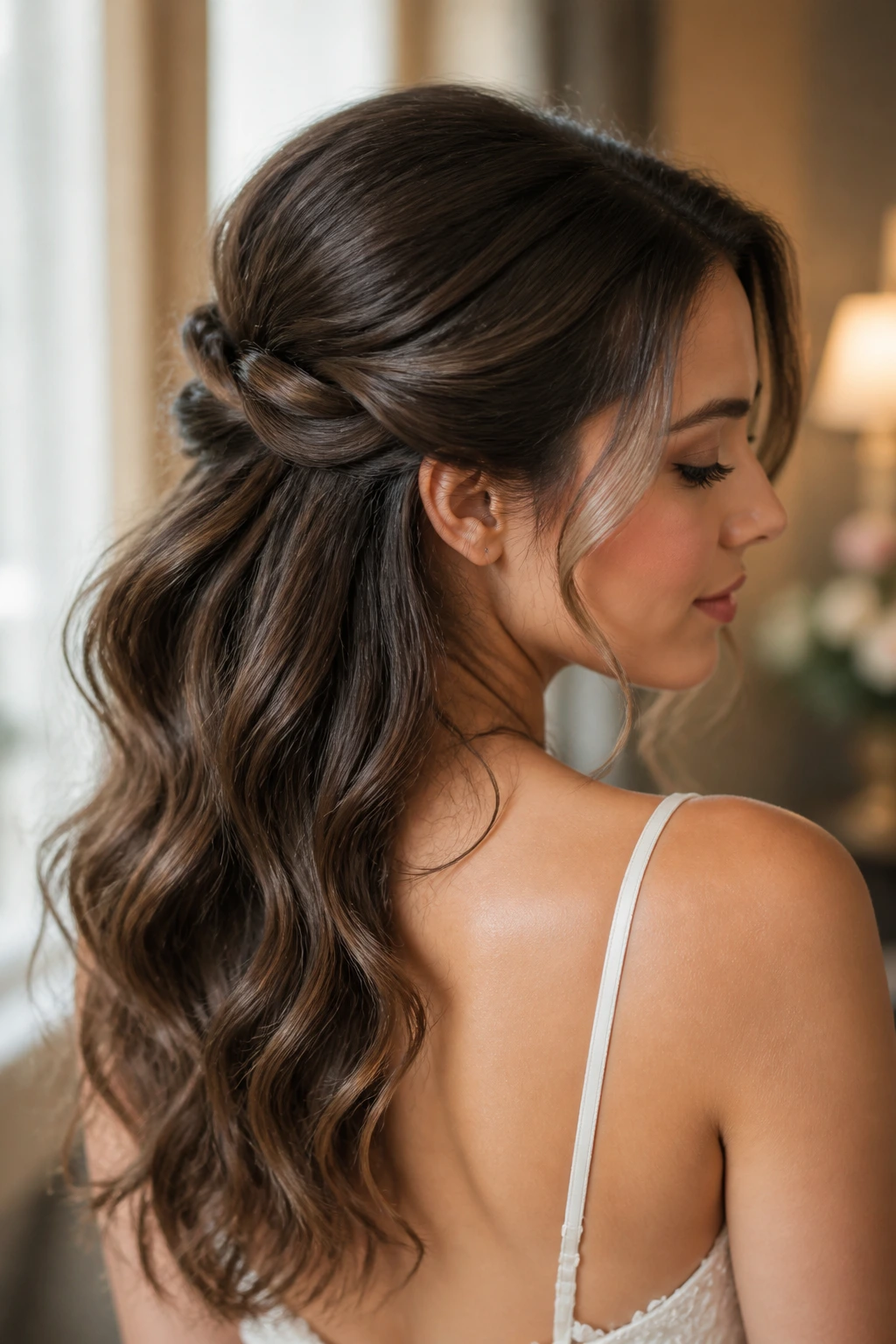
What hairstyle holds best on very thick hair for a wedding?
Low chignons, braided buns, French twists, and tucked rolls usually hold the best because they anchor the weight near the nape. A high ponytail can work too, but it needs stronger elastics and a cleaner base than most people expect.
How many bobby pins do I actually need?
More than you think. For thick hair, 8 to 12 pins for a simple style is not unusual, and a more built-up updo can need more. The goal is not visible hardware; it’s hidden support spread across the base.
Should I wash my hair the day of the wedding?
Usually, no. Thick hair often styles better with a little natural grip, so the day before is often better than squeaky-clean hair. If you do wash it, add some mousse or texture spray and let the roots cool and settle before styling.
Can thick curly hair be styled without straightening first?
Absolutely. Soft curly updos, half-up twists, braided crowns, and side pins often look better when the natural curl pattern stays intact. Straightening first can take away the texture that actually helps the style hold.
Which styles work best with earrings or a necklace?
Low buns, French twists, and slick ponytails are good with statement earrings because they clear the face and neck. If the dress has a strong necklace or a detailed bodice, a cleaner hair shape usually keeps the whole look from getting crowded.
How do I keep my style from falling apart in humidity?
Use grip at the roots, keep the style low or braided, and avoid drowning the hair in oils or gloss. A braided bun, Gibson tuck, or low knot usually survives humidity better than loose curls because the structure is doing more of the work.
Can I do one of these styles myself without a stylist?
Yes, especially half-up twists, ribbon ponytails, simple chignons, and low knots. Anything with a crown braid, French twist, or woven back section gets easier if you’ve practiced once before the event.
What if my hair is so heavy that pins keep slipping out?
Switch to a stronger base: a small elastic, then pins, then a final decorative layer. Also try using texture spray or dry shampoo first, because pure slip is often the real problem. If the hair is very silky, a bungee tie can hold a ponytail better than a standard elastic.
The Styles That Stay Put
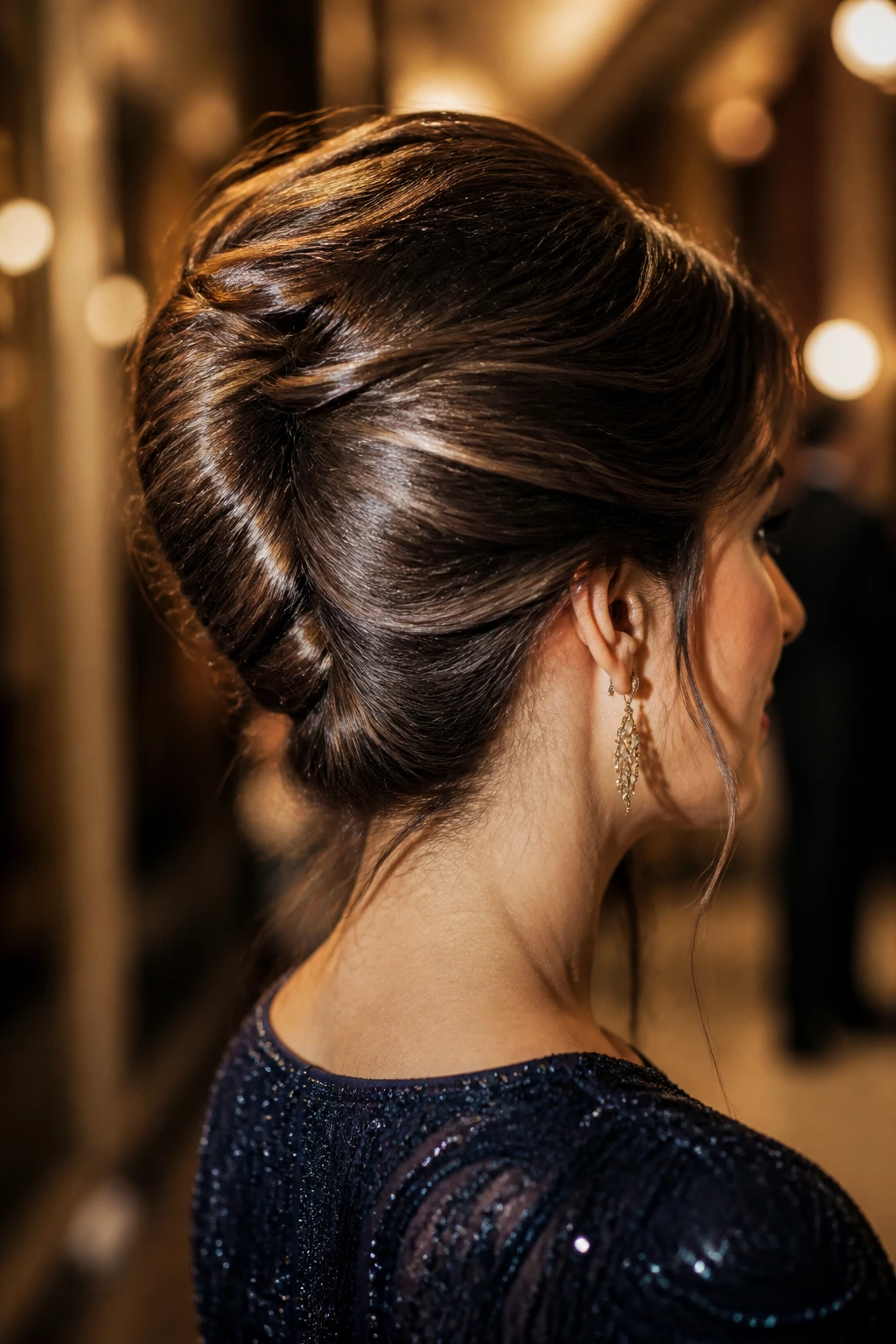
Thick hair gives you more to work with, not more to fight. That’s the part people miss. Once the style is built around weight, grip, and shape, the hair stops feeling unruly and starts doing the flattering, full-bodied thing it does best.
The smartest wedding guest looks here do one of two things: they hold the hair in a low, stable shape, or they let it move in a way that still feels deliberate. Anything in between tends to wobble. Pick the style that matches the dress, the weather, and how much touching-up you actually want to do between the ceremony and the last song.
If you have thick hair, you already have the part many people spend time trying to fake. Use it. Then pin it well, soften the edges, and let the rest of the outfit breathe around it.