



Cool highlights for medium skin tones with soft layers can look airy, rich, and expensive-looking in the same breath—or they can slide one shade too far and end up flat, muddy, or chalky. That narrow gap is why this combination matters so much. Medium skin has room for ash, pearl, mushroom, steel-beige, and smoky blonde tones, but those shades need the right base and the right placement. Soft layers do half the work. They break the color into moving ribbons instead of hard stripes, which is the difference between “nice hair” and hair that keeps catching your eye every time you pass a mirror.
The part people miss is undertone. Medium skin isn’t one thing. It can lean golden, olive, neutral, or tan with a cooler surface tone, and the highlight formula should respond to that rather than fight it. A beige ash ribbon over a warm brunette base can look effortless; a harsh platinum stripe on the same hair can look like it arrived from another head entirely. That’s why these ideas focus on tone and placement together, not just color names.
There’s a sweet spot here, and it’s not tiny. You can go subtle with babylights and a soft gloss, or push toward brighter contrast with a money piece and shadow root. The common thread is movement. Soft layers make the color move; cool tones make the movement read clean instead of brassy. The first few ideas are the safest places to start if you want the result to feel polished instead of loud.
Why These Cool Tones Play So Nicely with Medium Skin and Soft Layers
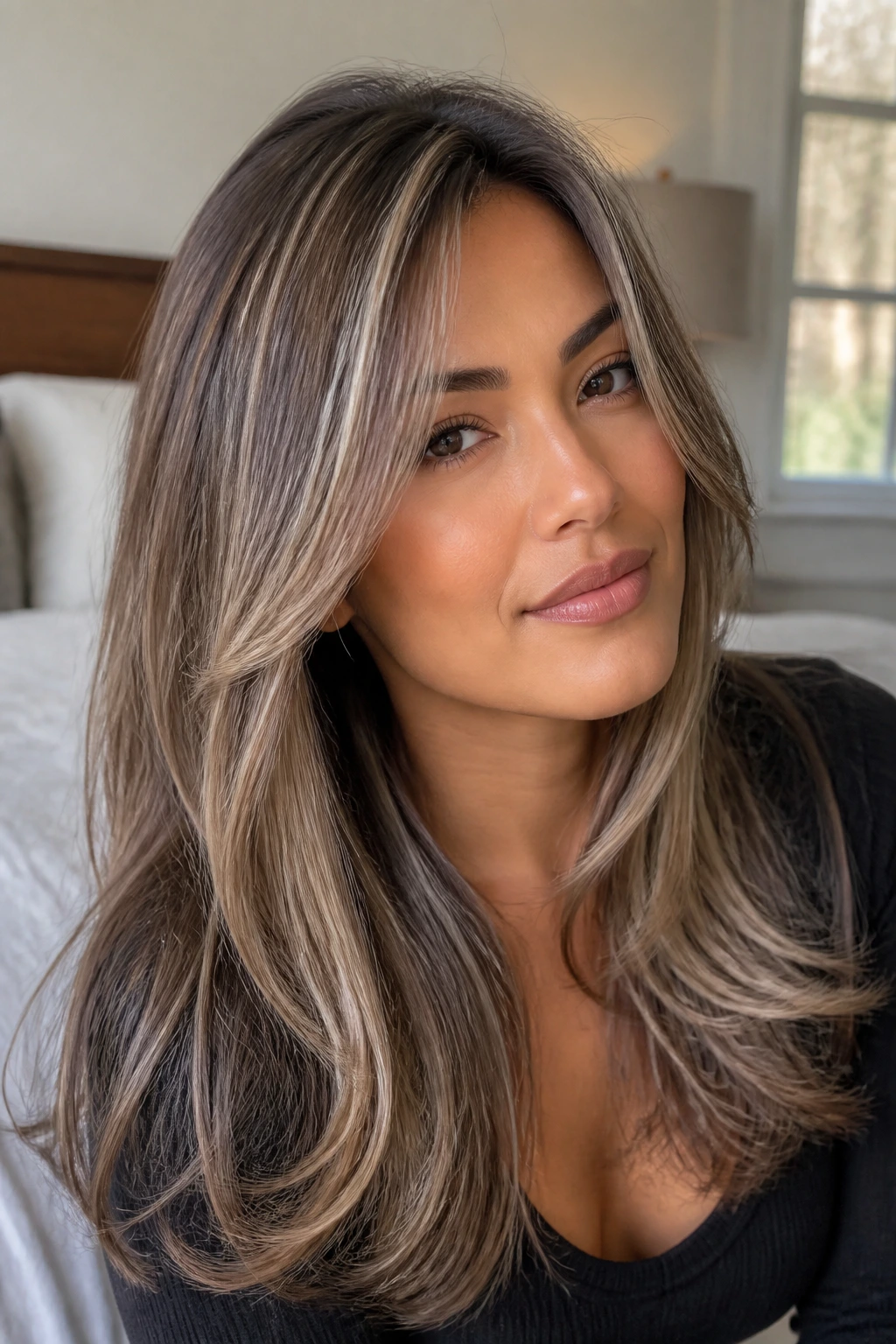
-
Soft layers blur the line between light and dark: Feathered ends and face-framing pieces keep cool highlights from sitting on top of the hair like separate threads.
-
Medium skin can carry cooler tones better than many people assume: The right ash-beige or pearl shade can sharpen the complexion instead of washing it out, especially when the roots stay soft.
-
These looks grow out with fewer hard lines: Balayage, babylights, root melts, and ribbon lights all age better than chunky foil stripes.
-
There’s room for drama without losing softness: A brighter money piece or a frosted fringe still works when the rest of the color stays muted and blended.
-
You can tailor the tone to your undertone: Olive skin usually likes mushroom, taupe, and beige ash; neutral skin can handle pearl, champagne ash, and silver-beige; golden medium skin often looks best when the coolness is bridged with a little mocha or cool caramel.
-
The finish matters as much as the shade: A quick gloss, a soft blowout, or loose waves can make the difference between “cool” and “washed out.”
1. Smoky Mushroom Balayage
Smoky mushroom balayage is the one I’d put at the top of the list for anyone who wants cool color without looking frosty. The tone lives in that sweet middle ground between ash and beige, which is exactly why it flatters medium skin so well. On soft layers, the ribbons fall in little pockets of light instead of reading as one heavy block.
Why it works
Mushroom shades cool down brunette warmth without stripping the hair into a gray shell. Ask for a root shadow that stays 1 to 2 levels deeper than the lightest pieces, then let the ends soften into a beige-ash glaze. Best on: level 5 to 7 brunettes with neutral or olive undertones. The whole thing should look brushed on, not chopped in.
- Keep the lightest ribbons around the cheekbones and the outer ends.
- Let the top layer stay a shade deeper so the cut still looks full.
- Finish with a gloss that leans beige, not silver.
Best move: If your hair tends to go orange, this is the shade family that keeps it honest.
2. Ash Beige Money Piece
A cool money piece can wake up medium skin fast, but ash beige is the safer, prettier version. It brightens the front without turning the face frame into a neon stripe, which is a problem I see all the time with overly light chunks. On soft layers, the front pieces blend into the rest of the cut instead of sitting there like they were pasted on.
Ask for the brightest pieces to stay narrow and feathered, not wide and blocky. I like this look on shoulder-length cuts because the front falls against the jaw and collarbone, where the color can actually do something useful. If your skin has a golden cast, ash beige still works as long as the root stays a shade deeper and the toner doesn’t go paper-white.
How to wear it: Loose bends and a side part make the front light look richer. Straight hair can make it feel sharper than intended.
3. Icy Bronde Ribboning
Is bronde too warm for cool color lovers? Not if you take it this way. Icy bronde ribboning keeps the base brown and weaves in narrow cool blonde pieces so the overall effect still feels wearable on medium skin. The layers matter here because they stop the blonde from looking like a solid band.
How to use it
Ask for ribbons in the outer layer, with a softer weave through the interior so the blonde never takes over. A matte beige toner does the job better than a bright silver one, which can look a little stark against medium skin. The best version of this style has contrast you notice on a second glance, not a first-glance glare.
- Keep the base at a natural brown or dark blonde level.
- Place lighter ribbons where the hair bends, not just at the top.
- Use a cool gloss every few weeks to prevent brass.
4. Pearl Blonde Face-Framing Layers
Pearl blonde around the face has a clean, soft sheen that looks expensive when it’s done right. The trick is restraint. If the color goes too pale, it can fight medium skin and make the rest of the hair look heavier by comparison. Soft layers fix that because they let the lighter front pieces taper into the rest of the cut.
This one works best when the face frame starts near the temple and graduates down through the first layer. Think of it as a glow line, not a highlight block. On medium skin with neutral undertones, pearl blonde can make the complexion look fresh; on deeper or more golden medium skin, I’d keep the pearl muted and pair it with a beige root melt so it doesn’t look detached.
- Ask for a soft money piece, not a wide panel.
- Keep the underside slightly darker.
- Style with a round brush lift at the root for extra separation.
5. Cool Mocha Contour Highlights
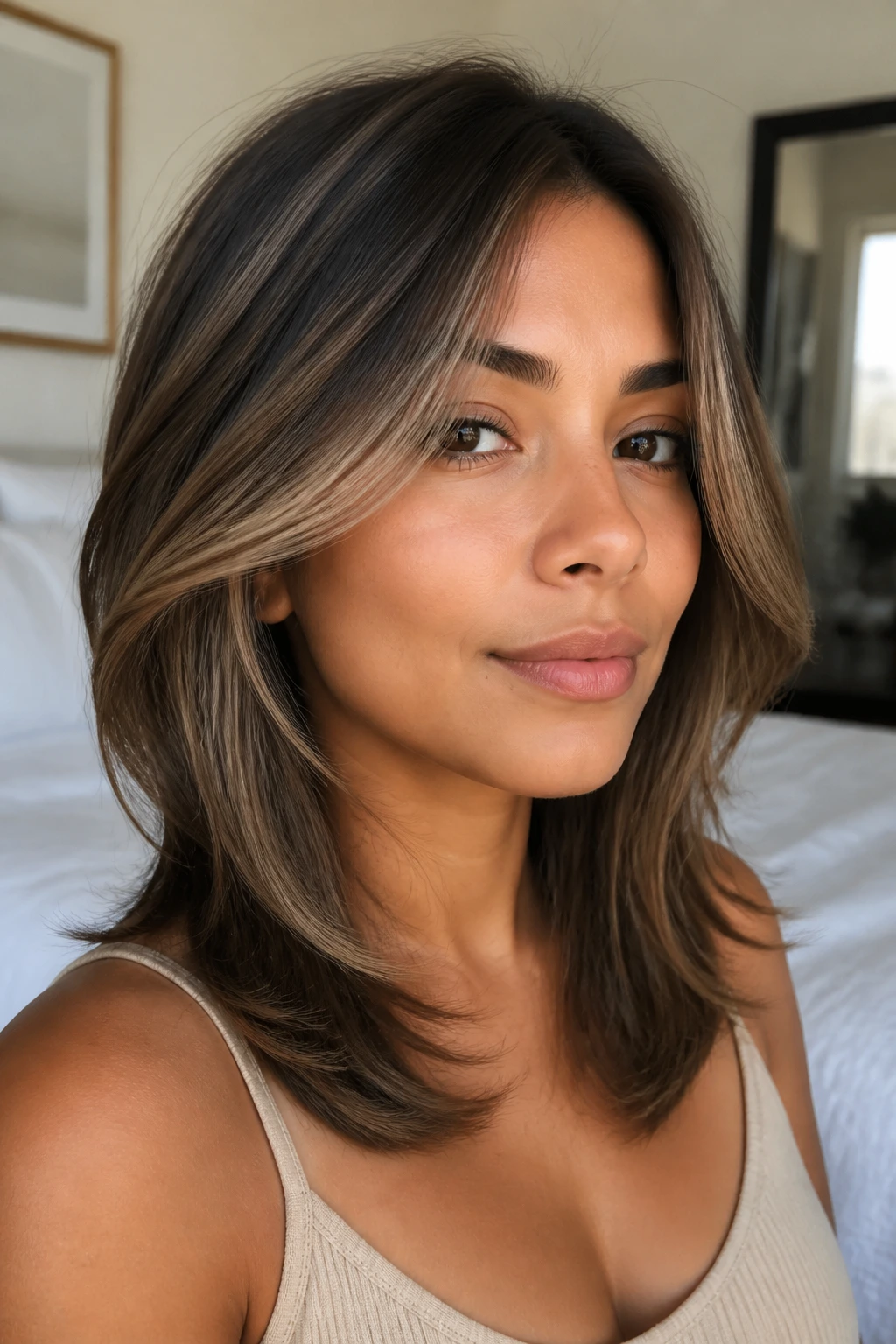
Cool mocha contour highlights are the quiet achiever here. They don’t scream “blonde,” and that’s the point. Instead, they shape the face with lighter mocha-beige ribbons placed where the hair naturally curves, which makes the whole cut look more intentional. Medium skin tends to love this because the tone sits near the complexion rather than fighting it.
I like this for medium-length cuts with a bit of movement around the cheeks. A blunt cut can make it feel too tidy, almost stiff. Soft layers give the highlight places to land, especially around the front and crown. If you like makeup contouring, this is the hair version of that idea—only much less fussy.
Ask for: ribbons 1 to 2 shades lighter than the base, with a cool beige finish. Avoid an overly golden mocha; the warmth is what gets muddy fast.
6. Espresso Babylights
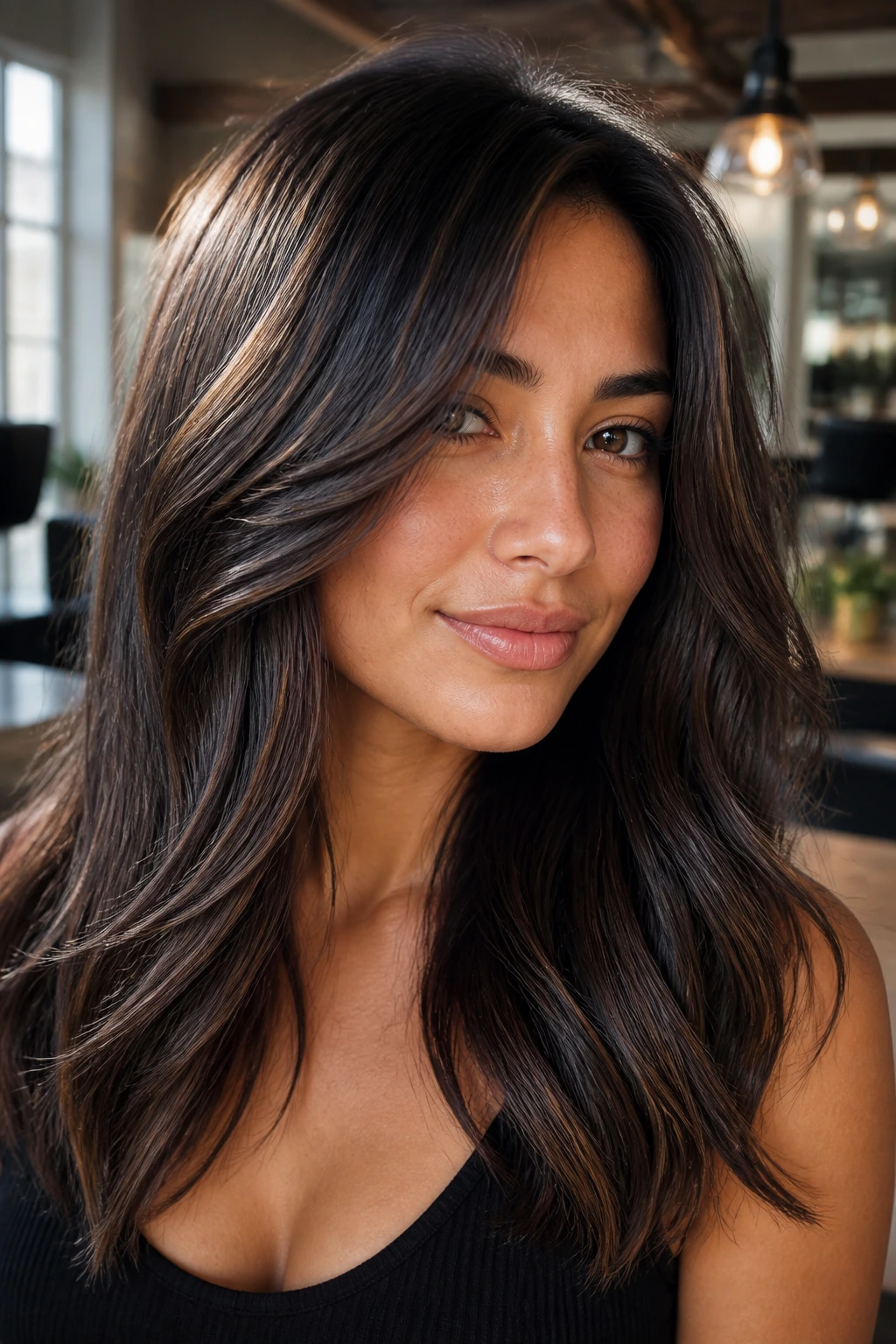
Espresso babylights are for people who want the base to stay dark and rich while the dimension stays whisper-thin. The color shift is tiny. That’s what makes it smart. On medium skin, especially neutral or olive skin, these ultra-fine cool strands stop dark hair from looking flat without pulling it into obvious blonde territory.
What makes it different
Babylights spread the light so evenly that the hair almost looks naturally sun-touched, only cooler and more controlled. They also work well on soft layers because the cut exposes the fine changes as the hair moves. I’d choose this if you hate obvious grow-out lines and want something that looks expensive even when it’s months between appointments.
- Best for dark brunette bases.
- Great if you wear your hair wavy or in a blown-out bend.
- Easier to maintain than chunkier lightening.
7. Slate Brown Lowlights
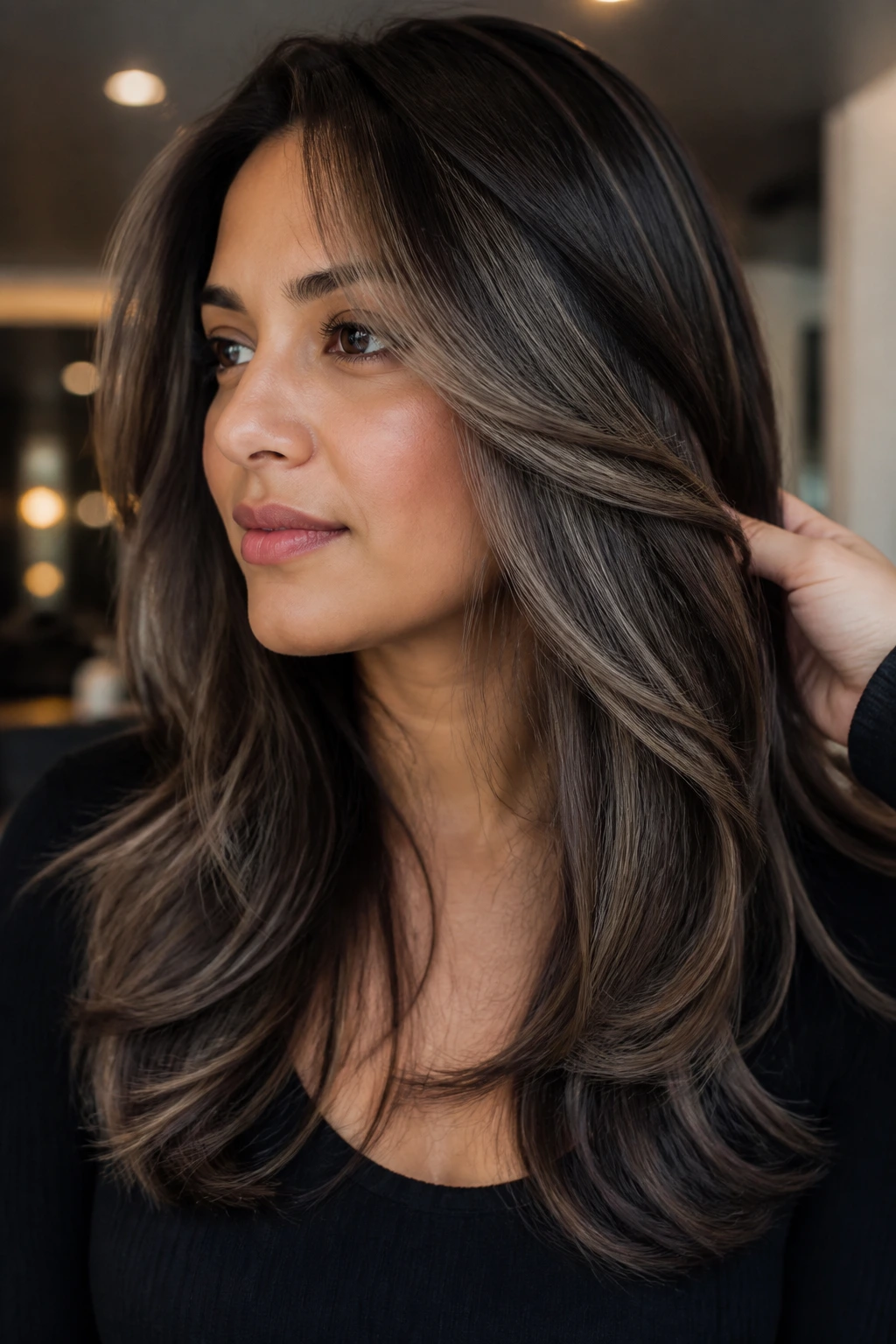
Slate brown lowlights do something a lot of people forget to ask for: they give the lighter pieces somewhere to live. If your medium skin already has a bit of color, too many highlights can make the hair feel thin or busy. Slate brown lowlights bring the depth back in, so the cool highlights around them look cleaner and more dimensional.
This is especially useful on soft layers that have started to get too light through the ends. Add a few deeper ribbons under the top layer and around the nape, then keep the surface pieces cooler and softer. The hair suddenly looks thicker. Not shinier—thicker. That matters.
What to watch for
Don’t ask for near-black lowlights unless the rest of the hair is very pale. Slate brown should read cool and dark, not flat and heavy.
8. Frosted Chestnut Balayage
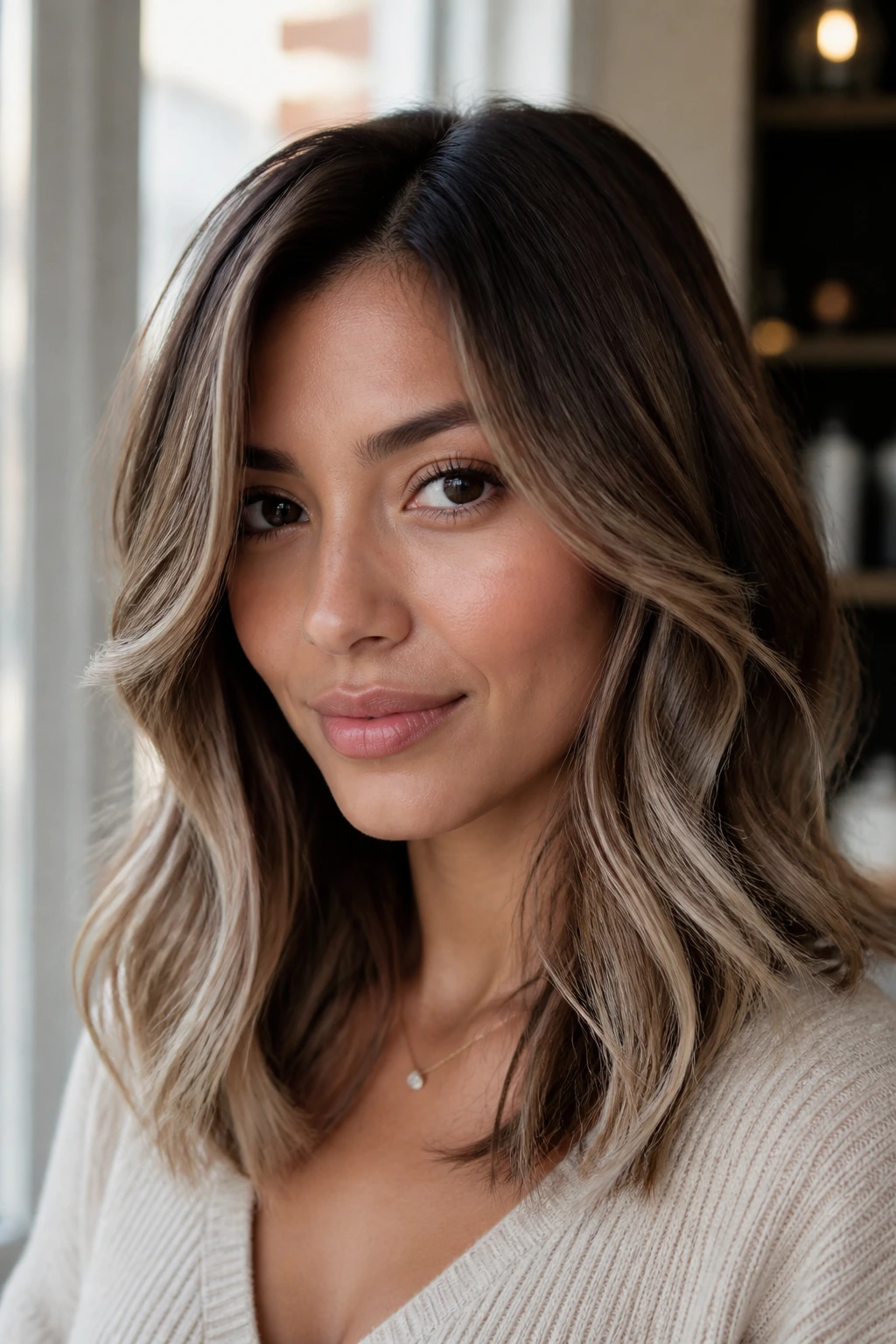
Frosted chestnut balayage is a good middle road if you want some brightness but not a full blonde moment. Chestnut gives the hair body, while the frosted finish cools the warmth just enough for medium skin to stay clear and fresh. Soft layers help the lighter ends catch the light in a way that feels natural rather than painted on.
I’d steer this toward shoulder-length or longer cuts, where the balayage can melt through the bottom half without crowding the face. It’s a smart pick if your natural hair leans warm and you’re nervous about ash tones going flat. Chestnut gives the highlight something to lean on.
Best styling match: a loose wave set with the ends left a bit straighter. That contrast makes the frosted finish pop.
9. Soft Smoke Ombré
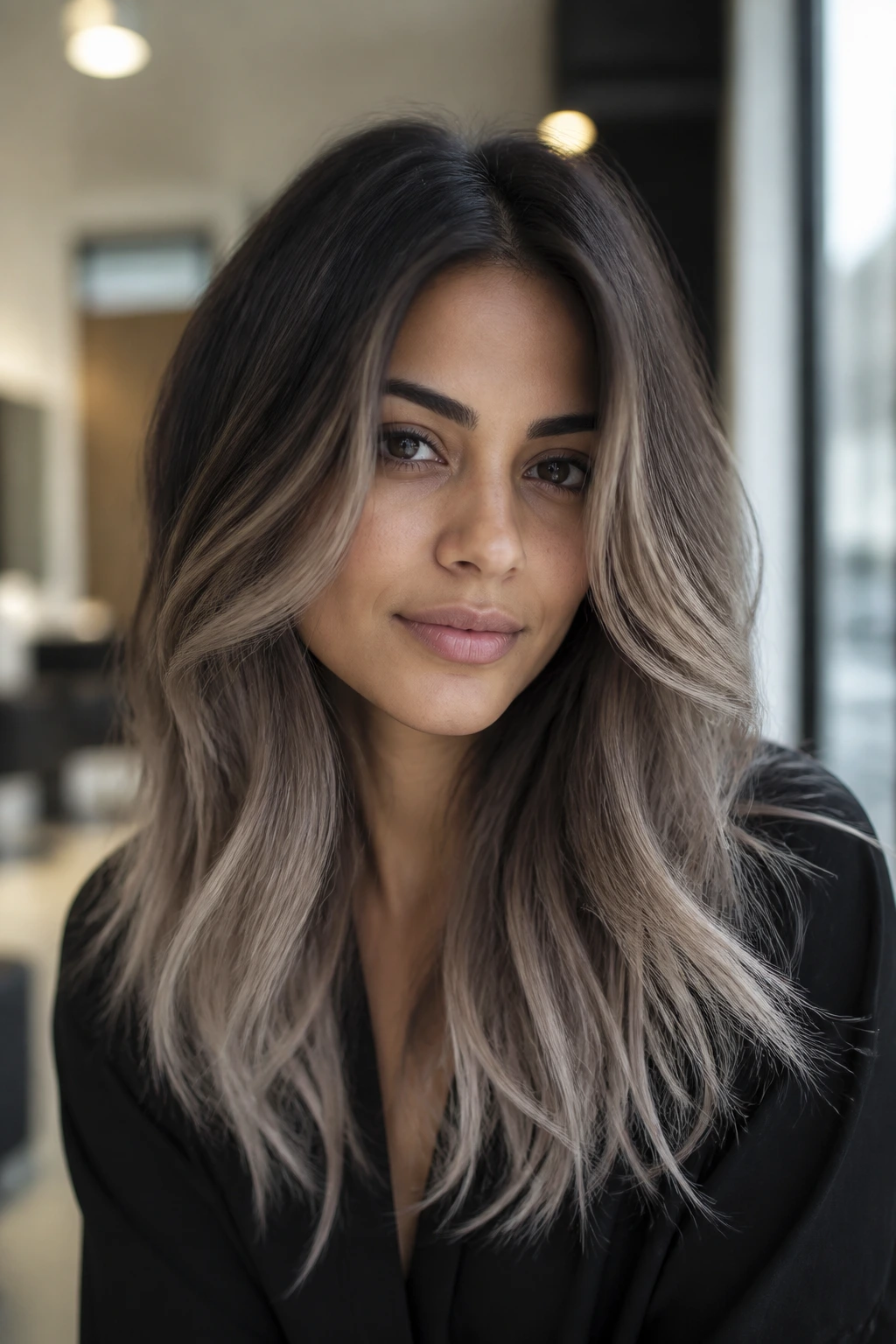
Soft smoke ombré is what happens when the color fades instead of stops. The roots stay deeper, the mids pick up muted ash, and the ends go lighter without crossing into crunchy, over-processed territory. On medium skin, this kind of fade reads modern without being fussy.
Why it works
The biggest advantage is shape. Soft layers keep the ombré from becoming a heavy block at the bottom, because the cut breaks up the gradient into smaller pieces. Ask for the lightest color to sit mainly on the last 3 to 4 inches. If it starts high up the shaft, the whole look loses that smoky softness and gets too obvious.
A cool gloss over the ends keeps the fade from going orange. That’s the whole game with ombré. Keep it soft, keep it blended, and let the cut carry the movement.
10. Taupe Ribbon Highlights
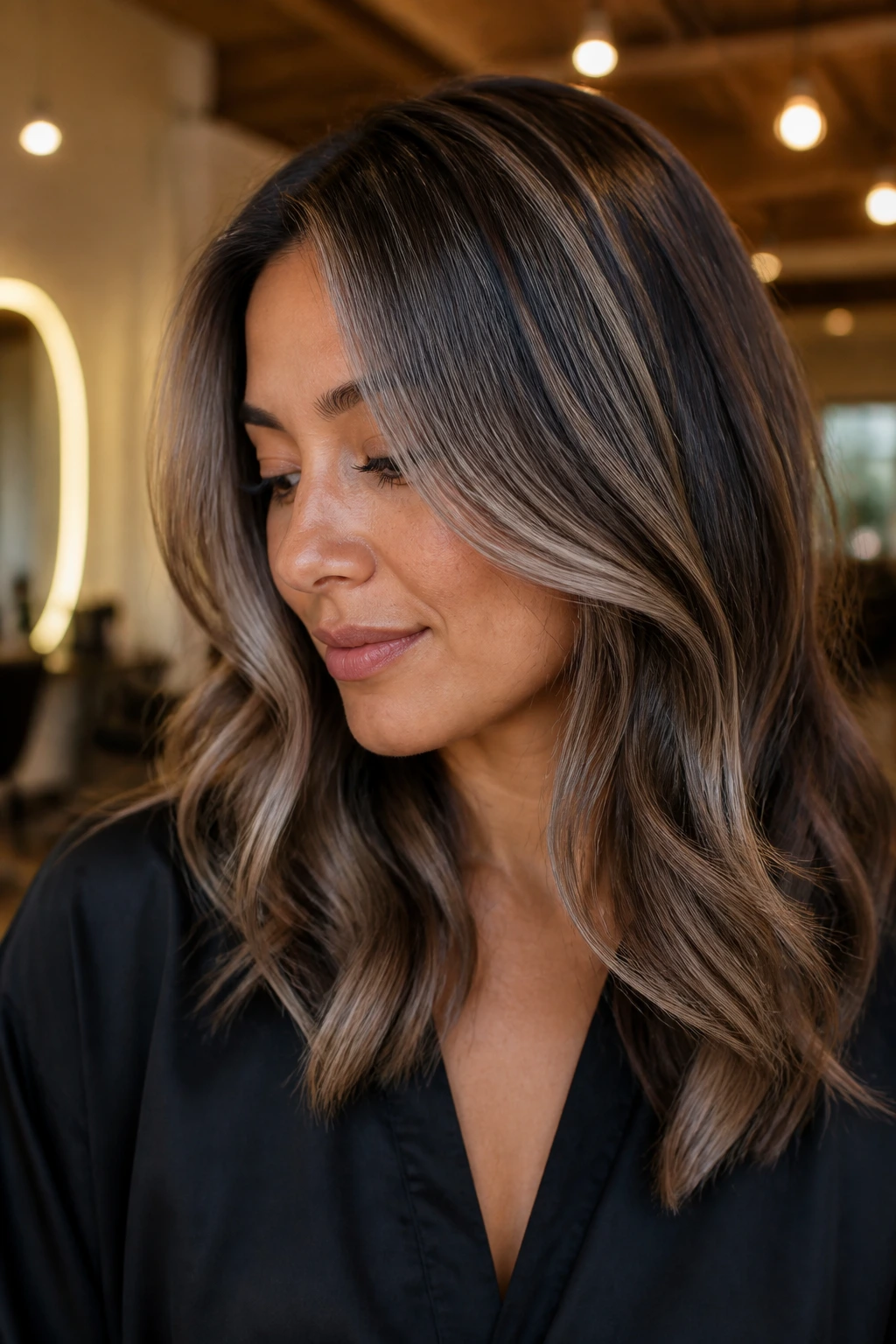
Taupe ribbon highlights sit in a very useful place between ash brown and beige blonde. They are cool, but not icy. That makes them one of the easiest cool highlight families to wear on medium skin, especially if you have warm cheeks or olive depth in the complexion. The ribbons stay flattering because they don’t scream for attention.
I like taupe through soft layers because the line of the highlight can follow the bend of the hair instead of sitting in a rigid stripe. If the cut has face-framing layers, place a few brighter ribbons there and keep the interior more subdued. That keeps the color from taking over the haircut.
- Best on level 5 to 7 hair.
- Ask for a soft weave, not chunky foils.
- Finish with a beige-toned gloss to keep the taupe from turning dull.
11. Silver-Beige Underlights
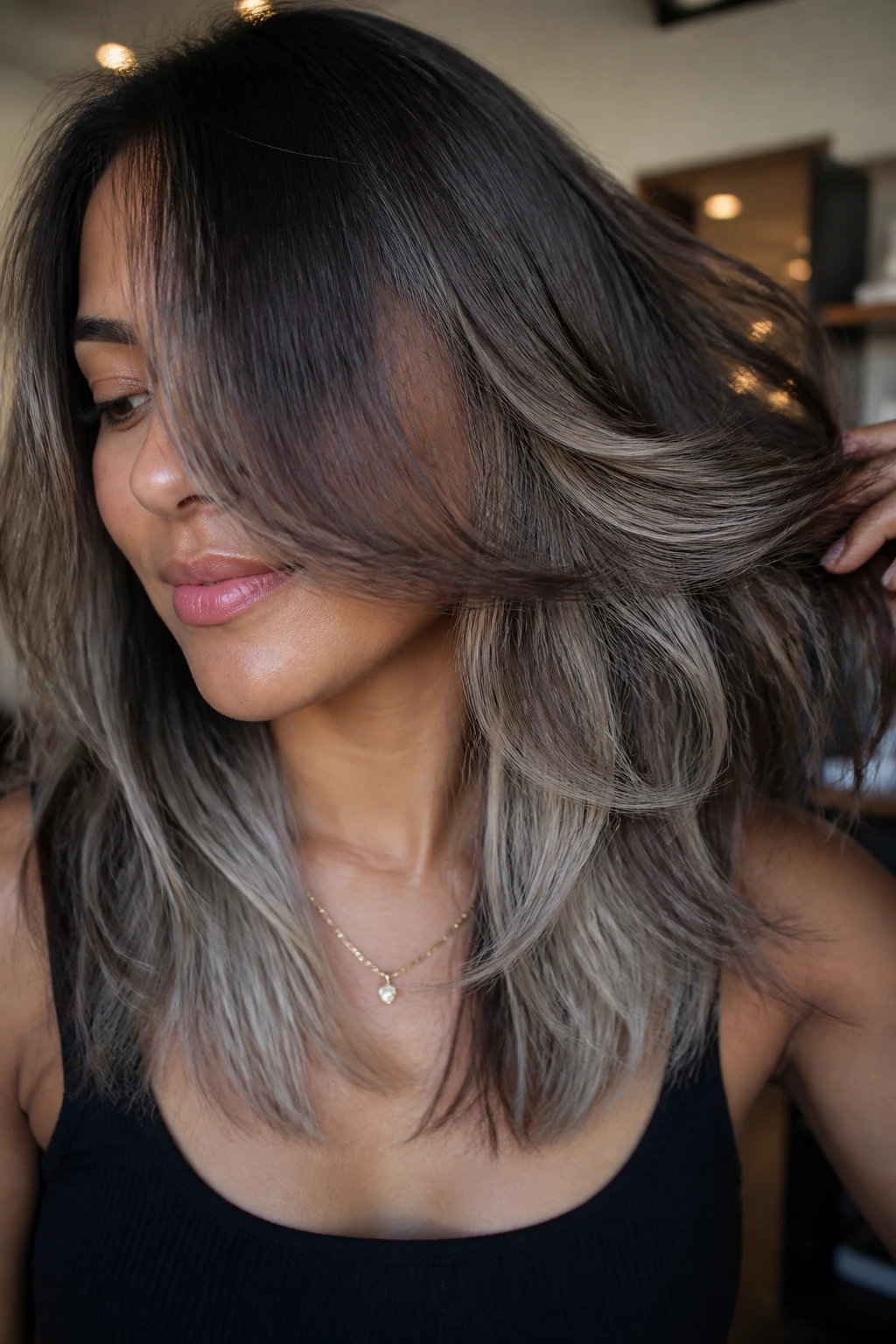
Silver-beige underlights are for the person who wants a little edge but does not want to wear that edge all over the head. The lighter color lives underneath the top layer, so it flashes through when the hair swings or gets tucked behind the ear. On medium skin, the contrast feels cooler and cleaner than a full head of pale blonde.
This is one of my favorite options for soft layers because the layers reveal the color in pieces. You get movement without the commitment of a full platinum look. The best version uses a beige-silver tone, not a hard blue-silver. That softer metallic note keeps the face from looking drained.
When to choose it: if you like a hidden detail that shows up only when the hair moves.
12. Cool Caramel Melt
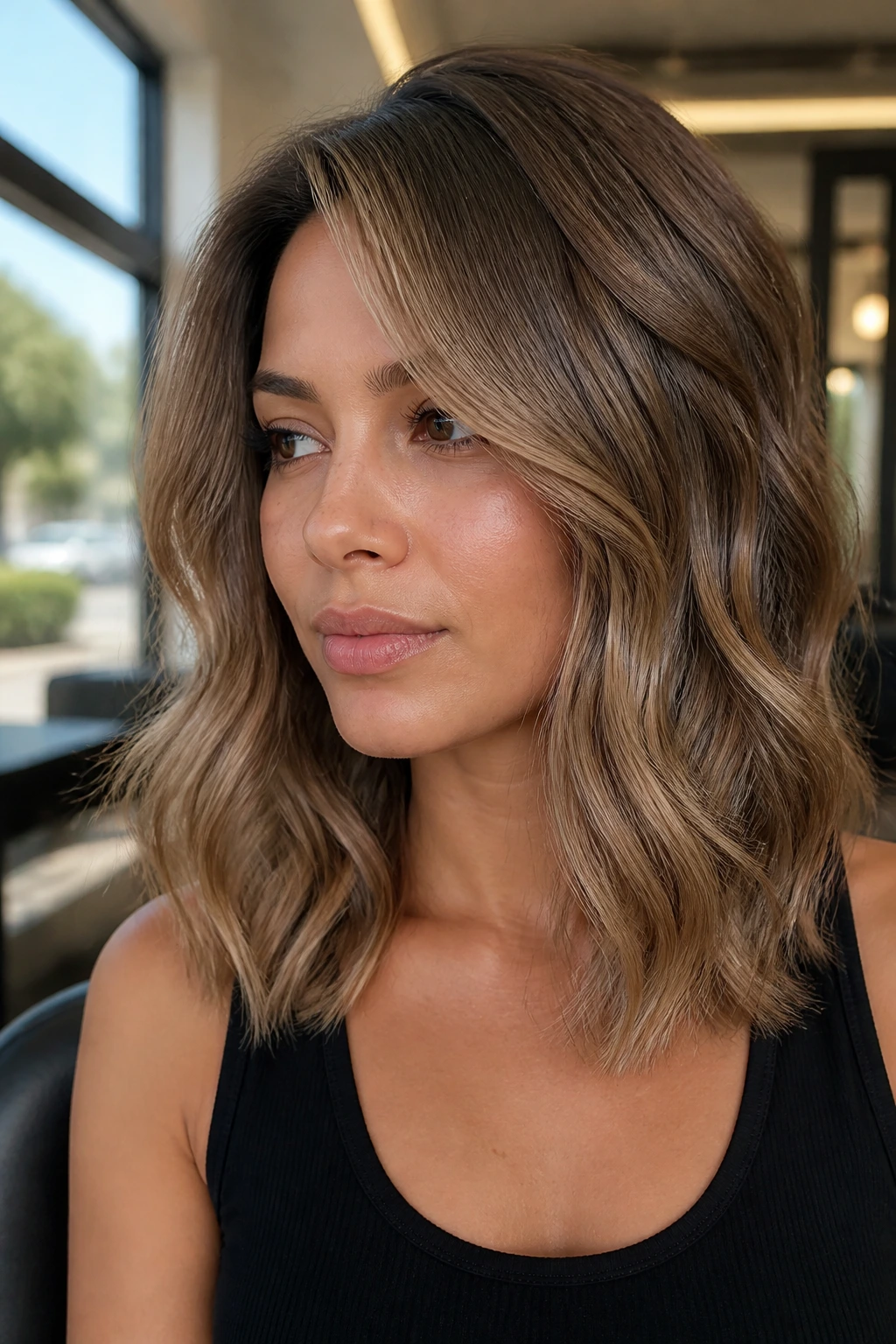
Cool caramel sounds contradictory, and that’s exactly why it works. The shade starts with a caramel base, then the toner pulls it back toward beige and ash so it doesn’t read sticky or orange. Medium skin often likes that bridge shade better than a pure ash blonde, especially if the natural base is warm brunette.
Soft layers are the thing that keep the melt believable. Without movement, caramel can look heavy. With layers, the lighter pieces sweep through the lengths and the whole effect feels softer. I’d choose this if you want something polished that still looks like hair, not a color project.
Best pairings: shoulder-length cuts, face-framing layers, and loose waves. This look likes bend.
13. Mushroom Brown Glaze
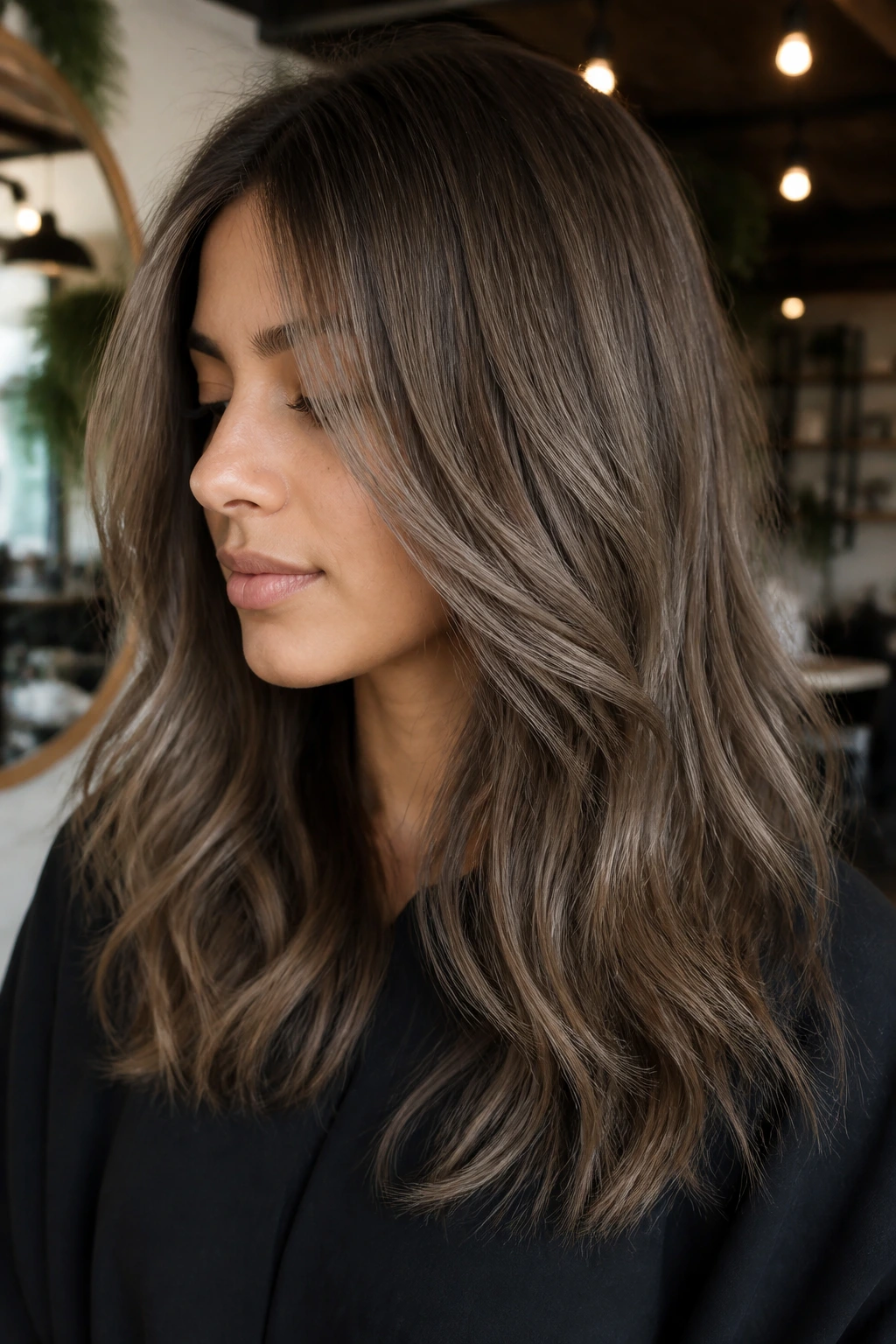
Why does mushroom brown keep showing up in good cool-highlight conversations? Because it solves a common problem: too much warmth, not enough shape. A mushroom glaze cools the surface of brunette hair, giving medium skin a softer contrast that still feels grounded. It is not a highlight in the loud sense. It’s a tone-shift, and it’s a good one.
A glaze works especially well if your hair already has a little dimension and just needs refinement. Soft layers make the sheen visible, especially around the midlengths. If you want a quieter color that still changes the way your hair reads in daylight, this is one of the smartest options in the whole group.
How to wear it
Keep styling loose. Over-sleek hair can make mushroom tones look flat, while a textured blowout lets the cool reflectivity show.
14. Champagne Ash Balayage
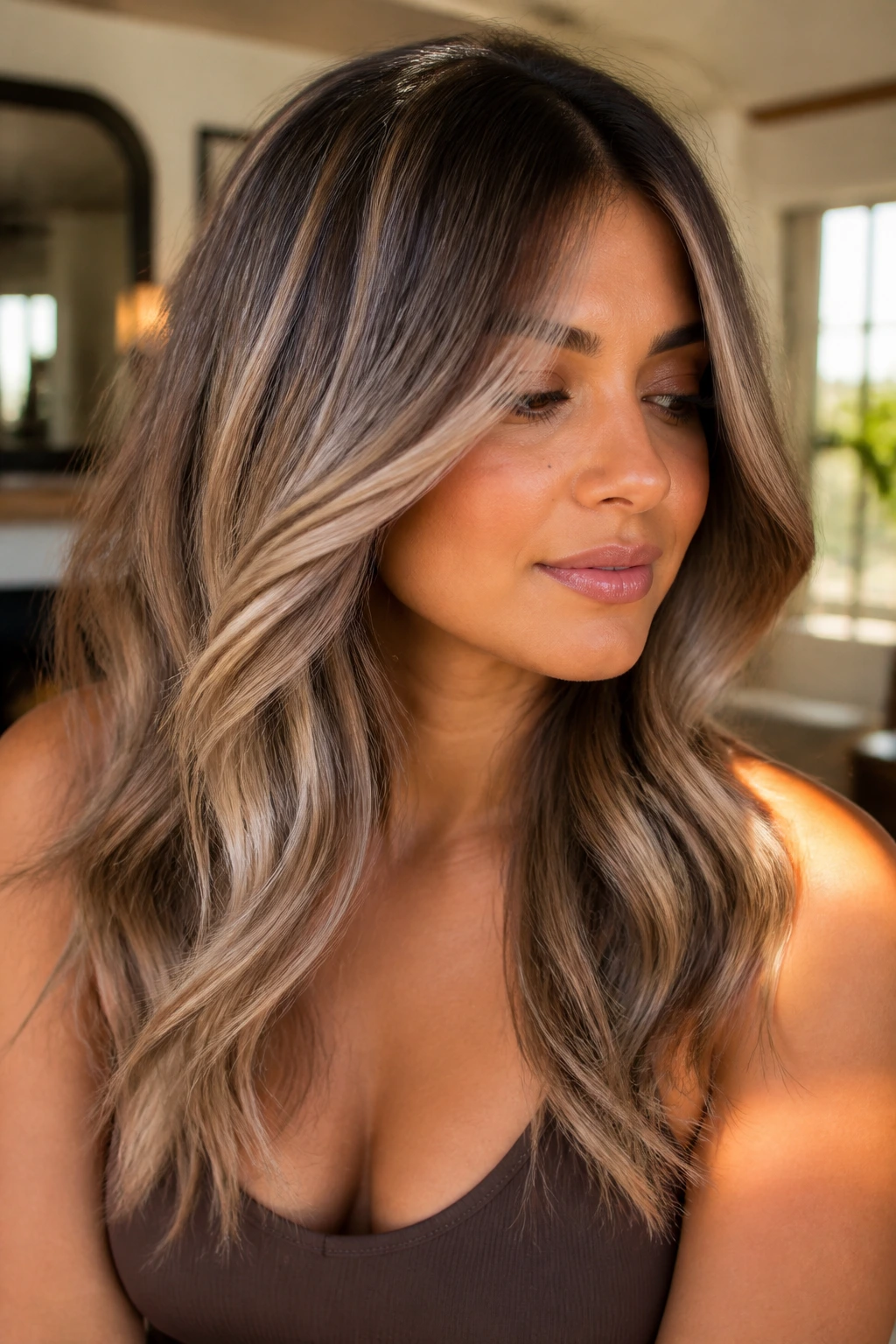
Champagne ash balayage is brighter than mushroom, but still soft enough for medium skin when the toner is handled well. The champagne gives the hair some lift; the ash keeps it from drifting warm or brassy. On soft layers, the contrast turns into a moving shimmer rather than a solid stripe pattern.
This is the version I’d pick for someone who wants to see the highlights from across the room but still wants the finish to feel gentle. The trick is not to overdo the lightness at the ends. A slightly deeper root and a beige-ash gloss keep the whole thing cohesive. If your skin has neutral undertones, this one is especially easy to wear.
- Good for medium brunettes who want a brighter result.
- Works well with long layers and curtain bangs.
- Needs toning more often than deeper mushroom shades.
15. Walnut Ash Flicks
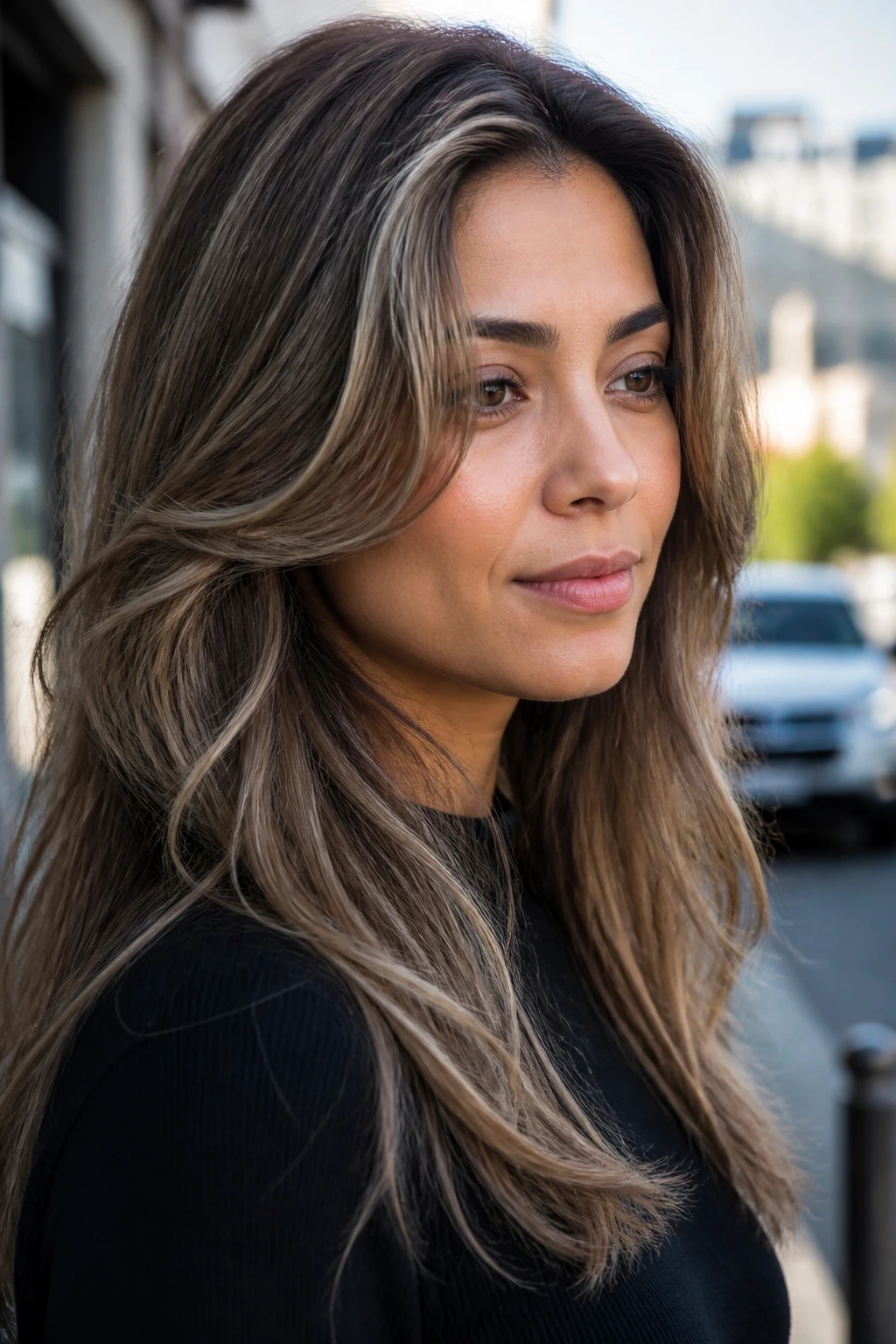
Walnut ash flicks are tiny, directional strokes of cool light that sit through the layers like little brush marks. The effect is subtle, but on medium skin it’s enough to create movement without a lot of contrast. I like this when the haircut already has good shape and just needs a little more life.
The best walnut tones are cool enough to read modern, but deep enough to avoid looking dusty. Ask for fine pieces that skim the outer layer and a few through the crown. That keeps the color from disappearing once you style it. This is not the look for someone wanting a dramatic blonde shift. It is the look for someone who wants the hair to look better in motion than it does on a hanger.
16. Pale Beige Peekaboo Panels
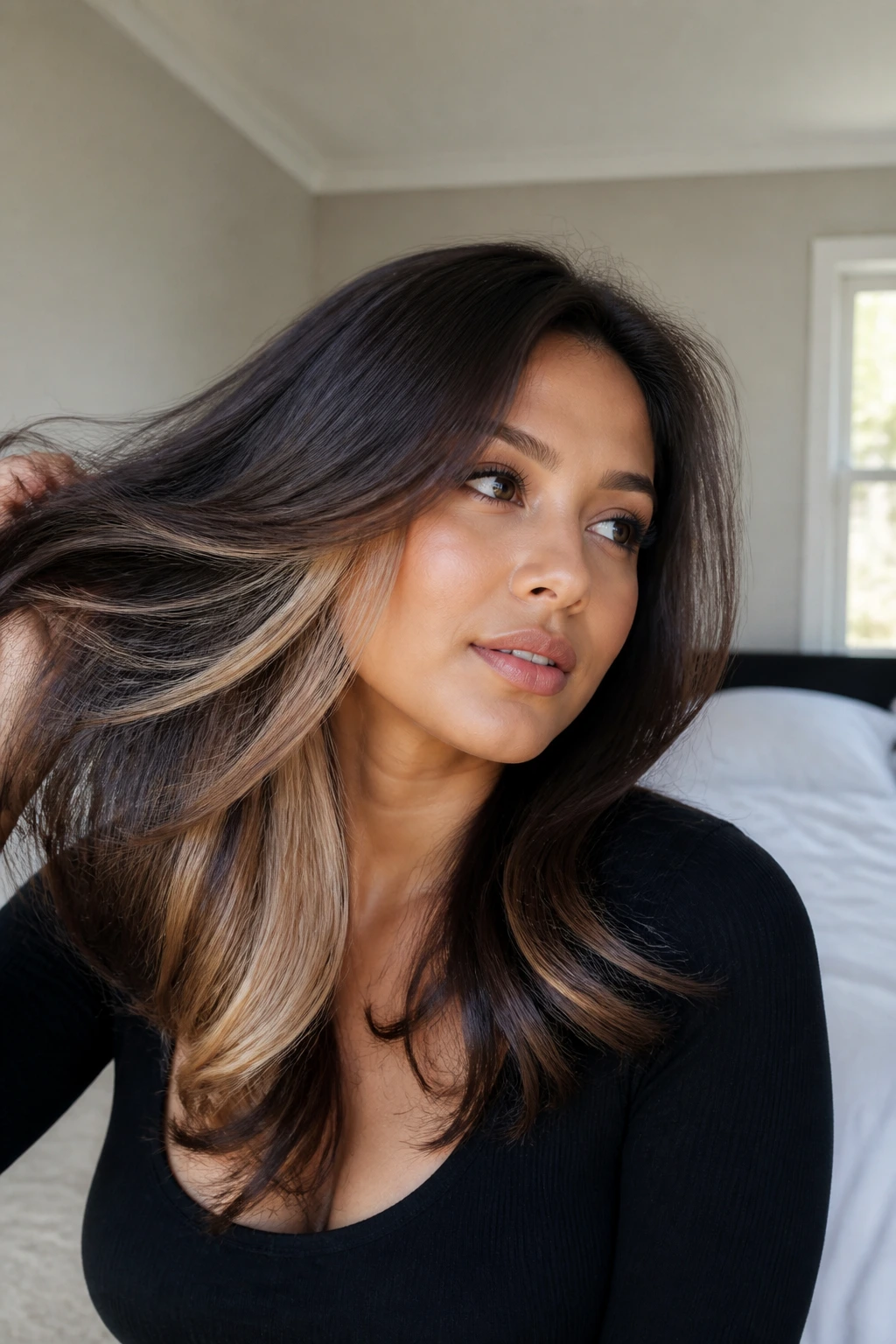
Peekaboo panels are for the person who wants brightness but likes a little mystery. The pale beige lives under the top layer, so the color flashes when the hair moves and disappears again when it settles. On medium skin, that hidden contrast feels cooler than a chunky visible strip, and much softer.
I’d use this on layered lobs, mid-length shags, or long cuts with a little swing. The style depends on motion. The panels should not be too wide; think slim, strategically placed sections beneath the crown and around the sides. If the panels are too broad, they stop feeling peekaboo and start feeling like a mistake.
Best for: someone who wants lighter color without changing the whole surface of the hair.
17. Cool Toffee Contour
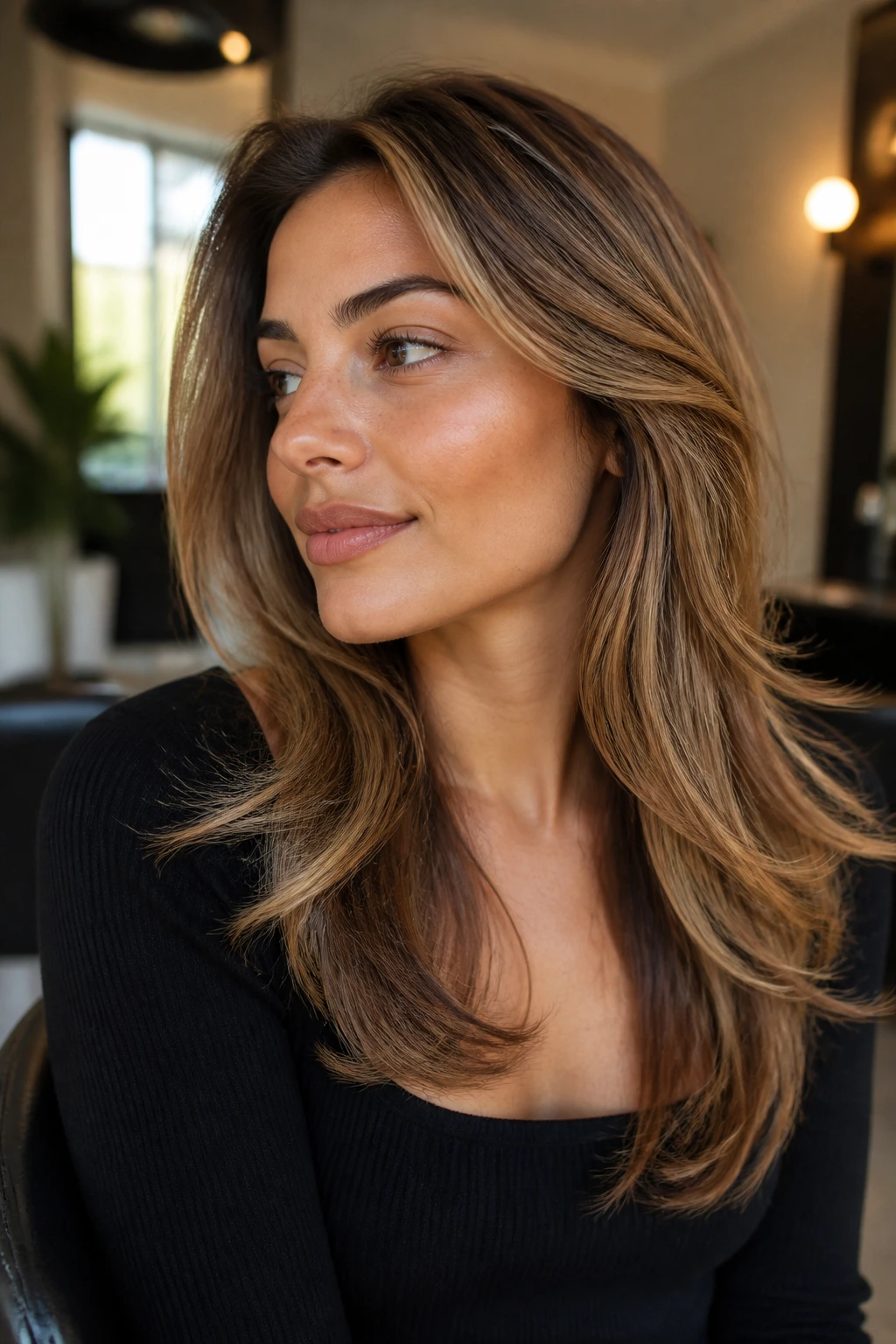
Cool toffee contour is the safer cousin of caramel, and I mean that in the best way. It gives you warmth at the base of the shade, but the cool toner keeps it from turning sticky or overly golden. On medium skin, that balance can be gorgeous, especially when the haircut has soft layers around the jaw and cheekbones.
The placement matters more than the shade name. Put the lightest toffee pieces where the face naturally needs lift, then let the rest of the contour stay subtler. That creates shape without making the whole head equally bright. This look works well if you like dimension but don’t want anything that shouts blonde.
- Ask for cool toffee, not honey toffee.
- Keep the ends lighter than the root area.
- Pair with a soft blowout for the best shape.
18. Smoky Blonde Ends
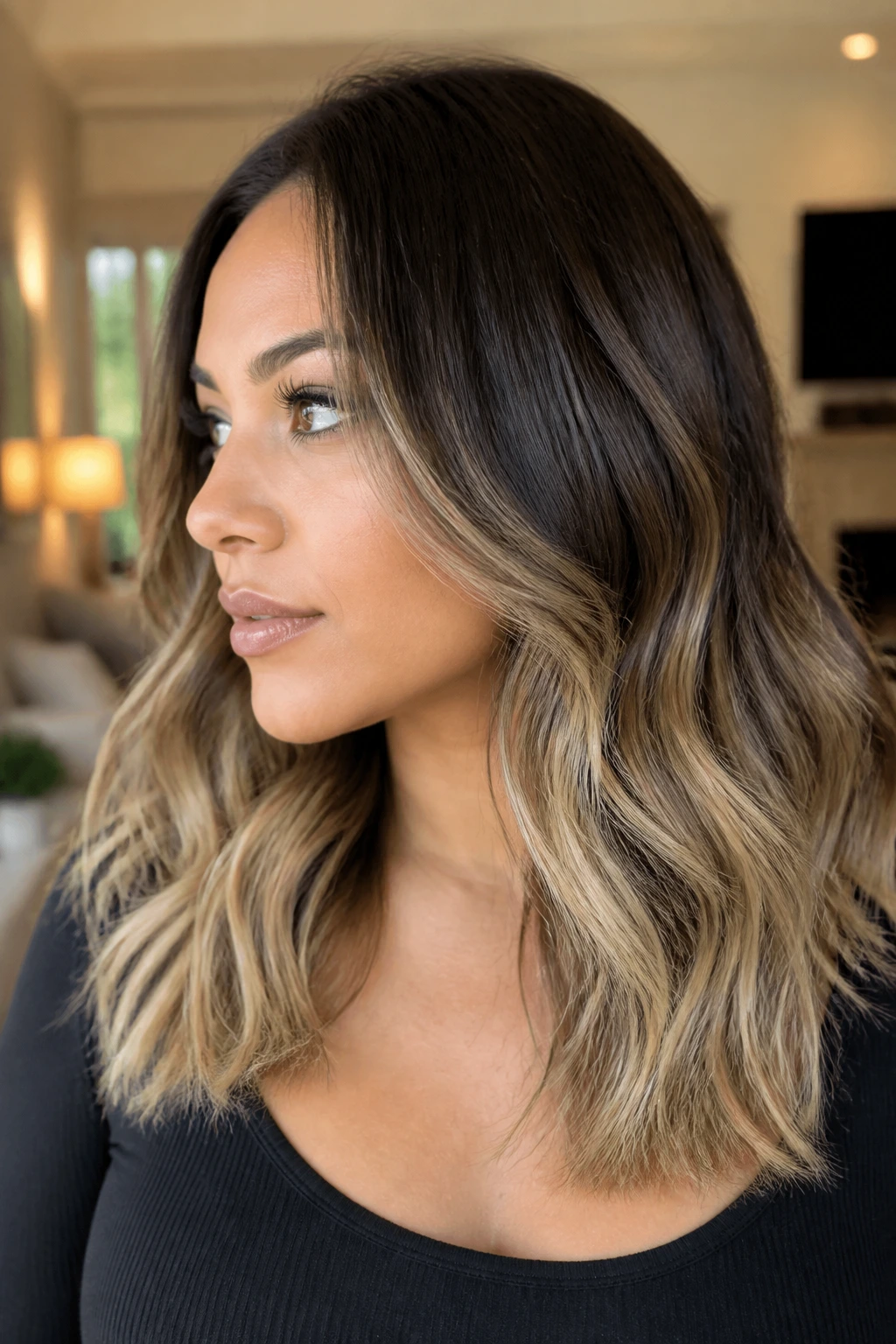
What I like about smoky blonde ends is how they let the cut do the talking. The upper half stays deeper, the ends soften into a cool blonde, and the layers carry the transition. It’s a cleaner version of ombré, less dramatic and easier to wear on medium skin if you want lightness without a full blonde overhaul.
The key is keeping the blonde smoky rather than white. White ends can make medium skin look tired unless the rest of the tone is carefully balanced. A beige-ash finish, especially on layered hair, gives you brightness with less shock value. If your hair is fine, this can also make the ends seem fuller because the lighter color catches the eye.
19. Cocoa and Taupe Dimension
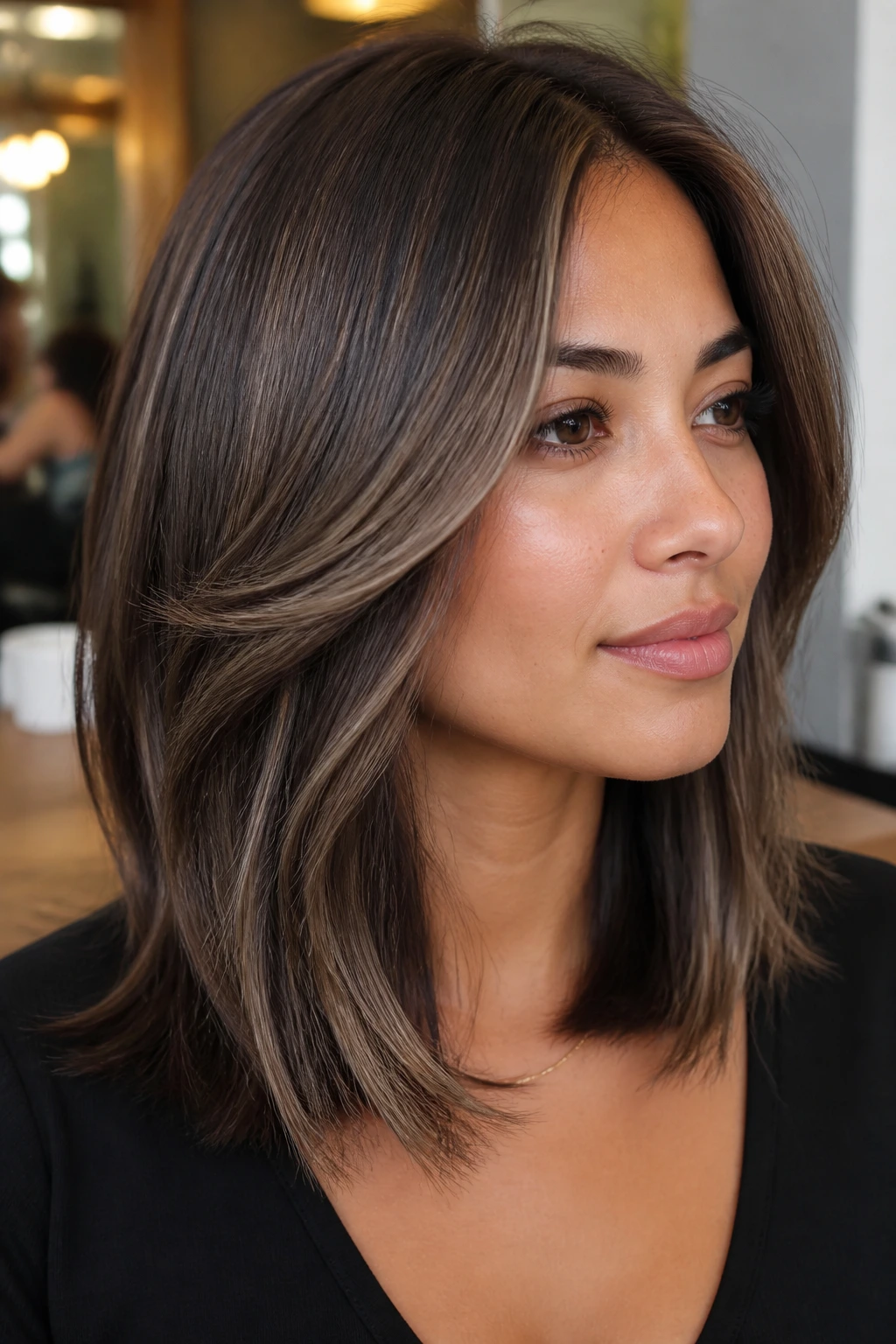
Cocoa and taupe dimension is one of those combos that looks calm but never boring. The cocoa keeps the base rich, the taupe cools the finish, and soft layers split the difference so the whole head looks fuller. Medium skin likes the contrast because it stays grounded rather than icy.
This is the kind of color that can look especially good on shoulder-skimming hair, where the layers move around the face and collarbone. Keep the taupe on the surface pieces and the cocoa underneath. That way the deeper base creates depth while the lighter strands read as motion. It’s subtle work, but subtle is not the same thing as plain.
Best when: you want dimension more than brightness.
20. Vanilla Ash Veil
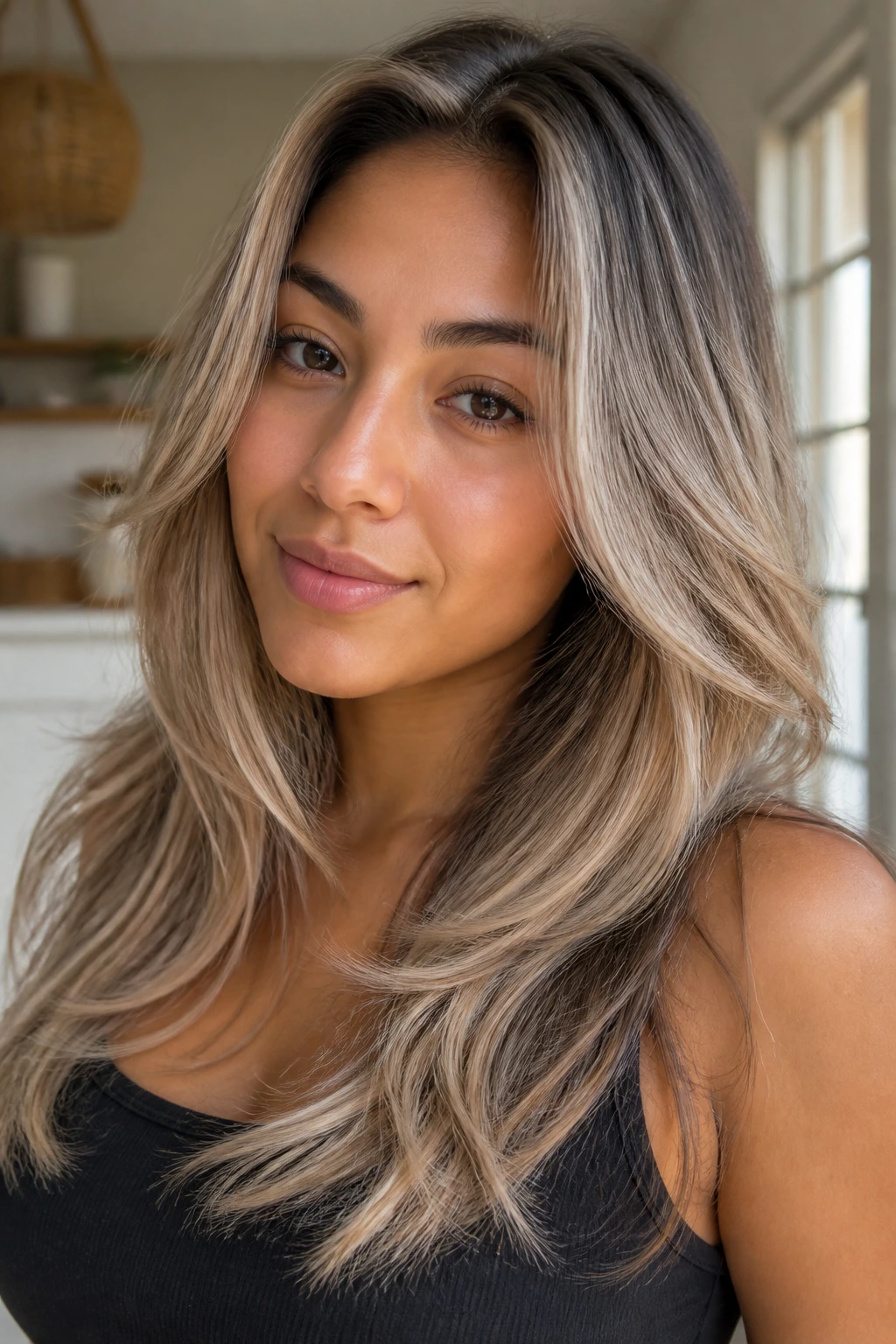
Vanilla ash veil is one of the lightest looks here, but it still needs a soft hand. The color sits like a pale veil over the surface rather than a block of blonde. Medium skin can carry it if the root stays slightly deeper and the tone leans beige instead of icy blue.
Soft layers are almost mandatory with this one. Without them, the vanillla tone can flatten out the haircut and make the ends look thin. With them, the light pieces shift as the hair moves and the whole style feels much lighter. This is not the easiest low-maintenance choice. It does, however, photograph like a dream under indoor lighting and daylight alike.
21. Platinum Whisper Money Pieces
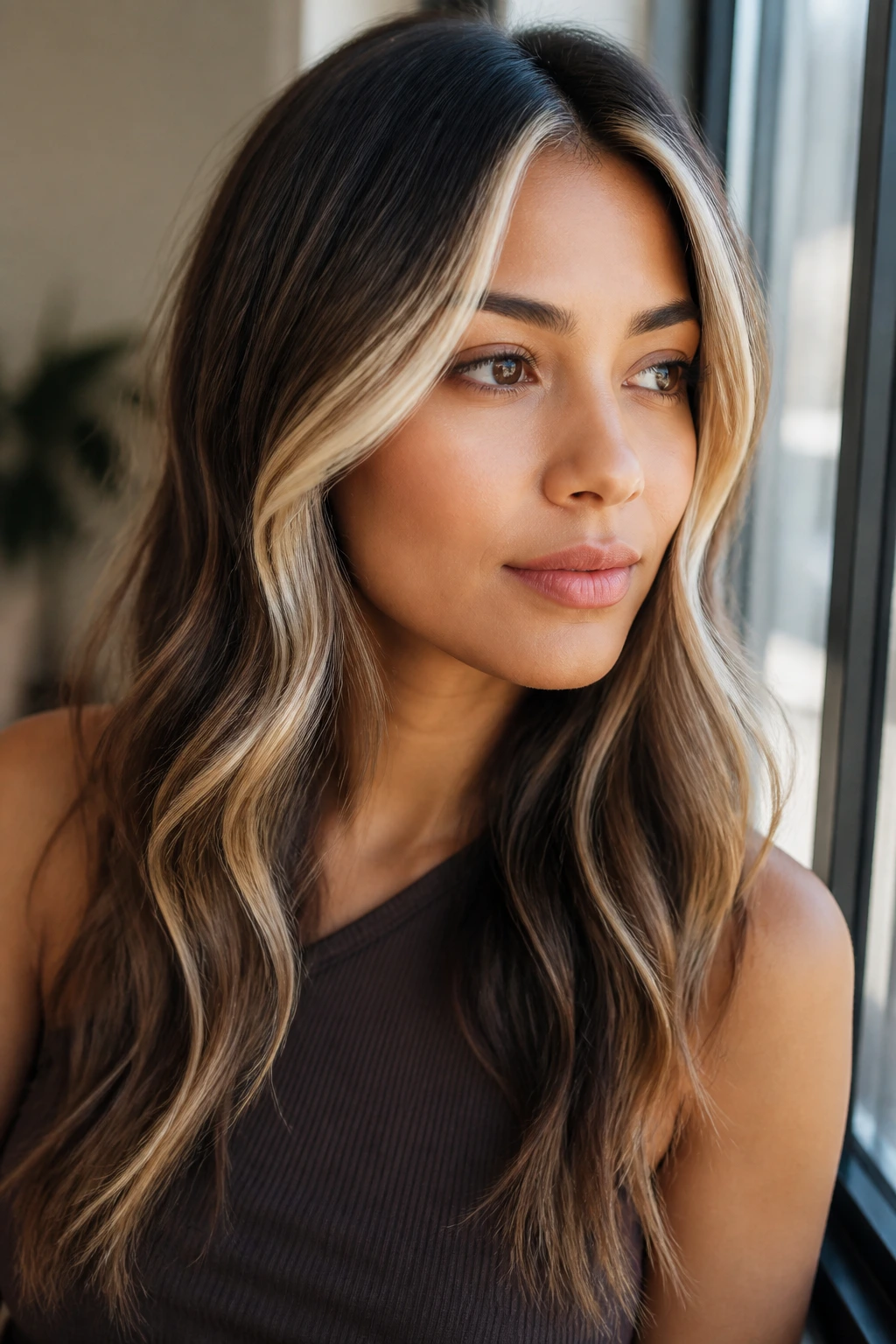
A platinum whisper money piece gives you drama without handing over the whole head to platinum. The front section is lighter, but the pieces are thin and deliberately soft, so medium skin gets the glow without the harsh contrast of a thick icy stripe. That restraint is the difference.
I’d use this on layered cuts with a center part or slightly off-center part, where the front pieces naturally fall beside the face. The rest of the hair can stay brunette, mushroom, or taupe. That balance keeps the platinum from dominating the complexion. If you want a look that feels modern but still wearable at work or out at night, this is a strong pick.
22. Mocha-to-Mushroom Root Melt
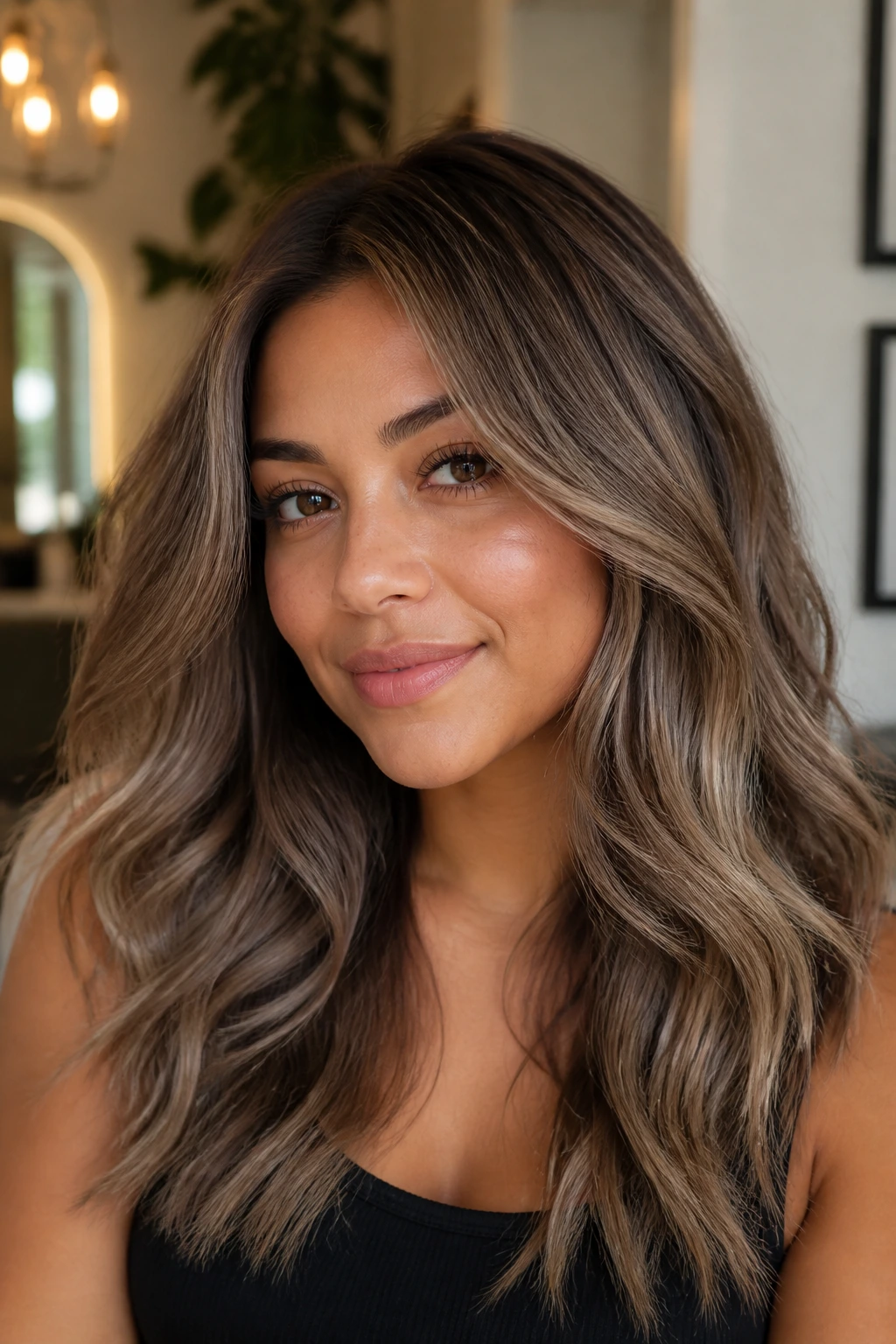
Mocha-to-mushroom root melt is one of the easiest ways to wear cool tones if your natural color is dark and warm. The root stays mocha, which protects the depth, then the color melts into mushroom as it drops through the lengths. Medium skin gets shape from the contrast without the shock of a bright highlight line.
This one depends on a clean melt. If the transition is visible, it loses the whole point. Soft layers help because they break the light into sections and make the fade look more natural. I’d choose this if you want a grown-out-friendly style that still looks deliberate a month later.
- Strong choice for low maintenance.
- Keeps the crown fuller than a full lightening job.
- Best with glosses that lean beige-gray.
23. Steel Beige Ribbon Lights
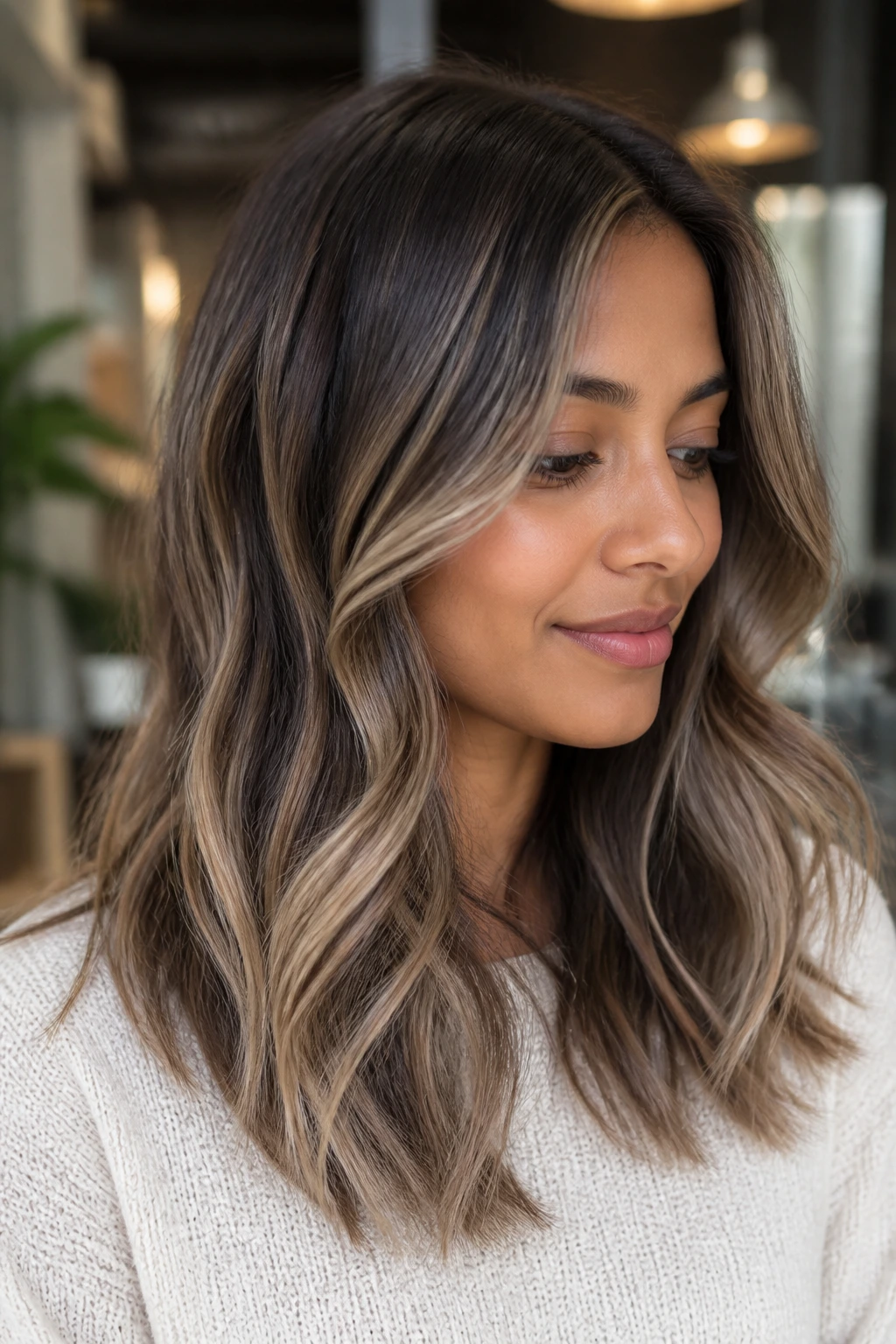
Steel beige ribbon lights are cooler than taupe, but softer than silver. That middle note makes them a smart choice for medium skin with neutral undertones. The ribbons look sleek through the layers, especially when the hair has a little bend instead of hanging flat.
How to use it
Ask for thin ribbons through the midlengths and a touch more light around the front, where the face can handle a little lift. The steel note should be quiet, almost like a mist over the hair. Too much silver and the style goes cold. Too much beige and it loses the edge.
This is the look I’d reach for if I wanted a cooler result without making the hair look over-processed.
24. Frosted Fringe Highlights
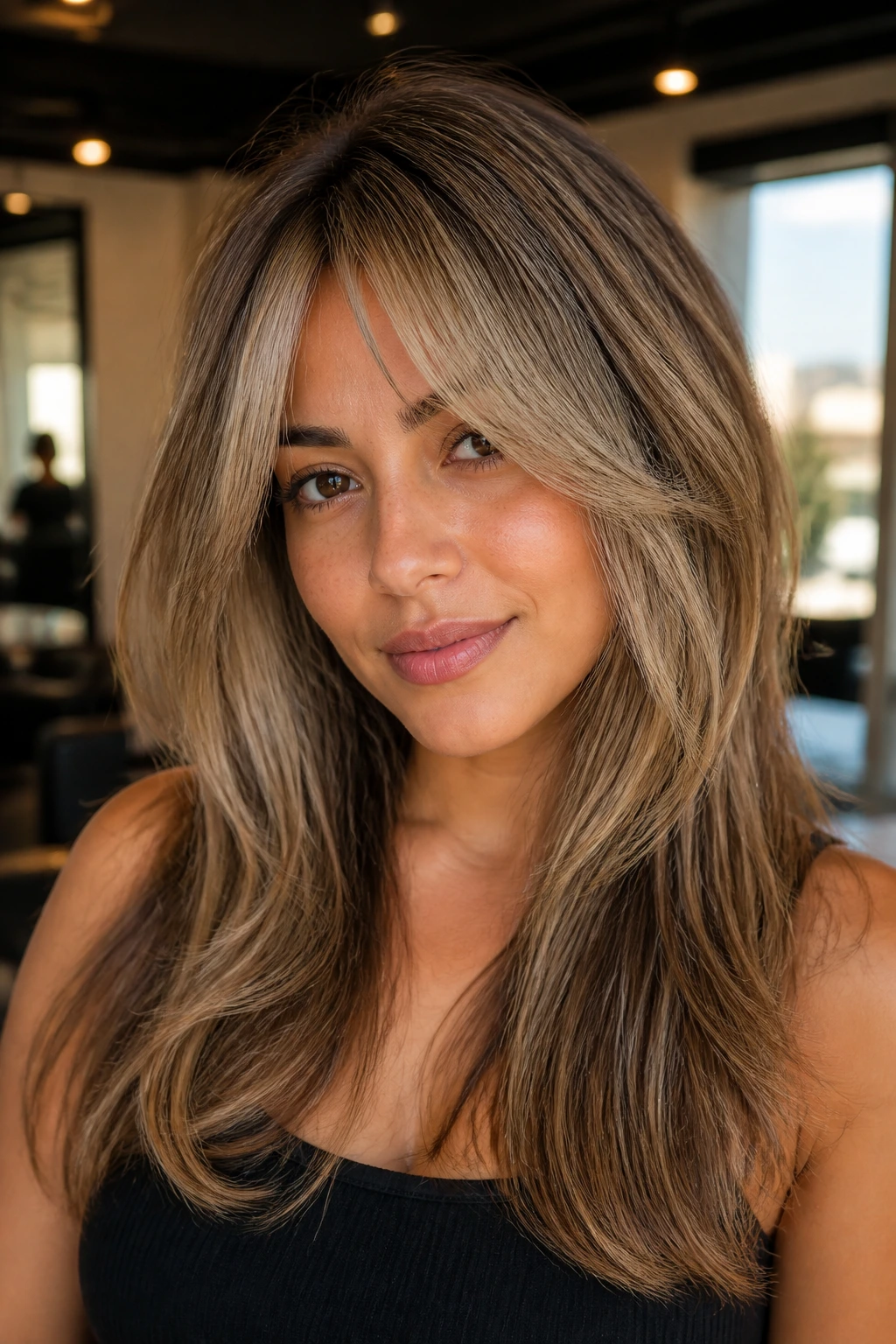
A fringe can either vanish into the haircut or become the whole haircut. Frosted fringe highlights make it the first thing you notice, in a good way. The cooler color around bangs or curtain fringe gives medium skin a brighter frame, and the soft layers behind it stop the whole style from feeling too front-heavy.
The tone should be pale beige with just enough ash to cool it off. If the fringe gets too light, it can feel disconnected from the rest of the cut. Keep the surrounding layers a little deeper so the bangs have a backdrop. That contrast is what makes this work.
Best for: curtain bangs, bottleneck bangs, and layered shags.
25. Charcoal Shadow Lows and Lights
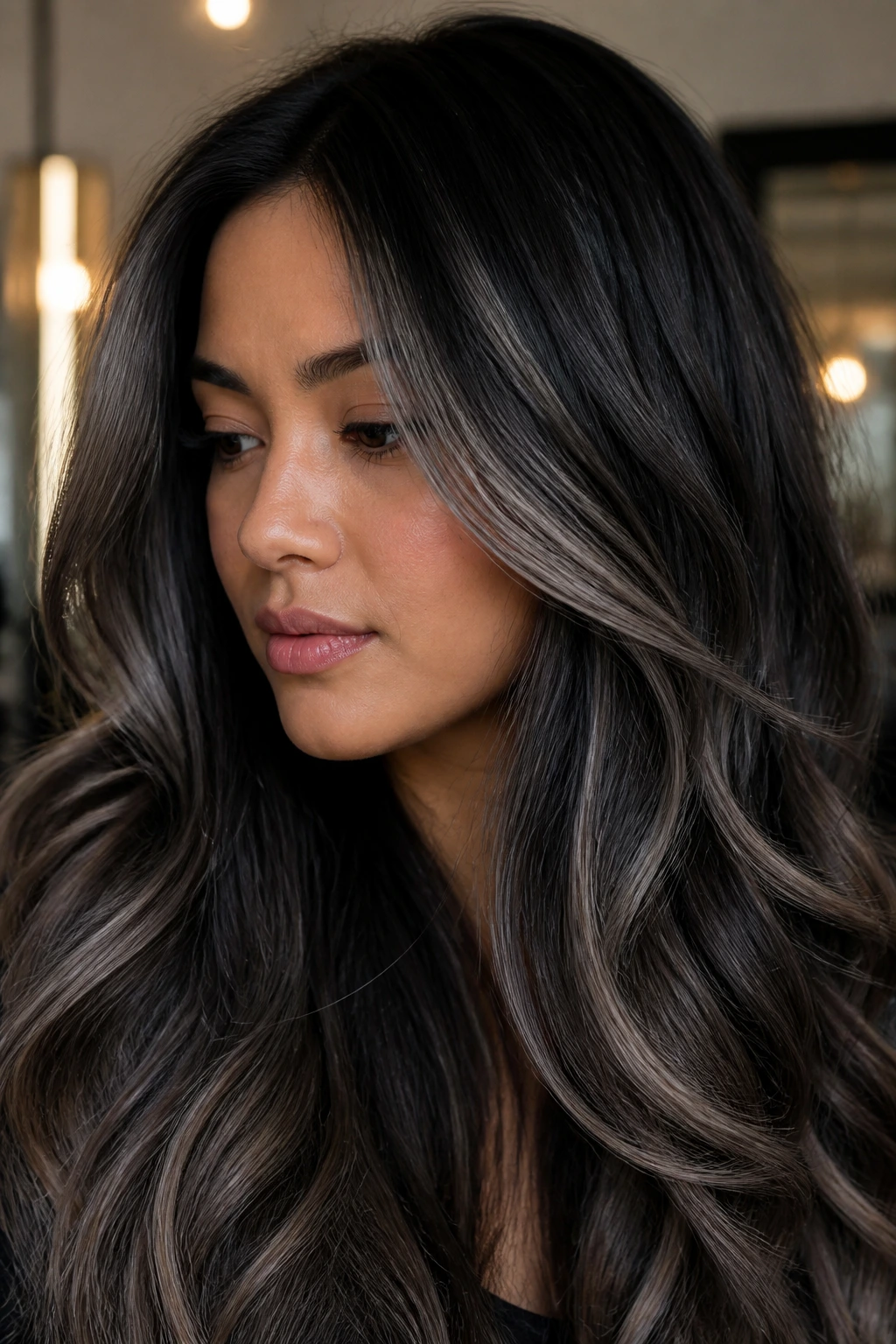
Charcoal shadow lows and lights is the most high-contrast idea in the group, but the contrast lives in the shadow, not just the brightness. Dark charcoal lowlights tuck into the base and make the cooler highlights stand out more cleanly. On medium skin, that can look sleek and expensive if the placement is measured.
I like this on thick hair or layered cuts that need more shape. The shadow pieces create depth around the interior, while the lighter ribbons stay on the surface and around the face. If you want your soft layers to look fuller and more sculpted, this is the sort of color that does the job. It’s cooler, yes, but it also has more backbone than a pale blonde look.
Why Soft Layers Make the Color Move Instead of Sitting Flat
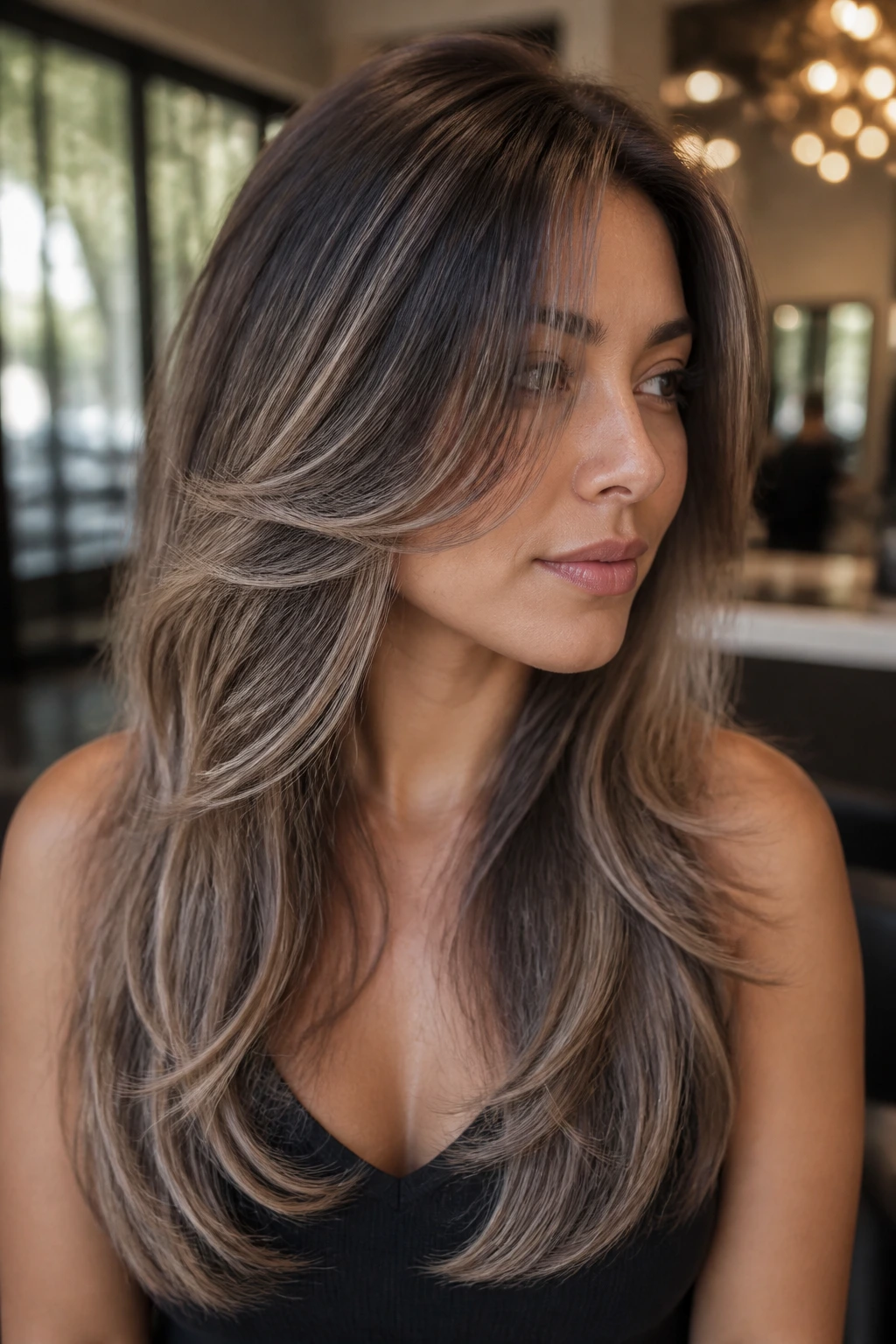
Soft layers are not just a haircut choice here. They’re the mechanism that makes cool highlights look like they belong in the hair instead of sitting on top of it. A blunt line can make even the prettiest ash blonde feel static. Feathered ends, face-framing pieces, and a little graduation through the mids break up the light so the color shows in pieces.
That matters most with cool tones, because cool tones can go flat faster than warmer ones. Beige ash, mushroom brown, pearl blonde, and steel beige all need some shape to keep from reading dusty. Layers give you that shape for free. They also help the hair move off the shoulders and around the face, which is where the highlight placement actually shows its work.
A good cut also lets the grow-out look softer. If the highlight line is buried inside movement, you can stretch the time between appointments without looking like you forgot the color. That’s one reason stylists keep pairing cool tone families with soft layers: the haircut buys the color some grace.
Essential Tools for These Looks
-
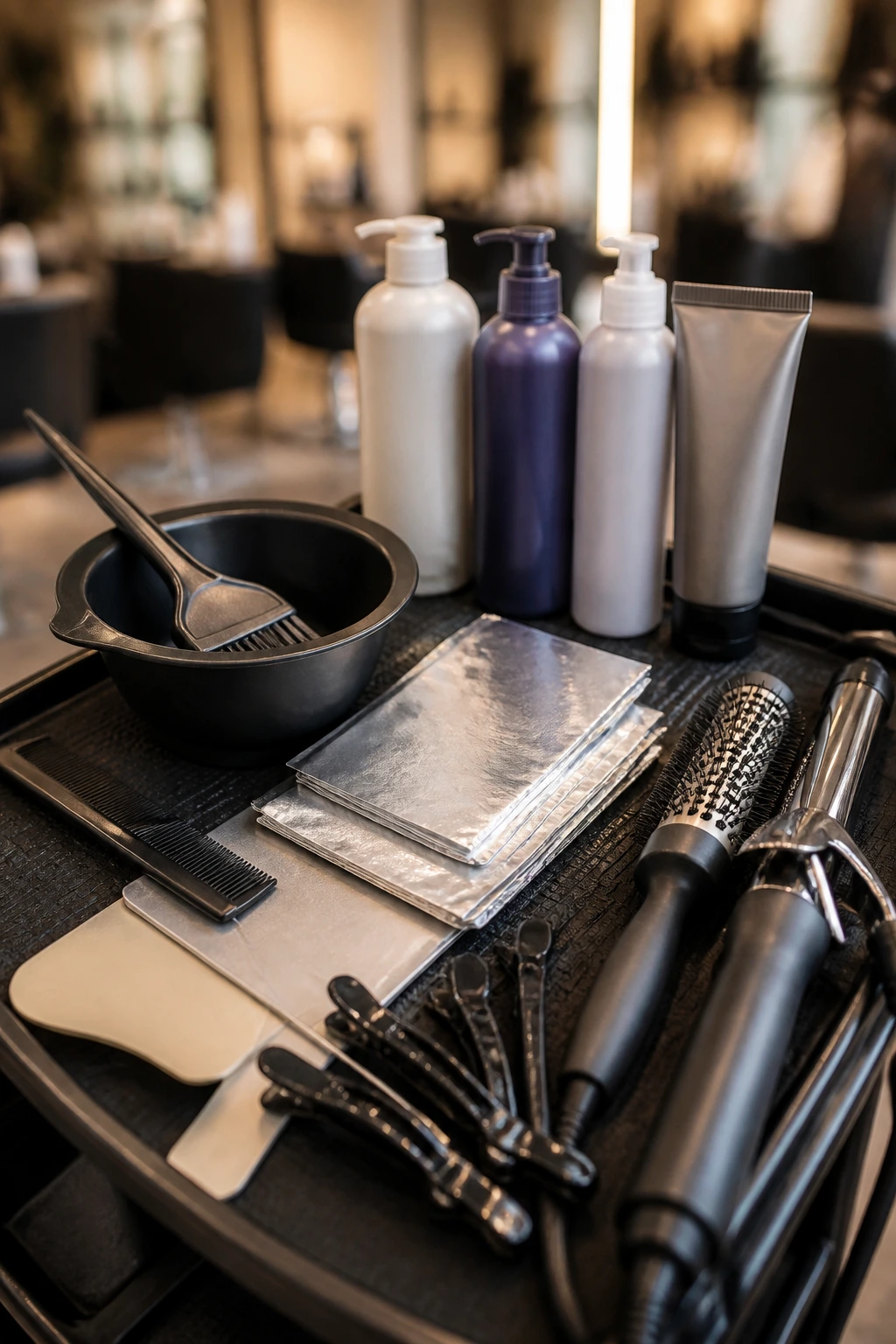
Tint brush and bowl: Needed for glosses, root smudges, and precise panel placement. A narrow brush gives cleaner control around the face.
-
Foils or balayage boards: Foils give brighter lift; boards help if you want a softer hand-painted look with less overlap.
-
Tail comb: Essential for thin babylights, clean sections, and separating layers without roughing up the hair.
-
Sectioning clips: Keep the crown and side panels out of the way so the placement stays even.
-
Color-safe shampoo: Use one that doesn’t strip the toner in a single wash; harsh formulas wreck cool tones fast.
-
Purple or blue shampoo: Purple helps blondes; blue helps brunettes that pull orange. Use it sparingly, not every wash.
-
Deep conditioner or bond-building mask: Lightened hair needs something that smooths the cuticle and helps the ends stay soft.
-
Heat protectant: Non-negotiable if you blow-dry or curl the hair. Cool highlights look dull when the ends are fried.
-
Round brush and blow-dryer: The movement matters. A flat air-dry can hide the dimension you paid for.
-
1-inch curling iron or wand: Best for loose bends that show ribbons and layers without turning the style into ringlets.
How to Choose the Right Ash, Beige, Pearl, or Mushroom Tone
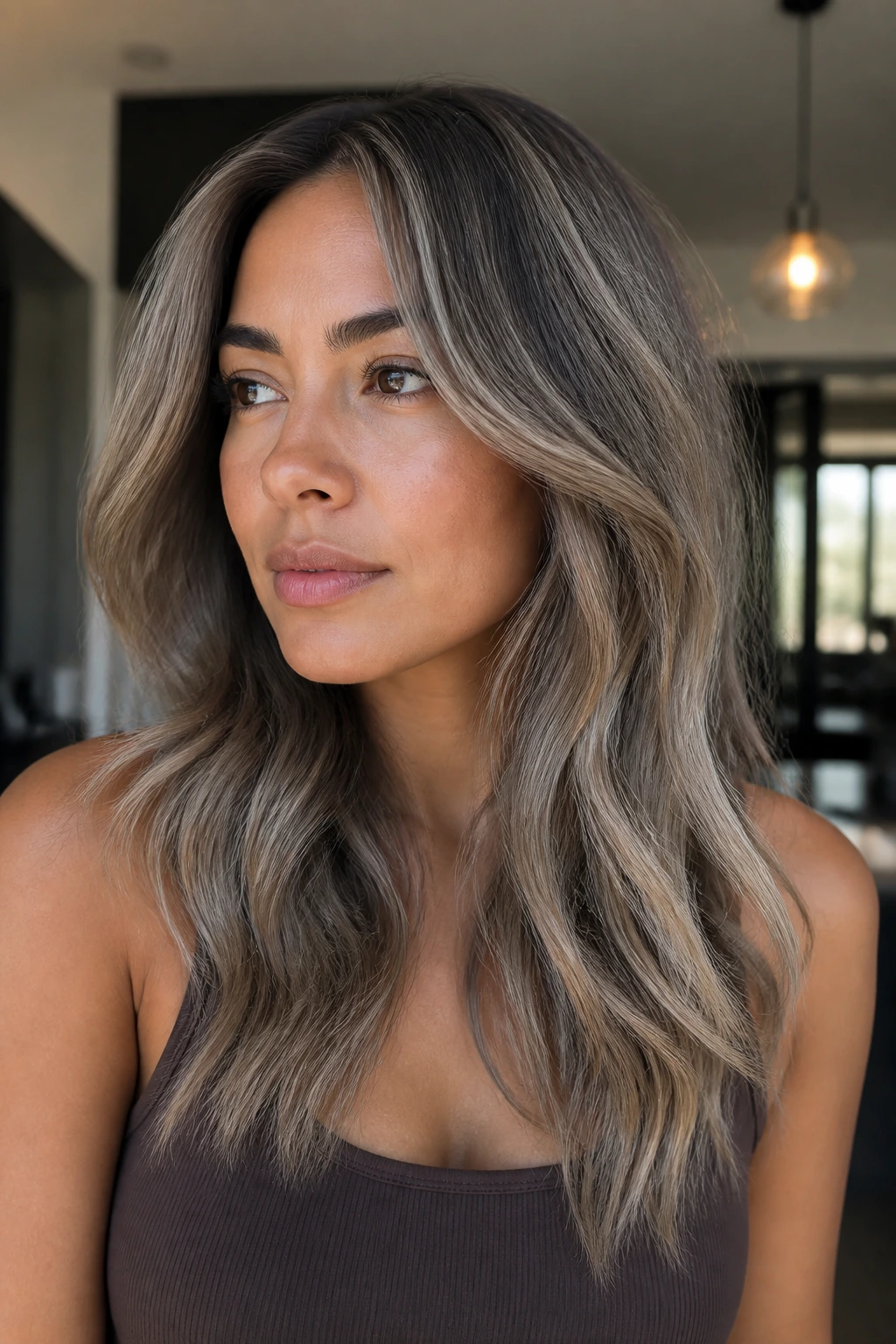
Color names sound tidy on a chart. Hair doesn’t behave that politely. The shade that flatters medium skin is usually the one that balances your undertone instead of matching it too perfectly. If your skin leans olive, mushroom, taupe, and steel-beige often sit better than bright silver. If you lean golden-neutral, pearl, champagne ash, and cool beige can give you brightness without draining the face.
Bring photos that show the hair in daylight and indoor light. That matters more than people think. A shade that looks soft in sunlight can go chalky under warm bulbs. If you’re talking to a colorist, ask for the depth of the base, not just the name of the highlight family. “Level 6 mushroom balayage with a beige gloss” tells the story much better than “cool blonde.”
One more thing: don’t let the toner do all the work. If the highlights are lifted too far past the base, no toner can put the softness back in. The prettiest cool highlight jobs usually start with restraint, then build brightness only where the cut can carry it.
Styling the Layers So the Color Actually Shows
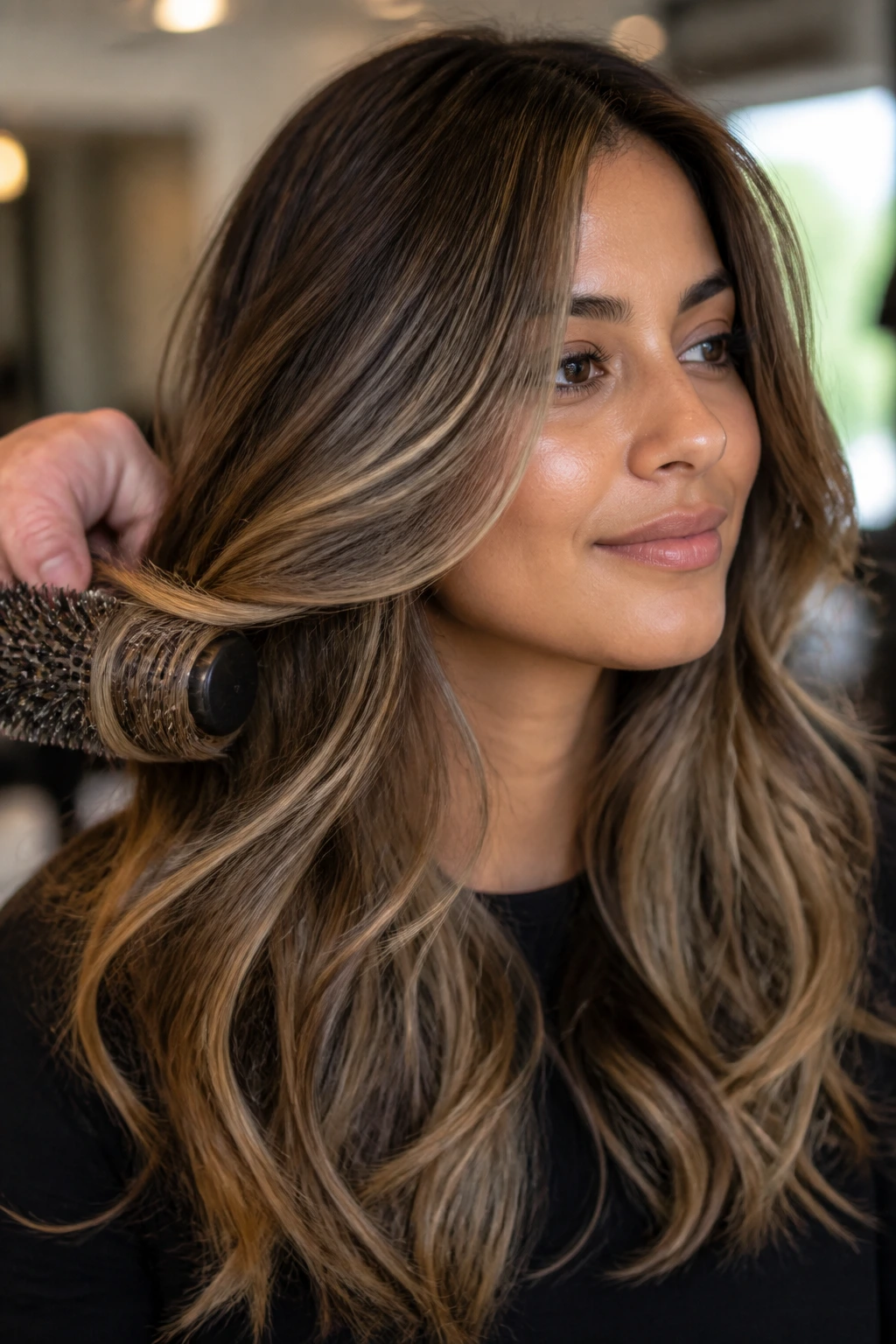
You can have a lovely color job and still hide it with the wrong styling. Pin-straight hair makes some cool highlights look stripy, especially if the pieces are narrow. A soft bend through the midlengths does a much better job of showing the ribbons and dimension. That’s why round-brush blowouts and loose waves are such a good match for this whole category.
Start with a root lift product if your hair is fine or tends to collapse. Then dry the hair in sections, turning the brush slightly under the ends so the layers separate instead of sticking together. If you use a curling iron, alternate the direction of each section and leave the last inch out. That keeps the ends from looking too uniform. Too uniform is the enemy here.
Finish with a light texture spray or a tiny amount of oil on the ends only. Heavy serum near the roots can swallow the cool tones. If you want the color to read from across a room, the surface needs motion. Not frizz. Motion.
Keep the Tone Clean: Maintenance and Grow-Out
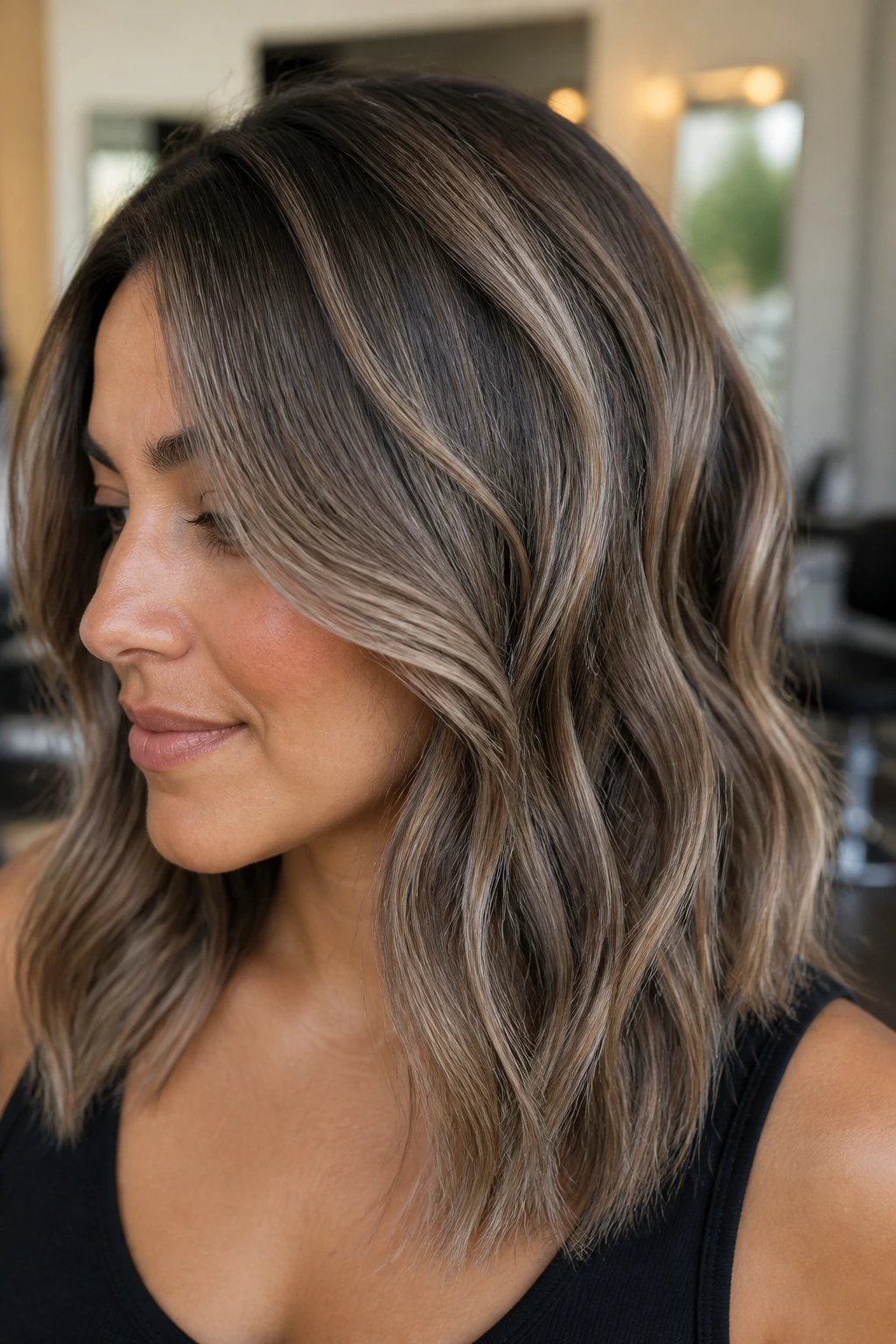
Cool highlights fade in two directions: they can warm up, or they can turn too flat and ashy. Both need different fixes. A gloss every 4 to 6 weeks is the simplest way to keep the tone true. For lighter blonde pieces, a purple shampoo once every 1 or 2 weeks is usually enough. For brunette cool tones that pull orange, blue shampoo every second or third wash does more good than weekly overuse.
Most highlight jobs here look their freshest for about 6 to 8 weeks, then settle into a softer version that can still look good for longer if the placement was thoughtful. Babylights and root melts usually stretch the longest because the grow-out line is blurred from the start. Chunkier money pieces need a little more attention.
If you heat-style often, use protectant every time. Burnt ends never hold cool pigment well. They just go dull. And if you swim in chlorinated water or wash with hard water, a clarifying or chelating shampoo once in a while helps keep the toner from going murky.
Additional Tips and Color Boosters
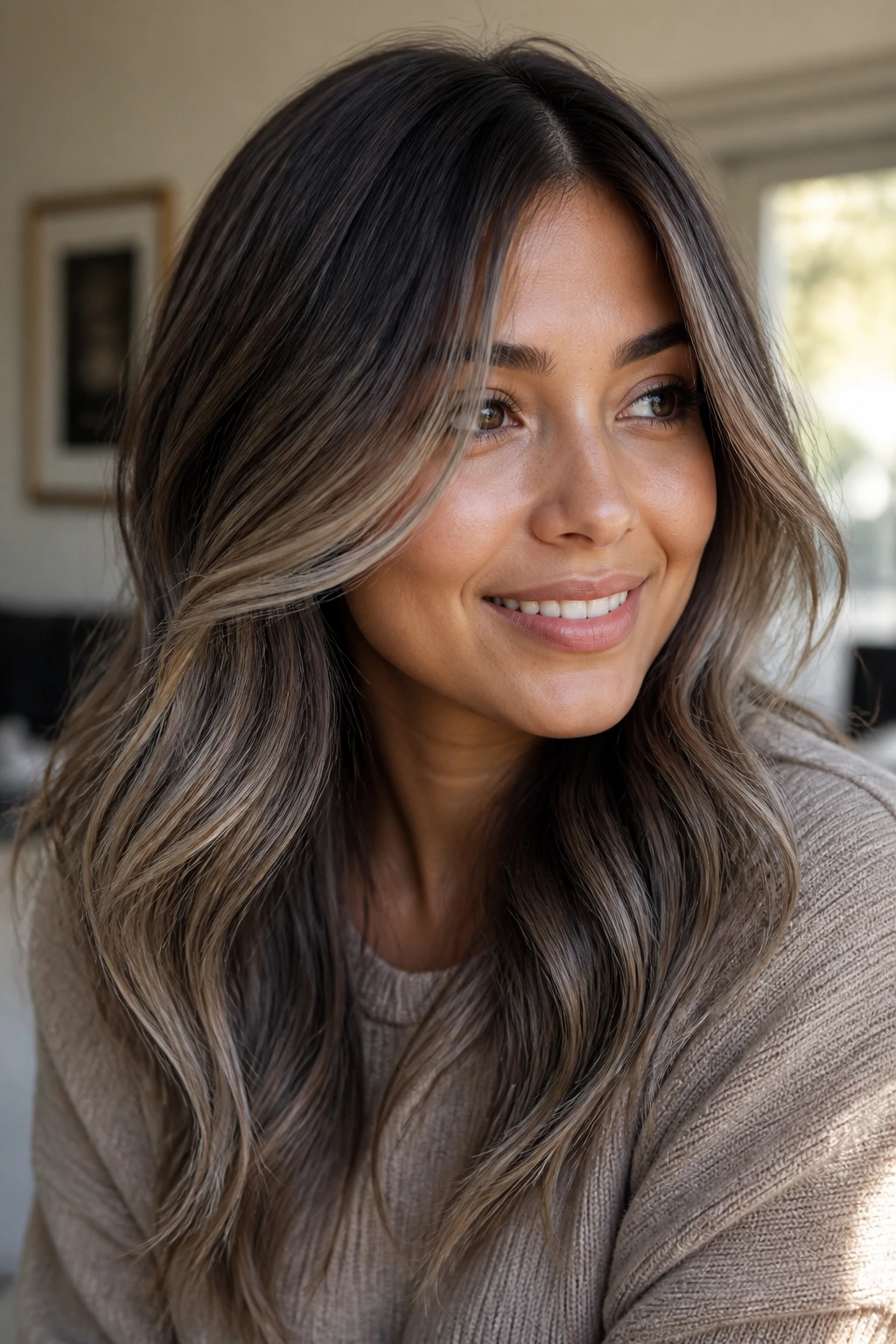
Flavor Enhancement: The hair equivalent is a sheer gloss. A beige or pearl gloss on top of the highlight job softens brass, seals the cuticle, and keeps the cool tone from feeling dry.
Customization: Ask for the lightest pieces only around the face if you want low commitment. If you want more movement, add a few thin ribbons through the crown and the outer layers, not just the surface.
Serving Suggestions: A loose wave, a side part, or a low clip-back hairstyle shows the dimension better than a slick ponytail. Cool highlights like a little movement; they don’t need a lot of fuss.
Make-It-Yours: If your skin leans warm, choose beige, mushroom, or cool caramel rather than icy silver. If your skin leans neutral or olive, you can usually take a step cooler without losing balance. If your hair is very fine, keep the ribbons thinner so the cut still looks full.
Common Mistakes That Turn Cool Color Muddy
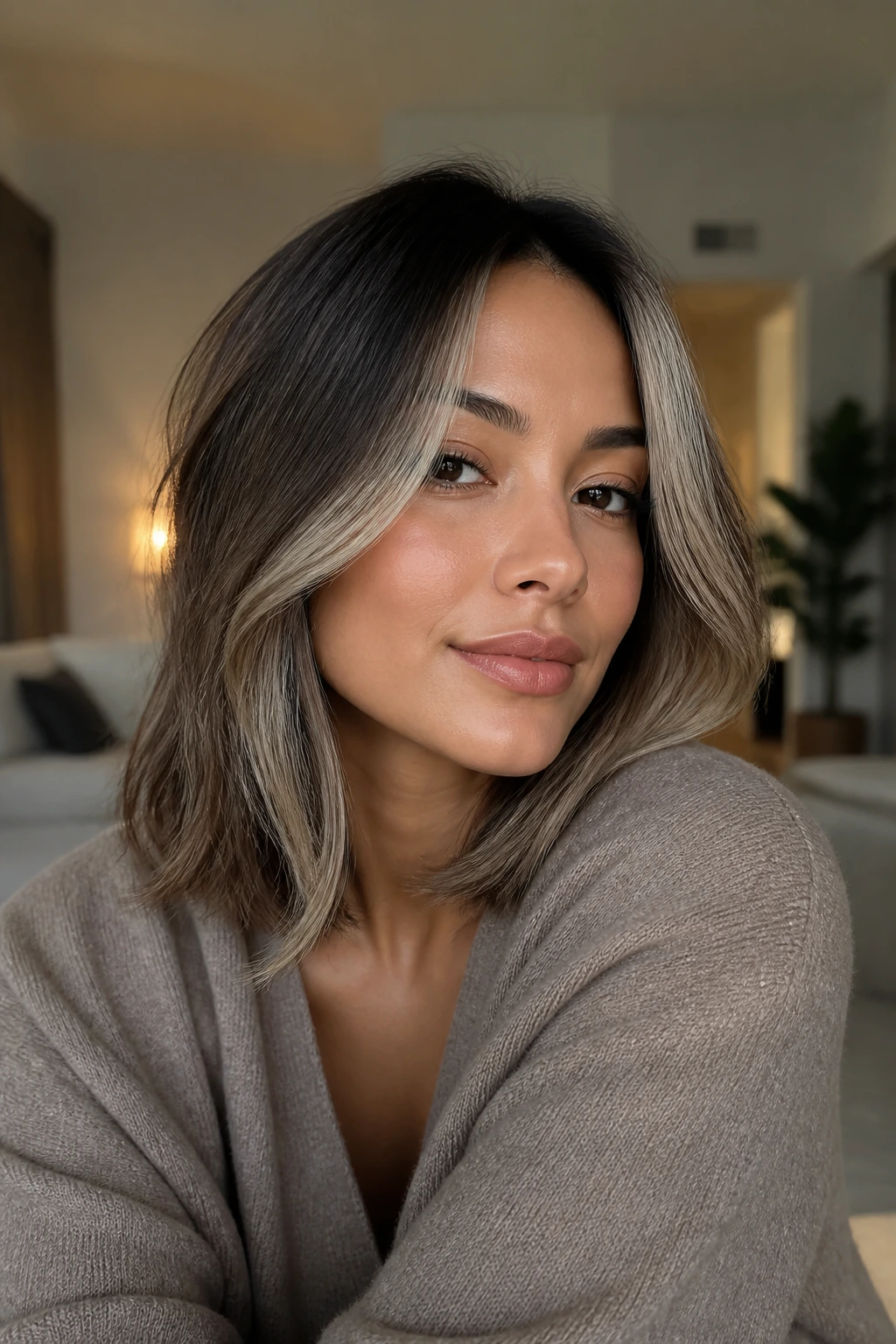
The first mistake is going too ashy too fast. On medium skin, an over-ash blonde can look flat instead of cool, especially if the base already has warmth. The fix is to bridge the tone with beige, taupe, or mushroom so the color still has life.
The second mistake is using chunky placement on soft layers. Thick highlights fight the haircut. They ignore it. The result is a stripey look that has none of the movement the layers were supposed to create. Fine ribbons, soft panels, and root melts solve that problem.
Overusing purple shampoo is another easy way to ruin good color. A little purple is useful. A lot of it can leave blonde pieces chalky and dull. If your hair is brunette, blue shampoo can also go too far and leave the tone murky. Use it like seasoning, not like laundry detergent.
The last big one is forgetting maintenance. Cool tones fade fast in heat, sun, and hard water. If you want the result to stay soft instead of drifting orange or flat, you need gloss, conditioner, and heat protection in the rotation.
Variations and Adaptations to Try
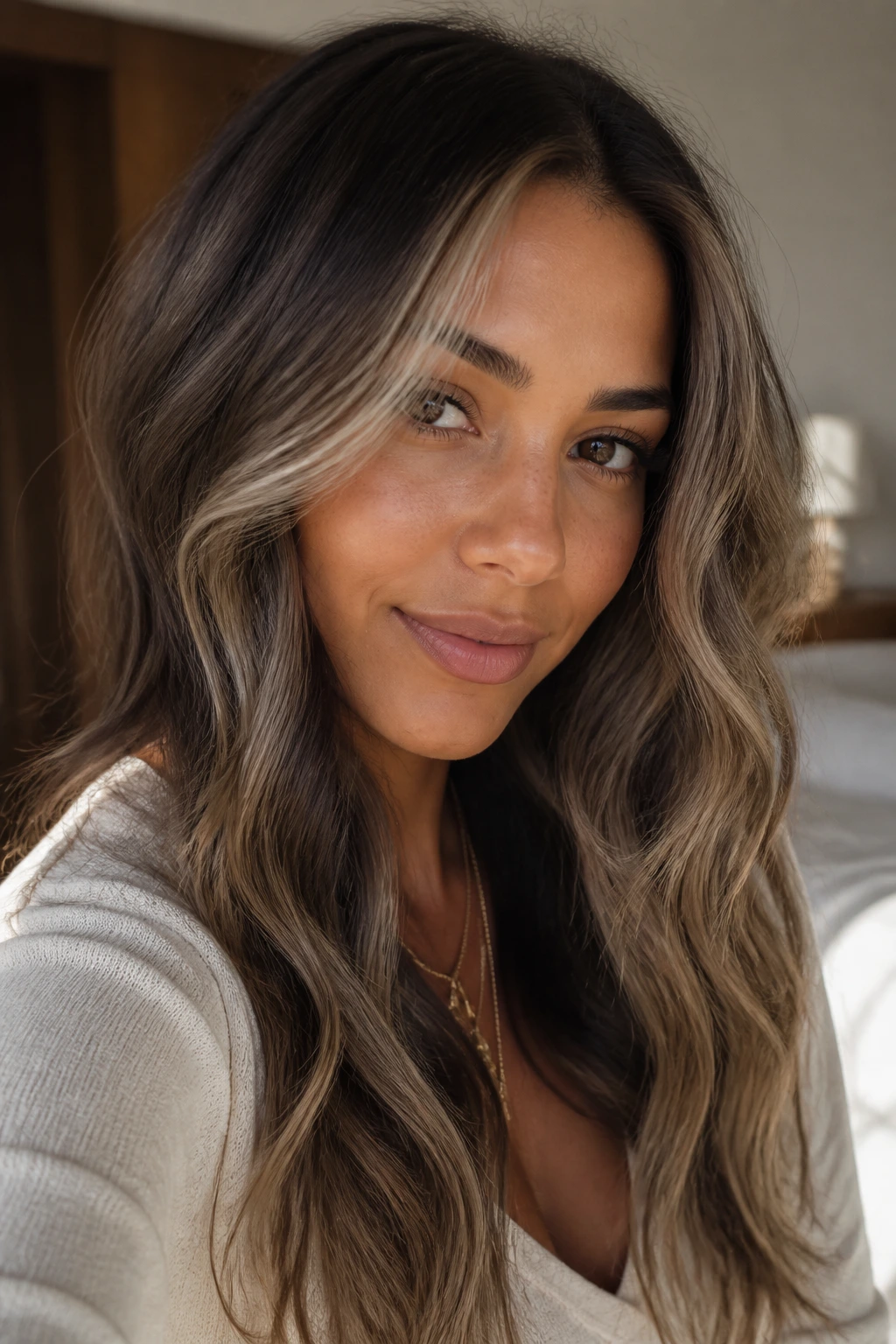
The Softest Version: Keep the base close to your natural color and use babylights only on the top layer and face frame. This is the easiest route if you want movement without a strong color statement.
The Brighter Frame: Leave the body of the hair smoky and push the front pieces one shade lighter. That gives you a clean lift around the face while the rest of the cut stays grounded.
The Cooler Brunette: Skip blonde entirely and work with slate, mushroom, charcoal, and taupe. This version is excellent if you want dimension but don’t want to cross into pale territory.
The Curly-Hair Placement: Put the lightest pieces on the outside curves of the curls and keep the interior slightly darker. That way the color shows when the curls separate, not just when the hair is wet.
The Low-Maintenance Grow-Out: Ask for a root melt and a few narrow ribbons through the mids. It softens the salon line and makes it easier to stretch appointments.
What Trips Up Cool Highlights on Medium Skin
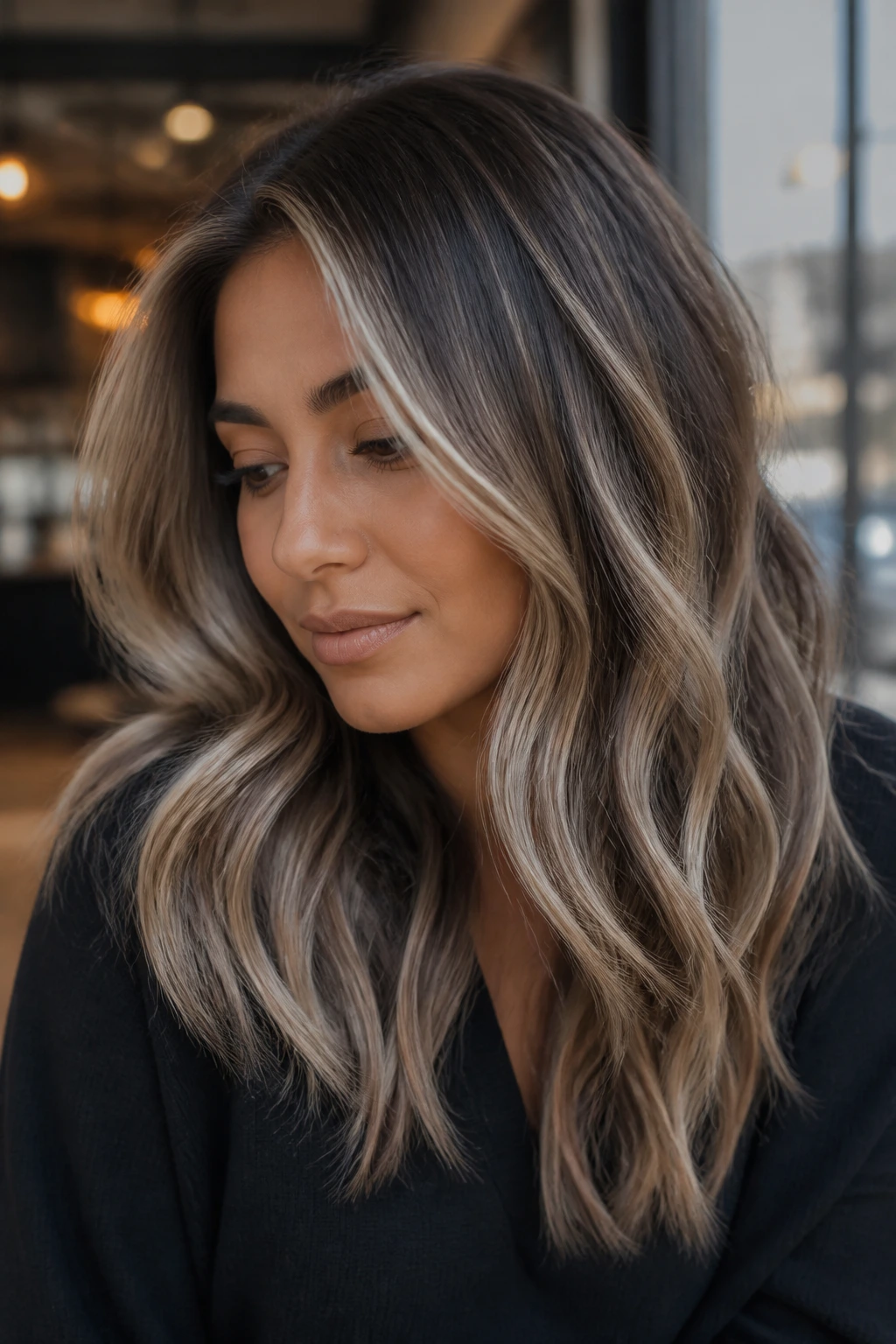
A lot of bad cool highlight jobs share the same problem: they ignore the skin and focus only on the hair chart. That’s how you get icy pieces that make medium skin look tired, or beige pieces that go too warm and lose the point. The fix is not more lightness. It is better balance.
Another common miss is choosing a highlight that’s too far away from the base color. Medium brunette hair usually looks best when the highlight family stays within two or three levels, unless the front frame is being used as an accent. Jump too far, and the contrast becomes the whole story. Keep it closer, and the dimension does more work.
A final mistake is styling the hair too sleek. Sleek hair has its place, but it can flatten mushroom, taupe, and ribboned cool tones. A bit of bend gives the color somewhere to land. That’s the whole point of soft layers in the first place.
Questions People Ask Before Booking
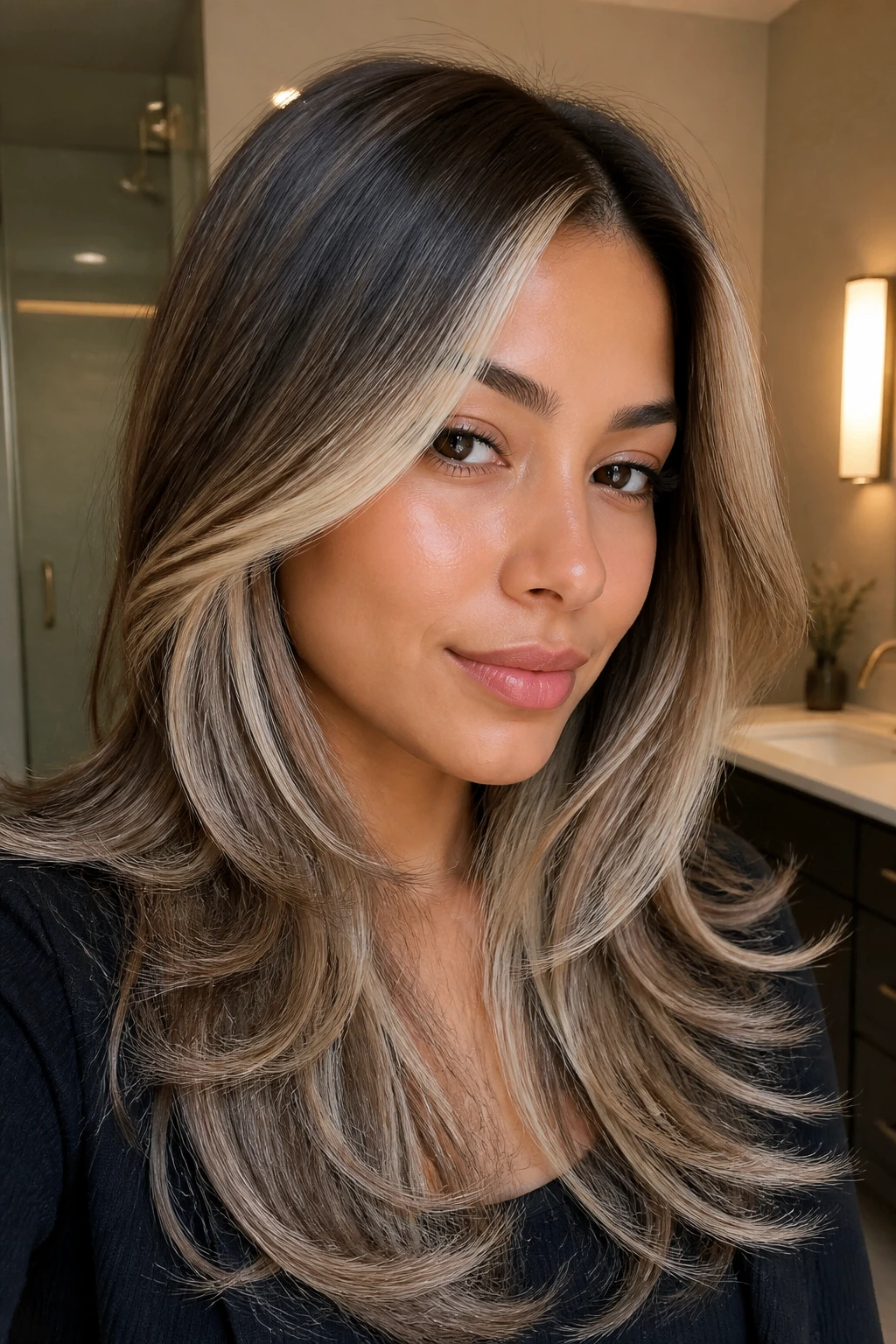
Will cool highlights wash out medium skin?
Not if the tone is chosen well. Medium skin usually handles cool beige, taupe, mushroom, and pearl better than hard silver because those tones stay soft against the face.
Do I need bleach for these looks?
Not always. Some versions rely on glosses, lowlights, or very subtle lightening, while brighter money pieces and frosted ends will need lifting.
What if my hair pulls orange?
Ask for a cooler toner and a stronger root shadow, then keep blue shampoo in the routine. Orange usually means the hair needs either a better lift or a better gloss, not just more purple shampoo.
Can this work on curly hair?
Yes, and the placement can look beautiful. The trick is to place light where the curl opens, not in a straight stripe that disappears when the hair springs back.
How often should I tone it?
Most cool highlight jobs need a refresh every 4 to 6 weeks if you want the shade to stay crisp. Babylights and shadow roots can stretch a little longer.
What should I ask for at the salon?
Talk about base depth, highlight width, tone family, and whether you want a soft root melt. Those details matter more than saying “cool blonde” and hoping for the best.
Can I do this at home?
A simple gloss or toner refresh, yes. A full cool highlight service on medium skin is harder to control because the lift, placement, and tone all need to work together.
What if the highlights look too gray?
Warm them back up with a beige or pearl gloss. Gray happens when the toner goes too far and there isn’t enough softness left in the shade.
A Cooler Finish with More Movement
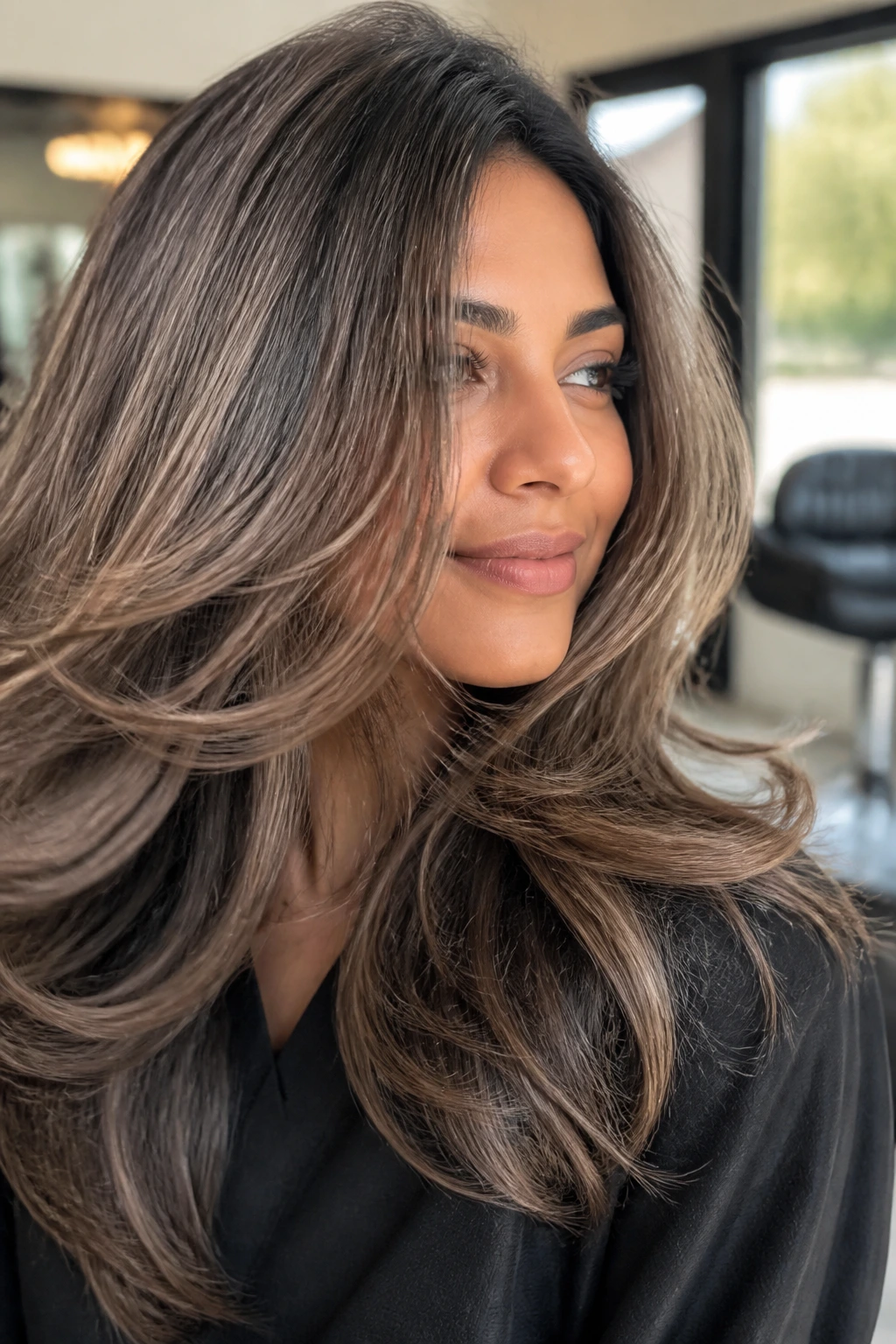
The best thing about cool highlights on medium skin with soft layers is that they don’t need to shout to do their job. A good mushroom ribbon, a smart money piece, or a soft taupe veil can change the way the whole haircut sits on the face. The layers keep it moving. The cool tone keeps it clean.
If you’re booking a color service, bring photos that show the shade in plain light and ask for the tone family, not only the name. That one habit saves a lot of disappointment. Hair color is all about the small choices: how narrow the ribbons are, how deep the root stays, how beige the gloss is, how much movement the cut gives the light.
Pick the version that matches how much contrast you actually want to live with. Then let the layers do the rest.