



A mother of the groom hairstyle has a narrow job, and that’s why people get it wrong so often. It has to look polished in the ceremony photos, still behave after two hours of hugging relatives, and survive the weird little chaos of a wedding day — humidity at the curb, a last-minute dress zipper fight, a church fan aimed straight at your fringe, the whole thing.
The best mother of the groom wedding hairstyles don’t try to steal attention. They do something smarter. They frame the face cleanly, keep the neckline visible, and hold their shape long enough that you stop thinking about your hair before the appetizers hit the table. That’s the sweet spot: neat enough for formal portraits, soft enough that you still look like yourself.
And yes, there’s a big difference between a style that looks good in a salon mirror and one that actually lasts through champagne, dancing, and a dozen candid photos taken from slightly too close. Pins matter. So does where the volume sits. A low bun reads very differently from a high one, and a side part can change the whole mood of a cut in about five seconds.
Why These 22 Looks Earn Their Place
-
Photo-Friendly Shape: Each style gives the face a clear outline, which matters when the photographer is shooting from across a chapel aisle or straight on at dinner.
-
Real-World Hold: These looks lean on structure, tucked ends, and controlled movement instead of loose fluff that collapses after the first hug.
-
Age-Comfortable Finish: Nothing here relies on trying too hard. The point is polish, not a hair helmet.
-
Works With Different Lengths: Short hair, mid-length hair, long hair, curls, coils, fine strands — there’s something here that doesn’t ask your hair to be a different texture than it is.
-
Dress-Neckline Friendly: These styles are chosen because they play well with bateau necklines, straps, sleeves, lace collars, and the dresses that look lovely until hair starts fighting them.
-
Easy to Personalize: A pearl pin, a comb, a little extra volume, or a softer wave can change the tone without rebuilding the whole style from scratch.
What Makes a Formal Style Stay Put Without Looking Stiff
The trick is balance. Too much spray and the hair turns into a shell. Too little structure and everything slips by the time the couple is introduced. The styles below aim for that middle ground: controlled, but not frozen.
What usually holds best is shape that starts low or close to the head. A low chignon, a tucked bob, or a half-up twist with a secure anchor at the crown can handle movement better than a style that depends on airy lift alone. Hair that’s too full at the top tends to loosen first. Hair that’s pinned too high can feel fussy in photos, especially if the dress already has a dramatic collar or shoulder detail.
There’s another quiet rule that matters more than people think. The neckline and the hair should not compete. If the dress has lace around the collarbone, a smoother style keeps the outfit from getting visually busy. If the dress is simple and solid, a little wave or texture can do more work. Simple. Useful. Easy to miss.
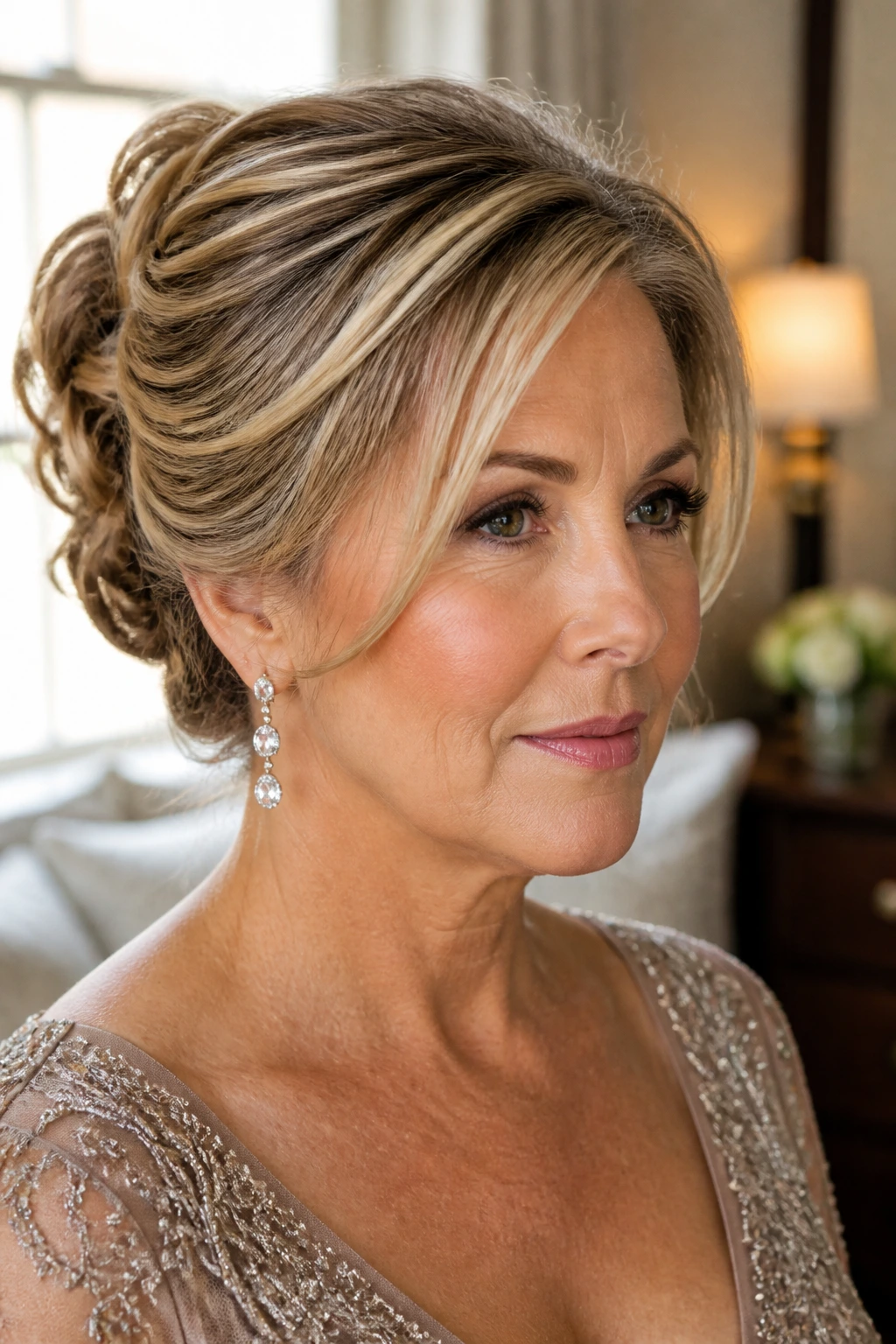
1. Soft Low Chignon With Face-Framing Pieces
A soft low chignon is the reliable choice that never looks boring when it’s done well. The bun sits at the nape, which gives the style a calm, formal line, while a few loose front pieces soften the face without falling into your lipstick. It’s especially good if the dress has a shaped neckline or if you want earrings to show up without distraction.
Why It Works
The low placement does two things at once: it keeps the silhouette elegant and it makes the style more stable than a high bun. A chignon pinned right at the nape usually survives movement better, because the weight of the hair is balanced close to the head.
If your hair is medium or long, this is one of the easiest styles to adapt. Fine hair gets a little padding at the base. Thick hair can be wrapped tighter. Curly hair can be smoothed first or left with a little texture if that fits the rest of your look.
The Detail That Matters
The front pieces should not be wispy for the sake of being wispy. Leave enough hair to curve gently along the cheekbone, then stop. If the tendrils get too long, the style starts to feel casual. If they’re too short, the whole thing can look severe.
A pearl pin or a small comb tucked into one side works well here. Keep the sparkle close to the bun, not floating off to the side like a separate idea.
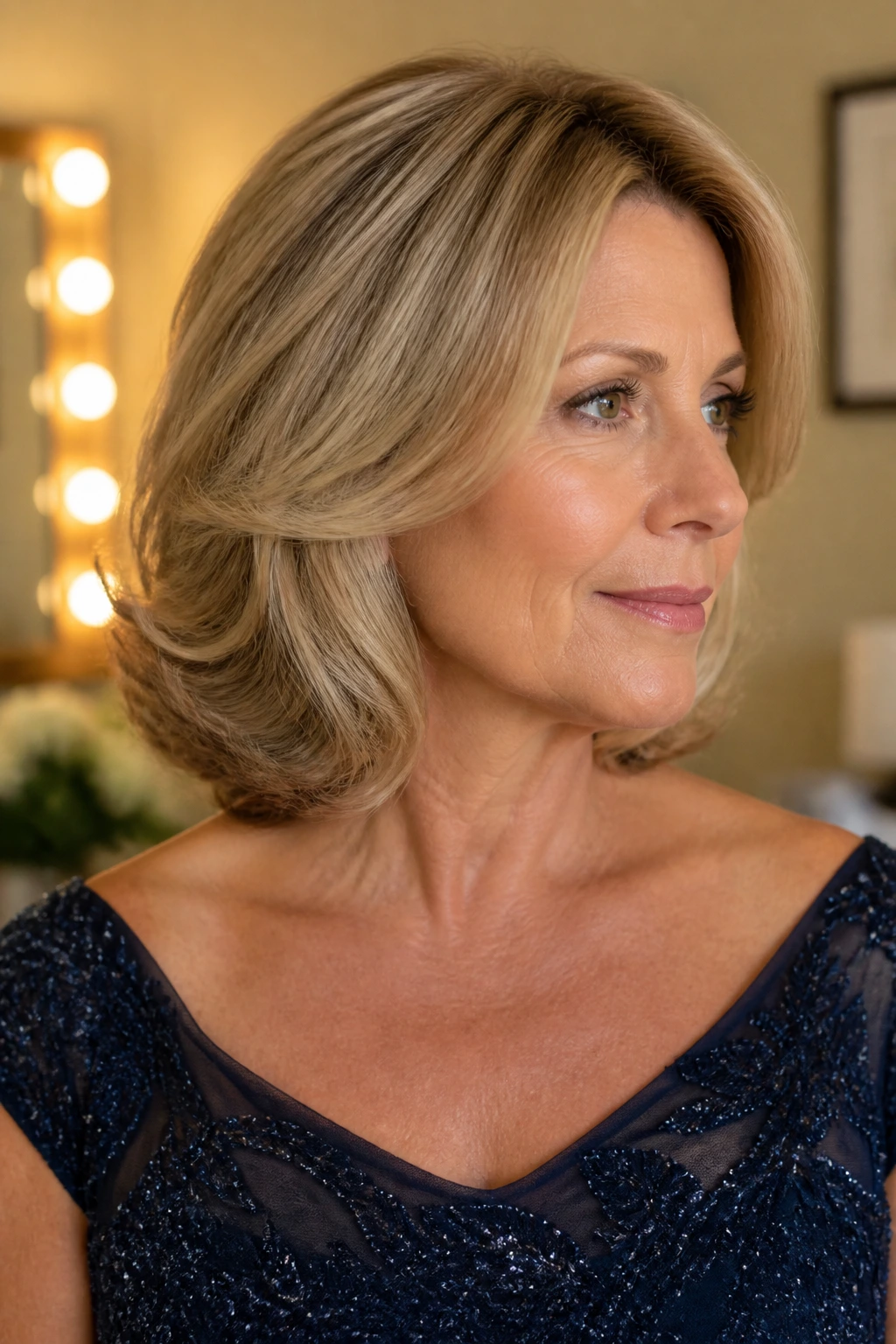
2. Shoulder-Length Blowout With a Deep Side Part
If your hair falls around the shoulders and you want movement more than structure, a polished blowout with a deep side part is hard to beat. It looks finished without pretending to be an updo, and that matters for women who hate feeling pinned in place all day. The ends should curve under or softly flick out, never float randomly.
The deep side part gives the style its formality. Without it, shoulder-length hair can read a little everyday. With it, the whole look gets a sharper line and a more tailored feel. That line also helps a face look lifted in photos — not through trickery, but because the eye has somewhere to go.
This is one of the better mother of the groom wedding hairstyles when you wear a dress with sleeves or a higher neckline. The hair stays present, but it doesn’t crowd the outfit. And if the ceremony runs long, a good blowout usually degrades more gracefully than curls that started too tight.
3. French Twist With a Soft, Modern Finish
A French twist can go wrong fast if it’s pulled too tight. Too shiny, too shell-like, too stern. But a softer version — with a little airy lift at the crown and a few controlled ends tucked in loosely — has real presence. It looks elegant from the side and clean from the back, which is exactly where wedding photos tend to catch people.
The modern finish matters. Keep the surface smooth, but not lacquered. You want a style that moves when you turn your head, not one that sits there like it was bolted in place. A little texture in the hair before pinning makes the twist easier to hold, especially if your strands are slippery.
Best For
- Dresses with sculpted necklines
- Medium to thick hair
- Formal evening ceremonies
- Anyone who wants the neck fully open
A French twist is one of those styles that can look a touch severe until you soften the front. Then it suddenly makes sense. That tiny change changes everything.
4. Half-Up Crown Twist for Medium-Length Hair
Half-up styles are useful when you want shape without losing the movement that makes hair feel like hair. A crown twist gives the top section enough control to stay neat, while the rest falls in soft curves or loose waves. It’s a good middle path for women who do not want a full updo and don’t want to spend the evening pushing hair off their shoulders.
This works especially well on medium-length hair with layers. The crown area gets lifted just enough to create polish, and the lower section can still move naturally. If your hair is fine, a little teasing under the top layer helps the twist look fuller. If your hair is dense, keep the twist compact so it doesn’t sit too wide.
It also plays nicely with decorative clips. One small comb at the twist point is usually enough. More than that and the look starts drifting into bridal territory, which is not the assignment here.
5. Smooth Low Bun With a Wrapped Base
A smooth low bun is the style I’d put near the top of any mother of the groom wedding hairstyles list if the dress is detailed and the jewelry needs room to breathe. It sits flat, stays neat, and gives the back of the head a quiet, tailored shape. The wrapped base makes it look finished instead of utilitarian.
The strength of this style is restraint. You’re not asking the hair to do gymnastics. You’re asking it to lie cleanly, wrap neatly, and keep a soft shine. That’s it. And because the bun is low, it works with everything from long sleeves to off-the-shoulder dresses.
A Small but Important Choice
Part your hair before smoothing it back. Middle part or side part — either can work — but make the decision early and commit to it. Changing the part after the bun is pinned usually makes the surface uneven, and once that happens, the style starts fighting itself.
The bun should look compact from the back, not flattened to the point of disappearing. A little roundness reads expensive. Flat reads like you slept on it wrong.
6. Old Hollywood Waves With Controlled Shine
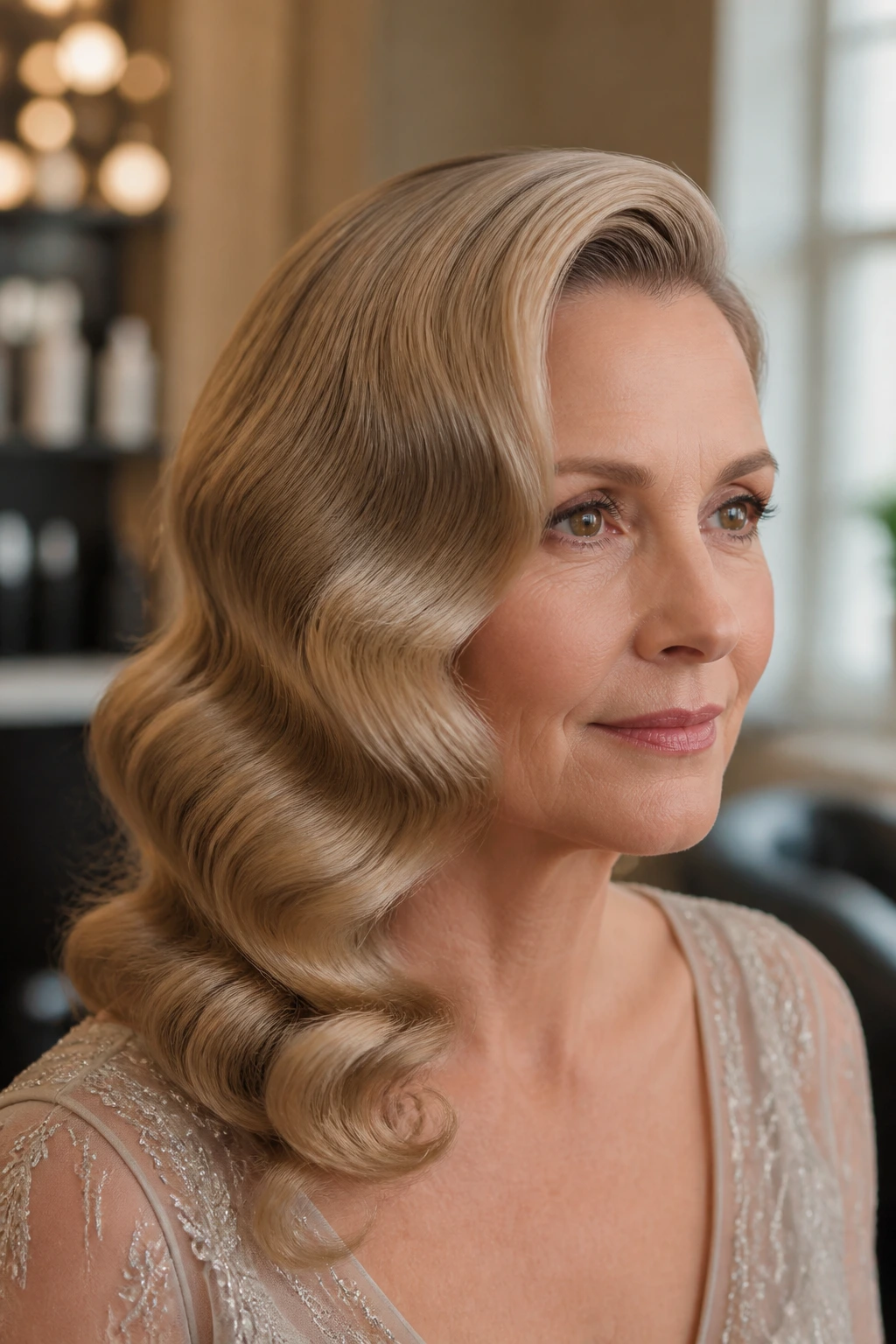
Old Hollywood waves are for the woman who wants drama, but not chaos. The waves sit in a patterned bend, glossy and deliberate, which gives the hair a formal rhythm without requiring an updo. It’s a strong choice for longer hair and for dresses that are simple enough to let the hair carry some of the visual weight.
The key is control. These are not beach waves. The curve should travel in the same direction, and the finish should look smooth, not crunchy. A side part deepens the shape and makes the style feel more ceremonial. If the waves are too fluffy, the style stops reading as formal and starts looking like an ordinary blowout that got caught in the wrong lighting.
This is one of the few styles where shine spray earns its keep. A very light mist, not a soak, helps the bends show up in photos. Too much product and the hair can start to separate in an odd, greasy way.
7. A Tucked Bob With a Glossy Finish
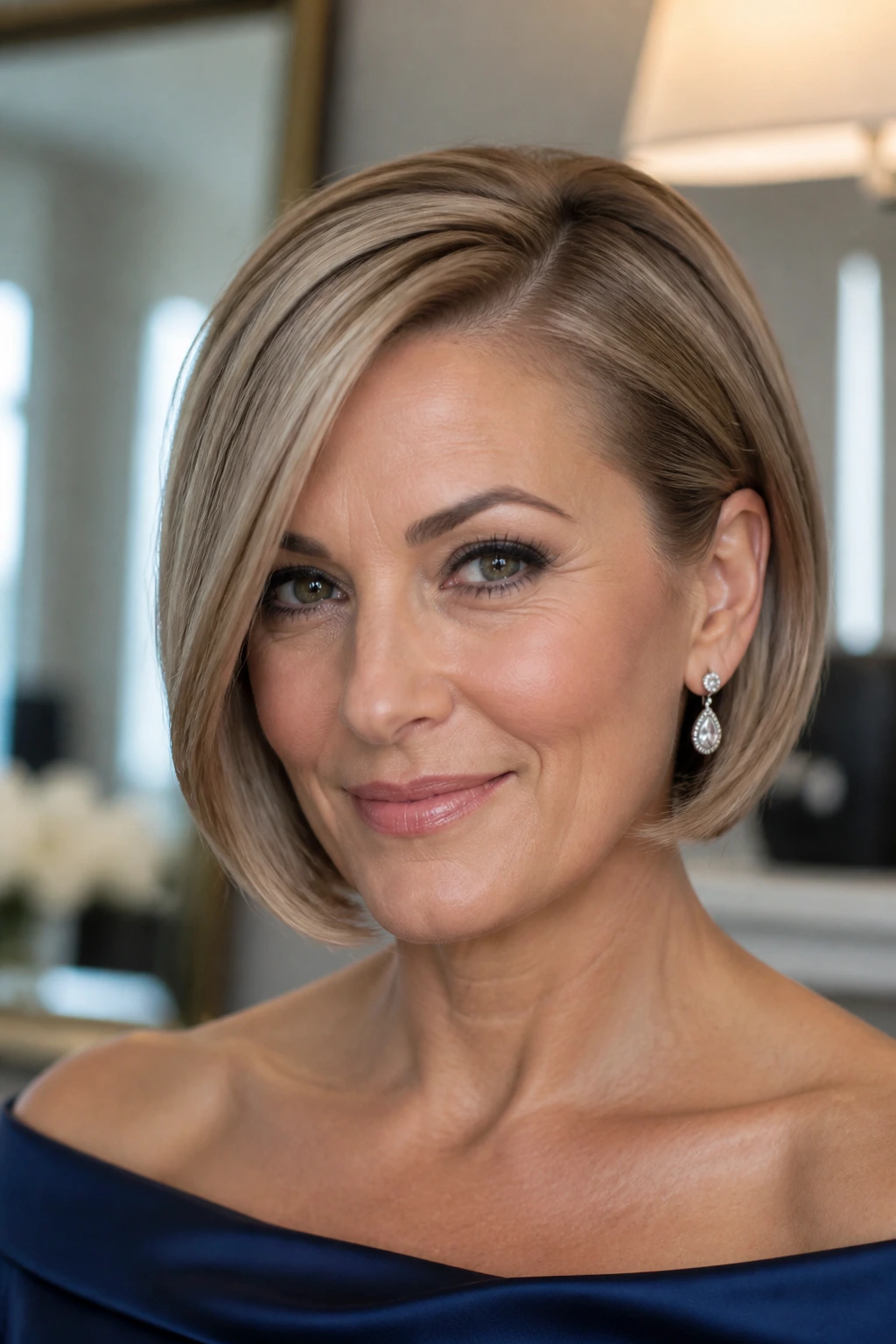
A bob doesn’t need to be long to look formal. A tucked bob — where the ends are curved under or tucked behind one ear, with the rest kept smooth and glossy — feels polished and modern at the same time. It’s a strong option for shorter hair that doesn’t want to fake extra length with too much teasing.
The shape should stay close to the head. If the bob is layered, smooth the top section first so the ends don’t fray at the edges. A little side tuck creates asymmetry, which keeps the style from feeling stiff. Add a decorative pin on the tucked side if the dress needs a small focal point.
Short hair often gets overlooked in wedding conversations, which is ridiculous. A sharp bob can look cleaner in profile than a lot of elaborate updos, especially when the dress neckline is already doing a lot of work.
8. Braided Crown With Loose Ends
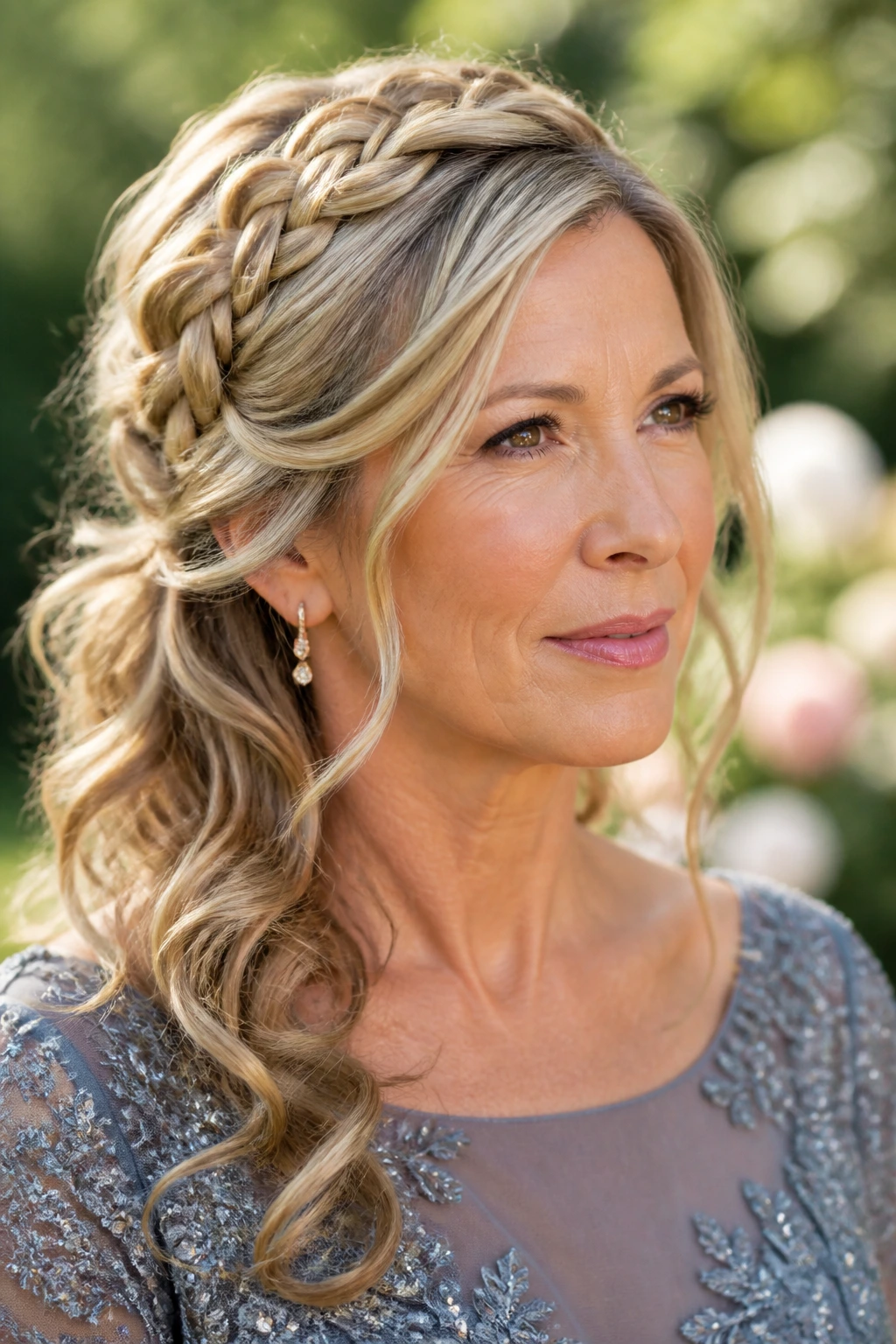
A braided crown has a softer, more romantic edge than a strict bun, but it still keeps the hair under control. The braid wraps around the head or across the top, then flows into loose ends that can be curled or left straight depending on the rest of the look. It works well when you want texture without a lot of height.
The braid itself needs to be tidy. If the strands puff out too much, the style starts to look casual. Keep the sections even, then gently widen the braid with your fingers after it’s secured. That gives the crown a fuller shape without making it messy.
This style is especially good for medium to long hair with some natural texture. It also handles humid weather better than a lot of looser curled styles, because the braid gives the whole look a built-in anchor. If you want a floral comb, this is one of the easiest places to put it.
9. Side-Swept Curl Set for a One-Shoulder Dress
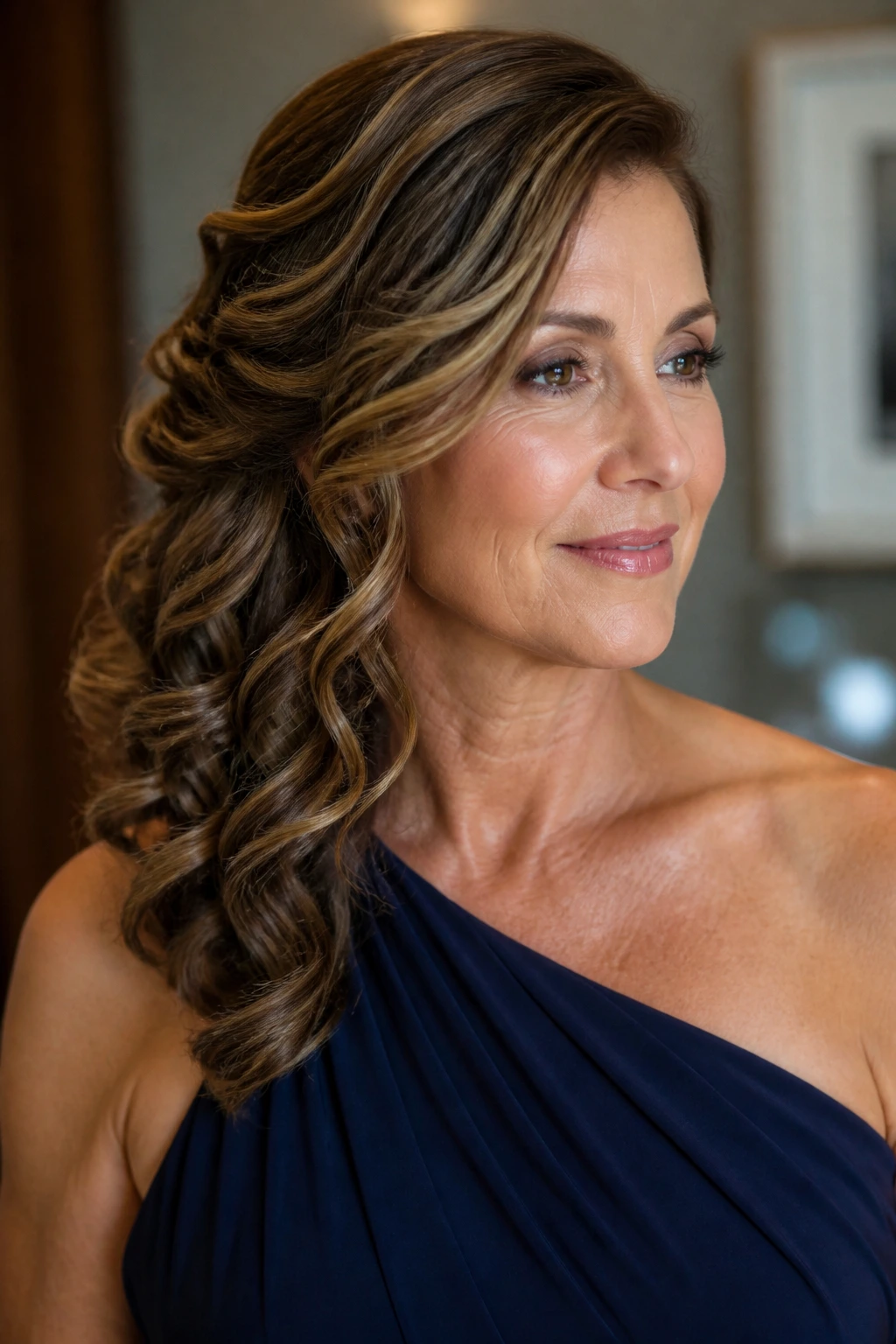
A one-shoulder dress asks for hair that clears the neckline instead of fighting it. Side-swept curls do that beautifully. All the movement is pulled toward one side, which leaves the shoulder detail visible and gives the face a soft, angled frame.
The curls should be loose enough to move, but not so loose that they fall flat in the first hour. Pinning the heavier side just behind the ear usually helps the shape stay put. A little volume at the crown keeps the look from drooping toward the side and disappearing into the shoulder line.
If you have medium or long hair, this style can be done with a curling iron or hot rollers. The rollers give a smoother bend; the iron gives more definition. I’d choose the rollers for a daytime wedding and the iron if the dress or venue calls for a sharper finish.
10. Twisted Half-Up Style for Curly or Coily Hair
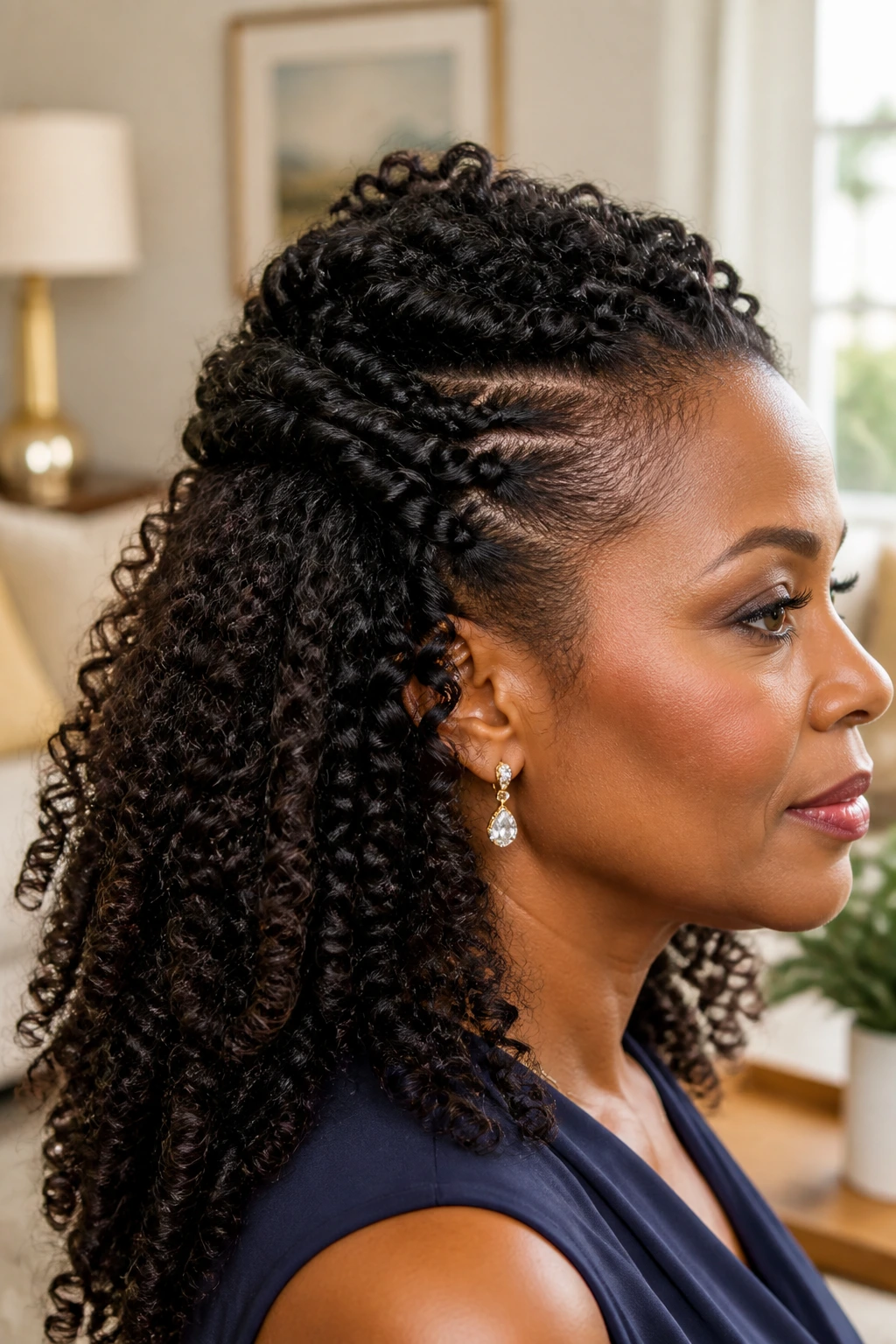
Curly and coily hair does not need to be forced into a generic updo to look formal. A twisted half-up style lets the natural pattern stay visible while gathering enough hair at the top to keep the face open. That matters. The texture is the point.
The top section can be twisted back in two or three neat movements, then pinned where the head curves toward the crown. The rest can hang freely in defined curls or coils. If the hair is longer, you can gather a little more from the sides for extra control, but don’t squeeze the texture too hard. It looks better when the shape still breathes.
What to Ask for at the Chair
- Smooth roots without flattening the curl pattern
- Enough moisture to prevent frizz, but not so much product that the hair collapses
- Pins matched to the hair color so they disappear
- A light hold spray that supports shape without dulling shine
This is one of the strongest mother of the groom wedding hairstyles for textured hair because it respects the hair instead of fighting it.
11. Textured Pixie With Lift at the Front
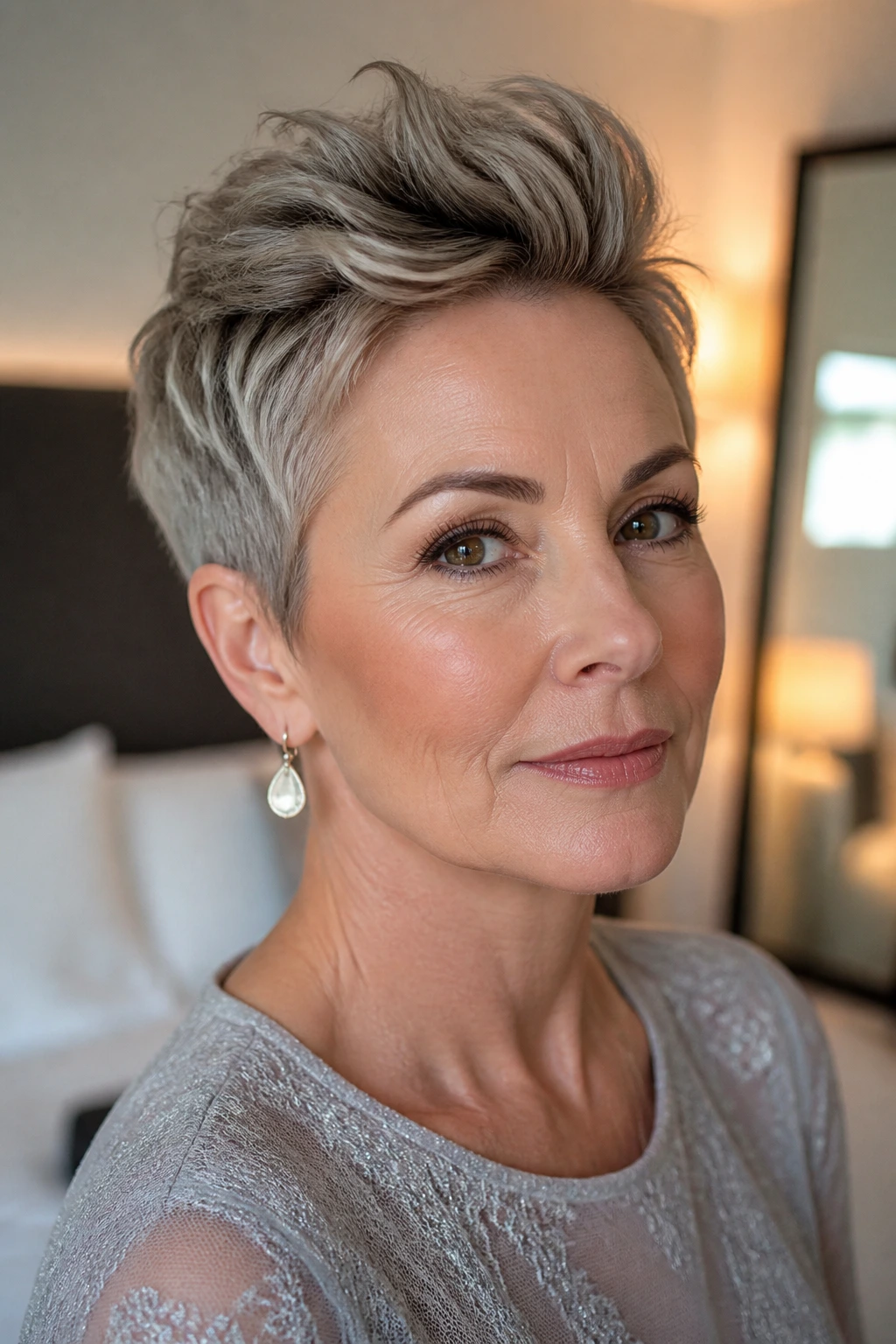
A pixie can look formal without adding length. The trick is to give the front and crown a little controlled lift, then keep the sides neat and close. That creates shape without turning the hair into a cloud. A textured pixie has a lovely energy at weddings because it reads confident and unfussy.
The front should be styled intentionally — either swept slightly to one side or lifted with a bit of root support. The finish can be matte or lightly shiny depending on the dress and accessories. If the outfit is simple, a little gloss helps. If the outfit already has sparkle, keep the hair softer.
This style works especially well when the earrings get a moment. Short hair naturally opens space around the face and neck, which can make even a simple neckline look more considered. And no, it does not have to look “less formal” than an updo. That old rule is tired.
12. Low Ponytail With a Polished Wrap
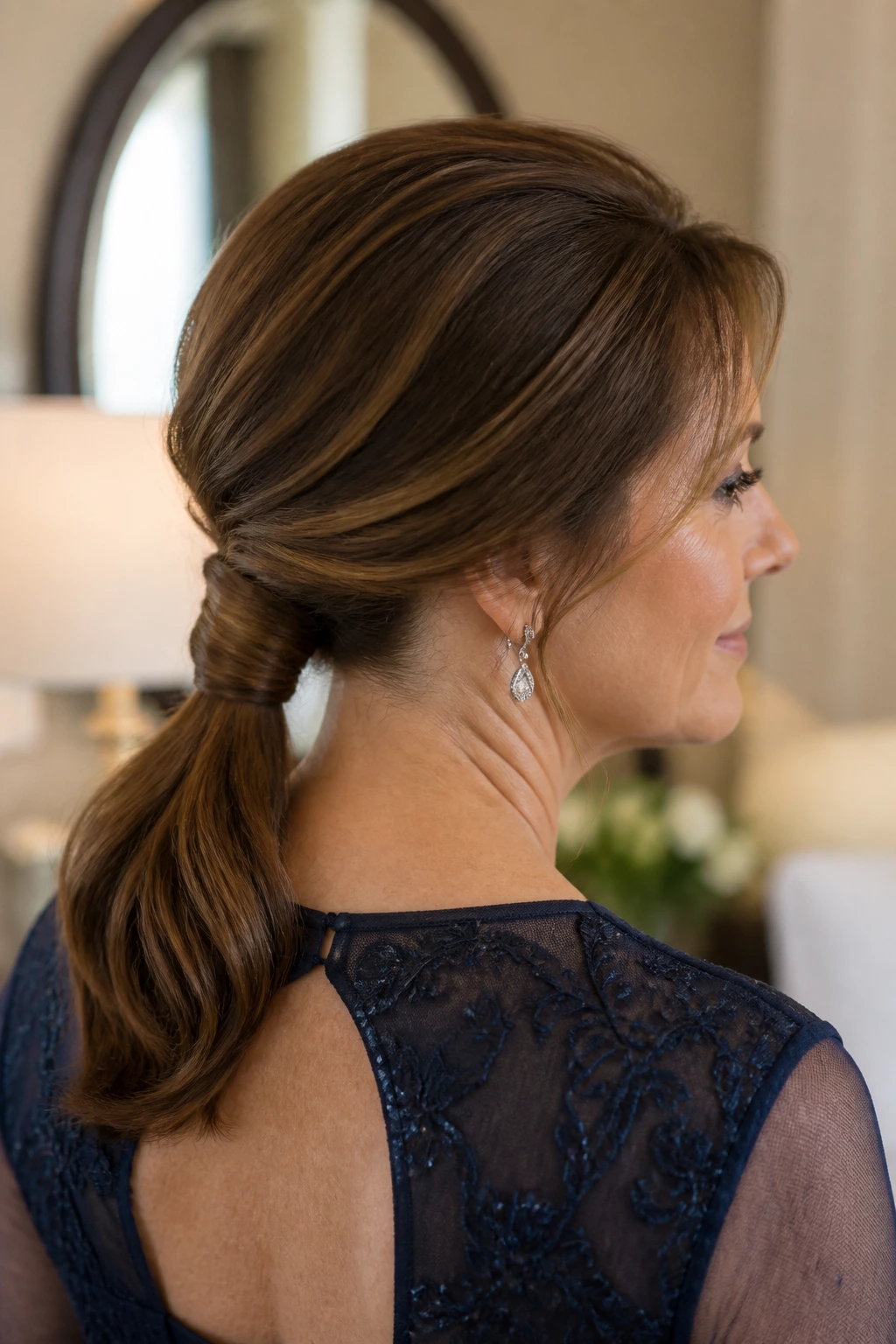
A low ponytail can be formal if the base is neat and the hair is smoothed with intention. The wrapped section at the elastic hides the practical part, which is half the battle. From the front, the style stays elegant and easy to wear. From the back, it looks much more dressed up than a casual ponytail ever would.
The ponytail can be straight, softly curved, or lightly waved, depending on the dress. Straight hair gives a sharper line. Waves make it feel a little softer and more romantic. Either way, keep the elastic low and close to the nape so the silhouette stays graceful.
This style is a smart choice for women who want movement but need their hair secured. It’s also a good one for long events because you can refresh it fast. A quick smoothing of the top layer and a tiny bit of shine spray around the base usually brings it back to life.
13. Layered Curls With Soft Crown Volume
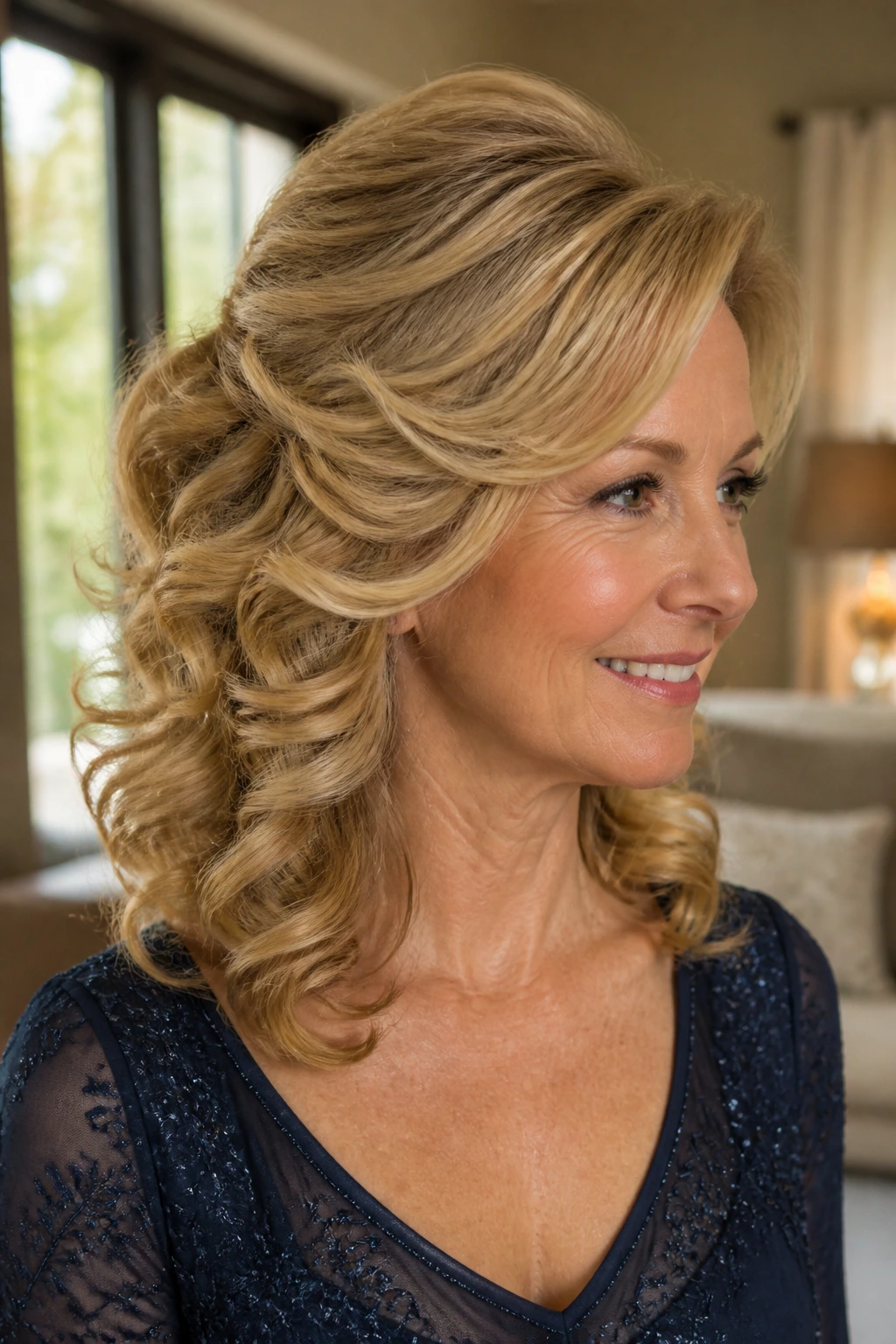
Layered curls can look beautiful at a wedding, but they need shape. If the crown goes flat, the style loses energy. If the curls get too round and springy, they start feeling too casual. The answer sits in the middle: lift at the crown, then defined curls through the lengths.
This is one of the better choices when the dress is simple and the hair is meant to carry a little of the visual drama. It works on medium to long hair, and the layers help the curls stack in a way that looks intentional rather than accidental. A side part often gives the front more polish than a center part, though both can work.
If your curls are naturally loose, set them with a curling iron in sections about 1 to 1.5 inches wide. If they’re already curly, shape the curl clumps with a diffuser and don’t overbrush. That’s where the trouble starts.
14. Side Chignon With a Decorative Comb
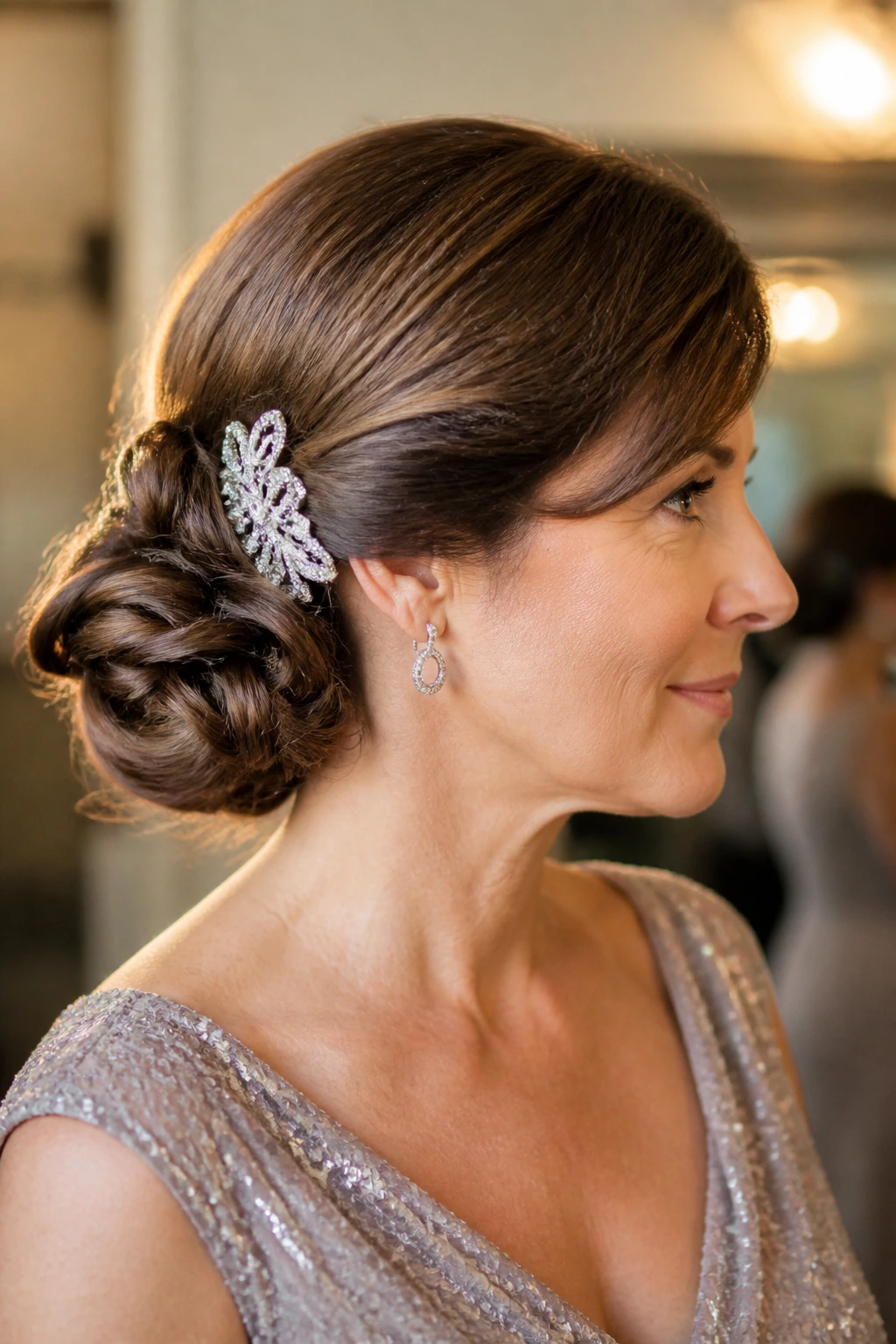
A side chignon shifts the focal point away from the center of the head, which gives the whole style a bit of old-school glamour. It also pairs well with asymmetrical dresses or necklines that already have movement on one side. The comb can sit above the chignon or slightly forward, depending on how much sparkle you want in the frame.
The side placement creates a soft line across the back, and that line looks especially good when the hair is medium to thick. The bun itself should be smooth, not overpuffed. You want enough texture to show shape, but not so much volume that it crowds the comb.
I like this style for women who want formal hair without a lot of height. It keeps the profile calm. It also photographs well from the side, which is where a surprising number of wedding photos happen when people are turning to watch the couple enter.
15. Defined Natural Curls Shaped Into a Formal Silhouette
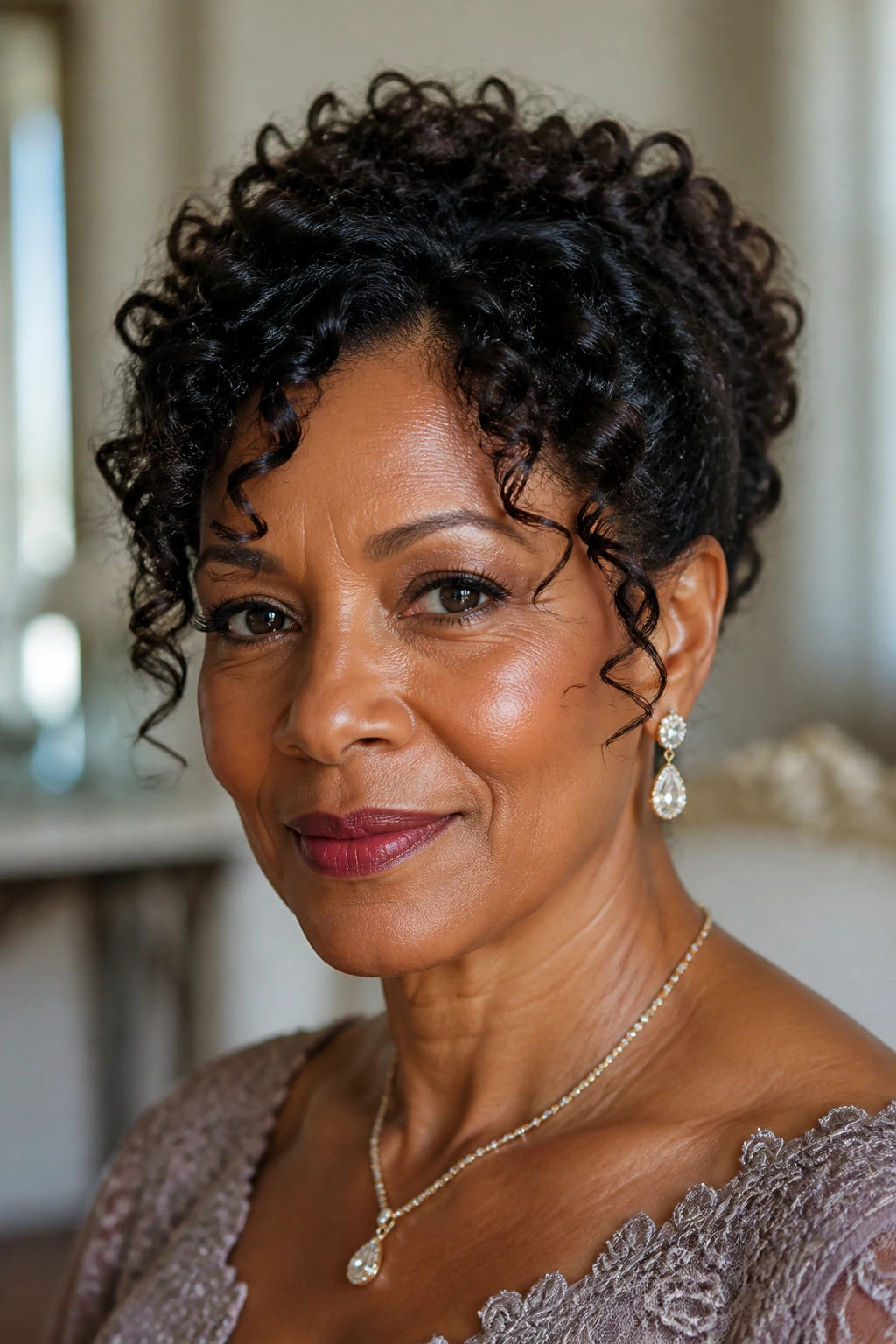
Defined curls can do the whole job if they’re shaped on purpose. That means the silhouette matters more than the number of curls. A little lift at the roots, a clean shape around the face, and enough moisture to stop frizz from spreading out at the edges — that’s the formula.
The front should be arranged so the curls fall in a balanced line, not just wherever they landed after diffusing. Pinning a small section back on one side can open the face and keep the style from feeling too wide. That tiny move changes the look more than people expect.
This is one of the best mother of the groom wedding hairstyles for women who want to wear their natural texture and still look dressed up. The point isn’t to tame the curls into submission. The point is to give them a clear frame.
16. A Soft Roll-Up Style for Fine, Slippery Hair
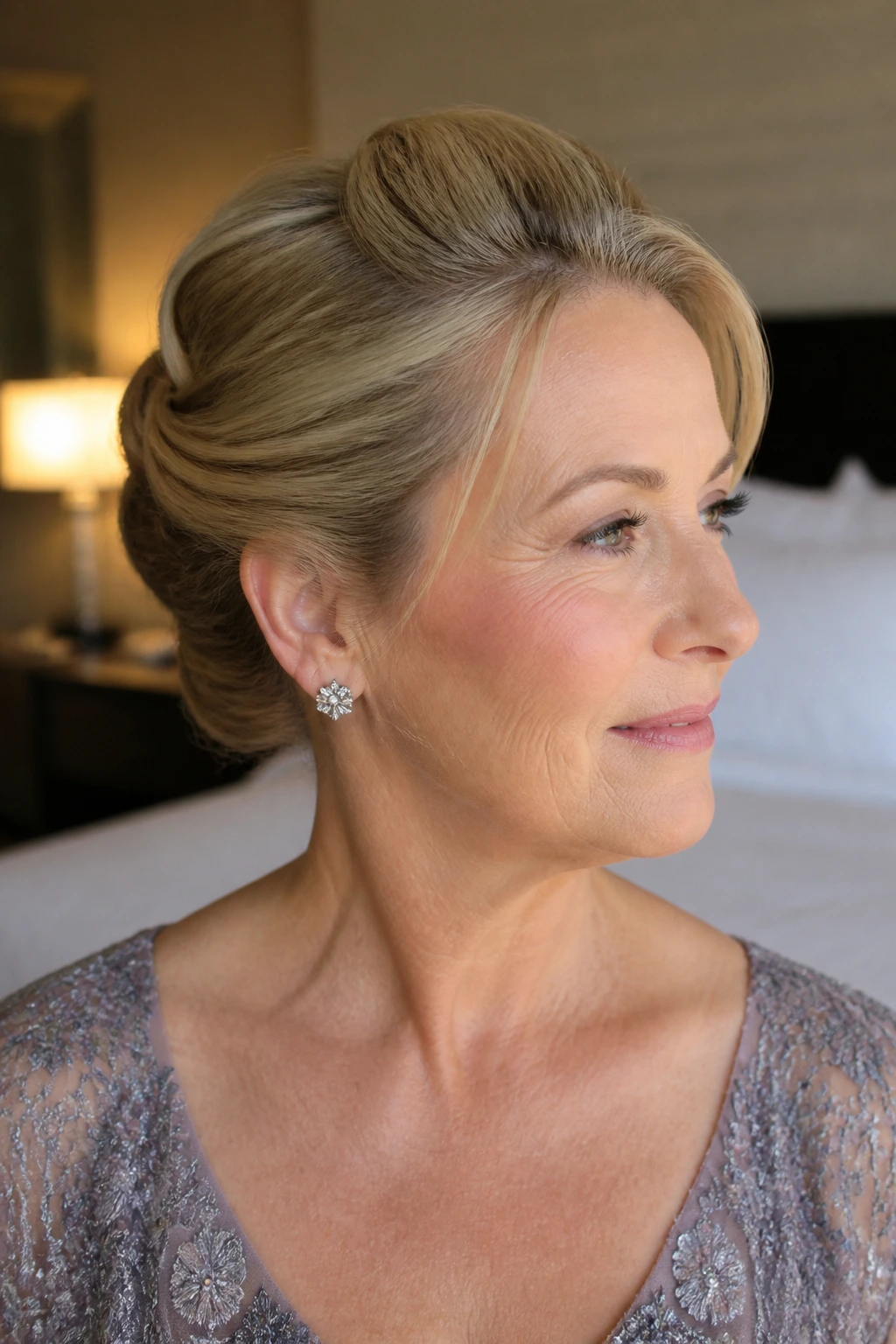
Fine hair often resists fancy updos because it slips out of pins and loses volume halfway through the day. A soft roll-up style works better than a heavier bun in a lot of those cases. The hair is rolled upward or inward in sections, then secured close to the head, which gives the illusion of fullness without asking the hair to hold a giant shape.
The important part is prep. Fine hair usually needs a little grip before styling — dry shampoo at the roots, a light texturizing mist through the mid-lengths, and cool air from the dryer to set the base. Without that, the roll can collapse.
This style suits women who want something elegant but not bulky. It also looks clean from the back, which matters if the dress has a detailed back or the ceremony includes lots of sitting and standing.
17. Modern Knot at the Nape
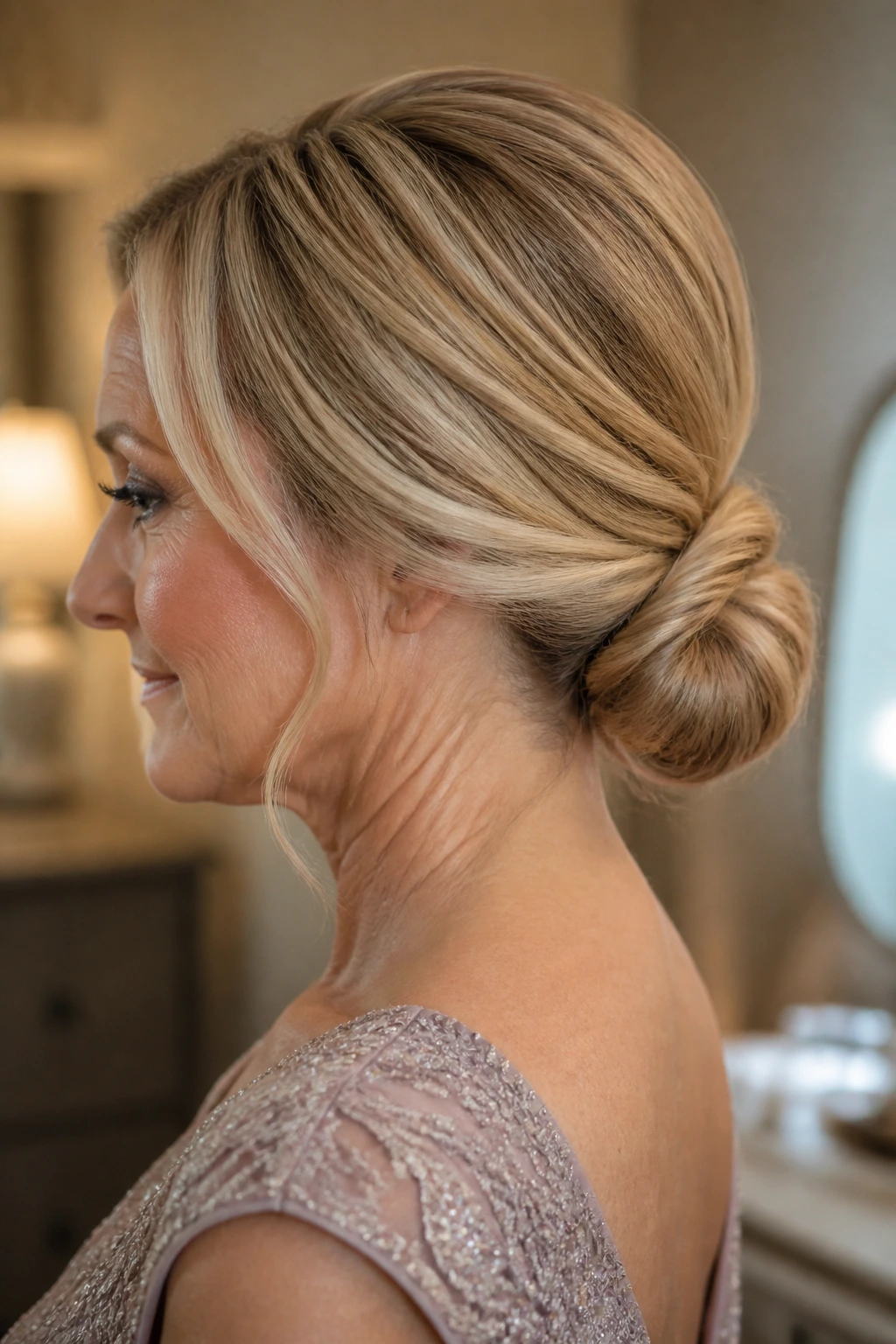
A modern knot sits somewhere between a bun and a twist. It’s cleaner than a loose knot, softer than a strict chignon, and usually has a bit of visible wrap or fold that makes it feel current without getting trendy in the annoying sense. The knot belongs low, just at or below the nape.
That low placement keeps it formal and comfortable. It also makes the neck look longer, which is a nice side effect with high collars and closed-neck dresses. The strands should be smooth, but don’t iron the life out of them. A little softness around the edges helps the knot look intentional rather than severe.
Add a pin only if the dress needs it. This style has enough shape on its own. Over-accessorizing it can make the back look crowded, and the knot is too nice to bury under extra hardware.
18. Loose Boho Waves With a Controlled Finish
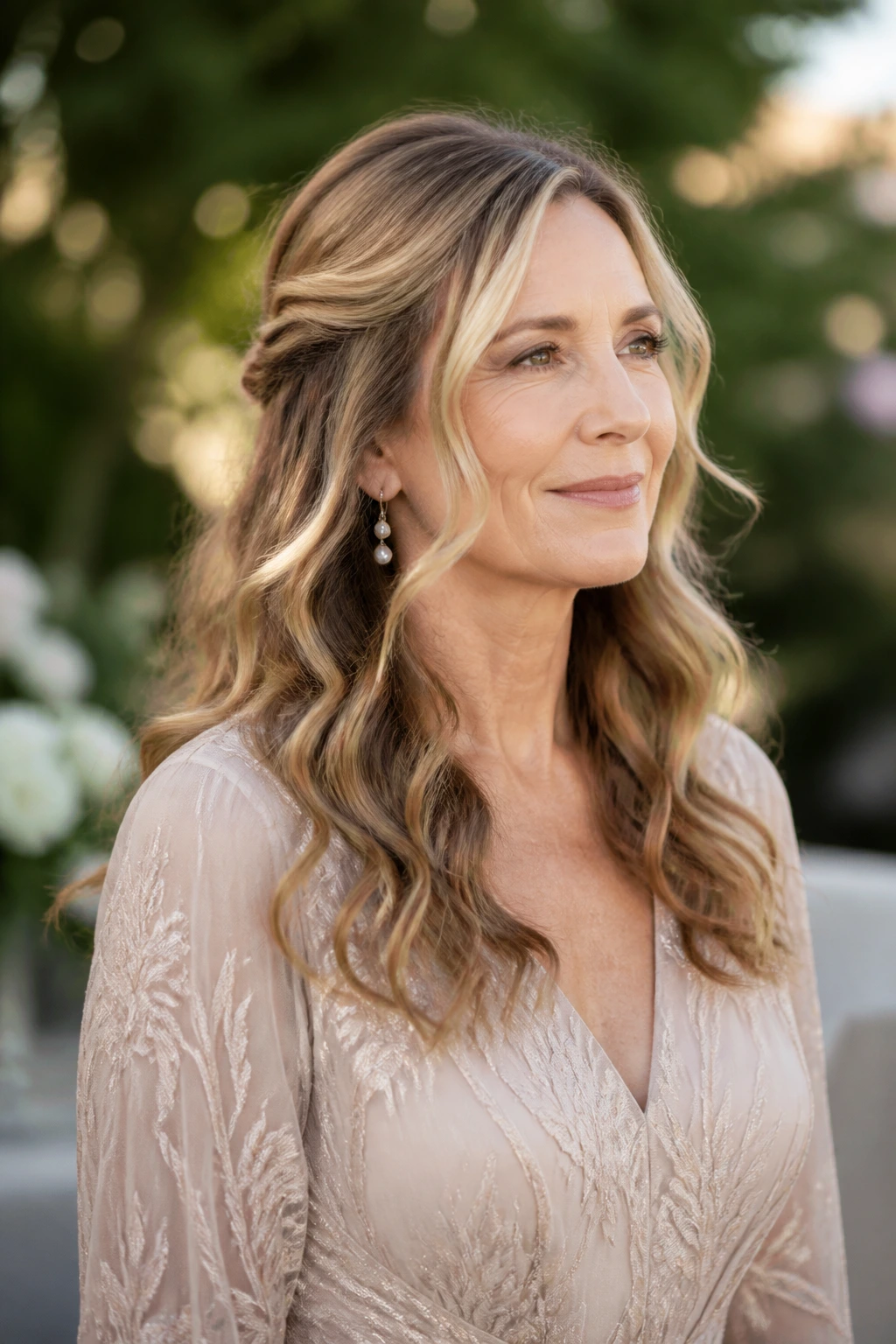
Loose boho waves can absolutely work for a mother of the groom, but only if they’re controlled. That means the wave pattern should be soft and consistent, not beachy to the point of looking like you’ve just come from a pool deck. The waves can be worn down or pinned back slightly at the sides to keep the face open.
This style is a good fit for outdoor weddings, garden venues, or dresses with a relaxed drape. It gives movement without formality becoming too stiff. The challenge is keeping the finish smooth enough that it still reads as intentional.
A small amount of anti-frizz cream on the ends usually helps. Too much, and the waves go limp. Too little, and the style starts puffing around the face in ways no one asked for. That balance is annoyingly specific, but it matters.
19. Elegant Blowout With One Side Tucked Behind the Ear
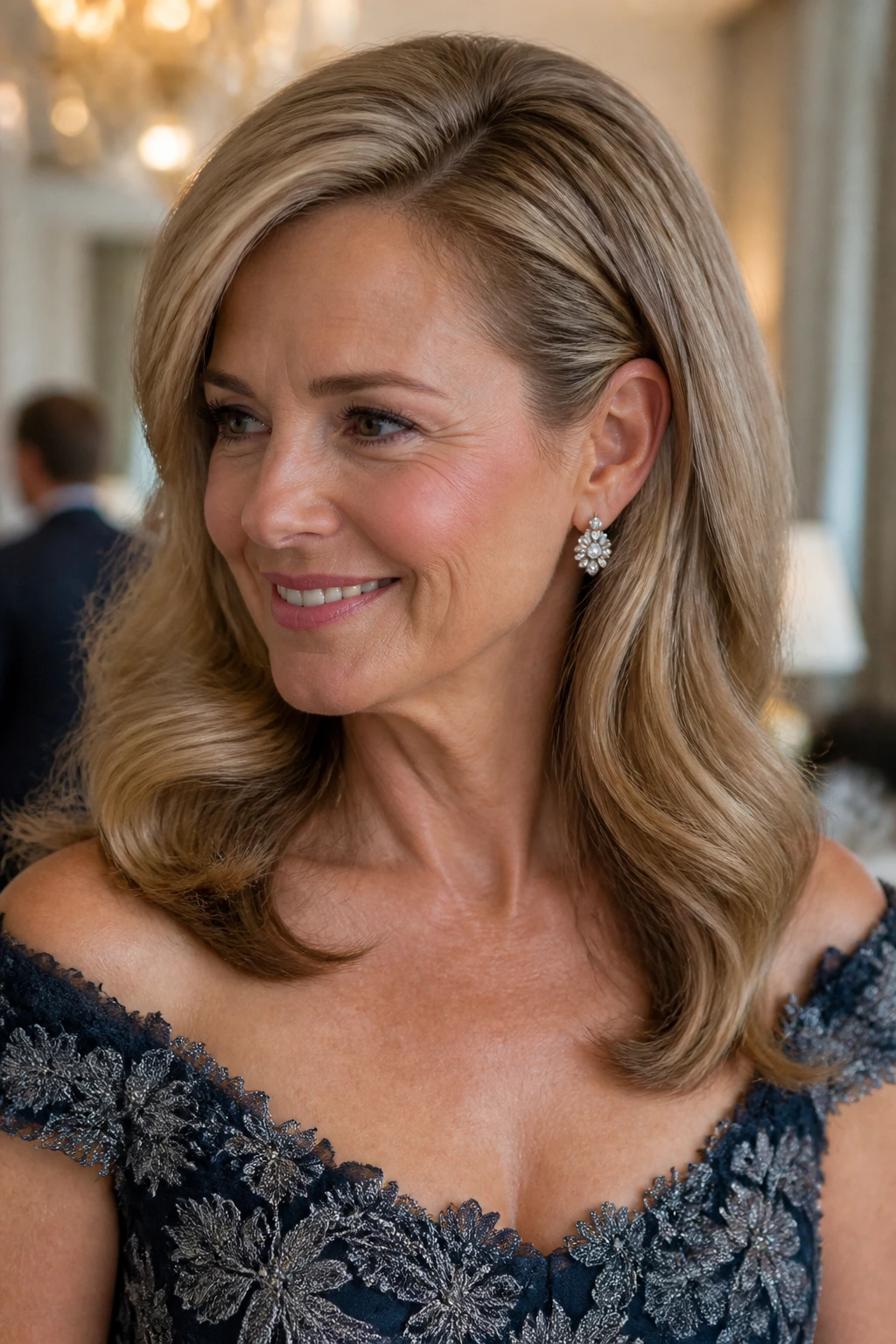
Sometimes the cleanest answer is a blowout that simply behaves beautifully. Tucking one side behind the ear opens the face, shows off earrings, and gives the style a bit of asymmetry without turning it into a full side-swept look. It’s simple in the best way.
The blowout should have movement at the ends and lift at the crown. Too much root volume makes the style look dated. Too little makes it look flat in photos. A round brush and a medium-hot dryer usually get you there, especially if the hair is clipped while cooling so the bend sets.
This one is especially useful when the dress is the star of the outfit. If the fabric is beaded, textured, or structured, a tidy blowout keeps the hair from competing. That’s the kind of restraint that reads expensive without trying to be.
20. Silver Hair With Shine and Soft Direction
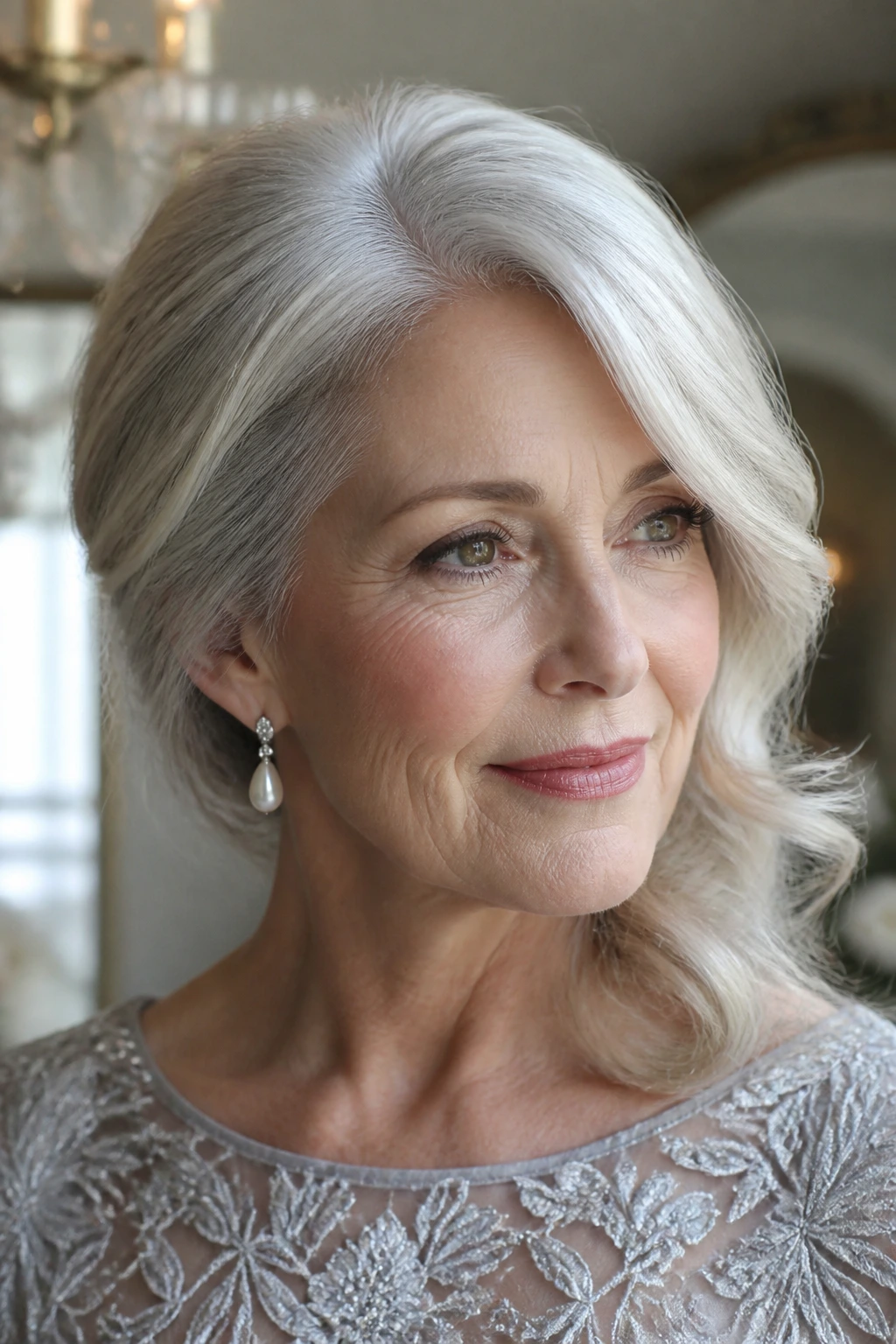
Gray and silver hair can look luminous in wedding light when it’s treated with a little respect. Shine matters here more than volume does. A soft directional style — swept back, tucked to one side, or gathered low — lets the color show without getting harsh.
The biggest mistake with silver hair is overloading it with product that turns it dull. Keep the finish clean and use a shine spray sparingly. If the hair is fine, a light blow-dry at the roots helps the style hold its shape. If it’s coarse, a smoothing cream on the mid-lengths keeps the texture from fuzzing out.
This kind of look feels especially good with pearls, soft metallic earrings, or a dress in navy, champagne, or deep green. The hair does not need to be hidden. It needs to be shown off, carefully.
21. Humidity-Proof Updo for Thick Hair
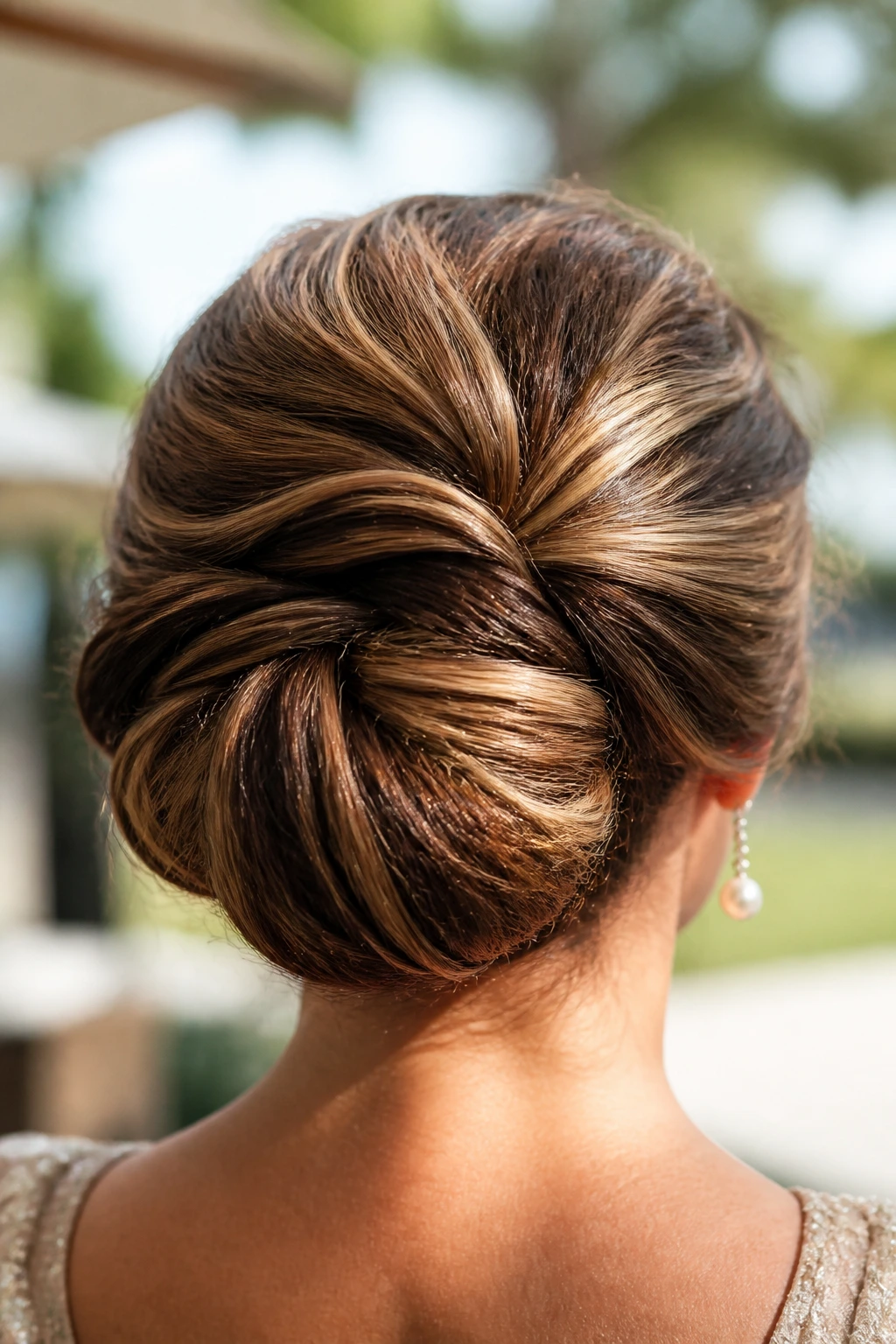
Thick hair and humidity can turn a good idea into a puffball by the time the family photos start. A humidity-proof updo uses structure to pin the hair close, keep the shape compact, and prevent the surface from expanding into a fuzzy halo. It’s not about flattening thick hair. It’s about containing it gracefully.
The best versions keep the bulk centered low and use crossed pins for support. That makes the style stronger than one that depends on one giant elastic and hope. A smoothing cream before blow-drying helps, but don’t drown the hair in it or the pins will slip. Thick hair needs control, not grease.
If you’re getting ready outdoors, this is one of the smartest styles in the whole set. It’s not glamorous in a flashy way. It’s practical in a very elegant way, which is usually more valuable on the day itself.
22. Sculpted Bob With Hidden Volume and a Deep Side Part
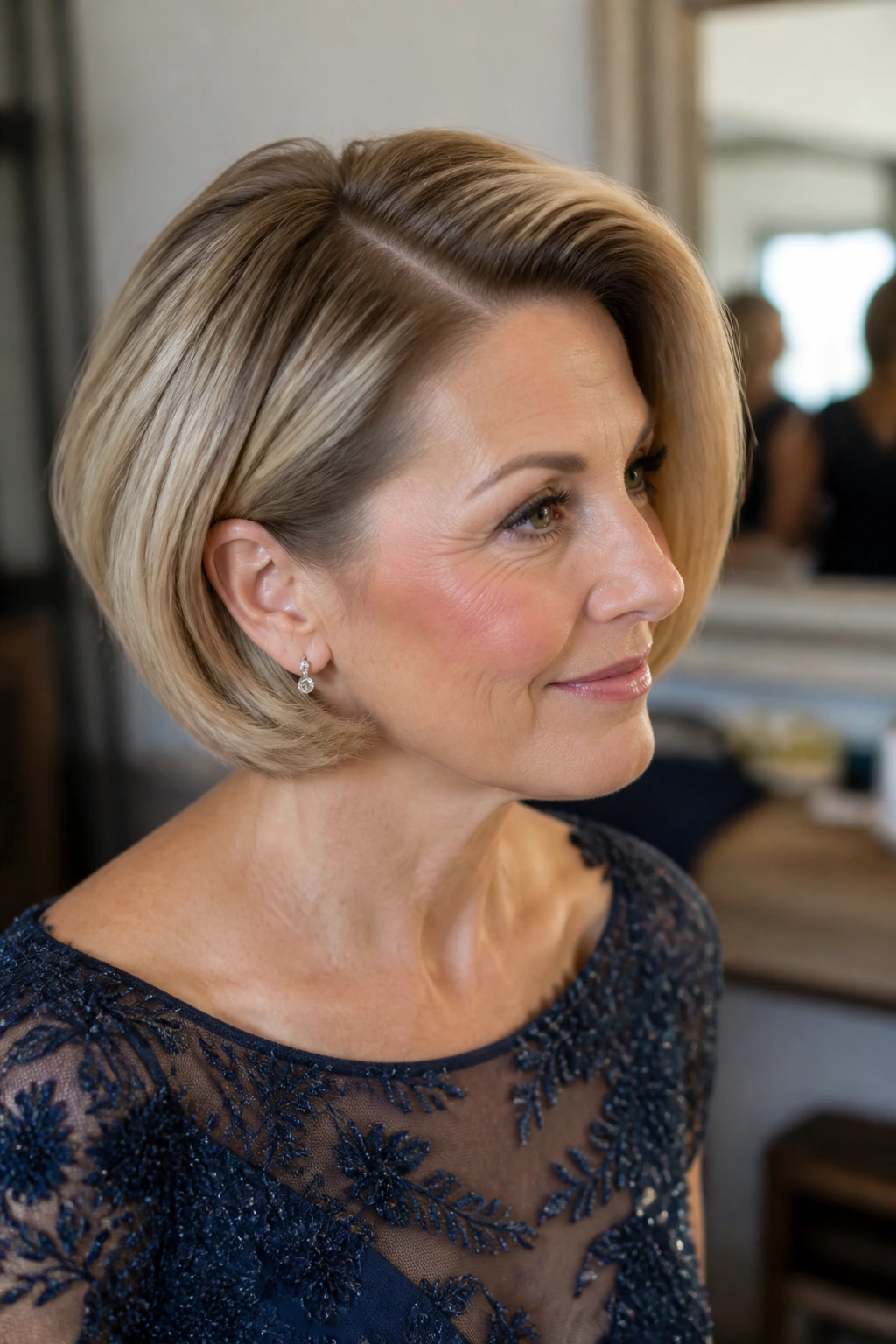
A sculpted bob is one of the nicest mother of the groom wedding hairstyles for shorter hair because it gives the cut shape without pretending it’s longer than it is. The deep side part creates movement, and a little hidden volume underneath makes the style look lifted from the front.
This works especially well if the bob is chin-length or slightly longer. Smooth the top layer, keep the ends polished, and tuck one side just enough to show the jawline. It feels crisp. It feels deliberate. And it avoids the trap of making short hair look like it was styled as an afterthought.
A small barrette or clip can help anchor one side, but the haircut itself should still do most of the work. That’s what good short-hair styling looks like: clean lines, enough body, no fuss.
What to Ask Your Stylist Before the Wedding Day
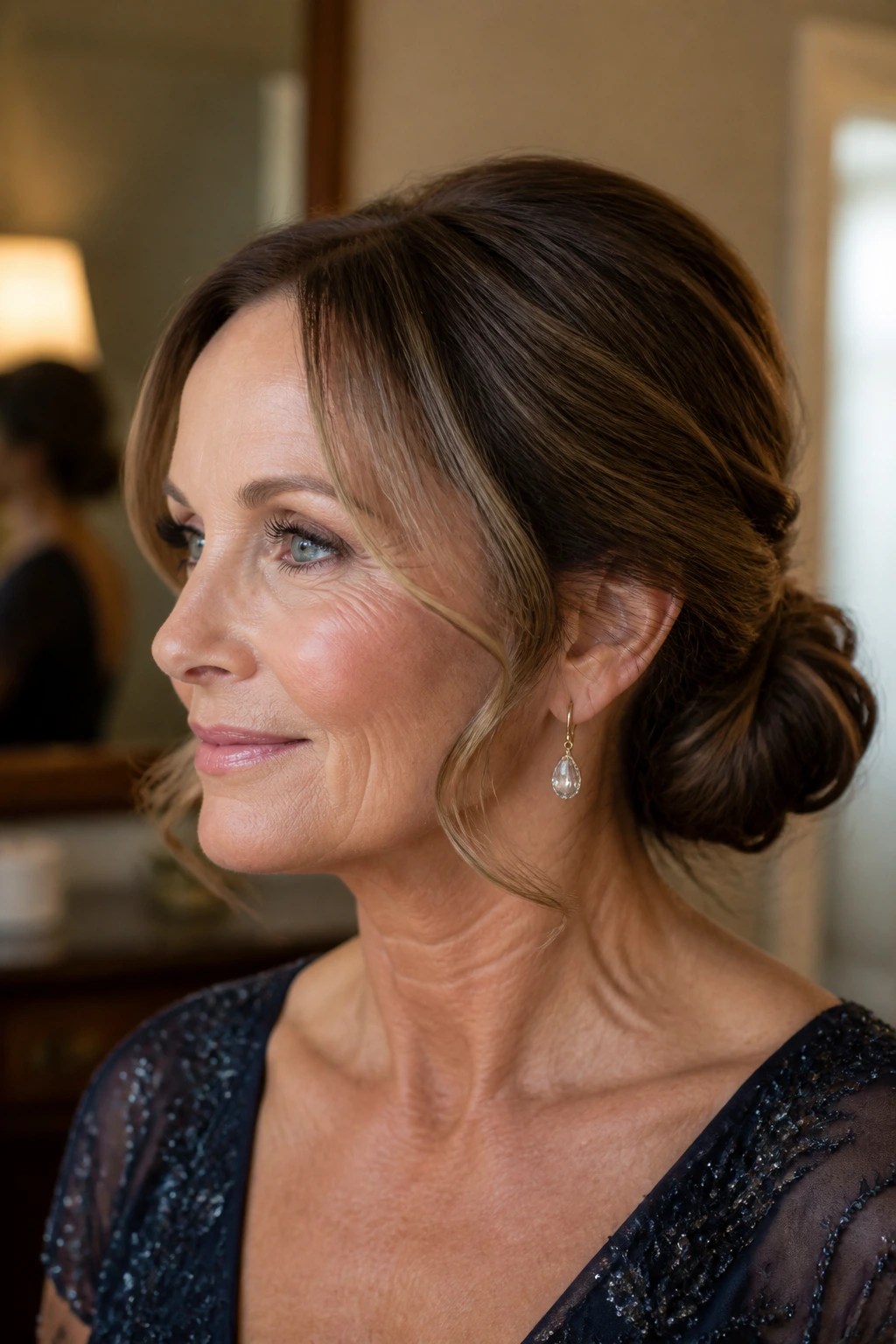
A good wedding hairstyle starts before the blow-dryer comes out. Bring a photo of the dress, not just the hair inspiration. The neckline changes everything, and stylists need to see how much hair can realistically live around it.
Tell them how long you’ll need the style to last. A two-hour ceremony and dinner call for different products than a full day of photos, cocktails, and dancing. If your hair falls flat easily, say so. If your pins slide, say that too. Tiny details save the day later.
A trial is worth doing if the style is complicated or if your hair has a habit of misbehaving under pressure. You’ll learn quickly whether the look suits your face, whether the crown feels too high, and whether the front pieces stay where they belong when you move your head.
Essential Tools for These Looks
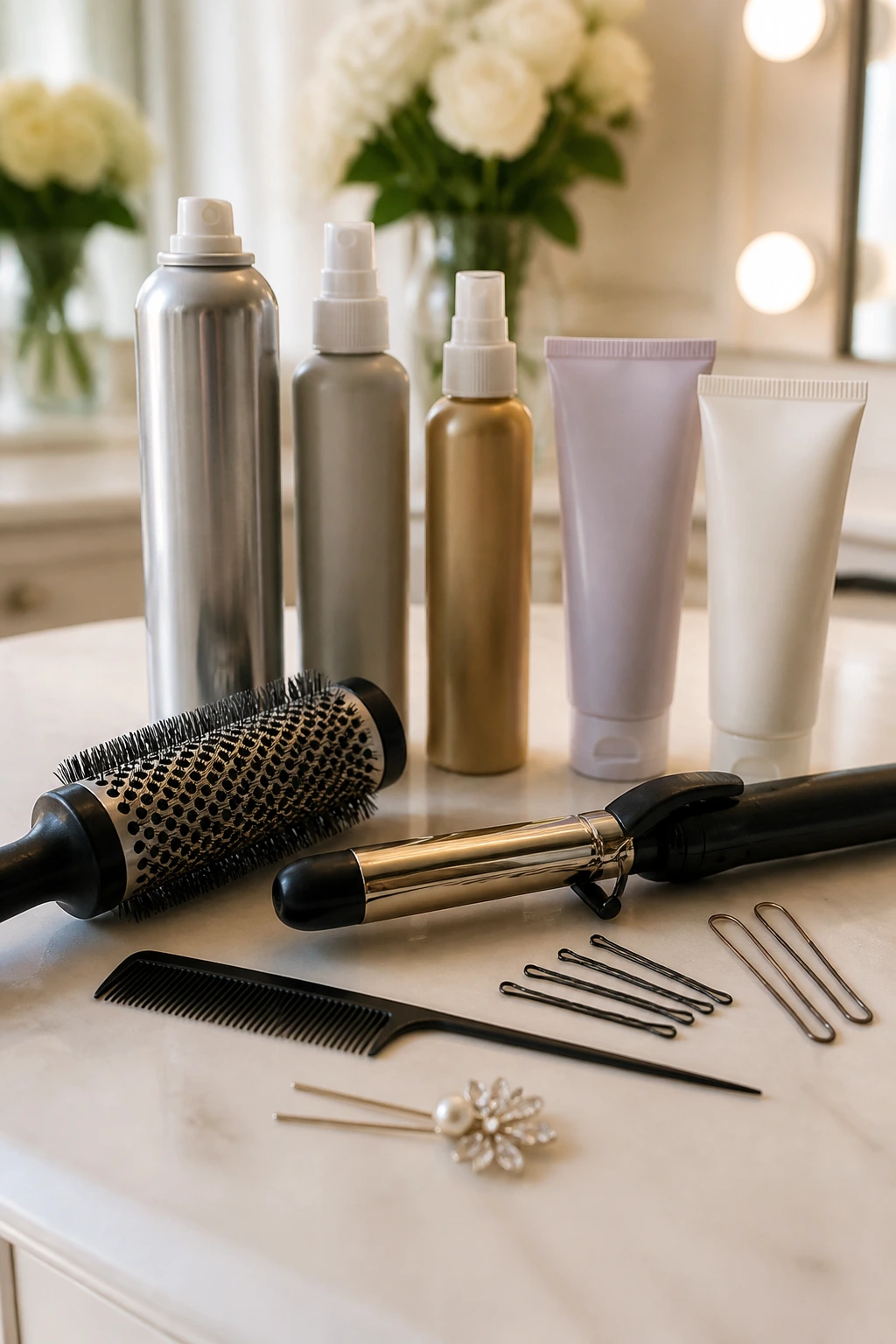
-
Fine-tooth tail comb: Useful for clean parts, sectioning, and smoothing the top layer without creating dents.
-
Round brush: The right size gives body to blowouts and helps the ends curve instead of sticking out.
-
1-inch curling iron or wand: A good all-purpose size for soft curls, waves, and controlled bends.
-
Bobby pins in hair-matching shades: They disappear better and hold better when the color blend is close.
-
U-pins: Better than regular bobby pins for chignons and knots because they anchor bulky shapes without leaving a hard line.
-
Texturizing spray: Adds grip to fine or slippery hair so styles stay put.
-
Medium-hold hairspray: Enough support for wedding-day wear, not so much that the hair feels glued.
-
Heat protectant: Non-negotiable if hot tools are part of the plan.
-
Smoothing cream or serum: Good for flyaways, especially around the nape and hairline.
-
Small decorative comb or pin: Optional, but useful when the dress needs one small focal point.
Smart Product and Prep Tips
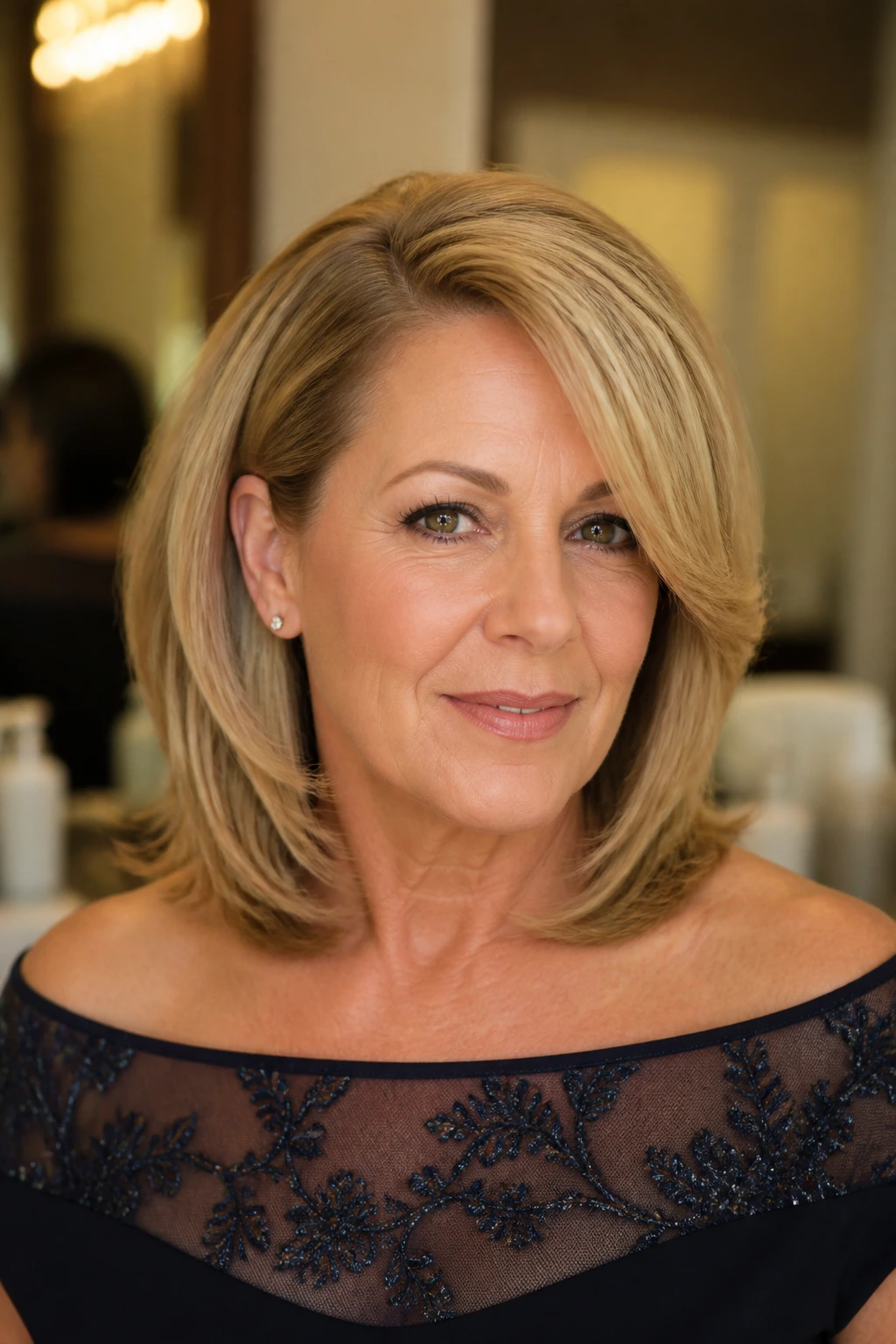
The product rack at the store can get noisy fast. Ignore most of the marketing language and look for one thing at a time: hold, texture, shine, or frizz control. A medium-hold hairspray is the workhorse for most of these styles. Strong enough to keep the shape. Light enough that the hair still moves.
If your hair is fine, prep with texture, not oil. A dry shampoo or texturizing mist at the roots gives the pins something to grab. Thick or coarse hair often needs smoothing first, then hold at the end. Those two hair types are not looking for the same solution, which is where a lot of bad advice starts.
Bobby pins should match your hair color as closely as possible. That sounds small. It isn’t. Pins that disappear are calmer in photos and less distracting in motion. If your hair has multiple tones, choose the shade closest to the mid-lengths rather than the darkest roots.
A trial run with the actual accessories helps a lot. Pearl pins, combs, and clips can alter the balance of a style more than expected. Try them with the dress neckline if you can. A style that feels a touch too plain on its own may be exactly right once the earrings and neckline are part of the picture.
How to Wear These Looks With the Dress, Jewelry, and Day Plan
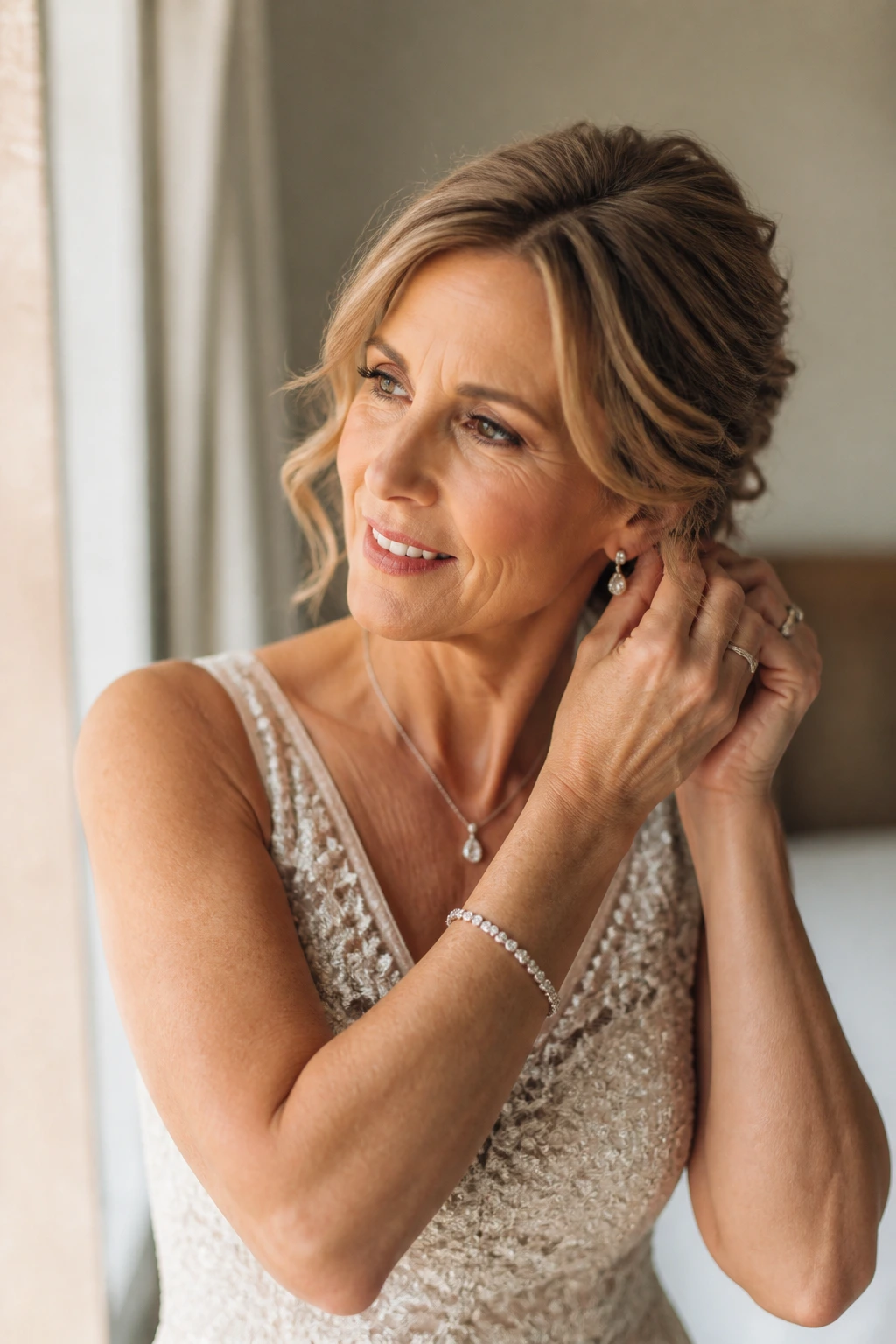
Presentation: Keep the hairline clean enough that the face reads first, not the styling products. A soft side part, a smooth nape, or a controlled front section usually gives the best profile from both ceremony and reception angles.
Accompaniments: Choose earrings and necklaces after you decide on the hairstyle. A low bun can carry a stronger earring, while loose waves usually work better with simpler jewelry so the whole outfit doesn’t start shouting.
Portions: In hair terms, think balance. If the dress has a high collar or lots of beading, use less volume and more structure. If the dress is plain, let the hair carry a little more shape. One strong focal point is enough.
Beverage Pairing: Water. Not glamorous, but useful. A hydrated scalp and lips look better in photos, and the act of sipping water between styling steps keeps you from touching your hair every ninety seconds.
Additional Tricks for More Shine, Volume, and Stay-Put Hold
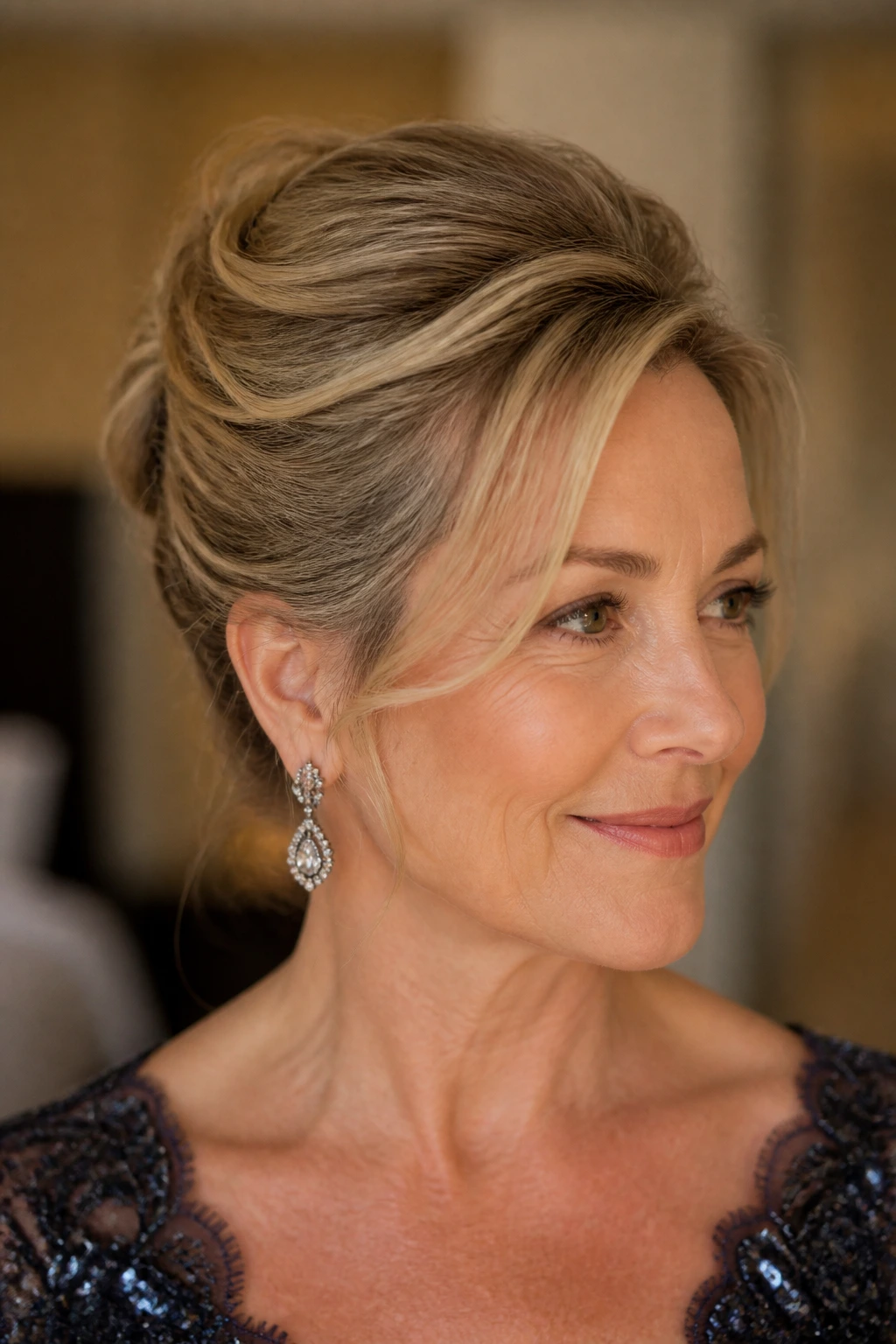
Flavor Enhancement: A tiny amount of shine spray on the mid-lengths and ends — not the roots — gives the finish a cleaner look in photos. Too much near the scalp makes hair separate in a way that shows up fast under flash.
Customization: If you like a softer face frame, leave two narrow pieces around the cheeks. If you want a more formal line, tuck those pieces back and use one neat pin instead. Same style, different mood.
Serving Suggestions: Think of the final touches as accessories for the hair itself. A pearl comb, a slim gold pin, or one fresh flower can change the tone without rebuilding the whole style. Keep the accent small. Small usually ages better in photos.
Make-It-Yours: For a more conservative look, smooth the hair tighter and reduce volume at the crown. For a more romantic finish, loosen the front pieces a touch and let the ends bend softly instead of sitting pin-straight.
Common Mistakes That Make a Formal Style Collapse
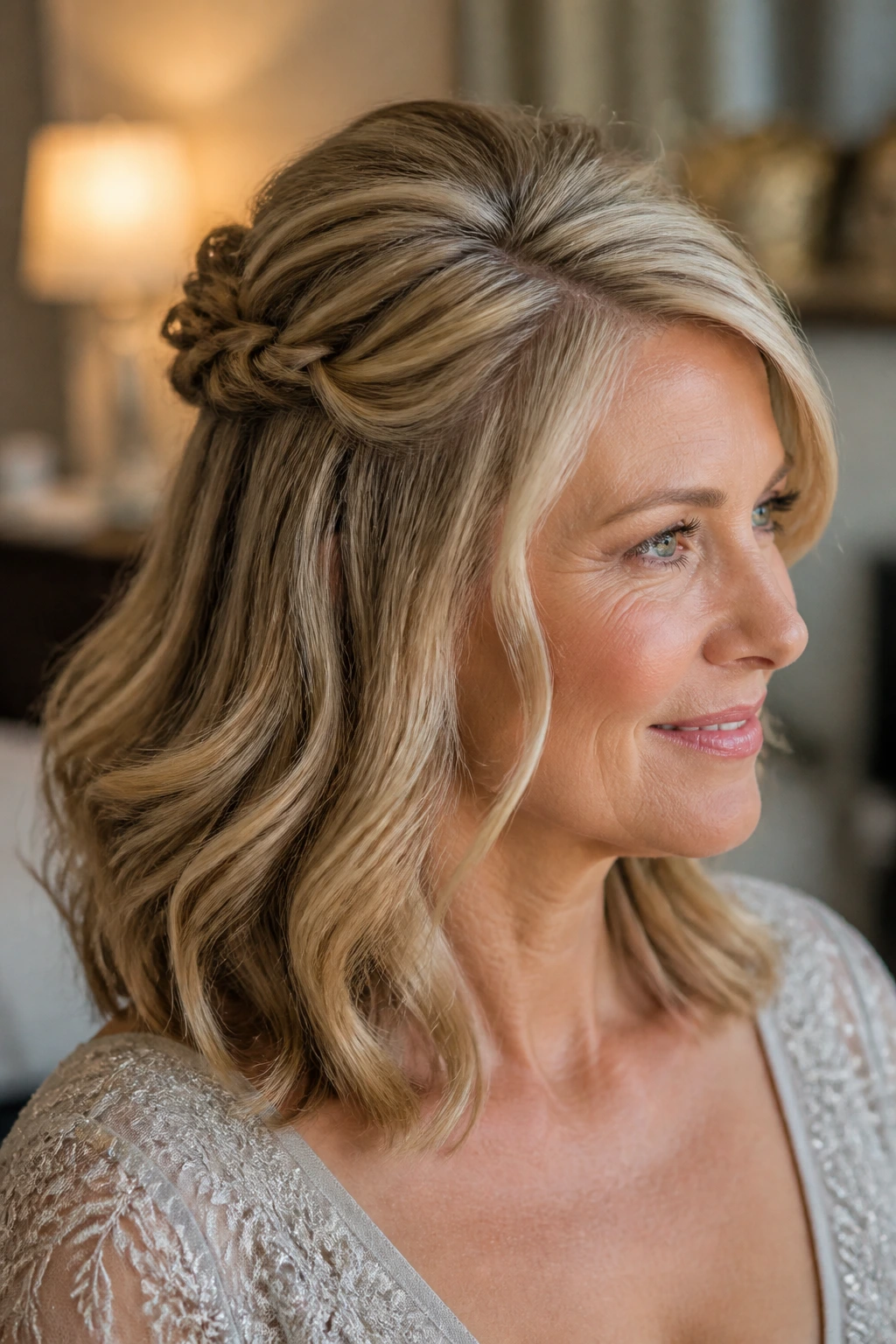
The first mistake is choosing a style that fights the haircut. A blunt bob does not behave like long layers, and thick curls do not act like fine straight hair. If the style ignores the natural structure, it usually falls apart by dinner. The fix is to work with the cut, then refine it.
Another problem is loading the hair with too much product before the style is set. Heavy cream, too much oil, or a giant cloud of hairspray can make pins slide. You’ll see it first at the nape: little pieces escaping, then whole sections loosening. Use less than you think, then build.
Over-teasing is another classic. The crown looks nice for fifteen minutes, then the whole thing starts to slump and look a bit dusty. Tease only where you need support, and smooth the outer layer carefully so the style still feels clean.
The last one is skipping the weather check. Outdoor ceremonies and humid reception spaces can punish loose curls and weak hold. If the forecast suggests frizz or heat, choose a lower style, tighter anchoring, and products that can handle some humidity without turning the hair sticky.
Variations and Adaptations for Different Hair Types
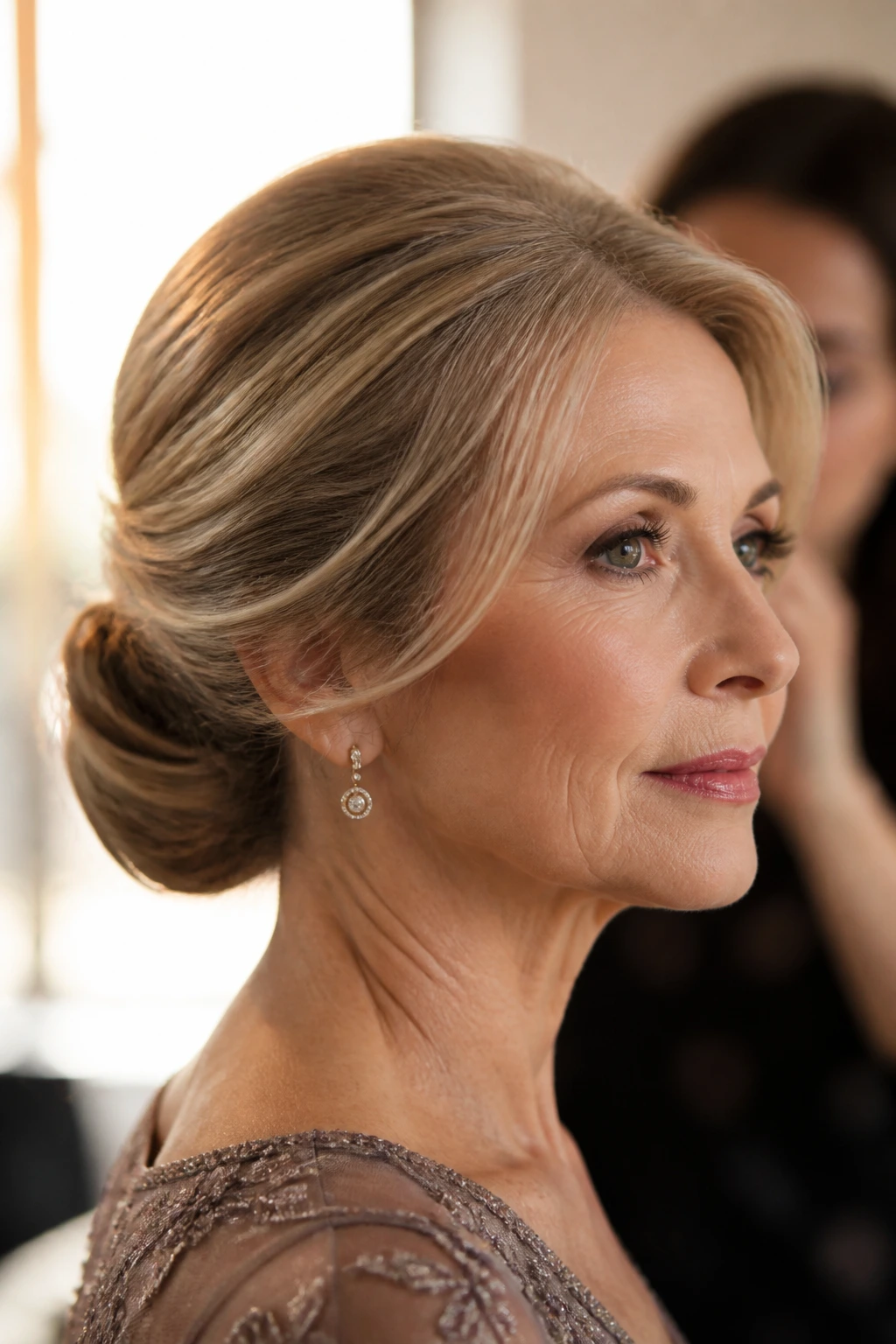
Fine-Hair Lift Version: Use a root-lifting spray at the crown and a texturizing mist through the mids before styling. Fine hair usually benefits from a more compact shape — low buns, tucked bobs, and half-up twists tend to last longer than loose volume.
Thick-Hair Control Version: Keep the style low and anchored with crossed pins or a stronger base twist. Thick hair can carry more shape, but it also needs more direction, or it starts expanding in its own direction halfway through the reception.
Natural-Texture Version: Let curls, waves, or coils stay visible and build the formal shape around them instead of flattening everything out. That usually looks more modern and avoids the helmet effect that comes from trying to erase texture.
Short-Hair Formal Version: Use a deep side part, a tucked side, or a sculpted wave at the front to create shape. Short hair often needs less styling than people think, but it does need a decision — that undecided middle zone is what looks unfinished.
Outdoor-Wedding Version: Choose lower, tighter styles with stronger hold and fewer loose pieces. Wind likes to find the little tendrils you were proud of. It always does.
Make-Ahead, Overnight Care, and Touch-Up Guidance
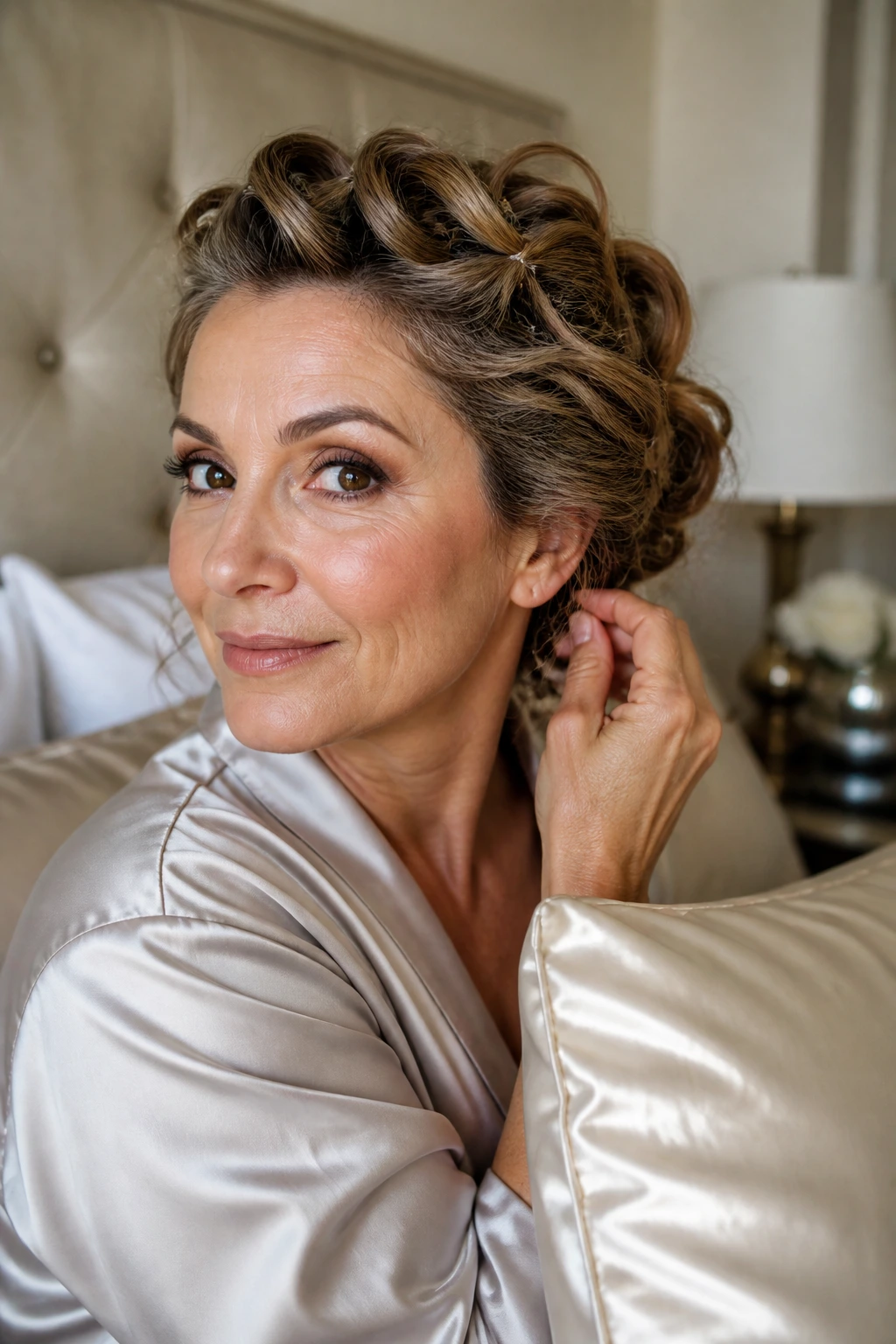
Hair that is styled too far ahead of time tends to lose its crisp edges, but prep can absolutely happen the night before. Wash and set the hair if your stylist recommends it, then sleep on a silk pillowcase or in a loose wrap so the strands do not get roughed up. If you’re wearing curls, pin them loosely after they cool and let them settle overnight.
The morning of the wedding is the time for shaping, not experimenting. A quick mist of dry shampoo at the roots, a pass with a round brush, and a final spray at the end is usually enough. If the style is an updo, wait until the hair is fully cool and dry before adding the last pins. Warm hair loosens faster than people expect.
For touch-ups, keep a small kit nearby: 4 to 6 bobby pins, one mini hairspray, a travel comb, and a tiny bottle of smoothing serum. That’s plenty. You’re not rebuilding the style after lunch; you’re just rescuing it from the edge of collapse.
Frequently Asked Questions About Mother of the Groom Wedding Hairstyles
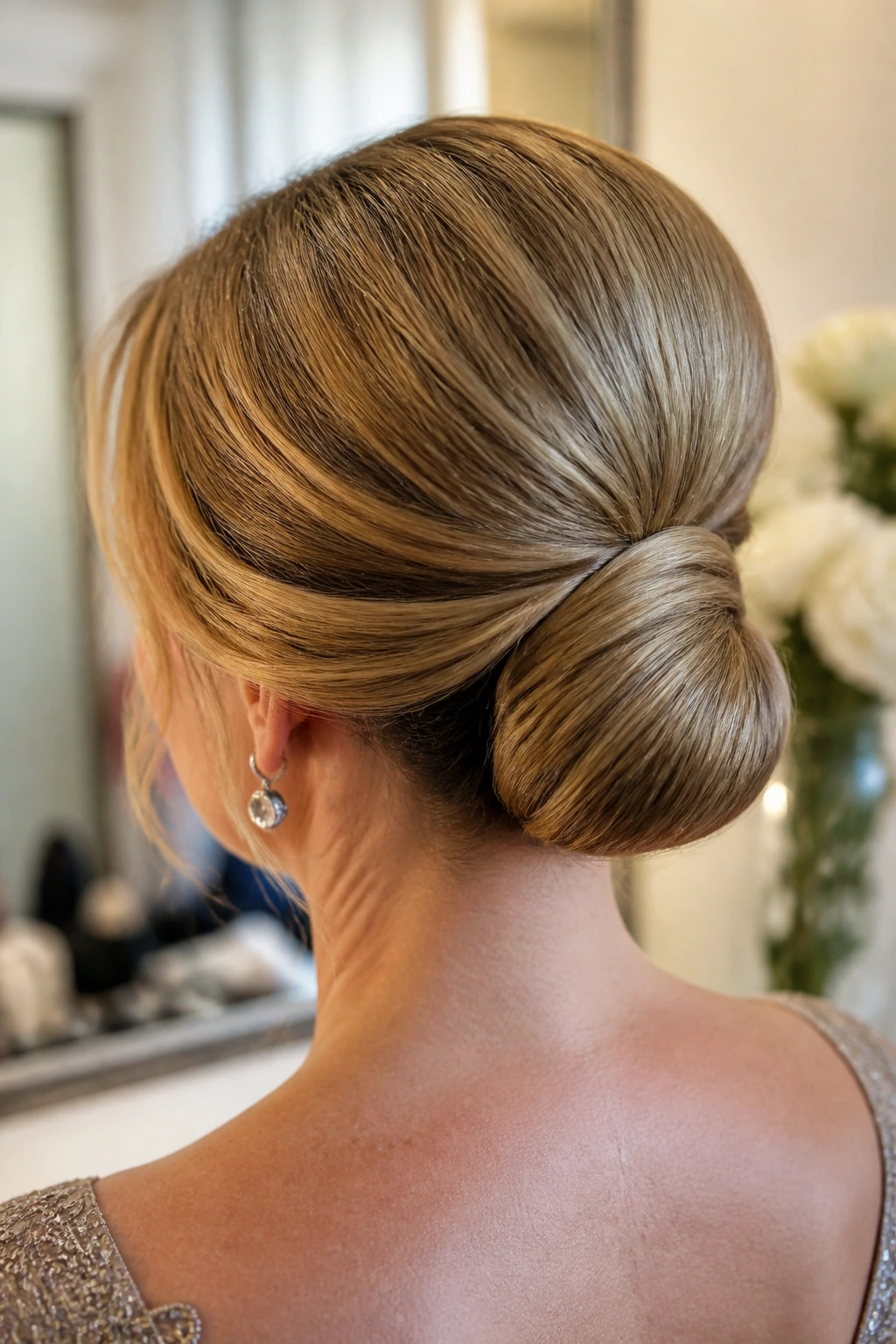
Should the mother of the groom wear her hair up or down?
Up is not automatically better, and down is not automatically casual. The right choice depends on the neckline, the weather, and how well your hair holds shape. A low bun or chignon gives a cleaner formal line, while polished waves or a blowout can feel just as dressed up if the dress is simple.
What hairstyle works best for thin hair?
Styles that stay close to the head usually win: low buns, tucked bobs, soft roll-ups, and half-up twists with a little root lift. Thin hair often looks fuller when the shape is compact and the crown is lightly textured, rather than teased into a giant puff that collapses later.
Can short hair look formal enough for a wedding?
Absolutely. A sleek bob, sculpted pixie, or polished tuck can look more elegant than a badly pinned updo. Short hair reads formal when the edges are neat, the shine is controlled, and the part is chosen on purpose.
How do I keep my style from falling flat during the reception?
Start with the right base product for your hair type, then pin the shape more securely than feels necessary. Keep a few bobby pins and a travel spray for touch-ups, and avoid running your hands through the front pieces every few minutes. That habit flattens the style faster than humidity does.
Should my hairstyle match my dress exactly?
Not match. Balance. A detailed dress usually needs a cleaner hairstyle, while a simple dress can carry more wave or texture. When both the dress and the hair demand attention, the whole look starts to feel crowded.
Is it a bad idea to wear my hair very similar to the bride’s style?
Yes, if the resemblance is obvious. The safer path is to choose a different shape, part, or level of volume so your look feels distinct. The goal is a polished guest-of-honor style, not a dress rehearsal for the bridal portrait.
What if my hair is very curly or very straight and won’t hold the style I want?
Work with the texture you have and use the right base products. Curly hair often holds low shapes and half-up styles beautifully. Very straight hair usually needs texturizing spray, a cooler set, and more pins than you think to keep waves or twists in place.
How far in advance should I have a trial?
If you’re booking a stylist, give yourself enough time to fix the plan if the first version feels off. A trial lets you test how the hair reacts to the products, the accessories, and the actual shape of the dress. It’s far easier to change direction there than on the wedding morning.
A Polished Finish That Still Feels Like You
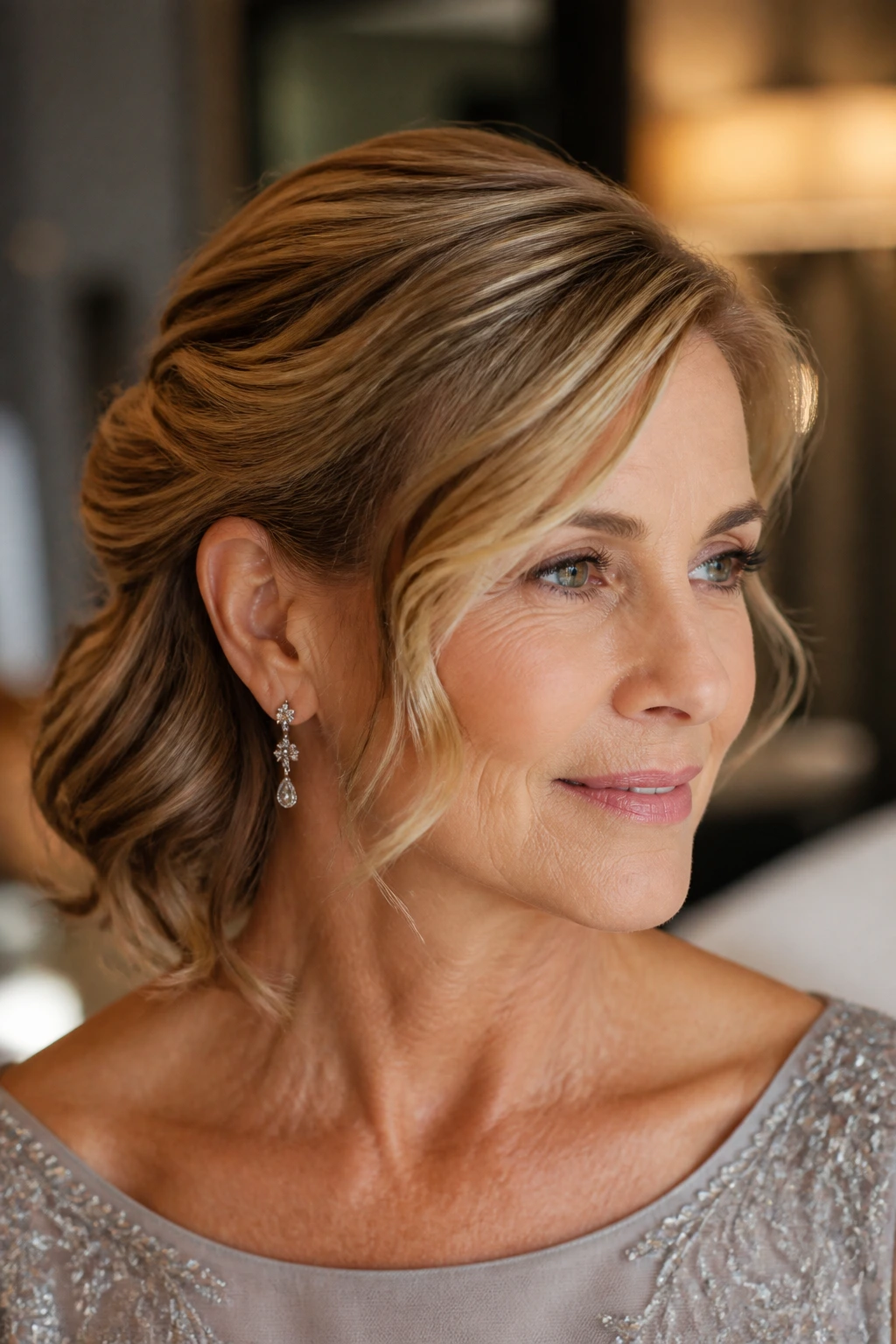
The best mother of the groom wedding hairstyles do a quiet, useful job. They frame the face, keep the outfit balanced, and stay composed long after the first round of photos. No drama. No frantic pinning in the restroom. Just hair that holds its place while you enjoy the day.
Pick the style that suits your hair type first, then the neckline, then the mood you want to carry into the room. That order saves people from a lot of regret. And if you’re stuck between two looks, choose the one you’d be happy to wear through dinner, dancing, and one last picture at the end of the night — that’s usually the one that works.