



Pale skin can make blonde hair look expensive, or it can make it look washed out in one bad blast of daylight. The difference usually has less to do with length and more to do with where the blonde lives: at the root, through the mids, around the face, and in the ends where the light catches hardest. That’s why long natural blonde hairstyles for pale skin work best when they have some depth, some movement, and a tone that doesn’t fight the complexion.
The blondes that tend to flatter fair skin most are the ones with a little softness built in. Beige, champagne, ash-beige, honey, mushroom, vanilla, and sandy tones all have enough dimension to keep the face from disappearing. A hard platinum sheet can be striking, sure, but it’s also the quickest way to make pink undertones look pinker and cool undertones look a little drained. A soft root shadow or a lived-in blend changes the whole story.
Long hair gives you room to play with that. Waves soften the face. Curtain bangs open it up. Braids show off multi-tone color in a way a straight curtain never will. And if your blonde is naturally light already, these looks make the most of what you’ve got instead of trying to fight it into some icy, over-processed place. The best styles here feel airy, not heavy. Polished, not stiff. Soft enough to sit next to pale skin without disappearing.
Why These Long Blonde Looks Work on Fair Skin
- Soft depth at the root matters: A level 7 or 8 shadow near the scalp keeps the hair from melting into pale skin in bright light.
- Beige beats harsh yellow: Beige, champagne, and ash-beige tones usually sit better next to fair undertones than one flat buttery blonde.
- Movement creates shape: Waves, bends, and long layers stop long hair from reading like a single pale sheet.
- Grow-out stays cleaner: Rooted color and lived-in highlights stretch the time between salon visits without a sharp line at the part.
- Fine hair looks fuller: The right cut can make long blonde hair look thicker without piling on product.
- Pale skin gets definition back: Face-framing pieces, curtain bangs, and side parts keep the complexion from looking too bare.
1. Champagne Blonde Center-Part Waves
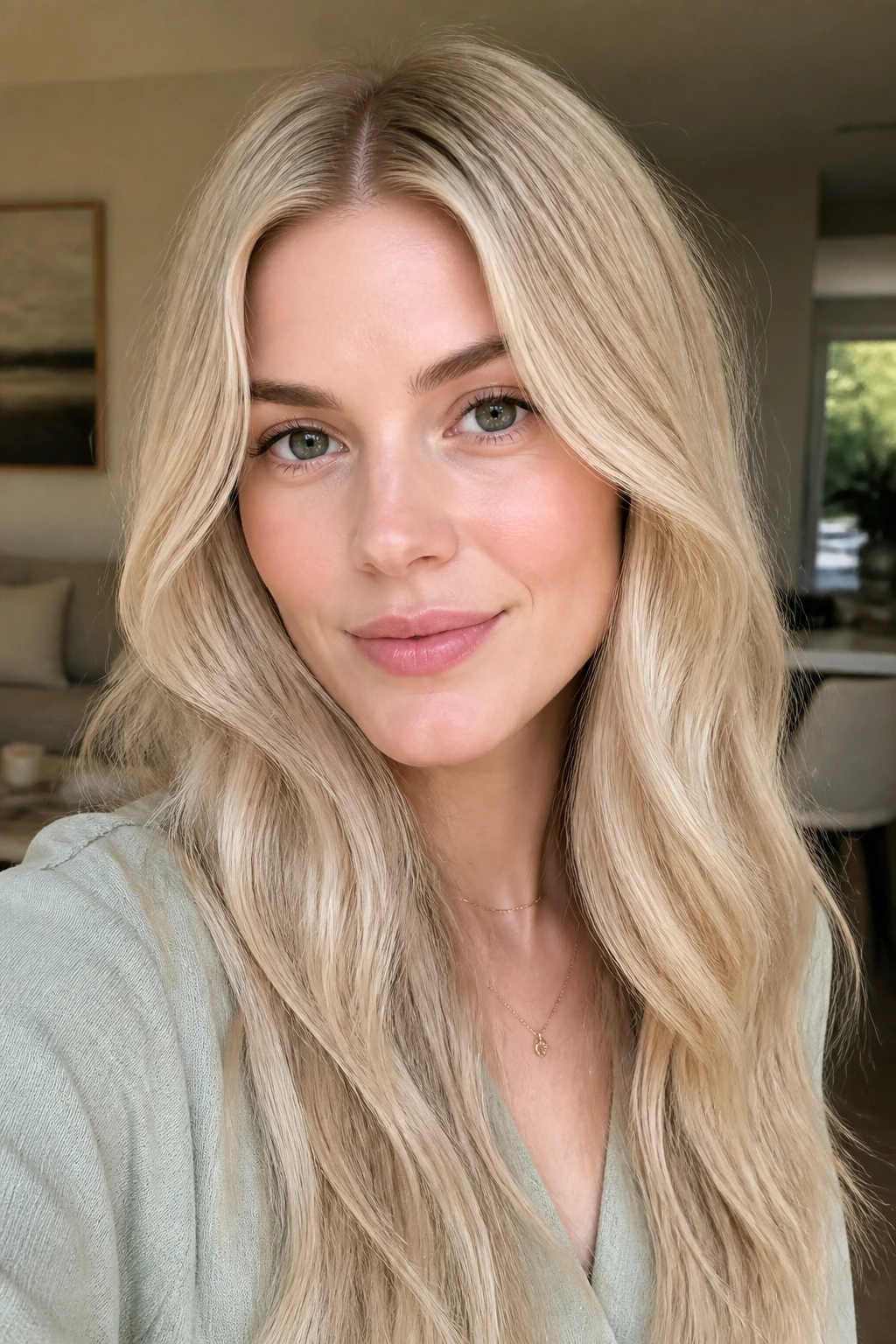
Champagne blonde is the shade I reach for when someone wants long hair that still looks soft against porcelain skin. It has that faint, sparkling warmth without sliding into gold, and the center part gives the waves a clean line so the whole thing reads deliberate.
Why It Flatters Pale Skin
Champagne sits in a sweet spot between cool and warm. That matters on fair skin, because a tone that is too silver can make the face look flat, while a tone that is too yellow can turn the skin pink by comparison. With loose waves, the champagne sheen moves instead of sitting in one solid block.
- Best on: level 8–9 blonde with a soft gloss.
- Cut to ask for: long layers that start below the cheekbone.
- Styling cue: curl away from the face with a 1.25-inch wand.
- Best finish: a light shine spray on the mids and ends, not the roots.
My take: skip a harsh toner here. Ask for beige with a hint of pearl, not a stark silver cast.
2. Beige Blonde Curtain Bang Layers
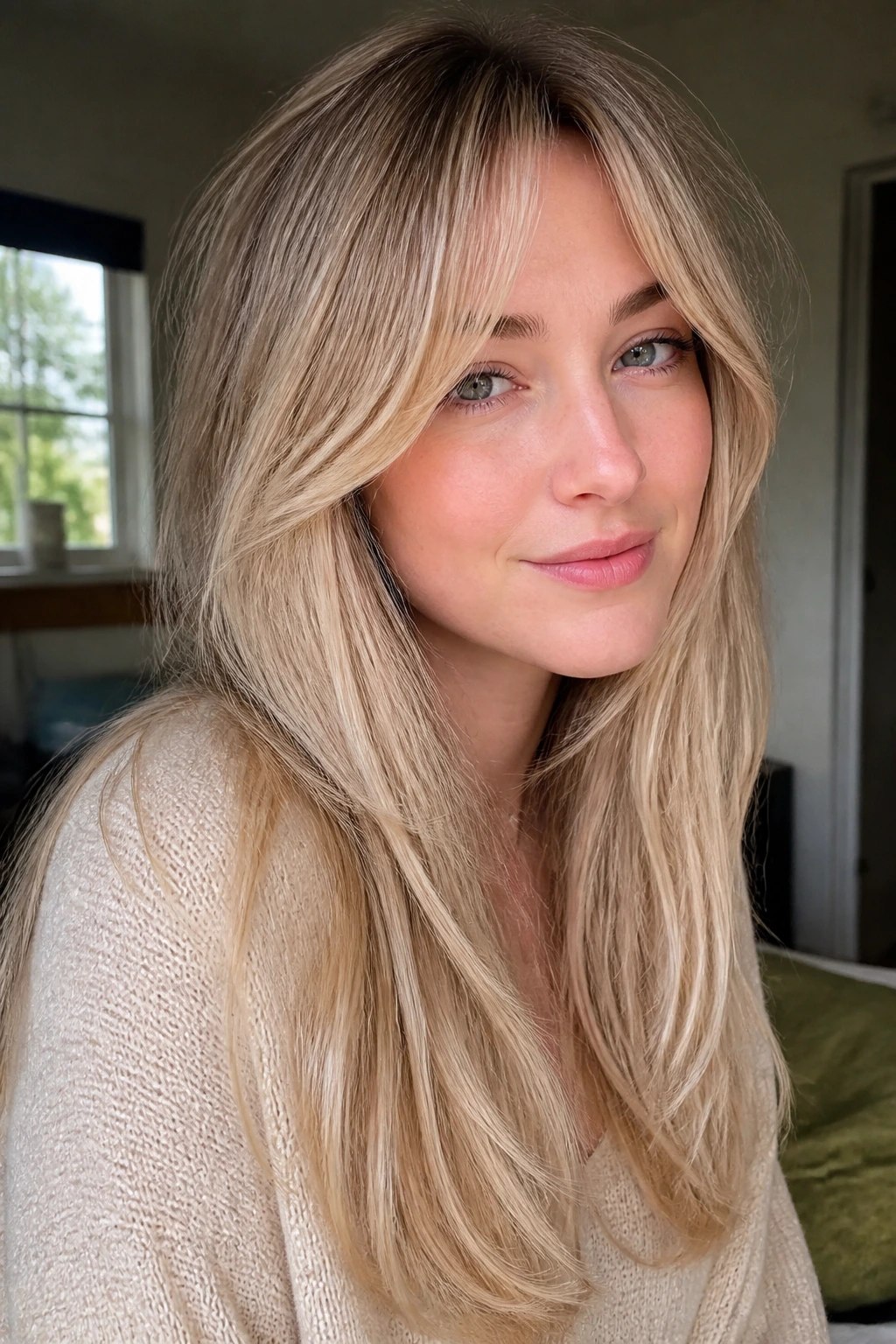
Beige blonde with curtain bangs is the easiest way to make very fair skin look warmer without tipping into orange. The bangs do a lot of the work; they break up the forehead, soften the cheeks, and stop the face from feeling too open around the hairline.
The trick is the cut. Long layers keep the length, but the front pieces need to start high enough to move. If the bangs are too long and too heavy, the whole style sags. If they’re cut with a soft bend, they frame the face the way a good light does. Beige blonde helps because it keeps the tone creamy instead of bright yellow.
For styling, blow the bangs forward first, then sweep them apart with a round brush so they sit in that lazy, parted curtain shape. A little root lift spray at the crown keeps the style from going flat by lunch. This one is strong on pale skin because it adds warmth without shouting.
3. Rooted Ash Blonde Blowout
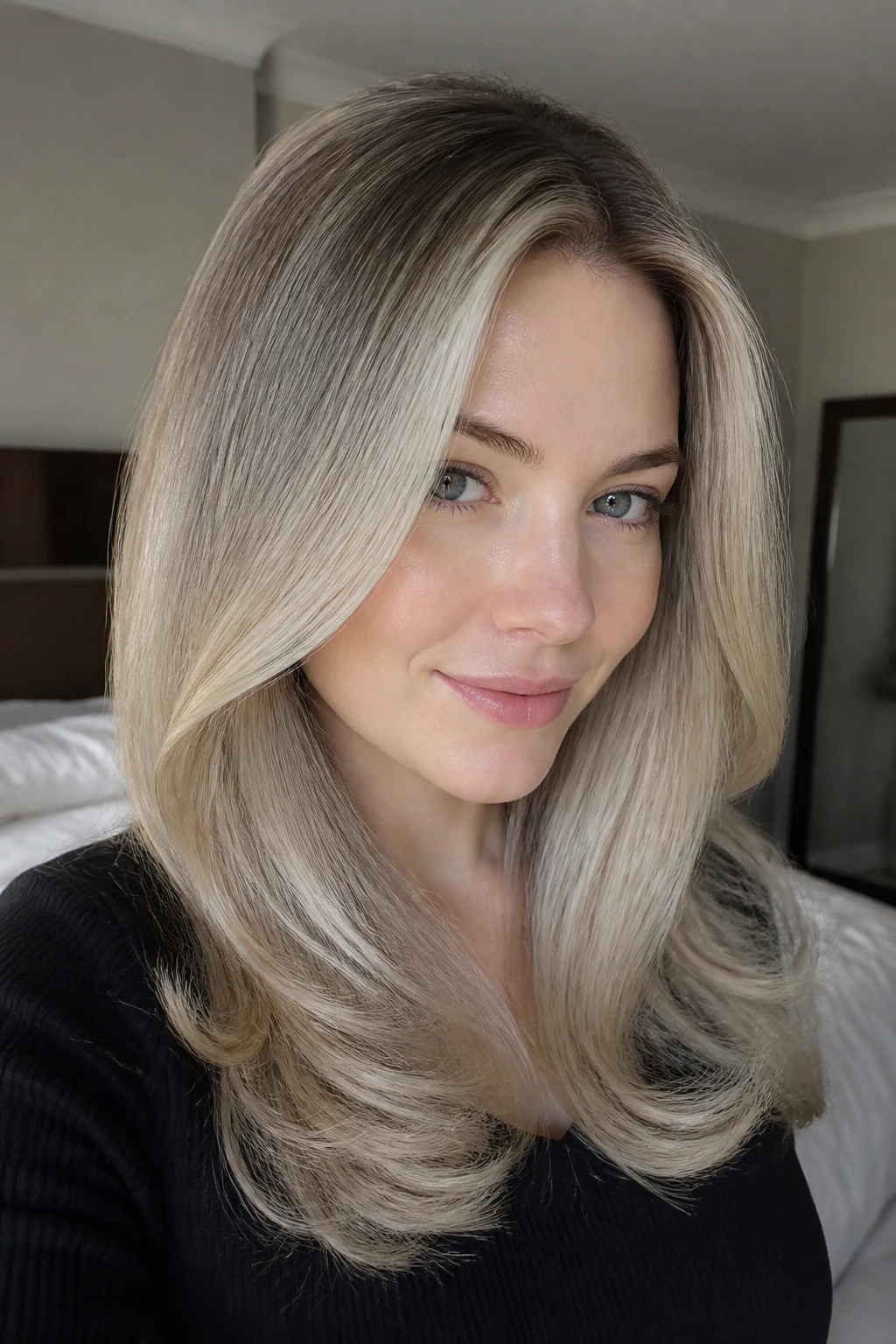
Why does ash blonde look so good on pale skin when people are always warned away from cool tones? Because ash needs contrast to work, and fair skin gives it exactly that. Add a soft root melt, and the style stops looking icy and starts looking expensive in that quiet, restrained way.
How to Wear It
The blowout should feel airy, not shellacked. Use a round brush and direct the ends under just enough to make a soft curve. If your hair is very straight, a bend at the mid-lengths helps keep the ash from reading flat or gray.
This style is best if you like sharp part lines and a polished finish. It’s also kind to fine hair, because the root depth makes the crown look fuller. Keep the toner from going too silver; on pale skin, a smoky beige ash usually looks better than a blue-gray one. If the ends start to look dull, a clear gloss refreshes the shine without changing the tone.
4. Honey Blonde Mermaid Waves
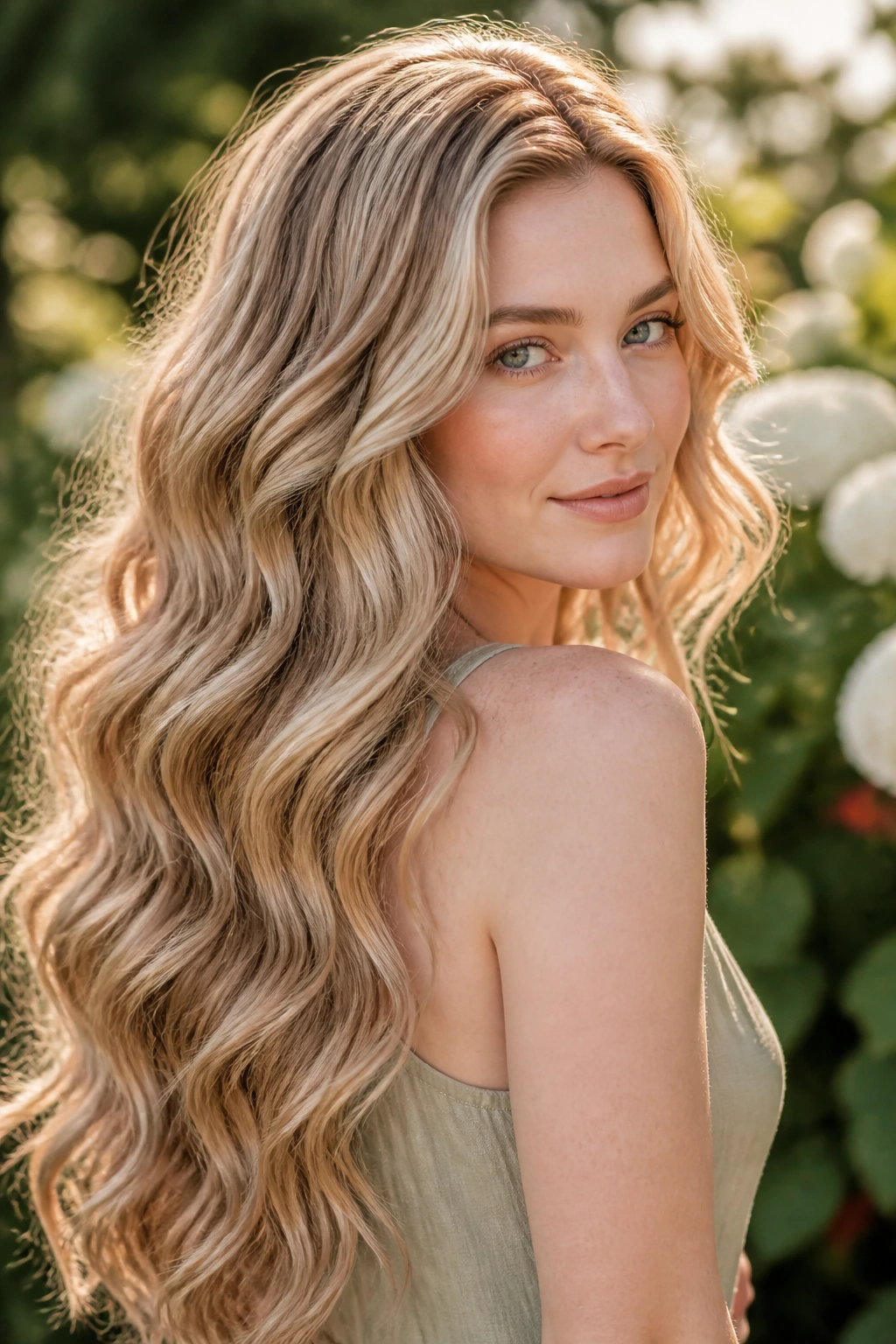
If your pale skin goes pink in daylight, honey blonde mermaid waves can save the whole look. The warmth in the hair gives your face a little glow, and the extra-long waves stop the color from feeling too dense or too sweet.
This style works because honey blonde is strongest through the mids and ends, not packed at the root. That slight depth near the scalp keeps the hair from looking helmet-like. The long wave pattern—big, loose, almost overgrown curls—lets the color shift as you move, which is where the good stuff lives.
- Length needed: at least mid-back if you want the wave to read as soft, not crowded.
- Styling tool: a 1.5-inch wand or a large iron barrel.
- Finish: brush the curls out with fingers, not a paddle brush.
- Best pairing: a side part if your face is narrow; center part if you want symmetry.
The warm tone is the point here. It keeps fair skin from looking icy and gives the whole style a sunlight-on-hair feel that is hard to fake.
5. Vanilla Blonde Straight Lengths
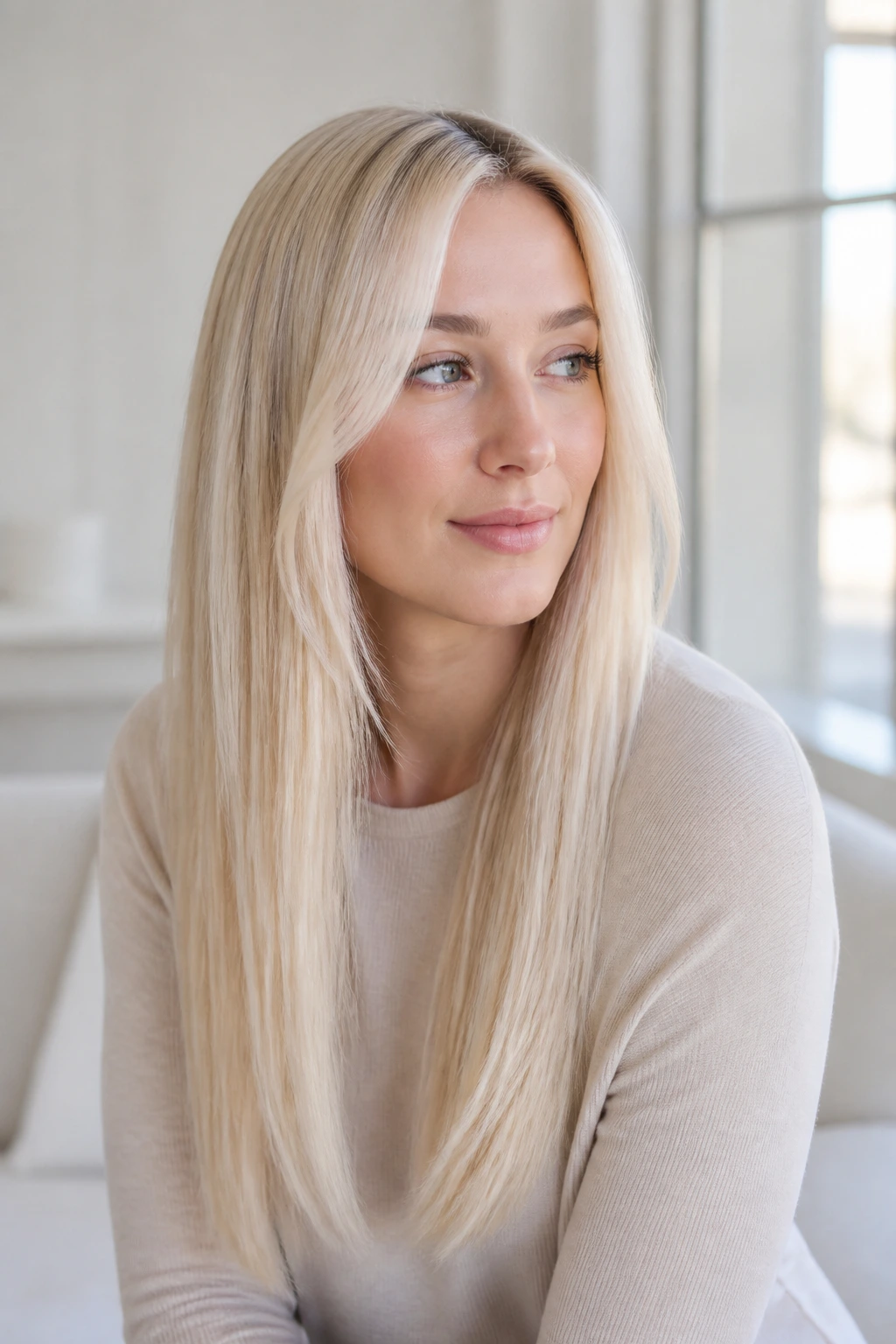
Vanilla blonde on long straight hair is one of those styles that looks simple until you try to get it right. Then you notice everything: the clean ends, the gloss, the way a tiny bit of bend near the face keeps the hair from looking too severe. Pale skin and straight blonde hair can go flat fast, so the details matter.
The color should be creamy, not banana-yellow. Vanilla blonde sits right between pearl and soft beige, which means it brightens fair skin without turning the whole head into one bright sheet. I like this look best when the hair is long enough to skim the collarbones and the ends are blunt enough to look healthy, but not so blunt that they feel heavy.
If you wear this straight and loose, keep the part slightly off-center. It adds a little asymmetry, which helps a lot on pale faces. A tiny bevel at the ends from a flat iron gives the length some shape. Dry shampoo at the roots keeps the shine from turning greasy too quickly, and that is the one thing this style will not forgive.
6. Scandi Blonde Sleek Ponytail
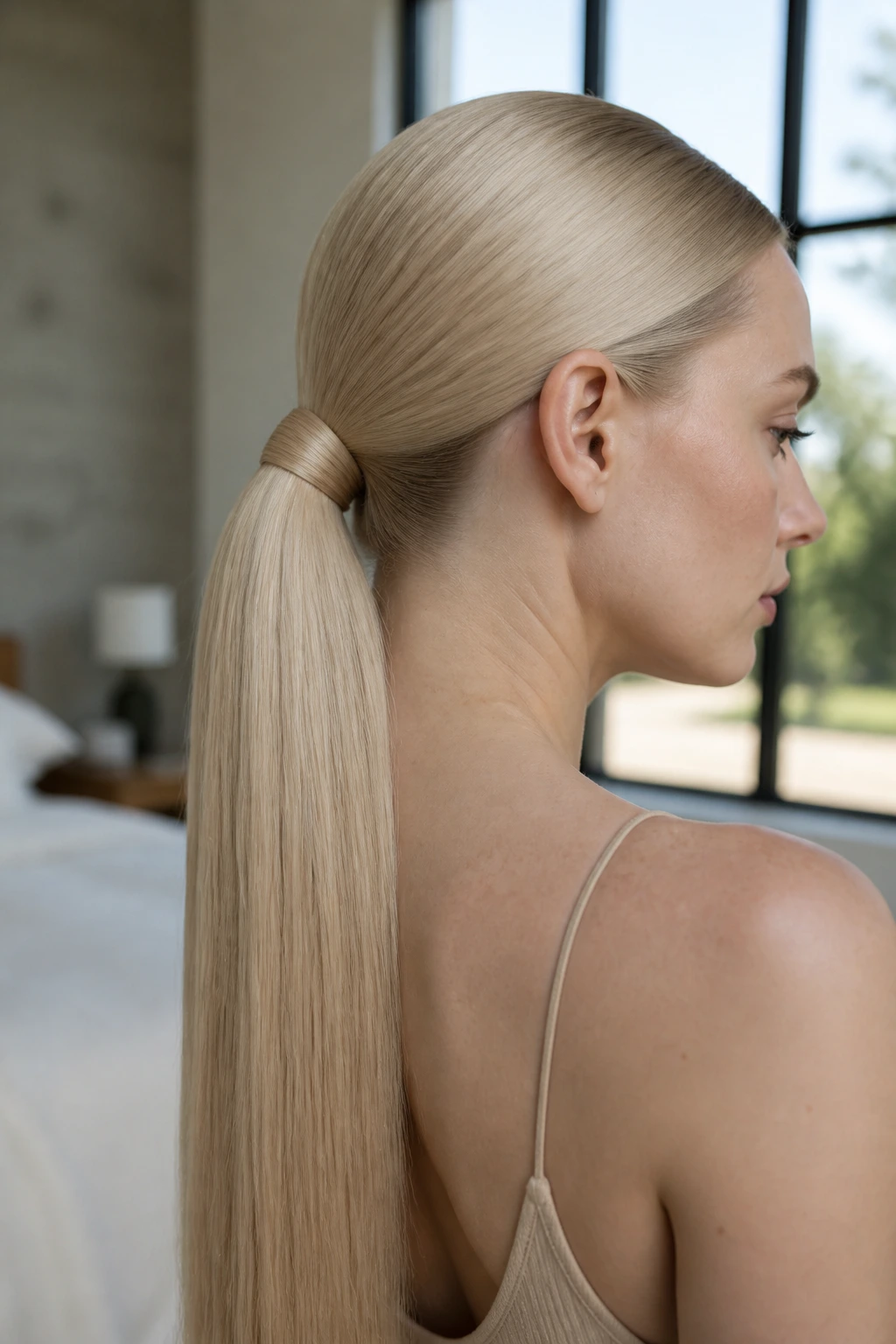
A sleek ponytail puts all the attention on the color, which is why Scandi blonde works so well here. Unlike loose waves, a ponytail doesn’t hide the tone; it shows every strand, every gloss pass, every shadow at the root. On pale skin, that can be a good thing if the blonde is soft and the base is a shade deeper.
What Makes It Different
This style is not about volume. It’s about clean lines, a smooth crown, and a ponytail that sits low enough to feel polished rather than severe. The hairline matters most. Brush it back with a little styling cream, wrap a small section around the elastic, and keep the tail glossy with one drop of serum.
Best for long, straight, or slightly wavy hair. If your features are delicate, this ponytail brings them forward without making the face look bare. If your blonde leans very cool, add a beige gloss so the style doesn’t go too stark.
7. Golden Beige Face-Framing Layers
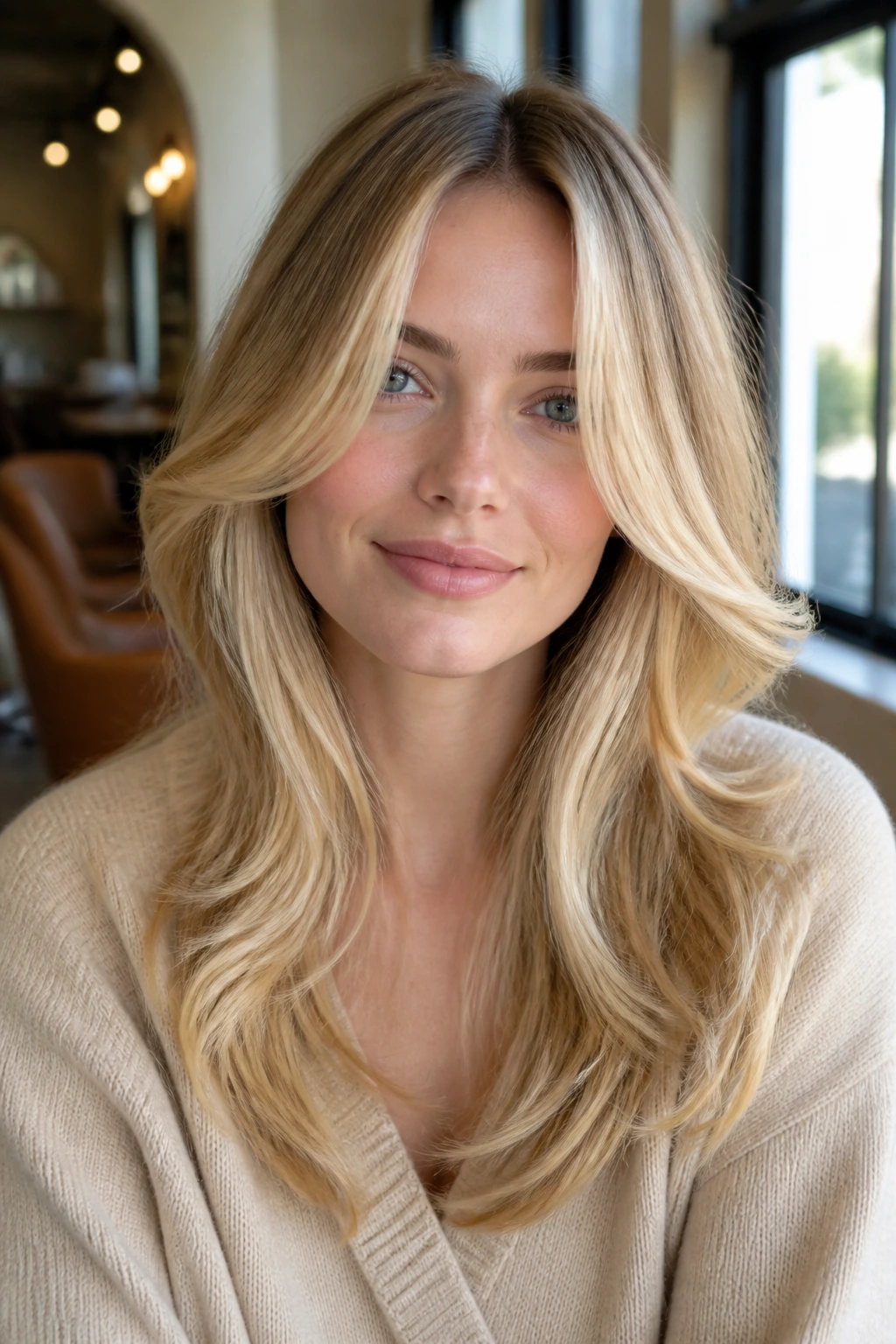
Golden beige is the tone I use when someone wants warmth but doesn’t want to cross into copper. On pale skin, those face-framing layers keep the complexion from looking too even, which sounds odd, but it’s the difference between a face that looks lit and one that looks erased.
Why It Sits So Well on Fair Skin
The front pieces should be a touch brighter than the rest of the hair. Not streaky. Just enough to catch light around the cheeks and jaw. Long layers keep the rest of the length soft, and the beige-gold mix makes the hair look sun-kissed without a brass problem.
- Ask for: face-framing pieces that start at the chin or just below.
- Best part: center or soft off-center.
- Works with: straight, waved, or blowout texture.
- Avoid: heavy highlights right at the hairline if your skin flushes easily.
This is a forgiving look. If you wear a little blush or warm lip color, the whole face comes alive. If you keep the makeup minimal, the layers still do the work.
8. Butter Blonde Long Shag
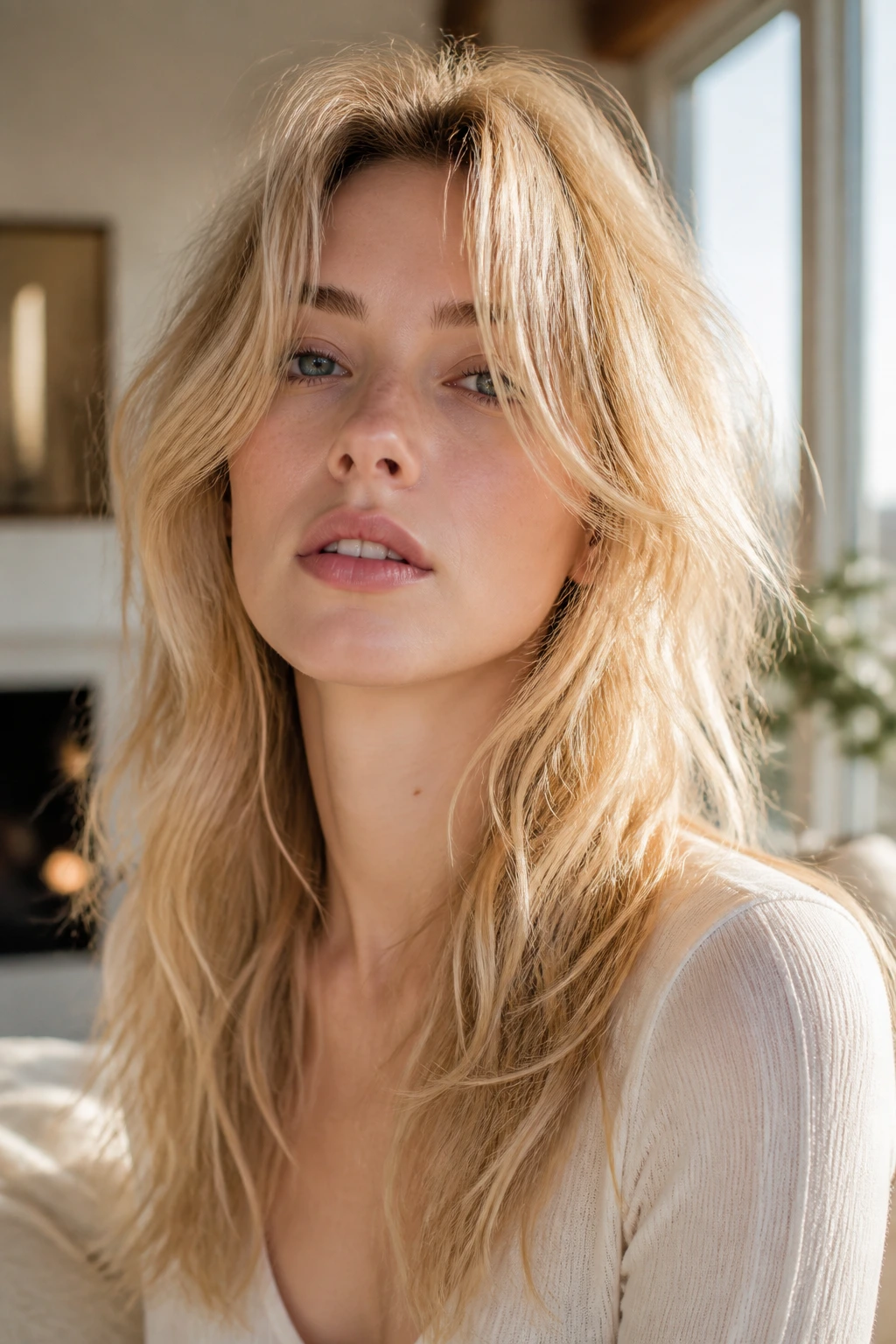
Butter blonde is for people who want their pale skin to look alive, not neutral. Put it on a long shag and you get movement, softness, and a bit of attitude without drifting into messy territory. The shag keeps the ends from dragging the whole style down.
The magic is in the broken-up layers. They give long blonde hair texture at the cheekbones, around the collarbone, and through the back so it doesn’t fall in one flat sheet. Butter blonde, with its pale warm base, keeps the face looking soft even when the hair is tousled.
This is one of the better options for fine hair that needs more body. Use a texture spray at the mids, rough-dry the crown, and let the ends stay a little undone. If you like a more polished finish, wrap the front pieces around a large round brush and leave the rest loose.
9. Dirty Blonde Soft Curls
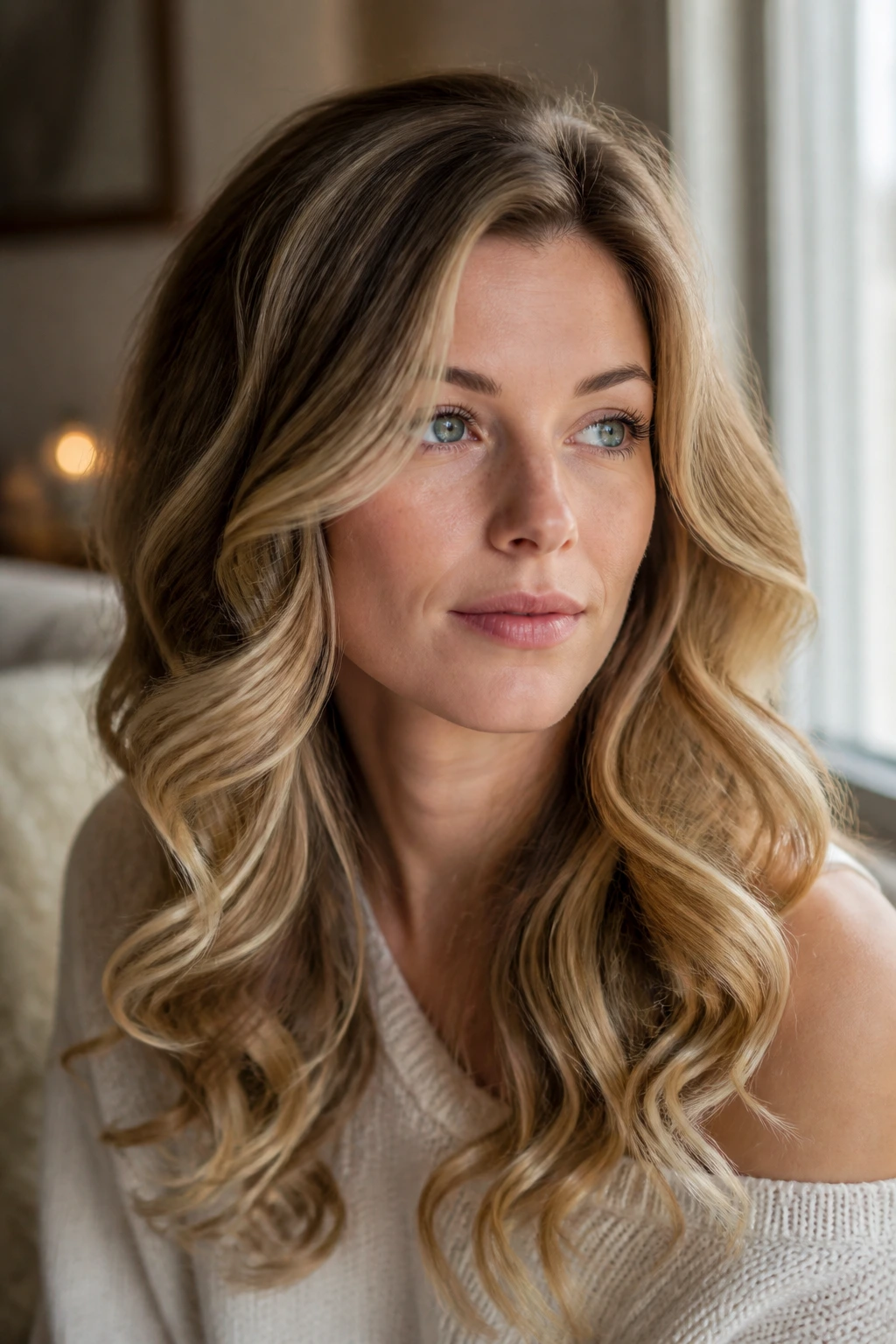
Can dirty blonde ever read polished? Absolutely, if the curl pattern stays soft and the root is a touch deeper than the mids. Dirty blonde on pale skin avoids that “too bright, too uniform” problem, and the curls give the color somewhere to move.
How to Wear It
The curl should look brushed, not crimped. Start with a 1-inch or 1.25-inch iron, curl away from the face, and break the pattern with your fingers once the hair cools. A root shadow keeps the color grounded, while the lighter ends keep it from feeling heavy.
This is especially good if your hair has natural wave already. You don’t need perfect curls here. You need bend, a little frizz control, and enough shine that the strands separate instead of clumping.
10. Pearl Blonde Half-Up Twist
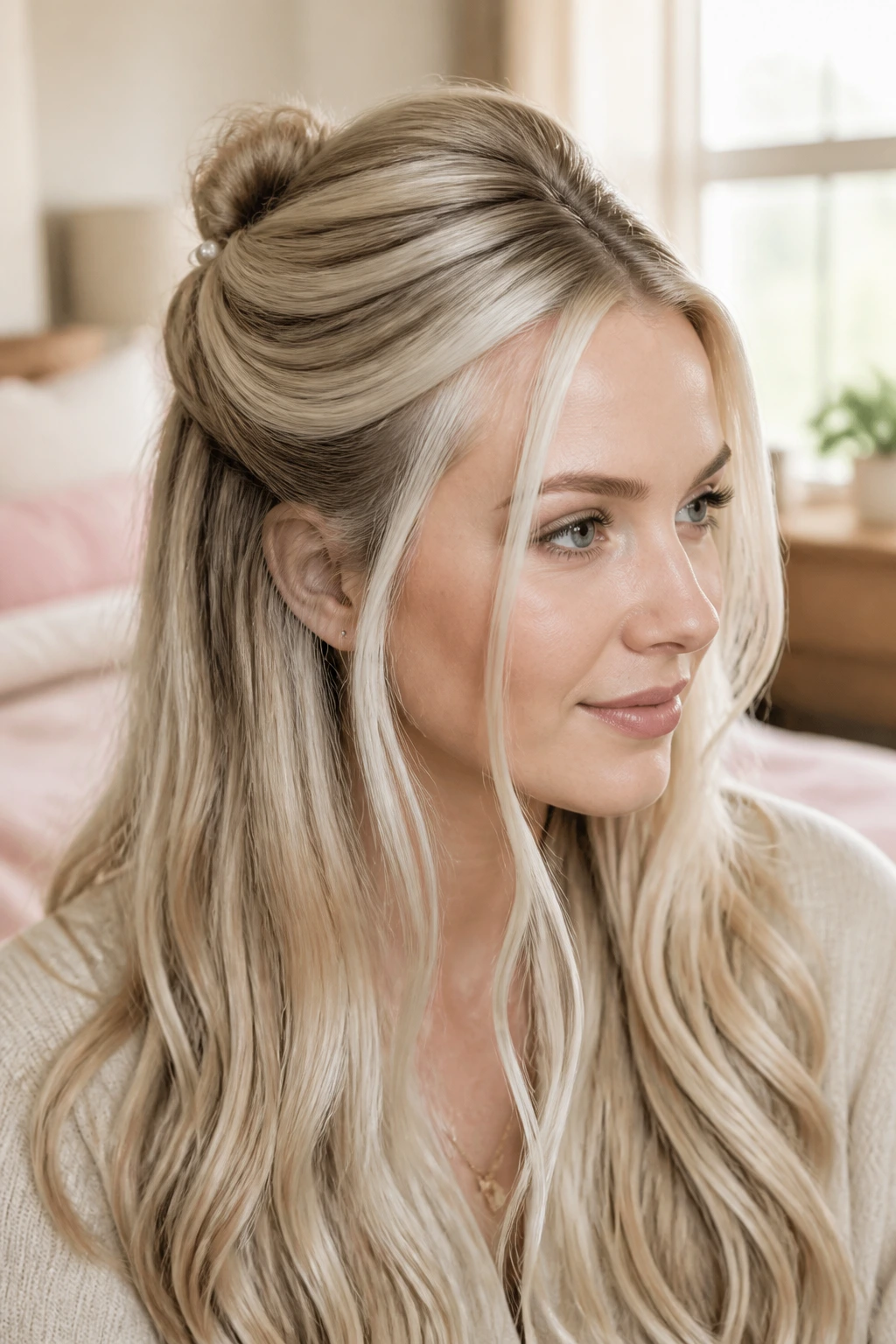
A pearl blonde half-up twist is the kind of style that looks calm from the front and a little prettier from the back. On pale skin, pearl blonde gives enough cool sheen to feel clean, but the half-up shape keeps the face from getting swallowed by long length.
When a formal event asks for long hair but not a stiff updo, this is the move. The twist at the crown adds lift where you need it, and the loose bottom half still shows off the length. Leave two slim pieces around the face; that’s what keeps the style from feeling bridal in the wrong way.
- Best on: hair with medium to long layers.
- Good detail: hide the elastic under a wrapped section.
- Texture: loose waves or big bends work better than straight strands.
- Accessory: a small pearl pin or plain silver clip is enough.
The pearl tone keeps the look soft against fair skin, especially if your undertone is cool or neutral.
11. Sandy Blonde Braided Crown
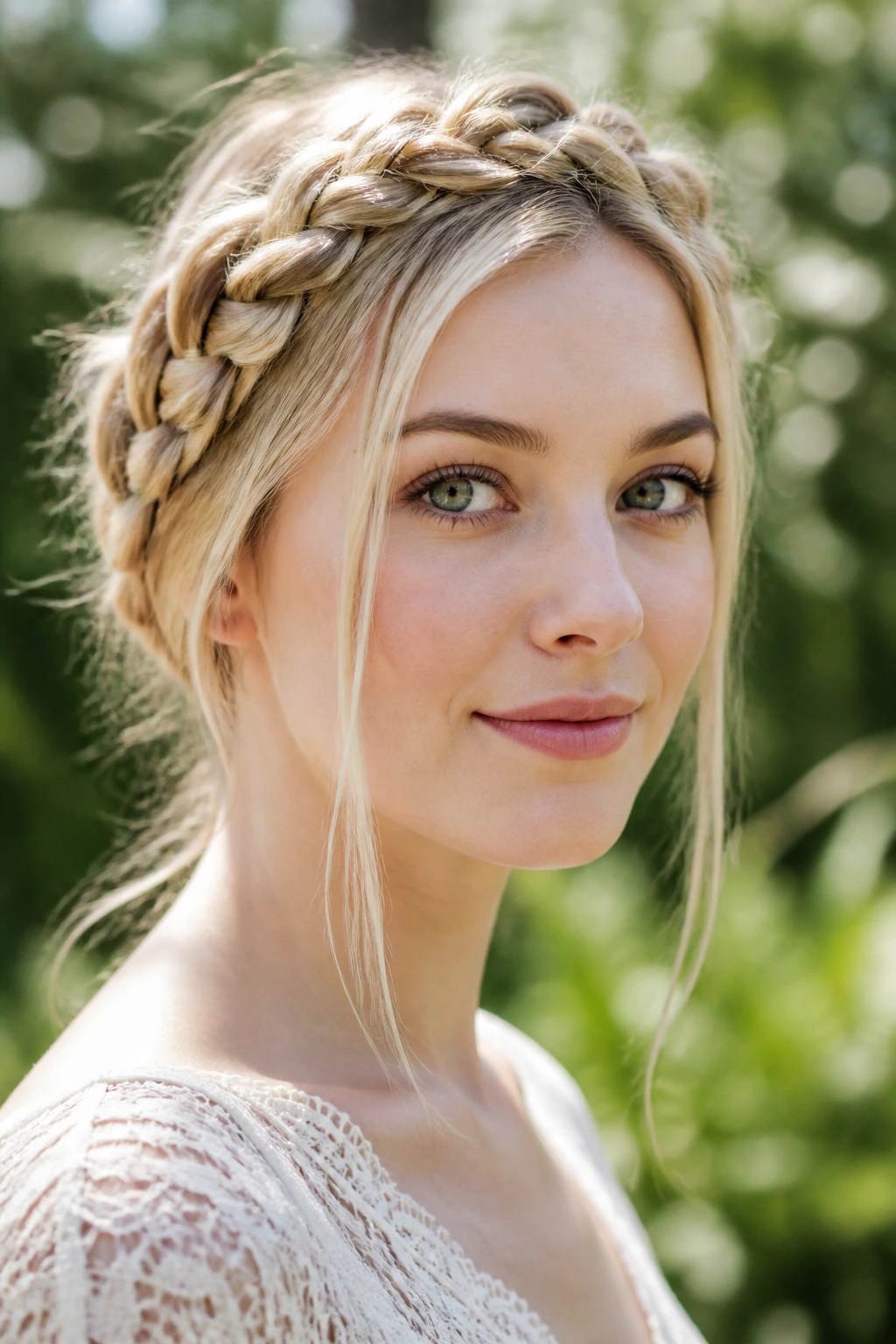
Sandy blonde is one of those shades that doesn’t fight pale skin. It sits quietly beside it. Put that tone into a braided crown and the whole style feels airy, because the braid shows off the different blonde pieces instead of hiding them.
The reason this works so well is shape. A crown braid keeps the hair away from the face, which is useful if you want your eyes, brows, and cheekbones to show. The sandy tone keeps the braid from looking too dark at the back of the head, which can happen with long hair and a dense weave. A little piecey texture at the sides makes it less severe.
I like this style for days when you want hair that stays put without feeling rigid. It also hides second-day roots in a way that a plain center part never will. That alone earns it a place here.
12. Mushroom Blonde Air-Dried Waves
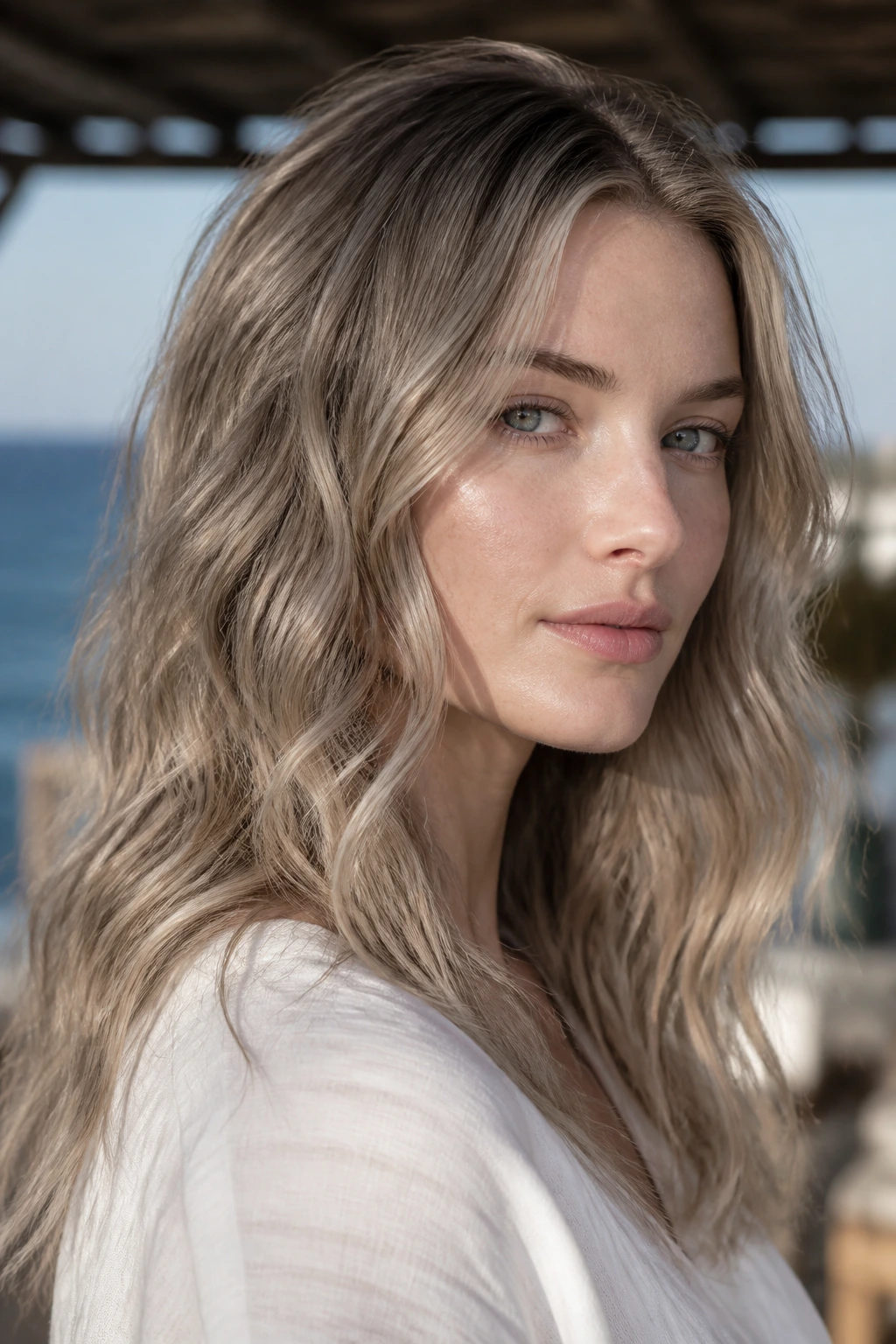
Unlike bright gold blonde, mushroom blonde keeps fair skin from looking overexposed. That’s the whole appeal. It’s muted, smoky, and a little cool, which makes long air-dried waves feel relaxed instead of unfinished.
What Makes It Different
Mushroom blonde works best when the wave pattern is loose and irregular. Think bends, not curls. A curl cream or lightweight mousse can help, but you do not want the hair to feel sticky or wet. The color already has enough depth; the texture should stay soft.
It’s a smart choice if your natural hair sits between dark blonde and light brown. The blend looks intentional with almost no hard line, and the grow-out is easy to live with. For pale skin, the muted tone keeps the face from looking too bright around the edges. If you like low-maintenance color, this is one of the better options in the whole list.
13. Root Smudge Blonde with Loose Bends
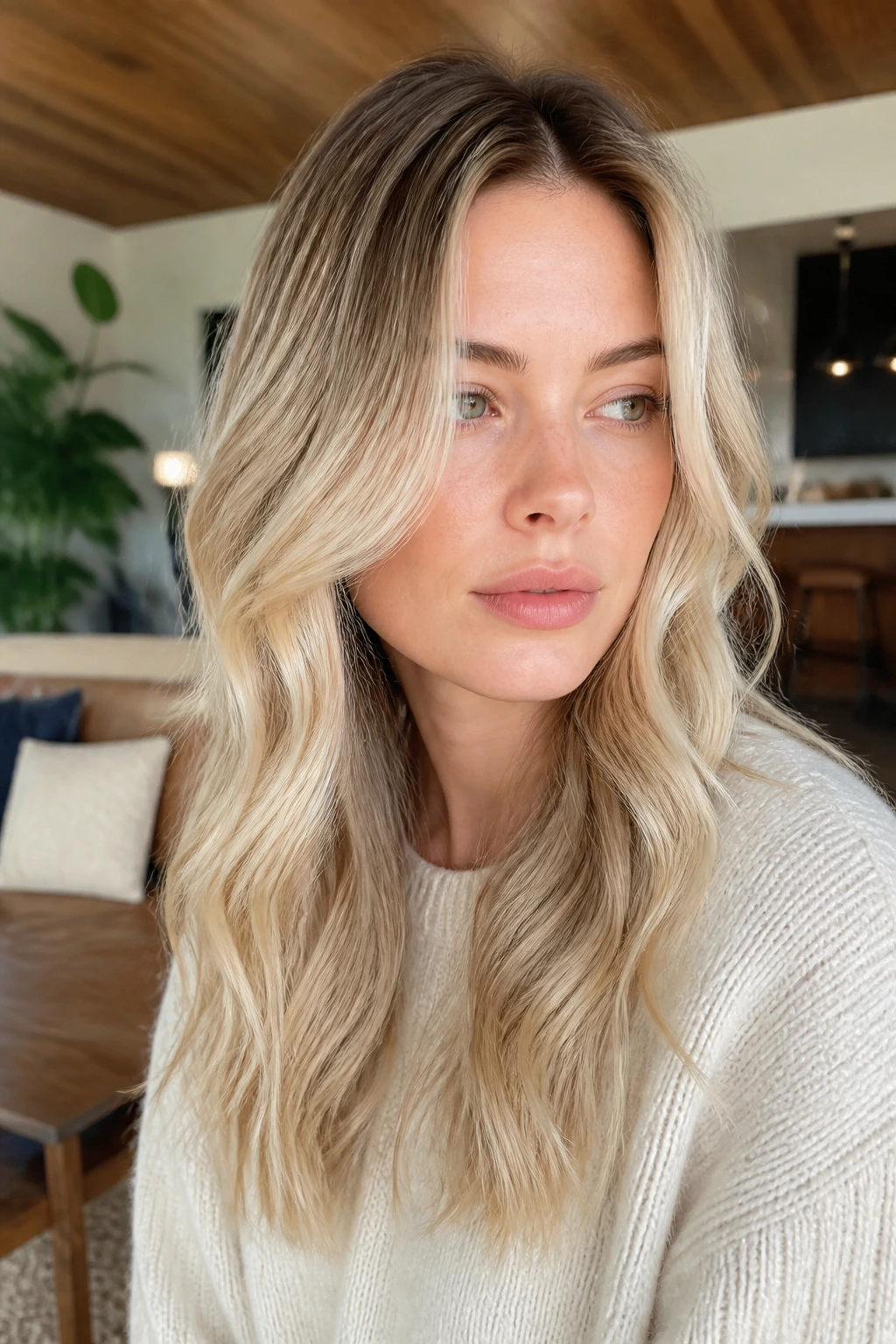
Root smudge blonde gives you the cleanest grow-out of the bunch, and on pale skin that matters more than people admit. Long hair can look expensive for a week and tired after that if the root is too bright. A smudged root solves the problem.
The loose bends keep it from feeling plain. They are not curls. They’re those soft, S-shaped turns you get from a wand or a flat iron used with a light hand. The darker root lets the blonde mids and ends glow instead of glare.
This style is strong for anyone who wears a lot of pale clothing or cool-toned makeup. It keeps the hair from disappearing into the rest of the look. If your natural base is already a dirty blonde, you are halfway there.
14. Feathered Wheat Blonde Layers
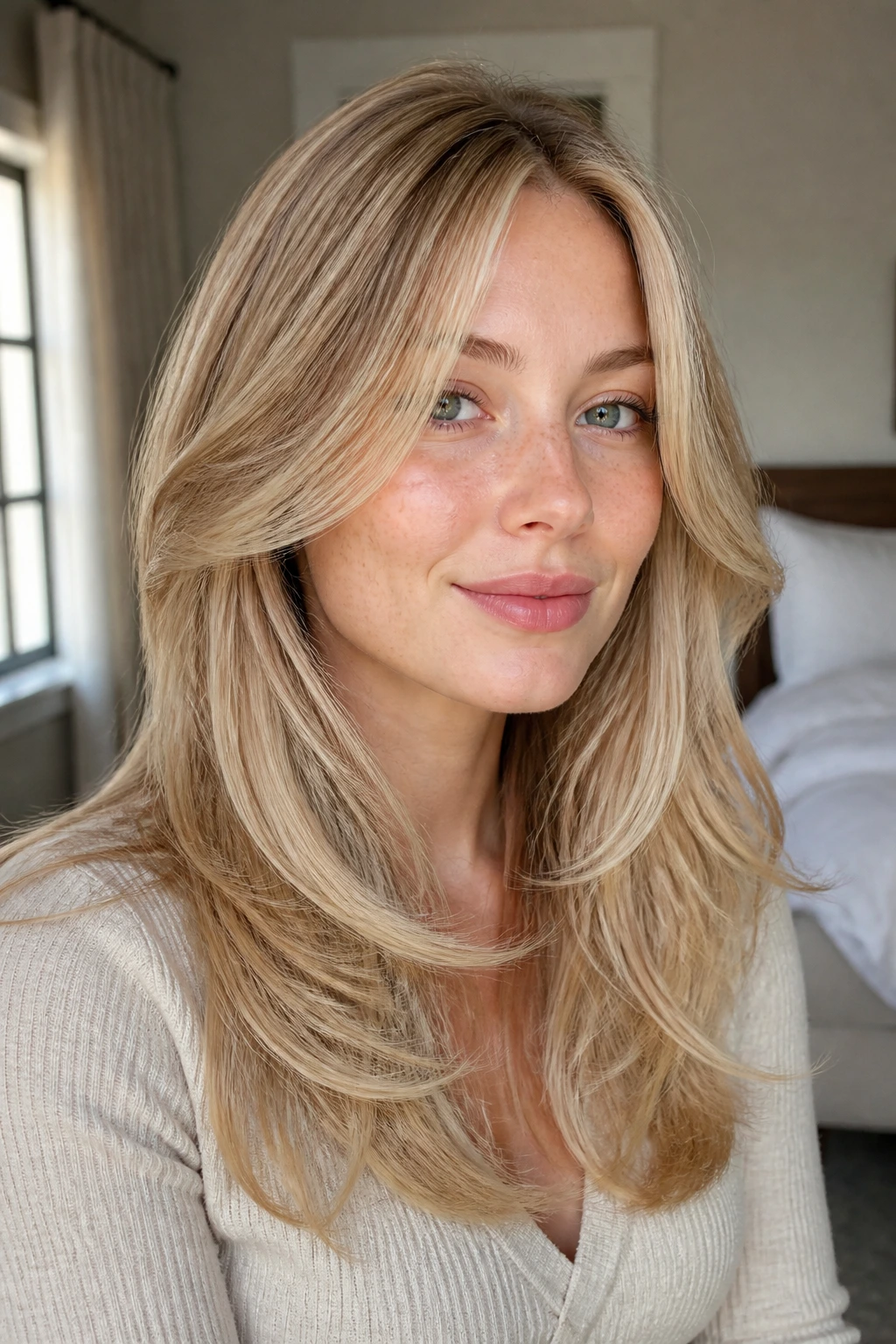
Wheat blonde is the shade that makes pale skin look soft and lived-in, especially when the layers are feathered instead of chunky. The finish is lighter than dirty blonde but warmer than ash, which gives you a nice middle ground.
The feathered cut matters because long hair can get heavy fast. Layering the sides and ends gives the hair lift around the face and prevents that heavy curtain effect. Wheat blonde also tends to show dimension well, especially if there are a few brighter pieces around the front and slightly deeper tones underneath.
Use a blow dryer with a nozzle and a medium round brush if you want the feathering to show. The ends should flick away just a touch. Not too much. Just enough to keep the style moving.
15. Side-Swept Hollywood Waves in Champagne Blonde
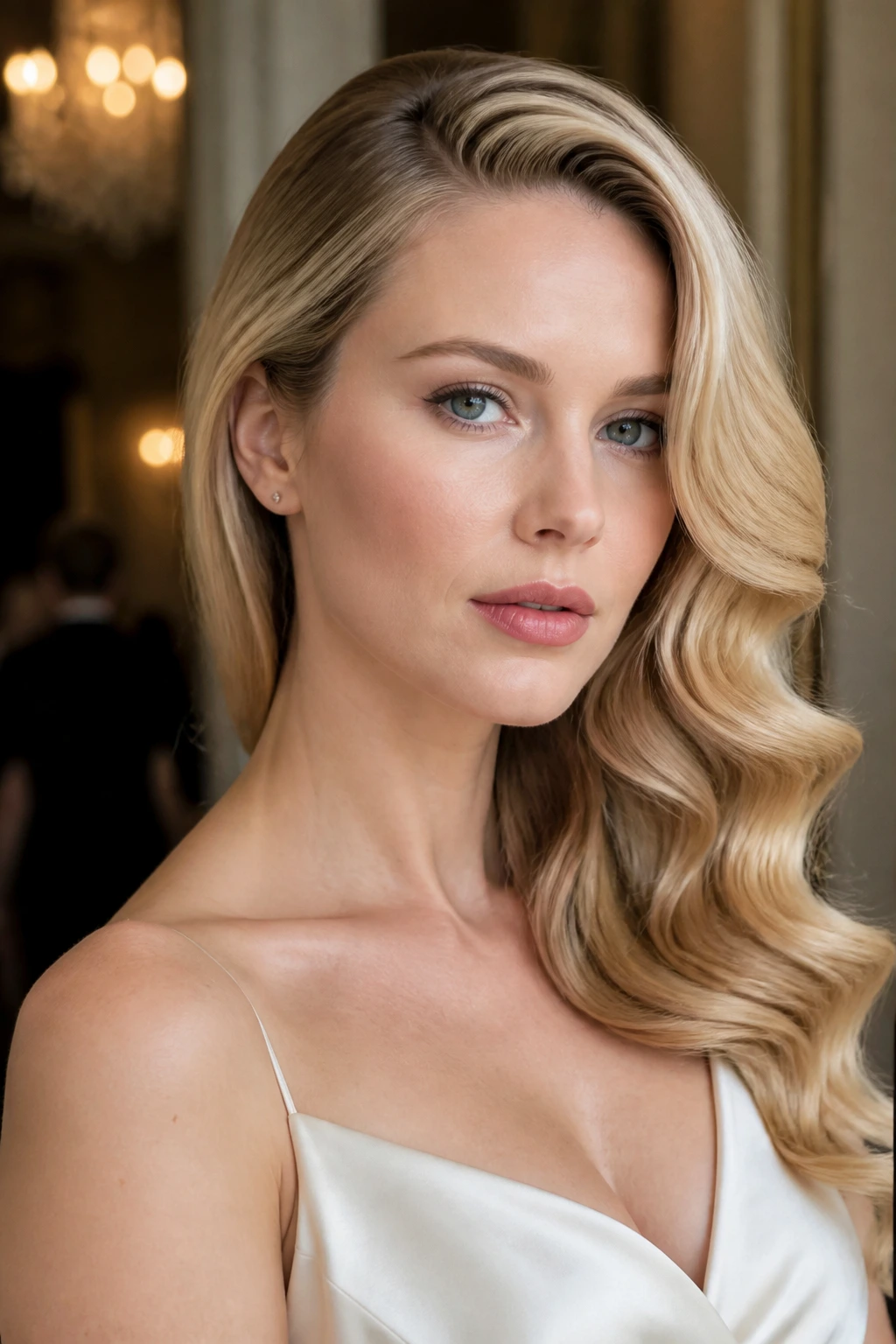
Why does a deep side part make champagne blonde look richer? Because it creates shadow on one side and brightness on the other, and that contrast does a lot of work on pale skin. Center parts can be pretty, but a side sweep gives this shade some old-school drama.
How to Get the Most From It
Hollywood waves need hold, shine, and a clean wave pattern that sits in one direction. Once the curls cool, brush them into a single smooth bend and pin the front side behind the ear if you want the shape to stay open. Champagne blonde makes the style look soft rather than hard, which matters when the hair is long.
This is a good choice for events, photos, or any time you want the hair to look intentional from across the room. It pairs well with a satin finish on the lips and a little extra blush, because the style itself is so tidy.
16. Bubble Braid with Dimensional Blonde
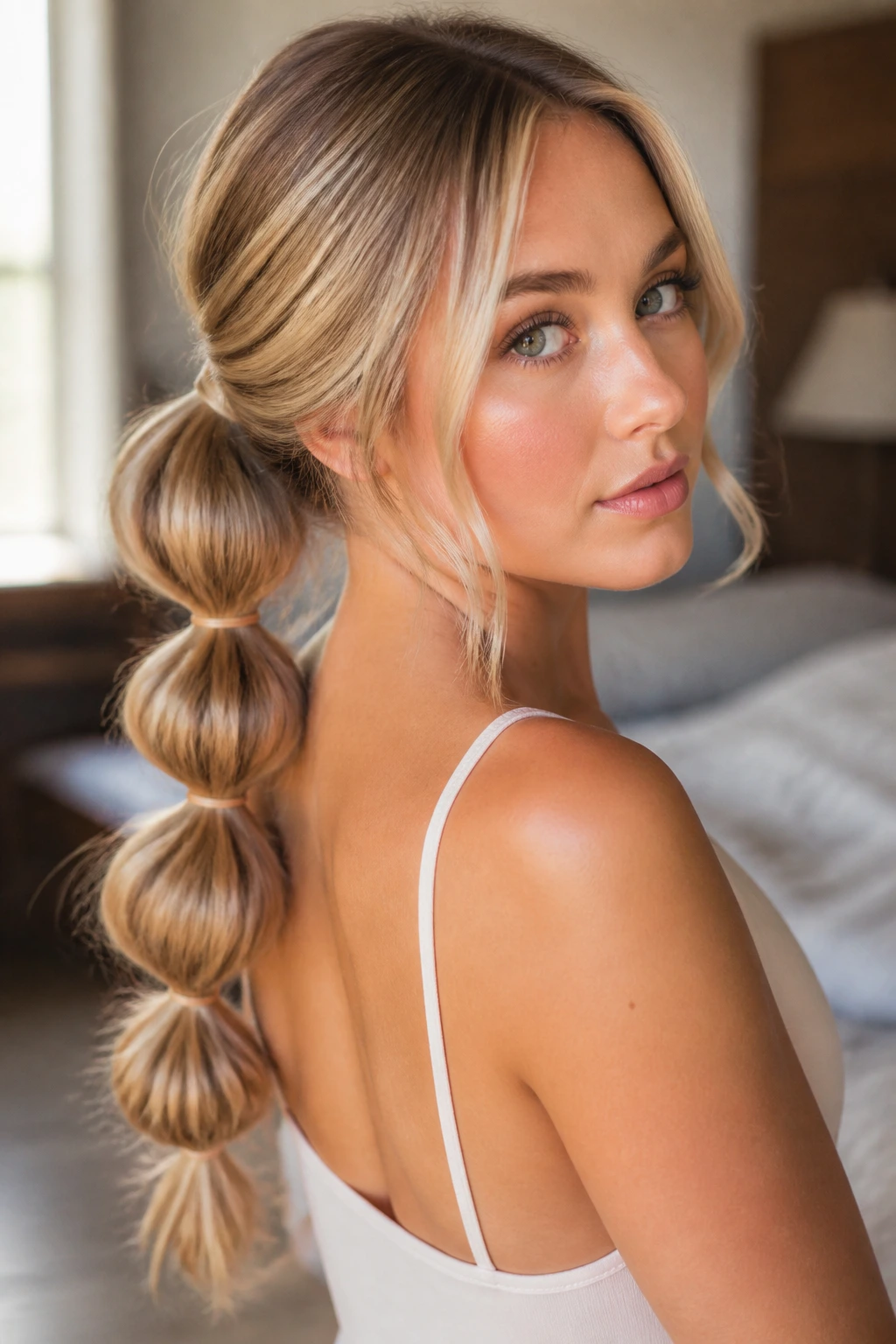
Bubble braids are one of those styles that looks playful but not childish when the blonde has dimension. On long hair, each bubble catches light differently, which is a gift if your blonde has beige, honey, and cream tones running through it.
The structure is simple: one low ponytail, then elastic ties placed every few inches down the length to create rounded segments. Pull each section outward gently so the braid looks full. That little tug is what gives the style its shape. On pale skin, the dimension keeps the braid from looking flat or chalky.
This works best when you want the length visible but out of the way. It also handles day-old texture well, which is useful because freshly washed blonde hair can be too slippery for a braid like this. A touch of dry shampoo at the roots helps the hold.
17. Fishtail Braid with Beige and Honey Ribbons
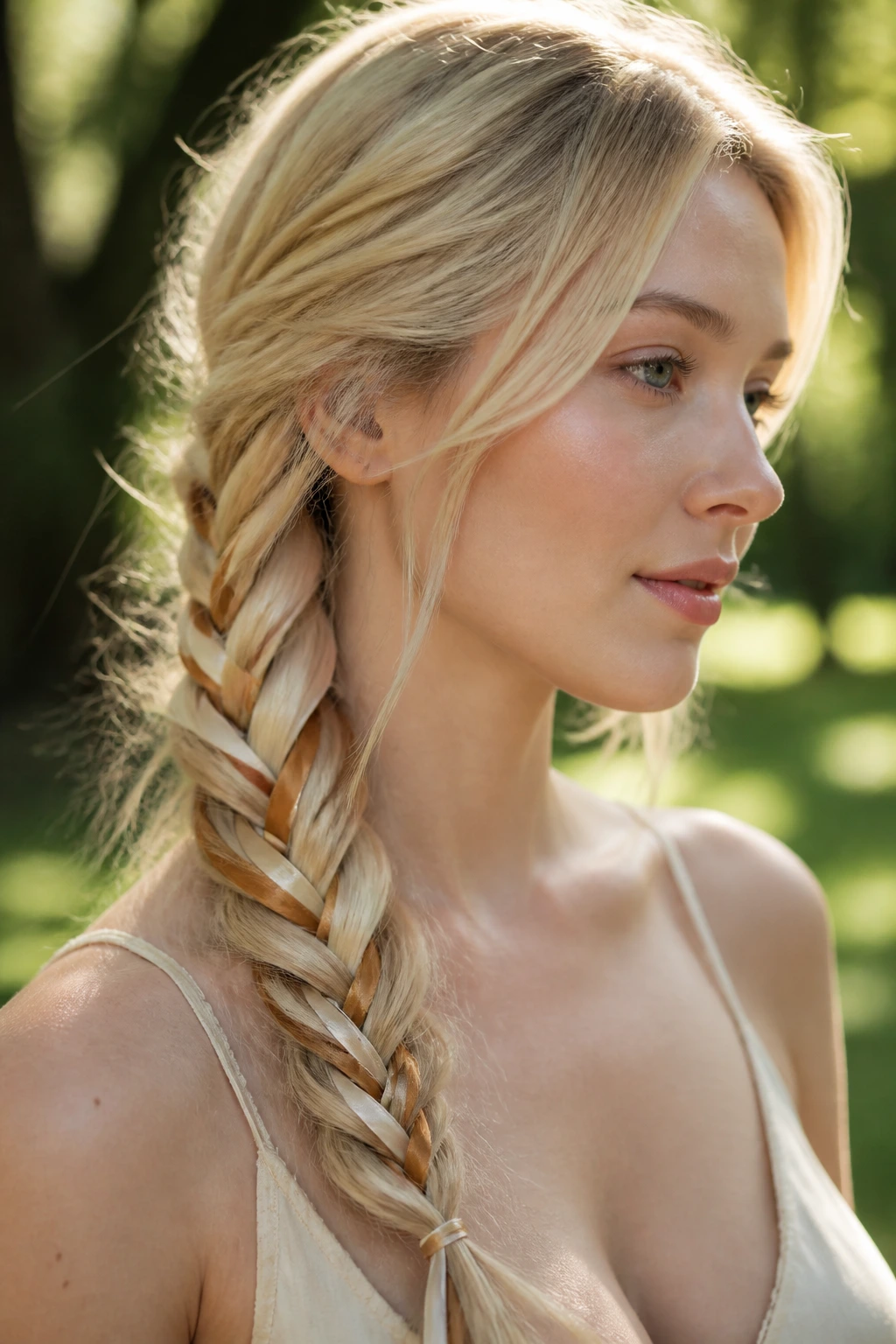
A fishtail braid on long blonde hair is already a detail-heavy style. Add beige and honey ribbons through the lengths and it gets even better, because the braid reveals every shift in tone. On pale skin, that mixed blonde reads soft, not loud.
The braid itself should be loose enough to show texture. If you pull it too tight, the whole thing turns rigid and loses the point. I like this style on hair with a little wave because the braid sits more naturally and the ends don’t fray as quickly.
It’s also a nice answer when you want a long style that stays put all day. Pin the tail under the braid if you want a neater finish, or leave it dangling if you want the style to feel more relaxed. Either way, the braid is doing the visual work.
18. Sleek Middle-Part Blowout with C-Shape Ends
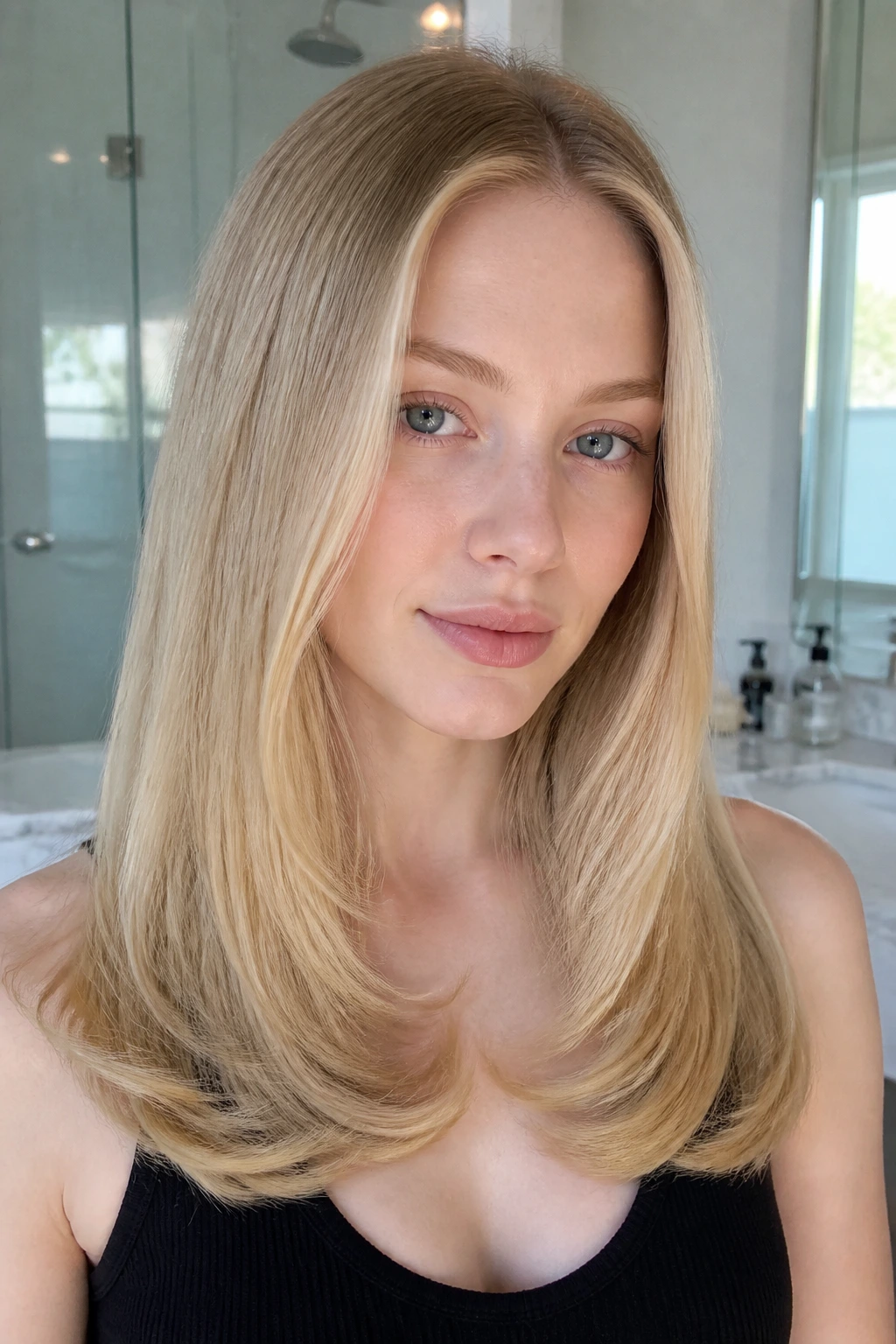
Unlike stick-straight hair, a blowout with C-shape ends softens the face while still looking clean. That matters on pale skin, where a hard straight line can feel severe if the blonde is very light.
This style works best with long layers cut to move inward at the ends. Blow-dry the roots smooth, then round the brush under just enough to bend the last two or three inches. The result is glossy, but not stiff. Champagne, beige, or vanilla tones look especially good here because the shape is so orderly.
If your hair is fine, the C-shape gives it body without teasing. If your hair is thick, it helps the length fall more neatly across the shoulders. It is one of the easiest styles to wear every day without getting bored of it.
19. Long Wolf Cut with Soft Balayage
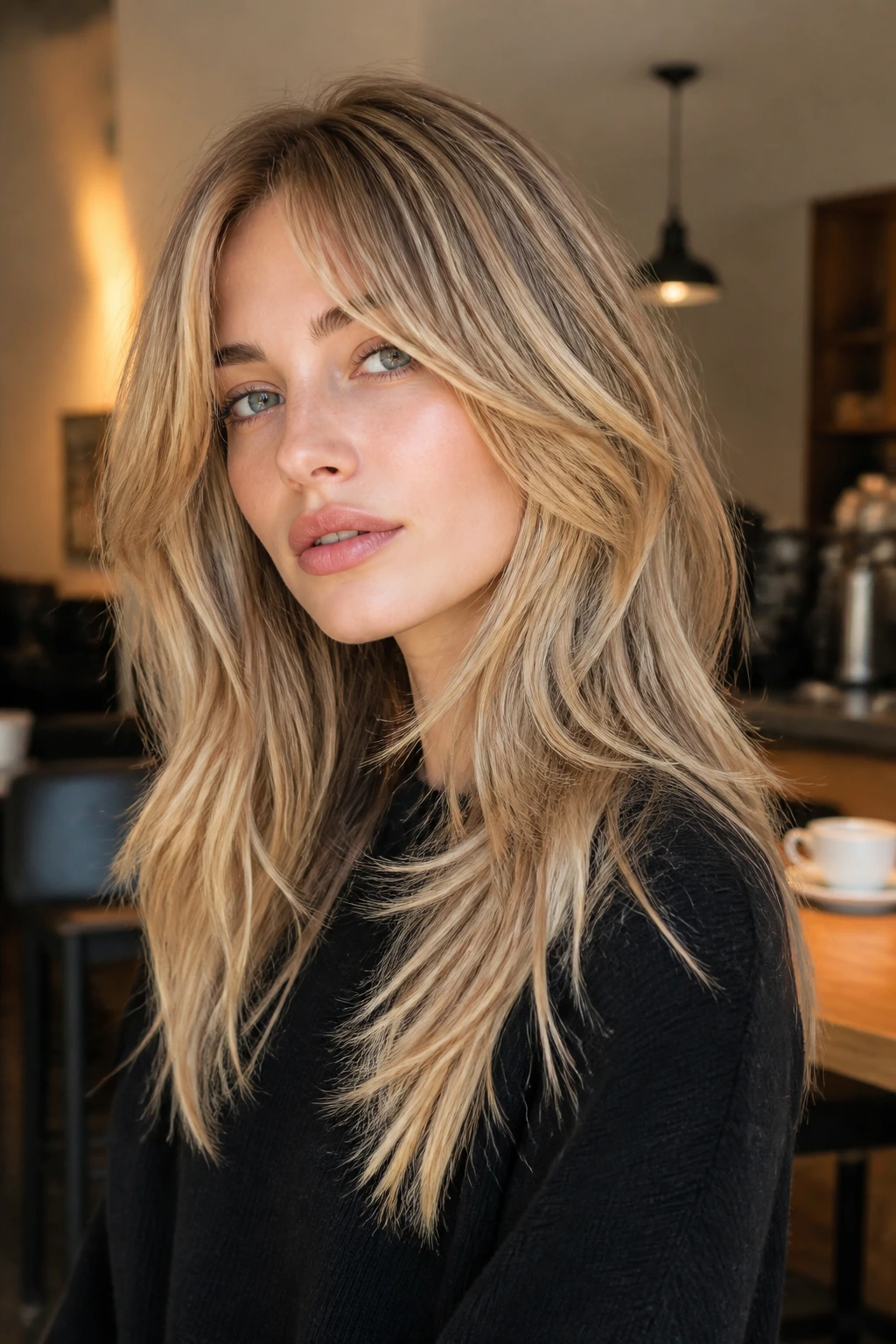
A long wolf cut sounds edgy, and it can be, but with soft balayage it turns into one of the best long natural blonde hairstyles for pale skin if you want movement without losing length. The layers sit higher around the crown, which gives the hair lift where long blonde hair often goes flat.
Why It Works
The pale balayage pieces should be spread out, not packed together. That keeps the cut airy. The longer fringe and shaggy sides frame the face in a way that flatters fair skin, especially if your features are fine and you need some shape around the cheeks.
- Best if you want: body at the crown and loose texture through the ends.
- Avoid if: you dislike a little bit of mess in your finish.
- Style with: mousse at the roots and a light wave through the lengths.
- Ask for: soft, blended layers rather than a choppy, over-cut shag.
This is not the neatest look in the room. That’s the point.
20. Waterfall Braid on Pale Blonde Lengths
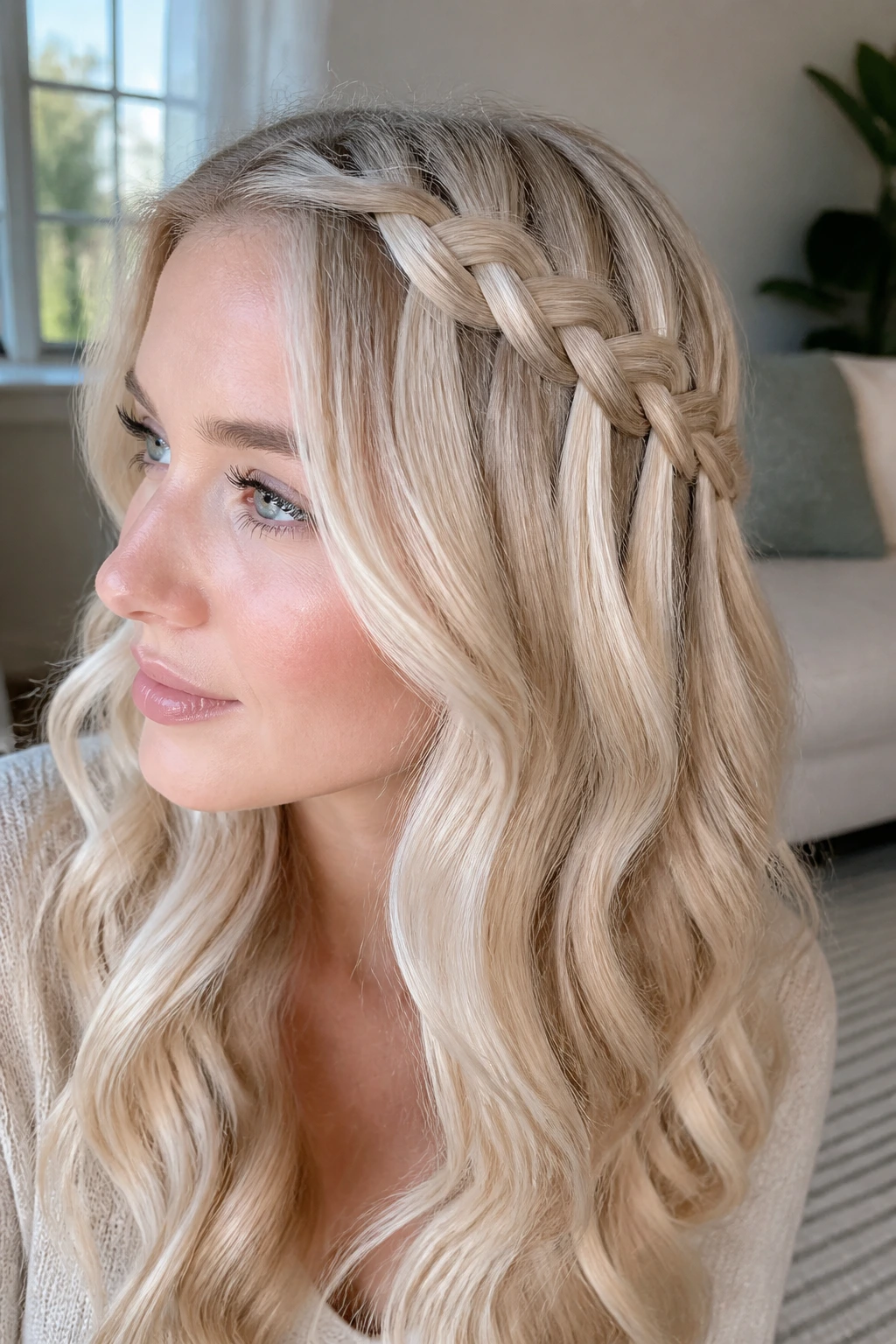
Waterfall braids look intricate, but on pale blonde hair they read cleaner than on darker hair because the strands separate visually. You can actually see the braid pattern instead of squinting at it.
The style works best when the front section is softly waved first. That gives the braid something to sit on and keeps it from sliding flat. For pale skin, the braid brings softness around the temples while leaving most of the length visible, which is a nice compromise if you do not want to pin everything back.
A waterfall braid also shows off tonal variation. Beige ends, champagne mids, and a slightly deeper root all stand out in the weave. If you’re wearing it for a formal event, a touch of gloss spray on the lower half makes the braid look clean without turning it greasy.
21. Soft Romantic Updo with Face-Framing Pieces
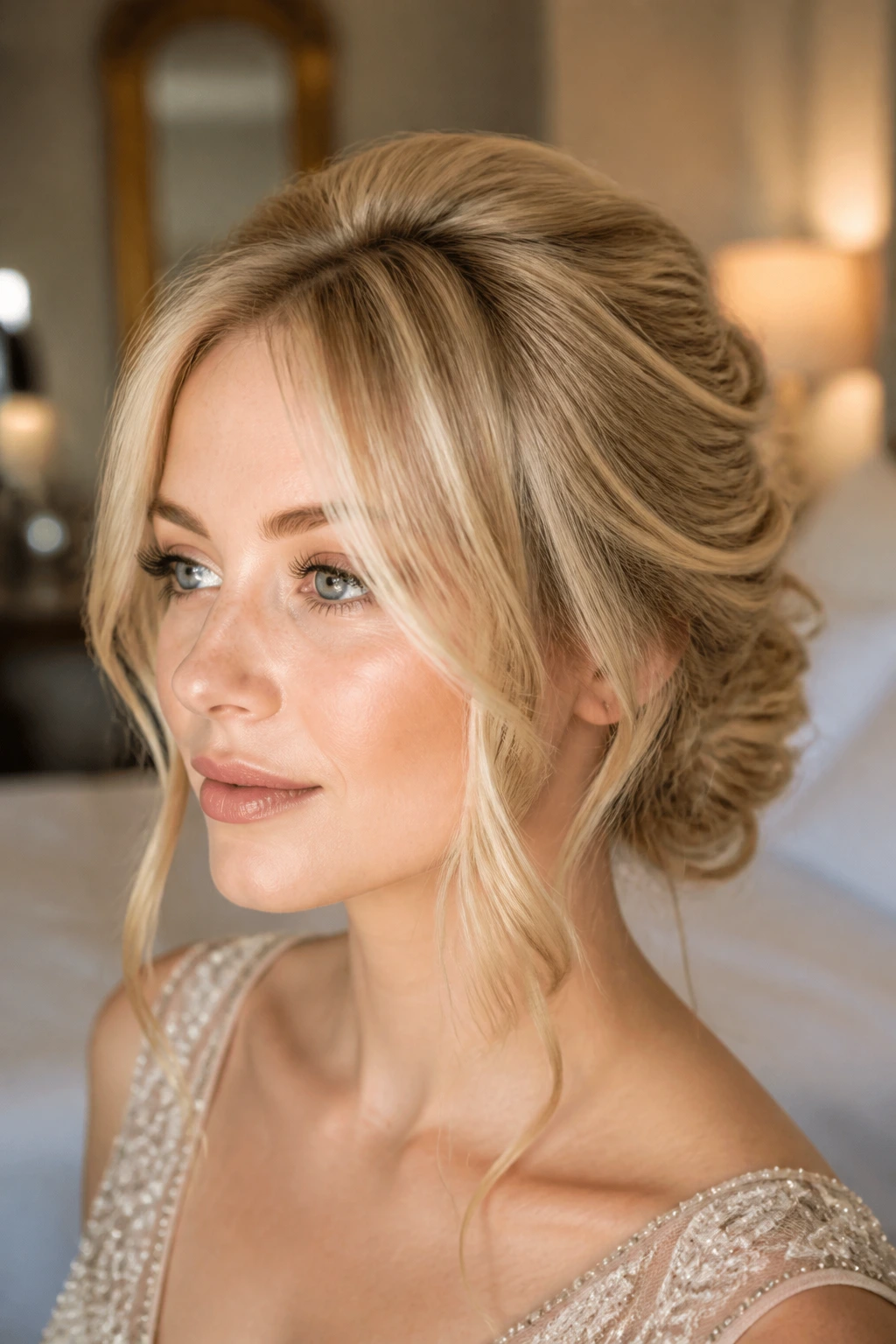
What keeps a romantic updo from swallowing pale skin? Loose face-framing pieces and a little shadow at the root. Without those, long blonde hair can bunch up into a pale knot that looks more rigid than soft.
This version works because it keeps the front open. A few curved strands around the cheeks stop the face from feeling too bare, and the rest of the hair can be twisted into a low, airy knot or pinned swirl at the back. Champagne and beige blonde tones are especially good here because the updo needs warmth to stay flattering.
How to Wear It
Leave the top slightly loose and tease the crown just a little if you want height. If the hair is too sleek, the updo can look severe on fair skin. A few pearl pins or plain bobby pins are enough. You do not need a lot of decoration when the shape is right.
22. Loose Side Ponytail with Glossy Beige Blonde
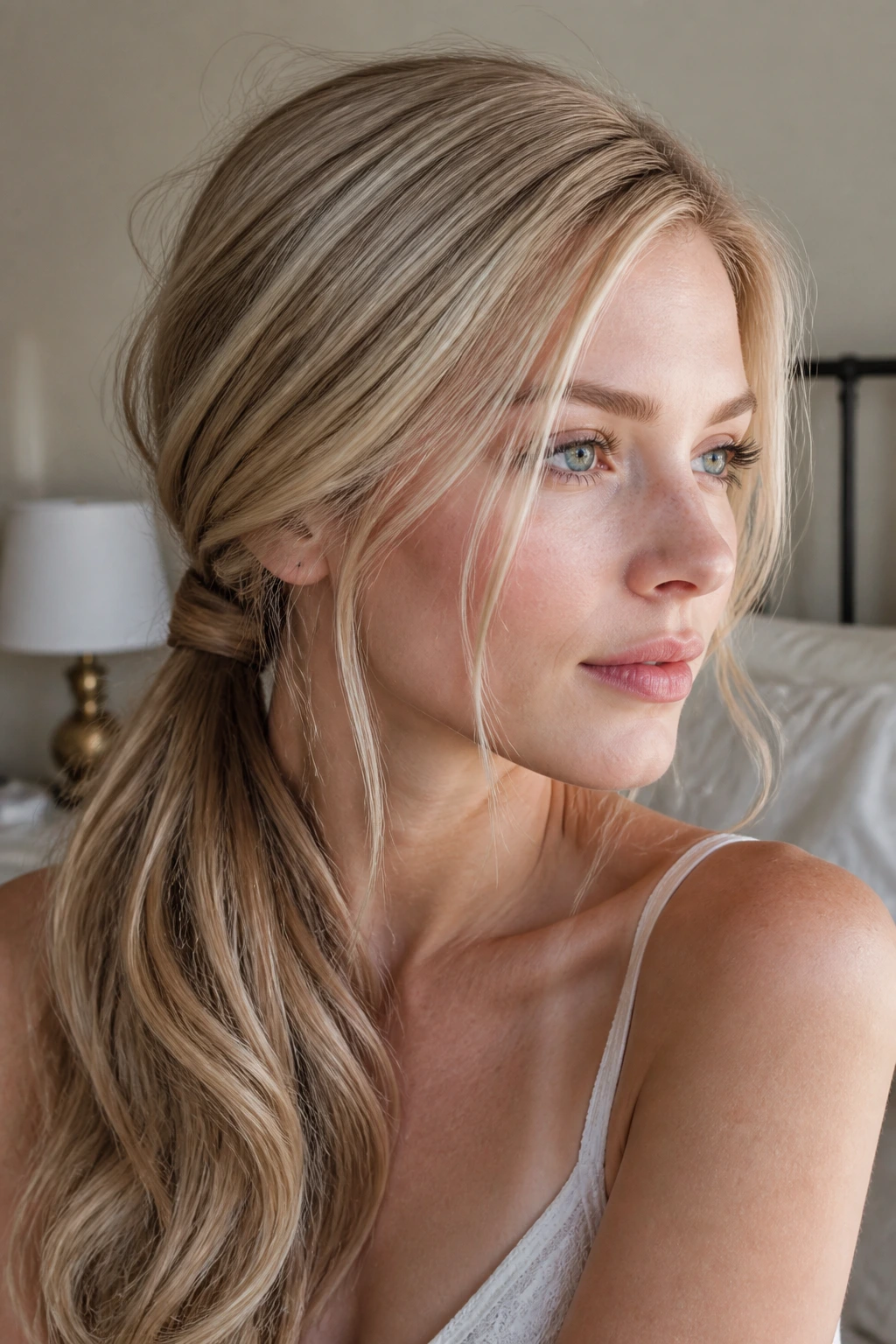
A loose side ponytail gives beige blonde hair a softer line than a center ponytail, and that helps pale skin a lot. The style drops the weight to one side, which makes the face look less static.
The ponytail should be low, loose, and slightly curved through the ends. Wrap a small section around the elastic, then pull a few face-framing strands free. That little bit of disorder is what keeps the style from feeling too school-gala. Beige blonde helps because it stays creamy in side light, and gloss makes the ponytail look healthy instead of dry.
This is a strong everyday style if you wear long hair down most days and want a change without doing much. It also handles second-day texture better than a straight blowout.
23. Long Curly Blonde Hair with Root Shadow
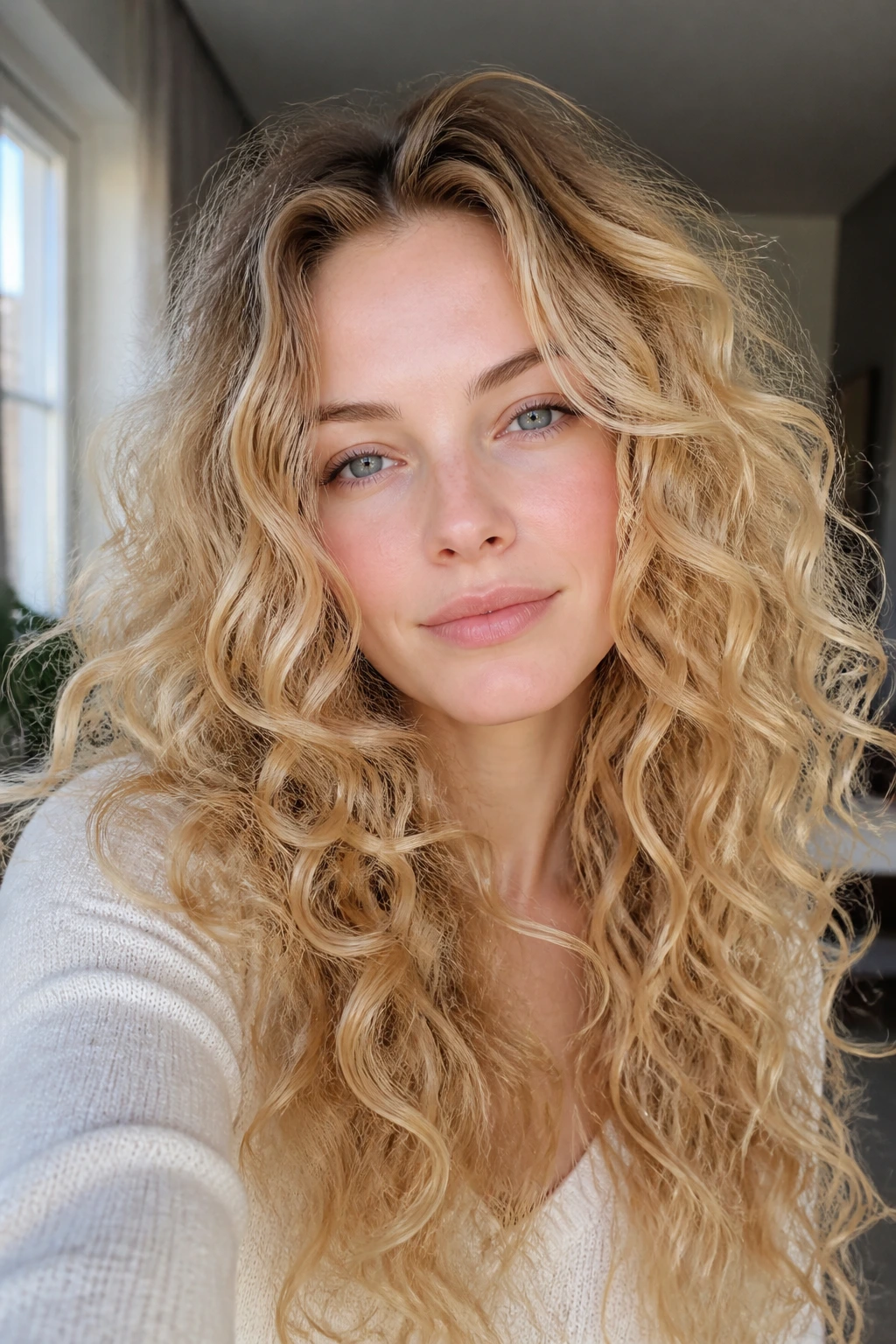
Long curls and pale skin can be a beautiful pairing, but only if the root stays grounded. A soft root shadow prevents the hair from turning into one giant bright halo, and that’s a common mistake on very light complexions.
The curls themselves should have some variation in size. Uniform ringlets can look stiff on long blonde hair. Looser curls with a few straighter pieces around the face feel more modern and let the dimension show. Honey-beige blends work especially well if your skin runs warm or neutral; ash-beige is better if your skin has a pink cast.
A curl cream on damp hair, then a diffused dry, gives the softest finish. Once dry, separate the curls only where they need it. Too much finger-combing turns this into fluff. A little frizz is fine. A cloud is not.
24. Straight Long Layers with Champagne Money Pieces
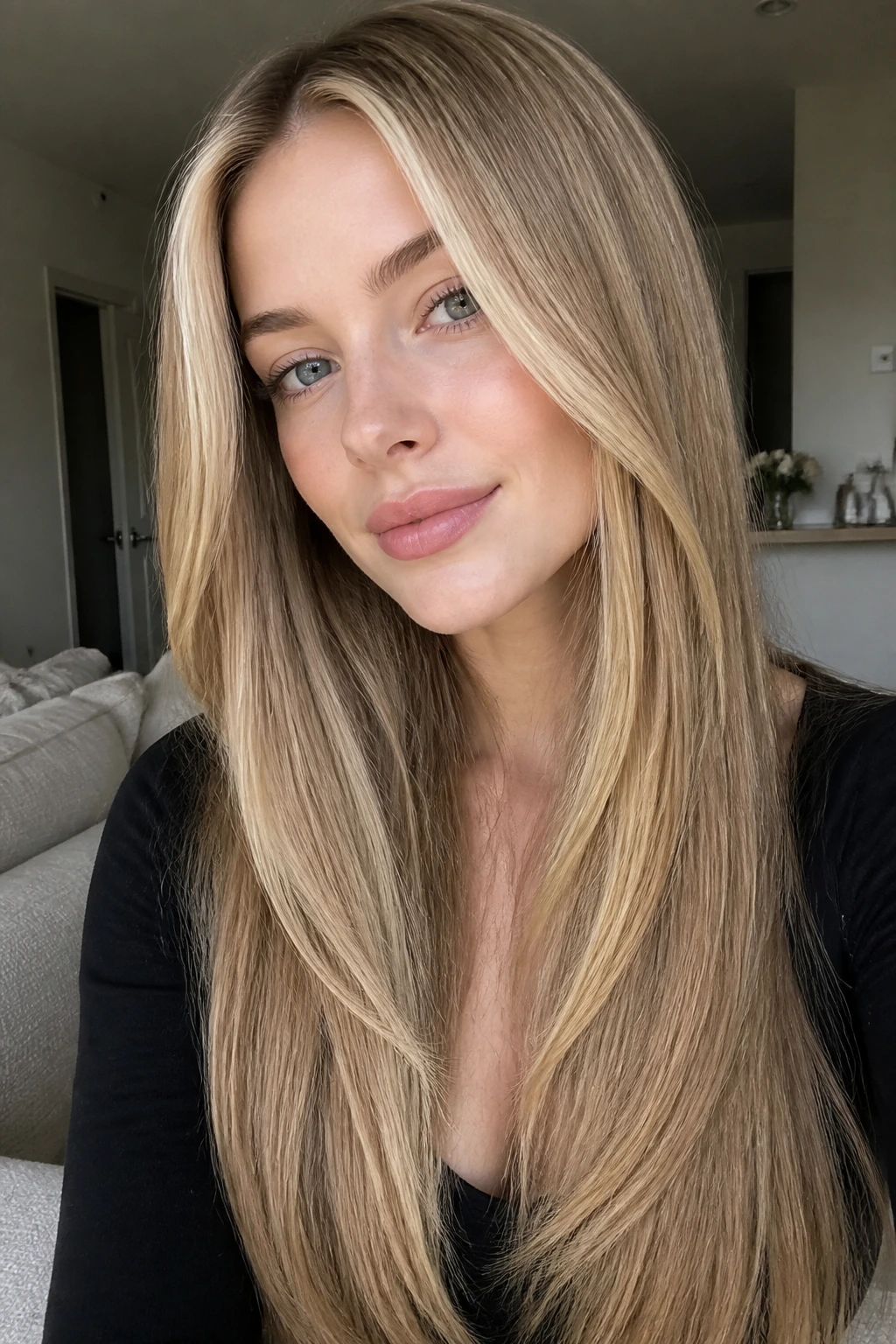
Unlike balayage spread through the whole head, champagne money pieces put the brightness exactly where the face needs it. That’s the appeal. On pale skin, the front pieces brighten the eyes and cheekbones, while the rest of the length can stay a touch deeper so the hair doesn’t vanish.
Long layers keep the straight style from dragging. If the cut is too blunt, the money pieces do all the work and the ends feel heavy. With the right cut, though, this looks polished and very wearable. It’s a smart choice if you wear minimal makeup and want the hair to do the framing for you.
This is one of the easiest styles to maintain between salon visits because the brightness lives near the front. Even when the roots start to grow, the face-framing pieces keep the style looking fresh.
25. Twisted Half-Braid with Pale Honey Ends
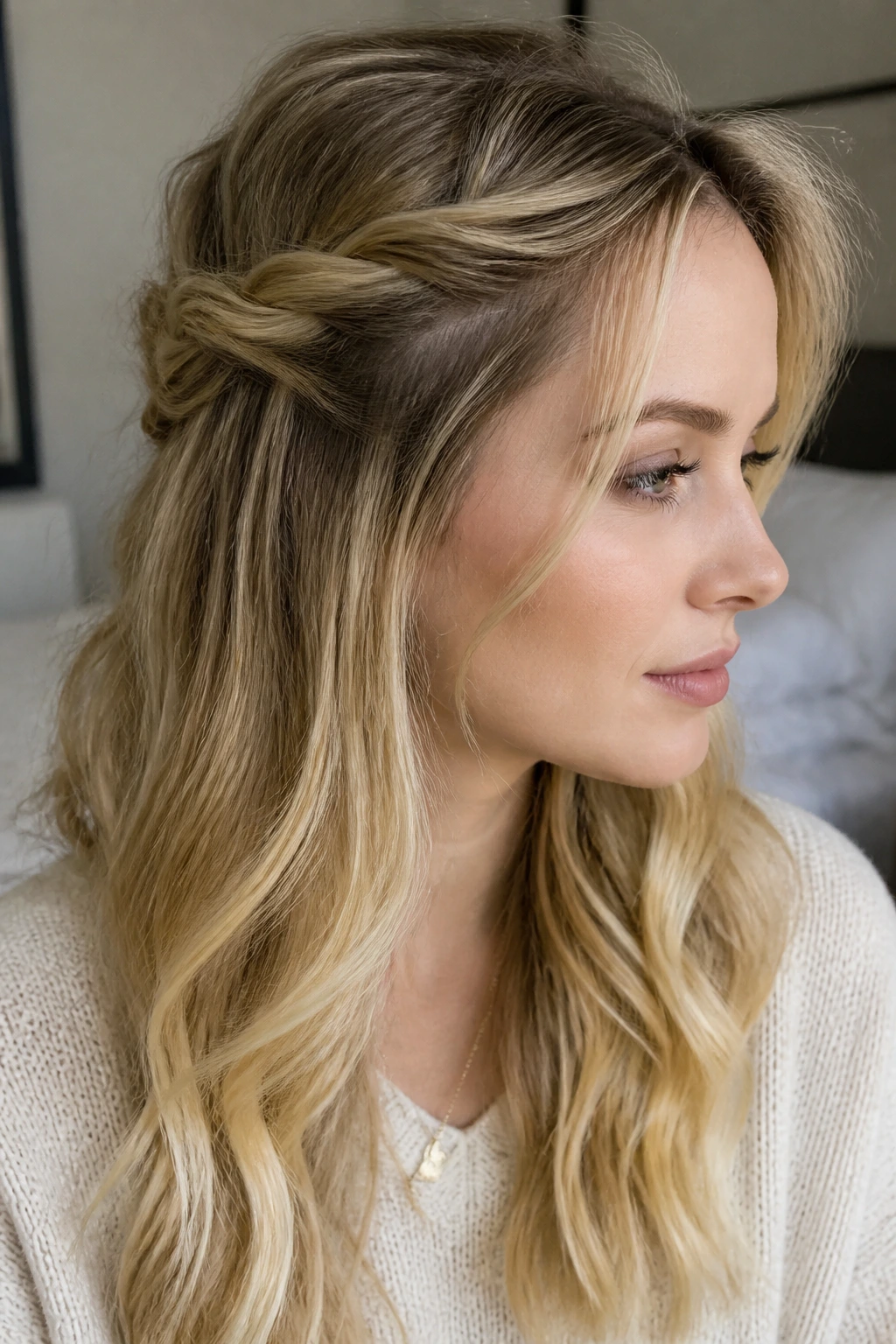
A twisted half-braid is a good compromise when you want hair off your face but still want to show off the length. Pale honey ends make the twist look richer on pale skin, since the warmth sits low in the style instead of crowding the face.
Why It Flatters Fair Skin
The top section stays smooth while the twist gives the crown a little lift. That lift matters. It creates shape without asking the length to do all the work. The honey ends peek through the twist and keep the style from feeling too pale or too cool.
- Best on: hair with some natural wave or texture.
- Tool: a couple of small clear elastics and a few pins.
- Works well with: second-day hair.
- Style note: keep the twist loose so it doesn’t dent the top.
It’s a good style for when you want something halfway between casual and dressed-up.
26. Airy Long Layers with a Soft Ivory Gloss
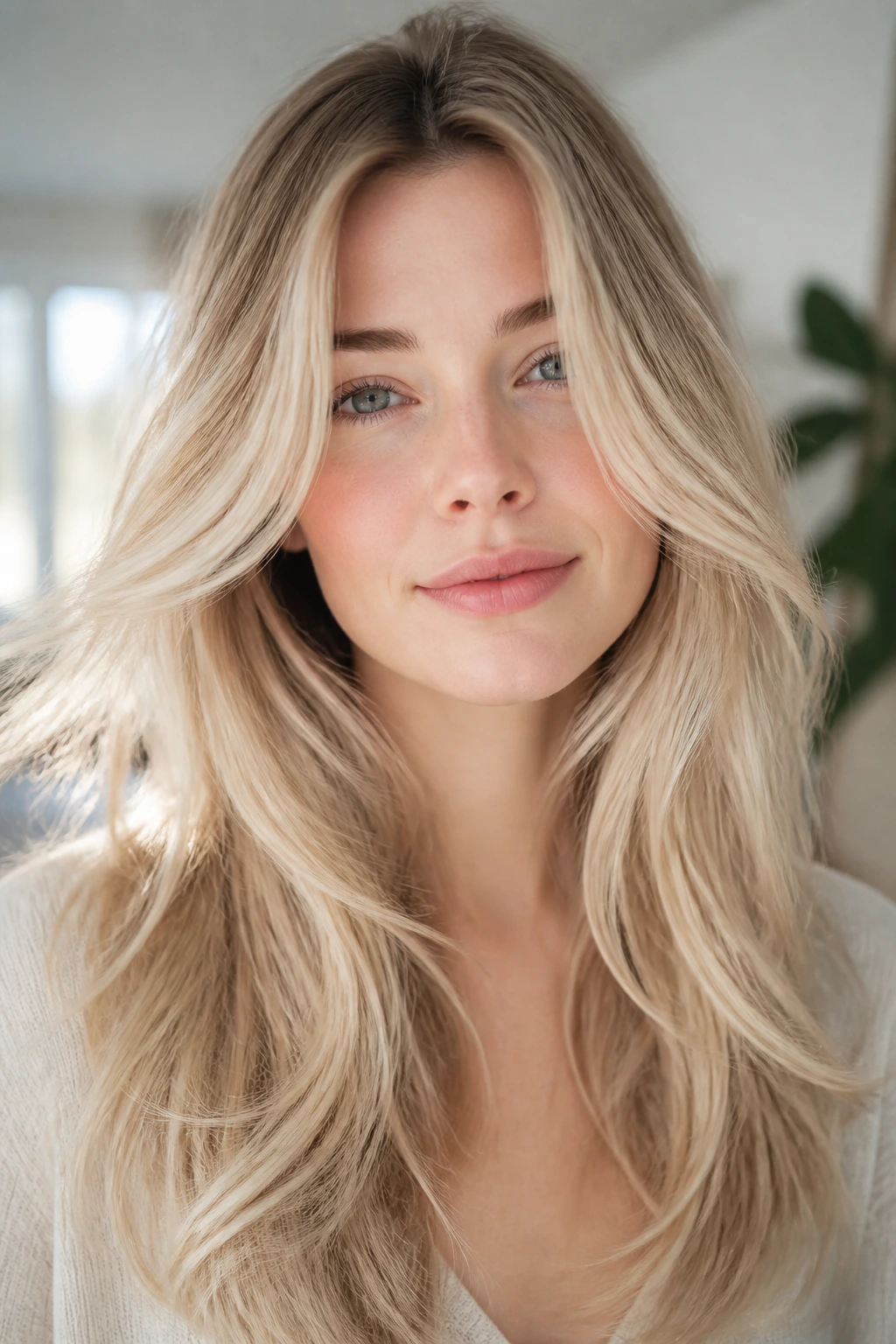
Ivory gloss is the quietest way to keep pale skin from looking too pink under bright light. It softens the blonde without changing the personality of the hair, which is why it works so well on airy long layers.
The layers should move, not stack. You want the ends to separate when the hair sways, because that’s what gives the ivory tone room to show. A gloss like this is especially useful if your blonde has gone dull or slightly yellow. It restores the clean, soft look without turning everything flat.
This style is best if you like hair that feels easy but finished. It doesn’t need curls, braids, or much product. A round brush and a light serum on the ends are enough. Sometimes that restraint is the whole point.
27. Low Knot with Blonde Tendrils and a Soft Root Melt
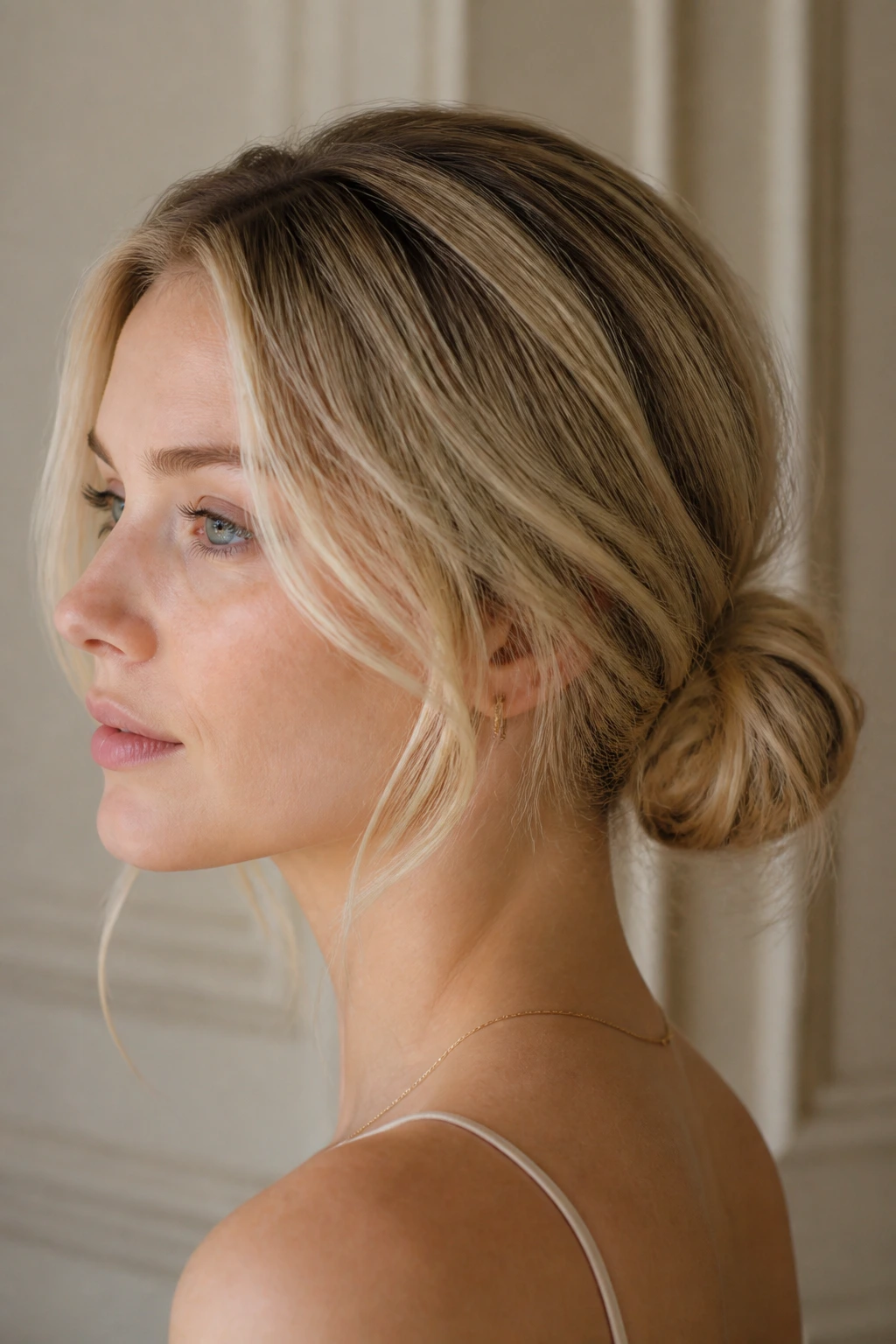
Can a low knot still feel like a blonde style? Yes, if the tendrils around the face are soft and the root melt still shows. Without those details, long blonde hair pinned up can disappear against pale skin.
The knot itself should sit just above the nape or slightly lower. Leave a few curved pieces out at the temples and jawline. That keeps the face from looking over-exposed. A soft root melt helps the knot look thicker, too, because the darker base adds depth where the hair is pinned tight.
This is a strong choice for humid days, formal events, or any time you want the neck open and the hair controlled. It is less fussy than a braided updo and kinder to pale skin than a perfectly slick bun.
28. Glossed-Out Long Waves with a Beige-to-Butter Fade
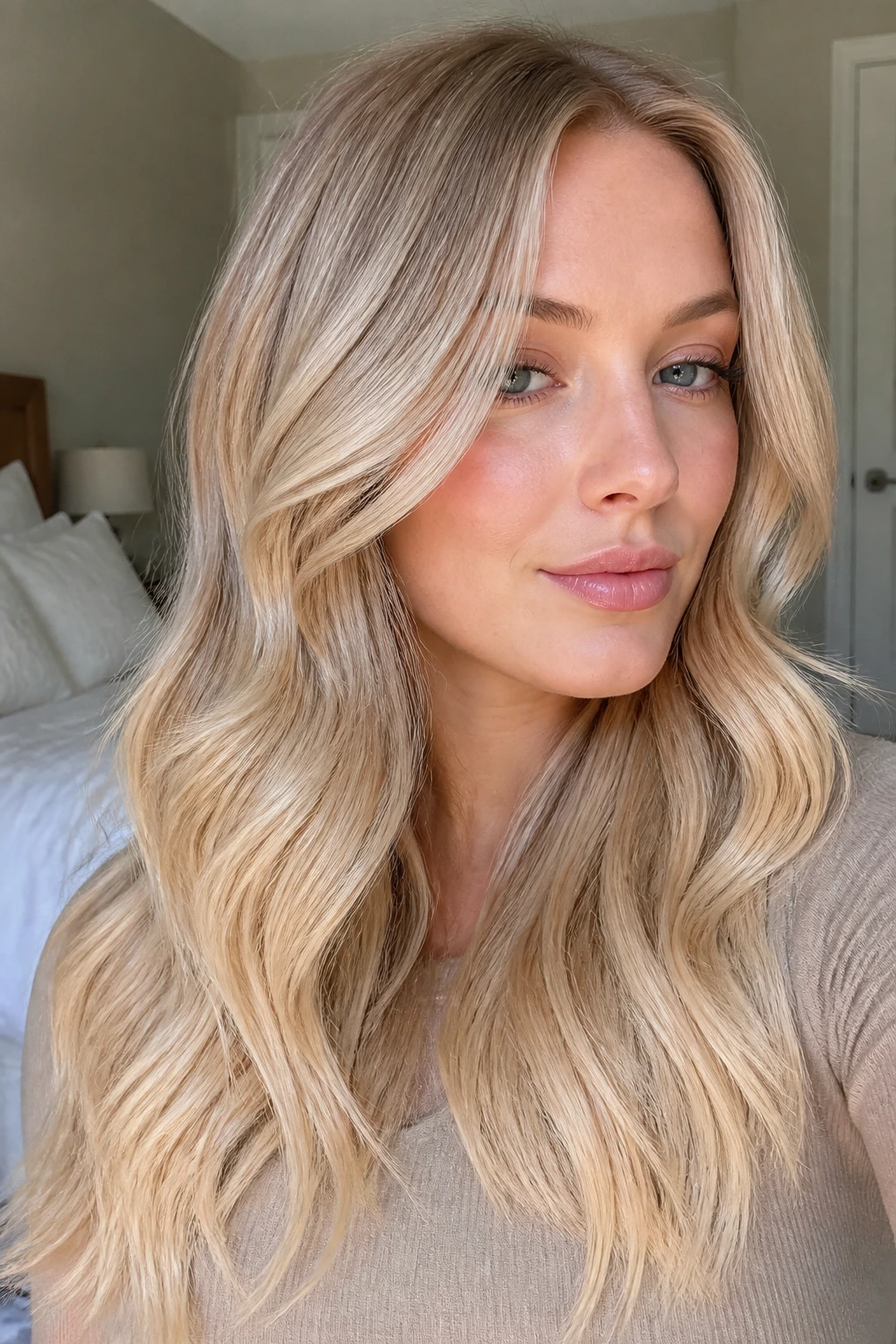
A beige-to-butter fade gives long waves a soft gradient that looks especially good on fair skin. The beige keeps the roots and mids grounded. The butter ends add a little warmth near the bottom, where the hair can handle it without overwhelming the face.
This style works because the wave pattern lets the fade show. Flat hair would hide the color shift. Loose, brushed-out waves show it in motion. If you want the most flattering version, keep the brightest blonde below the cheekbones and let the top remain more muted. That keeps the style soft around the face and brighter where the eye naturally travels.
It’s a very human-looking blonde. That’s my favorite kind.
Why Long Blonde Hair Needs More Than Just Lightness
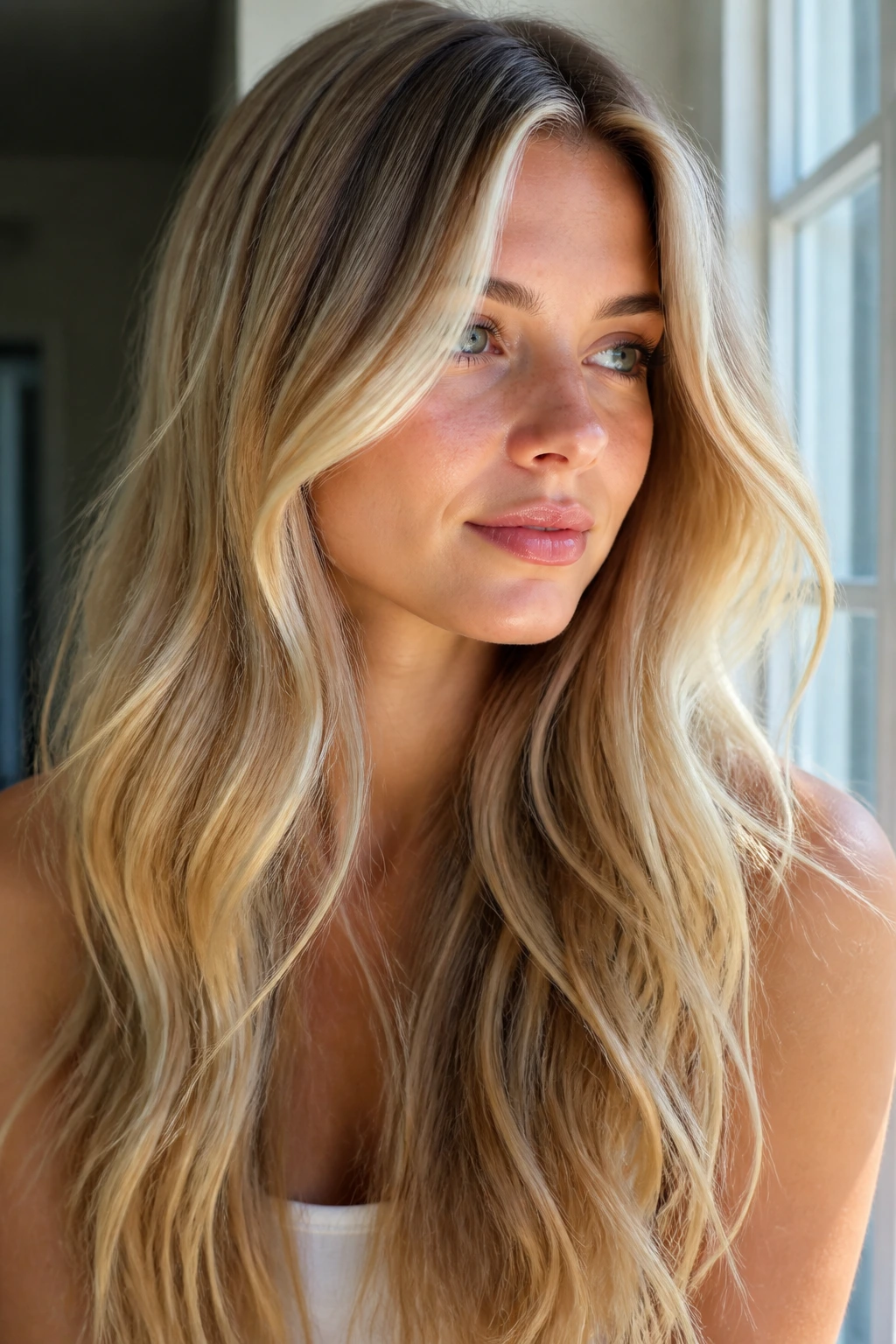
Pale skin changes the whole equation. A blonde that looks gentle on a medium complexion can look severe, thin, or even a little chalky on fair skin if the tone is wrong or the cut is too plain. That’s why the best long blonde styles here rely on depth, movement, and a finish that keeps the hair from becoming one bright, featureless shape.
Root shadow is a quiet hero in this category. So are face-framing pieces, long layers, and glosses that lean beige instead of icy silver. You do not need to go dark to add contrast. You just need enough softness that the blonde can sit next to the skin instead of competing with it. A slight bend in the lengths, a few lighter pieces near the face, and a tone that matches the undertone of your skin can change the whole read of the hair.
Long hair also needs shape more than shorter cuts do. If the ends are heavy and the surface is flat, the color gets lost. If the layers are placed well, the blonde catches light at different points and the face gets back its own shape. That is the real trick. Not brightness. Balance.
Tools That Make These Looks Easier to Style
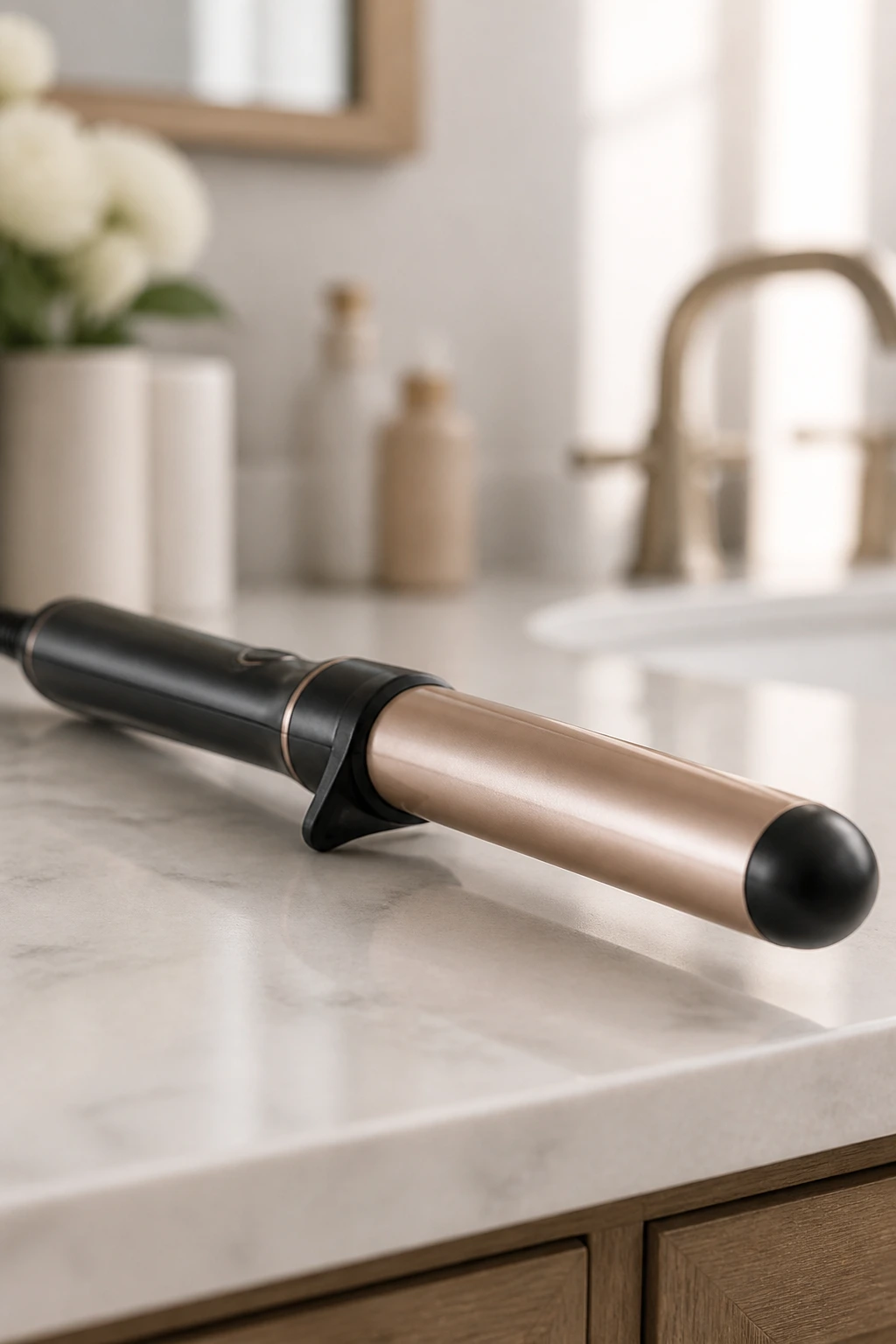
- 1.25-inch curling wand: Best for loose waves, brushed curls, and soft bends that don’t look tight or dated.
- Round brush, medium size: Useful for curtain bangs, blowouts, and those C-shaped ends that soften straight hair.
- Heat protectant spray: Non-negotiable if you use hot tools more than once a week; blonde hair shows heat damage fast.
- Lightweight texturizing spray: Helps braids, waves, and shag cuts hold shape without turning the hair crunchy.
- Shine serum or light oil: A pea-size amount on the ends keeps blonde hair from looking dry and fuzzy.
- Purple shampoo: Good in small doses when blonde starts leaning yellow, but too much can turn the hair dull and over-toned.
- Root-lift spray or mousse: Handy for blowouts, ponytails, and styles that need height at the crown.
- Silk scrunchies and small elastics: They leave fewer dents and are kinder to fragile ends.
- Bobby pins and duckbill clips: Perfect for half-up styles, twists, and setting face-framing pieces while they cool.
- Microfiber towel or old T-shirt: Reduces friction after washing, which matters a lot on lightened hair.
How to Choose the Right Blonde Tone for Fair Undertones
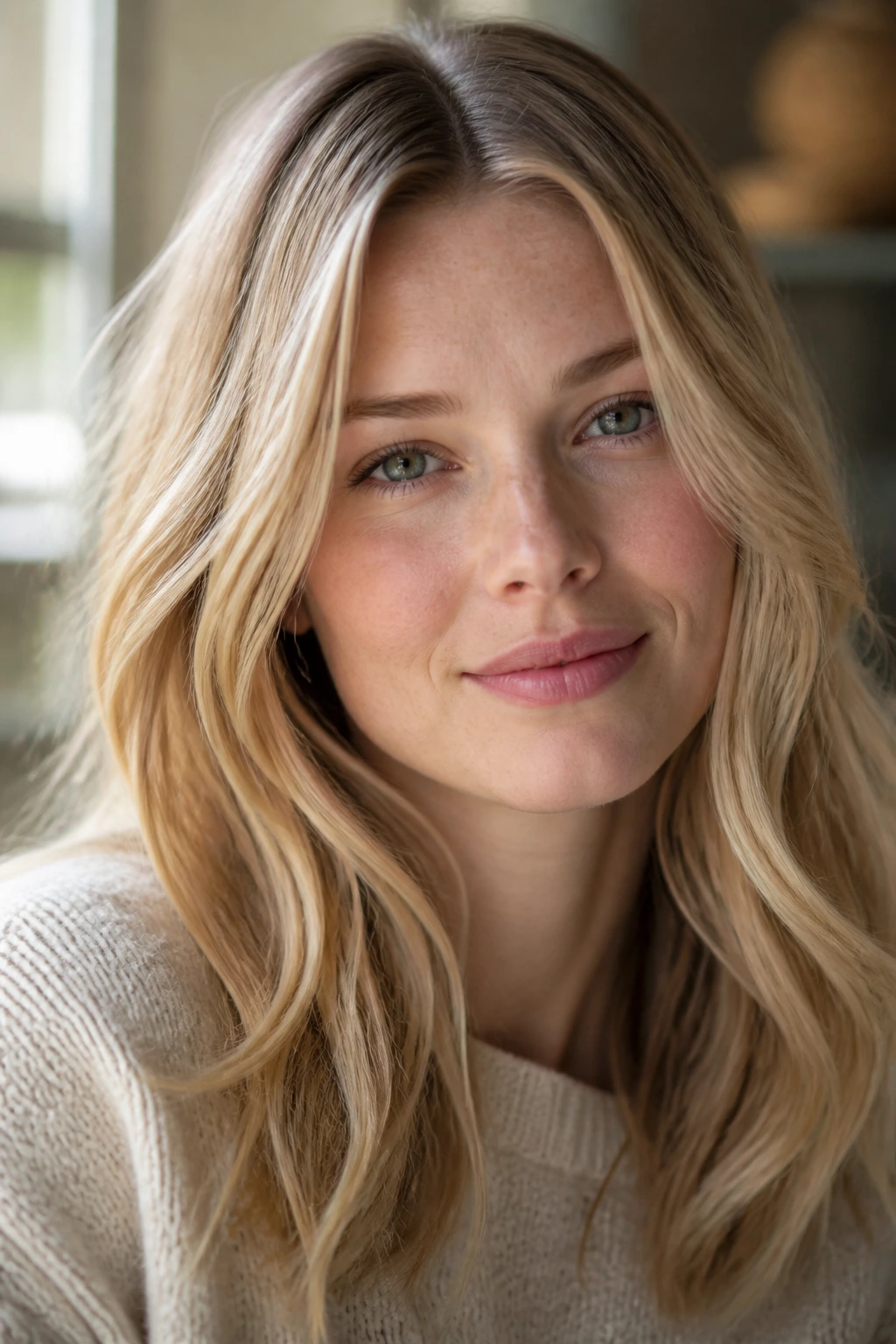
Pale skin does not all behave the same way. Some faces run pink. Some lean neutral. Some have a warmer, ivory cast that can take a little gold. The shade you pick should work with that, not fight it. Cool undertones usually look best in ash-beige, pearl, mushroom, and champagne blonde. If your skin burns fast and looks rosy in daylight, a little warmth near the mids and ends keeps the hair from looking too stark.
Neutral undertones have the easiest time. Beige blonde, sandy blonde, vanilla, and rooty champagne tones tend to sit well without much drama. Warm undertones can handle honey and butter blonde better than most pale complexions, especially when there’s a darker root or lowlight to keep the color grounded.
A good salon gloss can do a lot of damage control here. If the blonde starts to look yellow, ask for beige or pearl. If it looks gray or flat, ask for a softer golden-beige glaze. And if the whole head starts to look too bright at the roots, a shadow root will calm it down fast. That one move saves many bad blonde jobs.
How to Wear These Styles from Errands to Events
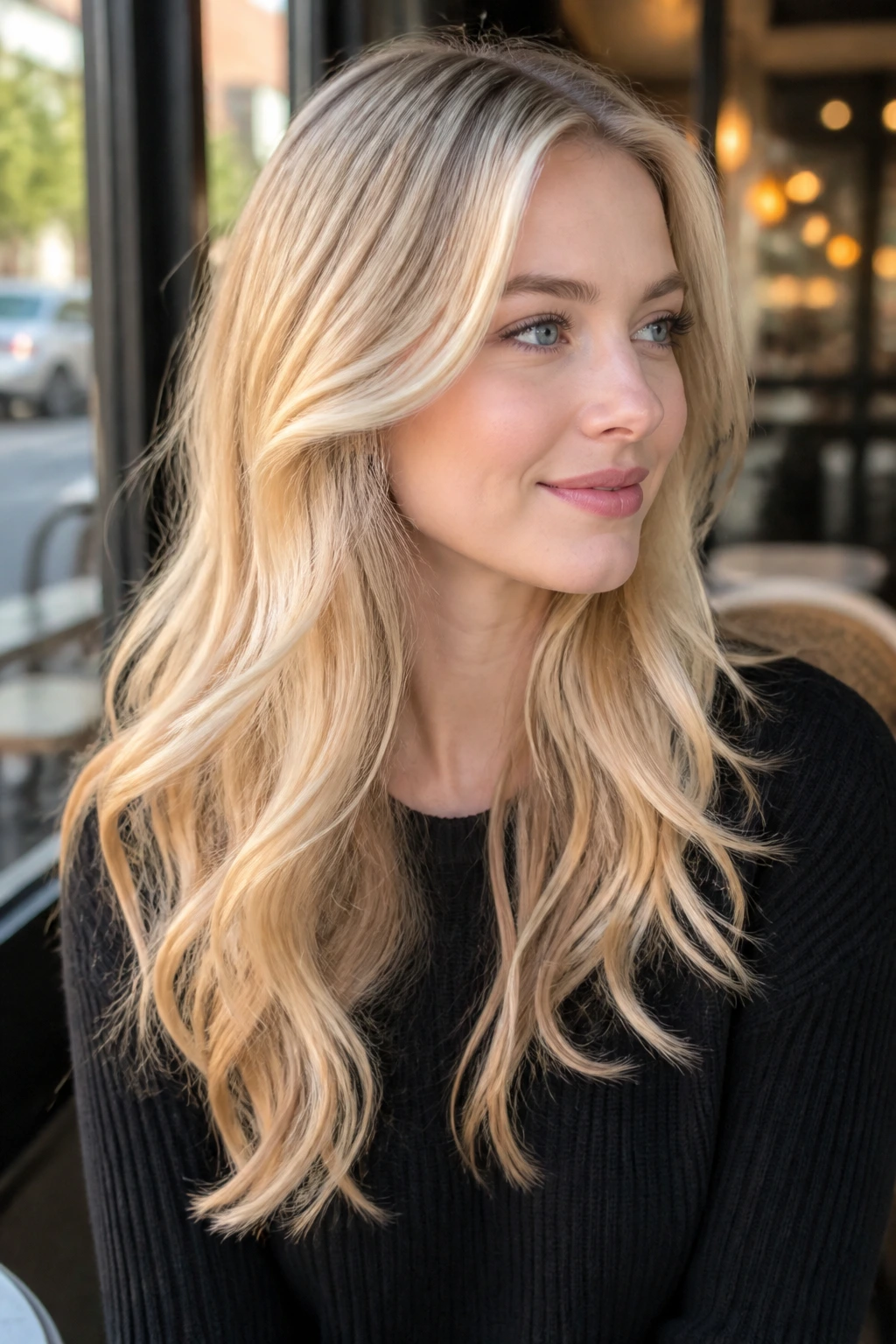
Everyday wear: Loose waves, root-smudged bends, air-dried texture, and low ponytails are the easiest to live with. They let the blonde move without demanding perfect finishing work every morning.
Polished finish: Straight long layers, Scandi ponytails, and blowouts with C-shape ends look cleaner when you want the hair to sit neatly with a blazer, a knit top, or a dressier neckline. A little shine spray goes a long way.
Dress-up mode: Side-swept waves, braided crowns, waterfall braids, and soft romantic updos work best when you want the hair to feel intentional. Add a pearl pin, a ribbon, or a single side tuck. Stop there. The blonde itself should do enough.
Accessories: Silver clips flatter cool and neutral undertones; gold clips work better when the blonde leans honey or butter. Tortoiseshell sits in the middle and usually behaves itself. Avoid anything too chunky if your hair is fine, because it will pull the eye away from the blonde rather than framing it.
Small Tweaks That Change the Whole Look
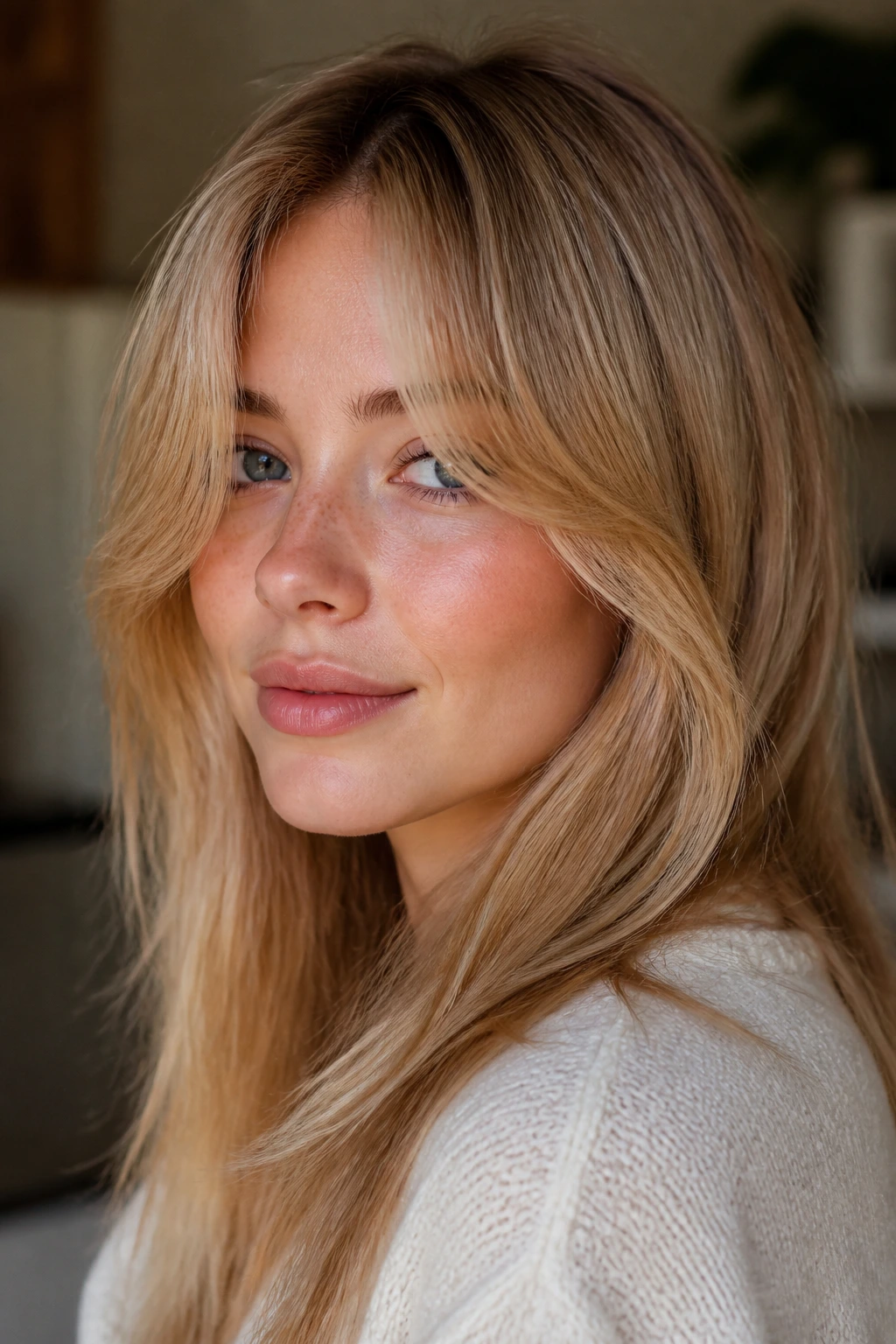
Tone Booster: If your blonde looks a little flat against pale skin, ask for a beige or champagne gloss instead of a stark ash toner. That tiny shift keeps the hair soft around the face.
Texture Shift: A texturizing spray at the mids and ends can make waves, braids, and shags feel fuller. Keep it off the scalp unless you want a dry, gritty crown.
Parting Change: A middle part reads clean and modern. A soft side part gives more lift and often flatters pale skin by creating a little natural shadow near the forehead.
Face-Framing Move: Add curtain bangs or two long face-framing pieces if your hair hangs too evenly around the shoulders. That one cut change usually does more than three styling products.
Make-It-Yours: If your style feels too cool, warm it up with a honey gloss or warm blonde ribbons. If it feels too yellow, pull it back with beige lowlights or a pearl finish. Same haircut. Very different mood.
Keeping the Tone Fresh Between Washes
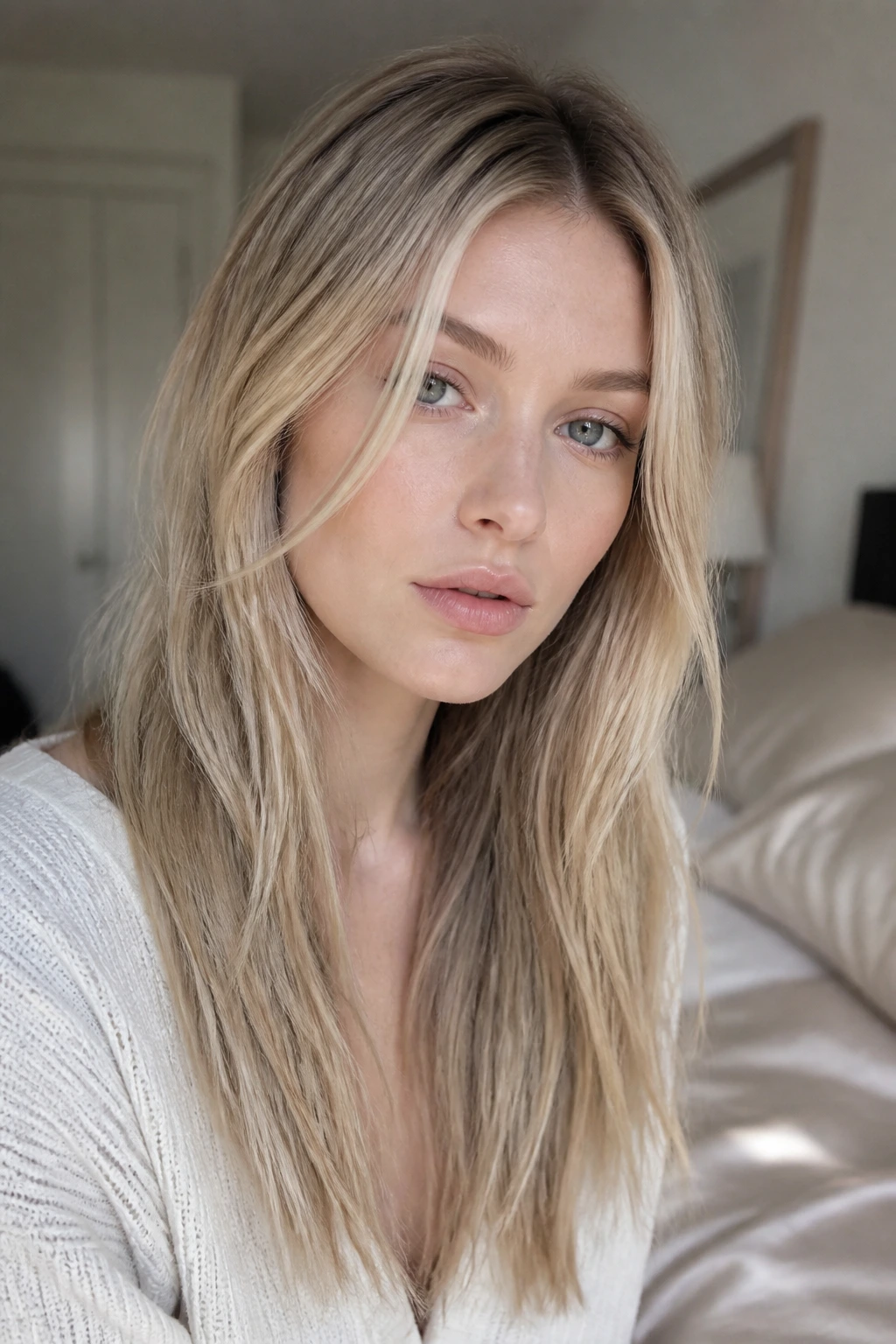
Blonde hair on pale skin looks best when it stays soft, not stripped. If you wash every day, the tone tends to fade faster and the ends can go dry by the second shampoo. For most long blonde styles, washing two or three times a week is a better rhythm. Use a color-safe shampoo, condition the mids and ends every time, and save the purple shampoo for once every 7 to 10 days unless your hair turns yellow quickly.
At night, a silk pillowcase or a loose silk scrunchie makes a real difference. Braids, loose knots, or a soft low pony keep long hair from tangling and rubbing itself into fuzz. If you wake up with bends in the wrong places, mist the hair lightly with water and a little leave-in conditioner, then refresh the front pieces with a brush or wand.
Salon glosses and toners usually need refreshing every 6 to 10 weeks, depending on how light your blonde is and how fast the warmth creeps back in. If you heat-style often, use a heat protectant every time. That is not optional. Light hair shows dryness sooner than darker hair, and once it goes rough, the whole style starts looking older than it is.
Variations Worth Trying on a Different Day
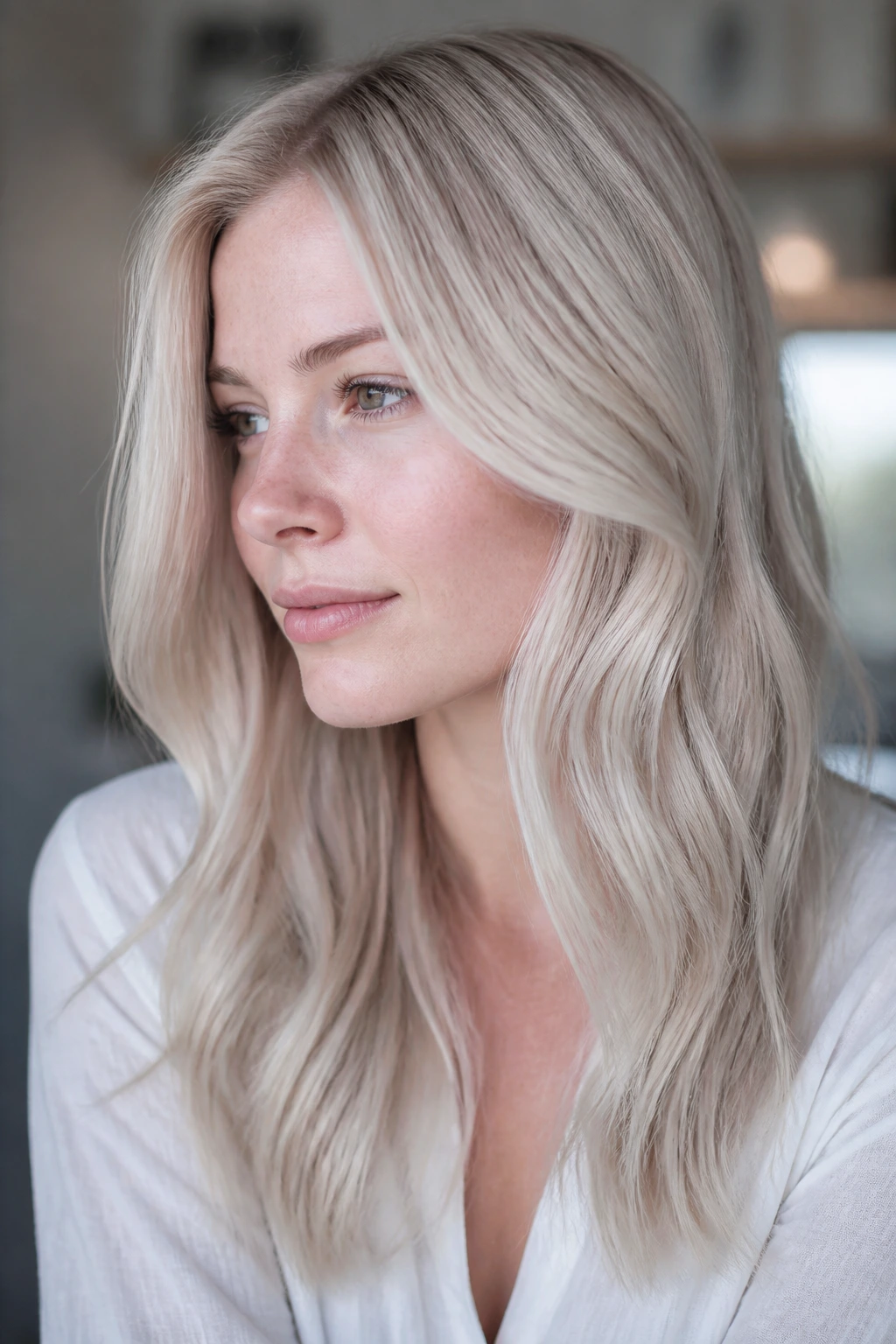
Cool Porcelain Edit: Keep the base ash-beige and skip any gold at the hairline. This works best if your skin is pink, cool, or very fair and you want the blonde to stay crisp.
Honey Softness: Add a few warm ribbons through the mids and ends, then leave the root a shade deeper. That keeps the face from looking washed out and gives the style a sunnier edge.
Fine-Hair Lift: Use longer layers, lighter oils, and loose bends instead of heavy curls. Fine hair often looks fuller when the shape is soft and the crown has a little lift.
Thick-Hair Airiness: Ask for internal layering and face-framing pieces so the length does not sit like a block. Braids and low knots work especially well here because they control the volume without flattening it.
Low-Maintenance Root Melt: Keep the roots one to two shades deeper than the mids and ends. You can push salon visits farther out, and the style still looks intentional as it grows.
Curly Blonde Adaptation: If your hair is naturally curly or very wavy, keep the blonde blended and avoid over-highlighting the top layer. That way the pattern stays visible and the pale skin gets contrast without the curls turning frizzy.
Mistakes That Make Pale-Skin Blondes Look Flat
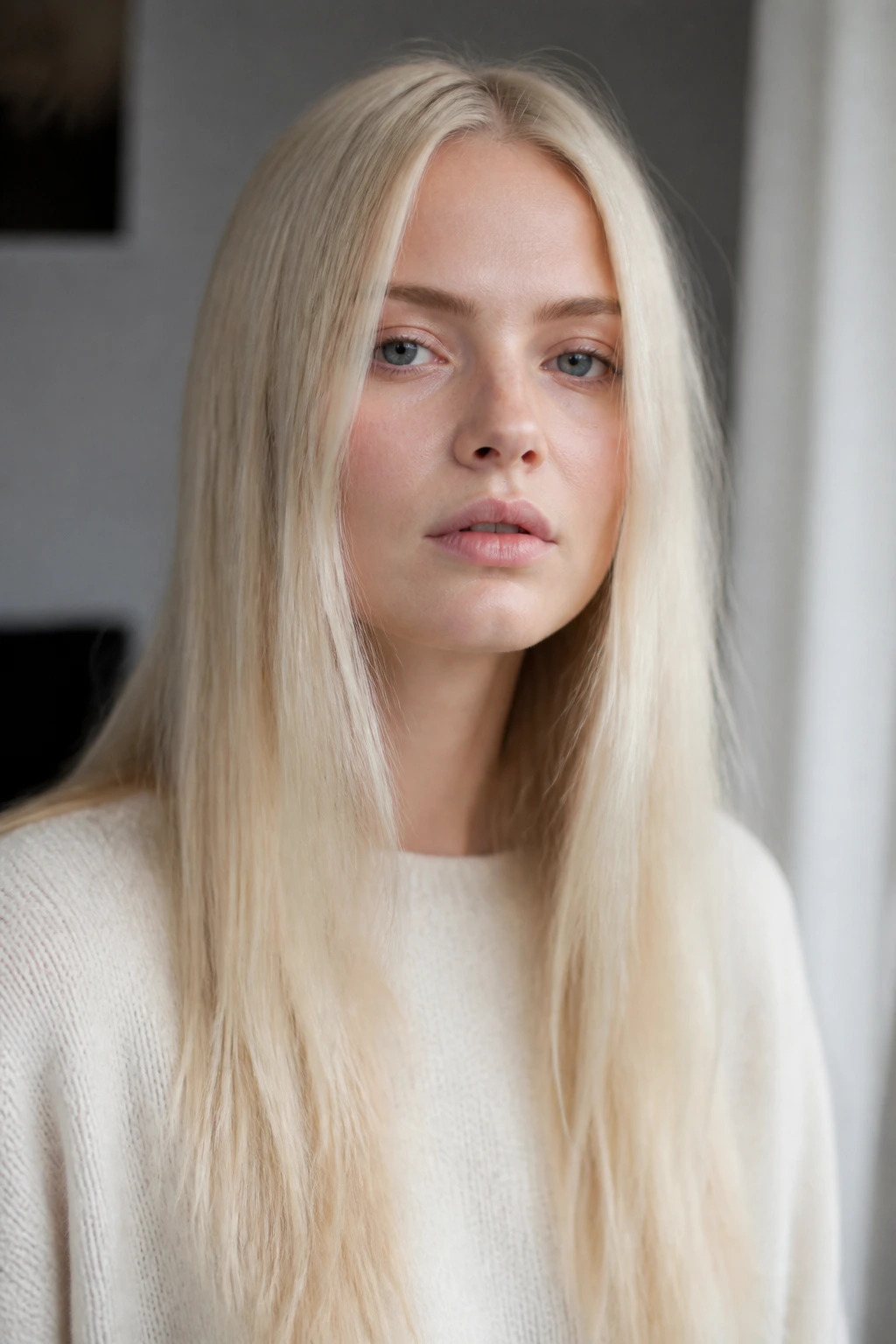
- Going too bright at the root: A level 10 root line can make fair skin look washed out fast. Ask for a soft shadow or melt near the scalp.
- Over-toning into gray: Too much purple shampoo or a heavy ash toner can leave blonde hair looking dull and dusty. Switch to a beige gloss if that happens.
- Choosing a blunt shape with no movement: Long, flat hair swallows the face. Add layers, bends, or a face frame so the blonde has somewhere to breathe.
- Ignoring dryness: Pale blonde shows rough ends faster than darker hair. A little serum on the mids and ends helps; a lot of oil at the roots does not.
- Using the same part every day: A hard center part can deepen flatness and make the scalp show too much in fine hair. Change it up a little.
- Picking the wrong warmth: Very warm honey can look muddy on cool pink skin, while icy platinum can look stark. The fix is a balanced shade, not more bleach.
FAQ about Long Natural Blonde Hairstyles for Pale Skin
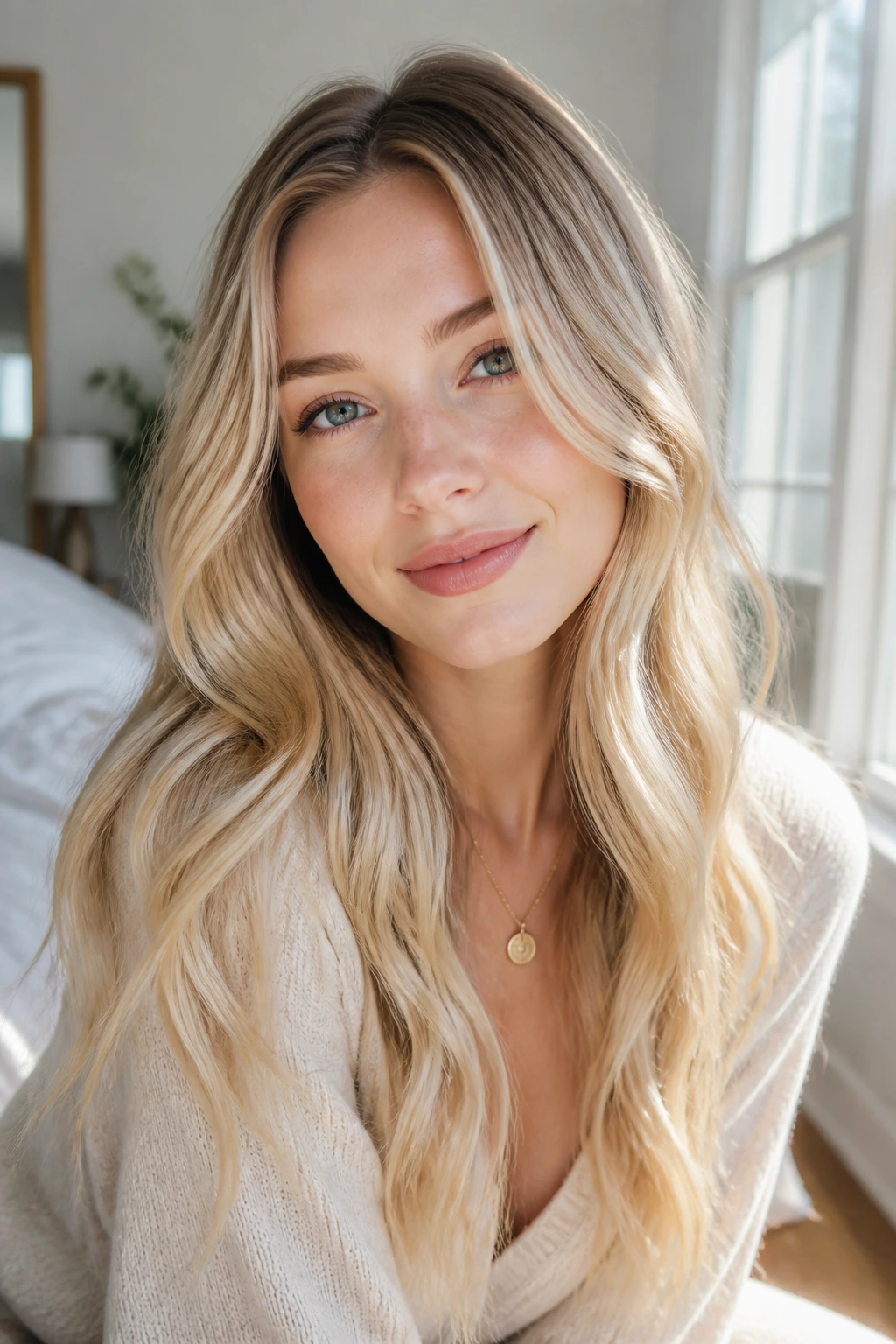
What blonde shade flatters pale skin the most?
Beige blonde, champagne blonde, and soft ash-beige are the safest places to start. They give enough softness that the hair does not overtake the face, but they still read blonde and not brown.
Can pale skin wear honey blonde?
Yes, if the honey is softened with a deeper root or mixed with beige. Pure yellow-gold can look a little loud next to very fair skin, so I like honey better in the mids and ends than right at the hairline.
Is ash blonde too gray for fair skin?
It can be if the toner goes too far. A smoky beige ash is usually better than a flat silver-gray tone because it keeps the hair looking alive instead of dusty.
Do long layers help blonde hair look thicker?
They do, especially on fine hair. Long layers create movement and stop the ends from hanging like a heavy strip, which makes the whole style look fuller.
How often should I tone blonde hair?
Most people can stretch glosses or toner refreshes to about 6 to 10 weeks, depending on how fast warmth comes back. Purple shampoo helps in between, but it should not replace salon toning.
What if my blonde looks brassy against my skin?
First check the lighting. Warm indoor bulbs can exaggerate yellow. If it still looks brassy in daylight, a beige gloss or a cooler toner formula can soften it without taking all the warmth away.
Which styles are easiest to maintain?
Rooted waves, low ponytails, bubble braids, and soft blowouts are the easiest because they survive a little grow-out and do not need perfect texture every morning.
Do bangs help on pale skin?
Usually, yes. Curtain bangs and long face-framing pieces add shape around the forehead and cheeks, which is useful when very light hair threatens to blend into fair skin.
The Soft Blonde Finish
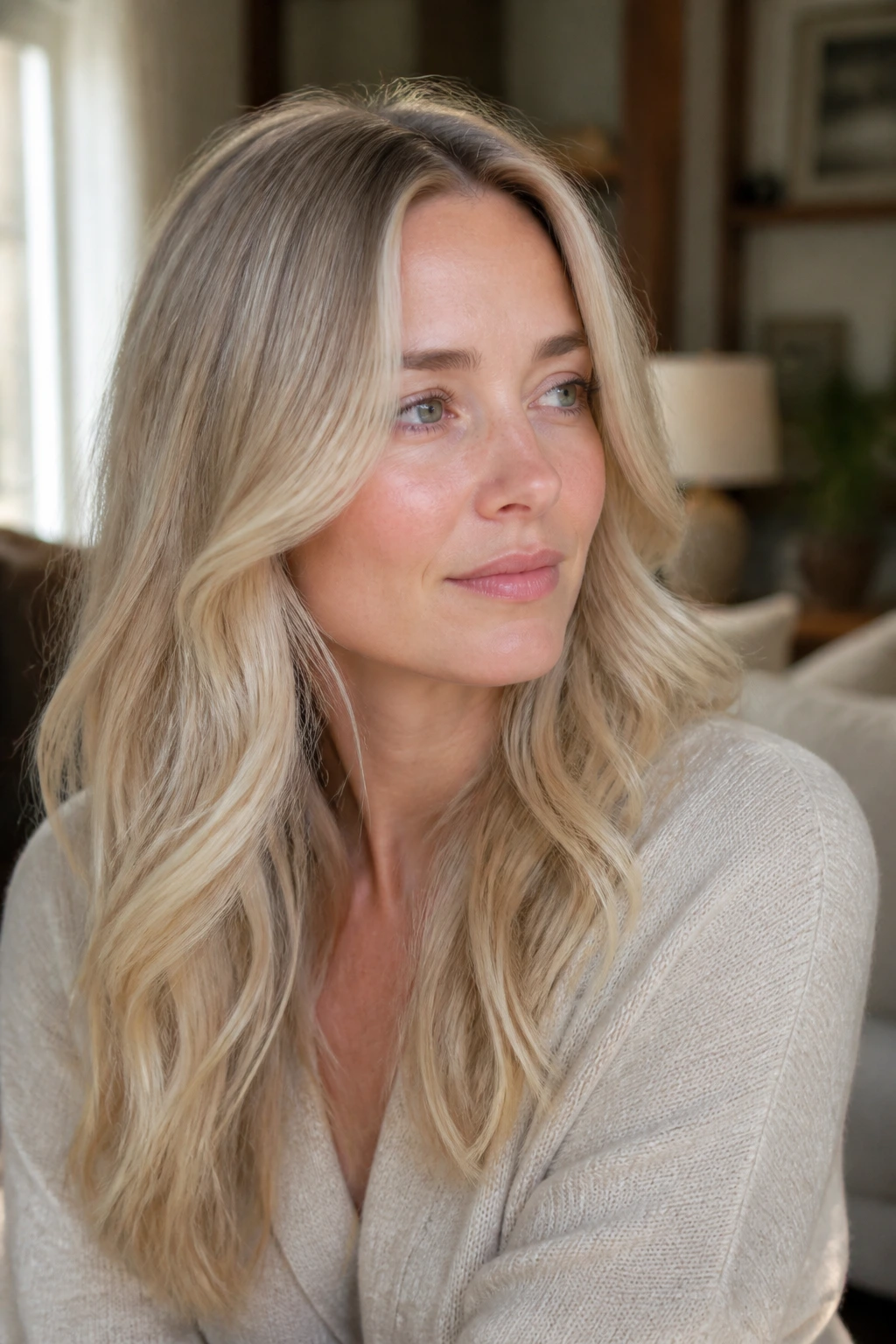
The best long natural blonde hairstyles for pale skin do one thing well: they keep the face soft without letting it vanish. That’s why the rooted tones, beige glosses, gentle waves, and face-framing cuts keep showing up here. They are not trying to blind anyone with brightness. They’re trying to work with the skin that’s already there.
If you’re choosing just one direction, start with the tone first and the styling second. A good champagne, beige, or soft honey blend will carry a plain blowout farther than a bad platinum ever will. After that, add the shape that fits your life: braids if you want hold, layers if you want movement, a ponytail if you want clean lines, or soft curls if you want the blonde to look fuller.
And if you’ve ever looked at your own pale skin and thought blonde might be too much, that’s usually the wrong blonde talking. The right one has depth near the root, softness through the mids, and a little air at the ends. That’s the version worth wearing.