



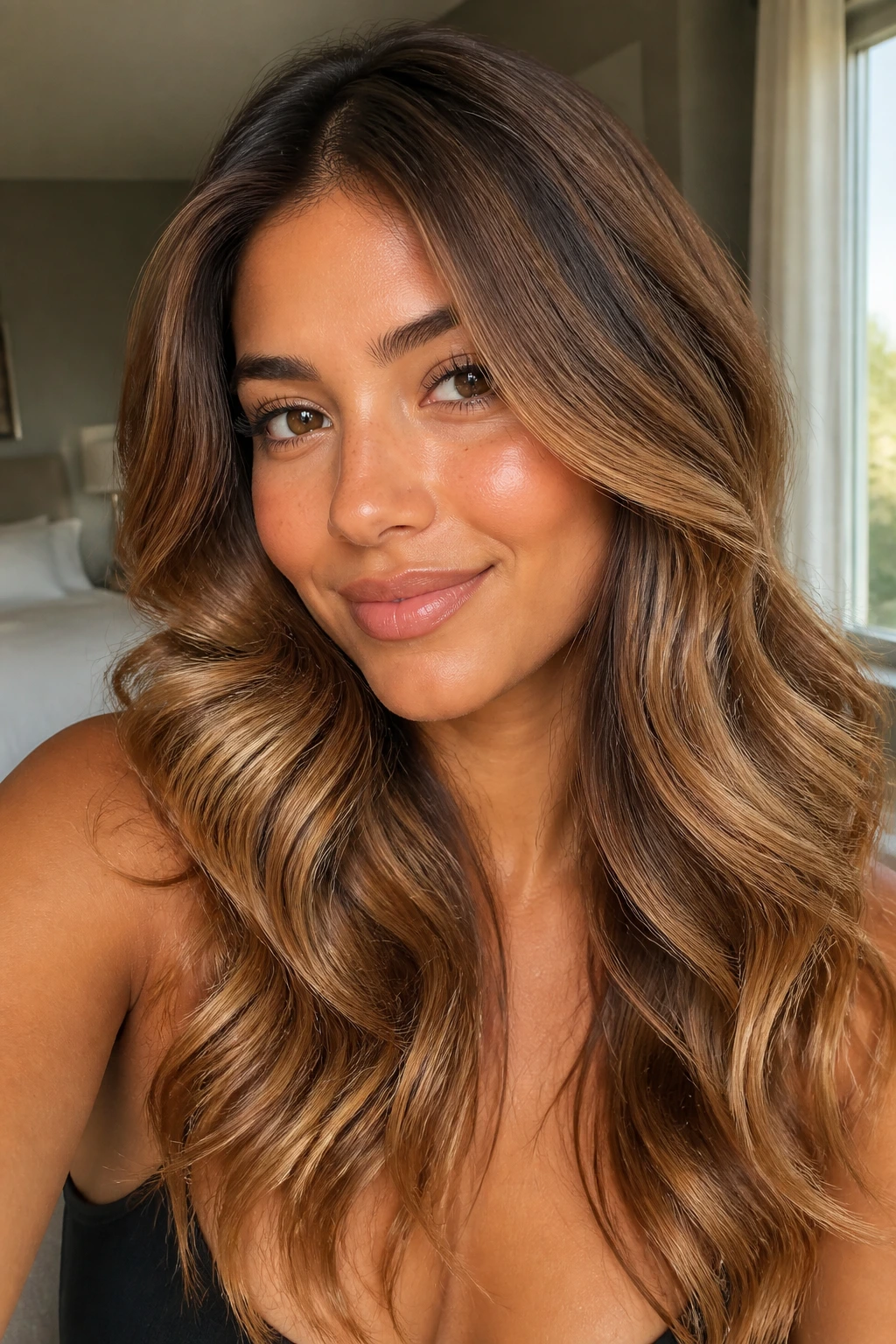
Olive skin can look flat next to the wrong brown, and it can also look muddy when the warmth goes too far. That’s the trap. The right caramel brown hair color ideas for olive skin sit in the middle: soft gold, toasted beige, bronze, honey, a little depth at the root, and enough shine to keep everything alive in daylight.
That middle ground is where caramel gets interesting. Not the bright, pumpkiny kind that shouts from across the room. Not the dull ash brown that steals color from the face. The best versions bend warm without drifting orange, and they keep a brunette base deep enough to make olive undertones look smooth instead of sallow. That’s why a good caramel usually looks richer outside than it does under bathroom lights.
A lot of people think the answer is simply “add highlights.” Not quite. Placement matters just as much as shade. A few ribbons around the face can do more for olive skin than a full head of light pieces, and a darker root can save the whole look from going stripy. The sweet spot is usually somewhere between level 5 and level 7, depending on how light your skin is and how much contrast you want. Now, the fun part.
Why Caramel Brown Hair Color Ideas for Olive Skin Work
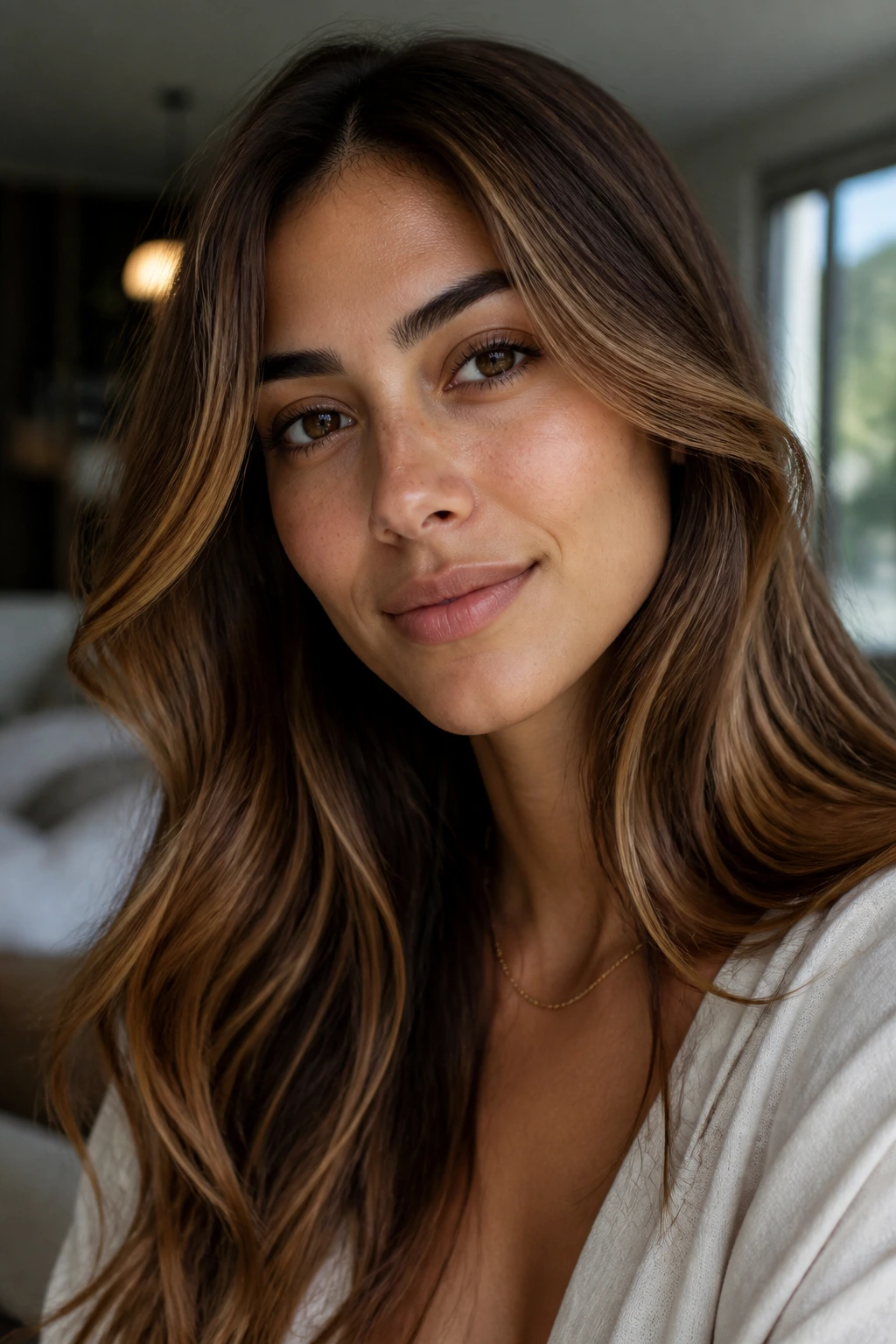
- Warmth without orange: caramel can lean beige, bronze, or honey, which gives olive skin a healthy glow without the hard brass that turns faces flat.
- Depth keeps the color believable: a darker root or lowlight stops the lighter pieces from floating on top of your face like they belong to someone else.
- Low-maintenance options exist: balayage, root melts, and glosses grow out softer than one solid all-over dye job, which matters if you hate obvious regrowth.
- It can be tuned to your undertone: a greener olive often looks better in beige-caramel or bronze-caramel, while a warmer olive can handle more honey and toffee.
- It plays well with curls and bends: caramel reads richer when the hair has movement, because the light catches the bends instead of sitting in one flat stripe.
Olive skin usually has a little complexity in it, and that’s exactly why one-note brown can look dead against it. Caramel gives the hair some reflected light, but the brown base keeps it grounded. That balance is the whole game.
The trick is not chasing the lightest shade. It’s picking the shade that makes your skin look rested. That can be a soft chestnut glaze, a ribboned balayage, or a smoky caramel that sits closer to brown than blonde.
1. Sunlit Caramel Balayage
Sunlit caramel balayage is the first look I’d point to when someone wants brightness without the bleachy, salon-floor blond feel. The hand-painted ribbons sit mostly from mid-lengths to ends, so the crown stays richer and the lighter pieces only show when the hair moves. On olive skin, that matters. It keeps the color from looking pasted on.
Why It Flatters Olive Skin
The best version uses a brunette base around level 5 or 6 and caramel ribbons that sit one to two levels lighter. Ask for a soft root shadow and keep the face frame slightly brighter than the back. That small difference makes the cheekbones look sharper without forcing the whole head to go light.
This one wears best in loose bends, not pin-straight hair. Straight hair can make balayage look more obvious than intended, while waves blur the pieces together in a nicer way.
2. Espresso Root Melt with Caramel Ribbons
Keep the root espresso-dark if you want the caramel to look cleaner. That’s the move here. A dark root melt with thin caramel ribbons through the mid-lengths gives olive skin a richer backdrop, and the contrast stops the warmth from going coppery.
Why the Contrast Helps
A deep root, especially on hair that starts around level 3 or 4, gives the caramel something to sit against. Without that depth, warm brown can slide into flat tan. With it, the strands look more deliberate, almost like the color has been layered in a painterly way.
What to Ask For
- A shadow root that stays two to three levels deeper than the caramel pieces.
- Fine ribbons, not chunky stripes.
- Caramel around the hairline and through the top layer only if you want a softer finish.
This is one of the easier looks to live with if you don’t want your grow-out shouting at you every four weeks.
3. Toasted Almond Face-Framing Pieces
Want the front of your hair to lift the whole face? This is the quickest route. Toasted almond pieces around the cheekbones and jawline give olive skin a soft brightness without bleaching the entire head. I like this more than a full highlight set when the base color is already a nice brunette.
The trick is to keep the front strands just light enough to read caramel, not blonde. You want the color to feel toasted and creamy, not yellow. If your olive skin leans medium or slightly warm, these pieces can make the skin look smoother around the nose and cheeks, which is where harsh browns tend to show their age.
4. Honeyed Caramel Lob with Soft Bends
A lob gives caramel room to move. On a cut that hits between the chin and collarbone, honeyed caramel can look polished instead of busy, especially if the highlights are placed through the ends and around the outer layers. The hair gets a glow without looking too busy at the root.
This one works best when the caramel is warm but not neon. Think honey mixed with beige, not yellow candy. Olive skin with golden undertones likes that warmth, but the base still needs enough brown to keep the whole thing from going brassy. A loose blowout or a one-inch bend shows it off better than flat ironing every strand straight.
5. Cinnamon Swirl Highlights on Deep Brunette
Cinnamon caramel is a good answer when olive skin needs a little warmth but not too much gold. The red-brown note gives the hair depth, and on a deep brunette base it looks especially rich around curls and layered ends. This is the one I’d choose for someone who says, “I want warm, but I do not want yellow.”
The Look in Practice
Ask for thin cinnamon-toned highlights woven through the mid-lengths, with a few lighter pieces around the front. If the red note gets too strong, the skin can start to look flushed. Keep the caramel side of the formula dominant, and the result stays grounded.
This shade looks especially good in afternoon light. Indoors, it reads as soft brown. Outside, the cinnamon wakes up.
6. Bronzed Caramel Waves with a Glossy Finish
Bronze is the bridge between brown and caramel. That’s why this look works so well on deeper olive skin. The color doesn’t scream warmth, but it still reflects enough light to keep the hair from looking flat. A clear gloss over bronze-caramel waves can make the whole head look smoother and more expensive-looking without trying too hard.
I’d recommend this if your skin leans neutral-olive and you usually feel overwhelmed by brighter honey tones. Bronze sits lower, closer to mocha, and the caramel shows up as a shine rather than a stripe. That makes it easier to wear with dark brows and minimal makeup.
7. Salted Caramel Highlights for a Cooler Read
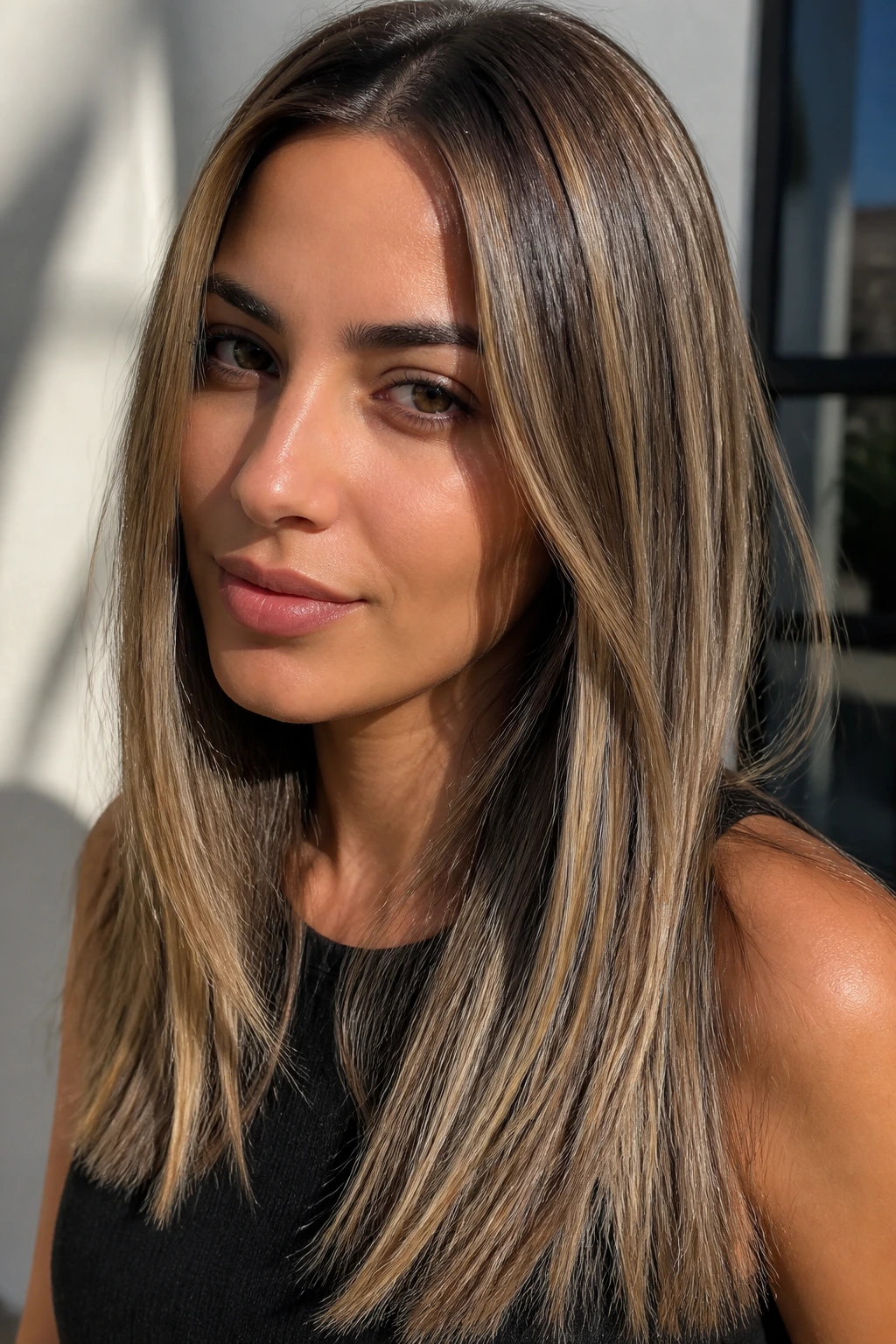
Salted caramel is for the person who likes warmth but hates orange. The word “salted” is doing the important work here — it signals beige, not gold syrup. On olive skin, especially skin that leans greener, that cooler caramel edge can stop the face from looking over-warmed.
What Keeps It from Turning Orange
The base should stay a rich brown, and the lightest pieces should sit in the beige-caramel family rather than gold. A toner or gloss with a soft beige finish helps keep the shade readable instead of coppery. If the highlights are too broad, the color starts to feel louder than it needs to.
- Best for medium olive skin.
- Good on straight hair, because the beige tones show cleanly.
- Not the one if you want a sunny, honey-heavy result.
8. Maple Brown Gloss with Barely-There Warmth
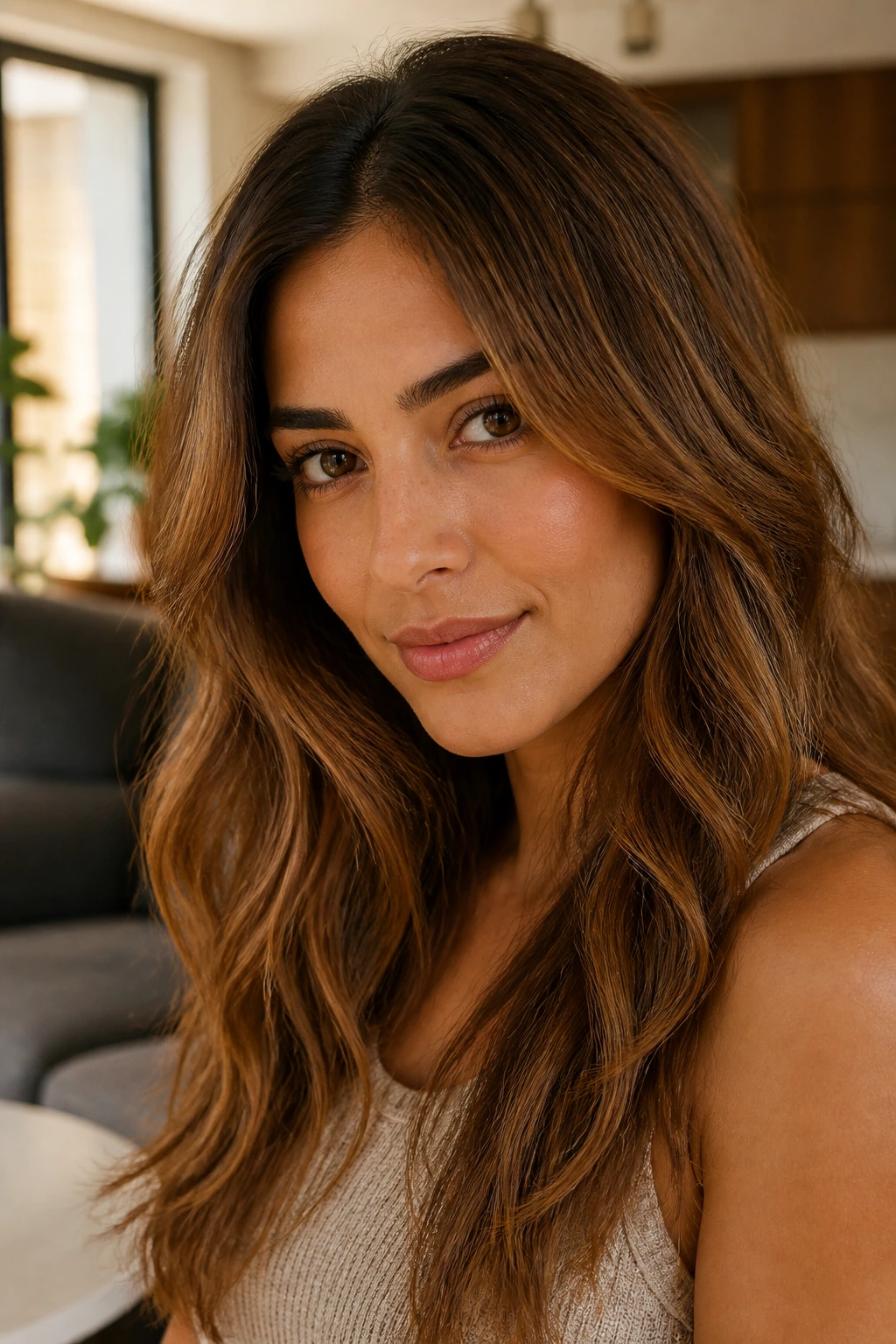
Sometimes the smartest choice is the least obvious one. A maple brown gloss keeps the hair mostly brunette, then adds a thin layer of warmth and shine that olives skin tends to like. This works especially well if your hair is already a level 5 or 6 and you want the color to feel richer, not lighter.
No bleach. No hard contrast. Just a gloss that makes the brown look deeper and the strands feel smoother. On olive skin, that subtle warmth can be enough to wake up the face without changing the whole character of the haircut.
9. Butterscotch Money Piece for a Brighter Front
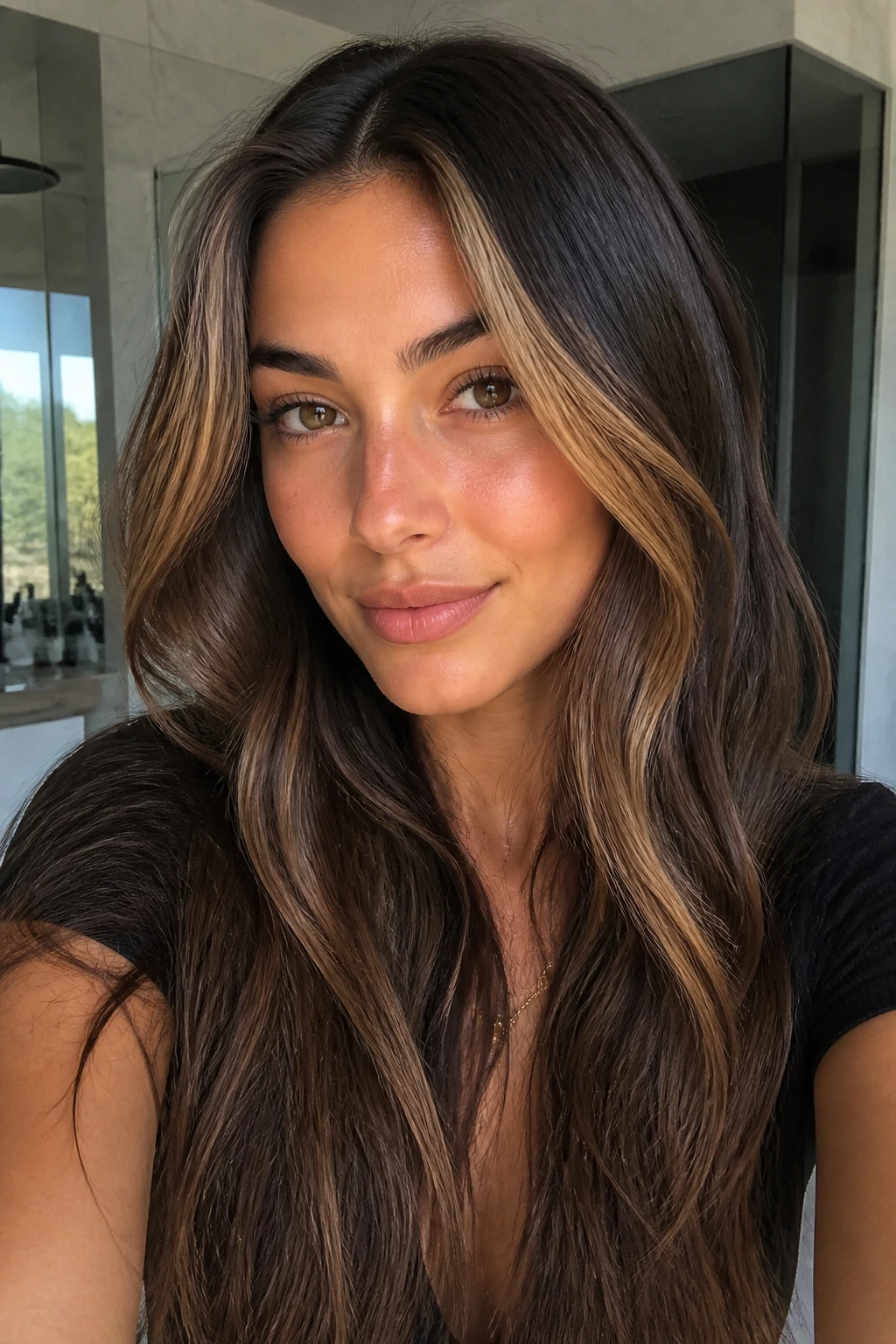
If you want a little drama around the face, the money piece is the blunt instrument in the best way. A butterscotch front frame gives olive skin a bright edge, especially near the eyes and cheekbones. The rest of the hair can stay darker, which keeps the look from tipping into full blonde.
What to Keep in Mind
- Put the brightest strands only at the front.
- Keep the back half deeper so the color doesn’t sprawl.
- Ask for a soft root transition, not a hard line.
This one is more fashion-forward than subtle. It looks good on bob cuts, long layers, and shoulder-length hair with movement.
10. Chestnut Caramel Ombré from Dark Roots
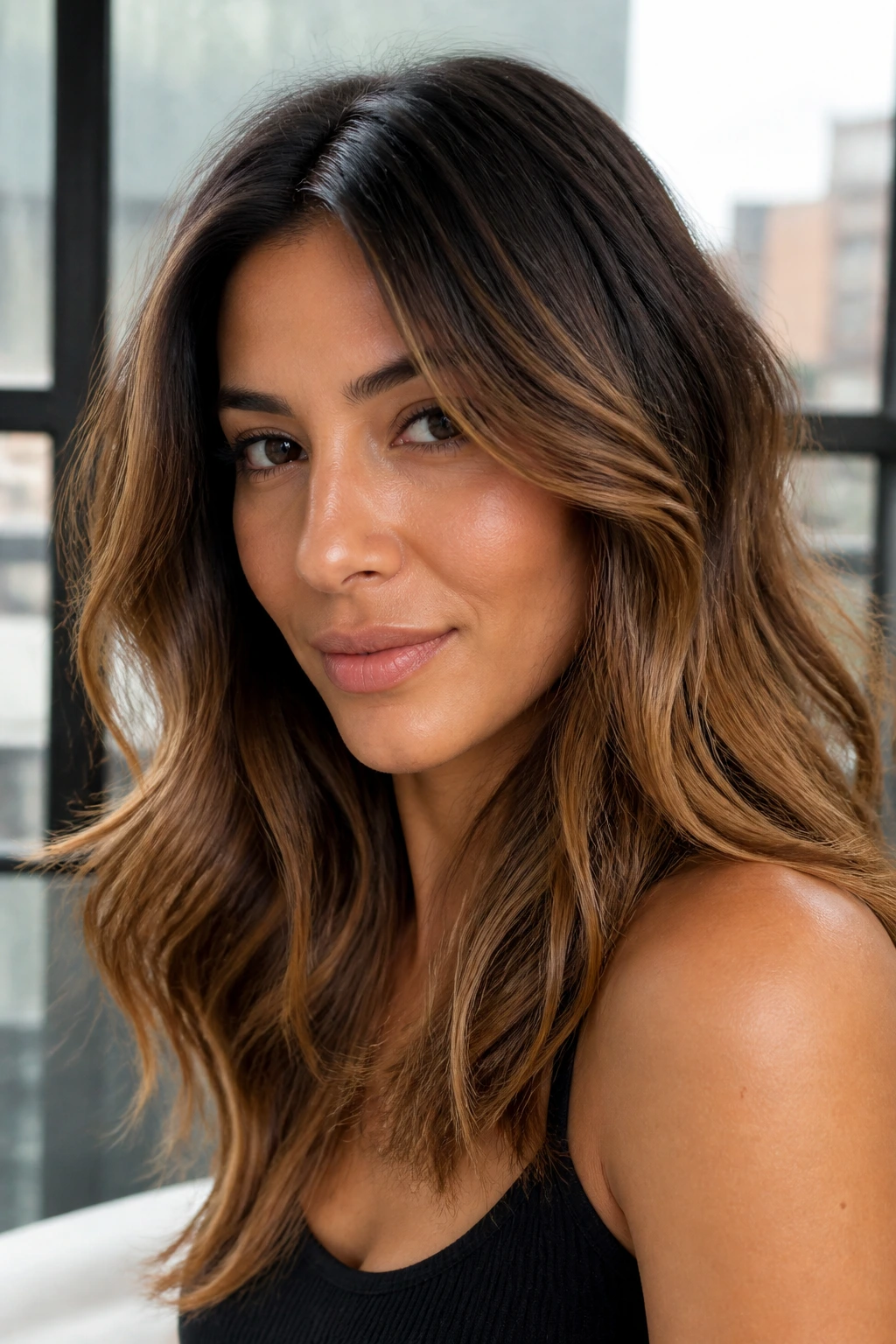
Chestnut caramel ombré is the low-stress version for people who want dimension without frequent upkeep. The color starts deep at the root and gradually softens toward caramel ends. On olive skin, the dark crown anchors the face, while the lighter ends catch the light and keep the cut from feeling heavy.
This is one of the easiest options if your natural hair is dark brown or nearly black. The transition is softer than traditional highlights, and it tends to grow out in a way that still looks intentional. The big mistake is lifting the ends too high. Once they slip into orange-blonde territory, the whole shade loses its quiet richness.
11. Mocha Caramel Bob with Clean Edges
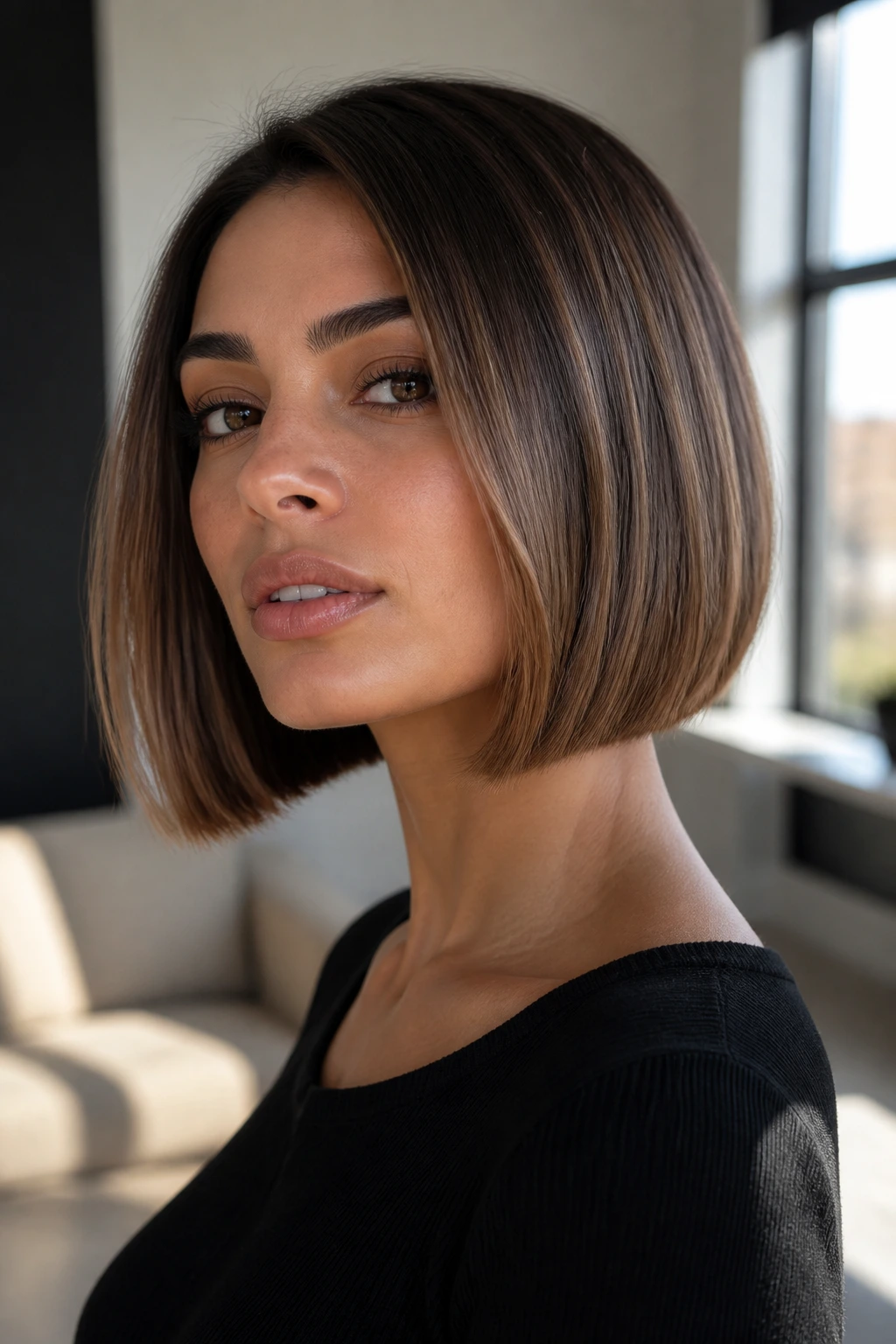
A bob changes the game because you see the color all at once. Mocha caramel keeps the base cool enough to look polished, while the caramel bits soften the edge around the jaw. For olive skin, that mix keeps the face from getting overwhelmed by a warm brown that sits too close to the skin tone.
This works best when the highlights are fine and neatly placed through the top layer. A blunt bob with a glossy finish can look expensive in the plainest possible way — not flashy, just clean. If your hair has a natural bend, even better. The caramel catches on the curve at the ends and gives the cut more shape.
12. Tawny Caramel Shag with Airy Texture
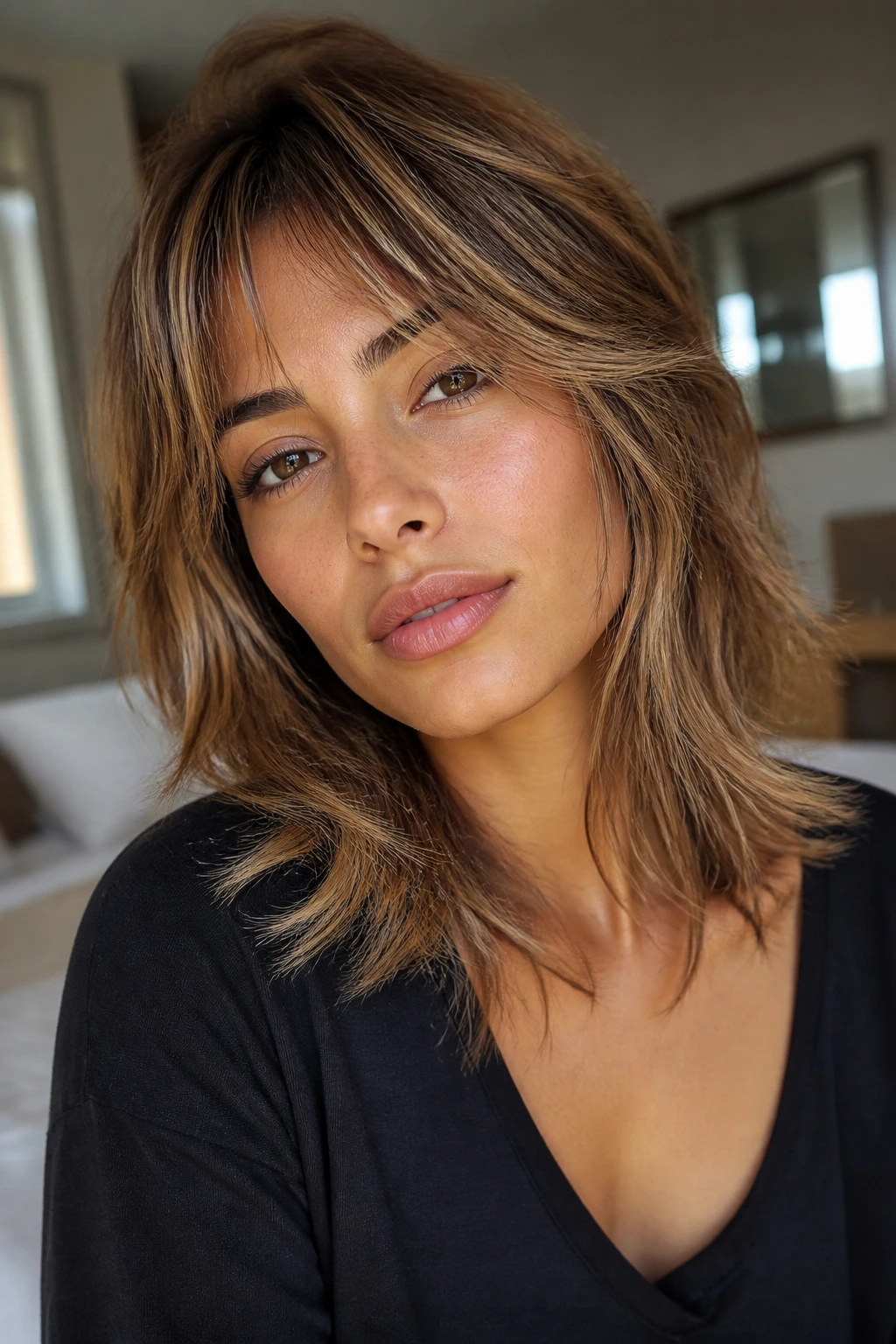
A shag needs dimension. Flat color kills it. Tawny caramel pieces through the layers let the haircut move, and on olive skin the warm brown notes keep the whole look from going gray or heavy. I like this shade when the cut has curtain bangs or choppy ends, because the color seems to follow the texture rather than sitting on top of it.
Best When You Want Motion
The lighter pieces should sit on the layers that actually flip out or bend under. That way the color shows when the hair moves, not just when you stand still in front of the mirror. If your olive skin is on the warmer side, tawny caramel can make the whole look feel sunlit without reading blonde.
13. Chocolate-Caramel Melt with a Shadow Root
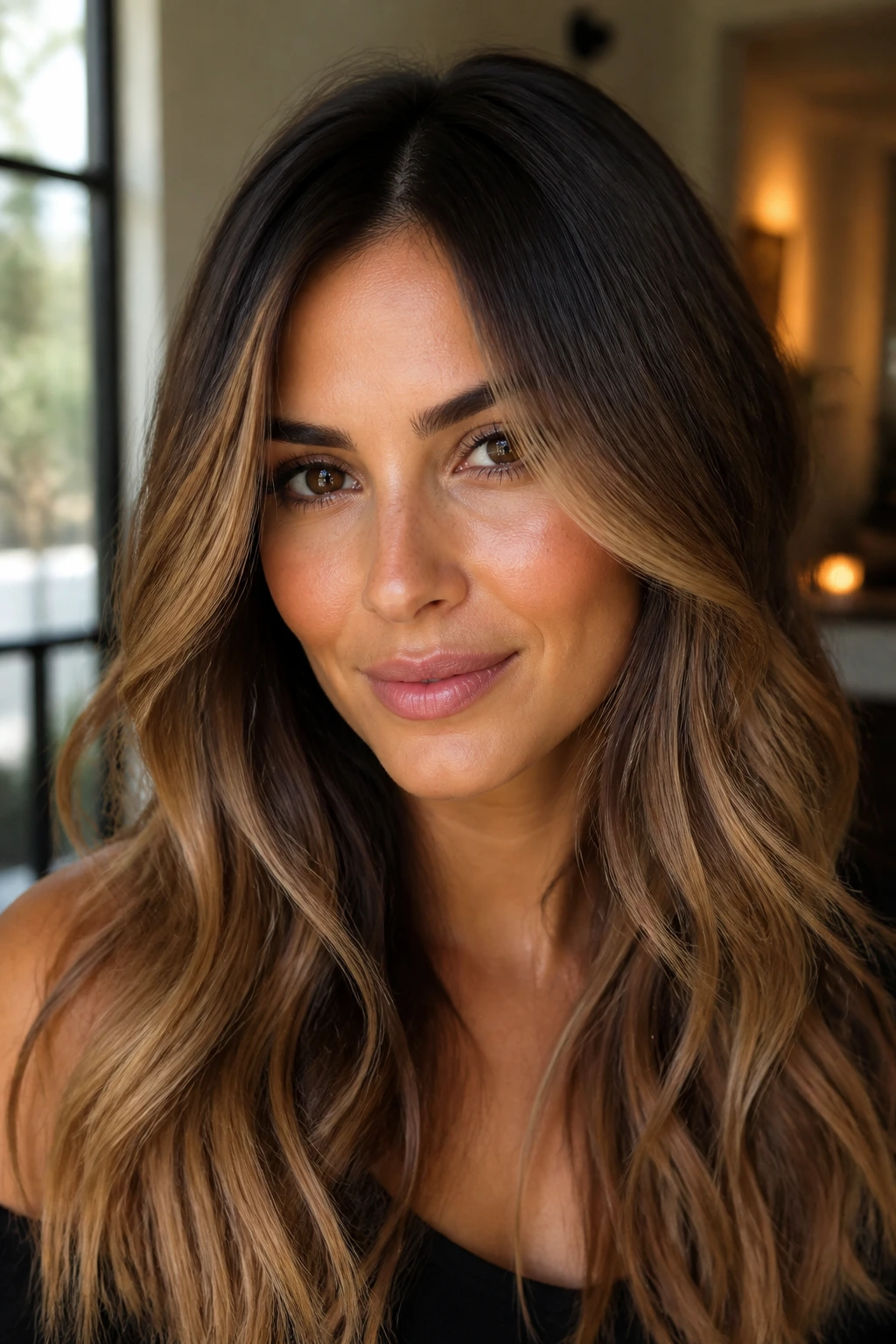
Chocolate and caramel together is one of the safest pairs for olive skin, and that’s not a boring thing. It means the color has somewhere to go. The dark base keeps the style grounded, and the caramel melt through the ends adds just enough brightness to avoid that heavy, one-color brunette look.
How to Ask for It
Tell your colorist you want a soft shadow root that stays close to chocolate, then a gentle melt into caramel on the lower half. Thin ribbons around the face can brighten the skin without stealing the depth from the rest of the hair.
This is a good choice if your skin shifts depending on the lighting. It stays flattering in daylight, office light, and indoor evening light, which sounds unglamorous until you realize how often bad brown hair looks different in every room.
14. Golden Caramel Curls That Catch Light
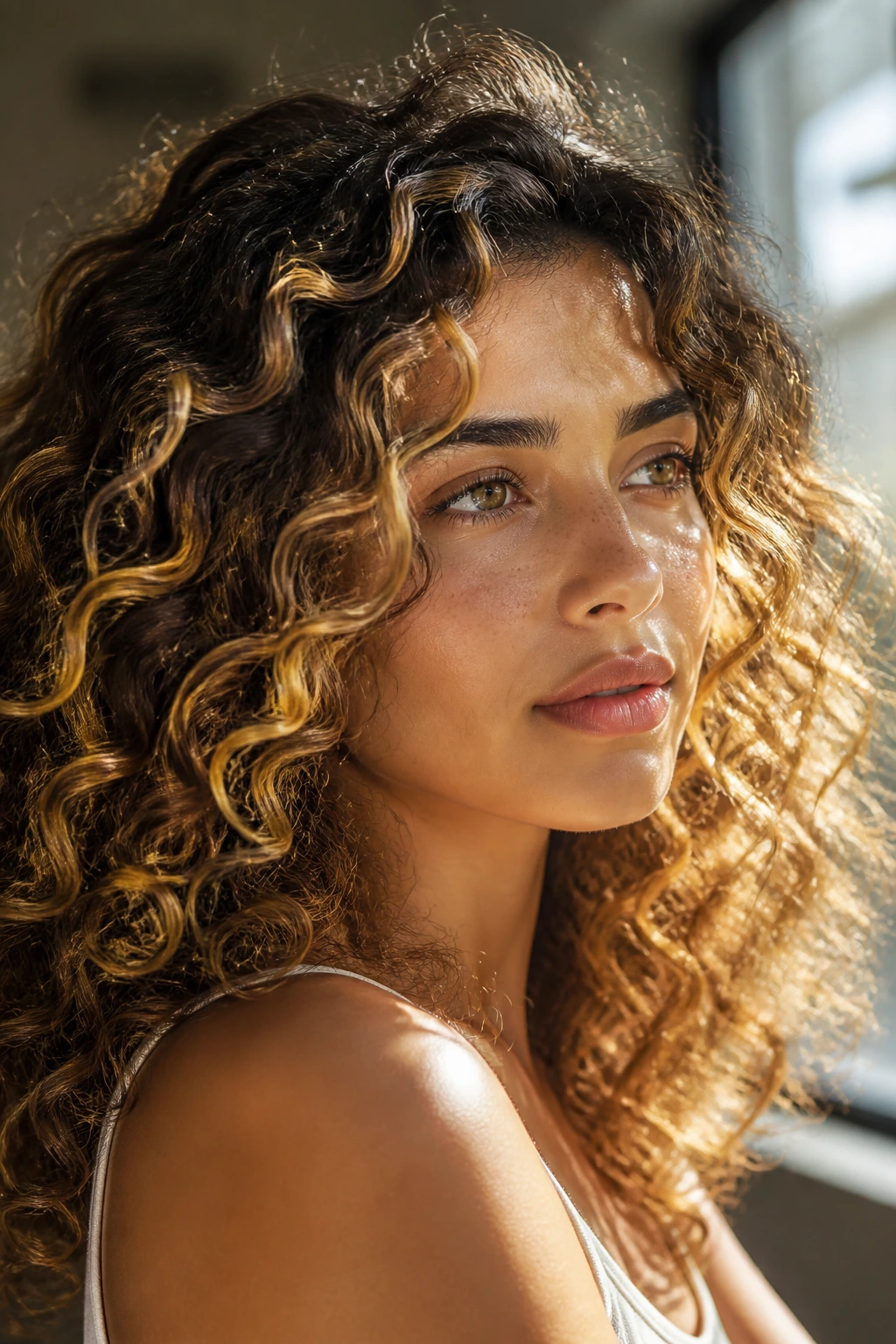
Curls love a bit of gold. Not too much. Just enough. Golden caramel painted onto curls tends to land on the ridges of the curl pattern, which gives olive skin a warm frame without flattening the texture. The result is more dimensional than an all-over tone ever could be.
The placement matters more than the formula here. You want the lighter pieces on the surfaces that curl outward and around the face, not a thick block of light through the bottom. That keeps the shade airy and avoids the stripey look that can happen when curly hair is highlighted too heavily.
15. Beige Caramel Curtain Bangs
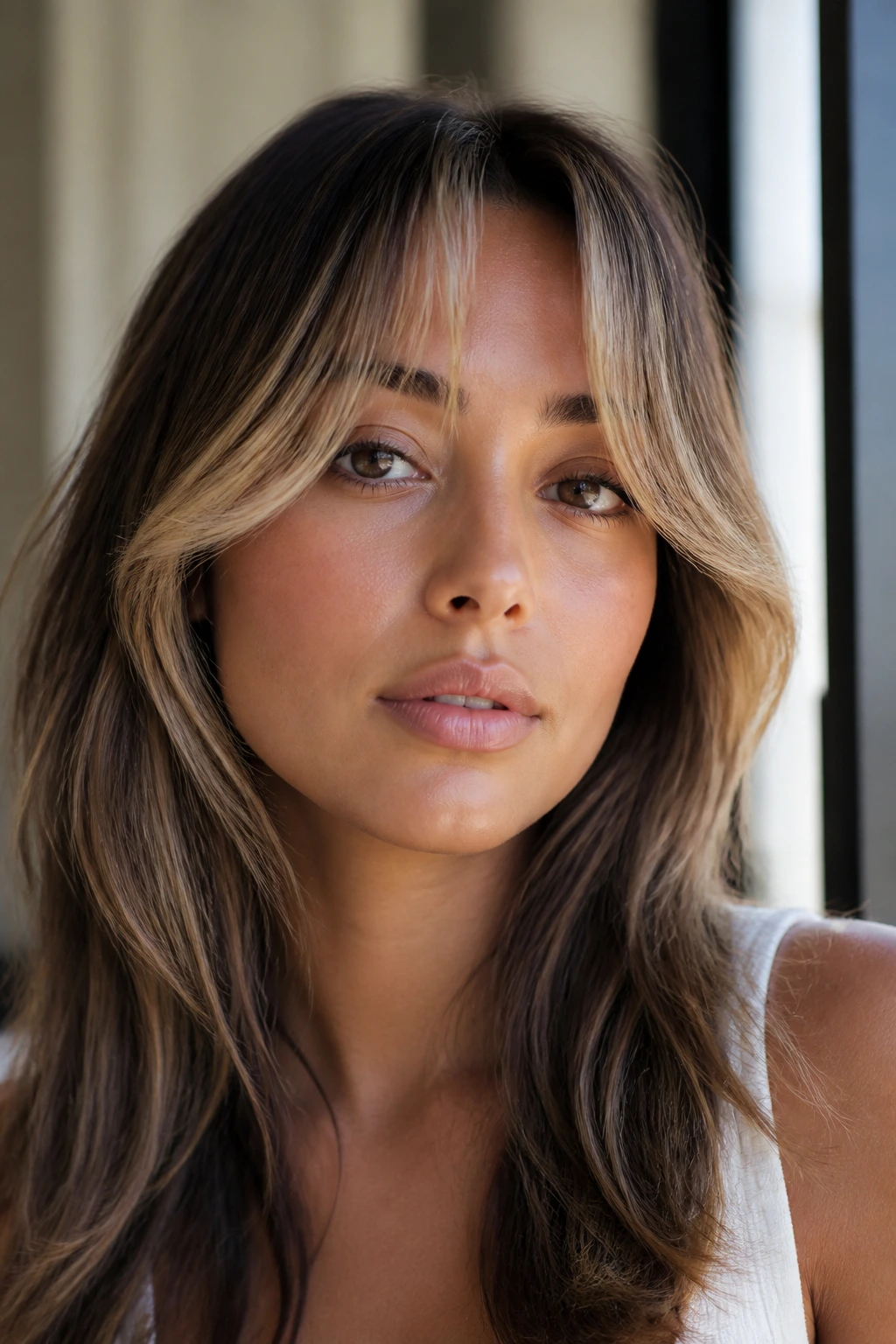
Curtain bangs are practically made for olive skin when the color is right. Beige caramel in the fringe keeps the face bright, but the beige note stops it from going golden-yellow. The rest of the hair can stay deeper, which gives the bangs something to stand apart from.
- Ask for the front pieces one level lighter than the rest.
- Keep the highlights fine near the part so the fringe looks soft, not streaked.
- Let the bangs taper into the cheekbone area for the most flattering frame.
This look works especially well if you like your hair to do some of the makeup work for you.
16. Auburn-Caramel Blend with a Soft Red Kick
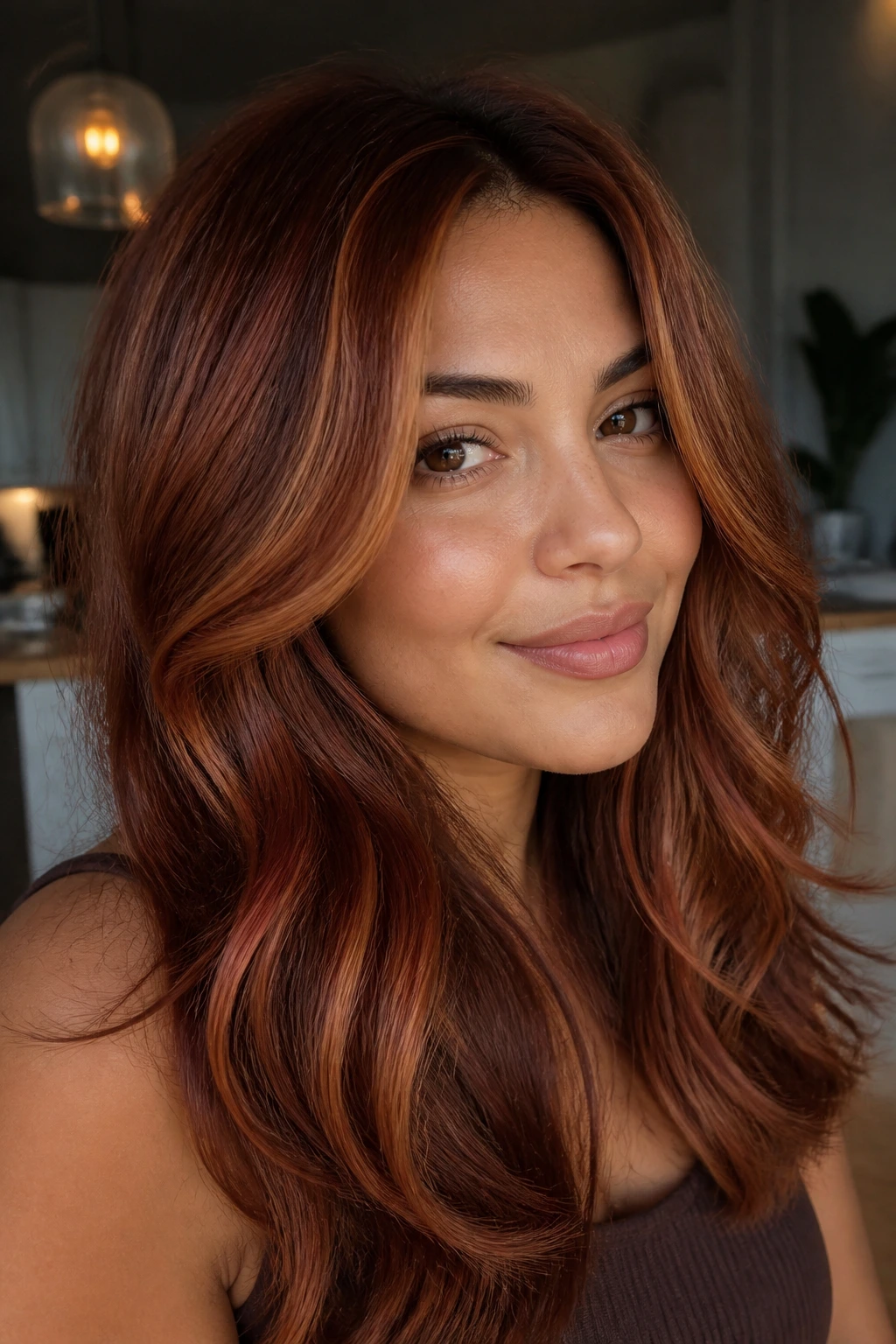
Auburn-caramel is warmer and a little bolder, which makes it useful for olive skin that already has some gold in it. The red-brown note gives the hair energy. It also keeps the caramel from going dull, which can happen when a shade is too beige and too cautious.
This is not the best choice for skin that flushes easily or leans pink, because the red can pull that out. But on warm-olive or neutral-olive skin, it can look rich and almost velvet-like. Keep the auburn in the low lights and let the caramel do the brightening.
17. Walnut Caramel Lowlights for Extra Depth
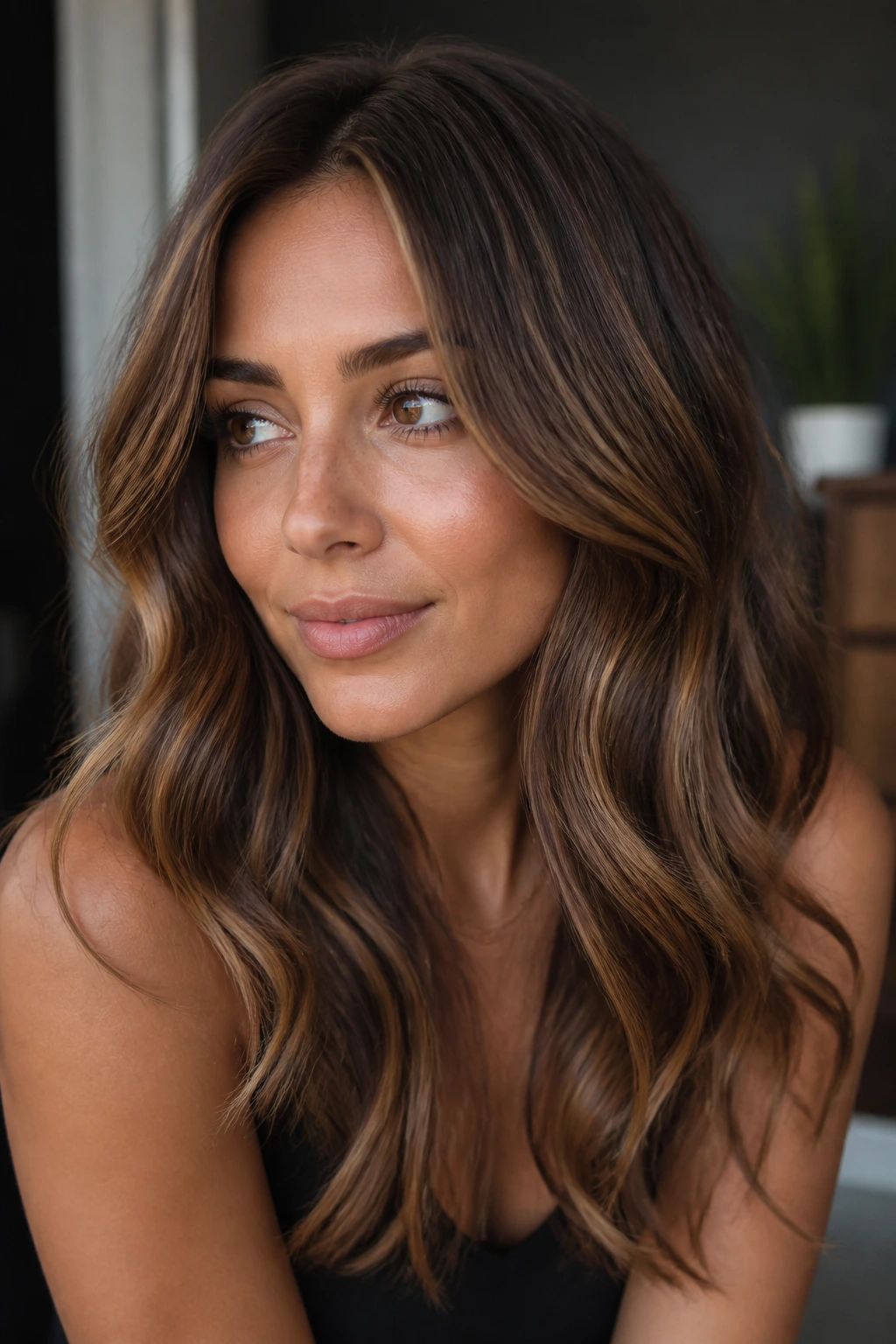
Not every caramel look needs to lighten the hair. Walnut caramel lowlights add depth to a lighter brown base or a grown-out highlight job that has started to feel too flat. On olive skin, those darker ribbons can actually make the warmer pieces look better, because they create contrast without forcing the shade lighter.
This is a smart fix if your hair feels stringy after too much highlighting. The deeper walnut tone restores fullness, and the caramel becomes a highlight rather than the whole story. It’s a quieter look, but I like it for people who want their brown to look denser and less washed out.
18. Taffy Caramel Ends with a Playful Finish
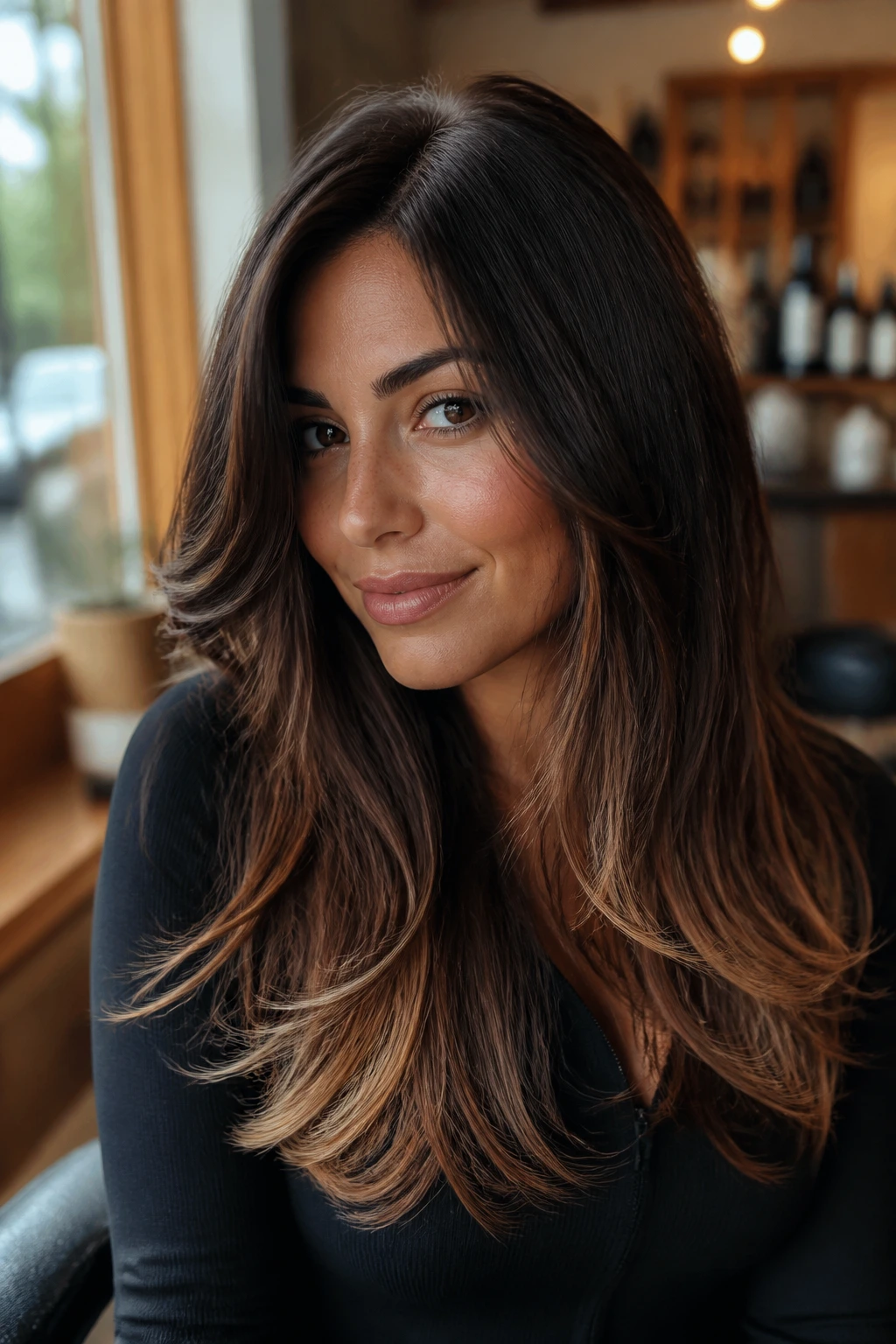
Taffy caramel is brighter and a little more playful, usually concentrated through the ends rather than the root area. It suits olive skin best when the base stays deep, because the darker top half keeps the lighter ends from floating away from the face.
This is one of the few caramel looks that can lean a touch trendier without becoming hard to wear. Long layers help, since the lighter tips pick up movement and make the cut look lighter overall. Keep the pieces soft, though. Too much contrast and the ends start to look disconnected.
19. Latte Brown Balayage for Medium Olive Skin
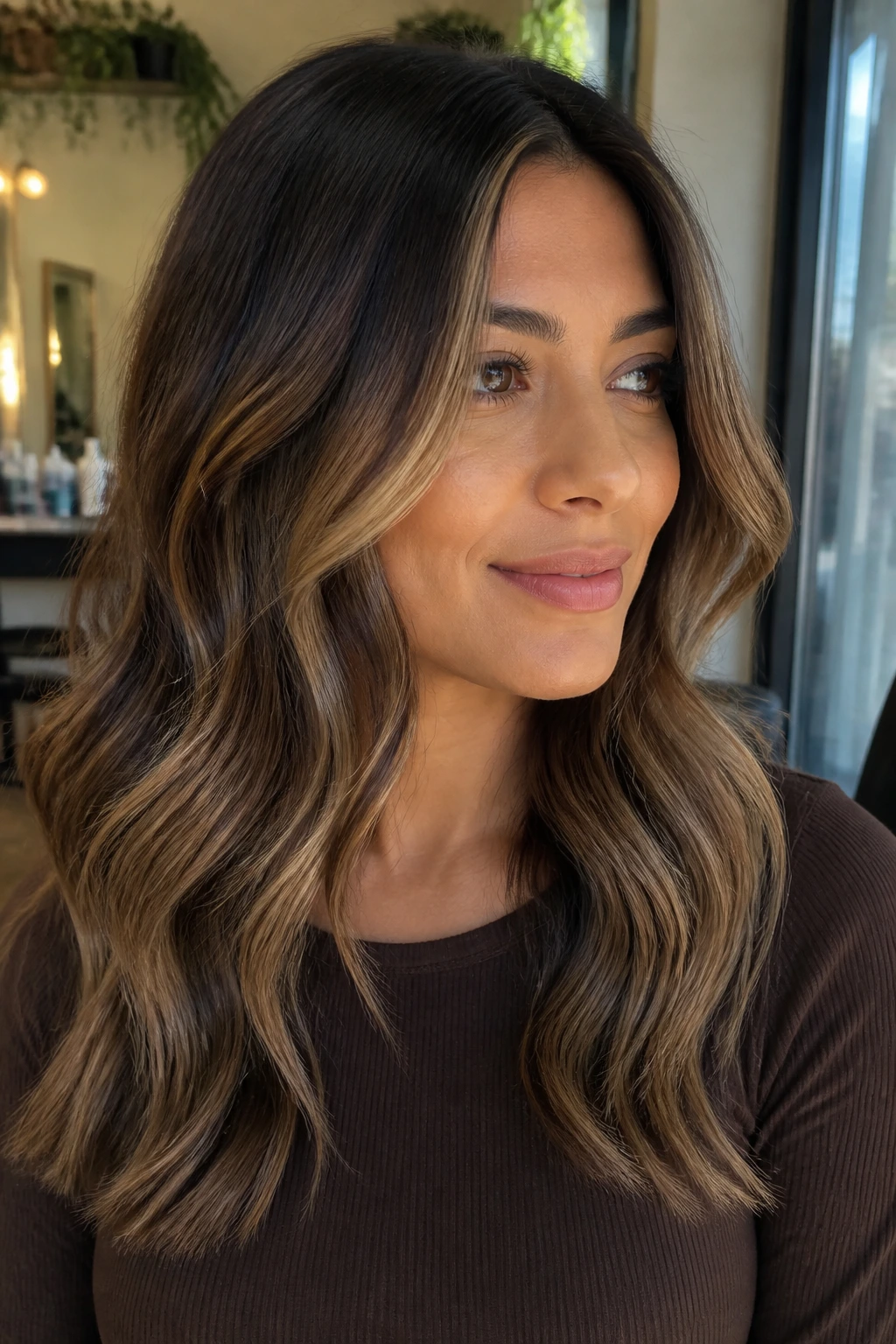
Latte brown is one of my favorite middle-of-the-road shades for medium olive skin. It mixes milk-chocolate depth with beige caramel so the result feels warm but not sugary. If your hair lives in that natural brunette range and you don’t want a dramatic transformation, this is the safe, smart lane.
The balayage should be fine and diffused, especially around the temples and upper layers. That keeps the color from reading chunky. A center part with soft waves shows the shade off best, because the lighter pieces frame the face without taking over the whole look.
20. Smoky Caramel Pixie with a Frosted Edge
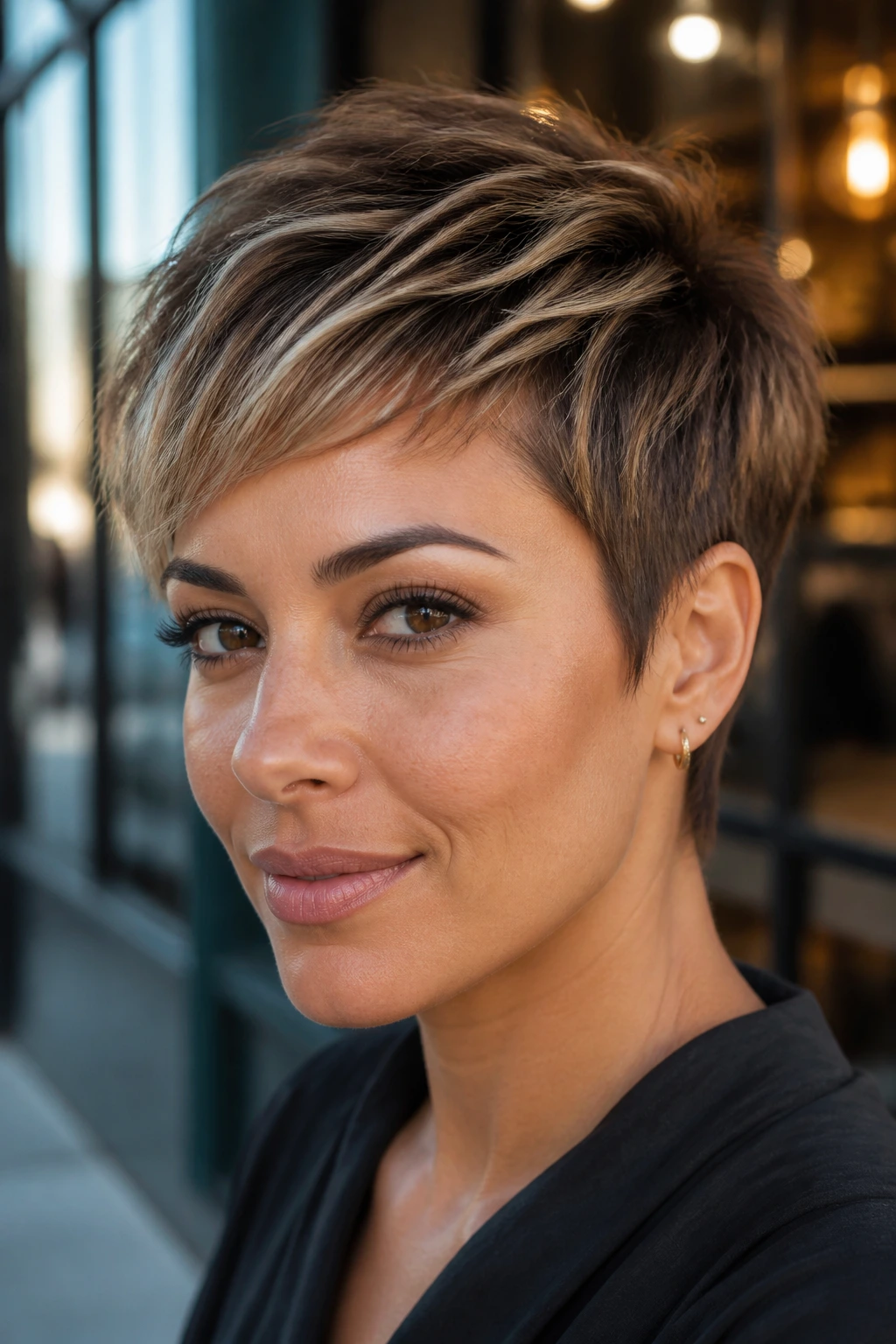
Short hair can wear caramel just fine, and a pixie proves it. Smoky caramel adds a faint frost to the edges and texture, which keeps the cut from looking flat on olive skin. The point isn’t to make the pixie blond. The point is to give it lift.
Best When You Want Short Hair to Do More
A pixie doesn’t have much length, so the color has to do some of the shaping. Ask for micro-highlights on the top and around the fringe, then keep the sides darker. That makes the silhouette sharper and keeps the color where the eye naturally lands.
If your skin leans neutral, this can look clean and modern. If it leans warm, make sure the caramel still has a brown base underneath so it doesn’t turn too icy.
21. Hazelnut Caramel Waves with Natural Depth
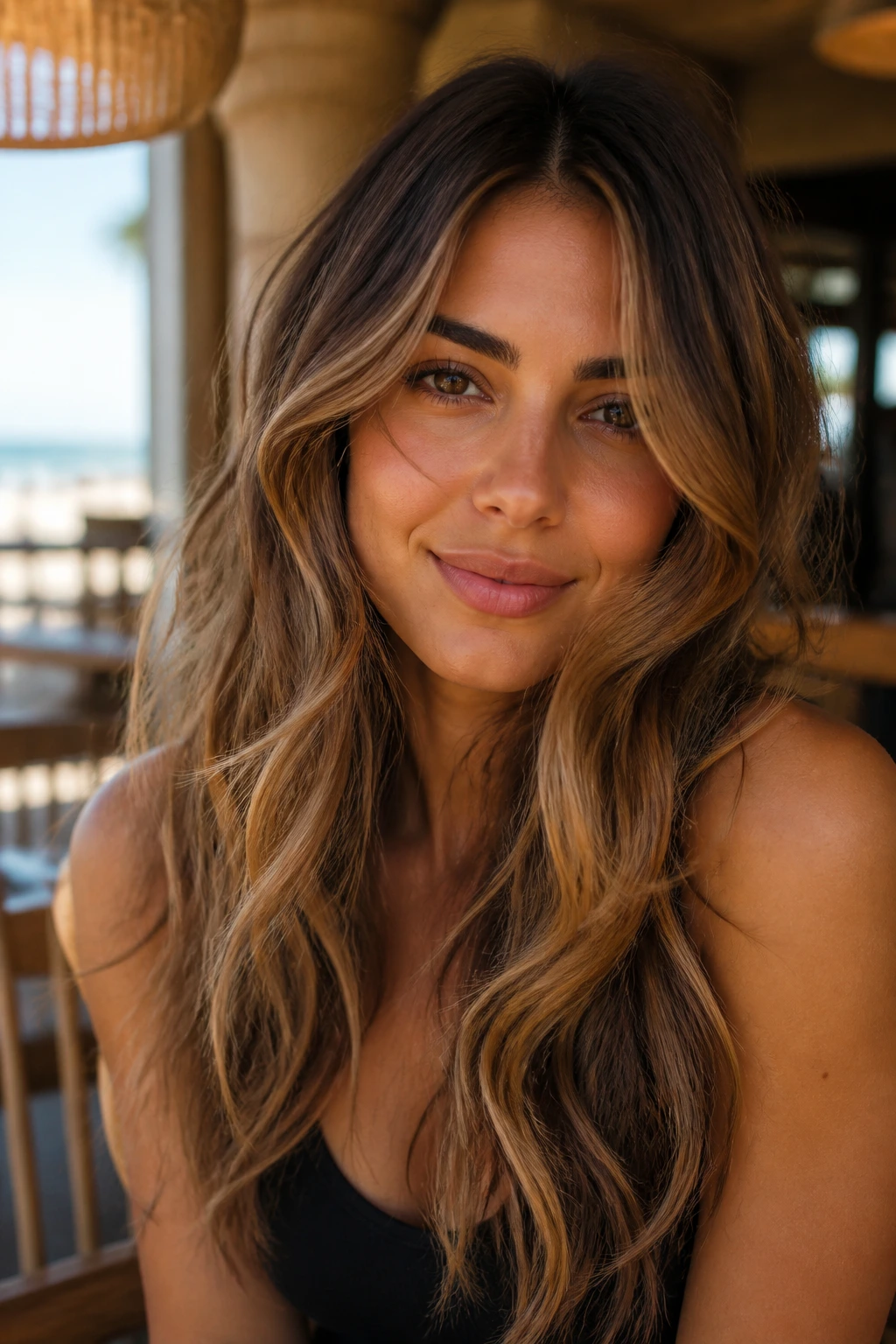
Hazelnut caramel is the easygoing shade in the group. It sits between brown and gold in a way that feels familiar, almost like the color has always been there. Olive skin usually likes that kind of honesty — no hard flash, no overdone brightness, just a warm brown that catches the light at the right moments.
This one is good for anyone who wants their hair to look richer up close and softer from a distance. The waves help the caramel show up. The hazelnut keeps the base from getting too light. It’s a steady, reliable look, and I mean that as praise.
22. Cocoa Caramel Glass Hair
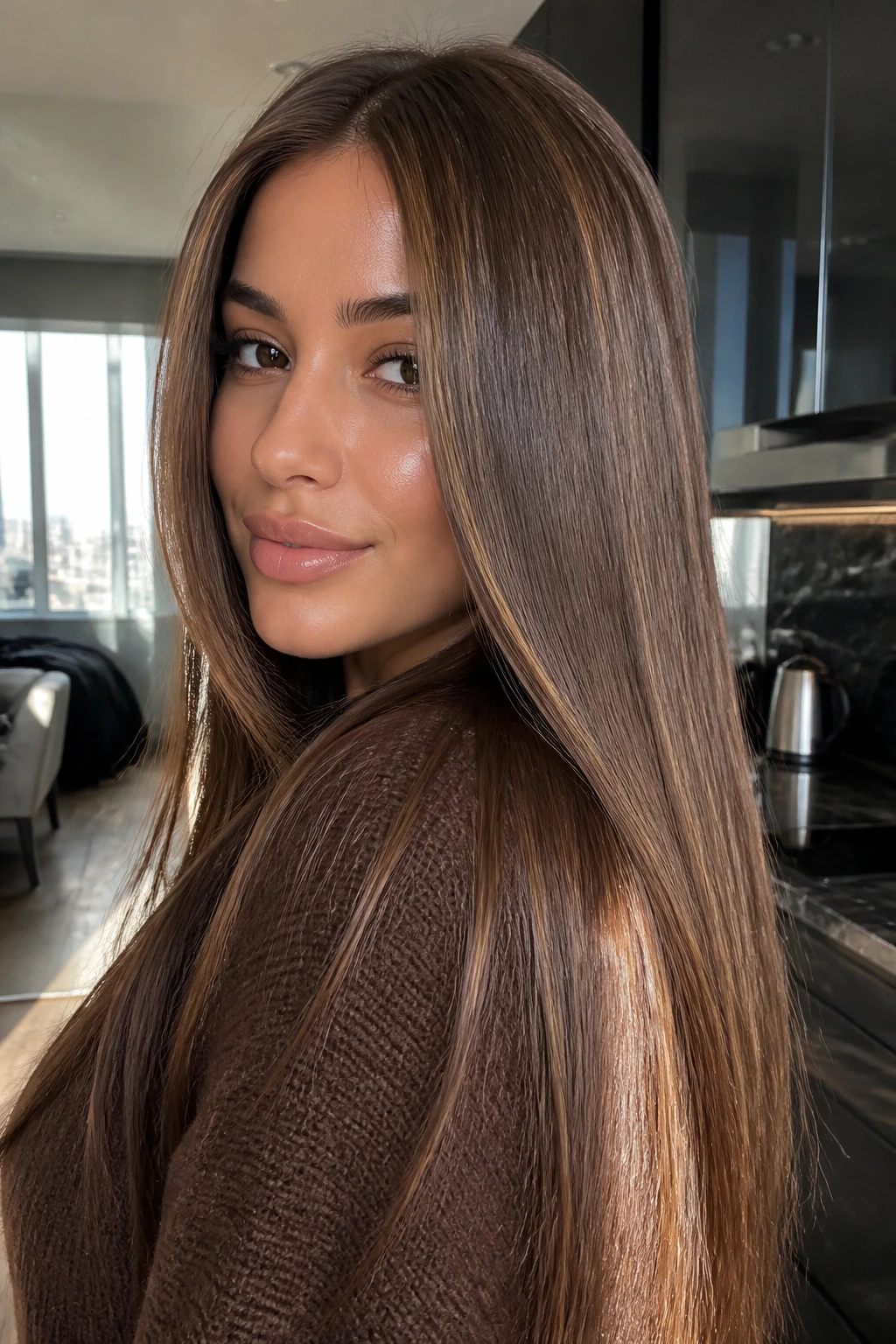
Sleek hair changes the way caramel reads. On straight, glossy strands, cocoa caramel looks deeper and smoother than it does in waves. That’s useful for olive skin because the shine creates lift without relying on a lot of contrast. The color becomes almost liquid.
This is the look for someone who likes a polished finish and doesn’t want visible streaks. A clear gloss helps a lot here. So does a brown base that stays close to cocoa. If the caramel is too light, straight hair exposes every line of it. Keep it refined.
23. Toffee Caramel Lob with Soft Perimeter Lightening
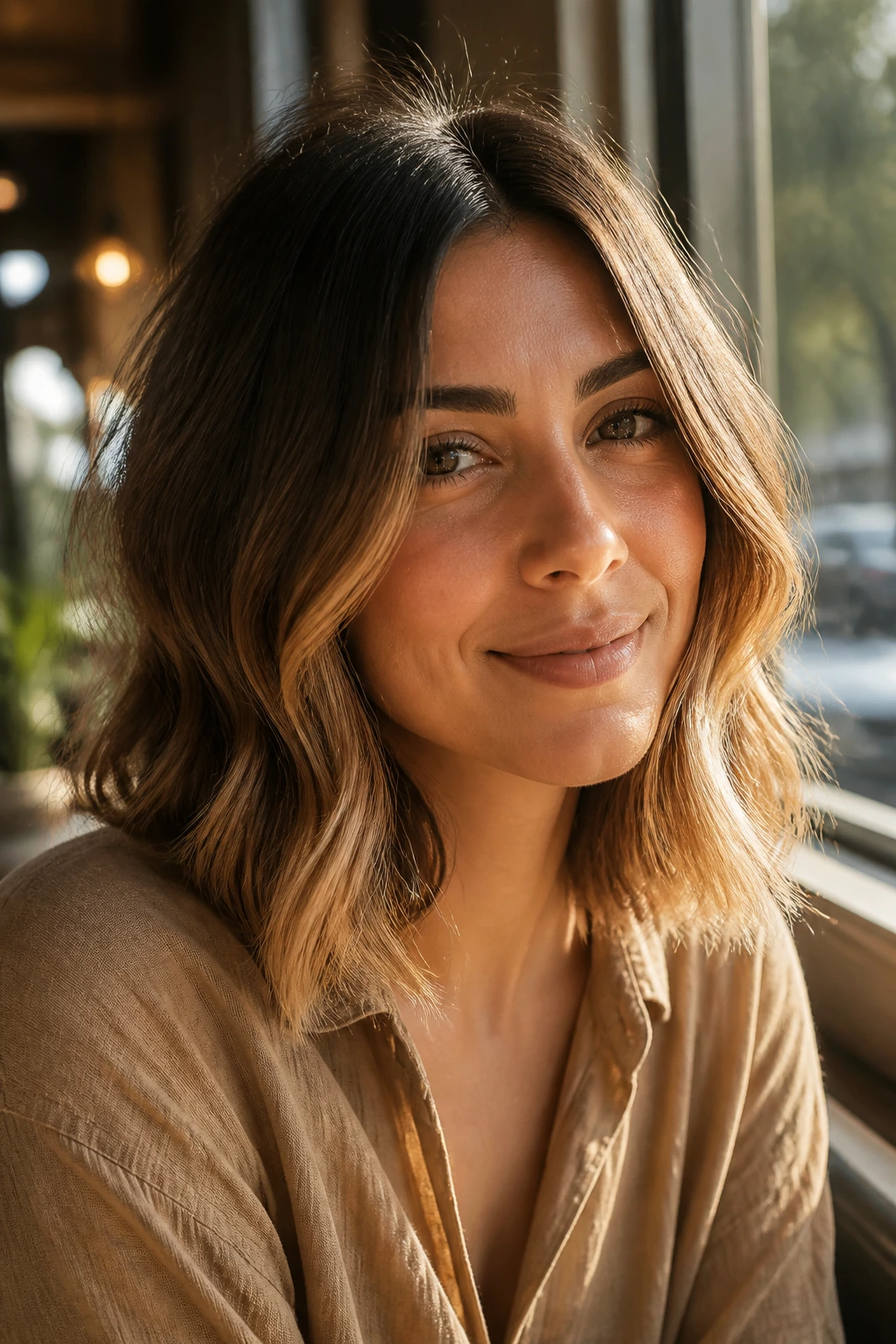
A lob with toffee caramel around the perimeter gives olive skin a softer halo effect. The lightening stays mostly on the outer edges and ends, so the shape of the cut does the work. This is a good middle path if you want something brighter than a gloss but less committed than a full highlight set.
- Ask for the perimeter to be lighter, not the whole top layer.
- Keep the root area deep enough to anchor the face.
- Use a curling iron only on the ends if you want the lighter pieces to show.
The cut should still feel brunette. That’s the point. The caramel is there to make the edges glow.
24. Cinnamon-Toffee Curly Bob
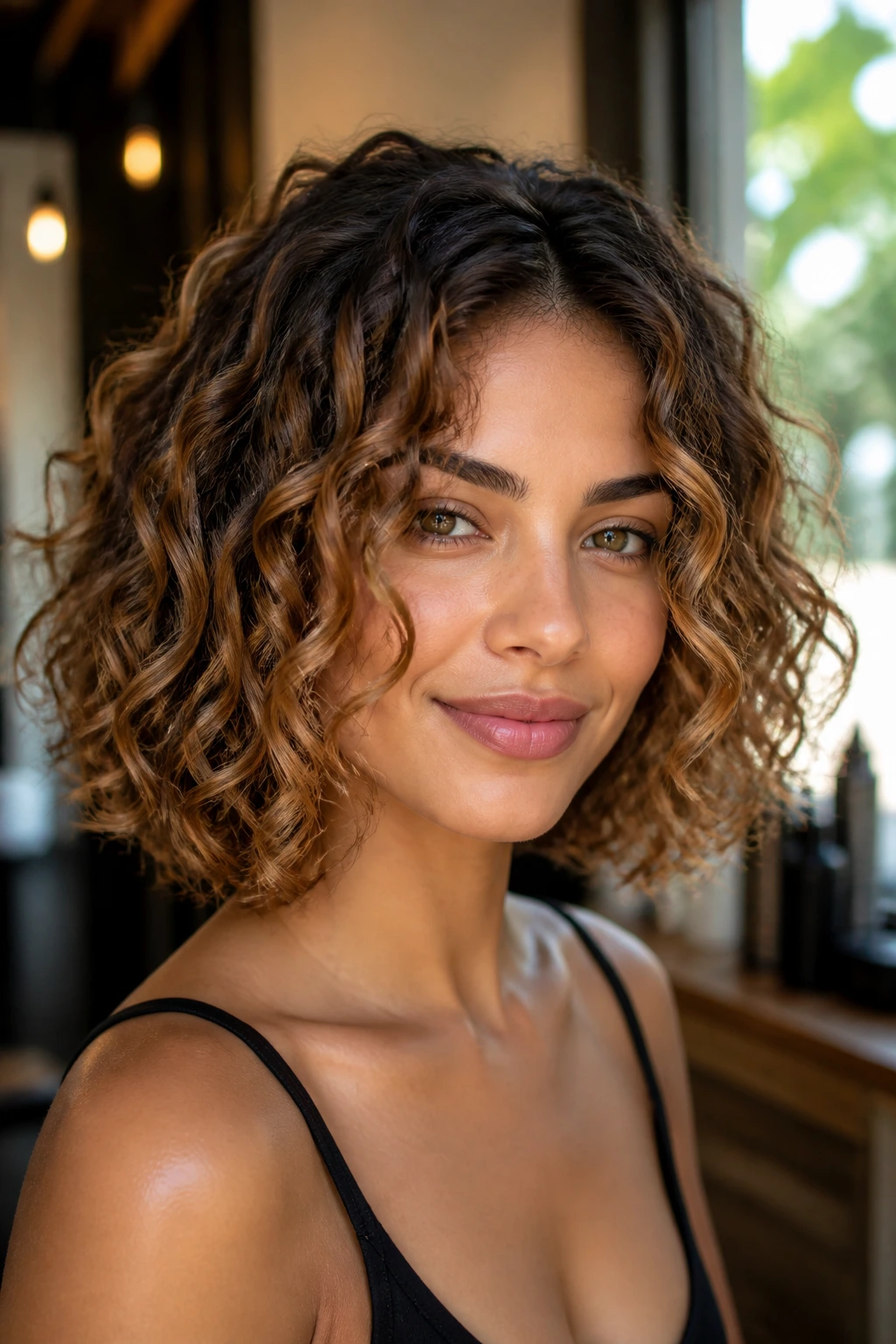
A curly bob can handle warmth better than people think, as long as the color isn’t pushed too orange. Cinnamon-toffee pieces on curls create a soft ring of light around the face, and olive skin tends to like that warm frame when the roots stay deeper. The curls do half the styling work for you.
This look is especially good if you want your color to move with your cut. The caramel sits on the curl surfaces, the cinnamon gives it a little spice, and the bob keeps the whole thing from feeling heavy. If the red note gets loud, pull it back. A whisper is better than a shout here.
25. Soft Caramel Brunette with Subtle Ribbons
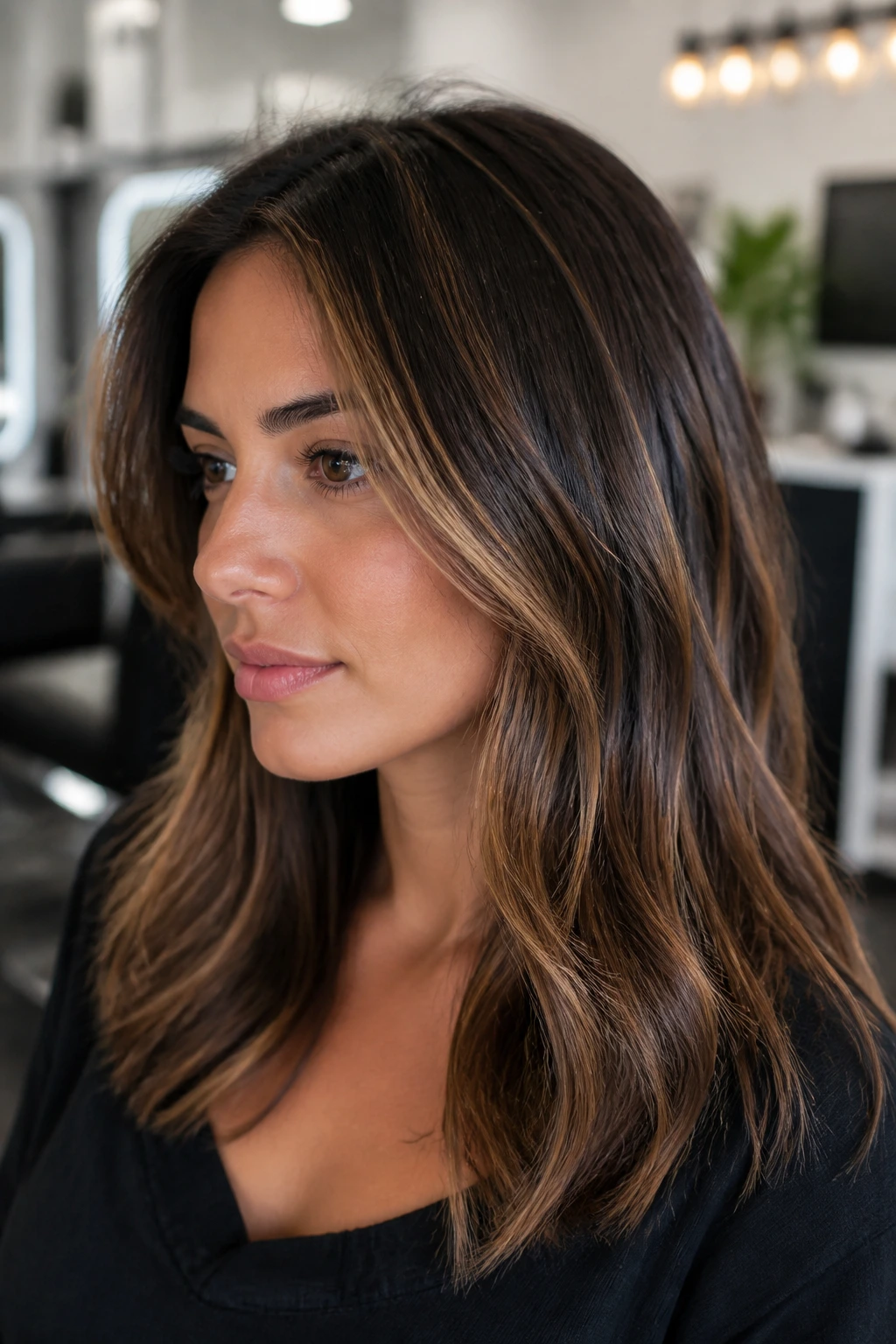
If you only want one shade that won’t argue with olive skin, this is the one I’d put at the top. Soft caramel brunette keeps the base rich and only threads the lightness through in thin ribbons. The result is calm, not boring. It’s the kind of brown that looks expensive in daylight because it has depth instead of one flat color.
Why It Keeps Working
The strength of this look is restraint. The caramel sits close to the brunette base, so the hair still reads brown first. That means it flatters a wide range of olive undertones without making the skin look too yellow, too pink, or too muted.
If you’re torn between several of the ideas here, start with this one. It leaves room to go brighter later, and it’s much easier to live with than a heavy highlight job.
Why Caramel Placement Matters More Than the Shade Name
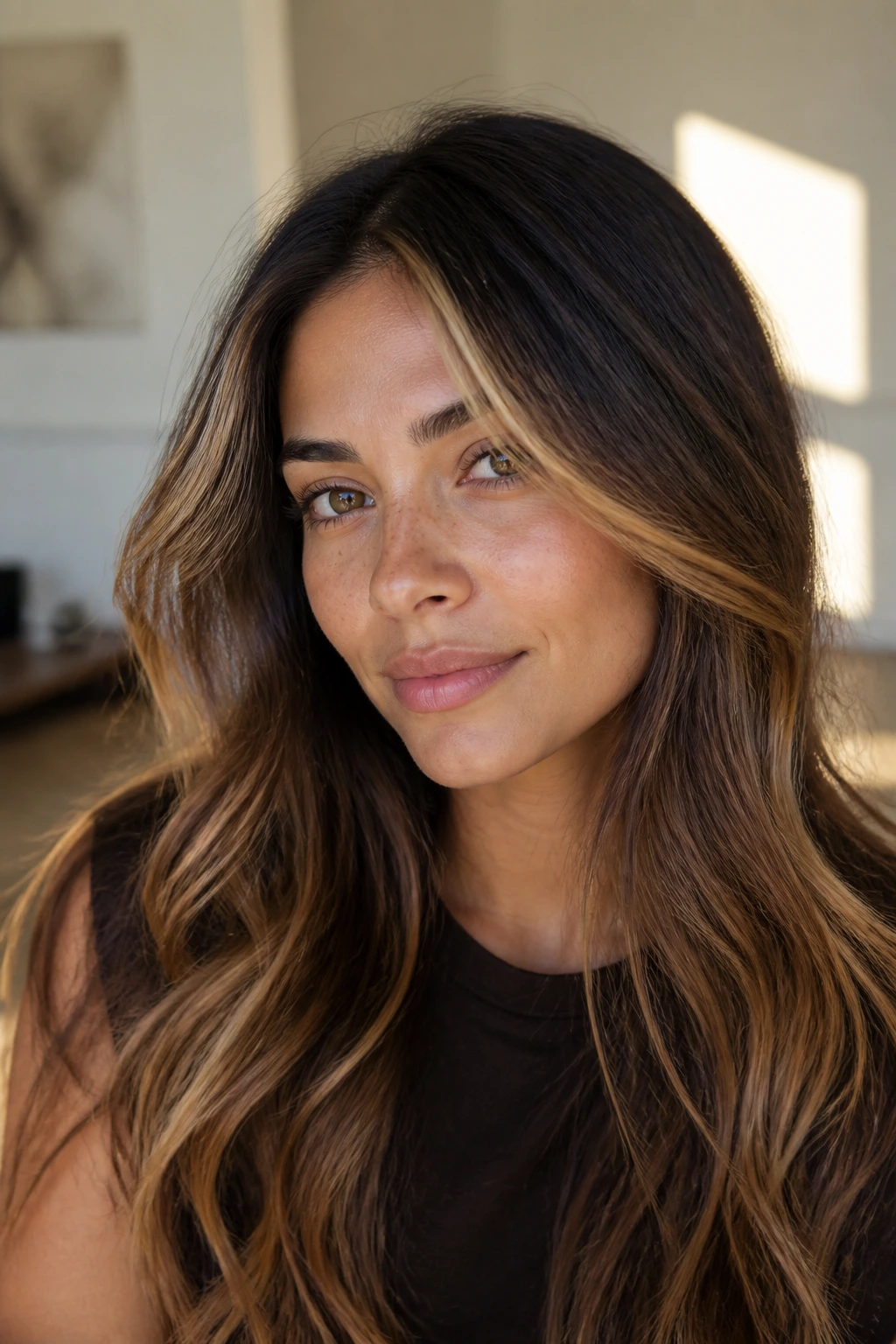
The name on the color bowl matters less than the way the color gets placed. That’s the part most people miss. Caramel can look sun-kissed, brassy, smoky, or almost beige depending on whether it sits at the root, around the face, under the top layer, or only on the ends. Olive skin changes the equation because it reacts strongly to contrast. Too much warmth at the wrong spot can make the face look sallow. Too little depth can make everything blur together.
A good caramel brown for olive skin usually keeps one foot in brunette territory. That could mean a dark root shadow, a chestnut lowlight, or a cocoa base under beige ribbons. It also means thinking in sections instead of one uniform color block. The front can be brighter. The back can stay quiet. The ends can be lighter if the cut needs movement. That’s not fussy. That’s what makes brown hair look intentional instead of accidental.
And daylight matters. Bathroom lighting lies. If a caramel looks yellow under fluorescent light, wait until you see it in indirect sun before you judge it. That’s where the shade tells the truth.
Essential Tools for These Looks
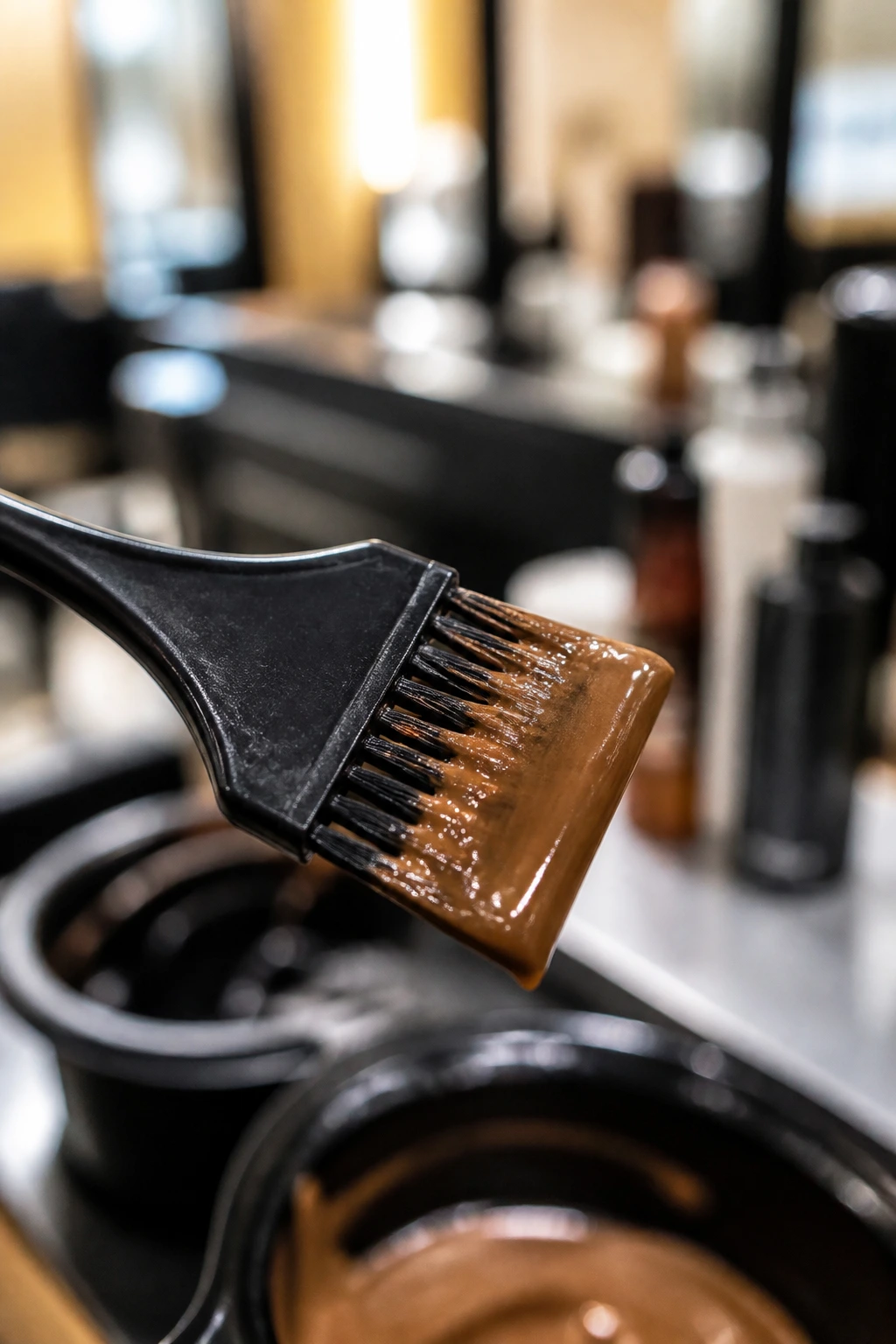
- Color swatches or a clear photo reference: Bring at least two pictures, because “caramel” can mean beige, bronze, or honey depending on who’s holding the brush.
- Sectioning clips: These keep face-framing pieces and top layers separate when you’re planning highlights or styling them.
- Tint brush and bowl: Useful for glosses, toners, or any at-home root-smudge work.
- Wide-tooth comb: Helps spread conditioner or color evenly without ripping through highlighted ends.
- Color-safe shampoo and conditioner: Sulfate-free formulas keep caramel from fading into dull brown too fast.
- Heat protectant spray: Non-negotiable if you blow-dry or curl, since warm shades look better when the cuticle stays smooth.
- Round brush or curling wand: A little bend is what lets caramel ribbons show off.
- Microfiber towel or soft T-shirt: Cuts down on frizz, especially if the hair is wavy or curly.
- Glossing treatment or clear shine serum: Good for keeping brown tones looking polished between salon visits.
- Purple or blue shampoo, used sparingly: Handy if caramel turns brassy, though it should never be your main shampoo.
How to Choose the Right Caramel Shade at the Salon
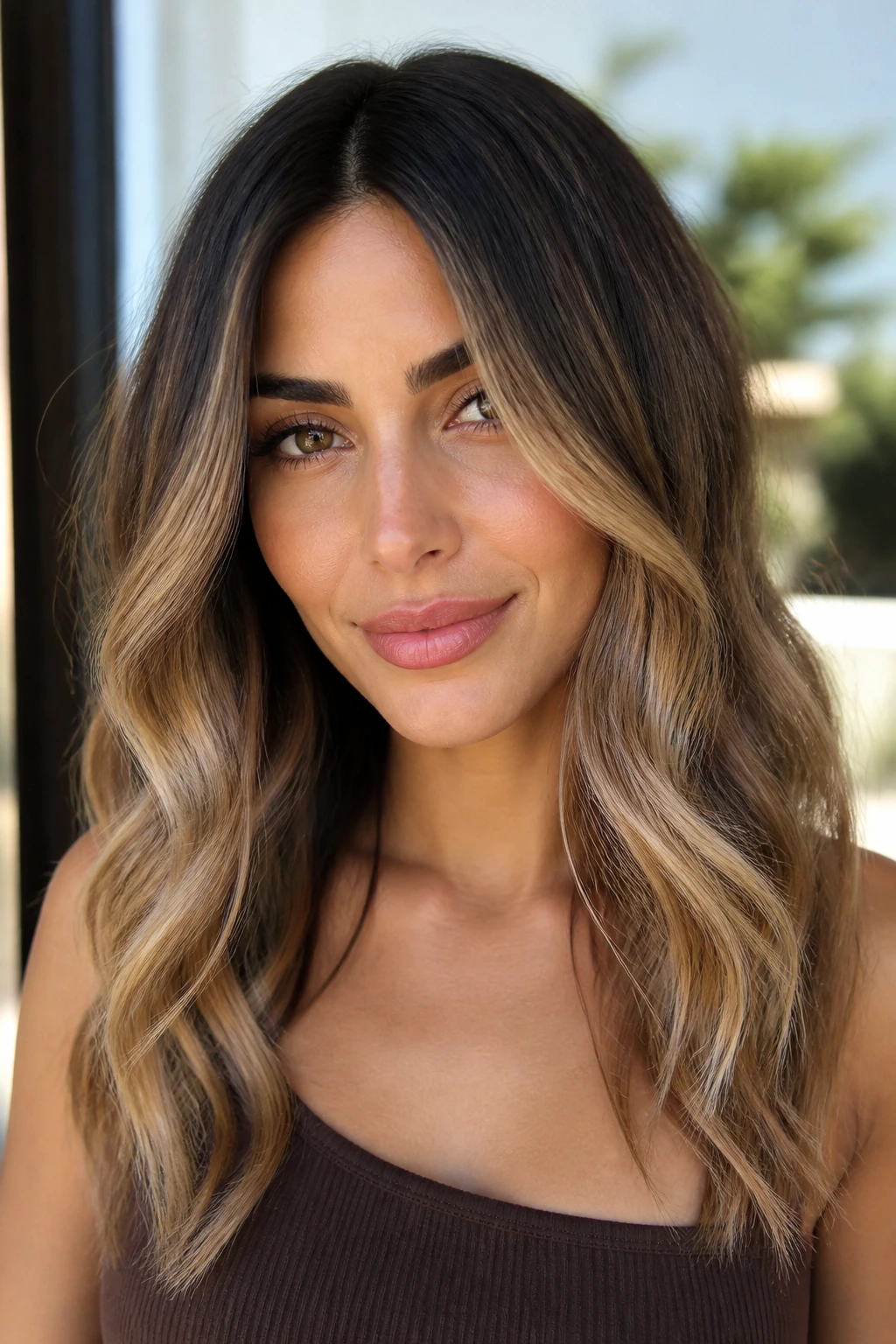
Bring photos that match your skin in plain daylight, not filtered selfies. That matters more than most people think. Olive skin can look very different under warm indoor bulbs, and a color that seems soft in a photo can turn louder on your face once it’s done. If your skin leans greener, ask for beige caramel, bronze caramel, or hazelnut. If it leans warmer, honey, toffee, and soft gold are easier to wear.
The base level matters, too. A deeper olive skin often looks stronger with a base in the level 4 to 6 range, because the contrast keeps the face from flattening out. If you go much lighter, the hair can start competing with the skin instead of framing it. That’s why a shadow root or lowlight is so useful. It keeps the color grounded.
Ask about glosses and toners, not just highlights. A gloss can shift a caramel from orange to beige, or from flat brown to something that actually reflects light. That one step saves a lot of bad color jobs. It’s also the easiest way to make a brunette look expensive without lifting half the head.
How to Wear These Shades So the Color Shows
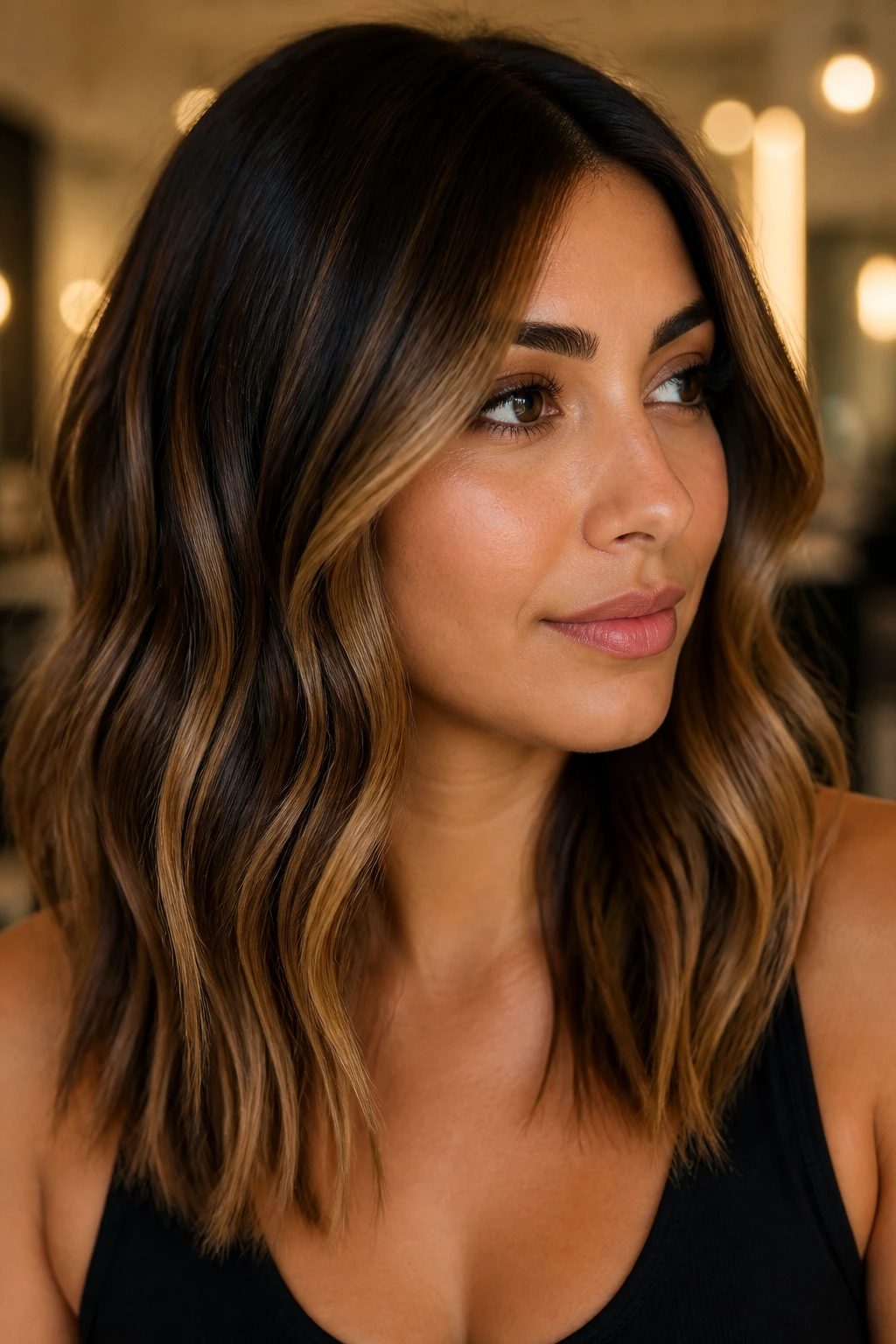
Parting: A center part shows off balanced face-framing pieces, while a deep side part pushes the lightness toward one cheekbone and gives a stronger shape. If the highlights are subtle, a side part can make them look more obvious without adding more color.
Texture: Loose waves, a soft blowout, or even a light bend at the ends let caramel pieces move. Straight, flat hair tends to hide the dimension unless the shade is high contrast. Curly hair is its own little win — the highlights land on the curl pattern and show up where the light hits.
Makeup: Terracotta blush, bronze shadow, muted berry lip, and warm nude lipstick tend to work especially well with caramel on olive skin. Heavy peach can go too orange. Very cool pink can look disconnected. You want makeup that echoes the warmth in the hair without copying it exactly.
Clothing Colors: Cream, camel, olive green, espresso, muted teal, and rust make the shade feel richer. Stark white can be harsh on some olive complexions, while very neon colors can pull attention away from the hair’s warmth. Gold jewelry usually fits easier than silver here, though mixed metals can work if the outfit is quiet.
Additional Tips and Dimensional Boosters
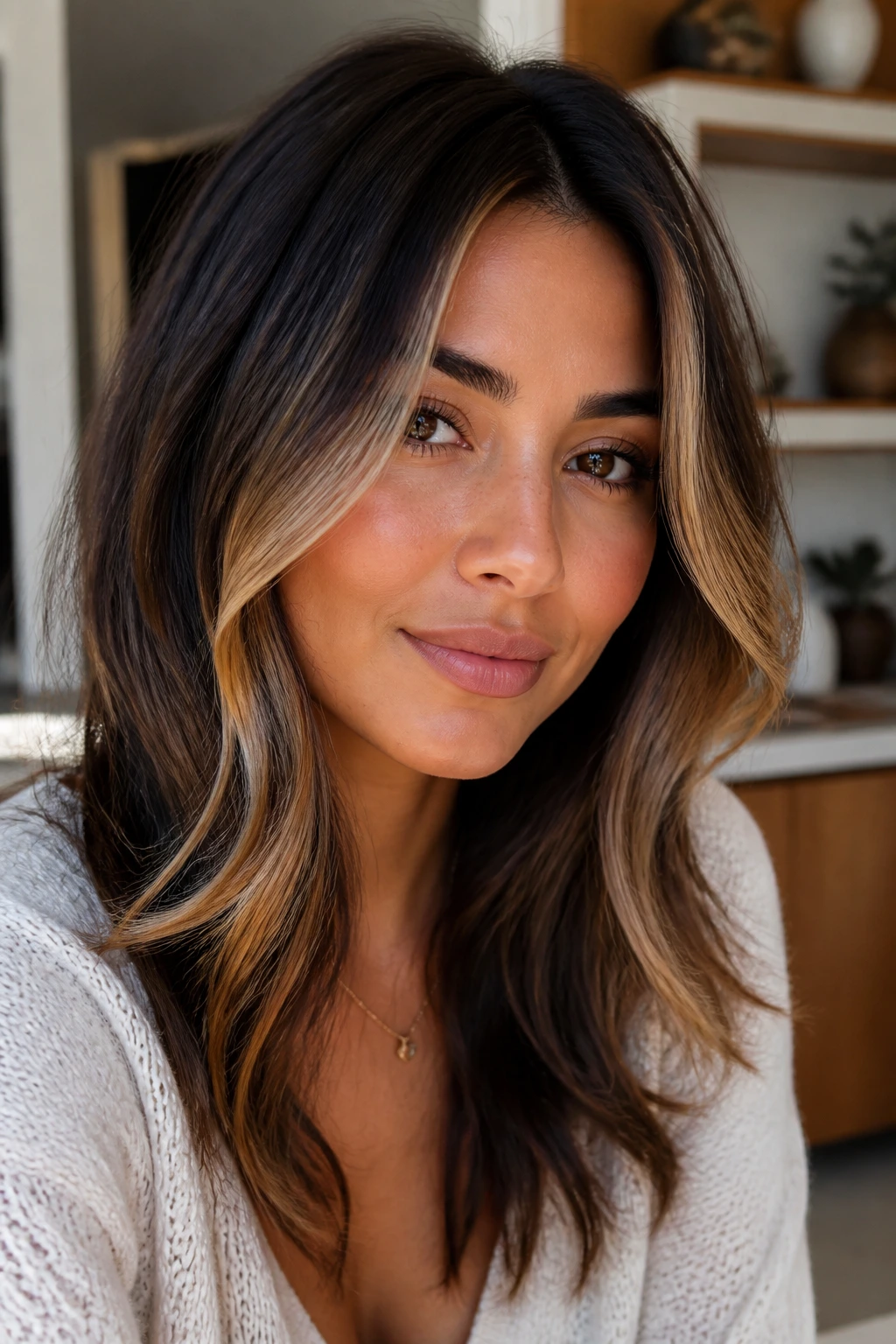
Gloss: A clear or beige gloss every 4 to 8 weeks keeps the caramel from turning dull, especially if your hair is porous or you use hot tools often. The shine matters. Warm brown without shine can go flat fast.
Placement: Put the brightest pieces where your hair naturally bends — around the face, over the top layer, and through the ends of layered cuts. That’s where the eye lands first, and it saves you from over-lightening the whole head.
Customization: If you like a softer result, ask for beige-caramel ribbons and a darker root shadow. If you like warmth, nudge the formula toward honey or bronze. If you want more edge, ask for a smoky caramel glaze through the ends only.
Make-It-Yours: Curly hair usually needs fewer but slightly thicker painted pieces so the pattern doesn’t disappear. Straight hair reads best with finer ribbons. Short cuts need a little more contrast than long hair, because there’s less length for the color to travel.
Keeping Caramel Brown Fresh Between Salon Visits
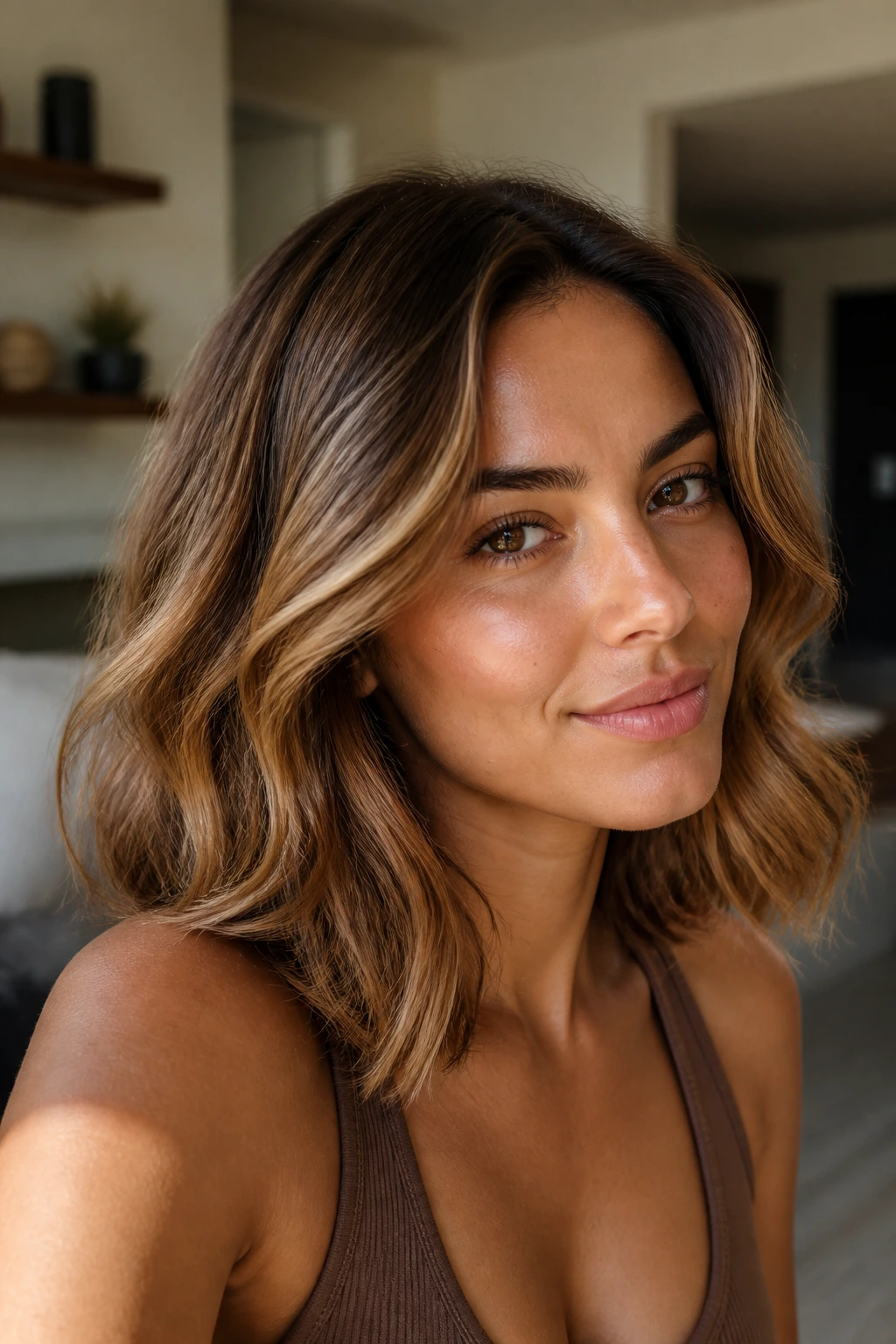
Caramel brown fades, and it fades in a way that can be sneaky. The shine goes first, then the caramel turns softer, then brass starts creeping in if you wash too often or use hot water. If you want the color to stay crisp, wash two or three times a week at most and keep the water lukewarm. Hot showers strip the gloss faster than people realize.
A salon gloss every 4 to 6 weeks keeps lighter pieces from going too yellow or too flat. Root touch-ups depend on the technique. A balayage can often stretch 8 to 12 weeks without looking obvious. High-contrast face framing may need attention closer to 6 to 8 weeks. If you live in hard-water territory, a chelating or clarifying shampoo once every 2 to 4 weeks helps stop mineral buildup from dulling the brown.
Heat protectant belongs on every blow-dry and every curl session. No exceptions. Caramel looks best when the surface is smooth, and rough ends make the warmth look dry. A leave-in conditioner on the mid-lengths and ends helps, too — especially if the hair was lifted more than one level.
Variations and Adaptations to Try
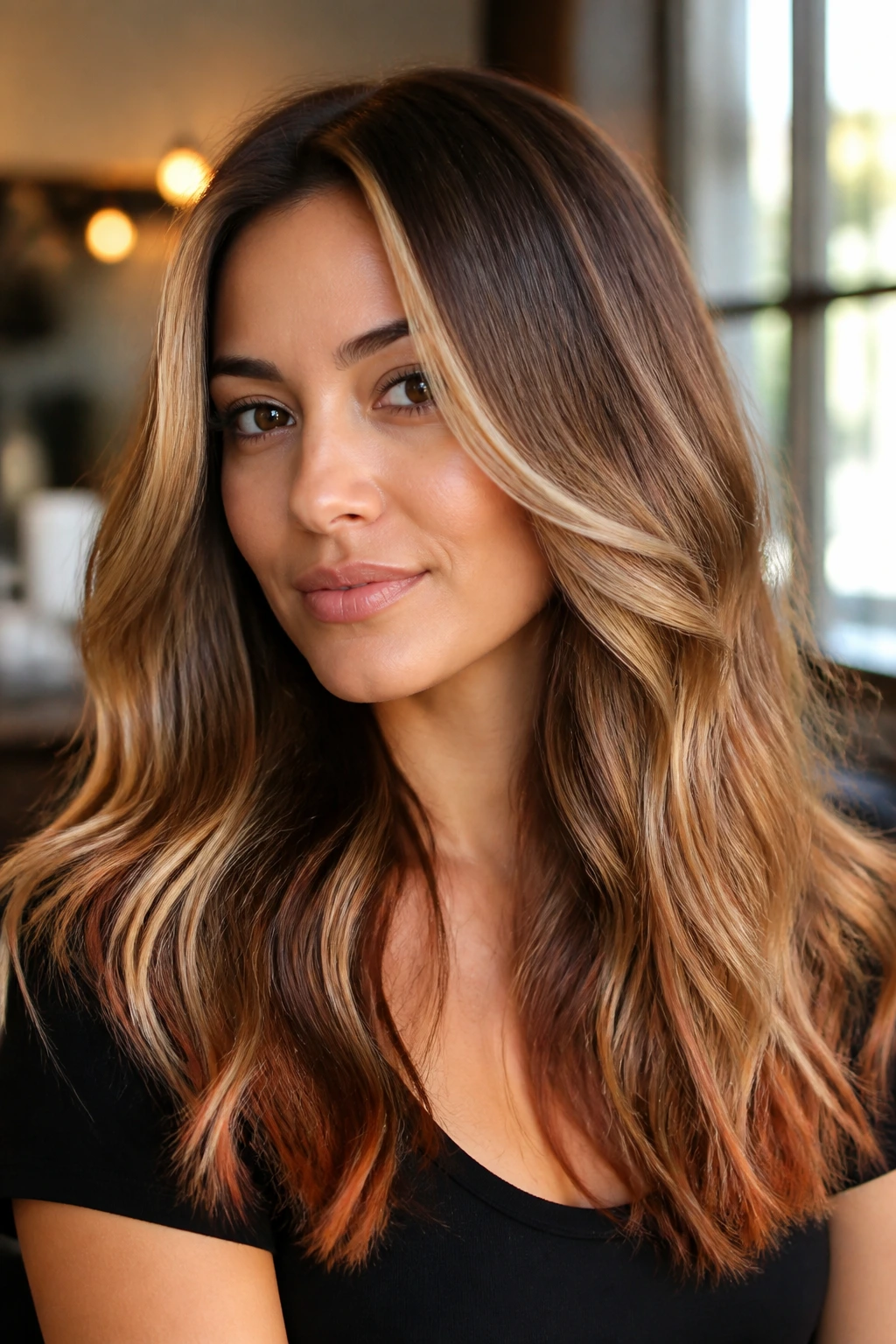
Barely-There Caramel: Keep the hair mostly brunette and add just a few caramel ribbons around the face and top layer. This is the easiest entry point if you want change without obvious upkeep.
Bronze Caramel Blend: Shift the formula toward bronze instead of honey. It works beautifully on deeper olive skin and gives the hair a richer, darker feel that still reflects light.
Soft Honey Lift: Push the caramel warmer and a touch brighter, but keep the root dark. This is useful if your olive skin leans warm and you want the color to read sunnier in daylight.
Cool Beige Caramel: Pull back on gold and ask for beige-toned toner over the highlights. If your skin leans green or neutral, this can keep the result from looking too orange.
Copper-Kissed Caramel: Add the smallest touch of copper to the mid-lengths or face frame. That slight red note gives brown hair more energy without turning it into auburn.
Common Mistakes to Avoid
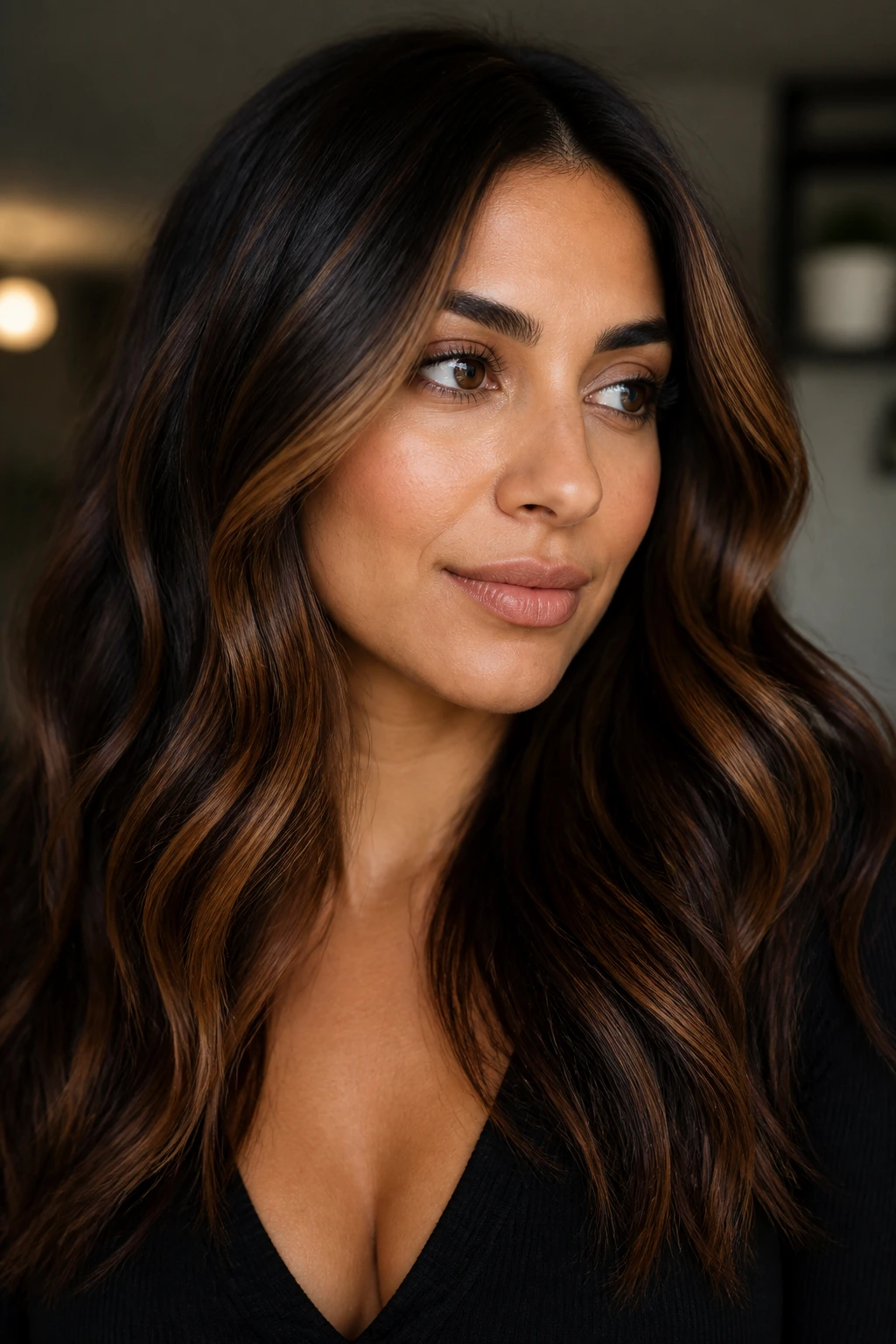
- Going too light, too fast: If the caramel jumps several levels above your base, it can wash olive skin out instead of brightening it. Keep the jump modest and build brightness with placement, not just bleach.
- Choosing orange instead of caramel: Orange reads louder than caramel and can make the skin look more yellow. If the swatch looks tangerine in the bowl, it’s probably too warm.
- Skipping depth at the root: A flat all-over light brown can feel thin against olive skin. Leave some shadow at the root or add lowlights so the color has somewhere to rest.
- Ignoring porosity: Very porous hair grabs warmth and toner fast, which means caramel can turn muddy or over-gold. Porous ends often need a softer toner and more conditioner, not more dye.
- Judging color under bad lighting: Bathroom bulbs lie in a cheerful way that gets people into trouble. Always check the finish near a window before you decide it needs “more warmth.”
- Using purple shampoo like a cure-all: Purple shampoo can tame brass, but too much of it can make caramel look dusty. Use it sparingly and follow with a moisture mask.
Frequently Asked Questions
Is caramel brown good for olive skin with green undertones?
Yes, but the shade should lean beige, bronze, or soft brown rather than bright gold. Green-leaning olive skin usually looks best when the caramel has enough depth to stay grounded.
Should I choose caramel or ash brown for olive skin?
Caramel is usually the safer pick if you want warmth and light. Ash brown can work on some olive complexions, but it often looks flat unless the hair has strong dimension and the skin is very neutral.
Can dark brown hair go caramel without bleach?
Sometimes, yes, especially if you want a gloss, lowlight, or subtle face frame. If you want pieces that are several levels lighter, some lightening is usually needed, but a gentle lift is often enough.
What if my caramel turns orange after a few washes?
That usually means the toner faded or the hair was lifted too warm in the first place. A beige or blue-based gloss can cool it down, and a colorist can soften the tone without starting over.
How often should I refresh caramel brown hair?
A gloss every 4 to 6 weeks keeps the shine up. Balayage and softer placements can go 8 to 12 weeks between bigger appointments, while sharper money-piece styles may need more frequent touch-ups.
Does caramel brown work on curly hair?
Very much so. Curly hair shows ribbon placement well because the light hits the curl pattern, but the highlights should be painted with the curl shape in mind so the color doesn’t look striped.
What makeup shades go best with caramel brown on olive skin?
Bronze, terracotta, warm rose, soft berry, and beige-nude usually play nicely. Very icy pinks and stark cool browns can fight the warmth in the hair.
Which caramel look is easiest to maintain?
A soft brunette base with subtle ribbons or a glossy caramel glaze. Both grow out softly, and neither asks you to chase the roots every few weeks.
The Shade That Keeps Its Shape
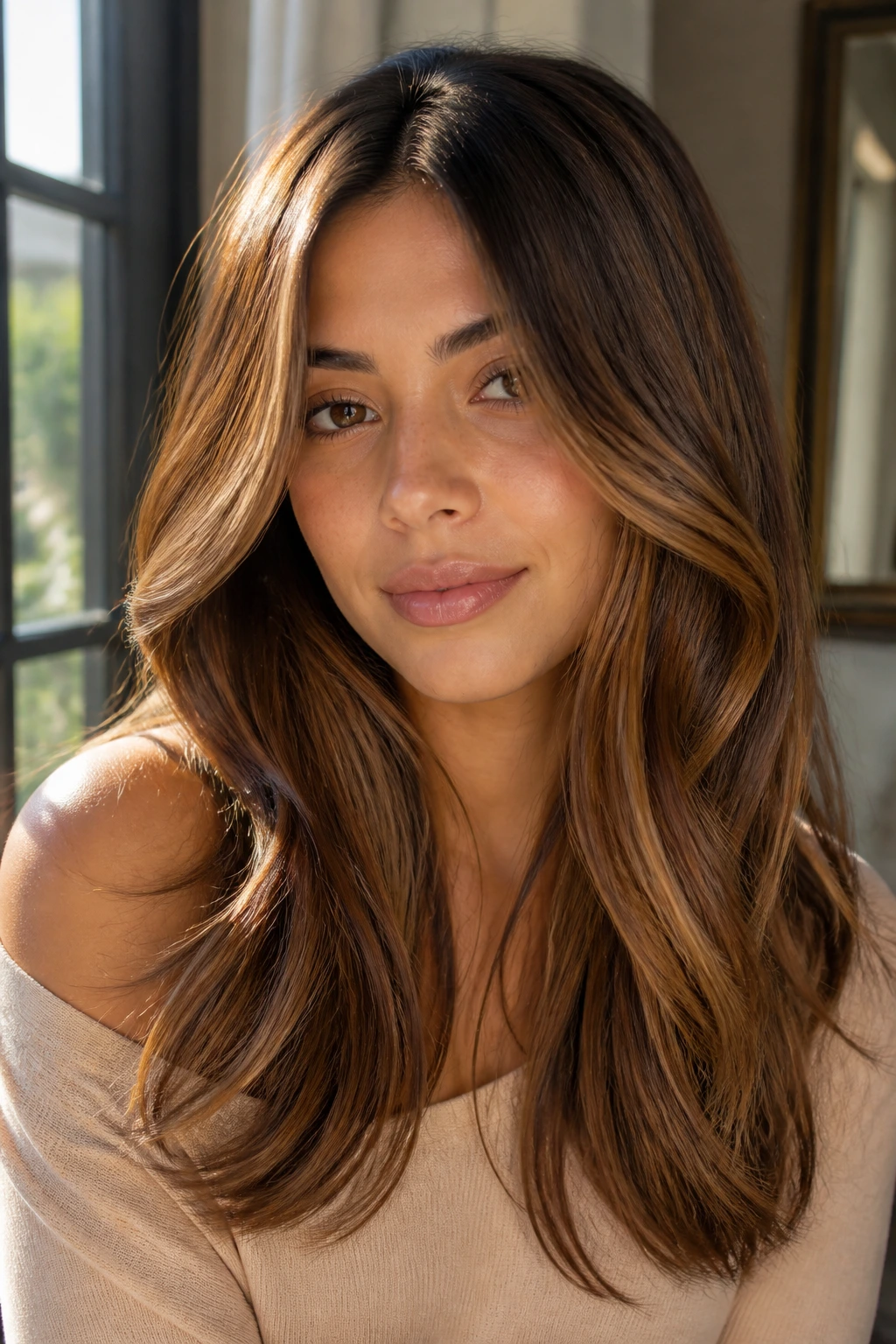
Caramel brown works on olive skin when it behaves like a frame, not a spotlight. The best versions keep some brunette depth, place lightness where the eye naturally goes, and avoid that harsh orange-gold that can make the face look tired. That’s why a quiet caramel often beats a loud one.
If you want the easiest starting point, begin with subtle ribbons or a gloss and let the color build from there. Olive skin can take a surprising amount of warmth, but it looks best when the warmth is controlled. Keep the root rich, keep the shine up, and the shade tends to do the rest.