



Fair skin and a heart-shaped face can make color choices feel easy right up until they aren’t. A shade that looks creamy in the bowl can turn chalky beside a pink cheek, and a glossy brunette that seems chic in someone else’s photo can make your forehead look wider than it is. That’s the little trap here: the color has to flatter the skin and rebalance the shape at the same time.
The best hair color ideas for fair skin and heart-shaped faces do two jobs at once. They add light where the complexion needs it, then guide the eye away from a strong hairline and toward the cheekbones, lips, and jaw. I care less about whether a shade is trendy and more about whether it gives the face some breathing room. Flat color rarely does.
What usually works is a shade with a little movement in it — beige with gold, copper with brown, ash with cream, or brunette with a face-framing ribbon that doesn’t shout from across the room. The forehead softens. The chin looks a touch fuller. The whole face reads more balanced, which is the real win here.
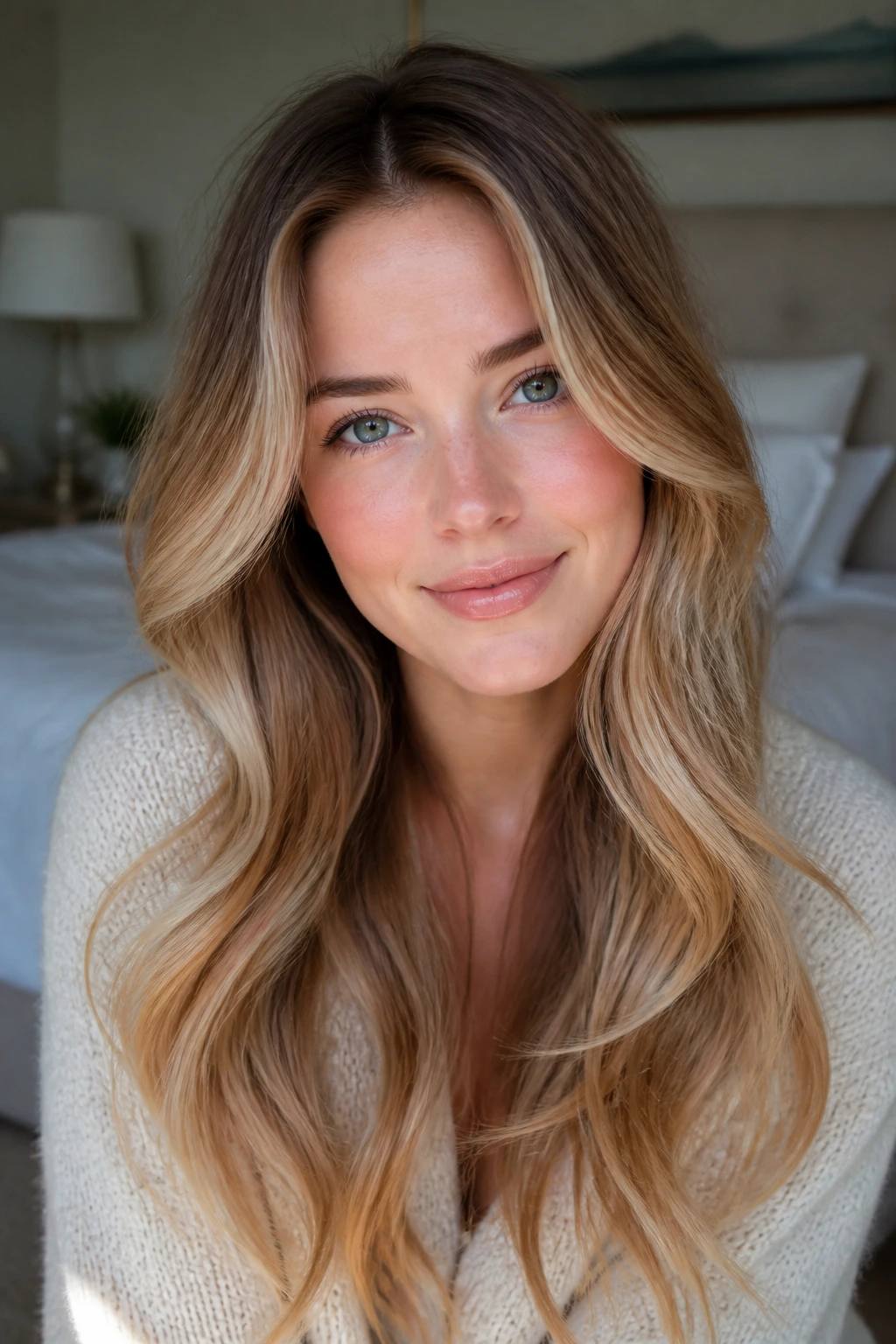
Why These Shades Work on Fair Skin and a Heart-Shaped Face
-
They soften the forehead line: Heart-shaped faces carry more visual weight up top, so colors with depth at the root or brightness lower down keep the top half from taking over the whole look.
-
They keep fair skin from looking washed out: A flat platinum or a muddy brown can drain pale skin fast; beige blondes, soft coppers, and rose-browns usually leave more life in the complexion.
-
They create movement where the face needs it: Face-framing highlights, ribbons, and glosses pull the eye along the lengths instead of parking it at the hairline.
-
They age out gracefully: Root shadows, balayage, and blended toners buy you time between salon visits, which matters when you don’t want a hard regrowth line marching across a pale forehead.
-
They work with bangs or without them: Curtain bangs, side-swept fringe, and center parts all behave differently, but these shades stay balanced across those cuts.
-
They let your features stay the focus: Good color should support the face, not compete with it. These shades do that without flattening the skin or overemphasizing the chin.
1. Champagne Blonde
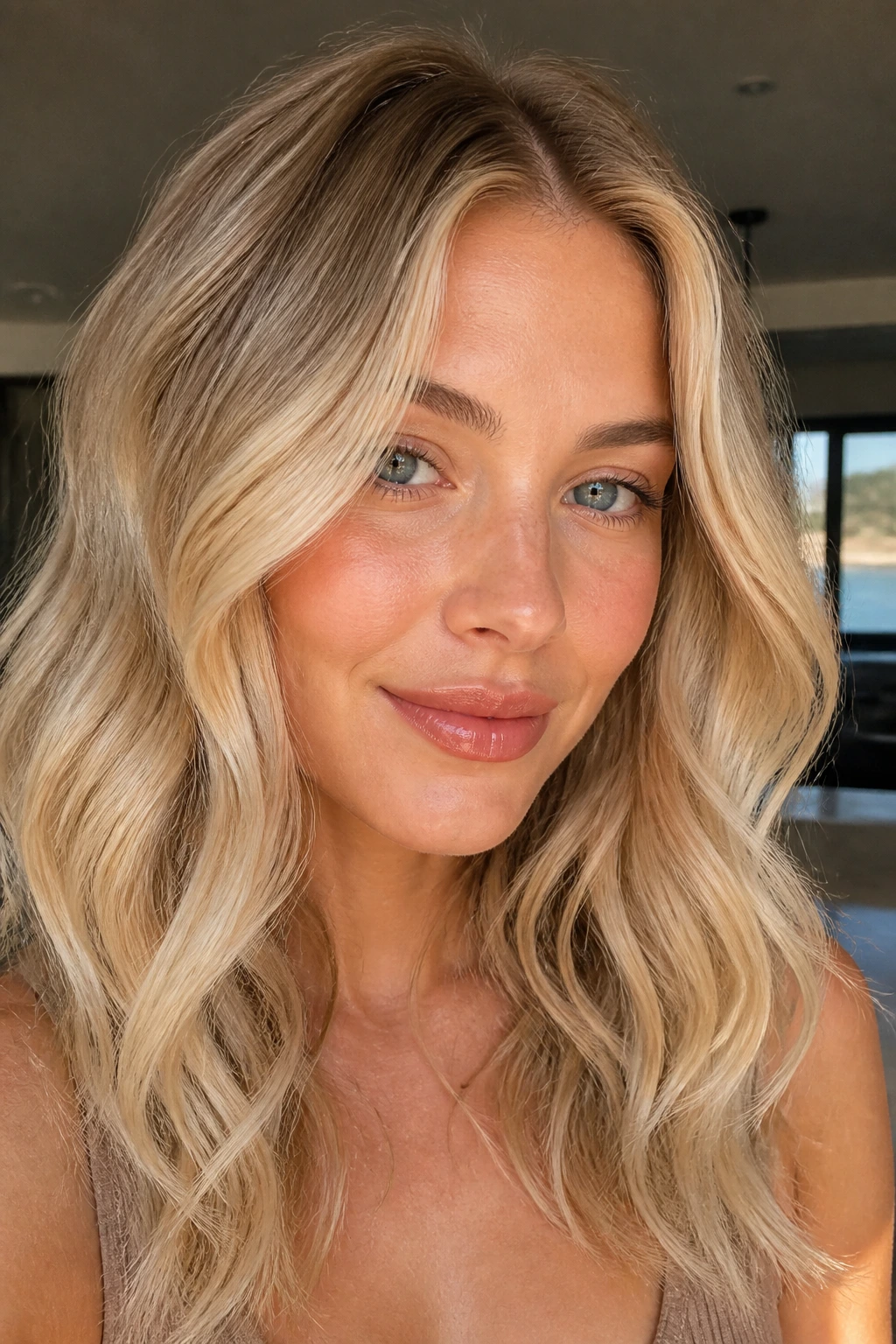
Champagne blonde is the shade I keep coming back to for fair skin when the goal is brightness with manners. It has that pale, creamy lift, but the beige-gold note keeps it from going icy or brittle. On a heart-shaped face, it’s especially useful when the brightest pieces sit from the cheekbone down instead of right at the hairline.
Why It Works
The color looks airy around the face without making the forehead feel louder. If your skin leans neutral or slightly peach, champagne blonde usually reads clean rather than chalky, especially with a soft root shadow about half an inch deep.
A gloss with a beige toner keeps it from turning too silvery. I prefer this shade on wavy or softly bent hair because the movement shows off the mix of cream and gold much better than a pin-straight blowout.
- Best for: Fair skin with neutral or soft warm undertones.
- Ask for: A beige-blonde lift with a soft root melt.
- Watch for: Too much ash; it can look flat against pale skin.
- Best styling move: A loose bend through the mid-lengths.
My take: If you want blonde without that over-bleached, high-contrast look, this is the one I’d try first.
2. Soft Rose Gold
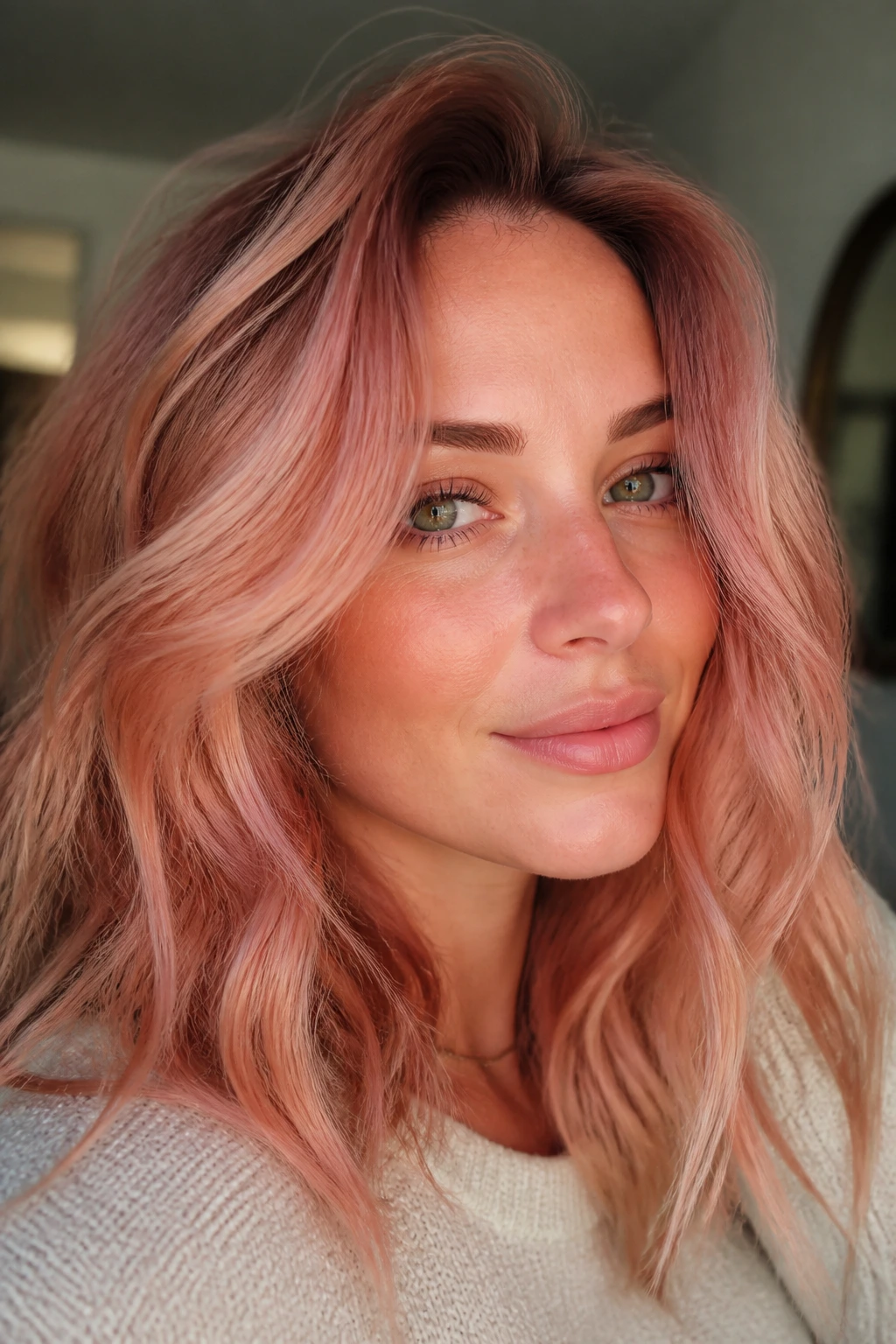
Soft rose gold works because it doesn’t behave like a loud fashion color; it behaves like warm light. On fair skin, the pink-copper blend reads as flushed and alive rather than cartoonish, and on a heart-shaped face it softens the top-heavy look by keeping the color gentle near the temples.
The trick is to keep the rose muted. Too much pink and the whole thing starts to feel costume-y. Too much copper and you lose the dreamy part. Ask for a dusty rose glaze or a peach-rose melt through a blonde base if you want it to look expensive instead of sugary.
I like this shade best when the roots stay a level or two deeper. That little shadow gives the forehead a softer edge and keeps the eyes moving downward.
3. Strawberry Blonde
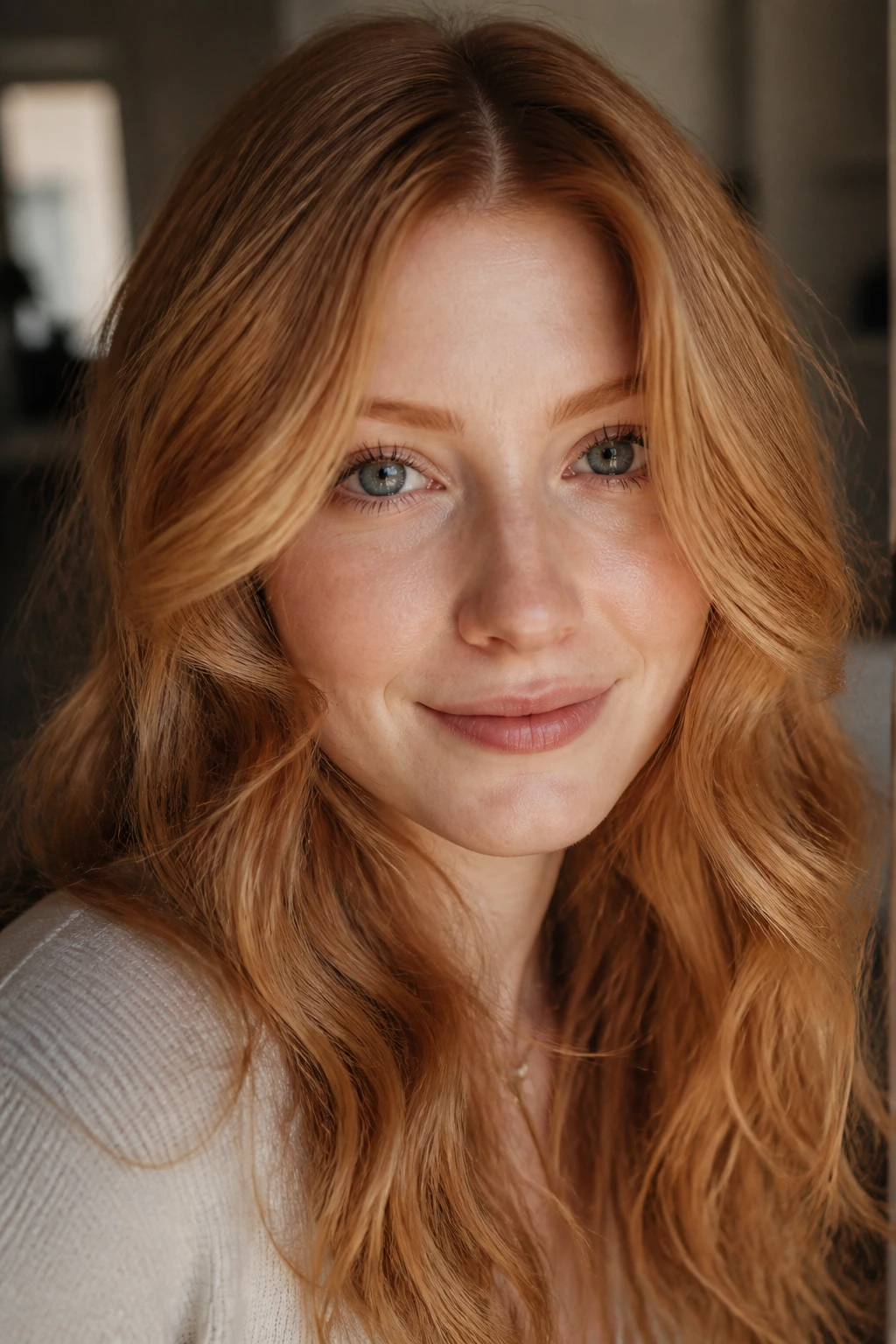
Why does strawberry blonde work so well on fair skin? Because it borrows from both blonde and copper without fully committing to either one. That middle ground makes pale skin look warm, not ruddy, and it keeps a heart-shaped face from feeling severe at the temples.
How to Wear It
Ask for a golden blonde base with a whisper of apricot or soft copper layered in. The color should be brightest around the cheekbones and a touch quieter near the crown. That placement matters more than most people think.
If your natural hair is light already, a sheer gloss can be enough. On darker blondes, a gentle lift and a strawberry toner usually looks more convincing than a big, flat color change. This shade especially likes loose waves, where the copper flashes and fades a little as the hair moves.
4. Creamy Beige Blonde
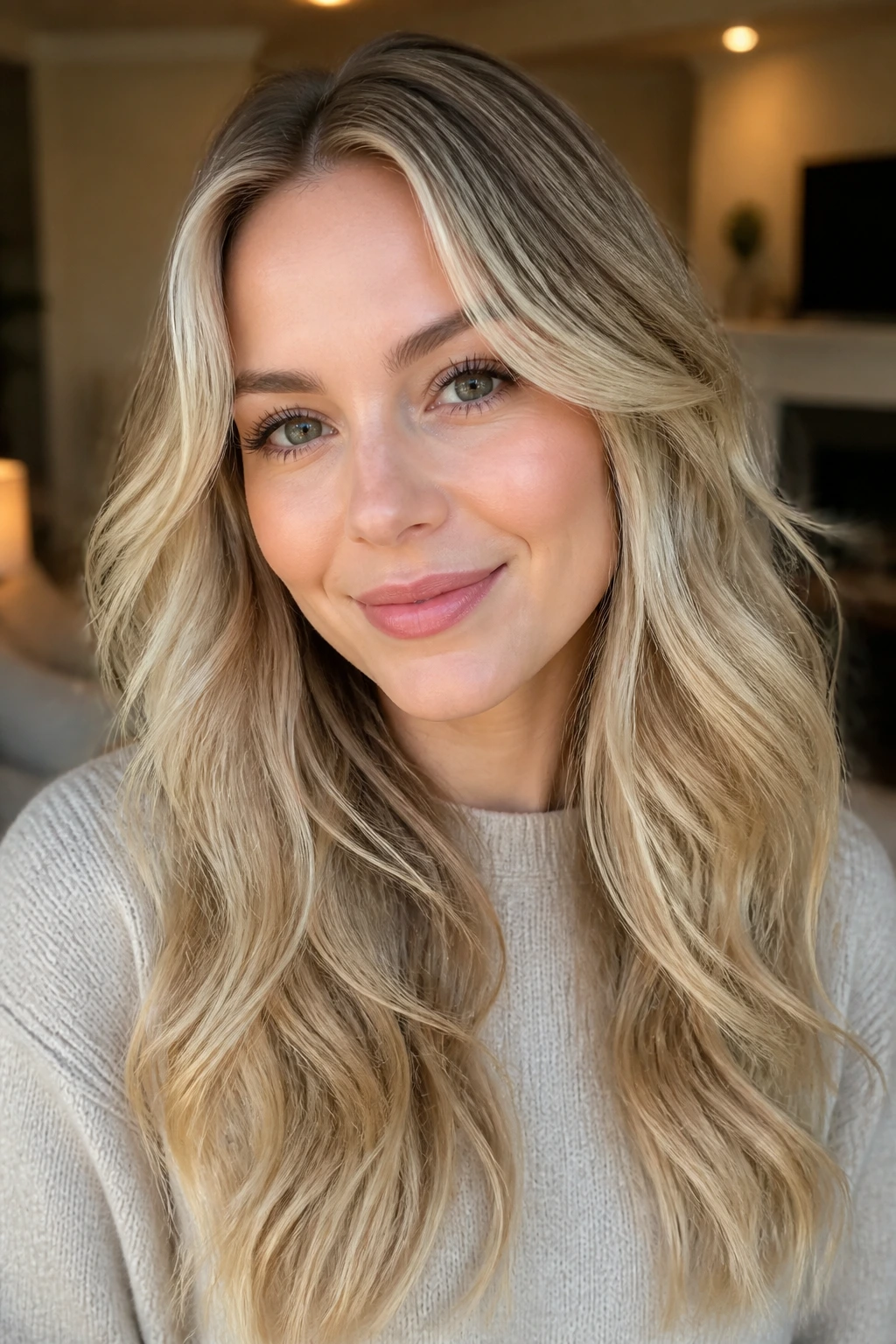
Picture a blonde that looks like cream, not ice. That’s creamy beige blonde, and it’s one of the safest bets for fair skin because it gives brightness without the sharp, almost papery finish some ultra-light blondes create. The beige note is what keeps it human.
On a heart-shaped face, I like this shade with slightly deeper roots and soft, face-framing pieces that start lower than the hairline — about an inch or two below it, not right at the forehead. That keeps the top of the face from feeling wider than the lower half.
- Best for: Fair neutral skin that wants a soft, polished look.
- Salon language: Beige blonde, root shadow, and blended face frame.
- Best cut pairing: Long layers or curtain bangs.
- Avoid: Stark white toner; it can look hollow next to pale skin.
5. Mushroom Blonde
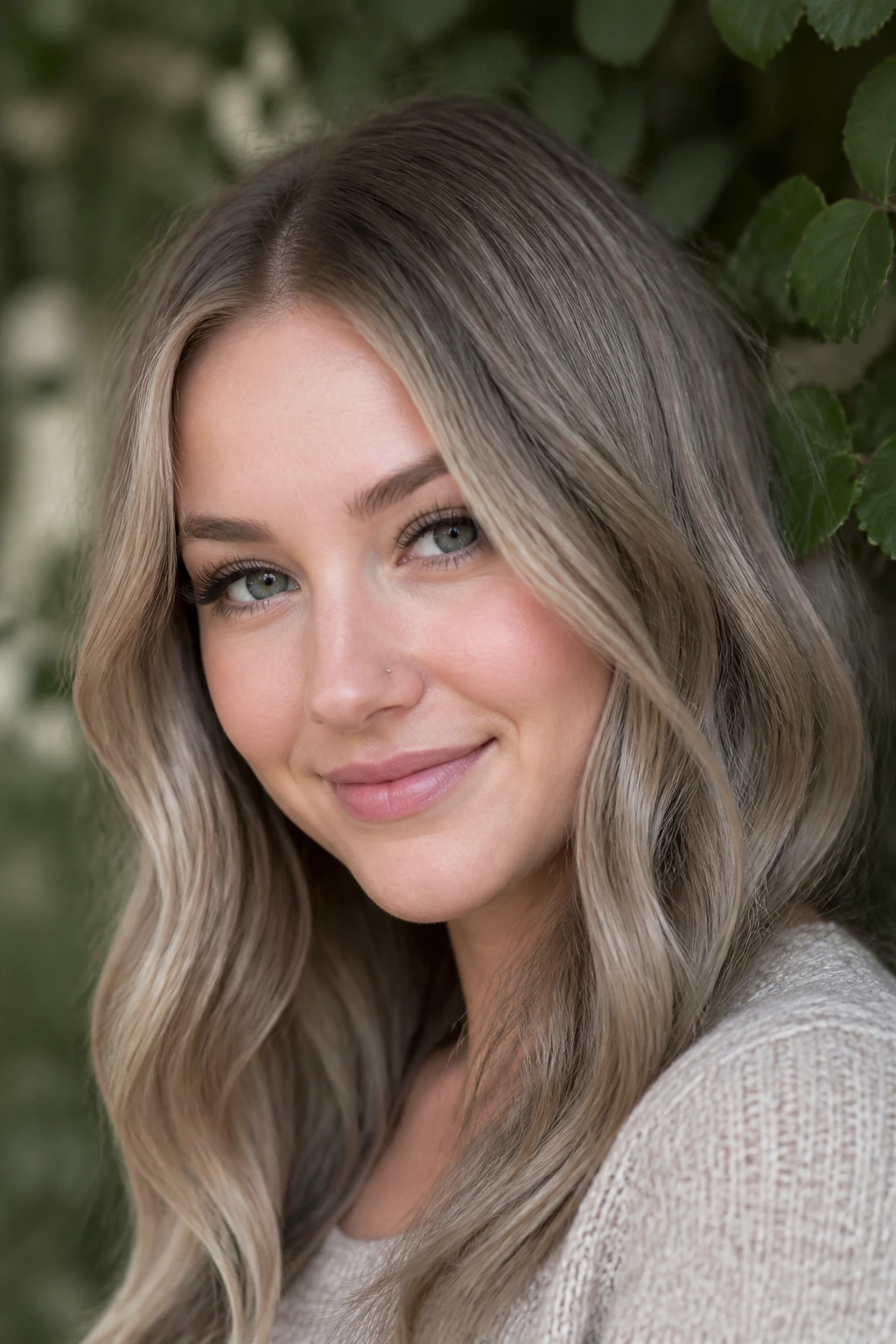
Mushroom blonde is the cool girl shade that doesn’t need to shout. It lives in that gray-beige-brown zone, which sounds dull on paper and looks incredibly good in person when fair skin has pink or neutral undertones. The slight shadow near the root helps a heart-shaped face by taking attention off the width at the forehead.
This one depends on restraint. If the ash gets too heavy, the hair starts looking dusty; if the beige disappears, it can go flat. The sweet spot is a beige brunette base lifted through the mid-lengths with soft, smoky highlights.
I like mushroom blonde best on shoulder-length cuts and collarbone-length waves. The dimension shows up in bends, not in one flat sheet of hair, and that’s exactly the point.
6. Apricot Copper
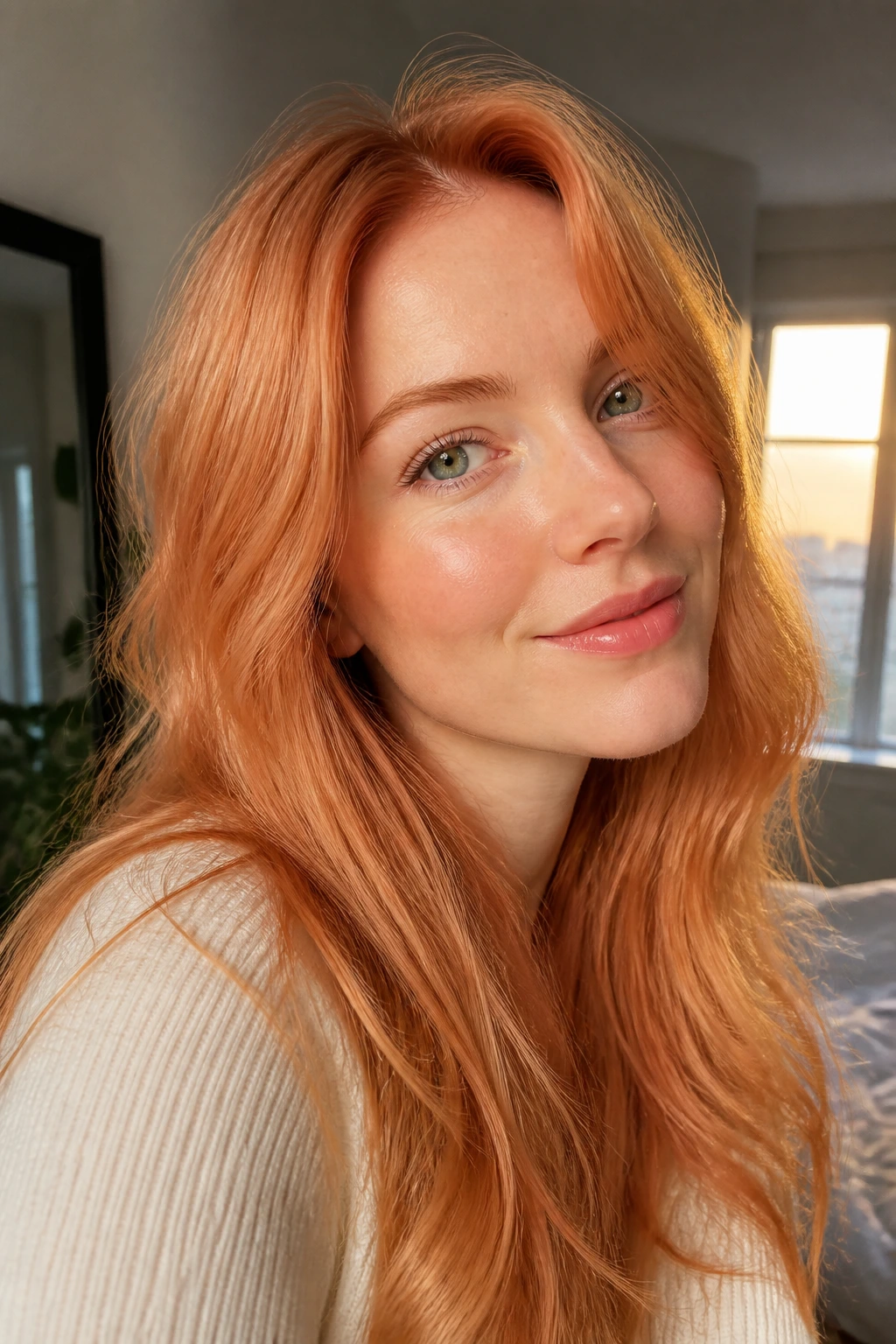
Unlike bright copper, apricot copper keeps one foot in blonde territory, which makes it much easier on fair skin. The color has warmth, yes, but it’s softened with peach and gold, so it looks luminous instead of red-hot. That softer glow helps a heart-shaped face because it doesn’t add extra drama to the forehead.
This is a good choice if you want color people notice without the maintenance of a strong red. Ask for apricot glaze over a level 8 or 9 base, or a peach-copper toner if your hair is already light. The shade should look fresher than ginger, less orange than classic copper.
Best on straight or lightly waved hair. Heavy curls can swallow the peach note unless the pieces are placed carefully around the front.
7. Copper Penny
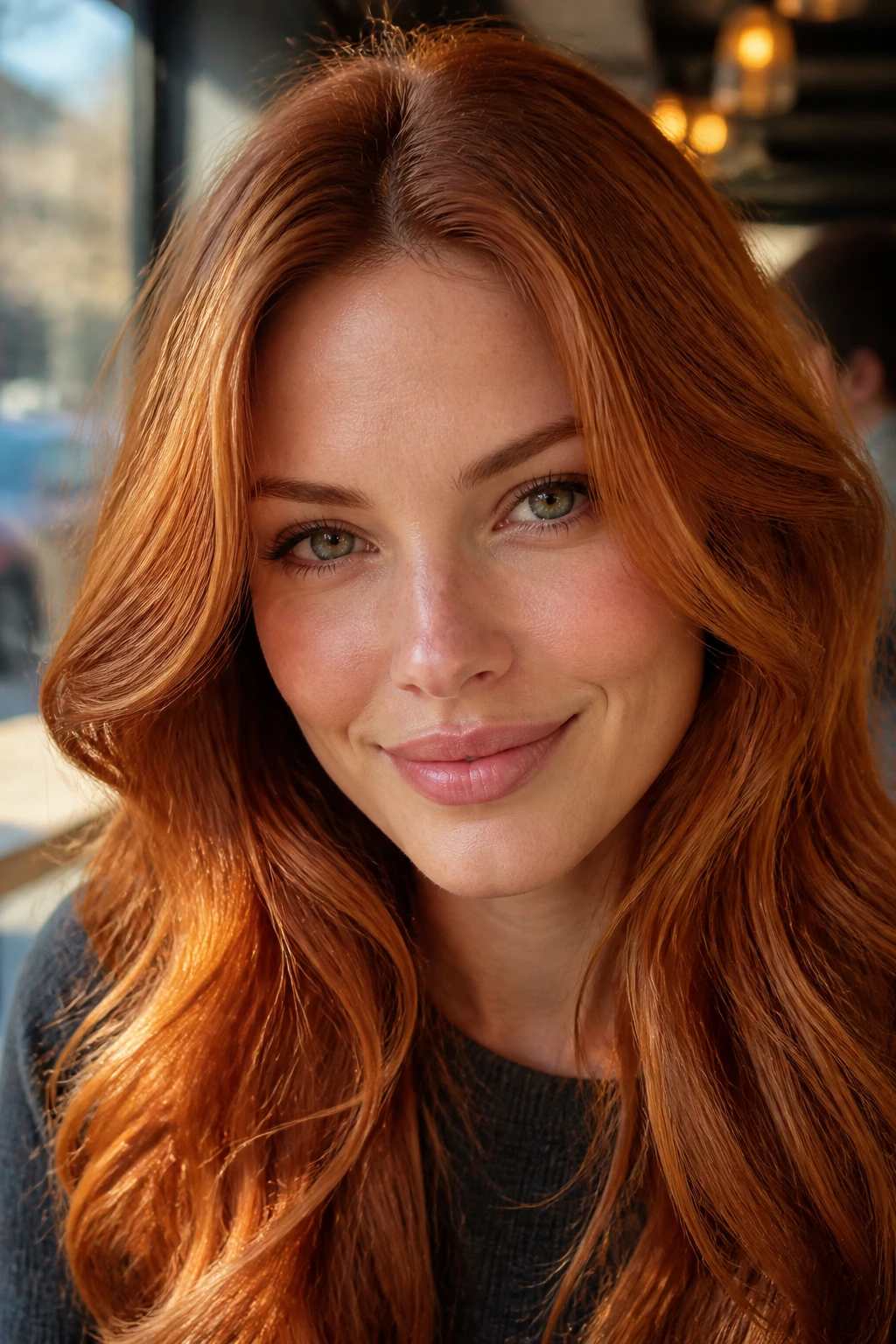
Copper penny is the bold sister in this group. It’s richer and deeper than apricot, with enough red-orange bite to give fair skin a serious glow. On a heart-shaped face, I like it with a slightly deeper root because the contrast keeps the forehead from becoming the brightest thing in the room.
What to Ask For
- A true copper base with a bit of gold, not pure orange.
- A soft root melt for less harsh regrowth.
- Lighter face-framing pieces if you want the face to feel less top-heavy.
- A gloss refresh every 4 to 6 weeks to keep the shine from dulling.
This shade has a lot of personality. If you wear a lot of black, cream, or camel, copper penny looks especially sharp. If you live in brighter clothes, keep the makeup softer so the whole look doesn’t get loud.
8. Cinnamon Brown
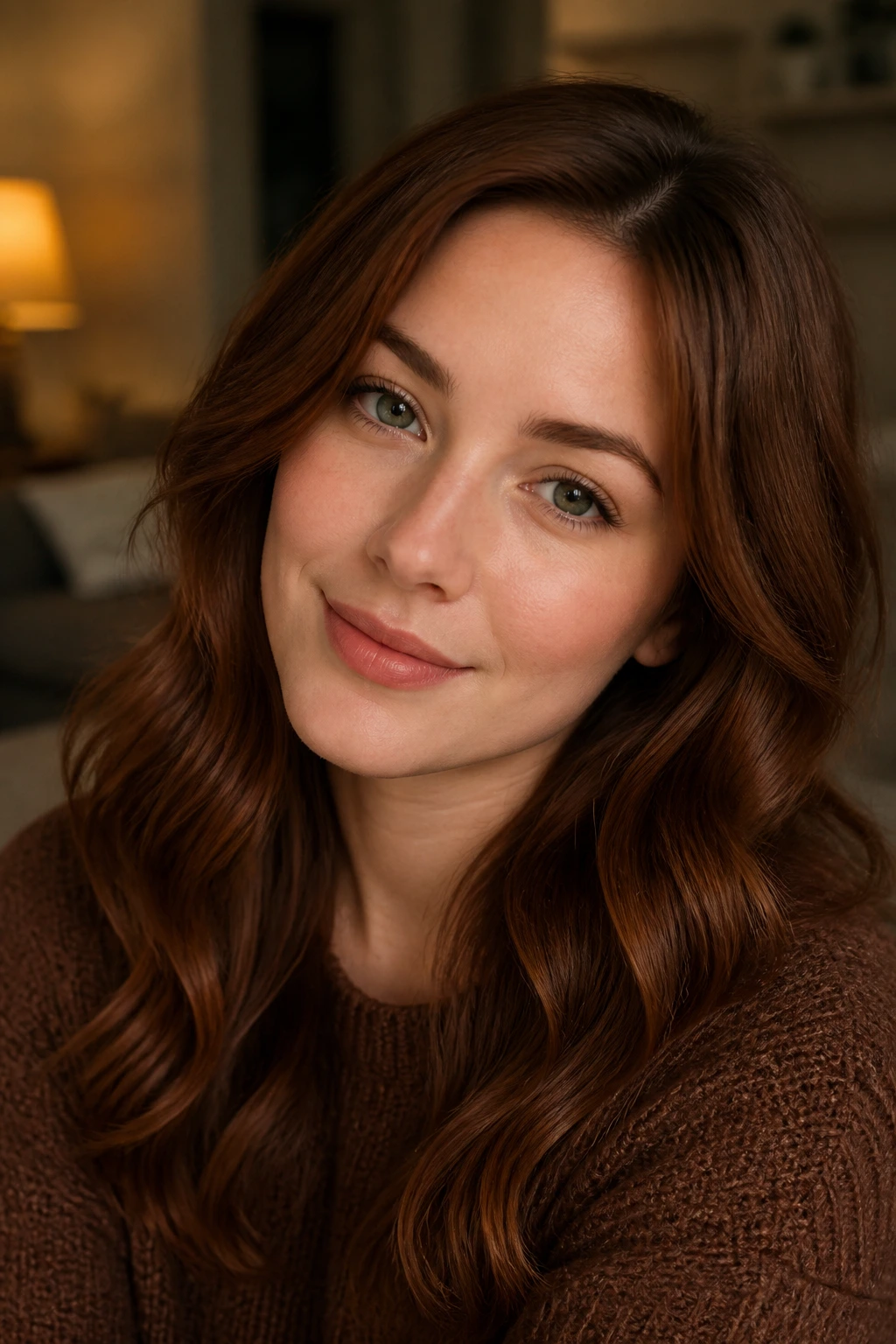
Cinnamon brown is for the person who wants warmth but doesn’t want to look like she’s trying to be a redhead. It gives fair skin a soft flush and adds enough depth at the top of a heart-shaped face to balance the forehead without turning the hair nearly black.
The nicest version has brown first, spice second. Too much red and it goes brassy; too much brown and the cinnamon disappears. The shade does its best work when it sits in the mid-brown range and catches light on the ends.
This color is one of my favorites on layered lobs. The cut gives the warmth somewhere to move, and the face stays soft because the color isn’t concentrated only at the crown.
9. Chestnut with Caramel Ribbons
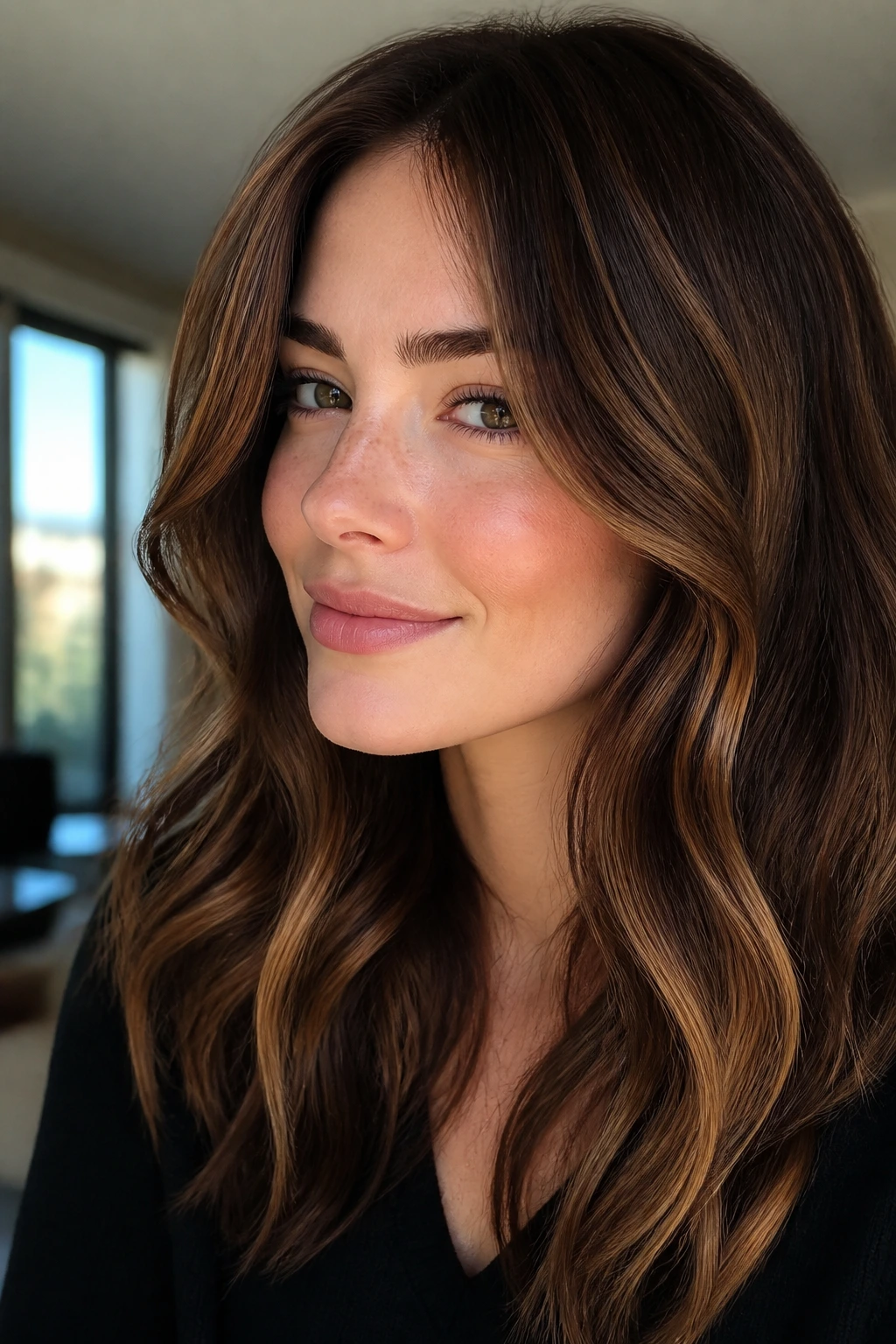
Chestnut with caramel ribbons is the brunette answer for someone who wants dimension without obvious highlights. The chestnut base gives fair skin enough contrast to look intentional, while the caramel ribbons soften the transition around the cheekbones and lower half of the face.
This one is all about placement. Put the lighter ribbons too high and the forehead starts to dominate. Put them through the mid-lengths and ends, and the whole face looks more balanced. I’d ask for ribbons that begin just below the cheekbone and drift downward.
The best part? It grows out quietly. That makes it a smart choice if you like looking polished without living in the salon chair.
10. Mocha Brunette
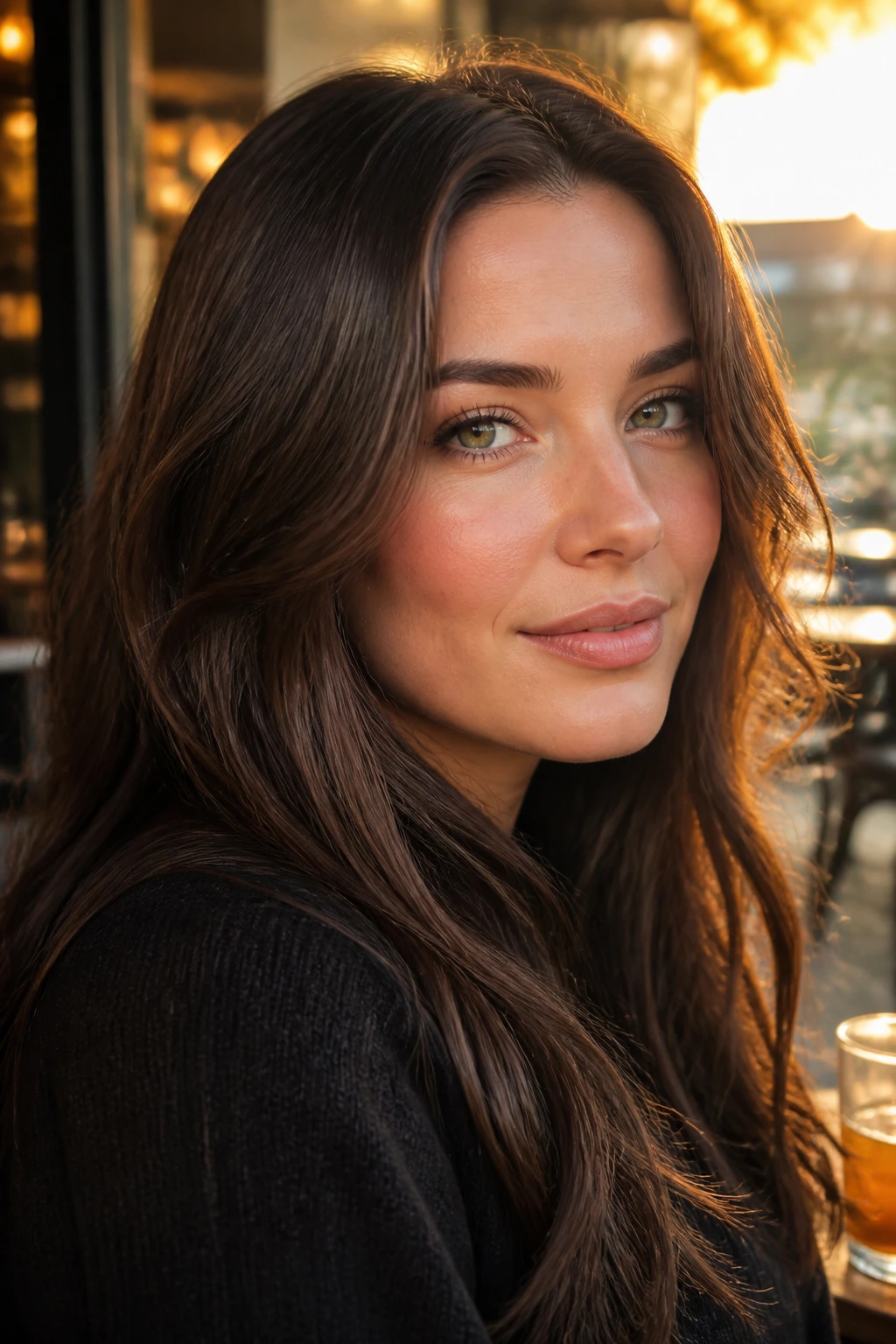
Mocha brunette is what I recommend when someone says, “I want dark hair, but I’m afraid it’ll wash me out.” The mocha note keeps the brown soft and creamy instead of flat and inky, which is the difference between flattering and harsh on fair skin.
On a heart-shaped face, the shade works best when the root stays richer and the ends hold a little softness. That little shift in depth keeps the eye moving down the hair rather than parking at the top of the head.
I prefer mocha with shine. A low-gloss brown can look heavy; a glossy mocha looks expensive, even on a simple cut. If you like a center part, this is one of the brunettes that can handle it without making the forehead feel bigger than it is.
11. Espresso Gloss with Face-Framing Lights
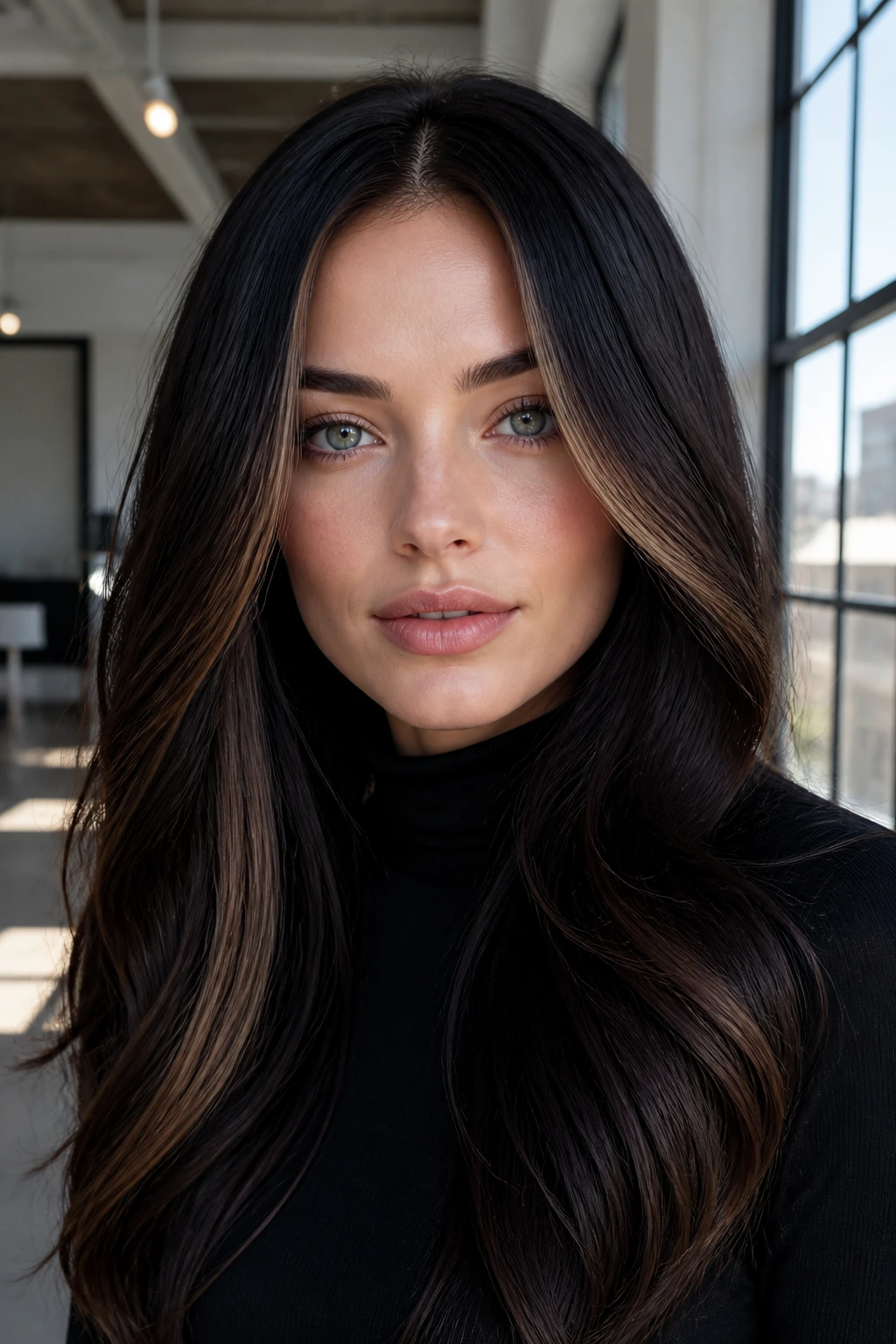
Espresso is not the same thing as flat black. Espresso has brown in it — enough depth to feel dramatic, enough warmth to keep fair skin from going gray. The face-framing lights are the part that makes this work on a heart-shaped face; without them, the color can look a little stern at the hairline.
The Trick
Ask for a deep espresso base and keep the front pieces one to two levels lighter, usually in a soft mocha or beige brown. That contrast draws attention to the eyes and cheekbones, which is exactly where you want it.
This shade likes sleek hair. A smooth blowout or straight style shows the shine in the dark base and keeps the lighter pieces crisp around the face. If your hair is coarse or frizzy, go easy on the darkness unless you’re happy to spend time with smoothing products.
12. Cool Ash Bronde
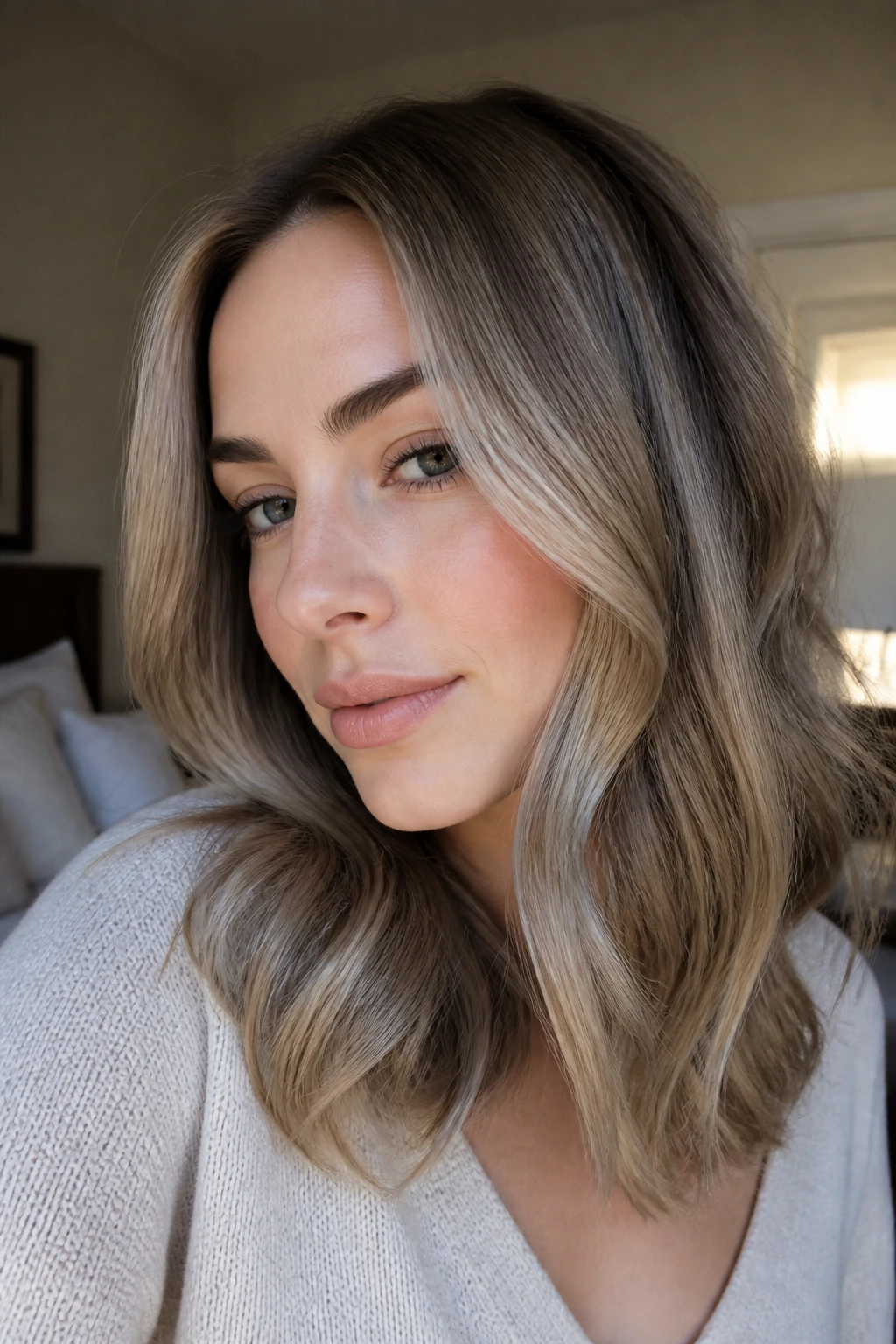
Can ash bronde look flattering on fair skin? Absolutely — when the cool tones are soft, not chalky. Bronde, at its best, is a careful mix of brown and blonde with an ash edge that keeps the color from turning brassy. That balance is useful on a heart-shaped face because it gives you dimension at the lower half of the hair without over-lightening the crown.
This shade shines on people whose skin leans pink, neutral, or slightly olive. The brown base keeps the face grounded, and the beige-ash blonde pieces stop the whole look from getting muddy. The key is to keep the highlights diffused.
I’d call this one low-drama, but that sounds too flat. It’s really more like a color that behaves itself — quiet at the root, soft at the ends, and never too shiny in a fake way.
13. Honey Bronze
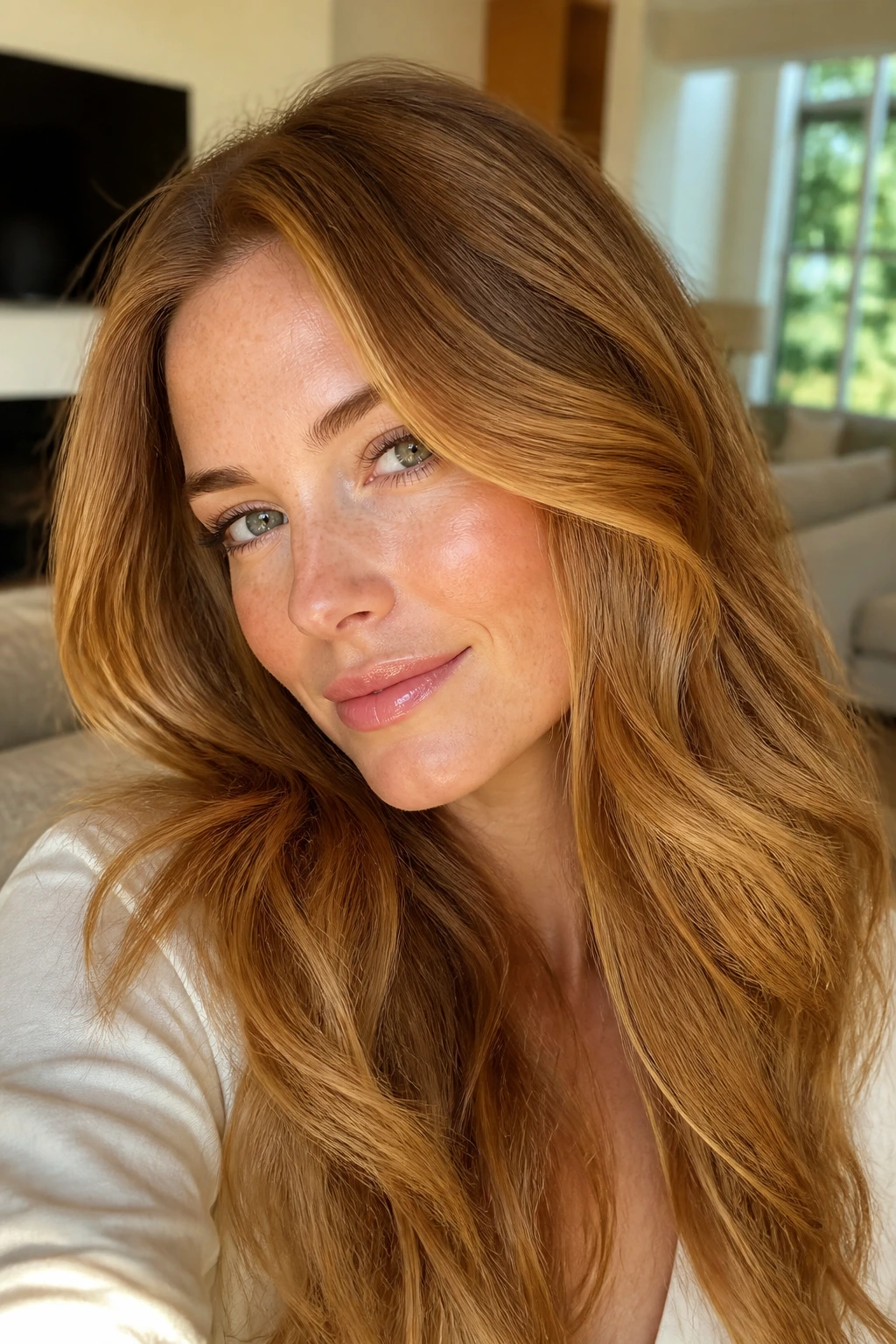
Honey bronze is warm, soft, and just glossy enough to keep fair skin from going pale. It leans golden, but not so far that it looks yellow. On a heart-shaped face, it works because the darker bronze base narrows the top a little, while the honey pieces can live lower through the lengths.
This is one of the easiest warm shades to wear if you’re nervous about going too red. The bronze stops the color from feeling sugary; the honey keeps it from getting brown and heavy. If your skin has a peach undertone, this can be a lovely match.
- Best placement: Honey ribbons through the mid-lengths, bronze at the root.
- Best finish: Soft waves or a round-brush blowout.
- Ask for: Neutral bronze with golden ribbons, not yellow blonde.
- Skip if: You hate warmth in your hair. It will show.
14. Toffee Balayage
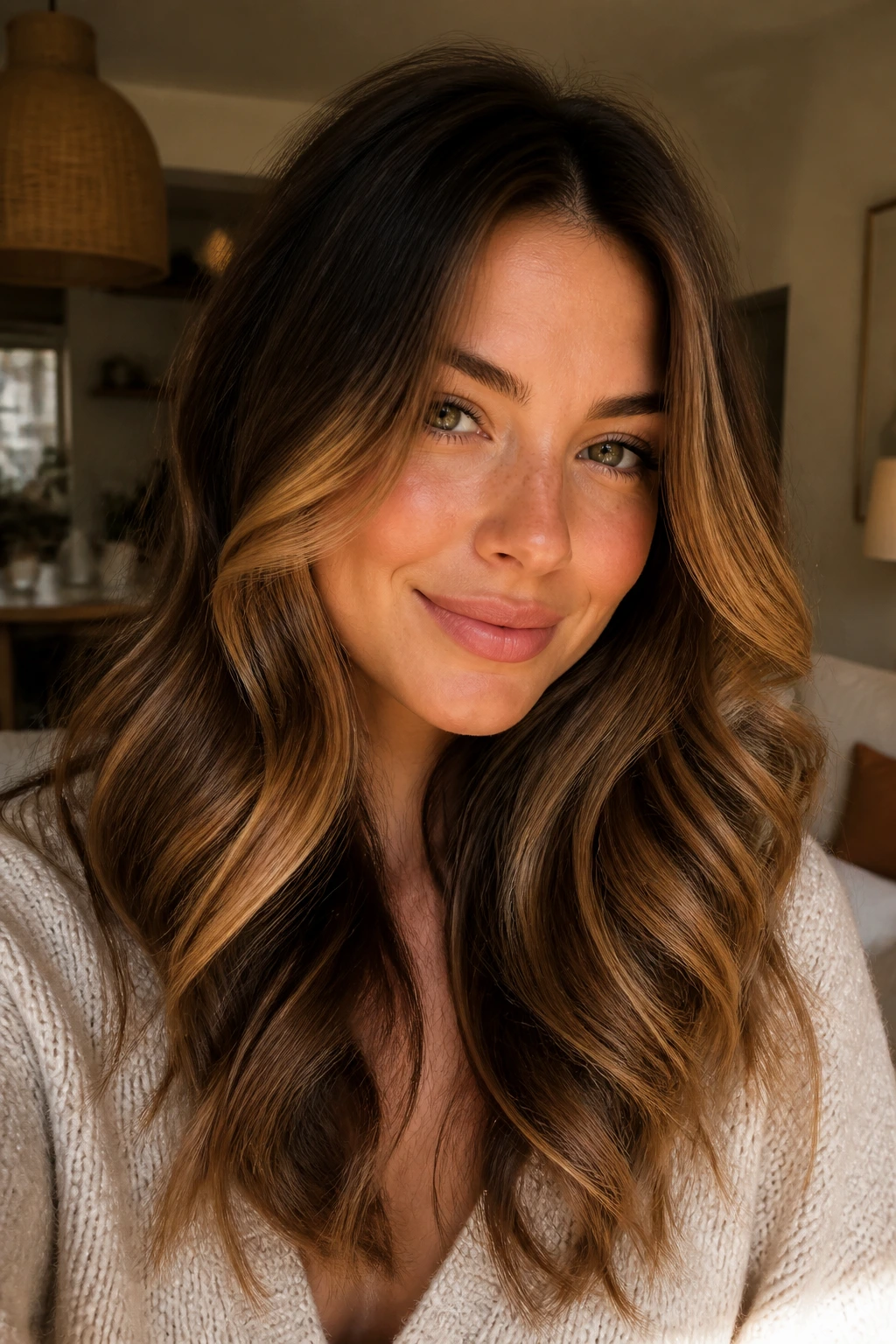
Toffee balayage is the shade I’d pick for someone who wants a color that grows out without drama. The toffee base has enough depth to flatter fair skin, and the hand-painted lighter pieces keep a heart-shaped face from feeling boxed in at the top. Balayage helps here because the brightness can sit where it matters — around the cheekbones, through the lengths, and near the ends.
The nicest version isn’t too stripey. It should look like the hair naturally caught some warmer light, not like someone dragged bleach through the top layer. Ask for a soft transition from root to mid-length, then a little extra brightness around the front.
This is a very forgiving color on layered cuts. It moves well, it grows out well, and it doesn’t punish you every six weeks.
15. Taupe Brown
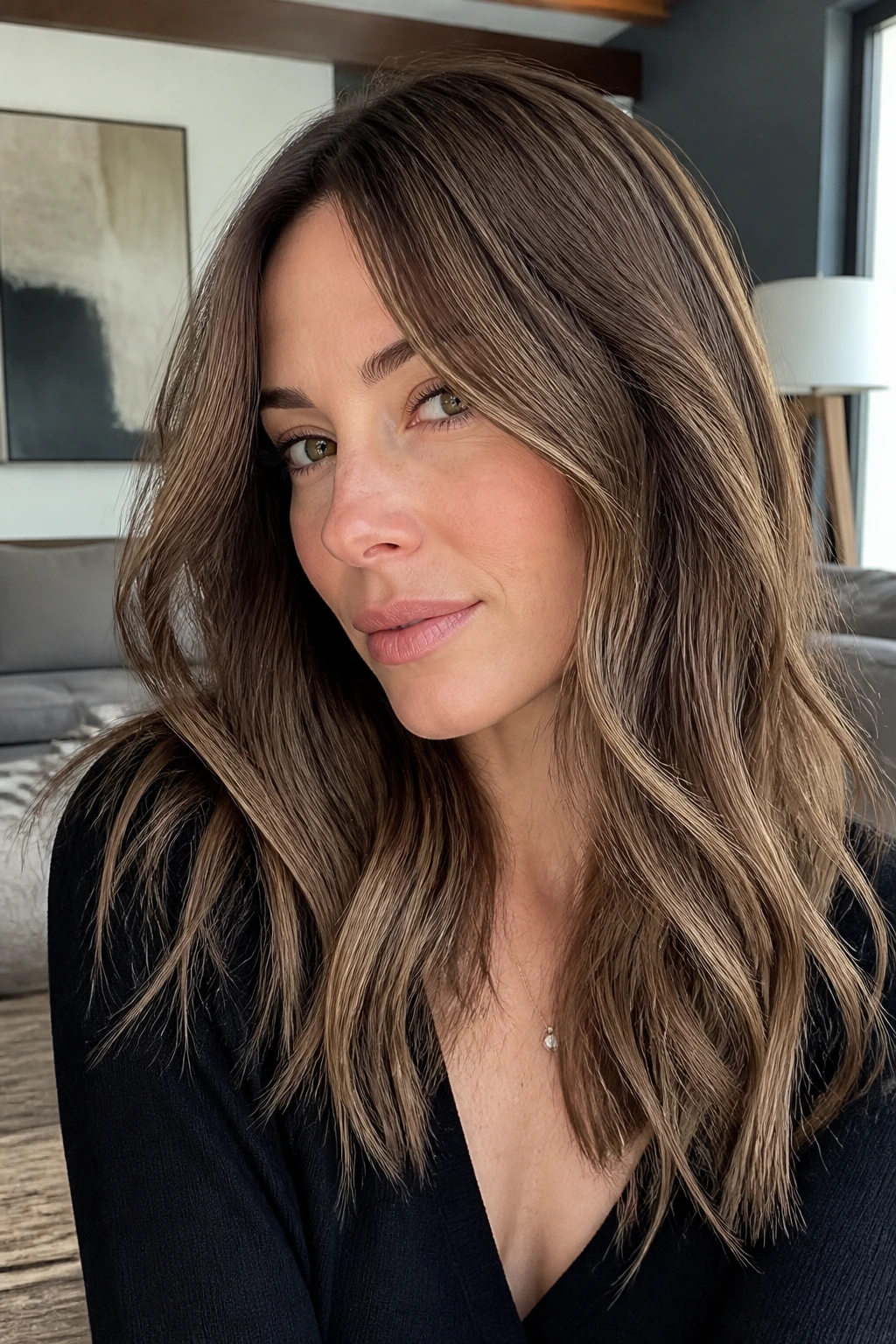
Taupe brown sits between ash and chocolate, and that middle ground is why it looks so good on fair skin with cool or neutral undertones. It gives you enough depth to soften a heart-shaped face without creating that hard, ink-dark edge some brunettes get.
What Makes It Different
Taupe brown doesn’t lean warm, so it avoids the orange cast that can fight pink skin. At the same time, it isn’t so cool that it looks flat. That makes it a smart choice if you want brunette hair but hate brass.
I’d use a soft taupe gloss over a medium brown base and keep the face frame just a shade lighter. Nothing fussy. Just enough movement to take the eye down the face instead of leaving it stuck at the forehead.
16. Merlot Brown
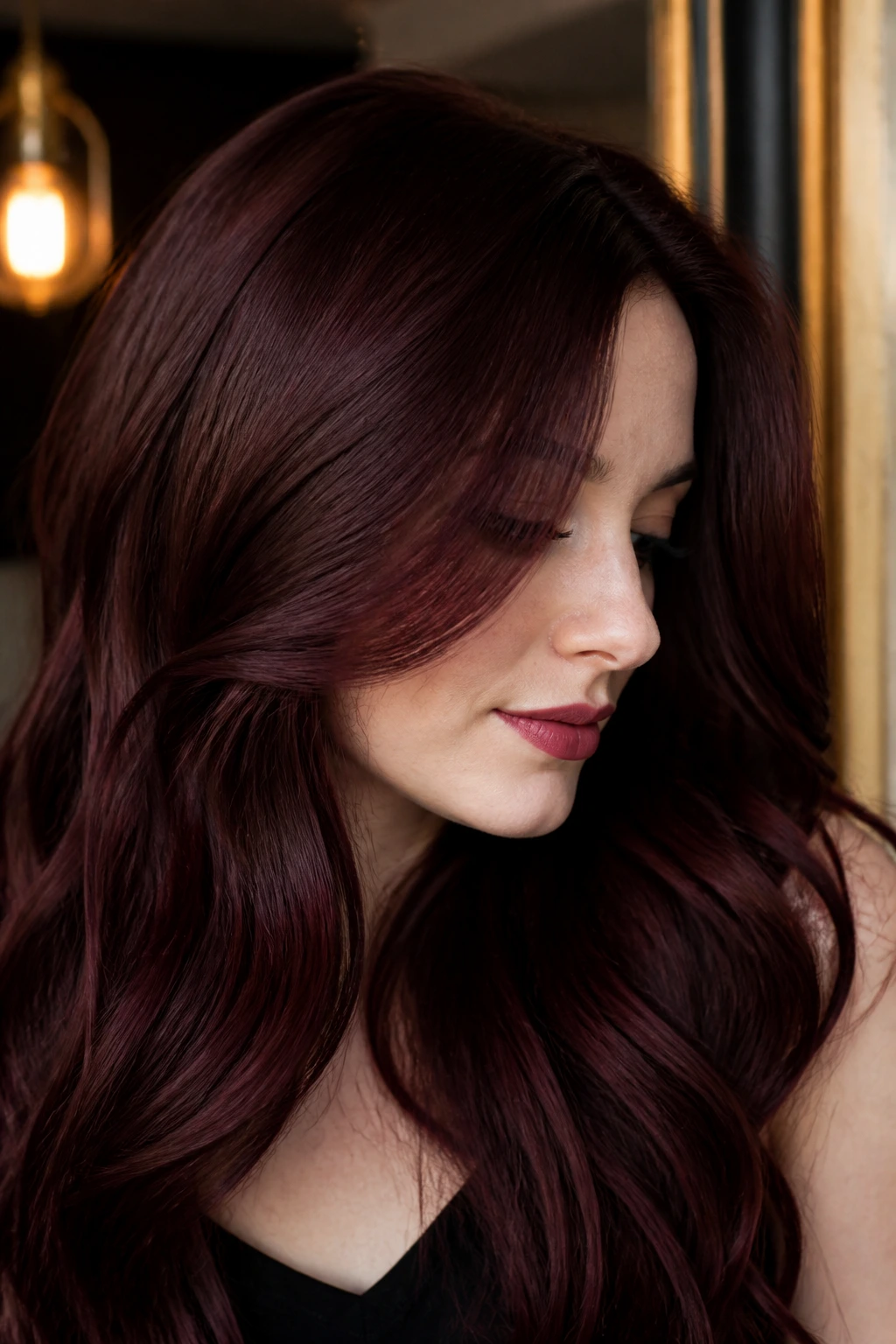
Merlot brown gives fair skin a richer, moodier tone without wandering into true red. The burgundy note sits under the brown, so the color reads deep and plush instead of loud. On a heart-shaped face, it’s especially nice when the roots stay dark and the ends catch a little wine-colored sheen.
A lot of people think this kind of shade is too dramatic for pale skin. It isn’t, as long as the red is muted. The merlot should feel like a shadow with warmth in it, not cherry soda.
This one shines on straight hair, where the color looks almost liquid, but it can also be beautiful on curls because the red-brown depth shows up in the bends. Either way, it’s more flattering than people expect.
17. Dusty Peach Blonde
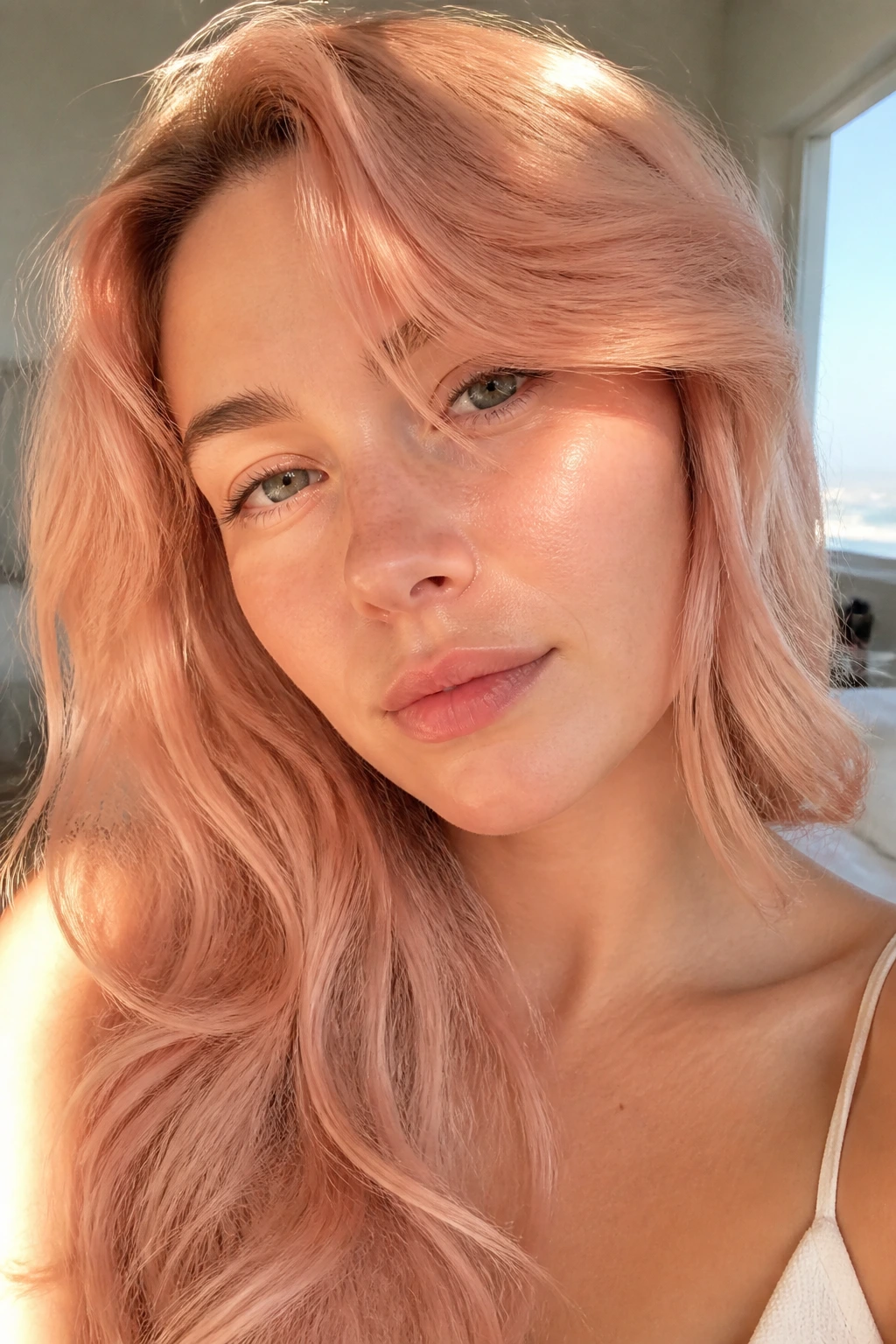
Dusty peach blonde is soft enough to wear and interesting enough to notice. The peach note warms fair skin without making it look ruddy, and the blonde base keeps the whole thing light. On a heart-shaped face, I like it with pieces that begin below the hairline, so the color reads as movement rather than extra width.
The word “dusty” matters. Too much peach and the color starts looking like candy. Keep it muted, almost pastel in the sunlight, and it stays tasteful.
This is one of the few playful shades I’d put near the top of the list for fair skin because it doesn’t rely on harsh contrast. It’s best on hair that already has some lift, or on a pre-lightened base that can hold a soft toner cleanly.
18. Golden Butterscotch
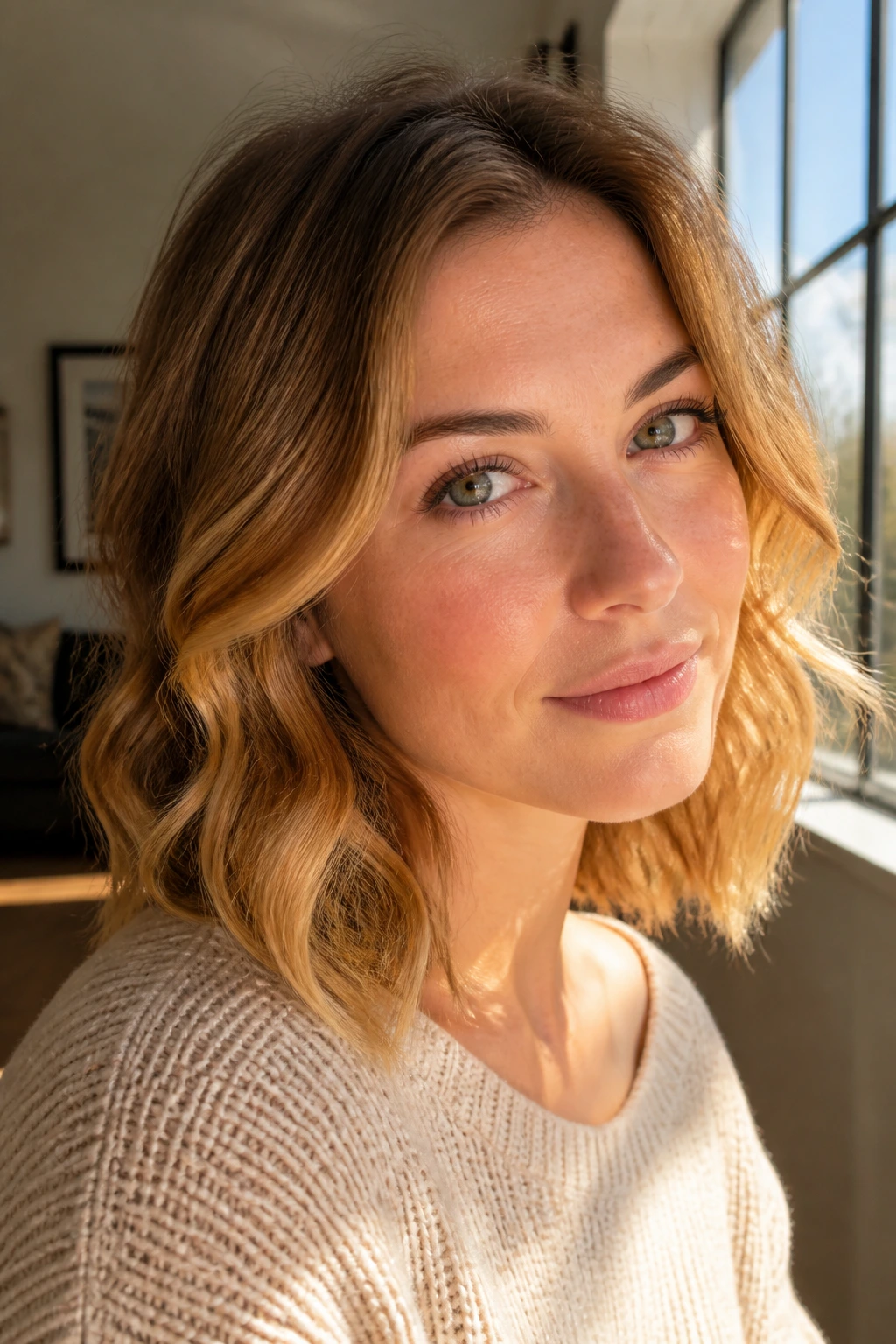
Golden butterscotch is richer than pale blonde and warmer than beige. That makes it a nice fit for fair skin that needs a little warmth but not a full copper jump. On a heart-shaped face, the deeper gold at the root or crown keeps the top from feeling too bright, while the lighter ends add softness around the jaw.
Unlike icy blondes, this shade still looks lively when the light is dim. That matters more than people think. Some blondes only work in bright daylight; butterscotch keeps its shape indoors too.
I like this best on hair that falls in soft bends or loose curls. The golden pieces catch in the movement, and the face gets a little glow without losing structure.
19. Dark Chocolate with a Soft Money Piece
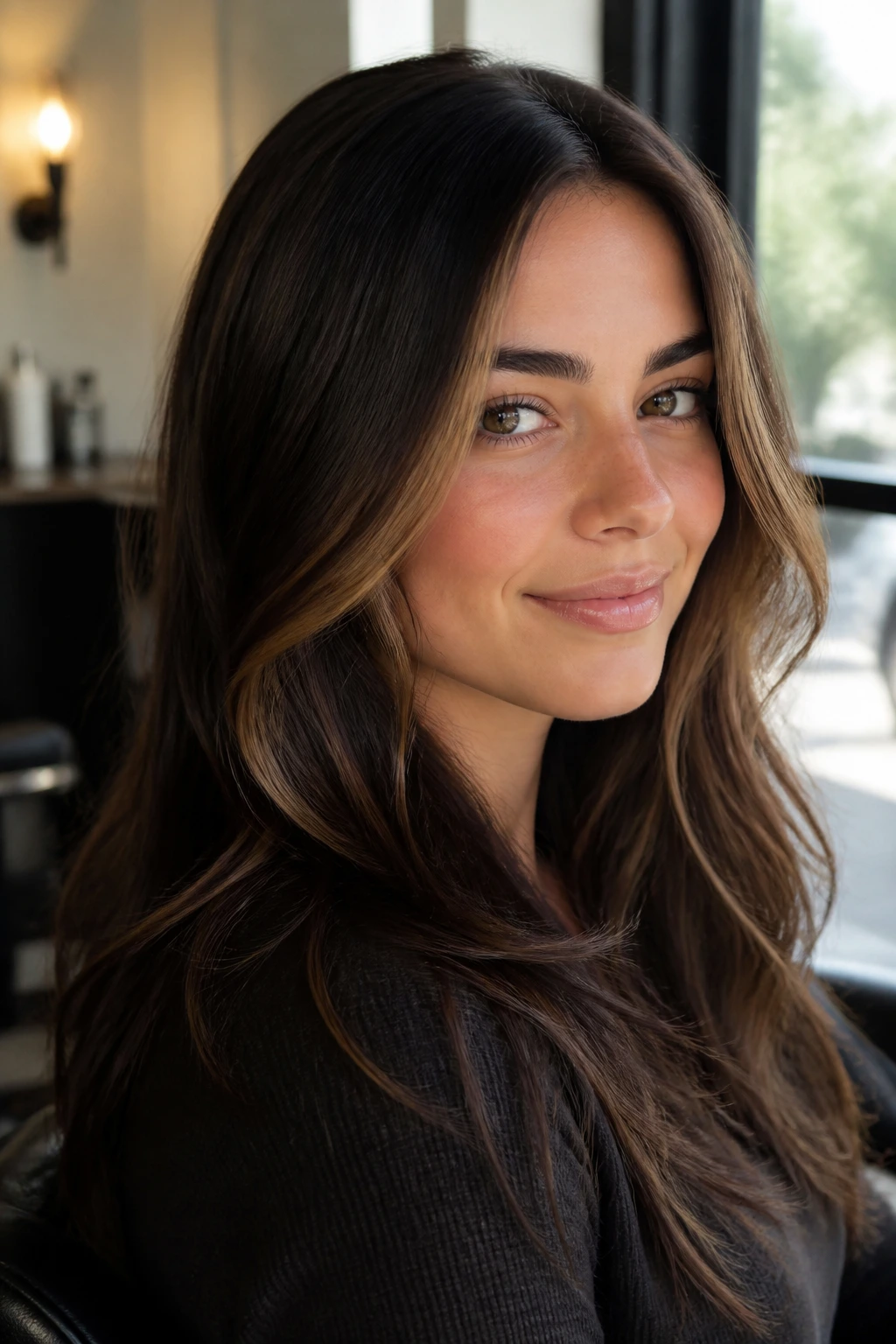
Dark chocolate can absolutely work on fair skin. It just needs a job. The soft money piece is the job — a lighter front section that stops the dark base from swallowing the face, especially around a heart-shaped hairline.
Why I’d Choose It
The chocolate base gives serious contrast, which can be gorgeous on pale skin if the tone stays warm enough. The money piece, kept soft rather than platinum, brightens the eyes and temples without making the forehead look wider. That’s the balance people are usually chasing.
Ask for the front ribbons to sit around the cheekbone and fall forward a little. If the bright piece stops too high, it can throw the proportions off. A softer caramel or beige front highlight usually looks better than stark blonde here.
20. Smoky Mauve Brown
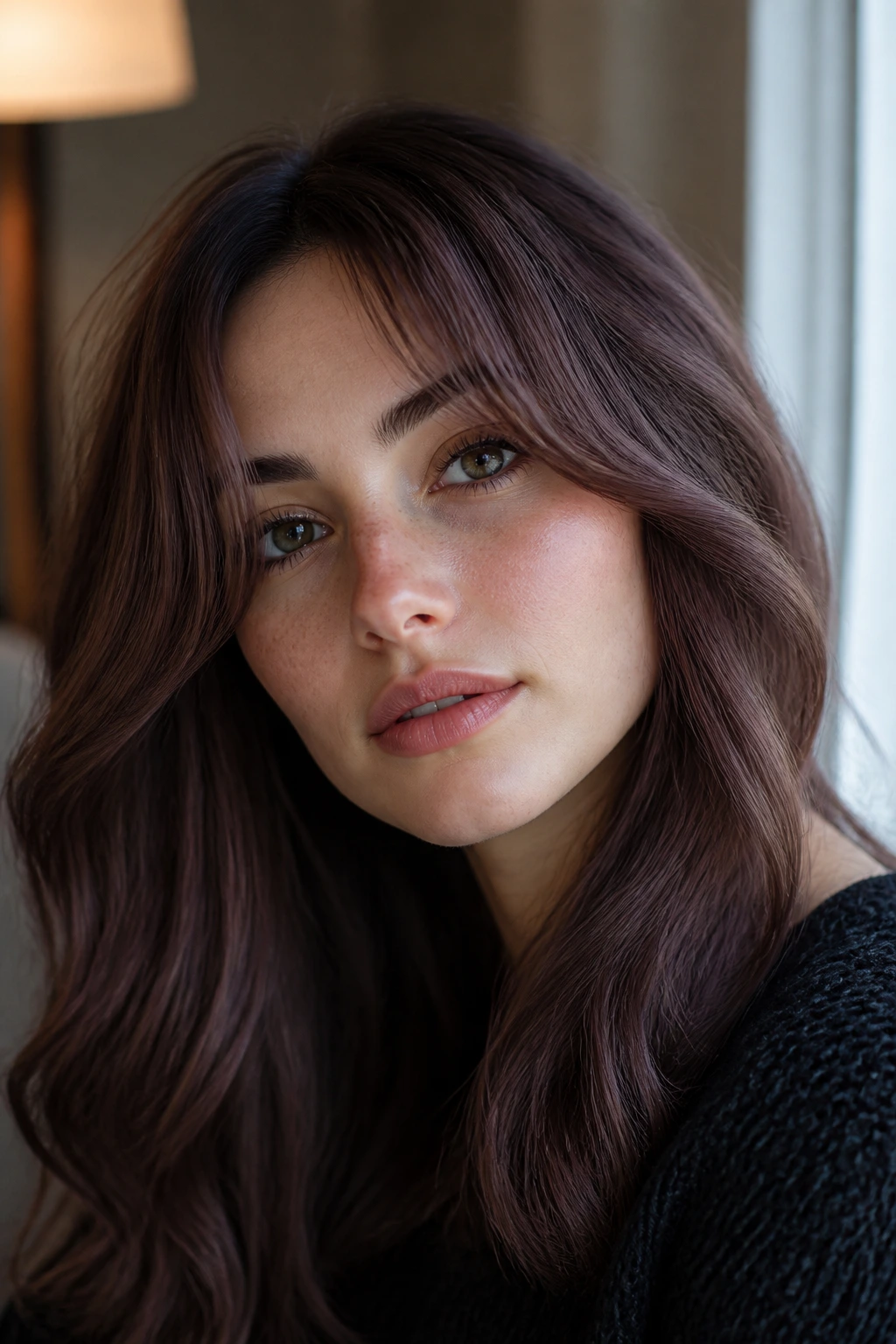
Can a cool fashion shade work without looking costume-y? Yes, if the mauve is smoke-heavy and the brown base does the grounding. Smoky mauve brown reads as moody and polished on fair skin, especially when the complexion leans neutral or pink.
The best version is more brown than purple in everyday light, then flashes a muted plum cast indoors or in shade. That subtlety is what makes it wearable. On a heart-shaped face, the cool depth near the root softens the forehead while the lighter smoky tones through the ends keep the face from feeling too severe.
This is one of those colors that rewards a good gloss. Without shine, the mauve can flatten out. With shine, it looks deliberate and a little moody in the best way.
21. Sandy Beige Blonde
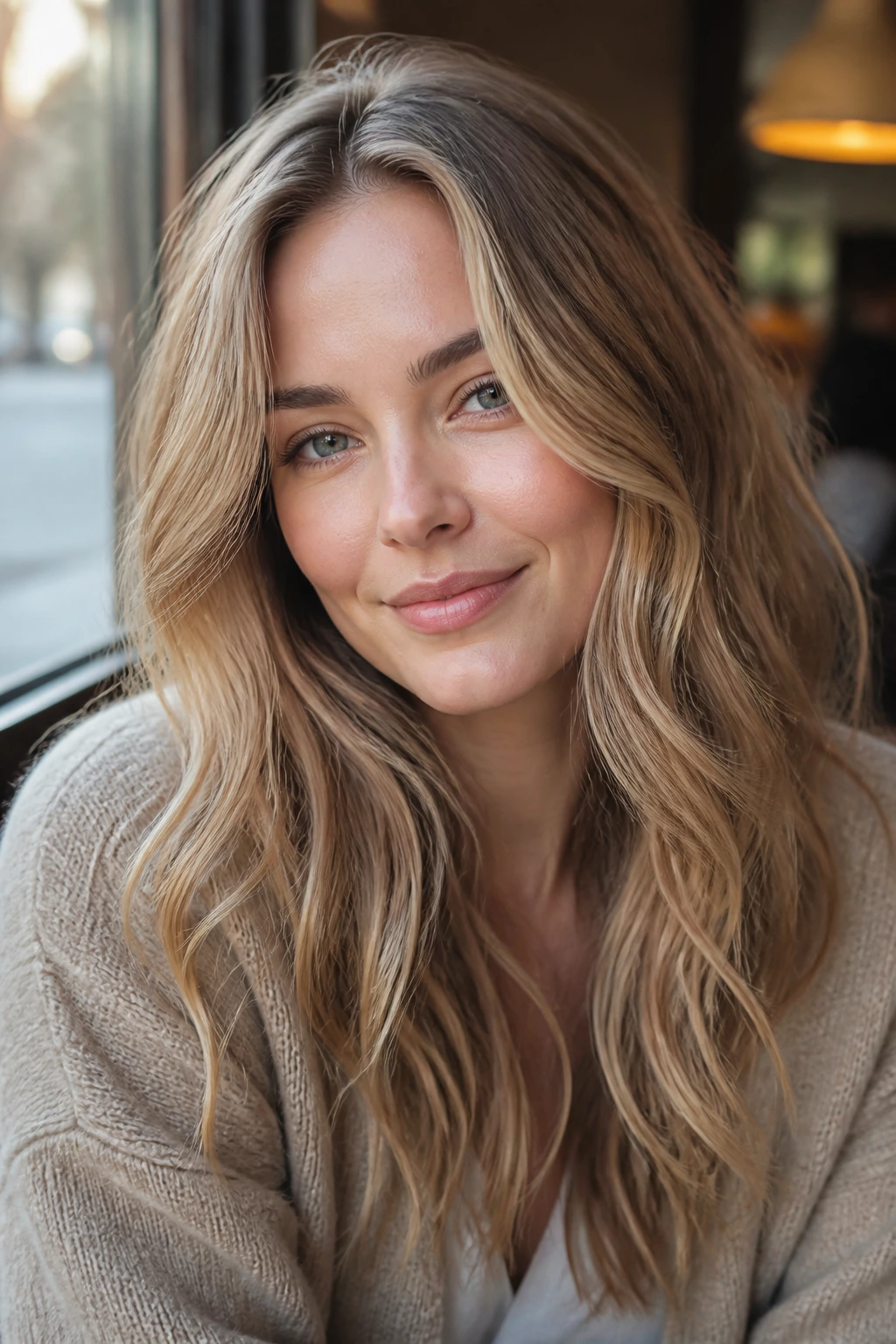
Sandy beige blonde is one of the easiest shades to live with if your hair naturally pulls warm and you don’t want brass. The sandy tone cools the gold down just enough, while the beige keeps it soft against fair skin. On a heart-shaped face, it works because the root stays quiet and the brightness sits lower.
The color is flattering in a very unfussy way. It doesn’t demand perfect makeup, and it doesn’t scream for attention. That makes it a nice choice if you want something light that won’t fight your complexion.
- Ask for: Beige blonde with a sandy toner.
- Best cut pairing: Long layers, blunt lob, or soft waves.
- Maintenance note: Purple shampoo only when the blonde starts going yellow, not every wash.
- Best for: Neutral or warm fair skin.
22. Auburn Melt
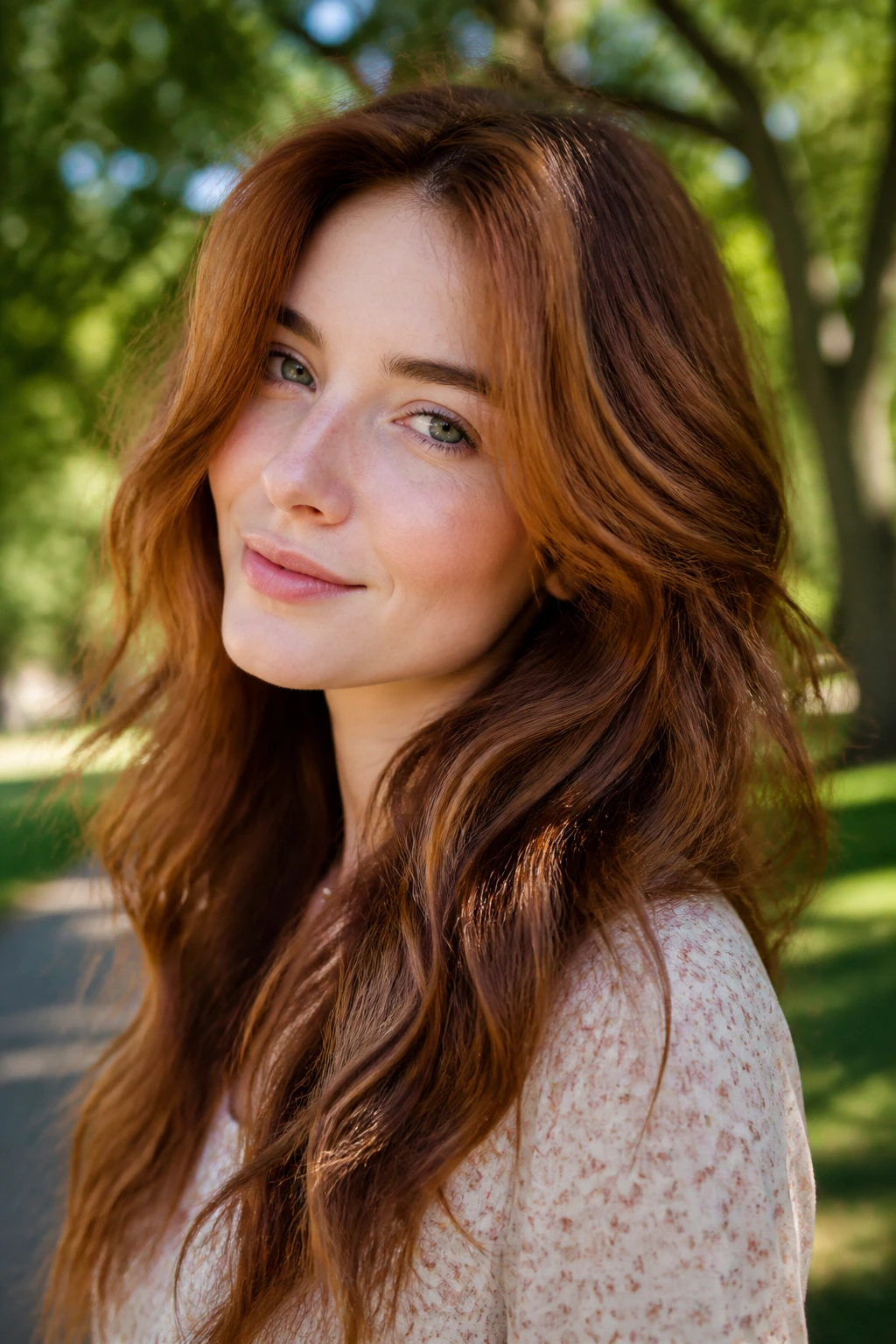
Auburn melt is what happens when copper stops shouting and starts blending. The shade moves from a richer auburn at the crown into softer warm brown through the lengths, which is a smart way to flatter a heart-shaped face. The top has enough depth to keep the forehead under control, and the warmer ends lighten the lower half of the face.
This color is especially good if you want red without the hard line red can leave against pale skin. The melt makes the color feel expensive and lived-in instead of freshly dyed and a little severe.
I like this one on hair with some natural wave. The shift from auburn to brown shows up beautifully as the hair bends. Straight hair can wear it too, but the contrast reads more clearly when there’s some movement.
23. Toasted Almond
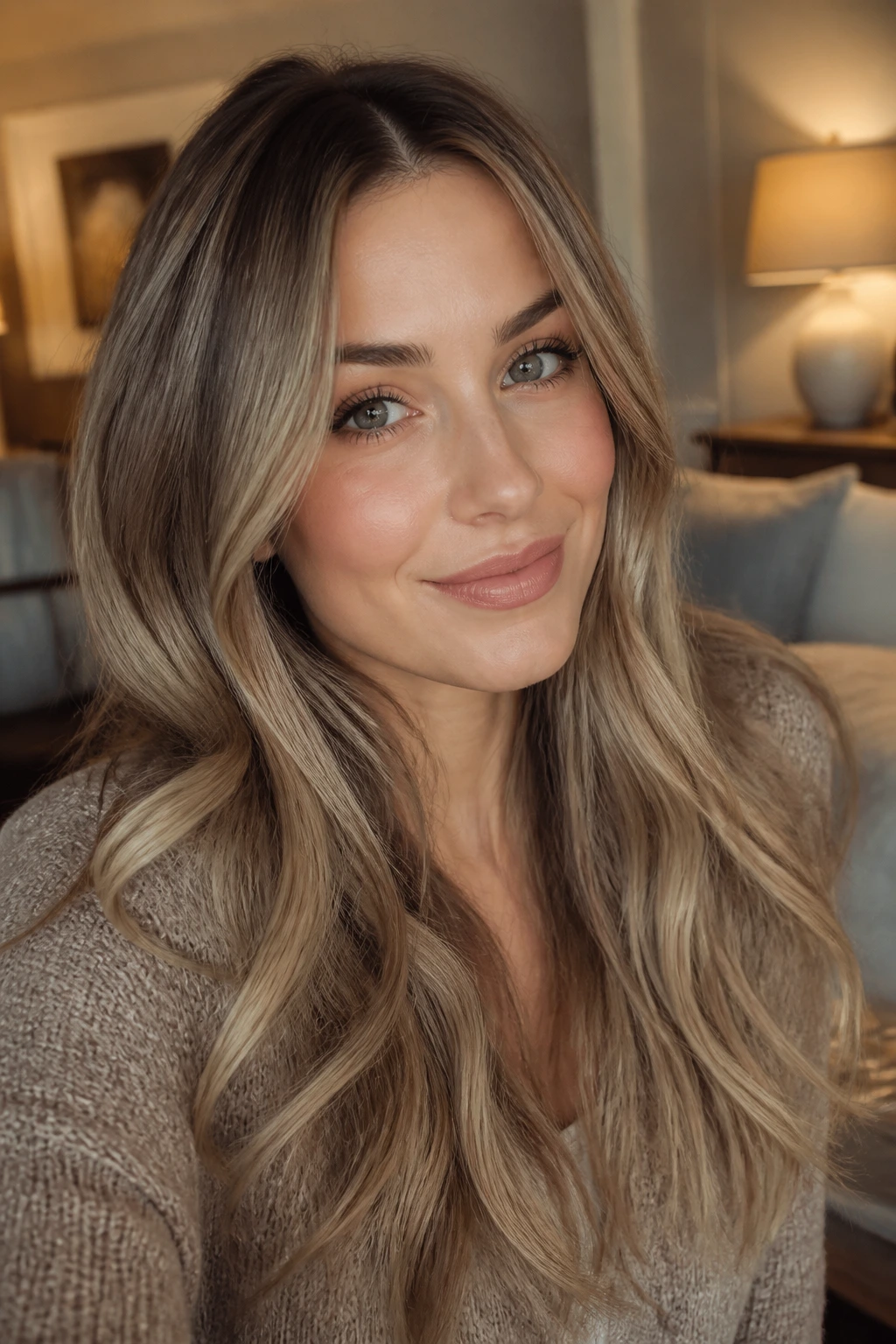
Toasted almond is a beige brunette with warmth tucked under the surface. It’s not as cool as taupe and not as golden as honey, which is exactly why it works so often on fair skin. The color gives enough softness around a heart-shaped face without making the roots look flat or the ends too bright.
What Makes It Different
Toasted almond feels smoother than chestnut and less dusty than mushroom. That middle tone makes it easy to wear with neutral makeup, soft pinks, or a bare face. You don’t have to overthink the rest of the look.
The smartest placement is a slightly deeper root with almond-beige lengths that start about an inch below the hairline. That keeps the face balanced while still letting the brightness show where the hair falls.
24. Plum Brown
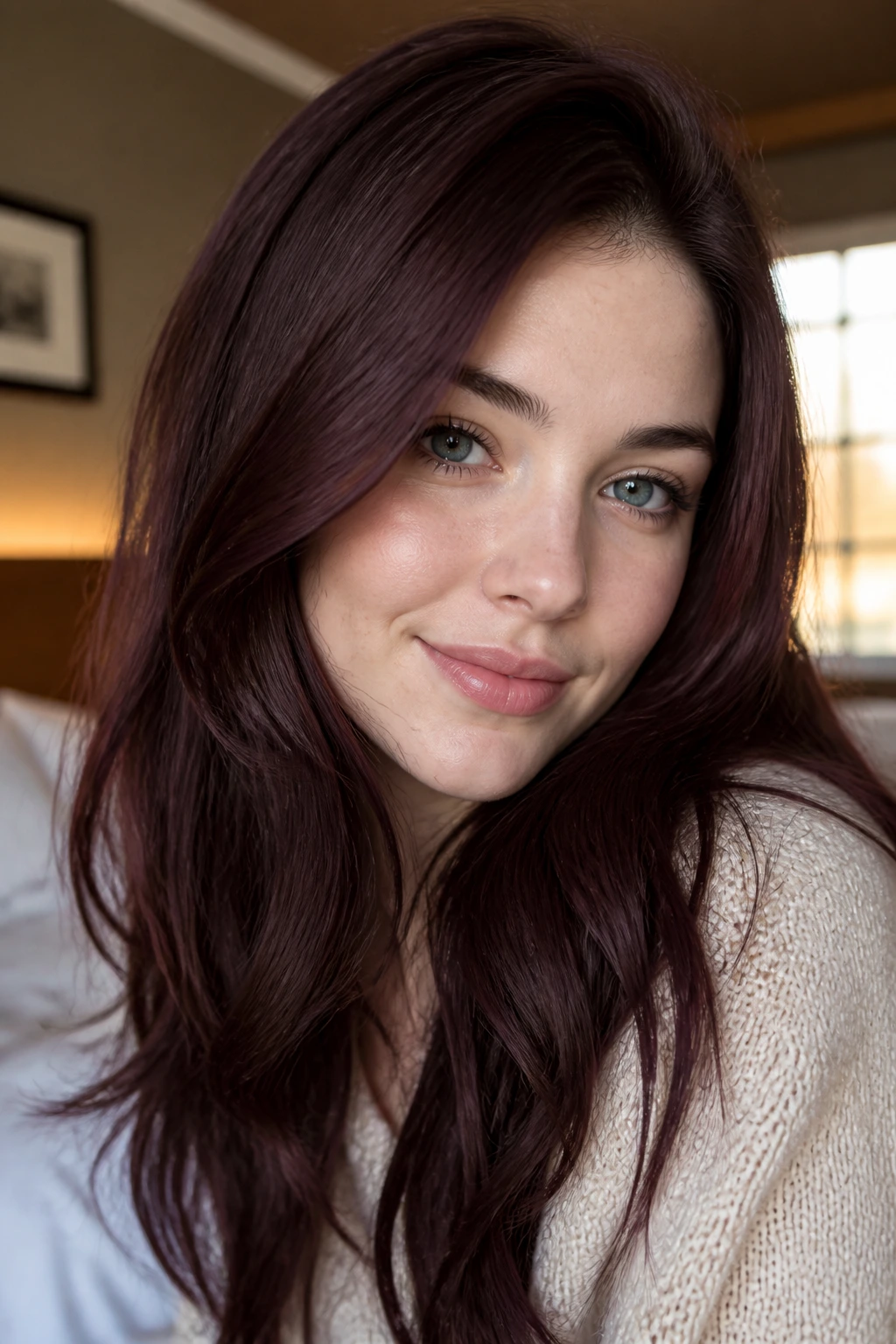
Why does plum brown look unexpectedly good on fair skin? Because the purple note adds depth without the harshness of blue-black, and the brown base keeps the color grounded. On a heart-shaped face, it’s useful when you want drama but still need the forehead area to feel soft.
This shade is one of the richer options on the list, but it doesn’t need to look loud. In dim light, it can appear almost espresso; in sunlight, the plum reveals itself just enough to be interesting. That shift is half the appeal.
Best Placement
Ask for the plum tone to live mostly through the mid-lengths and ends, with a deeper root close to the crown. If your hair is very straight, a little texture helps the plum show. If your hair is curly, the color can look deeper and more velvety than you’d expect.
25. Soft Black with Warm Sheen
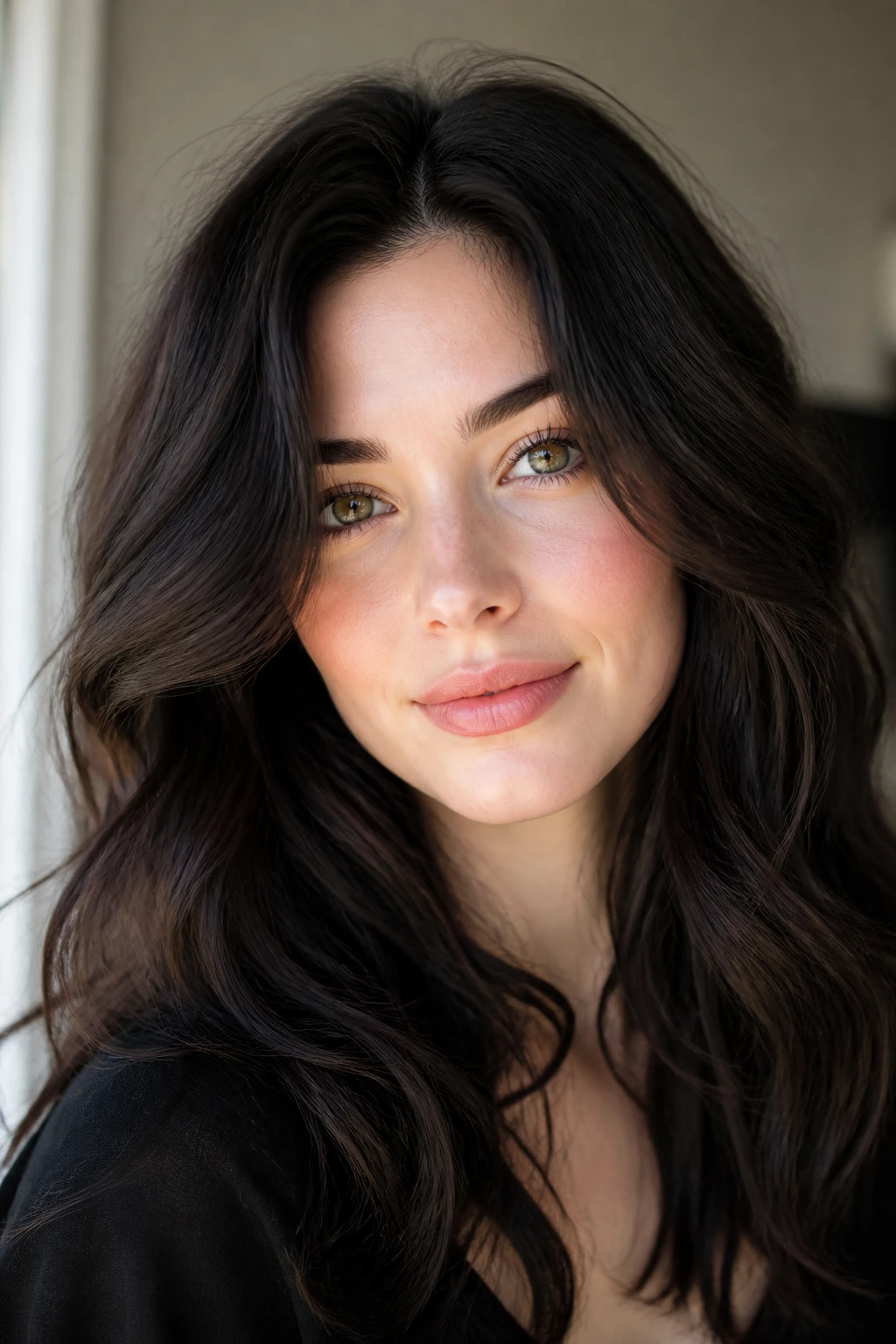
Soft black with warm sheen is for the person who wants depth, not harshness. True blue-black can be unforgiving on fair skin, especially around a heart-shaped forehead. Soft black keeps the drama but adds a brown warmth that stops the color from looking hard.
The key is sheen. A dull black can flatten the face fast, but a glossy soft black reflects enough light to keep the complexion alive. I like a slight face-framing softening here too — not chunky highlights, just a subtle edge around the front so the hair doesn’t sit like a block.
This is a strong finish, not a cautious one. If you want contrast, this gives it to you. If you want something gentler, one of the brunettes above will probably serve you better.
Why These Shades Work So Well
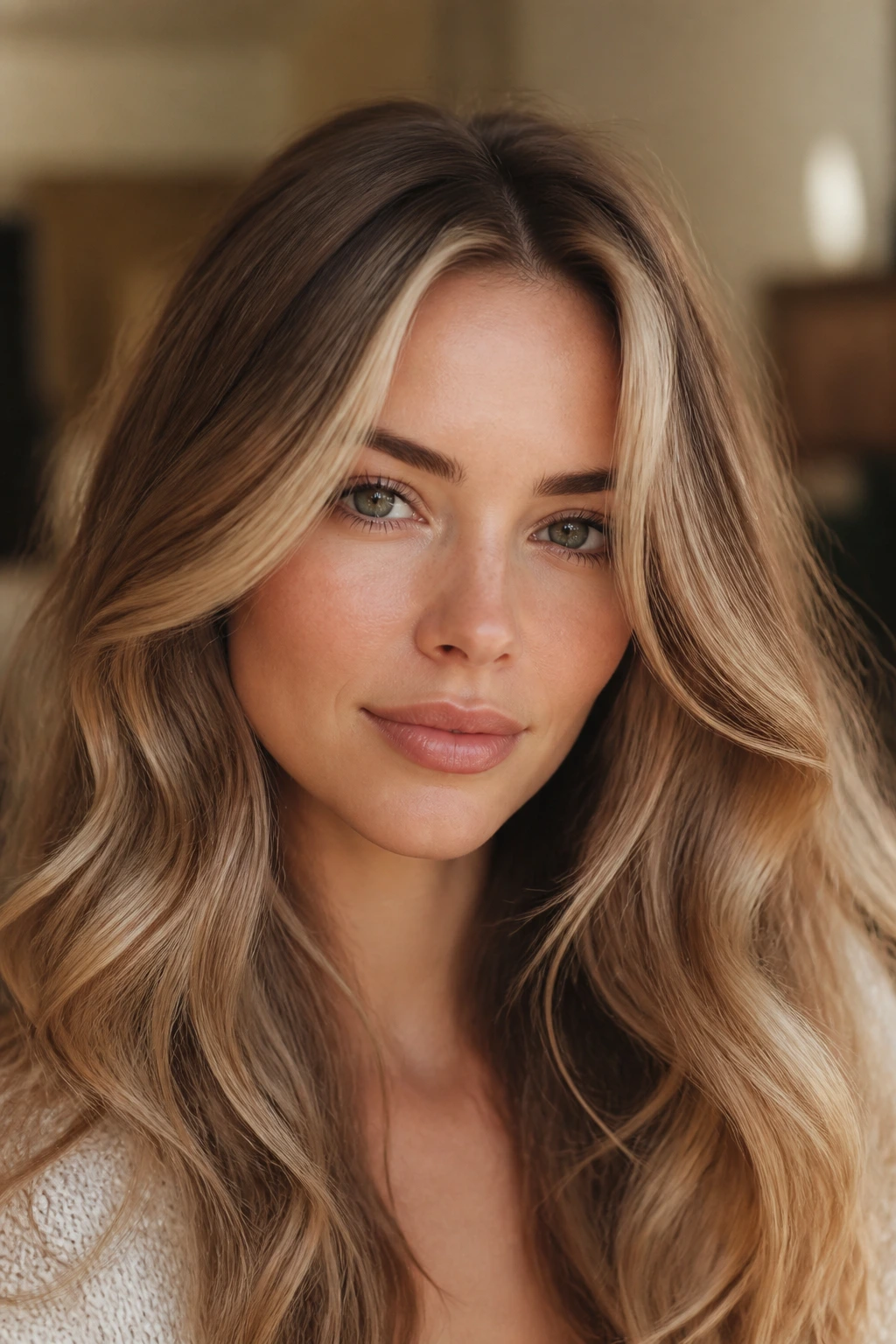
These colors do more than flatter a skin tone. They handle proportion. That matters with a heart-shaped face, where the forehead can pull the eye upward before the jawline gets a chance to speak.
The best shades in this group usually have one of three things: a soft root, a moving mid-tone, or a lighter front piece placed low enough to balance the shape. If the color sits too high and too pale, the forehead gets louder. If it’s too dark and flat, the whole face can look narrower than it is.
Fair skin needs the same kind of balance. Some shades brighten without blurring the complexion; others make the skin look cleaner but colder. The sweet spot is the one that gives your face color, not just your hair.
Essential Tools for Color Prep and Maintenance
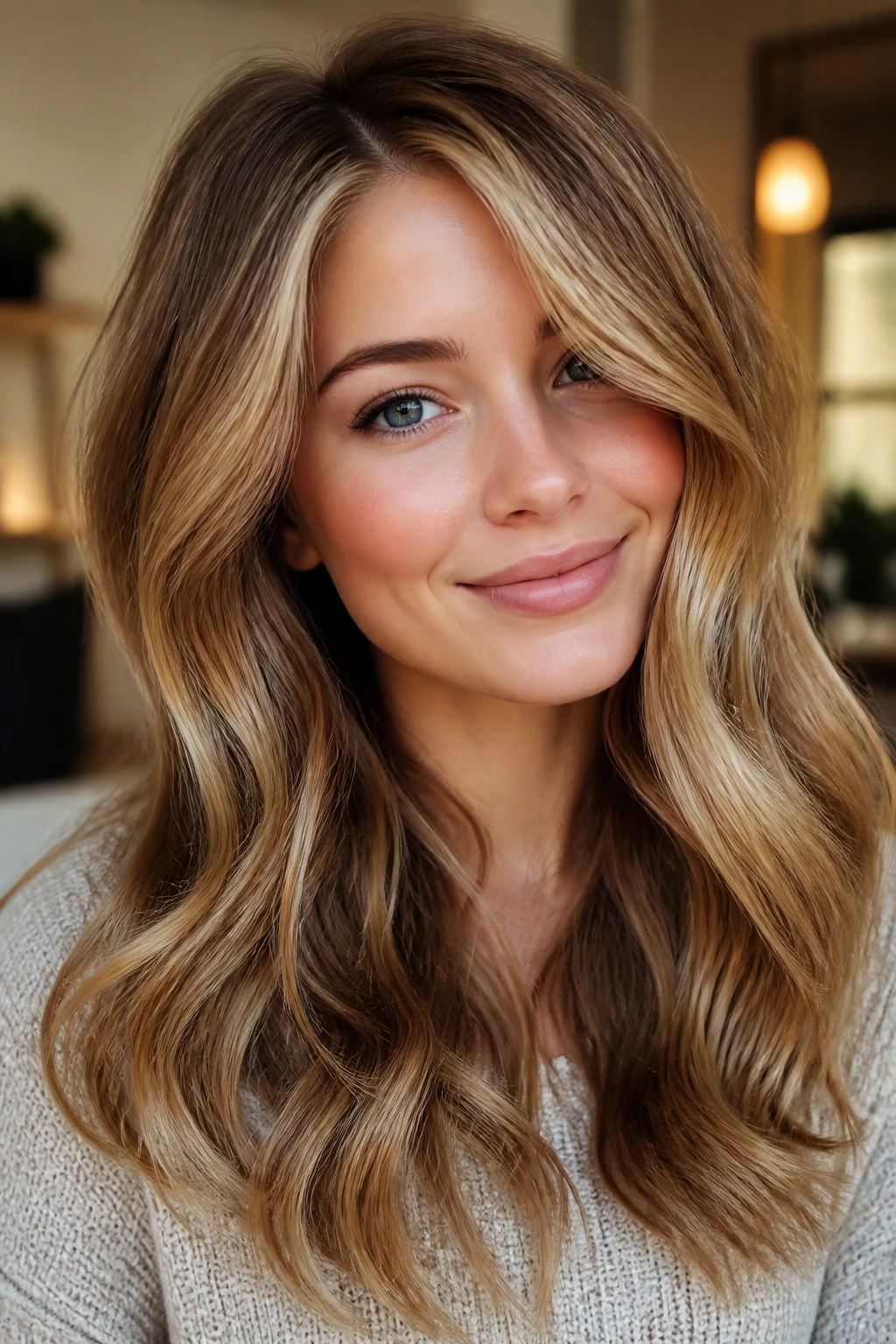
- Color-safe shampoo: Use a sulfate-free formula so the tone doesn’t strip out after three washes.
- Moisturizing conditioner: Lighter shades, especially blondes and coppers, look better when the cuticle stays smooth.
- Purple or blue shampoo: Purple helps yellow blondes; blue helps keep brunette brass in check.
- Heat protectant spray: A blow-dryer or flat iron can chew through gloss faster than you think.
- Wide-tooth comb: This helps distribute conditioner or a mask without pulling fragile, freshly colored ends.
- Tint brush and bowl: Useful for touch-up glosses or root smudging at home.
- Gloves: Don’t skip them, especially with copper, plum, and red-brown formulas.
- Microfiber towel or old T-shirt: Rough terry cloth can rough up the cuticle and make color look dull.
- Sectioning clips: Helpful if you’re doing a toner, gloss, or face-framing refresh on your own.
- Shine serum or lightweight oil: A pea-sized amount on the ends keeps beige blondes and dark brunettes from looking dry.
Smart Shade Shopping for Fair Skin and Heart-Shaped Faces
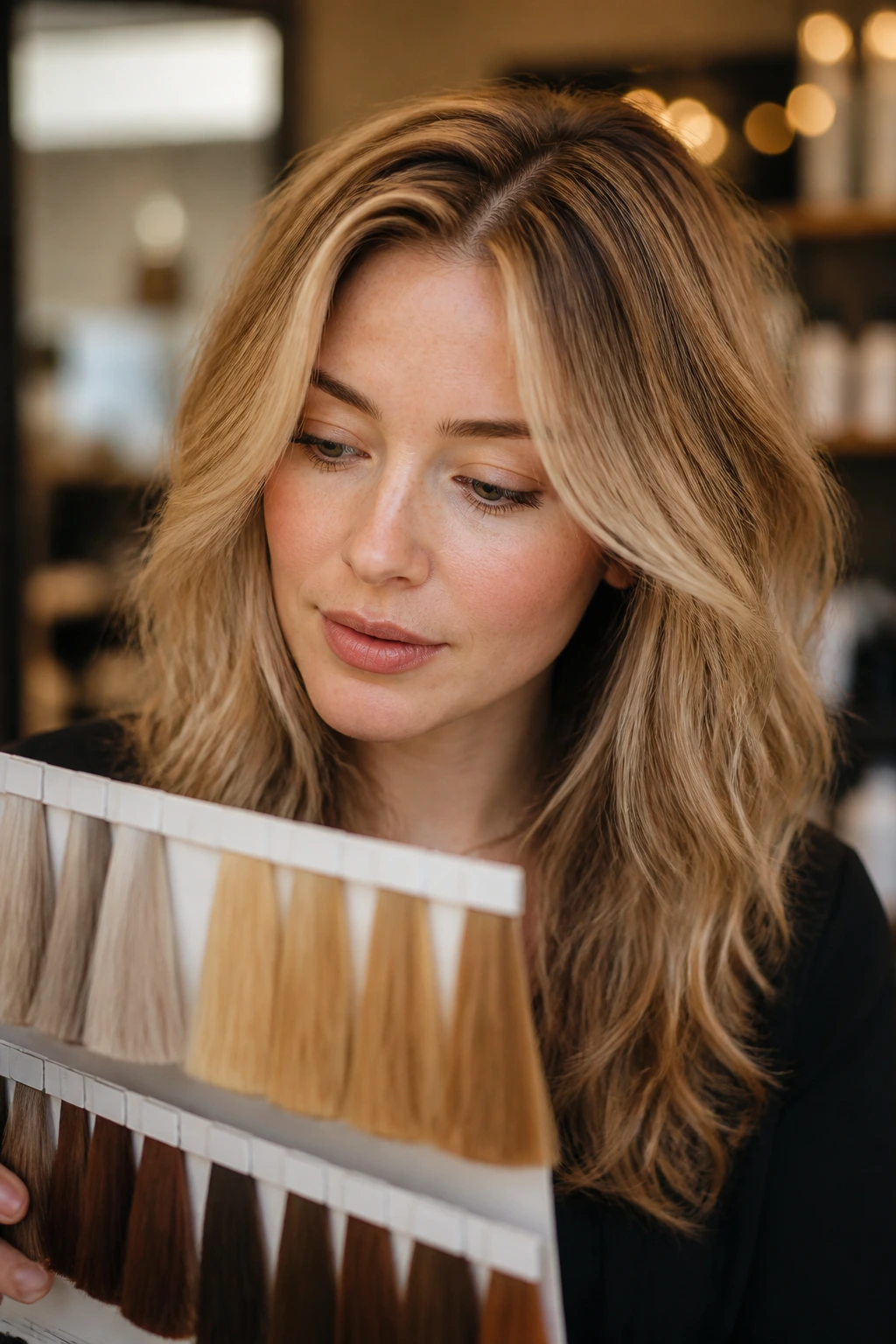
The smartest way to choose a color is to stop thinking only in terms of “blonde” or “brunette.” Look at the tone underneath. Beige, gold, ash, copper, taupe, rose, and plum all behave differently against fair skin, and one of them will usually look more alive on you than the others. That’s the part box photos don’t tell you.
If your skin is fair and pink, lean toward beige, soft copper, rose, taupe, or mushroom. If it’s fair and peachy, honey, champagne, apricot, and butterscotch usually look warmer and kinder. Neutral fair skin can wear the widest range, but it still helps to decide whether you want depth or lightness to carry the look.
For heart-shaped faces, ask where the brightness will sit. I’m a fan of color that starts a little lower than the temples — around the cheekbone or even the upper lip area — because that keeps the top of the face from taking over. A root shadow, money piece, or balayage ribbon can do more than a full-head change.
At home, look at product labels for permanent, demi-permanent, and gloss. Permanent color lifts and deposits; demi-permanent mainly deposits and fades more softly; glosses add tone and shine without a hard commitment. If you’re nervous, demi-permanent or a clear gloss is usually the safer first step.
How These Colors Wear on a Heart-Shaped Face
Parting: A soft side part or an off-center part is usually kinder than a severe middle part, because it trims down the visual width of the forehead. A center part can still work, but it asks more of the color placement. You want brightness lower down if you go that route.
Framing: Face-framing pieces should live where your features start to narrow — often around the cheekbones, sometimes a little below. If the brightest section begins right at the hairline, it can make the top half of the face feel louder than the rest.
Texture: Soft bends, brushed waves, and loose blowouts show dimension better than poker-straight hair. That matters with mushroom blonde, chestnut ribbons, toffee balayage, and any copper melt. The color needs somewhere to move.
Finish: Shine counts. A glossy brunette or beige blonde looks more intentional than a dry one, and a heart-shaped face benefits when the hair reflects light downward through the lengths instead of sitting matte and heavy at the crown.
Additional Tips and Color Boosters
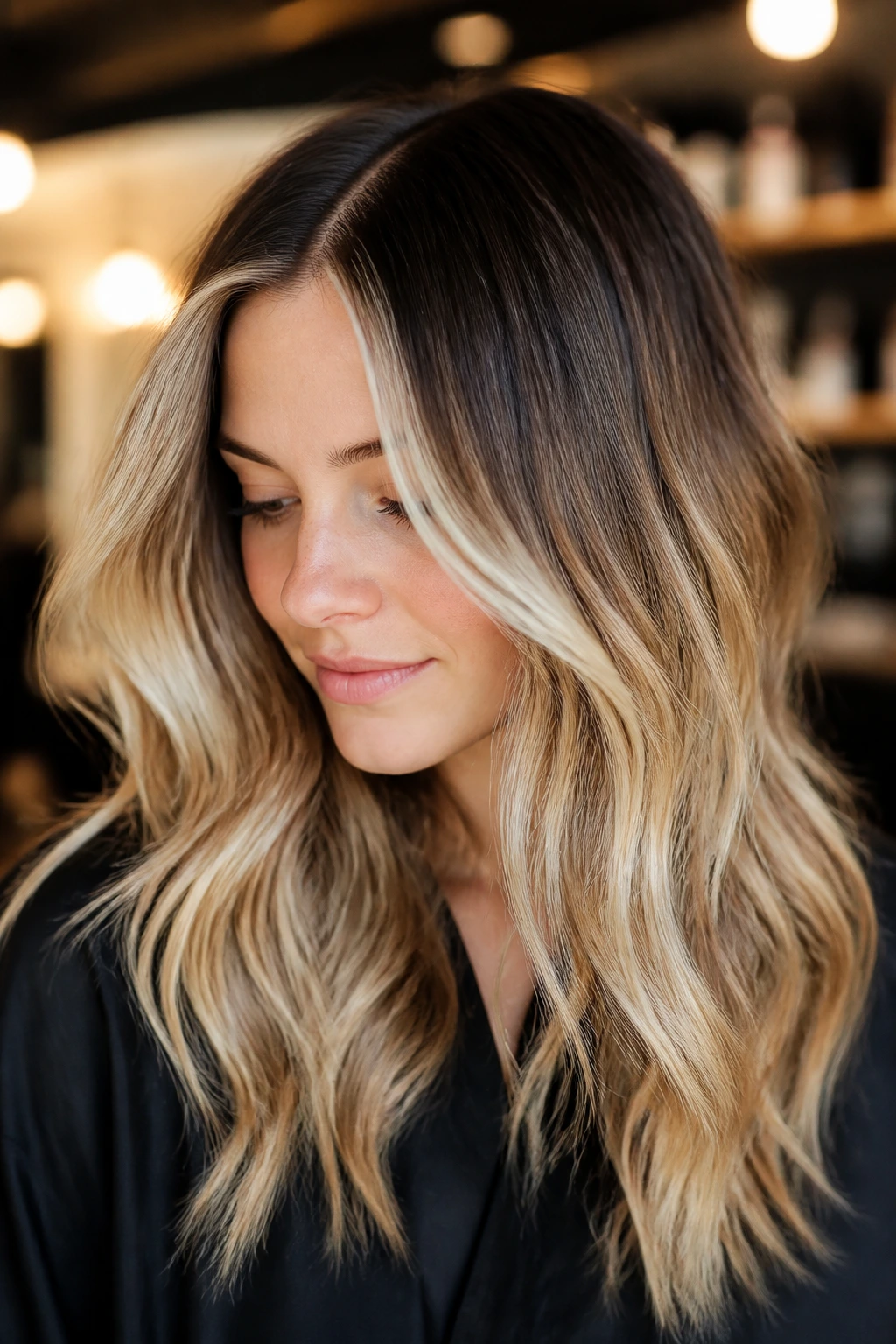
Glossing: A clear or tinted gloss every 4 to 6 weeks keeps beige blondes, rose golds, and brunettes from turning dull. Gloss is one of the easiest ways to stretch a shade between salon visits without making a huge change.
Customization: If your face feels top-heavy, add a slightly deeper root at the crown and keep the lightest pieces lower. If your features are delicate and you want more softness, do the reverse: keep the root close to your natural shade and brighten the face frame only.
Serving Suggestions: Hair color needs a finish, too. A light serum on the ends, a touch of heat protectant before styling, and a clean parting can make even a simple shade look intentional. That’s not extra fuss; it’s the difference between colored hair and well-kept color.
Make-It-Yours: If you’re warm-toned, nudge the palette toward copper, bronze, butterscotch, or apricot. If you’re cool-toned, lean into mushroom, taupe, ash bronde, plum brown, or soft black. Neutral skin can borrow from either side, which is a nice bit of luck.
Keeping the Color Fresh Without Babying It
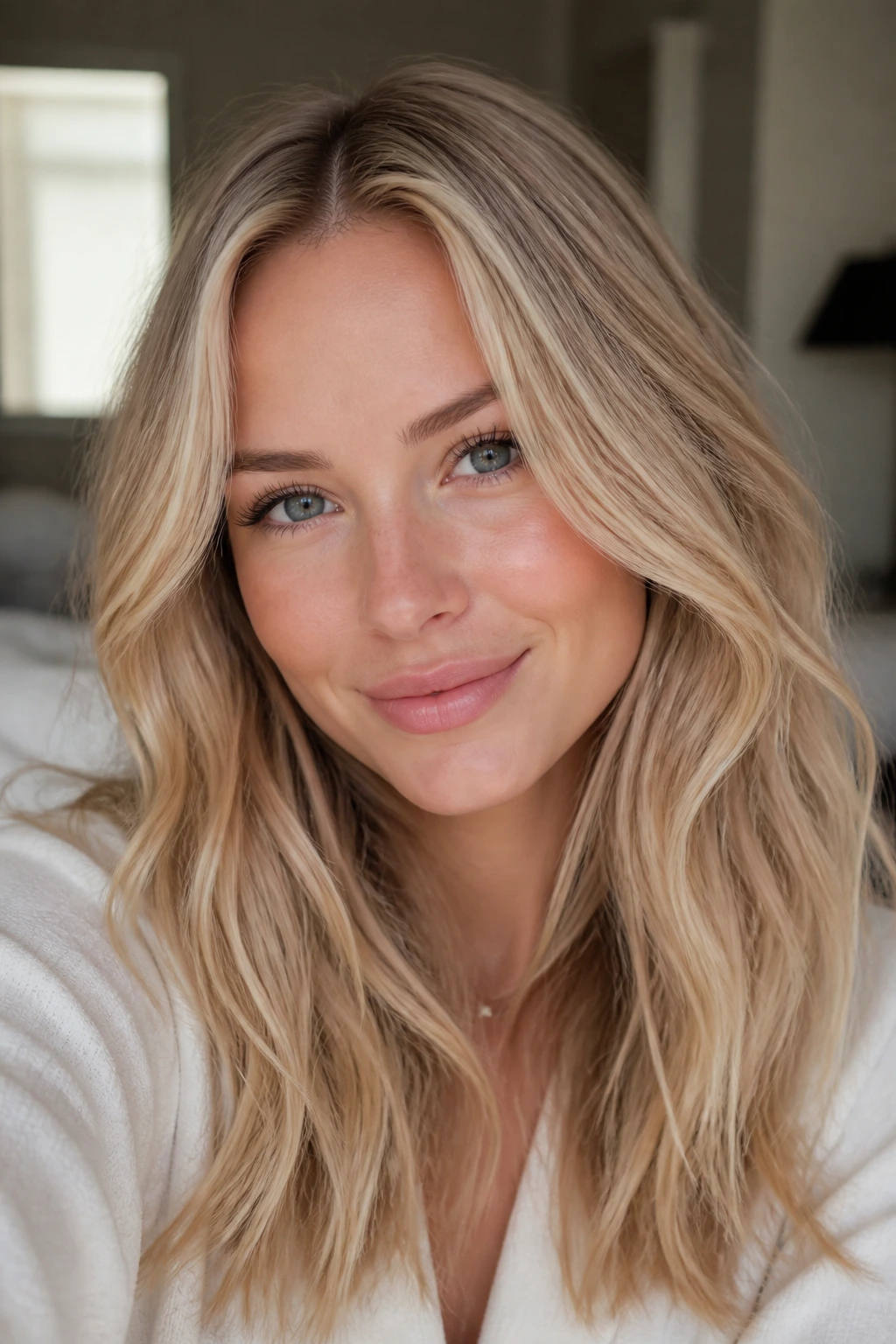
Most fair-skin flattering shades look best when they’re not washed into the sink every other day. Try to stretch washes to two or three times a week if your scalp allows it, and use cool or lukewarm water. Hot water fades copper, rose, and beige tones fast. It also roughs up the cuticle, which makes light colors look frayed.
If you go blonde, plan on a purple shampoo once every 2 to 3 washes, not every time you wash. Overuse can make champagne, butterscotch, and sandy beige look flat or slightly purple-gray. Brunettes with ash or taupe notes may want a blue-tinted shampoo less often, maybe once every 1 to 2 weeks, just enough to fight brass.
Copper, auburn, and merlot shades usually need the most attention. Expect a gloss refresh every 4 to 6 weeks if you want the color to keep its shape. Brunettes and brondes can usually go 6 to 8 weeks before the regrowth or fading gets obvious. If you’re doing an at-home gloss, follow the processing time carefully; leaving it on longer does not mean richer color. It usually just means darker ends and a tired finish.
Heat styling changes the game too. A blow-dryer on high heat will flatten a fresh gloss faster than people expect, so use a protectant every single time. If the color starts to look a little dull, a shine spray on the mid-lengths and ends is often enough to wake it back up. Small things. They matter.
Variations and Adaptations to Try
The Soft Root Melt: Keep the crown one or two levels deeper than the rest of the hair. This works especially well on heart-shaped faces because the eye doesn’t get trapped at the hairline, and it gives blondes and coppers a smoother grow-out.
The Low-Commitment Gloss: If you like champagne, rose gold, or plum brown but don’t want a long commitment, ask for a demi-permanent glaze over your natural base. The color fades softly over 4 to 8 weeks and lets you test the tone without boxing yourself in.
The Bright-Front Edit: Add lightness only around the front pieces and leave the rest deeper. This is the fix for anyone whose face feels too top-heavy in one-tone color — the bright pieces pull attention to the eyes and cheekbones without widening the forehead.
The Warm Shift: Push beige shades toward gold, copper, or honey if your fair skin has peach in it. Honey bronze, apricot copper, and golden butterscotch all land nicely here, especially on hair that already has a little natural warmth.
The Cool Shift: If pinkness is your main skin note, lean into mushroom blonde, taupe brown, ash bronde, or smoky mauve brown. These shades cool the complexion without making it look drained, as long as the finish stays glossy.
The Dark-But-Soft Version: Choose espresso, mocha, plum brown, or soft black with a warm sheen instead of true blue-black. Dark hair can be beautiful on fair skin, but it needs softness at the front or it starts looking severe.
Common Mistakes to Avoid
-
Going too icy too fast: A platinum or white-blonde shift can look harsh on fair skin, especially if it’s already pink. The fix is a beige or cream toner and a softer root.
-
Putting the brightest pieces too high: If highlights start right at the hairline, a heart-shaped face can look top-heavy. Keep the brightest ribbons lower, around the cheekbones or the mid-lengths.
-
Choosing copper that’s too orange: Orange-copper can fight fair skin instead of flattering it. Ask for apricot, auburn, or copper with brown depth if you want warmth without the neon effect.
-
Ignoring the undertone of the brunette: A flat brown can look muddy on pale skin. Mocha, chestnut, taupe, and cocoa all behave differently, and the wrong one can drain your face in one glance.
-
Skipping a gloss on light shades: Beige blondes and rose tones lose their shape fast when they go dry and matte. A clear or tinted gloss keeps the color polished and helps the hair reflect light.
-
Forgetting that maintenance matters: A color that looks perfect in week one can look patchy by week five if you’re not using color-safe products. The fix is simple: less heat, cooler water, and a schedule for toners or glosses.
Frequently Asked Questions
What hair color looks best on fair skin and a heart-shaped face?
The safest starting points are champagne blonde, creamy beige blonde, chestnut with caramel ribbons, or mocha brunette. Those shades add light or depth without exaggerating the width at the forehead, which is the part of the face shape that usually needs the most balancing.
Should I choose warm or cool tones?
Look at your undertone first. Pink or rosy fair skin usually likes mushroom blonde, taupe brown, or soft black with warm sheen, while peachy fair skin often looks better in honey bronze, apricot copper, or golden butterscotch.
Can dark hair work on fair skin?
Yes, but it works best when it isn’t flat. Espresso, mocha, plum brown, and soft black need shine and some kind of face-framing softness so the contrast feels deliberate rather than harsh.
Do bangs change which color is best?
They do, especially curtain bangs. Bangs bring color closer to the forehead, so softer root shadows and blended face frames become even more useful. Heavy, blunt bangs can handle stronger shades, but they still benefit from some dimension near the front.
Is balayage better than all-over color for this face shape?
Usually, yes. Balayage lets you put brightness lower on the face and keep the crown quieter, which is a nice match for heart-shaped proportions. All-over color can work too, but it needs better tone control and more thoughtful placement.
How often should copper or red shades be refreshed?
Plan on a gloss or toner every 4 to 6 weeks if you want the shade to stay rich. Reds and coppers fade faster than brunettes, and once they lose their shine, they can start looking orange or flat.
Can I do these colors at home?
Some of them, yes — especially demi-permanent glosses, root smudges, and low-commitment beige or brown shifts. Bigger changes, especially going lighter on fair hair or correcting brass, are safer with a colorist because the margin for error is smaller than people think.
What if my face looks wider after coloring?
That usually means the brightness is too high at the temples or too close to the hairline. Move the lightest pieces lower, soften the root, and keep the crown a little deeper. That small shift often fixes the whole silhouette.
Which color is lowest-maintenance?
Toffee balayage, chestnut ribbons, mushroom blonde, and sandy beige blonde tend to grow out gently. They don’t demand constant root work, and the tone fades in a softer way than red or copper shades.
The Shades That Keep the Face in Balance
The best hair color ideas for fair skin and heart-shaped faces don’t try to erase your features. They work with them. A softer root, a lower highlight, a beige or copper note that matches your undertone — that’s the stuff that makes a color feel expensive and easy to wear.
I’d start with the shade that matches how much contrast you actually want. If you like softness, go champagne, beige, or sandy. If you want more edge, choose mocha, espresso, plum brown, or copper penny. The wrong answer is usually the one that looks beautiful on the swatch but fights your face in the mirror.
Bring a few of these ideas to a colorist, or use them as a filter if you’re shopping for glosses and dye. The right shade does not just sit on the hair. It changes how the whole face reads, and that’s the part worth getting right.