



Warm brown hair can turn orange on cool skin faster than people expect. The fix is not “go dark” or “go blonde.” It’s brown gray hair color ideas for cool skin tones: smoky brunettes, taupe melts, slate ribbons, graphite glosses, and those soft mushroom shades that look calm instead of brassy.
The reason this family works is simple. Cool skin tends to sit better with ash, violet, and blue-based pigments, while copper and gold can make the face look redder than it is. That doesn’t mean you need a flat, lifeless brown. Good brown-gray color keeps the brown side visible and lets the gray or smoke show up as texture, not as chalk.
The sweet spot changes with depth, haircut, and how much contrast your face naturally carries. A pale face with dark brows can take a sharper graphite brunette; a softer face with lighter eyes often looks better in mushroom or taupe. Keep that in mind, because the wrong “cool” shade can go hollow fast. The right one looks like your own hair after a very good toner.
Why This Brown-Gray Palette Flatters Cool Skin
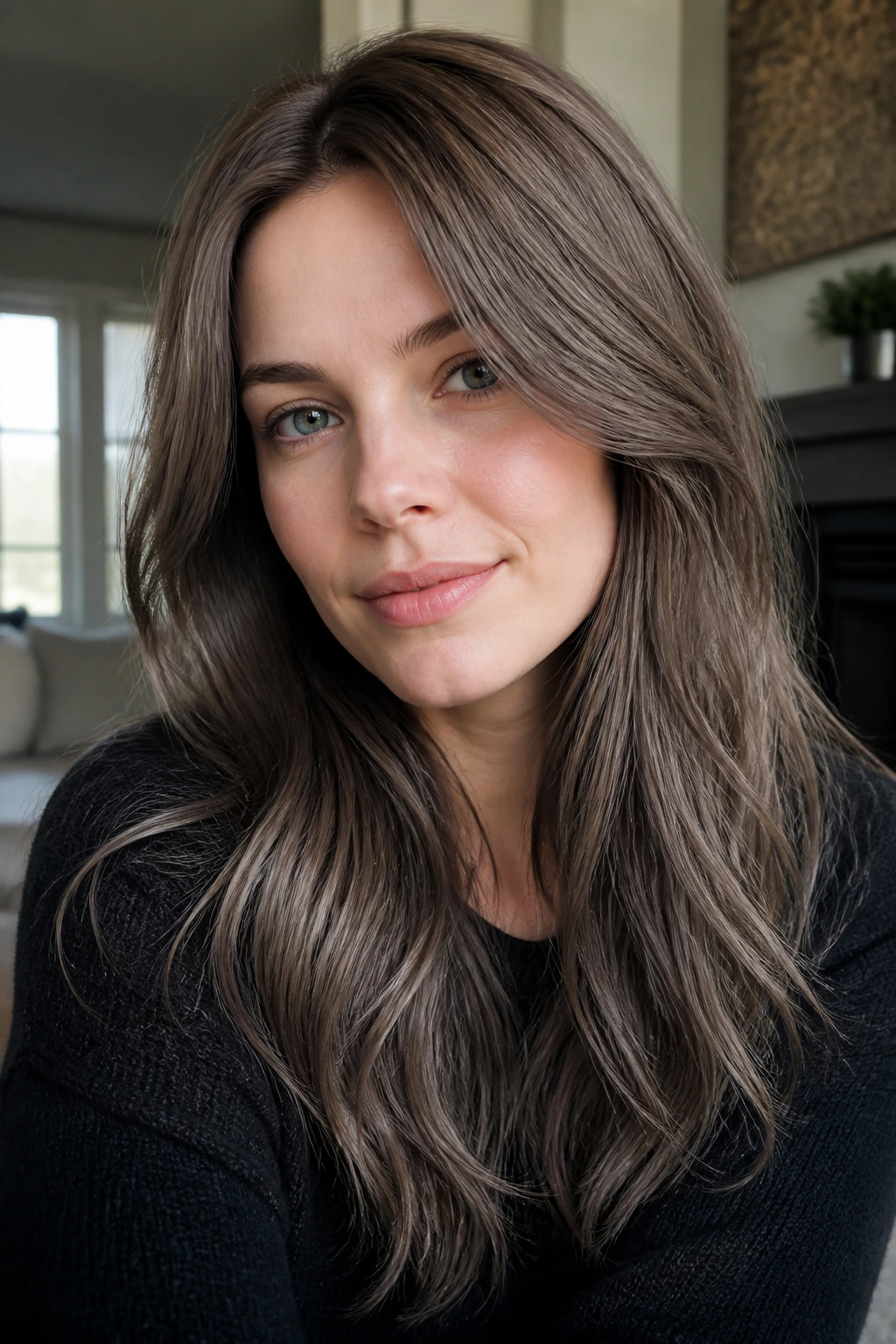
- Ash cuts the red cast: Brown-gray shades use cool pigments to mute the copper and orange that can make cool skin look flushed.
- Dimension matters more than darkness: A level 5 mushroom brown often looks richer than a level 3 flat brown because the movement shows up at the mids and ends.
- Gray blending feels natural here: Silver threads, root sparkles, and early grays slip into these tones instead of standing out like they do in warm chocolate.
- The finish reads clean in daylight: Mushroom, taupe, slate, and graphite hold their shape under office light, window light, and camera flash.
- There’s room for both soft and bold: You can keep the smoke whisper-light or push it toward pewter and charcoal without leaving the brown family.
1. Mushroom Brown Melt
Mushroom brown is the easiest place to start if you want cool without drama. It sits in that middle lane between ash and beige, which keeps the hair from going flat or stark. On cool skin, that soft taupe-gray veil takes the edge off redness without making your face look washed out.
Ask for a root shadow that stays a shade deeper than the mids, then let the lighter pieces float through the surface. It looks especially good on lobs, loose waves, and layered cuts where the light can catch the texture. If your hair grabs color fast, keep the ends one half-step deeper than the crown so they don’t turn dusty.
2. Smoky Espresso
Smoky espresso is for the person who wants dark hair with less warmth and more shape. The base sits around a level 3 or 4 brunette, but the ash glaze keeps it from reading like a flat box dye. On cool skin, that deep tone sharpens the eyes and makes silver jewelry look deliberate.
- Best for: cool undertones with dark brows, blue-gray eyes, or a strong natural contrast.
- Ask for: a demi-permanent ash gloss over a deep brunette base, not a warm chocolate overlay.
- Watch for: over-toning, which can make the lengths look dull instead of smoky.
If your hair is long and straight, this shade can look almost liquid when the ends are polished. Keep heat tools low and finish with a light serum. The shine is the point.
3. Ash Brown Balayage
Ash brown balayage gives you movement without drifting into caramel. The painted ribbons sit a little lighter than the base, but the cool tone keeps them from flashing gold. That matters on cool skin, because warm balayage often makes the face look red before it looks bright.
This is one of my favorite options for wavy hair. The bends show off the variation, and the darker root keeps the grow-out soft for weeks. If your natural color is medium brown, ask for thin ash pieces around the face and a heavier hand through the lower lengths so the top stays believable.
4. Taupe Brunette
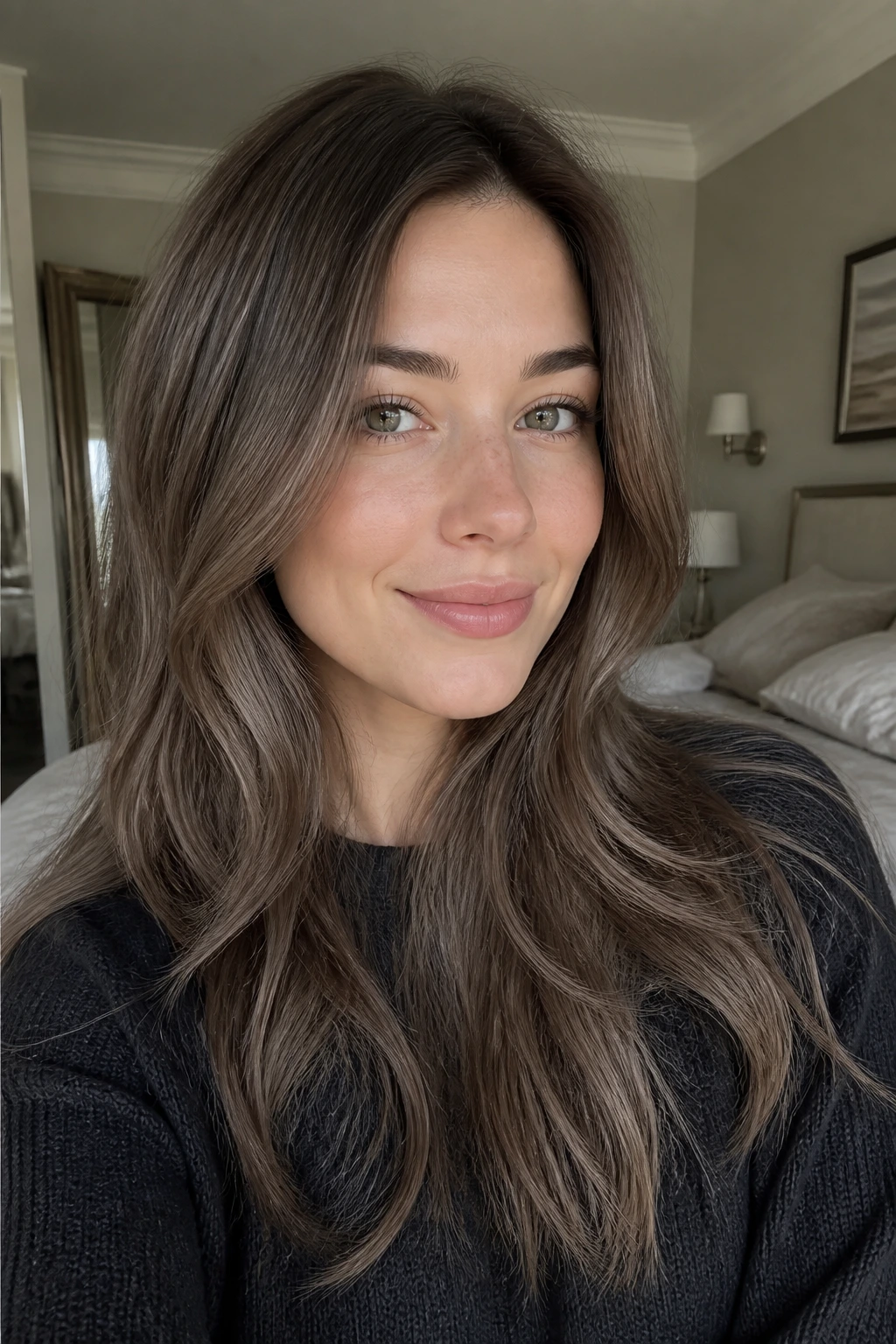
Taupe brunette is the quiet one in the room, and that is exactly why it works. It leans cooler than beige brown but softer than straight ash, so it avoids the sharp, nearly metallic edge some people hate. On cool skin, it smooths the overall look without stealing attention from the face.
- Best for: anyone nervous about going too gray on the first try.
- Ask for: a neutral-cool gloss with taupe and soft ash woven through the mids.
- Watch for: too much beige, which can warm up under bright light and undo the effect.
This shade is good on fine hair because it doesn’t need a lot of contrast to feel finished. A soft blowout, a center part, and a little bend at the ends are enough. No need to overstyle it.
5. Cool Chestnut with Silver Ribbons
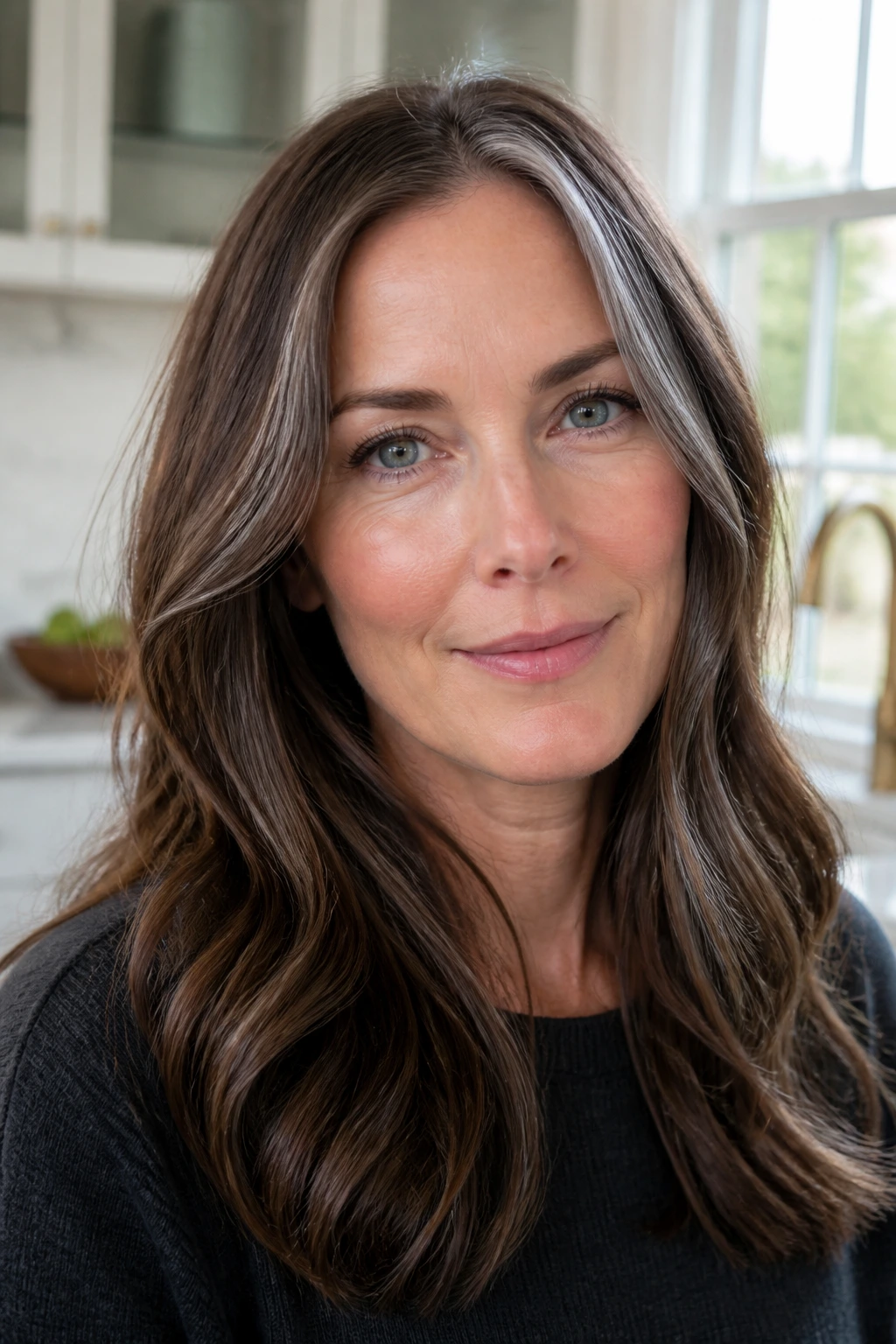
Cool chestnut with silver ribbons works like a bridge between brunette and gray. The chestnut base keeps the hair grounded, while the silver pieces add a sharper note near the face and through the top layers. On cool skin, that mix keeps the complexion from looking muddy when gray starts to show.
This shade makes sense if you’re blending early grays instead of hiding them. Keep the ribbons thin near the part and a little wider at the sides so they read intentional, not patchy. If your hair is coarse, ask for the silver in foils instead of a heavy all-over toner; coarse strands can swallow pale cool tones fast.
6. Smoky Mocha Bob
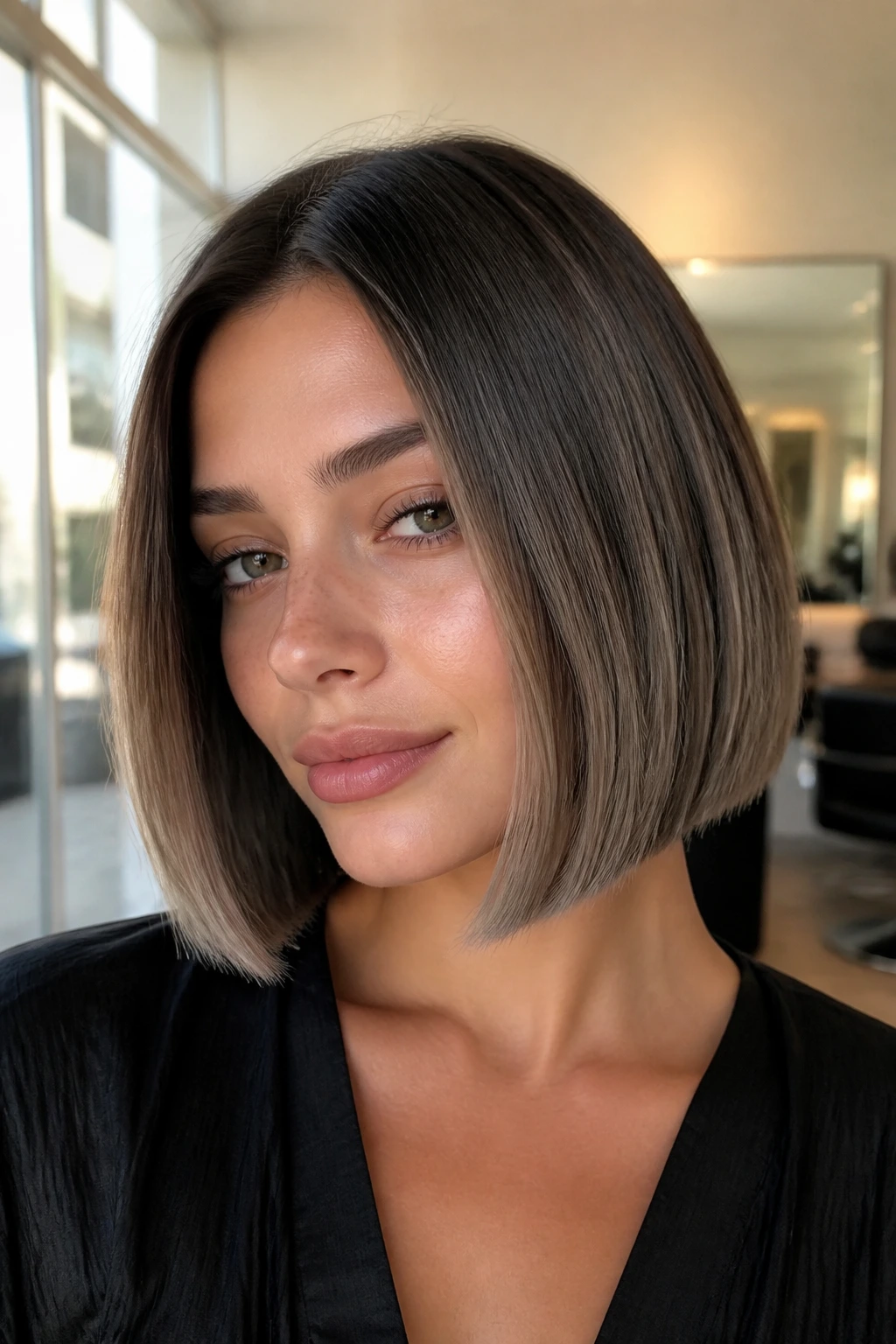
A blunt bob gives smoky mocha a real job to do. The cut makes the color feel crisp, and the cool mocha finish stops the ends from turning too soft or brown-red. It’s a cleaner look than warm mocha, and cool skin usually benefits from that extra edge.
- Best for: chin-length bobs, blunt lobs, and sleek shoulder cuts.
- Ask for: a mocha base cooled with a gray-beige toner at the ends.
- Watch for: too much layering, which can make the shade look uneven instead of sleek.
This one shines when the bob swings with movement. A flat iron bend at the bottom or a round brush finish brings out the smoke in the color. Let the cut and color do the heavy lifting.
7. Charcoal Brunette
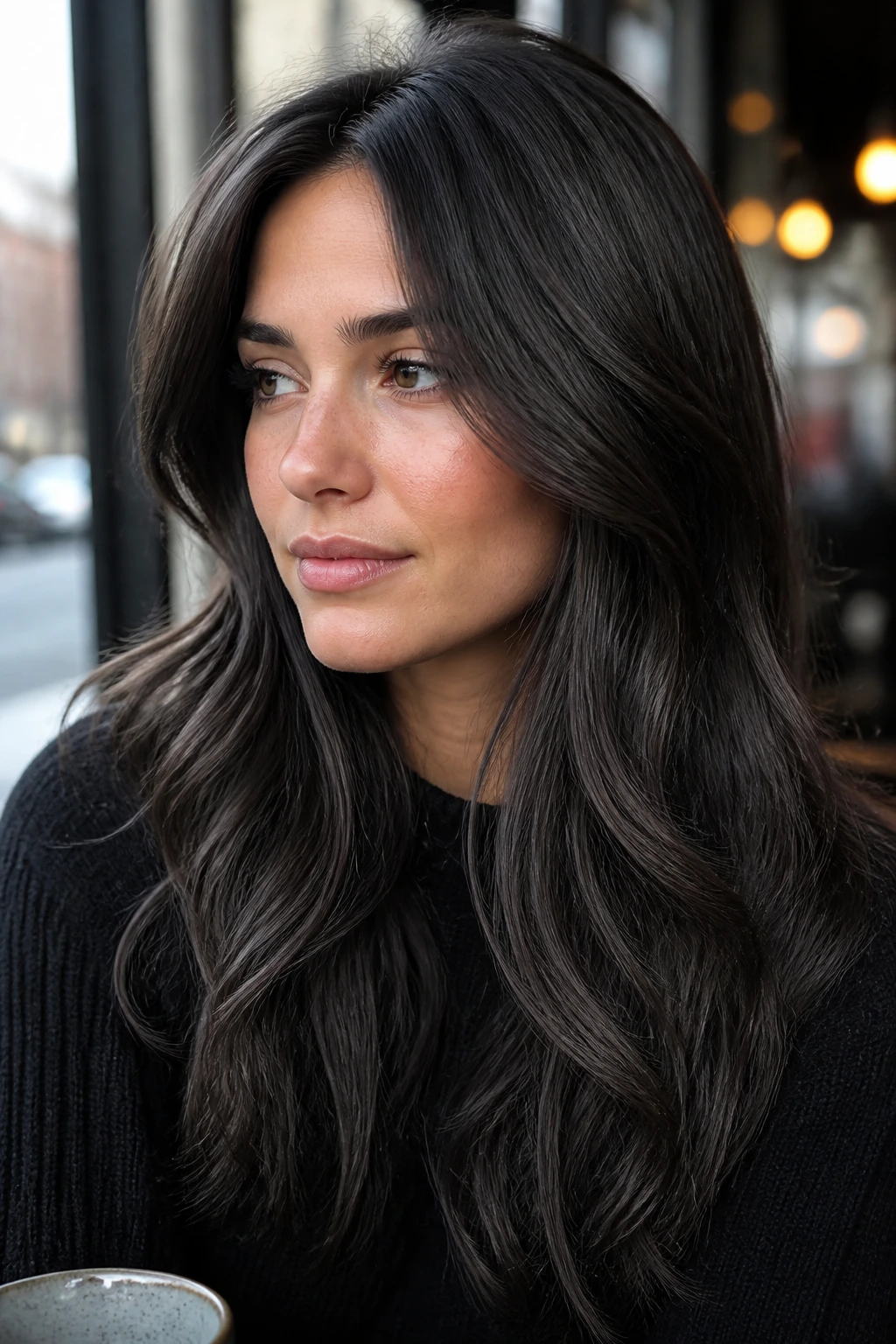
Charcoal brunette is deeper and moodier than mushroom or taupe. It has the same cool logic, but the effect is stronger, almost graphite-dark in certain light. On cool skin, that deeper depth makes pale eyes and rosy cheeks stand out instead of competing with them.
The key is not to let the shade go black. Ask for charcoal lowlights over a deep brunette base so the hair still shows dimension at the temples and ends. If your hairline tends to pick up warmth first, keep the first inch at the roots neutral rather than ultra-ash, or the grow-out can look bluish in a way nobody asked for.
8. Beige Ash Brown
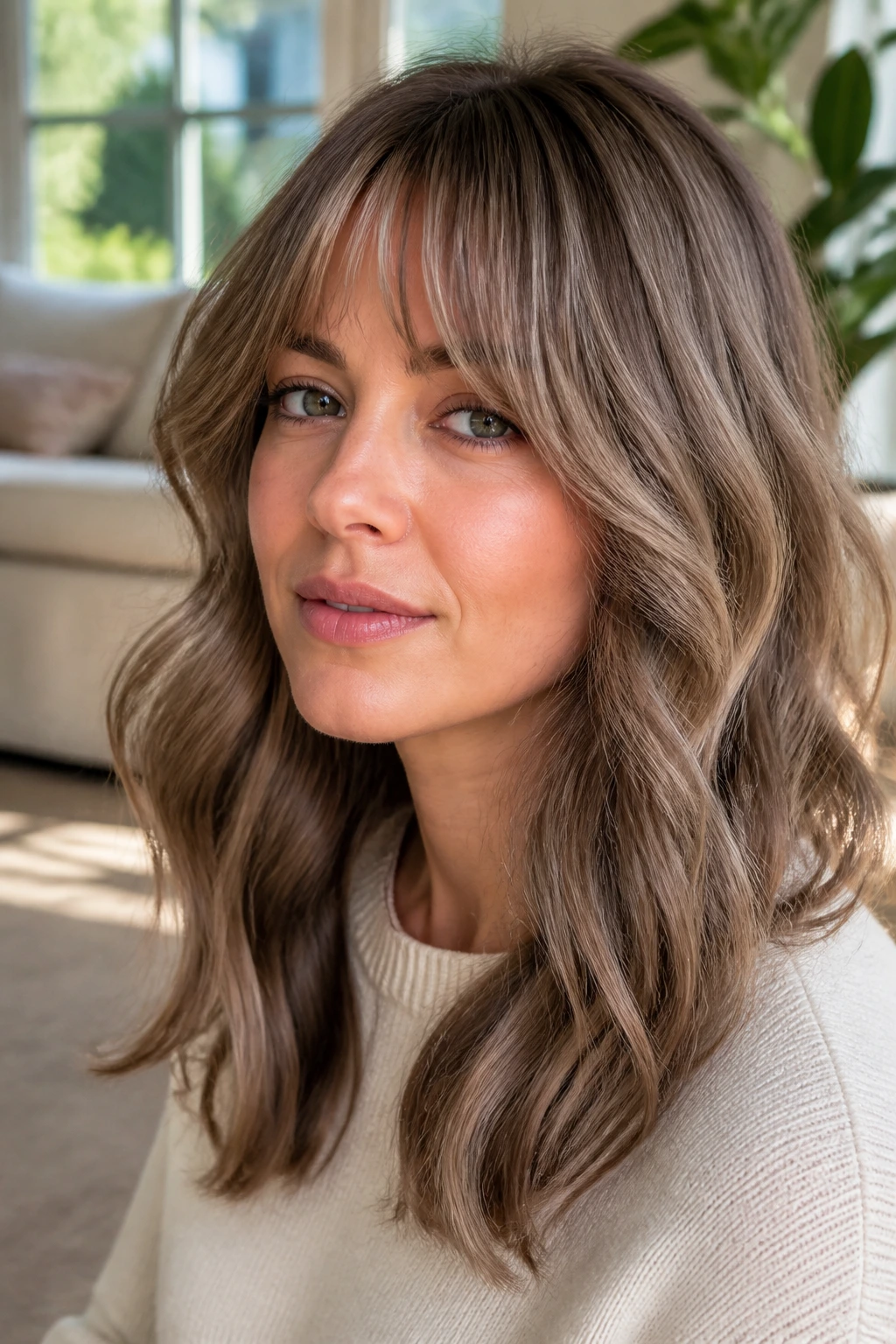
Beige ash brown sits in the middle and behaves itself. It is cool enough for pink or blue undertones, but soft enough that it doesn’t drain the face. That makes it a smart move if you like brown hair that looks expensive in daylight but not severe.
- Best for: people who want a wearable shade with less maintenance than full graphite.
- Ask for: a neutral brown base with beige and ash blended at the mids.
- Watch for: overloading the formula with ash, which can make the finish look flat under indoor light.
This color likes texture. Loose waves, a soft fringe, or even a simple tuck-behind-the-ear style lets the brown-gray shift show up. On straight hair, it needs a little body at the root to keep from disappearing.
9. Slate Brown Lowlights
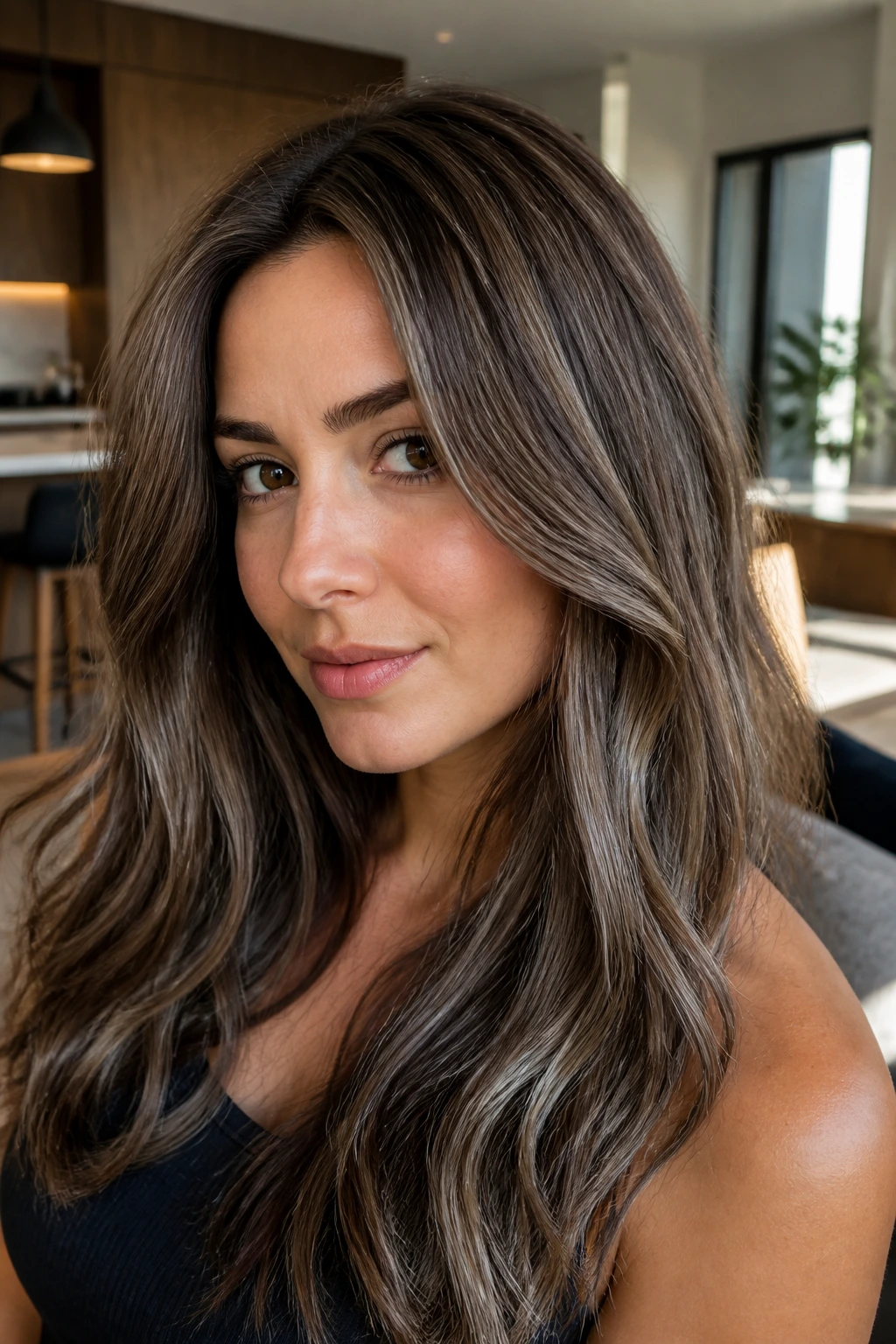
Slate brown lowlights are the move when your hair needs depth more than brightness. Instead of lifting pieces lighter, you thread cooler, darker tones through a brown base to create shadow and make the overall color look fuller. On cool skin, that shadow can look elegant instead of heavy.
This is one of the best tricks for medium brown hair that feels too plain. The slate pieces make the hair appear denser, especially around the underlayers and back crown. If your hair is fine, keep the lowlights thin and close to your natural depth; chunky slate streaks can look striped in a bad way.
10. Cocoa Gray Blend
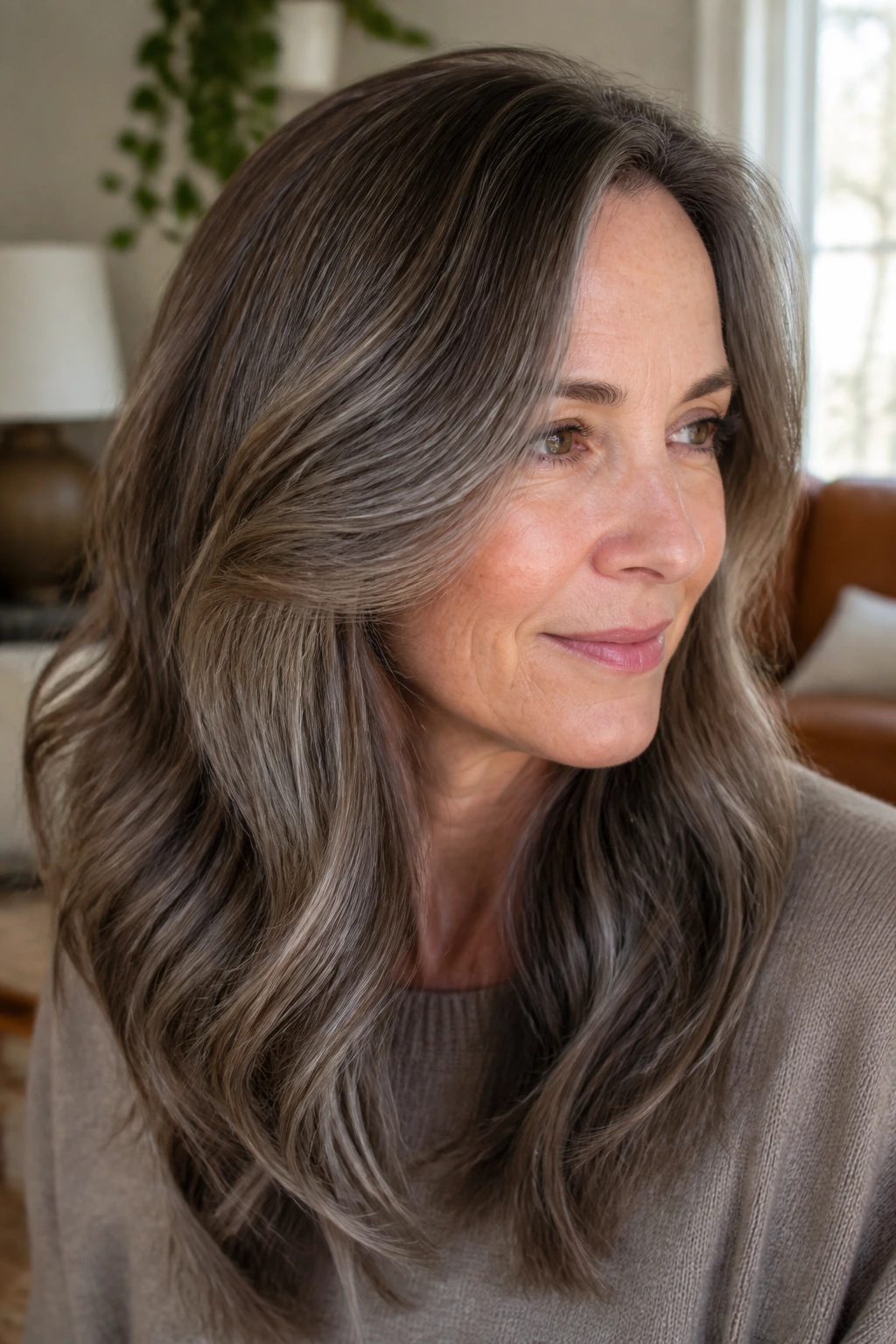
Cocoa gray blend sounds soft, and it is, but there is a useful edge to it. The cocoa keeps the brunette richness alive while the gray overlay mutes warmth and adds a cool haze. It’s a smart shade for cool skin because it gives shape without pushing the color too far toward silver.
- Best for: curly or textured hair that needs a little richness under the smoke.
- Ask for: a cocoa base with a translucent gray glaze, not a thick opaque toner.
- Watch for: porous ends, which can grab the gray too hard and turn ashy in a chalky way.
This shade works well if you hate the look of harsh regrowth. The root-to-end shift can stay very soft, which means fewer obvious lines between appointments.
11. Frosted Brunette
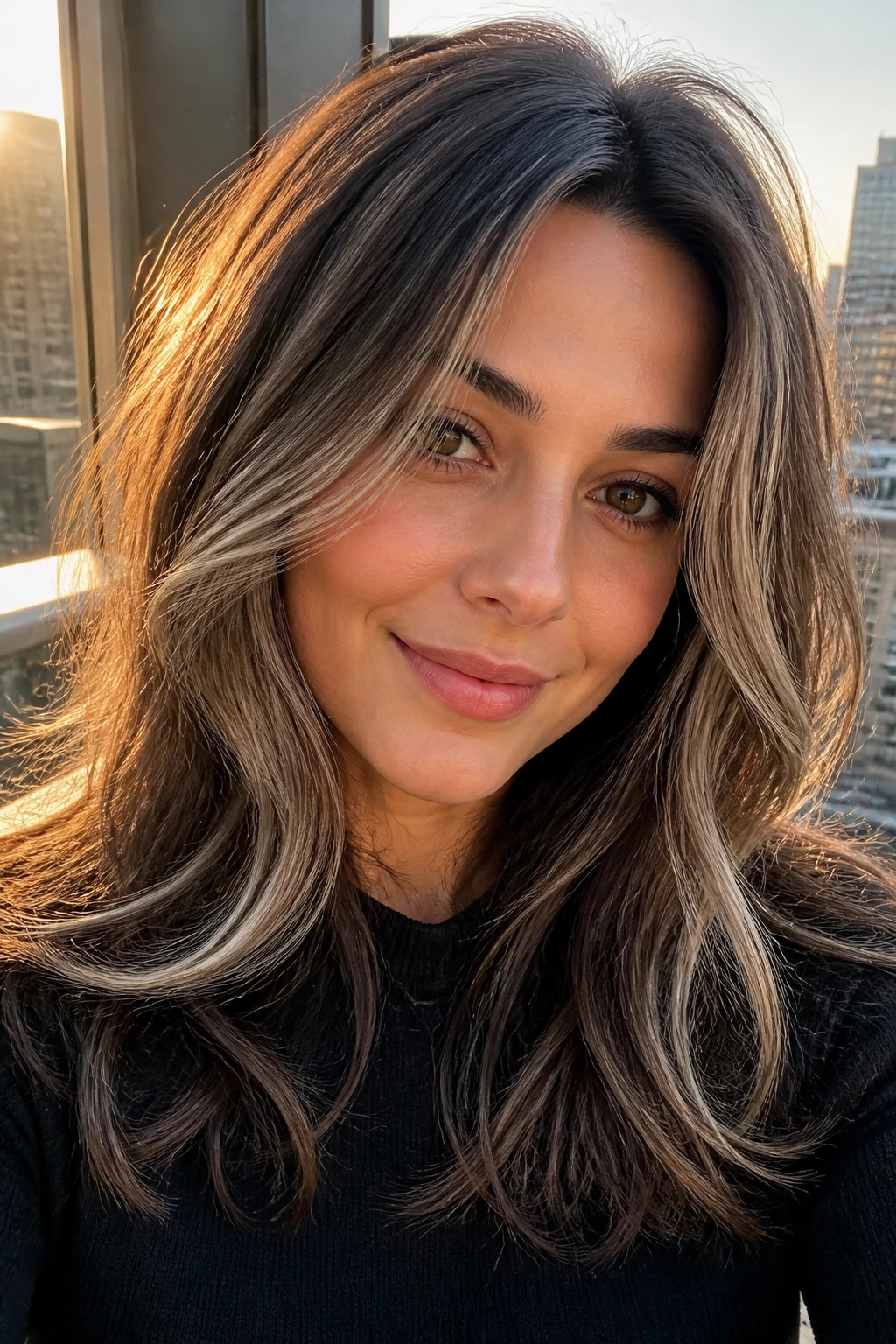
Frosted brunette has more sparkle than weight. It often reads like a dark brown base dusted with cool, pale ribbons near the top layer and ends. On cool skin, that frosted edge keeps the hair from looking heavy, especially around the jawline.
I like this on layered cuts because the shorter pieces catch light before the longer ones do. Ask for the frost to live mostly around the surface and face frame, not buried too deep. That way it shows up when you move, not only when you’re standing under a salon lamp.
12. Icy Brunette Balayage
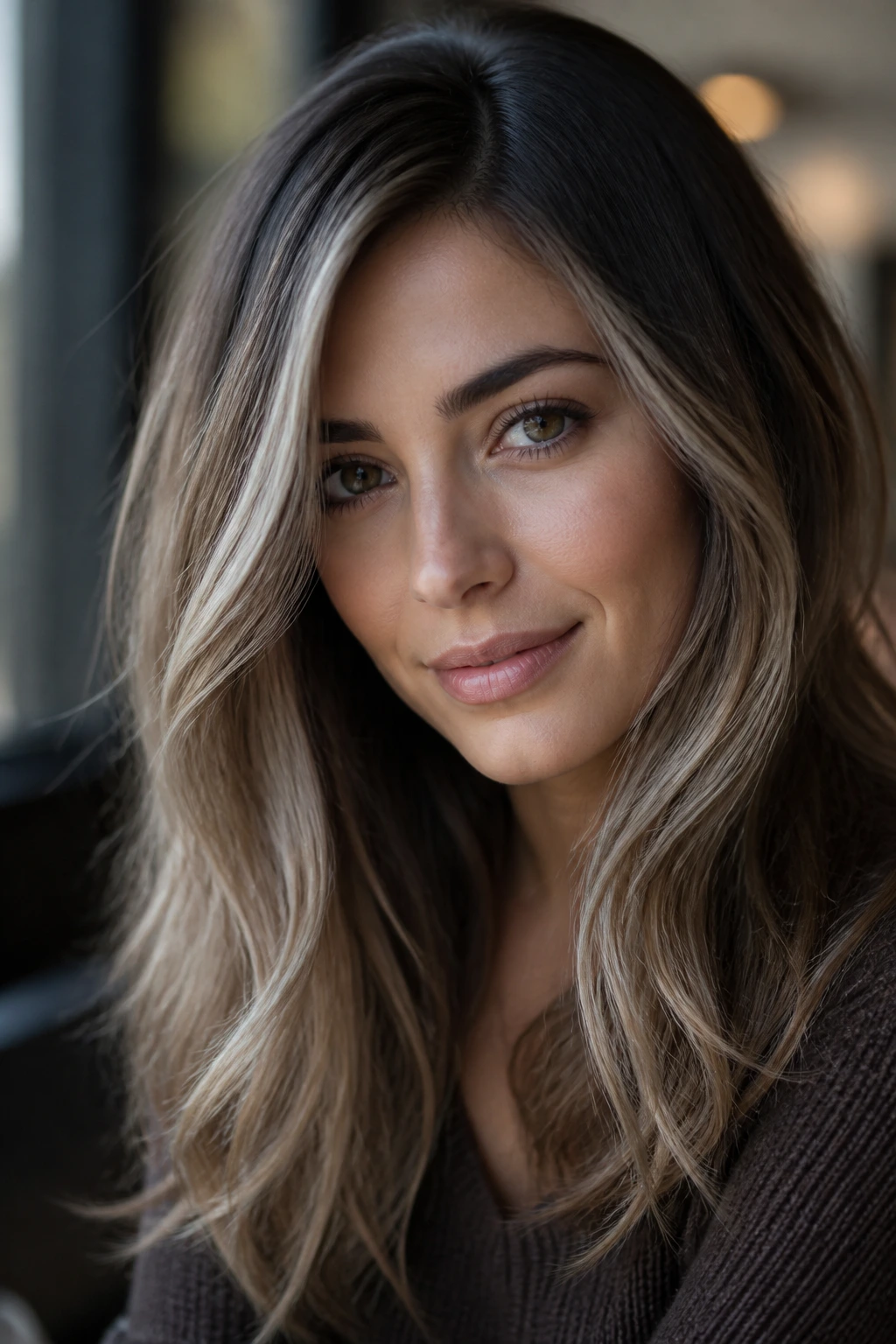
Icy brunette balayage gives you brightness without crossing into warm blonde territory. The base stays brunette, but the ends and surface pieces are lifted enough to pick up a cool, icy sheen. It’s a sharper look than mushroom brown, and cool skin usually wears that contrast well.
- Best for: people who want a lighter result but still want the brunette anchor.
- Ask for: brunette roots with lifted ash-blonde balayage pieces toned cool.
- Watch for: too much lift at the ends if your hair is porous; it can go pale and hollow.
This version looks best with movement. Soft waves keep the icy pieces from reading streaky, while a straight blowout can make the contrast feel more deliberate. Either way, the tone should stay cool, not frosty-white.
13. Cool Walnut
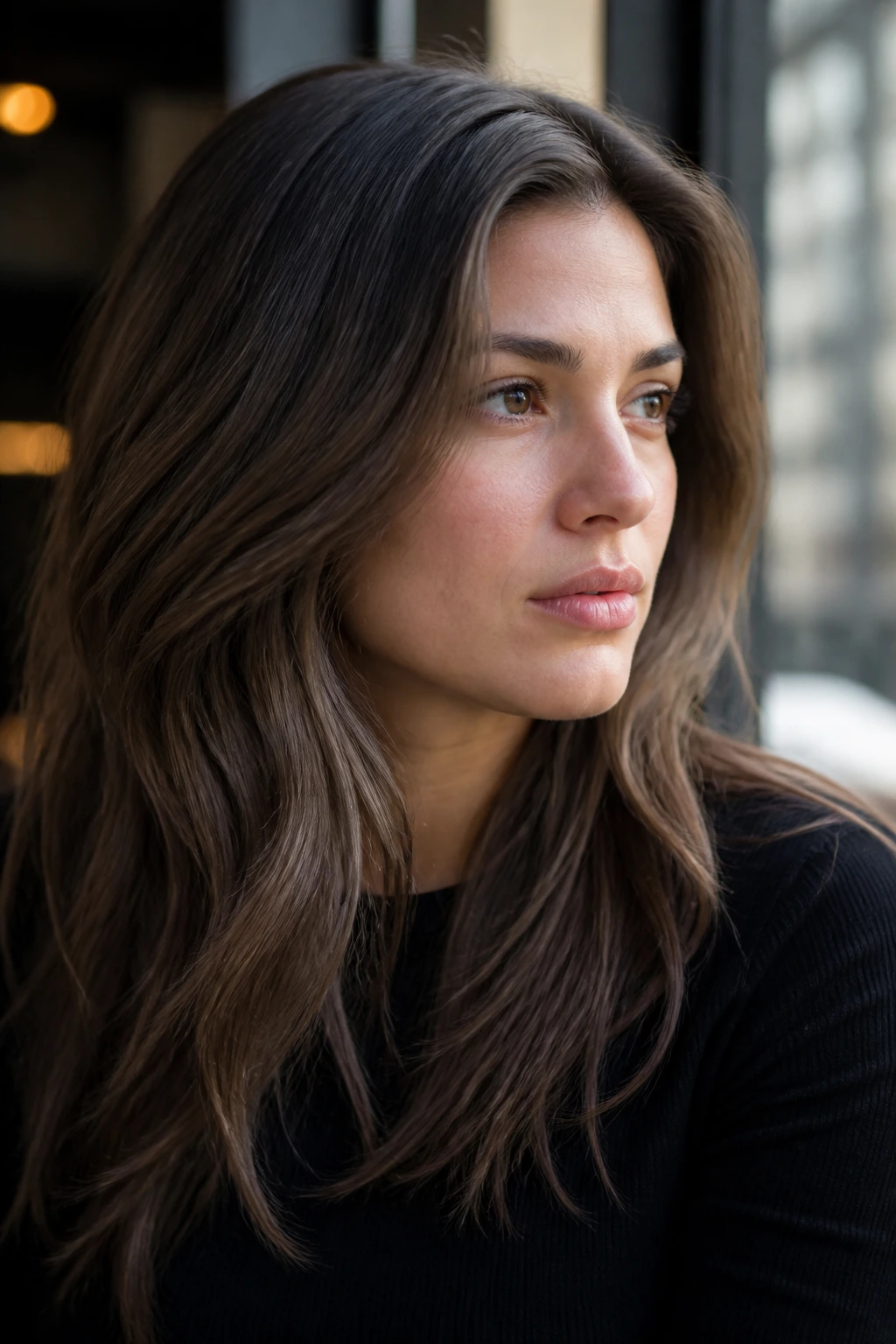
Cool walnut is the shade for people who want something believable. It’s brown, but the brown leans toward smoke instead of syrup, which means it sits nicely against cool skin and still looks like hair, not toner. The finish feels polished without shouting.
It’s a good middle-ground shade for someone moving away from warm chestnut or rich auburn. The color stays friendly to natural growth, so root regrowth does not scream at you in week two. If your brows are dark and your complexion has pink undertones, cool walnut often lands in the sweet spot.
14. Graphite Brown
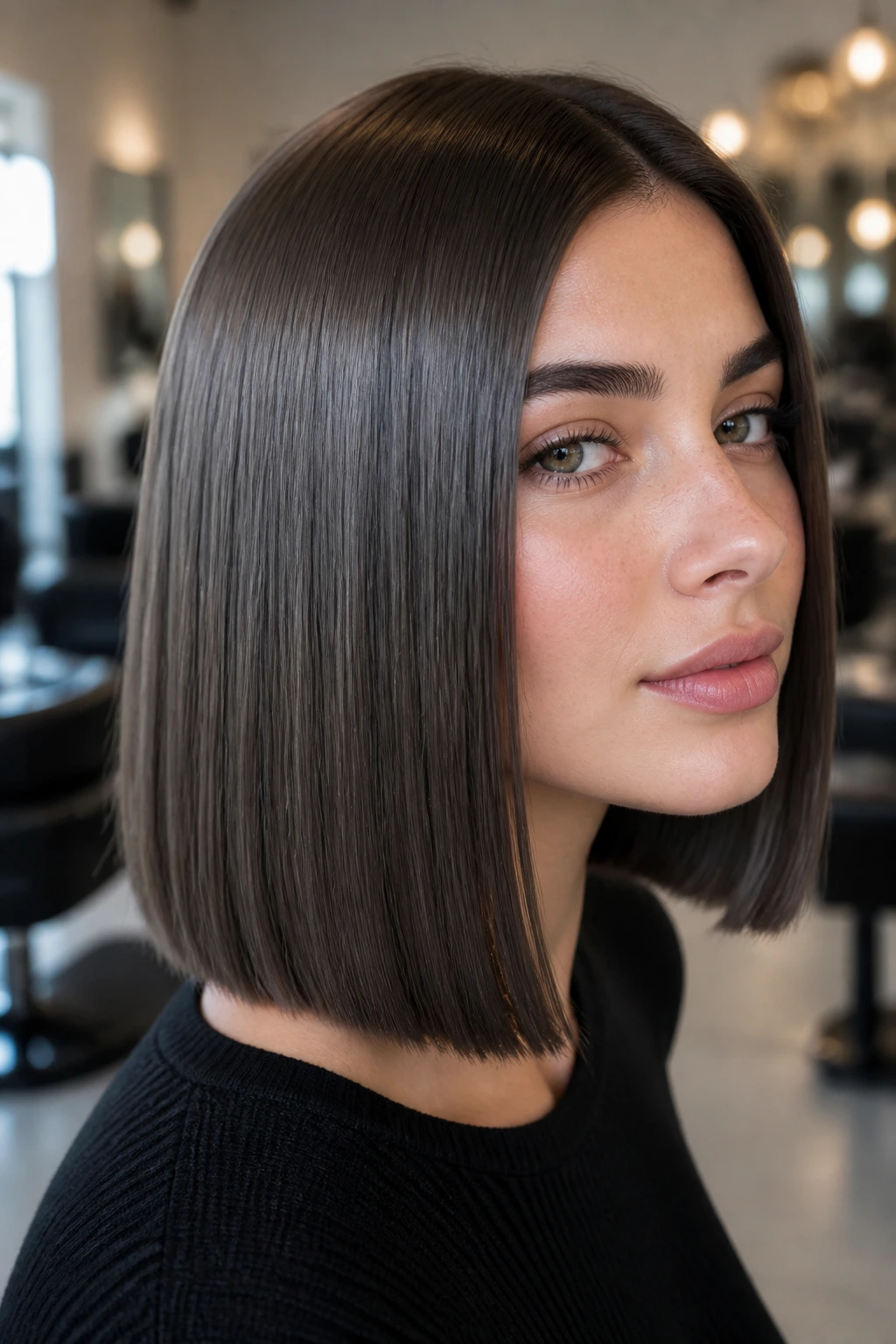
Graphite brown goes darker and more metallic. Think deep brunette with a steel-like sheen, not flat black. On cool skin, the effect is clean and crisp, especially if your hair is thick enough to hold the reflective surface.
- Best for: straight hair, blunt cuts, and strong facial contrast.
- Ask for: a deep brunette base finished with graphite gloss through the mids and ends.
- Watch for: heavy buildup from styling creams, which can mute the metallic finish fast.
This shade needs shine to work. A lightweight serum and a smooth blowout help the graphite read as intentional instead of dusty. If your hair tends to frizz, keep the layers controlled so the tone can stay sleek.
15. Oyster Brown
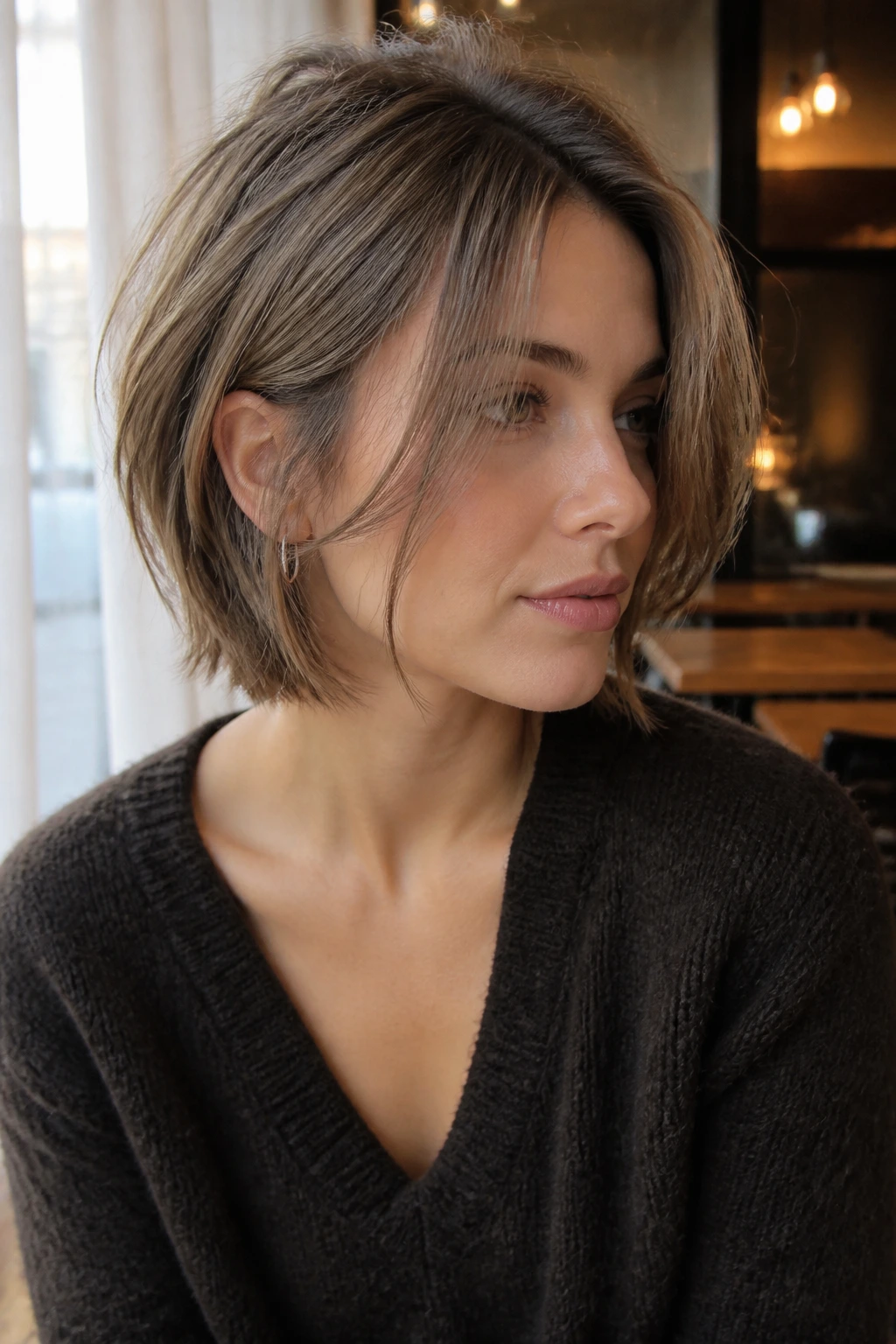
Oyster brown sits between pearl and taupe. It feels airy, shell-like, and cool without going silvery or pale. On cool skin, it softens the overall look and works especially well when you want the hair color to stay calm near the face.
This one is lovely on shorter cuts because the shape of the haircut shows off the reflective cool tone. Ask for a translucent glaze rather than a dense color block. The finish should look like light passing over brown stone, not a heavy paint job.
16. Dove Brown
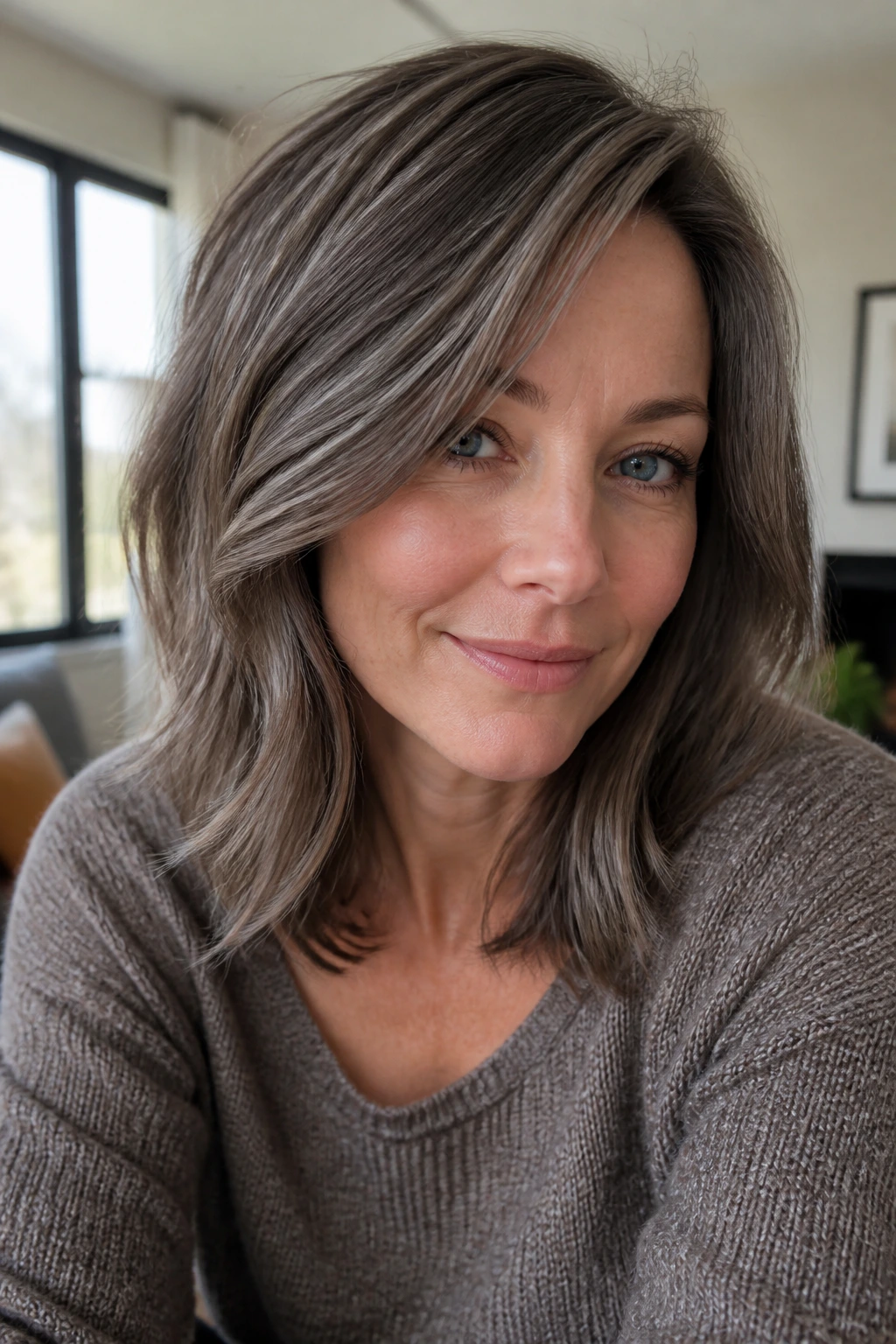
Dove brown is lighter and softer than most of the shades here. It carries a feather-light gray-brown cast that can make cool skin look smoother and less red. The shade is especially kind to fine hair, which can lose visual weight fast if the color gets too dark.
- Best for: fine strands, softer features, and shoulder-length cuts.
- Ask for: a light brown base cooled with a dove-gray gloss.
- Watch for: lifting too pale; once the brown side disappears, the shade can look washed out.
This is one of those colors that looks better when it moves. A little texture spray, a soft wave, and a loose part all help keep it from reading like one flat sheet.
17. Espresso with Silver Ends
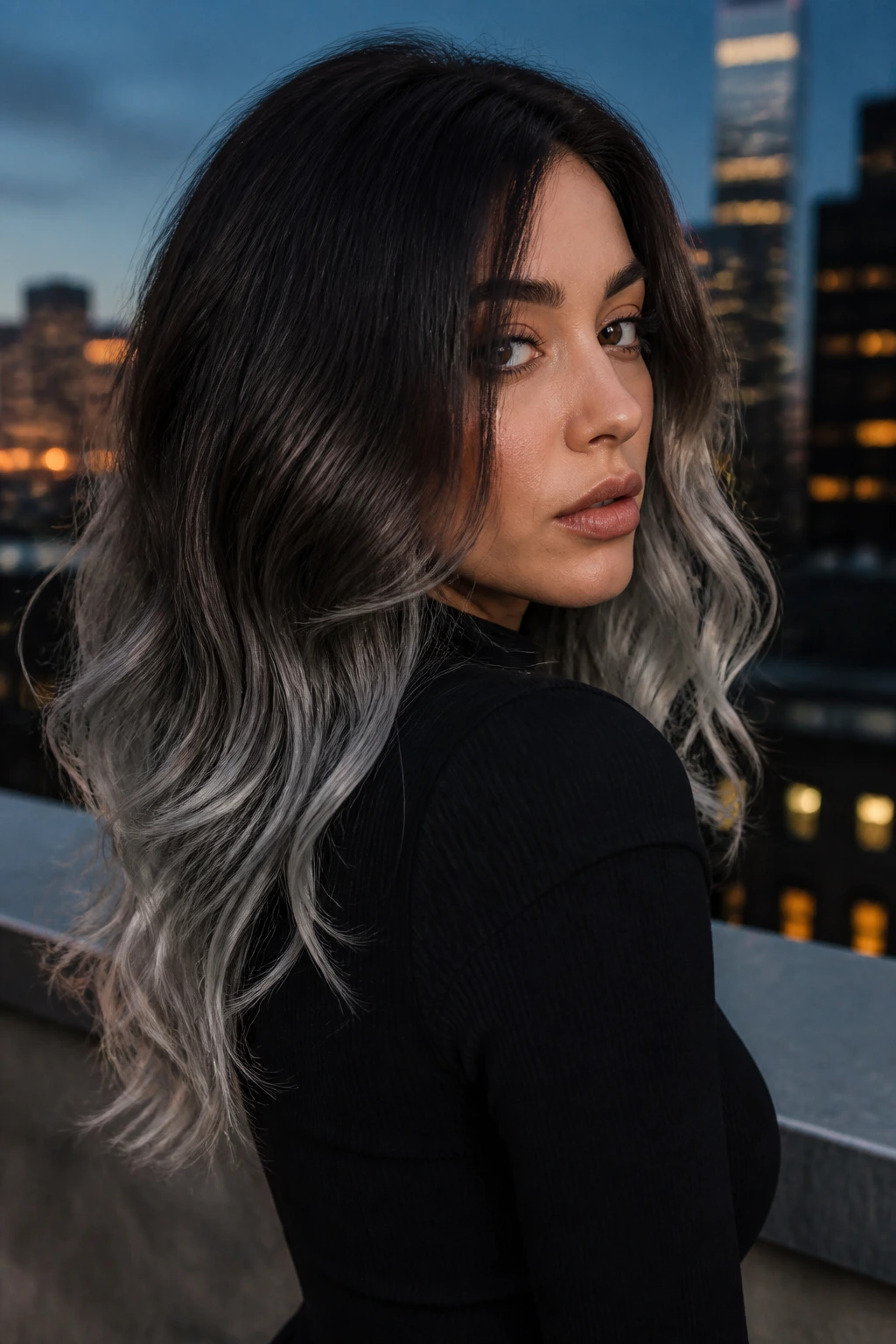
Espresso with silver ends is the bolder cousin in the family. The deep root color keeps the hair grounded, and the silver at the bottom gives you a clear cool finish without touching the whole head. On cool skin, the contrast can look sharp in the good way.
This shade works when you want a visible style choice, not a whisper. Keep the transition from dark to light blurred with a shadow melt so the ends don’t look chopped off. If your hair is very curly, the silver ends should be soft and thin, because curls magnify every line.
18. Ash Mushroom Lob
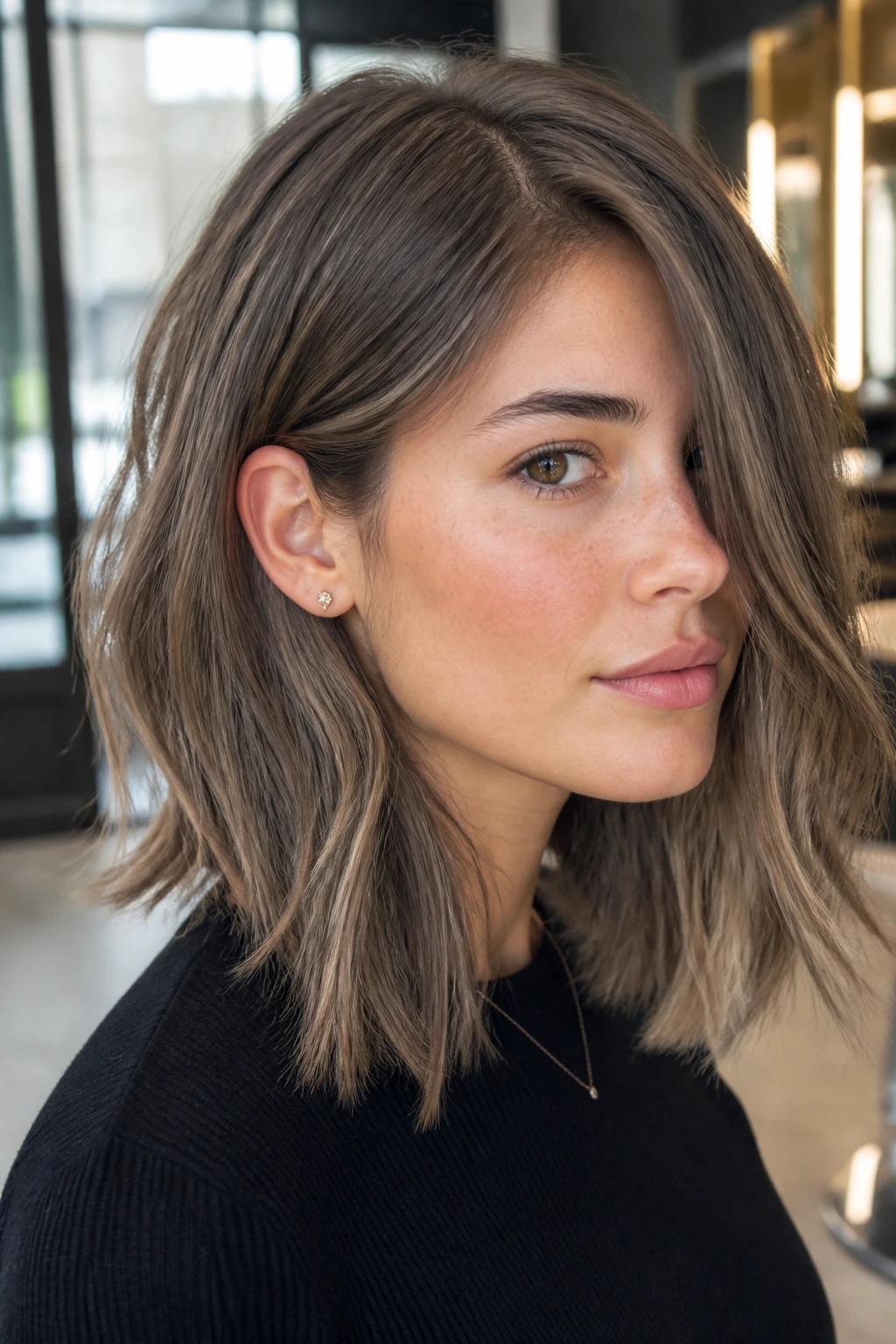
An ash mushroom lob takes the softness of mushroom brown and sharpens it a little. The lob gives the color a clean frame, and the ash layer keeps the overall tone cool enough for pink or blue undertones. It’s the kind of shade that looks expensive in a quick mirror check and still holds up in daylight.
- Best for: collarbone-length cuts with movement.
- Ask for: mushroom brown with a stronger ash glaze through the surface layers.
- Watch for: too much beige near the ends, which can warm up the finish and dull the cool effect.
A lob does half the styling work here. Tuck one side behind the ear, leave the other loose, and the brown-gray shift shows itself without much fuss.
19. Cool Bronde with Gray Veils
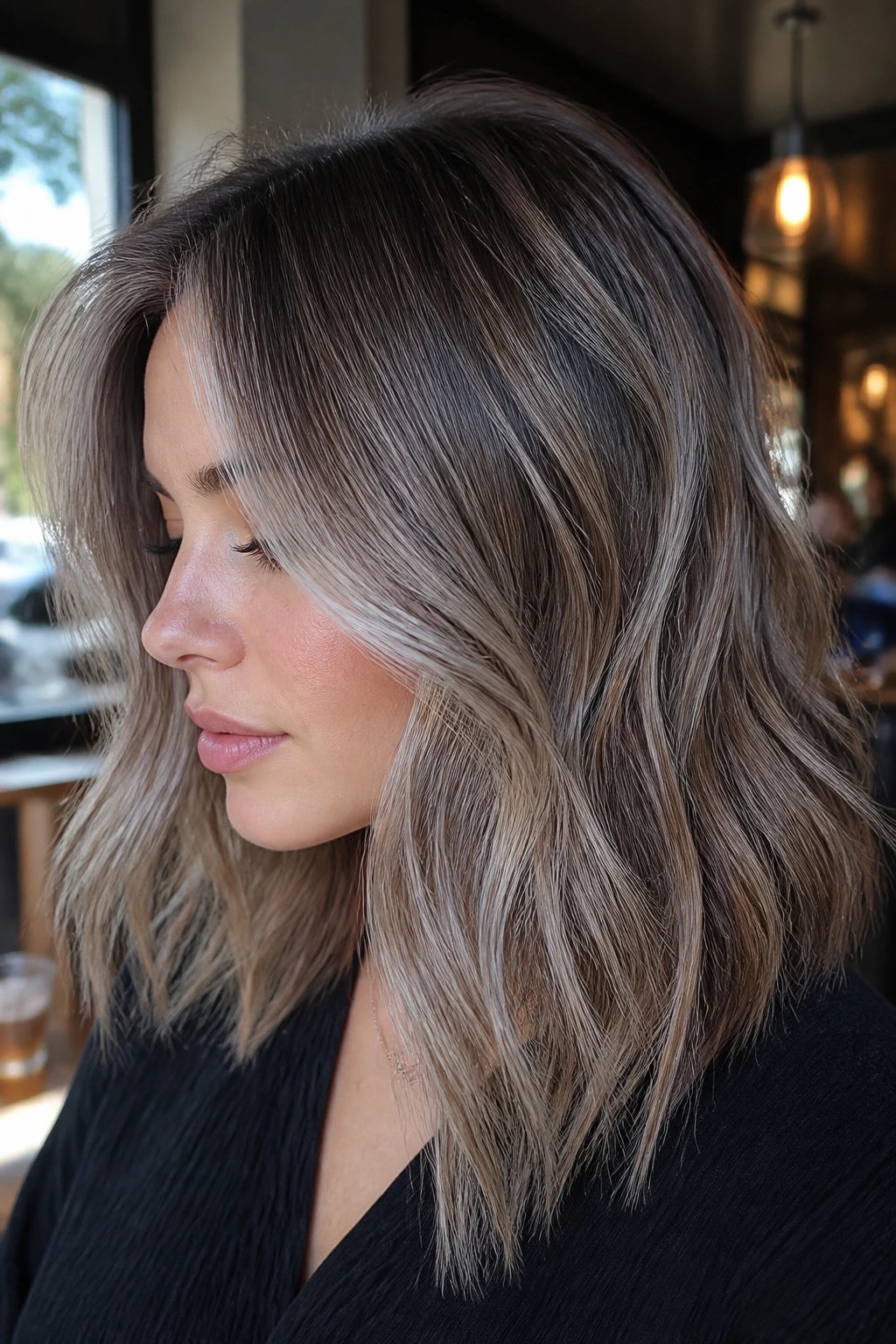
Cool bronde with gray veils works for people who want a little brightness without leaving brunette territory. The bronde base keeps the result lighter, while the gray veils slide through the top layers and around the face. On cool skin, that keeps the light from turning honey-gold.
This is a good bridge shade if your hair is between brown and dark blonde. Ask for the veils to sit mostly on the outside of the haircut, not buried everywhere, so the gray reads as motion. It’s a smart choice when you want to soften grow-out and keep the color feeling airy.
20. Slate Ombré
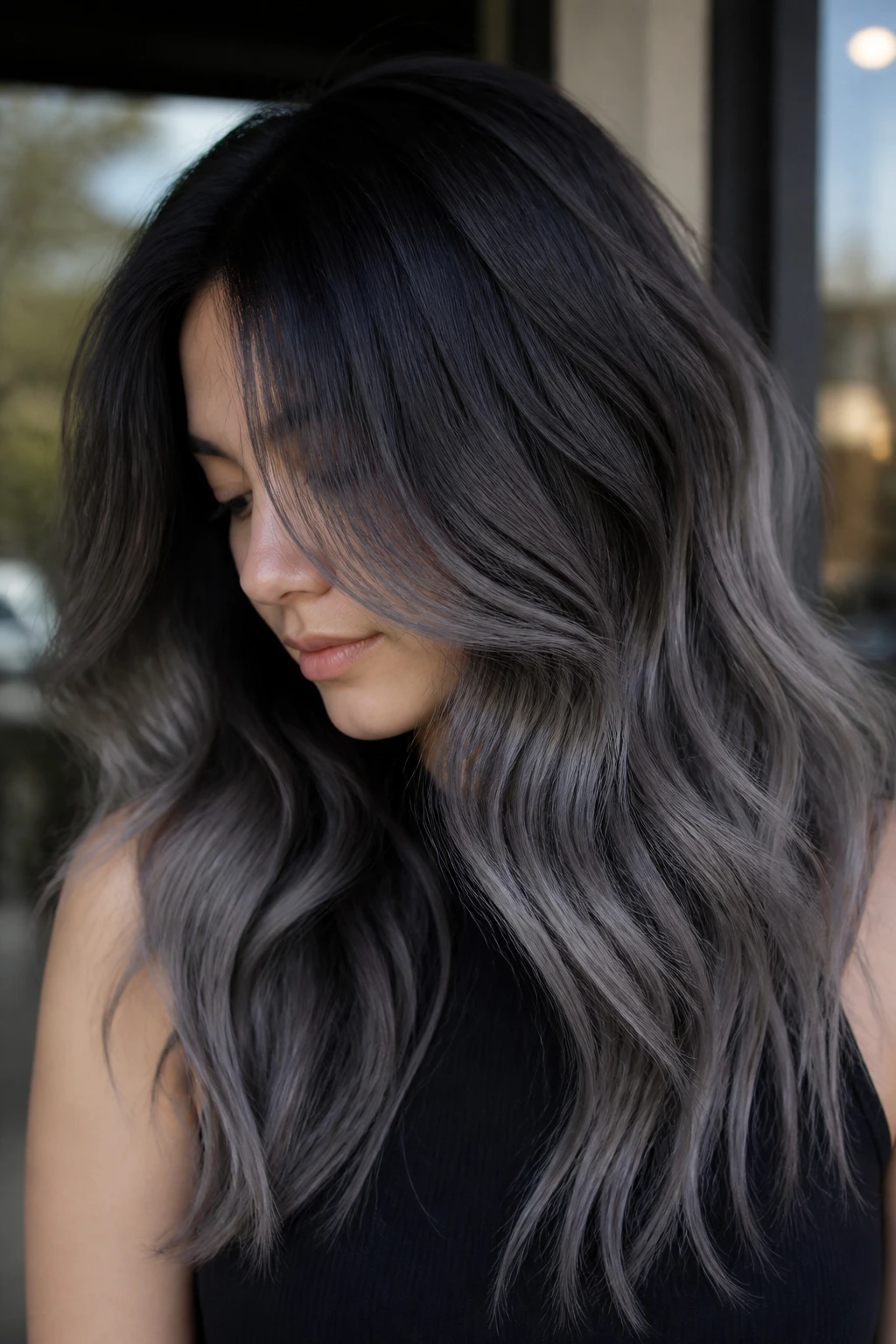
Slate ombré is more dramatic, but it still stays in the cool family. The roots remain a deep brunette, then the color fades into slate at the lengths. On cool skin, the smoky fade looks strong without the warmth that usually sneaks into ombré.
- Best for: long hair and people who like visible contrast.
- Ask for: a deep root melt into slate-toned ends with no gold through the transition.
- Watch for: too much lightening at the bottom, which can turn the slate thin and lifeless.
This shade loves a long, straight finish or big loose curls. The fade has room to breathe that way. Shorter hair can wear it too, but the transition needs to be tighter or it can look accidental.
21. Smoky Walnut Money Piece
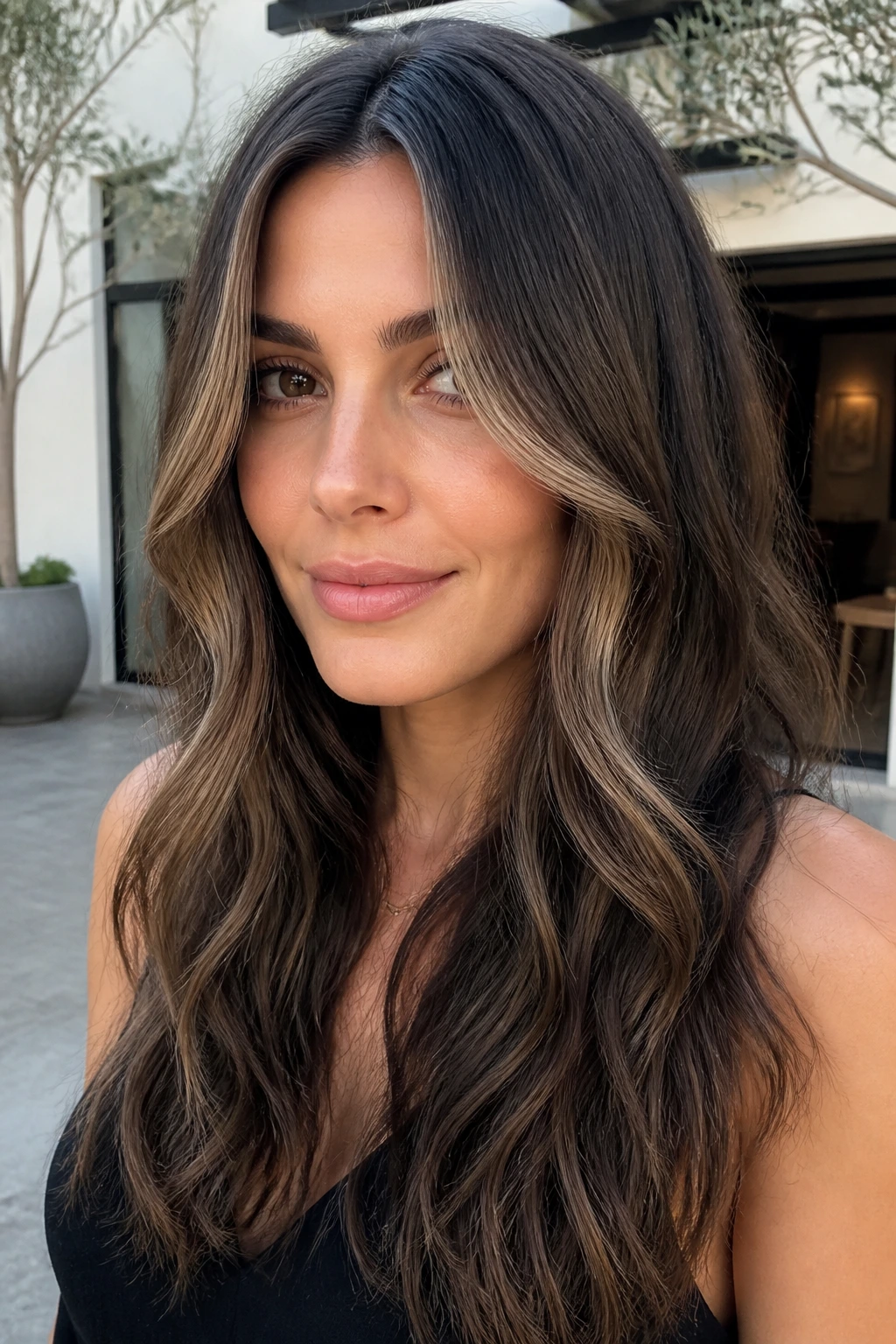
The money piece changes the whole mood here. Smoky walnut keeps the base rich and cool, then a lighter front section opens the face without jumping into warm blonde. On cool skin, it gives you brightness near the eyes while the rest of the hair stays grounded.
This is a good compromise if you want something noticeable but not high-maintenance everywhere. Keep the money piece one or two levels lighter than the base and tone it cool, not pale yellow. That little front section should look soft in daylight and clean in selfies.
22. Soft Mocha Gray
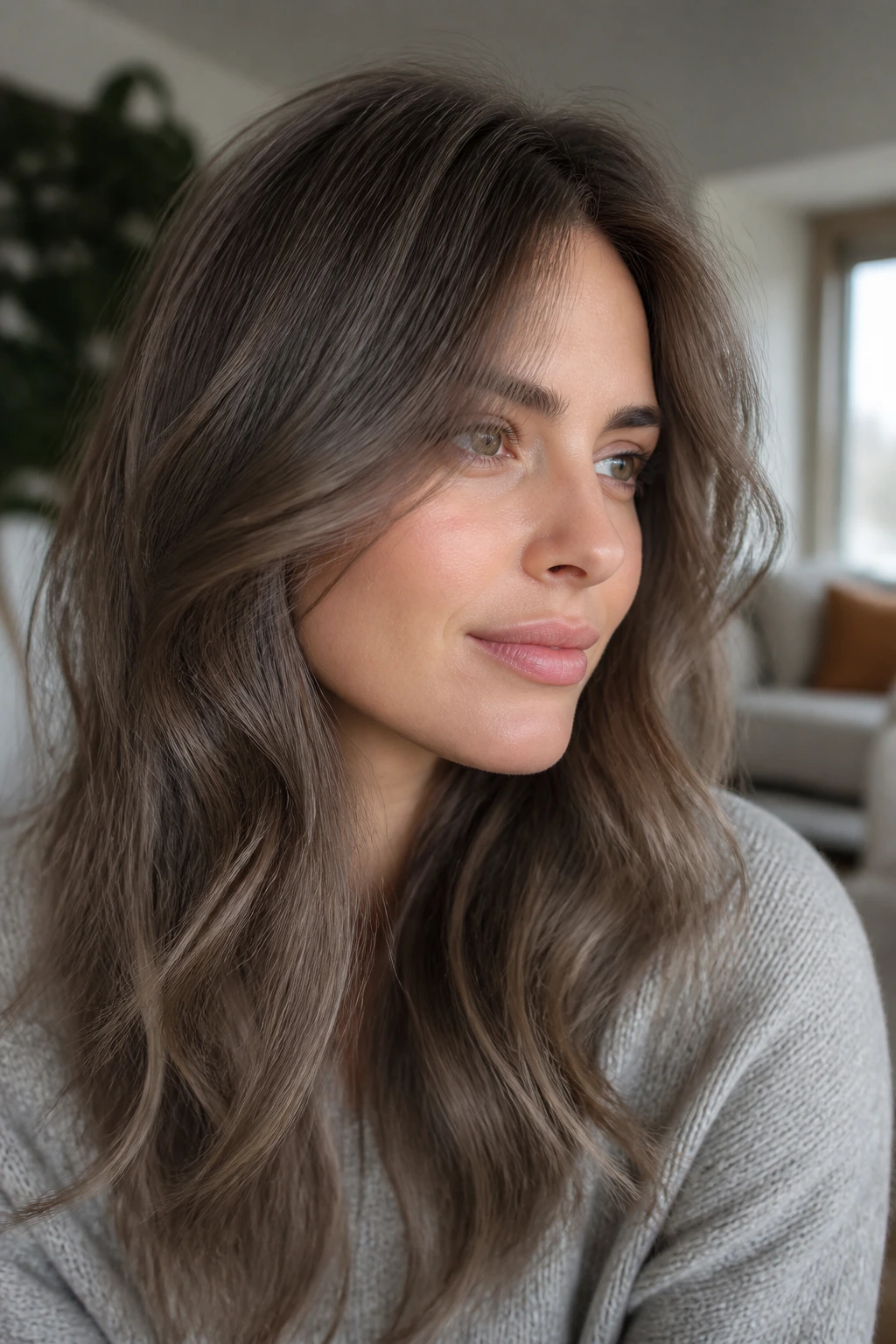
Soft mocha gray is one of the gentlest ways to wear this trend. It keeps the mocha base but veils it with enough gray to mute the warmth. On cool skin, that makes the face look less flushed and the whole style feel easy.
- Best for: low-maintenance wearers and first-time cool brunettes.
- Ask for: a mocha demi gloss with gray-beige toning every few weeks.
- Watch for: letting the warm mocha creep back in after repeated washes; it happens faster than people expect.
This color is a good match for hair that you don’t want to fight every morning. If the cut is clean, the shade can stay soft and elegant without much styling.
23. Cool Truffle Brown
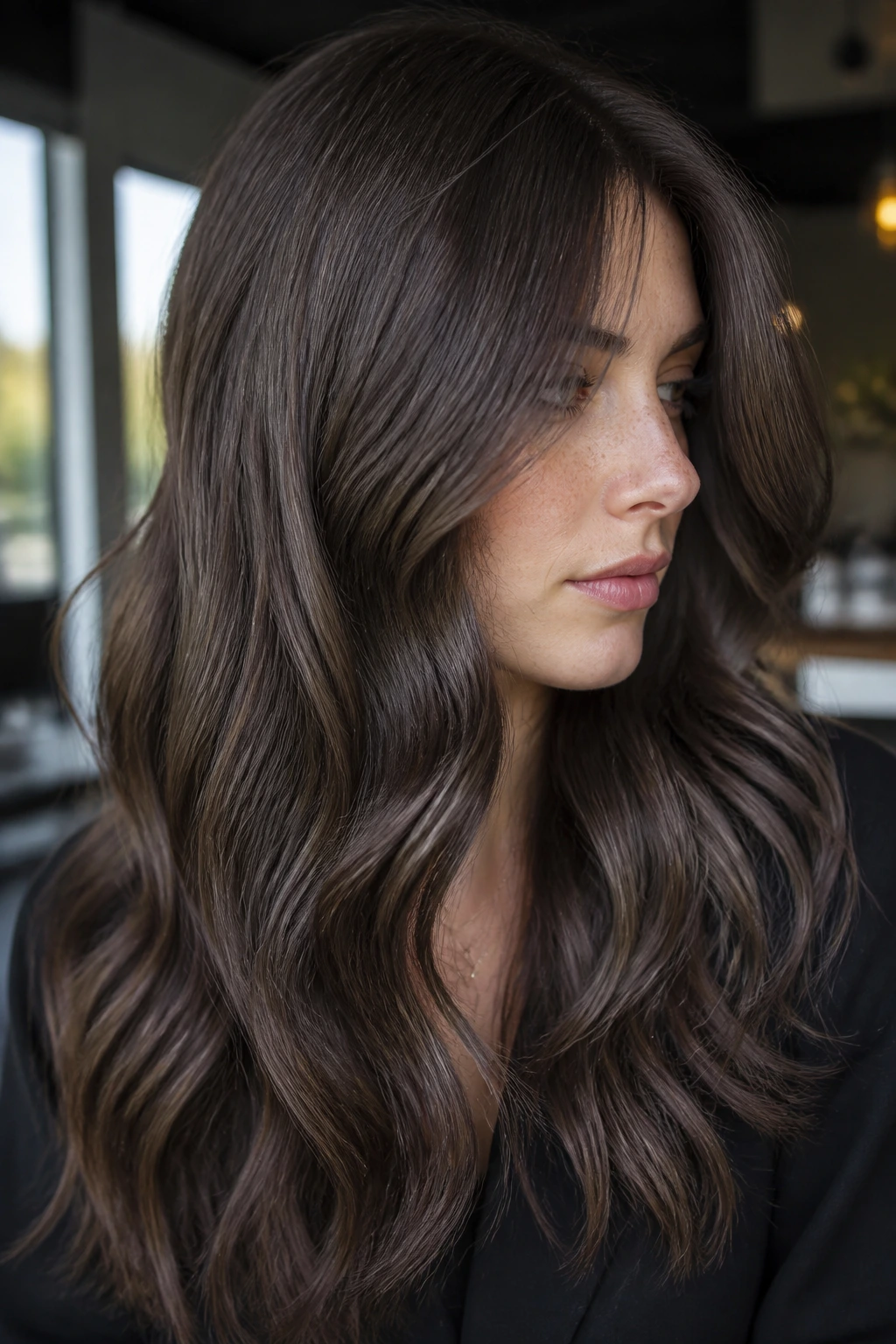
Cool truffle brown looks rich without going sweet. It’s deeper than taupe and softer than espresso, with a velvety cool cast that can make cool skin look smoother. The finish is especially nice on thick hair, where the tone needs enough depth to hold its shape.
The trick is keeping the undertone neutral-cool, not muddy. Ask for a truffle base with a matte ash gloss through the mids and a slightly deeper root shadow. That gives the shade enough structure to avoid the washed-out problem some mid-browns run into.
24. Brushed-Concrete Brown
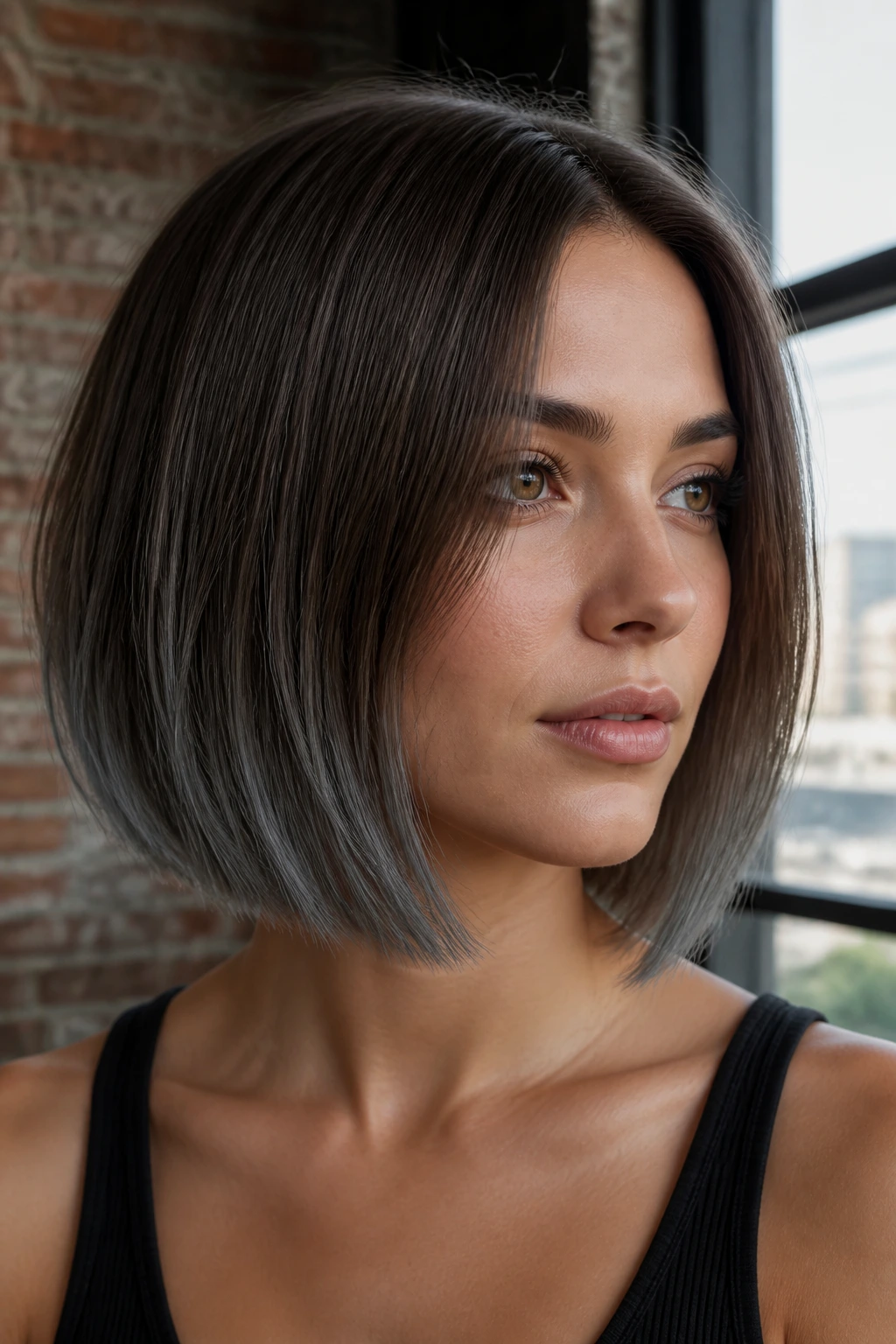
Brushed-concrete brown is for people who like an editorial edge. It leans matte, cool, and muted, with just enough gray in the formula to make the finish feel architectural. On cool skin, it can look very clean, but only if the haircut has shape.
- Best for: sharp bobs, crops, or straight long layers.
- Ask for: a brown base cooled with slate and a touch of graphite at the ends.
- Watch for: dry ends, because a matte-looking shade can go dull if the hair itself is rough.
This is not the shade for a fussy, over-curled style. It needs a clean line and a little polish. If you like crisp outlines and black clothing, it will feel right at home.
25. Metallic Brunette
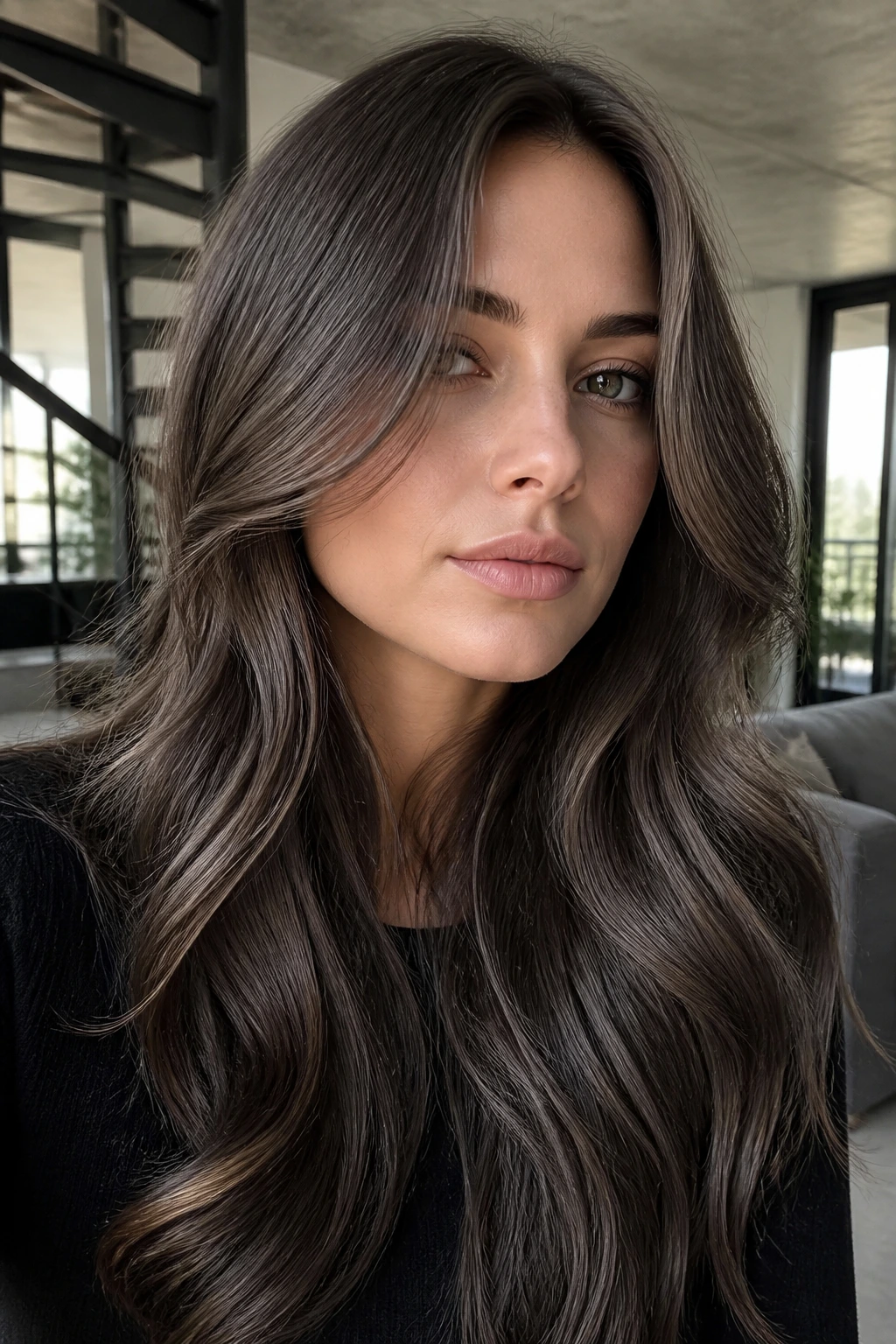
Metallic brunette brings shine back into the picture. The cool brown base catches light with a reflective finish, and the metal-like gloss keeps the shade from sinking into heaviness. On cool skin, it reads modern without needing any warmth to prop it up.
This works especially well if your hair is healthy or freshly trimmed. Split ends steal the metallic effect fast, so the cut matters more here than people think. Ask for a cool gloss rather than a dense opaque color; the reflection is what makes the shade.
26. Smoke-Toned Pixie
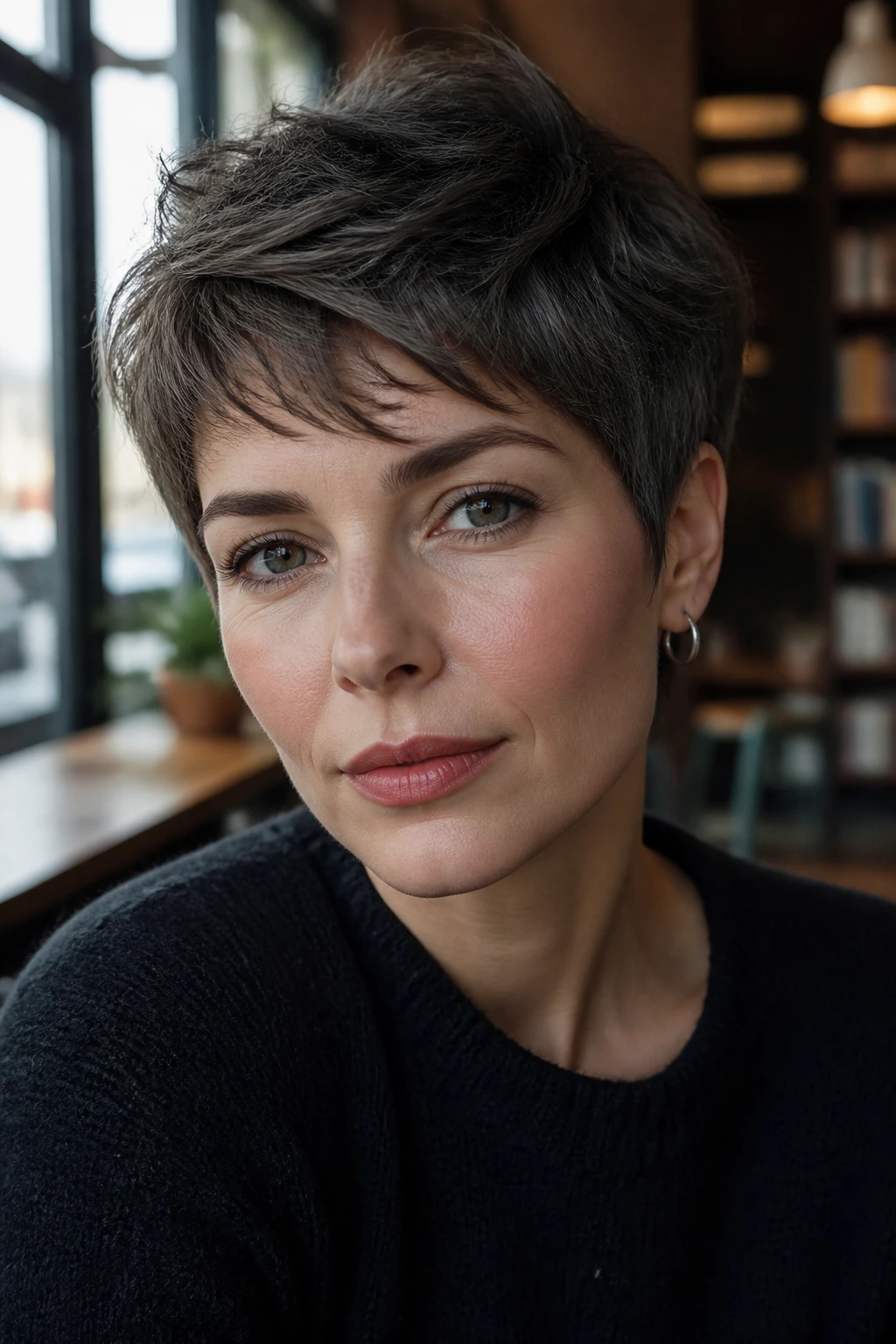
A pixie cut changes how brown-gray reads. There’s less length, so the tone has to do the visual work, and smoke-toned brunettes handle that nicely. On cool skin, the close crop makes the cheekbones and eyes stand out while the hair stays understated.
- Best for: short crops with texture on top.
- Ask for: smoky lowlights or a cool gloss that keeps the top pieces from looking flat.
- Watch for: too much tonal contrast near the temples, which can make the cut look patchy.
This is a good option if you want low-maintenance color and a sharp silhouette. A little paste or cream on the ends is enough. The color should do the subtle work; the cut should do the rest.
27. Twilight Brown
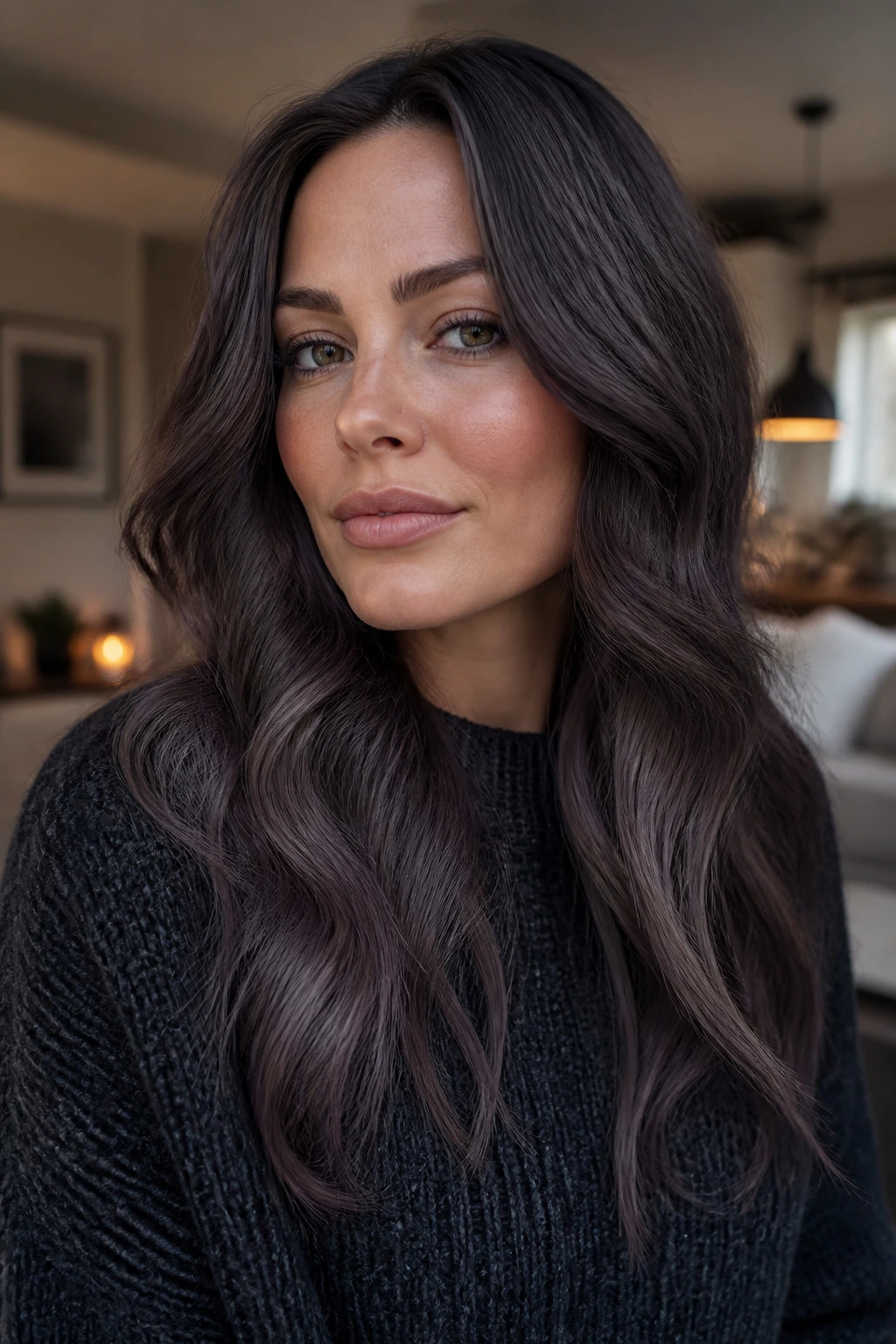
Twilight brown lives between brown and blue-gray, which sounds specific because it is. The shade looks softer than graphite and deeper than mushroom, with a dusk-like cast that sits very nicely on cool skin. It’s a pretty choice if you want mood without heaviness.
This one looks especially good on wavy hair, because the motion makes the gray-brown shift visible. Ask for a cool brunette base with a blue-violet sheen rather than a bright silver overlay. Too much silver can make the shade feel metallic in a brittle way. Twilight brown should feel soft at the edges.
28. Pewter Brunette
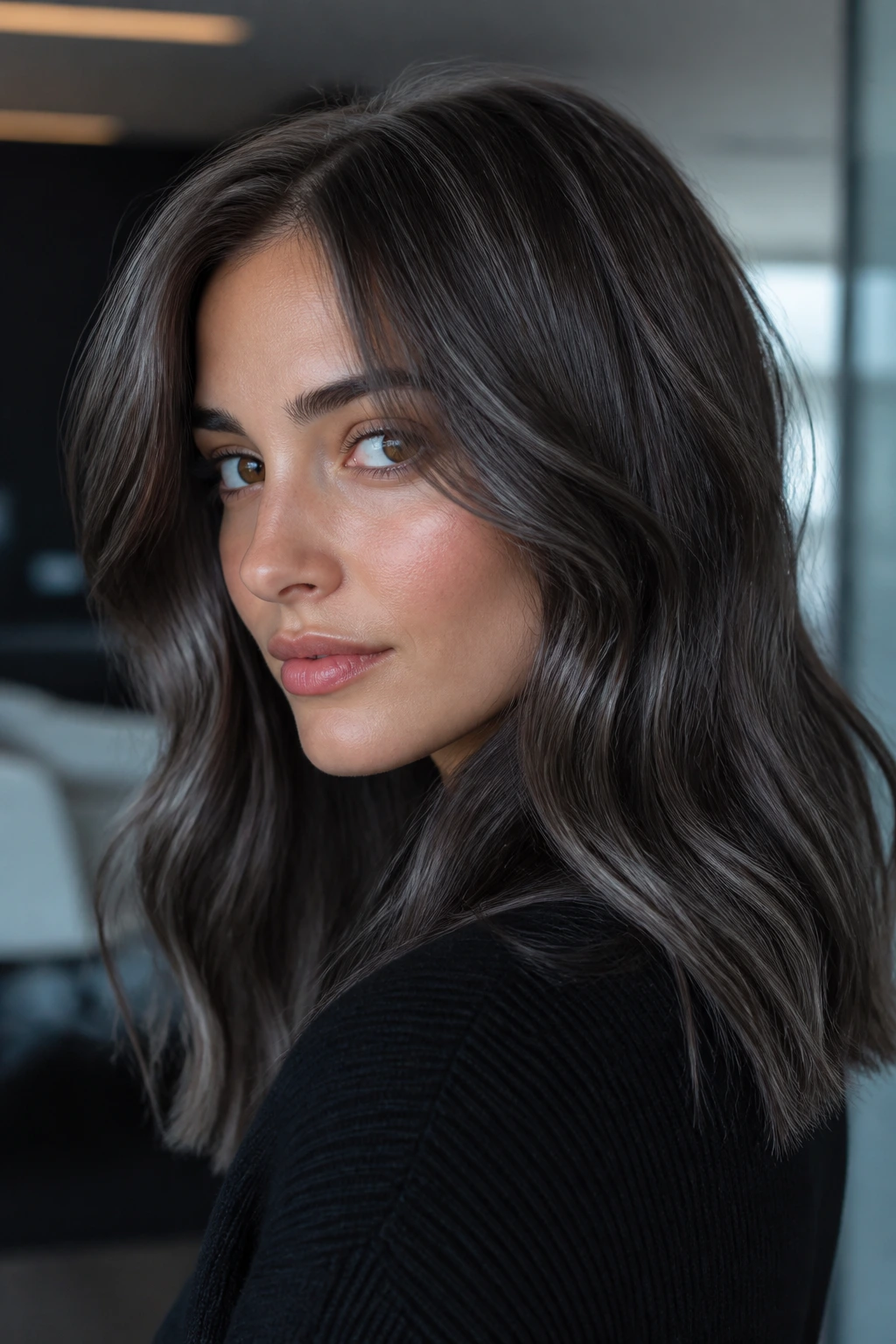
Pewter brunette is the strongest statement in the group. It gives you brunette depth with a cool, silvery surface that can look almost luminous in the right light. On cool skin, the shade feels sharp and polished, especially when the makeup stays cool too.
- Best for: strong features, cool undertones, and anyone who wants a noticeable finish.
- Ask for: a brunette base with a pewter gloss and very controlled light pieces.
- Watch for: over-lightening, which can push the color into silver-blonde territory and lose the brown anchor.
This is the shade I’d save for someone who likes a bit of edge. It looks best when the style is clean and the color is kept cool from root to end. No warmth, no brass, no apology.
How Brown Gray Stays Cool Without Turning Muddy
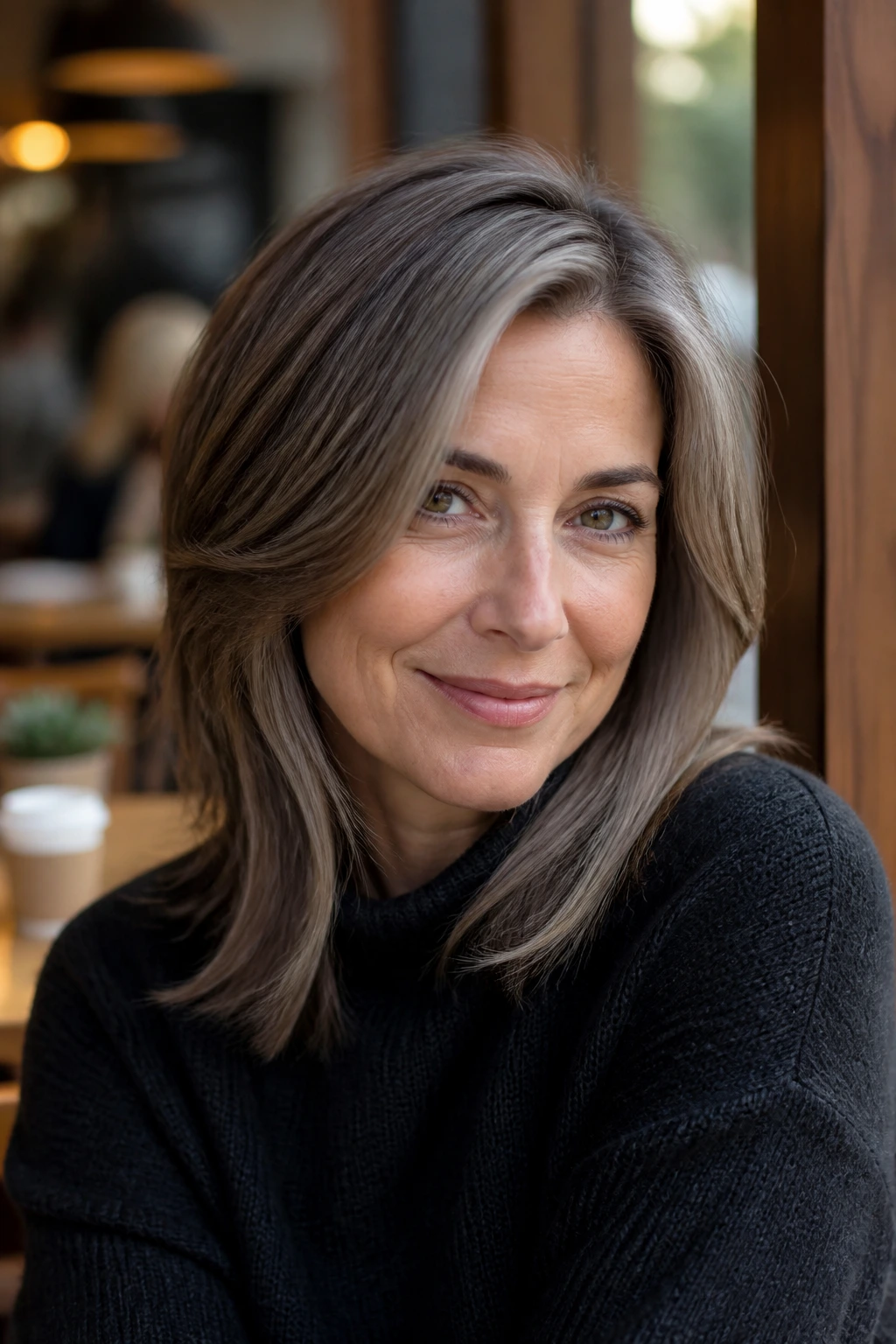
The whole trick with brown gray hair is balance. Too much warmth and the color starts fighting cool skin. Too much gray and it goes hollow, like the hair lost its pulse. The good shades keep a brown base strong enough to feel alive, then add ash, slate, taupe, or graphite where the eye will read movement.
That usually means the gray lives in the gloss, the ribbons, the lowlights, or the ends rather than in one flat all-over coat. Blue and violet pigments help mute orange, while a touch of beige or taupe keeps the result from looking icy in a harsh way. If your hair is porous or previously lightened, the cool pigment can bite fast, so a softer formula is safer than a heavy toner.
I also think the haircut matters more than people admit. A blunt bob can handle a darker graphite finish. Long layered hair usually looks better when the smoke is broken up with ribbons or a root melt. One-shade brunettes can work, sure, but dimension is what keeps cool tones from reading like an error under daylight.
Essential Tools for a Salon Consultation That Actually Helps
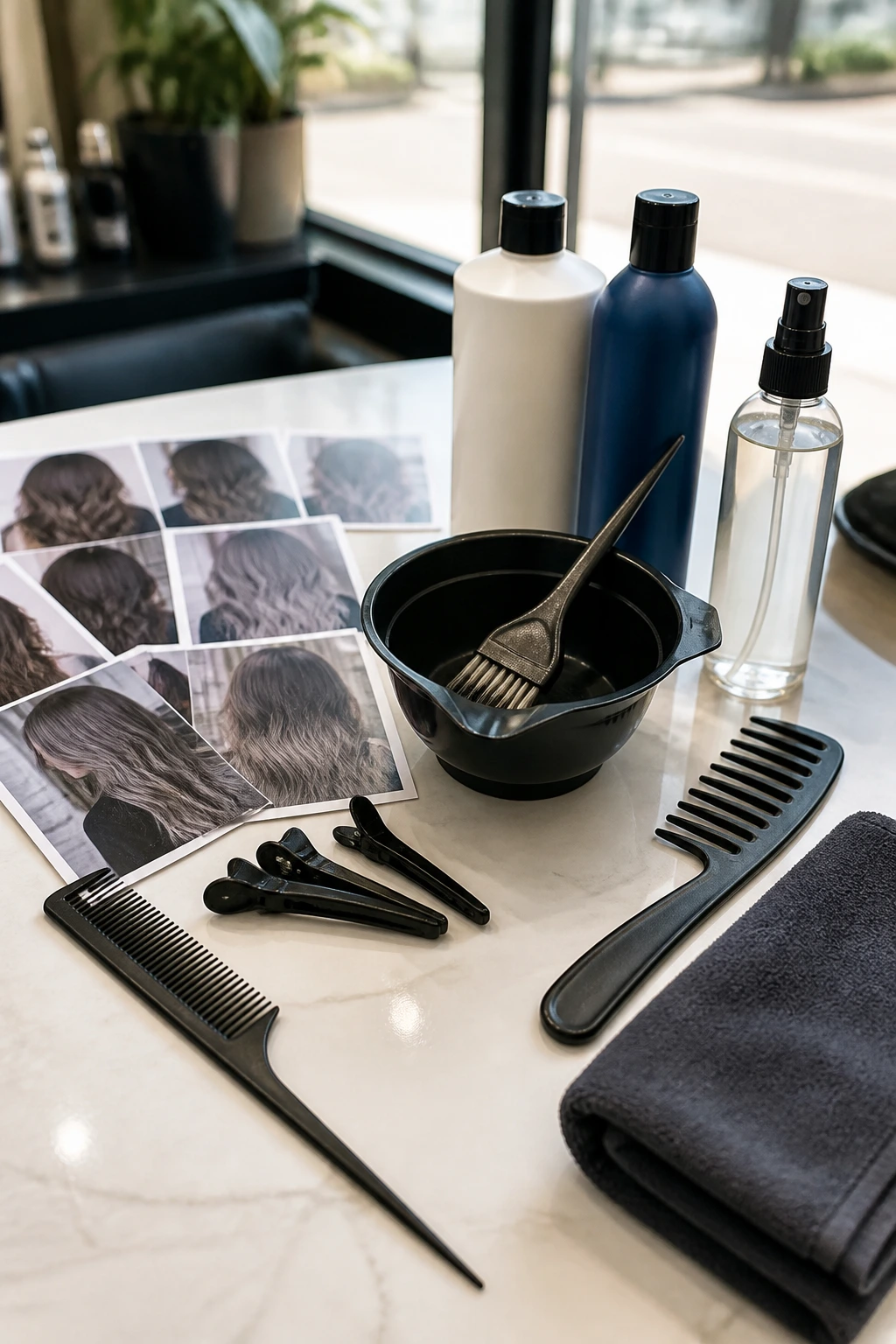
- Printed reference photos: Bring two or three images that show both the depth and the tone you want, because one photo often nails one thing and misses the other.
- Daylight mirror or window spot: Check swatches near natural light; bathroom bulbs can make a cool brown look warmer than it is.
- Fine-tooth tail comb: Useful for sectioning a part or showing where you want the brightest pieces to land around the face.
- Hair clips: Keep sections organized if you’re doing a gloss, root smudge, or maintenance mask at home.
- Tint brush and bowl: Handy for color-depositing masks or quick toner refreshes.
- Sulfate-free shampoo: Helps the cool tones last longer than a harsh cleanser.
- Blue-violet toning shampoo: Good for knocking out brass in brown bases that pick up orange after a few washes.
- Wide-tooth comb: Gentler on curls and porous ends when you’re working conditioner or a color mask through the hair.
- Heat protectant spray: Colored brown-gray hair loses its clean finish fast when it’s hit with hot tools unprotected.
- Microfiber towel: Cuts frizz and helps the surface stay smoother after washing.
Reading Brown Gray Swatches Without Guessing
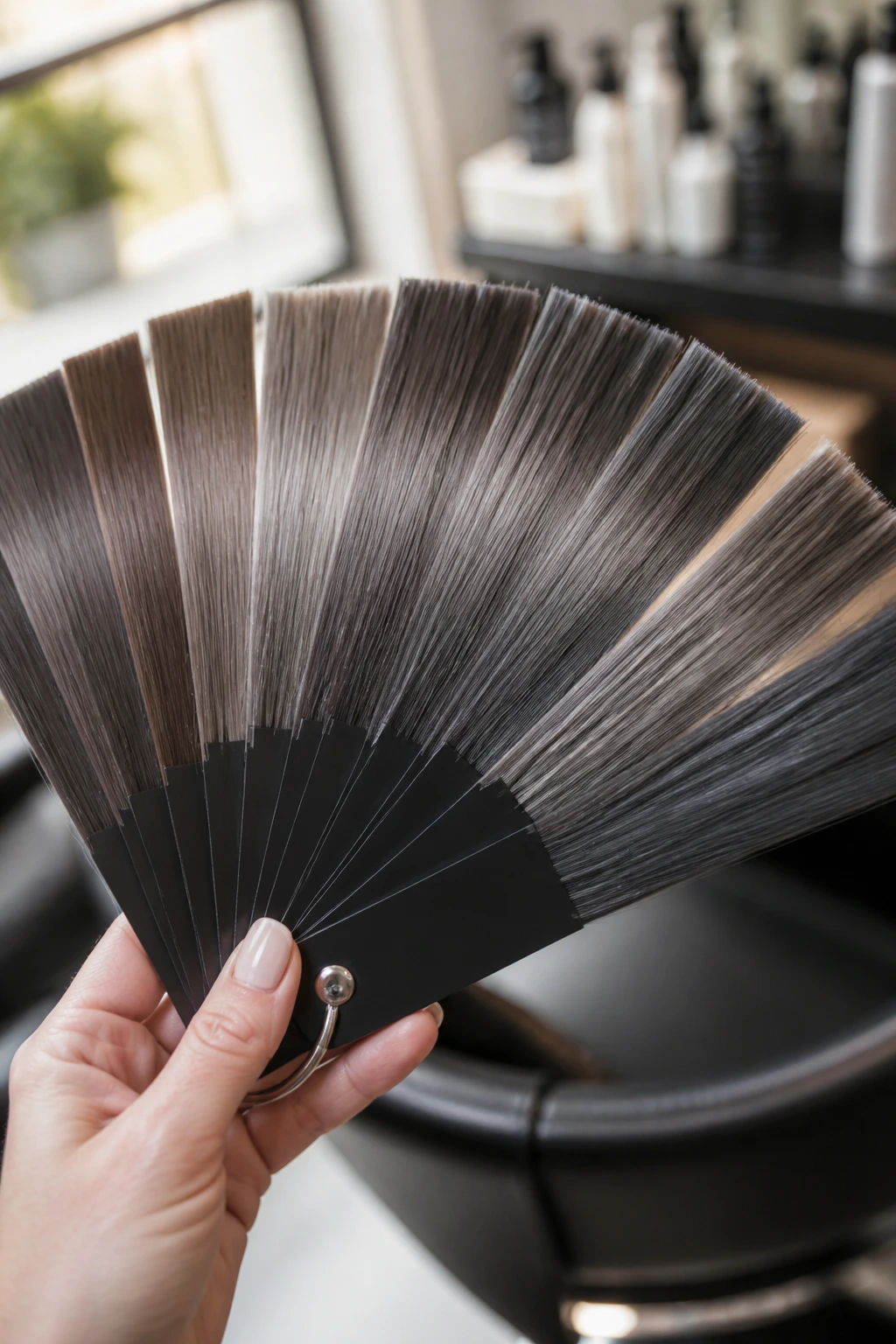
Read the level first
Level matters before tone does. A level 4 smoky brunette will look completely different from a level 6 mushroom brown, even if both are labeled “cool.” If you want dark and dramatic, stay in the 3-4 range. If you want air and movement, 5-7 usually gives you more room to see the gray undertone.
Read the undertone second
Look for ash, slate, graphite, mushroom, pearl, smoke, or taupe. Avoid formulas that lean gold, honey, copper, or caramel unless you want a hint of warmth on purpose. Cool skin tends to forgive neutral tones, but strong gold can pull red in the face and make the whole color look off.
Bring the right photos
Bring one photo for depth and another for finish. A lot of people show a pale ash blonde and a dark espresso brunette and expect the same result in one appointment. That causes trouble. If your hair is dark, ask how the colorist plans to keep the brown anchor visible while still cooling the tone, because that detail changes everything.
How to Wear Brown Gray Hair With Makeup, Frames, and Clothing
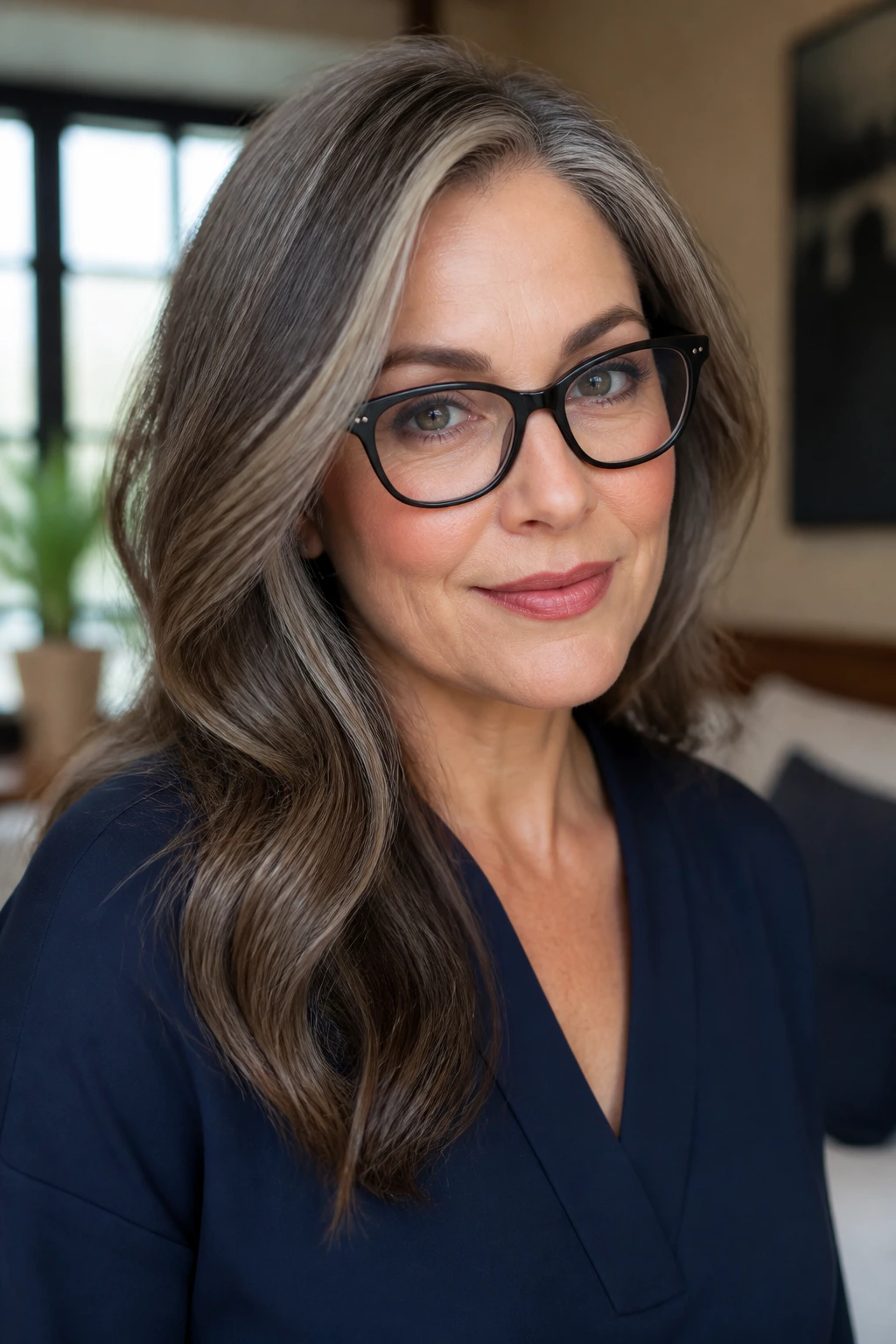
Presentation: A clean middle part, soft bend, or blunt perimeter shows off brown-gray better than overcurled hair. If the color is mushroom, taupe, or dove, loose texture keeps it from looking heavy. If it’s graphite or pewter, a sleek blowout makes the shine look intentional.
Accompaniments: Cool pink blush, berry lipstick, mauve eyeshadow, charcoal knits, navy shirts, black jackets, and silver jewelry all sit neatly beside these tones. Warm peach blush and copper eye shadow can fight the smoke in the hair. That doesn’t mean you can never wear them; it means the hair may look less cool when you do.
Portions: If you want subtle dimension, keep the gray or ash mostly on the surface and around the face. If you want a bolder shift, ask for more of the cool pieces through the mids and ends, where the eye catches movement first. The more gray you add, the more the haircut and styling have to keep the result from feeling flat.
Accessory Pairing: Gunmetal clips, pearl studs, matte black frames, and cool tortoise accents work better here than shiny gold hardware. They echo the tone instead of competing with it.
Extra Tone Boosts and Personal Touches
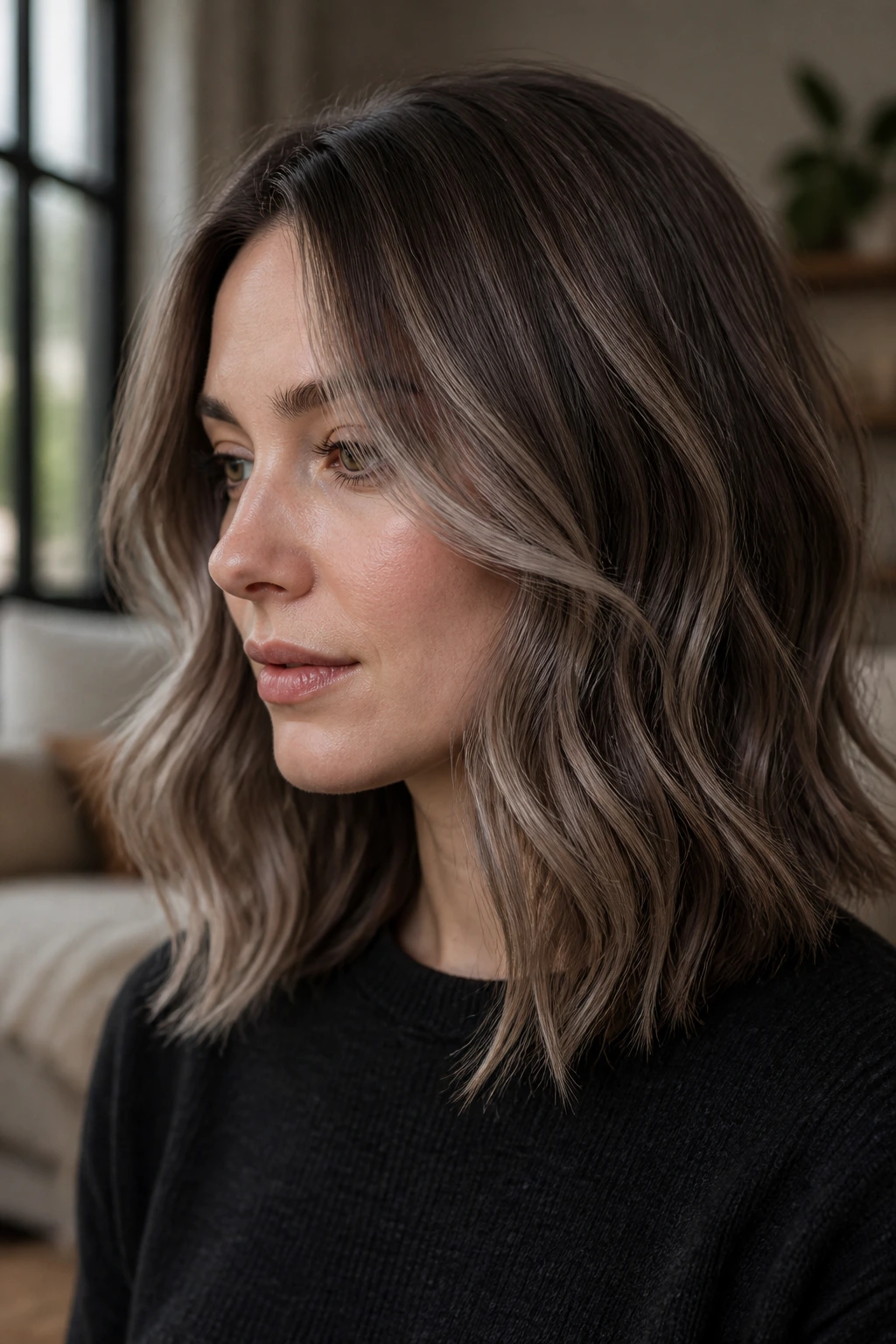
Tone Boost: A clear or slightly cool gloss every few weeks can keep brown-gray shades from slipping warm. If brass starts showing, don’t jump straight to heavy toning shampoo every wash. That usually dries the hair out before it fixes the color.
Placement Trick: Keep the lightest cool pieces where the hair moves: around the eyes, along the part, and through the top layer. That’s where people see the shade first. Deeper pieces underneath can stay a touch darker so the whole head doesn’t go pale.
Styling Finish: Glossy waves show off smoke better than dry texture spray. A little bend through the mids reflects light and makes taupe, slate, and mushroom pieces easier to read. If the hair gets too matte, the gray can disappear into the brunette base.
Make-It-Yours: If your makeup stays minimal, choose mushroom, taupe, or cool walnut. If you love dark liner and berry lipstick, graphite, pewter, or charcoal can handle the stronger contrast. Curly hair usually likes more dimension and slightly deeper roots; straight hair can carry sharper metallic finishes without much fuss.
Common Mistakes That Flatten a Cool Brunette
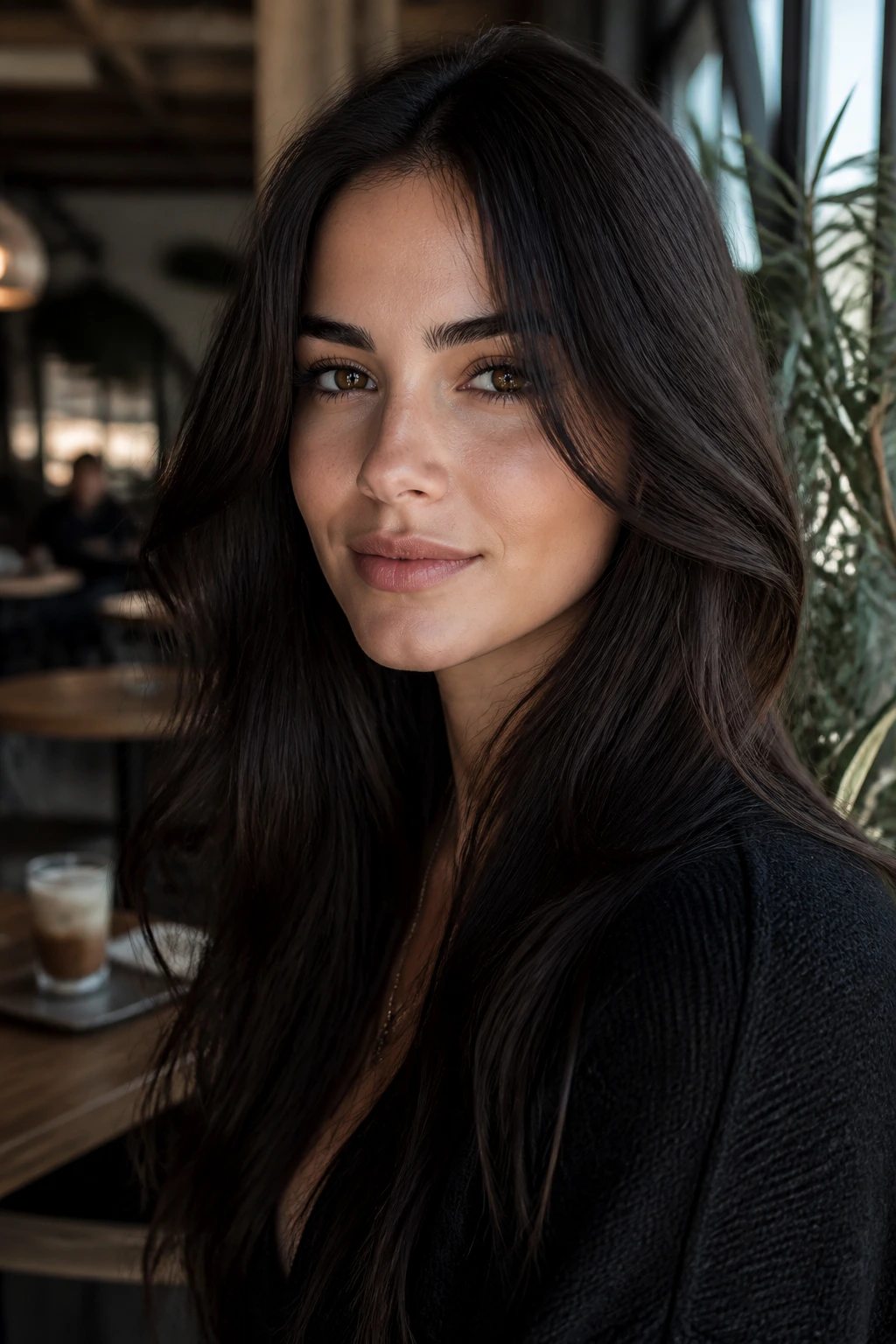
- Picking a brown that is too warm: The hair turns orange or coppery in daylight, and the face looks redder. Fix it by asking for ash, taupe, slate, or graphite rather than chestnut or caramel.
- Going gray from root to ends all at once: The result can look flat and over-toned, especially on porous hair. Ask for gray in ribbons, lowlights, or a gloss layer instead.
- Ignoring your haircut: A one-length cut can hold a smoky tone well, but a soft, layered shape usually shows dimension better. If the cut is fuzzy, the color reads fuzzy too.
- Using purple shampoo too often: It can dull the hair and leave a dusty cast. Use it weekly or every other wash, not as your main cleanser.
- Matching the shade to bathroom lighting: Cool colors can look warmer or flatter under yellow bulbs. Check the tone in daylight before you commit to more ash or more depth.
Variations and Adaptations to Try
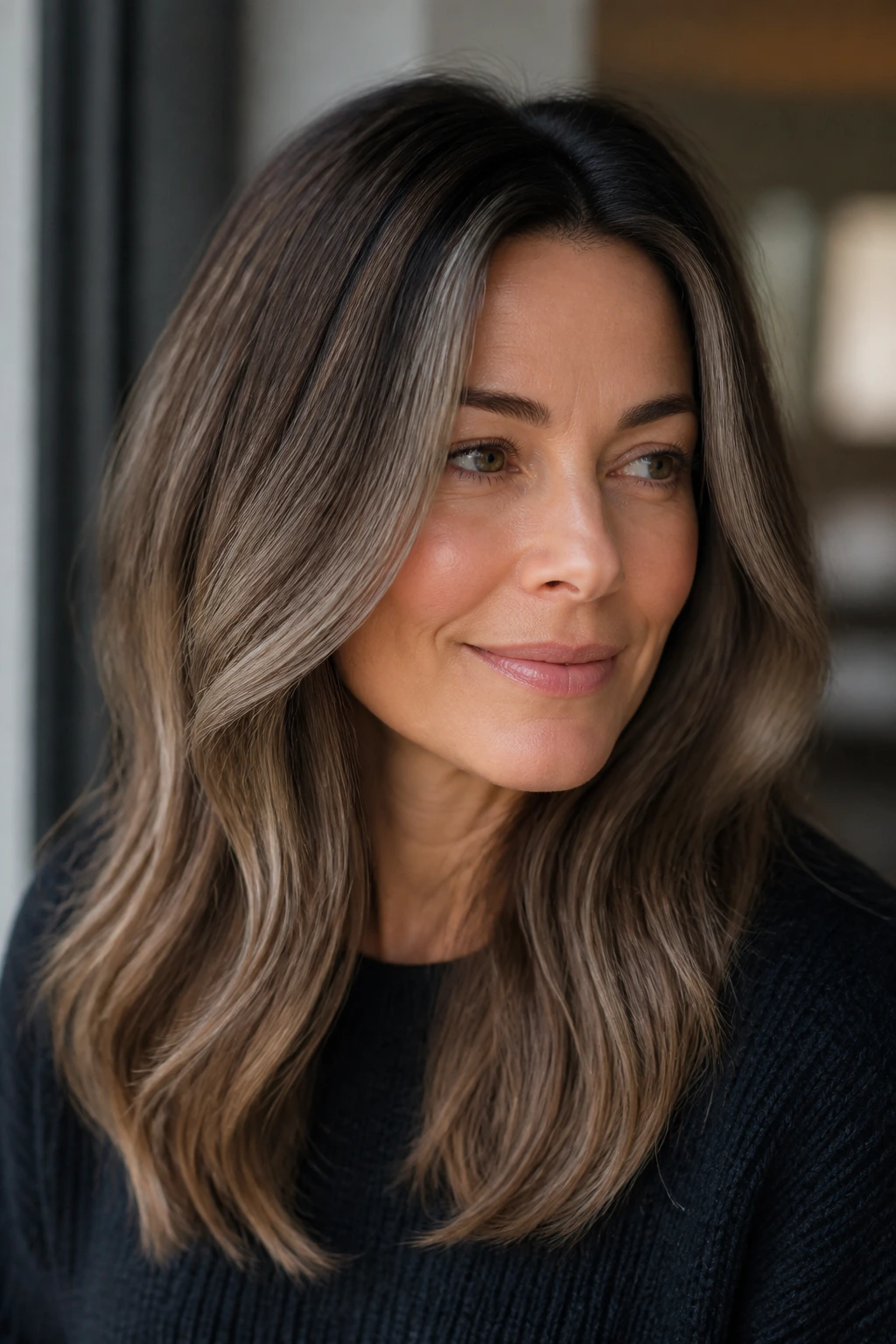
Soft Gray Blend: If you want the trend without much drama, ask for a brown base with just a whisper of cool gloss. It’s a low-contrast look that fades gracefully and suits offices, uniforms, and people who don’t want their hair calling attention to itself.
Graphite Face Frame: Keep the base brunette and place a sharper graphite ribbon around the face. That gives cool skin a little brightness without lightening the whole head, and it works well if you wear glasses or like a clean center part.
Curly Smoke Veil: On curls, spread the cool tone across wider panels instead of thin streaks. Curly hair needs room for the dimension to show between coils, and tiny highlights can disappear once the curl pattern closes up.
Short-Cut Slate Crop: Pixies and cropped cuts look strong with slate or pewter tones. The color helps the haircut read deliberate, not accidental, and the whole look stays easy to keep neat.
Dimensional Grow-Out Version: If you want fewer salon visits, keep the roots deeper and the cool pieces concentrated on the surface and ends. The grow-out stays softer, and you can stretch the gloss longer without the color line looking harsh.
Keeping the Smoke Fresh Between Appointments
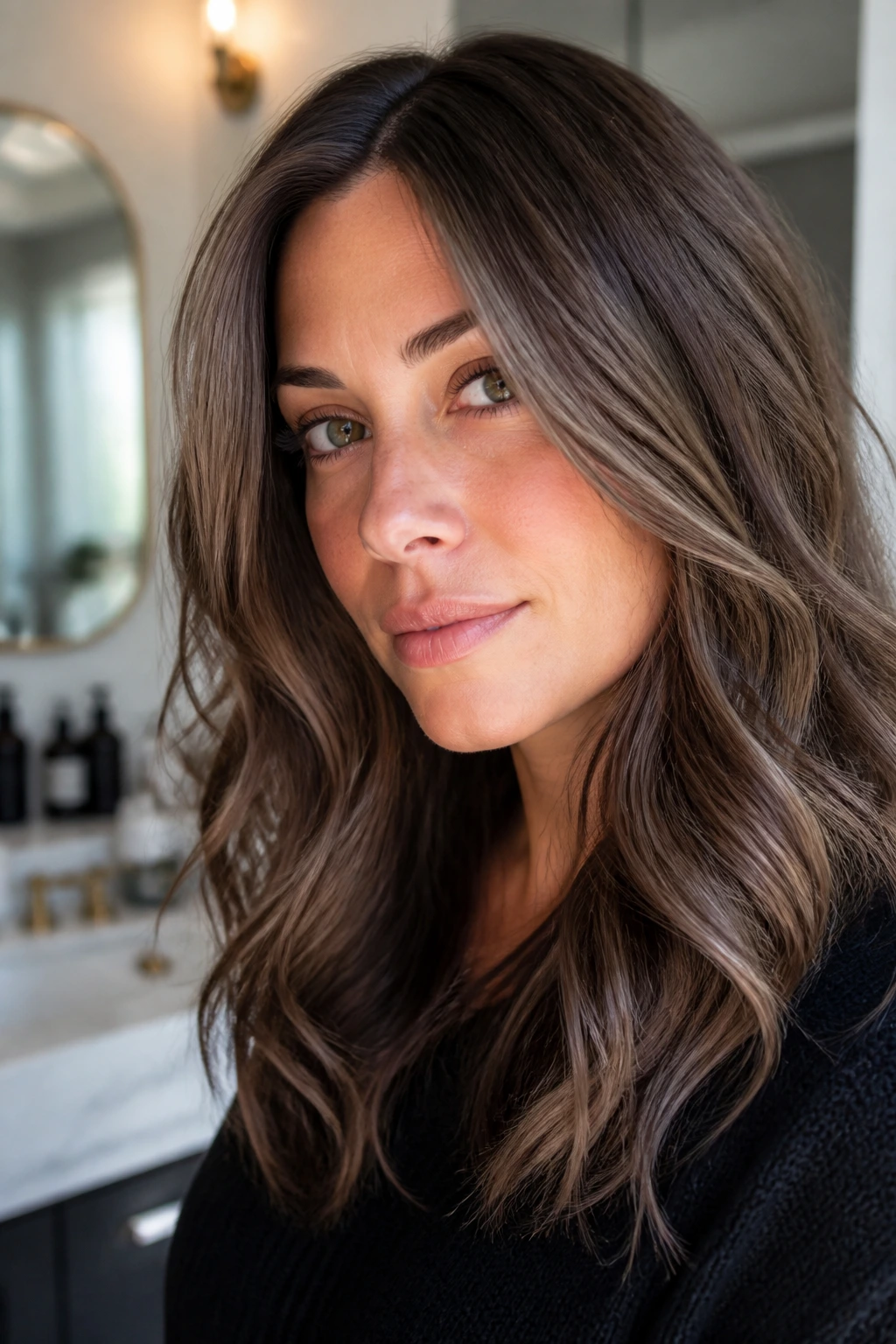
Brown gray hair behaves best when you treat it like a color with a memory. Sulfate-free shampoo, cool water, and a gentle conditioner keep the ash from slipping out as fast. If you wash daily, the cool tone usually fades faster and the brown starts warming up around the front hairline first.
A gloss refresh every 4 to 6 weeks keeps sharper shades like graphite, pewter, and smoky espresso looking crisp. Softer shades such as mushroom, taupe, or cool walnut can often go 6 to 8 weeks if the cut is still clean. If you’re blending grays, a root touch-up around 6 to 10 weeks keeps the line soft without making the hair feel over-processed.
Heat matters, too. Keep hot tools on the lower side and use a protectant every time, because cooked ends lose the reflective brown-gray finish fast. If the color starts looking muddy, stop layering toning shampoo on top of it. A clear gloss or a salon toner with less pigment usually fixes the problem better than more and more purple.
Brown Gray Hair Questions, Answered
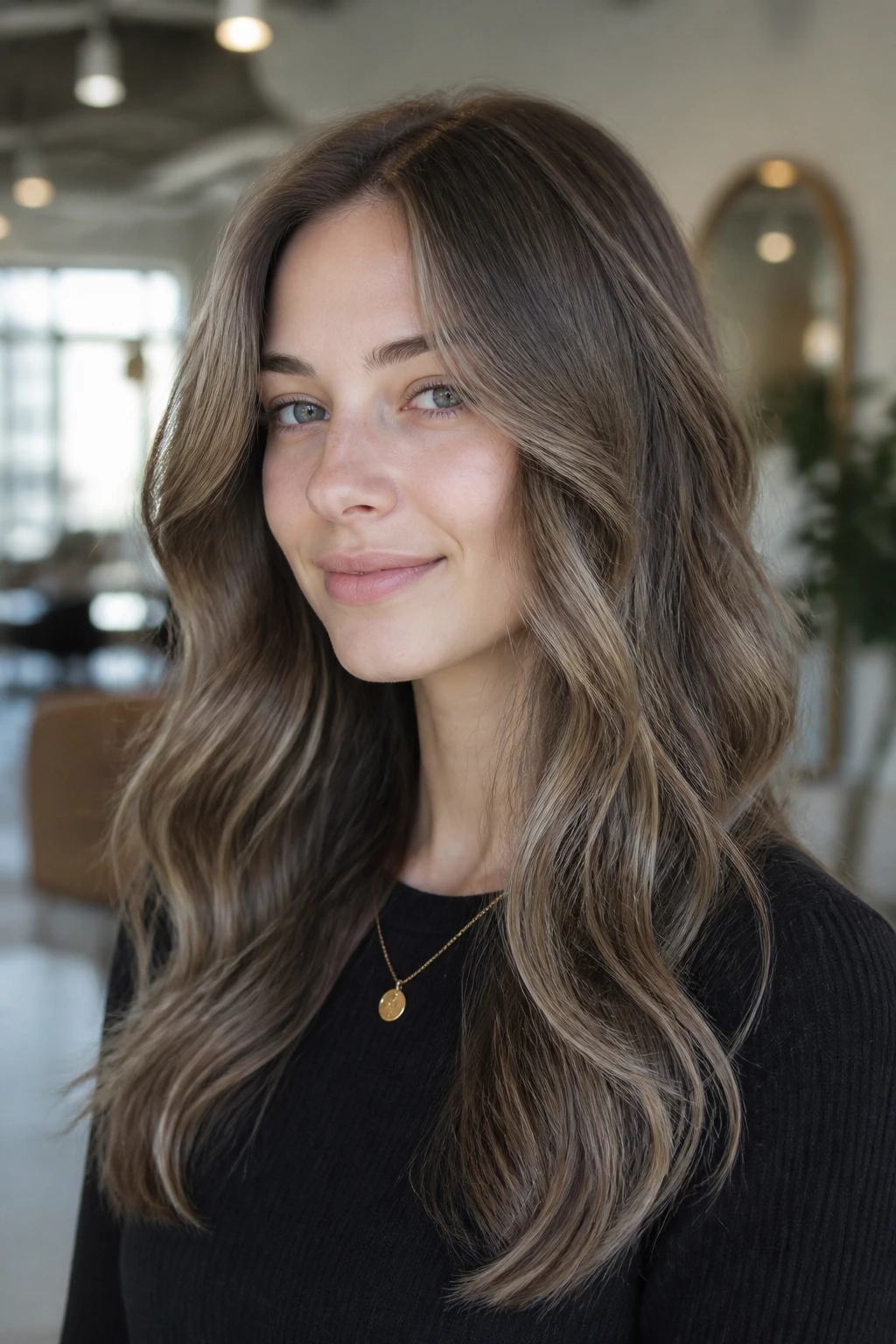
Will brown gray hair make cool skin look washed out?
Not if the shade has enough brown in it. The washed-out problem usually shows up when the formula is too pale, too gray, or too flat. Mushroom, taupe, and cool walnut are safer than full silver-brown if you want softness.
What’s the difference between ash brown, taupe brunette, and mushroom brown?
Ash brown leans the coolest and can look crisp or smoky. Taupe brunette softens the ash with a little beige, while mushroom brown sits in the middle with a muted, earthy finish. Think of ash as sharper, taupe as softer, and mushroom as the balanced middle.
Can brown gray cover first grays without looking dyed?
Yes, especially with lowlights, root shadow, or a demi-permanent gloss. Those methods blur the silver instead of painting over it. If you want coverage and movement, that’s usually the better route than a flat permanent brunette.
Will this color work on dark hair without bleach?
A lot of the deeper shades will. Smoky espresso, charcoal brunette, graphite brown, and cool walnut often work beautifully on darker bases without lightening. Lighter ideas like icy brunette balayage or silver veils usually need some lift.
How often do I need to tone brown gray hair?
Most people need a refresh every 4 to 8 weeks, depending on porosity and wash frequency. Hair that’s porous or sun-exposed loses cool pigment faster. If the tone starts drifting warm, tone the mids and ends first, not the roots every time.
What if the color turns muddy or khaki?
That usually means too much cool pigment layered over hair that needed more depth first. A clear gloss or a deeper brunette base can bring it back. If it happens after repeated purple shampoo use, ease up and let the hair recover for a wash or two.
Is brown gray harder to maintain than chocolate brown?
Usually, yes, because cool pigments fade faster than warm ones. The upside is that the grow-out can look softer when the placement is done right. A root melt and some thoughtful lowlights can keep you from chasing the shade every few weeks.
What haircut shows this palette best?
Anything with movement helps: lobs, layered mid-length cuts, blunt bobs, and polished pixies. Very long one-length hair can still work, but it needs shine and disciplined ends or the cool tone can disappear into the length.
The Shade That Lands Softly
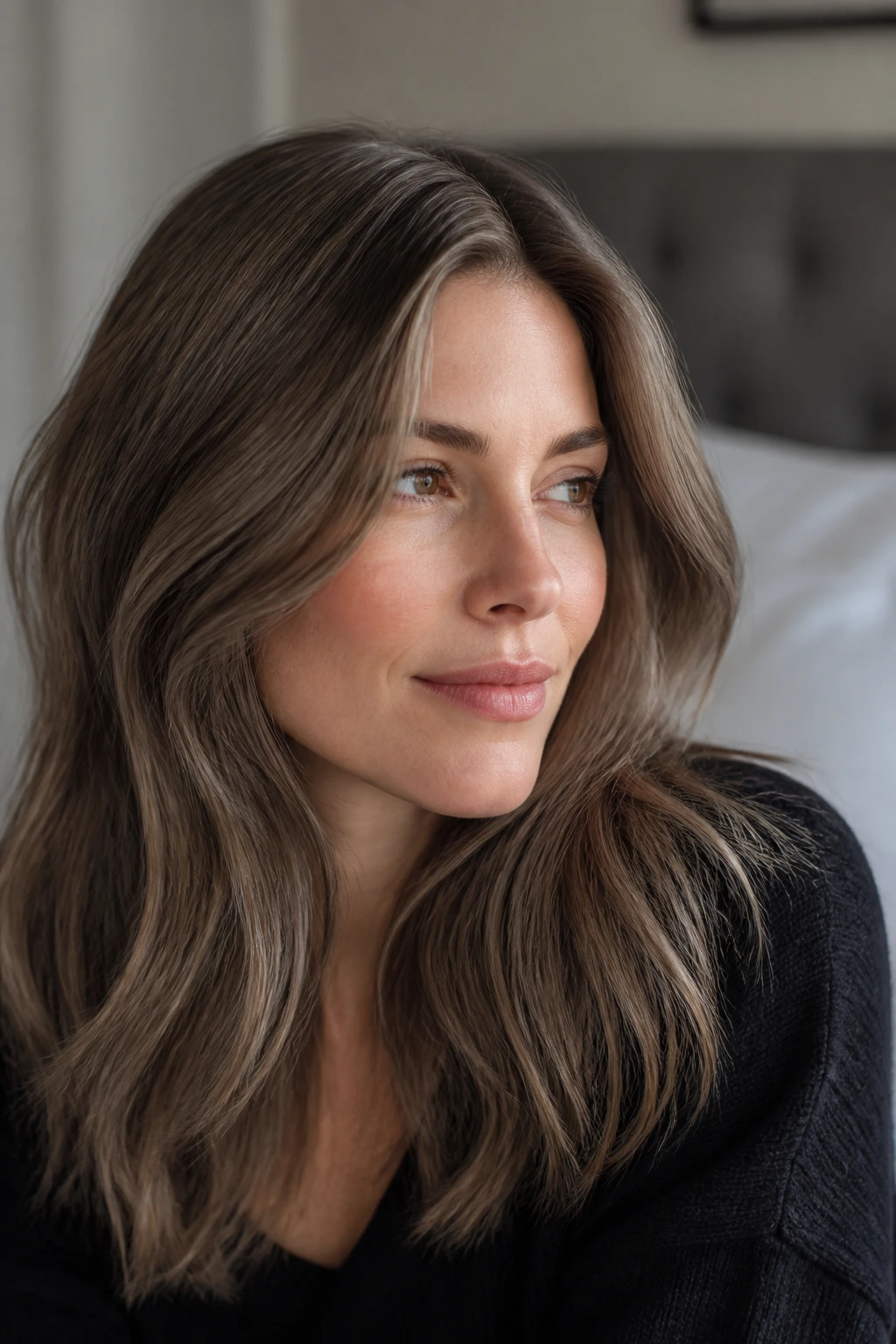
Brown gray hair has a rare quality: it can look calm without looking dull. That is why it suits cool skin so well. The right version takes the redness out of the equation, leaves the brown visible, and lets the gray show up as smoke, sheen, or shadow rather than a hard color block.
If you’re choosing between a safe brunette and something more interesting, start in the mushroom, taupe, or smoky walnut range. They are forgiving, they grow out well, and they give you room to move darker or more metallic later. Once you see how the undertone sits on your skin in daylight, the rest gets easier.