



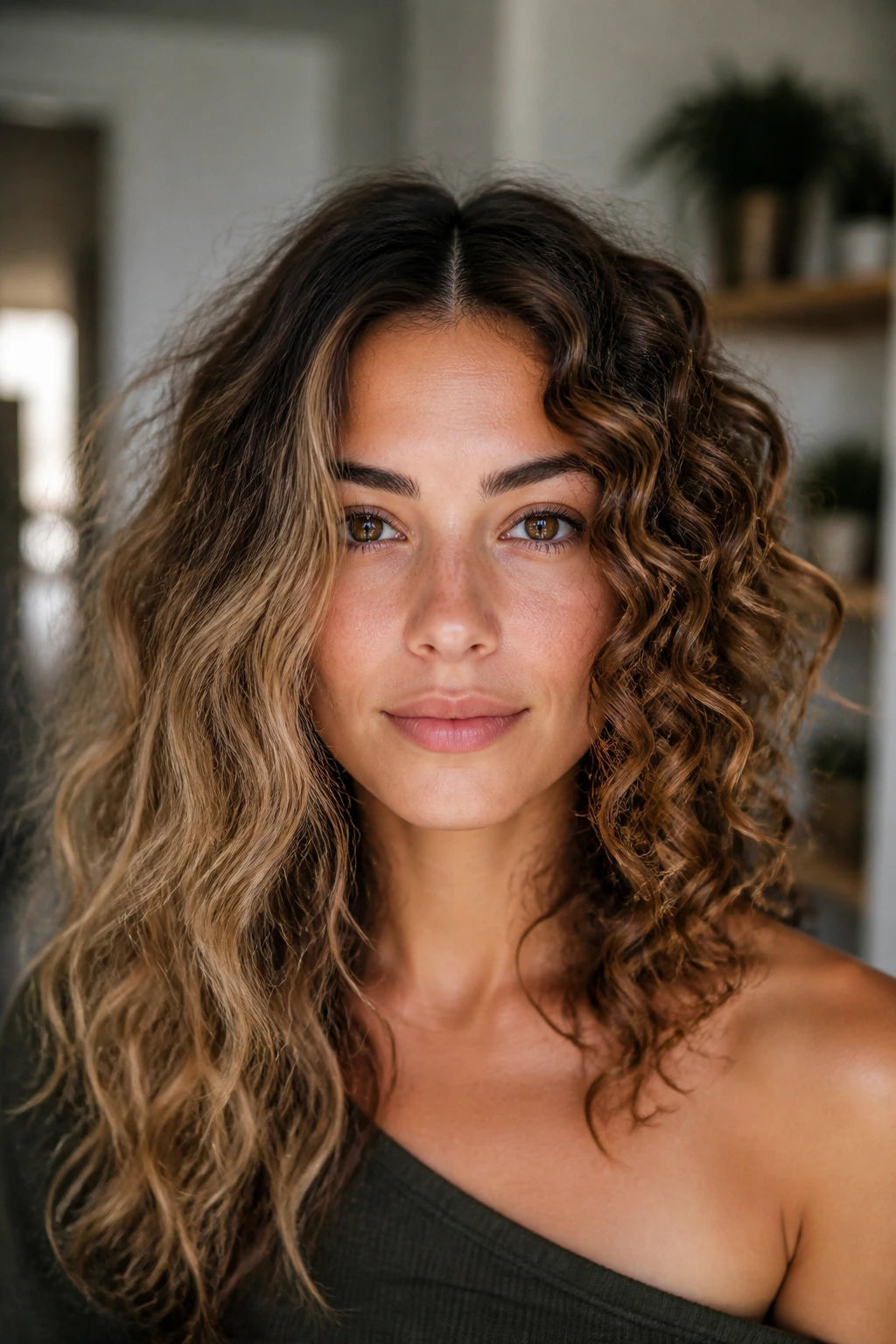
Frizzy hair does not need to be smoothed into a glossy sheet to look intentional. That’s the wrong goal, and it usually backfires anyway. Tousled waves for frizzy hair and heart-shaped faces work because they let the texture do some of the shaping for you, while the wave pattern softens a broader forehead and keeps the eye moving down toward the cheekbones and jaw.
The sweet spot is movement, not control. A few bends near the face. A side sweep that breaks up the top half of the head. Ends that look air-dried instead of lacquered into place. On a heart-shaped face, that balance matters more than most people think, because too much crown volume can make the forehead look wider and too much bluntness near the chin can sharpen the lower half even more.
I like this pairing because it gives frizz a job. Instead of spending twenty minutes trying to smooth every flyaway flat, you use the texture to make the wave feel lived-in, soft, and slightly undone — which is exactly what reads well on camera, in person, and on day two when the hair has settled a little.
Why Tousled Waves for Frizzy Hair and Heart-Shaped Faces Work So Well
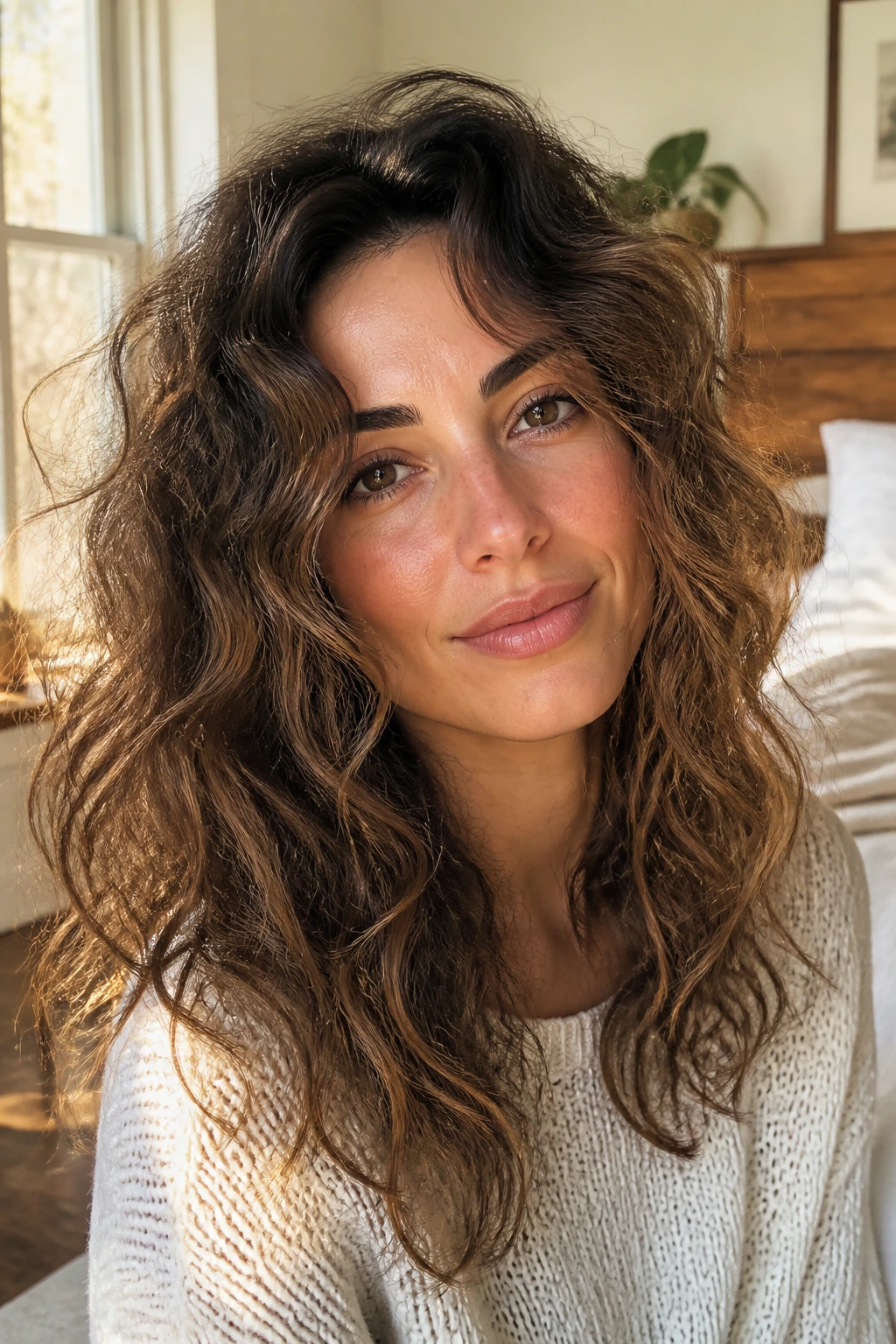
-
Face balance: Heart-shaped faces usually carry more width through the forehead and temples, so waves that land around the cheekbones and jawline help even out the shape without dragging everything flat.
-
Frizz becomes texture: Frizzy hair already has lift and movement, which means you’re not forcing a sleek result that wants to rebel by noon. A wave pattern turns that lift into shape.
-
The part matters: A soft side part or a slightly off-center part keeps the forehead from feeling too open. It’s a small change, but on this face shape it does real work.
-
Day-two hair looks better here: Tousled styles usually improve a little after they settle. That airy, slightly broken texture is part of the charm, not a problem to fix.
-
You can scale the polish up or down: The same cut can read beachy, polished, or full-on glam depending on how tightly you wrap the hair and how much product you use.
1. Soft Curtain-Bang Lob
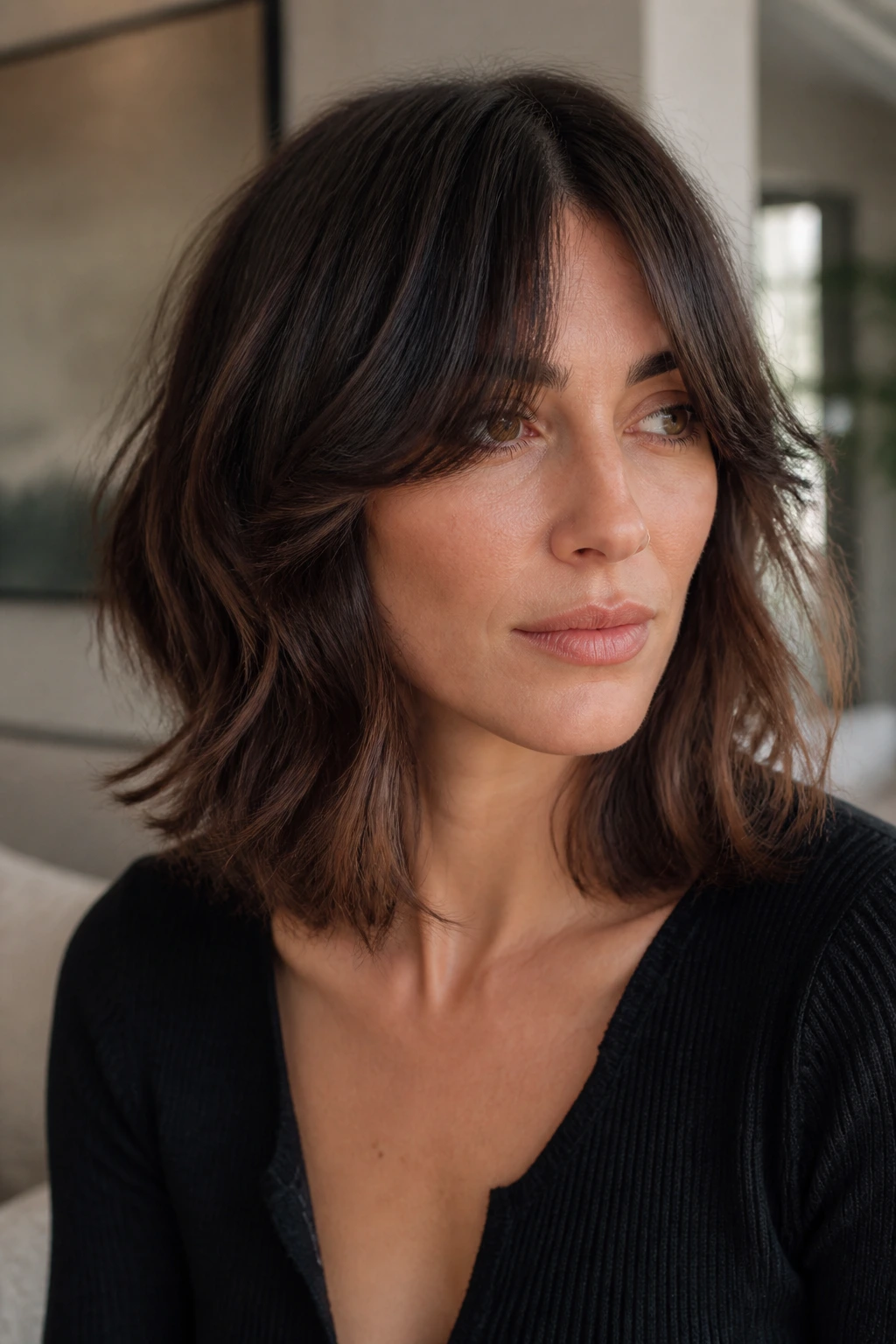
A lob with curtain bangs is the easiest place to start if you want softness without losing shape. The length usually sits somewhere between the collarbone and the top of the shoulders, which gives frizzy hair enough weight to fall instead of puffing straight out.
The curtain fringe breaks up a wider forehead in the nicest possible way. It doesn’t chop the face in half. It just slides around the temples and cheekbones, which is exactly where a heart-shaped face tends to look best with a little movement.
Why it flatters
The bang opens and closes the face at once. That sounds contradictory, but it’s the whole trick.
A 1.25-inch iron, loose bends, and a little point cutting at the ends keep this cut from feeling too neat. I like it best when the wave starts around the cheekbone and not at the root.
- Best part: soft center or off-center part.
- Best finish: light cream on damp hair, then a touch of serum on dry ends.
- Best mood: everyday wear that still looks intentional.
Tiny tip: leave the last inch of the hair a little straighter. It keeps the shape modern.
2. Deep Side-Parted Midlength Waves
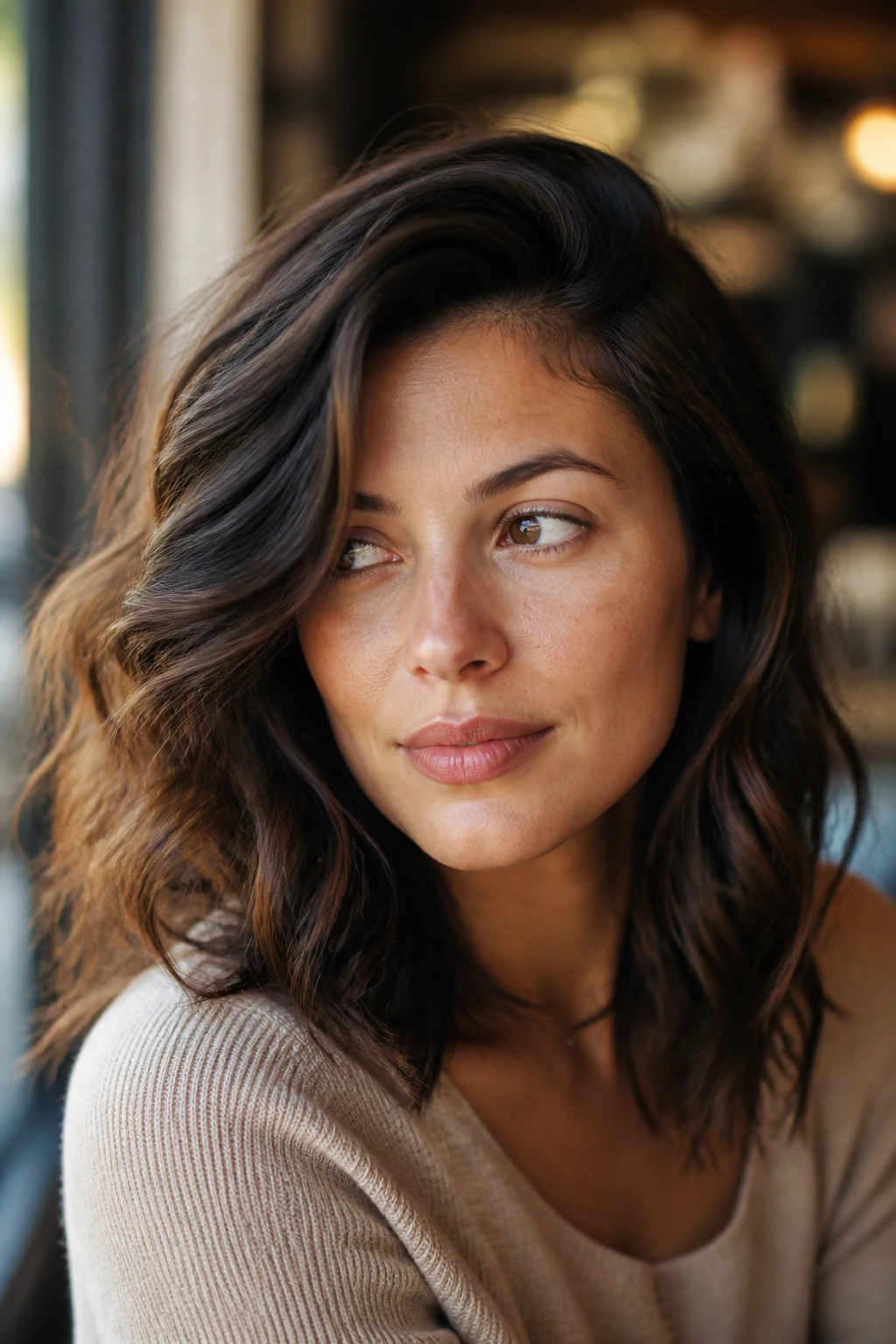
A deep side part does more for a heart-shaped face than a lot of people realize. It moves the visual weight away from the widest part of the forehead and drops it diagonally across the face, which softens the whole outline without making the style feel heavy.
This works especially well on frizzy hair that likes to expand at the crown. A side part gives the hair a direction. It stops the top from ballooning into a triangle and lets the waves fall into one clean sweep.
What makes it different
Unlike a center-parted wave, this version feels less symmetrical and more flattering near the temples. That asymmetry is the point.
I’d set the front sections away from the face with a curling iron, then break them up with fingers before they cool completely. If you wait until the waves harden, they can look too round and a little old-fashioned. So don’t.
A little mousse at the roots and a light mist of flexible spray are enough. Heavy oils will drag it down fast.
3. Collarbone Shag Waves
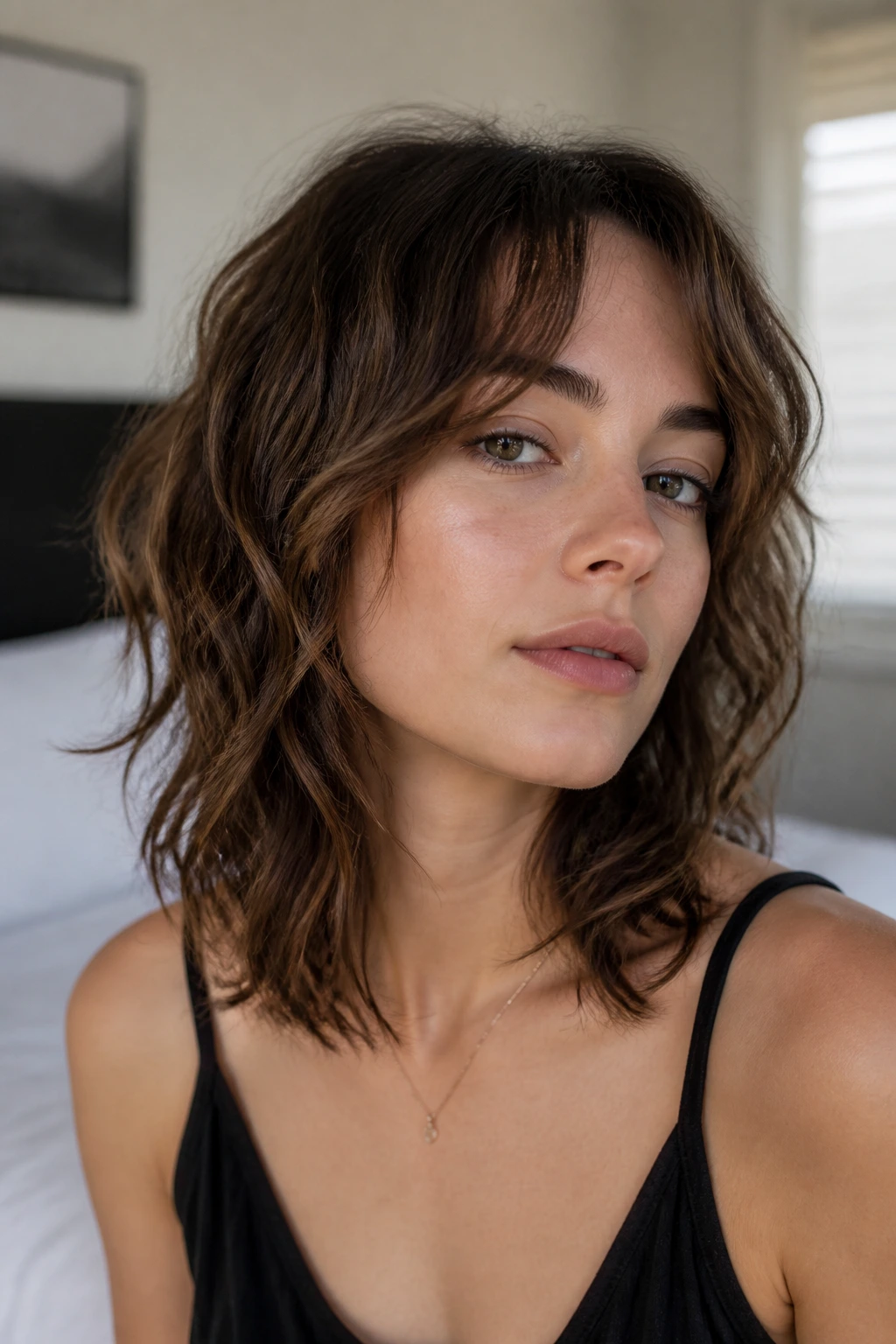
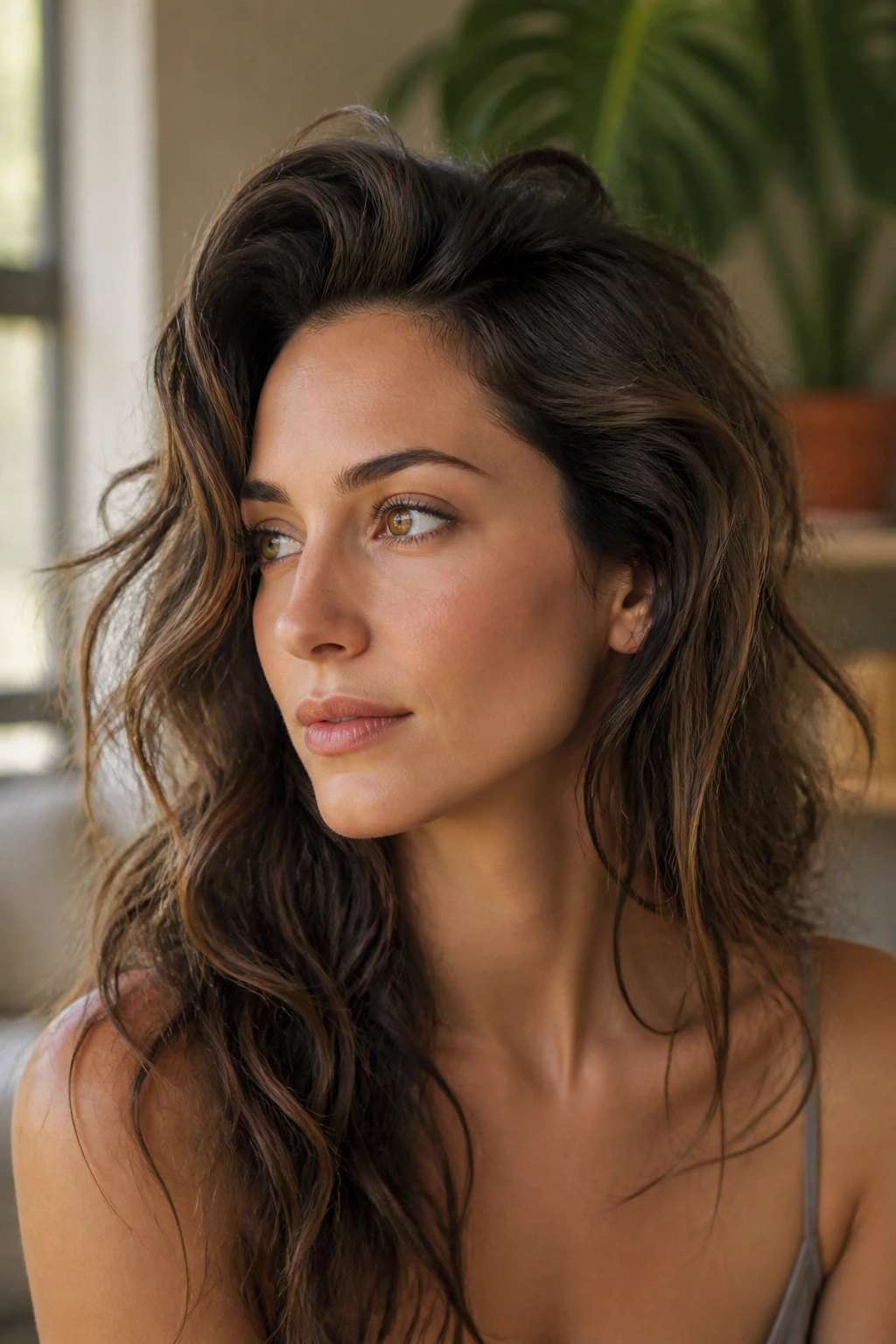
If your hair gets frizzy the second humidity shows up, a shag can be your friend. Not the choppy, over-thinned version people used to get in bad salon chairs. I mean a collarbone shag with soft internal layers and enough perimeter to keep the outline stable.
The reason it flatters a heart-shaped face is simple: the shag builds movement through the sides instead of stacking everything high at the crown. That means the widest part of the face gets a little softness, and the jawline doesn’t end up looking too narrow by comparison.
Why this shape behaves better
The layers let the texture move in separate pieces instead of one giant puff. That matters with frizz.
- Ask for internal layers, not heavy thinning shears.
- Keep the shortest pieces below the cheekbone if your forehead is already wide.
- Style with a diffuser on low heat and stop when the roots are about 80% dry.
My take: this is one of the most forgiving cuts on the list. It looks good even when it’s not perfect, which is rare and useful.
4. Long Layers with Airy Ends
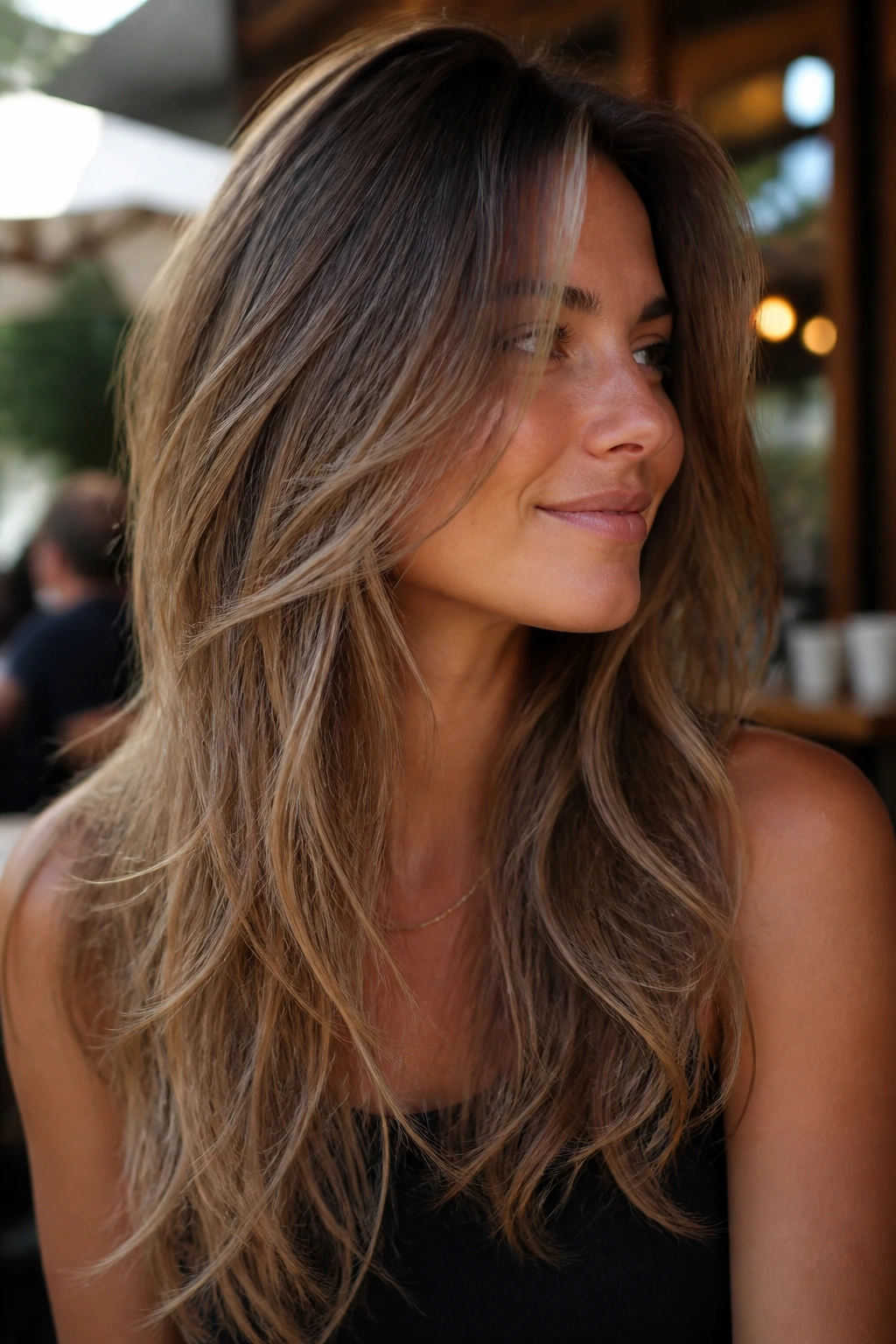
Long hair can look beautiful on a heart-shaped face, but only if the layers do some real work. One length with frizz often turns into a curtain that hangs from the forehead down. Long layers fix that by breaking up the mass and giving the wave room to move.
The trick is keeping the ends airy. Not wispy to the point of looking thin. Just soft enough that the lower half of the hair doesn’t feel like a blunt wall.
The shape cue to ask for
Tell the stylist you want the shortest face-framing pieces to start around the cheekbone or just below it, then get longer as they move past the jaw. That keeps the widest part of the face in the most flattering zone.
A few quick notes:
- Best for hair that’s thick enough to hold a bend.
- Best if you want to wear the hair down most days.
- Best with a large-barrel iron or rollers, not tight curls.
Leave the wave loose and brush only the outer layer with fingers. A brush can turn the texture into fluff fast.
5. Ribbon Face-Framing Waves
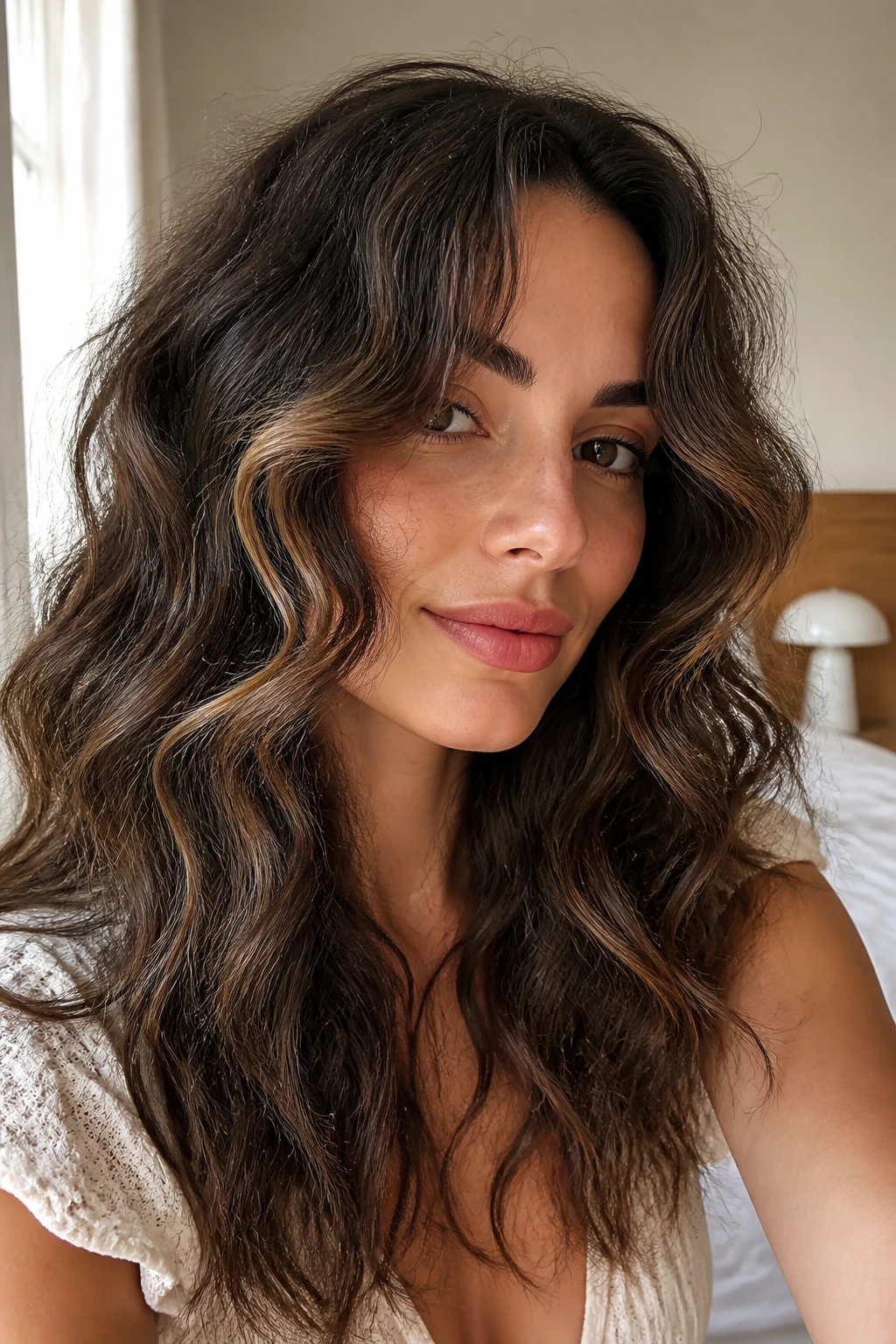
Ribbon waves are those soft, narrow bends that drape around the face like little strips of movement. They’re subtle, and that’s why I like them here. A heart-shaped face doesn’t need more width at the temples; it needs controlled softness that starts high and falls downward.
This style uses only a few front sections to do the visual heavy lifting. The rest of the hair can stay more relaxed. That makes it a smart choice for frizzy hair that wants to expand when you touch it too much.
What to watch
The face-framing pieces should not flip outward like a retro blowout unless that’s a deliberate choice. Keep them bent inward or softly curved so they skim the cheekbones.
Best use: when you want a style that looks done but not stiff.
Best tool: a flat iron used as a wave maker, not a crimper. Twist slightly, glide slowly, let the hair cool in your hand.
6. Air-Dried Undone Waves
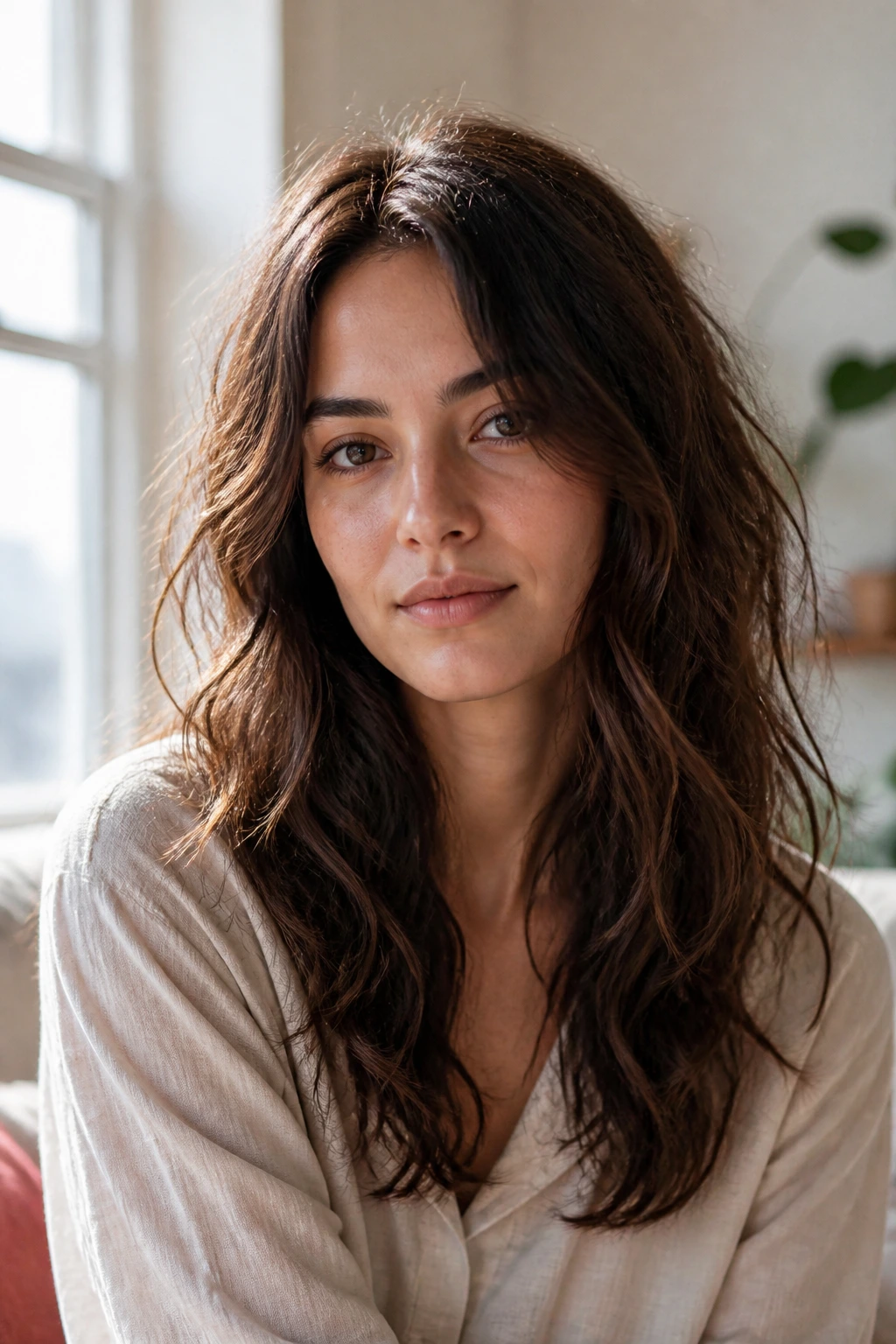
Some hair looks better after less interference. Frizzy hair is often in that category, especially if the pattern is already a little wavy or bendy on its own.
An air-dried style gives heart-shaped faces a softer outline because the wave never gets too sculpted at the crown. It sits where it wants to sit. That looseness keeps the forehead from looking overemphasized and gives the jawline some movement to play against.
How to make it work
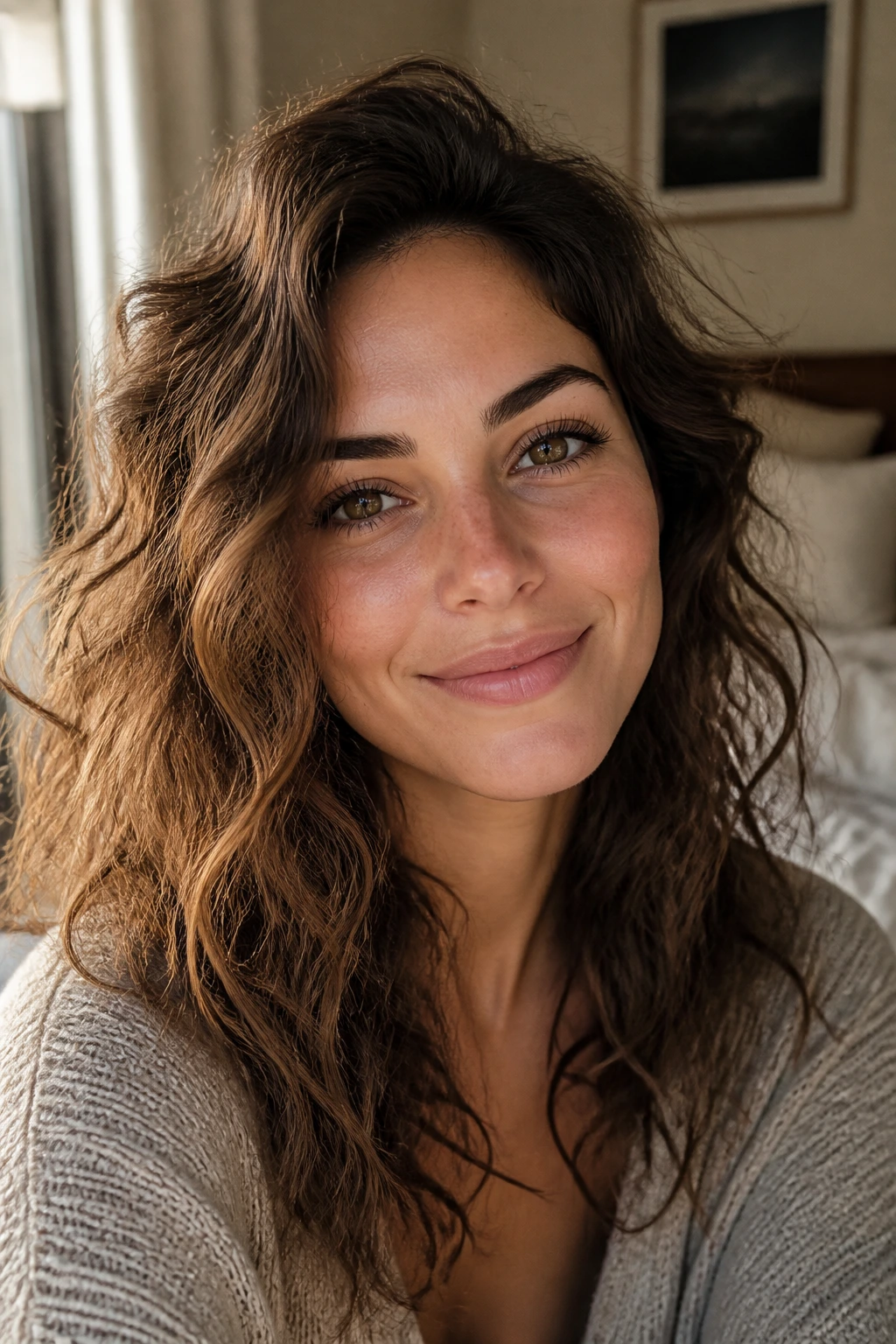
Scrunch in a light curl cream or mousse on soaking-wet hair, then blot with a microfiber towel. Do not rake it out with a brush. That only spreads the frizz.
Let it dry partly in a loose clip at the roots if you need lift, then release it once the hair is set enough to hold its shape. If the ends dry too tight, pinch in a little leave-in conditioner. If they dry too fluffy, you used too much product.
This one is for people who like texture that looks accidental, but isn’t.
7. Wavy Bob with Piecey Ends
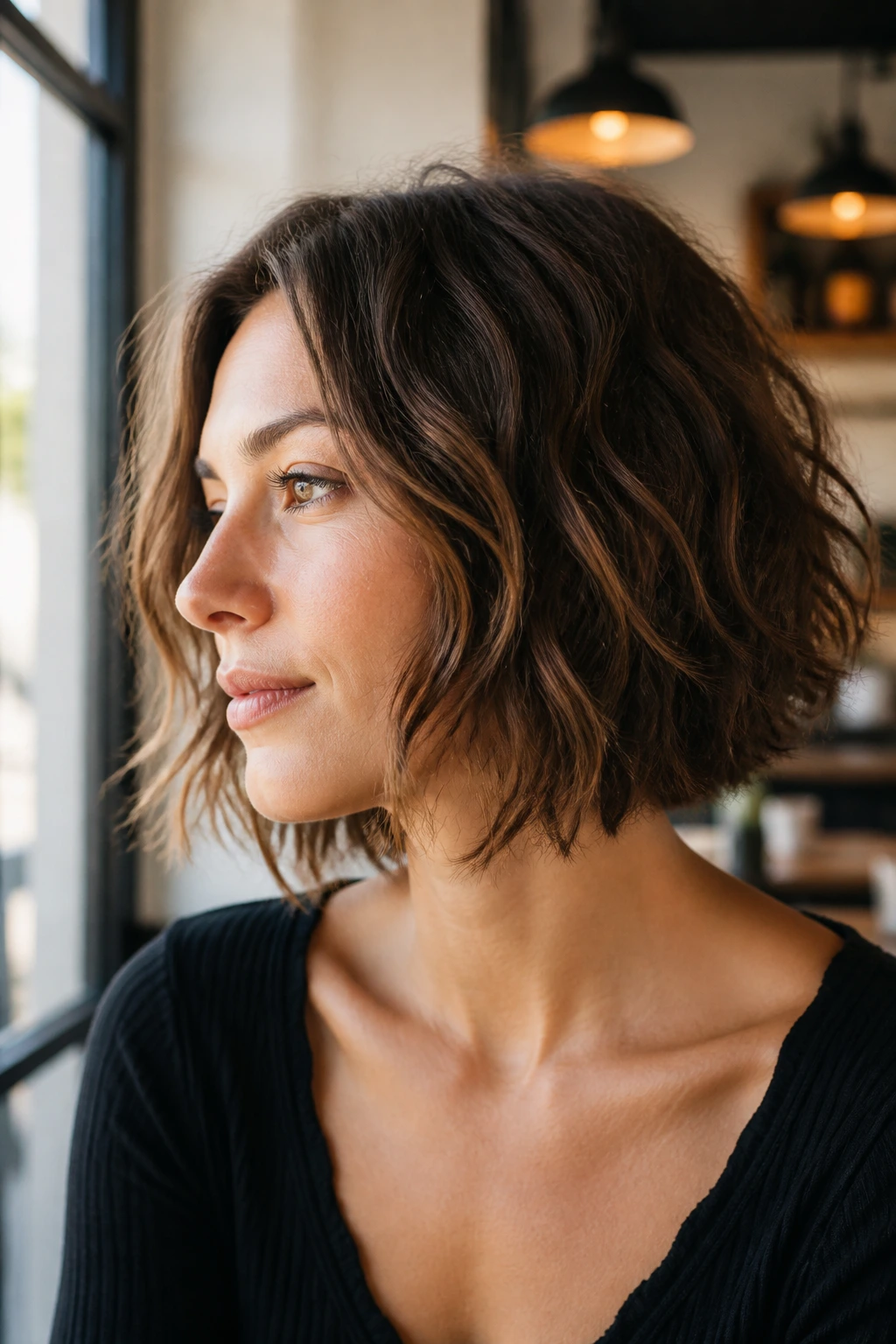
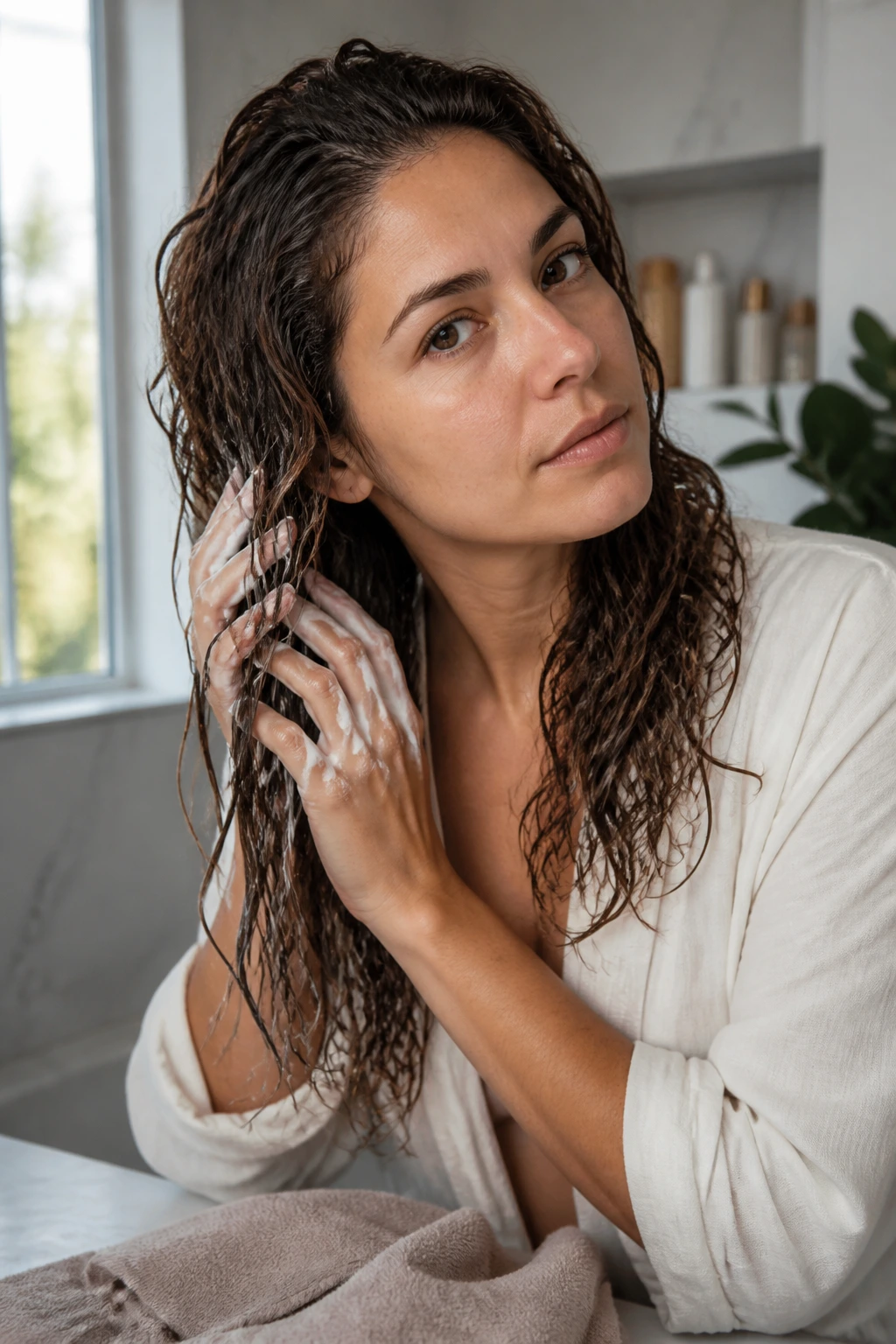
A bob can work on a heart-shaped face, but the length has to be chosen with care. If it stops too neatly at the jaw, it can make the chin look pointier. If it’s too short and too round, it can widen the temples. The sweet spot is a wavy bob that sits a little below the jaw and has piecey, broken ends.
The pieces at the bottom keep the shape from becoming a helmet. That’s the danger with frizzy hair and short cuts — one clean line can puff into a triangle by lunch.
Quick shape notes
- Keep the front a touch longer than the back.
- Avoid blunt density at chin level.
- Use a small round brush only at the roots if you need lift; leave the ends rough.
This is one of those cuts that looks more expensive when it’s slightly imperfect. Clean, but not over-sanitized.
8. Side-Swept Rounded Waves
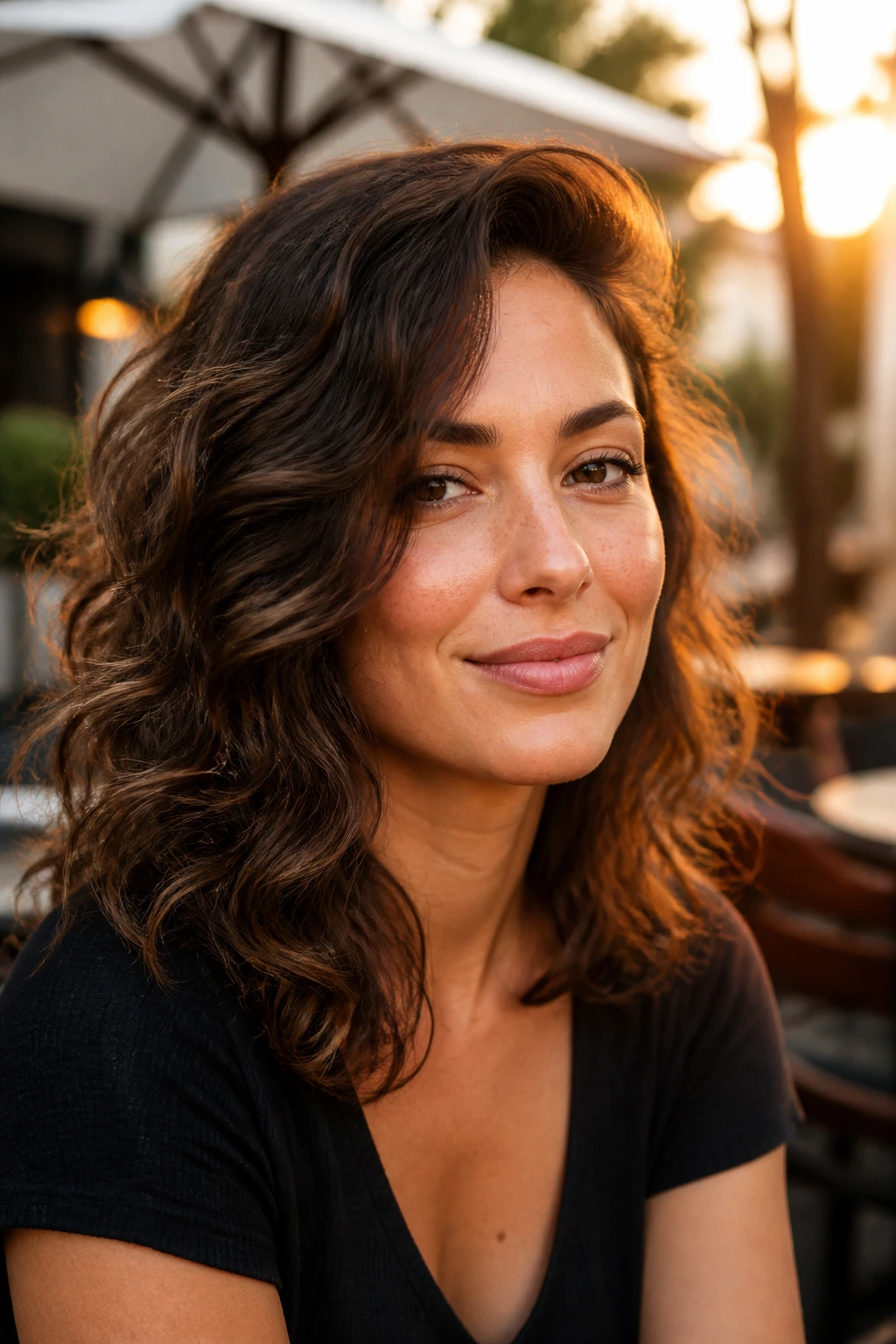
A rounded wave pattern with a side sweep can soften a strong forehead beautifully. The sweep creates a diagonal across the face, and diagonals are almost always kinder to heart-shaped proportions than rigid vertical lines.
Frizzy hair helps here because it gives the sides a little cloud-like width without needing teasing or extra products. That extra softness around the face keeps the lower half from feeling too narrow.
I’d keep the wave bigger near the temple and looser below the cheekbone. That makes the style feel flowing, not puffed.
A tiny bit of cream on the outer layer and a flexible spray are enough. Don’t load the roots with oil. You want movement, not slickness.
9. Tousled Blowout Waves
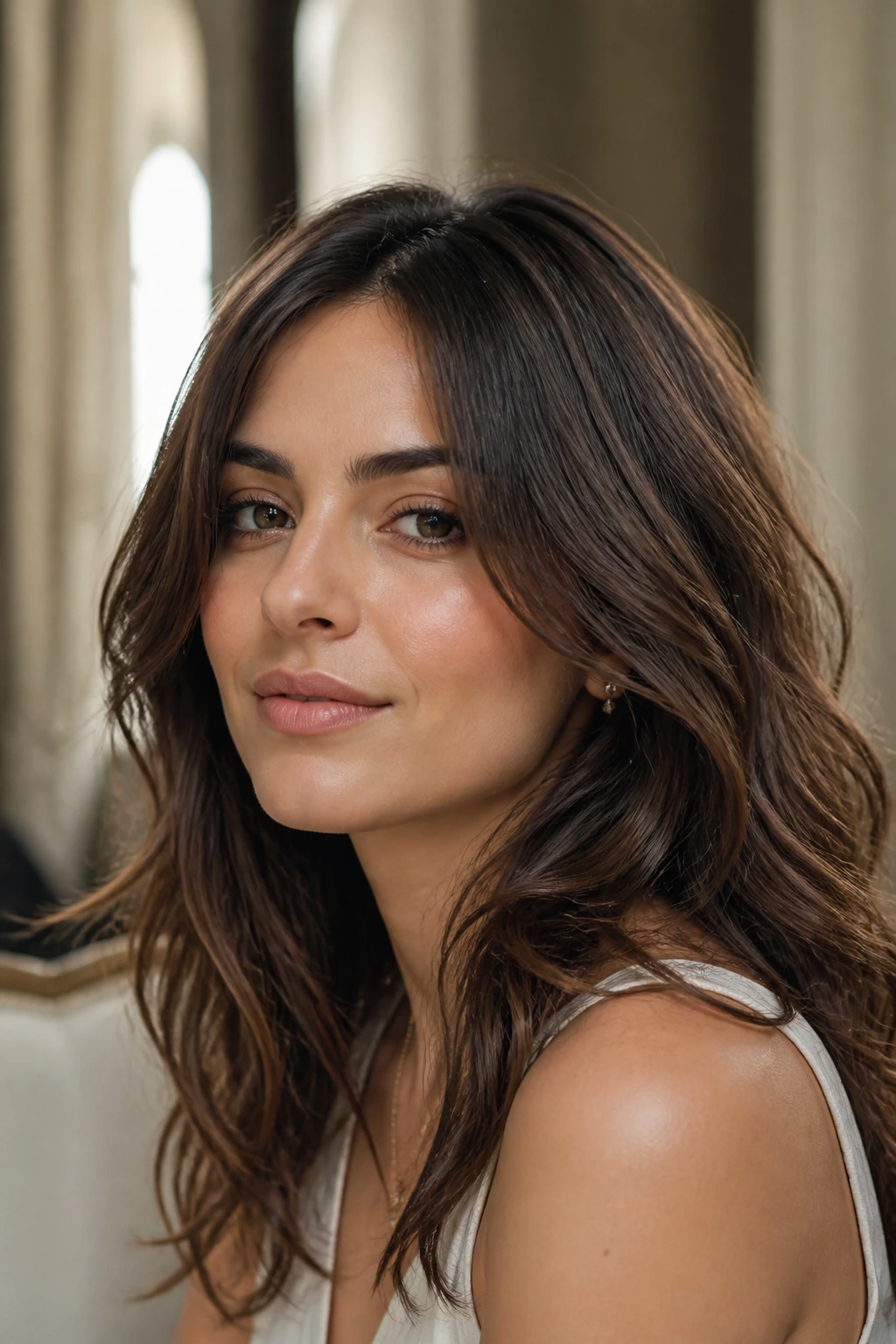
This is the more polished cousin on the list. The roots are smoother, the ends still bend, and the whole thing reads as softly styled rather than beach-broken. On a heart-shaped face, that matters because it keeps the crown clean while letting the fullness live lower.
The blowout wave is a good answer when frizz tends to spread only after the hair cools. You shape it while drying, then stop before it gets too fluffy.
Why it works
The smooth root gives structure. The wave at the bottom gives softness. That combination is flattering because it keeps the upper half tidy and the lower half easy.
- Use a medium round brush or a hot brush.
- Direct the front pieces away from the face.
- Cool each section before touching it again.
I like this style when the day calls for something more controlled, but not stiff enough to feel formal.
10. Half-Up Crown Lift Waves
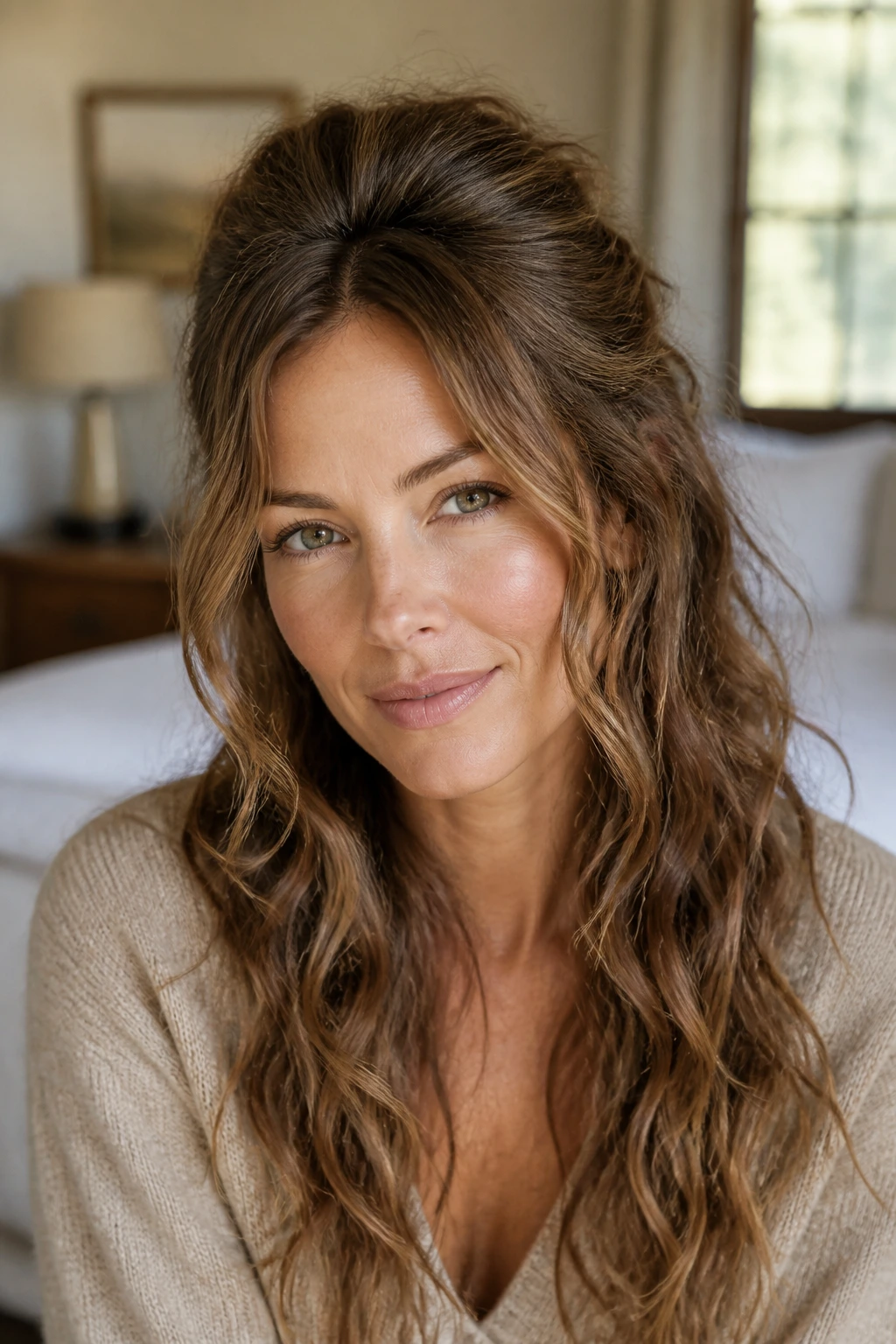
A half-up style can save the day on hair that gets too full around the crown. Instead of fighting the lift, you use it. Pulling the top section back slightly opens the face and lets the waves fall where they can do the most good.
For heart-shaped faces, that’s a smart move because it keeps the forehead visible without making it feel bare. And for frizzy hair, it gives you a way to tame the top while keeping the lower lengths loose.
A few ways to wear it
- Keep the half-up section low and soft, not pulled tight.
- Leave two front pieces out if you want more face framing.
- Clip, twist, or tie with a small elastic hidden under hair.
If the sides are too flat, tug them very gently after securing the top. That tiny lift around the temples keeps the shape from looking severe.
11. Bottleneck Bang Waves
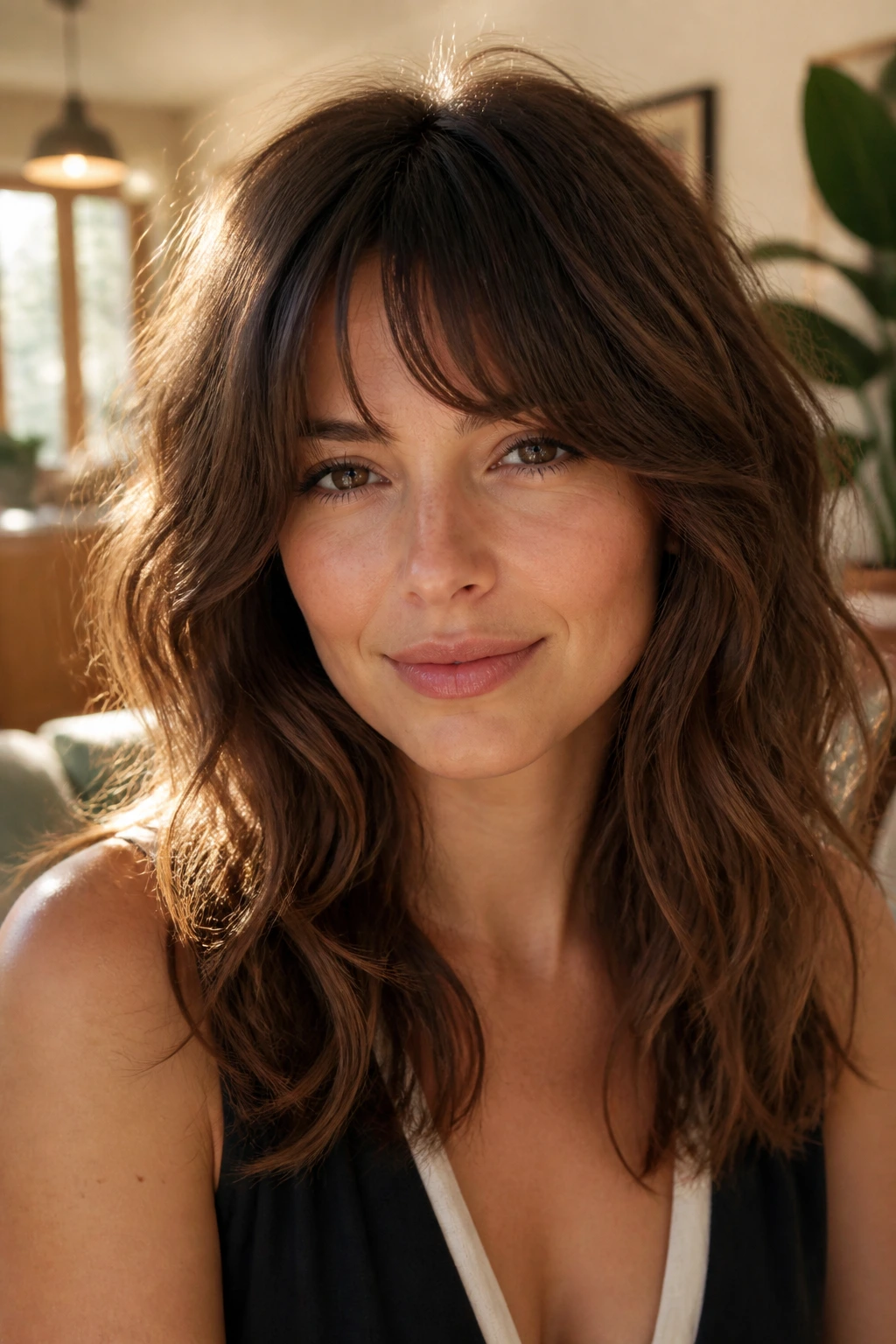
Bottleneck bangs sit somewhere between curtain bangs and a softer fringe. They’re shorter at the center and longer at the sides, which gives a heart-shaped face a little forehead coverage without closing it off completely.
On frizzy hair, these bangs can be a lifesaver. They let the texture show through, but in a deliberate shape instead of a fuzzy edge. The wave around the face and the bang shape work together, so the style feels cohesive.
Why I like this cut
It gives you structure up top and movement below. That’s rare.
The side pieces should fall to the cheekbones or just under them. If they’re too short, the forehead looks wider. If they’re too long and too straight, the whole effect gets heavy.
A quick pass with a round brush or a large-barrel iron is enough. Then stop touching it.
12. Feathered Long Layers
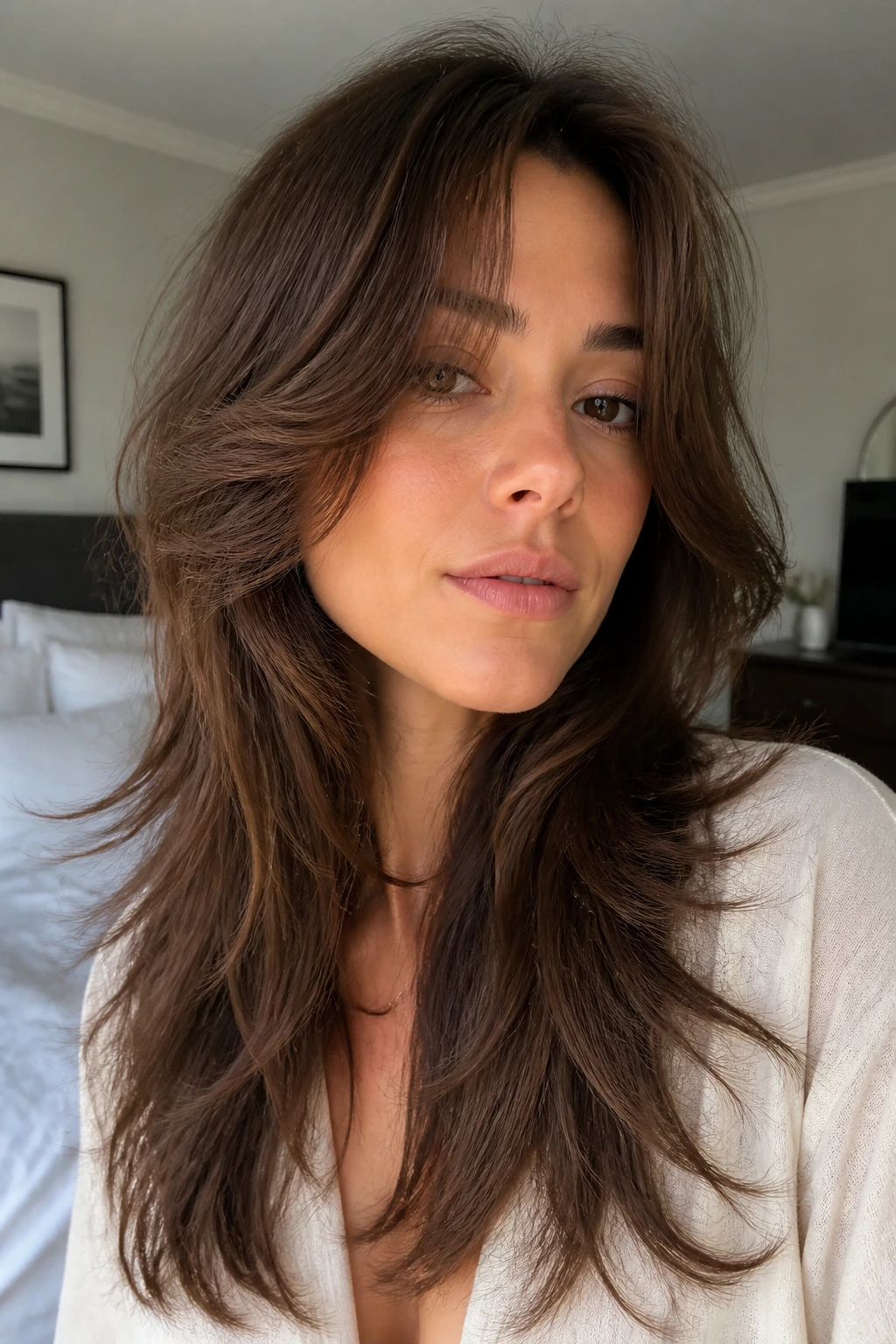
Feathering gets a bad reputation because people remember the overdone versions. But soft feathered layers can be excellent on frizzy hair, especially if the goal is to thin out bulk without making the ends look see-through.
Heart-shaped faces benefit because the shape gets movement around the jaw and cheekbones instead of one heavy curtain over the top. The layer movement gives the face a longer line without draining fullness from the sides.
How it wears
This style is nicest when the front pieces are visibly lighter than the back. That contrast keeps the eye moving.
I’d ask for feathering only through the outer contour and leave the internal density alone. Too much thinning creates a halo of frizz that won’t settle. A little is elegant. A lot is a mess.
If your hair is dense, this is one of the few styles that can remove bulk and still keep a soft outline.
13. Braided Overnight Waves
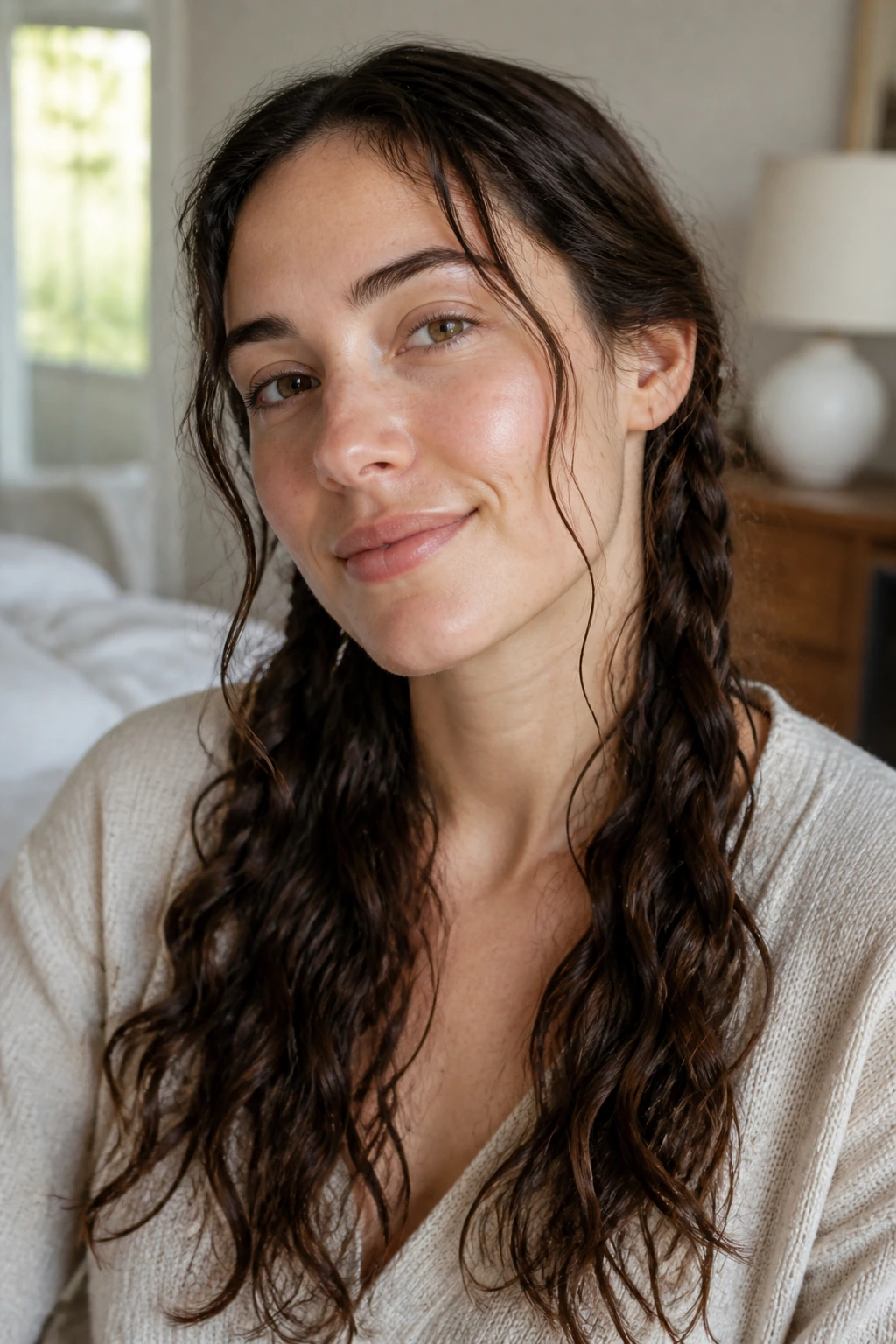
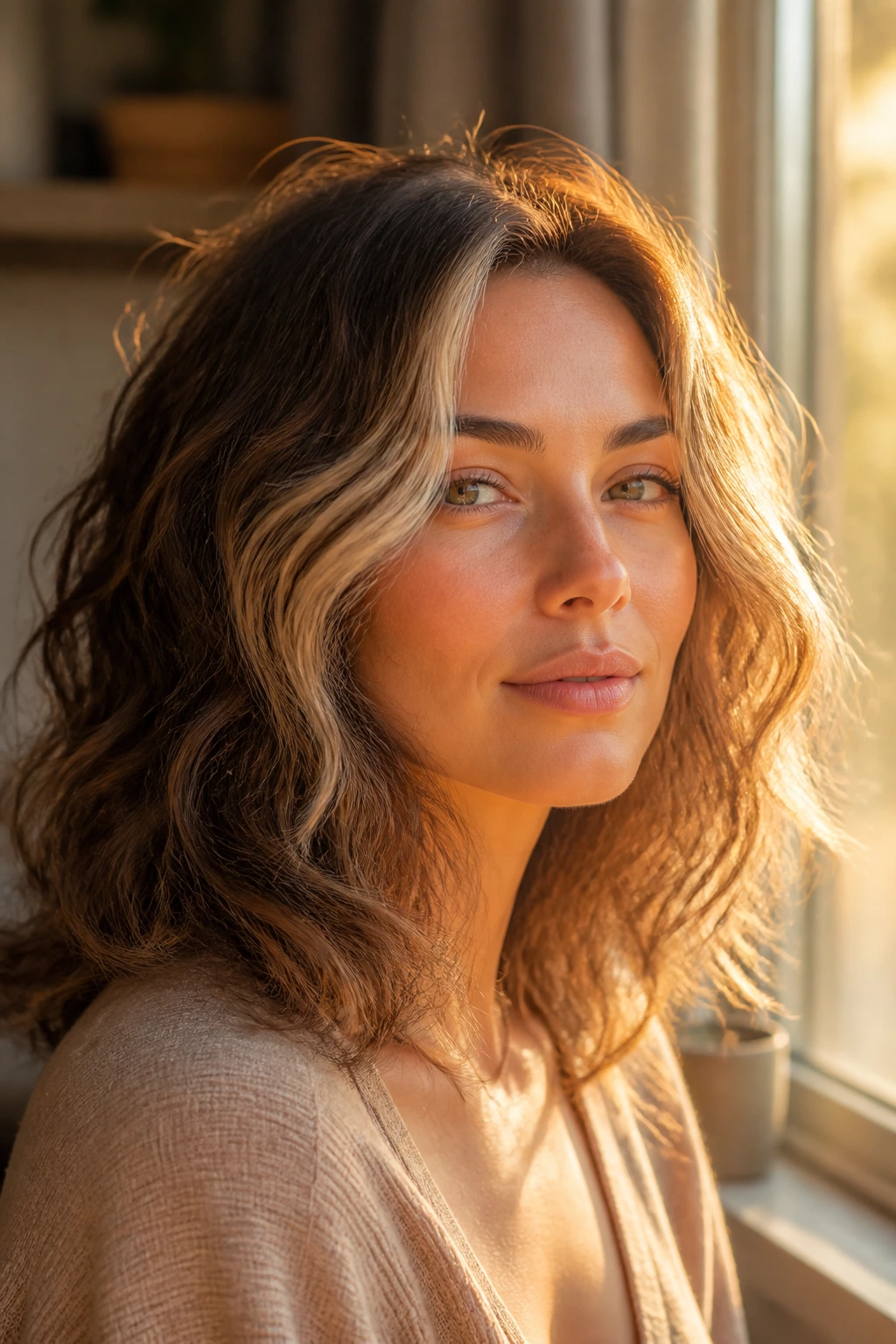
Braided waves are not glamorous in the moment, and that’s fine. They’re practical. If your hair frizzes easily and you want shape without heat, a loose braid set can leave you with bends that feel relaxed rather than overworked.
For a heart-shaped face, the appeal is the softness around the temples and the fullness from cheekbone down. A loose side braid or two braids can create exactly that if you keep the top section low and the crown flat.
Quick setup
- Start with slightly damp hair, not dripping.
- Use a light leave-in, not a heavy cream.
- Braid loosely so the pattern doesn’t go crimp-tight.
Undo them only when the hair is fully dry. If you pull them apart too early, you get fuzz instead of waves.
This is one of my favorite no-heat options because it gives you shape with almost no styling drama.
14. Smooth-Root Beach Waves
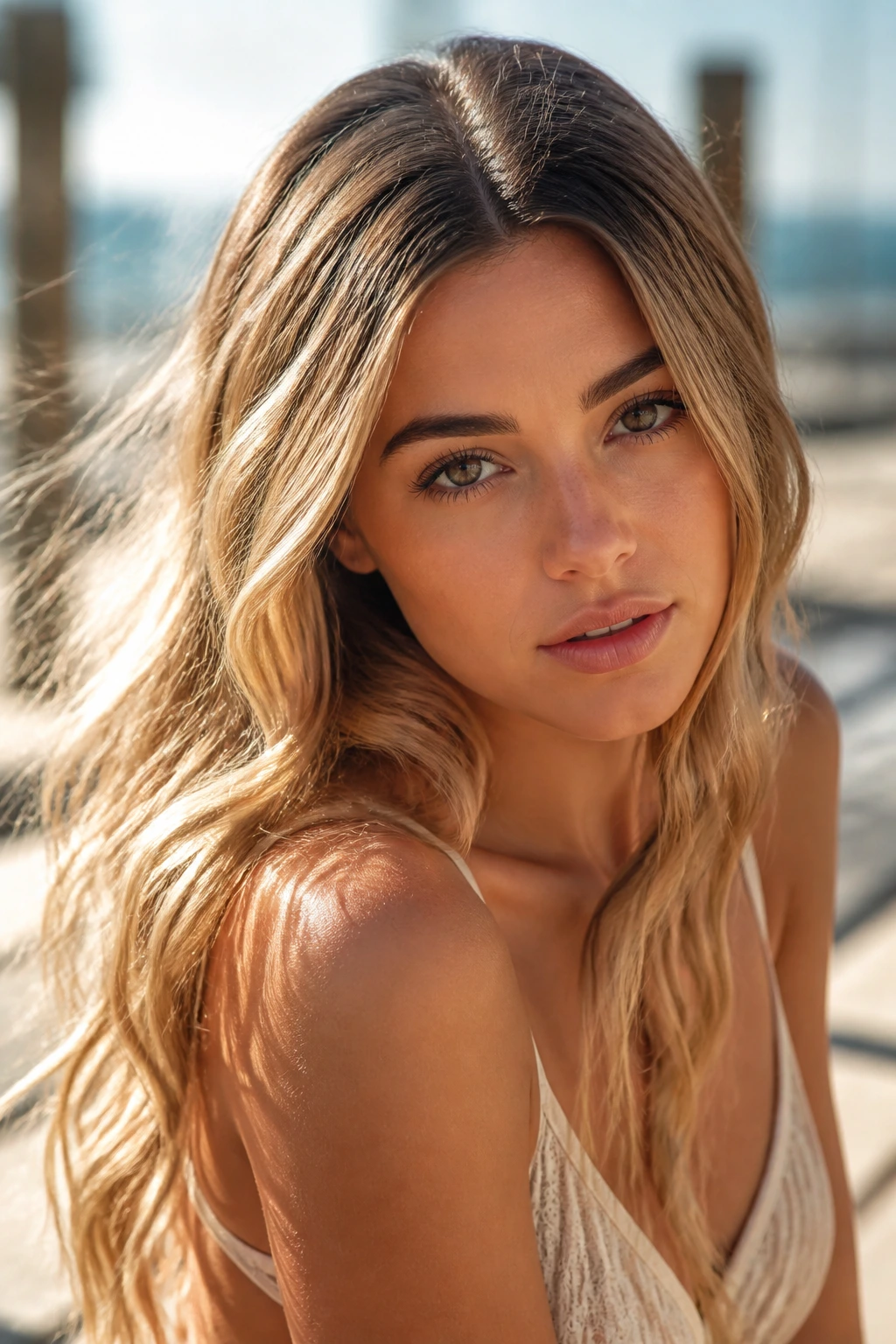
Beach waves can turn ugly fast on frizzy hair if the roots puff up too much. The fix is to keep the root zone smooth and let the wave pattern begin lower down. That creates movement where it counts and keeps the crown from expanding into a cloud.
A heart-shaped face looks especially good with this approach because the eye follows the smoother top line down into the waves. The overall silhouette feels elongated, not top-heavy.
The best version of this style usually uses a center-to-soft-side part and a bigger barrel. Tight bends look too busy. Keep the wave loose and separate it with fingers once it cools.
A pea-sized amount of serum on the lower third of the hair can sharpen the ends without flattening the roots.
15. Chin-Length Wavy Crop
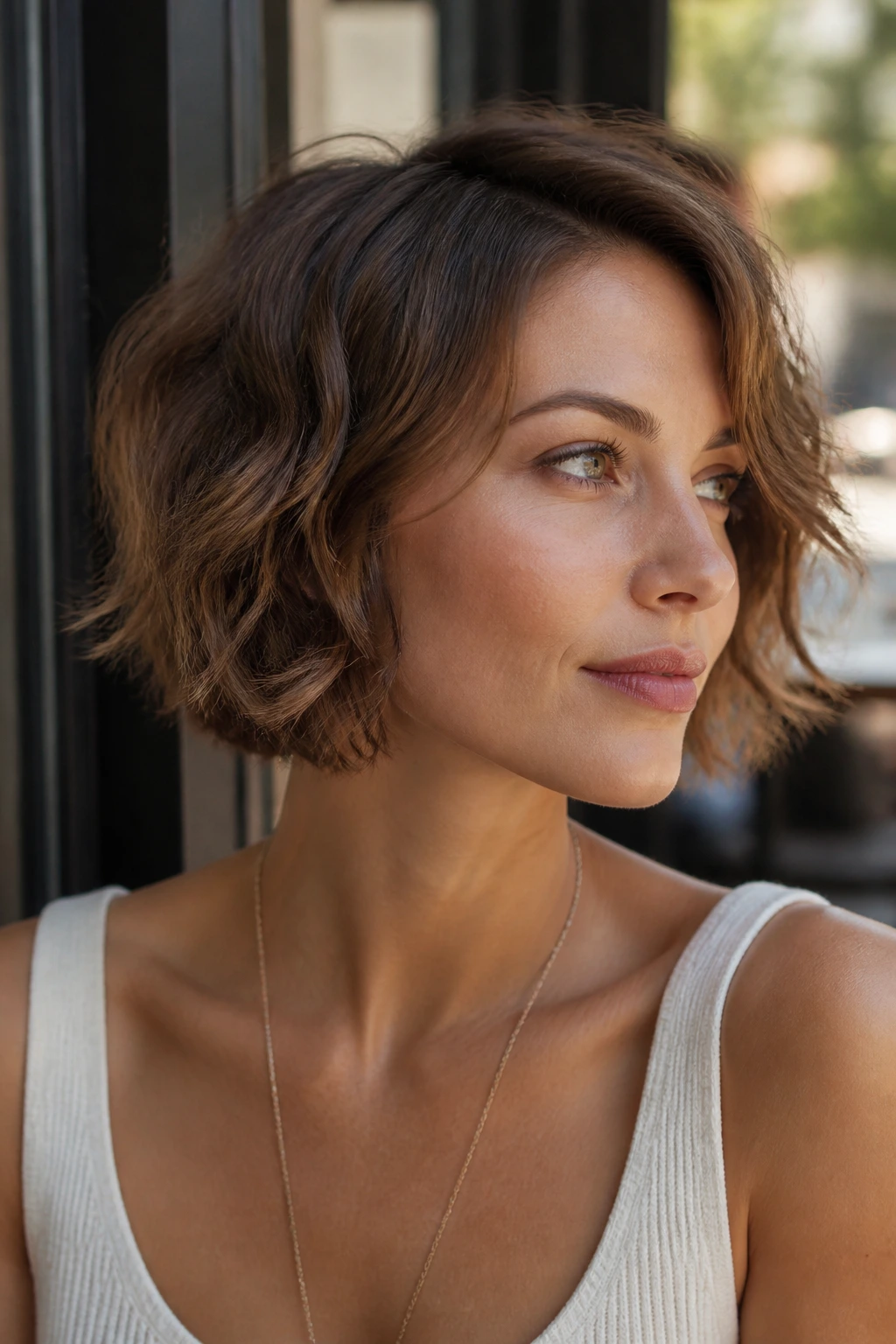
A chin-length crop sounds risky on a heart-shaped face, and I won’t pretend otherwise. If it’s blunt, it can sharpen the jaw. If it’s too round, it can broaden the forehead. But a softly waved crop with an off-center part can be sharp in a good way.
The key is to keep the ends broken and the sides airy. That avoids the helmet shape. Frizzy hair helps here if it has enough bend to make the outline feel textured instead of hard.
Best setup
Let the front skim the cheekbones. That gives the face a frame where it needs one.
A dry texture spray or matte finish cream can keep the style piecey. Don’t over-smooth it. A crop like this needs a little grit to stay believable.
16. Long Mermaid Waves with Hidden Layers
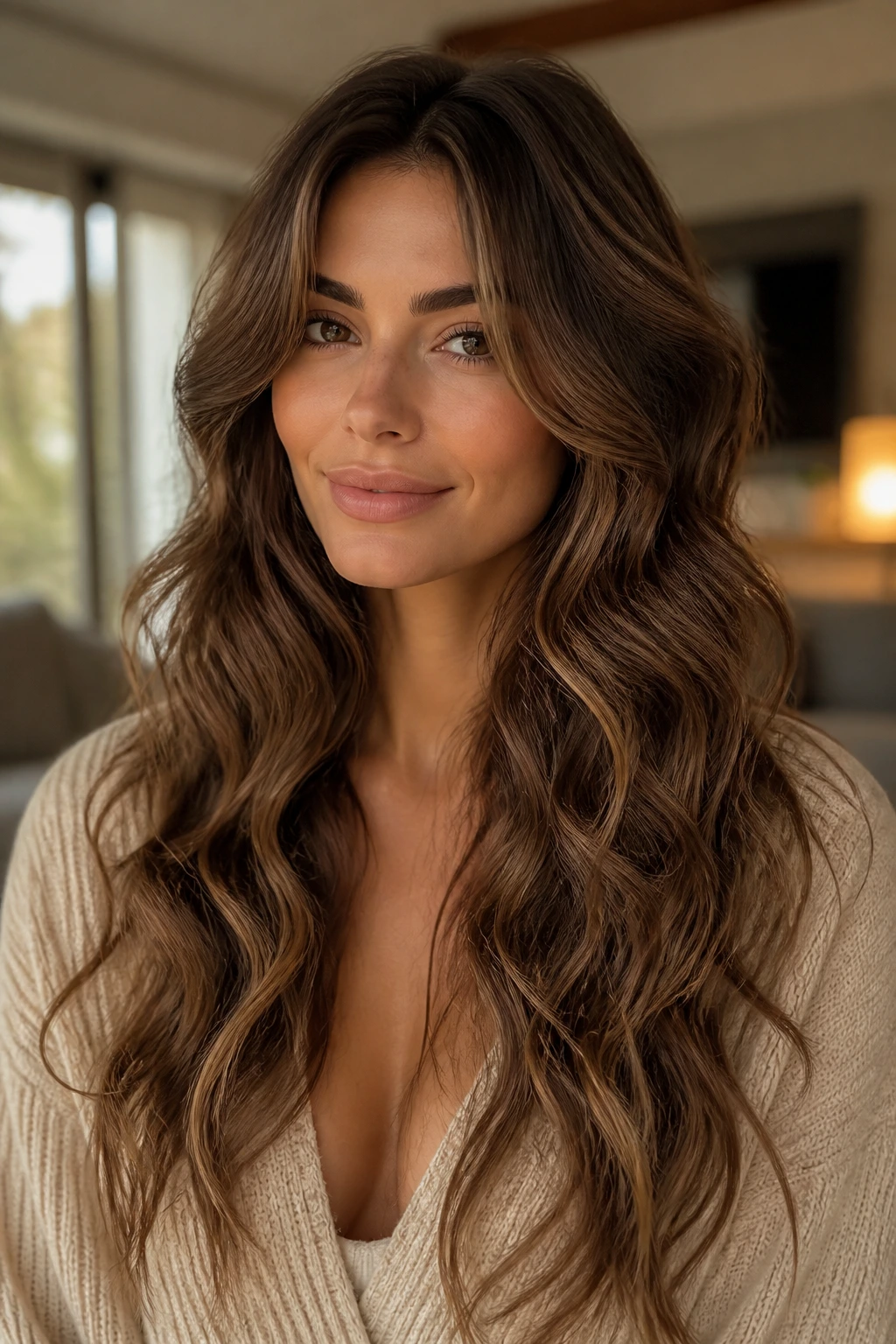
Long hair on a heart-shaped face needs support. Hidden layers do that without stripping the length. They remove bulk from the inside so the outer wave can move, which is ideal if your hair frizzes when it gets too heavy.
Mermaid waves can look costume-y if they’re too even. The better version is softer and slightly irregular, with the fullness sitting from the cheekbone to the chest instead of at the crown.
Why hidden layers matter
They stop the bottom from turning into one thick sheet.
If your hair is dense, ask for internal layers that are not visible from the front. That gives you shape without breaking up the surface too much. The result is smoother, but not flat.
A large iron and a loose wrap pattern are better than tight repetition here. Repetition makes the style look overly engineered.
17. Messy Low Pony Waves
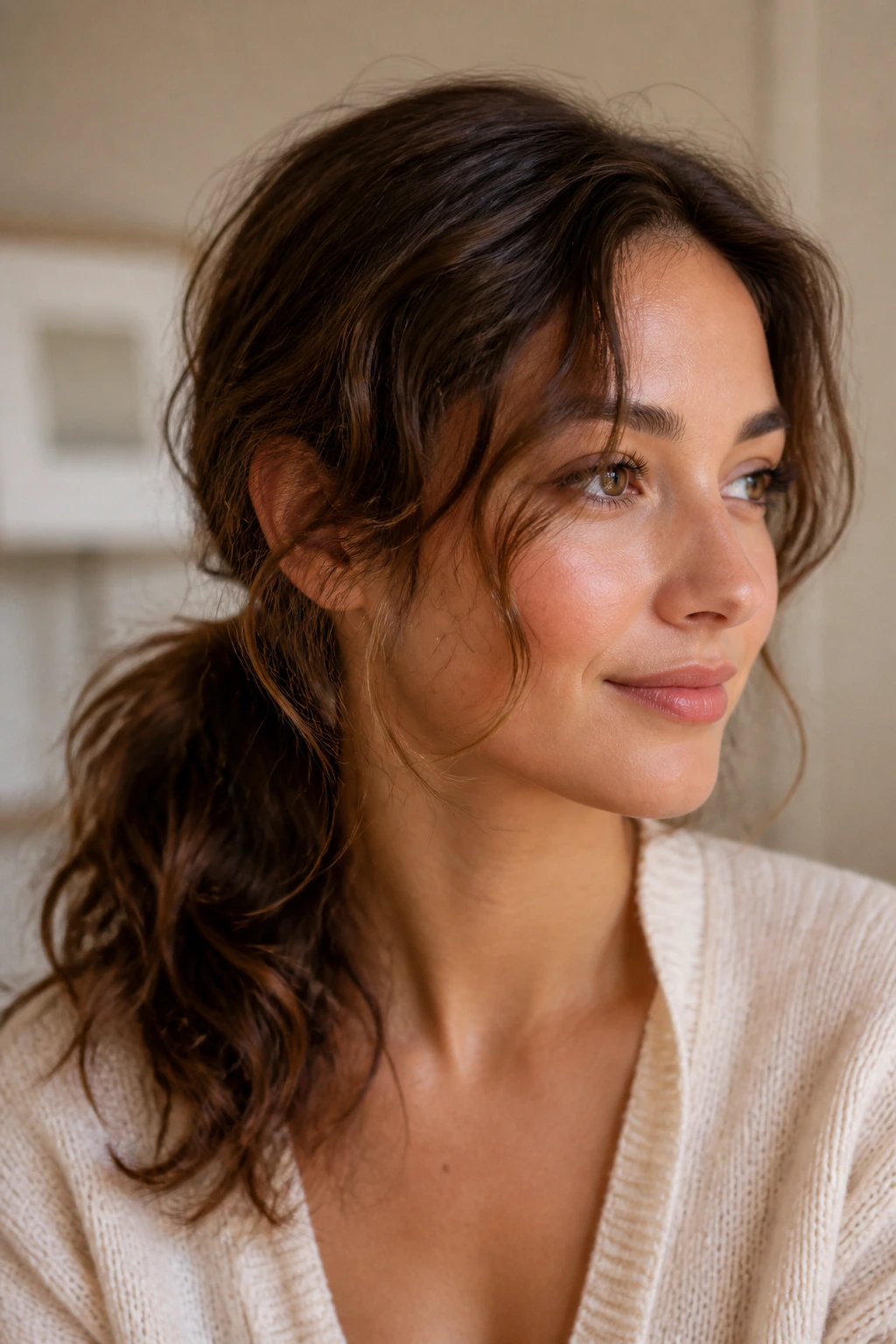
Sometimes the smartest move is to pull the hair back and let the waves live in the ponytail instead of around the whole head. A low pony with soft waves gives a heart-shaped face some needed openness at the forehead while keeping the lower section soft.
Frizzy hair usually benefits from this because the ponytail controls the top half without forcing the rest into submission. A few face-framing pieces and a loosely wrapped base make the whole thing look intentional.
It’s the kind of style that works when your hair is in between washes and not every strand wants to cooperate. Which is most days, for most people, if we’re being honest.
Leave the pony a little off-center and pull the sides gently for softness. Too tight and it turns severe. Too polished and it stops reading as tousled.
18. Velcro-Roller Volume Waves
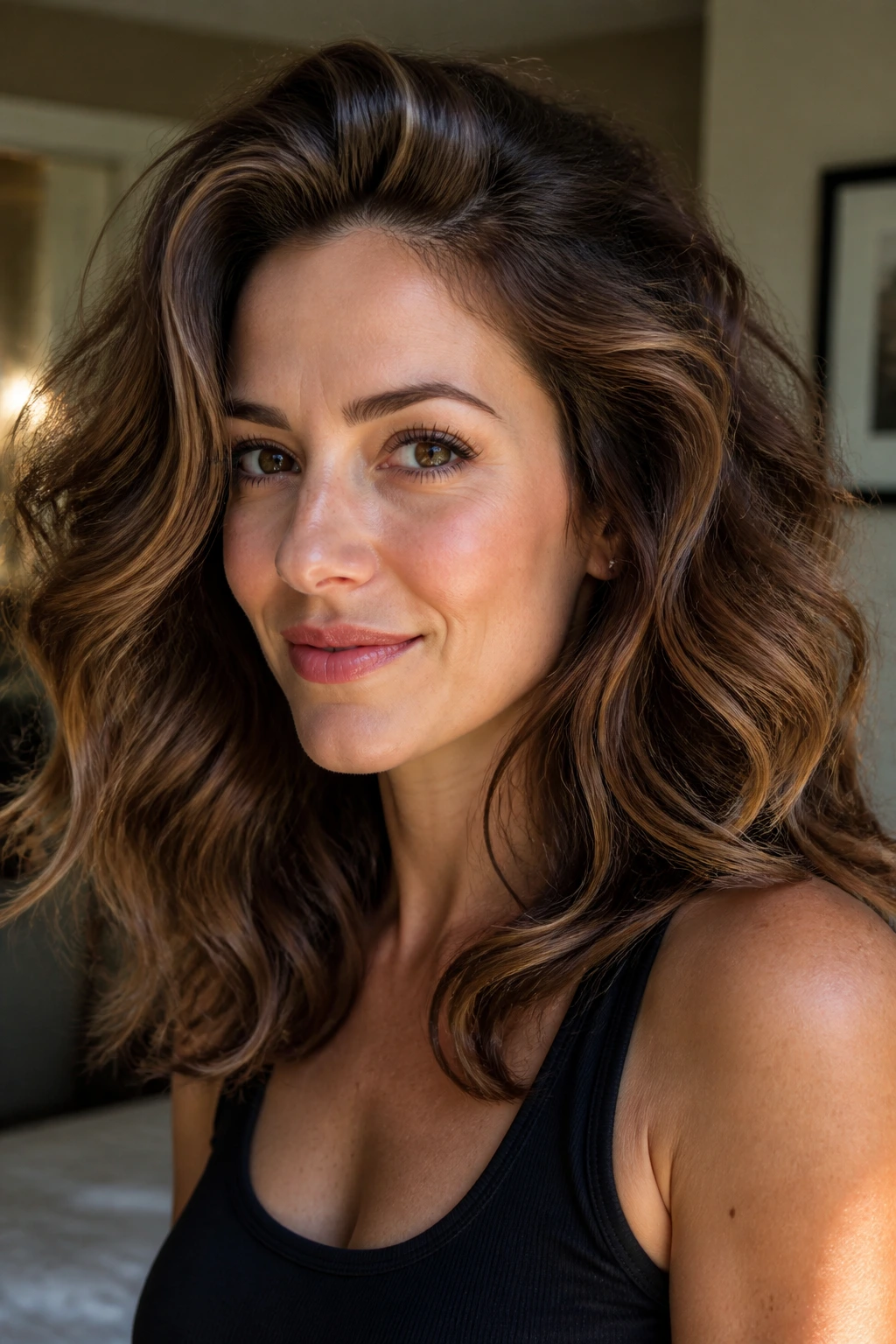
Velcro rollers are old-school in the best way. They give you lift at the roots and soft movement through the lengths, which is a lovely combination for heart-shaped faces because it stops the crown from collapsing while still keeping the face open.
For frizzy hair, the rollers are better than a lot of hot tools because they set shape without frying the cuticle. You can let the hair cool under the rollers and then shake it out into loose waves.
The real advantage
They build volume where you want it, not everywhere.
Roll the front away from the face, keep the crown section slightly lifted, and let the lower sections cool fully before removing the rollers. If you rush this, the shape falls apart.
I’d use this style when you want a little more polish but still want the texture to feel soft and touchable.
19. Soft Flip-End Waves
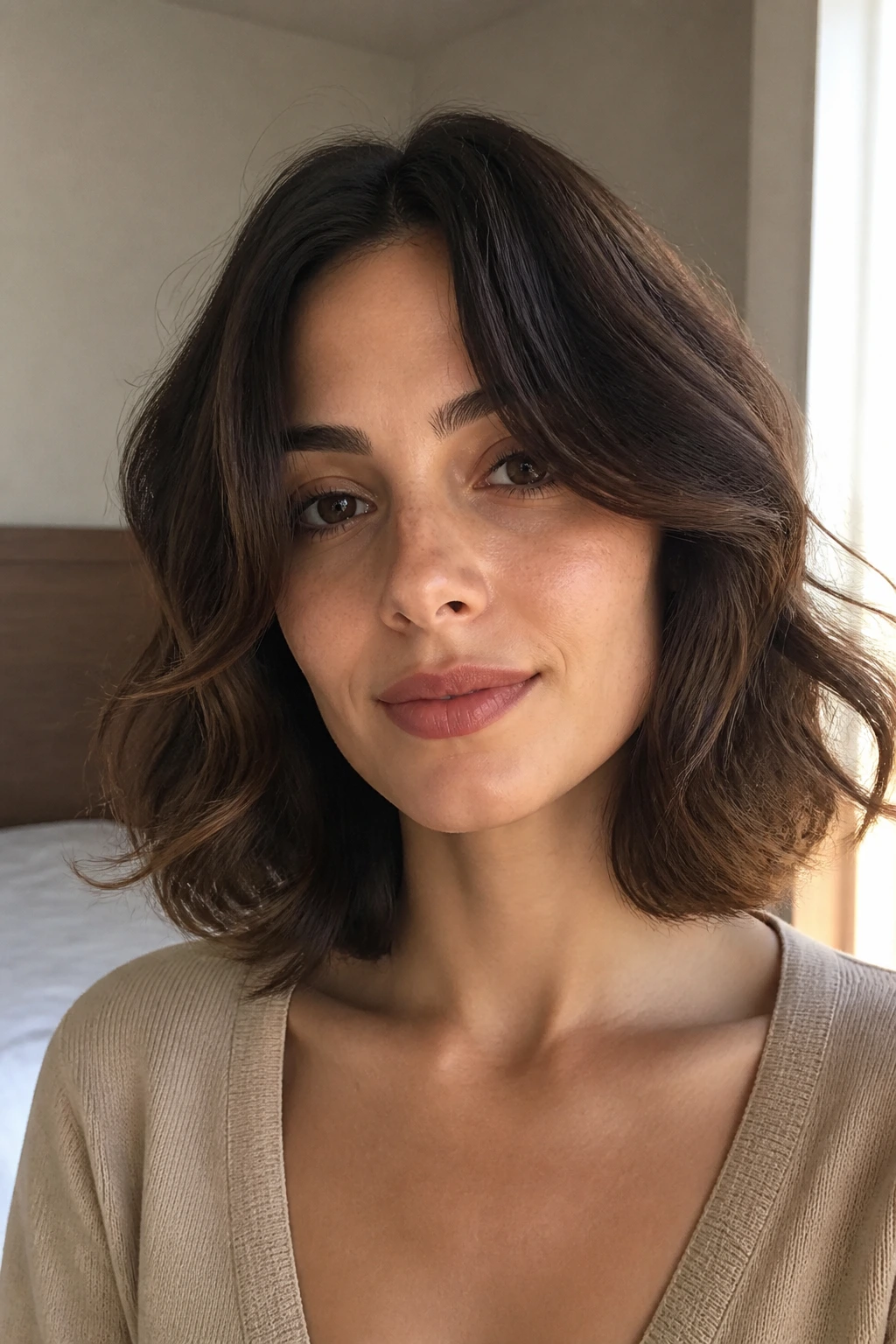
Flipped ends can seem old-fashioned, but a gentle flip gives a heart-shaped face some useful width near the jaw. That helps balance a narrower chin without making the style heavy.
The trick is to keep the flip very soft. Think bend, not flick. If it’s too sharp, the result looks dated. If it’s too subtle, you lose the balancing effect.
Frizzy hair often holds this shape better than smoother hair because the texture keeps the flip alive instead of letting it collapse. A light cream and a medium barrel are enough to set it.
This one works best when the flip shows only at the bottom few inches. More than that and the style starts to fight itself.
20. Micro-Layered Midlength Waves
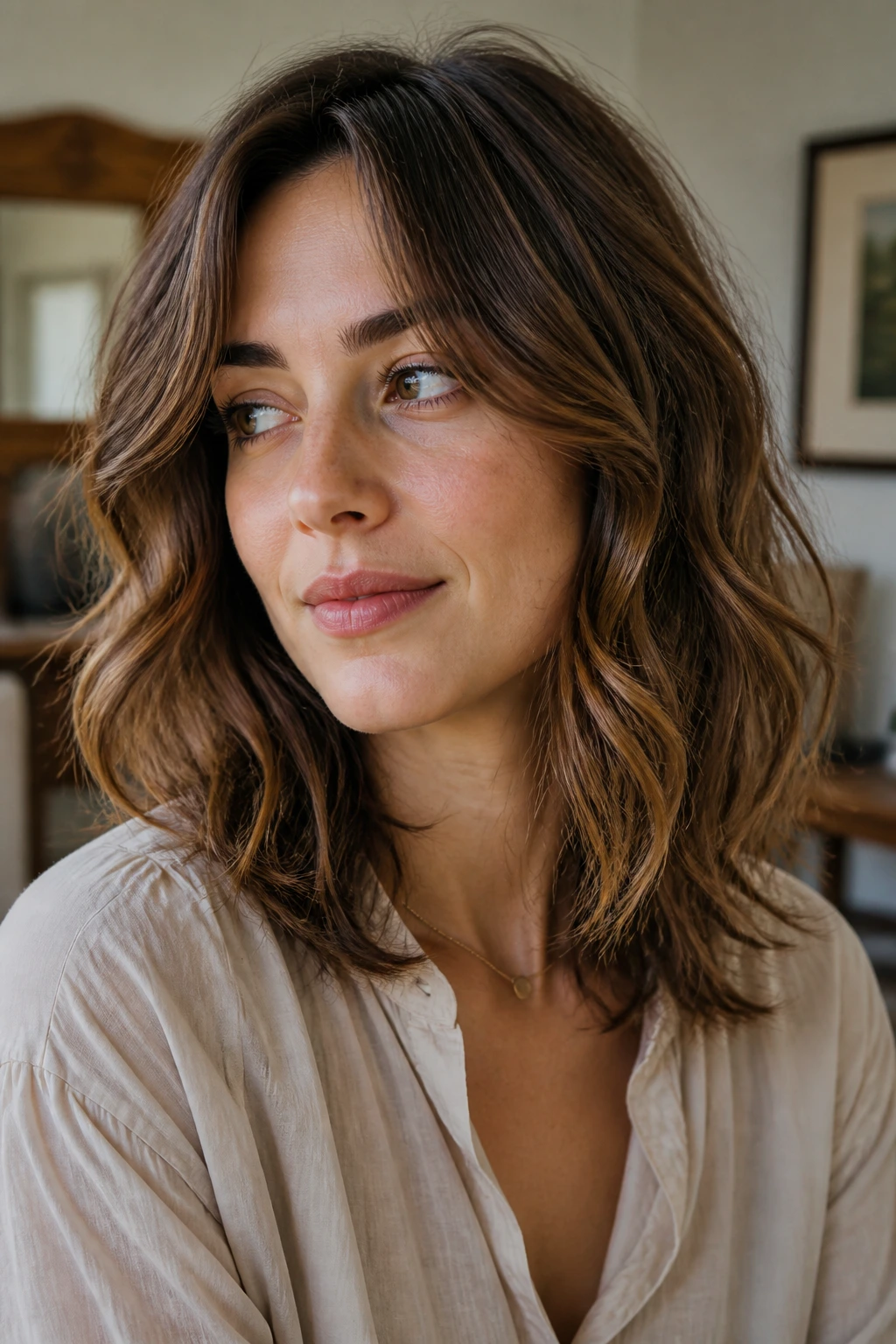
Micro-layers are tiny, almost invisible layers that create movement without chopping the hair apart. That’s useful if your frizz turns into bulk whenever you lose too much weight.
A midlength cut with micro-layers can sit beautifully on a heart-shaped face because it keeps the sides soft and the ends mobile. You get shape without the obvious “layered haircut” effect.
Why it’s a smart choice
The texture stays close to the head near the roots and opens up through the lower half. That keeps the forehead and crown from looking too wide.
I like this style on hair that wants body but not too much volume. It’s a quieter version of the shag, and sometimes quiet wins.
21. Face-Contour Waves with Tucked Sides
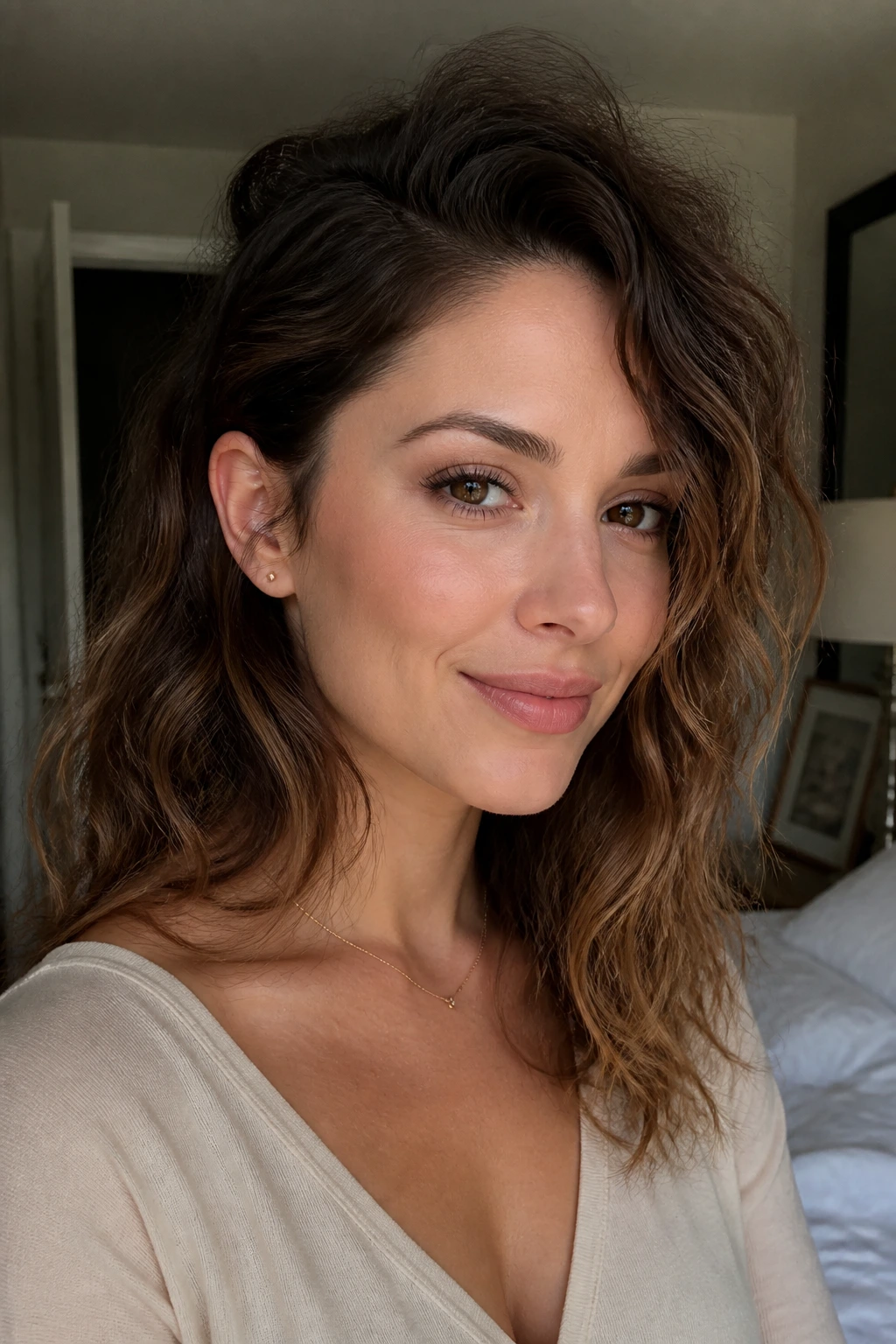
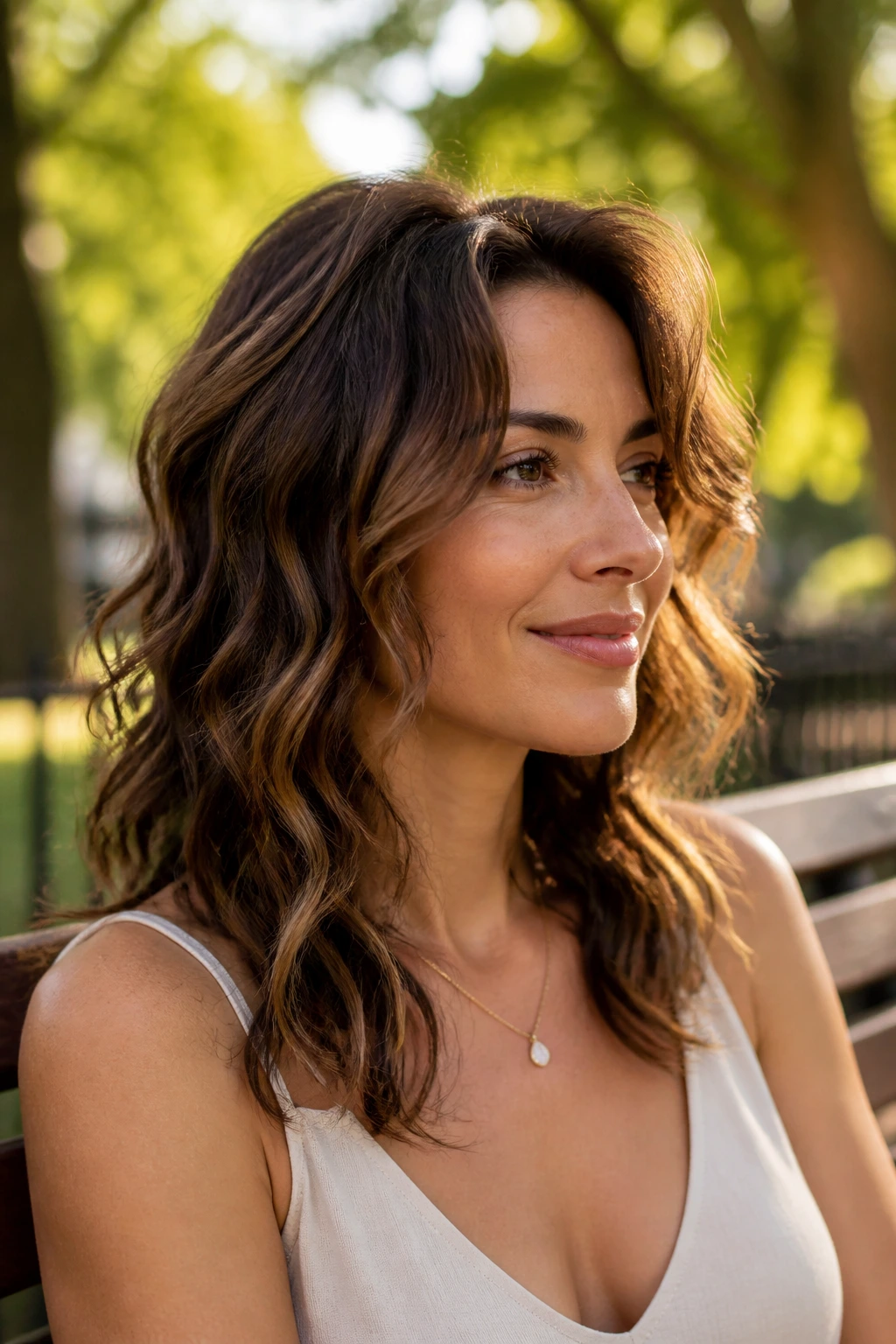
Tucking one side behind the ear changes the whole read of a style. On a heart-shaped face, it exposes the cheekbone and softens the forehead without making the look feel overly styled.
The waves themselves should be loose and contouring, not tight. You want them to hug the face in places and then open up below the jaw. Frizzy hair gives this shape a nice lived-in texture, which keeps it from feeling overplanned.
How to wear it
- Tuck only one side if you want asymmetry.
- Leave the opposite side fuller and softer.
- Use a flat iron to bend the front pieces away from the face, not into curls.
That small ear tuck is one of those things that looks tiny in theory and obvious in person. It changes the whole balance.
22. Humidity-Proof Twisted Waves
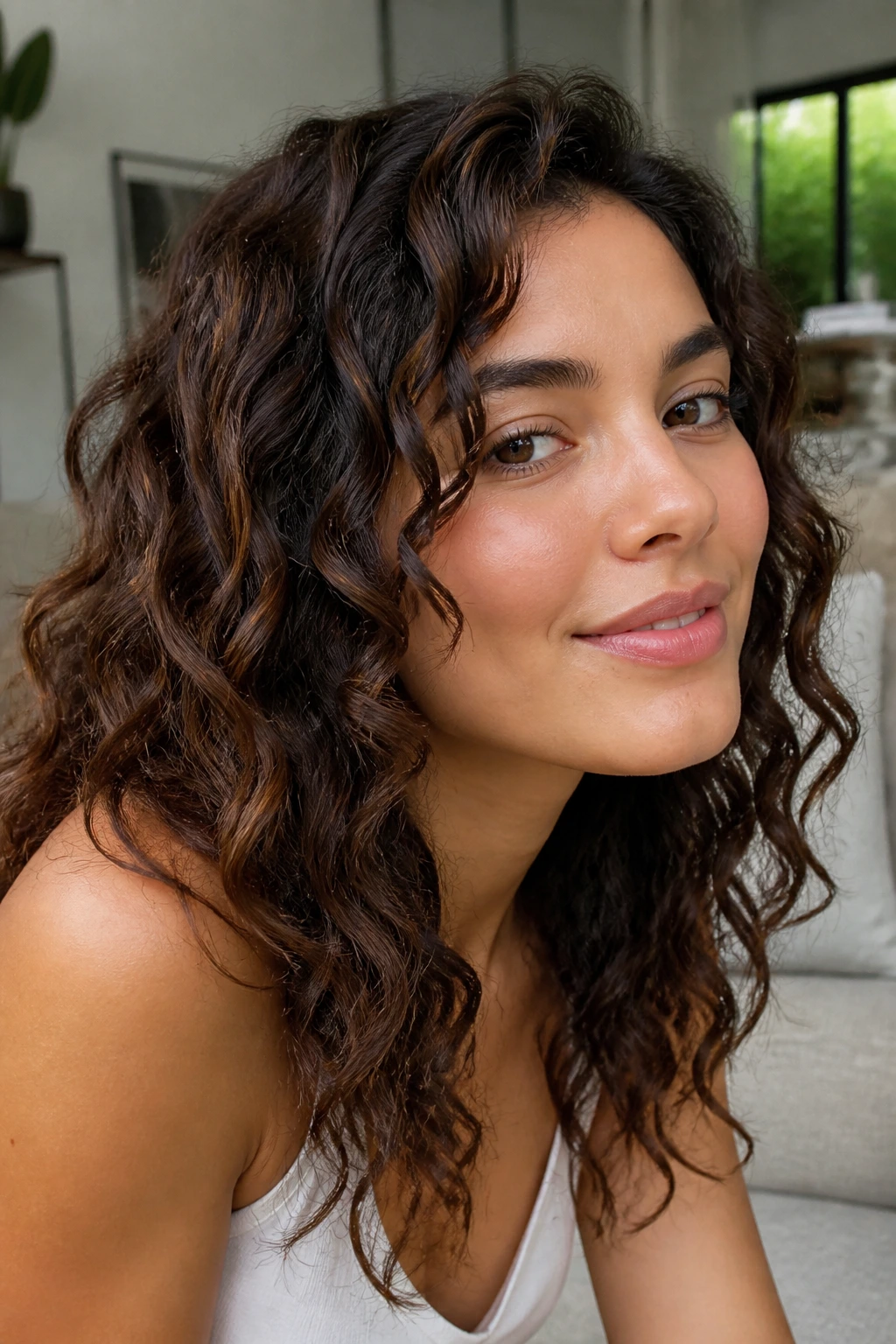
Twist sets are underrated. They give you soft, irregular waves that can hold up well when moisture tries to wreck everything. That makes them a strong choice for frizzy hair, because the wave pattern already looks relaxed enough to survive a little swelling.
A heart-shaped face benefits from the broken texture because it softens the sides without adding hard lines. The trick is keeping the twists loose and varying their size so the result doesn’t look too uniform.
If your hair is prone to puffing, twist sections while damp, secure them loosely, then let them dry fully before undoing. A little anti-humidity spray afterward can help, but only a little.
23. Glossy Undone Waves
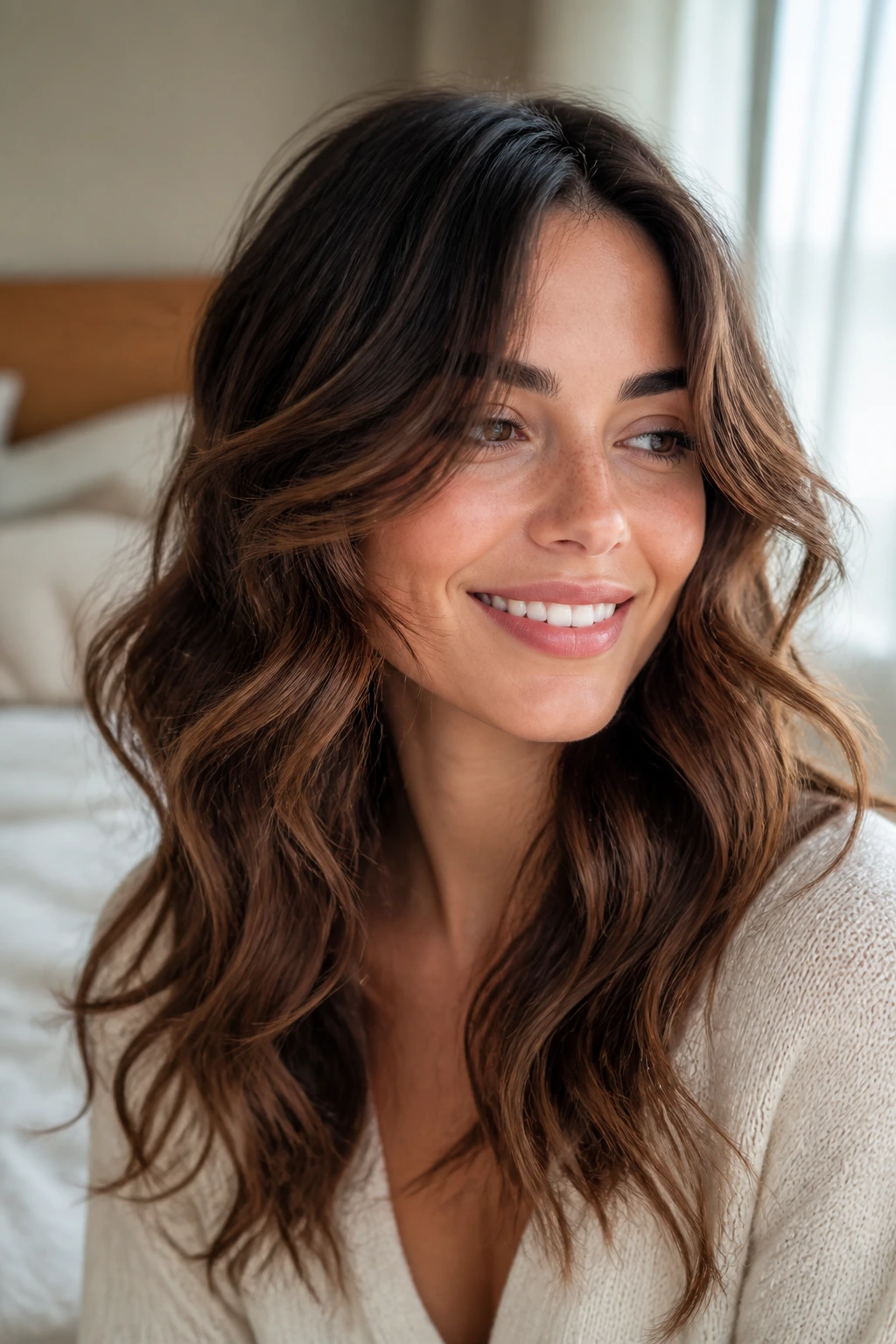
This is the polished version of “I did not try too hard, but I definitely did something.” The waves are loose, the surface is smoother, and the finish has a soft sheen instead of a matte beach texture.
Heart-shaped faces look good with this because the shine pulls attention inward while the wave pattern keeps the lower half from disappearing. Frizzy hair often needs exactly this kind of compromise: enough smoothing to calm the halo, enough texture to stay alive.
Best finishing move
Warm a drop or two of serum between your palms and press it lightly onto the outer layer and ends. Do not rake it through the roots. That only weighs down the top and makes the rest look flat by comparison.
This style is a good choice when you want movement that still reads clean.
24. Soft Glam Off-Center Waves
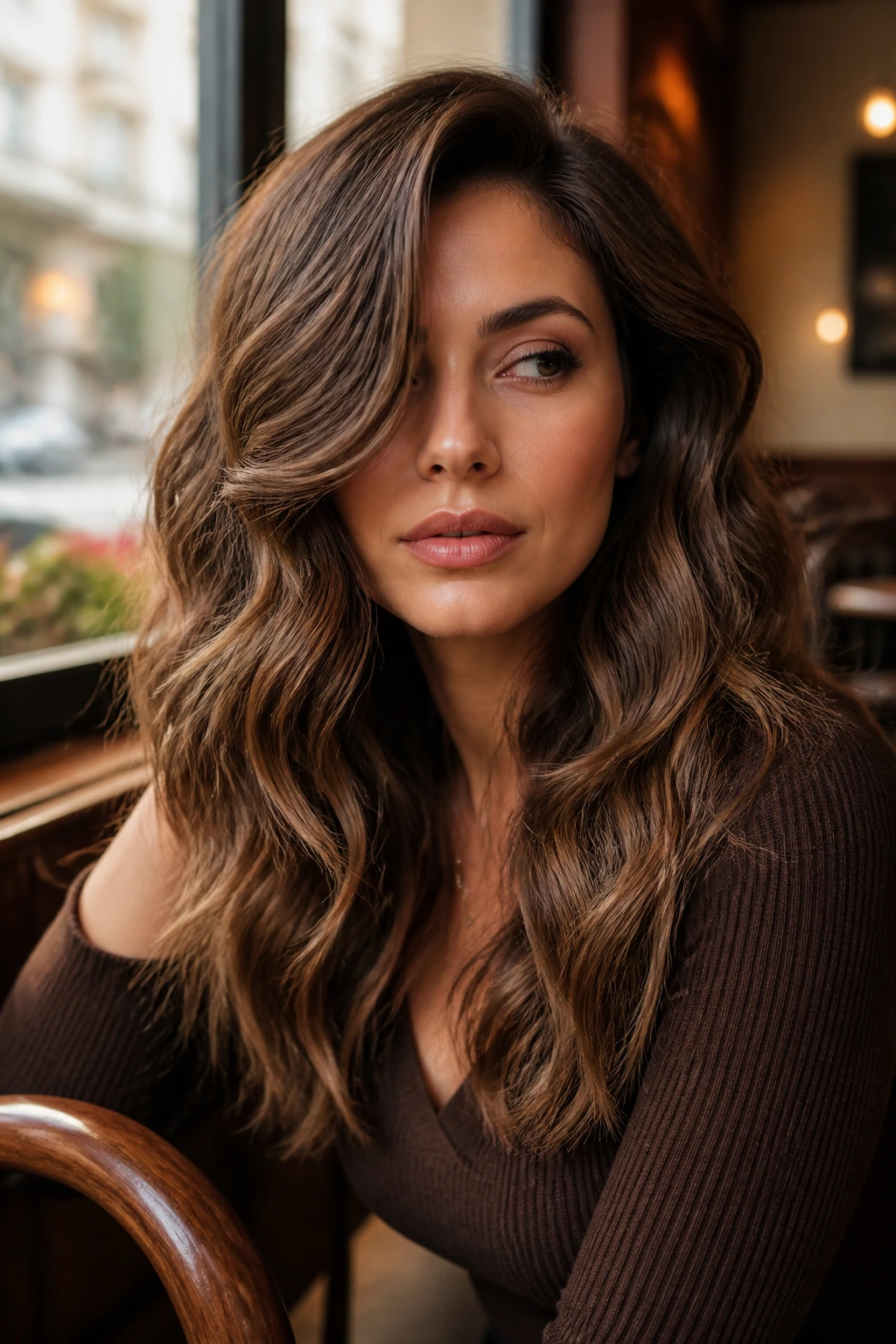
Soft glam waves sit between polished and relaxed. They have a cleaner finish than beach waves, but they stop short of being rigid. On a heart-shaped face, an off-center part keeps them from exposing too much forehead while the curves soften the cheek line.
Frizzy hair can absolutely do this look if you prep it right. The mistake is trying to make every section identical. Leave a little irregularity in the bends, and the style feels expensive rather than overdone.
A large-barrel iron, a brush-through with fingers after cooling, and a light spray are enough. If the ends look too perfect, break them apart a little.
25. Balanced Mermaid Shag Waves
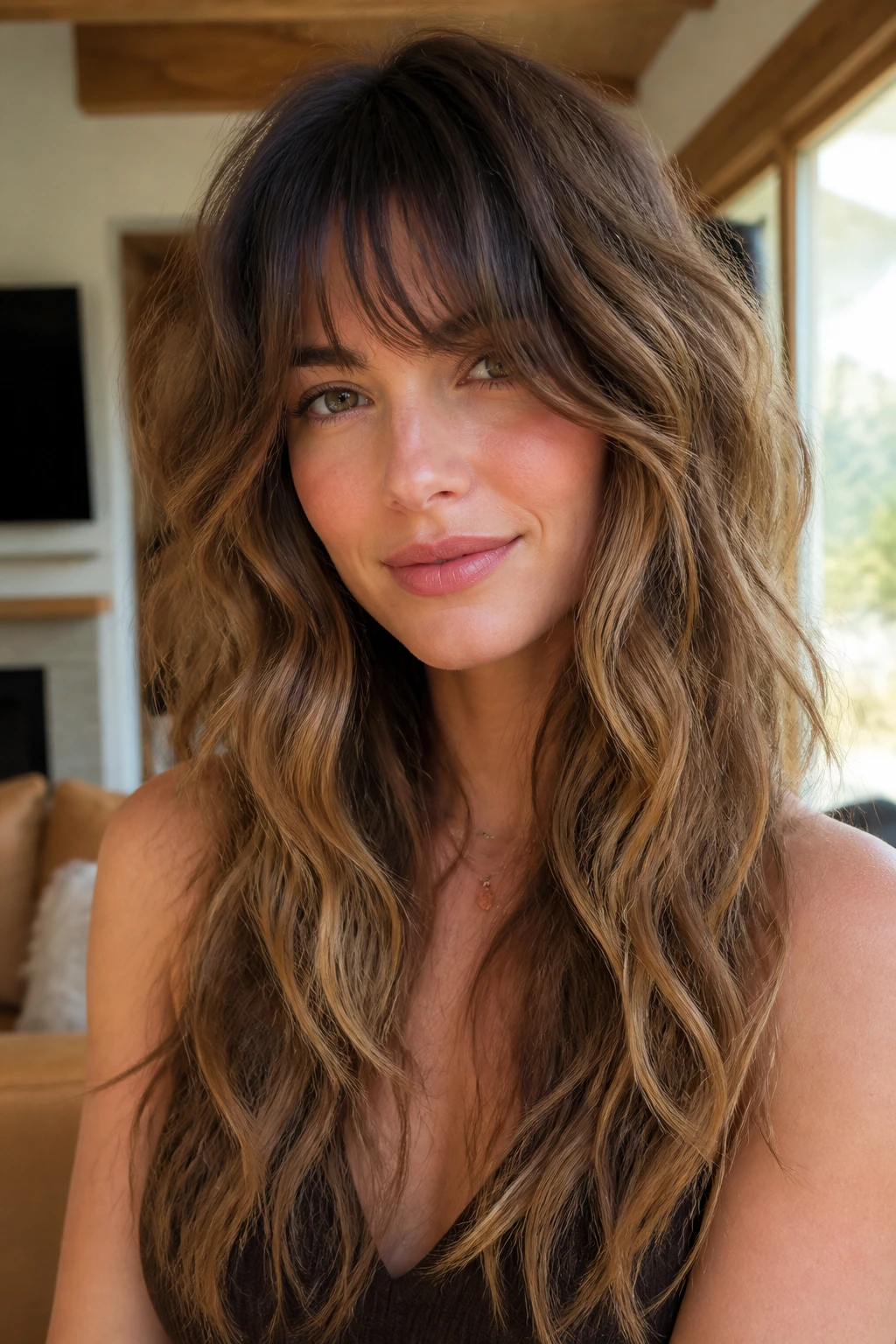
This is the longest, looser, most textured end of the spectrum. A mermaid shag keeps length, but the shag layers prevent the style from becoming a straight curtain. That matters for heart-shaped faces because the sides need some breathing room.
Frizzy hair benefits from the variation in the wave pattern. Some pieces bend more, some less, and the whole style ends up looking soft rather than uniform. Uniform is overrated. Texture is the point.
I’d ask for long layers, face-framing pieces that start no higher than the cheekbone, and enough interior movement that the bottom doesn’t feel heavy. This cut takes a little more discipline on wash day, but not much. It just needs a good scrunch, a diffuse dry, and a refusal to overbrush.
Why These Waves Work on Frizzy Hair and Heart-Shaped Faces
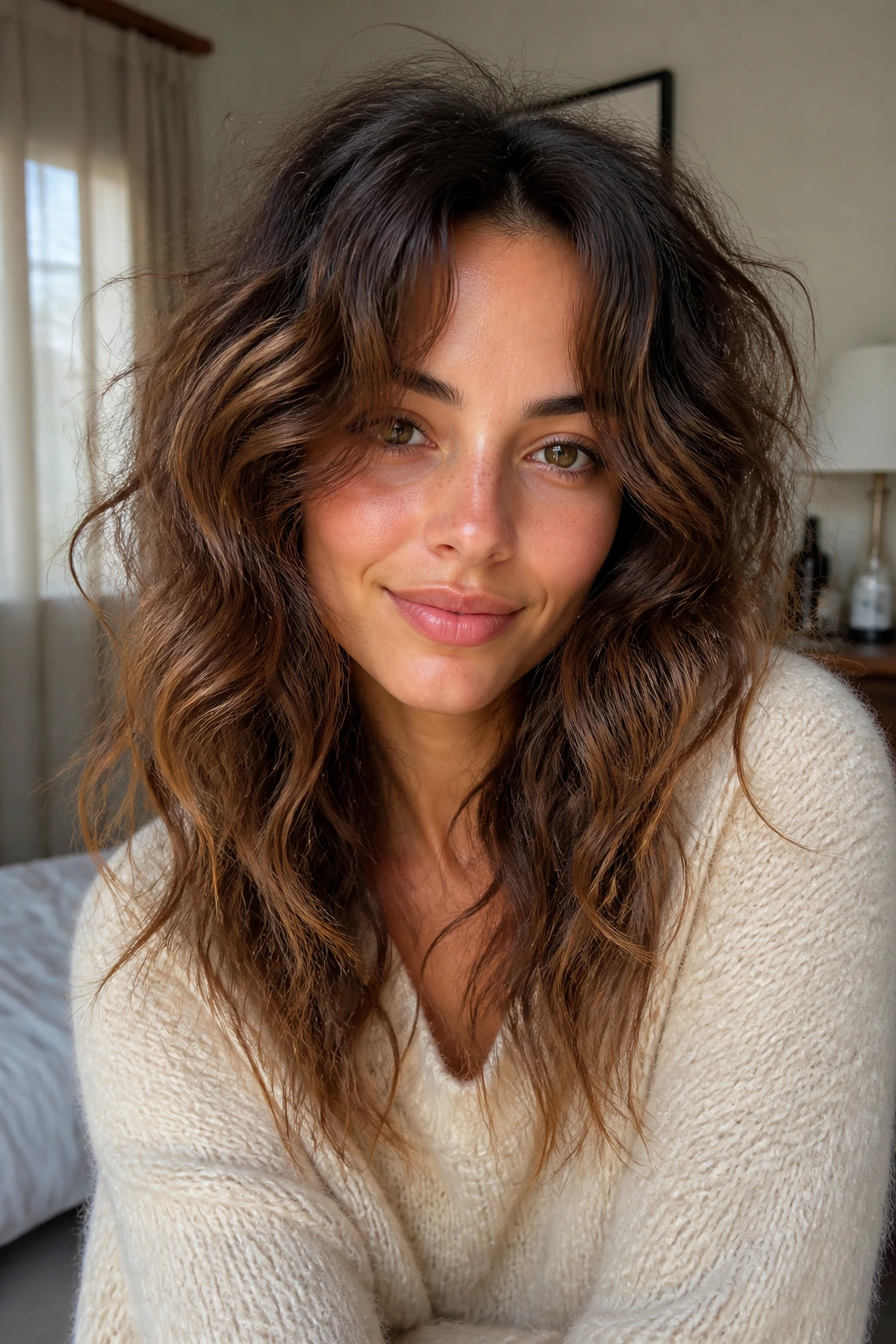
The face shape piece is not mysterious. Heart-shaped faces usually carry more width at the forehead and temples, then narrow toward the chin. That means the most flattering waves are the ones that place softness lower on the face and avoid too much puff right at the hairline.
Frizzy hair helps more than people give it credit for. It naturally creates lift, which gives waves a fuller, more touchable shape. The trick is to guide that lift instead of flattening it into submission. If you smooth frizz too hard, the style can lose its body and end up looking limp at the roots and fuzzy at the ends. Not a good trade.
A soft side part, cheekbone-length face framing, and layers that move through the lower half of the head are the real stars here. A blunt, center-heavy wave pattern can make the forehead feel wider. A style that opens the top and animates the sides is usually the better bet.
Cutting Notes That Keep the Shape Soft
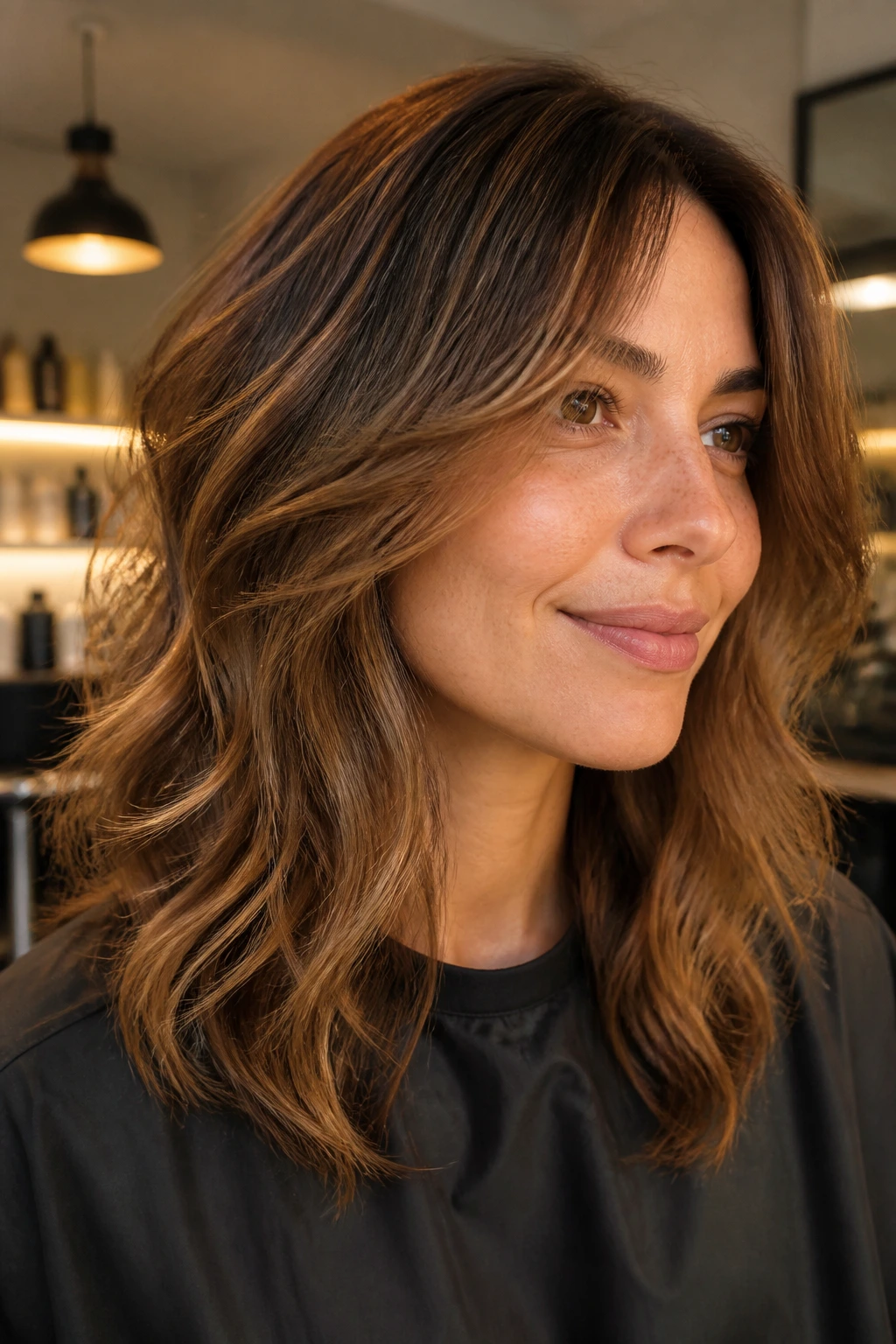
A good haircut does half the styling work before you ever touch a tool. For this face shape, I prefer layers that start around the cheekbone or just below it, because that gives the face a soft frame without building too much width at the temples.
What to ask for at the salon
Ask for movement, not shredding. That matters. Too much thinning can make frizzy hair bloom into a halo once the humidity hits. Too little shaping leaves you with a block.
If your stylist reaches for razor texturizing, ask how much of the perimeter they plan to remove. On porous hair, a heavy razor pass can make the ends look frayed faster than you’d expect. Point cutting is usually safer when you want softer ends and less visual bulk.
Where the shape should live
Keep the fullest part of the style below the eyes, usually from cheekbone to jawline. That helps the face feel balanced instead of top-heavy.
One more thing. Don’t let anyone cut every layer to the same length around the face. That little mistake is one of the fastest ways to get a round puff near the temples. The layers need to fall in a staggered way, or the shape gets boxy.
Essential Tools for These Looks
-
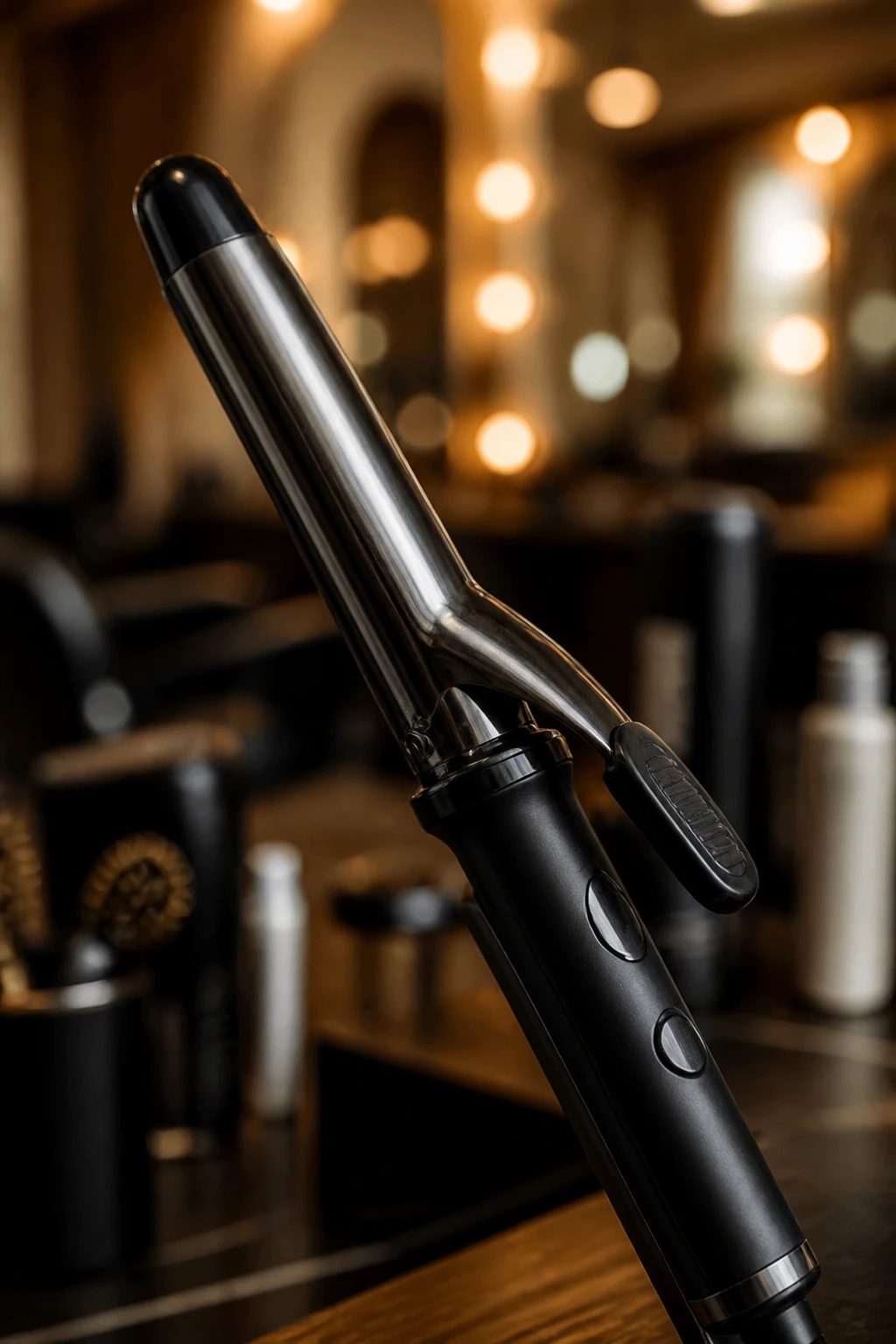
1.25-inch curling iron or wand: The sweet spot for loose bends that don’t turn into tight curls.
-
Diffuser attachment: Use low heat and low speed to keep frizz from exploding while the hair dries.
-
Microfiber towel or cotton T-shirt: Blot, don’t rub. Rough towel drying can rough up the cuticle fast.
-
Wide-tooth comb: Good for distributing leave-in or cream on wet hair without stretching the pattern apart.
-
Duckbill clips or sectioning clips: Helpful for lifting the crown or setting face-framing sections while they cool.
-
Lightweight mousse or curl foam: Gives frizzy hair some memory without coating it in grease.
-
Flexible-hold hairspray: Keeps the finish soft enough to move.
-
Satin pillowcase or bonnet: Not glamorous, but it saves the shape overnight.
Smart Product Choices for Frizz and Movement
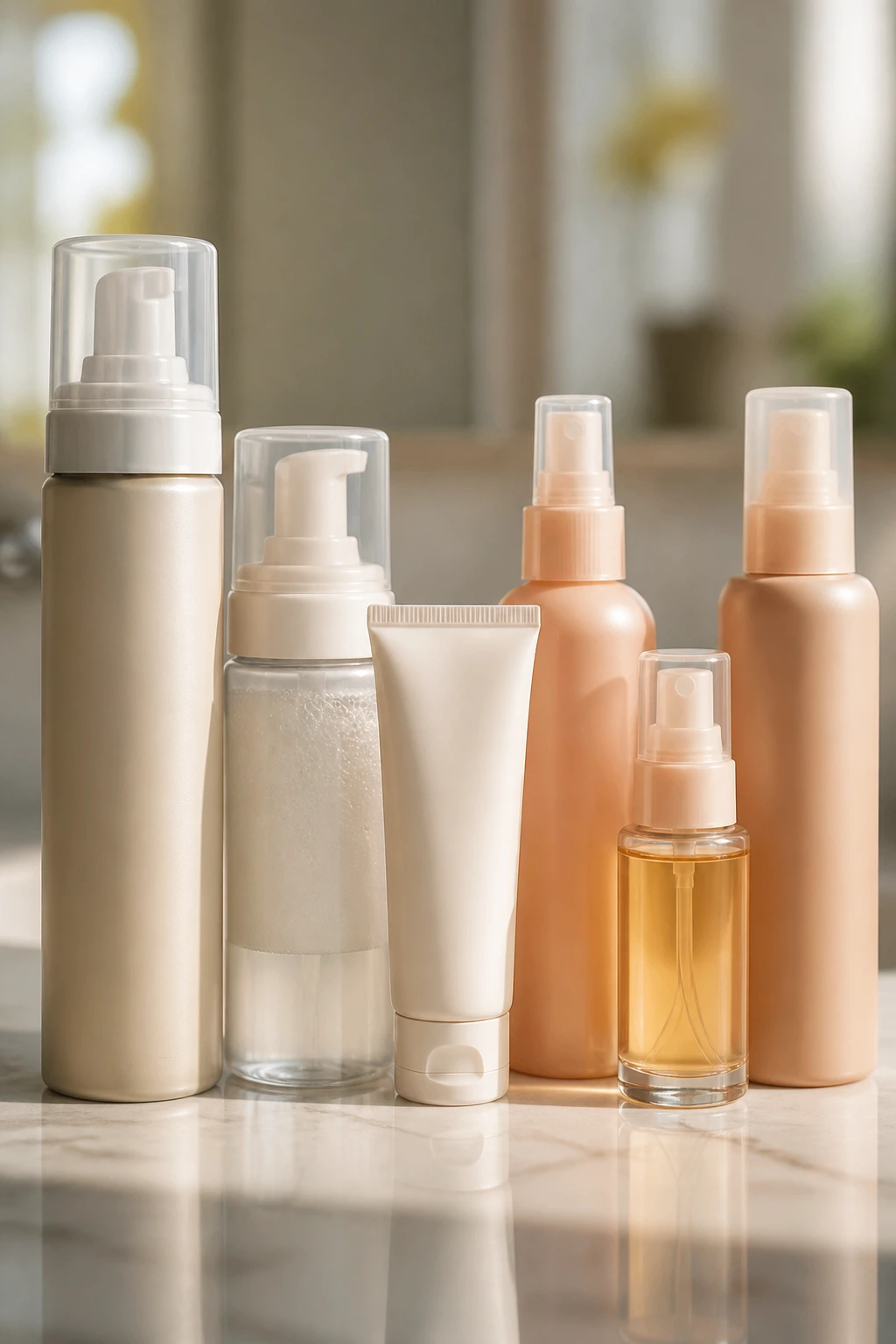
The right product mix here is light at the root and a little more controlled through the midlengths and ends. That sounds obvious, but a lot of people reverse it and then wonder why the hair lies flat on top and frizzes at the bottom.
For damp hair, I usually reach for a mousse or curl foam if the hair is fine to medium, and a cream if it’s coarse or extra dry. Mousse gives memory and lift. Cream gives slip and keeps the cuticle calmer. If you have thick frizzy hair, sometimes both work together — mousse first, cream only on the ends.
Heat protectant matters if you use hot tools. Use enough to coat the hair, not enough to soak it. A fine mist is easier to control than a heavy spray. On dry hair, a drop or two of serum on the ends can make the waves look cleaner, but too much will flatten the body you just created.
Anti-humidity spray is useful, but I’d treat it like seasoning, not sauce. A light mist over the outer layer is enough. Piling it on turns touchable waves into shellacked helmet hair, which is a terrible bargain.
How to Wear and Finish These Waves
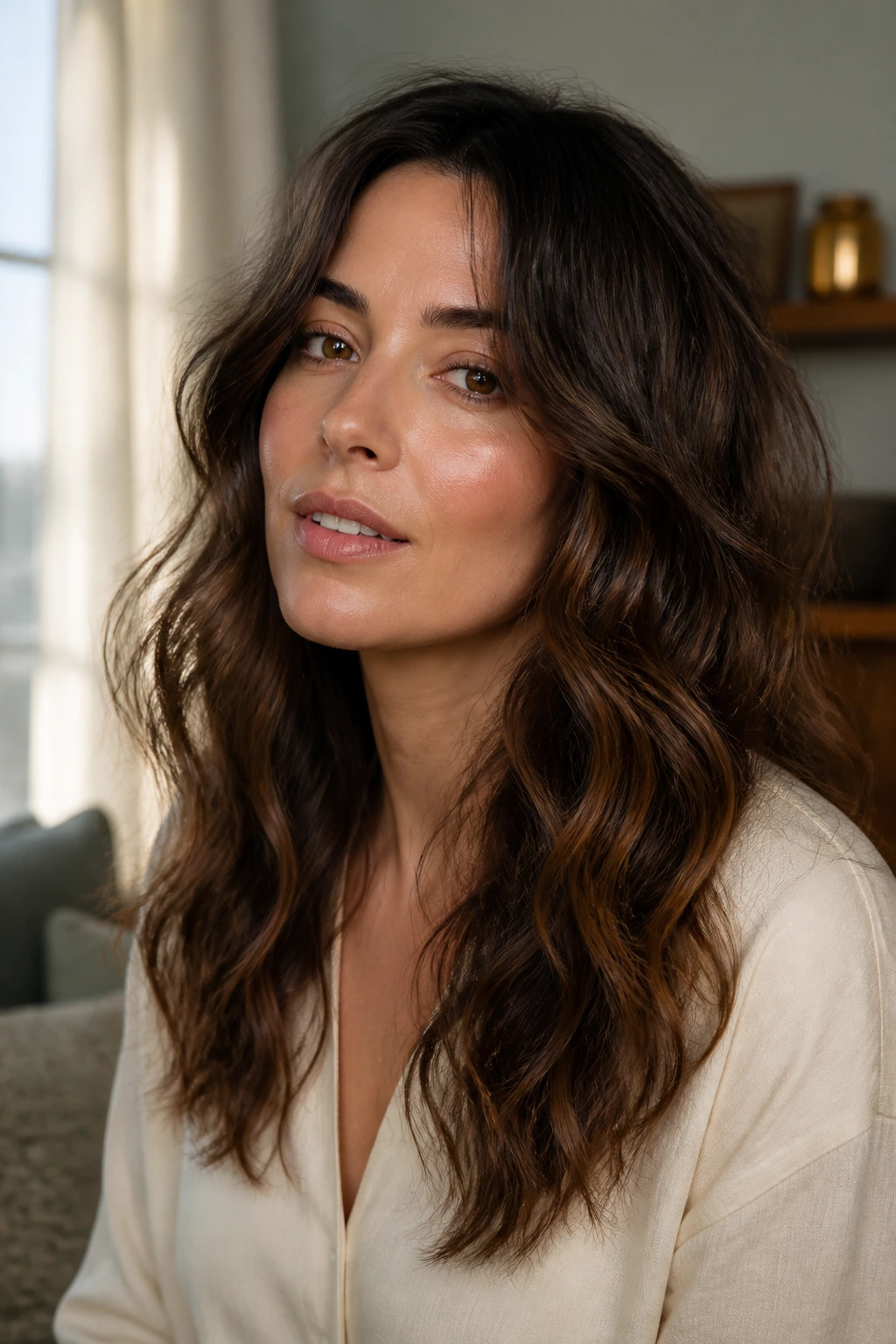
Everyday wear: Keep the shape soft and a little broken. Tuck one side behind the ear, let the other side fall forward, and stop fiddling once the wave has cooled. The less you touch it, the better it tends to look.
Office polish: Choose a smoother root and a looser wave through the ends. A side part and a clean face frame make the style look intentional without losing the softness that suits frizz.
Dress-up finish: Add a little more shine to the ends and define the front pieces with a larger iron bend. You want movement, not stiff curls. The hair should still swing when you turn your head.
Humidity days: Keep product light, avoid brushing dry hair, and pin back only the sections that are puffing the most. One bad crown is enough to throw off the whole style.
Fast refresh: Mist the front and the outer layer with water, scrunch in a pea-size amount of leave-in, and reshape only the pieces that matter. Usually that’s the front, the crown, and the ends near the jaw.
Additional Tips and Texture Boosters
Root Lift: Clip the crown up for ten minutes after diffusing or blow-drying. It gives you a little lift without turning the top into a puffball, which is a common mistake on heart-shaped faces.
Shape Control: Leave the last inch of the hair straighter than the rest. That tiny move keeps the style from looking too curly or too round, and it gives the wave a more modern line.
Shine Without Slip: Use a drop or two of serum only on the outer layer and ends. If the hair feels greasy after one pass, you used too much. There is no heroic reason to add more.
Make-It-Yours: For fine hair, use mousse and a smaller number of sections so the wave doesn’t fall apart. For thick hair, use cream plus diffuser and keep the layers a little longer so the shape doesn’t explode.
Quick Fix: If one side looks bigger than the other, bend the front pieces on the smaller side with a flat iron for five seconds, then leave the rest alone. Don’t re-curl the whole head for one uneven section.
Maintenance, Night Care, and Day-Two Revival

Frizzy waves usually survive better when you protect them while you sleep. A satin pillowcase is the easiest fix. It reduces friction, which means fewer smashed bends and fewer rough spots in the morning.
If your hair is long enough, a very loose braid or a soft pineapple at the crown can keep the wave pattern from collapsing. I mean loose. If the elastic leaves a deep dent, it’s too tight. Use a silk scrunchie if you can. It’s gentler and doesn’t bite into the strand.
For day-two hair, dry shampoo belongs at the roots only once the hair is fully dry. Spraying it onto damp hair is useless and sometimes sticky. After that, work the roots with your fingertips, then mist the midlengths with a little water and refresh the front pieces if they’ve lost their bend.
A style like this often looks better on the second day than the first. The texture settles. The frizz eases off its first-wave panic. The waves stop looking newly made and start looking like they belong there.
Variations and Adaptations to Try
Fine-Hair Version: Keep the layers longer and use mousse instead of cream. Fine hair gets weighed down fast, so the goal is airy movement, not a lot of product.
Thick-Hair Version: Ask for internal layers and use a diffuser with sections clipped up at the crown. Thick hair needs room to move, or it turns boxy.
Heat-Free Version: Go with braids, twists, or foam rollers overnight. These methods create irregular bends that suit frizz better than overly tight curls anyway.
Short-Hair Version: A wavy bob or chin-skimming crop works if the front pieces are softer and the sides are not too blunt. The face frame matters more than the exact length.
Humidity-Heavy Version: Skip heavy oils, use anti-frizz cream sparingly, and finish with flexible spray on the outer layer only. A little product goes a long way when the air is wet.
Common Mistakes to Avoid
-
Using a center part with too much crown volume: If the hair is biggest right at the part, the forehead can look wider than it is. Shift the part a finger-width to one side and let the front pieces soften the line.
-
Curling every section the same direction: Uniform curls can look stiff and too neat. Alternate directions or leave the ends out so the wave reads as broken and loose.
-
Thinning the hair too aggressively near the face: Heavy thinning can create frizzy edges and a weak outline. Ask for softness through the contour, not a shredded perimeter.
-
Brushing dry waves: A brush can turn a decent wave into a halo in seconds. Use fingers or a wide-tooth comb only if the hair is wet and coated with slip.
-
Overloading the roots with oil or cream: That gives you flat roots and fuzzy ends, which is a lousy combination. Keep root products light and put the richer stuff on the lower half.
-
Letting the face frame stop too high: If the shortest pieces hit above the cheekbone, the forehead can take over. Aim lower, then let the rest taper.
Frequently Asked Questions
What part is most flattering for a heart-shaped face?
A soft side part usually wins, especially if your forehead is wide or your crown gets a lot of lift. A center part can work too, but it usually needs face-framing layers or bangs to keep the top half from feeling too open.
Can frizzy hair wear tousled waves without heat?
Yes, and sometimes that’s the better route. Loose braids, twists, or rollers set on damp hair can give you a wave pattern that looks softer and less forced than hot tools.
Should the waves start at the roots or lower down?
Usually lower down. Starting the wave right at the root can add too much width near the forehead, which isn’t ideal for heart-shaped faces. A bend that begins around the cheekbone tends to look better.
Do bangs help or hurt this face shape?
They help when they’re soft. Curtain bangs and bottleneck bangs are the easiest bets because they break up the forehead without drawing a hard line across it. Blunt, heavy bangs can feel boxy unless the rest of the cut is very carefully shaped.
What if my hair is very thick and frizzy?
Keep the layers internal and the outline soft. Thick frizzy hair gets bulky fast if all the movement lives on the outside. A good cut should remove enough weight to let the waves move, but not so much that the edges fray.
Can a bob work on this face shape?
Absolutely, but the length matters. A bob that stops a little below the jaw with soft, piecey ends is safer than a blunt cut that lands exactly at the chin.
What product is better: mousse or cream?
Mousse is better for lift and memory. Cream is better for softness and control. If your hair is coarse and thirsty, cream usually wins; if it’s fine and tends to collapse, mousse is the safer start.
How do I keep the waves from puffing up in humidity?
Prep with a light leave-in, keep the root product minimal, and use anti-humidity spray only on the outside of the style. Also, don’t brush it out once it starts to frizz. That makes the puff worse.
What’s the fastest way to refresh day-two waves?
Mist the front and the outer layer with water, scrunch in a tiny amount of leave-in, and re-bend only the pieces that frame your face. You do not need to redo the whole head for one flat section.
The Softest Version of Frizz
The best thing about tousled waves on a heart-shaped face is that they stop asking the hair to be something else. Frizz becomes lift. Bend becomes shape. The forehead gets softened, the jaw gets a little breathing room, and the whole style feels more alive than a perfectly smoothed finish ever could.
Pick the version that matches your length and your patience. A lob if you want something easy. A shag if your hair likes movement. A side part if you need more balance up top. Then let the texture do its job. That’s where the good stuff happens.