



Sandy blonde hair color can be a gift on pale skin when the tone is right—beige, neutral, and lightly sun-warmed, not yellow or chalky. The difference is dramatic. A good sandy blonde makes fair skin look clearer and more awake; a bad one can pull every pink patch, shadow, and tired spot on your face into the spotlight.
That’s why this shade family deserves more respect than it gets. People hear “blonde” and picture one flat idea: bright, bright, brighter. Sandy blonde is not that. It lives in the middle band of salon color charts, usually around level 7 to 9, where you can still see depth at the root and softness through the mids. That balance matters even more on pale skin, because too much gold can turn brassy fast, and too much ash can go dull or gray.
The best sandy blonde formulas feel like driftwood, oat milk, beige linen, and a little bit of late-afternoon light all mixed together. There’s warmth, but it’s controlled. There’s brightness, but it doesn’t scream. And when it’s placed well around a fair face, the whole look reads polished without being stiff, which is exactly why the shades below work so well.
Why These Sandy Blonde Ideas Work on Pale Skin
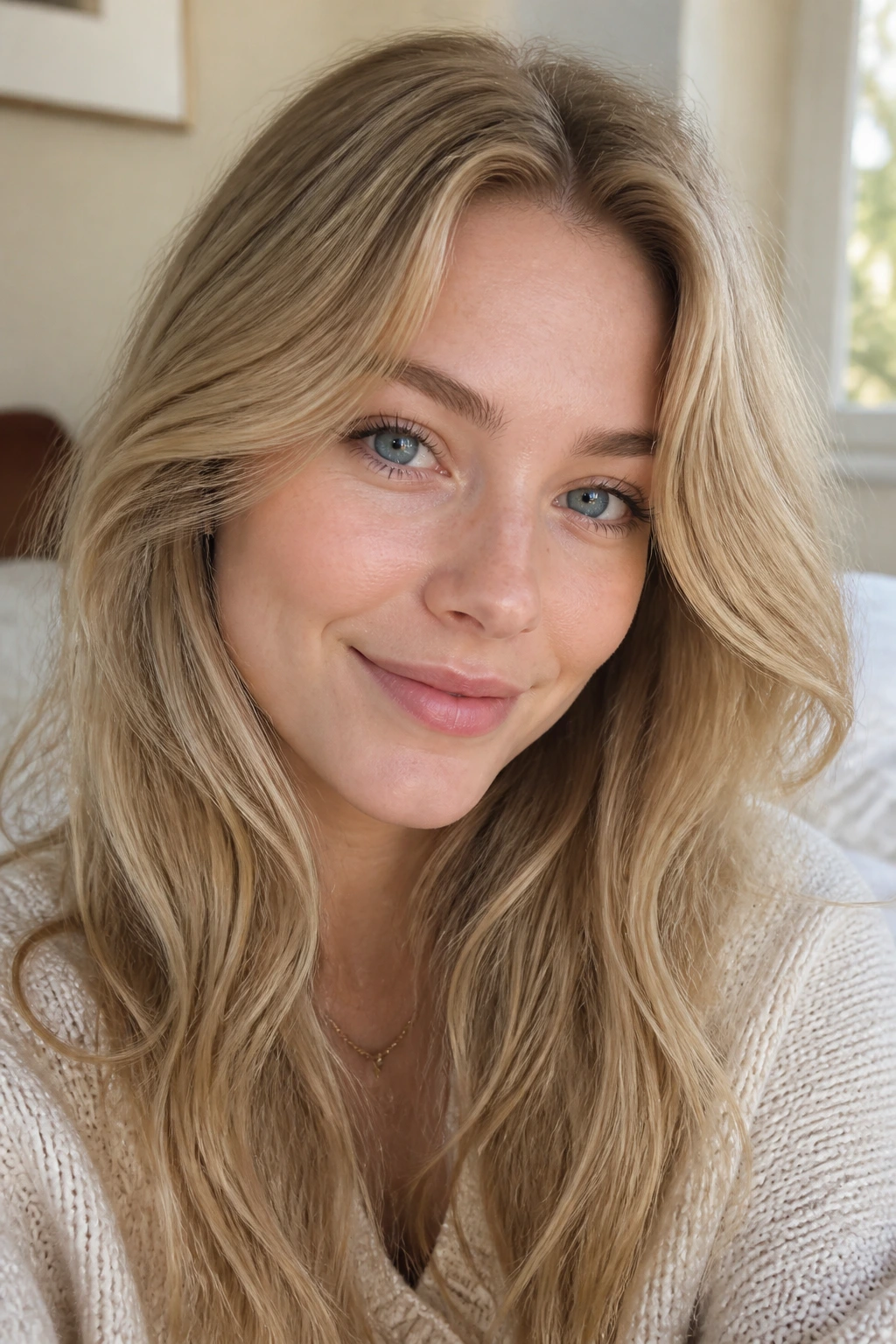
- Beige keeps the skin from looking flushed: Sandy blonde sits between gold and ash, so it softens redness instead of fighting it.
- Root depth matters more than people think: A shadow root or soft melt keeps pale skin from looking washed out beside a solid block of light blonde.
- Not every blonde needs to be bright at the ends: Some of the best versions here use ribbons, glosses, or face-framing light rather than full-head bleach.
- Texture changes the whole read: The same sandy tone looks airy on waves, cleaner on a bob, and far richer on curls.
- Maintenance stays manageable: Several of these ideas can be refreshed with a gloss or toner instead of a full rework, which is a relief when you don’t want a standing salon appointment on your calendar.
- There’s room for cool or warm undertones: Pale skin is not one thing. Some of these lean ashier, some lean honeyed, and the better choice depends on whether your face runs pink, neutral, or softly peach.
1. Soft Beige Sandy Blonde
Soft beige sandy blonde is the shade I reach for first when someone with pale skin wants blonde that doesn’t shout. It sits in that quiet middle zone—enough warmth to keep the hair from looking gray, enough ash to stop it from going yellow. The finish should look like clean linen in sunlight, not frosting.
Why It Works: Beige is the bridge color that makes this work. On fair skin, it blurs redness instead of sharpening it, and it gives the eyes a little more contrast than a platinum finish would. Ask for a level 8 beige blonde with a soft gloss rather than a high-lift, candy-colored blonde. That tiny shift changes everything.
Best For: If your skin is pale with neutral undertones, this is the easy pick. It also plays nicely with soft makeup, because it does not compete with blush or lip color.
A blunt bob or shoulder-length cut suits it best. The shade looks especially good when the hair swings and catches light in thin sheets, not chunky streaks.
2. Cool Mushroom Sandy Blonde
Cool mushroom sandy blonde is for the pale-skinned person who knows golden blonde is not their friend. It has that muted, smoky edge that keeps the color grounded, almost like beige had a meeting with taupe and ash. The result is elegant in the least fussy way.
Why It Works: Pink or red undertones on fair skin can get overwhelmed by warmer blondes. This cooler sandy version calms the skin instead of heating it up. I like it most when the roots stay a shade deeper than the mids—otherwise it can drift into flat territory. A demi-permanent gloss usually keeps the tone polished without making it dull.
What to Ask For: Request an ash-beige blonde with a low-contrast root smudge and minimal yellow in the finish. If the colorist reaches for a silver toner too fast, that’s a red flag.
This is the sandy blonde that looks especially good in daylight. Indoors it reads subtle; outside, the muted dimension shows up properly.
3. Rooted Sandy Balayage
Rooted sandy balayage is the low-drama choice, and I mean that as a compliment. You get brightness through the lengths, but the root stays a little deeper, which gives pale skin some definition right at the hairline. That tiny bit of shadow keeps the whole look from floating away.
Why It Works: Balayage lets the lighter pieces sit where they matter most—around the face, through the top layer, and on the ends where movement shows. On fair skin, the contrast is soft enough to flatter but not so pale that the face loses structure. It also grows out in a clean line instead of the blunt stripe you get from all-over lightening.
Best For: This is smart if you want to stretch salon visits. It works on straight hair, but I think it looks even better on loose bends where the lighter ribbons can break up.
If your natural base is medium blonde or light brown, this is one of the easiest paths into sandy blonde without losing your entire weekend to upkeep.
4. Bright Face-Framing Sandy Blonde
Bright face-framing sandy blonde is one of the quickest ways to wake up pale skin without changing your whole head of hair. The trick is simple: keep the outer pieces around the face lighter, then let the rest of the blonde sit a touch deeper and softer. That gives the complexion a clean little lift.
Why It Works: Pale faces often look best with light placed where the eyes and cheekbones live. A brighter money piece does that job without forcing the ends to go over-light. The contrast is especially good if you wear your hair back a lot, because those front sections still do the work even in a ponytail or clip.
How It Wears: Think curtain bangs, center parts, and chin-length layers. The lighter framing pieces should look blended at the root, not striped. If you can see the line from three feet away, the color is too hard.
This is one of my favorite options for people who want to feel blonder without signing up for full platinum maintenance. It gives just enough drama.
5. Honey-Sand Lob
Honey-sand blonde sits warmer than classic beige sandy blonde, but it still stays in control. On pale skin with a bit of peach or a gentle golden cast, that warmth can make the whole face look softer and more alive. The lob keeps it modern and clean.
Why It Works: The cut matters here as much as the color. A lob gives the tone a crisp edge, which stops the honey notes from looking too sugary. Ask for a sandy base with honey ribbons only through the surface layers; keep the underside a little quieter so the color has depth.
Best For: Pale skin that pulls a little sallow under cooler blondes tends to like this one. It’s also good if your wardrobe leans cream, camel, olive, or soft brown, because the shade connects nicely.
The one thing I’d avoid is making the honey too orange. Warm is fine. Pumpkin is not.
6. Beige-to-Champagne Melt
Beige-to-champagne melt feels expensive without being obvious about it. The roots and mids stay beige, then the ends drift into a soft champagne tone that catches light in a very gentle way. On pale skin, that gradient adds polish instead of harshness.
Why It Works: This kind of melt gives the hair depth across multiple levels, which is useful when your complexion is fair and can lose shape against one flat blonde tone. The lighter champagne ends brighten the lower half of the hair, while the beige root area keeps the scalp from looking stark. It’s especially nice if your hair is fine, because the tonal shift makes it look fuller.
What Makes It Different: This is not a bright, bubbly blonde. Champagne here means pale beige with a quiet glint, not yellow sparkle.
I like this most on longer hair, where the fade can really stretch out. On short cuts, it can look too sudden if the colorist rushes the blend.
7. Creamy Sandy Blonde Bob
A creamy sandy blonde bob is one of those shades that looks neat in real life, not just in photos. The creamy part keeps the blonde soft, while the sandy base stops it from tipping into flat beige. On pale skin, that clean line around the jaw helps the face stand out.
Why It Works: Bobs need color with enough contrast to show the cut. This version gives you that without harsh streaks. A level 8 to 9 blend, toned with a neutral-beige gloss, keeps the bob looking fresh and glossy rather than dry and washed out.
Best For: If your hair is straight or slightly wavy, this reads sharp and expensive in the plainest sense of the word. On very curly hair, you may want more dimension so the shape does not disappear into one light surface.
I’d keep the ends a shade lighter than the root area. That small shift makes the bob feel alive.
8. Sunlit Sand Melt
Sunlit sand melt is the version people usually mean when they say they want “natural blonde,” but better. The color rises softly from a deeper base into sandy mids and lighter ends, like hair that spent a week near a bright window. Pale skin loves this because the color has movement instead of one harsh note.
Why It Works: Melted color keeps the eye moving. That motion matters on fair skin, which can look flat if the hair is too even from root to tip. A melt also forgives regrowth better than a solid bleach job, which is handy if you hate obvious upkeep.
How I’d Style It: Soft waves bring out the tonal shift. Straight hair shows the clean blend, but waves show the sunlit effect more clearly.
This is one of the safest choices if you want sandy blonde without committing to a high-contrast or fashion-y result. It feels lived in, not overworked.
9. Ash-leaning Sandy Pixie
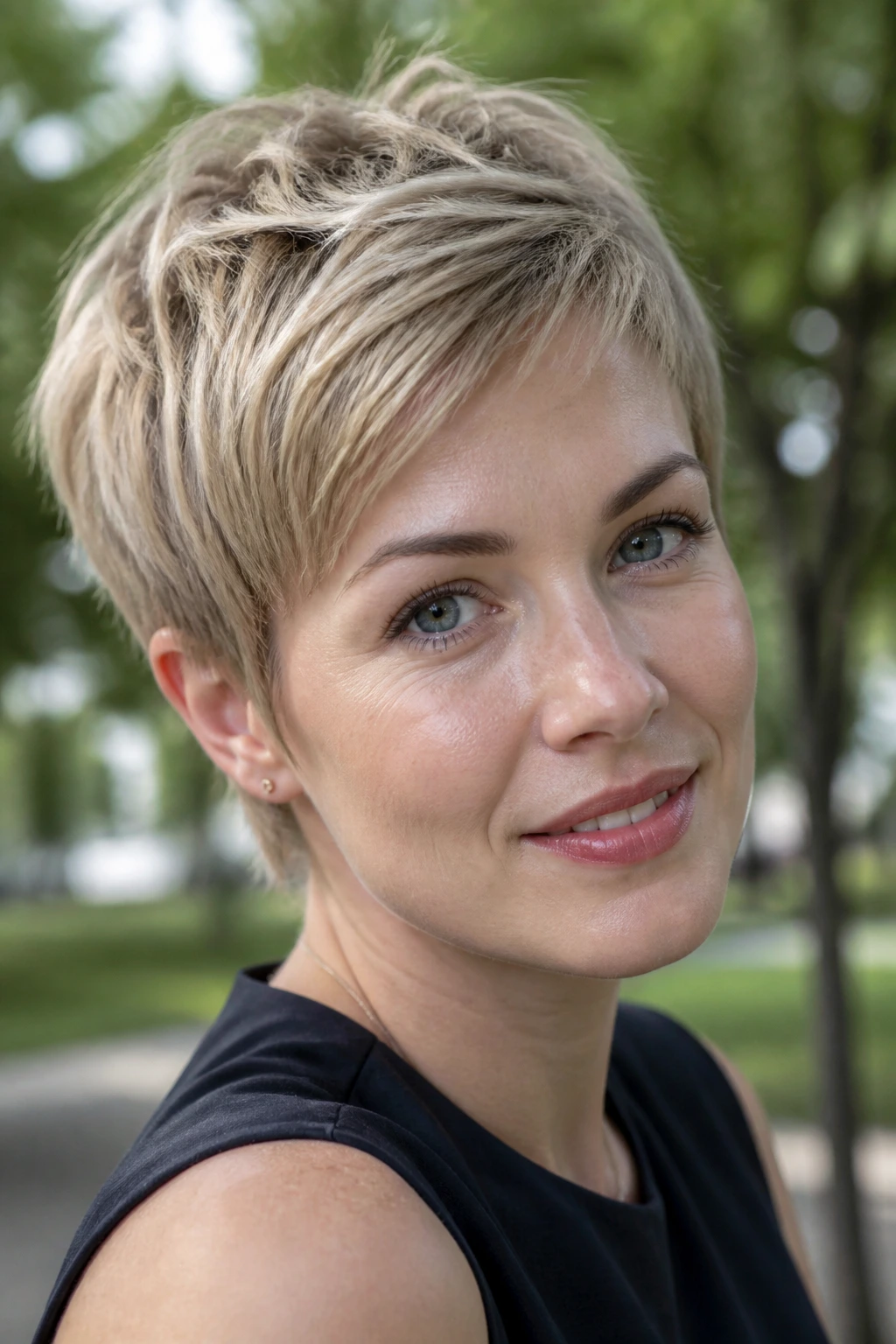
An ash-leaning sandy pixie is sharp, crisp, and a little fearless. On pale skin, the short shape puts all the focus on the face, so the color has to do clean work. That’s where the ash-sand balance helps: it keeps the pixie from turning too yellow or too flat.
Why It Works: Short hair shows tone fast. You do not have the luxury of layers hiding mistakes. A pixie with a beige-ash glaze gives enough texture to separate the pieces without making the cut look dusty.
Best For: This is a strong choice if your features are delicate and you want the hair to frame the face rather than dominate it. The pale skin/blonde combo can look especially cool with strong brows or a clean lipstick.
I’d avoid pushing this too icy. A little warmth in the base keeps it human instead of chalky.
10. Sandy Bronde Blend
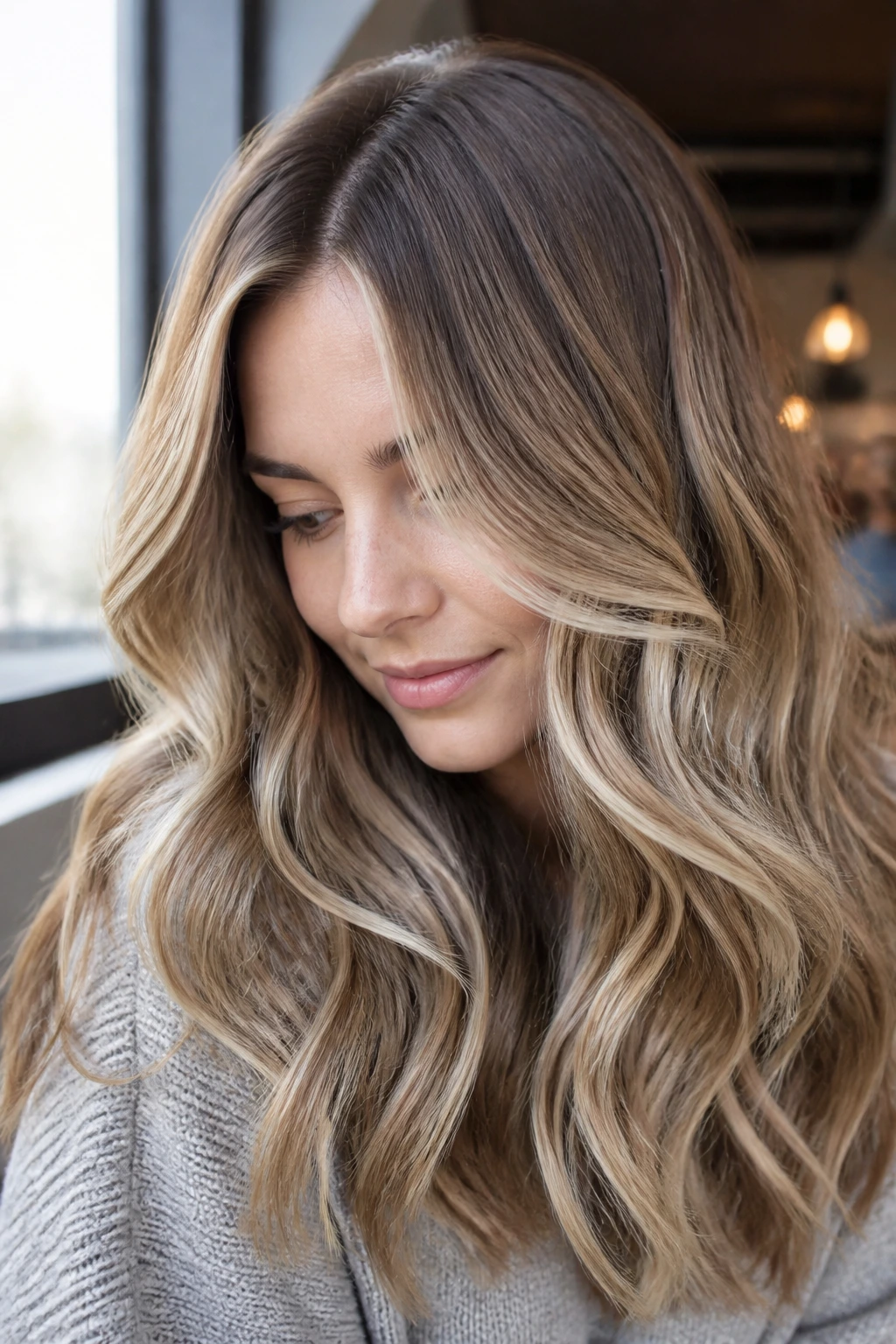
Sandy bronde is the answer when you want a blonde that still remembers where it came from. It keeps more brunette depth through the base and mids, then threads in sand-colored ribbons so pale skin gets contrast without a hard blonde jump. That makes it one of the most forgiving looks in the bunch.
Why It Works: On fair skin, too much lightness can erase the frame around the face. Bronde fixes that by keeping the color anchored. The sandy pieces give brightness where it counts, and the deeper base gives the whole look weight.
Who It Suits: If you’re growing out darker hair or you simply don’t want constant toning, this is your lane. It also looks good with thicker hair because the depth keeps the shape from getting fuzzy.
I like this one because it does not pretend to be platinum. It’s smarter than that.
11. Honey-Sand Ribbon Highlights
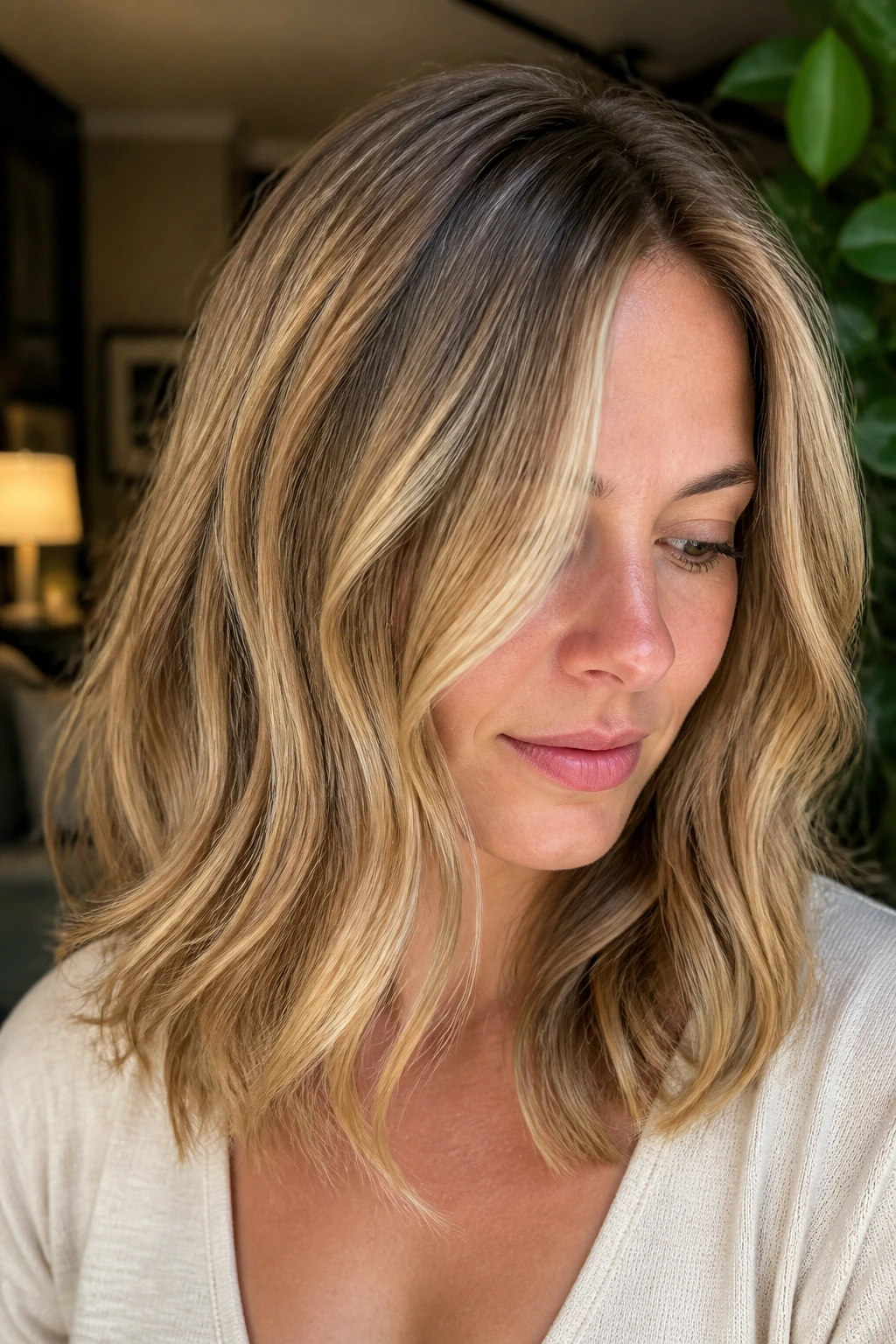
Honey-sand ribbon highlights add movement without turning the whole head into one giant blonde block. The ribbons should be fine enough to melt into the base, but visible enough that the hair catches light in pieces. On pale skin, those thin threads of brightness can warm the face up fast.
Why It Works: Ribbon highlights are great when you want dimension more than drama. They create a soft shimmer rather than stripes, and that makes them easier to live with as they grow. A sandy beige base with honey-laced ribbons gives a fair complexion a little warmth without flooding it.
Best For: This works especially well on medium-length cuts and layered styles. The movement gives the highlights room to breathe.
Don’t let the ribbons get chunky. Once they get too wide, the whole thing shifts from airy to obvious. That is usually where the look stops flattering and starts looking dated.
12. Barely-There Sandy Ombre
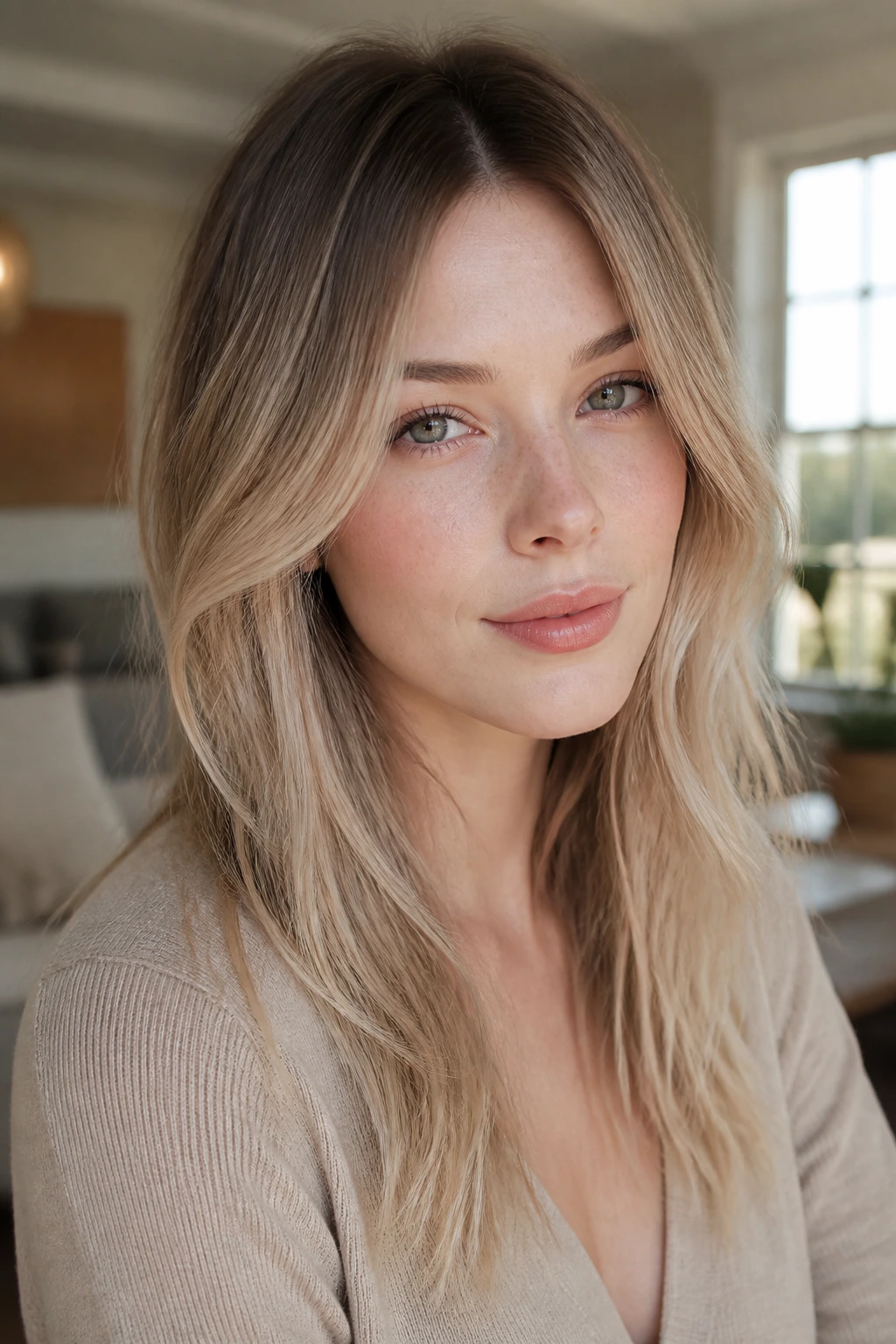
Barely-there sandy ombre is for the person who wants blonde at the ends and peace everywhere else. The transition from root to tip should be soft enough that you have to look twice to see it. On pale skin, that gentle fade can keep the face from looking washed out while still giving the hair a lighter finish.
Why It Works: Ombre gives you contrast without forcing the root to be light. That is helpful if your skin is fair, because a deeper root creates a frame around the face. It also means the ends can be brighter and still feel believable.
How It Reads: This version works best when the transition is stretched, not abrupt. If the fade line sits too high, the effect turns stripey. If it sits too low, the blonde may disappear.
This is one of the easiest sand-blonde ideas to maintain. You can let it grow out for a while before the shape starts to slip.
13. Vanilla Sand Blonde
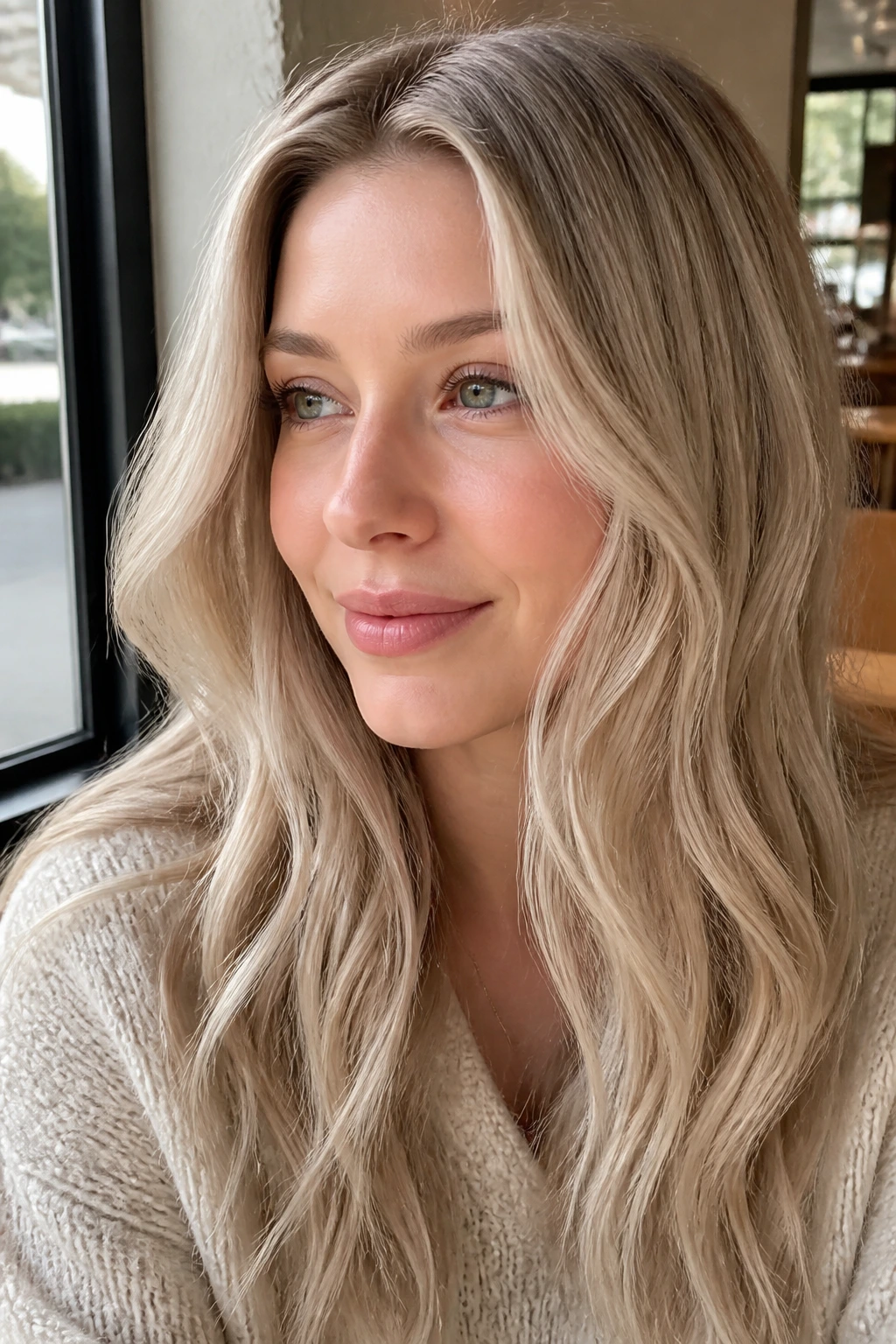
Vanilla sand blonde is brighter than beige but softer than true cream blonde. It has that pale, smooth finish that flatters fair skin when you want lightness without a hard icy edge. The color should feel airy, not stark.
Why It Works: Vanilla tones sit well on pale skin because they brighten without pulling the complexion into an orange-yellow fight. They’re especially nice when paired with a neutral gloss at the end so the finish stays silky. If the hair is lifted to level 9 and then softened back down, you get the airy look without the over-processed feel.
Best For: This one suits people whose natural hair is already light and who want a polished blonde that stays inside the sandy family. It also works well with blue or gray eyes, because the soft brightness lets the eye color stand out.
I’d keep the brows slightly darker here. That contrast keeps the whole face from disappearing.
14. Beachy Sandy Waves
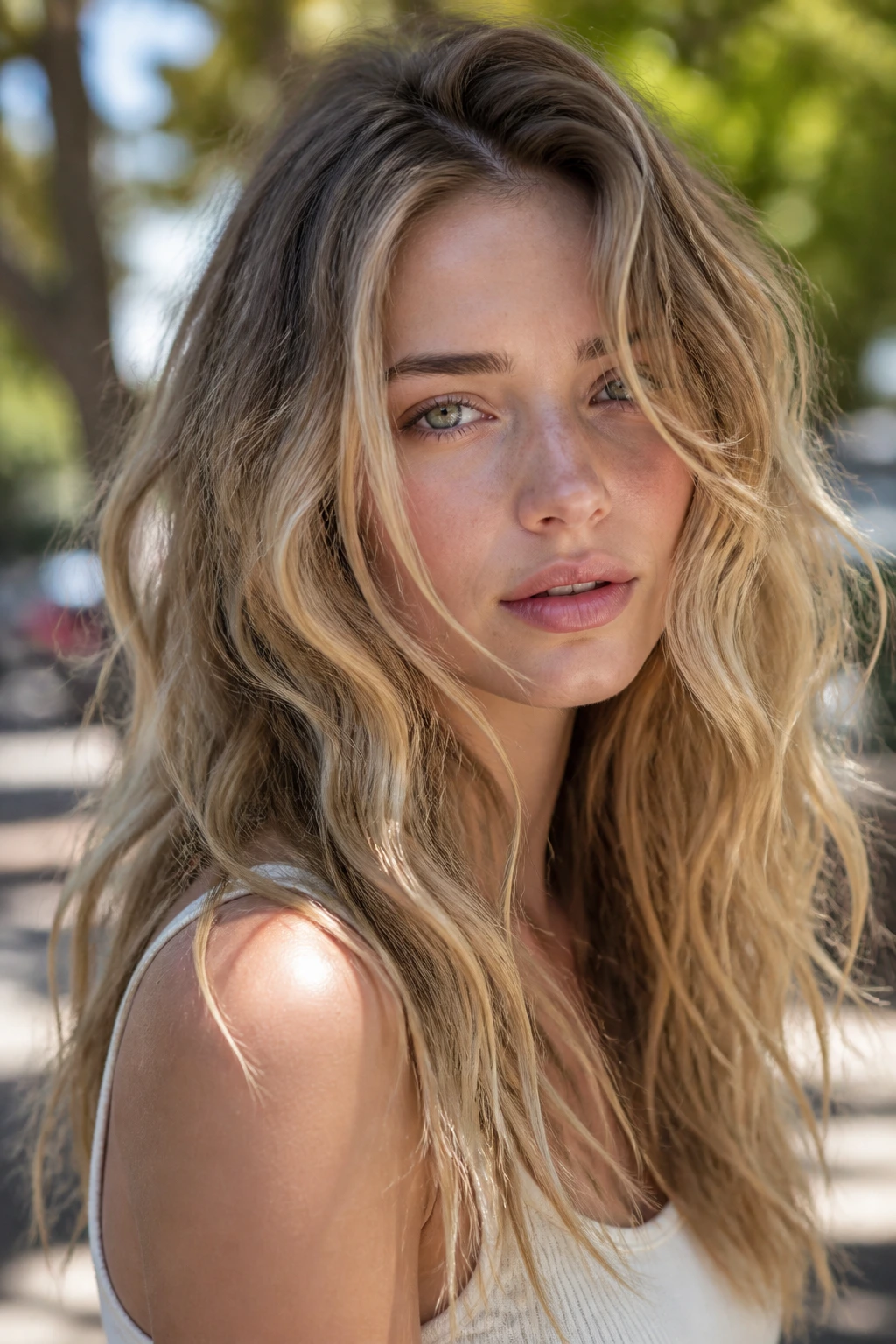
Beachy sandy waves are less about a specific formula and more about how the color lives on the hair. The best version uses mixed sandy pieces through soft, undone waves so the blonde looks broken up and dimensional. Pale skin gets a little glow from the movement, not just the pigment.
Why It Works: Waves help sandy tones show their range. You can see the beige, the gold, and the ash all at once as the hair bends. That matters on fair skin because a flat, one-tone blonde can look too plain, while a textured finish keeps the face from feeling bare.
How to Ask For It: Ask for a sandy beige base with scattered lighter ribbons and a gloss that keeps the warmth controlled. Then style it with a 1 to 1.25-inch iron or a loose braid-out, depending on your texture.
This is the kind of blonde that looks better a day after styling. A little mess helps it.
15. Smoked Sand Blonde with Shadow Root
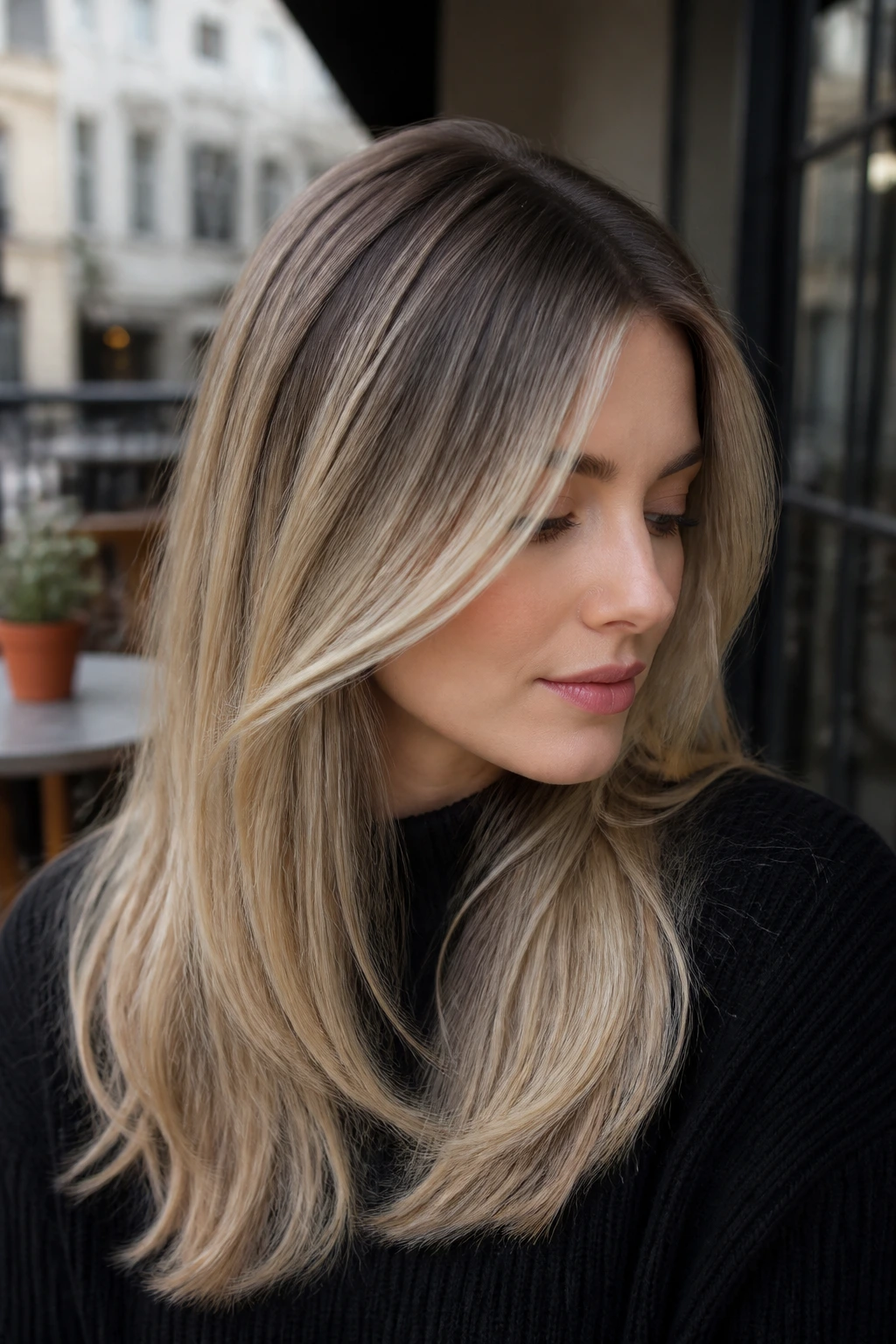
Smoked sand blonde with a shadow root is for anyone who likes blonde with a little edge. The root is deliberately deeper, almost smoky, and then the length opens into a soft sandy finish. On pale skin, that shadow root keeps the hairline from looking too stark.
Why It Works: The darker base adds contrast, which gives fair skin shape. The smoky tone also protects the sand blonde from going too sweet or too yellow. If your hair tends to pull warm in the sun, this version is easier to control because the root depth absorbs some of that brightness.
Best For: It suits layered cuts, shags, and collarbone-length styles especially well. The root gives the layers a base to sit on.
I think this is one of the smartest choices here for people who want blonde but hate the look of obvious regrowth. It grows out with more grace than most lighter shades.
16. Pearl-Sand Sleek Lob
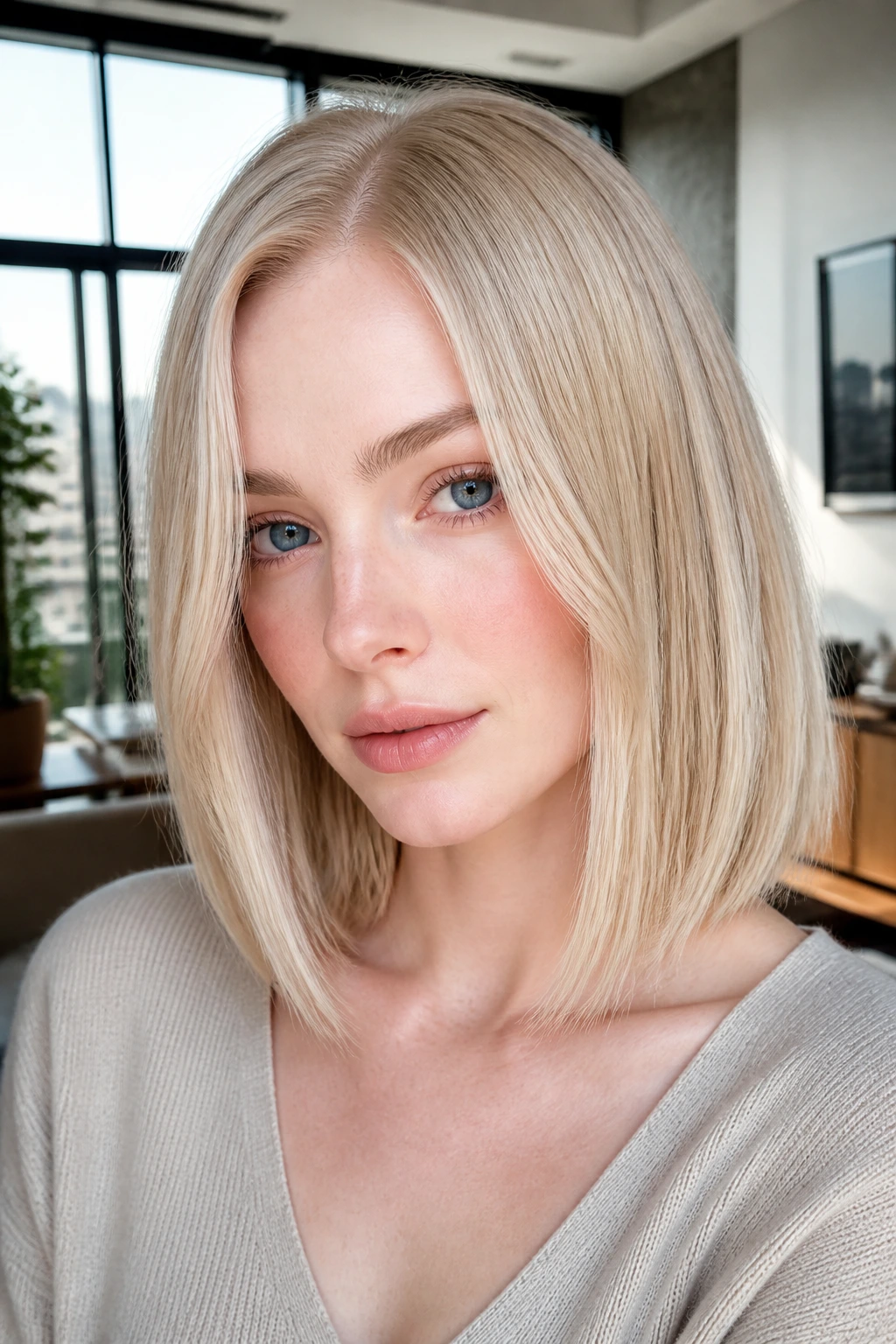
Pearl-sand blonde has a cooler sheen than vanilla but is softer than silver blonde. On a sleek lob, the tone looks clean and smooth, almost like polished stone. Pale skin can wear this beautifully when the undertone is neutral or pink and you want the color to stay crisp.
Why It Works: The sleek shape makes the tone read intentional. If pearl-sand sits on a frizzy, over-layered cut, it can look dry. On a lob, though, the shine is the point. A gloss with a little neutral and a touch of cool beige gives it that soft pearl finish without going flat.
How It Wears: Side parts and straight blowouts show the shine best. A tucked-behind-the-ear moment helps too, because the hairline brightness frames the face.
This shade is a favorite if you like your blonde neat and a little polished, not beachy. There’s nothing wrong with that. Clean can be gorgeous.
17. Caramel-Sand Face Frame
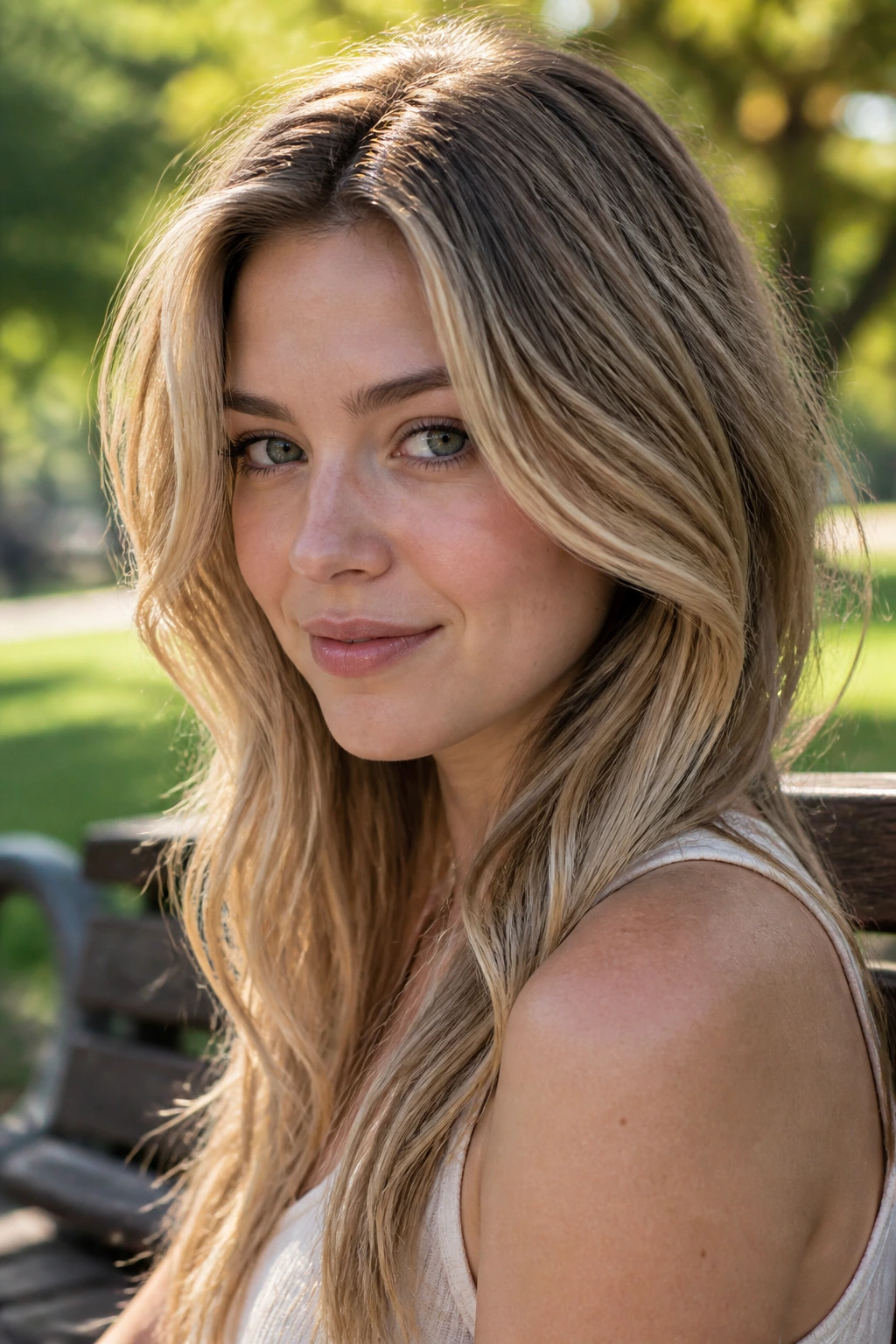
Caramel-sand face framing brings warmth right where pale skin can use it most: around the cheeks, temples, and eyes. The rest of the hair can stay a little quieter, but those front sections should glow with a soft caramel-sand mix that stops short of orange.
Why It Works: Face framing is strategic. It brightens without asking the whole head to go lighter, which is a good deal if your hair is fragile or your skin needs more structure than all-over blonde gives. The caramel note warms up a fair complexion, while the sandy base keeps it from getting syrupy.
Best For: This works well on shoulder-length hair, especially with curtain bangs or long layers. It also plays nicely with round and heart-shaped faces, because the lighter front pieces guide the eye exactly where you want it.
If you’re nervous about warmth, keep the caramel thin and airy. More ribbon, less strip.
18. Scandinavian Sandy Blonde
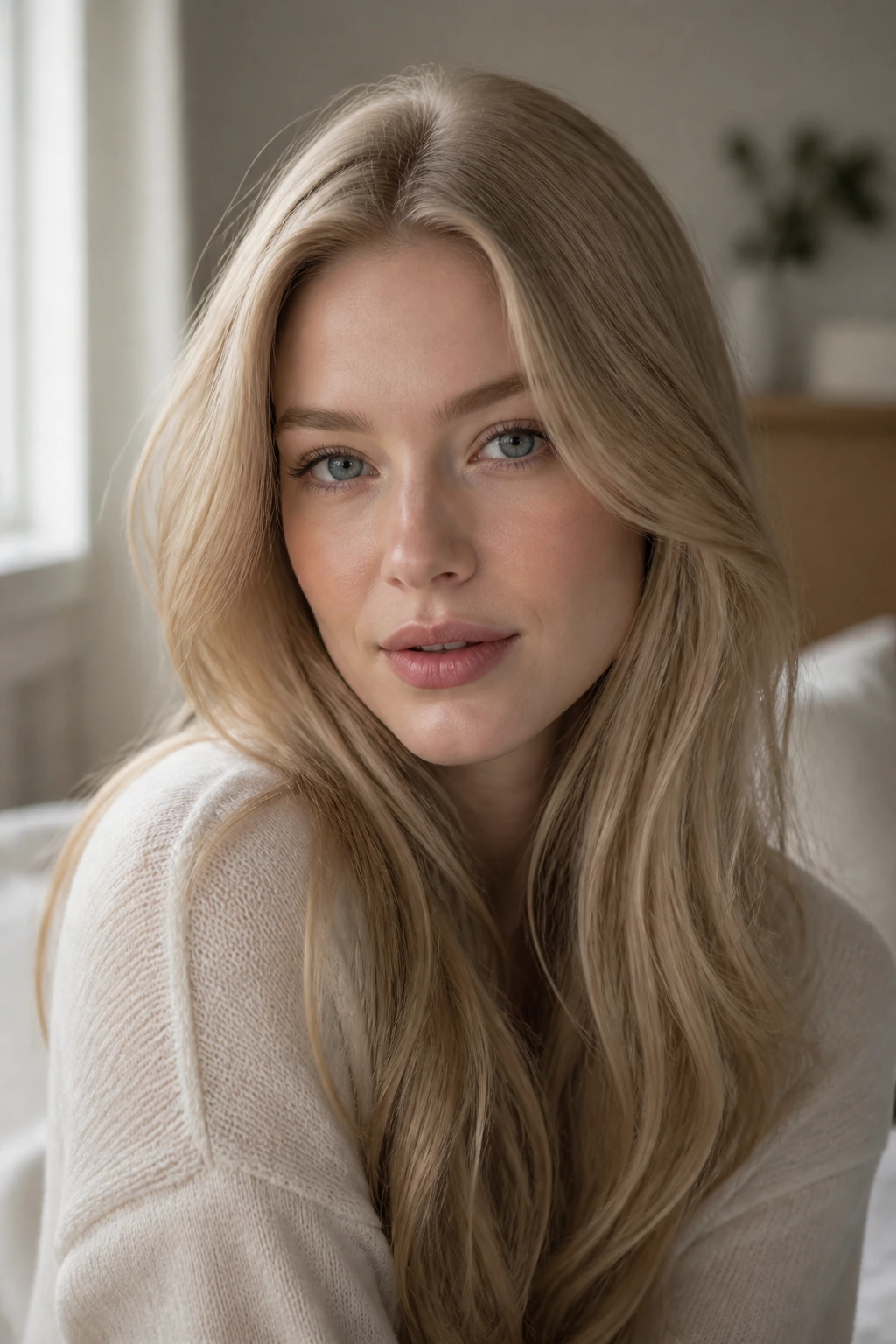
Scandinavian sandy blonde sits near the paler end of the sandy family, but it still needs a beige base or it goes harsh. On pale skin, the effect can be striking in a clean, minimal way. It is not the same thing as flat platinum; there should still be a hint of softness in the tone.
Why It Works: This shade uses brightness, but it keeps a whisper of beige so the hair doesn’t go stark white. That matters on fair skin because too much starkness can drain the face. The best version has a creamy gloss and a tiny bit of depth under the crown.
Who Should Choose It: If your skin is cool, neutral, and very fair, this can be stunning. If your skin runs pink and you bruise easily or flush fast, you may want a touch more beige.
I’d call this a high-maintenance shade that pays rent. It looks crisp, but it asks for toner discipline.
19. Sandy Blonde Shag
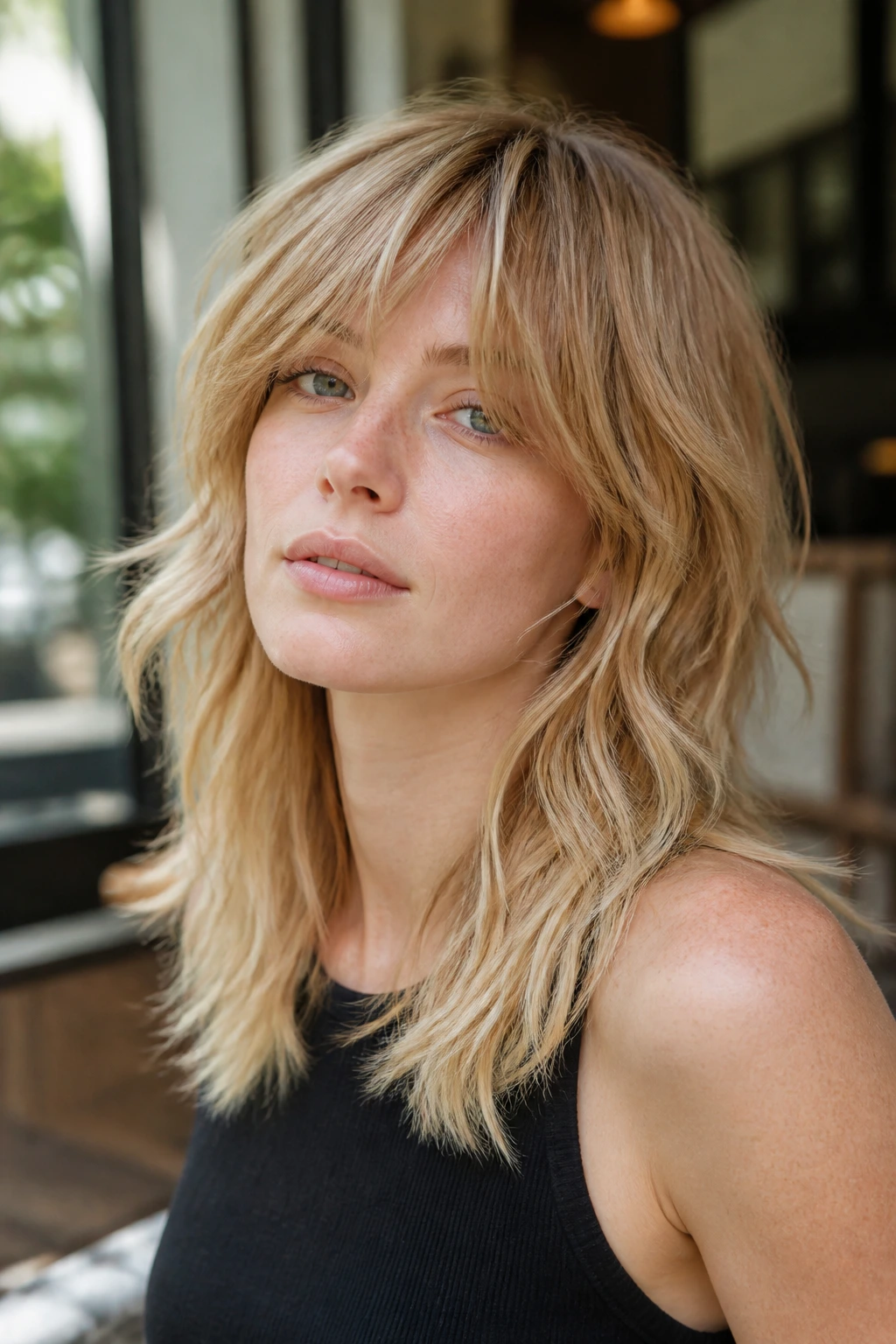
A sandy blonde shag is all about broken-up texture. The cut does half the work, and the color does the rest: beige through the crown, lighter sandy ends, and enough variation to keep the layers from collapsing into one tone. On pale skin, the shag gives edge without requiring dark hair for contrast.
Why It Works: Shags need dimension. One flat blonde can make the layers disappear, while sandy variation keeps each slice of hair visible. The lighter pieces should live around the movement points—ends, fringe, and the outer layers that swing when you turn your head.
Best For: This is ideal if you like hair that looks a bit undone on purpose. It’s also kinder than a solid platinum shag, which can read a little costume-like unless the cut is perfect.
Keep the color slightly rooted. The shag shape looks better when the top isn’t as light as the ends.
20. Dimensional Sandy Curls
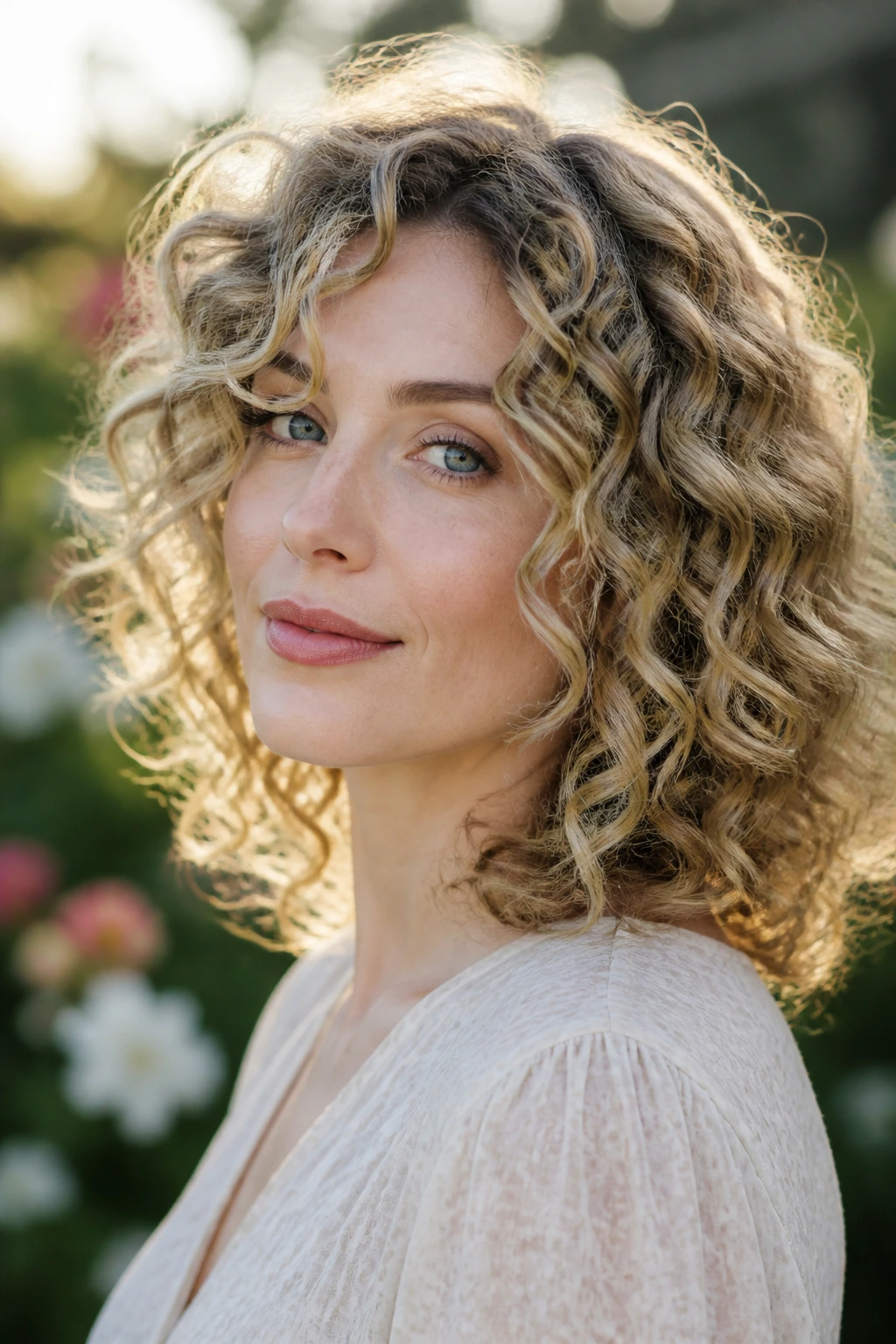
Dimensional sandy curls are one of the prettiest ways to wear this color family on pale skin. The curls create natural shadows, so the different blonde tones can actually show up instead of blending into a single light sheet. Beige, gold, and ash all get their own little moment.
Why It Works: Curly hair loves dimension. If you bleach curls into one flat sandy tone, you lose depth and the pattern gets harder to read. A mix of lowlights, sandy mids, and lighter tips keeps the curl shape visible and keeps the complexion from feeling overexposed.
How It Should Look: The color should move in bands when the curls settle. Not stripes. Bands. There’s a difference, and a good colorist knows it.
This one is excellent for pale skin that needs some warmth but also likes a lively finish. The curls do the lifting, and the sandy tones keep it soft.
21. Dusty Sand Blonde with Curtain Bangs
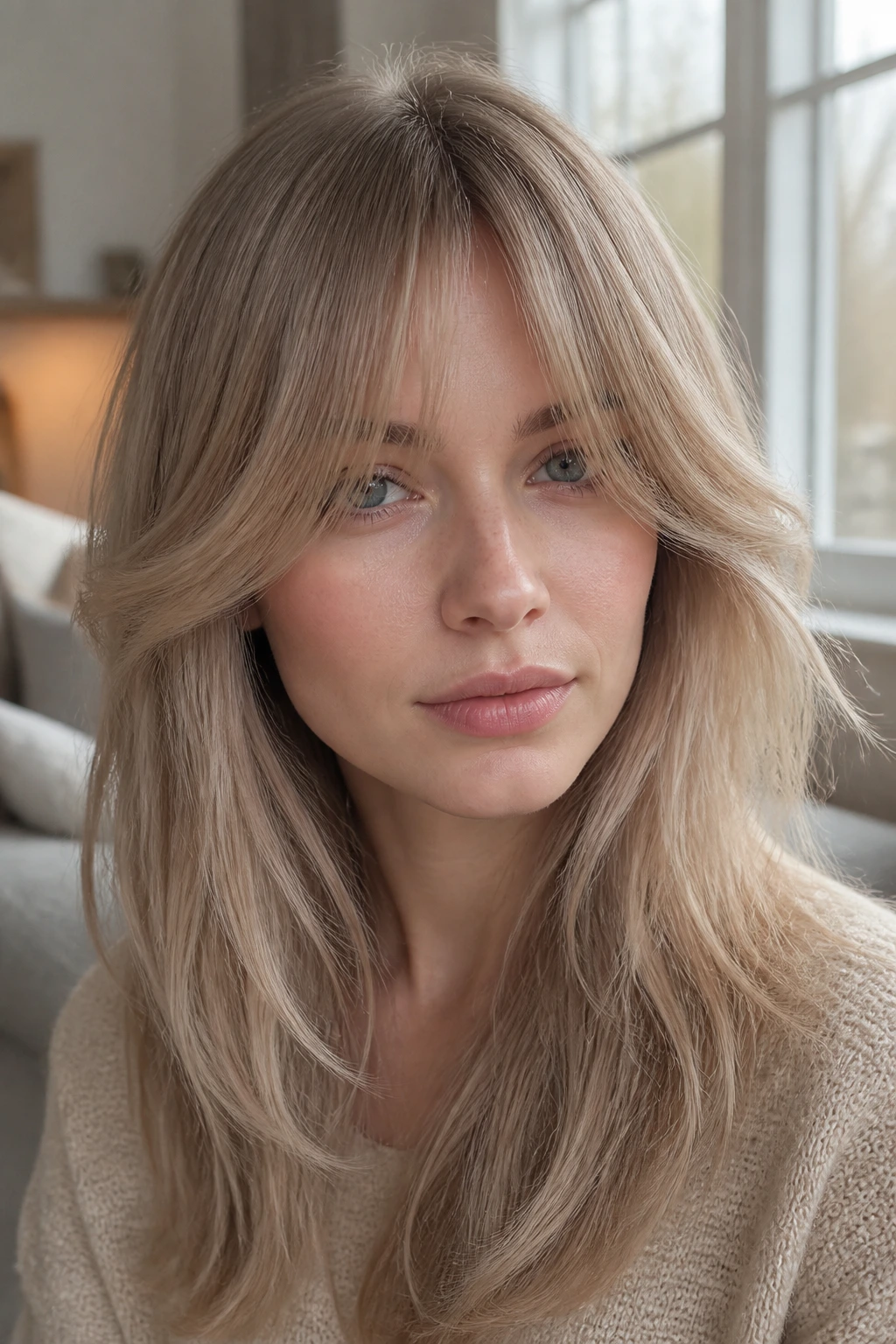
Dusty sand blonde with curtain bangs has a slightly muted finish that feels modern without leaning gray. The curtain bangs bring the light right to the eyes, which is a smart move on pale skin because it adds shape to the face without harsh lines. The dusty tone keeps the blonde grounded.
Why It Works: Curtain bangs can look too bright if the color is too yellow. Dusty sand solves that by softening the front sections and blending them into the rest of the cut. The result is relaxed, not fussy.
Best For: If your face is long or oval, the bangs and the sandy color work together to shorten and soften the look. Even on a round face, the parted fringe can be very flattering if the lighter pieces are kept diffuse.
I like this one because it’s subtle but not boring. That’s a harder balance to hit than people think.
22. Toasted Sand Blonde
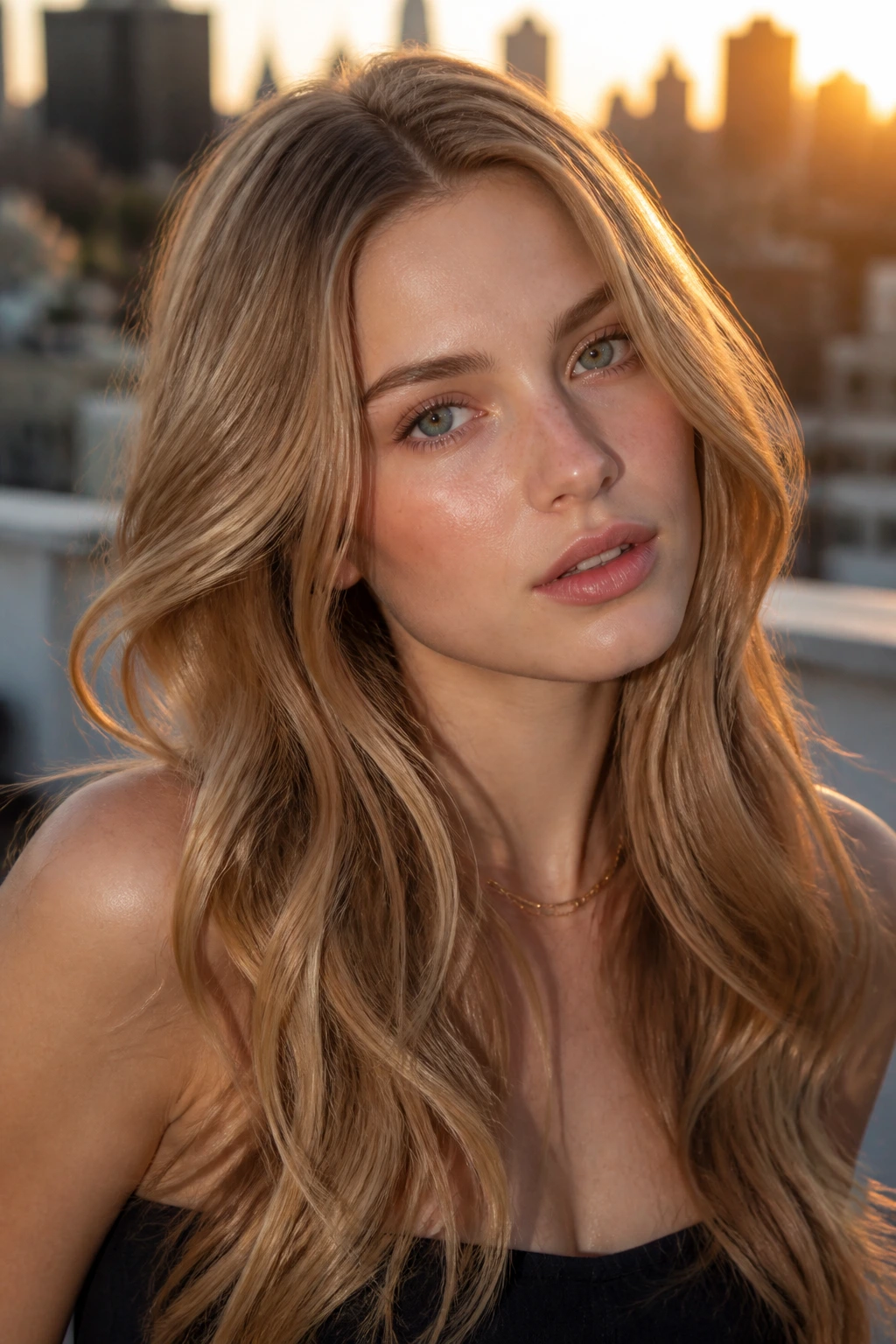
Toasted sand blonde leans warmer and deeper, with a faint caramel edge that still lives inside the sandy family. On pale skin, it can add warmth without pushing all the way into honey or copper. It feels like the blonde version of lightly toasted bread—golden, but not sugary.
Why It Works: A little toast in the tone keeps fair skin from looking cold. This is useful if your complexion goes flat under cool blondes or if your eyebrows and eyes have a warm cast. It’s also a forgiving shade for natural brunettes who want blonde-adjacent color without a harsh leap.
What to Watch: If the warmth gets too heavy, it stops reading sandy and starts reading brassy. The goal is mellow, not orange.
This is one of the easiest shades to wear with gold jewelry, warm makeup, and soft neutral clothing. It has enough depth to hold its own.
23. Sandy Blonde with Buttercream Ends
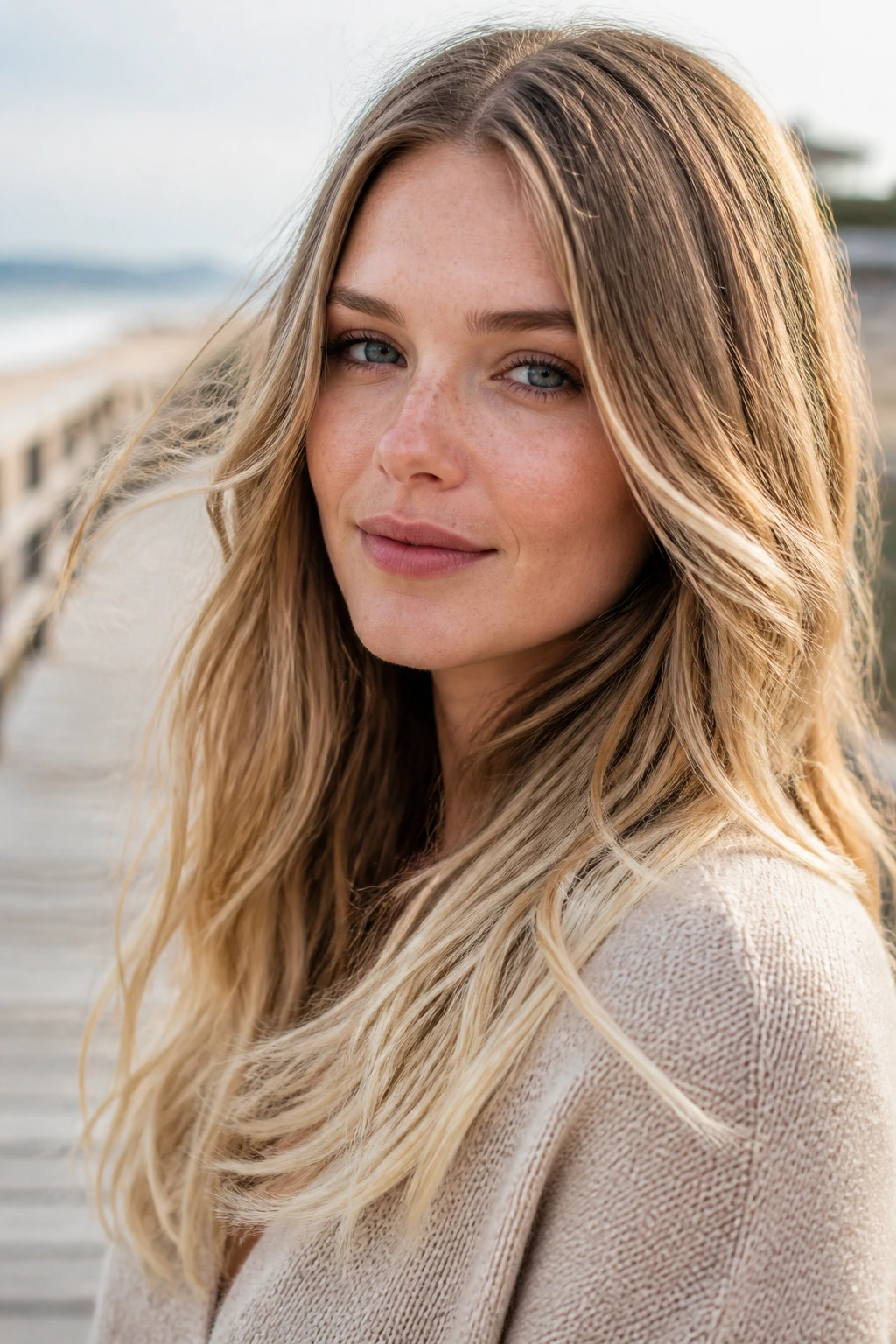
Sandy blonde with buttercream ends gives you a brighter finish without going full icy. The roots and mids stay sandy and beige, then the ends soften into a buttercream tone that looks rich, not frosted. On pale skin, the lighter ends can lift the whole look while the root keeps the face framed.
Why It Works: Bright ends can be gorgeous, but only if the base stays honest. That darker-to-lighter shift creates dimension and keeps the blonde from flattening the skin. Buttercream is a better word than “yellow” here, because you want creamy lightness, not raw warmth.
Best For: Long cuts, layered waves, and blunt mid-length hair all take this well. It’s especially good when you want a bit of brightness around the shoulders and collarbone.
I’d keep the ends glossy. Dry light ends can make the whole look feel tired, and that is exactly what you don’t want.
24. Soft Walnut-Sand Bronde
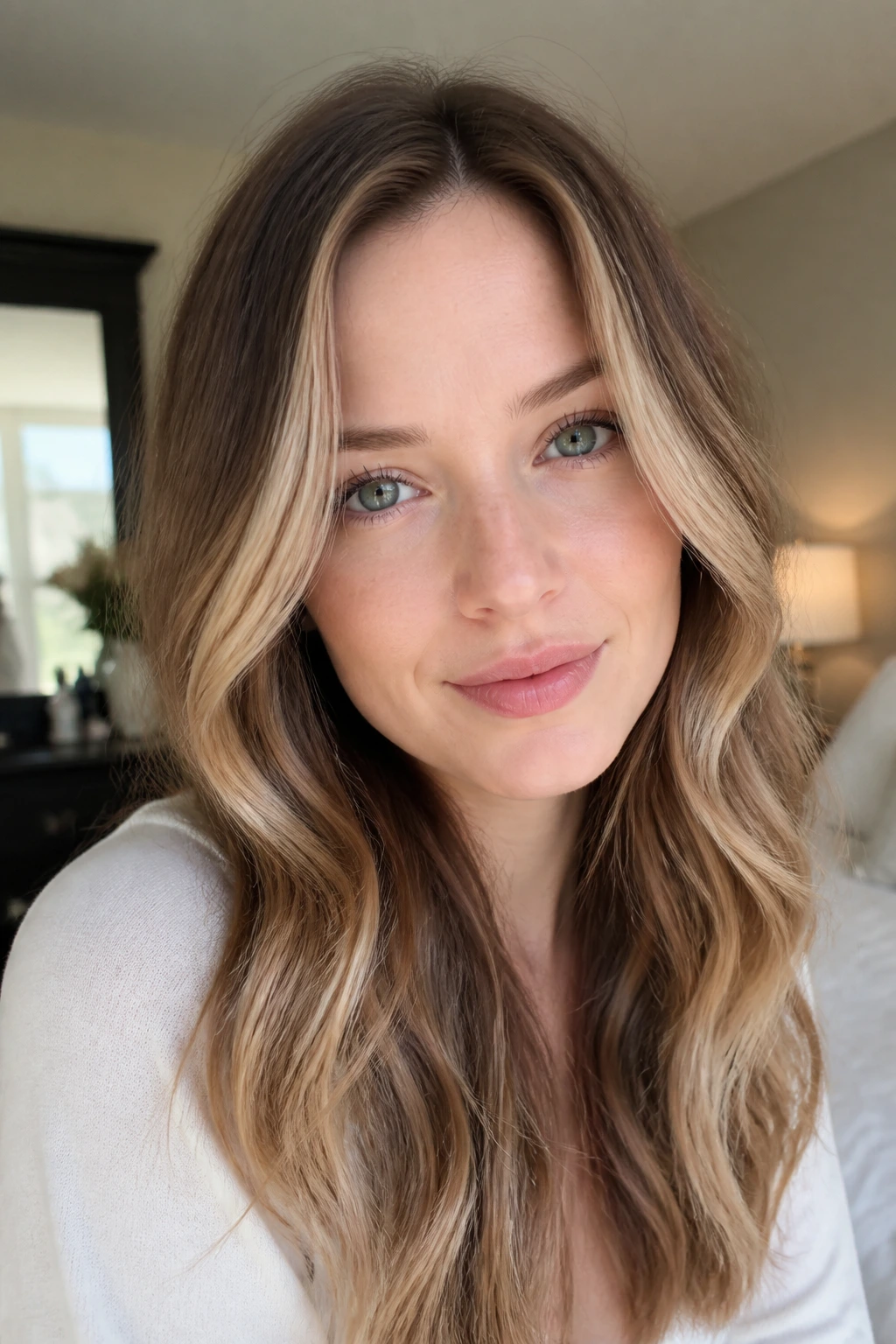
Soft walnut-sand bronde is for pale skin that needs more contrast than a full blonde offers. The walnut base gives depth, the sand pieces bring light, and the result sits in a very flattering middle ground. It’s brunette-friendly, but it still reads airy.
Why It Works: The darker base gives fair skin something to stand against, which often makes the face look clearer. The sandy pieces stop it from becoming one heavy brown mass. If you’re moving out of blonde or testing the waters before going lighter, this is a smart landing spot.
Best For: It’s a good choice for thicker hair, longer layers, and anyone who likes a lower-maintenance color story. Grow-out looks softer here than with a bright blonde.
I prefer this version when someone says they want “blonde,” but what they really want is dimension and softness. This delivers both.
25. High-Contrast Sandy Blonde with Micro-Lights
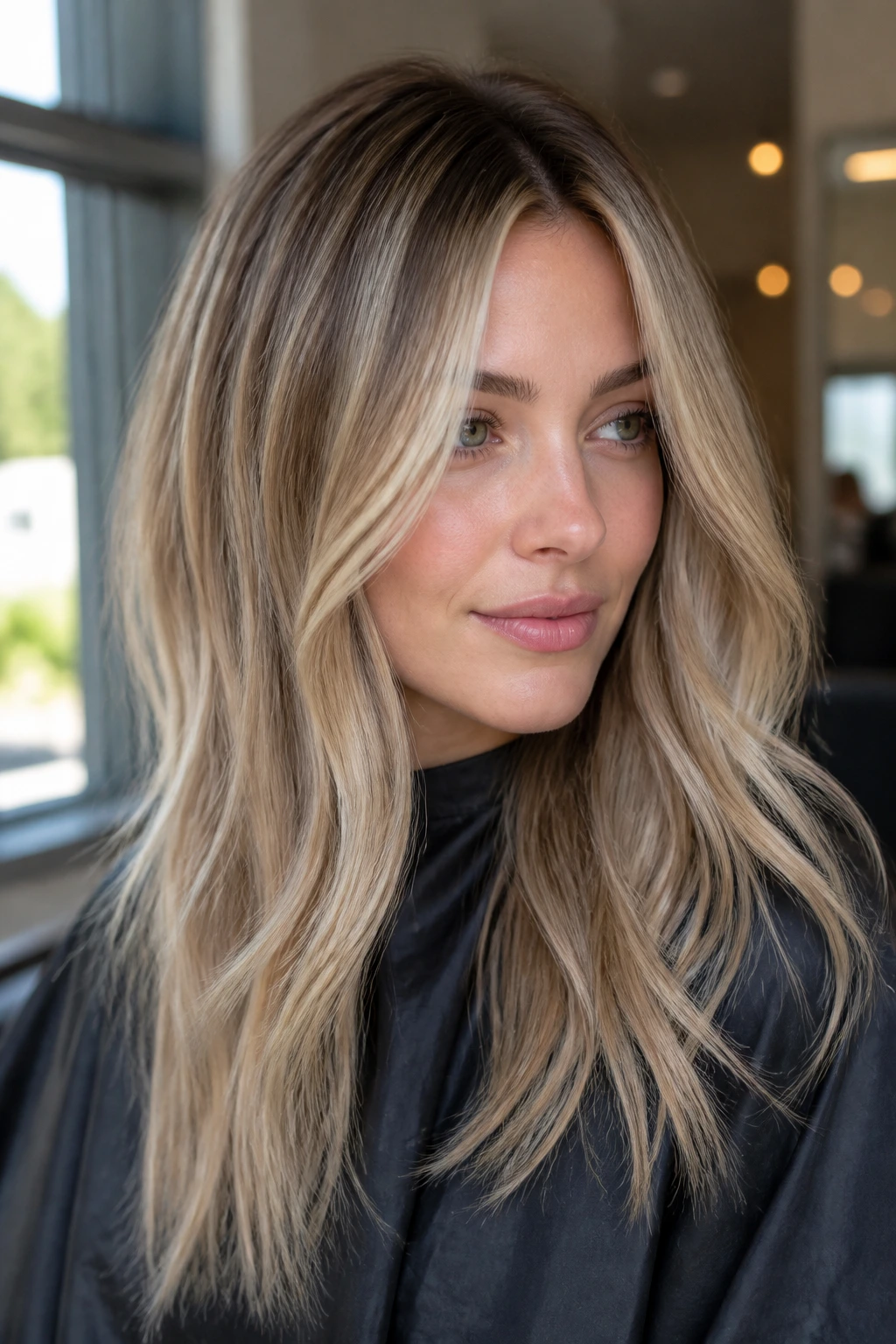
High-contrast sandy blonde with micro-lights is the most detailed look in the set. The base stays deeper, while very fine micro-lights create a sandy shimmer through the top and face frame. On pale skin, that fine contrast can be more flattering than broad blonde pieces, because it gives the face definition without overpowering it.
Why It Works: Micro-lights mimic natural sun-fade better than chunky highlights. They build a soft, expensive-looking texture across the hair that never feels too painted on. With a fair complexion, that subtlety is a huge advantage.
Best For: This is a strong pick if you like polished dimension and you’re willing to spend a little more time in the chair. Fine foiling takes patience, and the result shows it.
I’d call this the most salon-looking option in the group. Not the flashiest. The most carefully built.
Why Sandy Blonde Sits So Well Against Fair Skin
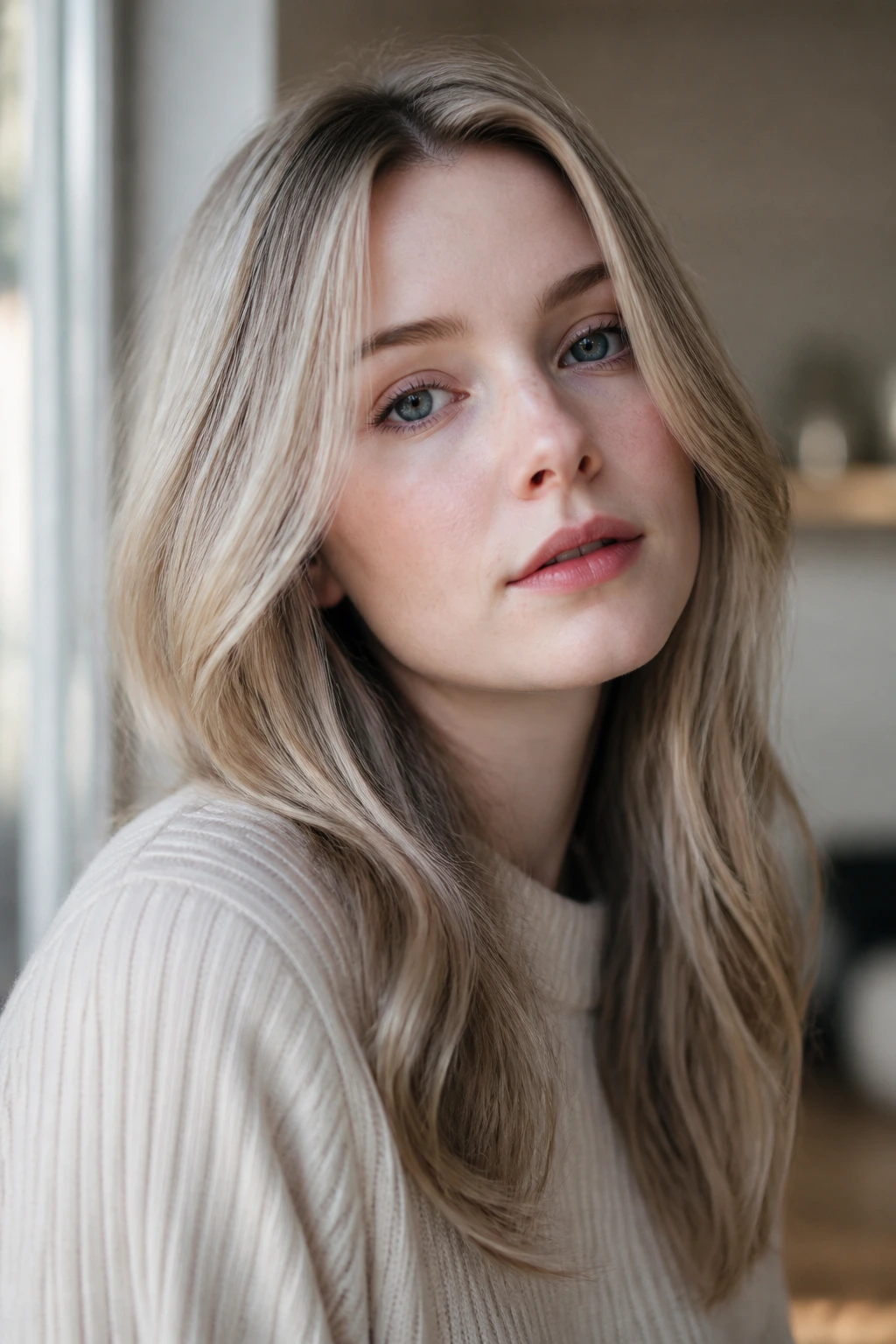
Pale skin tends to show color contrast faster than deeper skin tones, which is why sandy blonde can look either beautiful or brutally wrong with very little middle ground. The shade family works because it doesn’t sit at the extreme end of the blonde scale. It lives between gold and ash, which means it can support the face instead of flattening it.
A lot of color charts place sandy blonde in the level 7 to 9 band, and that range matters. Level 7 gives you depth and grounded roots; level 8 keeps the look soft and wearable; level 9 adds brightness without pushing all the way into icy territory. That’s the sweet spot for many fair complexions, especially when the hairline is softened with a gloss or root smudge.
The other thing people miss is that pale skin does not need one blonde formula. Pink undertones, peach undertones, olive hints, and neutral fair skin all read differently. Beige sandy blonde is the safest bridge, but cooler mushroom-sand or warmer honey-sand can look better when the undertone asks for it.
Essential Tools for Coloring, Toning, and Styling
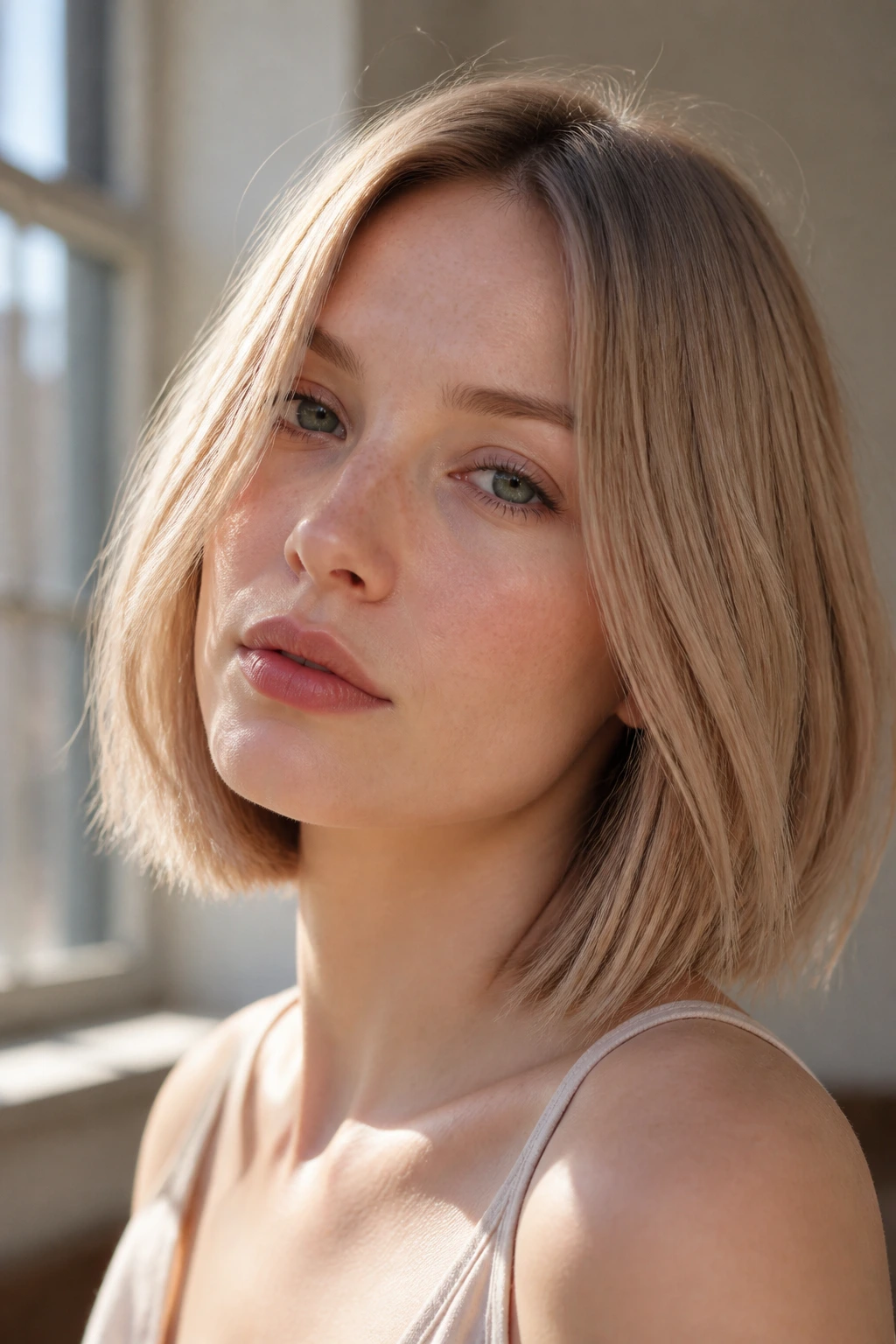
- Tint brush and mixing bowl: Needed if you’re applying gloss, toner, or root smudge at home.
- Gloves: Not glamorous, but they keep toner off your hands and prevent staining.
- Sectioning clips: Clean sections matter, especially if you’re working with highlights or a face frame.
- Tail comb: Useful for precise parting and clean subsectioning.
- Foils or balayage board: Helpful when you want brighter ribbons or controlled lightening.
- Purple or blue-violet shampoo: Good for managing brass, but do not overuse it or the blonde can go dull.
- Color-safe shampoo and conditioner: A basic necessity if you want the shade to stay glossy.
- Deep-conditioning mask: Sandy blonde looks better when the ends are smooth, not rough.
- Heat protectant spray: Important if you blow-dry, wave, or curl the hair often.
- Bond-building treatment: Optional, but worth it if the hair has been lightened more than once.
- Microfiber towel: Cuts down on frizz and rough drying.
- Wide-tooth comb: Safer than yanking through fragile lightened hair.
Smart Shade Selection for the Salon Chair
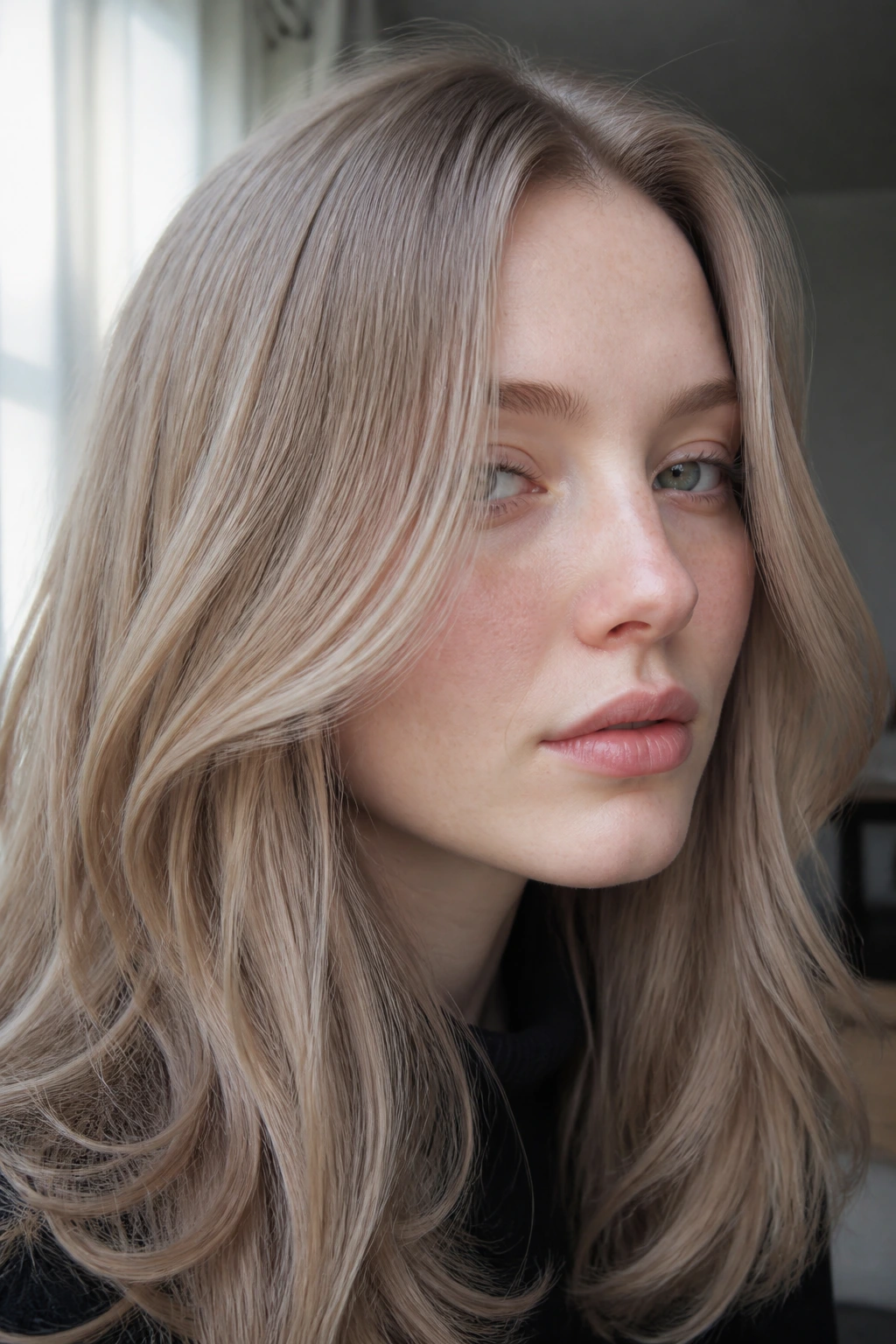
The easiest way to get sandy blonde right is to start with your skin, not the color wheel obsession people love to overcomplicate. If your pale skin is pink, cool beige and mushroom-sand usually behave better than gold. If your skin is peachy or lightly warm, a little honey in the mix can stop the color from looking flat. Neutral skin gets the broadest range, which is unfair in the best way.
Bring photos, but bring the right photos. One should show the tone you want in daylight. Another should show the tone you do not want, because “not this” can be clearer than “maybe this.” If you can, ask for shots with similar hair length and texture to yours. A sandy blonde bob and a sandy blonde curl pattern are not the same thing once they hit a real head.
At the chair, useful words matter more than trendy ones. Say beige blonde, root smudge, babylights, gloss, mushroom undertone, or soft face frame. If you want to stay low-maintenance, say so plainly. If you want brighter pieces only around the front, say that too. Vagueness is how people end up with hair that’s too yellow, too pale, or too busy.
How to Wear Sandy Blonde With Pale Skin
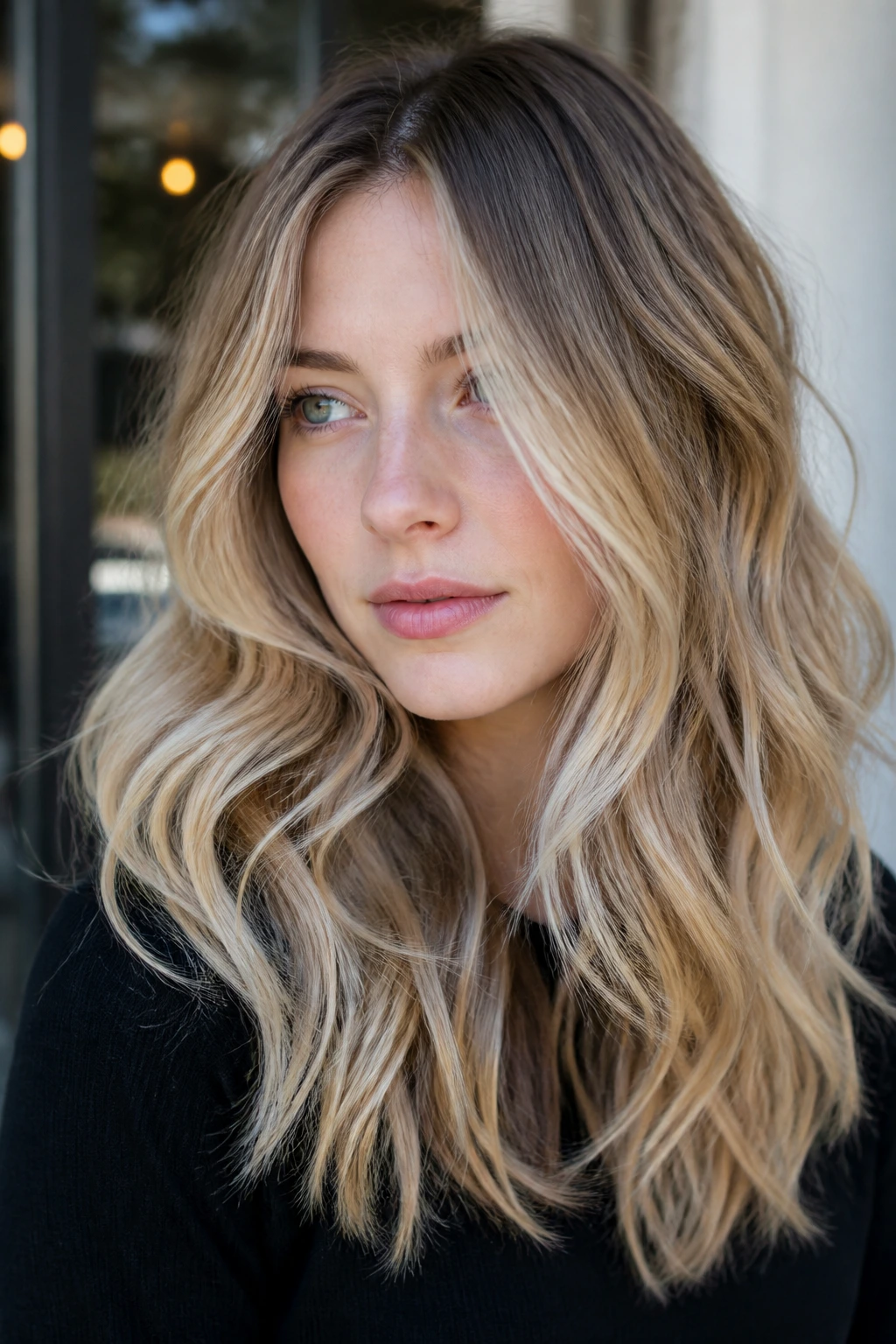
Parting: A center part usually shows off sandy blonde’s balance best, especially when the face frame is softened with lighter pieces. A deep side part can add more drama and make the roots look richer, which helps if your skin is very fair and needs contrast.
Makeup: Sandy blonde likes soft definition. Peach blush, muted rose lips, taupe shadow, and clean brows all make sense here. If the blonde leans cooler, a berry lip stops the face from going washed out; if it leans warmer, a peachy blush keeps the tone in step.
Wardrobe: Cream, navy, charcoal, dusty blue, soft black, and warm camel all sit nicely beside this family of blonde. Pure optic white can sometimes feel too sharp against pale skin and sandy blonde together, so I reach for softer whites when I can.
Texture: Sandy blonde almost always looks better with some movement. Waves, bends, and airy layers reveal the different tones, while overly stiff styling can make the color read flatter than it really is. A little texture is not a flaw here. It’s the point.
Shade Boosters and Personalization Tricks
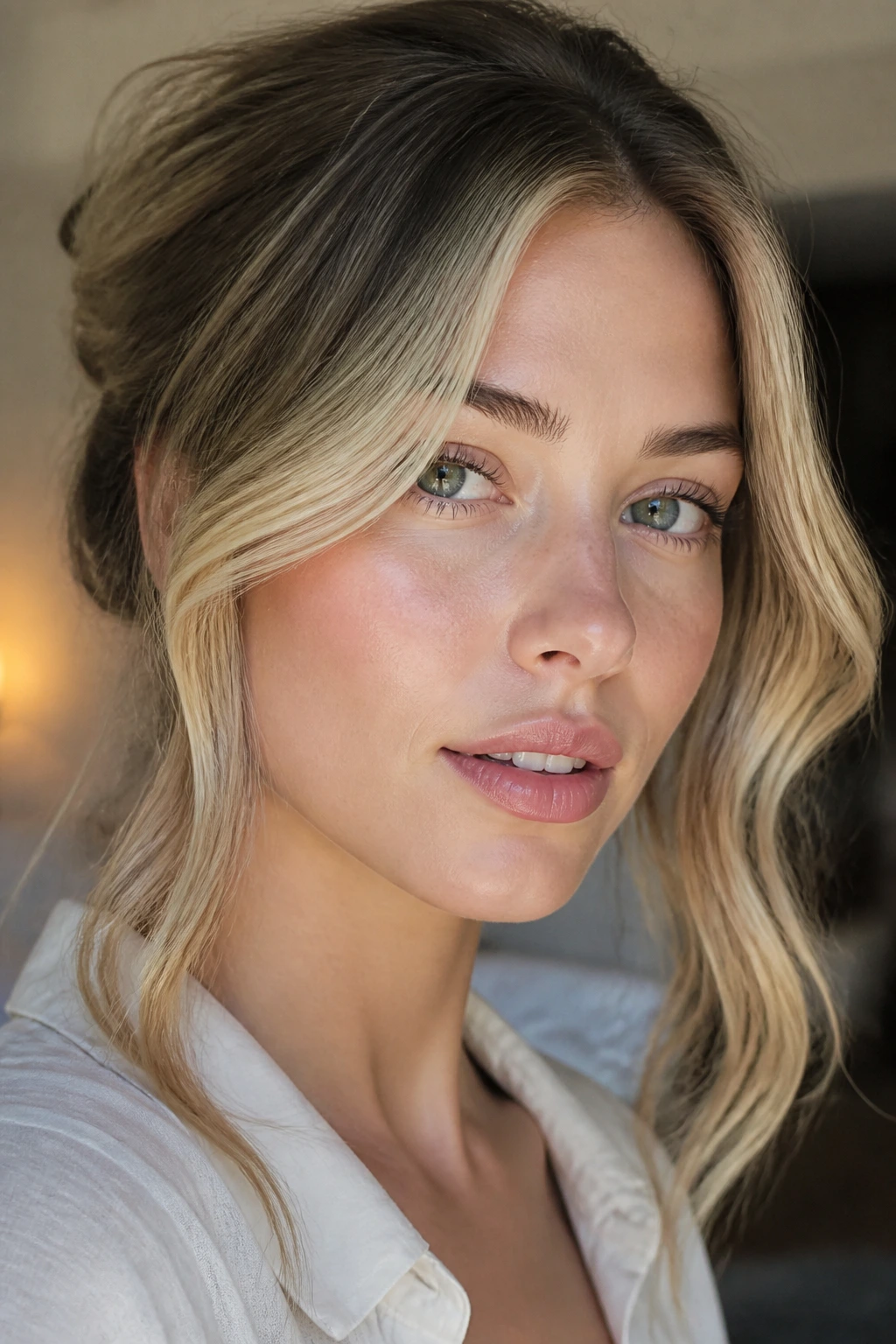
Tone Control: A beige gloss every 6 to 8 weeks keeps sandy blonde from drifting into brass or mush. If the hair is porous, tone it a little sooner; porous hair grabs pigment fast and lets it go just as fast.
Depth at the Root: A shadow root is one of the smartest tools in this category. It gives pale skin contrast, makes the grow-out cleaner, and keeps light blonde from floating off the face.
Brightness at the Face: Money pieces or fine babylights around the front can wake up tired-looking fair skin without forcing the whole head brighter. That’s a much better use of light than pouring it everywhere.
Color Temperature: If the shade feels too warm, ask for a cooler beige or mushroom gloss. If it feels too flat, add a whisper of gold or honey through the mids only. Tiny changes matter more here than dramatic ones.
Make-It-Yours: If you love a softer, lower-maintenance look, stay in the bronde family. If you want a brighter, more lifted finish, push the ends a level lighter and keep the roots grounded.
Common Mistakes That Make Sandy Blonde Go Flat
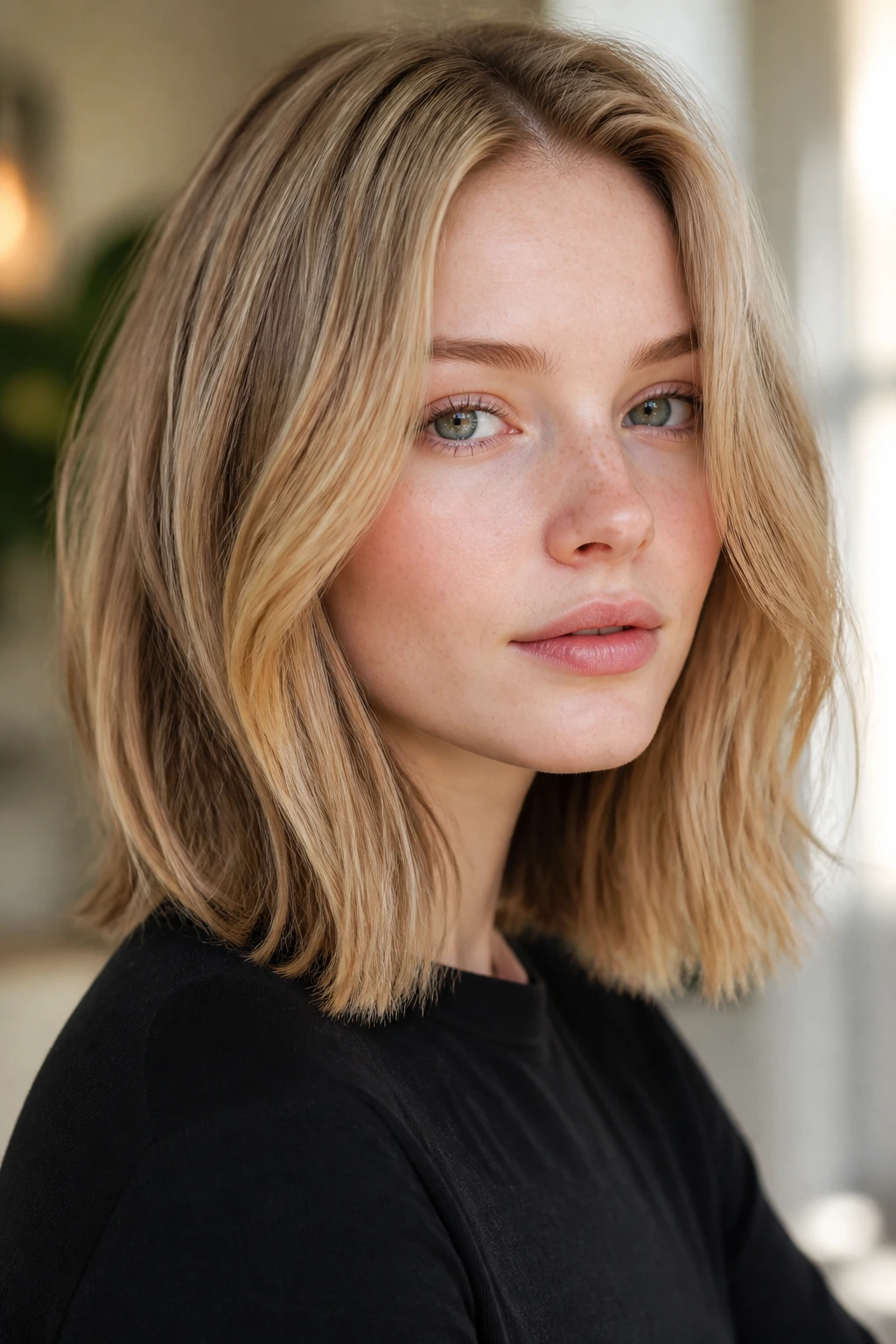
The first mistake is chasing too much yellow. Pale skin and yellow-blonde can clash fast, and the result is usually the kind of brightness that makes the face look tired rather than fresh. The fix is a beige-based toner, not more warmth.
Another common one: going too ash. Ash is useful, but an over-ash blonde can make fair skin look gray or slightly drained, especially under indoor light. If that happens, ask for a gloss with a touch of neutral or soft gold to bring the hair back to life.
People also skip depth. A sandy blonde with no shadow root or lowlights can end up looking like one flat sheet of color, and fair skin needs some structure around it. Even a soft root smudge can make the whole style feel more balanced.
Purple shampoo gets abused all the time. Use it too often and sandy blonde starts to look dull or cloudy instead of clean. Once a week is plenty for most people; twice only if brass is truly stubborn.
Finally, there’s the bleach trap. Some heads do need lift, but not every sandy blonde needs to be pushed to the brightest level possible. Over-lightening can make the hair fragile and the color harder to control. Ask for the lightest shade that still suits your skin and your haircut.
Variations and Adaptations to Try
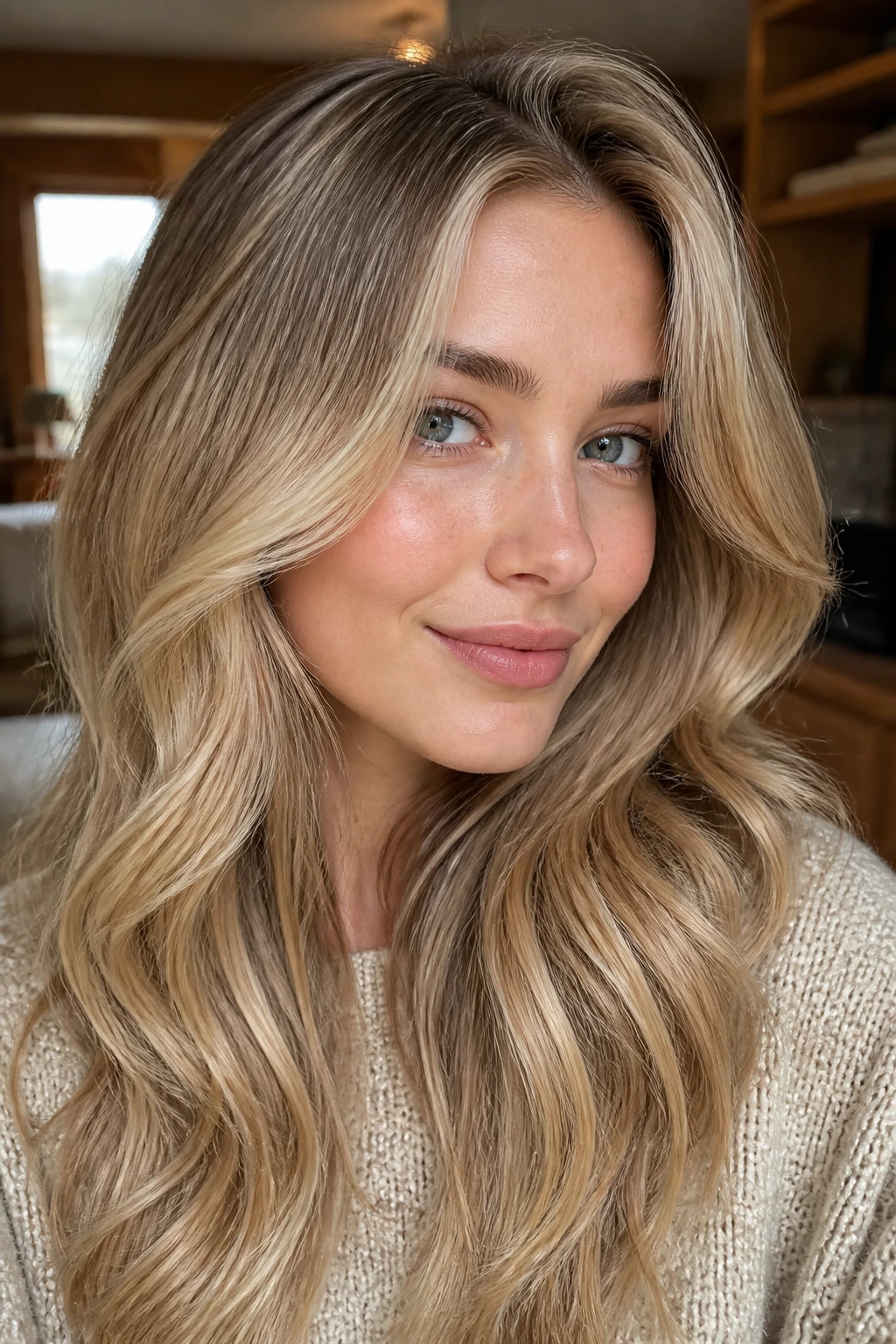
Cool Beige Drift: If your pale skin leans pink, push the formula cooler with beige, ash, and a soft root shadow. This keeps the face from looking overly flushed and gives the hair a smooth, understated finish.
Honey Sand Glow: For peachy or warm fair skin, add a few honey ribbons through the top layer and keep the rest sandy. The warmth should be gentle, not syrupy, and the gloss should stay soft.
Bronde Bridge: If you’re moving from brunette to blonde, stay in the sandy bronde range for one appointment cycle. It gives you lightness without making the change feel abrupt, and the grow-out is easier to live with.
Bright Frame, Quiet Ends: Keep the lengths muted and place most of the brightness around the face. This works when you want a lifted look without paying for full-head lightening every time.
Curl-Safe Dimension: For curly hair, use ribboning and lowlights instead of one pale blanket of color. The curls need shadows to hold shape, and sandy dimension keeps the texture visible.
Soft Platinum Sand: If you want something lighter, do not jump straight to icy blonde. Ask for a pale sandy base with beige glossing so the look stays creamy instead of stark.
Maintenance, Toning, and Root Care
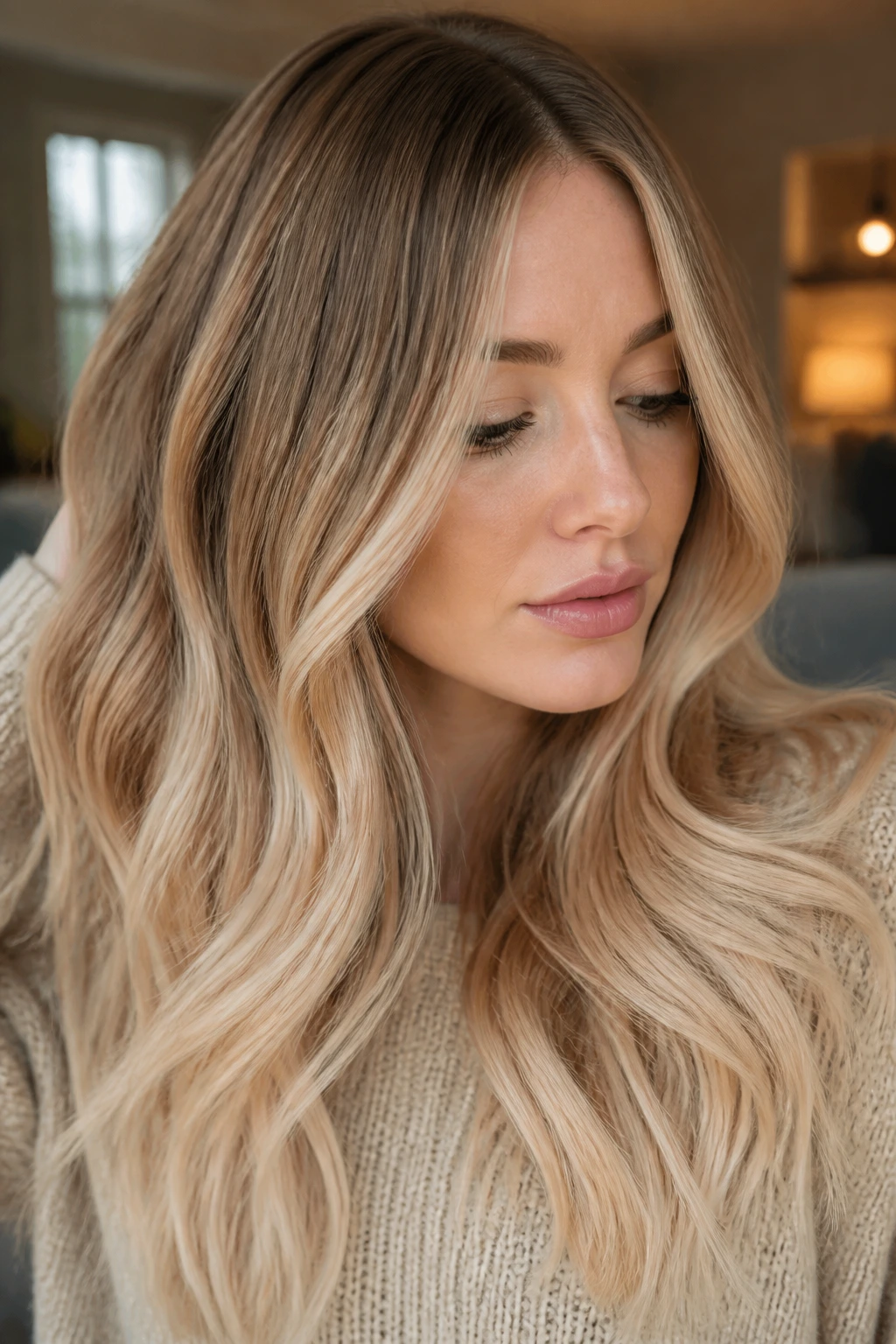
Sandy blonde looks best when you treat it like a color that needs light upkeep, not emergency repairs. A gloss every 6 to 8 weeks usually keeps the tone in the beige zone, while root touch-ups depend on how much contrast you like. If you chose a shadow root, you can often stretch the appointment farther than you think.
Wash frequency matters. Two to three washes a week is a comfortable rhythm for many blondes, especially if the hair is dry or fine. Hot water strips tone faster, so cooler rinses help keep the sandy finish intact. I know that sounds fussy. It works.
Use purple shampoo sparingly. Once a week is enough for most sandy blondes; if the blonde starts to look muddy, step back and switch to a moisturizing color-safe wash. Pair that with a weekly mask or bond treatment if the hair has been lightened. Sandy blonde looks expensive when the ends are smooth. It looks sad when the ends fray.
Sun and heat can turn a nice sandy tone brassy in a hurry. A UV-protectant mist and heat protectant spray are not optional if you spend time outdoors or use hot tools often. If you swim, rinse the hair before and after and use a clarifying or chelating wash when mineral buildup starts to show.
Questions People Ask Before Going Sandy Blonde
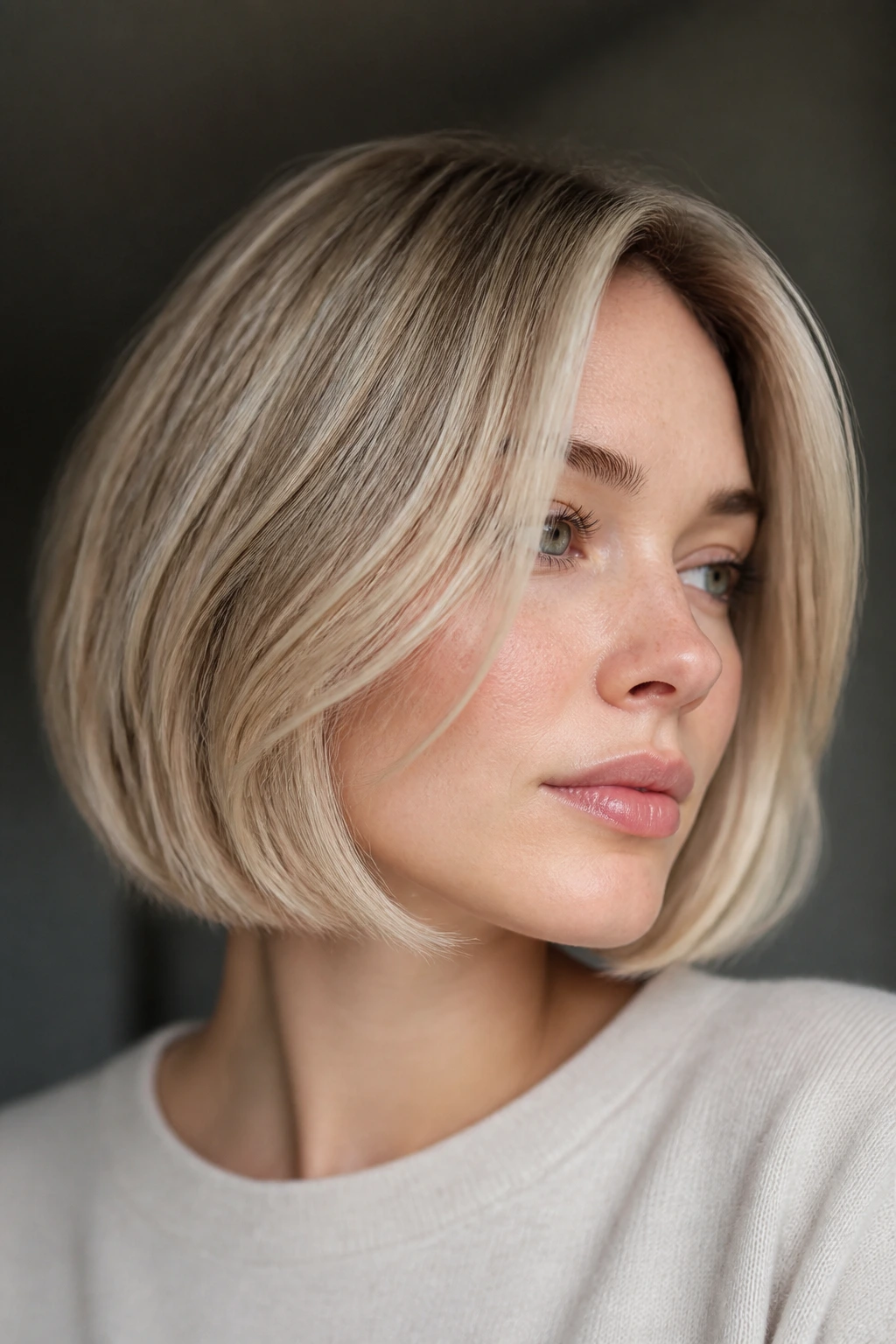
Does sandy blonde work on very pale skin with pink undertones?
Yes, if the tone stays beige or slightly cool. The trick is avoiding gold-heavy blonde, which can make redness look stronger than it really is. A soft root shadow helps too.
Is sandy blonde lower maintenance than platinum?
Much lower. Platinum needs more frequent toner and often more careful root work, while sandy blonde can be refreshed with glosses, babylights, or a shadow root and still look intentional.
Do I need bleach to get sandy blonde?
Not always. If your hair is already light brown or dark blonde, a high-lift color or glossed highlight session may be enough. Darker bases usually need some lift, but not always a full bleach-and-tone process.
What’s the biggest difference between sandy blonde and ash blonde?
Ash blonde is cooler and more muted, sometimes to the point of gray. Sandy blonde keeps a little warmth and beige softness so the hair doesn’t look flat or dusty on fair skin.
Can brunettes go sandy blonde without orange stages?
They can, but the process usually needs more than one step. A good colorist will lift the hair carefully and then tone out the orange or gold with a beige-based gloss. Rushing that process is where brass shows up.
How do I stop sandy blonde from turning brassy?
Use cool water when washing, keep heat protectant on hand, and don’t overdo purple shampoo. If the tone shifts warmer, a salon gloss usually fixes it faster and cleaner than home toning.
Which haircut shows sandy blonde best?
Layers, bobs, lobs, shags, and curtain bangs all show the dimension well because they create movement. Flat, heavy cuts can hide the tonal variation unless the color is placed very deliberately.
Can sandy blonde cover gray hair?
It can blend gray beautifully, especially with a root shadow or fine highlights. Full coverage depends on how much gray you have and how solid you want the base to look, so this is one time where a salon consultation helps.
Picking the Shade That Fits Your Face
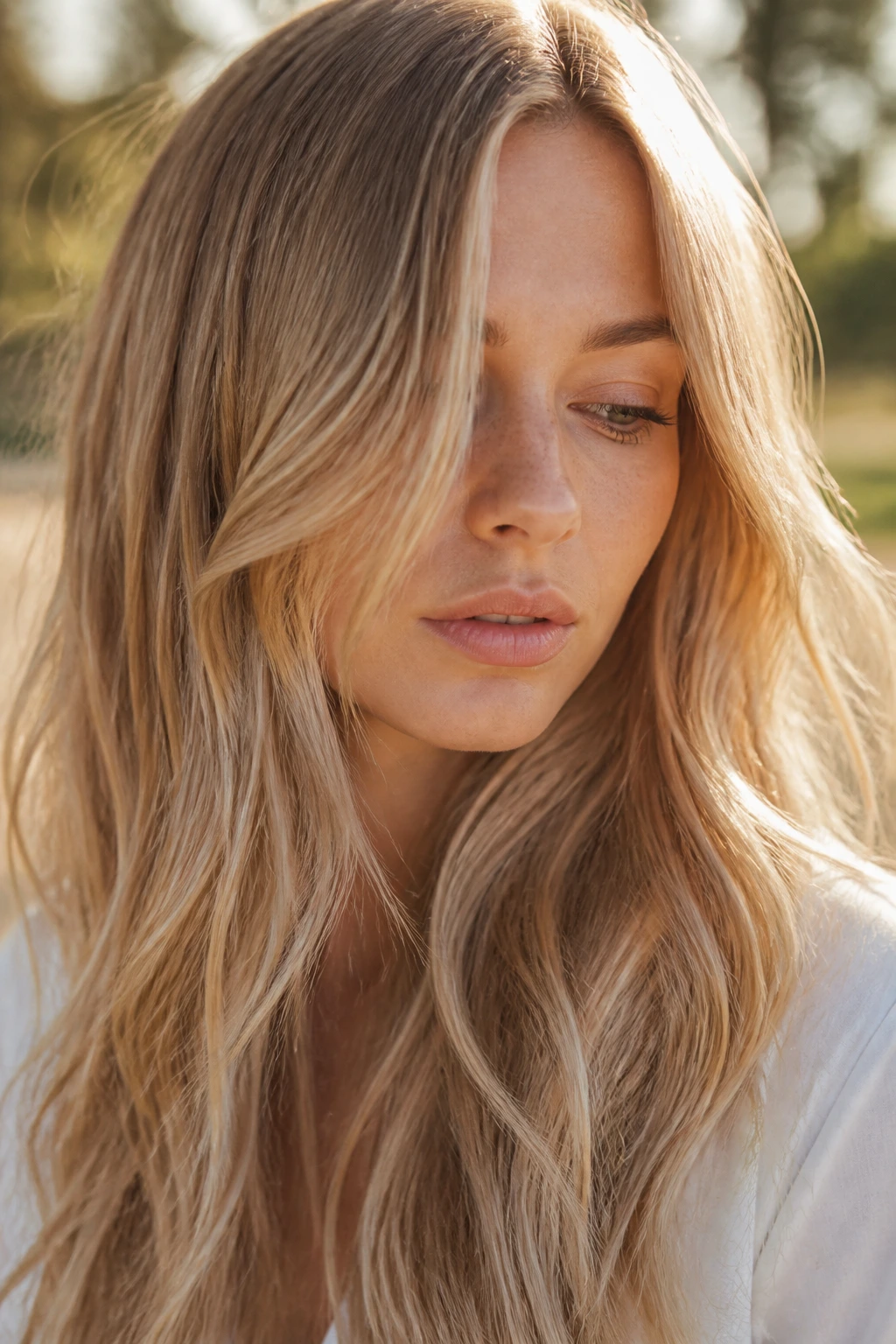
The best sandy blonde for pale skin is not the palest one in the room. It’s the one that gives your face shape, a little warmth where it needs it, and enough depth to keep the color from drifting into chalk or brass. That balance is what makes this shade family so useful.
If you remember one thing, make it this: beige beats yellow, and softness beats blunt lightness. A sandy blonde with a root shadow, a gloss, or a few carefully placed brighter pieces tends to age better on fair skin than a single, all-over blonde block. It looks more natural in daylight, which is where hair color shows its real character anyway.
Bring the ideas that match your undertone, your haircut, and your tolerance for upkeep. The right sandy blonde should feel like your hair got better lighting and a cleaner finish, not like it got forced into someone else’s idea of blonde.