



Straight hair shows every decision a haircut makes. A blunt line looks sharper, a bad layer stack looks flatter, and a good feathered shape can make the whole head feel lighter without sacrificing inches. That is the quiet appeal of long feathered haircuts for straight hair: they keep the length, but they stop it from sitting like one heavy panel.
I like feathering on straight hair because it gives you options without forcing you into a shaggy look. A few soft pieces around the face can wake up a center part. Deeper internal layers can make thick hair swing instead of balloon at the ends. A blunt perimeter with feathered interior keeps finer hair looking full while still moving when you turn your head. The trick is restraint. Too much slicing and the cut goes wispy fast.
The difference between polished and stringy is usually placement. On straight hair, the best feathered cuts are built with long, tapered layers, careful point-cutting, and a shape that still has a clear outline from the front and side. The cuts below lean in different directions—some airy, some glam, some almost invisible—but all of them are built for straight strands that like to show everything. And that’s the fun part.
Why These Feathered Cuts Stand Out
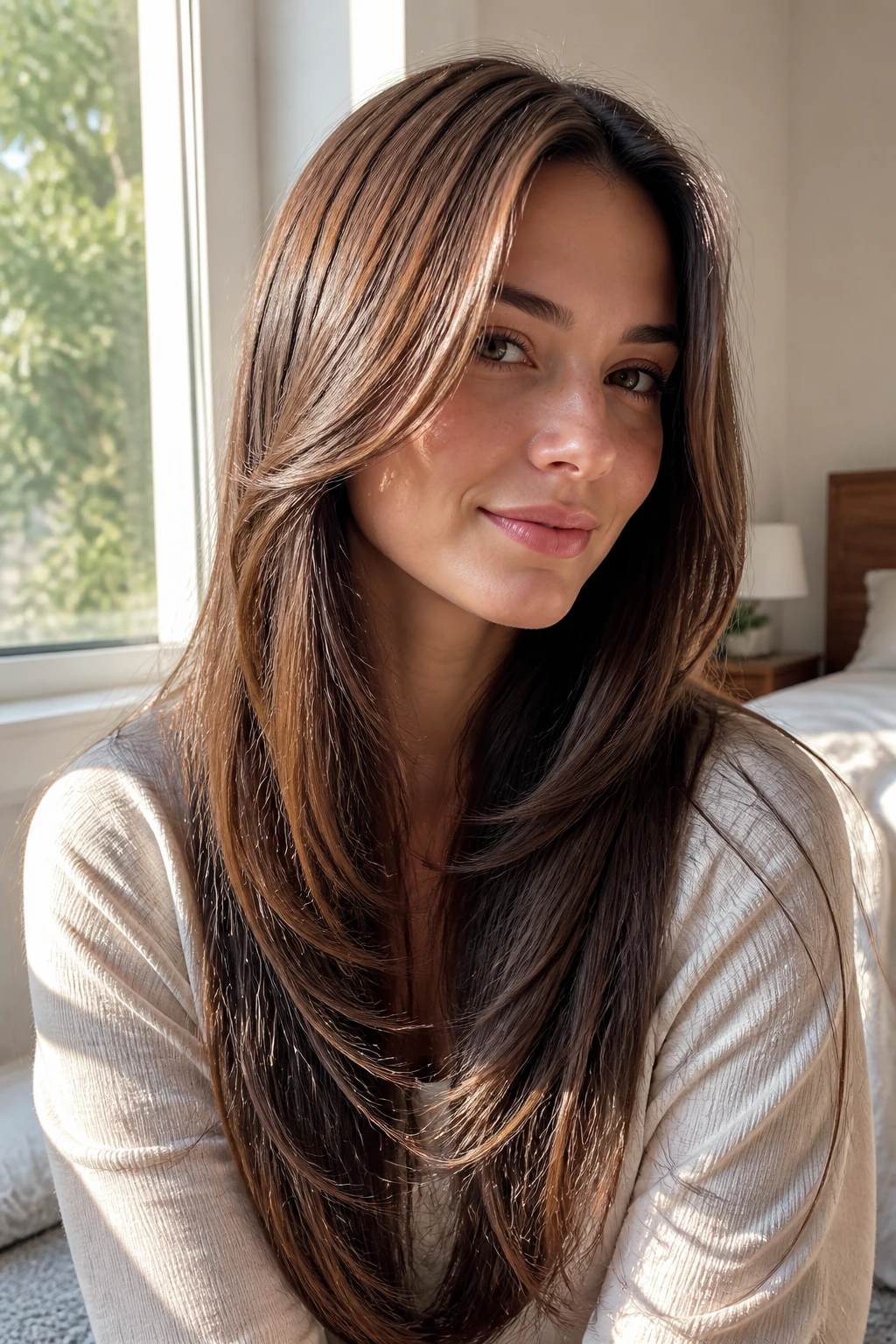
-
Movement without losing length: Feathering removes weight where straight hair tends to hang hardest, so the hair moves when you walk instead of sitting like a curtain.
-
Shape that still reads clean: A good feathered cut on straight hair keeps a visible perimeter, which matters when the strands are smooth and every line shows.
-
Face framing that can be subtle or bold: You can start the shortest pieces at the cheekbone, chin, or collarbone, depending on whether you want lift, softness, or a little drama.
-
Better balance for different hair densities: Thick hair gets bulk removed where it swells; fine hair gets movement only in the outer layers so the length still looks dense.
-
Easy to wear straight, bent, or blown out: Most of these looks work with a slight undercurve or a round-brush bend. They do not need a salon-perfect blowout every morning.
-
They grow out with less fuss: If the layers are placed well, the shape softens instead of collapsing into a triangle or a stringy mess between trims.
1. Curtain Feather Layers That Open the Face
A center part can look severe on straight hair. Curtain feather layers fix that without turning the front into bangs you have to babysit.
The shortest pieces usually start around the cheekbone or lip, then sweep down softly so the face gets a little frame instead of a hard edge. On straight hair, that matters. The line of the cut should feel like it breathes, not like it was carved with a ruler. Ask for the ends to be point-cut so they taper, not flick out in a stiff little shelf.
What makes it work
The middle part creates balance, but the feathering keeps that balance from feeling flat. When the front pieces are dried away from the face with a round brush, they fall in a loose arc that softens the cheek area and keeps long hair from dragging features down. It is a small change with a big visual payoff.
This version is especially good if you wear your hair tucked behind your ears half the time. The front pieces still have shape when they’re out, and they do not disappear into the rest of the length when they’re tucked.
Best styling note: Blow-dry the front sections first with a 1.5-inch round brush, then set the shape with a cool shot. That little burst of cool air makes the bend hold instead of collapsing in five minutes.
2. Long U-Shape With Feathered Sides
A U-shape is the quietest way to add movement to straight hair while keeping the ends looking full. It’s tidy. It’s flattering. And it does not scream “layered haircut” from across the room.
The back stays longest in the center, with the sides rising just enough to create a soft curve. Feathering lives mostly on the outer sides and around the face, so the cut keeps weight where long straight hair needs it most. If you have thick hair, this shape stops the hem from feeling like a blanket. If you have medium hair, it keeps the bottom from looking too thin.
The clean part of the U is what makes this one so wearable. The curve gives your hair a shape even when you air-dry it, and the feathered sides keep the profile from going boxy. It’s one of those cuts that looks deliberate even when you barely touch it.
Tell your stylist: Keep the perimeter full, then layer just enough through the sides to remove heaviness. If they start the layers too high, the U loses its weight and the cut turns loose in a hurry.
3. V-Shape Feather Cut for Extra Movement
Why does a V-shape feel so different from a U-shape? Because the eye reads the point in the back as movement, even when the hair is perfectly straight.
This cut drops longer in the center back and angles down from the sides, so the shape gets a little sharper and more dramatic. On straight hair, that V line keeps the length from looking blunt at the hem. The feathering usually sits through the mid-lengths and around the front, where the layers can swing instead of sit.
How to wear it well
The V-shape looks best when the ends are healthy. Split ends make the point look ragged, and straight hair is unforgiving about that. If your hair breaks easily, keep the V shallow. A deep point can look pretty on day one and messy by week three.
I also like this cut for people who wear their hair over one shoulder. The angled layers fall into that habit nicely, instead of bunching up awkwardly under the neck.
Good for: thicker straight hair, long torsos, and anyone who wants a more obvious silhouette from the back.
4. Butterfly Layers on Pin-Straight Hair
Butterfly layers can feel a little dramatic on paper, but on straight hair they become more about lift than volume. That’s the useful part.
The top layers are shorter and more face-framing, while the bottom length stays long. The result is a hair shape that feels light at the crown and full through the ends. On pin-straight hair, the cut works best when the layers are softened rather than chopped. You want the illusion of movement, not a stack of hard steps.
A lot of people think butterfly layers only work if you style with a round brush every day. Not true. They look best with that bend, sure, but they still read as shape even on a quick dry. The front pieces fall forward, the top lifts a bit, and the long bottom stays sleek. It’s a strong answer if your hair goes flat at the scalp but you hate losing length.
Styling cue: Use a medium round brush on the top layers and a larger brush on the ends. That difference keeps the crown airy while the bottom stays smooth.
5. Invisible Layers for Fine Straight Hair
Fine straight hair needs a gentle hand. Too much layering, and the ends get see-through before you’ve even left the chair.
Invisible layers solve that by hiding most of the shaping inside the haircut. The outer line stays nearly one length, but the inside carries light weight removal so the hair doesn’t drop flat against the head. The trick is that the movement shows up when the hair shifts, not when it’s sitting perfectly still.
This is one of my favorite cuts for people who say, “I want layers, but I don’t want my hair to look thin.” Good instinct. Hidden layering can give a fine straight texture enough lift to stop it from clinging to the face. It also keeps ponytails looking fuller than they would with a highly chopped haircut.
Best ask at the salon: Keep the longest perimeter intact. Place the shortest invisible layers well below the chin, then soften the ends with point-cutting only. That keeps the cut from turning flimsy.
6. Face-Framing Feather Layers Starting at the Chin
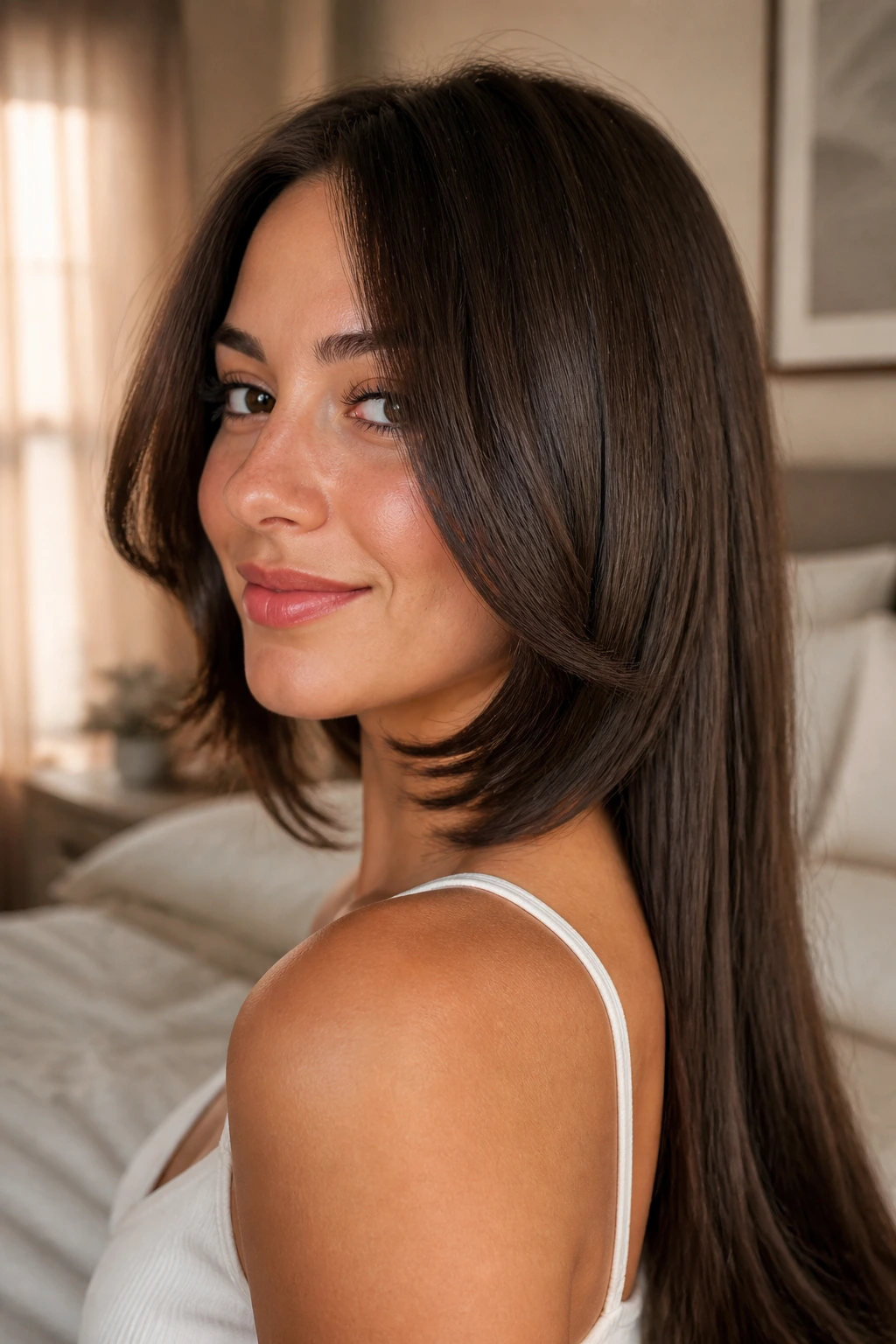
Chin-length face-framing pieces change the whole mood of a long cut. They pull attention upward, but they do it softly.
On straight hair, the chin is a useful starting point because the layer can travel along the jaw instead of bouncing off the cheek too hard. That makes this version especially good for square or round face shapes that need a little vertical line. The long back stays calm and sleek while the front does the work.
A lot of salon photos make these layers look more dramatic than they are in real life. In the mirror, the effect is usually more flattering than flashy. The hair still sits long, but the front gives the eye a place to land. That matters when the rest of the hair is very straight and uninterrupted.
Quick tip: If your hair naturally parts off-center, let the front layer on the heavier side be a touch longer. It keeps the shape from looking lopsided when you actually wear it.
7. Feathered Ends With a Clean Blunt Line
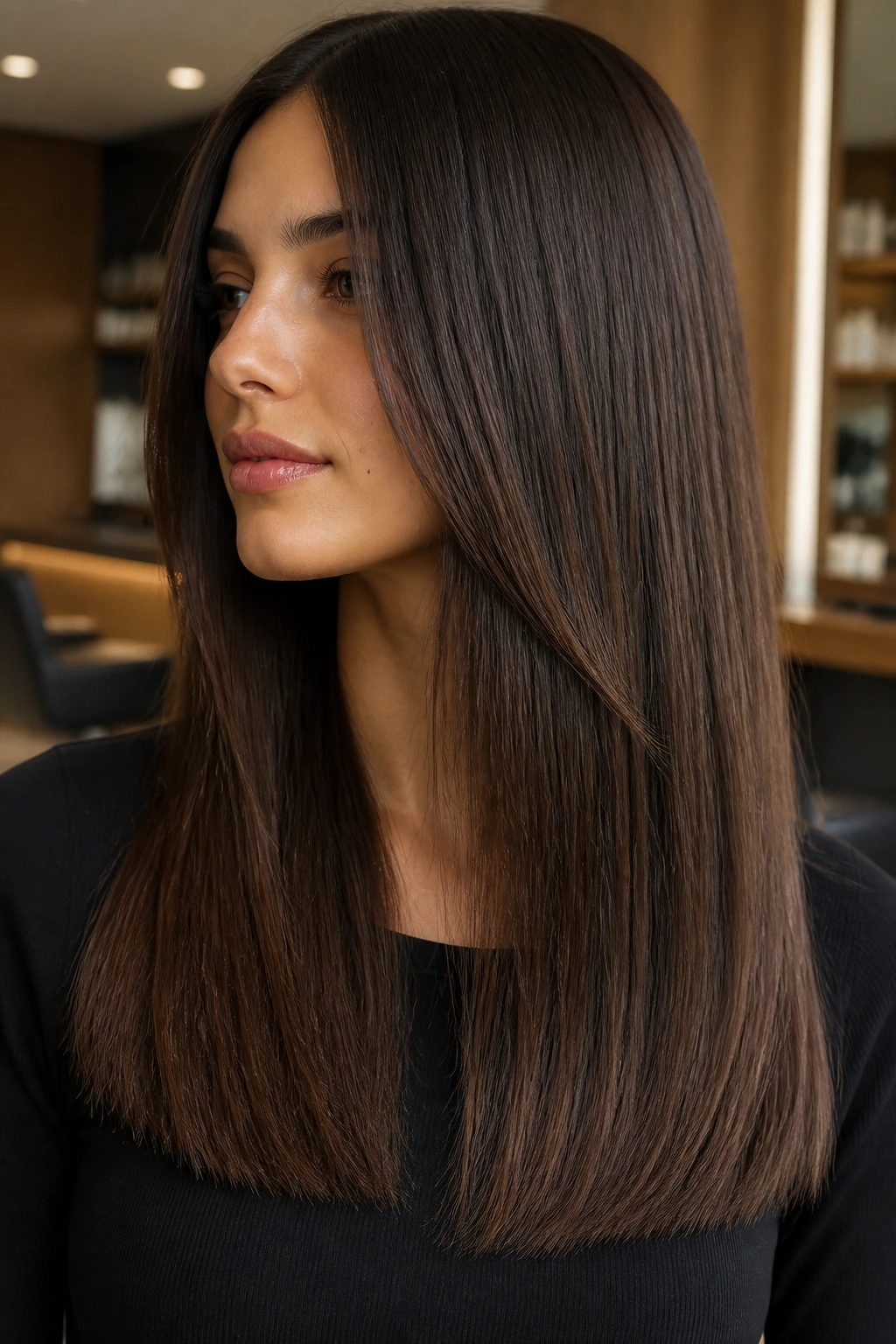
This cut is for people who want movement without giving up that crisp, thick-looking hem. The bottom line stays blunt, but the ends are softened so they don’t hang like a board.
The effect is subtle from the front and more obvious when the hair moves. Straight hair shows every edge, so a hard blunt line can feel severe if the rest of the cut is heavy. Feathering the very ends—just enough to soften the tips—keeps the length polished while still letting it bend. It is a smart middle ground.
Why it’s such a good compromise
If your hair is medium to fine, this style keeps the bottom looking dense. If it is thick, the soft ends stop the shape from feeling bulky at the hem. The key is to feather the last inch or two, not the whole lower third. That’s where a lot of cuts go wrong.
Best for: anyone who likes sleek straight hair but wants the ends to move instead of sit rigidly.
8. ’90s Blowout Layers With Big Swoops
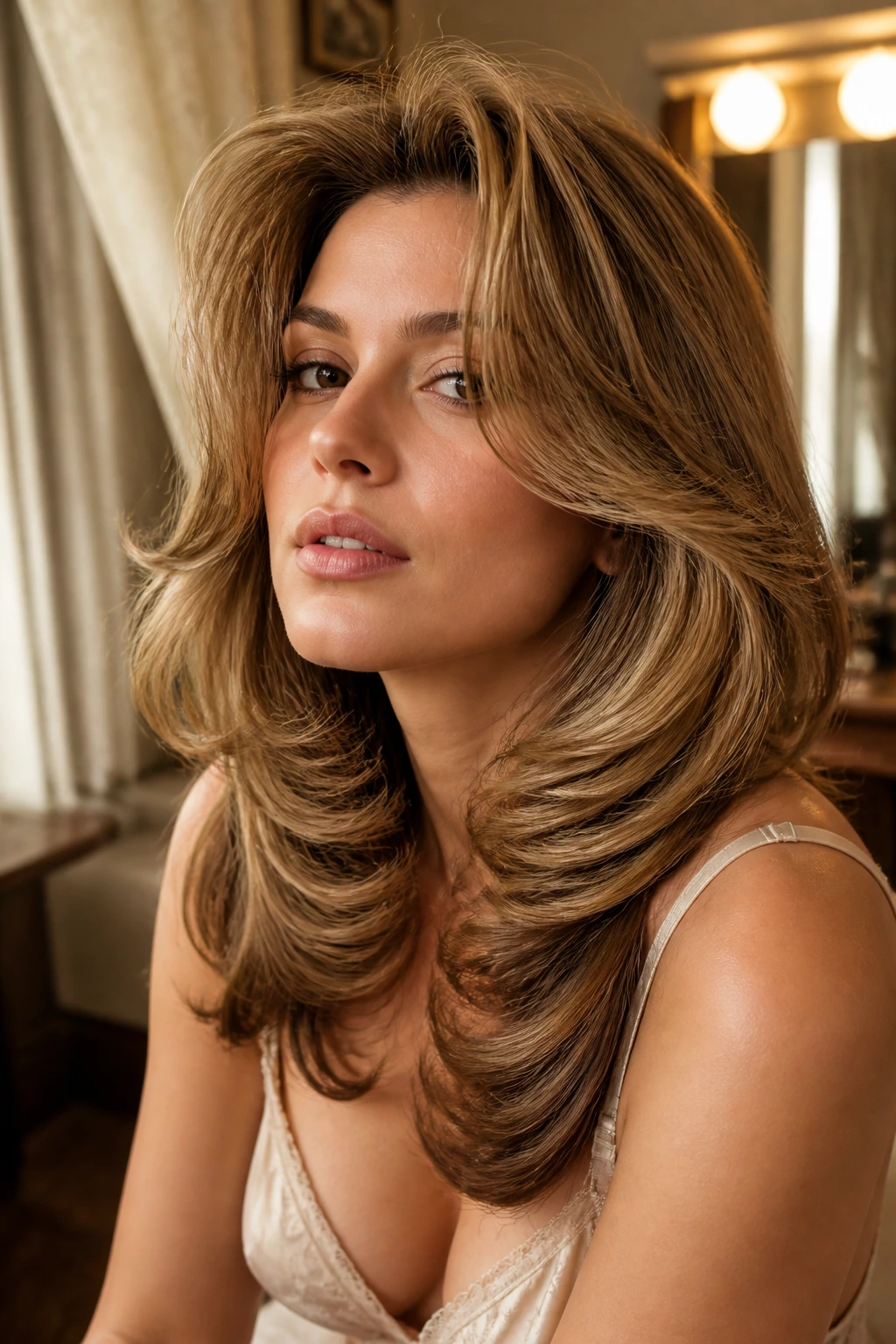
This is the most glamorous shape in the bunch, and it knows it.
The layers are built to swing out from the face and curve under at the ends, which creates that full, rounded blowout silhouette people keep coming back to. On straight hair, you get the clean shine of a sleek texture with the softness of a salon finish. The hair looks like it was made for a big round brush. Because, honestly, it was.
I’d call this cut the best choice for someone who likes styling. Not necessarily someone who wants a complicated routine—just someone who enjoys seeing hair take shape with a brush and dryer. A 2.5-inch round brush and a nozzle on the dryer make a real difference here. So does clipping the front pieces away while they cool.
Styling note: Roll the face-framing sections away from the face, then let them set for five minutes before brushing them out. That cooling time is what gives the swoop its memory.
9. Bottleneck Bangs and Long Feathered Sides
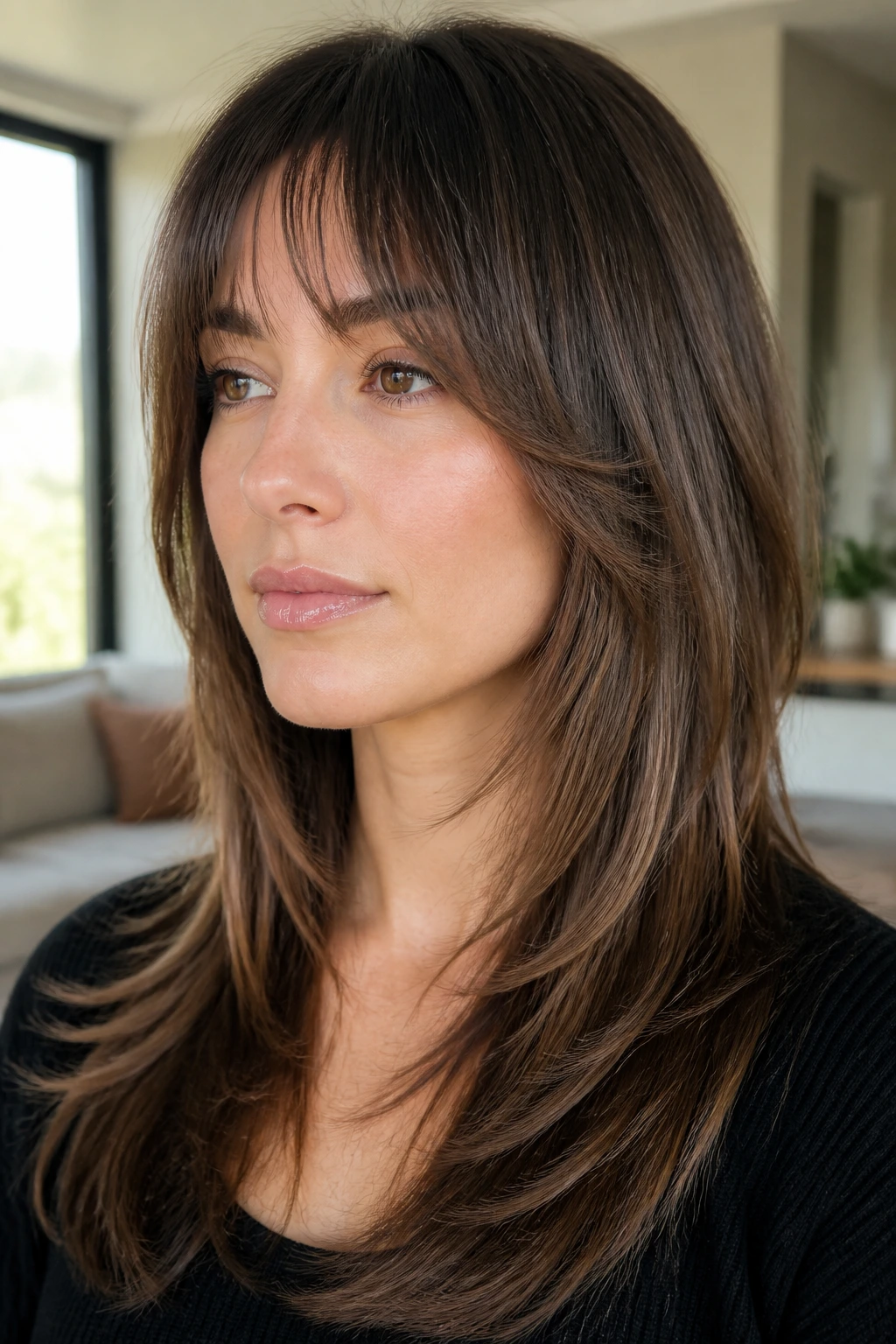
Bottleneck bangs are a nice way to bring fringe into a long feathered cut without committing to full bangs.
The center is shorter, then the sides lengthen and blend into the feathered front pieces. On straight hair, that transition matters because there’s no curl to hide a blunt line. Everything shows. Bottleneck bangs solve that by tapering the fringe into the rest of the haircut instead of stopping it in one hard place.
This cut works beautifully if you want your hair to feel current without losing softness. The bangs frame the eyes, the side pieces soften the cheeks, and the long lengths keep the whole thing from reading as too short. It’s a good option for anyone who likes the idea of fringe but does not want to be trapped by it every six weeks.
Tell your stylist: Keep the center shorter, but let the sides slide into cheekbone-length layers. If the sides are too short, the whole thing can feel helmet-like.
10. Side-Part Feather Cut With Sweep
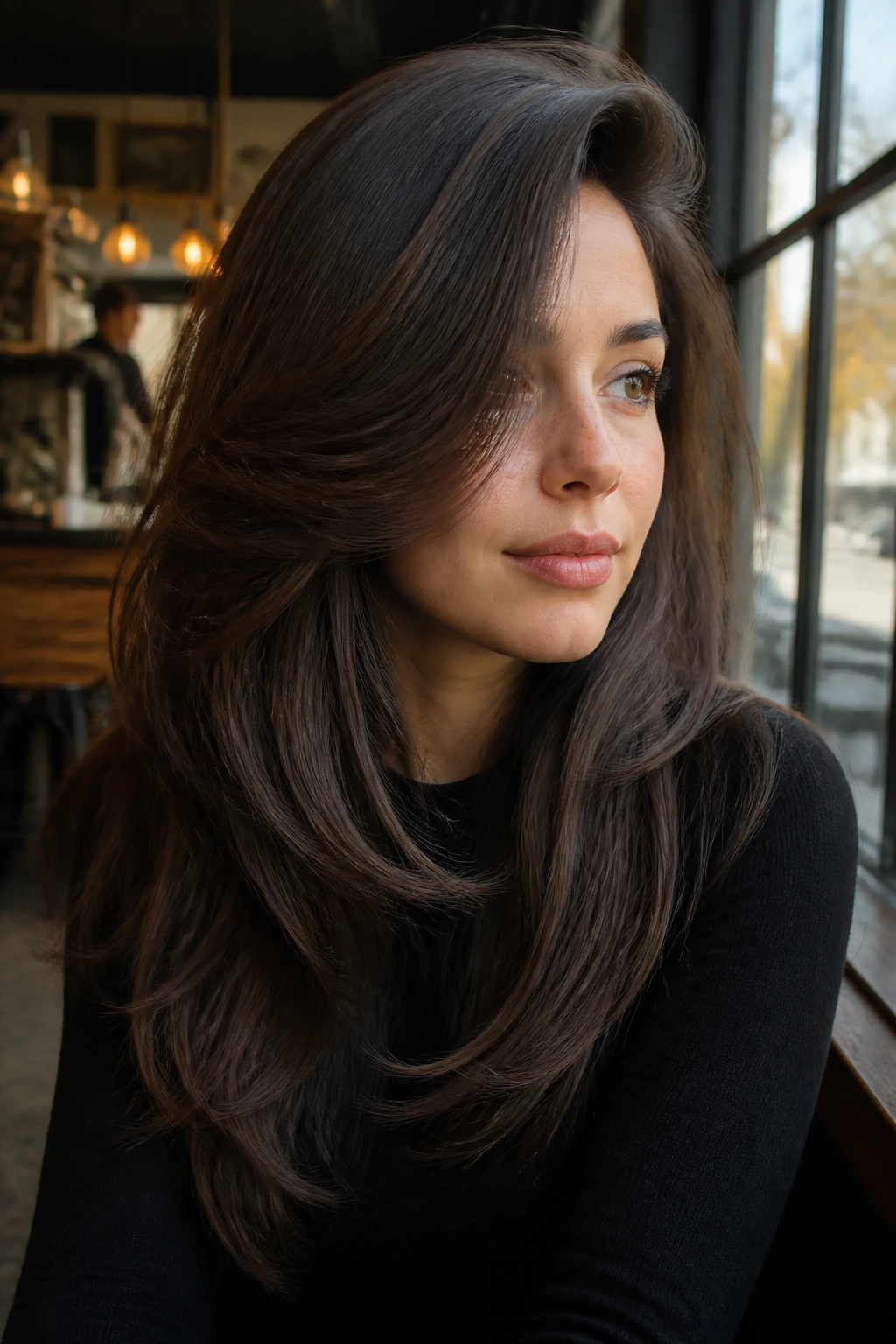
A deep side part changes the haircut before the scissors even do. It pushes one side up, drags the other side down, and gives straight hair a built-in sense of motion.
That is why this feathered cut works so well. The layers can be arranged to support the side part instead of fighting it. The heavier side usually gets more sweeping face-framing, while the lighter side stays cleaner and falls behind the ear more easily. The effect is polished, but not stiff.
If you’ve worn a middle part for years, this is one of the quickest ways to make your hair feel different without sacrificing length. It also helps flatter a flatter crown, because the side part creates lift at the roots. A little root spray at the part line helps, but the cut does most of the job.
Good to know: This shape needs a crisp parting line. If you switch sides often, the balance can feel off. Pick the side you actually use and cut for that.
11. Razored Layers for Dense Straight Hair
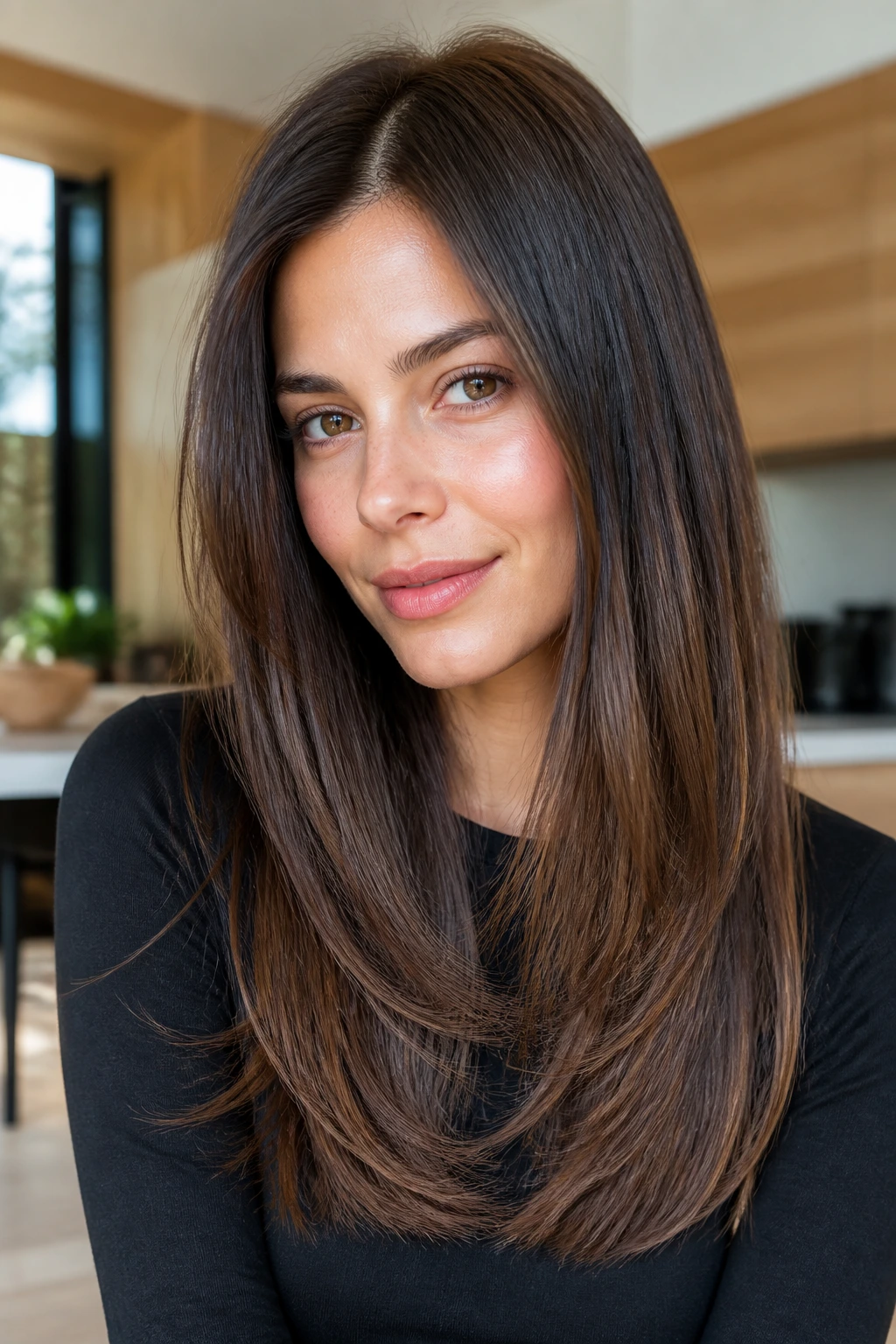
Dense straight hair can hold too much bulk at the bottom. It gets heavy, then it puffs at the ends, then it swings in one solid sheet. No thanks.
Razored layers can fix that, but only when they’re done with control. The razor softens the edges and removes weight from the inside of the haircut, which lets the hair fall more naturally. The right version looks airy. The wrong version looks frayed. That difference is huge on straight strands.
What to watch for
A razor should not shred the ends. It should taper them. If your hair is coarse and stubborn, this cut can help it collapse into a cleaner line instead of sticking out at the sides. If your hair is already thin, I’d be more careful. Too much razor work can make the ends look light in a bad way.
This is the cut for someone who has said, more than once, “My hair has too much of everything.” Too much bulk. Too much width. Too much heaviness at the hem. A thoughtful razor cut fixes that without taking the length away.
12. Waterfall Layers That Slide Down the Back
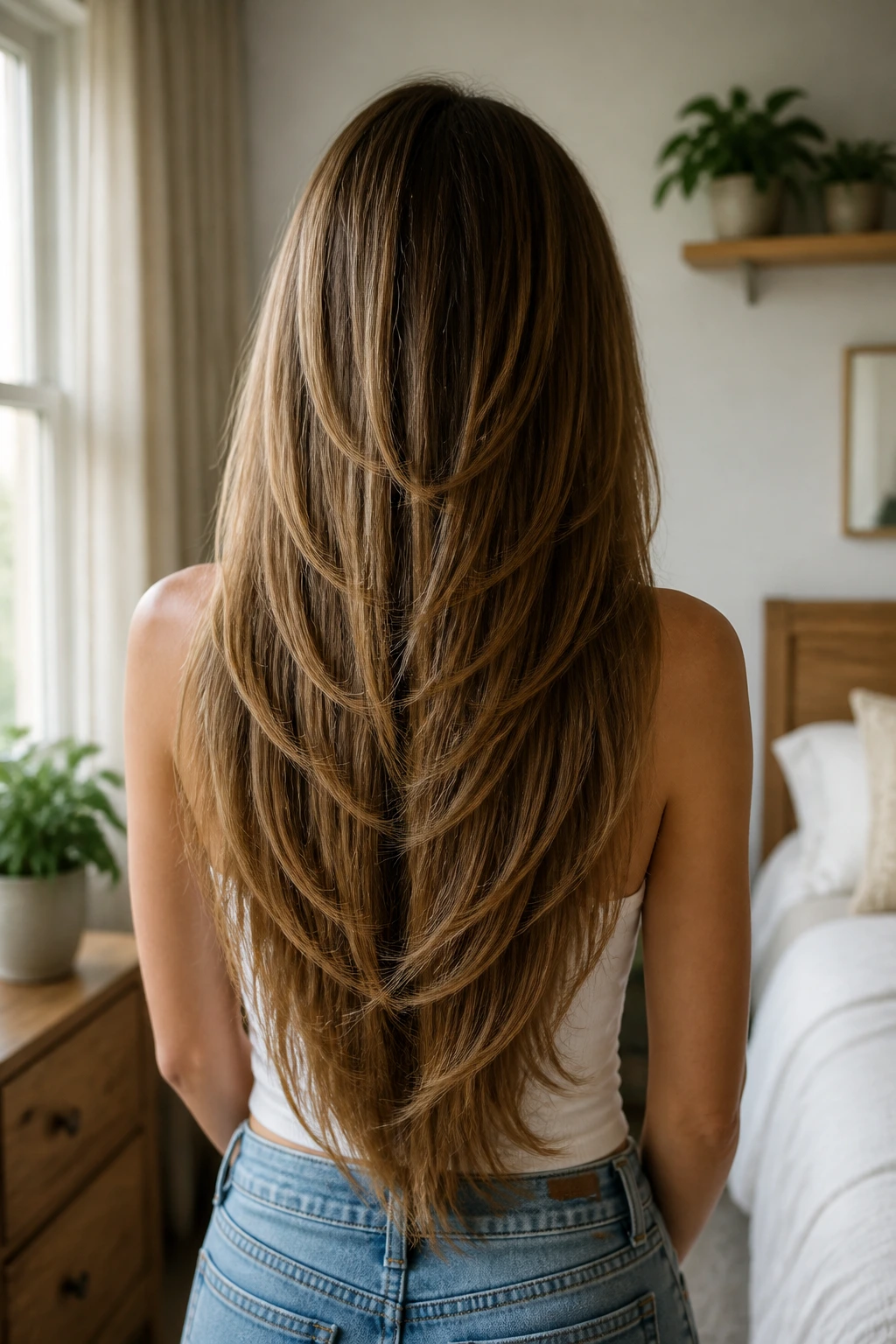
Waterfall layers are all about flow. They start higher in the front and drift longer as they travel toward the back, which gives the cut a soft cascade effect.
On straight hair, that cascade keeps the hair from looking like one flat curtain. The layers still read as long, which matters if you don’t want the haircut to feel broken up. The best versions start around the collarbone or chest and then melt into the length below. When the hair moves, the layers catch each other in a clean way. That is the whole point.
I like this shape on hair that’s long enough to show the flow. On shoulder-length hair, waterfall layers can disappear. Once the length gets past the chest, they become much more visible and much more flattering. A center part or soft off-center part both work, but the shape looks especially nice when the front bends away from the face.
Pro move: Ask for the front pieces to blend rather than stop. If the stylist creates a hard step, it will look choppy instead of cascading.
13. Long Shag Softened for Straight Hair
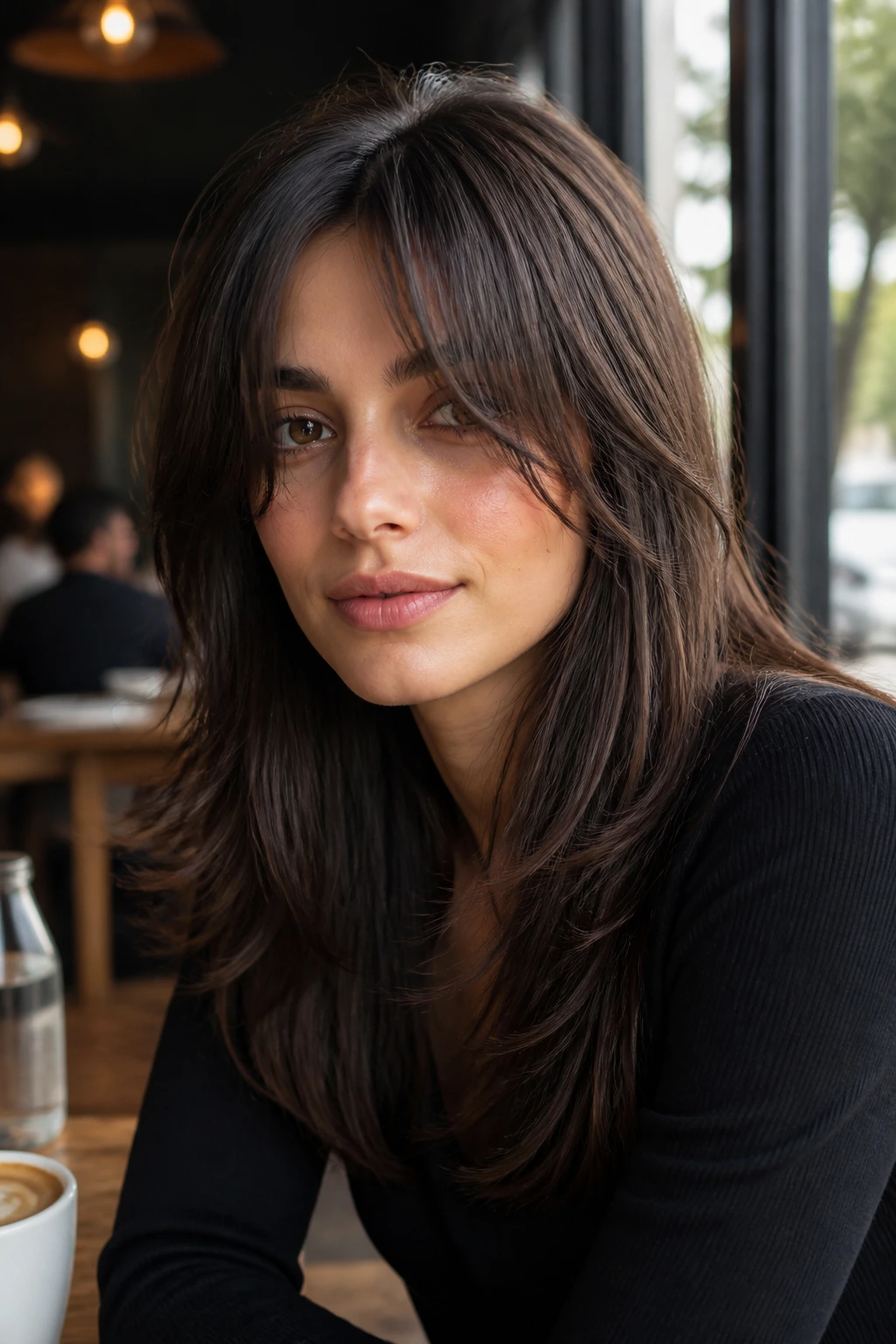
A shag on straight hair can get messy fast if the layers are too short or the crown is overcut. The softer version keeps the attitude and loses the rough edges.
The result is still a shagged-out silhouette—lighter top, feathered front, movement through the sides—but the layers are longer and less separated. That keeps straight hair from looking stringy. A bit of curtain fringe helps here, too, because it breaks up the front without forcing the rest of the cut into a heavy shape.
This one is for people who want some edge but not a high-maintenance mess. It reads relaxed, not sloppy, if the ends are clean. And if you wear straight hair with just a little bend, the layers suddenly make a lot more sense. You do not need a full-on tousled finish. Just enough to keep the pieces from lying in one uniform line.
Styling note: A little mousse at the roots and a bend from a flat iron through the mid-lengths gives this cut more life than heavy cream ever will.
14. Cheekbone Wings With Extra Length
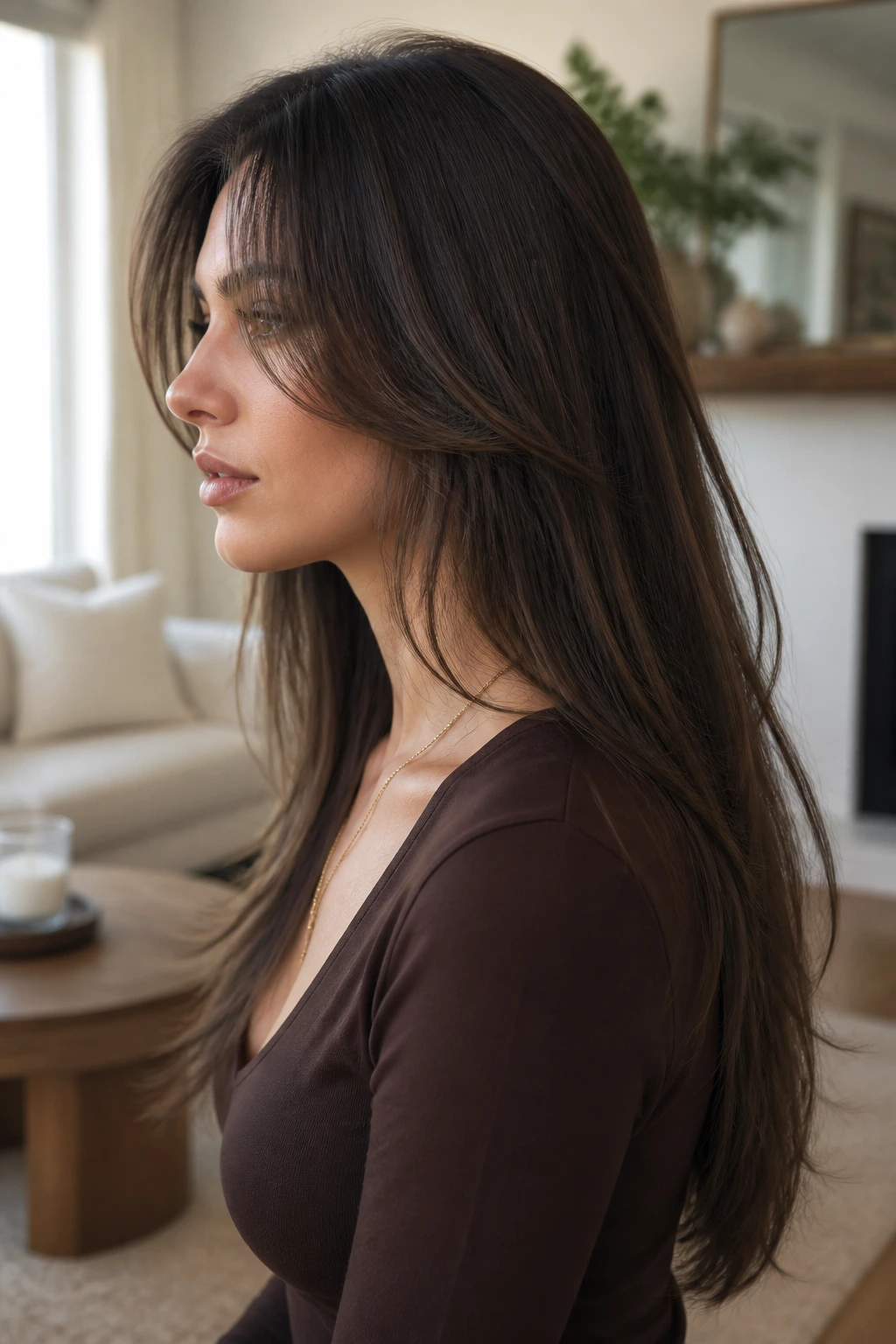
Some cuts make the hair frame the face. This one makes it point at the cheekbones.
The shortest face-framing pieces sit around the cheekbone and then feather outward, so they feel like soft wings instead of bangs. That shape can be flattering on longer faces, narrow faces, and anyone who wants a little width at the middle of the face without chopping the length. The back stays long and calm while the front gets the personality.
What I like here is the contrast. Straight hair can look flat when every piece is the same length. Cheekbone wings break that up without creating visual noise. They also look especially good when the hair is tucked behind one ear on one side, because the opposite side still has enough shape to stand on its own.
Ask for this: Keep the wings soft and long enough to brush the top of the cheek, not stop at it. That tiny difference keeps them from feeling like a sharp frame.
15. Crown Layers That Lift the Top
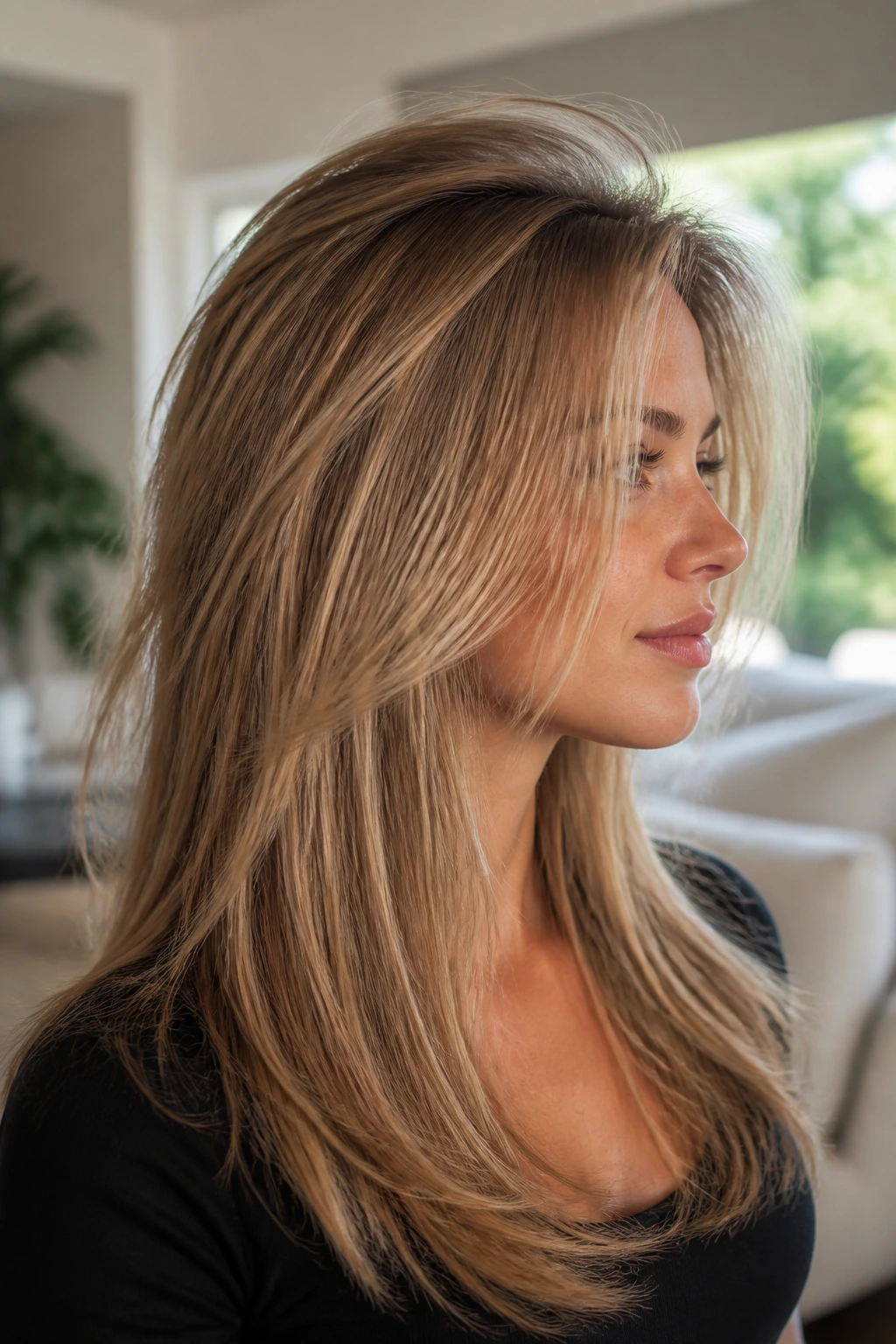
Flat roots are the enemy of straight hair with length. Crown layers solve that by shifting some of the weight off the top third of the head.
The lift shows up before the eye can name it. Hair sits a little higher at the crown, falls more lightly through the sides, and no longer feels glued to the scalp. On long straight hair, that can be the difference between “pretty” and “why does this look tired?” The layers should be subtle, though. Too much crown work can expose the scalp or make fine hair look sparse.
Best for
This shape works especially well on hair that goes flat an hour after styling. It also helps if you wear your hair down often and want the profile to look softer from the side. The most flattering version keeps the layers long enough to blend, so the top gets lift without the haircut yelling about it.
A root-lifting spray at the crown helps, but the cut does most of the visual lifting. That’s the part worth paying for.
16. Long Layered Cut With Tucked-In Ends
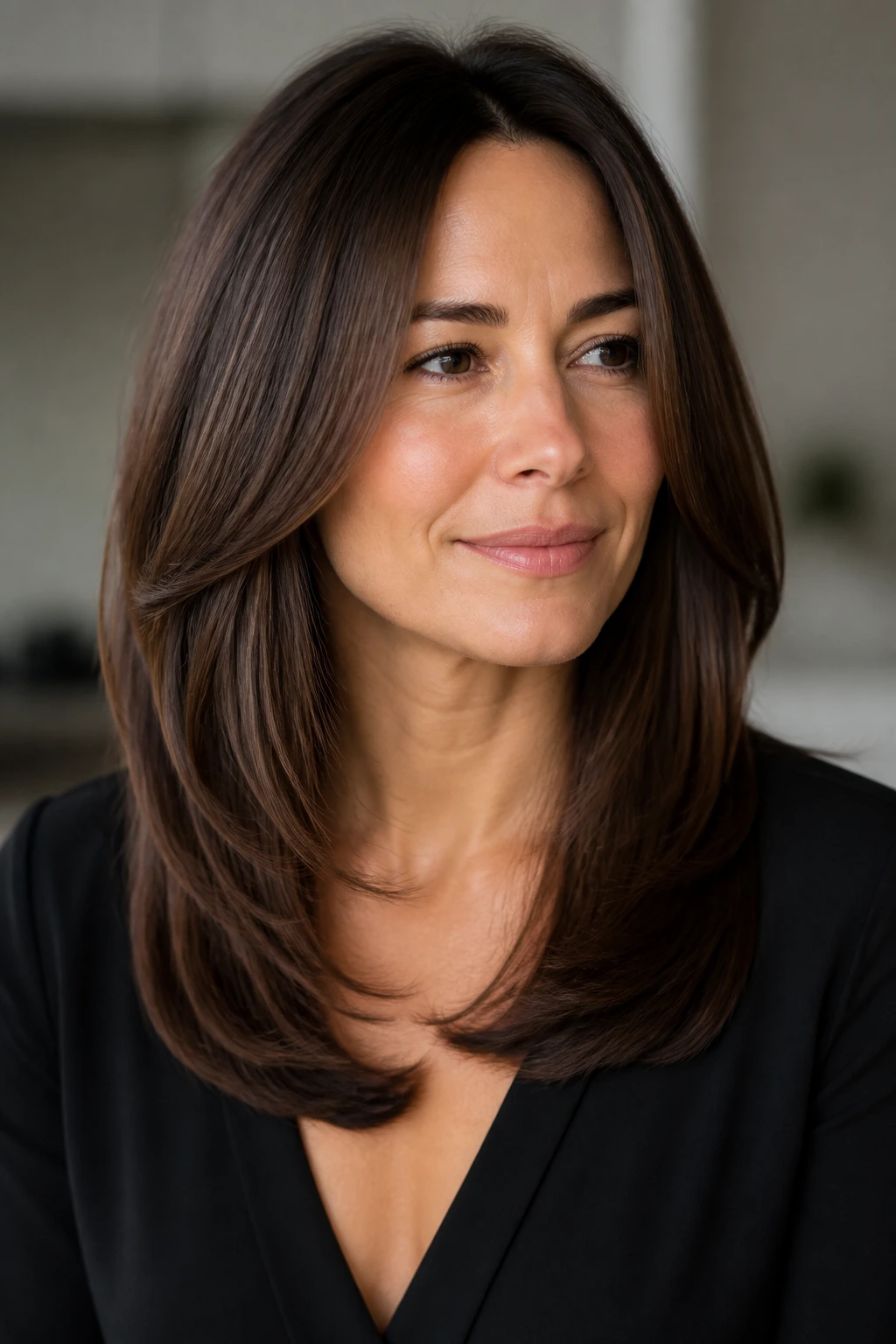
This is one of the cleanest-looking feathered styles for straight hair. The ends curve inward, the layers stay long, and the whole haircut feels neat rather than fluffy.
It works because the bend at the ends keeps the hair from flaring out. Straight hair loves to do that at the hem if the cut is too blunt or too heavy. With tucked-in ends, the line looks controlled. It’s a smart choice for people who like a polished finish and do not want a lot of texture sprayed all over it.
This is also a nice office-friendly shape. It grows out quietly and looks decent even when you only rough-dry it. If your hair tends to swing away from your neck, the tucked ends bring it back in without taking away the length you’ve grown for.
Style detail: Finish with a large round brush or a flat iron bend on the last two inches only. Keep the bend soft. A tight curl defeats the point.
17. Airy Feathering for Flat Hair
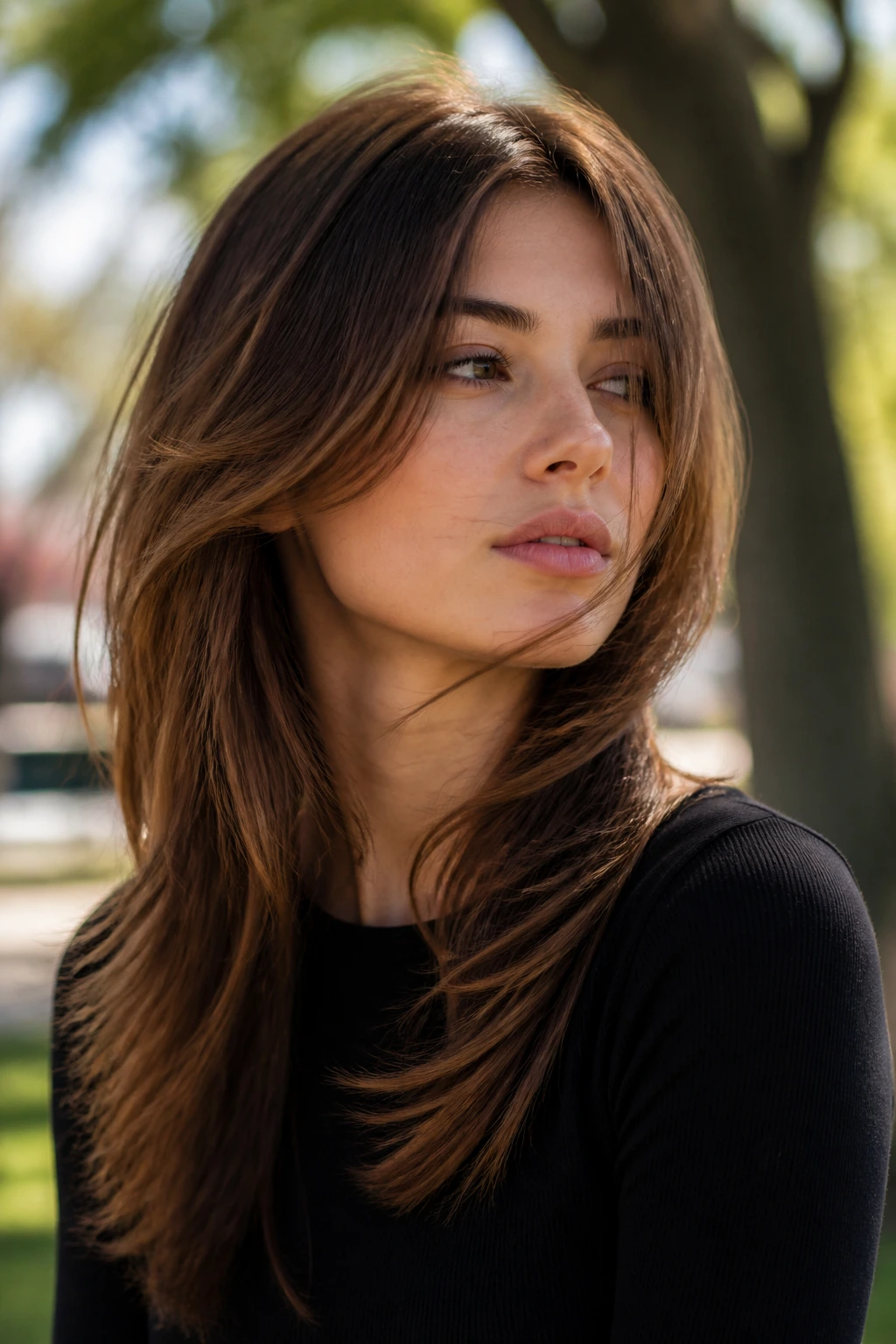
Flat hair does not need more teasing. It needs smarter cutting.
Airy feathering places movement where the hair naturally drops, usually through the mid-lengths and around the front, while leaving enough weight at the base to prevent the ends from looking thin. That balance matters on straight hair. If the layers are too concentrated at the top, the hair goes flat again by noon. If they sit too low, you get all bulk and no lift.
This is the shape I’d point to for someone who wants “more something” without knowing exactly what that something is. It gives the hair room to move in a breeze, on a walk, or when you turn your head. The effect is subtle in the best way.
Helpful note: Don’t overload this cut with heavy oils or creams. Lightweight leave-in and a touch of dry texture spray will keep it airy. Heavy products make the layers collapse.
18. Collarbone-to-Long Grow-Out Feather Cut
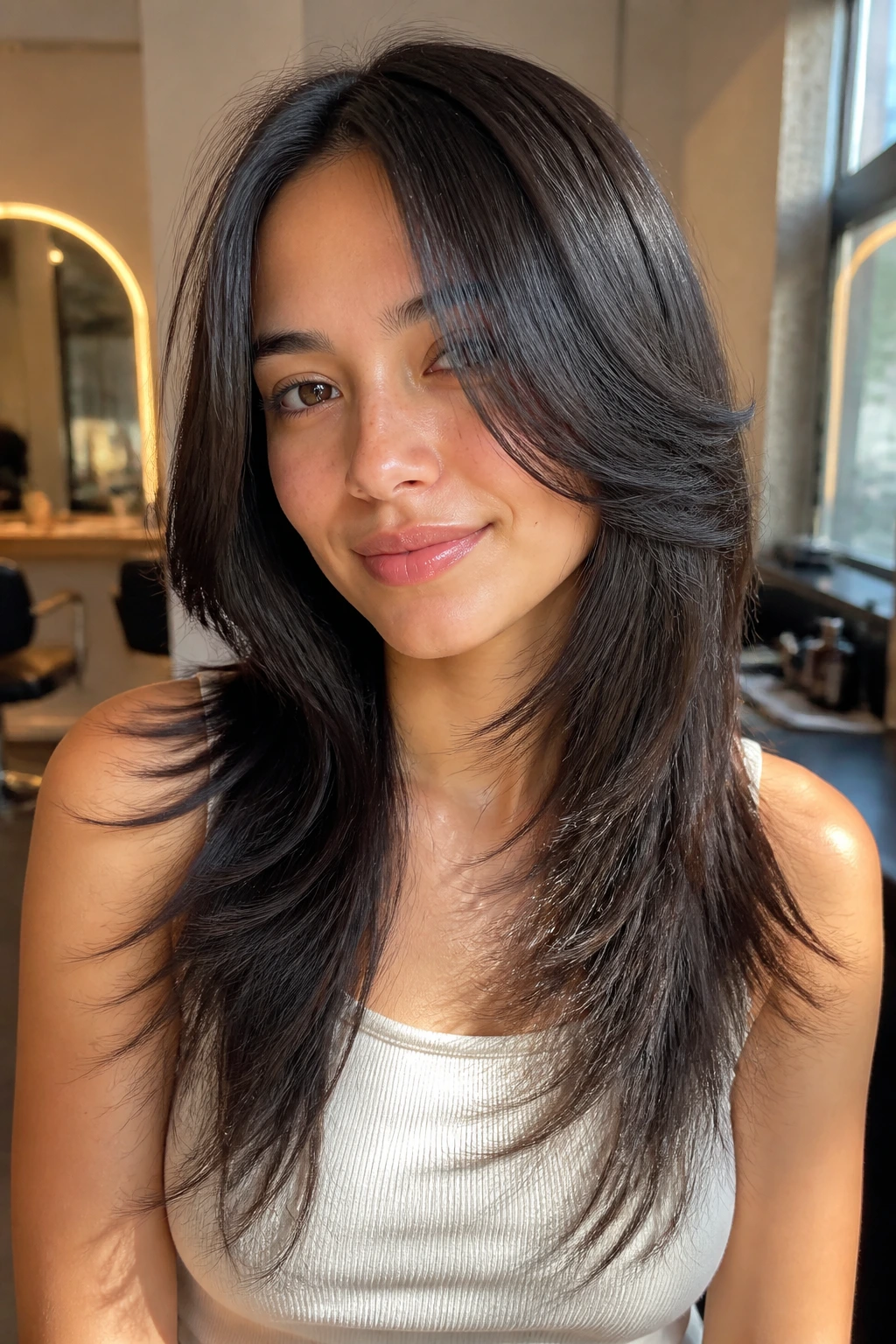
Growing hair out is where a lot of people get stuck. This cut makes that awkward stage behave.
The shortest layer sits around the collarbone, then everything below that stretches long and soft. That means the shape still has some face-framing and motion, but it doesn’t create a harsh line when the hair gets longer. Straight hair often shows every grow-out stage, which is why this version is so useful. It keeps the cut looking intentional even as the length changes.
I like this for anyone who wants to move from medium length to very long hair without hating the middle months. The collarbone layer gives enough shape to prevent a blunt triangle, and the feathering keeps the cut from looking too heavy near the shoulders.
Ask your stylist: Keep the front layer low and blended. If it starts too high, the grow-out becomes annoying faster than it should.
19. Deep Side Part With Cascading Layers
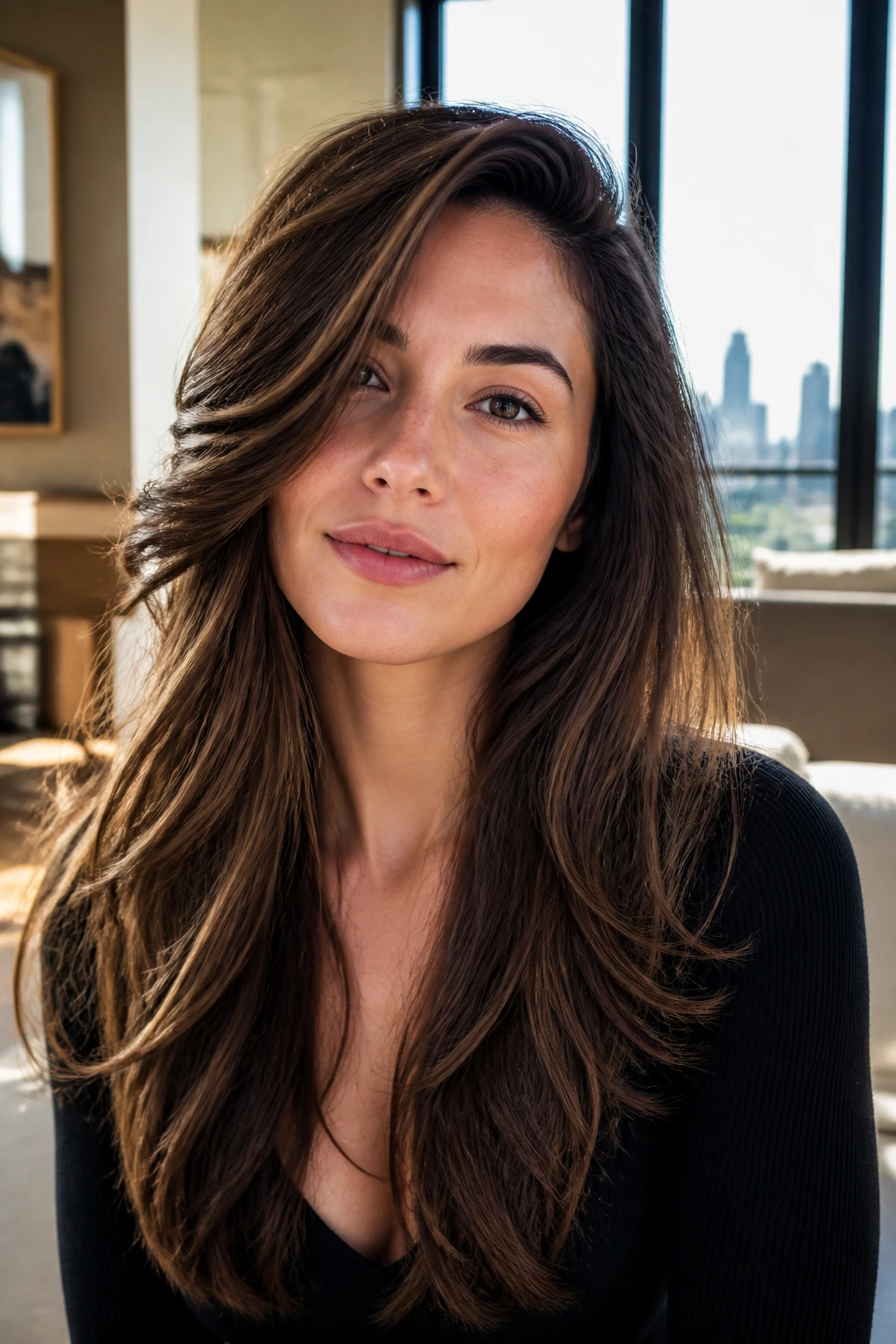
A deep side part makes straight hair feel richer almost instantly. Add cascading layers and the effect becomes fuller, not just different.
This shape is especially good when you want one side to swoop across the cheek and the other side to sit more quietly behind the ear or shoulder. The layers can be arranged to follow that movement, which gives the haircut a lot of visual interest without needing curly texture. It also works well on long straight hair that otherwise looks too symmetrical.
There’s a nice bit of drama here, but it’s controlled drama. Not costume-y. The side part creates lift at the roots, the layers give the front a soft fall, and the back keeps the length. If you want your hair to look expensive in a very old-school blowout way, this is one of the easiest routes there.
Tip: If your roots are stubborn, blow-dry the part in the opposite direction first, then flip it back. That creates a bit of memory and keeps the side part from falling flat.
20. Soft C-Shape Layers Around the Jaw
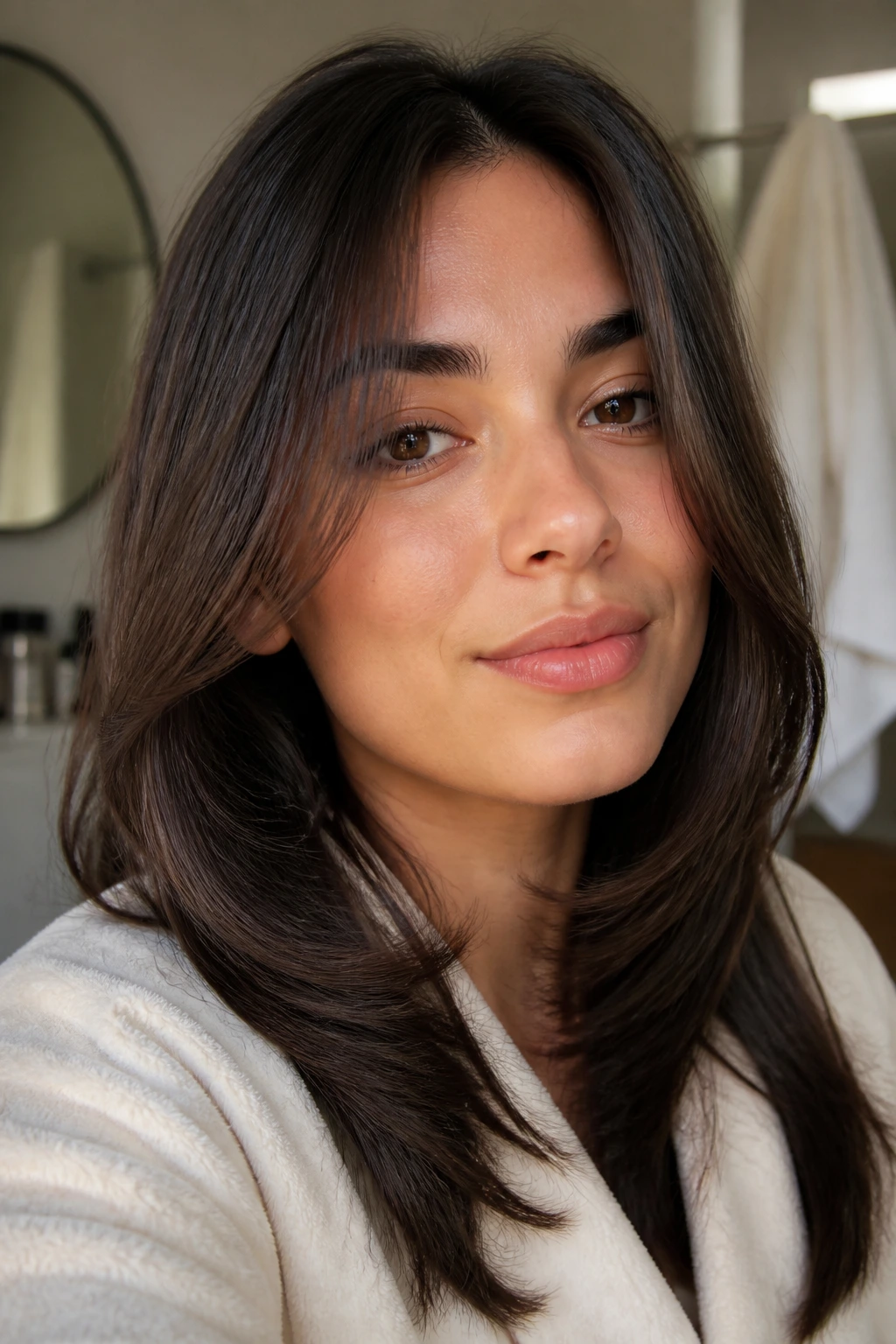
A C-shape is basically a soft curve that hugs the jawline instead of cutting across it. On straight hair, that curve makes a huge difference.
The layers start low enough to avoid a chunky step and then bend inward toward the face, creating a gentle outline around the jaw. This is a useful shape for square jaws, wider faces, or anyone who wants the hair to soften the lower half of the face. The back remains long and relatively simple, which keeps the cut from getting too busy.
I like the C-shape because it feels polished even without much styling. Air-dry it and you still get a bit of contour. Blow it out and the curve becomes more obvious. It’s a shape that behaves well, which is not something every feathered haircut can claim.
What to avoid: Don’t start the curve too high. If it rises above the jaw, the face frame can turn too round and steal the line you wanted.
21. Ribbon-Like Long Layers for Glossy Hair
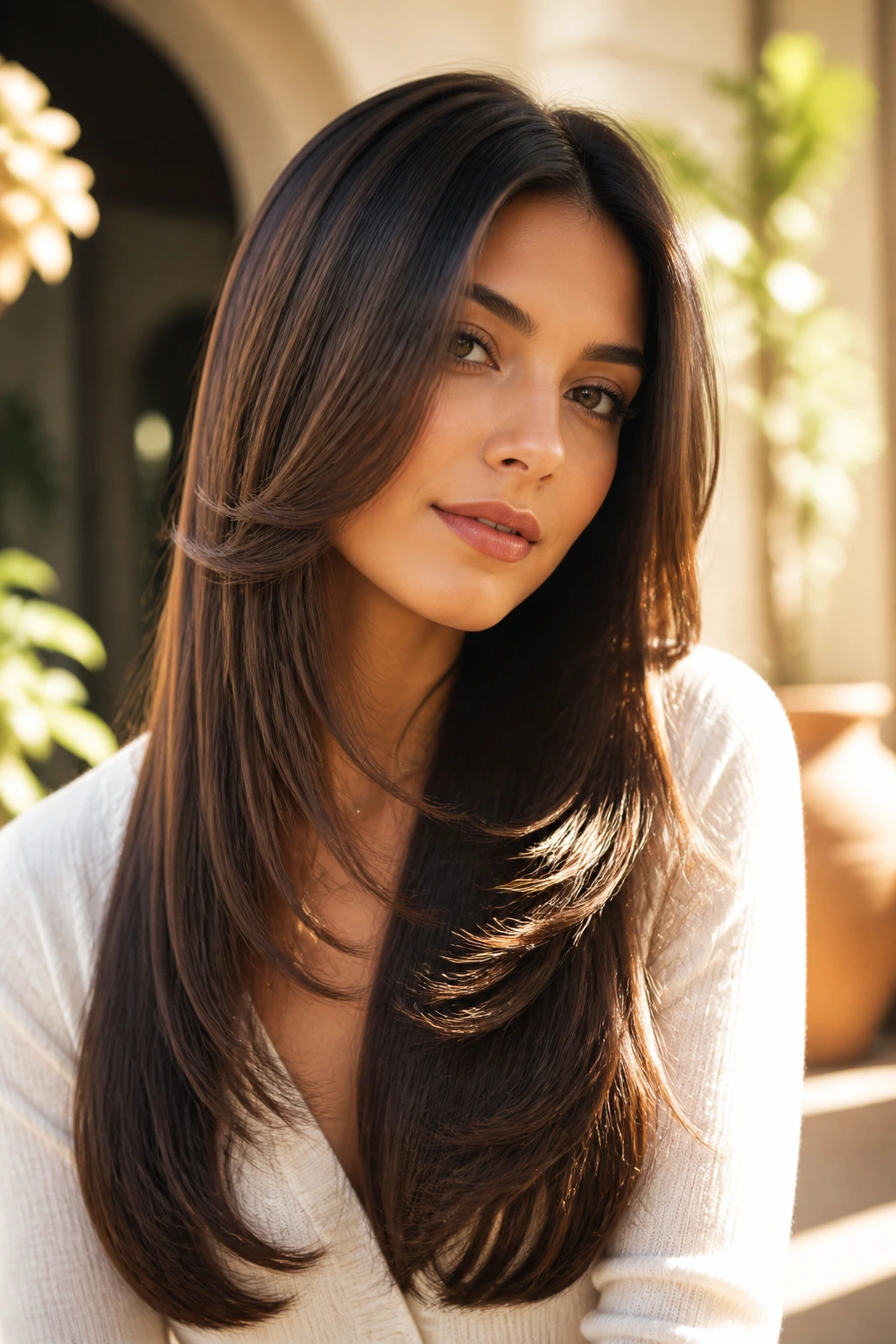
Ribbon layers are for people who want movement you can see without obvious separation. The strands fall in long, smooth bands rather than broken chunks.
On straight hair, that matters because shine is part of the look. If the layers are too chopped, the gloss gets interrupted. Ribbon-like layers keep the reflective surface intact while still giving the hair movement as it shifts. The style is sleek, not fluffy, and it looks especially nice on healthy lengths.
This is one of the more elegant feathered options in the list, mostly because it relies on precision. The layers should glide, not stack. A shine serum on the very ends helps, but only a tiny amount—straight hair can go greasy in a minute if you overdo it.
Best for: medium-density hair, long lengths, and anyone who prefers a smoother finish over a lot of texture.
22. Full-Length Layers That Keep the Perimeter Heavy
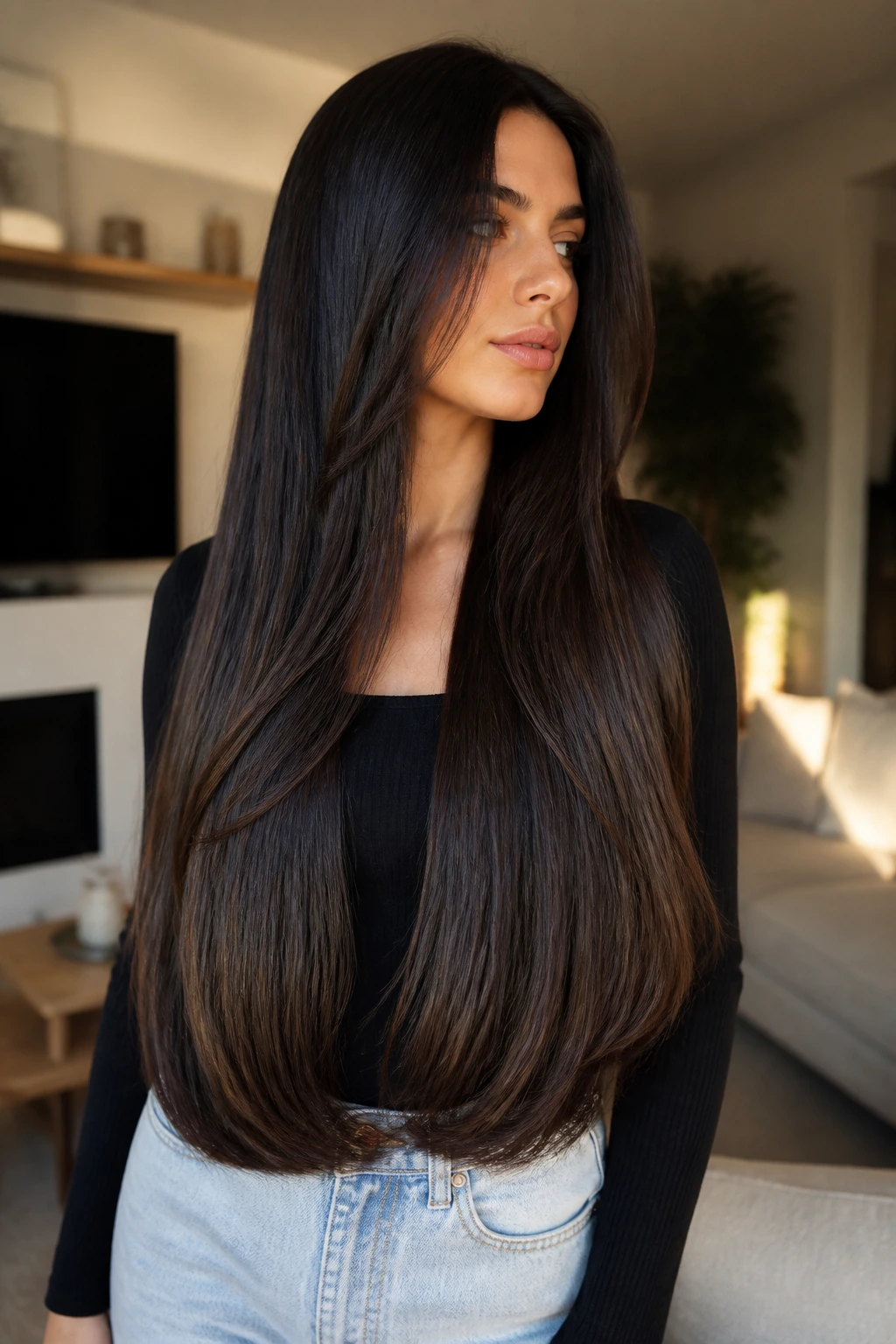
Not everyone wants a soft perimeter. Some people need that bottom line to stay thick and grounded.
This haircut keeps the edge of the hair heavy while placing movement inside the cut. The outer hem looks full, which is useful if your hair is fine or if you simply love the look of dense ends. The feathering is tucked into the interior, so the cut feels lighter when it moves but still looks solid when it hangs still.
That’s the charm here: the hair gets motion without losing the visual weight that long hair often needs. It’s also a good fix for anyone who has been told to layer their hair but hates the wispy result that can come from over-layering. The perimeter says “long hair.” The inside says “I know what I’m doing.”
Styling note: Use a paddle brush for the base and a round brush only on the front layers. That keeps the bottom heavy and the top soft.
23. Feathered Layers With Curtain Fringe
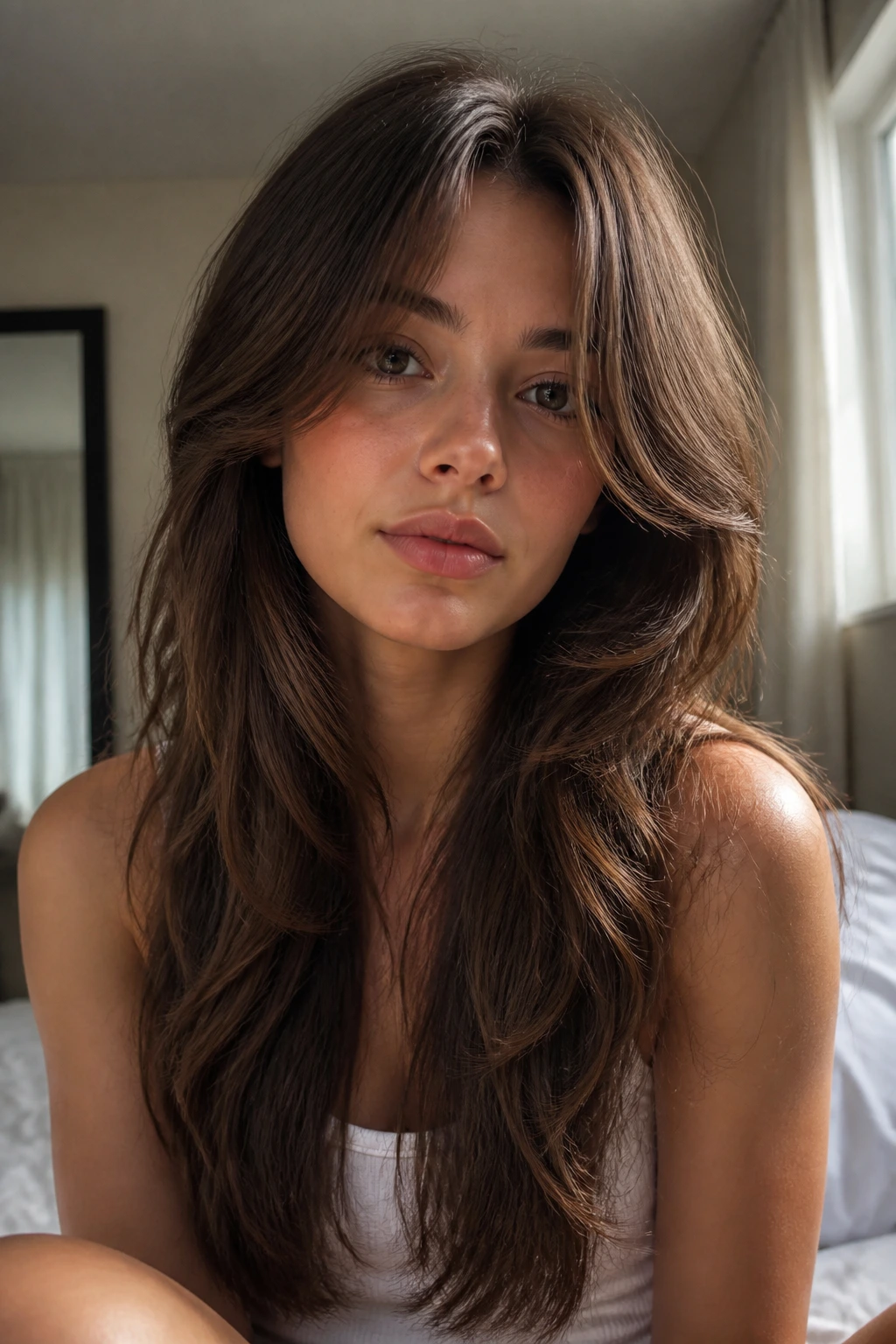
This version takes the softness of curtain bangs and stretches it down into the rest of the haircut.
The fringe opens from the middle, then melts into feathered layers that keep traveling down the sides. On straight hair, that continuity matters because a hard fringe line can dominate the whole look. Here, the bangs feel like the first note of the haircut, not a separate section. That makes the style feel balanced and easy to grow out.
I’d call this a good “if you want change but not too much change” haircut. You get the face-framing lift of fringe, the softness of layers, and the option to pin the pieces back when you need them out of the way. The shape is adaptable, which is more useful than people think.
Best approach: Keep the fringe long enough to part in the middle and sweep to the sides. If it sits too short, the blend into the layers gets clumsy.
24. Sleek Straight Cut With Hidden Internal Layering
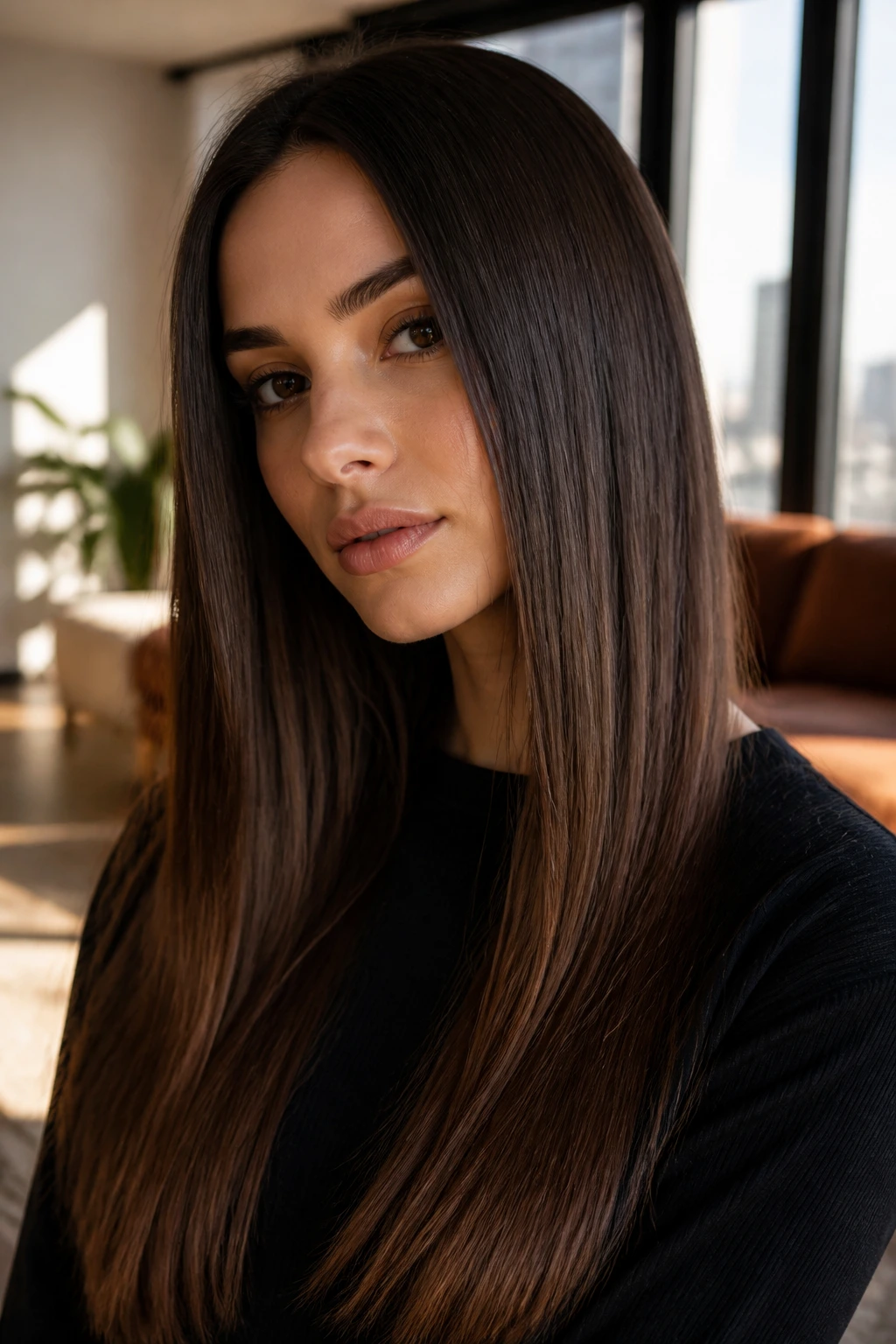
At first glance, this haircut almost looks one-length. That is exactly the point.
The movement is buried inside the shape, so the hair keeps a sleek outline while the interior layers remove the heaviness that makes long straight hair drop flat. It is one of the smartest choices if you like a neat appearance and hate obvious layering. The cut looks expensive because the shape stays controlled.
This is also a good choice for people who wear their hair straight more often than not. It does not depend on waves or texture to make sense. The layers are doing invisible labor. That means less fuss with styling, fewer broken-up ends, and a cleaner silhouette from every angle.
Tell your stylist: Keep the outer edge strong. Ask for internal layering only, with soft graduation through the middle. That preserves the sleek line.
25. Long Feathered Cut for Thick Coarse Straight Hair
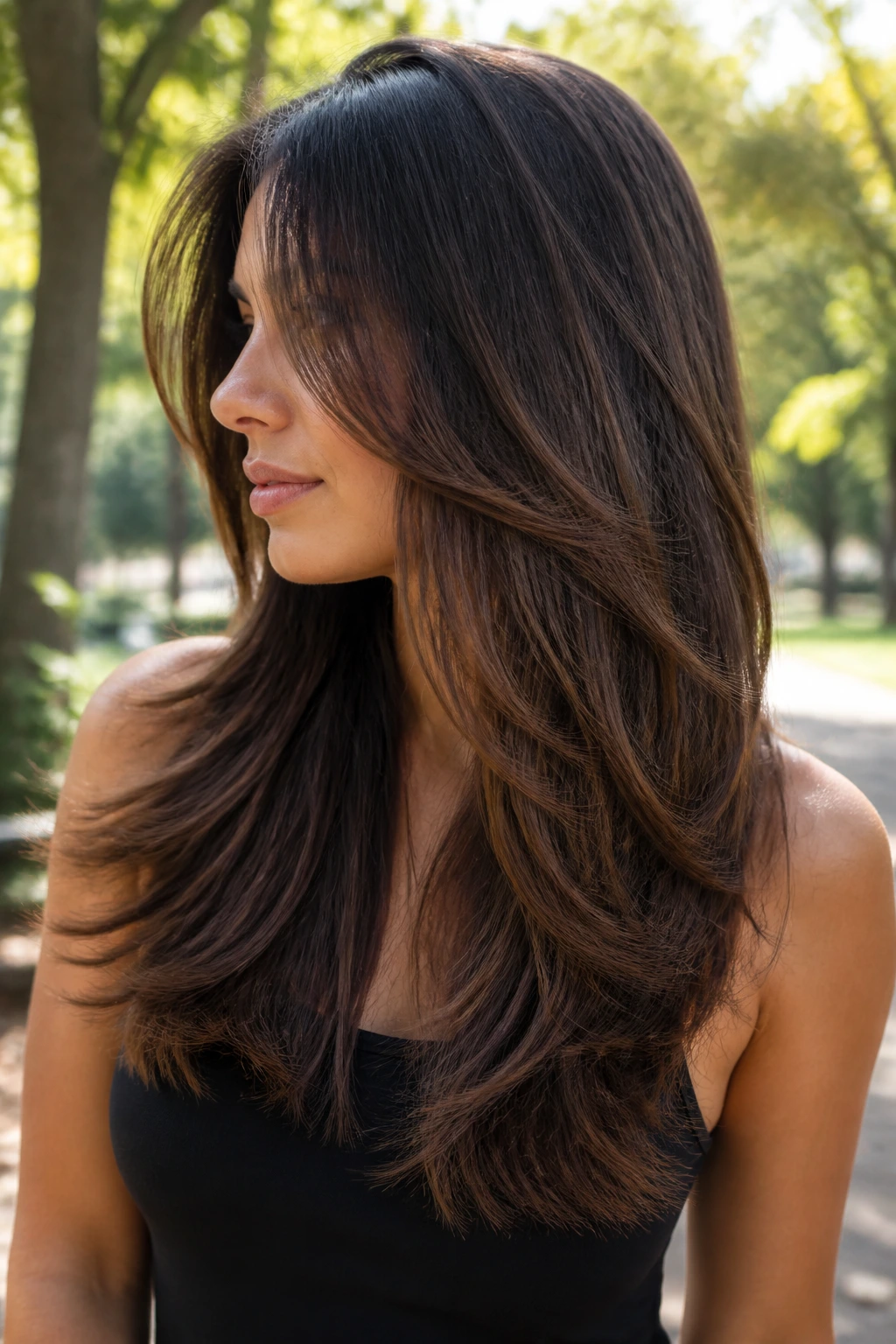
Thick coarse straight hair can feel like a blessing until it’s halfway down your back and acting like a weighted blanket.
This cut addresses that by removing bulk through long, controlled feathering. The layers are spaced so the hair can fall instead of puffing outward at the sides. Because the hair is coarse, the feathering has to be thoughtful. Too much thinning and the ends get dry-looking; too little and the shape stays bulky. The sweet spot is long, soft, and controlled.
I like this version best when the stylist uses sliding and point-cutting rather than aggressive chopping. That keeps the ends from looking frayed. A smoothing cream helps during styling, but the cut itself should do most of the work. If the shape is right, the hair will feel lighter even before you add product.
Good pairing: a large paddle brush for smoothing and a 2-inch round brush for just the front pieces.
26. Minimalist Long Layers for Low-Maintenance Wear
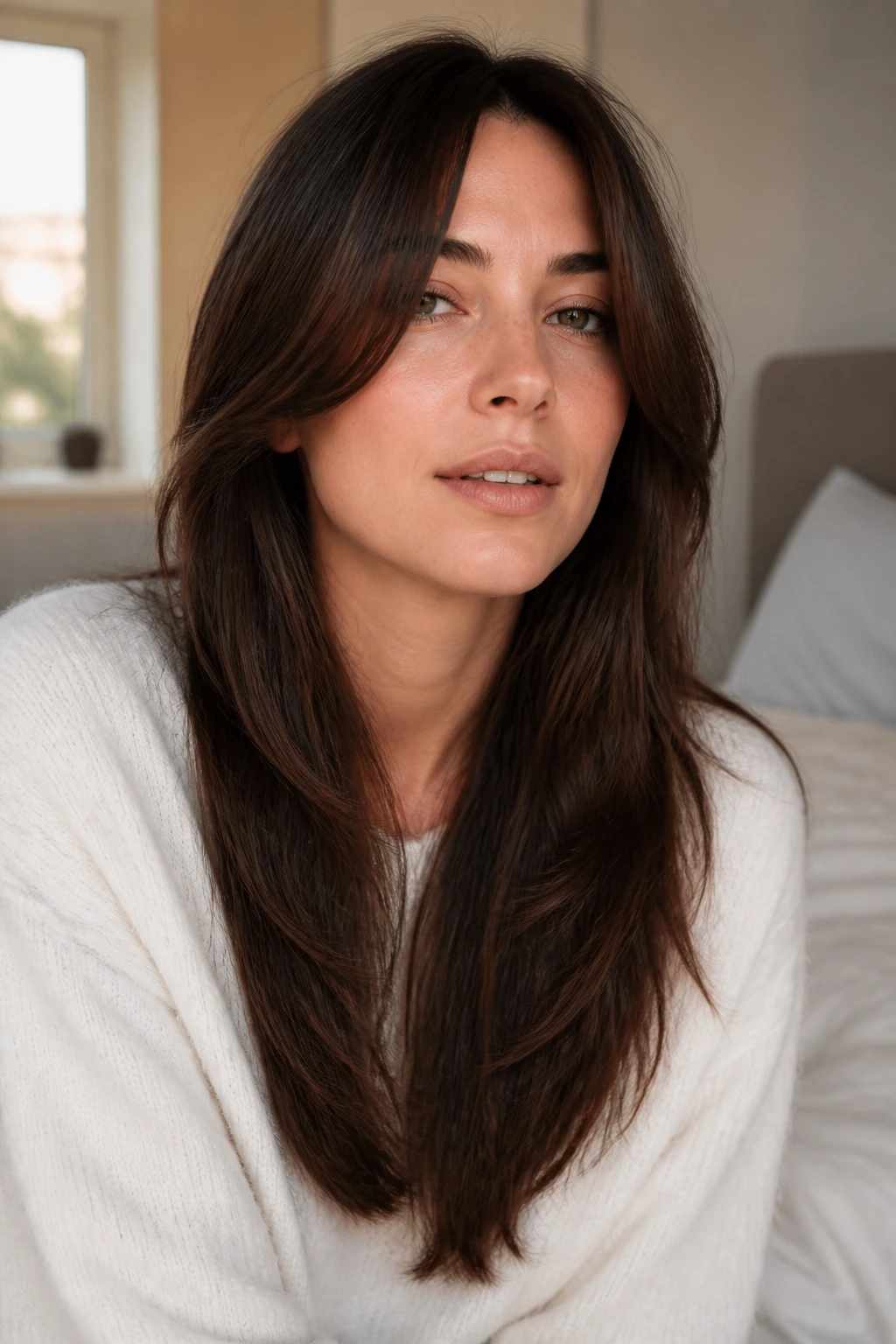
This is the haircut for someone who wants a shape, not a project.
The layers are long, subtle, and placed only where the hair needs a little release. The front gets enough framing to keep the face from disappearing into the length, but the rest stays calm. On straight hair, that restraint looks clean. It also means the haircut grows out politely, which is worth more than people admit.
You do not need a big blowout to make this one work. A quick dry, a little smoothing cream, and a center or soft off-center part usually do the trick. The shape lives in the cut, not in the styling routine. That makes it a good option for busy mornings, lazy mornings, and the many mornings that land somewhere in between.
Best for: people who hate heavy styling, want to keep their length, and still need a little movement around the face.
27. Feathered Length With Soft Micro-Points
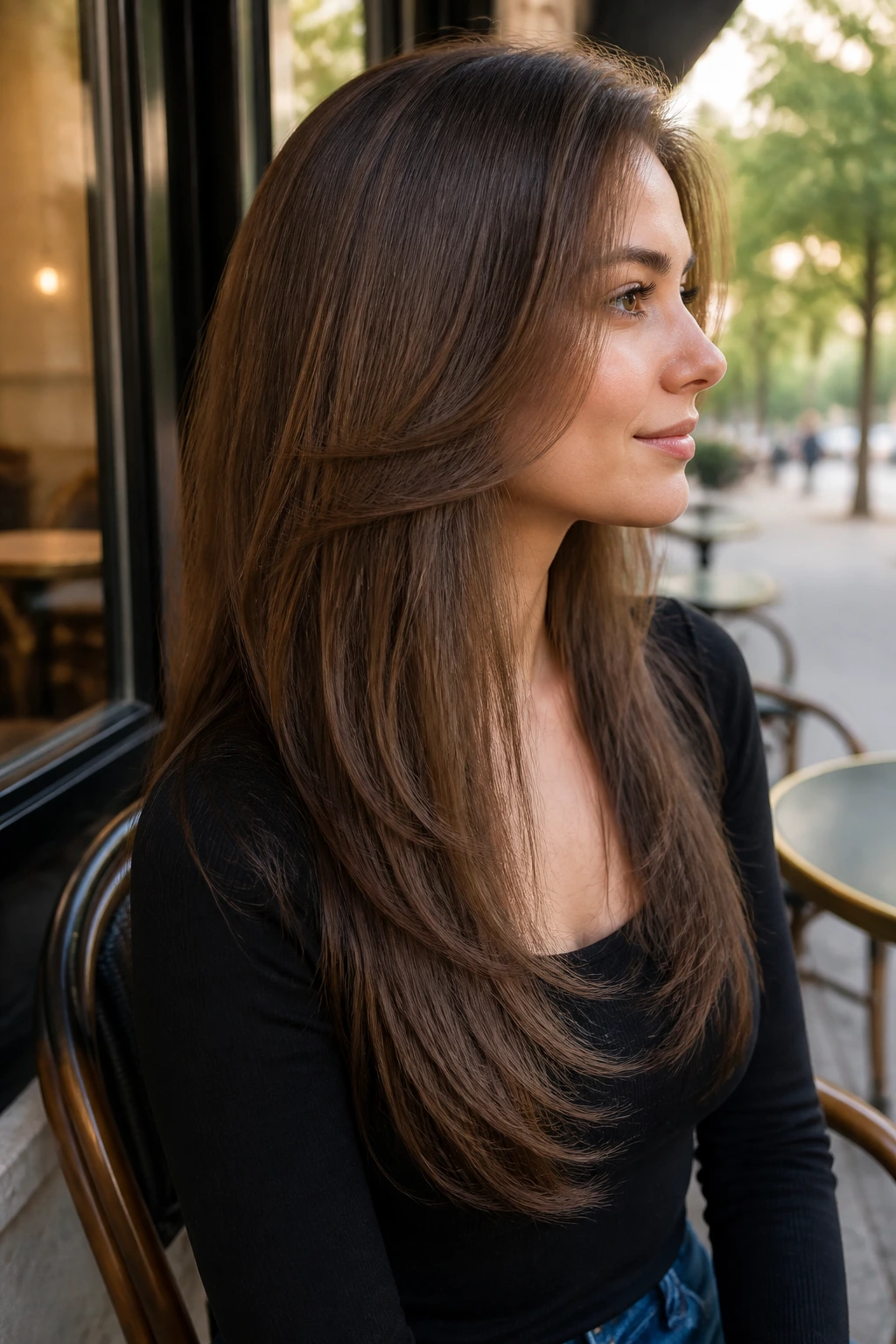
Micro-pointing is a tiny detail that changes the entire feel of the ends. Instead of blunt tips, the hair finishes with a soft taper that moves a little more freely.
On straight hair, that matters because blunt ends can look thick but rigid. Soft micro-points loosen the shape without taking away density. The cut still reads as long hair, but the hem has a gentler edge. It’s one of the better choices when you want feathering but you don’t want the haircut to look obviously layered.
This version works well on medium to fine hair, especially if the ends are healthy and not overprocessed. It also grows out nicely. The little taper just blends into the next trim instead of announcing itself as a hard line that suddenly needs fixing.
Styling note: Finish with a flat iron bend only if needed. The cut should already have softness at the ends. Overstyling can flatten the point of the taper.
28. Waist-Length Feather Cut With Movement at the Hem
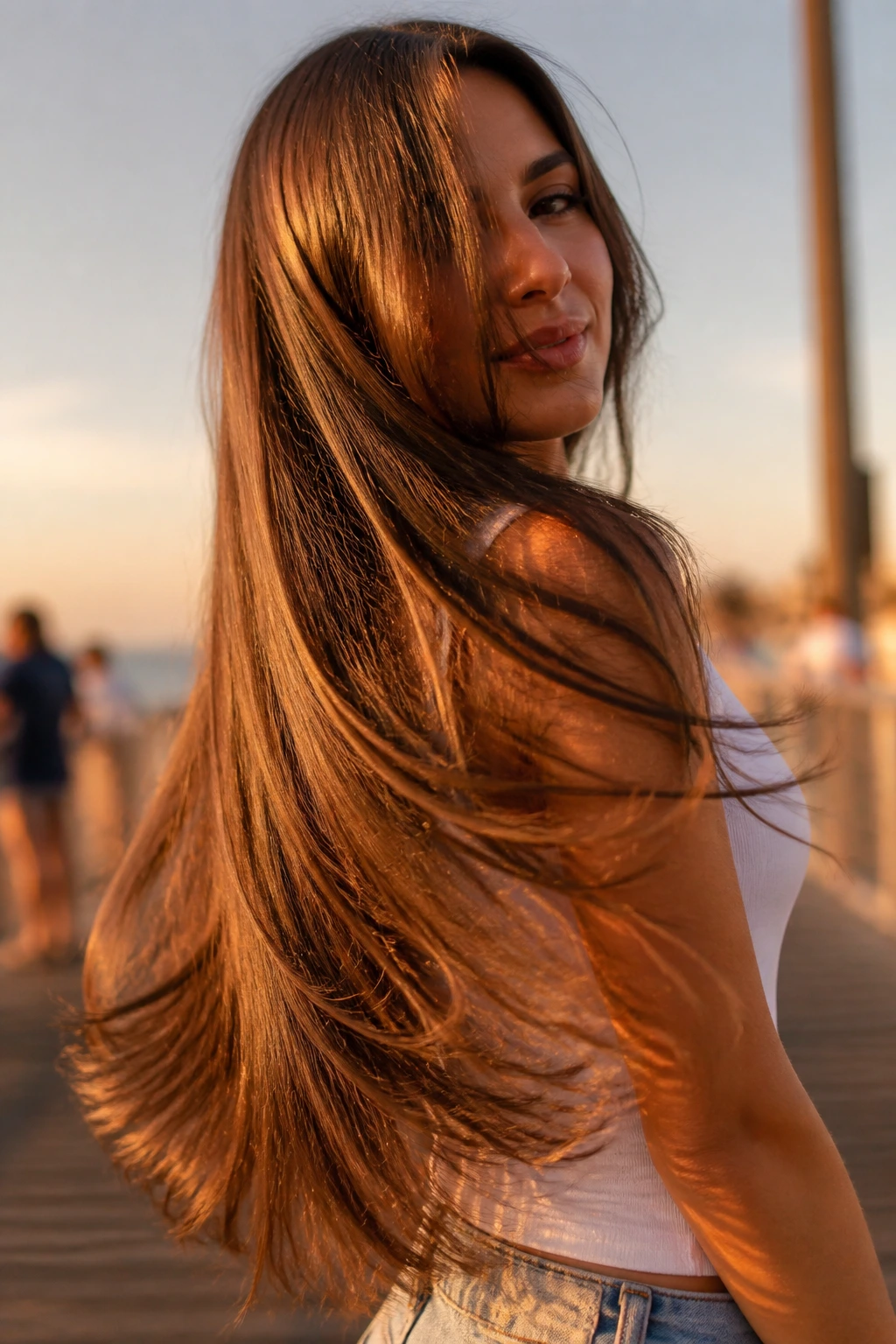
Very long straight hair can start to feel heavy fast. Once it reaches the waist, the ends need a little help.
This cut keeps the overall length but feathers the hem so the bottom line does not hang like one giant sheet. The best version keeps the upper structure restrained and does most of the shaping at the lower third of the hair. That way the length still looks full, but it doesn’t feel immovable. Straight strands benefit from that kind of release because they show the difference instantly.
The catch is maintenance. Waist-length hair does not forgive split ends or dry tips. If you want this shape to stay pretty, the ends need regular trims and a light hand with heat. But when it’s well cared for, this is one of the most striking feathered looks you can wear. It has presence. Real presence.
Best for: people committed to long hair who still want the hem to move when they walk, turn, or toss it over a shoulder.
Why Feathering Works So Well on Straight Hair
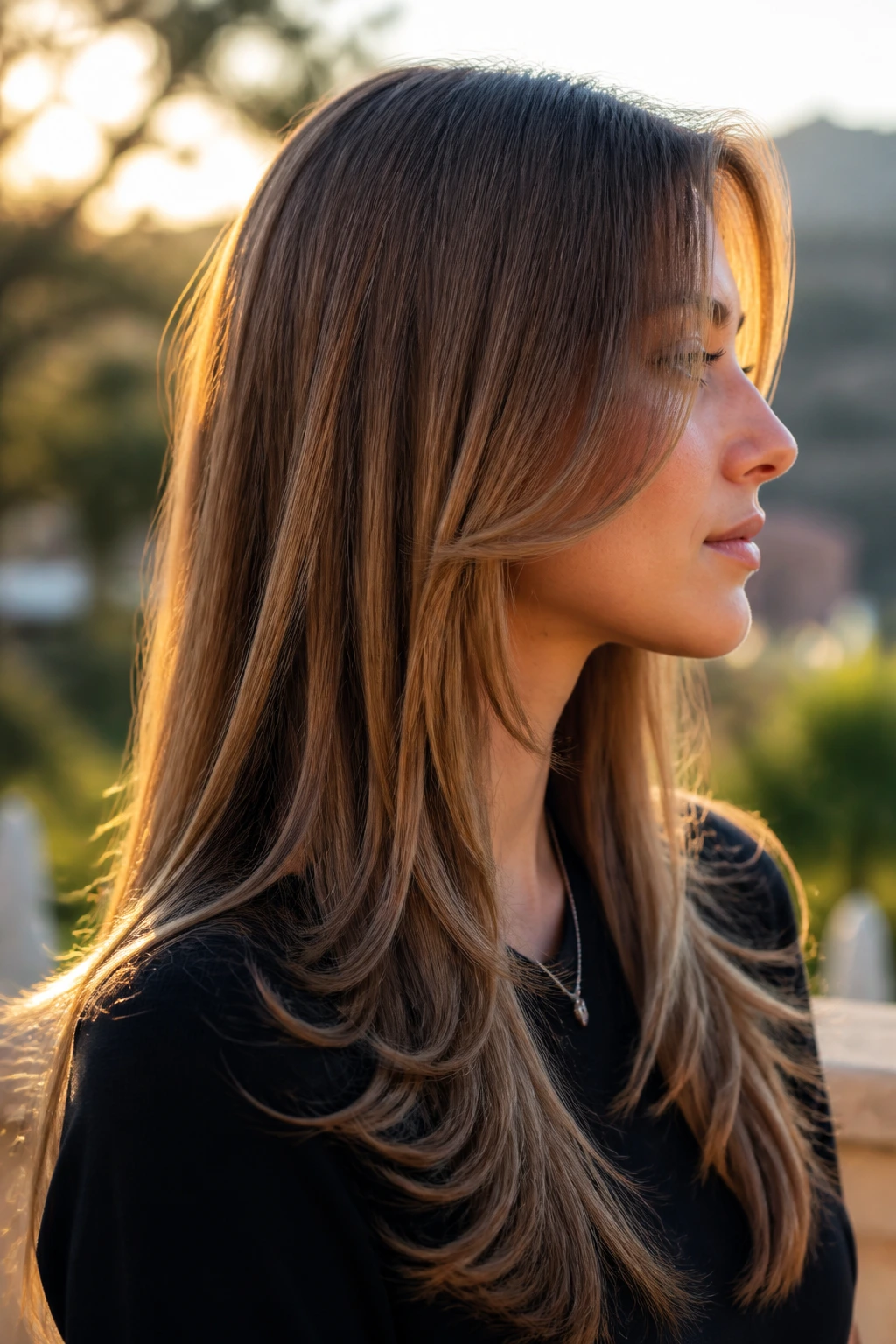
Straight hair gives you almost no cover. Every blunt edge, every bend, every layer line shows up in the mirror and under daylight. That sounds annoying, and sometimes it is. It also means a feathered cut can do more visible work than it would on wavy hair, where the texture hides the shape.
The real trick is weight placement. Feathering removes bulk where the hair would otherwise fall heavy, but it leaves enough structure to keep the ends from looking shredded. When the cut is good, you can see the movement in the side profile, around the jaw, or as the hair swings past the shoulders. The movement is there even before styling. Styling just sharpens it.
Straight hair also benefits from feathering because it tends to sit in one plane. That flatness can make long lengths feel dull, even if the hair is healthy. Long layers, face-framing pieces, and tapered ends break that plane without forcing the haircut into a shag. The result is cleaner than texture for texture’s sake. And honestly, cleaner usually wins on straight hair.
How to Ask Your Stylist for the Right Shape
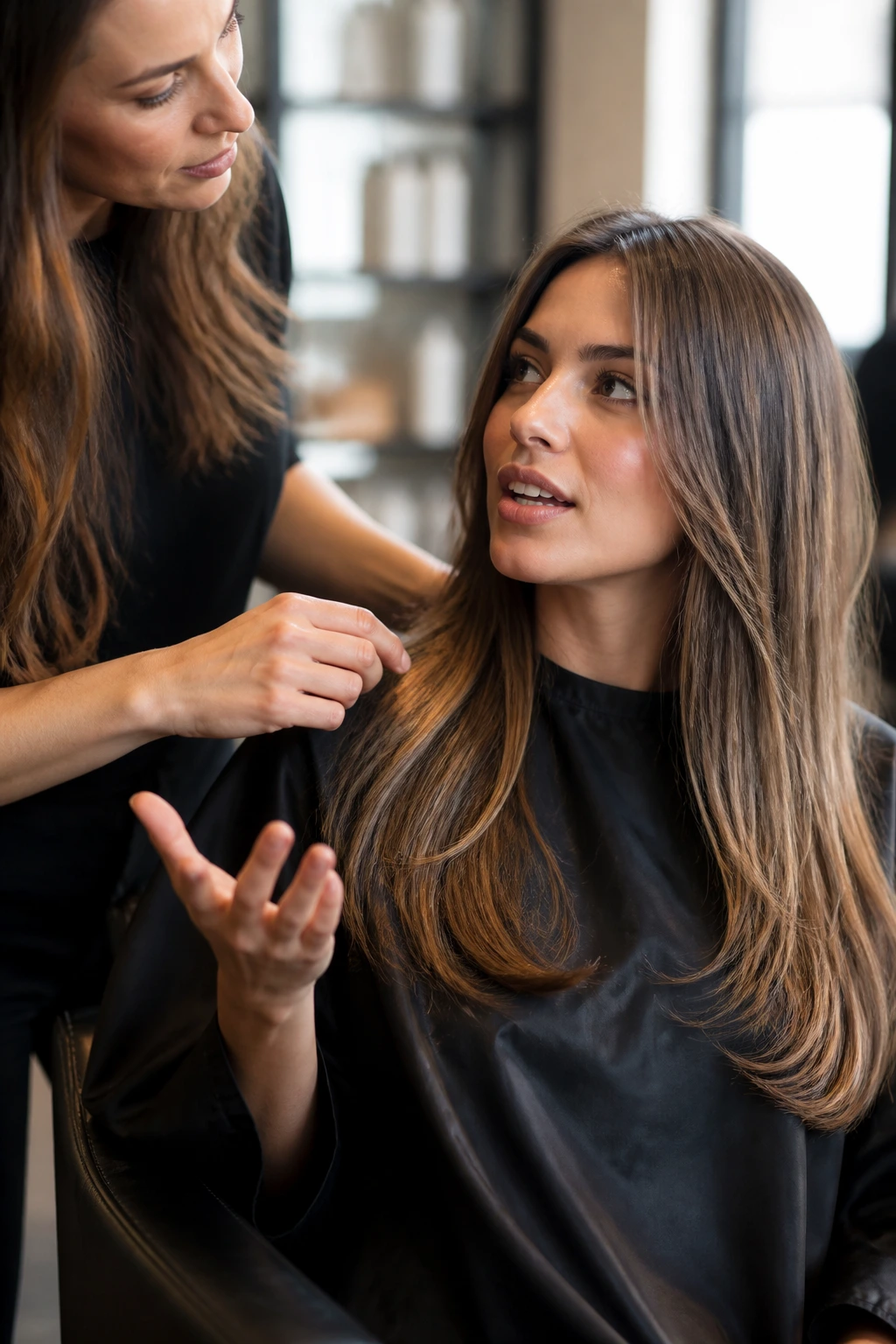
Bring pictures, but bring words too. A photo tells the stylist what you like. Your words tell them what you cannot stand.
Start with the shortest point you’re willing to live with. Chin? Collarbone? Lip level? That one detail matters more than a hundred adjectives. Then say how much weight you want left in the ends. If you like full, heavy hems, say that plainly. If you want airy movement, say that too. Straight hair is precise hair. Vagueness gets you the wrong cut.
Useful things to mention in the chair
-
Your part: middle, off-center, or deep side part.
-
Your texture: fine, medium, thick, coarse, or prone to flatness.
-
Your styling habit: blow-dried smooth, air-dried, or ironed straight with a little bend.
-
Your no-go zone: wispy ends, too much crown layering, or bangs that require daily work.
-
Your trim schedule: every 8 weeks, every 12 weeks, or only when the shape starts to slip.
If you can say those five things clearly, you’ll get a much better haircut. Every time.
Essential Tools for Styling Feathered Length
-
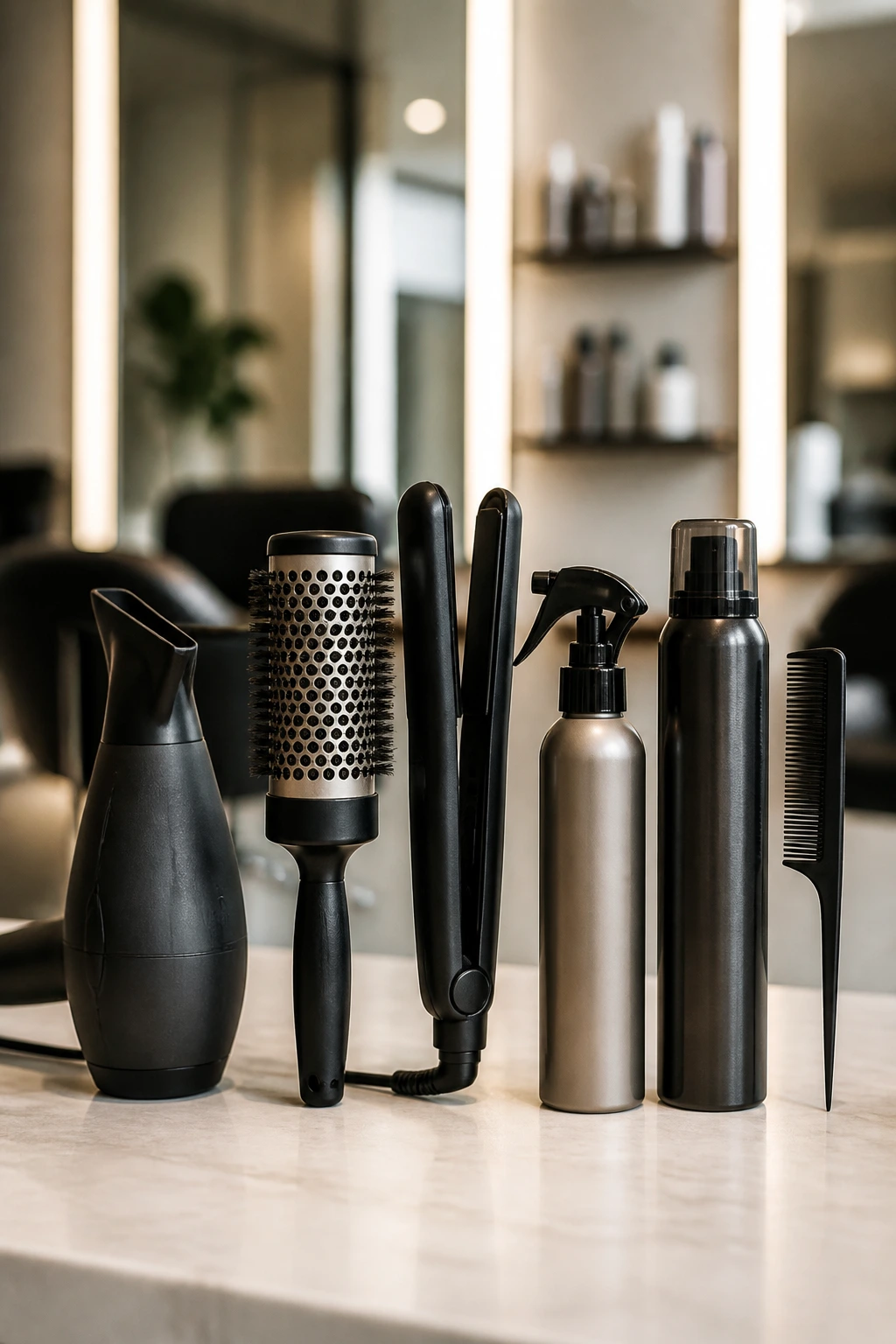
Blow dryer with a nozzle attachment — The nozzle directs airflow so the layers sit where you want them instead of puffing in random directions.
-
1.5-inch to 2.5-inch round brush — Smaller brushes shape the front layers; larger brushes keep long lengths smooth with a softer bend.
-
Heat protectant spray or cream — Straight hair shows heat damage fast, especially on feathered ends that are already lighter.
-
Wide paddle brush — Useful for smoothing the base of the haircut without pulling out the shape.
-
Sectioning clips — They make crown layers and face-framing pieces much easier to dry cleanly.
-
Flat iron with rounded edges — Best for adding a soft bend through the ends or a quick curve through the front pieces.
-
Lightweight mousse or root-lift spray — Handy when the crown needs lift without weighing the cut down.
-
Texturizing spray — Use sparingly, only on the mid-lengths and ends, when you want the feathering to read more clearly.
-
Fine-tooth comb — Good for clean parts and for smoothing the front before it sets.
Smart Styling Moves That Keep the Shape Soft
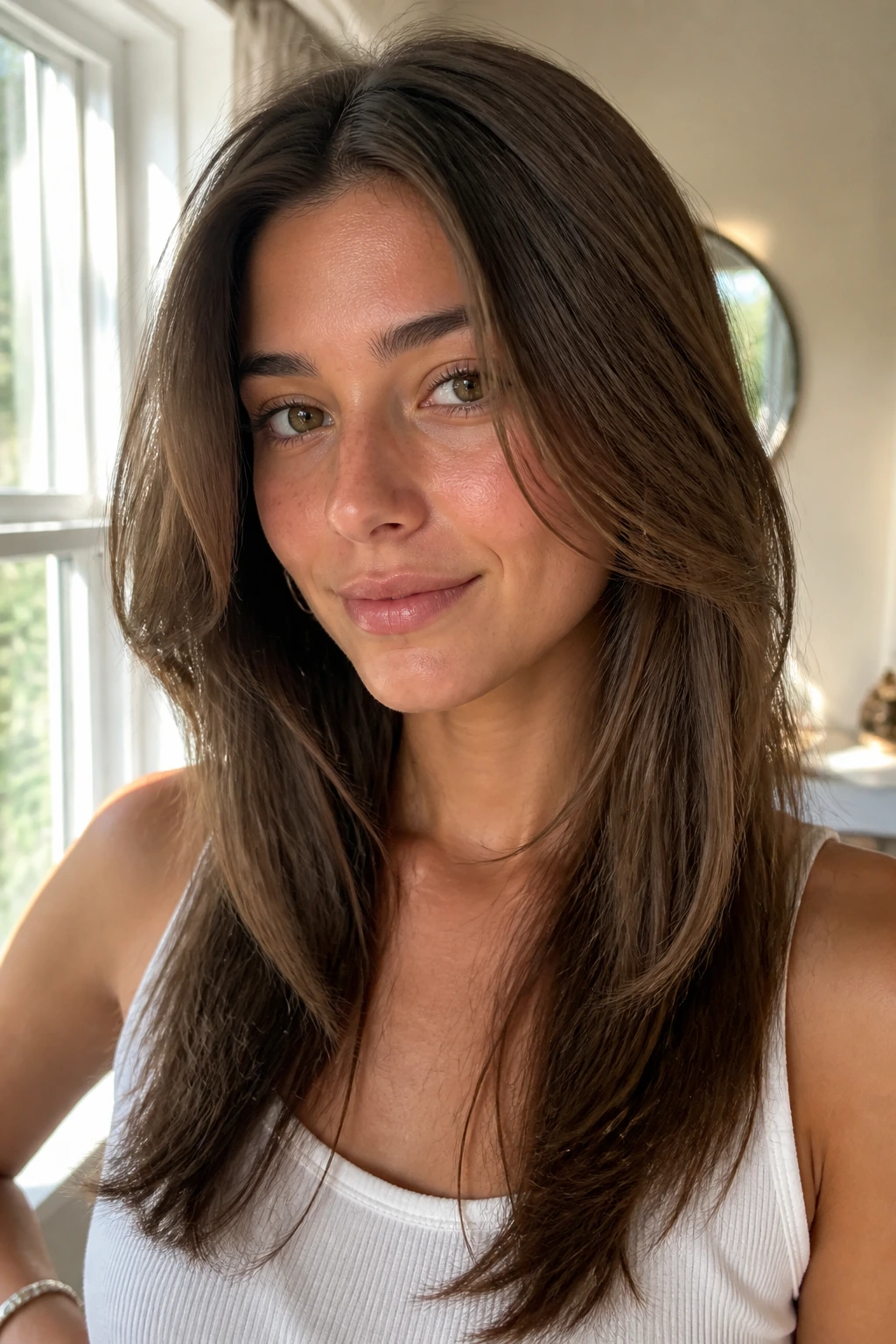
Feathered hair looks best when the styling supports the cut instead of fighting it. Start with the roots. If the crown is flat, the whole shape drops. A little root lift at the part and crown gives the layers somewhere to sit.
Work in sections. Straight hair dries fast, but fast does not mean even. If you just blast the whole head at once, the front pieces often collapse before they set. I like clipping the top half away, drying the lower lengths first, then coming back to the face frame and crown. It takes a few extra minutes. Worth it.
Heat matters, too. High heat can over-soften feathered ends and make them look flimsy. Medium heat with a nozzle often gives a cleaner result. And if you want a smooth bend, let each section cool around the brush or around the iron before you touch it again. That cooling step is boring. It also does most of the holding.
Common Mistakes That Make Feathered Hair Look Off
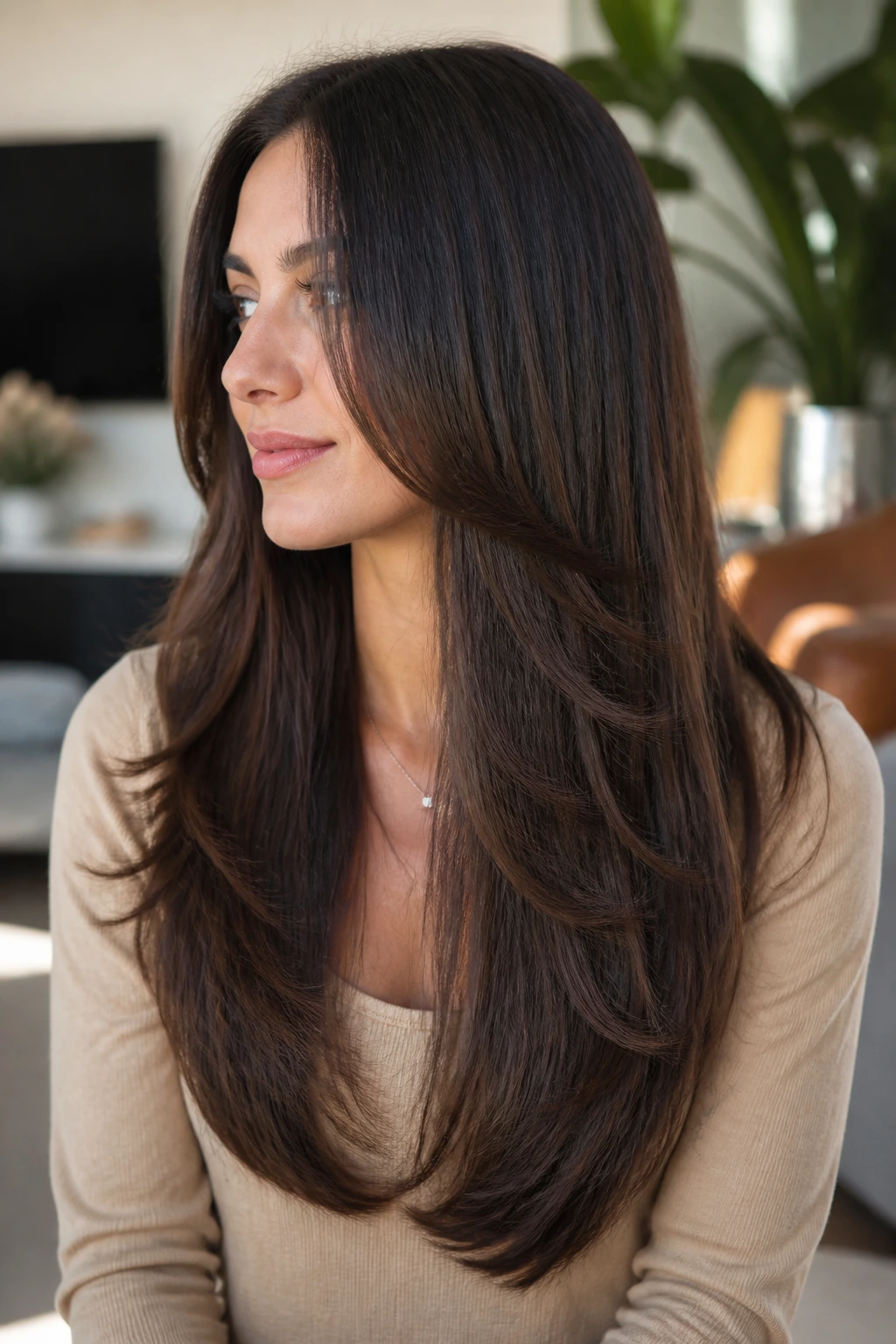
The first mistake is starting the layers too high. On straight hair, high layers can make the top feel light and the bottom feel thin, which is the exact opposite of what most people want. If the goal is softness, keep the shortest pieces lower unless you truly want a shaggy look.
The second mistake is over-thinning the ends. You can see this one right away: the bottom looks stringy, especially when the hair is dry or freshly washed. The fix is simple—keep the feathering controlled and leave enough weight at the perimeter.
Another problem is using the wrong products. Heavy creams, thick oils, and too much leave-in can squash the lift out of a feathered cut. Straight hair does not need much. A pea-sized amount at the ends is usually enough, and sometimes even that is too much.
The last mistake is asking for the haircut without saying how you wear your hair. If you always part it in the middle and the stylist cuts for a side part, the front pieces can fall badly the second you leave the salon. Cut for the part you actually use. That part matters more than people think.
Variations and Adaptations to Try
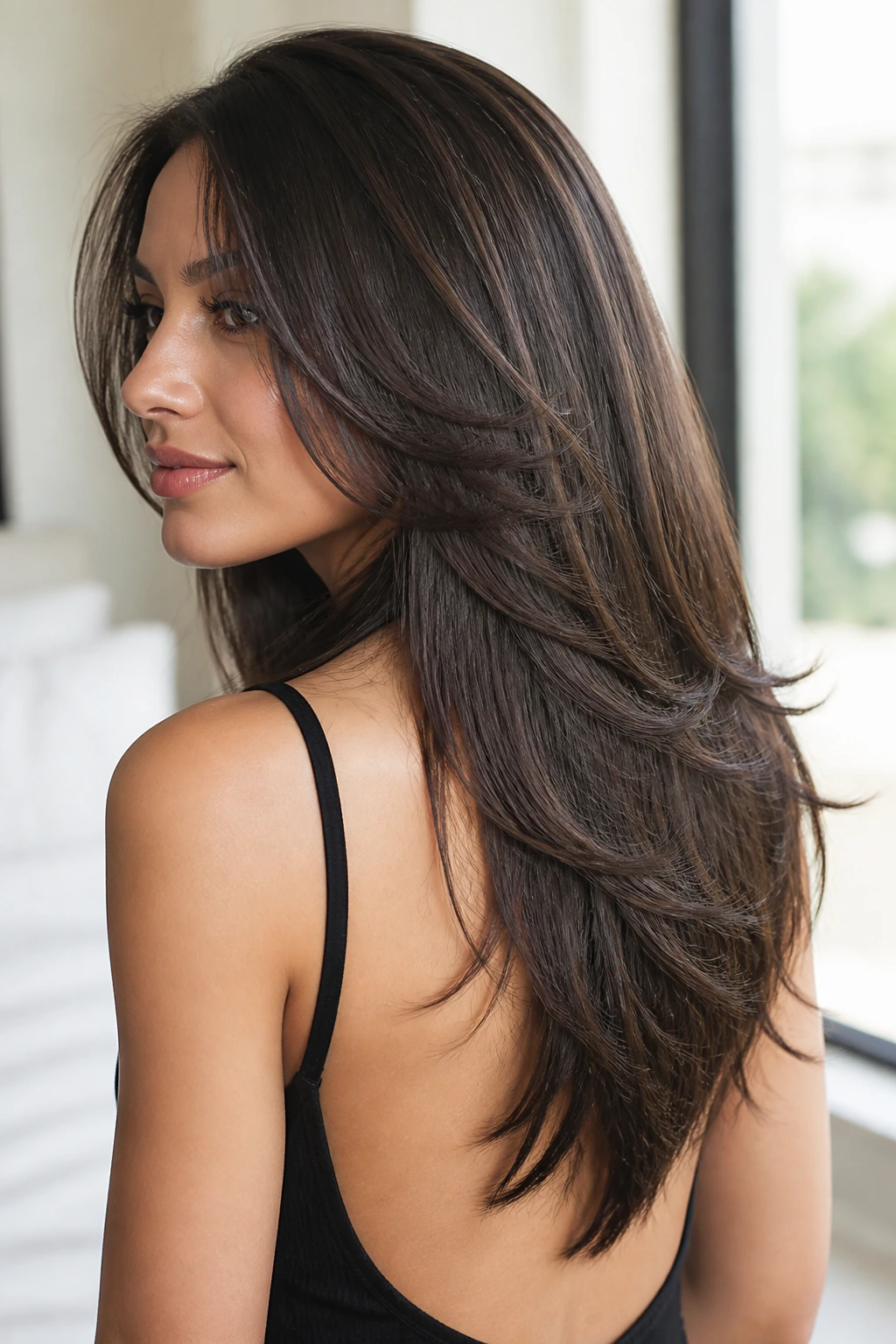
Fine-Hair Float: Keep the perimeter strong and add only a few hidden layers below the surface. This keeps the length looking dense while still giving the hair some lift when it moves.
Thick-Hair Release: Use longer feathering through the mids and a little more internal debulking near the lower half. That helps heavy straight hair fall instead of ballooning outward.
Curtain-Front Softness: Pair long feathered sides with a longer curtain fringe that can part at the center or sweep to the side. This is a good choice if you want face framing without a full bang commitment.
Low-Maintenance Air-Dry Shape: Keep the layers long, avoid too much crown work, and ask for the ends to be softened rather than shattered. This version holds up best when you do not style every day.
Blowout-Ready Finish: Add more structure around the cheekbones and collarbone, then curve the ends in with a round brush. This is the version that gives you the most visible salon finish.
Grow-Out Friendly Trim: Keep the shortest layers below the chin and let the overall line stay heavy. It softens into a new shape instead of becoming awkward in a month.
How to Keep the Shape Between Trims
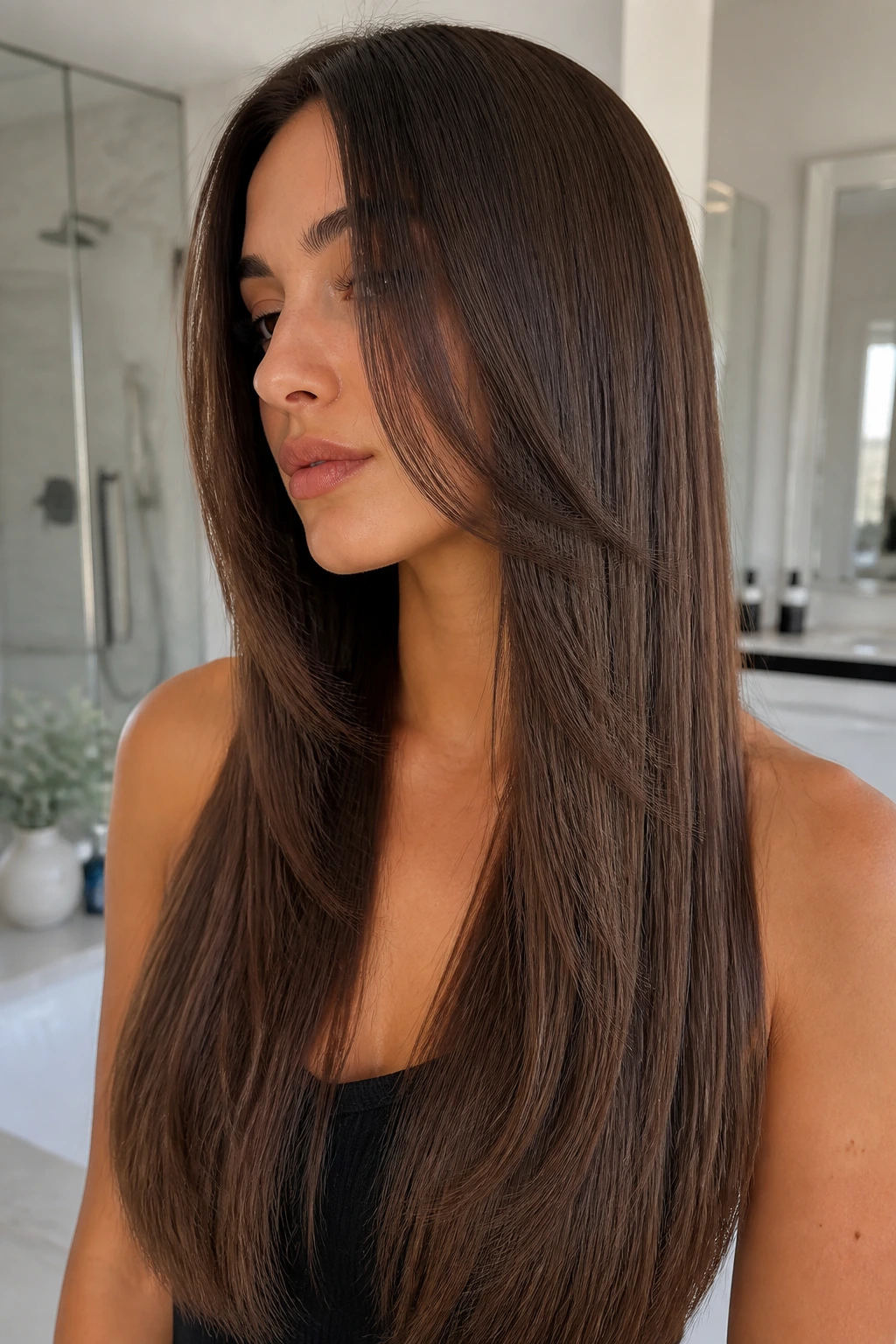
Feathered cuts on straight hair usually stay clean for about 8 to 10 weeks before the layers start to lose their crispness. If you wear curtain fringe or shorter face-framing pieces, you may want a light trim every 4 to 6 weeks just to keep the front from dropping into your eyes.
Night care matters more than people think. A silk or satin pillowcase cuts down on friction, which helps feathered ends stay smooth. If your hair tangles easily, a loose low braid or a soft twist keeps the front pieces from bending into awkward creases while you sleep. No need for a tight tie. That just leaves a line.
Between washes, dry shampoo at the roots can help keep the crown from collapsing. Use it lightly. Too much makes straight hair feel dusty and dull. On the ends, a tiny bit of lightweight serum can smooth the feathering, but avoid coating the lower half. Straight hair tells on product buildup immediately.
If you heat-style often, plan on a tiny trim sooner rather than later. Feathered ends look best when they’re fresh. Once they start splitting, the soft movement turns fuzzy. That change is subtle at first, then suddenly obvious.
Frequently Asked Questions
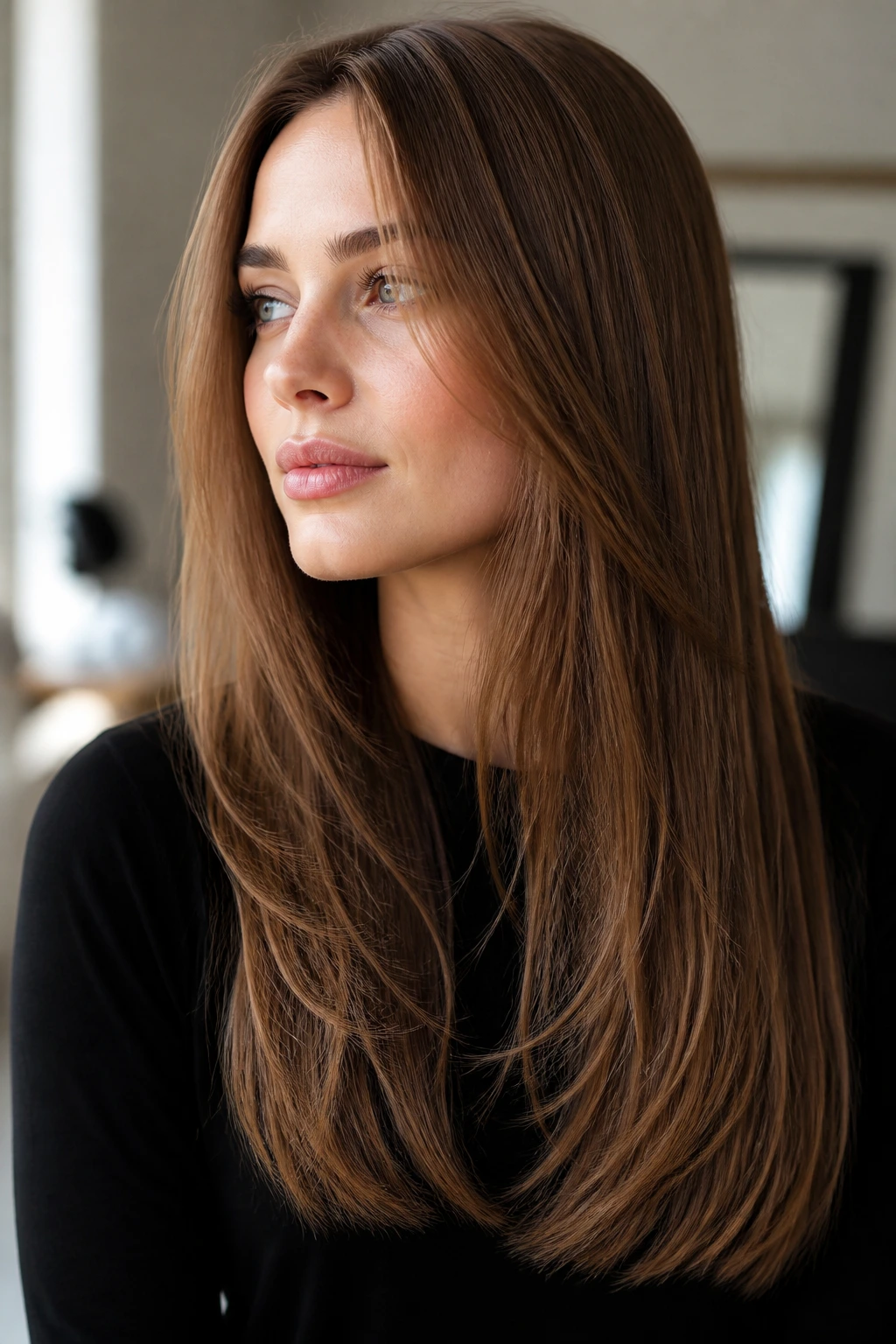
Will feathered layers make straight hair look thinner?
They can, if they’re cut too high or too aggressively. The safer version keeps the outer perimeter full and uses softer internal shaping, which adds movement without stripping away the bulk that straight hair often needs.
What should I ask for if I want movement but not a shag?
Ask for long layers, soft face-framing, and a heavy perimeter. Then say you do not want choppy texture or a lot of crown layering. That language helps your stylist keep the cut clean.
Do feathered cuts work on fine straight hair?
Yes, but the layers need to stay low and subtle. Fine hair does better with invisible layering or a blunt outer edge plus softness inside. If the haircut gets too broken up, the ends can look see-through fast.
Can I air-dry a feathered cut and still have it look good?
Absolutely, if the layers are placed well. Air-dried feathering usually looks best when the front is encouraged away from the face with your fingers and the crown gets a little root lift while it dries.
How often should I trim the layers?
Most long feathered cuts do well with a trim every 8 to 12 weeks. If you have fringe or shorter face-framing pieces, plan on touching those up more often so they don’t collapse into your eyes or jawline.
Is a razor cut a bad idea for straight hair?
Not always. On dense or coarse straight hair, a razor can remove bulk nicely. On fine hair, or if the stylist gets too aggressive, it can leave the ends frayed. The tool matters less than the hand using it.
What if my hair goes flat at the crown?
Ask for subtle crown layering and use a root-lift product during styling. A side part can also help, because it shifts weight and creates lift where straight hair usually lies down the flattest.
Can I keep my length and still get feathering?
Yes, and that’s one of the main reasons people choose this shape. The best feathered cuts keep the bottom length intact while moving the bulk around the face, crown, or interior so the hair still looks long and full.
A Shape That Stays Soft
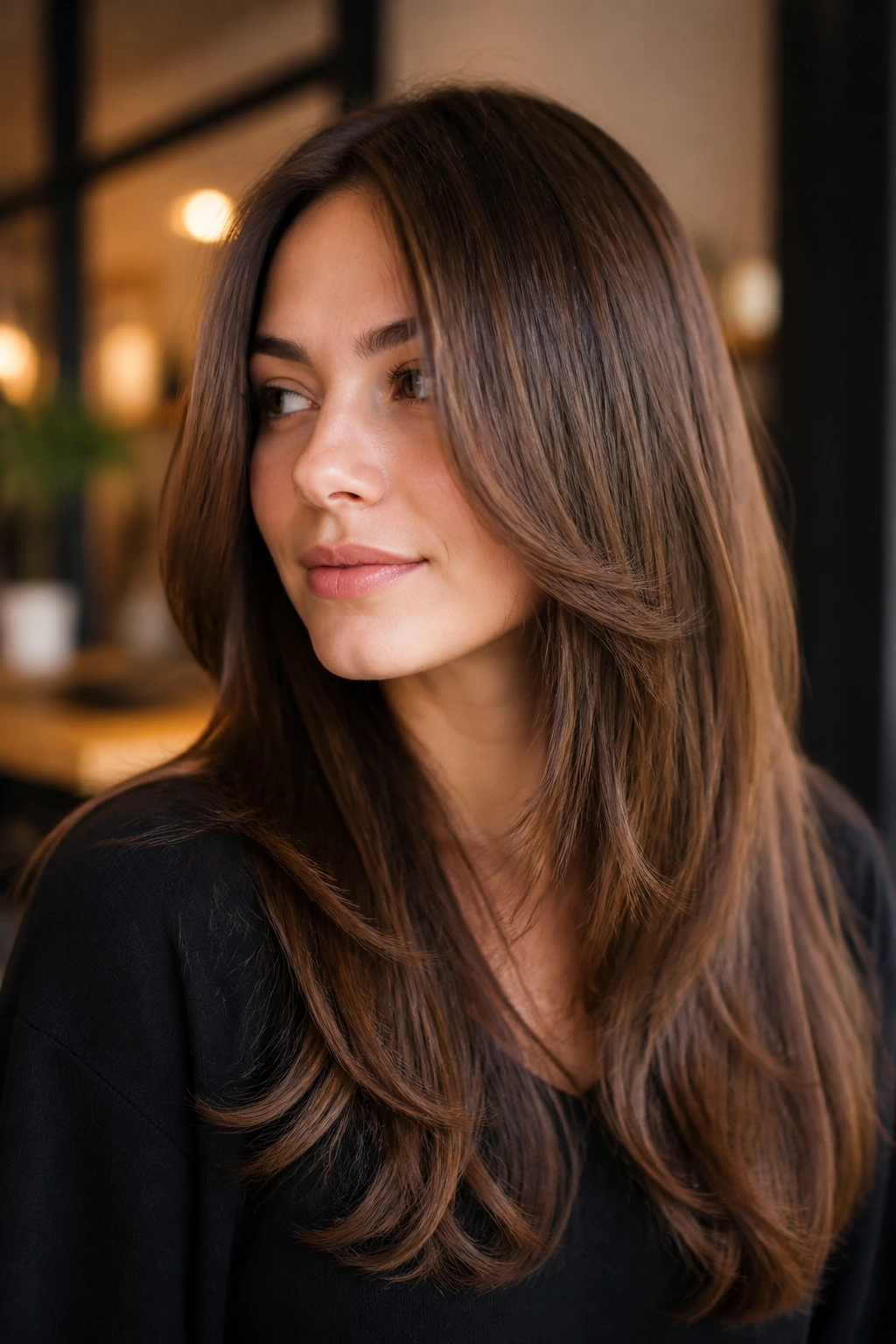
The best thing about a feathered cut on straight hair is that it gives the eye somewhere to go. A plain long cut can be pretty, sure, but it can also turn static in a hurry. Feathering breaks that stasis without making the hair feel chopped to bits.
What matters most is balance. Keep the perimeter honest. Let the face frame do some work. Protect the ends. If those three things stay in place, long feathered haircuts for straight hair can look polished, light, and easy to live with all at once.
And if you’re standing in front of a salon mirror trying to decide how much change feels right, start smaller than you think. Straight hair rewards restraint.