



Square faces are generous with structure. They give you a strong jaw, straight sides, and cheekbones that can look sharp in a way a blunt haircut never quite forgives.
Wavy layers change the conversation fast. They break up the hard perimeter, keep the eye moving, and make the face feel a little longer, a little softer, a little less squared off at the corners. For older women, that matters twice over: hair often loses some density at the temples and through the ends, so a cut that builds movement without relying on bulk can look far fresher than a flat, one-length shape.
I keep coming back to the same idea with this kind of haircut: the goal is not to hide the jaw. It’s to stop the jaw from being the first thing people see. A well-placed wave, a layer that falls just below the cheekbone, a side part that bends the line off-center — those small choices do the heavy lifting. And once you know where the softening needs to happen, the rest gets much easier.
Why These 25 Cuts Earn Their Keep
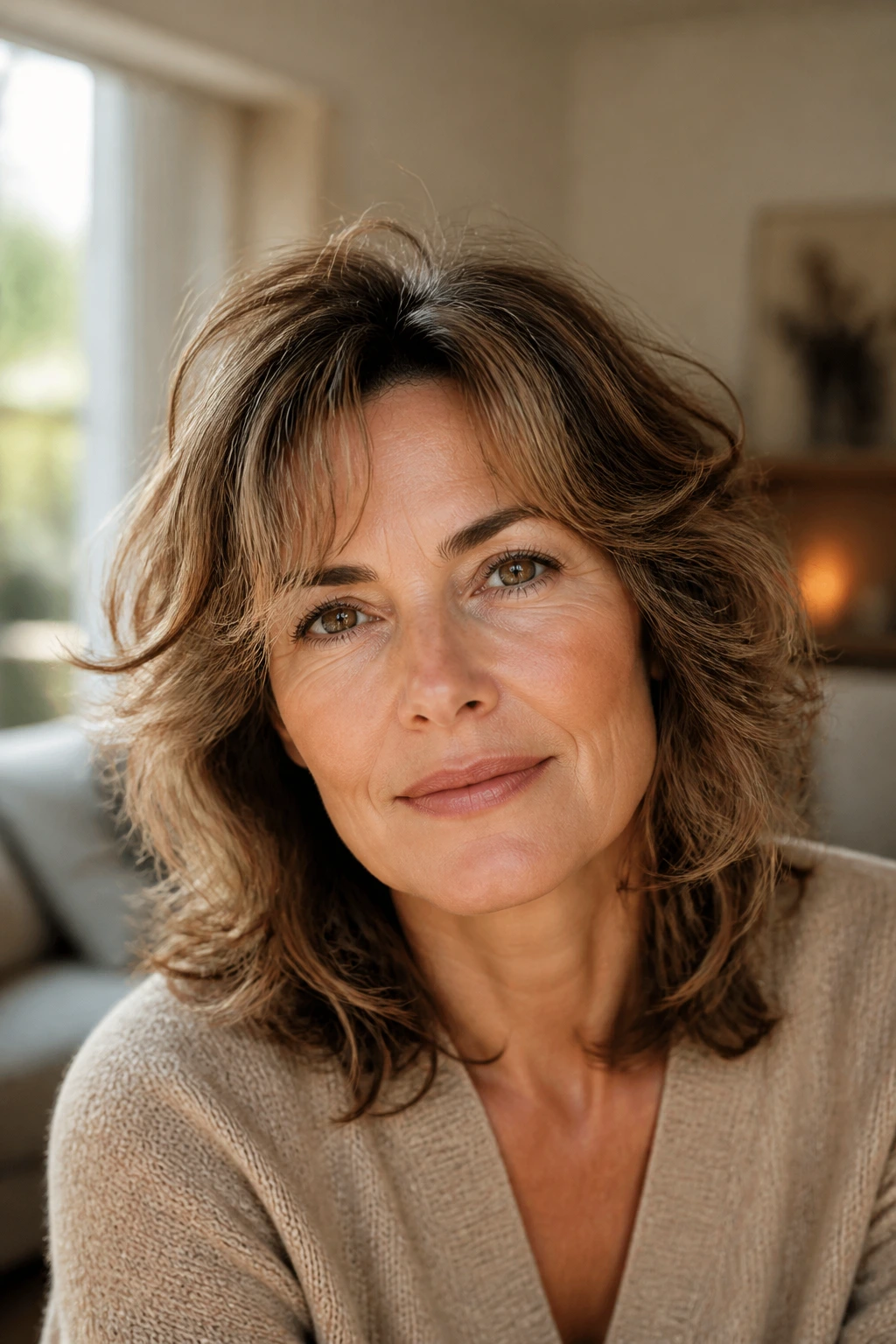
- Face-Softening Geometry: The best versions keep the shortest pieces above or below the widest part of the jaw, which stops the face from reading boxy.
- Age-Friendly Movement: Layers keep mature hair from sitting in one heavy curtain around the chin, a problem that shows up fast when ends thin out.
- Low-Fuss Styling: Most of these shapes work with a bend from a round brush, a diffuser, or a 1-inch wand — not a full salon blowout.
- Better Grow-Out: Soft layers and waves tend to blur their own edges as they grow, so you do not get that harsh shelf line so many blunt cuts develop.
- Texture Support: Wavy hair gets to behave like wavy hair instead of being forced into a stiff helmet.
- Room for Personality: Some of these cuts lean polished, some lean undone, and a few carry a little edge. None of them depend on one “right” finish.
Why Wavy Layers Work So Well on a Square Face
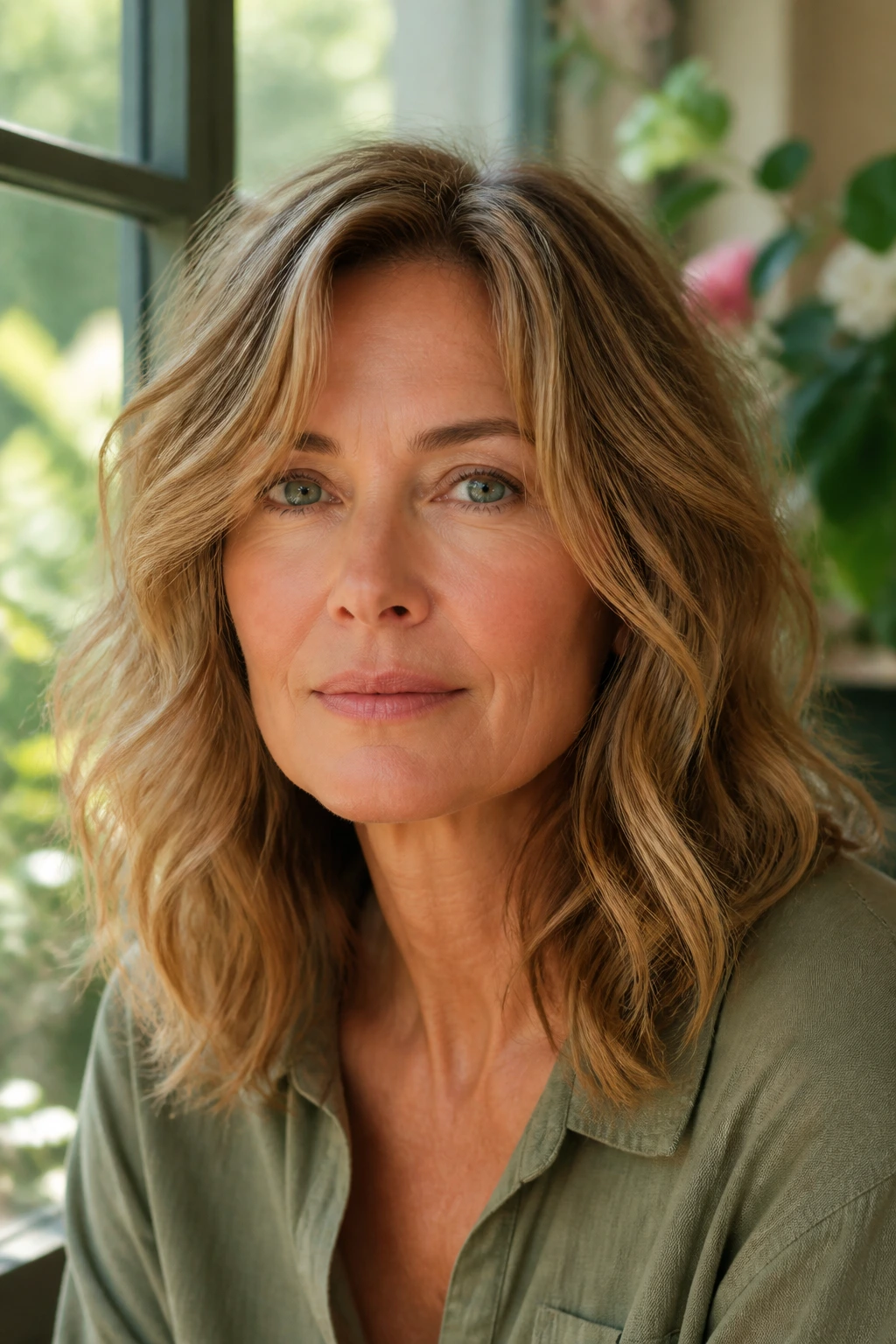
Square faces have strong bones. That’s the whole point, and honestly, it’s a nice thing to work with. The problem starts when the haircut repeats the same shape back at the face — straight side pieces, a blunt end at the jaw, and too much width right where the face already feels broad.
Waves and layers interrupt that pattern. A layer that starts near the cheekbone and drifts down past the chin creates a diagonal line, and diagonals are kinder than squares. They keep the eye moving. They also add a little visual lift, which older women often want because hair at the crown can go flatter while the jawline stays just as defined as ever.
There’s another quiet advantage here. Wavy texture hides a lot of the things that make a haircut feel rigid: tiny gaps at the ends, a slight unevenness from natural density changes, a piece that flicks the wrong way in humid air. A square face does not need a perfect frame. It needs a frame with some bend in it.
Where the softness belongs
The softest cuts usually place motion in three spots: around the eyes, at the cheekbones, and just below the jaw. That leaves the jawline visible, but not boxed in. If the widest part of the wave lands right at the jaw, you get width. If it lands above or below, you get shape.
That little shift matters more than people think.
How to Choose the Right Length Before You Fall in Love with the Cut
A square face can wear short hair, medium hair, and long hair. The real question is how much work you want the haircut to do for you.
If your hair is fine, go for layers that remove weight internally rather than shredding the outline. If your hair is thick, you want the opposite problem solved: bulk taken out below the crown so the wave can move instead of swelling outward. If you hate styling, stick with collarbone to shoulder length. That range gives the hair enough weight to settle, but enough length for the wave pattern to do something useful.
Fine hair: Ask for soft, blended layers and face-framing pieces that start around the cheekbone, not the jaw.
Thick hair: Ask for debulking underneath and longer top layers that keep the shape from puffing out.
Low-maintenance mornings: Choose a lob or shoulder cut that still looks decent after an air-dry.
More drama: Go for side parts, curtain bangs, or a shag with controlled texture.
1. Collarbone Waves with Long Face-Framing Layers
This is the cut I’d hand to someone who wants the safest kind of flattering. The length sits at the collarbone, which is far enough past the jaw to keep the face from feeling boxy, and the face-framing pieces sweep down with a soft bend instead of stopping abruptly. On a square face, that longer line matters. It stretches the silhouette without making the hair look dragged down.
For older women, this one has a nice side effect: it keeps the ends looking fuller than a longer cut, but it still has enough length to move. Ask for the shortest front pieces to land around the cheekbone or just below it. That keeps the softening right where the face needs it most.
A 1-inch iron or a large round brush gives this shape a clean wave. Do not curl the hair into tight ringlets. A loose bend looks modern; a tight curl can make the jaw feel even harder.
2. Deep Side Part with Cheekbone Swoops
A deep side part changes the geometry before the scissors even finish. It breaks the symmetry that often makes square faces read wider, then the swooping front pieces fall diagonally across the cheekbones and turn the eye away from the jaw. Simple. Effective. Better than people expect.
I like this version on women whose hair has a little natural lift already, because the part creates instant height at the front. If your hair is thinning at the temples, the side sweep also disguises that area without heavy bangs. Ask for the front to stay long enough to tuck behind the ear on one side. That little detail keeps the style from feeling fussy.
This cut looks best when the waves are brushed into soft ribbons, not separated into crunchy pieces. A dab of light cream on the ends is enough.
3. Curtain Bangs That Melt Into Mid-Length Waves
Curtain bangs can be a gift on a square face when they’re cut long enough to graze the cheekbones and blend into the rest of the layers. Short, heavy bangs can slam the face shut. These do the opposite. They open the center, soften the corners, and give the haircut a bit of movement right where the face needs it.
The trick is length. Ask for curtain bangs that start around the bridge of the nose and taper out at the cheekbone, not blunt fringe that sits high on the forehead. On older women, this shape is especially nice if the forehead has a little more room than it used to — and that happens more than people admit. It also works well with silver or highlighted hair because the bang shape shows off the color shift.
Air-dry the bangs with a small round brush or a Velcro roller. They should curve away from the face, not hang straight down like a curtain rod.
4. Feathered Lob with Bent Ends
Feathering is one of those old salon words that still earns its keep. On a lob, it gives the cut air. The ends don’t sit in one blunt line, and that matters on a square face because a straight line at the chin can look like a ruler laid across the jaw. Bent ends, though? Much better.
This cut works especially well if your hair is medium density and tends to puff outward in humid weather. The feathered layers keep the outline light, while the bend at the ends gives the style a finished look. Ask your stylist to keep the weight around the perimeter but soften the interior. Too much thinning, and the lob starts to fray.
A quick round-brush pass under the ends is enough. No need to force the whole head into a perfect blowout.
5. Soft Shag at the Jawline
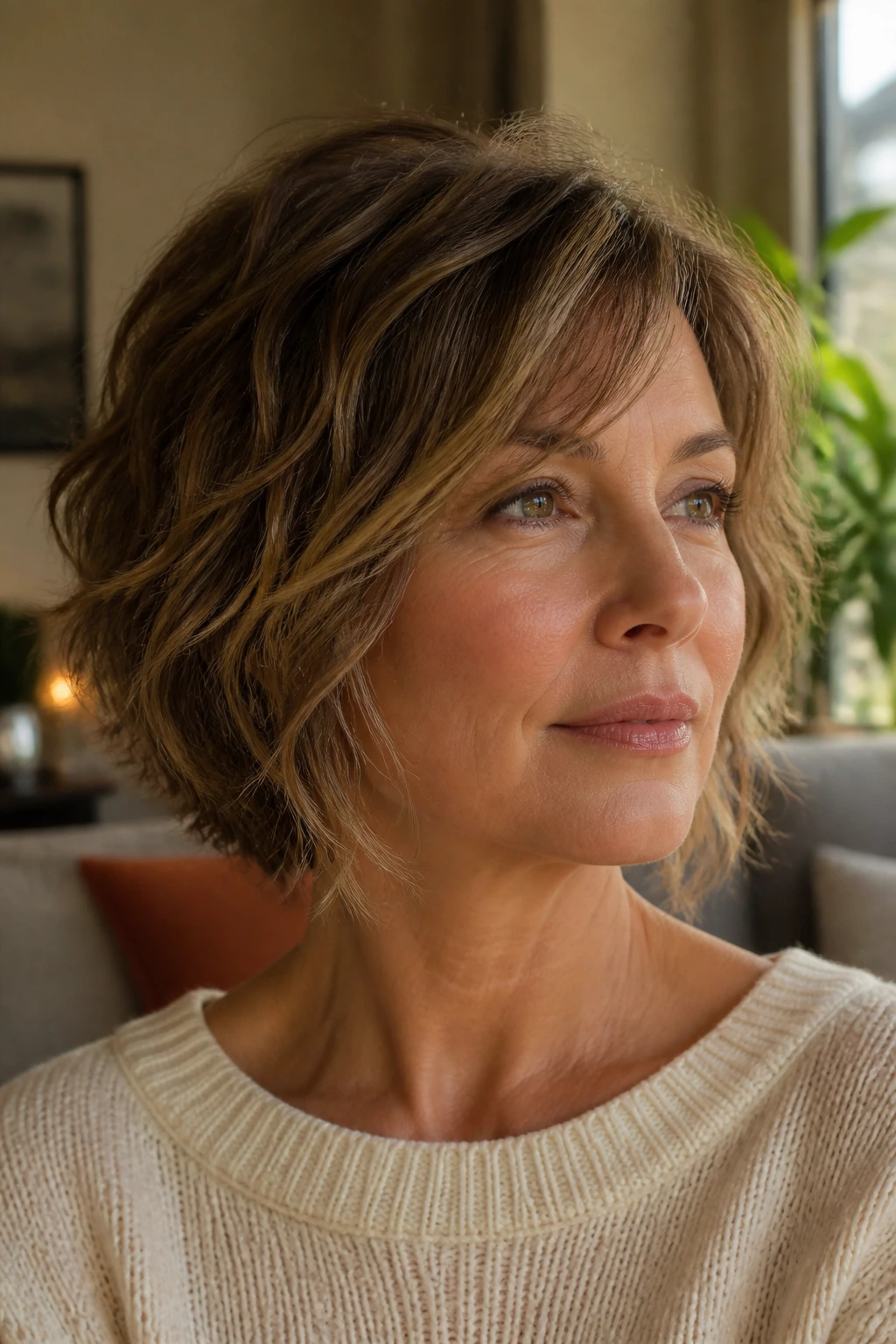
A shag can be too much if it’s chopped hard. On a square face, that roughness can echo the jaw instead of softening it. The version that works has blurred edges, airy layers, and a jawline that stays visible but not boxed in by hair. Think texture, not disarray.
I like this on women who want a little attitude without looking like they borrowed a style from someone half their age. The layer length should be controlled — around the cheekbones and below, not sliced to pieces. If the hair is curly-wavy, even better. The natural bend makes the shape look intentional.
Ask for piecey ends around the face and a little more length through the bottom. That keeps the shag from turning puffy at the sides. It should look light, not exploded.
6. Rounded Shoulder-Length Layers

A rounded shoulder-length cut behaves differently from a straight shoulder cut. The perimeter curves inward a little, which softens the squared jaw without dragging the face down. It’s one of the most wearable shapes on mature hair because it keeps enough length to feel feminine and enough structure to stay neat.
This cut is a solid choice if you want movement but not too much edge. The layers are there to break up the density, not to announce themselves. Ask for the longest pieces to brush the shoulders and the shortest to sit near the cheekbones. That keeps the shape in balance.
On days when you do little more than air-dry and scrunch, this one still holds together. That’s the appeal. It doesn’t need a perfect finish to make sense.
7. Long U-Shaped Waves with Hidden Internal Layers
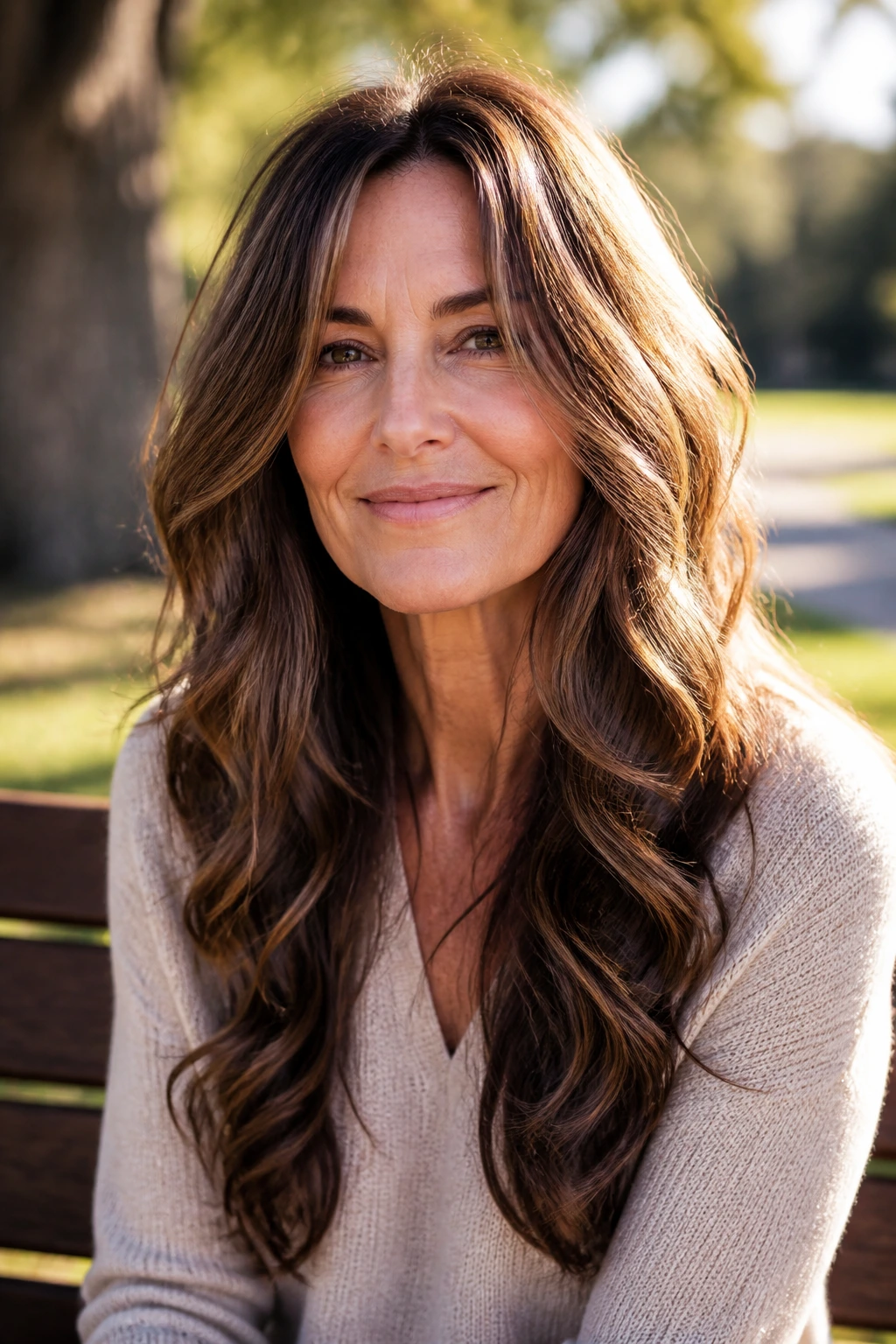
A U-shape keeps the ends from hanging in a flat, hard line. The center stays slightly longer, the sides taper up just enough, and the whole cut moves like a curtain with some weight to it. On a square face, that shape helps because it avoids a blunt edge right at the jaw or shoulder.
The hidden internal layers are the smart part. They remove bulk from inside the haircut, so the outside still looks full. That’s especially useful for thick hair or hair that grows out like a triangle unless it’s managed carefully. If you’ve ever had a long cut that suddenly felt heavy by week six, this is the fix.
Keep the wave loose and low. The shape should feel cascading, not theatrical.
8. Textured Bob with Loose Movement
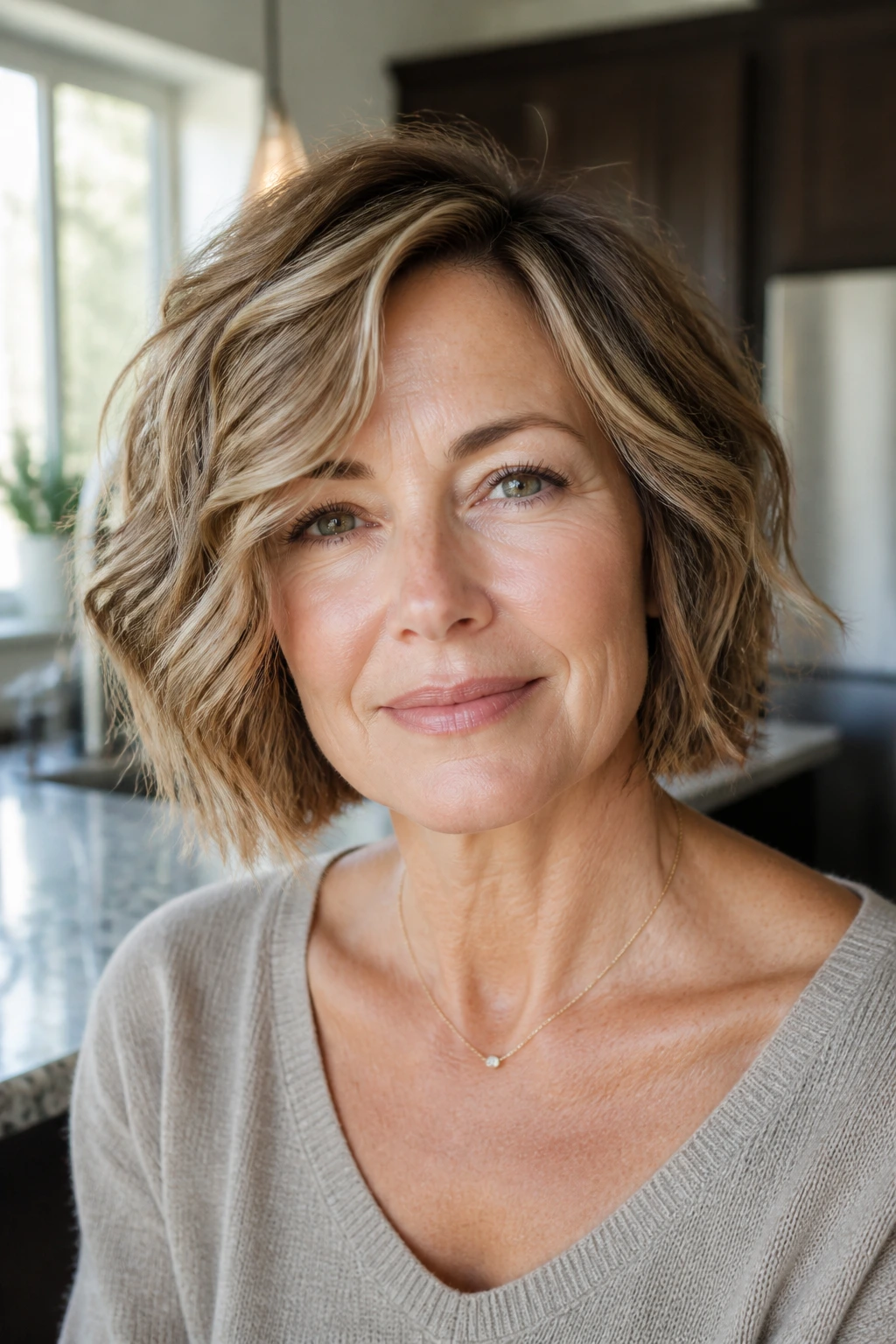
A bob can work on a square face, but the wrong bob can be brutal. The one you want has texture, space between the pieces, and enough wave to keep the outline from sitting like a box. The length should either land just above the jaw or below the chin — right at the jaw is the dangerous zone.
Older women often like this cut because it keeps the neck visible and makes styling faster. I agree with that instinct, but only if the texture is soft. The top should not be over-chopped. A little bend through the mids is plenty. Ask for point-cut ends or a gentle razor finish if your hair is straight and stubborn.
This is a good cut for earrings, too. It clears the face in a way that lets the rest of the look breathe.
9. Side-Swept Fringe and Ribbon Waves
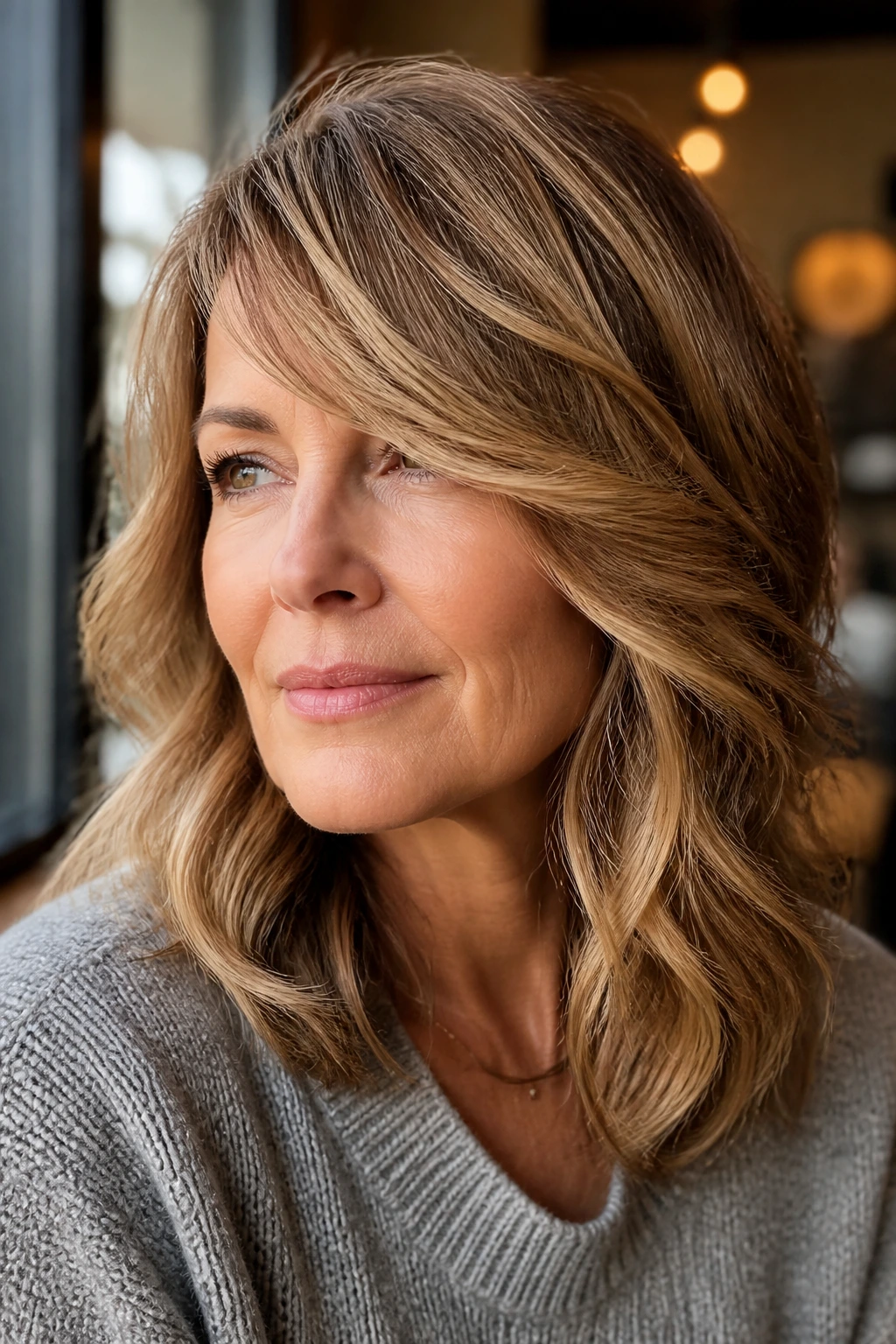
Side-swept fringe changes the line of the face in a useful way. It pulls the eye across the forehead instead of straight down the center, which gives square features a softer read. When the rest of the hair falls in ribbon-like waves, the shape feels graceful rather than stiff.
This one works best when the fringe is long enough to blend into the side layers. Short side bangs can look choppy on a square face; longer ones bend better and stay useful longer between trims. Ask for the fringe to graze the outer corner of the eye and graduate into the cheekbone pieces.
Ribbon waves sound fancy, but they’re just loose bends with a bit of separation. The key is not to overbrush them. Let a few pieces keep their own shape.
10. Butterfly Layers with Crown Lift
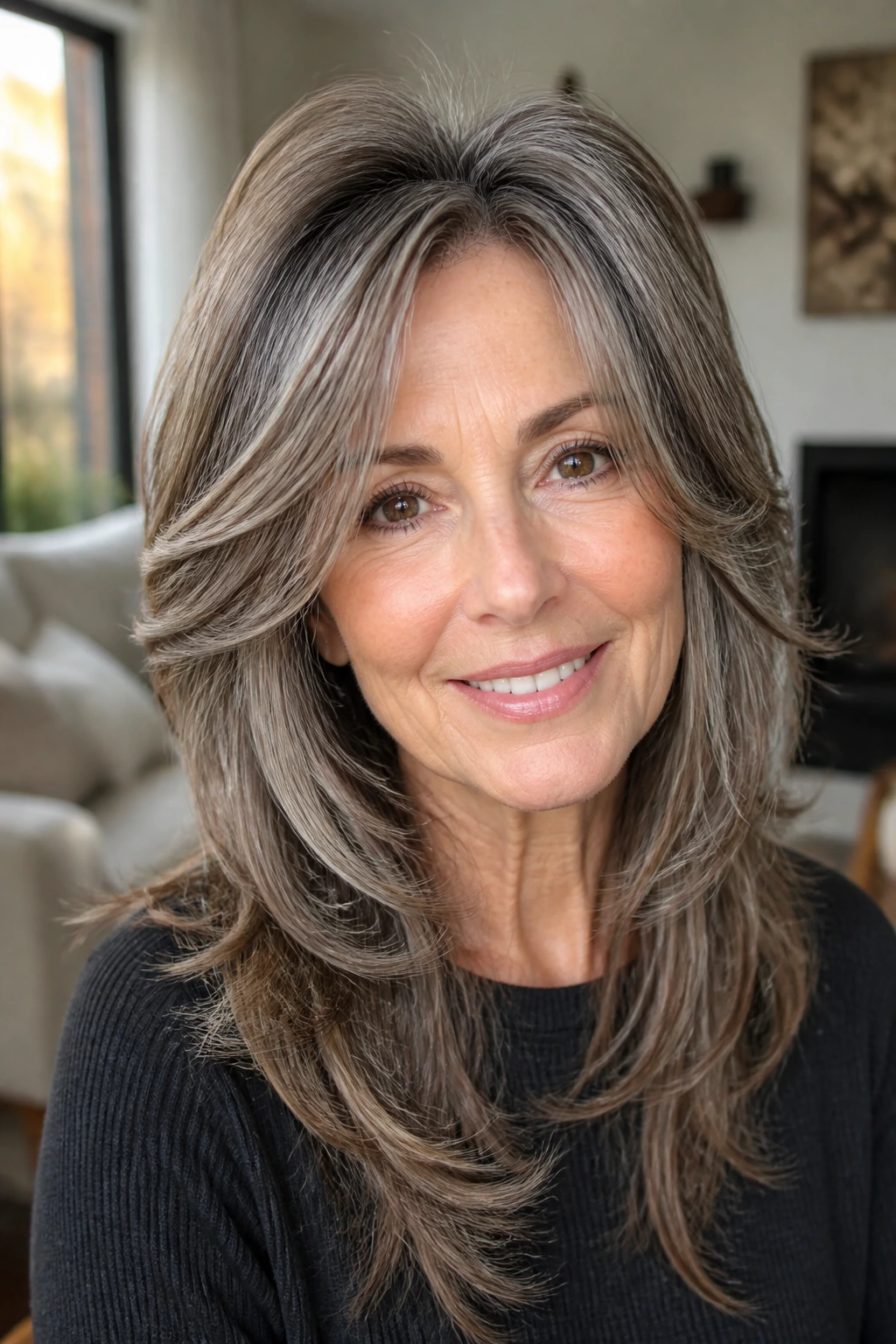
Butterfly layers are built for movement, and movement is what a square face needs when the jaw is strong. The shorter top layers sit around the face and crown, while the longer lengths stay below, creating a light, floating effect. On mature hair, the crown lift can be a lifesaver because it stops the top from collapsing flat.
I like this cut on women who want their hair to look full without feeling heavy at the sides. The face-framing pieces should start near the cheekbone and curve down, not flare out at the jaw. If the stylist cuts them too short, the whole thing can turn choppy. Keep the longest pieces long enough to anchor the style.
A large round brush and a little root spray do most of the work. The layers should feel airy, not overdone.
11. Angled Lob That Skims the Jaw
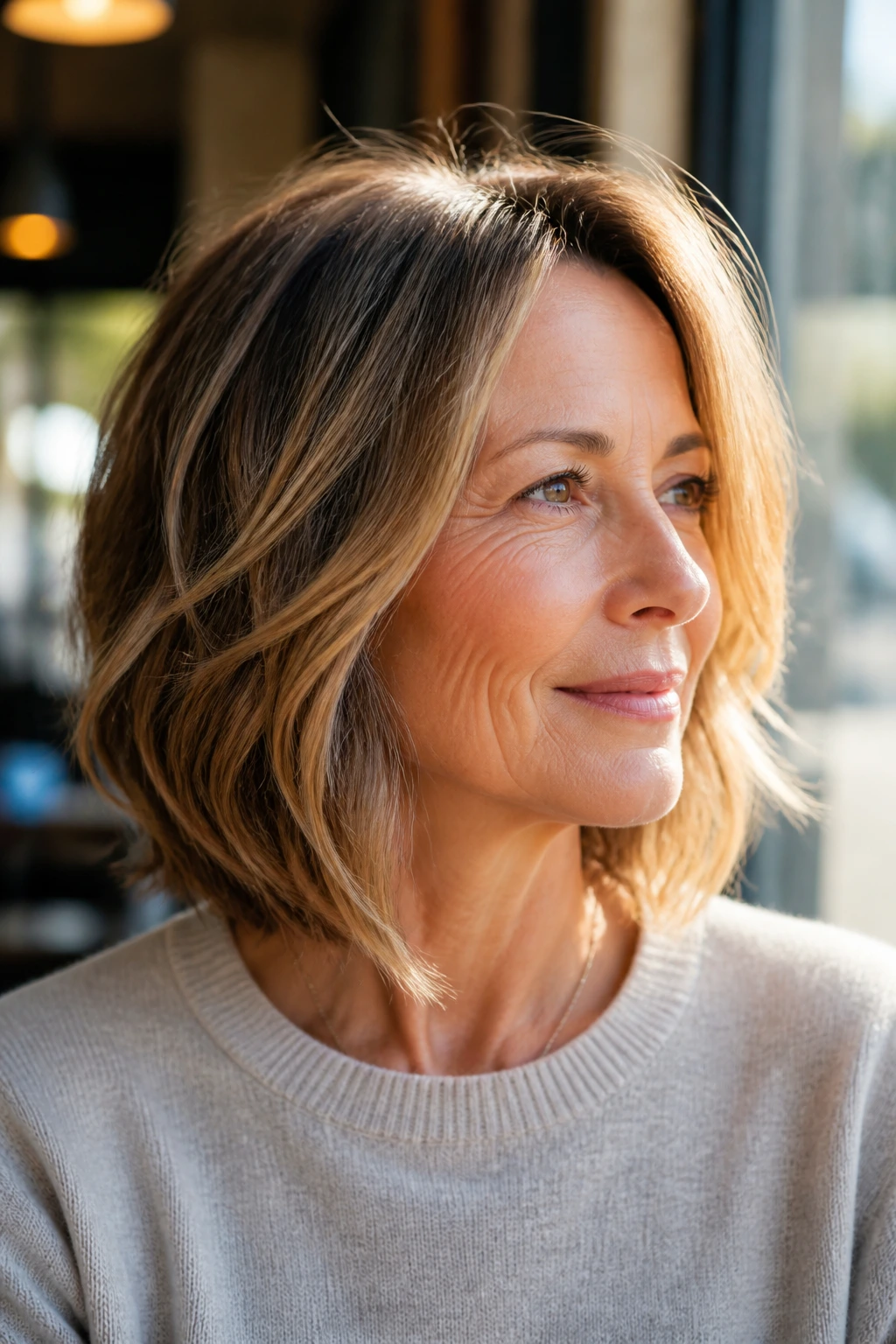
An angled lob can be very flattering on a square face if the angle is gentle. The front sits a bit longer than the back, so the eye follows the line downward instead of getting stuck at the jaw. That subtle slant is the whole point. Too steep, and the cut looks severe. Too flat, and it loses the shape.
This version is excellent for women who want polish without fuss. It keeps enough edge to feel current, but the wavy finish softens it right away. Ask your stylist to keep the front pieces just below the chin and the back slightly shorter. The angle should be visible only when the hair moves.
If you wear glasses, this cut can be especially good. It frames without crowding the face.
12. Bottleneck Bangs with Soft S-Curves
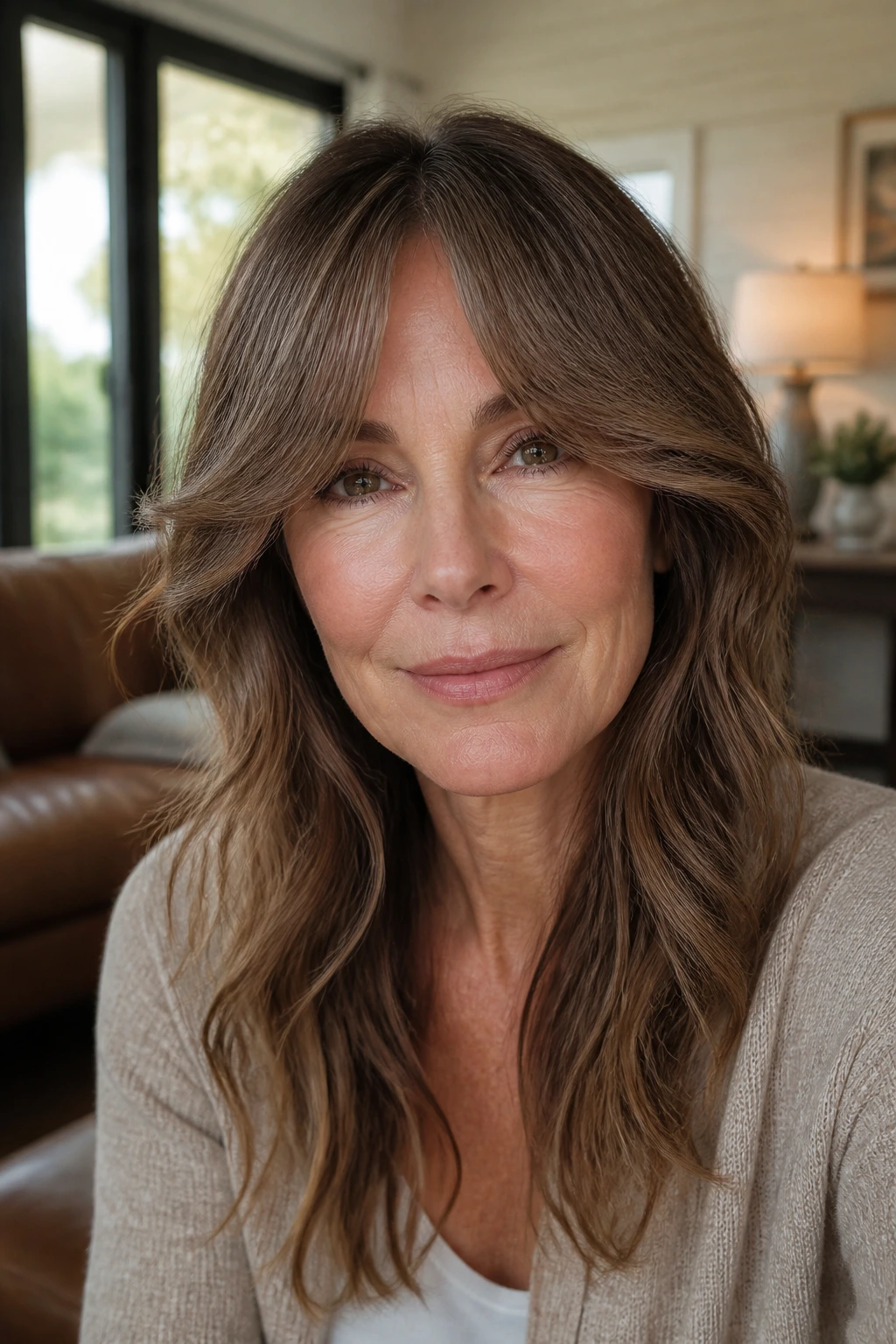
Bottleneck bangs are a smart answer when a square face needs forehead softness but not a full fringe. They start narrower at the center, widen gently around the brow, then blend into longer side pieces. That shape echoes the face without copying its edges, which is why it feels easy on the eye.
The soft S-curve matters. It keeps the bangs from sitting in one straight block across the forehead. Older women often like this because it disguises a bit of forehead while still letting light in around the eyes. Ask for the center to stay shorter than the outer corners, but never so short that the bangs feel chopped.
These look best with a loose wave through the lengths. If the rest of the cut is too stiff, the fringe loses its charm.
13. Swept-Back Volume and Long Tapered Ends
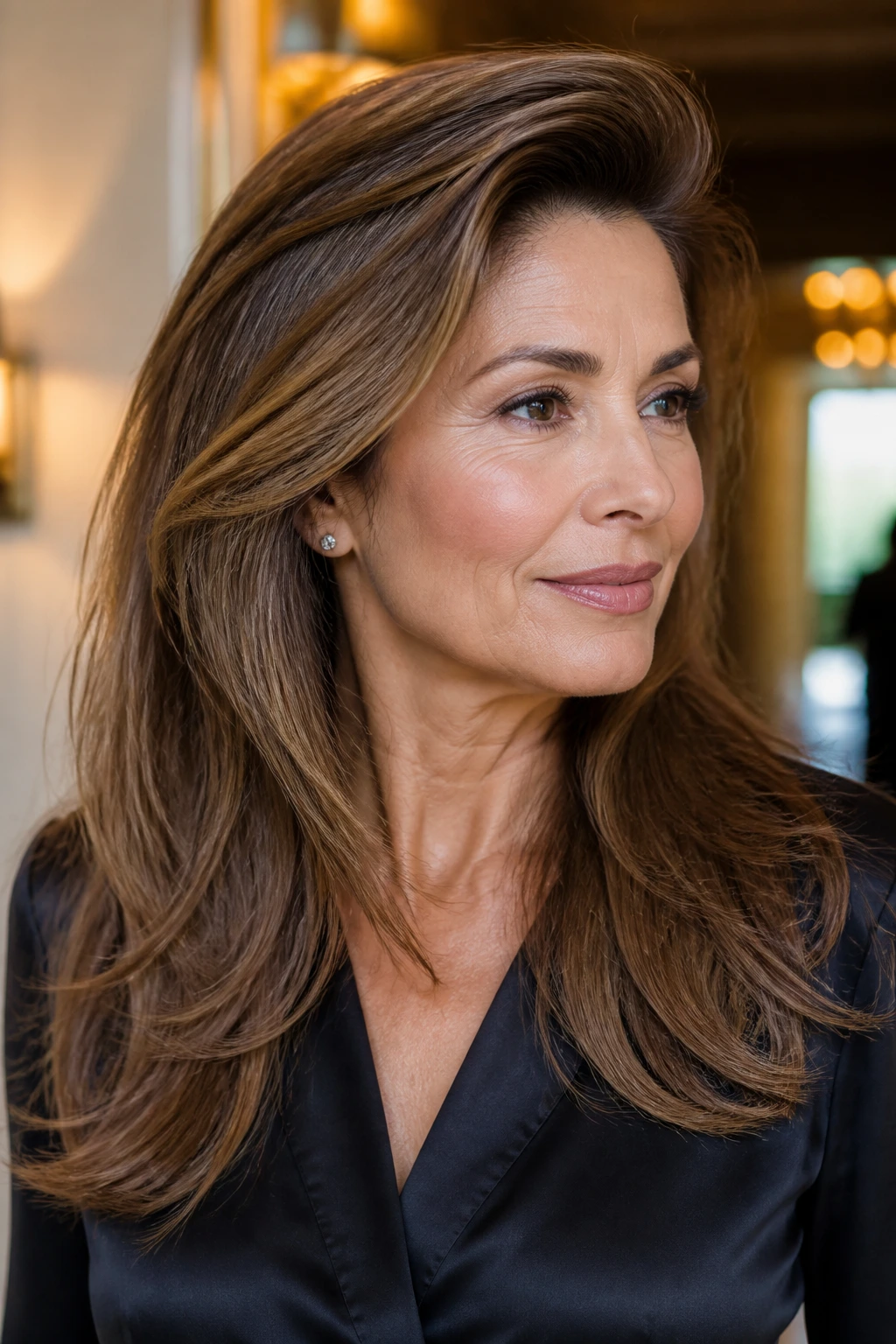
Volume at the crown does a lot for a square face. It adds height, which stretches the look of the face, and it keeps attention away from the width at the jaw. Pair that with long tapered ends and you get a shape that feels elegant without being stiff.
This cut is especially useful if your hair tends to fall flat at the roots. A light mousse at the crown and a round brush lifted upward at the roots can change the whole silhouette. Ask for long layers that taper into the ends so the bottom doesn’t feel bulky. The aim is lift, not fluff.
There’s a nice side benefit here: the shape works with evening wear and everyday clothes alike. It’s one of the few cuts that can look dressed up with almost no extra effort.
14. Wavy Pixie-Bob with Piecey Top Layers
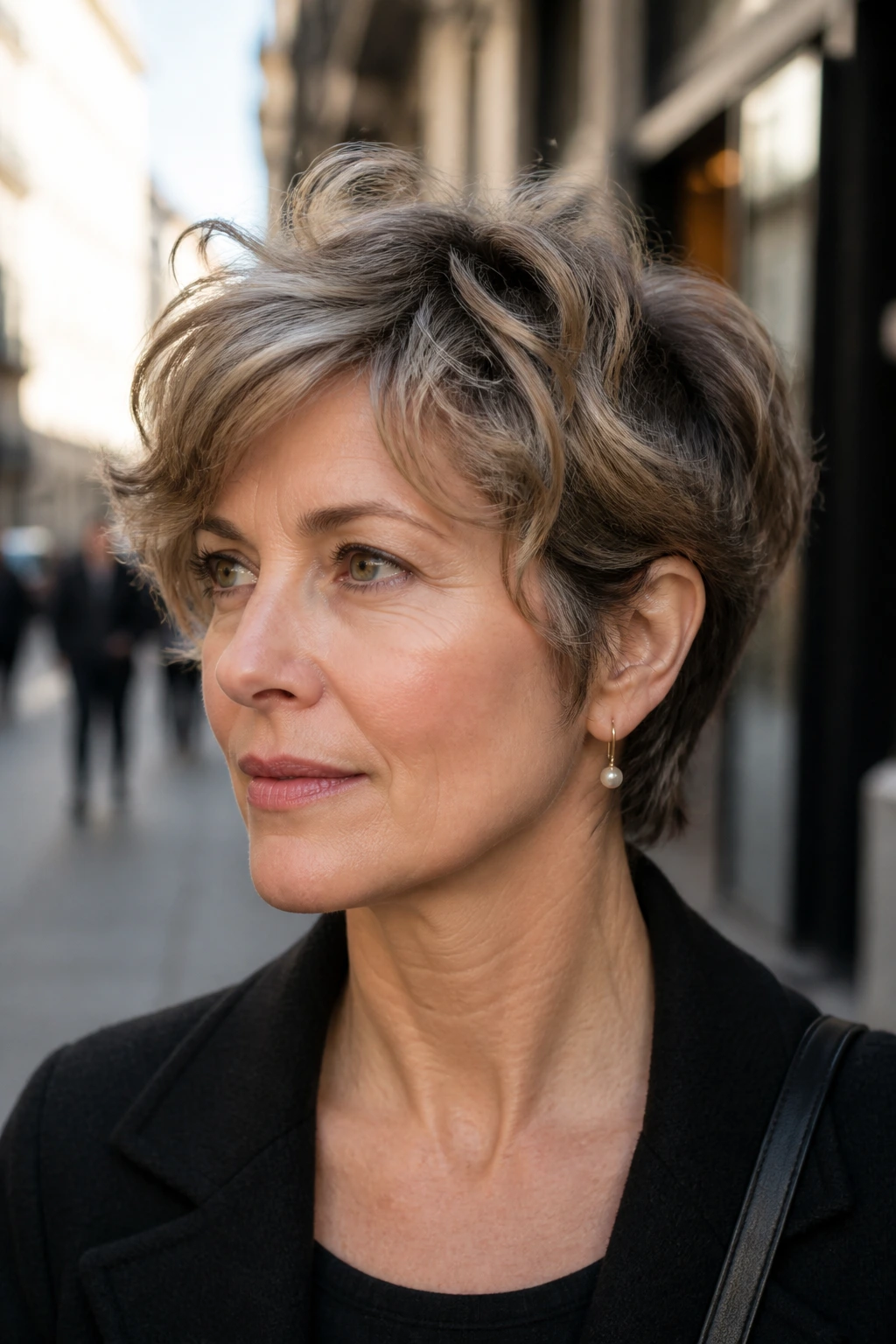
A pixie-bob gives you short hair without the hard edges of a true crop. On a square face, that extra bit of softness matters. The top layers stay piecey and wavy, the sides stay close enough to keep the shape neat, and the neckline remains light.
This cut asks for more styling than the shoulder-length shapes, so I would only steer someone toward it if she’s willing to spend five minutes with a blow dryer or a finger-dry routine. The payoff is freshness around the face, especially if the cheekbones are one of your best features. Ask for the top to stay longer than you think. Short top layers can go puffy fast.
It’s a strong choice for fine hair that needs lift and for women who want the face fully open without looking severe.
15. Midi Cut with Tucked-In Ends
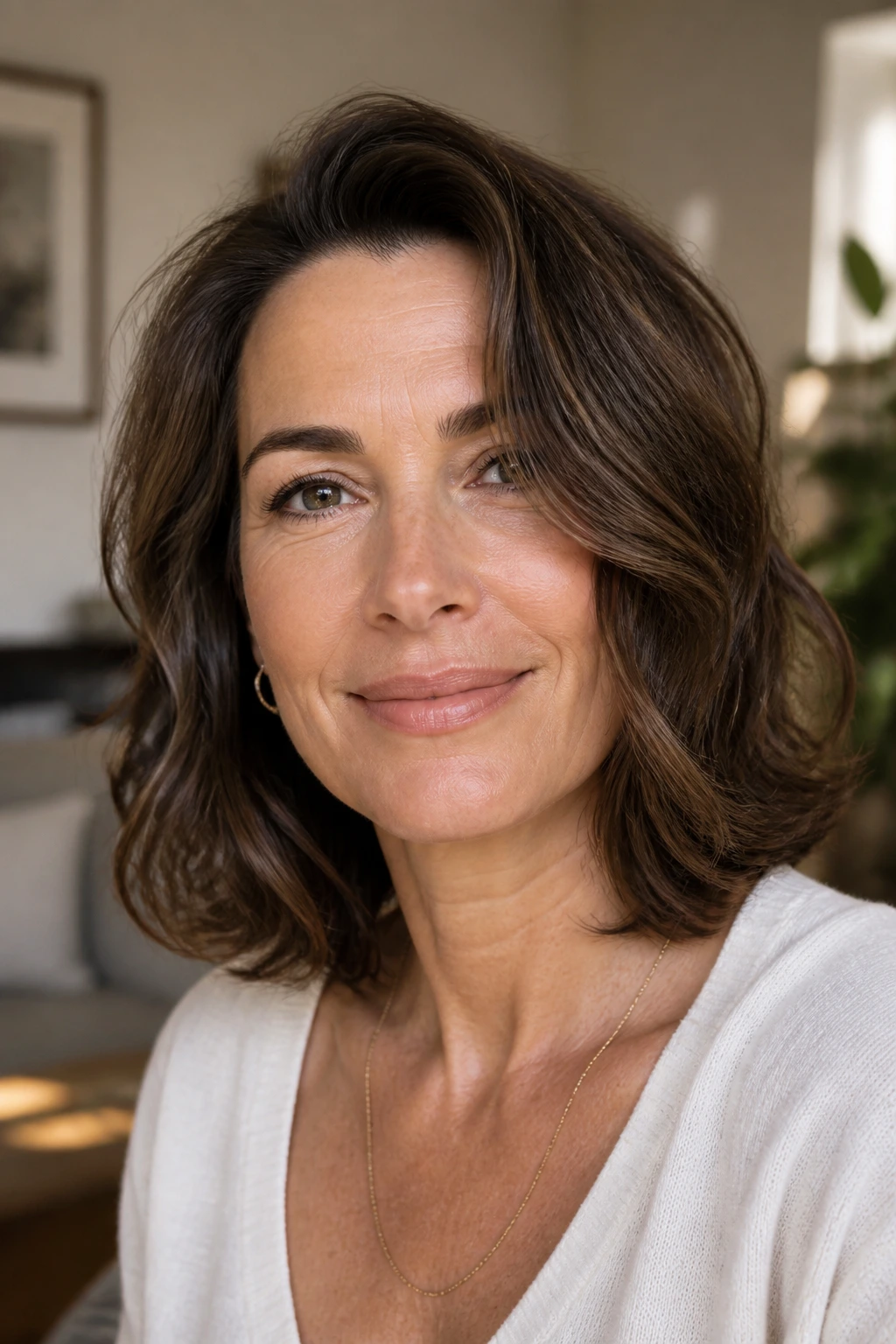
A mid-length cut with tucked-in ends softens the jaw because the perimeter curves inward instead of flaring out. Think of the ends hugging the neck and collarbone, not sitting straight across the bottom like a shelf. That small inward bend makes the square shape feel gentler.
I like this on hair that already has a slight wave. You do not need a lot of heat to make it work — a quick twist with a brush, maybe a touch of smoothing cream, and the ends usually settle into place. Ask for layers that start below the chin so the face stays open at the top.
This is one of those cuts that can look plain in a photo and lovely in motion. It moves well.
16. Razor Layers for Fine, Flat Hair
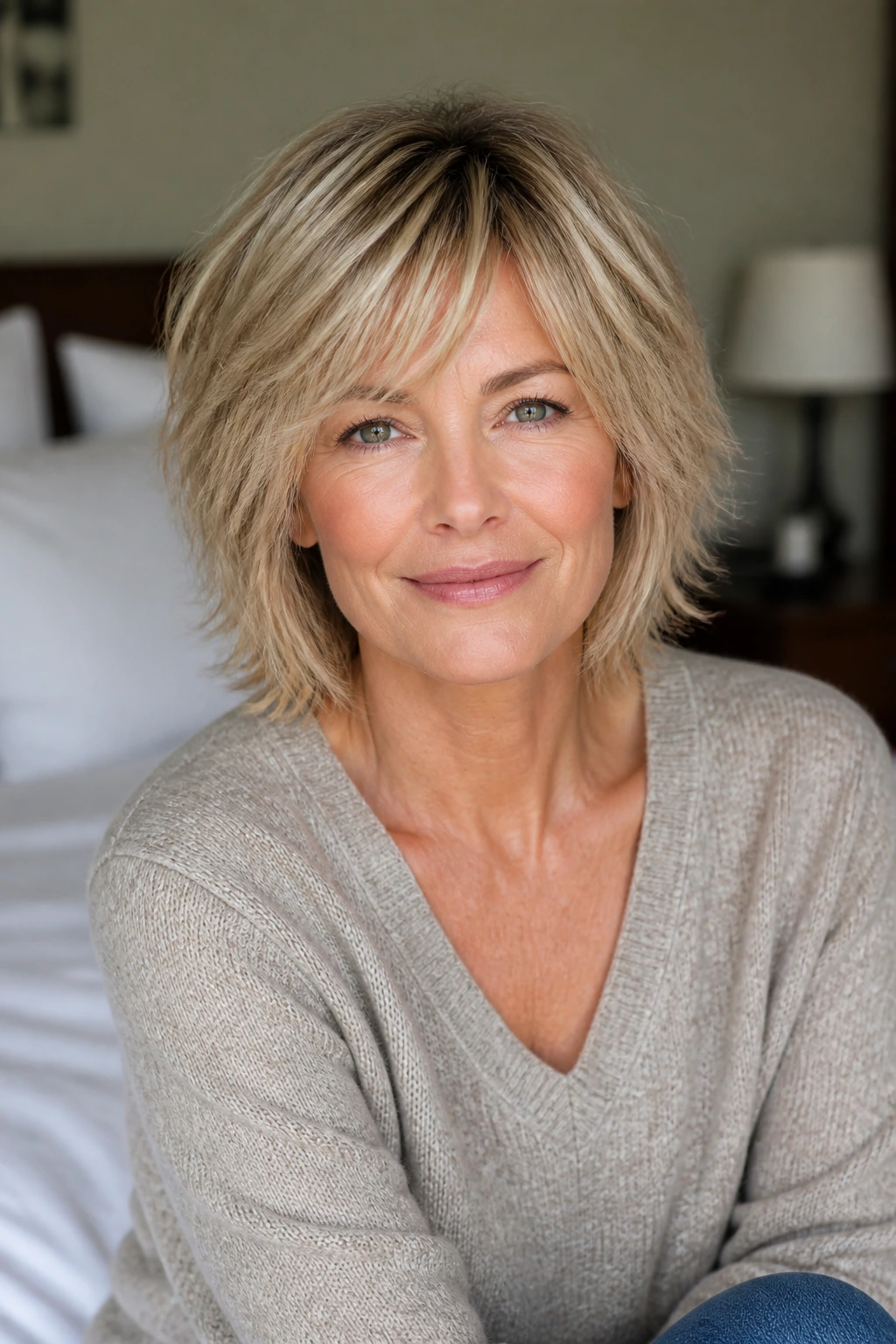
Razor layers can be terrific on fine hair, but they need a careful hand. The right version adds airy movement without stripping the ends into wisps. On a square face, the softness helps a lot, because a flat, dense edge tends to exaggerate the jaw.
The danger is overdoing it. Too much razor work and the ends fray; too little and the cut looks heavy. Ask for light texturizing around the front and longer layers through the sides. The point is to give the waves somewhere to bend, not to shave the hair down to nothing.
This cut looks best with a little mousse and a round brush, then a quick shake with the fingers. It should feel light, not limp.
17. Thick-Hair Shag with Controlled Volume
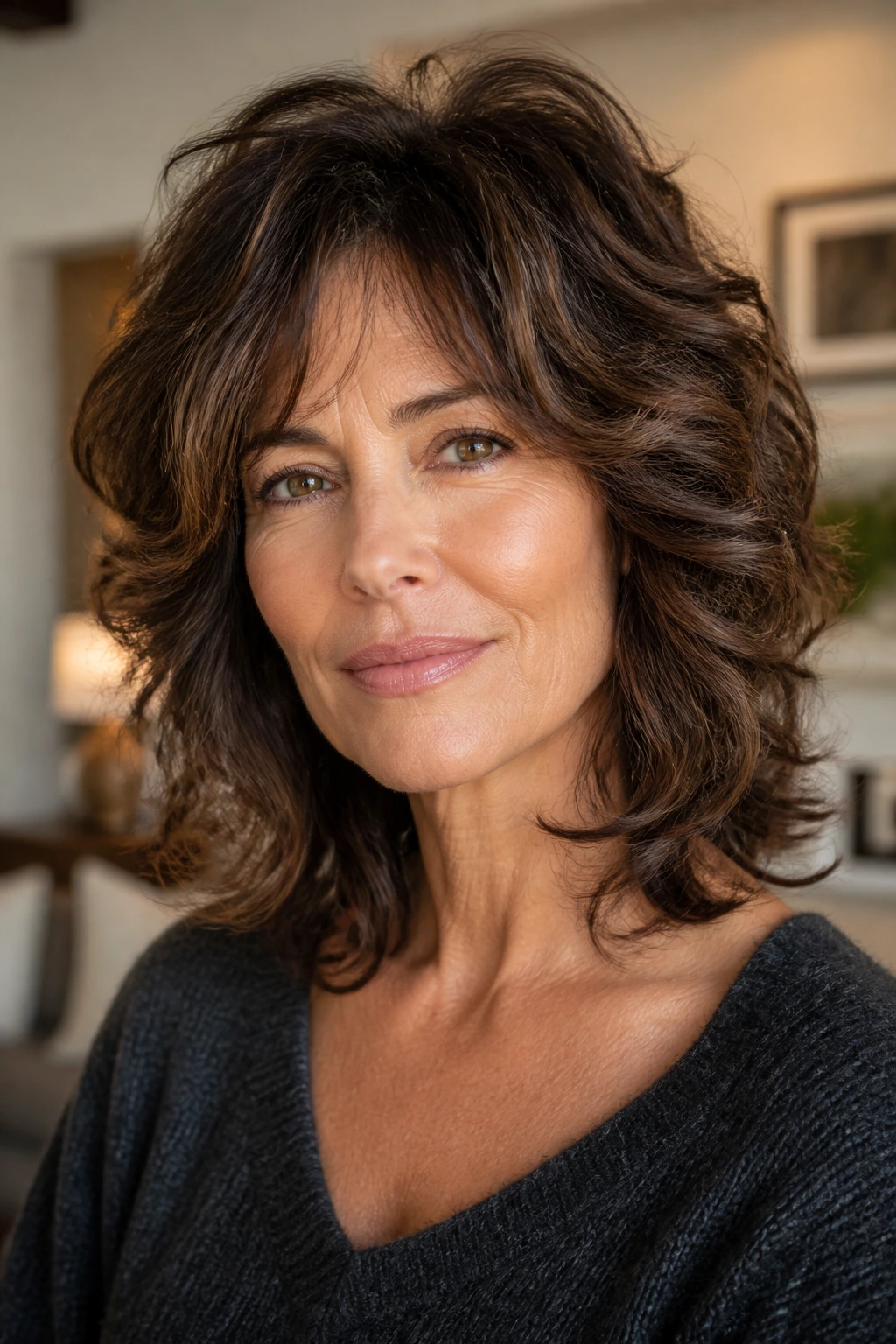
Thick hair can turn into a triangle if it’s cut without a plan. A controlled shag fixes that by taking weight out of the right places — usually the underlayers and the middle — while keeping enough length around the face to soften the square outline. It’s a smart cut, not a sloppy one.
Older women with dense hair often love this shape because it lightens the head without making the ends disappear. Ask for the top to stay connected to the sides, so the whole thing reads as movement rather than separate chunks. A little wave around the cheekbones keeps the face open.
The key phrase is controlled volume. You want lift, not width. There’s a difference, and it shows immediately.
18. Old-Hollywood Waves with Long Layers
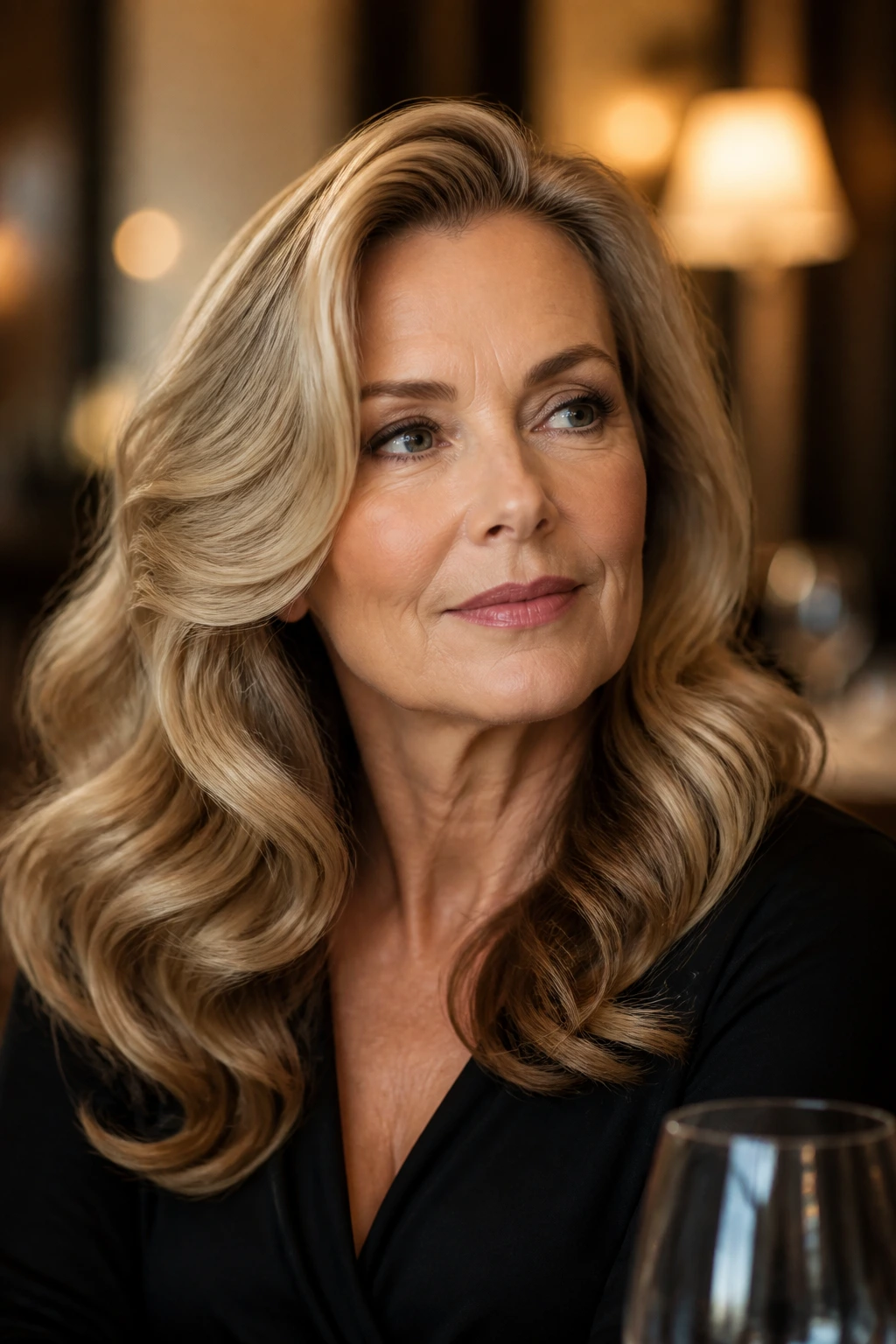
Old-Hollywood waves bring a polished curve to a square face. The side part opens the front, the long layers let the wave fall in smooth arcs, and the hair never hangs in a straight wall. This is the version for dinner, events, or any day you want your hair to look finished without screaming for attention.
What makes it work is the softness of the wave pattern. The bend should be broad and deliberate, not tight or beachy. Ask for long layers that preserve the shape of the wave and keep the ends full. If the cut is too heavily thinned, the style loses that lush drape.
Silver hair and light highlights both show this style beautifully in real life — the curves catch movement, not light showmanship. That’s part of the appeal.
19. Rounded Collarbone Cut with Light Ends

A rounded collarbone cut has a quiet charm. The ends curve inward a touch, the layers stay light, and the whole silhouette avoids the hard horizontal line that can make a square face look broader. It’s not dramatic. It doesn’t need to be.
For mature hair, this shape is useful because it keeps the ends looking full while still giving the haircut some breath. Ask for soft internal layers and a rounded perimeter, not a blunt straight line. The face-framing pieces should begin somewhere around the cheekbone and taper down toward the collarbone.
This is a good everyday cut for women who want their hair to look tidy even when it isn’t perfectly styled. It forgives a lot.
20. Mid-Length Cut with a Gentle Flip
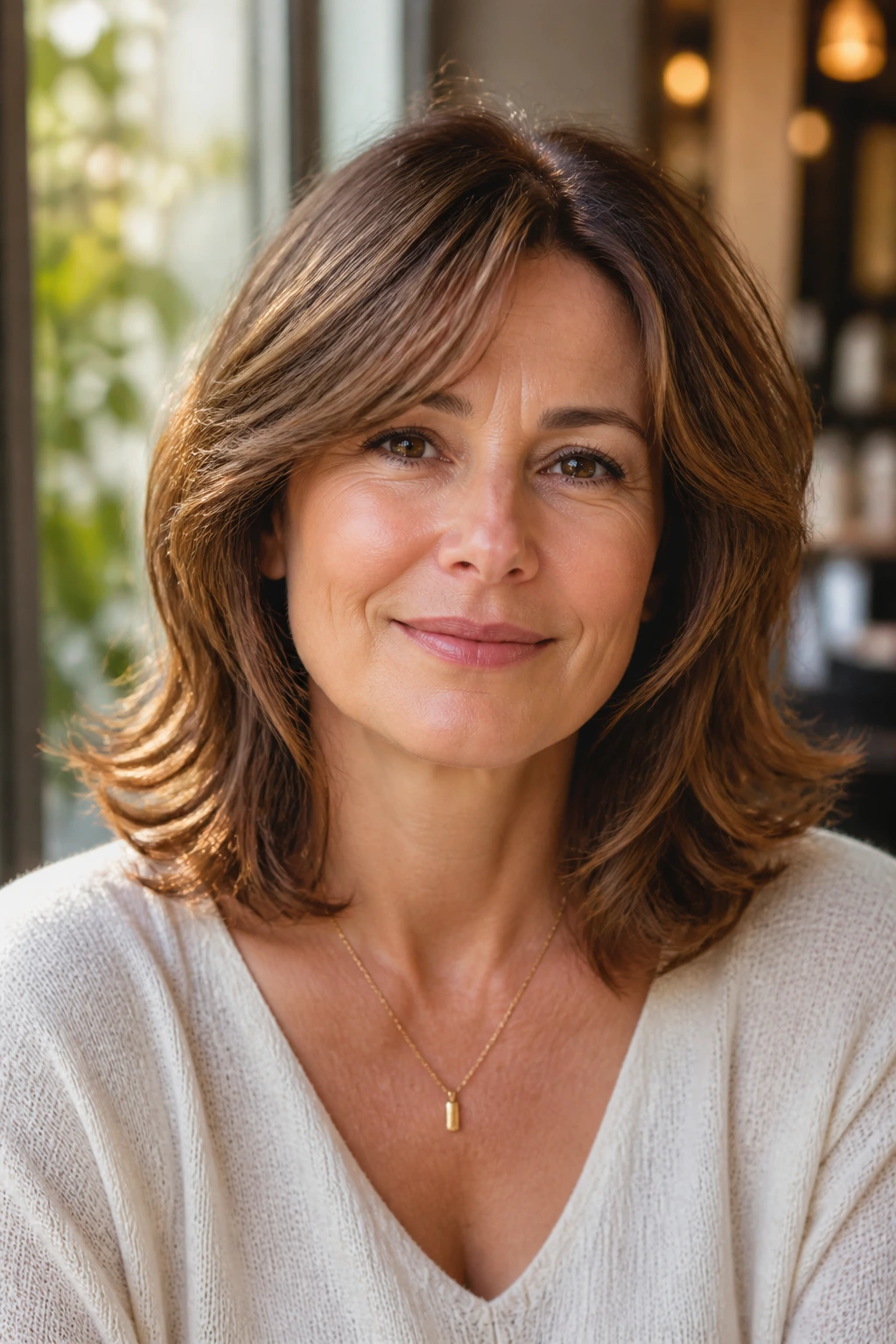
The gentle flip at the ends keeps the haircut from sitting too close to the jaw. That matters on a square face because a straight, inward-swinging line can make the lower face feel heavy. A small flip outward or under, depending on your wave pattern, gives the ends life.
This is one of the more versatile options on the list. It works with blow-drying, with a curling iron, or with a day-two refresh. Ask for mid-length layers that preserve enough weight to flip instead of frizz apart. Too many layers here and the ends lose their shape.
I like this on women who want movement but not a shaggy finish. It’s soft, but not sleepy.
21. Soft Wolf Cut with Polished Texture
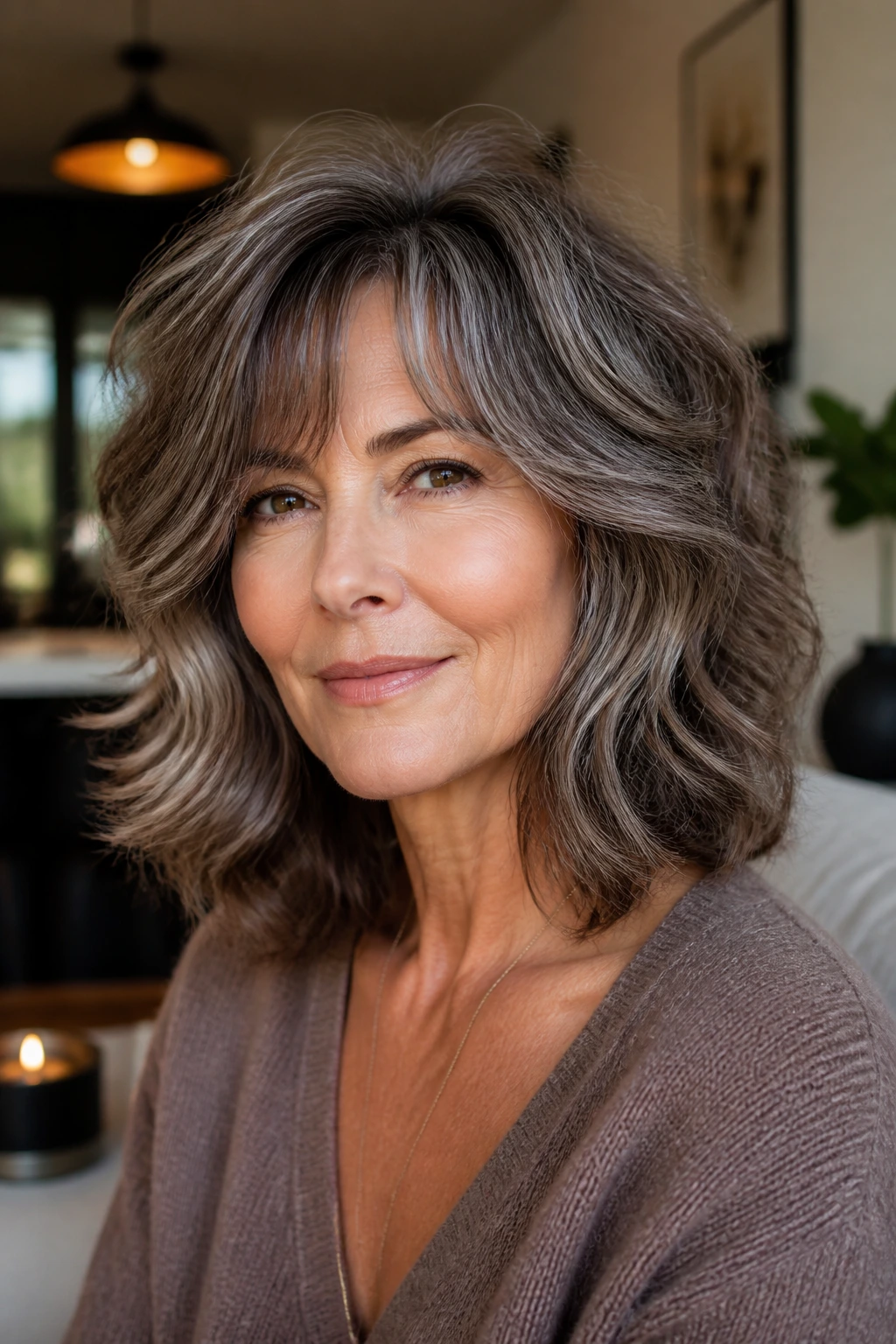
A wolf cut sounds bold, and it can be, but the soft version is much more wearable for older women with square faces. The crown carries some lift, the layers taper down the sides, and the texture stays polished instead of ragged. You get edge without punishment.
What saves this cut is restraint. If the layers get too short around the jaw, the face looks wider. Keep the face-framing pieces longer, and let the wave pattern do the rough work. This is a good choice for women who like a little personality in their hair and do not mind using a diffuser or wand.
It should look a touch wild, but planned. That’s the sweet spot.
22. Center-Part Lob with Curtain Pieces
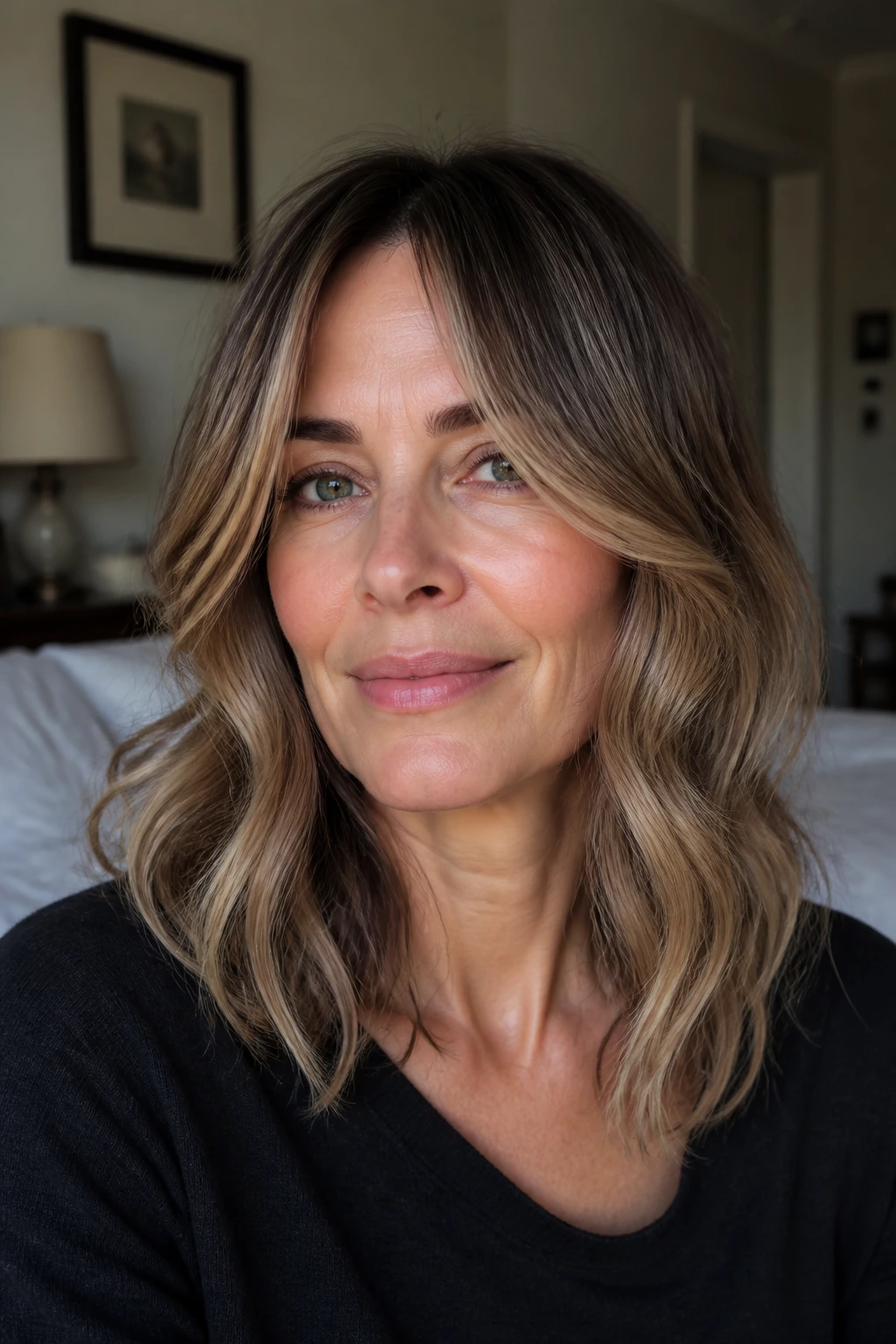
A center part can work on a square face when the front pieces soften the sides. Without those curtain sections, the eye goes straight down the middle and the jaw can feel heavy. With them, the face reads longer and calmer.
This is one of the best choices for women whose faces are symmetrical and whose hair naturally falls with a middle split. Ask for the curtain pieces to start around the cheekbones and sweep into the lob rather than stop abruptly. The length should stay around the collarbone or just above it.
If you want a clean, modern look with a soft finish, this is a strong lane. Keep the waves loose and the ends smooth.
23. Long Layers with Side-Tossed Crown Volume
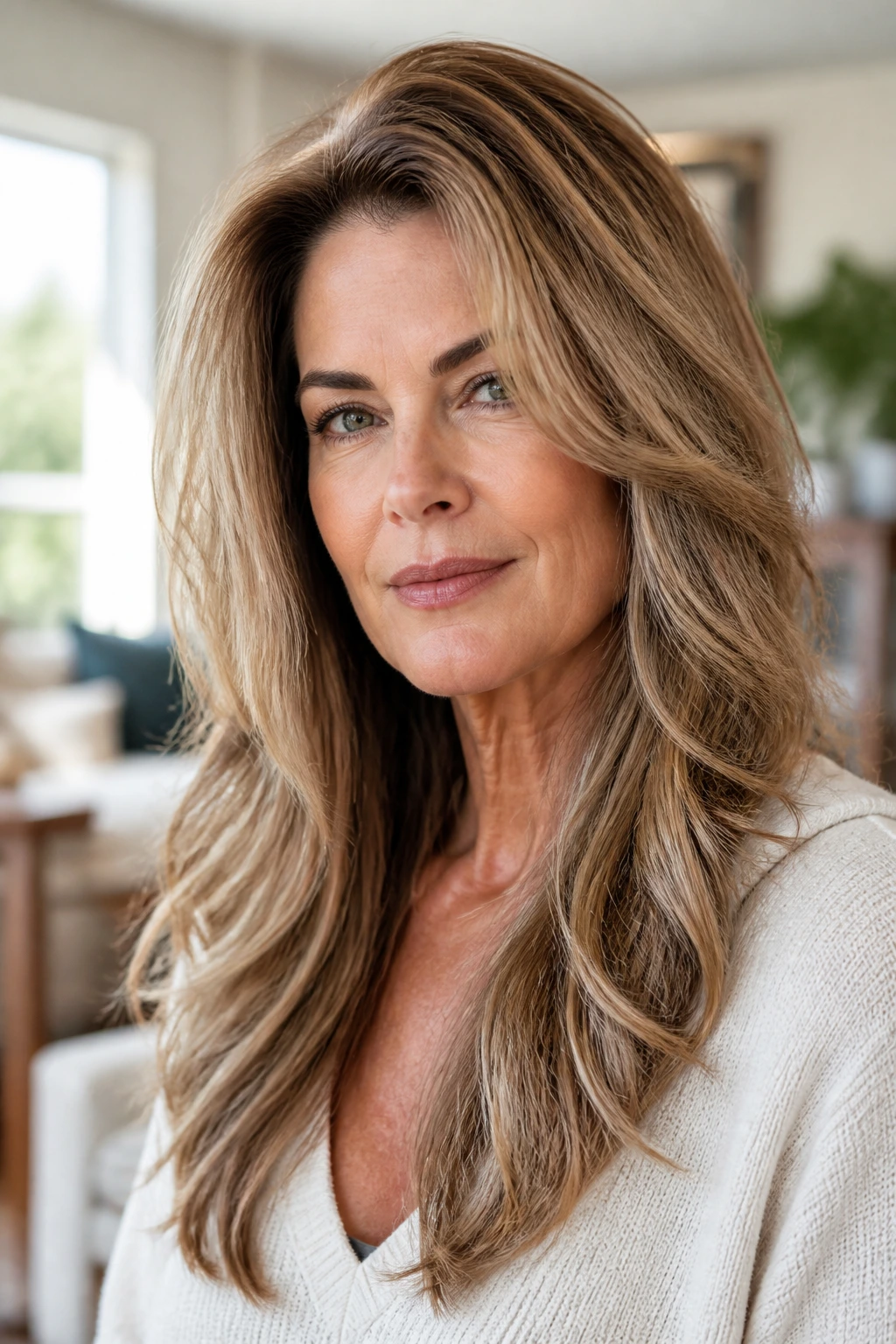
Long hair does not have to look heavy. The trick is to keep the crown lifted and the sides moving so the hair doesn’t hang straight down and widen the face. Side-tossed volume helps a square face because it breaks the center line and draws attention upward.
Ask for long layers that preserve length through the bottom but remove weight where the hair starts to collapse. The front should not be cut into short face-framing chunks unless you want a stronger shape. This one stays softer and more flowing. It’s a good call if you want length but need some life around the face.
A loose side toss at the crown and a few bends through the mids keep this from looking flat or severe. It should move when you do.
24. Graduated Bob with Soft Sides
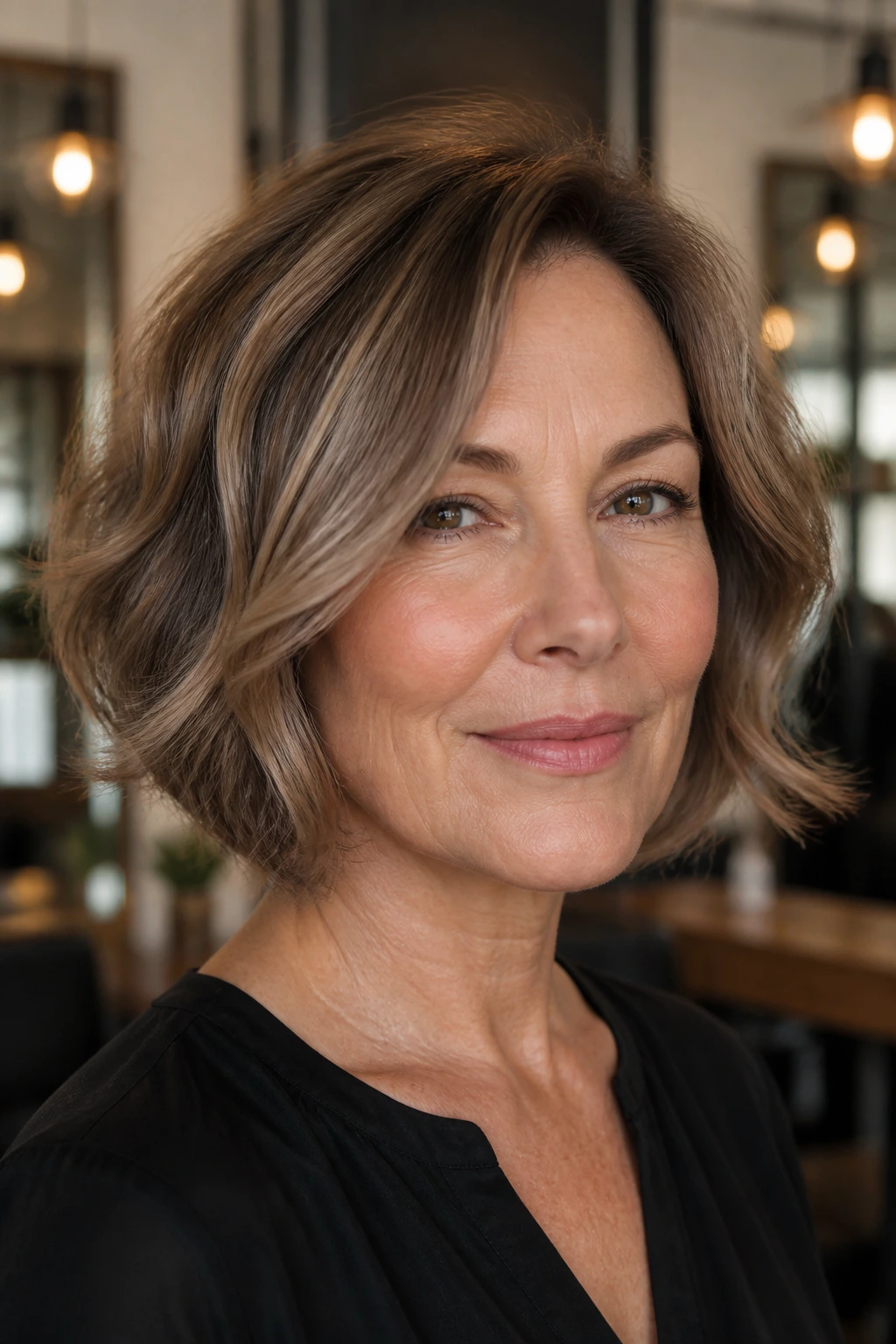
A graduated bob usually means a little more shape at the back and a cleaner line under the ear. On a square face, the soft version works best when the sides are not too stiff and the front pieces are long enough to skim past the jaw. That keeps the haircut from feeling boxy.
This is a nice option for women who like structure but want the face softened by the shape of the cut. The back gives lift, the sides bend inward, and the waves keep it from looking too exact. Ask for the graduation to be subtle. Harsh stacking can push the hair outward, and that is the opposite of what you want.
With a side part, this cut can feel especially elegant. With a center part, it can feel cleaner and sharper.
25. Cascading Layers Past the Shoulders
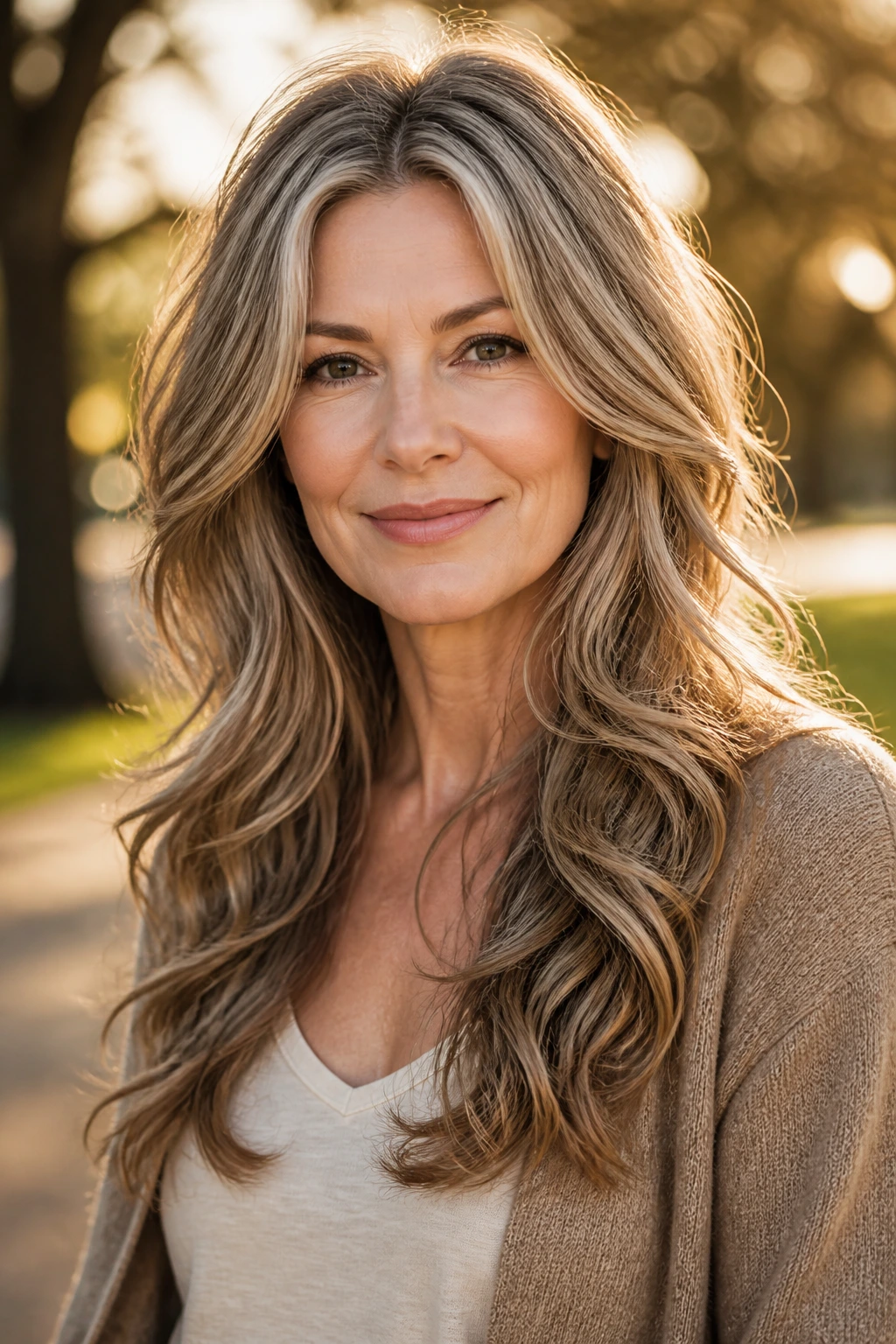
Long, cascading layers are a strong finish for anyone who does not want to go short. They give the hair a waterfall feel, with the movement starting around the cheekbones and continuing down past the shoulders. For a square face, that cascade keeps the jaw from becoming the main event.
This cut works best when the layers are blended enough to avoid obvious steps. Ask for the shortest layers to stay around the cheekbone and the longest to fall well below the shoulders. If the hair is thick, a little internal debulking helps the layers sit flatter. If it’s fine, keep the ends full.
It’s a patient cut. The shape shows itself in motion, not as a static line.
How to Ask for the Right Wavy Layer Pattern at the Salon
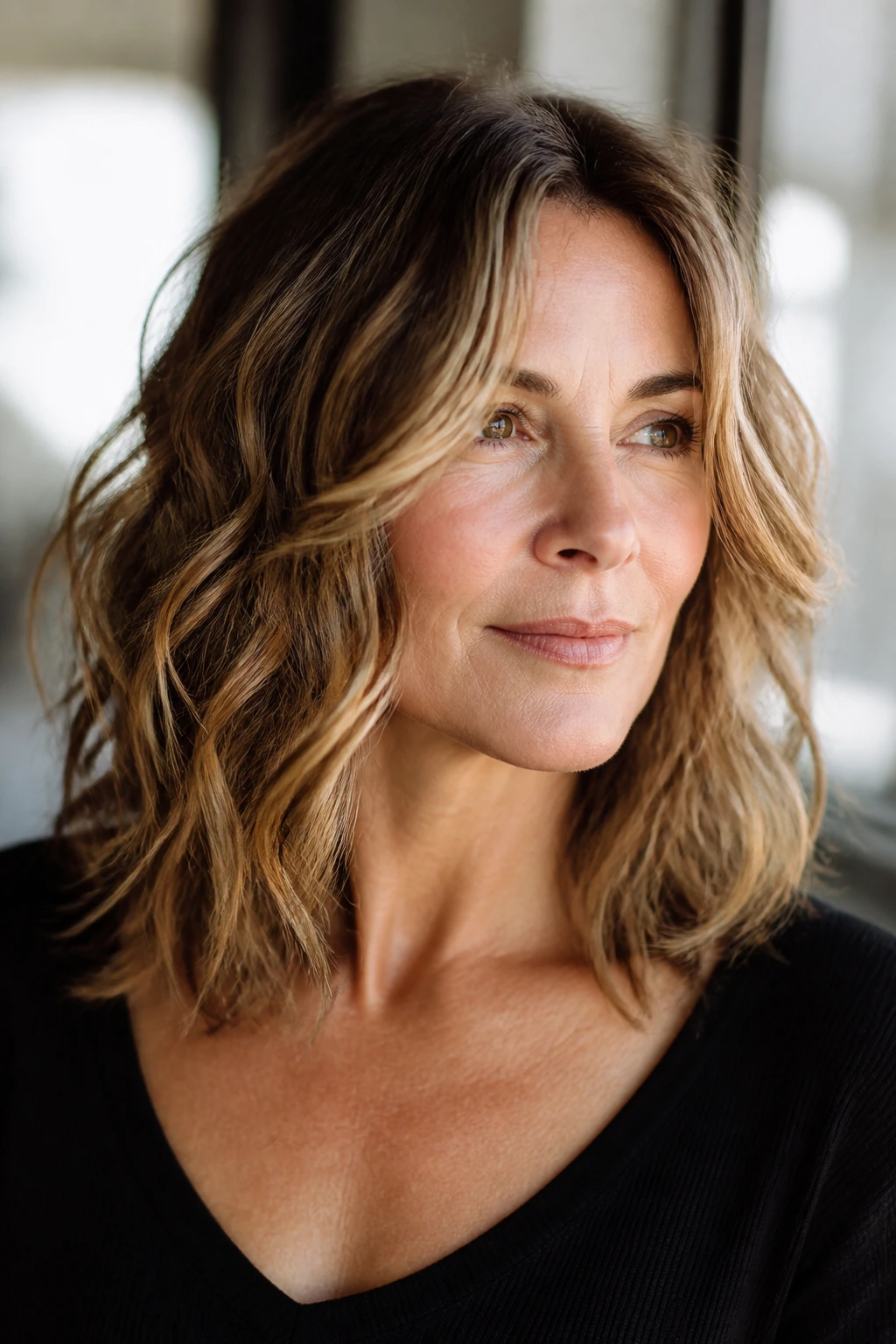
Bring pictures, yes, but bring instructions too. A stylist can read a photo, yet the photo does not explain where your jaw sits, how your hair collapses when it dries, or how much effort you’re willing to put into styling. Those details matter more than the face in the picture.
Start with length. Tell the stylist where you want the shortest front pieces to land — cheekbone, mouth corner, chin, or below. On a square face, that one choice changes everything. Then talk about the perimeter. If you want softness, ask for a curved outline rather than a blunt edge. If your hair is thick, ask for internal weight removal instead of aggressive thinning on the outside.
Say how you wear your part. Natural part, side part, center part — the haircut should honor the one you actually use, not a dramatic version you’ll never keep in place. And if your waves change shape when they’re dry, ask for a dry cut or a cut that’s checked after the hair is dried. That extra hour can save you weeks of frustration.
Common Cutting Mistakes That Make the Jaw Look Heavier
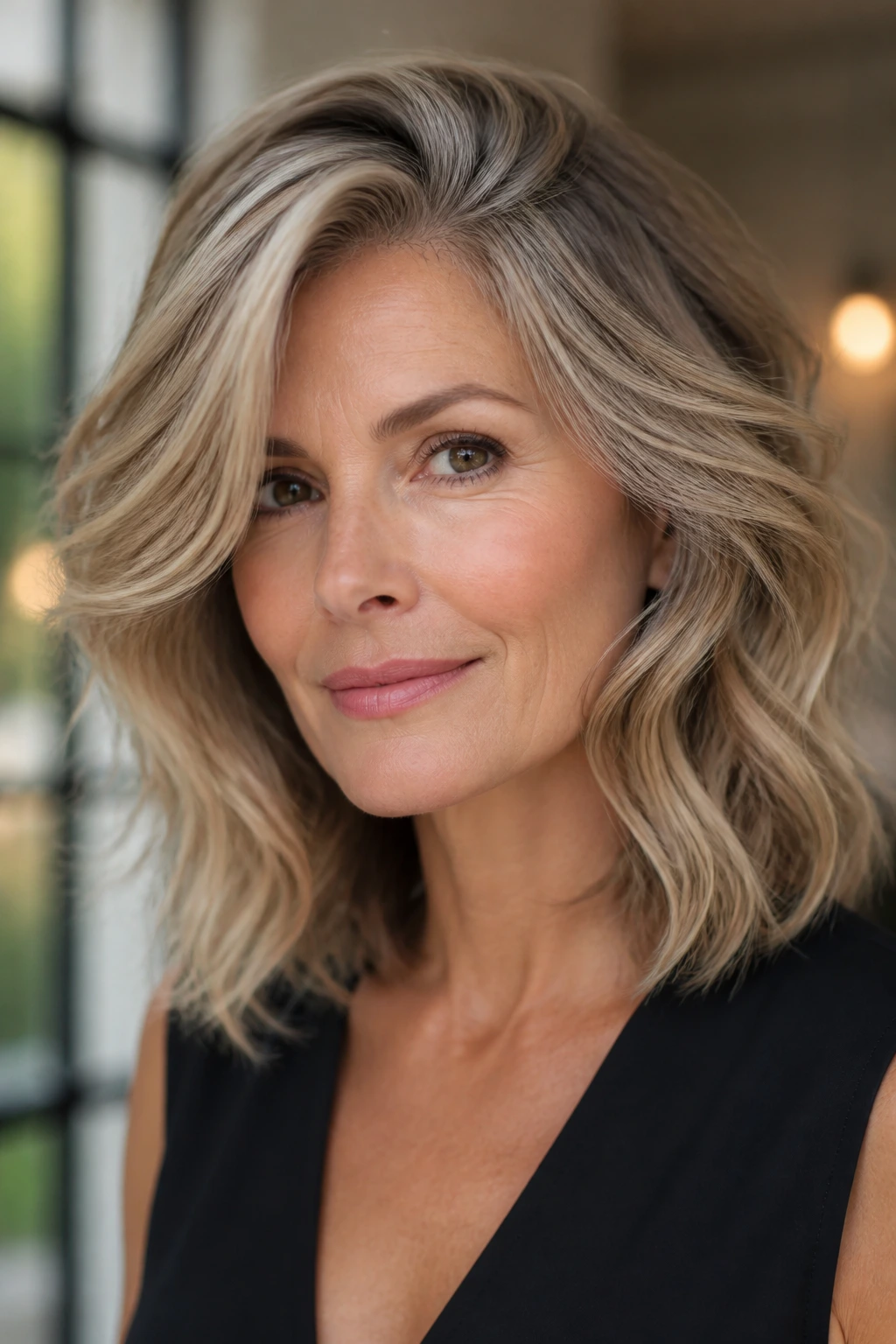
The most common mistake is the blunt chin-length line. It lands exactly where the jaw already has structure, so the hair ends up echoing the face instead of softening it. If you want a bob, keep the line above the jaw or below the chin, or break it up with waves and layering.
Another problem is over-thinning the ends. The hair looks airy in the chair, then stringy at home. Fine hair especially can lose too much body if the stylist gets enthusiastic with the razor. The fix is simple: keep the ends full and ask for movement inside the shape, not shredded edges outside it.
Bangs can go wrong, too. Short straight fringe can make the face feel boxed in, while side pieces that stop at the jaw can widen the lower half. If fringe is part of your plan, let it be soft, long, and bendable.
Too much side volume at the jawline is another trap. Volume is useful at the crown and cheekbones; at the jaw, it can make the face look broader. And if the waves are curled outward from the chin, the same thing happens again. The eye reads width. Keep the bend flowing inward or down, not out like a shelf.
Variations to Try When You Want More Softness, More Lift, or More Edge
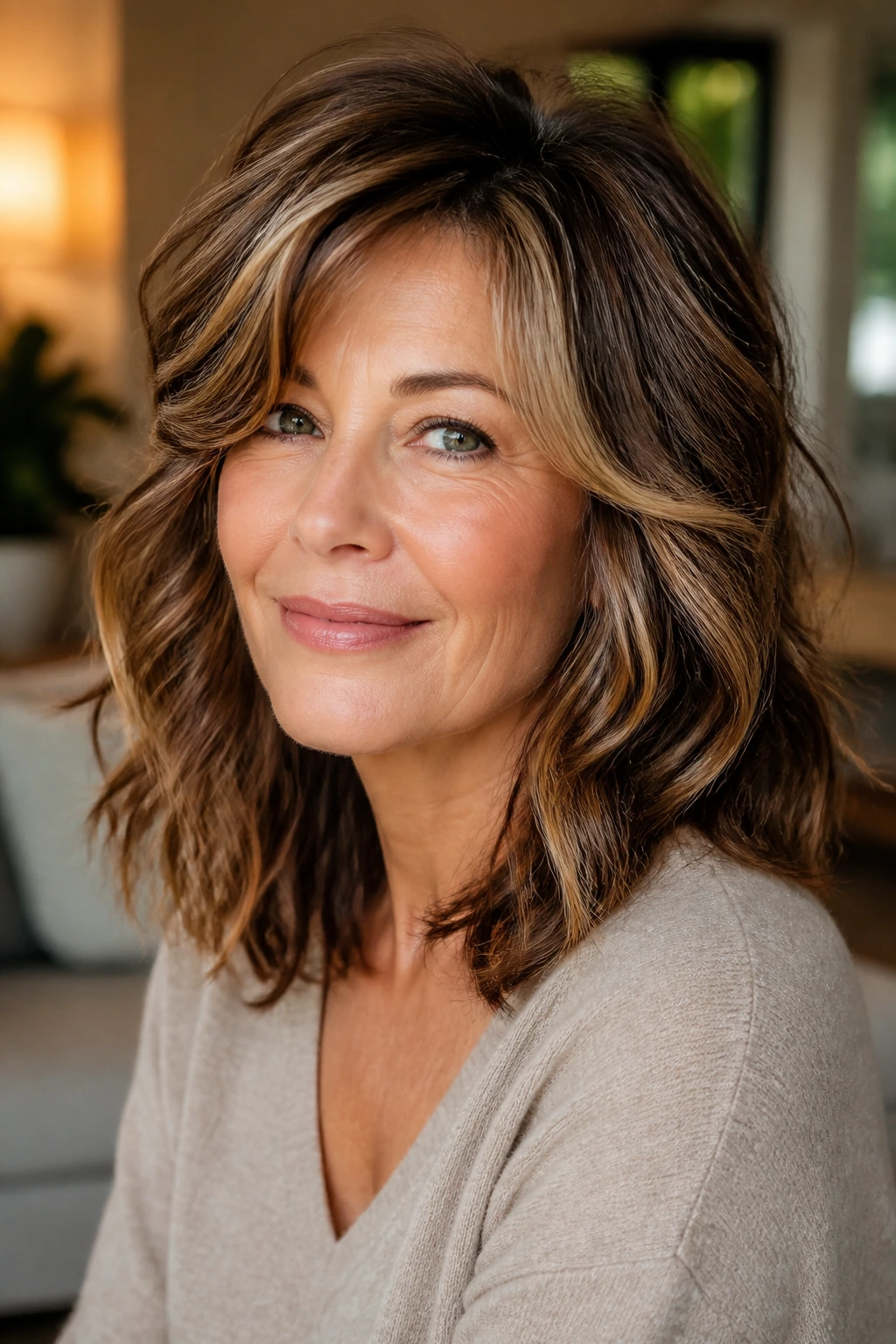
The Soft-First Version: Keep the same layered cut, but ask for longer face-framing pieces and a lower, gentler wave. This works if you want the face to look smoother without losing length.
The Lifted Crown Version: Add root volume at the crown and keep the sides slimmer. It suits fine hair or flatter roots and gives the whole face a longer, lighter look.
The Edge-With-Control Version: Use a shag or wolf shape, but keep the layers longer through the jaw and neck. You get personality without the harshness that can come from a very short, choppy finish.
The Polished Silver Version: Pair soft layers with a smooth wave pattern and a cleaner side part. This works beautifully on gray or white hair because the color and movement show the cut instead of hiding it.
The Easy Air-Dry Version: Choose a shoulder-length lob with blended layers and a rounded outline. It’s the one to pick if you want the haircut to behave with a little mousse and your fingers, not a full heat routine.
Tools That Make Styling Wavy Layers Easier
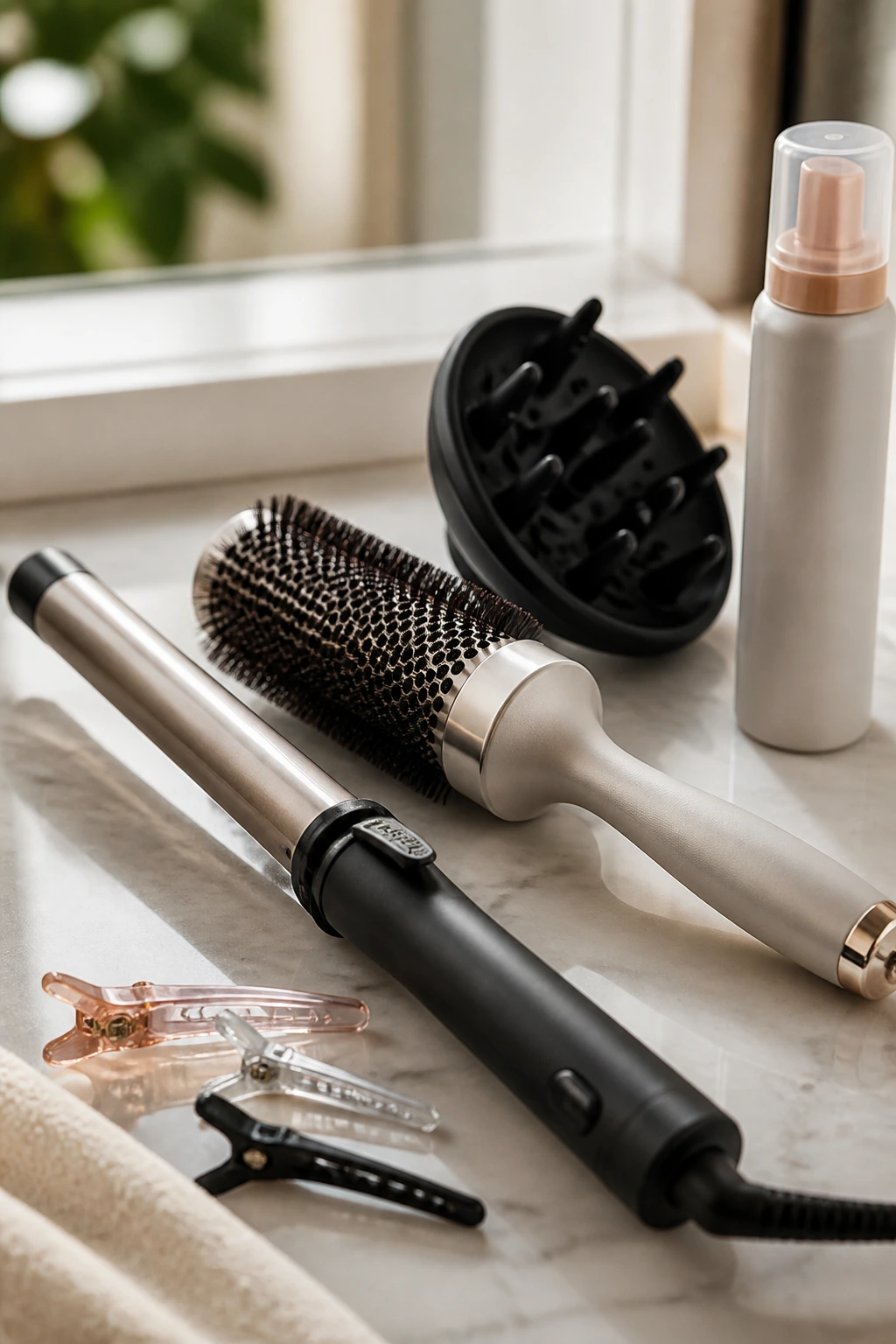
- 1-inch curling wand or iron: Best for creating loose bends that soften a square jaw without making tight curls.
- Large round brush: Useful when you want the ends to curve under or away from the face during a blow-dry.
- Blow dryer with concentrator nozzle: Helps aim the airflow where you want lift instead of roughing up the cuticle.
- Diffuser attachment: Good for natural waves, especially if you want shape without brushing the curl away.
- Sectioning clips: Keep the crown and side layers organized so the front pieces don’t get buried.
- Light mousse or root spray: Adds lift at the crown and keeps finer hair from falling flat by lunch.
- Heat protectant: Non-negotiable if you use hot tools more than once in a while.
- Lightweight smoothing cream or serum: Keeps the ends from frizzing, but use a small amount — too much kills movement fast.
Keeping the Shape Fresh Between Haircuts
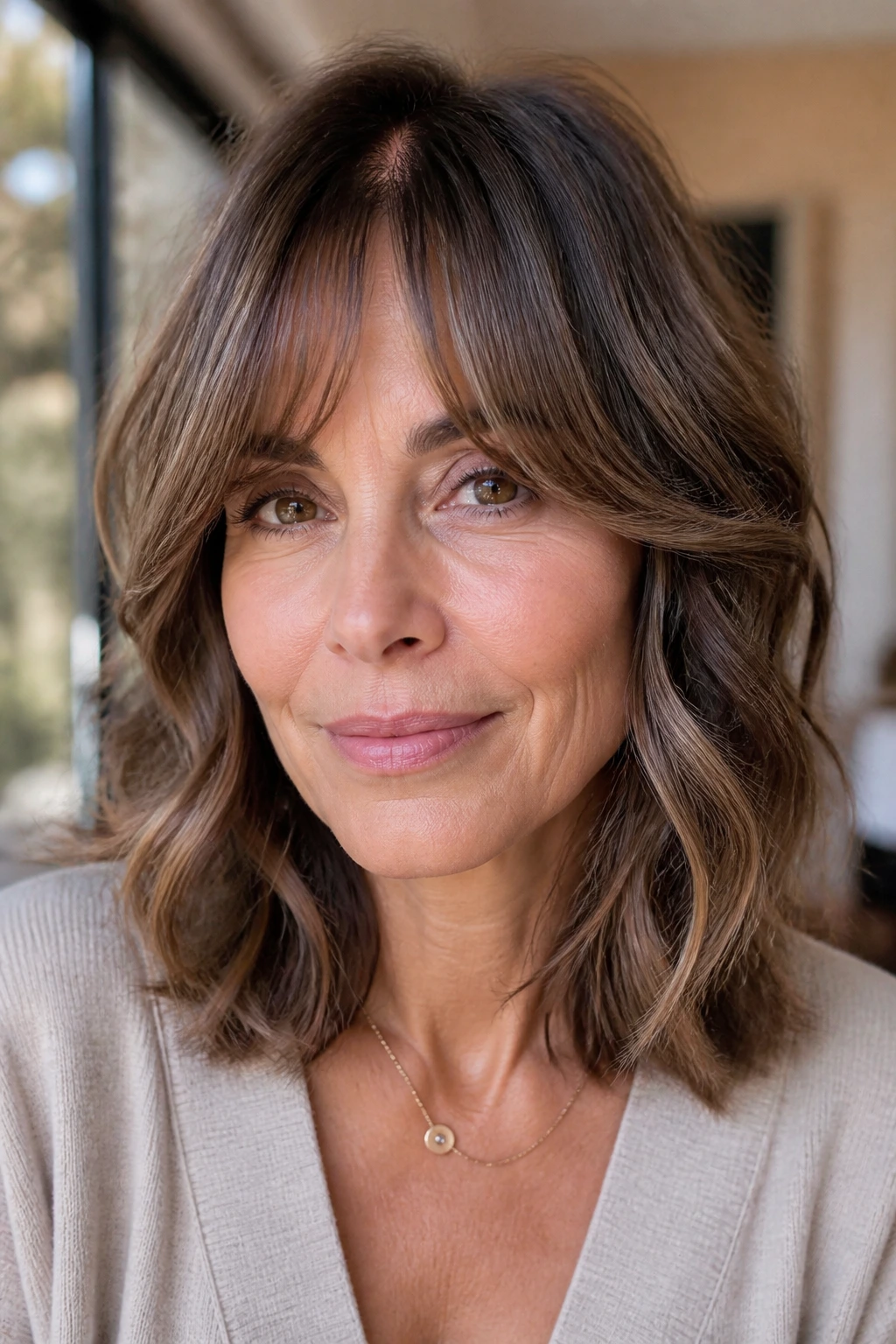
Wavy layers need maintenance, but not the kind that eats your week. Shorter cuts, especially bobs and lobs with fringe, usually need a trim every 6 to 8 weeks if you want the face-framing pieces to keep their shape. Longer layered cuts can go 8 to 12 weeks, though the front pieces may still need a cleanup sooner if they start poking the cheek or jaw in an awkward way.
If you wear curtain bangs or side fringe, expect to trim or reshape them more often than the rest of the cut. Bangs grow fast in the mirror, faster than they do in real life. A tiny trim every 3 to 5 weeks can keep them from collapsing into your eyes.
At home, use a sulfate-free or gentle shampoo if your hair runs dry, then work conditioner only from the mid-lengths down unless your scalp needs more moisture. A light leave-in on towel-dried hair helps the wave settle instead of frizzing up. Sleep on a satin pillowcase if your ends puff out overnight — it’s a small change, but it saves the shape.
Questions People Ask Before They Try Wavy Layers
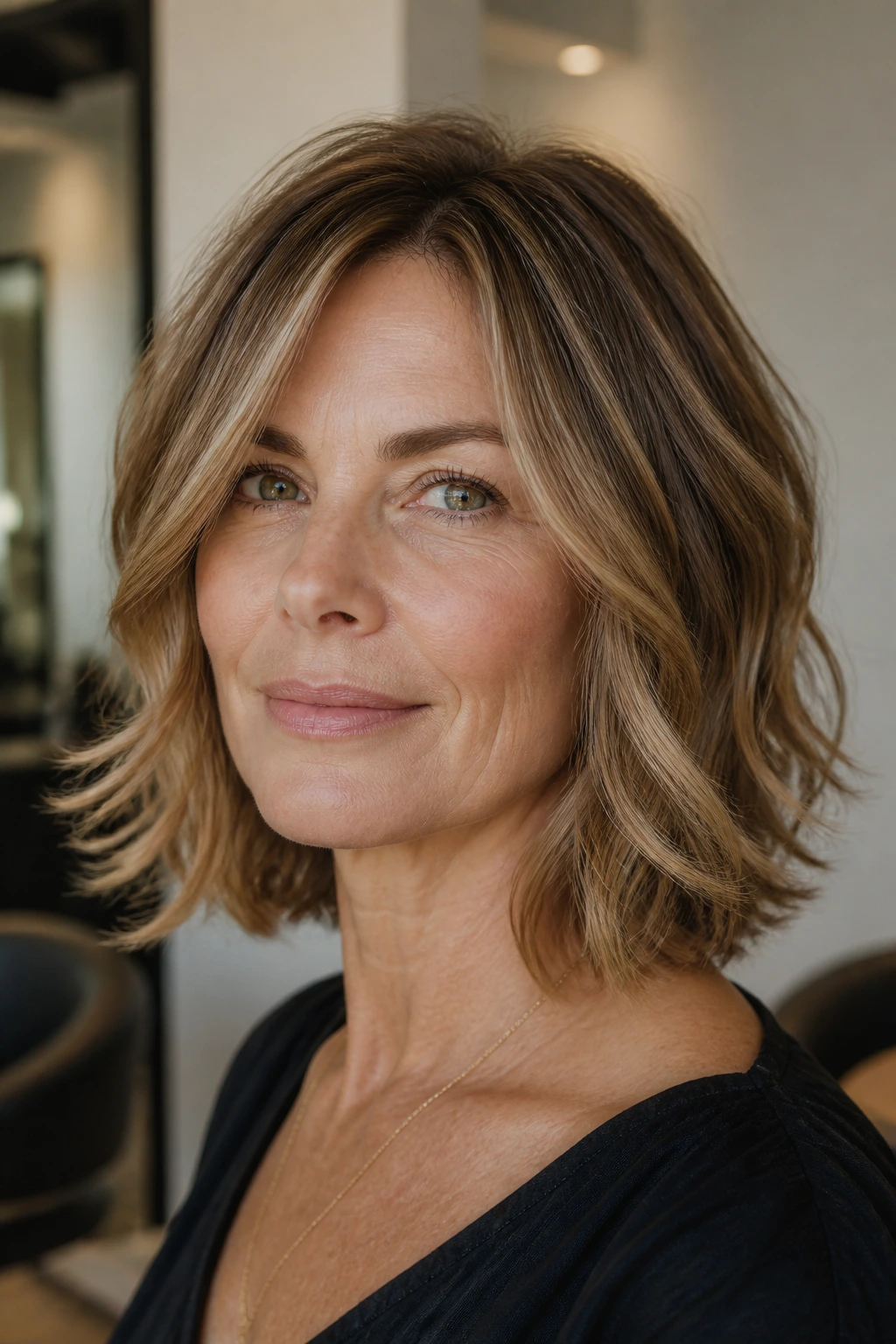
Will wavy layers make a square face look wider?
Not if the shortest pieces stay above or below the jawline and the volume sits at the crown or cheekbones. The wrong cut can widen the face, but the right placement pulls the eye vertically and diagonally instead of side to side.
Are curtain bangs too much for older women?
No. Long curtain bangs can be one of the easiest ways to soften a square face at any age. The only version I’d avoid is a short, heavy bang that lands straight across the forehead without blending.
What length is most flattering?
Collarbone to shoulder length is the safest range, because it keeps the face open and the ends away from the jaw. That said, a shorter textured bob or a longer layered cut can work if the wave pattern is right.
Can fine hair handle these styles?
Yes, but it needs internal layers rather than aggressive thinning. Fine hair likes support at the perimeter and movement inside the shape. Too much razoring makes the ends look tired.
What if my hair is thick and puffy?
Ask for controlled weight removal under the top layers and keep the outline soft. The cut should reduce bulk without making the ends wispy. Thick hair usually looks best when the wave falls in pieces, not in one solid mass.
Do I need hot tools to make these cuts work?
Not always. A good cut on naturally wavy hair can air-dry nicely with mousse and a little scrunching. Straight hair usually needs at least a bend from a brush, wand, or diffuser to show the layers properly.
Can I wear a center part with a square face?
Yes, if the front pieces are long enough to soften the sides. A center part without those pieces can feel severe, but with curtain layers or cheekbone-length framing, it can look balanced and clean.
How do I stop the ends from flipping out in the wrong direction?
Use a round brush or a low-heat pass with a wand to guide the ends inward or into a soft bend. A small amount of smoothing cream on damp hair helps, too. If the cut is blunt at the jaw, though, no product will save it for long.
The Cuts I’d Hand a Friend First
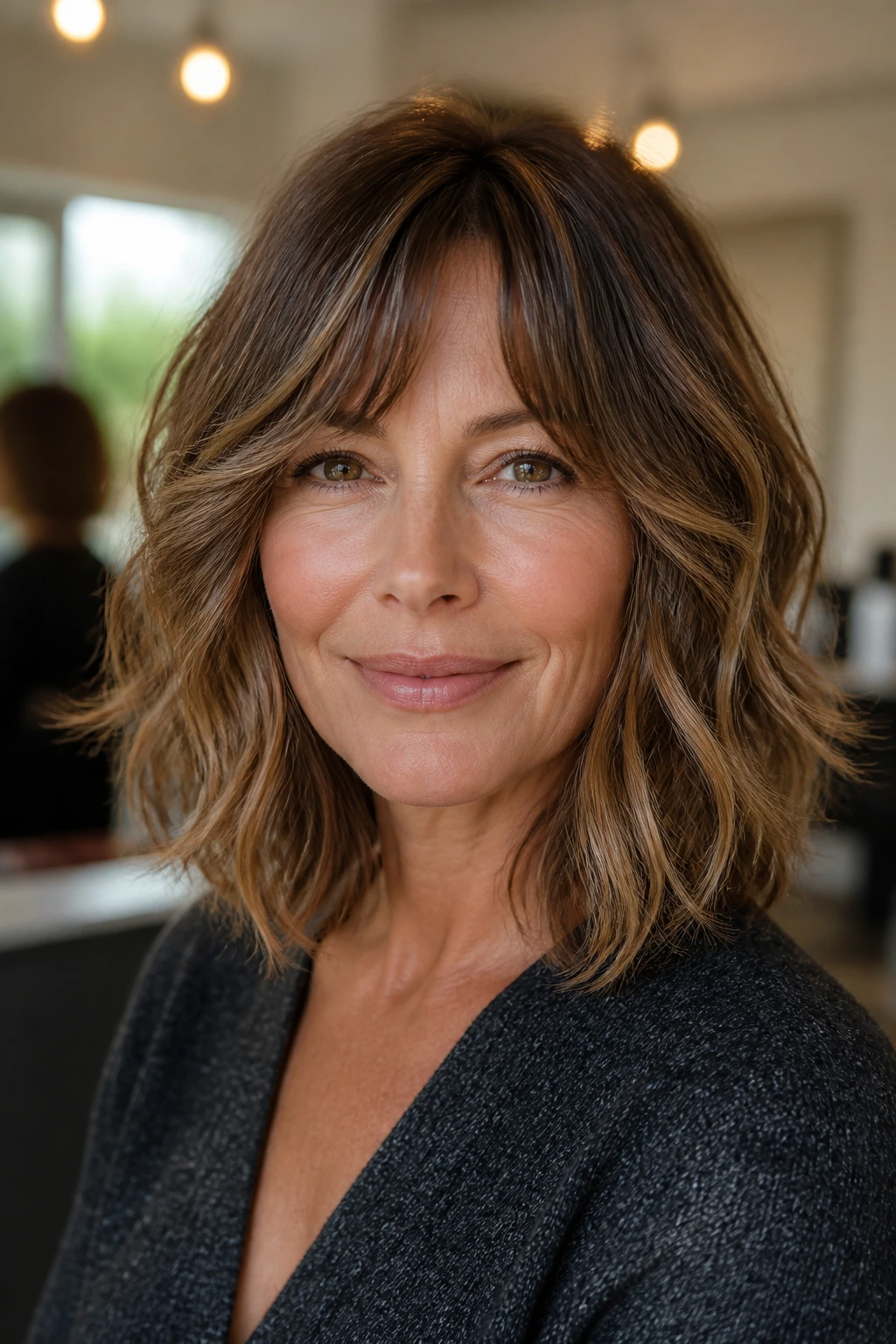
If you want the shortest answer possible, start with the collarbone waves, the curtain-bang lob, or the rounded shoulder-length layers. Those three cover a lot of ground without making the face feel boxed in, and they’re kind to hair that has gotten finer, drier, or less cooperative with age.
The bolder shapes — the shag, the wolf cut, the pixie-bob — are fun when you want more personality. The longer cascading versions are better if you’d rather keep length and let the wave pattern do the softening. Either way, the same rule keeps showing up: let the layers bend around the face, not stop on it.
That’s the whole game. Give the jaw a little room, give the cheekbones some movement, and let the cut work with the wave instead of against it.