



A good wavy haircut should still look shaped when you roll out of bed, mist the ends, and leave the house with one eye on the clock. That is why wavy haircuts with face-framing layers matter so much: they let the bend in your hair do the heavy lifting, then place the shortest pieces where the eye goes first.
The right cut can make a five-minute routine feel finished. Not because it is fussy. Because the front pieces fall around the cheekbones, jaw, and mouth in a way that looks intentional even when the rest of the hair is just air-dried and scrunched.
The wrong cut does the opposite. Too many layers and the ends puff. Too few and the wave collapses into a heavy curtain. The styles below live in that useful middle ground, where shape, movement, and low effort actually agree with each other.
Why These Cuts Work on Busy Mornings

-
The front does the talking: If the shortest pieces land at the cheekbone, lip, or jawline, the cut looks shaped even when the rest of the hair air-dries with a mind of its own.
-
Waves keep their bend without a fight: The right layer pattern removes just enough weight for S-waves to show up, so you do not need a round brush and a prayer before coffee.
-
Grow-out is less annoying: A good face frame still reads as deliberate after a few weeks of growth, which matters when trims do not happen on a neat little schedule.
-
The cut hides a rushed finish: A quick scrunch, a diffuser blast, or a single bend around the front sections can make the whole style look more polished than it really was.
-
Density gets managed instead of flattened: Thick waves get room to move, fine waves get a shape that does not disappear, and neither one has to spend the whole day looking overworked.
1. Chin-Length French Bob
The chin-length French bob is the cleanest little trick in this whole lineup. It sits right at the jaw, so the wave has room to curl in and out without dragging the face down, and the face-framing pieces can start just below the cheekbone for a soft swing instead of a hard shelf.
What makes it morning-friendly is the shape. You can air-dry it with a mousse, shake it once, and be done. Best for loose to medium waves, glasses, and anyone who wants the front to do the work while the rest of the cut stays short and easy.
Ask for: a soft perimeter at the chin, point-cut ends, and a little extra length in the front so the wave does not bounce up too much.
Skip it if: you hate trims. A chin-length bob grows out fast and starts to lose its line once the ends sit on the neck instead of the jaw.
2. Jawline Shag Bob
The jawline shag bob has a little more attitude, but it is not high-maintenance if the layers are placed with restraint. The shortest face-framing pieces skim the jaw and the outer layers are broken up just enough to keep thick waves from turning into a helmet.
It works because the cut gives the wave a place to break. You get movement around the face and enough texture through the body of the haircut that day-two hair often looks better than the first pass. That is not a theory. It is what shag bobs do when the layers are cut to move instead of frizz.
What to ask for: soft, blended layers; not a choppy mow-through with thinning shears. If the stylist starts making everything too wispy, stop them.
3. Collarbone Lob with Curtain Layers
A collarbone lob with curtain layers is the safe bet for anyone who wants shape without losing length. The hair sits long enough to tuck behind the ears or tie back, but the front pieces open at the cheekbones and drift toward the collarbone, which keeps the cut from feeling heavy.
This one is especially useful if your waves fall flat at the crown but get bulky at the ends. The collarbone length keeps enough weight to stop the sides from exploding, while the curtain layers give the front a soft bend after a quick diffuser pass or airdry. If you want one cut that can go from office to weekend without a second thought, this is it.
A middle part usually shows it off best, though a slight off-center part gives the face frame more lift. Either way, it’s a cut that looks like it understood the assignment.
4. Shoulder-Length Invisible Layers
Invisible layers are for people who hate hearing the word “layered” and still want movement. The trick is that the layers live inside the haircut, not all over the surface, so the outline stays full while the wave gets enough room to move around the face.
This is a strong choice for thick hair that wants to sit like a block. The ends stay polished, the front can be angled just enough to avoid a blunt wall, and the haircut still behaves if you do nothing more than scrunch in a light cream. It’s not flashy. It’s useful.
Ask your stylist for internal movement, not aggressive debulking. There is a big difference. One keeps the line; the other can leave you with fluffy ends and regret.
5. Long Butterfly Cut
The butterfly cut is the one people ask for when they want volume near the front without sacrificing length in the back. The shortest layers live around the face and upper crown, which makes the top half of the haircut feel lighter, while the bottom stays long enough to twist, clip, or wear down.
For wavy hair, that front framing matters. It gives the bend a place to show off near the eyes and cheekbones instead of hanging straight to the chest. If your mornings are rushed, you can rough-dry the roots, then let the rest air-dry with a bit of mousse and a couple of clips at the crown.
It does ask for some maintenance. Not a ton, but enough that the front pieces do not drift down into one flat curtain.
6. U-Shaped Long Cut
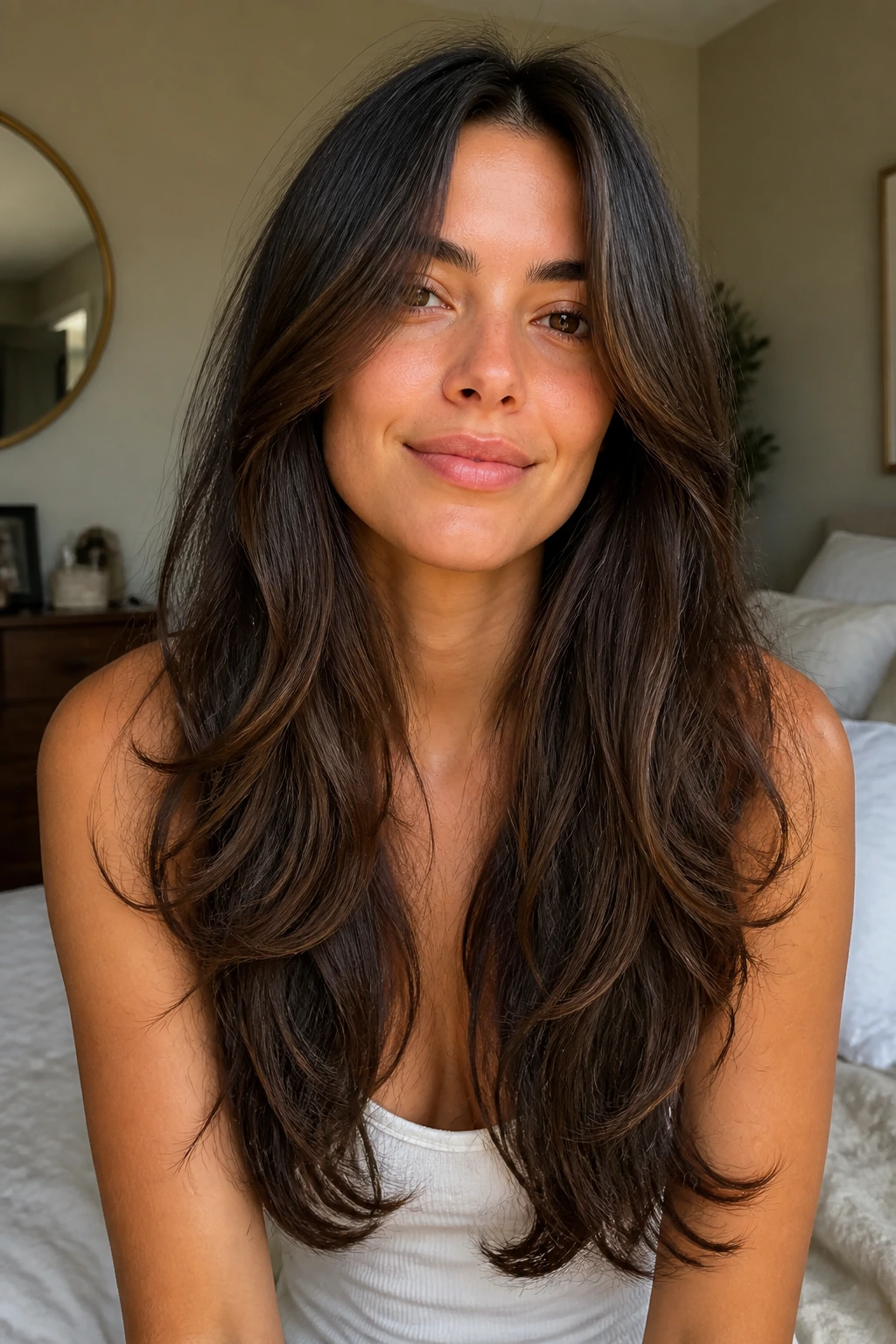
The U-shaped cut is what I recommend when someone wants length but gets tired of the triangle effect. The back keeps more weight, the sides come forward in a gentle arc, and the face-framing layers fall in a way that softens the outline without making the haircut look heavily styled.
This one is especially kind to people who wear their hair half-up a lot. The shorter front pieces sit out of the way without turning the whole front into flyaway chaos, and the deeper curve in the back keeps the length from feeling thin. It’s a long-hair haircut that actually remembers you have to live with it.
If your waves are fine, keep the front layers conservative. Too short, and the pieces can sit awkwardly above the rest of the length.
7. Air-Dry Midi Shag

The air-dry midi shag is the easygoing cousin in the group. It usually lands somewhere between the shoulders and collarbone, with enough layering to make the waves stack into shape, plus a face frame that starts where your natural wave pattern already wants to bend.
That’s the part people miss. Good shag cuts do not fight the wave; they meet it halfway. When the layers are cut to follow the curve of the hair, the result is a style that can dry on its own and still look like someone worked on it for ten minutes.
A diffuser helps, but it is not mandatory. The cut should hold its own with a scrunch, a little root lift, and a patience level that most of us can manage before breakfast.
8. Side-Part Volume Lob

A side-part volume lob gives you instant lift without asking for much else. The deeper part pushes more hair to one side, which creates a natural root bump, and the face-framing layers can be angled to follow that sweep so the cut looks fuller around the eyes and temples.
This is a smart fix for waves that collapse flat on top. A center part can make them look dragged down; a side part turns that same texture into shape. If you like the feeling of your hair moving when you turn your head, this cut gives you that swing.
Use a lightweight mousse at the roots and a touch of cream on the ends. Heavy product kills the whole point.
9. Bottleneck Bang Midi

Bottleneck bangs with wavy lengths are for people who want a little softness around the face without committing to a full fringe. The bangs stay shorter at the center, then open out toward the cheekbones, which makes the cut feel airy instead of boxed in.
On wavy hair, this works because the fringe can be styled with almost no precision. A quick twist while damp, a bit of air-drying, and the front pieces settle into a bend that flatters the eyes and breaks up a wide forehead. It’s one of the few bang styles that doesn’t punish you for being late.
The catch is upkeep. Even a soft fringe needs a trim before it starts poking into your lashes or splitting down the middle in a weird, tired way.
10. Razor Lob with Tapered Ends
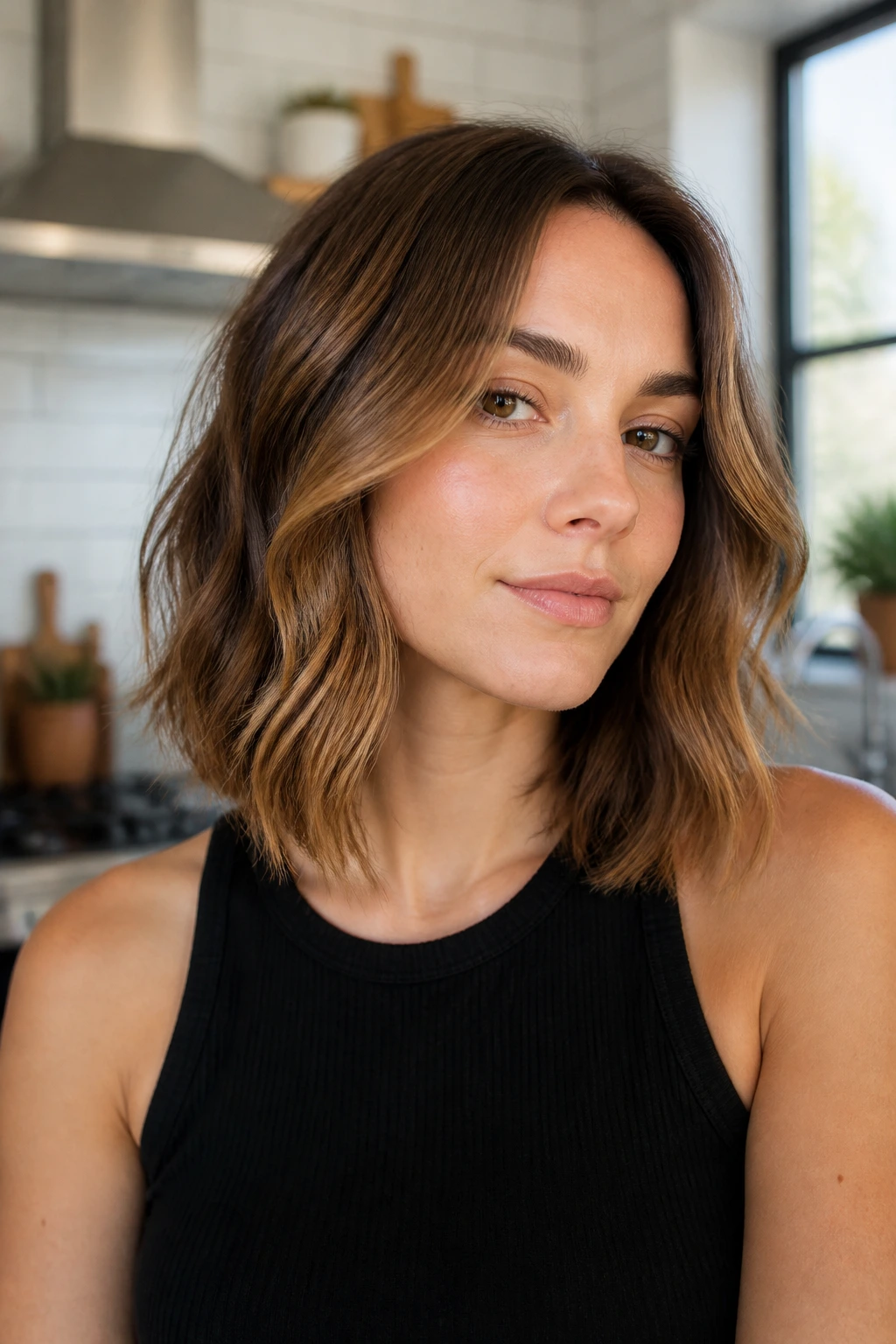
The razor lob has a cleaner, softer edge than a blunt lob, and that matters when your waves want movement but not puff. Tapered ends keep the bottom from looking heavy, while the face frame can be cut to skim the cheekbones and then narrow toward the jaw.
It’s a good choice for medium to dense hair that feels bulky by the end of the day. The razor work can remove some visual mass, but only if it is controlled. Done well, the haircut falls in loose, fluid pieces; done badly, it frays. There is no middle ground with a heavy-handed razor.
Best with: a smoothing cream or a light gel-cream hybrid. Too much oil near the front makes the shape disappear.
11. Soft Wolf Cut
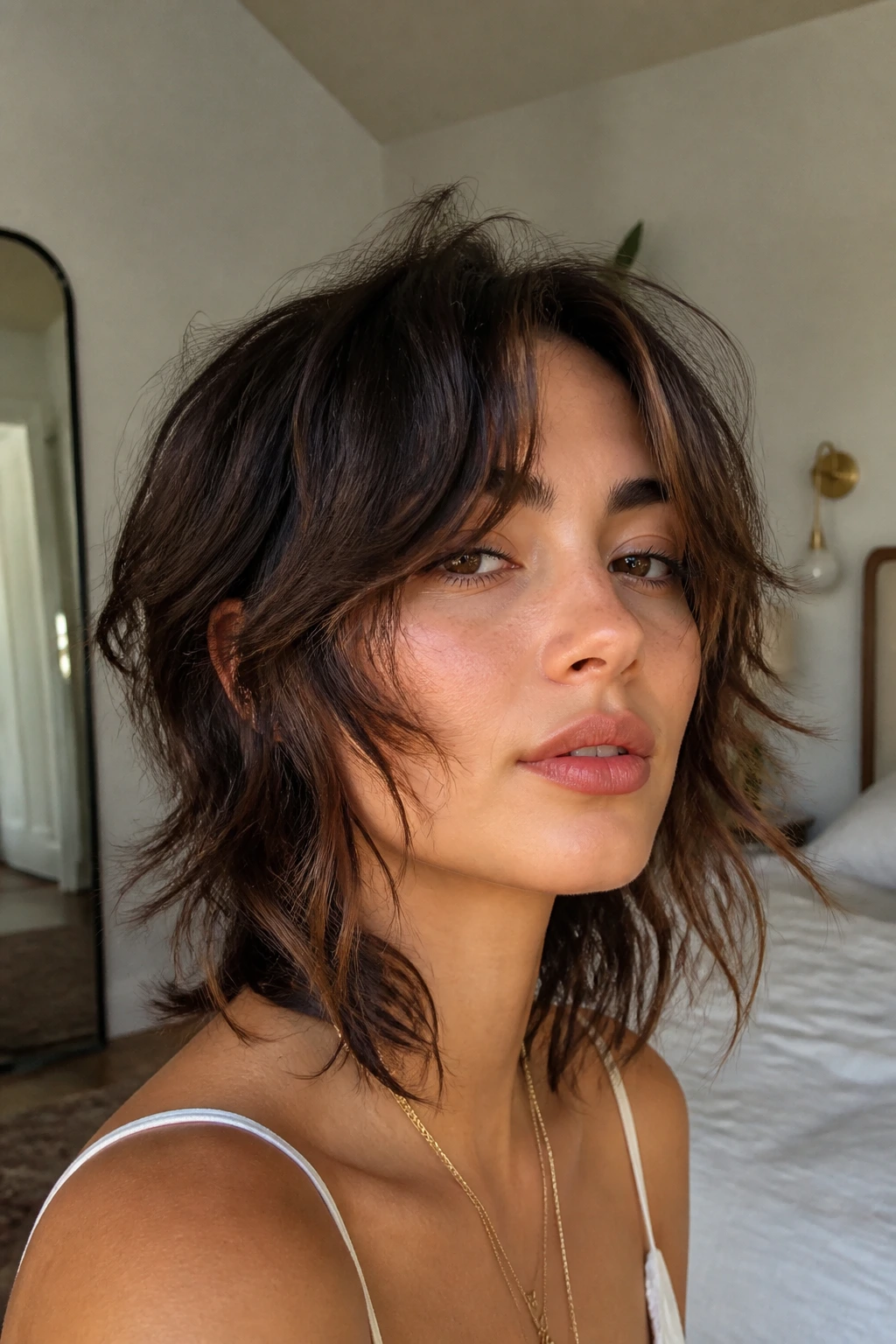
The soft wolf cut takes the rougher edges of a wolf cut and turns them down a notch. The crown gets some lift, the nape keeps a little length, and the face frame falls in uneven but flattering pieces that make waves look energetic rather than over-styled.
Busy mornings like this cut because it does not demand neatness. You can rough-dry, scrunch, and let it be a little wild. In fact, the haircut usually looks better when the pieces are slightly separated instead of brushed into submission.
If you want something that reads a little cooler and less polished, this is the one. If you want sleek and tidy, move along.
12. Rounded Bob with Cheekbone Flicks
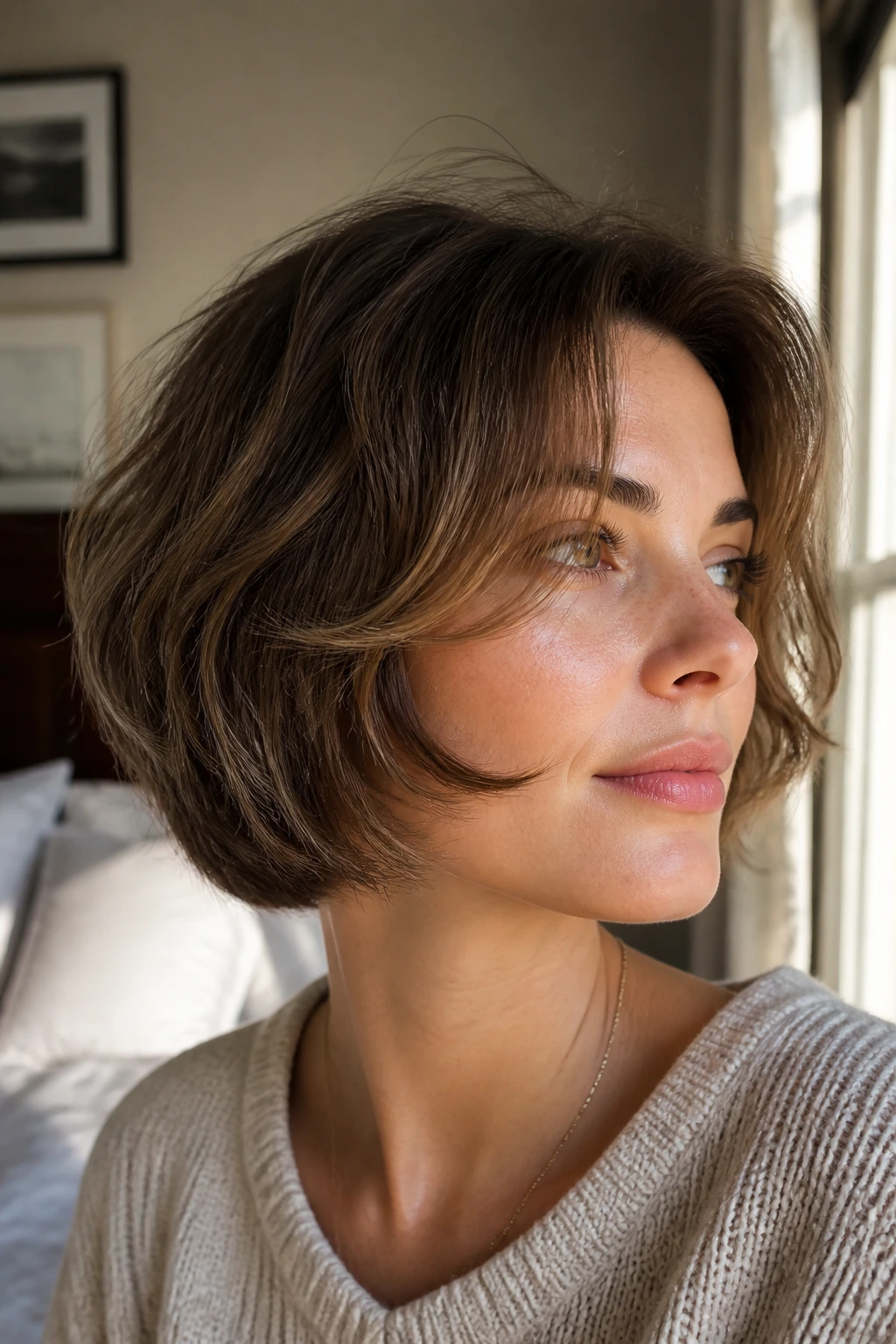
A rounded bob with cheekbone flicks is the friendliest short cut for wavy hair that needs direction. The outline is softly curved instead of square, so the wave follows the shape of the haircut instead of pushing outward at the sides.
The cheekbone flicks matter more than people think. They bring lightness to the front, which keeps the bob from sitting too heavily around the mouth or chin. That little upward movement near the face makes the whole haircut feel more open.
This shape is especially nice for round or square faces because it softens the edges without hiding them. The only real caution: don’t let the stylist over-thin the interior, or the bob can lose its roundness and start looking ragged.
13. Long Layers with Face-Frame Panels
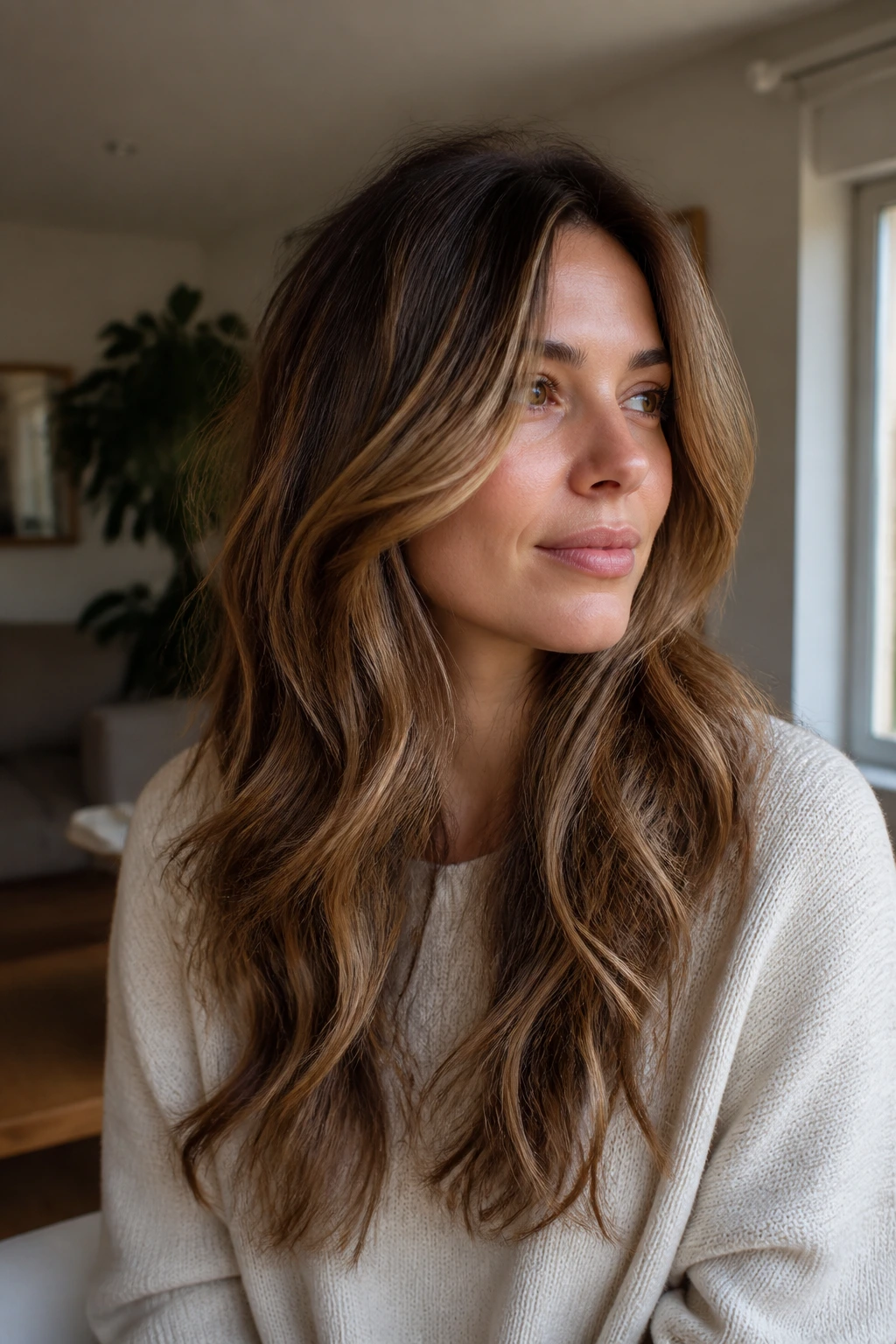
Long layers with face-frame panels are the classic answer when someone says, “I want movement, but I’m not cutting it all off.” The panels around the face can start at the cheekbone or lip line, then taper into longer lengths that keep the rest of the hair feeling full.
This works well for people who wear their hair down most days and want the front to do more of the visual work. The haircut doesn’t scream for attention. It just quietly gives the wave a better shape, which is often what long hair needs most.
If your waves are thick, ask for controlled layering through the interior. If they’re fine, keep the panels softer and longer so the ends don’t go see-through.
14. Blunt Lob with Soft Front Corners

The blunt lob with soft front corners is for anyone who likes the clean line of a one-length cut but still wants a little face framing. The perimeter stays solid, which helps the haircut keep weight and shine, while the front corners are softened enough to keep the wave from looking boxy.
That combination is gold for frizz-prone hair. A blunt line gives the ends structure, and the front corners stop the style from feeling severe. You get a shape that can survive a humid day without turning into puffball territory.
It is also one of the easiest cuts to style fast. A quick bend at the front, a squeeze of cream through the ends, and done.
15. Textured Pixie Bob

The textured pixie bob sits in that short zone where the hair is still enough to tuck, clip, and shake around, but not long enough to demand a full styling session. The face frame is short and lively, usually ending around the cheekbones or jaw, and the back stays cropped so the whole cut feels light.
This is the boldest option in the group, and it’s a good one if you are tired of spending time on length you never really wear. Wavy hair gives the pixie bob some softness, which keeps it from looking too neat or too severe.
It does ask for regular trims. Short hair shows every millimeter of growth. If that sounds annoying, pick a lob instead.
16. Mid-Back Layered Length
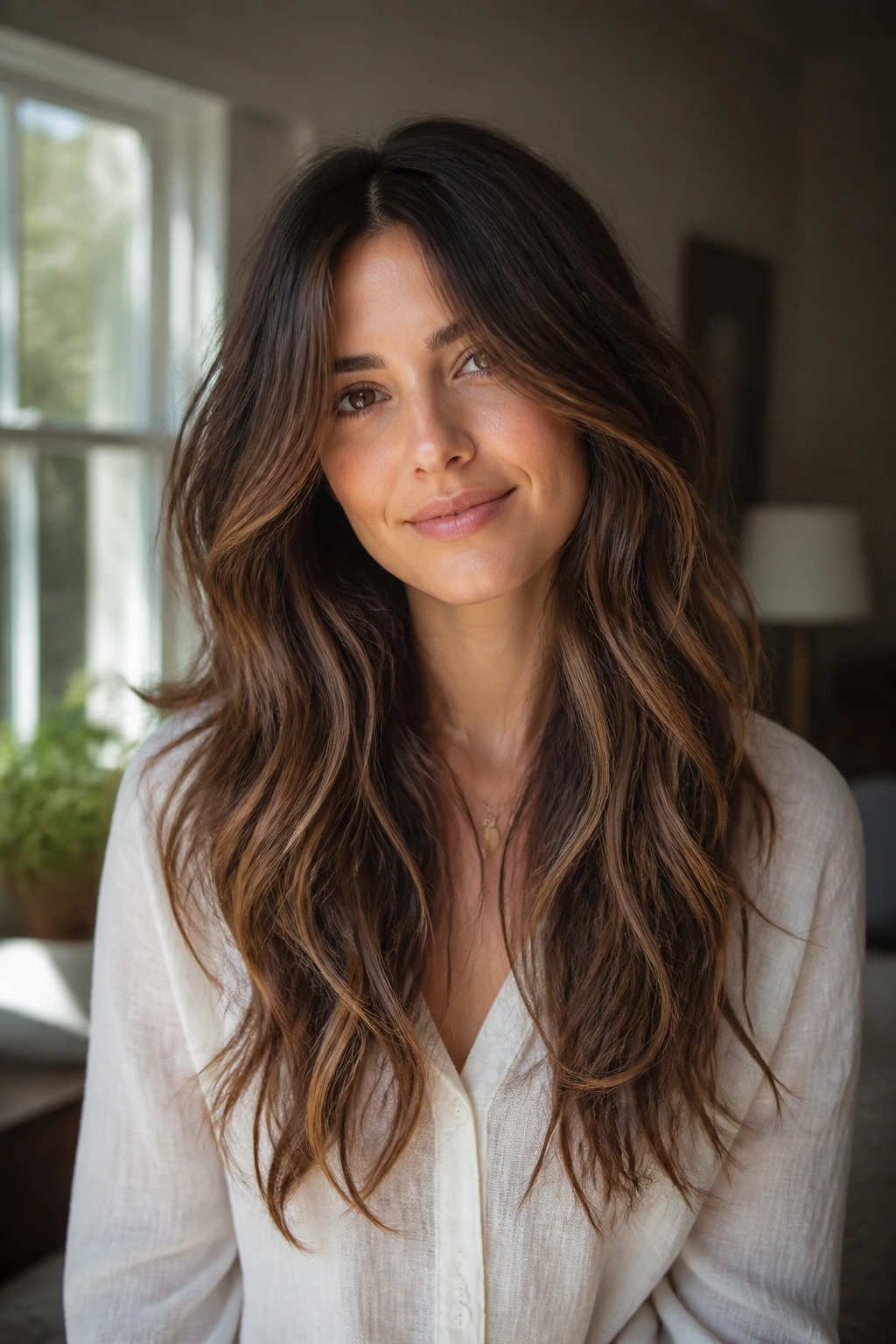
Mid-back length with layers is for the person who refuses to give up length but still wants the front to stop falling flat against the face. The layers should be long and strategic, starting low enough to keep density through the body and high enough to create a face frame that moves when you do.
This cut is deceptively practical. You can wear it down, pull it into a low ponytail, twist it into a clip, or leave it half-dry and still look like you meant to. The front panels do the visible work, while the back stays long and easy to tie away on busy days.
If your hair is very fine, keep the layers soft. Too much removal at this length can make the ends look sparse.
17. Flipped-Under Shoulder Cut
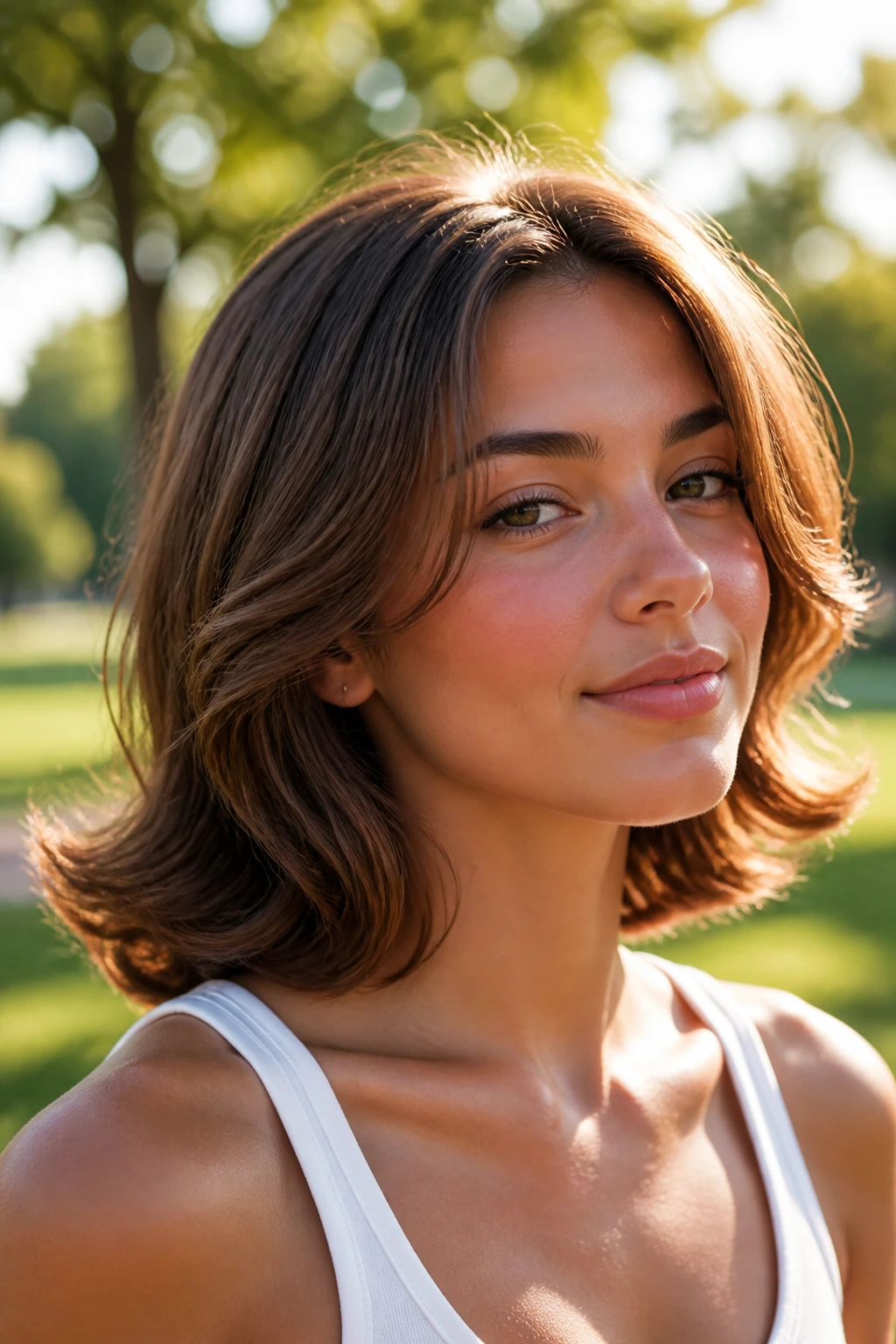
The flipped-under shoulder cut has a subtle vintage bend to it, but it works beautifully on wavy hair because the ends naturally curve instead of sticking out. The front frame usually starts around the lip or chin, then falls into shoulder-grazing layers that help the wave settle inward.
It is a useful shape if your hair tends to flip in random directions. Rather than fighting that, the cut uses it. A small brush pass or a quick twist with a big roller can guide the front pieces under, and the rest of the wave falls into a clean outline.
This is one of those cuts that looks a little more polished without asking for a full blowout. Small effort. Big difference.
18. Grown-Out Shag

A grown-out shag is what happens when the cut is designed to survive imperfect trimming. The front pieces are still visible and flattering, but the layers are long enough that the haircut keeps its shape as it grows, which is a blessing if your salon visits drift.
For wavy hair, that forgiving grow-out matters. The texture only gets a little softer over time instead of collapsing into a shapeless mess. That makes this cut a smart choice if your schedule is messy or if you simply do not want your haircut to fall apart between appointments.
It reads casual in a good way. Not neglected. Just lived-in.
19. Diagonal Lob
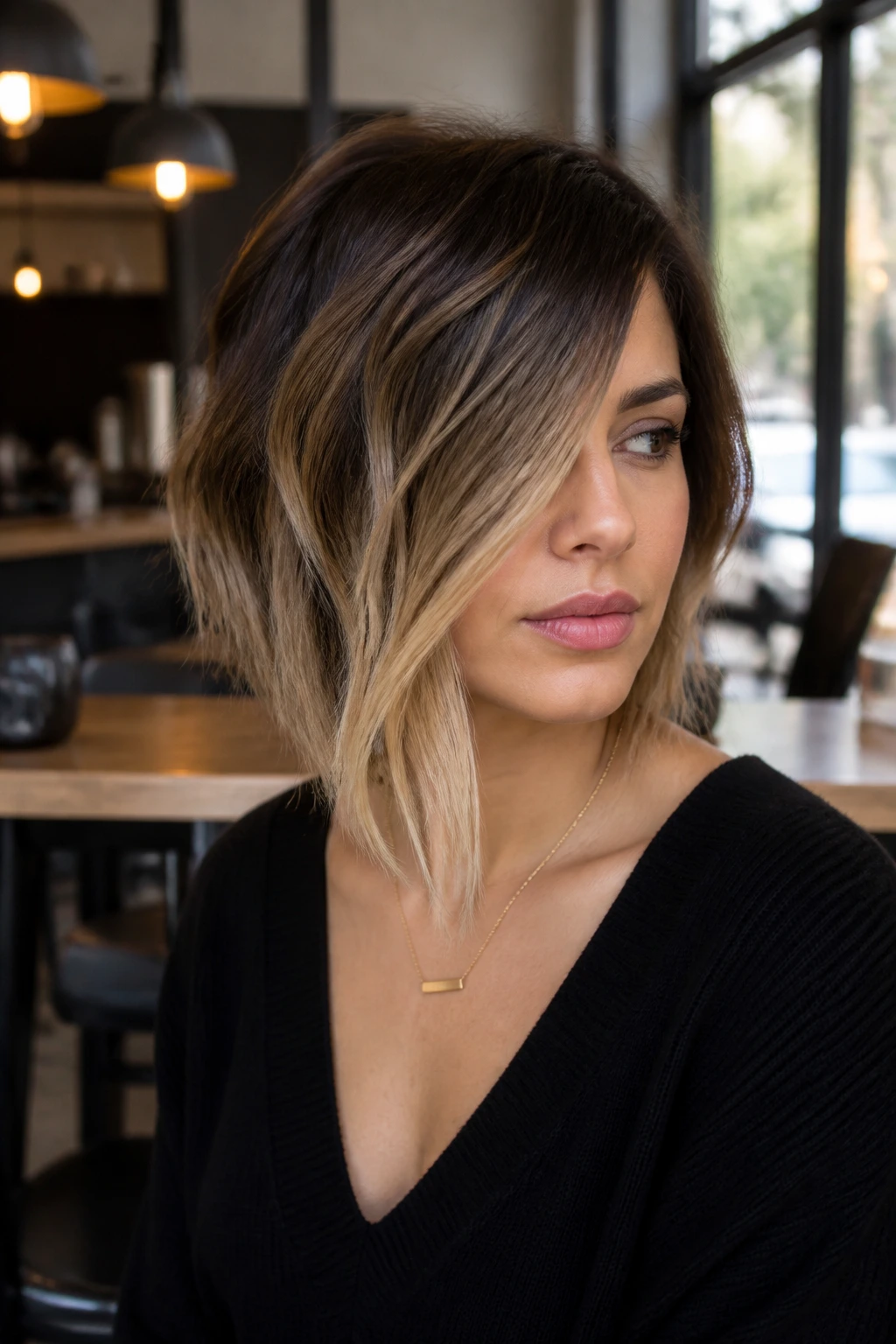
A diagonal lob runs slightly shorter in the back and a touch longer in the front, which gives wavy hair a cleaner line and a little swing near the face. That diagonal shape is enough to make the cut feel intentional even when you do almost nothing to it.
It’s a nice option for side parts, because the longer front side creates movement where the eye lands first. If your waves have a habit of puffing around the cheeks, this shape trims that weight without stripping away length from the whole head.
I like this one for people who want a haircut that looks modern but not loud. It does its job and leaves.
20. Halo Layer Cut
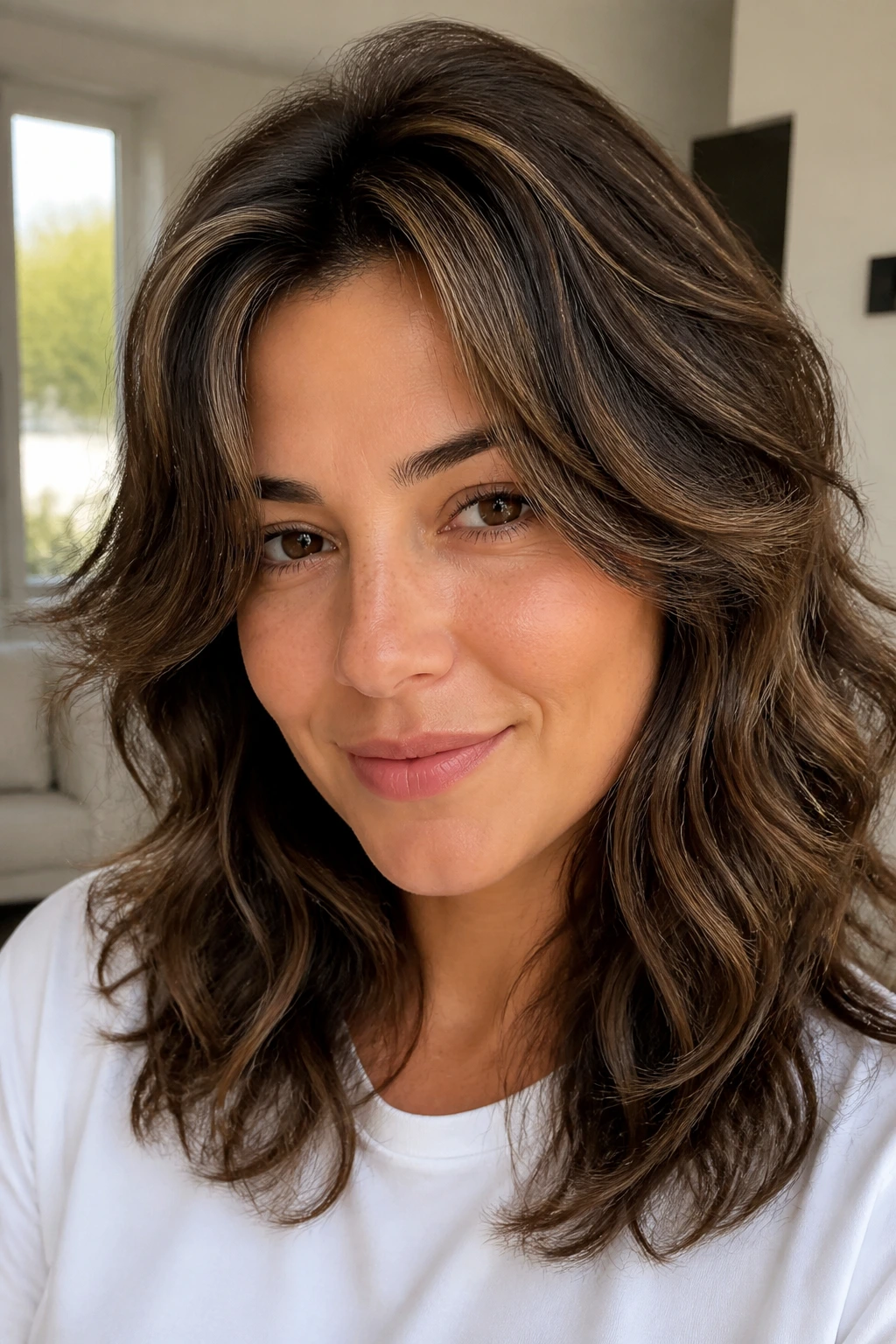
The halo layer cut is a quiet fix for flat roots and heavy sides. The layers are placed higher around the top and upper sides, which creates a soft lift that seems to circle the head, while the face frame keeps the front from dropping straight down.
It works best when you want volume without a lot of obvious choppiness. The haircut should move when you turn your head, not separate into obvious steps. If the layers are cut too aggressively, the halo turns into frizz. Keep the blending soft.
A little root spray at the crown helps, but the cut should still hold the shape on its own.
21. Heavy-Length Cut with Feathered Front
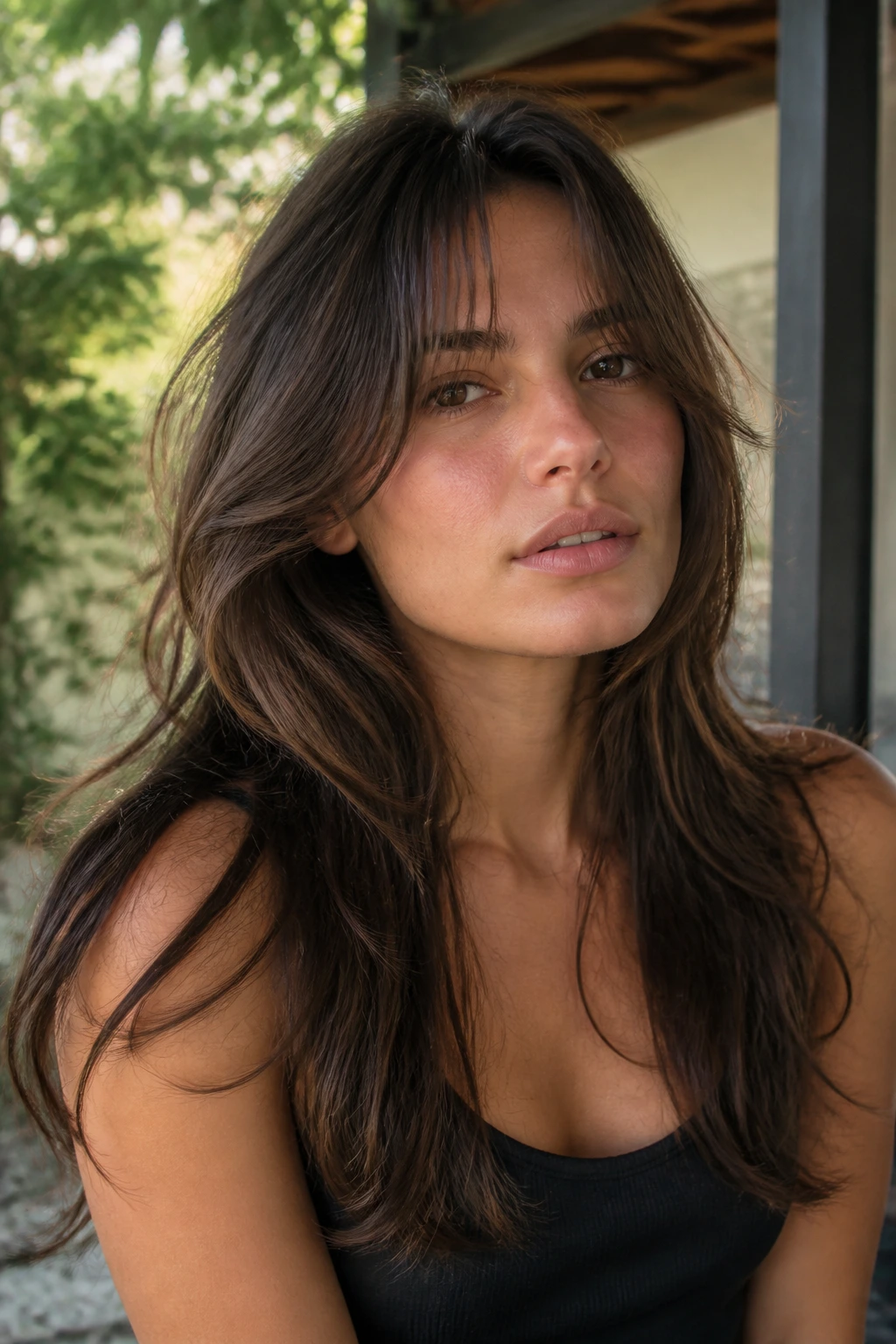
This one is for thick, dense waves that need weight left in the haircut. The perimeter stays substantial so the ends do not puff out, and the face frame is feathered just enough to keep the front from feeling severe or too boxy.
That balance is the whole point. You get length, polish, and a softer edge around the face without carving the whole haircut into pieces. If your hair tends to expand in humid weather, keeping more weight through the ends is often smarter than chasing layers everywhere.
Ask for feathering only where the movement is needed. Not throughout the whole head. Less is more here.
22. Tucked-Behind-Ear Bob
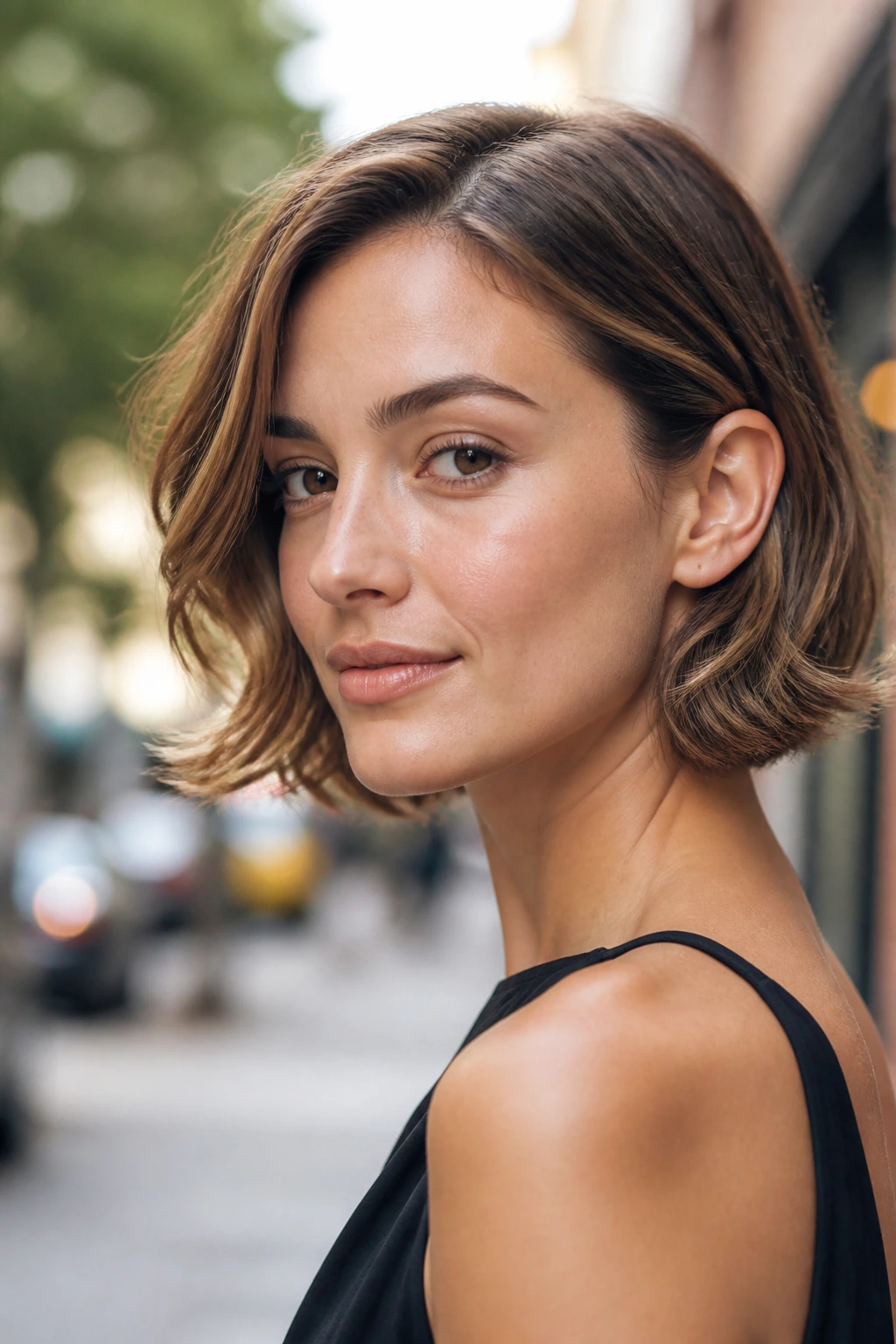
A tucked-behind-ear bob is one of those cuts that looks simple until you realize how much work it does. The face-framing pieces are trimmed so they sit neatly around the cheekbone and jaw, then tuck cleanly behind the ears without bulking up.
This is a strong choice if you wear glasses, earrings, or both. The front stays neat enough to stay out of your way, but the waves still have enough looseness to avoid looking stiff. On rushed mornings, it gives you a finished shape with almost no styling.
Ask for a little extra length in the front if your ears protrude or if you like to tuck one side and let the other fall. That tiny adjustment changes the whole balance.
23. Airy Shoulder Crop

An airy shoulder crop sits right on the shoulder line, but it is cut with enough internal movement to keep the waves from stacking into a block. The face frame usually begins at the cheekbone and softens toward the shoulders, which gives the front a light, easy swing.
It’s a good match for medium-density waves that need motion more than volume. The crop keeps the shape compact, which means less time detangling in the morning and fewer ends to fight with a brush. Air-dry it, scrunch it, and let the cut do the rest.
If you want a style that feels casual but not sloppy, this one earns its place.
24. Drop-Curl Layers
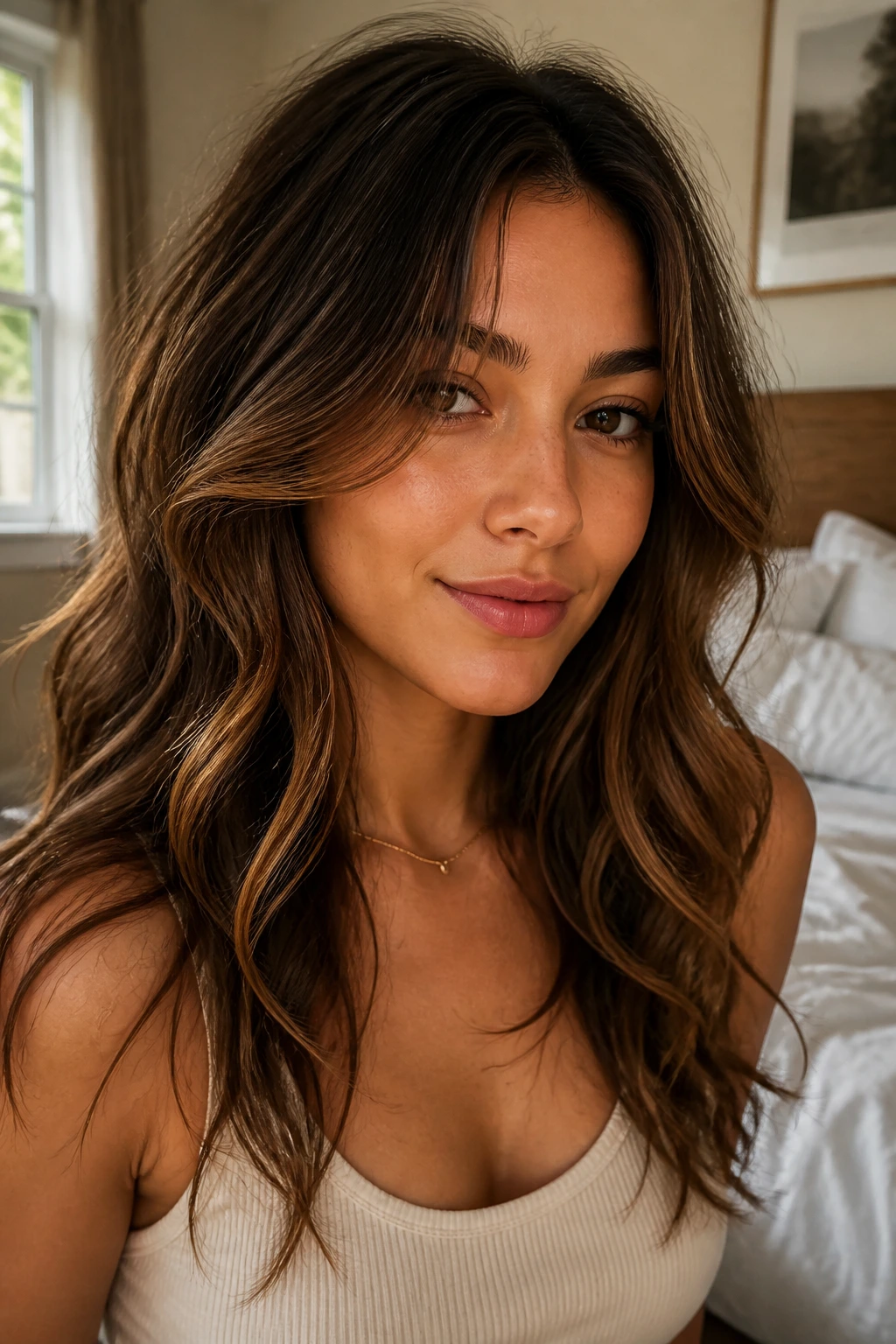
Drop-curl layers are placed to encourage the wave to fall downward instead of puffing outward. The front pieces are usually kept long enough to frame the face softly, while the internal layers guide the bend into a more vertical shape that looks cleaner after air-drying.
This is especially helpful for hair that starts wavey at the roots and then gets fuzzy through the mids. The cut helps the curl pattern “drop” into a smoother S-shape. You can reinforce that with a little curl cream and a microfiber towel, but the structure starts in the scissors.
It is a thoughtful cut, not a showy one. That’s the appeal.
25. Low-Lift Long Cut
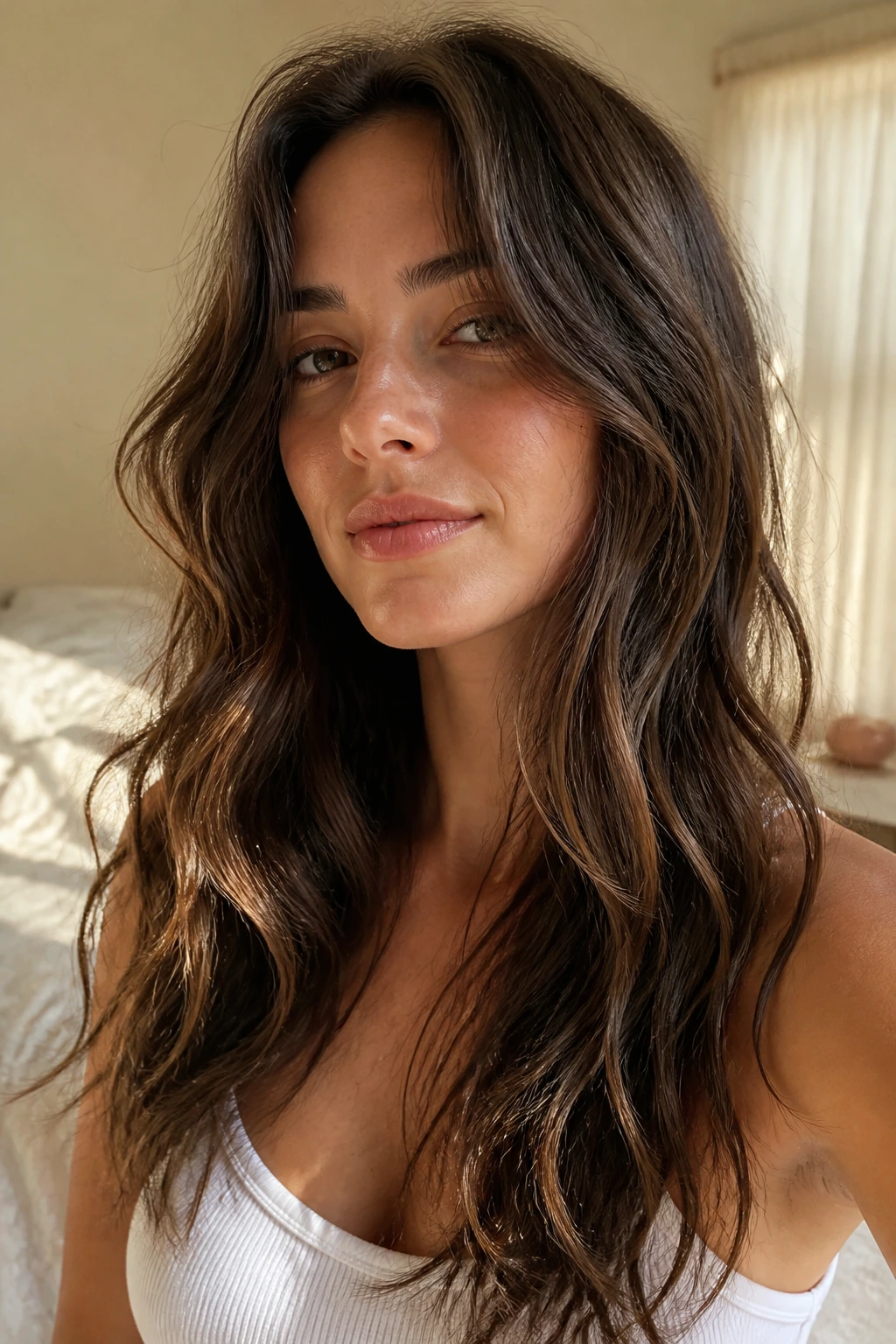
The low-lift long cut is the calmest option of the entire group. It keeps most of the length intact, adds just enough face framing to stop the front from hanging like one solid curtain, and leaves the rest of the hair largely unbroken so it is easy to wear down or pull back.
This is the cut for people who want the smallest possible change with the biggest possible payoff. The wave still shows up, the face gets a bit of shape, and the morning routine stays short. No drama. No over-layering. No weird grow-out line two weeks later.
If you like long hair but want it to look a little more alive, this is where to stop shopping.
Why Face-Framing Layers Make Wavy Hair Work Faster
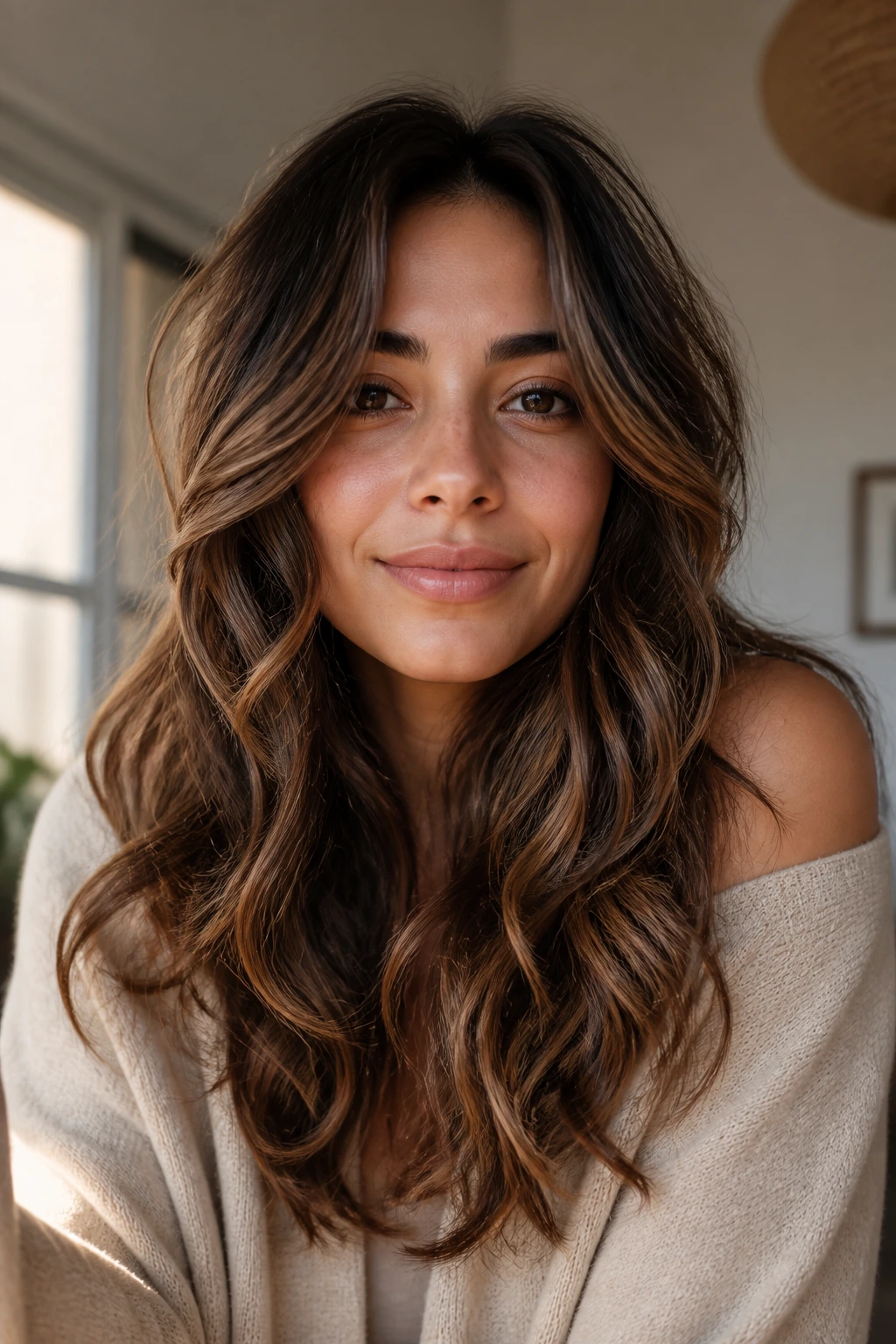
The reason face-framing layers matter is simple: they move the visual weight of the haircut to the front, where people notice it first. Waves are already doing interesting things around the face, so the best cut does not flatten them out and pretend they’re straight. It gives them a place to bend, swing, and soften the outline.
That is why a good stylist talks about placement, not just layers. A face frame that starts at the cheekbone gives a different mood than one that starts at the chin. The cheekbone version opens the face. The chin version adds length and softness. On wavy hair, those small differences change how much work you need to do every morning.
The other piece is weight. Wavy hair gets weird when the balance is off. Too much weight and the wave droops into a triangle. Too little and the ends balloon out. A smart cut leaves enough structure that you can air-dry without building a whole styling routine around it. That’s the whole appeal, and it’s why these cuts keep showing up in real life instead of just looking nice in photos.
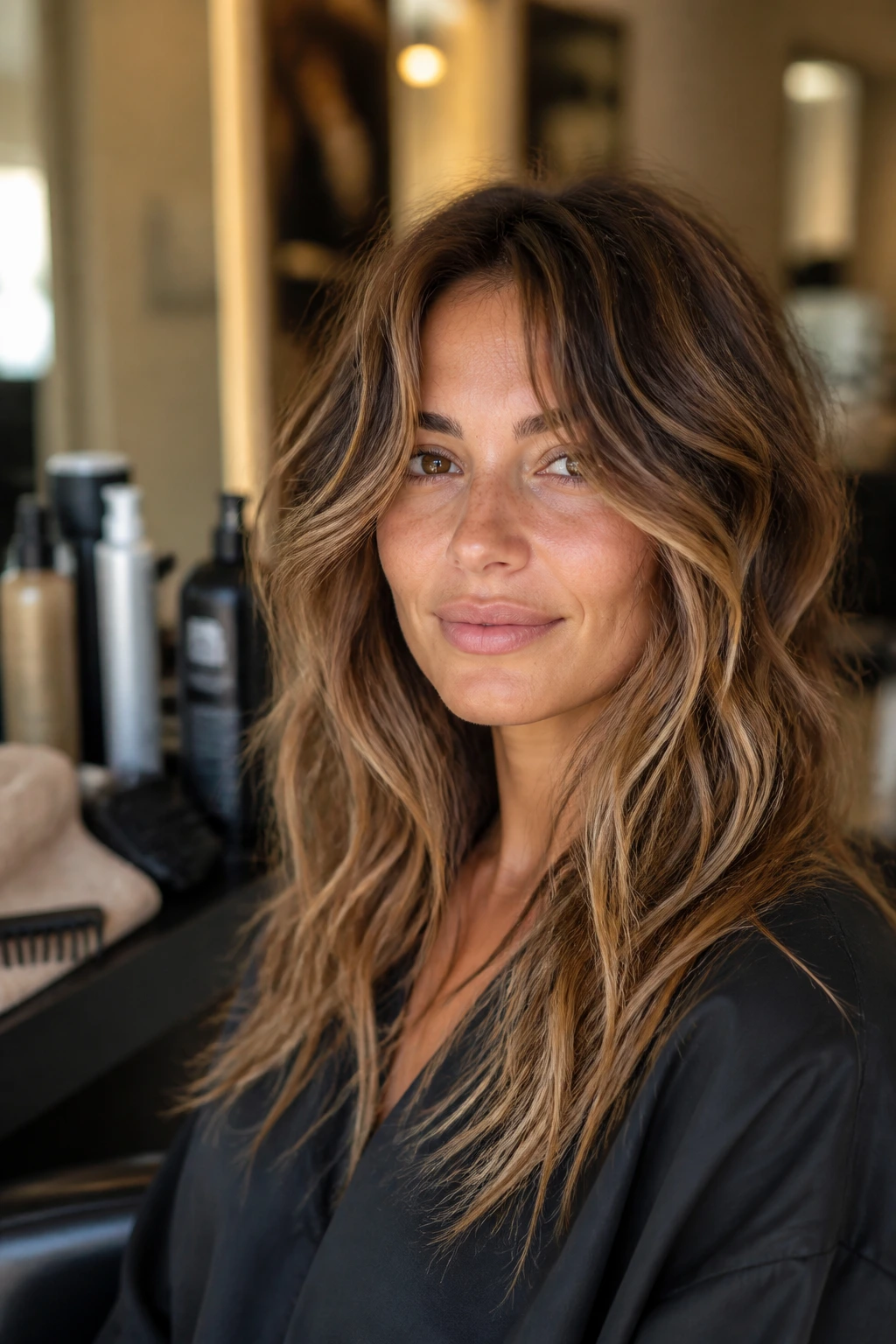
Essential Tools for These Haircuts
-
Wide-tooth comb: Best for detangling waves in the shower without pulling out the bend you already have.
-
Microfiber towel or cotton T-shirt: Cuts down on frizz and keeps the front layers from puffing while they dry.
-
Lightweight mousse: Gives lift at the roots and hold through the mids without making waves feel sticky.
-
Curl cream or leave-in conditioner: Useful for softening the face frame and helping waves clump instead of separating into frizz.
-
Diffuser attachment: Not required for every cut, but it makes shaggy and layered shapes dry faster with better definition.
-
Duckbill clips or claw clips: Helpful for setting the top at the crown while the rest air-dries.
-
Heat protectant spray: Worth using if you smooth the front with a brush, a dryer, or a quick iron pass.
-
Satin pillowcase or bonnet: Keeps the face frame from getting crushed overnight and saves you from reworking the same pieces every morning.
How to Ask for Face-Framing Layers at the Salon
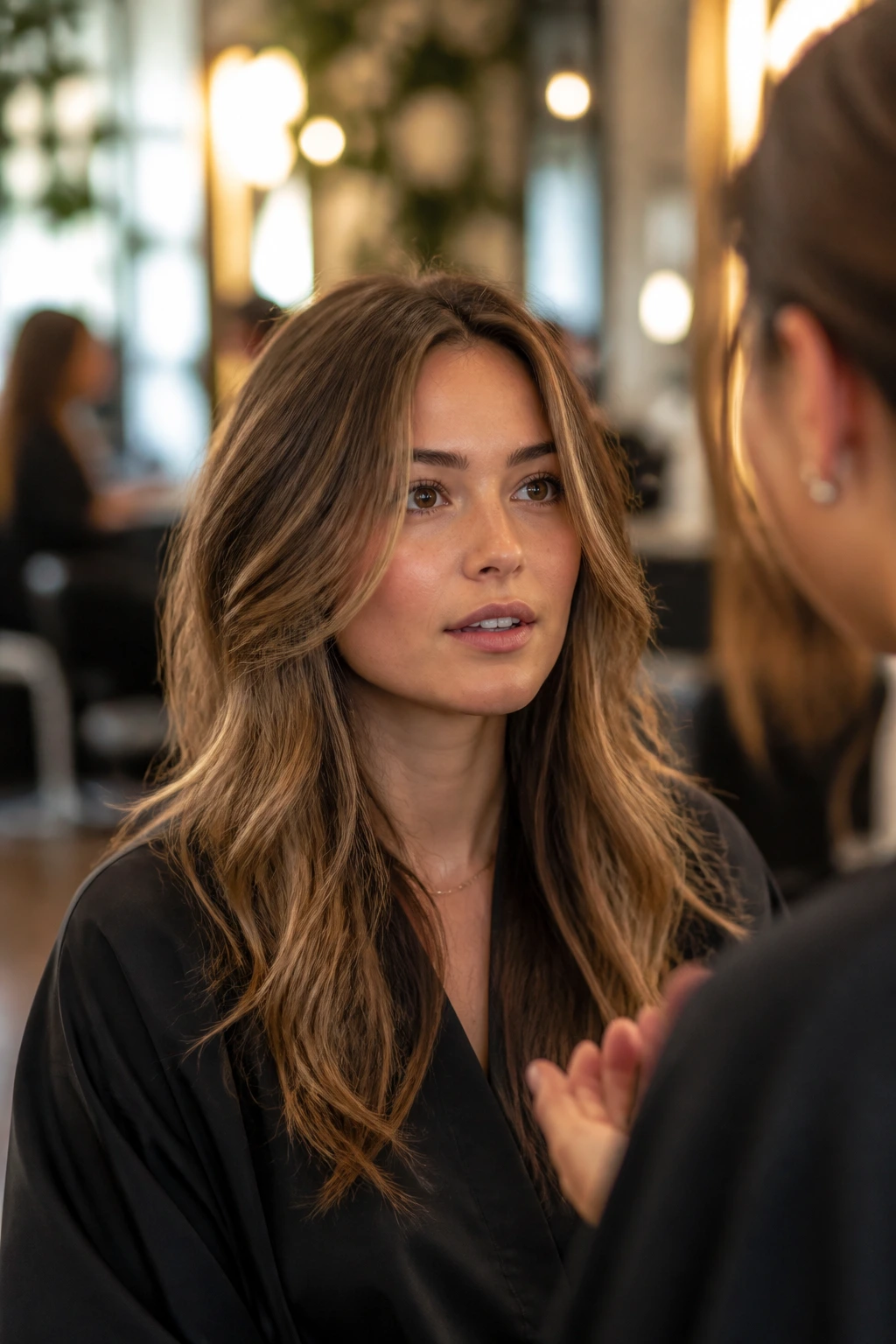
A good haircut starts before the scissors do. Bring photos, yes, but bring ones that show the front, not just the glossy finished shot from the front. You need to know where the shortest pieces fall when the head turns, because that is where the haircut lives in real life.
Ask the stylist to tell you exactly where the face frame begins. Cheekbone, lip, chin, or jaw are all different answers, and they do not mean the same thing on wavy hair. If your hair is fine, ask for softness and internal movement instead of aggressive thinning. If it is thick, ask for controlled weight removal and point cutting so the ends stay clean.
The product question matters too. A mousse gives lift. A cream gives softness. A gel gives hold and better clumps in humidity. If your hair gets puffy the second it meets air, a richer cream can actually make it worse by weighing down the roots and separating the wave. I’d rather see a light mousse plus a tiny bit of cream on the ends than a heavy product cocktail that turns the front into soup.
How to Wear These Cuts Day to Day
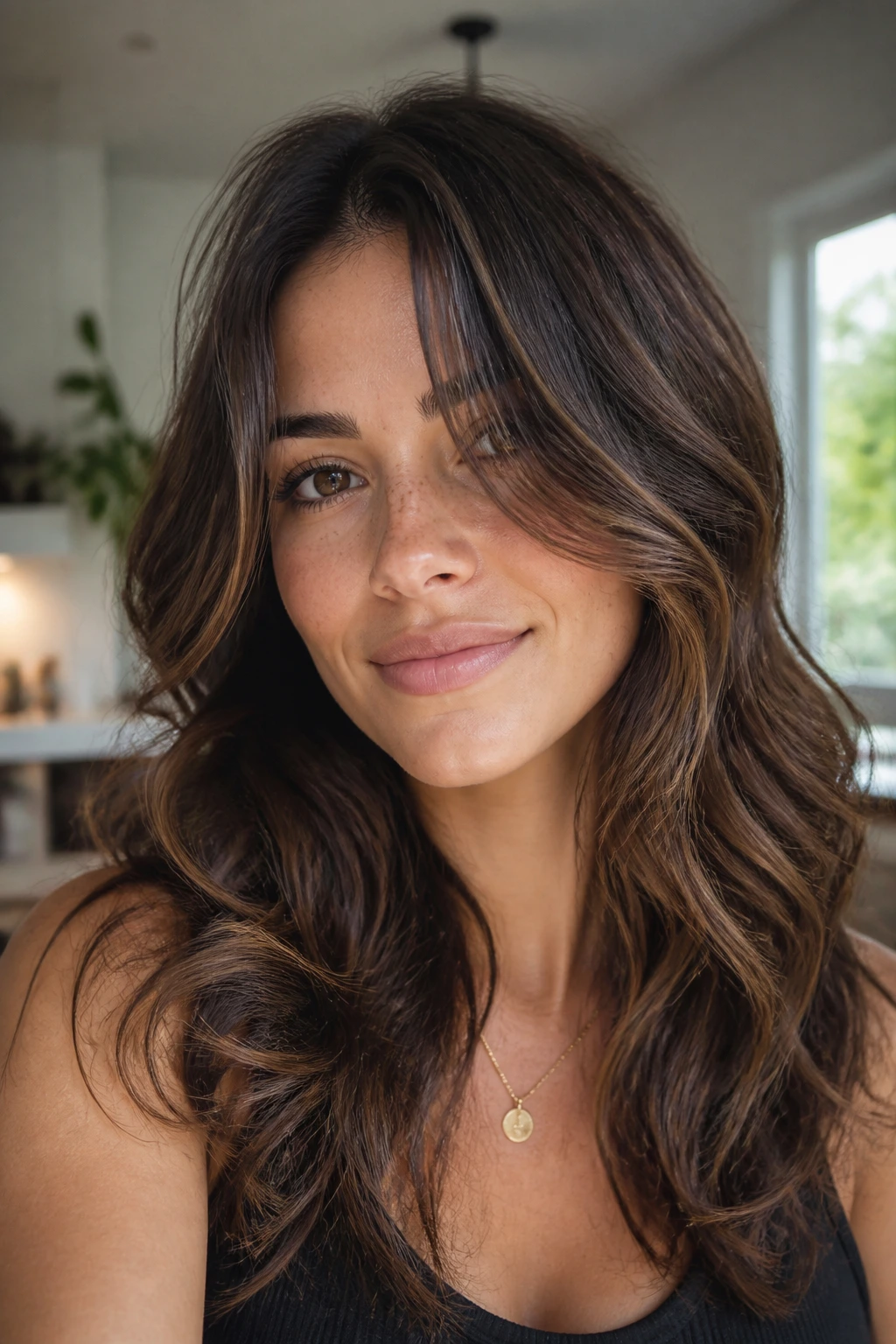
Presentation: Keep the part where the front layers naturally fall, then decide whether you want the face frame to sit open, tucked, or slightly draped across the cheekbones. A middle part gives curtain shapes more symmetry; a side part adds lift and changes the whole read of the haircut.
Accompaniments: Small claw clips, satin scrunchies, slim headbands, and simple barrettes all play well with these cuts. Thick decorative clips can overwhelm a short bob, but a tiny metal clip at the temple can tame one front piece without hiding the shape.
Fit: If your face is round, longer front pieces help stretch the outline a bit. If your face is long, start the frame higher so the hair opens around the eyes and cheekbones. Square faces usually like softened corners near the jaw, while heart-shaped faces often look balanced with pieces that sweep toward the mouth.
Routine Match: If your morning budget is under ten minutes, choose the lob, the shoulder crop, or the long layers. If you are willing to diffuse for five to seven minutes, the shag, wolf cut, and bottleneck bang styles give more texture for the effort.
Small Styling Tweaks That Change Everything

Volume Boost: Flip the part one inch off center and clip the crown while the hair is still damp. That tiny move lifts the roots without making the whole shape look stiff.
Texture Boost: Scrunch in mousse, then stop touching the hair once the top layer looks evenly coated. The less you rake through it, the better the waves clump.
Face-Frame Tweak: If the front keeps falling into your eyes, ask for the shortest piece to hit the cheekbone instead of the chin. That one adjustment changes how much you need to pin or tuck it.
Make-It-Yours: Fine hair usually needs fewer layers and lighter product. Thick hair likes more internal movement and stronger hold. Curly-wavy hybrids often do best with a dry cut or at least a final dry check so the front pieces don’t shrink up too far.
Speed Saver: Sleep in a loose pineapple, then refresh the front with a fine mist of water and a pea-size amount of cream. You do not need to start from scratch every morning.
Night Care, Wash-Day Planning, and Refreshing

Most of these cuts are happier when you stop over-washing them. Wavy hair usually settles into better shape on day two, and a good face frame often looks softer after the first sleep because the pieces lose that too-perfect dampness. If you can wash every two or three days, great. If you stretch to four, a satin pillowcase and a clipped crown help a lot.
The overnight routine should be simple. Loosely gather the top section with a satin scrunchie, or sleep with the hair spread flat over the pillow if the cut is short enough to stay put. If the bob is chin-length or shorter, a soft silk wrap or bonnet can stop the front from bending into odd angles. That matters more than fancy styling tricks.
For refreshing, mist the face frame lightly, add a dab of product to the mids, then scrunch until the wave wakes up again. A diffuser for two to four minutes near the front can reset the shape if it’s gone flat. As for trims, short bobs usually need attention every six to eight weeks, lobs every eight to ten, and long layered cuts can stretch a little longer if the shape stays intact.
Common Mistakes with Face-Framing Layers on Wavy Hair
-
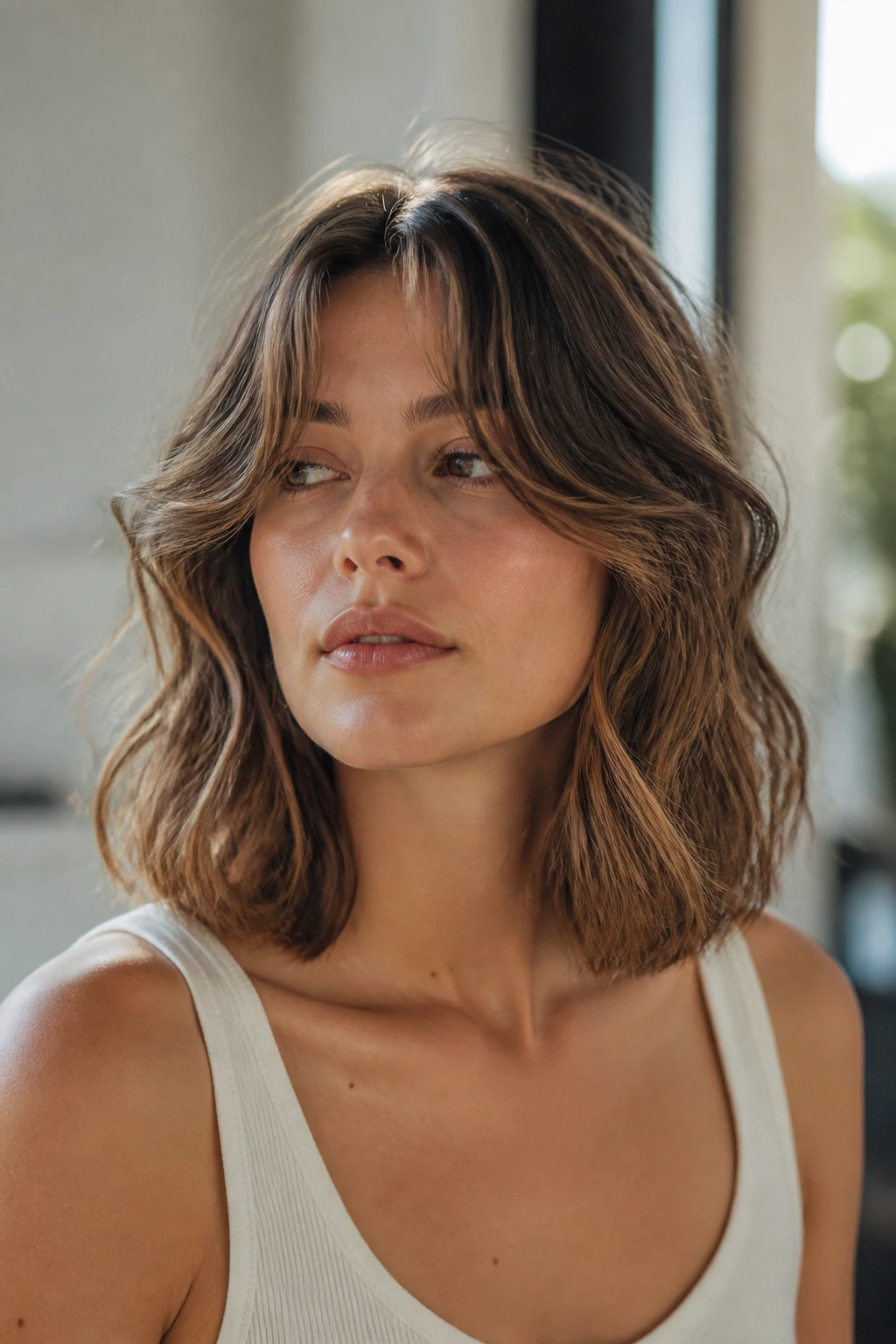
Cutting the front too short: The face frame hits the eyes, flips outward, or poofs under the cheekbones. Ask for a longer starting point if your wave springs up when dry.
-
Over-thinning thick hair: The haircut looks airy for two days, then the ends frizz and separate. The fix is controlled weight removal, not aggressive texturizing everywhere.
-
Leaving fine hair with too many layers: The length disappears and the ends get see-through. Keep the outline fuller and let the face frame do the visual work.
-
Using heavy cream on loose waves: The roots go flat and the front pieces clump into stringy sections. Switch to mousse or a lighter leave-in.
-
Skipping the dry check: Wavy hair shrinks and bends differently once it dries, so a wet cut alone can lie to you. A good stylist checks the shape dry before calling it done.
-
Ignoring the part: A cut can look off simply because the part fights the face frame. Move it a little and the whole haircut may fall into place.
Variations and Adaptations to Try
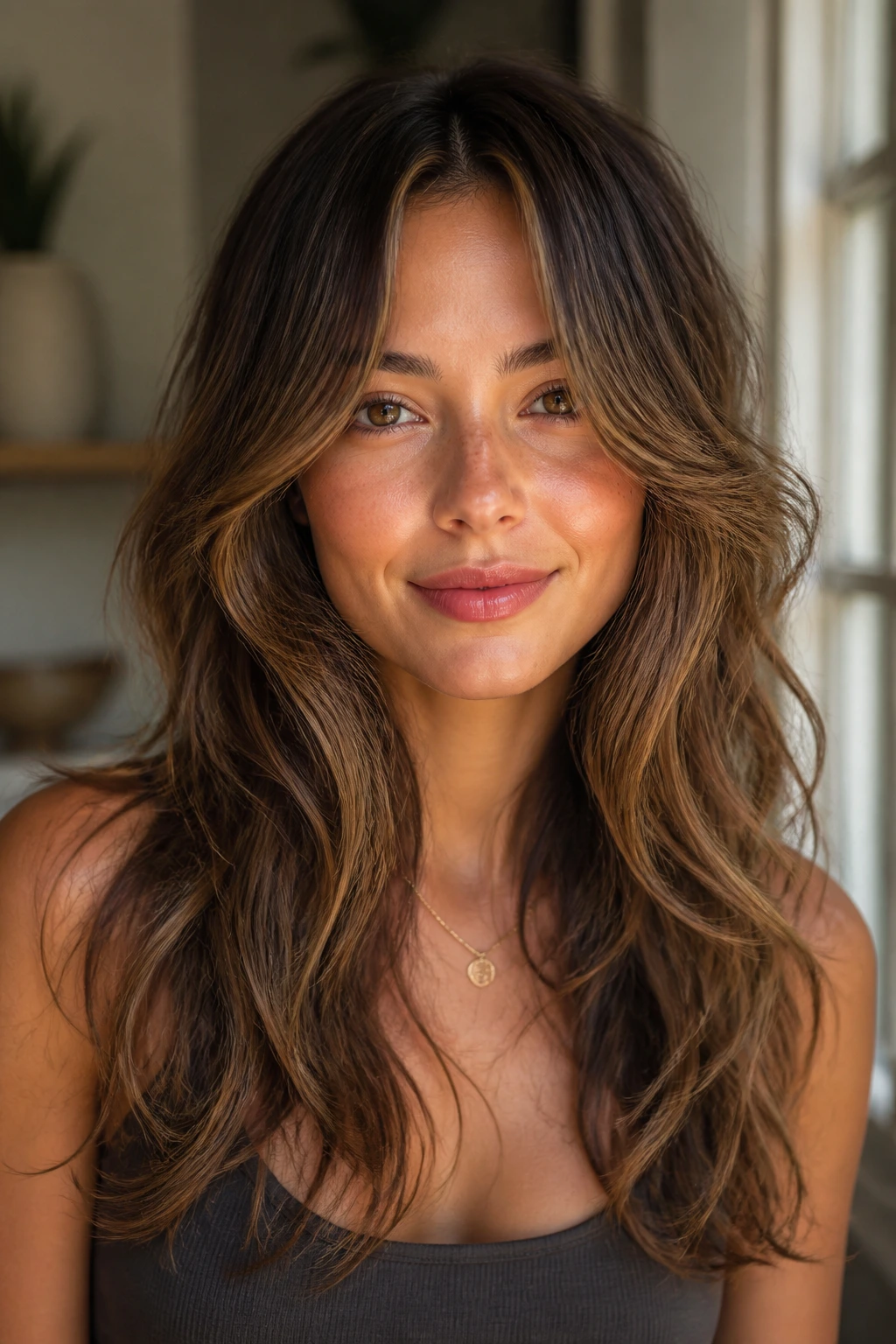
Fine-Wave Feathering: If your hair is fine, ask for long internal layers and a conservative face frame. The goal is lift, not visible stripping through the ends.
Thick-Hair Weight Map: For dense waves, keep the perimeter heavier and place the shortest pieces only where the face needs softness. This avoids the puffed-out triangle that shows up when everything is layered equally.
Curlier-Wave Hybrid: If your pattern lives between waves and loose curls, ask for a dry cut or a dry finish check. The front pieces need to account for shrinkage, or they’ll jump too high.
Grow-Out Friendly Version: If salon visits are irregular, keep the face frame starting lower, around the chin or collarbone, and avoid ultra-short fringe. The cut will age better and still look shaped months later.
Minimal Styling Version: Keep the layers subtle and ask for more shape through the front than the whole head. You’ll get a cleaner silhouette that can be air-dried with a small amount of product and no heat.
Frequently Asked Questions
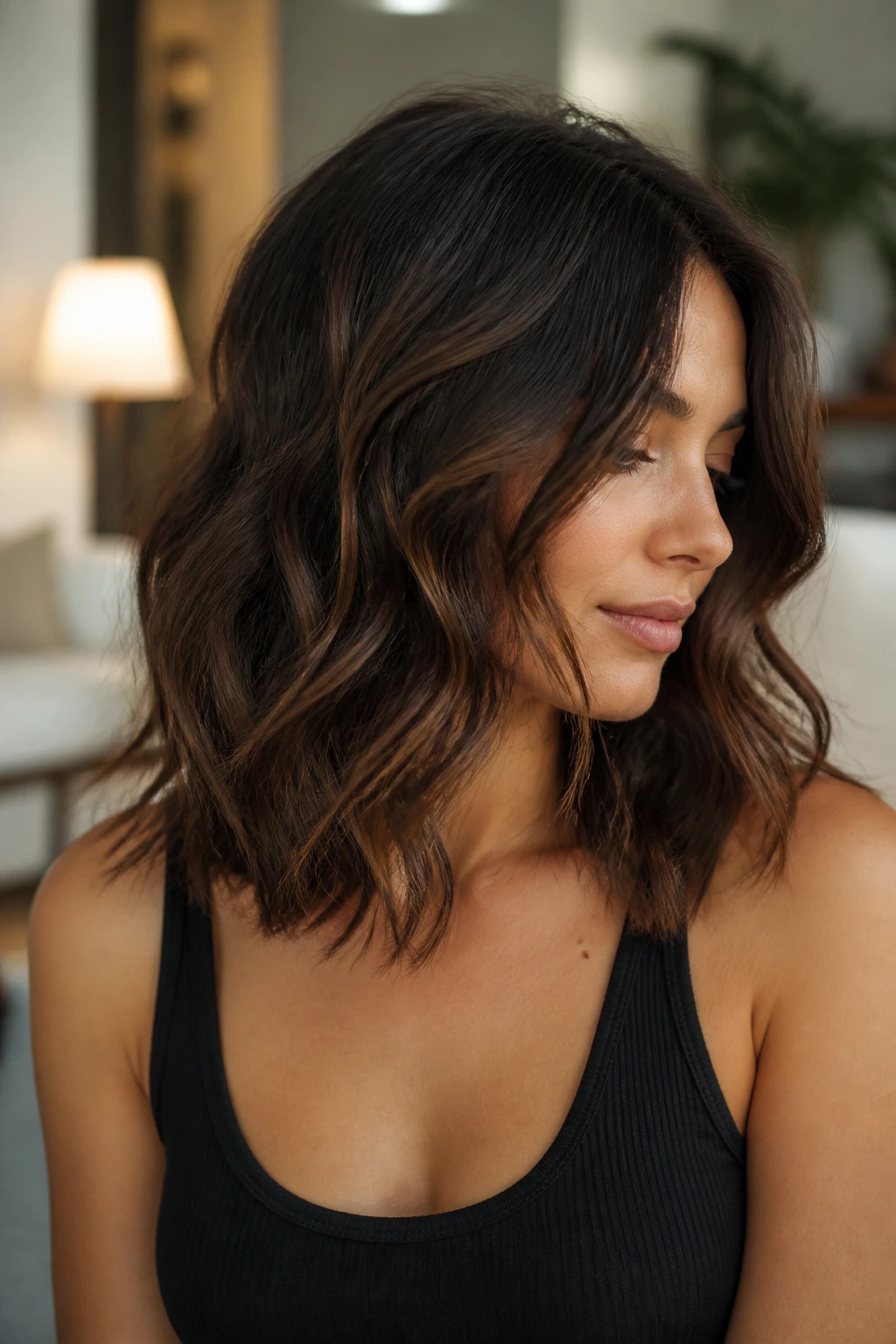
How often do face-framing layers need trims?
Shorter cuts like bobs and pixies usually need a trim every six to eight weeks if you want the shape to stay crisp. Lobs and longer layered cuts can usually go eight to twelve weeks before the front starts to lose its line.
Should wavy hair be cut wet or dry?
Both can work, but dry checking matters more than most people realize. Wet hair stretches, and waves spring up later, so a stylist who finishes by checking the dry shape is less likely to leave the front too short.
What face-framing length is best if I wear glasses?
Pieces that end around the cheekbone or just below the frame of the glasses usually work best. If the layers land right on the glasses arms, the front can get pushed out of place every time you take them off.
Can fine wavy hair handle face-framing layers?
Yes, but the layers need to be subtle. Keep the perimeter fuller and ask for soft movement near the face rather than heavy layering through the whole head, or the ends can look wispy.
What if my waves frizz on day one?
That usually means the product is too heavy, the cut is too thinned out, or the hair needs more clumping while damp. Try a lighter mousse, stop brushing once the product is in, and diffuse just the roots instead of blasting the whole head.
Which of these cuts grows out the best?
The collarbone lob, U-shaped cut, long butterfly cut, and low-lift long cut tend to age the most gracefully. They keep enough length that the shape does not collapse when the layers move down.
Can I still wear these cuts in a ponytail or clip?
Yes, and that’s one of the reasons they work so well for busy mornings. Longer face frames can be tucked behind the ears, left loose around the front, or pulled into a low clip without turning into a mess.
What should I tell my stylist if I want the easiest routine possible?
Say you want a cut that air-dries with shape, keeps the front soft, and does not need daily heat. Then name the exact spot where you want the face frame to start. That one sentence is worth more than a vague request for “layers.”
Last Looks
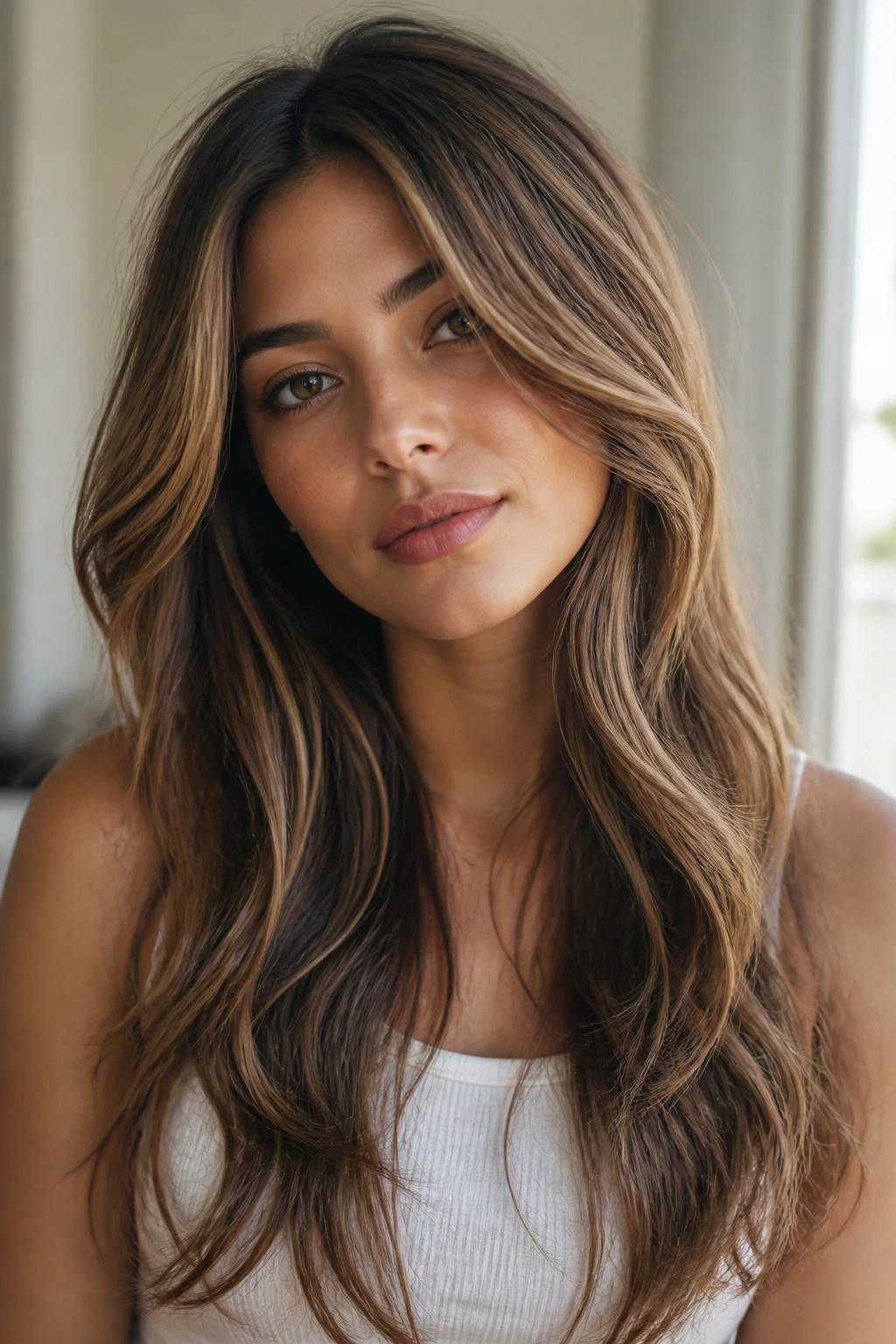
The best wavy haircut is the one that gives your hair a shape before you have even done much to it. Face-framing layers do that part of the job better than almost anything else, because they place movement where it matters most and leave the rest of the hair free to behave.
A cut that respects your wave pattern earns its keep every morning. Pick the version that matches your length, density, and patience level, and the whole routine gets quieter in the best possible way.