



A round face has its own kind of charm: soft cheeks, a curved jaw, and a shape that can look sweet in one haircut and suddenly wider in another. Cute hairstyles for round faces with face-framing layers work because they change where the eye goes. Instead of letting all the weight sit at cheek level, the right front pieces pull the line downward, upward, or off-center in a way that gives the face more shape.
The wrong cut usually does the same annoying thing every time. It ends exactly where the face is fullest, or it puffs out at the temples, or it puts a blunt line right across the jaw. None of that is dramatic on its own. Put it together, and the whole look feels heavier than it should.
What makes this topic worth your time is how flexible the answers are. You do not need waist-length hair, bangs, a curling iron, or a salon chair to make this work. You need the right starting point for the front pieces, a little judgment about where the volume sits, and enough honesty to avoid the cuts that fight your face shape from the first snip.
Why Face-Framing Layers Change the Shape
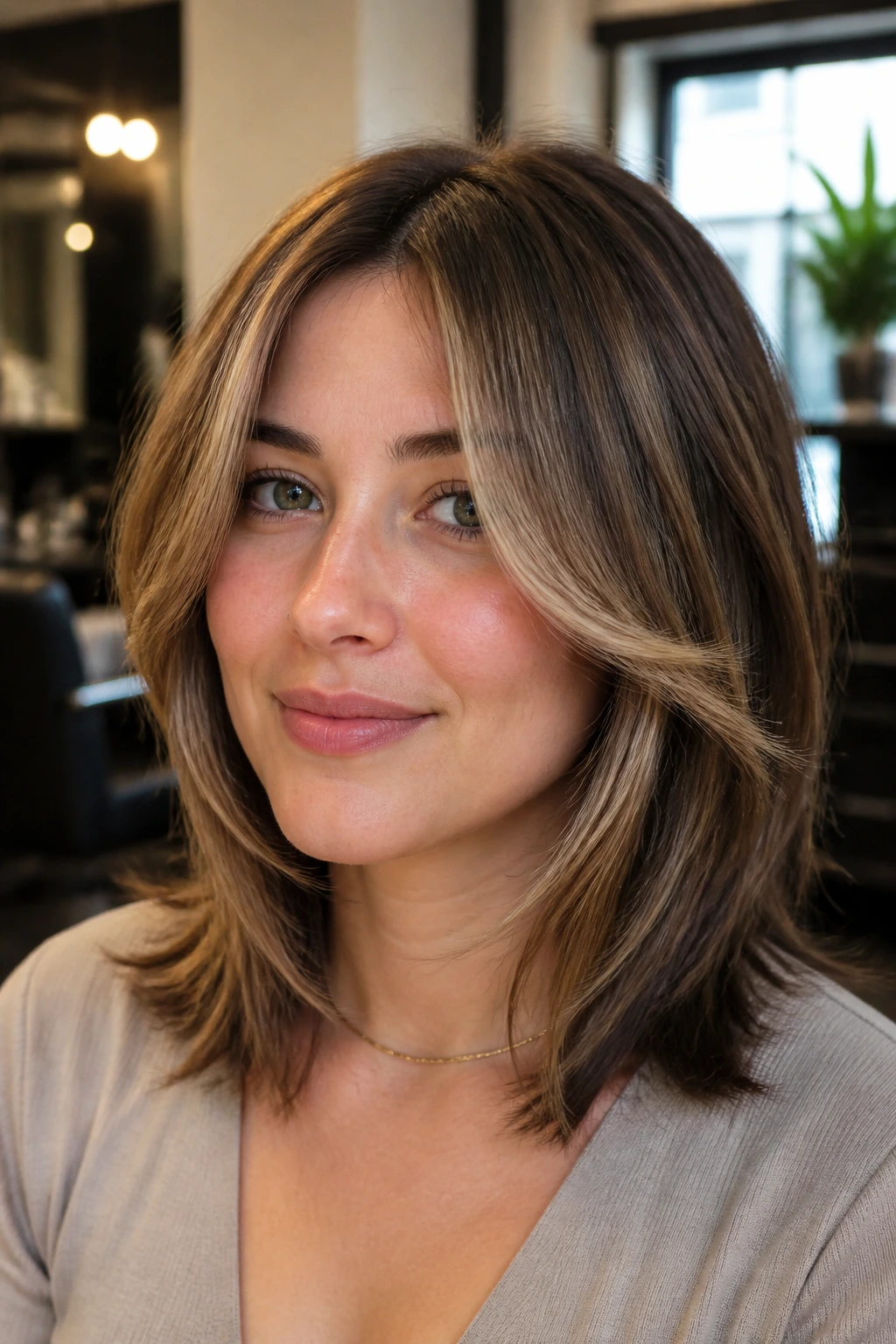
-
They pull the eye away from the widest part: When the shortest pieces start near the cheekbone and angle down, the face reads longer and cleaner.
-
They create vertical movement: A line that drops from cheek to jaw is doing more shape work than a blunt edge that stops right at the cheeks.
-
They let your part do some of the work: A center part, side part, or off-center part can change the whole balance without a dramatic haircut.
-
They work at almost every length: You can wear them with a pixie, a bob, long hair, curls, braids, or a bun that needs a few soft pieces left out.
-
They soften, not hide: The point is not to cover your face. It’s to give it edges, angles, and a little movement where roundness can feel too even.
-
They make styling easier: Once those front pieces are cut well, you can cheat the shape with a round brush, a curling wand, or even a few pins and a quick tuck.
1. Curtain Bangs That Sweep Past the Cheekbones
Curtain bangs are a friendly starting point if you want something cute without committing to a heavy fringe. On a round face, the smartest version is a bang that opens in the middle and lands around the cheekbone or just below it, never cut so short that it turns into a straight wall across the forehead.
Where the shape comes from
The magic is in the bend, not the thickness. Those front pieces should curve away from the face, then drop toward the jaw in a soft line. If you blow them straight down, they can make the face look shorter. If you over-round them, they can puff out right where you do not want puff.
A shoulder-length or longer cut underneath the bangs keeps the whole style from feeling boxy. It’s a neat little trick. The bangs do the framing, while the length underneath keeps the silhouette from getting too wide.
Best styling move: blow-dry the curtain pieces with a 1.25-inch round brush, aiming the nozzle downward and rolling the hair away from your face for the first few inches.
2. A Collarbone Lob with Soft Front Angles
A collarbone lob is one of those cuts that looks easy because it is easy, but that does not mean it is boring. When the ends skim the collarbone and the front pieces angle down from the cheekbone toward the shoulder, the whole haircut behaves like a long line instead of a circle.
The reason it flatters a round face is simple: the collarbone gives the eye a resting point below the jaw. That little bit of extra length matters. It keeps the face from feeling trapped inside the widest part of the haircut.
This version works especially well if your hair has a slight bend. Straight hair will show off the line. Wavy hair gives the cut a soft swing. Either way, ask for front pieces that are a touch shorter than the back so the ends do not flip out at the cheeks.
3. The Butterfly Cut with a Bouncy Blowout
The butterfly cut gets tossed around a lot, but on a round face it earns the hype for one plain reason: it gives you height at the crown and movement through the front without sacrificing long length. The shorter top layers fall around the cheekbone and lip, while the lower length stays long enough to keep the shape from ballooning.
That balance matters. A lot. If the shorter layers start too high or get too wide, you can end up with a fluffy triangle. Keep the shortest pieces controlled, and the style turns into a vertical line instead of a circle.
This cut looks best with a blowout that bends away from the face. Think of a round brush, a dryer nozzle, and a few clips at the crown while the top cools. The result is a lift that feels airy, not stiff. And yes, it looks especially good when the front pieces skim the chin on their way down.
4. A Deep Side-Parted Lob with Flipped Ends
A deep side part can do more for a round face than another inch of length. It breaks up symmetry, creates lift at the crown, and lets one side of the haircut fall across the forehead in a way that changes the whole mood of the face.
The lob itself should land around the collarbone or just above it. Too short, and the ends sit at the cheek line. Too long, and you lose some of the crisp shape that makes the cut feel intentional. The front can be worn with a slight flip outward or a soft bend inward, depending on whether you want a sharper or softer look.
What to ask for: an off-center part, front layers that begin below the cheekbone, and ends that are textured enough to move but not so shredded that the shape goes fuzzy.
5. The French Bob with a Longer Front
A French bob can be tricky on a round face if it’s cut too blunt and too short. The version that works gives you a little more length in front, sometimes grazing the jaw rather than stopping right at it, with soft texture around the cheekbones instead of a hard box.
That extra front length is doing serious work. It keeps the eye moving downward. It also keeps the jaw from looking wider than it is, which is what a chin-length blunt edge can sometimes do on fuller cheeks.
This is a good cut if you like style with a bit of attitude. It looks especially good with a side part or a slightly messy bend through the ends. If you wear it bone-straight, the line becomes sharper. If you add a few loose waves, the face-framing pieces soften the edges without making the bob puff outward.
6. A Long U-Cut with Feathered Front Layers
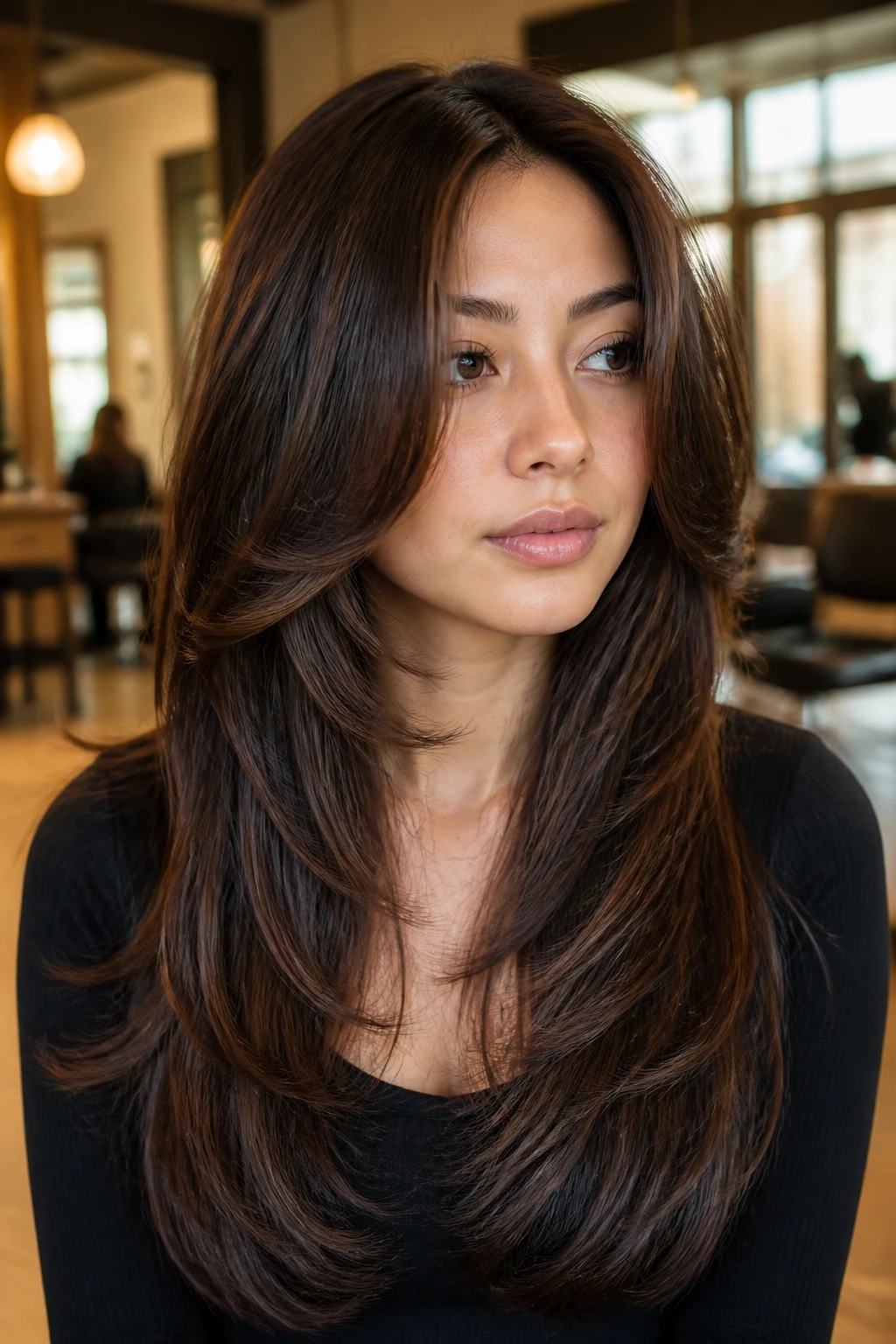
The U-cut is underrated because it feels subtle in a mirror and then suddenly makes the whole head look more balanced. The hemline curves softly upward toward the front, which keeps the length from looking like one blunt sheet. On a round face, that little curve matters more than people think.
Feathered front layers are the part that changes the shape. Ask for the shortest face-framing pieces to start around the lip or chin, then taper down slowly. You want movement, not a chopped line that stops at the cheek.
Long hair can easily overwhelm a round face if it hangs in a heavy curtain. The U-shape keeps the perimeter softer, and the front layers make sure the face still has room to breathe. It’s one of the best cuts for people who want length but do not want the weight of length.
7. A Soft Shag with Wispy Fringe

A shag can go wrong fast on a round face if the crown gets too tall and the sides get too full. The soft version avoids that problem. The shape stays choppy, but the texture is controlled, and the fringe is wispy enough to break up the forehead without taking over the whole face.
The best shags for round faces usually keep the bulk lower and the face-framing pieces longer. That means the top has movement, but the width does not explode at the temples. You still get that lived-in edge. You just do not get the mushroom.
If you like air-dried hair, this cut has real charm. Scrunch in a lightweight cream, twist a few front strands while damp, and let the texture settle on its own. The piecey fringe and uneven layers do the visual work. No hard styling needed.
8. Shoulder-Length Waves with Airy Ends
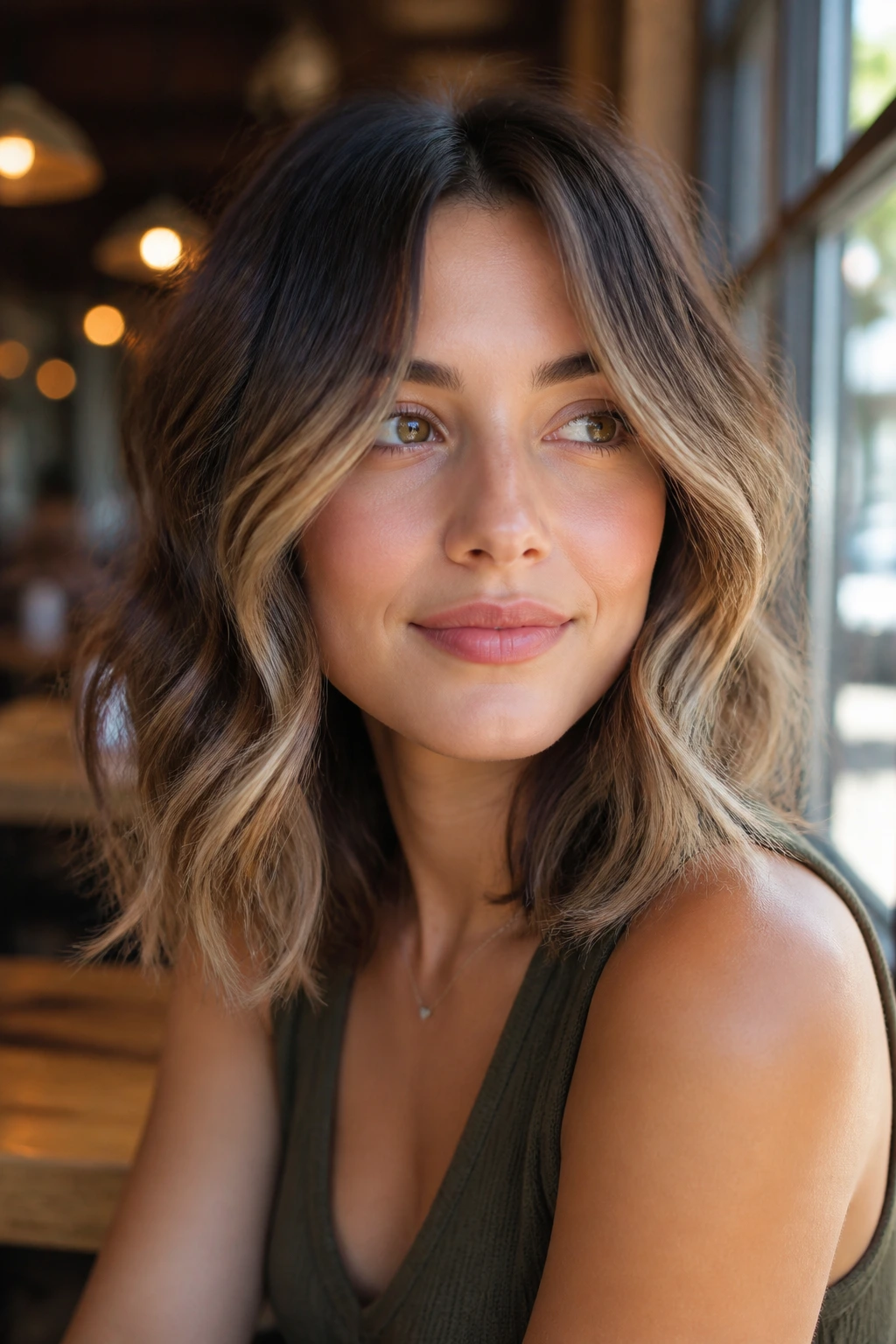
Shoulder-length hair is a strange length for round faces because it can either be perfect or slightly awkward. The difference is usually the ends. If they sit heavy and straight at shoulder level, the whole look can widen the face. If the ends are softened and the front pieces start below the cheekbone, it suddenly works.
Waves help here, but they need to be loose. Tight, uniform curls can crowd the sides of the face. A looser wave, especially one that bends away from the cheeks, gives shape without that puffy side effect.
This cut is the one I recommend to people who want low fuss with a little polish. You can air-dry it, diffused it, or bend it with a large barrel iron. The key is keeping the ends light and the face-framing pieces slightly longer in front than you think you need.
9. A Pixie Cut with a Swept-Over Top
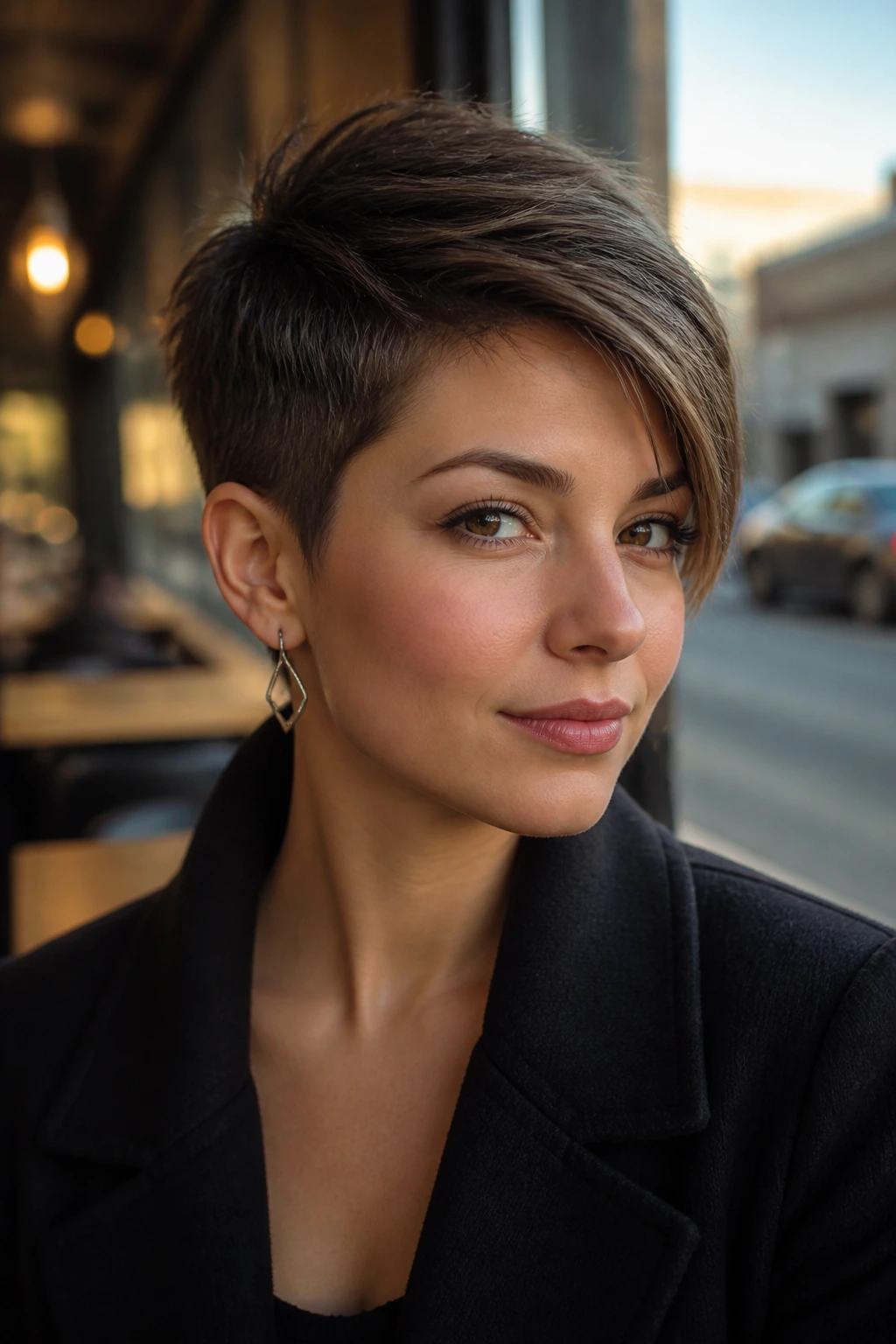
Short hair on a round face is not off limits. It just needs structure. A pixie with longer top layers and a swept-over fringe gives height at the crown and keeps the sides close enough to avoid extra width.
The sideburn area matters more than people expect. If the sides are too fluffy, the face can look wider in a hurry. Keep that area tapered. Let the top hold the drama. A little length through the fringe can sweep across the forehead and pull the eye diagonally instead of horizontally.
This cut looks best when it is styled, even lightly. A dab of paste or cream on dry hair gives the top some separation. Too much product makes the style heavy. Too little and the layers collapse flat, which is not the same thing at all.
10. A Voluminous Layered Blowout
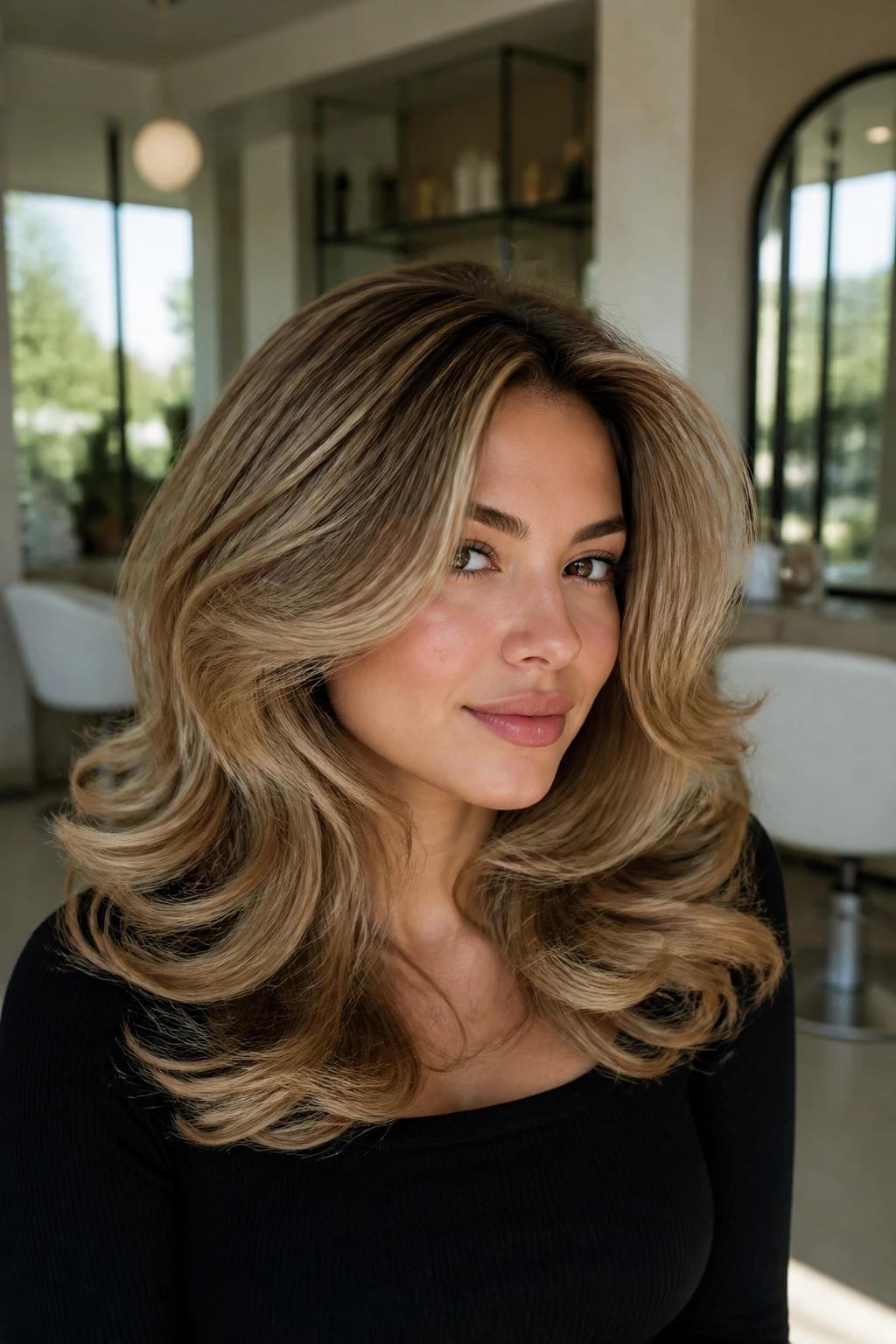
There’s a difference between volume and width. On a round face, you want the first one and have to watch the second. A good layered blowout builds lift at the roots and through the crown, then turns the front pieces away from the cheeks so the overall shape stays long.
Ask for layers that start low enough to move, but not so high that they balloon right beside the face. The best blowouts on round faces look as if the hair was wrapped around a round brush, clipped to cool, and released into soft curves. Because that is more or less what happened.
This style is especially good for medium to thick hair. Fine hair can wear it too, but it needs less round brush pressure and a lighter spray at the roots. The point is airy shape, not helmet hair. Helmet hair is a hard no.
11. Half-Up Waves with Loose Front Pieces
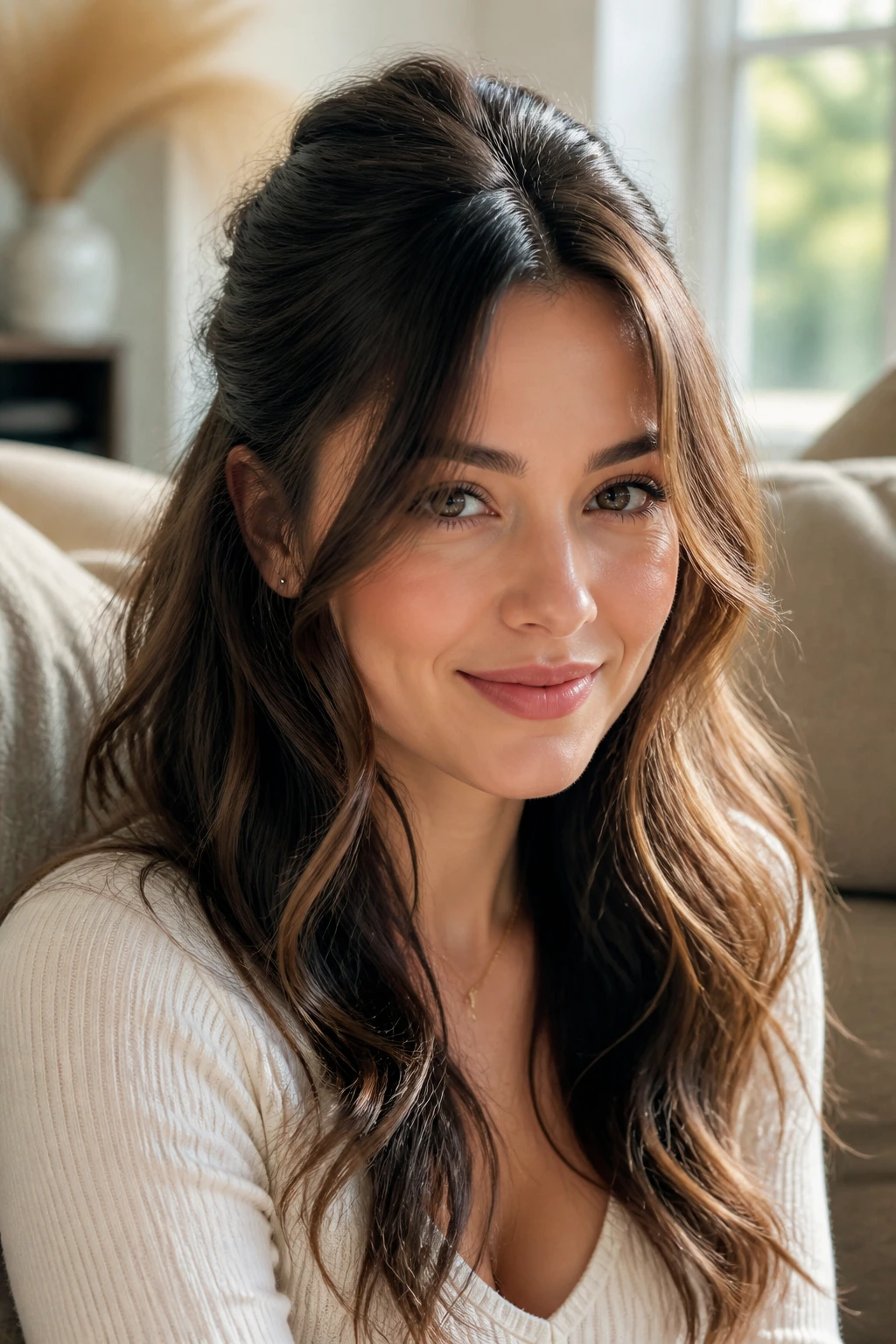
The half-up style is one of the easiest ways to fake a little lift without touching a pair of scissors. Pulling the top half back adds height at the crown, which is useful on a round face because it opens up the vertical line. Leaving a few front strands loose softens the cheeks and keeps the style from looking severe.
Keep the loose pieces curved, not straight. A small bend around the cheekbone and jaw changes the whole effect. If you want the style to feel polished, wrap those front pieces around a curling iron for just a few seconds and let them cool before you touch them.
It’s a good date-night style, but it also works on second-day hair when the roots need help. A little dry shampoo at the crown, a small clip or elastic, and two face-framing strands can go a long way. Small effort. Big payoff.
12. A Sleek Low Bun with Face-Framing Strands
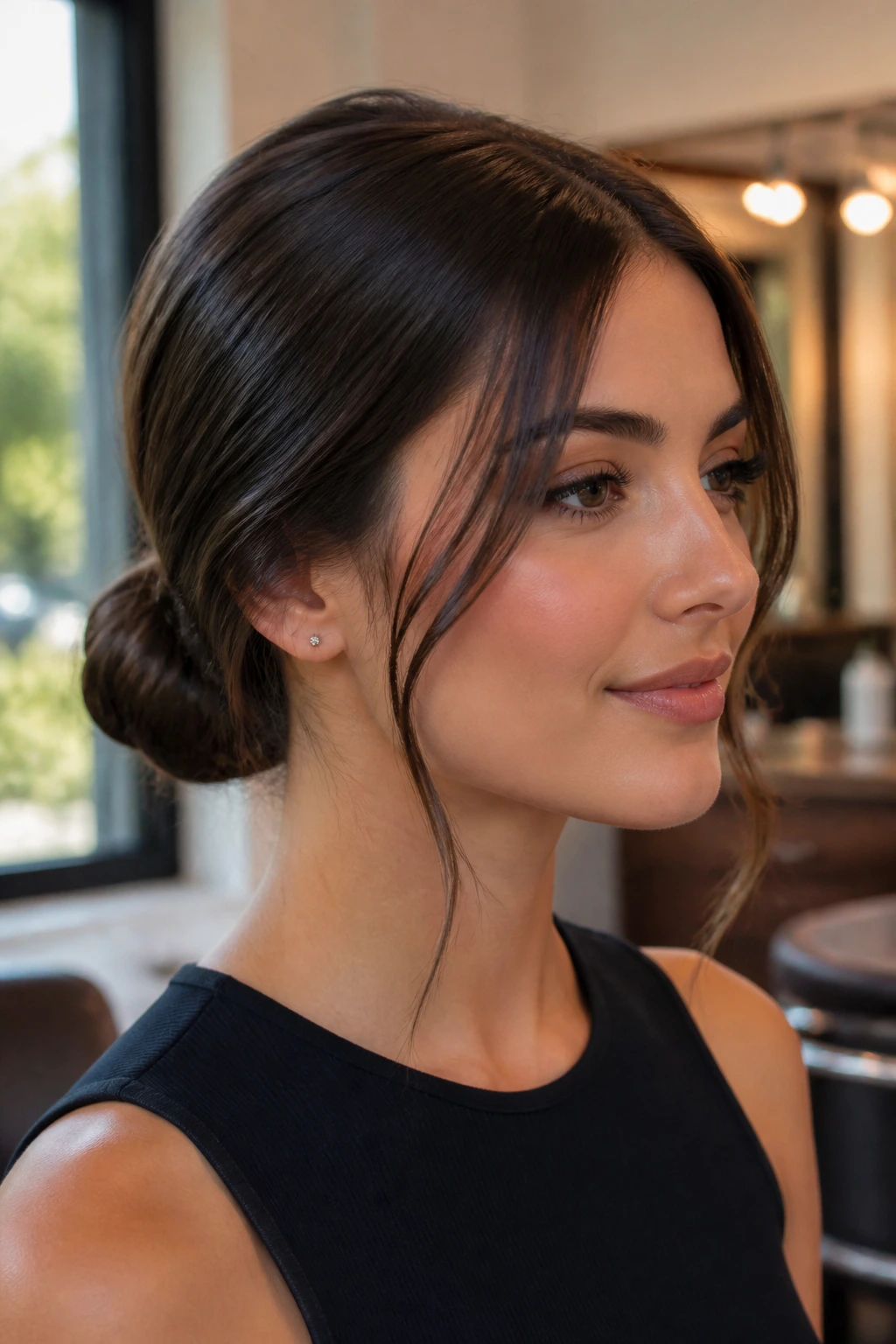
A low bun can look elegant on a round face, but only if the bun sits low enough and the front pieces are left soft enough. Place the bun near the nape, not mid-head, or the whole style can drag the face sideways instead of lengthening it.
The front strands are the part that saves it. Pull out two thin pieces near the temples and let them fall past the cheekbones. If they’re too thick, they can make the face look wider. If they’re too thin, they disappear. You want that middle ground where they look intentional but not fussy.
This is one of those styles that looks more expensive than it is. A little smoothing cream, a clean center or soft side part, and a few pins usually do the job. If your hair slips, prep the roots with a touch of texturizing spray before you gather it.
13. A High Ponytail with Curved Front Layers
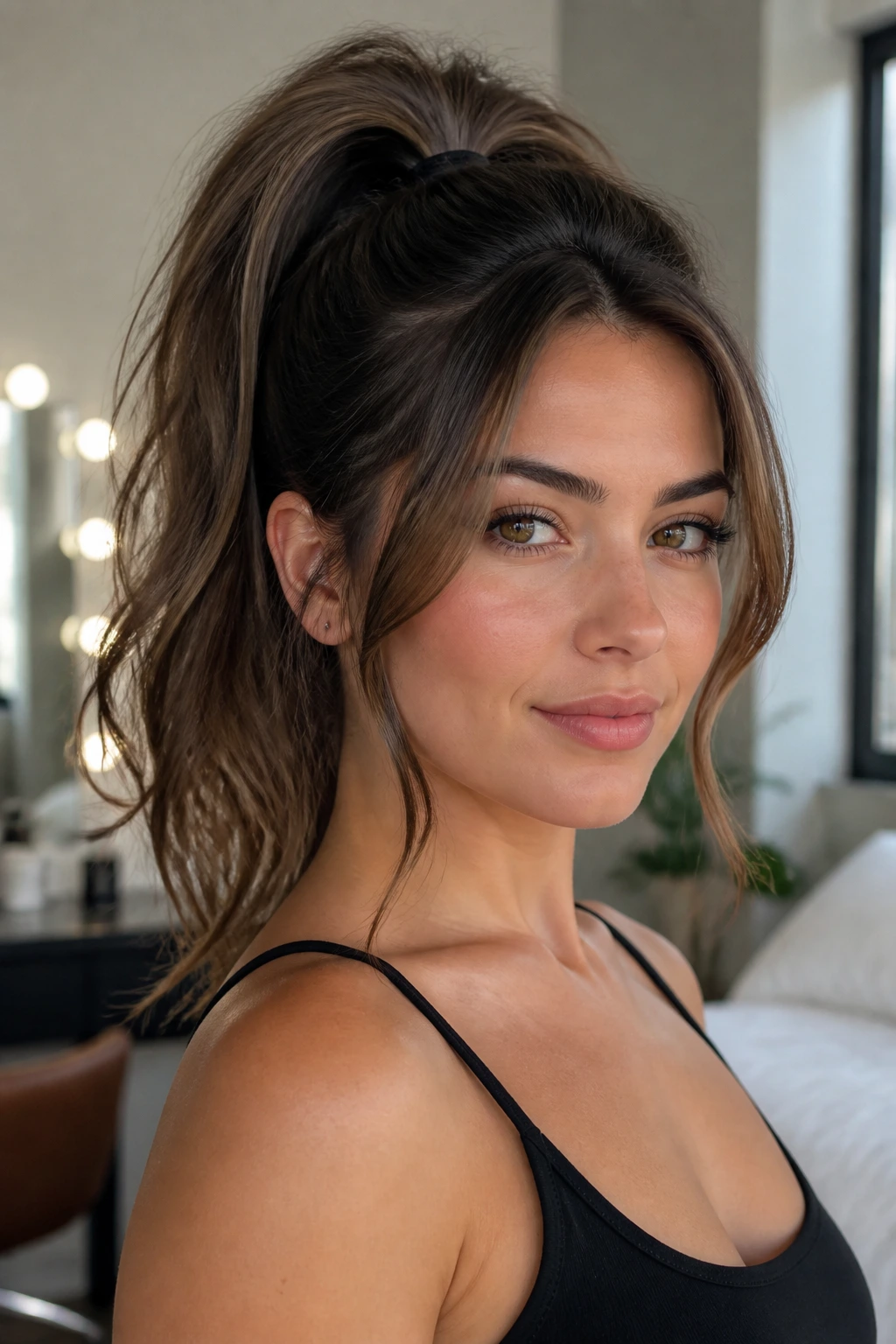
A high ponytail can be a smart choice for a round face because it adds lift and draws attention upward. The catch is the front. If the face-framing pieces are too short or too blunt, they can make the cheek area look crowded.
The better version uses curved front layers that start around the cheekbone and sweep toward the jaw. That shape adds length without dragging the ponytail into a severe look. A little wrap of hair around the base makes the style feel finished, not gym-class rushed.
This one works well with thick hair, especially if you want the ponytail itself to have some swing. Tease the crown lightly if you want extra height, but don’t overdo it. Too much crown volume plus blunt front pieces can tip the whole look into cartoon territory.
14. A Braided Style with Soft Tendrils
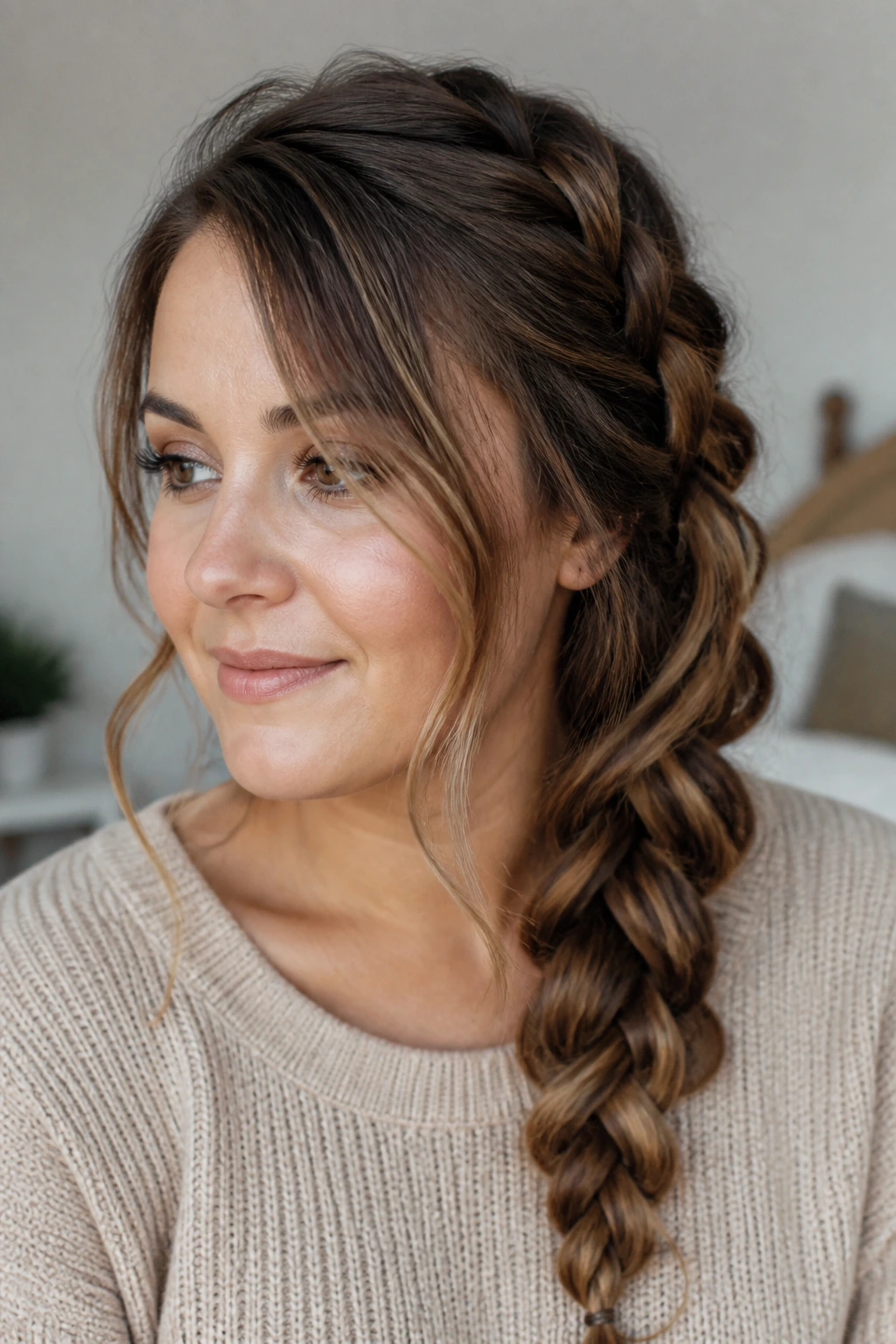
Braids can be gorgeous on round faces because they create vertical or diagonal lines, depending on how you place them. The simplest trick is to leave out soft tendrils around the temples and cheekbones, which keeps the braid from pulling every bit of hair tight against the face.
A side braid, low braid, or loose Dutch braid all work. What matters is the finish. If the braid is too tight from scalp to ends, the face can look broader by contrast. If the braid is slightly pulled apart for texture, the whole style feels softer and more balanced.
This is a nice one for layered hair because shorter front pieces naturally fall out a little, which helps the style anyway. Do not fight those wisps. They are part of the look.
15. A Clavicut with Bottleneck Bangs
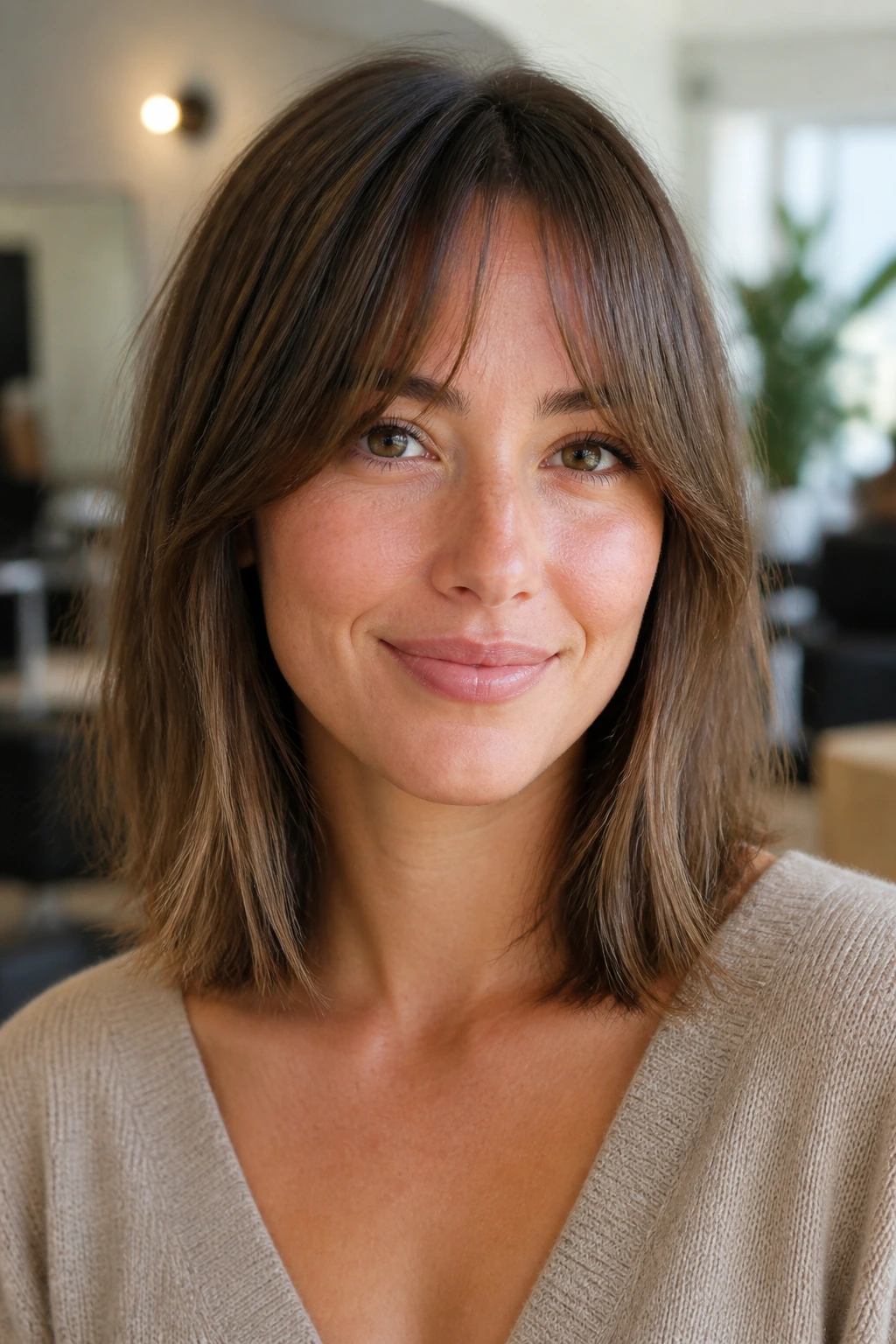
The clavicut—hair that lands right around the collarbone—is one of the cleanest lengths for a round face. It sits below the jaw, so it avoids that cut-off feeling you get from ends that stop right at the cheeks. Add bottleneck bangs, and the shape gets even better.
Bottleneck bangs are narrower through the center and a touch wider as they move outward. That means they frame the forehead without creating one blunt horizontal line. On a round face, that’s the whole game. Break up the width. Let the front fall in pieces.
This cut is a good choice if you want something polished but not stiff. It can air-dry with a bend or get a fast blowout. Either way, the collarbone length and the bangs give it enough shape that you do not need to overstyle every inch.
16. A Soft Wolf Cut with Rounded Edges
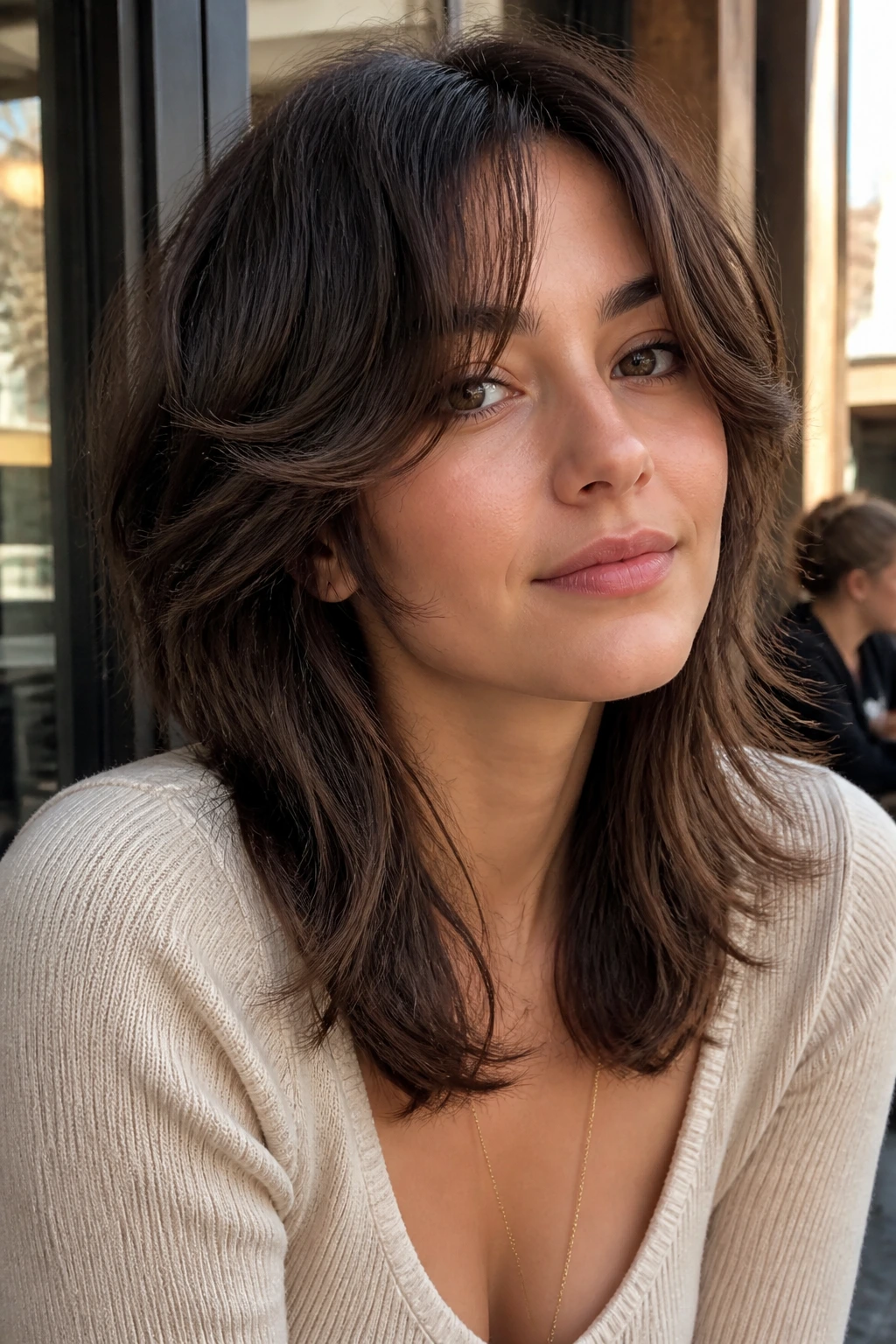
A wolf cut can be a disaster on a round face if the layers get too wild and the sides puff out. The softer version keeps the shaggy energy but rounds off the edges so the haircut feels cool instead of chaotic.
The crown has texture. The perimeter stays longer. The face-framing pieces should fall in a staggered line, usually starting around the cheekbone and then dropping toward the collarbone. That shape gives the style its bite without letting the cheeks sit in the loudest part of the haircut.
This is one of the best options for people who like a little edge and do not mind texture. It works with waves, bends, and natural movement. It does not love being ironed perfectly flat. That sort of defeats the point.
17. Curly Layers Shaped at the Cheeks
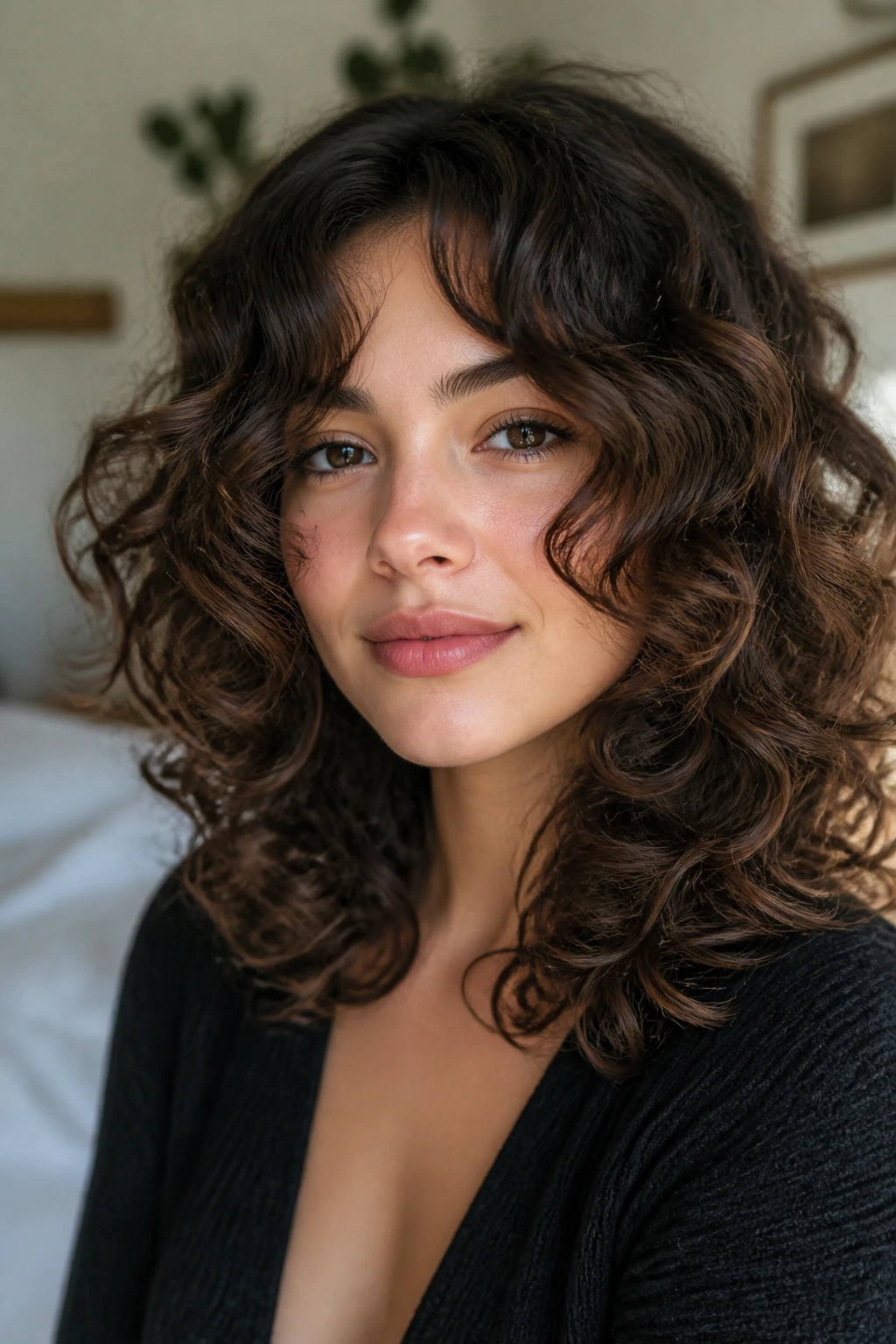
Curly hair needs a different rulebook on a round face. You are not just cutting shape; you’re managing spring. A curly cut that lands with shape at the cheeks and lip can look beautiful, but only if the layers are placed to keep the curl from expanding sideways.
The smart move is to shape the curl while it’s dry, or at least dry enough to show its real length. Wet curls lie. They shrink. A lot. The front pieces should be long enough to curve past the cheeks instead of sitting on top of them like a puff.
This style is one of the prettiest ways to wear natural curl on a round face because the layers become part of the line. They do not fight the face. They bend with it. A little curl cream and a diffuser help, but the cut does most of the work.
18. A Rounded Cut for Coily Texture
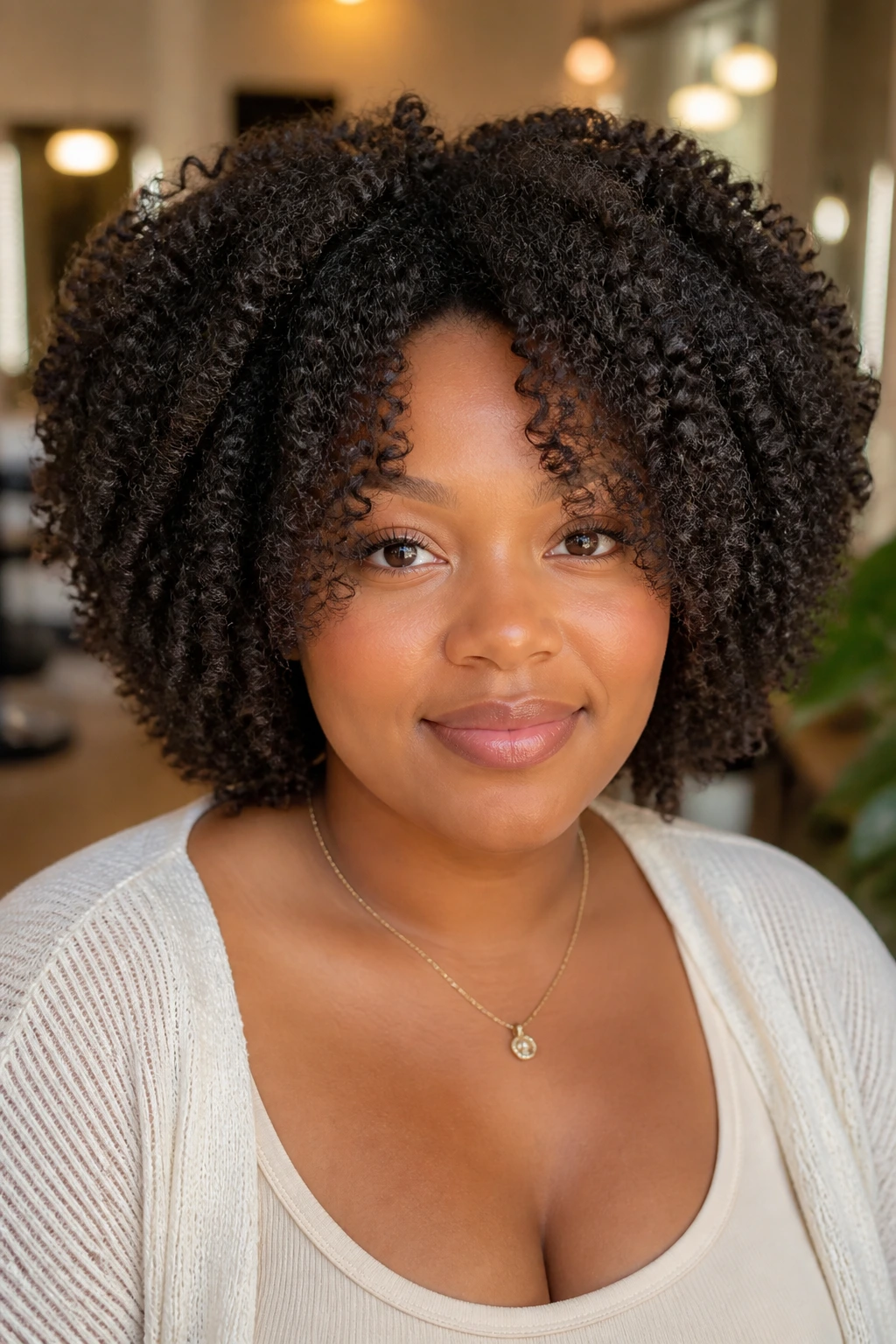
Coily hair looks best on a round face when the shape is intentionally rounded but not wide. That sounds contradictory until you see it in a mirror. The silhouette can be circular while still giving the face room, as long as the outer line is controlled and the front is shaped to fall forward a little.
Halo layers help here. They remove bulk at the crown and sides while keeping the overall fullness intact. The face-framing sections should be long enough to start near the cheek or mouth, then taper softly. A blunt front on coily hair can feel heavy fast.
This cut needs a stylist who understands shrinkage. If they cut it too short while wet, you can lose the shape completely. Ask for the finished shape, not just the wet shape. That one sentence saves a lot of disappointment.
19. An Asymmetrical Bob with a Deep Side Part
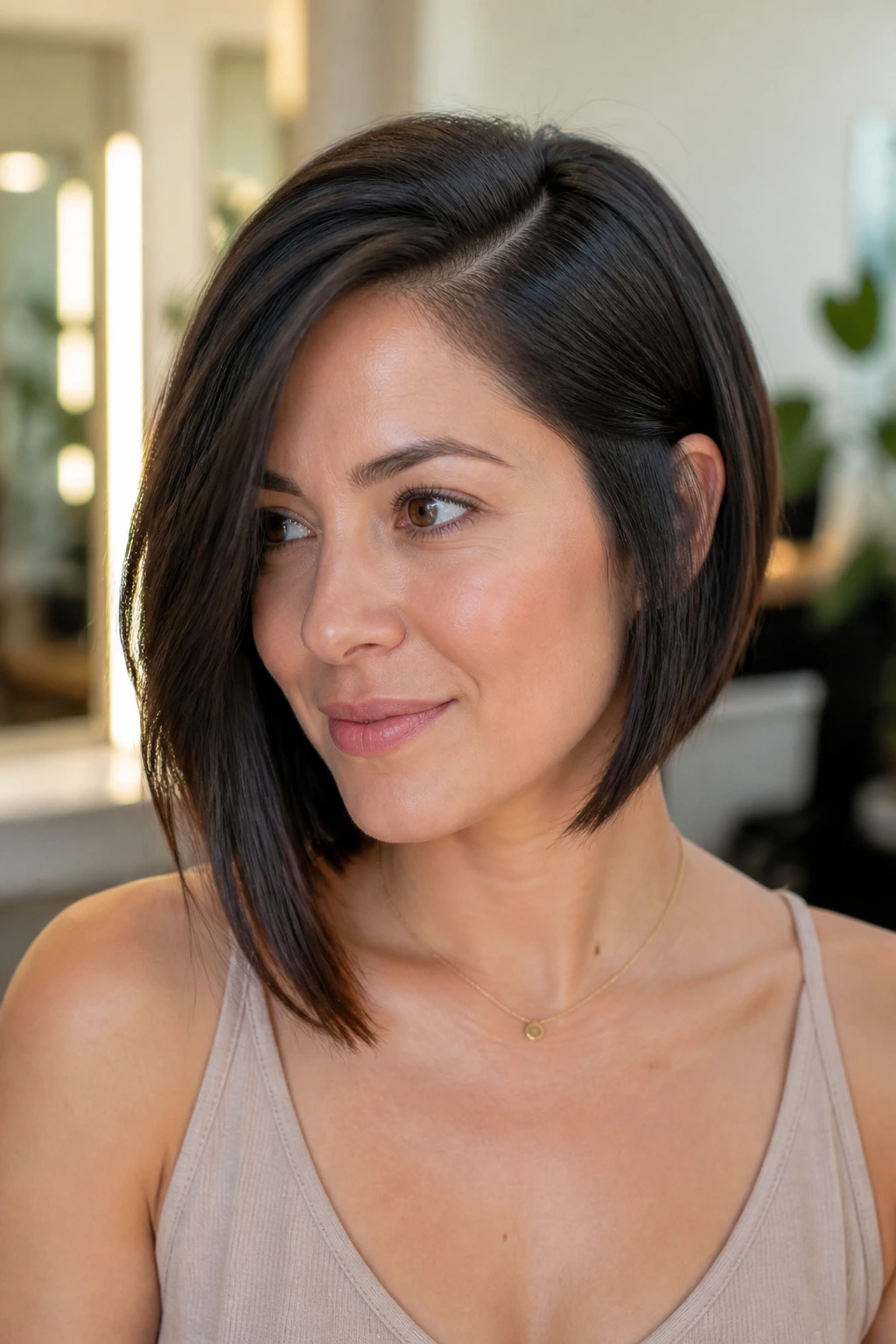
Asymmetry is a useful tool on round faces because it breaks the symmetry that can make cheeks look fuller. An asymmetrical bob—with one side a little longer than the other—adds diagonal movement, which is flattering in a very practical way.
The deep side part keeps the style from feeling too square. The longer side should skim the jaw or slightly below it. The shorter side should not sit at the cheekbone or you lose the benefit. That line needs to be clean enough to read as deliberate, not accidental.
This cut works especially well if you like a crisp style. Straight hair shows it off nicely. Wavy hair gives it a softer edge. Either way, the asymmetry keeps the face from sitting dead-center in the haircut.
20. A Long V-Cut with Front Angles
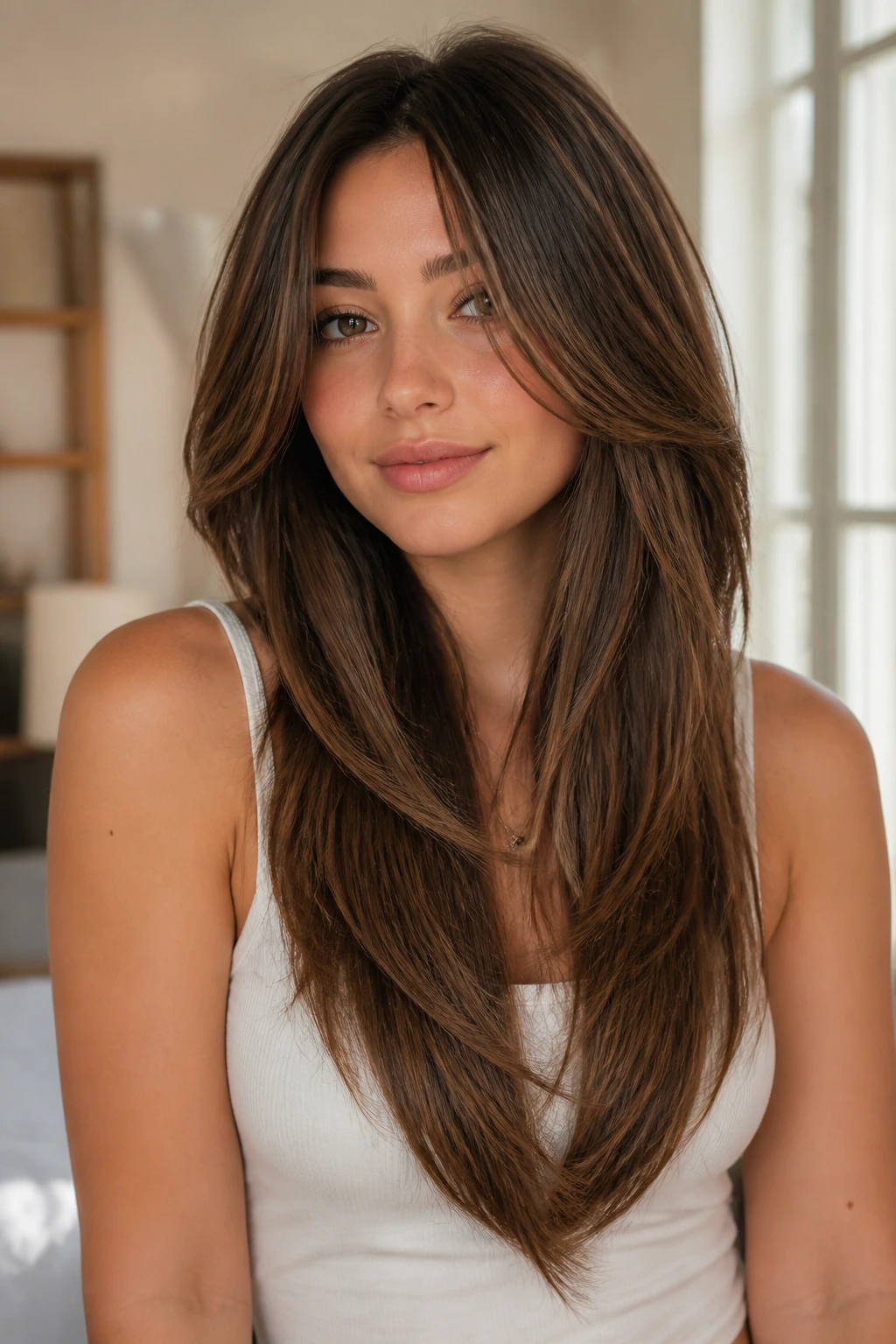
A V-cut gives you a point at the back and long tapered lengths through the front, which creates a lot of visual movement for a round face. It’s a useful shape if you want long hair but hate the way blunt ends can make the lower half of the haircut feel dense.
The front angles matter more than the point in back. If those front pieces are cut too short, they can widen the cheeks. If they begin around the collarbone or lower and taper down, they create a neat long line. That line is what keeps the style flattering.
This is a good cut for hair that feels heavy when it’s all one length. The V-shape removes some of that weight while keeping length intact. It also looks good pulled forward over one shoulder, which gives you a nice diagonal line across the face.
21. A Messy Top Knot with Loose Pieces
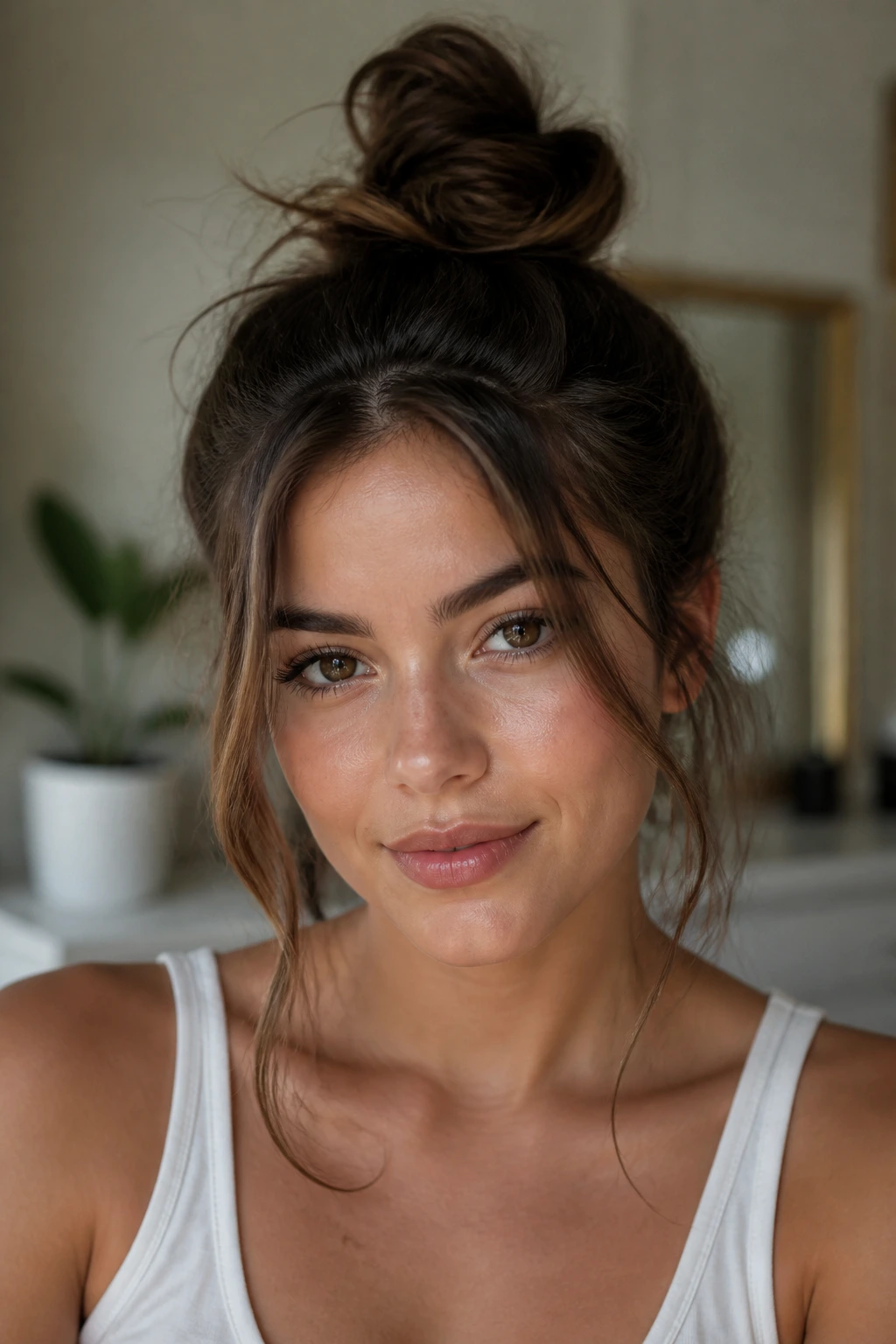
A top knot can work on a round face if you keep it loose, high, and slightly imperfect. The knot itself gives height. The loose pieces around the face break the circle. The style should look casual, not pulled so tight that every edge of the face gets exposed.
Pull a little hair at the crown before pinning the knot. That small lift matters. Then leave two or three front pieces out and let them fall in soft curves. If your layers are shorter, they’ll help naturally. If they’re longer, twist them once before pinning so they don’t hang in a stiff line.
This is one of those styles that looks better when it’s a little messy. Too neat, and the face can feel bare. A few wisps fix that in a hurry.
22. Vintage Waves with a Side Sweep
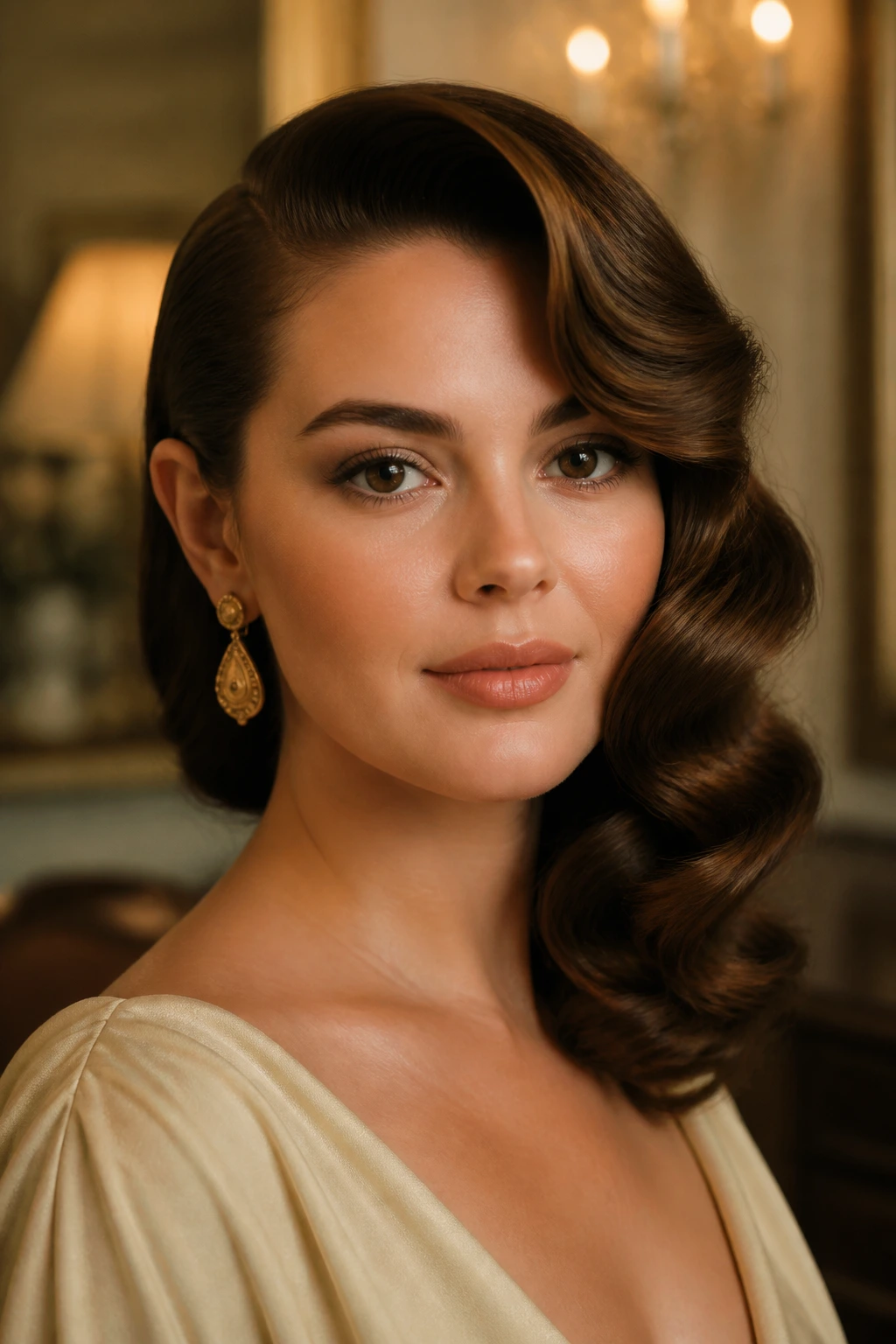
Old-Hollywood waves are a classic for a reason. On a round face, a side sweep and smooth wave pattern create a long diagonal that feels sculpted without being harsh. The key is to keep one side tucked and let the other side carry the style across the forehead.
The wave should start below the cheekbone, not right at it. If the bend sits too high, the sides can look fuller than you want. A brushed-out wave softens the line and makes the whole style feel more fluid.
This look works on lob length and longer cuts. It can be dressed up for a formal event or worn a little looser for dinner. The face-framing pieces are doing a lot of quiet work here. They’re the reason the style feels flattering instead of costume-y.
23. A Twisted Half-Up Style with Crown Lift
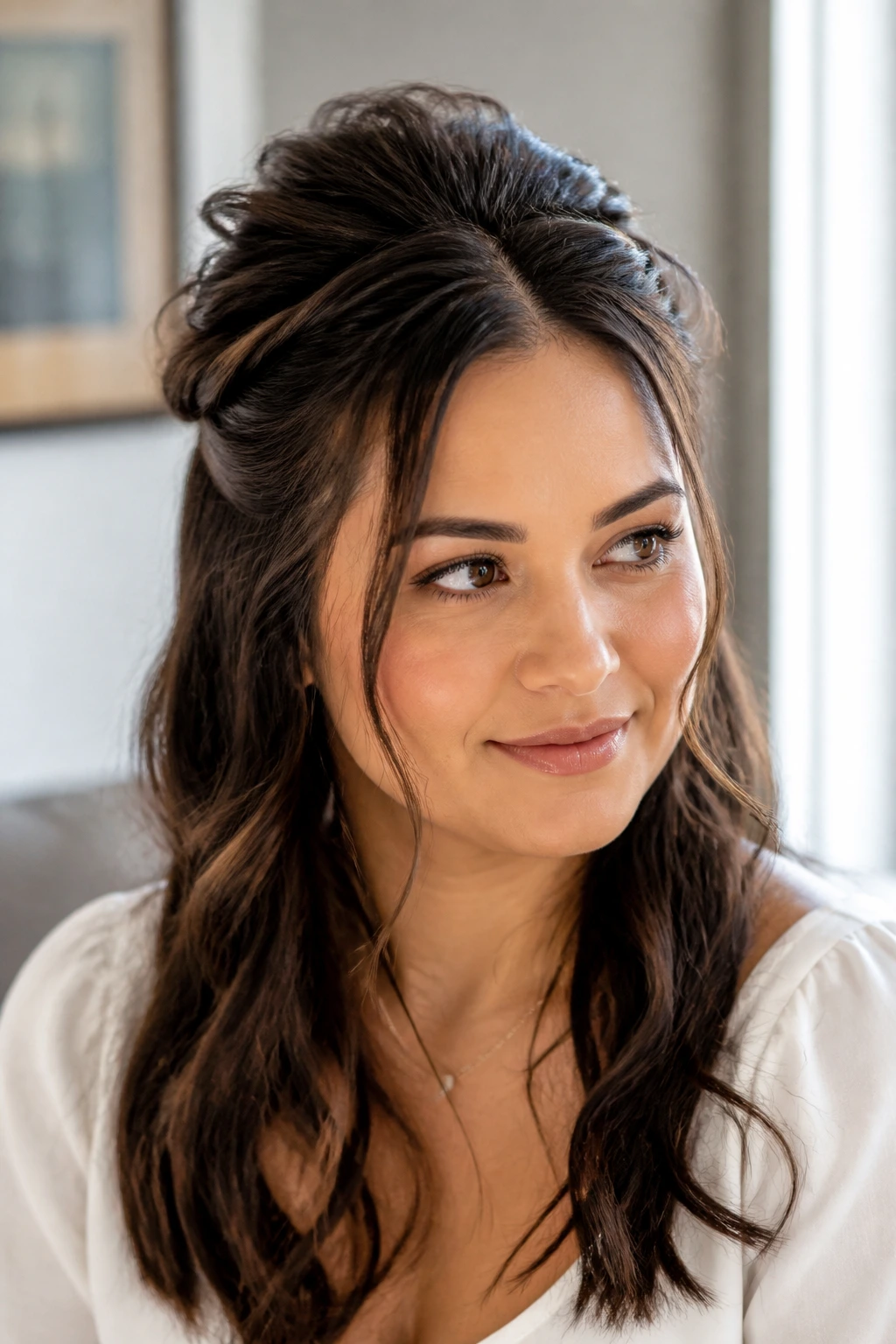
Twists are a smarter choice than a tight half-up when you want some lift without losing softness. Take sections from the temples, twist them back, and pin them at the crown. That gives the top of the head a little height, while the front layers stay loose around the face.
The face-framing strands should sit outside the twist, not jammed into it. If they’re curled, even better. The curve softens the cheeks and keeps the style from pulling everything back into one round shape.
This is a good event style for medium to long hair. It holds well with a few bobby pins and a mist of flexible spray. Nothing heavy. You want the twist to stay put but still move when you turn your head.
24. A Blunt Lob with Hidden Internal Layers
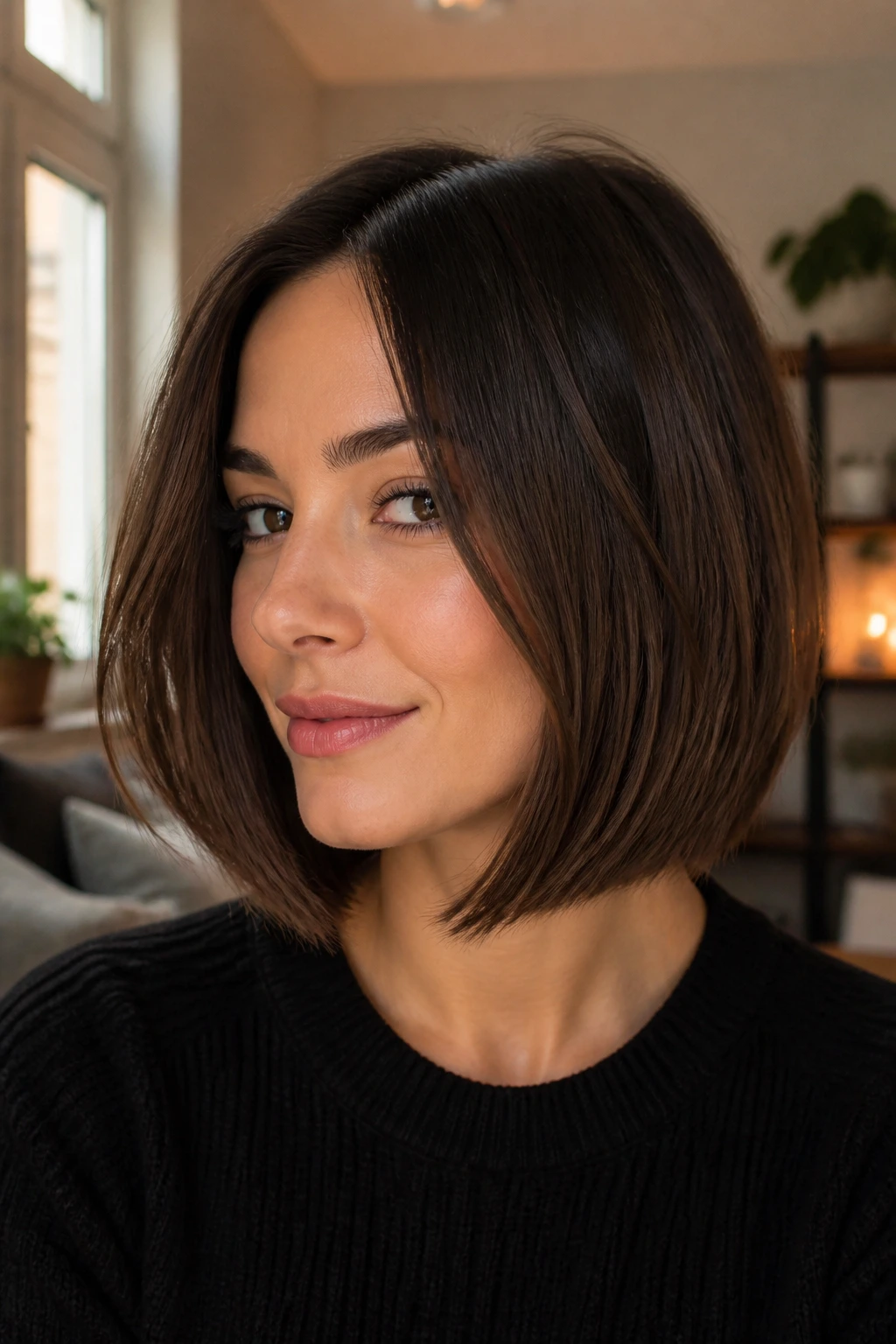
A blunt lob can work on a round face if the inside of the haircut is doing quiet work. Hidden internal layers remove bulk and give movement without taking away the clean edge. That means you get the crisp shape of a blunt line, but the hair does not sit like a helmet.
Keep the length just below the jaw or near the collarbone. That keeps the line from cutting the face in the widest place. If you add a soft bend at the front, the haircut becomes even more flattering, because the straight perimeter gets a little motion near the face.
This is a nice option for people who like polished hair and do not want a shaggy finish. It’s controlled. But not stiff. That distinction matters.
25. Air-Dried Layers with a Middle Part
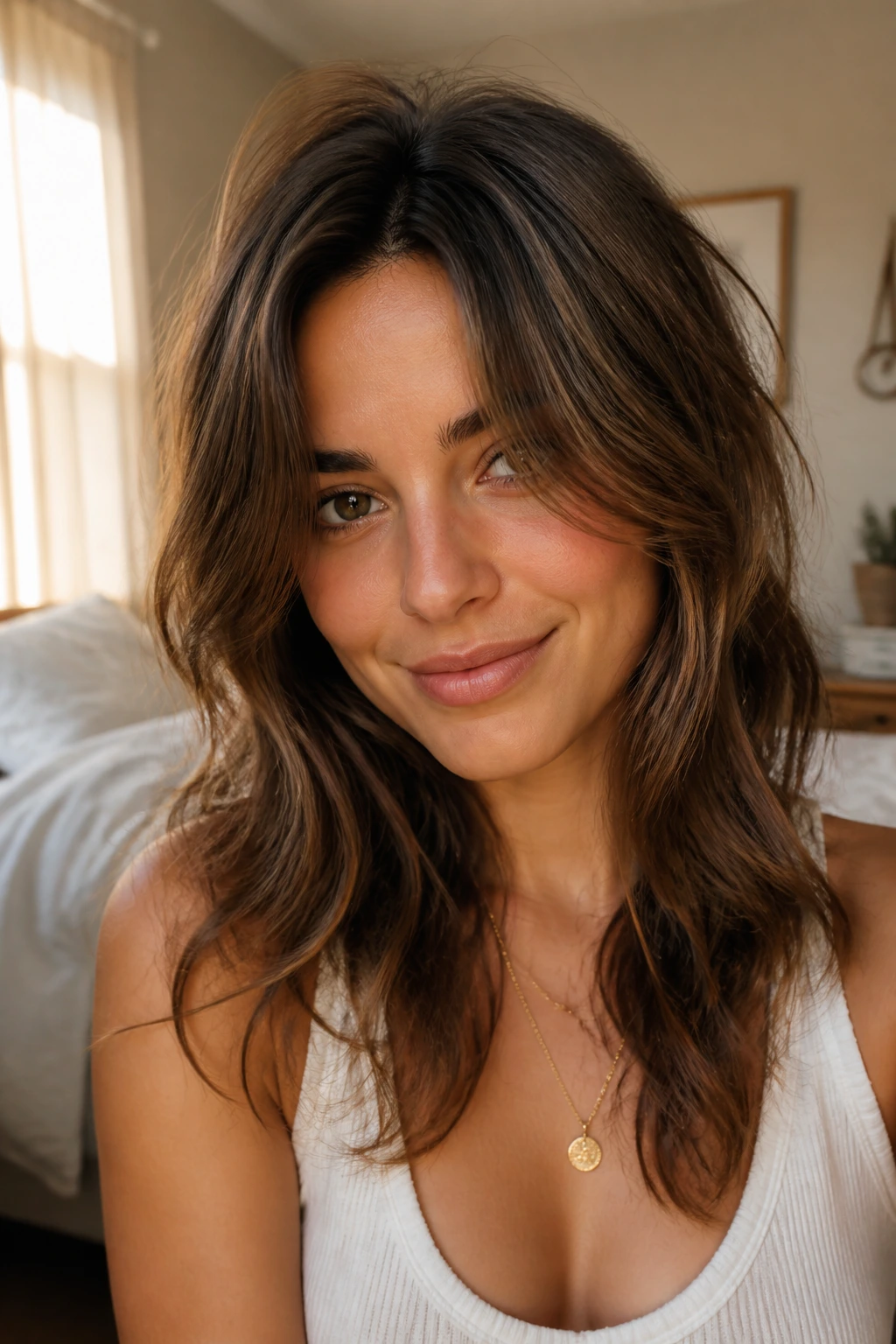
Air-dried hair can be a gift on a round face if the layers are cut to move in the right direction. A middle part is not the enemy here; a bad cut is. The front pieces should start low enough to frame the cheeks and jaw without stacking width beside the face.
Use a leave-in cream or curl lotion, scrunch the ends, and let the top stay smoother. That contrast keeps the face from getting swallowed by volume at the sides. Wavy and slightly textured hair usually handles this look best, though straight hair can wear it with a little bend at the ends.
This style is easy to live in. No hot tools. No fuss. Just a cut that knows where to fall.
How to Ask for the Right Face Frame
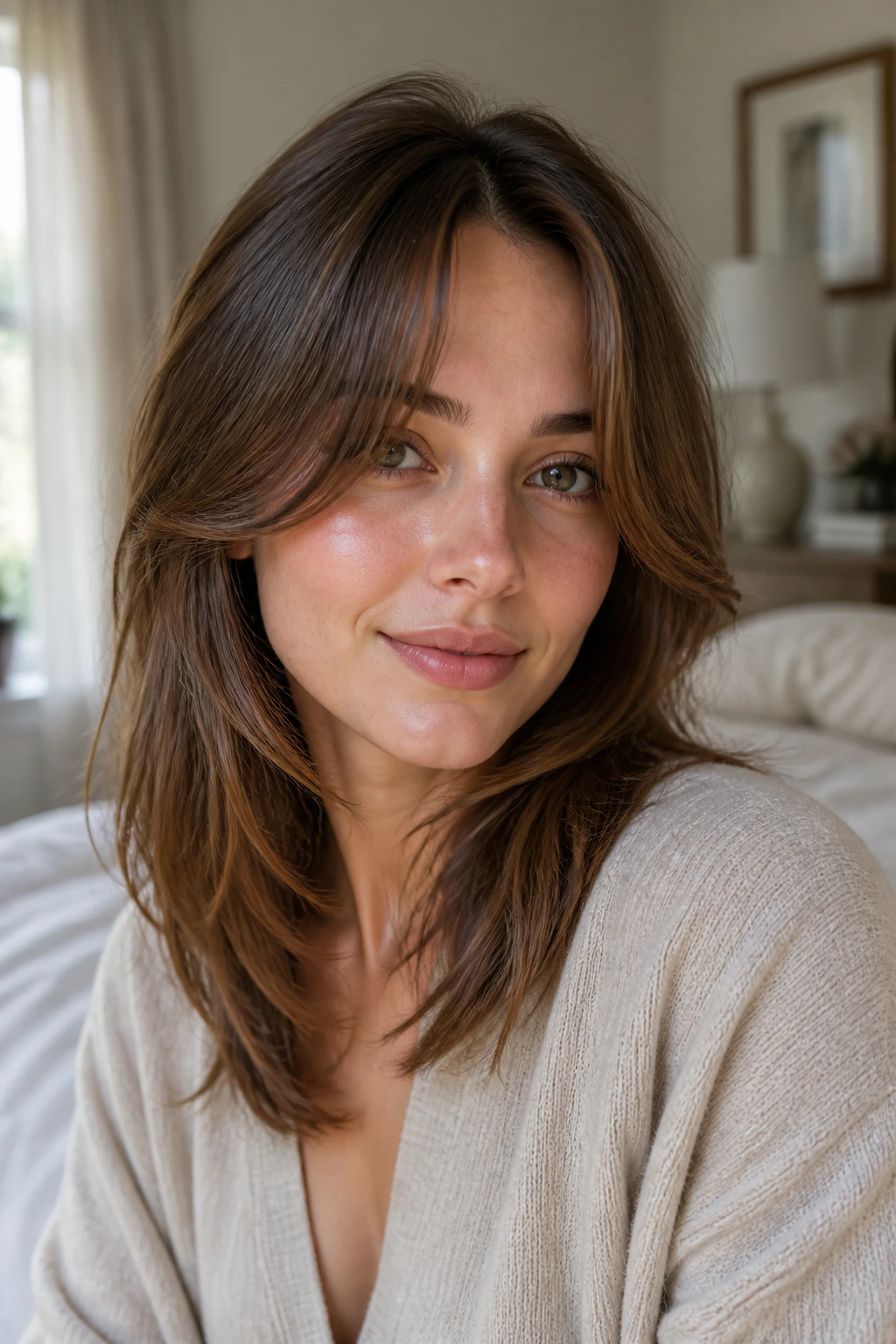
The salon chair can be awkward if you walk in with a photo and no words. A better approach is to name the parts that matter: where you want the shortest front piece to land, how much cheekbone you want exposed, and whether you want the style to feel soft or crisp. That gives the stylist something usable.
Say the landing point out loud. If you want the face frame to start at the cheekbone, say that. If you want it lower, say chin or collarbone. The starting point changes everything.
Mention your styling habit. If you air-dry most days, layers need to sit differently than they do for a full blowout. If you like a curling iron, the front pieces can be cut with a little more shape. A haircut that ignores your real routine will look great for twenty minutes and annoying for the next eight weeks.
Bring one photo for shape, not just vibe. A photo that shows the front angle and the part is more useful than one that just says “cute.” Cute is not a plan. It’s a feeling.
The Details That Keep the Face Looking Longer
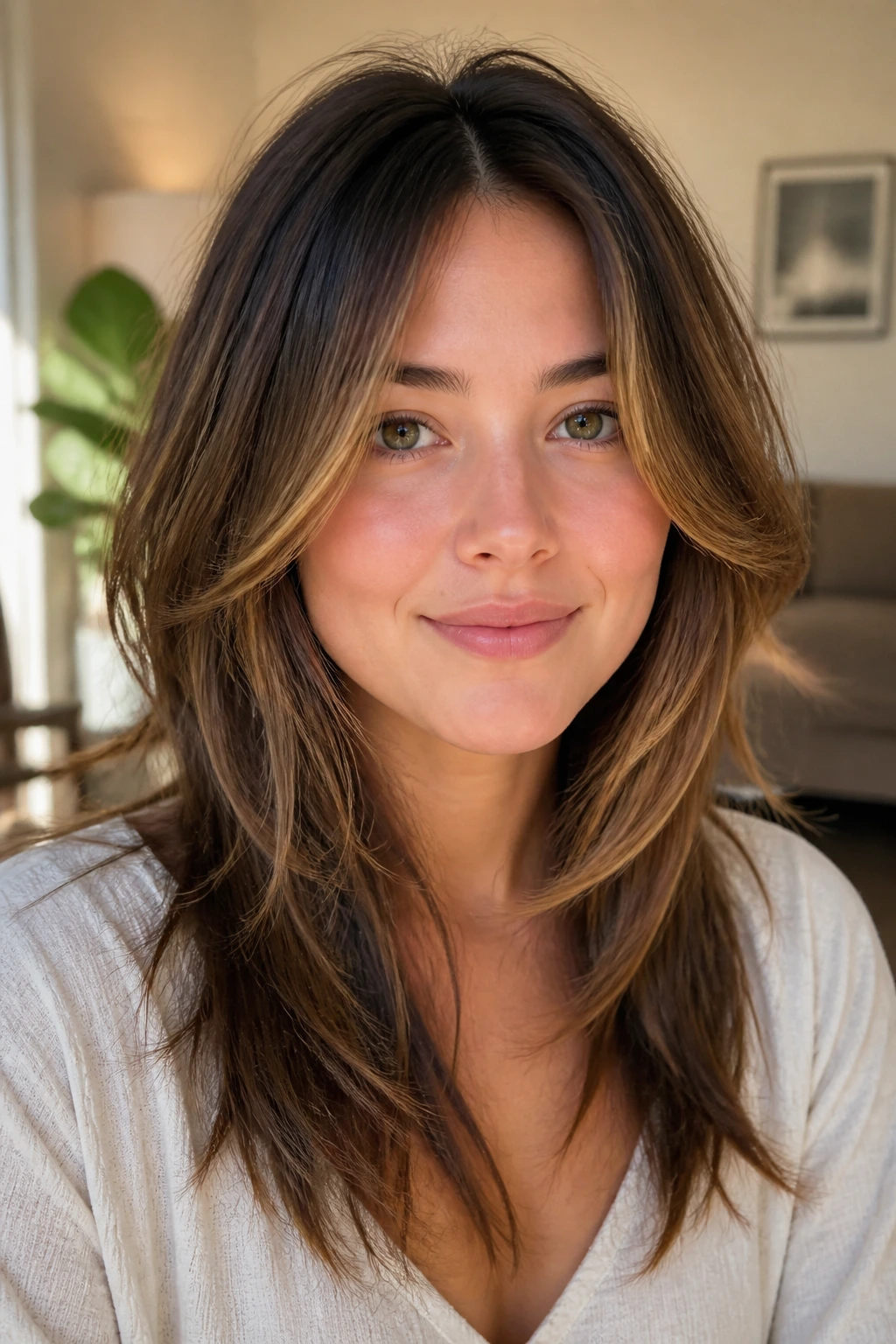
A round face does not need hiding. It needs clean geometry. That usually means keeping the widest part of the haircut a little lower than the widest part of the face, or a little higher at the crown, or a little off to one side so the eye is never parked in one spot for too long.
The fastest way to ruin the effect is to build bulk at the cheeks. You can do that with layers, with curls, with blowouts, with even a ponytail if the front is too bulky. If you catch yourself adding width right where the face is widest, stop and redirect the shape. Pull the volume up. Pull it down. Pull it sideways. Just do not let it sit there.
A second useful trick: keep the shortest front pieces soft, not blunt. The sharper the line across the front of the face, the more obvious the roundness can feel. A soft diagonal is kinder. And more interesting, honestly.
Common Mistakes That Make a Round Face Look Wider
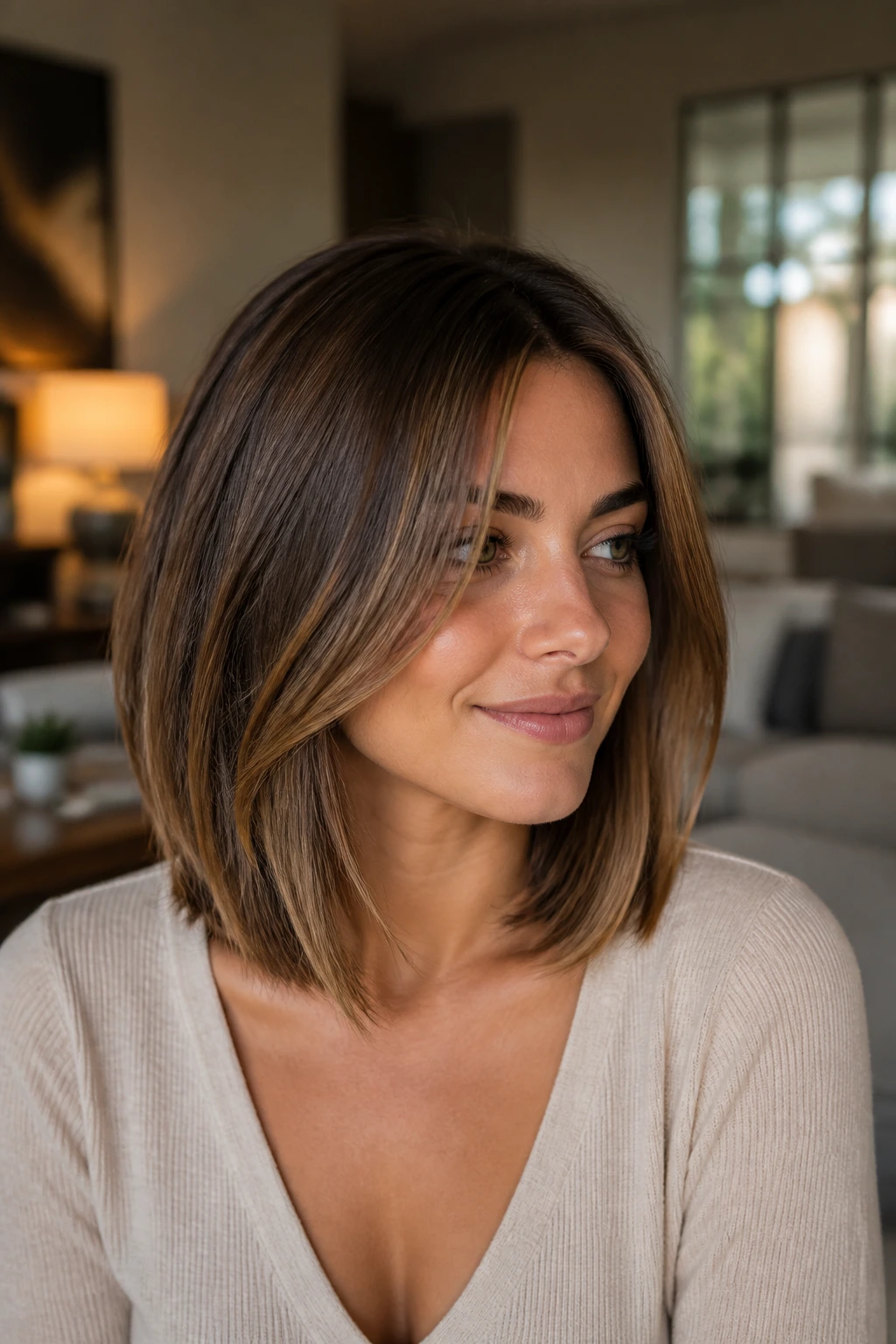
The first mistake is cutting face-framing layers too high. When the shortest piece starts right at the cheekbone and puffs outward, the haircut can draw a bright little circle around the face. Lower the starting point a bit, or taper the piece more gradually.
The second mistake is too much side volume at temple level. This shows up a lot in curly hair and blown-out lob styles. The shape looks pretty from the front and then suddenly widens the head from the temples down. The fix is to keep the lift at the crown and let the sides fall a little closer.
The third mistake is a blunt edge that stops right at the jaw or cheeks. That line can cut the face in exactly the wrong spot. If you love blunt cuts, keep the length below the jaw or add hidden layers so the perimeter doesn’t feel like a shelf.
The fourth mistake is ignoring your part. A center part can work. A side part can work. A bad part with the wrong layer placement usually cannot. Move the part an inch or two, then look at the whole silhouette again. Tiny shift. Big difference.
The fifth mistake is over-curving the front pieces inward. A little bend is useful. Too much bend and the hair starts making a frame that mirrors the roundness you were trying to soften. Let the pieces skim, not hug, the face.
Variations That Fit Different Hair Moods
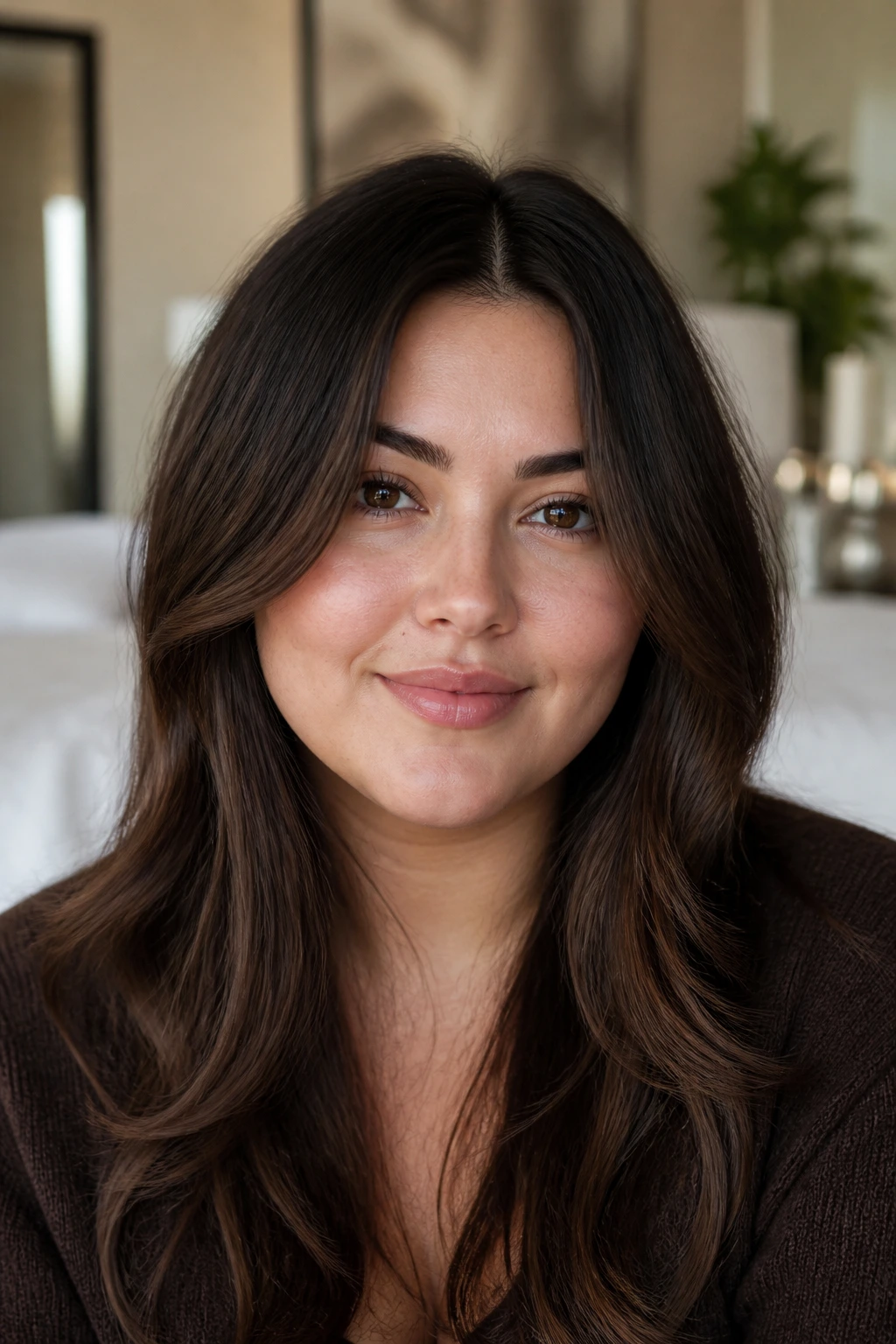
The Soft-Center Version: Keep the part in the middle, but let the face-framing layers fall long and loose, starting below the cheekbone. This is the easiest choice if you like a calm, clean look and do not want the style to scream for attention.
The Side-Sweep Version: Move the part off center and let the front layers travel diagonally across the forehead. It’s a better fit if you want more lift at the crown and a little asymmetry near the eyes.
The Texture-Heavy Version: Add more movement through the ends, either with a shag, a wolf cut, or loose waves. This works best when the texture stays piecey rather than puffing out at the sides.
The Sleek Version: Keep the perimeter crisp and use hidden internal layers or a blunt lob shape. A straight blow-dry with a soft bend at the face can look sharp without making the face feel boxed in.
The Updo Version: Buns, ponytails, braids, and twists can all work if you leave enough front softness. The rule stays the same: height at the crown, softness near the cheeks, and no bulk sitting exactly where the face is widest.
Tools, Brushes, and Products That Actually Help
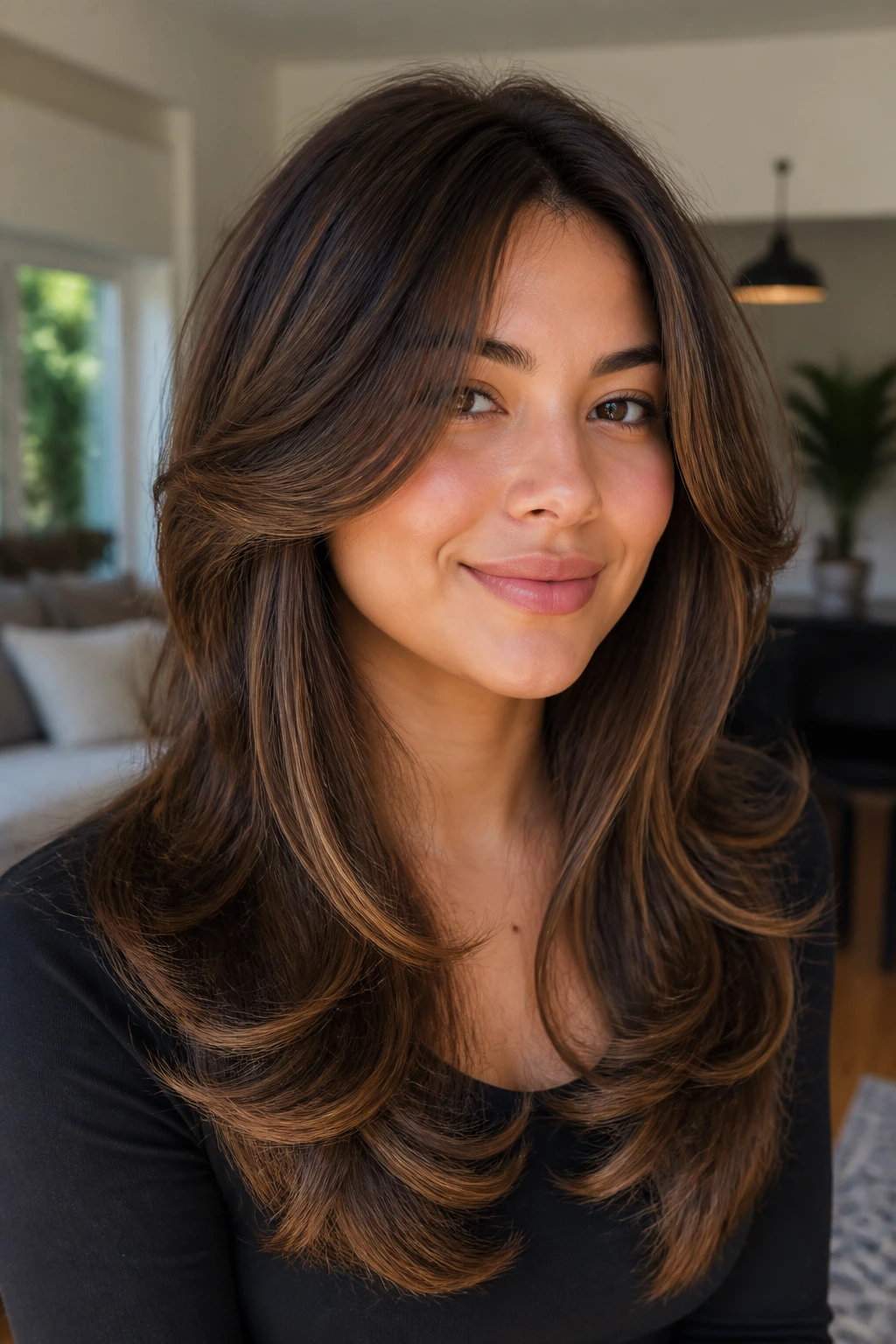
-
1.25-inch round brush — Good for curtain bangs, front bends, and blowouts that curve away from the face.
-
Paddle brush — Useful for sleek lobs, blunt bobs, and smoothing the top layer before you add shape.
-
Blow dryer with a nozzle attachment — The nozzle matters. It controls airflow so the front pieces don’t puff all over the place.
-
Heat protectant spray — Use it before any hot tool. Fine hair gets fried fast, and face-framing pieces are usually the first to show damage.
-
Texturizing spray — A little at the mid-lengths gives a lob or shag some separation without heavy grit.
-
Curling wand or iron, 1 to 1.25 inches — Best for soft bends in the front pieces and waved styles that need a little curve.
-
Sectioning clips — They make blow-drying and rolling the front pieces much easier, especially when you want the crown to cool in place.
-
Lightweight mousse or styling cream — Good for air-dried layers, curls, and styles that need shape without stiffness.
-
Fine-tooth tail comb — Handy for clean parts and for placing the front strands exactly where you want them.
-
Silk or satin pillowcase — Helps keep face-framing layers from turning into a frizzy mess overnight.
How to Keep the Shape Between Haircuts
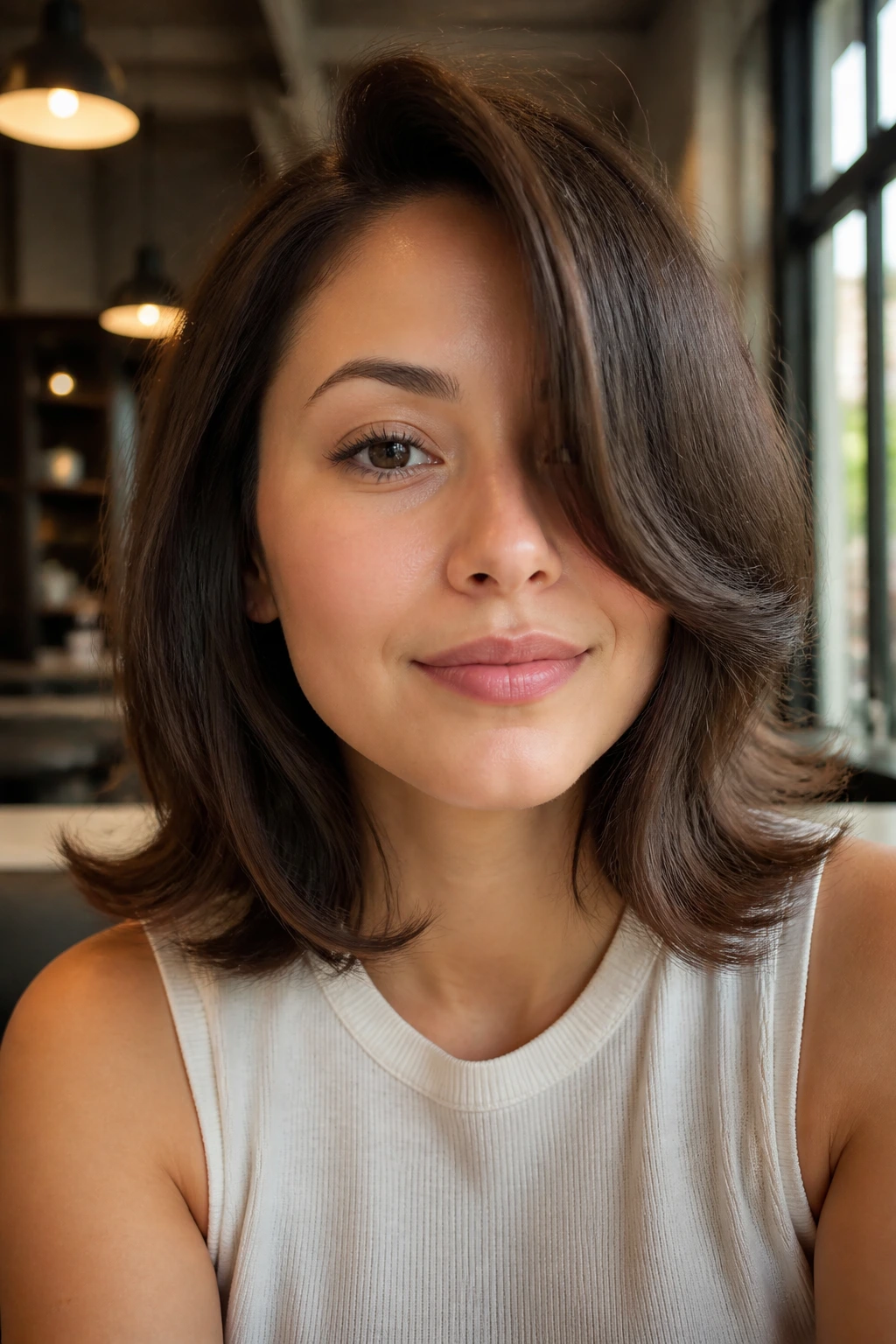
Face-framing layers grow out fast. Faster than people expect. The front pieces lose their angle first, then the whole haircut starts feeling square or vague. Shorter cuts like bobs and bangs usually need shape trims every 6 to 8 weeks. Longer layers can often go 8 to 12 weeks before they start losing their line.
If you wear a curtain bang or bottleneck fringe, the front is probably the first place that needs maintenance. A small trim around the eyes and cheekbones can keep the haircut alive. Waiting too long turns a clean frame into a droopy curtain, and nobody wants that.
At home, try to refresh the shape instead of overwashing it away. A mist of water, a dab of cream, and a quick round-brush pass on the front pieces can bring back the bend. For curly and coily hair, rewetting only the front section and reshaping it with fingers or a diffuser is usually enough.
Sleep also matters. Loose braids, a soft pineapple, or a silk pillowcase keeps the front from frizzing into a cloud. And yes, that little extra care shows. It’s the difference between a style that still has a line on day three and one that looks forgotten.
Frequently Asked Questions
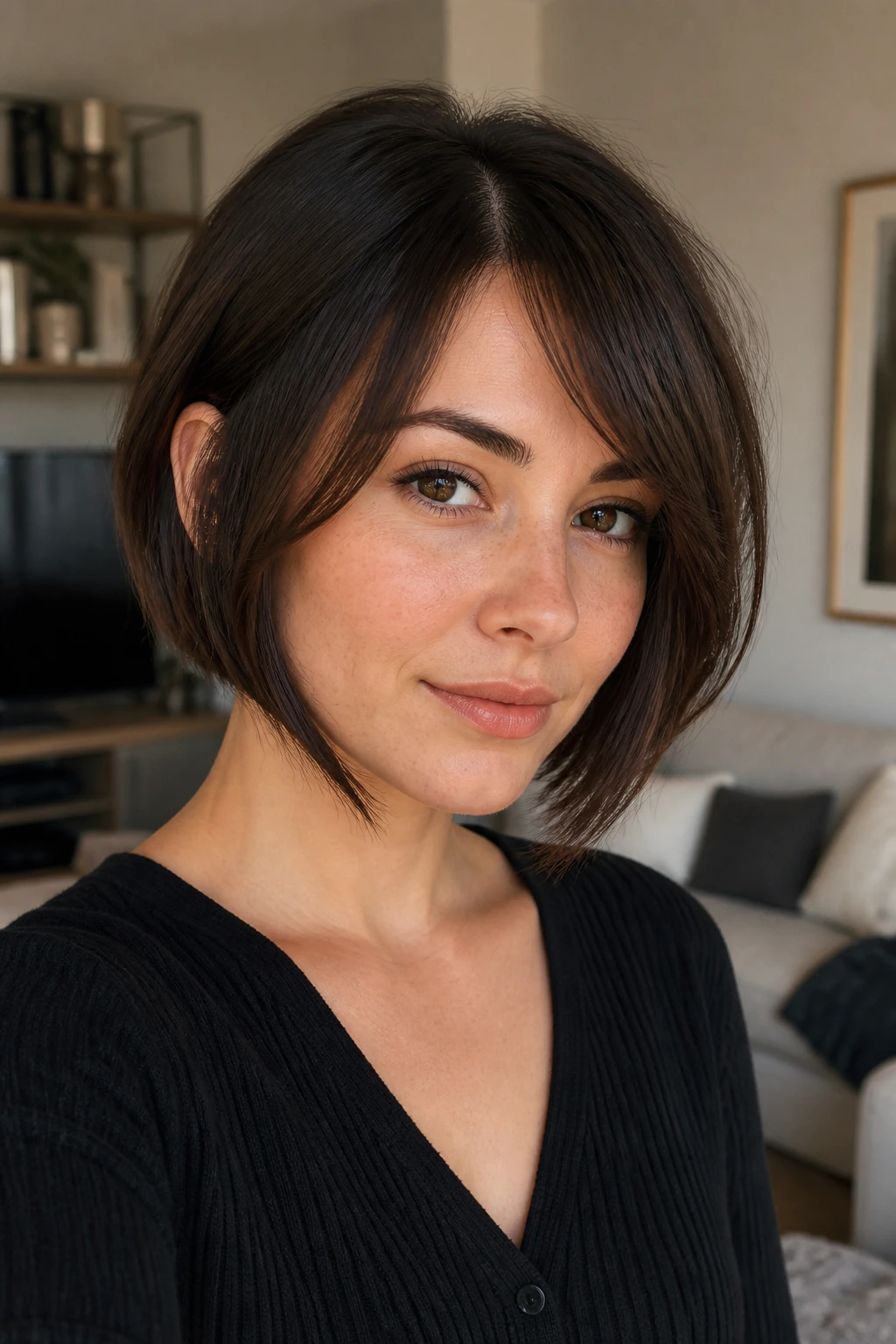
Are curtain bangs good for round faces?
Yes, when they’re cut to open below the cheekbone instead of ending right across the middle of the face. That length helps the bangs frame the eyes without widening the cheeks.
Should a round face avoid chin-length bobs?
Not always, but chin-length bobs are tricky. If the line lands exactly at the jaw or the cheek’s fullest point, the cut can make the face look broader; a slightly longer lob is often easier to wear.
Do face-framing layers work on curly hair?
They do, and they can be excellent on curls if the stylist cuts for shrinkage. Dry shaping or curl-by-curl cutting helps the front pieces fall in the right place once the hair springs back.
Is a middle part bad for a round face?
No. A middle part only becomes a problem when the haircut adds width at the cheeks. Long front pieces, soft layers, or crown lift can make a middle part look balanced instead of flat.
What length is most flattering on a round face?
There is no single magic length, but collarbone and just-below-collarbone cuts are especially easy to work with. They sit below the jaw and give the front pieces room to angle downward.
How short can the front layers be?
Short enough to frame the face, but usually not so short that they stop at the widest point of the cheeks. For many round faces, that means starting around the cheekbone, lip, or chin and then tapering lower.
What if my hair is fine and flat?
Keep the layering gentle and the front pieces longer. Too many short layers can make fine hair collapse at the sides, which does the opposite of what you want.
Can I make these styles work without heat?
Yes, especially if your haircut already has the right shape. Air-drying with a light cream, twisting the front pieces while damp, or using a soft bun overnight can all bring out the frame.
How do I know if the haircut is too wide for my face?
Stand in front of a mirror and look at where the bulk sits. If the fullness lands at the temples or cheek level and the eye gets stuck there, the shape needs to be shifted up, down, or forward.
A Face-Frame That Knows Where to Fall
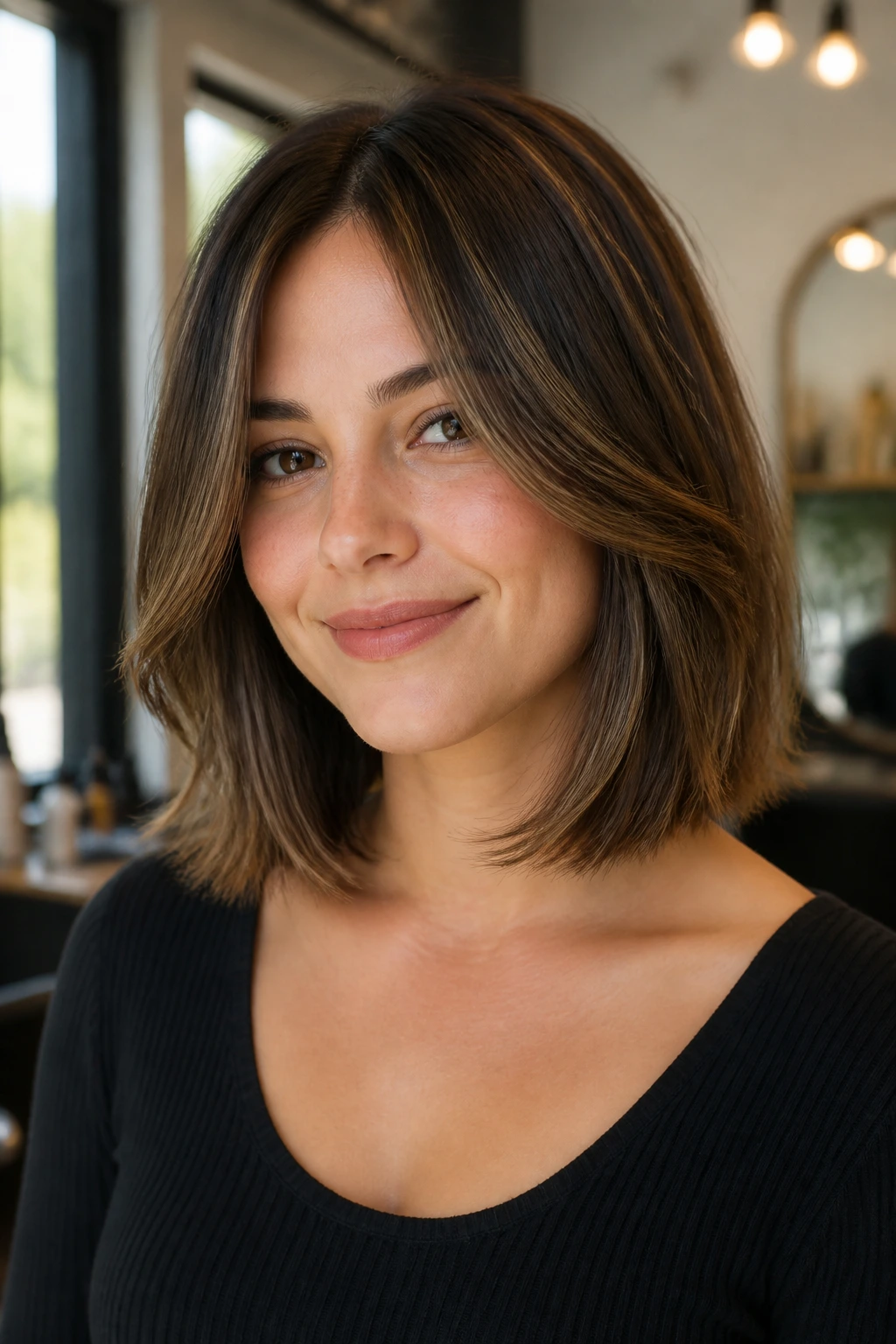
The best styles for a round face do not chase length for its own sake. They place the front pieces where the eye needs movement, keep the volume from crowding the cheeks, and give the whole shape a little direction. That can be a lob, a pixie, a braid, or a soft curly cut. The trick is the placement.
If one thing ties all of these looks together, it’s restraint. Not no style. Not flat hair. Just the discipline to keep the widest part of the cut away from the widest part of the face, and the willingness to let a few pieces fall exactly where they should. Start there, and the rest gets easier fast.