



Wavy hair can look polished in a blunt cut right up until it dries and starts pushing outward at the jaw. Then the shape changes. Fast. On a square face, that can either look crisp and intentional or turn into a hard box around the lower half of the face, and the difference usually comes down to where the hair was cut—not how expensive the styling cream was.
That’s why the debate around 25 or no layers for wavy hair and square faces matters more than it sounds. If by “25” you mean a soft, low-elevation layered cut, you’re talking about a very different result than a single-length shape. One keeps the perimeter strong and heavy. The other moves the bulk, lets the waves breathe, and can soften the corners of a square jaw if the layers are placed with some restraint.
Square faces need a haircut with judgment. Not drama. Not random texture sprayed all over the head and hoped into submission. The best result usually comes from understanding one simple thing: wavy hair changes shape as it dries, and square faces are most sensitive to anything that adds width at the cheeks or jaw. Get those two facts wrong, and the haircut feels louder than the person wearing it.
Why This Choice Matters More Than It Sounds
-
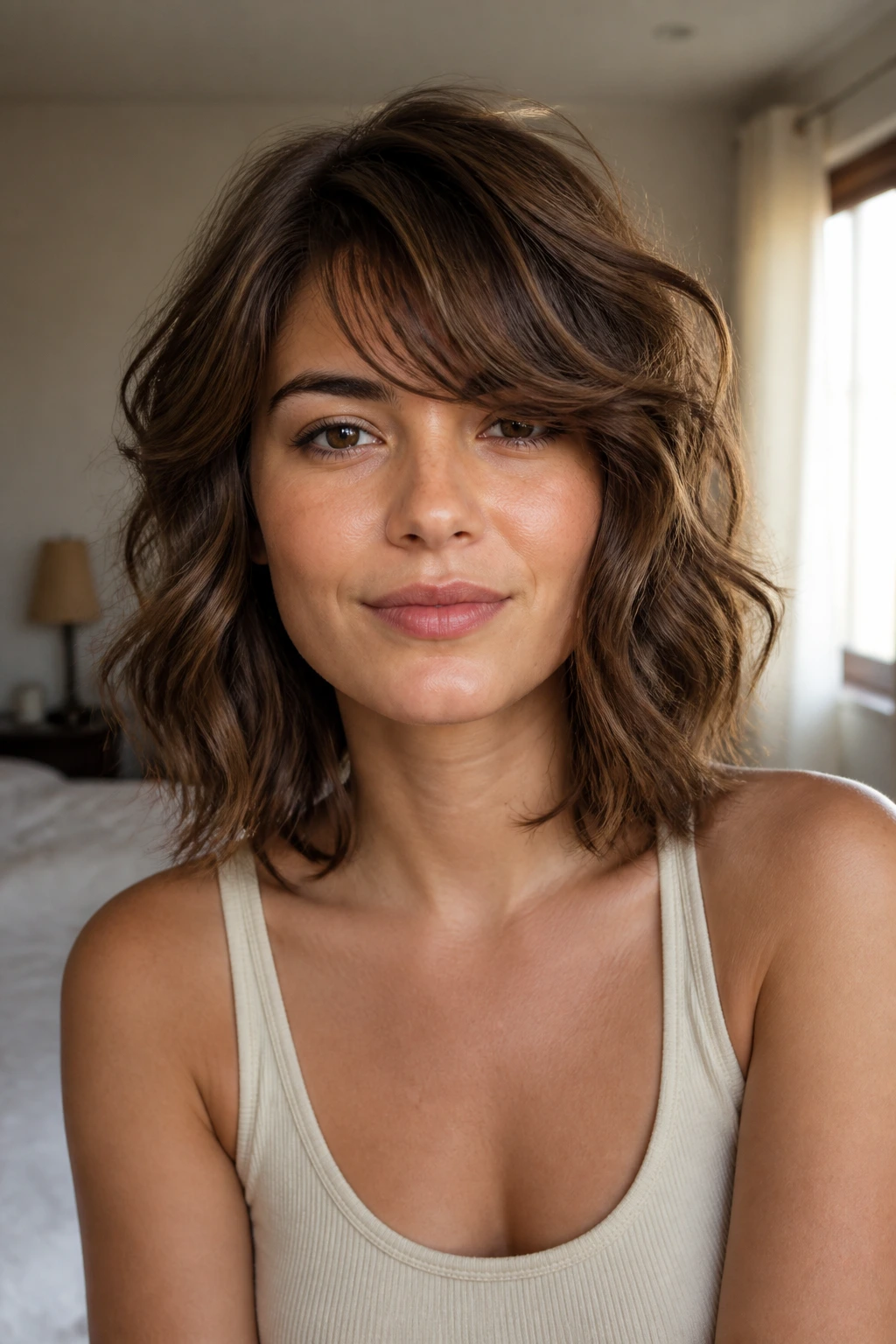
Jawline placement changes everything: A layer that lands right at the jaw can make a square face look wider, while a layer that starts lower can blur the corners instead of boxing them in.
-
Waves shorten when they dry: A soft 25° layer on wet hair can rise higher once the wave pattern sets, which is why “just a little bit off the front” is rarely just a little.
-
Density changes the silhouette: No layers keeps thick wavy hair heavy and glossy; layered hair removes bulk and stops the sides from ballooning outward.
-
Your styling time changes with the cut: A blunt shape often air-dries with less fuss, while layered waves usually need a diffuser, scrunching, or at least some root control.
-
Salon language matters: “I want movement” is vague. “Keep the perimeter blunt, add long soft layers below the cheekbone” gives a stylist something usable.
-
Square faces are all about edges: The wrong cut emphasizes the strongest part of the face. The right one softens it without hiding it.
What “25” Means When a Stylist Says It
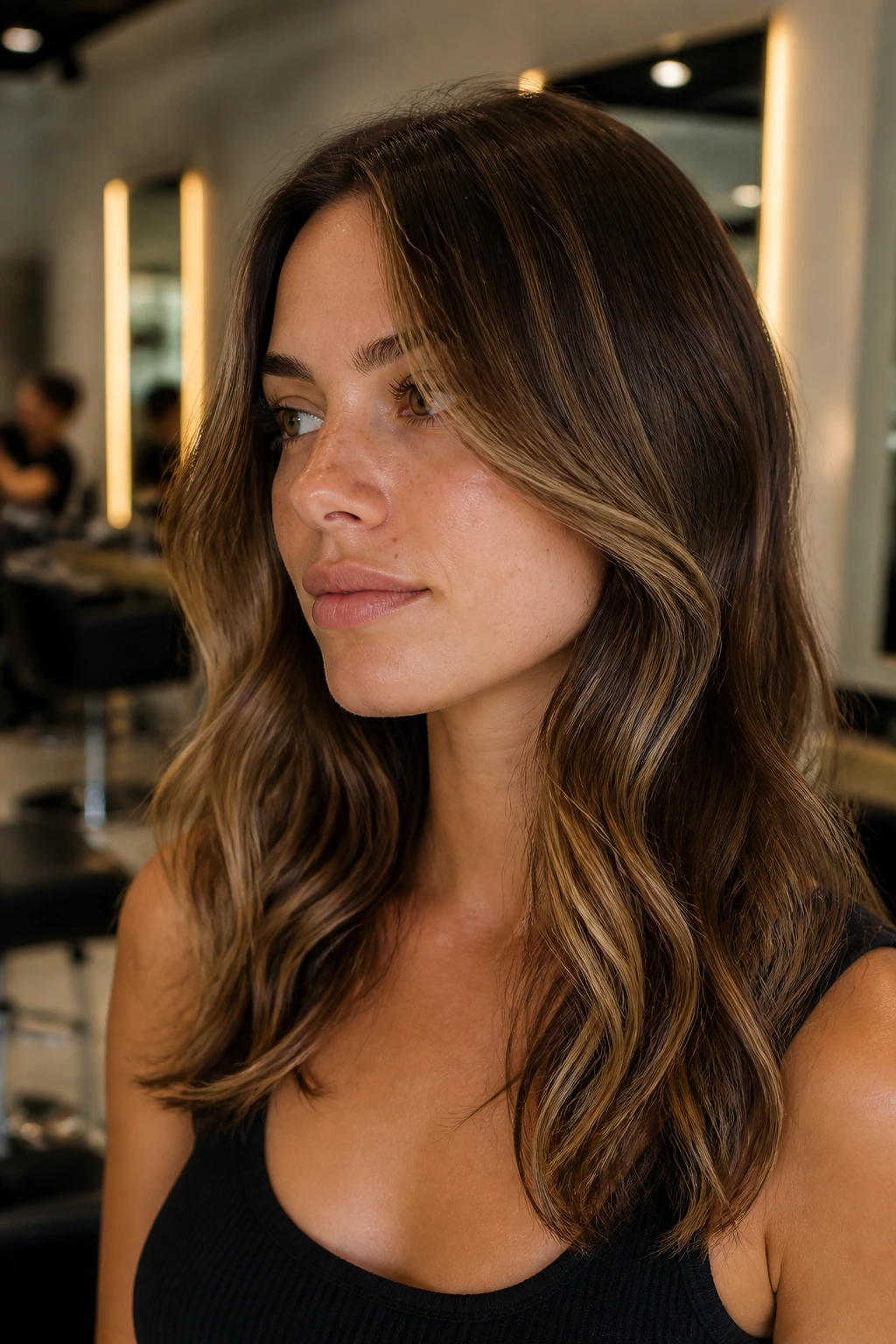
“25” is sloppy salon shorthand unless everyone in the room agrees on what it means. I’m treating it here as a low-elevation layered cut—the sort of layering that takes out a bit of weight without carving big steps through the shape. In practice, that usually means long layers, soft internal movement, and face-framing pieces that don’t stop right at the jaw.
That’s different from a choppy, high-layered cut. Very different. High layers can be gorgeous on the right hair, but on square faces they can draw attention straight to the corners of the jaw and make wavy hair puff where you least want it. A low 25° approach works more quietly. The perimeter still reads as a shape. The inside gets some air.
The detail that matters most is where the first layer lands. If the shortest pieces sit at cheekbone or jaw level, the haircut starts making geometry decisions for you. If they fall lower—toward the mouth, chin, or even the collarbone—the cut softens the face instead of outlining it.
Low Elevation, Not Choppy Steps
A lot of people say they want layers when they really want movement. Those are not the same thing. Movement can come from tiny internal adjustments, a gentle face frame, or even a blunt cut with a bit of bevel on the ends.
No layers is one answer. Low layers is another. A 25° shape sits in that middle zone where the hair still looks like a sheet, but not a helmet.
Why Square Faces Need Softness in the Right Places
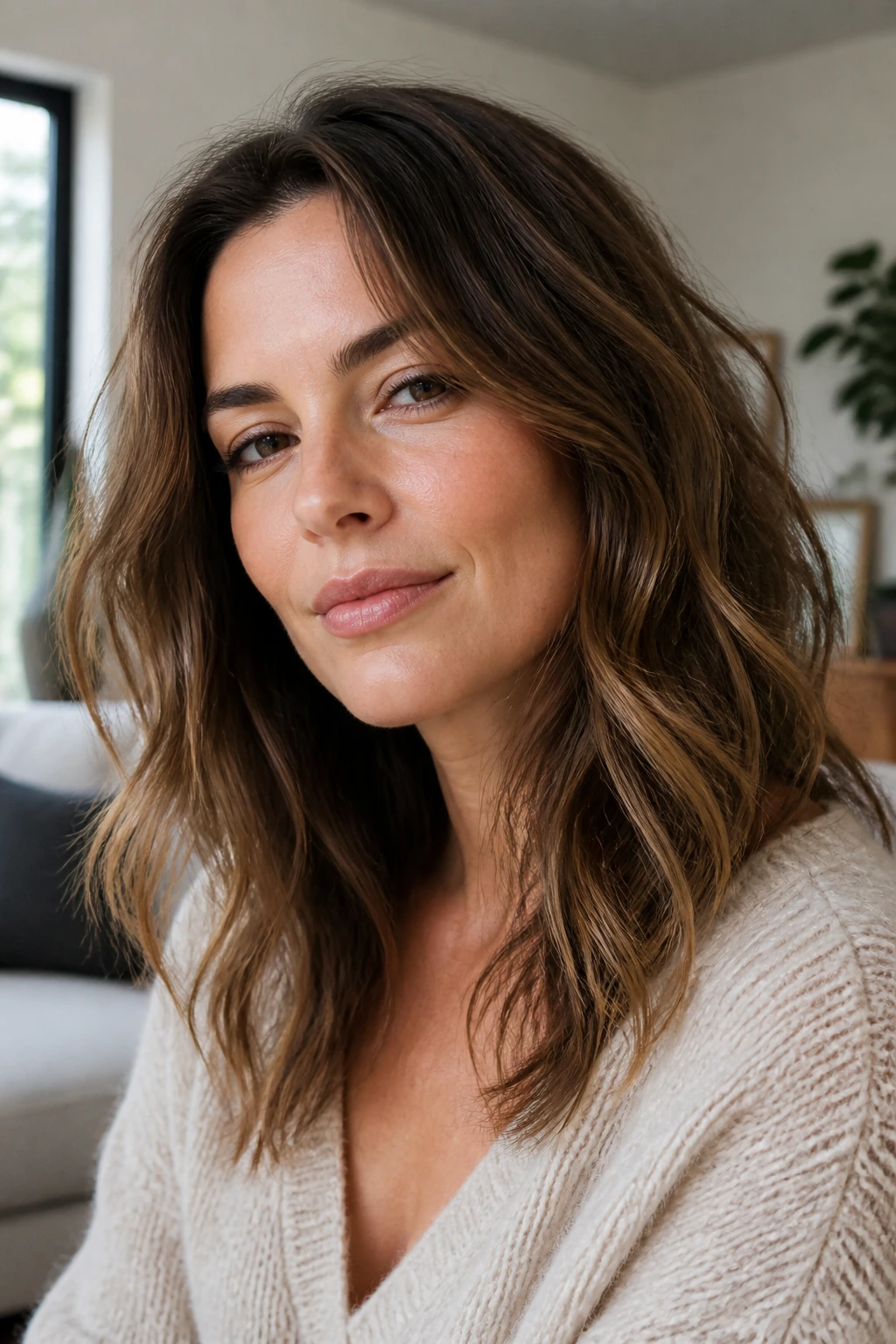
Square faces have strong lines. That’s the whole point. The forehead, cheekbones, and jaw tend to sit at similar widths, and the jaw usually carries a visible angle. That structure looks sharp in the good sense when the hair opens up around it. It looks harsh when the cut echoes the same straight lines.
The mistake I see most often is adding volume exactly where it should be reduced. A blunt line ending at the jaw can feel like someone took a ruler to the face. So can a short, puffy layer that flips out at the sides. The haircut doesn’t have to hide the jaw. It just needs to stop shouting about it.
Wavy hair complicates the picture. Waves bring their own width, especially around the sides of the head. On a square face, that extra width can be useful if it lives lower and softer. It’s a problem if it lives right at the cheekbone or jaw. The goal is to guide the eye vertically, not horizontally.
The Face Shape Is Not the Enemy
Square faces are not “too angular” or any of that lazy language people use when they don’t know how to read bone structure. They just need a haircut that works with the architecture instead of copying it.
Longer layers, side parts, curtain pieces, and softly tapered ends can all help because they break up the line without adding more width. That’s the real game. Not hiding. Redirecting.
How Wavy Hair Reacts to Blunt Lines and Layered Ends

Wavy hair has a memory of its own. You cut it wet, and it often dries shorter, puffier, or more uneven than the salon cape made it look. A blunt cut on wavy hair can be stunning because the ends line up and the shape feels dense. It can also turn into a triangle if the hair is thick and the bottom keeps expanding while the top sits flatter.
Layers change that. They let the wave pattern sit differently, which can be a blessing or a mess depending on where the layers land. Soft layers remove some of the weight that drags waves down. Too many layers, or layers cut too high, expose more ends to the air. More ends means more frizz potential, especially if the hair is dry, porous, or coarse.
What blunt ends do to waves
Blunt ends make waves look heavier and often shinier. You see more of the full bend in the strand instead of a stack of chopped pieces. That’s why a no-layer cut can look expensive on dense wavy hair: the perimeter feels deliberate.
The catch is shape. Heavy wave patterns can gather at the bottom and push outward, especially around the jaw and collarbone. If the haircut sits at the widest part of a square face, you get width where you wanted softness.
What layers do to waves
Layers encourage lift. Sometimes that lift is lovely. Sometimes it’s the exact kind of root puff that makes people blame humidity when the haircut is the real culprit.
Long, low layers tend to keep the wave pattern intact while taking the bulk out of the underside. Short, aggressive layers can make the hair look broken apart. That’s a bad trade on most square faces unless the whole point is a lot of texture.
The Clean Weight of a No-Layers Cut

A no-layers cut is blunt, simple, and a little stubborn in the best way. The ends sit together. The shape looks thick. Wavy hair often appears healthier in this format because the perimeter is intact and the waves fall as one surface instead of a stack of separated pieces.
For square faces, that strength can be useful if the hair is long enough to move past the jaw. A single-length cut that hits below the collarbone usually lengthens the face line and makes the jaw less dominant. Put the same blunt edge at chin level, though, and the whole thing can look boxy.
This is where people get tripped up. They assume no layers means no shape. Not true. A skilled stylist can keep the perimeter blunt and still adjust the ends so they curve inward a little, especially if the hair is wavy. That tiny bend changes the mood of the cut.
When a blunt shape makes sense
No layers is strongest when the hair is:
- Dense and wavy: The blunt edge keeps the bulk from exploding outward.
- Long enough to pass the jaw: Collarbone length or longer gives the face room.
- Naturally uniform: If your wave pattern is even from top to bottom, a single length can look calm and glossy.
- Low-maintenance by nature: If you don’t want to restyle every wash, blunt can be easier to live with.
The blunt cut does ask for regular trims. Once the ends start fraying, the line loses its charm fast. Wavy hair shows damage at the edge sooner than straight hair does.
What a Low-25° Layer Cut Actually Adds
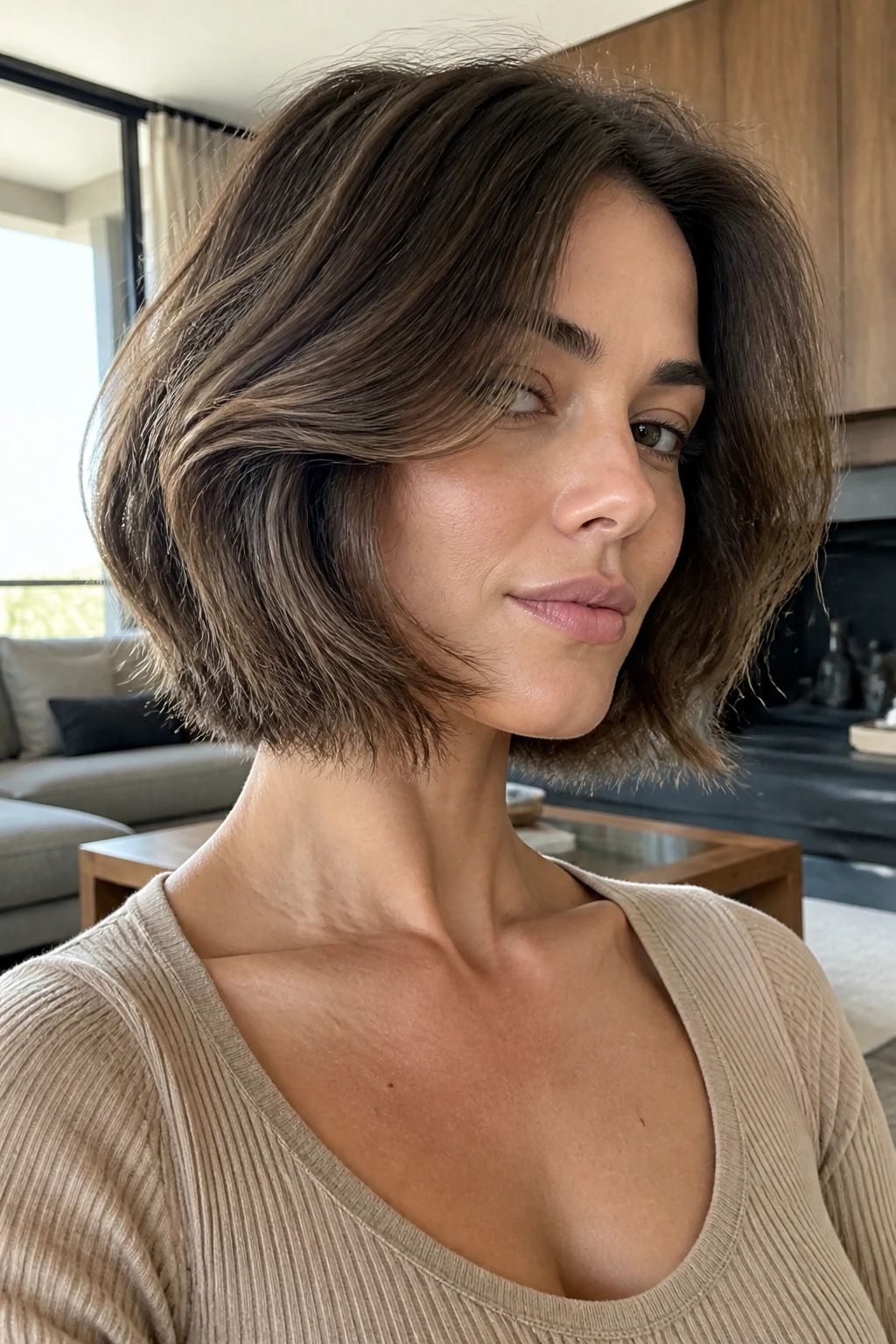
A soft layered cut around 25° changes the way the hair sits without destroying the outline. That’s the sweet spot for a lot of wavy textures because it removes some mass from the interior while keeping the outside shape readable. You get movement. You get air. You do not get a shredded silhouette—if the cut is done with restraint.
For square faces, a low layer set can soften the angle of the jaw by refusing to end exactly there. The layers shift the eye upward and downward at once. A little lift near the cheekbone. A little movement below. Not much width at the corners. That’s the balance you want.
The best part is how the waves behave when they’re cut this way. They tend to stack more naturally, especially if the stylist follows the wave pattern rather than forcing the hair into straight sections. The cut can feel lighter without looking thin.
The danger of over-layering
Too many layers on wavy hair can turn the sides fluffy and the ends wispy. On square faces, that often makes the widest part of the haircut sit right beside the widest part of the face.
That’s a bad marriage. You want the layers to soften the outline, not underline it in marker.
The Best Places for Face-Framing Pieces
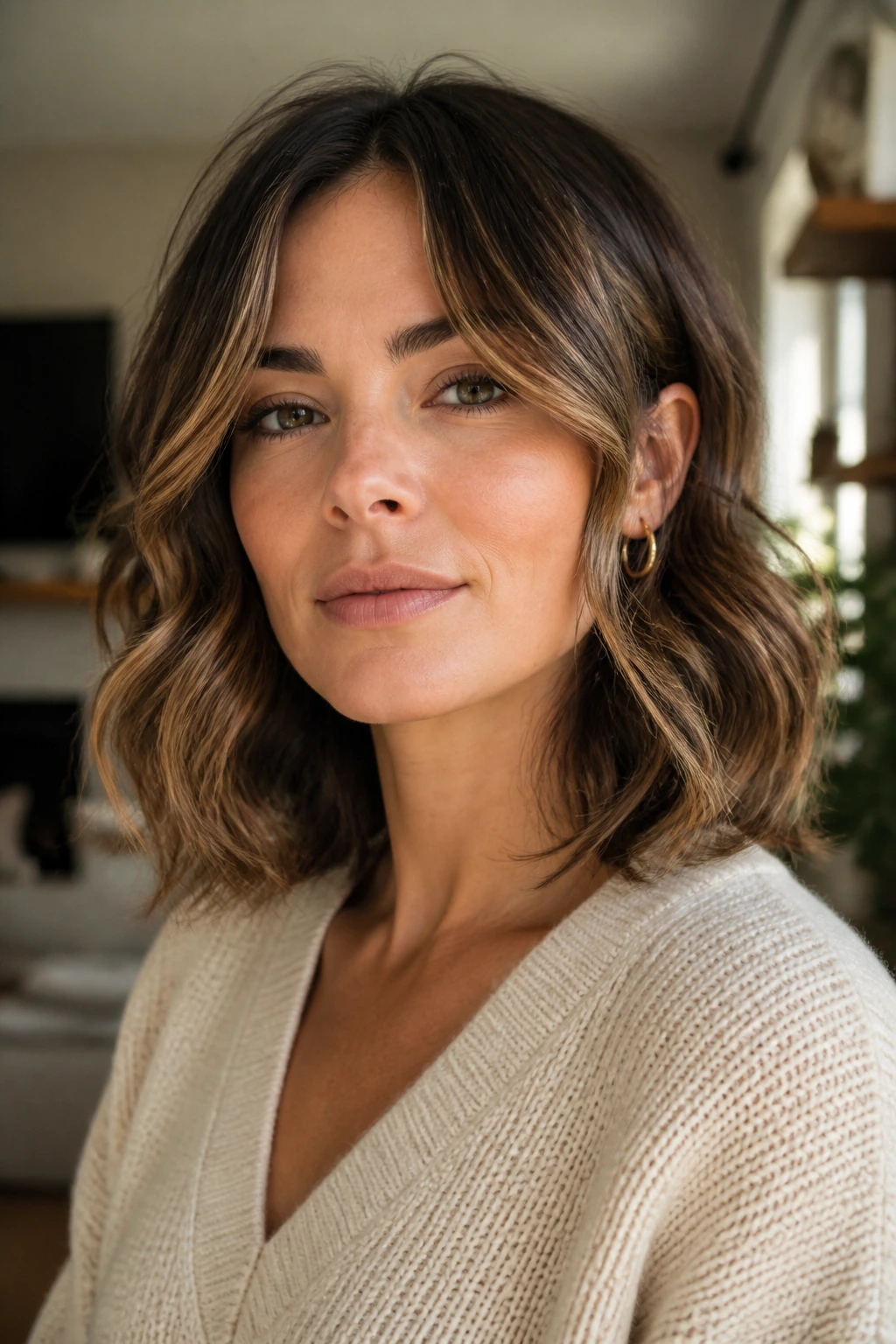
Face-framing pieces matter more than people like to admit. I’d take smart framing over extra layers any day. A few well-placed pieces can change the whole read of the haircut, especially on a square face where the goal is to soften the corners without dragging everything flat.
The safest starting point is usually below the cheekbone and above the collarbone, with the shortest face-framing pieces staying long enough to tuck behind the ear. That keeps the cut from stopping right at the jaw. It also gives the wavy pattern room to bend instead of flipping out like a little shelf.
Short, blunt face-framing pieces are risky here. They can emphasize the width of the jaw or cheeks, especially if the hair has a strong bend. Longer curtain-style pieces are kinder. They let the front of the haircut open up rather than close in.
Where the frame should start
- For softer waves: Start the first real face frame around the chin or slightly below, then blend downward.
- For denser waves: Keep the frame longer and more gradual so you don’t build width at the sides.
- For fine waves: A few longer front pieces can create shape without robbing the back of body.
The main rule is simple: avoid a hard stop at jaw level. That’s the spot most likely to make a square face look wider.
When No Layers Is the Better Call

Sometimes the clean answer really is no layers. Dense, healthy wavy hair can look expensive in a single length, especially when the length falls below the collarbone. The weight keeps the waves polished. The face looks longer. The outline feels calm instead of busy.
I’d lean toward no layers if your waves are loose, your hair is thick, and you like air-dried hair that doesn’t need much correction. A blunt cut can hold its own without making you chase pieces around with a wand or brush. It also tends to grow out in a tidy way, which matters more than people think.
No layers also suits people who hate that feathered, piecey look. There’s a whole group of wavy-haired folks who want the opposite: fewer split ends showing, less separation, more solid shape. For them, layers can feel like unnecessary clutter.
Best candidates for a no-layer cut
- Hair that is dense, glossy, and mostly even from roots to ends
- Wavy patterns that don’t collapse at the bottom
- Square faces with enough hair length to pass the jawline
- People who want a cleaner grow-out between trims
If your hair is fine, though, no layers can drag the wave flat. That’s where the blunt line starts working against you.
When the Layered Cut Wins
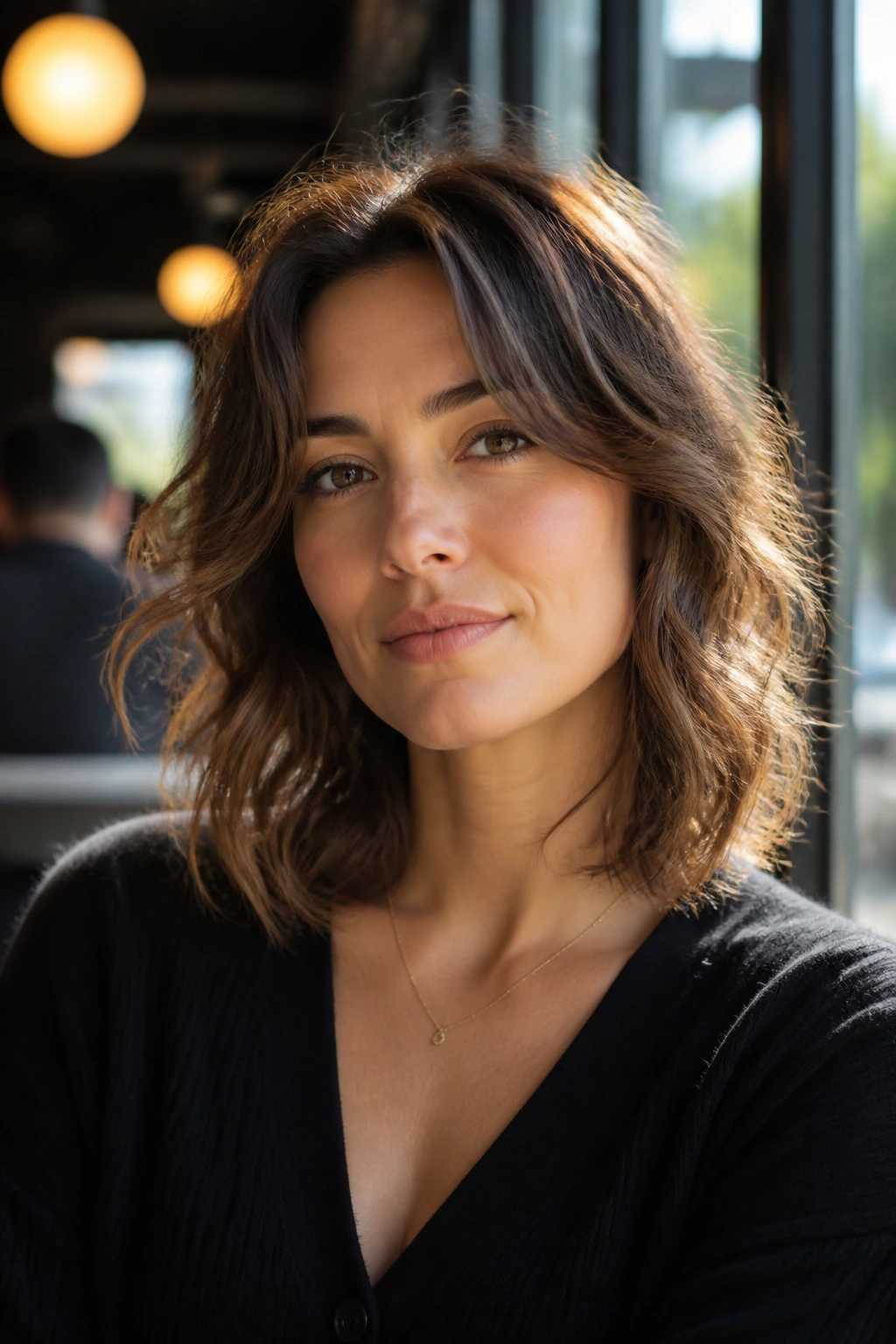
A low layer cut makes more sense when the hair is heavy enough to sit like a block. You know the look: great while wet, then somehow wider by lunch. Layers break that up. They let the wave pattern rise, move, and settle without building a shelf around the sides of the head.
For square faces, a layered cut can also soften a broad lower third when the face frame is long and the layers are low. The trick is that the lift needs to happen in the right zones. You want movement away from the jaw, not a puff exactly at the jaw.
If your hair is mixed texture—some looser waves on top, tighter bends underneath—layers can create a more even finish. The stylist can remove weight where the wave is strongest and leave enough length where the hair needs control.
The signs layers will help
- The ends flip outward the second the hair dries.
- The hair feels heavy at the bottom but flat at the crown.
- Air-drying leaves you with a triangle shape.
- Your jaw looks wider when the hair hangs all one length.
That last one is the giveaway. If the haircut makes your face feel broader, layers may be the fix.
How Length Changes the Entire Decision
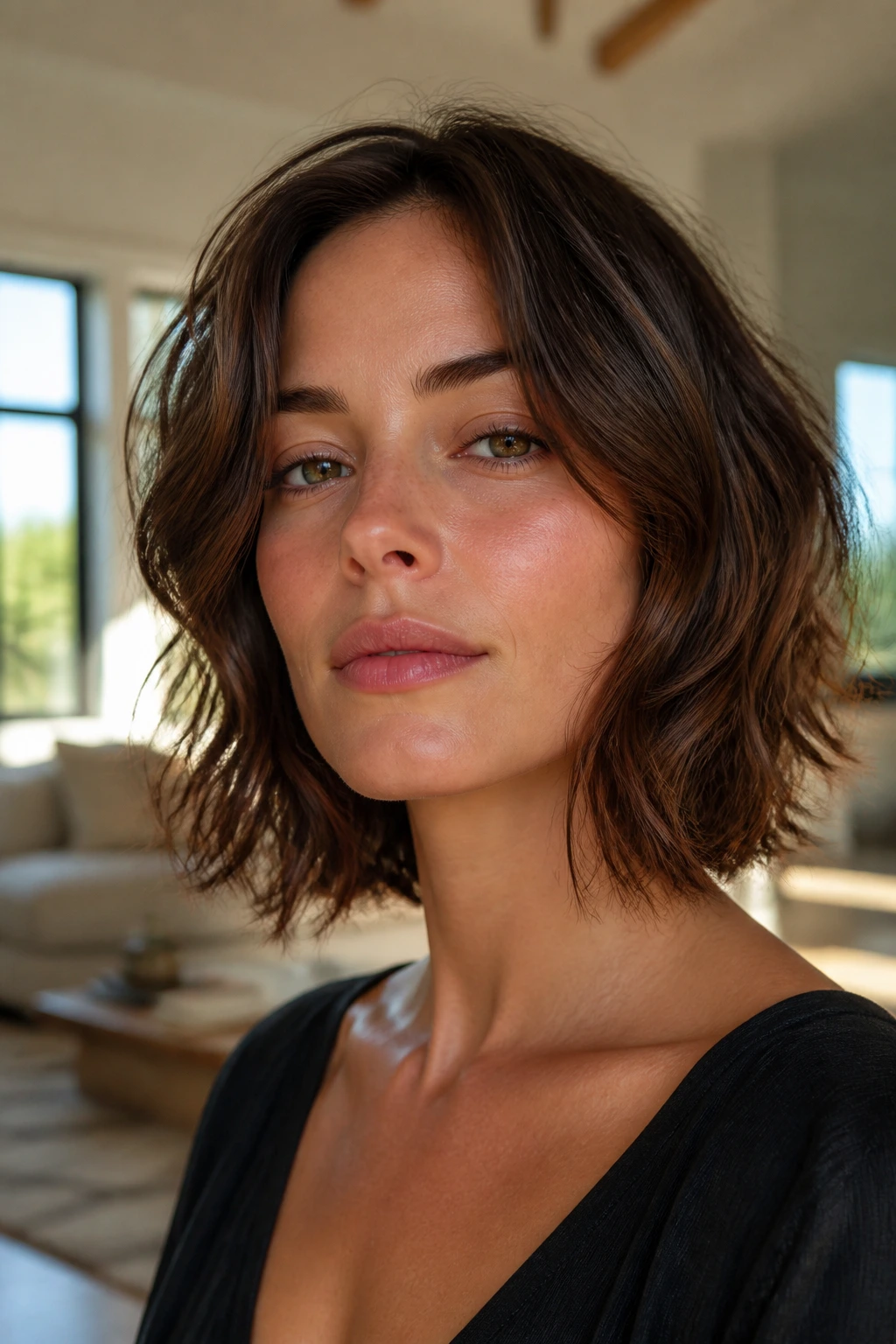
Length changes everything. A lot of people argue about layers as if the hair stops at the same place on everyone’s shoulders. It doesn’t. The relationship between length and face shape decides whether the haircut feels soft, boxy, airy, or draggy.
Shorter cuts on square faces need more careful shaping. A blunt lob at chin level can hit the jaw in a way that feels unforgiving. A layered lob can work better, but only if the shortest bits don’t stop right at the same width as the face. Once hair gets to the collarbone or below, no layers becomes more forgiving because the weight drops past the jaw and lengthens the whole line.
Length by length
At chin length:
Go careful. Chin-length blunt cuts can echo the jaw too closely. If you want this length, layers or beveling usually soften it better than a straight line.
At the collarbone:
This is the danger zone and the opportunity zone. A blunt cut can look rich and sleek, but layers often help stop the ends from puffing outward.
Past the shoulders:
Either option can work. The question becomes whether you want polished heaviness or more movement through the mid-lengths.
Long hair also gives you room for face-framing pieces that fall below the jaw. That alone changes the balance on a square face more than people expect.
How to Style Either Cut Without Fighting the Wave
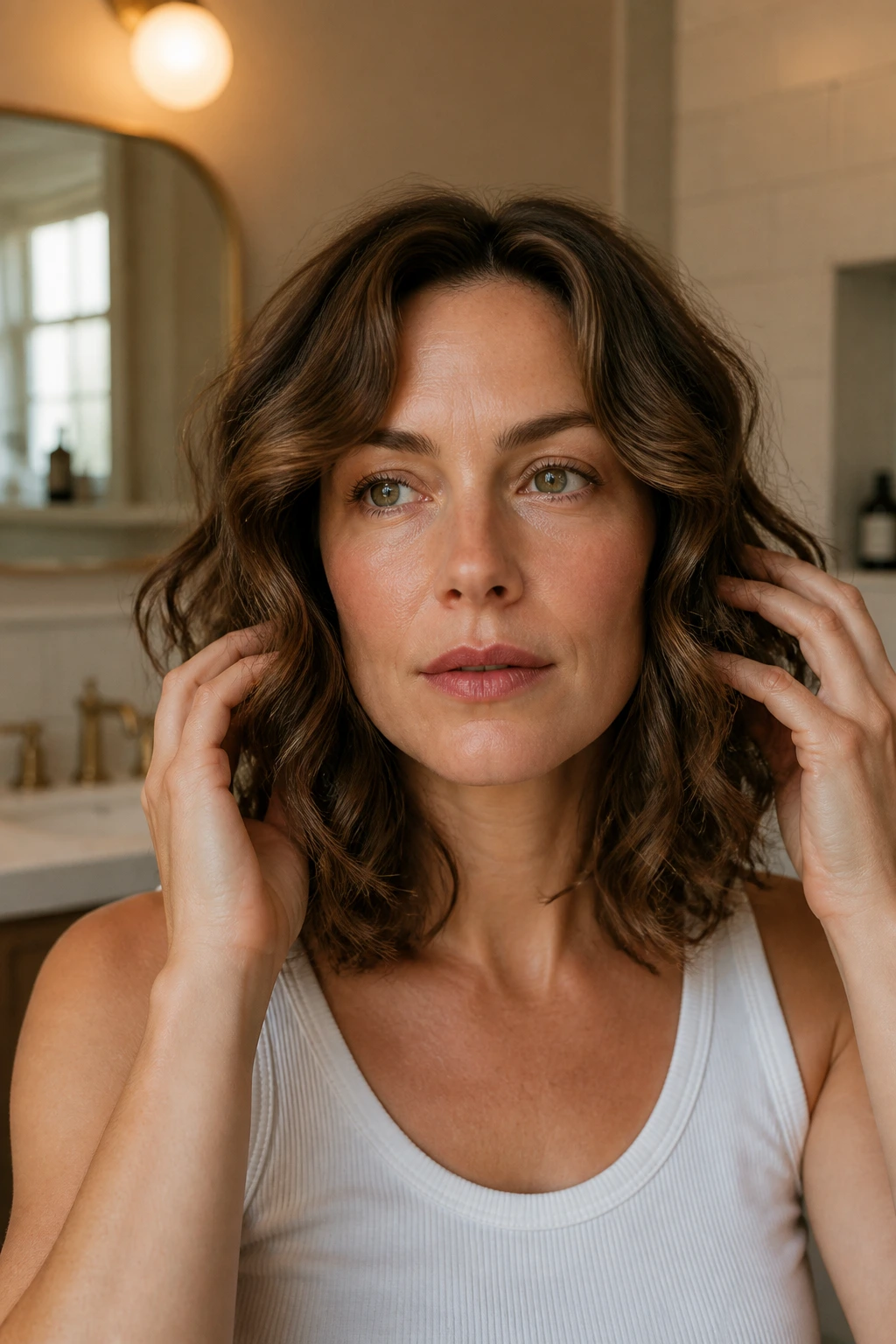
Styling should match the cut. Sounds obvious. People still get it wrong all the time.
If you choose no layers
Start with a lightweight leave-in on damp hair, then use a small amount of mousse or gel through the mid-lengths and ends. Scrunch, don’t rake aggressively, or you’ll pull the wave out of shape before it sets. A diffuser on low heat helps the line stay smooth while the wave forms underneath.
Keep product off the roots if your hair is fine. The blunt cut already carries more visual weight. Too much cream at the top makes it collapse, and then the length drags down the whole face.
If you choose a low-25° layer cut
Here the challenge is keeping the layers from puffing. Use less heavy cream and a little more hold. A mousse at the roots and a light gel through the lengths can keep the wave pattern defined without turning the ends fuzzy.
A side part or off-center part often helps square faces more than a dead-center part, because it breaks the symmetry and pulls the eye away from the widest points. Not a hard rule. Just a useful habit.
A styling order that usually behaves
- Apply leave-in to very damp hair.
- Add mousse or gel in sections.
- Scrunch upward with a microfiber towel or T-shirt.
- Diffuse on low heat until about 80% dry.
- Leave the rest to air-dry so the cut keeps its shape.
Touching the hair too early ruins both versions. The cut needs time to settle.
Small Tweaks That Make Either Shape Easier to Wear
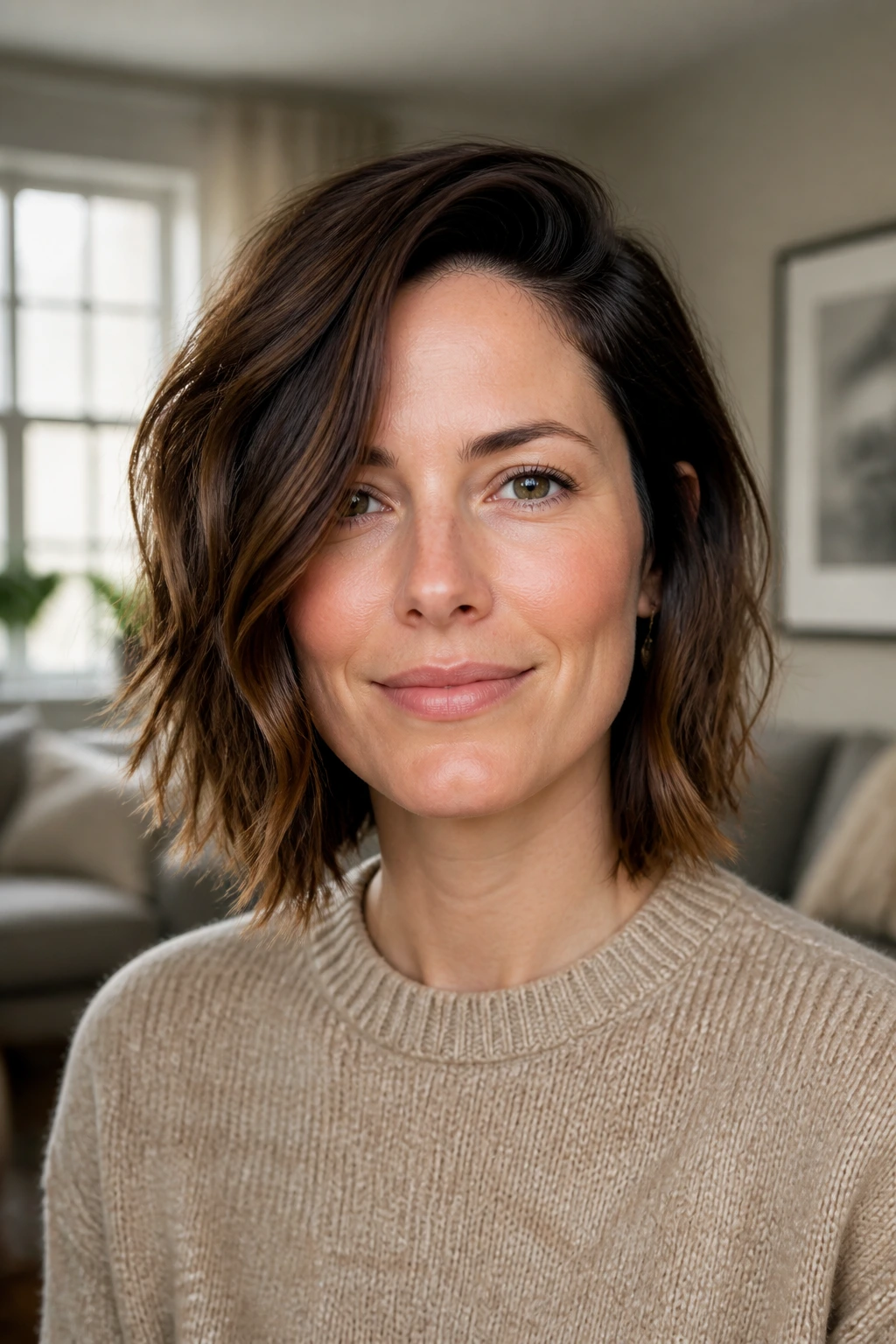
You don’t always need a different haircut. Sometimes you need a better version of the same haircut.
Part Placement: A deep side part can soften the square outline by moving volume off the exact width points of the face. It also keeps the front from splitting into a flat curtain.
Dry-Cut Reality: Wavy hair should be checked dry, or at least nearly dry, before the stylist calls it done. Wet hair lies. It shrinks, bends, and changes direction once it leaves the sink.
Weight Control: If your hair is thick, ask for internal weight removal below the top of the ear rather than aggressive texturizing around the jaw. That keeps the lower face from getting extra width.
Face-Frame Length: If the shortest pieces can’t tuck behind the ear, they’re probably too short for a square face. That little test saves a lot of regret.
Finish With Purpose: A pea-sized amount of serum on the last inch or two of hair can make blunt ends look sleek. On layered cuts, use it more sparingly so the movement doesn’t get glued down.
Mistakes That Add Width or Frizz
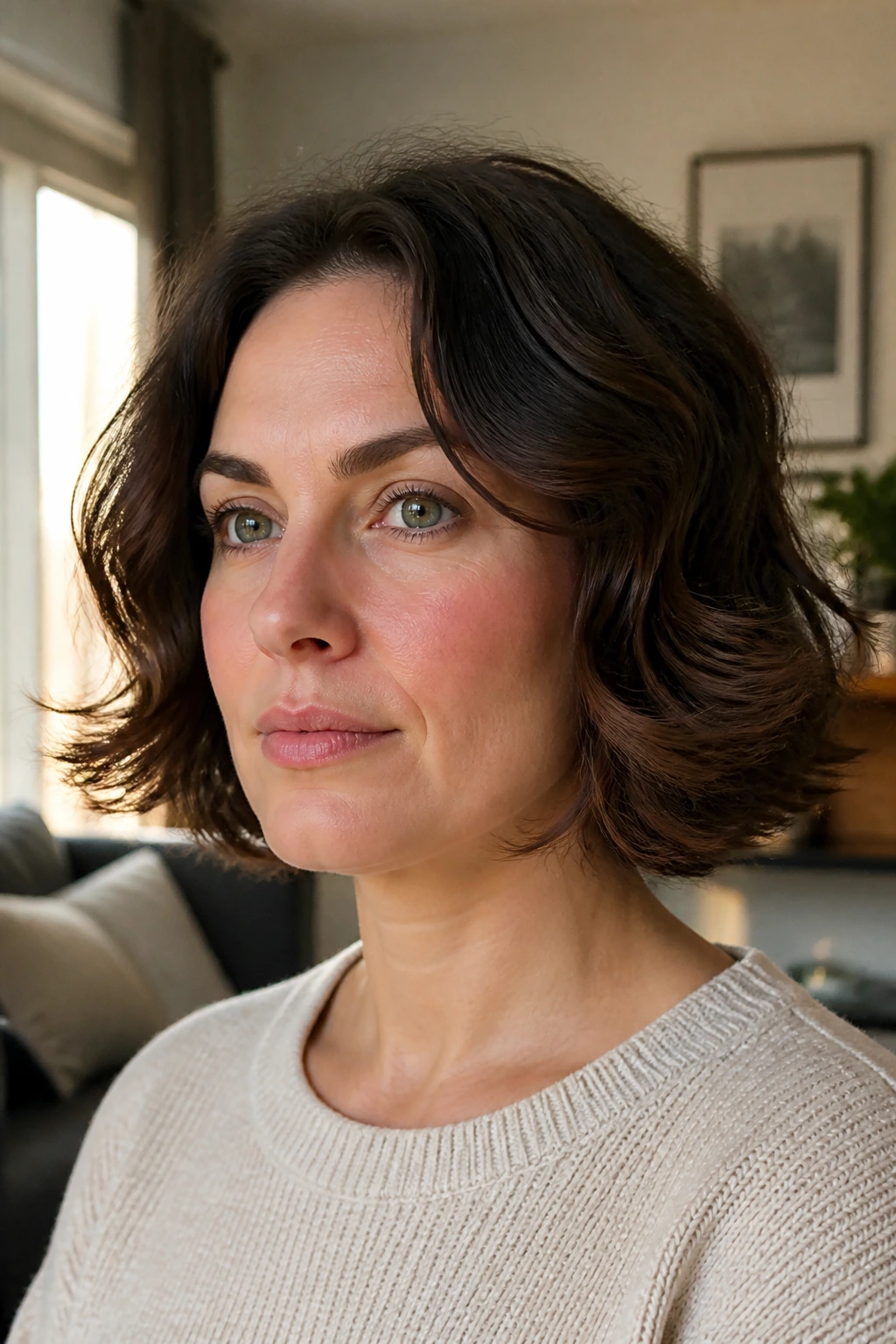
Some haircut mistakes are just plain common. Same pattern, same result, every time.
-
Layers ending at the jaw: This is the big one. The symptom is a wider-looking lower face and ends that flip outward. The fix is to push the shortest pieces lower or keep the perimeter blunt.
-
Over-layering the crown: Too many short top layers make wavy hair spring up and puff. The haircut starts looking fluffy instead of shaped. Long layers or invisible internal shaping are safer.
-
Thinning shears on the wrong wave type: On coarse or frizz-prone wavy hair, thinning can leave the ends see-through and rough. Ask for weight removal with scissors, not aggressive texturizing.
-
Cutting too short in the front: Short face-framing pieces can make a square face look wider if they stop at cheekbone or jaw. Longer pieces soften more cleanly.
-
Ignoring dry shrinkage: Wavy hair often looks longer when wet than it will after a full dry. If the stylist cuts layers too high, the result can feel chopped once it shrinks up.
-
Styling every wash the same way: A blunt cut and a layered cut often need different amounts of product. Use the same heavy cream on both and one of them will droop.
Smart Variations If You Don’t Want a Hard Either-Or

Not everyone needs to pick a side. Good haircuts usually live in the middle anyway.
Invisible Layers:
This is the sneaky option. The perimeter stays strong, but the stylist removes weight inside the shape so the wave sits better. It’s excellent for square faces that want softness without obvious steps.
Collarbone Curtain Shape:
Think long face-framing pieces, a soft middle part, and enough length to get past the jaw. It’s one of the easiest ways to flatter a square face without making the haircut feel overworked.
Soft Butterfly Balance:
A lighter version of the butterfly cut can add movement around the front while keeping the back long. On wavy hair, it works best when the shortest pieces are not too high.
Rounded Lob:
A lob with a slight inward bend at the ends can soften the angles of a square face while staying clean. It’s a good choice if you want structure but not a hard line.
Long One-Length Wave:
This is the blunt option with discipline. The hair stays mostly single-length, but the ends are dusted clean and the front is left long enough to move around the face.
Tools and Products That Make the Shape Behave
- Diffuser attachment: Helps wavy hair dry in a controlled way without blasting the layers apart.
- Microfiber towel or cotton T-shirt: Cuts down on frizz when you scrunch out water.
- Wide-tooth comb: Safer than a brush on damp waves, especially if the haircut has layers.
- Light mousse: Gives shape at the roots without weighing down the ends.
- Soft gel: Useful when you want a layered cut to hold its wave pattern instead of puffing out.
- Leave-in conditioner: Good for rough ends and blunt cuts that need a bit of slip.
- Round brush, optional: Handy if you want to tuck the front under or shape the face frame.
- Hand mirror: Worth having if you want to check how the cut falls from the side and not just in front.
Keeping the Shape Between Salon Visits

A haircut like this does not stay on autopilot. Wavy hair shows the grow-out in stages, and square faces are sensitive to where that extra length lands.
A no-layers cut usually holds best with trims every 10 to 12 weeks. Let it go too long and the ends start looking ragged instead of blunt. A tiny dusting can keep the line clean even if you’re trying to grow it.
A layered cut often needs a shape refresh every 8 to 10 weeks, especially if the face-framing pieces are part of the look. Those front sections grow faster in the eye than the back does. You notice it in photos first.
Sleep matters too. A silk or satin pillowcase helps prevent the front pieces from crumpling, and a loose pineapple or clip can keep waves from flattening overnight. Don’t twist the hair too tight. That makes the next morning messier, not neater.
If the ends start looking dry before the trim is due, use a tiny bit of serum on the bottom inch only. Not the whole head. Just the ends. That keeps blunt cuts looking clean and keeps layered cuts from turning fuzzy.
Can Wavy Hair and Square Faces Wear a Blunt Cut?

Yes, and sometimes that’s the better answer. A blunt cut on wavy hair can look sharp, expensive, and dense in a good way, especially when the length falls below the jaw. The square face gets some length, the hair gets weight, and the whole look feels controlled.
The problem shows up when the blunt line lands at the widest part of the face. Chin length is the usual trouble spot. So is a blunt lob that sits right on the jaw. In those cases, the haircut can make the face look broader than it is.
The trick is not to avoid blunt cuts. It’s to place them with some distance from the jaw and keep the wave from expanding sideways with too much product.
Do Layers Make Wavy Hair Frizzy?
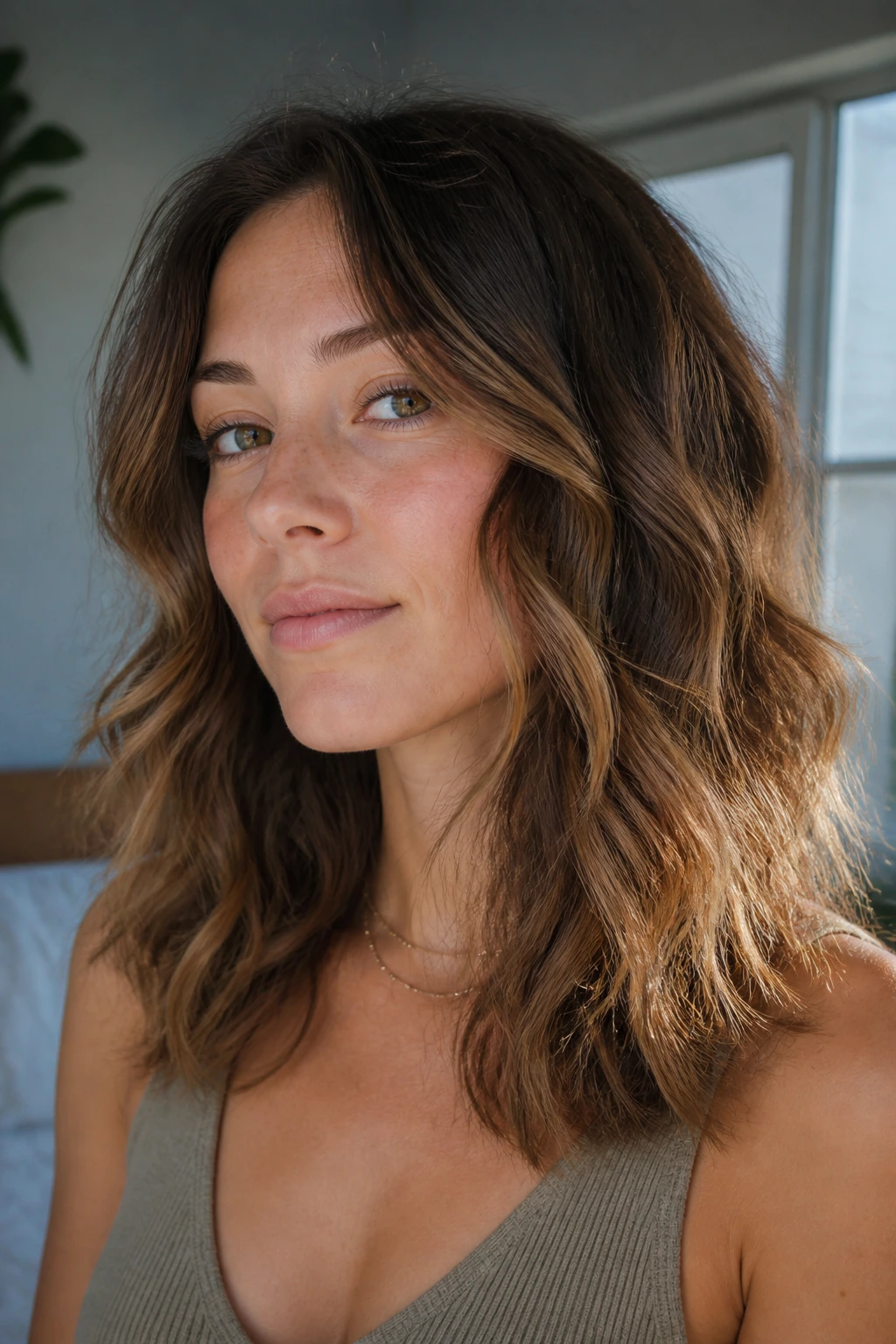
They can, but not because layers are the enemy. Frizz usually shows up when the cut removes too much weight or leaves too many short ends exposed. Wavy hair is already trying to bend in different directions. Add a stack of short layers, and the ends can lose their smooth line.
A low-layer cut is much safer than a high, choppy one. So is using the right amount of hold. If the layers are loose and the product is light but not slippery, the hair usually looks shaped instead of fuzzy.
Dryness matters too. Porous waves frizz more because they grab moisture from the air and swell. If that sounds like your hair, skip heavy texturizing and keep the layers longer.
Where Should Face-Framing Layers Start on a Square Face?

Lower than most people think. The safest starting point is usually below the cheekbone, with the shortest pieces falling around the chin or a little lower. That lets the hair soften the face instead of outlining the jaw.
If the front pieces stop right at the jaw, they can make the square shape look boxier. If they’re too short, the same thing happens near the cheeks. Long curtain pieces are often the sweet spot because they open the face instead of boxing it in.
If you want a reference point, ask for face-framing layers that can still tuck behind the ear. That’s usually a good sign they’re long enough to flatter a square face.
Is a 25° Layer Cut Better Than Long Layers?
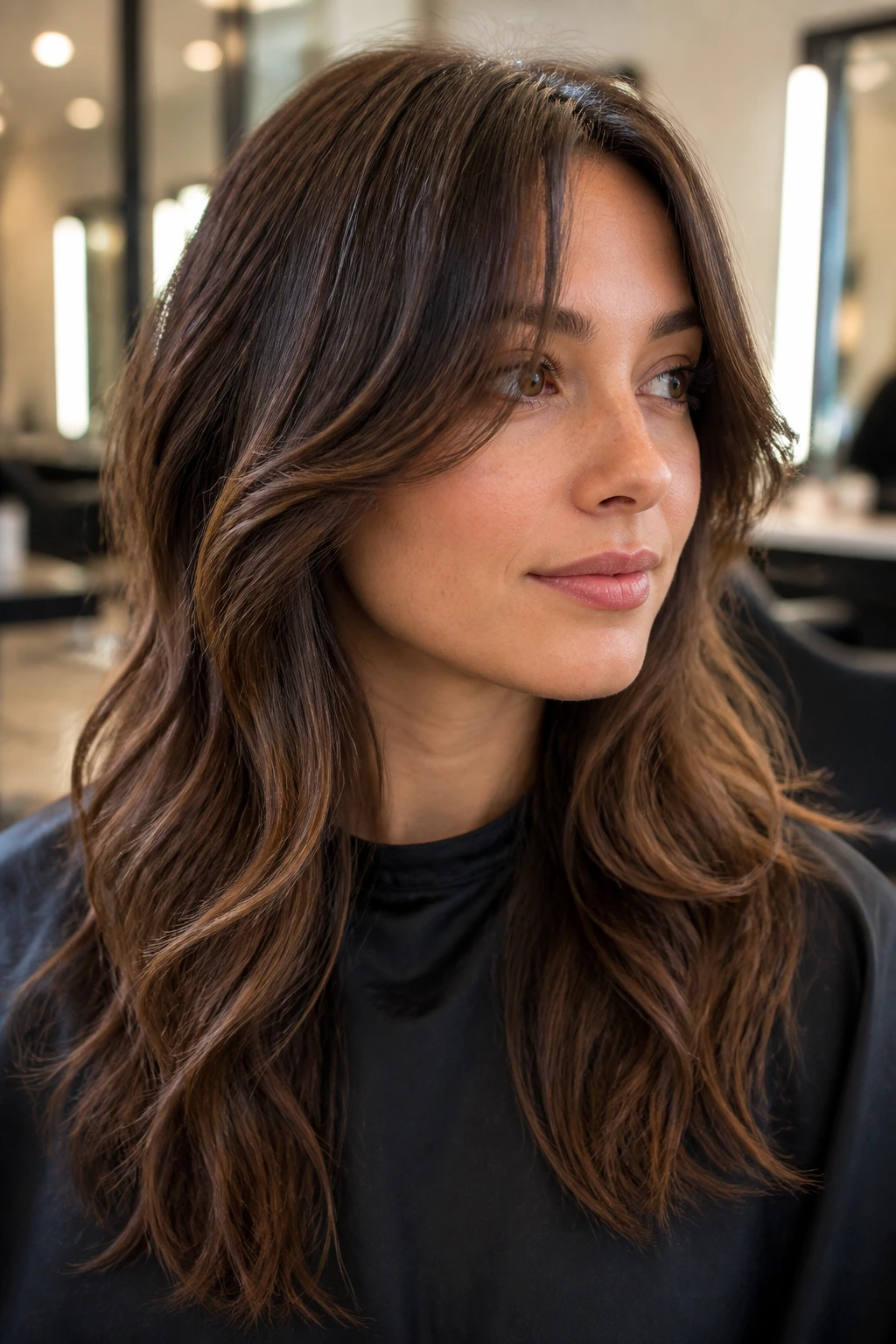
For most wavy square faces, long layers are safer because they’re easier to control. A 25° low-elevation cut is the more detailed version of that idea. It gives you movement without breaking the outline too much.
If your hair is dense, coarse, or prone to puffing at the sides, the lower and longer the layers, the better. If your hair is fine and flat, a little more layering can help the shape wake up. The point is not to chase a number. It’s to keep the first visible layer out of the jawline’s way.
I usually trust long layers more than short ones on this face shape. They age better as they grow out. Less drama. More flexibility.
What If My Hair Is Fine and Wavy?

Then no layers can sometimes make the hair look too limp. Fine waves often need a bit of air inside the shape so they don’t collapse into the neck. A soft layered cut can lift the hair off the scalp and give the wave enough room to show.
That said, fine wavy hair still doesn’t want a lot of short layers. Too many and the ends look sparse. The best version is usually a blunt perimeter with subtle internal shaping and a very long face frame. You want movement, not holes.
Product choice matters more here than in dense hair. A lightweight mousse or foam will usually do more good than a rich cream.
How Do I Explain This Cut to My Stylist?
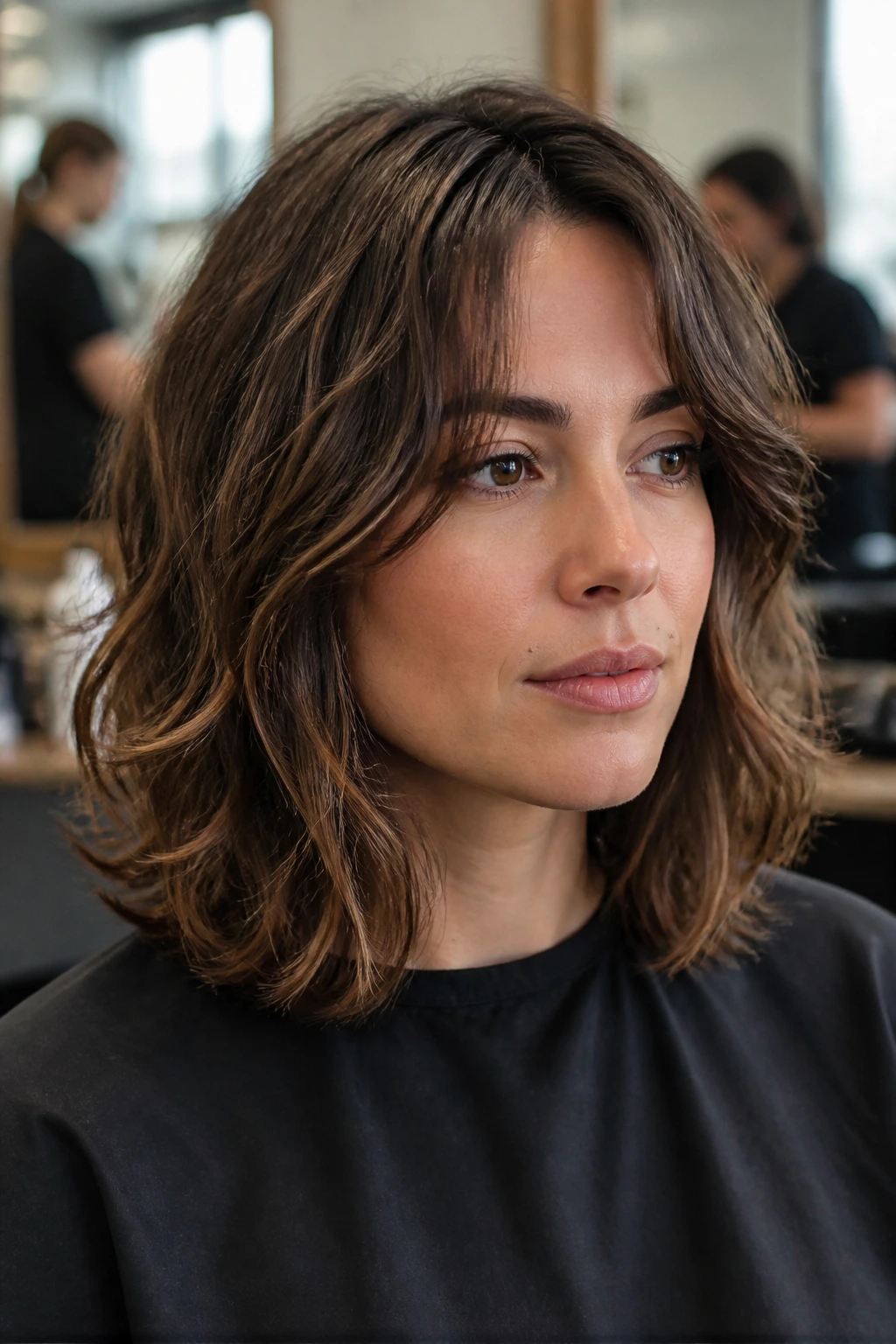
Bring a photo. Then say what you want the cut to do, not just what it should look like. Try: “I have wavy hair and a square face. I want the length to stay past the jaw, with soft movement and no short layers at the cheekbone.”
If you want the no-layer option, say: “Keep the perimeter blunt, but soften the ends so the wave doesn’t flip out.” If you want the layered option, say: “I want long, low layers—nothing short at the jaw—and face-framing pieces that start below the cheekbone.”
That kind of language saves everyone time. It also keeps the stylist from guessing what “25” means.
How Often Should I Trim This Shape?
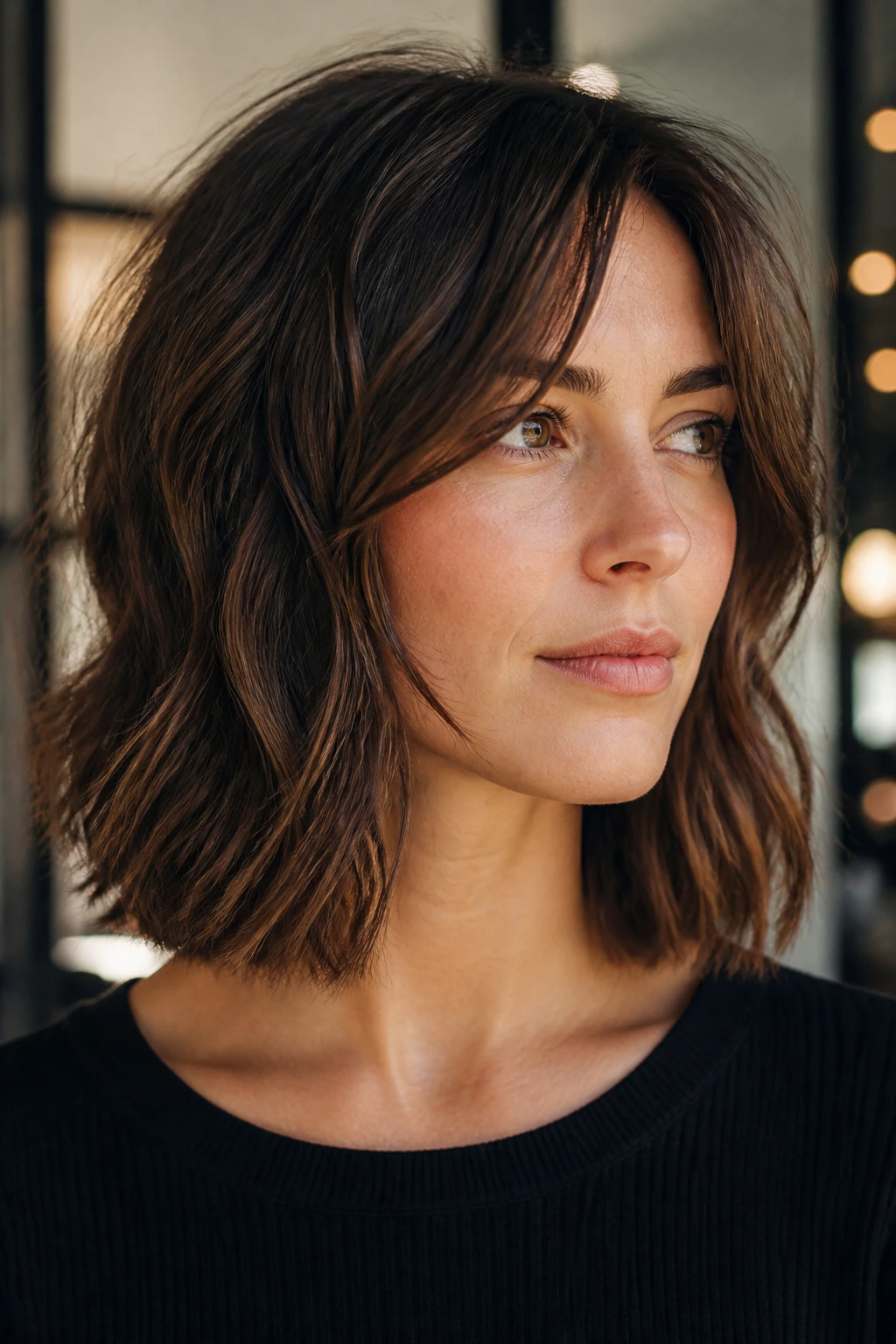
A blunt no-layer cut usually needs a trim every 10 to 12 weeks if you want the ends to stay clean. Wavy hair shows ragged ends faster than straight hair does, so waiting until it looks visibly rough is already late.
A layered shape often benefits from a refresh every 8 to 10 weeks, especially if the front pieces are part of the design. If you like a very sharp face frame, you may want a quicker dusting around the front every 6 to 8 weeks.
If you’re growing the hair out, you can stretch those intervals a little, but the shape will loosen. That’s the trade. Length always asks for patience.
The Shape That Usually Wins
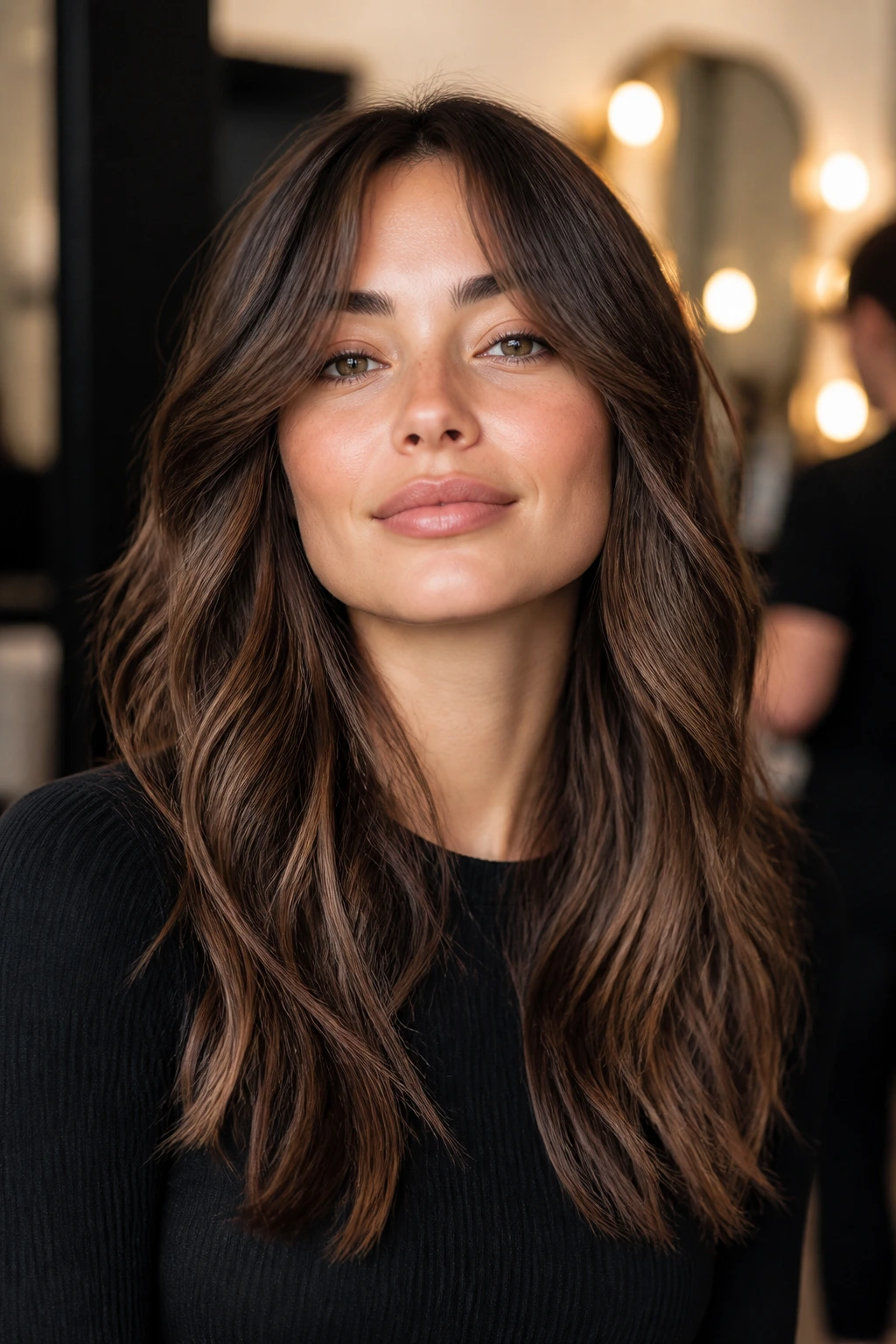
If you want the safest choice for wavy hair and square faces, I lean toward long, soft layers or a blunt perimeter with subtle face-framing pieces below the jaw. That gives you movement without drawing a hard line across the widest part of the face.
A strict no-layer cut can be beautiful when the hair is dense, healthy, and long enough to move past the jaw. A low 25° layered shape wins when the hair needs help shedding bulk or the wave pattern wants more lift. The real answer lives in the details—where the first layer starts, how thick the hair is, and whether you want a sleek sheet or a softer outline.
Bring that into the salon chair and you’re already ahead of most people. The rest is just keeping the shortest pieces out of the jawline’s way and letting the waves do what they actually want to do.