



Shoulder length curls with soft layers have a useful trick up their sleeve: they look dressed up without fighting the haircut. The length sits right at that awkward shoulder zone where curls can either bounce cleanly or kick out in a lopsided way, and the soft layers decide which one you get. When they’re cut and styled with a little care, the result has movement at the ends, lift around the face, and enough polish to hold up under flash photography.
That’s why this length shows up so often for weddings, graduations, birthday dinners, holiday parties, and every event where you want your hair to look considered without looking stiff. A blunt shoulder-length cut can turn boxy fast. Soft layers break up that line. They let the curl fall in pieces instead of forming one heavy curtain.
The styles below aren’t one-note. Some lean glossy and formal. Some look brushed-out and romantic. Some keep the front pieces quiet so statement earrings can do their job. And a few are for the person who wants to spend ten minutes, not an hour, and still walk into the room with hair that looks like it made an effort.
Why These Shoulder-Length Curls Belong on the Save Folder
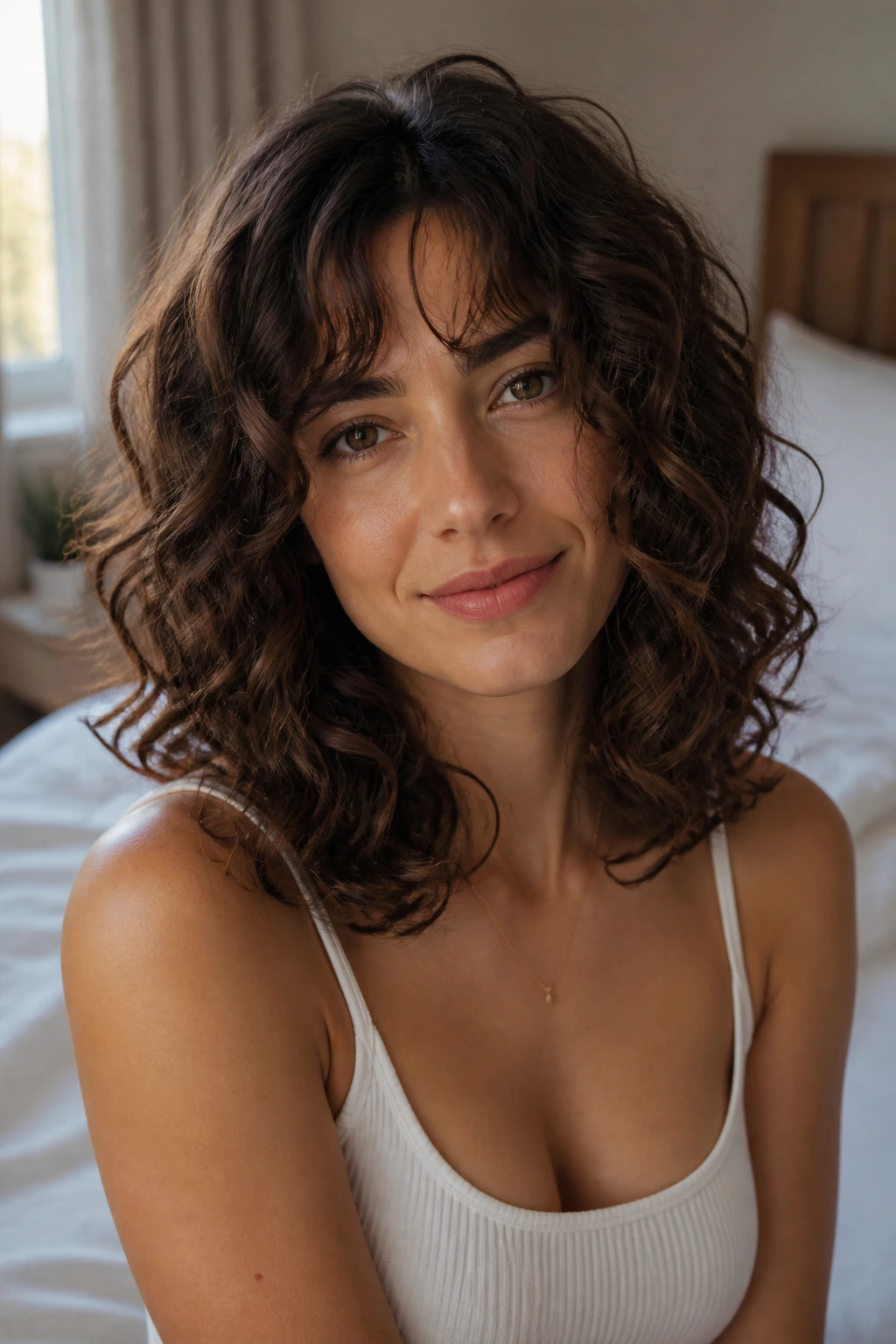
Soft layers keep the shape from getting bulky: At shoulder length, hair can puff out at the ends if every strand is the same length. Layers take some of that weight away and let the curl fall in separate pieces.
The cut does half the styling for you: A good layered lob already has movement built in, so the curl only needs to refine the shape instead of creating it from nothing.
Face-framing pieces change the whole mood: A couple of longer front layers can soften a square jaw, lengthen a rounder face, or keep a center part from feeling too plain.
These styles hold up better in real life: Shoulder-length curls can survive dancing, photos, and a warm room better than ultra-long waves that drag themselves down.
There’s room for accessories: Earrings, clips, pins, and neckline choices all have space to show up. The hair doesn’t swallow the outfit.
You can go formal or relaxed from the same cut: One curl pattern, one haircut, and you’ve got room for glossy waves, brushed-out volume, or a pinned-back finish.
1. Brushed-Out Barrel Curls with a Soft Center Part
Start with the style that makes shoulder-length hair look expensive without trying to act casual about it. Barrel curls on layered hair give you that rounded, soft shape that reads polished in photos, especially when the front pieces are left a little longer than the rest. The secret is not the curl itself. It’s the brush-out.
Use a 1.25-inch curling iron and wrap 1-inch sections away from the face, leaving the last inch or so out on the ends if your layers are short. Let each curl cool fully before brushing it out with a paddle brush or wide boar-bristle brush. That cooling step matters. Warm curls fall apart fast and end up looking limp by dessert.
The center part keeps the look clean, but the brushed texture stops it from feeling severe. If your layers are soft and feathered, the curls will land just under the shoulders and curve in a way that flatters almost any neckline.
Best for: weddings, formal dinners, and any event where you want movement without a lot of visible styling.
Tiny detail that helps: mist the ends with flexible-hold hairspray before brushing, not after. It gives the brush something to work with.
2. Side-Swept Hollywood Waves and Feathered Front Layers
A deep side part can do more for shoulder-length curls than another hour of curling ever will. The side sweep pulls one side back, opens the face, and lets the feathered front layers fall in a clean diagonal line that feels old-school in the best way. It also gives you a little height at the crown, which is useful if your layers tend to collapse flat.
Why the side sweep works
The trick is to curl every section away from the face on both sides, then pin the front side back loosely while the hair cools. That keeps the front wave from breaking apart when you brush it later. Once it’s set, you can sweep one side behind the ear and let the longer front pieces skim the cheekbone.
A small rhinestone clip or pearl pin works here, but keep it low and slightly behind the ear so it doesn’t fight the wave pattern. The haircut should still look like hair, not an accessory display.
This one has real presence in photographs. It frames the face, but not in a fussy way. More like a good pair of earrings that knows when to stay quiet.
3. Half-Up Twist with Loose Shoulder-Length Curls
This is the style for someone who wants the front off the face and the rest still moving. Pull back the top section from temple to temple, twist each side once or twice, and pin them together at the back of the crown. Leave the lower half loose in wide curls or soft bends.
The reason it works on shoulder-length hair is simple: the twist creates structure at the top, while the layered ends keep the bottom from feeling heavy. If you’ve got face-framing layers, leave those out on purpose. They soften the seam where the twist meets the rest of the hair.
A half-up style also handles weather better than a fully loose look. It gives you a place to hide pins, and it keeps the crown from puffing out if the room is warm.
Use this when: you want earrings visible but still want the hair to read dressed-up.
How to keep it soft: don’t twist too tightly. The goal is a loose rope, not a braid-like rope. Tightness makes the ends look stiff.
4. Polished Curl Ends with a Sleek, Smooth Crown
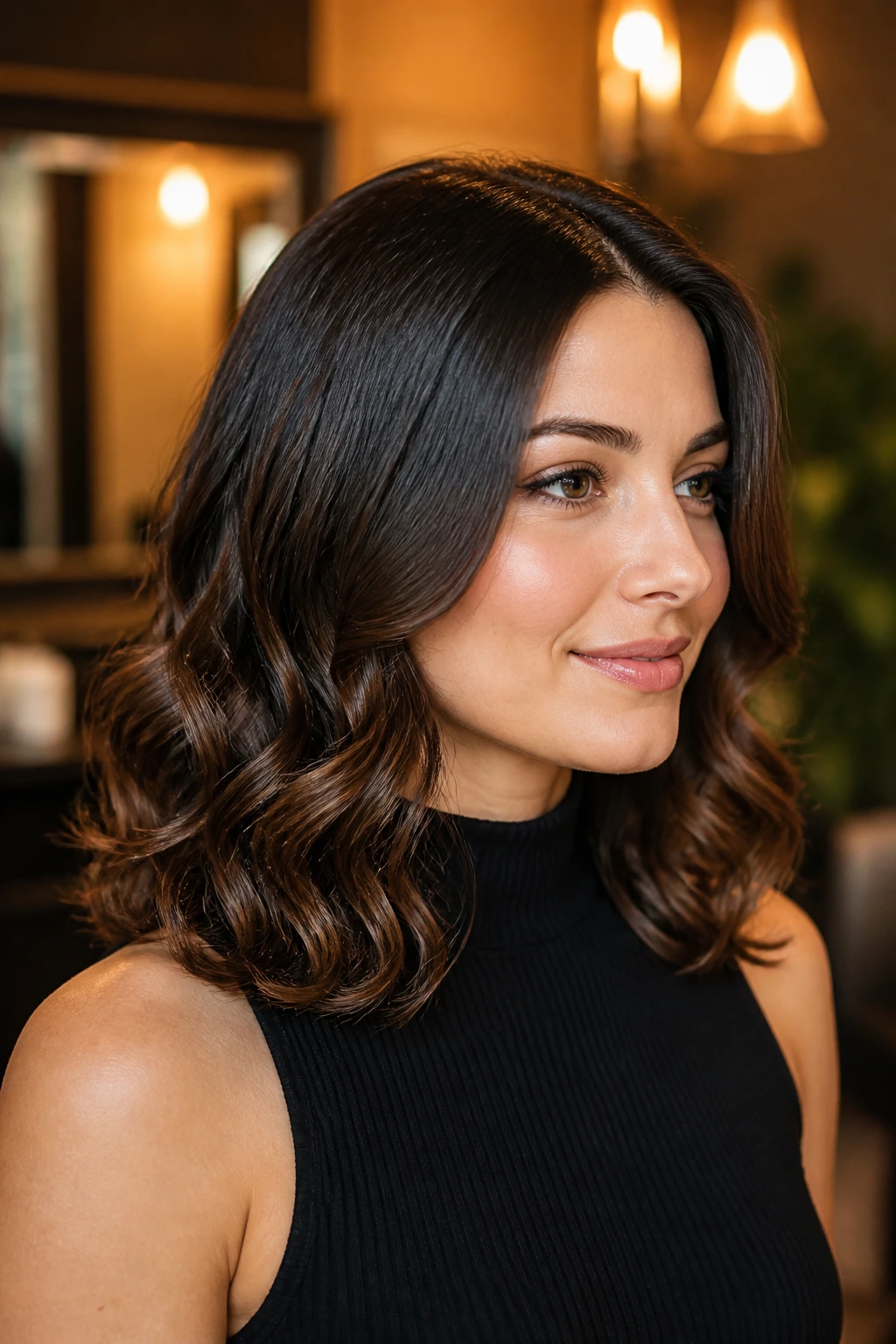
Sometimes the best special-day hair is half restrained, half soft. Keep the crown smooth with a round brush blowout or a quick pass of a flat iron over the top layer, then add curls only from the mid-lengths down. That contrast makes shoulder-length hair look longer and cleaner.
This style is especially useful if your layers are fine and tend to stick up when you curl from root to tip. Smoothing the top keeps the silhouette controlled, while the curl at the ends gives you movement where people actually notice it.
It’s a good match for high necklines, structured dresses, or anything with a lot of detail around the shoulders. The hair stays out of the way but doesn’t disappear.
A light shine spray helps here. Not a glossy helmet. Just enough to catch light on the smoother crown and make the ends look intentional.
5. Face-Framing Curtain Curls and a Middle Part
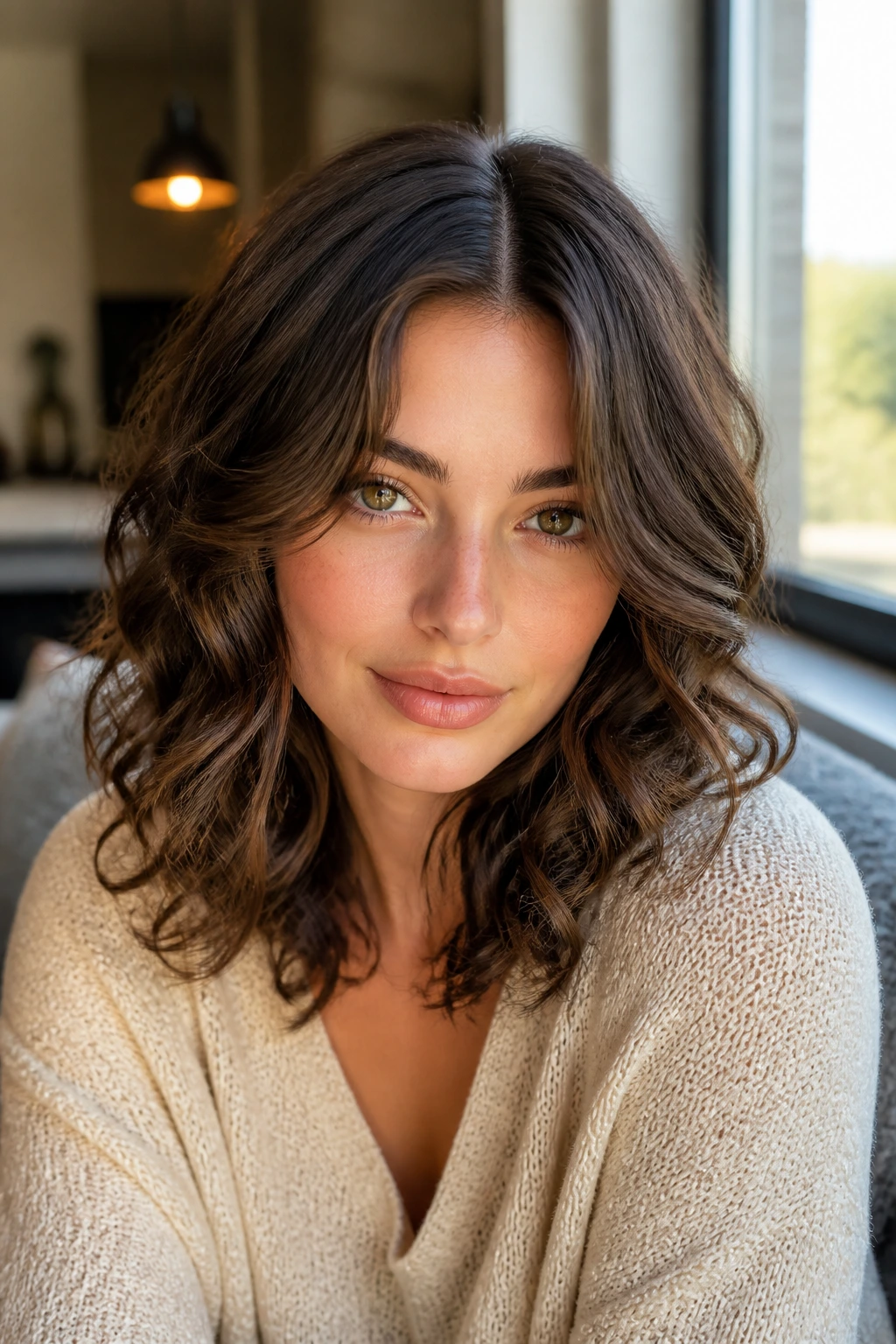
If your face-framing layers are the best part of your haircut, let them lead. A middle part with curled curtain pieces gives shoulder-length hair a very clear shape: open at the face, fuller at the jaw, soft at the collarbone. It’s one of those styles that looks like effort, but not too much of it.
Curl the front pieces away from the face with a 1-inch iron, then soften only the very ends with your fingers once they’ve cooled. Leave the middle section slightly looser than the rest so the layers keep their shape instead of blending into the length.
What makes it work
The front pieces should start around the cheekbone or just below it. If they’re too short, they jump out; if they’re too long, the frame gets lost. A soft layer around the mouth or chin is the sweet spot for most shoulder-length cuts.
This style is especially nice for photos because it draws attention upward to the eyes and cheekbones. No need to overthink the rest.
6. Retro Glam Waves Brushed to Collarbone Length
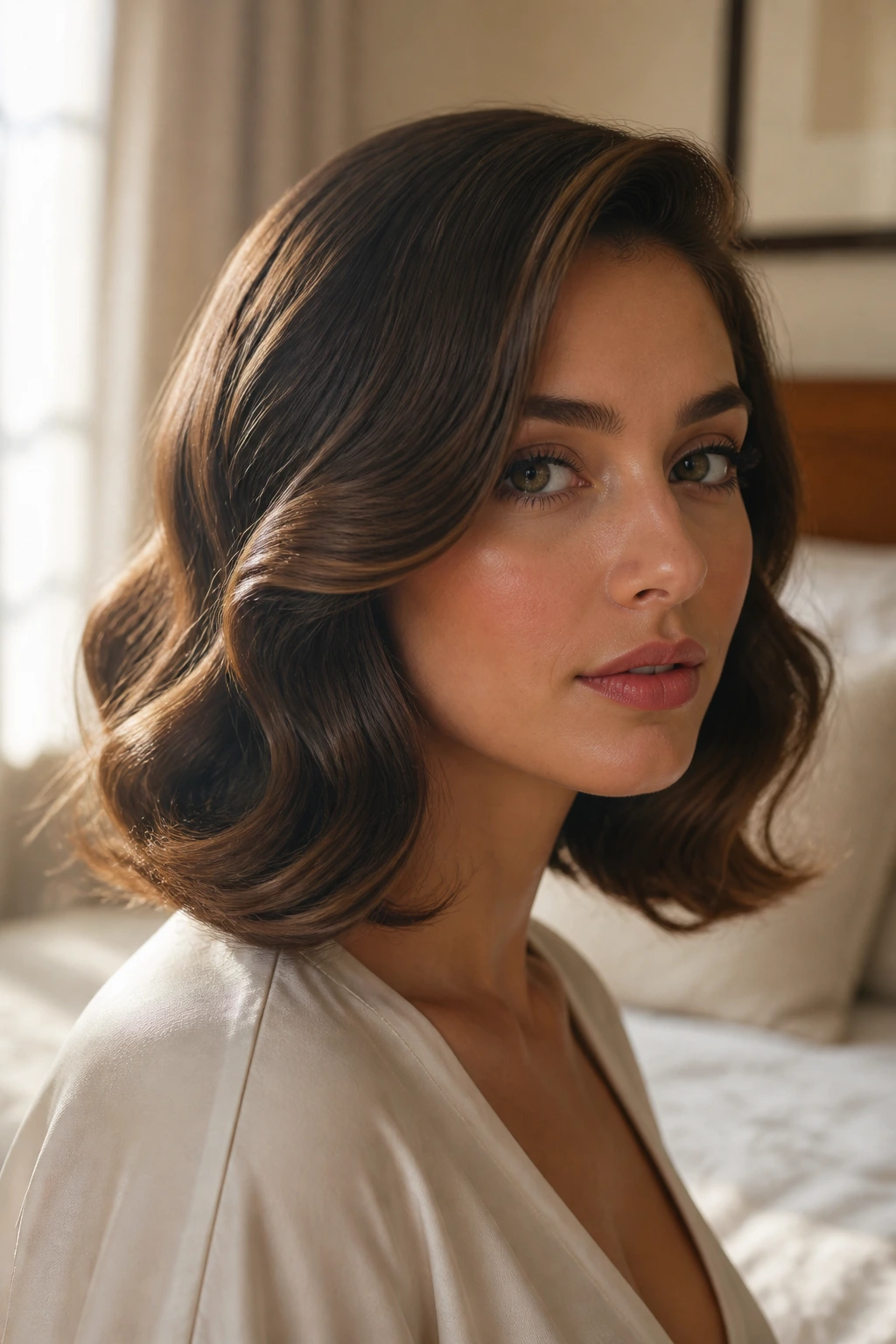
Retro waves on shoulder-length hair can go twee fast if the layers are too short, but with soft layering they settle beautifully. Use larger sections, form a consistent curl pattern, and then brush the wave into one broad, smooth shape. The result should skim the collarbone and curve under at the ends.
A set clip or metal duckbill clip helps while the curls cool. Pin the wave flat for 5 to 10 minutes, then remove the clips only when the hair feels fully cool. That’s what gives the wave its bend instead of a puff of frizz.
This style likes shine. A small amount of serum on the palms, smoothed only over the outer surface, is enough. Too much and the wave loses its clean line.
If you’re wearing satin, velvet, or anything with a sharp neckline, this is the one that usually looks the most finished.
7. Defined Spiral Curls with Airy Layer Separation
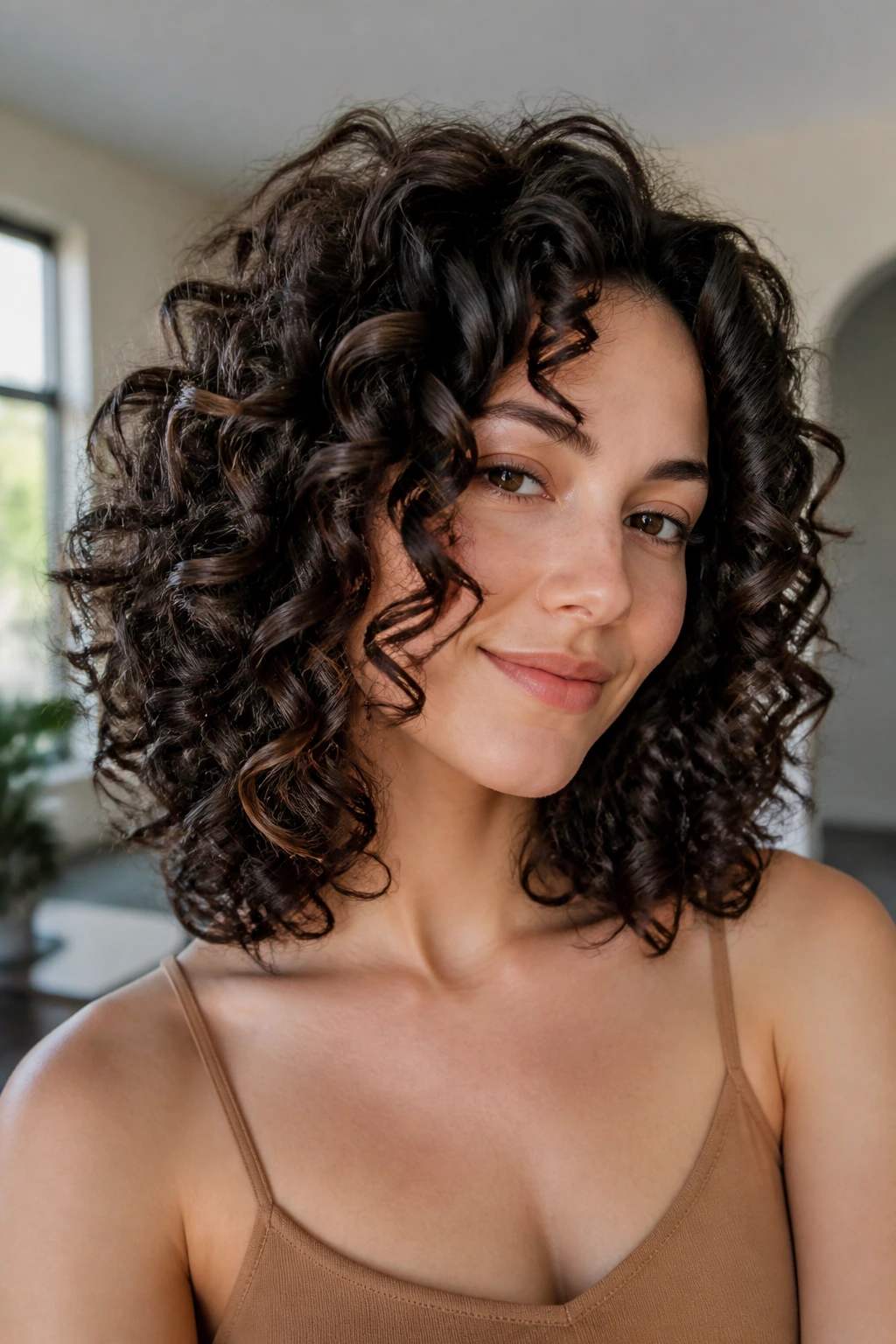
Not every special-day curl needs to be brushed out. Sometimes the cleanest look is a set of smaller spirals that keep their shape from root to end. Use a 3/4-inch or 1-inch curling wand, wrap each section in the same direction, and let the curls cool before separating them with oiled fingertips or a drop of serum.
The soft layers are what keep this from looking too dense. Instead of a heavy block of ringlets, you get spacing. Small spaces between curls. A little air. That matters on shoulder-length cuts, where too much curl can make the hair look crowded.
Who should try it: thick hair, naturally wavy hair, or anyone whose ends need structure more than softness.
What to avoid: brushing these out too early. You’ll lose the spiral and the whole style turns fuzzy. Let it set first.
8. Crown-Volume Blowout Curls for a Dressy Finish
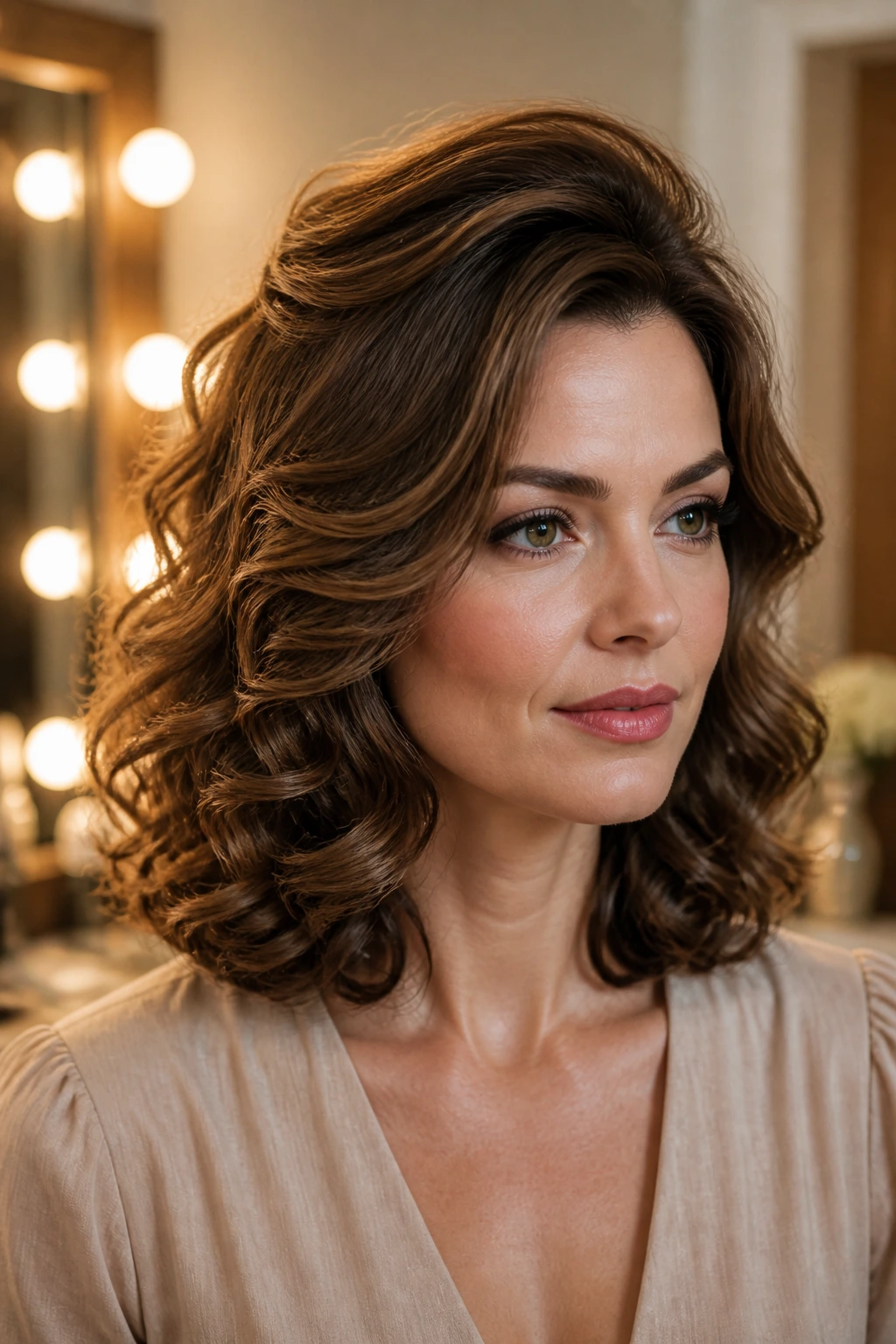
A little height at the crown changes everything. It lifts the eye line, makes the layers fall more gracefully, and keeps shoulder-length curls from collapsing against the shoulders by the second photo. Blow-dry with a round brush, focusing on root lift at the top and smooth movement through the ends, then add curls only where the hair needs them.
Velcro rollers at the crown are not old-fashioned nonsense. They work. Place two or three at the top while you finish makeup, and you’ll get a fuller shape without backcombing the life out of the roots.
This style is especially useful if your dress has a wide neckline or if you want the hair to hold its shape under a veil or hair accessory. It gives the profile some lift.
A one-sentence truth: flat roots make shoulder-length curls look shorter.
9. One-Side Tuck with Soft Event Waves
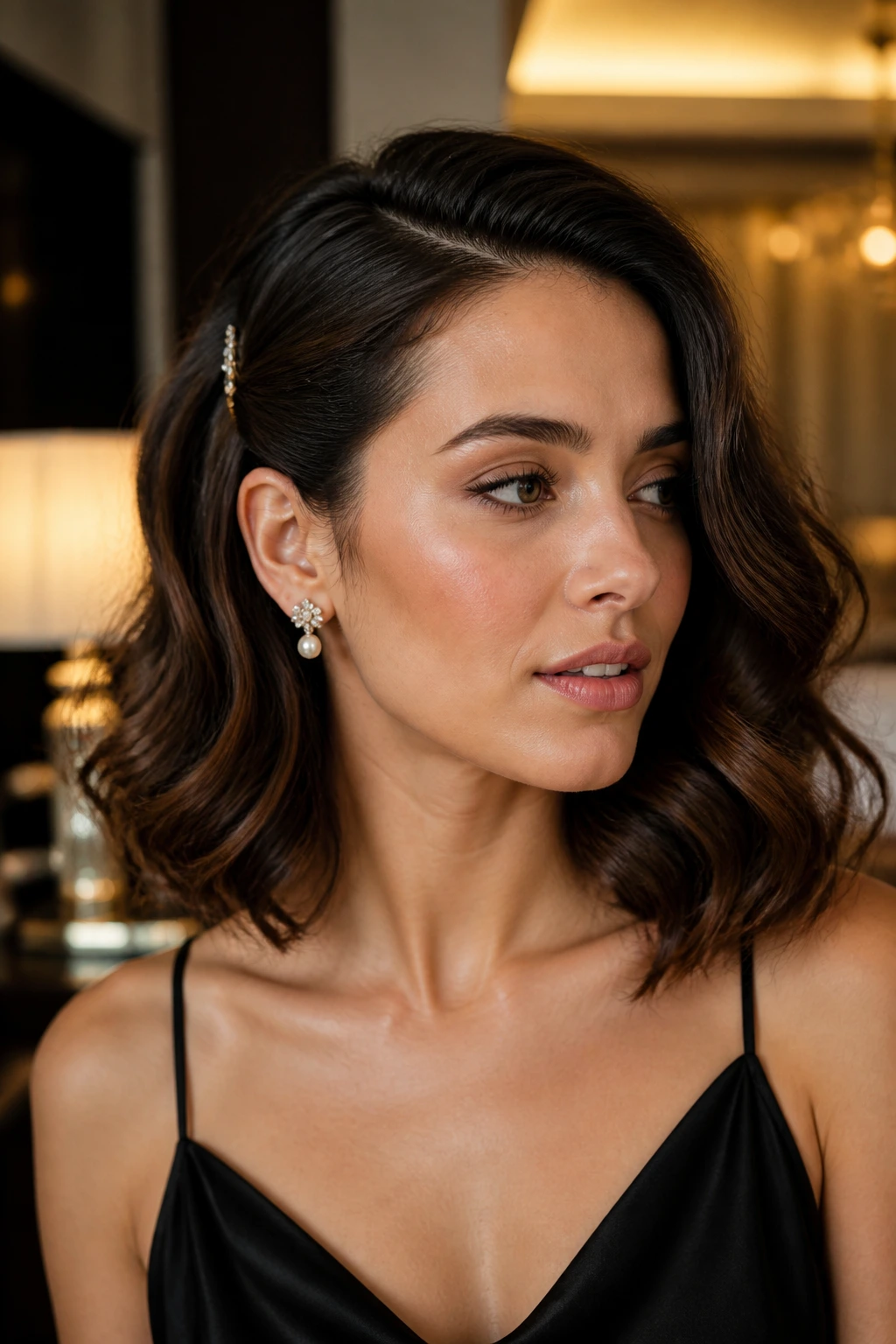
There’s a specific kind of elegance in tucking one side behind the ear and leaving the rest loose. It keeps the face open, shows off earrings, and gives the style a little asymmetry without turning it into a formal updo.
Start with soft waves or brushed curls, then choose the side with the best front layer and tuck it back with one discreet pin. Leave the other side fuller. The contrast gives the haircut movement, especially when the layers are cut around the cheek and jaw.
This is one of my favorites for shoulder-length hair because it feels quiet in the front and rich in the back. The hair still moves when you turn your head, which matters more than people think.
A sculptural earring makes this even better. So does a neckline with some shape.
10. S-Waves with a Glossy Finish
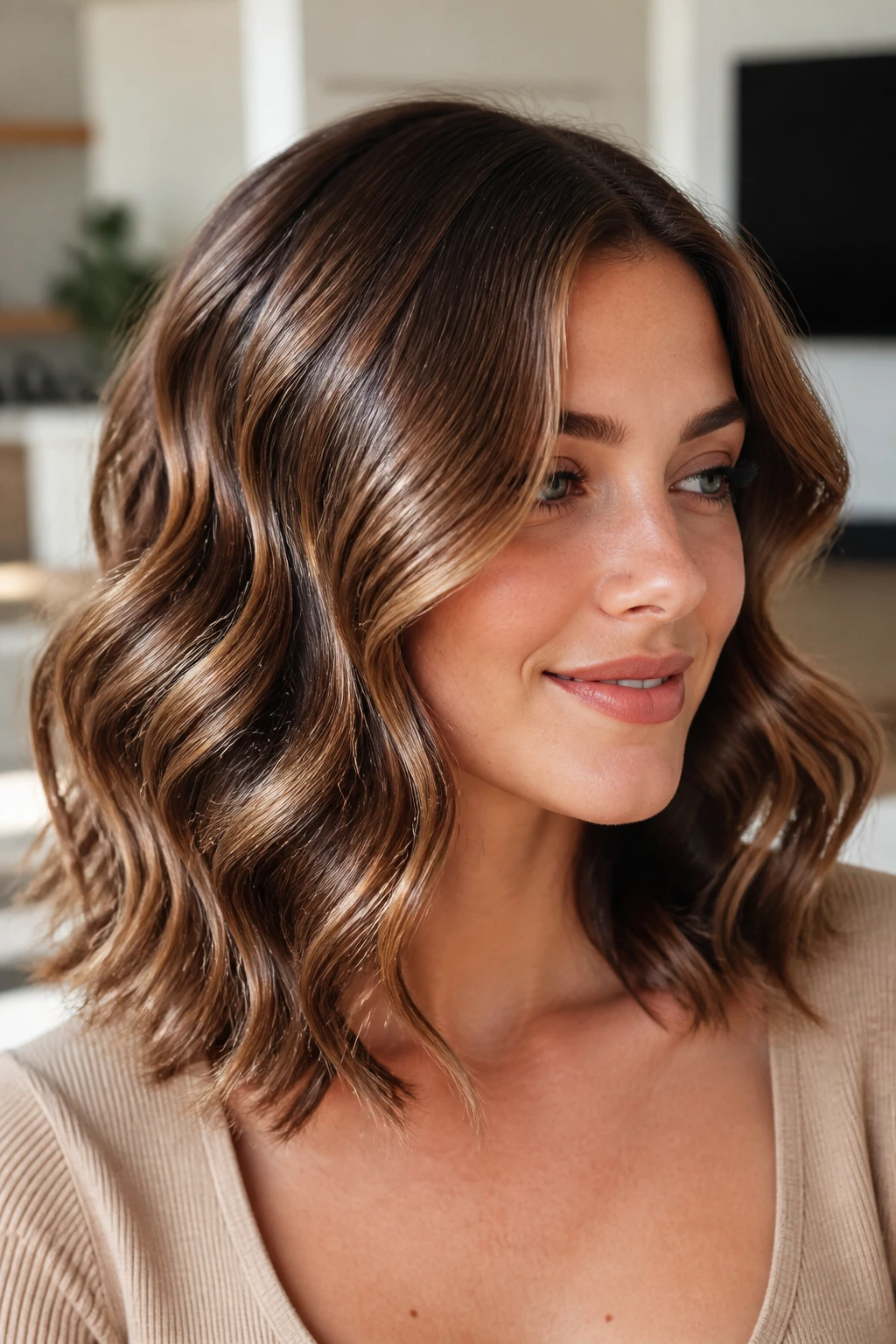
S-waves sit between a curl and a wave. They look smooth, slightly sculpted, and very deliberate. On shoulder-length hair with soft layers, they keep the length from looking chopped while still giving the ends enough bend to feel special.
Use a curling iron or flat iron to make shallow bends in alternating directions, then comb the pieces together lightly so the wave forms that recognizable S pattern. Keep the sections narrow around the face and a little wider through the back.
The best part? This style doesn’t need perfect uniformity. If a few pieces read more wave than curl, that’s fine. The soft layers will blend them.
A glossy finish spray works better here than dry texture spray. Texture can make the wave look dusty, which is not what this style wants.
11. Pinned Half-Back Curls with a Clean Hairline
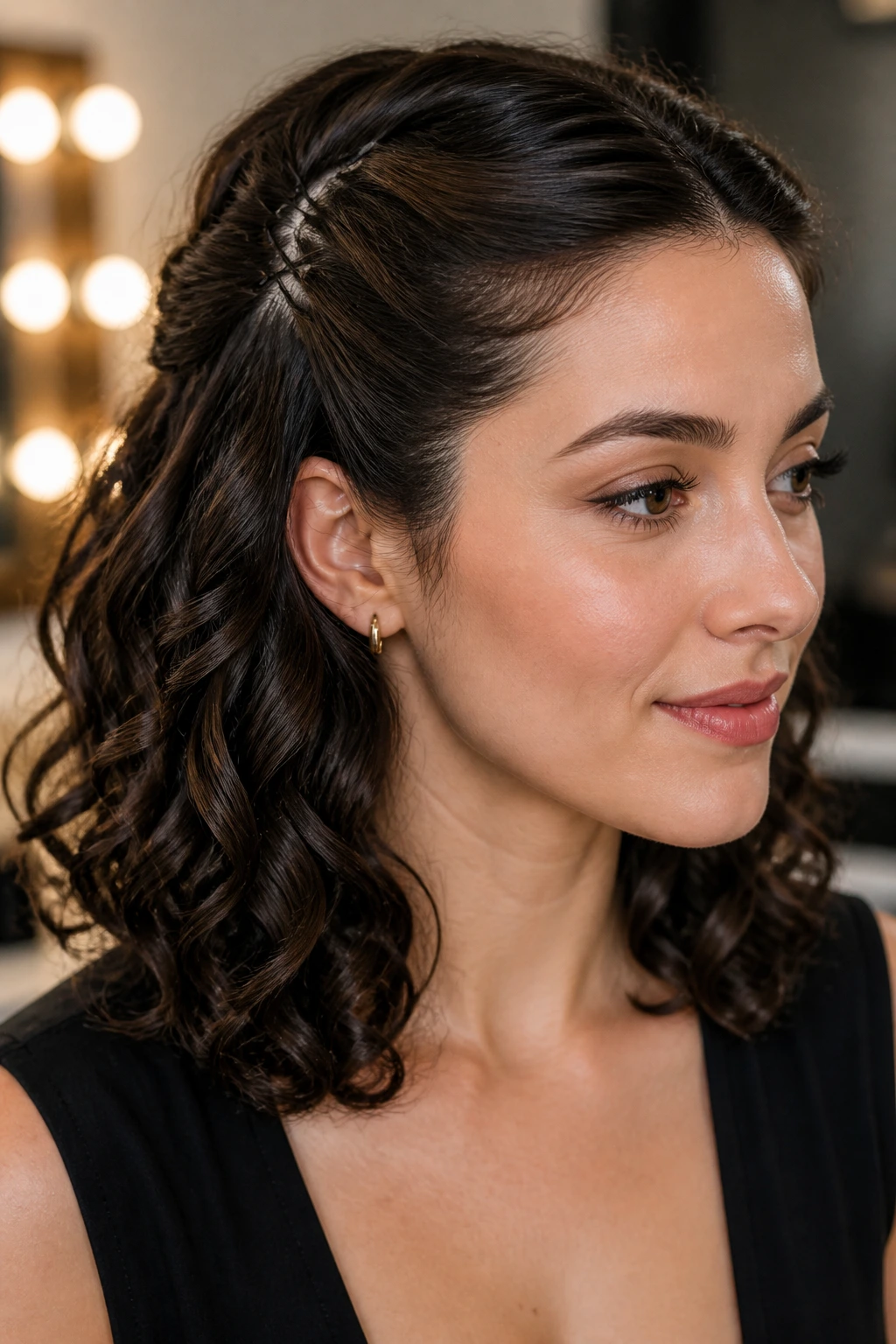
When the front hairline looks neat, the whole style looks more expensive. That’s why pinned half-back curls work so well for special days. Take the top section back from the temples, pin it flat under a layer of curls, and leave the lower lengths loose.
Why this one lasts
Because the front hair is secured, it doesn’t fall into your face, and it doesn’t get frizzy every time you turn or laugh. The lower curls keep the softness, while the pinned section gives the style a finished edge.
This is a strong choice for people who wear makeup heavily around the eyes. It keeps the hair from competing with the face. It also helps if your layers around the temples are shorter and tend to spring out unexpectedly.
A few hidden pins placed in a crisscross pattern will hold better than one big clip. That little detail saves the style when the night gets long.
12. Ribbon Curls That Stay Soft to the Touch
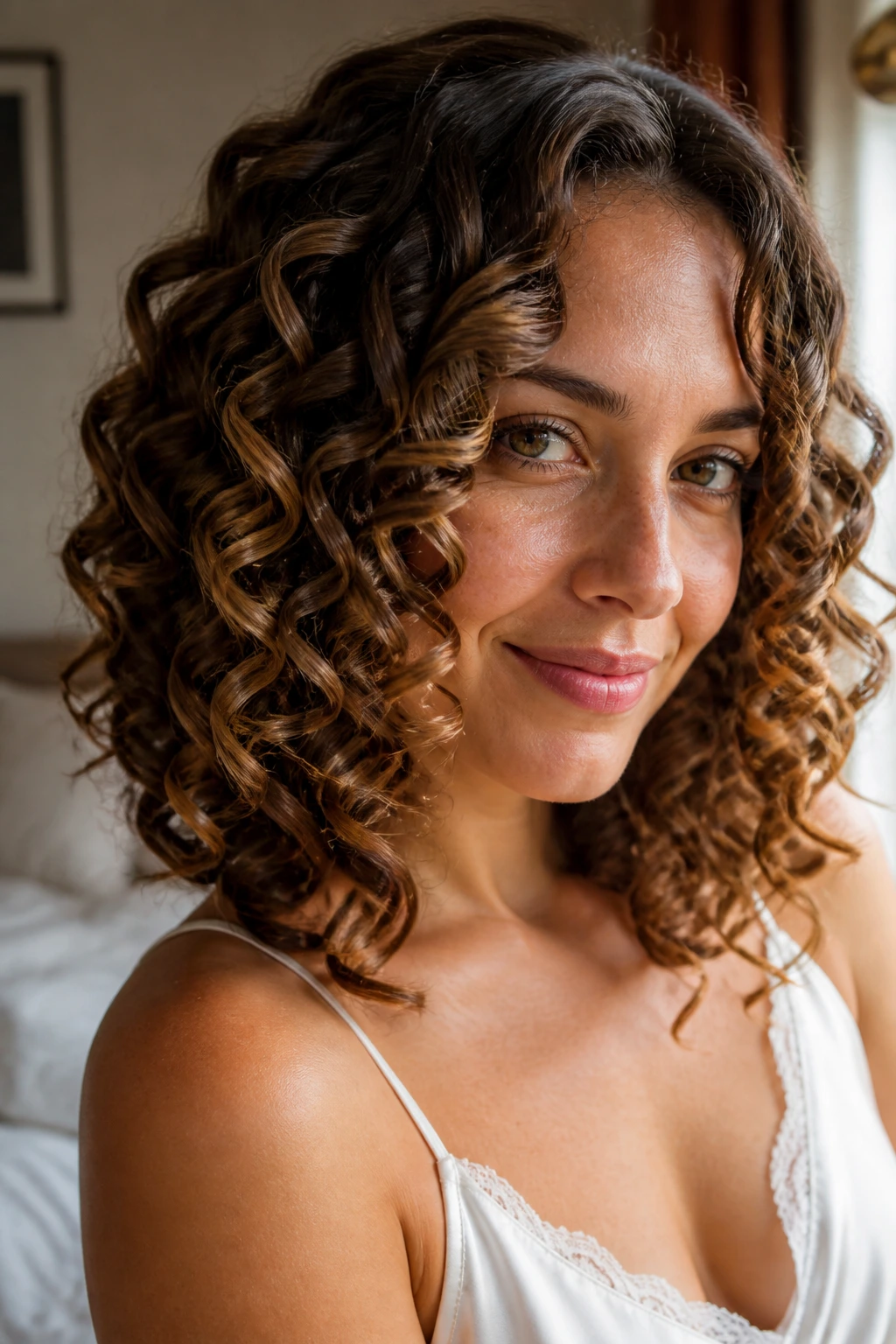
Ribbon curls are those narrow, smooth spirals that fall like strips of satin. They can look dramatic on shoulder-length hair, but with soft layers they lose the pageant stiffness and stay touchable. Use a one-inch wand, keep the section clean and even, and wrap the hair flat around the barrel without twisting it.
Let the curl slip into your palm as it cools. Don’t touch it right away. That’s where people mess up. The curl needs a moment to lock in before you separate it, or it turns into frizz at the first brush.
This style is especially good for finer hair because the shape reads clearly even when the strands themselves are delicate. A few ribbon curls around the face can carry the whole look.
If you want a little more softness, separate each curl once, not three times. Stop while it still looks like a curl, not cotton.
13. Low Ponytail with Curled Ends and Loose Front Pieces
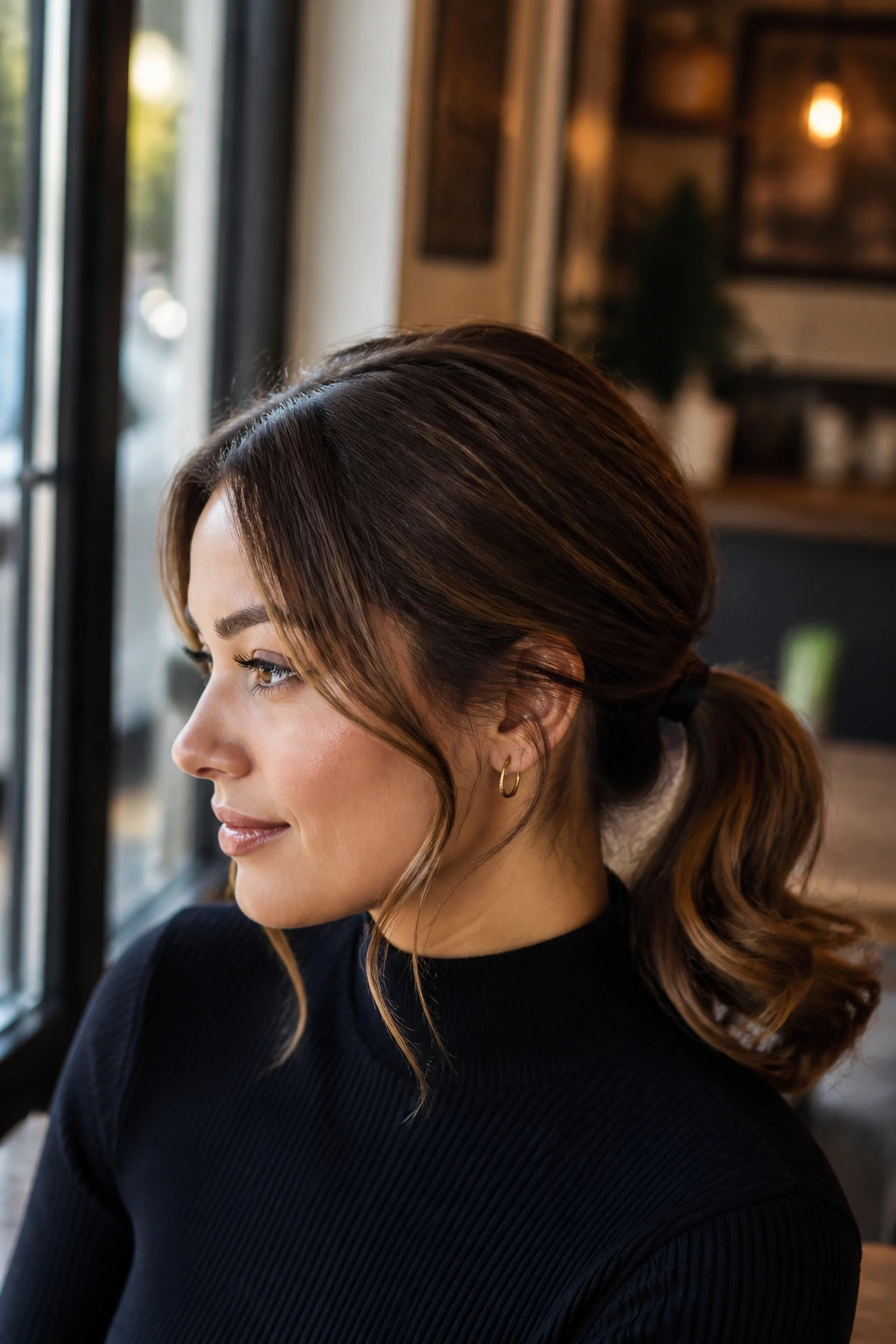
A low ponytail sounds plain until you give it the right texture. Smooth the crown, gather the hair at the nape, wrap a strand around the elastic, and leave the tail in soft curls or wide bends. Then pull out two front pieces to frame the face.
Shoulder-length hair makes this easier because the ponytail sits compactly and doesn’t sag under its own weight. The soft layers help the tail look full, not scraggly. If the ends are a little shorter, curl them under and outward in alternating directions so the ponytail looks plush from every angle.
This is a smart choice if you want something dressy but practical. The hair stays off the neck, which is useful for warm rooms or high collars.
A polished low pony can look far more formal than loose waves when the front pieces are intentional.
14. Braided Accent Curls at the Hairline
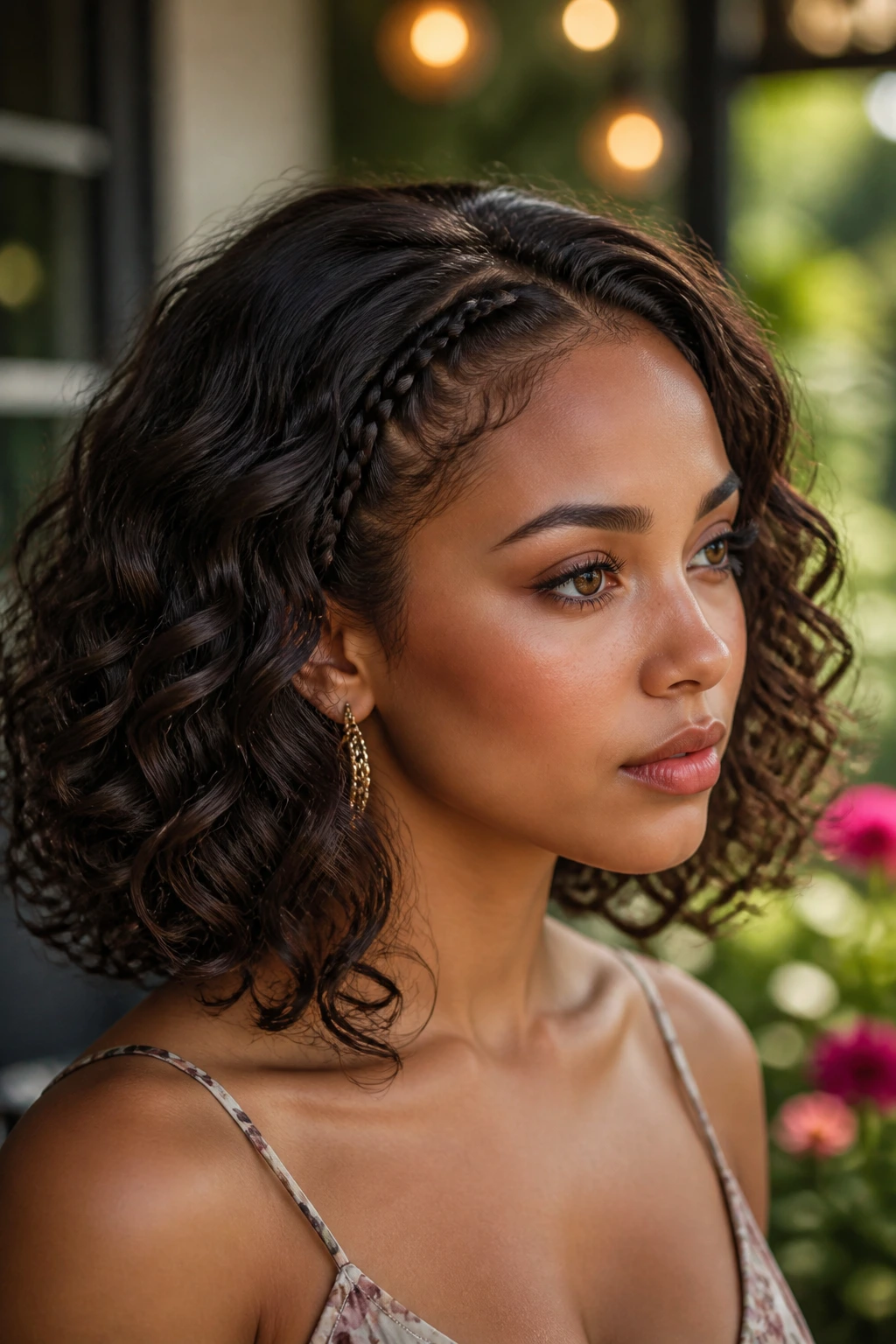
A tiny braid can do more than a giant one. Take a narrow section from the temple or just above the ear, braid it back, and pin it into the curls so it disappears into the rest of the hair. The rest of the style should stay soft and wavy, with the braid acting like a small piece of detail rather than the main event.
What makes it flattering
The braid keeps the front from feeling too plain, especially if your haircut has soft layers around the face. It gives texture near the hairline and keeps flyaways in check without needing a full updo.
This works well for garden parties, bridal showers, and events where the outfit already has a lot going on. The hair can stay a little quieter while still looking finished.
Keep the braid loose. Tight braids pull the style too far into casual territory and can make the front layers stick up weirdly once you loosen them.
15. Flipped-Out Layered Ends with Movement
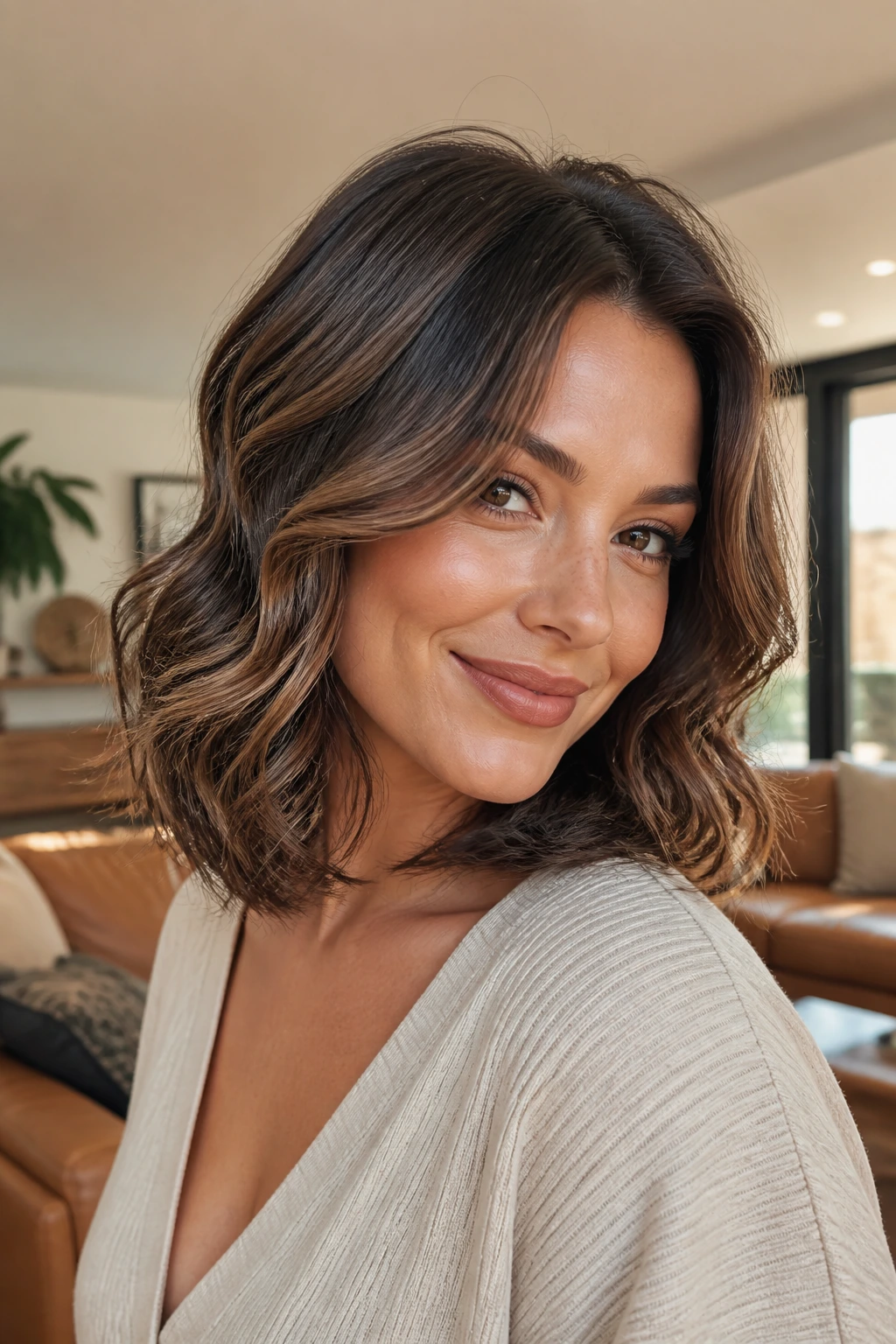
Flipped ends are back in the most wearable sense. On shoulder-length hair, a slight outward bend at the ends keeps the haircut from tucking under too neatly. It gives the layers a little swagger. Nothing stiff. Just movement.
Use a round brush or flat iron to flick the last inch of each layer outward, then leave the mid-lengths soft and bent. The point is to show off the shape of the haircut, not bury it under curl.
This style is especially good if your layers are fresh and you want people to notice them. The flip calls attention to the perimeter, which can make the hair look fuller and more modern.
A little dry texture spray at the ends can help them hold their shape, but keep it away from the crown if you want the top to stay smooth.
16. Sleek Roots and Full Mid-Length Curls
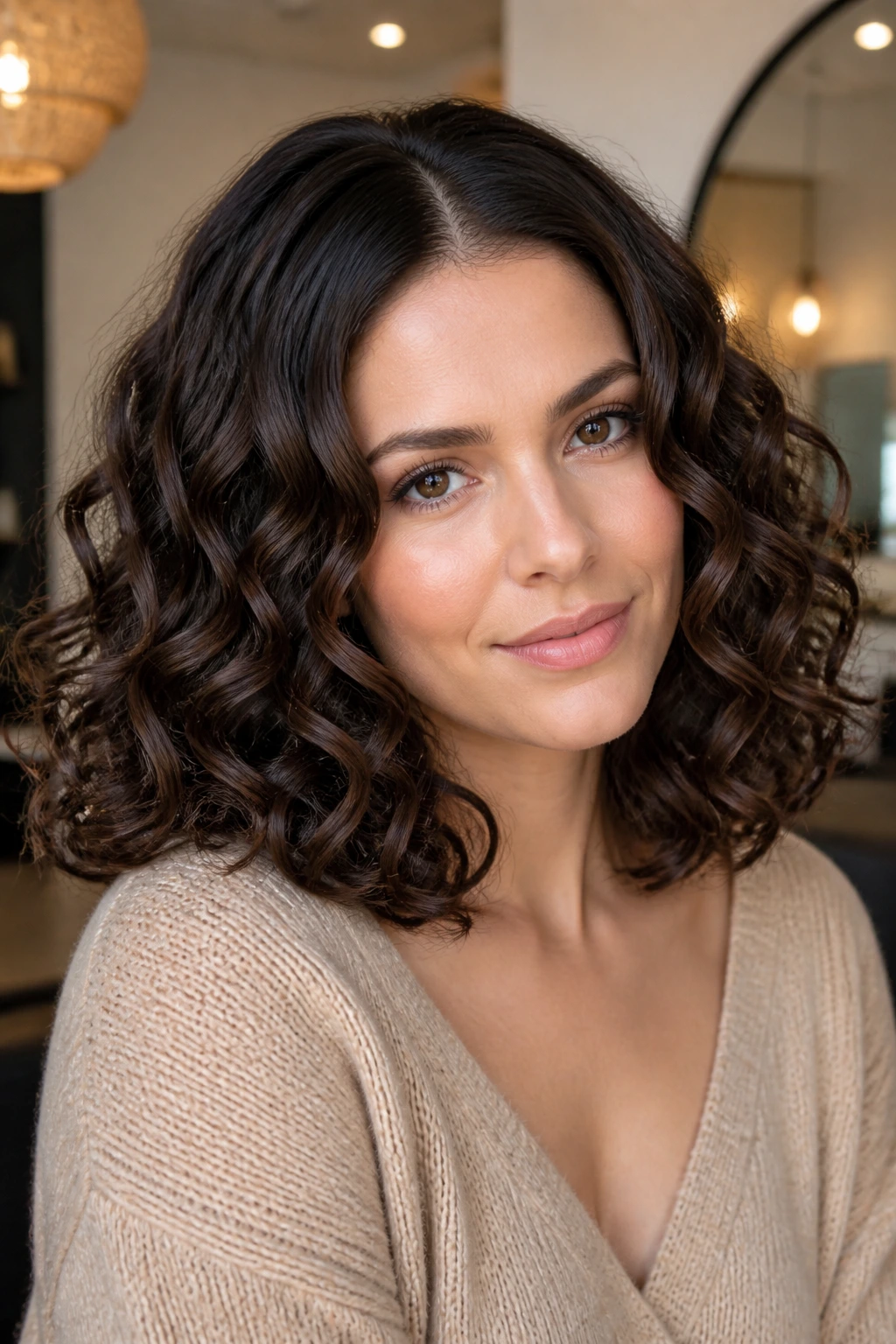
There’s something sharp about a smooth top and a fuller middle. It gives the eye a clean starting point and lets the curls do the work where the hair is most visible. Start with a blowout or straightened roots, then curl only from ear level down.
This is one of the better choices for layered hair that gets frizzy near the crown. By leaving the roots sleek, you avoid the halo effect that can happen when soft layers expand too much at the top.
The mid-length curls add enough width to balance the shoulders, which is a nice trick if you’re wearing a fitted dress. The hair should curve outward, not balloon.
Keep the root product light. Too much cream at the scalp makes the finish greasy before the event even starts.
17. Loose Romantic Curls with Side Volume
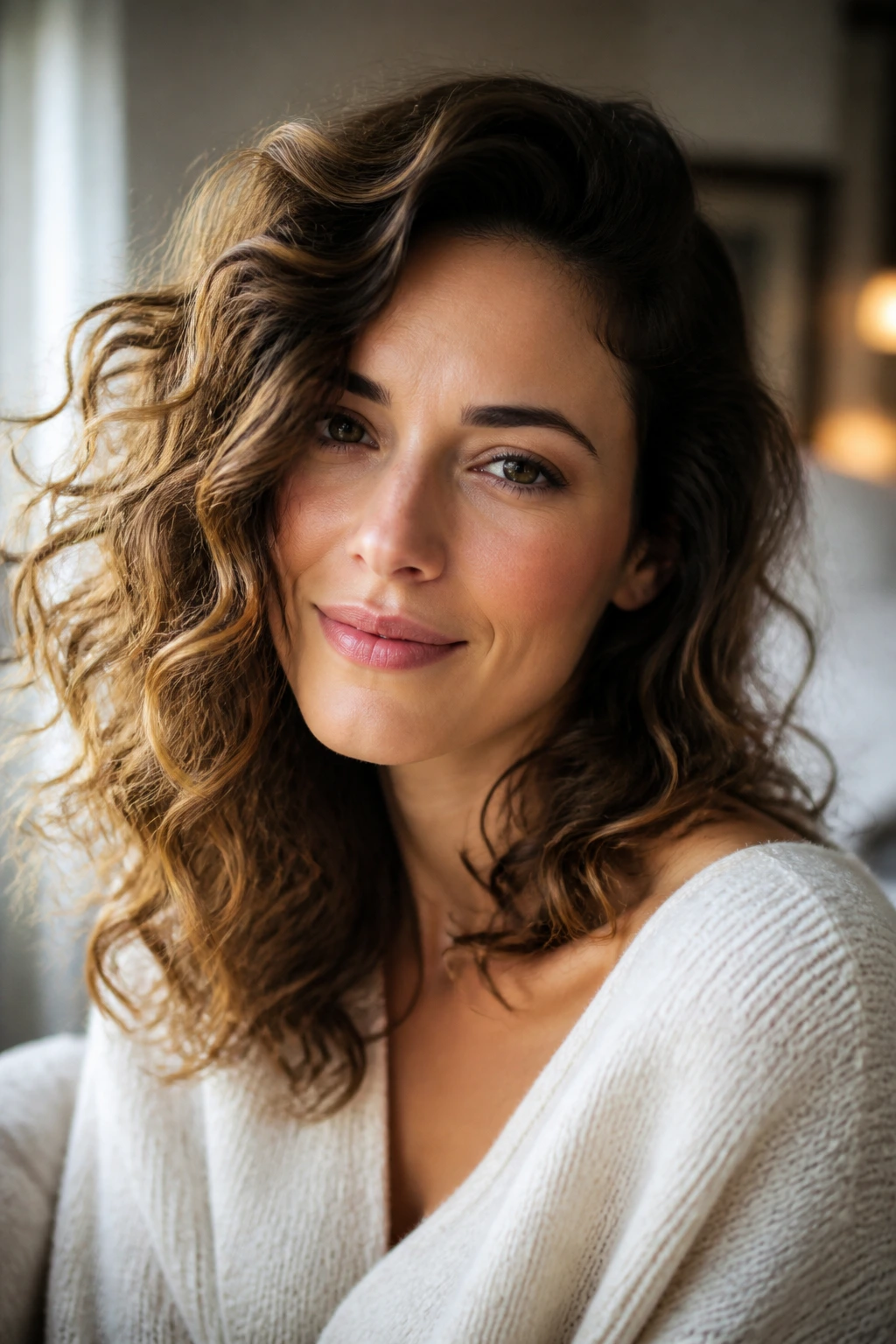
A little lift on one side changes the whole face shape. Create a side part, curl the hair in broad sections, and then use your fingers to push just one side slightly fuller near the temple. The rest should fall in loose, romantic bends that barely brush the shoulders.
This style plays especially well with soft layers because the layers help the curls separate naturally. You don’t need to force texture into it. The haircut already gives you the soft edge.
It’s a good choice for people who want the face to look a touch longer and the hair to feel airy rather than heavy. The side volume does the framing, while the curls do the rest.
A light mist of hairspray at the roots on the fuller side helps keep the lift from disappearing under the weight of the rest of the style.
18. Heatless Overnight Curls with Soft Layers
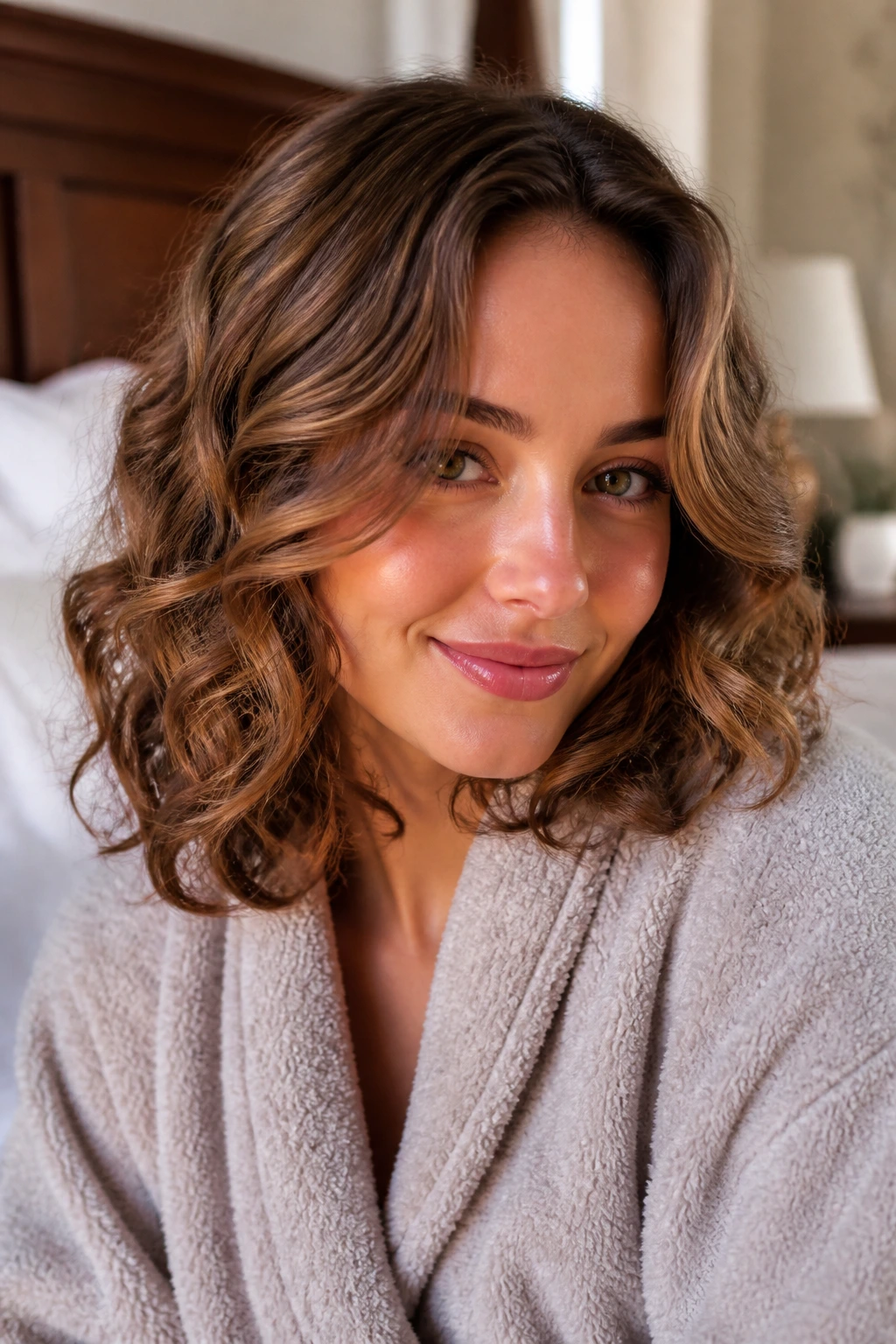
If heat and your schedule are not friends, this style is the answer. Set slightly damp hair in a heatless wrap, robe belt, or large satin rollers, then let it dry fully before releasing. On shoulder-length hair, the curl pattern comes out softer and more wearable than the tight, over-curled shape people often fear.
Why the layers help here
Soft layers keep the overnight shape from turning into one flat bend at the bottom. They break the curl pattern into pieces, so the finish looks more natural and less like one long tube.
The trick is to keep the hair evenly damp, not wet. Wet hair set overnight can stay cold at the center and go flat. That’s a disappointment nobody needs on an event morning.
Finish with a tiny bit of serum on the ends and a flexible hold spray at the surface. The style should feel soft when you touch it, not sticky.
19. Diffused Natural Curls for a Dressy Texture
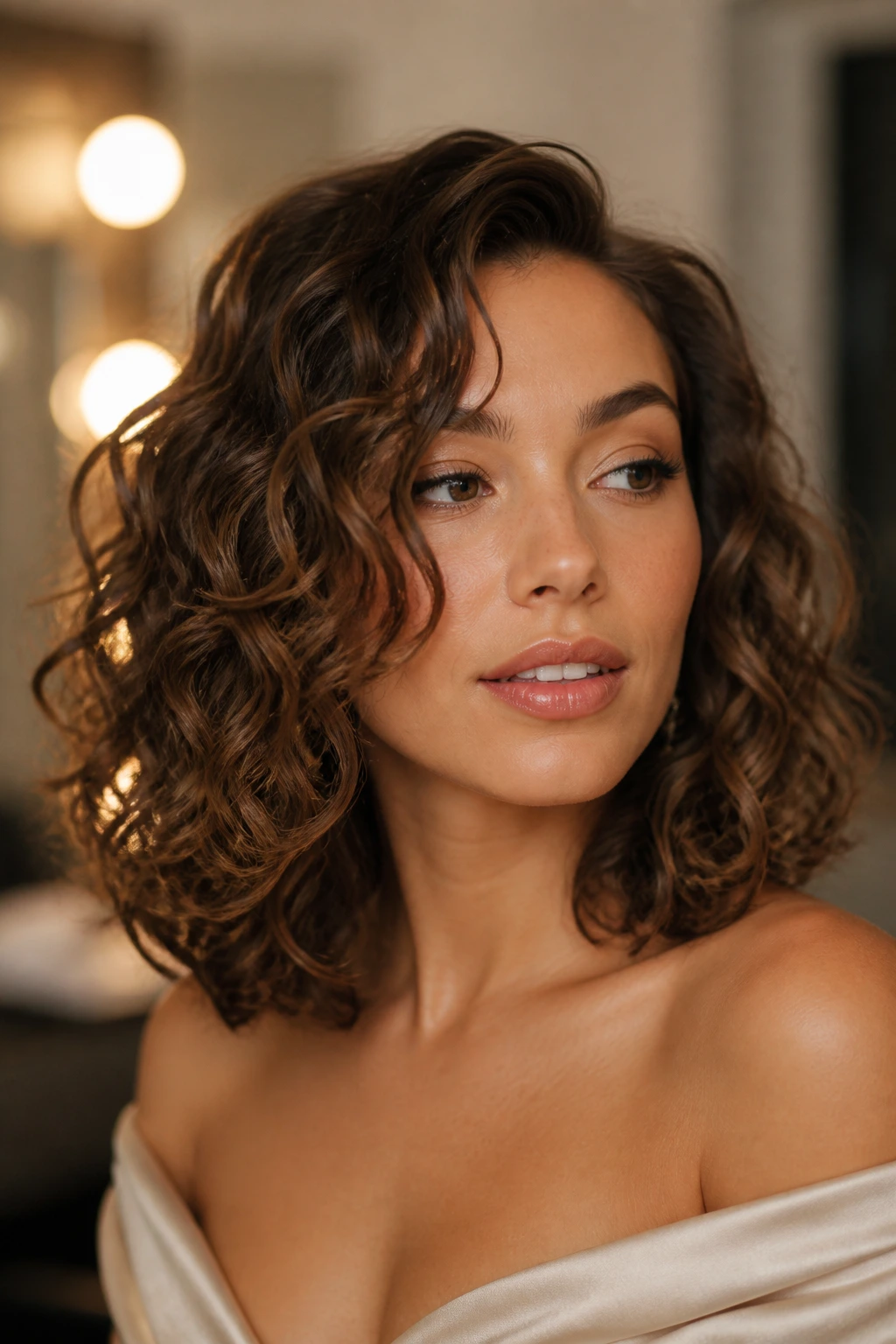
Natural curls do not need to be flattened to count as formal. They just need shape. On shoulder-length hair with soft layers, a diffuser can bring out the curl without turning the whole head into a puffball. Work curl cream through damp hair, scrunch gently, and diffuse on low heat until the hair is about 80 percent dry.
The layers matter here because they stop the curl from stacking too neatly. A layered cut lets the curls fall at different levels, which gives the style dimension and keeps it from looking heavy.
If you want a cleaner front, finger-coil the pieces around the face while they’re still damp. That one move can change the whole finish.
Do not over-touch it while drying. The more you pick at a natural curl, the more the frizz shows up later in the night.
20. Vintage Pin-Curled Waves with a Center Part
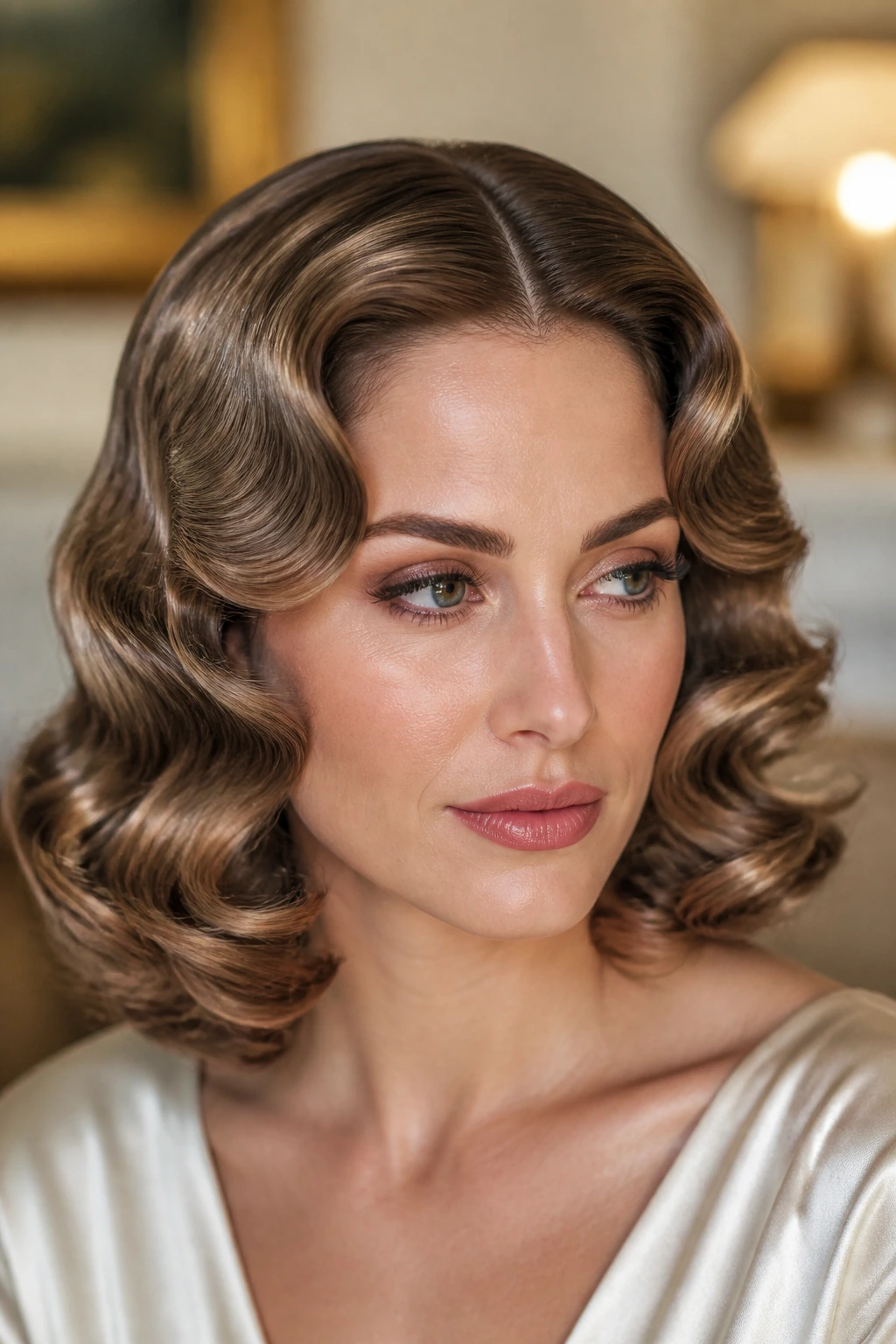
Pin curls sound fussy until you see what they do on shoulder-length hair. They give you that smooth, sculpted wave that stays close to the head and then opens out softly at the ends. Set each section, pin it flat while warm, and release only when it’s fully cool.
A center part keeps the look balanced, which works well when the soft layers around the face are cut to blend rather than jump. The finished wave should feel elegant and controlled, not hard.
Where this style shines
It’s a strong match for more formal events, especially when the dress itself already has a lot of texture. If the outfit is lace, satin, or embellished, the hair can stay smooth and still feel dressed up.
This is one of those styles that looks better after a little time has passed. The wave settles into itself and gets softer, which is a nice trait when the night runs long.
21. Minimalist Curls with Statement Earrings
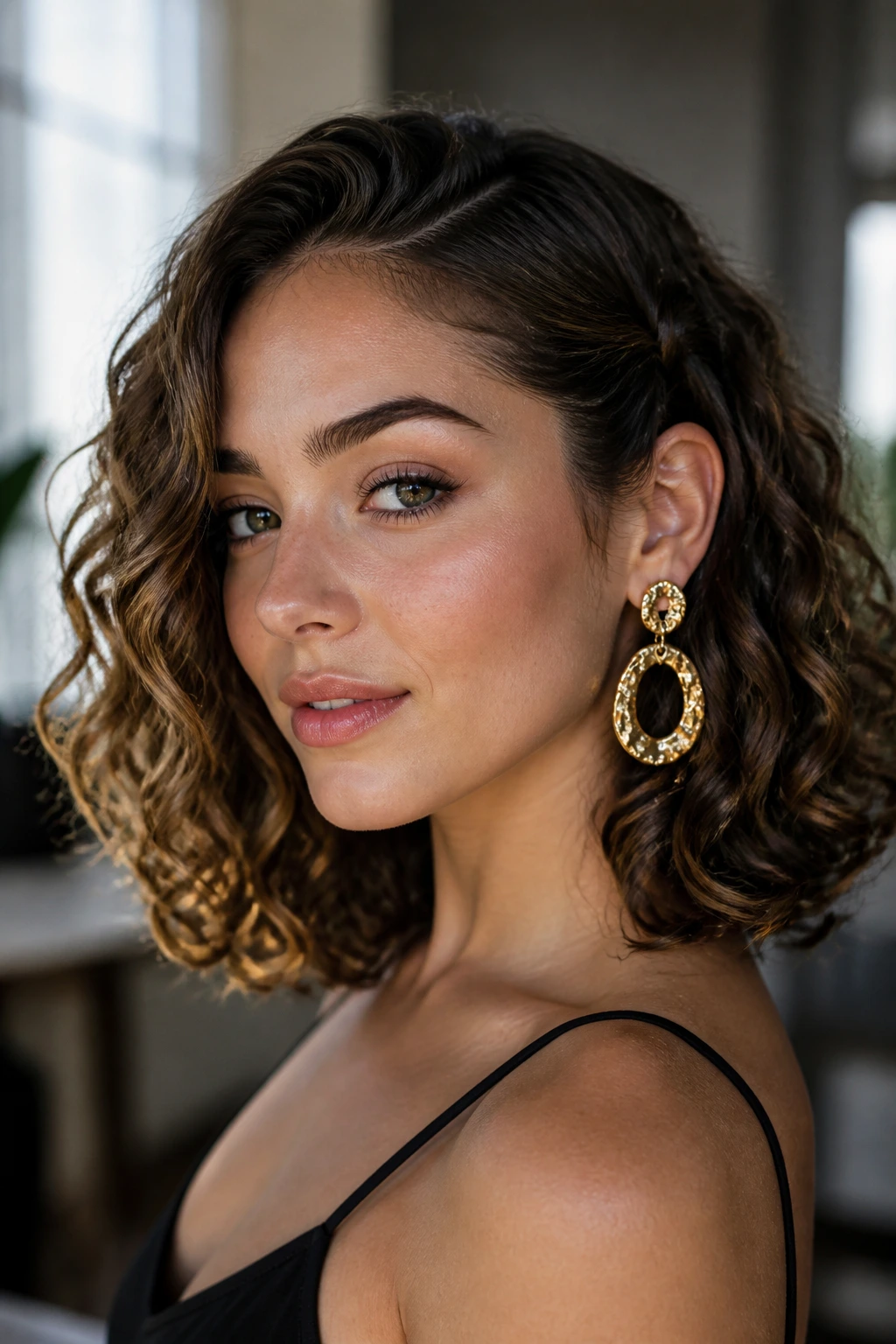
Sometimes the smartest move is to keep the hair understated and let the accessories speak. Minimalist shoulder-length curls usually mean a clean part, a soft wave through the mids, and ends that bend just enough to keep the style from going flat.
The hair should frame the earrings, not hide them. Tuck one side back or keep the front pieces narrower so the jewelry has room. If you’re wearing a bold earring, this style keeps the look balanced.
A flat iron can make the front pieces smooth, then a curling iron can add a soft bend only at the ends. That contrast keeps the style from feeling overworked.
This is the one I reach for when the outfit already has a point of view. The hair can be calm.
22. Curly Half-Ponytail with Lift at the Crown
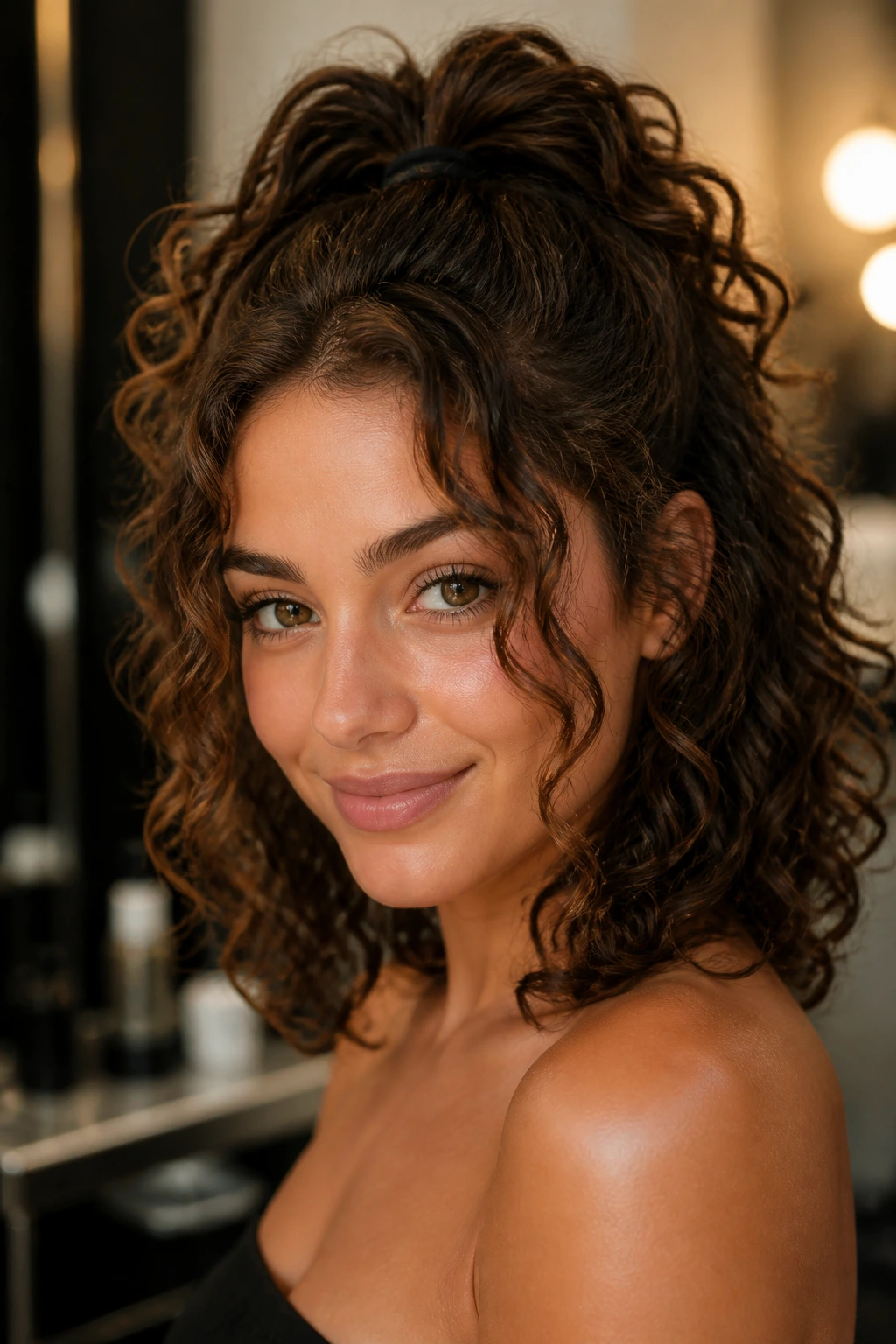
A half-pony with a little lift at the crown gives shoulder-length curls a more playful shape. Section the top half from temple to temple, smooth the sides, tease the crown lightly if needed, and secure the top with a wrapped elastic. Then curl the lower half in loose waves.
The soft layers are useful here because they stop the half-pony from looking boxy. Pieces around the face can fall out on purpose, which keeps the style from reading too schoolgirl.
This works especially well with dresses that have open backs or interesting shoulder detail. The hair stays up enough to show the clothes, but not so far up that it loses softness.
A wrapped elastic makes this look cleaner. It’s a small detail, but on special days the small details are half the outfit.
23. Clip-Boosted Soft Curls for Fuller Photos
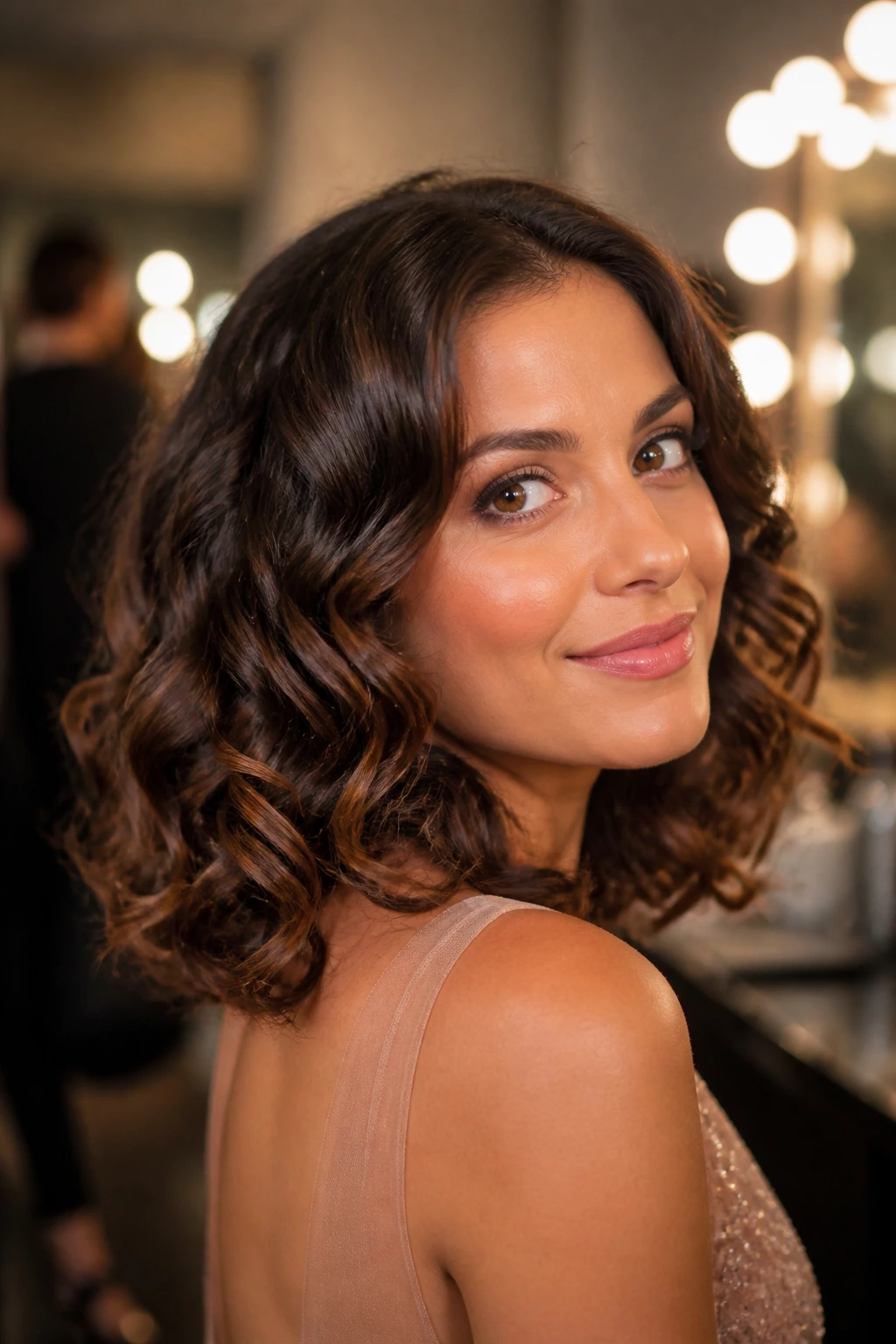
If your hair is fine or a little sparse at the ends, clip-in extensions can give shoulder-length curls more shape for a special event. The point isn’t to make the hair huge. It’s to give the curls a fuller perimeter so they photograph with more depth.
How to place them
Keep the clips low and staggered, hidden under the top layers. Leave enough of your own hair out around the face so the join disappears. Once the curls are set, brush lightly to blend the textures together.
This style works best when the extension color is a near-perfect match. Even a small shade mismatch shows up more in curls than in straight hair because the movement creates contrast.
A soft layer around the face helps everything blend. Without that, the style can look heavy at the jawline.
24. Freshly Brushed Soft Curls for a Picture-Ready Finish
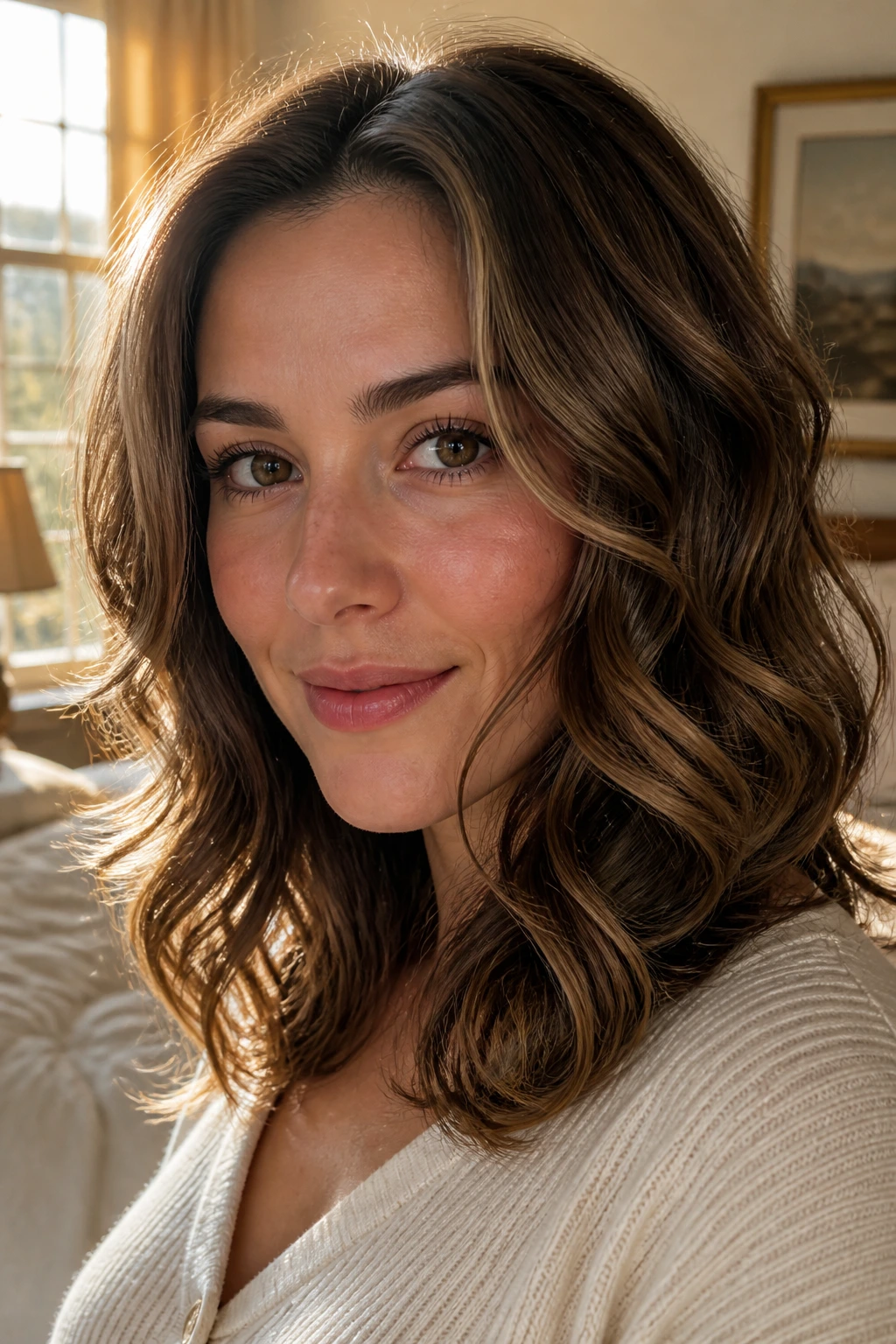
There’s a narrow line between soft and flat, and this style walks it on purpose. Set the curls, let them cool completely, then brush them out more than you think you should. The result is airy, touchable, and a little romantic around the shoulders.
Use a paddle brush or wide brush, not a fine comb. The goal is to soften the curl pattern without stripping all the movement out of it. If the ends start to look too straight, just re-curl the last inch of a few front pieces.
This is the finish that feels least “done” while still reading as styled. It’s especially good for people who dislike obvious ringlets but still want the lift and fullness that curls give.
A short mist of flexible hairspray from a distance of about 10 inches is enough. Close spraying is how soft styles get sticky.
25. Last-Minute Rescue Waves When the First Pass Fails
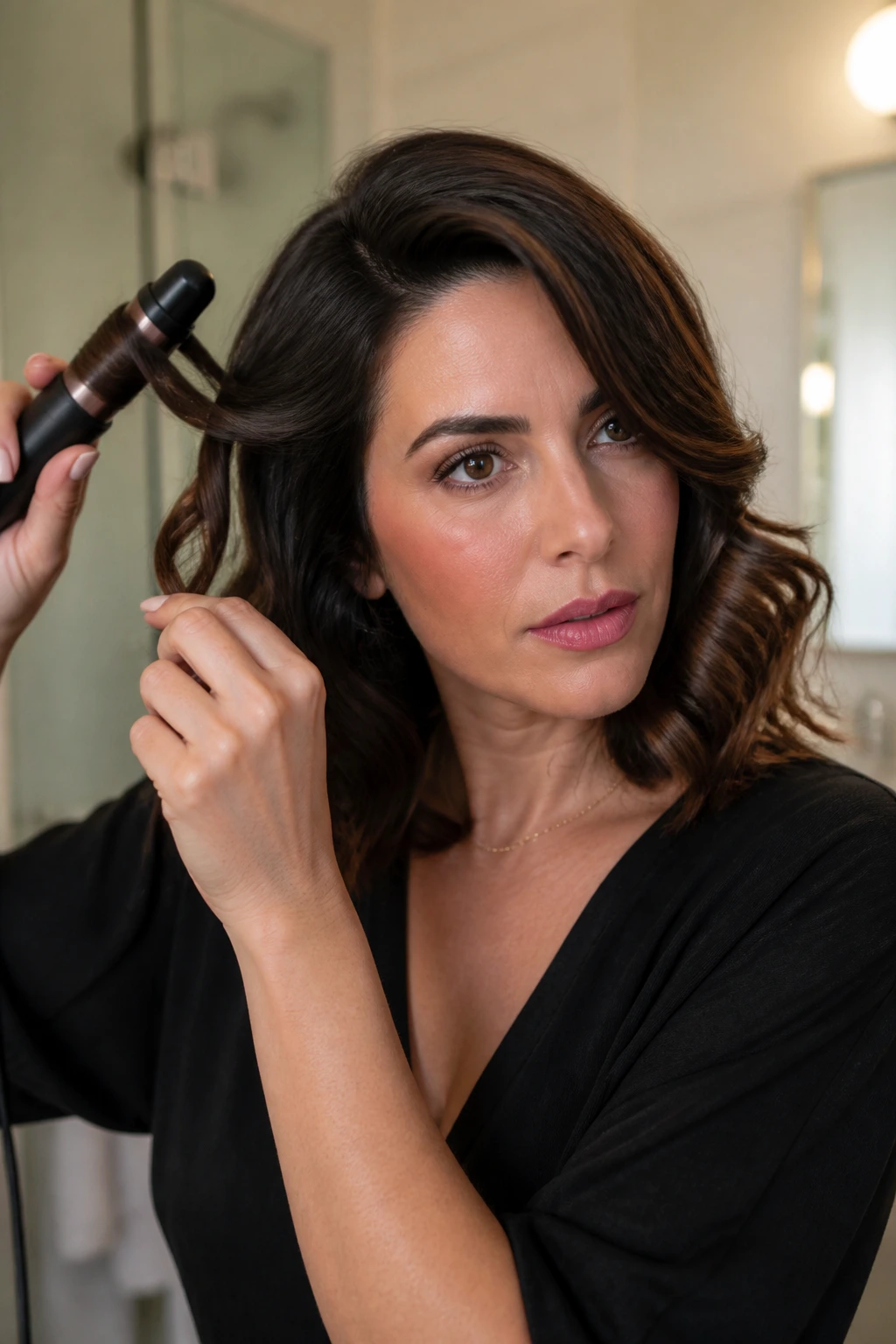
Every once in a while, curls collapse before they should. The fix is not to panic and start over from scratch. Pick up the front pieces, rewrap just those sections around the iron for 5 to 8 seconds, and refresh the crown with a bit of dry shampoo or texturizing spray at the roots.
For shoulder-length hair, a side part can rescue a style faster than a full re-curl. It changes the balance instantly and helps the hair fall in a more flattering line over the soft layers.
The smartest rescue move is to fix the pieces people see first: the front, the part, and the top layer. The back can be imperfect and still look polished.
One quick rule: if the ends look good and the crown looks flat, save the crown. If the crown looks good and the front pieces don’t, fix the front. That’s usually enough.
Why Soft Layers Change the Whole Shape
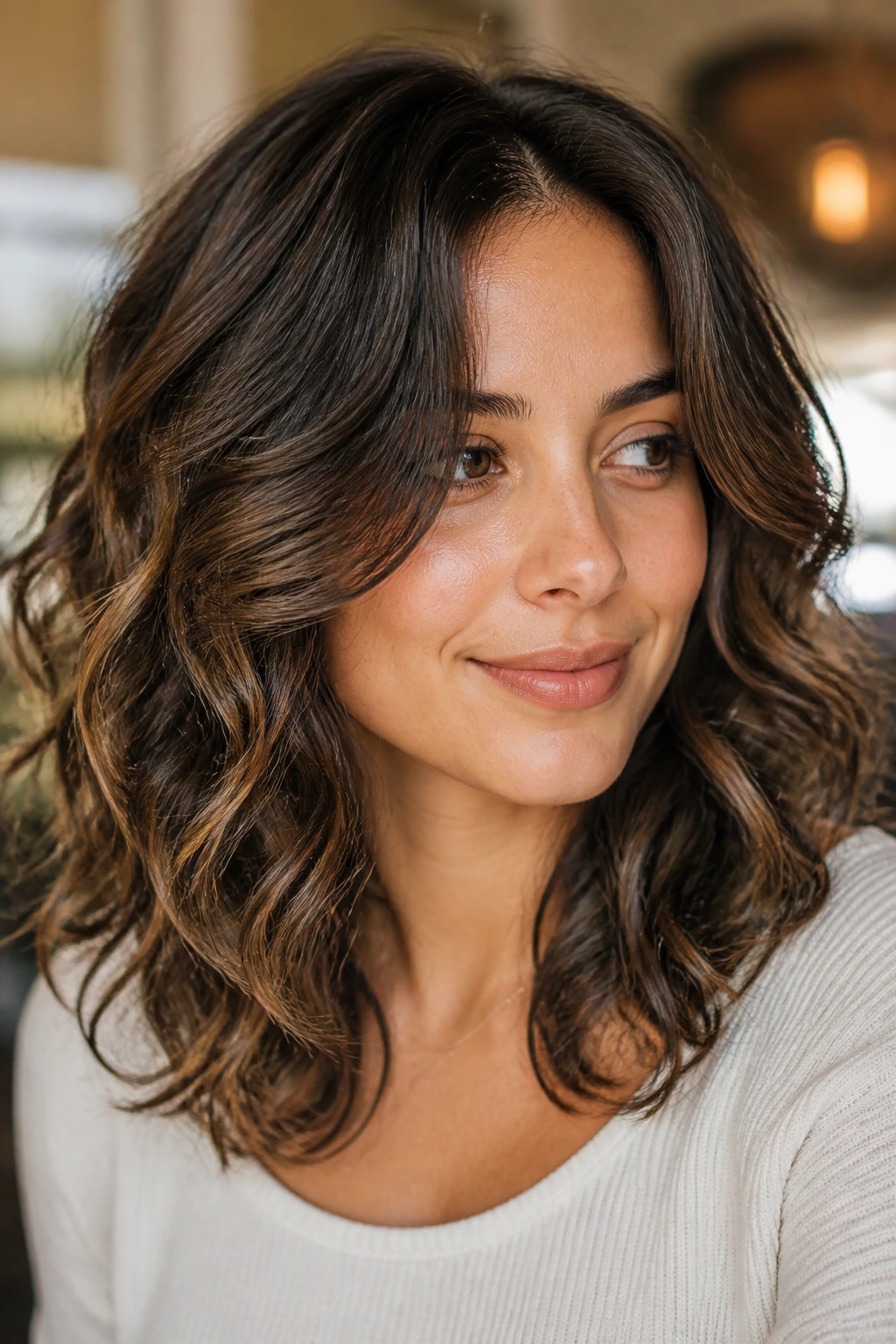
Soft layers are doing more than giving the haircut movement. They decide how the curl sits against the shoulder, how much width you see near the face, and whether the style feels airy or boxy. On one-length shoulder-length hair, curls tend to hit the same spot and build into a heavy line. Soft layers break that line apart. They let the curl stack in pieces.
That matters most at the collarbone and shoulder seam, where hair tends to catch and flip. A layered cut bends around that point instead of fighting it. If the layers are cut well, the ends don’t need to be forced into shape with a ton of product. They just fall better. Less work, less stiffness.
There’s also the face-framing effect. Longer front layers can make a center part feel softer, while shorter face pieces can open the cheekbones and jawline. On special days, that little bit of structure matters more than people expect. The style should look like it belongs on your face, not just on a mood board.
Essential Tools for These Looks
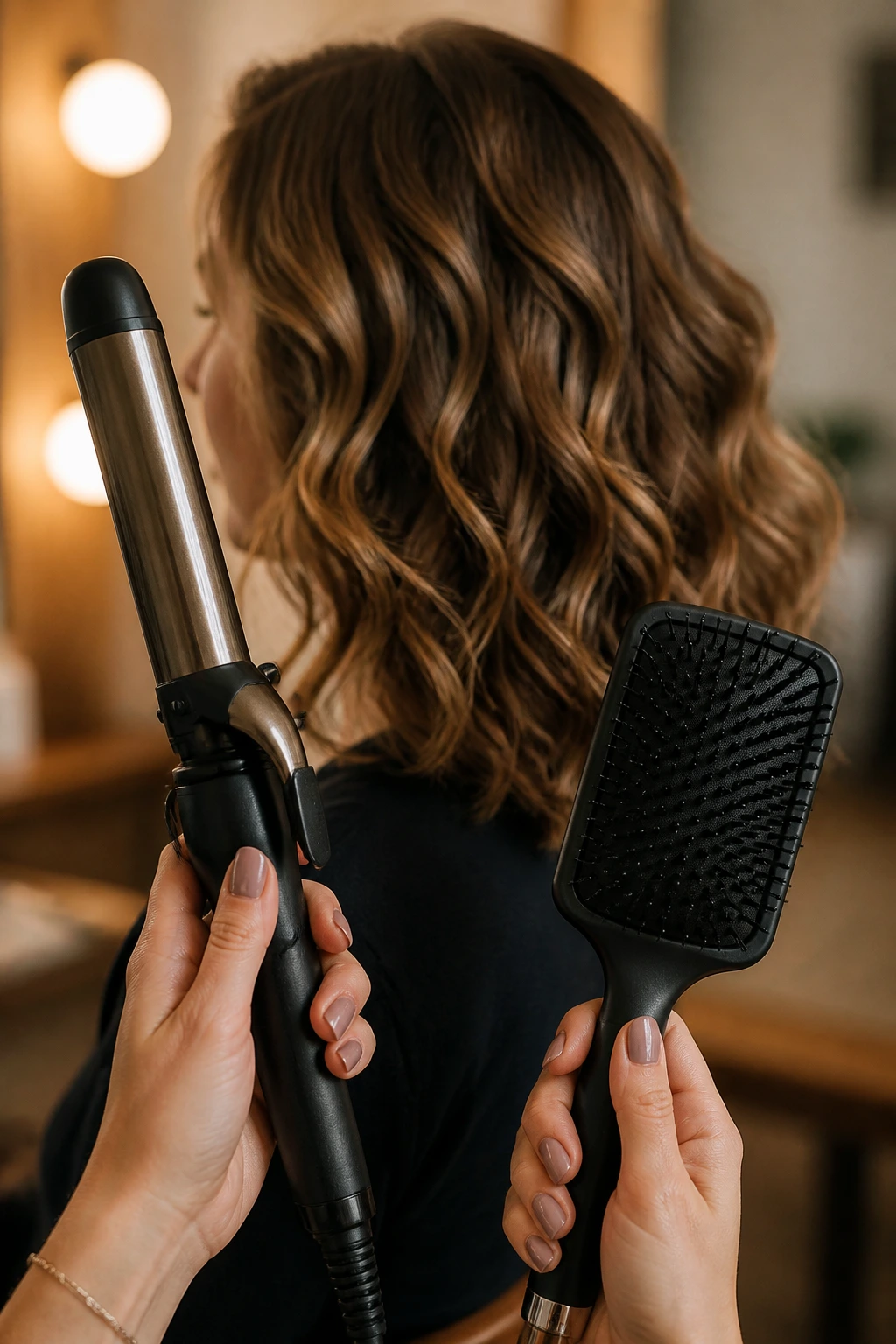
-
1-inch curling iron or wand: Good for defined curls, ribbon curls, and tighter event texture on shoulder-length hair.
-
1.25-inch curling iron: My usual pick for brushed-out waves and polished glam looks; it gives a softer bend that won’t shrink the length too much.
-
Flat iron with rounded edges: Handy for S-waves, flips, and face-framing bends when you want fewer obvious curl marks.
-
Heat protectant spray: Use it on dry hair before any hot tool. The ends of layered cuts are usually the first part to get rough.
-
Sectioning clips: Keep the top layers out of the way and help curls cool in their own shape.
-
Paddle brush and wide-tooth comb: The paddle brush softens waves; the wide comb separates curls without dragging them out too fast.
-
Flexible-hold hairspray: You want movement, not a shell. Spray from 8 to 12 inches away.
-
Shine spray or lightweight serum: One or two pumps, no more, especially near the crown.
-
Blow-dry brush or round brush: Useful for smoothing the top layer and lifting the roots around the face.
-
Velcro rollers or duckbill clips: Optional, but useful for cooling and setting the crown or wave line.
Smart Prep and Product Choices
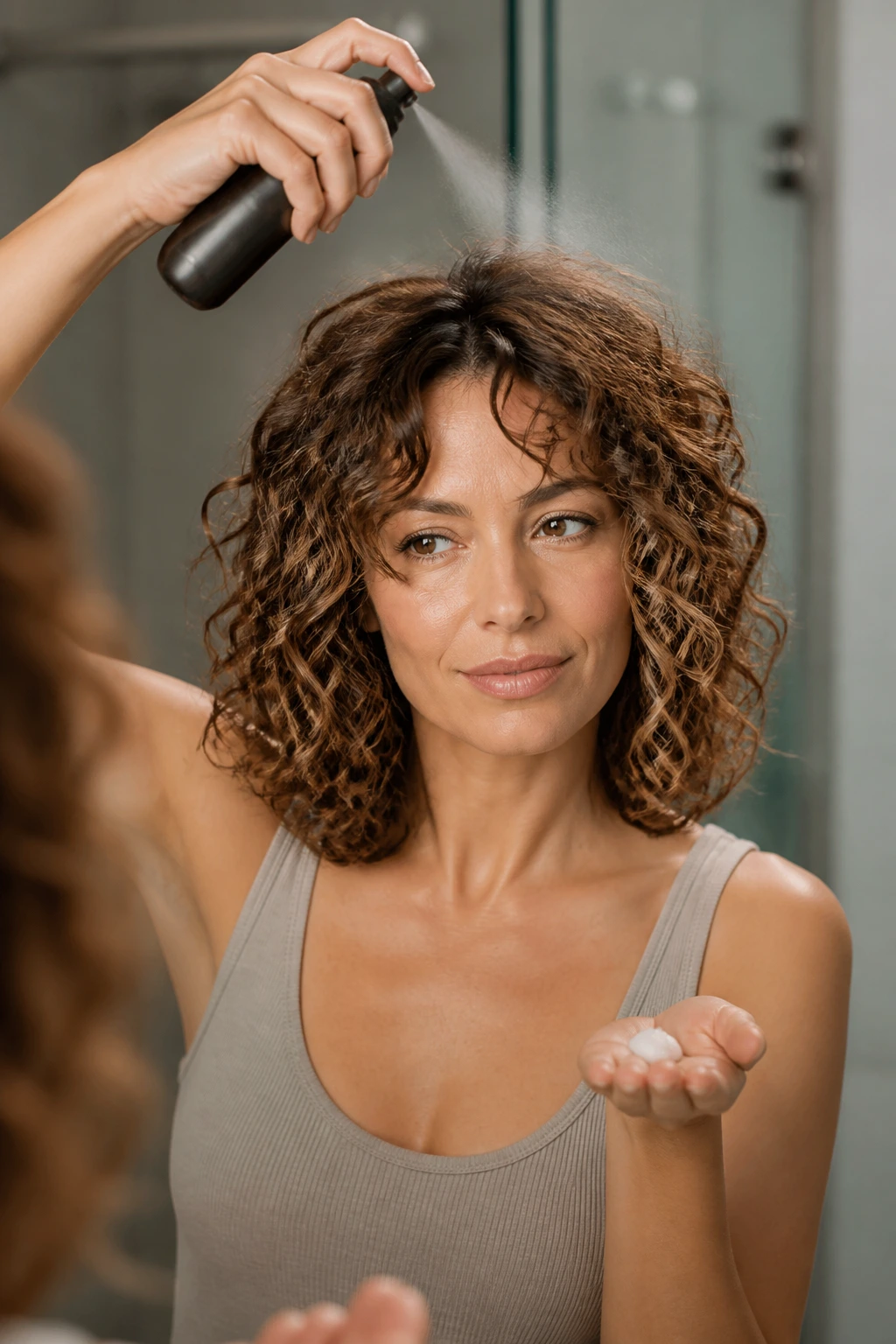
Shoulder-length curls behave best when the hair is clean enough to take shape but not so slippery that every curl slides out. If your hair is fine, a little root-lifting mousse at the crown and a heat protectant through the mids usually beats heavy cream. Thick hair often needs a bit more slip on the ends, but even then, keep the product light at the root or you’ll lose height fast.
Barrel size matters more than people think. A smaller barrel on shoulder-length hair can make the style look tighter than you want, especially after brushing. A 1.25-inch barrel is usually the safest starting point for soft layers because the curl settles into a wave instead of a spring. If your hair is very dense or long for shoulder length, you may need to curl smaller sections so the heat reaches the middle of each strand.
Second-day hair often styles better than freshly washed hair. It has a little grip. If the roots are too clean and silky, dust them with a light texture spray or use a tiny bit of dry shampoo before you start. Not a cloud. Just enough to stop the roots from slipping.
How to Match the Style to Necklines, Earrings, and Makeup
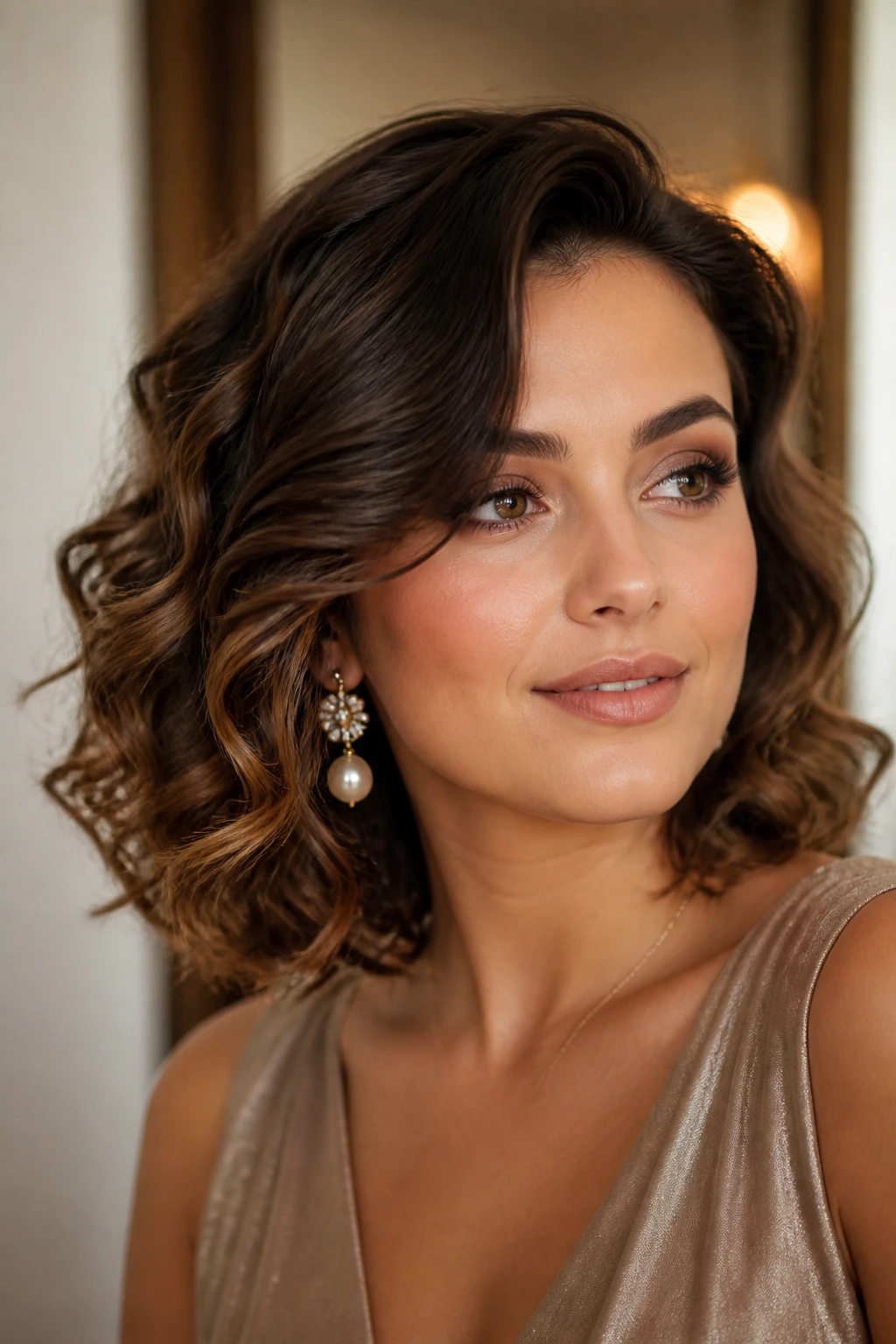
Hair never shows up alone. It sits beside the neckline, the earrings, the makeup, and the shape of the dress. If the outfit has a high collar or a lot of detail around the shoulders, choose a style that keeps the top smooth and the sides controlled. Pinned-back curls, sleek-root waves, and half-up twists all behave well there.
Open necklines call for more motion. Strapless and square-neck dresses usually look good with brushed-out waves, side sweeps, or soft curtain curls because the hair can echo the open shape of the clothes. One side tucked behind the ear is especially useful when the neckline already has drama and you don’t want the hair to fight it.
Earrings need space. If you’re wearing a bold drop earring, keep the front pieces a little narrower or sweep one side back so the jewelry isn’t buried. Makeup matters too. Strong eye makeup pairs well with pinned-back or center-part styles, while softer makeup can carry fuller waves and loose front pieces without feeling crowded.
Practical Tips for Better Hold and Softer Movement
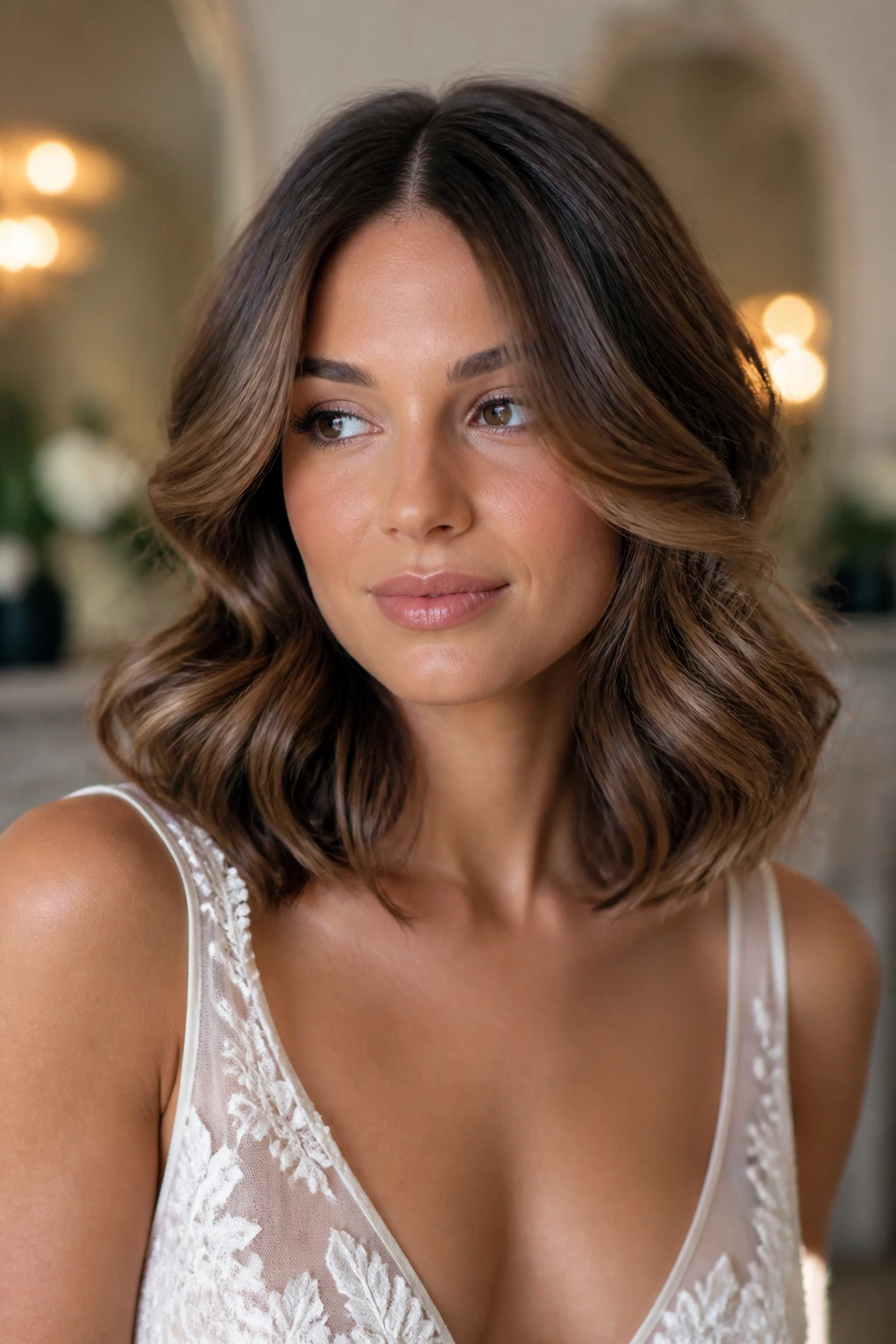
Cool every curl before you touch it: That’s the boring rule, and it’s the one that keeps curls from collapsing. Five to ten minutes of cooling can make the difference between loose waves and a sad bend.
Curl the front pieces away from the face: Always. The front sections decide the whole shape, especially on shoulder-length hair with layers. If they curl inward, the style often looks older and more closed off.
Don’t overload the hair with product: Heavy cream, too much serum, and sticky spray all weigh down layered curls. A little at each stage works better than one giant finishing coat.
Brush with intention: A paddle brush softens glam waves; fingers preserve spirals; a wide-tooth comb works when you want separation without volume loss. Use the right tool for the finish you want.
Protect the ends: The last inch of layered hair is where dryness shows first. A tiny bit of serum there keeps the style from looking frayed in bright light.
Common Mistakes That Make Event Curls Go Flat or Puff Out
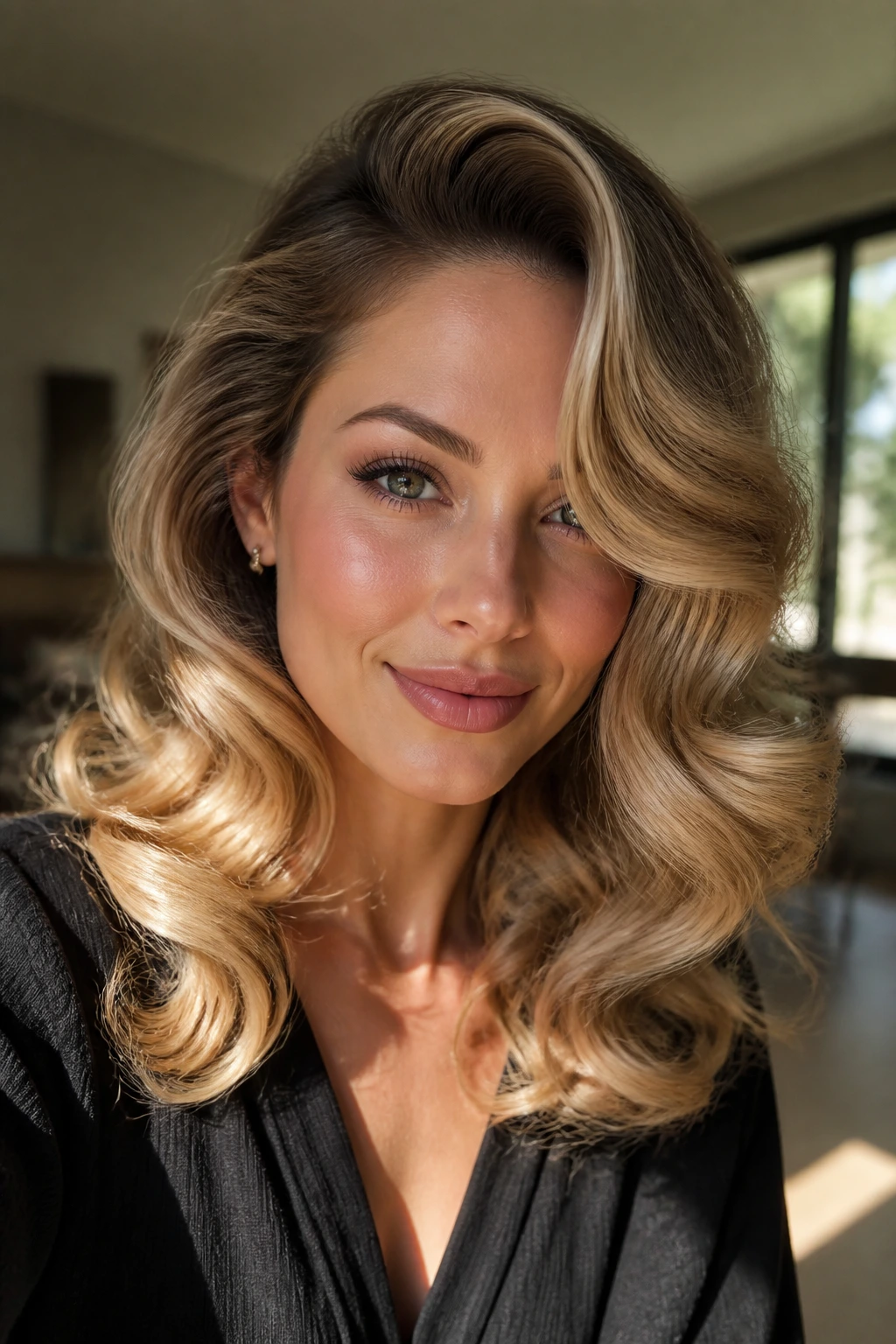
Curling every section the same direction: That creates one heavy pattern and makes the hair look too uniform. Alternate directions through the back, then keep the front away from the face so the shape opens up naturally.
Skipping the cool-down: Warm curls drop early. If you brush them while they’re still hot, they lose their structure and the layers can spring in odd directions. Pin them, clip them, or at least leave them alone for a few minutes.
Using a barrel that’s too large: On shoulder-length hair, an oversized barrel can make the curl vanish the second it’s brushed. If you want softness, go for a barrel that still leaves enough bend after separation.
Putting too much oil near the roots: Shine spray and serum belong on the surface and the ends. If they hit the crown, the hair starts looking flat and greasy by the time you’re out the door.
Not planning for the haircut itself: A layered shoulder-length cut that’s heavily thinned on the bottom behaves differently from a blunt lob with face-framing pieces. If the ends are wispy, a gentler wave or curl usually looks better than a tight set.
Variations and Adaptations for Hair Type, Weather, and Time
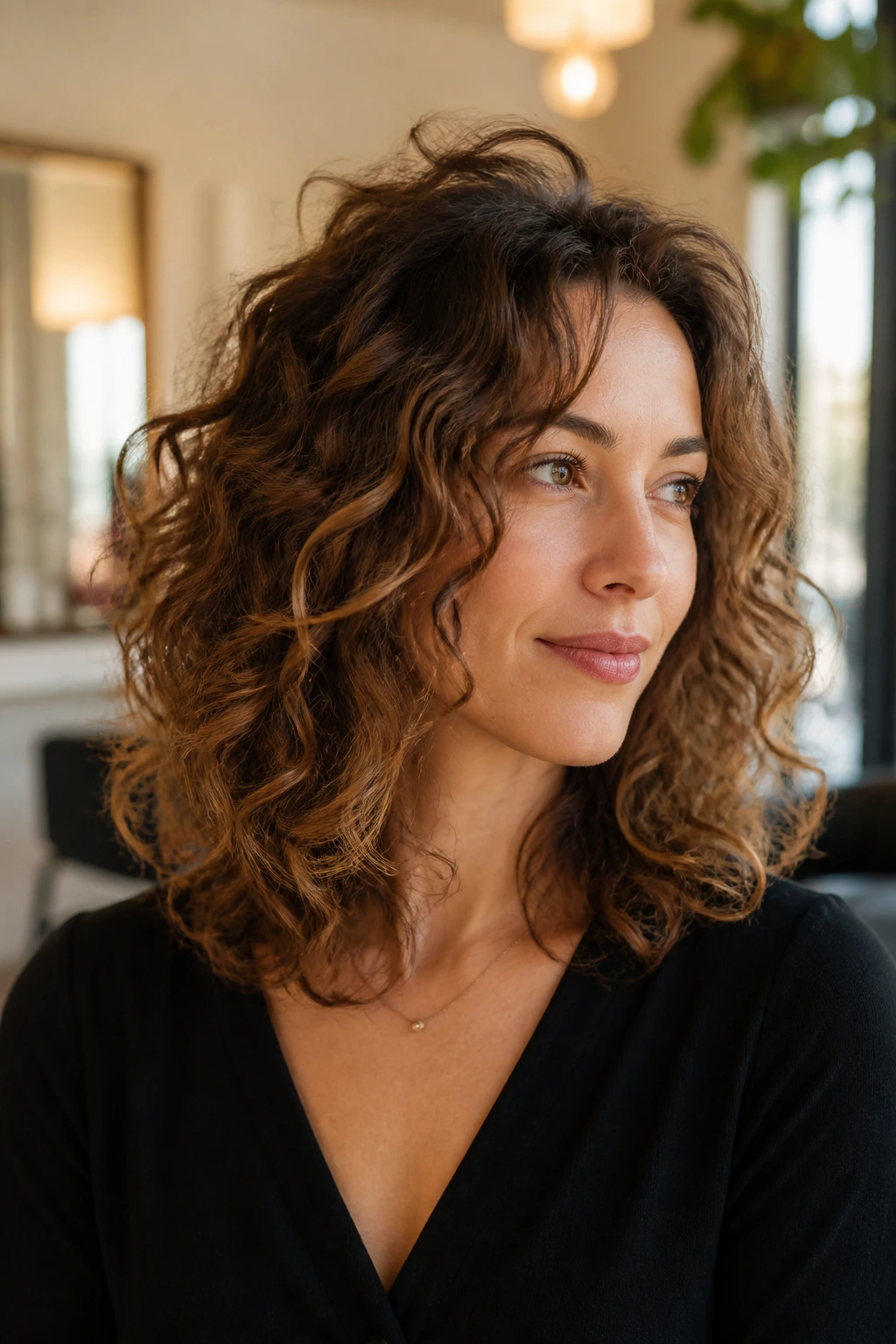
Fine-Hair Lift: Use mousse at the roots, curl in smaller sections, and clip the crown while the curls cool. The extra lift keeps the hair from disappearing in photos.
Thick-Hair Control: Work in narrow sections and keep the front smoother than the rest. Thick hair needs more organization, not more product.
Humidity-Proof Finish: Choose a flexible anti-humidity spray, then finish with a light mist of hairspray after styling. Don’t soak the hair. That’s how curls go stiff and still fall.
Heatless Event Set: Large rollers, a wrap method, or pin curls can give shoulder-length hair a softer finish with less heat. Best for the person who wants less damage and doesn’t mind planning ahead.
Shorter Lob Adjustment: If your hair hits the top of the shoulders, keep the curl a touch looser and leave more ends out. Tight ringlets can shorten the silhouette too much.
Natural Texture Day: If your hair already has wave or curl, lean into it with a diffuser and only refine the front pieces. Trying to force natural texture into a straight-hair pattern usually ends badly.
How to Keep the Style Fresh Through the End of the Night
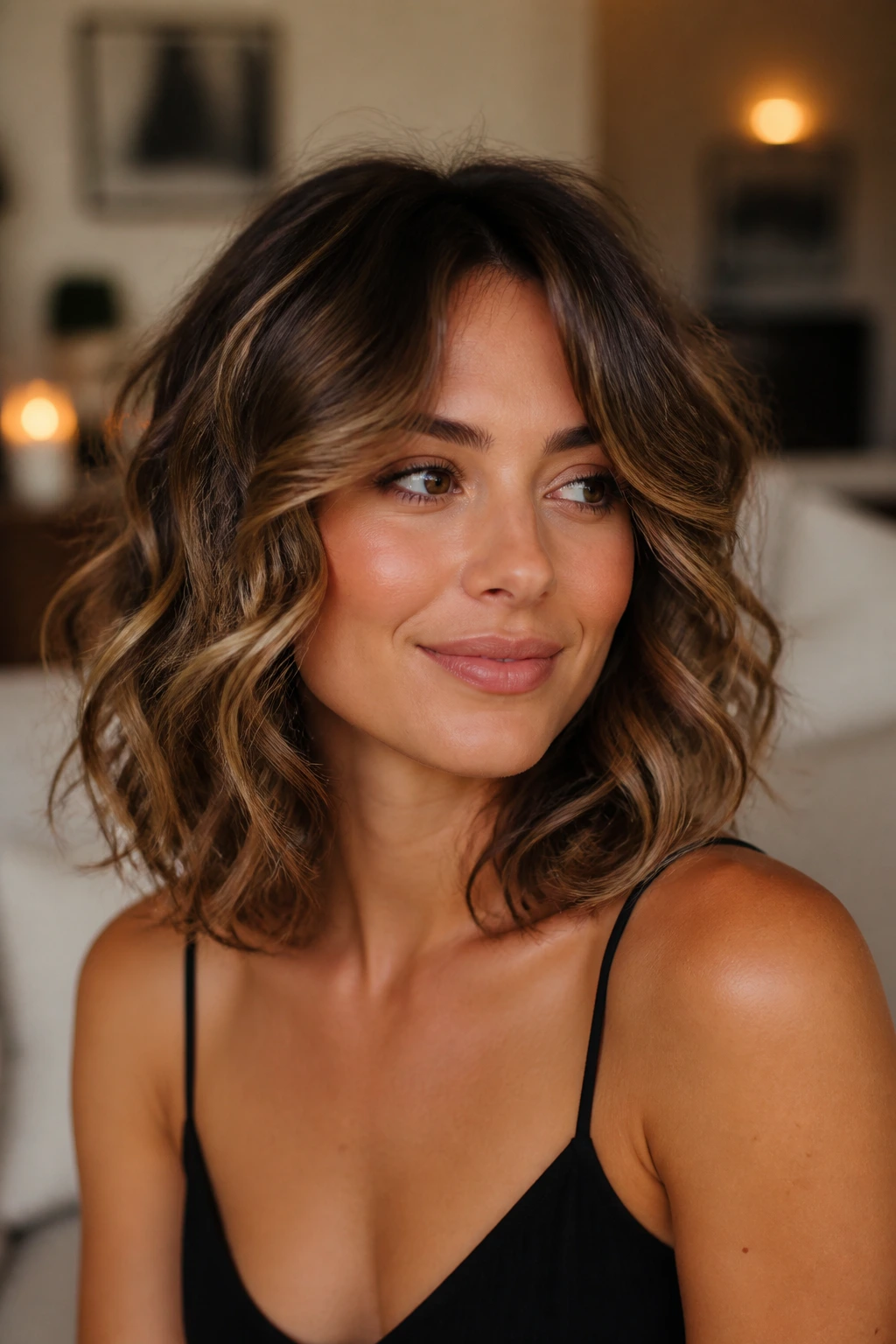
Shoulder-length curls usually hold better than people give them credit for, but they still need a little upkeep. The safest move is to style on dry hair, let every section cool fully, and use a flexible spray rather than a crunchy one. That gives you room to touch the hair without breaking the shape.
If the roots start to settle, flip your head once, shake gently, and lift the crown with your fingers. Don’t brush the whole thing unless you want to change the finish entirely. For brushed-out waves, a soft brush through the ends can revive movement. For defined curls, use your fingers only.
For next-day wear, sleep on a silk pillowcase or wrap the hair loosely in a silk scarf. In the morning, a light mist of water mixed with a drop of leave-in conditioner can wake up the front pieces fast. The rest usually needs only a quick finger twist around the face.
Frequently Asked Questions
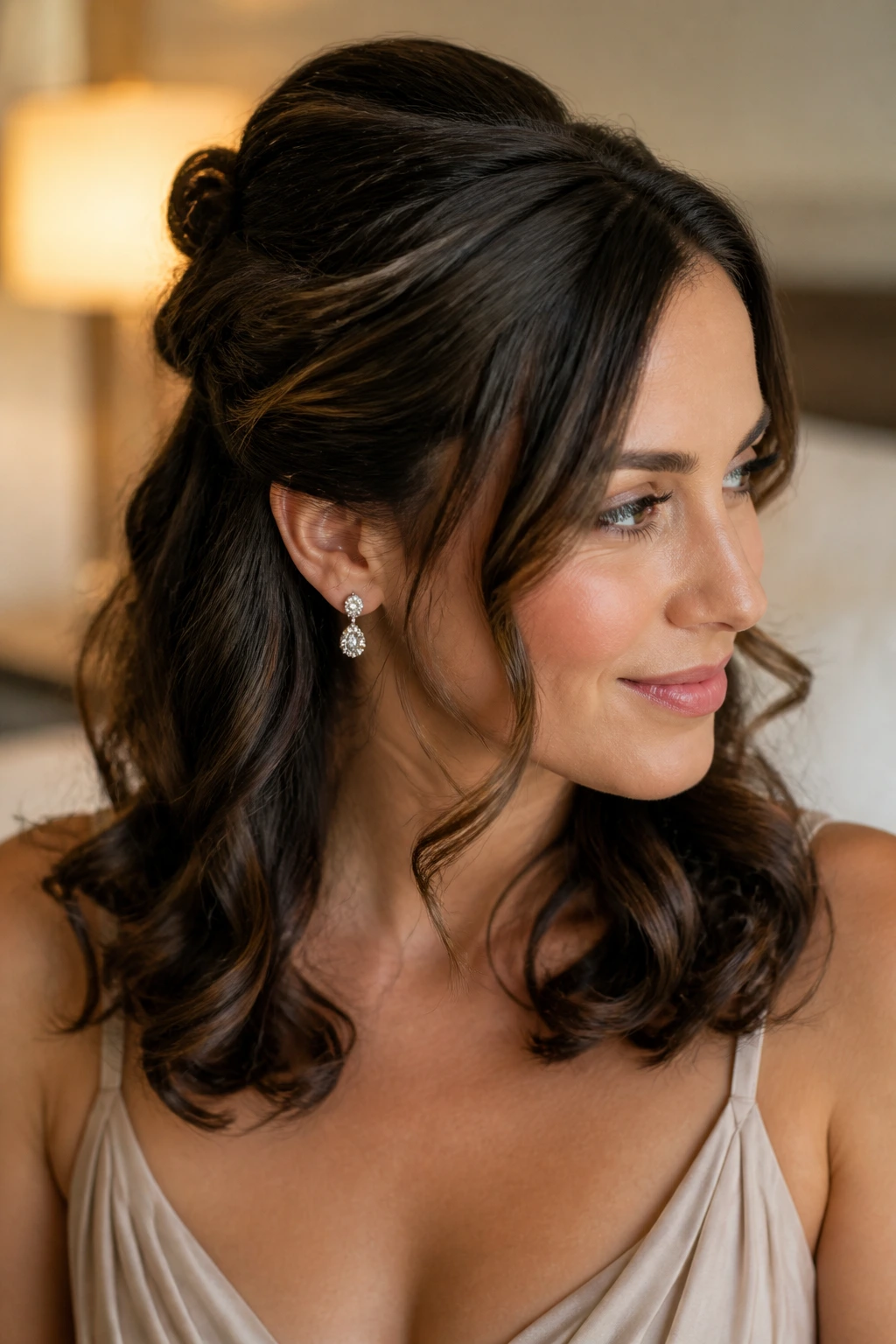
What barrel size is best for shoulder-length curls with soft layers?
A 1-inch barrel gives more definition, while a 1.25-inch barrel usually creates the softer, brushed-out shape most people want for special days. If your hair is thick or heavy, the smaller barrel can help the style survive longer.
Do soft layers make curls fall faster?
Not if the haircut is balanced. Soft layers reduce bulk and help the curl sit better around the shoulders, but very short or heavily thinned layers can lose shape faster because they have less weight to hold them down.
How do I keep shoulder-length curls from turning into a triangle?
Keep the crown smoother, curl away from the face, and avoid building too much width at the same level on both sides. A side part or a pinned-back front section can also keep the silhouette narrower and cleaner.
Can fine hair pull off these styles?
Yes, and usually better than people expect. Fine hair often benefits from the lift that layers create, as long as you keep the product light and use a smaller number of well-placed curls instead of overloading every strand.
Should I curl the layers near my face inward or outward?
Outward is the safer choice for most special-day looks. It opens the face, keeps the shape soft, and stops the front pieces from tucking under in a way that makes the haircut feel closed off.
What if my curls fall flat before the event ends?
Refocus on the front pieces and the crown. Re-curl just those sections, add a small bit of dry shampoo at the roots, and reshape the part. You often don’t need to redo the whole head.
Can I use heatless methods on shoulder-length hair?
Yes. Large rollers, wraps, and pin sets work well at this length because the hair isn’t so long that it weighs the set down. Just make sure the hair is fully dry before you take it apart.
How do I make the style look softer instead of too styled?
Brush the curls only after they cool, use flexible hold, and leave a few front pieces looser than the rest. Soft layers do the rest. They keep the hair from looking like one solid block.
The Looks That Stay in the Photo Folder
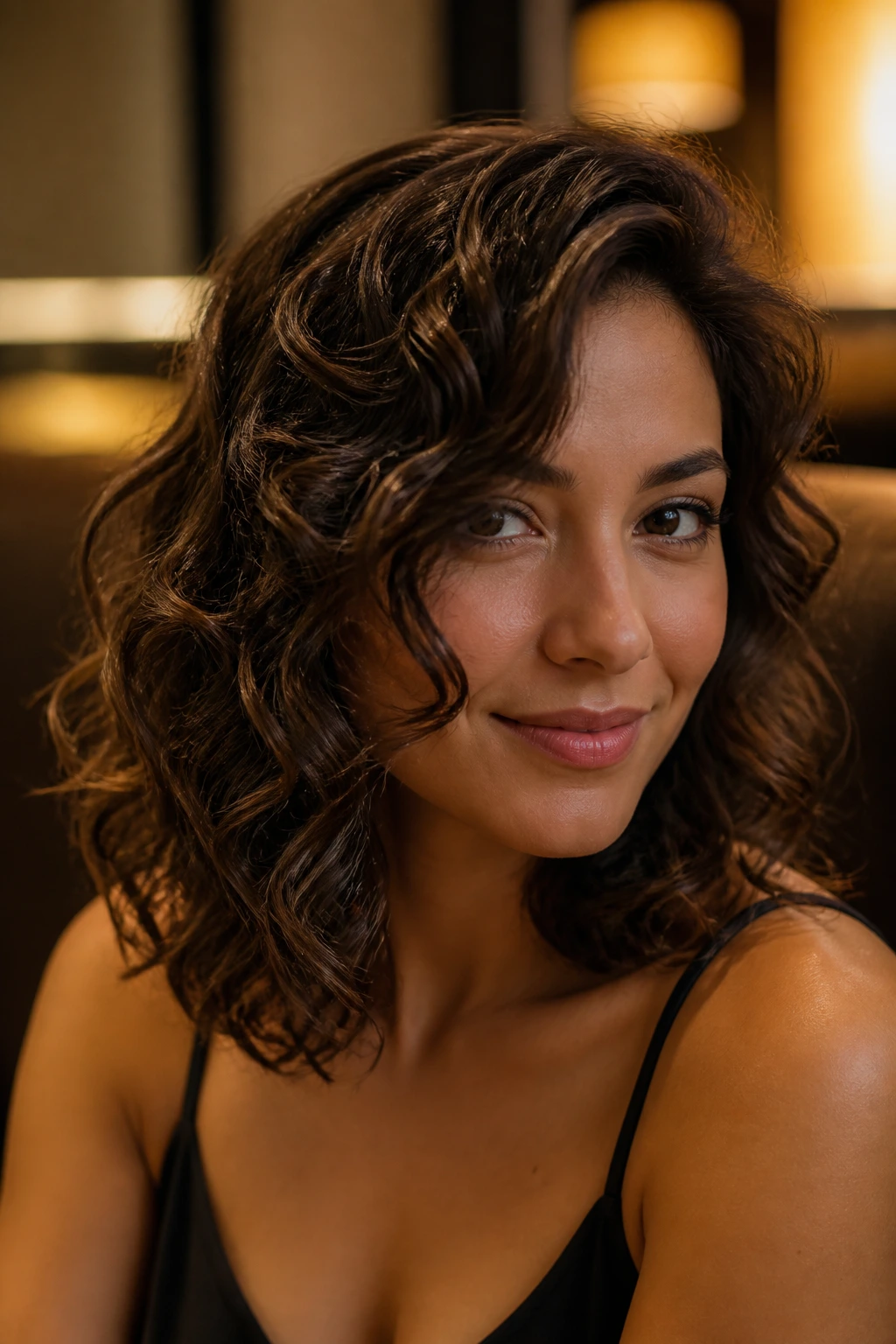
Shoulder-length curls with soft layers have a particular kind of usefulness: they don’t need to shout to look finished. The haircut gives the curls movement, the face-framing pieces shape the front, and the length stays manageable enough to hold a style through a long evening. That combination is why these looks show up again and again for the events that matter.
Pick the finish based on the mood, not just the outfit. Brushed-out waves for soft romance. Side sweeps for a little drama. Pinned-back curls when you want your face and earrings to lead. The cut gives you room to choose, and that’s the part I like most about it.
Once you know which curl pattern flatters your layers, the rest gets easier. The hair stops feeling like a problem to solve and starts acting like part of the outfit.