



A long bob can do a surprising amount of face-shaping work when the cut is placed with a little care. If you’ve got a round face, fuller cheeks, or a softer jawline, the wrong lob can sit right at the widest point and make everything feel boxy. The right one changes the whole read of your face. It drops a clean vertical line, skims past the chin, and gives the eye somewhere better to go.
That’s why long bobs for double chins and round faces are such a smart haircut family to look at. Not because they “hide” anything — I don’t love that language — but because they create balance. A collarbone length, a diagonal front, a side part, a few well-placed layers. Tiny decisions. Big difference.
What matters most is where the cut lands, how much weight sits at the ends, and whether the front opens the face or crowds it. Get those details right, and a lob stops being a safe haircut and starts being a shape. That’s the part most people miss, and it’s the part worth getting right.
Why These Lobs Earn Their Keep
They stretch the face visually: A lob that lands below the chin adds a clean vertical line, which is useful when the lower face already has softness.
They work with, not against, your features: Side parts, curtain pieces, and angled fronts redirect attention away from width at the cheeks.
They don’t need the same styling every day: Some of these cuts look polished with a flat iron, while others are better with a 10-minute bend from a curling iron.
They grow out better than a blunt chin-length bob: A little extra length gives you room to live with the haircut between trims.
They fit different hair textures: Straight, wavy, curly, dense, or fine — there’s a lob shape that can be tuned to each one without fighting the hair.
They give you room for adjustment: If you decide you want more fringe, less bulk, or a stronger angle later, a lob is easier to tweak than a short crop.
1. The Collarbone Blunt Lob
A blunt lob that lands right at the collarbone is one of the cleanest ways to slim the lower face without getting fussy. The line is straight, the ends are tidy, and the cut doesn’t puff out at the jaw the way a chin-length shape often does. Keep the front a touch longer than the back if you want more length through the face. That little slope matters.
This cut likes hair that can sit smooth on its own, or hair you’re happy to blow-dry in 10 minutes. If your texture is very thick, ask for slight internal removal so the perimeter doesn’t feel like a shelf. If your hair is fine, keep the ends blunt and skip heavy layers. You want the line to stay crisp. Soft, but not wispy.
2. The Soft A-Line Lob
The A-line lob is the quiet overachiever here. It’s shorter in the back, longer in the front, and that diagonal line does a lot of visual work for a round face. The eye moves down and forward instead of settling right at the cheeks. That’s the whole trick.
Ask for a mild angle, not a dramatic wedge. Too steep and you get a haircut that looks dated fast. A subtle A-line — maybe an inch or two longer in the front — keeps the shape modern and easy to wear. It’s especially good if you like tucking one side behind the ear and letting the other fall forward.
3. The Deep Side-Part Sleek Lob
If you want instant asymmetry, start with the part. A deep side part breaks up the symmetry of a round face in the best way, and a sleek lob gives that line somewhere smooth to go. The result is sharper through the cheek area and a little longer in the face overall. Simple. Effective.
This is one of those cuts that looks more expensive when the blowout is smooth, but don’t overthink the finish. A flat brush, a nozzle on the dryer, and a pea-sized amount of serum is usually enough. Keep the roots lifted on the heavier side of the part, then tuck the lighter side behind one ear. That tiny move opens the face without adding width.
4. The Curtain-Bang Lob
Curtain bangs can be a very good idea on round faces, as long as they’re cut with enough length to split at the cheekbones instead of the chin. That opening down the middle creates a vertical center line, while the longer sides blur into the lob. It’s soft in the front, which is useful when you don’t want the cut to stop in a hard block.
The mistake is cutting curtain bangs too short. Then they flare out and sit right on the fullness of the cheeks. Ask for the shortest point to hit around the bridge of the nose or a bit below, with the side pieces grazing the top of the cheekbone. They should move. Not sit there like curtains on a dusty window.
5. The Long Face-Framing Layer Lob
This version depends on restraint. The best face-framing layers on a round face start low enough to skim the mouth or just below the cheekbone, not at the jaw. That keeps the face open at the widest point and adds movement where the eye needs it. Shorter layers can work, but they need to be handled carefully or they widen the face.
I like this cut when the hair needs softness but not a full shag. It keeps enough weight in the perimeter to look polished, while the front pieces break up the shape. If you wear glasses, this one is nice because the layers can fall around the frames instead of competing with them. It’s a small detail. It changes everything.
6. The Razor-Sharp Shag Lob
A shaggy lob with razor-cut ends is for people who want movement and don’t mind a little edge. The irregular ends stop the haircut from sitting as one solid block, which helps on fuller faces because the eye reads texture instead of width. There’s also lift at the crown, which matters more than people think.
This cut does best when the layers are deliberately placed, not hacked in at random. A good shag lob still needs length below the chin and enough front softness to avoid widening the cheeks. Air-drying with a cream and scrunching a few sections with a diffuser gives it a better shape than overblown volume. Too much roundness at the sides is the enemy here.
7. The Loose Wave Lob
Loose waves are one of the easiest ways to make a lob feel lighter around the face. When the bend starts below the cheekbone, the eye follows the length of the hair instead of getting stuck at the jaw. The face looks longer. Not thinner in some magical sense. Just more balanced.
The wave pattern should be soft, not corkscrew-y. I’d wrap medium sections away from the face, leave the last inch out, then brush through once the hair cools. That keeps the wave broad and airy. If the waves start too high, the sides can balloon. Keep them lower and the cut stays lean.
8. The Bottleneck-Bang Lob

Bottleneck bangs are a smart middle ground if you want fringe without a heavy curtain across the forehead. They’re shorter in the middle, then gradually lengthen toward the temples, which makes the top half of the face feel open while the sides soften into the lob. Nice shape. Very usable.
On a round face, the best version of this cut keeps the longest pieces around the outer eye and cheekbone area. That draws attention upward and outward, which is exactly where you want it. It works especially well with a slightly tousled finish. Clean at the roots, messy through the ends. That contrast keeps it from looking too pretty in a predictable way.
9. The Choppy Piecey Lob
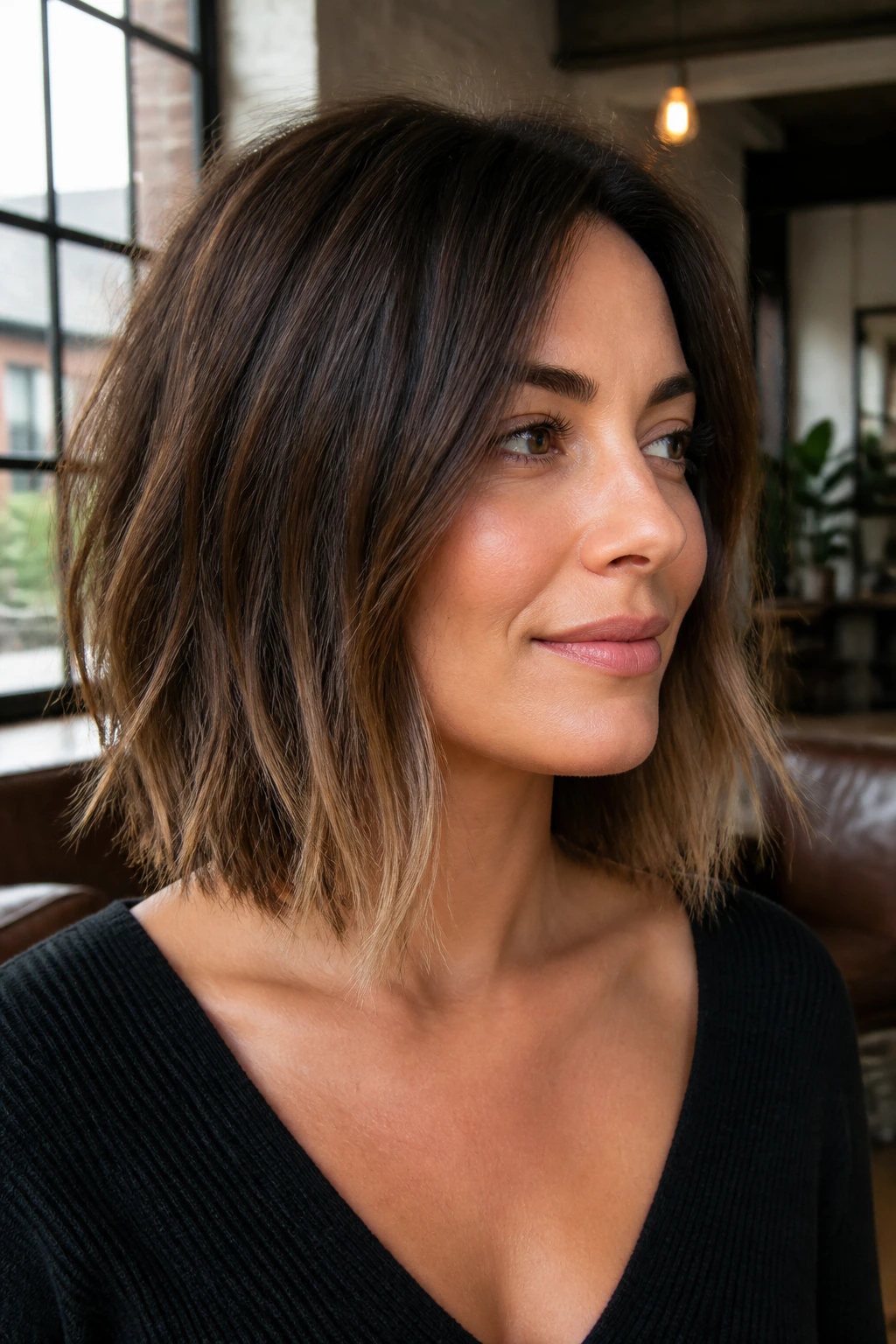
Choppy ends give a lob more bite, and that bite helps when the face needs vertical movement rather than extra fullness. Piecey texture breaks up the outline of the cut, so the eye sees separated strands instead of one wide shape. Fine hair can benefit a lot from this, because a blunt line can look too heavy.
The trick is not to over-layer the sides. Keep the choppiness mostly in the last few inches, then use a light paste or texturizing spray to separate the pieces. You want movement, not fuzz. If the hair starts to look dry or frayed, you’ve gone too far. Back off.
10. The Angled Lob with a Tapered Back
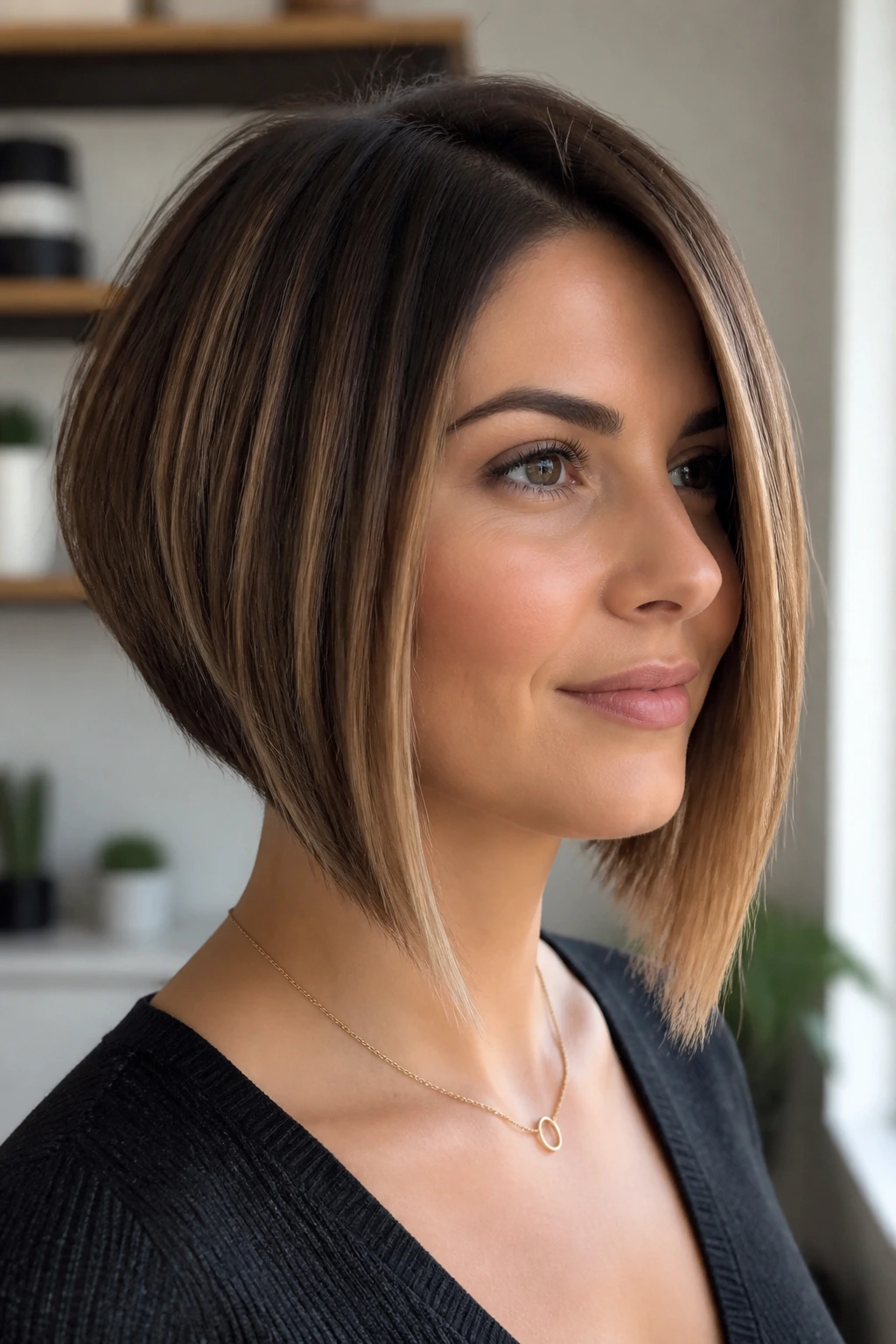
This is a more defined take on the A-line. The back is neatly tucked, the front drops longer, and the whole thing forms a clean diagonal that lengthens the face. It’s one of the best options if you want structure around a softer jawline without going super short.
Ask for the front to land somewhere between the chin and collarbone, depending on how much length you want to keep. The back can sit higher, but not so high that it looks stacked or dated. A tapered back also keeps the neckline clean, which helps the cut feel lighter from every angle. From the side, it should look intentional. Not accidental.
11. The Feathered Lob for Thick Hair
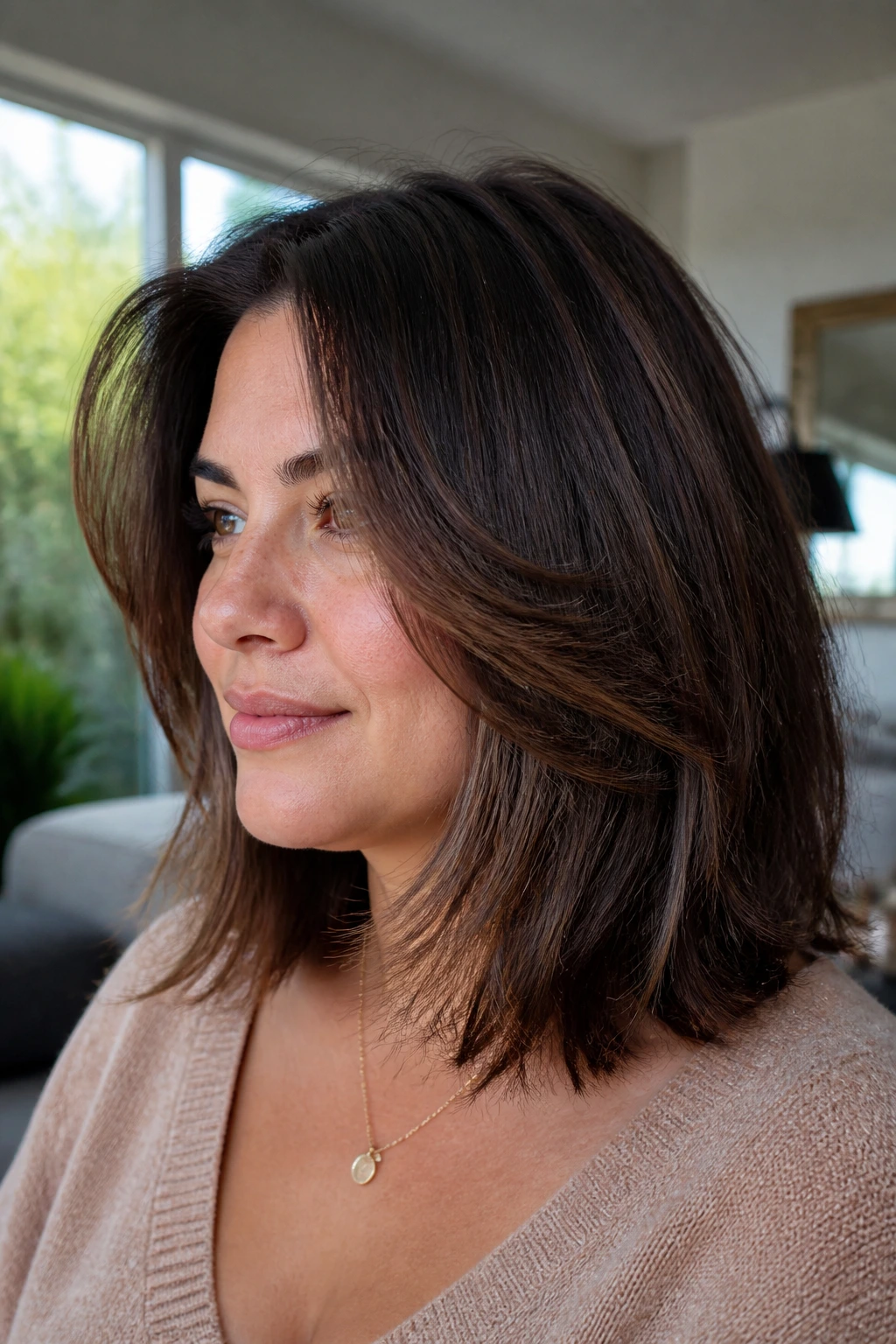
Thick hair can make a lob look wonderful or make it look like a triangle. Feathering is what saves you. Soft internal feathering removes bulk through the middle of the cut while leaving enough shape at the bottom to keep the length intact. The result is airy instead of puffy.
I’d ask for longer feathered layers around the cheek and below the chin, not short layers on top. Short pieces near the crown can make the top too round. That’s the wrong kind of volume here. This version shines when blown out with a round brush and finished with a soft bend away from the face.
12. The Glass Lob
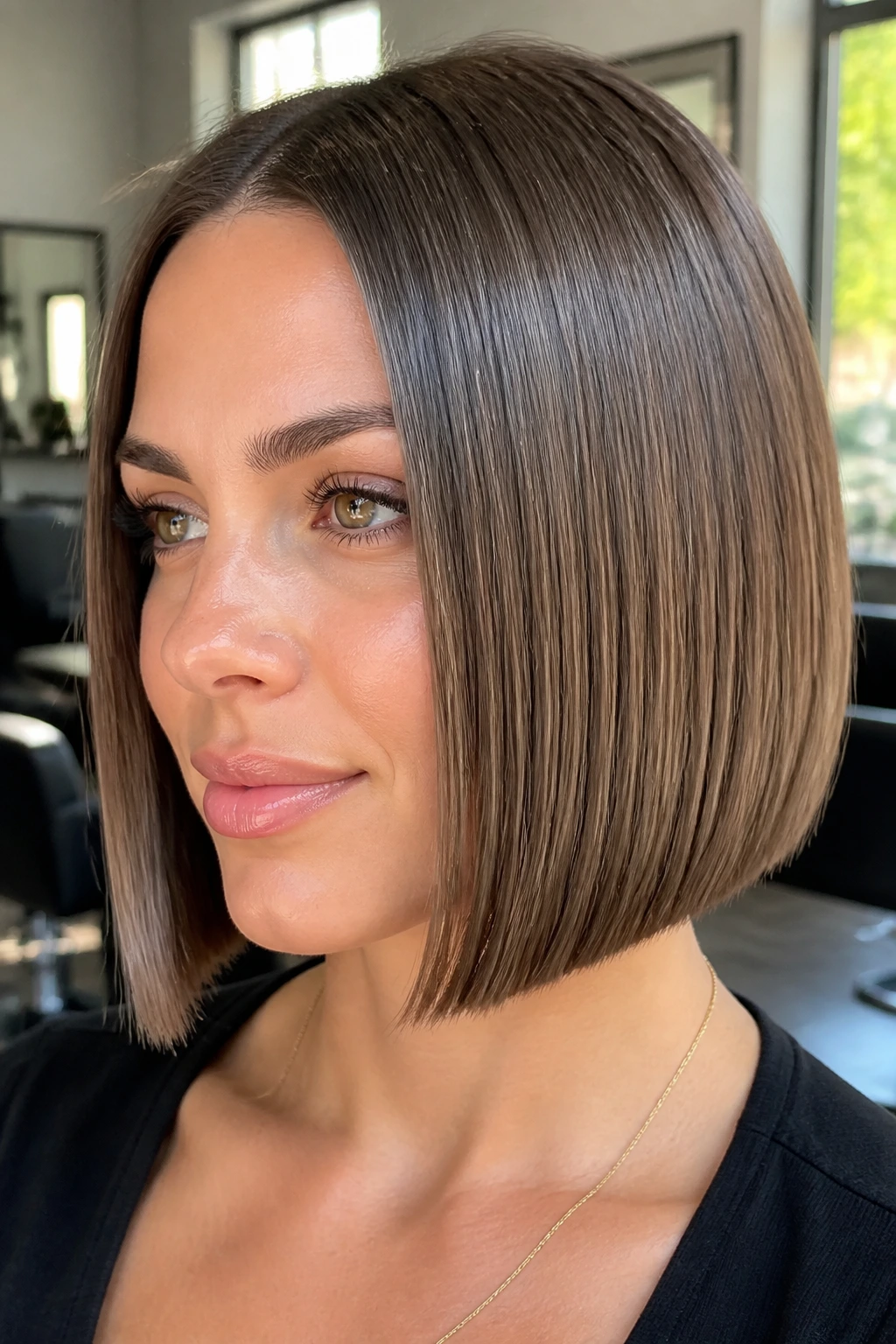
A glass lob is the sleek, reflective version of this haircut family. It’s blunt, shiny, and a little severe in the best way. That polish can be useful on round faces because the straight perimeter acts like a visual frame, and the smooth finish stops the cut from spreading outward.
This is not the cut to ask for if you love chaos. It needs upkeep, a good heat protectant, and regular trims every 6 to 8 weeks if you want the line to stay sharp. But when it’s done well, it has a very clean effect around the jaw and neck. Use a middle or slightly off-center part and keep the ends beveled, not flippy.
13. The Curly Lob with Crown Lift
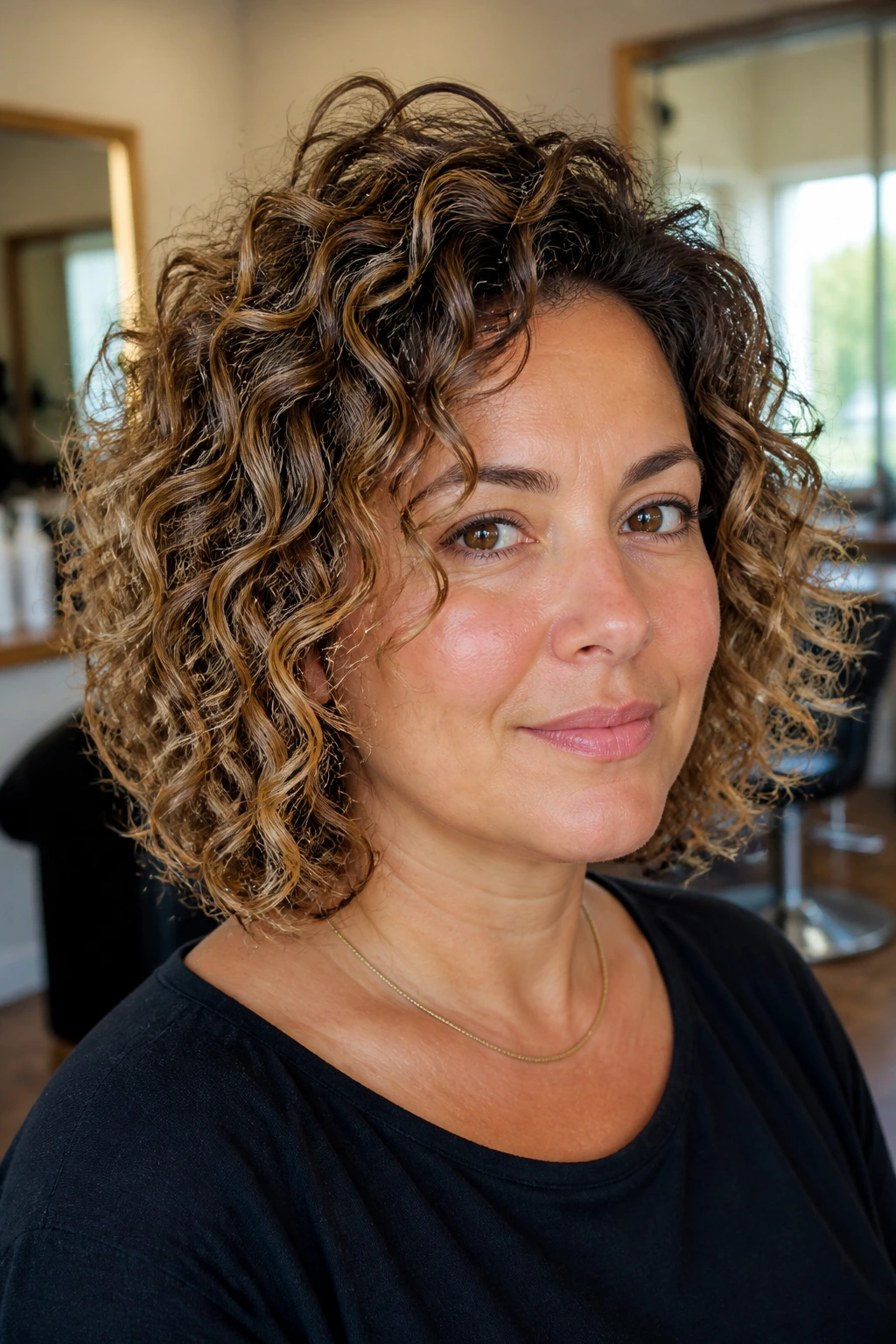
Curly hair needs a lob that understands shrinkage. If the curls are cut too short or too wide at the sides, the shape can flare right where a round face already has fullness. A good curly lob keeps the length below the chin when dry and adds lift through the crown instead of the cheeks.
Cut this one on dry hair if you can. That lets the stylist see how the curls actually sit. Ask for the bottom line to stay longer than you think you need, because curls spring up. Then use a diffuser to dry the roots upward and outward, not straight sideways. That’s the difference between shape and puff.
14. The Flipped-Out Lob

A small outward flip at the ends can be charming, but it has to stay controlled. A big flip right at the jaw adds width, which is the opposite of what a round face usually needs. Keep the flip low, just below the collarbone, so the line moves downward before it turns out.
This works best on medium-density hair that can hold a shape without looking stiff. Use a round brush or a flat iron to create a gentle outward flick on the last inch or so of the hair. It should feel deliberate, not retro-costume. If the flip starts to shout, it’s too much.
15. The Inverted Lob with Hidden Layers
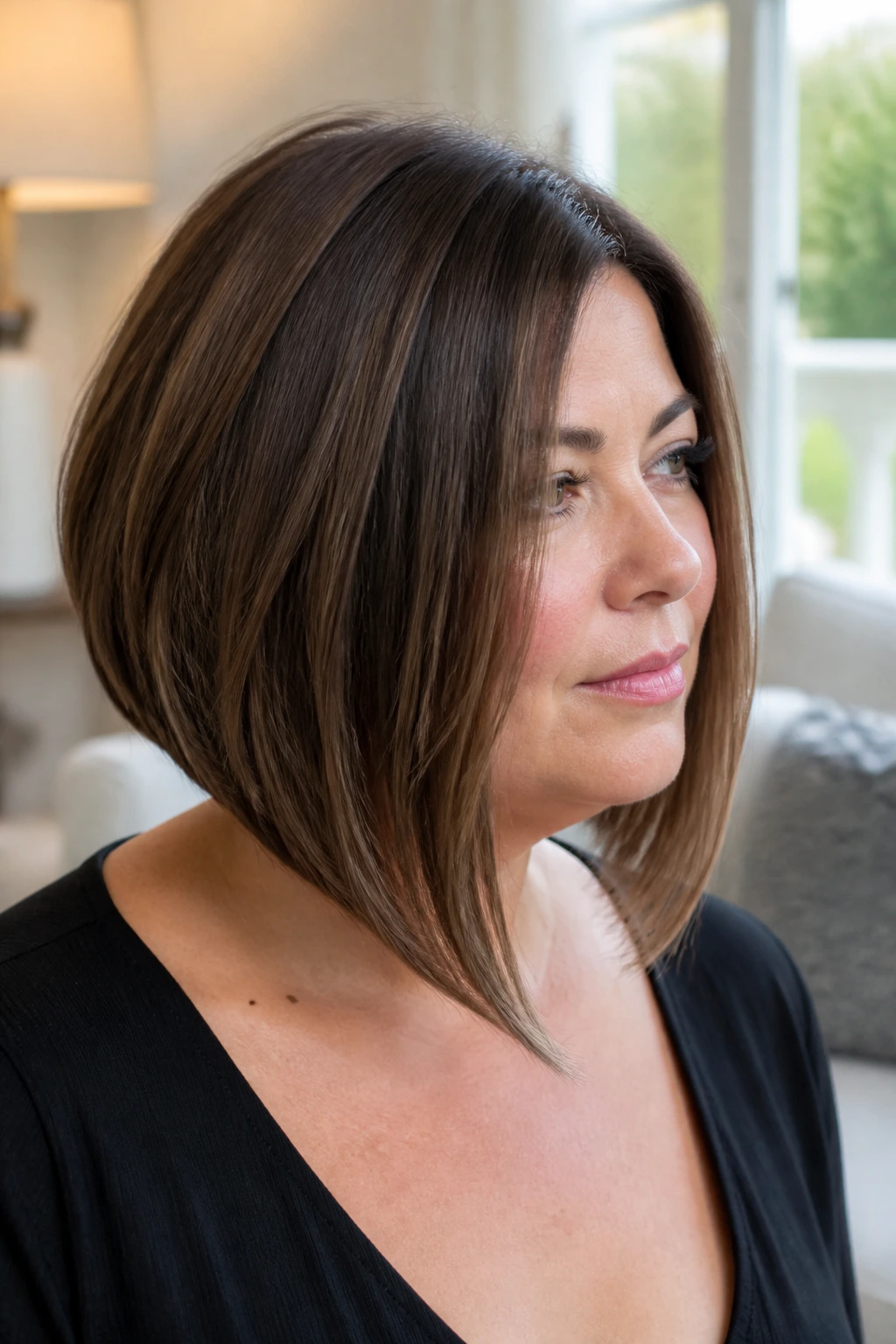
An inverted lob has more length in front and less in back, but the hidden layers are what make it useful for fuller lower faces. They take out bulk without showing too much choppiness on the surface. That keeps the silhouette clean while still giving the hair some swing.
This shape is a good answer if your hair sits heavy and you want it to move instead of hanging like a curtain. Keep the front long enough to slip past the chin, and let the back sit close enough to the neck to open up the profile. From the front, you get length. From the side, you get lift. That’s a good trade.
16. The Undone French Lob

The French lob has that easy, slightly imperfect texture people keep trying to copy on purpose. On a round face, the charm of it is that the finish is soft around the cheekbones but never bulky. The cut feels casual, yet the shape still does the work.
It’s a nice choice if you don’t want a haircut that looks too engineered. Ask for ends that move, a length that sits around the collarbone, and a bit of softness around the face. Then style with a bend rather than a curl. The hair should look touched, not built.
17. The Tucked-Behind-the-Ear Lob
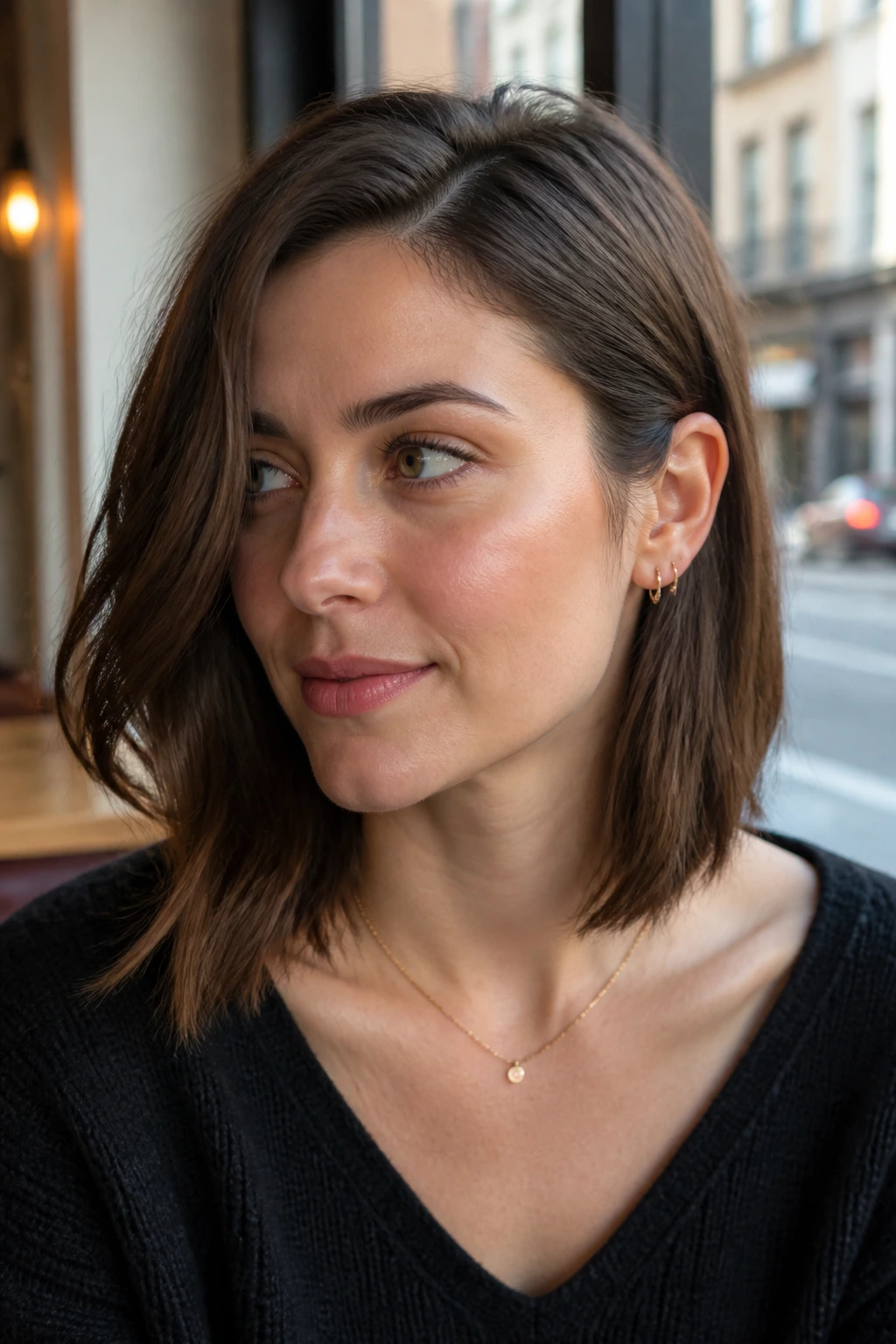
Tucking one side behind the ear sounds simple, and it is simple — but it changes the face shape fast. The exposed side creates a clear line down the cheek and neck, which can make the face feel narrower. The loose side keeps some softness in the frame so the cut doesn’t get severe.
This works beautifully with a slightly longer front section on the tucked side. That way the hair still has something to show when you move. Add a small earring and the whole cut suddenly has a cleaner, more lifted feel. It’s one of the easiest styling tricks in the bunch.
18. The Side-Bang Lob
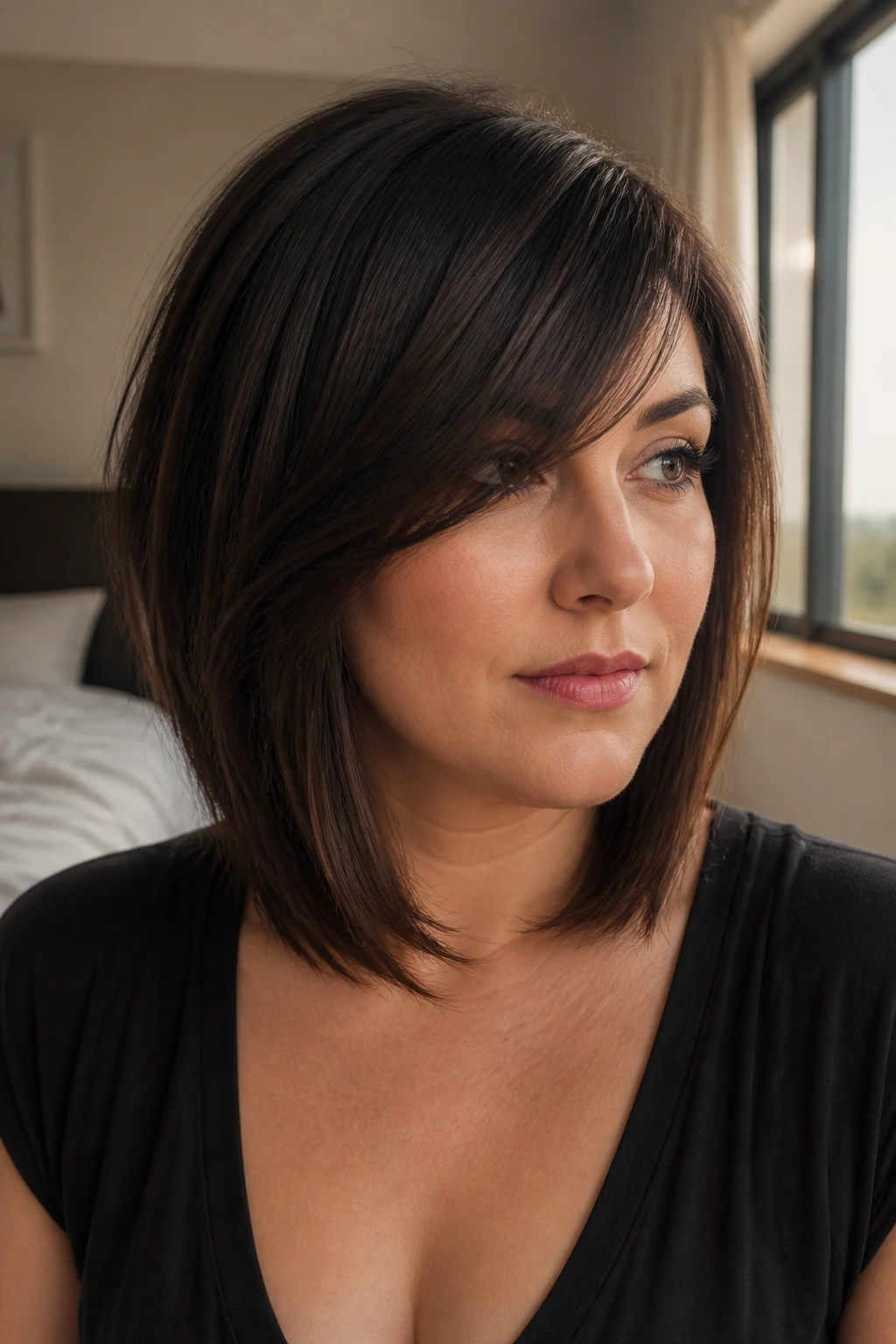
Side bangs create a diagonal sweep across the face, and diagonals are your friend when the face has roundness. The line breaks up symmetry and gives the eye a path to follow that isn’t straight across the cheeks. It’s softer than a curtain bang, a little more old-school, and still very useful.
Keep the bang long enough to blend into the front of the lob. If it stops too high, it can pop out and widen the forehead area. If it gets too heavy, it can collapse the face instead of framing it. I like this cut best with a blowout that lifts the root at the part and keeps the bang moving away from the eyes.
19. The Airy Lob for Dense Hair
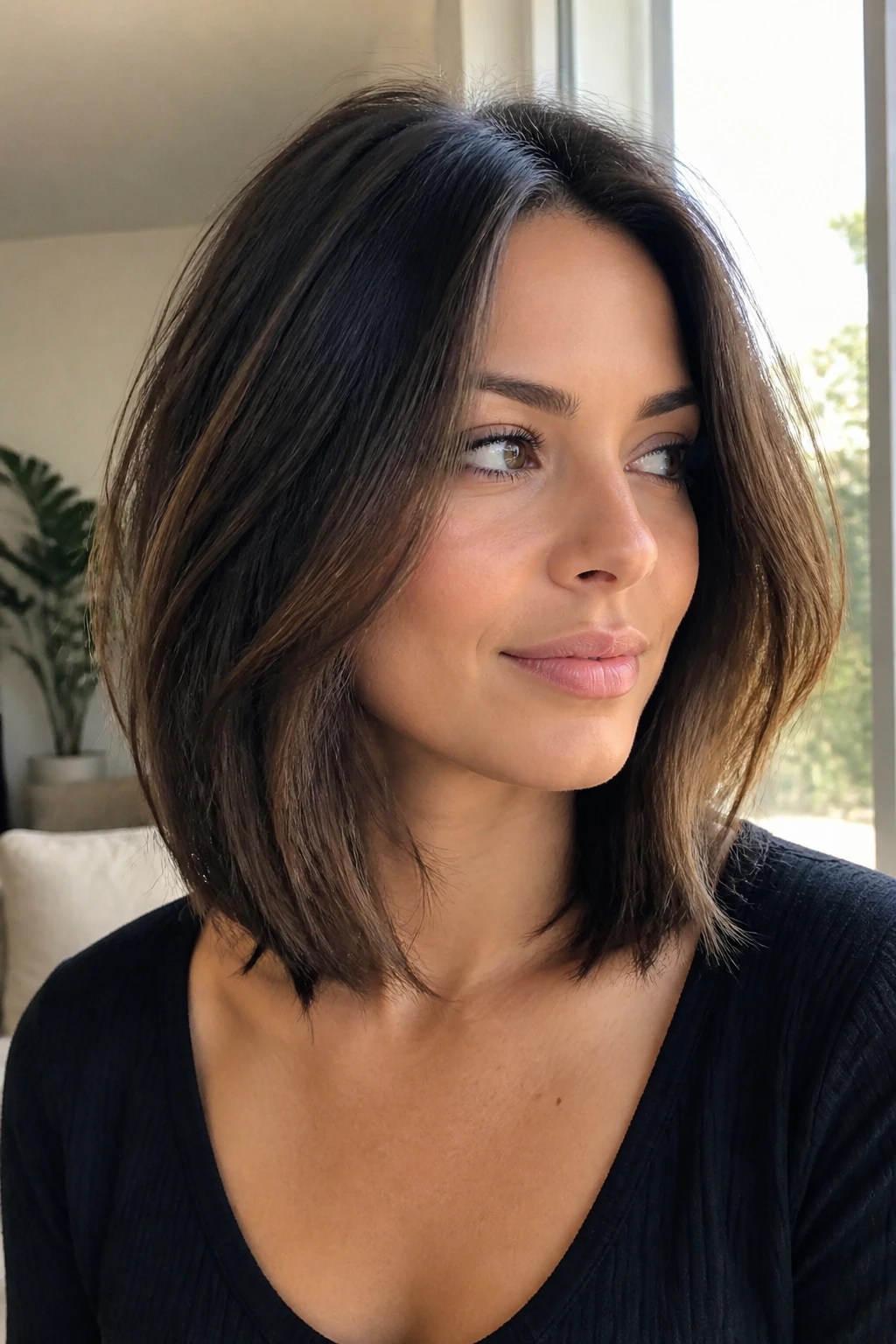
Dense hair needs space, not more weight. An airy lob takes bulk out from the inside while keeping a strong outer line, which is a nice compromise when you want the haircut to feel slimmer without losing shape. The perimeter should still be visible. That’s what keeps the cut from turning fluffy.
This version usually needs strategic debulking rather than lots of visible layers. The goal is to stop the hair from sitting wide at the sides. If your stylist starts cutting too high around the cheek, pull back. You want the fullness to drop lower, closer to the shoulders. That long line helps the face more than a short, busy shape ever will.
20. The Minimalist One-Length Lob

A one-length lob can work better than people expect, especially when the ends are softened just a touch. The clean line gives the hair weight, but the length below the chin keeps the face open. It’s the least noisy option on this list, which is a virtue if you hate styling.
The key is placement. A one-length lob that hits too high becomes a wide block. One that lands around the collarbone feels calmer and more balanced. Ask for soft point-cut ends if your hair is very blunt or coarse. That keeps the line from looking like a cardboard edge.
21. The Textured Lob for Fine Hair
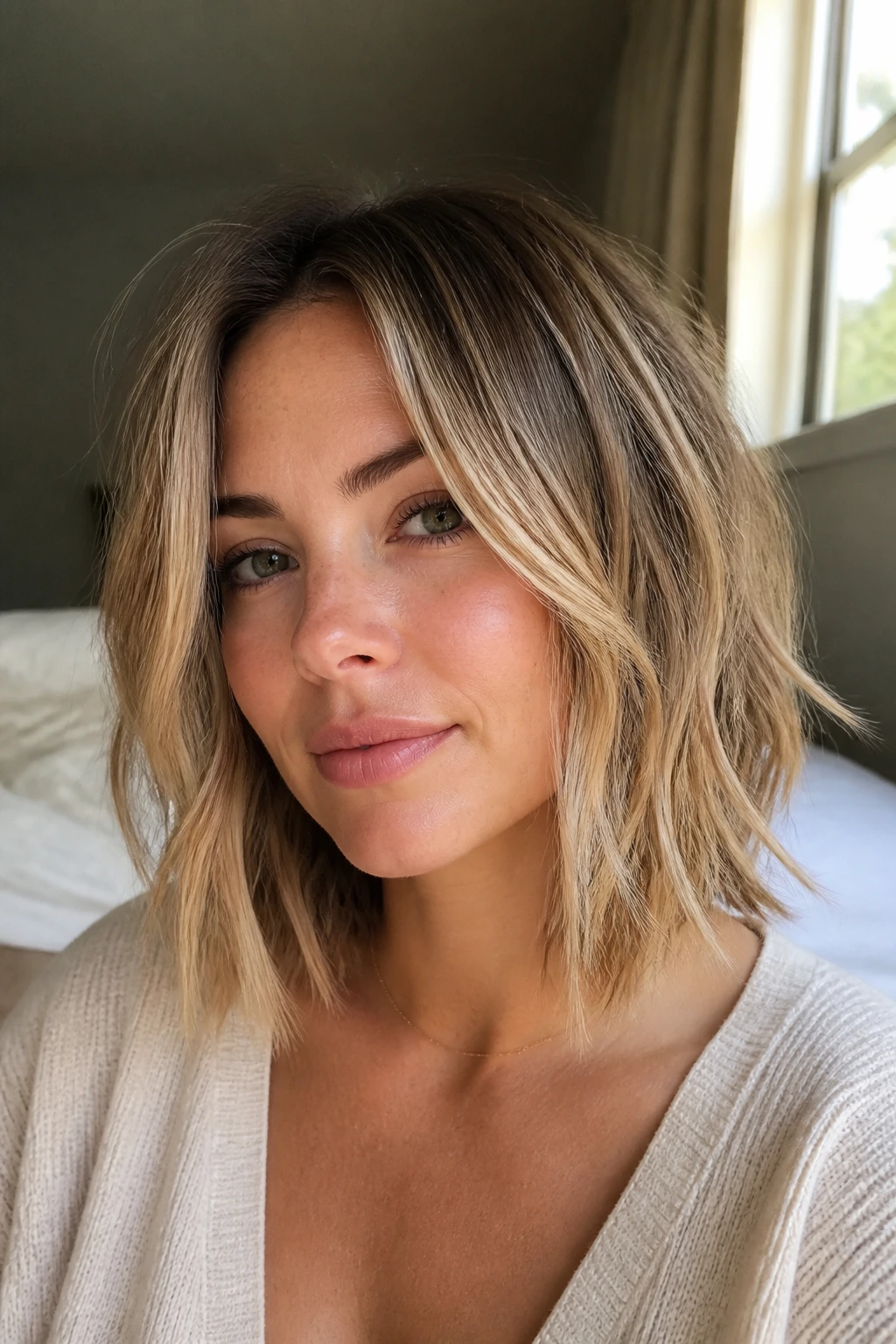
Fine hair often does better with texture than with a heavy, blunt shape that hangs flat. A textured lob can give the illusion of more movement around the face without piling the sides outward. The trick is to keep enough bluntness in the perimeter so the ends don’t disappear.
Use mousse at the roots, then rough-dry the hair about 80 percent before shaping the front pieces. A little lift at the crown and separation at the ends can make the whole cut feel fuller. If you take too much weight out, fine hair starts to look stringy. Less is more. Then less again.
22. The Money-Piece Lob
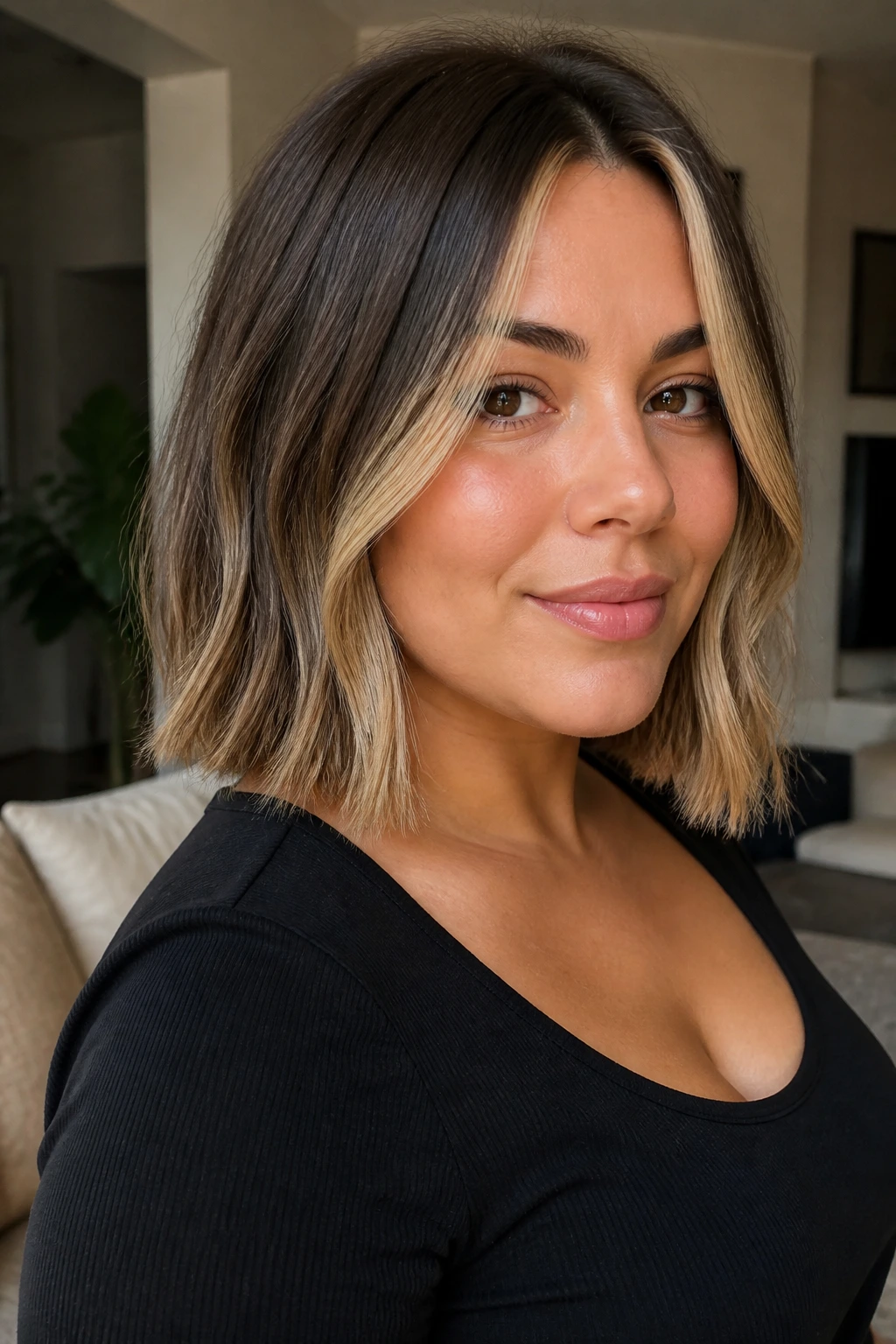
Bright face-framing pieces can change how a lob reads, even if the cut itself stays simple. Lighter strands near the front draw the eye upward and outward, which helps soften the lower face and add brightness around the cheeks. The color doesn’t need to be dramatic.
Subtle placement is better than thick stripes. Think thin ribbons around the face, not bold chunks. They should sit around the cheekbone and collarbone zones where the hair naturally opens. When paired with a side part or curtain fringe, the whole cut starts looking taller and more lifted. It’s a small color move with a big visual payoff.
23. The Center-Part Wave Lob

A center part can work on a round face when the hair has enough length and movement to make the part feel intentional rather than severe. Soft waves below the cheekbone keep the middle part from flattening the face. The line stays long. The shape stays open.
This one is all about balance. Keep the waves broad and loose, then make sure the front pieces fall a little below the chin. If the part is dead center but the hair sits too wide at the sides, the face can look broader. The cure is usually a little more length, a little less curl, and some root lift where it matters.
24. The Shoulder-Skimming Lob with Internal Debulking
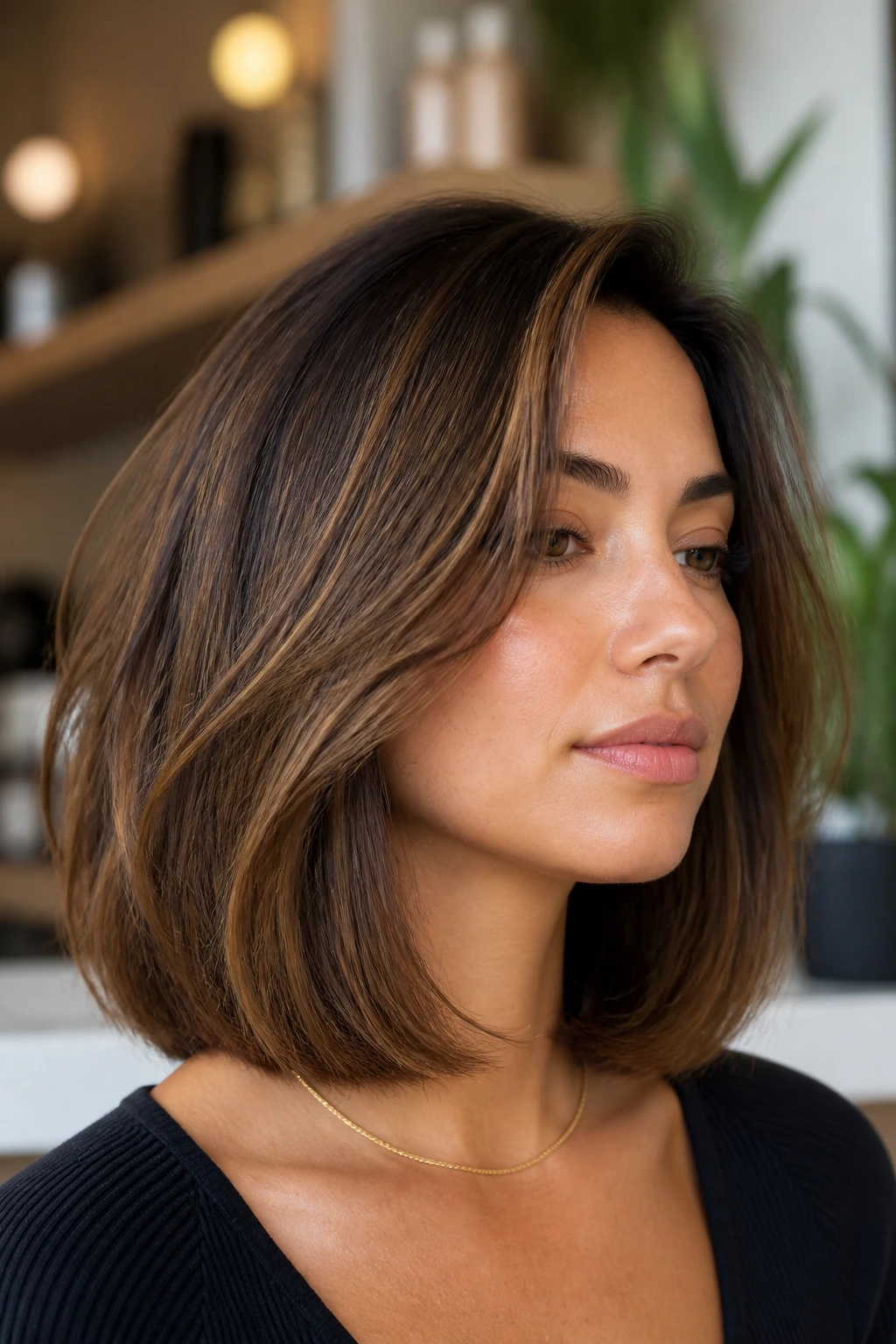
A shoulder-skimming lob is the longer cousin in the family, and that extra length can be a relief if you want the face to feel less enclosed. Internal debulking keeps the shape from sitting like a shelf on the shoulders. You still get swing. You just don’t get the bulk.
This is a strong choice for thick or coarse hair that tends to widen at the jaw. The front can drop just past the collarbone, while the inside of the cut is thinned enough to move. It’s a practical haircut. It also happens to be one of the most forgiving grow-out shapes on the list.
25. The Soft-Corner Lob
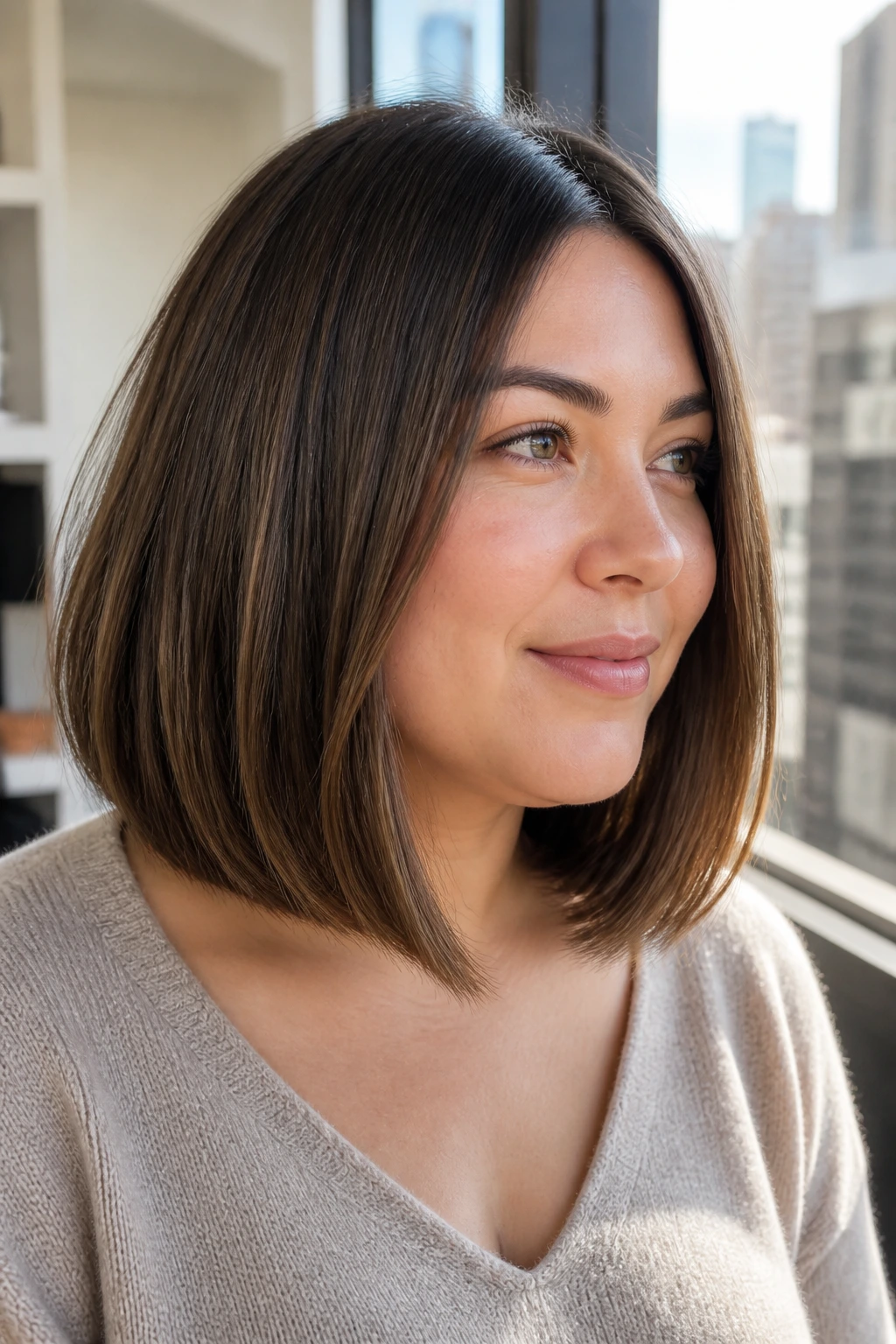
A soft-corner lob is what you get when a blunt cut is given just enough rounding at the edges to avoid looking boxy. The corners still exist — that’s important — but they’re softened so the hair doesn’t sit like a flat frame around the face. On a round face, that softness keeps the cut from feeling heavy.
I like this version when someone wants structure but not sharpness. The line should feel polished, almost architectural, yet not severe. Ask for the corners to be point-cut or beveled slightly so they bend instead of stick out. The effect is subtle. That’s why it works.
26. The Tousled Root-Lift Lob
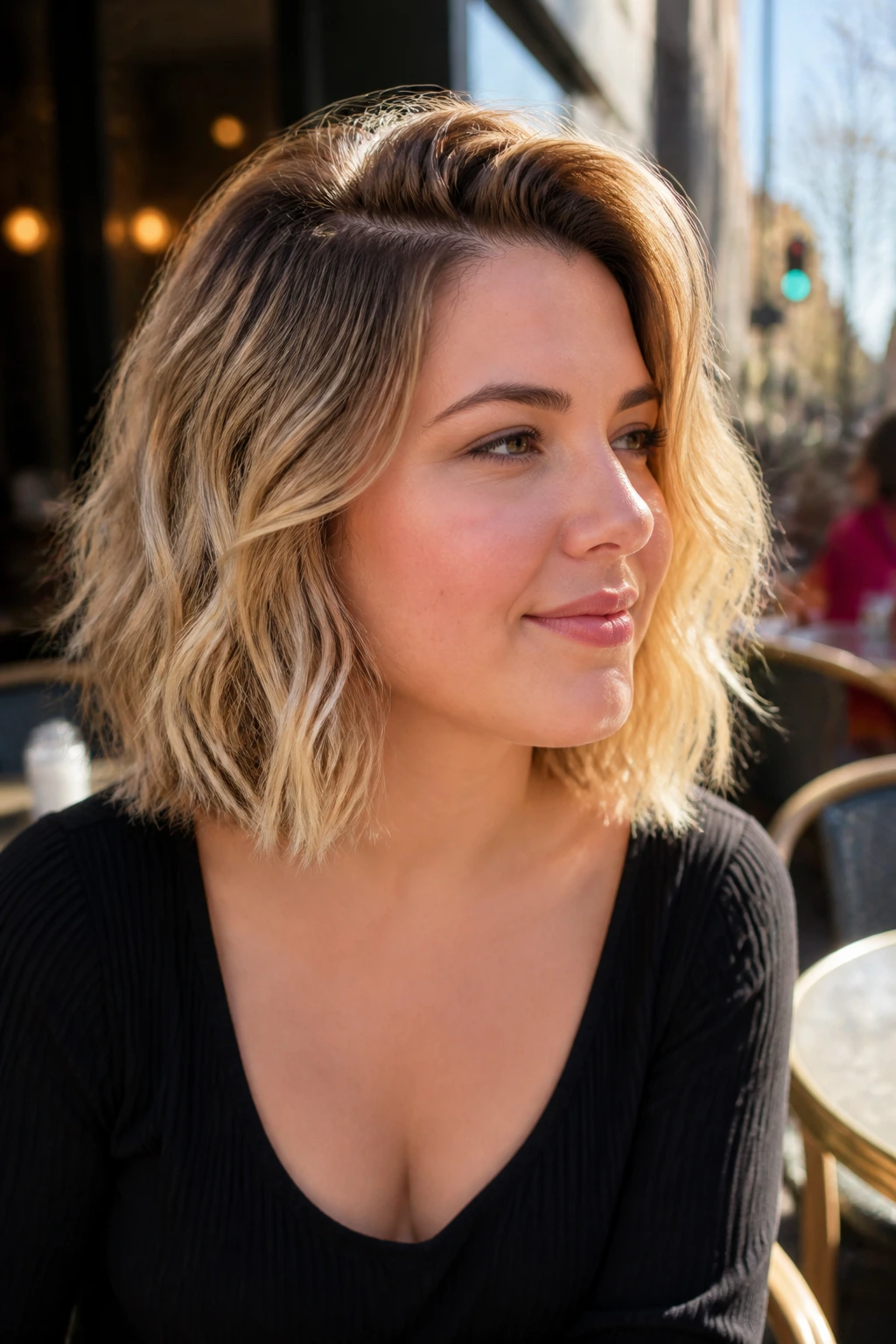
Root lift changes the whole vibe of a lob. When the volume sits at the crown instead of the sides, the face looks longer and the cut feels lighter. Toss in some controlled texture through the ends and you get a shape that feels casual but still deliberate.
This is one of the best styles for flat hair that tends to cling to the cheeks. Dry shampoo at the roots, a little mousse before drying, and a quick bend through the mid-lengths can make the haircut feel built up instead of spread out. Don’t overdo the side volume. Lift up top. Keep the width in check.
27. The Long Fringe Lob
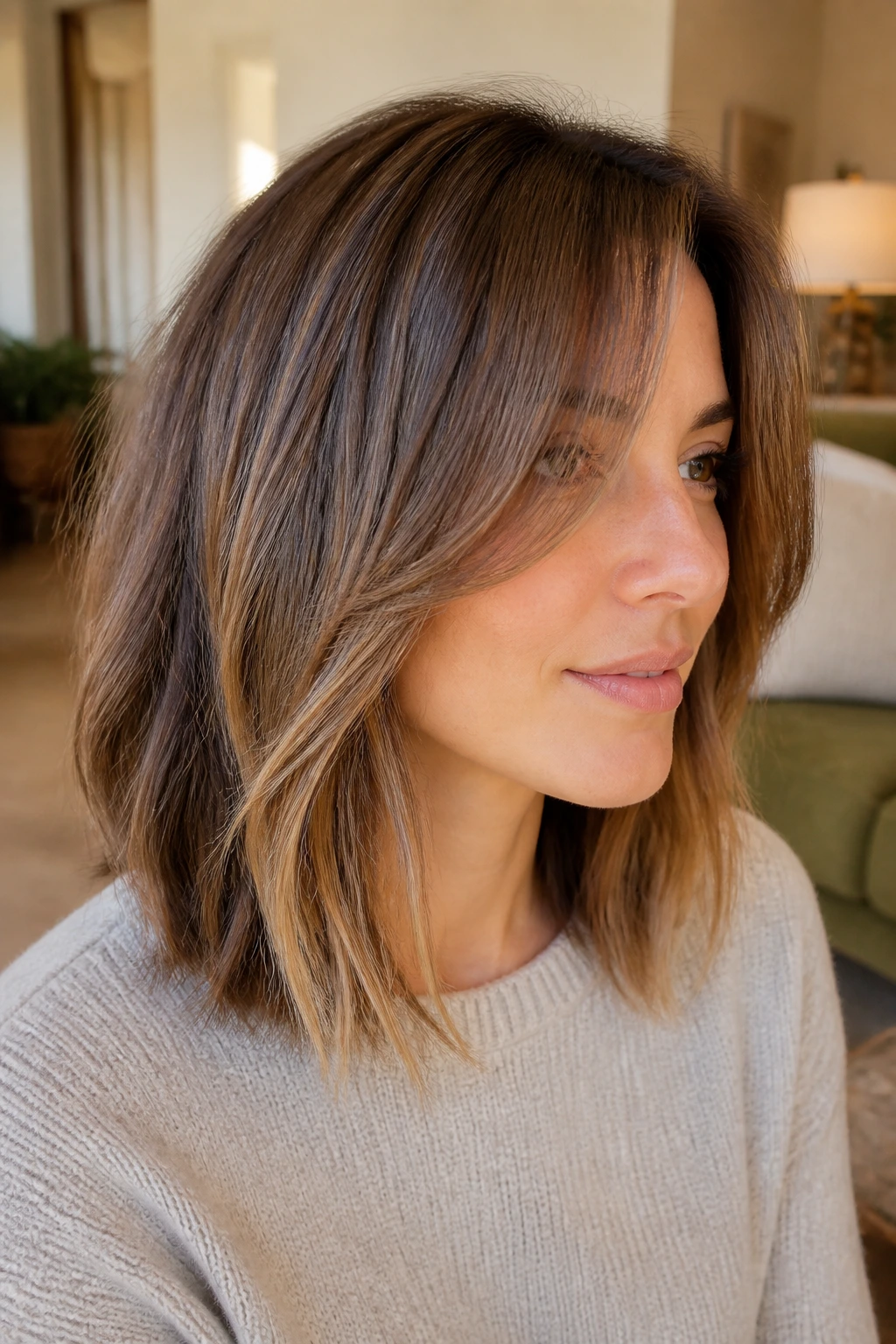
A long fringe can be a very useful thing on a round face because it gives you face framing without chopping the forehead too high. The fringe should sweep into the sides of the lob so the line feels connected. If the bangs sit too short, they can create a second horizontal line. That’s the problem.
Keep the fringe soft and movable. It should graze the eyes or cheekbones, not act like a wall. This cut works well if you want some forehead coverage, a little drama, and a shape that still feels long. There’s a lot going on, but it should all flow in one direction.
28. The Under-Bent Blunt Lob
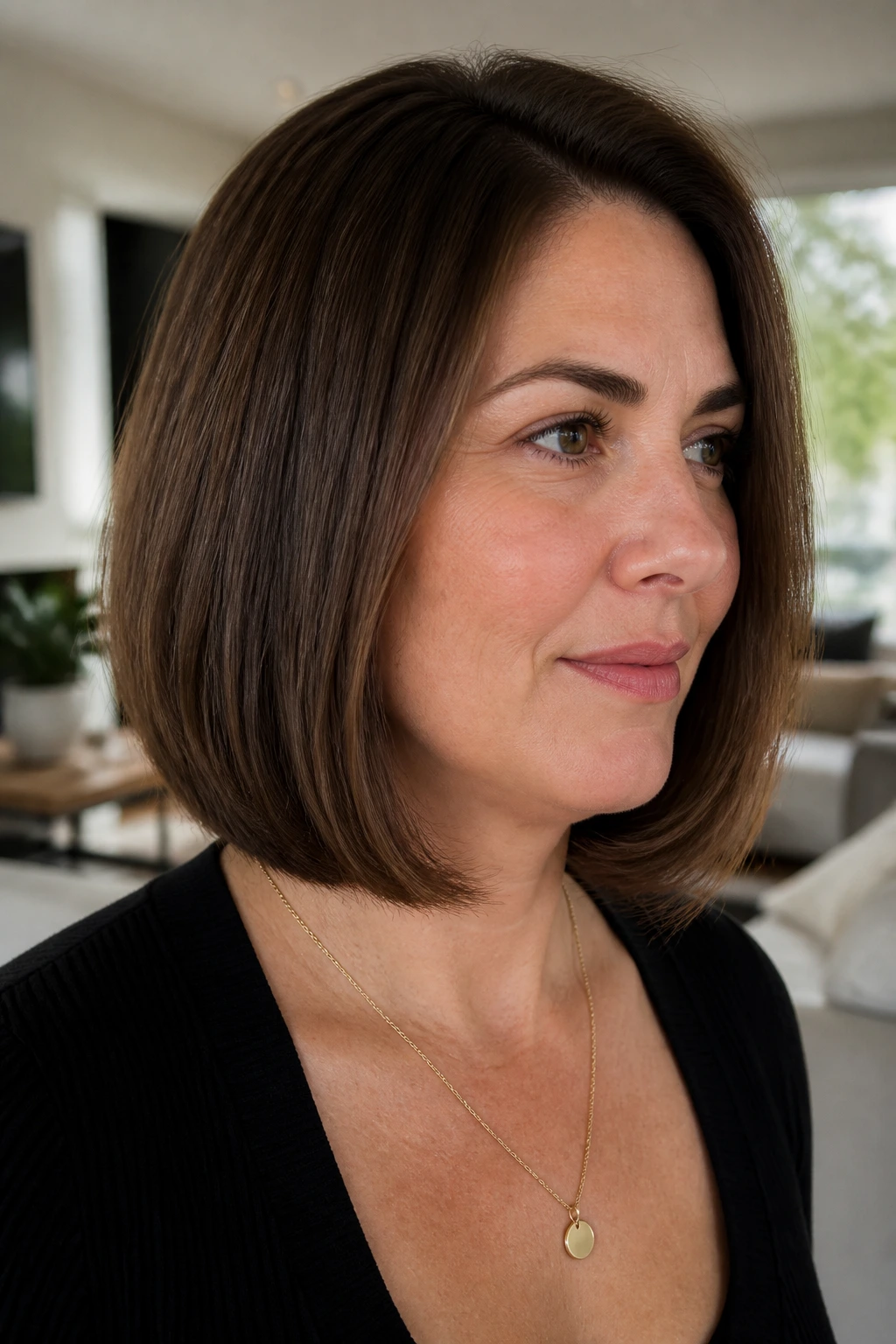
An under-bent blunt lob is a neat solution when you want the haircut to look intentional but not stiff. The ends curl slightly under the hair, just enough to tuck the line inward and keep the silhouette close to the body. That inward bend narrows the visual outline, which helps around the lower face.
The key is restraint. If the ends roll under too much, the cut starts to look dated or helmet-like. You want a quiet bend, not a curl. It’s one of the easiest styles to maintain with a round brush or a quick pass of a flat iron, and it’s surprisingly good at keeping the face from feeling too open at the jaw.
Why a Lob Changes the Geometry of the Face
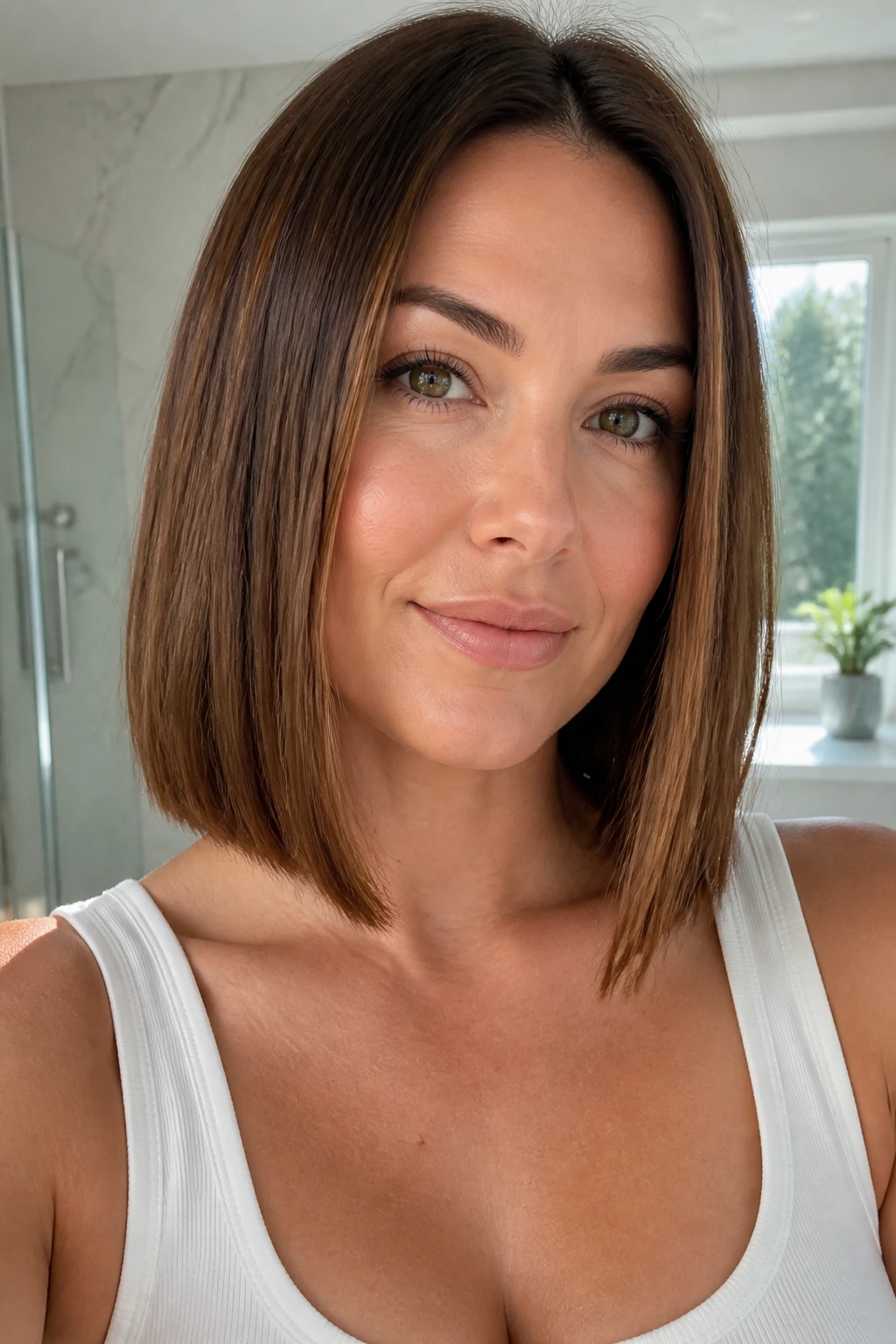
A long bob works because it changes where the eye lands. A round face has a lot of softness across the width of the cheeks, so a cut that ends right at the chin tends to emphasize the widest point. A lob that falls below the chin, especially one that reaches the collarbone, creates a longer vertical line through the front of the body.
The other piece is movement. Hair that bends inward, outward, or diagonally creates interruption in the outline of the face. That interruption is useful. It keeps the lower face from reading as one continuous shape. A side part helps too, because asymmetry breaks up the evenness that can make round faces look broader.
What I keep seeing, over and over, is that people think they need a shorter cut to “lift” the face. Not always. Sometimes what you need is more length in the right places and less width at the cheeks. A good lob does that without asking you to fight your own hair texture every morning.
The Tools That Make Lob Styling Easier
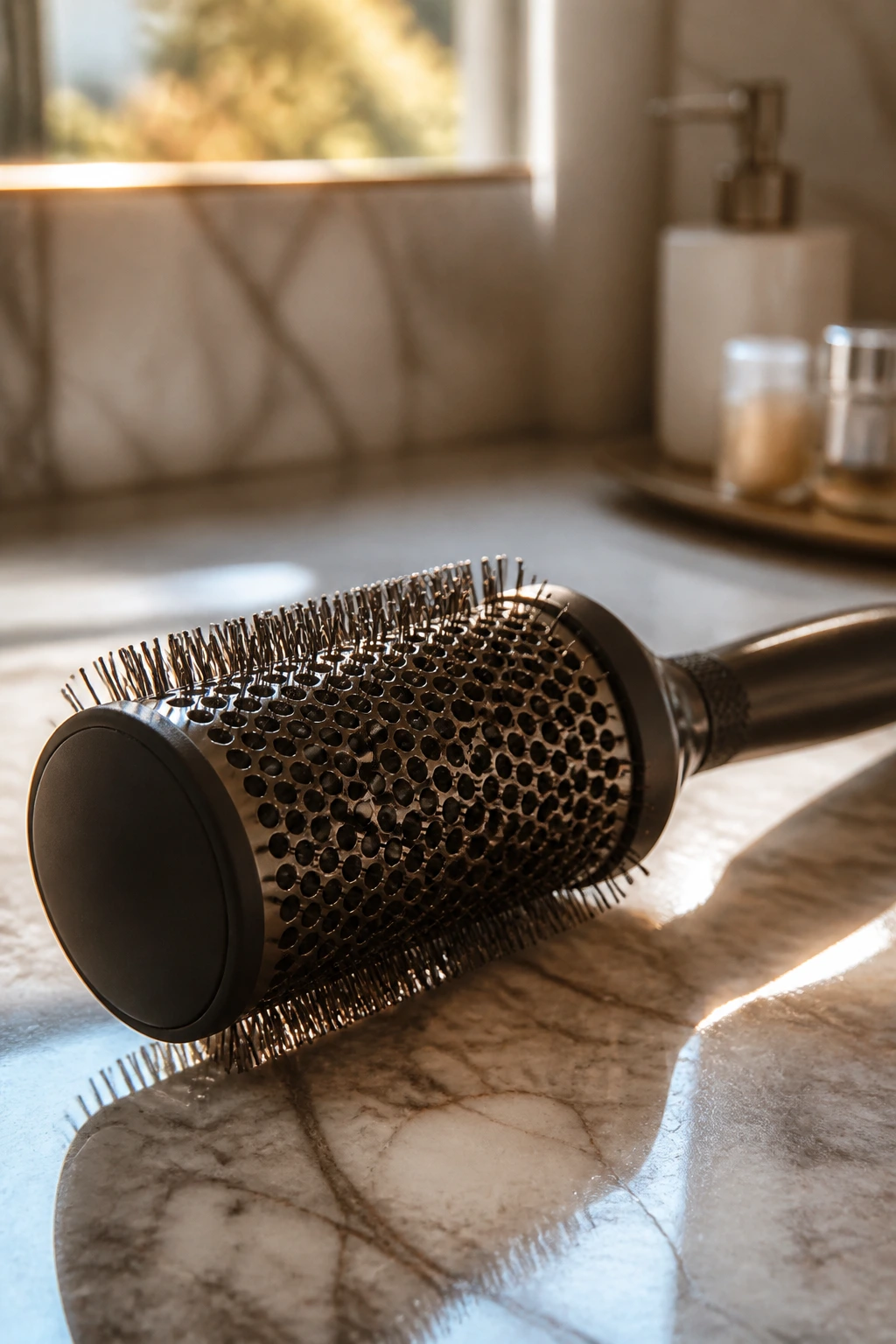
You do not need a drawer full of salon toys to make a lob behave, but a few specific tools make the cut much easier to live with.
- Round brush, 1.5 to 2 inches: Good for bending the ends under or away from the face without making the hair curl tightly.
- Blow dryer with a nozzle: Directs air where you want it, which matters if you’re trying to keep the sides from puffing out.
- Flat iron with rounded edges: Useful for glassy smooth lobs, subtle bends, and controlled flips.
- 1-inch curling wand: Best for loose waves that don’t widen the face.
- Sectioning clips: Keep the front pieces separated so you can build the shape in layers.
- Heat protectant spray: Non-negotiable if you use hot tools more than once a week.
- Lightweight mousse or root-lift spray: Helps fine hair hold the crown volume that makes a lob look longer.
- Texturizing spray: Good for piecey cuts and undone finishes, especially on second-day hair.
- Smoothing serum or hair oil: Keeps blunt ends from looking dry and helps sleek styles read as clean instead of frizzy.
- Diffuser: The right tool for curly lobs; it gives shape without blasting curls apart.
What to Tell Your Stylist in the Salon Chair

Bring photos, yes, but bring words too. Photos tell the shape. Words tell the intention. Say where you want the length to sit — chin, collarbone, just below the shoulders — and point out the parts you do and do not want emphasized. If the stylist knows you’re trying to avoid width at the cheeks, they can place the front pieces with that in mind.
Ask for the shortest point to stay below the chin unless you want a very specific reason for it not to. That one detail keeps the haircut from stopping at the widest part of the face. If you like a side part, say so before the cut starts. If you wear glasses, mention that too, because the frame line changes where fringe and face-framing pieces should land.
Texture matters here. Straight hair can wear a blunt edge and still look soft if the weight is removed in the right place. Thick hair may need internal debulking. Curly hair usually needs a dry cut or at least a very honest conversation about shrinkage. And if your stylist suggests a shape that’s going to sit too short in front, ask where the front will fall once it’s dry. That question alone saves a lot of regret.
Styling Moves That Keep the Shape Lean, Not Puffy
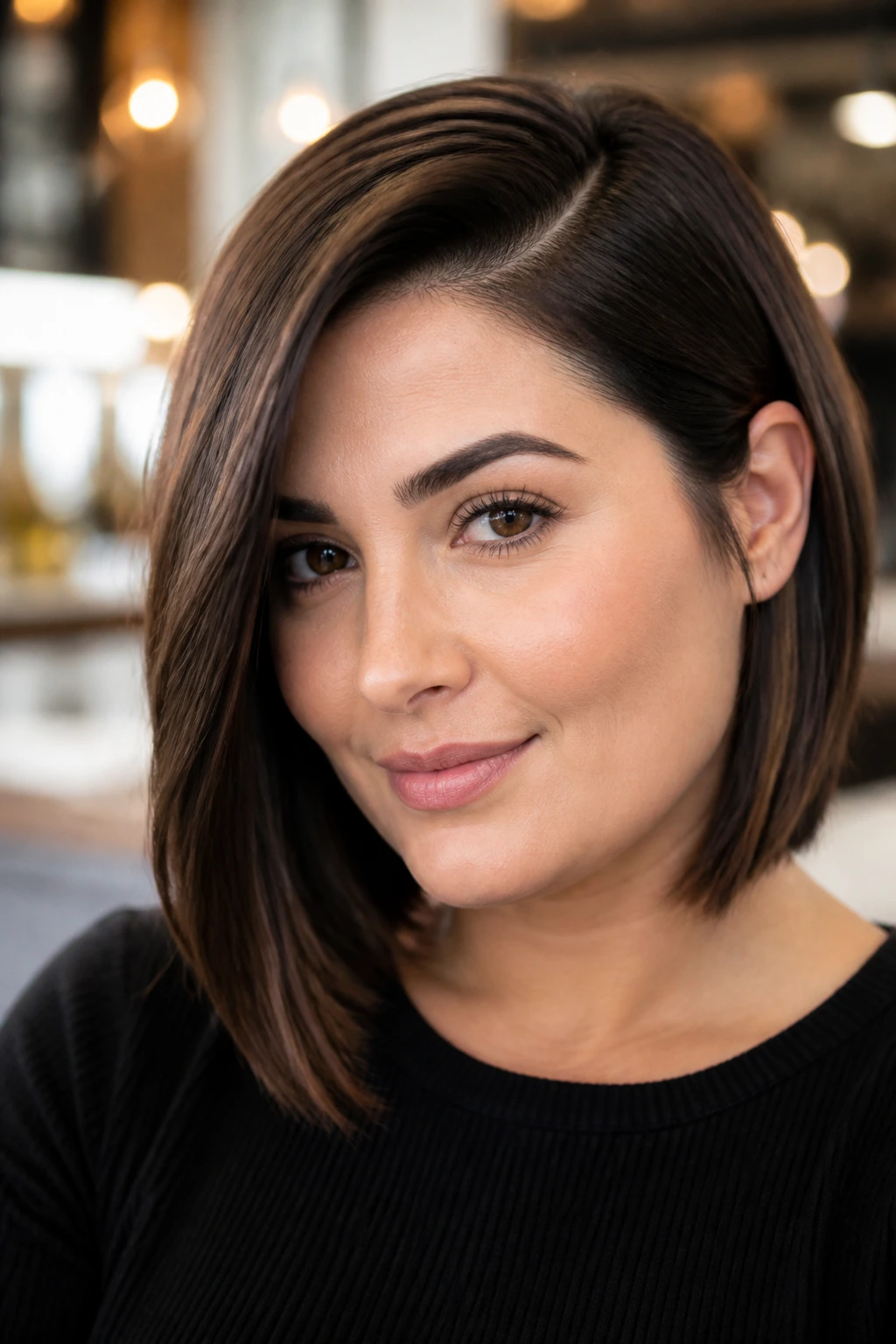
The easiest mistake with a lob is adding width where you were trying to remove it. A puffed-out side, a too-round blowout, or a wave that starts at the cheek can make the haircut feel bigger than it is. Keep the volume higher up and lower in the mid-lengths. That’s the cleaner shape.
Sleek finish: Blow-dry with tension, use a flat iron only on the last few inches, and keep the roots smooth. This works especially well with blunt, A-line, and glass lobs.
Soft bend: Wrap sections around a curling wand, but leave the ends out and brush the shape once it cools. You get movement without a full curl cloud.
Air-dry texture: Use a light mousse on damp hair, then twist a few front sections away from the face and let them dry that way. It keeps the line open.
Root lift first: If the hair falls flat at the top, the whole lob can look shorter and wider. A bit of lift at the crown changes the silhouette more than extra waves ever will.
Small Tweaks That Change the Whole Cut
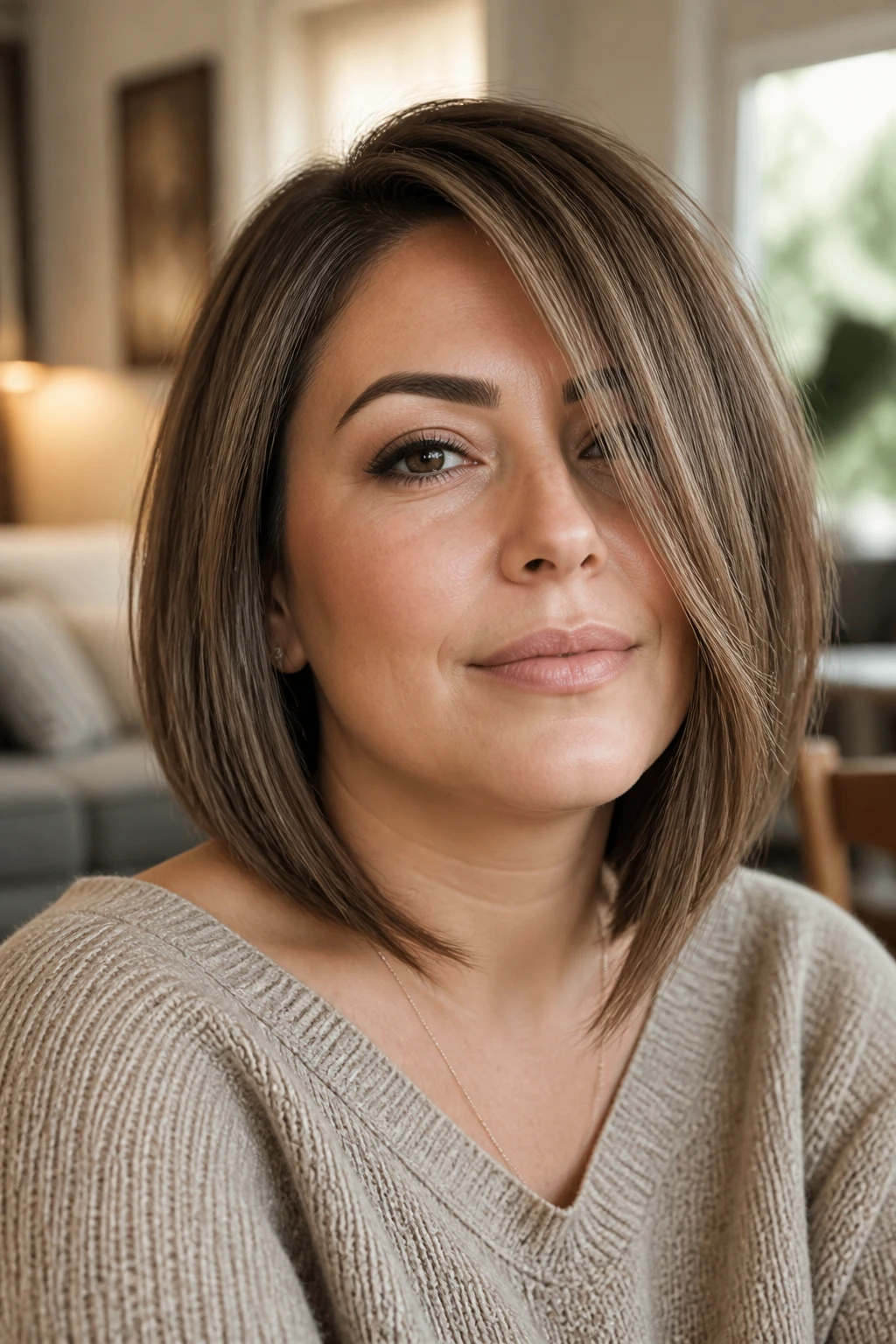
Face-Framing Lift: Ask for the first layer to start around the cheekbone or mouth, not the chin. That gives the front of the haircut a vertical sweep instead of a horizontal shelf.
Part Switch: Move your part half an inch off center. That tiny change can make a round face look less symmetrical and a lob feel less blocky.
Color Placement: A few lighter pieces around the front can brighten the face and pull the eye upward. Keep it subtle; chunky highlights can add width if they’re too loud.
Accessory Shift: A slim hoop, a long earring, or a tucked side behind the ear changes the line of the haircut more than most people expect. Useful, cheap, and fast.
Bend Control: A flat iron bend at the ends should be soft and deliberate. If the flip, curl, or tuck starts happening too high on the hair shaft, the cut begins to widen around the jaw.
Common Mistakes That Make a Lob Widen the Face

Cutting it too short in front: If the front pieces stop at the chin, the haircut sits on the widest part of the face. Ask for a longer front so the line drops below that point.
Too much side volume: Big width around the cheeks makes the face look rounder, not slimmer. Keep the volume at the crown and through the ends instead.
Layers starting too high: Short layers near the cheek can make the hair flare out. Lower layers are usually safer and more flattering.
Over-curling the sides: Tight curls or big barrel waves at cheek level add width fast. Use looser bends and keep the wave pattern lower.
Ignoring density: Thick hair needs internal shaping; fine hair needs a blunt or lightly textured edge. If you ignore the natural density, the cut fights you every morning.
Skipping trims: A lob grows into a shapeless midpoint faster than people expect. Once the line breaks, the flattering shape goes with it.
Variations and Adaptations to Try
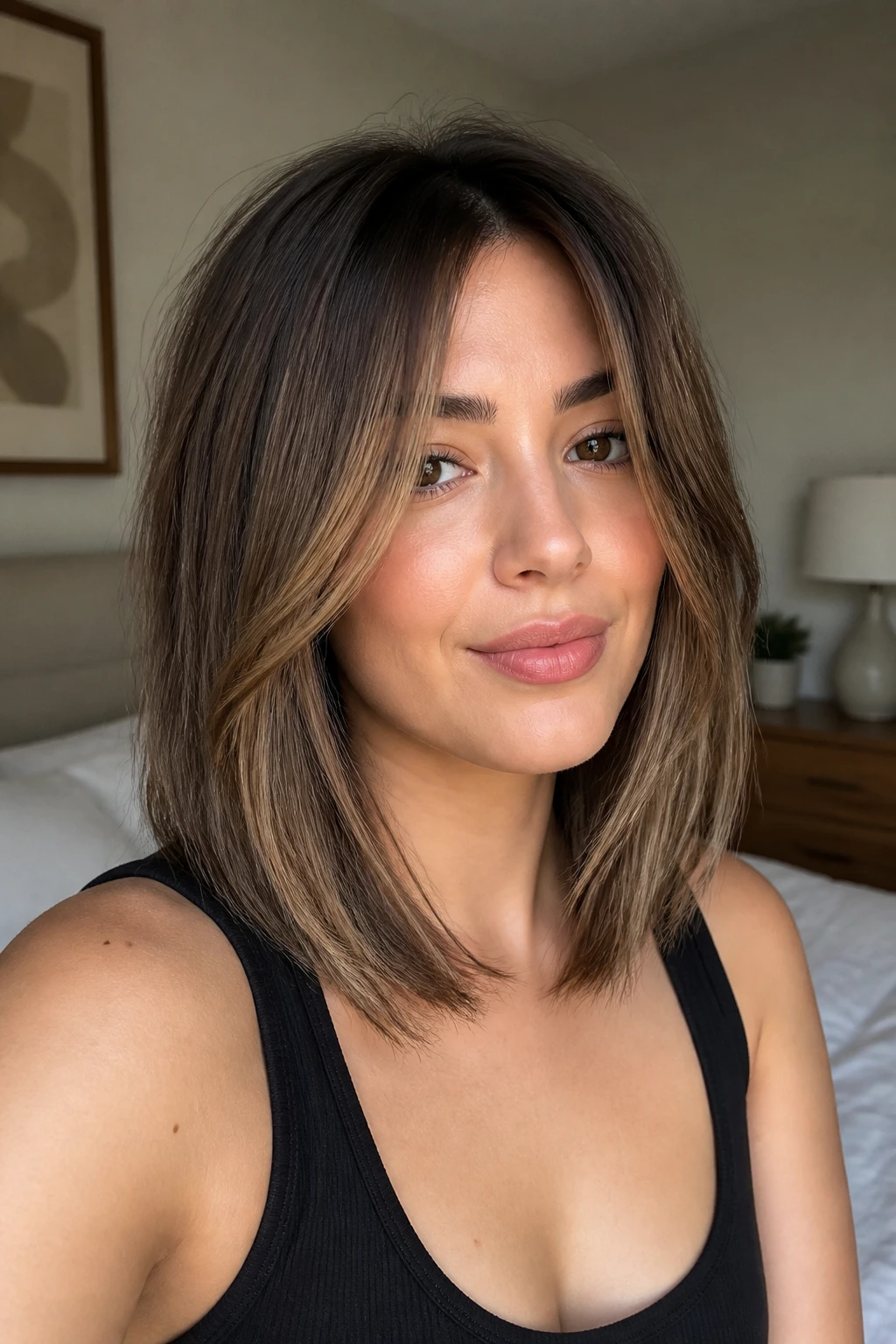
The Low-Maintenance Air-Dry Lob: Ask for a longer collarbone length with soft internal layers and no heavy bang. This version works when you want the cut to look good with little heat and a quick scrunch of product.
The Polished Office Lob: Keep the perimeter blunt, the part slightly off center, and the finish smooth. It reads crisp, neat, and controlled — useful if you want the haircut to look sharp with minimal styling.
The Curly-Friendly Shape: Keep the front longer than you think, cut it dry if possible, and ask for crown lift rather than side bulk removal. The shape should support the curl pattern instead of forcing it into a straighter outline.
The Fine-Hair Boost Lob: Use a blunt edge, keep the layers light, and style with root-lift spray plus a round brush. Too many layers will make the hair disappear; a solid perimeter gives the appearance of more density.
The Thick-Hair Tame Lob: Internal debulking, a slightly angled front, and a smooth finish keep the cut from expanding outward. If your hair tends to puff at the cheeks, this is the version to ask about first.
Keeping the Cut Fresh Between Trims
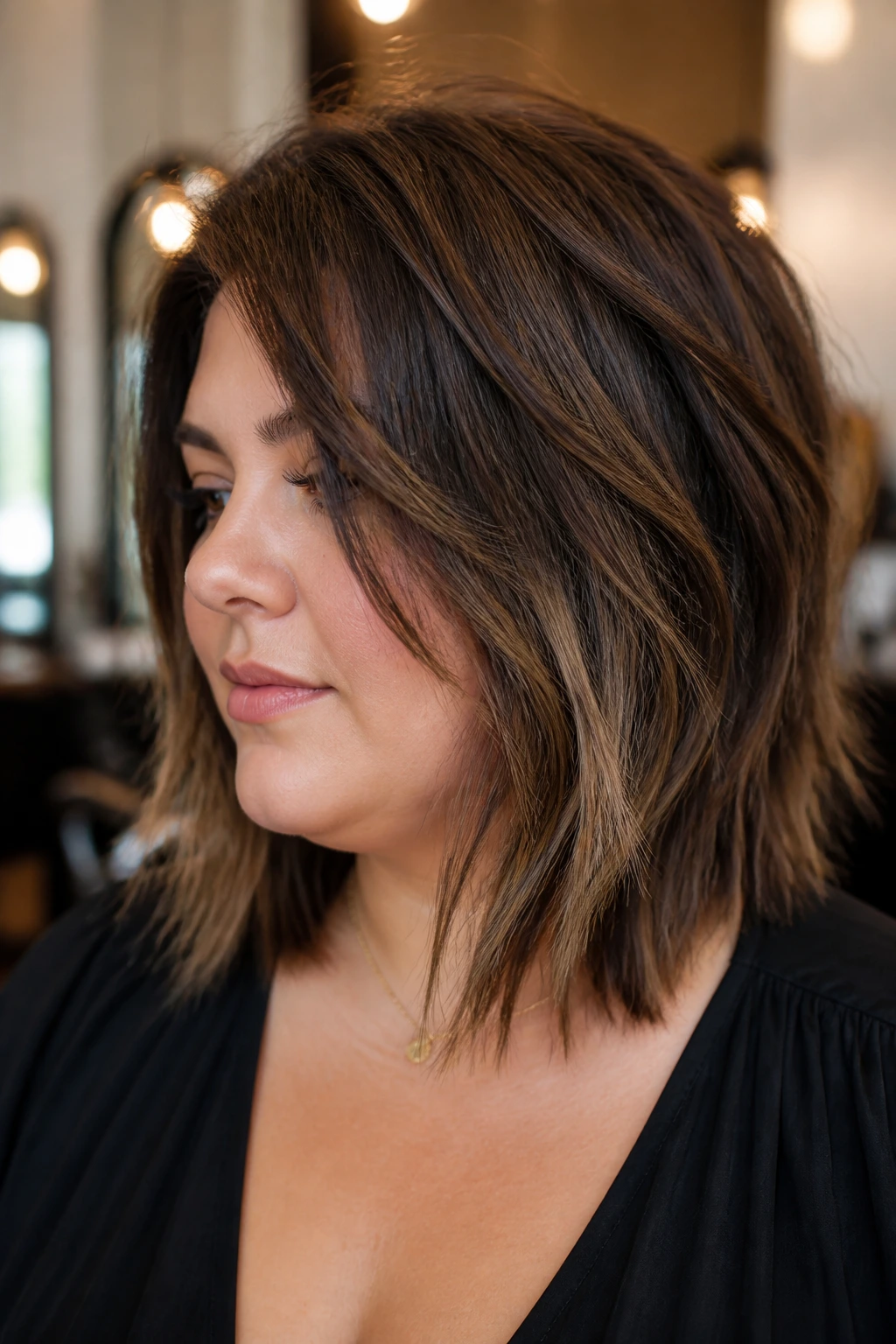
A lob tends to look best when the line stays deliberate. For most people, that means a trim every 6 to 8 weeks if the shape is blunt or glassy, and closer to 8 to 10 weeks if the cut is softer and more textured. Once the front pieces grow past the intended point, the balance starts to change.
Dry shampoo helps far more than people admit. Not just for oil — for lift. A light mist at the roots can keep the crown from collapsing, which matters because a flat crown makes the face look wider. At night, a loose clip or a silk pillowcase can keep the front pieces from folding weirdly and sticking out at the jaw in the morning.
Heat styling doesn’t have to happen every day. A smooth lob can usually be refreshed with a quick bend on the second day and a little serum on the ends. Wavy and textured lobs often get better by day two, sometimes day three, as long as you keep the roots from getting limp. If the shape stops sitting where it should, that’s usually your sign that the trim is due.
Questions Readers Ask Before They Book the Cut
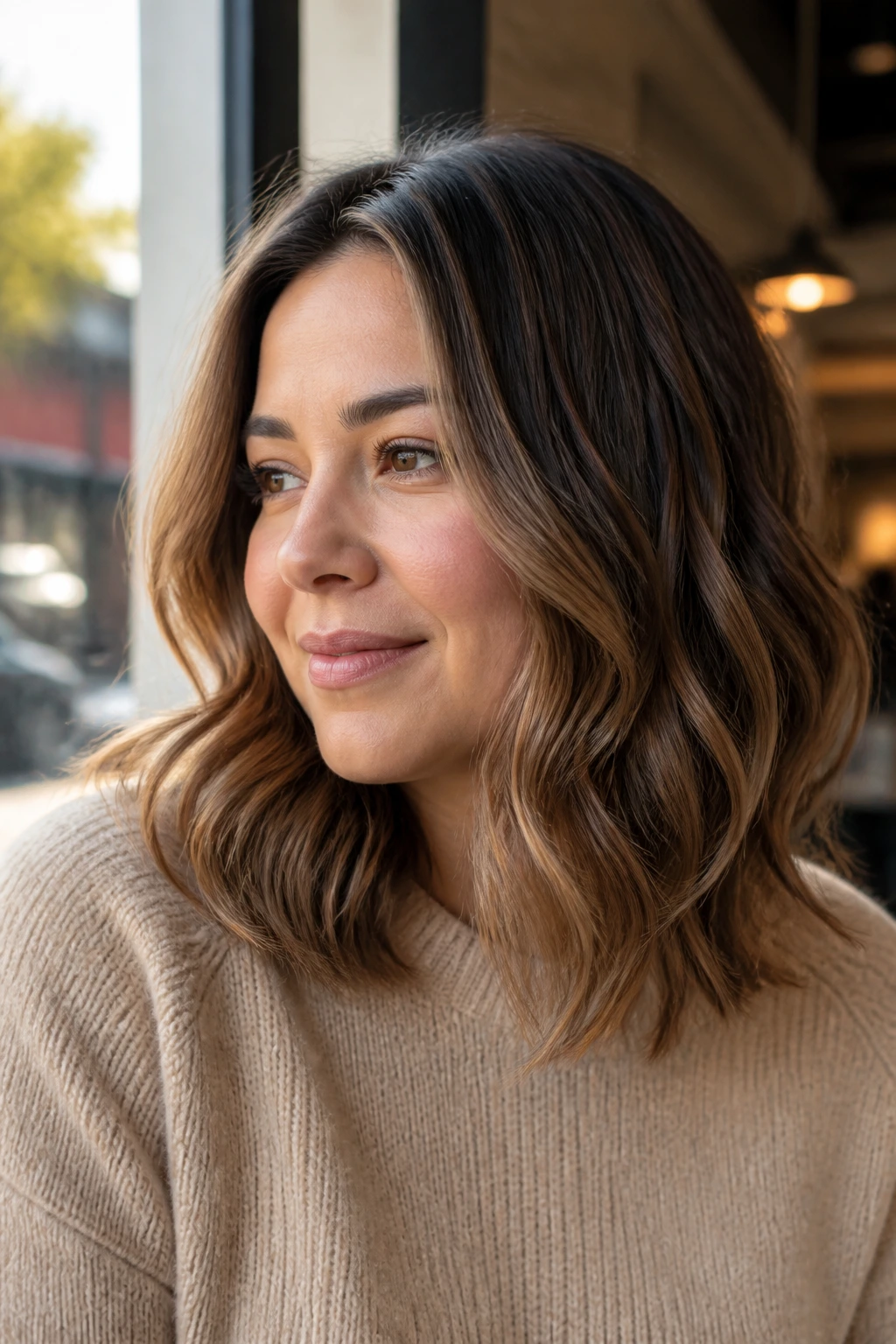
Will a long bob make my face look longer?
Usually, yes — if the front falls below the chin and the sides don’t balloon out. The length and diagonal lines do the work; the cut has to be placed with that goal in mind.
Is a center part bad for a round face?
Not automatically. A center part can look very balanced on a round face if the lob is long enough and the texture is soft enough to keep the sides from widening.
Do layers help or hurt a round face?
Both, depending on where they start. Layers placed too high can widen the cheeks, while lower, softer layers can break up bulk and make the face look longer.
Can I wear curtain bangs with a double chin?
Yes, if they’re long enough to split at the cheekbones and blend into the lob. Short curtain bangs or heavy fringe that stops at the jaw can pull the eye right back to the area you were trying to soften.
What if my hair is very thick?
Ask for internal debulking and a perimeter that stays clean. Thick hair can look beautiful in a lob, but if too much bulk sits at the sides, it makes the cut feel wide instead of sleek.
What if my hair is fine and flat?
Keep the outline blunt or slightly textured and ask for crown lift. Fine hair usually needs shape at the roots more than it needs lots of visible layers.
How do I know if the front is too short?
If the shortest pieces land right at the chin or above it, there’s a good chance the cut will emphasize the width of the lower face. A safer sweet spot is usually below the chin.
Can curly hair pull this off without looking bulky?
Absolutely, but the haircut has to respect shrinkage and curl pattern. Longer front pieces, crown lift, and a dry cut or careful curl-by-curl shaping make a big difference.
The Shape That Does the Work
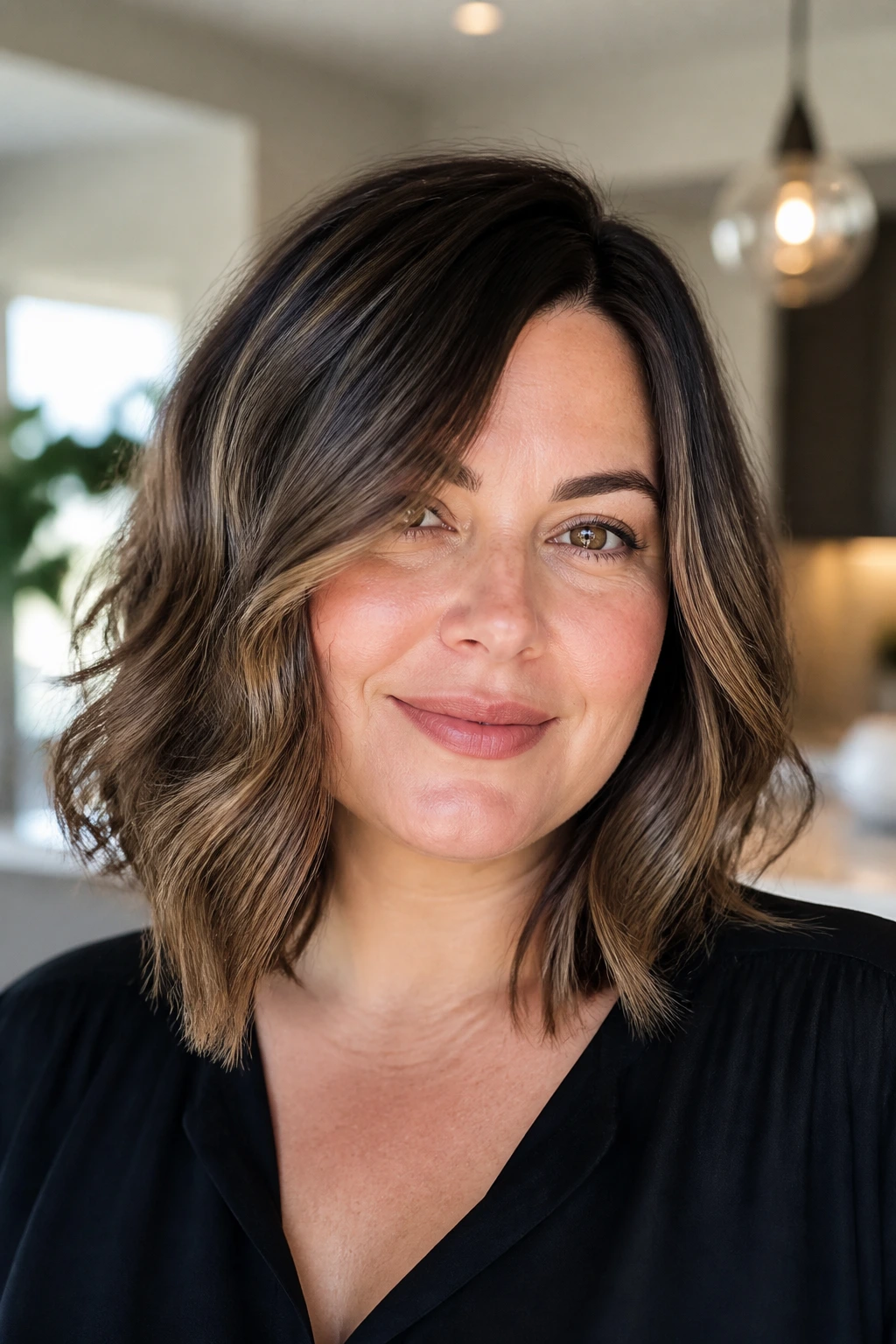
A good lob doesn’t need to shout. It just needs to land in the right place and keep its line honest. That’s what makes long bobs for double chins and round faces so useful: they don’t fight the face, they redirect it.
If you take one thing from all of this, let it be the front length. Keep it below the chin, keep the sides from bulking out, and let a side part, a wave, or a bit of fringe do the rest. The haircut should look like it belongs on your head, not like it was trying to solve a geometry problem in a panic.
Bring a couple of reference photos, say where the front should fall when dry, and ask for the shape you want rather than the style name alone. That’s the part that gets you closer to the cut that actually works.