



Fine hair can go limp fast, especially once it’s cut too long or too shaggy, and that’s exactly why round bobs for women over 40 with fine hair have such a strong track record. The rounded shape gives the eye a fuller outline to latch onto. The blunt edge at the bottom helps the ends look denser than they really are. And when the curve sits at the chin, jaw, or just below, it doesn’t drag the whole face down the way a thin, stringy length can.
There’s a catch, though. Fine hair is easy to over-thin, and once the perimeter gets too broken up, the cut stops looking like a bob and starts looking like a sorry little shrug. The best round bob is controlled. Soft, yes. Airy, yes. Chopped to pieces, no. On mature hair, that difference matters more than people think. A clean line can make a blunt fringe of hair look thicker in one day; a dozen tiny layers can make it look like you lost half of it overnight.
The styles below lean into that reality. Some are sleek, some are softly stacked, some have bangs, some avoid them entirely. A few are polished enough for a sharp blazer. Others look better with a knit sweater and a little dry shampoo. All of them are built around the same basic idea: give fine hair a round silhouette that keeps its body instead of fighting it.
Why This Collection Feels Different
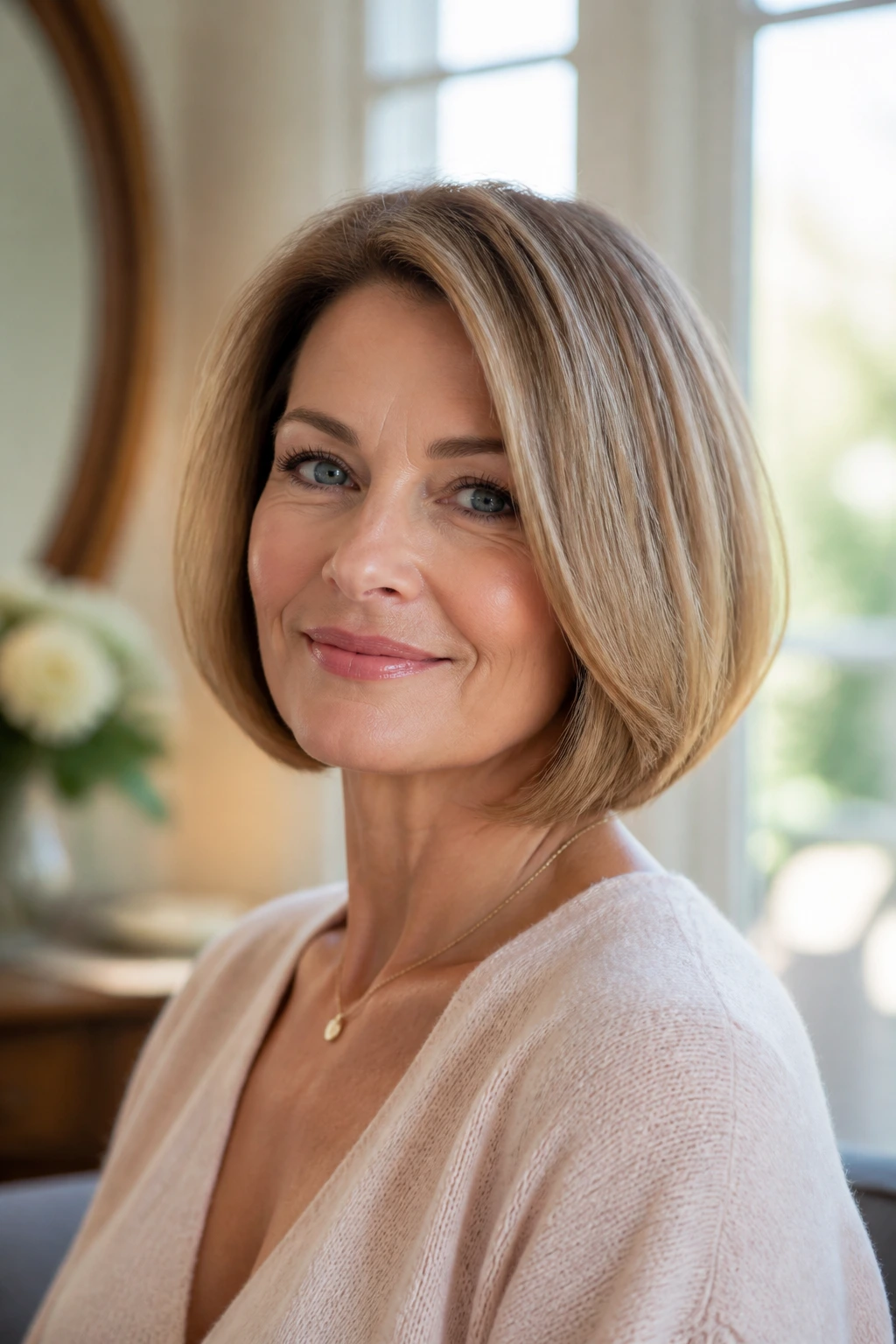
Blunt edges do the heavy lifting: Fine hair usually looks fuller when the ends land in one clean line instead of being chipped into wisps.
The round shape softens the face: That curve at the jaw or chin keeps the cut from feeling severe, which matters a lot when you want structure without a hard, boxy feel.
Most of these cuts stay friendly to real life: A good round bob can be blown under in 10 minutes, tucked behind one ear, or left a little messy without falling apart.
They work with changing density: If your temples are a bit lighter or your crown is flatter than it used to be, the right bob can hide that without pretending the hair is something it isn’t.
They age with you, not against you: The best versions don’t chase youth; they add shape, shine, and lift so the haircut looks intentional at 45, 55, or 65.
1. Chin-Skimming Rounded Bob
A chin-skimming bob is the safest place to start if you want roundness without drama. The ends land right where the jaw begins to narrow, so the haircut reads as fuller even when the individual strands are fine and light.
Why It Flatters Fine Hair
- The perimeter stays blunt: That single line at the bottom makes the hair look thicker than a layered edge does.
- The length stops at a useful point: Chin length keeps the hair from hanging flat against the neck, which is where fine hair starts to look tired.
- The curve is small, not fussy: A slight bend under the chin gives shape without making the cut feel helmet-like.
Ask for a soft round bob with a blunt bottom and only a whisper of internal shaping. I’d avoid heavy layers through the sides here. Fine hair loses its nerve fast when the scissors get too enthusiastic.
A 1.25- to 1.5-inch round brush and a quick blow-dry under the ends are usually enough to make this cut sit properly. If your hair dries with a slight bend on its own, even better. That’s one of those cuts that gets easier, not harder, once you stop trying to over-style it.
2. Soft Stacked Round Bob
A little stacking at the back can do more for flat fine hair than a whole drawer of styling products. The trick is restraint. You want lift at the nape, not a sharp wedge that looks dated by the second week.
The back should be graduated just enough to create a gentle mound, then the side lengths should melt into that curve. On fine hair, this gives the crown a little more life without taking too much weight out of the sides. Too much stacking and the cut starts to expose the lower neck; too little and it sits like a wet paper towel.
This is the bob I’d point to for someone whose hair goes limp right above the collar and never seems to recover. It also works well if your hairline at the back is a bit soft, because the graduated shape gives the illusion of more density where the head curves away. Ask your stylist to keep the stack soft and the perimeter rounded. No sharp shelves. That’s the whole game.
3. Curved Bob With a Deep Side Part
Why does a side part make a round bob look fuller on fine hair? Because the part creates a built-in lift where you need it most. The hair on the heavier side pushes up and away from the scalp, and the lighter side falls softly across the cheek.
How to Style It
Start the part a little off the center of your natural cowlick, not exactly on it. That small shift matters. It helps the root rise instead of collapsing back into place five minutes later.
Use a root-lift spray or mousse at the crown, then dry that area first with the nozzle pointed upward. Once the hair is about 80 percent dry, switch to a round brush and bend the ends under in one smooth pass. If you’re in a hurry, tuck the lighter side behind one ear. It gives the bob a clean line and keeps the whole shape from feeling too symmetrical.
I like this cut on women who want movement, not fuss. It has enough shape to look deliberate, but it doesn’t need a full styling session to make sense.
4. French Bob With an Airy Fringe
This is the cut for someone who wants the hair to sit close to the face and still feel light. The fringe should be airy, not dense. Think broken-up ends that soften the forehead, not a heavy wall of bangs.
The French bob works on fine hair because it keeps the length short enough to look full and uses the fringe to create a little visual density up top. The trick is keeping the bangs long enough to blend, usually somewhere around the brow or just below it, depending on your forehead and cowlicks.
- Best for: Straight to slightly wavy fine hair
- Shape note: The bob should curve under at the jaw, not flare out
- Bang note: Ask for piecey fringe, not blunt baby bangs unless your hair is very dense at the front
This is one of those styles that looks relaxed in photos and still needs a clean cut underneath to hold up in real life. If the fringe gets too sparse, it turns cranky fast. Keep the texture light and the perimeter controlled.
5. Collarbone Rounded Lob

A collarbone-length rounded lob is the option for anyone who isn’t ready to go short but still wants the look of thickness. It has enough length to feel easy, but not so much that the fine ends sag into a straight line.
The curve should be subtle. The front can graze the collarbone while the back lifts just a touch, which keeps the line from looking blunt in a heavy way. On finer strands, that slight undercurve gives the hair some body when it moves and stops the ends from looking see-through.
This cut is especially useful if you wear glasses, because the length sits low enough to avoid crowding the frame. It also works with clips, low buns, and half-up styles on the days you don’t want to heat-style. Clean, simple, and practical. No gimmicks.
6. Beveled Bob With Blunt Ends
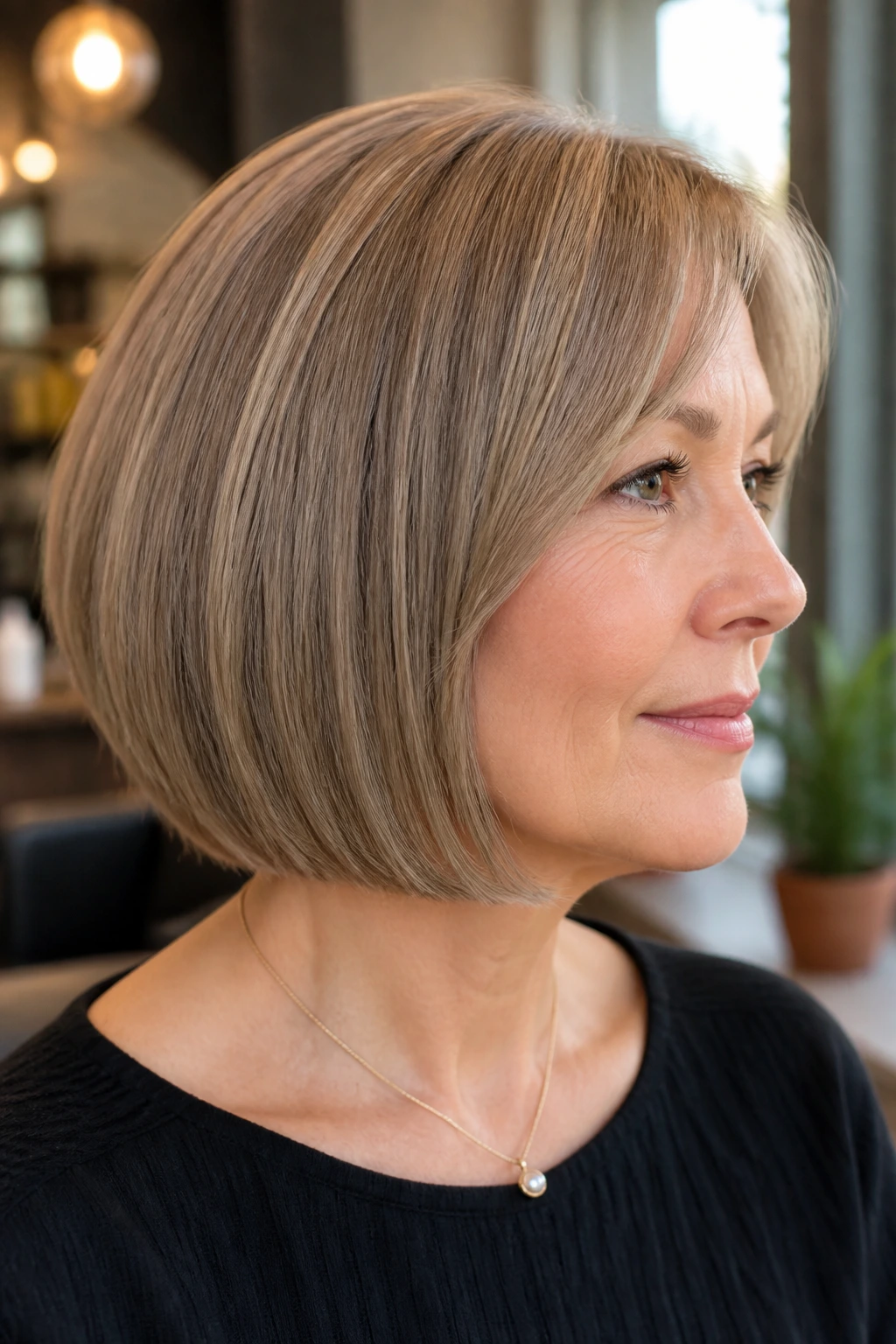
Unlike a heavily layered bob, a beveled bob keeps the perimeter dense and just angles the ends in enough to make the shape feel rounded. That bevel is doing quiet work. You don’t see it much, but you notice the difference when the hair falls into place instead of hanging straight down.
This shape is especially good if your fine hair is plentiful but lacks strand thickness. The blunt edge gives the illusion of more hair, while the bevel prevents the style from looking like a block. It’s a cleaner, more modern answer than razor cutting, which can make the ends look shredded on fine strands.
If you like polish, this is a strong choice. It pairs well with smooth blowouts, side parts, and a little shine spray on the last inch. I’d keep the bevel subtle. Too much angle, and the cut stops reading as round.
7. Inverted Round Bob
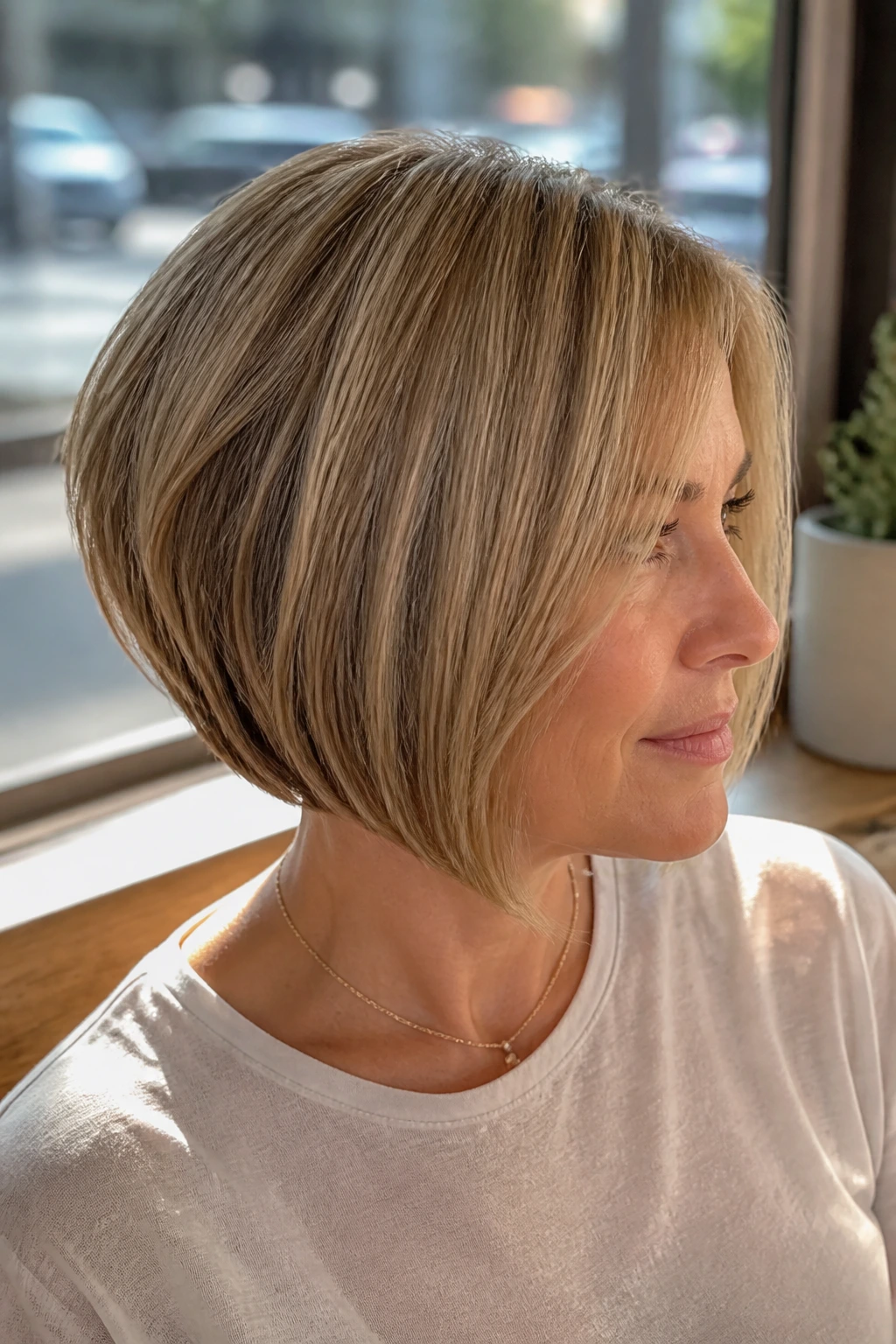
An inverted bob gives you a little more lift in the back and a little more length in the front, which is handy when the face needs softening but the hair needs help standing up. The front pieces should be only an inch or two longer than the back. Anything steeper starts to feel sharp.
This cut works because the eye follows the line forward. That creates motion, and motion is a fine-haired bob’s best friend. The back can be lightly stacked, but not so much that it turns into a wedge. You want curve, not a brick wall of hair at the nape.
Ask your stylist to blend the front into the sides so the angle doesn’t look pasted on. On a good day, this bob has enough shape to look styled even when it’s only been rough-dried. That’s a useful trick.
8. Feathered Bob With Light Layers
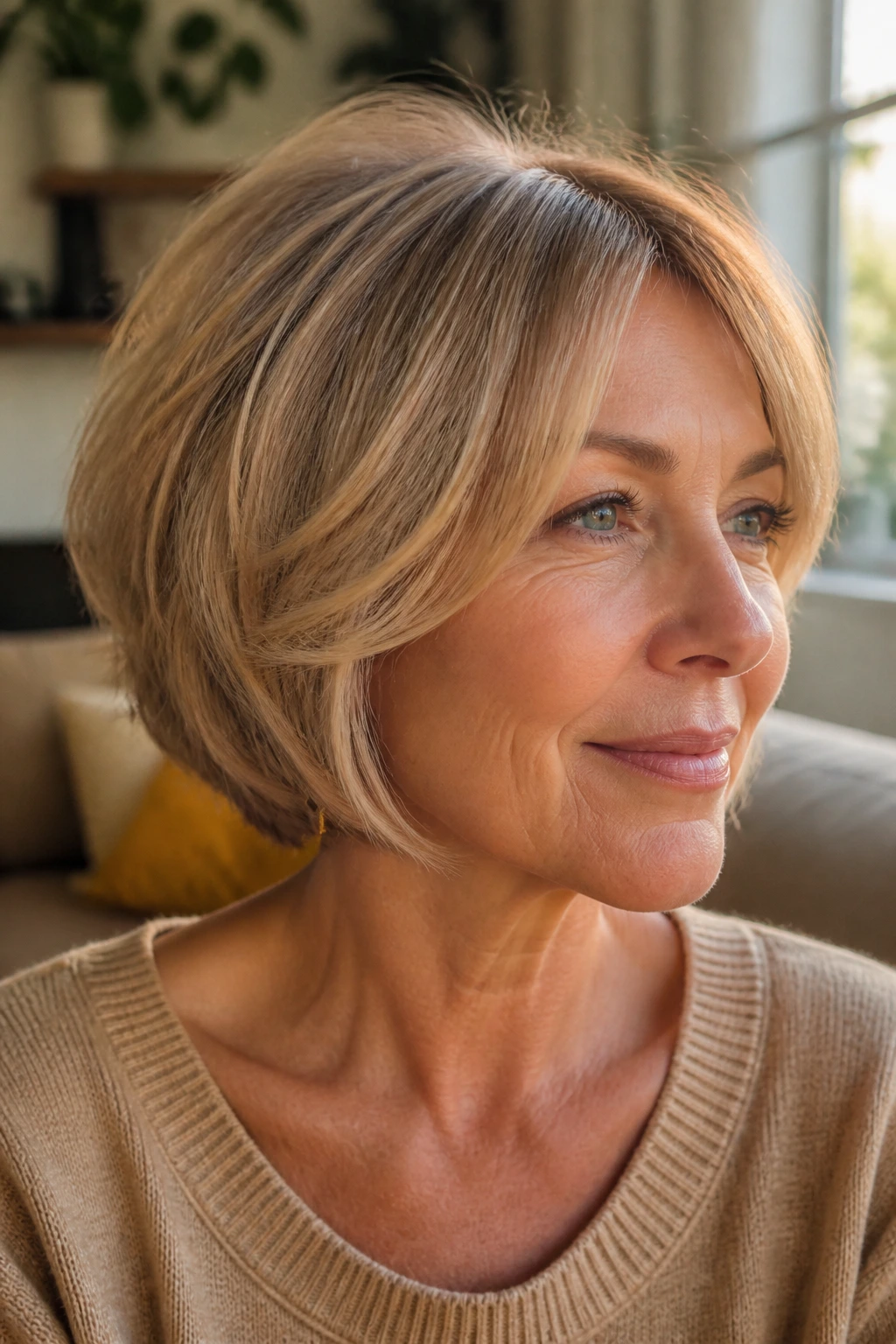
Can fine hair handle layers? Yes, but only if they’re treated like seasoning, not the main event. A feathered bob uses light layers to soften the outline without breaking the silhouette apart.
The layers should start lower, usually around the cheekbone or below, and they should stay long. Short layers at the crown are the quickest way to create the dreaded see-through top. I’m not a fan of that on fine hair unless the hair is unusually dense and you’re willing to style it every single day.
What to Ask For
- Long, soft layers through the lower half
- A rounded perimeter that still looks blunt at the ends
- Minimal thinning through the top
This style is best for hair that already has a little natural bend. The feathering makes the curve easier to see, especially when the ends are dried under with a brush.
9. C-Curve Bob With Tucked Ends
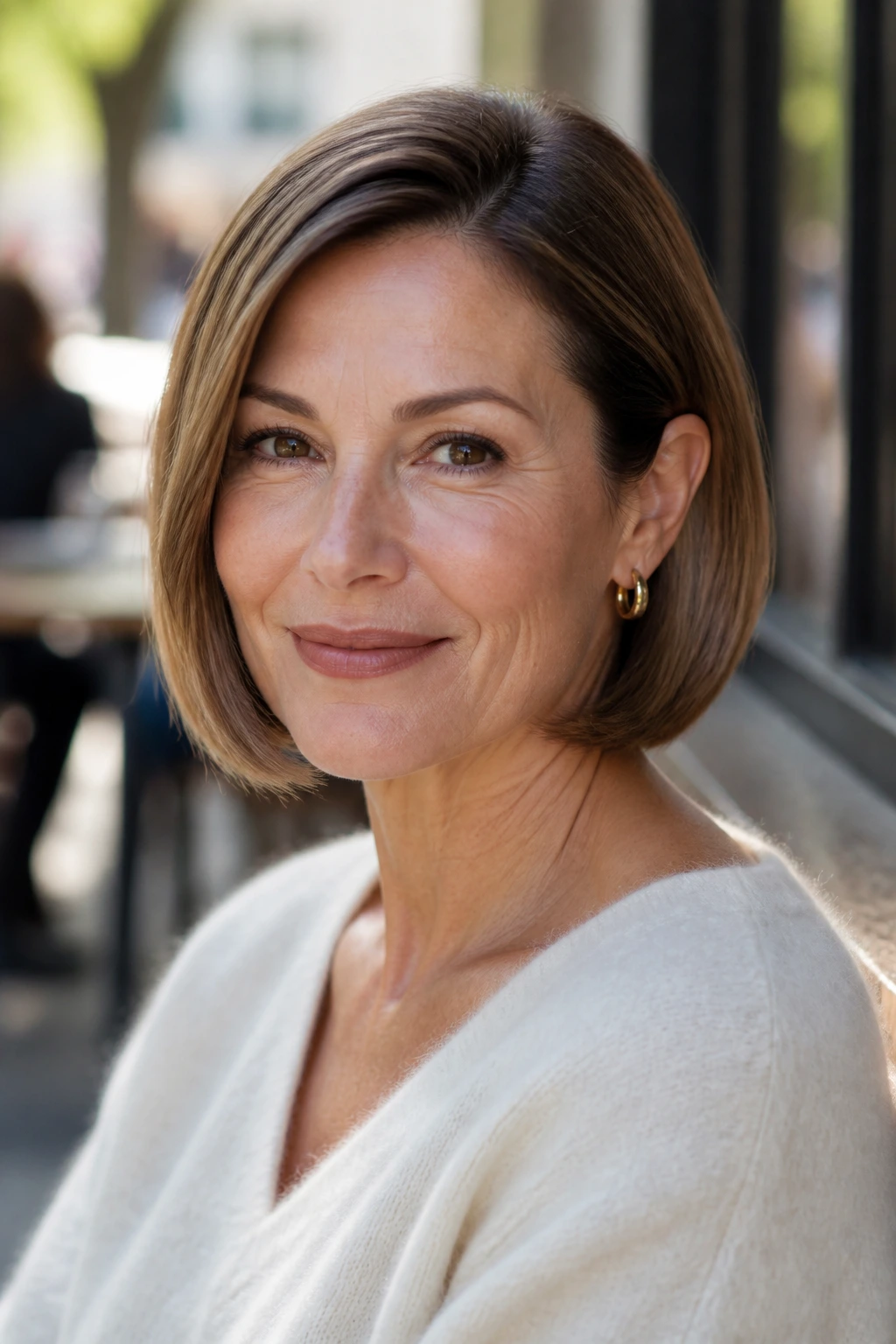
A C-curve bob is built around one simple idea: the ends roll under just enough to make the cut look plush. If you tuck your hair behind one ear often, this style is especially useful because the shape still makes sense when half of it is pulled away from the face.
The curve should be soft enough that the bob doesn’t fold in on itself. Think of the ends as making a shallow C, not a tight curl. On fine hair, that gives the illusion of movement without demanding much density.
This shape also plays nicely with earrings and narrow collars. The hair stays close to the jaw, which means it doesn’t compete with the rest of your outfit. I like this one for women who want a low-fuss shape that still looks intentionally cut.
10. Swoopy Bob With Curtain Bangs

A swoopy bob with curtain bangs gives fine hair a little drama up front without chopping away too much density. The bangs part in the middle or slightly off-center and sweep into the cheeks, where they soften the face instead of sitting like a heavy fringe.
The reason it works is simple: curtain bangs create diagonal movement. Fine hair likes diagonal movement because it keeps the eye from going straight to the scalp. The bob itself should stay round at the ends, so the cut has two layers of shape working together.
This is one of the better options if you want to soften a high forehead or a sharp jawline. Just keep the bangs long enough to blend into the sides. Short curtain bangs on fine hair can go wispy in a bad way, and then you’re stuck growing them out while they poke at your eyes.
11. Glassy Round Bob
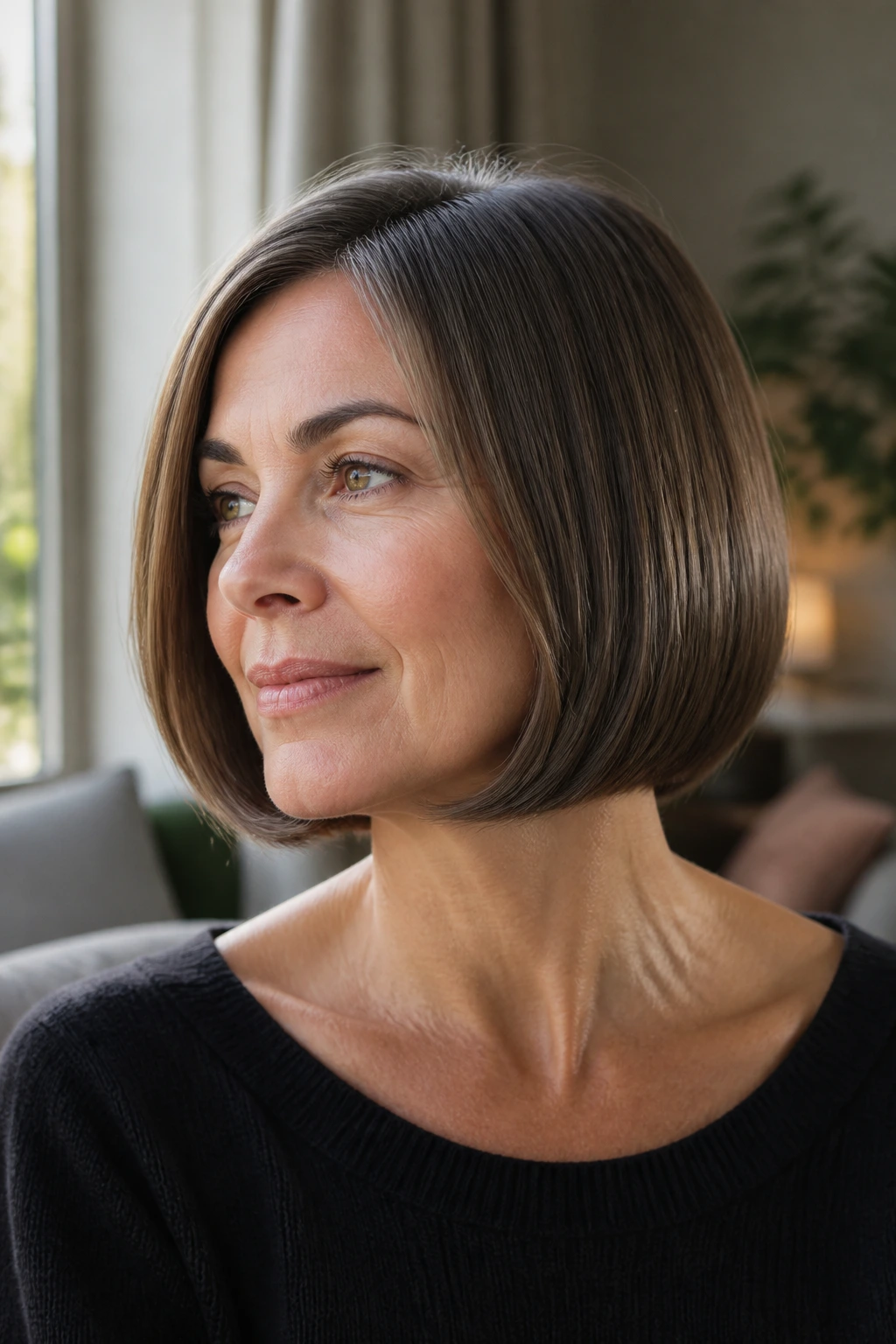
A glassy bob looks strong because the surface is smooth, not because the hair is thick. That’s an important distinction for fine hair. When the cut line is clean and the finish is glossy, the style reads as controlled and dense.
You do need some discipline here. Use a heat protectant, dry the hair with a nozzle, and finish with a flat brush or a round brush that barely bends the ends. A pea-sized amount of serum through the last two inches is enough. Any more and the hair starts to separate into strings, which is the opposite of what you want.
This cut shines on women whose hair has lost some body but still has decent shine. Gray, silver, and salt-and-pepper tones look especially good in this shape because the light bounces off the surface instead of getting swallowed by frizz.
12. Tousled Round Bob With Piecey Texture
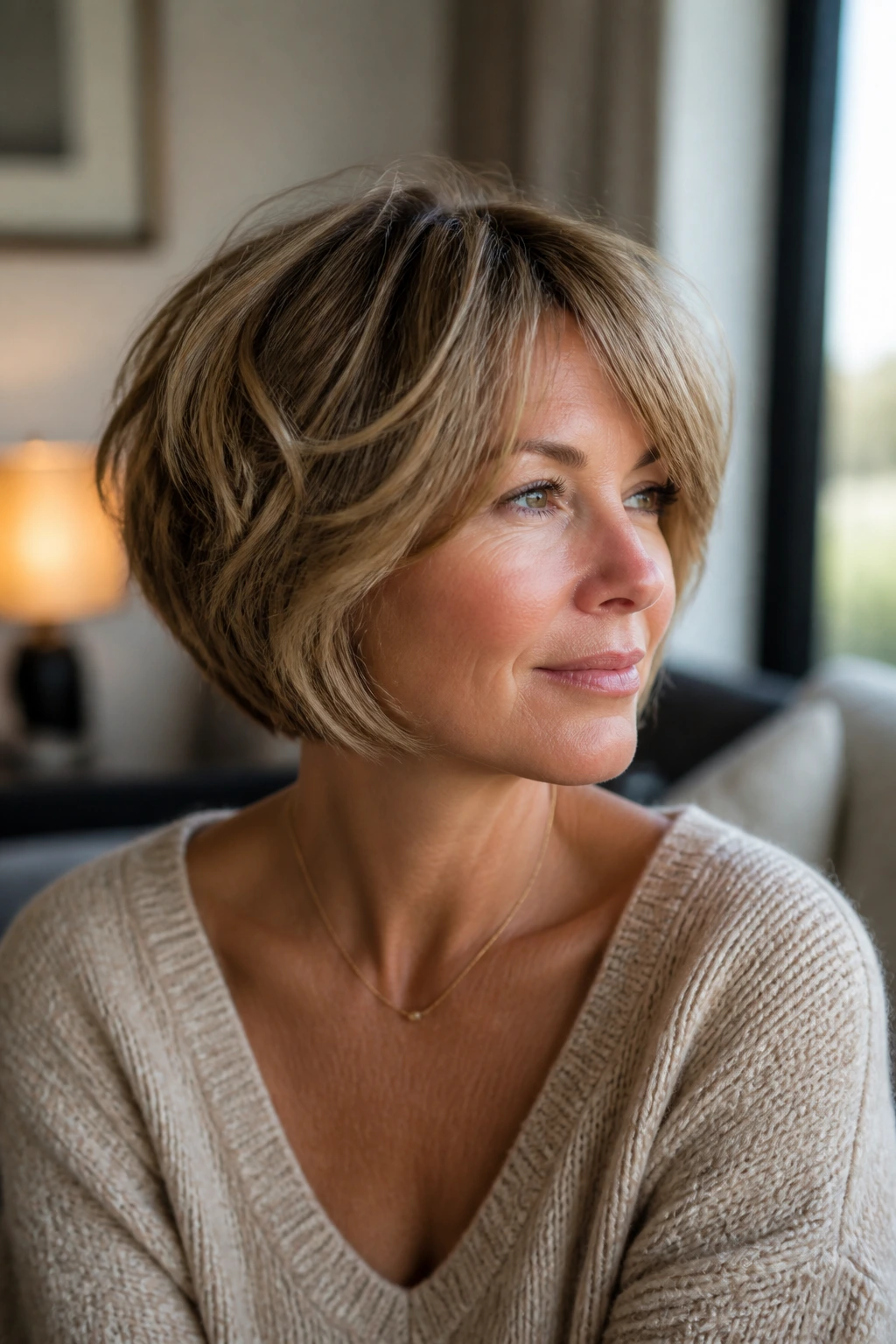
Why does a piecey bob sometimes look fuller than a sleek one? Because the separated strands create air between the hairs, and fine hair needs that air in the right places. Not all over. Just enough.
The cut should still be rounded, but the styling is looser. A lightweight mousse at the roots, a little diffuser time, then a dab of matte paste at the ends will do more than a pile of texturizing spray. Heavy salt spray tends to rough up fine hair too quickly; it can make the ends feel dry and papery by noon.
How to Wear It
- Keep the base shape round
- Lift the crown with mousse, not thick cream
- Pinch out a few face-framing pieces with your fingers after drying
This is the bob for days when you want movement and don’t care about every strand being perfect. The shape should still be deliberate. Messy is fine. Unfinished is not.
13. Neck-Length Bob With Internal Layers
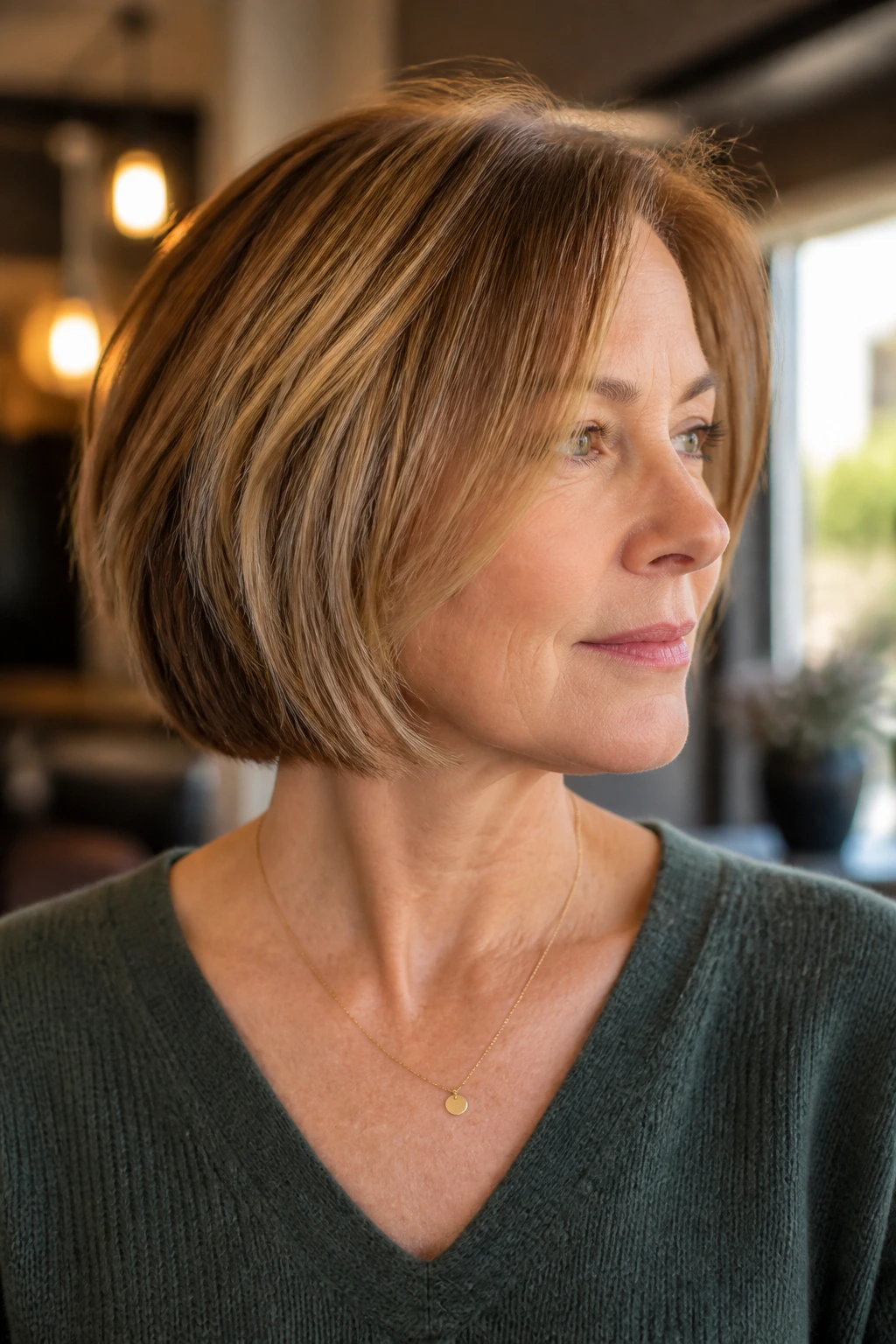
Internal layers are the quiet hero of a good neck-length bob. They sit inside the cut instead of around the outside, so the perimeter stays full while the interior gets a little lift. On fine hair, that matters.
This version is useful if your hair is thin around the ends but fairly solid through the top. The internal shaping keeps the bob from feeling helmet-heavy, which can happen when a blunt cut is too one-note. The outside still looks solid. The inside gets the movement.
I’d ask for the shortest layers to stay below the cheekbone unless your hair is unusually dense. Anything shorter can create little holes in the shape that show up the second the hair is tucked behind the ear. Good internal layering should be felt before it’s seen.
14. Side-Swept Bob for Thin Hair
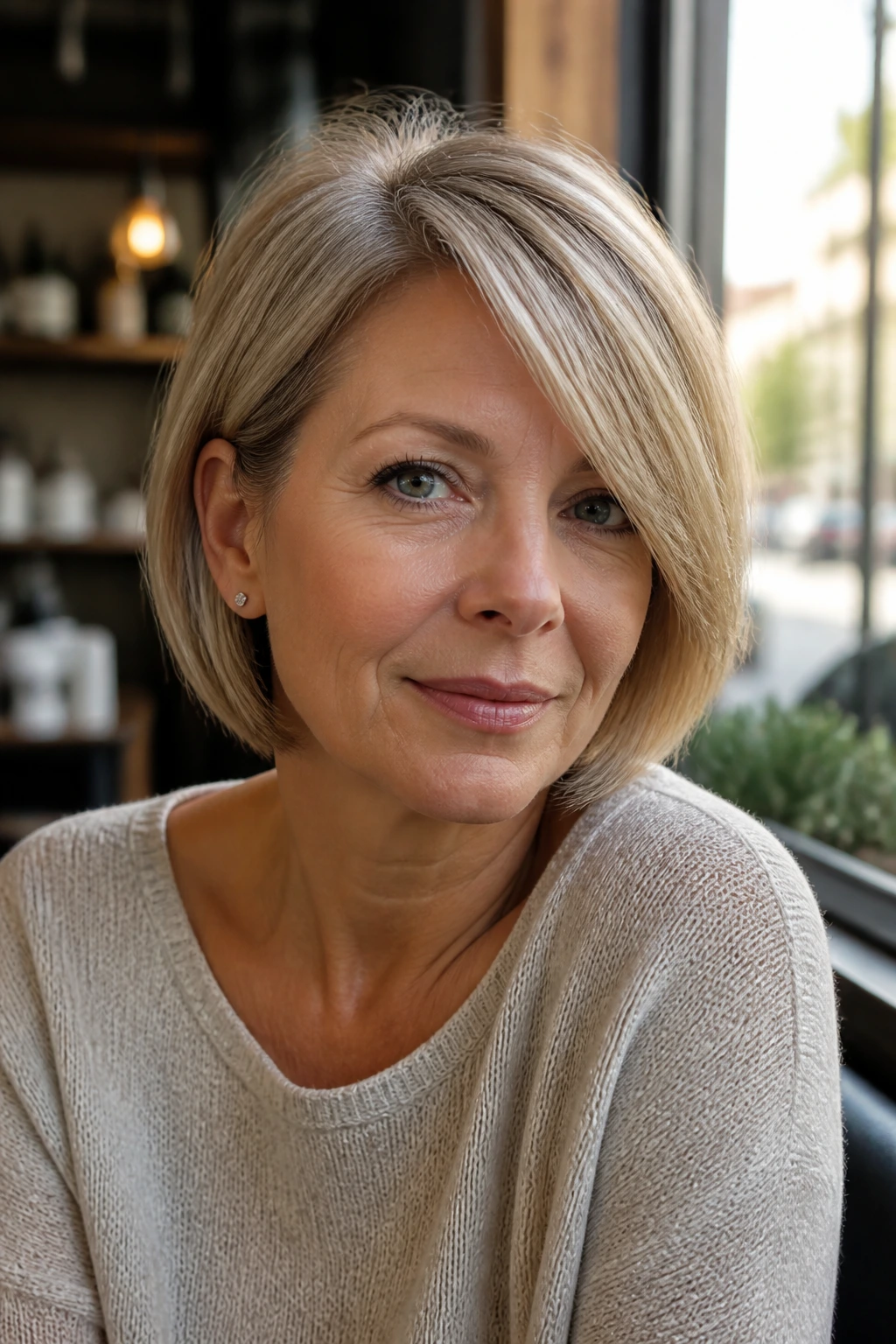
A side-swept bob doesn’t shout for attention. It just quietly hides the places fine hair often gives away first: the temples, the crown, the soft spots at the hairline. The sweep creates an off-center line that gives the cut some movement and takes pressure off the part.
That’s why this shape works so well when density is uneven. The heavier side covers more ground, while the swept front piece softens the forehead and cheek. It’s less about volume than about redirecting the eye.
If your hair tends to flatten at the front by midafternoon, this cut is a smart one. Blow the front section forward and then sweep it back while it cools. The bend holds better that way. Small detail. Big difference.
15. Rounded Bob With Wispy Bangs
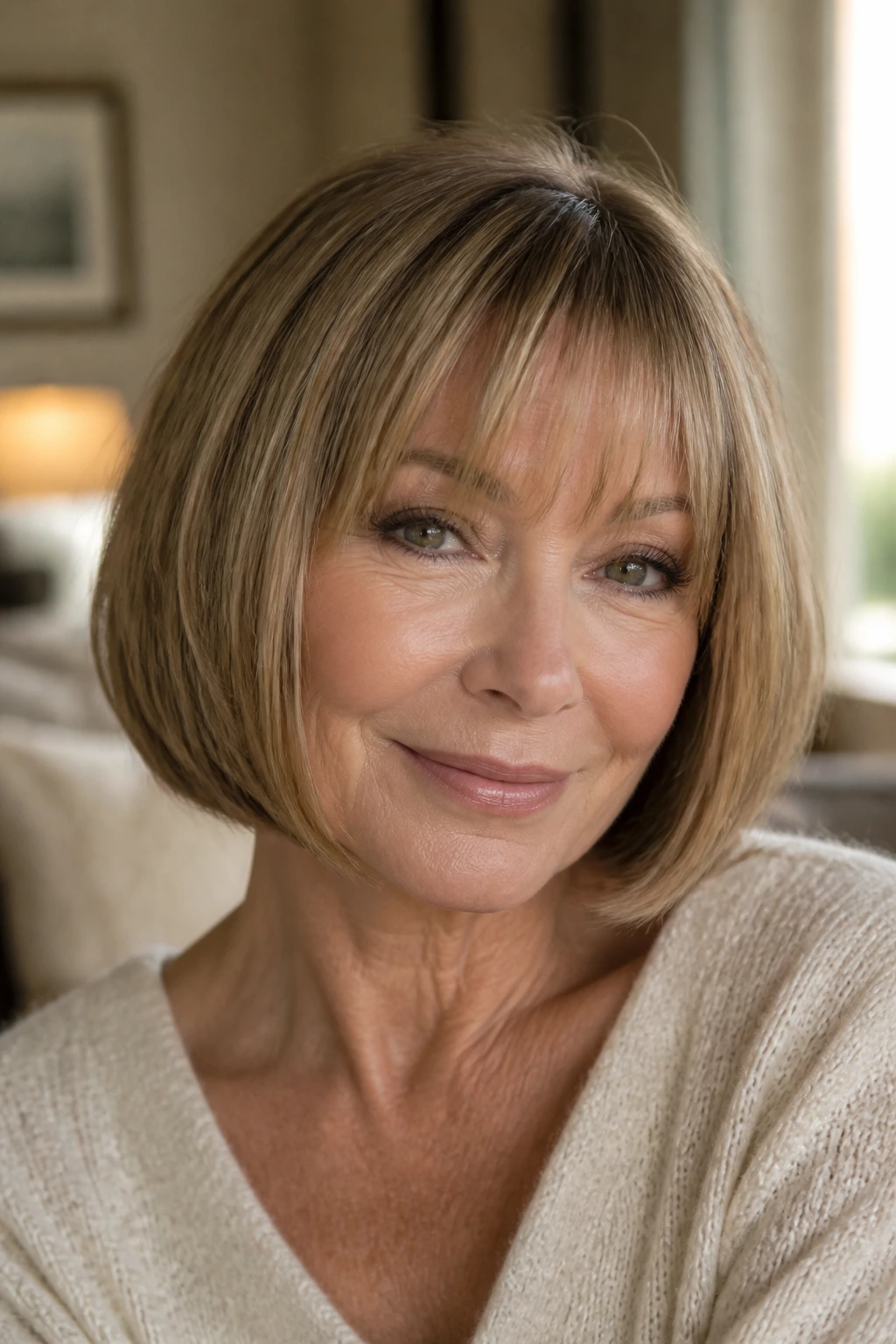
Wispy bangs can be a good idea on fine hair, but only if they stay wispy on purpose. The mistake people make is asking for bangs that are too thin and too short, then wondering why the forehead shows through and the fringe looks nervous.
The right version starts a little farther back, so the bangs have enough hair to look airy rather than sparse. They should skim the eyebrows or fall just above them, and they need a rounded bob underneath to balance the softness up front. If both the fringe and the ends are too light, the whole haircut goes floaty.
This is a nice option if you want to hide a high forehead without taking the haircut too short. It also softens glasses frames, which can feel a little harsh against a blunt bob with no fringe at all.
16. Polished Blowout Bob
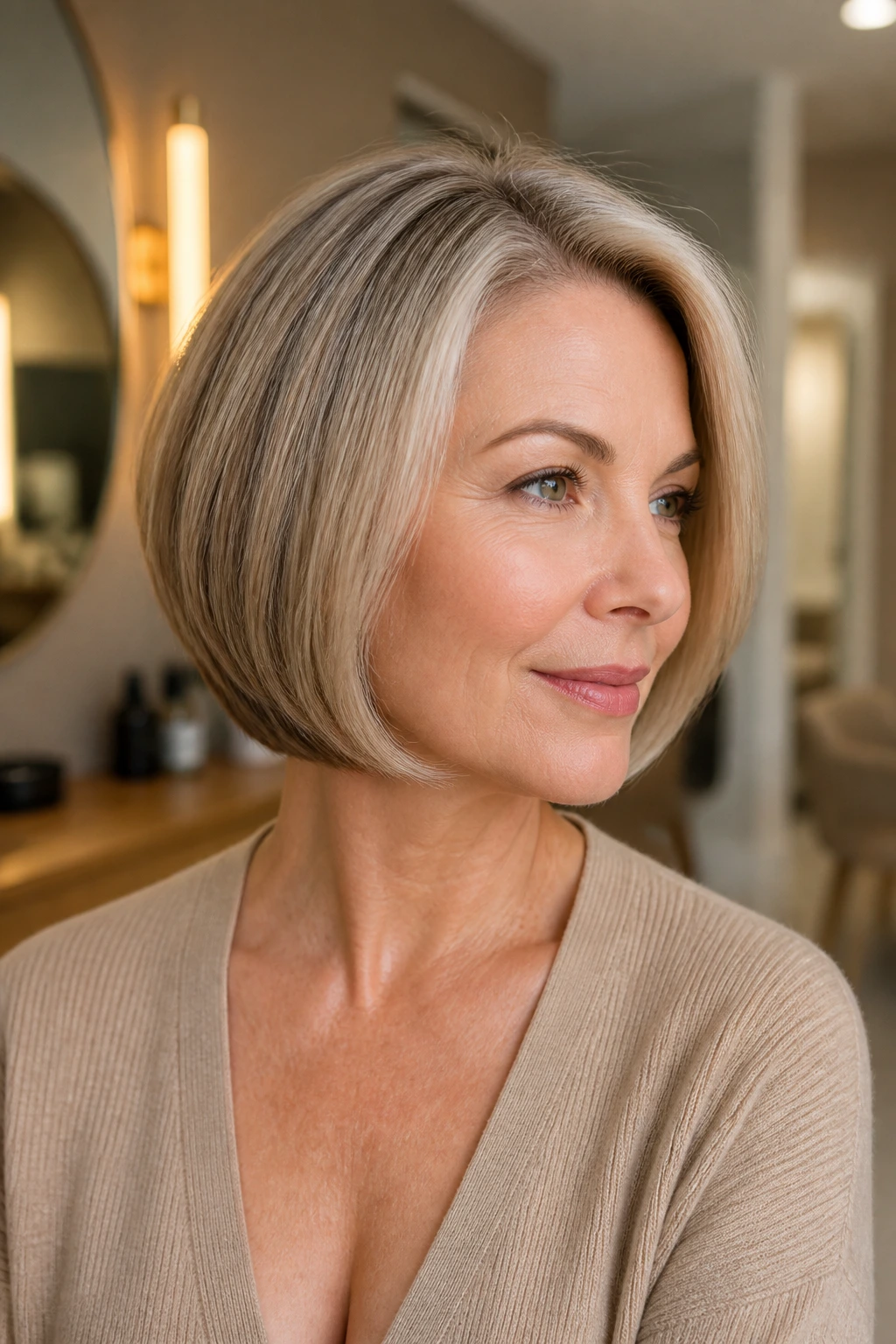
A polished blowout bob is for the person who doesn’t mind a brush in hand. It gives fine hair the cleanest outline and the most visible body, especially when the hair is cut to curve under around the jaw.
The style depends on direction. Dry the roots first, clip the top section while it cools, then work the sides with a round brush until the ends tuck in. A 2-inch brush is usually better than a tiny one here because it creates a smoother bend and less frizz. Tiny brushes can make fine hair look overworked.
I like this bob when the rest of the cut is very simple. The styling becomes the feature. It’s a little more maintenance, sure, but the payoff is shape that actually stays visible instead of collapsing by lunch.
17. A-Line Bob With Soft Graduation
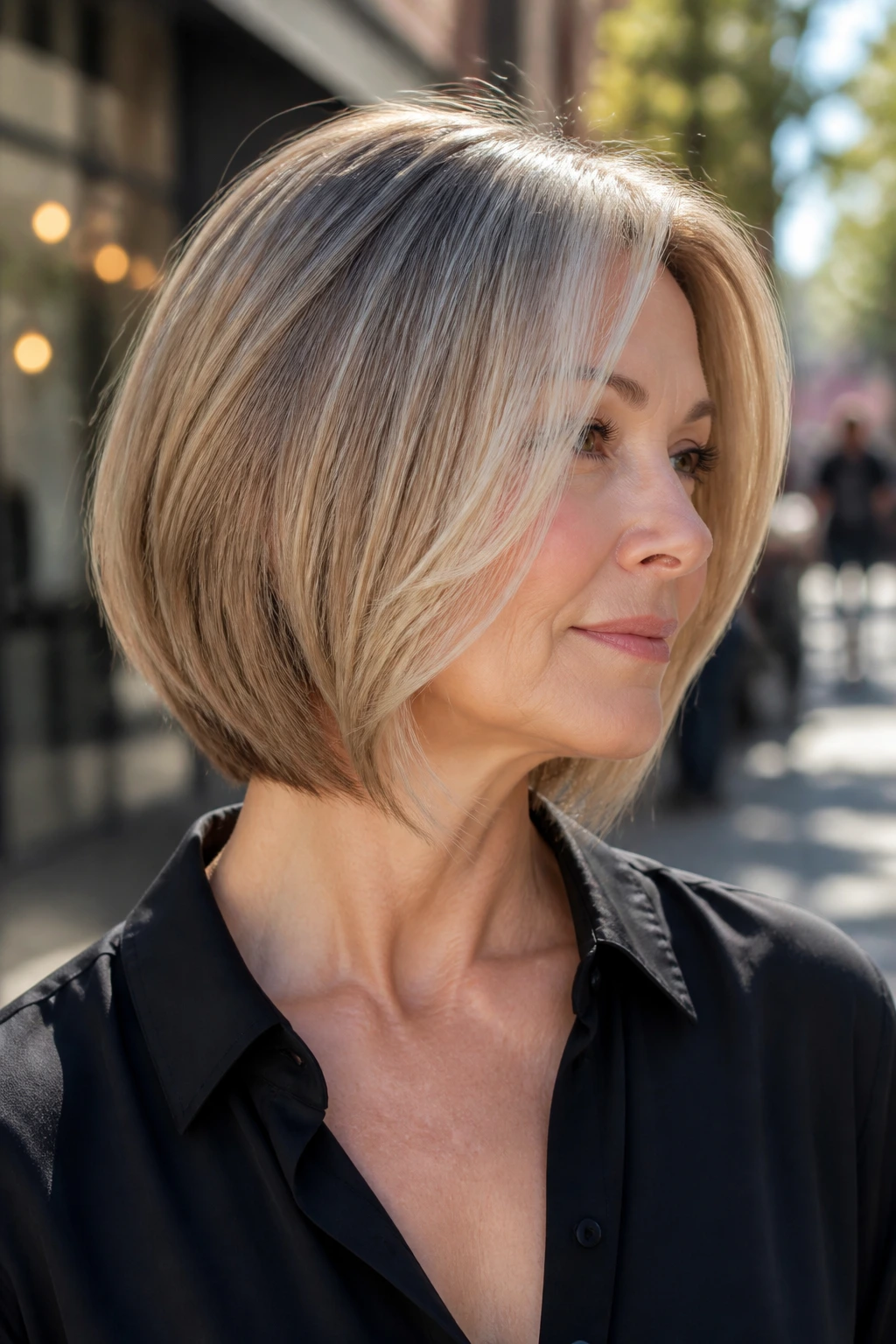
A soft A-line bob gives you the forward swing of an angled cut without the hard edge that can look severe on fine hair. The back sits a touch shorter, then the front length increases gradually toward the collarbone or jaw.
Key Shape Details
- Keep the angle gentle
- Preserve a blunt bottom line
- Blend the sides so the cut doesn’t look pointy
This version works best when the hair is straight or only slightly wavy. Too much wave and the angle gets fuzzy. Too much layering and the whole point of the A-line disappears. If you wear your hair tucked on one side, this cut looks especially tidy because the longer front pieces fall in a controlled way.
18. Jaw-Length Bob With Volume at the Crown
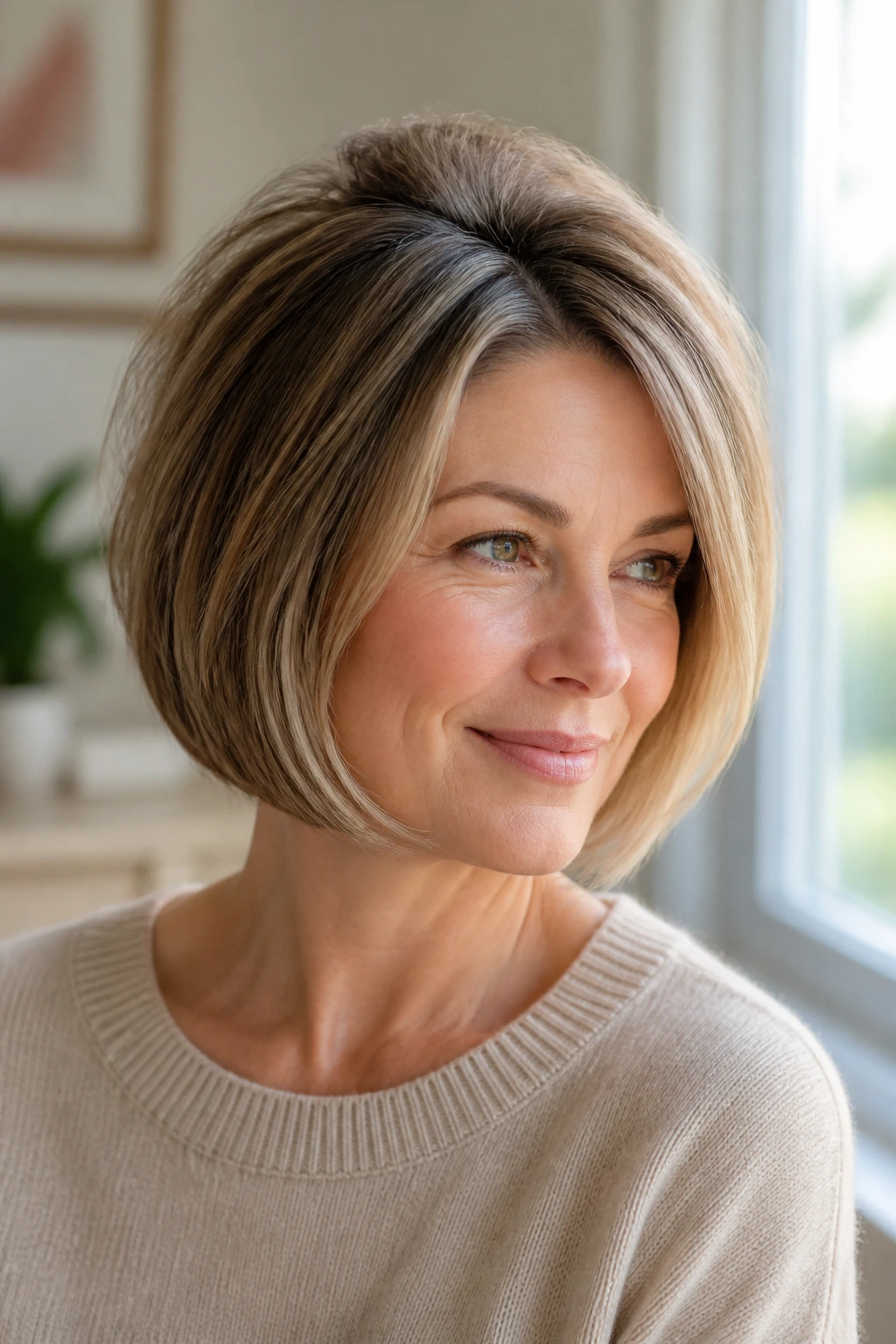
If your hair is fine but the top is the flattest part, a jaw-length bob with crown volume is the answer I’d reach for first. The length keeps the ends dense, and the lifted crown keeps the face from looking wide or heavy.
The crown volume should come from placement, not from ripping the hair apart with layers. Root mousse, a good blow-dry angle, and a couple of clips at the crown while the hair cools are usually enough. Once the top has a little lift, the whole bob reads as fuller.
This is a smart cut for square and oval faces because the roundness at the bottom softens angles without adding bulk at the sides. It also wears well with a side part, which can give the crown a little more height on one side.
19. Rounded Bob With Soft Ends and No Bangs

Sometimes the cleanest answer is the best one. A rounded bob with no bangs puts all the attention on the perimeter and the cheekbones, which is useful if your forehead is short or your hairline needs no extra help.
The ends should be rounded but not flipped, and the whole style should stop where the face narrows most naturally. On fine hair, that means the bob can look surprisingly full even without fringe. Bangs are not mandatory, no matter what some stylists seem to believe.
This cut is a good fit if you want something that can be worn tucked, blown smooth, or left a little undone. It’s one of the least fussy options in the whole bunch. That’s worth a lot when you’d rather spend five minutes on your hair than fifteen.
20. Textured Bob With Micro Layers
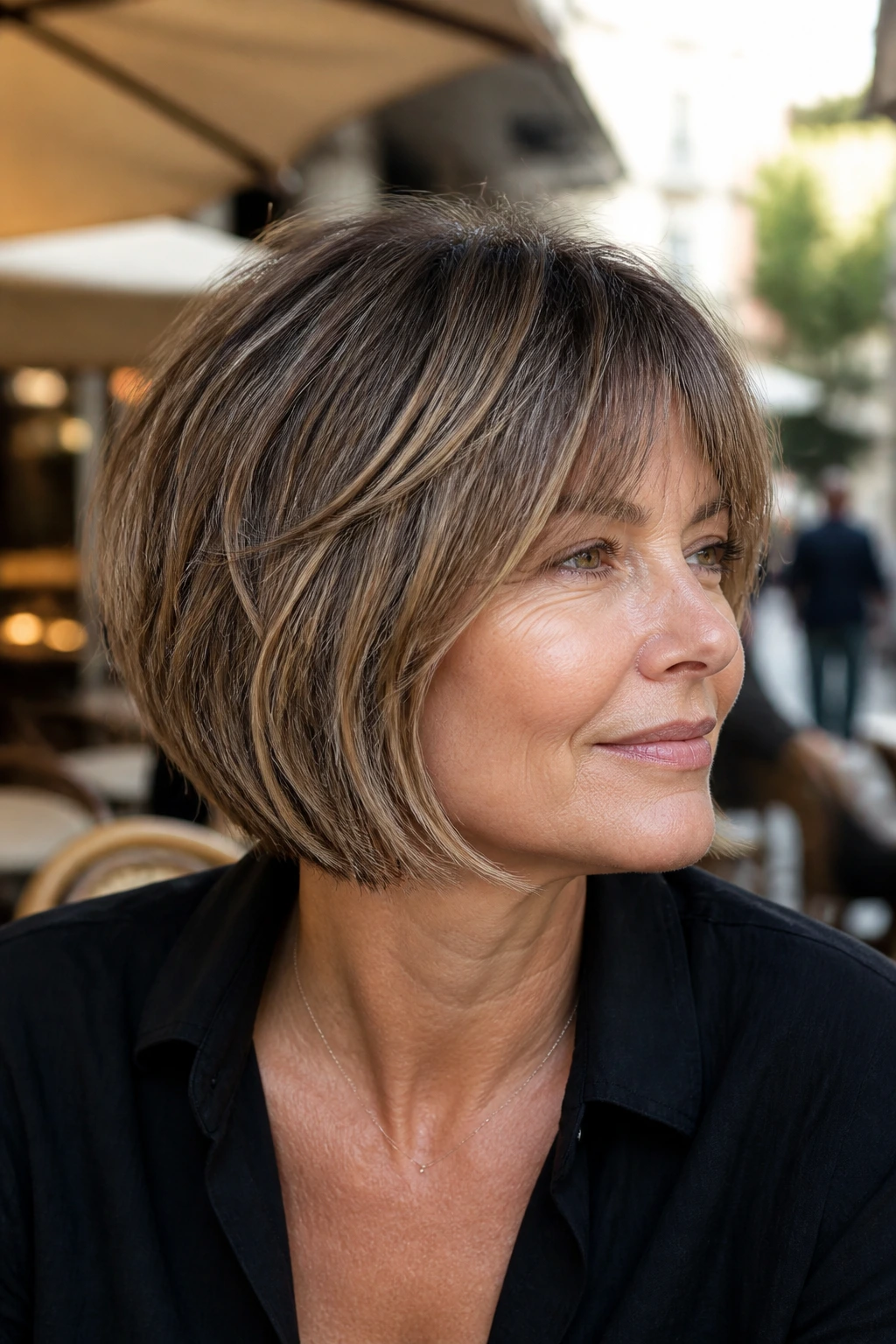
Micro layers are a tricky thing. Used well, they give fine hair a little lift where the head rounds. Used badly, they produce a halo of frizz and a thin-looking perimeter that never quite settles.
The right version keeps the micro layers very close to the crown and very long through the sides. They should create hidden movement, not visible choppiness. If your hair is super fine, ask for the layers to be concentrated inside the top section only. That lets the bottom line stay thick.
This is a good choice if your hair grows in with a slight bend and you don’t want a hard polished look every day. It takes texture spray well, but it doesn’t need much. A little goes a long way. Too much product and you’ll see every little layer sitting on its own.
21. Swing Bob With Flipped Under Ends
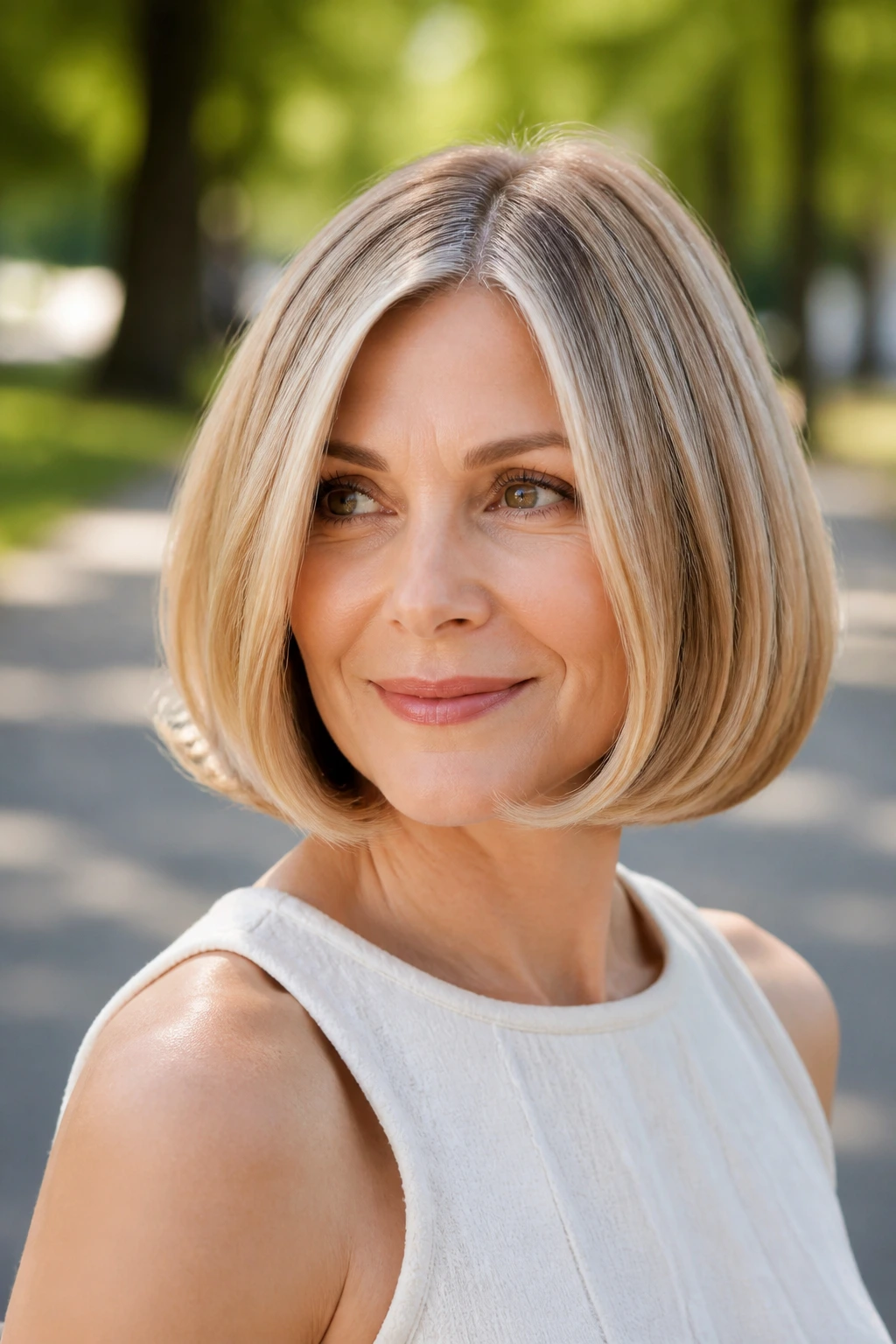
A swing bob has a bit of movement built in, which makes it look more alive on fine hair than a dead-straight blunt cut. The ends swing inward at the front and back, giving the style some motion as you turn your head.
That motion matters because fine hair can go static fast. A cut that moves helps disguise that. The shape is especially nice if you like wearing the hair down with a center part, because the front pieces can drape forward while the back still curves cleanly under.
I’d keep the styling simple here: round brush, light heat, and a tiny touch of styling cream on the ends only. This is not the place for heavy balm. The swing should look airy, not weighed down.
22. Bob With Subtle Face-Framing
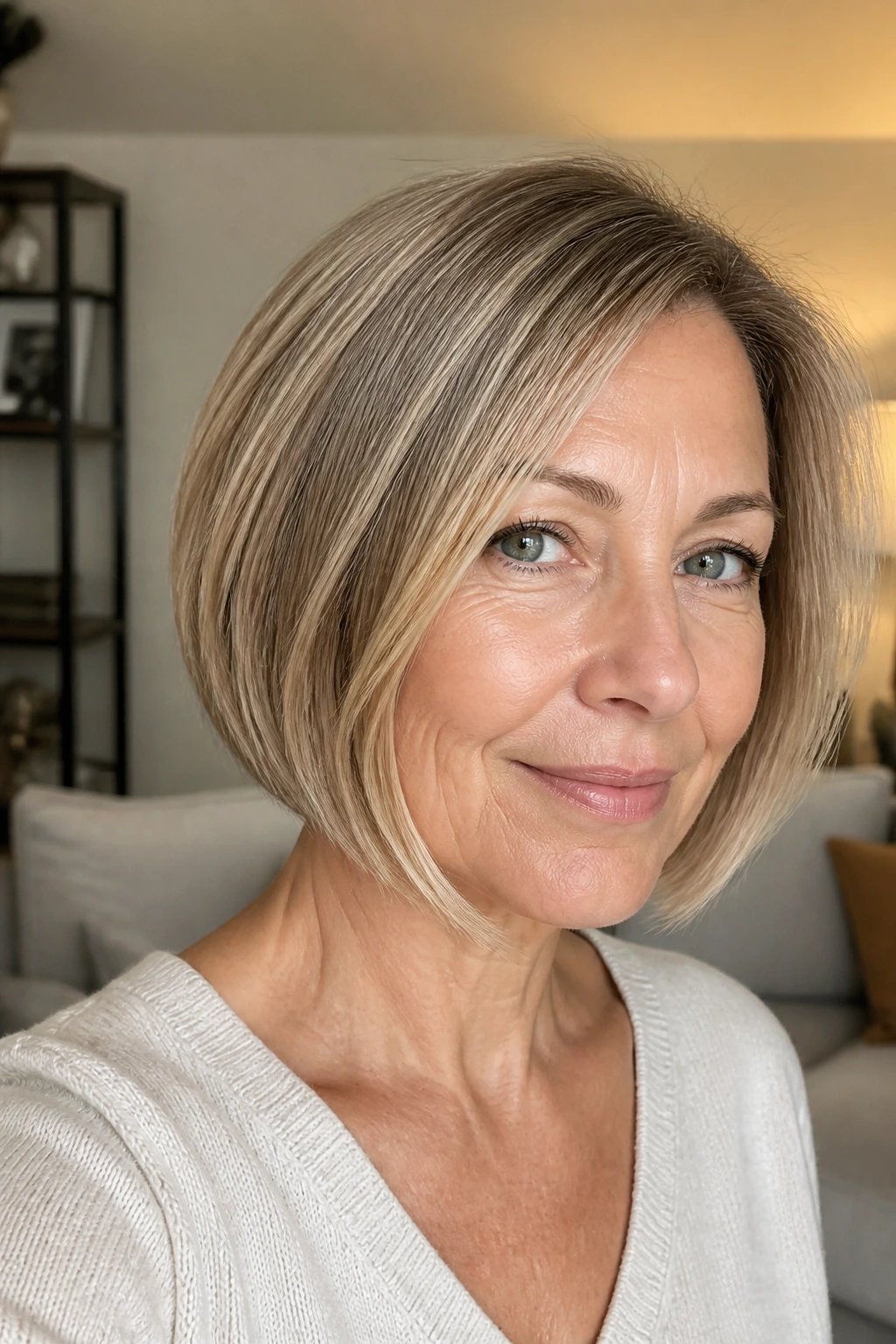
Face-framing pieces can be useful on fine hair, but only when they’re subtle. The goal is to soften the cheeks and jaw without sacrificing the density that makes a bob look strong.
The best face-framing starts around the chin or mouth and blends back into the bob. Shorter framing pieces can make the front look stringy, especially if the hairline is already light. Longer pieces keep the shape grounded.
This cut is a good choice if you wear your hair straight most days and want a little movement around the face without bangs. It also works well with soft highlights through the front, because those lighter strands catch the light and make the cut look less flat.
23. Salt-and-Pepper Round Bob
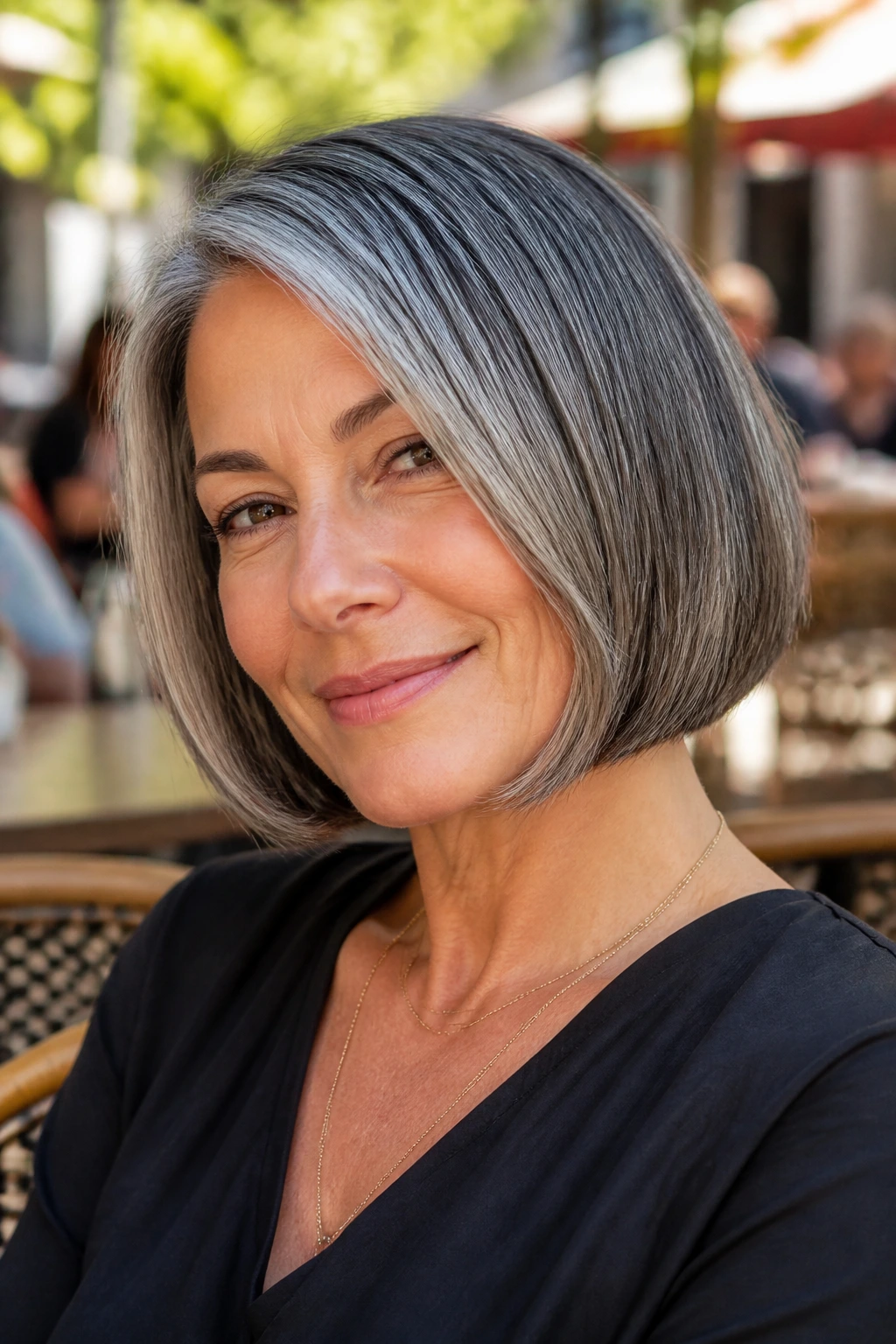
Salt-and-pepper hair looks especially good in a rounded bob because the mix of tones gives the cut depth even when the strands are fine. The curve at the bottom keeps the silhouette clean, and the contrast in the color keeps it from looking flat.
The big thing here is shine. Gray and silver can go fuzzy when the cut is too layered or when too much dry shampoo sits on the roots. Keep the edges blunt, use a light glossing cream, and don’t rough up the surface more than necessary. You want the contrast to read as intentional, not patchy.
This is one of those styles that can look chic without trying too hard. The haircut does the organizing. The color does the texture work.
24. Gray-Blend Rounded Bob With Shine
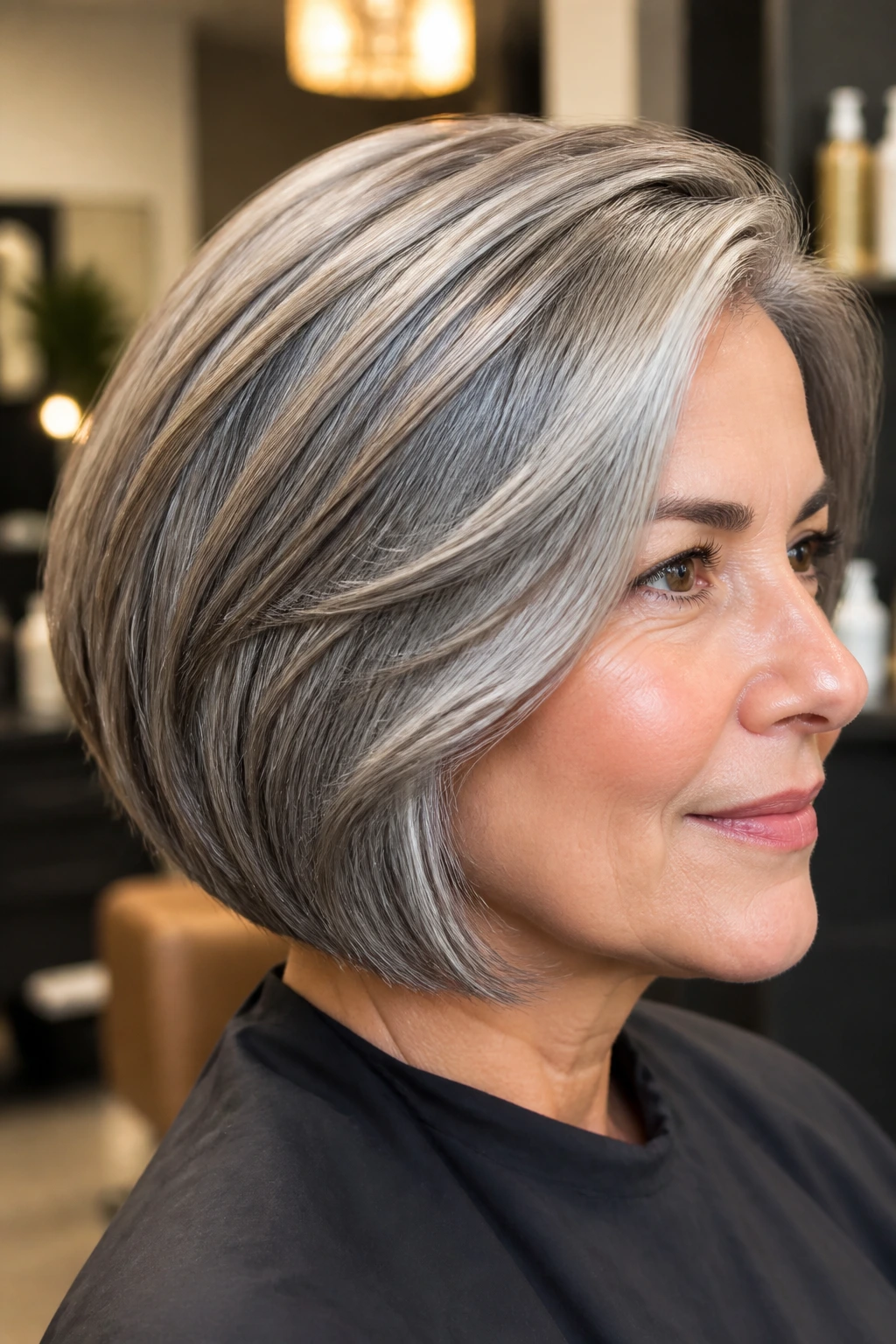
A gray-blend bob is different from salt-and-pepper because the transition is softer. The goal is to weave the gray through the natural color with lowlights or gloss so the cut looks dimensional instead of sharply contrasted.
That works well on fine hair because the blended color creates depth at the perimeter. The bob itself should stay round and polished. If the ends are too choppy, the blend loses its smoothness and the haircut starts to look busy.
A gloss treatment or a low-ammonia glaze can help keep the silver pieces reflective instead of dull. I’d lean toward a side part or a soft off-center part with this one. It helps the shine catch light across the curve of the bob.
25. Low-Maintenance Wash-and-Go Round Bob
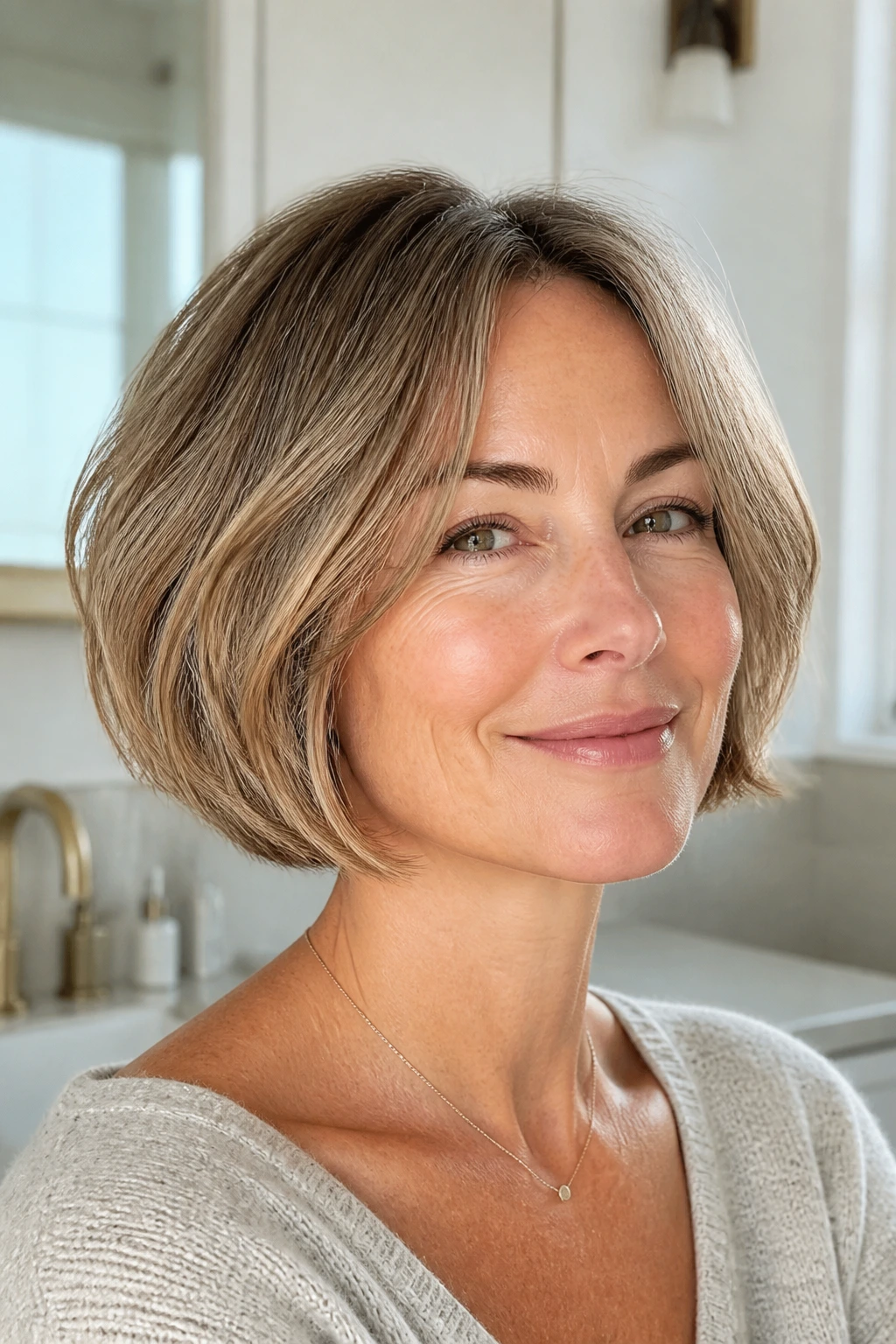
Can a round bob work if you hate hot tools? Yes, if the cut is done well. The shape has to be built into the haircut itself, not rescued with a blowout every morning.
The perimeter should be clean, the length should sit at a point where your hair naturally curves, and the internal layers should be minimal. After washing, scrunch a little lightweight mousse through the roots, rake the ends with a wide-tooth comb, and let the hair dry with a clip at the crown if you need lift. That’s usually enough to keep the shape from going limp.
This is the bob for women who want structure without a beauty routine that eats the whole morning. It will not look as polished as a round-brushed version, and that’s fine. It still looks deliberate. That’s the part that matters.
Why the Round Silhouette Does So Much Work for Fine Hair
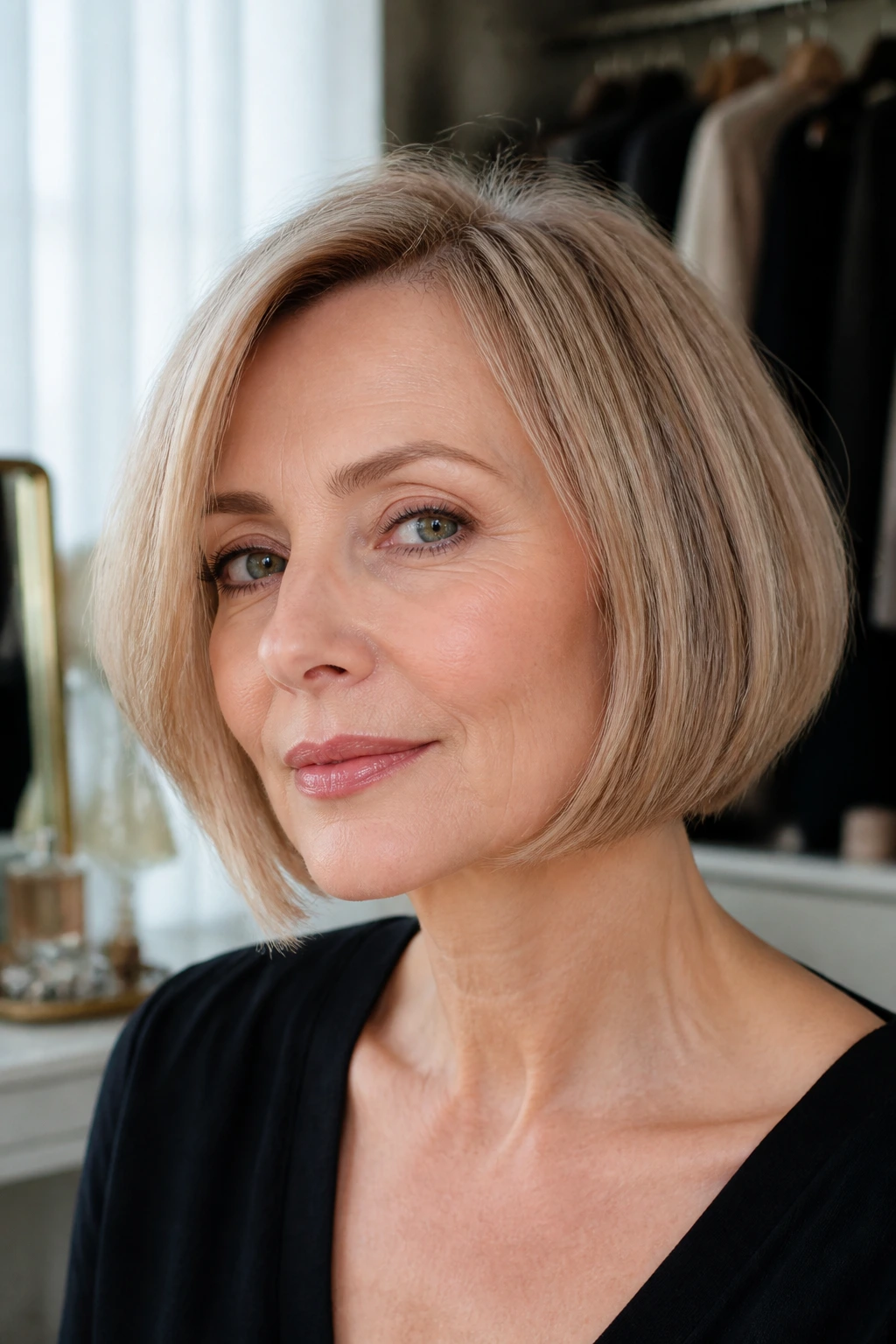
A round bob earns its keep because it changes how the eye reads density. Fine hair often has enough strands, but the individual strands are narrow, so the perimeter can look thin even when the haircut is full of hair. A rounded outline solves that by giving the ends a clear boundary. The eye sees a shape first. The fact that the strands are fine comes second.
The other advantage is weight placement. Fine hair needs some weight left at the bottom or it scatters. That doesn’t mean you want a blunt, immobile block. It means the cut should keep enough structure at the edge to hold a line, while the interior is shaped just enough to let the hair bend under or swing softly around the face.
There’s also a practical side to this. Hair over 40 often changes texture in odd, annoying little ways — a flatter crown, drier ends, softer temples, or a little more translucence where the front hairline used to be thick. A round bob helps disguise those changes because it doesn’t expose every weakness at once. The curve redirects attention. So does shine.
And there’s a bonus people forget: a bob that ends around the chin or jaw usually feels easier to style than longer fine hair. The brush has less distance to travel. The ends are lighter. The whole thing can be nudged into shape with a quick bend instead of a full-blown battle.
The Tools That Make These Cuts Easier to Wear
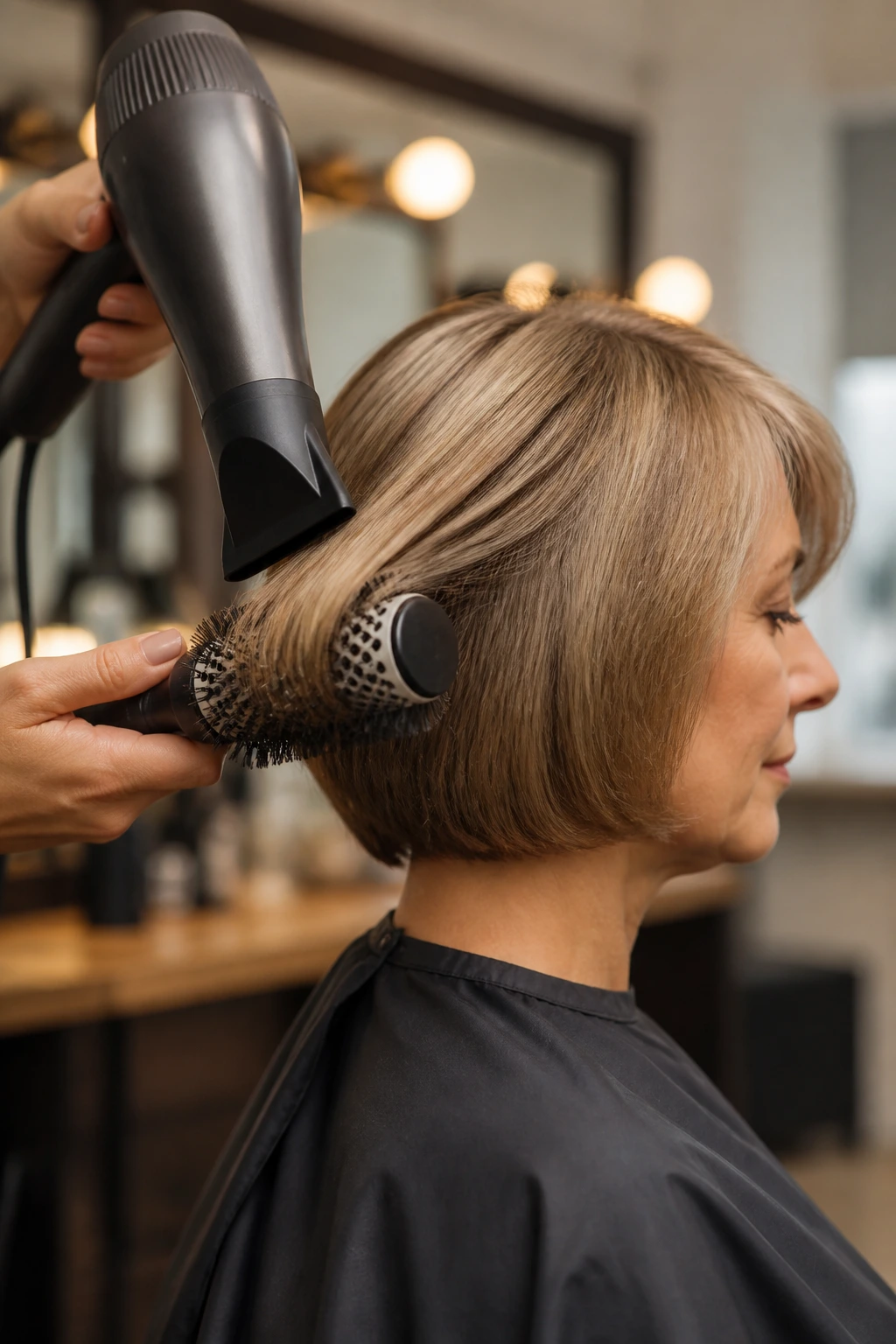
- Blow dryer with a concentrator nozzle: Directs airflow so the hair can be smoothed in the shape of the cut instead of puffing everywhere.
- Round brush, 1.25 to 2 inches: A smaller brush gives a tighter curve; a larger one gives a smoother bend. Fine hair usually likes the middle sizes.
- Root-lift mousse or spray: Gives the crown a little memory without making the hair feel sticky.
- Lightweight heat protectant: Keeps fine strands from frying during blow-drying or ironing.
- Dry shampoo: Useful on day two or day three, but apply it sparingly or the roots will look dusty.
- Velcro rollers or duckbill clips: Handy for letting the top cool with lift after a blow-dry.
- Microfiber towel: Reduces rough drying and frizz at the root.
- Wide-tooth comb: Better than a brush when hair is wet and fragile.
- Light serum or shine mist: A tiny amount on the ends can calm fuzz without flattening the cut.
- Flat iron or small curling iron, optional: Helpful if you want a more polished curve or a slight bend at the face.
How to Ask for the Right Shape in the Salon
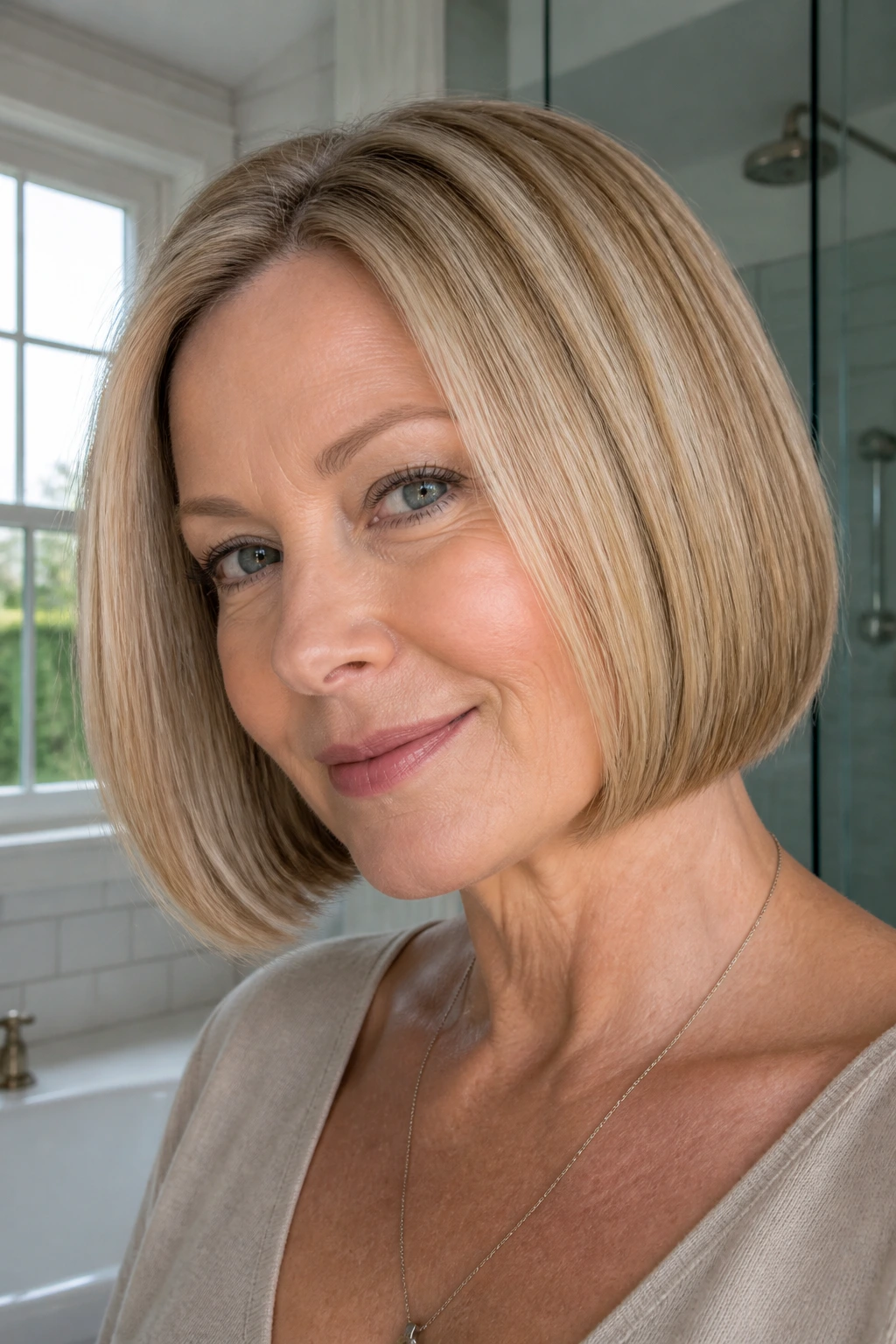
The most useful thing you can tell a stylist is not “I want a bob.” That’s too broad. Say where you want the length to hit, how much styling you’re willing to do, and where your hair gives you trouble.
Tell them whether your hair is fine in strand thickness, low in density, or both. Those are not the same thing. Fine strands need a different cut than thin density, and a good stylist will adjust the amount of layering based on that difference. If you’re prone to flatness at the crown, say so. If your hair starts to puff at the sides, say that too.
Ask for a blunt perimeter with soft internal shaping rather than lots of visible layers. If you want bangs, ask for them to be long enough to blend, not cut into tiny wisps right away. And bring photos that show the shape from the side and back, not just the front. That’s where the roundness lives.
One more thing. Point to the areas you like and dislike on your own head. A good haircut is not just a nice photo. It’s a shape that works with your hairline, your cowlicks, your glasses, your neck, and the amount of time you’re willing to spend in front of a mirror.
How to Wear These Cuts Without Fighting Them
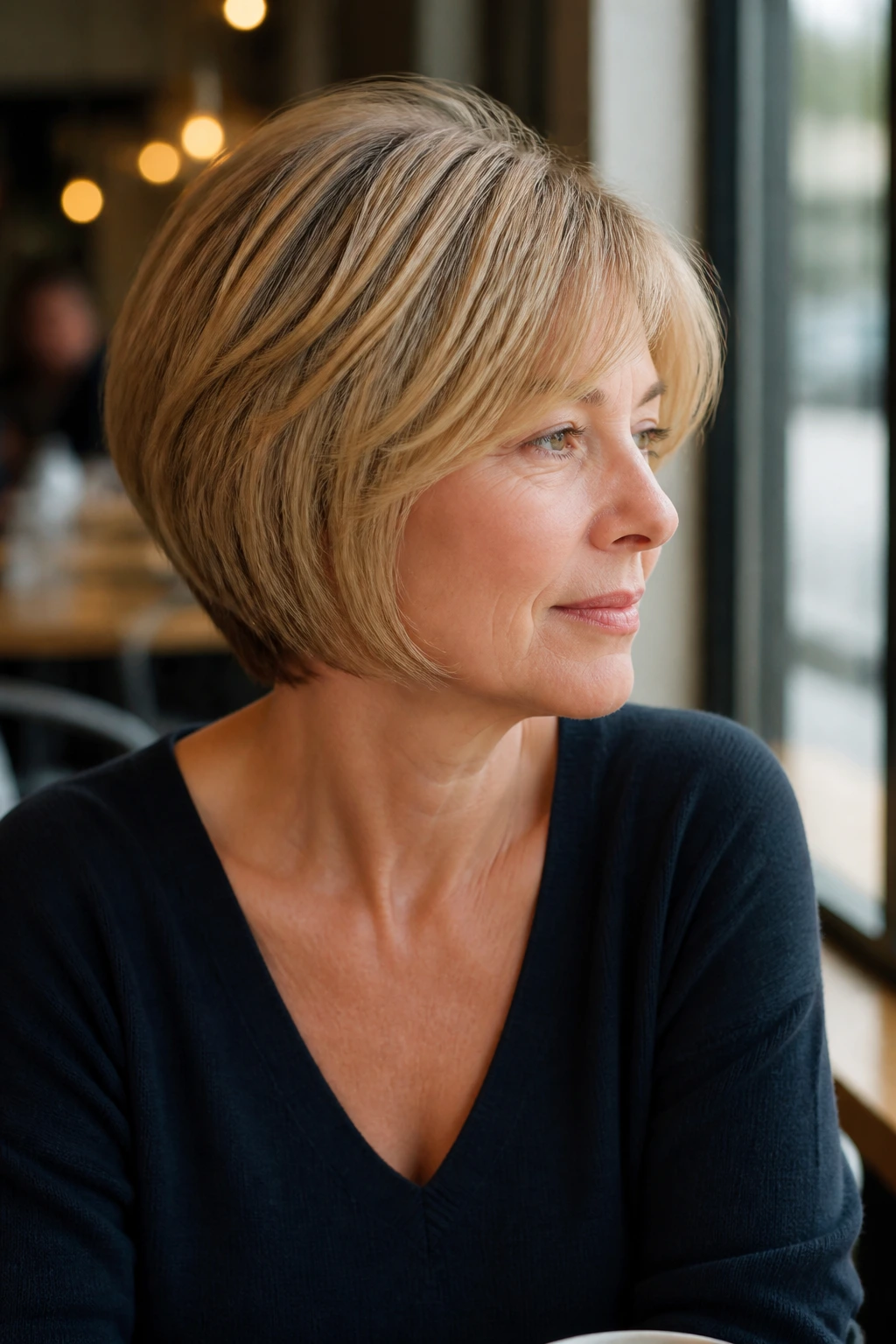
Parting: A deep side part gives the crown more lift, while a soft center part makes the cut feel calmer and a bit more modern. If your roots collapse easily, don’t force a dead-center part every day.
Finish: Sleek, piecey, or softly rounded under — pick one and stay consistent. Fine hair gets tired when it’s asked to do five things at once.
Accessories: Small hoops, slim headbands, and clips that hold one side back can make a bob look deliberate instead of plain. Heavy, bulky barrettes can overwhelm a shorter cut.
Neckline Pairing: Chin-length bobs look strong with open collars and V-necks. Collarbone bobs do well with turtlenecks, crew necks, and structured jackets because the extra length keeps the upper body from feeling too bare.
Day-Two Reset: Mist the roots lightly, warm the hair with your hands, and bend the ends back under with a brush or finger. You do not need to start from scratch every morning.
Tricks That Make Fine Hair Look Fuller

Root Lift: Put mousse or root spray only at the scalp, not through the ends. Fine hair gets dragged down fast when product touches too much of the length.
Cut Strategy: Keep the perimeter blunt and the layers long. If a stylist reaches for thinning shears, ask what problem they’re trying to solve. On fine hair, those shears often create a problem.
Color Placement: Soft highlights around the face and a slightly deeper root can make the bob look thicker. A single flat color sometimes flattens the whole shape, especially on very straight hair.
Drying Direction: Blow-dry the top sections opposite the way they’ll sit, then let them cool in place. That little trick gives the crown a more stable lift than brushing from wet to dry in one direction.
Product Load: Use less than you think. A dime-sized amount of cream can be too much on shoulder-length fine hair. Start small. Add only if the ends still feel rough.
Common Mistakes That Flatten the Shape
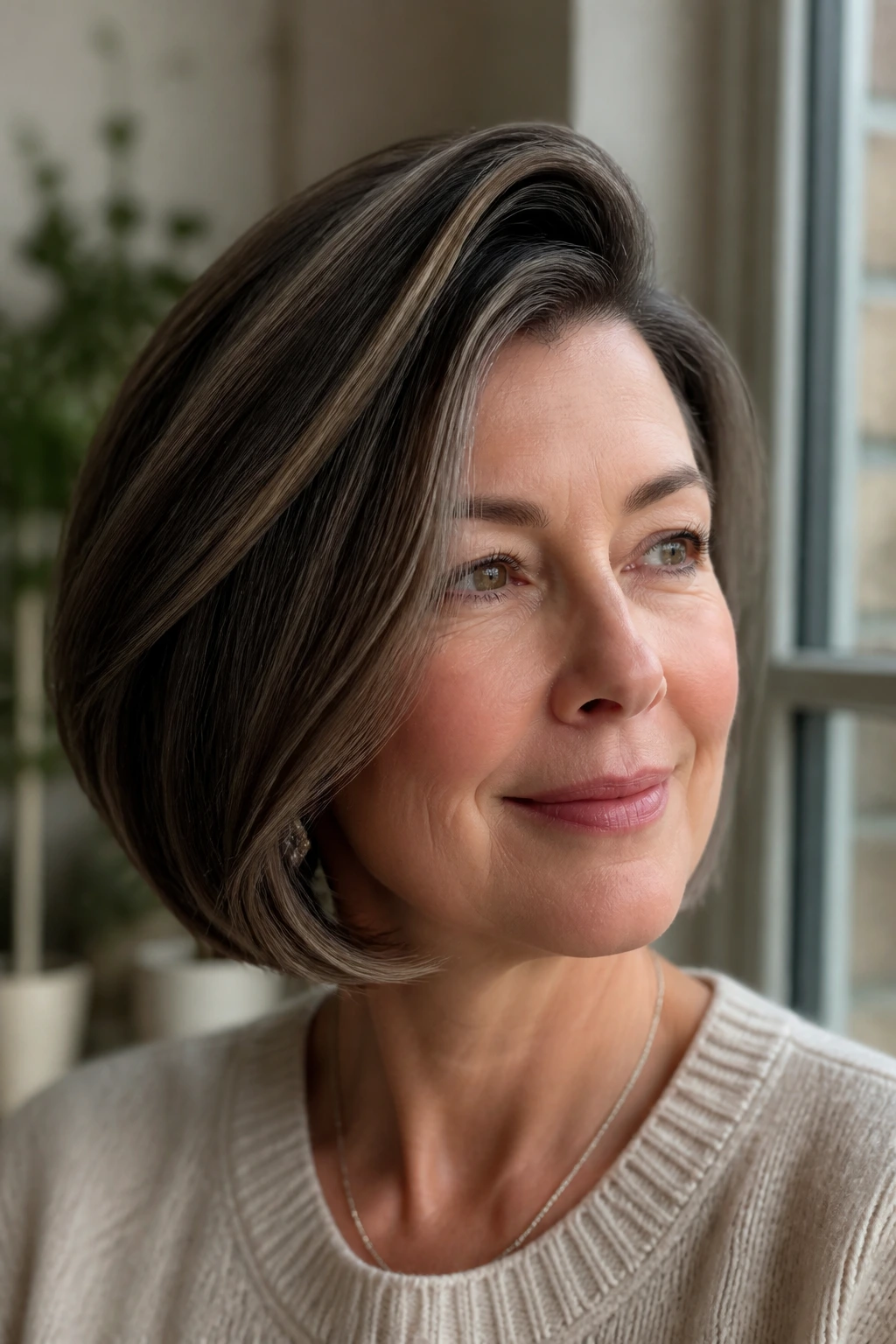
- Too many short layers at the crown: The haircut loses its solid outline and starts to show scalp too easily. Ask for longer internal layers instead.
- A length that lands at the widest part of the jaw: That can make the face look broader. Move the line slightly above or below that point.
- Heavy creams and oils all over the hair: Fine strands clump fast and turn stringy. Put richer products only on the ends, and use them sparingly.
- Bangs cut too thick or too short: They eat density and make the front look sparse. Wispy or side-swept fringe is safer.
- Ignoring trims for too long: The rounded edge grows out into a flat shelf, and once that happens, the whole style loses its shape.
- Overusing razor cuts: Razor texture can fray the ends and make fine hair look frizzier than it really is. Clean scissors usually age better here.
Variations and Adaptations to Try

The Air-Dry Curve: This version keeps the cut soft and relies on the natural bend of the hair. It works well if your hair has a mild wave and you do not want to heat-style every morning. Ask for a blunt perimeter and very light internal shaping.
The Blowout Bob: Built for a brush, this one has a smooth undercurve and a bit more polish. It suits women who don’t mind spending 10 to 15 minutes with a round brush and want the ends to sit in place all day.
The Silver-Glow Shape: This variation leans into gray or silver hair with a glossy finish and a clean line. It’s a good choice if your color already has strong contrast and you want the haircut to look sharp rather than soft.
The Curly-Fine Hybrid: If your hair is fine but forms loose bends, this version keeps the bob round while leaving enough room for the waves to move. The layers should be minimal so the curl pattern doesn’t fray into fuzz.
The Grow-Out Safe Version: This one is cut a touch longer at the front and gentler at the back so it still looks decent after several weeks. It’s the smartest choice if salon visits are spaced out or you’re trying to stretch the time between trims.
Keeping the Curve Between Salon Visits
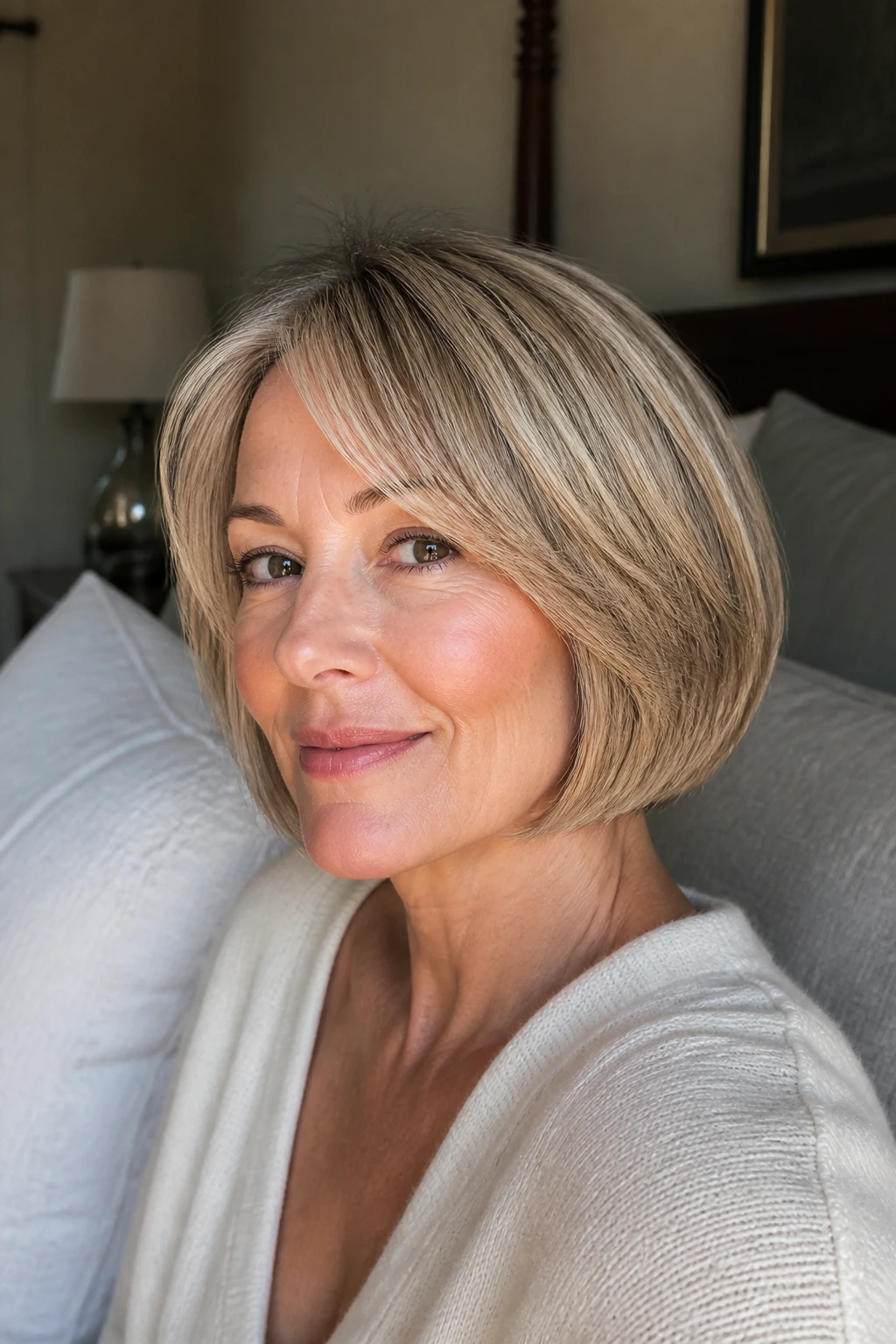
A round bob needs a trim schedule if you want the shape to stay clean. For most fine hair, every 6 to 8 weeks is the sweet spot. That’s usually long enough to keep the haircut from feeling fussy and short enough to stop the ends from collapsing into a flat shelf.
If you wear bangs, they’ll likely need attention sooner. A fringe can grow into your eyes in 3 to 4 weeks, especially if it’s wispy and short. You can sometimes stretch that by drying the bangs first and rolling them under with a small brush, but only to a point. Once the line disappears, it disappears.
Wash frequency depends on how much oil your scalp makes, but fine hair often looks best when it’s cleaned often enough to stay light. Product buildup is the enemy of this style. If the roots start to look dull or the ends go sticky, use a clarifying shampoo about once every 2 to 3 weeks, then follow with a light conditioner on the lower half only.
Sleep matters too. A silk pillowcase or a loose clip at the crown can keep the bob from going flat overnight. In the morning, mist the roots lightly and re-bend just the ends if they’ve gone straight. You’re not rebuilding the haircut. You’re giving it back its line.
Questions People Ask About Round Bobs

Is a round bob better than a blunt bob for fine hair?
Usually, yes, if you want softness around the face. A blunt bob can look thicker at the ends, but a round bob often feels easier to wear because the curve prevents the style from looking boxy.
Can women with round faces wear a round bob?
They can, but the length and part matter. A chin-length bob with a side part or a little forward angle usually flatters better than a perfectly centered, uniform shape.
Should fine hair have layers in a bob?
Only lightly. Fine hair tends to look better with long internal layers or soft shaping than with lots of short, visible layers that break up the perimeter.
What length makes fine hair look thickest?
For many women, the chin to jaw area is the strongest zone. Hair still has enough weight to look full there, and the curve of the head helps the ends sit neatly.
Can I air-dry a round bob?
Yes, if the cut is built for it. You’ll get the best result when the perimeter is clean and the layers are minimal, because the shape has to do the work without heat.
Will bangs make my fine hair look thinner?
They can if they’re too short or too sparse. Long, wispy bangs or curtain bangs usually work better because they blend into the cut instead of eating up density.
How often should I trim it?
Every 6 to 8 weeks is a good rhythm for most round bobs. That keeps the curve visible and stops the ends from drooping.
Does this cut work with glasses?
Very well, especially chin-length and collarbone-length versions. Just keep the fringe from crowding the frames, or the whole front can feel busy.
The Shape That Keeps Its Own Lines
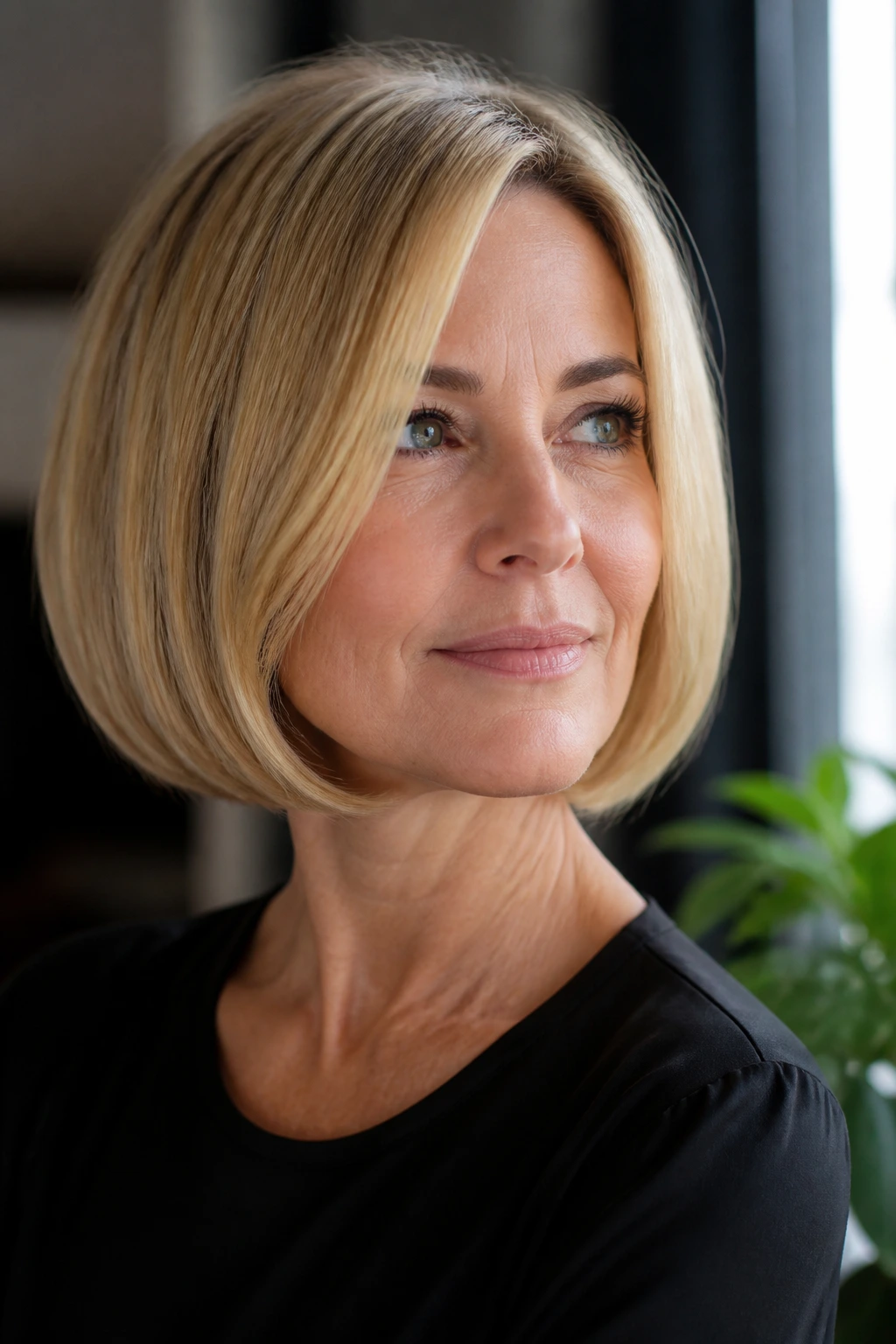
A good round bob doesn’t try to make fine hair into something else. It gives the hair a shape it can actually hold. That’s why the blunt edge matters, why the curve matters, and why the length has to land in the right place instead of somewhere random because the stylist “wanted to keep it soft.”
The best part is that this cut doesn’t need to look severe to feel strong. It can be polished, piecey, tucked, blown under, or left a little loose around the face. That flexibility is what makes it so useful on hair that has thinned a bit, softened a bit, or simply stopped cooperating the way it used to.
If you’re ready to choose one, start with the version that matches how you actually wear your hair most mornings. That’s the one that will keep making sense after the salon mirror fades from memory.