



A blunt lob that lands right on the jaw can turn thick hair into a shelf fast. On a square face, that shelf is even less forgiving, because the eye reads the whole width of the face and hair as one block instead of two separate shapes.
That is exactly why choppy lobs for square faces and thick hair need a little thought. The right cut doesn’t hide the jaw. It interrupts it. It breaks the line with movement, starts the weight in the right place, and keeps the perimeter from sitting like a helmet around the face.
I like this category because it gives you options without forcing you into mushy, over-layered hair. Some versions stay clean and polished. Others look a bit shaggy and undone. The common thread is balance: enough texture to soften strong angles, enough length to keep thick hair from puffing out at the sides, and enough shape that you can still tell a deliberate cut from a random chop.
Why These Lobs Earn Their Keep
-
They break up a strong jawline: A lob that lands below the jaw interrupts the straight horizontal line that can make a square face look boxy.
-
They handle thick hair without making it fluffy: Choppy ends and internal layers remove bulk where it matters, so the cut moves instead of ballooning.
-
They can be worn smooth or rough: A good lob still reads well when you blow it out straight, bend the ends, or air-dry it with a little grit.
-
They grow out cleanly: When the length starts at the collarbone or just above it, the shape usually stays decent for weeks instead of collapsing after one trim cycle.
-
They give you room to choose your mood: You can lean sharp, soft, messy, sleek, or slightly shaggy without changing the whole cut.
Why Choppy Lobs Work on Square Faces and Thick Hair

A square face is mostly about structure. The forehead, cheekbones, and jaw tend to sit in a similar width range, which is why a cut with hard corners can start looking architectural in a bad way. You do not need to erase that structure. You need to bend the eye around it.
The Jawline Problem
The trouble starts when the longest point of the hair lands exactly at the jaw. That’s where thick hair often wants to sit on its own, and it creates a thick horizontal line right where a square face is already strongest.
Move the cut lower, and the whole picture changes. Even an inch or two below the jaw gives the face more vertical movement, and that tiny shift makes the difference between “boxy” and “intentional.”
Why Thick Hair Changes the Math
Dense hair carries its own weight. If the stylist only adds surface layers, the top can spring up while the bottom stays bulky, and you get a triangle instead of a lob. That is the shape nobody wants.
What works better is internal weight removal, point cutting, and layers that are placed with a purpose. The perimeter stays visible. The mass moves around inside it. That’s the sweet spot.
Where the Length Should Land
My rule on this face-and-hair combo is simple: keep the front below the jaw and the overall length around the collarbone or just above it. That gives you enough drop to soften the face and enough weight to control thick hair.
If your hair is coarse, I’d push the length a little longer. If it’s thick but soft and wavy, you can go a touch shorter without getting the puff. Shorter than the jawline is where the shape starts to shout instead of whisper.
What to Tell Your Stylist Before the First Snip
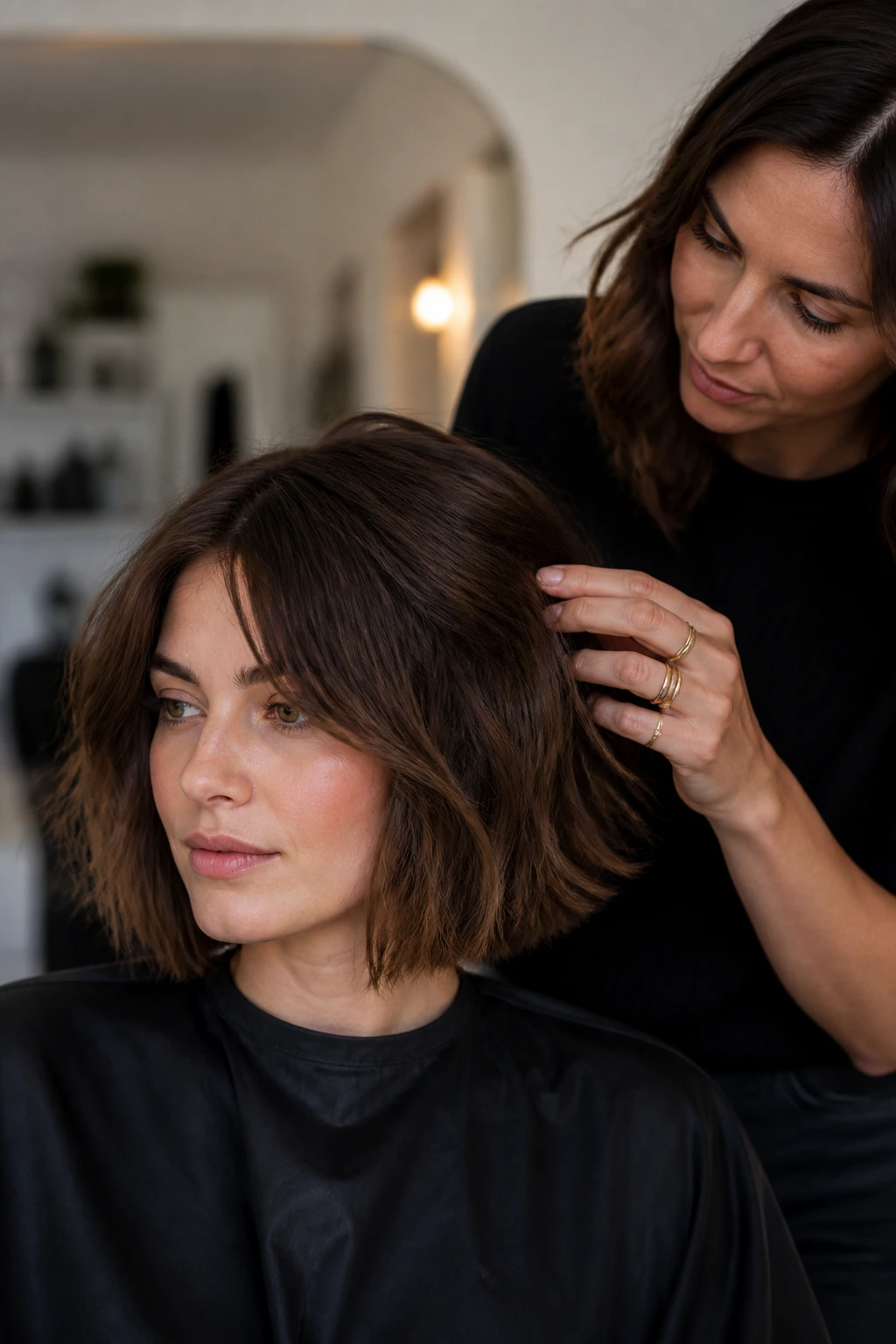
Words matter here. Photos help, sure, but the right phrases save a lot of regret.
Tell your stylist you want movement without a mushroom shape. That one sentence already steers the cut away from too much volume at the sides.
A few useful specifics:
-
Keep the longest length at the collarbone or just below it. That keeps the lob from sitting directly on the jaw.
-
Remove bulk from the inside, not by hacking at the perimeter. Thick hair needs structure, not random thinning at the bottom.
-
Start face-framing pieces below the cheekbone if your jaw is strong. If the front layers begin too high, they can widen the face.
-
Use point cutting or slide cutting on the ends. A hard blunt line can look too stiff on square faces unless the rest of the cut is doing a lot of work.
-
Leave enough length for bends. If you like a flat-iron wave or a loose curl, the cut should still move after you style it.
Bring side and back photos too. A lob that looks soft from the front can still sit heavy in back if the internal shape is wrong, and that is the part most mirror-only consultations miss.
1. Collarbone Shatter Lob
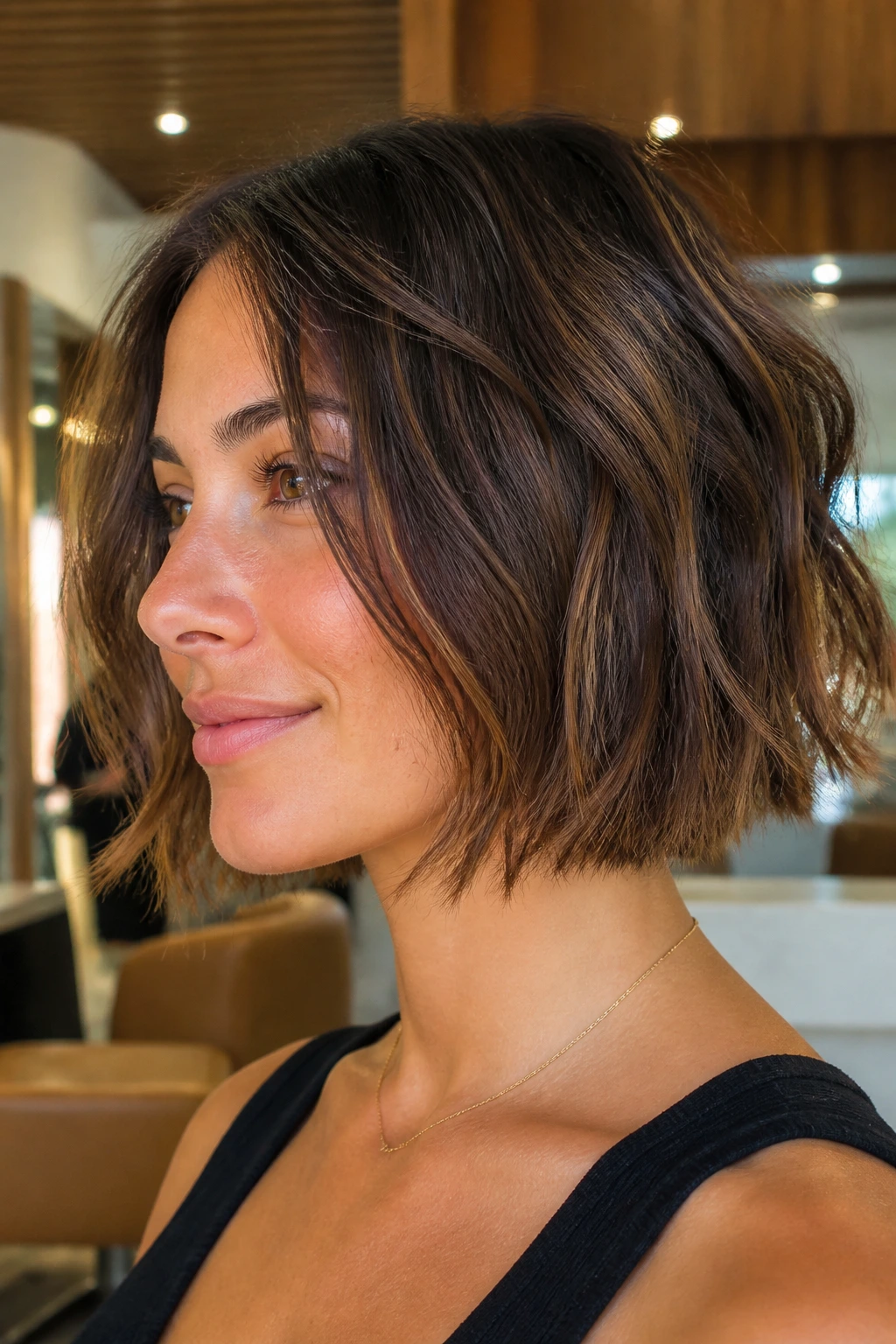
This is the one I reach for first when thick hair feels too heavy. The length drops just below the collarbone, and the ends are chipped enough that the shape moves instead of forming a shelf. On a square face, that extra length softens the lower edge without dragging the style into long-hair territory.
The best version keeps the front pieces a touch longer than the back and uses point cutting through the bottom two inches. You still get density. You just lose the blocky feel. If your hair likes to swell in humidity, this cut gives you room to control it without chasing every strand with a flat iron.
2. Soft A-Line Lob
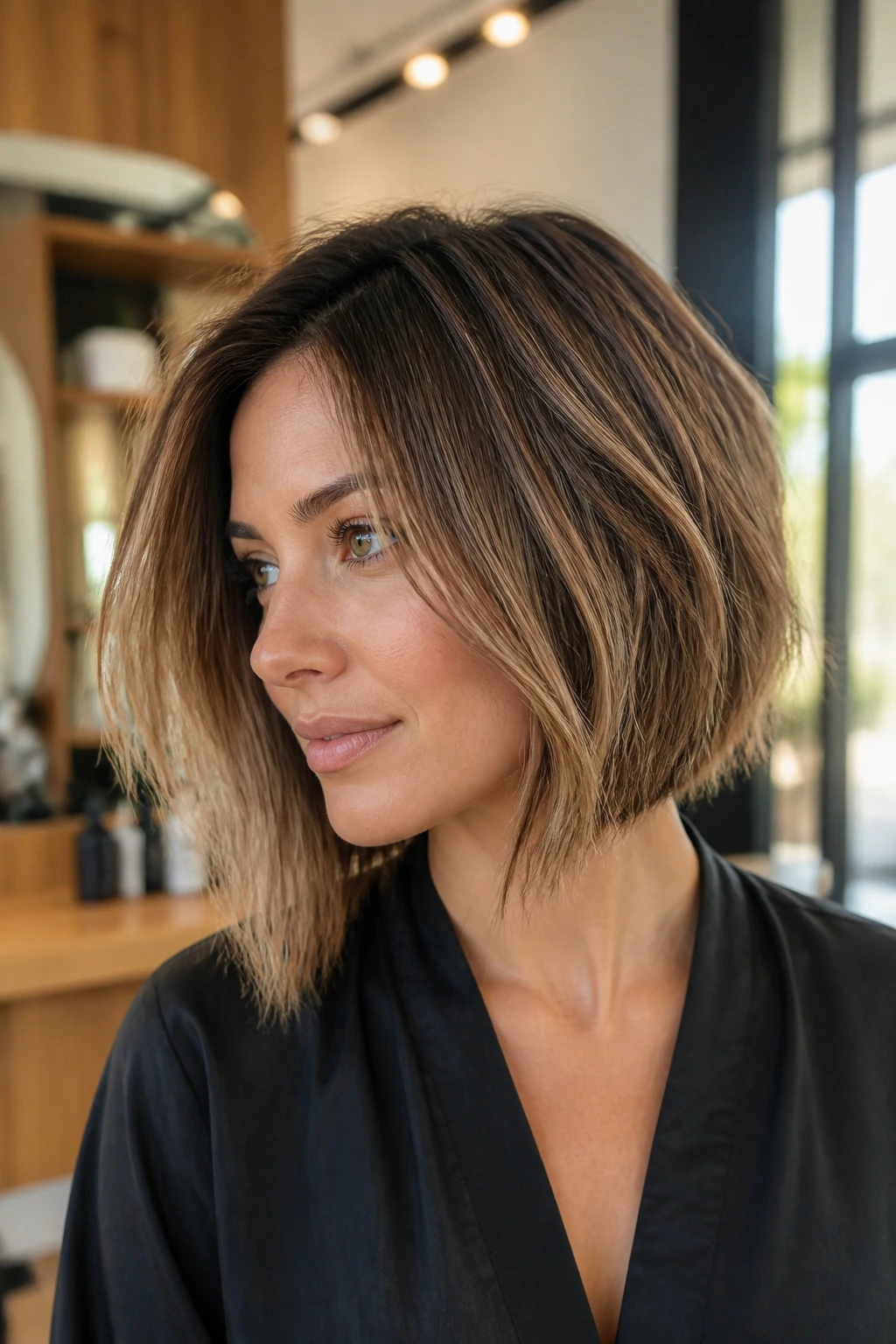
A sharp A-line can be a little too severe here, so I prefer a softened version. The back sits a bit shorter, the front drifts longer, and the diagonal line keeps the eye moving instead of landing on one hard corner.
It suits thick hair because the back doesn’t have to carry as much weight. It suits square faces because the front pieces lengthen the line of the cheek and jaw. Ask for the diagonal, then ask the stylist to rough up the ends just enough that it doesn’t read like a textbook bob from the front.
3. Curtain-Bang Lob

Curtain bangs are popular for a reason: they open the center of the face and let the sides fall away in a soft arc. On a square face, that matters. The bang shape pulls attention upward and inward, which means the jaw gets less of the spotlight.
For thick hair, keep the curtain pieces long enough to blend into the lob, usually somewhere between the nose and cheekbone at the shortest point. Too short and they puff. Too thick and they sit like a curtain rod with opinions.
4. Razor-Textured Lob
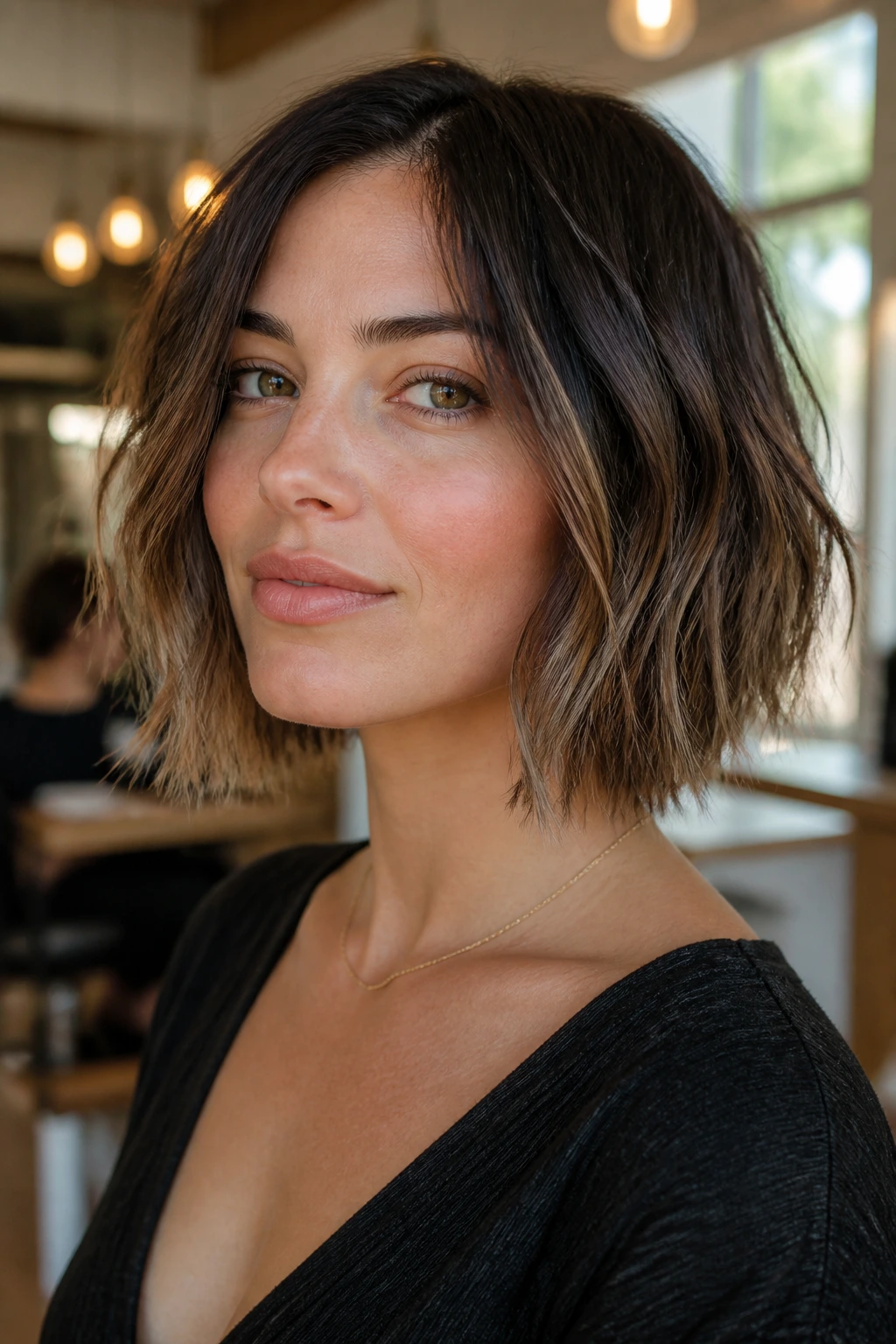
A razor cut can be gorgeous on dense hair, but only if the person holding the razor understands your texture. Done well, it shaves away stiffness and leaves the ends light enough to separate. Done badly, it frays the perimeter and makes thick hair look fuzzy by noon.
I like this version on straight-to-wavy hair that needs air around the ends. On square faces, the irregular edge helps blur the geometry, which is the whole point. Just keep the length below the jaw. Razor texture at jaw length is where things get boxy again.
5. Face-Framing Cascade Lob
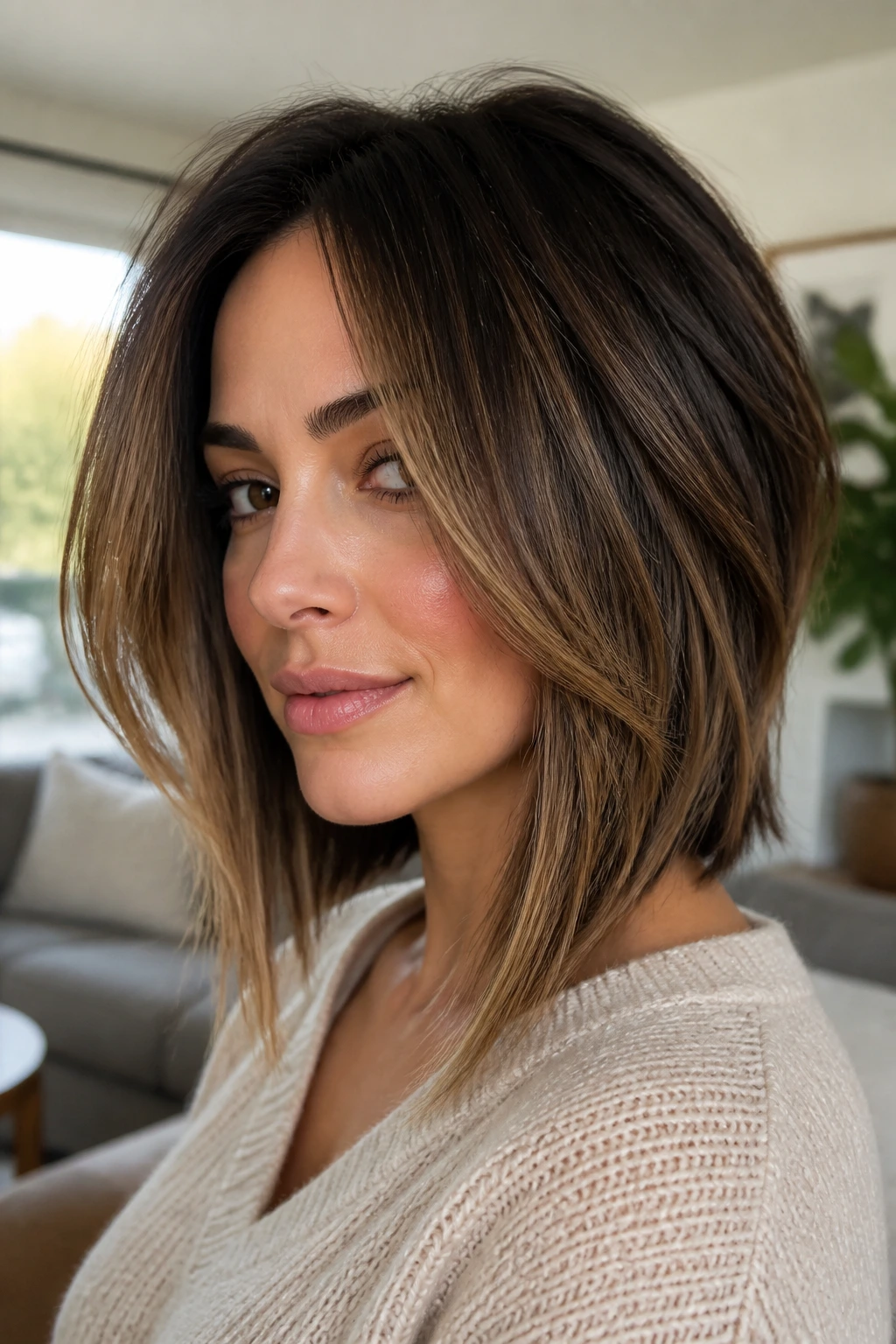
This one uses longer front layers that begin around the chin or just below it, then taper into the rest of the cut. It’s a smart move if your square face feels strongest at the jaw, because the front pieces create a softer fall line without forcing you into heavy bangs.
Thick hair benefits because the cascade redistributes weight. Instead of one dense curtain around the face, you get movement that travels from cheek to collarbone. It’s one of those cuts that looks calm from across the room and more interesting up close.
6. French Lob with Airy Ends

A French lob is less about rigid shaping and more about the feeling of it. The perimeter usually sits near the collarbone, the layers are light, and the ends don’t look freshly ironed flat. That loose finish keeps square faces from looking too angular.
The trick with thick hair is to keep the ends airy, not sparse. You want a bit of separation at the tips and a little bend through the middle, not a feathery mess. If your hair is coarse, this cut needs smoothing cream only at the ends. The roots should stay clean.
7. Deep Side-Part Lob
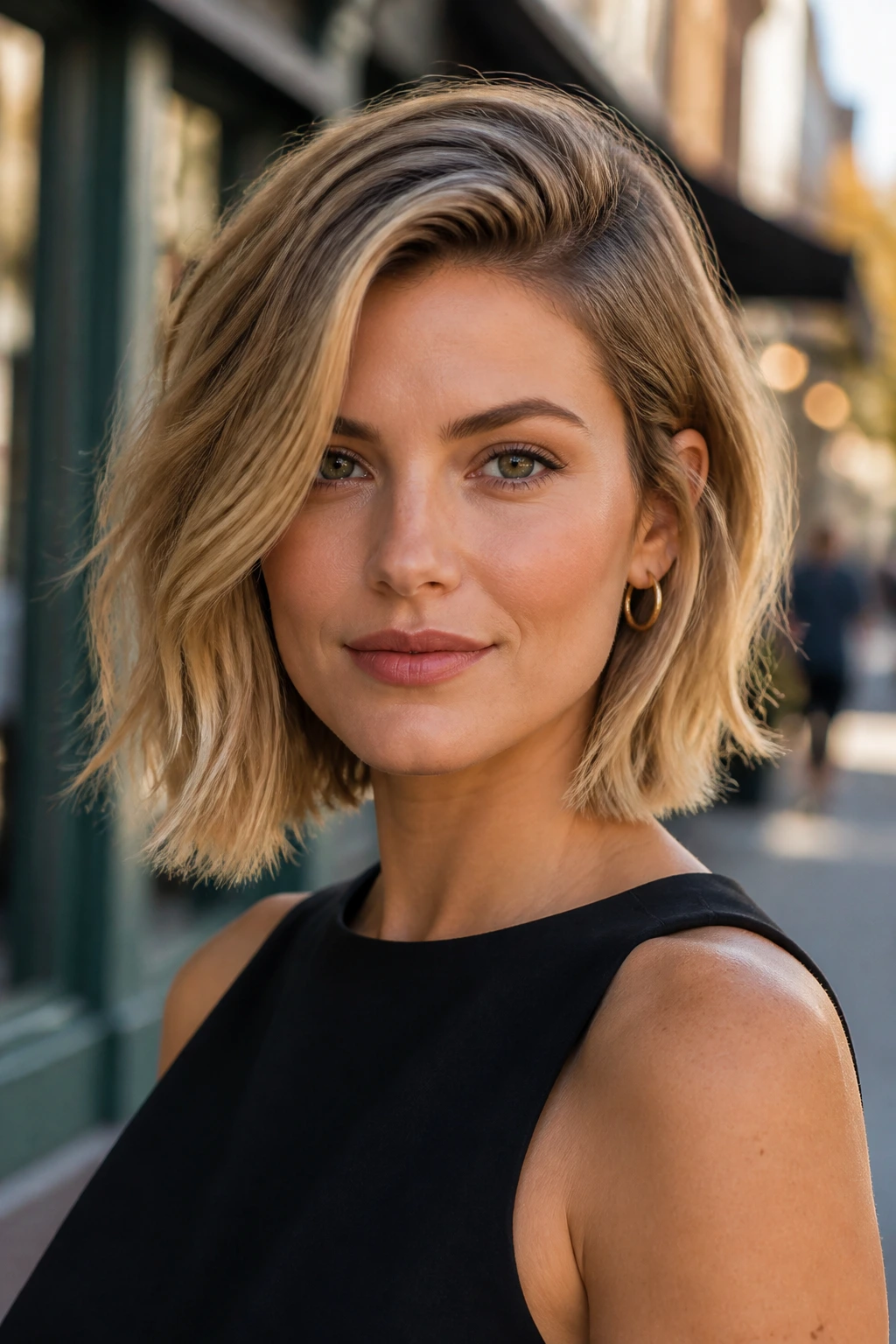
A deep side part changes the whole face. It shifts volume to one side, breaks the symmetry, and makes square angles feel softer because the hair stops matching the face so exactly. That asymmetry is doing real work.
This is also a smart option if your thick hair tends to sit too wide at the temples. A side part and a bend through the front create a diagonal line that narrows the upper half of the face a bit. It’s not dramatic. It doesn’t need to be.
8. Piecey Wave Lob
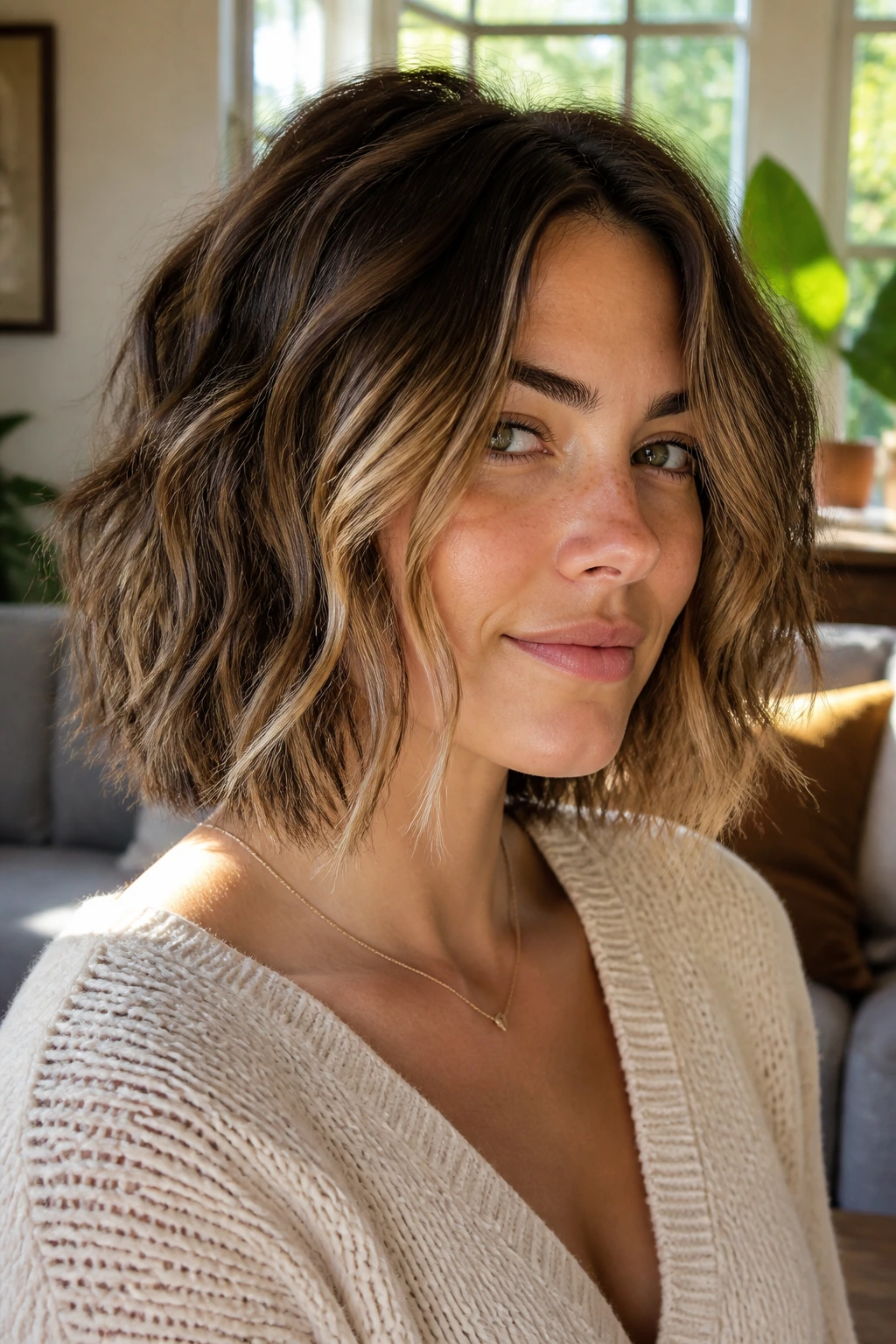
If you like hair that looks touched, not shellacked, this is your lane. The cut itself stays simple, but the finish is all about separated bends, broken ends, and a little irregularity through the mid-lengths.
Square faces benefit because piecey texture interrupts the hard outline at the jaw. Thick hair benefits because the waves spread out the bulk instead of stacking it. I’d style this with a 1.25-inch iron and only bend the front half of the hair. Leave the ends a little imperfect. That’s the point.
9. Underlayer Lob
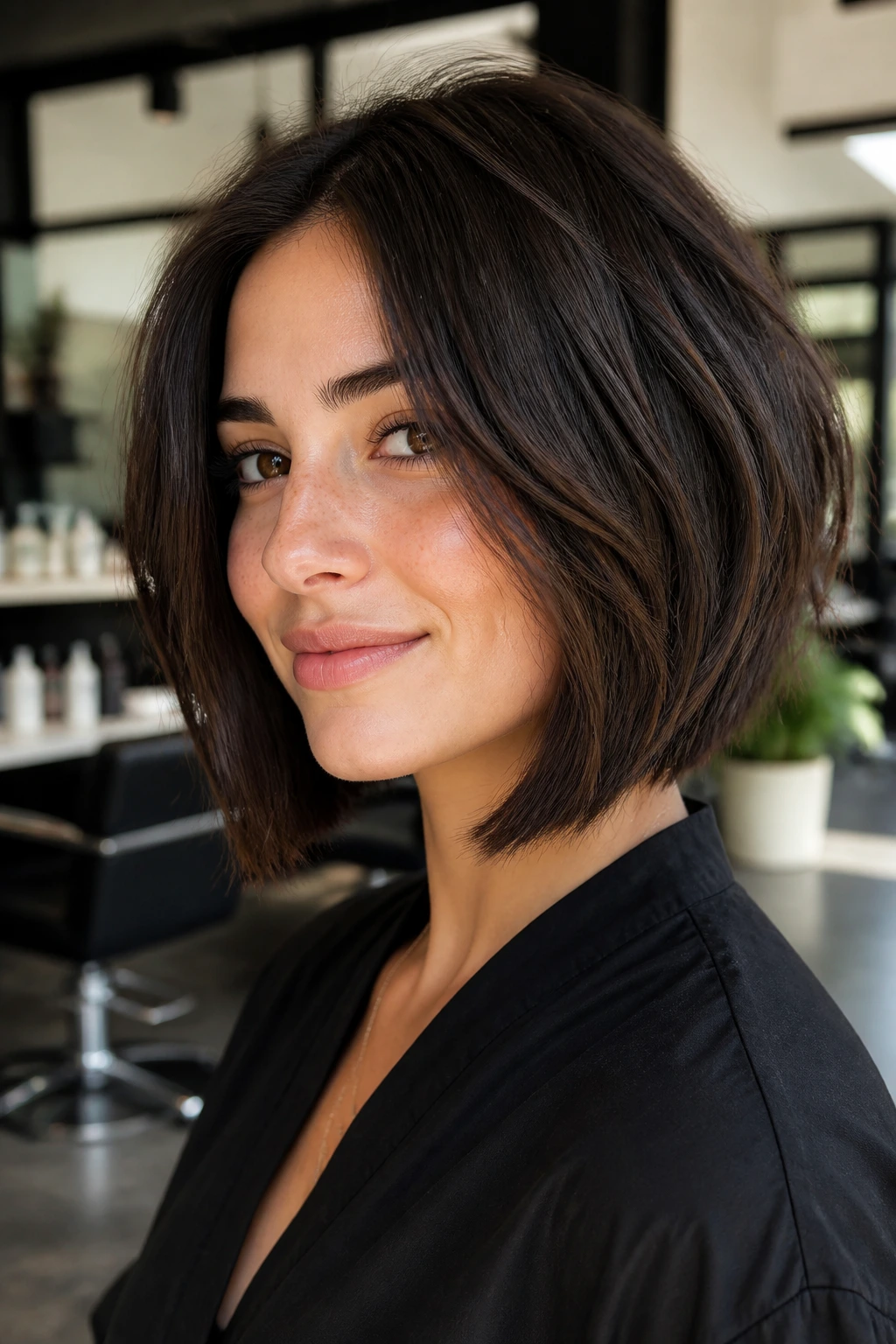
This is one of the smartest cuts for very dense hair. The stylist removes weight from underneath so the top layer keeps its shape while the inside stops fighting you. The result is movement without a fluffy outline.
On square faces, an underlayer lob works because the shape stays controlled and doesn’t flare out at the sides. You get a cleaner silhouette around the jaw, which is exactly where thick hair often wants to bulk up. It’s a quiet cut, but it behaves better than louder ones.
10. Invisible-Layer Lob
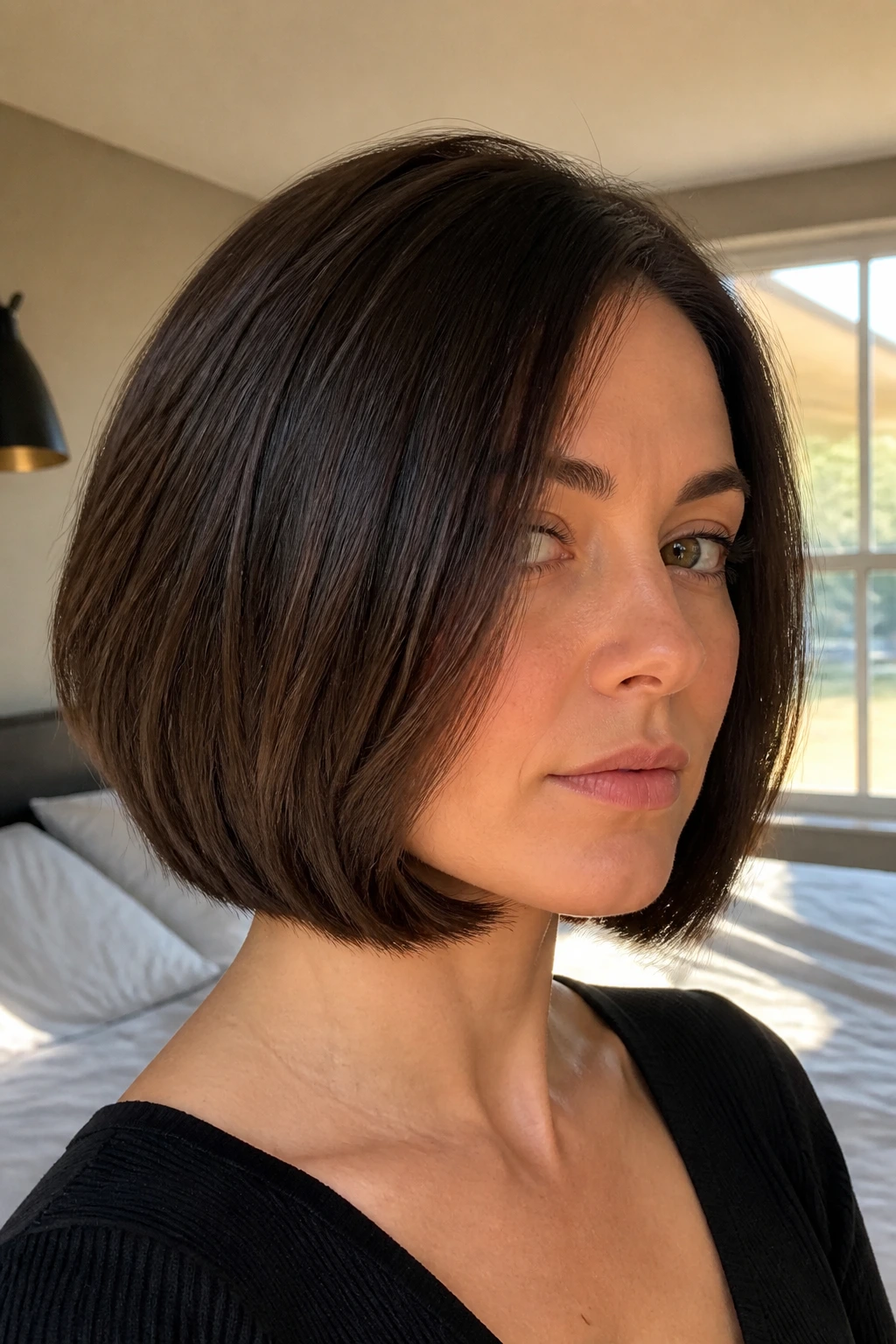
Invisible layers are the answer when you want the hair to look mostly one length but behave like it has more freedom. The top surface stays smooth, while hidden sections underneath lose enough weight to keep the whole style from feeling heavy.
That makes it a good match for square faces that need softness without obvious feathering. It’s also very kind to thick hair because the outer line stays tidy. If you hate seeing obvious layer steps, this is a strong choice. The trick is to keep the longest pieces long enough that the cut still reads as a lob, not a shag with a deadline.
11. Bottleneck-Bang Lob
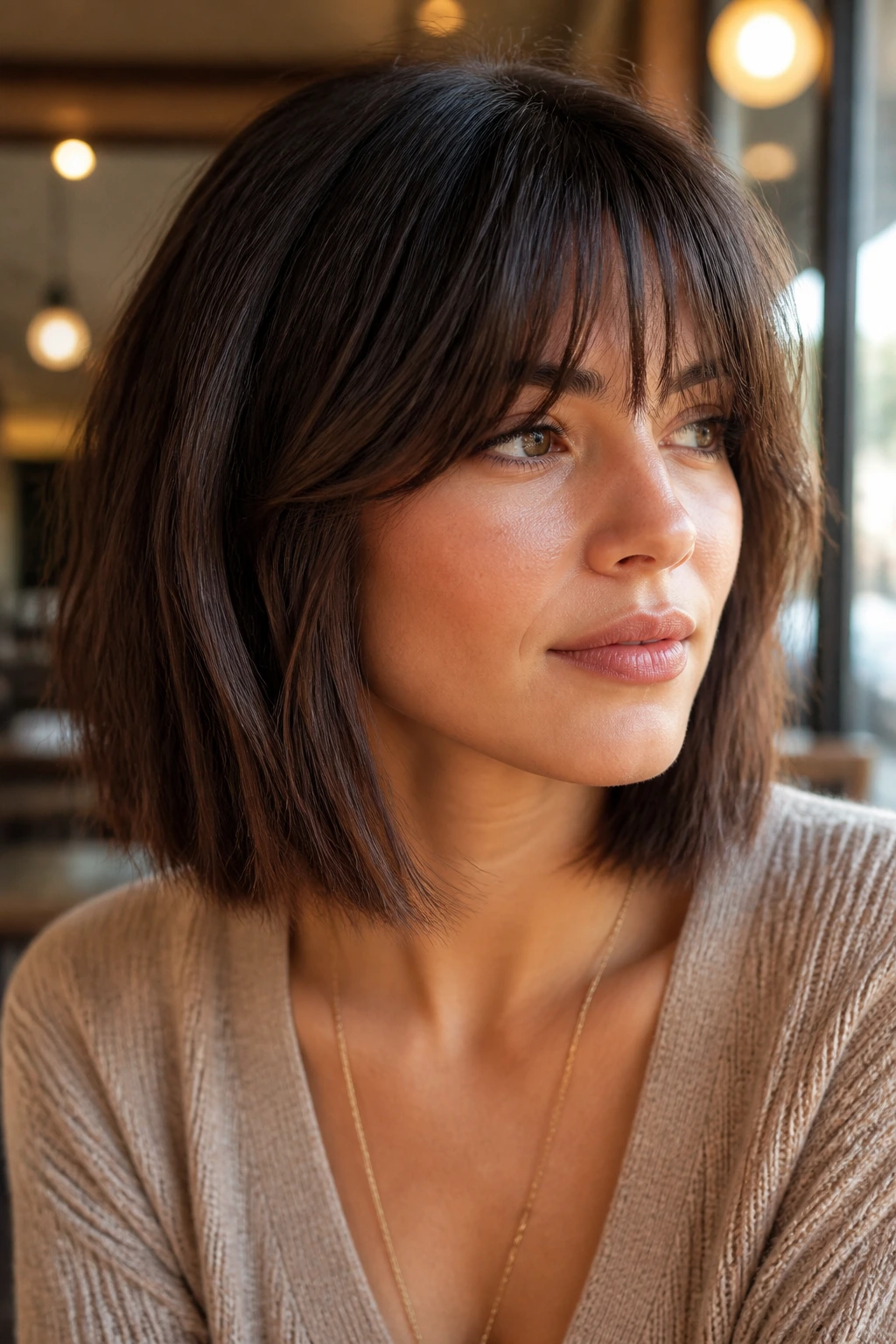
Bottleneck bangs start narrow in the center and open out as they move toward the temples. That shape is gentler than a full straight fringe, and on a square face, gentler usually wins.
The cut underneath should stay collarbone length or slightly shorter. Thick hair works well here because the fringe breaks up the forehead width while the lob keeps the sides from puffing. If your hair grows fast at the front, this is one of those styles that needs regular dusting around the bangs so the shape doesn’t get heavy.
12. Flipped-End Lob

A flipped-end lob gives you movement without forcing curls into the equation. The ends turn slightly out or under, and that little bend keeps the shape from sitting flat against a square jawline.
It’s especially good when thick hair feels stubborn after a blow-dry. One smooth bend at the bottom can make the whole cut look more relaxed. I like this version with a side part or a soft center part, because both keep the flip from reading too retro. Keep the flip subtle. Too much and it starts to look staged.
13. Center-Part Tousled Lob

A center part can work on a square face if the rest of the cut does enough softening. That means the front pieces need to fall below the jaw, and the texture needs to stay loose enough that the line doesn’t get too straight.
On thick hair, the center part gives the style balance, but the tousled finish keeps it from feeling severe. This is one of those cuts that looks better after a little movement through the crown and front. If your hair naturally wants to part in the middle, don’t fight it. Just give it softer edges.
14. Asymmetrical Lob
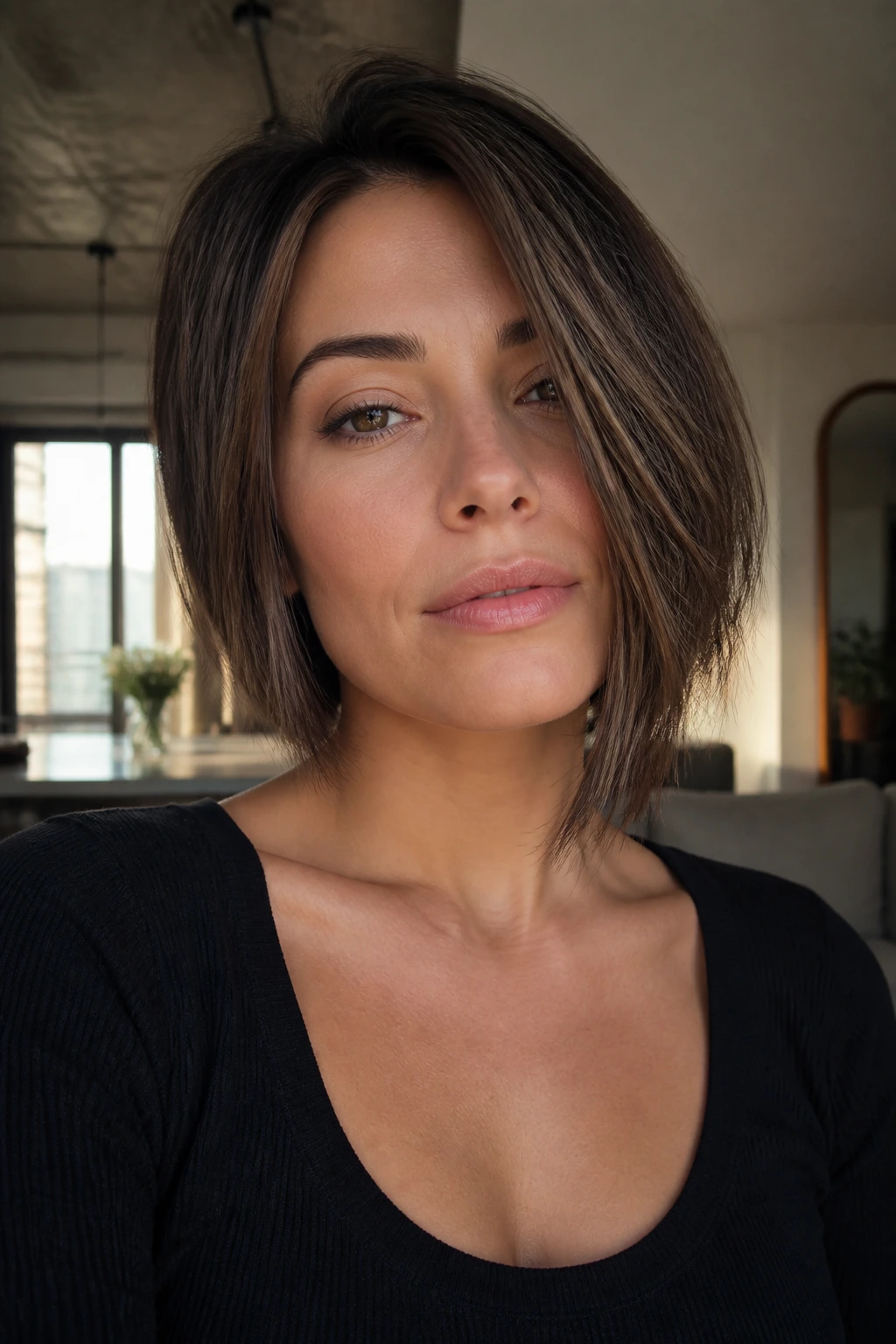
A small asymmetry goes a long way on a square face. Even a slight difference between the two sides changes how the face reads, because the eye stops measuring both halves the same way.
This cut also helps thick hair because it removes the feeling of equal bulk on both sides. I prefer a subtle asymmetry over anything theatrical. One side can drop an inch longer than the other, and that is usually enough. If the difference is too big, the shape starts to feel costume-like. A little tilt is plenty.
15. Textured Blunt Lob

Blunt and choppy sound like they should fight each other, but they can work together beautifully when the lines are handled correctly. The perimeter stays clean, yet the ends are point-cut so the edge doesn’t sit like a hard board.
This is one of the better options for very thick, straight hair because the blunt line keeps the hair from ballooning outward. On a square face, the texture softens the jaw while the clean outline keeps the whole style modern and crisp. The length should stay a little below the chin. Any higher, and the bluntness becomes the whole story.
16. Airy Shag Lob

This is the looser cousin in the group. It has more movement through the crown and mid-lengths, so thick hair gets the chance to breathe instead of building into one heavy block.
Square faces need a little caution here. If the layers at the crown get too short, the face can look wider, not softer. The fix is to keep the top layers longer and let the texture live mostly through the sides and ends. Done right, the airy shag lob has that lived-in, broken-up shape that thick hair often needs.
17. Side-Swept Fringe Lob

A side-swept fringe shifts the eye diagonally across the face, which is useful when the jawline is strong. It softens the upper half of the face and gives the lob a little motion before you even touch the rest of the cut.
I like this version when a full curtain bang feels like too much maintenance. Thick hair holds a side-swept fringe well, especially if the fringe is kept light at the root and a bit longer at the cheekbone. The rest of the lob can stay simple. The fringe does the talking.
18. Weightless Crown Lob
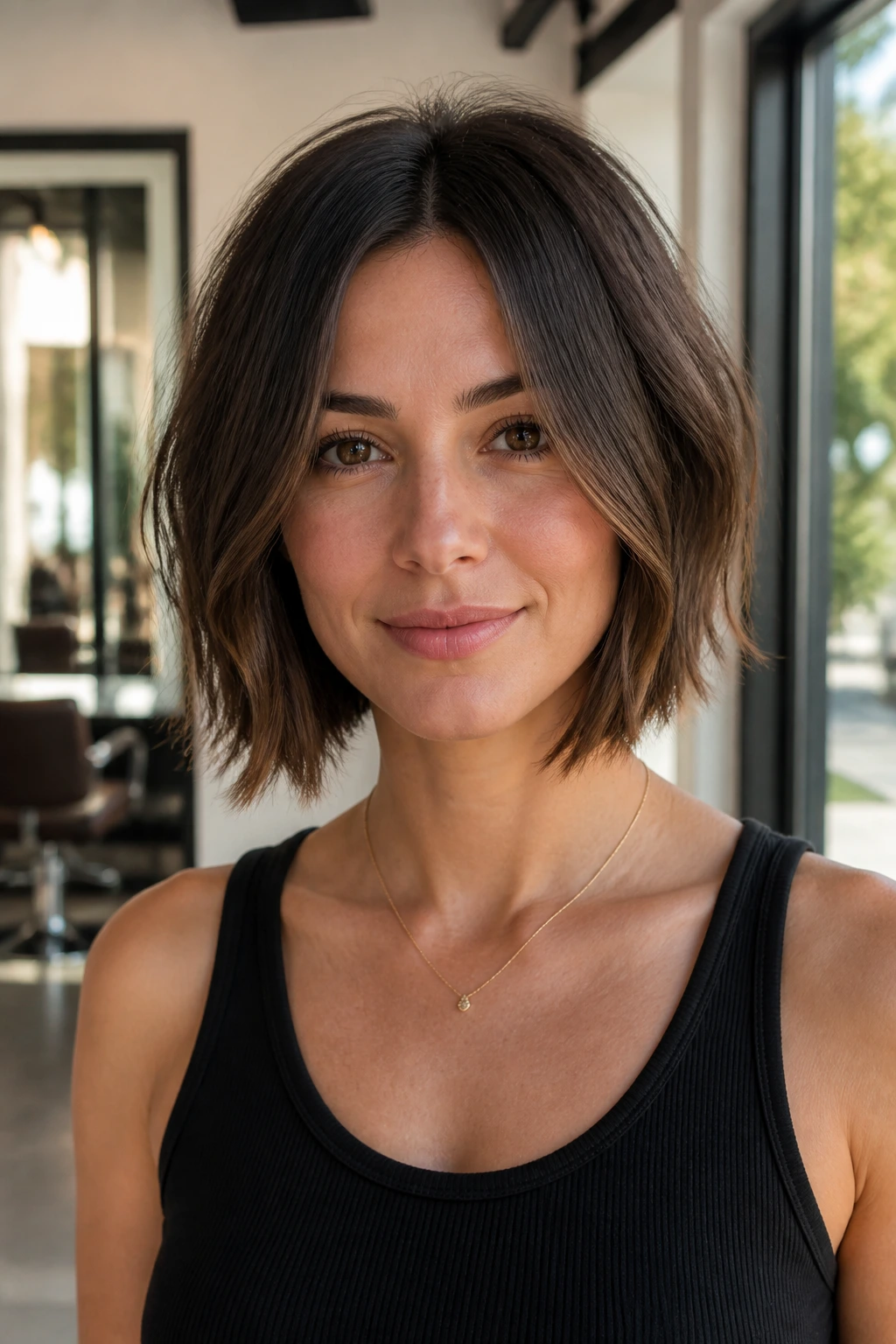
Some thick hair needs more bulk removed from the top than from the ends. That sounds backward until you see it dry. If the crown is too heavy, the style can sit flat up top and swell at the sides.
A weightless crown lob fixes that with internal shaping and careful sectioning near the top layers. The goal is not volume for its own sake. It is balance. On a square face, this cut keeps the silhouette from looking top-heavy, and that matters more than most people realize.
19. Long-Front Angled Lob

This is the version for anyone who wants a bit more edge without losing softness. The front angles forward enough to lengthen the face, but the angle stays long and gentle instead of sharp.
Thick hair benefits because the front pieces can carry the shape while the back stays controlled. Square faces benefit because the longer front lengths make the jaw feel less square on the page, so to speak. I would keep the angle subtle and the texture broken at the ends. Too steep, and the cut becomes the whole personality.
20. Sleek Jagged-End Lob
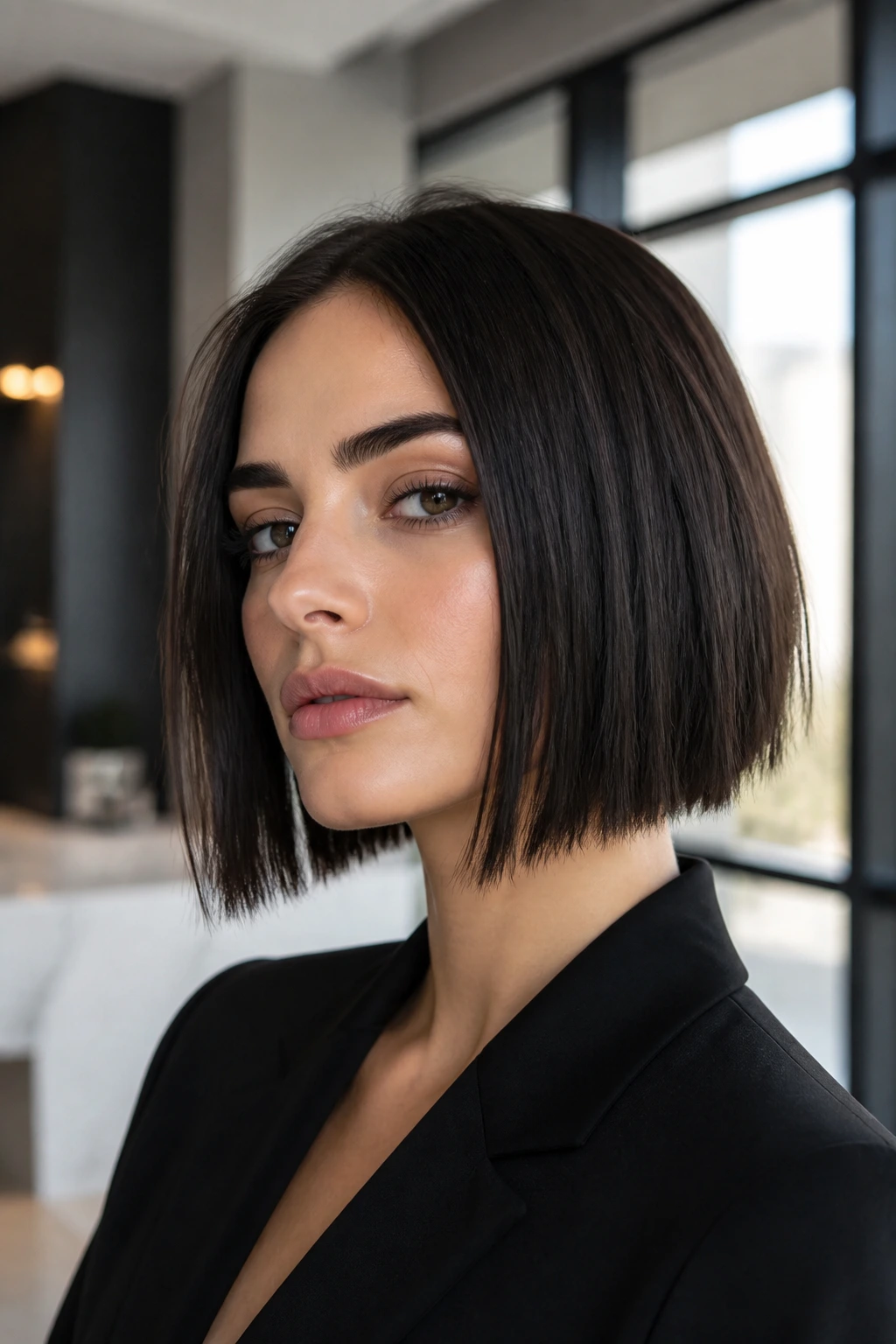
This one has a cleaner surface than most of the cuts on this list, but the ends are deliberately broken up. That’s useful if you like a polished finish and still want some edge to stop the hair from looking like one solid block.
The contrast matters on thick hair. A sleek surface keeps the bulk in check, while jagged ends keep the line from going too stiff. For square faces, that slight roughness at the bottom softens the jaw without asking for waves or curls. It’s one of my favorites for people who wear sharp collars, structured jackets, or anything that already has a lot of lines.
21. Dry-Cut Wavy Lob
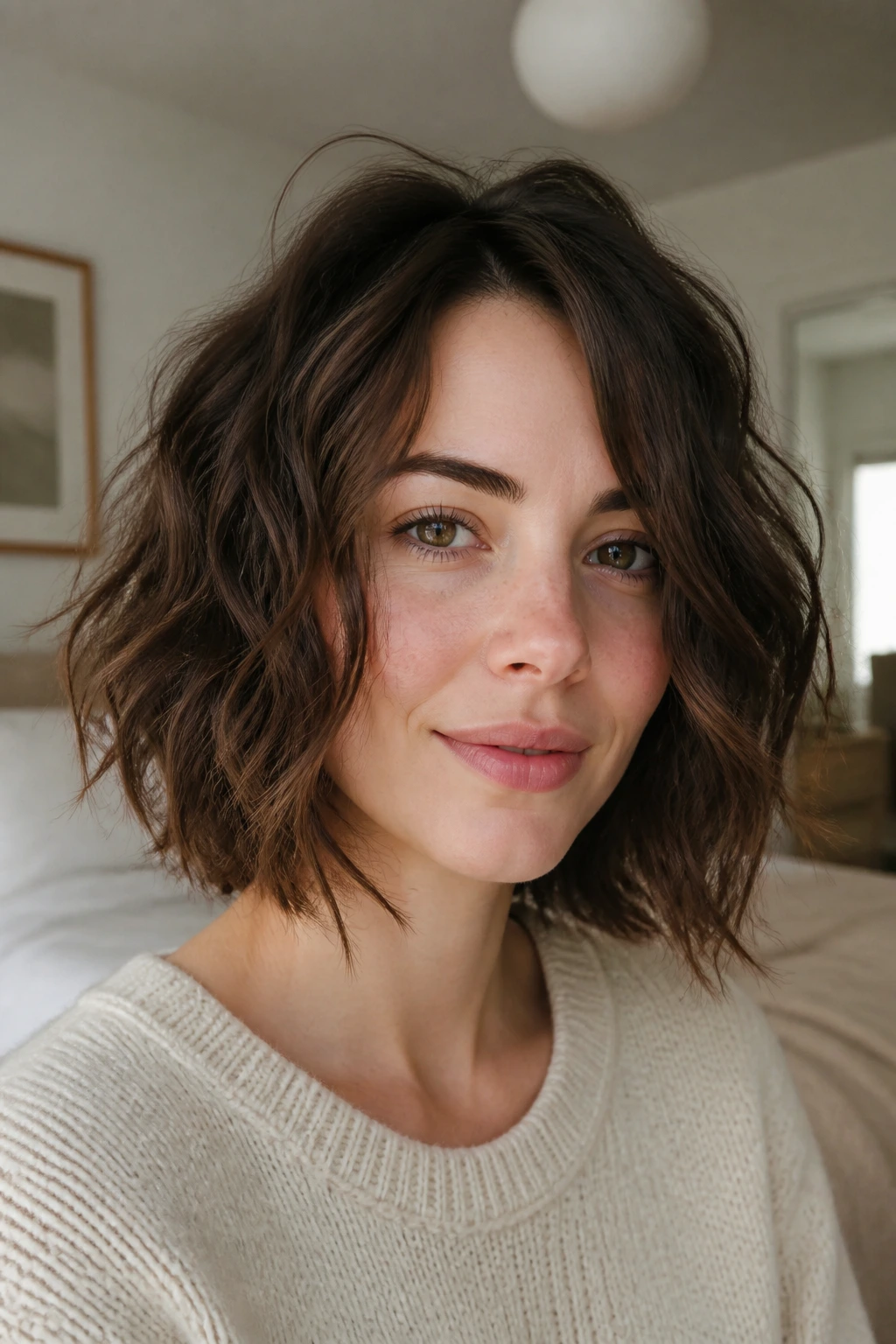
Cutting wavy or thick hair dry can change everything, because the stylist sees how the hair actually sits instead of guessing. That matters when shrinkage or puff is part of the picture.
A dry-cut wavy lob lets the stylist place the layers where they will live, not where they seem to live when wet. Square faces benefit because the finished shape tends to fall in softer arcs, and thick hair benefits because the weight is cut with the movement in mind. If your waves have a mind of their own, this version earns its keep fast.
22. Soft U-Shape Lob

A soft U-shape gives the cut a gentle curve through the back and sides. It’s less severe than a blunt line and less angular than a strong A-line, which is why it works so well on square faces.
The curve helps the hair fall around the jaw instead of hitting it head-on. Thick hair likes the shape because the back keeps some density while the sides don’t flare out as much. This is one of the easiest shapes to live with if you want the haircut to look finished even on a lazy styling day.
23. S-Curve Lob
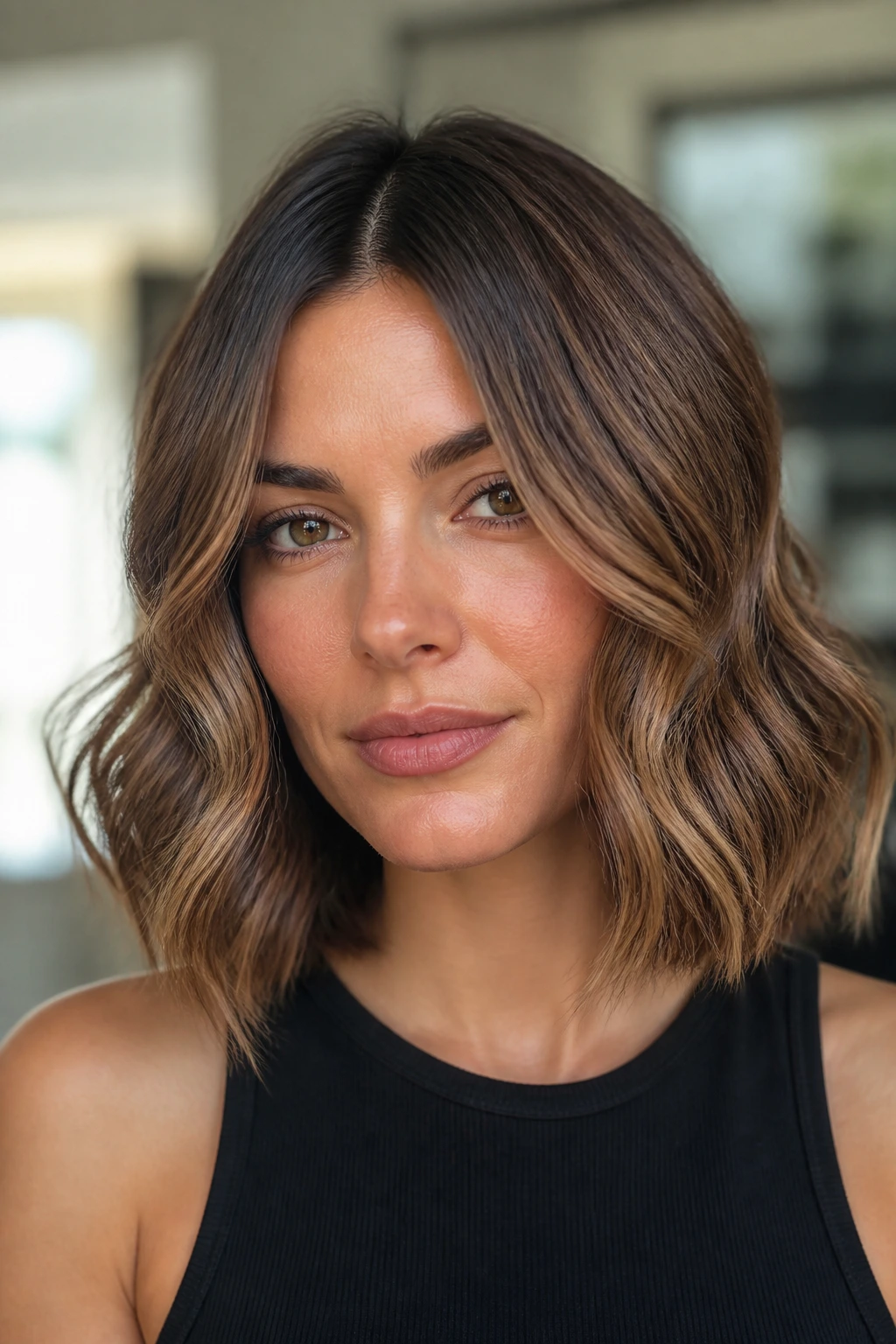
The S-curve is more of a styling idea than a hard haircut shape, but it deserves a spot here. The hair bends one way, then back the other, so the finish never sits straight and stiff.
That movement is useful for square faces because the eye never lands on a single hard edge. Thick hair especially benefits from the bend, since it spreads the mass out in a softer pattern. I like this with a middle part or a slightly off-center part, and I’d keep the bends loose. Tight curls change the whole mood.
24. Face-Opening Lob
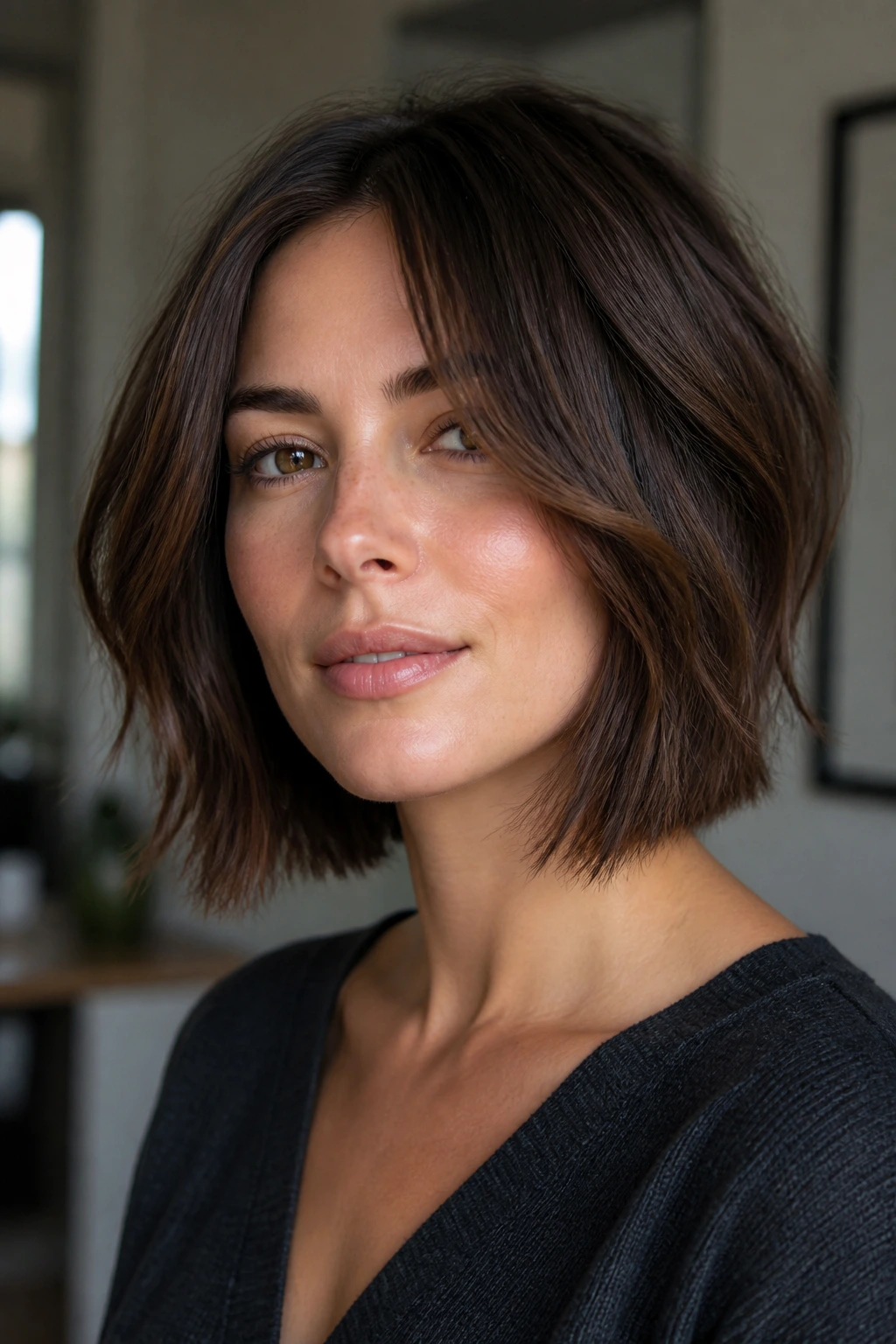
This is the lob for people who want the face to feel brighter without going full bang. The front pieces open away from the face in a way that frames the cheeks and jaw, almost like a built-in soft focus.
It’s a smart choice if your square face feels widest at the lower half. The opening at the front redirects attention upward and outward, while thick hair gets a place to move that isn’t all sitting at the jaw. Keep the front soft, not chunky. Chunky front pieces can make thick hair feel heavier, not lighter.
25. Broken-Edge Lob
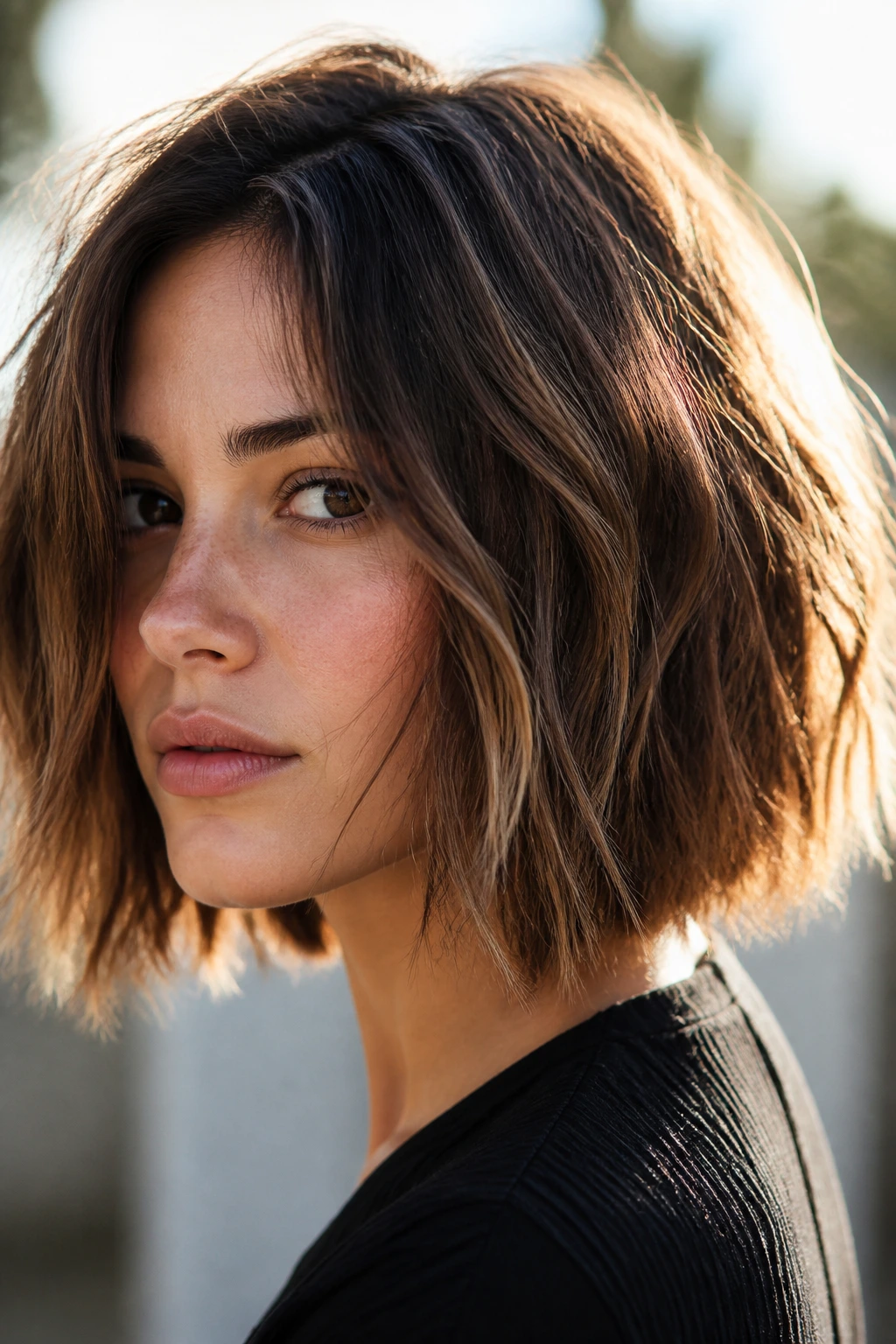
This is the most textured, most piecey version in the bunch. The perimeter still lives in lob territory, but the ends are broken up enough that the shape never settles into one solid line.
That broken edge is helpful on square faces because it blurs the corners. It’s also excellent for thick hair that needs movement without too many layers around the crown. I’d pair this with a loose bend or a rough air-dry and a touch of texture spray at the bottom half only. Keep the roots light. The shape should move, not hover.
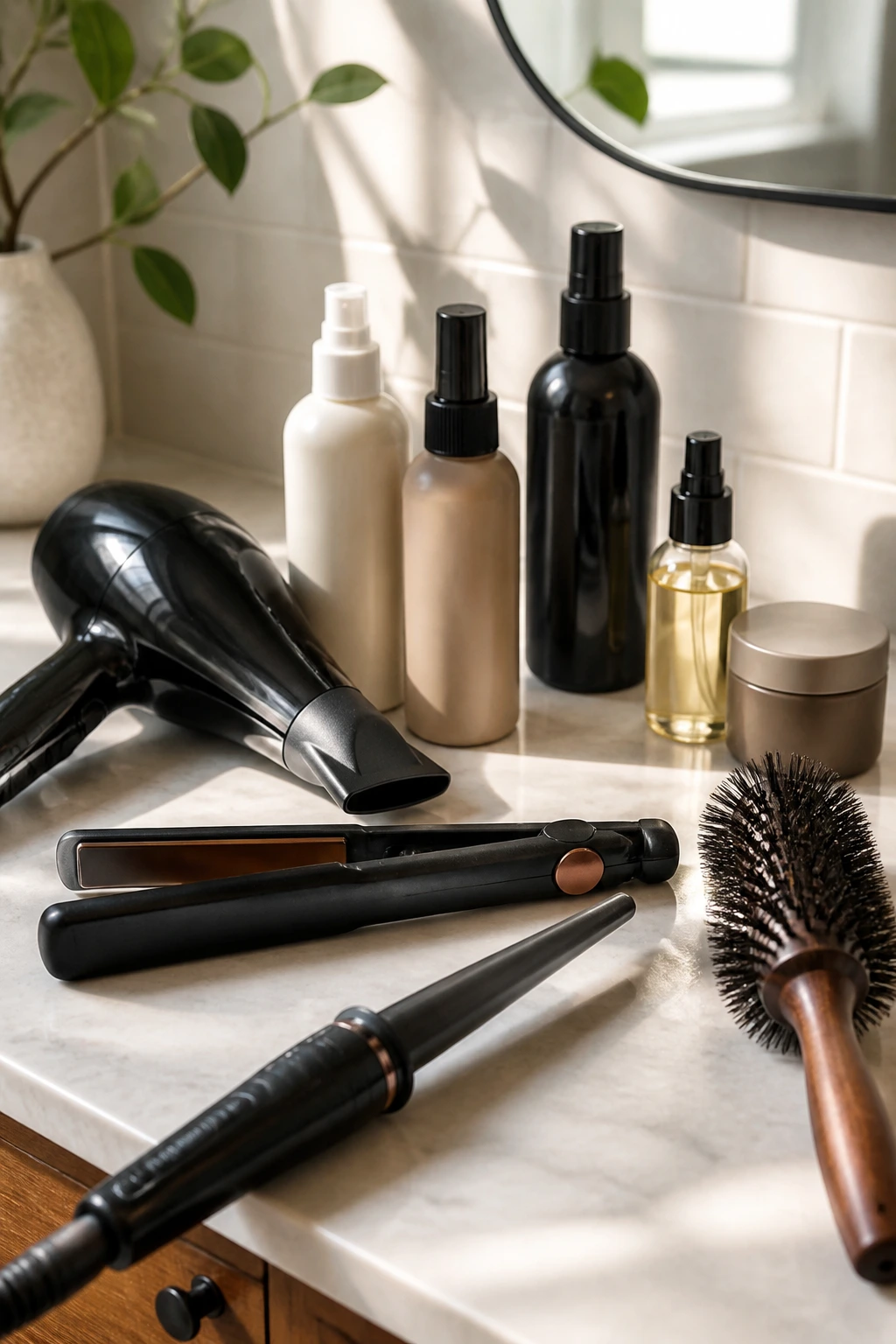
Essential Tools and Products for Styling a Choppy Lob
-
Blow dryer with a concentrator nozzle — This keeps the air pointed where you want it instead of blasting thick hair into a halo.
-
1.25-inch to 1.5-inch round brush — Big enough to bend the ends, not so big that the shape goes flat.
-
Heat protectant spray — Use it before any blow-dry, iron, or curling pass. Thick hair can handle heat, but not repeated abuse.
-
Lightweight mousse — Good at the roots when you want lift without crunch.
-
Texturizing spray — Helps piece out the ends and keeps the lob from looking too neat.
-
Smoothing cream or serum — Best on coarse ends and around the face, where frizz usually shows first.
-
Flat iron or 1-inch curling iron — Useful for bends, S-curves, and a little face-framing movement.
-
Wide-tooth comb and tail comb — One for detangling, one for clean sections and precise parts.
-
Duckbill clips — Handy when you’re blow-drying thick hair in sections and do not want the top layer collapsing into the rest.
How to Wear the Cut on Straight, Wavy, and Curly Hair
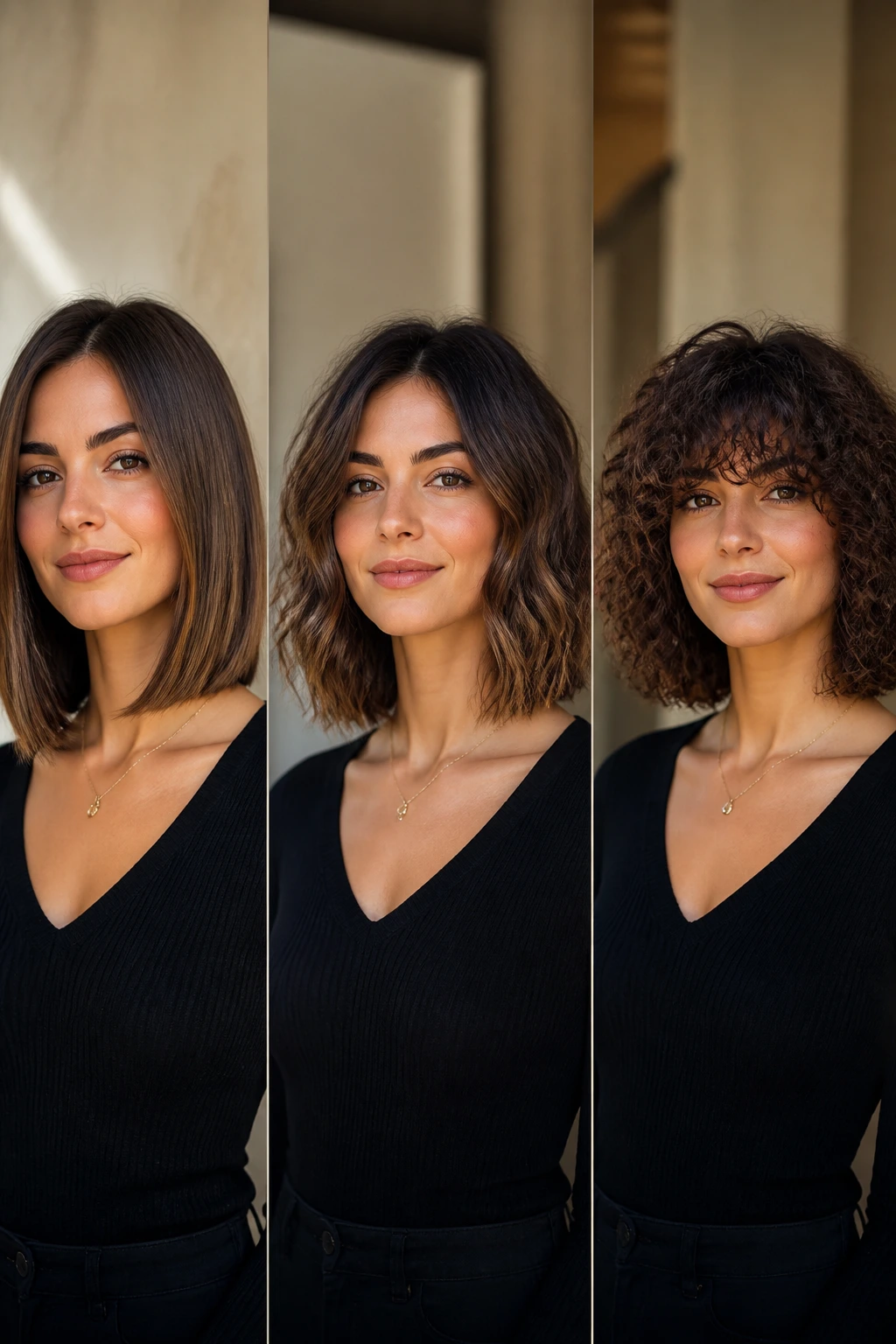
Straight Hair
Straight thick hair is the easiest place to see whether the cut was done well. If the layers are wrong, the shape announces it immediately. A good straight-hair lob should still have movement at the bottom edge and should not puff out at the sides by the ears.
Use a round brush to bend only the last inch or two of the ends. That small curve is often enough. If you want more softness, add one diagonal bend around the cheekbone, not a full curl. Full curls can make square faces look wider if the volume lands too high.
Wavy Hair
Wavy thick hair gives you texture without much help, which is convenient until it swells. The cut should respect the wave pattern, not fight it.
Work a little mousse through damp roots, then scrunch in a texturizing cream from mid-length to ends. Diffuse only until the hair is about 80 percent dry, then let the rest air-dry. That keeps the wave pattern soft and keeps the jawline from getting too puffy. If the front is too wide, a side part or a long fringe usually fixes it faster than more product.
Curly Hair
Curly lob cuts need more room to move. If the hair is cut too short, the curl spring can land right at the jaw and make a square face look broader. I prefer leaving the front a touch longer and layering only where the curl pattern needs release.
Cutting dry is often the better call here, because it shows the curl’s real length. Style with a cream that gives slip, then use just enough gel to hold the shape without turning the ends stiff. A few face-framing pieces around the cheekbone can help a lot. Too many layers at the crown, though, and the silhouette can go wide fast.
Second-Day Hair
Second-day thick hair has its own rules. Mist the front and top lightly with water, reactivate with a small amount of cream, then bend the ends back into place with your fingers or a flat iron. Dry shampoo belongs at the roots only.
If the shape lost its edge overnight, a quick re-bend around the front pieces usually matters more than redoing the whole head. That’s the thing with a good lob. It does not need perfection every day. It just needs a little reset.
Little Tweaks That Change the Shape
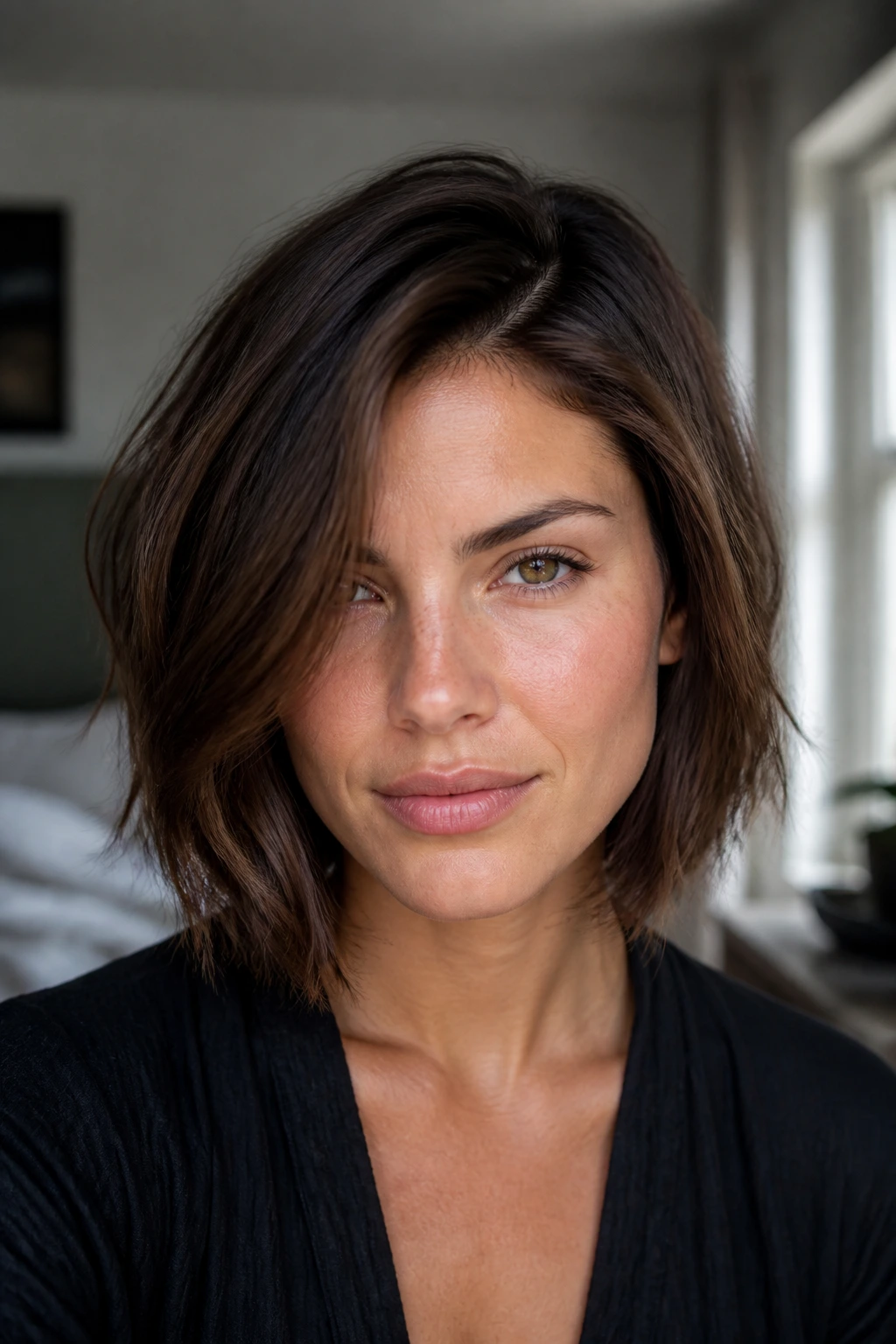
Parting Shift: Move your part by half an inch to one side and the whole cut reads differently. On a square face, that small change can soften the width at the temples without touching the cut itself.
Root Lift: Use mousse or a root spray before blow-drying, then lift the roots with your fingers while the hair is still warm. Thick hair can sit flat up top if you skip this, and then the sides take over.
Edge Softening: Bend the ends under, out, or slightly diagonal with a flat iron. The perimeter should look broken in a few places, not sliced ruler-straight from side to side.
Fringe Choice: Curtain bangs give the most softness, side-swept fringe gives the most ease, and a bottleneck shape sits somewhere between the two. Pick the one that matches how much upkeep you’ll actually tolerate.
Texture Control: If your hair feels too full, use texture spray only through the bottom half. If it feels too separated, smooth a tiny bit of serum over the outer layer. Small amounts. Thick hair punishes heavy product.
Common Mistakes That Make the Cut Fight Back
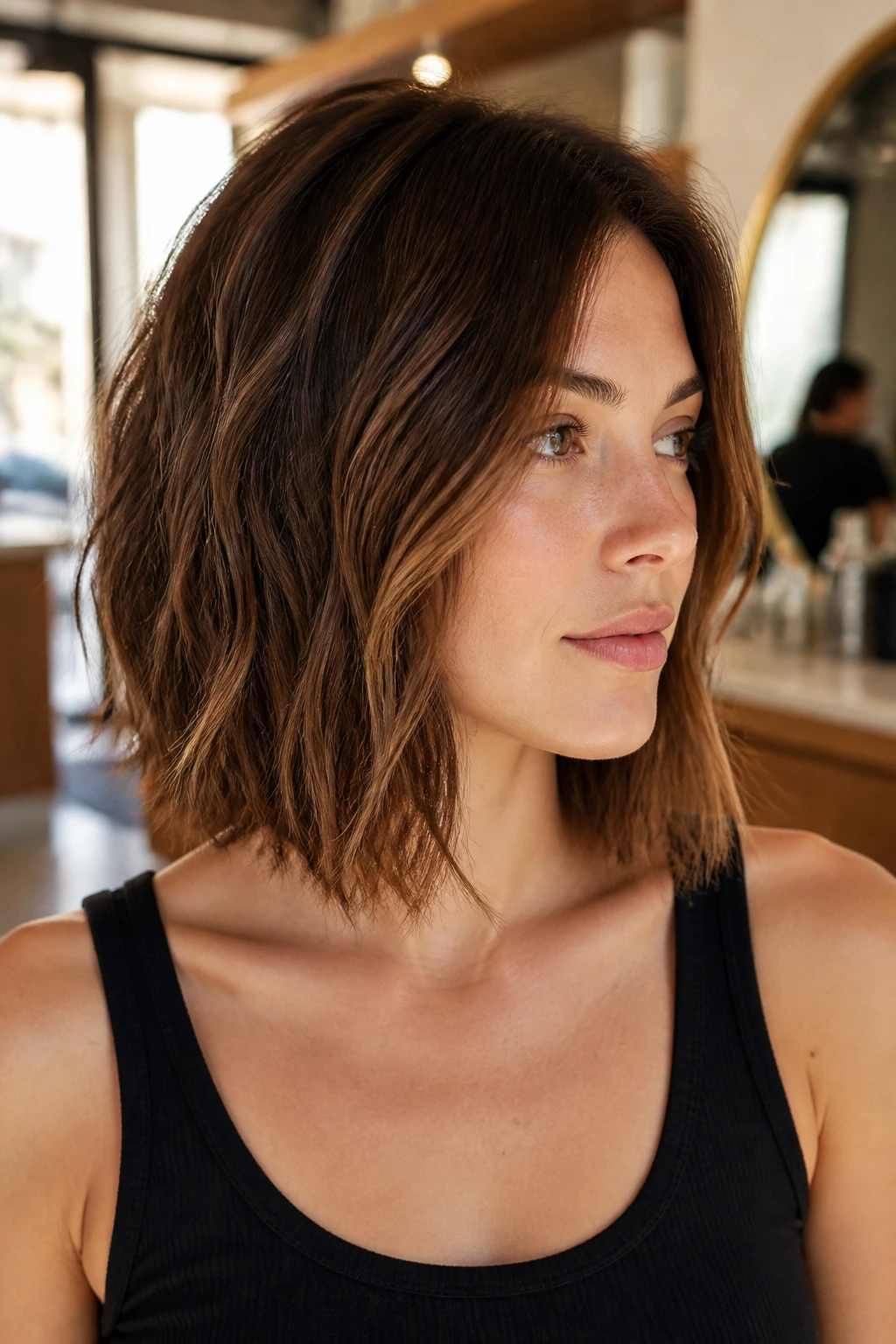
Cutting the lob right at the jaw: This is the fastest way to make a square face look broader. The fix is simple: push the length lower, even if only by an inch or two.
Over-layering the crown: Too many short layers up top can make thick hair puff out like a triangle. Ask for internal weight removal instead of a pile of short pieces near the scalp.
Using thinning shears everywhere: Thinning can help in the right places, but if the ends are over-thinned, thick hair frizzes and splits into fuzzy pieces. Point cutting or slide cutting usually gives a cleaner finish.
Keeping a dead-center part with no face framing: A strict center part can look sharp on a square face if the front pieces are too blunt. A little off-center shift or a soft fringe changes the shape fast.
Styling with too much oil or cream: Heavy product near the roots flattens volume, and heavy product on the ends can make the whole cut look greasy instead of piecey. Keep rich formulas low and light formulas higher.
Ignoring the back shape: A lob can look fine from the front and awkward from behind if the nape is too heavy. Ask for the back to be checked in sections, not just mirrored from the front.
Variations and Alternatives to Try
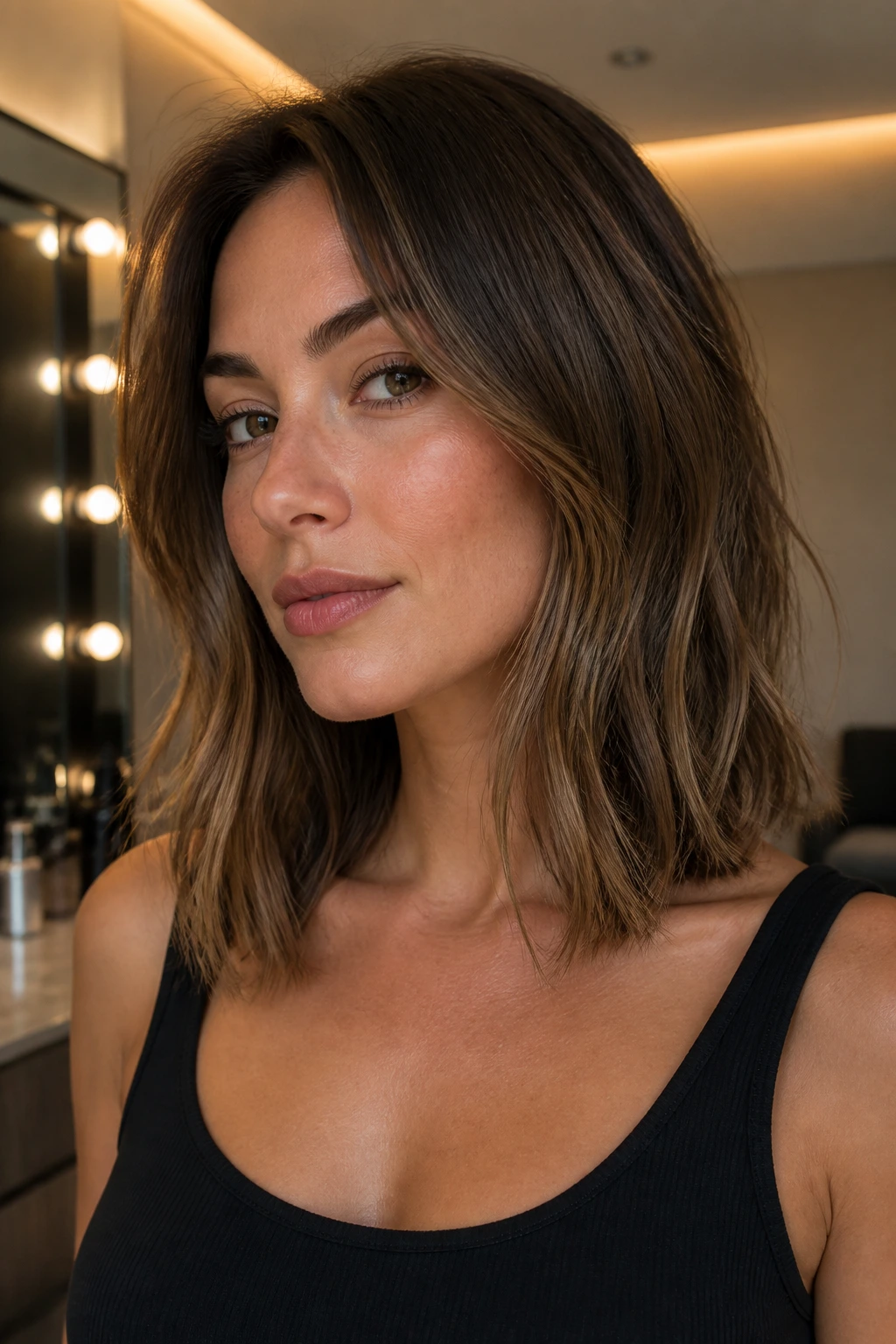
The Longer Collarbone Version: If you want the safest starting point, go a little longer and keep the ends shattered. It gives thick hair room to move and gives a square face enough vertical line to soften the jaw.
The Fringe-Forward Version: Add curtain bangs or a bottleneck fringe if you want the cut to feel more face-focused. This works especially well when the forehead and jaw feel equally strong.
The Air-Dry Version: Ask your stylist to shape the cut around your natural wave or bend instead of forcing a blowout shape. It’s a solid choice for thick hair that never really looks the same twice once it dries.
The Cleaner Sleek Version: Keep the perimeter smoother and the layers hidden, then finish with a bend only at the ends. This is the one to choose if you like structure but still want the jaw softened.
The Shaggier Version: Ask for more separation through the mids and ends, but keep the crown longer than a classic shag. It’s the right move when thick hair feels too heavy and you want the cut to look a little unruly on purpose.
How to Keep the Shape Intentional Between Trims
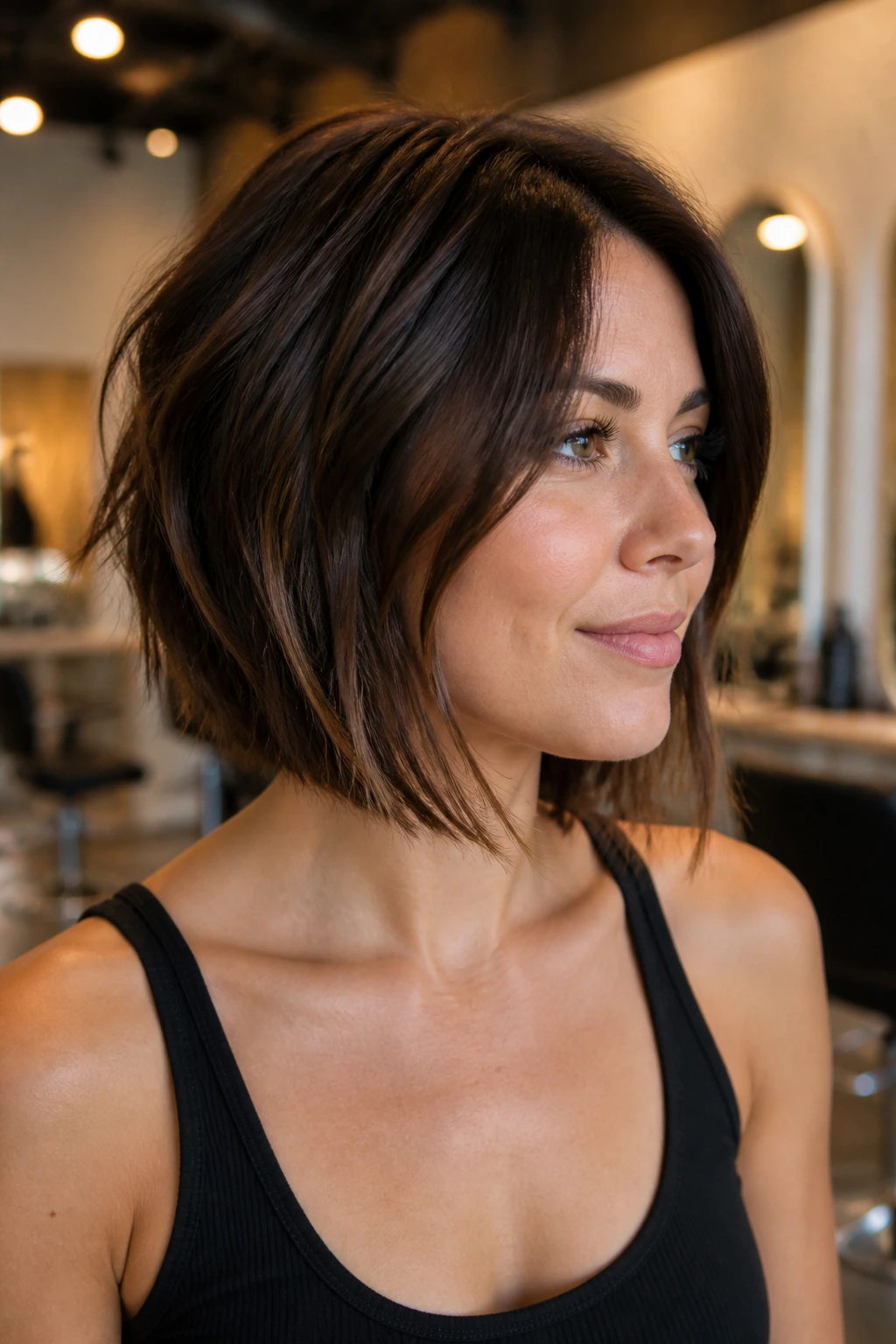
A choppy lob usually looks best with regular shaping, not massive overhauls. If you want the outline to stay crisp, plan on a trim every 6 to 8 weeks. If you’re growing it out and can tolerate a looser shape, stretch that a little longer, but expect the face-framing pieces to lose their purpose first.
Thick hair needs a little day-to-day management too. Washing every day can strip the hair of the tiny bit of texture that helps a choppy lob hold its shape, but waiting too long can make the roots collapse and the sides swell. Most people land somewhere in the 2-to-4-day range, depending on scalp oil and texture.
Sleep matters more than people admit. A loose clip at the nape or a silk pillowcase keeps the front from twisting into a dented mess. If the ends flip weirdly in the morning, mist them lightly with water, twist for 30 seconds, and re-bend only the front inch or two. You do not need to re-style the whole cut to make it look deliberate.
If your hair grows out fast around the face, ask for a mini bang or fringe trim between full cuts. That tiny appointment can keep the whole lob from looking droopy.
Frequently Asked Questions
Will a choppy lob make a square face look wider?
It can, if the length hits the jaw and the sides are too full. The fix is to keep the front below the jaw and use movement or asymmetry to break the straight line.
How short can I go with thick hair?
Shorter than collarbone length is possible, but the closer you get to the jaw, the more careful the shape has to be. For most square faces with dense hair, the collarbone zone is the safest place to start.
Are curtain bangs better than side-swept bangs for this face shape?
Curtain bangs usually soften the face more evenly, while side-swept bangs are easier to live with on busy mornings. If you want the widest range of styling options, curtain bangs usually win.
Should thick hair be layered or thinned?
Layered, but with intention. Thinning shears can help in small doses, yet heavy thinning near the ends often makes thick hair frizzy and uneven instead of lighter.
Can I air-dry a choppy lob and still have it look shaped?
Yes, if the cut was made for your natural texture. Use a light cream or mousse, then let the hair fall into place without touching it too much once it starts to set.
What if my lob flips out at the ends when I don’t want it to?
That usually means the perimeter is too blunt, the hair is too dry, or the blow-dry is pushing the ends outward. A little smoothing cream and a quick bend with a round brush usually fixes it.
Is an asymmetrical lob too bold for square faces?
Not if the difference is subtle. Even a one-inch shift can soften the face without turning the cut into a statement haircut.
How often should I trim it to keep the choppy effect?
Every 6 to 8 weeks if you want the shape to stay crisp. If you let it go much longer, the layers start to sink into the rest of the hair and the cut loses that broken-up edge.
The Shape That Works
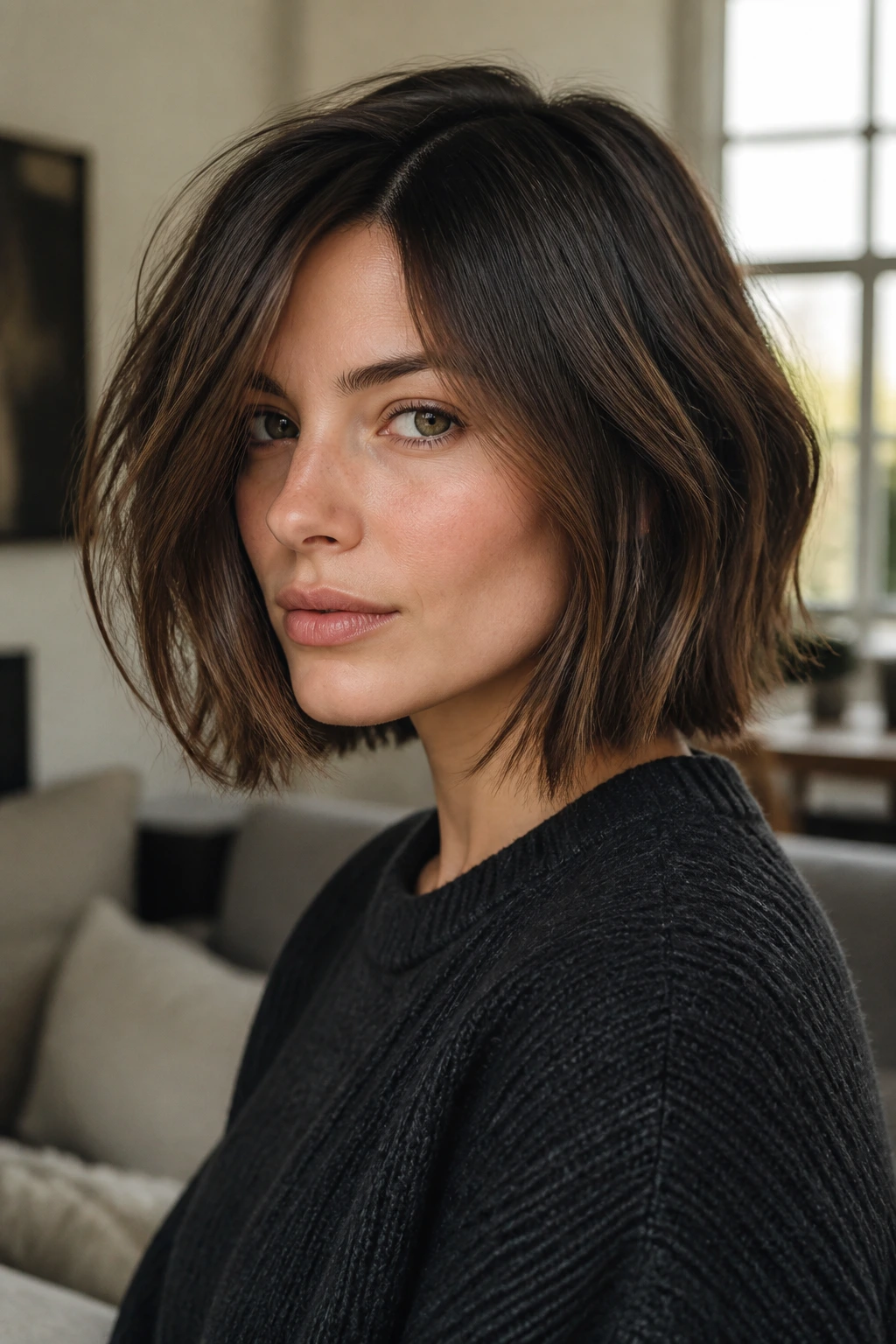
The best choppy lobs for square faces and thick hair do one simple thing well: they keep the face from reading as a single block. That can happen with length, with texture, with a side part, with hidden layers, or with a fringe that bends the eye away from the jaw. The exact method matters less than the result.
If you’re stuck between options, start with the collarbone version and add face-framing only where your face needs it most. That’s usually the safest place to begin, and it gives you room to go softer or sharper the next time without regretting the cut halfway through the grow-out.