



Thin hair and a square face can make a bob feel like a coin toss. One wrong line lands right on the jaw and makes everything look wider; the right one leaves the face softer, lighter, and much more balanced.
The good news is that bobs for thin hair and square faces have a bigger sweet spot than people think. You do not need to chase a dramatic chop or pile on a mountain of layers. You need shape. A clean perimeter can fake density at the ends, while a side part, a curved blowout, or a well-placed fringe can take the edge off a strong jaw without hiding it.
I keep coming back to one simple rule: place the strongest line where you want fullness, and place softness where you want movement. That means the cut can sit at the chin, skim past the jaw, or slide to the collarbone — as long as the outline does the work instead of fighting your face. The styles below are built on that idea, and the difference shows up fast.
Why These Cuts Earn Their Keep
- A blunt edge makes fine hair look denser: When the ends land in one clean line, the eye reads thickness even if the actual strands are delicate.
- Softness at the front changes the whole face shape: Side parts, curtain bangs, and face-framing bends interrupt the square outline that can make the jaw look sharper.
- The length matters as much as the cut: A bob that stops exactly at the jaw can be tricky, while one that sits slightly above or below it usually looks more forgiving.
- You do not need heavy layering to get movement: Hidden layers, internal graduation, and a few bends at the ends can keep the cut alive without stripping out volume.
- These shapes are easy to restyle: A round brush, a 1-inch iron, or even a few velcro rollers can bring the shape back after a flat morning.
- They grow out better than you’d expect: A smart bob or lob can shift a little over time without turning into a shapeless in-between cut.
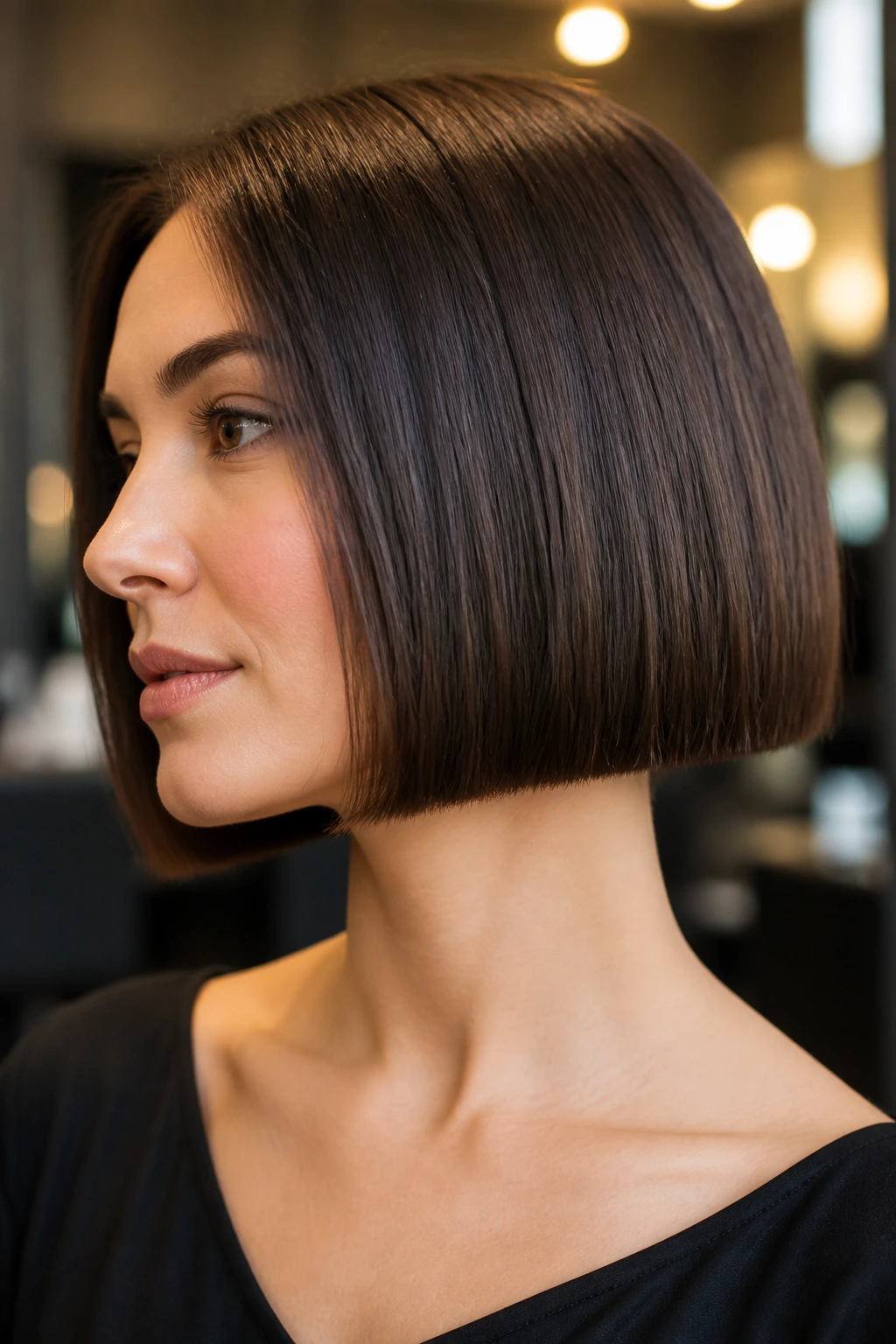
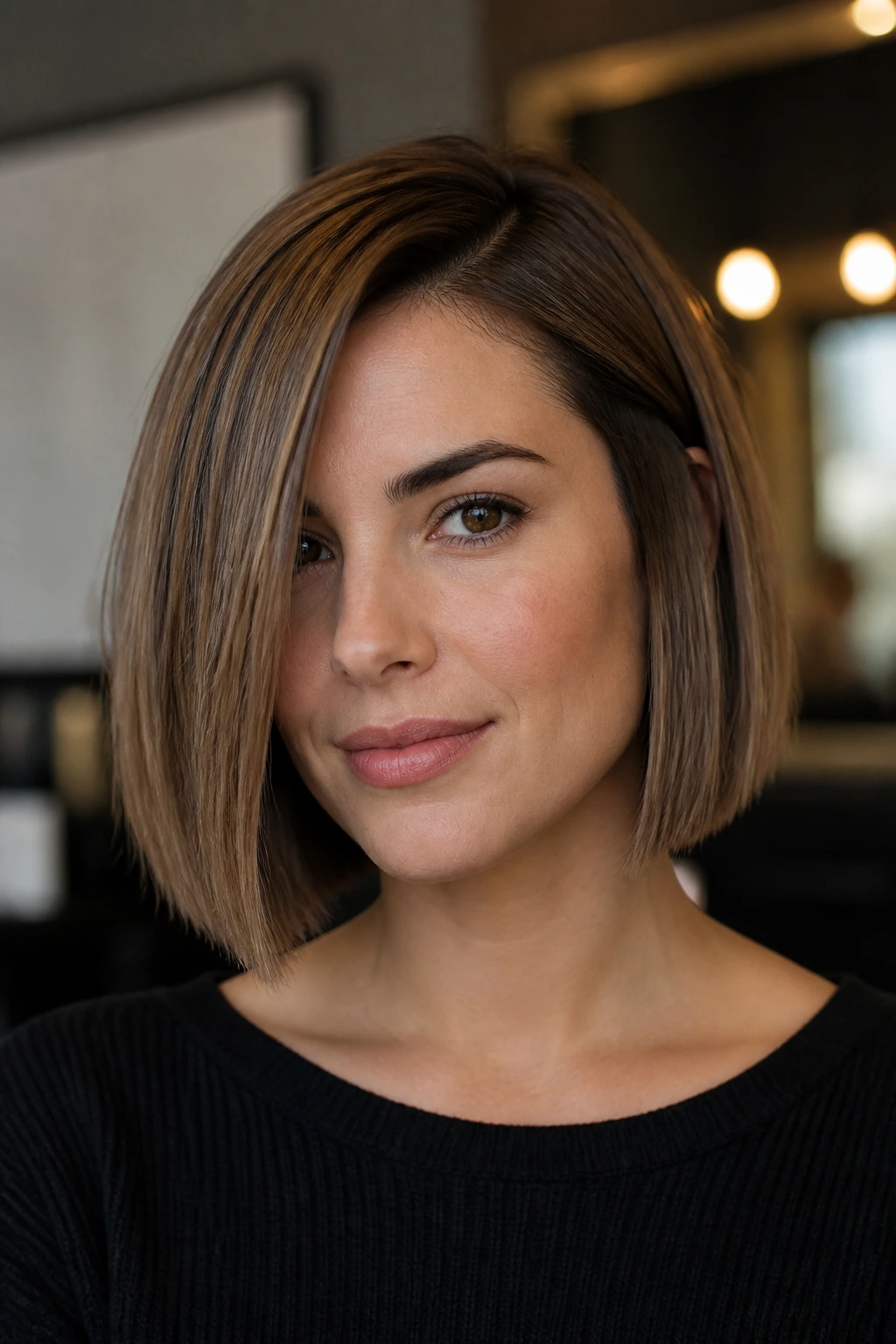
1. Soft Blunt Chin Bob with a Side Part
A chin-length bob with a blunt edge is the haircut I trust when thin hair keeps disappearing at the ends. The clean perimeter gives the illusion of a thicker hemline, and the side part slides the volume away from the widest part of a square face.
Why It Flatters a Square Jaw
The trick is placement. If the cut sits right on the jaw, it can echo the jaw too loudly. If it lands a touch above or below it, the shape feels calmer.
I like this version best for straight or slightly wavy hair that wants to lie down. It reads polished, but not stiff.
- Best length: Chin to half an inch below the chin.
- Best part: Deep side part or soft off-center part.
- Best finish: Smooth with a slight bend under at the ends.
- Avoid: Heavy razor thinning at the bottom.
Pro tip: Ask your stylist to keep the perimeter blunt and the interior light, not shredded.
2. Collarbone Lob with Invisible Layers
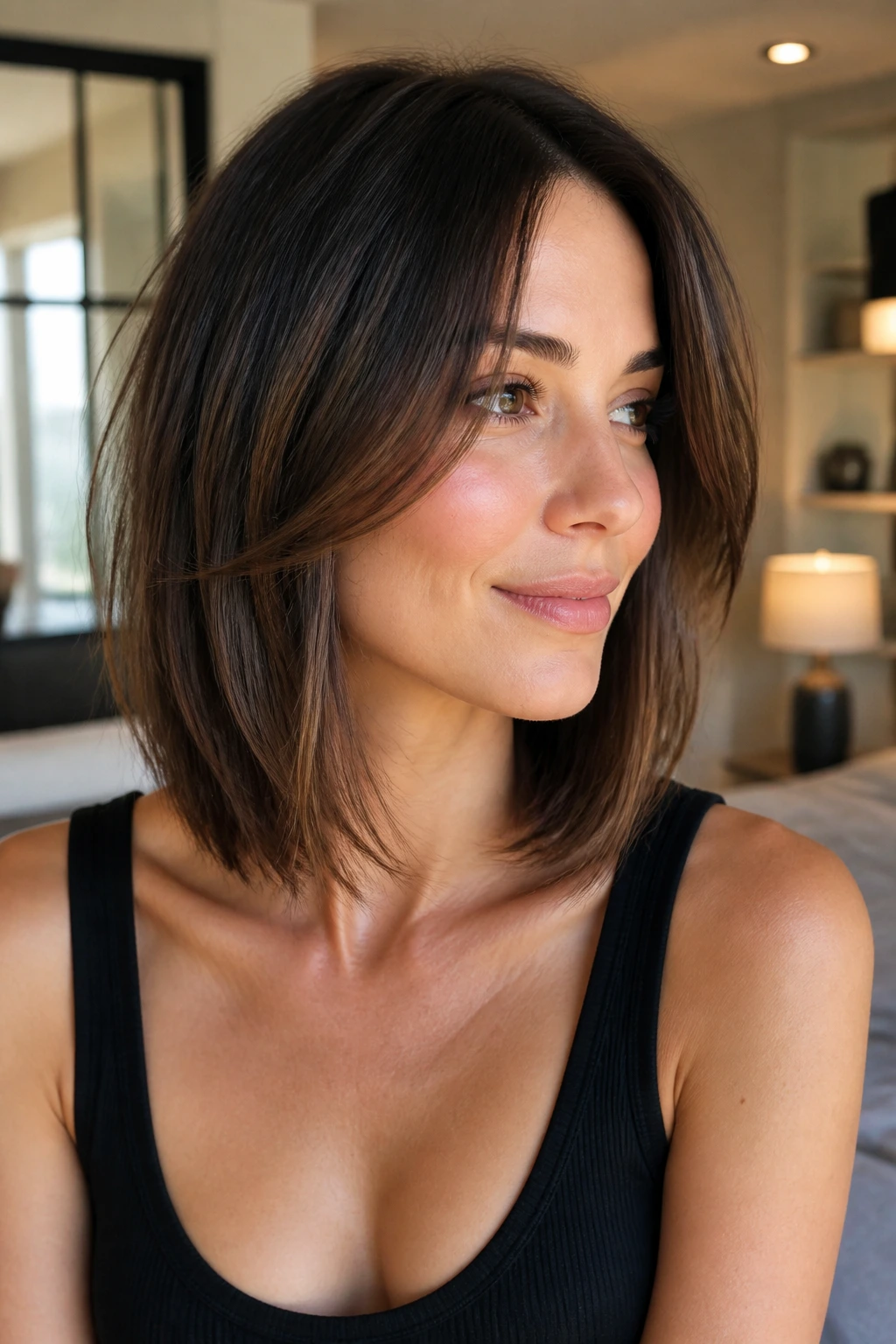
This is the cut I reach for when someone wants movement without sacrificing one more millimeter of density. The length sits at the collarbone, so thin hair has room to breathe, while the layers stay tucked inside the shape where they don’t fray the ends.
A square face usually likes this because the lob doesn’t stop at the jaw. It slips past that width and gives the eye a longer line to follow.
The invisible layers are the whole point. You get a little bend, a little lift, and none of the see-through ends that make a lob look tired by noon. On fine hair, that matters more than a dramatic texture story.
This is one of those cuts that looks expensive when it’s simply well-cut. Nothing flashy. Just smart.
3. A-Line Bob with a Tapered Nape
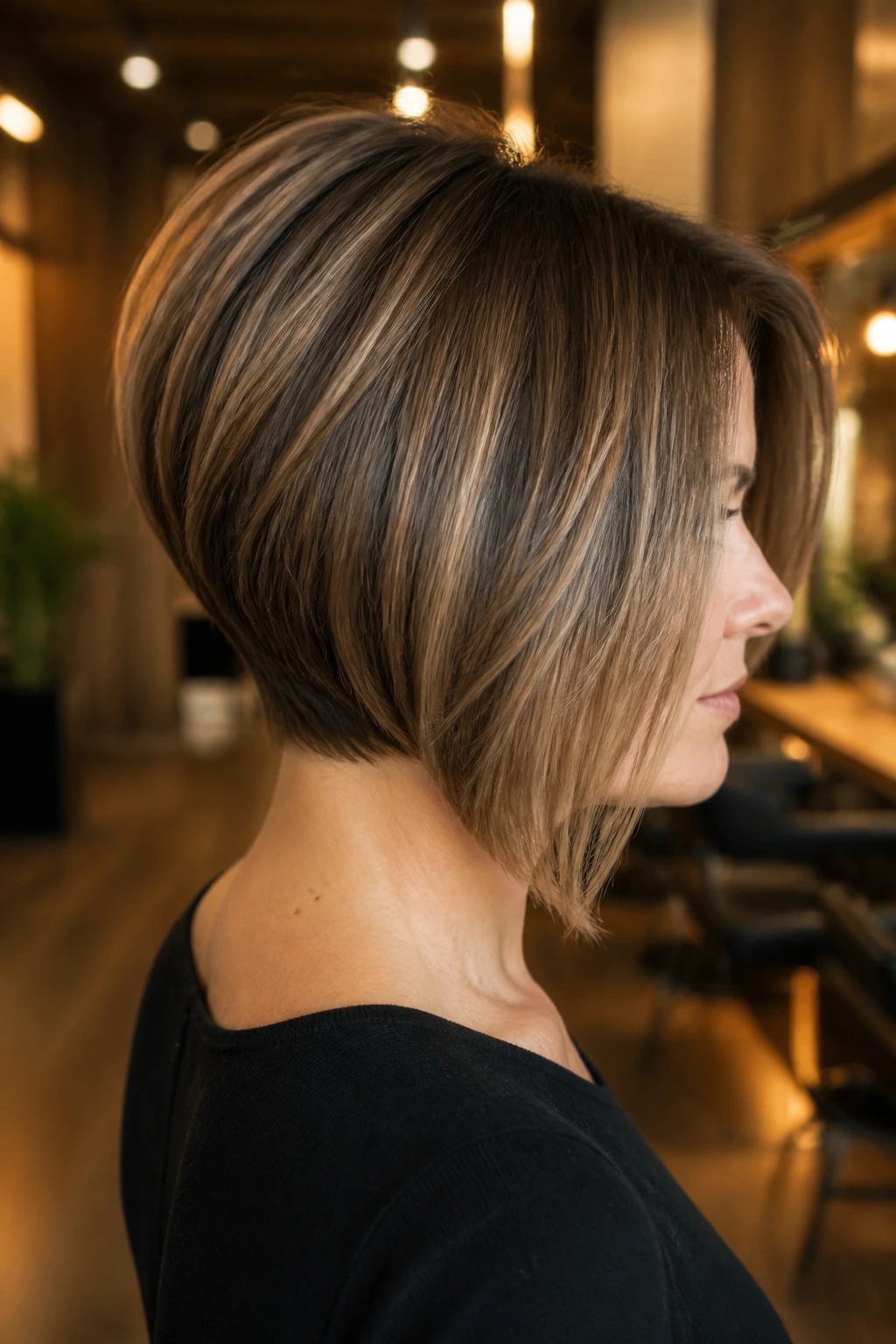
Picture a bob that sits slightly shorter in back and eases longer toward the front. That angle pulls attention down and forward, which is exactly what a square face can use when the jaw wants to dominate the whole look.
The tapered nape gives thin hair a compact shape at the back, so it doesn’t collapse. The longer front pieces create enough movement that the cut doesn’t feel helmet-like.
What Makes It Different
- The front does the softening work.
- The back gives the haircut its lift.
- The angle keeps the jaw from being the loudest line in the room.
- It looks especially good when tucked behind one ear on one side only.
I’d avoid making the angle too steep. A huge A-line can start to feel dated fast. Keep it subtle and it stays sharp.
4. French Bob with a Brow-Grazing Fringe

Can a short bob work on thin hair without looking sparse? Yes, if the fringe and the perimeter share the weight properly. The French bob does that by keeping the shape compact and the bangs long enough to skim the brows instead of chopping the forehead in half.
That fringe helps square faces more than people expect. It breaks up the hard straight line from forehead to jaw, which makes the whole face feel less boxy. The bob itself can sit at lip level or just under the cheekbones; either way, it stays light on the face and full at the bottom.
A French bob looks best when it is not over-styled. A bit of bend, a little separation in the fringe, and a matte texture cream on the ends is enough. Too much sleekness turns it severe. Too much volume makes it cute in a costume-y way. The middle ground is where it shines.
5. Textured Choppy Bob with Airy Ends
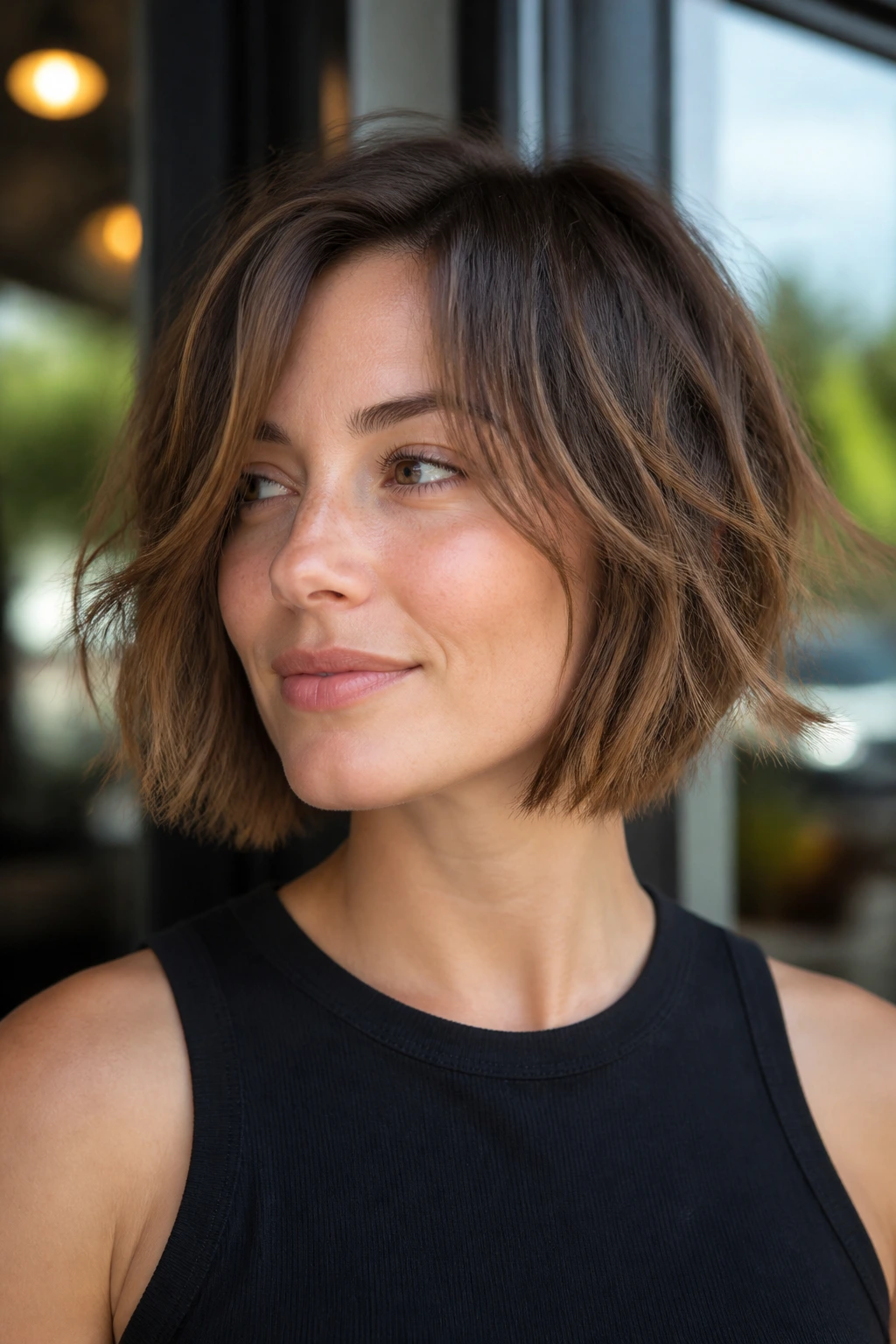
This is the cut for someone who wants movement but does not want the bottom to look ragged. The difference is in the scissors. A few strategic point cuts, not a full-on thinning assault, create separation without stripping away the fullness that thin hair needs.
Square faces benefit because the texture breaks up the solid geometry. Instead of one hard rectangle around the face, you get little shifts in the line. That makes the jaw feel softer without hiding it.
I’m picky about this one. The ends should look airy, not stringy. If your hair already tends to frizz or split, too much chopping can make it look thinner than it is. Keep the texture close to the surface and leave the bottom line strong.
A little sea-salt spray or light mousse is enough here. You want controlled mess, not collapse.
6. Curved Bob with Tucked Ends
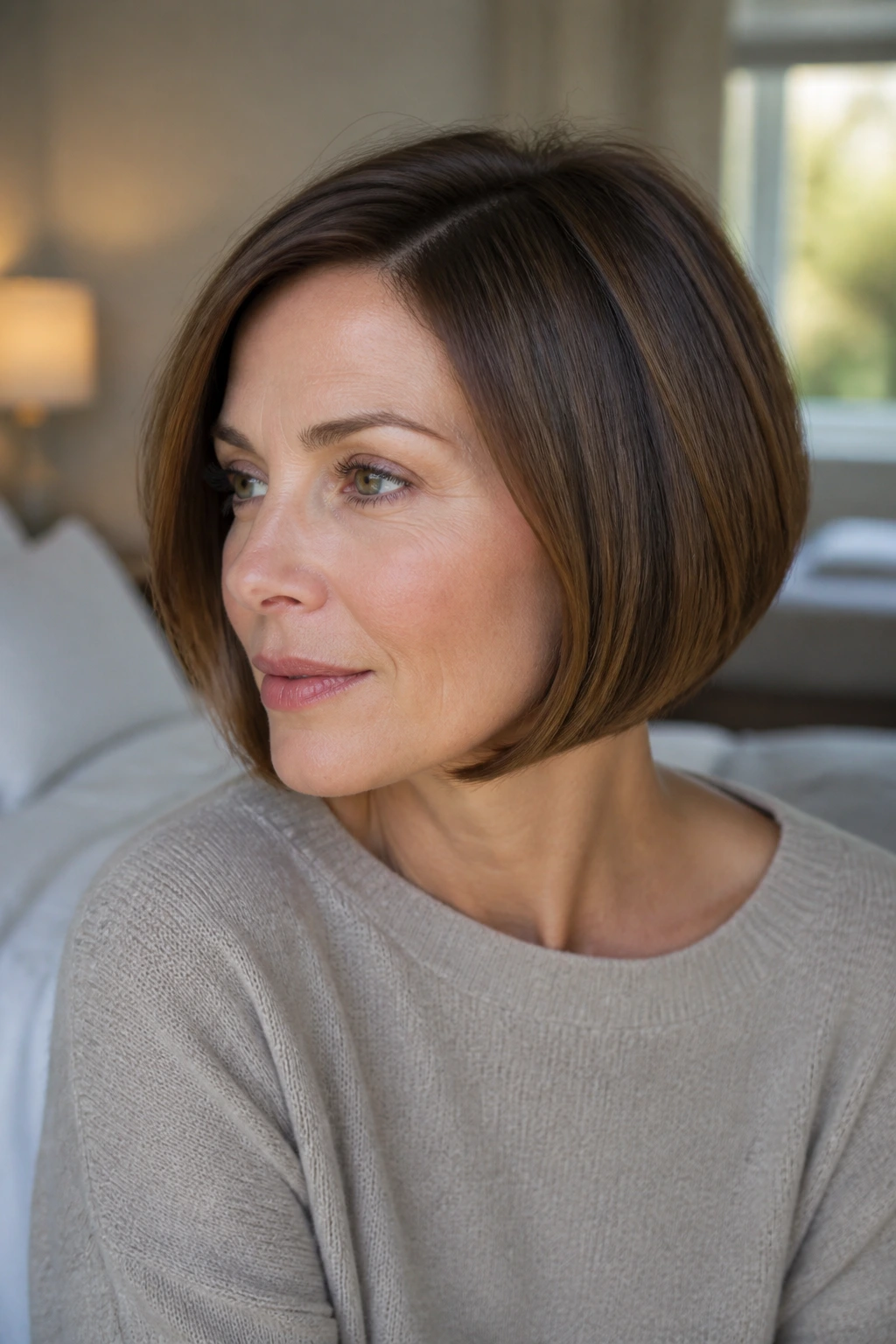
This bob is the polite, flattering cousin of the blunt cut. The length usually sits around the jaw or just below it, but the ends curve under so the line feels rounded instead of hard. That tiny bend changes everything for square faces.
The curve softens the sides of the jaw and keeps the haircut from looking boxy in profile. Thin hair also benefits because the bend adds body at the bottom, where fine strands often go limp first.
Why I Prefer It Over a Dead-Straight Bob
A pin-straight bob can look chic, sure. It can also look severe in a hurry. The curved version feels more forgiving, especially when you wear glasses or high necklines.
This cut likes a medium round brush and a little patience at the ends. Turn the brush under, hold the heat for a few seconds, then cool it before letting go. That cooling step matters more than most people realize.
7. Long Bob with Curtain Bangs

A lob with curtain bangs is one of the easiest ways to make thin hair look intentional instead of just long. The length keeps enough weight in the outline, and the bangs split open at the middle so the face gets softness right where a square shape needs it.
The curtain fringe is useful because it doesn’t sit in one hard line. It bends away from the center, skims the cheekbones, and lets the jaw breathe a little. If your forehead feels broad and your jaw feels strong, that combination balances the whole face without forcing anything.
I like this cut on hair that can hold a light wave. Straight hair works too, but it tends to need more styling at the front so the bangs don’t lie flat. Keep the fringe long enough to tuck behind the ears on low-effort days. That flexibility is half the charm.
8. Asymmetrical Bob
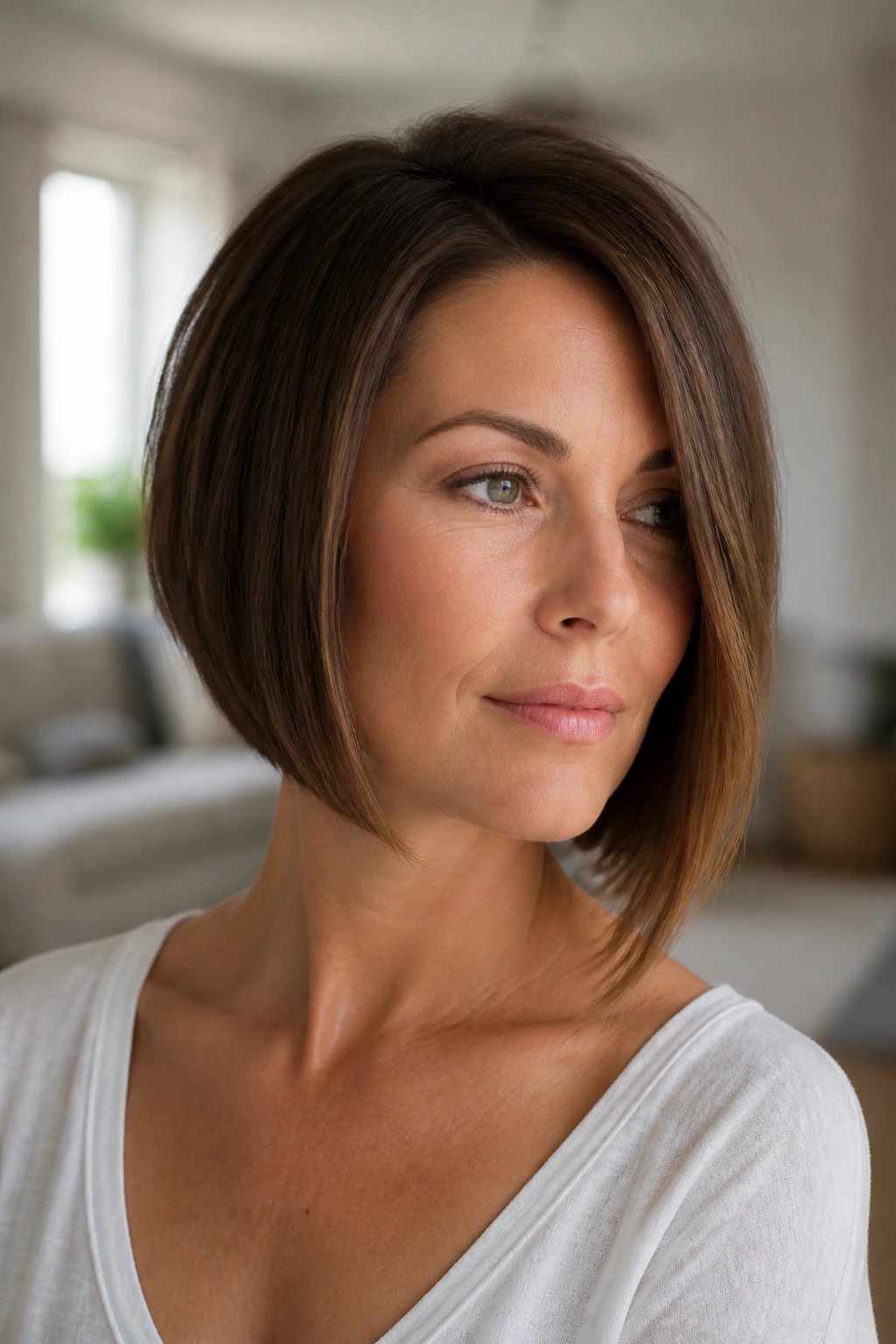
A tiny bit of imbalance can be a good thing. With an asymmetrical bob, one side sits a touch longer than the other, and that break in symmetry keeps a square face from feeling too boxed in.
Thin hair likes the clean line at the bottom, but the slight asymmetry adds movement without needing heavy layers. The eye keeps traveling, which makes the haircut feel fuller and more modern.
This one works best when the difference is subtle. I’m talking about a gentle shift, not a dramatic one-side-longer moment that screams for attention every time you turn your head. Keep the ends blunt, keep the contour clean, and let the angle do the talking.
If your hair is very straight, this can be a lovely choice. The shape stays readable even when the styling is minimal.
9. Bubble Bob with Round Brush Lift
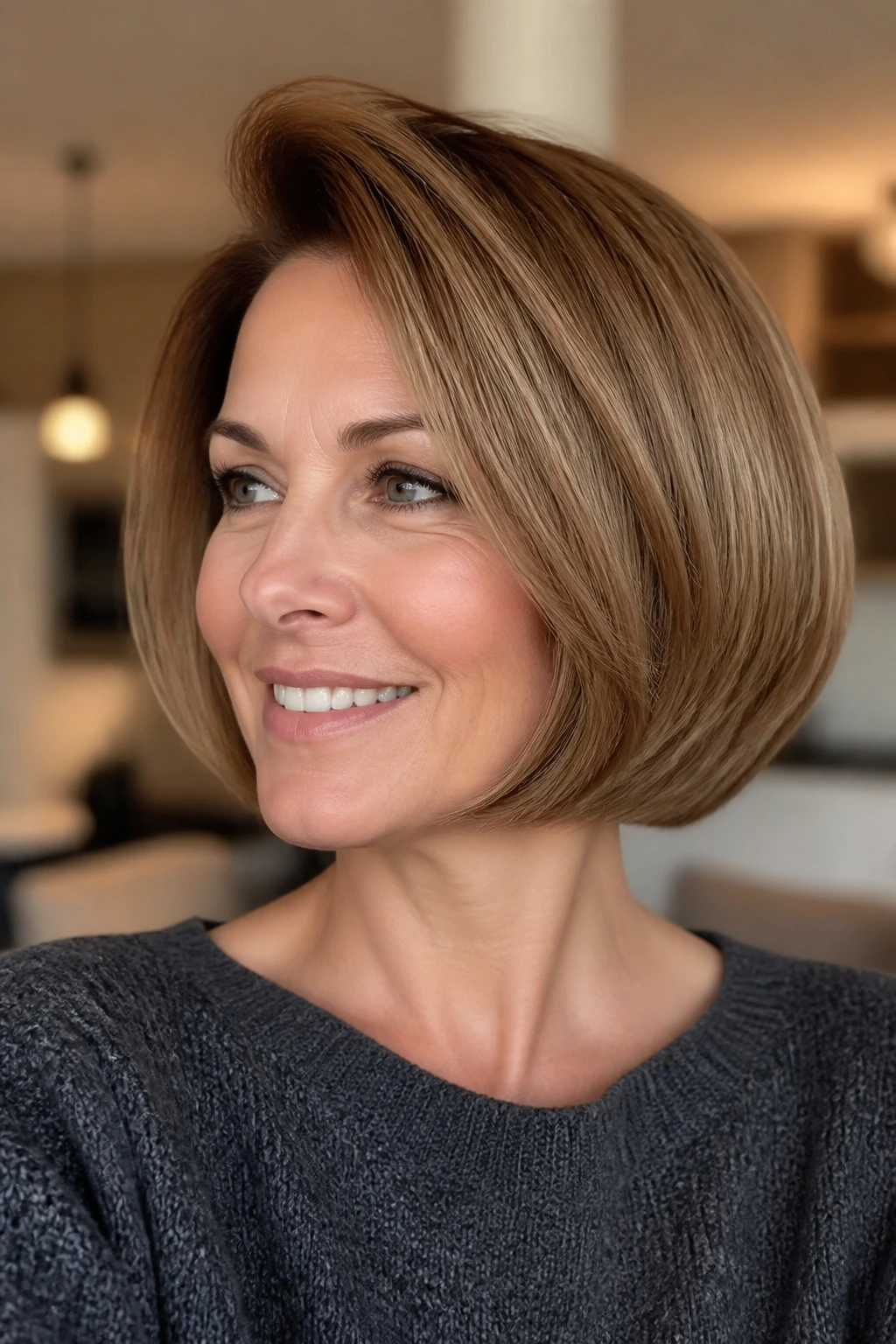
Why does a round bob look fuller than a flat one? Because the curve gives the hair a place to land. Instead of hanging straight off the head, the ends turn inward and the crown gets a little lift, which makes thin hair look like it has more body than it actually does.
Square faces usually like this because the rounded silhouette softens the corners. There’s less harsh edge around the jaw, and the overall look feels plush rather than sharp.
A small round brush or a set of velcro rollers can make a big difference here. I’d go for root lift at the crown, then a soft inward bend through the ends. If the curve gets too tight, the bob starts to look dated. Keep it loose.
Best For
- Fine hair that falls flat at the top.
- Square faces that need a softer outline.
- Anyone who likes a blowout finish.
10. Jaw-Skimming Bob with a Deep Side Part

You know that moment when the ends sit exactly on the jaw and everything looks wider than you wanted? Shift the part, and the whole cut changes. That’s why the jaw-skimming bob works when it’s paired with a deep side part.
The part creates a diagonal line across the face, which pulls the eye up and off the jaw. The length can stay near the jawline, but the asymmetry breaks the square outline before it has a chance to harden.
This is a good move for thin hair that needs a compact shape. The bob stays short enough to keep the ends looking full, but the side part adds instant lift at the front. I’d keep the texture smooth and the line clean. Too much choppiness can make the silhouette lose its edge.
Quick Notes
- Keep one side slightly fuller near the cheekbone.
- Tuck the heavier side behind the ear for a soft finish.
- Use a light root spray, not a heavy cream.
11. Sleek Micro Lob

A sleek micro lob is the haircut for someone who likes clean lines and does not want a lot of fluff. It sits somewhere between chin and collarbone, and on thin hair that extra length can actually make the ends read thicker because the perimeter stays solid.
Square faces like this best when the part is slightly off-center and the front is not too severe. The sleek finish lets the haircut feel modern, but the length keeps the jaw from becoming the center of attention.
I’m fond of this cut on naturally straight hair. It’s easy to misread a sleek lob as boring, but on fine hair it can look sharp in a good way — precise, smooth, and deliberate. The trick is not to flatten the roots to the scalp. Leave a little lift at the crown or it starts looking too close to the head.
12. U-Shaped Lob with Soft Face Frame
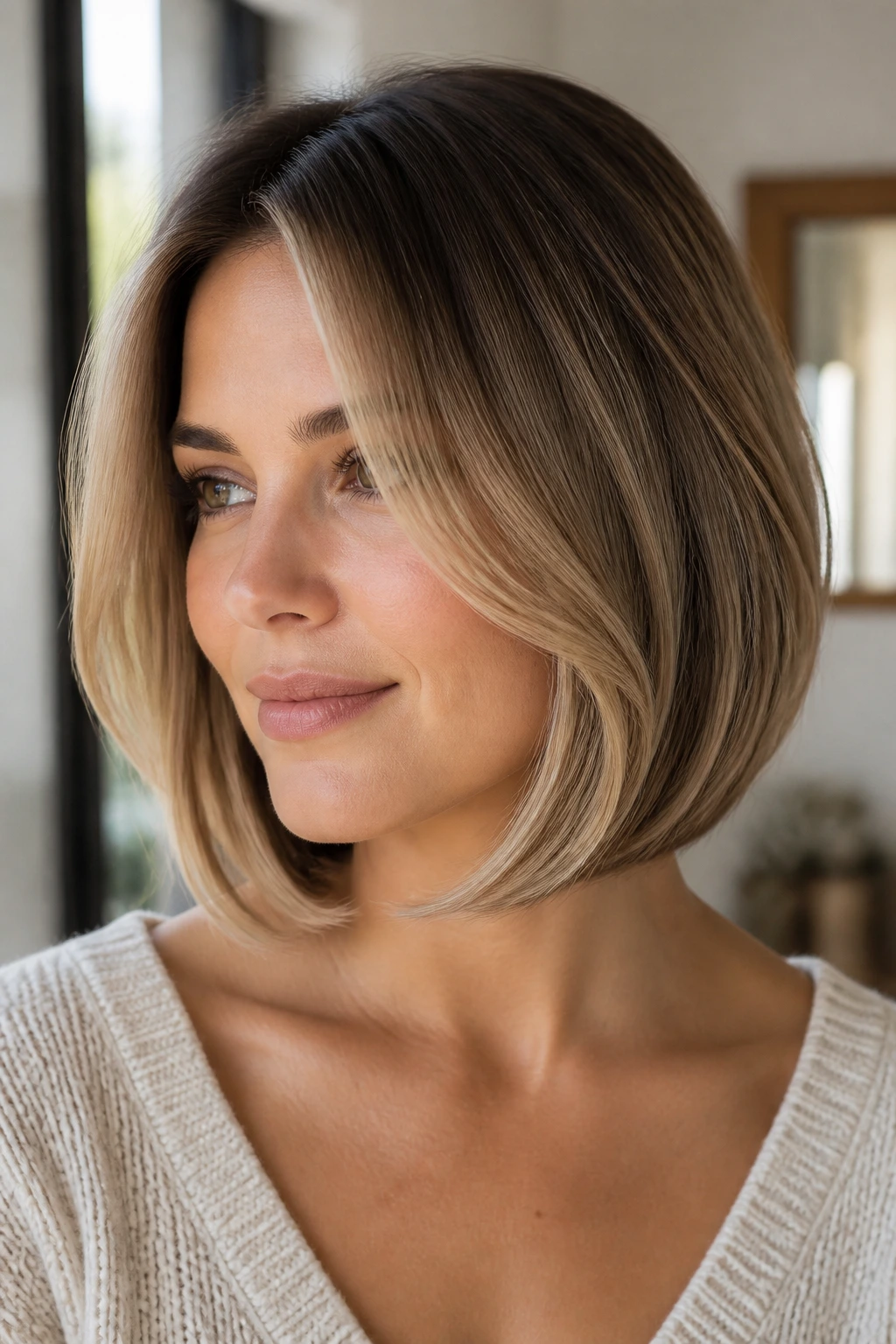
A U-shaped lob keeps more weight at the back and gently curves shorter toward the front. That small difference is doing a lot of work. It preserves fullness through the back while letting the face-framing pieces soften the jaw and cheek line.
For thin hair, the U shape is a smart compromise. You still get a thick-looking outline, but you don’t lose the chance for movement around the face. That front softness matters on square faces because it keeps the haircut from feeling blocky.
Compared With a Straight Lob
A straight lob can be beautiful, but it can also read a little flat if the ends are wispy. The U-shape gives you a more natural drop and a little shape in profile.
Keep the face frame starting around the cheekbone, not much higher. If it begins too close to the eyes, the cut can feel disconnected. The whole point is to soften the jaw, not crowd the face.
13. Inverted Bob with Light Stacking
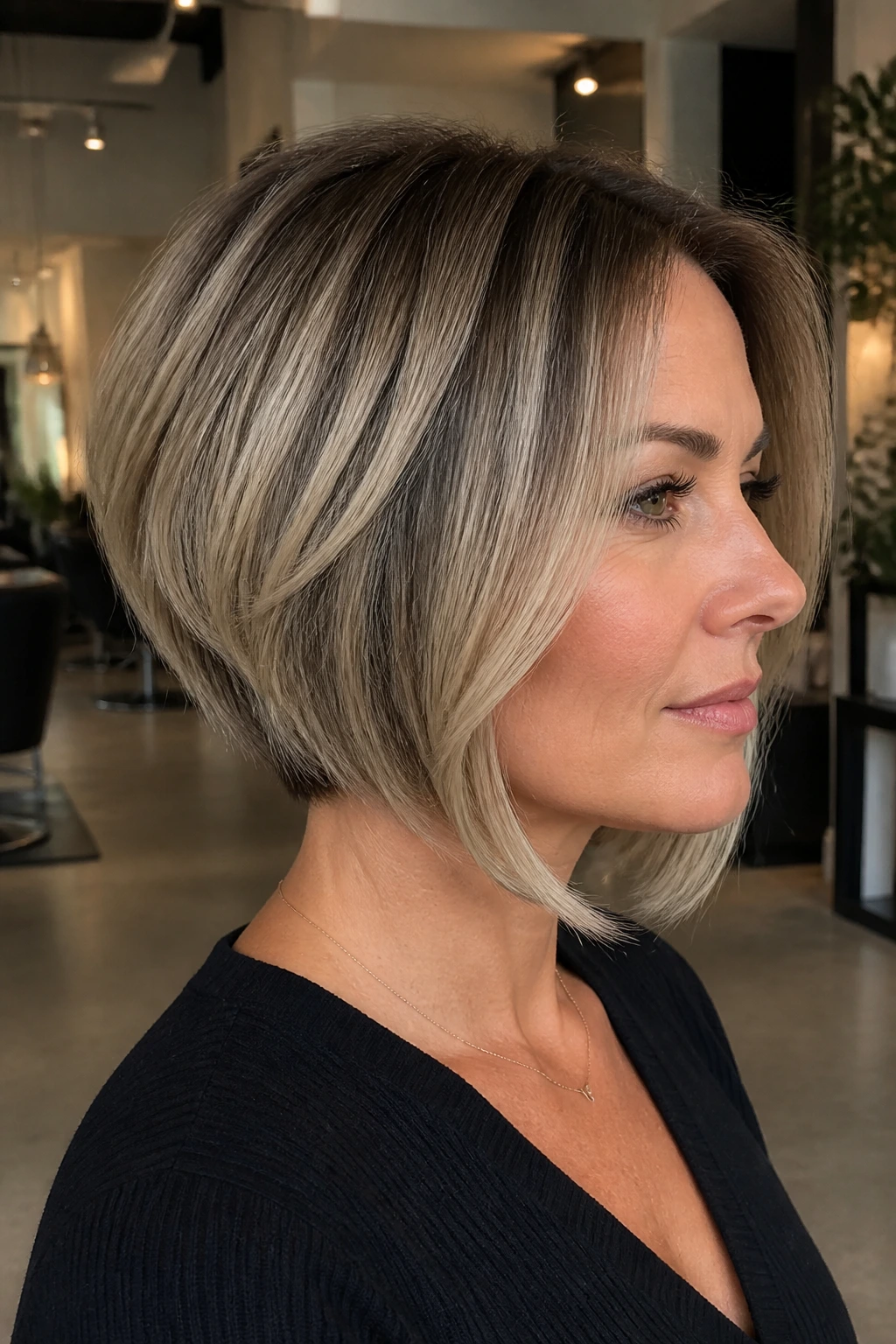
If your hair collapses at the back of the head, an inverted bob gives it a place to stand up. The subtle stacking at the nape creates lift, while the front stays longer to keep the face from feeling too open.
Square faces usually benefit from that longer front because it softens the jaw without hiding the structure. Thin hair likes the graduated back because it gives the crown a little push without making the cut look bulky.
I’m picky about the word light here. Too much stacking and you get a wedge. Too much wedge, and the style starts feeling like it belongs to a different decade. Keep the graduation soft and the transition smooth.
This is a strong choice if you like a neat silhouette that still has some life in it.
14. Feathered Bob with a Bend at the Ends

Feathering gets a bad rap because people picture overdone layers and wispy ends. Modern feathering is better than that. It’s lighter through the top, yes, but the perimeter stays intact so thin hair doesn’t lose its frame.
The bend at the ends is what makes it work on square faces. The hair curves around the jaw instead of sitting on it like a ruler. That little motion keeps the cut from looking boxy.
I like this on hair that feels heavy but not thick. It removes enough bulk to create movement, yet it still leaves a strong outline. That balance is rare. If your hair has a little natural wave, this can be one of the easiest bobs to live with.
A soft cream through the mids and a quick bend with a brush is often enough. Don’t over-style it into submission.
15. Side-Swept Bang Bob

A side-swept fringe is one of the fastest ways to soften a square face. The diagonal line interrupts the width of the forehead and pulls the eye down across the cheek instead of straight across the jaw.
Thin hair likes this because the bang adds shape without demanding a huge amount of density. You can keep the bob at chin length or slide it a bit longer, and the fringe will do a lot of the face-framing for you.
How to Wear It
Let the bang start at the higher arch of the eyebrow and sweep across gently. If it’s too short, it can look choppy. If it’s too heavy, it can swallow the face.
The rest of the bob should stay fairly clean. Too much texture everywhere and the fringe loses its job. This is one of those cuts where a little restraint goes a long way.
16. Bottleneck Bang Lob
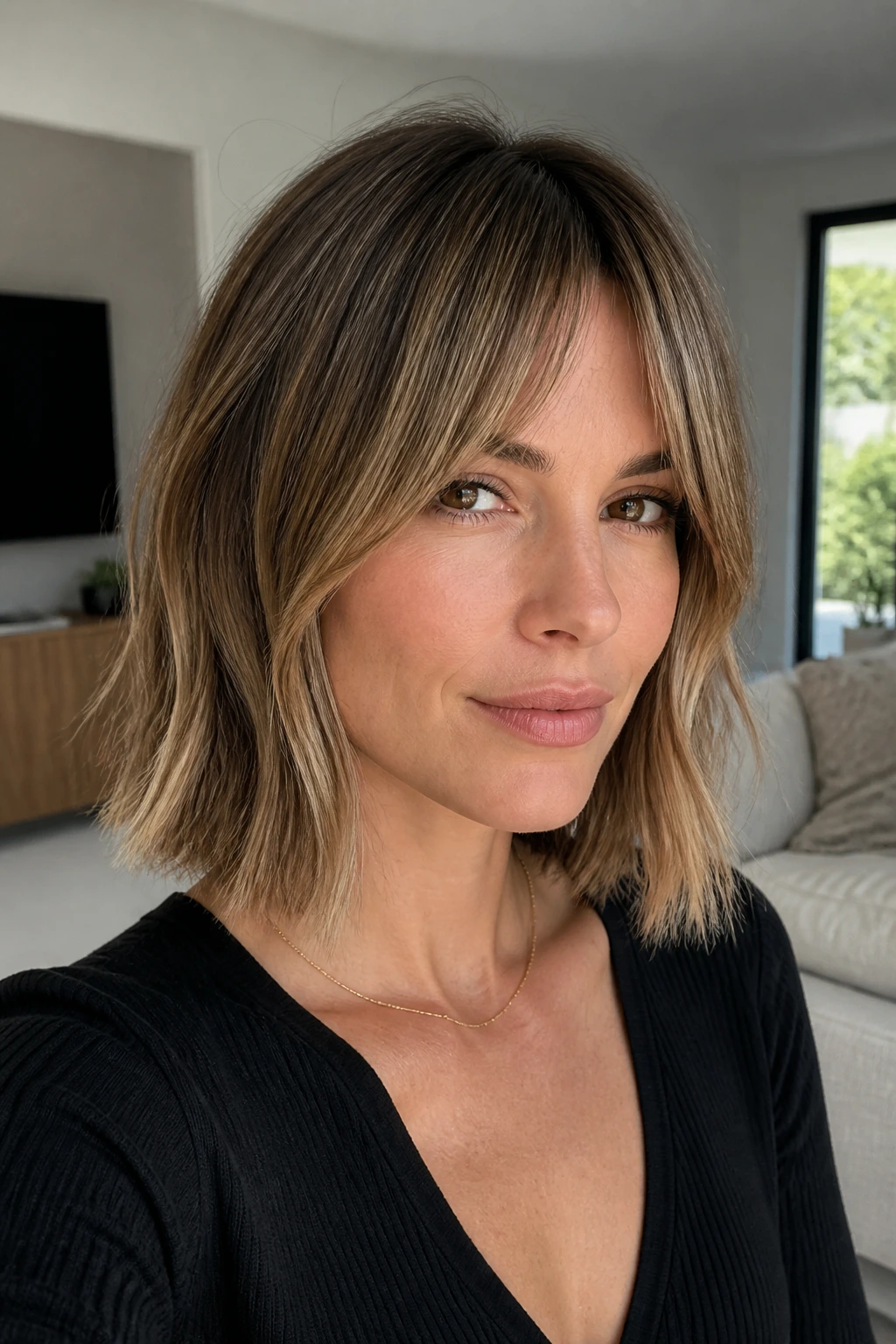
Bottleneck bangs are a clever shape: narrow near the center, then wider as they travel toward the cheekbones. That curve is exactly why they flatter square faces so well. They break up the forehead without making the front of the haircut feel heavy.
On thin hair, the lob underneath keeps the ends looking fuller than a short crop would. The length also lets the bangs grow out more gracefully, which is a blessing if you do not want to live at the salon.
The best part is how forgiving this shape is. You can wear it smooth, slightly bent, or a little undone, and it still holds together. I like it when the bangs are soft enough to move but not so thin they disappear. That’s the sweet spot.
17. Air-Dry Wavy Lob

If your hair has even a little bend, let it do the work. An air-dry wavy lob keeps the length at or just below the collarbone, which helps thin hair keep some weight, while the soft wave blurs the hard angles of a square face.
This is the one I recommend when someone wants less heat styling and more life in the cut. A light cream, a scrunch, and a few clips at the roots can build shape without turning the hair into a helmet of product.
The reason it works is simple: wave creates shadow. Shadow makes hair look fuller. That’s the quiet trick. You are not forcing volume from nowhere; you are using movement to make the hair read denser.
Keep the wave loose. Tight curls on thin hair can separate too much and show gaps. Gentle bend is the goal.
18. Graduated Bob with Root Lift
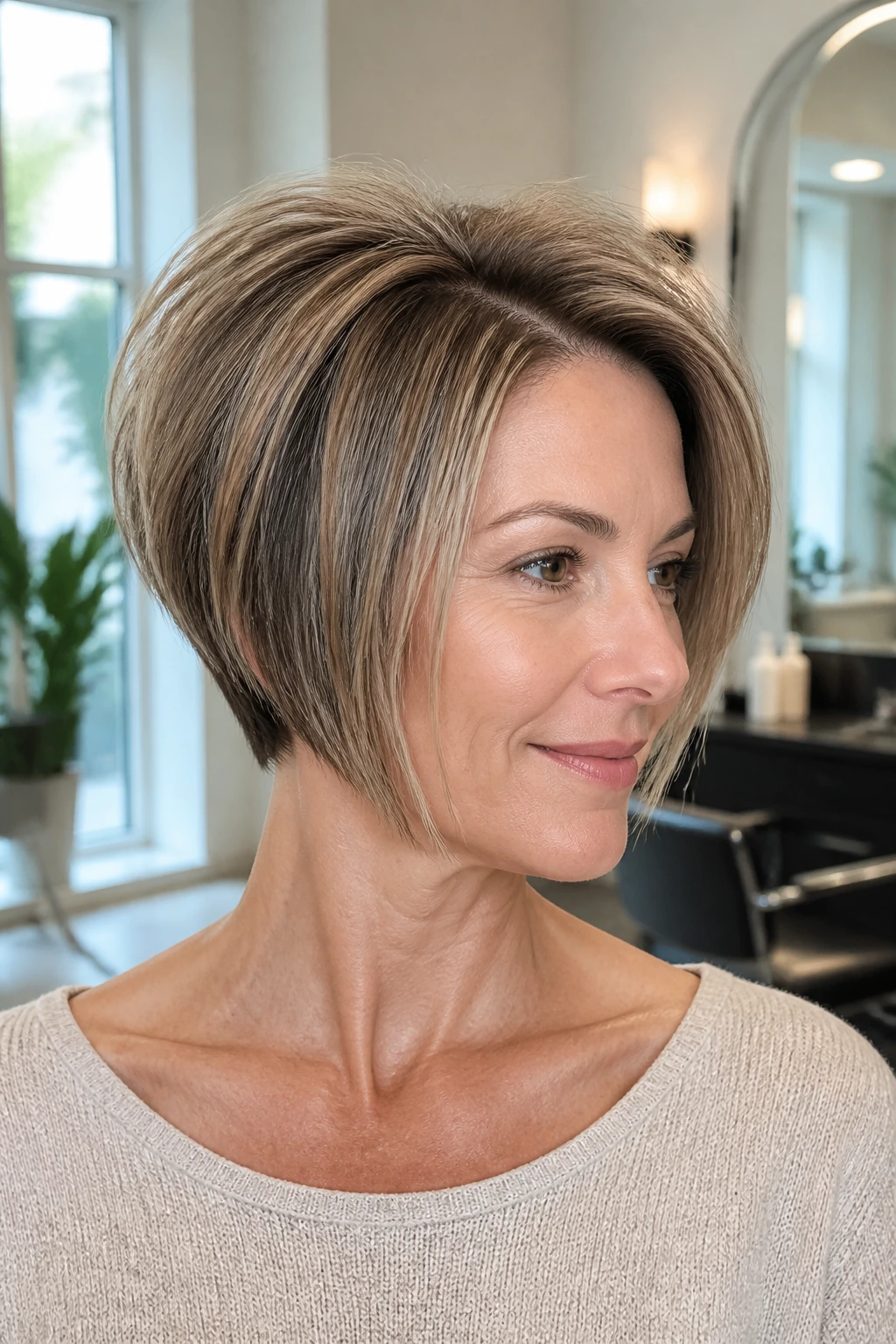
A graduated bob is all about the back. It stacks slightly toward the nape, so the crown gets lift and the shape holds a compact, rounded look. For thin hair, that can be a lifesaver when the back of the head tends to lie flat.
Square faces benefit because the fuller back lets the front stay a little softer and longer. The eye sees lift, not width. That matters.
This cut does ask for upkeep. The graduation grows out fast, and if the back gets too long, the shape loses its clean profile. Still, when it’s fresh, it has a tidy, lively look that fine hair often needs.
Use a root-lifting spray at the crown and dry the hair with the nozzle pointing up at the roots. That little directional change makes more difference than people expect.
19. Italian Bob with Full Ends
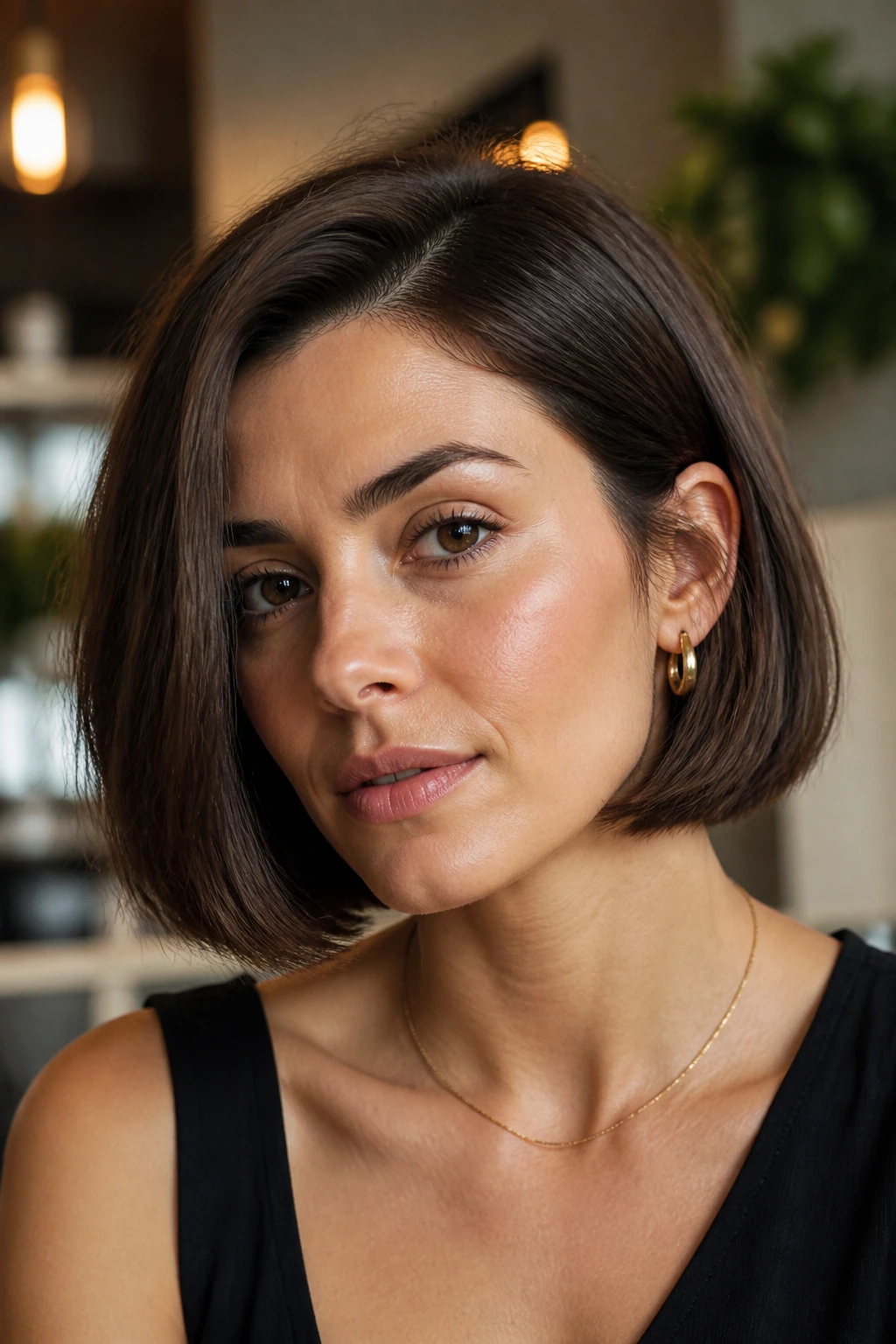
The Italian bob is one of those cuts that looks plush without looking heavy. It usually lands around the jaw or just below it, with full ends and very little obvious layering. On thin hair, that fullness at the perimeter is gold.
Square faces do well with this shape when the ends are softly beveled or lightly curved. The haircut feels elegant because it has weight, not because it’s overworked. I prefer a side or off-center part here; it keeps the face from feeling too symmetrical.
This is a good cut if you like hair that looks expensive with minimal fuss. Not fussy. Not over-textured. Just thick-looking at the bottom and smooth through the body.
20. Piecey Bob with Micro-Bends

Need movement without handing your ends over to a thousand layers? The piecey bob is the answer. It uses micro-bends and tiny separations through the mids and ends, so the hair looks lived-in without losing the outline that thin hair needs.
Square faces benefit because the texture breaks up the jawline in small, soft pieces instead of one hard edge. The effect is relaxed, but not messy if you keep the base shape controlled.
A 1-inch iron, a quick bend away from the face, and a touch of texture paste at the tips can do the job. Use too much product and the pieces clump. Use too little and the style goes limp. You want light separation, nothing crunchy.
I like this cut on hair that sits straight but refuses to feel flat when styled.
21. Rounded Lob with Blended Layers
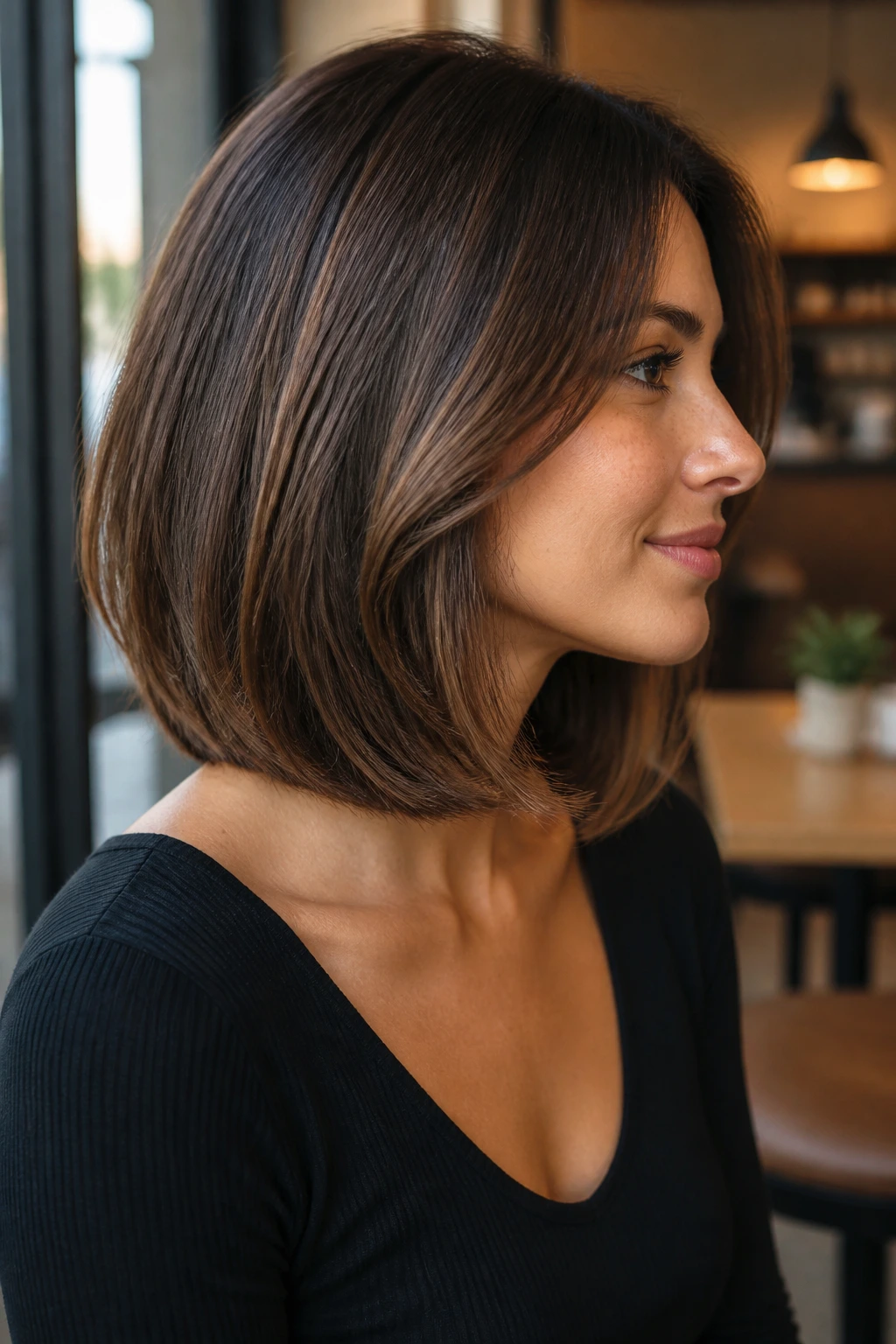
A rounded lob gives you fullness in the middle of the shape, which can be a good thing when thin hair needs a little more presence. The layers are blended, not choppy, so the silhouette stays soft and the ends don’t look sliced apart.
For square faces, the rounded outline is doing the quiet work. It softens the sides of the face and avoids that rigid frame that can make the jaw look wider than it is. This is one of those cuts that looks especially good from the side, where the curve becomes obvious.
I’d call this a polished everyday option. It doesn’t scream for attention, but it has a shape that holds. If your hair has a natural wave, it will likely cooperate beautifully. If it’s pin-straight, a quick bend at the ends keeps the curve from falling flat.
22. Chin-to-Collarbone Grow-Out Bob
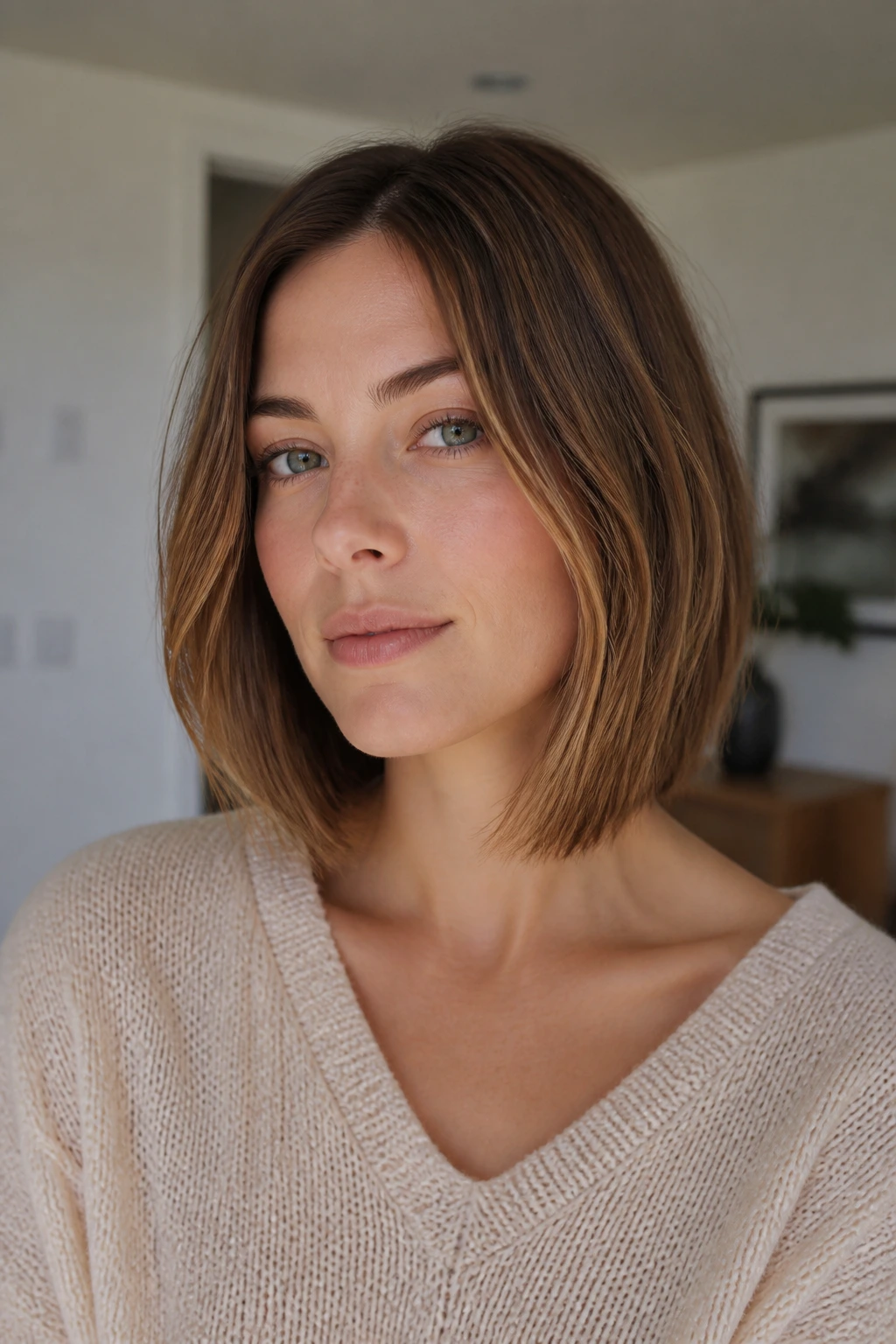
This is the practical one. The chin-to-collarbone bob gives you a shape that still works when it grows, which matters if you do not want constant trims. On thin hair, the in-between length can be tricky, but this version stays thick enough at the ends to look deliberate.
Square faces like it because the cut can move through different lengths without hitting the jaw in a harsh way. At chin length, it reads crisp. At collarbone length, it reads softer. Either way, the perimeter stays in charge.
I’d choose this if you like changing your part, tucking the hair behind one ear, or adding bends on some days and wearing it smooth on others. It has room to shift without losing the point.
Why These Bobs Work on Thin Hair and Square Faces

The basic problem with thin hair is not lack of style. It’s lack of visual weight. A good bob fixes that by keeping the perimeter clean, so the eye sees a fuller edge even when the strands themselves are fine. A bad bob does the opposite: too many layers, too much thinning, and an ends line that looks hollow by lunch.
Square faces bring a different issue. The jaw already has presence, so a haircut that ends at the widest point can repeat that width instead of softening it. A side part, a curtain fringe, a curved blowout, or a length that sits just above or below the jaw helps break that shape up without hiding the face. That’s the sweet spot.
The other piece people miss is crown balance. Thin hair often needs lift at the roots, but not the kind that fluffs the top into a triangle. A little root lift at the crown, with fuller ends below, keeps the silhouette from looking top-heavy. It sounds small. It isn’t.
And yes, the haircut matters more than the product, but the product still matters. A lightweight mousse, a root spray, and a clean blow-dry can keep the shape awake. Heavy creams and too much oil can flatten the whole thing in one afternoon.
Essential Tools for Styling These Bobs
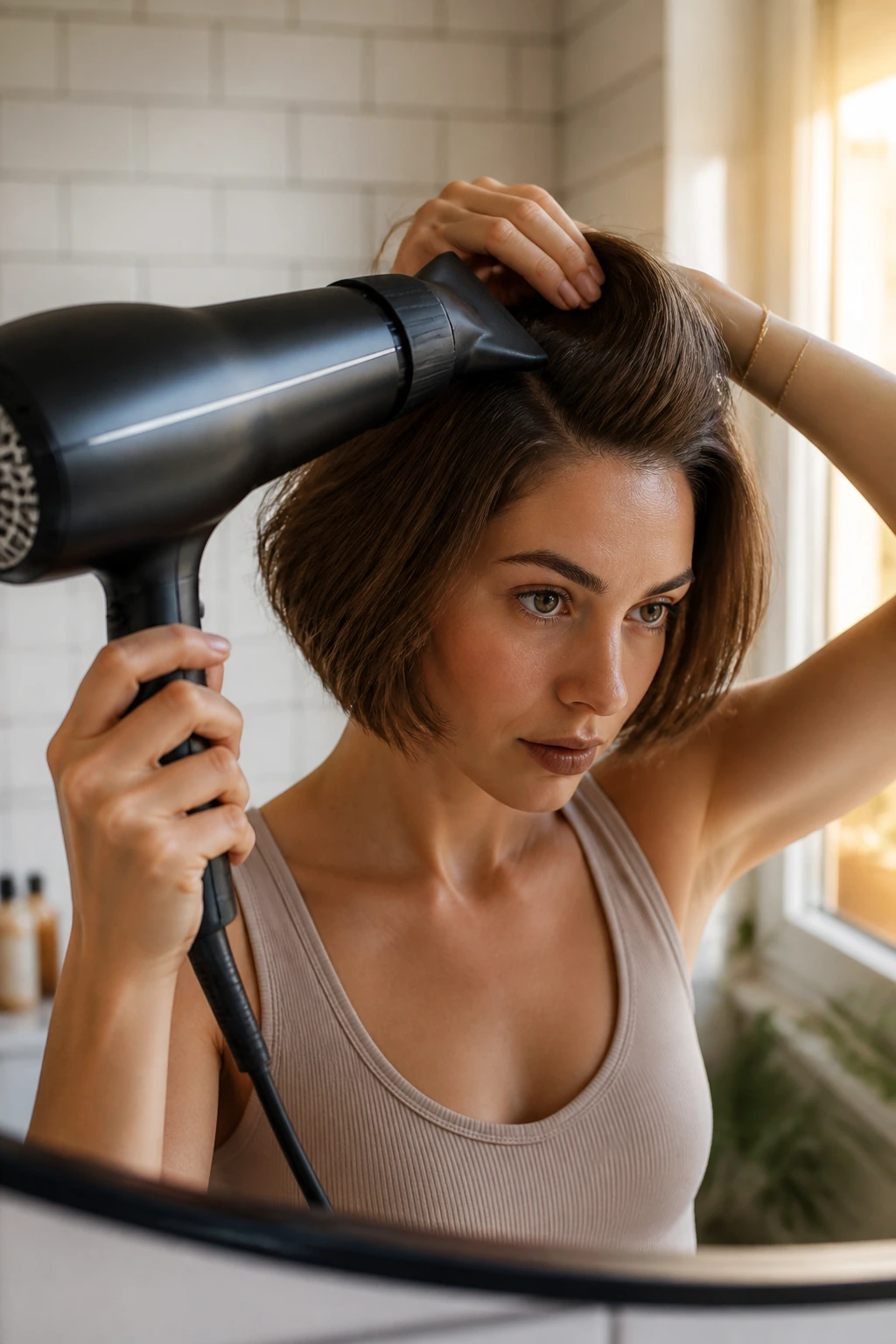
- Blow dryer with a concentrator nozzle: The nozzle lets you direct air at the roots instead of blasting the whole head into frizz.
- Round brush, 1.25 to 2 inches: Best for curved ends, bubble bobs, and soft volume at the crown.
- 1-inch curling iron or wand: Handy for micro-bends and piecey texture that doesn’t look overdone.
- Velcro rollers or root clips: These give fine hair lift while it cools, which is where the shape actually sets.
- Lightweight volumizing mousse: Use it at the roots and mids on damp hair; a walnut-sized amount is usually enough.
- Heat protectant spray: Fine hair burns faster than people think, and hot tools on thin strands need a buffer.
- Dry shampoo: Good for day-two root lift and for stealing a little grit from overly clean hair.
- Texturizing spray: Best on the mids and ends, not the roots, if you want separation without collapse.
- Wide-tooth comb: Less pulling, less breakage, better for distributing product through thin hair.
- Small clips and sectioning pins: Makes it much easier to direct the front pieces and the fringe while drying.
Smart Cut and Product Choices
A great bob starts in the chair, not at the mirror. Bring two or three photos that show the exact length you want, then point to what you like about each one: the part, the fringe, the amount of bend, the fullness at the ends. That is much more useful than saying “something like this,” which usually turns into a guess.
For thin hair, ask for the perimeter to stay strong. Those words matter. If you say you want a bob but don’t want the ends thinned out, your stylist can protect the line while still removing bulk where needed. On square faces, ask where the front pieces should fall relative to the jaw. One inch above or below that line can change the whole shape.
Product choice is a separate game. Lightweight mousse beats heavy cream when you need lift. A root spray makes more sense than a thick serum at the crown. If your hair gets stringy fast, use less product than you think you need and build only where the hair is flat. Fine strands hate overload.
Heat protection is not optional if you use a blow dryer or iron. Thin hair shows damage faster, and split ends make a clean bob look frayed. A light mist before styling is enough. You do not need a sticky layer that makes the hair feel dirty before you’ve left the house.
How to Wear These Looks
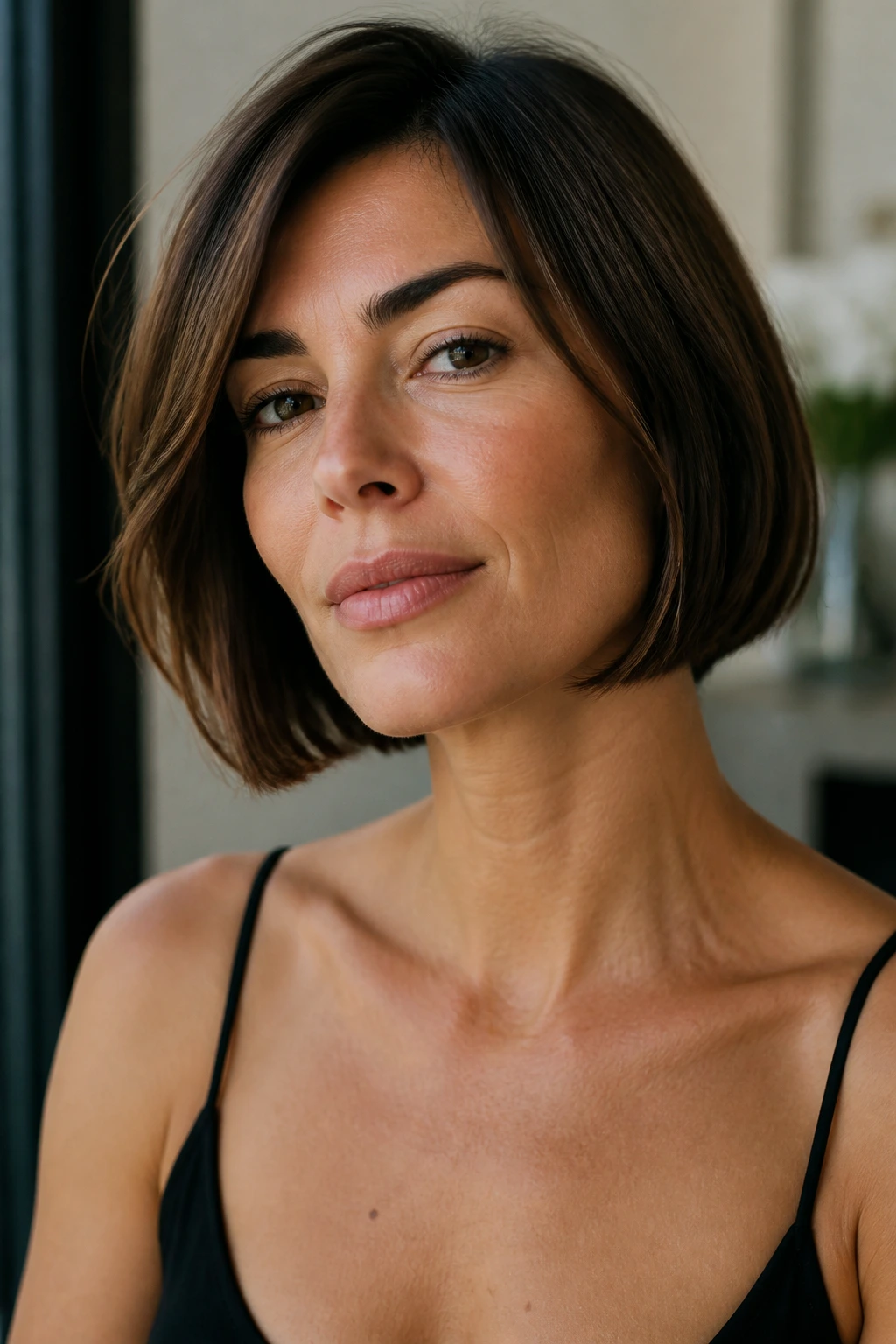
Presentation: The cleanest bobs look best when the outline is obvious. Let the ends land where they can be seen, and don’t bury the shape under too much curling or too many accessories at the temples.
Accents: Earrings, glasses, and necklines matter more with square faces than most people admit. A soft hoop, a curved frame, or an open neckline keeps the haircut from competing with strong angles at the jaw.
Scale: If your hair is very fine, collarbone length often gives the most forgiving balance. If it has a little more density, chin length can work without looking sparse, especially with a side part or fringe.
Finish: Choose one mood and stick with it. Sleek, curved, or piecey all work; mixing them all at once makes the haircut look undecided. A small bend at the ends and a little lift at the crown usually go further than big, showy volume.
Styling Upgrades and Shape Tweaks

Root Lift: If your hair falls flat at the crown, clip the roots while the hair cools after blow-drying. Three to five clips across the top can buy you enough lift to keep the shape alive until evening.
Face-Framing Bend: Turn the front pieces away from the jaw with a brush or iron. That one direction shift softens a square face faster than adding more layers ever will.
Texture Control: Use texture spray only on the mids and ends if the roots get greasy fast. Fine hair can go from airy to limp in about ten minutes if product touches the scalp.
Make-It-Yours: If you like a sharper finish, keep the perimeter blunt and the styling smooth. If you like a softer finish, add a fringe or a loose wave, but leave the bottom line intact so the cut still looks full.
Maintenance, Wash Days, and Trim Timing
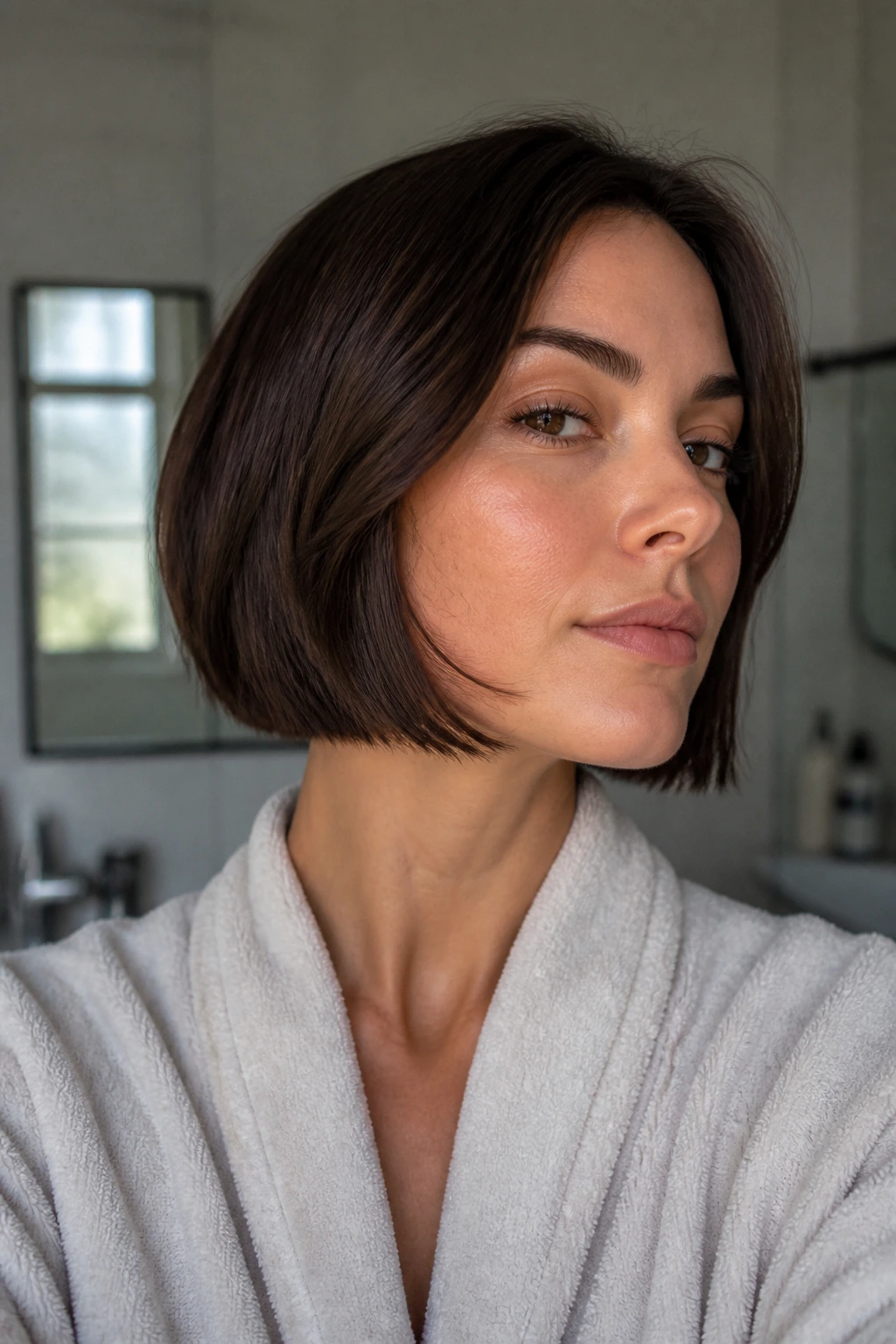
Thin hair shows growth sooner than thick hair does. A bob that looked sharp three weeks ago can start turning soft at the corners if it isn’t trimmed on time. For short bobs, I like a trim every 5 to 7 weeks. For lobs, 7 to 9 weeks usually keeps the shape readable. Bangs, if you have them, often need a quick clean-up every 2 to 4 weeks.
Wash timing matters too. Fine hair usually benefits from being styled on clean or lightly lived-in hair, not on a heavy day-four root. If your roots flatten overnight, dry shampoo at the root line before bed can help, but use a small amount. Too much and you get that dusty, dull finish that no one asked for.
At night, a silk pillowcase or a loose clip at the crown helps preserve the bend. In the morning, hit the front with a blow dryer for 30 to 60 seconds and reshape only the pieces that matter. You do not need to restyle the whole head every day.
If you rely on hot tools, let the hair cool fully before touching it. That’s when the bend sets. Rush it, and the style falls out before lunch.
The Cut Mistakes That Make Thin Hair Look Flatter
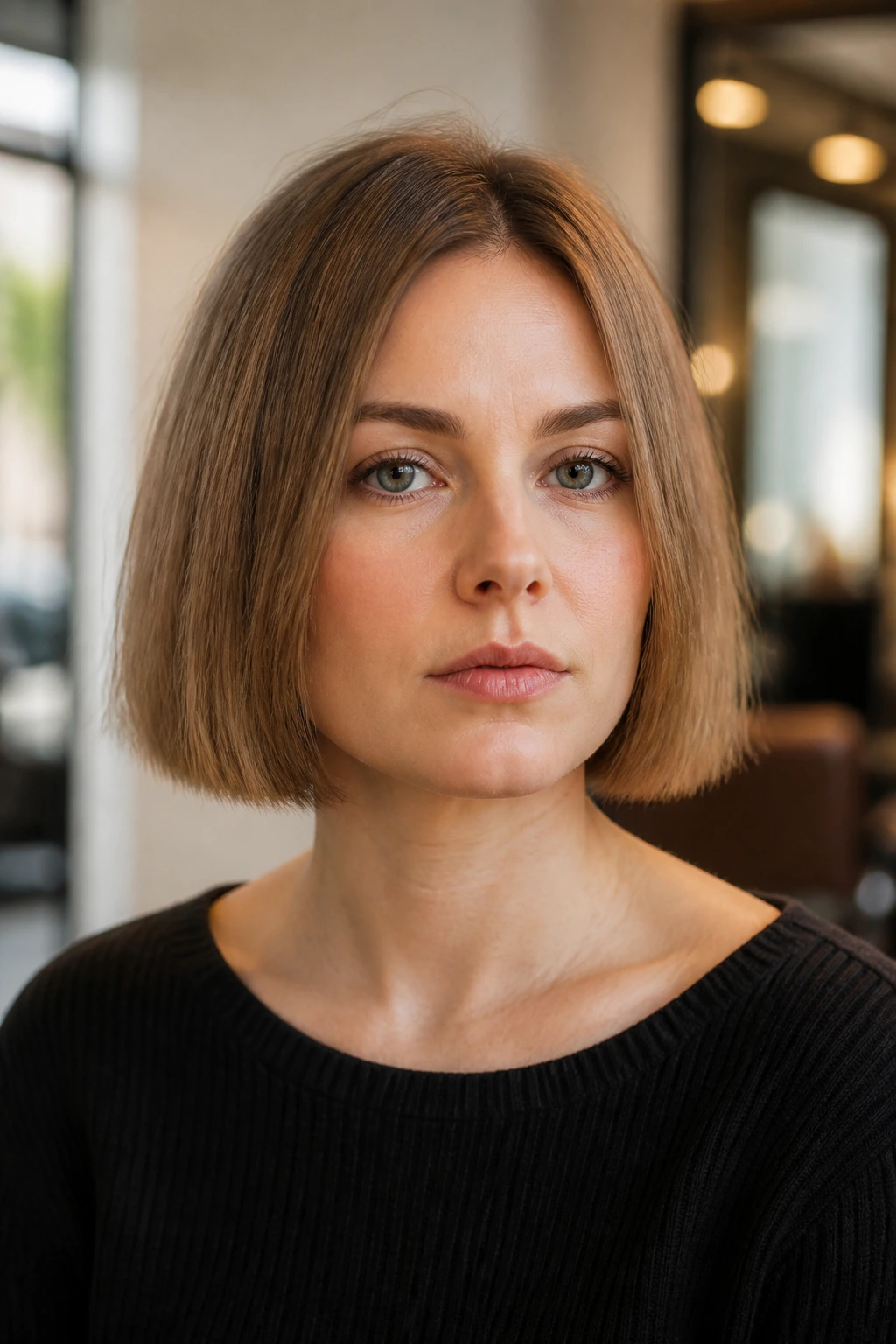
The biggest mistake is too much layering. On thin hair, over-layering can take away the one thing a bob needs most: a solid outline. The symptom is easy to spot. The ends look see-through, and the top has more lift than the bottom. The fix is a cleaner perimeter with internal shaping instead of chopped-up layers everywhere.
Another common one is landing the length exactly on the jaw. On a square face, that can make the jaw look wider and the haircut look boxier. Move the cut up or down an inch, and the whole face usually feels softer.
Over-thinning with a razor or thinning shears is a classic trap. It sounds airy in theory. In practice, it often leaves thin hair fuzzy, separated, and weak at the ends. Ask for weight removal only where the stylist can show you the effect in the mirror before they keep going.
Heavy product is its own problem. A rich cream or too much oil at the roots makes fine hair collapse fast. Keep the heavier products on the ends, and use light mousse or spray near the scalp.
Last one: ignoring your part line. A center part can be lovely, but on some square faces and some fine hair types, it exposes too much scalp and makes the face feel extra straight. Try a soft off-center part before you decide the cut itself is the issue.
Variations and Styling Adaptations to Try
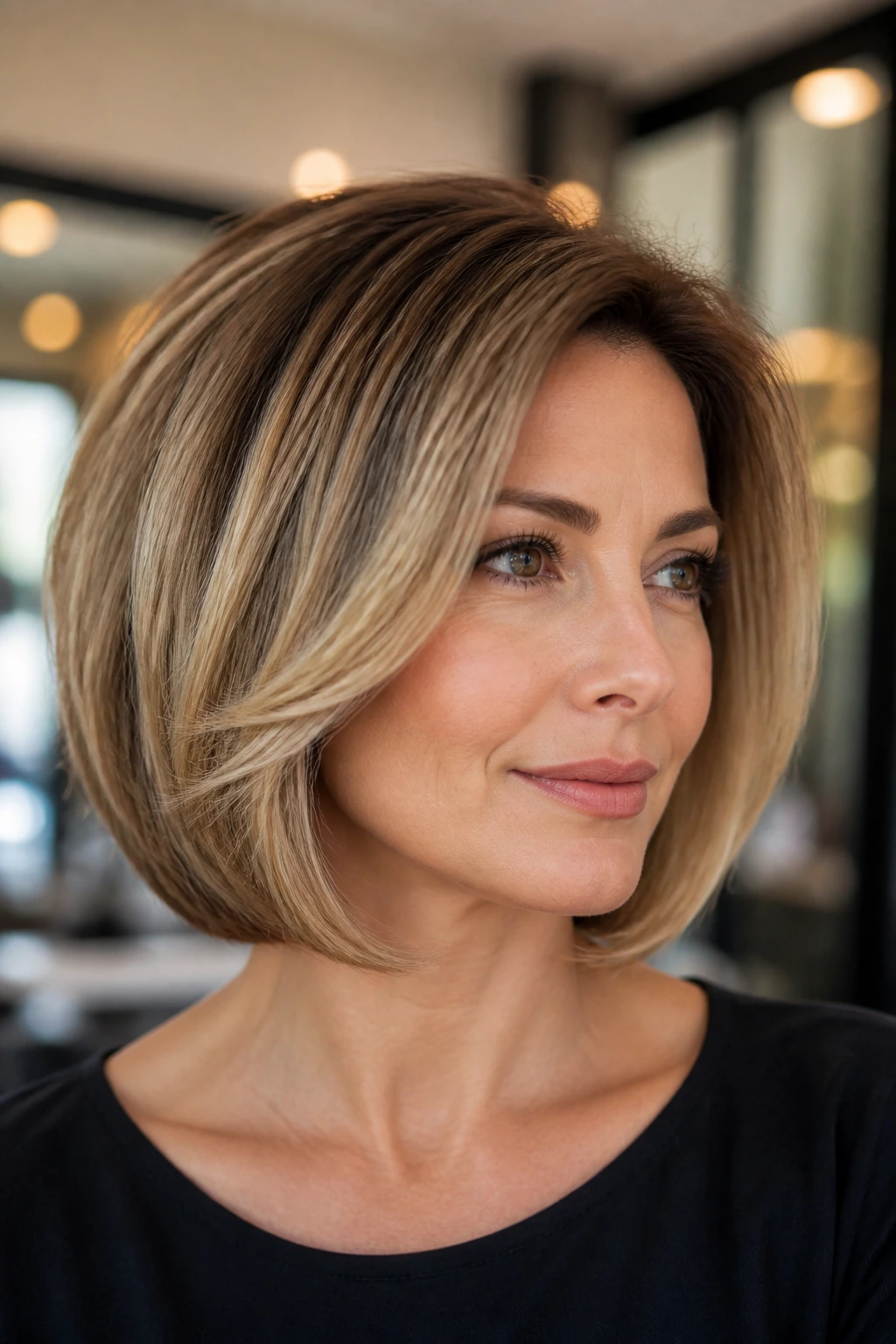
Soft Blowout Bob: This version uses a round brush and a little lift at the crown to create a salon-blowout feel. It works well if your thin hair tends to go flat by midday, and it softens a square jaw by curving the ends under just enough to keep the line smooth.
Air-Dried Bend Lob: Start with lightweight mousse, scrunch the mids, and clip the roots while they dry. The finished shape feels casual, but it still gives a square face some softness because the wave breaks up the straight sides of the jaw.
Glass-Sleek Bob: Keep the perimeter blunt, use heat protectant, and smooth the cut with a flat iron for a clean finish. This version suits anyone who likes precise lines, but I’d keep a little off-center part so the face doesn’t read too rigid.
Curtain-Bang Reset: Add curtain bangs to almost any of these bobs or lobs when you want more face framing without losing length. The fringe splits around the cheekbones, which is one of the easiest ways to soften square features without a big change.
Rounder Bubble Finish: Use a larger round brush or soft rollers to build a gentle curve through the lengths. It’s a good choice when your hair needs the illusion of thickness, especially at the bottom edge where fine strands can go wispy.
Grow-Out Friendly Midi: Let the cut sit between the collarbone and the upper chest, then keep the front lightly framed. It’s the version for people who don’t want to trim every month but still want a shape that looks intentional as it grows.
FAQ for Thin Hair and Square Faces
Which bob length is most flattering for a square face?
Usually, the safest lengths sit either a little above the jaw or well below it, especially at the collarbone. A cut that stops exactly on the jaw can sharpen the face too much, while a longer line gives the jaw room.
Do layers help thin hair, or do they make it flatter?
Both can happen, which is why placement matters. Hidden layers and soft internal shaping can add movement, but too many short layers can make the ends look see-through and sparse.
Are bangs a good idea with a square face?
Yes, if they soften rather than cut the face into hard pieces. Curtain bangs, side-swept bangs, and bottleneck bangs usually work better than blunt, heavy fringe because they break up the width of the forehead and jaw.
Can I wear a middle part with a square face?
You can, but the rest of the shape has to do more work. A middle part plus a blunt jaw-length cut can feel severe, while a middle part with curtain bangs or a rounded lob often looks much softer.
What if my thin hair also has a cowlick at the crown?
Then root placement becomes even more important. Ask for a cut that leaves a little lift at the crown and use clips while the roots cool after drying; that helps the cowlick settle without flattening the whole top.
How often should I trim a bob or lob?
Shorter bobs usually need a trim every 5 to 7 weeks, while longer lobs can stretch closer to 8 or 9 weeks. Fine hair shows split ends quickly, and once the edges fray, the whole shape starts looking thinner.
Can I air-dry these cuts, or do I need heat tools?
You can air-dry a few of them, especially the wavy lob, the piecey bob, and some curtain-bang styles. Straight, polished versions usually need some heat or at least root clips to keep the outline from collapsing.
What should I avoid if my hair is thin and my jaw is strong?
Avoid heavy thinning, harsh chin-length cuts that end exactly on the jaw, and flat center parts with no softening around the face. Those combinations tend to make the face look wider and the hair look lighter than it is.
The Shape That Softens the Edge

The best bob for thin hair is the one that keeps its outline. The best bob for a square face is the one that knows when to soften. Put those two ideas together, and the cut stops being a compromise.
That’s why these bobs and lobs work. They use blunt ends, smart length, and just enough movement to keep the jaw from taking over the whole picture. No drama required. Just good shape, placed in the right spot.
If you’re heading to the salon with a square face and fine hair, bring one or two of these references and say what you want the ends to do. That one sentence can save you from a cut that looks lovely on paper and flat in real life.