



A round face doesn’t need to be hidden. It needs a haircut that understands angles, and a medium straight bob with beachy waves can do that with far less fuss than people think. The clean line of the cut keeps the shape crisp, while the wave pattern adds movement without turning the sides into a puffed-out halo. That’s the whole game: length where the face needs it, softness where hard lines would feel too severe.
The mistake a lot of people make is assuming every wavy bob behaves the same way. It doesn’t. A wave that starts right at the cheekbone can widen the face fast. A wave that starts lower — closer to the jaw or collarbone — does the opposite. And the base cut matters just as much as the styling. A blunt perimeter, a little internal layering, or a longer front corner can change the whole mood of the haircut.
What I like about these medium straight bobs is that they don’t all chase the same finish. Some are polished and almost quiet. Some are a little piecey, a little undone, the kind of cut that looks like you didn’t overthink it, even though every line is doing a job. If you’ve ever stared at a bob photo and wondered why it looked better on the model than it did on real life, the answer is usually placement: where the length lands, where the waves begin, and where the part falls.
Why These Bob Shapes Earn Their Keep

-
Length That Pulls the Eye Down: A medium bob that lands below the chin gives round faces a longer vertical line, which is why collarbone-grazing and shoulder-skimming versions keep showing up here.
-
Waves That Start in the Right Place: Loose bends that begin under the cheekbone soften the cut without adding width right where the face is fullest.
-
A Clean Perimeter Changes Everything: Straight edges at the bottom keep the style looking intentional, even when the texture is a little tousled.
-
Parting Is Not a Small Detail: A center part, deep side part, or soft off-center part can change how broad or narrow the face reads by a surprising amount.
-
You Can Build It Into Real Life: These cuts work with air-drying, quick iron bends, and second-day texture instead of demanding a full salon blowout every time.
-
They Play Well With Glasses, Bangs, and Necklines: The right bob doesn’t fight your frames or your wardrobe; it sits inside them and makes the whole look feel sharper.
1. Collarbone Center Part With Loose Beachy Ends
A collarbone-length bob with a center part is one of those cuts that looks almost plain until the waves hit it. Then it does something sneaky: it stretches the face without looking severe. The length sits low enough to keep the cheeks from taking over, and the middle part gives the whole shape a calm, straight-down line.
Why It Works on a Round Face
The collarbone is doing real work here. Hair that ends there gives the eye a place to travel, which matters more than people think when the goal is to make a round face look a little longer. Keep the wave pattern soft and loose — not tight, not springy — and the ends stay light instead of ballooning outward.
If you want this to read polished instead of beach-casual, ask for a blunt perimeter with only a touch of invisible layering inside the ends. That keeps the cut from turning fluffy on humid days. I like this one best on hair that naturally lies flat at the root and bends easily below the ear.
2. Deep Side Part With Wave Swept Across the Cheek
A deep side part changes the whole mood in one move. Instead of letting the face read evenly on both sides, it builds a diagonal line that cuts across the width of a round face and makes everything look a touch more lifted. The wave falls over one cheek, not both, which is the part I like most.
A Better Choice When You Want Asymmetry
This is the bob for anyone who hates the feeling of symmetry making their face look too open. The side with more hair can sit at the temple or cheekbone, while the lighter side stays tucked behind the ear. That asymmetry narrows the face visually without needing a heavy cut.
Keep the waves loose and brush them out after they cool. If they’re too neat, the part can feel stiff; if they’re too tight, the width comes back. A 1-inch iron or wand works well here, but only wrap the mid-lengths and leave the ends a little imperfect.
3. Blunt Lob With Waves Kept Below the Jaw
This one is quietly strong. The line is blunt, the ends are even, and the wave lives mostly in the bottom third of the hair. That combination gives round faces a sharper lower edge without piling bulk beside the cheeks.
What Makes It Different
A blunt lob sounds plain on paper. In real life, it looks expensive when the texture is controlled. The trick is not to curl the whole head. Bend the hair from midshaft down, then brush through it so the wave reads as movement rather than ringlets. That keeps the sides from puffing up.
It’s a particularly good choice for fine hair because the perimeter does the visual work. You get body from the texture, but the cut itself still looks clean. If your hair leans flat, this is a much better bet than a heavily layered style that loses its shape by lunch.
4. Soft A-Line Bob With Longer Front Corners
The A-line bob has a built-in advantage for round faces: the front pieces hang longer than the back, which pulls attention forward and downward. Even a mild version — just an inch or so of difference — can make the face look slimmer without screaming “angle.”
Why the Front Corners Matter
I like this cut when someone wants shape but doesn’t want anything too sharp. The back can stay neat and slightly shorter at the nape, while the front corners skim the collarbone or the top of the shoulder. That forward drift makes the face feel narrower because the eye keeps moving past the widest part of the cheeks.
Beachy waves work best here when they follow the direction of the cut. Don’t fight the A-line by making the whole style round. Let the front pieces stay a bit straighter at the root and wave more toward the ends. It keeps the haircut from losing its angle.
5. Curtain Bang Lob With Airy Waves
Curtain bangs are one of the easiest ways to break up the width of a round face without covering it up completely. They open in the center, skim the cheekbones, and blend into a lob that still feels light around the perimeter. The result has movement near the eyes, which helps the whole look feel longer.
Where This Version Shines
The sweet spot is the length of the bangs. If they stop too short, they can make the forehead look wider. If they’re long enough to sit at or just below the cheekbone, they create a diagonal line that guides the face downward. That’s the useful part.
The waves on the rest of the bob should stay relaxed. I’d avoid a lot of curl near the roots, because curtain bangs already bring texture around the top third of the face. Keep the ends loose, brush them apart, and let the fringe fall in soft pieces instead of one solid curtain. It reads less costume, more lived-in.
6. Chin-Plus-Two-Inches Bob With Tucked Sides
Short bobs can work on round faces, but they need more care. A chin-length cut can land right on the widest point of the face, which is why I prefer this slightly longer version: chin plus about two inches. That tiny bit of extra length makes the face look less boxed in.
The Tuck Makes the Cut
Tucking one side behind the ear changes the line in a useful way. It opens up the face on one side and keeps the shape from feeling too round or too symmetric. The other side can fall with a loose wave that skims the jaw instead of sitting on top of it.
This is a good option if you wear earrings or glasses, because the shorter shape keeps the neck and jaw visible. Just don’t overdo the wave. A few bends through the lower half are enough. If the whole bob gets too round, the face and the haircut start competing.
7. Razored Lob With Piecey, Separated Ends

A razored lob can be a little dangerous on the wrong hair type, but on thick or heavy hair it’s a gift. The texture removes bulk and leaves the ends more feathered, which helps beachy waves sit in separate pieces instead of forming one big mound at the sides.
What to Ask For
Ask for interior texture, not shredded ends. That’s the difference between movement and frizz. The outer line should still look clean; the cut just needs enough softness inside to let the wave break apart naturally. I’d pair this with a light sea salt spray and a small amount of cream on the ends, not the roots.
This version gives round faces some breathing room because the pieces don’t all sit at the same level. There’s a little openness around the jaw, a little lift at the crown, and no heavy wall of hair at the cheeks. Good cut. Smart cut.
8. Inverted Bob With Lift at the Nape
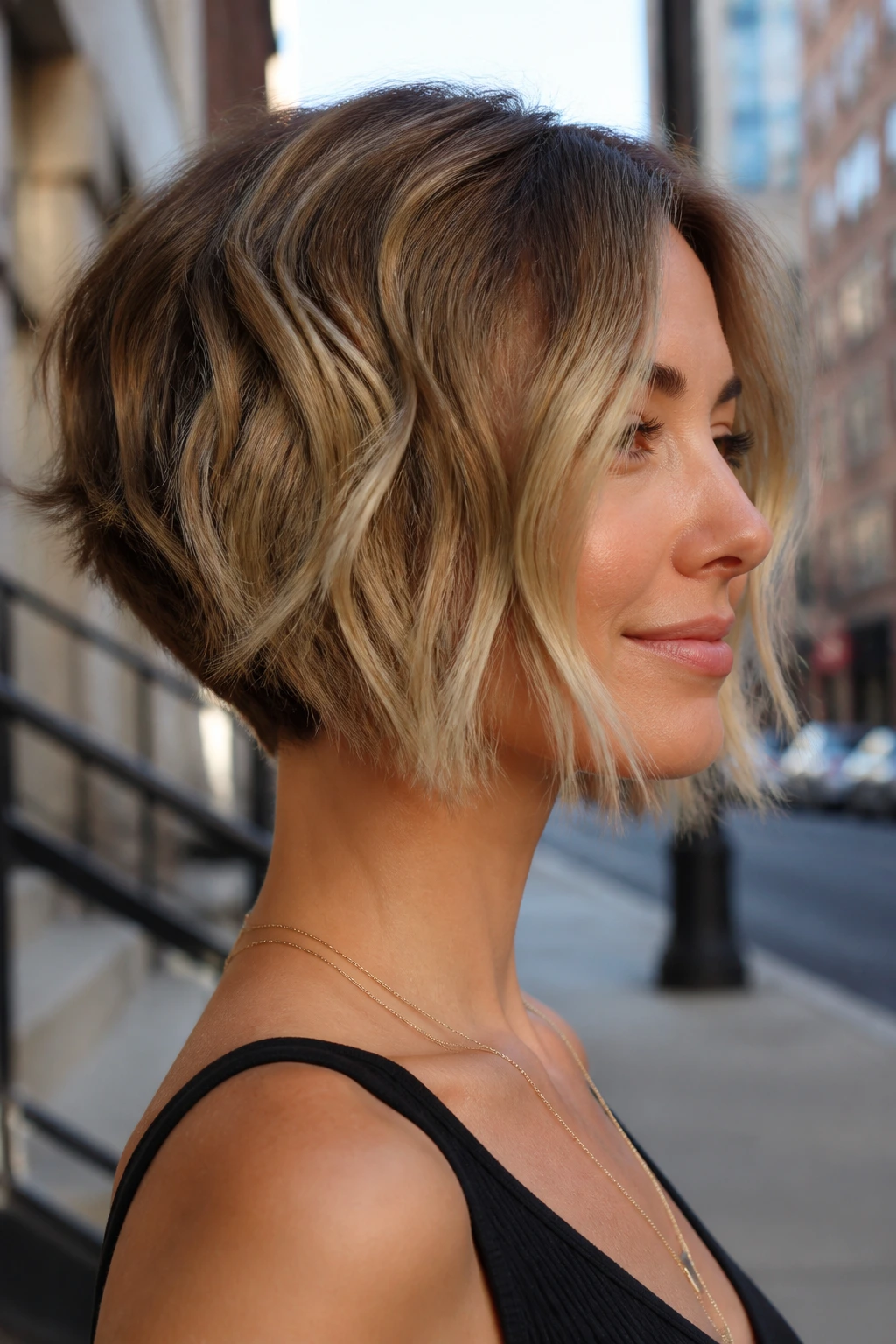
The inverted bob gets a bad reputation because people remember the stacked versions that were too high, too sharp, or too dated. A softer inversion is much better. The back is just a bit shorter, the front stays longer, and the whole shape leans forward without looking stiff.
Why It Can Slim the Face
The short back exposes the neck and removes bulk from behind the ears. That alone helps a round face feel less wide. Meanwhile, the longer front corners create those downward lines that matter so much with beachy texture.
Keep the wave pattern controlled. Too much volume at the crown can make the cut look triangular, and that’s not the goal. I like this with loose bends through the middle and ends, then a brush-through to break the curl. It’s the sort of bob that looks sharper when it’s slightly messy, which is always a nice surprise.
9. Glasses-Friendly Bob With Waves at the Hem

If you wear glasses, the haircut has to share space with the frames. A bob that stops right at the frame line can feel crowded, and a wave that flares out beside the temples can make everything busier than it needs to be. This version keeps the movement at the hem instead.
The Framing Trick
Leave enough length for the hair to skim below the frames or tuck cleanly behind the ears. That way, the glasses stay visible and the bob doesn’t compete with them. The wave should live in the lower half of the cut, where it gives shape without sitting directly beside the lens line.
I love this on people who want a smart, easy everyday cut. It looks deliberate with a blazer, but it doesn’t fall apart with a T-shirt and no makeup. The face still gets shape, just not the kind that swallows the frames.
10. Money-Piece Bob With Bright Front Panels
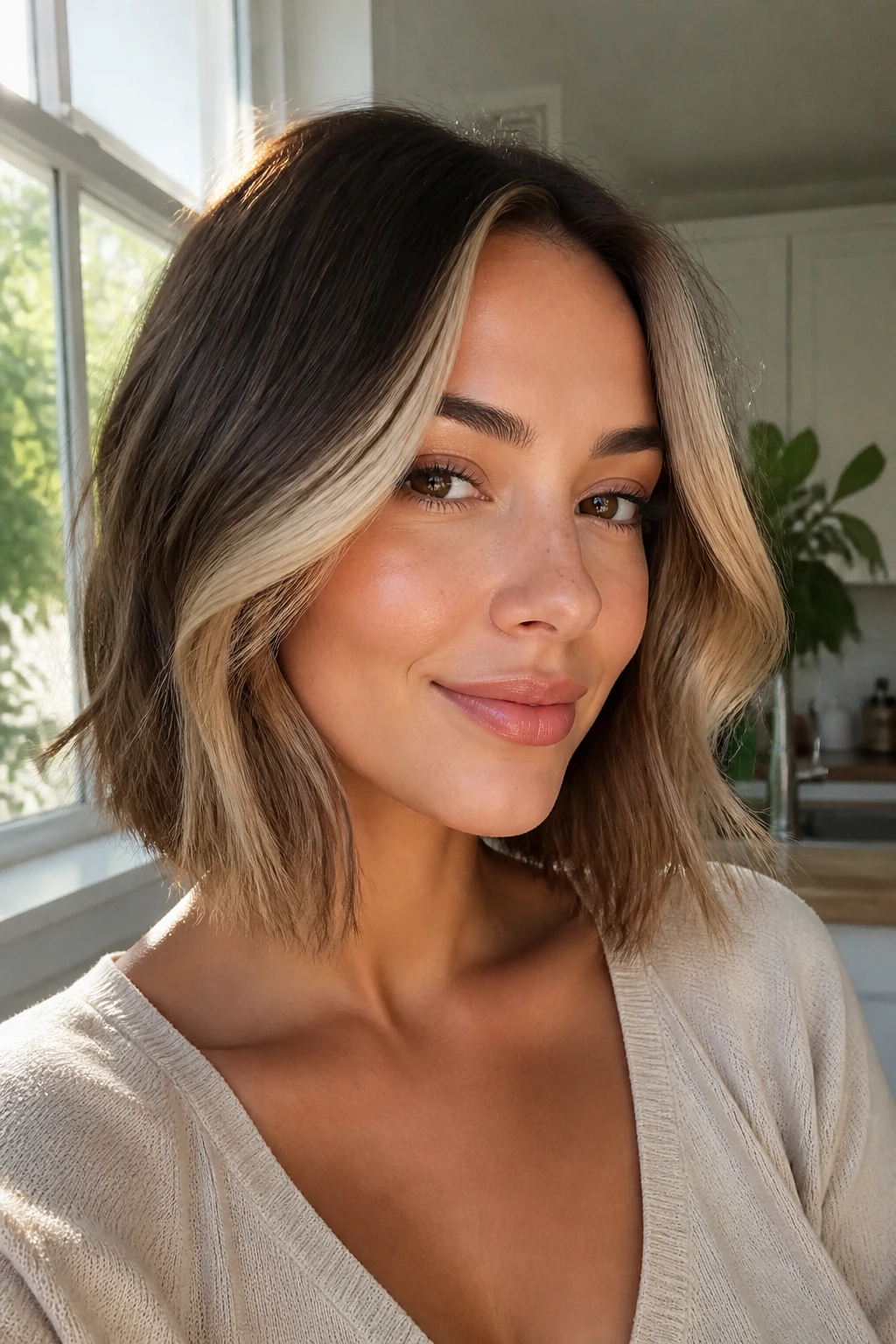
Color can do a lot of the face-shaping work that layering tries to do, and sometimes does worse. A medium bob with brighter front panels — those money-piece sections near the face — creates a visual line that pulls the eye vertically. On a round face, that can be a nice cheat.
Why the Bright Front Changes the Shape
The lighter pieces near the front act like a frame, but not a wide one. They lead the eye down the front of the face instead of across the cheeks. Keep the waves soft through the lower half so the color has room to show. If the texture gets too tight, the contrast can look busy.
This is a good option if you don’t want to alter the cut too much. You can keep the bob relatively simple, even blunt, and let the color do the sculpting. It’s a very different feel from heavy layering. Less haircut gymnastics. More quiet structure.
11. Sleek Root, Wavy Mid-Length Bob
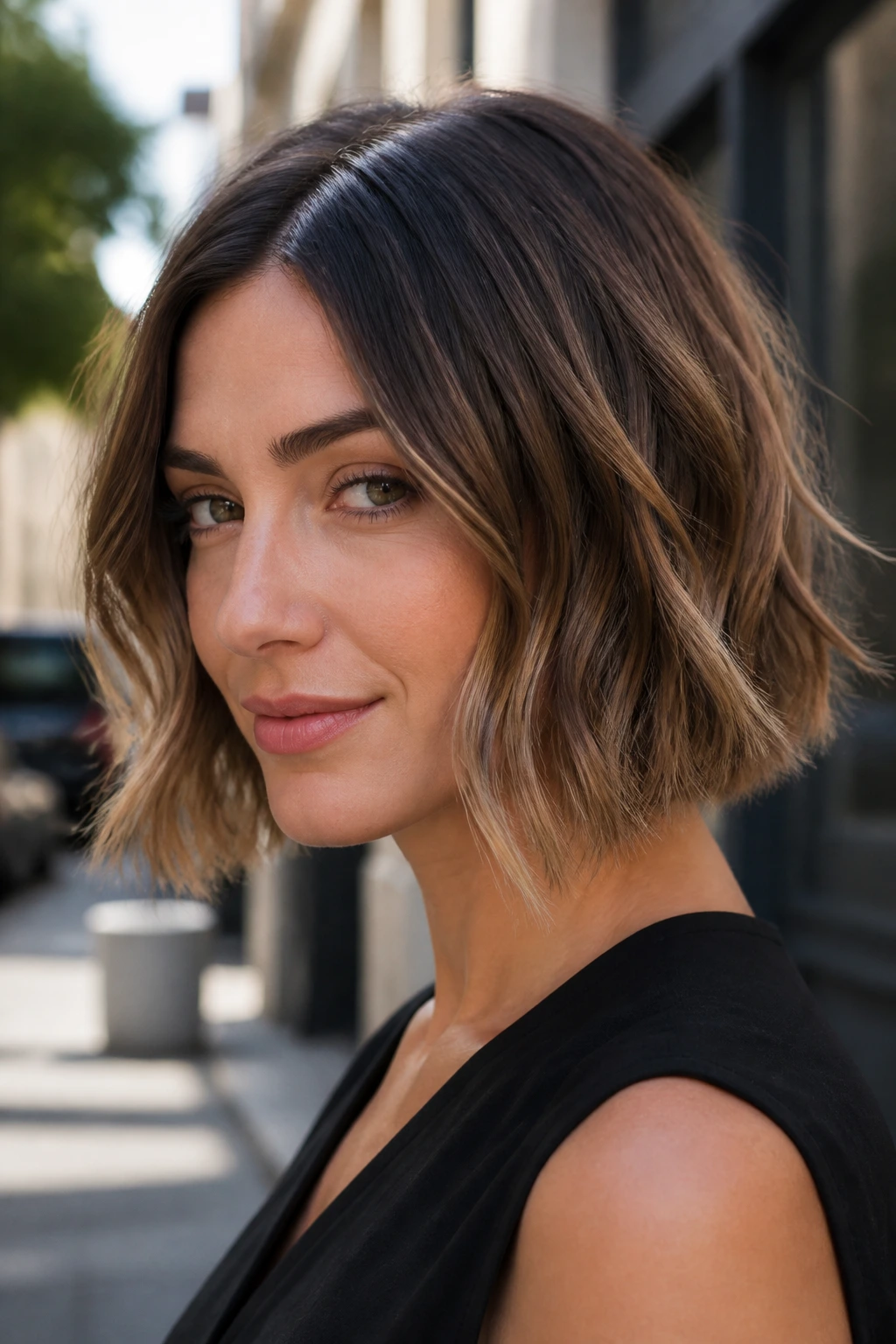
Here’s a useful compromise for people who like polish but still want a little beachy movement: smooth roots, textured mids, soft ends. The hair stays flatter at the scalp, which keeps the top from puffing out, and the waves only show up where they help the shape.
The Placement Matters More Than the Curl
Start the bend below the ear. That’s the sweet spot. When the wave begins too high, the cut gets rounder; when it begins lower, the cheek area stays cleaner. A straight root also helps the bob feel longer, which is useful on round faces where every inch counts.
I’d call this one the “doesn’t argue with your face” bob. It’s tidy enough for work and soft enough for weekends. Use a lightweight heat protectant, then bend only a few sections, leaving gaps between them. The gaps matter. They keep the whole style from turning into a single curly mass.
12. French Bob Grown Out to Lob Length
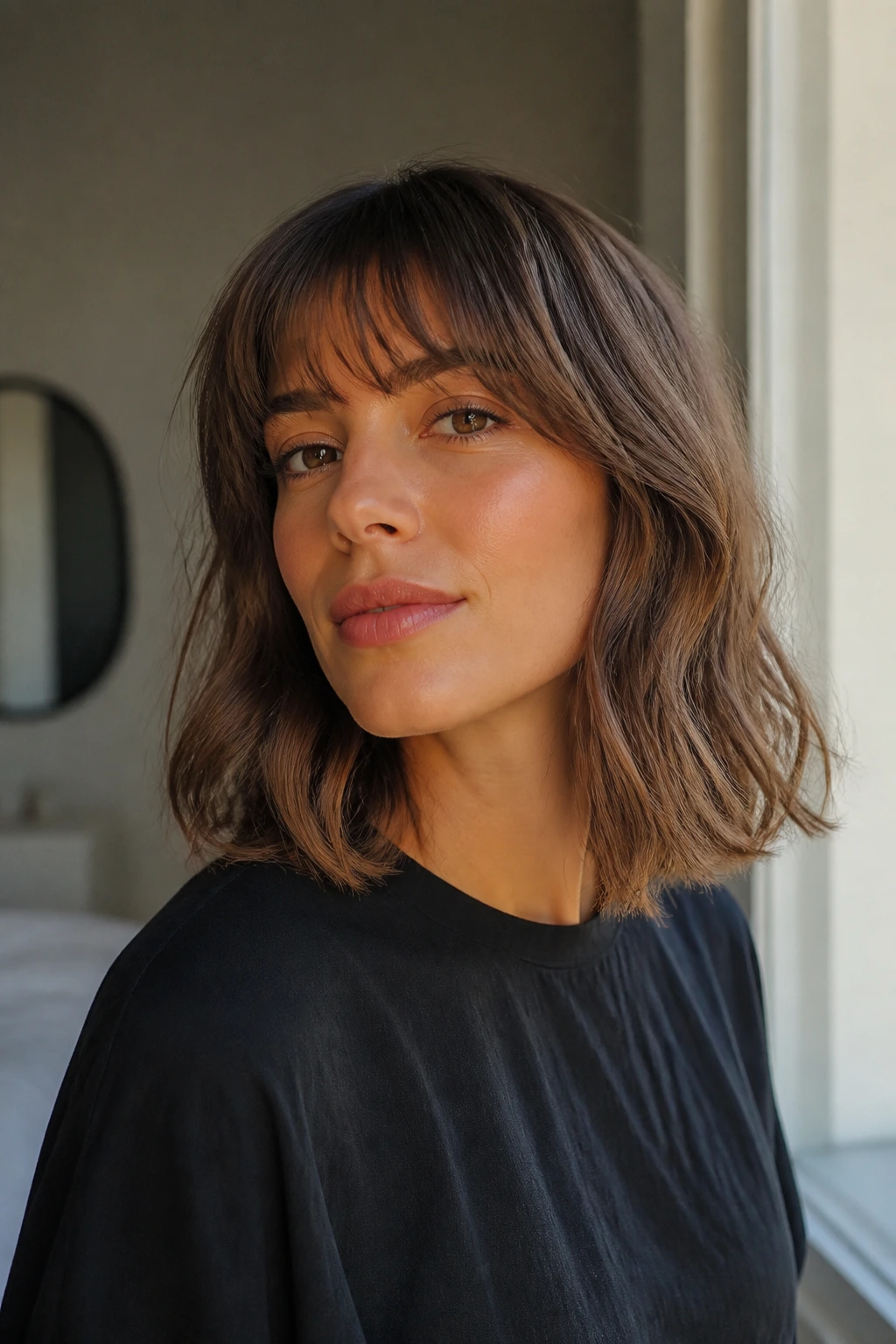
The French bob has a reputation for being short, cheeky, and a little flirtatious. Grown out into medium length, it keeps that easy edge but gives the face more breathing room. That extra length is what keeps it from stopping right on the widest part of the cheeks.
A Softer Take on a Sharp Classic
This version works because it holds onto the blunt, slightly lived-in feel of the French cut while moving the hem lower. You can keep a soft fringe or no fringe at all; what matters is the line around the jaw and the way the waves stay loose and imperfect. It shouldn’t look overdone. A French bob never looks best when it tries too hard.
I’d especially recommend this for round faces with strong brows or good cheekbones, because the cut gives enough structure for those features to show through. Add beachy waves only through the ends, and keep the crown fairly flat. The result has attitude without extra width.
13. Shag-Bob Hybrid for Thick Hair
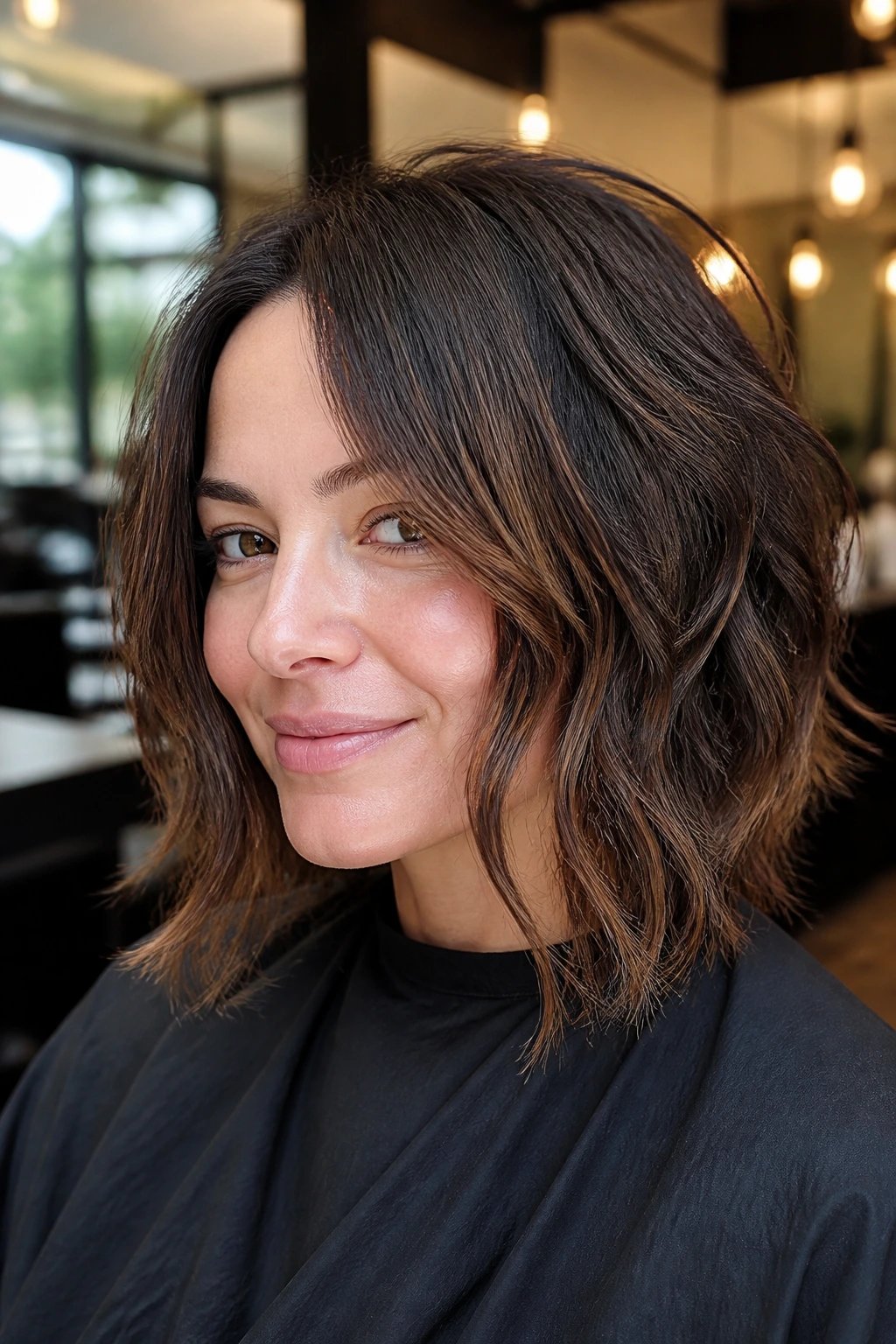
Thick hair and round faces can be a tricky mix, because too much bulk at the sides makes the whole shape feel wider. A shag-bob hybrid solves that by taking weight out through the interior and keeping the outline medium and straight. It gives movement without the mushroom effect.
Best When You Need Bulk Removed
The layers should be long and soft, not choppy. I’m talking about internal movement that helps the waves fall in pieces, not a shag that stands out around the temples. The perimeter still needs to read as a bob, even if the inside has a bit of air.
This is one of my favorites for hair that tends to swell when it dries. A little wave cream, a little scrunch, and the cut does the rest. If you have thick hair and have been burned by blunt cuts that look like a helmet by noon, this one deserves a look.
14. Fine-Hair Lob With a Lifted Crown

Fine hair needs a different strategy. Heavy layers can make it look thin fast, and beachy waves can collapse if there isn’t enough structure underneath. So this version keeps the shape mostly solid, gives a touch of lift at the crown, and lets the ends carry the texture.
Keep the Ends Light, Not Sparse
Ask for a bob that doesn’t have too much weight removed around the cheekbones. That’s the danger zone. Keep the perimeter tidy, then build movement with a root-lift spray and a few soft bends below eye level. The cut should look full, not frayed.
A lot of fine-haired people think they need more and more layers. Usually they don’t. They need smarter placement. A straight-ish lob with beachy ends often gives more body than a heavily shattered cut, and on a round face it still keeps the shape long and clean.
15. Shoulder-Grazing Center Part With Soft S Waves
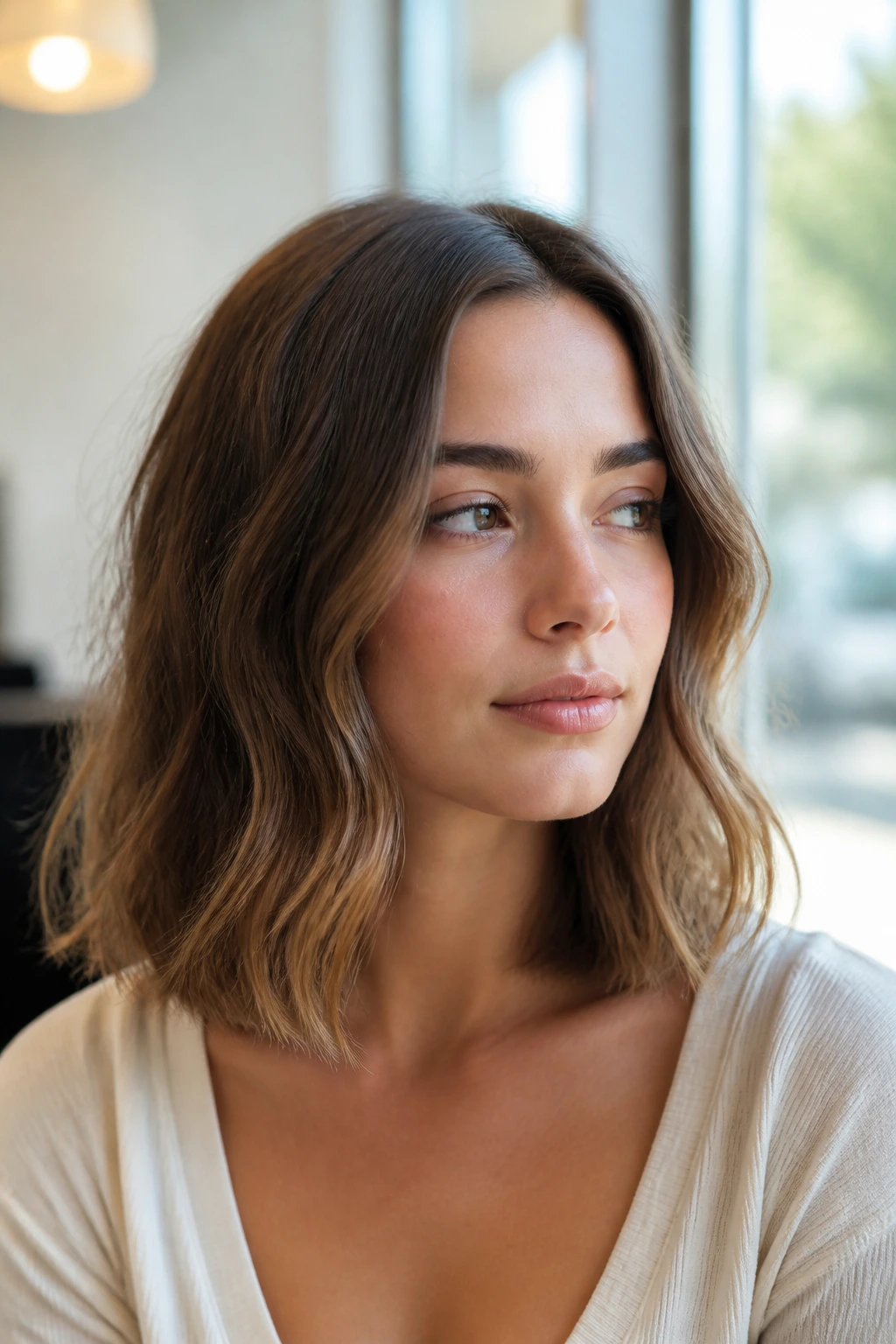
Shoulder-grazing hair has a different energy from chin-length hair. It gives a round face more vertical space to work with, and the center part keeps the shape honest. I like the S-wave finish here because it bends the hair without turning it into a curl pattern that sits wide.
Easy, Clean, and Not Fussy
This is one of the least dramatic versions in the whole group, which is part of the appeal. It doesn’t need obvious layering to flatter the face. The length alone does a lot, especially when the waves are brushed into a loose, soft shape rather than left in separate coils.
If you live in your hair more than you style it, this cut is worth a serious look. It can air-dry with texture, or you can put two or three bends in the front and call it done. A lot of haircuts promise ease. This one can actually deliver it.
16. Off-Center Part Bob With Hidden Layers
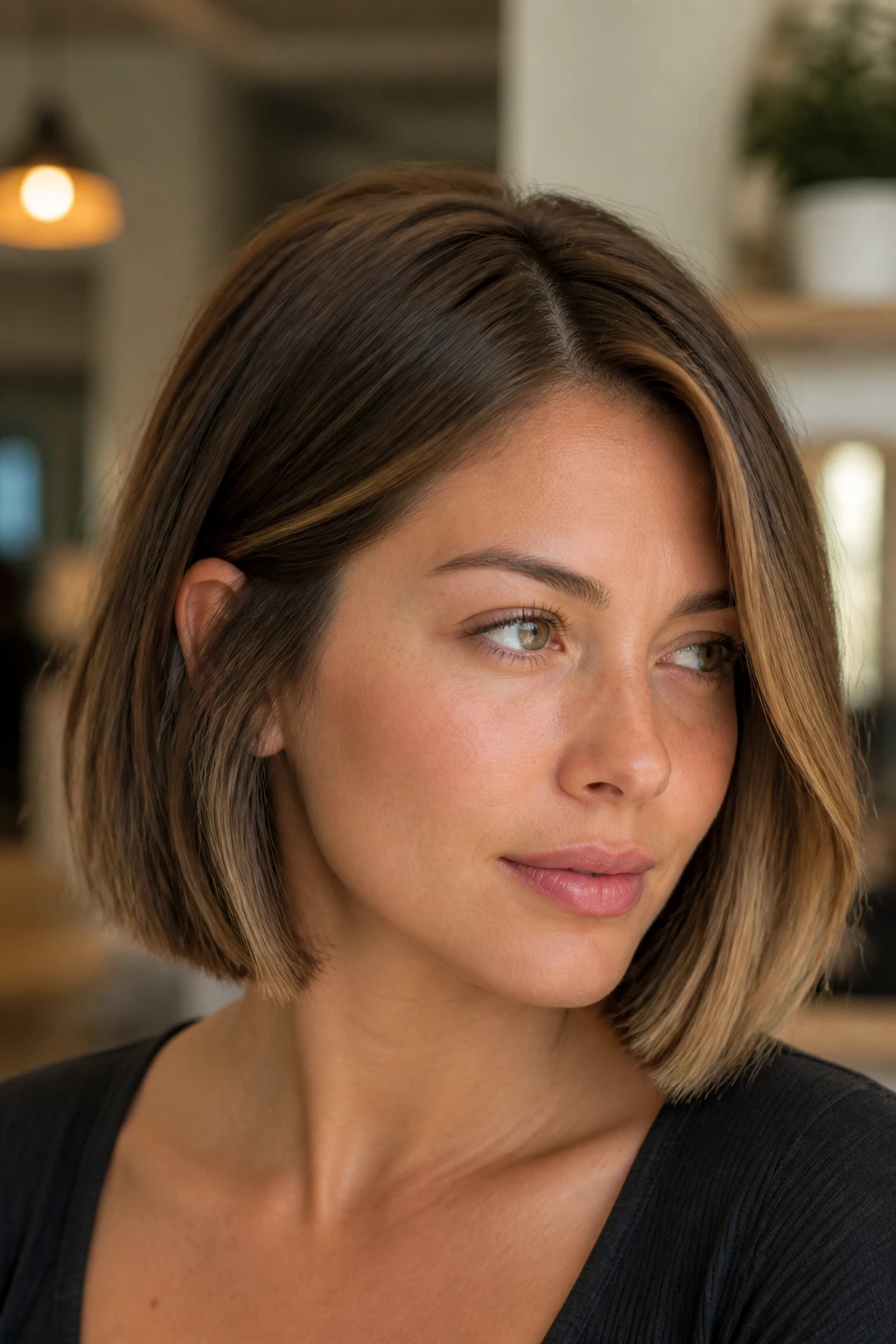
A bob doesn’t need a dramatic side part to avoid looking flat. A slight off-center part can be enough. Add hidden layers underneath, and the haircut gains movement without changing the outer line too much. That’s useful if you want softness but hate choppy ends.
Subtle Shape, Real Payoff
The best part of hidden layers is that they move when you do, but they don’t shout. The top layer stays smooth, the underneath pieces create lift, and the wave lands in a controlled way. On a round face, that means less side bulk and more vertical flow.
I like this cut for people who want to keep their bob looking grown-up and not overly styled. It’s especially good if you prefer a slightly more casual wave, the kind you brush out with your fingers instead of a comb. Clean, but not severe. That’s the sweet spot.
17. Flip-Under Bob With Soft Ends

A flip-under bob can sound old-school, and sure, if the curve is too round it can go there fast. But a softer version, with the ends turning gently inward and beachy waves sitting only through the mid-lengths, can be a smart shape for a round face.
Why the Curve Helps
An inward finish keeps the width from flaring out at the jaw. That matters. It gives the bob a tucked, neat bottom edge while the waves up top keep it from feeling stiff. The result is more controlled than a messy wavy bob, but still softer than a razor-straight cut.
This is a good one if you like your hair to sit close to the face instead of floating around it. It also looks nice when the weather is rough or humid and you want your style to hold its outline. A clean curve can be your friend.
18. Half-Up Friendly Lob With Longer Front Pieces
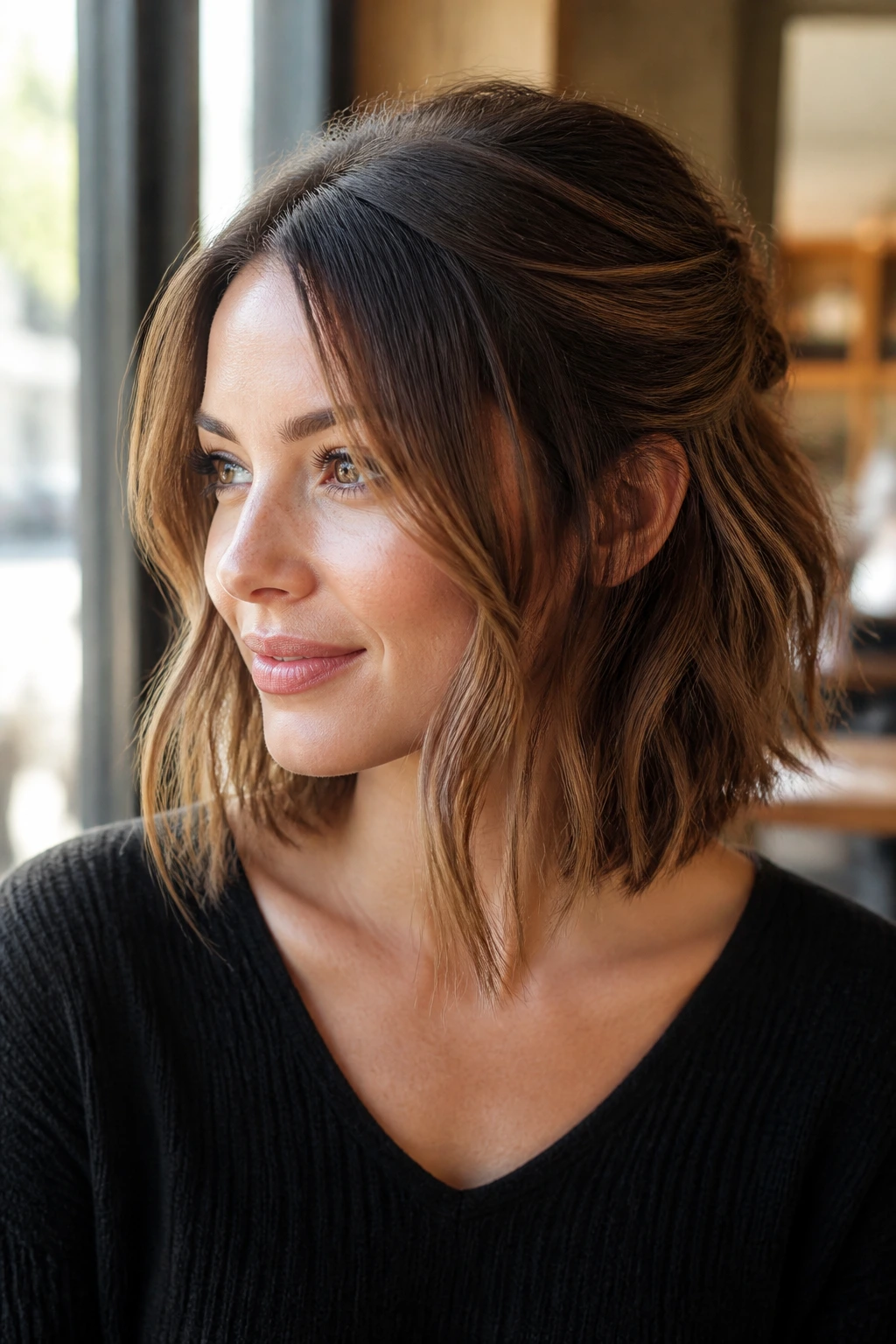
If you spend your life clipping your hair up halfway through the day, this one earns its place. The front pieces stay long enough to frame the face, while the rest of the lob is medium and easy to gather into a half-up twist or clip. Round faces benefit from those long front pieces because they keep the shape from becoming boxy.
Built for Real Use
A lot of pretty bobs fail the half-up test. This one doesn’t. It leaves enough length around the front to keep things soft when the back is pinned, which is important because pulling hair away from the face can expose every curve. The longer front corners balance that out.
Wear it with loose waves, not tight ones. When the hair is pinned back, the waves can look a little larger, and that’s fine as long as the front pieces stay long and smooth. This is the cut I’d pick for busy days where you want options without losing the shape.
19. Salt-Spritz Bob With Piecey Weekend Texture
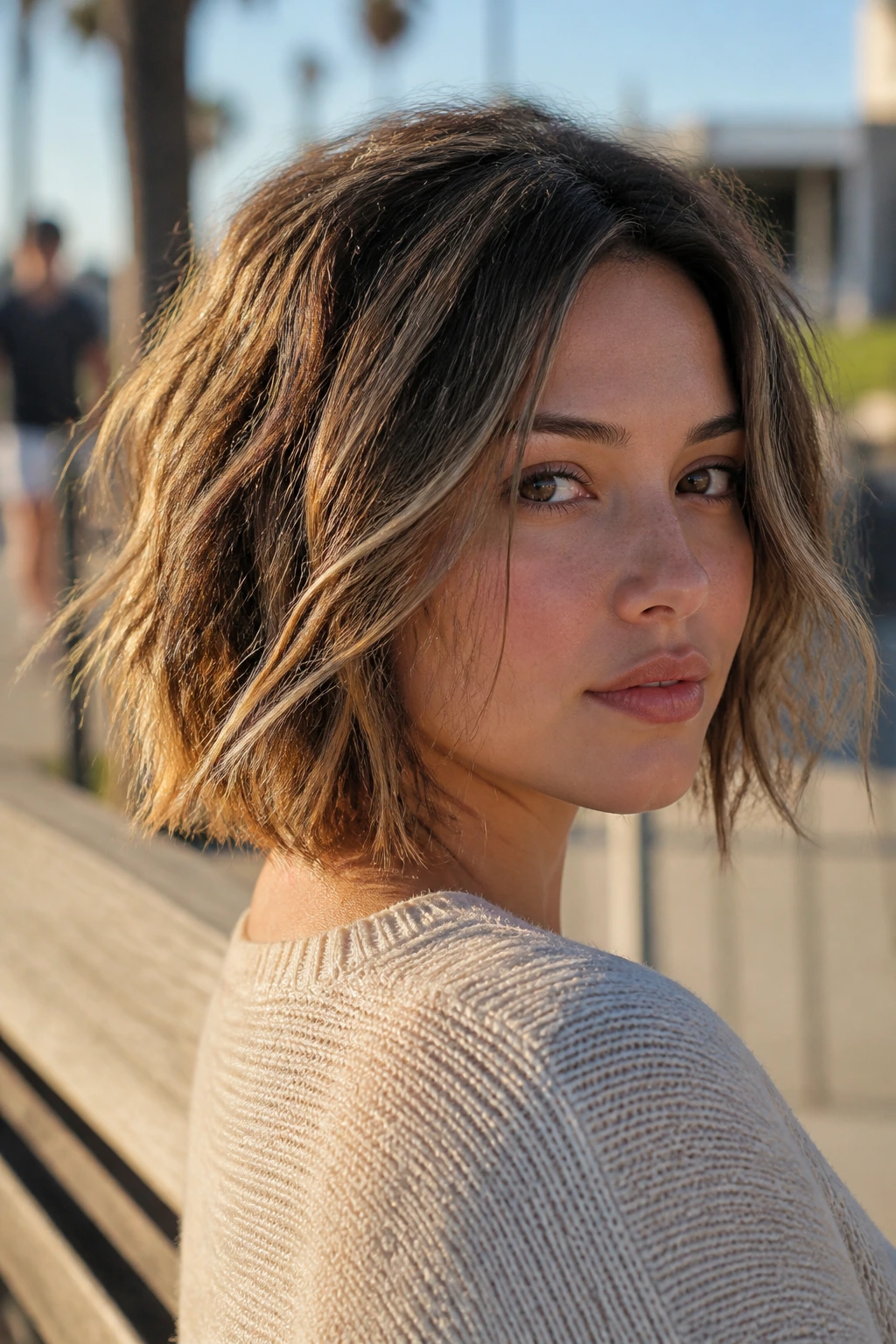
Some bobs want polish. This one wants a little grit. A salt-spritz finish gives the hair separation and a more airy, uneven wave pattern, which can be flattering on a round face when the texture stays low around the cheeks and heavier at the ends.
The Texture Has to Stay Controlled
Sea salt spray can go from chic to crunchy in a hurry, so use it lightly. Mist the mid-lengths, scrunch once or twice, and let the hair dry with the ends slightly bent. If it starts to puff at the sides, you’ve used too much product or created too much root volume.
I like this version on people who wear casual clothes, denim, linen, or anything with a little undone texture already. It feels easy because it is easy, but it still needs a perimeter that stays straight enough to keep the face looking longer. Messy is fine. Wide is not the goal.
20. Office-Polished Bob With Waves Only Through the Bottom Half

This is the bob for people who need their hair to look neat from the front and still want a little bend when they move. Keep the top smooth, part it cleanly, and add beachy waves only through the bottom half. That way, the hairstyle reads structured instead of fluffy.
Good for Work Without Looking Severe
Round faces can get overwhelmed by too much texture near the temples. Leaving the top sleek avoids that issue. The bottom waves keep the cut from feeling flat or severe, and they add enough movement that it doesn’t look like a helmet cut.
A light serum on the outer layer helps here. Not much. Just enough to keep the top smooth and the ends separated. I’d keep the length below the jawline for this version so the waves have somewhere to live without sitting exactly on the cheeks.
21. Balayage-Dimension Bob With Curved Highlights
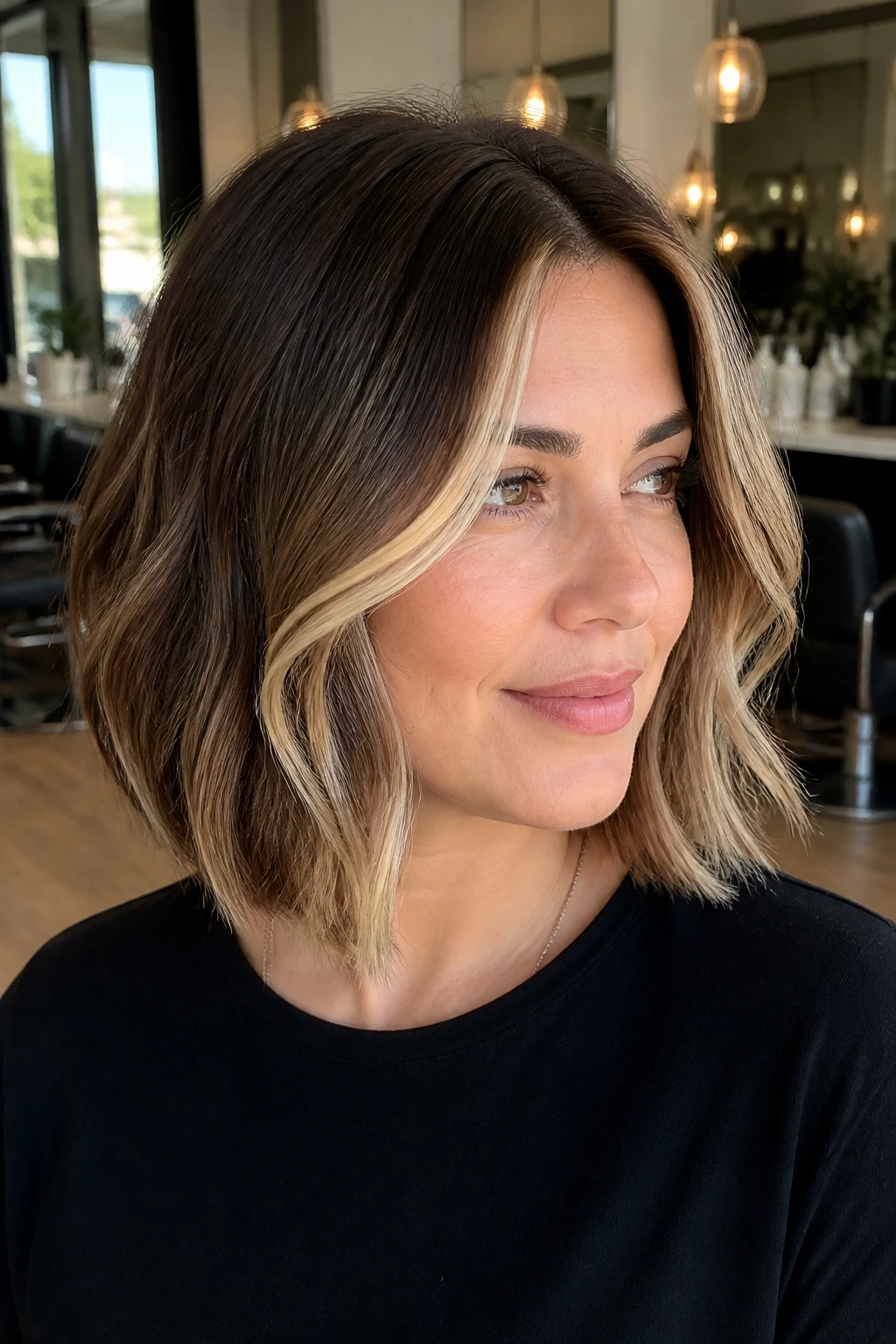
Color placement can change how a bob reads, and balayage is especially useful when the goal is to stretch a round face. Light and shadow create vertical movement, which helps the waves show up without making the sides feel heavy. The cut doesn’t need to be dramatic if the dimension is smart.
The Highlight Placement Does the Work
The best highlights for this shape tend to sit around the front pieces and through the lower half, where the waves catch them. That gives the bob a curved, moving look instead of one solid block of color. The face reads longer because the eye follows the brighter sections downward.
This style is especially nice on medium straight bobs because the cut line stays clear even when the texture changes. If the hair is all one tone, the shape can look flatter. With dimension, every bend has more definition. That makes the beachy wave finish feel intentional rather than accidental.
22. Grow-Out Bob With a Soft, Low-Maintenance Shape
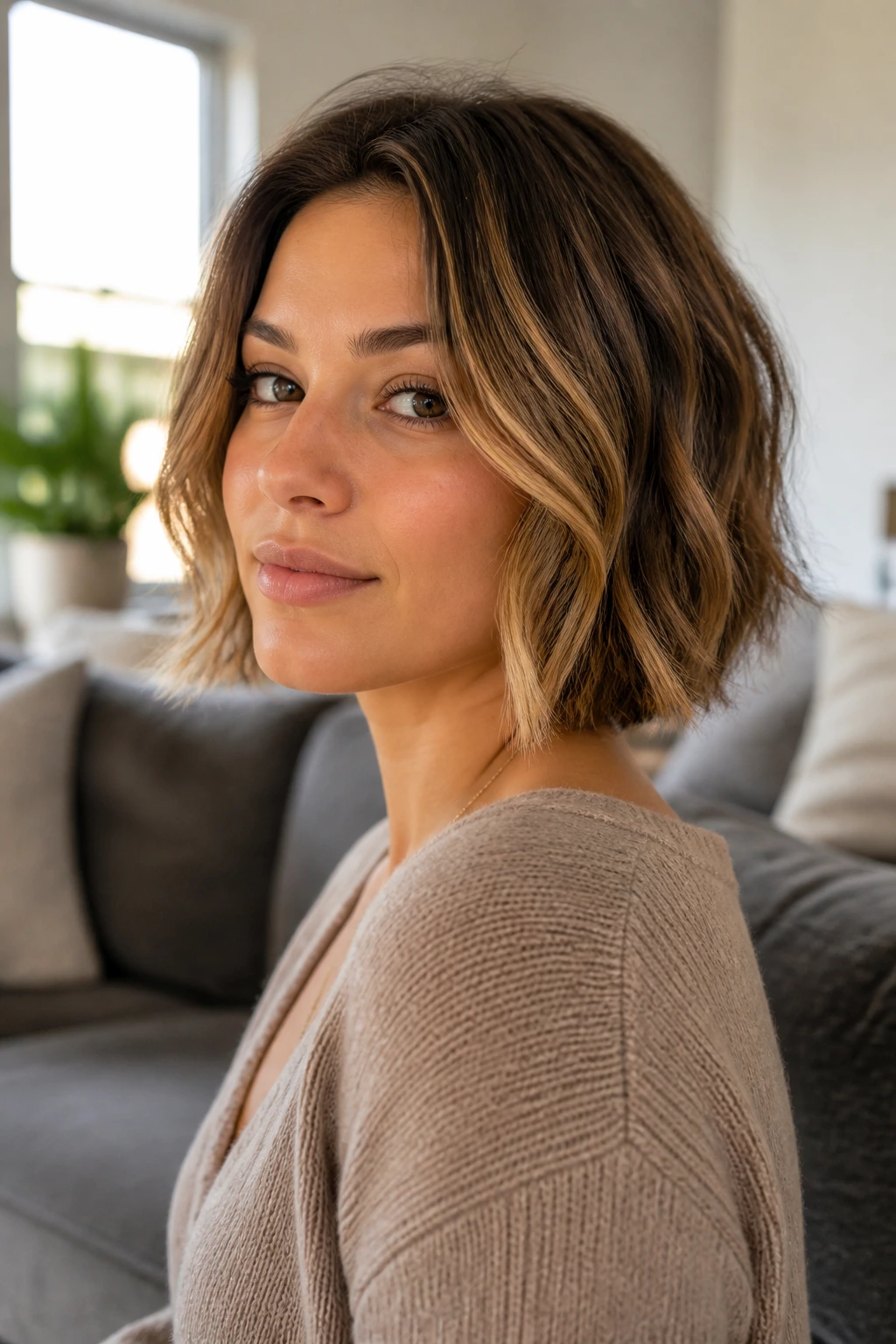
Not every bob needs to look freshly cut every week. A grow-out bob with a soft shape can hold its own for a while, which is useful if you prefer fewer salon visits. The key is to keep the front longer, the back tidy, and the internal layers gentle enough to survive as the hair grows.
The Practical Version
This is the shape I’d choose for someone who likes medium straight bobs but hates losing the outline after a month. It should still read as a bob even when it slides toward lob territory. The waves help disguise the grow-out, and the longer front corners keep the face from looking too open.
If you’re in between lengths, this one buys you time. That’s the honest appeal. It lets you keep the shape around a round face without forcing constant touch-ups, and the beachy wave finish hides the fact that the cut is changing as it goes.
Why Medium Straight Bobs Flatter Round Faces

A round face has soft width, so the haircut has to create direction. That’s really the whole story. Medium straight bobs with beachy waves work because they add a line the eye can follow: down, diagonal, or forward. The wrong cut does the opposite. It sits at the widest point and then puffs out.
The Length Line Matters Most
If the hem lands at the jaw, you’re asking for trouble unless the rest of the style is very deliberate. Collarbone, shoulder, or at least a couple of inches below the chin usually give you a better result. The extra length doesn’t need to be dramatic. It just needs to move the emphasis away from the cheeks.
The Wave Line Should Stay Low
Loose waves are flattering when they start below the cheekbone. Start them too high and you build width right where a round face already has plenty of it. Lower waves keep the hair soft while still letting the face look longer and more structured.
The Part Line Can Change the Whole Shape
Middle parts give a straight down path. Side parts introduce a diagonal. Slightly off-center parts keep the look modern without making the haircut too symmetrical. If you’re unsure which one suits you, test it with dry hair before you commit at the salon. A part that looks tiny in a photo can be a big deal in real life.
Essential Styling Tools and Products for Soft Beachy Waves
- 1-inch curling iron or wand: Best for loose bends that don’t turn into tight ringlets.
- Flat iron: Useful if you prefer a more irregular, undone wave with a straighter root.
- Heat protectant spray: Non-negotiable if you style more than once a week.
- Lightweight mousse: Helps fine hair hold a wave without feeling sticky.
- Sea salt spray: Good for piecey separation, especially on thicker hair.
- Texturizing spray: Adds grip at the ends and helps the style survive the day.
- Wide-tooth comb: Better than a brush for breaking up waves without destroying them.
- Duckbill clips or sectioning clips: Make it easier to work around the face and crown cleanly.
- Light oil or serum: Use a tiny amount on the ends only; too much will flatten the shape.
- Blow dryer with nozzle: Helps smooth the root area before you add texture.
Smart Booking Notes for Your Stylist
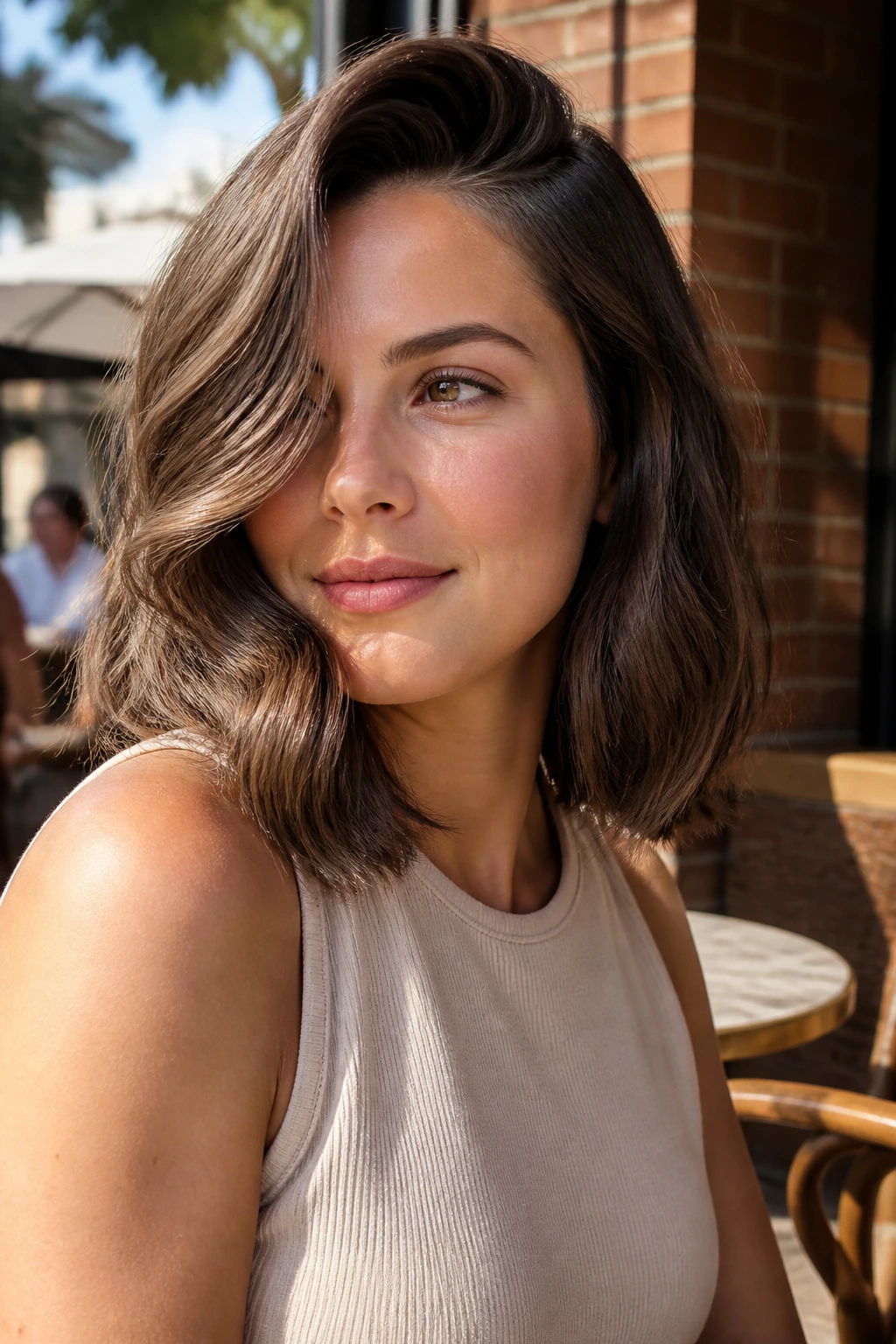
Bring photos, but bring the right ones. I’d rather see three pictures of the same length from different angles than ten random bobs that all fight each other. Tell your stylist where you want the hem to land when your hair is dry, not just wet. Dry length matters more, especially on straight bobs that shrink a little when the wave is added.
Ask for the front to stay a bit longer than the back if you want the face to look narrower. Even a small difference — an inch, maybe a little more — can change the whole silhouette. If you wear your hair with a middle part, say that. If you mostly tuck one side behind your ear, say that too. Those habits change where the cut should sit.
The other thing I’d ask about is weight removal. On round faces, heavy thinning around the cheeks can backfire because it creates fluff at the sides. Better to remove bulk low in the shape or use invisible layering that supports the waves without throwing the outline apart. If your hair is fine, push for bluntness. If it’s thick, ask for controlled internal softening, not a shredded finish.
How to Style These Bobs Without Widening the Face
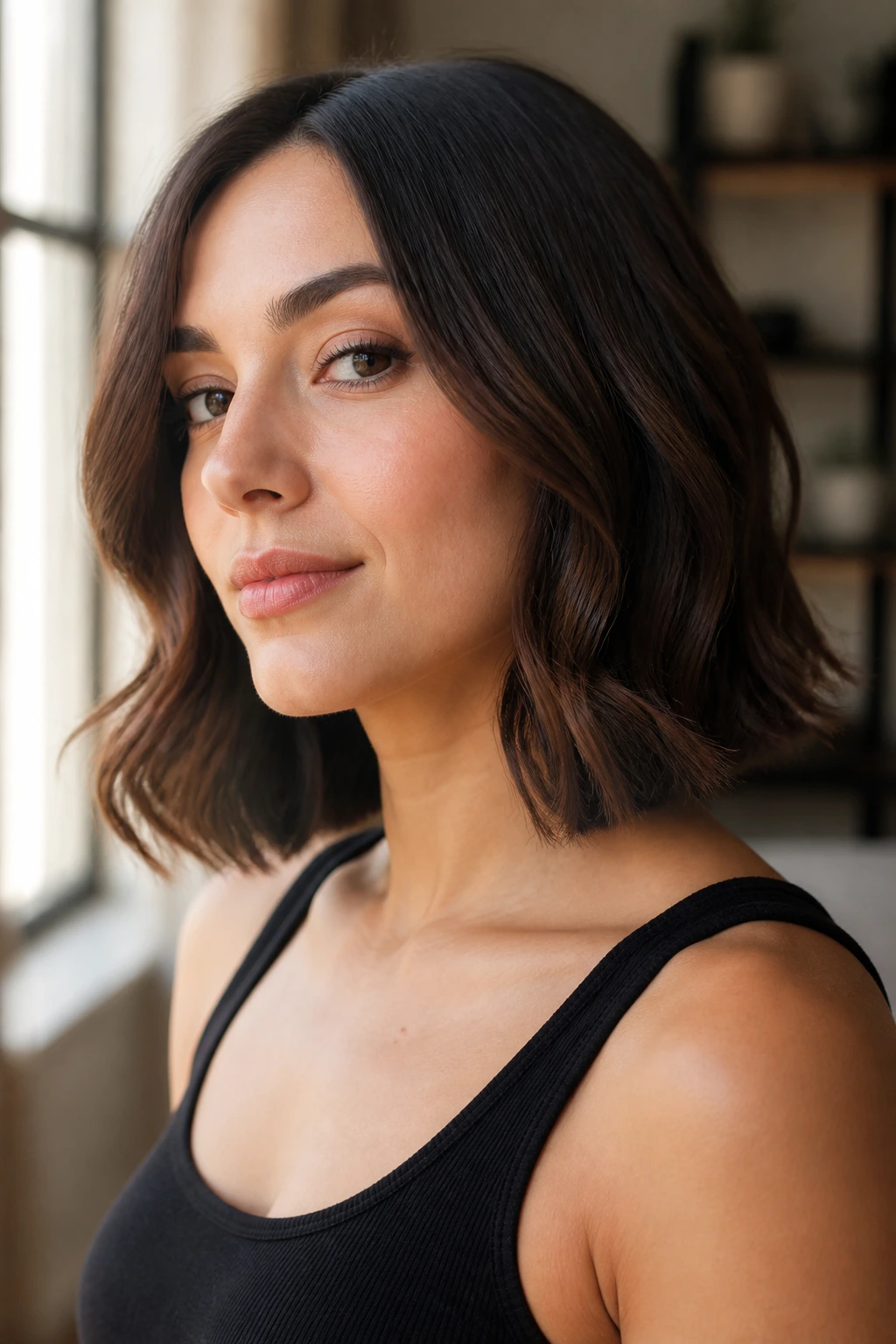
Presentation: Keep the top smooth and the wave placement low. A clean root and a controlled bend through the lower half make the haircut look longer, which is the whole point on a round face.
Accents: Hoop earrings, slim frames, and necklines that show some collarbone all help the bob feel more vertical. Big, round earrings and very high necks can push the look back toward width.
Proportion: If your face is full at the cheeks, choose lengths that pass the jaw by at least a little. If your neck is long and your features are softer, you can go a touch shorter, but I’d still keep the ends below the widest part of the face.
Occasion Match: The blunt lob and office-polished versions look clean for work. The salt-spritz and piecey versions feel better on off-duty days. The point is not to force one bob to do everything; it’s to pick the version that matches how you actually live.
Additional Tips and Shape Tweaks
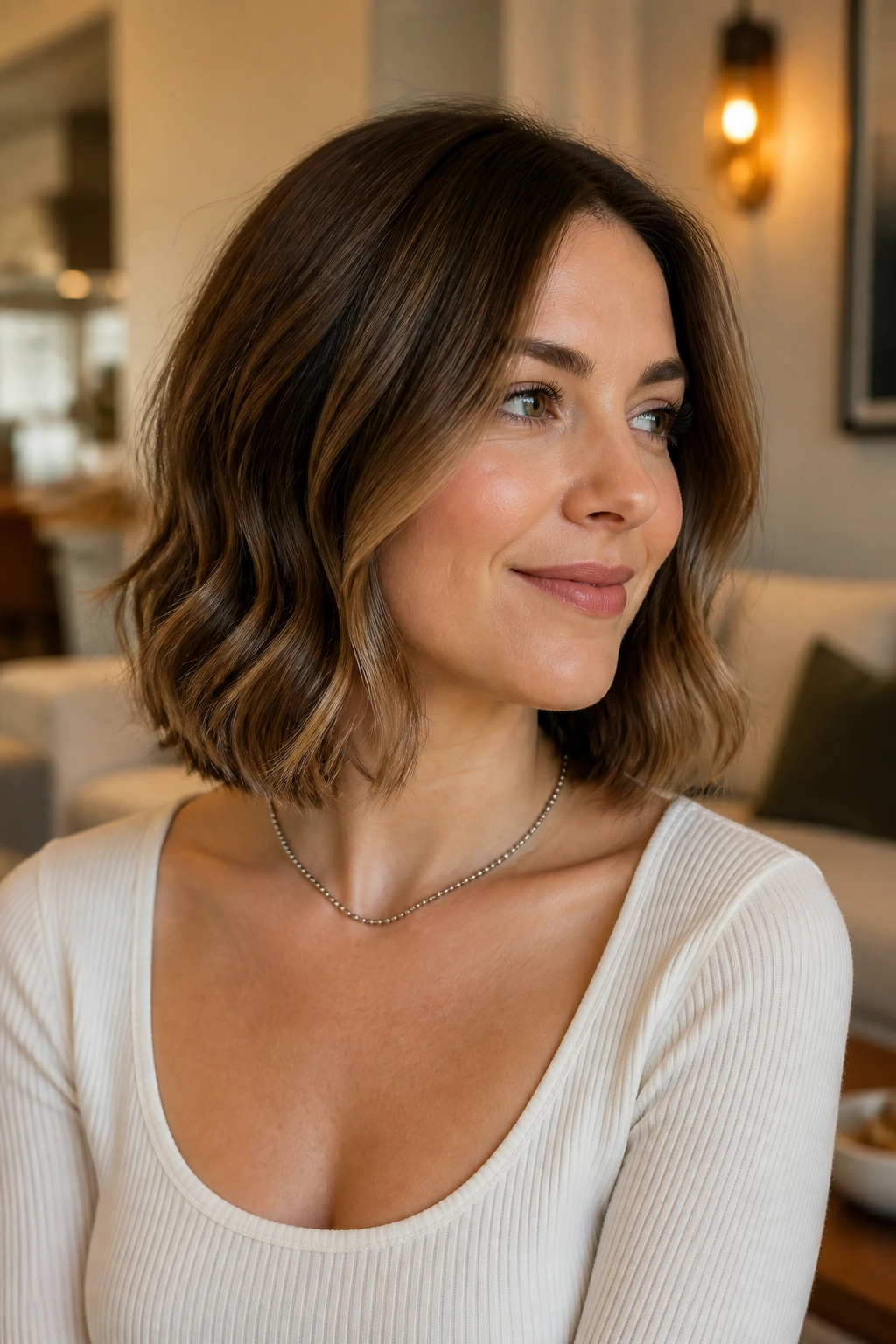
Wave Placement: Start the bend below the cheekbone and let the ends do the softening. That single change can save a cut from looking too round.
Root Lift: Use a little mousse or root spray at the crown, then rough-dry it with your fingers. Just don’t stack volume at the sides. Lift on top, flatness at the temples. That’s the good kind of contrast.
Shape Tweaks: If your face is especially round, keep the front corners longer. If your cheeks are soft but your jaw is defined, a center part with blunt ends can look cleaner than a side part. And if your hair is dense, a razor can help only when it’s used sparingly.
Finish: Brush out the waves once they cool. Tight, separate curls make the face look busier; brushed-out bends look more expensive and sit closer to the head. I know that sounds like a tiny detail. It isn’t.
Trims, Touch-Ups, and the Grow-Out Phase
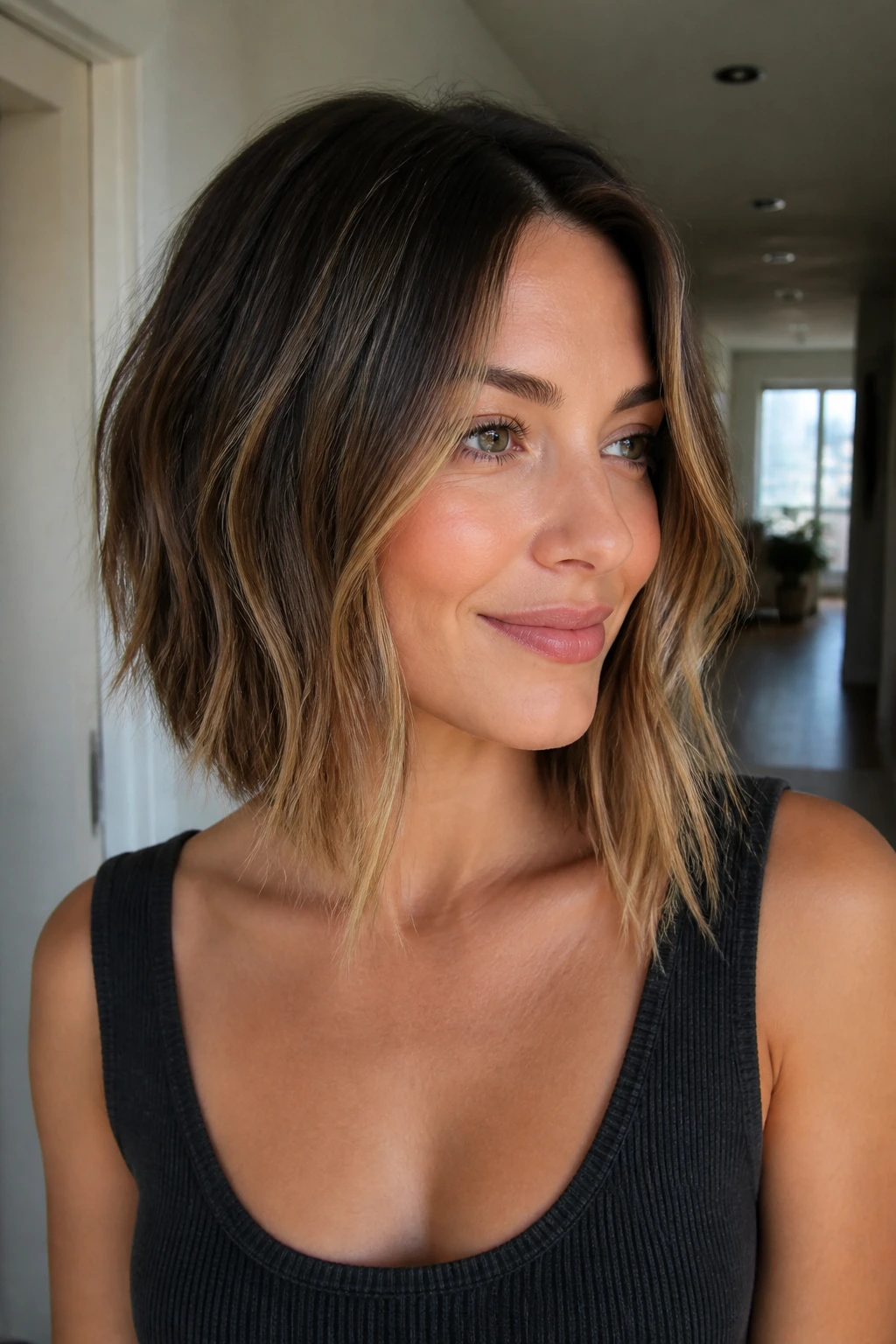
A medium straight bob looks best when the perimeter stays honest. Once the ends start flipping in different directions or the front loses its angle, the face-shaping effect starts to blur. For most people, a trim every 6 to 8 weeks keeps the line crisp. If you’re wearing curtain bangs or shorter face pieces, those may need a refresh sooner, around 3 to 4 weeks.
The grow-out phase can be useful if the cut was shaped with enough length to begin with. A bob that starts at the collarbone or just below the chin grows into a lob without collapsing. That’s why I keep pushing the idea of a slightly longer front corner or an off-center part. They buy you time.
Night care matters too. Sleep on a silk or satin pillowcase if you can, or loosely clip the hair into a low twist so the ends don’t kink. In the morning, a quick mist of water plus a dab of texturizing spray usually brings the wave back. If you flat iron the bob every day, give it a break once in a while. A haircut can only take so much heat before the ends start looking tired.
Common Mistakes That Make a Bob Look Wider

-
Starting the waves too high: If the bend begins at the cheekbone, the face reads wider. Start below it and keep the root flatter.
-
Stopping the cut at the jawline: That’s the widest point for many round faces, so the hem should usually fall lower unless the rest of the shape is very deliberate.
-
Adding too much volume at the sides: Big temple volume can make even a good bob look round and puffy. Put lift at the crown instead.
-
Over-layering fine hair: Too many short layers can make the ends fray and the silhouette lose its line. Blunt or lightly textured is safer.
-
Using heavy cream all over the hair: That can weigh the bob down and make the sides clump. Keep richer products on the ends only.
-
Ignoring the part once the cut is done: A center part, side part, and off-center part all change the shape. If one version feels off, test another before blaming the haircut.
Variations and Adaptations to Try

The Glasses-First Version: Keep the front just long enough to clear your frames and tuck the side pieces behind the ears. It keeps the face open without widening the temples.
The Fine-Hair Lift Version: Ask for a blunt perimeter, minimal layers, and a little crown support. Then add loose waves only through the bottom third so the hair keeps some weight.
The Thick-Hair Softening Version: Take bulk out underneath, not around the face. The goal is to let the wave move, not to thin the haircut into frizz.
The Low-Heat Version: If you hate hot tools, use a braid or twist set on damp hair, then brush it out once dry. The result is softer than iron waves, but it still gives enough bend to flatter a round face.
The Polished Workday Version: Keep the root smooth, part it cleanly, and wave only the ends. A small amount of serum keeps the shape neat without making it flat.
Questions People Ask About Medium Straight Bobs for Round Faces

Will beachy waves make a round face look wider?
They can, if the waves start too high or puff out at the sides. The safer move is to keep the movement below the cheekbone and let the front pieces fall longer than the widest part of the face.
Can a blunt bob work on a round face?
Yes, and often better than people expect. The blunt line needs to sit below the chin or at least be paired with longer front pieces so the hair doesn’t stop right on the jaw.
Should I choose a center part or a side part?
A center part gives a lengthening line, while a side part creates asymmetry and can soften fuller cheeks. If you’re unsure, try both on dry hair before your cut or your next styling session.
What if my hair is fine and flat?
Keep the cut clean and don’t over-layer it. Fine hair usually looks better with a stronger outline, a little root lift, and waves only in the lower half.
What if my hair is thick and puffy?
You’ll usually do better with controlled internal softening or a light razored finish. Thick hair needs weight removed carefully so the wave doesn’t spread outward like a triangle.
How short is too short for a round face?
Anything that lands exactly at the jawline can be tricky unless it’s shaped with purpose. A little below the chin usually gives you more room to work with.
Do curtain bangs help?
They often do, because they break up the width across the forehead and cheek area. The key is keeping them long enough to blend into the face instead of sitting as a short curtain on top.
How do I keep the waves from going poofy by midday?
Use less product than you think, keep the crown smooth, and brush the wave out once it cools. If the style still expands, your curl pattern is probably starting too high.
A Bob That Knows Its Angles
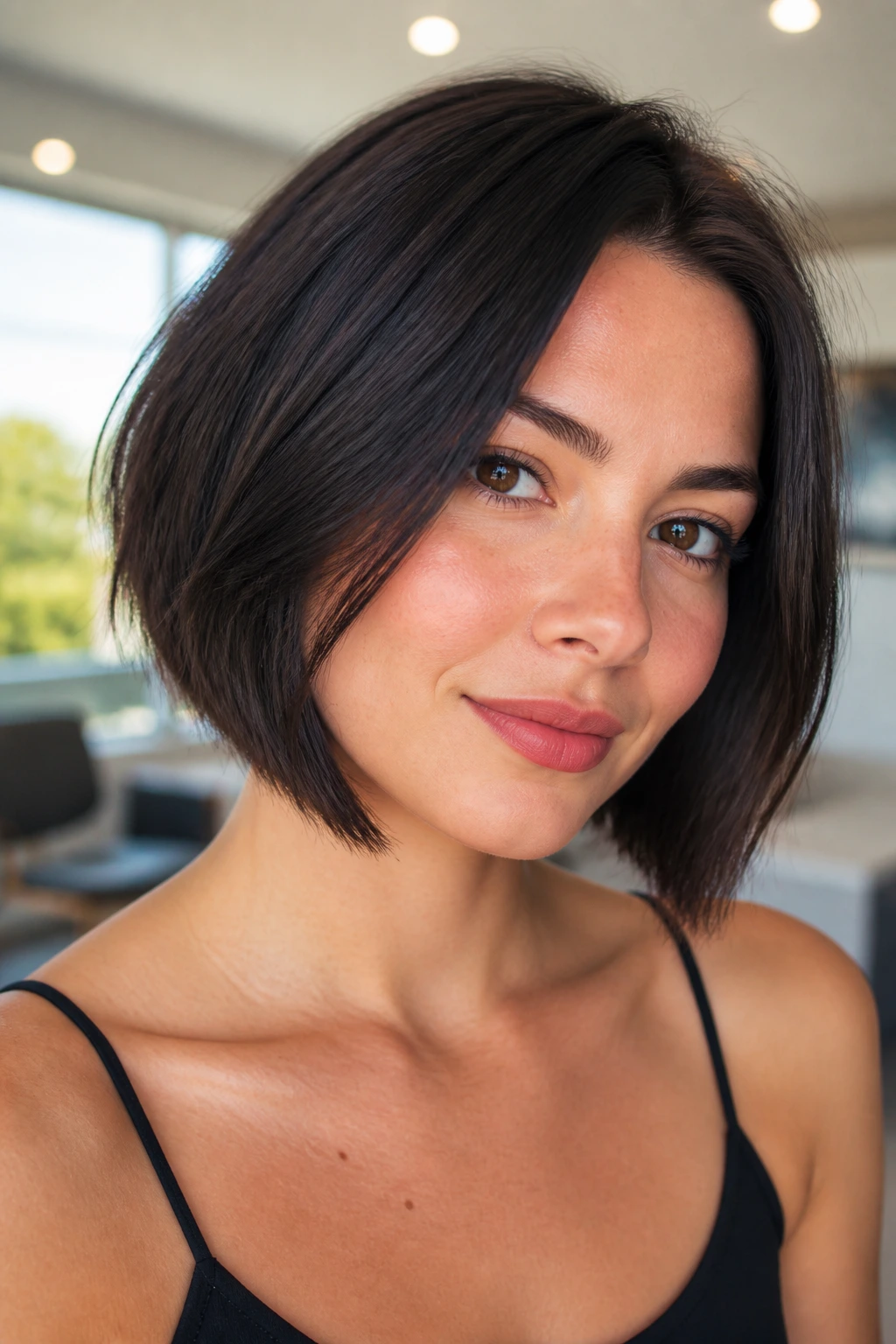
A round face doesn’t need a haircut that hides it. It needs one that gives the eye a cleaner route to follow, and medium straight bobs with beachy waves do that better than most styles in the rotation. The trick is simple, even if the execution takes a little care: keep the length low enough, keep the wave placement smart, and don’t let volume creep in at the cheeks.
The best part is that these cuts don’t all feel the same. Some are blunt and tidy. Some are loose and piecey. Some lean polished, others feel like they were styled in five minutes with one good iron bend and a spray bottle. That range is what makes them useful. You can adjust the shape to your hair, your glasses, your part, and the way you actually live with it.
If you take one thing from the whole lineup, make it this: the most flattering bob is the one that bends the face downward, not outward. Bring that idea to the salon, and the rest gets a lot easier.