



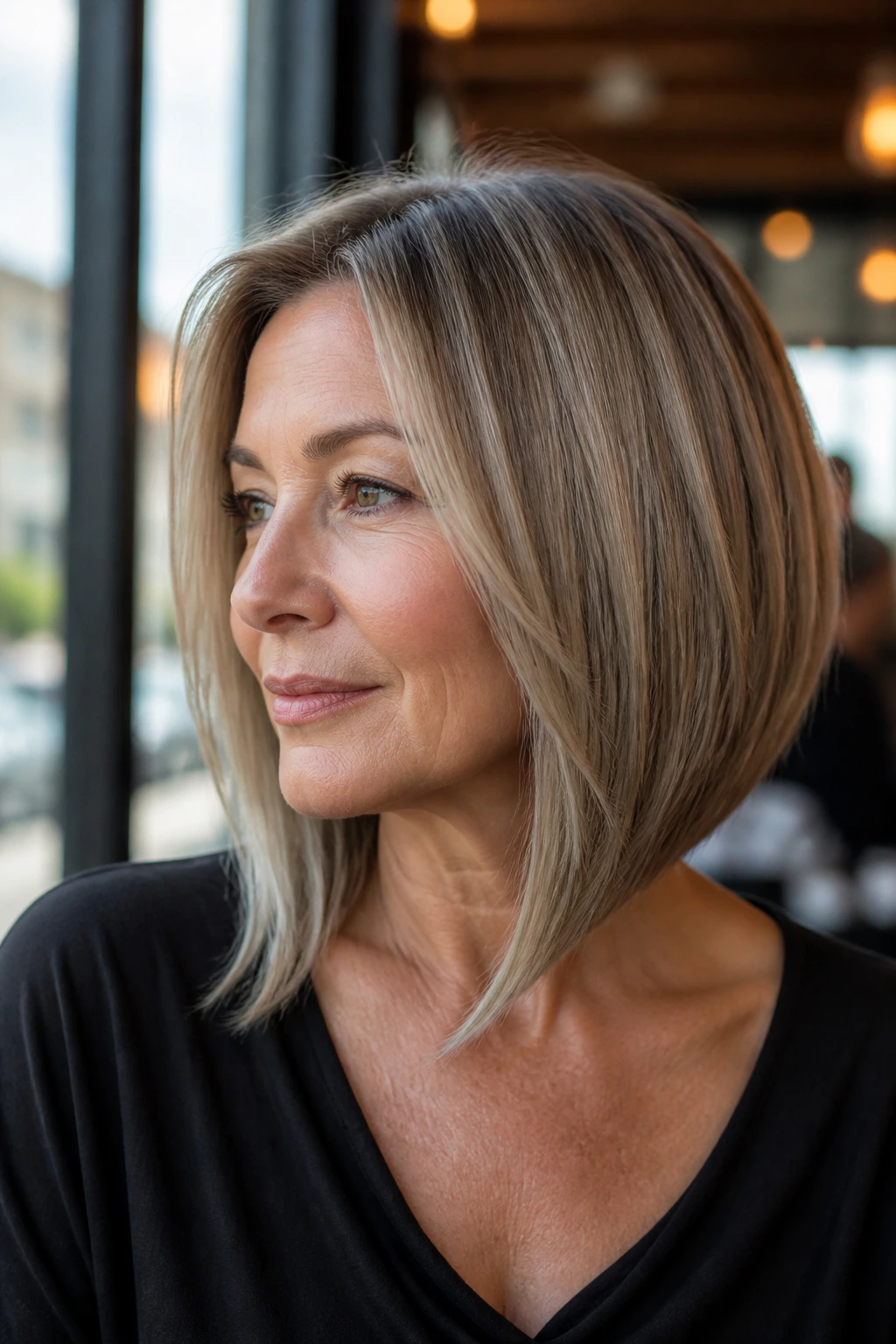
A long bob with face-framing layers can do more for a haircut than a loud chop ever will. Keep the length grazing the collarbone, open up the front around the cheekbone or jaw, and the whole style starts moving instead of hanging. For older women, that matters more than it gets credit for, because hair often changes in two directions at once: it can get finer at the ends and puffier around the crown, and a blunt, one-length lob tends to show both problems at the same time.
The nicest thing about long bob face-framing layers for older women is that they don’t force the face into one fixed shape. A front piece can skim the cheek, a side part can pull the eye up, and a longer perimeter can still tuck behind the ear or slip into a clip. That’s a useful haircut. No drama. No fussy styling ritual. Just enough structure to make hair look awake.
I’ve always liked this cut on women who want movement without losing the option to twist hair up at the nape or brush it back before dinner. It handles gray strands, fine hair, thick waves, and those temple cowlicks that show up out of nowhere after a certain age. Some versions need a round brush. Some look better air-dried and finger-scrunched. The right one depends less on age than on where the hair falls, and the 28 ideas below cover the useful range.
Why These Lob Layers Keep Coming Back

-
They keep length where you still want it. Collarbone and shoulder-grazing lengths are long enough to tuck, clip, or tie back, which matters on days when you want hair off the face but do not want a short cut.
-
They lift the eye line without chopping the silhouette apart. Face-framing layers that start near the cheekbone or lip create movement in front while the back stays full and easy to style.
-
They work with silver, fine, or thick hair. The same basic lob can be softened, thickened, or slimmed down just by changing where the front pieces land and how much internal layering the stylist removes.
-
They grow out with less awkwardness. A long bob with a careful front angle can go several weeks before it starts losing shape, which is kinder than a very short bob that suddenly flips or wedges out.
-
They play nicely with glasses and jewelry. A front piece that stops above, below, or beside a frame looks intentional; one that lands right on the hinge tends to annoy you every morning.
1. Cheekbone Curtain Lob
The front pieces in this lob start high enough to matter and low enough to stay soft. They drift away from the face at the cheekbone, then blend into a collarbone length that still reads as a bob, not a mid-length cut. On older women, that balance is gold: it gives shape right where the face often wants it most, without eating up density.
Why the Cheekbone Line Works
A layer that opens at the cheekbone pulls the eye upward and outward. That keeps the front from feeling heavy, especially if your hair has gone finer through the ends.
- Ask for the shortest front piece to land right at the top of the cheekbone.
- Keep the back at or just below the collarbone for swing.
- Wear it with a loose bend, not tight curls, so the layers stay readable.
Tip: Blow-dry the front away from the face on both sides; if you direct everything inward, the cut loses its lift.
2. Collarbone Sweep with Long Front Angles
A long front angle can make a lob feel lighter without stealing length. That’s the whole trick here. The back stays clean and easy, while the front slips past the chin and lands at the collarbone, so you still have enough hair to pin up or tuck behind an ear.
This version is especially nice if you hate hair that clings to the jaw. The angle gives a soft diagonal line instead of a hard shelf, which means the haircut doesn’t sit there and stare at you in the mirror. It moves when you turn your head. That matters.
Wear it with a center part if your face likes symmetry, or shift the part a half inch off center if you want the front to sweep more easily. The best part is that it doesn’t need a lot of styling product. A pea-size amount of smoothing cream on damp ends is enough for most heads of hair.
3. Side-Parted Lob for Softer Lift
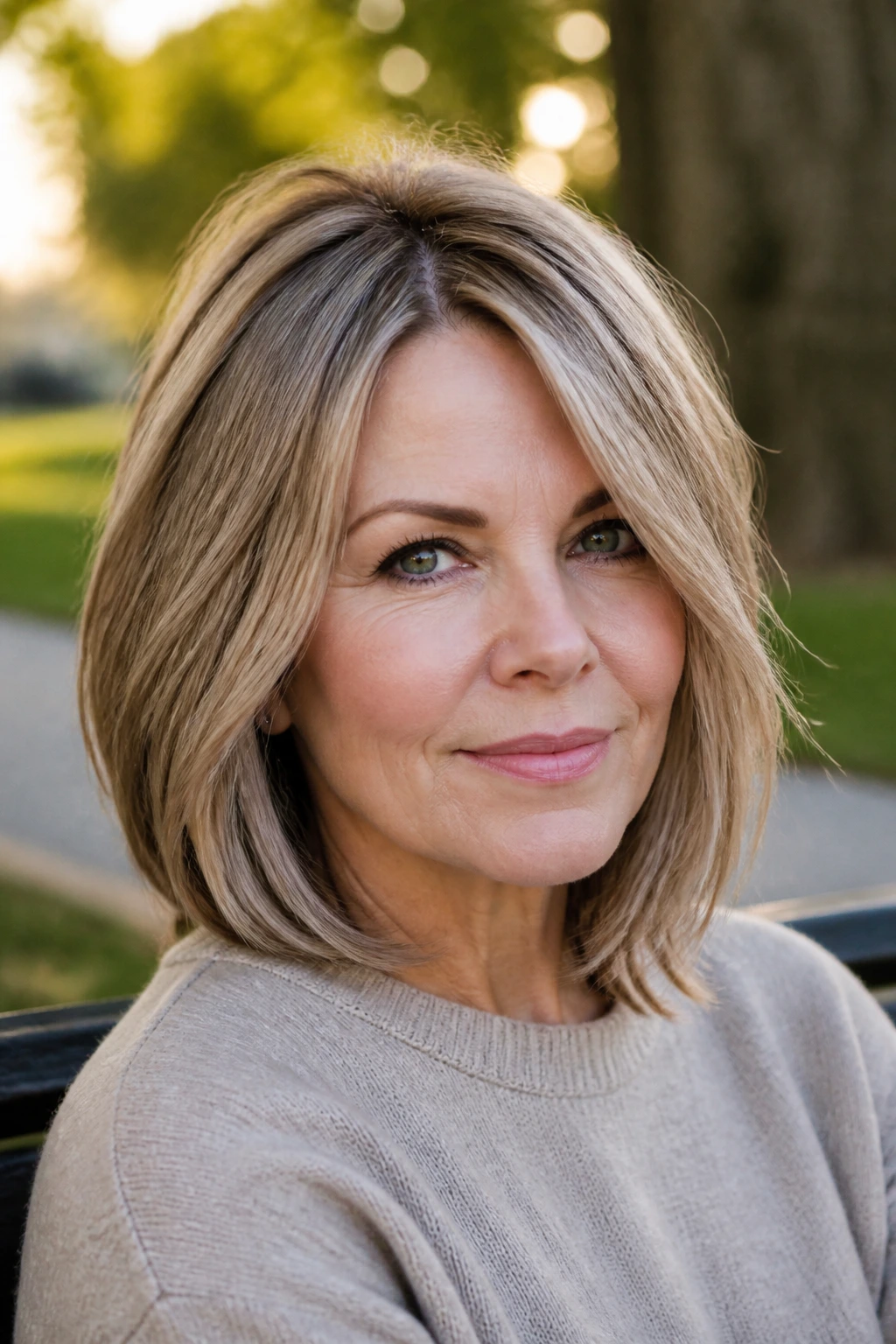
Do you need more height at the crown without teasing the roots into a helmet? A side-parted lob handles that better than most cuts. The part creates a natural lift, and the front layers fall in a soft diagonal line that makes the whole haircut look less stiff.
How to Ask for It
Tell your stylist you want the front to start around the cheekbone on the heavy side and taper into the collarbone on the lighter side. That gives one side more swing and keeps the cut from going flat across the top.
On fine hair, this shape gives the impression of more fullness because the hair is not split evenly down the middle. On thicker hair, it stops the sides from ballooning out. Good cut. Easy math.
4. Blunt Lob with Feathered Front Pieces
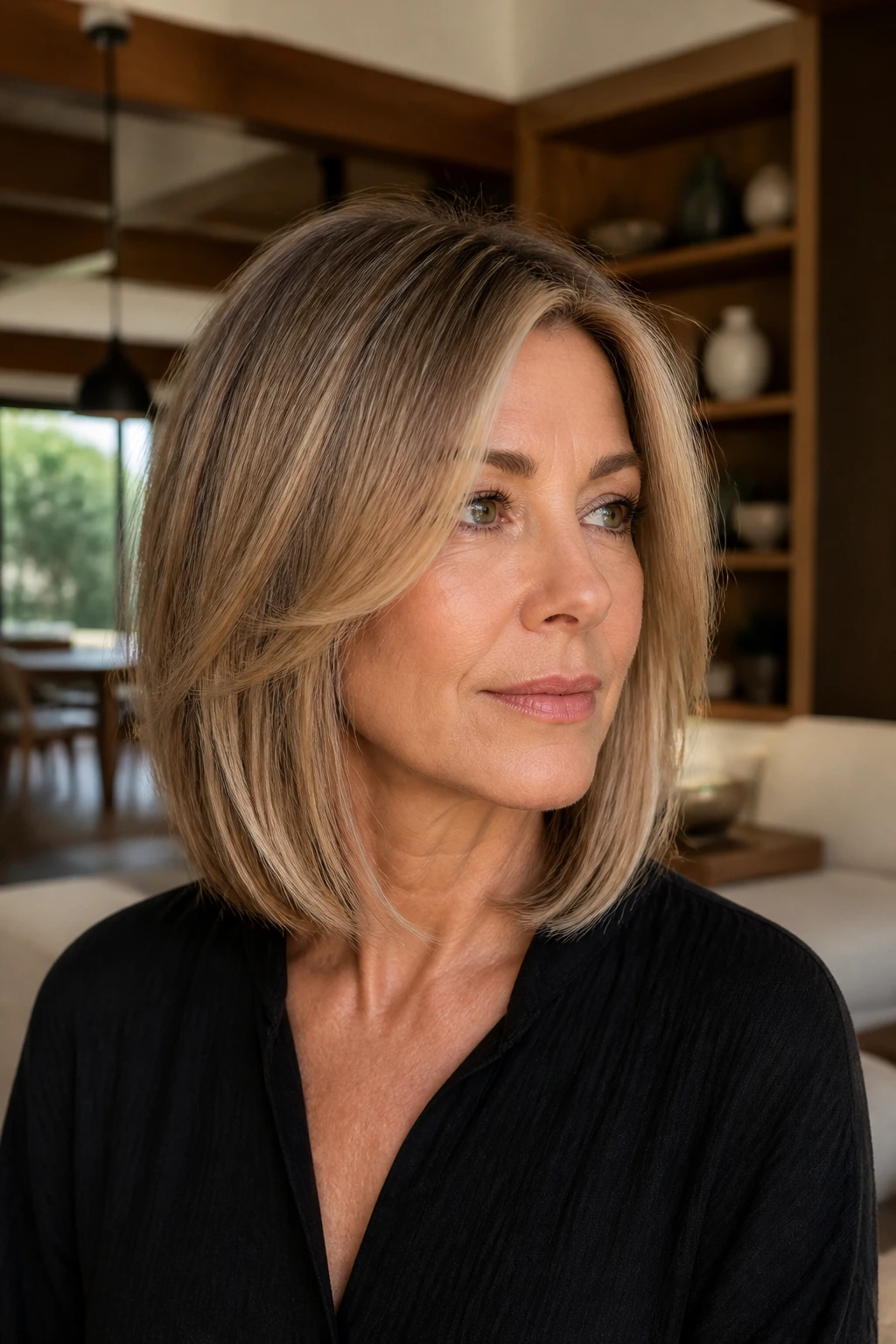
A blunt perimeter and soft front pieces can live happily in the same haircut. In fact, that contrast is what makes it interesting. The ends stay full, which helps older hair look denser, while the face-framing pieces are lightly feathered so the front doesn’t feel boxy.
What Makes This One Different
If your hair has gotten a little sparse at the temples, a feathered edge around the face can hide that without turning the whole cut wispy. The blunt line gives weight; the front layers supply movement.
- Best for fine to medium hair that needs a stronger outline.
- Good choice if you like a clean look without a hard helmet shape.
- Works well with a blow-dryer and round brush, but doesn’t demand perfect styling.
A lot of people ask for layers when what they really need is a stronger shape. This is the cut for that situation.
5. Rounded Blowout Lob
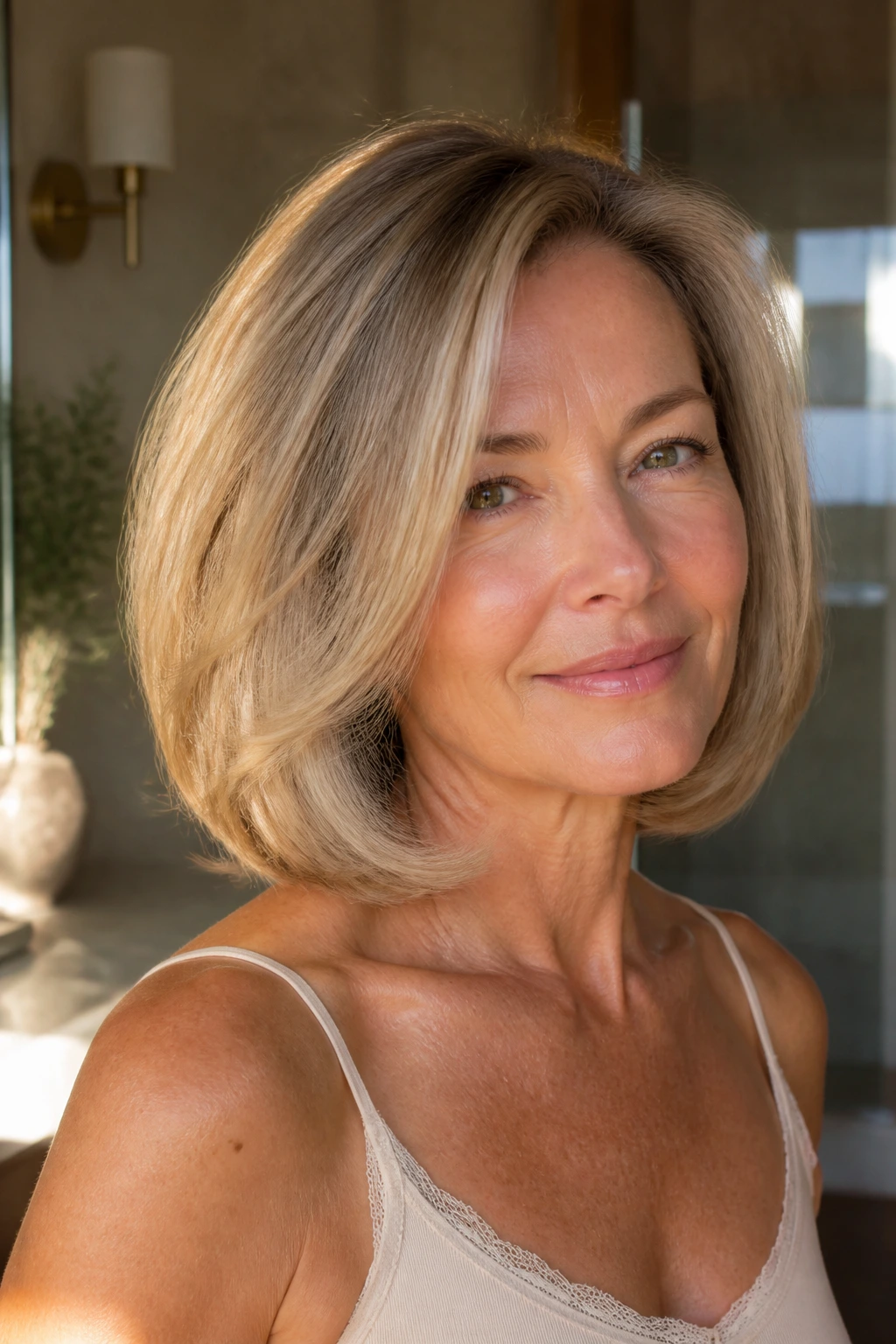
There’s a reason a rounded blowout makes a lob look expensive even when the haircut itself is simple. The shape curves under at the ends, lifts at the crown, and gives the face a soft frame that doesn’t drag downward. Older women often wear this beautifully because the curve adds body where hair tends to lose it.
The layers here are subtle, almost hidden. You’re not looking at choppy chunks. You’re looking at a smooth bend that starts near the jaw and rolls toward the collarbone. A medium round brush and a dryer with a nozzle are enough to build it.
If you like hair that looks polished without looking stiff, this is a solid pick. And it’s one of the better choices for finer strands that need a little root lift.
6. Wavy Razored Lob
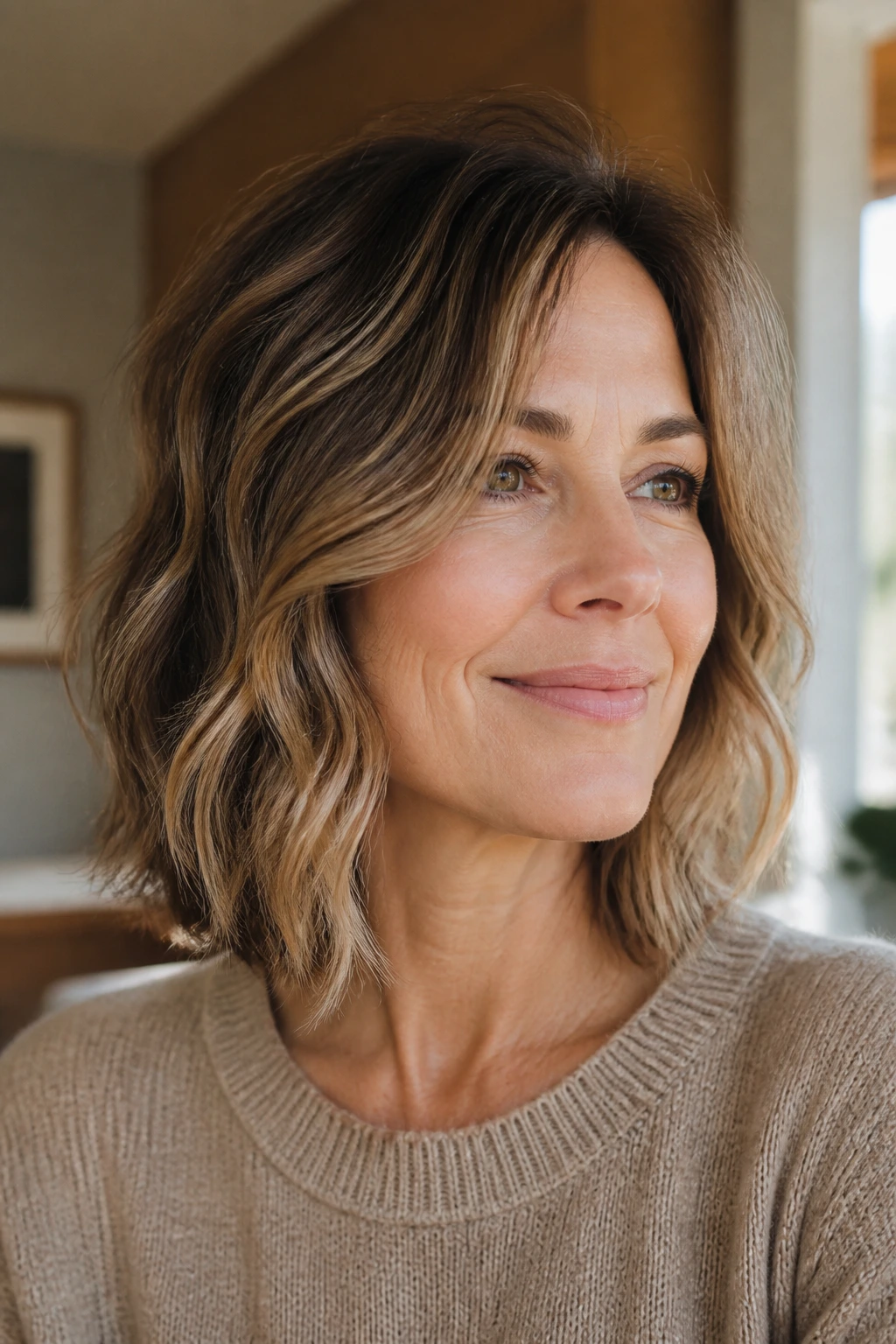
A razored lob can look airy and modern when the hair already has a bit of wave. The blade cuts into the ends, which softens the line and keeps the face-framing layers from sitting like shelves. The result feels lived-in rather than overworked.
The catch? Razor work is not your friend if your hair is fragile or frizzy at the ends. On healthy wavy hair, though, it gives a piecey finish that a scissor cut sometimes misses. The front can fall across the cheek in a loose bend, and that’s what makes the shape feel easy instead of forced.
Wear it with a salt spray or light mousse, not a heavy cream. Too much product collapses the texture and makes the razored ends go stringy.
7. Glasses-Friendly Open-Face Lob

If you wear glasses, you already know the problem: bangs, temples, and frame arms all compete for the same real estate. This lob solves that by keeping the front pieces open and slightly longer, so they sit around the frames instead of crashing into them.
The best version lands just below the cheekbone and curves away from the face, leaving a little air between hair and lens. That small gap makes a bigger difference than people think. It keeps the haircut from bunching at the sides and lets the frames stay visible.
A lot of stylists forget to account for glasses when they cut face-framing layers. Bring them to the appointment. Actually wear them while they check the front. Saves everyone a mess later.
8. Silver-Hair Lob with Soft Feathering
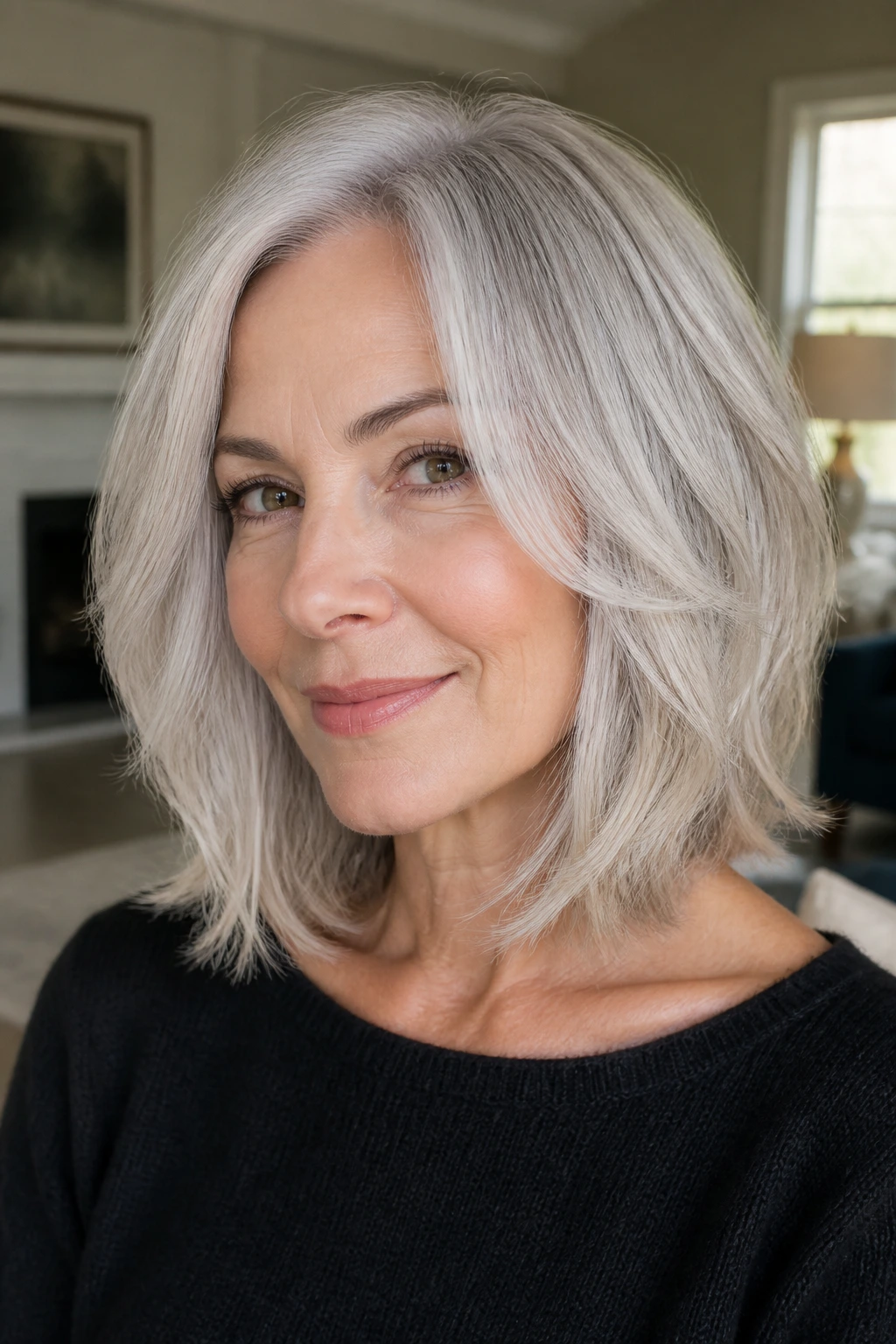
Silver hair shows every line, so the cut has to be kind. Hard layers can make gray and silver strands look choppy, while soft feathering lets the light move through the front. That’s why this lob works so well: it brightens the face without turning the haircut into a stack of sharp edges.
The feathering should be light, not shredded. Think soft movement around the cheek and jaw, with enough length left in the perimeter to keep the hair from feeling thin. If your silver hair is coarse, this cut can reduce that puff at the sides. If it’s fine, the shape still holds because the ends aren’t over-thinned.
A shine serum on the last two inches helps a lot here. Gray and silver hair can go dull if you load product at the root, so keep the gloss where the light actually hits.
9. Thick-Hair Lob with Hidden Debulking
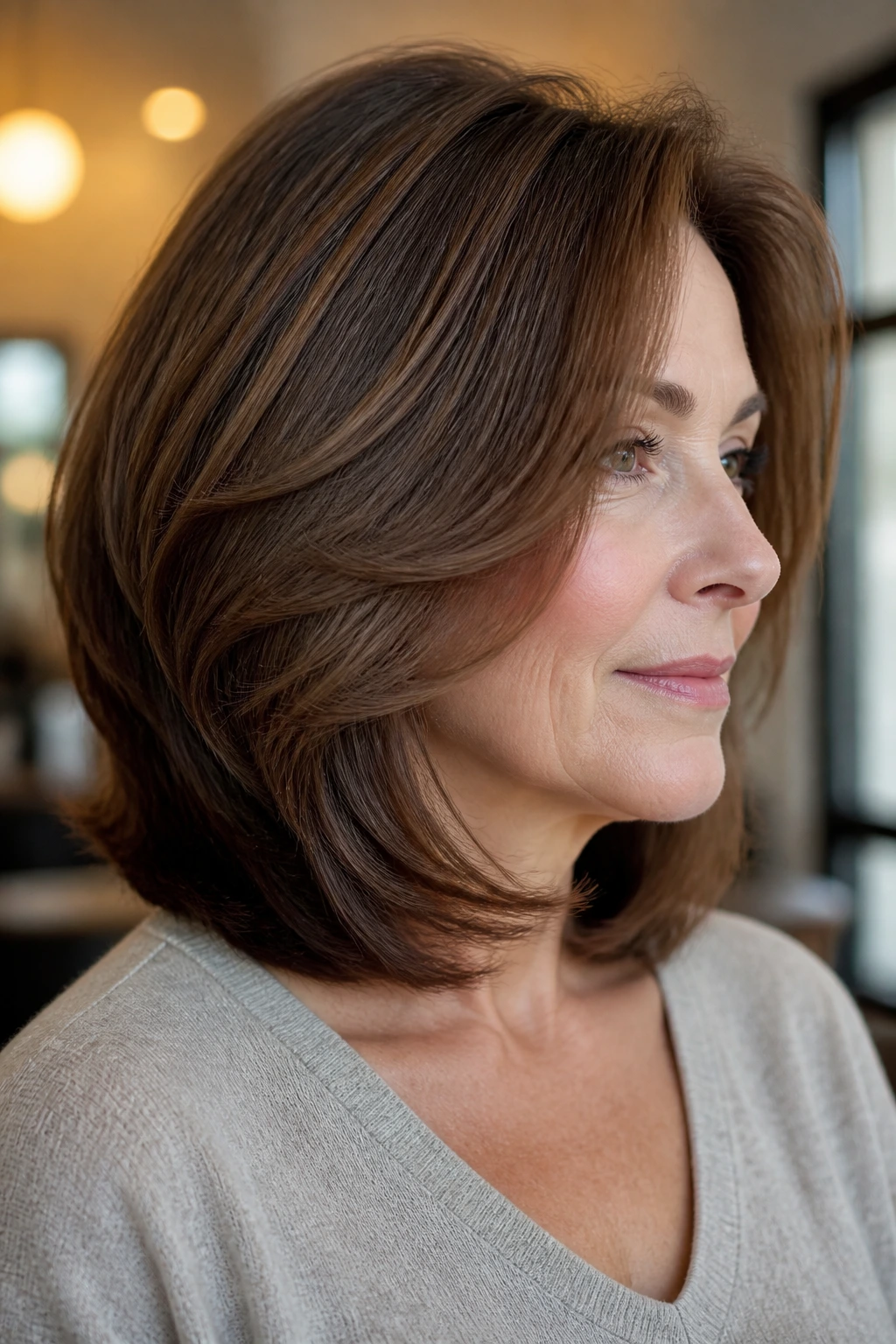
Thick hair loves a lob when the stylist removes weight from the inside instead of carving the perimeter into scraps. That’s the difference between a haircut that swings and one that mushrooms. Face-framing layers here are long and controlled, not short and choppy.
The cut works because the outside line stays strong while the bulk is taken out underneath. The front still moves, but the ends don’t explode outward the second the weather turns damp. That’s a relief if you’ve spent years fighting triangle hair.
Ask for internal layering, not aggressive thinning. A proper debulking should make the hair sit closer to the head without leaving see-through edges near the face.
10. Fine-Hair Lob with Clean Ends
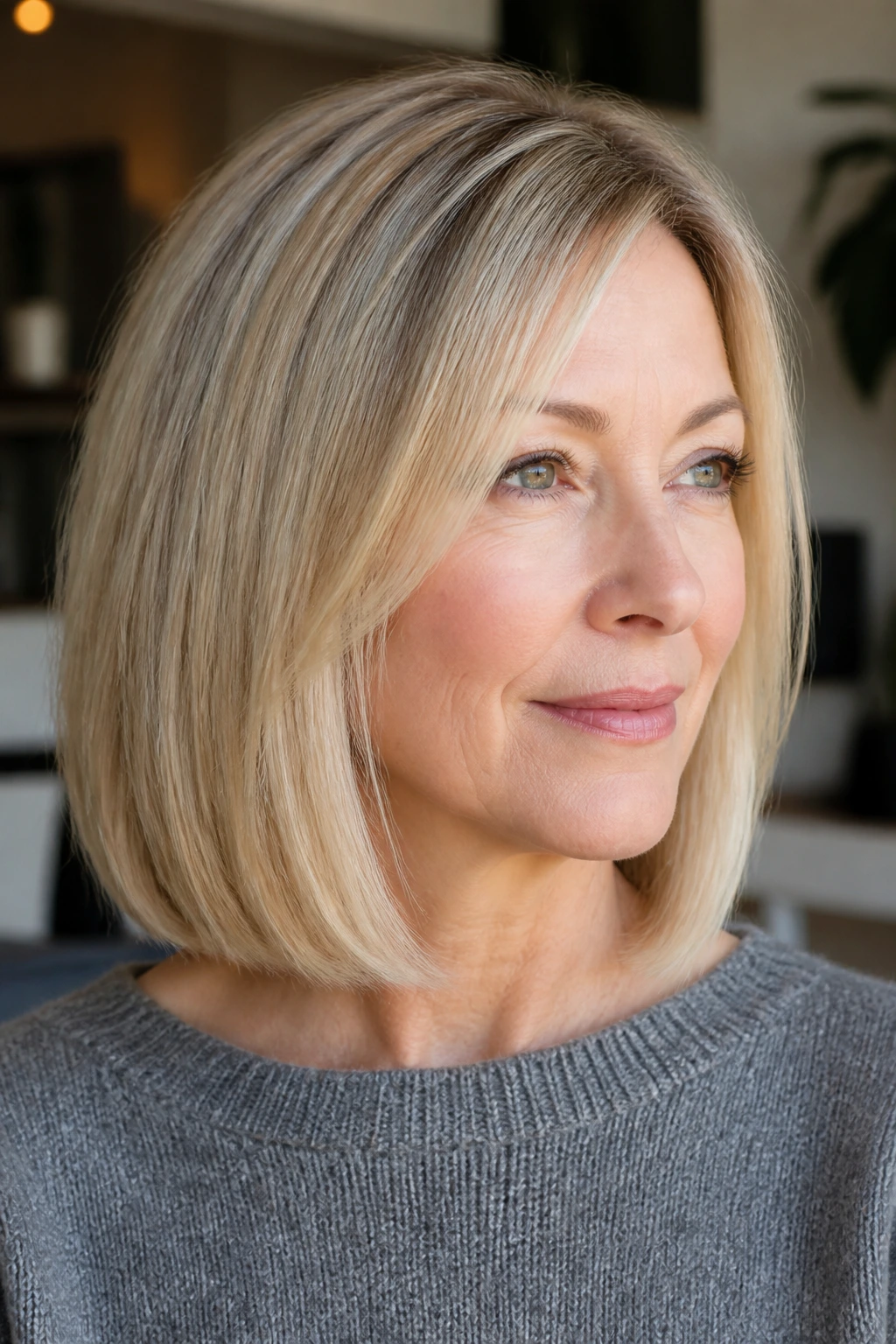
Fine hair often looks better with more structure, not more layers. This lob keeps the perimeter blunt and uses just enough face-framing to create lift at the front. Too many layers would make the ends look scraped thin, and nobody needs that.
The clean ends are doing most of the work here. They create a solid line that makes the hair look fuller from the side, while a small amount of movement near the cheek stops the style from feeling flat and boxy. That’s the sweet spot.
If your hair is fine, ask the stylist to keep the layers long and low. You want shape, not shredding. A volumizing mousse at the roots and a quick round-brush pass at the front will do more than extra cutting ever could.
11. Jawline-Skimming Lob with Longer Front Pieces
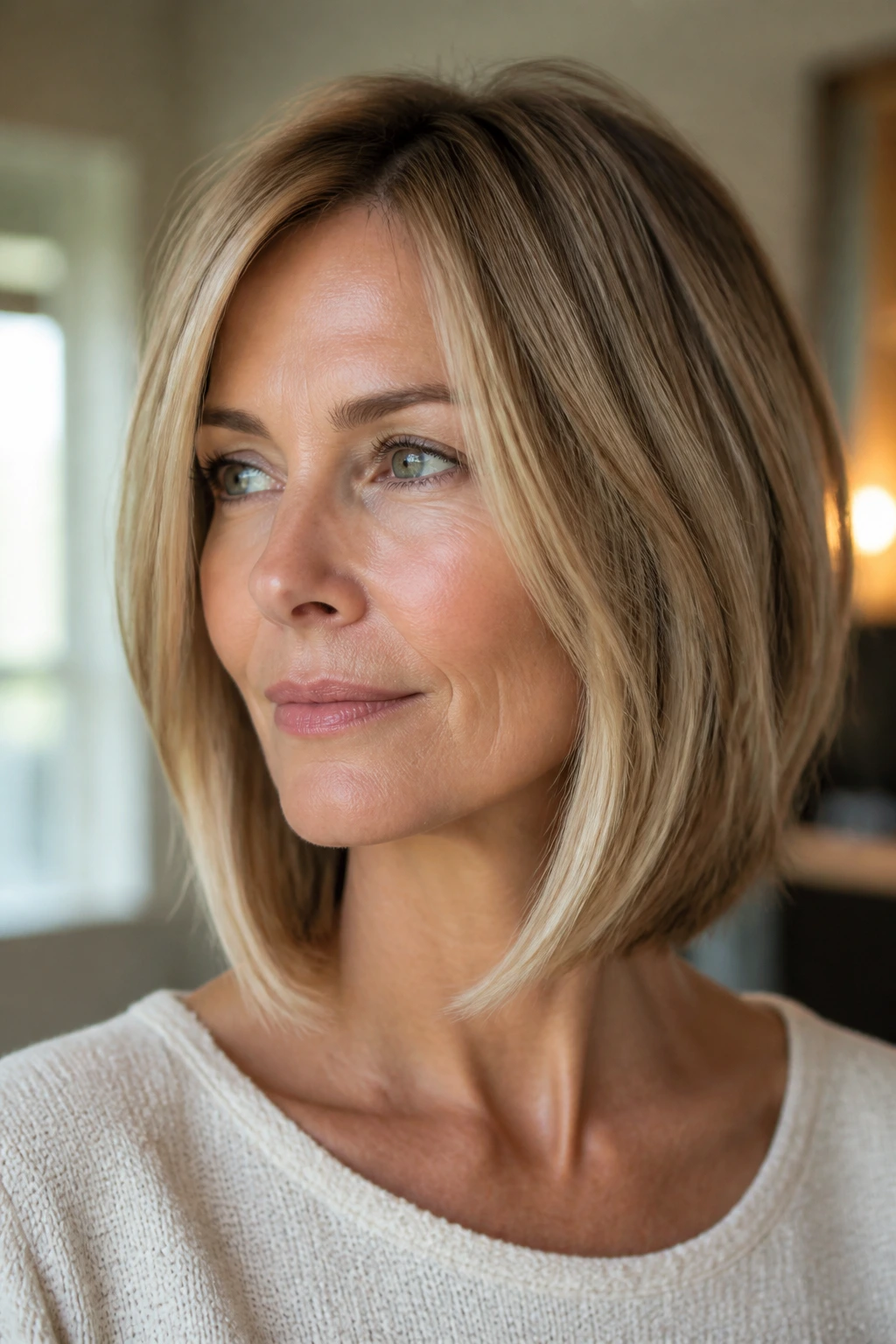
Some faces want less attention at the jaw, not more. This cut handles that by keeping the front pieces just long enough to skim past the jawline, which softens the lower half of the face without hiding it. The overall effect feels easy and measured.
The longer front pieces are the whole point. They draw the eye in a gentle line from cheek to collarbone, which keeps strong jawlines from feeling squared off by the cut. That’s especially useful if your hair has a lot of natural density.
Wear this one straight or with a soft bend under the ends. If you curl it too tightly, you lose the long line that makes the cut work.
12. Curly Lob with Long Face Framing
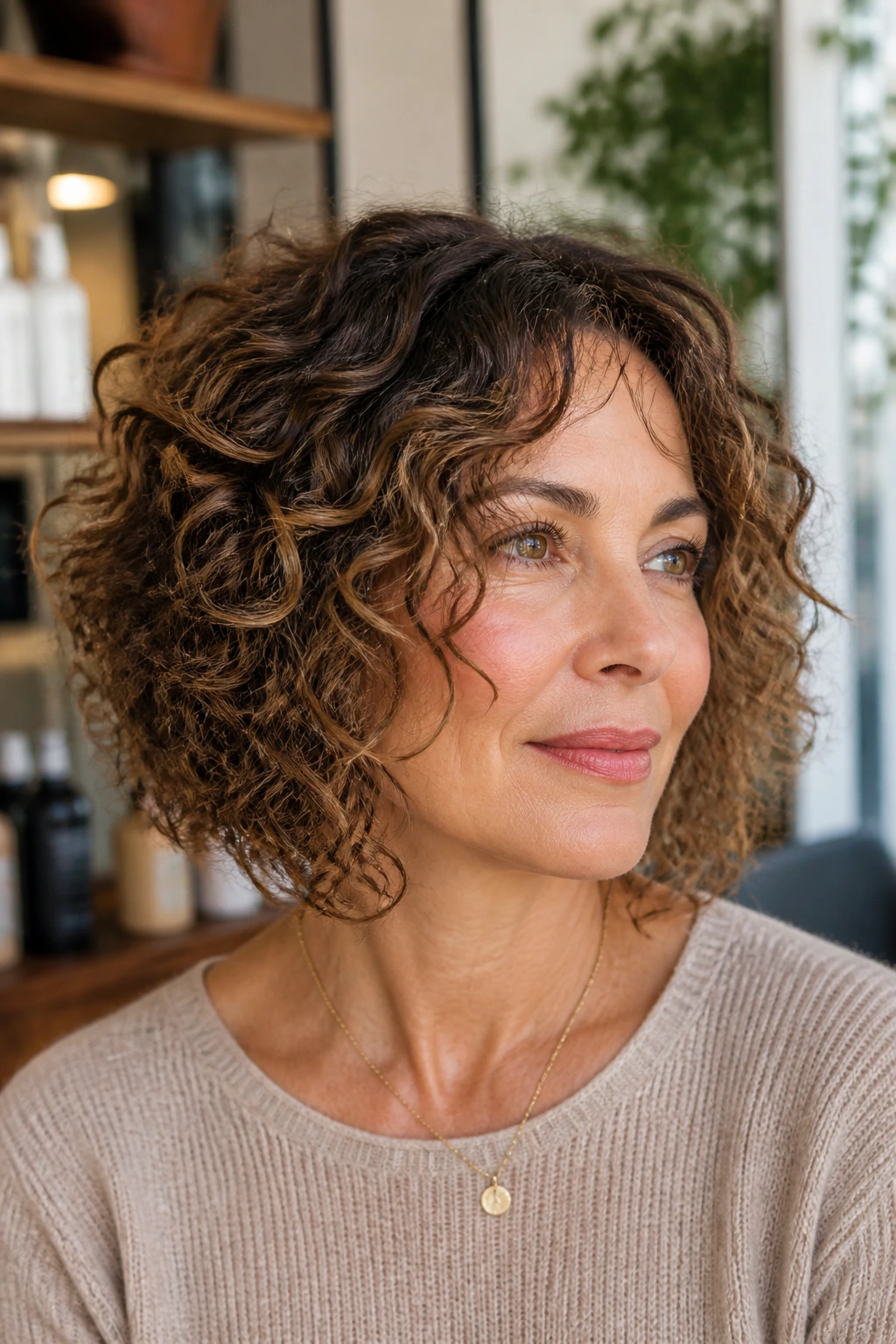
Curly hair and face-framing layers are a better match than people think, as long as the layers are left long enough to respect the curl pattern. Cut the front too short and the shape springs up into a triangle. Leave it long, and the curls can frame the face with real softness.
How to Keep the Curl Pattern Honest
A good curly lob is usually cut with the curls in their natural state or lightly stretched. That lets the stylist see how much the front will bounce once it dries.
- Keep the shortest face-framing curl around lip to chin length.
- Avoid over-thinning the interior, or the curls will frizz apart.
- Use a diffuser on low heat and low speed.
This cut is one of the easiest ways to keep curly hair looking shaped without forcing it into a rigid outline.
13. Deep Side-Part Lob with Sweep
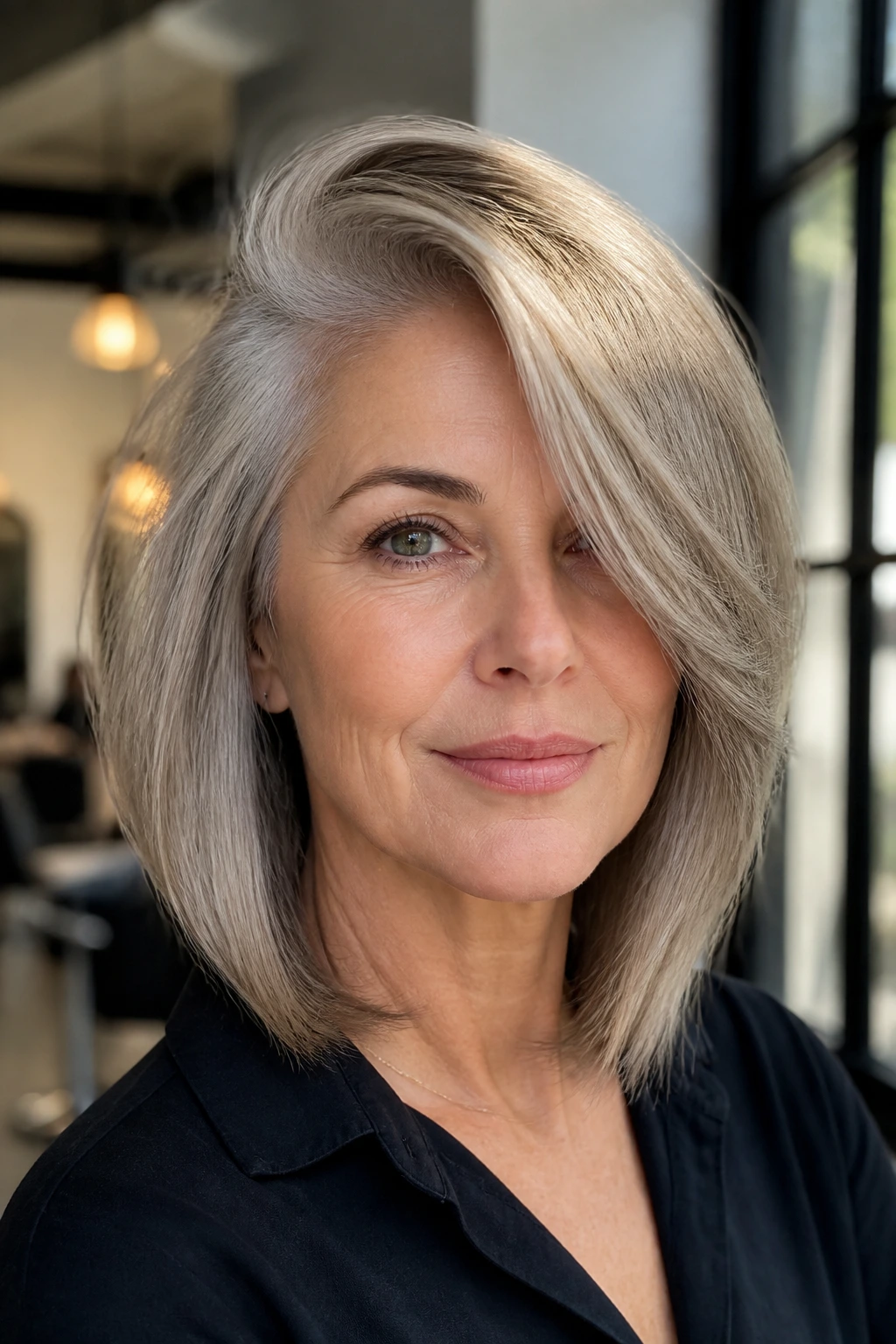
A deep side part changes the whole mood of a lob. Suddenly the front layers become a sweep instead of a frame, and the haircut looks a little more dramatic without getting fussy. It’s a good option for older women who want movement but don’t want the face fully open.
The side with more hair gives volume at the temple and crown, while the other side lies softer against the face. That asymmetry can be useful if one side of your hair grows flatter than the other or if you have a stubborn cowlick near the front.
If you want a little lift without teasing, this is one of the cleanest ways to get it. A root spray at the heavier side and a quick blast with the dryer usually does the job.
14. Collarbone Lob with Subtle Internal Layers
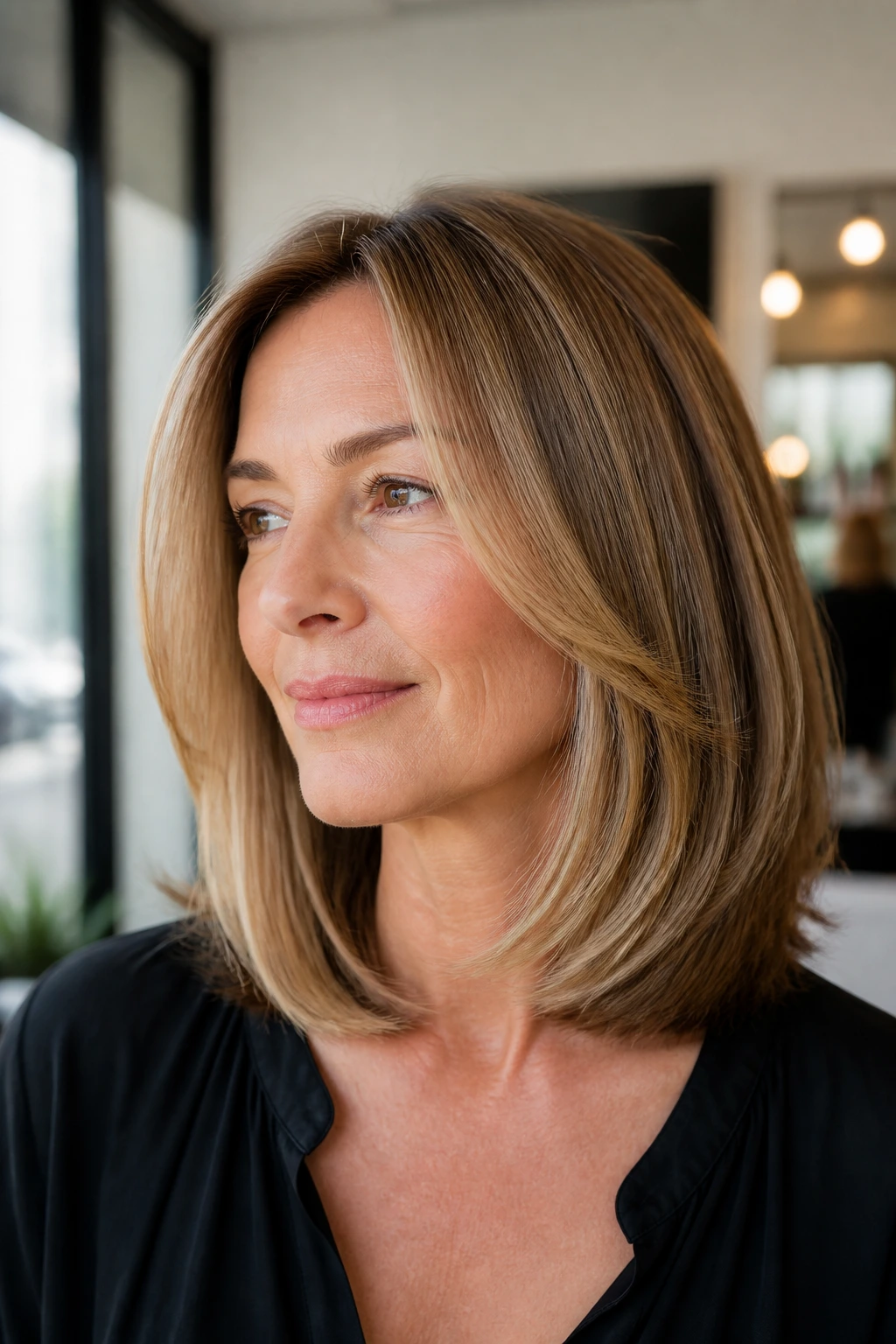
Not every layered lob needs to announce itself from across the room. This one keeps the cut quiet. The front pieces are long, the ends stay full, and the interior is just lightly carved so the hair lies better around the face.
That subtlety is the whole charm. Hair that’s changing texture with age often benefits from less visible cutting and more thoughtful shaping. You get movement, but you don’t get the frayed, overworked look that can happen when layers are too eager.
This version suits women who like a clean outline and don’t want to fuss with styling every morning. It’s the haircut you choose when you want your hair to behave in daylight without a lecture from a blow-dryer.
15. Salt-and-Pepper Lob with Shine Layers
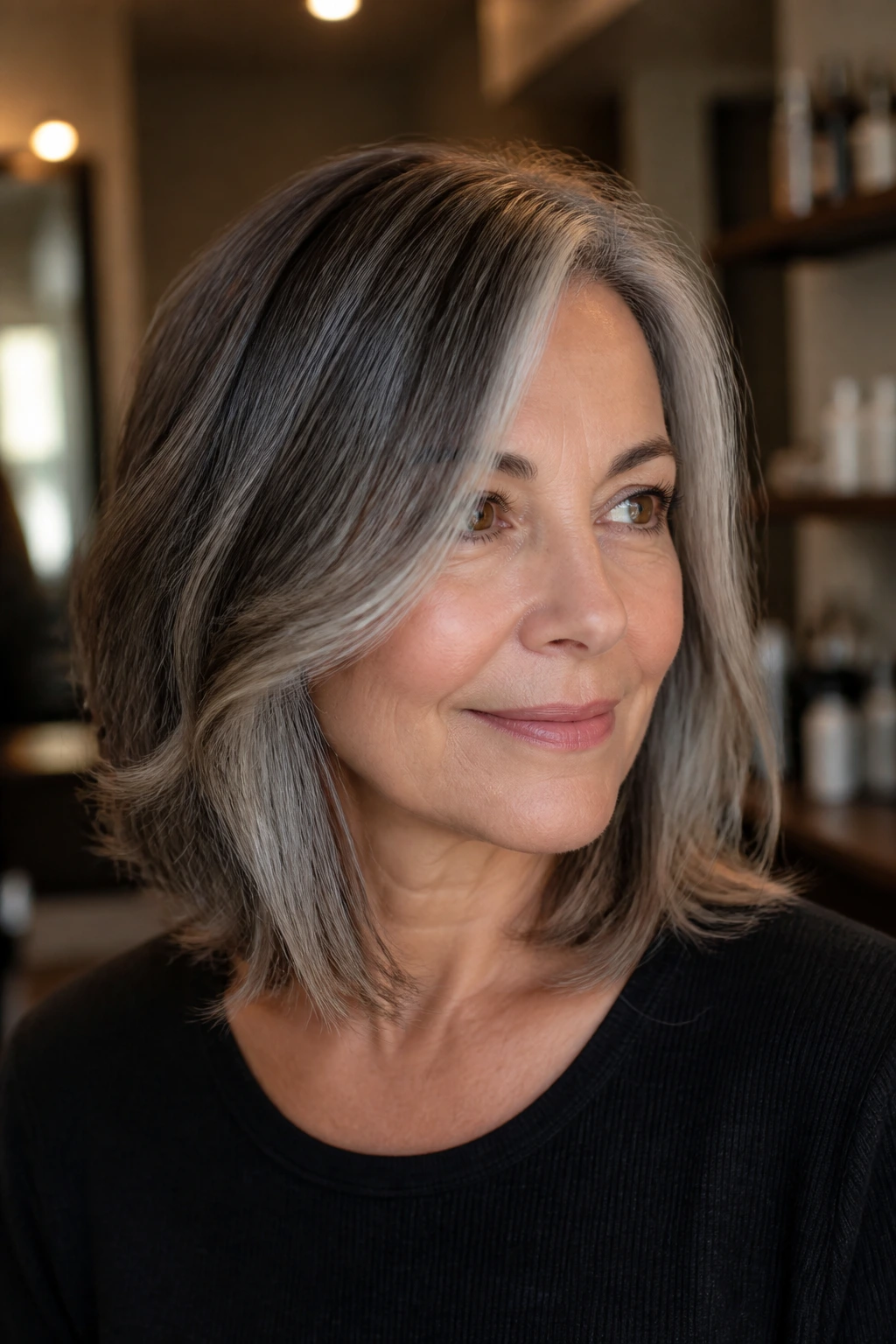
Salt-and-pepper hair looks especially sharp when the layers are placed to catch light near the front. The brighter strands can sit around the face, and the darker ones in the body of the cut add depth. That contrast gives the lob a little more life than a flat, all-over shape.
You do not need heavy layering here. A few soft front pieces and a smooth perimeter are enough. The shine comes from the contrast and from the way the layers move, not from a lot of carving.
A lightweight glossing spray can help, but only on dry hair and only from mid-length down. Put too much at the root and the cut collapses fast.
16. Air-Dried Lob with Natural Movement
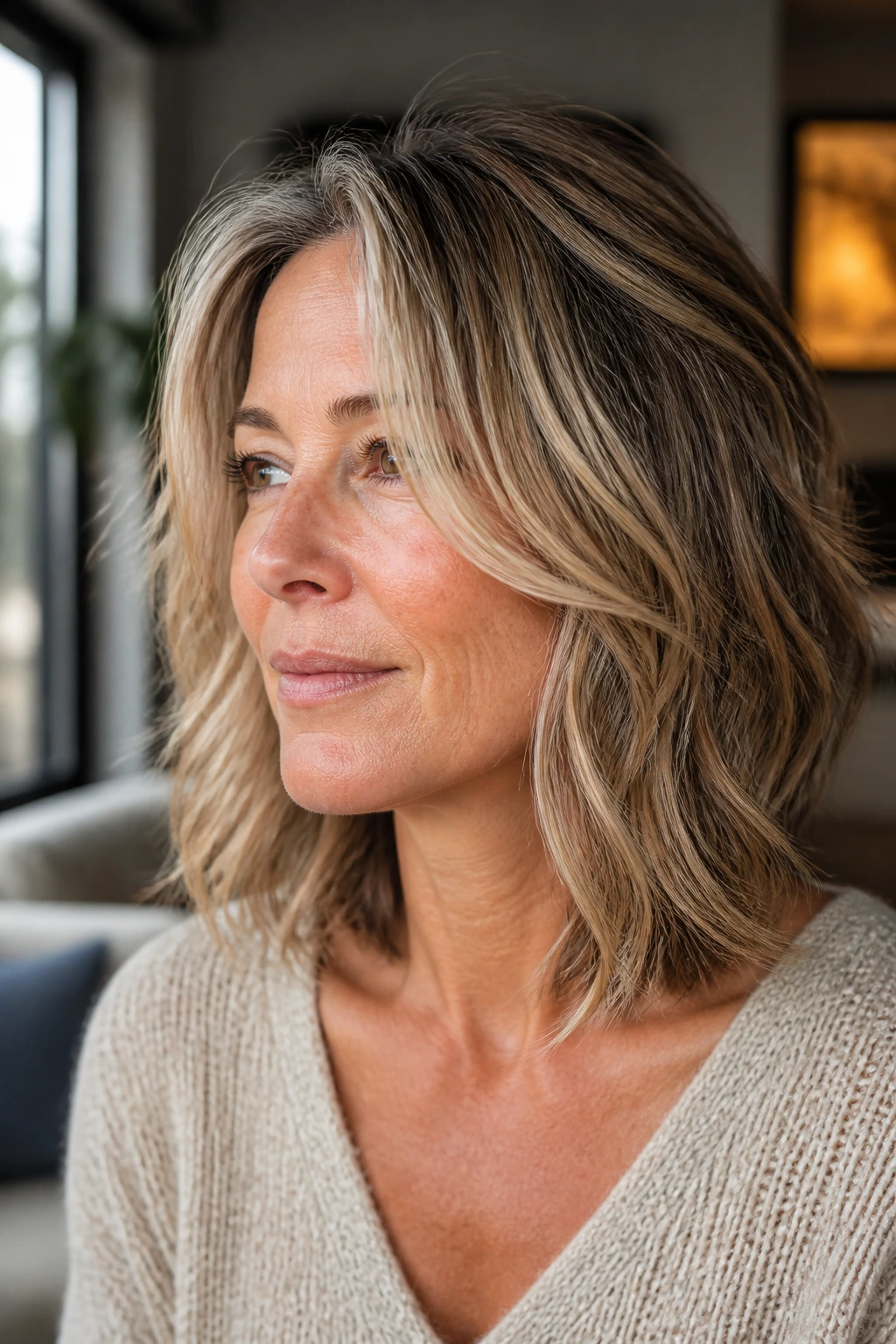
If you don’t want to heat-style your hair most days, this is the lob to ask for. The face-framing layers are long and forgiving, so they settle into place as the hair dries. Wavy and slightly textured hair does especially well here.
The shape should be built around the way your hair falls when it’s not being bullied by a brush. A good stylist will leave enough length at the front to let the pieces separate on their own. That’s the key. If the layers are too short, air-drying turns into pouf city.
Scrunch in a light mousse, part your hair where it naturally wants to sit, and touch the ends only after they’re dry. Fussing while the hair is damp usually makes the front frizzier, not smoother.
17. Soft Shag Lob with Long Texture

This is the less dramatic cousin of a classic shag. You still get texture, but the layers are longer and the shape stays lob-like instead of racing into full shag territory. That makes it friendlier for older women who want movement but not a haircut that looks borrowed from a rock poster.
The long face-framing pieces keep the cut from going wild. They create a soft line around the cheek and mouth while the rest of the layers add a little grit and bend. It’s a nice fit for hair that has some wave or a lot of natural body.
If you like a piecey finish, use a small amount of texture spray at the ends and rake it through with your fingers. A brush will smooth too much of the life out of it.
18. Oval-Face Lob with Balanced Curtain Layers

Oval faces can wear almost anything, which is exactly why a balanced curtain lob makes sense. The layers split evenly on both sides of the face, opening at the center and drifting down toward the collarbone. Nothing fights the face. Nothing crowds it either.
That balance keeps the cut calm. It’s especially good if you want a style that doesn’t rely on one dramatic side or a heavy sweep. The front pieces frame the face, but they don’t own it.
I like this version with a soft center part and a slight bend away from the cheekbones. It looks tidy, easy, and a little more expensive than it has any right to.
19. Round-Face Lob with Vertical Lift
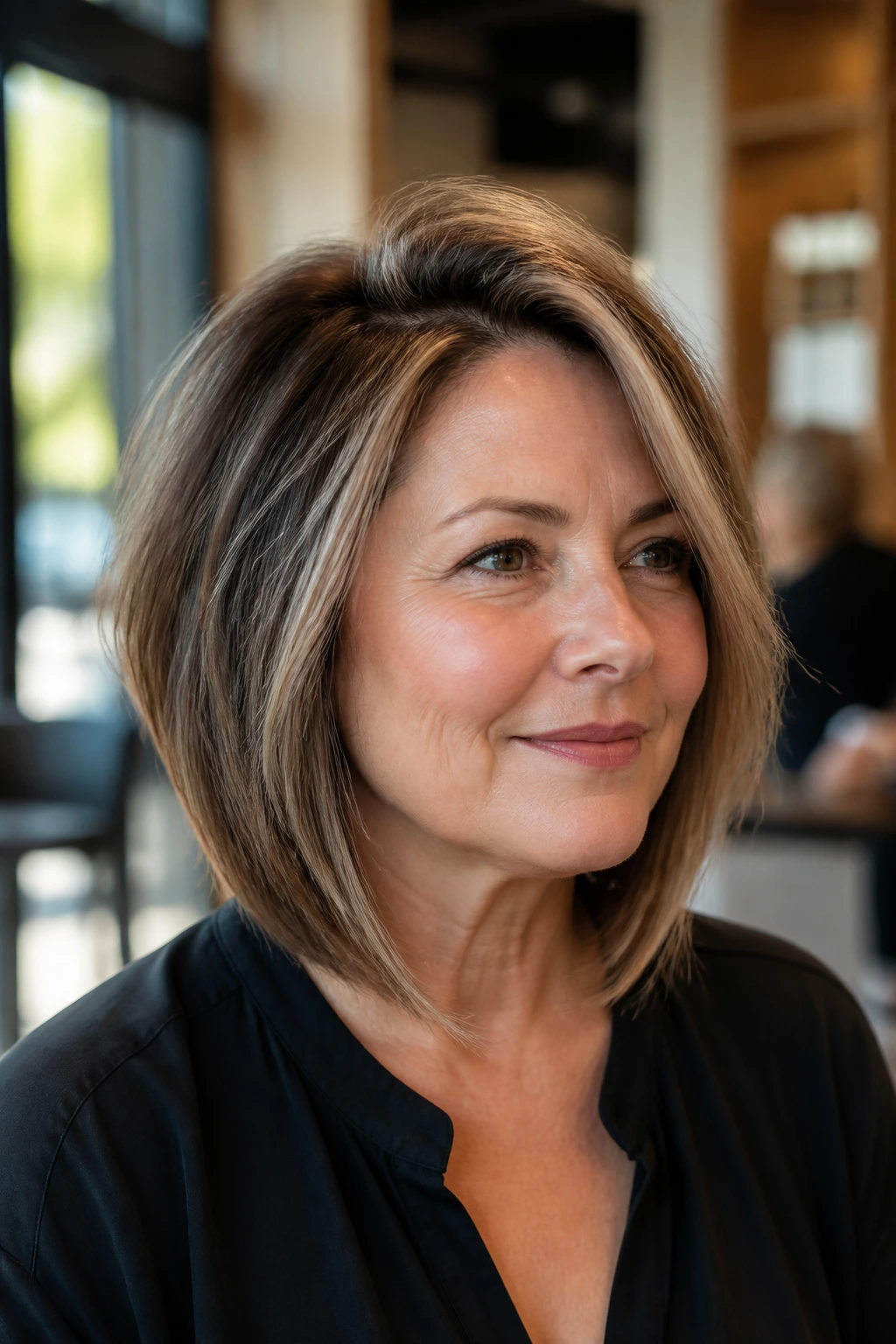
A round face usually needs a bit of vertical energy in the haircut. This lob gives that by keeping the front longer and the crown slightly lifted. The face-framing layers start below the cheekbone and fall in a narrow line, which helps lengthen the look of the face.
The worst thing you can do to a round face is cut the front pieces too short and too wide. That widens the sides and shortens the whole profile. This shape goes the opposite way.
A side part helps, but only if it doesn’t collapse one side flat. Keep the roots airy and the ends smooth. That balance keeps the cut from looking puffy.
20. Square-Jaw Lob with Soft Angles
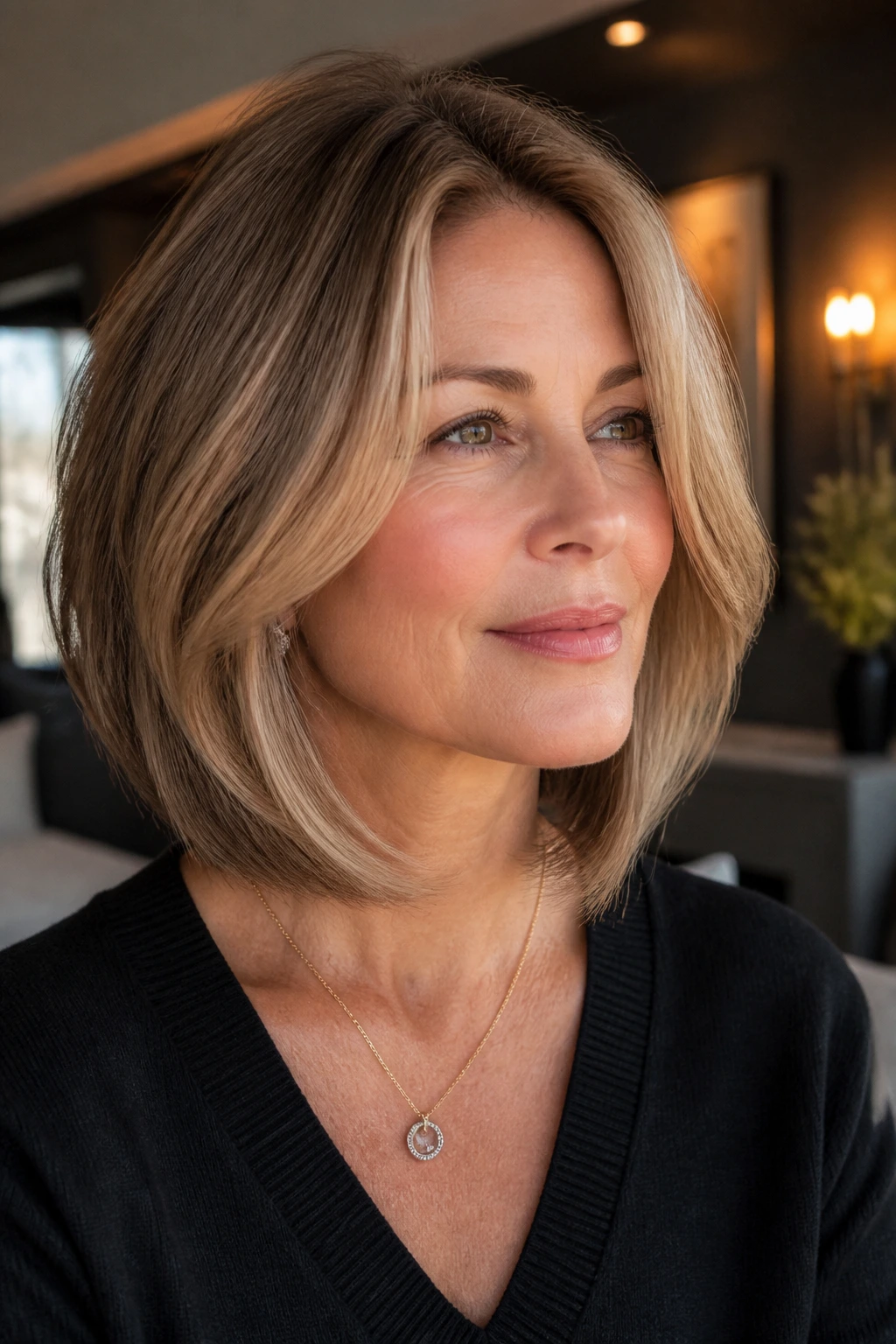
Square jaws don’t need hiding. They need softening. This lob does that by using angled front pieces that taper past the jaw instead of stopping right on it. The movement takes the edge off the lower face without making it disappear.
The best versions are curved, not rigid. A blunt lip-length piece right at the jaw can feel too hard on a square face, while a longer diagonal line looks calmer. It’s a small difference, but you see it immediately in the mirror.
A medium round brush or a large curling iron can help turn the front under just a little. Keep the bend loose. Tight curls around the jaw are the wrong note.
21. Heart-Face Lob with Chin Balance

Heart-shaped faces often need a little more presence around the chin than people expect. This lob gives that through longer face-framing pieces that land near the chin or just below it. The result balances a wider forehead and keeps the lower half from feeling too narrow.
The top should stay light, not fluffy. You want the front pieces to guide the eye downward, not create a hard triangle around the temples. A soft part and a smooth finish help a lot.
If your hair is naturally fine at the sides, this is a smart way to build visible shape without overloading the crown. Leave the front long enough to move, and the haircut will do the rest.
22. Lob with Soft Bangs and Layers

Soft bangs can work with a long bob, but the fringe has to stay light enough to blend. Think airy, not heavy. That way the front layers and the bangs read as one shape instead of two competing ideas.
This is a good choice if you want to soften forehead lines without committing to a full fringe. The bangs can feather into the face-framing pieces and then melt into the lob itself. It’s a useful trick, especially for women who like some front coverage but still want length around the cheeks.
Keep the bangs long enough to sweep aside on bad days. Short, blunt fringe can be a nuisance if your hair swirls at the hairline.
23. Shoulder-Grazing Lob with Flicked Ends

A shoulder-grazing lob changes mood depending on how the ends are finished. Flick them out a little and the whole cut feels lighter; tuck them under and it looks neater. The face-framing layers here are long enough to do both without fighting the rest of the style.
This version works well when hair has some natural bend but not enough to create full waves. A flat iron or round brush can push the ends outward just enough to keep the style from sitting flat on the shoulders.
It’s a good cut for women who like a little polish without going full blowout every day. The shape already carries some movement, which is half the work.
24. Low-Maintenance Lob with Minimal Layering

Sometimes the smartest haircut is the one that asks the least from you. This lob keeps the layers minimal, with just a soft front frame and a mostly one-length body. That means fewer pieces to misbehave, fewer dry ends to worry about, and less morning fuss.
The style still looks shaped because the front is doing the visual work. A small angle near the cheekbone keeps the face open, while the rest of the hair stays steady and full. That’s a good trade if you prefer wash-and-go hair.
This is also a strong choice for women whose hair has become more fragile over time. Too many layers can expose weakness. A restrained cut keeps the outline clean.
25. Blowout Lob with Bent Ends

A bent-end lob is one of those haircuts that looks casual until you notice how intentional it is. The front layers curve slightly away from the face, and the ends flip under or out by a half inch. Nothing severe. Just enough shape to keep the lob from falling straight to the shoulders.
Why the Bend Matters
That little bend creates movement around the jaw and cheek without taking away the length that older women often want to keep. It also makes the haircut feel finished even when the styling is simple.
- Use a 1.25-inch curling iron or a medium round brush.
- Leave the last inch or so out for a softer bend.
- Let the curls cool before you finger-comb them apart.
If you like a polished look but hate stiffness, this is one of the easiest wins.
26. Gray-Emphasis Lob with Bright Front Panels
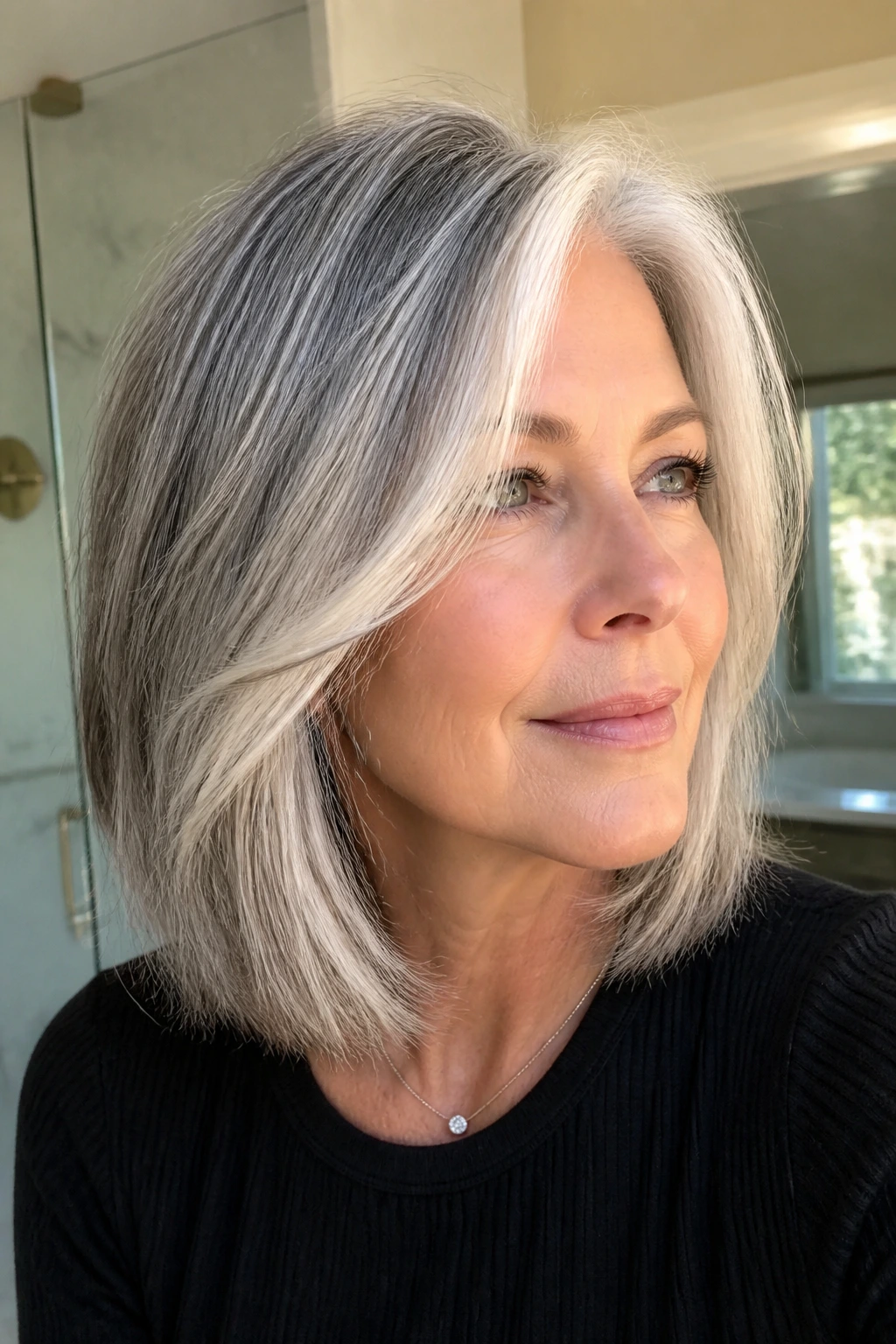
Gray hair can look spectacular in a lob when the front pieces are cut to catch the light. The bright panels around the face, whether they’re natural silver or carefully lightened, make the layers easier to see and the whole cut feel brighter.
The trick is keeping the layers soft enough that the gray doesn’t turn harsh. Sharp lines can make silver hair look wiry. Gentle front framing makes it glow instead.
A bit of lightweight shine cream on the ends helps, but the real work is in the shape. If the front is placed well, the color gets more interesting without adding complexity to your routine.
27. Narrow-Face Lob with Wider Sides

If your face is long or narrow, a lob can use the sides to add a little width. The face-framing layers should open outward from the cheeks rather than hugging the face too tightly. That creates balance and keeps the haircut from making the face look even narrower.
The front pieces can start around the nose or upper lip and then drift outward toward the shoulders. That shape widens the silhouette in a gentle way. It’s subtle, but it matters.
A center part is fine here if the layers flare out on both sides. If not, try a soft off-center part so one side carries a touch more fullness.
28. Grow-Out Lob with Seamless Layers

A grow-out-friendly lob needs one thing above all: a shape that still makes sense when the layers get a little longer. Seamless layers do that. The front pieces blend into the rest of the haircut instead of sitting on top of it like they were stapled on.
This is the cut to ask for if you don’t want to run back to the salon every few weeks. The front can stretch, the back can soften, and the haircut still looks like the same idea. That’s not small. That’s the difference between a haircut you manage and a haircut that manages you.
Keep the silhouette clean, and the grow-out will look planned rather than neglected.
Why Long Bob Face-Framing Layers Work So Well as Hair Changes

A lob has one job that short bobs and long hair both struggle with: it keeps enough weight to lie down, but enough length to move. That balance is why this shape stays useful on hair that’s getting finer, grayer, or a little more stubborn around the crown. The line is strong enough to hold, yet the front can still be tailored around the face.
The other reason it works is simple geometry. A front layer that starts at the cheekbone or jaw changes where the eye lands. Instead of staring at the widest part of the face or the droopiest part of the haircut, you see motion. You see lift. You see shape.
For older women, that’s often the point. Not a youth trick. Not a disguise. Just a haircut that deals with changing texture in a direct way. If the ends have thinned out, keep the perimeter blunt. If the front feels heavy, open it up. If the hair insists on puffing at the sides, remove a little weight underneath and leave the outline intact. The lob gives you room to do all three.
Essential Tools for These Cuts
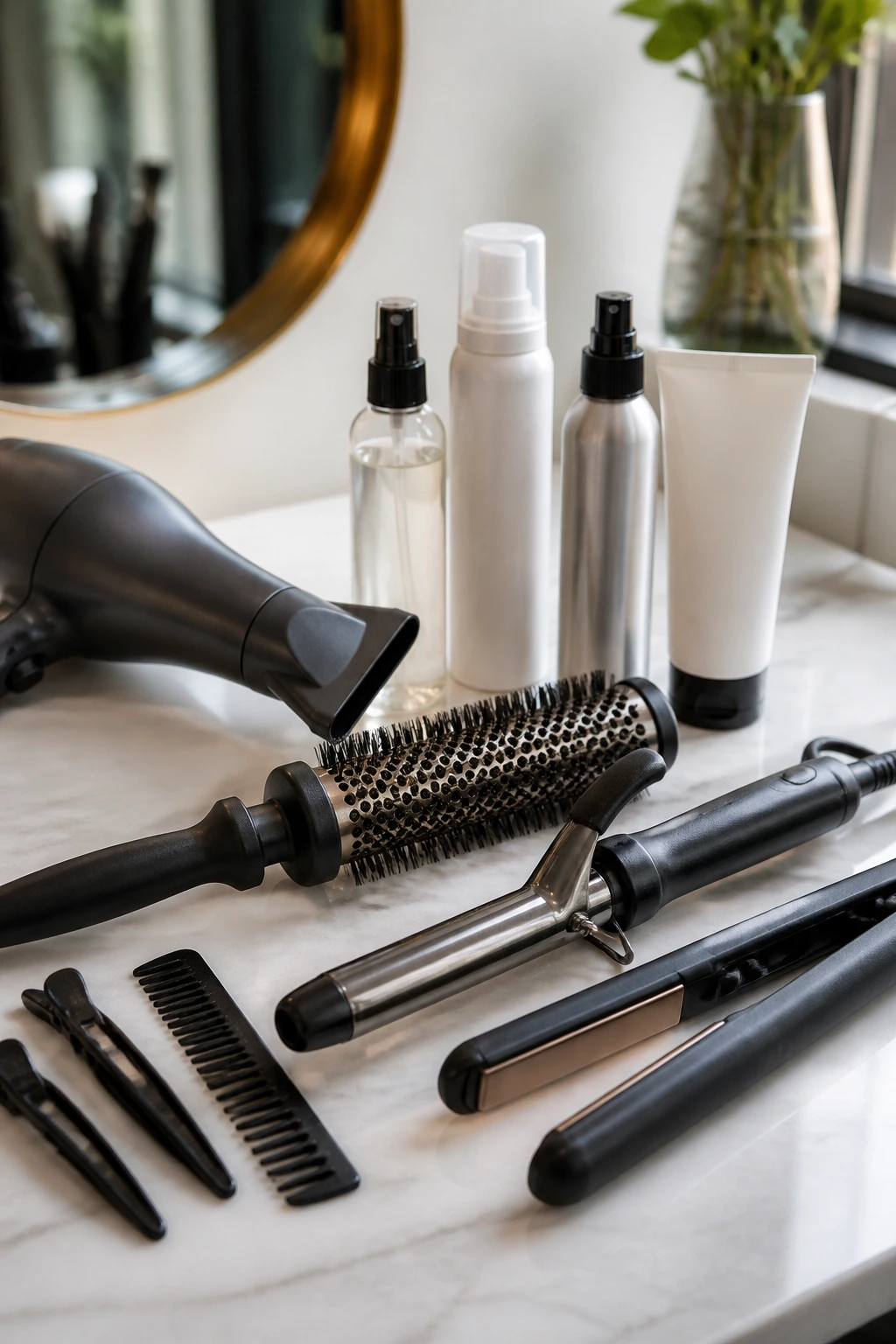
- Blow dryer with a concentrator nozzle: Keeps the airflow pointed where you want it, especially around the face-framing pieces.
- Medium round brush: Good for building a soft bend at the ends without creating a tight curl.
- 1-inch or 1.25-inch curling iron: Best for a loose wave or a bent-end finish.
- Flat iron with rounded edges: Useful for smoothing the front or turning the ends under with a light hand.
- Sectioning clips: Make it easier to dry the front in clean pieces instead of blasting everything at once.
- Wide-tooth comb: Gentle on damp hair, especially if it’s curly or fragile.
- Heat protectant spray: Non-negotiable if you use hot tools more than once a week.
- Lightweight mousse or root spray: Helps fine hair hold the shape without getting crunchy.
- Texturizing spray: Good for piecey movement on wavy or layered lobs.
- Smoothing cream or serum: Keep this on the ends, not the roots, so the haircut stays light.
Smart Salon Notes for Long Bob Face-Framing Layers

A good reference photo helps, but two photos are better: one from the front and one from the side. Front-only photos lie. They hide the angle that matters most, which is how far the front dips from the jaw to the collarbone. Bring something with your own hair texture if you can find it. A straight, glossy model in the photo won’t tell your stylist what a wavy silver lob will actually do.
Ask for the shortest front piece to land somewhere specific: cheekbone, lip, or chin. That single detail changes everything. If you wear glasses, mention the frame height. If your hair flips at the nape, mention that too. A stylist can work around those quirks, but only if they know the haircut has to live in your real life, not under studio lights.
Product choice matters just as much. Fine hair usually does better with a light mousse, root spray, and a touch of texturizer. Thick or coarse hair often needs smoothing cream and heat protectant, but not a lot of oil near the roots. For gray hair, a gentle shine spray keeps the front from looking dull, and a violet shampoo once in a while can keep yellowing from muddying the silver. Heavy products are the enemy here. They collapse the line you paid for.
How to Wear These Cuts Every Day
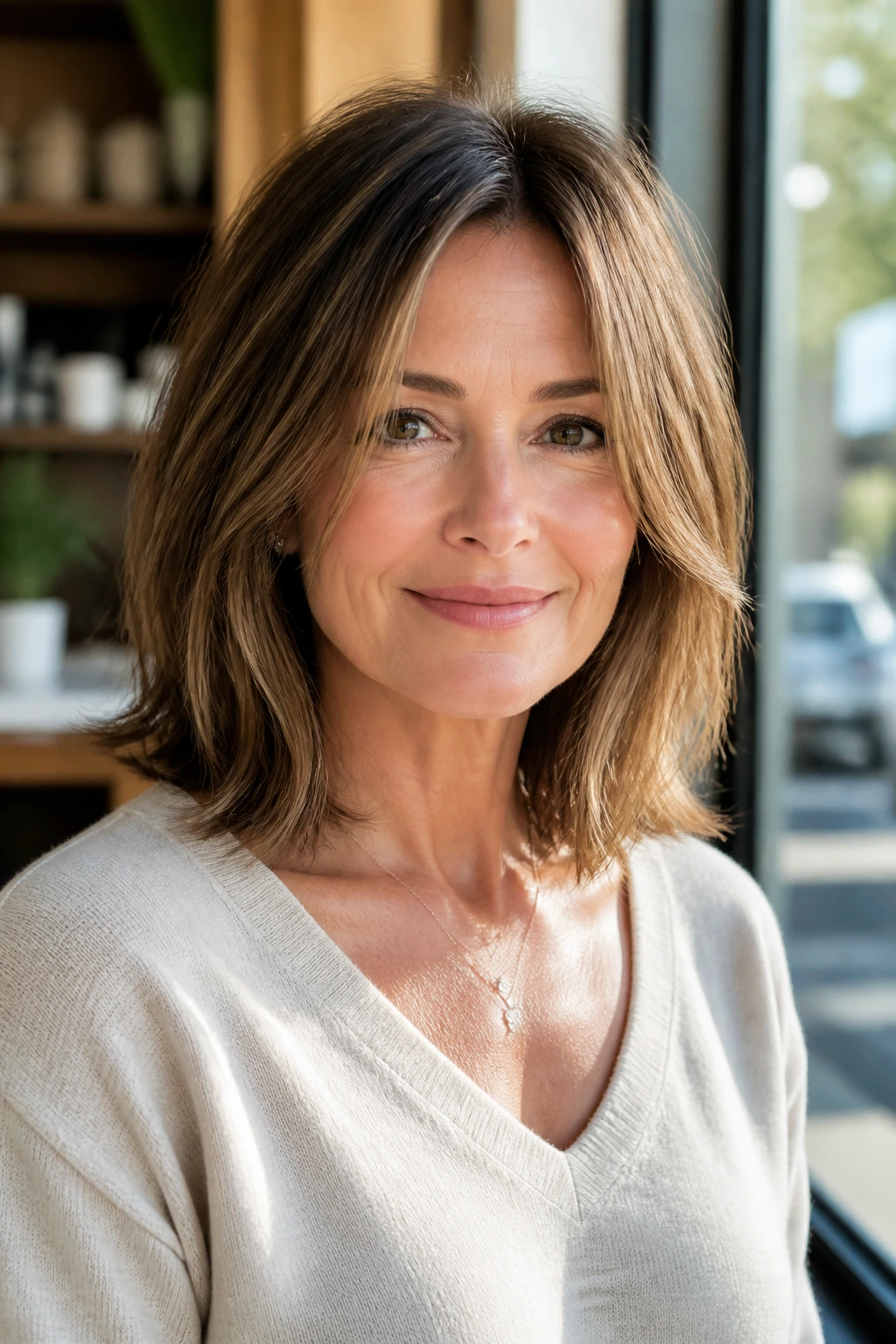
Everyday finish: A lob with face-framing layers usually looks best when it has one bend near the ends and a little lift at the crown. That can come from a round brush, a quick pass with a flat iron, or even a medium Velcro roller while you do makeup.
Air-dry finish: Wavy and curly hair can let the cut do most of the work. Scrunch in mousse, part it where it wants to sit, and leave the front alone until it’s dry. Touching damp pieces too much tends to make the face frame frizzier than you planned.
Glasses and jewelry: If you wear both, keep the front pieces off the frame line and let earrings do some of the visual work. A lob that sits just below the lens or just above the jaw avoids clutter. It looks cleaner. Less fussy, too.
Parting choice: A center part reads calm and balanced; a side part gives lift and softness. Try both before deciding the cut has a problem. Sometimes the haircut is fine, and the part is the thing that needs to move.
Extra Styling Tweaks and Personal Touches
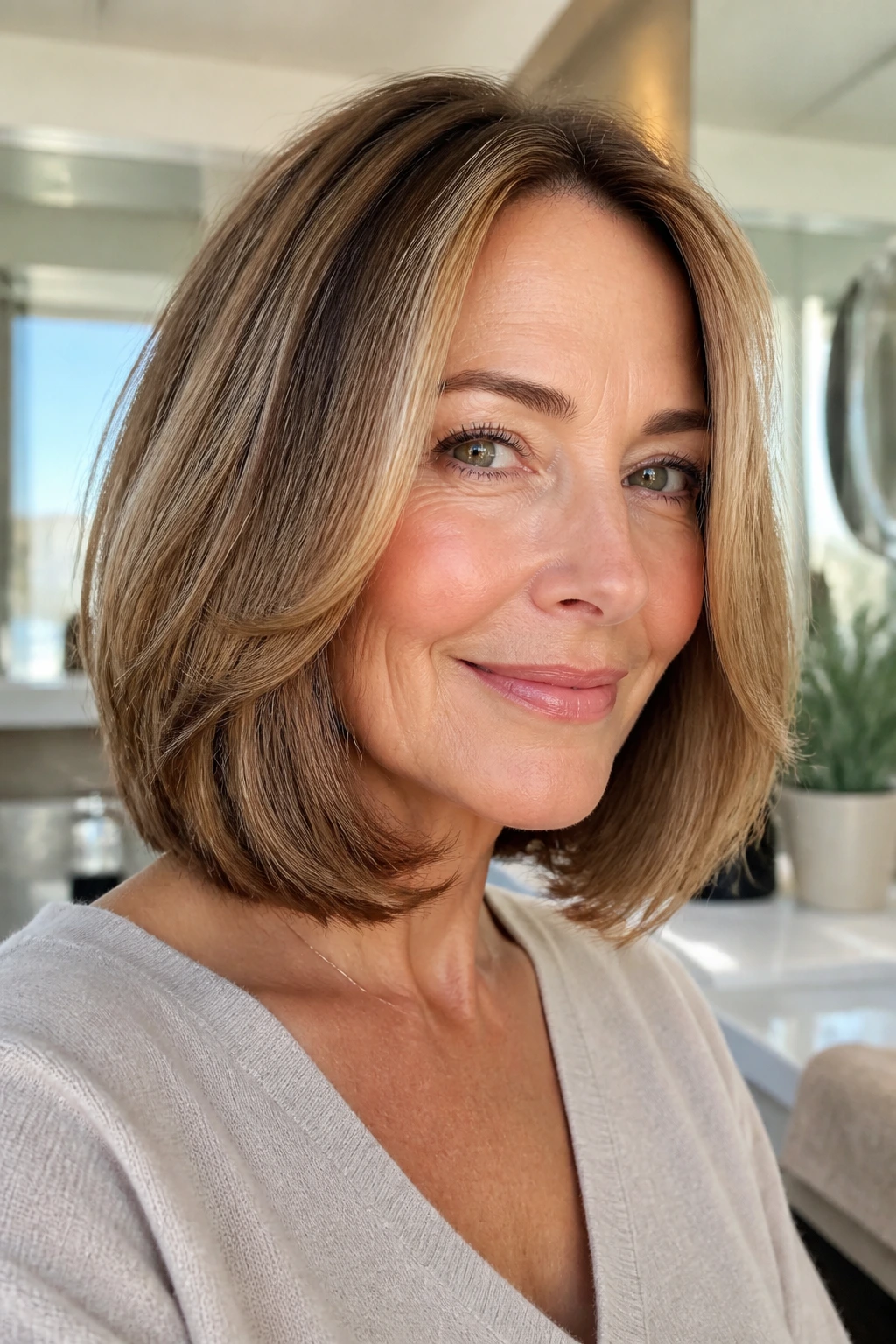
Crown lift: Blow dry the top section in the opposite direction first, then flip it back. That little trick helps the roots stay off the scalp without visible teasing, which is kinder to fine or aging hair.
Bend, not curl: On most lob layers, a soft bend around the cheek and jaw looks better than a tight curl. Leave the last inch out of the iron so the finish stays light and not too salon-perfect.
Make gray hair shine: A clear gloss or lightweight shine spray can keep silver and salt-and-pepper hair from looking flat. Use it on the middle and ends only. The roots do not need extra slickness.
Tame thick hair: Ask for internal weight removal rather than a lot of surface layering. It keeps the cut from puffing out, but preserves enough outline so the face frame still reads.
Make it softer with color: If you color your hair, a few lighter pieces near the front can make the layers easier to see. You do not need a dramatic highlight job. Just enough brightness around the face to show the shape.
Keeping the Shape Between Salon Visits

A long bob with face-framing layers holds its line longer than a short bob, but the front still needs attention. Plan on a trim every 8 to 10 weeks if you want the shape to stay crisp. If the shortest front pieces sit near the cheekbone or lip, they may need a tiny cleanup sooner, especially if they start brushing your glasses or tucking under awkwardly.
The cut tends to look best with regular reset days. You do not need a full wash to fix it. A dry shampoo at the roots, a quick round-brush pass over the front, and a 10-second bend through the ends can revive the shape fast. If the hair goes a little fuzzy, a pea-size amount of smoothing cream on the last two inches is enough. More than that starts to flatten the movement you wanted.
Gray or highlighted hair may need a purple shampoo every week or two if brassiness creeps in. Fine or dry hair usually prefers a deep conditioner once a week; coarse hair may like it every 7 to 10 days. Sleep matters too. A silk pillowcase or loose clip at the crown can keep the front from kinking badly overnight. If you wake up with one side bent wrong, a low-heat flat iron pass on the front piece usually fixes it in under a minute.
Variations and Adaptations to Try

The Soft Grow-Out: Keep the front long and the layers blended so the haircut still looks deliberate after two months. This is the version for anyone who dislikes frequent salon trips.
The Silver Frame: Add brightness around the face with soft layering and a clean perimeter. It works especially well on silver, white, or salt-and-pepper hair because the shape and color both read clearly.
The Curl-Respecting Lob: Leave the face-framing pieces long enough to follow the curl pattern rather than fight it. This one is kinder to curls that spring up the second they’re cut too short.
The Glasses Cut: Build the front so it clears the frame line and opens at the cheekbone. You keep the look, but you lose the daily annoyance of hair touching your lenses.
The Full-Body Blowout: Use a round brush and a curved finish to give the lob more polish and lift. It’s a good choice for events, dinner, or any day when your hair needs to look like it had a plan.
Common Mistakes to Avoid
-
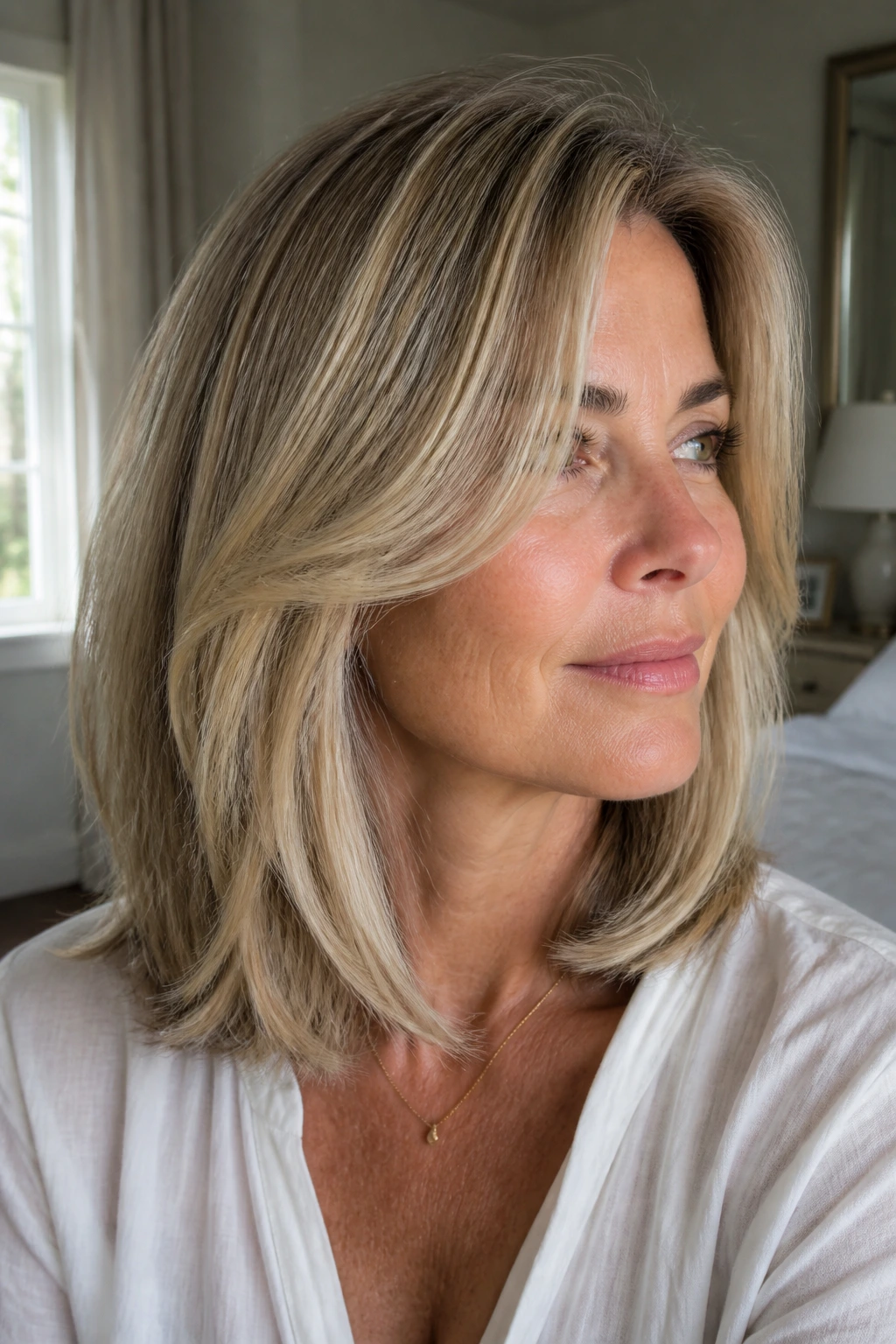
Cutting the front too short. If the shortest pieces stop at the jaw on a round or square face, the haircut can widen the face instead of softening it. Ask for the front length to be placed with your face shape in mind, not copied from a photo.
-
Over-thinning fine hair. If the ends look see-through or the cut flips weirdly at the shoulders, too much weight was removed. Keep the outline blunt and let the face-framing layers do the shaping.
-
Ignoring the natural part. A center part on a cowlick-heavy hairline can split and collapse all day. A slight side shift often solves the problem without cutting a single extra layer.
-
Using heavy oils at the root. The haircut loses lift fast, especially on silver or fine hair. Save heavier serums for the ends only.
-
Letting the front grow too far. Once the face-framing pieces fall into the shoulder line, they can twist and kick out. A tiny trim every 6 to 8 weeks keeps the line clean.
-
Trying to make every lob look the same. Thick hair, curly hair, and fine hair all need different amounts of layering. The best lob is the one that respects the hair you actually have.
Variations and Adaptations to Try

The Low-Fuss Air-Dry Lob: Keep the layers long, use a light mousse, and let the front fall where it wants. This version is ideal if heat styling feels like a chore you’d rather skip.
The Soft Side Sweep: Shift the part and let the front travel diagonally across the face. It’s a calm way to add lift without adding drama.
The Glossy Gray Lob: Smooth the perimeter, keep the front pieces soft, and finish with a shine spray. Gray and silver hair can look striking when the shape is clean and the finish is not overloaded.
The Thick-Hair Clean Line: Leave the ends blunt and remove bulk only inside the shape. It keeps heavy hair from ballooning while still giving the front some motion.
The Soft Fringe Lob: Add a long, airy fringe that blends into the face-framing layers. That works well if you want forehead coverage without full bangs.
Frequently Asked Questions
Will a long bob with face-framing layers make fine hair look thinner?
Not if the cut is handled properly. Fine hair usually looks better with a blunt perimeter, longer layers, and a soft front frame rather than a lot of internal chopping.
Where should the shortest face-framing piece fall?
That depends on your face shape, but cheekbone, lip, and chin are the common landing spots. Cheekbone opening gives lift, chin length softens the jaw, and lip length can balance a longer face.
Can I wear this cut if I have curly hair?
Yes, and it can look excellent, as long as the front pieces are left long enough to account for shrinkage. Curly hair cut too short around the face tends to spring up and lose the intended shape.
Do these lob layers work with glasses?
They do, but the front pieces need to clear the frame line. Tell your stylist what frames you wear, and bring them to the appointment if the front length is close to the lenses.
How often should the cut be trimmed?
Most versions need a trim every 8 to 10 weeks to keep the outline clean. If the front pieces are short enough to sit near the cheekbone, a small cleanup at 6 to 8 weeks can keep them from poking into your eyes.
Is a center part a bad idea for older women?
No. A center part can look clean and modern, but it needs the right front layers to support it. If your hairline fights back or one side collapses, move the part a little off center and see what happens.
What should I tell the stylist if I want low maintenance?
Ask for a lob that keeps the perimeter full, the front long, and the layers blended rather than choppy. Say you want movement around the face but not a cut that needs a round brush every morning.
What if the haircut feels too flat after styling?
Usually the crown needs a little root lift, not more layers. Try a root spray, blow-dry the top in the opposite direction first, and keep the ends light so the cut can move.
A Lob That Still Moves

The best version of this haircut is the one that looks calm when you do nothing and even better when you give it ten minutes. That’s why long bob face-framing layers keep showing up on women who know what they want from their hair: shape, softness, and enough length to stay useful when life gets busy.
Bring a photo, name the landing point for the front pieces, and be honest about whether you style with a brush or mostly with your hands. A lob should suit the way you actually live, not the way a salon mirror wants to flatter you for ten seconds. When the cut is right, it settles into place quickly and grows out without throwing a tantrum. That’s the one worth keeping.