



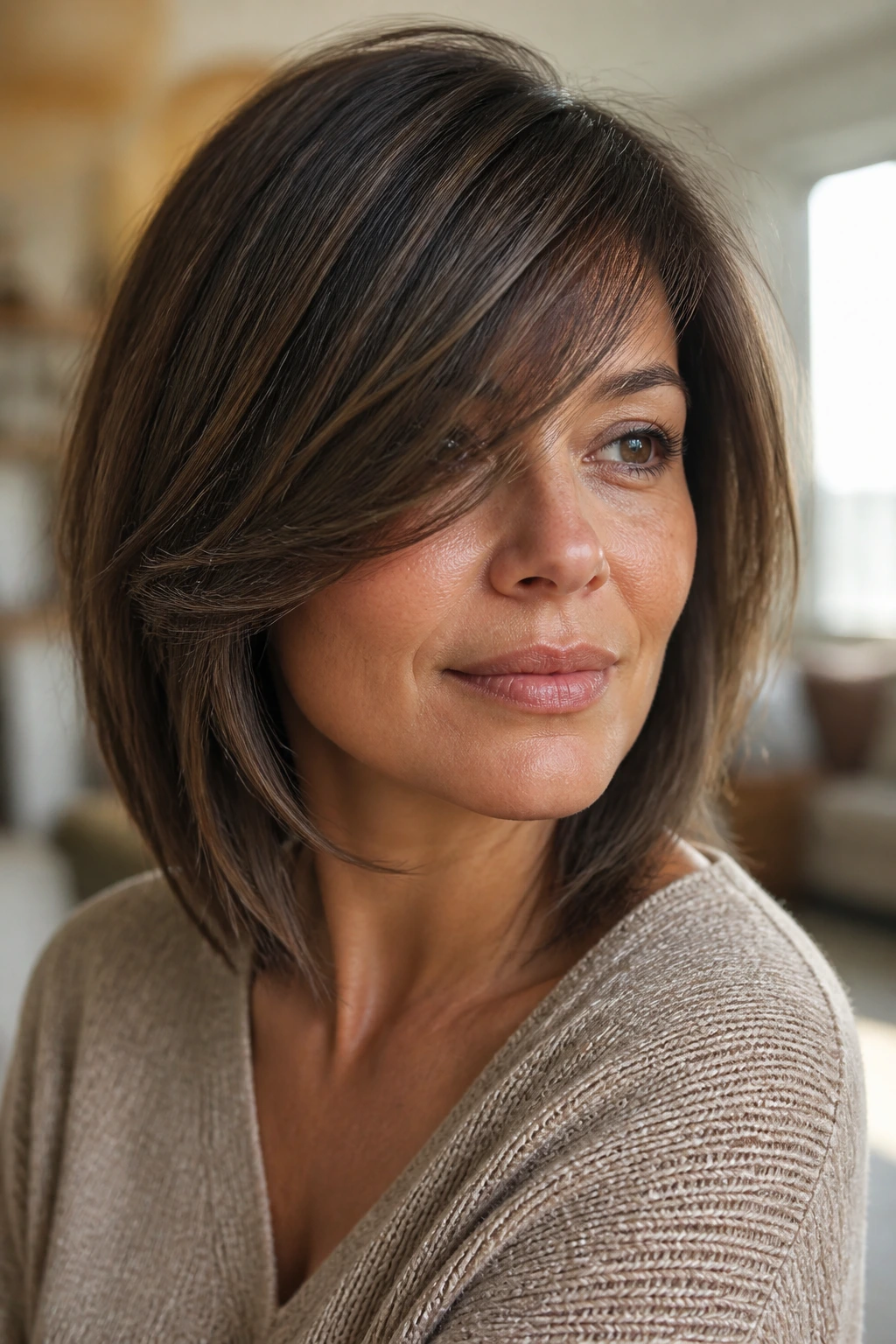
Square faces have some of the best bone structure in hair. Strong jaw, straight sides, clear angles. The problem is that the wrong fringe can turn that structure into a box. Layered side-swept bangs for square faces work because they break the hard lines and send the eye diagonally instead of letting it sit on a blunt edge.
That diagonal is doing a lot of heavy lifting. A side sweep that starts just off-center, feathers through the brow, and slips into cheekbone-length layers makes the face feel softer without hiding the structure underneath. I’m picky about the cut here. Too short, and the bang gets choppy. Too wide, and it spreads across the forehead like a shelf. Too heavy, and it drags the whole look down.
The sweet spot changes with hair texture, density, and length, which is exactly why one “side bang” look is never the whole story. Fine hair wants lift. Thick hair wants removal of bulk. Wavy hair wants a longer guide so it can bend instead of springing up. And if you’re wearing a square face shape, the best fringe is usually the one that creates a soft curve near the brow and a longer line near the cheek, because that is where the geometry finally starts to work in your favor.
Why These Fringe Shapes Soften a Square Face
-
They interrupt the horizontal lines. A square face already has strong width at the jaw and forehead, so a diagonal bang gives the eye somewhere else to go besides straight across.
-
They soften the jaw without hiding it. The right side-swept fringe lands near the cheekbone, not the jawline, which keeps the lower face from looking heavier.
-
They blend better than blunt bangs. Layered ends melt into the rest of the haircut, so the fringe feels like part of the style instead of a separate block sitting on top.
-
They work with growth. A side sweep usually grows out more gracefully than a strict straight-across bang, which matters if you do not want a trim every couple of weeks.
-
They can be tuned to your hair. Thick, fine, straight, wavy, and curly hair all need a different balance of length and layering, and this shape is flexible enough to handle that.
1. Feathered Brow-Tail Sweep
A feathered fringe that starts at the outer brow is the safest, prettiest place to begin if you’re nervous about bangs on a square face. The cut keeps the shortest point soft, not abrupt, so the front of the hair bends away from the forehead instead of chopping it in half. I like this version on medium-density hair because it gives movement without needing aggressive thinning.
Why It Flatters the Face
The feathering breaks up any hard line across the face, and that matters more than people think. A sharp jaw can look even sharper when the fringe is compact. This version keeps the edge light and lets a few wispy pieces fall past the temple, which softens the side planes right where a square face needs it.
Quick Shape Notes
- Ask for the shortest piece to sit near the outer brow, not in the middle of the forehead.
- Keep the longest front layers grazing the cheekbone.
- Blow-dry the fringe forward first, then sweep it across with a round brush.
- Use a tiny bit of cream, not a waxy paste, or the feathering clumps.
Best for: medium hair, soft layers, and anyone who wants bangs that feel polished without looking stiff.
2. Collarbone Sweep With Long Layers
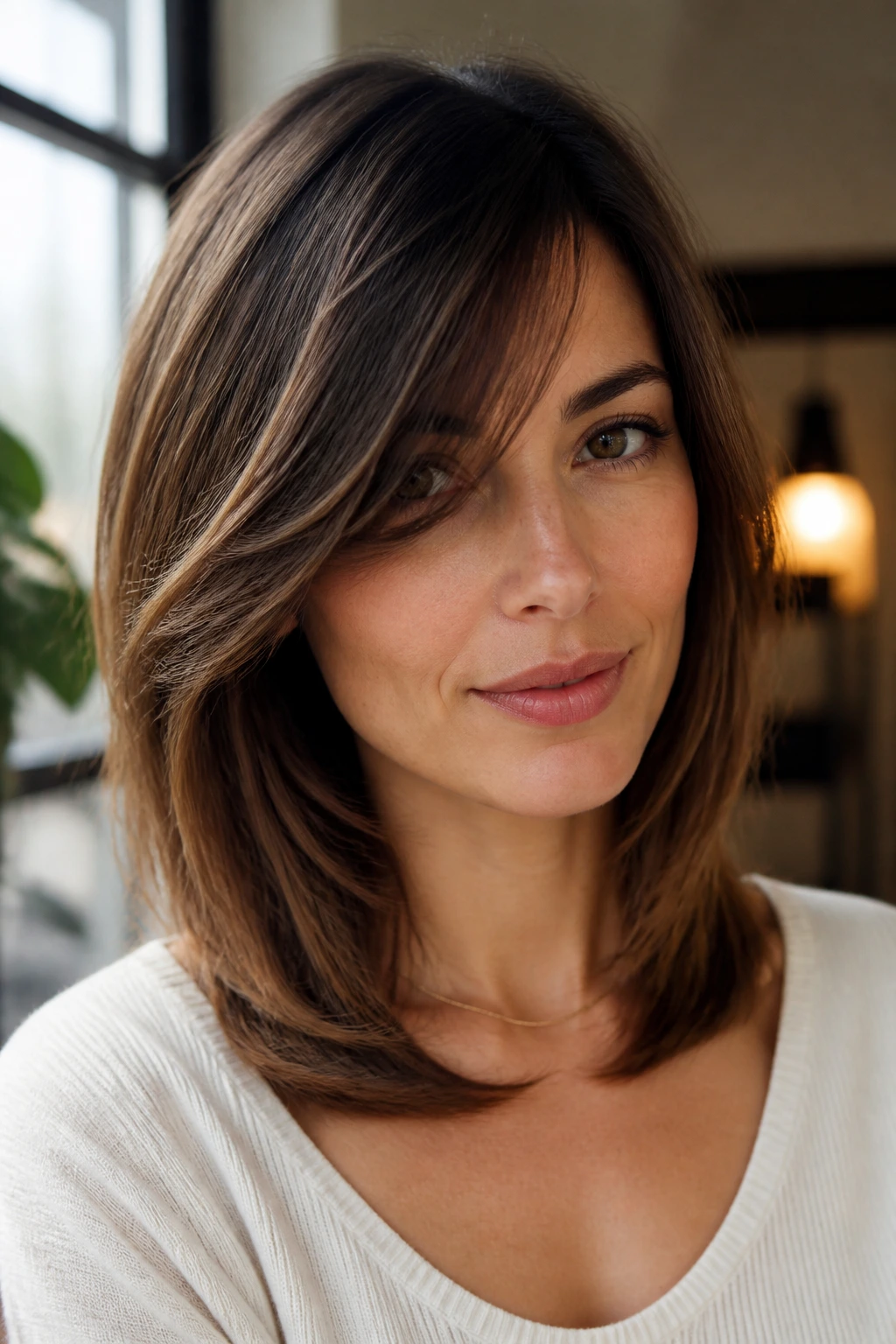
A collarbone-length cut with side-swept bangs feels easy in the best way. The hair has enough weight to lie smoothly, but the long layers around the face keep the shape from getting blocky. I especially like this on square faces with a broad forehead, because the fringe can travel farther before it needs to disappear into the rest of the cut.
The key is length. If the sweep stops too high, the haircut starts to look busy. If it lands somewhere between the cheekbone and the mouth, it creates that nice diagonal line that makes the face feel longer. Wear it with a loose bend through the ends, not pin-straight lengths. The softness is doing the work here, and the ends should echo that.
If you wear glasses, this is one of the best versions. The fringe can slide just above the frame, then fall away instead of crowding the lenses.
3. Chin-Grazing Arc
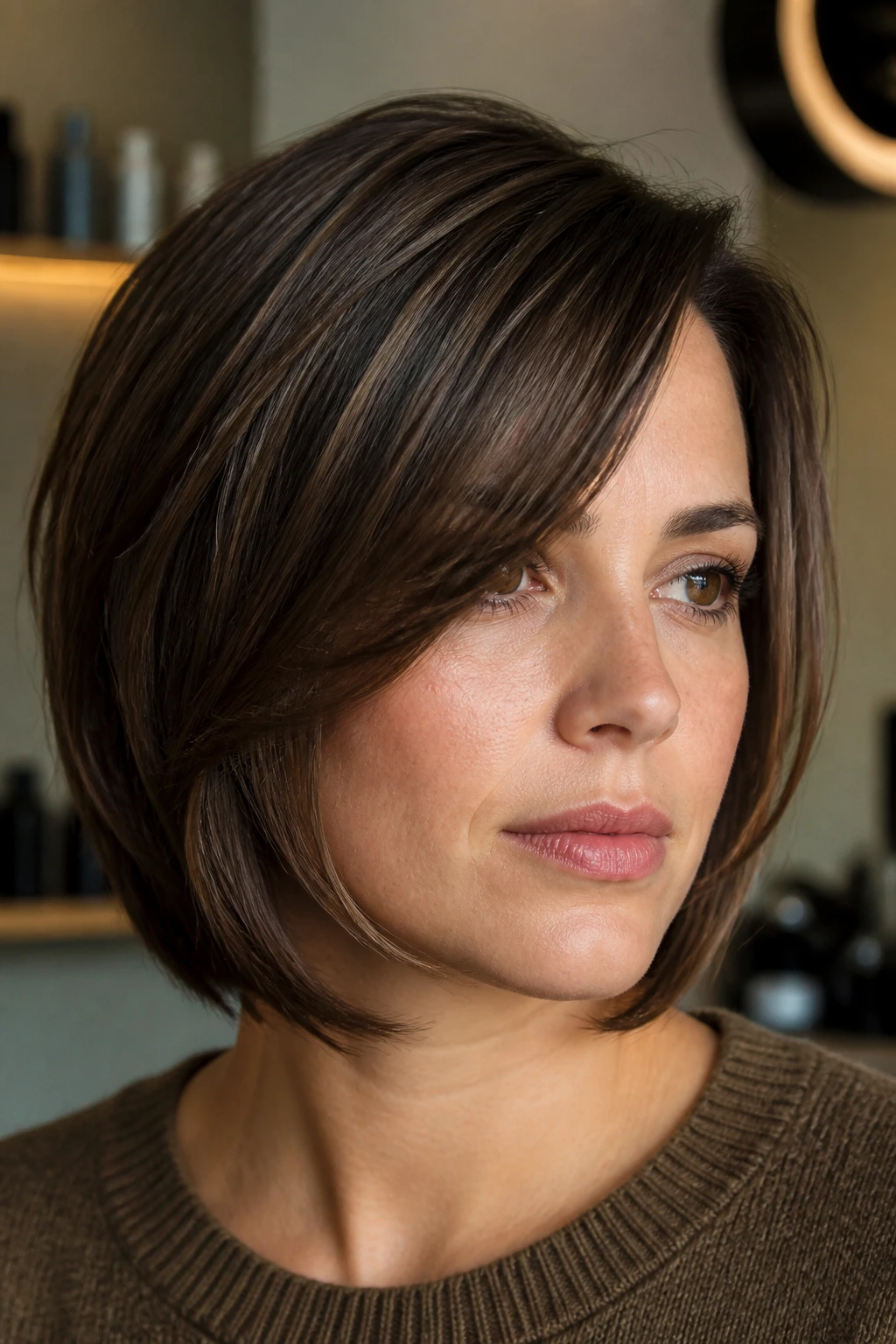
This one is for the person who wants the bang to do something obvious. A chin-grazing side arc creates a visible curve that pulls the eye downward and away from the widest part of a square jaw. It’s not shy. Good. Hair should have a little opinion.
The trick is to keep the bang long enough that it does not sit on the cheek like a triangle. You want it to travel from the deep side part, skim the brow, then sweep past the cheekbone and toward the jaw in one clean motion. That line gives the face more length, which is why it works so well on square structures.
Best Way to Style It
A flat iron bend through the last two inches makes this shape look intentional. Wrap the front away from the face, hold for a second, and let it cool in the direction you want. That tiny bend matters more than a lot of product.
4. Piecey Lob Fringe
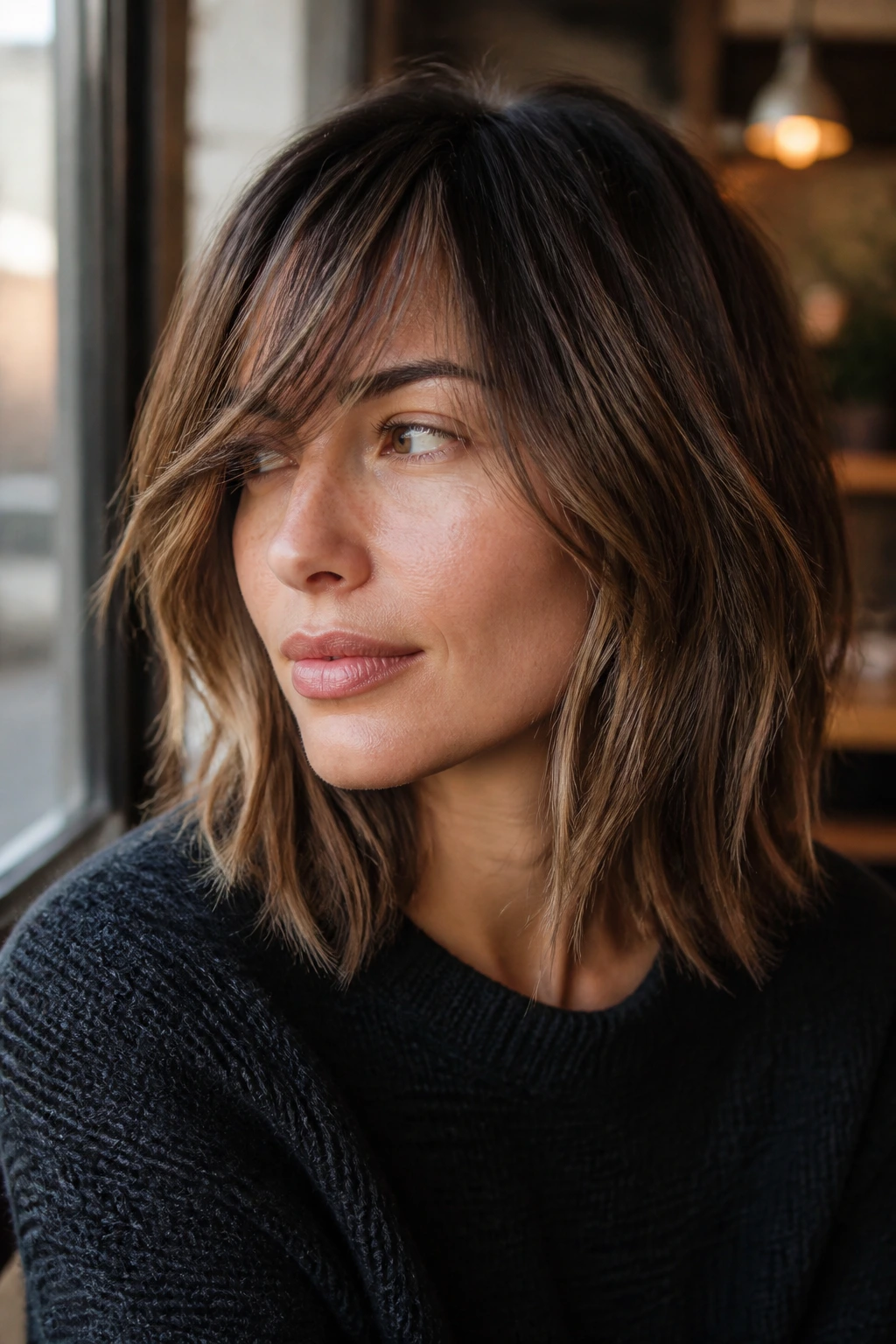
What happens when you want bangs, but you don’t want bangs to take over? You get this version. A piecey side fringe on a lob keeps the front light and broken up, which is a smart move for square faces because it avoids one big solid panel of hair.
The look works best when the layers start near the cheekbone and then split into a few separate strands. That separation is the whole point. A square face already has clean edges, and this fringe adds texture without drawing a thick line across the forehead. It also grows out in a flattering way, which saves you from that awkward “I need a trim tomorrow” stage.
How to Ask for It
Tell the stylist you want the bang to be softly disconnected, not chopped blunt. Ask for ends that can fall into the lob layers instead of sitting on top of them. If your hair is fine, skip heavy razor texturizing. It can make the pieces look stringy fast.
5. French-Girl Bob With a Side Swoop
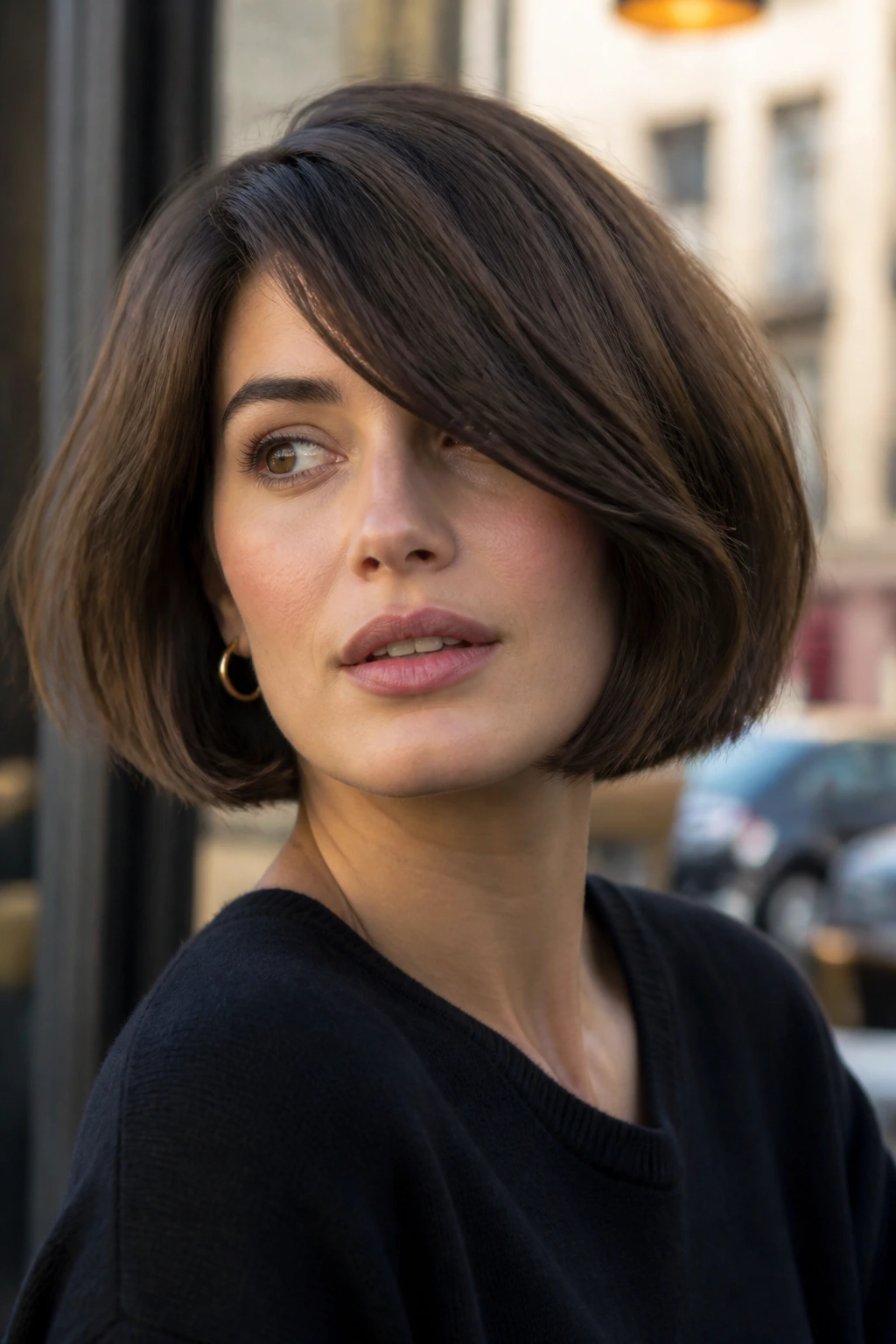
This bob has a little attitude, and I mean that as a compliment. A chin-length or jaw-skimming bob with a side sweep can look chic on a square face if the fringe is long enough to blur the lower half of the face instead of highlighting it. The trick is to keep the bob itself slightly rounded or tucked under at the ends.
The side swoop should not be too short. If it ends at the jaw, it can fight the face shape and make everything feel square again. Let the longest pieces drift closer to the cheek. That little bit of extra length gives the eye a diagonal path, which is the whole game here.
A dry texture spray at the roots keeps the bob from sitting flat. Flat bobs can feel severe on square faces. A little lift changes the tone completely.
6. Big Blowout Side Bangs
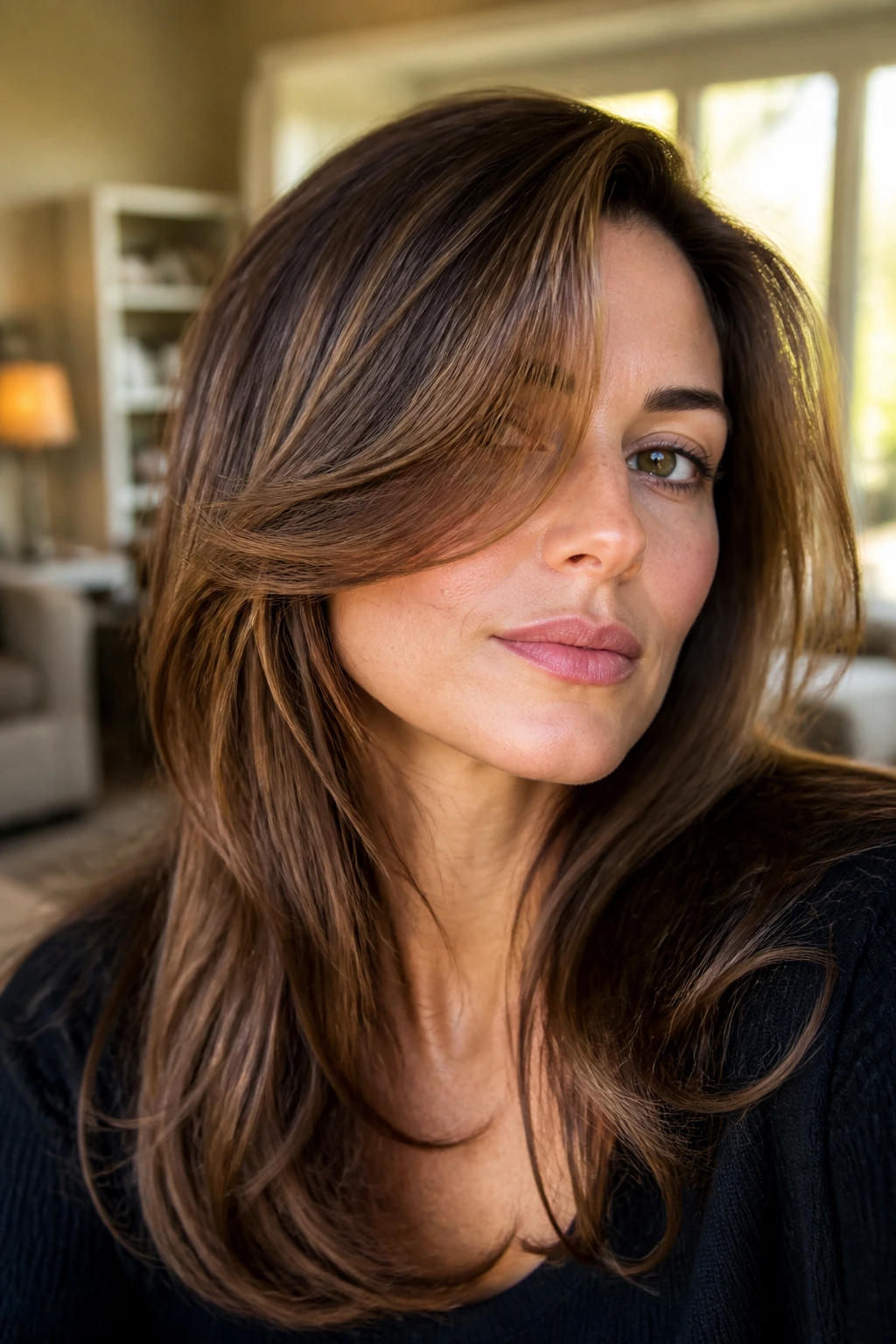
A voluminous blowout changes everything. On a square face, a side-swept bang with a proper round-brush finish softens the forehead and builds a curved line around the eye area. This is one of the most flattering options if your hair naturally has some body, because the fringe can hold a bend instead of collapsing.
I prefer this look when the shortest point sits just below the outer brow and the longest point brushes the cheekbone. That range keeps the bang dramatic without turning it heavy. The blowout matters as much as the cut. Blow the fringe up and over the brush, then finish with a cool shot so it keeps the sweep instead of falling straight down.
It’s a great match for date-night hair, but it doesn’t have to feel formal. Loose ends, a clean side part, and a little root lift are enough.
7. Razor-Light Airy Fringe
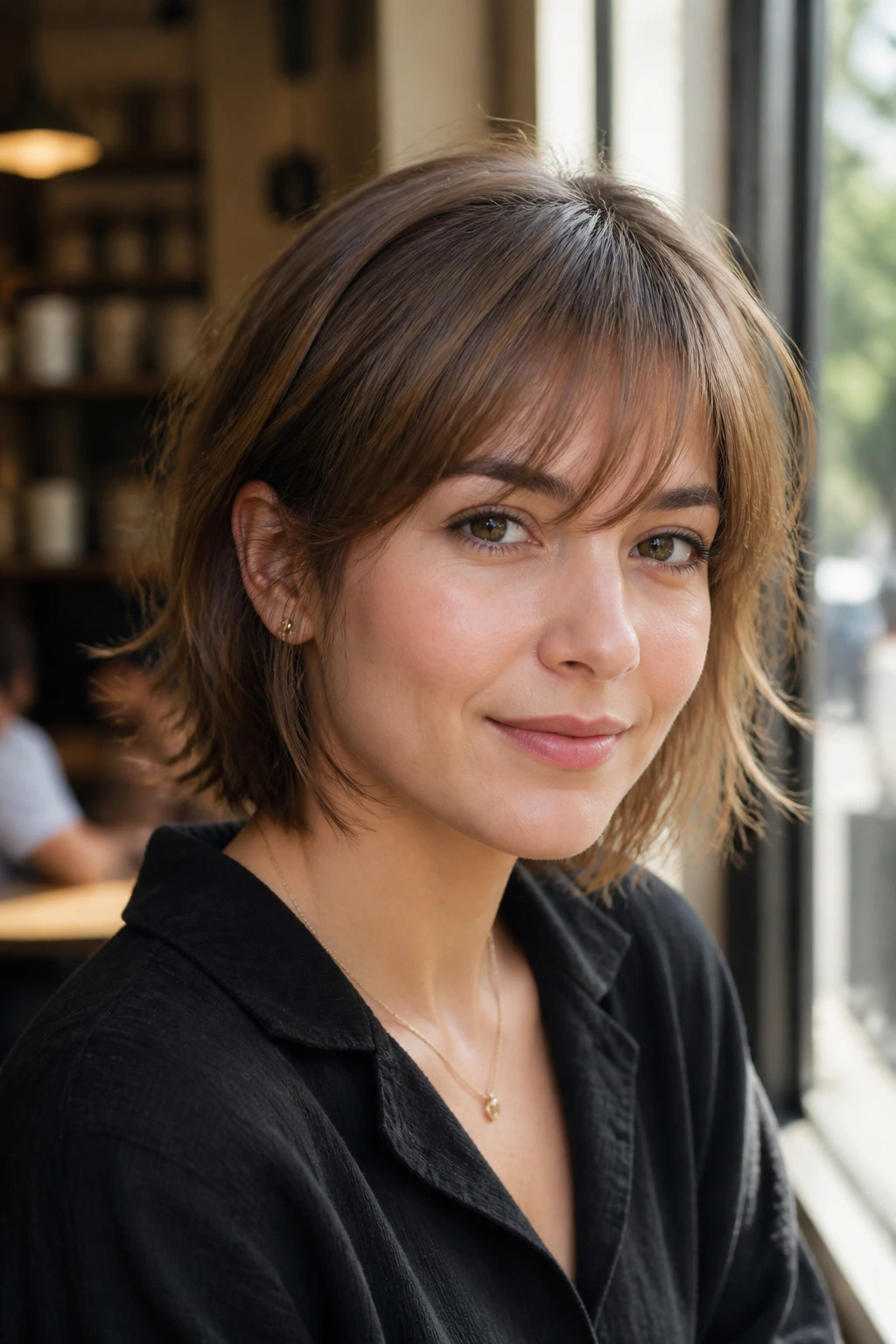
A razor-light fringe sounds fragile, but when it’s done well, it has a lovely floaty feel. This version uses the blade-like softness of a razor cut to remove bulk and create wispy movement. On square faces, that airiness matters because dense, solid bangs can overstate the width of the forehead.
What Makes It Different
The pieces separate easily, so the bang moves with the rest of the haircut instead of fighting it. That means less helmet effect and more softness around the temples. It is best on medium to thick hair that can handle texture without going see-through. Fine hair can wear it too, but the cut has to be conservative.
A light mist of volumizing spray at the roots gives this shape a better lift than cream or oil. Skip anything sticky. Sticky products turn airy bangs into little clumps, and clumps are not flattering on this face shape.
8. Shag With Broken-Up Bangs
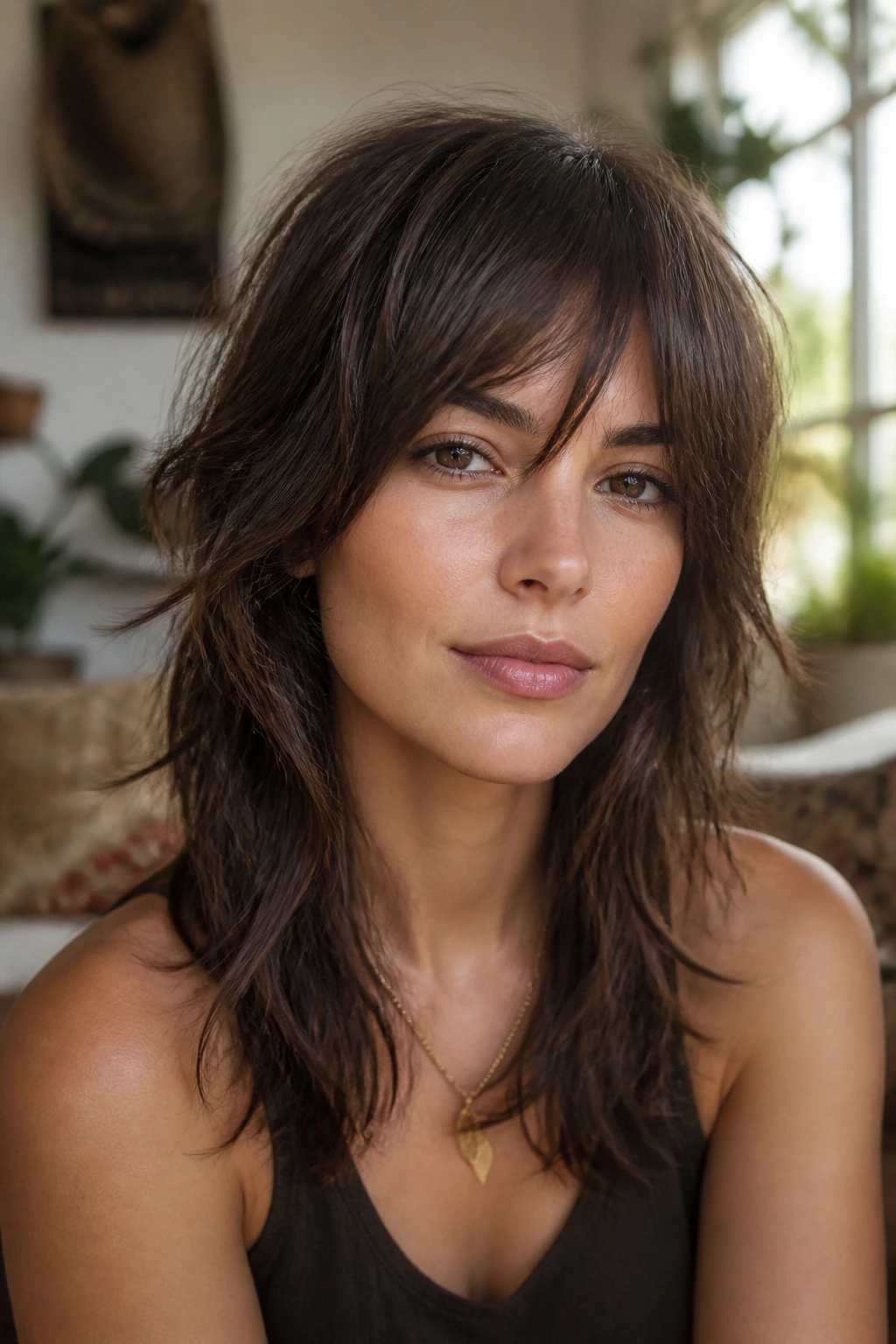
A square face and a shag can be a very good match if the bang is broken up enough. The shag’s interior layers already create movement, and the side-swept fringe keeps the front from turning into a straight line. Together, they make the jaw look less heavy and the whole haircut feel more relaxed.
I like this when the shortest fringe piece sits near the brow tail and the rest blends down through the cheek. Too much length at the jaw can square the face off again, so the bang needs to stay lighter at the front. A shag is not the place for a heavy, solid sweep.
The best version has a little grit. Think dry texture, not silky polish. If your hair tends to lie flat, a pinch of mousse at the roots and a rough blow-dry can bring the layers to life fast.
9. Thick-Hair De-Bulked Sweep
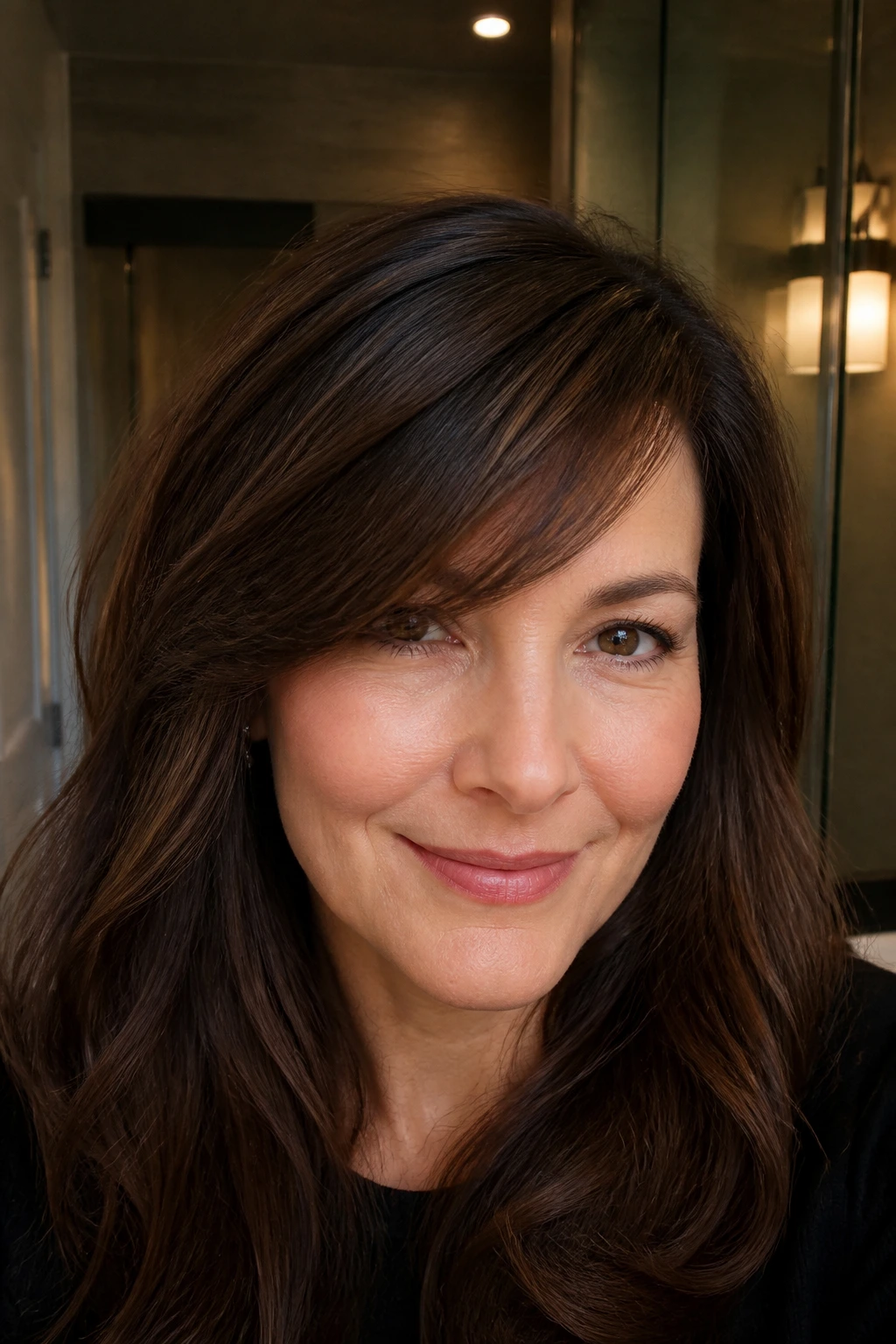
Thick hair needs a different kind of kindness. If you have density through the front, the bang has to be thinned in the right places or it will sit like a curtain across the forehead. That can make a square face look wider than it is, which is exactly what we are trying to avoid.
This version removes bulk from the interior, not the edges. That keeps the sweep soft while preserving enough weight for control. I prefer a longer side fringe with layered ends that tuck into the rest of the haircut. It looks smoother and dries more predictably.
A common mistake is over-thinning the top layer and leaving the underside too heavy. The result is a fringe that flips funny or splits in the middle. Ask for internal layering that lightens the shape without making it sparse.
10. Fine-Hair Lifted Fringe
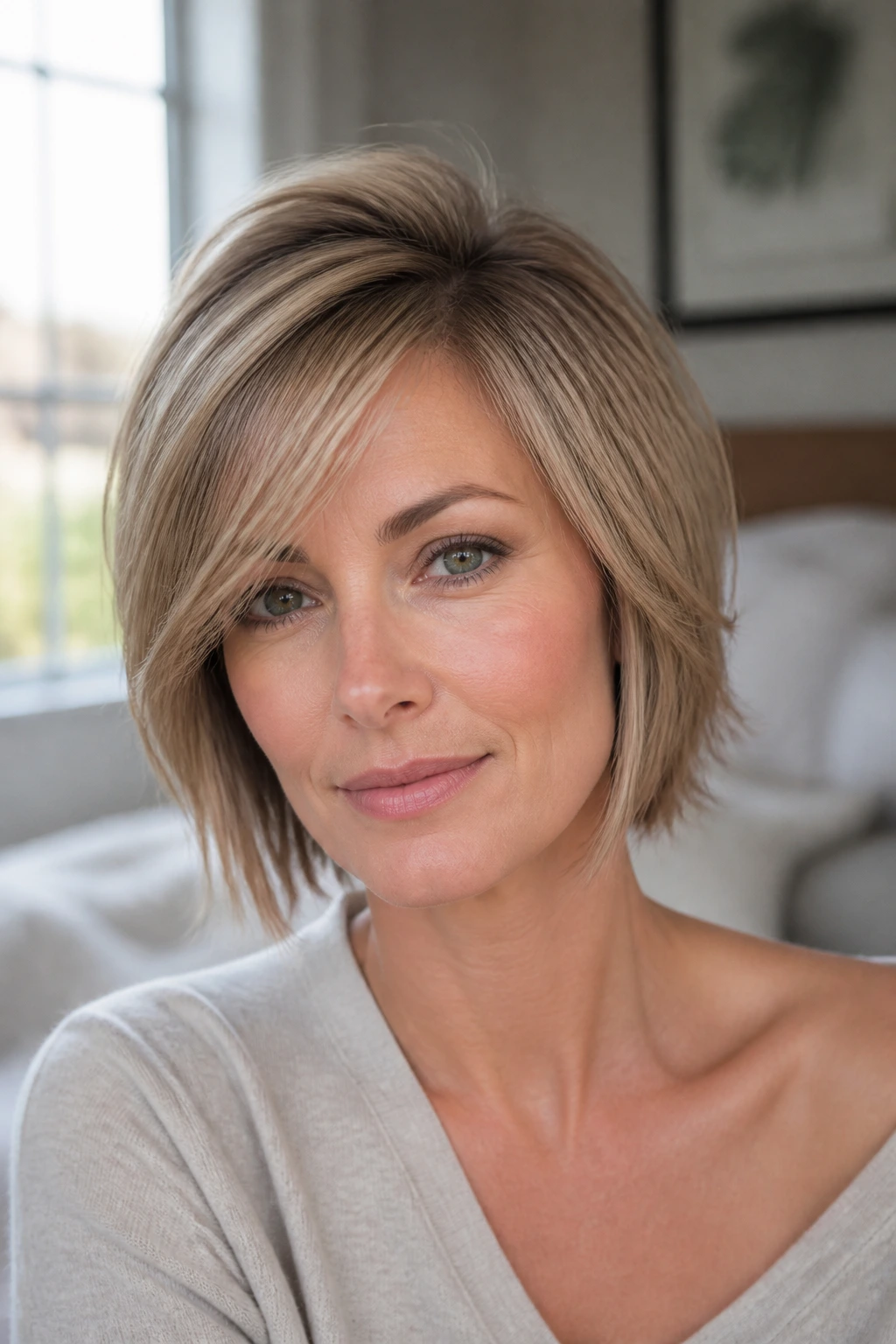
Fine hair can absolutely wear side-swept bangs, but the cut has to do more of the work. Heavy layers or too much texturizing will make the fringe collapse. You want lift at the root and a clean diagonal line through the ends, not a shredded piece that disappears by noon.
What I like here is a shorter internal layer under the top sweep. That gives the bang a tiny bit of scaffold, so it stays away from the forehead instead of flattening to it. A square face benefits from that lift because the eye reads the hair as soft motion rather than a block.
Style It This Way
Blow-dry the bangs from the opposite side first, then sweep them across and clip them there for a minute while they cool. That one move helps the fringe keep its bend. A light root spray is enough; anything heavier just drags fine hair down.
11. Wavy Collarbone Layers

Waves change the whole conversation. A square face with soft waves and a side-swept fringe feels less angular because the bends echo the fringe shape. The collarbone length keeps the overall outline long, which balances the width at the jaw.
The front pieces should be cut long enough to bend around the cheekbone, not spring above it. If they’re too short, waves can puff out and widen the face at exactly the wrong spot. I like a longer, looser sweep here, especially if the natural texture has some frizz. Frizz is not the enemy. A little controlled texture gives the face movement.
Use a curl cream or light mousse on damp hair and scrunch the fringe away from the face, not straight down. That small difference keeps the bang from shrinking too high.
12. Sleek Straight Side Part
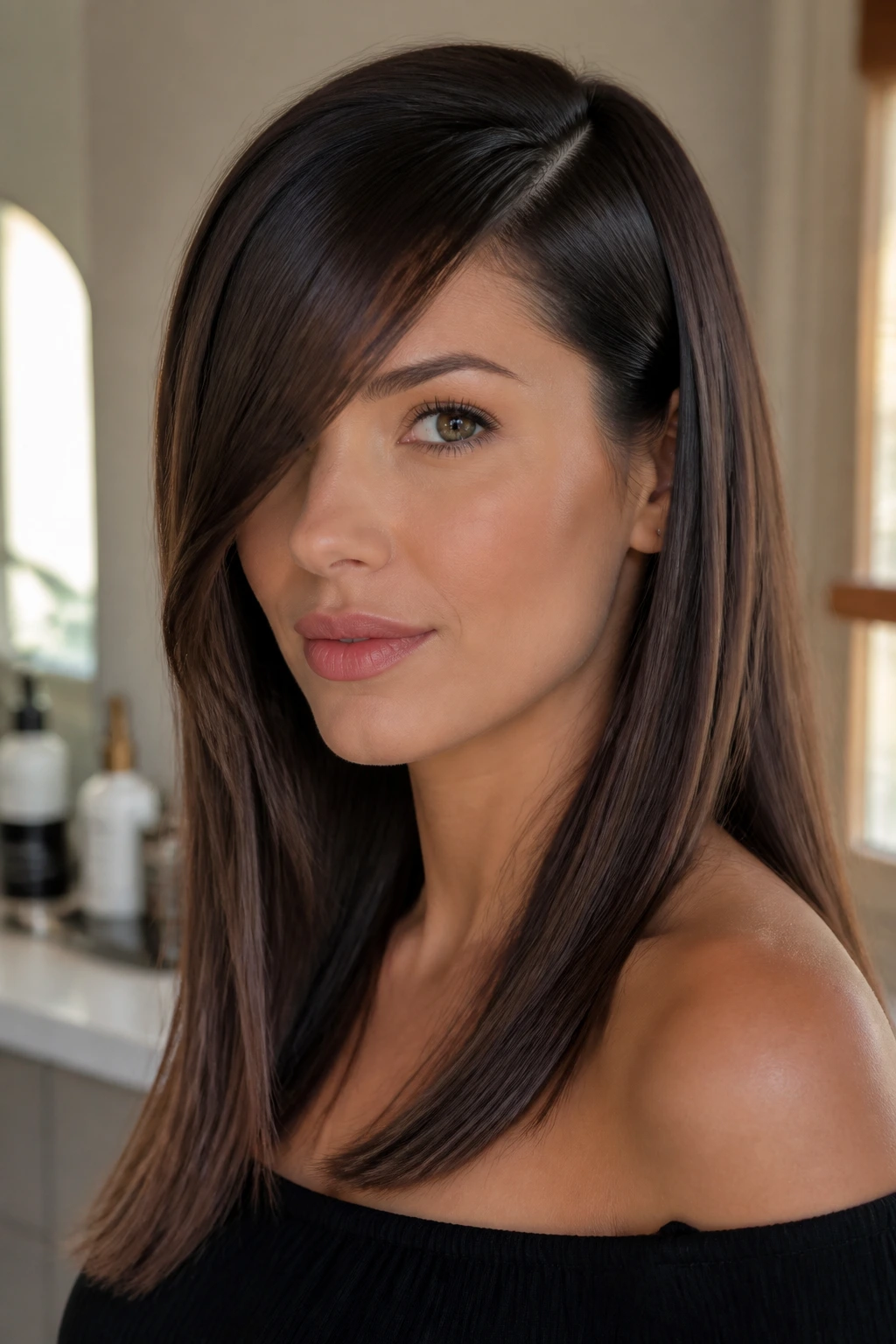
Straight hair and side-swept bangs can look very sharp, and that sharpness can be your friend if the length is right. A square face already has a strong outline, so the trick is to keep the fringe smooth and diagonal rather than blunt and boxy.
This version is best when the side part is deep enough to create a clear sweep over one brow. The layers around the face should stay long, almost whispering the cheekbone, so the line stays soft. I am not a fan of super-short straight side bangs here. They tend to harden the forehead and make the jaw look even more exact.
A flat iron can clean up the bend, but use it sparingly. One pass with a slight wrist twist is usually enough. Too much heat flattens the fringe into a strip, and that kills the softness.
13. Mid-Length Layers With a Cheekbone Bend
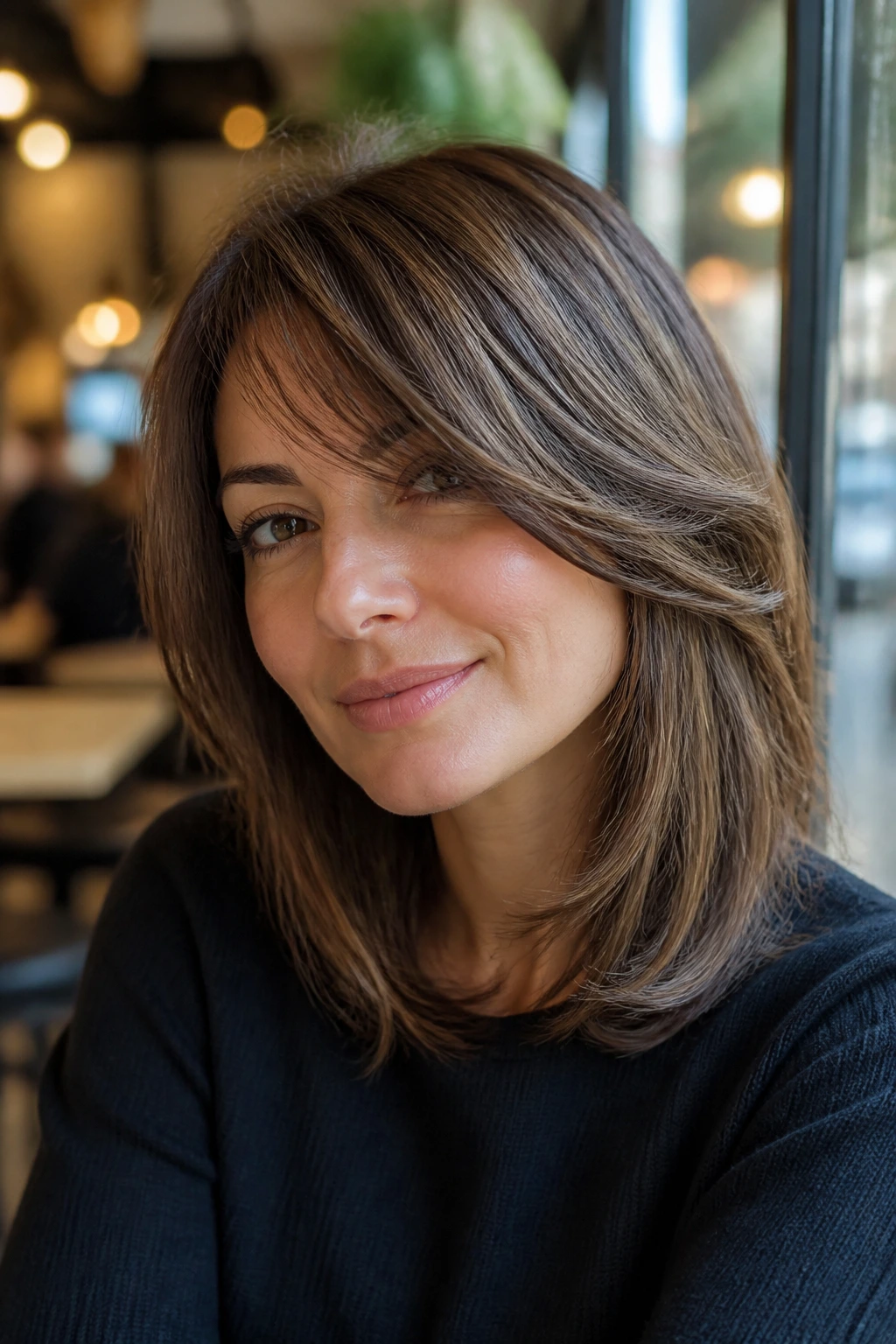
Why does this shape work so well? Because it lets the fringe meet the cheekbone before it disappears. That sounds small, but it changes the balance of the whole haircut. Square faces usually need the eye to travel outward and downward, not straight across.
Mid-length layers are forgiving. They give you enough hair to create a visible sweep, but not so much that the cut feels heavy. If the bang starts near the outer brow and ends just under the cheekbone, the face gets a gentle diagonal line that softens the edges without hiding them.
How to Use the Length
Wear it tucked behind one ear on the non-bang side when you want a little asymmetry. That exposes the jaw in a flattering way and lets the fringe work as a frame, not a curtain. A square face often looks best when one side is slightly quieter than the other.
14. A-Line Bob With Curved Fringe
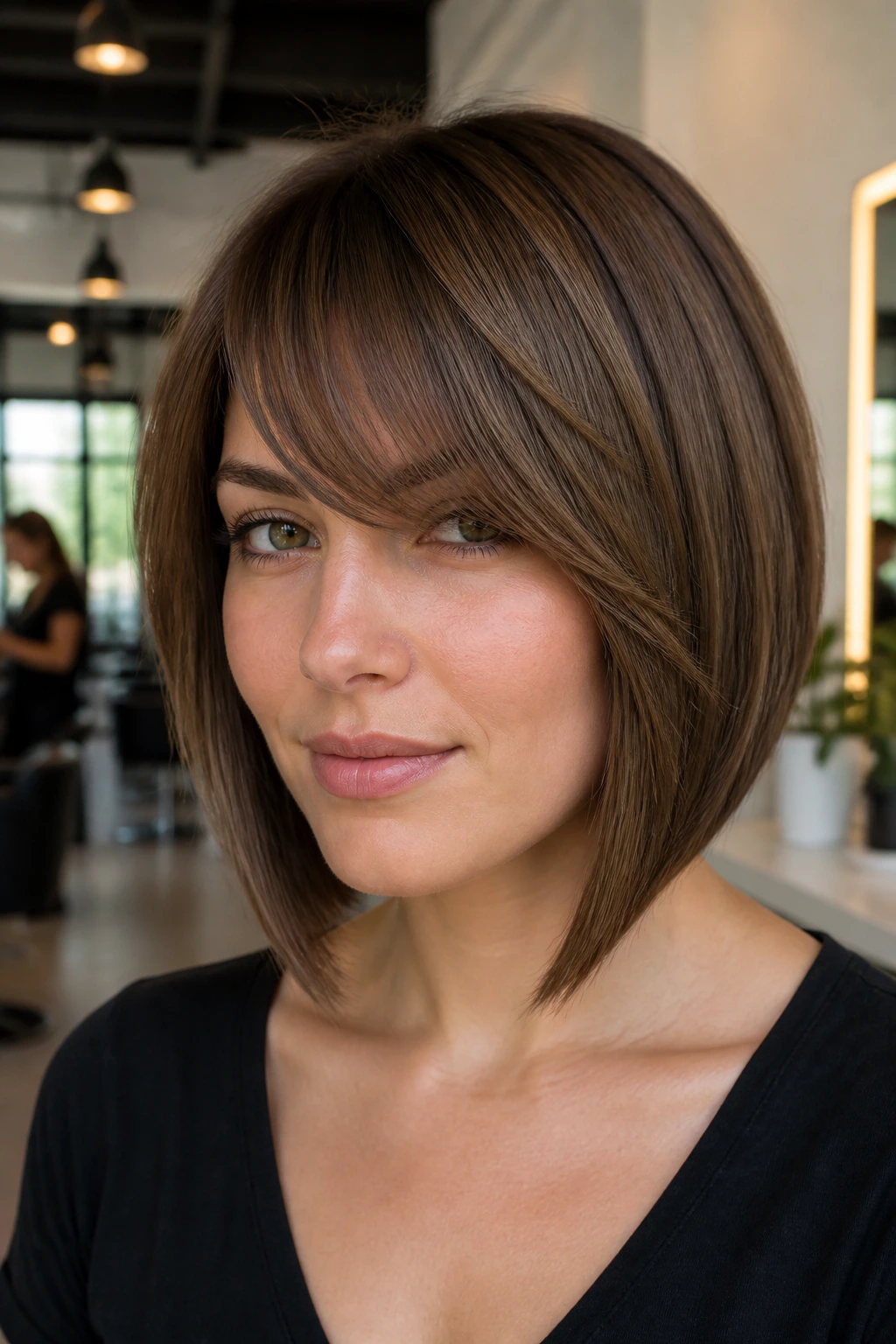
An A-line bob already gives you a forward line, which is useful on a square face because it pulls attention away from the jaw’s width. Add a curved side fringe, and the front becomes much softer. The combination works especially well if the bob is clean at the back and a touch longer in the front.
The curved bang should echo the A-line, not fight it. Let it graze the brow, then fall along the cheek with a gentle turn. If the front pieces are too blunt, the whole haircut can turn graphic in a way that feels boxy. You want polish here, but not a hard edge.
This is one of those cuts that looks expensive when the ends are healthy. Dry, frayed ends drag the shape down. A small trim and a smoothing cream go a long way.
15. Soft Wolf Cut Sweep
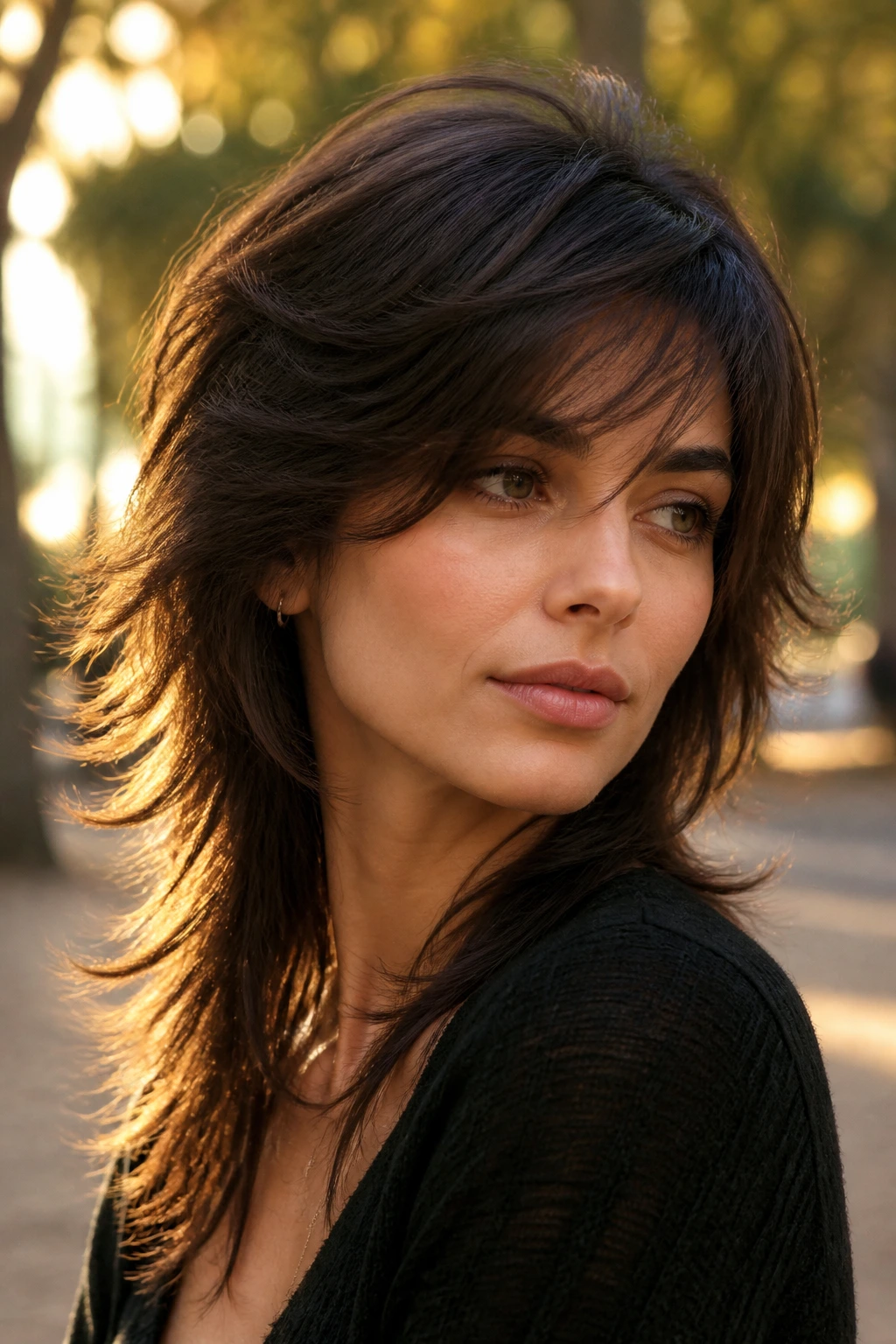
The soft wolf cut is a little rebellious, but it can be brilliant on square faces because it breaks up the outline from top to bottom. The layered crown adds lift, while the side-swept fringe keeps the front from feeling too severe. The result is less box, more motion.
I prefer the softer version, not the ultra-choppy one. A square face needs shape, not chaos. Keep the front layers long enough to move past the cheekbone, and let the fringe connect to those layers instead of ending abruptly at the temple. That connection is what makes the cut feel flattering rather than edgy for the sake of it.
If your hair is thick, this shape can be especially good because the internal layers remove bulk without flattening the front. It air-dries well, too, which is a nice bonus when you do not want a blowout every morning.
16. Old-Hollywood Side Swoop
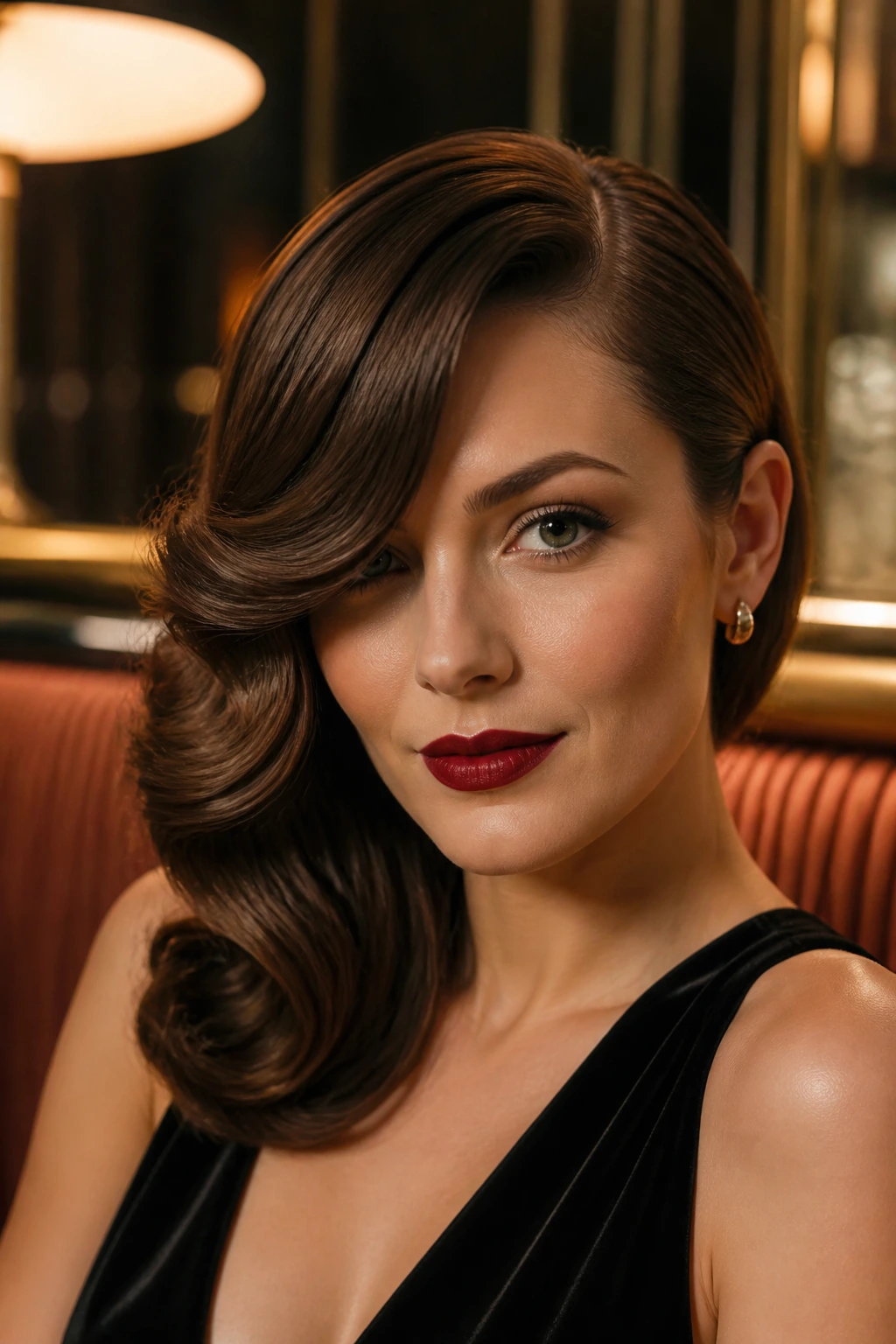
A polished side swoop has a very different mood. It is smooth, controlled, and a little dramatic. On a square face, that drama works because the clean wave over one brow softens the face while the rest of the hair stays sleek and elongated.
The shape should feel like a ribbon, not a chunk. That means a deep part, a curved front section, and a careful bend that lands around the cheekbone. I like this with medium to long hair because the length gives the swoop enough room to fall elegantly without getting stiff.
A boar-bristle brush helps here. It smooths the surface without pulling too much volume out of the root. Finish with a light mist of flexible hairspray, not the crunchy kind. Crunch kills the movement, and movement is the point.
17. Natural Curl Side Fringe
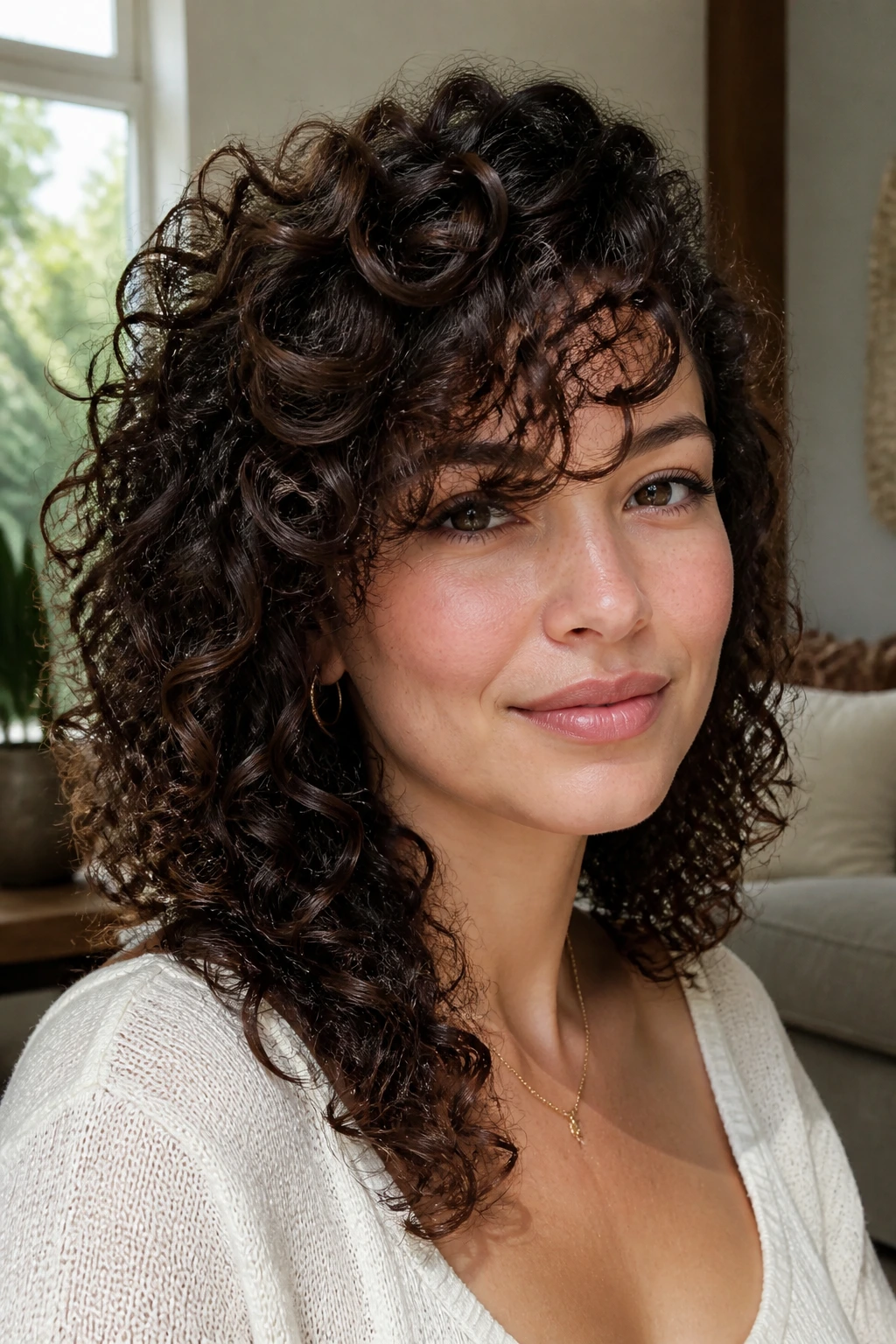
Curly hair on a square face is a gift if the fringe is cut with the curl pattern in mind. A side-swept bang on curls should be longer than you think, because the curl will bounce upward as it dries. If the stylist cuts it too short, the fringe can spring right up and widen the forehead.
Curl Pattern Matters
Loose waves and tighter coils need different lengths, but the goal is the same: let the bang curve across the face instead of sitting as a round puff. A side part helps, and so does cutting the front when the hair is dry or mostly dry. That way the curl sits where it actually wants to sit.
Use a diffuser on low heat and cup the fringe gently toward the sweep. Too much touching creates frizz. A little frizz is fine. A lot around the temples is not, because that area frames the widest part of the face.
18. Pixie-Bob With a Long Bang Arc
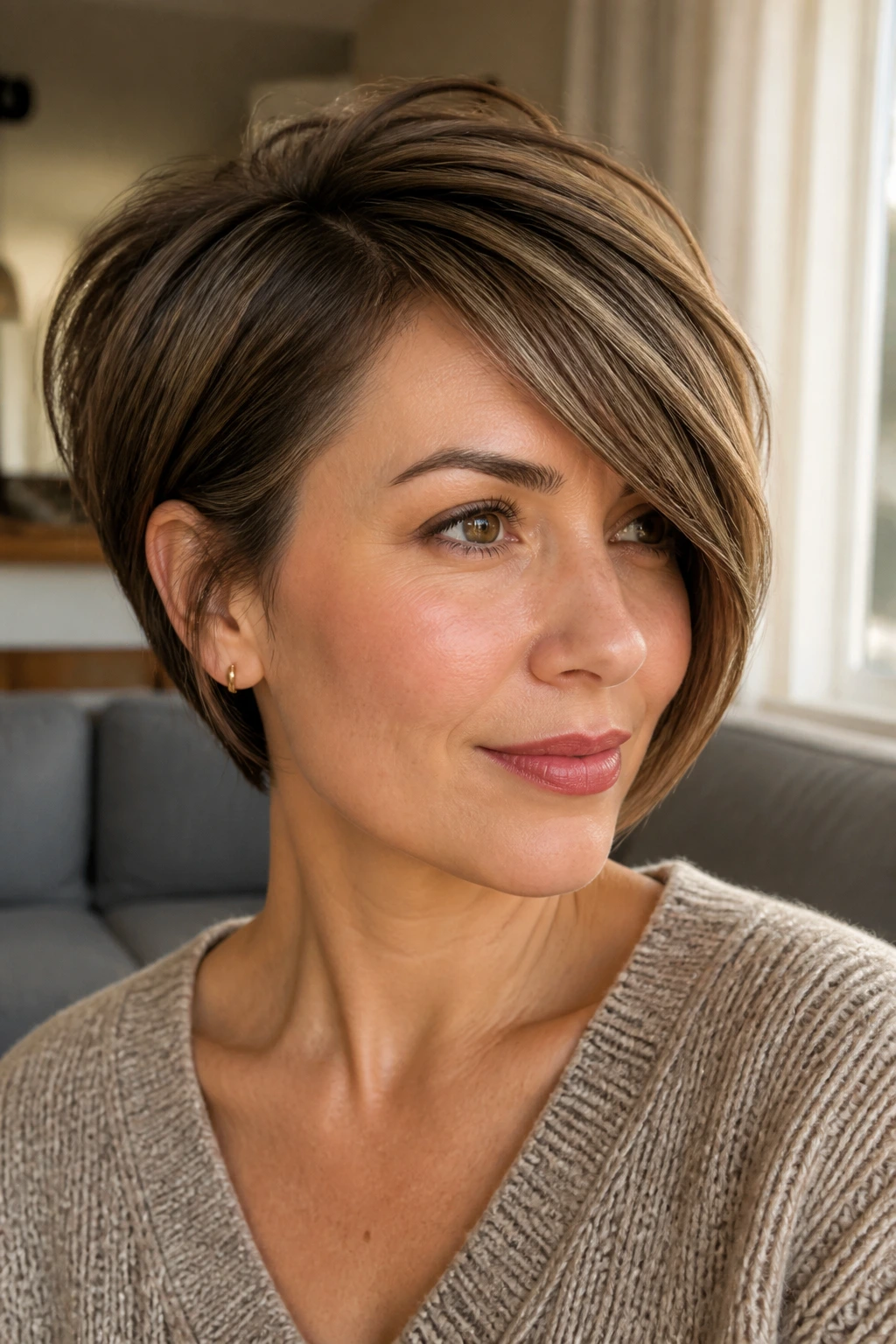
This is the cut for someone who wants the face-framing effect without committing to long hair. A pixie-bob with a long side arc can be very flattering on square faces because it leaves the jaw visible but softens the top half of the face with motion. It is tidy, but not severe.
The bang needs to be the longest part of the cut. That gives the eye a clear diagonal line from the part to the cheek, which balances the strong lower face. Short crop pieces at the crown can add lift, but the side sweep is the star. Without that length, the style starts to read too boxy.
It’s also a good choice if you like using one styling tool and being done. A small round brush or a quick pass with a flat iron can set the sweep in place fast.
19. Grown-Out Bangs For Low Maintenance
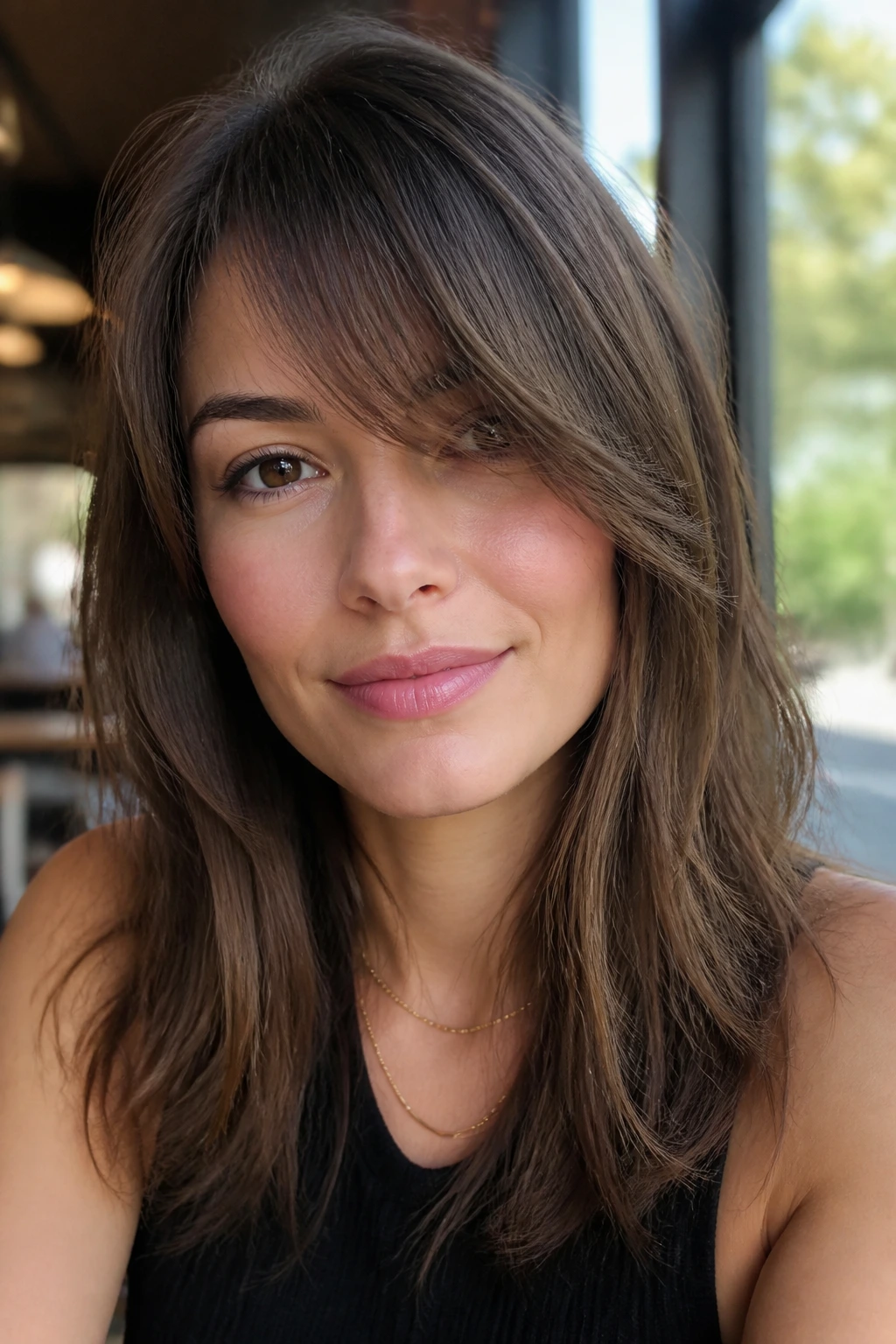
Grown-out bangs are underrated. Once a side-swept fringe reaches that sweet spot between brow and cheekbone, it often becomes easier to wear than a freshly cut version. On a square face, the extra length helps keep the look soft instead of choppy.
I like this shape when the bang blends into face-framing layers rather than standing on its own. The layers carry the diagonal line lower, which lengthens the face visually. It also means you can tuck the fringe behind one ear, pin it back, or let it fall loose depending on the day.
This is the version for people who do not want to babysit their hair. The grow-out phase is the style. That is the charm. A little dry shampoo at the roots and a bend at the ends is enough.
20. Long V-Cut Layers With a Sweep
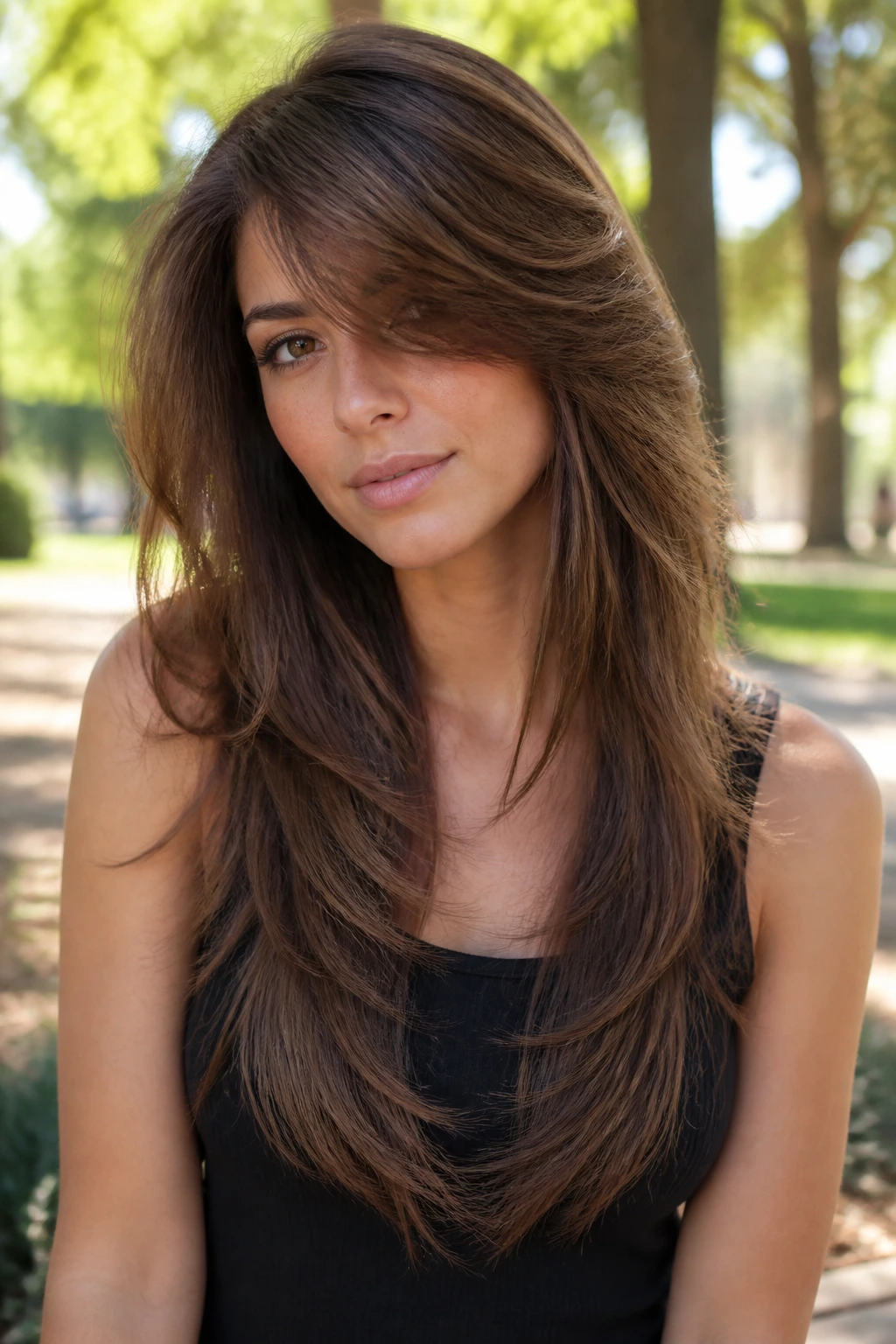
A V-cut gives long hair a bit of direction, and square faces need direction. The point of the V draws the eye downward, while the side-swept fringe keeps the forehead soft. Together, they create a longer line through the face that can be very flattering if your jaw is broad.
The front sweep should stay lighter than the back. If the fringe gets too heavy, it can flatten the top half of the haircut and erase the V shape. I like a soft bend through the front layers, especially near the cheekbone, because it gives the face a little curve where it needs one most.
A long layered cut like this also handles braids, clips, and half-up styles well. The fringe can stay loose while the rest of the hair pulls back, which keeps the face framed instead of fully exposed.
21. Heavy Side Fringe For Dense Hair
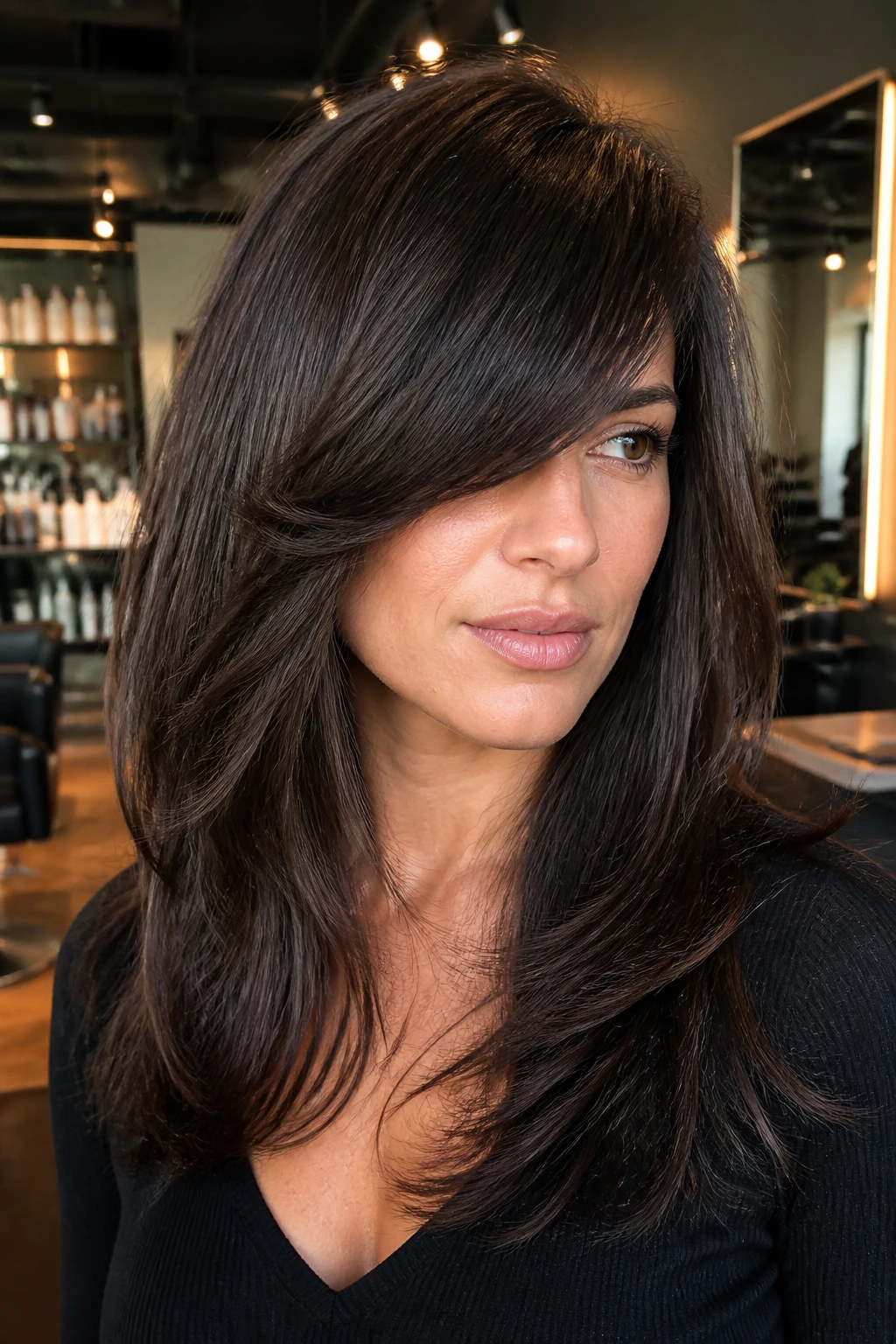
Can a heavier fringe work on a square face? Yes, if it is cut with enough movement. Dense hair can hold a side sweep that looks full rather than fluffy, and that fullness can be flattering when the bang arcs away from the center of the forehead.
The danger is weight in the wrong place. If the fringe stacks up near the temple, it can widen the face. Keep the interior lighter and let the ends taper into longer side layers. That way the bang still feels strong, but it does not land like a solid wall.
This is a good choice for people who like hair with presence. Not all softness has to be wispy. Sometimes softness comes from a curved line and a good finish.
22. Tucked-Behind-Ear Sweep
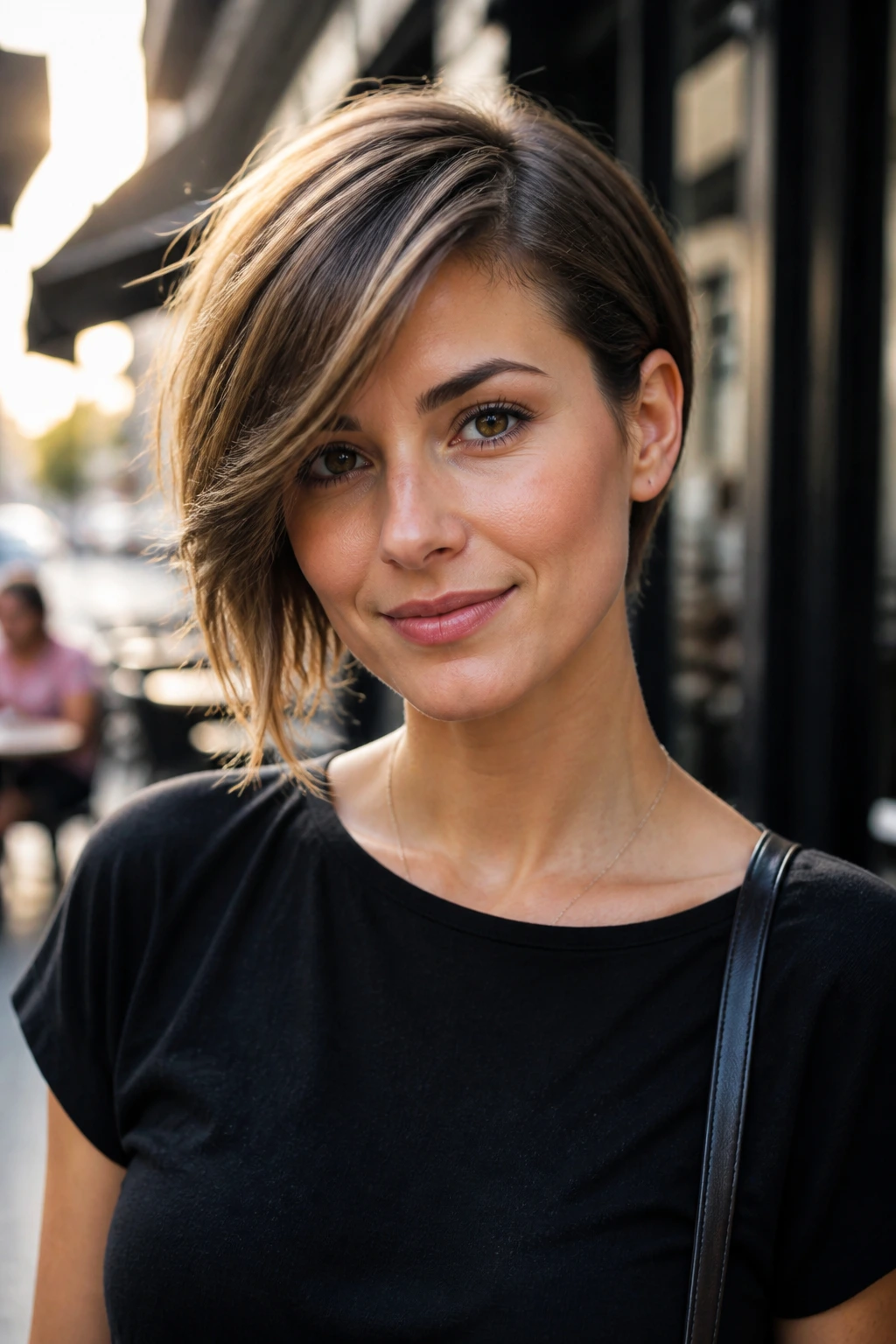
This style has a neat trick. One side stays loose and sweeping, while the other side tucks back behind the ear. That asymmetry is useful on a square face because it breaks the symmetry of the jaw and forehead at the same time.
The fringe should be long enough to survive the tuck. I would not cut this version too short. You want the bang to fall across the brow, then escape toward the cheek on the loose side. The tucked side exposes the angle of the face, but the sweep keeps it from looking harsh.
Small earrings pair well here. They pull the eye upward and keep the face from reading too heavy at the jaw. That sounds like a styling detail, but it matters.
23. Layered Midi With Flicked Ends
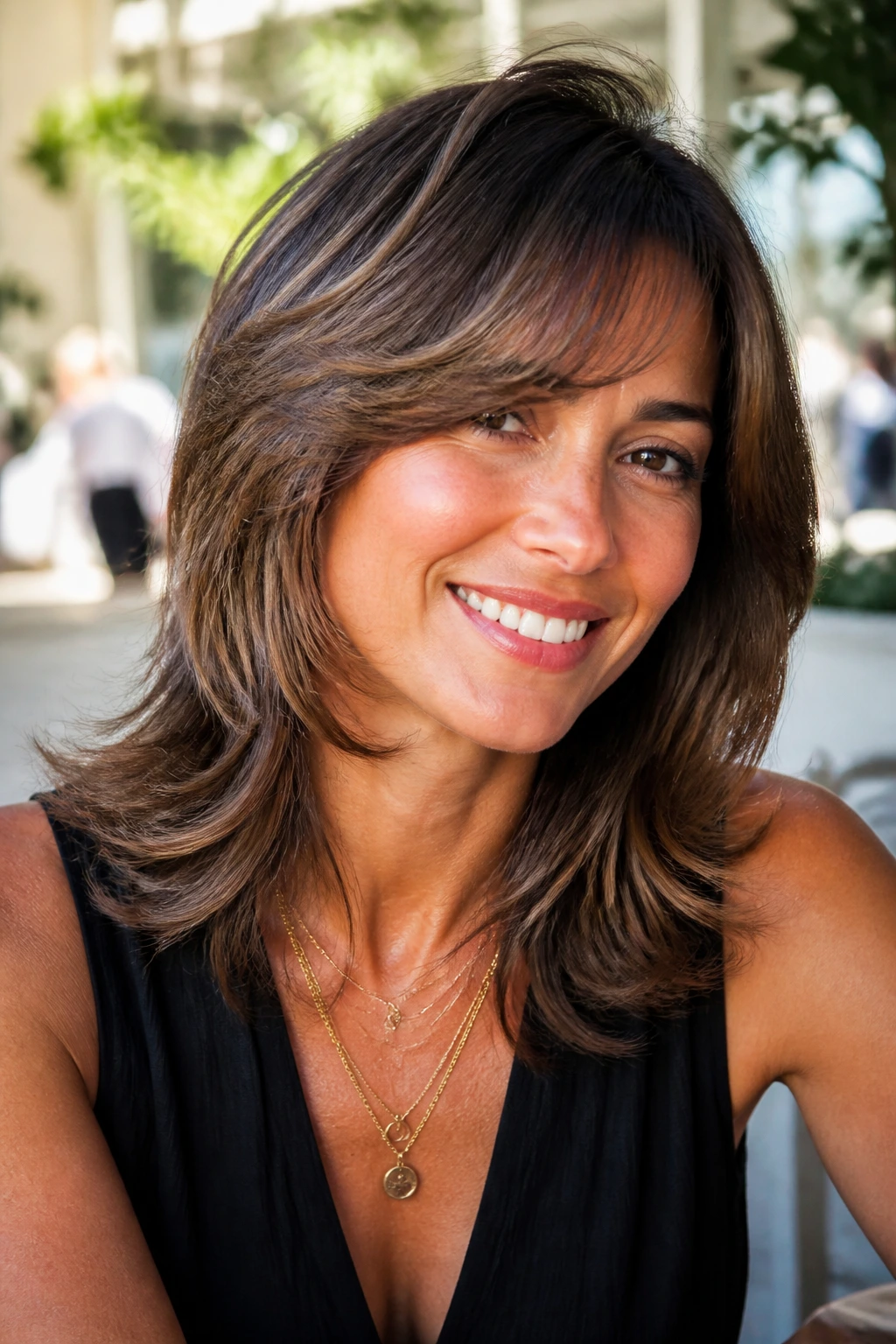
A mid-length cut with flicked-out ends has an easy, lively feel. The side-swept bang rides on top of that movement, so the whole haircut has energy instead of stiffness. For square faces, flicked ends are useful because they shift attention away from the jawline and toward the movement of the cut itself.
Keep the front layers longer than the back fringe line, then flick the ends just enough to show a little separation. Too much flip can feel dated. Too little leaves the cut flat. The middle ground is where the shape looks fresh.
This is one of the better choices if you wear your hair with a blowout but don’t want the finish to feel overly polished. It has a little bounce. That helps.
24. Tousled Beach Wave Fringe
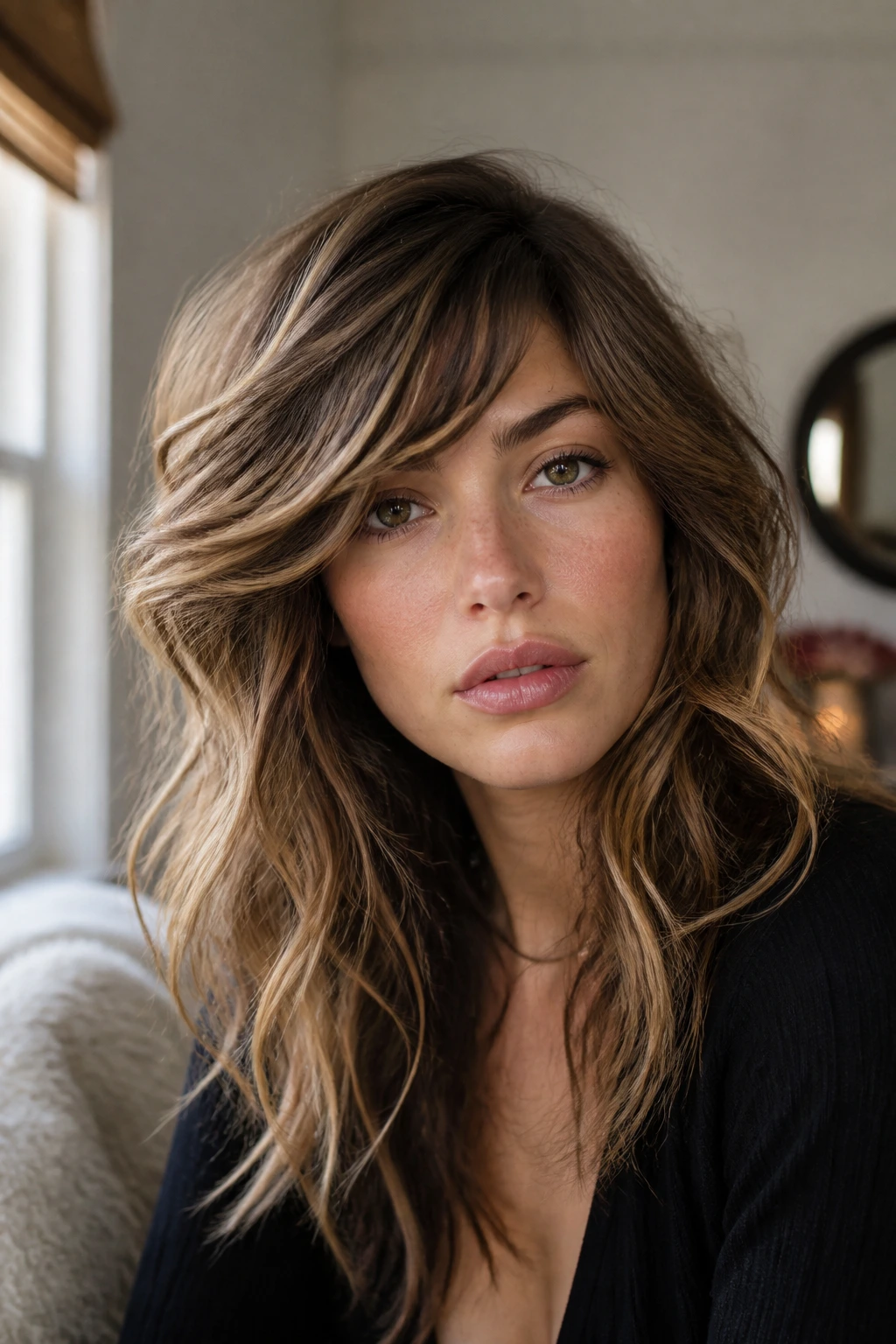
A tousled fringe can look effortless, but only if the pieces are placed carefully. Square faces benefit from the messy texture because it breaks up the hard edges around the forehead and cheek. A side-swept version of this style should still have a clear direction, even when the texture feels loose.
The best version starts with a light bend at the root, then falls into soft waves through the front. If the waves start too close to the jaw, the face can look wider. Keep most of the movement above the cheekbone and let the longer front pieces fade downward.
A salt spray can help, but use a light hand. Too much grit makes the hair puff out, and puffiness at the sides is not what you want on a square face.
25. Rounded Blowout With a Deep Side Part
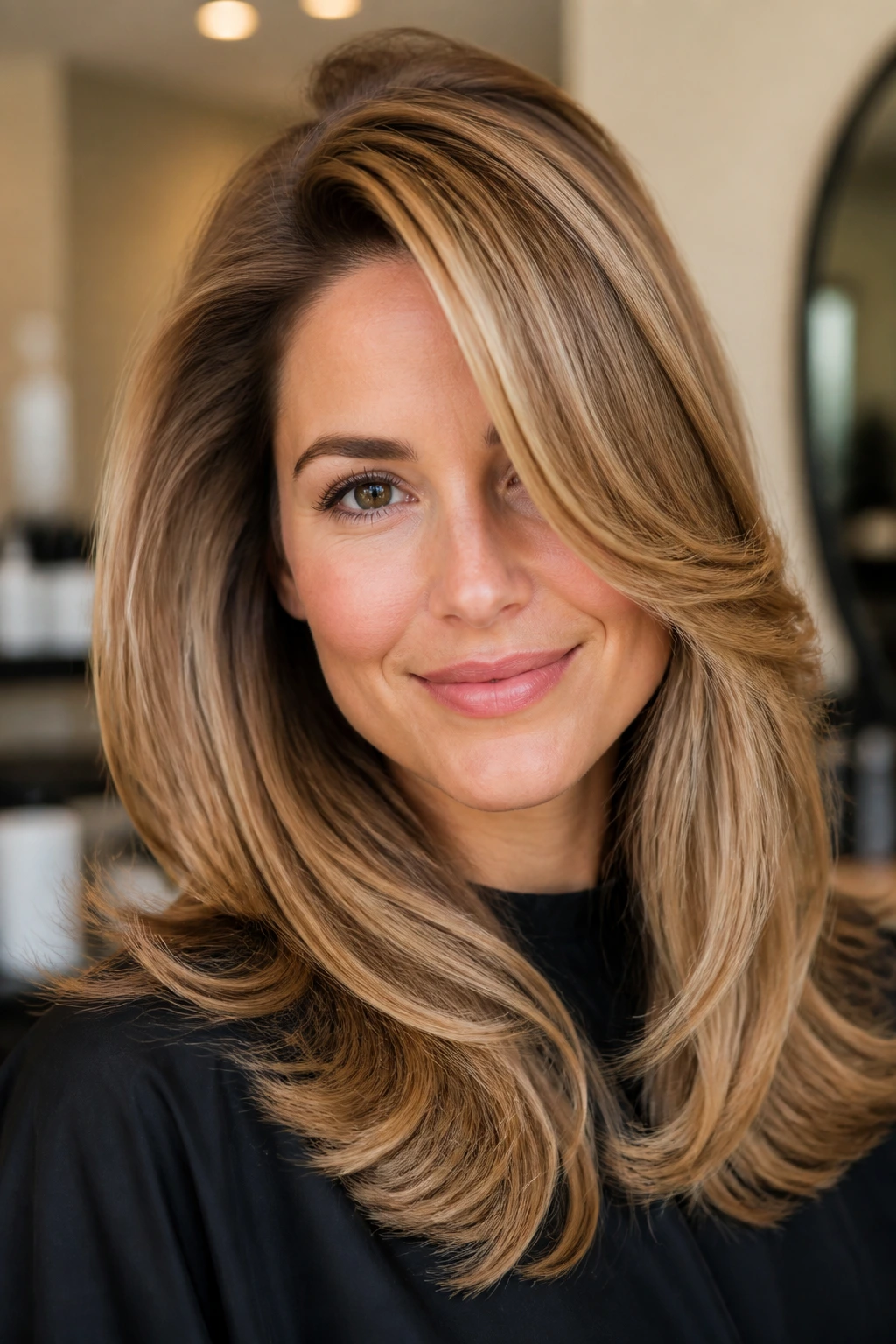
This one is a classic for a reason. A rounded blowout gives the fringe a soft arc and the rest of the hair a smooth, balanced shape. The deep side part adds the diagonal line that flatters a square face, while the rounded brushwork keeps the silhouette from feeling rigid.
I like this version when the hair is shoulder length or longer. The shape has room to move, which helps the face look more oval without making it disappear. The bang should not flop over the eye. It should hover, bend, and settle with a little lift.
A lot of people overdo the front and understyle the back. Don’t. The whole cut needs balance, or the fringe will look pasted on.
26. Invisible Layers and a Narrow Side Fringe
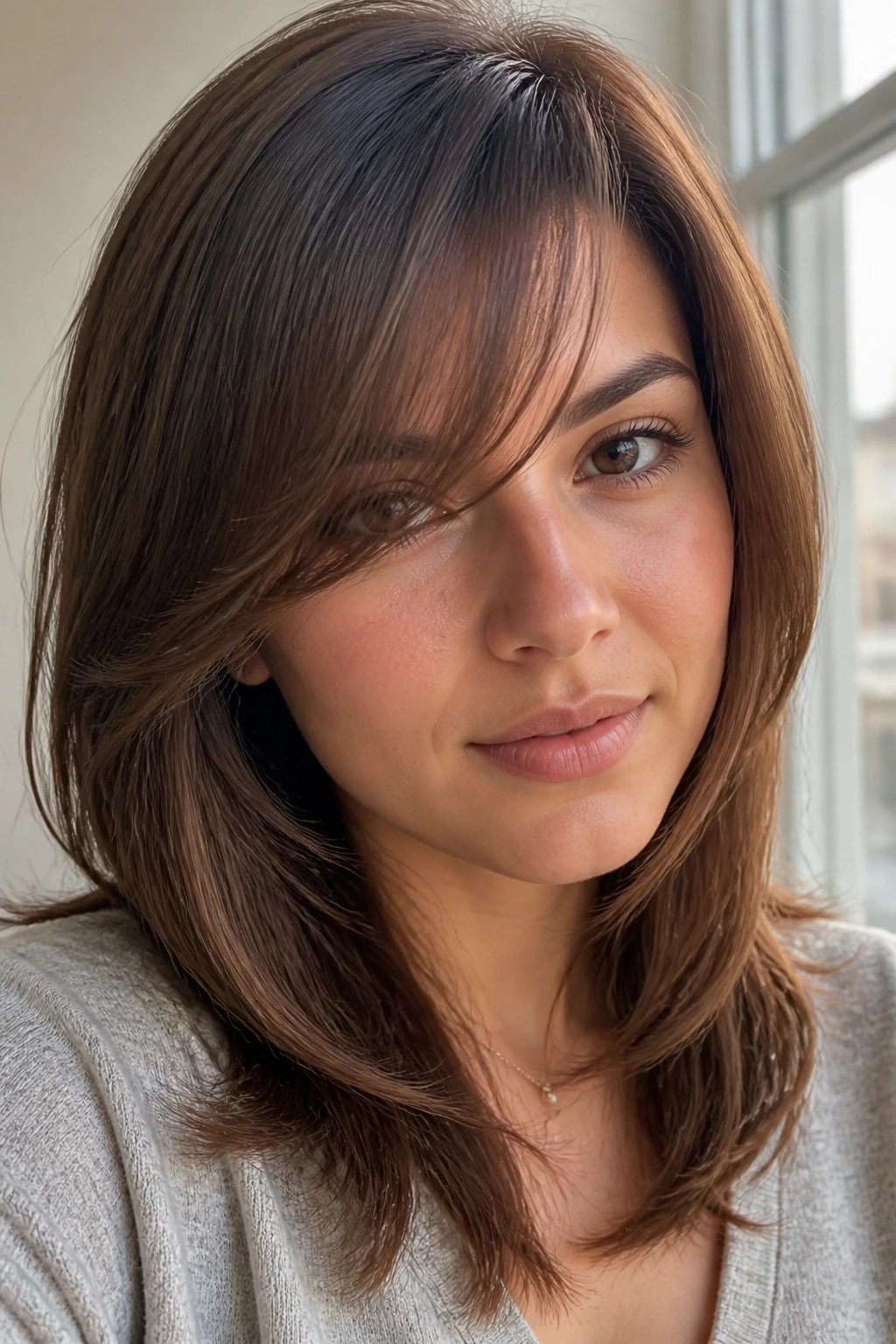
This is for the person who hates obvious layering but still wants shape around the face. Invisible layers sit inside the haircut and keep the ends from looking blunt, while a narrow side fringe adds just enough diagonal movement to soften a square face.
What Makes It Different
The fringe section is smaller and more precise than in a fuller bang shape. That helps if your forehead is not very long or if you wear glasses and don’t want a lot of hair crowding the frames. The cut looks understated, but it still does the framing work.
The danger is making the fringe too narrow and too short. Then it disappears. Keep it long enough to travel across the brow and into the cheek area. That gives the face the softness you’re after without taking over the haircut.
27. Updo-Ready Long Bangs
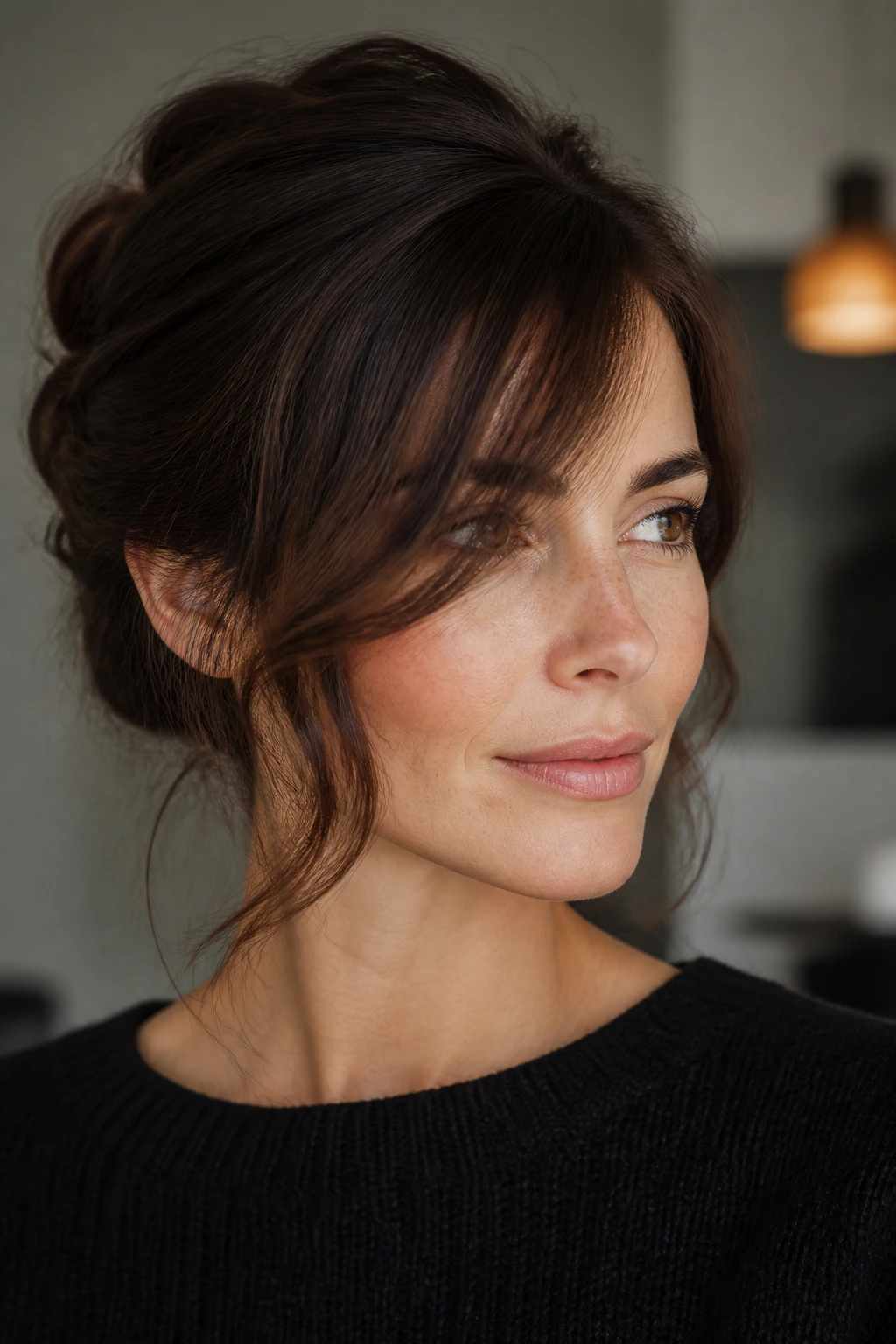
Some fringes are meant to live down. These are meant to live everywhere. Long side-swept bangs that can be pinned into a low bun, brushed into a twist, or left loose with an updo are useful on square faces because they keep the front of the face from looking stark when the rest of the hair is pulled back.
The bang should be long enough to fall past the brow and near the cheekbone when loose. That gives you room to tuck, pin, or sweep it without losing the soft line. I prefer this on layered cuts because the layers help the fringe blend into the rest of the shape instead of hanging on by itself.
A small bobby pin hidden under the top layer can hold the sweep without making it look fixed. That matters when you want movement, not a helmet.
28. Airy Asymmetrical Lob With a Sweeping Fringe
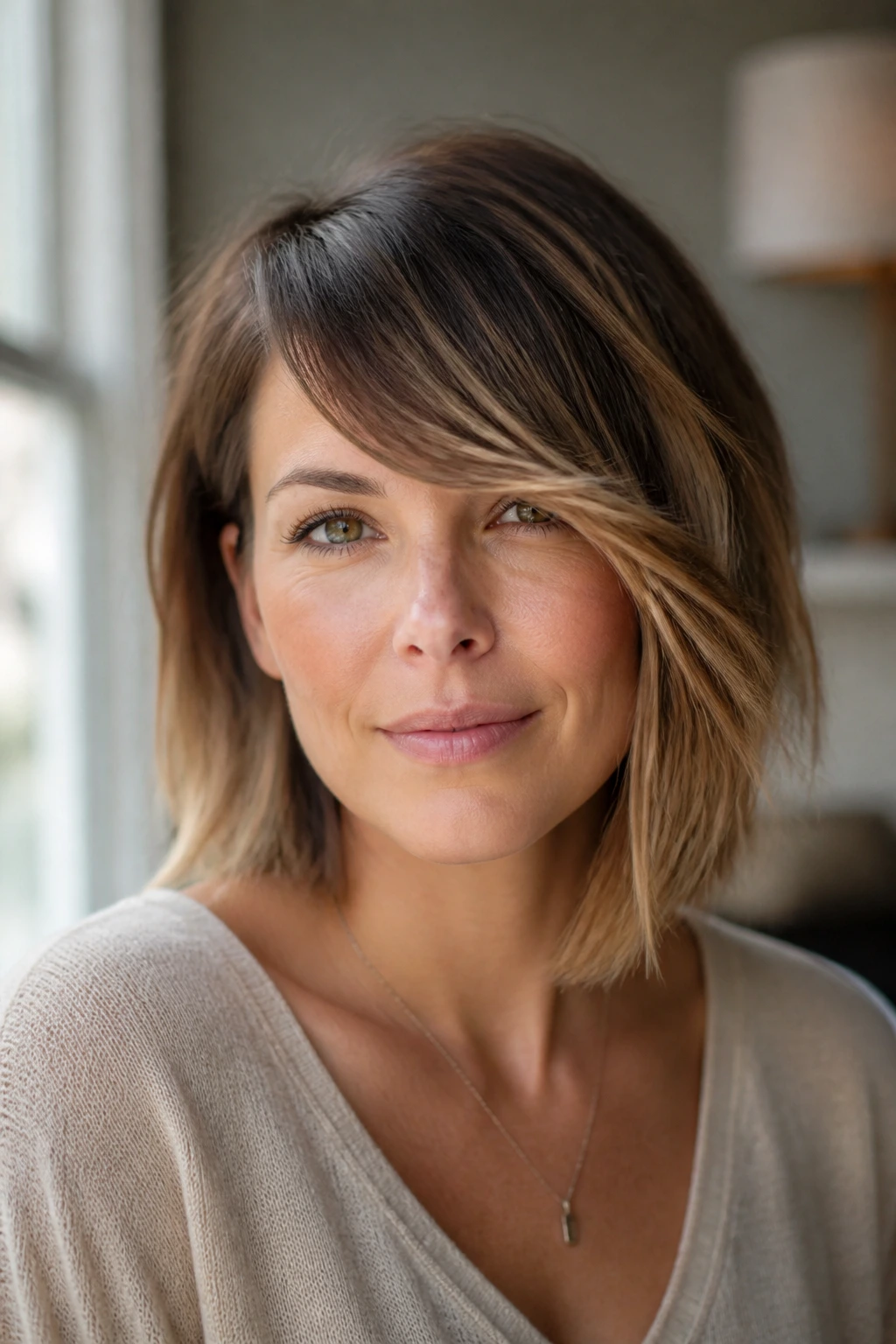
An asymmetrical lob is a quiet way to wear structure. One side sits a touch longer, the other stays lighter, and the side-swept fringe pulls the whole cut into a diagonal line that is kind to square faces. It’s modern without being severe.
The asymmetry should be subtle. If the difference between sides is too dramatic, the haircut starts to look engineered. Keep the fringe soft and layered, then let the longer side skim the jaw just enough to lengthen the face visually. That single line changes the balance of the cut more than people expect.
This is one of my favorite choices for anyone who wants shape without obvious “bang energy.” It reads as a haircut with movement, not a haircut with a statement plastered on top.
Why Layered Side-Swept Bangs Soften Sharp Angles
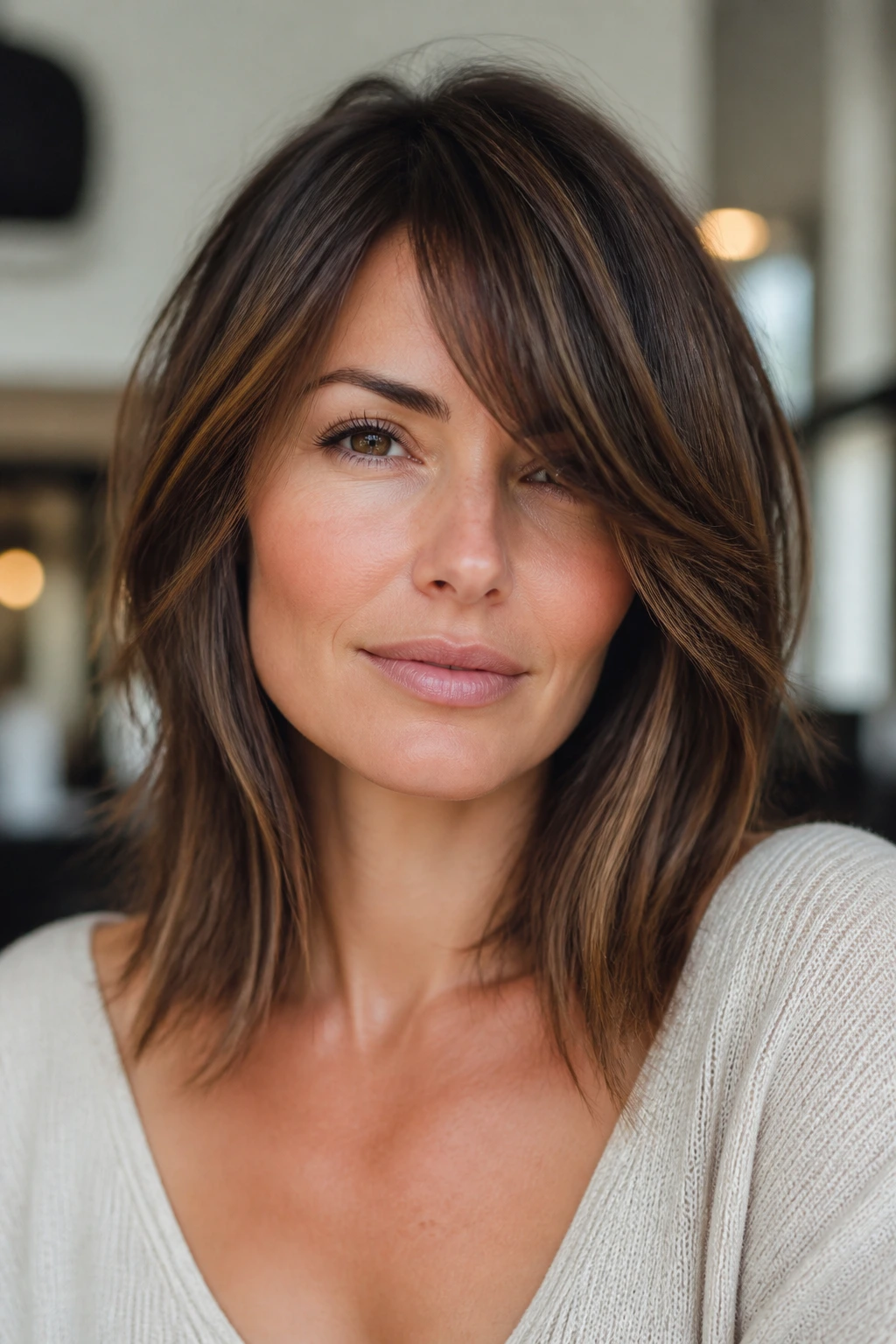
Square faces do not need to be hidden. They need a little redirection. That is the whole point of a good side-swept fringe: it takes strong horizontal and vertical lines and breaks them into a softer path across the face. The diagonal edge matters more than the amount of hair. Even a small sweep can change how the forehead and jaw read together.
The best versions usually keep the shortest point just off-center, often near the outer brow, and let the longest pieces drift toward the cheekbone or upper lip. That keeps the fringe from stopping at the widest part of the face, which is where bangs tend to go wrong. A layered finish helps too, because the ends can bend into the haircut instead of sitting like a separate piece.
One more thing. The same cut can behave very differently on straight, wavy, curly, thick, or fine hair. So the shape matters, but the texture matters just as much. If the cut ignores your texture, you spend your mornings fighting it. If the cut respects the texture, the fringe almost styles itself.
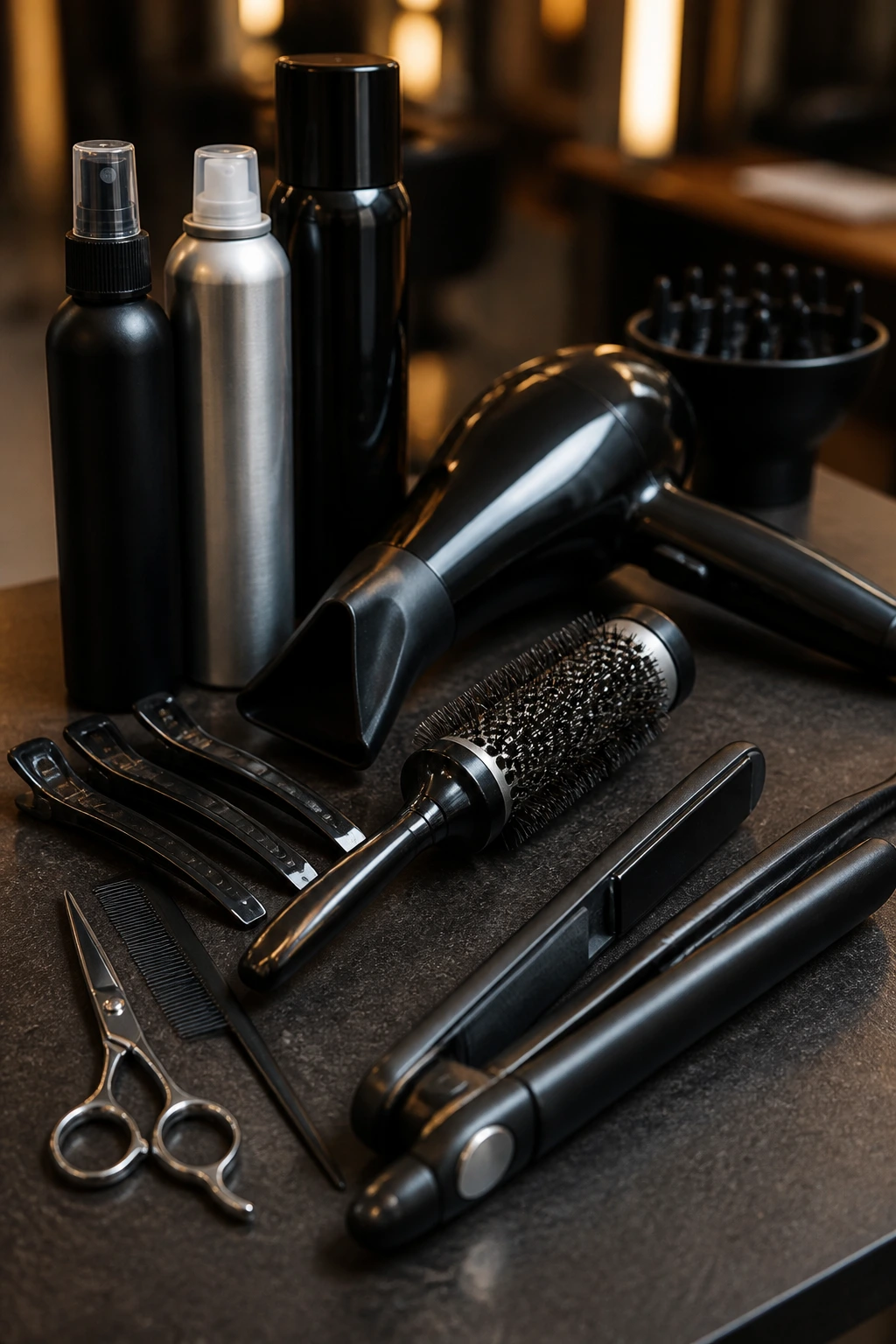
The Tools That Make the Shape Behave
-
Sharp haircutting shears: Dull scissors chew through fringe ends and make side bangs fray, which is a fast way to lose that clean diagonal line.
-
Fine-tooth tail comb: Use this to map the part and section the bang triangle cleanly before you cut or blow-dry.
-
Round brush, 1 to 1.5 inches: Smaller brushes give tighter bend; larger brushes keep the sweep softer and longer.
-
Blow dryer with a concentrator nozzle: The nozzle aims the airflow so the fringe goes where you want instead of puffing out in every direction.
-
Duckbill or sectioning clips: These are handy for pinning the fringe in place while it cools, which helps the shape hold.
-
Heat protectant spray: A light mist keeps the front pieces from frying if you style the bang daily.
-
Light mousse or root-lift spray: Best for fine or flat hair that needs the fringe to stay off the forehead.
-
Flexible-hold hairspray: This keeps the sweep in place without freezing the movement.
-
Flat iron with beveled edges: Optional, but useful for adding a smooth bend through the ends of the fringe.
-
Diffuser: If your hair is curly or wavy, a diffuser helps set the side sweep without blasting the curl apart.
What to Tell Your Stylist Before the First Snip
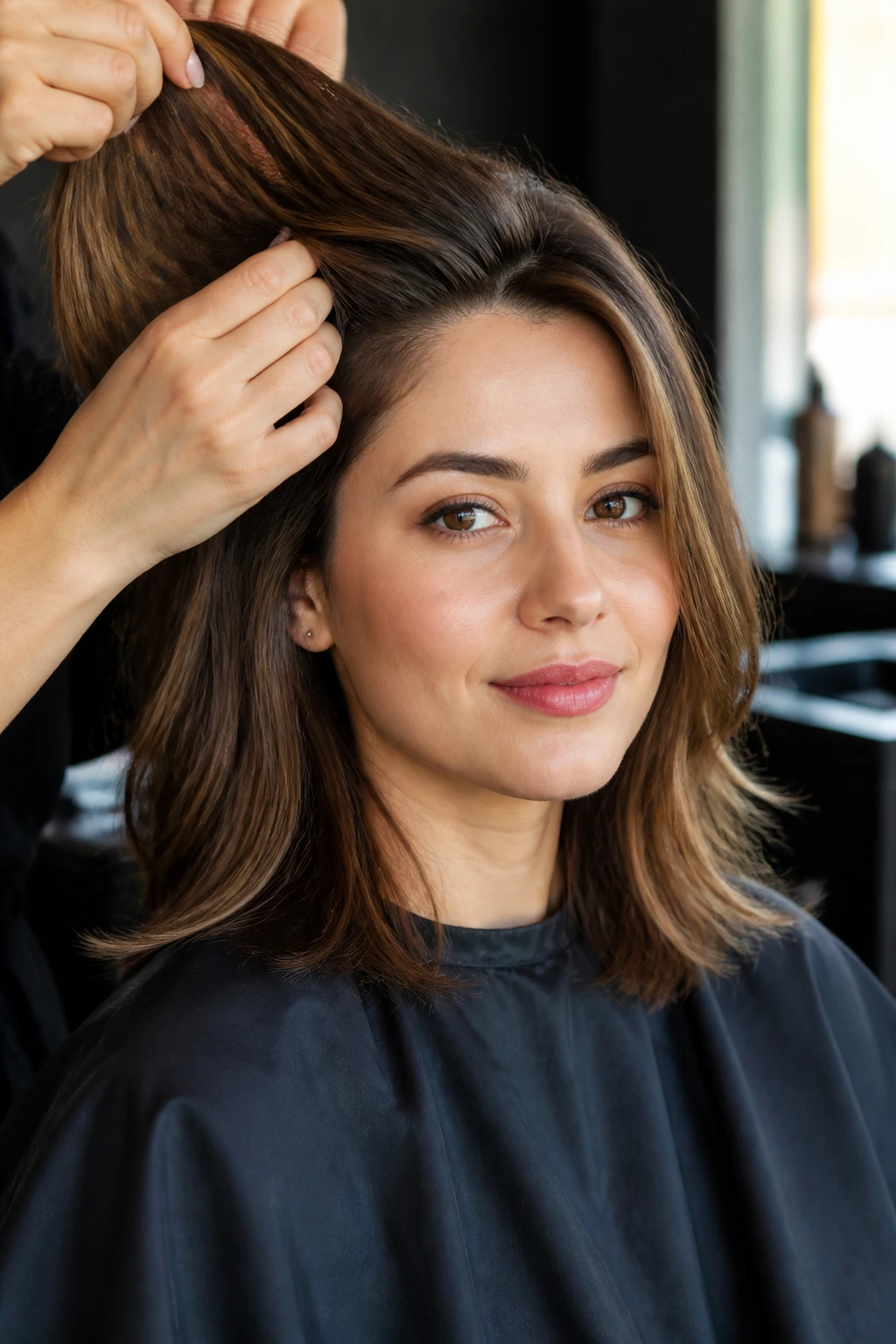
If you want the cut to flatter a square face, the conversation needs to be precise. “Side-swept bangs” by itself is too vague. One stylist may hear soft layers; another may hear a heavy swoop; a third may give you a fringe that sits too high on the forehead. Bring the language down to length, thickness, and direction.
Say you want the shortest point to live near the outer brow or slightly below it, and the longest pieces to blend into the cheekbone or lip area. That gives the fringe enough travel to soften the face instead of stopping at the middle of it. If your hair is thick, ask for internal weight removal, not a ragged razoring job. If it’s fine, ask for a clean edge with minimal thinning so the bang doesn’t go see-through.
Cowlicks deserve a mention too. If one side of your front hairline pushes up or splits, the stylist needs to know before the cut. That growth pattern changes where the part should sit and how long the fringe should be. Ignore it, and you’ll spend every morning arguing with your own hair.
How to Wear the Fringe With Different Looks
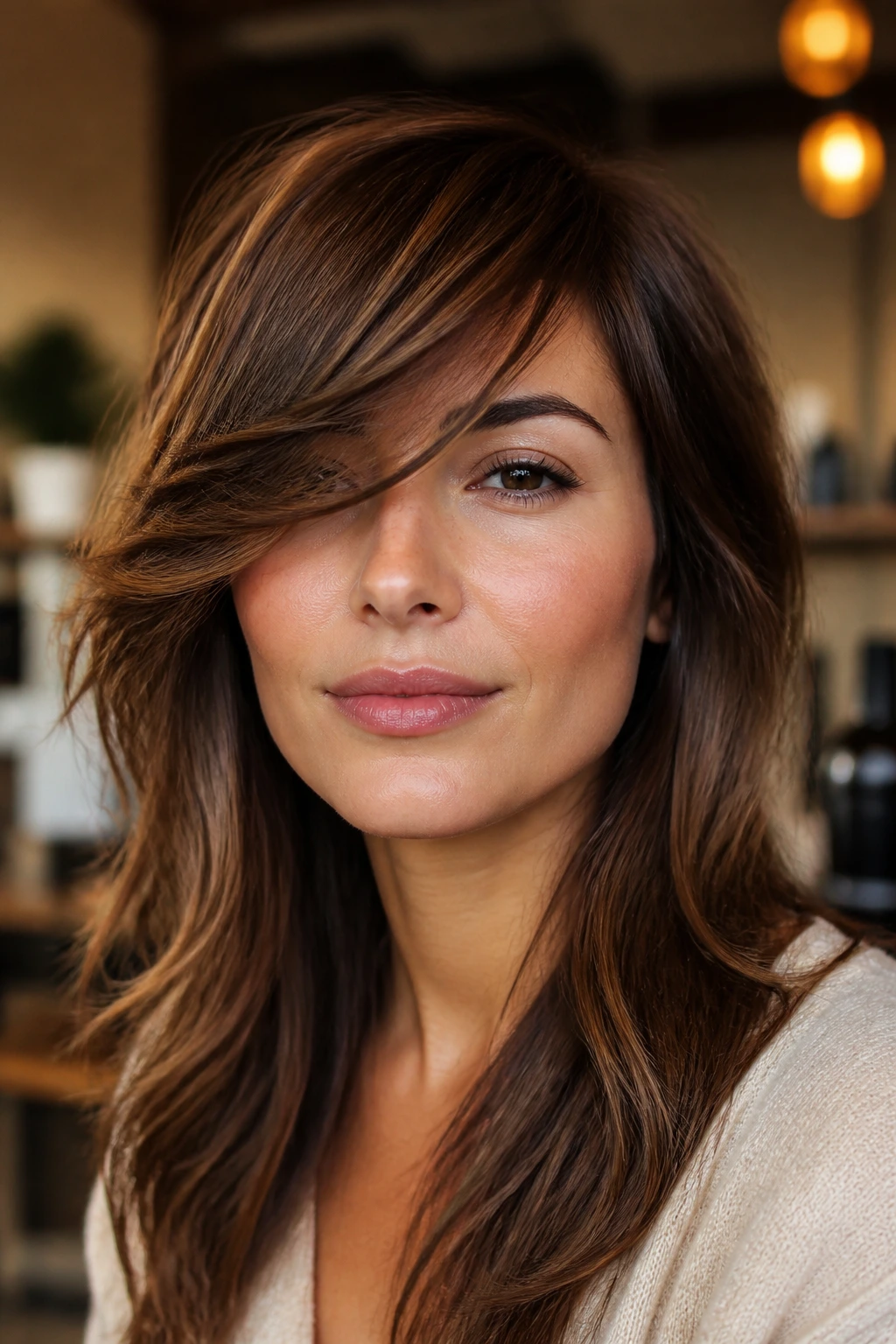
Presentation: Let the fringe fall in a diagonal line that opens the eye area and narrows the forehead visually. The best finish usually has a little bend, not a stiff curve, and the ends should blur into the rest of the haircut instead of stopping like a cut-off ribbon.
Accompaniments: Side-swept bangs pair well with collarbone lobs, shoulder-length layers, rounded bobs, soft shags, and low buns. A square face looks especially good when the rest of the hair has some movement near the cheeks or collarbone, because that keeps the lower half from feeling too heavy.
Portions: If your hair is fine, keep the bang section narrow and light. If it is dense, make the section wider but keep the interior soft. That balance decides whether the fringe feels airy or bulky.
Finish: Use texture spray for shaggy cuts, mousse for waves, smoothing cream for sleek hair, and a flexible hairspray only at the end. Put the product where the hair needs support, not everywhere. A little goes a long way around the forehead.
Small Styling Tweaks That Change the Mood
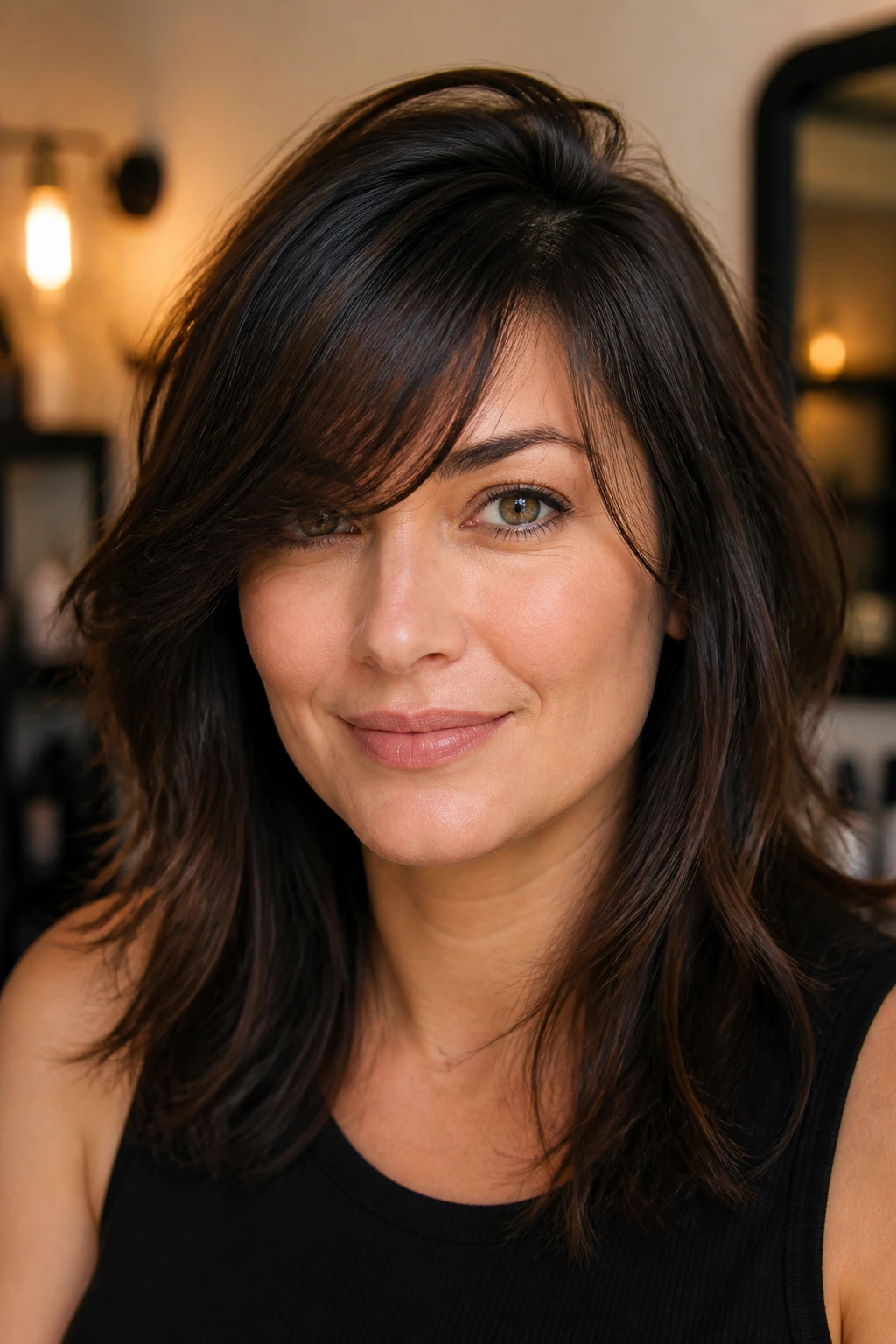
Lift: Blow-dry the fringe in the opposite direction first, then sweep it across and clip it for two minutes while it cools. That gives the bang a memory of the shape instead of letting it fall flat by lunchtime.
Softness: A pea-size amount of cream or serum on the ends can calm frizz, but keep it off the roots. Roots with product turn greasy fast, and greasy bangs sit too close to the forehead.
Texture: If the hair is too slippery, mist the fringe lightly with dry texture spray before you shape it. The grip helps the sweep stay in place without using a ton of hairspray.
Polish: Use a flat iron only on the final two inches of the bang if you need a cleaner curve. The roots should still have a little bend. Dead-straight roots can make the front look severe.
Make-It-Yours: Curly hair usually needs a longer fringe; fine hair usually needs a little root lift; thick hair usually needs weight removed in the middle, not at the ends. Those changes sound small, but they decide whether the style feels flattering or fussy.
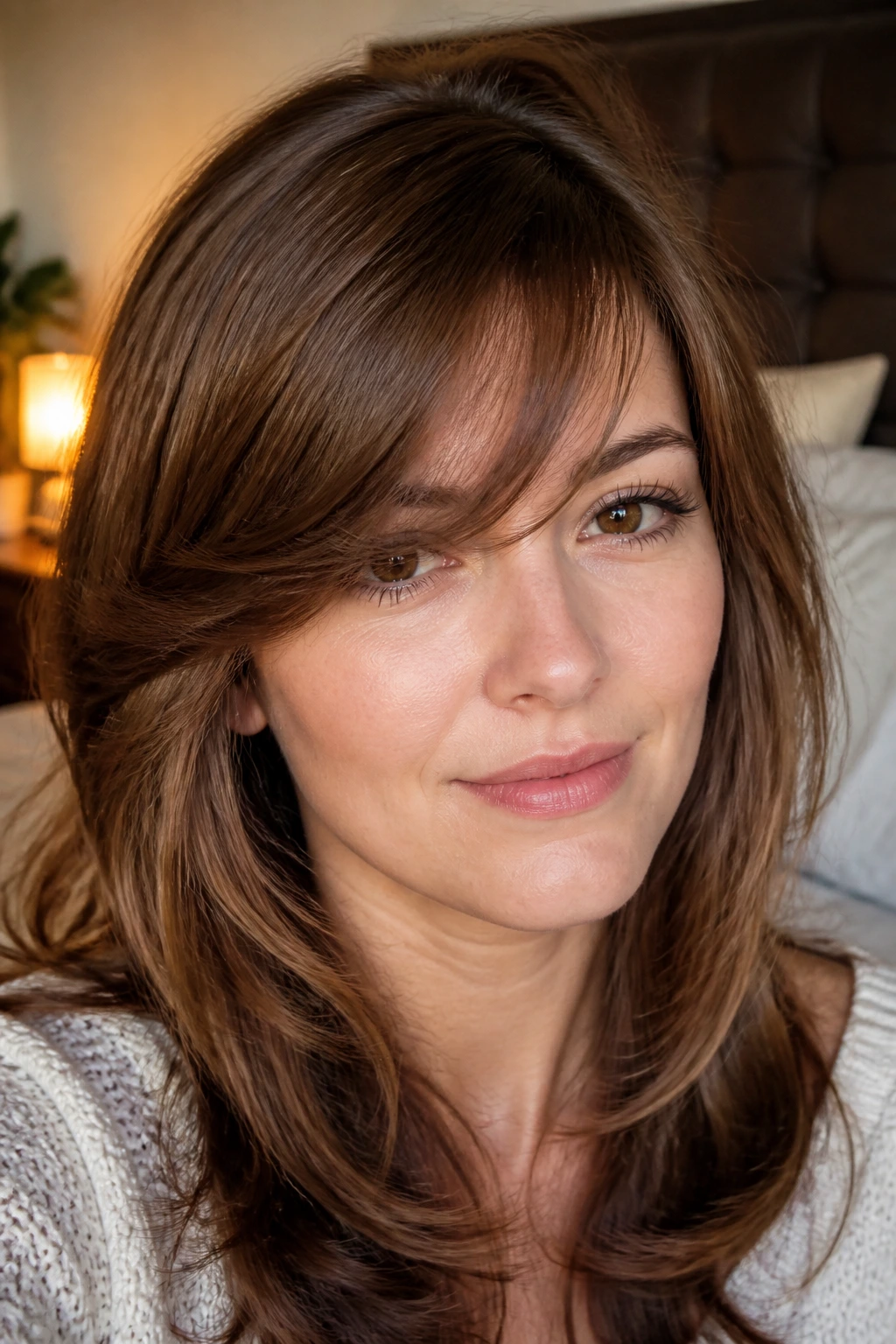
Common Mistakes That Make the Face Look Boxier
-
Cutting the shortest point too high. If the bang starts well above the brow, it can make the forehead look wider and the face feel shorter. The fix is simple: keep the shortest piece around the outer brow or lower.
-
Making the fringe too wide. A bang section that stretches temple to temple can flatten the whole front of the face. Narrow the section so the sweep lives where it can move, not where it can spread.
-
Letting the layers end at the jawline. That is a sneaky problem. The eye lands on the jaw, and the boxiness gets stronger. Ask for layers that soften around the cheekbone or collarbone instead.
-
Over-thinning fine hair. Too much texturizing makes the bang lose its shape by noon. Fine hair needs structure, not shredded ends.
-
Ignoring cowlicks and growth patterns. If the hair wants to split left, and the cut is forcing it right, you’ll fight it every day. The part and length should work with the growth, not against it.
-
Using heavy product at the root. Bangs glued to the forehead feel flat and heavy. Keep product mostly on the mid-lengths and ends, and use only the lightest spray near the scalp.
Variations and Alternatives When You Want a Different Mood
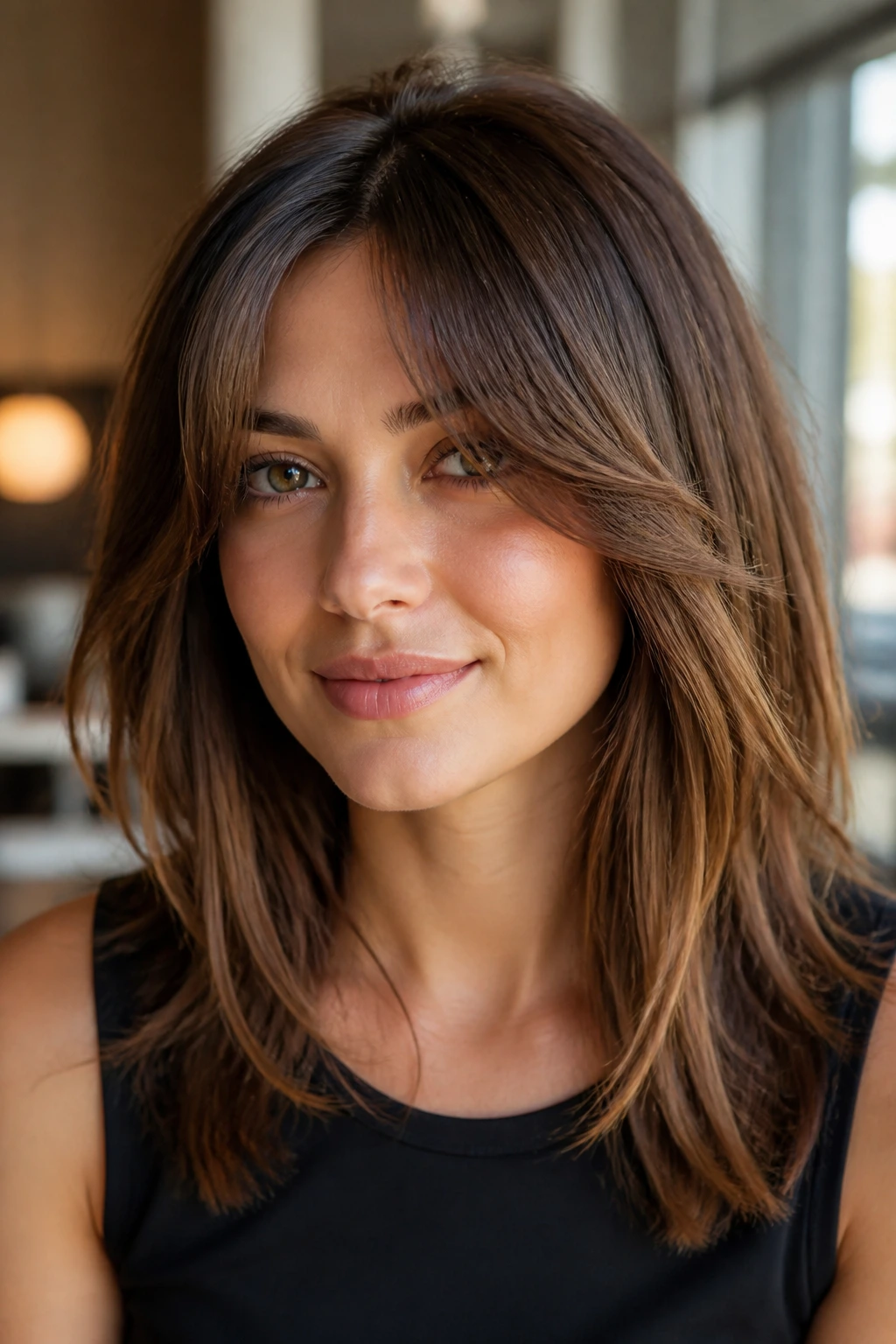
The Soft Curtain Hybrid: Part the fringe slightly off-center and let the longest front pieces fall on both sides of the face. It still works for square faces because the center opening makes the forehead feel less broad, but the side sweep keeps the look gentle.
The Thicker Sweep: If your hair is dense and you want more presence, keep the fringe fuller and only lightly layered. The shape stays strong, but the diagonal keeps the face from looking boxed in.
The Curly Bend: For wavy or curly hair, let the bang live longer and dry naturally into a side arc. The length gives the curl room to spring while still softening the jaw.
The Minimal Sweep: If you do not want obvious bangs, ask for a narrow front section that falls across the brow and folds into face-framing layers. It reads as hair movement, not a full fringe, which is good if you like a low-key look.
The Glam Sweep: Deep side part, rounded brush, glossy finish. This version gives a square face a more oval feel and works well for events, photos, or any day you want the front of the hair to look deliberate.
Keeping the Bangs in Shape Between Trims
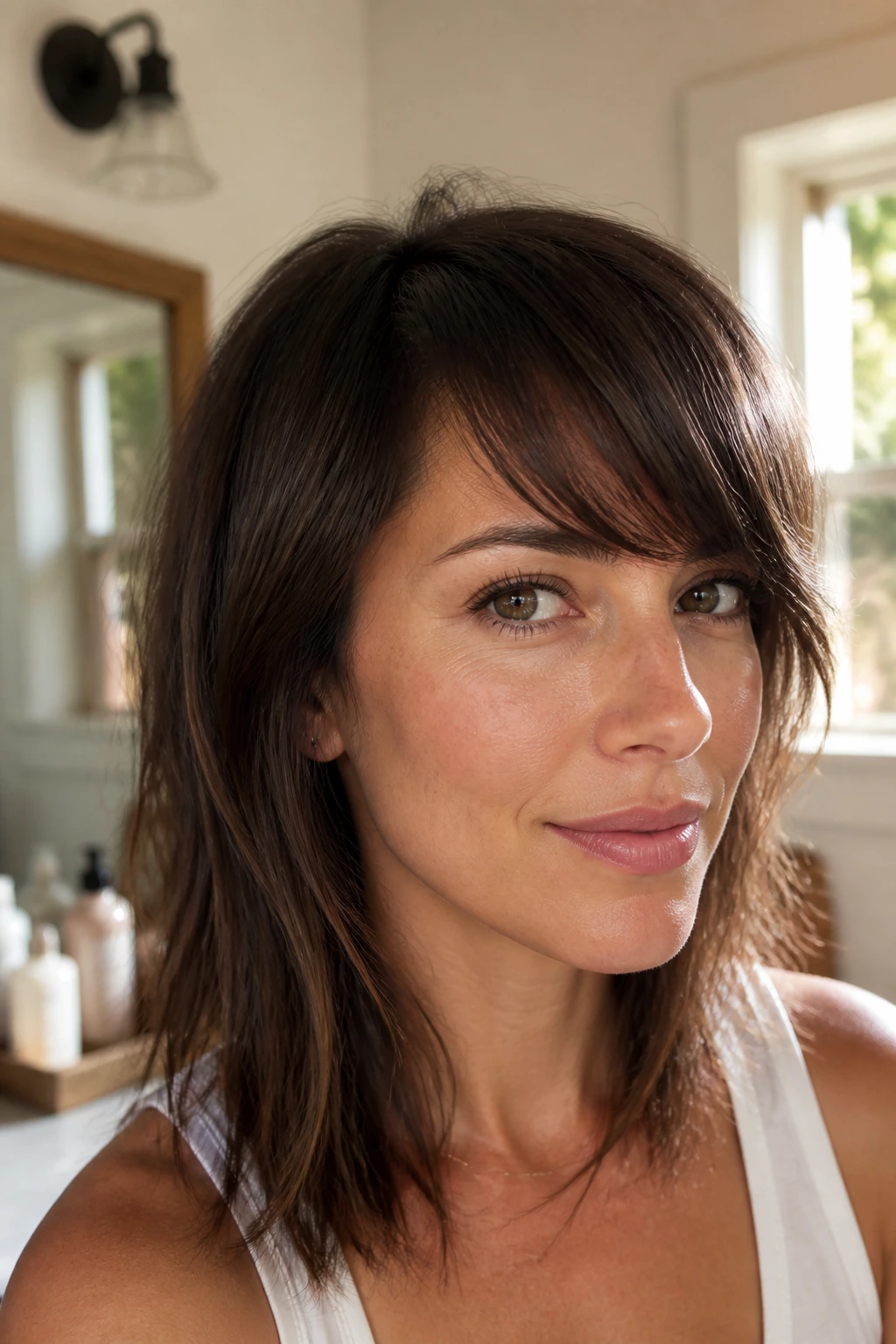
Side-swept bangs on a square face usually need a trim every 4 to 6 weeks if you want the line to stay clean. Thick hair may need shorter intervals because it grows bulky faster. Fine hair often buys you a little more time, but not much if the shortest point is precise.
Morning care matters. Bangs get oily faster than the rest of the hair because they sit against the forehead, so a quick root refresh can save the whole style. A tiny bit of dry shampoo at the roots is enough. Don’t dump half the bottle into the fringe or you’ll get a chalky patch that looks worse than grease.
At night, clip the fringe loosely away from the face or wrap it with a soft roller if it tends to split. Curly hair should be protected with a satin bonnet or scarf so the front doesn’t puff up. If you work out or sweat a lot, style the fringe last, after the hairline has dried completely. A damp bang almost never behaves well.
Questions People Ask Before They Commit
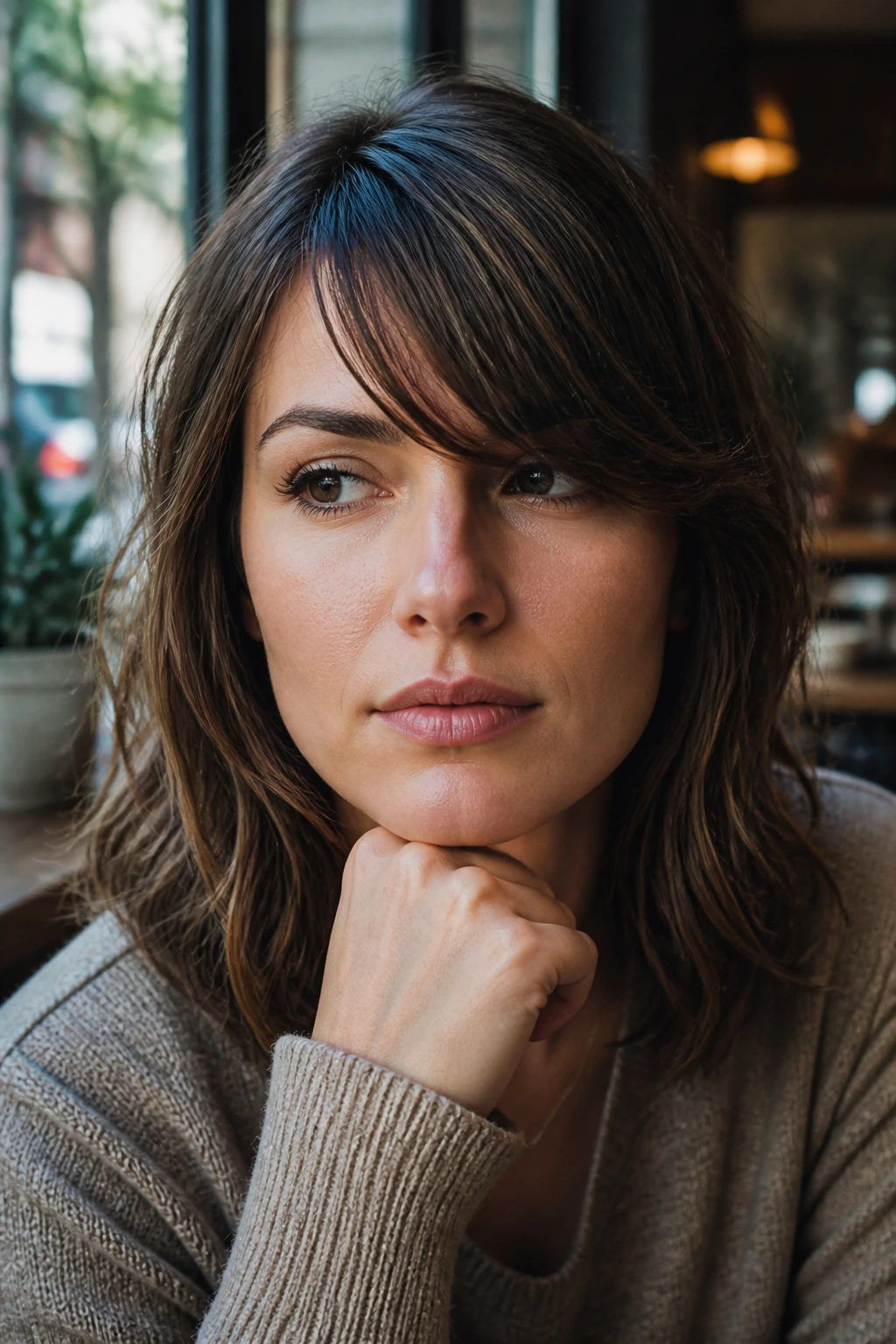
Do side-swept bangs really suit square faces?
Yes, when they are layered and long enough to create a diagonal line. The shape softens the forehead and pulls attention away from the jaw, which is the part most people want to soften.
Should the shortest piece hit the eyebrow or the cheekbone?
Usually the outer brow is the safer starting point, and the longest pieces should head toward the cheekbone or upper lip. That range keeps the fringe flattering without making it too short or too heavy.
Are side-swept bangs better than blunt bangs for square faces?
Most of the time, yes. Blunt bangs can make the face look boxier unless the rest of the cut is very soft and long. Side-swept layers are more forgiving.
What if my hair is thick?
Ask for interior weight removal, not a razor-heavy chop. Thick hair can carry a gorgeous sweep, but it needs the bulk taken out where the fringe bends, not on the outer edge where it needs shape.
What if my hair is fine?
Keep the bang section smaller and avoid over-thinning. Fine hair needs a little root lift and a clean edge so the fringe doesn’t disappear once it dries.
Can I wear this with curly hair?
Absolutely, but the fringe should be cut longer than you think. Curl springs up as it dries, and a too-short bang can widen the forehead instead of softening it.
How do I grow it out without an awkward stage?
Blend the fringe into face-framing layers early. Once the bang reaches cheekbone length, it usually becomes easier to tuck, sweep, or pin back while it grows.
A Softer Finish
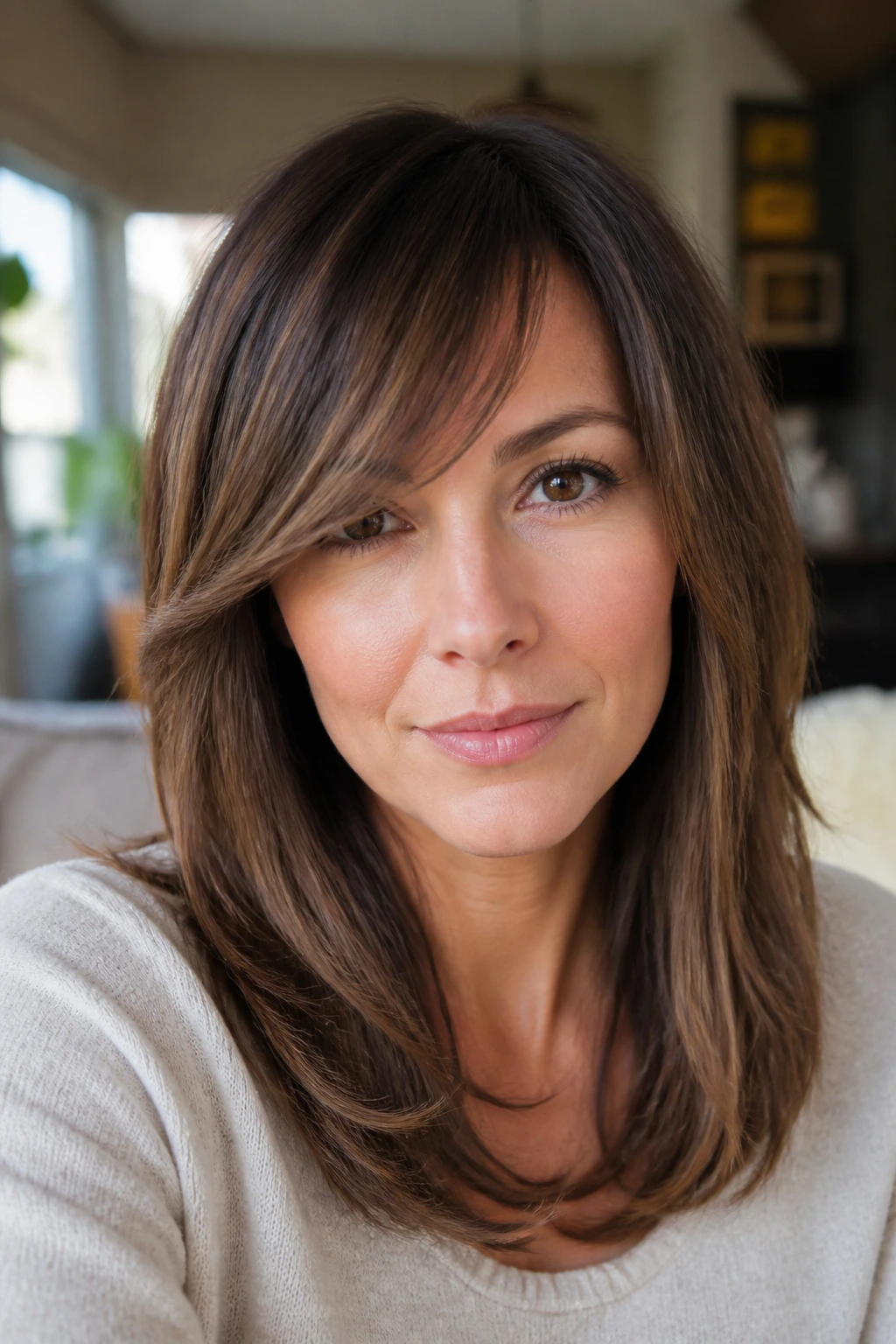
A square face does not need to be disguised. It needs a front section that moves. That is why the best layered side-swept bangs feel diagonal, soft at the ends, and long enough to travel past the broadest part of the face. The cut can be polished, shaggy, curly, sleek, or undone. The shape still works as long as it keeps the eye moving.
Bring a few reference photos to the salon, but bring your hair’s habits too. Cowlicks, density, and texture matter just as much as the picture on your phone. When the cut matches the face and the hairline, the result looks easy in the way good hair should look easy.
And if you want the shortest path to a flattering fringe, keep the line soft, the length generous, and the layers doing the quiet work.