



Shoulder-length hair can turn fussy fast. One blunt line and it hangs there like it’s waiting for a train. One overworked layer and the whole shape puffs out at the ends. Soft layers with bangs for shoulder-length hair solve that awkward middle ground by giving the cut bend, movement, and a little personality right where the eye lands first.
The sweet spot is the collarbone. There’s enough length for the hair to swing, tuck behind the ears, or curl under with a brush, but not so much that the cut disappears into the rest of your outfit. Add bangs—curtain, wispy, side-swept, bottleneck, even a soft fringe that barely clears the brows—and the whole style stops reading as one solid block.
What makes this length so useful is that it works with the hair you already have instead of fighting it. Fine hair gets a little lift. Thick hair gets some breathing room. Wavy hair gets a shape that looks intentional even when you air-dry it. The details matter, though, and the first batch of cuts makes that obvious.
Why These Cuts Feel So Right at Shoulder Length
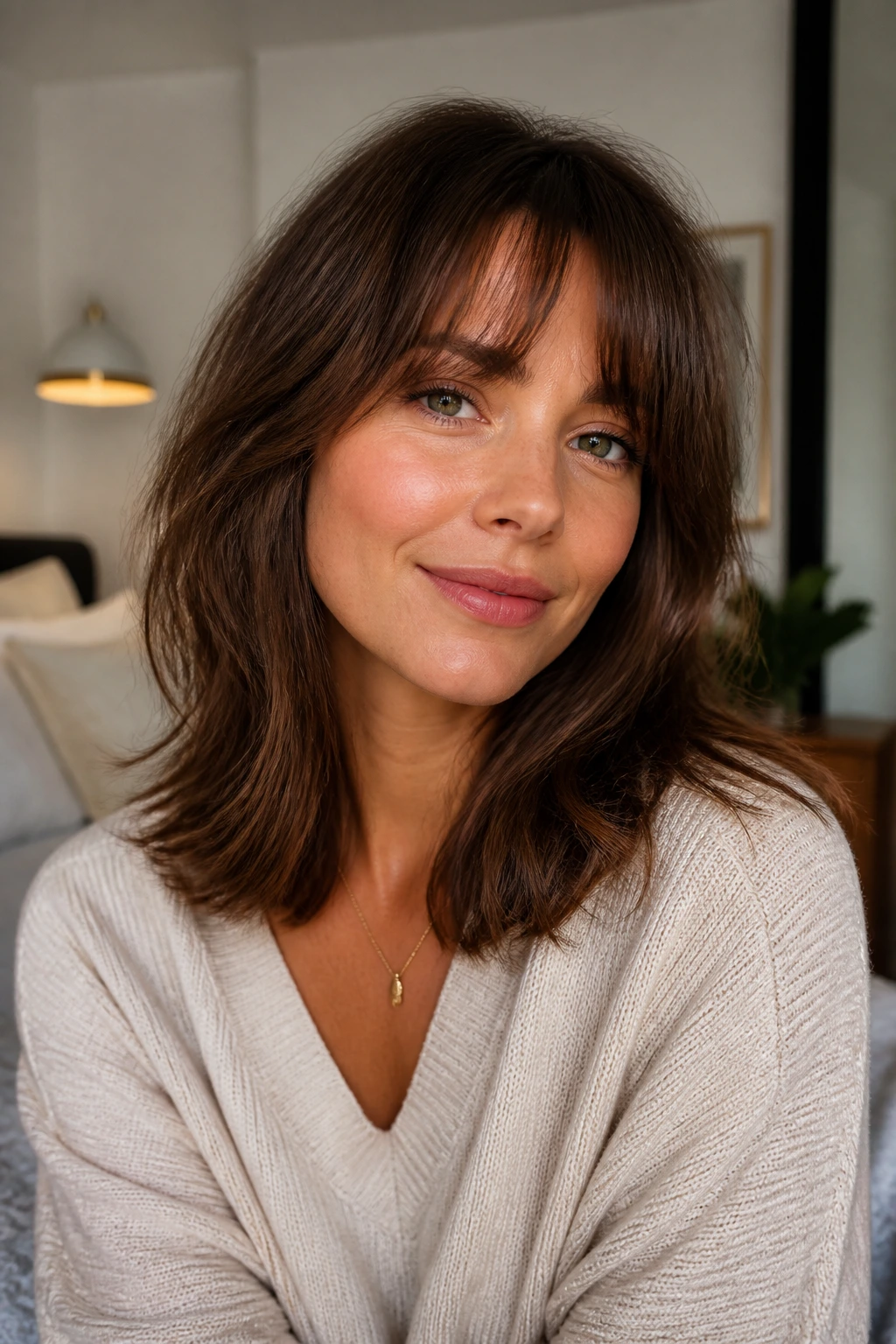
-
The length holds the shape: Hair that sits around the shoulders shows layer movement instead of swallowing it, so the cut still looks deliberate after a full day of wear.
-
Bangs break up the face line: A soft fringe shortens the forehead a little, but it also gives the cut a focal point that keeps shoulder-length hair from looking flat.
-
The grow-out is kinder: When the bangs are feathered or curtain-shaped, they slide into face-framing pieces instead of turning into an obvious bad phase.
-
Styling takes less force: Most of these cuts only need a round brush, a flat iron bend, or a few minutes of scrunching with mousse. No heroic effort. No wrestling match.
-
Different textures can wear them: Straight, wavy, curly, and coily hair all have versions of these shapes that sit well, which is part of why stylists keep reaching for them.
1. Curtain Bangs with Feather-Light Shoulder Layers
Curtain bangs are the easy entry point, and I mean that in the best way. The fringe splits softly at the center, then drifts into cheekbone-level face-framing pieces that stop the cut from feeling heavy at the front. On shoulder-length hair, that little break in the middle keeps the whole style from boxing in the face.
Why This One Settles So Well
- The center part gives the bangs room to grow out gracefully.
- Layers starting around the cheekbone keep the ends from looking blunt.
- A 1.5-inch round brush or large velcro roller gives the fringe that soft bend in about 3 minutes.
If you want a cut that can be worn polished or a little messy, this is one of the safest bets. It looks especially good when the ends are turned under just enough to skim the collarbone, not curl under hard. That tiny difference matters. Hard curl reads dated; a gentle bend reads intentional.
2. Brow-Grazing Fringe and a Soft U-Shape
This is the version I’d hand to someone who wants bangs but doesn’t want a dramatic commitment. The fringe lands just at or slightly below the brows, and the rest of the cut follows a soft U around the shoulders instead of a stiff straight line. That curve keeps the front pieces from feeling too sharp.
The shape works well on hair that falls naturally smooth because the bangs do the visual work while the layers stay subtle. You get movement without a choppy outline. If your hair tends to part in the middle on its own, this is even easier to live with, since the fringe can swing either way and still look on purpose.
Ask for the bangs to be cut longer than you think at first. They always look shorter once they dry. Always.
3. The Soft Shag That Still Looks Polished
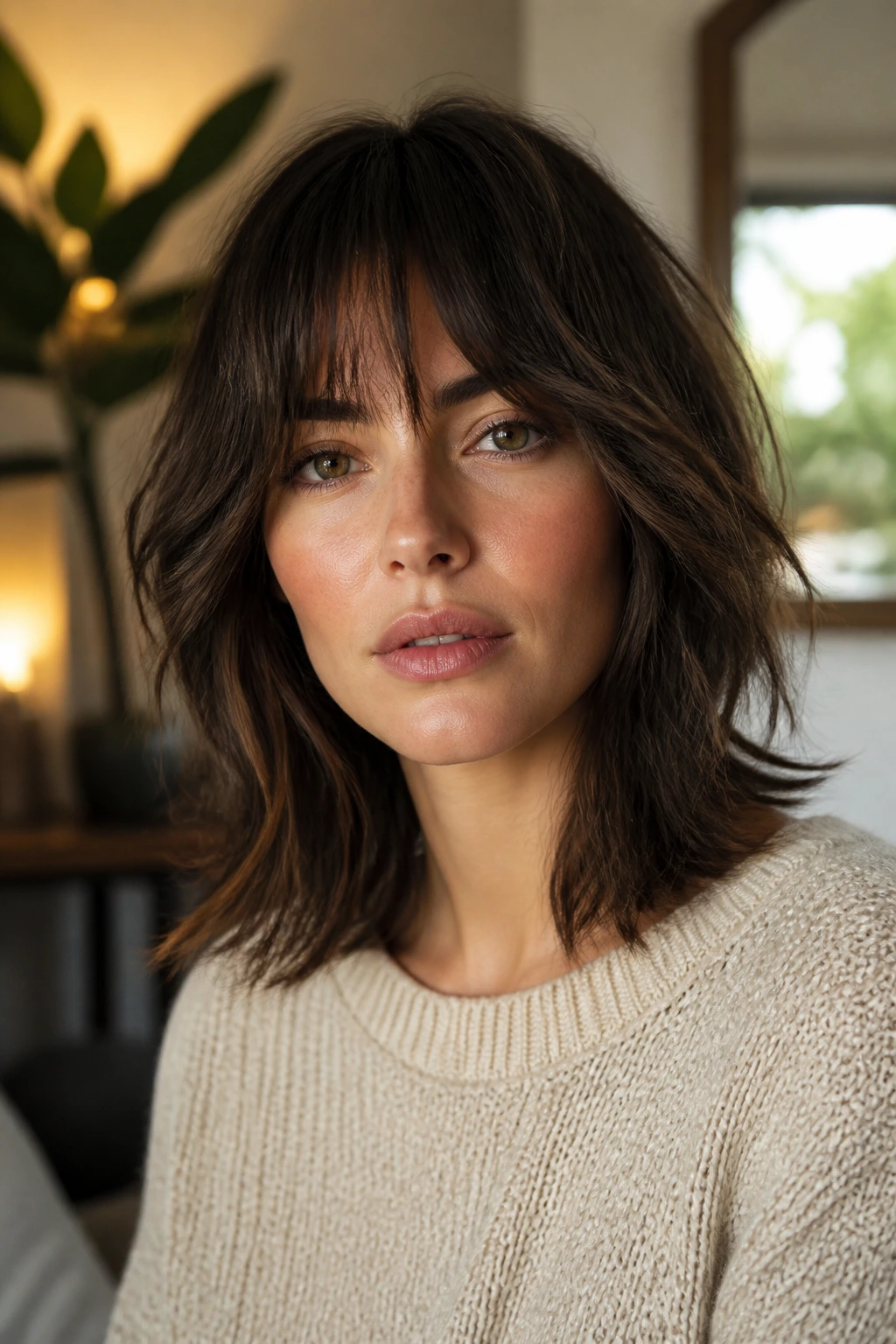
A shag can go too far fast. Too high, too choppy, too much texture spray, and suddenly the hair looks like it fought a pillow and lost. The soft shag version stays around shoulder length, with layers that feather out instead of sticking out, and with bangs that are broken up just enough to move.
This cut suits someone who likes a bit of edge but still wants the hair to sit neatly around the neckline. The best part is how it behaves on second-day hair. A little dry shampoo at the roots, a finger twist through the fringe, and the shape comes back with less effort than a smoother cut usually needs.
If your hair is thick, ask that the internal layers be kept soft. You want removal of bulk, not little cliffs inside the haircut.
4. Feathered Layers with Side-Swept Bangs
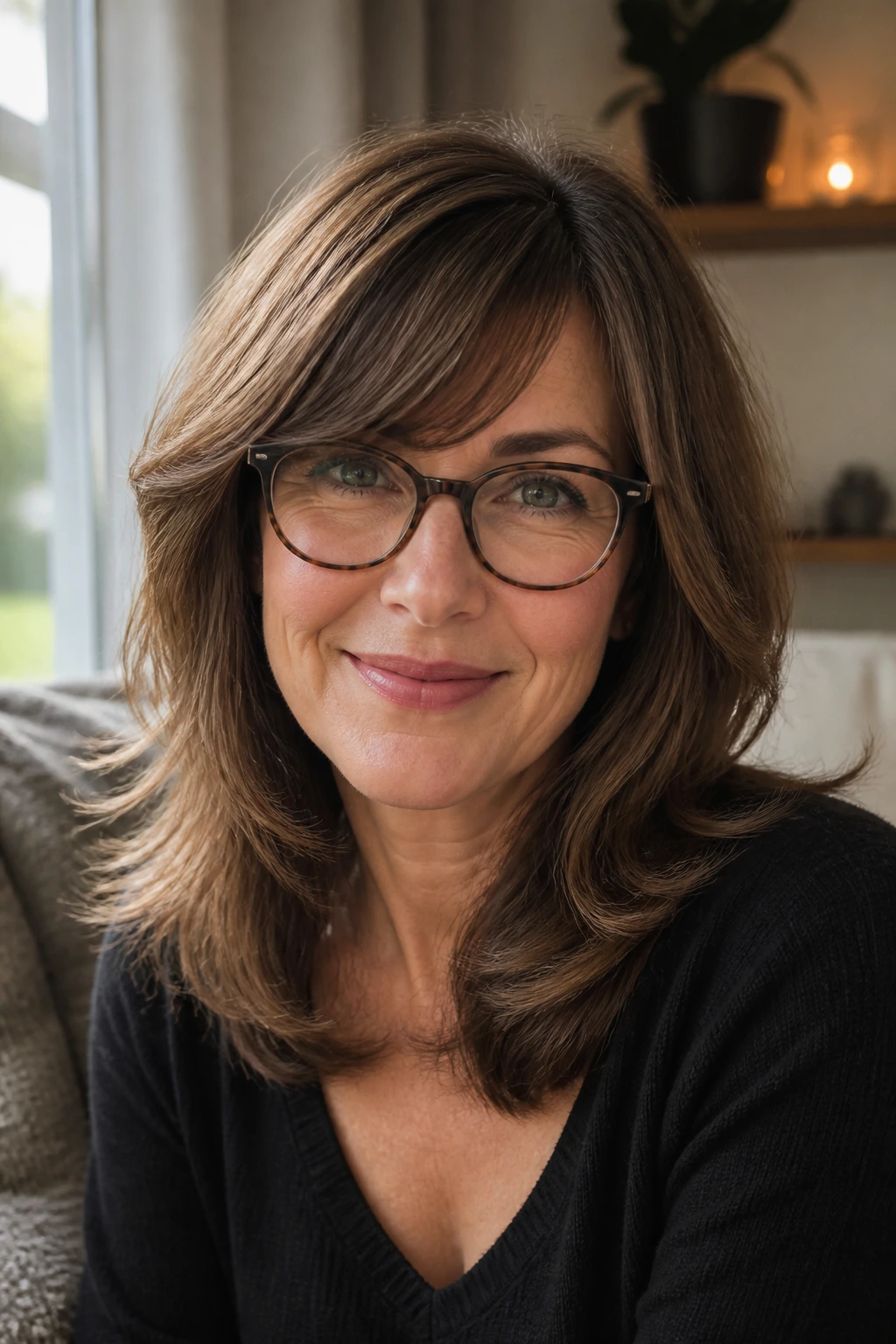
Feathering is one of those old salon words that still earns its keep. Done well, it creates airy ends that skim the shoulders and a side-swept fringe that blends instead of sitting as a hard block across the forehead. On shoulder-length hair, that softness keeps the haircut from looking boxy around the jaw.
This shape is especially kind to anyone who wears glasses. The side sweep keeps the fringe from colliding with the frames, and the layers sit low enough that they don’t compete with your face. You can blow it out with a paddle brush if you want a smoother look, but I like it best with a little bend at the ends and a few pieces falling forward near the cheekbones.
It’s one of those cuts that looks more expensive when the finish is slightly imperfect. Strange but true.
5. Bottleneck Bangs and a Rounded Collarbone Cut
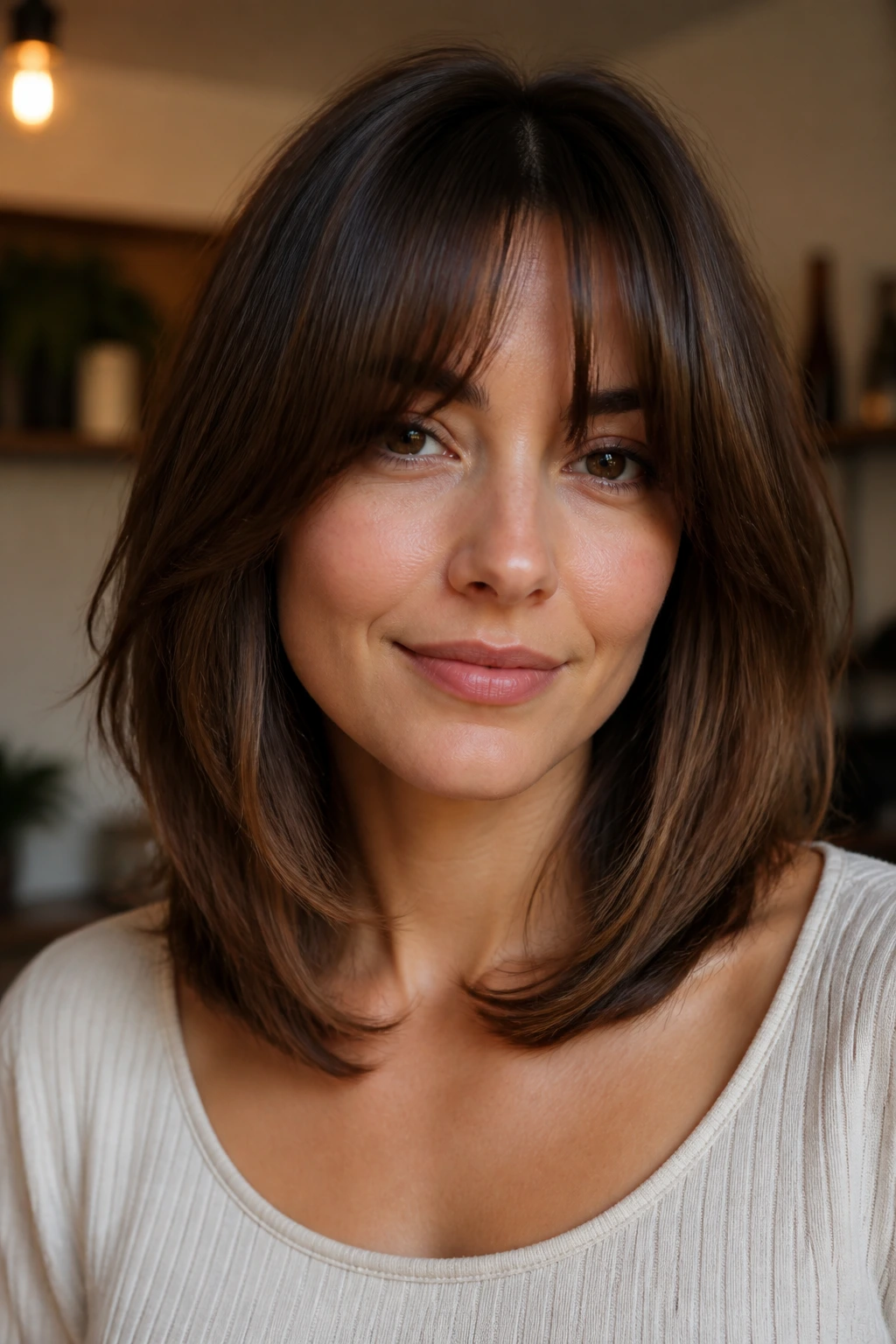
Bottleneck bangs have a narrower center and a wider outer edge, which makes them less severe than a straight fringe. Paired with a rounded shoulder-length cut, they soften the forehead without stealing all the attention. The result feels balanced rather than dramatic.
The rounded outline is the part people forget to ask for. If the layers are cut with a little curve instead of straight across, the hair turns inward near the clavicle and keeps the whole head shape from looking square. That matters more if your hair has some natural wave, because a straight edge can kick out in odd places.
This one looks best when the bangs are dried with a side-to-side motion first, then tucked into the center. It’s a small trick, but it keeps the fringe from splitting too hard at the middle.
6. Wispy Bangs That Barely Break the Forehead
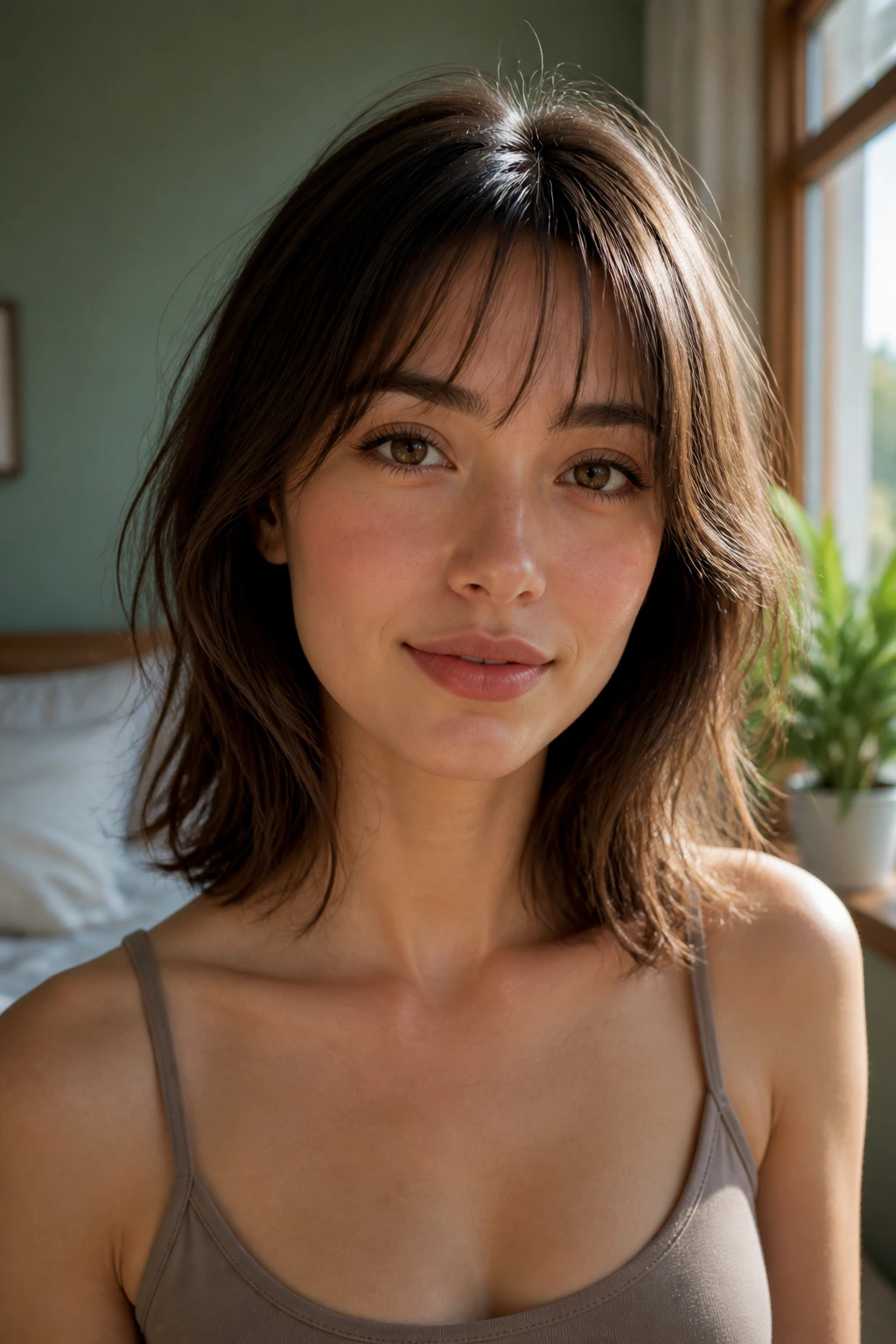
Wispy bangs are the quietest option on this list, and I like them for that reason. They sit light on the forehead, never dense, never helmet-like, and they let the rest of the soft layers do the talking. On shoulder-length hair, that creates a nice little balance: the front looks airy while the sides still have shape.
This is a good choice if you have fine hair and hate the feeling of too much hair sitting on your face. It also works if you want bangs that disappear into the haircut on days when you push them aside. The best version isn’t see-through in a flimsy way; it’s just lightly broken up, with enough density to look intentional.
Keep the ends blunt enough to hold form. If they get thinned too hard, the whole cut starts looking sparse.
7. A Gentle Wolf Cut for Shoulder-Length Hair

A wolf cut can be a mess if it’s pushed too far. The gentle version keeps the crown soft, the layers blended, and the fringe loose enough to move without sticking out. On shoulder-length hair, that means you get a little edge without losing the ability to pin the front back when you want to.
The trick is moderation. You want the top to sit a little shorter than the ends, but not so short that the silhouette turns into a mullet. The bangs should melt into the face-framing sections, not sit there as a separate event. If you have wavy hair, this cut is one of the better ways to let your texture do the heavy lifting.
I’d avoid this if you hate texture spray. The shape likes a bit of roughness. Too much smoothing cream and it loses the point.
8. Long Side Bangs with Swingy Face-Framing Pieces
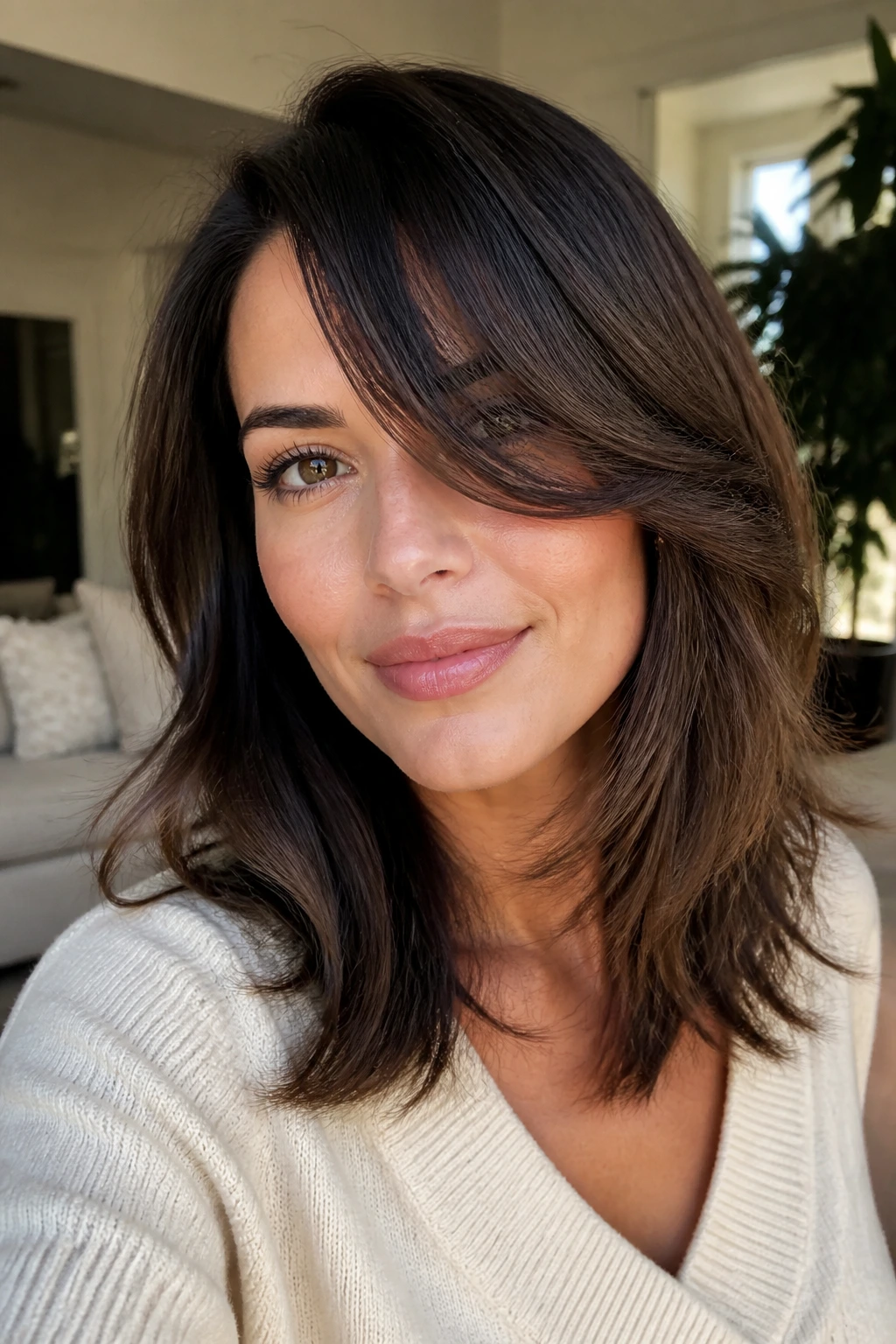
Long side bangs are the haircut equivalent of a deep breath. They sweep across the forehead, skim the cheek, and let the layers fall in a soft diagonal line that flatters almost every face shape. On shoulder-length hair, that diagonal gives the cut direction, which helps if your hair tends to hang straight down the sides.
This is a useful option for anyone who wants bangs but needs them to cooperate with a part that changes from day to day. The fringe can be styled across the brow, tucked behind one ear, or blended into the side layers with almost no visible line. It’s also a decent bridge if you’re growing out shorter bangs and want a stopover shape that doesn’t look awkward.
Blow-dry the bang section first. If you leave it for last, the rest of the hair steals all the heat and the fringe gets lazy.
9. Blunt Ends with a Light Layered Crown

This one is more restrained than the others, and that’s the appeal. The perimeter stays blunt at shoulder length, which keeps the line looking thick, while the crown gets a gentle bit of layering so the bangs don’t sit on top of a flat block. It’s a smart cut if you want softness without losing density.
The bangs can be curtain-shaped, slightly side-swept, or lightly arched. What matters is the contrast: solid ends, airy top. That contrast gives the haircut some structure, which is useful for fine hair that needs a visual lift. If your strands are thick, the blunt edge keeps the length from spreading out too much.
A small bend at the ends helps. Straight poker-straight hair can make this cut feel severe, and that’s not the goal here.
10. French-Inspired Fringe and Loose Bends

A French-style fringe has a little nonchalance baked into it. It’s not dense enough to feel heavy, not thin enough to vanish, and it sits just at the brows with a relaxed edge. Pair that with loose bends through shoulder-length layers and you get hair that looks casually arranged rather than overdone.
This cut likes a bit of lived-in texture. A 1-inch iron, used only on a few pieces, is usually enough to give the shape some movement. The fringe should be dried forward first, then split with fingers instead of a brush if you want the softer, undone look. Brushes can make it too neat. Sometimes neat is the enemy.
Best for hair that doesn’t get greasy instantly. Fringe like this needs a little lift at the roots to avoid clumping together by lunchtime.
11. Curly Shoulder-Length Layers with Curved Bangs
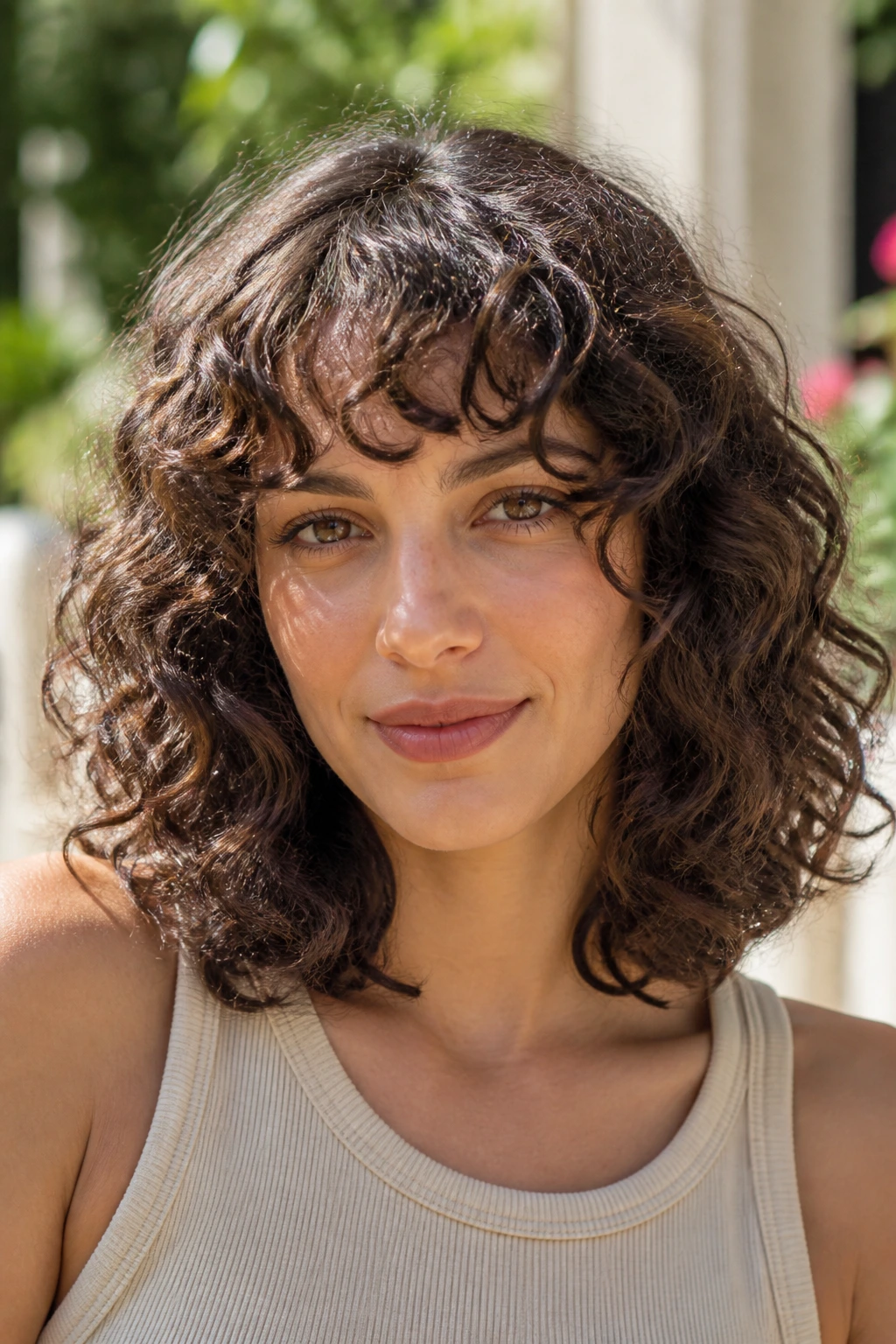
Curly hair needs room to breathe, and shoulder length is a sweet spot because it lets the pattern spring without growing into a triangle. Curved bangs soften the front and stop the curls from stacking awkwardly at the temples. The whole cut feels rounded, not puffy.
Ask for layers that follow the curl pattern rather than fighting it. That sounds obvious, but it’s where a lot of cuts go wrong. If the layers are cut too straight across, the curl shrinks unevenly and the fringe gets weird in humidity. A dry cut is often the safest route here because you can actually see where the curl sits.
This style thrives on moisture. Leave-in conditioner, a light curl cream, and a diffuser on low heat can do the work in under 10 minutes if your curl pattern is cooperative.
12. Wavy Lob with Razored Bangs
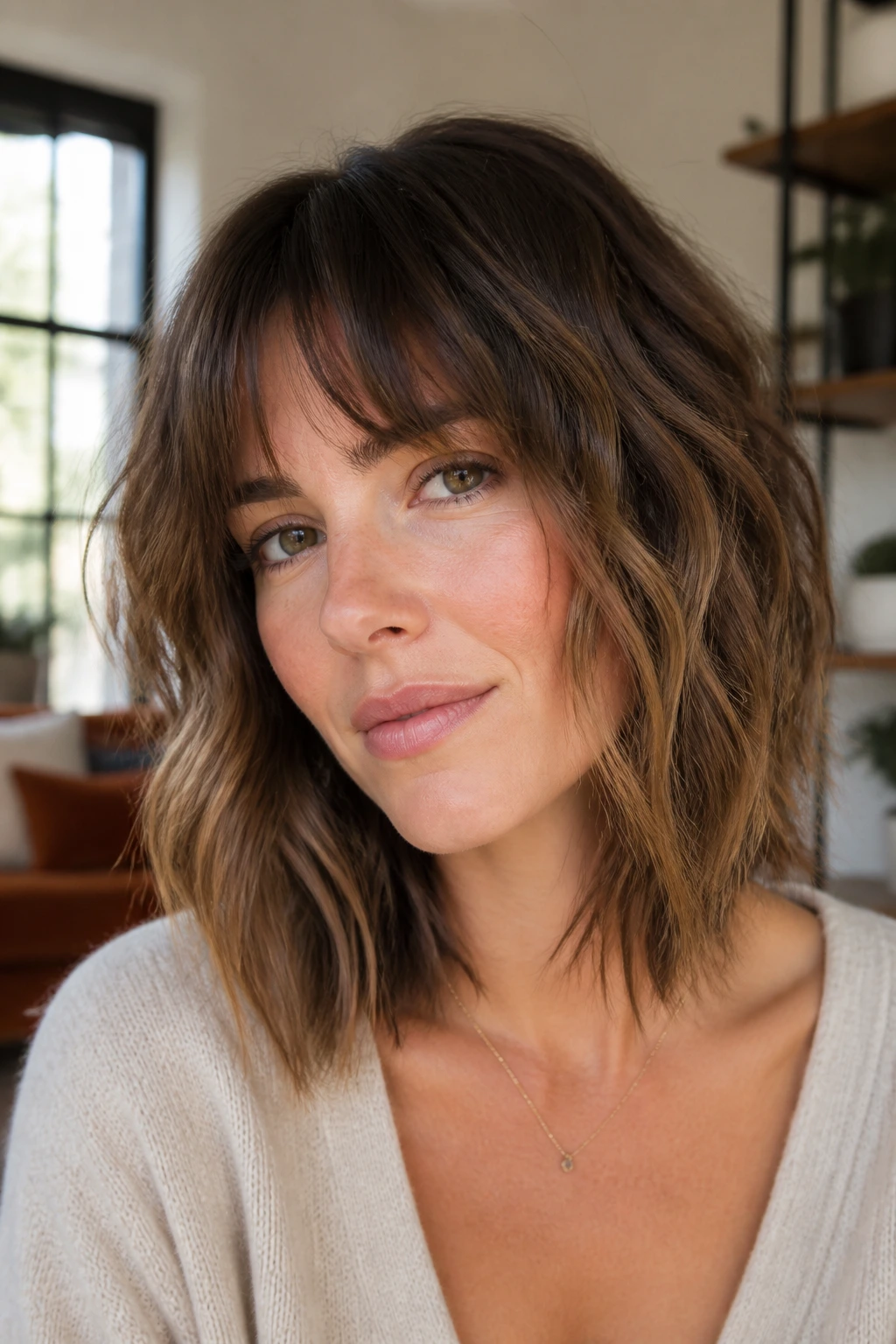
A wavy lob with razored bangs has enough edge to keep it from being sleepy, but not so much that it turns into a full shag. The razor softens the fringe so it falls with a bit of separation, which is especially nice if your wave pattern makes bangs collapse in one solid piece.
The rest of the cut should still feel cushioned. You want the layers to be light, not shredded. That’s the difference between movement and frizz. On shoulder-length hair, a little razor work can help the ends curve and keep the shape from sitting too boxy on the shoulders.
I’d use a salt spray very lightly here—just enough to encourage the wave, not enough to make the hair rough. Too much, and the fringe loses its softness.
13. Air-Dried Layers and Piecey Bangs
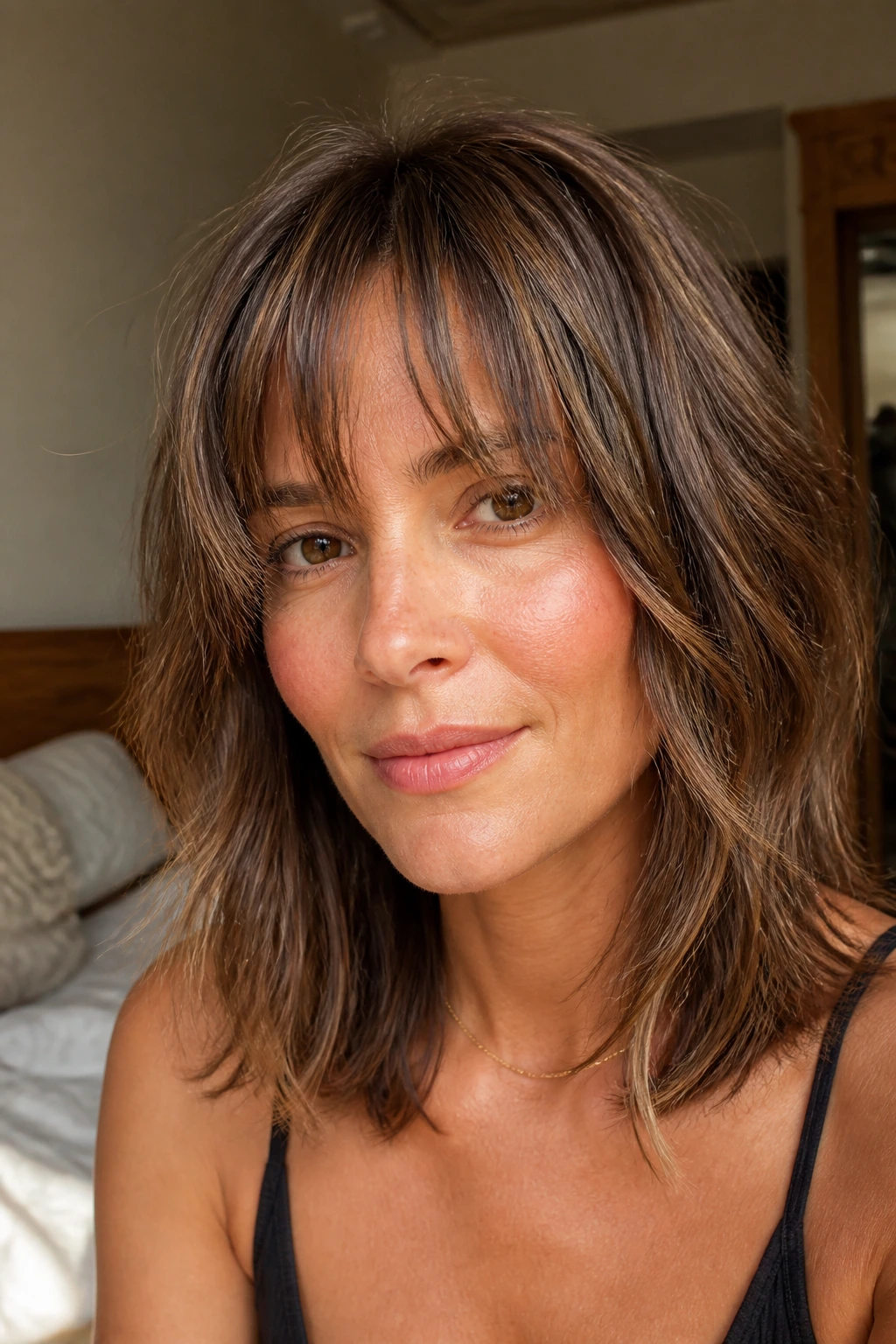
If you’re the kind of person who would rather sleep 10 more minutes than round-brush a blowout, this cut makes sense. The layers are cut to fall well when the hair dries on its own, and the bangs are separated enough to look piecey instead of bulky. On shoulder-length hair, that means you get shape even when you do almost nothing.
The key is where the layers begin. Too high and the cut frizzes up. Too low and it loses motion. When the fringe is point-cut or lightly razored, it breaks into soft sections as it dries, which keeps the front from looking like a curtain. I like this especially on medium-texture hair that has a slight bend but not a full wave.
Scrunch in mousse at the roots, leave the bangs alone while they dry, and don’t keep touching them. Hands are usually the problem.
14. Rounded Blowout Layers with a Full Fringe
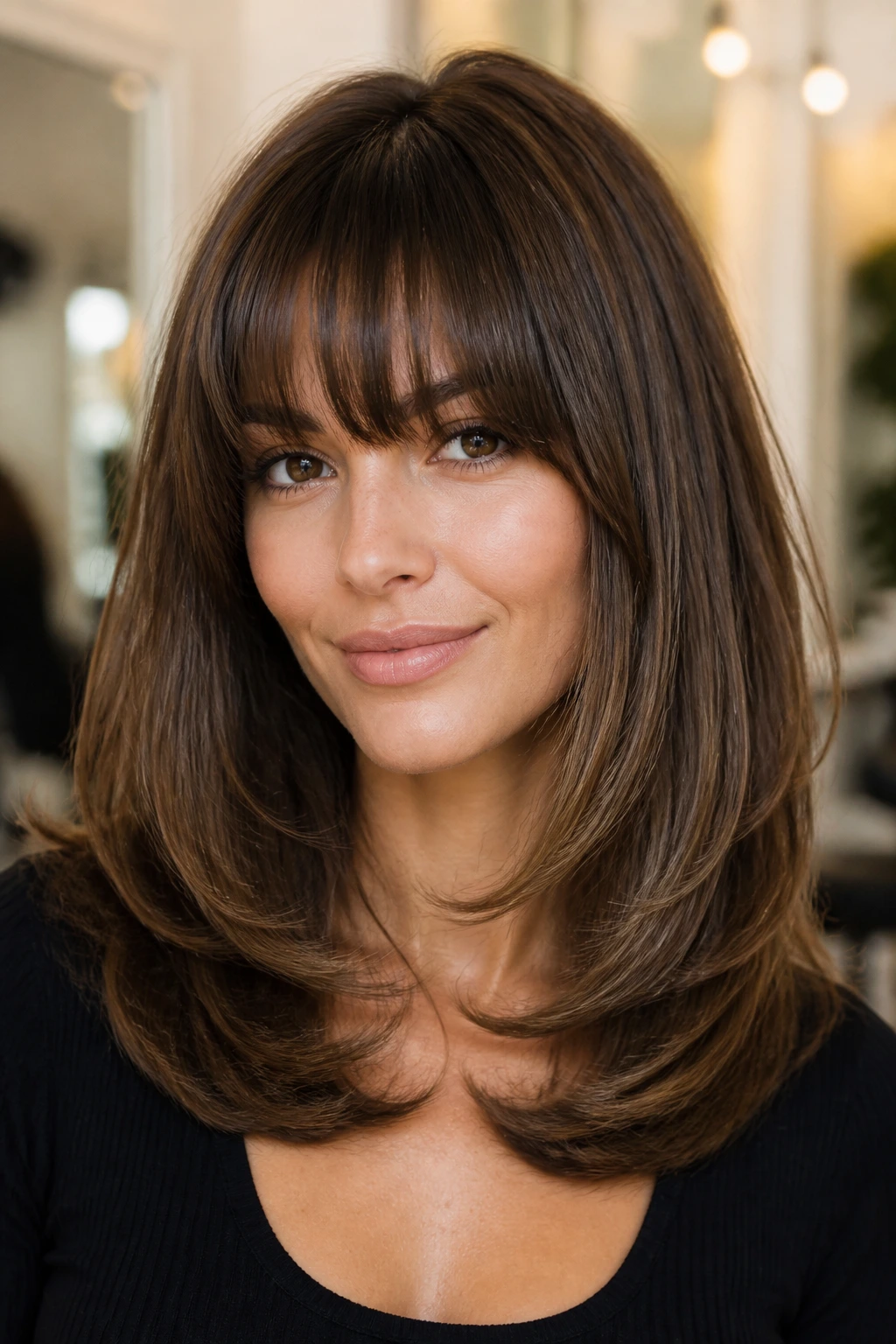
This is the glossy option, the one that looks best with a round brush and a little patience. The fringe sits fuller across the forehead, while the layers curve inward around the jaw and shoulders. It gives the whole haircut a rounded, almost shell-like finish.
The shape is especially useful if your hair is thick and naturally straight, because the blowout brings out the movement instead of leaving a flat sheet. A full fringe can seem like a lot, but paired with soft layers it reads as balanced. The layers keep the bangs from overpowering the face.
You will need regular trims. A full fringe loses its shape fast once it passes the brow line, and then it starts poking the eyes at the worst possible time.
15. Soft Flip Layers and 1960s-Style Bangs
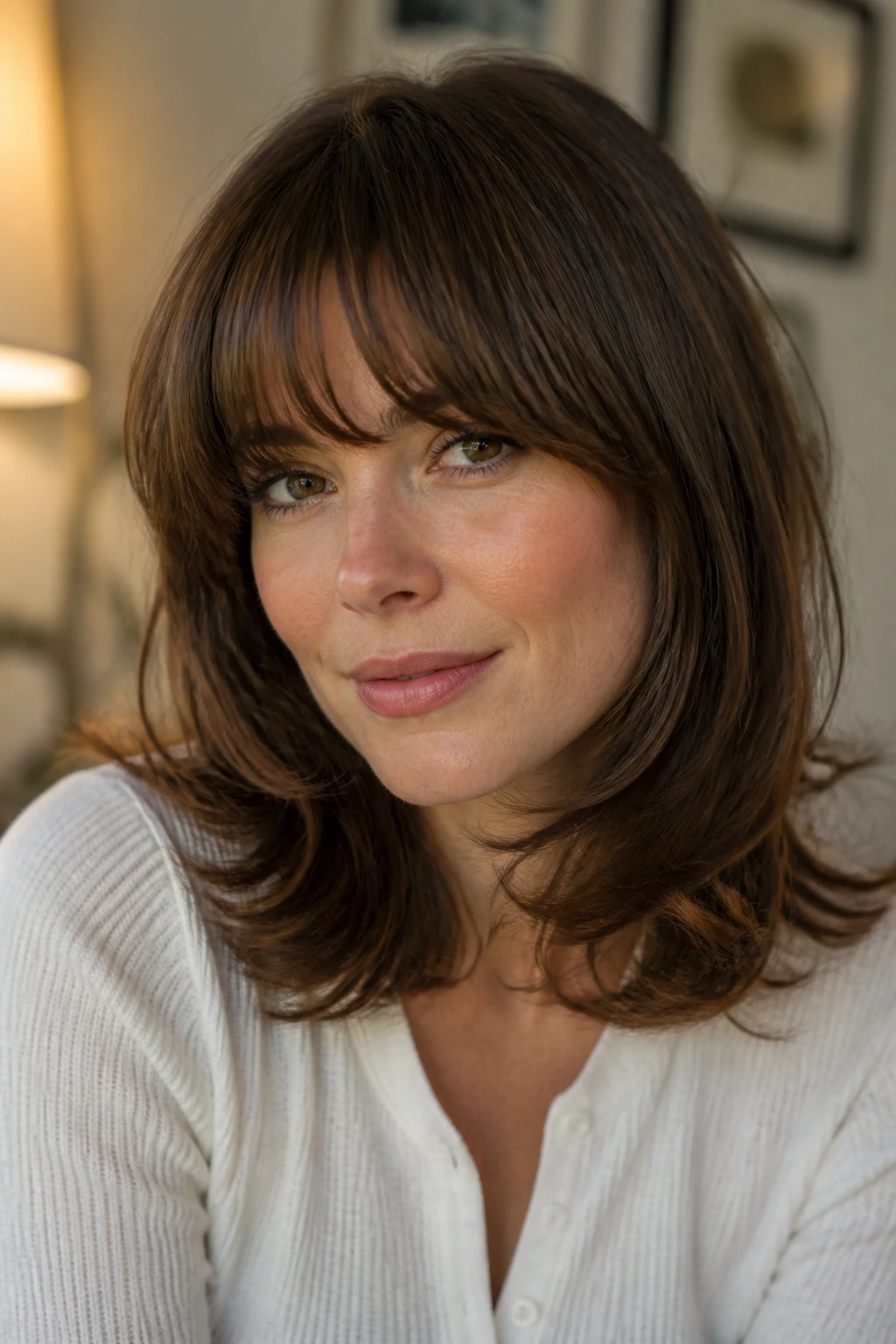
There’s a little retro energy in this one, but it doesn’t need to feel costume-y. The ends flip just slightly at the shoulders, and the bangs curve gently across the forehead instead of cutting straight. On shoulder-length hair, that tiny flip can make the whole haircut feel lighter.
This is a fun choice if you like a bit of movement near the ends and don’t mind styling with a round brush or a small flat iron bend. The layers should not be so short that they kick out wildly. You want a controlled curve, not a cartoon shape. A soft-hold spray keeps the front from falling flat without turning it crunchy.
It’s more forgiving than it looks. If the flip softens through the day, the cut still has enough structure to hold together.
16. Short Feathered Fringe with Swinging Ends
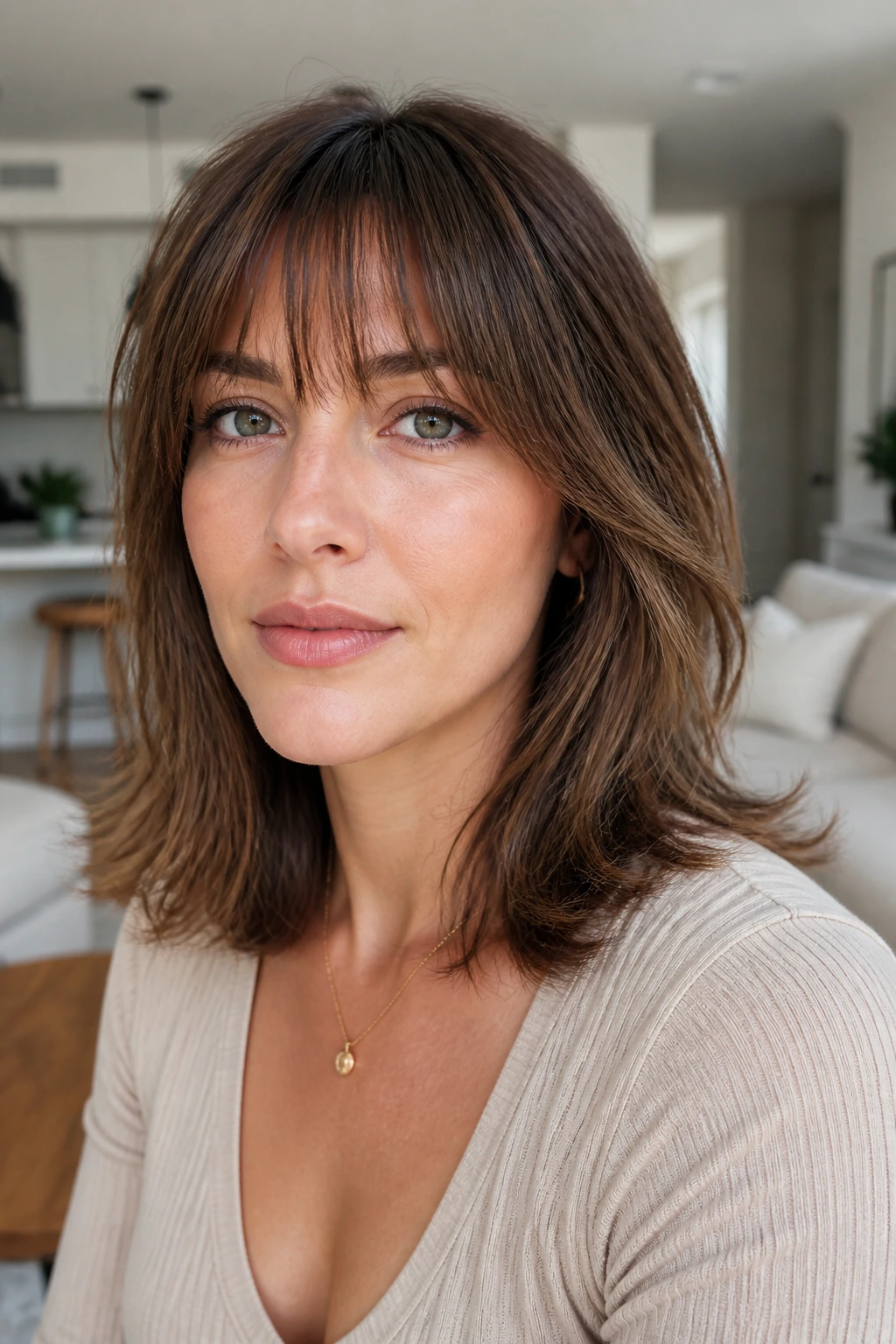
A short feathered fringe brings the eyes up fast. It’s crisp without being hard, and when it’s paired with shoulder-length layers that swing away from the neck, the whole style feels fresh and light. This is one of the cuts that makes people notice the bangs first, then the movement later.
The fringe should stop just above the brows or right at them, but with enough texture that it doesn’t read severe. The shoulder-length sections need to be feathered enough to avoid a chunky line at the bottom. If your hair is fine, this can give you a nice lift. If it’s thick, the feathering keeps the bulk from pooling around the jaw.
I’d keep the styling simple here: blow-dry the bangs first, then bend only the front-most layer. Too much curling ruins the point.
17. Center-Part Curtain Bangs and Textured Layers
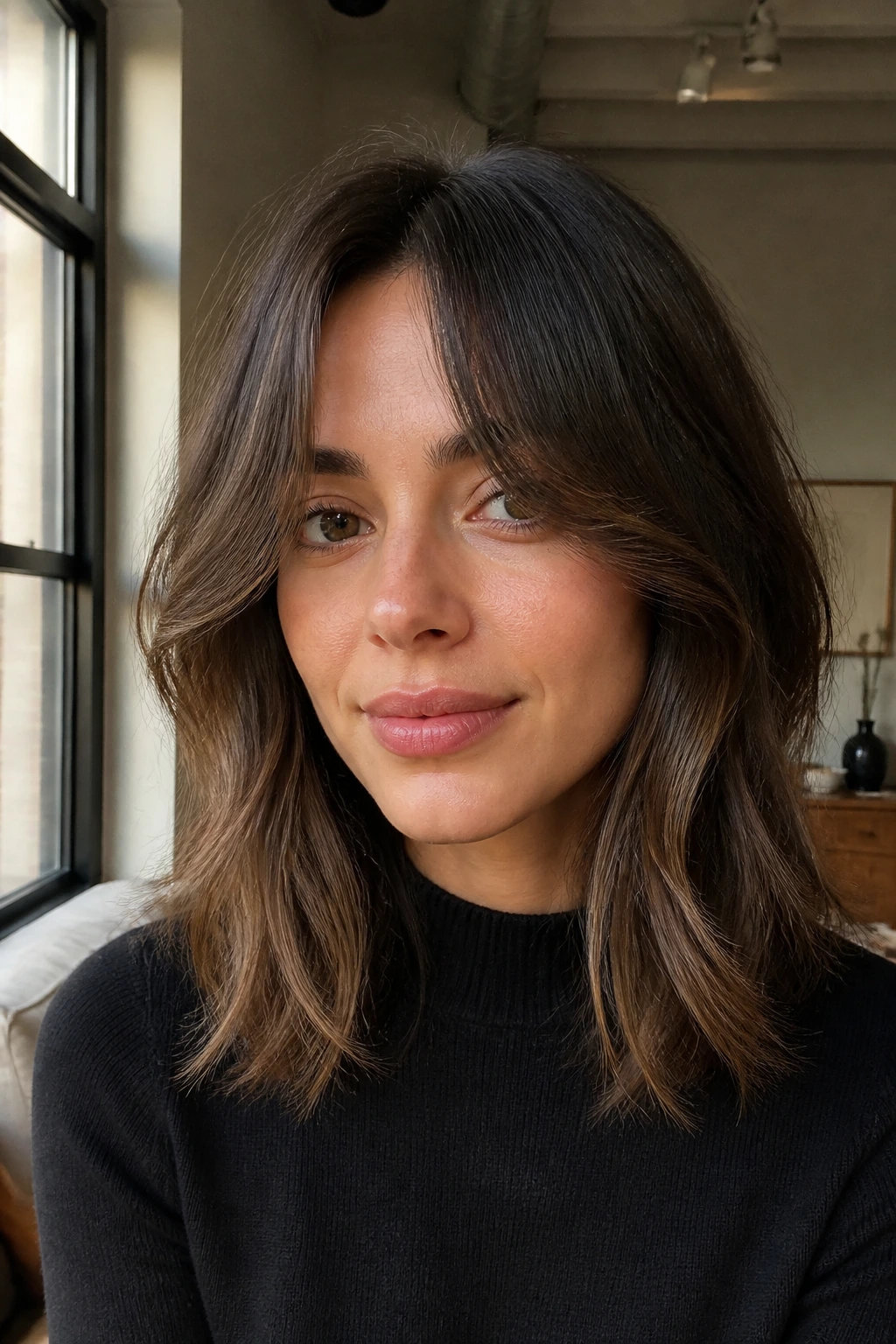
Center-part curtain bangs have become so common because they work. They open the face, slide into the rest of the haircut, and don’t demand a strict styling routine. Add textured layers at shoulder length and you get a cut that behaves well both blown out and air-dried.
This version is more textural than polished. The ends should feel soft and a little separated, not razor-thin. It suits wavy hair especially well, because the center part lets the natural bend fall into place without fighting the shape. On straighter hair, a small wave at the front keeps it from reading too plain.
If you have a strong cowlick at the front hairline, mention it. Curtain bangs can still work, but the fall needs to be adjusted around that swirl or the center will fight you every morning.
18. Soft Mullet-Lite Layers with Blended Bangs

A mullet-lite cut sounds edgy because it is, but the soft version stays wearable. The crown lifts a little, the sides taper softly, and the bangs blend into the rest instead of sitting as a separate piece. Around shoulder length, that gives you a haircut with shape and some attitude, but not a jarring line.
The point is movement. You want the haircut to look like it has air between the layers. If the stylist takes too much weight out of the side sections, the face can widen, so ask for blending rather than aggressive thinning. A little grit in the styling cream helps the ends separate without sticking together.
This cut is not for someone who wants a tidy, tucked-behind-the-ear bob. It likes a bit of chaos.
19. Straight Layers with a See-Through Fringe

See-through bangs can look delicate in a good way when the rest of the hair is kept smooth and straight. The layers are soft enough to move, but the overall line stays clean. On shoulder-length hair, that contrast gives the style a light, modern feel without making the ends wispy.
This cut works especially well on medium-density hair. The fringe doesn’t overwhelm the forehead, and the layers keep the profile from turning into a box. You can blow it out with a paddle brush for a sleeker finish or leave a slight bend near the ends for more softness.
A middle part suits this shape best, though a slight off-center part can make the fringe less symmetrical if that feels better on your face.
20. Thick-Hair Layers with Side Bangs and Weight Removal
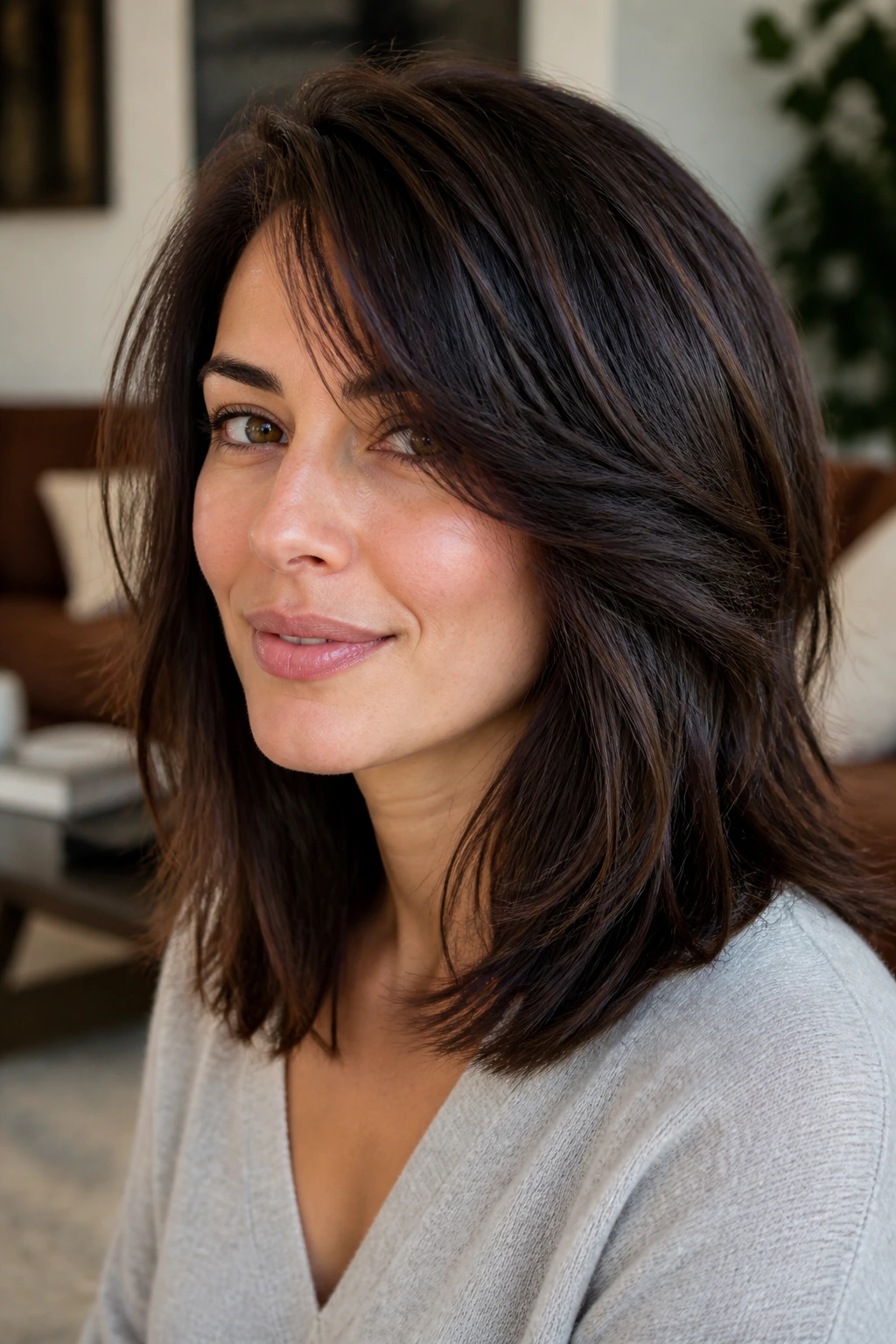
Thick hair needs room, but it doesn’t need to be chopped to bits. The better move is controlled weight removal through the mid-lengths and a side bang that helps the front sit away from the face. At shoulder length, that keeps the cut from swelling outward like a triangle.
Ask for long layers and a careful internal debulking near the back, not random thinning all over the surface. That’s where some cuts go wrong. Too much texturizing on thick hair can leave the ends fuzzy and uneven by the second day. A side bang softens the forehead and gives you a place to tuck the hair if the front feels too heavy.
This is the cut for anyone who has had too much hair on the neck for too long. Relief matters.
21. Angled Lob with a Curved Fringe
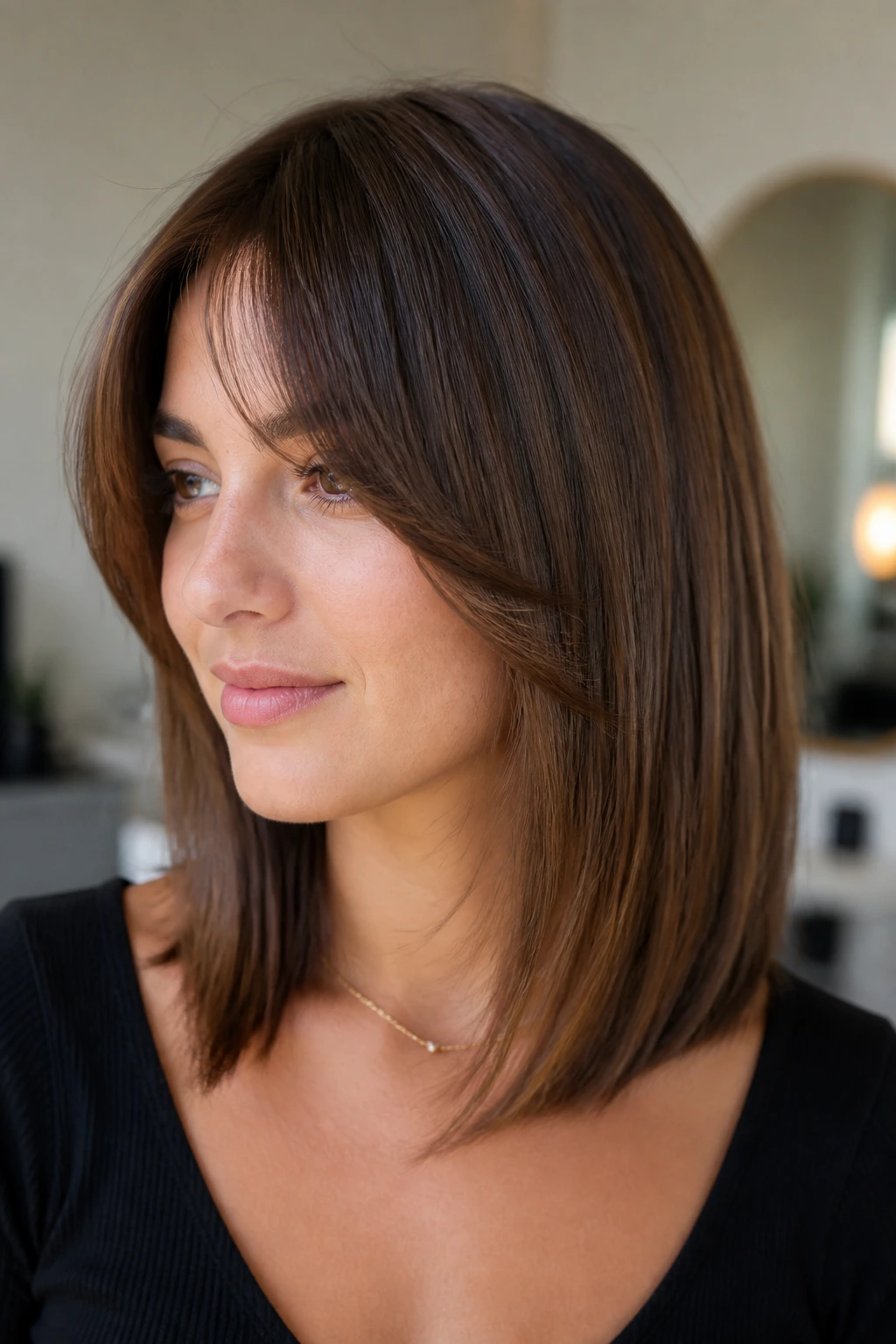
An angled lob gives the front a slightly longer line than the back, which helps the bangs and layers fall forward in a flattering way. The curved fringe follows that shape and keeps the cut from looking sharp or severe. It’s a neat little trick if you want shoulder-length hair that still feels sleek.
The angle should be subtle. Too much difference between front and back starts to look like a stacked cut, and that’s a different mood entirely. The fringe needs to curve gently into the sides so there’s no obvious border between bang and layer. On straight hair, this style looks especially clean. On wavy hair, it gets a more relaxed finish.
A smoothing cream at the ends keeps the line tidy, but keep it off the roots or the shape can go flat fast.
22. Grown-Out Bangs and a Razor-Soft Cut
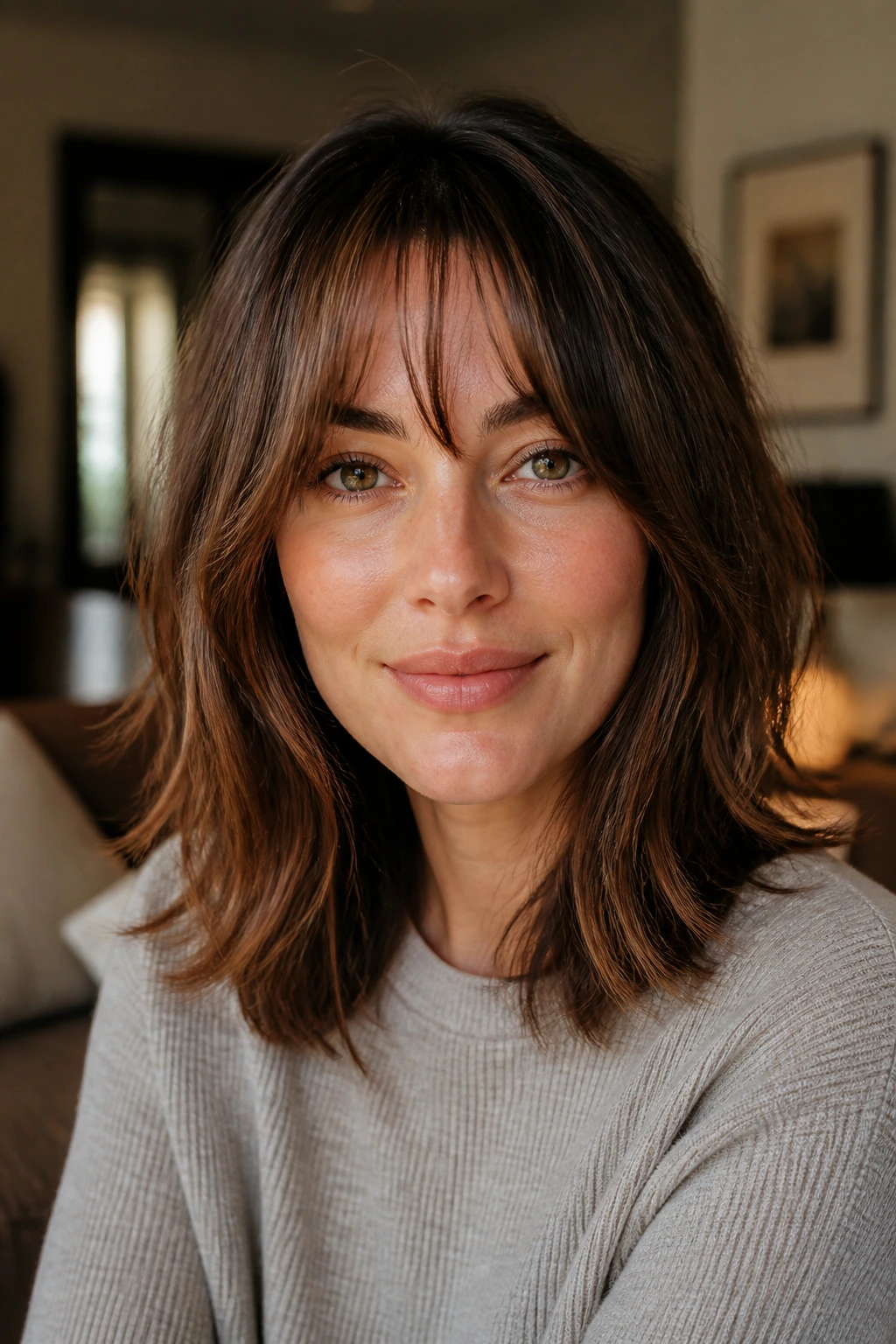
Sometimes the best bangs are the ones that already look a little grown out. This cut uses that idea on purpose: the fringe is cut longer, softer, and easier to blend into face-framing pieces, while the layers are razor-soft enough to move without hard edges. It’s a smart pick if you hate the sharp moment right after a bang trim.
The shoulder-length shape here should stay loose and a touch undone. That makes the cut forgiving on days when you don’t style it much. If you wear your hair up often, this is one of the friendliest versions on the list because the longer fringe can fall back naturally instead of sticking out like a mistake.
I’d recommend this for anyone who wants bangs but is wary of commitment. It buys you time.
23. Fine-Hair Shag with Wispy Bangs
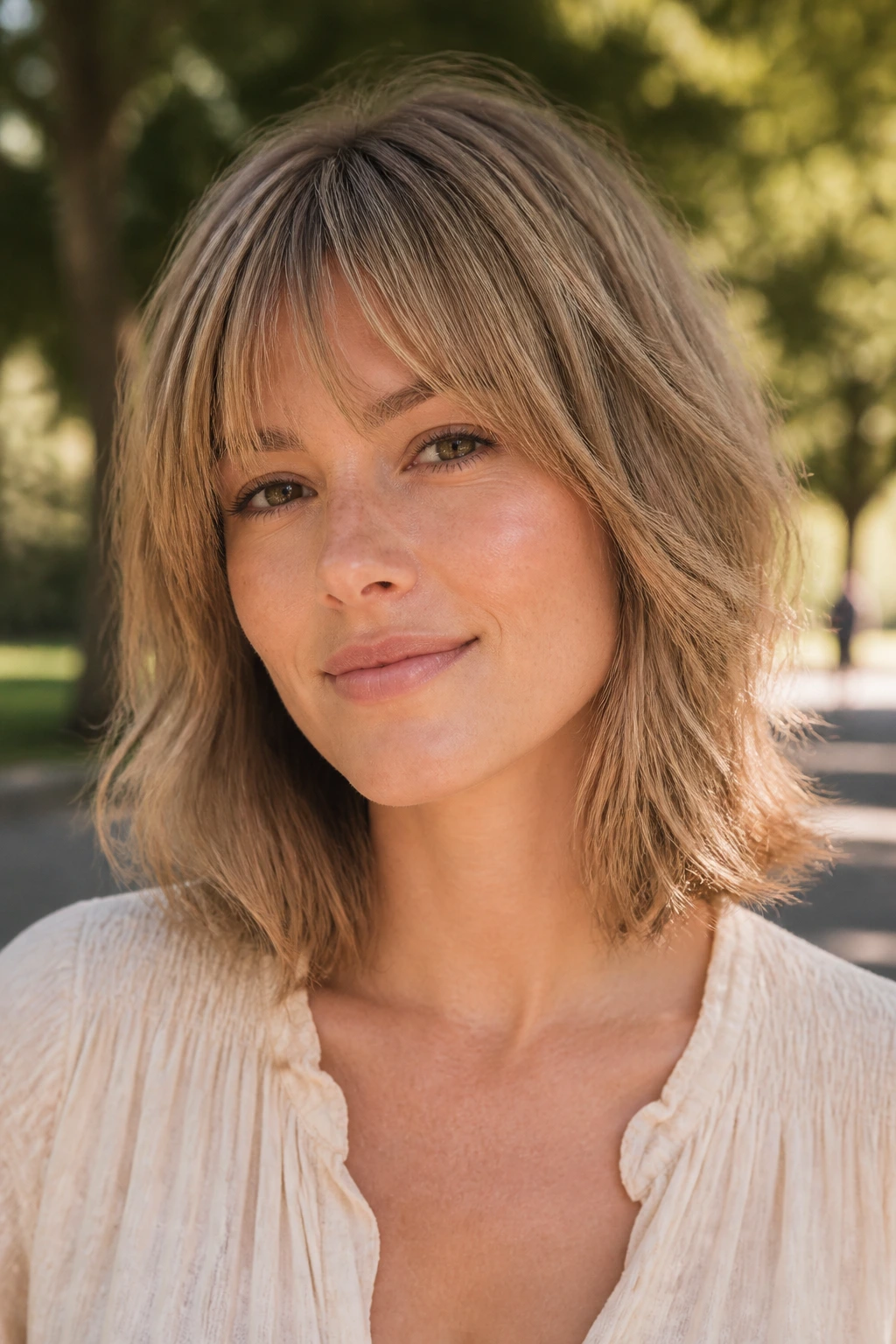
Fine hair needs a little structure, but not so much texture that the strands separate into nothing. A fine-hair shag with wispy bangs keeps the layers light and visible while preserving enough fullness around the perimeter. Shoulder length helps because the cut doesn’t disappear into the crown.
The bangs should be feathered, not over-thinned. That’s the line people miss. If you take too much out of fine hair, the fringe becomes stringy and the whole haircut starts looking tired by midday. A little root lift spray or mousse at the crown gives the layers more body, and the wispy fringe keeps the forehead from feeling heavy.
This is one of the better options if you want softness without sacrificing the illusion of density.
24. Polished Blowout Layers with Arched Bangs
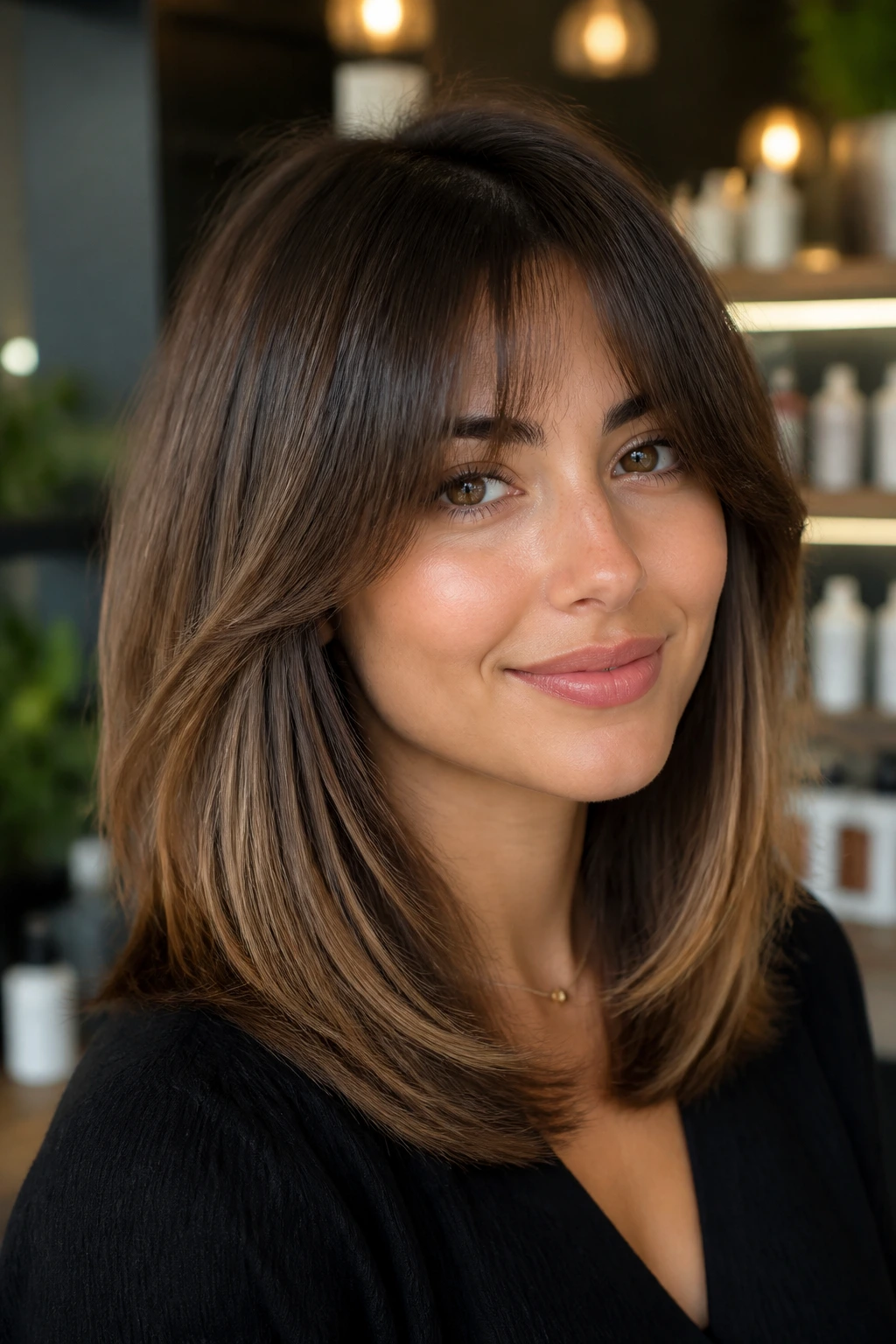
This is the salon-finish version of the bunch. The bangs arc gently above the brows, the layers curve under the shoulders, and the whole cut holds a shaped look that works especially well for straight to slightly wavy hair. If you like hair that looks as though it has been brushed into place on purpose, this is your lane.
The arched fringe is what makes it stand out. A flat bang can feel blunt and a curtain bang can feel casual, but an arched fringe gives just enough lift to open the face without exposing too much forehead. Pair that with a round-brush blowout and the cut settles into a smooth, rounded silhouette.
You do need to restyle it. That’s the tradeoff. It is not a wash-and-wear cut, and pretending otherwise will only make you annoyed.
25. The Low-Maintenance Grow-Out Cut That Still Has Bangs
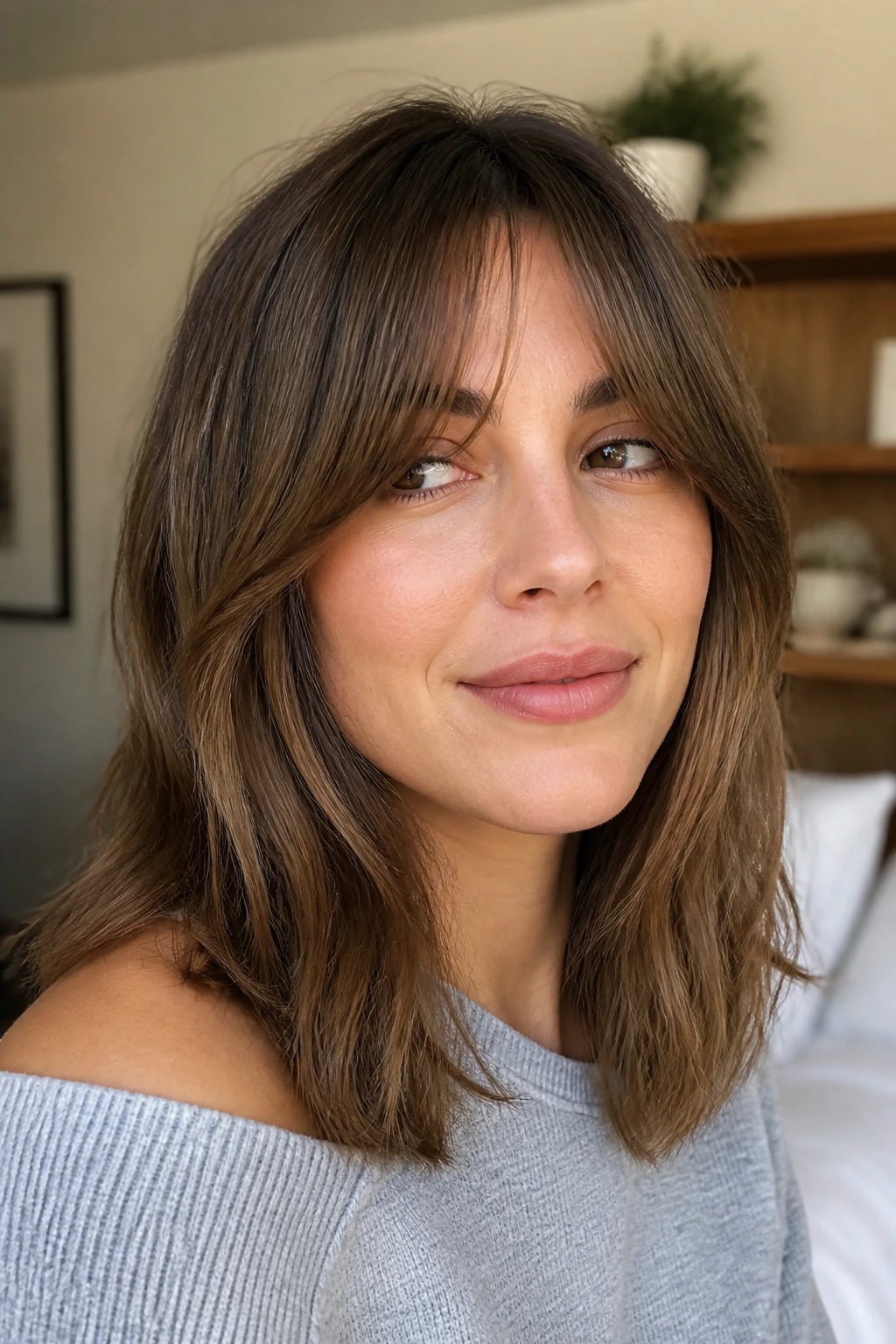
The best low-maintenance version is the one that still looks planned after six weeks. That means longer bangs that can be worn center-parted or swept aside, plus soft layers that start low enough to survive some grow-out without losing the outline. On shoulder-length hair, this is the cut that keeps giving a little shape even when you ignore it for a bit.
I like this for anyone who wants bangs but does not want to babysit them. The fringe can sit at the brows on day one and drift into cheekbone pieces later without looking like you’ve missed an appointment. The layers should be soft, not shredded, so the ends keep enough weight to tuck, flip, or bend as needed.
If your schedule is unpredictable, pick this one. It forgives a lot.
Why Soft Layers and Bangs Keep Working at Shoulder Length
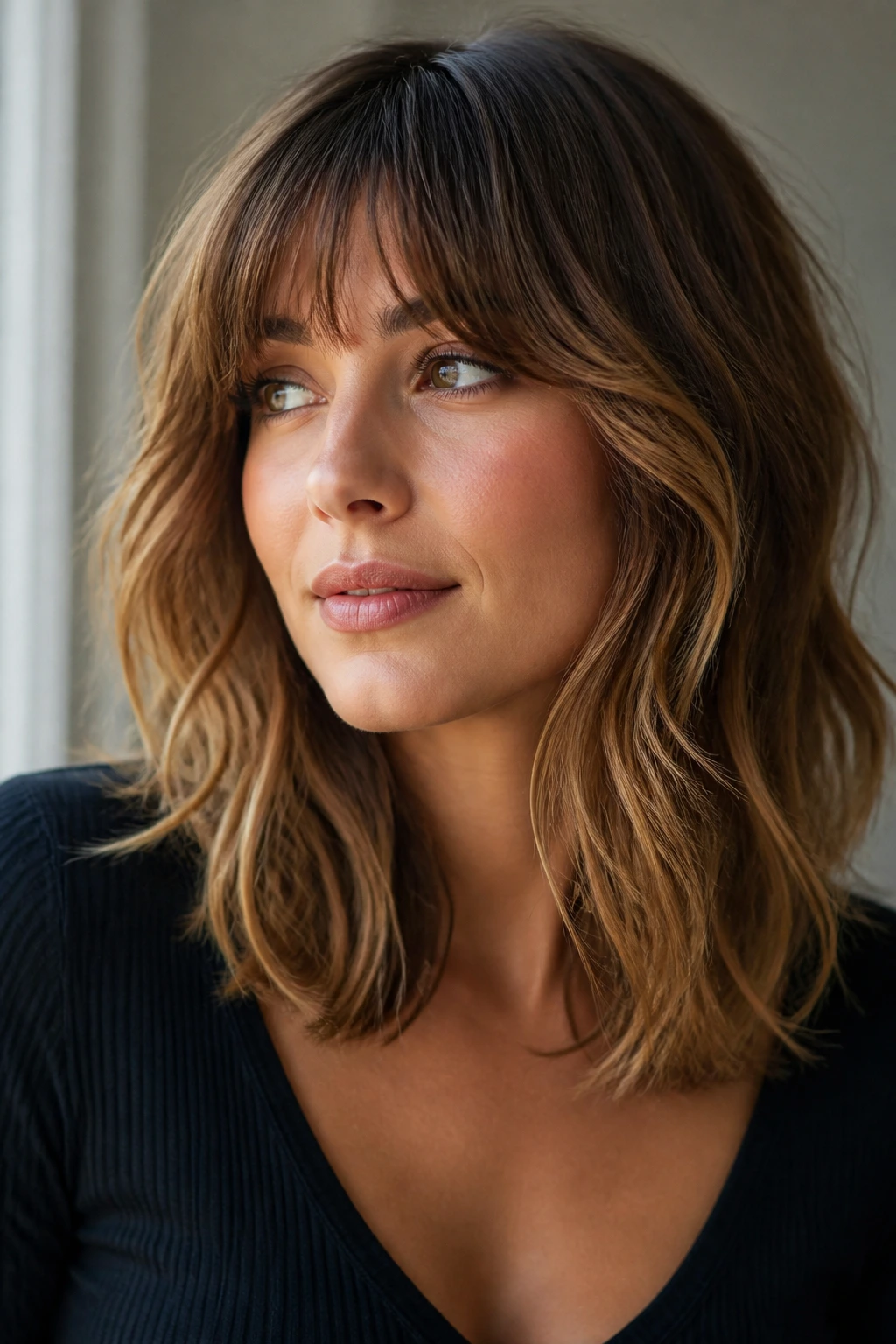
The geometry is doing half the work here. Shoulder-length hair sits in that useful band where the ends can bend under the collarbone, skim the jaw, or brush the tops of the shoulders without collapsing into a single shape. Add soft layers and the haircut stops hanging like a curtain. Add bangs and the eye has a place to land.
The other reason these cuts stay popular is that they’re adjustable in the chair. A stylist can move the layers up or down a little, cut the fringe heavier or lighter, and tilt the shape toward polished, lived-in, or somewhere in between. That flexibility matters more than people admit. The same haircut on two different heads can behave in completely different ways, and this length gives the stylist room to make those adjustments without losing the overall line.
Hair texture changes the feel, but not the logic. Fine hair needs a little internal lift. Thick hair needs controlled weight removal. Wavy hair needs enough room for the bend to show. Curly hair needs the layers to respect shrinkage and the bangs to land with the curl pattern instead of against it. The shoulder-length zone handles all of that better than most lengths because it’s neither too long to stay shapeless nor too short to feel unforgiving.
And yes, it grows out better than a very short cut. That’s not a small thing. If you’ve ever had a haircut go weird after three weeks, you know exactly why that matters.
What to Tell Your Stylist Before the Scissors Come Out
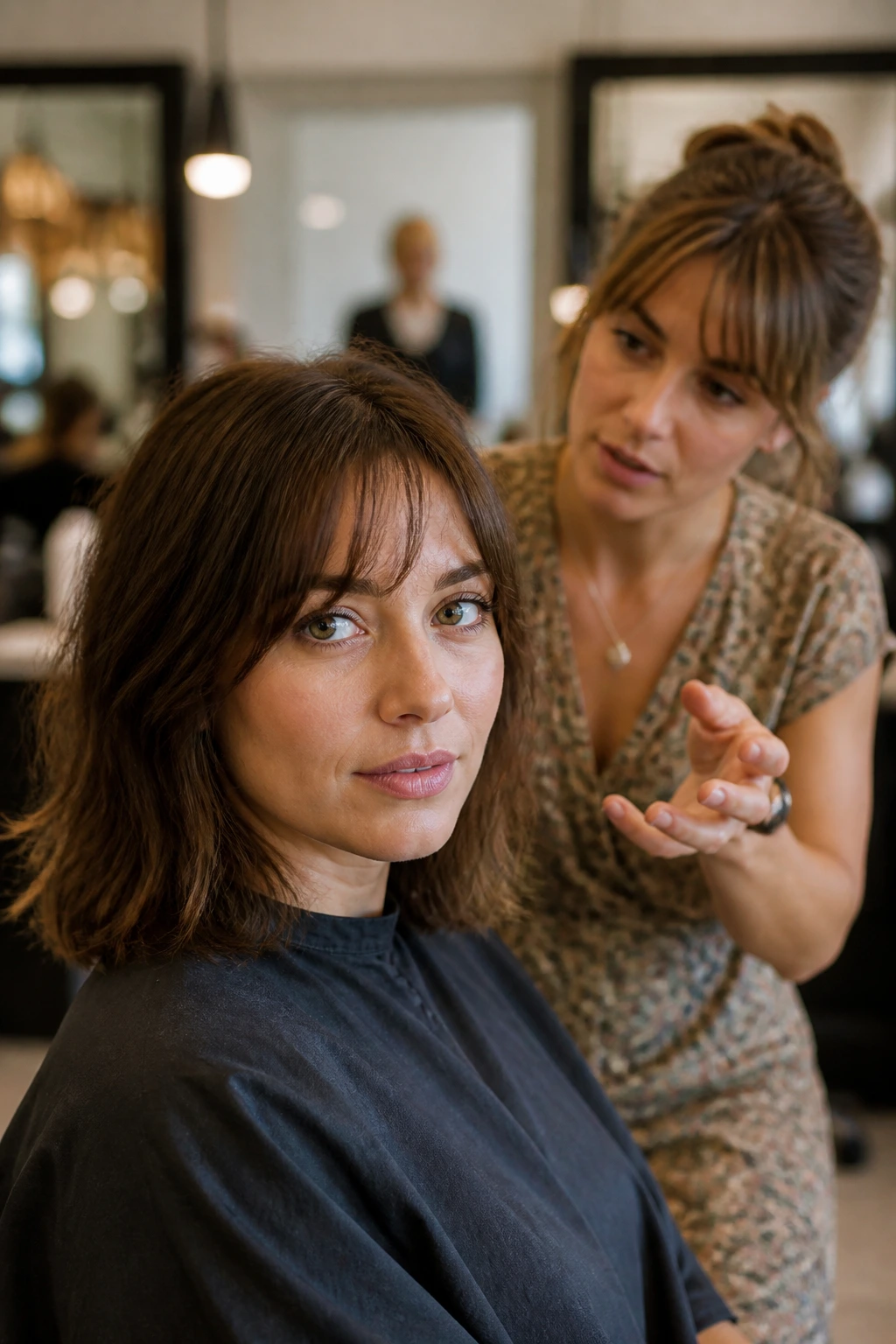
Bring photos, but not just one. Show a picture of the fringe shape you want and a separate picture of the overall length and layering. A lot of bad cuts happen because one photo covers the bang and another covers the body, and the stylist is left guessing which part matters more.
Say where your part lives. If you part your hair off-center every day, a center fringe may not behave the way you expect. If you have a stubborn cowlick at the front, say so early. That little swirl can change the whole front shape, especially on curtain bangs and wispy fringes.
Be honest about styling time. If you’re going to round-brush it once a week and air-dry the rest of the time, say that. Don’t ask for a polished blowout fringe if you know you’ll never touch a dryer. A good cut should match your actual morning, not your fantasy morning.
And ask for the bangs longer than you think. Hair shrinks, hair bounces, and bangs always feel shorter once they dry. That sentence has been true for a long time.
Common Mistakes That Make the Shape Look Choppy
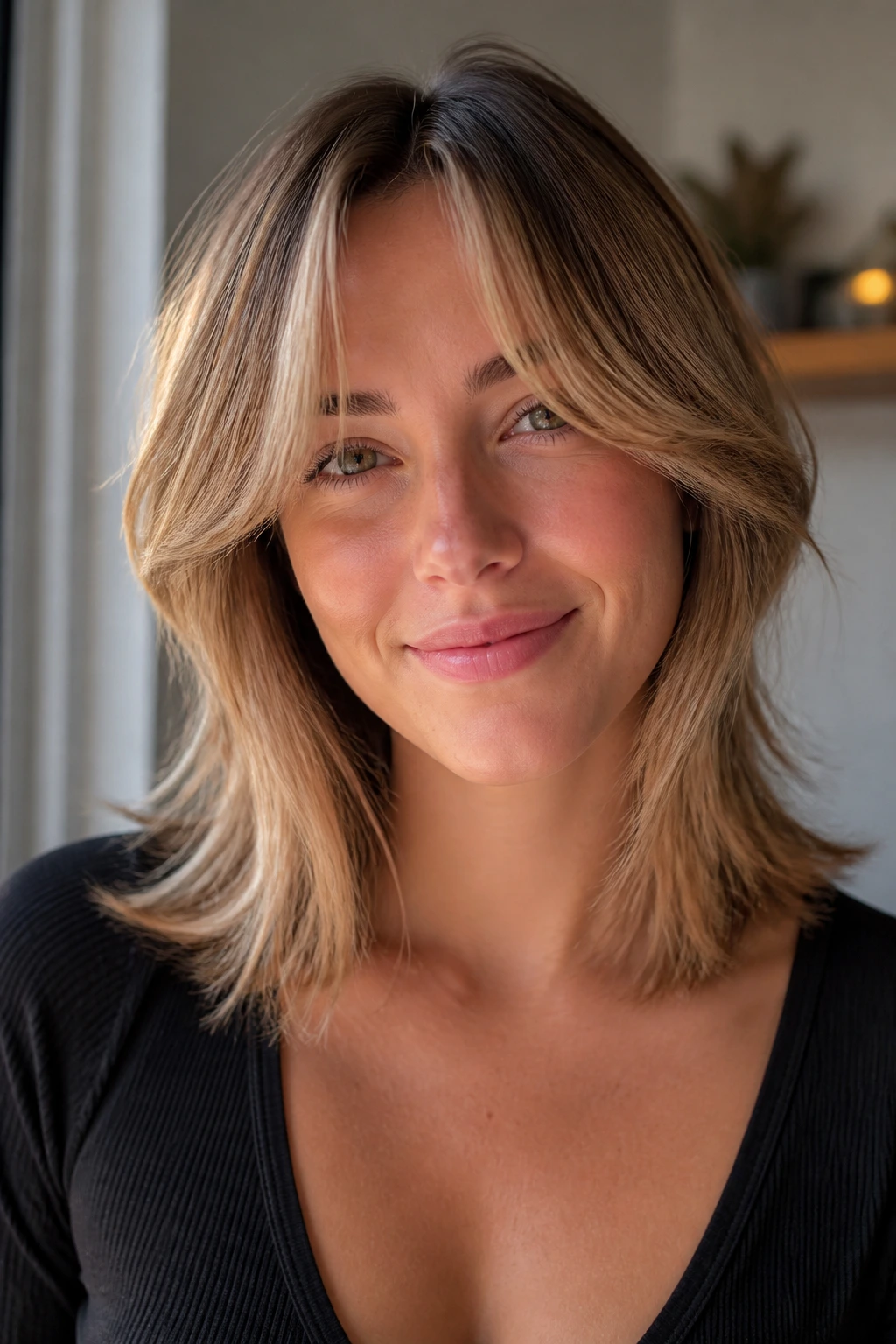
The biggest mistake is starting the layers too high. On shoulder-length hair, that can turn a soft cut into a frizzy, triangular one, especially if the hair is thick. The symptom is obvious: the ends puff while the crown goes flat. The fix is simple. Keep the shortest layers low enough to blend, and don’t let the top section get over-thinned.
Another problem is cutting the bangs too short on day one. They look cute in the mirror, then dry up and sit two inches higher than expected. The fix is to leave extra length, then trim again after the first styling. Bangs should be adjusted on the head, not guessed in the comb.
Over-texturizing fine hair is a mess people keep making. It sounds like a good idea until the strands separate into stringy bits that never reunite. If your hair is fine, ask for softness at the ends, not aggressive razor work everywhere.
Ignoring the hairline is another one. Cowlicks, whorls, and a strong natural part can make even a good cut look stubborn. A stylist can work with those things, but only if you mention them before the scissors start.
Last, don’t drown the haircut in product. Soft layers are supposed to move. Heavy cream or too much oil can weigh the fringe down and turn the ends limp by noon.
Different Ways to Wear the Same Shape
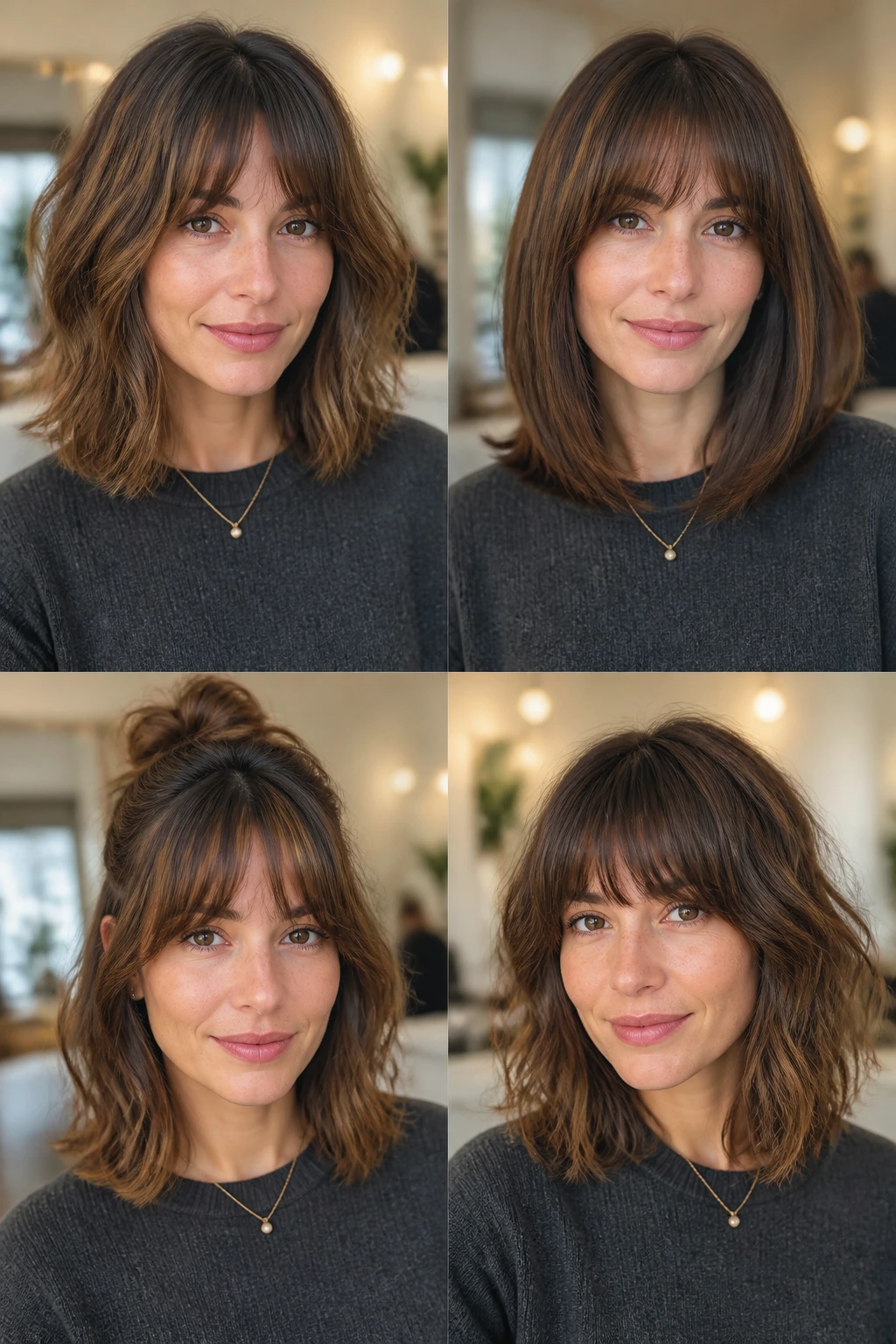
Soft Blowout Polish
This version leans smooth, with a round brush, a little heat protectant, and a light hold spray at the roots. It’s the best fit if you like hair that swings and keeps its line.
Air-Dry Texture
Swap the blow-dryer for mousse and a microfiber towel. This approach works best on wavy hair, where the layers can dry into a loose bend and the bangs break into soft pieces.
Curly Halo Shape
For curly textures, the bangs are cut to sit with the curl pattern, and the layers are rounded so the silhouette doesn’t flare out at the sides. A diffuser is enough; the shape should not need coaxing.
Thick-Hair Softening
This version removes weight only where the hair needs it most—usually through the mid-lengths and around the sides. The bangs stay longer so they can be worn swept or parted, which keeps the front from feeling crowded.
Tools That Make Styling Easier
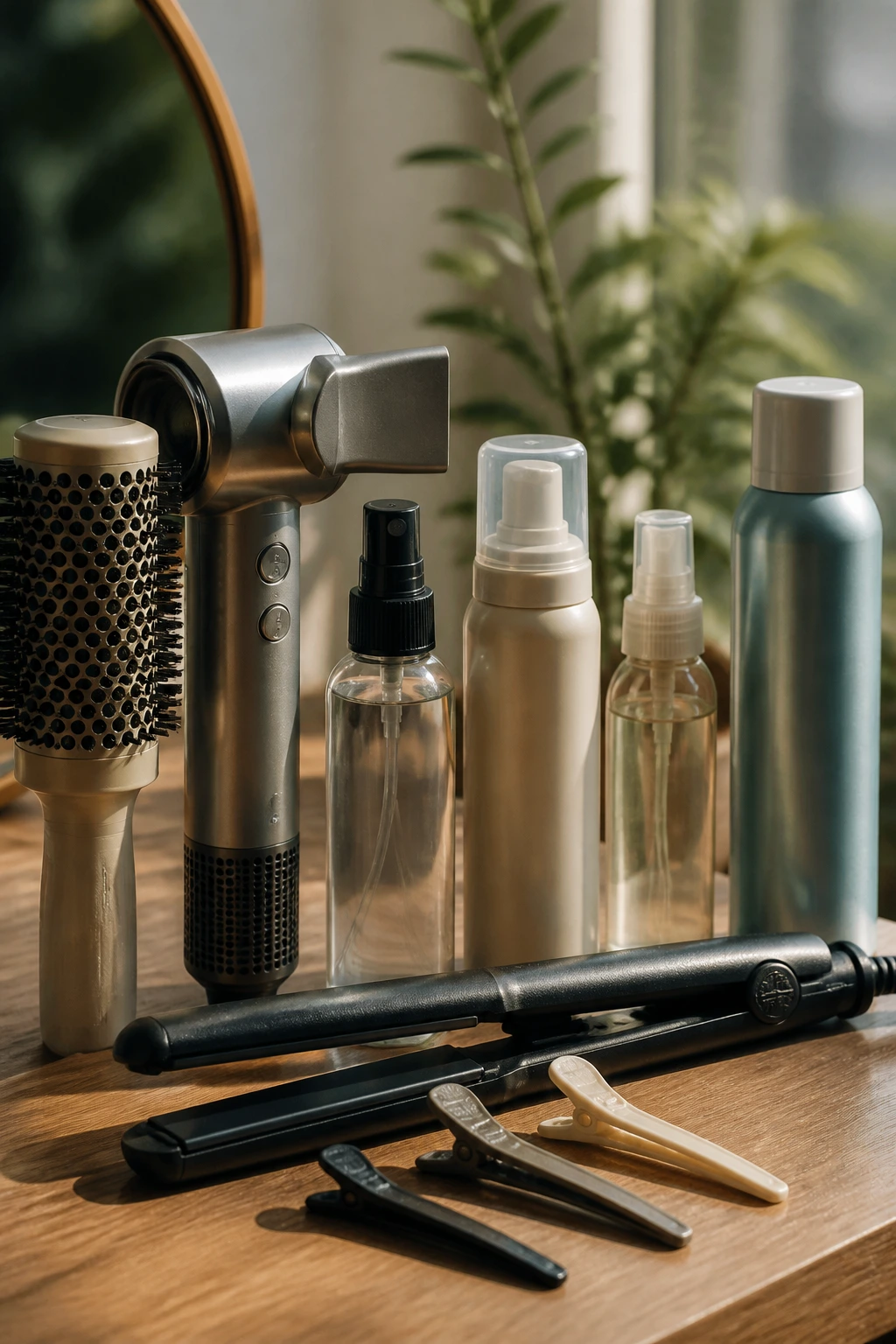
-
1-inch or 1.5-inch round brush — Good for shaping curtain bangs, side-swept fringe, and soft under-curves at the ends.
-
Blow dryer with a nozzle attachment — The nozzle matters. It sends air where you aim it instead of blasting the bangs into chaos.
-
Heat protectant spray — Use it before any brush blowout or flat-iron bend; bangs burn faster than the rest of the hair because they’re short and exposed.
-
Lightweight mousse — Best for air-dried layers and soft volume at the roots without stiffness.
-
Texturizing spray — Handy for piecey bangs, shag shapes, and lived-in bends. Use a light hand.
-
Mini flat iron — Useful for the fringe and front pieces when you want a small curve instead of a full blowout.
-
Sectioning clips — Nothing fancy, just enough to keep the top and side sections separate while you dry the fringe first.
-
Dry shampoo — Fringe gets oily fast. Dry shampoo at the roots can buy you a day, sometimes two.
Keeping the Shape Between Appointments
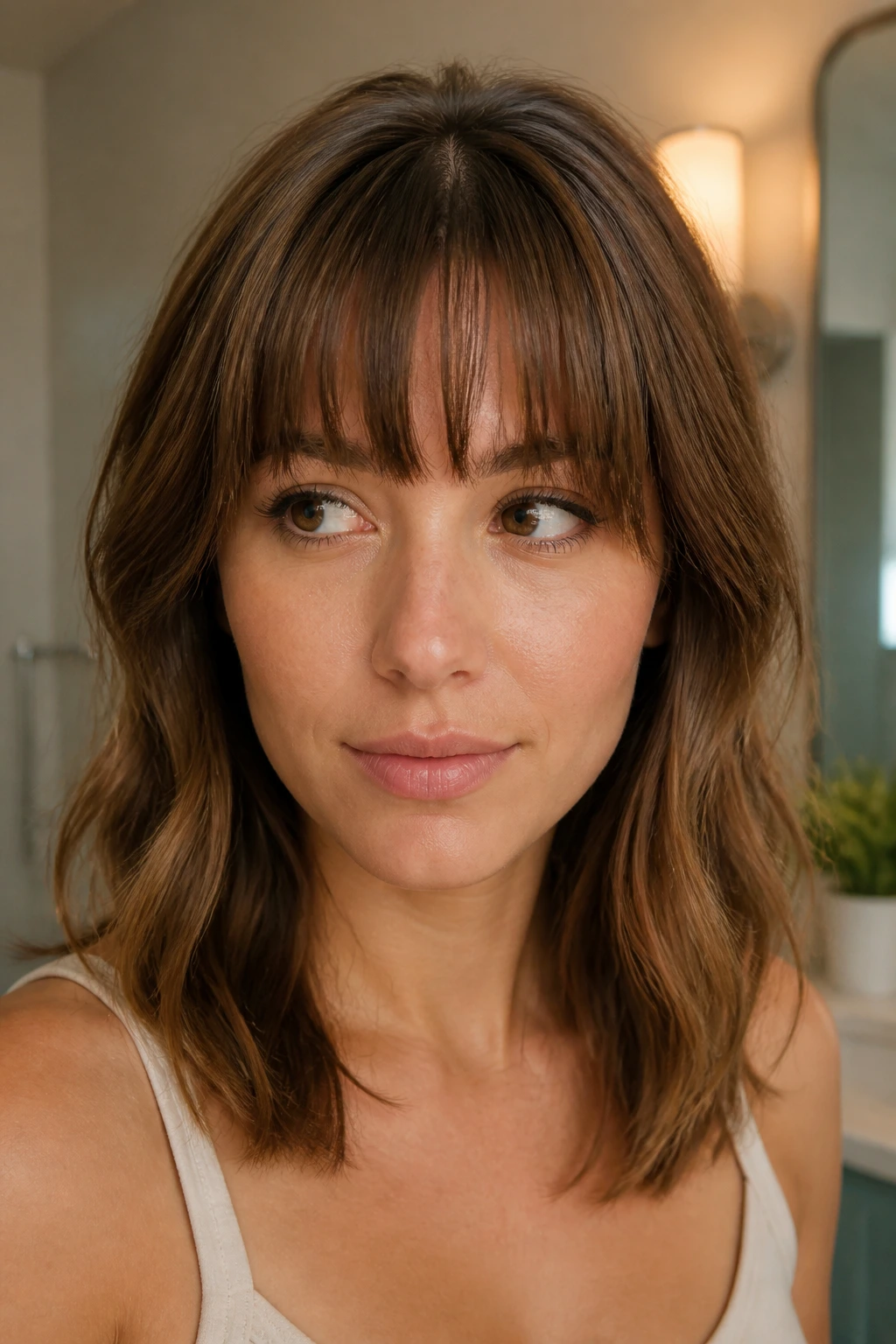
The fringe usually needs attention before the rest of the haircut does. If you want your bangs to stay at brow level, plan on a trim every 3 to 4 weeks. The full shape can usually stretch to 6 to 8 weeks, depending on how fast your hair grows and how picky you are about the outline.
Wash the fringe area separately if it gets greasy fast. A quick rinse at the sink, a towel squeeze, and a 30-second blow-dry can reset the front without washing the whole head. That little trick matters more than most people think, especially if you wear soft bangs that sit close to the skin.
If you style with heat, keep the temperature moderate. You do not need a scorching iron to bend a bang into place. A small brush and warm air usually do more than enough. On off days, dry shampoo at the roots and a finger-twist through the front pieces can revive the shape without a full restyle.
Sleep helps too. A loose clip or a satin pillowcase can keep the crown from getting crushed flat. It will not preserve a perfect blowout, because hair is not a museum piece, but it does cut down on the morning reset.
Frequently Asked Questions

Do soft layers with bangs work on fine hair?
Yes, if the layers are kept low and the bangs are not thinned too aggressively. Fine hair does best with soft movement and a bit of root lift rather than heavy texture removal. A blunt perimeter with feathered bangs often gives the best balance.
Which bangs are easiest to grow out?
Curtain bangs and long side-swept bangs usually grow out the cleanest because they already blend into the face-framing pieces. Short, blunt fringes take more patience and more trims to look neat during the grow-out.
Will layers make thick hair look thinner?
They can, if the stylist removes weight in the right places. The goal is to release bulk around the sides and mid-lengths without stripping the ends. Too much thinning makes thick hair frizzy and uneven, so ask for controlled layering, not aggressive razoring.
Can curly hair wear bangs without turning into a triangle?
Absolutely, but the bangs need to be cut with the curl pattern and the layers need to support the shape instead of fighting it. A dry cut often gives better results because shrinkage is easier to read. Curly hair hates guessing games.
How often should I trim shoulder-length layers?
Most people do well with a shape trim every 6 to 8 weeks. If the bangs sit in your eyes or split badly, trim the fringe sooner. The cut can still look fresh even if the rest grows a little.
What if my bangs separate in the middle every morning?
That usually means the hairline wants a center part or a stronger dry-down direction. Blow-dry the fringe first, side to side, while it’s damp, then pin it or clip it until it cools. A tiny bit of styling cream at the roots can help, but too much product often makes the split worse.
Should the shortest layer start at the cheekbone or the chin?
For most shoulder-length cuts, cheekbone or just below is the safer place to start. Chin-level layers can work, but they can also widen the sides if the hair is thick or coarse. The exact point should follow your face shape and density.
Can I air-dry this kind of haircut?
Yes, especially if you choose soft shags, curtain bangs, or piecey fringe shapes. Air-drying works best when the layers are cut to support your natural bend. A little mousse or leave-in cream makes a bigger difference than people expect.
Grow-Out Grace
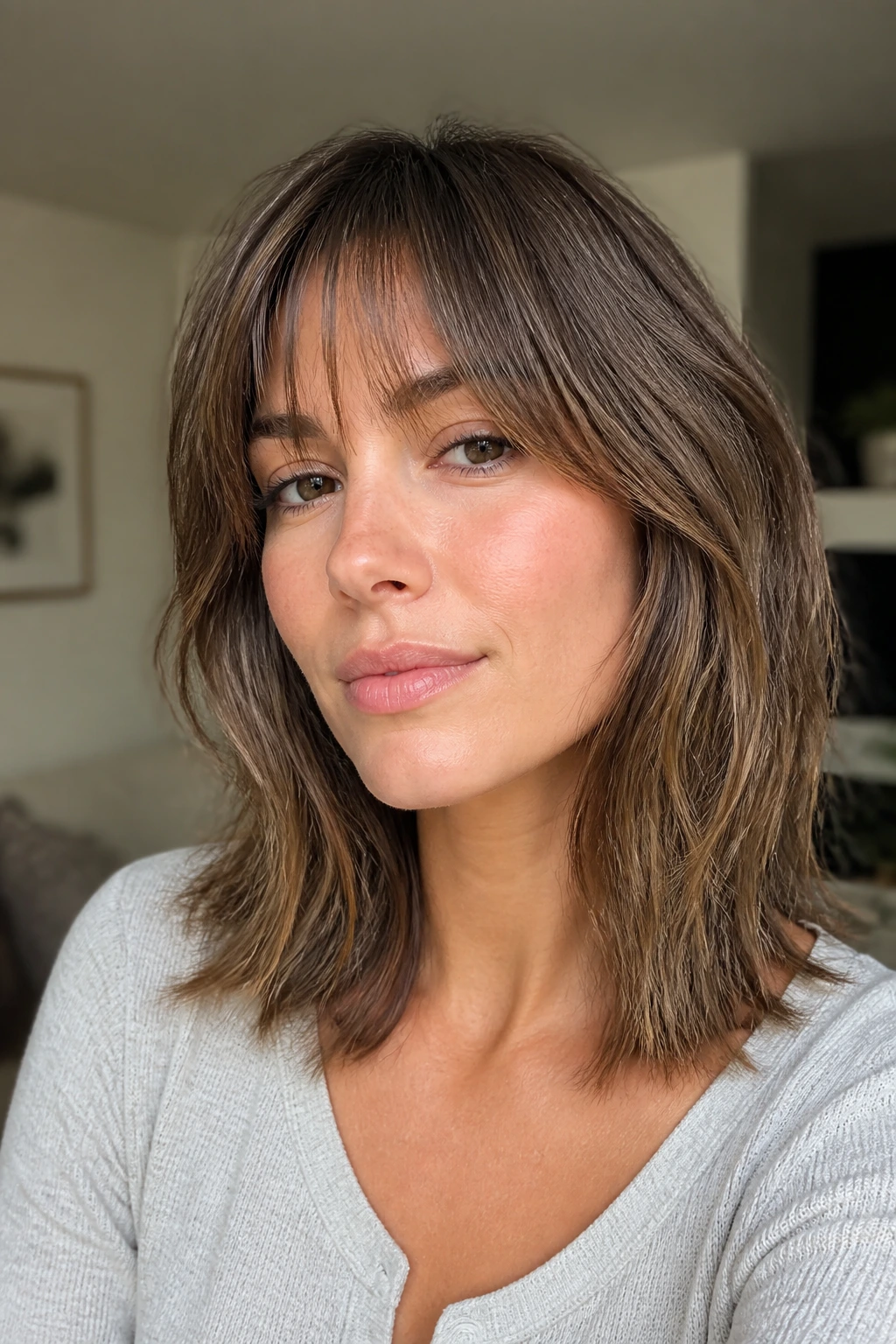
The nicest thing about soft layers with bangs at shoulder length is that the haircut keeps changing without falling apart. The bangs can sit crisp for a few weeks, then soften into face-framing pieces. The layers can look polished one day and slightly undone the next, which is usually the point anyway.
If you want a cut that keeps its shape without asking for perfection every morning, this length has real staying power. Pick the version that matches your texture and your patience, not the one that looks prettiest in a photo. The one that fits your mirror, your hairline, and your actual routine is the one you’ll keep liking after the novelty wears off.