



Fine hair doesn’t need a bigger pile of hair; it needs a smarter front. Closure sew-in styles with bangs for fine hair work because they control the parting area, soften the hairline, and let the fringe do the visual heavy lifting instead of asking every strand to look dense on its own.
That front section matters more than people think. A blunt bang can hide a closure seam, a curtain bang can widen the face frame, and a feathered fringe can keep the whole install from feeling bulky at the brow. Get that balance wrong and the style starts to look stiff by day two. Get it right and the hair moves, settles, and keeps its shape without looking like it’s trying too hard.
I’ve watched too many fine-haired installs go sideways for the same boring reasons: too many bundles, a bang cut too thick, and a closure that sits like a little rug at the front. The best versions feel lighter when you turn your head. They keep the line clean. They leave the forehead area with enough air to breathe.
Why These Banged Closure Sew-Ins Work So Well on Fine Hair
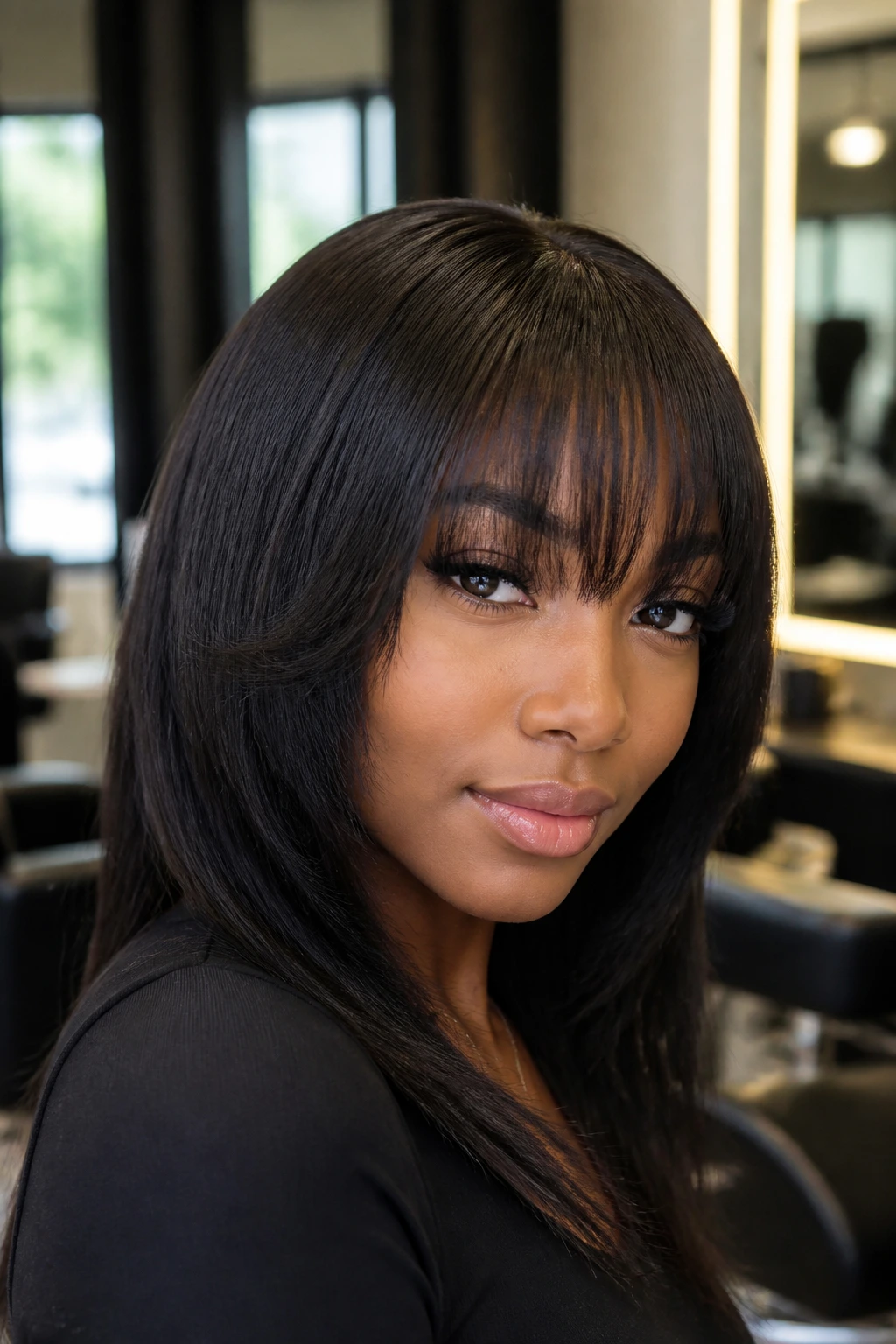
Less leave-out, less stress: A closure gives you a controlled front, which matters when your natural hair is fine and easy to overwork with daily heat or edge tension.
Bangs change the whole read: A fringe breaks up the forehead area, so the eye sees shape and contrast instead of counting individual strands at the hairline.
Texture can fake fullness: A soft wave, yaki finish, or lightly curled end makes the install look denser than a pin-straight sheet of hair.
Shorter shapes carry more lift: Bobs, lobs, and collarbone cuts sit lighter on fine hair because they don’t drag the style down with extra length.
The closure disappears faster: A bang draws attention forward, which helps the closure blend instead of becoming the first thing people notice.
What a Fine-Hair-Friendly Install Needs at the Front
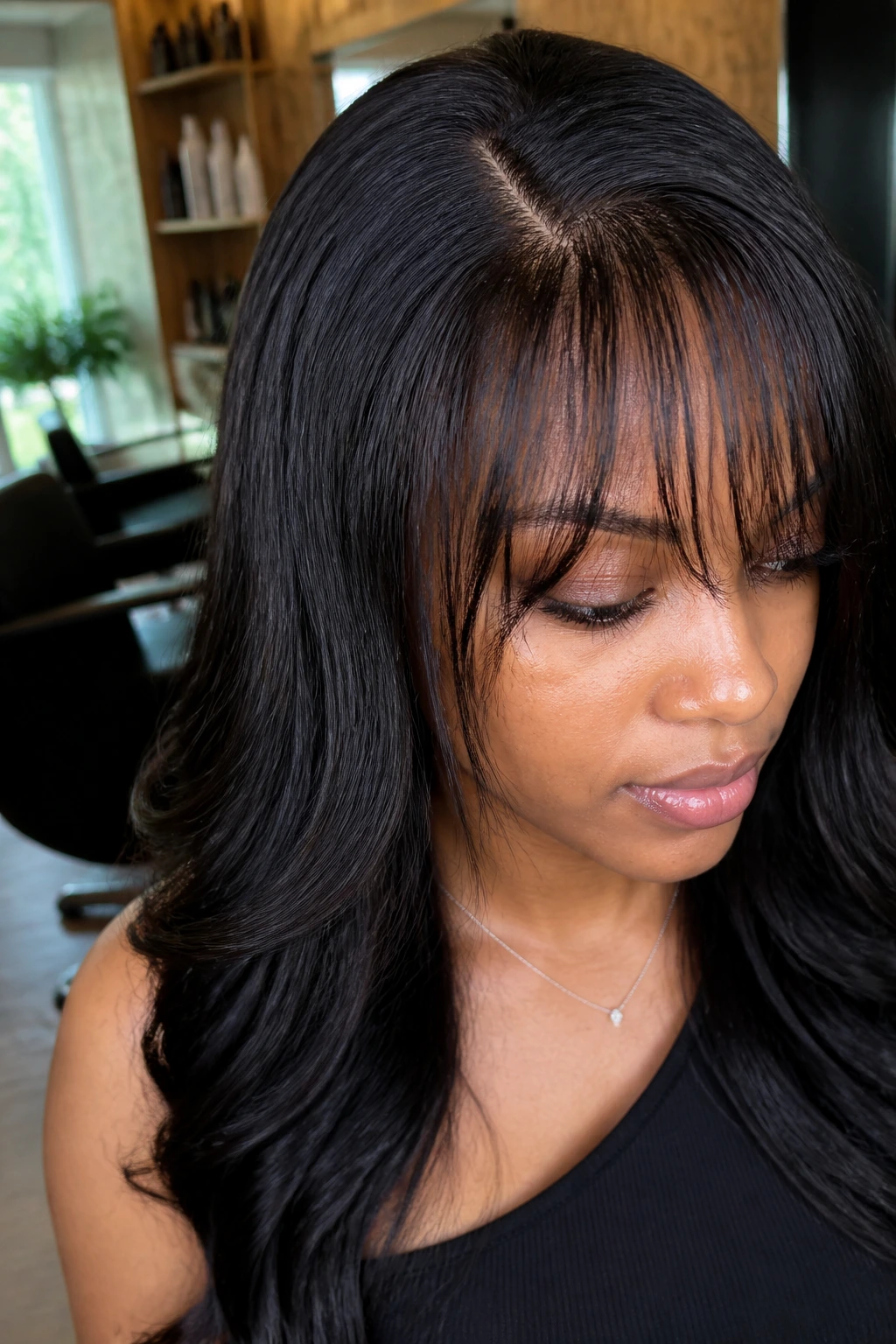
Fine hair is not the same thing as thin hair, and that distinction matters. Fine hair means each strand has a smaller diameter. You can still have plenty of it, but it will usually show weight, oil, and tension faster than coarser hair. That’s why a closure sew-in has to be planned from the front back, not the other way around.
Closure Size
A 4×4 closure is enough for a lot of blunt fringe looks, especially bobs and shorter lobs. If you want more room to shift the part, build a longer curtain bang, or play with a deeper side part, a 5×5 closure gives you a little more flexibility without getting bulky. A 6×6 can work, but on fine hair it can start to feel like too much cloth at the top unless the install is very well balanced.
Density and Bundle Count
For short to medium styles, 2 bundles plus a closure is often the sweet spot. If the hair is longer and wavey, 2.5 to 3 bundles can make sense. More than that tends to flatten the crown or create that overbuilt front that looks neat in the chair and strange the second you step outside.
Bang Shape and Direction
Bangs should match the way the closure falls. Fighting the part is how you get a shelf. A blunt fringe wants a clean, compact closure. Curtain bangs need enough width to split without showing gaps. Feathered bangs are forgiving, but they still need lightness at the root so they don’t separate into strings by noon.
1. Glassy Bone-Straight Bob with Blunt Brow-Grazing Bangs
This is the one I recommend when someone wants the cleanest possible line without making fine hair look limp. A straight bob has an honesty to it. There’s nowhere for the style to hide, which is exactly why it works.
The blunt bang does most of the visual work here. It covers the front edge, gives the face a hard frame, and makes the whole install look fuller than it really is. Ask for the fringe to skim the brows, not cut above them. That tiny difference changes everything. Too short and it looks jumpy. Right at the brow line and it feels deliberate.
Why it works on fine hair
The bob keeps the weight up and close to the head, so the install doesn’t hang off your scalp like a curtain. On fine hair, that matters. A long straight style can show every thin section, while a bob reads as compact and polished.
A 4×4 closure is usually enough for this one, and I’d keep the density moderate. Think two bundles of 10- to 12-inch straight or yaki straight hair and a closure that’s been lightly plucked, not over-thinned. The bang should be cut dry, after the install settles. Wet hair lies.
Best detail to ask for: a soft bevel at the bang ends so they don’t look like a rigid wall.
2. Soft Curtain Bang Lob with a Center Part
Why does this style keep showing up on fine hair? Because it cheats in the smartest way. The center part creates symmetry, and the curtain bangs pull the eye outward, which makes the front look wider than it really is.
That little split in the fringe gives the face room. It also prevents the bang from sitting as one heavy block across the forehead, which is the exact mistake that makes fine hair look flat. A collarbone-length lob gives enough movement without asking for too much bulk.
What to ask for at the chair
A 5×5 closure helps here because you want enough space for the center part to open naturally. Pair it with body wave or soft straight bundles at 12 to 14 inches if you want the hair to move without looking sparse. The bangs should be cut to graze the cheekbone at the widest point and taper a little as they fall.
This is one of those styles that looks better when the front isn’t frozen in place. A quick wrap at night, then a light paddle-brush blow-dry in the morning, is usually enough to reset the shape. No heavy oil. None.
3. Feathered Side-Swept Fringe on a Loose Body Wave
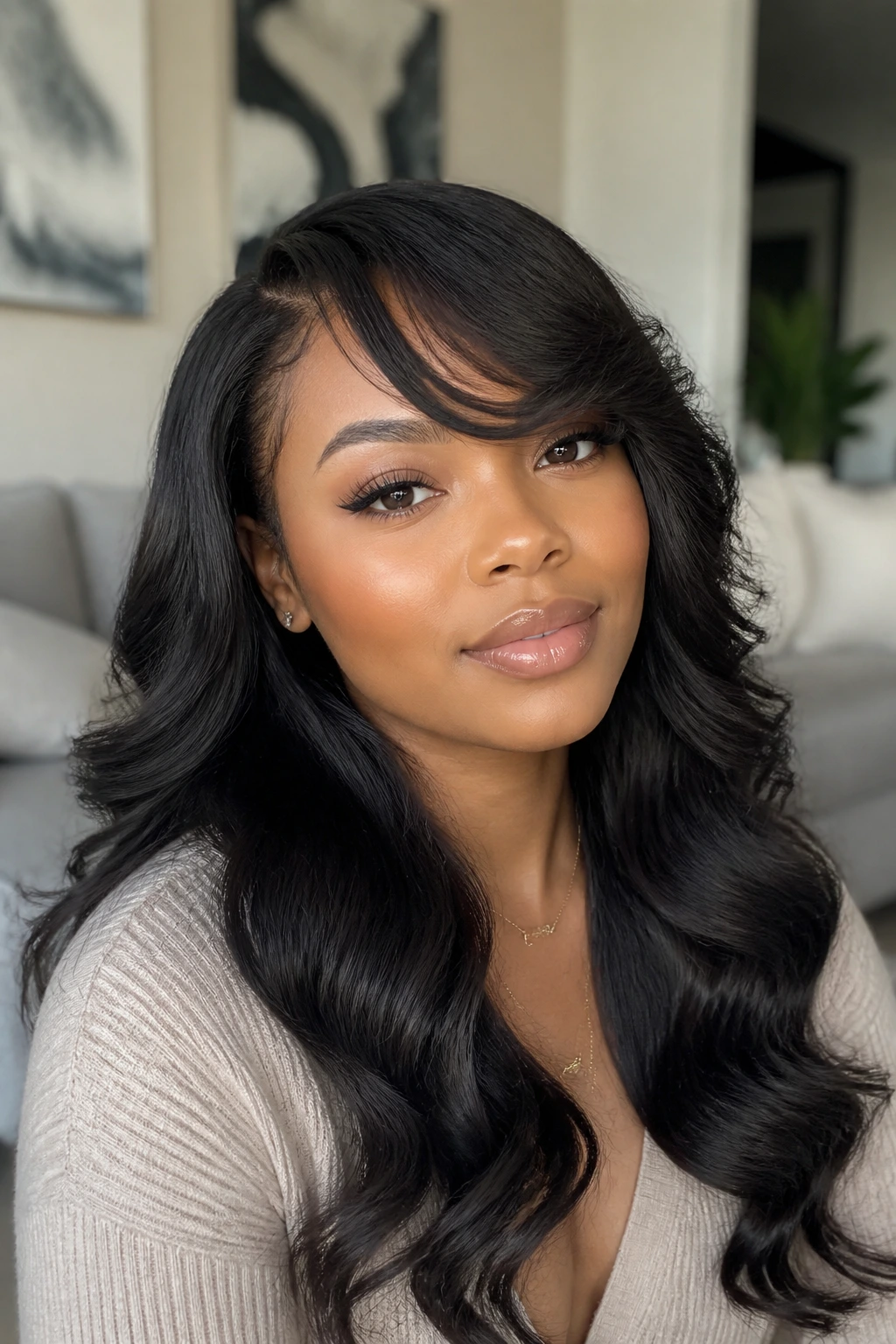
A side-swept fringe is a gift when the temples are fine or the front hairline needs a little softening. It doesn’t sit there and announce itself. It slides.
On body wave hair, that diagonal line feels even more natural because the bend in the strands gives the fringe a place to land. The result is easy on the eye and much kinder to fine hair than a blunt wall of bangs that has to be perfectly full to work.
The mechanism is simple
A side part creates lift. A diagonal bang creates movement. Put those together and the style reads fuller at the top without needing extra hair stuffed into the front. That’s the part people miss. They think more hair equals more body. Sometimes it just equals more collapse.
Good pairing: a 5×5 closure, soft body wave bundles around 14 to 18 inches, and a bang cut with a little separation at the ends instead of one solid edge. If your natural hairline is sparse at the corners, this is one of the nicest ways to keep those areas out of view without forcing a blunt fringe to do a job it doesn’t want.
4. Bottleneck Bangs on a French Bob
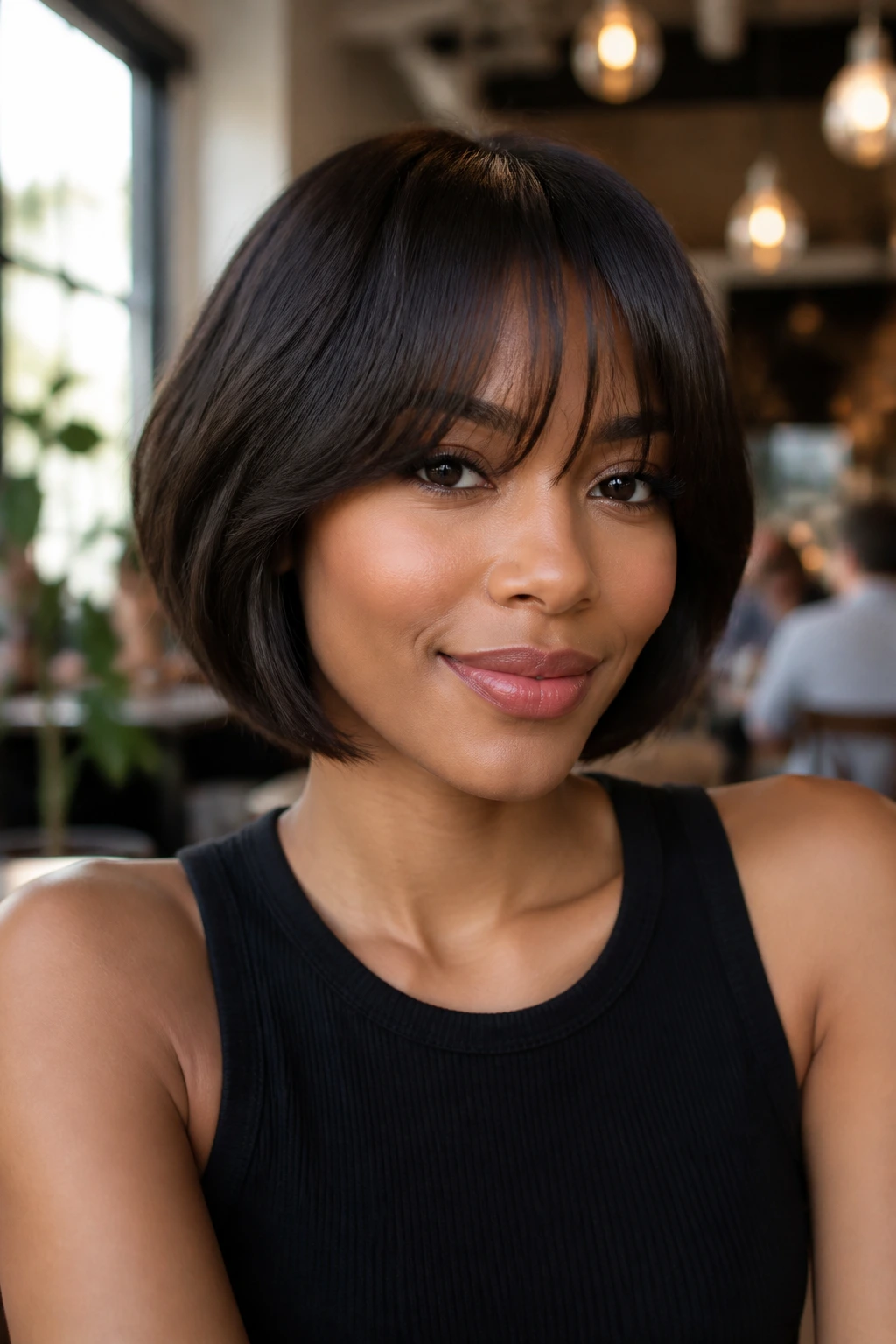
Bottleneck bangs are clever. They start a little narrower in the center, then open out around the brow and cheekbone, which gives the forehead shape without swallowing the face. On a French bob, that shape feels clean and a little sharp in the best way.
Fine hair loves a shorter silhouette, and this one has almost no extra baggage. The bob lands around the jaw, the fringe gives you structure, and the whole style looks intentional even when it’s not freshly styled to death.
What makes it different
This is not a heavy bang. It’s a sculpted one. You want enough fullness to cover the closure front, but not so much that the fringe sits like a curtain rod. The edges should be soft and slightly longer toward the temples. If the center is too thick, it loses the bottleneck effect and starts looking blunt in a bad way.
This style tends to work well with a 4×4 closure and 8- to 10-inch bundles. I like it best on straight or lightly waved hair because the cut itself already carries a lot of personality. If you add too much curl, it starts fighting the precision.
5. See-Through Fringe on a Flipped Lob
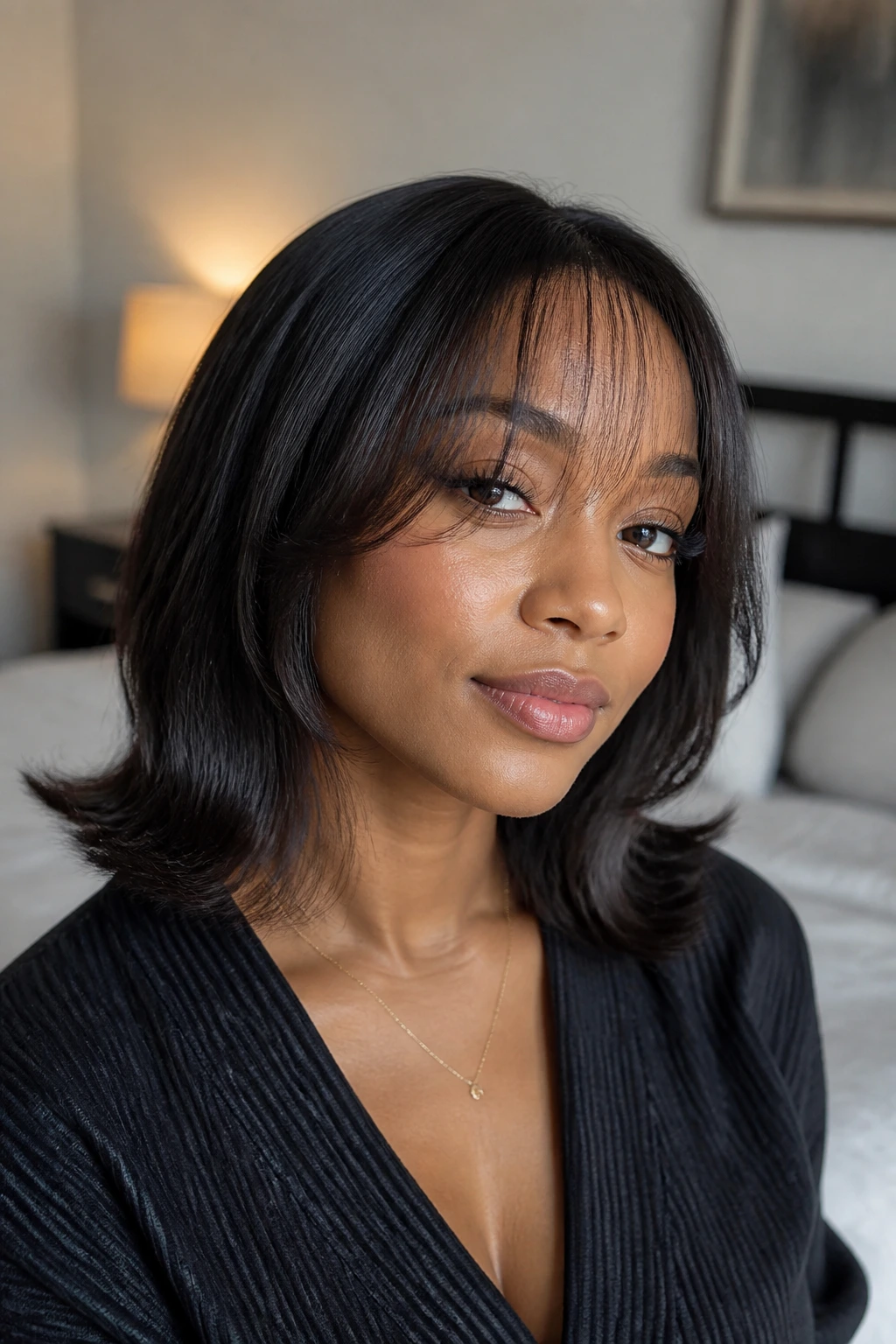
A see-through fringe is the answer when you want bangs without the weight of full coverage. It’s airy, piecey, and a little more forgiving if your forehead gets oily or your part tends to shift.
The flipped lob underneath gives the whole style some body at the ends. That matters. Fine hair can look limp if every inch lies flat, so the little outward bend at the bottom keeps the line alive. It also balances the softness of the fringe.
Best when you want forehead, not a wall
This is the style for anyone who likes to see a little skin through the bangs. You can keep the fringe light enough to move, but still dense enough to hide the closure seam. The trick is separation. Not stringiness. Separation.
Use a 5×5 closure if you can. It gives the bang area more room to breathe and makes the style easier to part without exposing the track line. A 14- to 16-inch lob is usually the right range here. Shorter and it can feel boxy. Longer and the flip loses its point.
6. Soft Curls with a Feathered Fringe
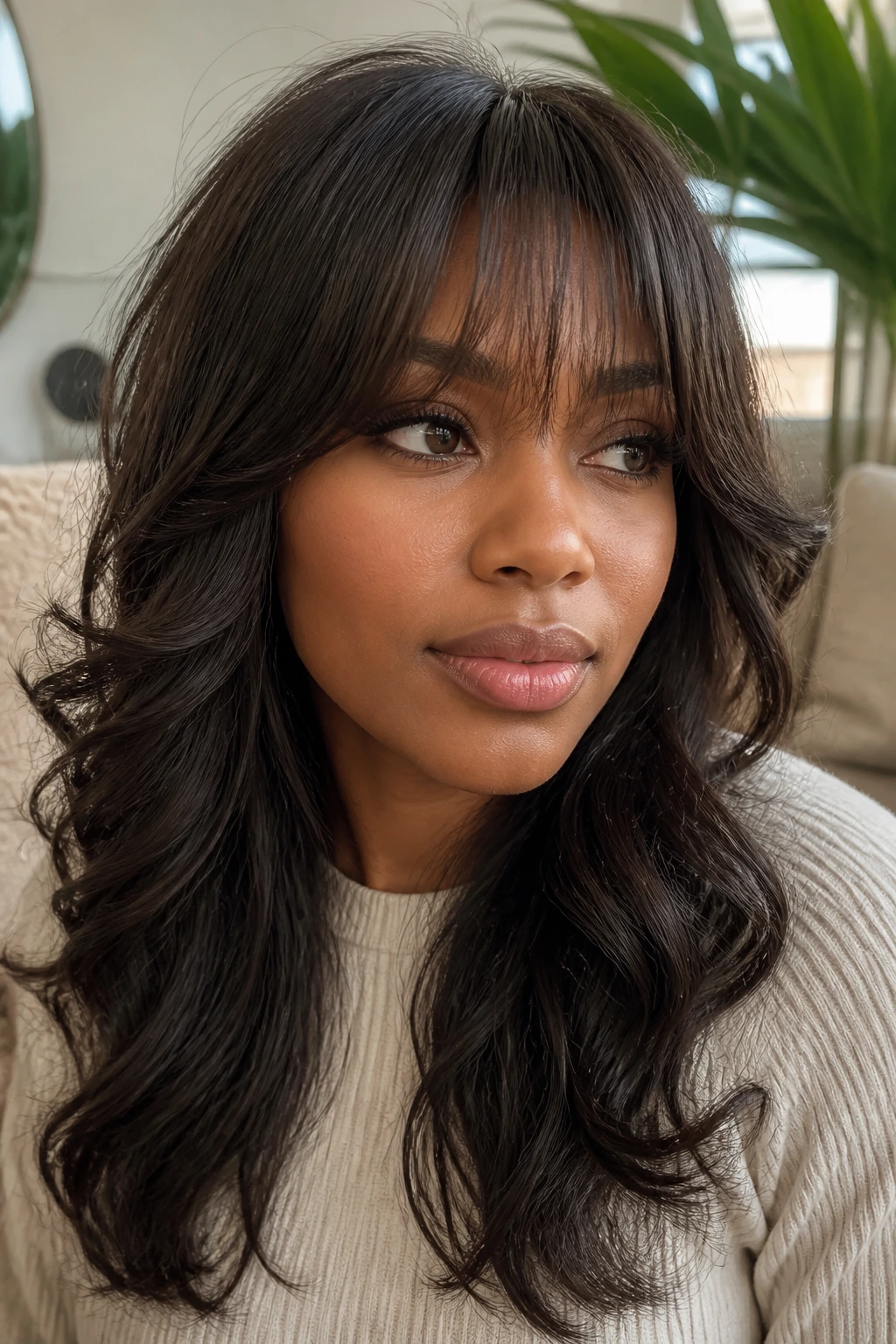
Fine hair and curls can be a beautiful match, as long as the curls are soft enough to move. Tight ringlets on a fine-haired sew-in can start looking sparse if the bundle count isn’t high enough. Loose curls avoid that problem.
The feathered fringe keeps the front from feeling too heavy. It softens the outline of the face and lets the curl pattern do the lifting in the body of the style. The best versions look like they were brushed into shape, not sprayed into a shell.
A wand curl or flexi-rod set around 1 inch is usually enough to build shape without making the hair puff out too far. I’d keep the bangs cut slightly longer than you think, because curls bounce up. Too short, and the fringe lands above the brow with no grace at all.
7. Deep Side-Part Asymmetrical Bob
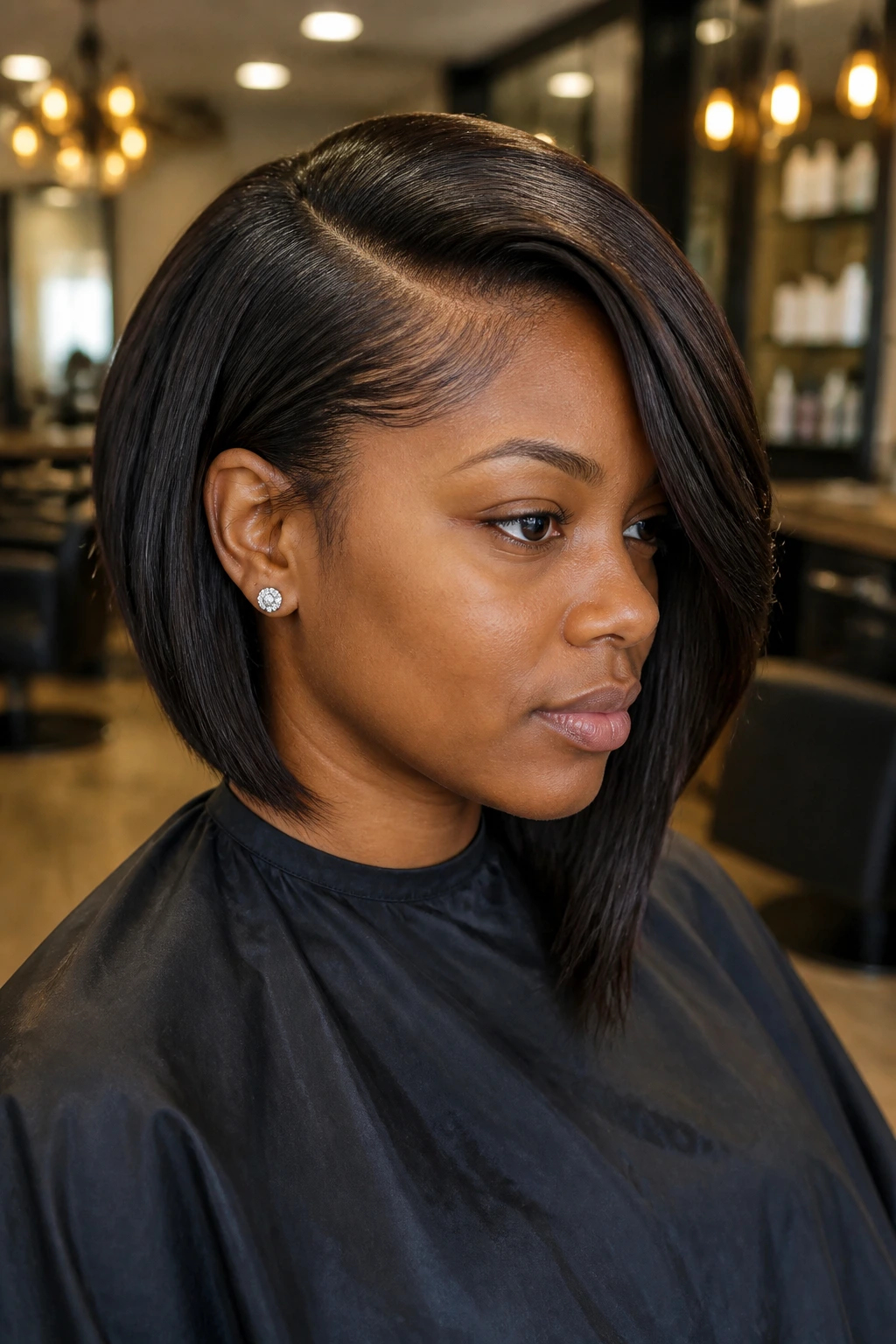
This one is pure cleverness. A deep side part creates instant lift at the crown, and the asymmetry gives the eye a reason to believe there’s more hair than there actually is.
The longer side can skim the jaw or just graze the collarbone, while the shorter side stays tucked closer to the face. On fine hair, that unevenness is a feature, not a problem. It keeps the look from sitting too still.
Why it flatters fine hair
A balanced cut can expose a fine crown. Asymmetry distracts from that by shifting the visual weight. The side-swept bang on the shorter side also helps cover any thinner spots near the temple, which is where a lot of installs give themselves away.
Ask for a 4×4 or 5×5 closure and a cut that’s light through the bottom, not bulky at the ends. The whole point is lift. If the bob gets too thick at the perimeter, the side part loses its energy and starts feeling blocky.
8. Yaki-Straight Style with Arched Bangs
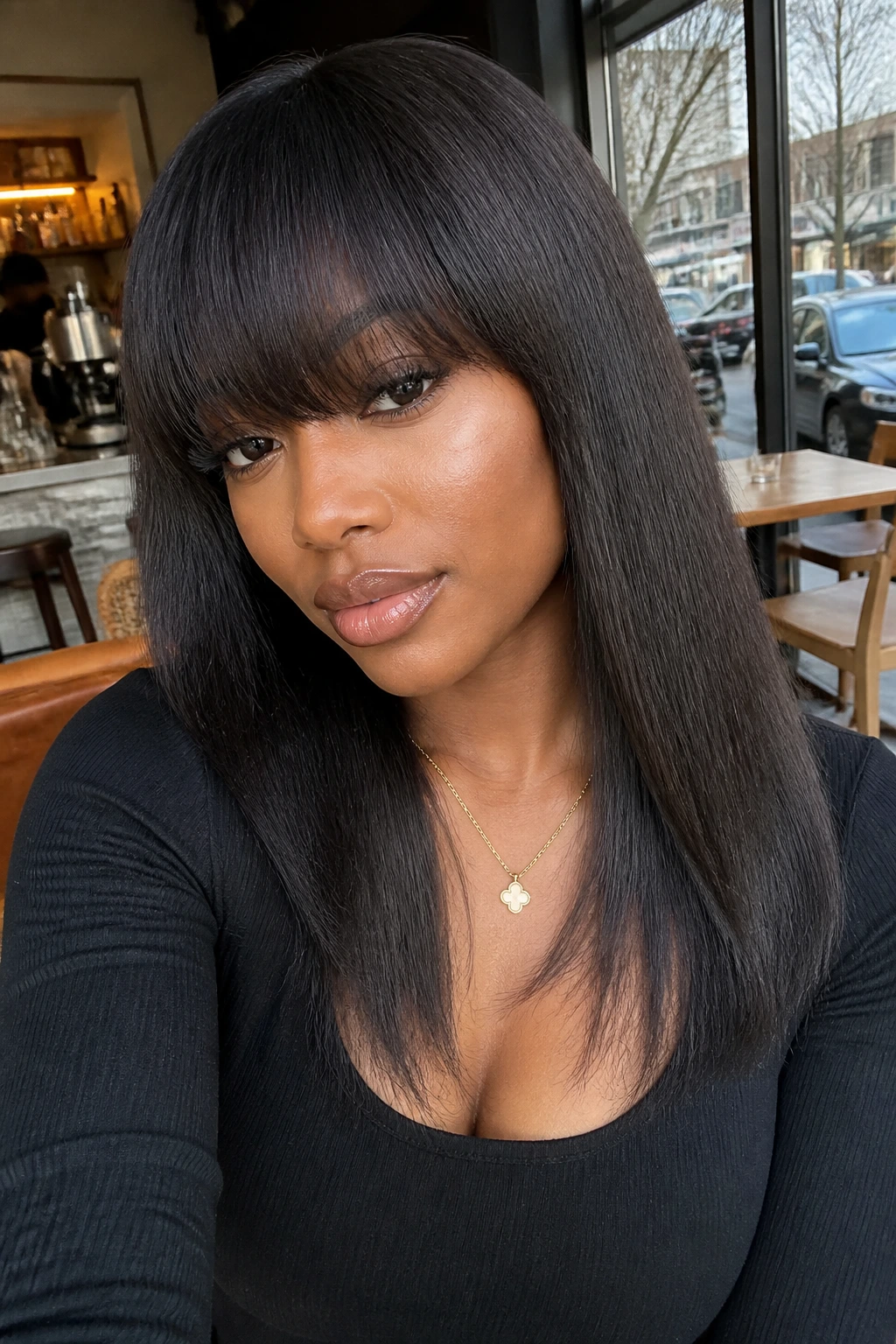
Yaki texture is one of my favorite choices for fine hair because it doesn’t look slick in a way that exposes every seam. It has enough grip to feel like hair with body, not hair ironed into a sheet.
The arched bang matters here. Instead of one hard line, the fringe follows the shape of the brow and sits a little fuller in the center. That curve gives the face balance and stops the style from looking flat across the forehead.
This works especially well if you want a polished finish without the glass-hair shine that can make thinness more obvious. A 12- to 14-inch yaki sew-in with a 4×4 closure is a strong choice. Keep the finish smooth, but not greasy. There’s a difference, and it shows.
9. Collarbone Layers with Long Curtain Bangs
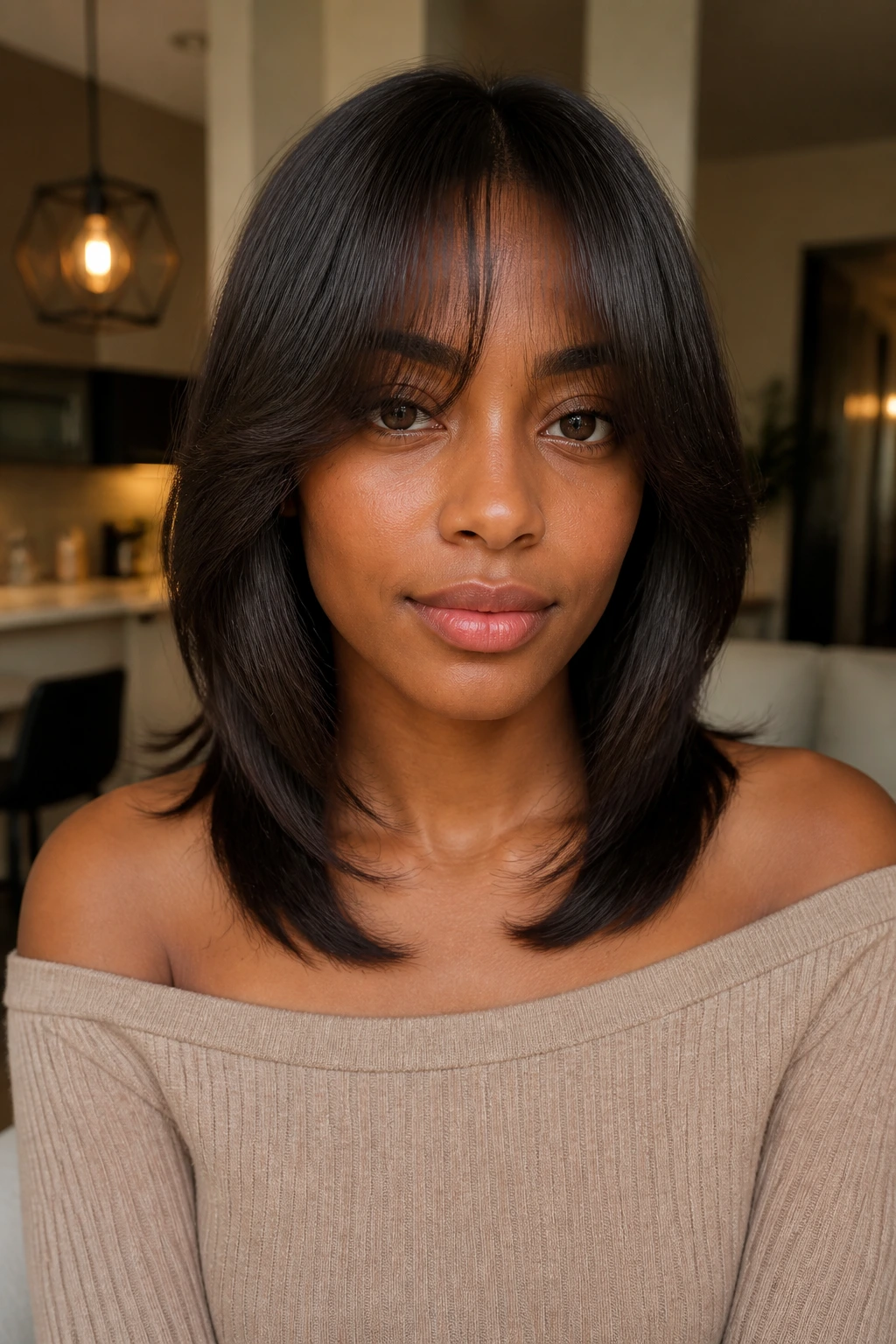
If you like a style that can move from “done” to “casual” without much effort, this is a strong pick. Long curtain bangs give you face framing without committing to a blunt block, and collarbone layers keep the weight in a place that makes fine hair look fuller.
The layers are the key. Without them, a longer sew-in on fine hair can fall straight down and go thin at the ends. With them, the shape opens up and the bangs blend into the body of the cut instead of sitting on top of it.
A small but important detail
Have the curtain bangs cut so they hit around the cheekbone and blend into the front layers. If they’re too short, they can separate and look sparse. If they’re too long, they stop reading as bangs and turn into face-framing pieces only. There’s a sweet spot, and it’s not vague: it usually lands somewhere between the top of the cheek and the jaw depending on face length.
A 5×5 closure gives you more room to shift the part if your face shape changes with the styling. That flexibility is worth it.
10. Micro Bang Pixie-Bob
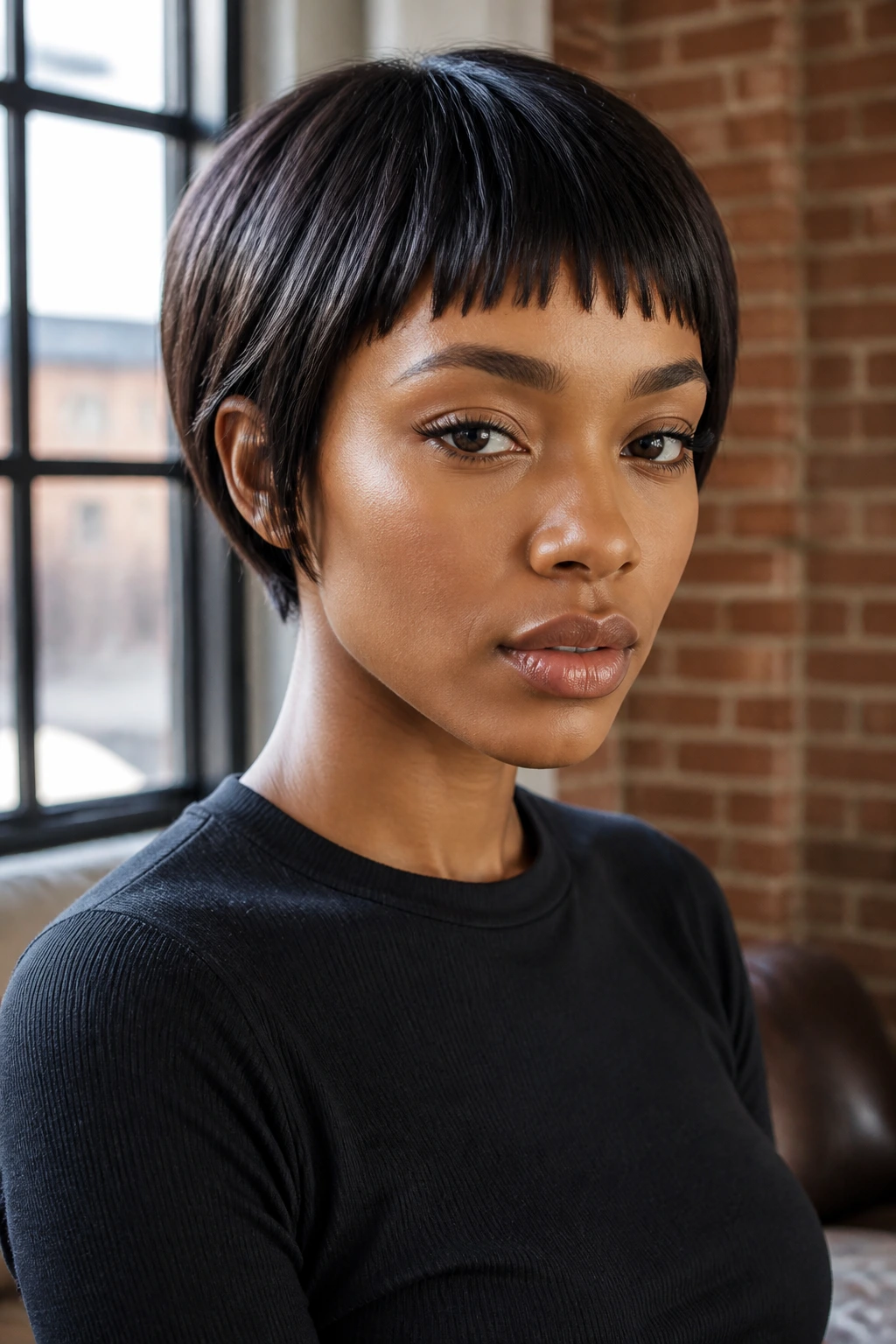
This is the bold one. Micro bangs do not apologize for themselves, which is why they can be terrific on fine hair. The shorter length means less weight, less drag, and less chance of the front collapsing by midday.
A pixie-bob sew-in sits in that in-between space: short enough to feel airy, long enough to keep the install practical. The bang lands high on the forehead, so the closure has to be well done. There’s nowhere for a sloppy front to hide.
Use this when you want edge, not softness
The shape works best if the stylist is comfortable scissor-over-comb cutting and shaping the front after the sew-in has settled. The bangs need precision. If the line is crooked, the whole style feels off because there’s so little hair to disguise the mistake.
I’d keep this look on a 4×4 closure with very controlled density. Don’t pile in extra hair because you’re nervous. That defeats the whole point. Fine hair usually looks better when the silhouette is crisp and the volume sits where it counts.
11. S-Curl Sew-In with Face-Framing Bangs
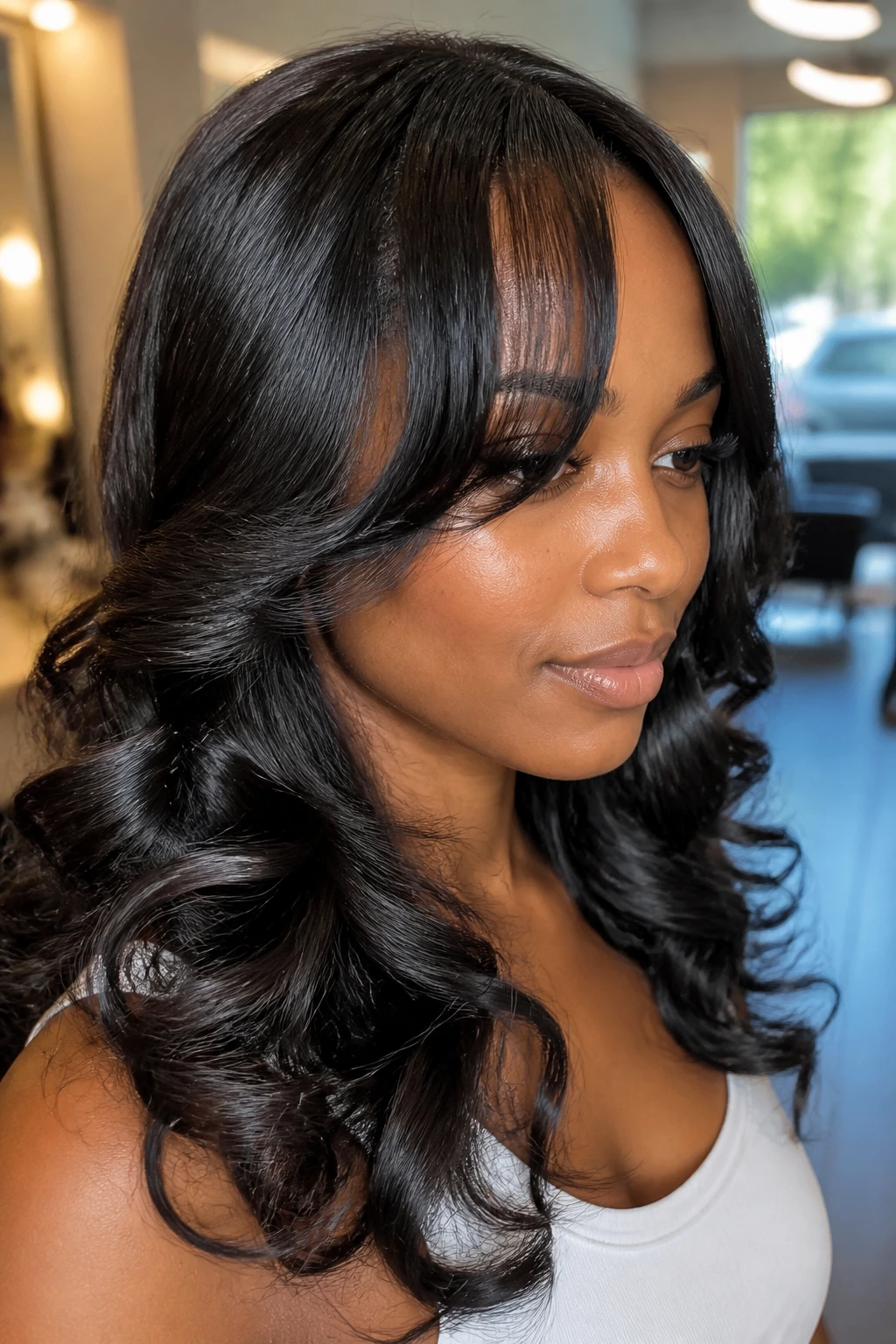
This style has a softness that straight looks sometimes miss. The S-curl pattern bends the hair in a gentle wave that feels lush without being loud, and the face-framing bangs keep the front from becoming one big curve.
Fine hair often benefits from a pattern that makes the eye move. S-curls do that. They create little changes in direction, which helps the install read as fuller than a straight sheet ever will.
The parting matters more here
Keep the closure area clean and the bang pieces light. If the front gets overloaded, the curls will bunch instead of flow. A 5×5 closure makes sense if you want the fringe to have room to sit naturally. The curls can then fall around the cheeks instead of fighting the hairline.
A soft mousse set and finger-combing usually work better than heavy brushes on this style. Brushing too hard strips the curl shape and reveals the sparsity you were trying to avoid.
12. Wet-Look Bob with Choppy Fringe
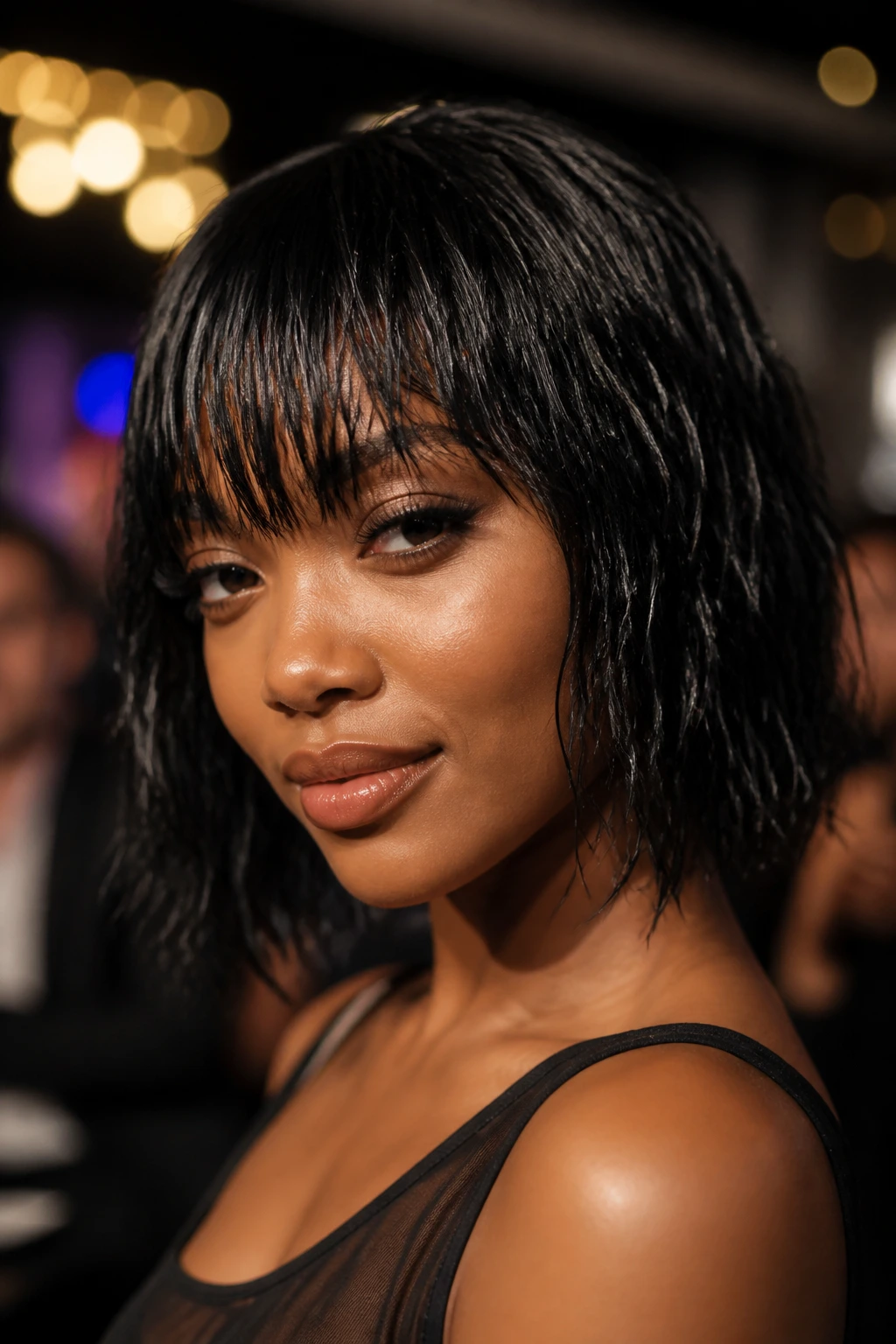
Wet look and fine hair are a sneaky good match, but only when the shape underneath is clean. The shine creates a single visual surface, and the choppy fringe gives the front a little tension so it doesn’t read as flat.
This is not a soaked-in-gel, stiff-as-cardboard situation. It should look glossy, piecey, and controlled. If the product is too heavy, the hair clumps and the fine strands disappear into one greasy line. That’s not the point.
What to watch for
Keep the bob around 10 to 12 inches and use a light amount of gel or styling foam at the surface only. The fringe should be broken up a little, not cut into tiny fragments. A 4×4 closure is often enough because the style’s finish gives you extra visual density.
I like this look for evenings or events because it stays neat. If you’re the type who likes hair that behaves once and stays put, this one has a lot to offer.
13. Bombshell Blowout with Split Bangs
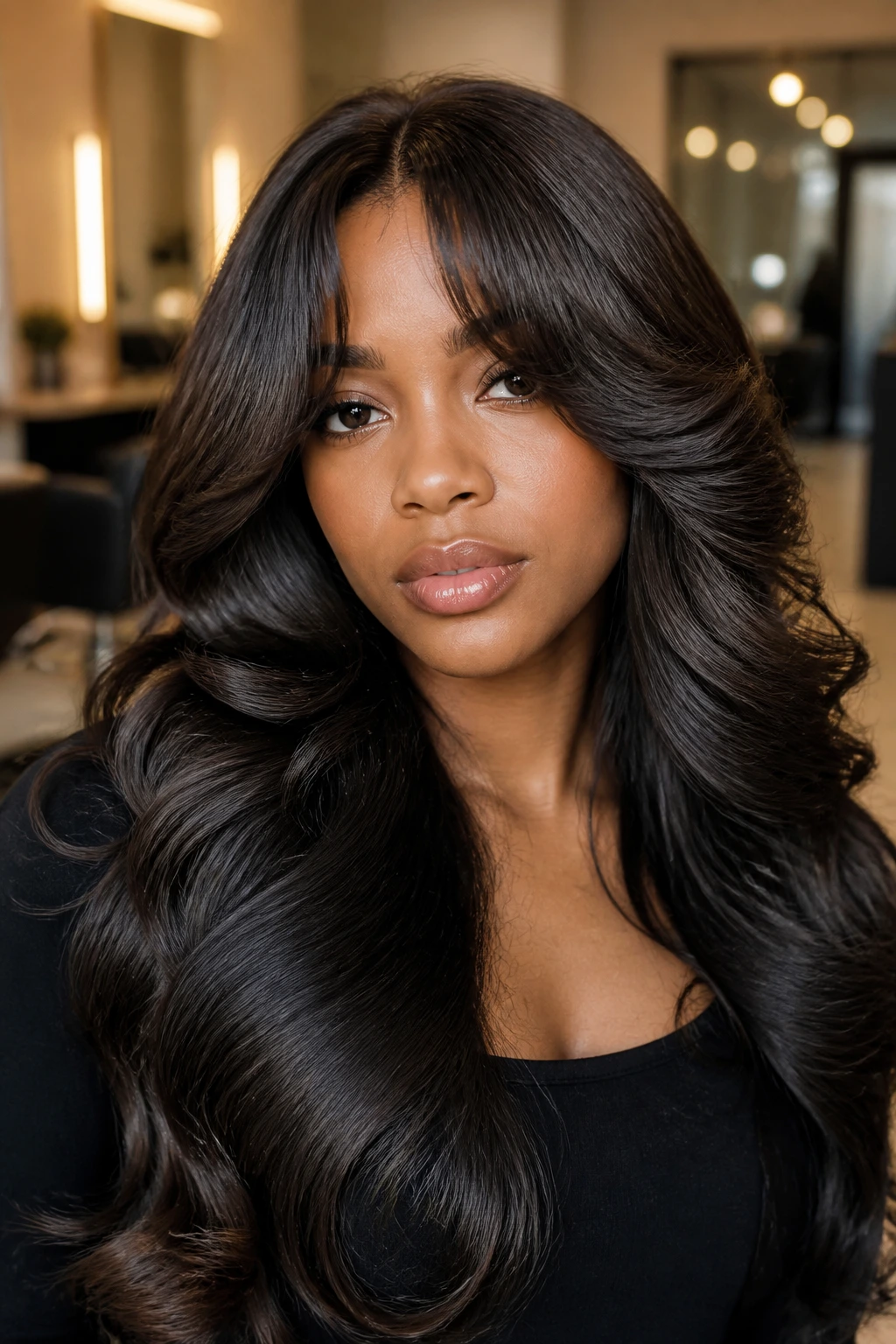
Big blowouts look expensive because they move. That’s the part people remember. On fine hair, the trick is not to pile on more product; it’s to create lift at the roots and keep the ends soft enough to swing.
Split bangs help here because they open the forehead and prevent the front from looking dense in a straight line. The style feels airy even while the rest of the hair has body.
The shape is doing the work
You want a round brush, a clean blow-dry, and maybe a few large rollers if the hair needs help holding the bend. The bangs should be split just enough to show the center part or a sliver of forehead. If the split is too wide, the style loses purpose. If it’s too tight, the fringe becomes heavy and starts fighting the blowout.
A 5×5 closure and 18- to 20-inch body wave or blown-out straight bundles usually make sense here. The key is lift, not bulk. That’s a small difference on paper. In the chair, it changes everything.
14. Rounded Bang Silky Press Sew-In
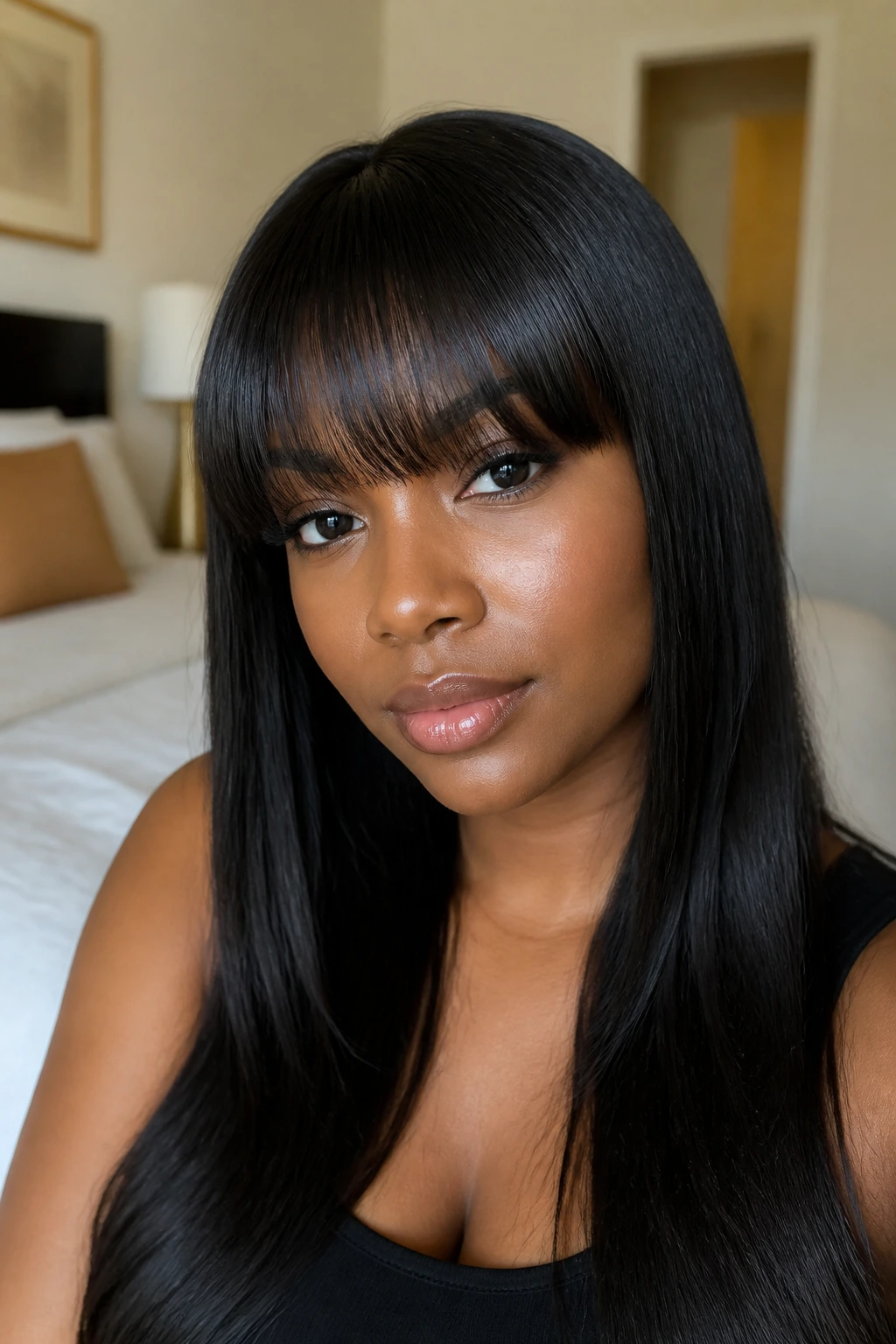
Rounded bangs are for people who want the front to feel deliberate. The curve lands softly over the forehead, which can balance a taller face shape or soften a strong brow line. On fine hair, the rounded shape can be surprisingly useful because it creates a fuller arc without needing a huge amount of length.
The silky press finish keeps the surface smooth, but it needs restraint. Too much flat-ironing makes the hair look thin and overhandled. A light press, a soft bend, and a clean shape are enough.
The warning I’d give every time
Rounded bangs are unforgiving when the closure is too small or too sparse. If you don’t have enough width at the front, the curve looks patchy instead of intentional. That’s why this style is better with a well-sized closure and careful cutting.
A 4×4 or 5×5 closure works depending on how much forehead coverage you want. The rest of the hair should fall straight and clean, not stiff. That contrast is what keeps it from looking like a helmet.
15. Textured Shag with Wispy Broken Bangs

This is the one I reach for when someone says they want movement but not fuss. A textured shag gives fine hair a reason to look busy in a good way. The layers break up the outline, and the wispy bangs keep the forehead light.
Broken bangs are not sloppy bangs. They’re pieces that fall with enough separation to keep the front from forming one dense line. On fine hair, that lightness can be a lifesaver. It gives the style air.
Why it works better than a blunt cut
A blunt line can expose the fact that the hair is fine, especially if the install is long. A shag hides that by layering the ends and building texture all the way through. The closure still matters, of course, but the shape around it does some of the disguising.
I’d choose 14- to 18-inch bundles with a 5×5 closure and ask for point cutting through the fringe once the hair is dry. This is one of the few styles where a little mess actually helps. Too polished, and you lose the shag’s charm. Too rough, and it looks unfinished. That middle ground is where it lives.
How to Choose the Right Closure Size, Density, and Texture
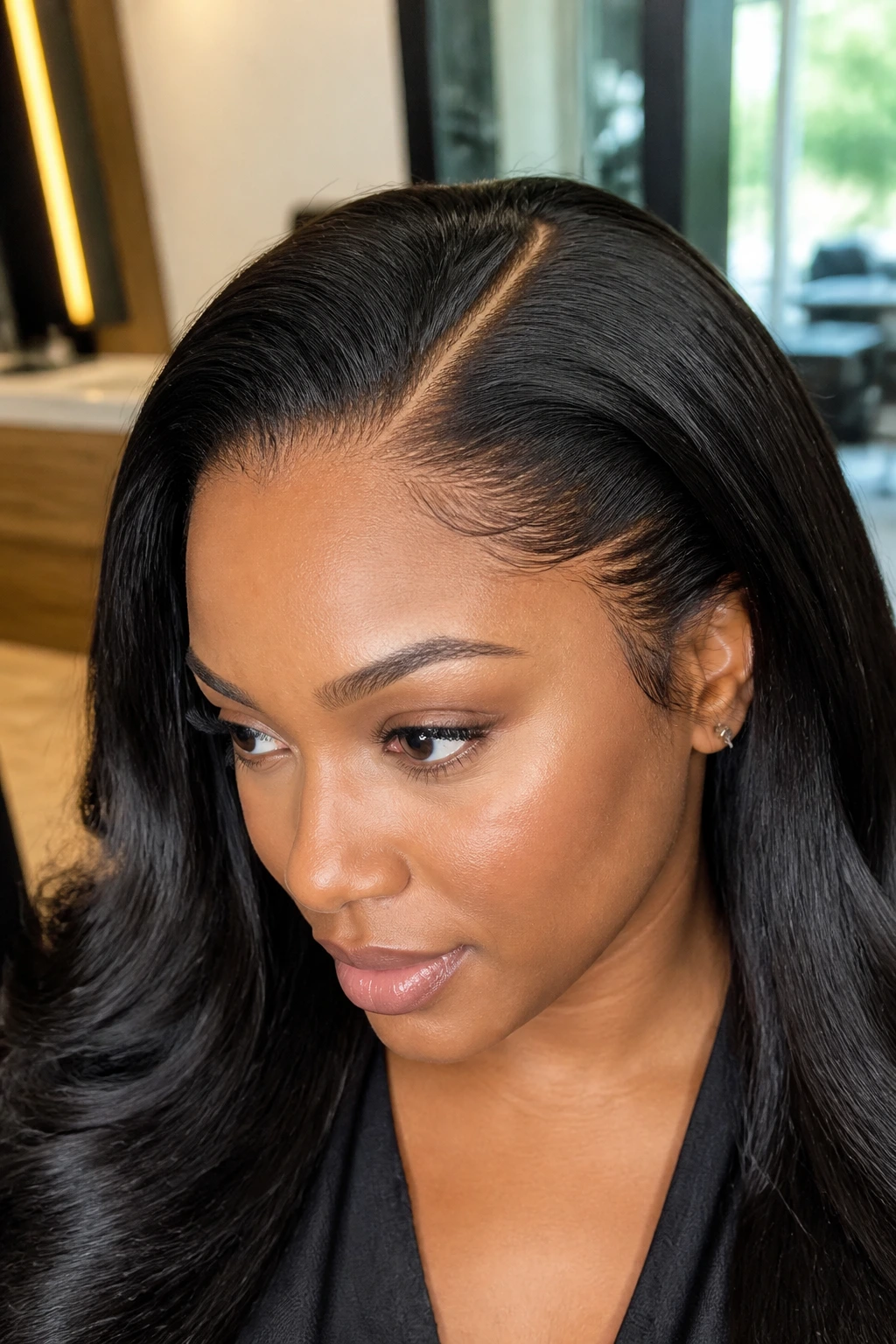
The biggest mistake people make is choosing the hair first and the shape second. On fine hair, that order gets expensive fast. Start with the closure size, then decide how much fringe you actually want, then choose the texture that will support both.
Closure size
A 4×4 closure is compact and neat. It suits blunt bangs, micro bangs, and short bobs because the front doesn’t need much parting room. A 5×5 closure gives more freedom for curtain bangs, side parts, and styles that need a little movement in the front. A 6×6 can work if the install is skillfully balanced, but it’s easy to overbuild on fine hair and end up with a front that feels thick in the wrong way.
Density and bundle count
For a bob or lob, 2 bundles plus a closure usually does the job. For longer body-wave or curled looks, 2.5 to 3 bundles can be enough if the hair is good quality and the cut is layered. More hair is not the answer when the issue is softness. Sometimes more hair just means more bulk at the part.
Texture match
Straight styles show everything. That’s not bad, but it does mean the install has to be neat. Yaki straight hides a little more and often looks kinder on fine hair. Body wave adds body where you want it. Curly textures can work, but they need enough fullness through the ends or they start looking hollow.
A good rule: if the style looks prettier when lightly tousled than when pressed flat, it’s probably a stronger choice for fine hair.
Essential Tools and Products for a Clean Bang Finish
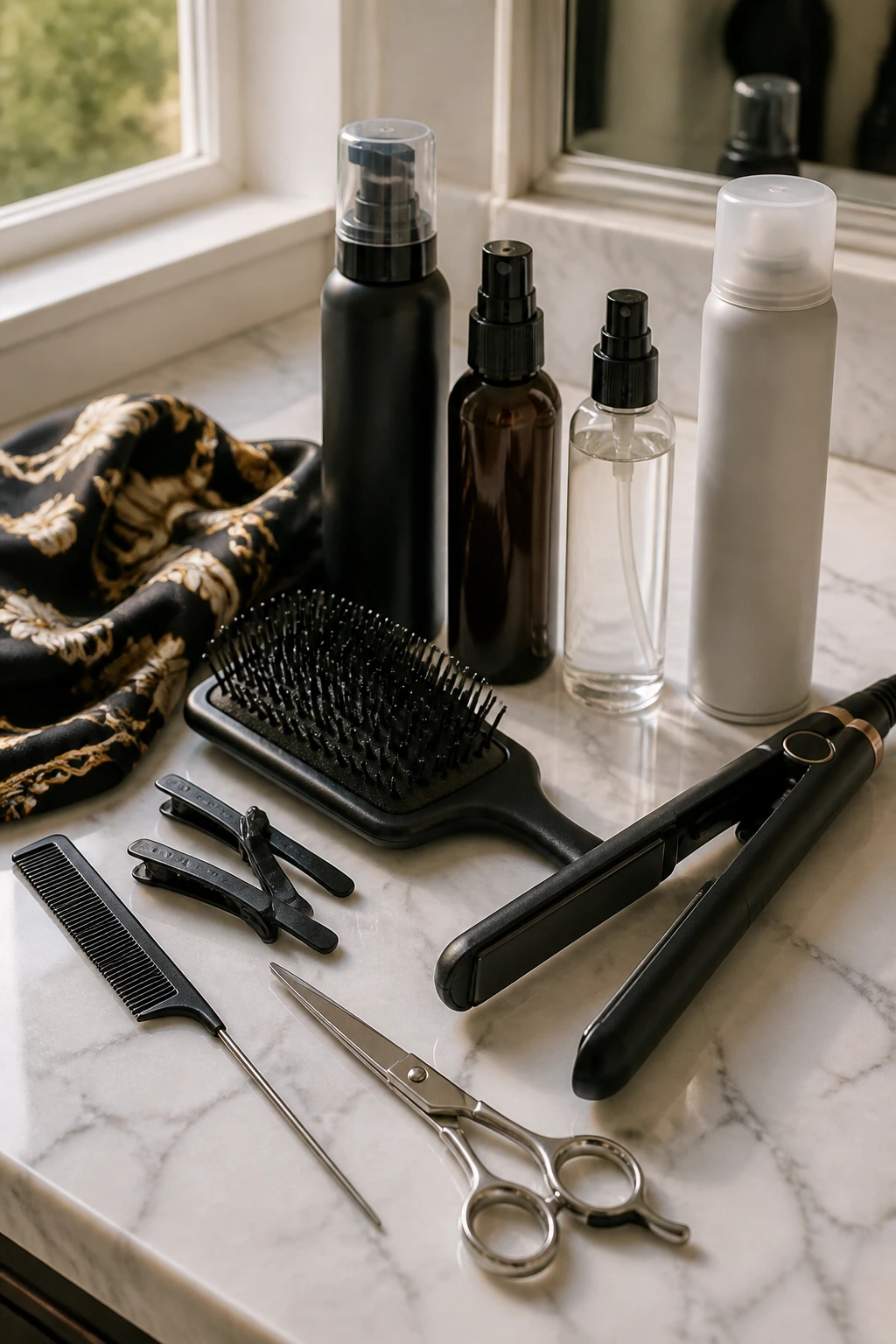
- Rat-tail comb: The fine point helps you section the bang area cleanly and keep the closure part straight without tearing up the front.
- Small duckbill clips: These hold the fringe out of the way while you’re drying, shaping, or wrapping the rest of the hair.
- Lightweight mousse or foam wrap lotion: Useful for setting bang direction and keeping the front soft instead of crunchy.
- Heat protectant spray: A must if you’re using a flat iron, blow dryer, or round brush on human hair bundles.
- Soft paddle brush or boar-bristle brush: Helps smooth the bang and crown without yanking fine strands too hard.
- Silk scarf or wrap strip: Keeps the bang laying flat overnight and cuts down on morning frizz.
- Small flat iron with rounded edges: Better for touch-ups than a huge iron; it gives you control near the fringe.
- Light serum or finishing oil: Use one or two drops only. Fine hair gets greasy fast, and the closure front will show it first.
- Dry shampoo: Handy at the roots when the front starts looking too soft or slightly flat between washes.
- Tailor’s shears or sharp haircutting scissors: Not for DIY heroics, just for a stylist who needs clean edge work on the bang.
How to Keep a Closure Sew-In Light Between Wash Days
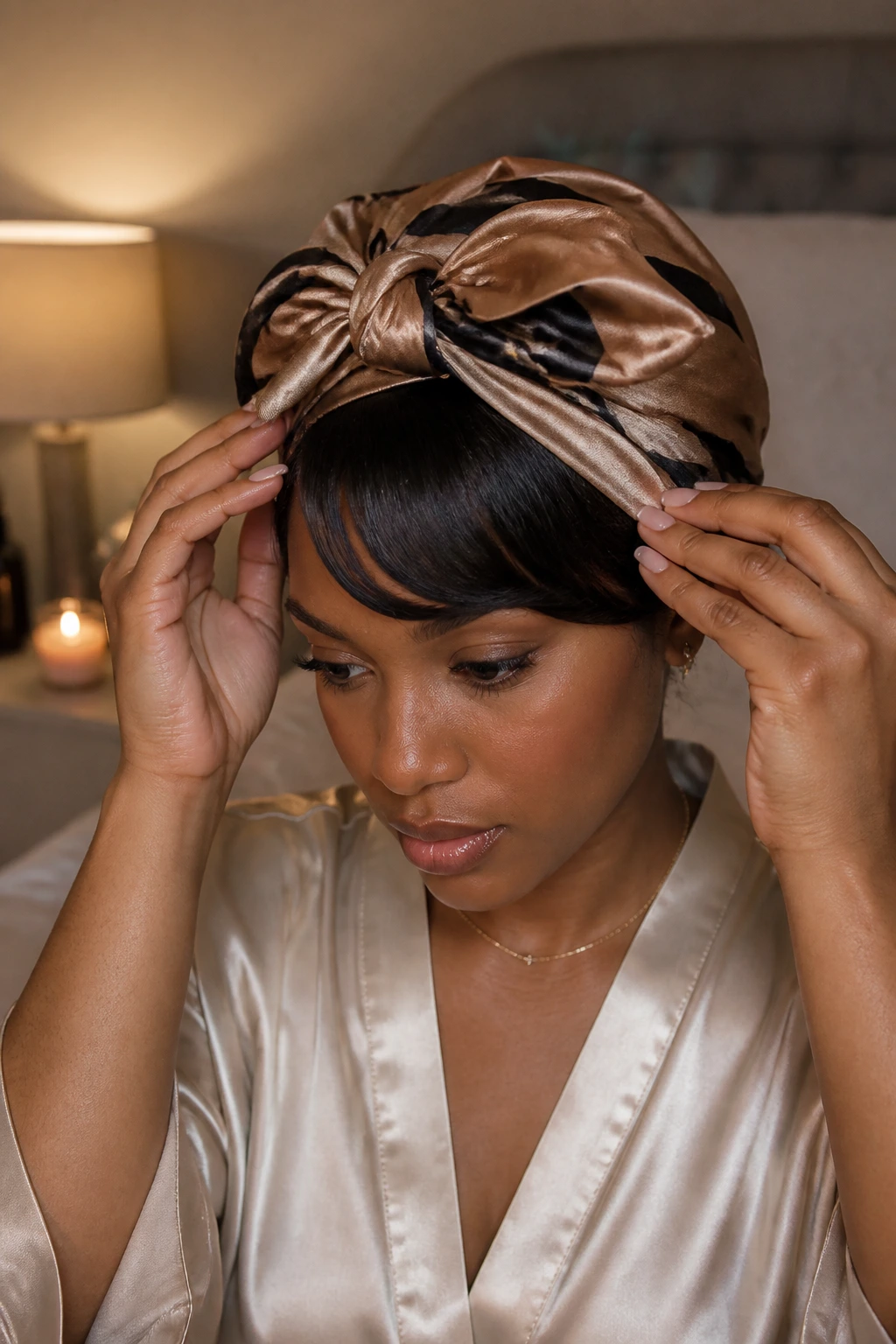
A closure sew-in can go from polished to heavy if you treat the front like a place to pile on product. Don’t. Fine hair wants a light hand, especially around the closure and fringe.
Night routine: Wrap the hair with a silk scarf, then tuck the bang so it lies in the direction you want it to fall. If the fringe is side-swept, pin it loosely before wrapping. That small step saves you from fighting it in the morning.
Wash schedule: Clean the scalp and closure area every 7 to 14 days, depending on product use, sweat, and how fast your roots start to shift. Let the closure dry fully. A damp closure is where puffiness and odor start to creep in, and nobody wants that.
Product rule: Use mousse, light spray, or a tiny amount of serum. Avoid butter-heavy creams and thick oils near the front. They make fine hair collapse fast and turn the bangs stringy.
Refresh method: A quick blow-dry with the nozzle pointed downward at the bang, followed by a soft brush, usually brings the shape back. If the fringe starts splitting, use less oil and more root direction. That’s almost always the fix.
Common Mistakes That Flatten Fine Hair
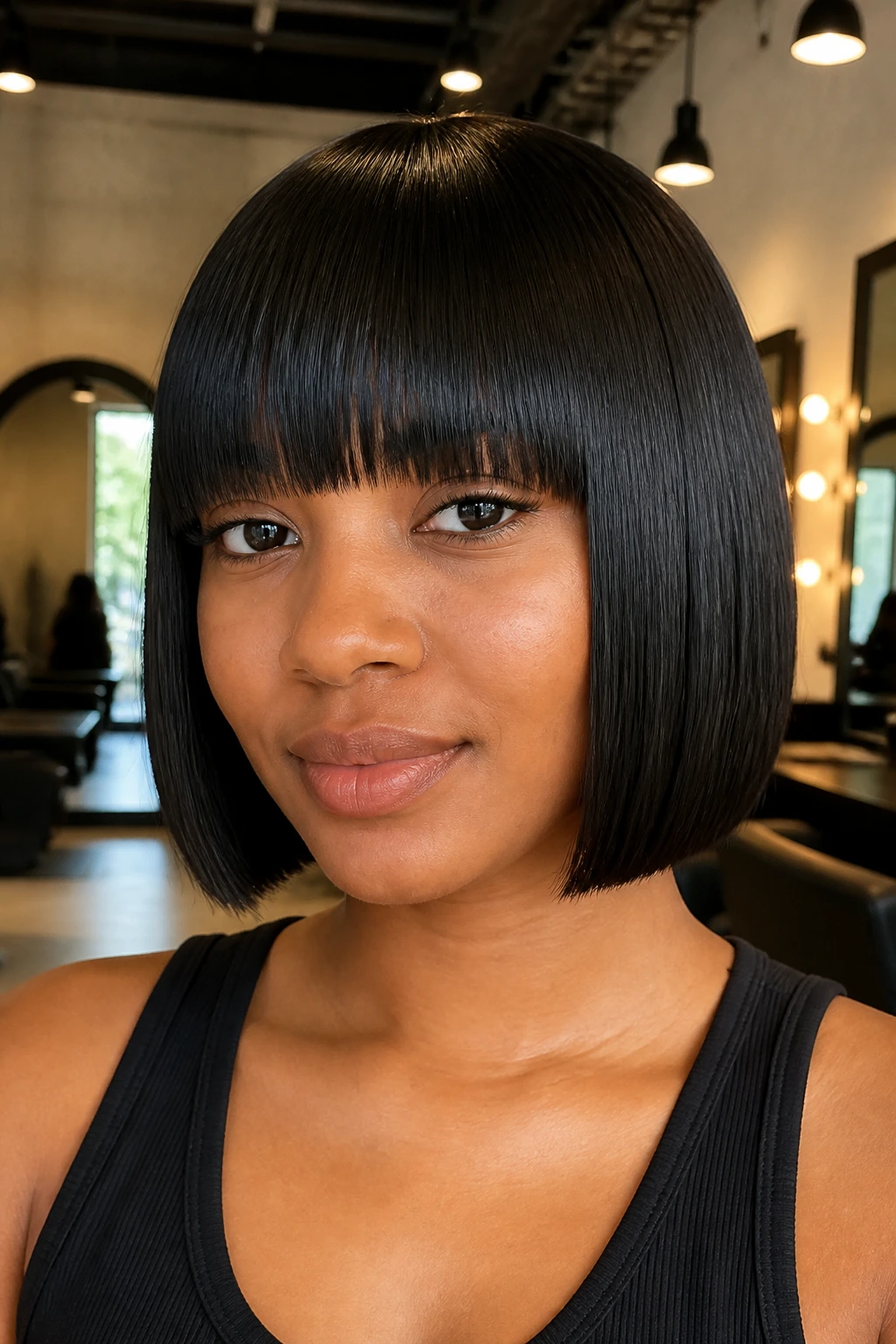
Overpacking the install: More bundles can make the front look bulky and the crown sag. Fine hair usually looks better with a moderate bundle count and a smart cut, not extra weight.
Cutting bangs too thick: Thick bangs seem like a safe choice until they sit on fine hair and expose every sparse edge. The fix is a lighter sectioning plan and a cut that follows the closure’s actual width.
Using greasy products at the root: Oils and heavy creams near the closure make the part clump and the bang separate into strings. Use tiny amounts, and keep the heaviest products away from the front.
Ignoring texture match: A blunt, glassy bang on top of a fluffy curl pattern can look pasted on. Match the fringe to the main texture or you’ll fight the style every morning.
Leaving the sew-in in too long: The install starts losing shape, the braids loosen, and the closure can lift. For most fine-haired clients, refreshing or reinstalling around the 6- to 8-week mark keeps the style looking neat and keeps the natural hair happier underneath.
Cutting while everything is wet and tense: Wet hair stretches. A bang that looks perfect when damp can jump half an inch shorter once it dries. Dry-shape the fringe whenever possible, or at least let the install settle before the final cut.
Variations and Easy Swaps
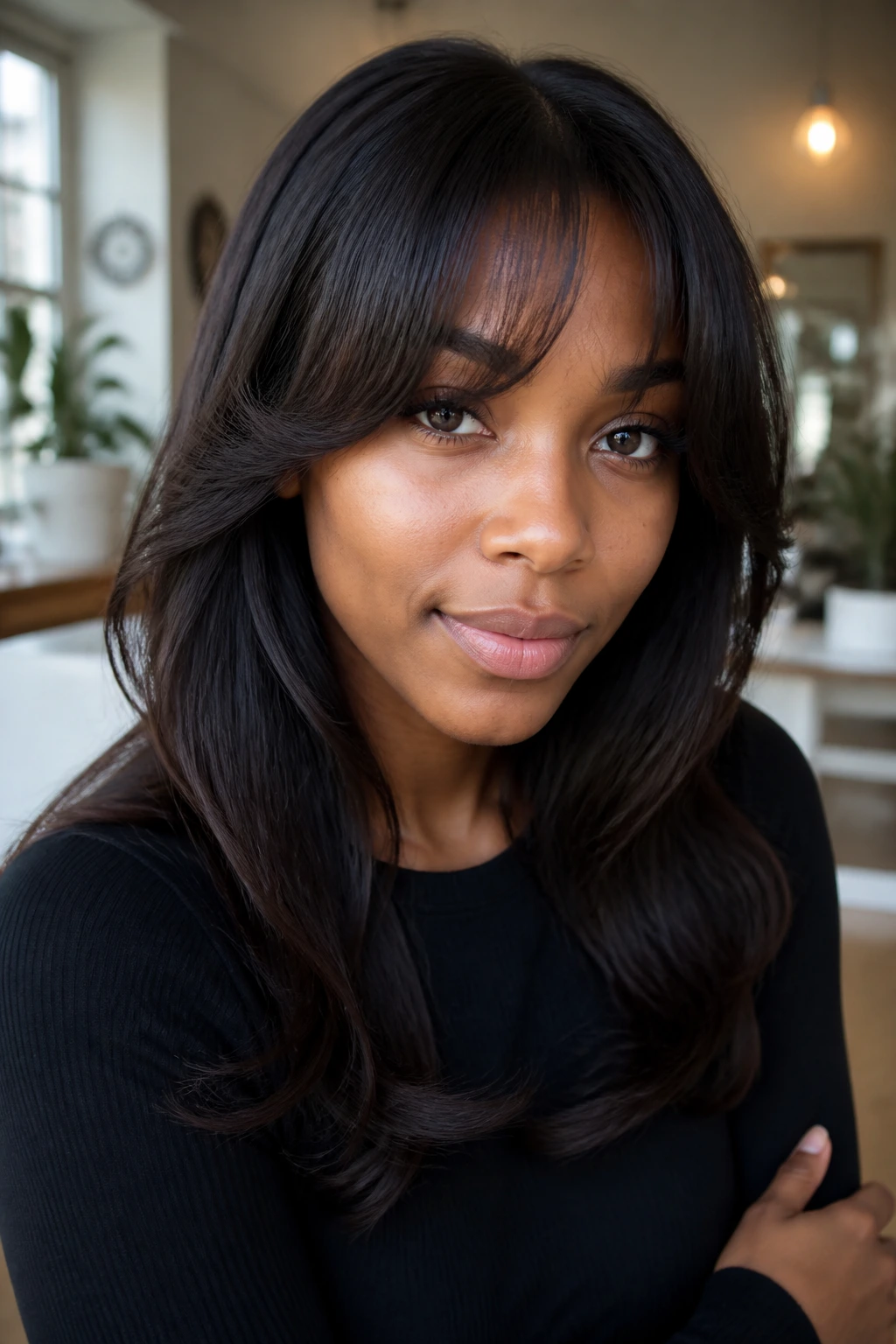
Soft Curtain Bang Swap: If blunt bangs feel too heavy, keep the same install and change only the fringe. A center part with long curtain pieces gives the face softness and makes a 5×5 closure feel more flexible.
Side-Part Rescue: When the crown looks flat, shift the part slightly off-center and sweep the front across one side. That tiny change can add lift without changing the whole style.
Texture Lift: Swap silky straight hair for yaki straight or body wave if the install feels too exposed. The extra texture helps fine hair read as fuller, especially in daylight.
Short Front, Longer Back: This works well on bobs and French-style cuts. Keep the bang or fringe compact, then let the back sit a little longer so the silhouette feels balanced instead of boxy.
Heat-Light Finish: If your hair gets limp fast, skip the heavy flat iron and use a soft blowout with a round brush. The bend at the ends gives the style life, and you won’t flatten the front chasing a glass finish.
Wispy to Dense Transition: If you love the look of bangs but worry about weight, start wispy and build density only where the closure needs coverage. That approach keeps the front light and avoids the helmet effect.
Frequently Asked Questions About Closure Sew-In Styles with Bangs for Fine Hair

Can fine hair really handle a closure sew-in with bangs?
Yes, as long as the install is built with restraint. Fine hair usually does better with lighter braid tension, a moderate bundle count, and a closure size that matches the bang shape instead of forcing the front to do too much.
Which bang style is safest for fine hair?
Curtain bangs and soft side-swept bangs are the easiest starting point because they don’t demand a thick, blunt front. If you want something sharper, a blunt fringe can still work, but it needs a clean closure and careful cutting.
Is a 4×4 or 5×5 closure better for bangs?
A 4×4 is fine for blunt or micro bangs, especially on shorter styles. A 5×5 gives more room for curtain bangs, side parts, and fringe that needs to move a little without exposing the seam.
How many bundles should I use?
For most fine-haired looks, 2 bundles with a closure is enough for a bob or lob. Longer styles usually need 2.5 to 3 bundles, but more than that can make the install feel heavy and flat at the roots.
Can I wear bangs if my hairline is sparse?
Yes, and that’s one of the best reasons to choose a closure sew-in. The fringe can cover the front while the rest of your natural hair stays protected under the braids.
What if my bangs keep splitting apart?
That usually means there’s too much product, not enough root direction, or the fringe was cut too thin. Use a lighter hand with oils, set the bang with mousse, and wrap it in the direction you want it to fall.
Can I switch from a middle part to a side part later?
If the closure is wide enough, yes. A 5×5 is usually more forgiving than a 4×4 for part changes. If you know you like to shift your part often, tell your stylist before the install.
How often should I wash the sew-in?
Most fine-haired installs do well with a cleanse every 1 to 2 weeks, depending on sweat, product use, and how quickly the front starts to feel heavy. Dry the closure all the way through after each wash or the fringe will lose its shape fast.
The Shape That Stays Light
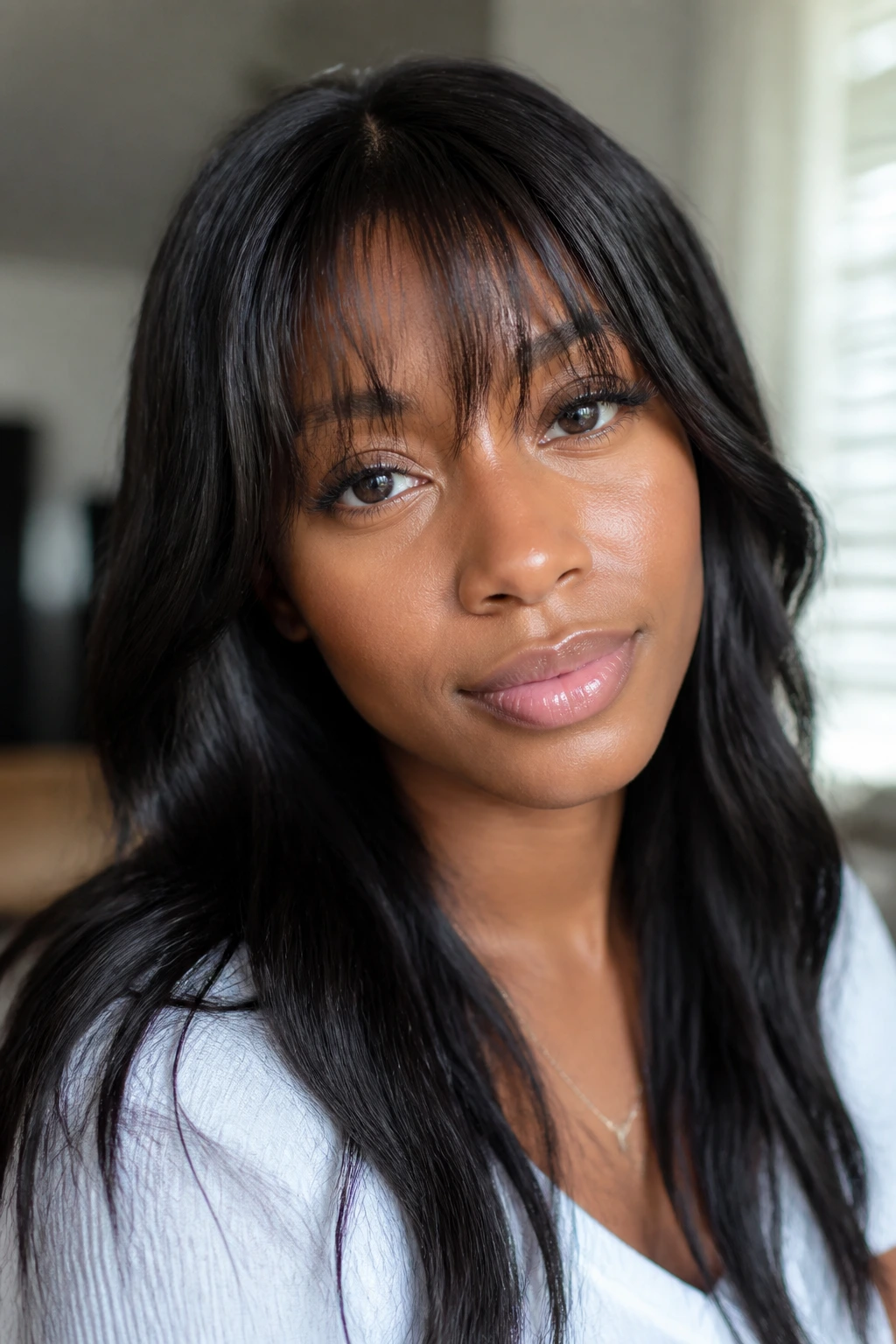
The best closure sew-in styles with bangs for fine hair do not try to hide the fact that the hair is fine. They work with it. They use the closure to control the front, the bang to frame the face, and the cut to give the whole style enough movement to feel full without getting heavy.
That’s the part I love about these looks. They look deliberate, but not stuffed. They give you shape at the hairline and softness where it counts, which is a much better trade than chasing fake bulk.
If you’re choosing your next install, start with the lightest version that still gives you the front you want. The fringe can do more than people think.