



Oval faces can carry a lot of fringe drama, and thick hair is the reason curtain bangs can look plush instead of flimsy. The trick is getting the cut to move in a clean split at the center while the sides fall with enough weight to frame the cheekbones, not puff out like a helmet.
When curtain bangs go wrong on this hair type, the failure is usually blunt and obvious. They sit too wide, too heavy, or too wispy in the middle, and the whole shape turns into a shelf. The better versions use controlled removal inside the bang, a soft bend through the front, and a length that lets the fringe skim the face instead of boxing it in.
Oval faces have a lot of room to play, which is why this haircut family can look so strong here. You can go shorter at the center, longer at the temples, more polished, more shaggy, more retro, more dramatic. Thick hair gives you the body to keep the shape alive. You just have to cut it like it means something.
Why These Curtain Bangs Earn Their Keep
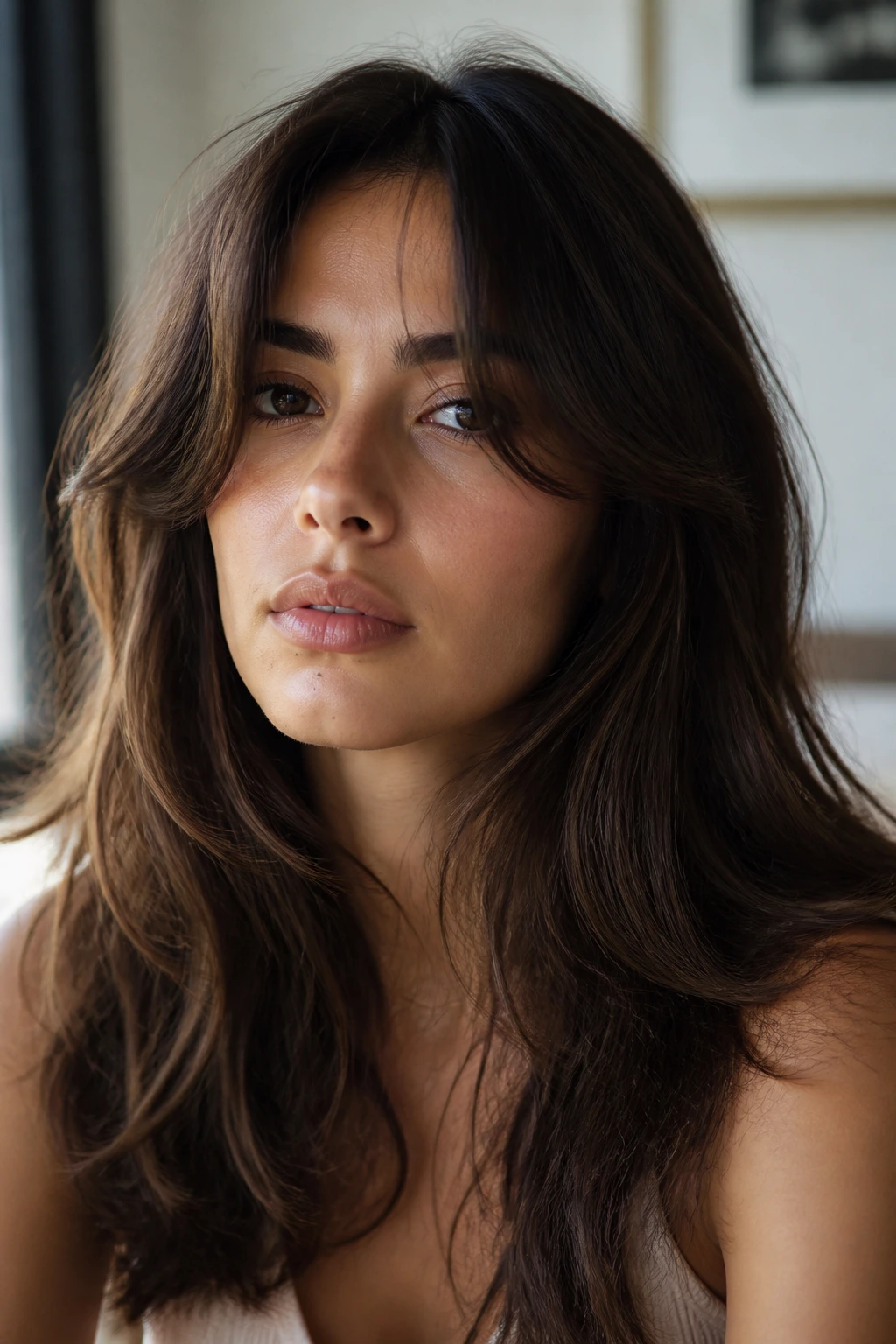
- Oval-face balance: The face shape already has natural symmetry, so the right fringe can add shape without making the forehead feel crowded.
- Thick-hair control: Dense strands hold bends and flips, but they also bulk up fast, which is why internal weight removal matters more than surface thinning.
- Movement that lasts: The best cuts keep the center open and the side pieces long enough to swing when you turn your head.
- Style range: These bangs can read polished, shaggy, retro, or soft-glam with the same basic cut, which makes them easier to live with than a blunt fringe.
- Salon-friendly language: Terms like cheekbone length, point-cut ends, and internal layers make it easier to get a cut that actually behaves at home.
1. Cheekbone-Skimming Curtain Bangs with a Salon Blowout
These are the bangs that look like they were rolled out of a good chair in a good salon, then brushed into place with just enough tension to keep the curve clean. The shortest point sits around the brow or just below it, while the wings graze the top of the cheekbones and curve back into the rest of the hair.
That length is useful on oval faces because it opens the center without shrinking the face. On thick hair, the trick is weight removal inside the bang, not at the very ends. Ask for point cutting or soft slicing through the interior so the fringe bends instead of sitting as one hard sheet.
What to Ask For
- Keep the center just grazing the brows.
- Let the sides fall to cheekbone level.
- Remove bulk inside the bang, not just at the tips.
- Leave enough length to round-brush the bend in.
A 1.5-inch round brush and a nozzle attachment make this cut look expensive. If you air-dry it, the shape gets looser and a little less clean, which can still work, but the full blowout finish is the point here.
2. Brow-Opening Bottleneck Curtain Bangs
If your thick hair tends to swallow fringe, a bottleneck shape is a smart move. It starts narrower near the center of the forehead, then opens wider as it reaches the temples, so the eye lands on the brows and cheekbones instead of getting trapped under a heavy curtain.
I like this version for oval faces because it adds a little tension near the center without flattening the rest of the hairline. The key is not making the middle too short. Keep the shortest pieces around the upper brow, then let the outer edges slide down toward the cheek.
The effect is subtle from the front and more dramatic in motion. You turn your head, and the fringe separates just enough to show skin, then folds back into place.
3. Heavy Center-Split Curtain Bangs with Long Wings
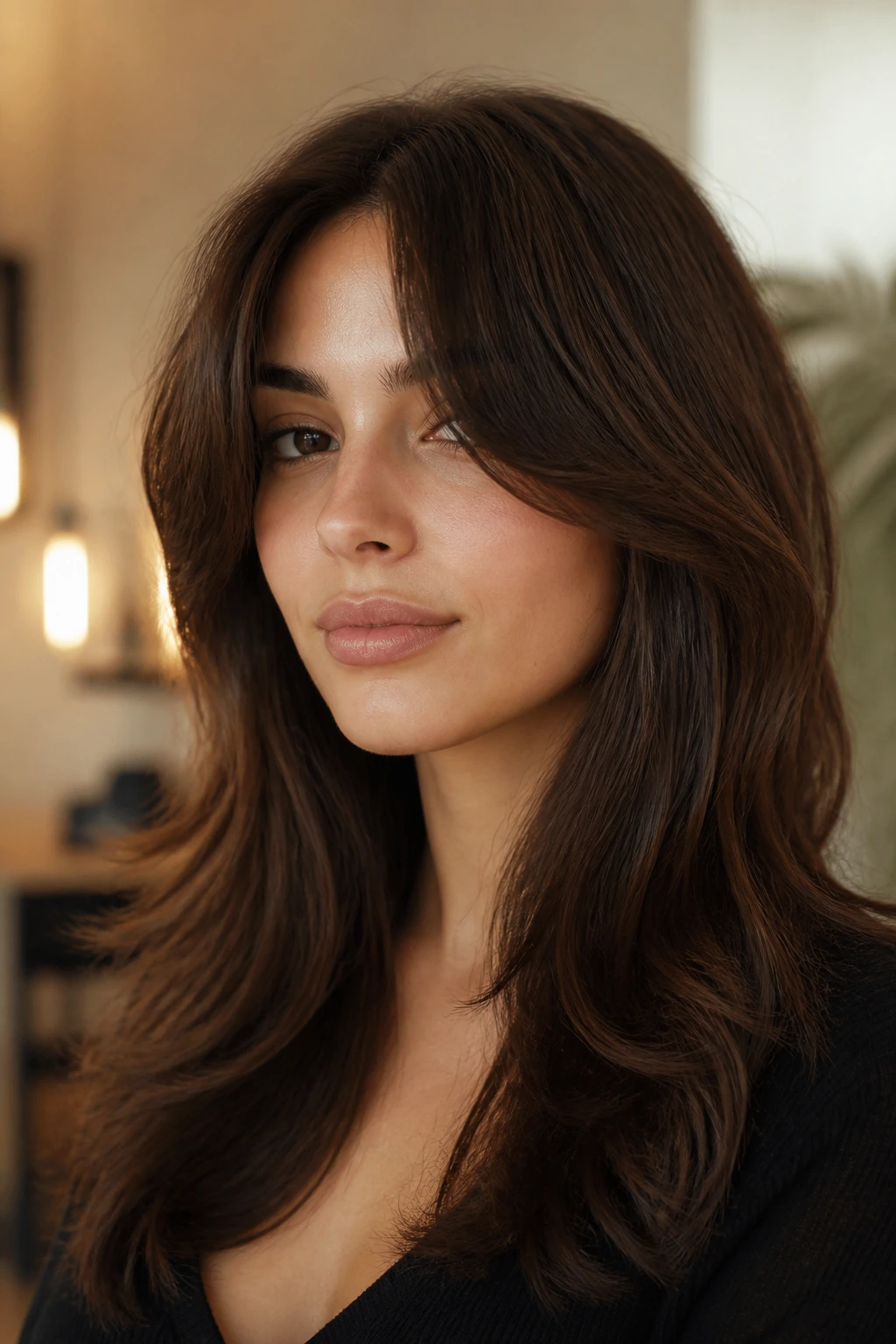
This is the version for someone who wants the fringe to show up in the room before the rest of the haircut does. The center stays fuller than a wispy curtain bang, and the wings stretch long enough to reach the jawline or even brush the top of the collarbone.
On thick hair, that heaviness is a feature, not a flaw. You can carry the weight because the hair has enough body to hold the split without collapsing. The salon note here is simple: ask for a center section that’s dense enough to frame, but have the underside softened so it doesn’t feel like a block.
Use this if you wear long hair, layered hair, or a blunt mid-length cut and want the front to feel more deliberate. It’s a statement shape.
4. Butterfly Curtain Bangs with Airy Layers
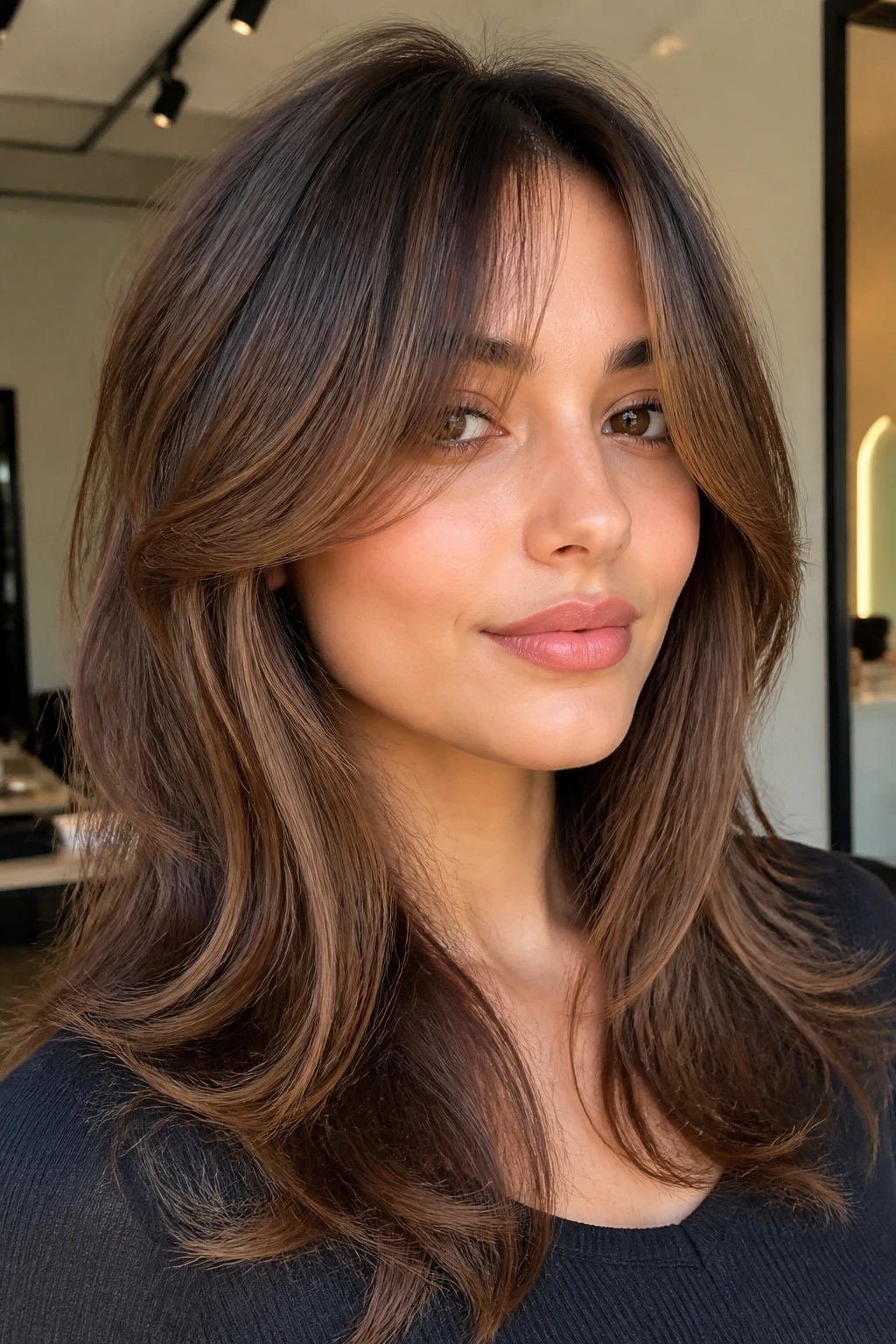
Butterfly bangs blur the line between fringe and face-framing layers, and that’s why they suit thick hair so well. The shortest pieces live near the center, while longer layers peel out toward the cheeks and jaw, then disappear into the rest of the cut.
Oval faces can handle the width this style creates, which is useful if your hair is long and heavy through the mids and ends. The face gets framed, but not boxed in. You still see the shape of the face; you just see it through movement.
The best version has layers that start high enough to move, but not so high that the front turns choppy. If you like a blowout, this one gives you that expensive, floating effect. If you like air-dried texture, it still behaves.
5. Razor-Textured Curtain Bangs for Coarse Hair
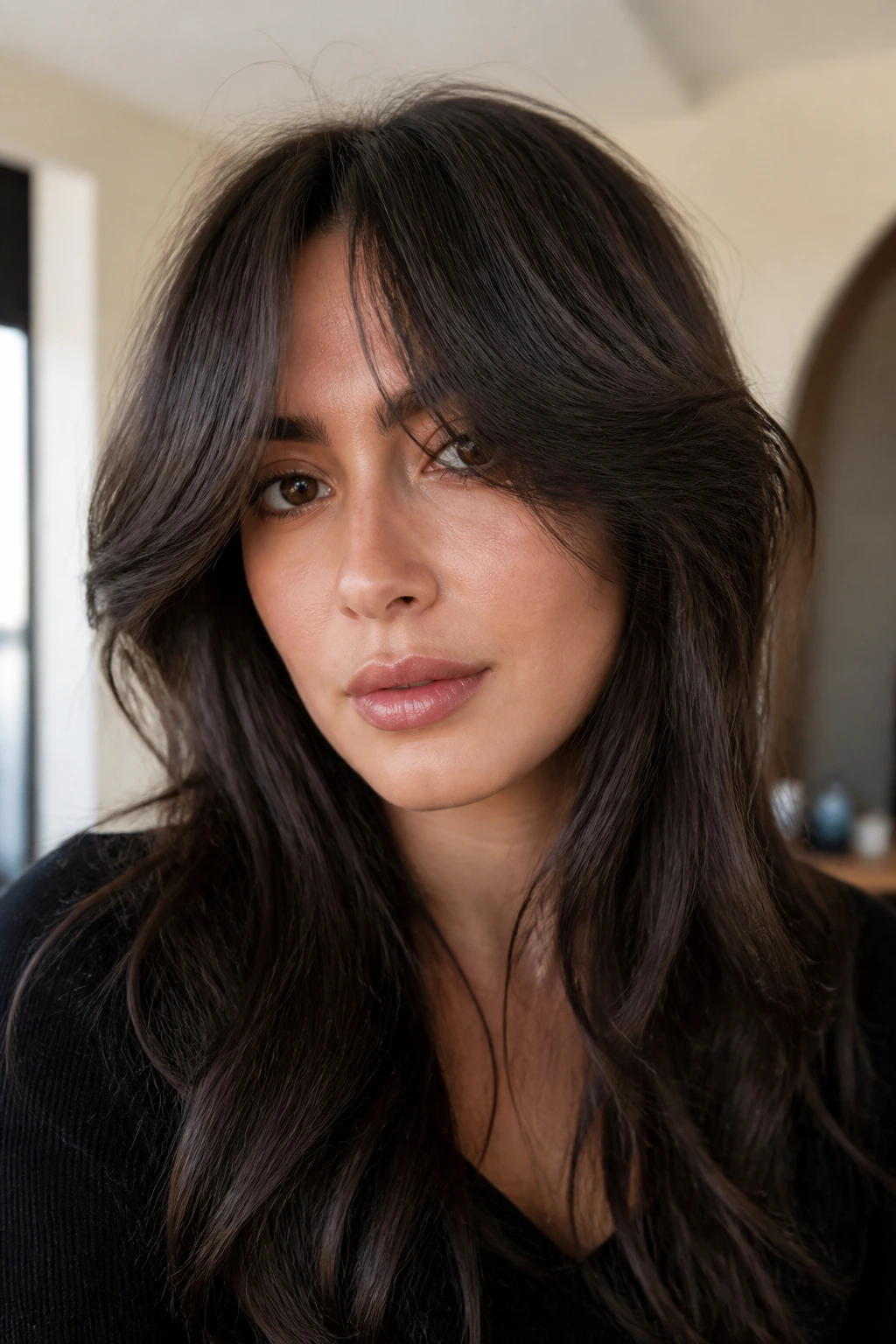
Razor work can be dangerous if someone gets too enthusiastic with it, but on coarse, thick hair it can soften the front in a way scissors sometimes don’t. The edge becomes less blunt, the fringe moves more freely, and the whole front loses that dense, carved-out look.
This cut is a good match for oval faces that can take some edge around the cheekbones. You’re not trying to erase the thickness. You’re trying to keep it from sitting like a slab. A controlled razor finish, used by someone who knows where to stop, can make the fringe swing instead of puff.
Best Use Case
- Hair that feels sturdy and resistant to bend.
- Thick strands that look puffy when cut blunt.
- A person who likes texture more than sleek shine.
Skip the heavy oils here. A lightweight cream or mousse is enough. Too much slickness makes razor-textured bangs cling together and lose the separation that makes them interesting.
6. Brushed-Out Bombshell Curtain Bangs
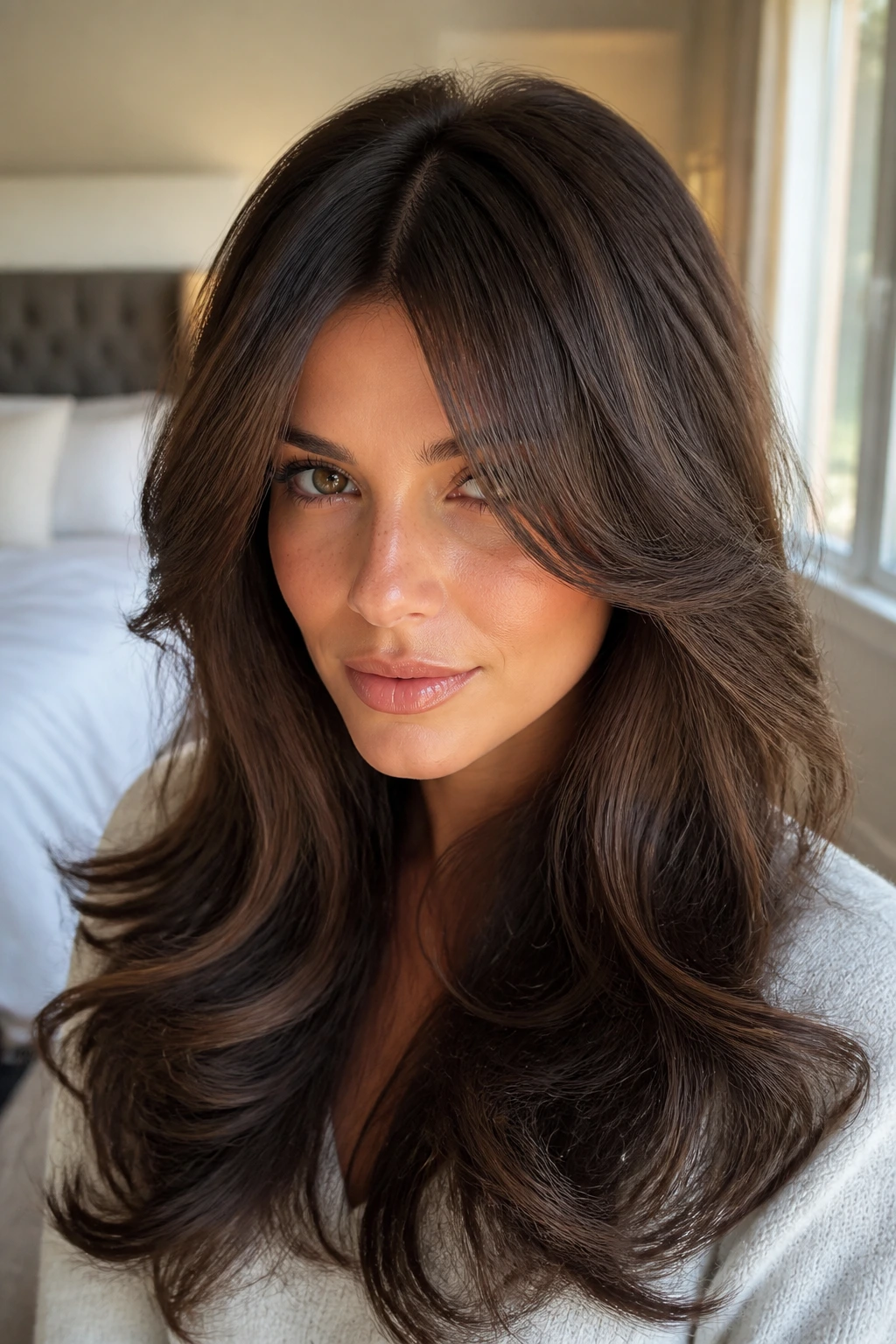
These bangs want volume, shine, and a little bit of attitude. They’re brushed out from a round brush or hot roller set so the fringe opens at the center and curves away from the face in a soft, dramatic sweep.
Thick hair is ideal here because it holds the bend after it cools. Thin hair often loses the shape by lunch. Dense hair keeps the line visible, which is exactly what makes this style look rich rather than puffy.
The shortest point should live near the brow, but the wings need enough length to graze the cheekbone or jaw. That extra length is what gives the style its swing. If you want a front piece that looks expensive without being stiff, this is one of the strongest options in the whole group.
7. Collarbone-Length Curtain Bangs That Curl Under
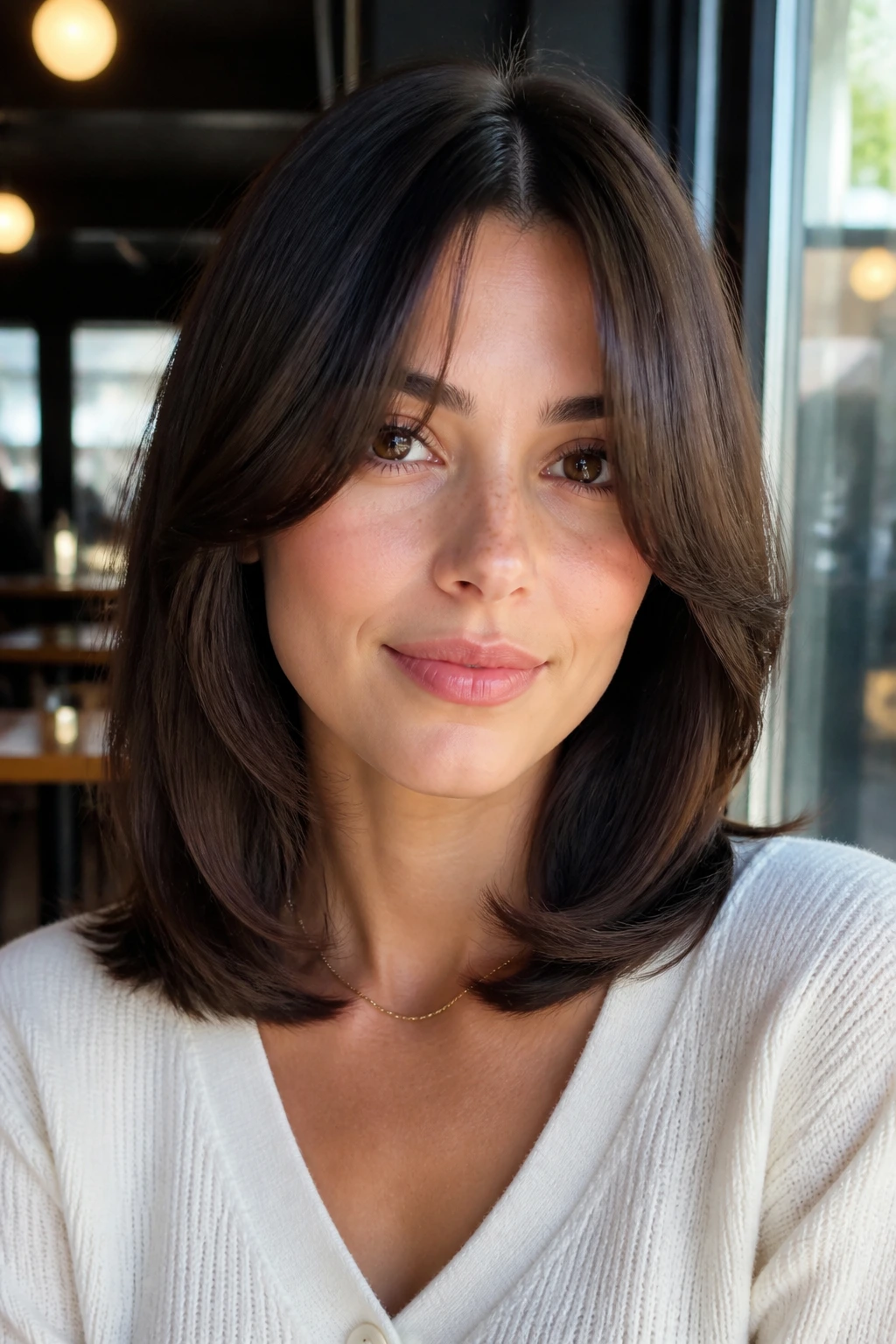
Long curtain bangs that hit near the collarbone can be surprisingly flattering on an oval face. They don’t interrupt the length of the face too aggressively, and they let thick hair keep its natural heft without turning the front into a wall of density.
The curl-under finish matters here. The ends should curve softly toward the neck, almost like the front pieces are folding back into the rest of the haircut. That makes the style feel deliberate instead of overgrown.
This version is useful if you wear your hair down most days and want the bangs to blend into the sides rather than sit apart from them. It also grows out gracefully, which is a relief if you don’t want to visit the salon every few weeks.
8. Shag-Softened Curtain Bangs with Movement
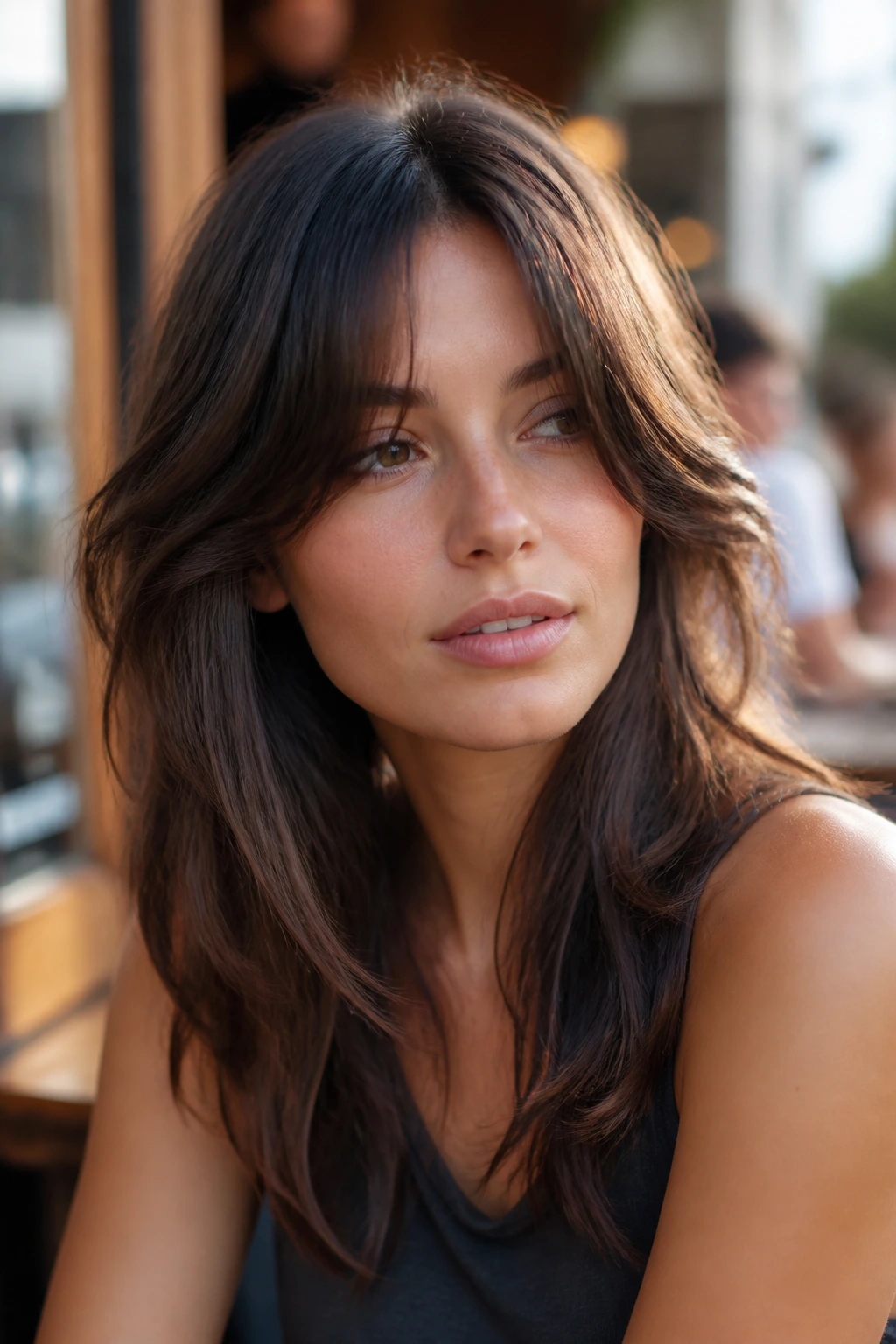
A little shag energy goes a long way with thick hair. Add too much and the whole cut starts looking busy. Add the right amount, though, and the bangs stop behaving like a separate piece and start moving with the layers around them.
That’s the real appeal here. The front gets a broken-up, lived-in feel, but the oval face still gets structure from the split at center. I like this version for hair that has some wave or bend already, because the natural texture keeps the style from feeling overmanaged.
Ask your stylist for softness around the edges and some internal removal through the middle. You want movement, not frizz. A dab of texture cream at the ends is enough to keep the pieces from sticking together.
9. Glassy Curtain Bangs with a Polished Bend
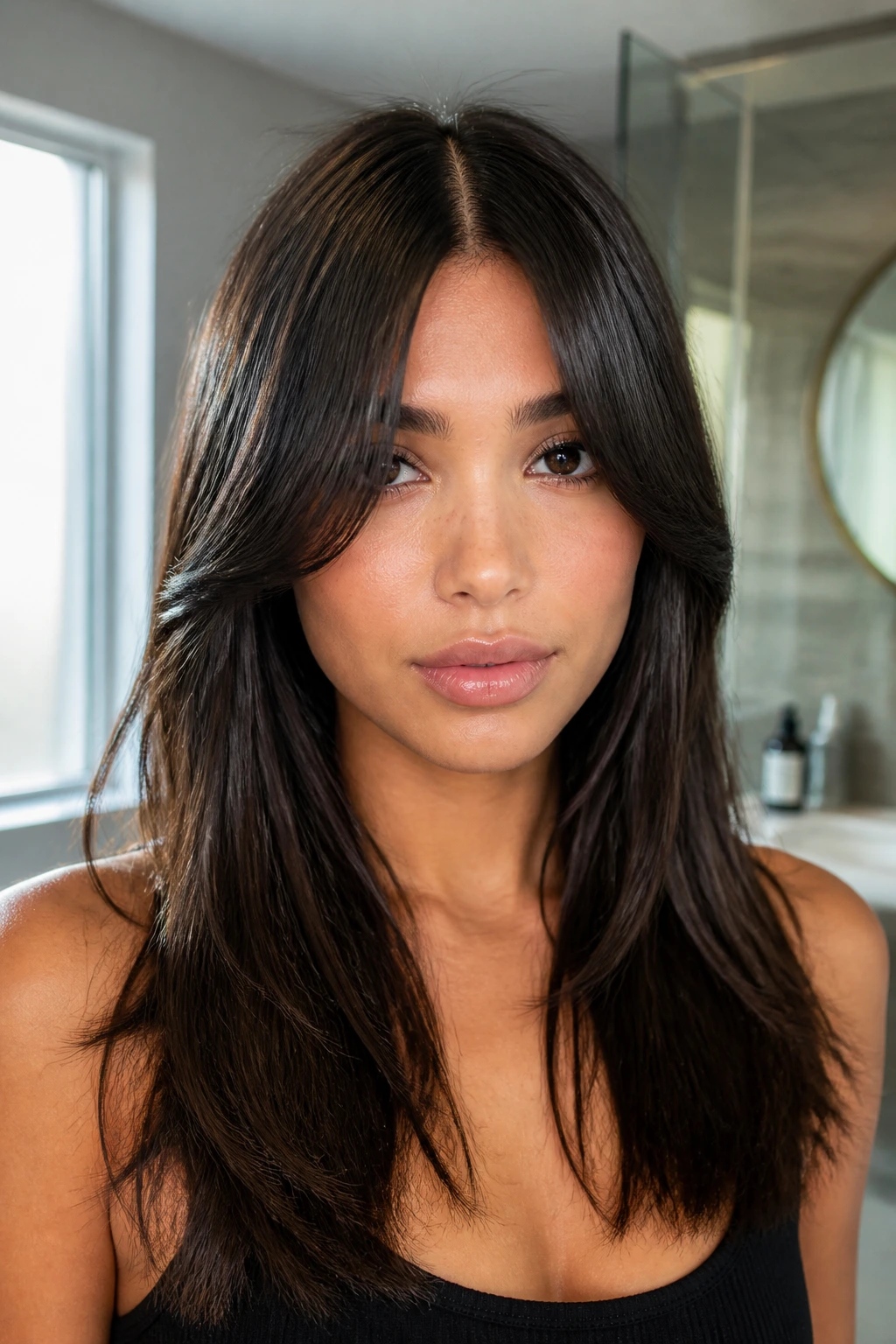
This is the sleek one. The kind of bang that lies flat at the root, then makes one clean turn away from the face before settling into the sides. On thick, straight hair, the shape can look sharp in the best way.
The polish comes from control. Blow-dry with a nozzle, keep the brush tension firm but not aggressive, and finish with a small amount of smoothing cream on the ends only. Too much product near the roots will drag the whole thing down.
Oval faces look especially clean with this cut because the smooth line lets the cheekbones and brows do the work. There’s no clutter. Just a crisp center split and a glossy front that moves when it should.
10. Feathered Curtain Bangs That Sit Light at the Root
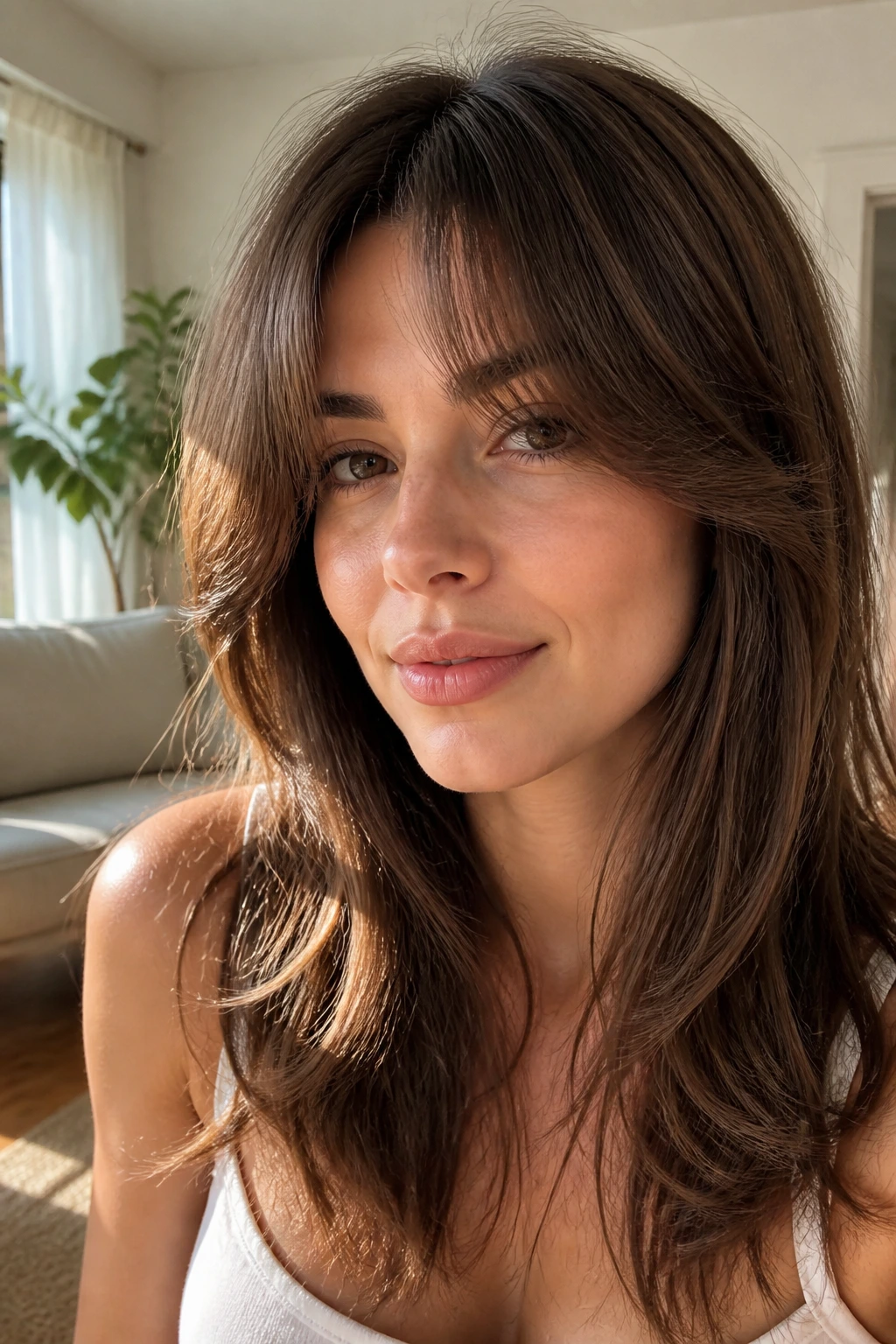
Feathering helps when the front of the hair feels heavy before you even start styling it. Instead of one dense curtain, the bang opens into finer, lighter ends while keeping enough body near the root to avoid that see-through look.
This is a good pick for thick hair that tends to explode if it’s cut too blunt. The feathered edges let the fringe breathe. On an oval face, that means the front softens the forehead without stealing too much attention from the rest of the cut.
A small round brush and a root clip can do a lot here. Set the center up and away from the forehead while it cools, then let the sides settle. The shape looks easiest when it’s allowed to fall, not forced.
11. Face-Hugging Arc Curtain Bangs
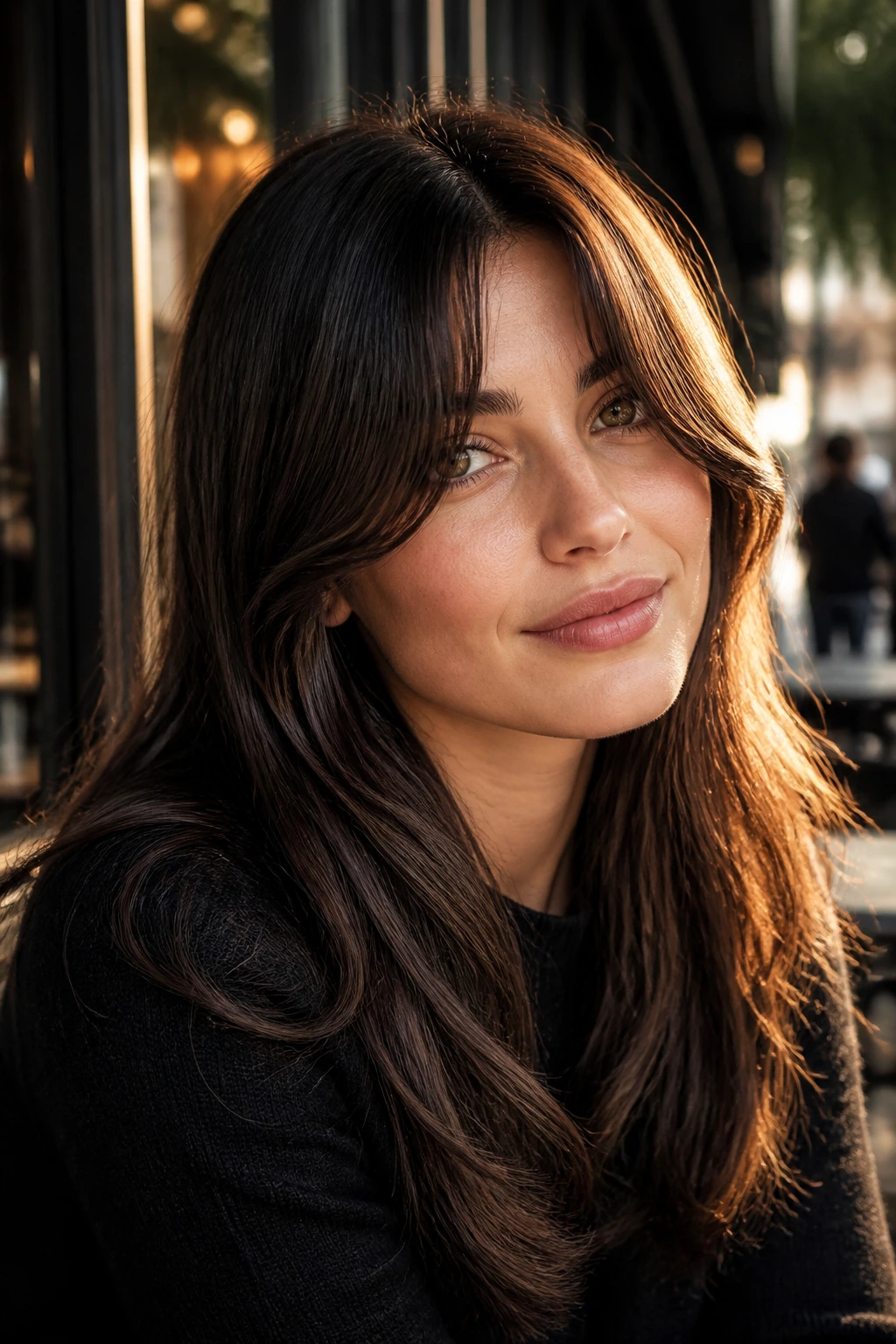
Some curtain bangs stay out at the temples. These don’t. They arc inward, then slide along the face so the whole front feels more connected to the cheekbones and jaw.
That arc shape is especially nice on oval faces because it adds a little more contour without making the face look narrow. Thick hair helps the curve stay visible, but the cut has to be smart about bulk. If the front is too heavy, the arc turns into a shelf. If it’s too thin, the curve disappears.
Ask for the shortest area to sit near the brows and the longest parts to land around the cheekbone. That gives you a visible sweep without losing softness.
12. Deep-Set Curtain Bangs with a Wide Center Part
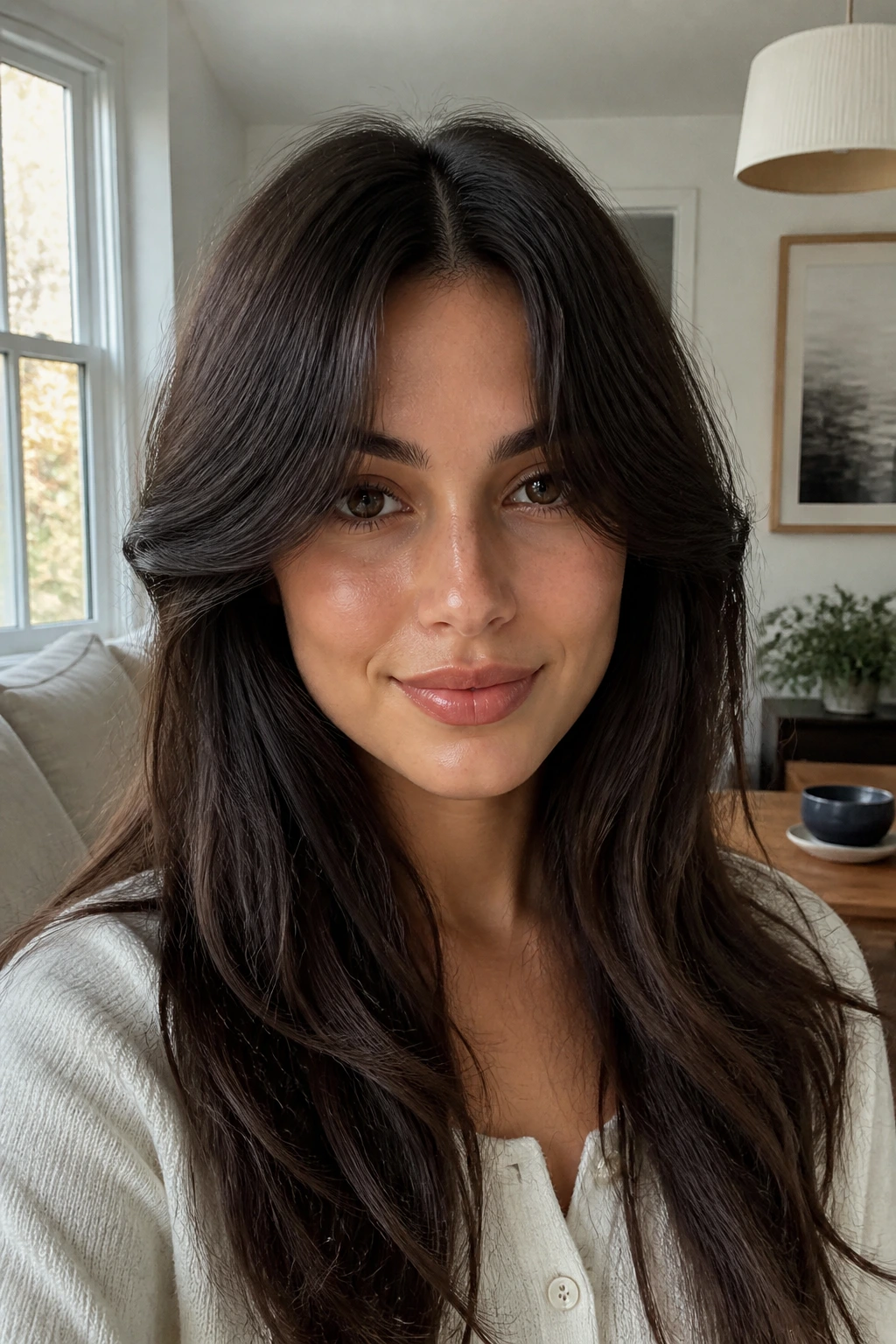
A wider center part can change everything. If the split is too tiny, thick hair tends to fall inward and close the face. Open it up a bit more, and suddenly the fringe has room to breathe.
I like this look on oval faces because it adds a bit of drama right where the eyes start reading the haircut. It also helps if your hairline has a stubborn cowlick. The extra width gives the front a better chance of sitting where you want it.
The cut itself should still be soft. You’re not making two separate side bangs. You’re building one fringe with enough center openness to stay split all day.
13. Root-Lifted Curtain Bangs for Dense Hair
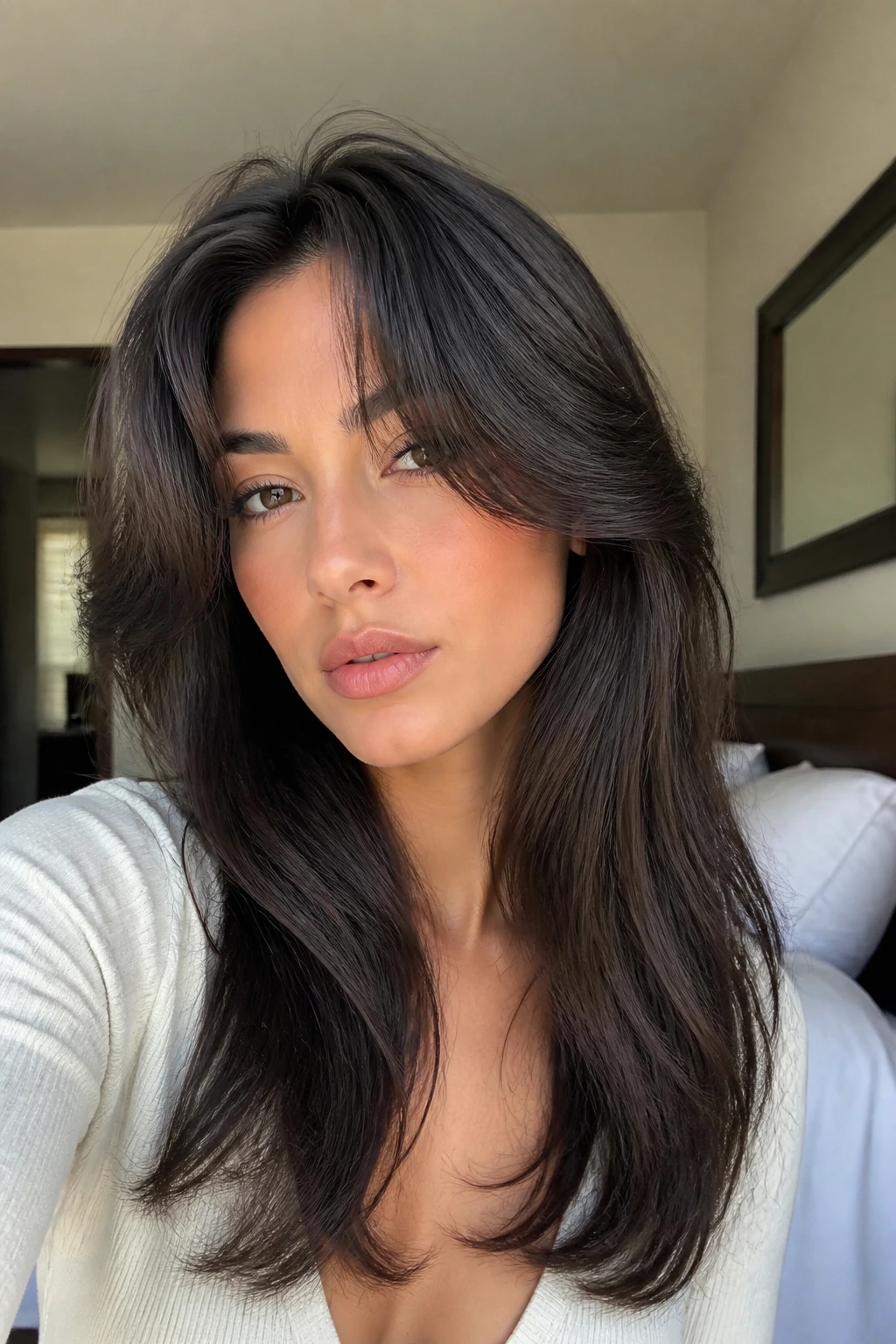
Dense hair often needs lift more than it needs length. If the root collapses, the whole fringe goes flat. If the root pops, the rest of the shape follows along.
This style leans into that. The bang is cut with enough lightness at the root area that it can stand off the forehead a little before curving into the sides. That tiny lift makes the front feel cleaner and keeps thick hair from hugging the skin too hard.
A root mousse, a round brush, and a cool-air finish help a lot. Clip the fringe up for a minute after blow-drying if you want the bend to hold. That’s a small move with a big payoff.
14. S-Curve Curtain Bangs with Bent Ends
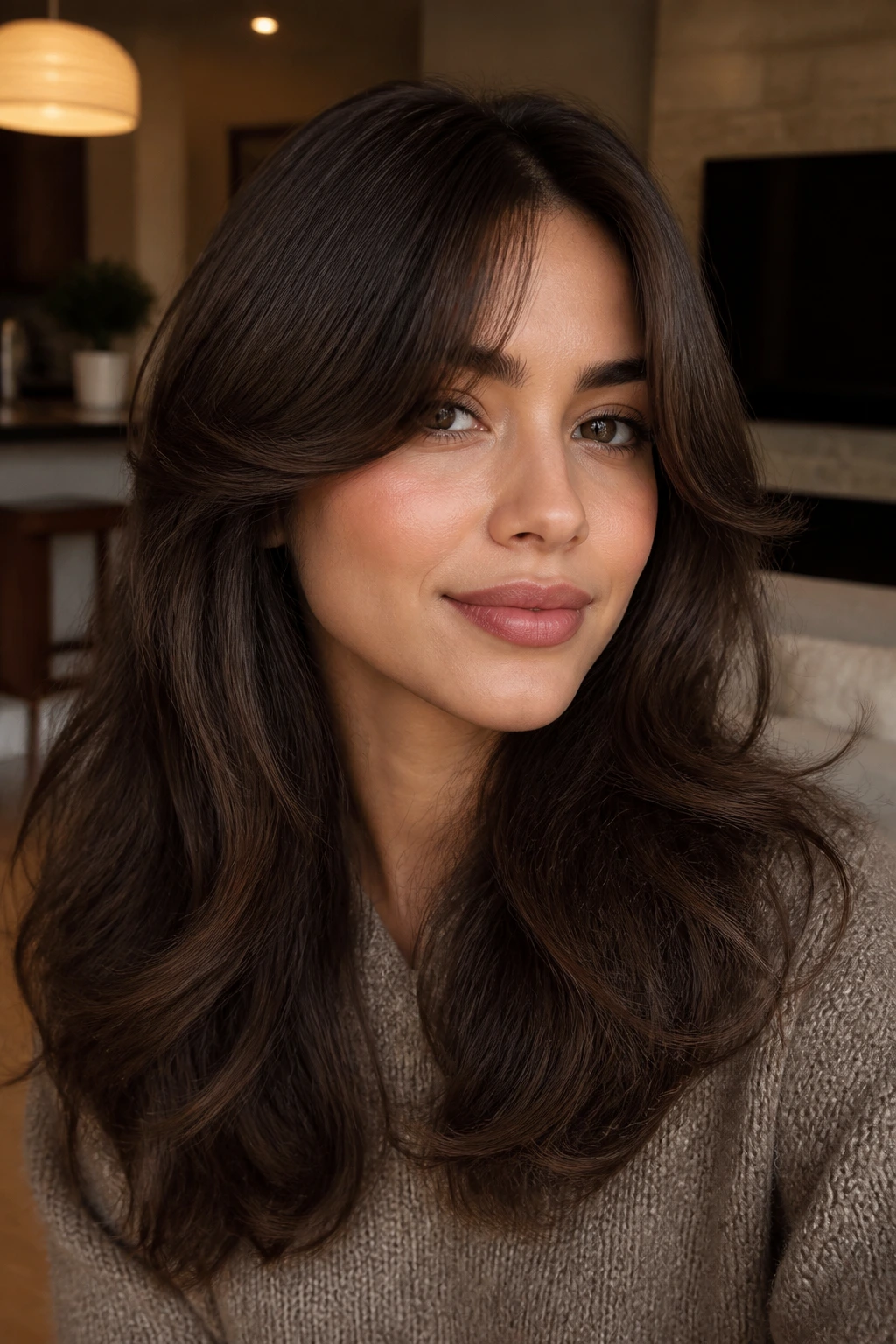
The S-curve fringe has a little bend in two directions: away from the face near the root, then back in near the ends. That’s what gives it motion. It looks soft, but there’s structure underneath.
Thick hair is good at making this shape stay visible, especially if there’s some wave in the mix. On an oval face, the curve helps frame the center while still keeping the forehead open. You get shape without hard lines.
Use a medium round brush or a large curling iron just on the front pieces. Don’t make the bend too perfect. A little irregularity makes it look human, not helmeted.
15. Luxe Curtain Bangs with Thick, Full Wings
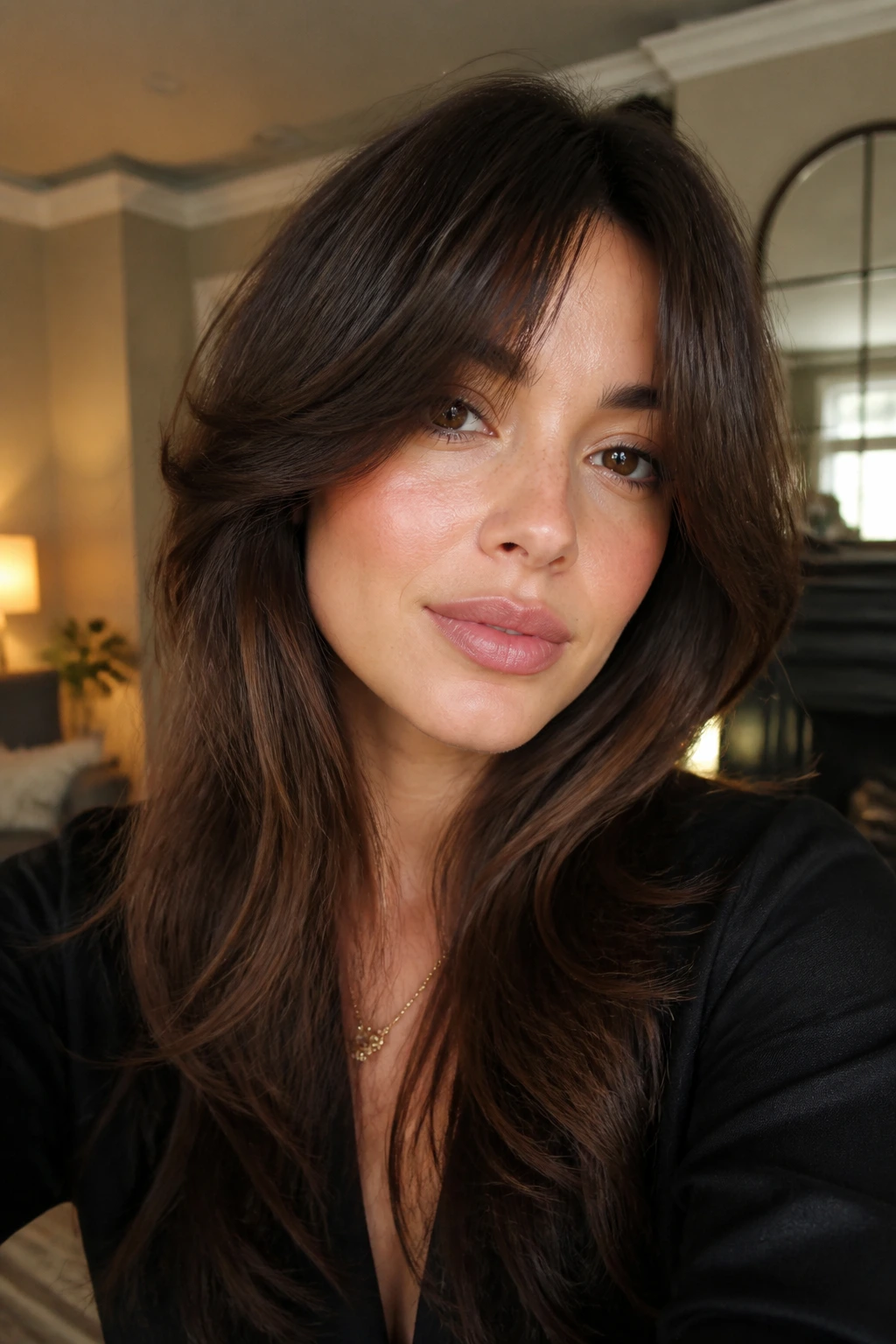
This one is unapologetically full. The center split is there, sure, but the wings stay dense enough to read as part of the haircut, not as a light garnish on top of it.
If you have thick hair and want the bangs to feel expensive and noticeable, this is your lane. Oval faces can handle the width because the shape doesn’t crowd the jaw. It just gives the middle of the face a frame with substance.
The salon request matters: keep the fringe full through the center, but remove enough interior weight so the sides can fold back. You want fullness, not bulk. There’s a difference, and your hair will show it.
16. Shorter Cheekbone Curtain Bangs for a Stronger Frame
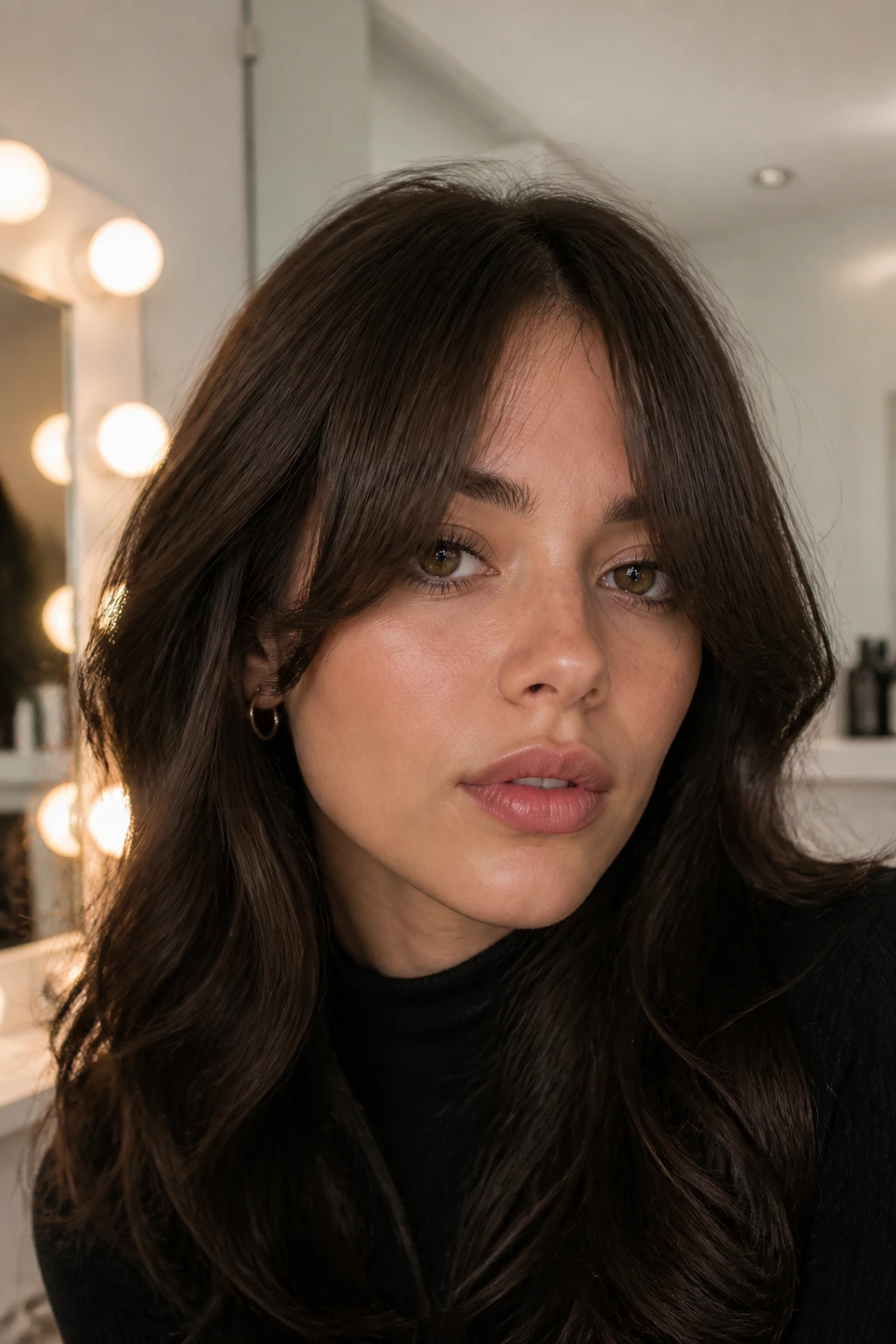
Short curtain bangs can be gorgeous on oval faces when they’re handled with care. Start the shortest point around upper brow level, then let the edges lengthen to the cheekbone. The result is sharper, more face-forward, and a little bolder than the usual long drape.
Thick hair makes this cut feel deliberate instead of sparse. The density gives the bang presence. But the upkeep is more noticeable, so this is the version for someone who’s okay styling the front a bit more often.
If you wear makeup, this shape is especially nice because it opens the eyes and gives the brows a clean frame. It’s a good one when you want the bangs to lead the look.
17. 1970s Flip Curtain Bangs
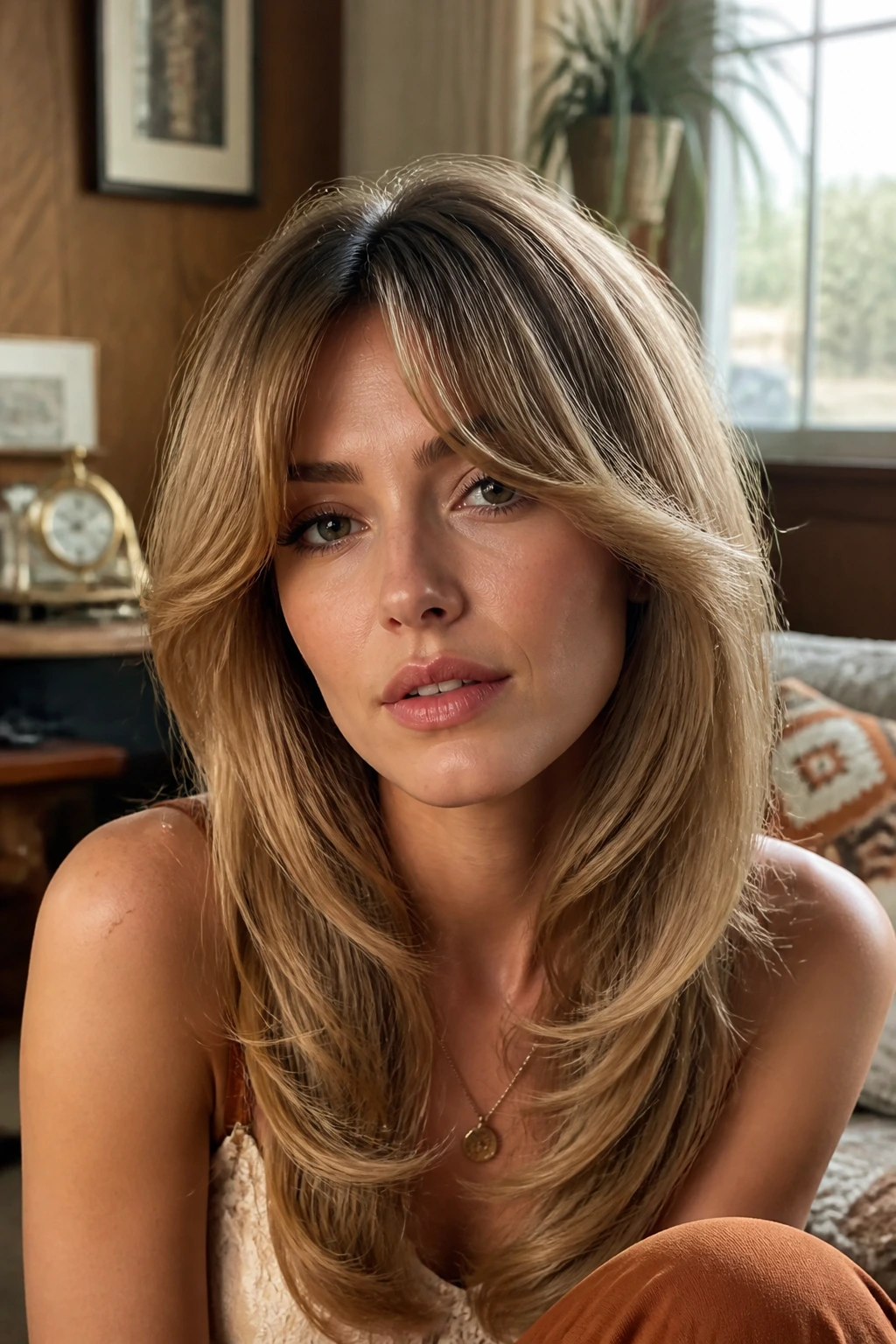
This is the retro one, and I mean that in the best way. The ends kick out just slightly, like the front has been brushed under and then persuaded to flip at the edges. It’s a little glam, a little playful, and very good with thick hair.
Oval faces can wear the flip without losing balance because the shape adds width in a controlled way. The shortest pieces stay near the brows, then the sides sweep out and away. You end up with movement that feels styled, not accidental.
A large round brush or a big roller set makes this one shine. If the hair falls flat, the flip disappears, so the finish matters.
18. Piecey Curtain Bangs with Invisible Layers
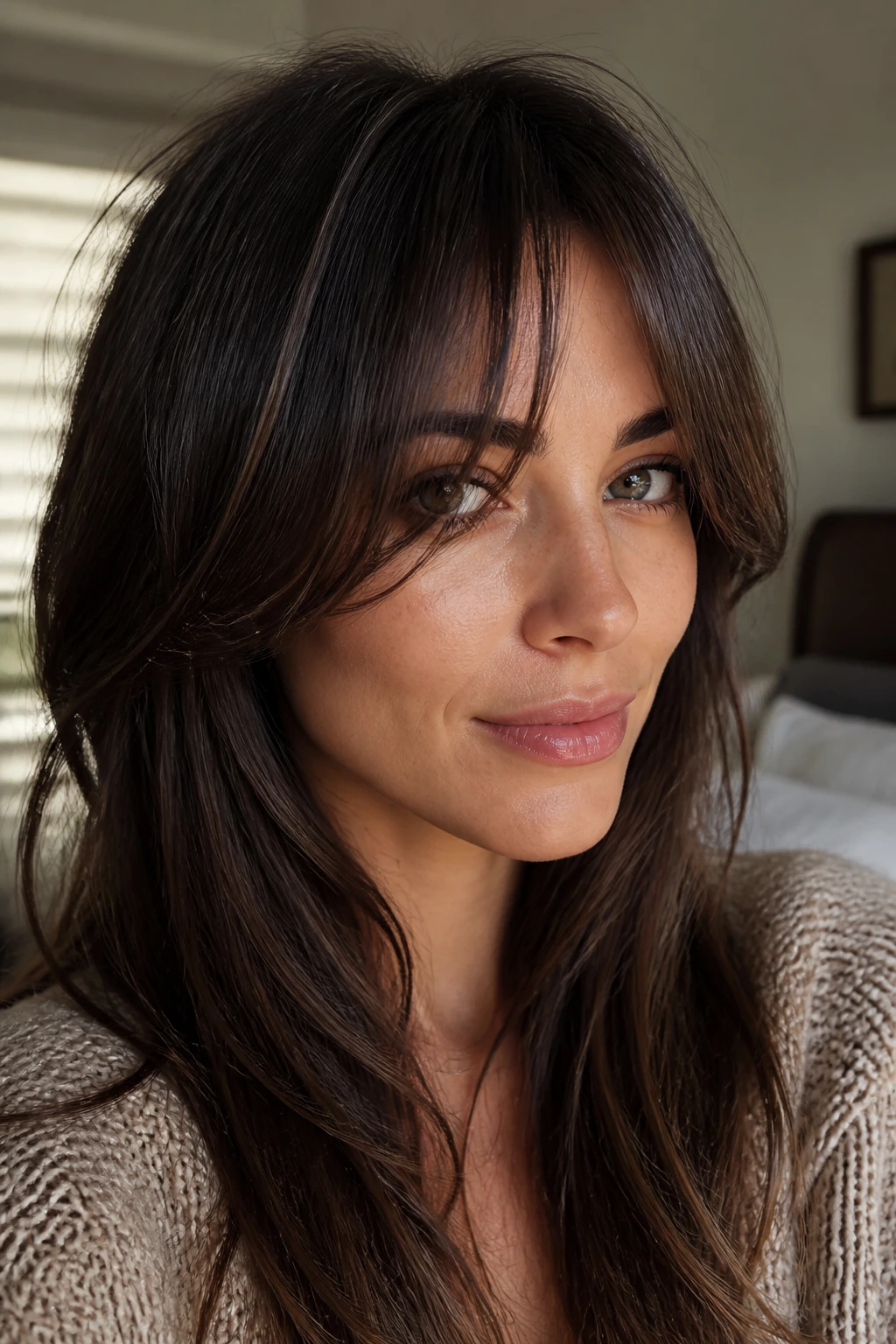
Some bangs are all softness. These are a little more broken up. The separation comes from invisible layers inside the fringe, so the pieces fall in defined ribbons instead of one heavy sheet.
That’s useful for thick hair, which can clump in the front if it’s cut too square. The piecey finish keeps the fringe light enough to move, but still full enough to frame the face. On an oval face, the texture keeps the look from turning too neat.
This cut likes a touch of texture paste or spray. Not much. Just enough to keep the strands from blending into one another by noon.
19. Long Curtain Bangs That Sweep into the Jawline
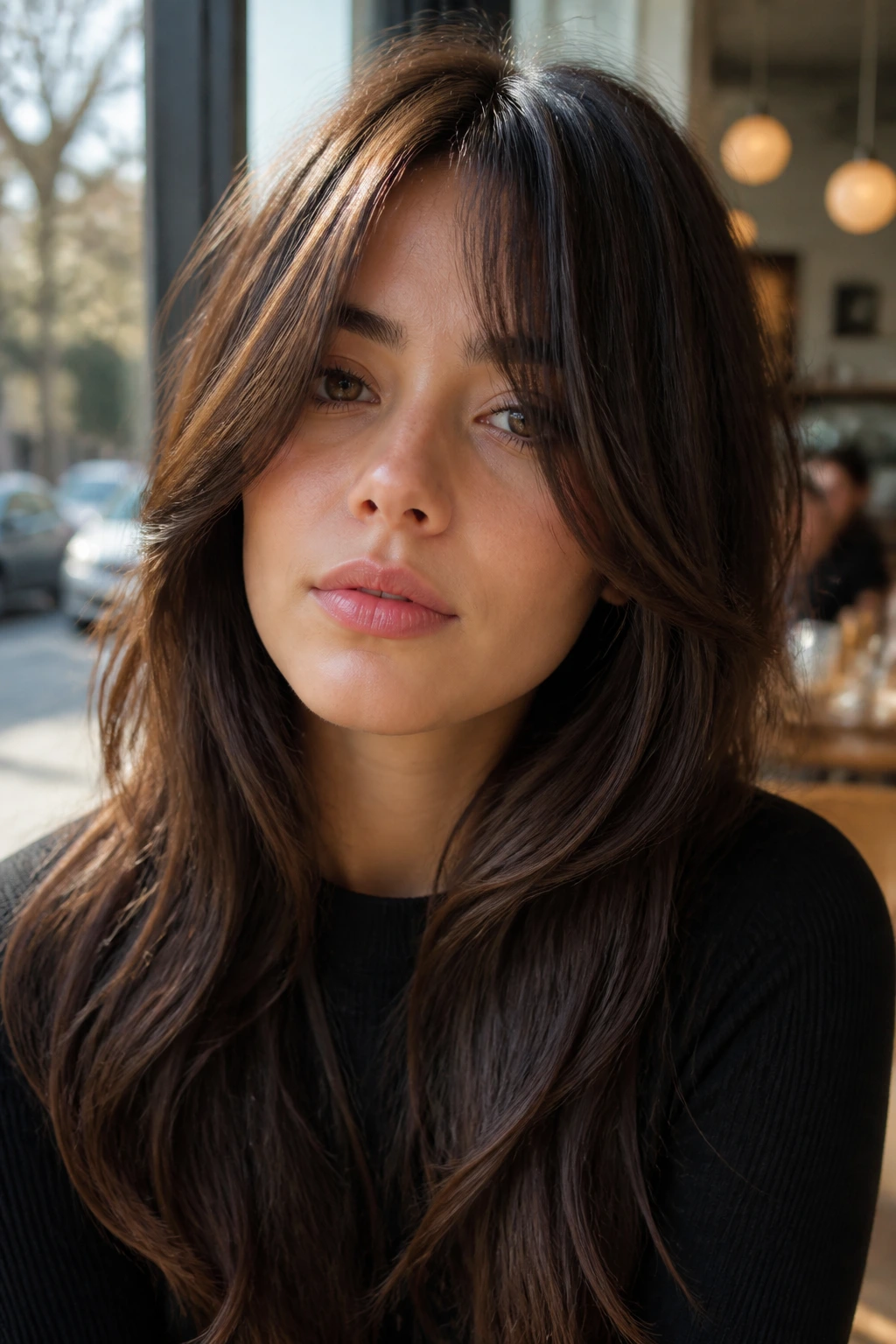
Longer curtain bangs are the low-maintenance answer for a lot of people, and on thick hair they can be quietly dramatic. The sides sweep down toward the jawline, which gives the face a long line and keeps the front from looking chopped off.
Oval faces often look strongest in this length because the face still reads open. You’re framing, not hiding. The long sweep also makes it easier to tuck the bangs behind the ears when you want them out of the way.
If your hair is heavy, this is one of the easier cuts to live with. It grows out smoothly, blends into layers, and doesn’t need the same level of daily manipulation as a shorter fringe.
20. Arched Curtain Bangs with a Rounded Brush Finish
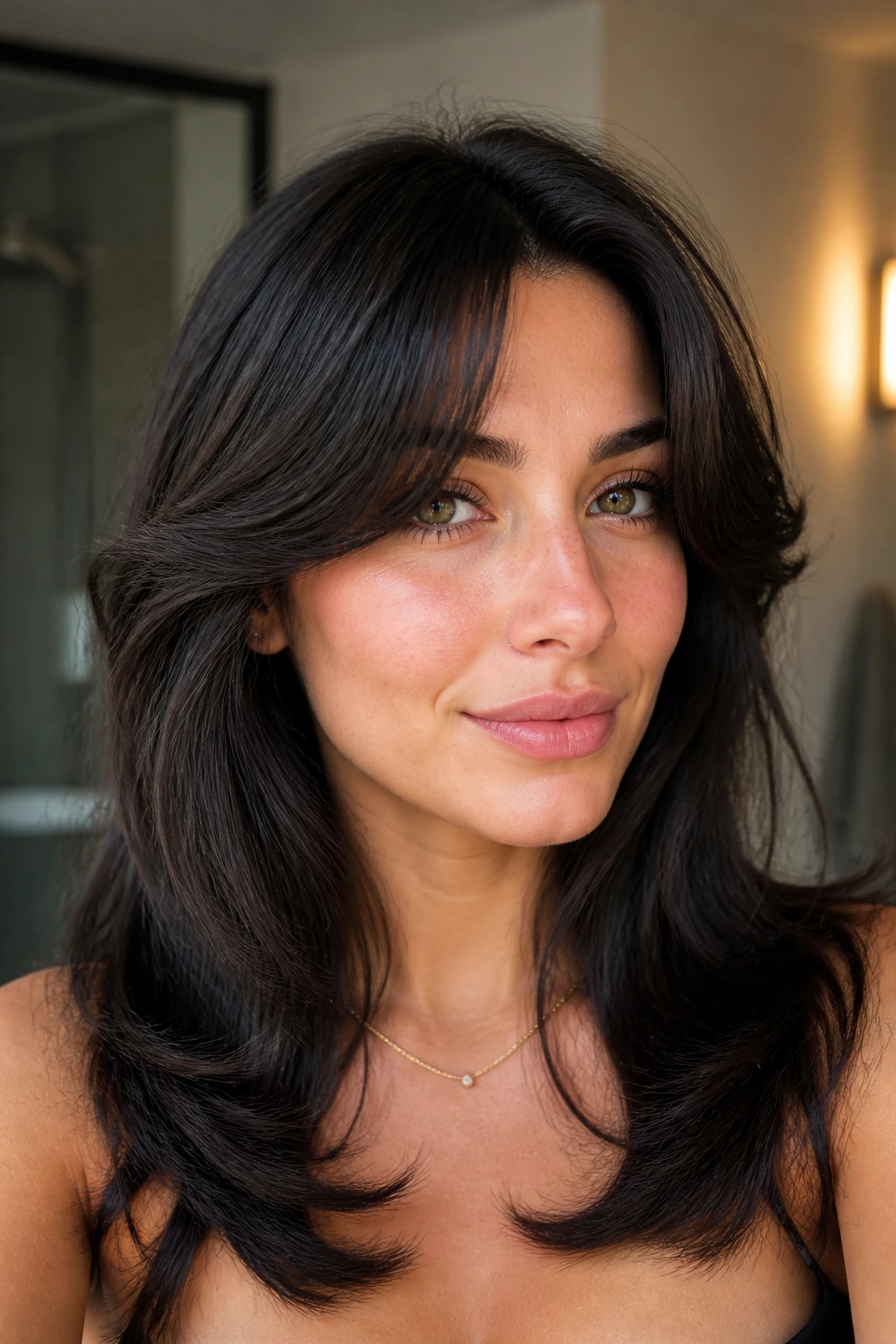
The arch gives the front a cleaner shape than a flat split. It rises gently at the center, then curves down and out toward the temples. That arc is subtle, but you notice it the second the hair moves.
Thick hair keeps the arch visible longer than fine hair usually does. Oval faces get a nice lift at the brows and a soft frame around the eyes, which is why this style tends to look balanced without feeling plain.
A rounded bristle brush is better than a flat one here. It gives the fringe that soft bend and keeps the ends from sticking out at odd angles.
21. Tousled Curtain Bangs with Salt-Spray Texture

If you like your hair a little messy on purpose, this is the version to try. The bangs are cut with enough length to move, then roughed up with texture spray or a light salt spray so the pieces separate and fall in different directions.
Thick hair can carry this look better than most hair types because the body gives the fringe shape even when it isn’t polished. Oval faces get a relaxed frame that still has structure at the center.
The caution is simple: too much spray and the bang gets rough instead of tousled. A few mists, a quick finger comb, and a little scrunch are enough.
22. Center-Split Curtain Bangs with Side-Swept Ends
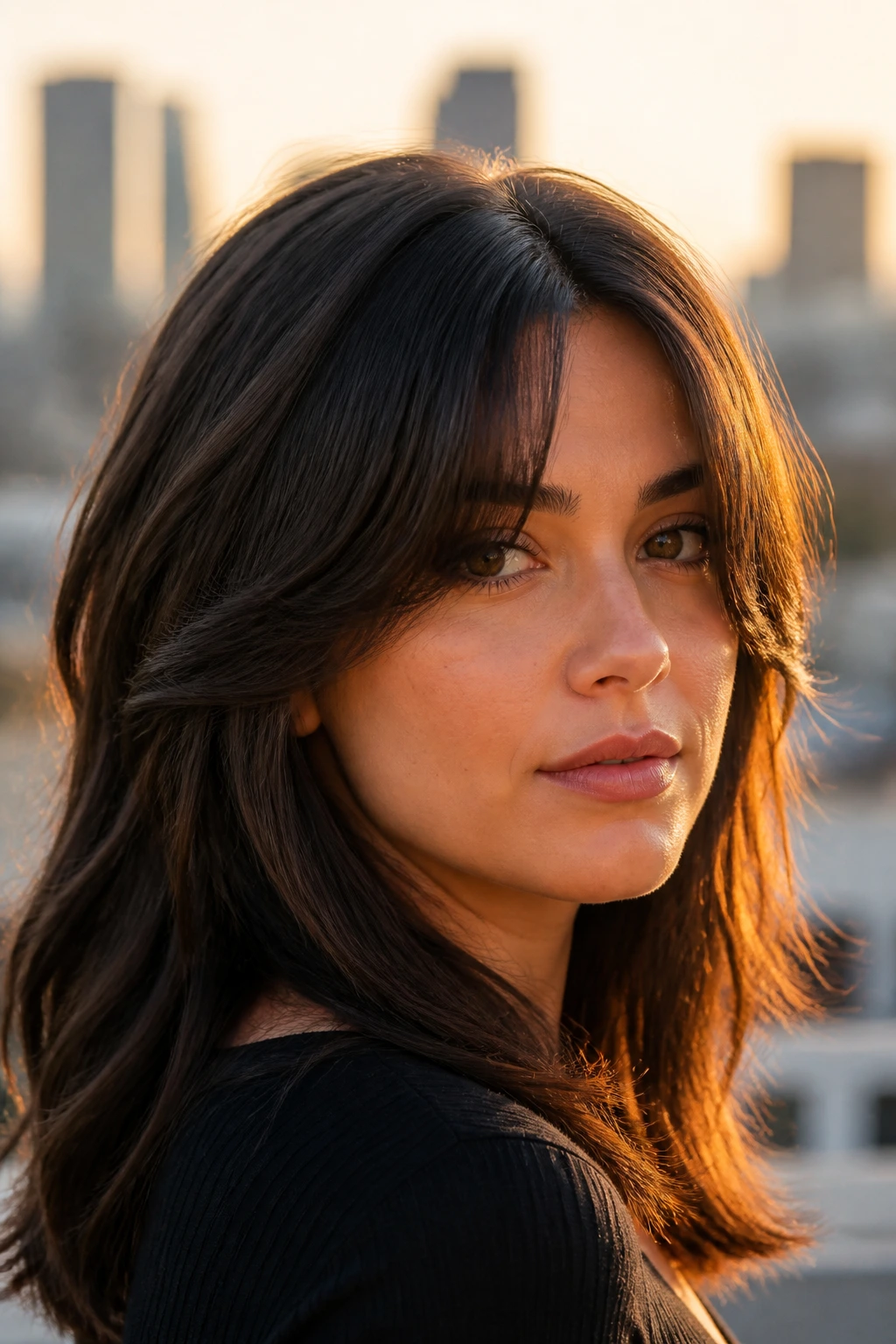
This version starts with a clear middle part, then lets the ends sweep slightly to one side or the other. That tiny bit of asymmetry keeps the style from feeling too rigid. It also plays nicely with thick hair, which often looks better when it isn’t forced into perfect symmetry.
Oval faces can take the split because the shape stays open, but the side sweep keeps the whole thing from looking static. It’s a soft way to add movement without going full shag.
If you’ve got a cowlick or a bend in the front, this cut can help instead of fight it. The ends have somewhere to go.
23. Crescent Curtain Bangs That Open at the Brows
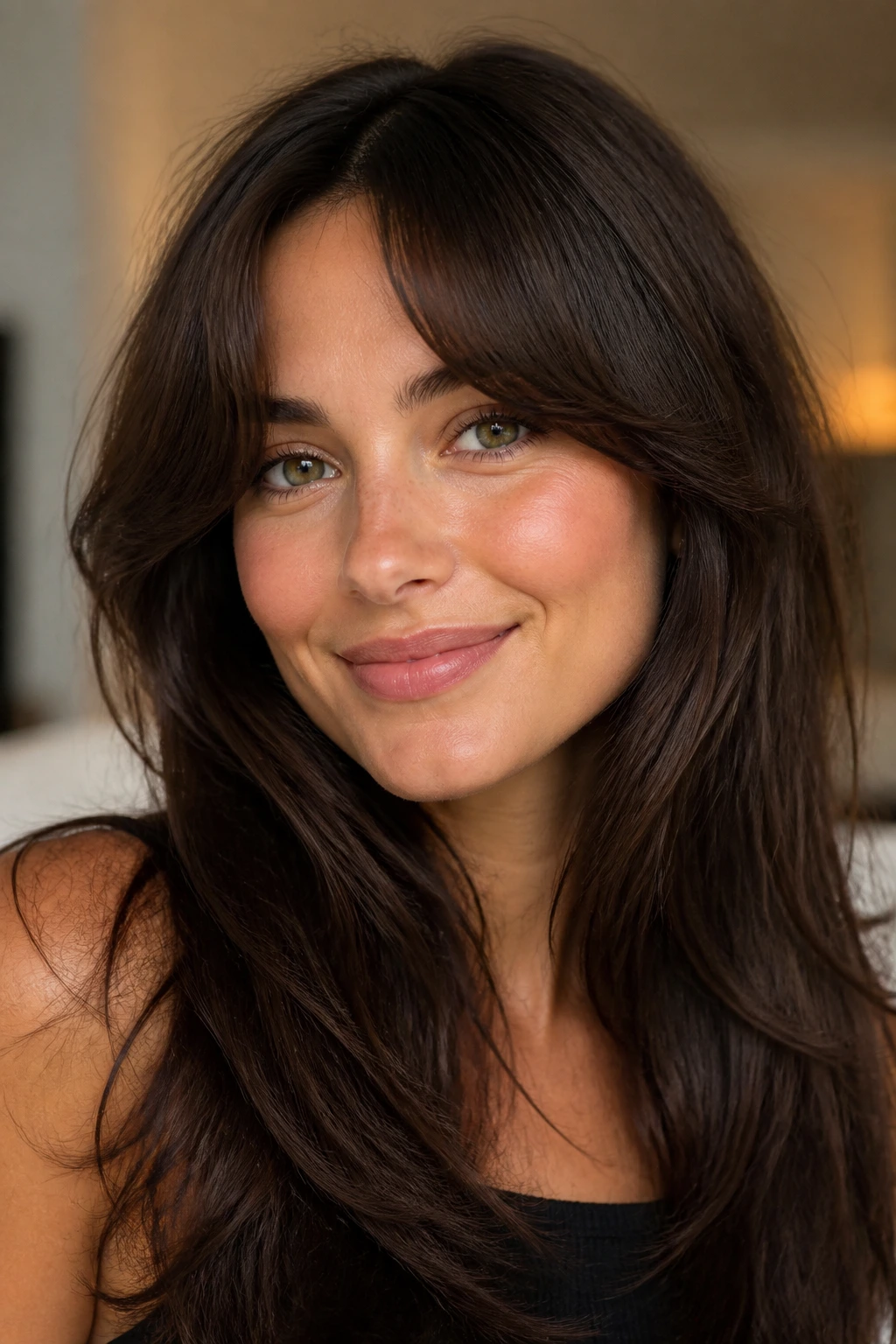
A crescent shape is a nice middle ground between soft and dramatic. The center sits a touch higher, the sides curve lower, and the whole bang reads like a shallow arc across the forehead.
That shape is flattering on oval faces because it gives the front a little lift without blocking the brows. Thick hair helps the curve stay visible, especially if the stylist has removed bulk from the interior of the fringe.
This is one of the more elegant options in the group. Not fussy. Just shaped. If you want something that feels refined but not stiff, this is a solid place to land.
24. Soft Rocker Curtain Bangs with Choppy Ends
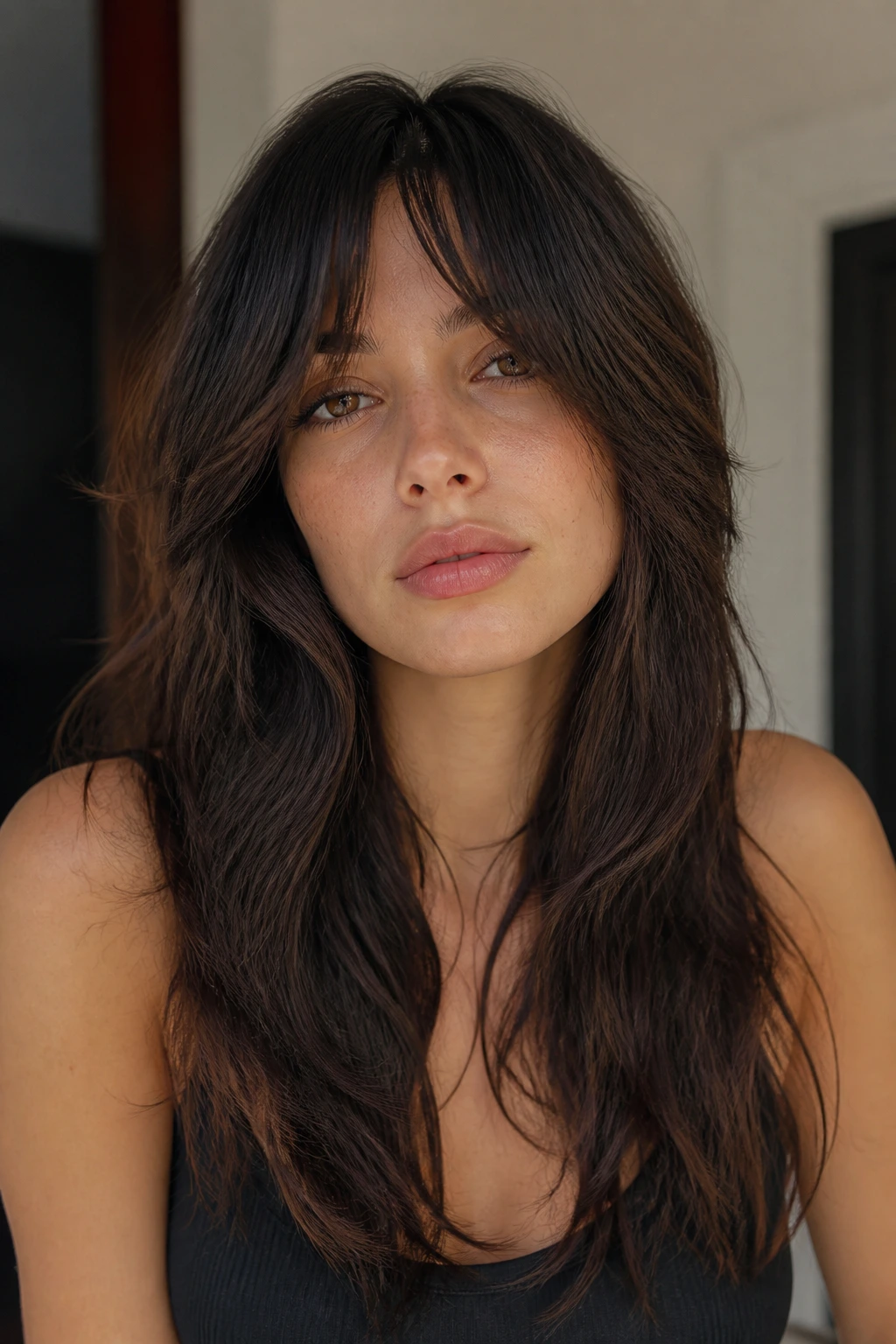
This is the fringe with a little edge. The ends are chopped enough to show separation, but the overall shape still opens from the center and falls away from the face. It’s not shaggy chaos. It’s controlled mess.
Thick hair gives this cut the grit it needs. On an oval face, the choppiness adds interest without fighting the natural symmetry. You get a front that feels lived-in and a little rebellious without looking unkempt.
A dab of styling paste at the ends helps. So does a quick bend with a flat iron if the pieces want to sit too straight. Keep it loose.
25. High-Drama Curtain Bangs with a Full Face Frame
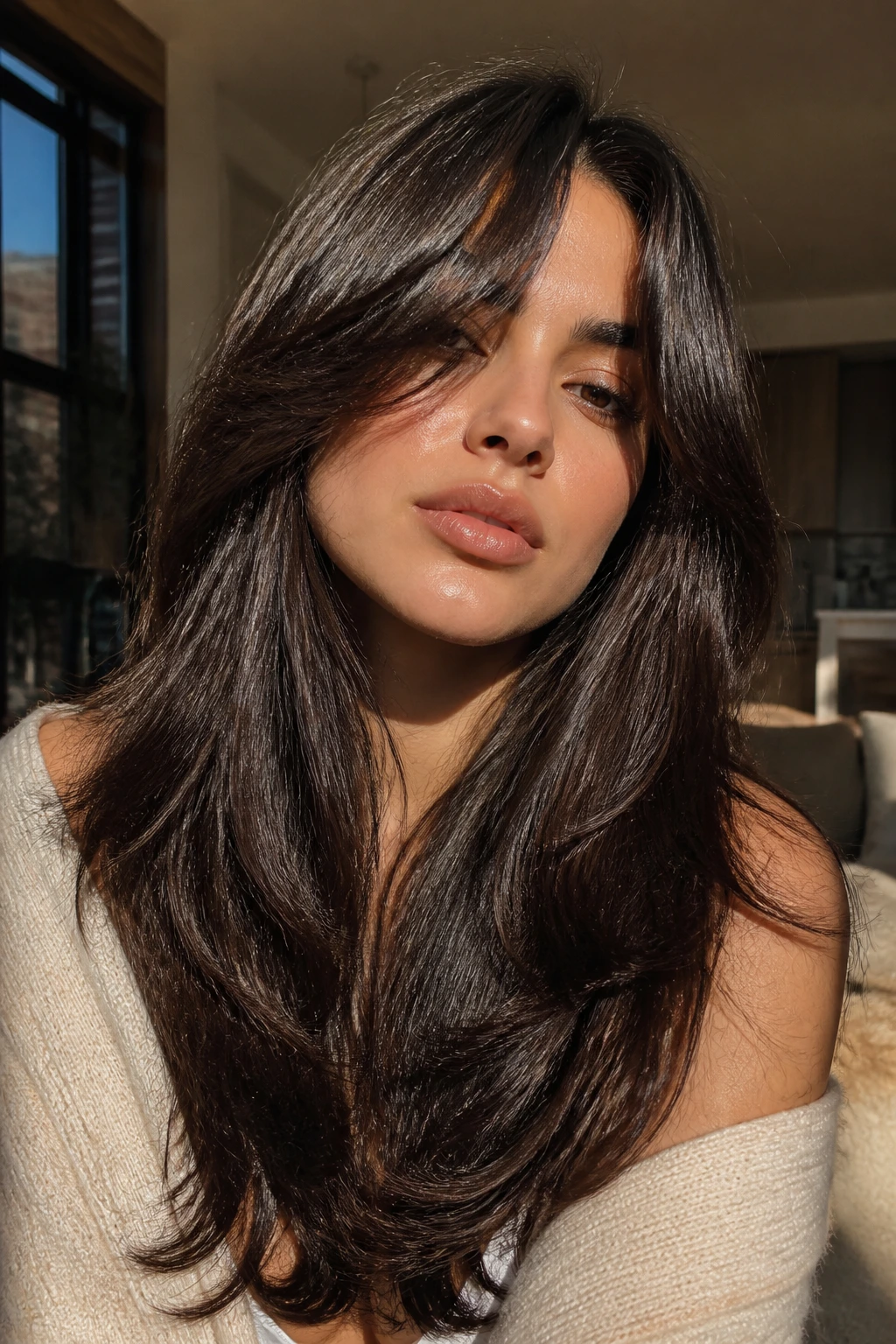
If you want the front to look like the hair has its own personality, this is the one. The fringe opens in the center, but the side pieces stay full and generous, sweeping down around the temples and cheeks with a lot of movement.
Thick hair is the only reason this style works as hard as it does. Fine hair would struggle to keep the shape from looking sparse. Here, the density creates the drama. Oval faces get a frame that feels strong without cutting the face into pieces.
This cut needs commitment. You’ll style it, you’ll trim it, and you’ll probably keep a round brush nearby. But when it lands right, it gives the whole haircut a presence that’s hard to fake.
Why Thick Hair Changes the Curtain-Bang Cut
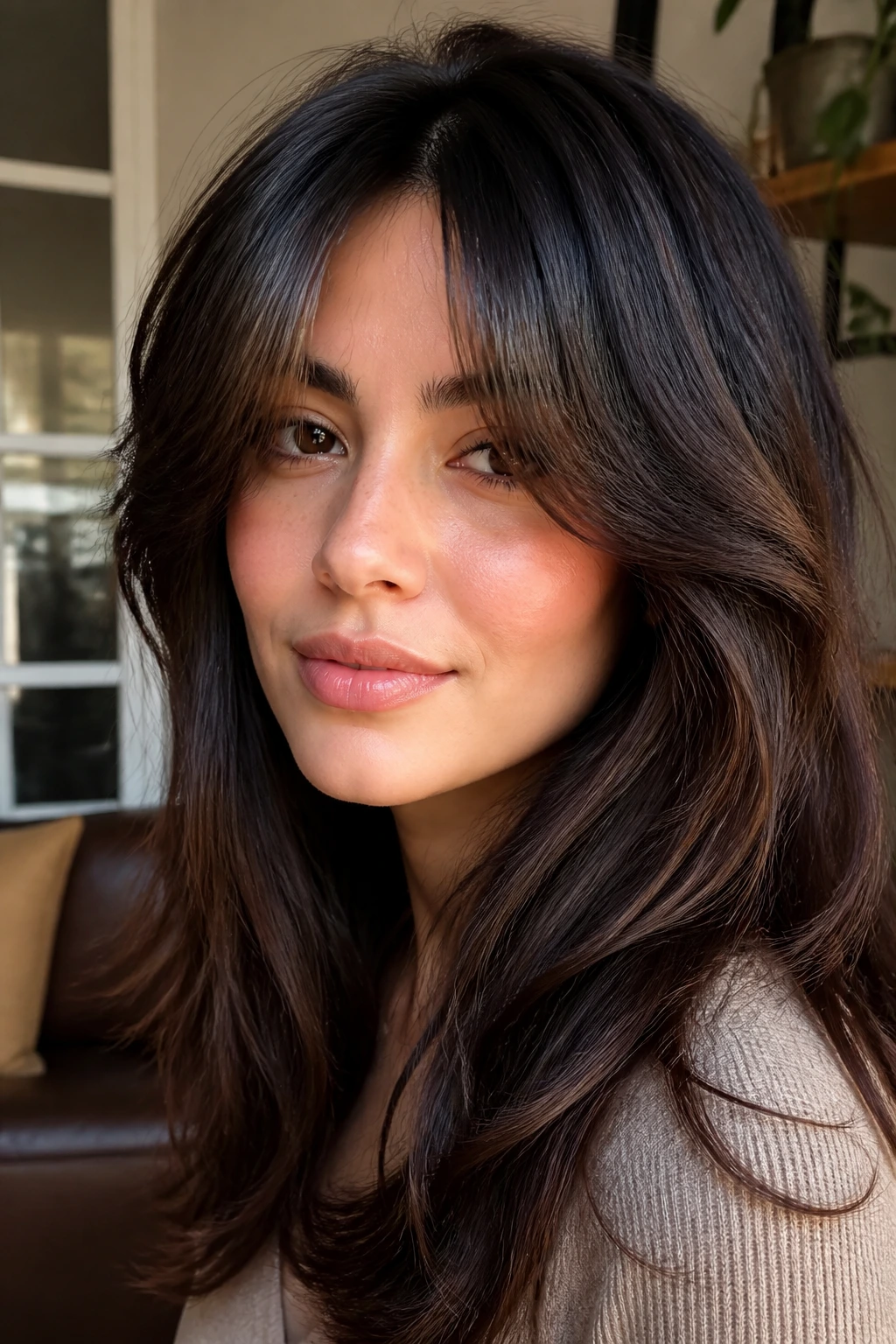
Thick hair doesn’t behave like a light fringe. It has weight, memory, and its own opinion. That’s useful when you want curtain bangs with movement, because the hair can hold a curve once it’s set. It’s a problem when the cut is too blunt, because the front turns into a wall and sits away from the face in a bulky sheet.
The answer is weight control. Not thinning everything into nothing. Not razoring away the life of it. Just removing enough internal bulk so the front can bend, part, and fold back. A good curtain bang on dense hair should feel lighter at the center and cleaner at the edges, with the ends soft enough to move but not so soft that they disappear.
Oval faces make the whole equation easier. There’s enough balance in the shape to wear a strong front frame, which means you can go bolder with the split, longer with the wings, or fuller in the middle. The cut should still follow the brow and cheekbone line, because those are the landmarks that keep the whole thing from wandering.
The Tools That Keep a Curtain Fringe from Puffing Out
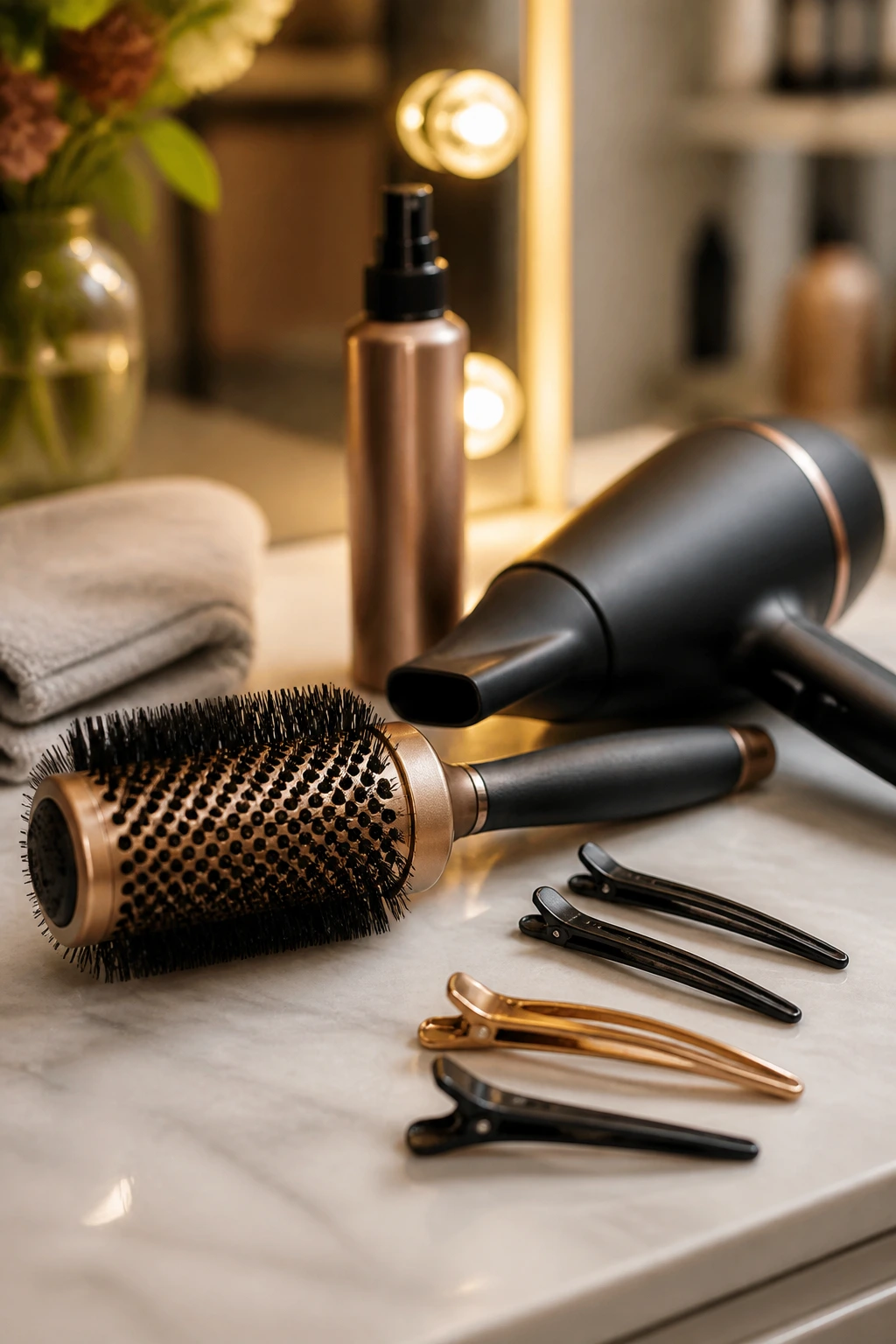
- A 1.25-inch or 1.5-inch round brush: This gives thick bangs the bend they need without making the curve too tight.
- A hair dryer with a narrow nozzle: Concentrated airflow helps the fringe lie the way you want it instead of blasting every strand in a different direction.
- Root clips or sectioning clips: Clip the bangs up while they cool, and the bend lasts longer.
- Heat protectant spray: Thick hair can take heat, but the front pieces still need protection from repeated blow-drying.
- Lightweight mousse or blow-dry cream: A little root support goes a long way. Heavy oils will flatten the split.
- Dry shampoo: Useful on day two when forehead oil starts pressing the fringe down.
- Texture spray or a soft styling paste: Best for piecey or rocker versions that need separation.
- A fine-tooth comb and a wide-tooth comb: One for clean parting, one for gentle reset after styling.
Smart Salon Notes and Product Picks
Bring photos that show the length of the shortest piece, not just the overall vibe. That’s the part stylists need to see. Say the words cheekbone length, internal weight removal, and soft point cutting if you want the fringe to move instead of sitting heavy.
Ask how they handle thick hair at the front. Good stylists usually remove bulk from inside the bang and then check the shape again after drying, because thick hair changes once it loses water and tension. A cut that looks right wet can sit wrong dry. That’s not a flaw in the salon. It’s the hair being itself.
Product-wise, keep the front lighter than the rest of the haircut. A root-lift mousse, heat protectant, and flexible hairspray are enough for most of these styles. If you can feel the product sitting on your fingertips after application, you’ve probably used too much for the fringe.
How to Style Them Without Fighting the Hairline
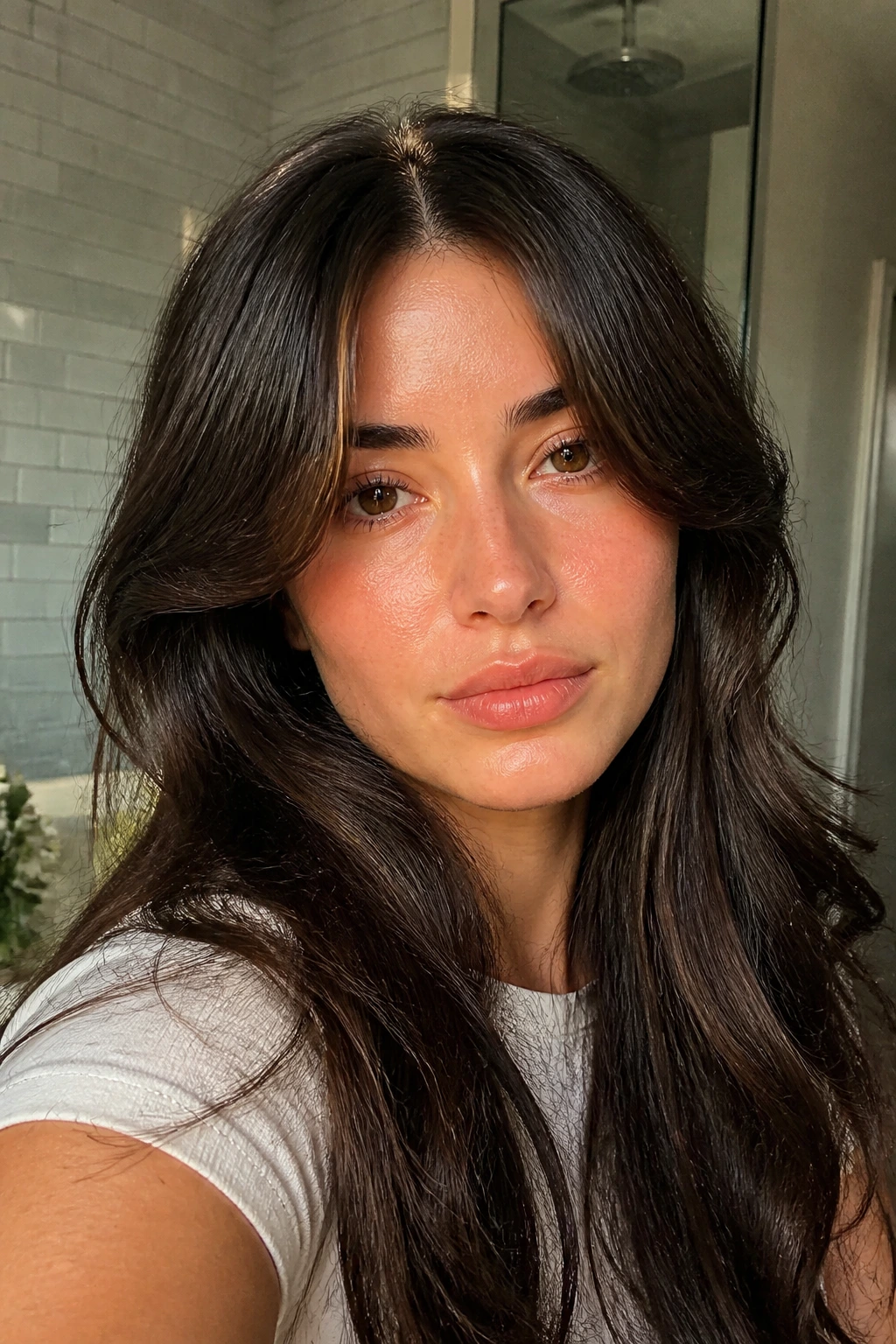
Start with the hairline, not the whole head. The bangs are where the shape lives, and thick hair needs the front section handled while it’s still damp. If you wait until the rest of the hair is styled, the fringe usually dries in its own stubborn direction.
Blow-Dry Direction
Direct the center section forward first, then brush each side away from the face. That alternating movement helps the split open without making the fringe flip out awkwardly. Keep the brush close to the root for lift, then let the ends bend as you move away from the face.
Cooling Matters
Clip each side in place for a minute or two while it cools. Hair sets as it loses heat, and thick hair is especially good at holding a shape once it cools down in the right position. Skip this and you’ll spend more time redoing the front later.
Day-Two Reset
Mist the fringe lightly with water or a leave-in spray, then rework only the front with a brush and a quick blast of heat. You do not need to restyle the whole head. The rest of the hair can stay as it is.
If You Air-Dry
Twist each side away from the face for a few minutes, then let it finish loose. That won’t give you a salon blowout, but it keeps the split from drying straight down the middle.
Small Shape Boosters That Make a Big Difference
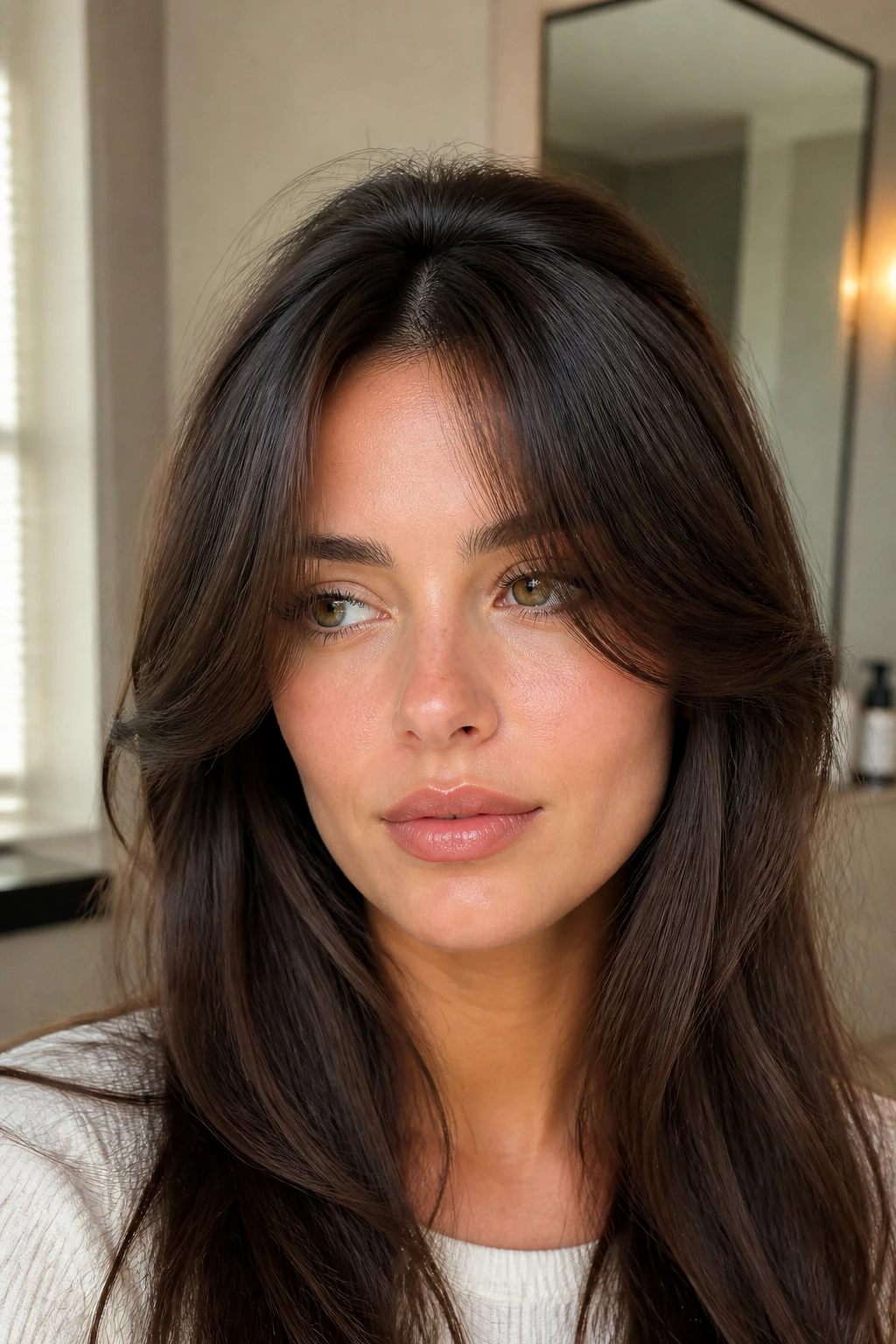
Root Lift: A little mousse or a tiny root clip at the center keeps thick bangs from sinking into the forehead by noon.
Cheekbone Focus: Let the longest pieces hit the top of the cheekbone or slightly below it. That’s the line that makes the face read framed instead of hidden.
Soft Ends: Point-cut or slice the last half inch so the fringe doesn’t end in a blunt bar.
Light Hands with Product: Use less than you think. Heavy cream is a fast way to turn good curtain bangs into wet-looking ropes.
Glasses-Friendly Tweaks: If you wear frames, keep the center a touch shorter and the outer edges a touch longer so the bangs don’t sit on the temples of the glasses.
Humidity Plan: A flexible hairspray and a pocket-sized comb beat a lot of panic. Thick hair swells when the air turns damp, so a tiny reset often saves the shape.
Common Mistakes That Make Curtain Bangs Puff or Split Too Wide
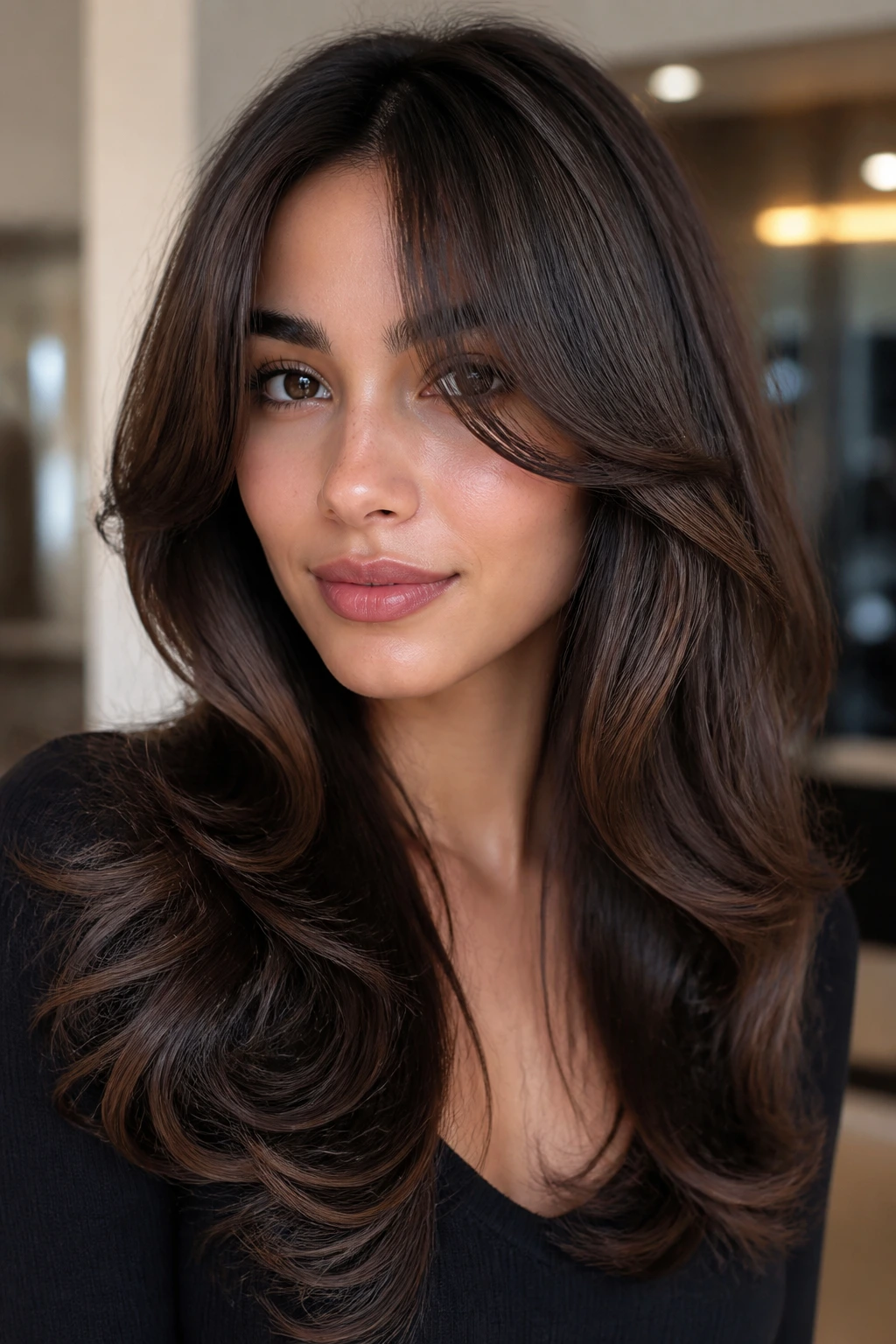
The first mistake is cutting the fringe too blunt. Thick hair can take a blunt line, but curtain bangs need softness inside the shape or they just sit like a wall. If the front feels boxy, ask for interior removal and a softer edge.
The second mistake is over-thinning. That sounds helpful on paper and looks shredded in real life. Too much thinning turns the ends see-through, which makes the fringe separate in a weak, stringy way. The fix is precision, not aggression.
The third mistake is loading on heavy serum or oil. The front goes flat, sticks to the forehead, and loses the bend. Keep glossy products on the mids and ends, not the root area around the bang.
The fourth mistake is ignoring the cowlick. Thick hair with a strong front cowlick will fight a center split unless the part is set while damp and cooled in place. If the bang keeps swinging off to one side, work with the growth pattern instead of arguing with it.
The fifth mistake is cutting the shortest point too short. Oval faces can handle shorter bangs, yes, but thick hair shrinks visually once it dries and lifts. Give yourself a little margin or you’ll end up with a much sharper front than you planned.
Variations and Adaptations to Try
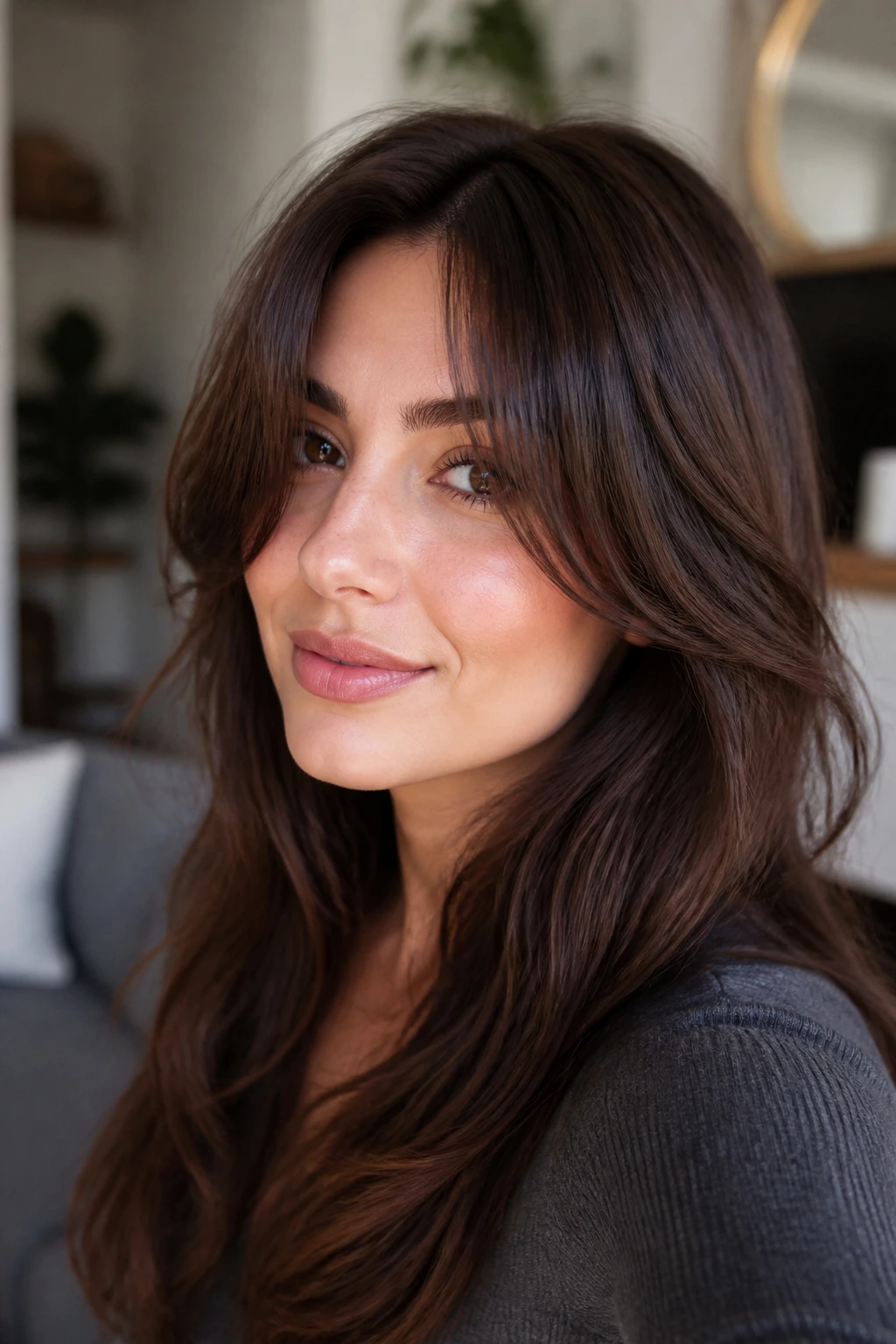
The Soft Blowout Edit: Keep the same curtain-bang shape but ask for a smoother, less layered finish. This suits people who like polished hair and don’t want the front to look shaggy.
The Piecey Texture Edit: Add more point cutting and use texture spray after styling. The fringe breaks into visible ribbons, which looks great on thick hair that wants separation.
The Glass Finish Edit: Smooth the fringe with a flat brush and a light cream, then finish with a tiny bit of shine product on the ends. Best for straight, dense hair that can hold a clean line.
The Shag Blend Edit: Let the curtain bangs melt more deeply into layers around the face. This works when you want the haircut to feel loose and lived-in instead of crisp.
The Glasses-Friendly Edit: Keep the center slightly shorter and the wings slightly longer so frames don’t crush the shape. This is a small change, but it saves a lot of frustration.
Trim Schedule, Wash Days, and Grow-Out Timing
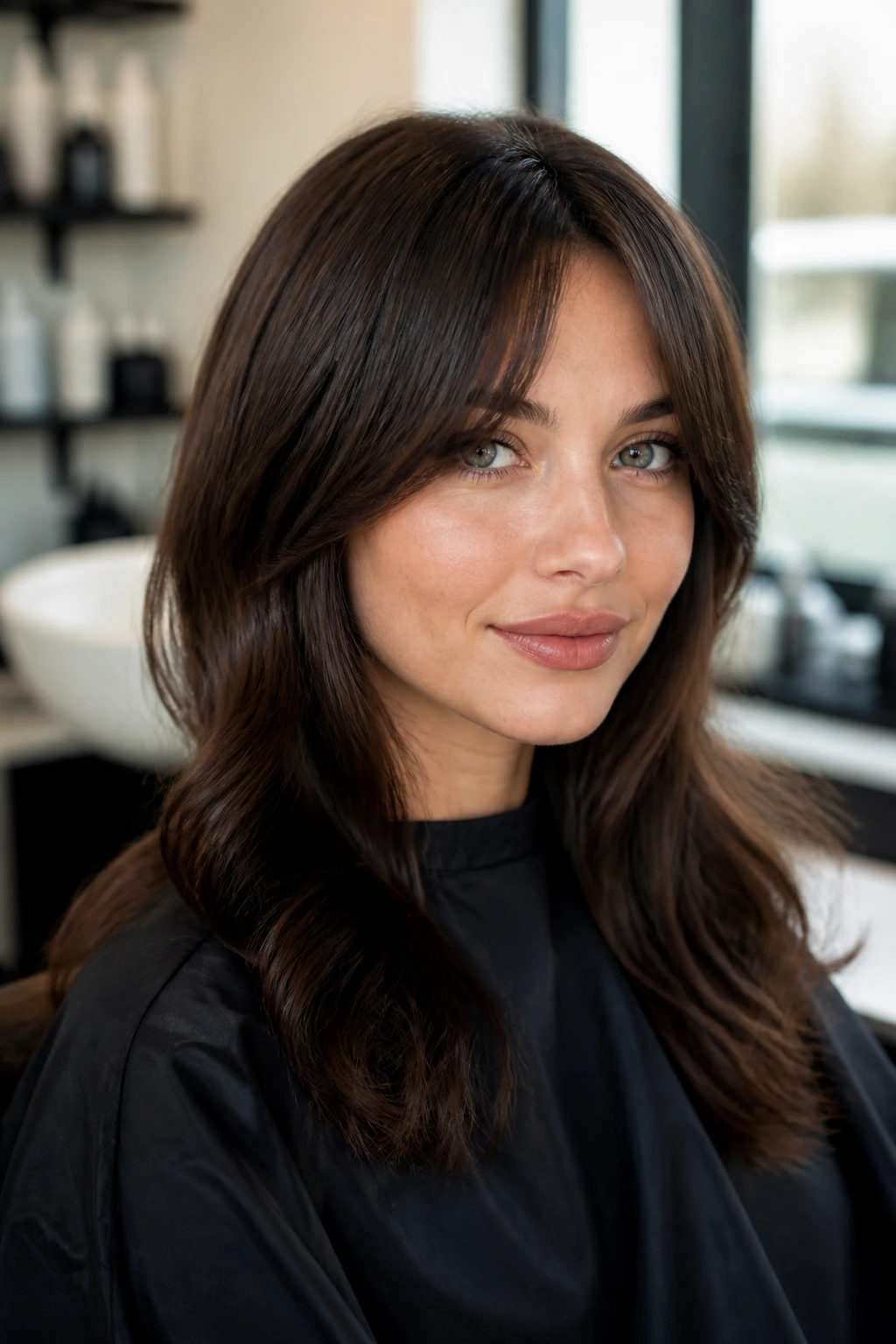
Curtain bangs on thick hair need trimming more often than the rest of the haircut if you want the shape to stay readable. A good schedule is every 4 to 6 weeks for a sharper, more dramatic fringe, or every 6 to 8 weeks if you like the softer grown-in version. After that, the center starts dropping into the eyes and the sides lose their swing.
The front usually needs more frequent washing than the rest of the hair because forehead oil shows up fast. A light wash, a rinse of the fringe only, or a quick dry shampoo refresh every 1 to 2 days keeps the front from collapsing. Just don’t dust the bangs in dry shampoo like you’re frosting a cake. Too much leaves them dull and gritty.
For grow-out, let the center lengthen first and use the side pieces to disguise the transition. Thick hair makes this easier than you’d think. The front still keeps enough shape to look intentional while it grows into face-framing layers. At night, pin the bangs back loosely or sleep on a silk pillowcase so they don’t bend into a weird crease.
Frequently Asked Questions
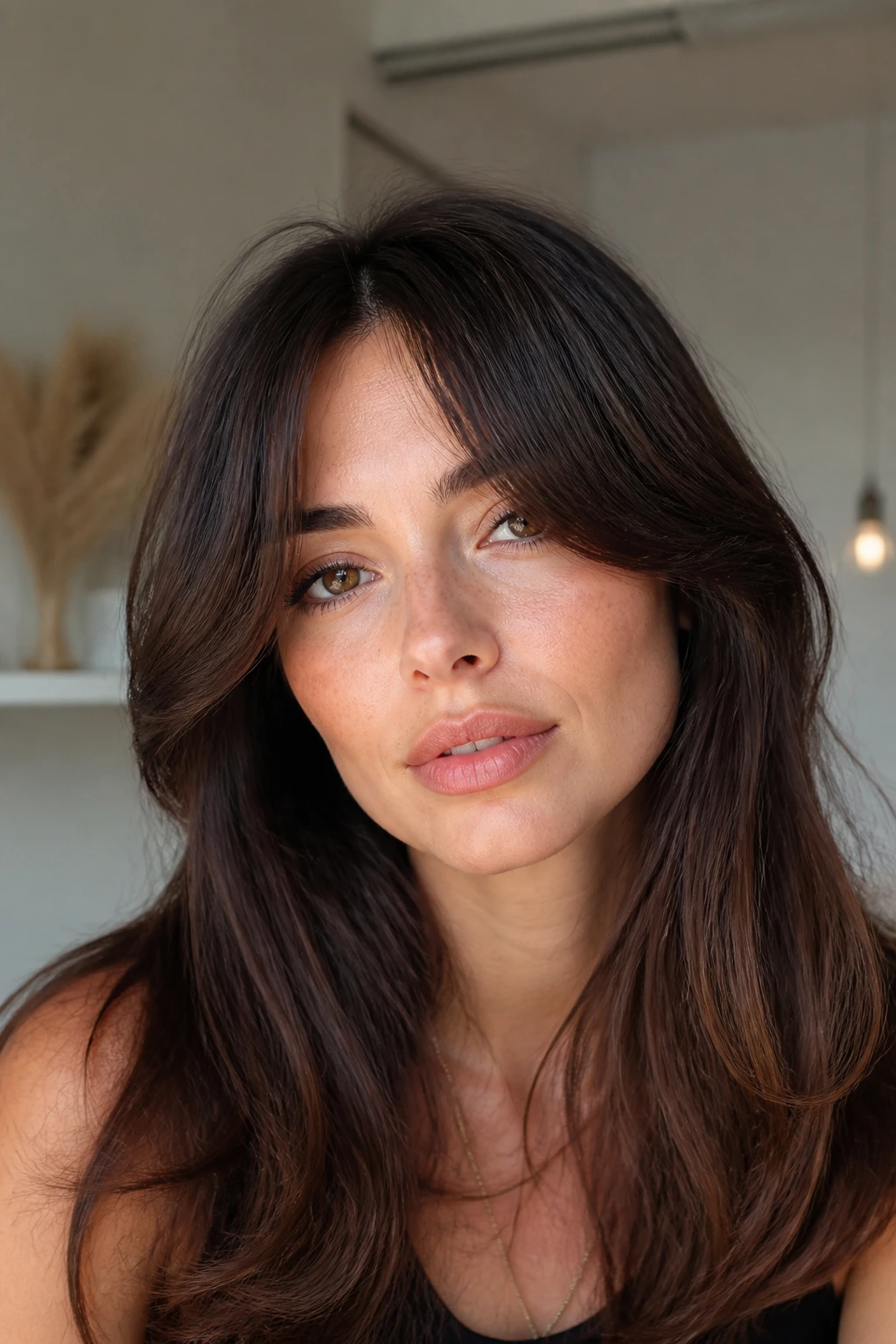
Do curtain bangs actually work on oval faces with thick hair?
Yes, and the combination is one of the easiest to style once the cut is right. Oval faces can carry a stronger frame at the forehead, while thick hair gives the bangs enough body to hold a bend instead of disappearing.
Should thick curtain bangs be cut wet or dry?
A lot of stylists start wet, then refine dry, because thick hair shifts once it loses moisture and tension. The dry check matters most for the final shape, especially around the cheekbone and jawline.
How short should the center of the fringe be?
For most people, the shortest point should sit around the brow or just below it. Thick hair shrinks visually, so cutting it too short can leave you with a much harsher look than you expected.
Will curtain bangs make my hair look even bigger?
They can if the cut is too bulky or the styling products are heavy. The fix is internal weight removal, a lighter product load, and a blow-dry that bends the front away from the face before cooling.
Can I wear curtain bangs with glasses?
Yes. Keep the center a little shorter and the side pieces a little longer so the fringe doesn’t rest on the frames. A clean round-brush bend also helps the bangs sit above the temples.
What if my cowlick pushes the bangs apart?
Work with the cowlick instead of trying to pin it down forever. Set the fringe while damp, direct it where you want it, and let it cool in clips. That usually gives the split enough memory to hold.
Can I air-dry curtain bangs on thick hair?
You can, but the finish will be looser and less controlled than a blowout. Twist each side away from the face and use a bit of light cream so the ends don’t dry in a random puff.
How do I grow them out without an awkward stage?
Let the sides lengthen into face-framing layers and keep the center trimmed just enough to stay out of your eyes. Thick hair tends to grow out with more shape than fine hair, so the awkward phase is usually shorter than people expect.
The Fringe That Moves With You
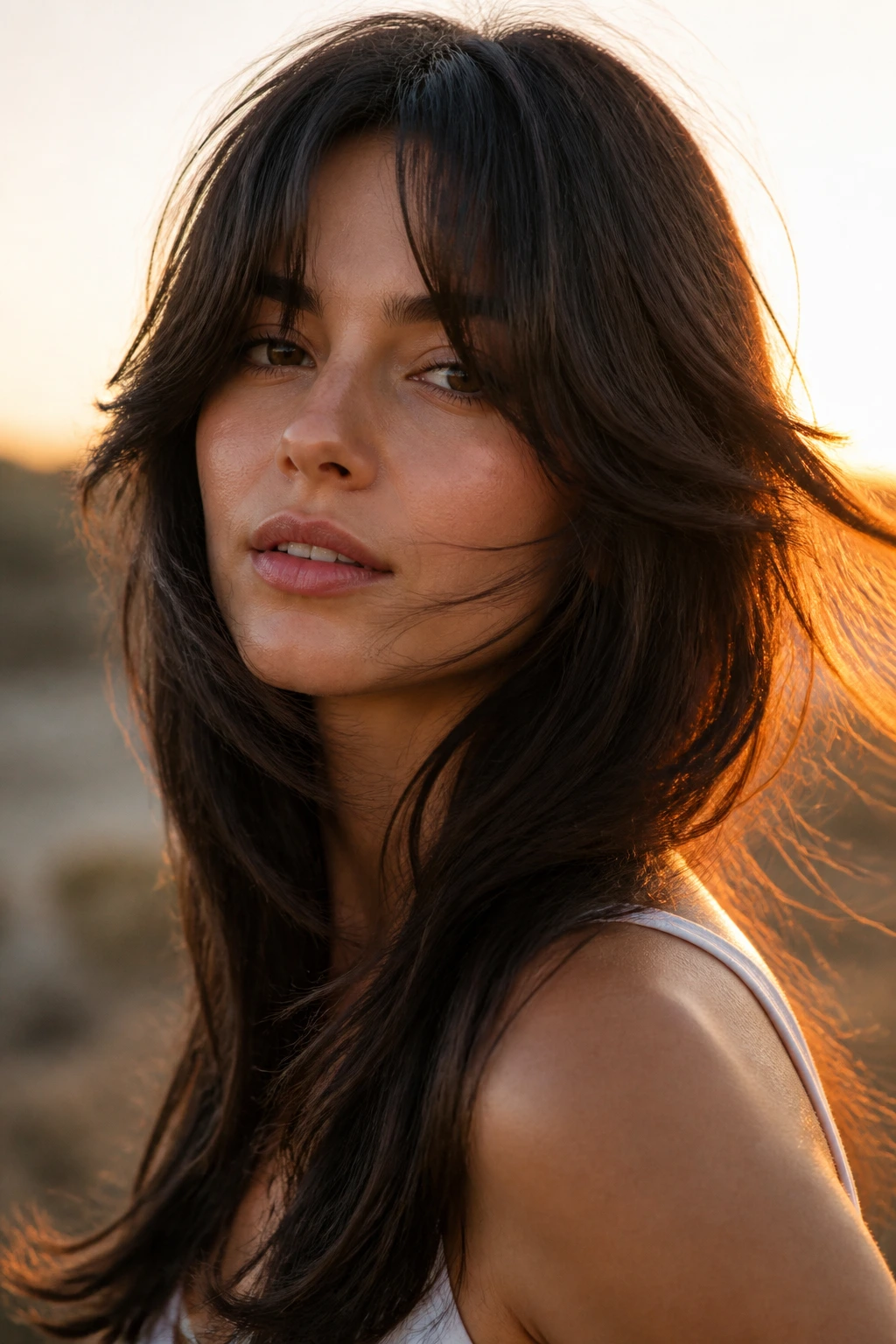
The best dramatic curtain bangs don’t fight thick hair. They use it. They take that density, clean up the bulk in the right places, and let the front swing instead of sitting like a slab across the forehead.
Oval faces are a nice match because the shape has room for a stronger frame. You can go polished, piecey, shaggy, retro, or full-on bombshell, and the proportions still hold if the cut respects the cheekbones and brow line.
Start with the right length and the right amount of weight removal, then style the front with a little patience. That’s the part that keeps the fringe looking intentional on ordinary mornings, not only on the day you leave the salon.