



A thick fringe can do something a wispy one never quite manages: it can soften the broad upper half of a heart-shaped face without making long hair lose its length and drama. That balance is the whole game. If the bangs are too narrow, the forehead still runs the show. If they’re too short or too blocky, the face can start to feel top-heavy. The sweet spot is a thicker line with enough softness at the corners to let the cheekbones and jaw keep their place in the picture.
Long hair helps more than people think. It gives the front of the cut somewhere to land, which matters when the fringe itself is dense. A heart-shaped face usually carries the widest point near the forehead and temples, then narrows toward the chin, so the best bang shapes bring some visual weight downward and outward — not straight across in a hard little strip. That’s why the right thick bangs can look expensive on this face shape even when the styling is low-key. They shape the whole silhouette.
Why These Thick Bangs Work So Well on Heart-Shaped Faces
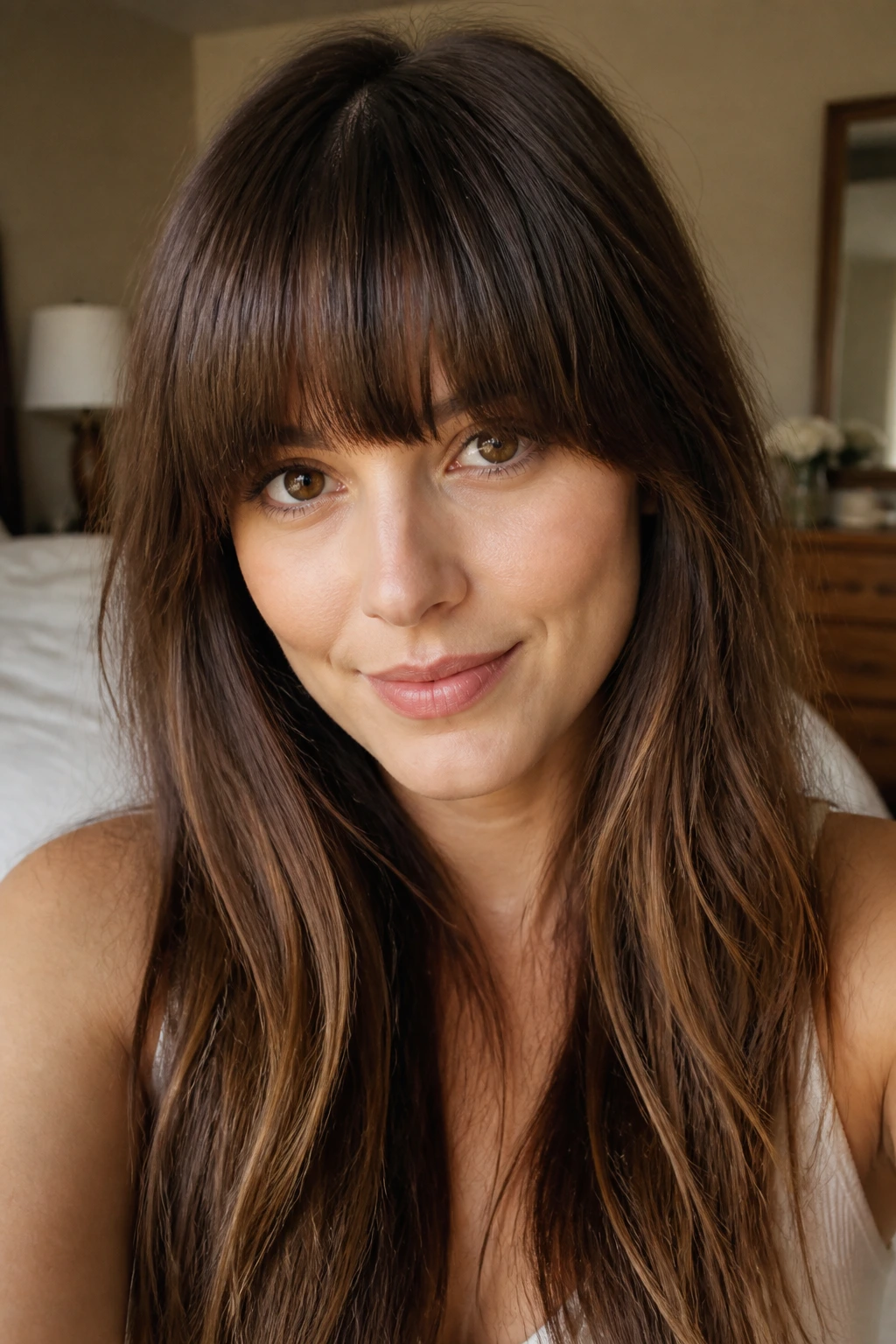
- They soften the widest part first: A fuller fringe breaks up forehead width right where the eye lands, so the top of the face feels less dominant.
- They leave room for the cheekbones: The best versions don’t crowd the sides of the face, which keeps those high cheekbones doing their job.
- They play well with long hair: Length below the chin keeps the cut from feeling clipped off at the top.
- They grow out with less drama: Thick bangs can turn into curtain pieces, side sweep, or face-framing layers instead of looking ragged in two weeks.
- They give you styling options: Blow them smooth, split them, bend them, or let them air-dry with texture — the shape can change without another haircut.
1. Brow-Grazing Full Fringe
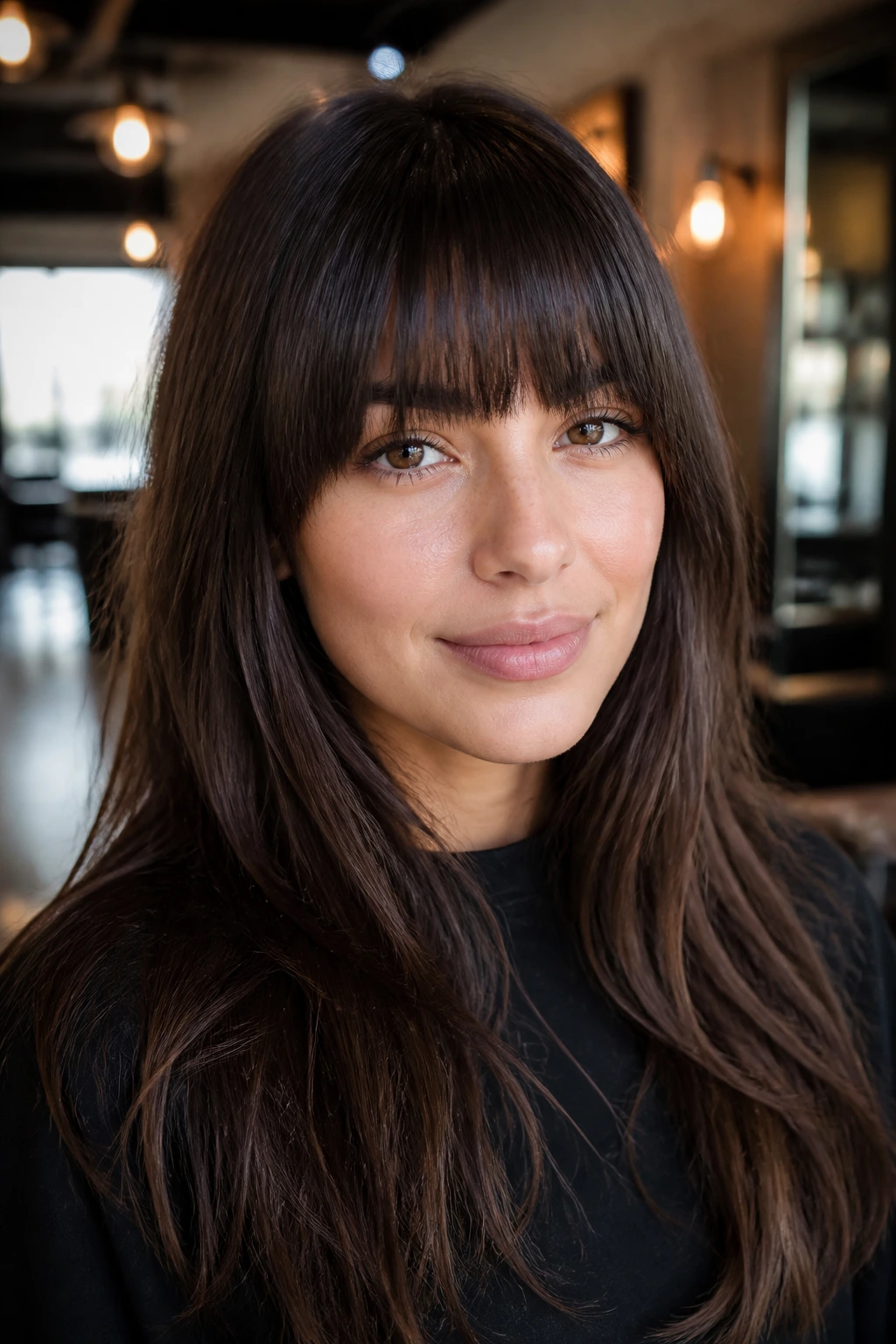
This is the cleanest starting point if you want thick bangs that read as polished, not fussy. The line sits right at the brows or a hair above them, with enough density to hide the forehead but enough softness at the corners to keep the face open. On a heart-shaped face, that little bit of softness matters. Hard edges at the temples can make the forehead feel wider than it is.
Why It Flatters
Ask for the center to stay full, then have the corners point-cut so they don’t sit like a ruler. I like this one best on long hair that already has movement through the ends, because the straight fringe gives the eye a place to land before the length takes over again.
A quick blow-dry with a small round brush is enough. Pull the fringe down first, then give the ends the tiniest bend under. That tiny curve keeps the shape from looking severe.
2. Dense Curtain Bangs
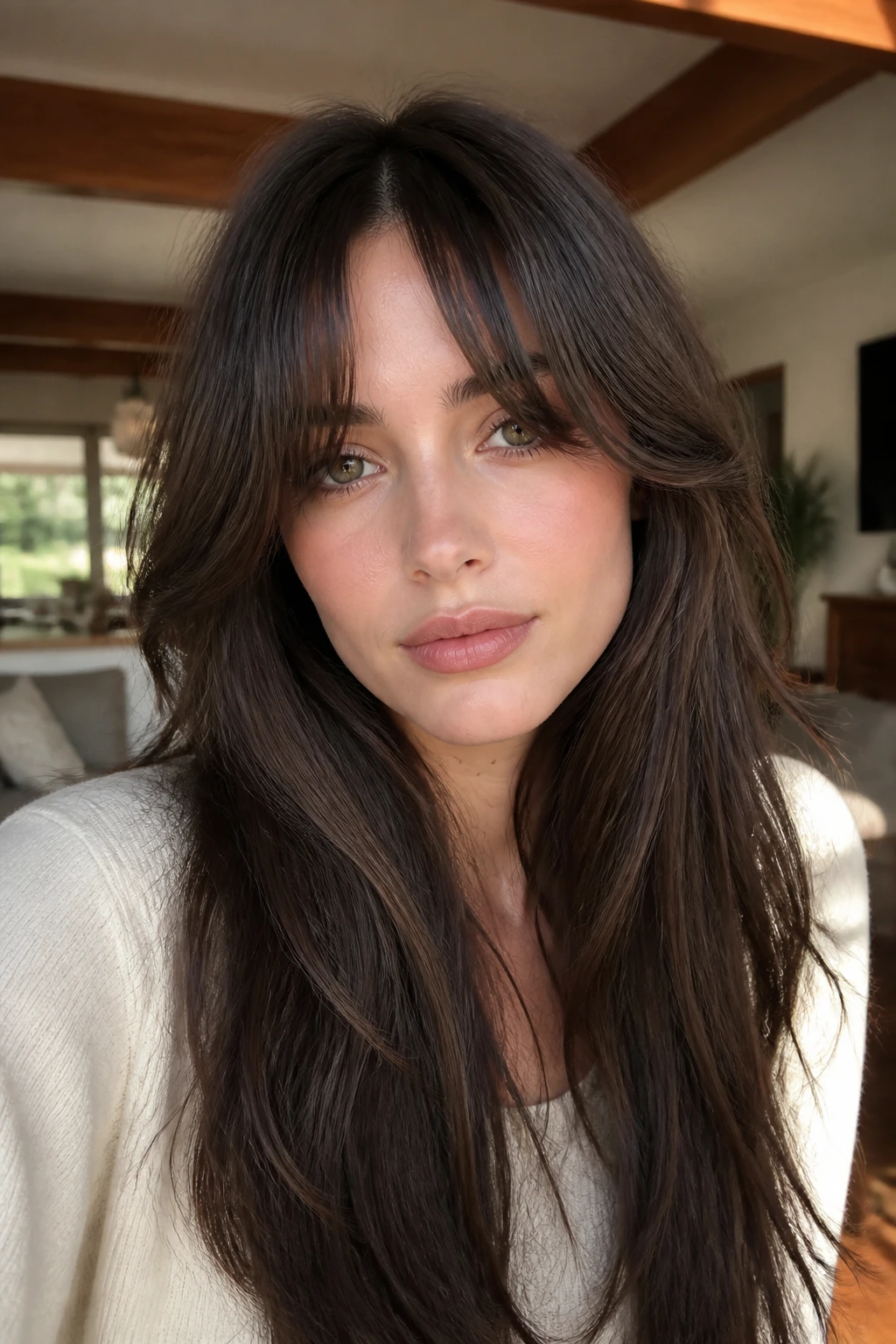
Curtain bangs only sound airy. When they’re cut thick, they can be one of the smartest fringe shapes for a heart-shaped face because the center still covers some forehead while the sides melt into the cheekbone area. It gives the upper face structure without boxing it in.
The trick is density in the middle, not fluff everywhere. Ask for a heavier center section that parts easily, then longer side pieces that start around the eye or cheekbone. On long hair, this shape keeps the fringe connected to the rest of the cut, which is why it tends to look deliberate even on days when you barely style it.
A middle part works best here. Blow the center forward and the sides away from the face, then let them cool in that shape. Done right, it looks like the fringe is opening rather than splitting.
3. Bottleneck Bangs

Bottleneck bangs have a narrow top and a fuller lower line, which makes them especially good at easing forehead width on a heart-shaped face. The shape starts lighter near the hairline, then grows thicker around the brows and softens out at the temples. It feels tailored without being sharp.
The name matters, but the geometry matters more. You want the densest part of the fringe to sit where the face needs balance most, then let the ends taper into the face frame. On long hair, bottleneck bangs are useful because they don’t stop the length from doing its work below. They simply redirect the eye.
Ask For This
Tell your stylist you want the center to sit near the brows and the outer pieces to fall closer to the cheekbones. That keeps the fringe from spreading too wide across the forehead. A little internal texture helps, but don’t thin the ends to the point where the whole shape loses weight.
4. Rounded Full Fringe

A rounded fringe follows the curve of the brow instead of cutting straight across it, and that curve is flattering on a heart-shaped face because it feels softer than a flat line. The center still has presence, but the edges don’t stop abruptly at the temples. The eye glides.
This shape looks especially good on straight or slightly wavy long hair. The fringe has enough density to balance a broader forehead, while the rounded edge keeps the cut from reading harsh. I’m biased toward this one when the rest of the hair is long and glossy, because the whole look feels cohesive rather than chopped into sections.
The only caution: don’t let the curve rise too high in the middle. A gentle arc is better than a dramatic one. Too much arch can start to look dated fast.
5. Deep Side-Swept Heavy Bangs
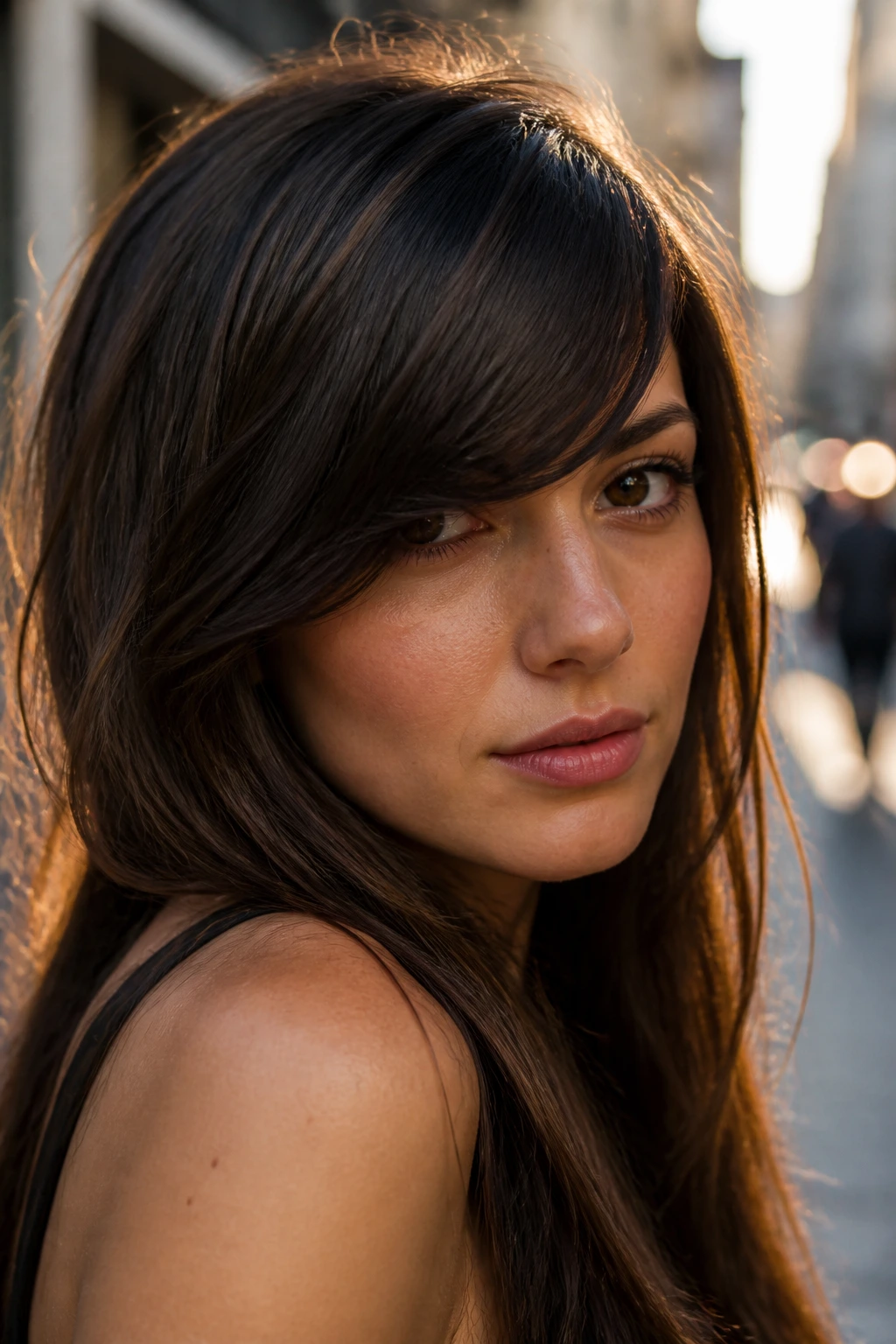
A deep side sweep is the answer for anyone who wants thick bangs without committing to a full front line. The heavy section starts near one temple, sweeps across the forehead, and lands somewhere around the eye or cheekbone. On a heart-shaped face, that diagonal line is gold. It breaks up width instead of emphasizing it.
The cut works best when the bang is thick enough to hold its shape. Thin side bangs collapse into stringy pieces after an hour, and that’s not the same thing at all. You want enough hair to create a soft curtain over one side of the forehead, with the opposite side left open.
If your part usually falls to one side anyway, this is the natural move. Blow-dry it in the direction you wear it, then pin the sweep in place for a minute while it cools. That little step keeps the arc from flattening too fast.
6. Choppy Thick Fringe
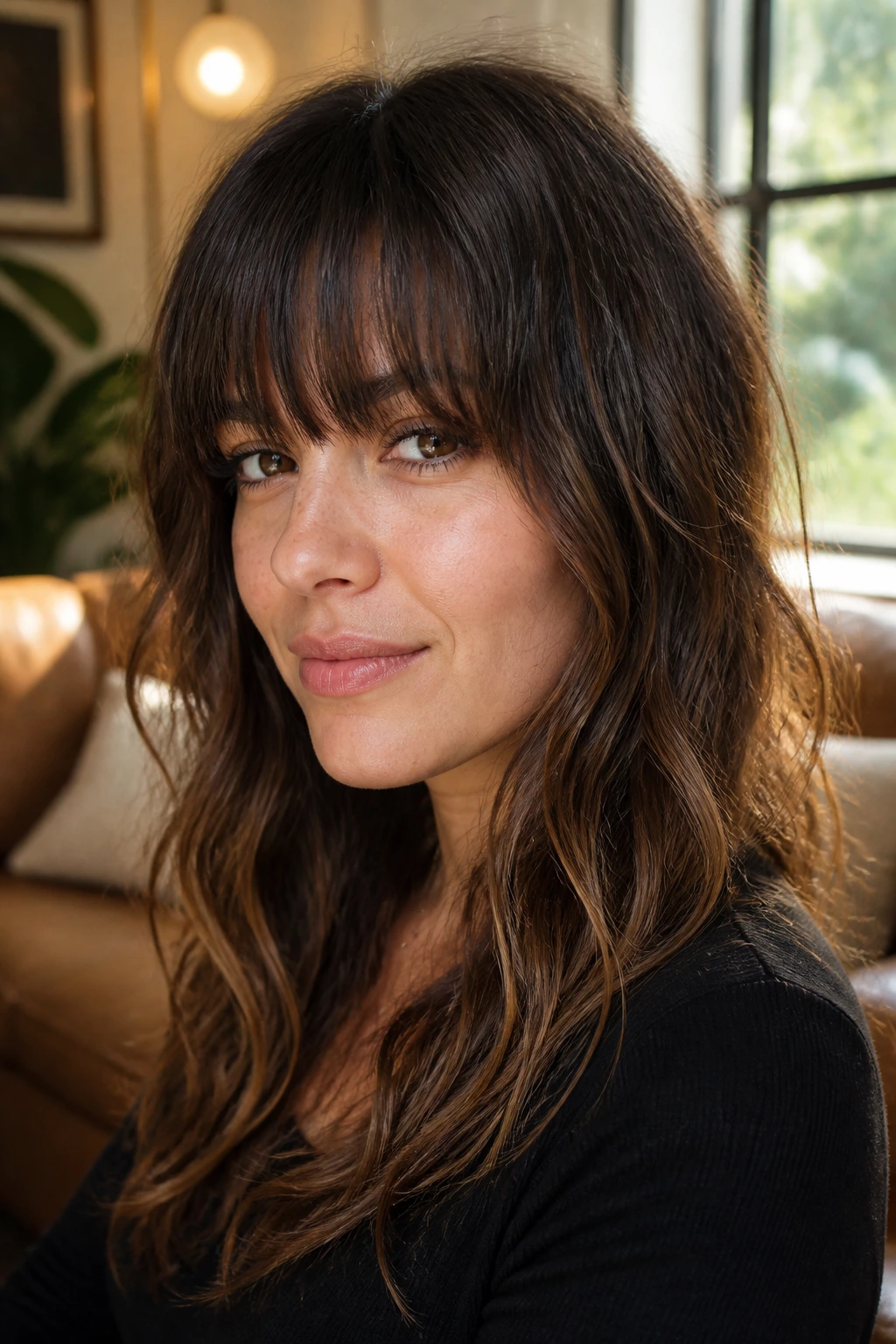
Choppy doesn’t mean sparse. A choppy thick fringe keeps real density at the root and through the body of the bang, then breaks up the edge with point-cut texture so it doesn’t sit as one solid wall. That makes it easier to wear on long hair, because the fringe feels lively instead of helmet-like.
For a heart-shaped face, the appeal is simple: texture softens the forehead without adding more width to the temples. You still get presence. You just don’t get the heavy, squared-off look that can happen with a perfectly blunt cut. I like this shape on wavy hair in particular, since the natural bend helps the pieces separate in a good way.
How to Style It
Use a light styling cream, not a heavy balm. Work it through the very ends after blow-drying, then separate a few strands with your fingertips. The goal is piecey, not stringy.
7. Sleek Blunt Fringe
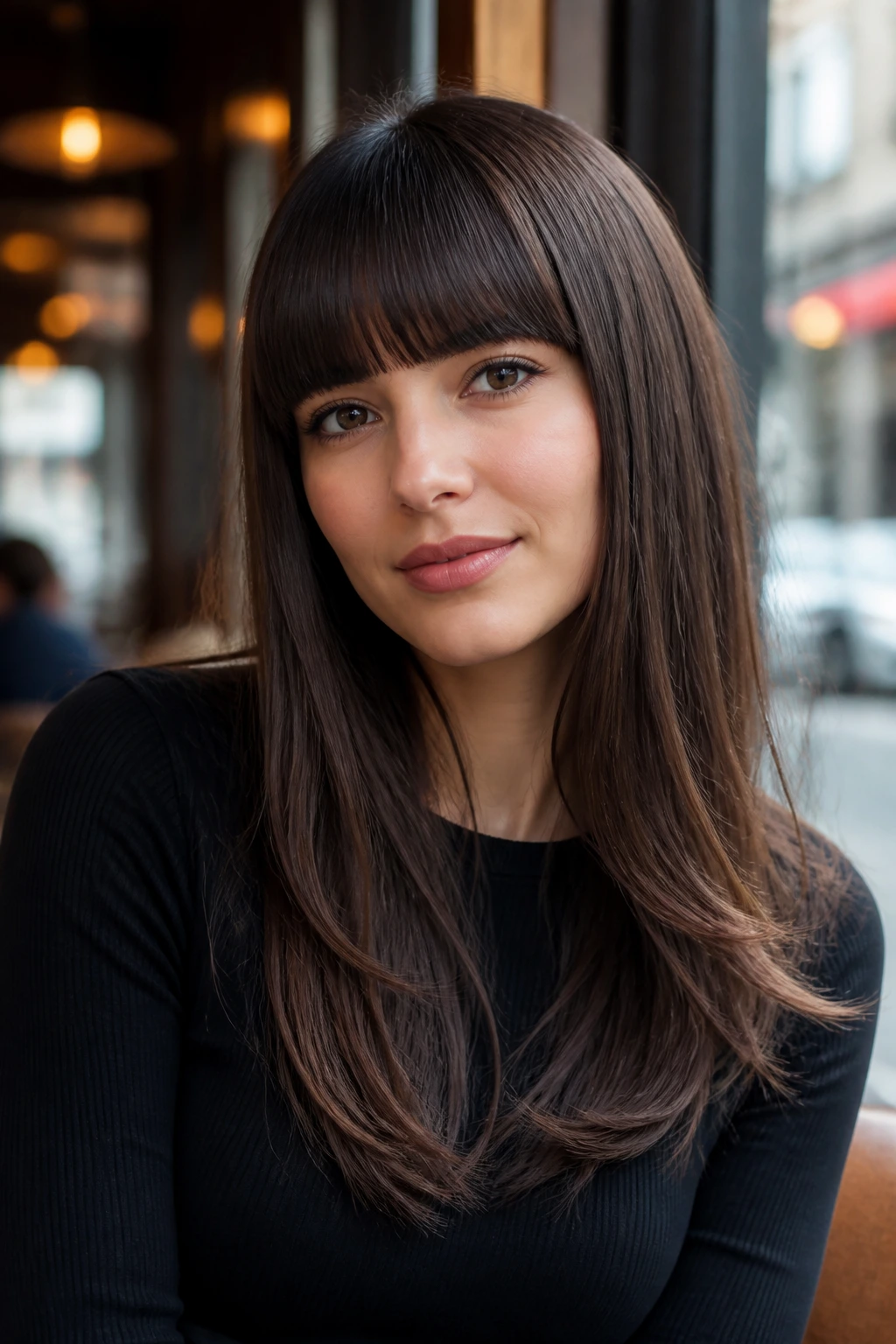
A blunt fringe can work on a heart-shaped face if it’s cut with a little thought and worn with enough length below it. The clean line gives the forehead less room to dominate, which is useful. What keeps it from feeling severe is the placement: it should sit near the brows, not high up on the forehead like a tiny shelf.
This is the fringe for someone who likes crisp edges and doesn’t want much movement in the front. Long hair balances it out beautifully, especially if the ends are smooth and the shape has a little bend at the mid-lengths. Without that balance, the haircut can feel too top-heavy. With it, the look is striking.
Keep the corners slightly softer than the center. That tiny concession makes a big difference. Pure geometry can be unforgiving here.
8. Feathered Thick Fringe
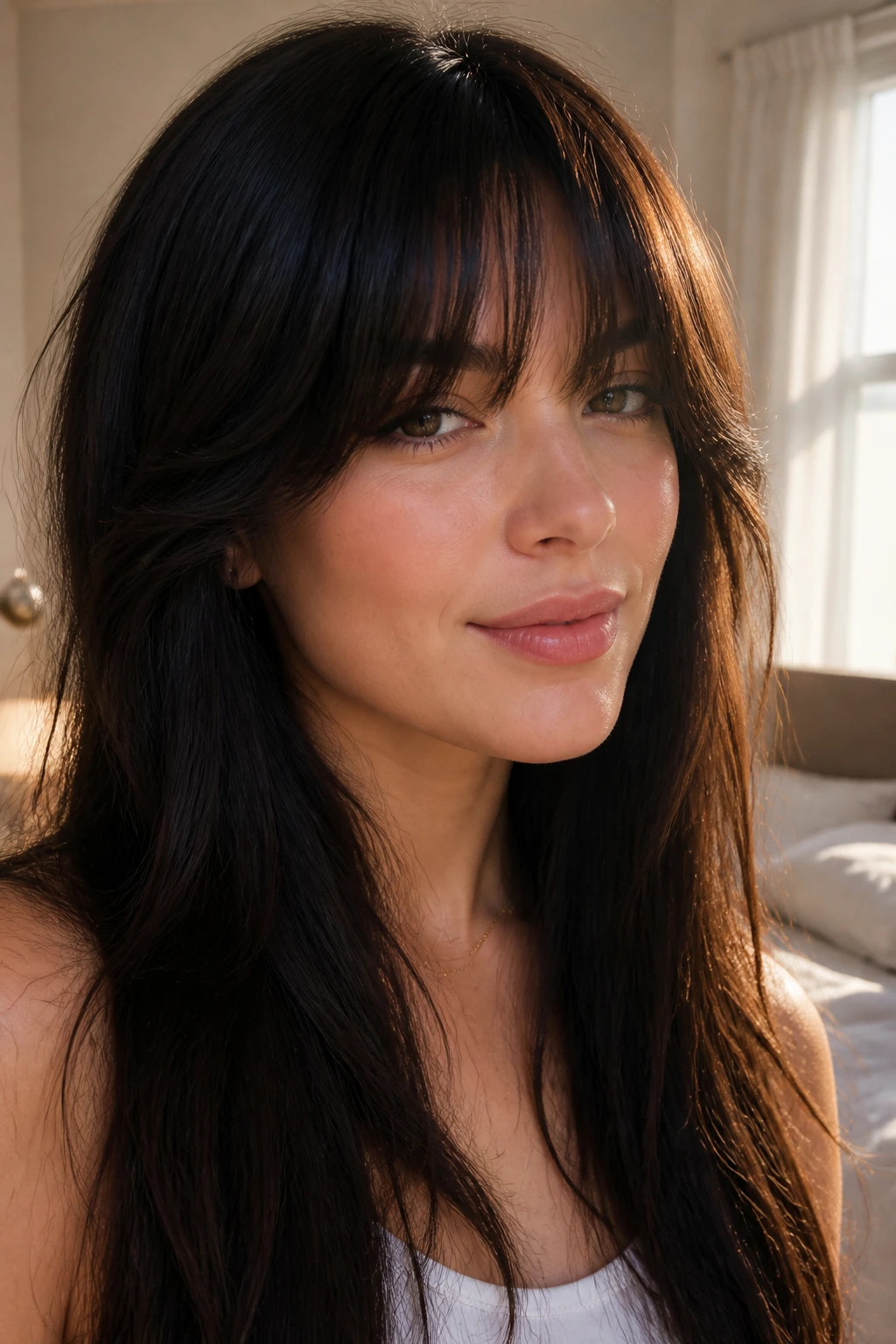
Feathered bangs keep the density but take the bluntness out of the line. The ends are softened with a little movement, so the fringe still covers the forehead while letting some air through the shape. On a heart-shaped face, that keeps the upper face from feeling boxed in.
The cut is a nice middle ground if you like the look of full bangs but hate the heavy feeling that sometimes comes with them. Feathering the ends works especially well on thicker hair, because it removes some of the weight without making the bang look thin. Long hair below helps anchor the softness.
A small round brush is enough to set this shape. The fringe should fall forward, then curve just slightly under. If it flips out, the feathering is probably too aggressive.
9. French-Girl Fringe
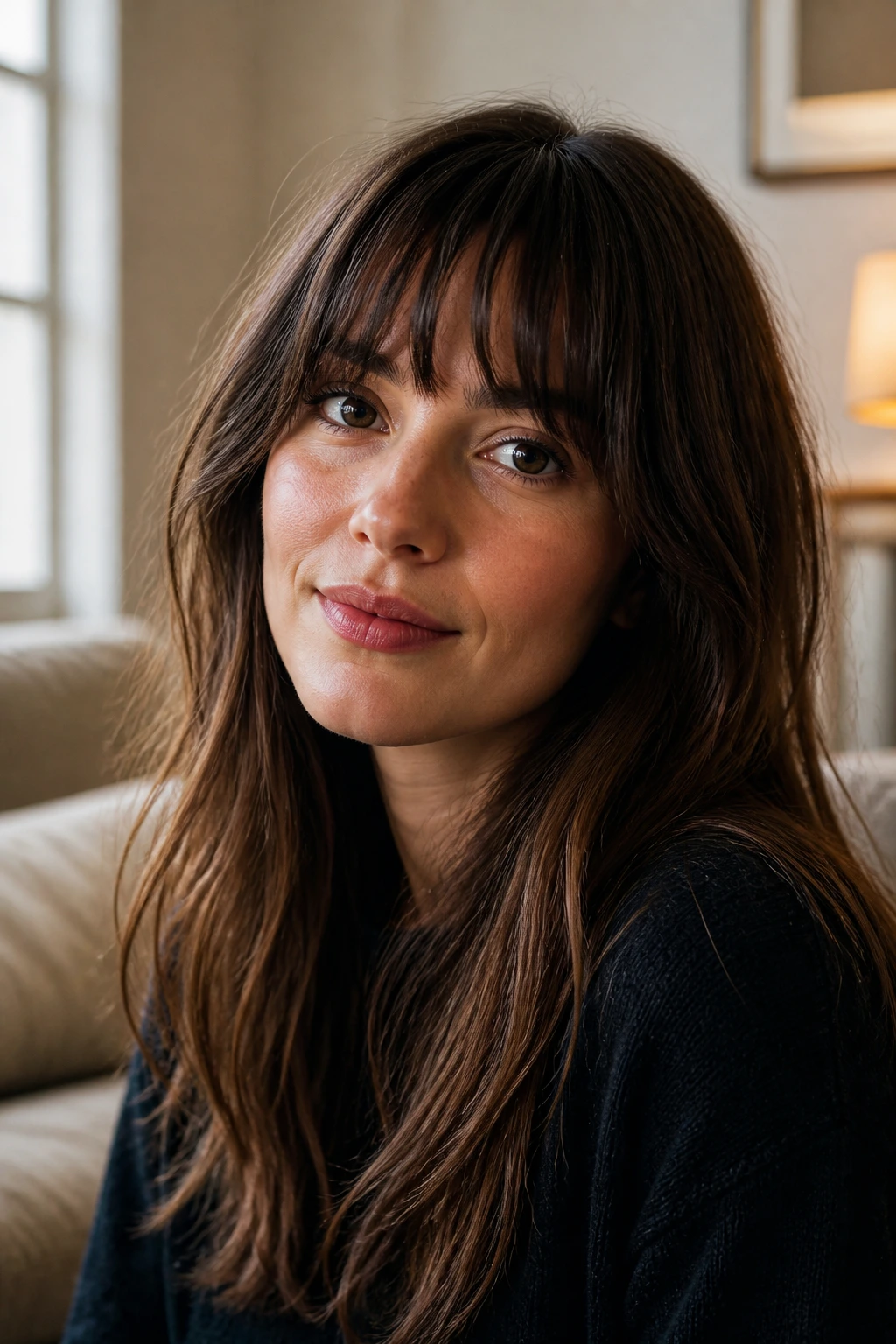
French-girl fringe has a certain looseness to it, but it still relies on thickness. The pieces sit around the brows, not above them, and the line looks a little lived-in rather than carved. That softness is part of what makes it flattering on a heart-shaped face. It takes the attention off the widest part of the forehead without making the cut feel stiff.
This is a good option if you want bangs that look better slightly imperfect. A full, blunt edge can be too much for some face shapes. A French-inspired fringe gives you weight at the front, movement at the corners, and long hair enough room to stay elegant rather than severe.
Don’t over-style it. A little bend, a little separation, and a touch of dry shampoo at the roots is often enough. The charm is in the looseness.
10. Long Split Fringe
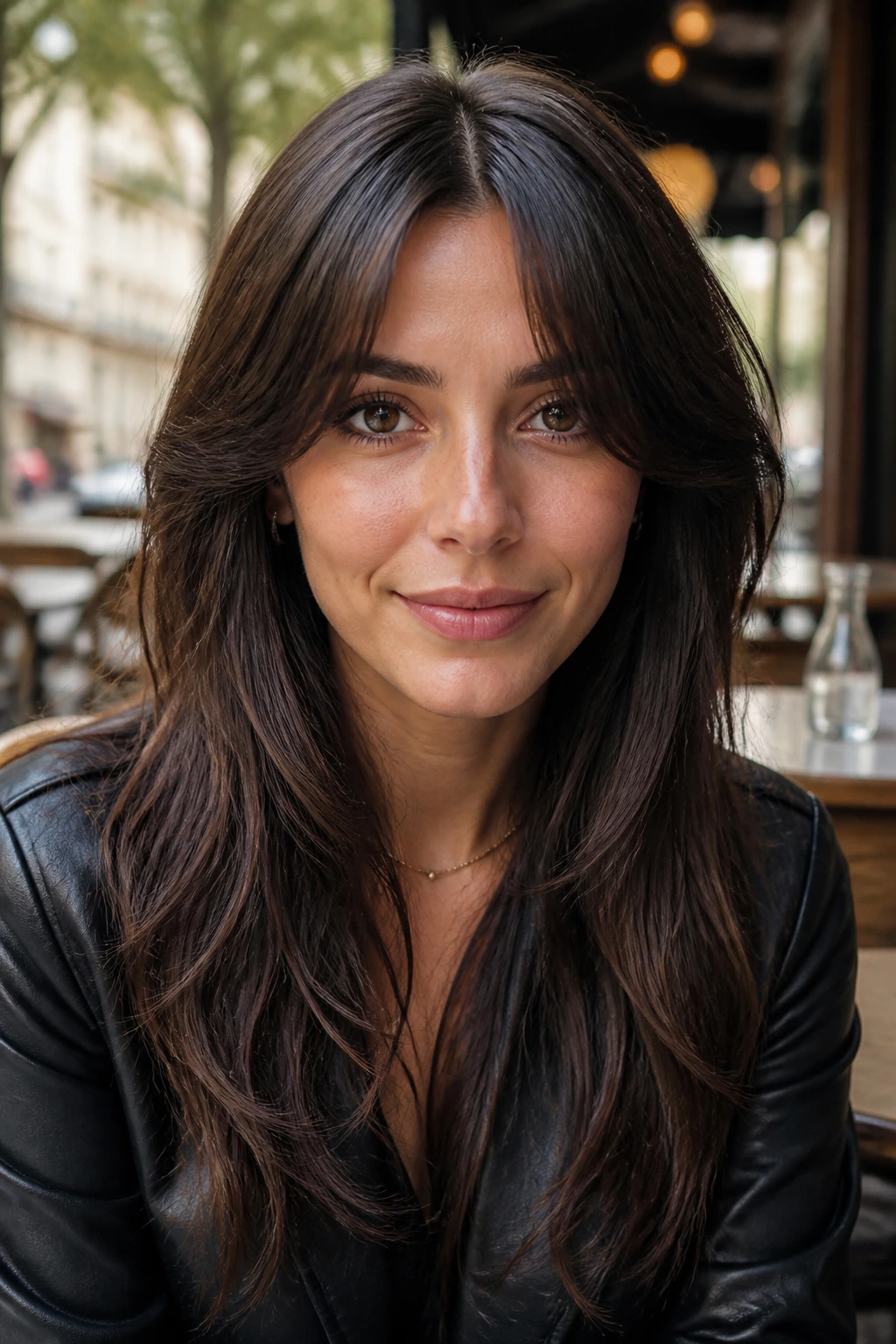
A split fringe is not the same as airy curtain bangs. Here, the center part stays visible, but the pieces on both sides are dense enough to count as real bangs. The result is open at the middle and full near the outer edges, which suits a heart-shaped face because it softens the forehead while keeping the front of the hair from feeling heavy.
This shape is quietly practical. It works with glasses, grows out cleanly, and can be tucked behind the ears without looking unfinished. On long hair, the split fringe acts like a bridge from the face to the rest of the cut. That’s the piece a lot of people miss.
If you wear your hair center-parted most of the time, this is worth a serious look. Ask for the center to be short enough to show movement, but not so short that it fights the part.
11. Textured Shag Fringe
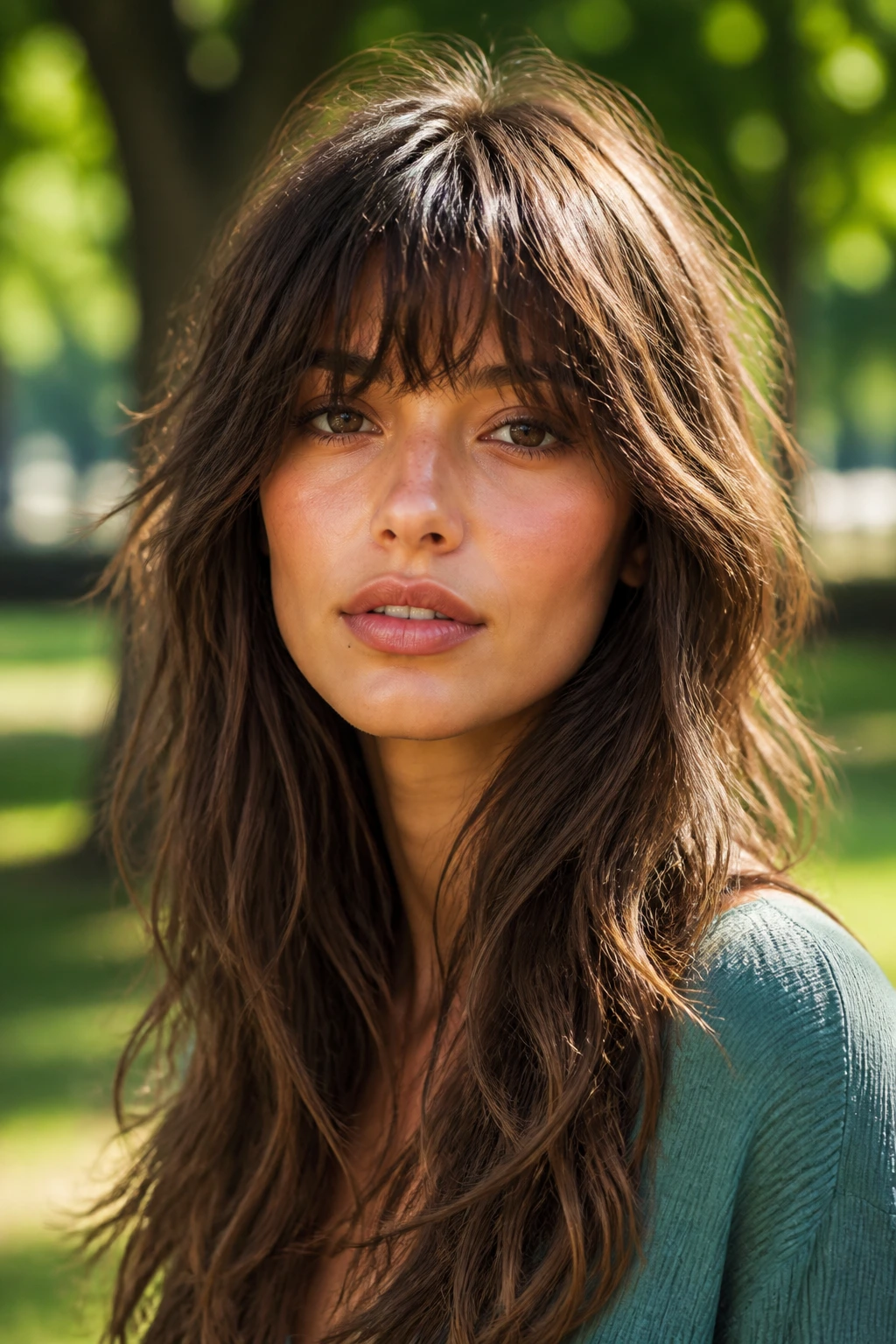
A shag fringe with thick roots and broken-up ends brings a little rebellion to long hair, and heart-shaped faces can wear that well because the texture keeps the forehead from looking too wide or too neat. The line is full, but the edges are irregular enough to keep the eye moving.
This is one of the best choices if your long hair already has layers. The fringe can melt into the front pieces without looking like a separate haircut. That’s the real advantage here. Instead of sitting on the face like a separate object, it becomes part of the whole shape.
It does ask for some styling. Air-drying alone can work if your wave pattern is cooperative, but a diffuser or quick rough-dry at the roots helps the fringe keep its lift. Flat, sticky bangs are the enemy of this cut.
12. Arched Brow Fringe
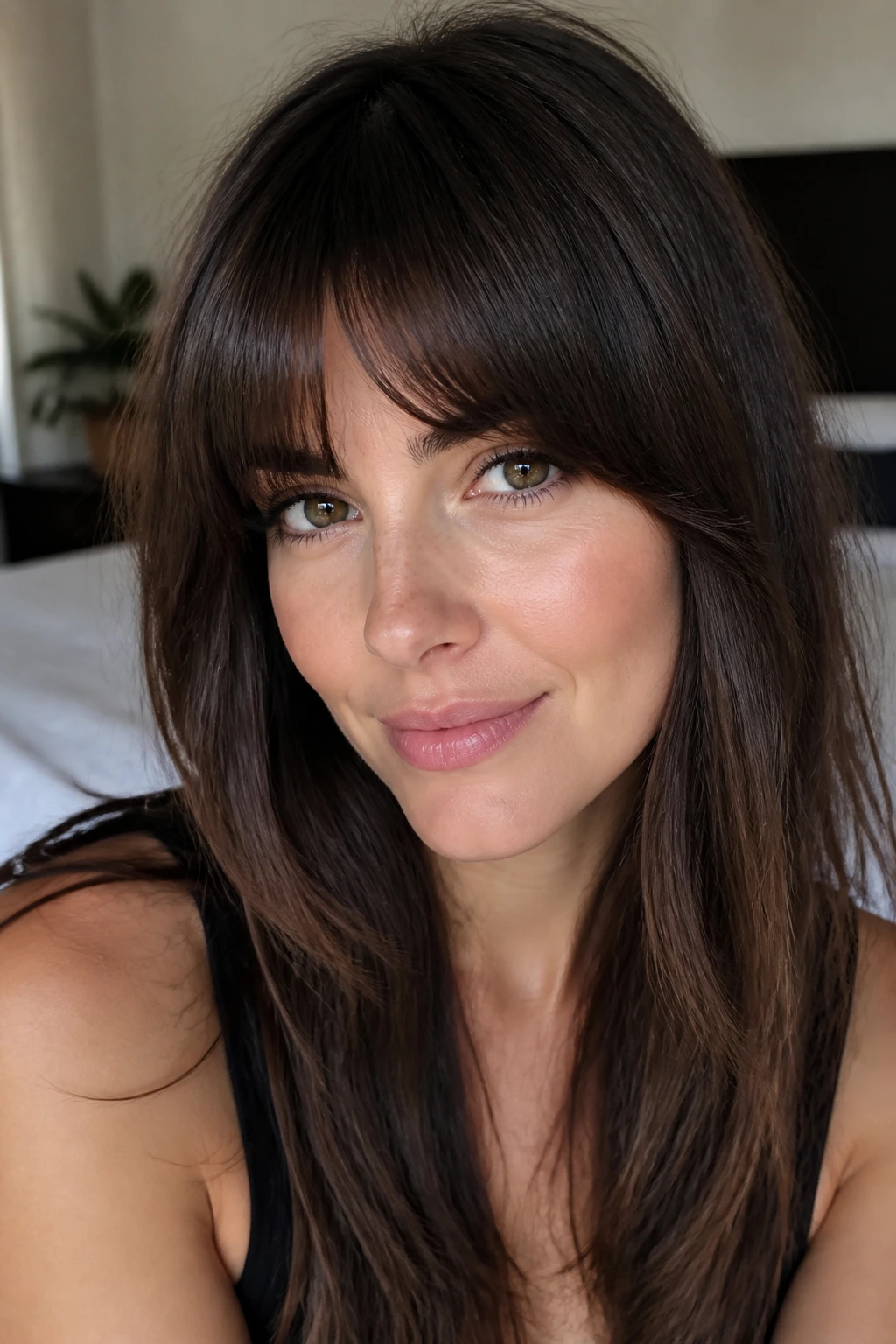
A gentle arch in the fringe can mirror the brow line and make the upper face feel more balanced. On a heart-shaped face, that arc helps redirect attention to the eyes and cheekbones instead of letting the forehead stay broad and flat. It feels tailored and a little retro, which I like when the long hair underneath is kept soft.
The danger is overdoing the curve. Too much arch can make the fringe look dated fast, and it can pull the center up too high. Keep the peak subtle. The best version is more of a hint than a statement.
The Detail That Matters
Ask for the center to be only slightly shorter than the corners, not dramatically shorter. That keeps the line from looking like a cartoon smile. A round brush and a few seconds of cool air will hold the curve without making it stiff.
13. Air-Dried Wavy Fringe
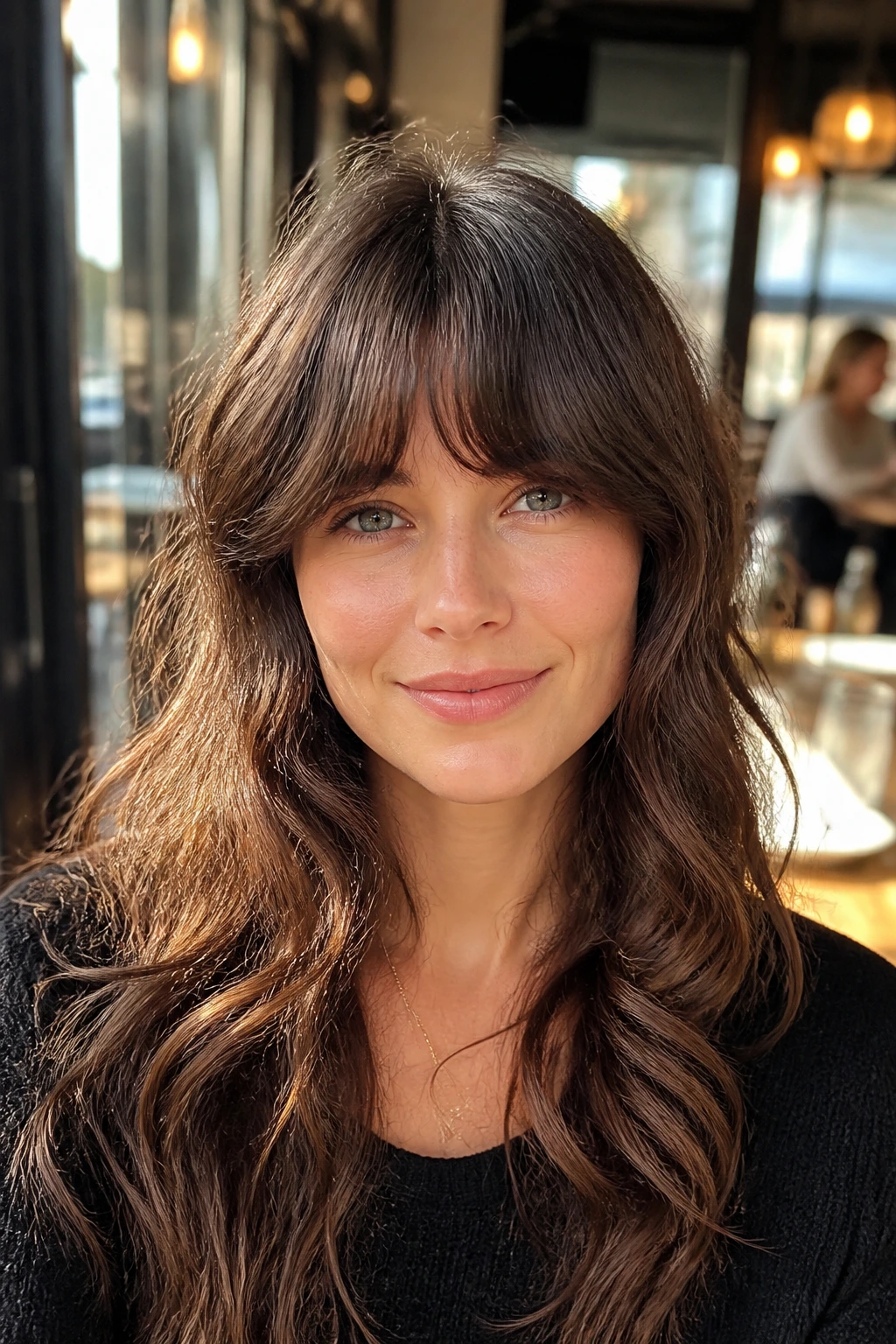
If your hair already bends or waves, stop trying to fight it into a perfectly smooth line. A thick fringe cut for air-drying can look better on a heart-shaped face than a precise blunt cut, because the soft bends take the edge off forehead width. The texture does the flattering work for you.
The important part is length. Wavy bangs shrink more than straight ones, so the cut needs extra room. If the fringe is meant to land at the brows, it often needs to be cut a little longer than that when wet. That little buffer keeps you from ending up with accidental baby bangs.
This style works best when the rest of the hair is also allowed some movement. Soft waves through the lengths keep the front from feeling like it belongs to a different haircut.
14. Curly Thick Fringe
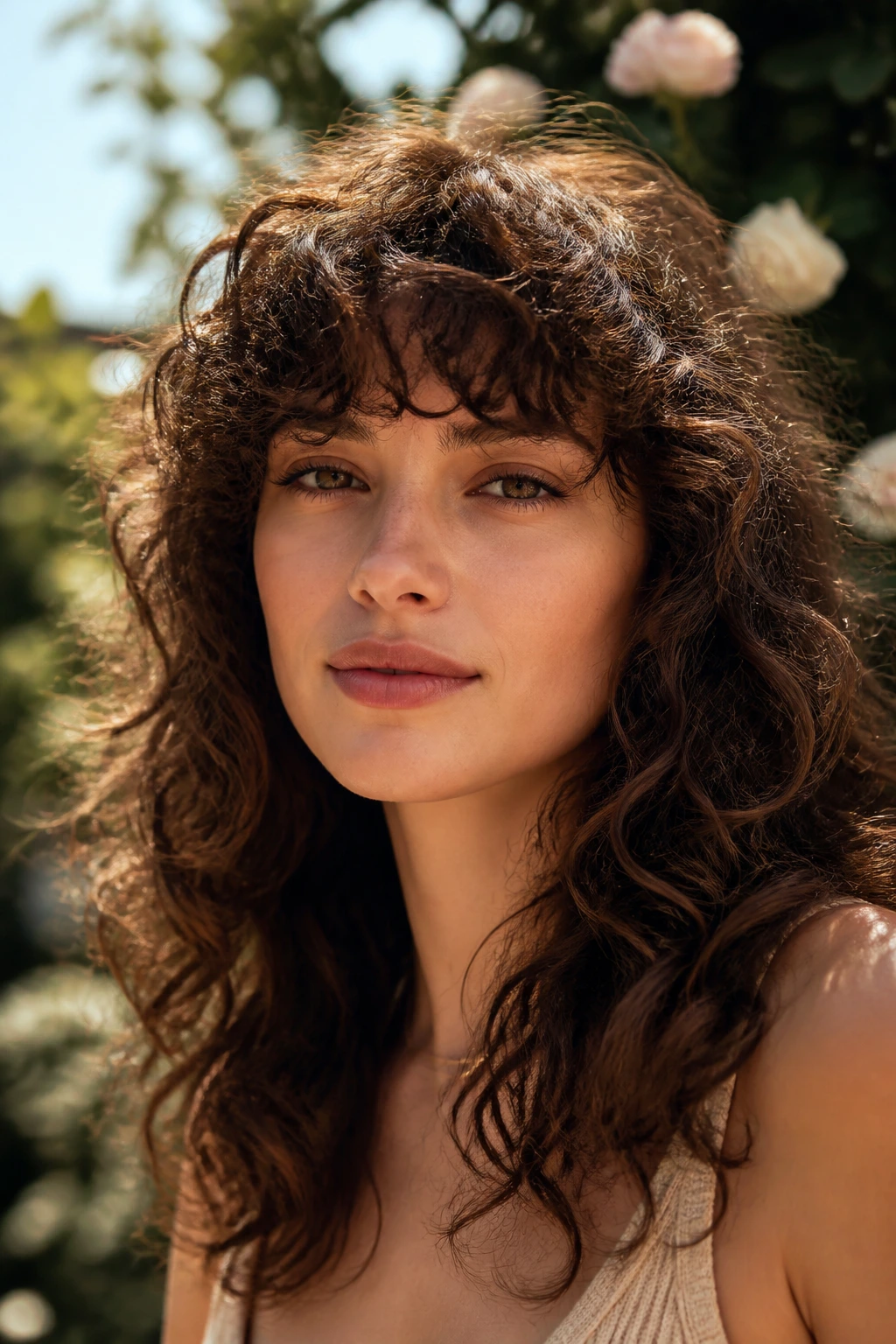
Curly bangs are not a joke, and they’re not a compromise. When cut well, a thick curly fringe can sit beautifully on a heart-shaped face because the curls soften the forehead and add interest right where the eye starts. Long hair below makes the cut feel anchored.
The key is shrinkage. Curly fringe should be cut dry or nearly dry, and it usually needs to be longer than you think. If the stylist cuts it to brow level while wet, it may spring up too far and make the face feel top-heavy. Nobody wants that surprise.
Keep the curl pattern soft around the temples and fuller through the center. That balance keeps the fringe from spreading outward too much at the widest part of the face. A light curl cream is usually enough; heavy products can turn the fringe into a damp little curtain.
15. Temple-Tapered Fringe
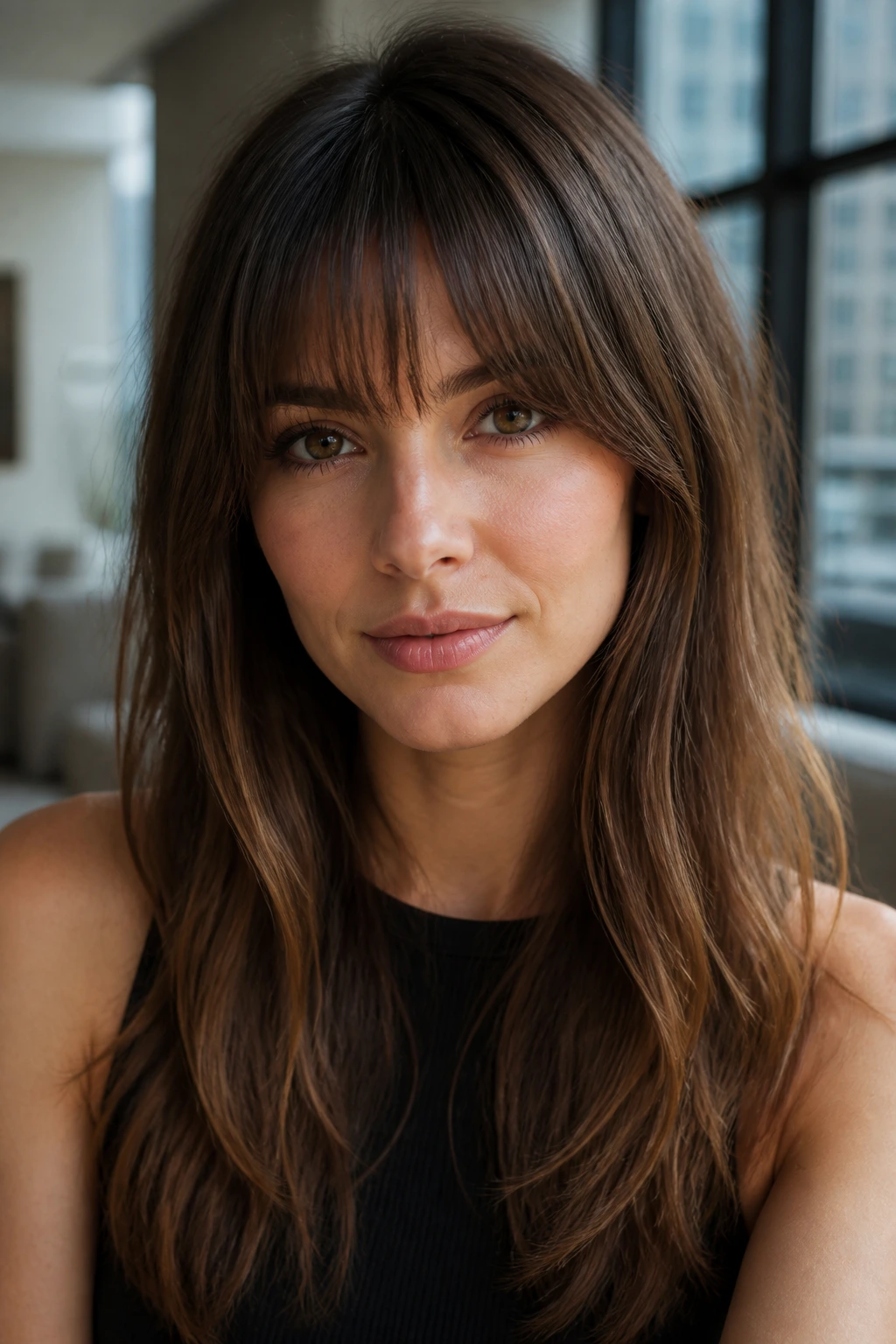
This is one of the smartest shapes on the list. A temple-tapered fringe keeps the center thick and strong, then lets the sides thin out as they reach the temples. That means the forehead gets coverage where it needs it, while the outer face stays light. Heart-shaped faces often look best with exactly that kind of weight control.
I love this cut with long hair because it creates a very clean transition from bangs to lengths. It doesn’t crowd the cheekbones. It doesn’t sit too wide. It just quietly fixes the top-heavy feeling that can happen with a broad forehead and a narrow chin.
Ask your stylist not to thin the center too much. The power of this fringe is in the density up front. Remove weight at the corners, not the middle.
16. C-Curve Fringe
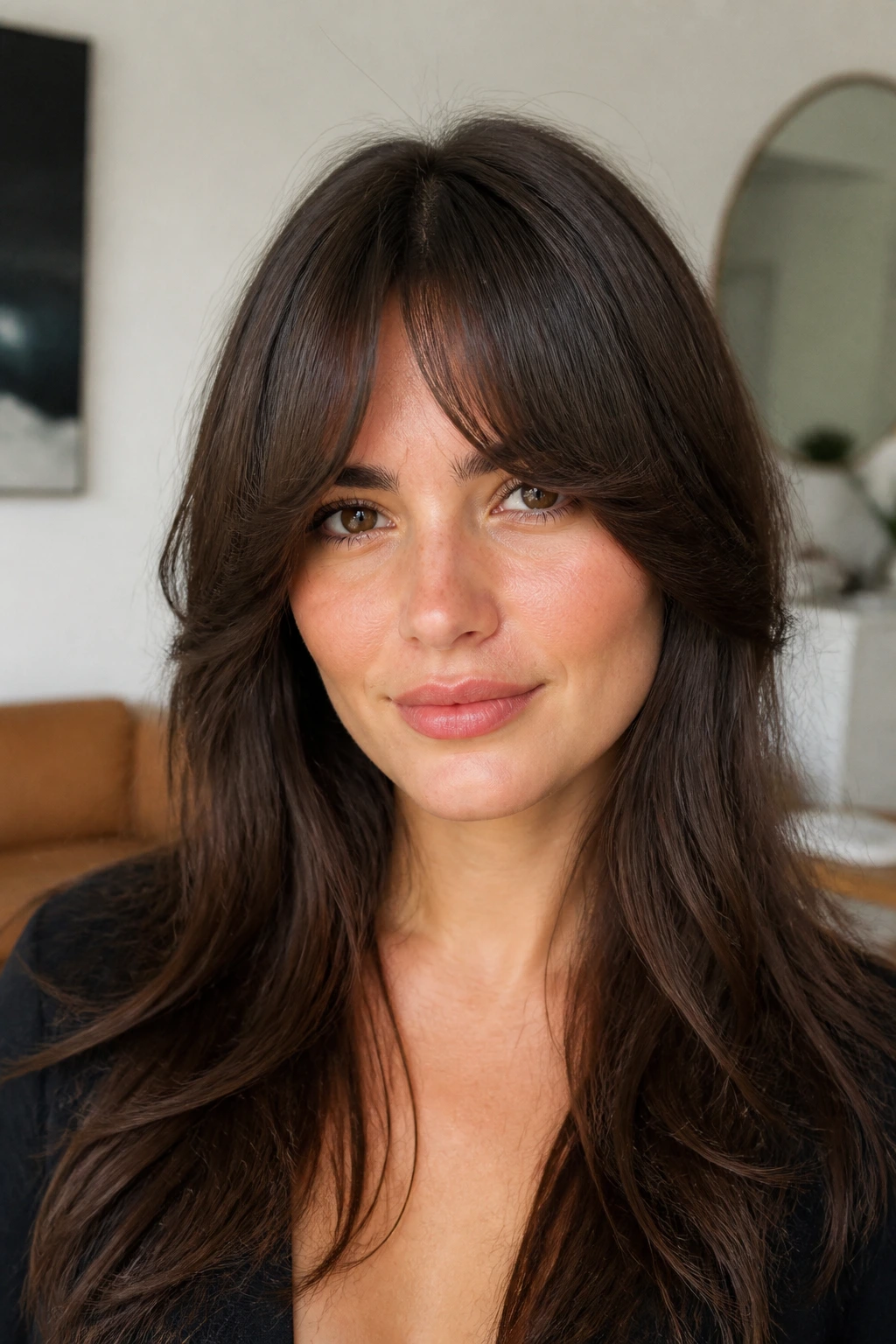
A C-curve fringe bends around the forehead in a soft arc, almost like the hair is drawing a shallow crescent over the eyes. That shape is flattering on heart-shaped faces because it breaks up forehead width while keeping the look smooth and feminine without getting sugary.
The curve works best with a round brush or a large roller set. If you let it dry flat, the shape loses its whole point. Long hair underneath helps the bang feel connected, since the curve naturally leads the eye into the rest of the style.
This is a polished option, but it’s not rigid. The curve should feel soft enough to move when you shake your head. If it feels carved, it’s too much.
17. Retro Blowout Fringe
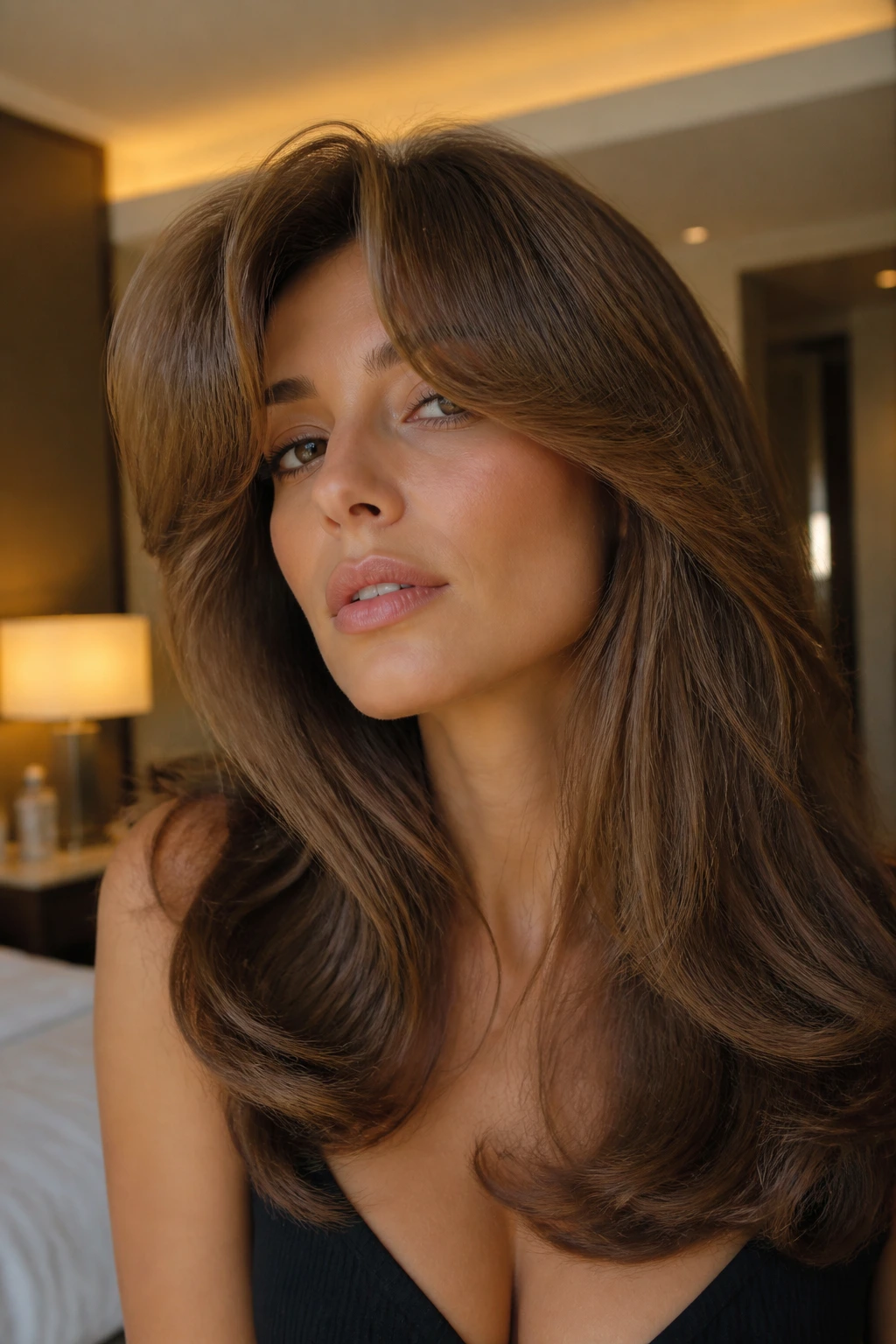
Big, lifted bangs can be a very good thing on a heart-shaped face, as long as the volume is balanced with length. A retro blowout fringe gives the front some drama, then lets the rest of the hair carry that softness down through the shoulders and back.
This is one of my favorites when someone wants fringe that reads glam rather than cute. The lift at the roots stops the bang from sitting flat against the forehead, which keeps the cut from emphasizing width. The sides should still fall softly, though. You want bounce, not helmet.
Keep It Moving
A root-lift spray, a round brush, and a cool shot of air are the whole story here. Set the bend while the fringe is still warm, then leave it alone for a few minutes. Touching it too soon flattens the shape fast.
18. Face-Framing Fringe Blend
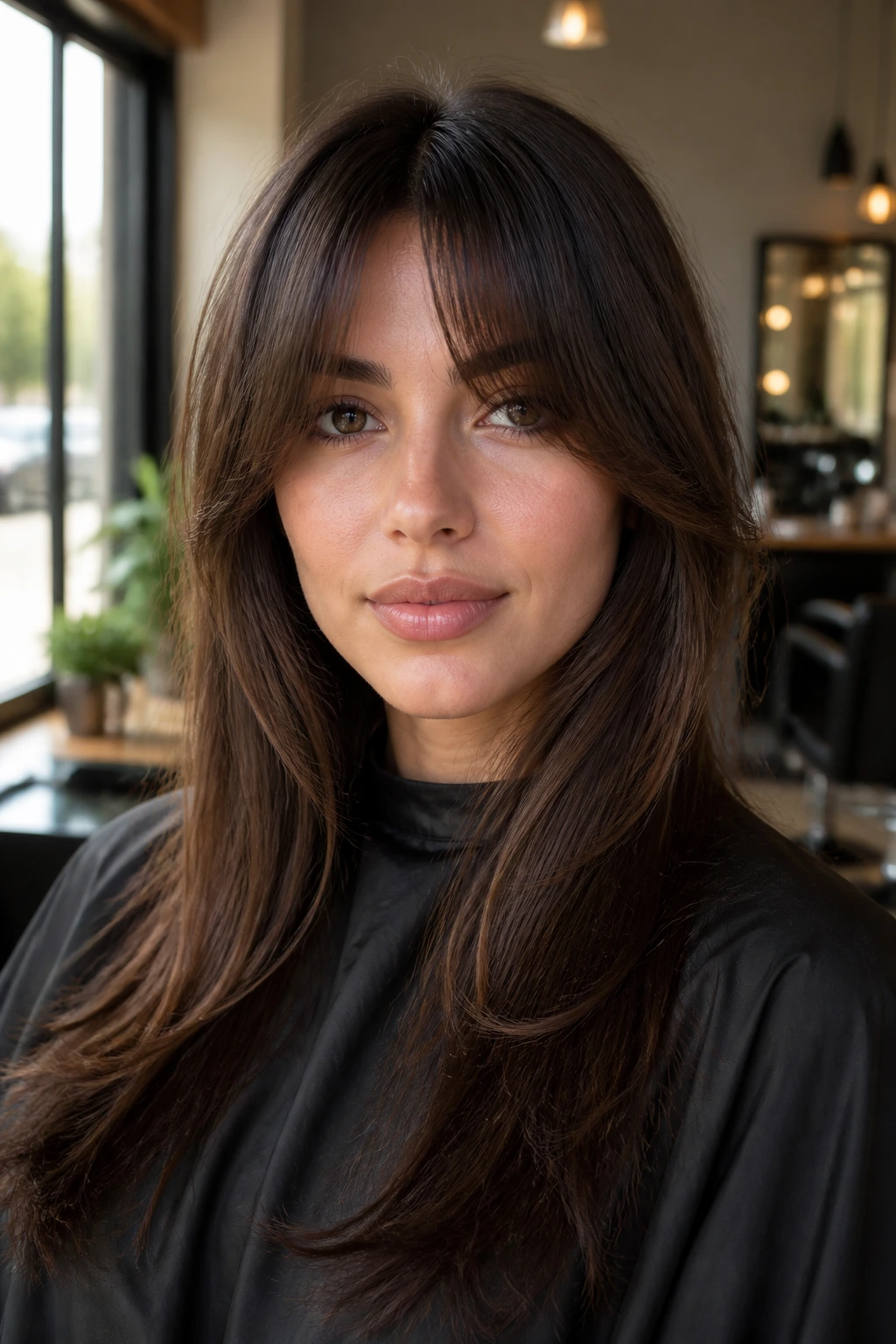
Some people want bangs. Some people want layers. This shape sits between the two. The front pieces start thick enough to count as a fringe, then melt into face-framing layers that hit around the cheekbones and jaw. That’s a very forgiving move on a heart-shaped face because it softens the forehead and gives the lower half of the face a little more visual company.
The blend matters. If the bang pieces stop too abruptly, the cut can look chopped. If they’re too long right away, the fringe disappears. The sweet spot is a thick center that gradually opens into the length.
This is also one of the easiest shapes to live with if you’re not sure you want bangs forever. It grows out well. That alone makes it worth a look.
19. Grow-Out-Friendly Fringe
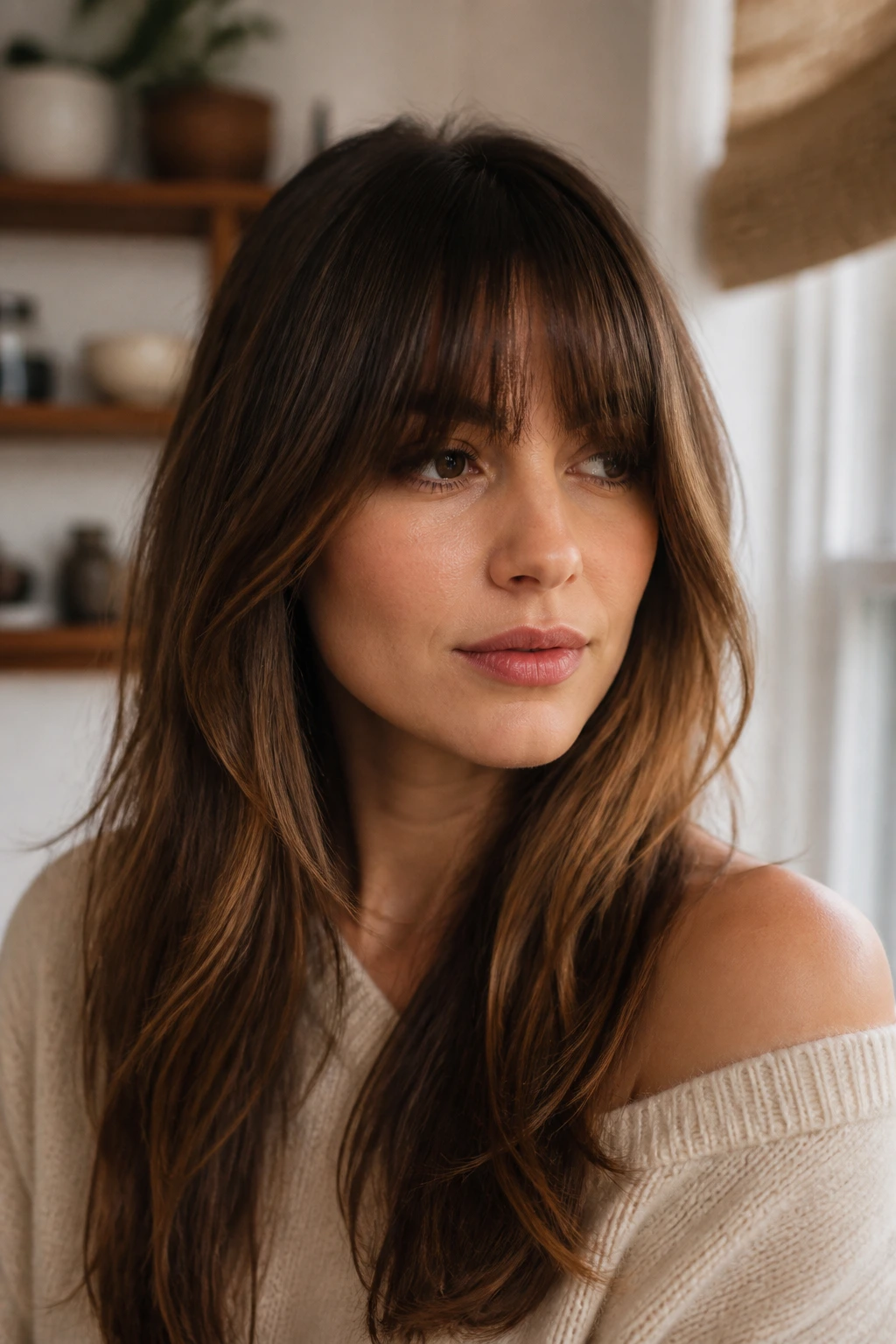
A grow-out-friendly fringe is thicker than a whispery bang but longer than a short blunt line, which gives you room to split it, pin it, or tuck it behind the ears without a panic attack. On a heart-shaped face, that flexibility matters because it lets you experiment with coverage without locking yourself into one look.
The cut usually starts with a denser center and soft outer corners. That way, the fringe can shift into curtain pieces as it gets longer. Long hair makes the process look intentional instead of awkward, since the growing fringe has somewhere to blend.
If you’re hesitant about bangs at all, start here. It buys you options. Hair that can change shape is hair that gets worn, not argued with.
20. Offset Side Panel Bangs
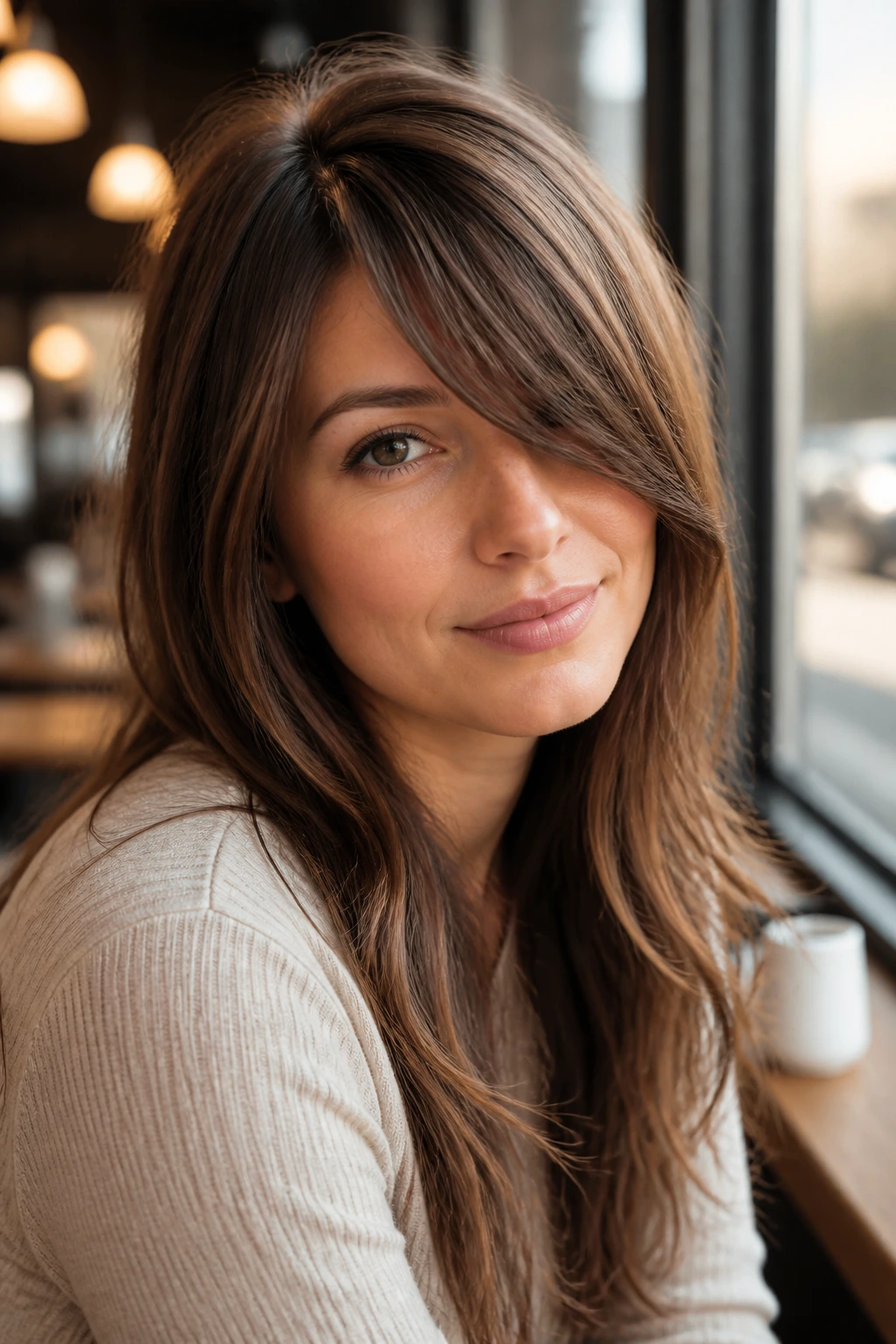
This is the fringe for someone who likes the effect of bangs but wants the face to stay open. One thick panel sweeps across from a deep side part, landing around the eye or cheekbone. For a heart-shaped face, that diagonal line takes pressure off the forehead without hiding the face behind a curtain.
The side panel needs enough density to hold its shape. A skinny side bang tends to disappear into long hair and stops doing any real work. A thicker panel keeps the cut visible, which is the point. It should feel purposeful.
This shape also flatters when one side of the face is more angular than the other. It brings a little softness where you want it and keeps the rest of the length easy.
21. Dense Micro-Fringe
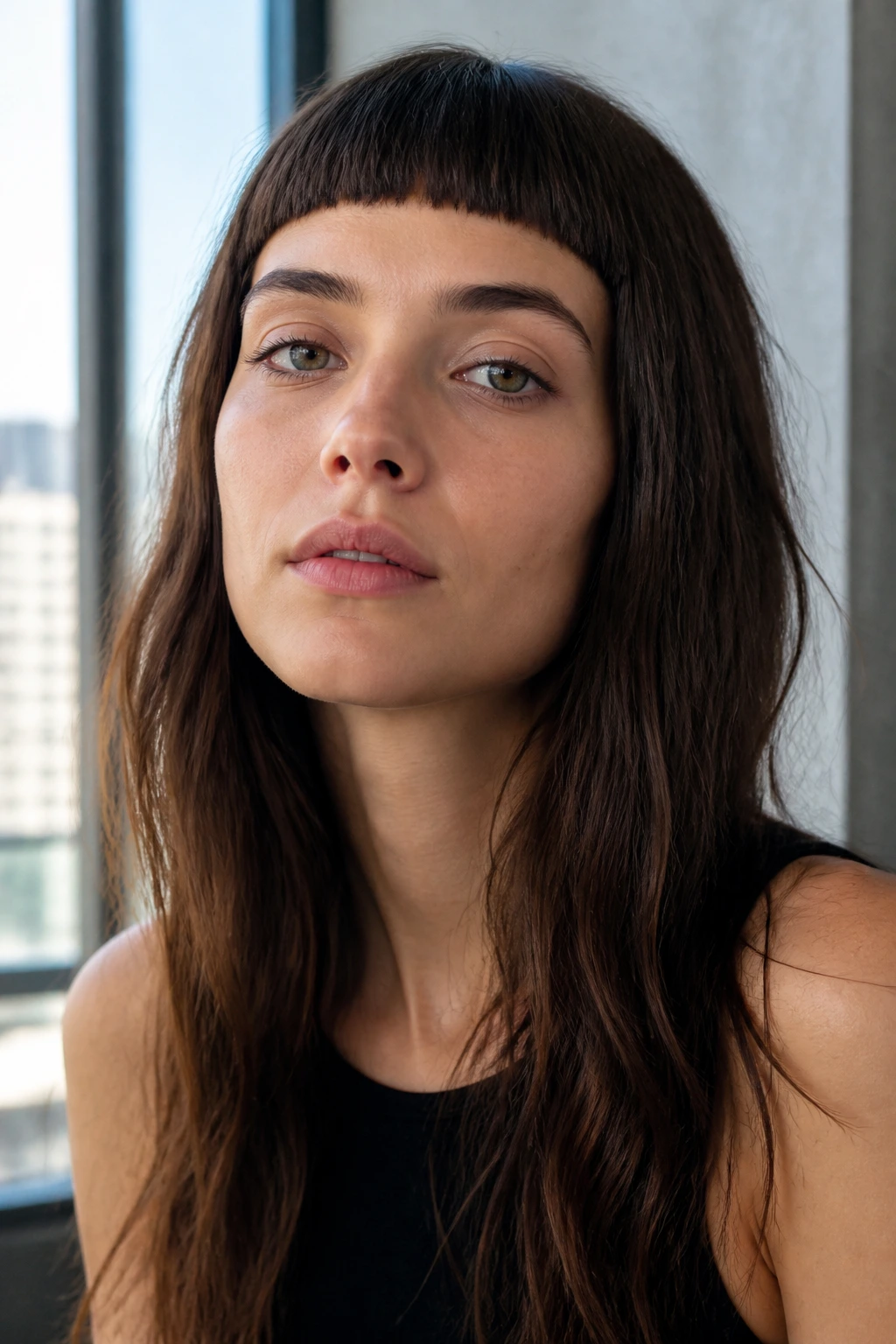
A thick micro-fringe is a bold choice, and I would only recommend it if you like a sharper look and your forehead can handle a lot of exposure above the bangs. On a heart-shaped face, the short line can work when the fringe is very dense and the long hair below stays soft, because the contrast keeps the cut from feeling muddy.
The problem with a weak micro-fringe is obvious: it looks accidental. If you go this short, the bang has to be full, clean, and intentional. There’s no halfway version here. The rest of the hair should stay long and fluid so the front doesn’t hog all the attention.
This is the one style on the list I’d call fashion-forward rather than safe. That’s fine. Not every fringe needs to be polite.
22. Soft U-Shaped Fringe
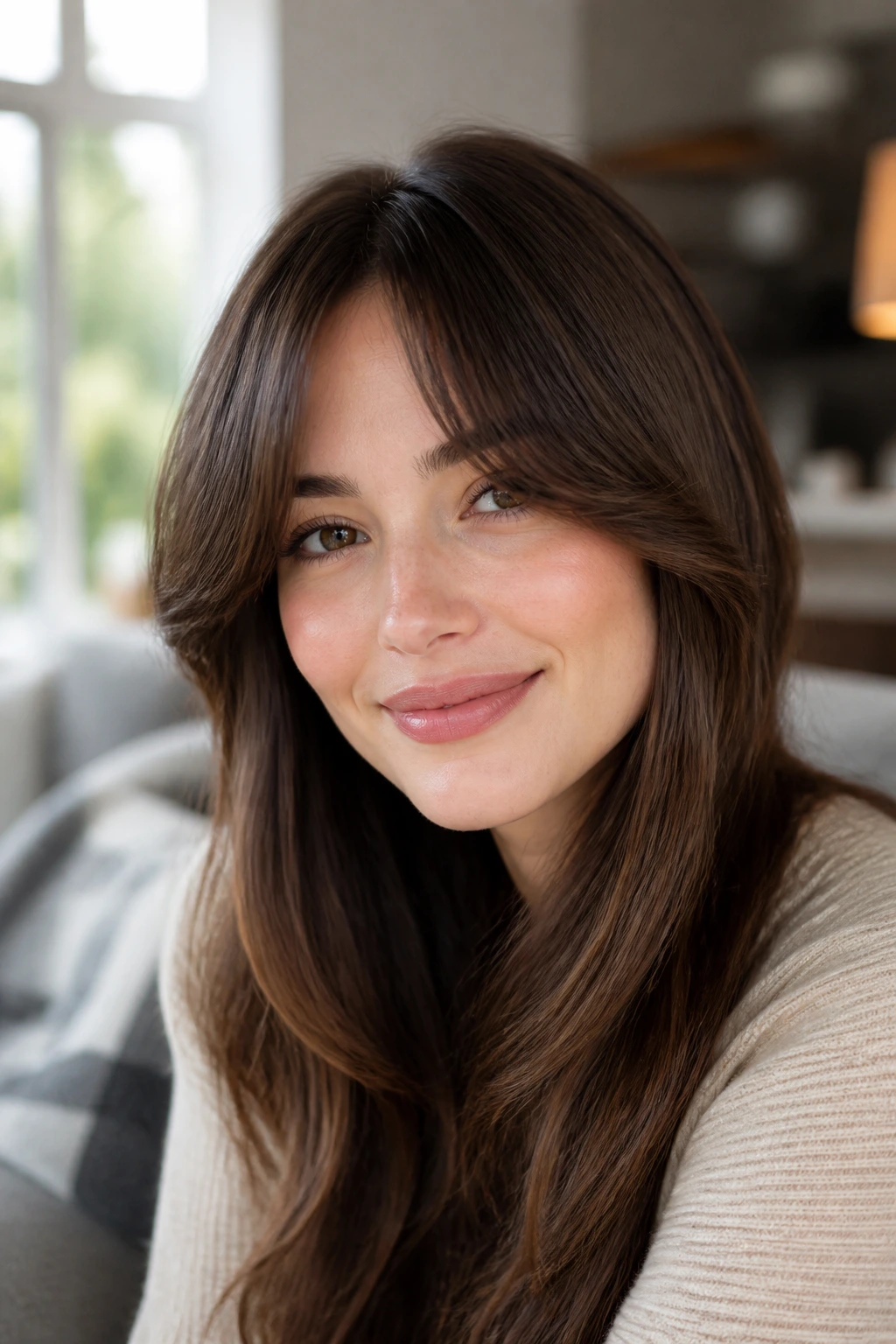
A U-shaped fringe dips slightly in the middle and stays longer at the sides, which makes it one of the gentlest thick bang shapes for a heart-shaped face. The curve softens the forehead without putting a hard edge straight across it. That alone makes it more wearable than a sharply cut line for many people.
The shape looks especially good if your hair naturally bends under at the ends. The sides can slide into the front layers, and the whole cut feels connected. Long hair helps keep the U-shape from looking too narrow.
Who Should Try It
If you want coverage but not a wall of hair on your forehead, start here. It gives you the thickness you need and the softness you want, without much fuss during the grow-out.
23. Piecey Long Fringe
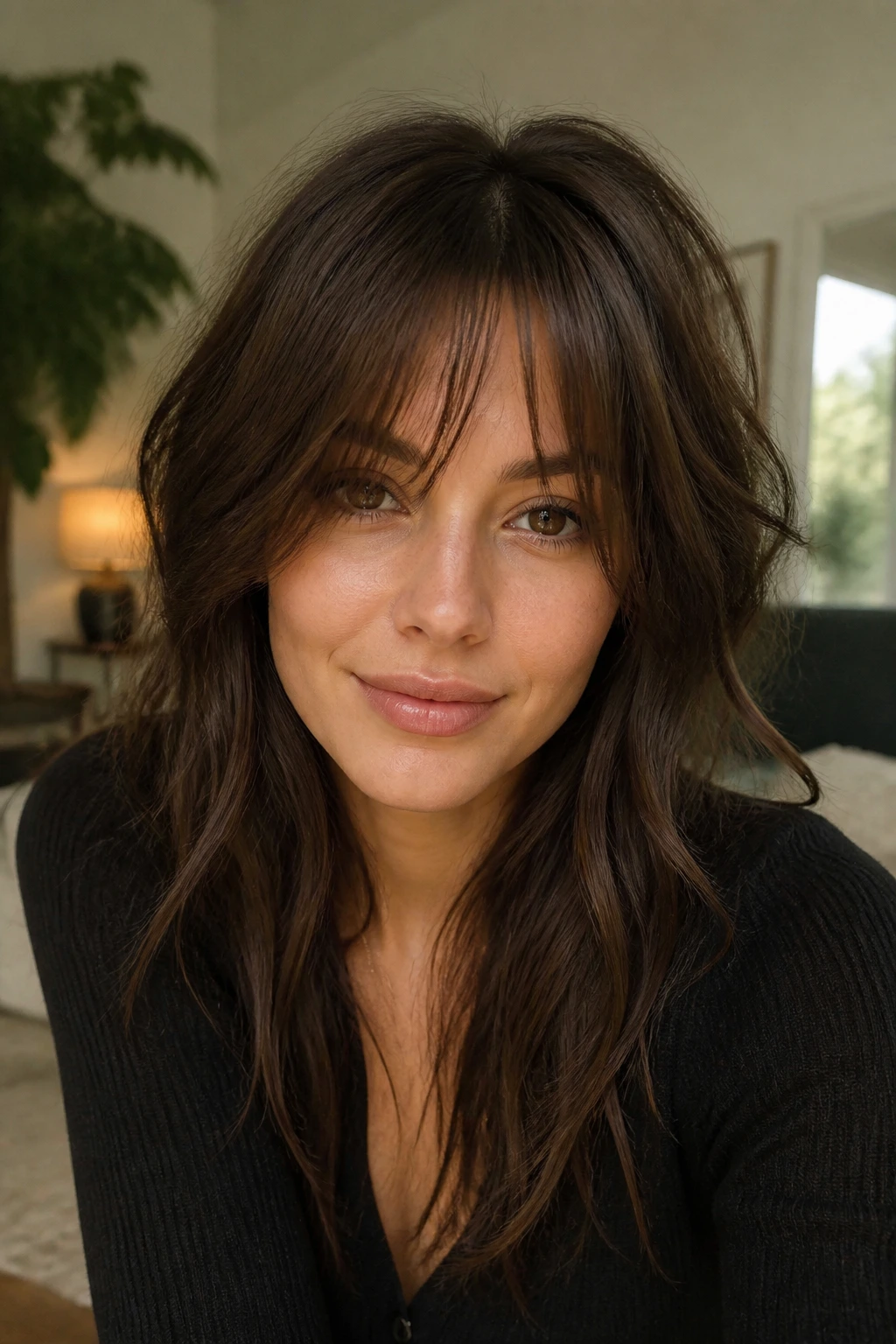
A piecey long fringe is dense at the root but separated into visible sections, so it keeps the forehead covered without reading as a solid block. That’s a useful middle ground on a heart-shaped face because you still get softness at the top, plus a little air between the pieces.
The style thrives on texture. A bit of wave, a light bend, or even a touch of dryness at the ends makes it work better than a slick, overconditioned finish. Long hair below keeps the whole thing from looking too trend-driven or too short-lived. It just feels easy.
This shape is especially good if you like to change part lines. Move it a little left, a little right, or split it down the middle when you want the forehead more open.
24. Collarbone-Grazing Bang Blend
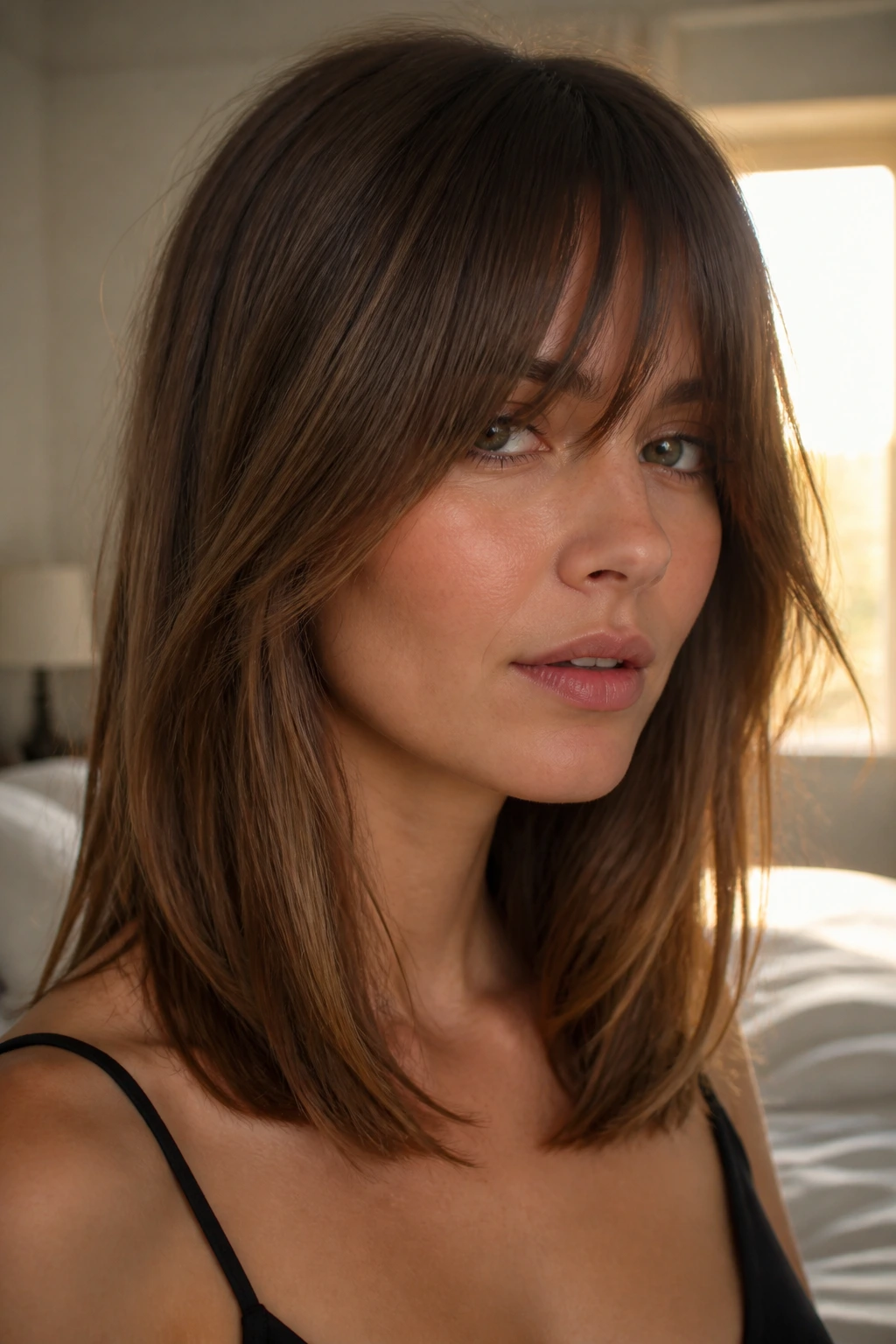
This is really a long fringe that lives somewhere between bangs and face-framing layers. It starts thick at the front, then fades out before it gets too short or too blunt. On a heart-shaped face, that long blend is useful because it keeps the forehead softened while leaving the sides open and flattering.
I like this shape for cautious first-timers. It doesn’t commit you to a dramatic front line, but it still gives the haircut a front edge. The long hair below makes the whole thing feel graceful instead of chopped.
If you want more bang later, it’s easy to shorten the center. If you want less, you can keep growing the side pieces into the rest of the cut. That kind of flexibility is worth a lot.
25. Internal-Layer Thick Fringe
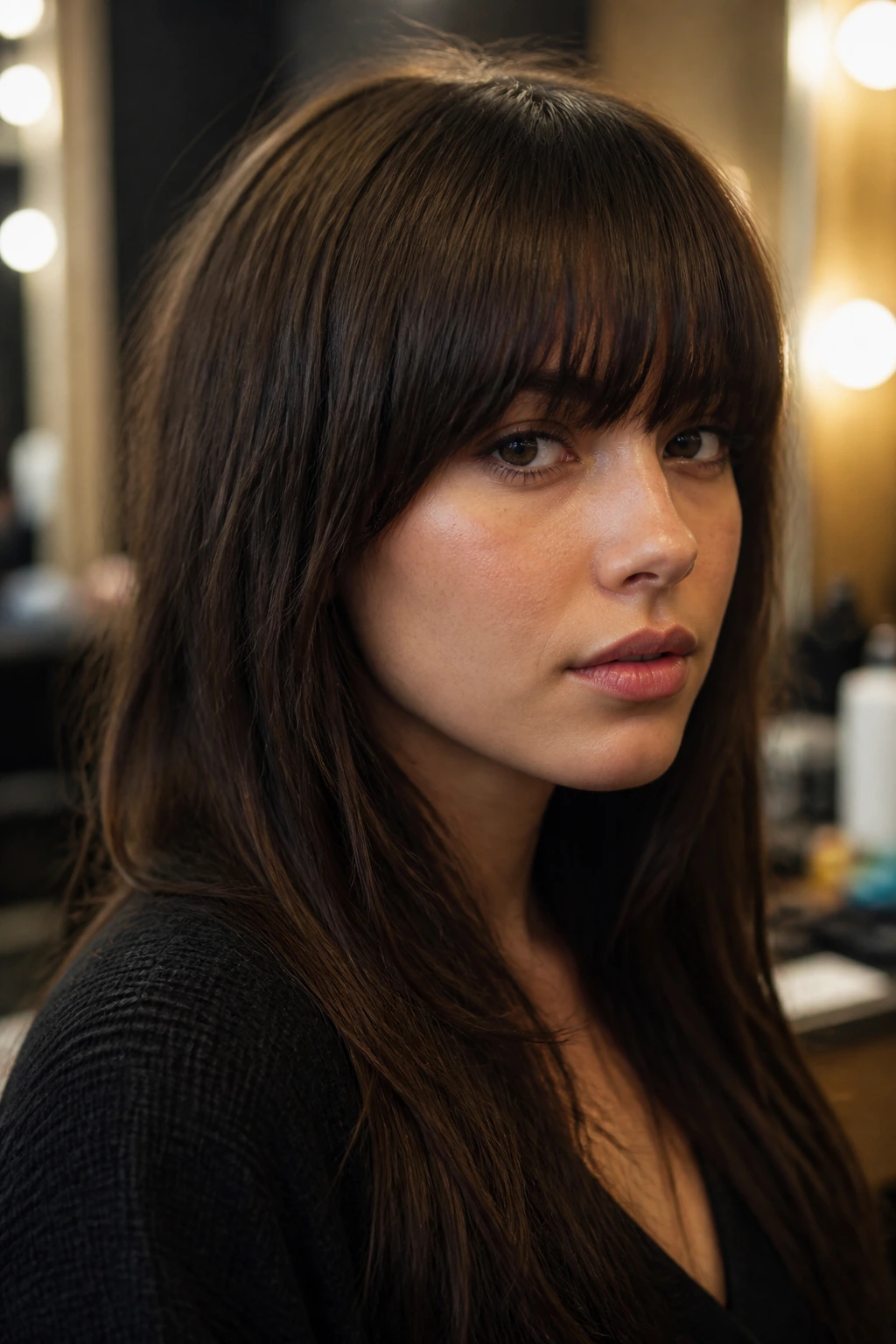
This is the secret weapon for very dense hair. On the surface, the fringe looks full and solid. Underneath, hidden layering removes bulk so the bangs don’t puff out like a shelf. For a heart-shaped face, that matters because the cut keeps the forehead balanced without getting heavy at the temples.
The best part is how clean it looks in motion. The fringe still reads as thick, but it moves better than a single blunt block. Long hair below gives the front a place to blend, so the whole style feels intentional even when it’s worn casually.
Ask for the thinning to happen inside the fringe, not just at the very ends. That keeps the outline strong. A weak outline is what makes thick bangs look frizzy instead of full.
Why Thick Bangs and Long Hair Play So Well Together
Long hair gives thick fringe room to breathe. That sounds obvious, but it’s the reason these cuts work. A heavy front line on its own can feel abrupt. Add length underneath, and the eye has somewhere to travel after it lands on the bangs. The face feels balanced instead of chopped up.
The other part is proportion. Thick bangs can shorten the look of the forehead, which is useful on a heart-shaped face, but they need the lower half of the hair to stay soft enough to keep the whole style from looking top-heavy. Long layers, loose waves, and smooth ends all help. Straight, blunt lengths can work too, but they need a little movement somewhere else so the silhouette doesn’t go rigid.
I also like the grow-out story. Long hair hides the awkward middle stage better than a short cut does. A fringe that was blunt last month can become curtain pieces by the next trim, and that flexibility makes the whole thing less of a gamble.
What to Tell Your Stylist Before the First Snip
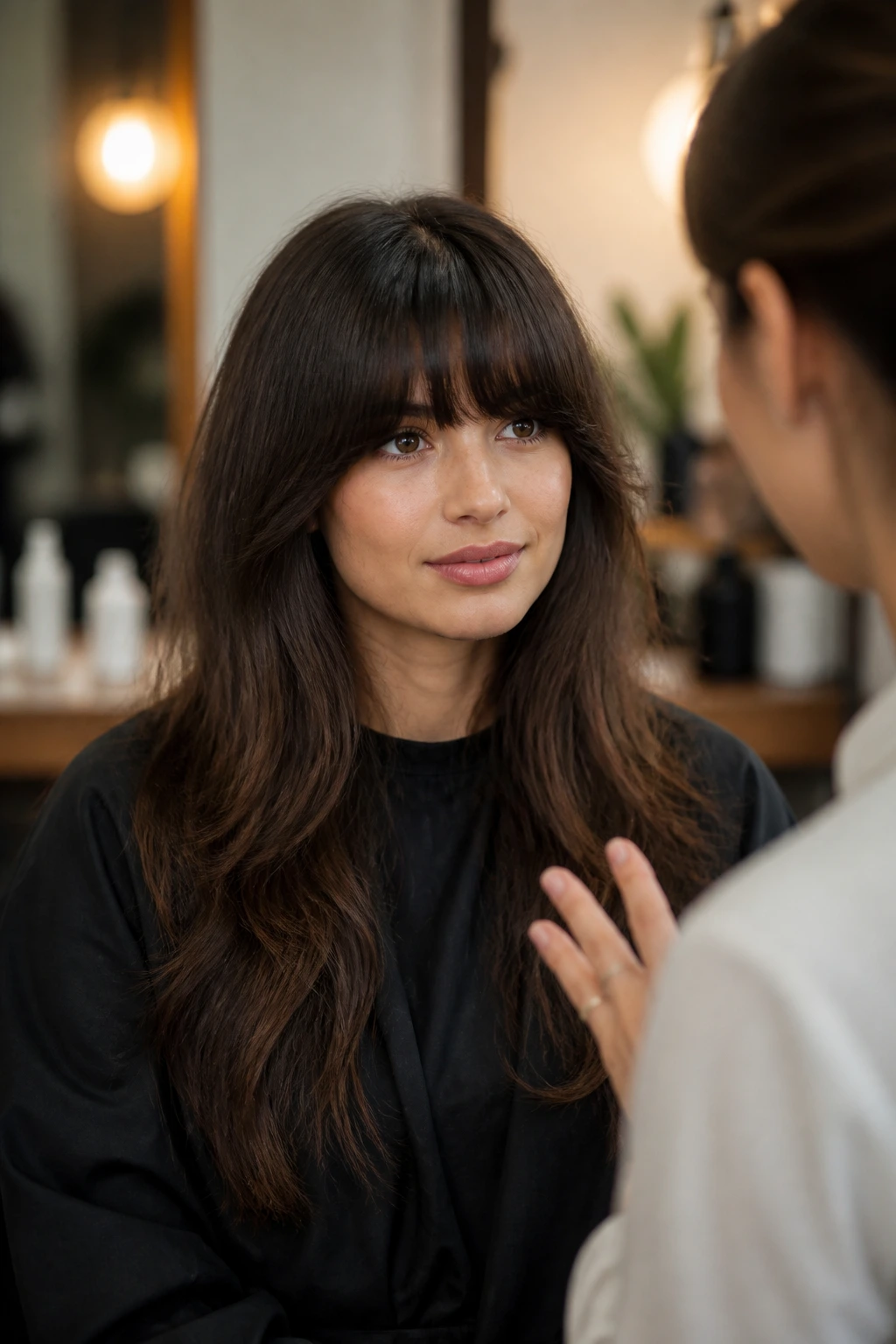
Bring more than one photo. One should show the fringe from the front, one should show the side, and one should show how it looks on day two, not just at the salon. That third photo matters because bangs live in motion, and stylists know it.
Say how much time you want to spend on them. A dense blunt fringe that needs a round brush every morning is a different promise than a thick curtain bang that can air-dry with a bend. Mention your natural part, any cowlicks at the front hairline, and whether you wear glasses. Those details change the cut more than people expect.
If your forehead is on the wider side, ask for the center to carry more weight while the corners stay softer. If your hair is very dense, ask for internal debulking instead of aggressive thinning at the outline. And if you’re nervous, ask for the first cut to land a touch longer than you think you want. Hair grows fast. Regret grows faster.
Essential Tools for Styling a Thick Fringe
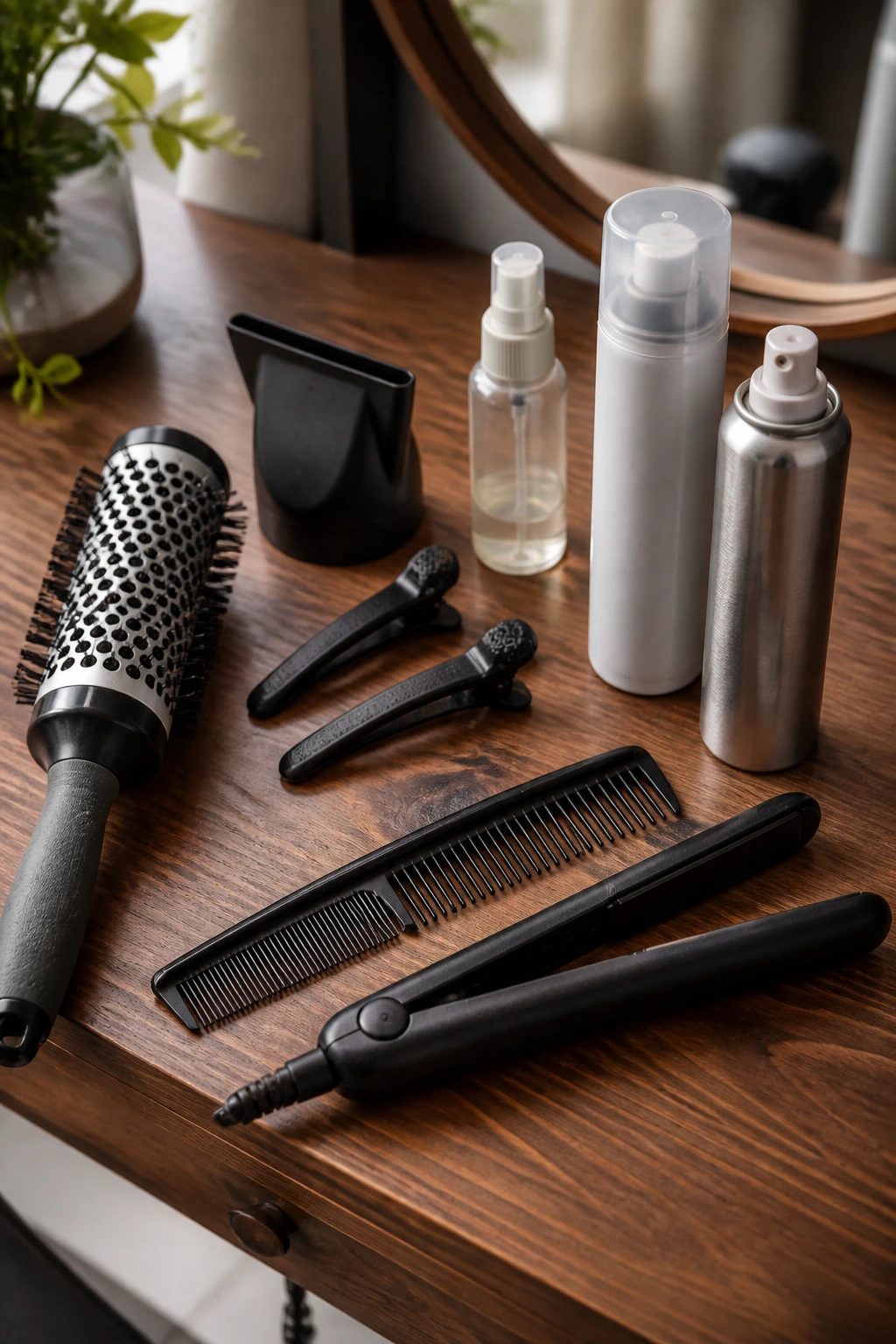
- Small round brush, 1 to 1.5 inches: Best for bending the fringe under without puffing up the roots.
- Blow dryer with a nozzle: Directs air where you want it instead of blasting the bangs into every direction at once.
- Duckbill clips: Useful for setting the fringe flat while it cools in the shape you want.
- Heat protectant spray: A small amount keeps the front pieces from getting rough, especially if you style them daily.
- Light dry shampoo: Good for absorbing oil at the roots on day two or three.
- Fine-tooth comb: Helps separate the bang section cleanly before blow-drying.
- Mini flat iron: Handy for touching up a stubborn cowlick or smoothing the corners.
- Light hairspray: Best used on the brush, not sprayed in a cloud, so the fringe stays touchable.
How to Wear Them With Long Hair
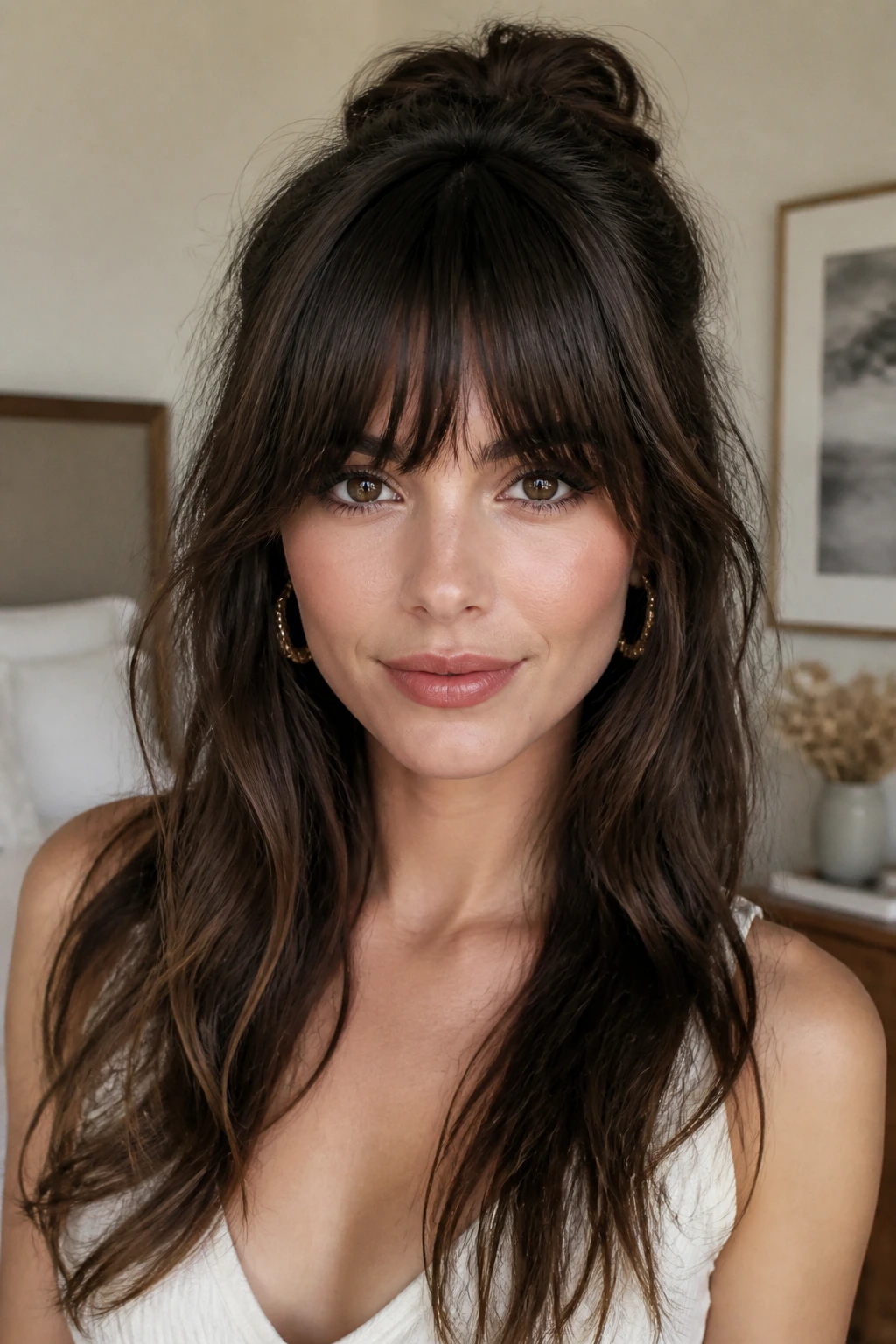
Silhouette: Keep the fringe in the foreground and let the long hair act as the frame around it. Soft waves, brushed-out curls, and loose straight lengths all work because they keep the front from feeling isolated.
Best pairings: Half-up styles, low ponytails, braided crowns, and loose blowouts make thick bangs feel intentional. The fringe gives the face shape, while the long lengths keep the whole style from reading too cropped.
Accessories: Small clips, narrow headbands, and side pins work better than bulky extras. Anything too wide across the forehead fights the fringe, which is a headache you do not need.
Finish: If the bangs are dense, keep the ends of the long hair a little softer — serum at the tips, not the roots. That contrast between a full front and a touchable length is what keeps the style from feeling helmet-like.
Extra Shape Tricks and Personalization
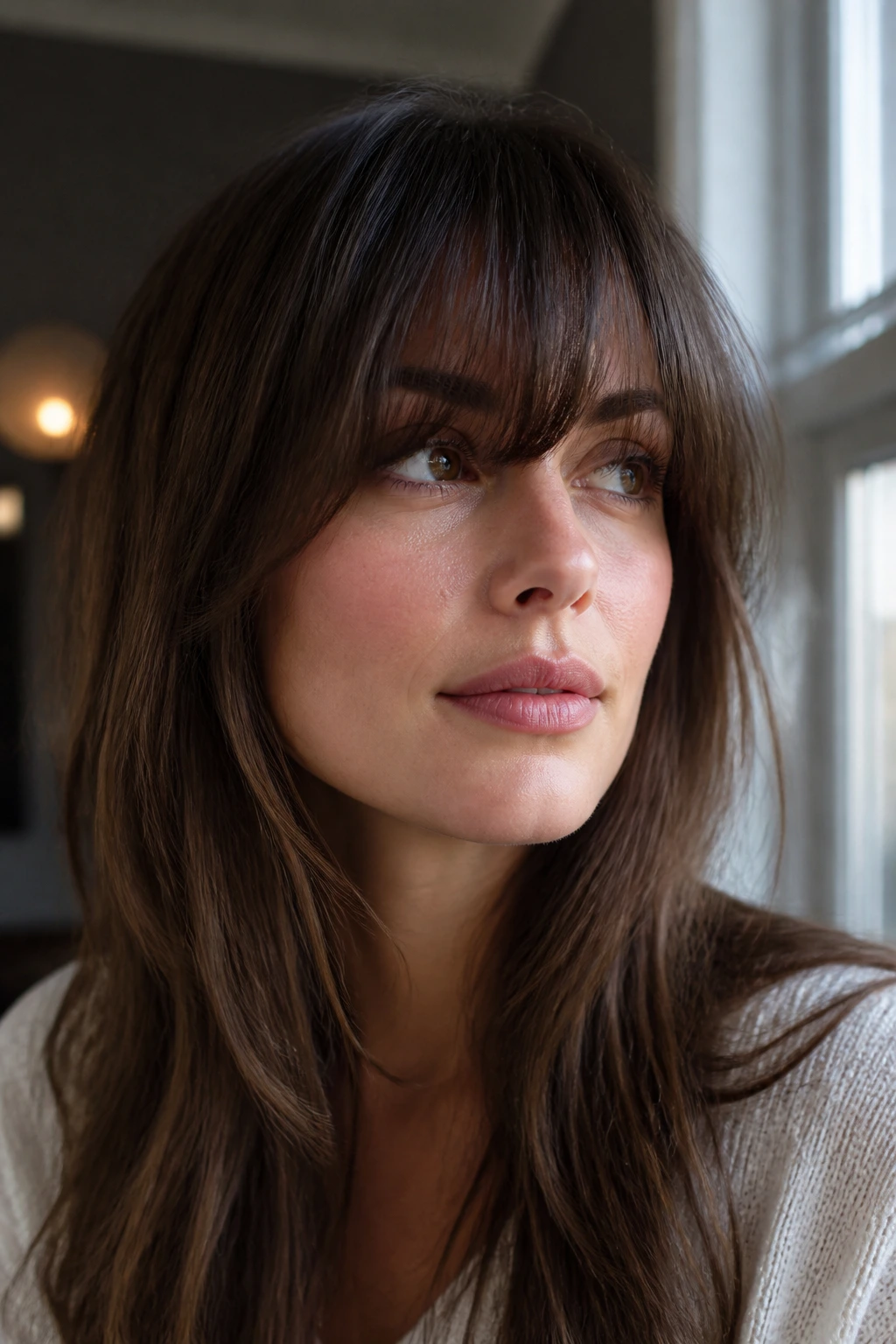
Root Lift: Blow-dry the fringe side to side for the first 20 to 30 seconds, then direct it forward and finish with cool air. That little back-and-forth motion keeps the roots from sticking flat to the scalp. It also helps dense bangs sit with a bit of lift instead of collapsing into the forehead.
Texture Control: If your hair is fine, a texturizing spray at the roots is enough. If it’s coarse or very dense, use less product than you think and focus on smoothing the ends. Heavy cream near the root zone makes bangs droop, and drooping bangs are never charming for long.
Color Placement: A few soft highlights around the fringe can make thick bangs look lighter without making them thinner. Face-framing color near the temples is especially useful on heart-shaped faces because it keeps the eye moving outward. Subtle beats stripey every time.
Make-It-Yours: Straight hair can wear a crisp brow-skimming line. Wavy hair does better with a bend and softer corners. Curly hair needs length for shrinkage. Fine hair can still do thick bangs if the section is taken a little wider from the front. Dense hair usually needs internal layering so the shape doesn’t turn into a wall.
Common Mistakes That Flatten the Look
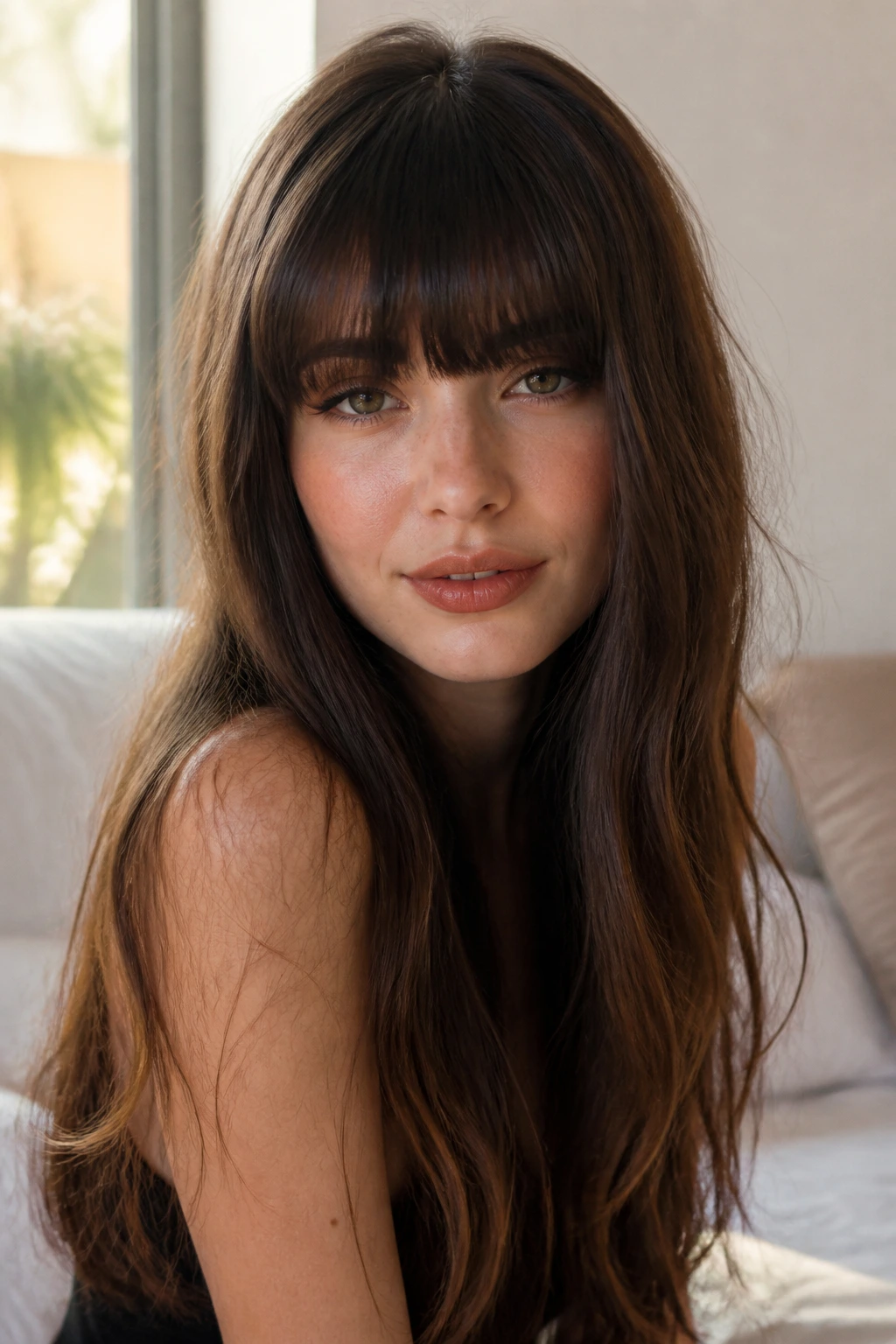
- Cutting the bangs too short on the first appointment: The forehead suddenly feels larger, and the style loses its softness. Start longer, especially if your hair shrinks when dry.
- Thinning out the fringe until it goes see-through: The bangs stop looking thick, which defeats the point. Keep real density at the center and remove weight only where the shape needs it.
- Ignoring the front hairline and cowlicks: The fringe splits, flips, or pokes up by lunchtime. A good stylist works with the growth pattern instead of pretending it isn’t there.
- Letting side pieces end at the jaw by accident: That can make a heart-shaped face look wider at the temples. Aim for soft pieces that travel past the cheekbone or blend into layers.
- Using too much oil or cream near the roots: The fringe goes flat and separates in greasy strands. Keep heavy product on the lengths, not the scalp line.
Variations and Adaptations to Try
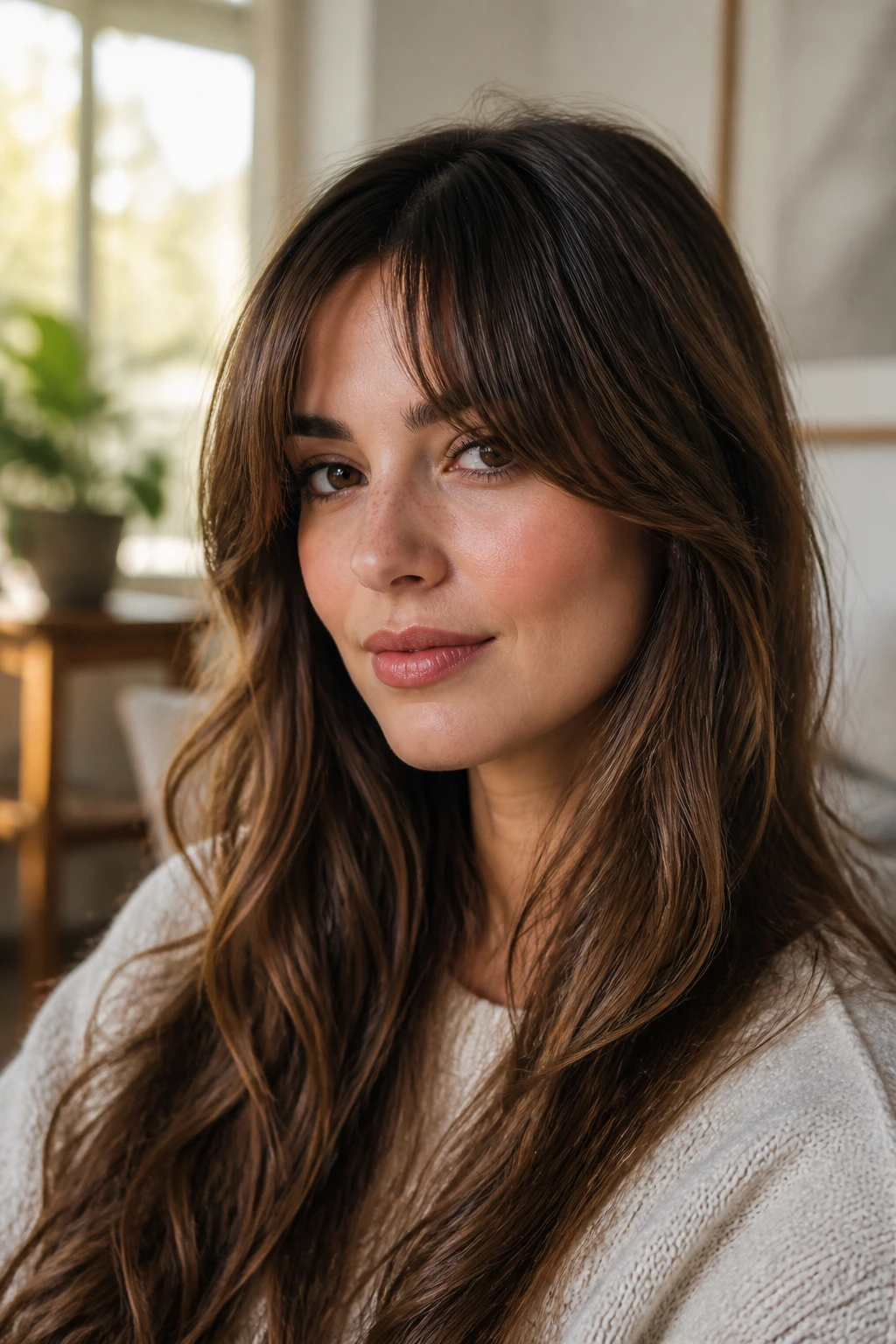
Soft Curtain Reset: If you want the easiest entry point, ask for curtain bangs with extra density through the center and longer corners. They shift into face-framing pieces as they grow, which makes the whole cut less stressful. This is the version I’d recommend to anyone who’s bang-curious but not fully committed.
Curly Halo Fringe: Best for curly or coily hair, this version keeps the fringe thick and rounded while leaving enough length for shrinkage. It adds texture near the forehead without creating a hard block. The result feels lively, not heavy.
Glossy Blowout Fringe: This is the sleek option — full, smooth, and slightly curved under with a round brush. It suits straight or smoothed hair and gives a heart-shaped face a polished outline. Keep the corners softer than the center so the line doesn’t look severe.
Shagged-Out Fringe Blend: If you already live in layers, this one lets the bangs melt into the rest of the haircut. It works well on wavy hair and gives you movement without losing the thick front shape. Grow-out is easy, which is half the reason people stick with it.
Statement Dense Fringe: For people who want a strong front line, this is the boldest version. The fringe stays full and obvious, while the long hair stays soft so the top doesn’t overwhelm the face. It needs confidence and a good blow-dry, but the payoff is sharp.
Keeping the Fringe in Shape Between Cuts
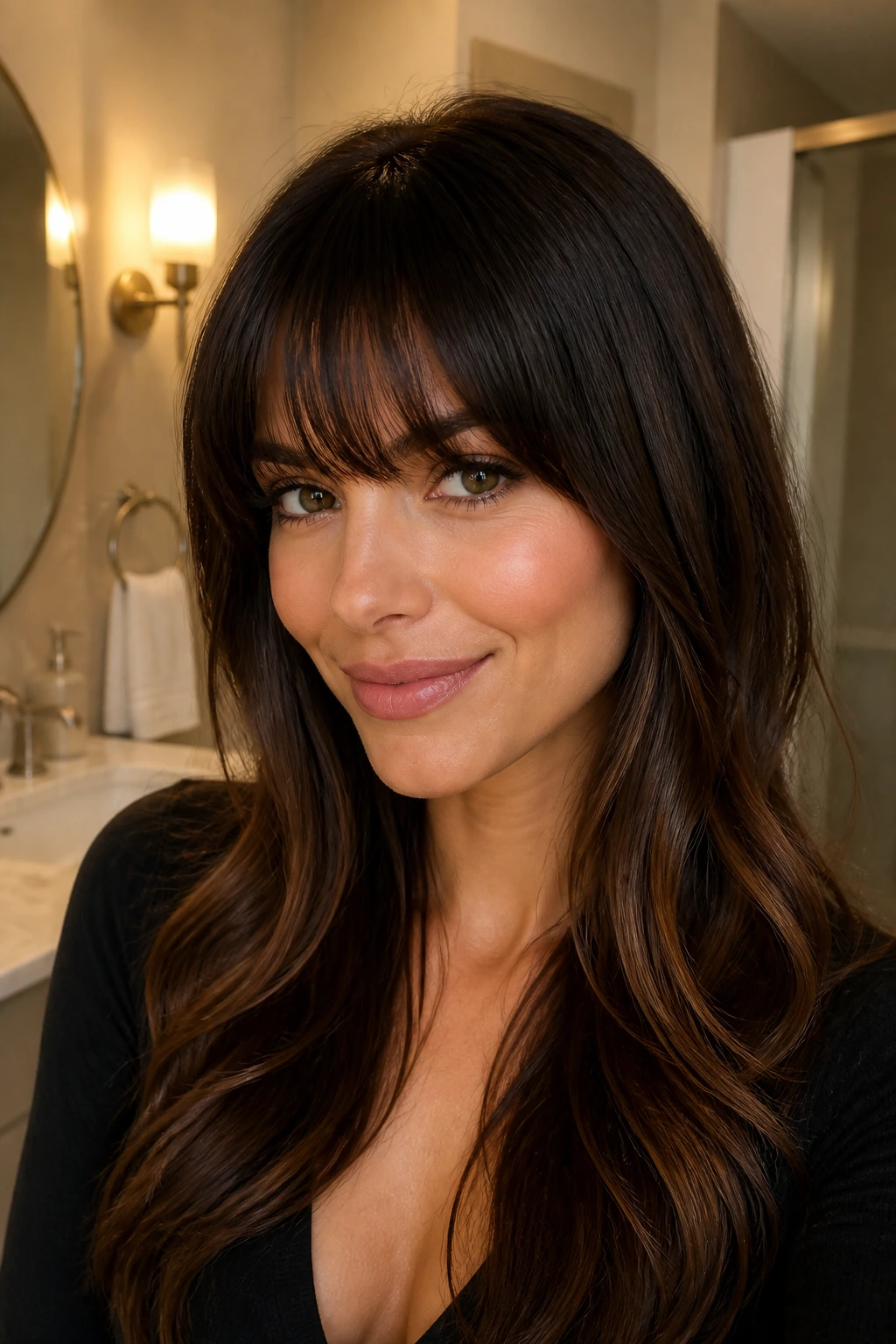
Thick bangs need a little maintenance, but not the sort that eats your life. Most full fringes need a trim every 4 to 6 weeks if you want the line to stay crisp. Curtain or blended styles can stretch to 6 to 8 weeks because the corners grow out more gracefully. Curly bangs often need a check-in based on shape, not just the calendar, since shrinkage changes the outline after each wash.
Oil is the enemy at the front hairline. A touch of dry shampoo at the roots on day two or day three keeps the fringe from sticking to the forehead. If you wash your hair often, dry the bangs first and clip the lengths up while you focus on the front. That one habit saves a lot of awkward flatness.
Sleep matters too. If the fringe bends weirdly overnight, mist it lightly in the morning, then re-shape with your fingers and a brush. A round brush, a blast of warm air, and a cool finish usually reset the line in under two minutes. If the cowlick is stubborn, use a small flat iron only on the problem spot, not the whole front section.
Frequently Asked Questions
Will thick bangs make a heart-shaped face look wider?
They can, if the fringe is cut too bluntly at the temples or too short across the forehead. The shapes that work best keep the center full and the corners softer, which pulls the eye downward instead of pushing it outward.
Are curtain bangs better than blunt bangs for this face shape?
Curtain bangs are easier for many heart-shaped faces because they leave the temples lighter and blend into the cheekbones. Blunt bangs can still work, but they need softer corners and a length that sits near the brows, not high above them.
Can thick bangs work with fine hair?
Yes, if the section is taken a little wider and the ends are cut cleanly so the fringe doesn’t look sparse. Fine hair does better with a shape that keeps the line strong without trying to fake bulk through too much product.
What if my hair has a strong cowlick at the front?
Bring that up before the cut starts. A stylist can adjust the part, the length, and the direction of the fringe so it fights less with the growth pattern. If the cowlick is fierce, a slightly longer fringe often sits better than a short one.
How do I style thick bangs so they don’t split down the middle?
Blow-dry them side to side at the root first, then direct them forward while they’re still warm. That small reset helps the hair sit as one shape instead of opening into a gap every time you move.
Can I wear thick bangs if I wear glasses?
Yes, but the length needs to be chosen carefully. Keep the fringe either a touch above the frame or long enough to graze it in a clean way; the messy middle zone around the lenses is where things get annoying.
How long does it take to grow thick bangs out?
Long enough to need patience, short enough to be manageable. A dense fringe usually passes through the awkward stage by turning into curtain pieces or face-framing layers, especially if the corners were cut longer from the start.
What should I do if the fringe feels too heavy after the cut?
Do not rush to thin it out at home. First, style it with less product and a little lift at the root. If it still feels bulky after a few days, go back to the stylist and ask for targeted internal removal, not a full thinning across the outline.
The Fringe That Balances the Face
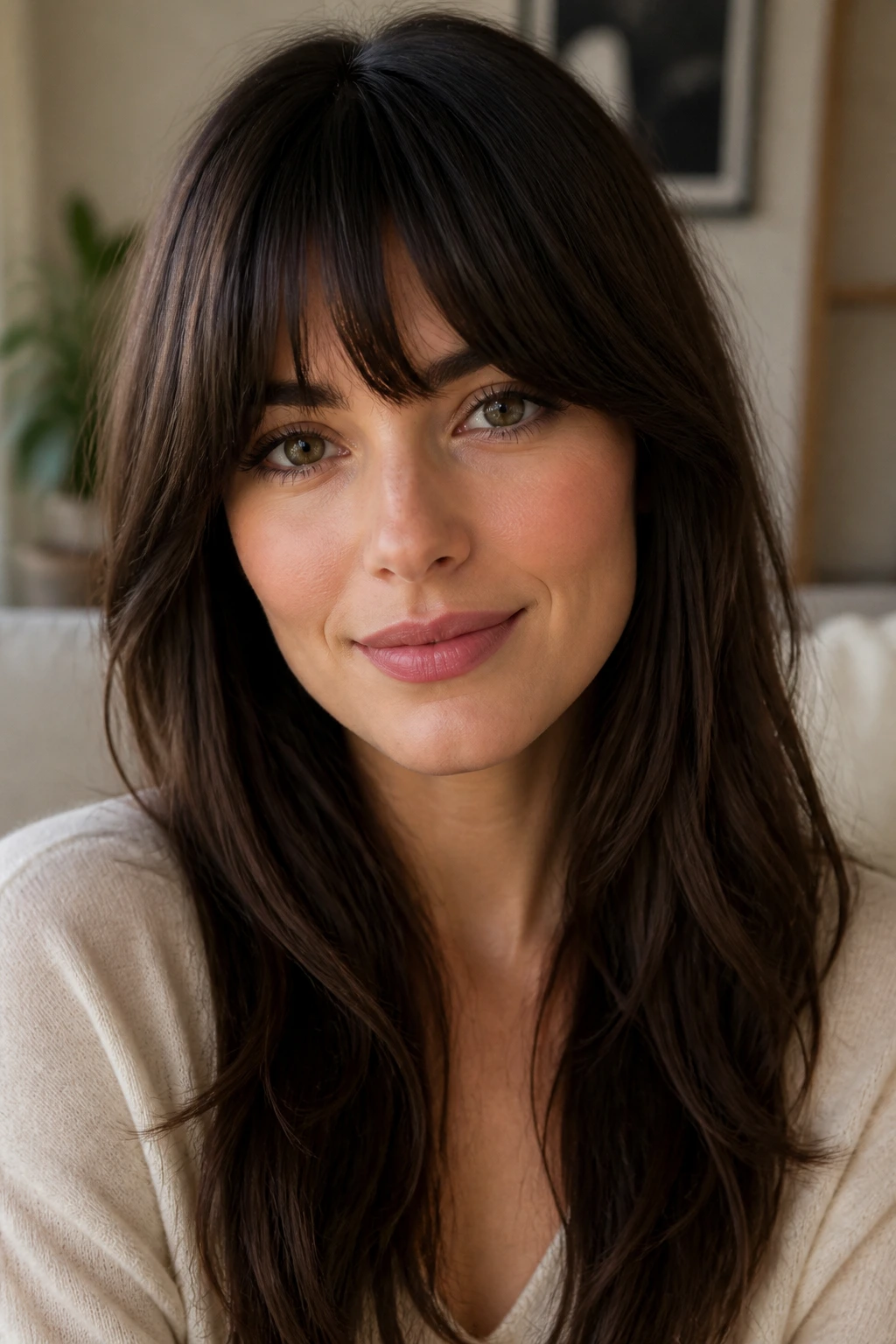
The best thick bangs for long hair and heart-shaped faces do one thing well: they shift the visual weight upward without making the forehead feel like a problem to hide. That’s a subtle job, and the good cuts are usually the ones that look calm rather than dramatic. Density at the center. Softer corners. A long shape underneath to keep everything grounded.
I’d start with the version that fits your styling habits, not the one that looks hardest to ignore in a photo. The fringe should work with your mornings, your part, and your hair texture. If it only looks right after a 45-minute battle with a round brush, it’s probably the wrong fringe.
Bring one strong reference, one realistic reference, and tell the stylist how much time you’re willing to spend. Then keep the line soft enough to move. That’s where these styles really earn their keep.