



A diagonal fringe on collarbone-length hair can change the whole mood of a cut. The face looks a little sharper at the cheekbone, the forehead gets a softer frame, and the rest of the hair still has enough length to move instead of sitting there like a helmet.
That is why angled bangs for medium hair and oval faces keep showing up in good salons. Medium length gives the fringe somewhere to blend, and an oval face can handle a stronger slant without losing its balance. The shape has room to breathe.
The catch is that bangs live or die by the cut line. Too short at the high side and you get a startled little shelf. Too wispy at the low side and the whole thing disappears before it earns its keep. The best versions below are the ones that use the angle on purpose — sometimes soft, sometimes sharp, sometimes piecey and a little messy — so the fringe feels like part of the haircut, not a separate event.
Some of these looks are forgiving enough for first-timers. Others need a little more brush work, a little more tension, or a little more patience with your part. That’s the point. One angle does not fit every head of hair, and the flattering ones tend to know exactly where to stop.
Why These 25 Angled Bangs Earn Their Keep
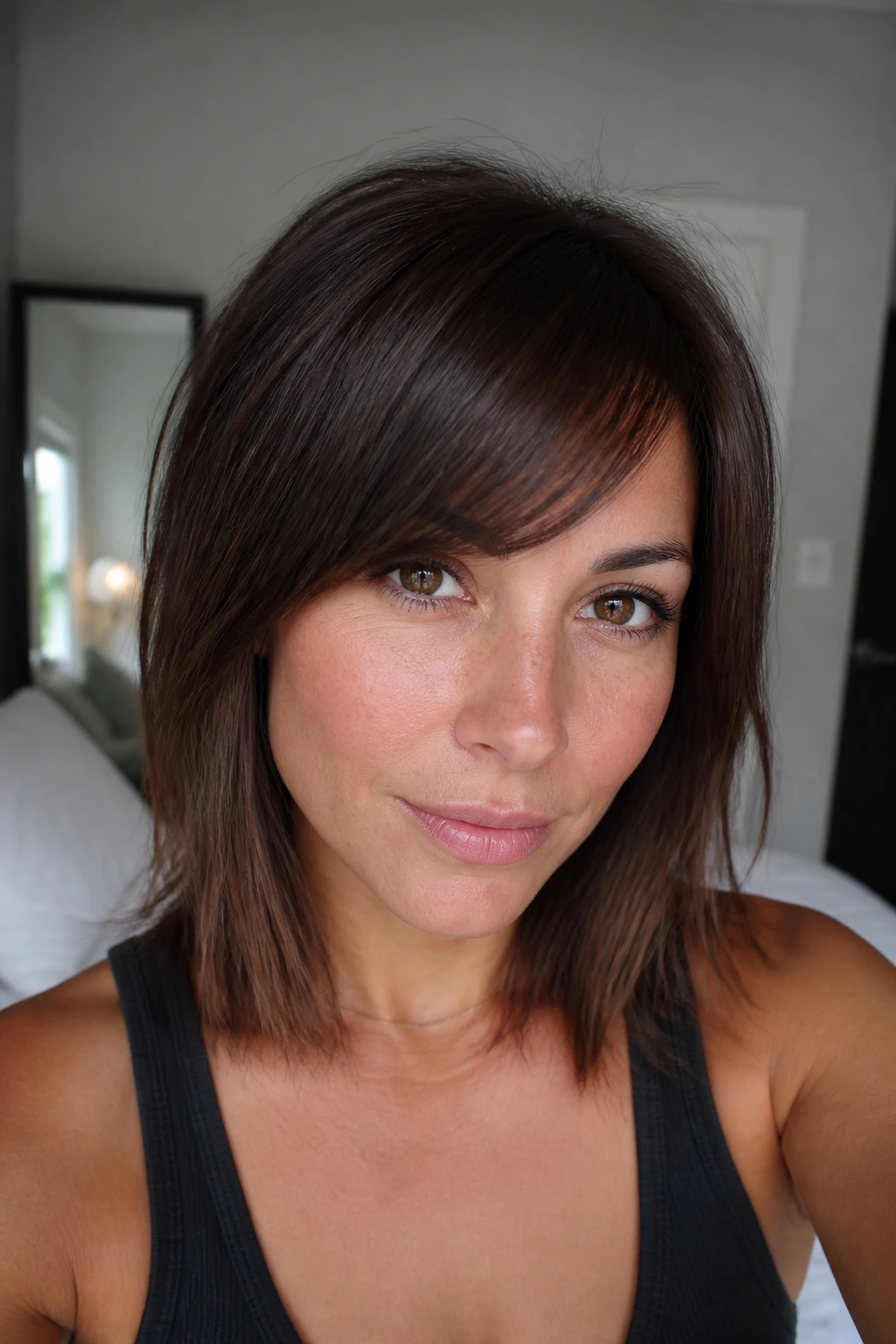
- Cheekbone focus: A longer diagonal piece lands near the cheekbone and pulls the eye to the center of the face instead of letting the forehead dominate.
- Medium-hair balance: Shoulder-length and collarbone-length cuts have enough weight to hold the fringe down, which keeps the angle from flipping out after ten minutes.
- Soft grow-out: The longer side can fold into face-framing layers, so a missed trim looks intentional for longer than a blunt bang ever would.
- Texture-friendly: These cuts can be styled smooth, bent, piecey, or air-dried, which matters if your hair changes its mood by noon.
- Oval-face flexibility: An oval face can take a shorter high point or a longer sweep without looking crowded, which gives you room to choose the vibe you want.
- Low-risk commitment: If you’ve been flirting with fringe but don’t want a heavy straight-across line, angled bangs give you the front-row taste without closing the curtain.
Why Angled Bangs Fit Medium Hair and Oval Faces

Medium hair is the sweet spot for an angled fringe because it has enough length to carry the line and enough movement to keep the front from feeling frozen. On very short cuts, the bang can dominate the whole shape. On long hair, it can drift away and lose its purpose. Medium length tends to sit right in the middle of those problems, which is exactly why it works.
Oval faces have their own gift and their own problem. The balance is already there, so you do not need bangs to fix proportions the way someone with a very long or very round face might. What you do need is a shape that brings the cheekbones into the frame and keeps the front from looking too flat. An angled fringe does that without boxing the face in.
The best versions usually start somewhere around the brow, then fall toward the outer eye, cheekbone, or jawline depending on how much softness you want. If the angle is shallow, the look stays gentle. If the slope is steeper, the fringe adds more motion and a bit of edge. Either way, the line should make sense when the hair moves.
Texture changes everything. Fine hair needs more weight left in the ends so the bang does not vanish. Thick hair needs removal inside the shape so it does not sit like a curtain. Wavy hair can look especially good with angled bangs because a tiny bend gives the cut life before you even reach for a tool.
1. Soft Side-Sweep with a Long Tail
This is the safest place to start if you want angled bangs without committing to anything dramatic. The shortest point sits just above or just below the eyebrow, then the line drifts long enough to skim the cheekbone. It gives the face a clean diagonal without shouting about it.
On medium hair, that long tail matters. It lets the fringe merge into the top layers instead of ending in a hard line, which means the haircut keeps moving when you tuck one side behind your ear. Ask for a soft point-cut finish rather than a blunt chop. The edges should look brushed, not carved.
Styling note
A small round brush and a fast blast of heat are enough here. Pull the fringe across the forehead, roll the ends under once, then let the cool shot set the bend. Keep the product light; too much cream makes the sweep fall flat before lunch.
2. Feathered Diagonal Fringe
Feathering changes the whole mood of angled bangs. Instead of one obvious slice, the ends break into thin pieces that catch a little air and separate cleanly when you move. On medium hair, that makes the front feel lighter without turning it see-through.
This version is especially good if your oval face already has strong cheekbones and you do not want to cover them. The angle can start higher on one side and melt out gradually so the fringe becomes a frame, not a lid. If your hair bends naturally, even a little, this cut tends to look better on day two than on day one.
Ask the stylist to avoid over-thinning near the shortest point. You want feathering at the edge, not a weak middle that loses shape the first time you sweat.
3. Razor-Sliced Angle
Razor cutting gives angled bangs a sharper, more piecey edge. The line is still diagonal, but the ends are sliced thin enough to move in little separate ribbons instead of one solid curtain. Straight or slightly wavy medium hair handles this especially well.
The look has attitude. Not loud attitude. More like a fringe that knows exactly where it lands and does not need a lot of convincing. On an oval face, that clarity is useful because it keeps the front from feeling muddy or too soft around the eyes.
Do not choose this if your hair frizzes the second humidity shows up. Razor edges can swell a bit on rough texture. If your strands puff easily, ask for a softer point cut with the same angle and skip the blade-heavy finish.
4. Deep Side-Part Bangs
A deep side part turns angled bangs into a shape, not just a fringe. One side opens up the face; the other side drops farther across the forehead and creates a stronger diagonal. It is a little dramatic, and that is the fun part.
This style works well when your medium hair has some weight at the roots. If the top sits flat, the part can collapse and drag the bang into your eye. A root-lift spray near the part and a quick lift with the blow dryer solve that before it becomes annoying.
The best thing about this cut is how quickly it changes the face without changing the length. You can wear the same shoulder-length cut and make it feel more polished in five minutes. Or less, if your hair already takes a side part without arguing.
5. Piecey Swoop with Tapered Ends
This one lives between soft and sharp. The fringe sweeps across the forehead, but the ends are tapered so each little piece has its own shape. It looks best when the hair is not overbrushed into one smooth sheet.
On medium hair, piecey bangs can echo the movement in the rest of the layers. That is what makes the style feel connected. If the back is blunt and the front is too separated, the whole haircut looks split in two. Keep the taper gentle and let the pieces overlap a little.
A dab of styling wax on the very ends can help, but use less than you think. Too much and the front turns greasy at the roots. That is an ugly trade for a nice idea.
6. Curtain-Style Angle
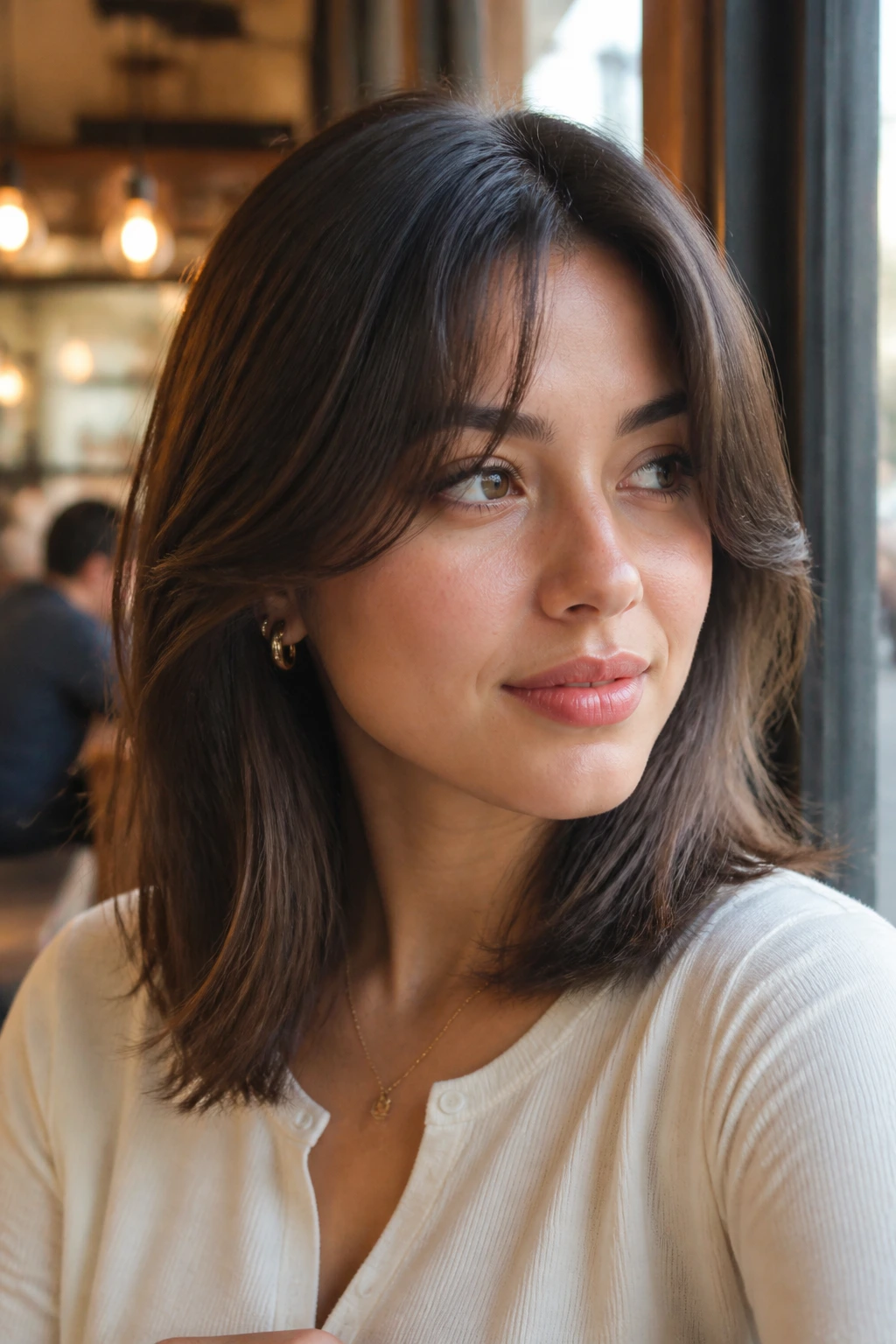
Curtain bangs and angled bangs are cousins, and on an oval face the family resemblance is useful. This version parts near the center, then angles outward so each side lands around the cheekbone. The effect is soft, but the line still has direction.
Medium hair makes this especially easy to wear because the lengths on each side can join the rest of the cut without a fight. The fringe does not have to stay perfect. A slight bend, a little tuck, and even a tiny gap at the center can look right. That looseness is the point.
Why it flatters oval faces
Oval faces can carry the center opening without getting swallowed by it. The bang opens the forehead just enough, then points the eye outward to the sides of the face. That gives you shape without making the front heavy.
7. Choppy Short-Corner Fringe
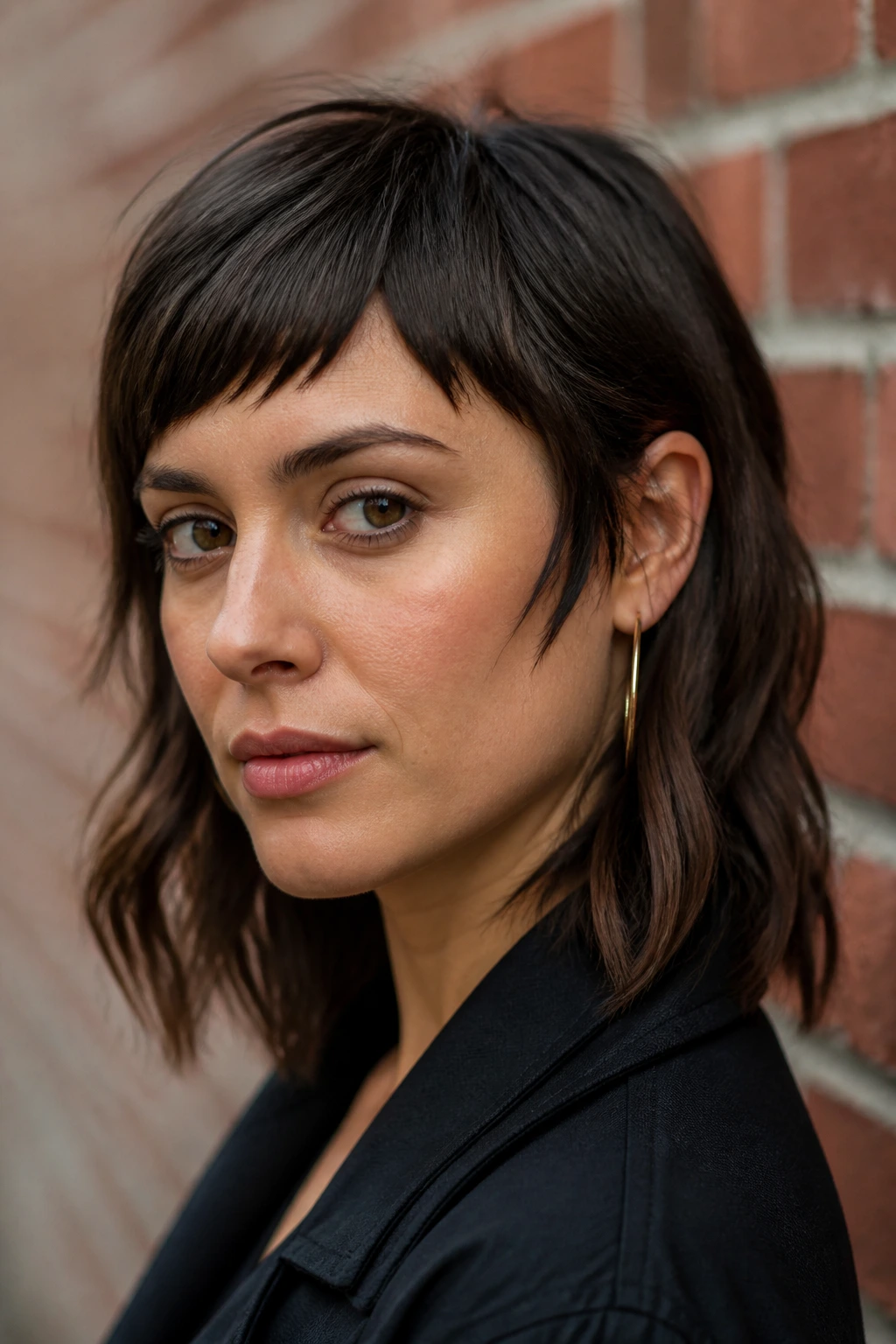
This is the spiciest option in the bunch. One corner sits shorter and stronger, while the longer side breaks into jagged pieces that skim the temple and outer eye. It has a bit of edge, but it still belongs in medium-length hair because the rest of the cut keeps it grounded.
The key is not to let the choppiness spread too far into the fringe. You want a clear angle, not a shredded mess. A few blunt-looking pieces mixed with softer ends usually give the best result because the contrast keeps the shape readable.
This style does ask for maintenance. As the short side grows, the diagonal becomes less obvious. If you like a crisp front, plan on trimming every four to five weeks.
8. Long Draped Bangs with Bent Ends
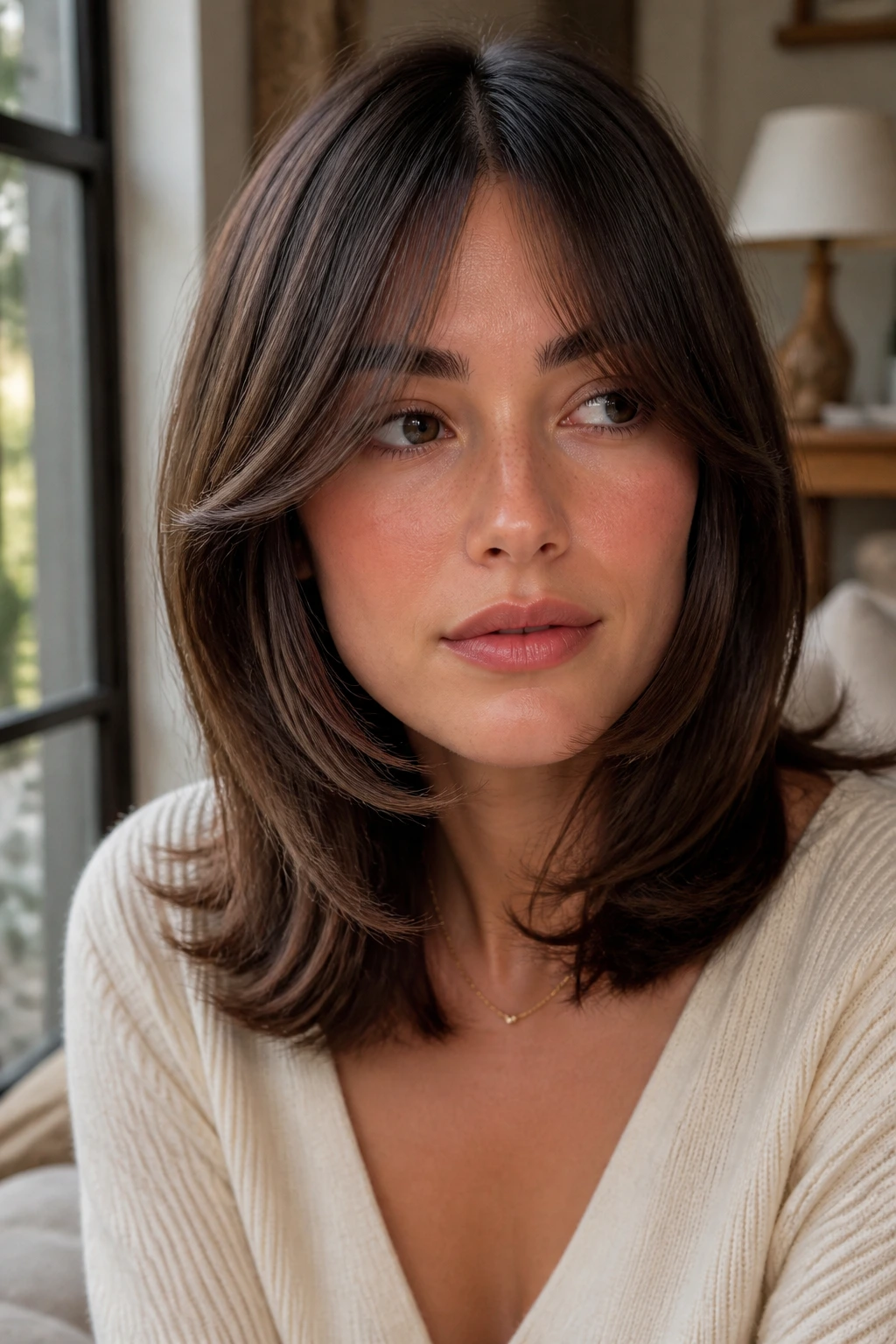
There is something very clean about a fringe that drapes instead of flops. The hair falls in one smooth arc, then the ends bend under just enough to kiss the cheek. It is polished, but not stiff.
This look is good when your medium hair already carries some natural shine. The cut does not need much texture to work. In fact, too much texturizing can make it lose that elegant drape. Keep the ends full enough to hold a shape.
A round brush gives the best finish, but a flat iron can do the job if you bend the section once toward the face and once away from it. The trick is gentle movement, not a hard wave.
9. Wavy Angled Fringe
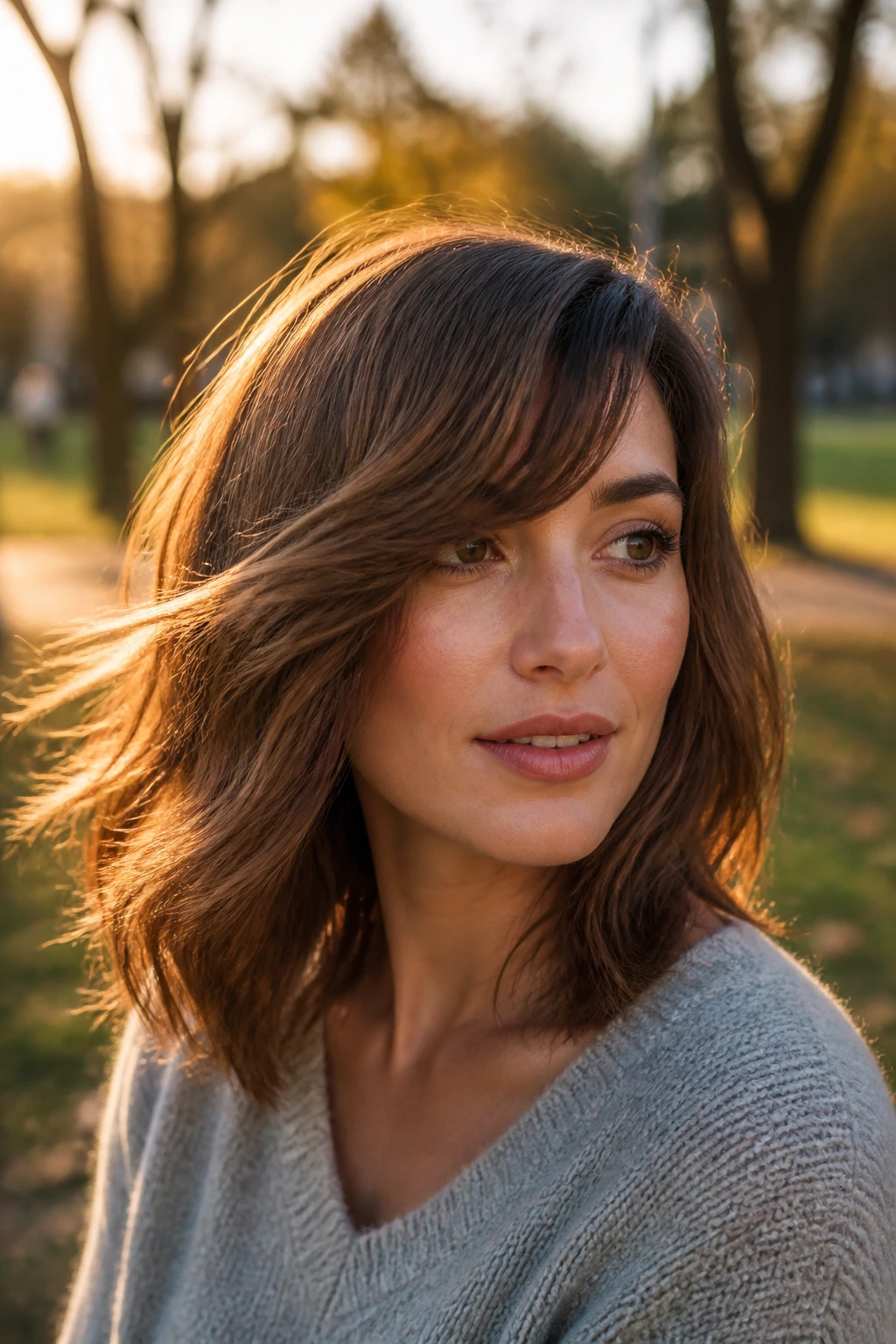
Wavy hair does not need to be forced into a perfect slant. A wavy angled fringe works because the movement is part of the shape. The diagonal still exists, but the wave makes it look softer and more lived-in.
On oval faces, this can be lovely because it adds a little texture around the eyes without hiding them. The fringe does not sit as a single sheet. It moves in pieces, which keeps the cut from feeling heavy across the forehead. If your natural wave bends toward one side, let it. Fighting that pattern usually backfires.
Use a diffuser if you want to preserve the wave, or twist the front section around your fingers while it dries. Either way, skip heavy cream. It weighs down the front fast.
10. Blunt Start, Soft Finish

This shape starts with a cleaner line near the shorter side, then softens as it travels across the forehead. Think of it as a controlled bang, not a full blunt fringe. The front has more presence, which can be useful if your hair is thick enough to hold weight.
It suits medium hair that needs a little structure up front. The blunt starting point gives the eye somewhere to land, while the longer side stops the cut from feeling boxed in. On an oval face, that balance keeps the fringe from stealing too much vertical space.
What to ask for
Tell the stylist you want the shorter side to stay solid, but the long end to be point-cut so it bends instead of hanging like a shelf. That tiny detail changes the whole result. Without it, the cut can read too heavy.
11. Collarbone Cut with Corner Bangs
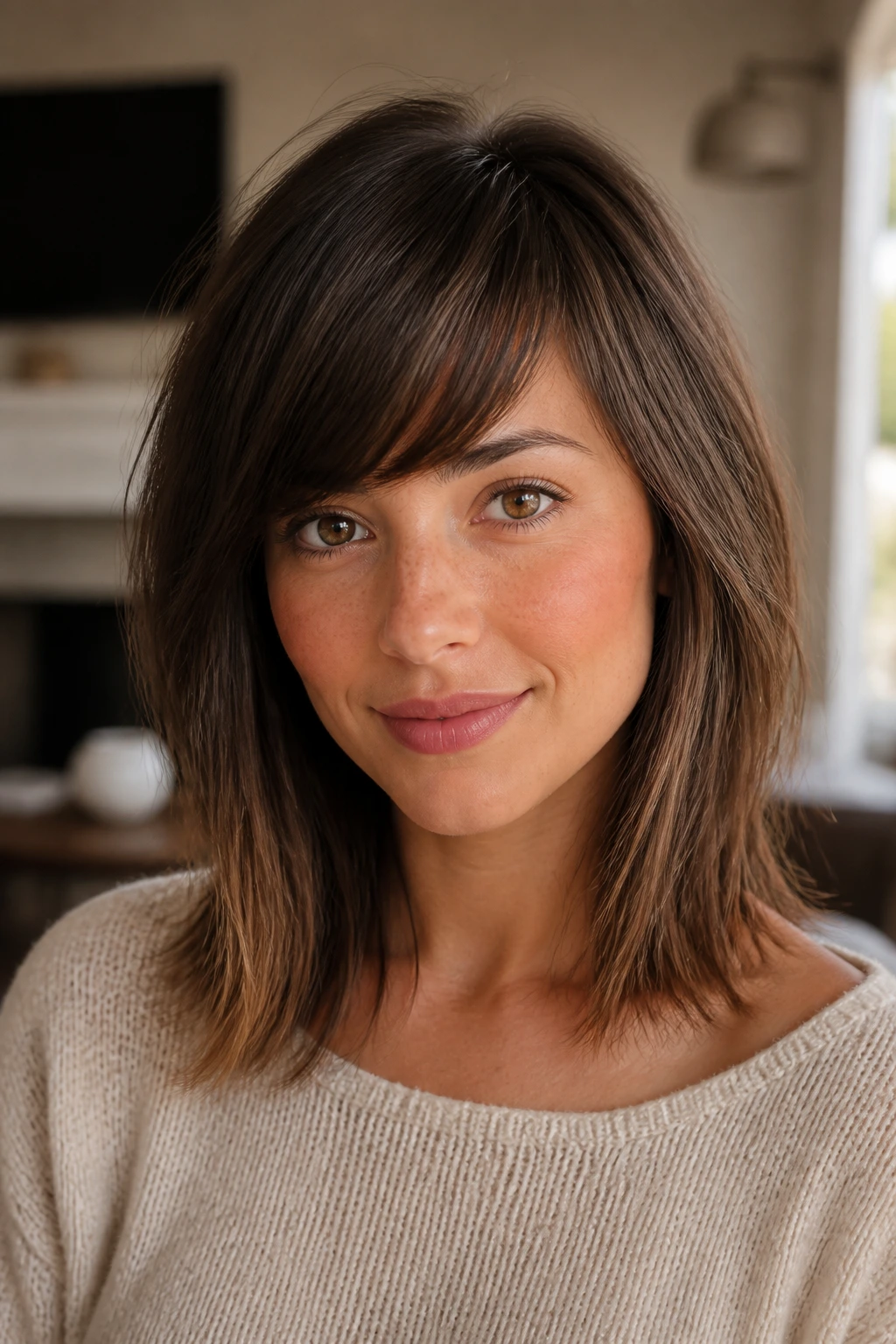
This one is about the conversation between the fringe and the length. When medium hair hits around the collarbone, corner bangs — the longer pieces that point toward the outer eye and cheekbone — feel especially natural. The hair around the face seems to grow out of the fringe instead of sitting beside it.
The look is easy to wear because it does not demand precision every minute. A collarbone cut moves when you walk, and the fringe moves with it. That motion matters. If the rest of the haircut sits still, the angled front can look pasted on.
This style works well for anyone who likes to tuck one side back. The front stays visible enough to shape the face, but it will not collapse the second it meets a blazer collar or scarf.
12. Wispy Diagonal Fringe
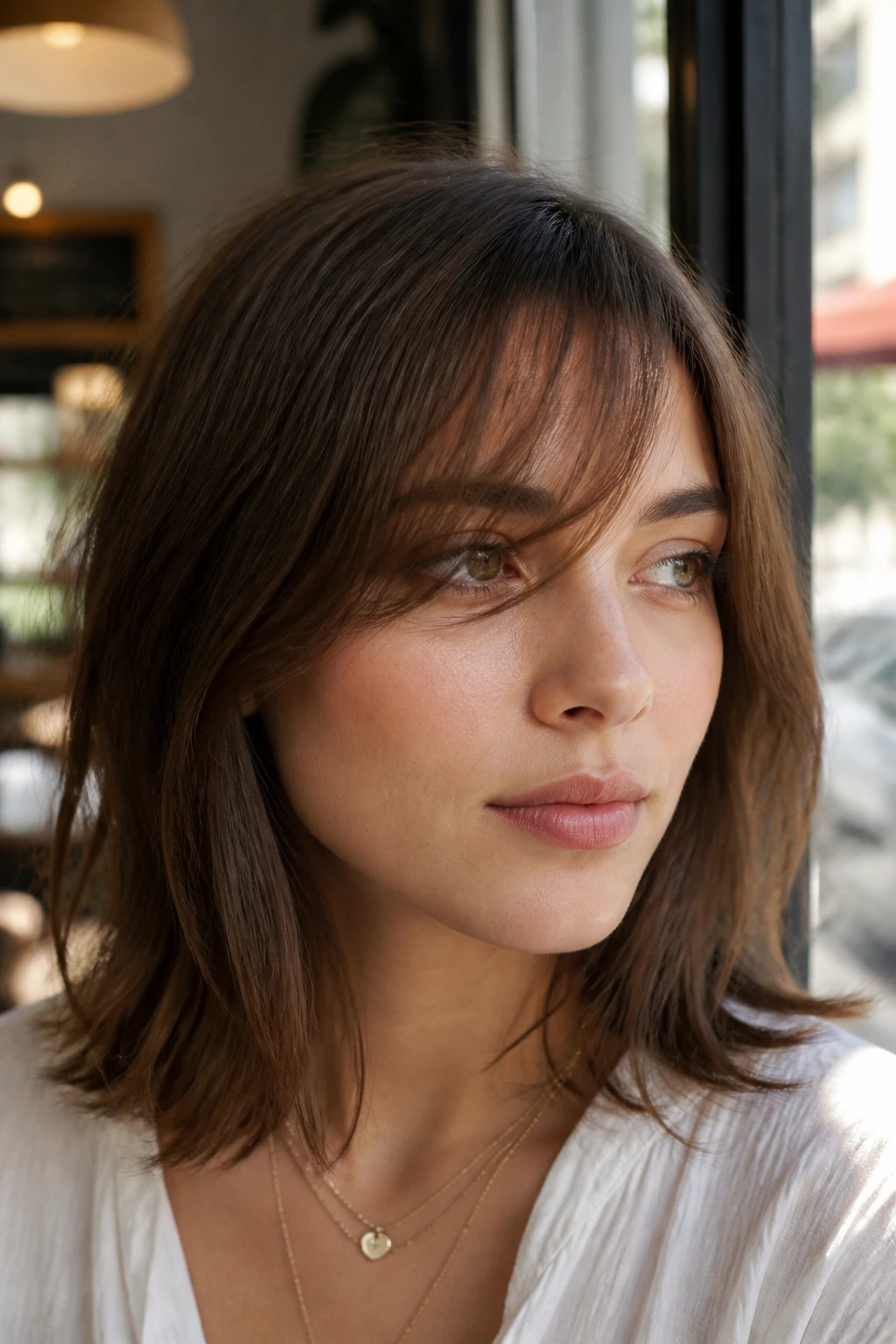
Wispy bangs are for people who want forehead coverage without a heavy curtain. The diagonal is still there, but the fringe is light enough that you can see skin between the strands. That openness keeps the face from feeling shortened.
Medium hair helps because the rest of the cut gives the wispy ends a place to live. On an oval face, the softness can be enough all by itself. You do not need a thick block of hair to change the shape. A light diagonal is often more useful.
The danger is over-thinning. If the bang becomes too sparse, it starts looking like leftover hair from another haircut. Ask for softness at the edge, not scalp-level transparency.
13. Cheekbone-Landing Layers
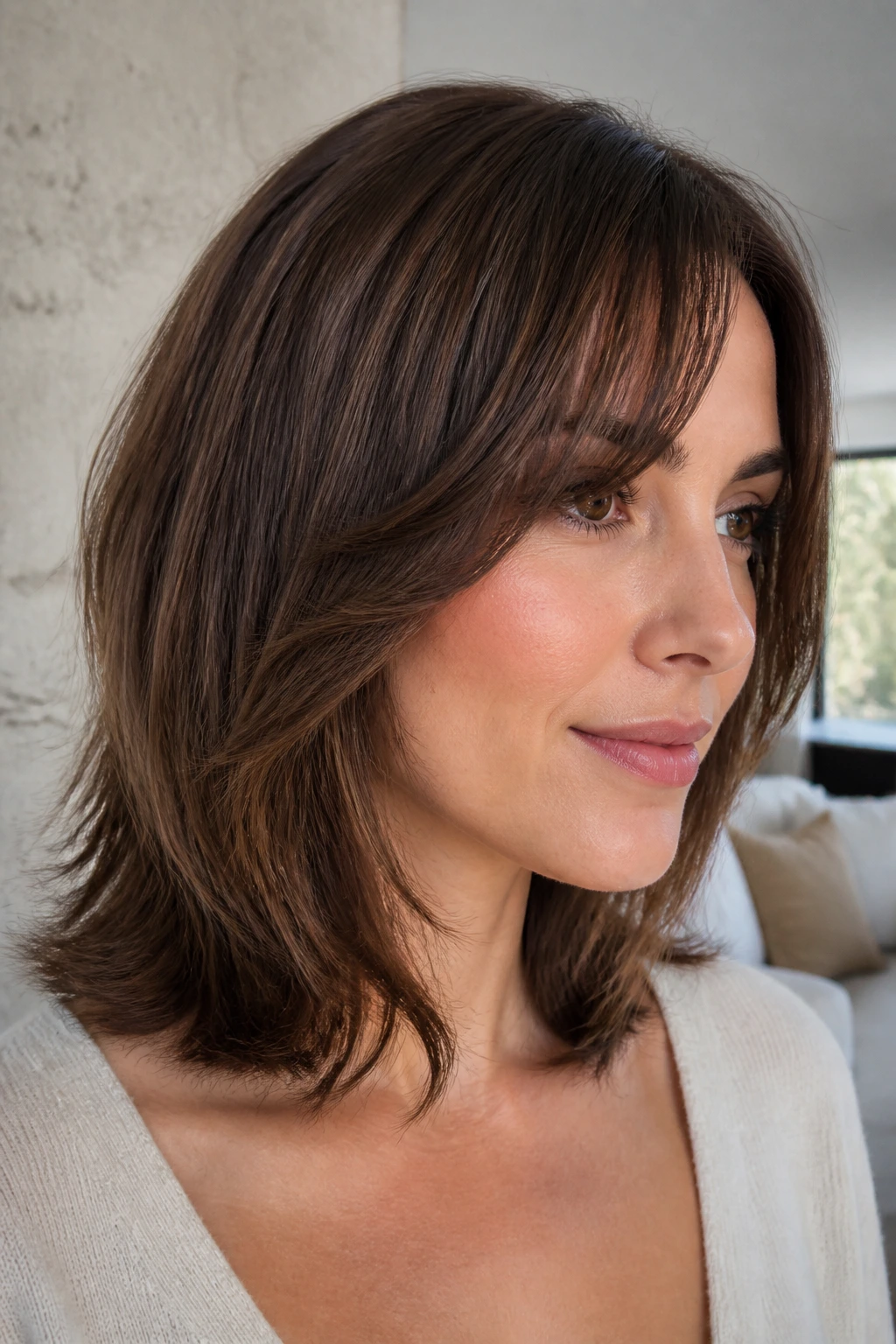
This is the version for people who want bangs that disappear into the haircut by lunch. The shortest piece starts near the brow, but the longest part lands right where the cheekbone begins to rise, then slides into the top layers. It is more face-framing than “bang” in the loud sense.
That blending is why it looks so good on medium hair. The lengths already have enough movement to accept the fringe, so the front does not feel separate. On oval faces, the cheekbone landing point gives the cut a subtle lift without making the forehead the center of attention.
If you wear glasses, this shape can be a gift. The frame line and the bang line do not have to fight each other. They can sit in the same space and still read clean.
14. Air-Dried Side Sweep

Not every angled fringe wants a brush. Some look better when they are allowed to settle on their own, especially if your hair has a bend or soft wave. The side sweep in this version is cut with enough length to fall naturally, then encouraged into shape with clips or a hand-twist while it dries.
That makes it a strong pick for busy mornings. The shape is not as crisp as a blowout bang, but it does not need to be. On medium hair, especially if the ends are layered, the front can dry into a nice diagonal with very little effort.
Use a dab of mousse at the root and keep your hands off until the section is dry. Touching it too much while it sets is how you end up with a bent, frizzy front that refuses to sit anywhere useful.
15. Bottleneck Angle
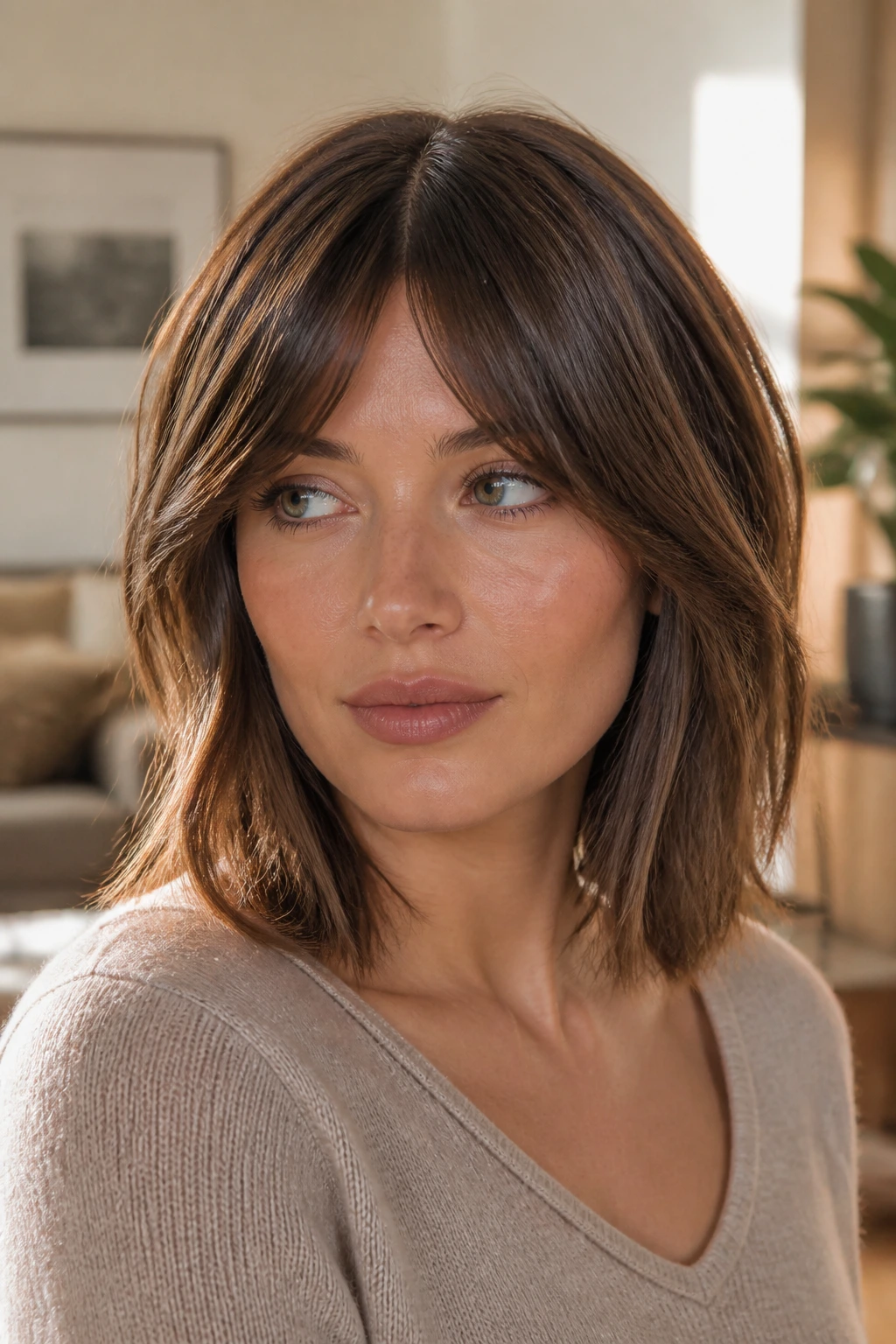
Bottleneck bangs narrow near the center and widen toward the sides, and when the cut leans diagonally, the effect is a softer version of an angled fringe. It is one of the most flattering shapes for oval faces because it frames the center first, then opens outward near the temples.
The shape is subtle, but not bland. Medium hair gives it the body it needs so the center does not disappear. If your hair is fine, keep the internal thinning minimal. If your hair is thick, a little removal under the top layer helps the shape lie flatter.
Shape check
Ask for the center to hover near the brows, then have the outer sections angle toward the cheekbone. That keeps the style from turning into a curtain bang that was accidentally parted with a fork. The difference is small on paper and obvious in the mirror.
16. Flipped-End Fringe
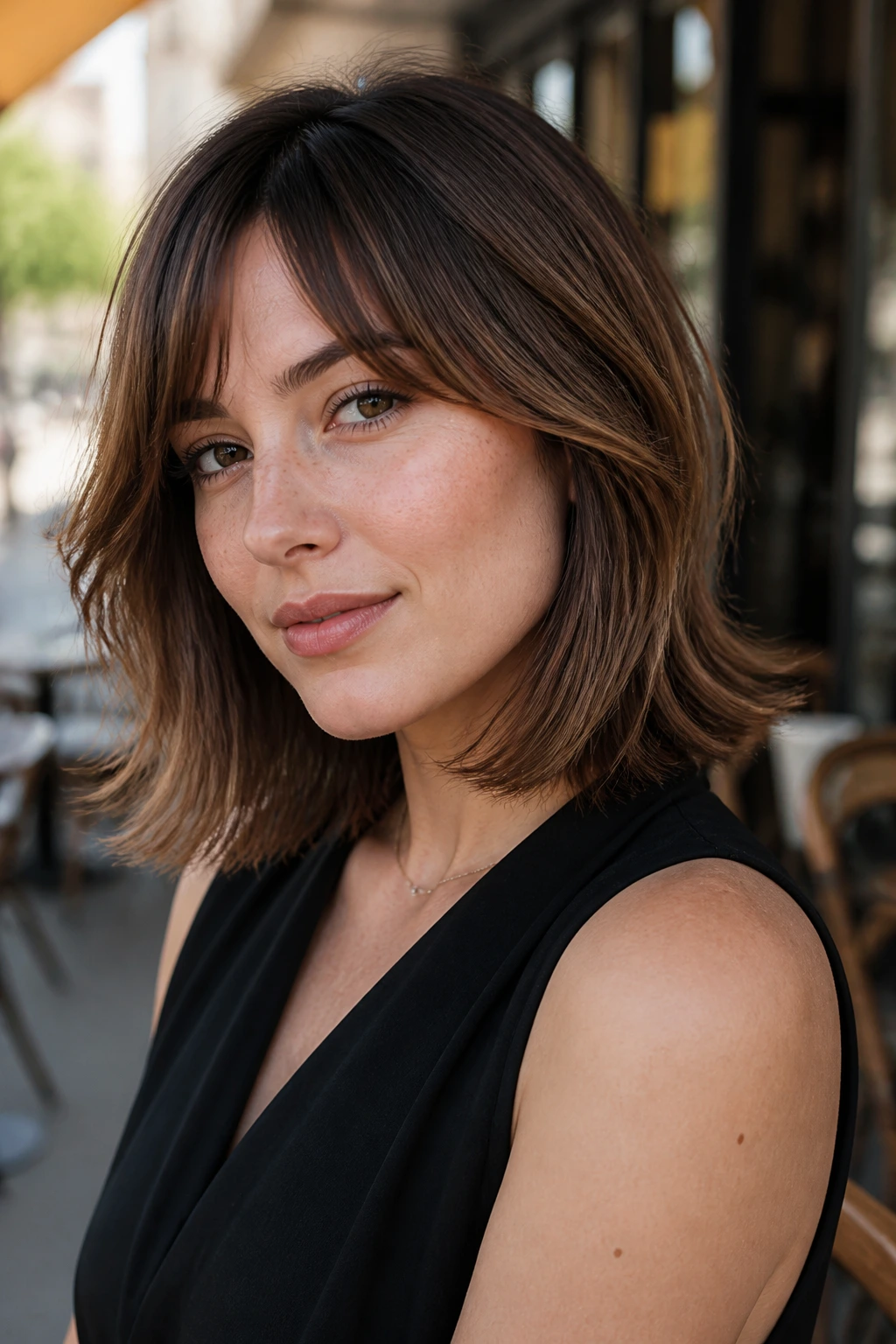
This fringe ends by turning away from the face. Not in a dramatic retro way unless you want it to. Just enough flip to show the line and keep the front airy. It is a nice option when a straight-down bang feels too close to the eyes.
On medium hair, the flipped end keeps the cut from looking flat against the forehead. A round brush or a flat iron bend at the ends creates the curve. The rest of the hair can stay smooth or slightly textured; the fringe does not need a lot of help.
The flip gives oval faces a little lift near the outer eye. That tiny upward motion changes the mood fast. It reads more open, less heavy.
17. Sliced Fringe with Heavy Texture
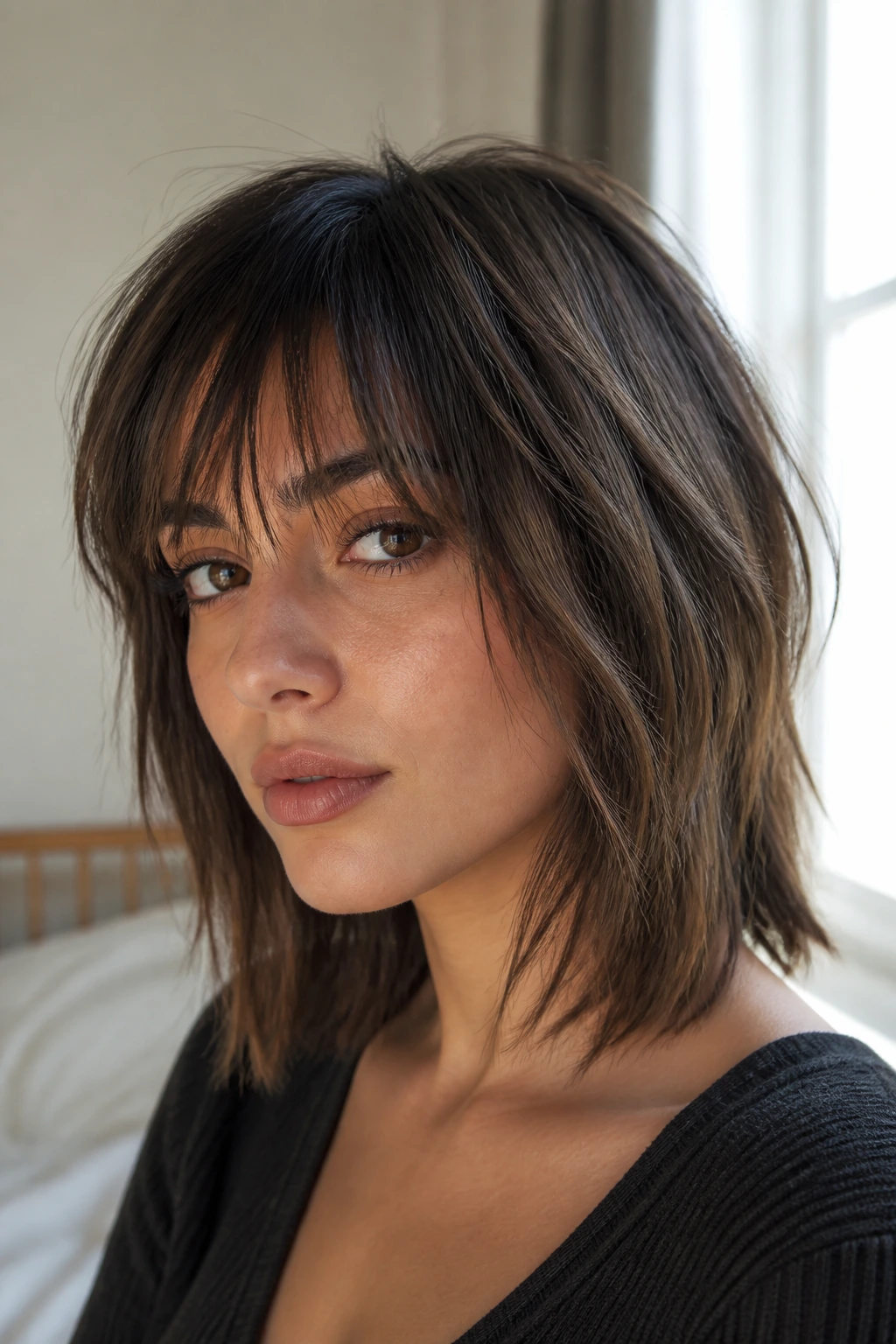
Heavy texture does not always mean thin hair. In this case, it means a fringe with visible slices and a stronger angle through the ends. The line is looser than a blunt bang, but it has more weight than wispy pieces.
This works especially well on medium hair that holds a little shape on its own. The sliced ends break up the front so it feels modern without looking rough. On an oval face, the texture helps keep the front from looking too tidy, which can flatten features in a hurry.
The styling rule here is simple: use a touch of texturizing spray only after the hair is dry. Spraying too early can make the fringe stick together in odd little clumps. Nobody wants that.
18. Glam Side Sweep with Root Lift
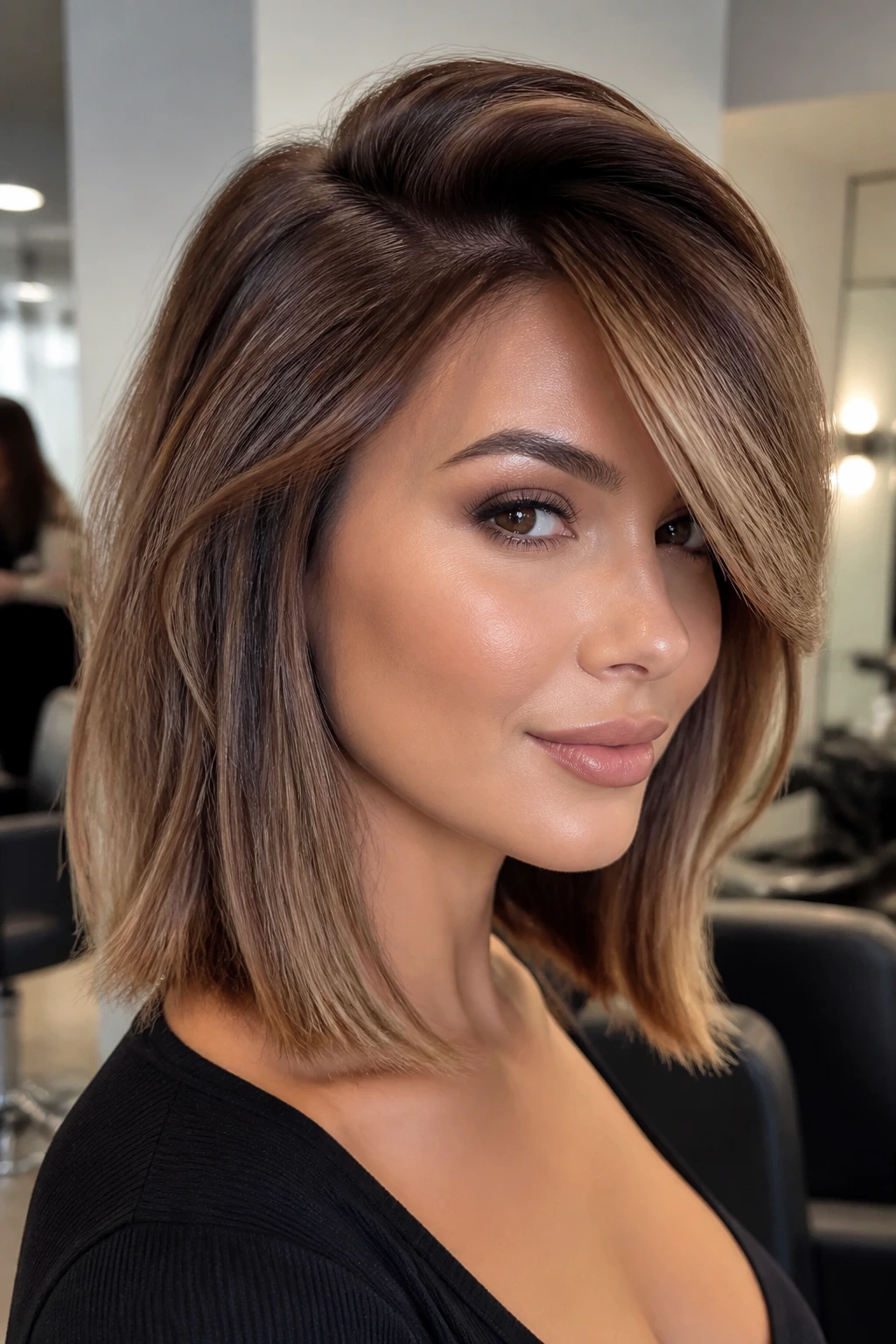
This is the most polished side-sweep in the set. The part is deep, the root gets lifted on purpose, and the bang falls in one smooth sweep across the forehead before tapering off near the cheekbone. Think blowout energy, not casual tuck-behind-the-ear energy.
It is a strong choice for medium hair with some density at the root. The lift keeps the front from collapsing into the face, and the sweep gives the cut a little drama. Oval faces can wear this easily because the volume stays at the top and outer edge, where it frames rather than crowds.
If you wear this on a humid day, a little anti-frizz serum on the ends helps. Put it nowhere near the roots. That mistake kills the lift fast.
19. Boxy Front, Tapered Side
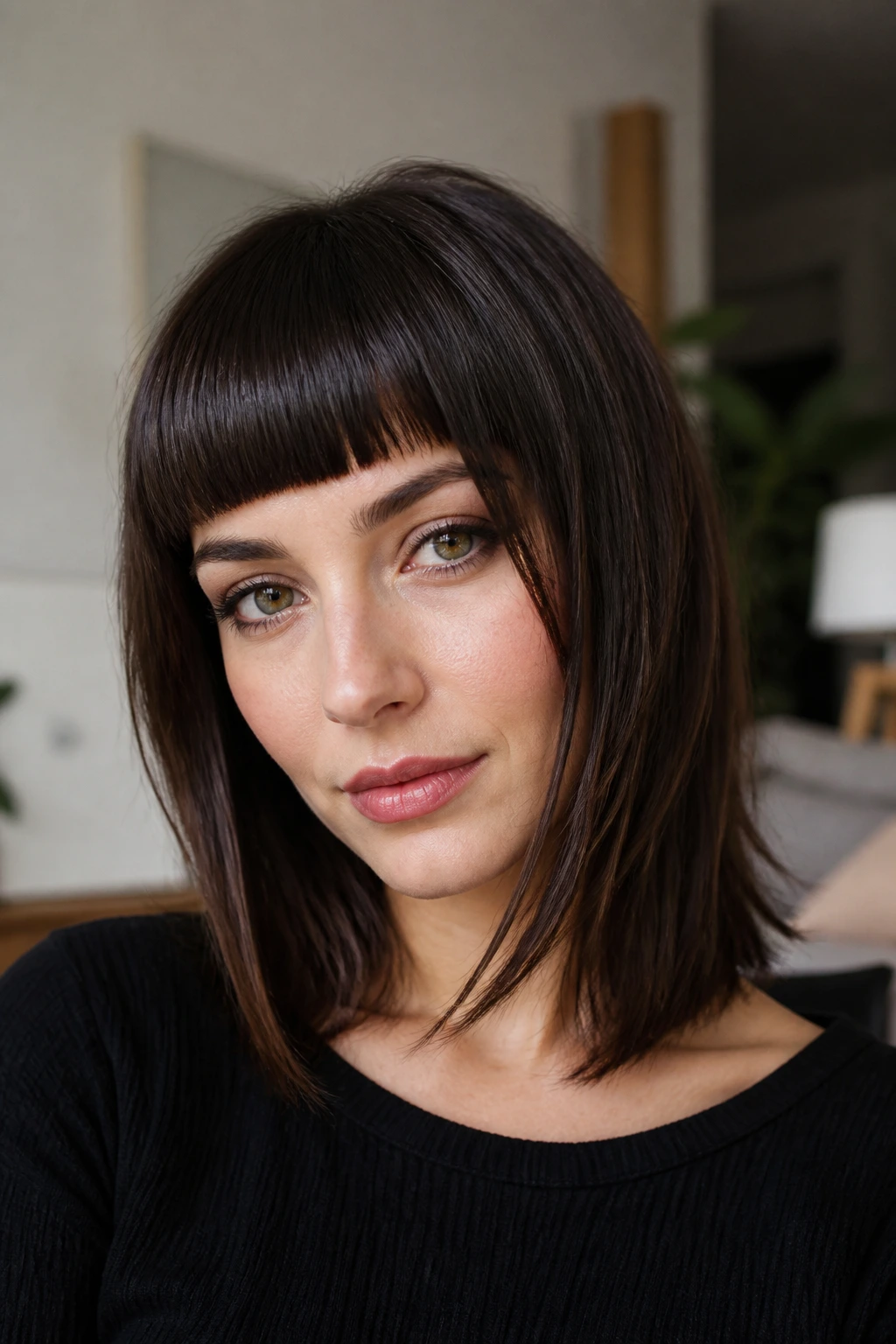
This one has more structure than most of the others. The front starts with a broader, boxier section near the shorter side, then tapers off as it moves across the face. It gives the bang a clear presence without locking it into a straight shelf.
Medium hair suits this because the length can support a heavier front without getting floppy. The oval face gets a stronger frame up top, which can be useful if you want the eyes and brows to do more of the talking. The taper keeps it from feeling severe.
Ask the stylist to preserve some width at the high side, then thin the low side only enough to make the line travel. Too much thinning and the boxy start loses the whole point.
20. Soft Shag Bang Angle
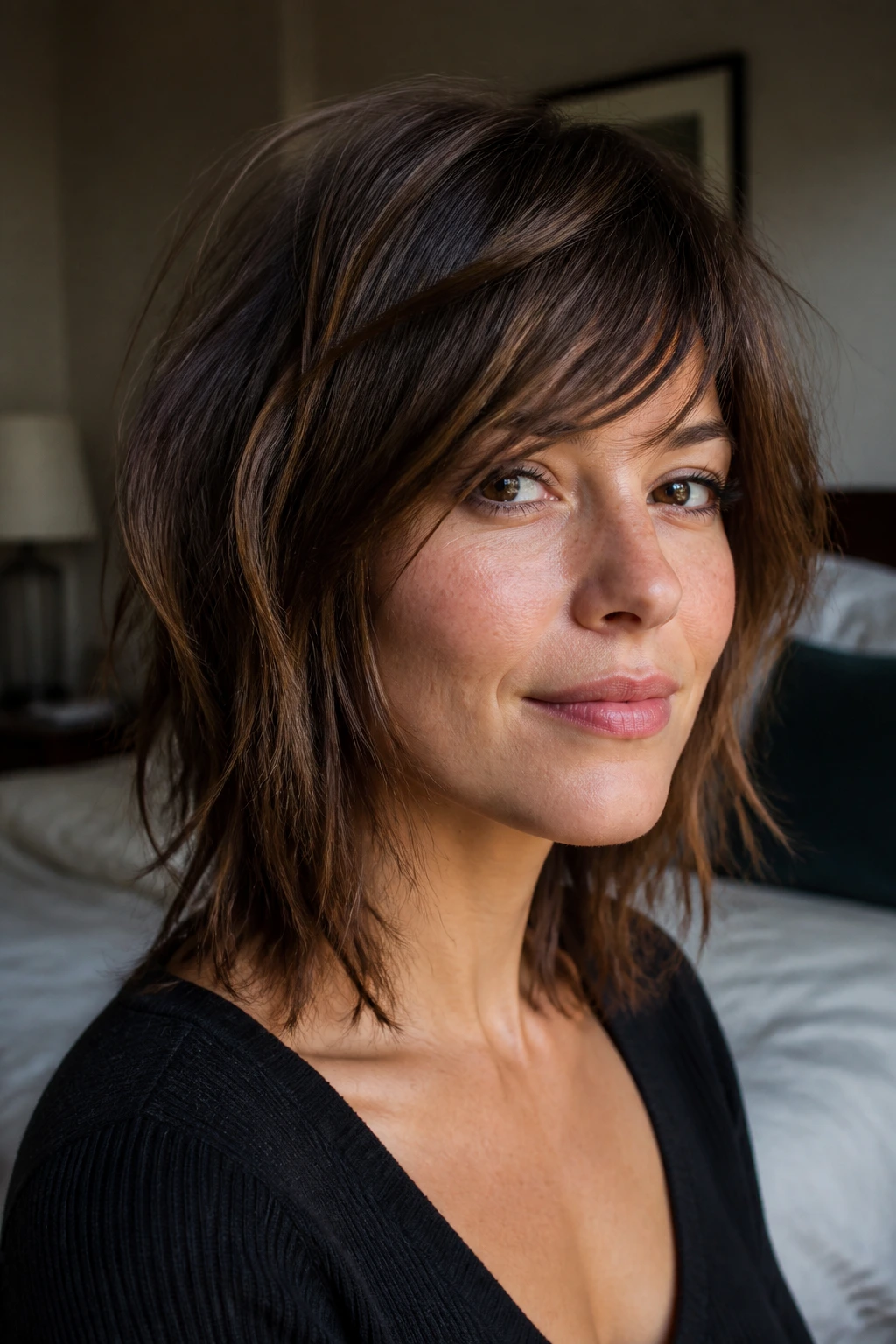
A shaggy angle is messy in the right way. The bang is cut to blend into choppy layers, so the diagonal never looks too precious. It falls a little unevenly, and that unevenness gives it charm.
This is one of the best options for medium hair with natural movement. It does not ask for perfection, which is refreshing. On an oval face, the shaggy front adds texture around the eyes and cheekbones without making the face look narrow.
When to choose it
Pick this if you wear your hair air-dried more than blown out. Pick it if you hate checking the mirror every twenty minutes. Skip it only if you want a glossy, polished line; this cut wants a little roughness.
21. Polished Blowout Fringe
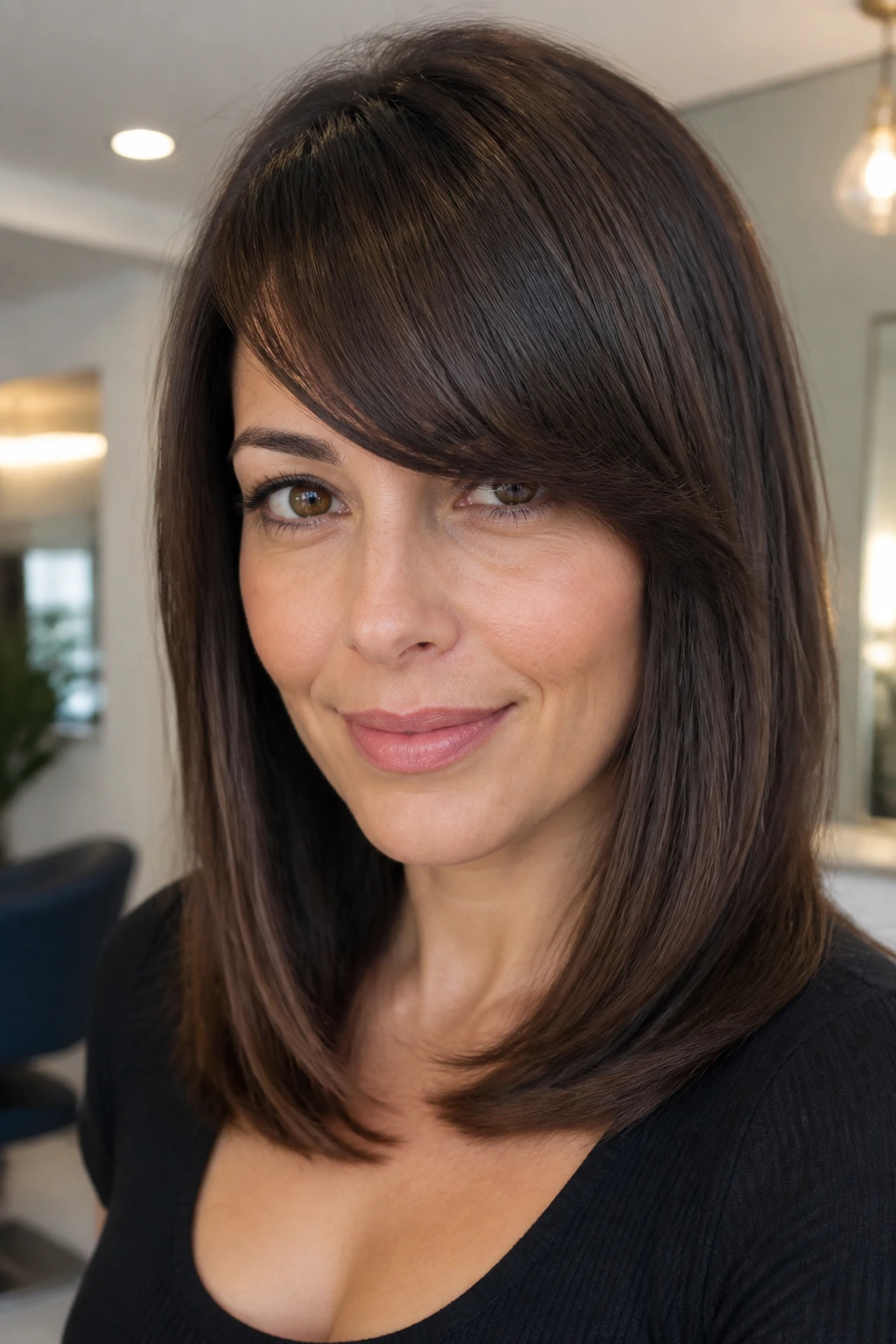
Here the angle is all about smoothness. The bang is cut so it can be brushed into a sleek diagonal with a rounded bend at the ends, almost like a mini blowout built into the haircut. The line looks finished even when the rest of the hair is only half styled.
Medium hair gives this version enough body to last. The fringe does not need much product, just a clean blow-dry and maybe a touch of heat protectant with a light styling cream. On oval faces, the polished line keeps the front elegant without adding bulk.
This is the one I’d choose if you like your hair to look deliberate. Not stiff. Deliberate. There’s a difference, and it shows in the mirror.
22. Dense Hair Sweep
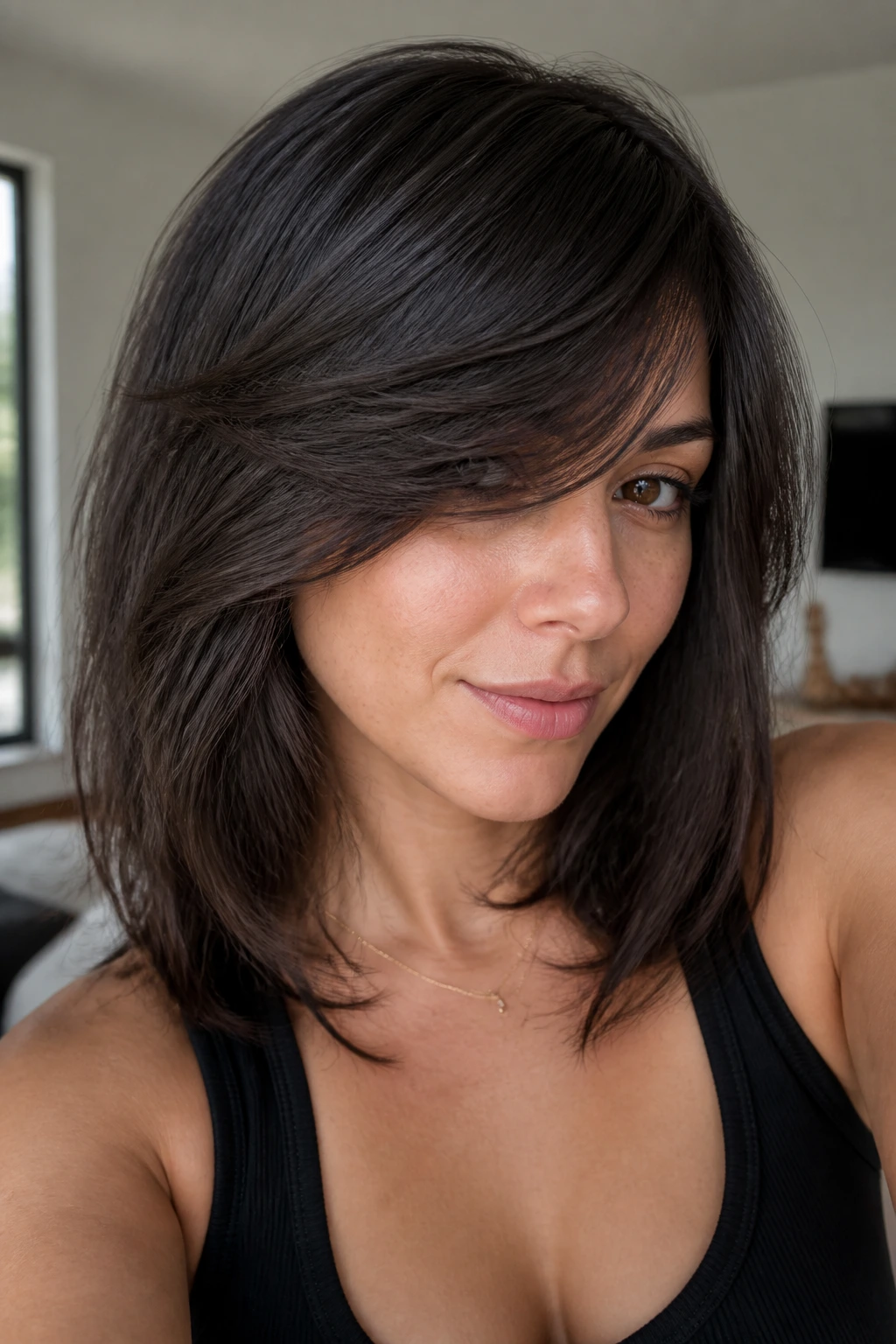
Thick hair changes the rules. If the fringe is cut too full, it can sit like a visor. The dense-hair sweep keeps enough weight to stay put, but the angle removes bulk so the front can slide across the forehead instead of choking it.
Ask for internal weight removal under the top layer, not on the outer edge where you can see it. That keeps the shape smooth. Medium hair with dense strands often benefits from a longer diagonal because the extra length helps the front behave.
A large round brush can help here, but make sure the roots are dry before you stop. Dense bangs that stay damp at the base puff up later. It’s a small mistake with a large payoff in the mirror.
23. Fine Hair Angle
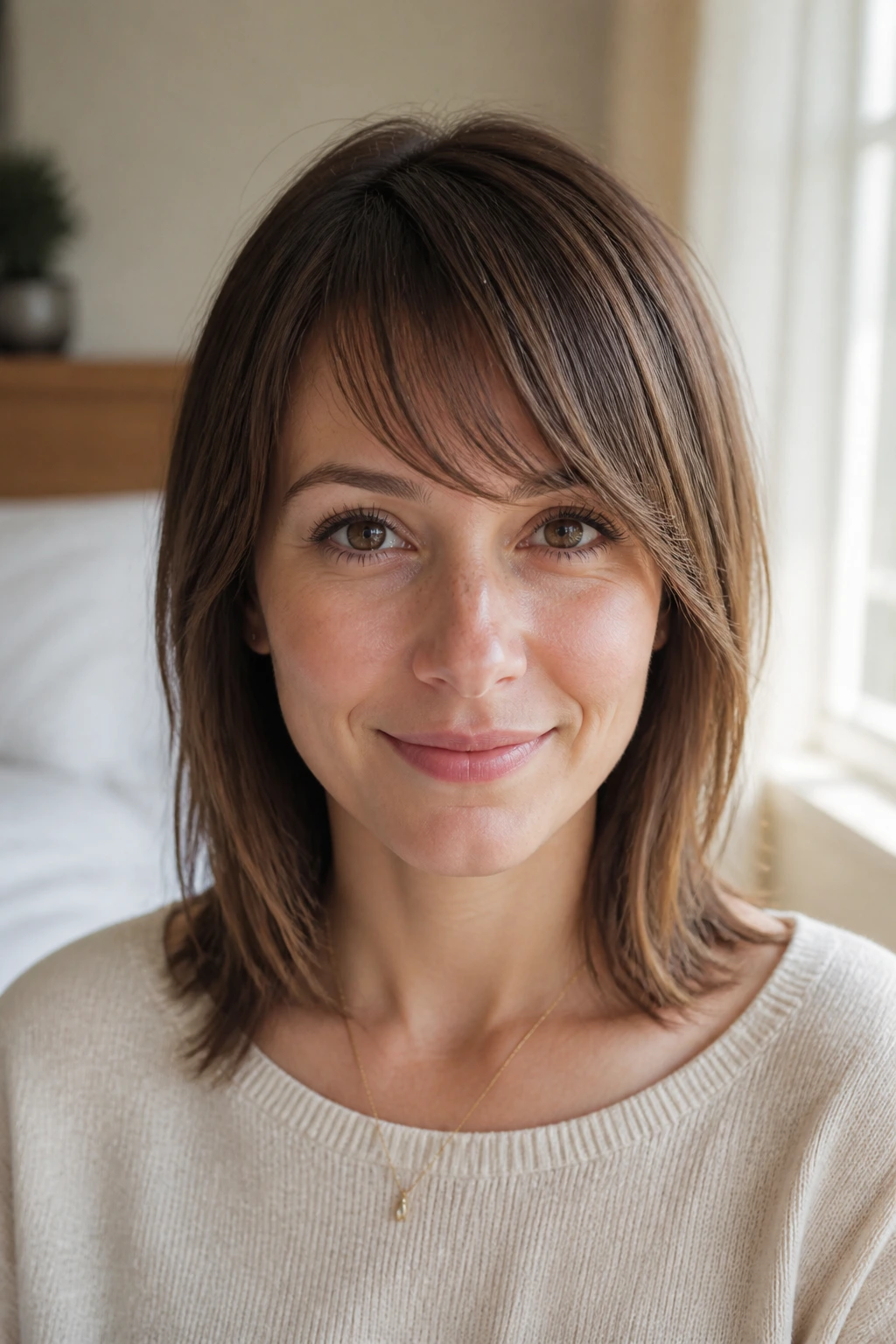
Fine hair needs a different kind of handling. The best angled bangs here keep the line light but not flimsy. A little weight at the ends helps the fringe lie down, and a gentle slope keeps the face frame from looking bare.
The trick is not to over-texturize. Fine hair can lose its shape fast if too much is removed from the middle of the bang. That’s why a soft angle often works better than a shattered one. It gives the illusion of fullness while still letting the fringe move.
Dry shampoo at the root can help the front hold a bit longer between washes. Fine hair tends to get slippery fast, especially if you touch it all day.
24. Face-Frame Bangs That Blend
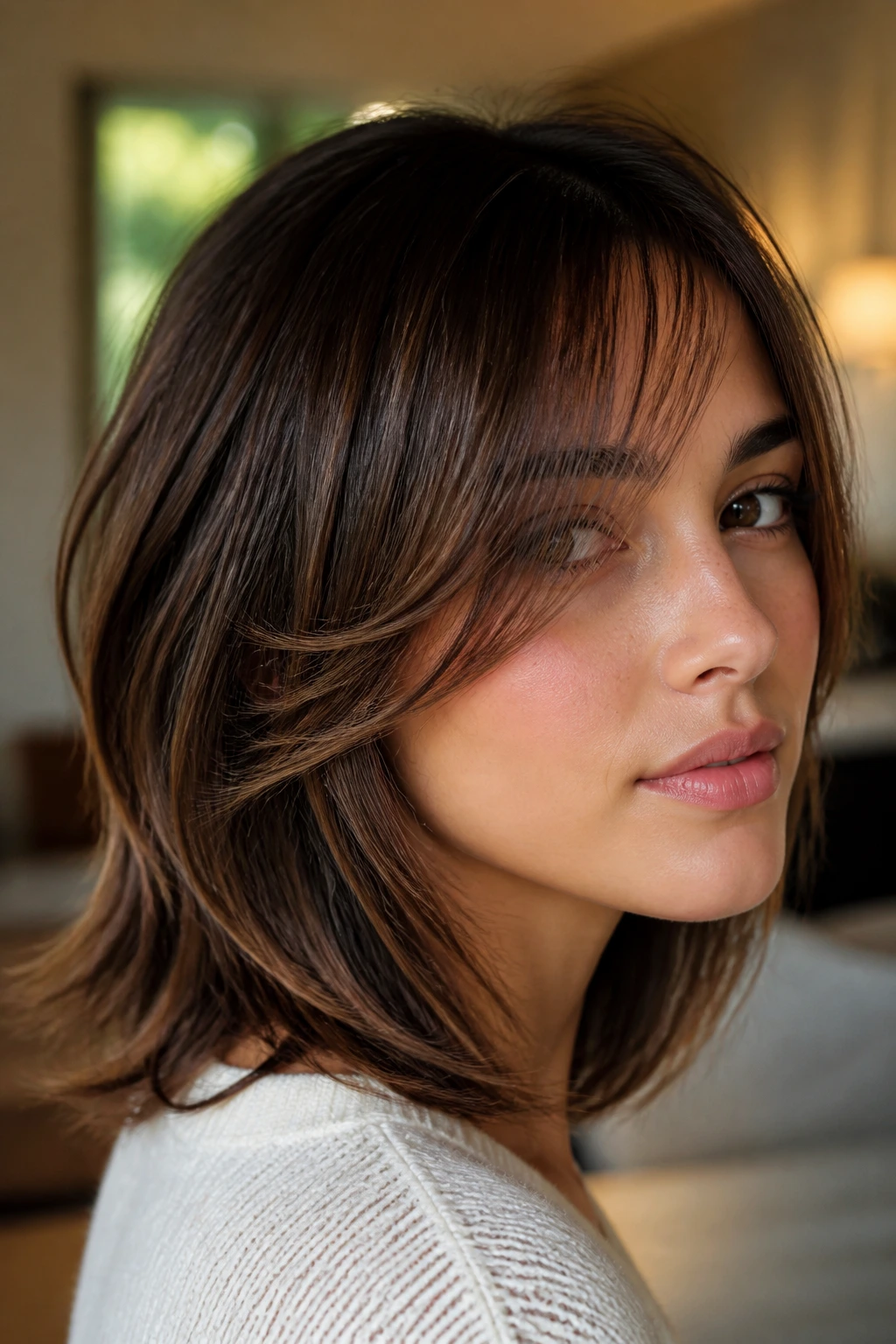
This version treats the bang as the first layer of the haircut. The shortest section still earns the “fringe” label, but the rest of the angle melts into the face-frame layers so cleanly that the front never looks isolated. It is a smart choice if you want bangs without a hard line.
On medium hair, that blend feels natural because the length around the chin and collarbone is already doing some of the framing work. The angle just joins the conversation. Oval faces benefit because the eyes stay open while the cheekbones get a soft rim around them.
If you part your hair differently from time to time, this cut adapts better than most. The blended layers keep it from looking wrong when the part shifts a little left or right.
25. Grown-Out Angle with Intentional Length
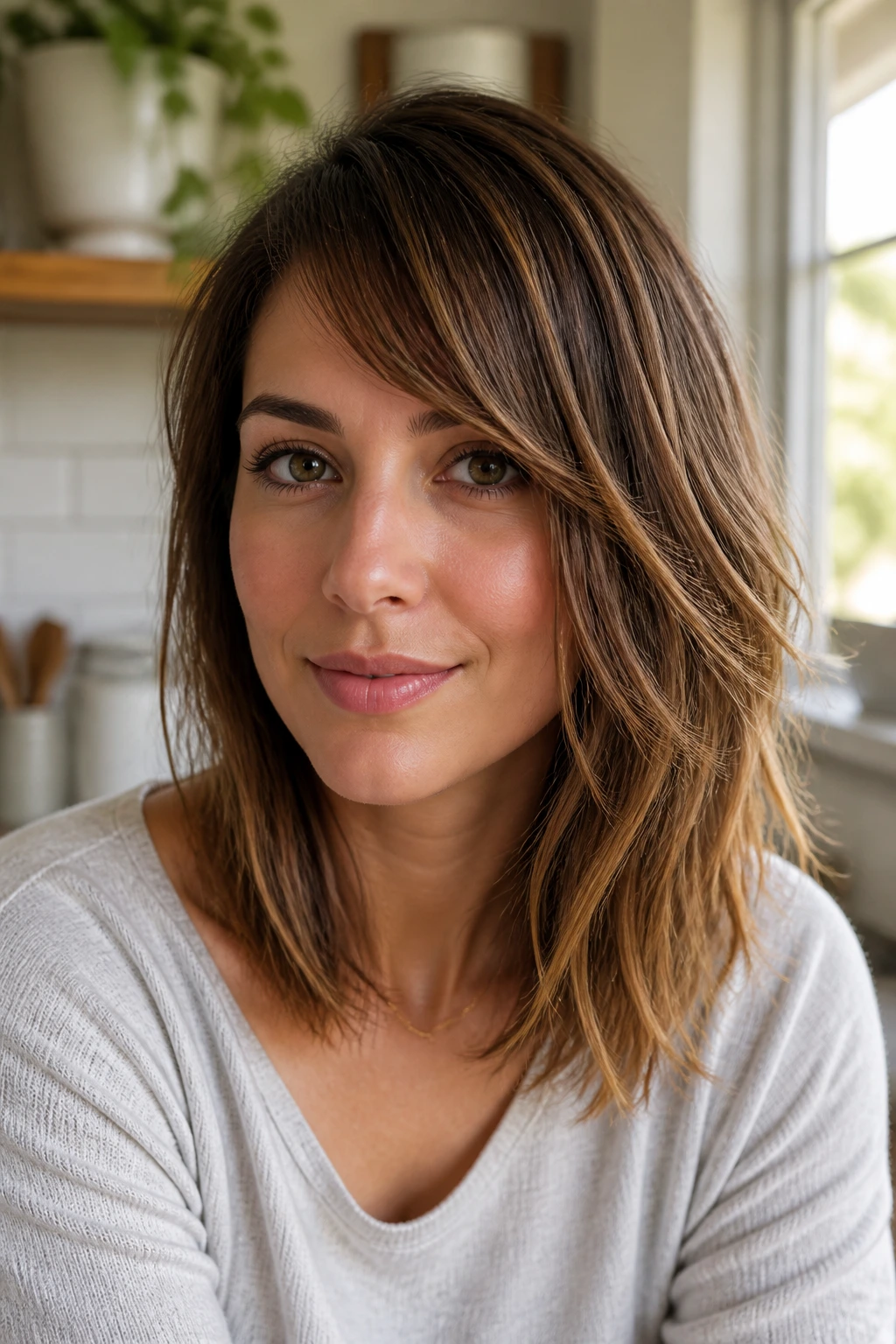
This is the fringe for people who like the in-between stage and want it to stay there. The shortest point is still angled, but the long side is kept long enough to fold into the rest of the haircut as it grows. It is relaxed, grown-in, and smarter than it sounds.
Medium hair makes this easier because the front can merge with the sides instead of hanging in space. Oval faces can handle the extra length near the cheek without losing the frame around the eyes. The result looks deliberate even after a few weeks of growth.
Why the grow-out works
Because the line already leans into the layers, the haircut does not need a sharp trim to feel finished. That is the small luxury here. You spend less time fighting the fringe and more time wearing it.
How to Style the Angle So It Falls the Right Way
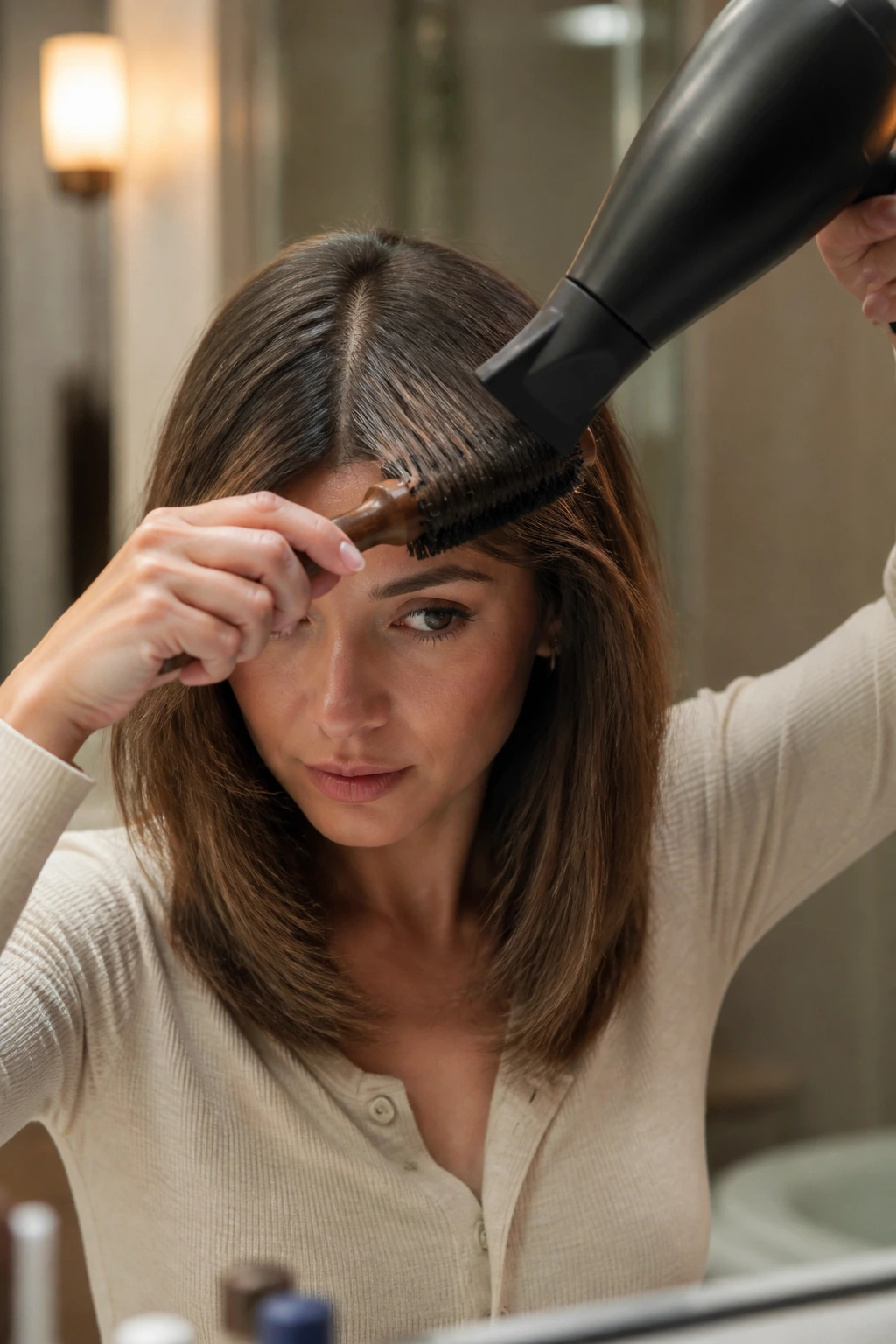
The first five minutes matter more than the rest of the day. If the root is set in the wrong direction, you spend the next six hours fighting a front piece that wants to split, puff, or flip. Start by drying the fringe in the opposite direction of where it finally belongs. That gives the root a little tension and stops it from collapsing flat.
Blow-Dry Direction: Aim the nozzle down the hair shaft, not straight at the fringe. A small round brush or even a paddle brush can guide the hair across the forehead and slightly under at the ends. If you want lift, dry the root first, then shape the mid-lengths.
Heat Control: Use a medium heat setting, not max. Bangs dry fast, and high heat can rough up the front before you even finish the rest of your hair. If the ends are bending too hard, switch to a lower setting and let the cool shot set the curve.
Product Load: Keep products off the roots unless the style needs volume. A pea-sized amount of styling cream or a few sprays of texturizer is enough for most of these looks. Too much product turns a diagonal fringe into a sticky little curtain.
Time-Saver: Dry the fringe first and clip it out of the way while you finish the rest of the head. If you wait until the end, the front is already half-dried and harder to redirect.
Mistakes That Make Angled Bangs Hard to Wear
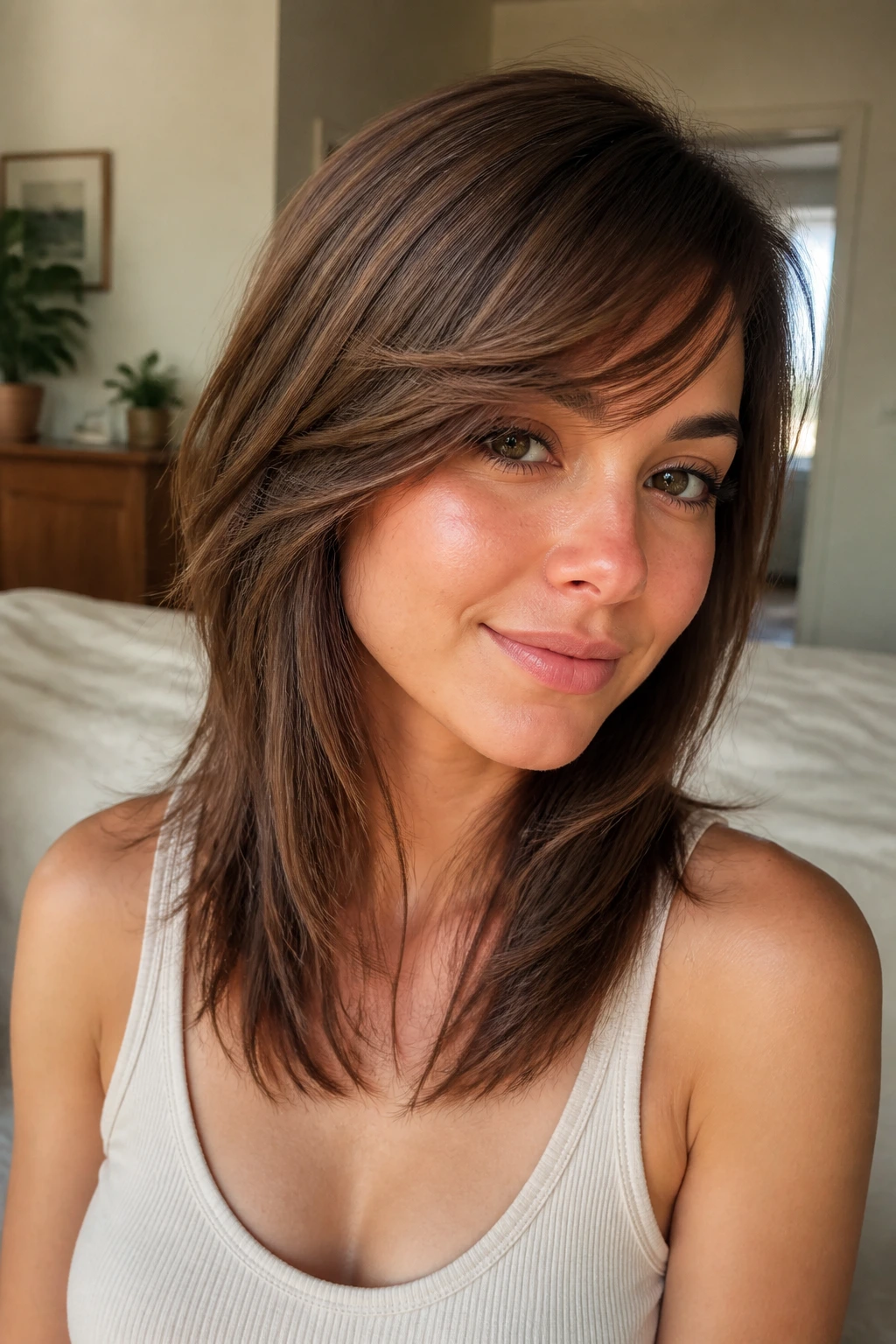
The most common mistake is cutting the shortest point too high. That little move seems harmless in the chair, then the bang sits above the brow and steals too much vertical space from the face. The fix is simple: keep the high side near the brow line unless you’re intentionally going for a much bolder look.
Another problem is over-thinning. Fine hair turns wispy in a bad way. Thick hair turns frayed. Either way, the edge loses its shape. Ask for softness through point cutting or a controlled slide-cut finish, not a heavy texturizing pass that chews the bang apart.
Cowlicks cause their own drama. If the front grows in two directions, the angle can split in the middle and refuse to stay swept. A stylist should account for the natural growth pattern and leave the parting zone a little more flexible. At home, a quick blast in the opposite direction before setting the bang usually helps.
A final trap: people stop trimming the fringe while the rest of the cut still looks fine. By the time the bang reaches the lashes, the angle has already flattened. Plan on shaping it every four to six weeks if you want the line to stay readable.
Easy Variations on the Angled Bang Theme

The Soft Sweep: Keep the low side long enough to tuck behind the ear. This version barely changes the forehead and works best when you want the front to blend into shoulder-length layers with almost no styling fuss.
The Razor Edge: Ask for a sharper, more sliced finish with visible separation. It suits straight hair and a stronger jawline because the cut adds movement without covering much of the face.
The Curly Bend: Let the diagonal ride your natural wave or curl pattern. The angle should be cut a touch longer so shrinkage does not pull it too far up the forehead.
The Thick-Hair Carve: Preserve weight at the ends, but remove bulk from the inside of the fringe. This keeps dense hair from forming a heavy wall across the front.
The Low-Commitment Grow-Out: Start the shortest point near the outer brow rather than cutting high into the forehead. It gives you a fringe that can slide into layers if you change your mind.
Tools That Make Styling Less Annoying
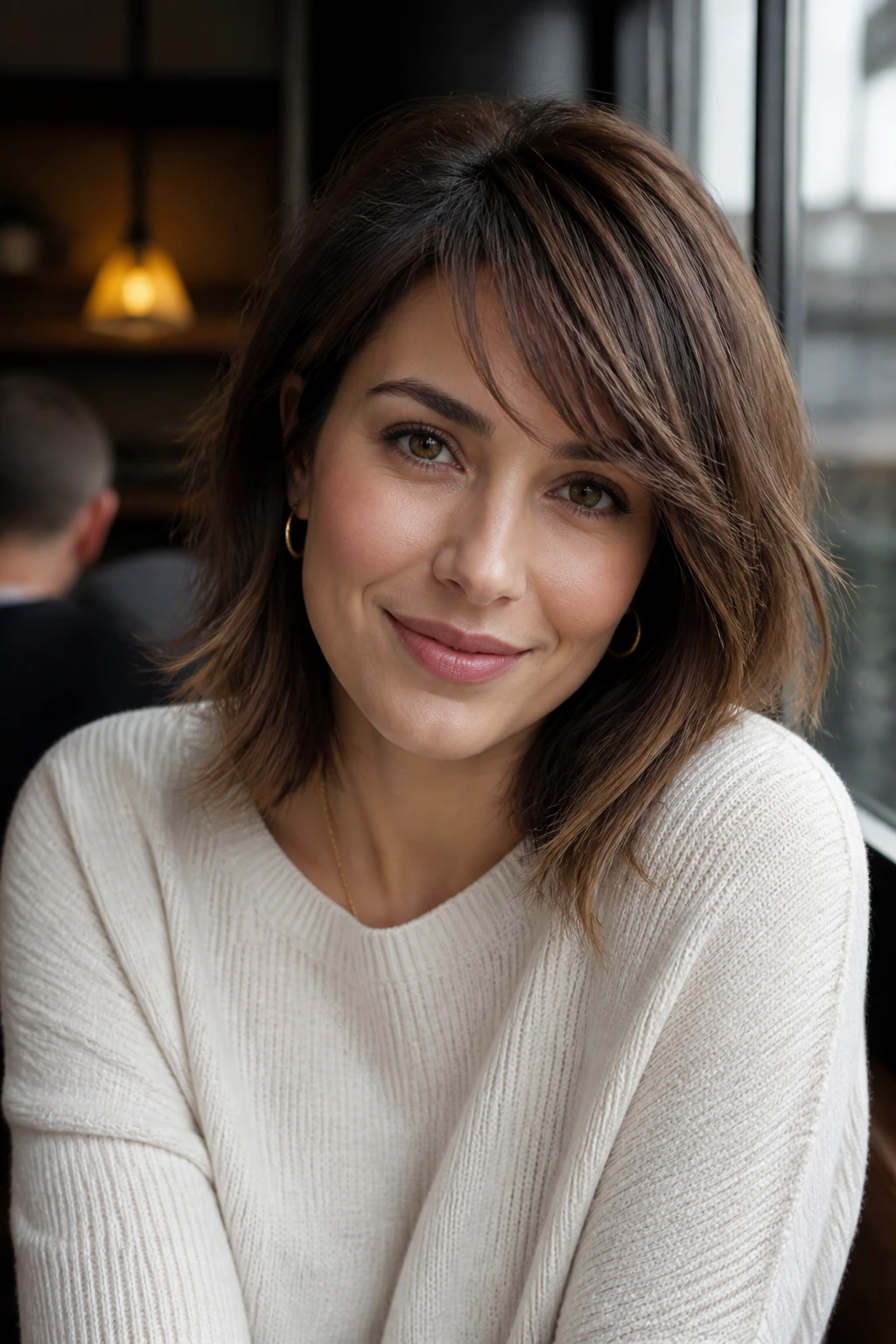
- Hair-cutting shears: Use real shears if you trim at home; kitchen scissors chew the ends and make the fringe frizz.
- Tail comb: The pointed end helps you create a clean diagonal part and separate a small section without grabbing half your hair.
- Blow dryer with a concentrator nozzle: The narrow airflow keeps the fringe moving where you want it instead of blasting it into a cloud.
- Small round brush, 1 to 1.5 inches: Best for bending the bang under or away from the face without making a giant curl.
- Flat iron with rounded edges: Helpful for a sleek diagonal or a soft flip at the ends.
- Heat protectant spray: Keeps the front from getting crispy, which happens faster than most people expect.
- Lightweight mousse or root-lift spray: Adds a little structure at the base without making the fringe sticky.
- Texturizing spray or soft wax: Good for piecey looks, choppy angles, and shaggy finishes.
- Duckbill clips: Useful for setting the bang in the right direction while it cools.
- Dry shampoo: Saves the front on day two or three, when the roots start to separate and shine.
Keeping the Diagonal Line Fresh Between Salon Visits
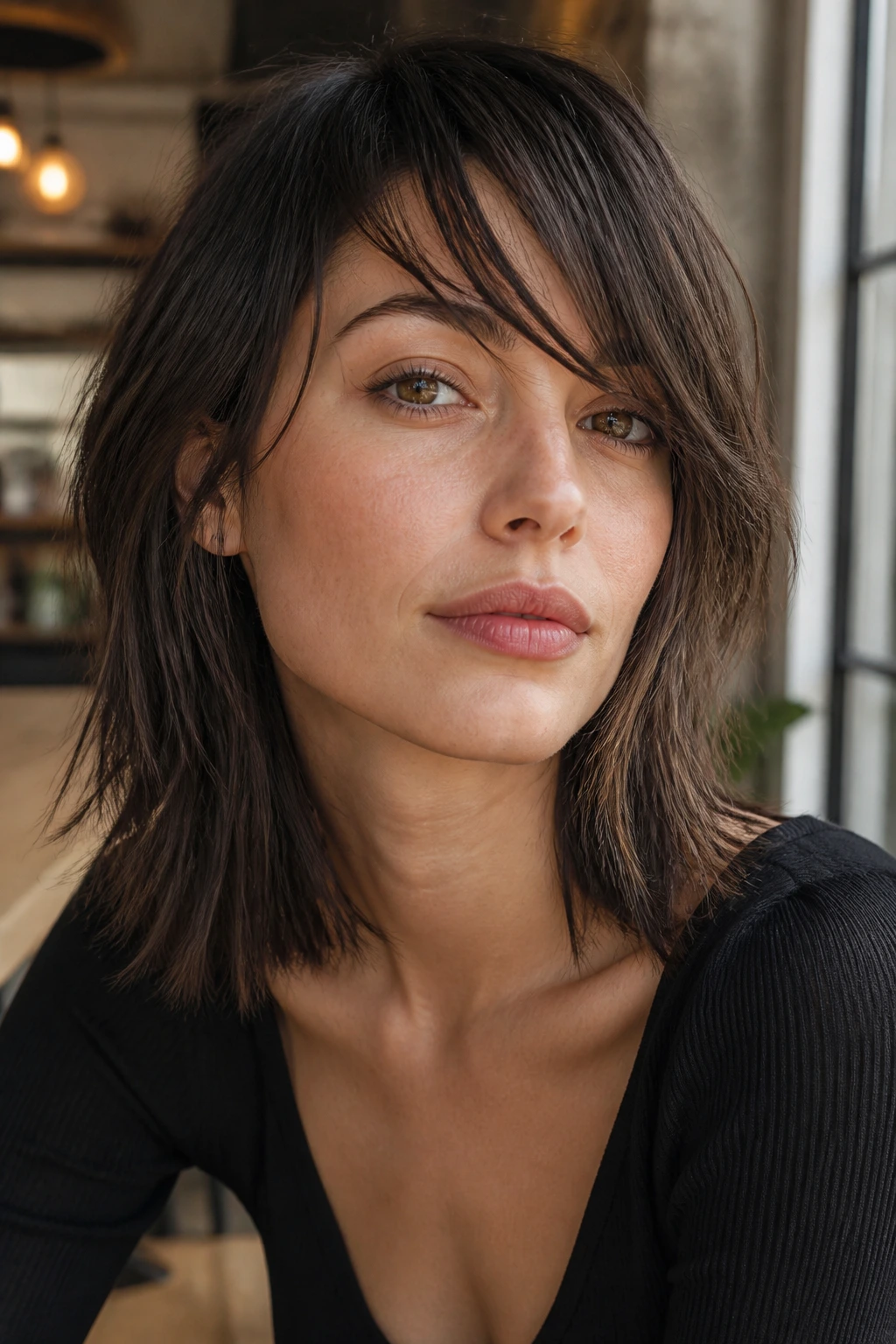
Angled bangs need less drama than blunt bangs, but they do need attention. The good news is that the upkeep is mostly small things done consistently: quick root drying, a light trim, and the right parting direction in the morning. If you keep waiting until the fringe feels unbearable, you’ll miss the window where it still looks intentional.
Wash frequency matters more at the front than the back. Bangs sit on skin, collect oil, and lose lift fast. A quick rinse or just a fringe wash every one or two days can keep the shape cleaner than washing the whole head all the time. On non-wash days, dry shampoo at the roots helps, but use a light hand or the front turns chalky.
Night care is underrated. If your fringe tends to bend weirdly while you sleep, clip it loosely to the side or pin it back with a soft clip. A silk pillowcase helps too, though it won’t fix a bad cut. Nothing does that except the cut itself.
For trims, four to six weeks is a solid range if you like the angle crisp. If you’re growing it out, stretch that to six to eight weeks and ask for blending rather than a full reset. That keeps the bang from going from “nice shape” to “why is this in my eyes?” overnight.
Questions People Ask Before They Cut the Fringe
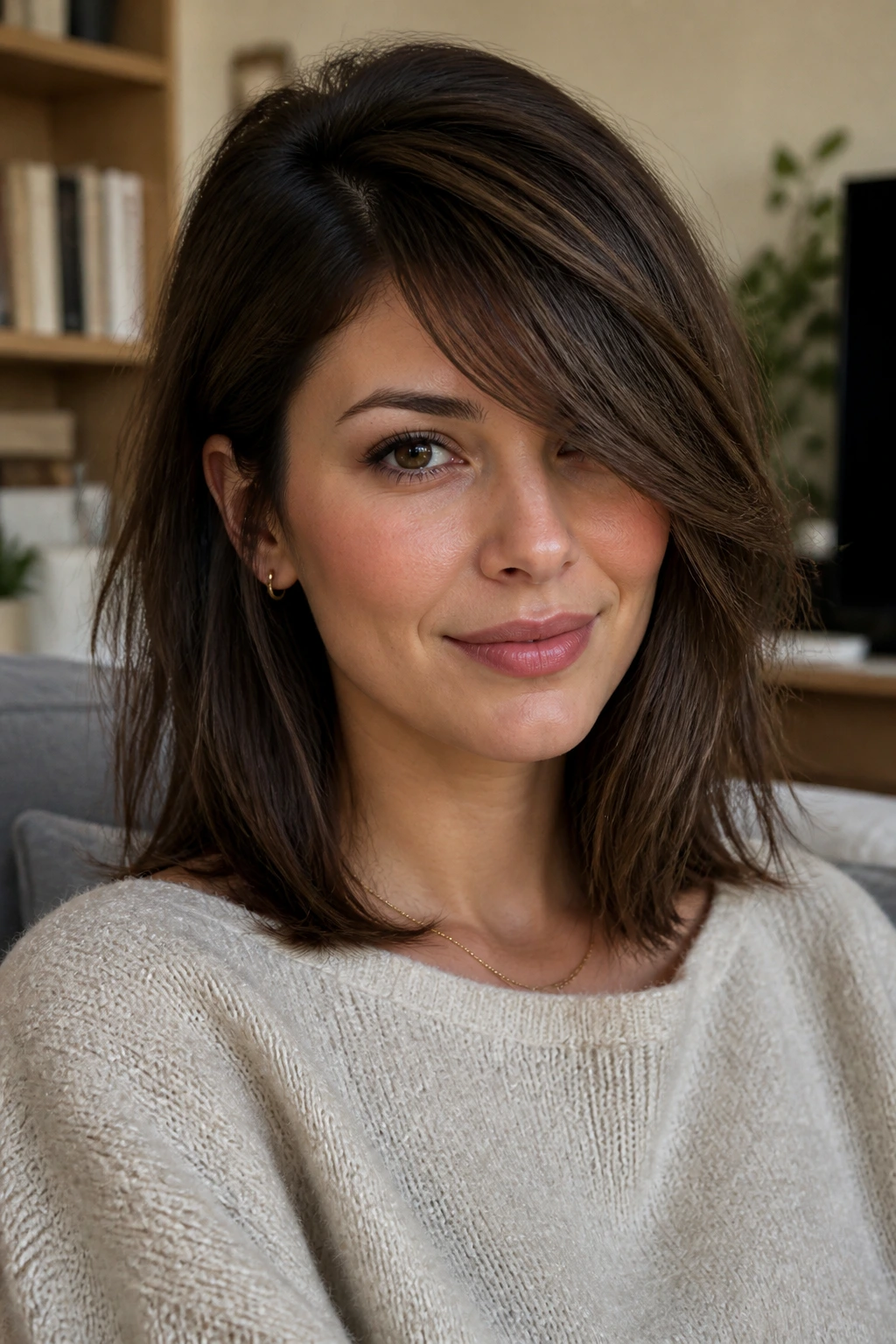
Will angled bangs work on a very symmetrical oval face?
Yes, and that’s actually where they can look especially clean. A slightly stronger diagonal adds movement without fighting the face shape, so you get frame and softness at the same time.
Do angled bangs suit wavy hair better than straight hair?
They can suit both, but the result changes. Wavy hair gives the fringe more looseness and a softer edge, while straight hair shows the line more clearly and usually needs a brush or iron to keep the angle visible.
How short should the shortest part be?
For most medium-hair looks, around eyebrow level is the safest starting point. Go shorter only if you want a bolder fringe and are willing to trim it more often.
Can I style angled bangs without a round brush?
Yes. A flat iron can bend the ends, and even a paddle brush with a blast of air can create enough direction for a soft sweep. The brush just gives you a smoother, more controlled curve.
What if my bangs split down the middle?
That usually means the root pattern or part is working against the cut. Dry the front in the opposite direction first, then clip it while it cools. If the split keeps returning, the stylist should adjust the parting zone or lighten the weight differently.
Will angled bangs make my face look longer?
A steep, narrow angle can, but most well-cut versions on an oval face do the opposite. They break up the vertical line by bringing the eye toward the cheekbone and outer eye.
How often should I trim them?
Every four to six weeks if you want the angle to stay crisp. If you like a softer, grown-in look, six to eight weeks usually keeps the fringe wearable.
Can I grow them out without a weird stage?
Mostly, yes. The longest side can turn into a face-framing layer, and the shorter side can be guided into the rest of the front. A stylist should shape the grow-out in layers instead of letting it sit as a dead straight bang.
A Shape That Keeps Paying Off
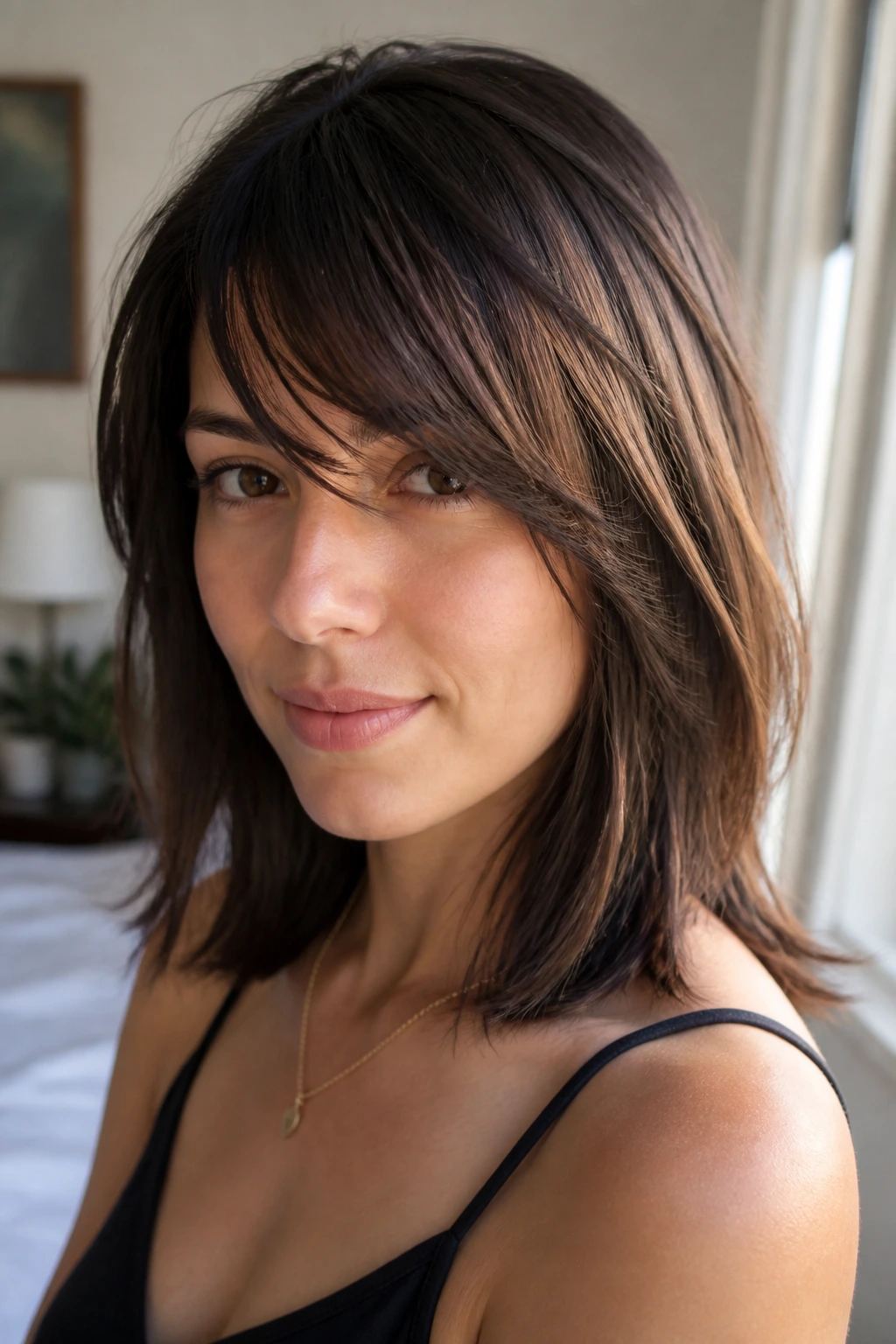
Angled bangs work because they give you options. You can wear them sleek, piecey, soft, or grown-out, and the cut still has a line. That matters on medium hair, where too much front weight can take over and too little can disappear into the rest of the shape.
The best versions are not the ones that shout the loudest. They are the ones that let the cheekbones show, keep the forehead from feeling bare, and still look decent when you tuck one side behind your ear and leave the house in a hurry. That’s the real test.