



Cut the wrong bangs on a heart-shaped face and the forehead takes over the whole conversation. Cut the right ones, and the face settles down fast — the eye moves to the cheekbones, the chin gets more presence, and long hair stops hanging like one long curtain from crown to hem.
That balance is the whole game here. Heart-shaped faces usually carry more width up top and a narrower lower half, so fringe has to do a very specific job: soften the forehead without boxing it in, and bring some visual weight back toward the jawline. Long hair gives you room to do that, but it also makes mistakes obvious. A blunt line can feel like a shelf. Bangs that are too thin can vanish.
I keep coming back to movement, because that’s what wins. The best bangs for long hair and heart-shaped faces don’t sit there like a sticker; they bend, split, feather, sweep, or tuck. They make room for your features instead of fighting them. And once you start looking at fringe through that lens, the good options get very easy to spot.
Why These Fringe Shapes Earn Their Keep
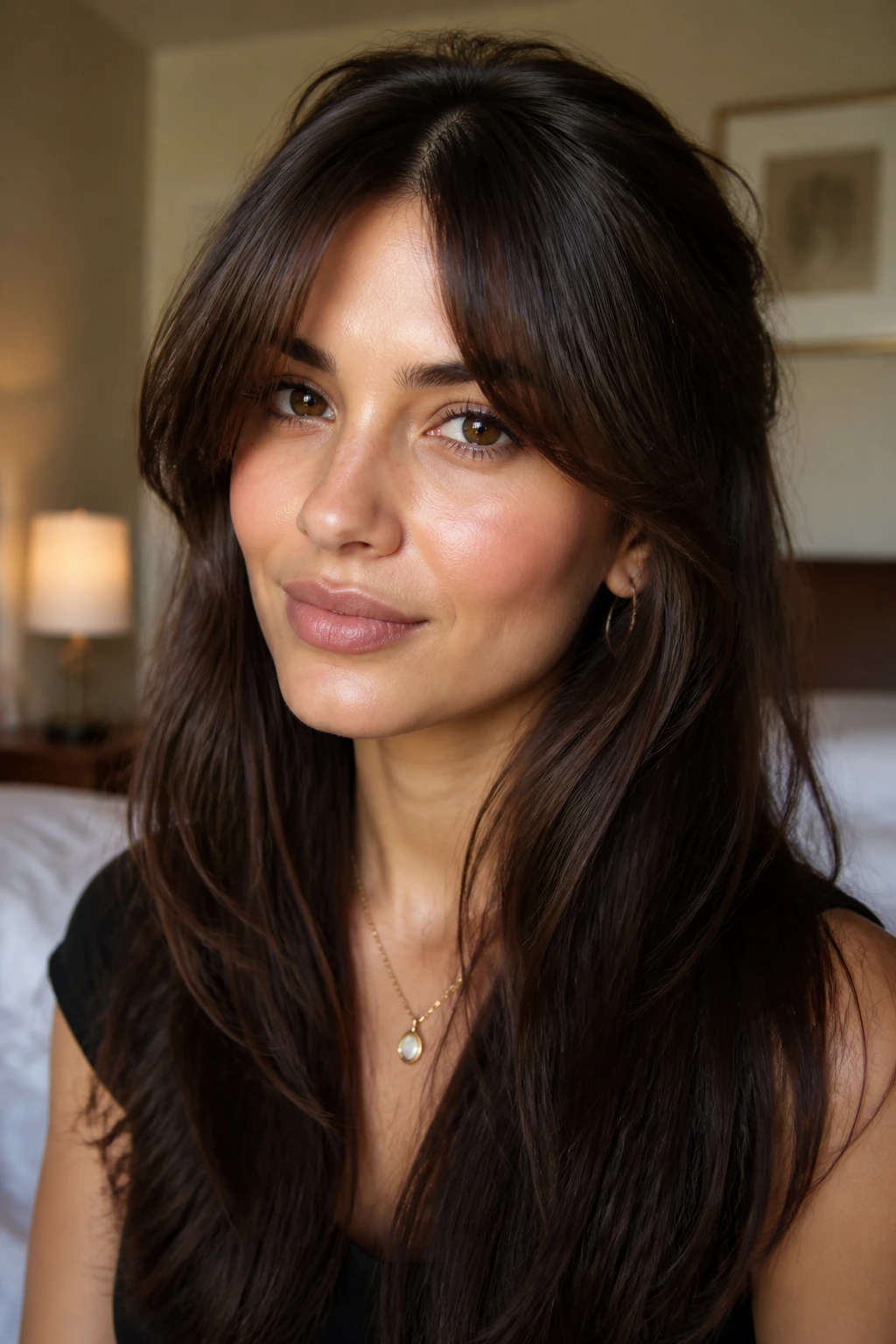
A heart-shaped face is widest at the forehead and cheekbones, then narrows toward the chin. That gives you a strong top half and a softer lower half, which is lovely on its own, but it also means the wrong fringe can make the forehead feel even wider or make the chin disappear. The styles below all do one of two things: they break up width at the hairline, or they shift some attention down toward the cheeks and jaw.
Softens the forehead: Bangs that split, curve, or taper at the temples take the edge off a broad hairline without hiding it under a heavy wall of hair.
Keeps long hair from feeling bottom-heavy: Long lengths can drag the whole look downward. Fringe adds shape near the face, so your hair doesn’t read as one straight vertical sheet.
Grows out with less drama: A lot of these styles blend into layers or start longer at the sides, which means you’re not trapped in an awkward one-inch grow-out stage.
Works with more than one texture: Straight, wavy, and curly hair can all wear fringe well here, but the cut has to respect how your hair actually falls, not how it behaves for ten minutes after the salon blowout.
Lets you change the mood without losing length: If you love long hair but want a different shape at the face, bangs are the quickest way to get there. A trim can change the whole read of the cut.
Looks better with movement than with perfection: Slightly broken ends, a little bend, a bit of lift at the root — those tiny imperfections are the point. Too much polish can make the forehead look harder, not softer.
1. Center-Part Curtain Bangs
Curtain bangs are the first style I’d hand to someone with long hair and a heart-shaped face. They part in the middle, fall away from the face, and usually hit somewhere around the cheekbones or just below them, which gives the forehead breathing room while pulling attention outward.
The nice part is that they don’t fight your length. They join it. That matters more than people realize, because a heart-shaped face can look top-heavy if the fringe ends too abruptly at the brow. Curtain bangs do the opposite. They open, they travel, and they keep the eye moving downward.
Why they work here
The center part breaks up width at the forehead without making the face look boxed in. If your hair is straight, they sit with a smooth bend; if it’s wavy, they get that lived-in curve that feels easy instead of stiff. Ask for the shortest point to land just under the brow and the longest pieces to graze the cheekbones.
2. Bottleneck Bangs
Why do bottleneck bangs keep showing up in salons? Because they’re one of the cleanest ways to balance a broader forehead without losing softness at the sides. The center stays a little narrower, then the fringe widens as it drops toward the cheekbones, which is exactly the kind of shape a heart-shaped face likes.
They also look good on long hair because they keep some structure up top while letting the rest of the length stay loose. The cut has a built-in curve. Not a hard one. Just enough to guide the eye down and out.
Ask for this: a shorter center section that sits near the brow, with longer outer pieces that hit cheekbone level. The ends should be point-cut, not chopped flat. If your stylist leaves the sides too short, you lose the whole effect and it starts looking like a blunt fringe trying to grow out.
3. Side-Swept Soft Fringe

A side-swept fringe is the old reliable that still looks current when it’s cut with enough softness. The diagonal line does two useful things at once: it narrows the look of the forehead and creates a little asymmetry, which keeps a heart-shaped face from feeling too top-heavy.
This is the fringe I like for people who want bangs but don’t want to commit to a centered curtain or a full brow-grazing shape. It’s easy to tuck, pin, or redirect on days when your part is behaving badly. And yes, some days it will have a mind of its own. That’s normal.
Keep the heaviest part near the eyebrow and let the length taper toward the cheekbone. If your long hair is layered, the side fringe should merge into those layers instead of sitting as a separate slice. That blending is what keeps the cut from feeling dated.
4. Brow-Grazing Feathered Bangs
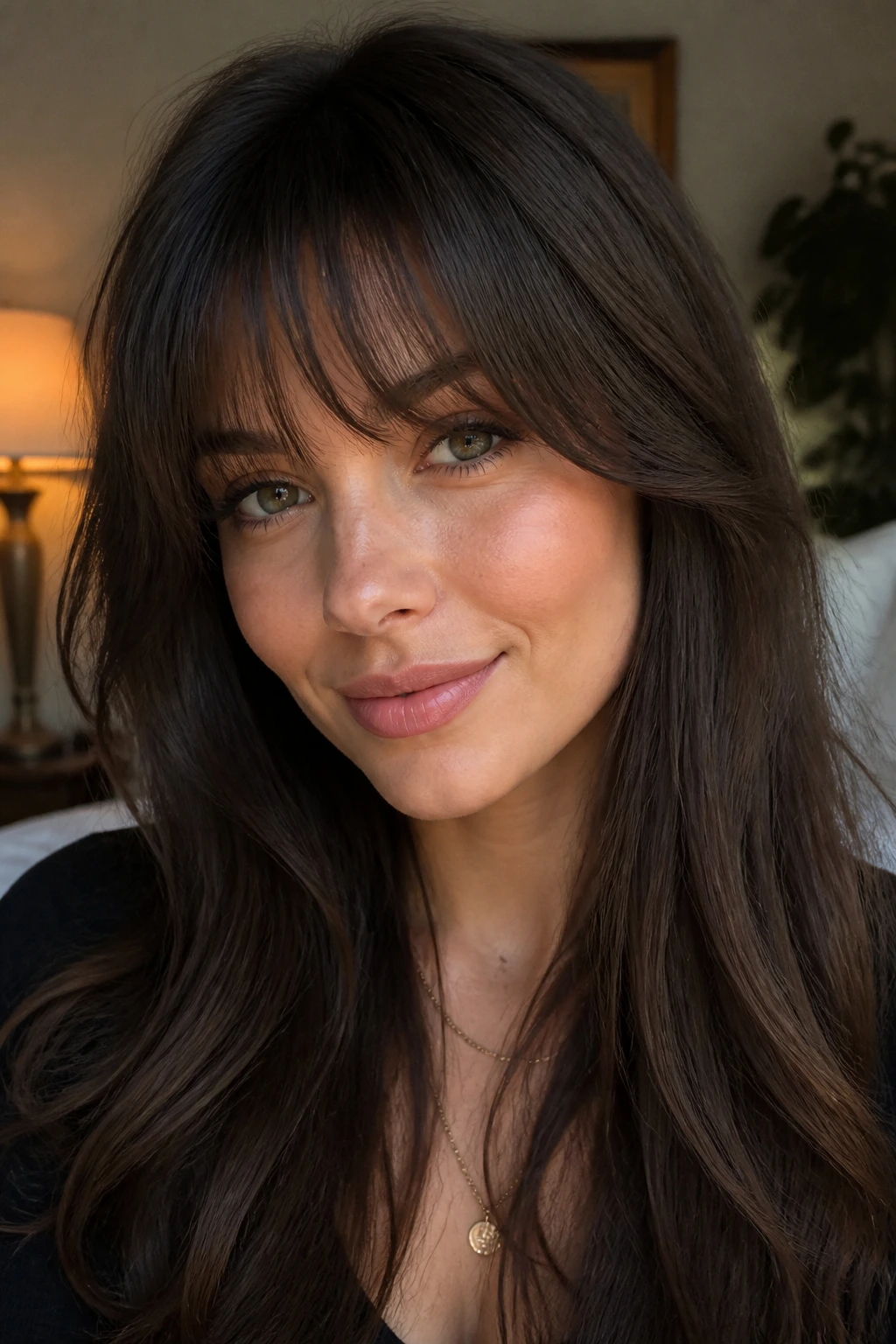
A feathered fringe that skims the brows can look sharp in the best way — light, clean, and not at all helmet-like. On a heart-shaped face, the trick is to keep it airy. Heavy brow-skimmers can make the top half of the face feel crowded. Feathered ones do the opposite.
The best version is cut with a little internal texture, so the ends break apart instead of forming one dense line. That matters if your hair is thick. It matters even more if your forehead is wide and you want the fringe to soften, not sit there and announce itself.
- Keep the center section slightly longer if you like movement.
- Ask for point-cut ends so the fringe doesn’t look blocky.
- Blow-dry from side to side, then finish with a cool shot to keep the bend instead of a flat crease.
If you like a fringe that looks neat but not rigid, this is the lane.
5. Birkin Bangs With Airy Ends
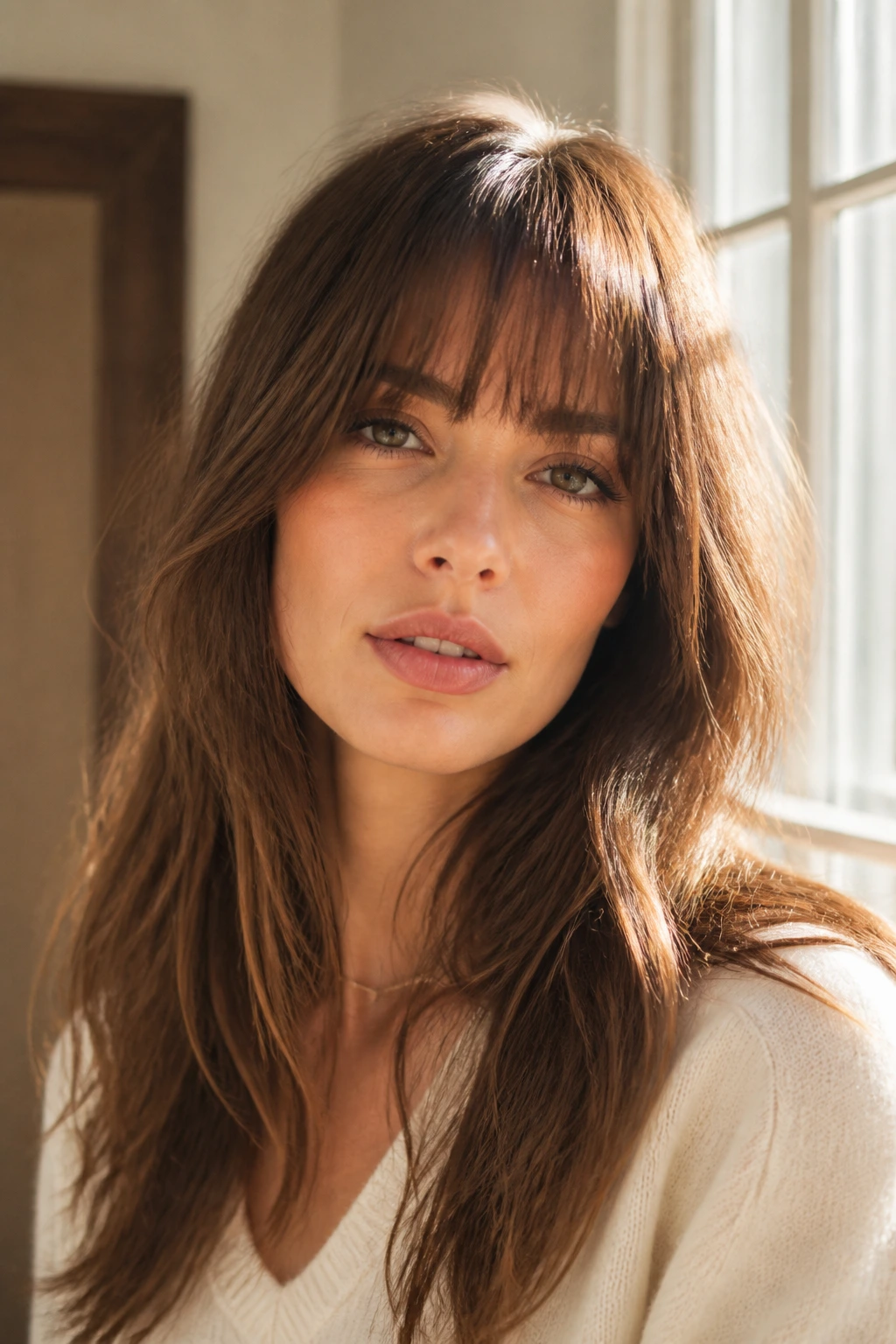
Birkin bangs are the answer when you want a straight-across mood without the heaviness of a full blunt line. They’re soft, a little cheeky, and they look best when the ends are broken up enough to let a forehead breathe. That’s the part that matters for a heart-shaped face.
A true heavy fringe can make the face look top-loaded. Birkin bangs avoid that by keeping the line gentle. They still create a clear shape, but they don’t pin the eye in one place. On long hair, they have a nice contrast: a defined front with loose length everywhere else.
The cut should sit near the brows, not far above them, and the sides need to taper so they melt into the rest of the hair. If the fringe is too thick all the way across, it can turn blunt fast. That’s the difference between chic and boxy.
6. Shag Bangs
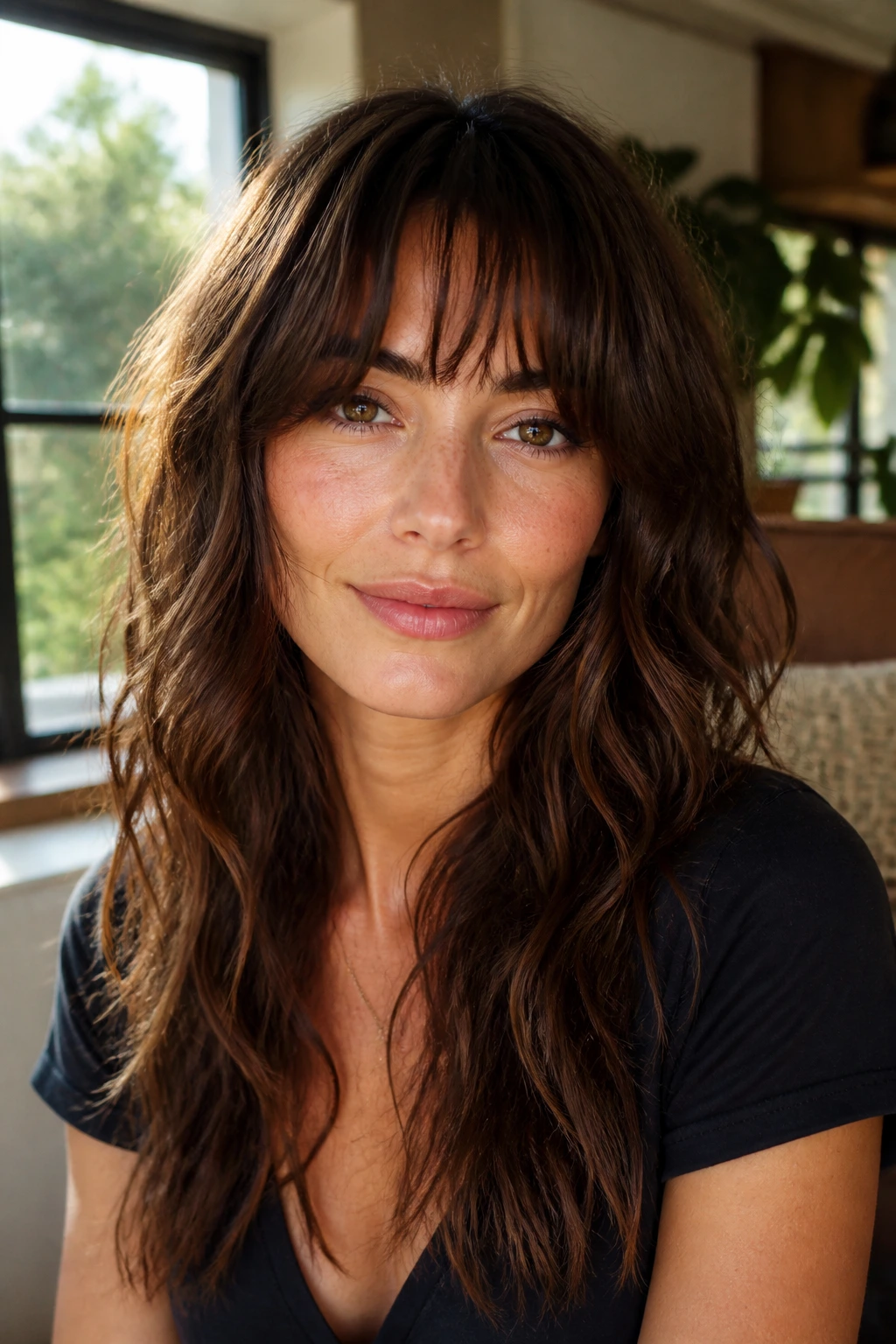
Shag bangs are for people who want texture to do the work. They’re choppier, a little messier, and much less precious than a classic salon fringe. On a heart-shaped face, that broken-up edge helps soften the top third of the face without flattening the whole look.
They also save long hair from looking too formal. A very smooth length with very smooth bangs can feel like a lot of hair, full stop. Shag bangs cut through that heaviness. They add movement at the forehead and let the rest of the layers do their thing. It’s especially good if your hair has natural wave or any kind of bend.
Best with natural texture
If your hair already wants to air-dry with a little kick, shag bangs are a smart choice. Ask your stylist to keep the shortest pieces near the brow and leave the outer edges longer so they can fold into face-framing layers. The result should look broken, not blunt. If it looks too neat in the chair, it probably needs more texture.
7. Butterfly Bangs
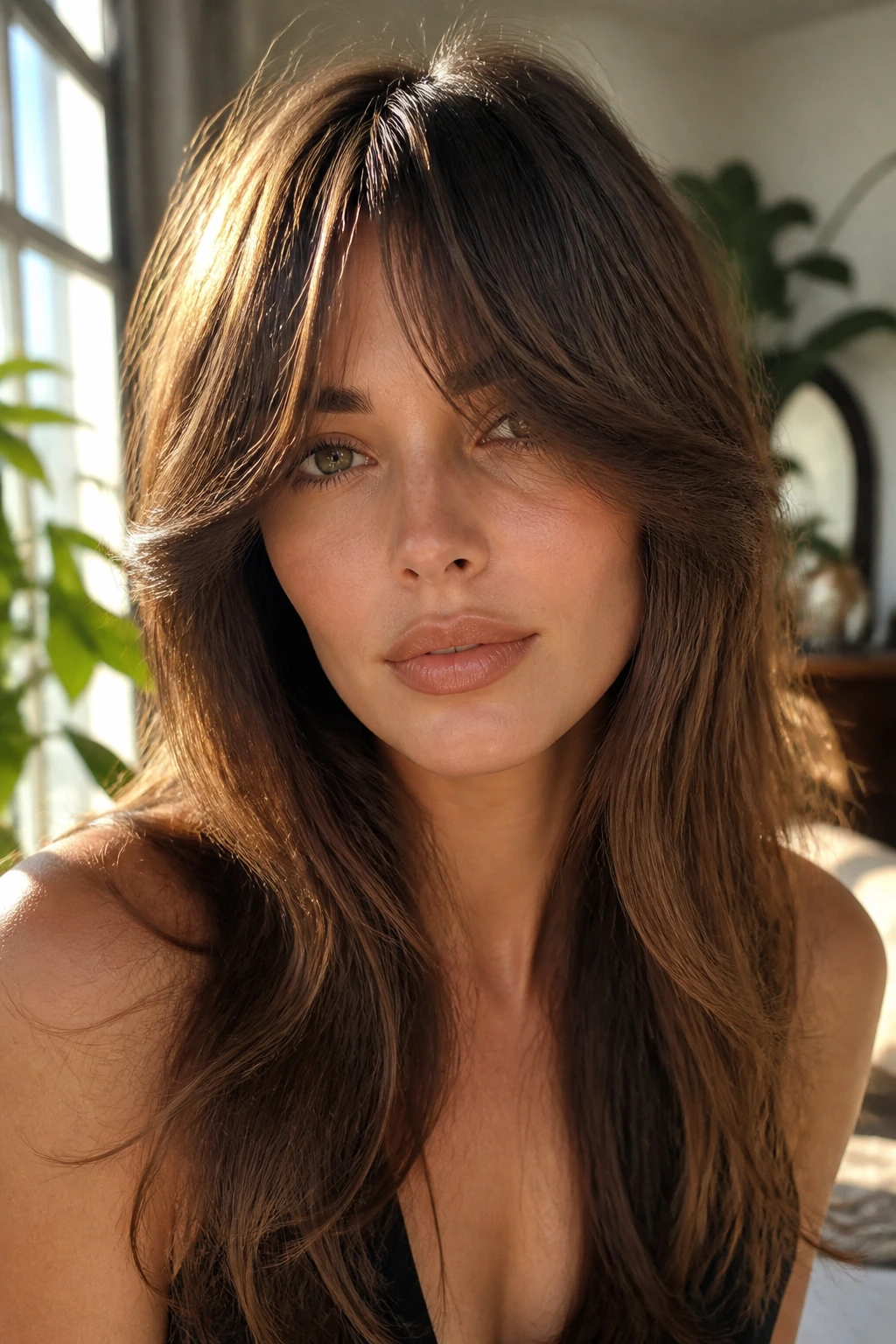
Butterfly bangs are basically face-framing layers that behave like fringe when you need them to. They start shorter near the front and fan out into longer pieces that move away from the face, which makes them a strong fit for heart-shaped features that need softness near the temples and cheekbones.
The appeal is simple. You get that bang effect without giving up the sweep and length that long hair is good at. The shape feels airy, not forced. And because the longer pieces sit low enough to graze the cheeks, they help redirect attention away from a wider forehead.
These work best when the shortest front pieces sit somewhere between the brow and cheekbone, with the longest front sections stretching toward the jaw. That gives you a layered, fluttery shape instead of a hard bang line. It’s one of the easiest ways to dip into fringe without going all in.
8. Rounded Fringe
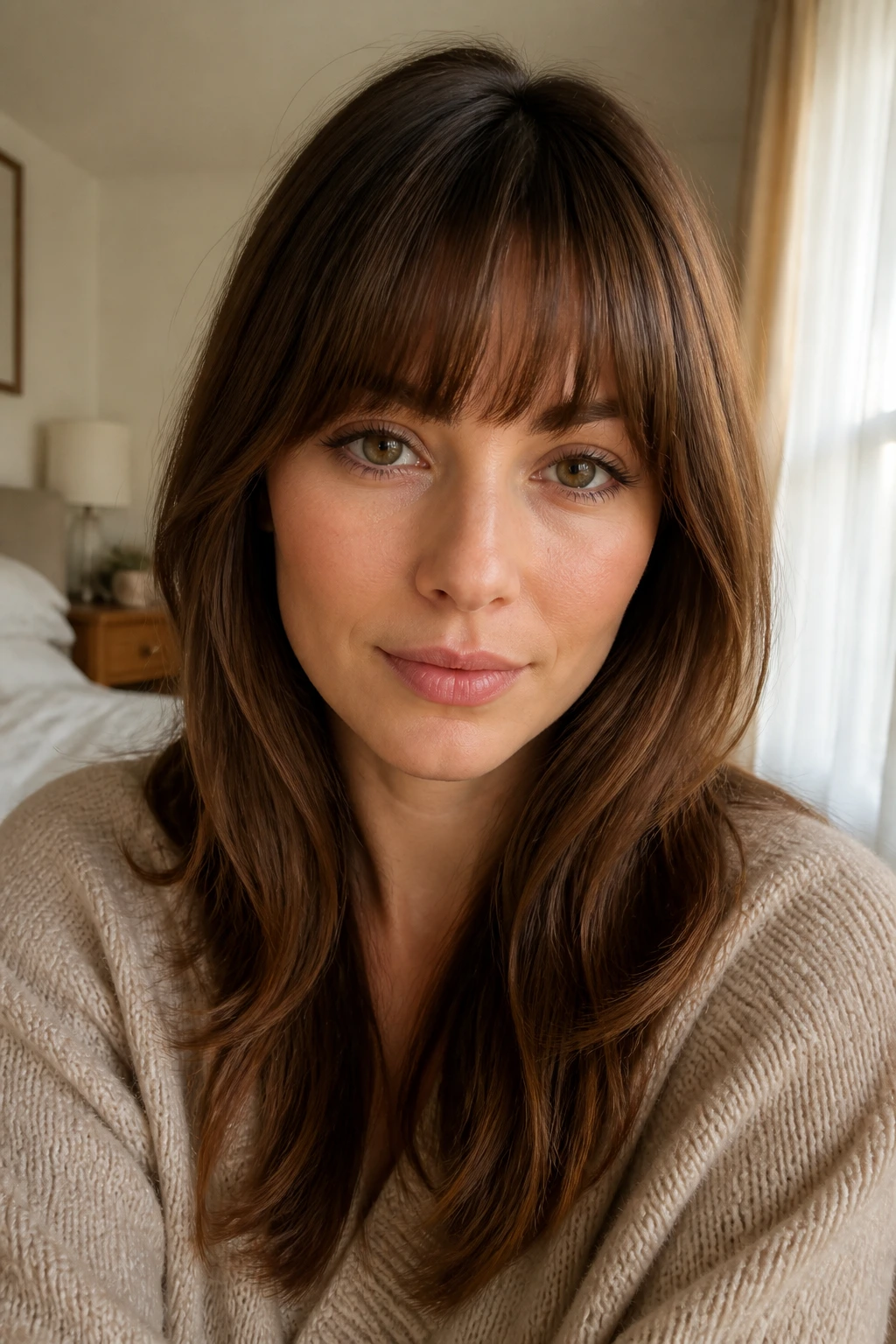
A rounded fringe follows the natural curve of the face instead of drawing a straight line across it. That makes it a quietly strong option for heart-shaped faces, especially if you want to soften the upper half without making the haircut look overly shaggy or undone.
The curve matters. A rounded shape keeps the center a touch shorter and the sides a touch longer, which helps the fringe echo the forehead and cheekbone structure rather than slicing across it. On long hair, that echo is what makes the cut feel finished.
Do not cut this too high. That’s where people get into trouble. A rounded fringe should hover around the brow line and feather outward. If it sits too short, it can make the forehead look bigger, not smaller. A little extra length is your friend here.
9. Choppy Piecey Bangs
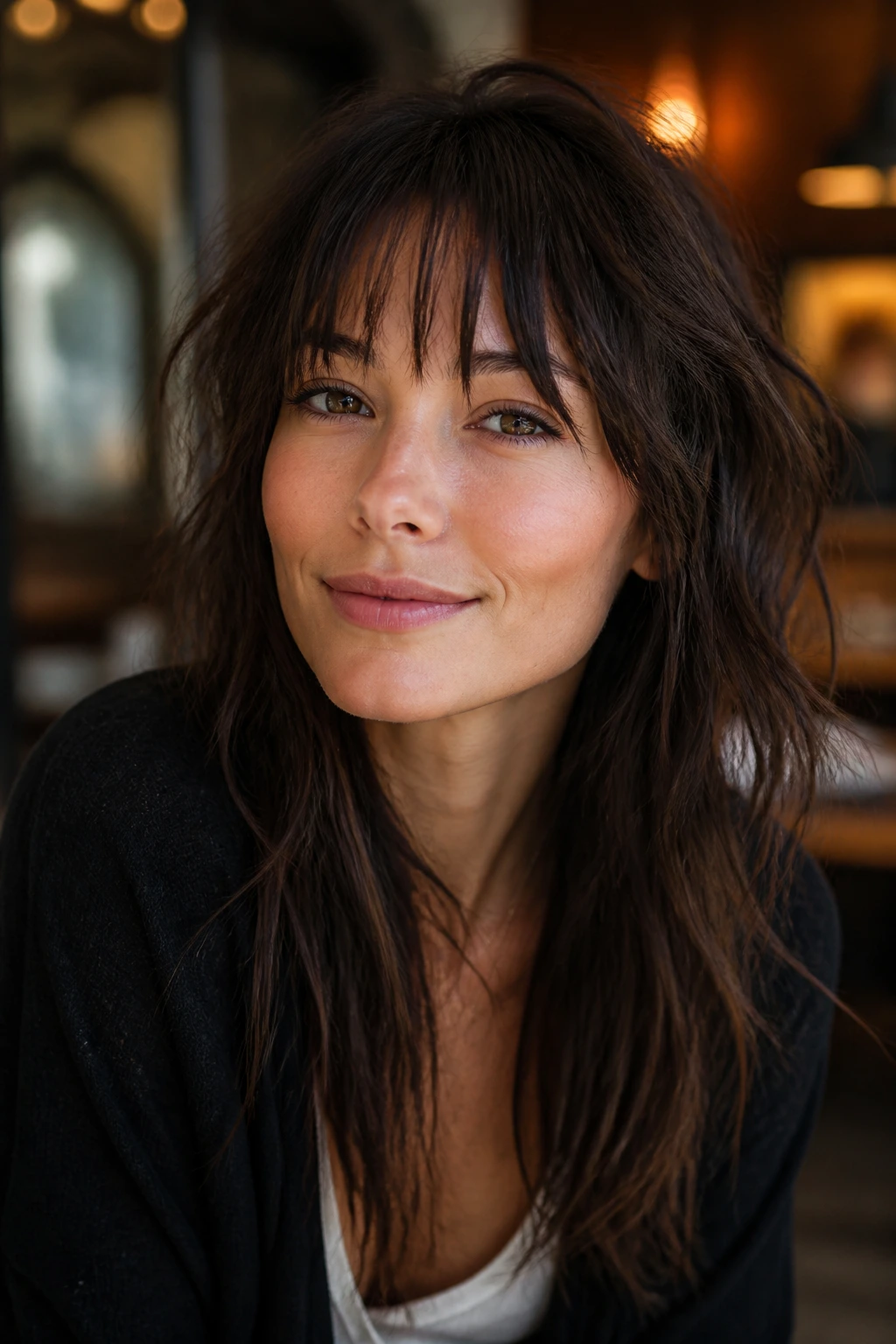
Choppy bangs are the antidote to a fringe that feels too perfect. The pieces are separated, the ends are irregular, and the shape has enough air in it to keep a heart-shaped face from looking boxed in. They’re especially good if your hair is thick and wants to make a statement on its own.
The point is not random mess. The point is controlled breakup. You want enough texture that the bangs move when you move, but not so much thinning that they go stringy by lunchtime. Long hair handles this style well because the rest of the cut can stay smooth while the front brings the grit.
If you like a slightly edgy look, this one has range. It can lean soft with a blowout or more undone with a quick scrunch and a bit of texture spray. Either way, it keeps the forehead from feeling too broad and gives the face some needed edge.
10. Deep Side-Part Fringe
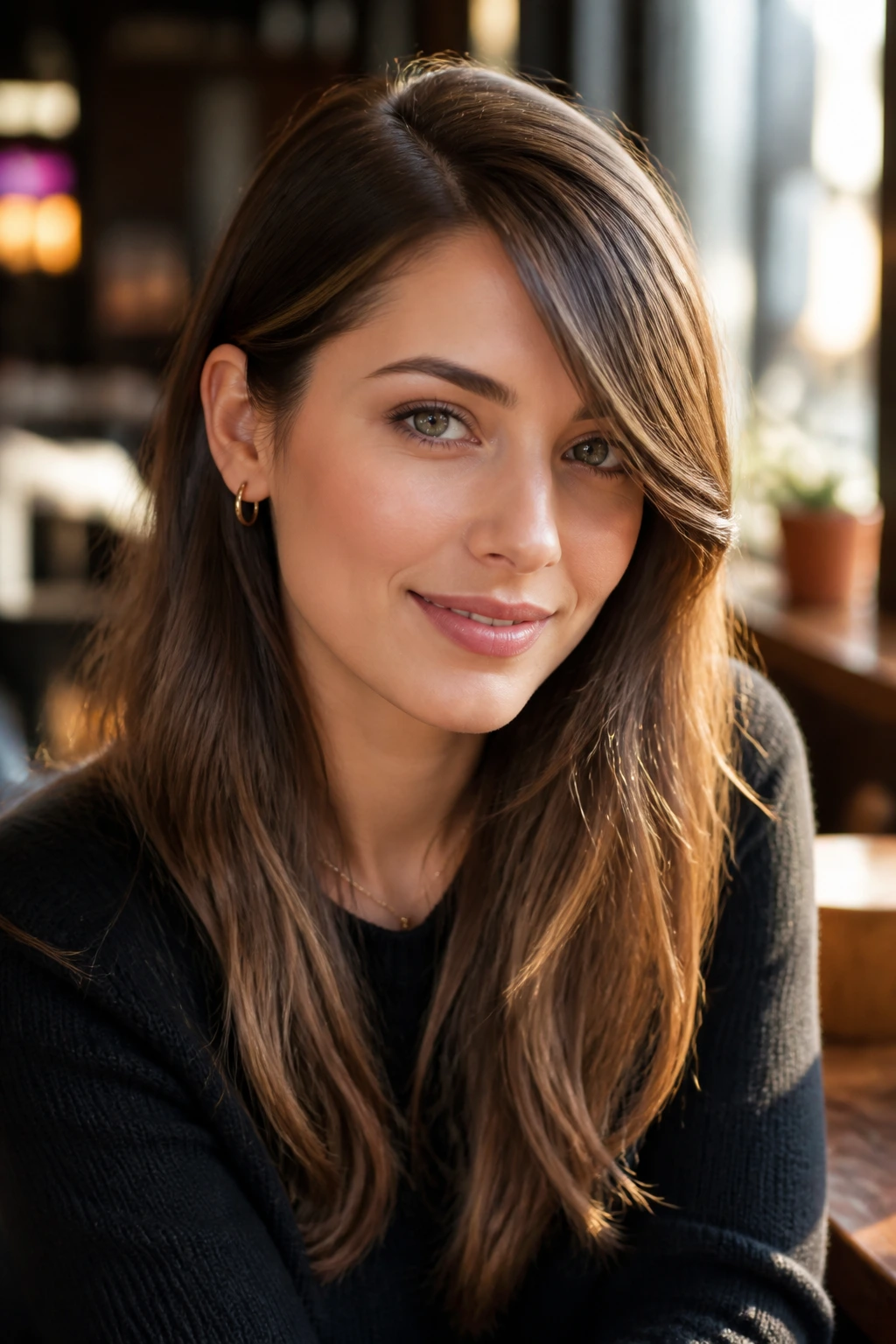
A deep side part changes the whole geometry of a haircut. That’s why it’s such a useful move for a heart-shaped face. Instead of centering everything at the broadest point of the forehead, it shifts the weight over to one side and creates a clean diagonal line.
That diagonal is flattering because it interrupts width. It also adds lift at the crown, which can help long hair feel less flat on top. If your hair naturally falls straight down, a deep side-part fringe gives the front some attitude without asking you to cut a full bang.
This style works best when the front section is long enough to tuck behind the ear or sweep over one brow. If the piece is too short, the whole thing can feel accidental. Keep the line soft and let it slide into the rest of the length. Hard edges are the thing to avoid here.
11. Long Tapered Bangs
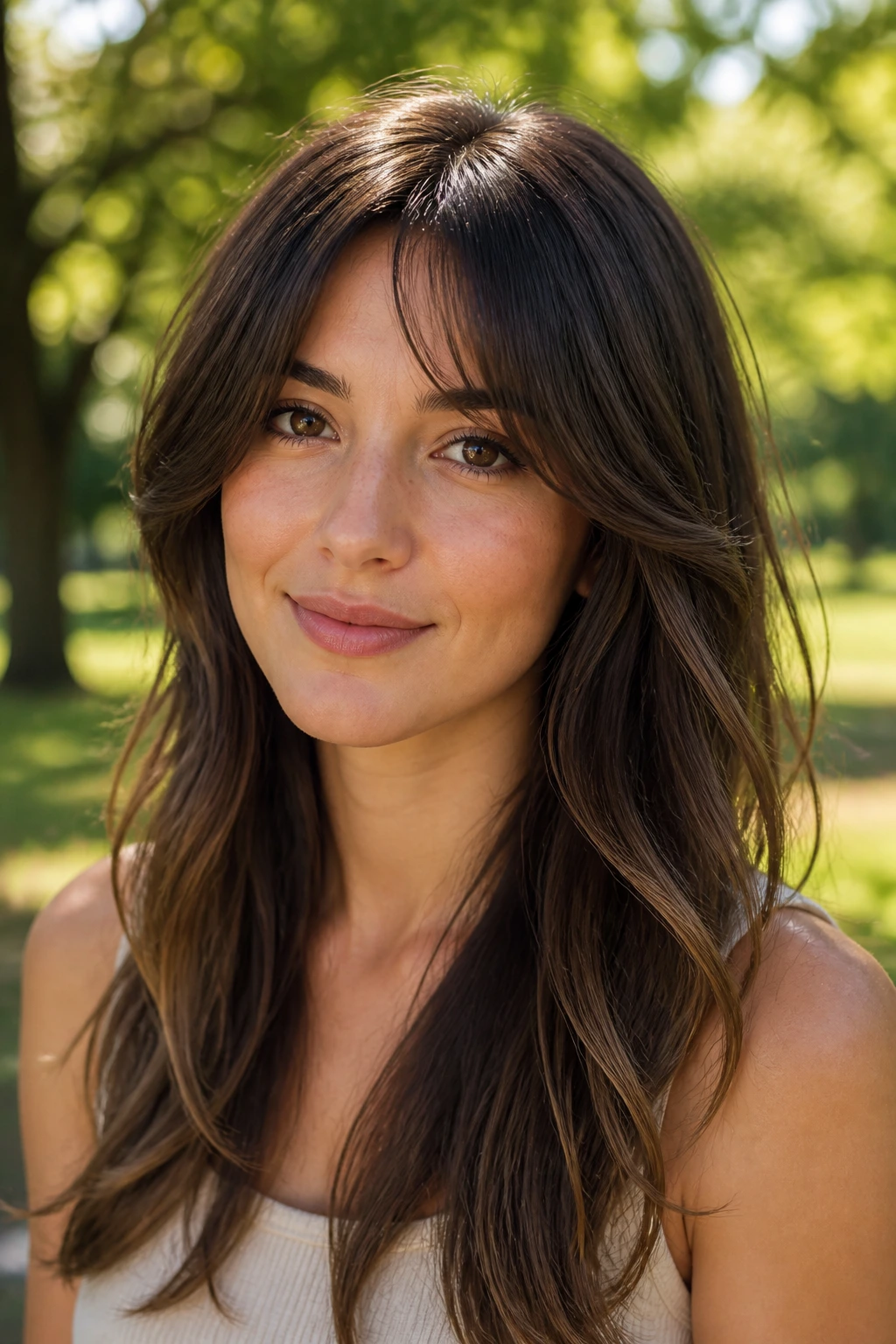
Long tapered bangs are the quiet achiever of the group. They start shorter near the center, then lengthen toward the temples in a slow slope that suits a heart-shaped face very well. The taper softens the forehead while giving the cheeks a little visual support.
They’re also forgiving. That matters. If you’re nervous about bangs, a tapered shape gives you room to grow, pin, and restyle without looking like you’re in a bad in-between phase. On long hair, that makes the whole haircut feel less fragile.
Ask for the longest side pieces to hit around the cheekbone or just below it. Anything much shorter loses the soft sweep that makes this shape work. The cut should look like it’s reaching into the rest of the hair, not stopping short and standing alone.
12. Face-Framing Fringe Blend
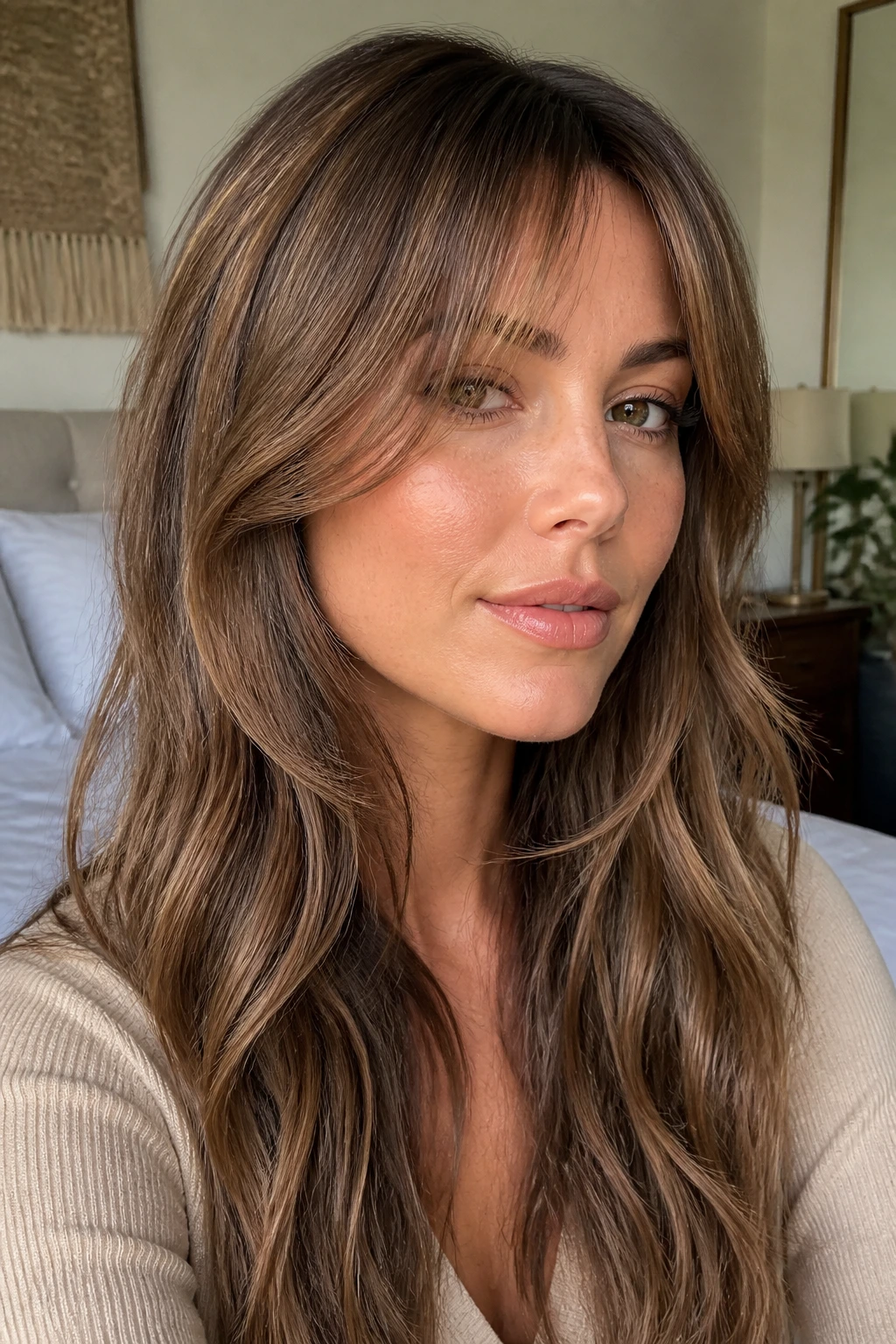
This is the one for people who want the feeling of bangs without a visible bang line. The front pieces are cut to blend into the layers, so the forehead gets a softer outline and the rest of the hair keeps its length-driven flow.
For a heart-shaped face, that blend can be better than a strong fringe line, especially if you wear your hair long and straight. It shifts attention to the cheekbones without creating a hard edge at the brow. The face looks looser. Less pinned down.
A good cut here starts with shorter pieces around the cheekbones and longer pieces that merge toward the jaw and collarbone. The transition should be smooth enough that you can tuck one side behind your ear and still have the haircut make sense. If you can see where the bangs stop, the blend isn’t finished.
13. Wavy Curtain Fringe
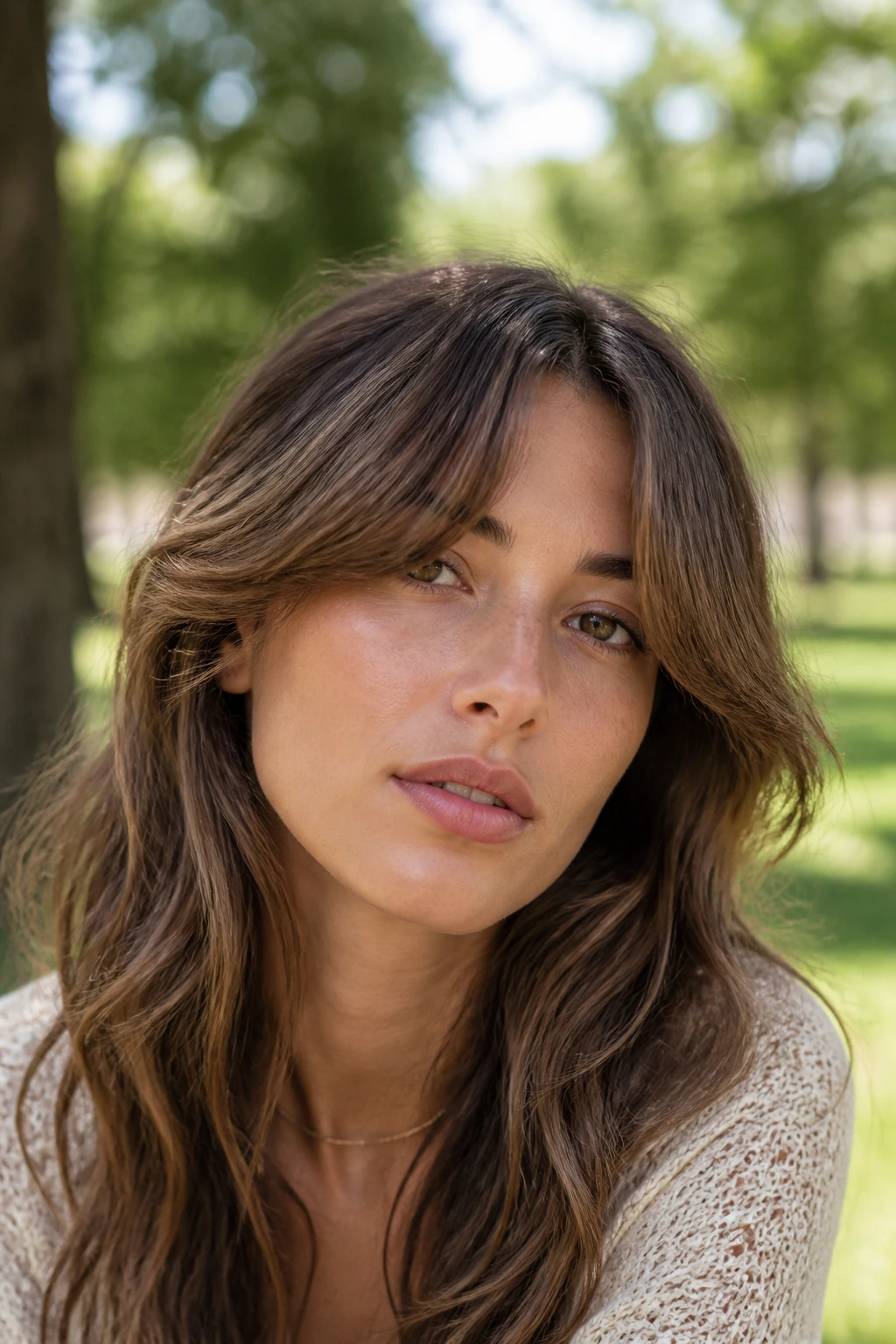
Wavy hair changes the curtain-bang conversation in a good way. The bend gives the fringe a built-in softness, which helps a heart-shaped face even more because the front of the cut never looks too rigid or too neat.
The one thing to respect is the wave pattern. If the hair is cut too short when it’s stretched straight, the bangs can spring up and sit higher than you planned. Better to leave a little extra length and let the waves settle where they want to. That keeps the fringe near the brows or cheekbones instead of floating above them.
Let the front dry with a center part, then use fingers instead of a brush if you want that relaxed split. A little lightweight cream on the ends helps, but don’t load the roots. Flat roots and wavy bangs do each other no favors.
14. Arched Bangs
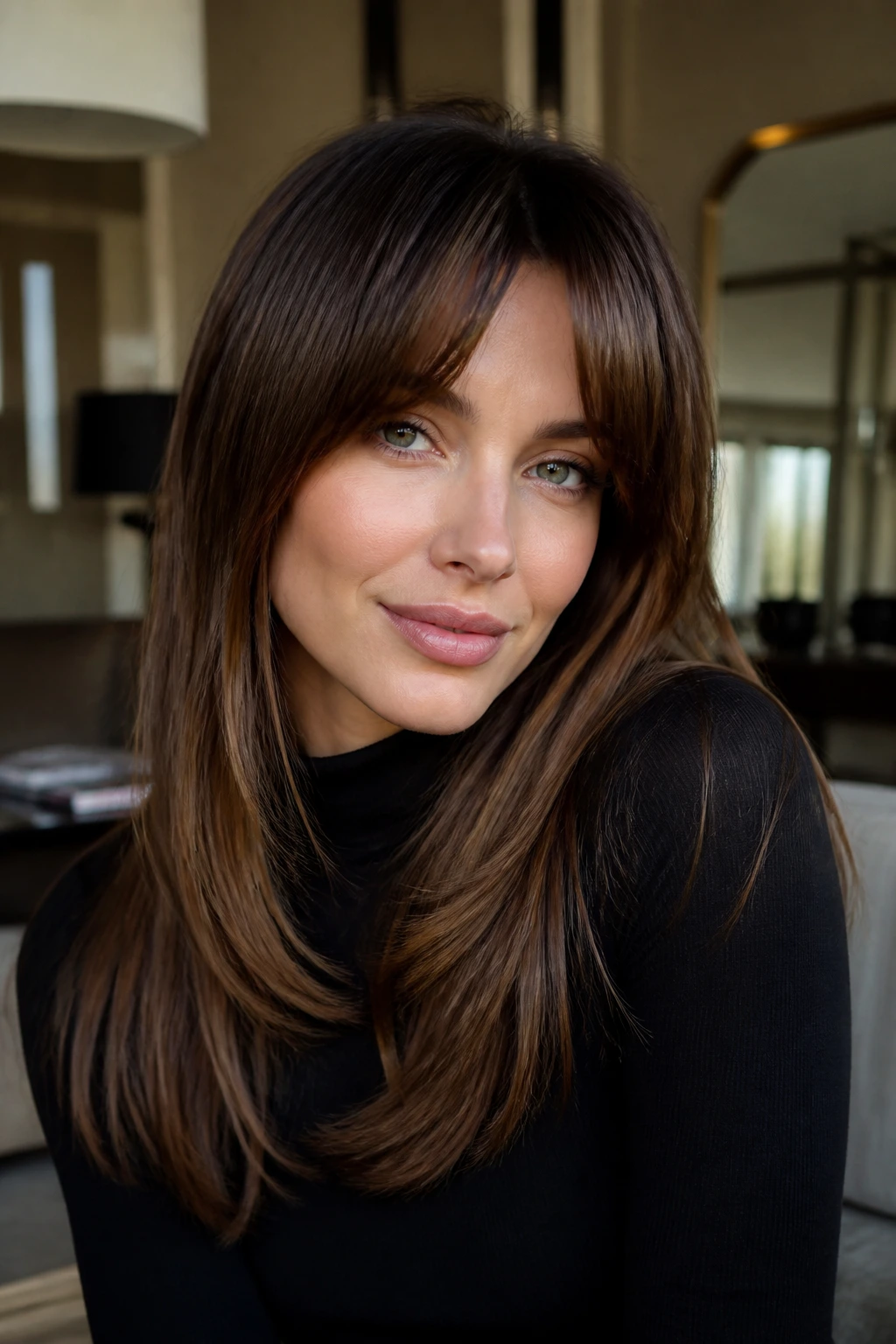
Arched bangs have a subtle curve that follows the brow rather than flattening across it. That curve is useful on a heart-shaped face because it keeps the top of the face soft while still giving you a clear fringe shape.
They’re a little more refined than shag bangs and less heavy than blunt bangs. That middle ground is nice. The arc brings the eye inward, then down, which helps balance a stronger forehead with a narrower chin. On long hair, the result feels polished without getting stiff.
The danger is over-arch. If the center is cut too short, the fringe can make the forehead feel exposed. Keep the arc gentle. It should look like it belongs to the face, not like it was drawn on with a ruler. Small difference. Big effect.
15. Textured Blunt Bangs
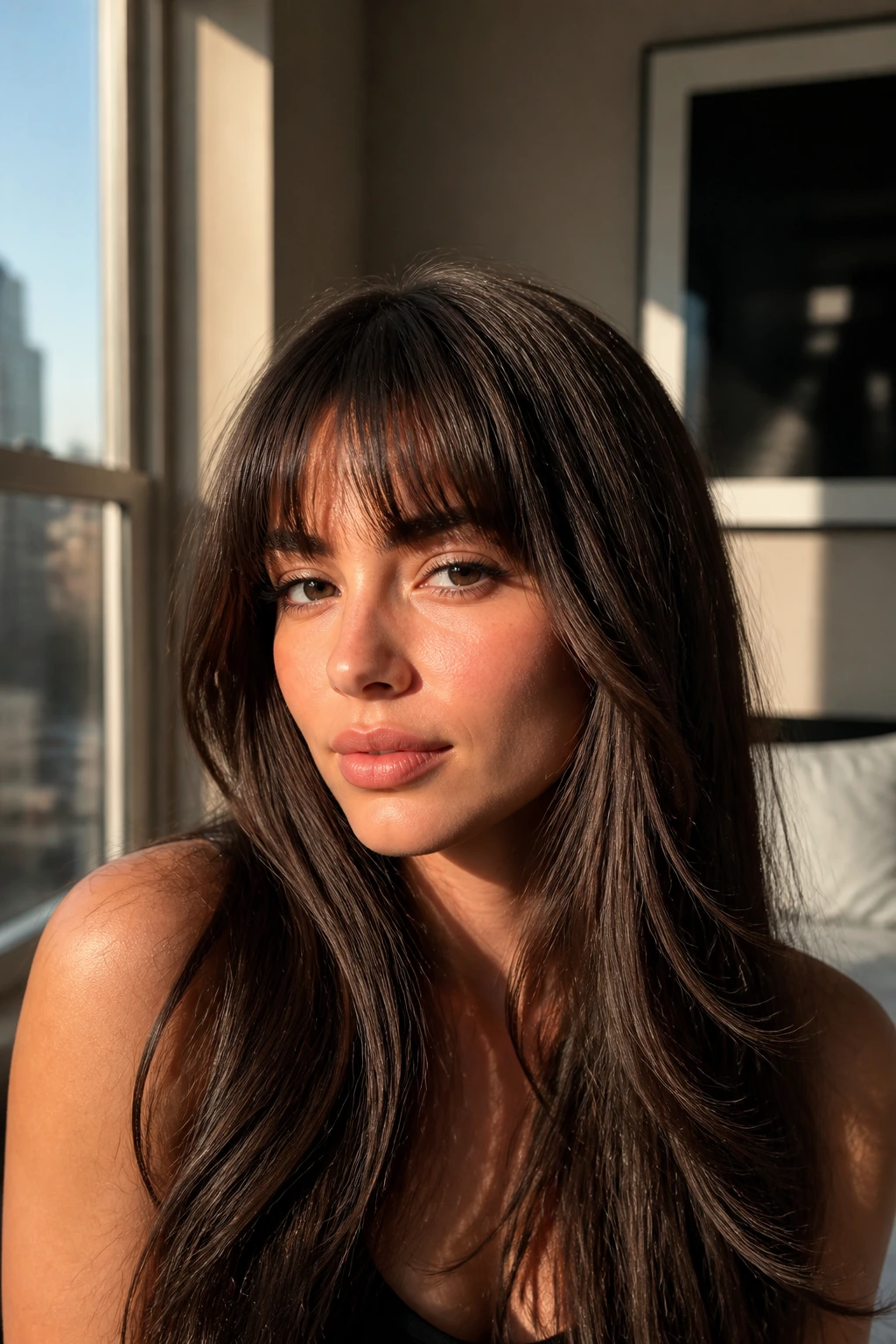
A blunt bang can work on a heart-shaped face, but only if the line is softened from the inside. That’s where the texture comes in. You want the visual weight of a straight fringe with enough air in it that it doesn’t sit like a solid bar across the forehead.
This is the style for someone who likes structure and doesn’t want to disappear into wispy pieces. Long hair gives it context. The length around it keeps the cut from feeling too severe. Still, the edges need to be beveled or point-cut so the fringe doesn’t feel boxy at the corners.
The best version lands right at or just below the brows and bends a little at the temples. If the ends are too crisp, the haircut starts to fight the face shape. If the ends are too thin, you lose the blunt effect that makes the style interesting in the first place.
16. Peekaboo Long Bangs
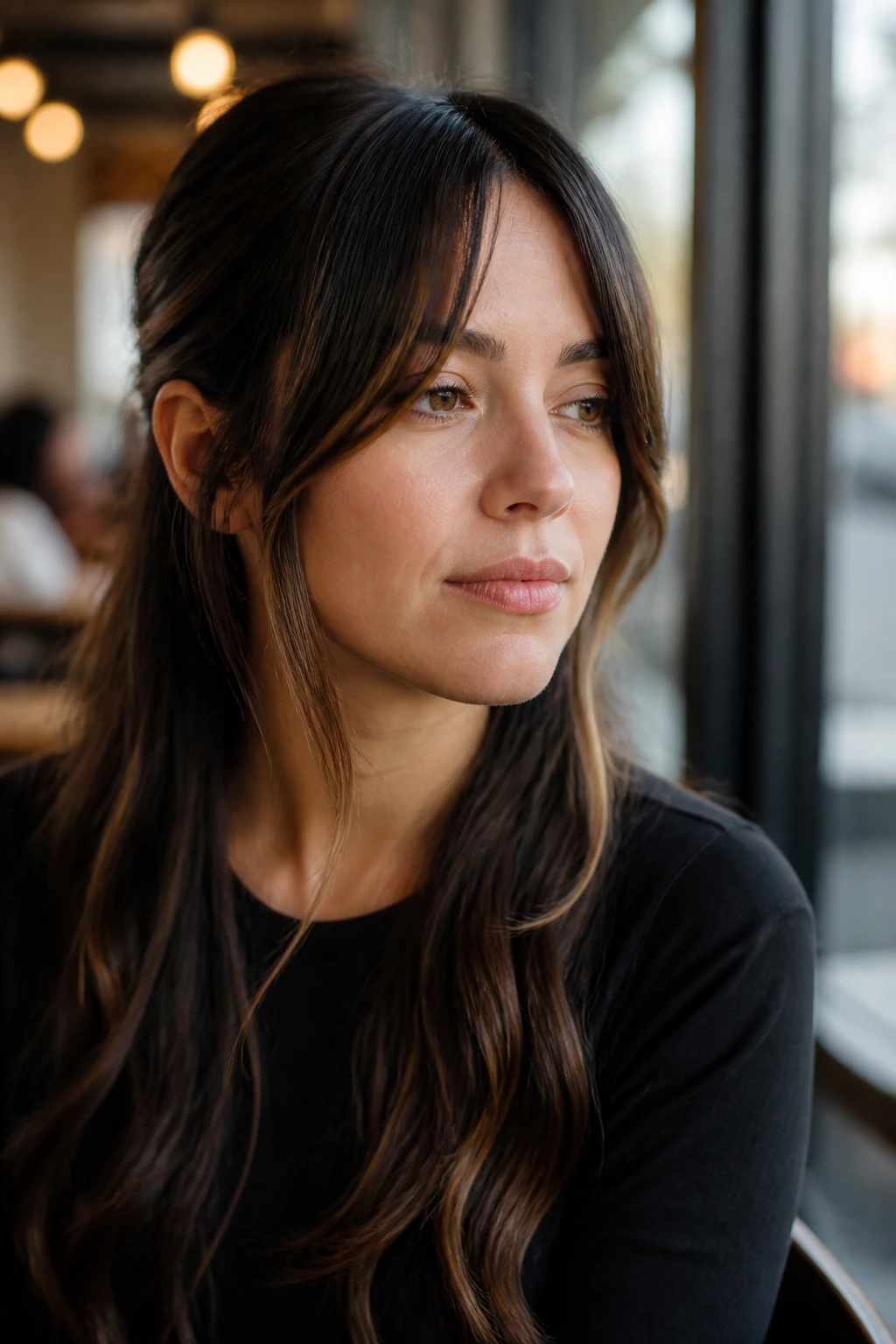
Peekaboo bangs are long enough to tuck, pin, or let fall forward on their own. That’s the charm. They give you fringe without demanding a permanent forehead commitment, which is handy if you’re testing the waters or if your hair has a cowlick that likes to argue.
For heart-shaped faces, the longer length is useful because it keeps the top of the face soft. You get movement around the temples and cheekbones, but you never trap the forehead under a solid line. Long hair makes this shape feel natural, since the front pieces can simply join the rest of the cut.
If you want this to work, ask for the shortest front section to sit near the cheekbone instead of the brow. It sounds long, but that’s the point. You want the bang to be there when you want it and disappear when you don’t.
17. Razor-Sliced Bangs
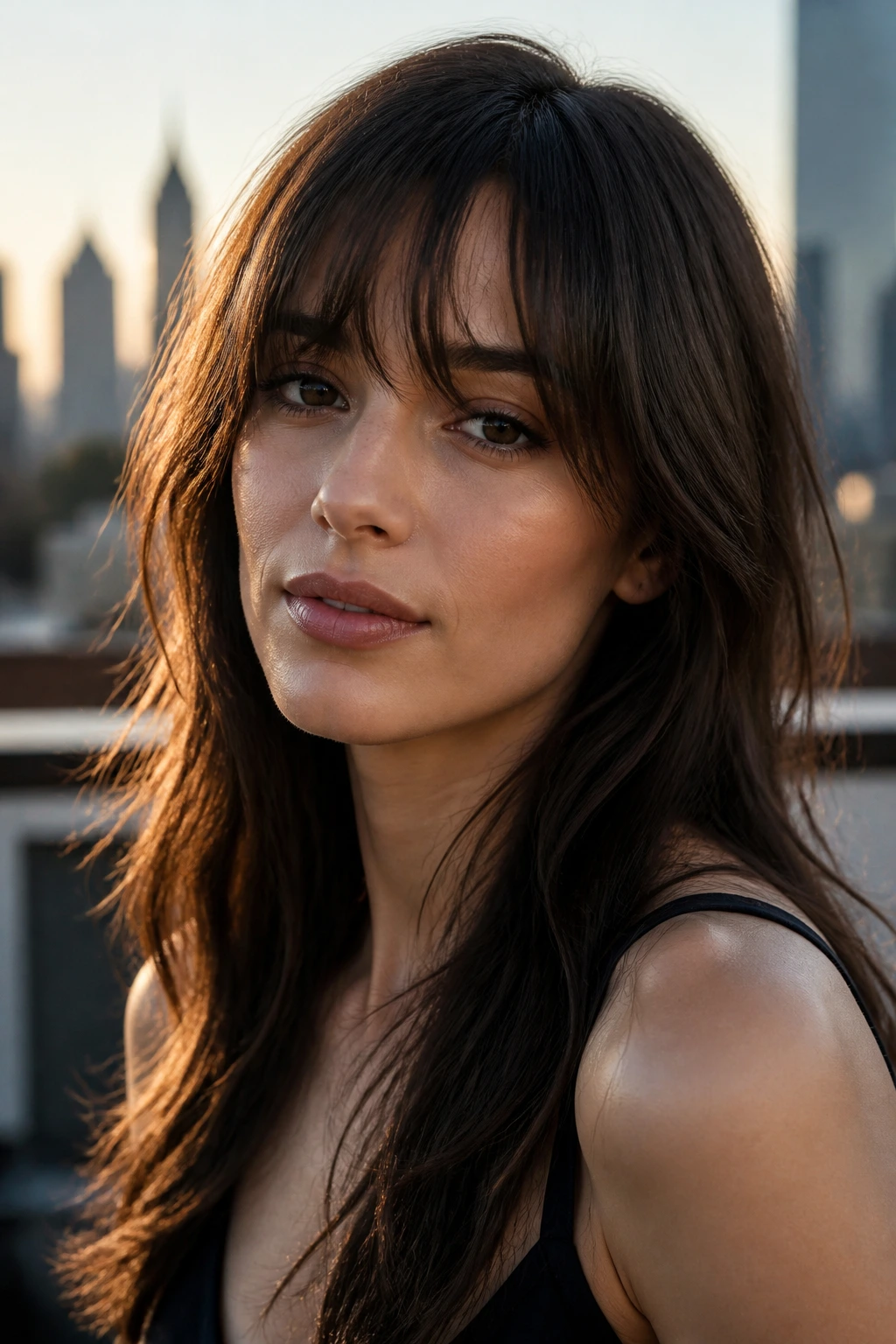
Razor-sliced bangs are airy in a way scissors alone sometimes can’t mimic. The ends look feathered and a little broken, which helps keep the forehead from looking boxed in. On thick hair, that lightness is a gift.
I like this option when the hairline needs softness but the hair itself is dense enough to hold shape. On a heart-shaped face, the razor treatment breaks the straight edge that can otherwise make the forehead look wider. The result feels a little edgy, a little effortless, and much less bulky.
There’s a catch. Razor work is not the move for every texture. If your hair is fragile, overly dry, or prone to frizzing at the ends, too much razor work can make the fringe look ragged. A stylist who knows where to stop is worth the trouble here.
18. Grown-Out Fringe
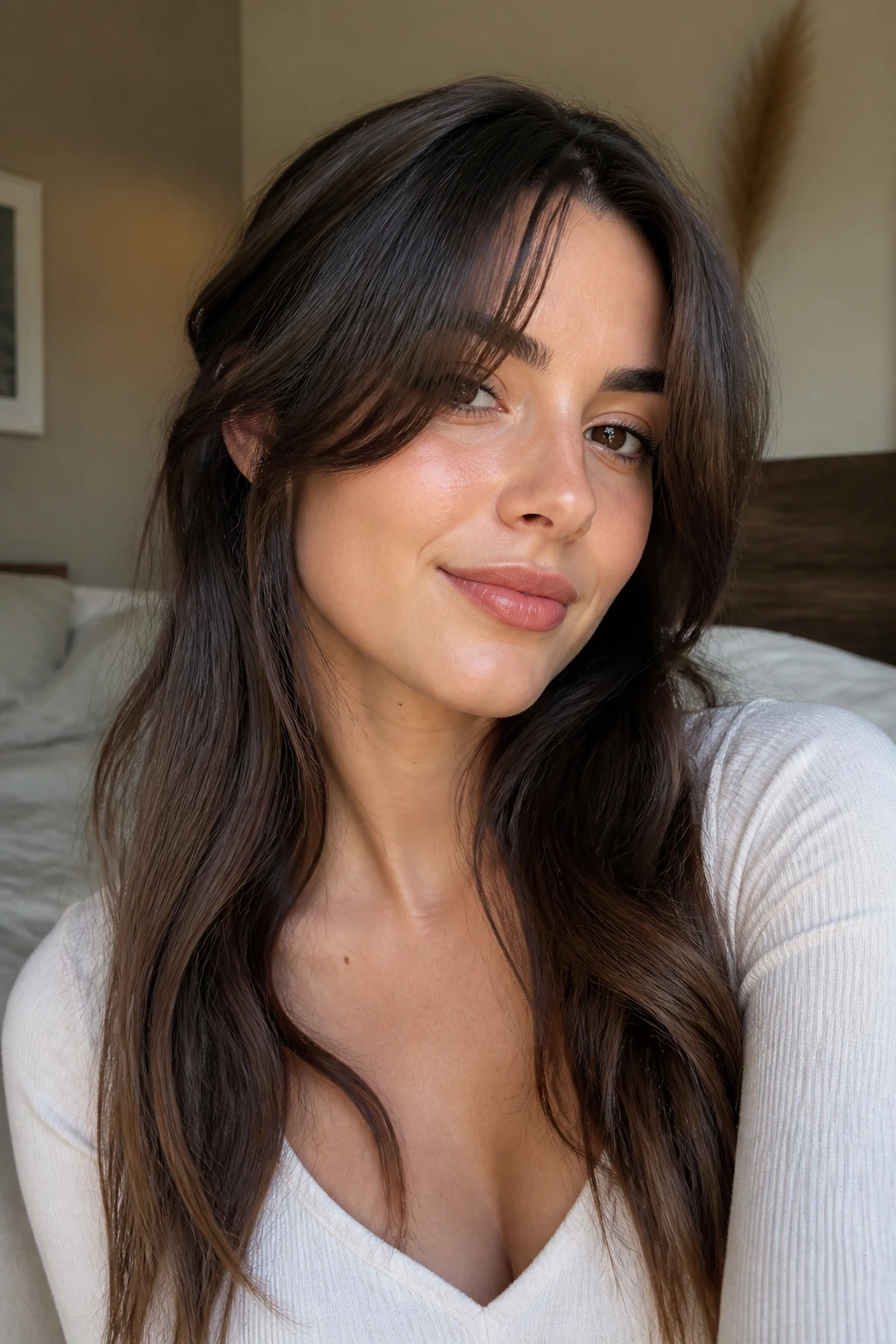
A grown-out fringe sounds like a compromise, but when it’s cut intentionally, it can be one of the smartest looks for a heart-shaped face. The bangs start as a softer center split and gradually become longer pieces that fold into the layers. Nothing abrupt. Nothing fussy.
That gradual shape is what makes it flattering. The forehead gets softened, the temples get a little shadow, and the lower half of the face gets more presence because the eye keeps traveling downward through the length of the cut. It’s a graceful way to wear fringe if you hate frequent trims.
This is also one of the easiest styles to live with when your schedule is crowded. A fresh blowout isn’t mandatory. A quick re-part, a little dry shampoo, and a tuck behind one ear can still look intentional.
19. Temple-Skimming Curved Bangs
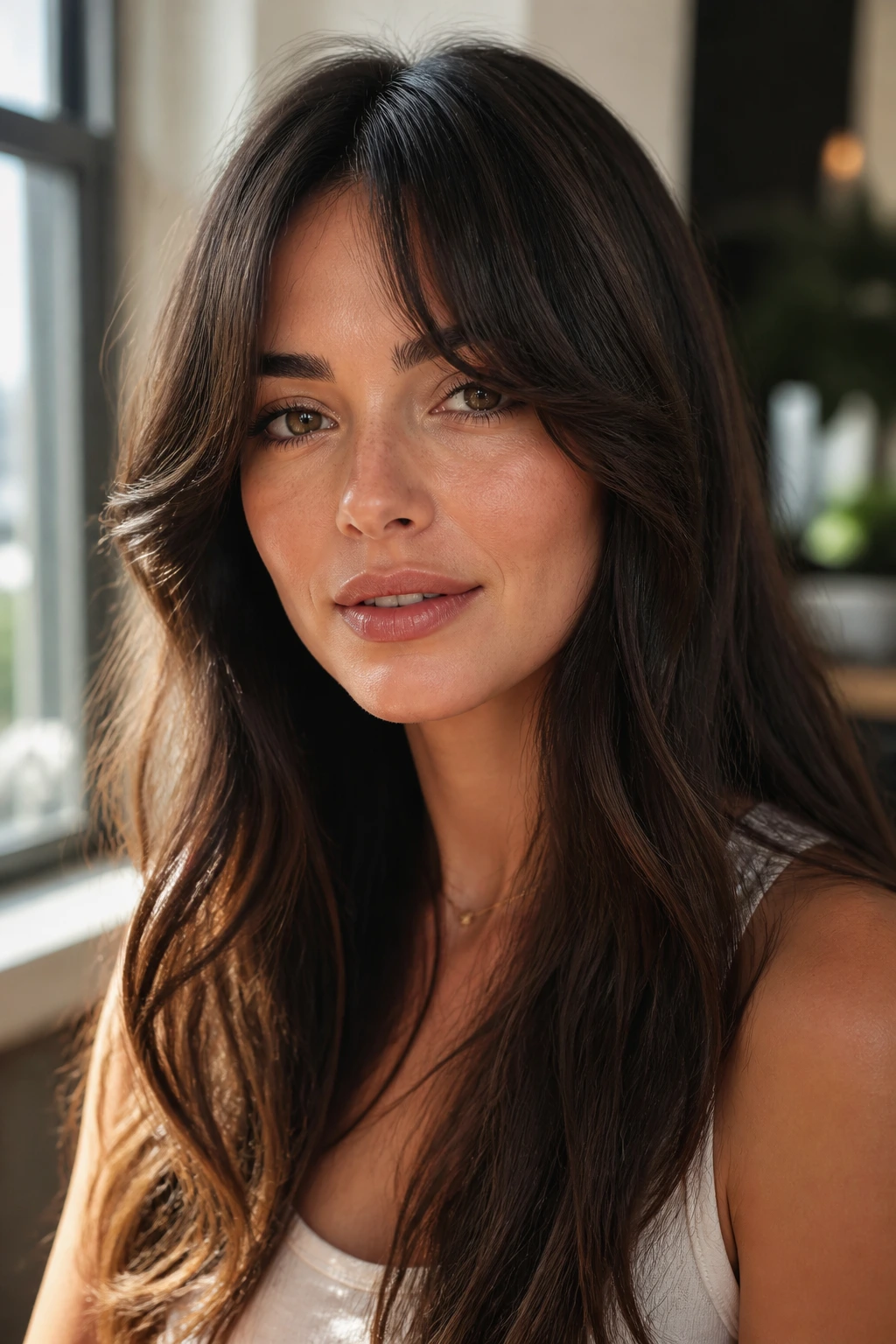
Temple-skimming bangs do something smart: they don’t stop at the forehead. They curve out toward the temples, which is exactly where a heart-shaped face sometimes needs extra softness. That little sweep helps the front of the haircut feel balanced instead of front-loaded.
This shape is a good fit if your hair is long and you want the fringe to act like a frame rather than a separate feature. The curve can start around the brow and drop toward the cheekbone, then vanish into the rest of the cut. Very little drama. Lots of payoff.
If your stylist keeps the temple area too short, the whole look loses its shape. The outer pieces need enough length to travel. That’s the part that keeps the face from feeling too wide at the top and too narrow at the bottom.
20. Soft Micro Bangs
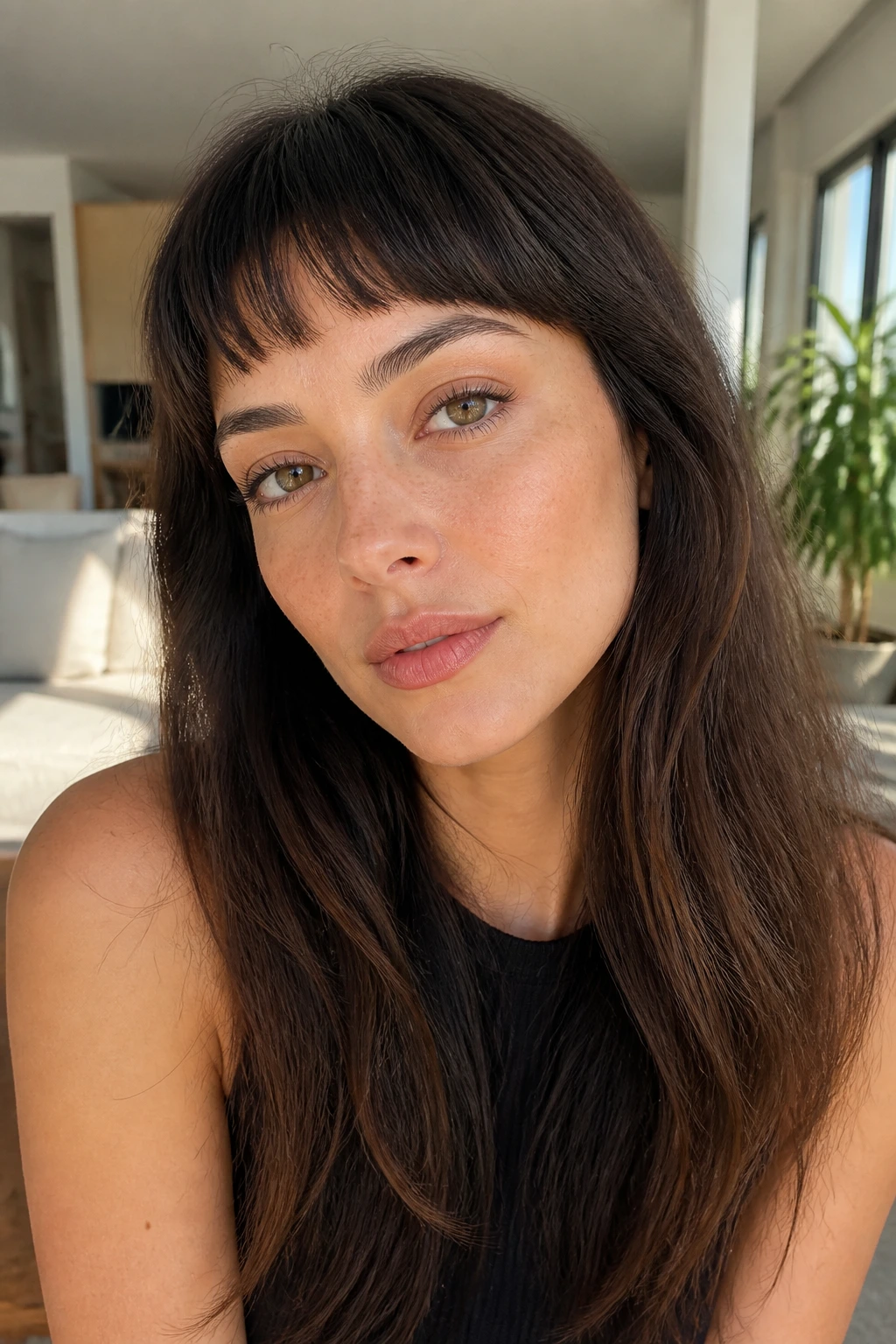
Micro bangs can work on a heart-shaped face, but only if they’re softened. A hard, straight-across short fringe can be a lot on a forehead that already carries width. Soft micro bangs avoid that by using texture, tiny gaps, and a little irregularity at the edge.
They’re the boldest option on this list. There’s no pretending otherwise. If you want something subtle, skip past this one. If you like a sharper look and you’re willing to style the crown so the bangs don’t lie flat, they can look fantastic with long hair. The contrast between a short front and long length is strong, and strength is part of the appeal.
The safest version keeps the micro line a bit broken and not too dense. That way the fringe reads as edgy rather than severe. On a heart-shaped face, softness at the edge is the difference between cool and cartoonish.
21. Layered Side Bangs
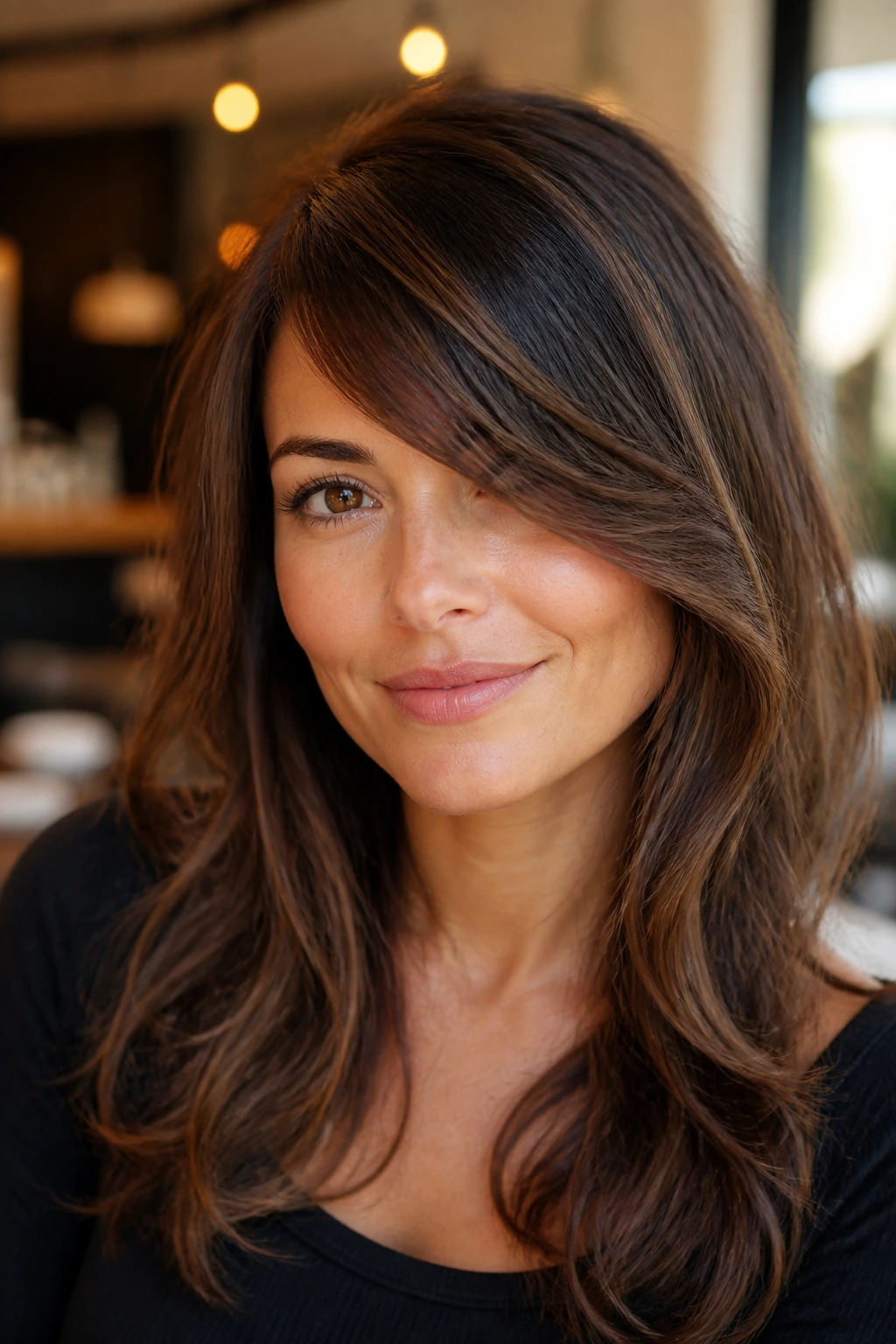
Layered side bangs are a more relaxed cousin of the classic sweep. The difference is in the depth: instead of one big diagonal piece, the fringe is cut in layers so it moves and separates a little more easily. That works well on long hair because the front doesn’t feel like a separate chunk.
For heart-shaped faces, the layered structure helps pull the eye away from the forehead and into the body of the hair. It’s a subtle trick, but a good one. The cut also plays nicely with volume at the crown, which can make the face read a little longer and less top-heavy.
This is a strong choice if your hair is medium-thick and you don’t want daily bang drama. A side blow-dry and a quick pass with a brush is usually enough. No need to make it precious.
22. Wispy French-Girl Bangs

Wispy French-girl bangs are not meant to look overly polished. That’s the point. They sit lightly on the forehead, break into little pieces, and keep the whole front of the haircut from feeling dense. On a heart-shaped face, that lightness is a real advantage.
The style works best when the edges are a little uneven and the center is not cut too short. It should feel easy, not obedient. Long hair gives the fringe a softer backdrop, which means the bangs can be airy without looking unfinished.
If your hair leans straight, a small round brush and a quick bend at the end are enough. If it’s wavy, even better — don’t fight the wave into a flat line. The tiny imperfections are what keep this fringe from making the forehead look square.
23. Collarbone-Grazing Fringe Blend
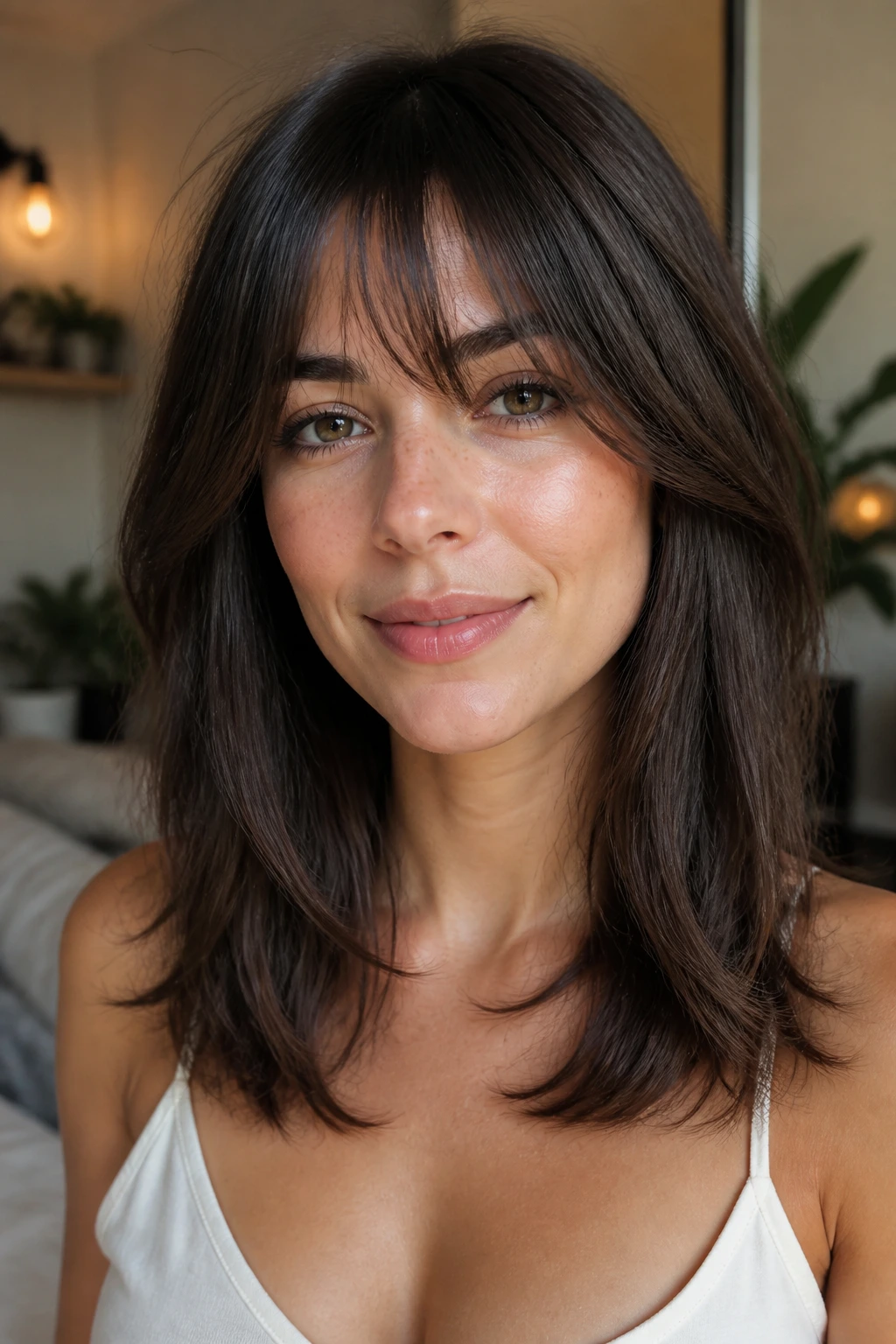
This one is for people who like the idea of bangs but want the front pieces to travel a long way. The fringe starts near the face and blends into collarbone-length layers, so the shape feels like a slow frame rather than a hard cut.
That slow frame is useful on a heart-shaped face because it pushes the visual weight lower. Instead of clustering attention around the brow, the haircut keeps moving down through the cheeks, jawline, and collarbone. Long hair makes the whole effect look deliberate, not improvised.
You’ll want to keep the shortest pieces long enough to tuck behind the ear. If they’re too short, the blend breaks. If they’re too long, the “bang” part disappears. A good cut sits in that middle zone where you can still style it forward on one day and back on the next.
24. Volumized Crown Sweep Bangs
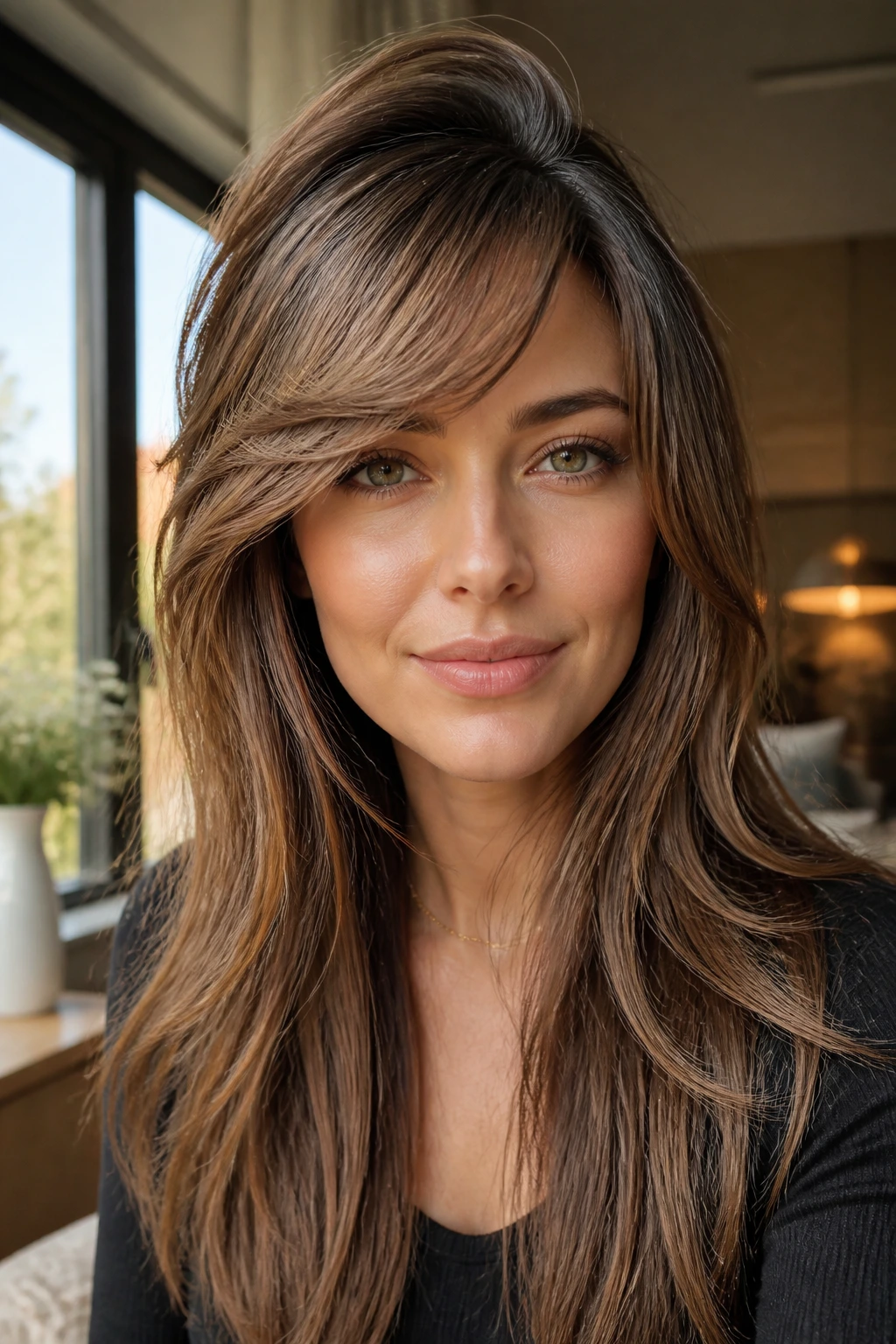
If your hair lies flat at the roots, a volumized crown sweep can change the whole mood of the haircut. The bang section is lifted at the crown and pushed diagonally across the forehead, which gives a heart-shaped face a little height up top without adding width where you don’t want it.
This is one of the more strategic choices on the list. The lift at the root keeps the fringe from collapsing into the forehead, and the sweep creates a soft line that narrows visually as it moves across the face. Long hair below keeps the style from feeling overworked.
A mousse at the roots, a round brush, and a cool shot at the end are the useful part here. Don’t flood the hair with product. A little support at the crown goes farther than a pile of heavy cream that makes everything droop by lunch.
25. Halo Fringe
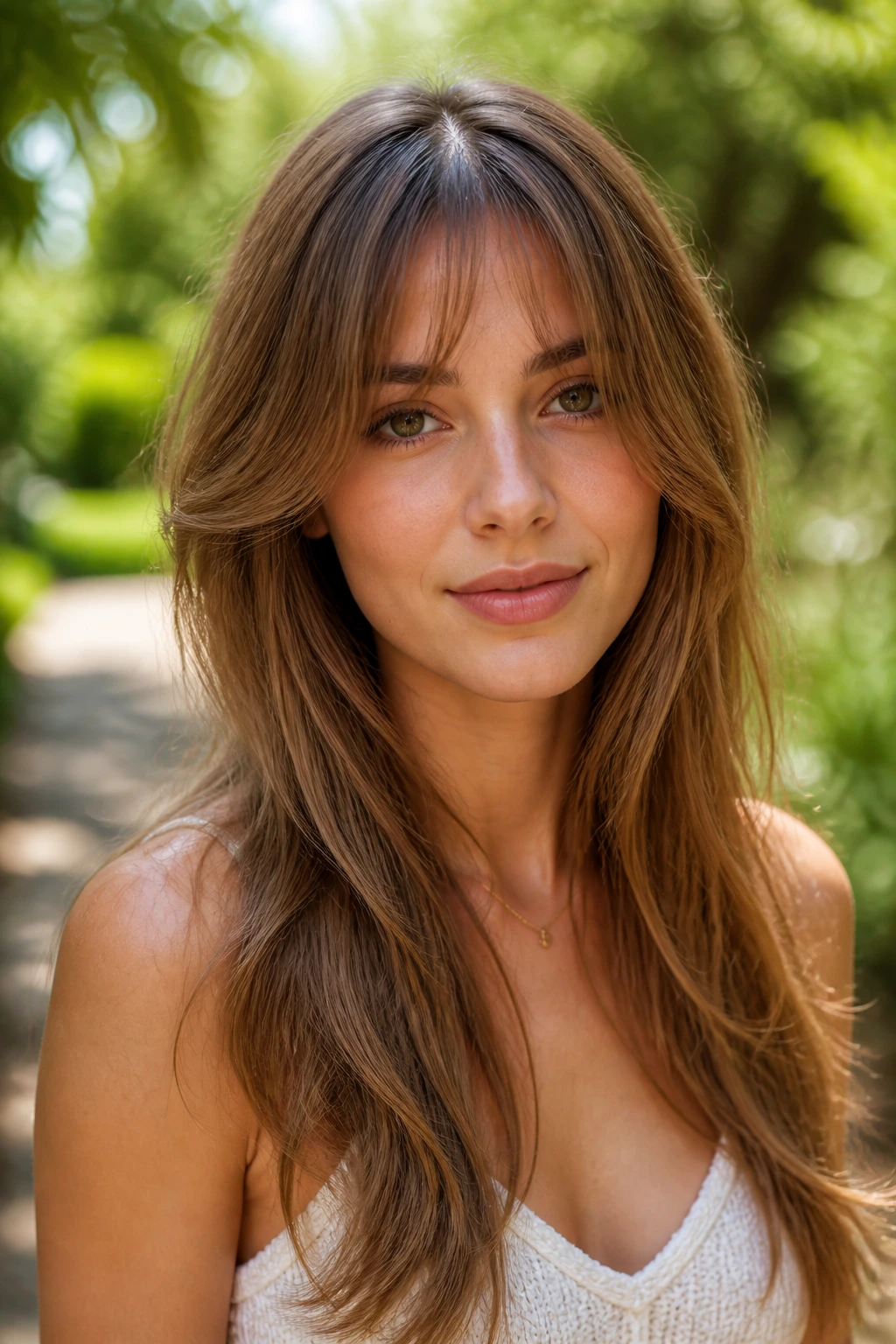
Halo fringe is a rounded, airy shape that follows the curve of the face instead of slicing across it. It has a soft circular read — not tight, not severe — which can be lovely on a heart-shaped face because it smooths the forehead without turning the whole front into a blunt panel.
The name sounds a little dramatic. The haircut doesn’t have to be. The best halo fringe sits lightly, with enough bend to let the temples and cheekbones show through. On long hair, that means you get a soft frame up top and plenty of movement everywhere else.
This is a good last stop if you want something that feels polished but not stiff. It’s less common than curtain bangs, a little more sculpted than wispy fringe, and it flatters the face by keeping the top rounded rather than wide.
How to Style Bangs So They Sit Where You Want
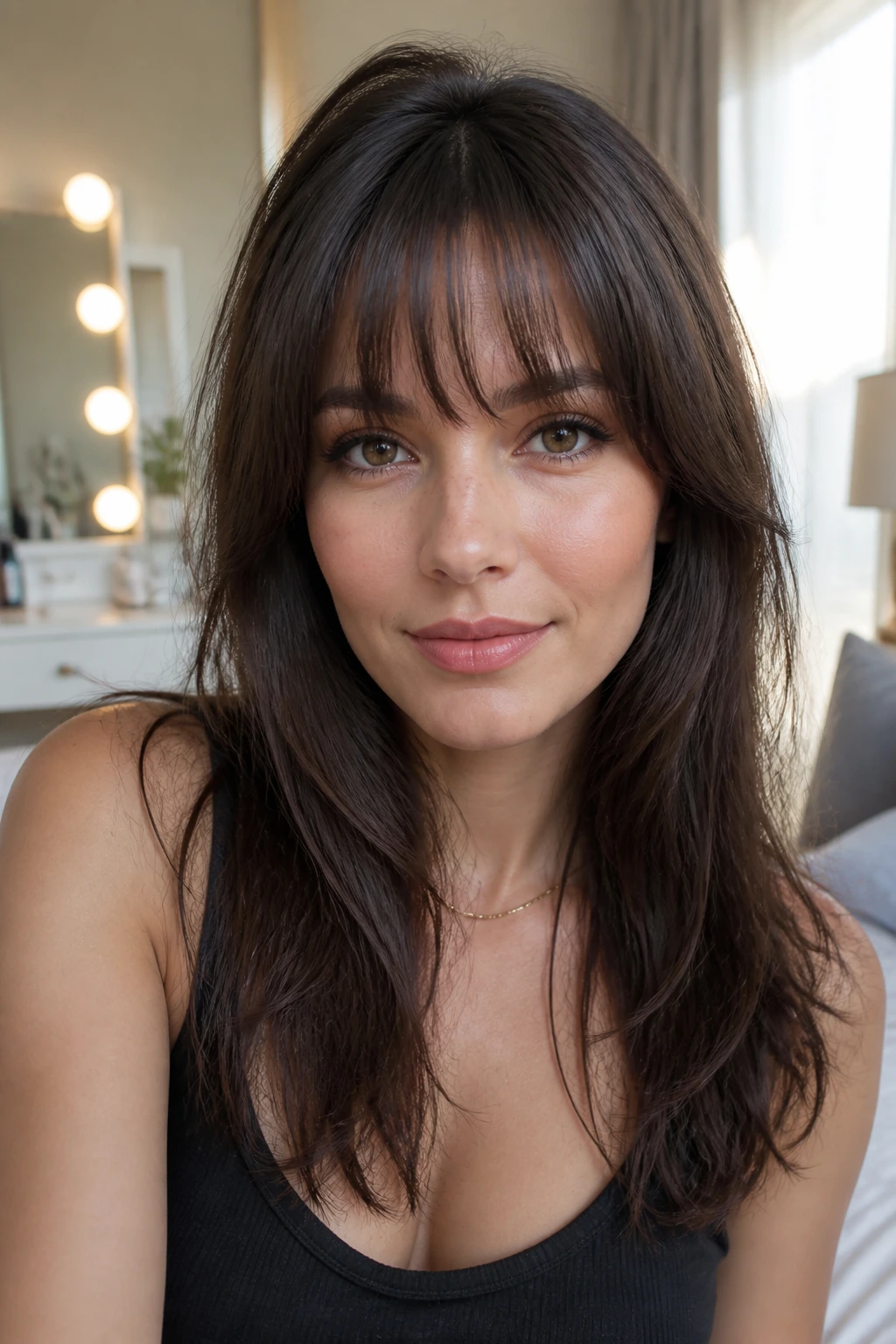
Bangs misbehave most when they’re left to dry on their own in the wrong direction. That’s especially true on a heart-shaped face, where the shape has to do a balancing job. A fringe that dries too flat across the forehead can make the top of the face feel wider. One that dries too puffed-up can look like it’s floating away from the haircut.
Dry the front first. Seriously. Clip the rest of your hair back, mist the bangs with water or start from damp, then use a small round brush or a paddle brush depending on the style. If you want curtain or bottleneck bangs, blow the root forward, then bend the ends away from the face. If you want side-swept bangs, dry them in the opposite direction first so the root gets some lift, then sweep them back over.
Blow-dry direction: Aim the nozzle downward at the hairline so the bangs don’t frizz up. Then change the angle only at the very end, when you’re creating bend.
Product load: Keep it light. A pea-sized amount of smoothing cream or mousse is enough for most fringe sections. Too much product makes bangs separate in oily clumps, and that’s a miserable look by noon.
Cowlick control: If your bangs split at the center, dry them while pushing the roots side to side with the brush. A cool shot helps lock the direction. And if the split keeps winning, let the fringe be a little longer — short bangs and strong cowlicks are a rough pairing.
The Mistakes That Make Fringe Fight a Heart-Shaped Face
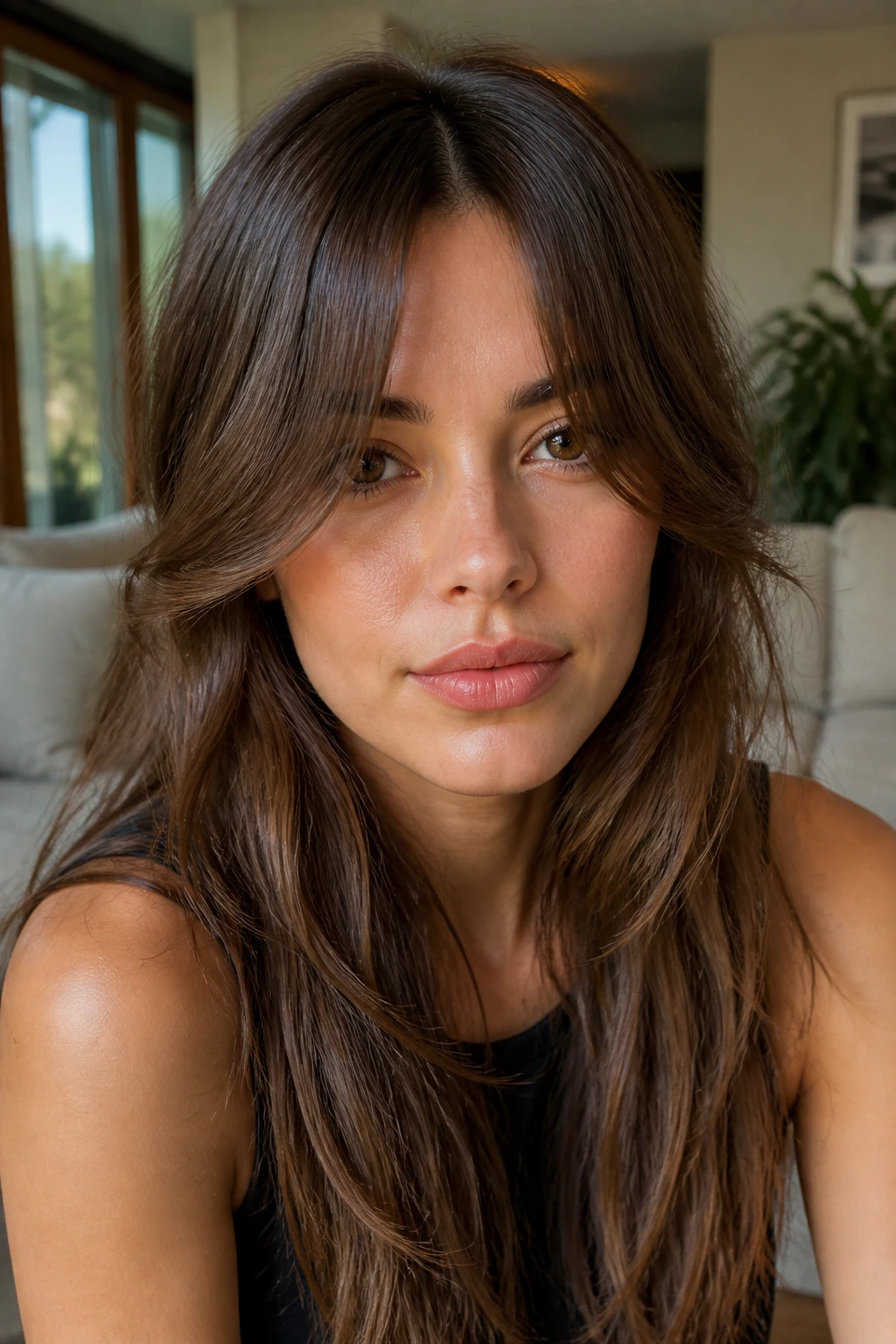
The most common mistake is cutting the bangs too short at the center. It sounds harmless until you see it in the mirror and realize the forehead is now the loudest thing in the room. On a heart-shaped face, the center point of the fringe usually needs a little length to soften that top-heavy feeling.
Another problem: making the fringe too thick from side to side. Heavy bangs can look rich in the salon chair and then turn into a shelf once they settle. The fix is simple. Keep some air in the cut, especially at the temples, so the fringe can move and taper instead of sitting like a wall.
Ignoring the crown: If the roots around the bang area are flat, the fringe can collapse into the forehead and make the face look wider. A little lift at the root changes the geometry more than people expect.
Cutting for the mirror, not the texture: Straight hair, wavy hair, and curly hair all shrink and bend differently. A fringe that looks perfect wet can be two inches too short when it dries. Cut with the texture in mind, not just the combed-out version.
Forgetting the grow-out phase: A fringe that sits beautifully for six weeks but looks awkward at week seven is a planning error, not a styling one. Longer side pieces and blended edges buy you time. Use them.
Tools That Make Fringe Easier to Live With
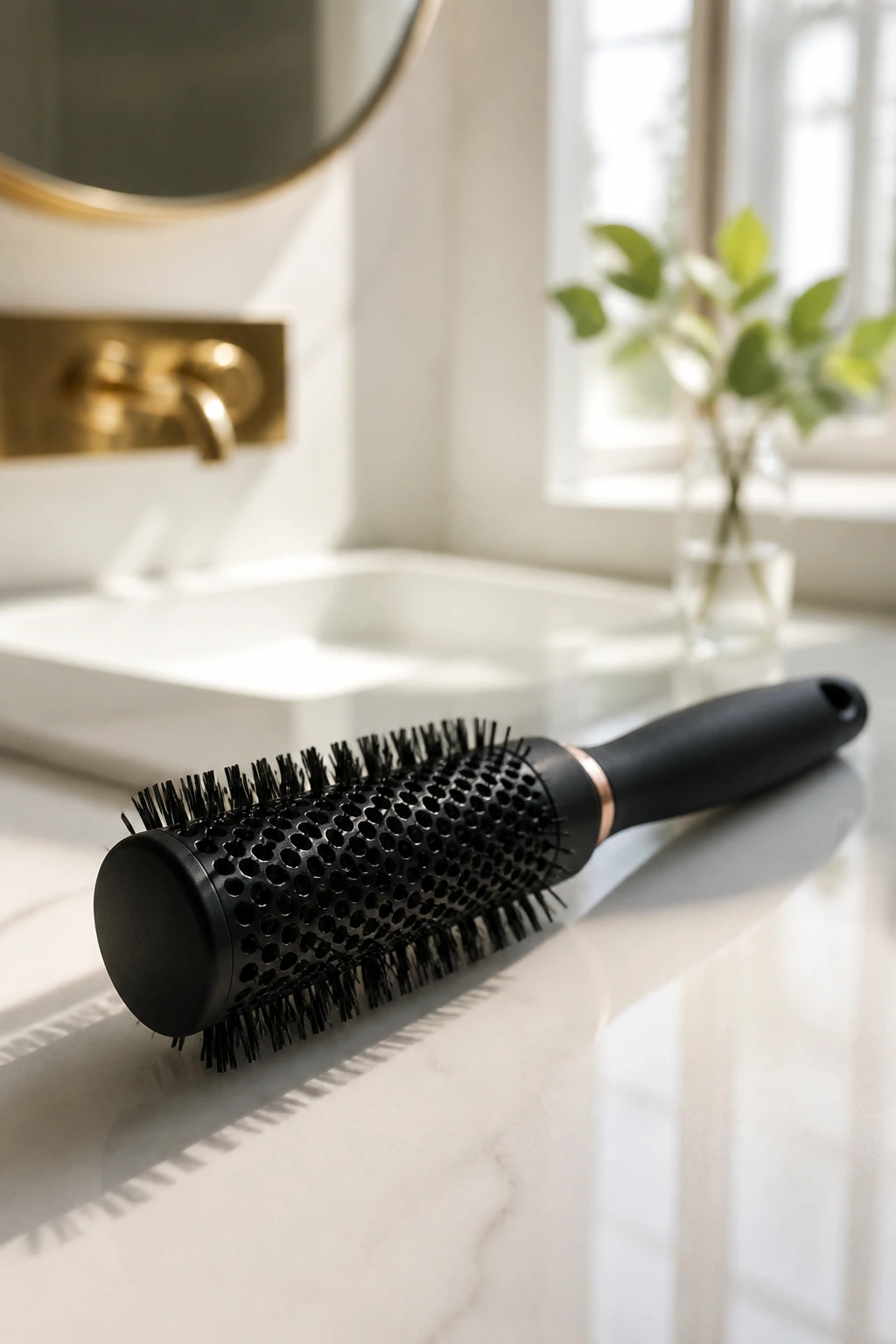
You don’t need a drawer full of gadgets, but a few small tools make bangs far less annoying.
- Small round brush, 1 to 1.5 inches: Best for curtain, bottleneck, and feathered fringe because it gives bend without puffing the root too much.
- Blow dryer with a nozzle: The nozzle focuses air so the fringe dries in the direction you want instead of frizzing out in every direction.
- Fine-tooth comb: Useful for separating the bang section cleanly from the rest of the hair and for checking part placement.
- Duckbill clips: Handy for pinning the rest of the hair back while you style the front, especially on long hair.
- Lightweight mousse or root spray: Gives lift at the crown without making the fringe sticky.
- Dry shampoo: Good for day-two fringe oil, which shows up fast on foreheads and right at the hairline.
- Small flat iron, 1/2 to 1 inch: Optional, but useful for shaping a stubborn curve or smoothing a cowlick.
- Heat protectant: Do not skip this if you use heat on your bangs more than once in a while. Fringe is short, so damage shows faster.
A mirror with decent natural light helps more than people think. Bangs lie in bad lighting.
Variations and Texture Swaps Worth Trying
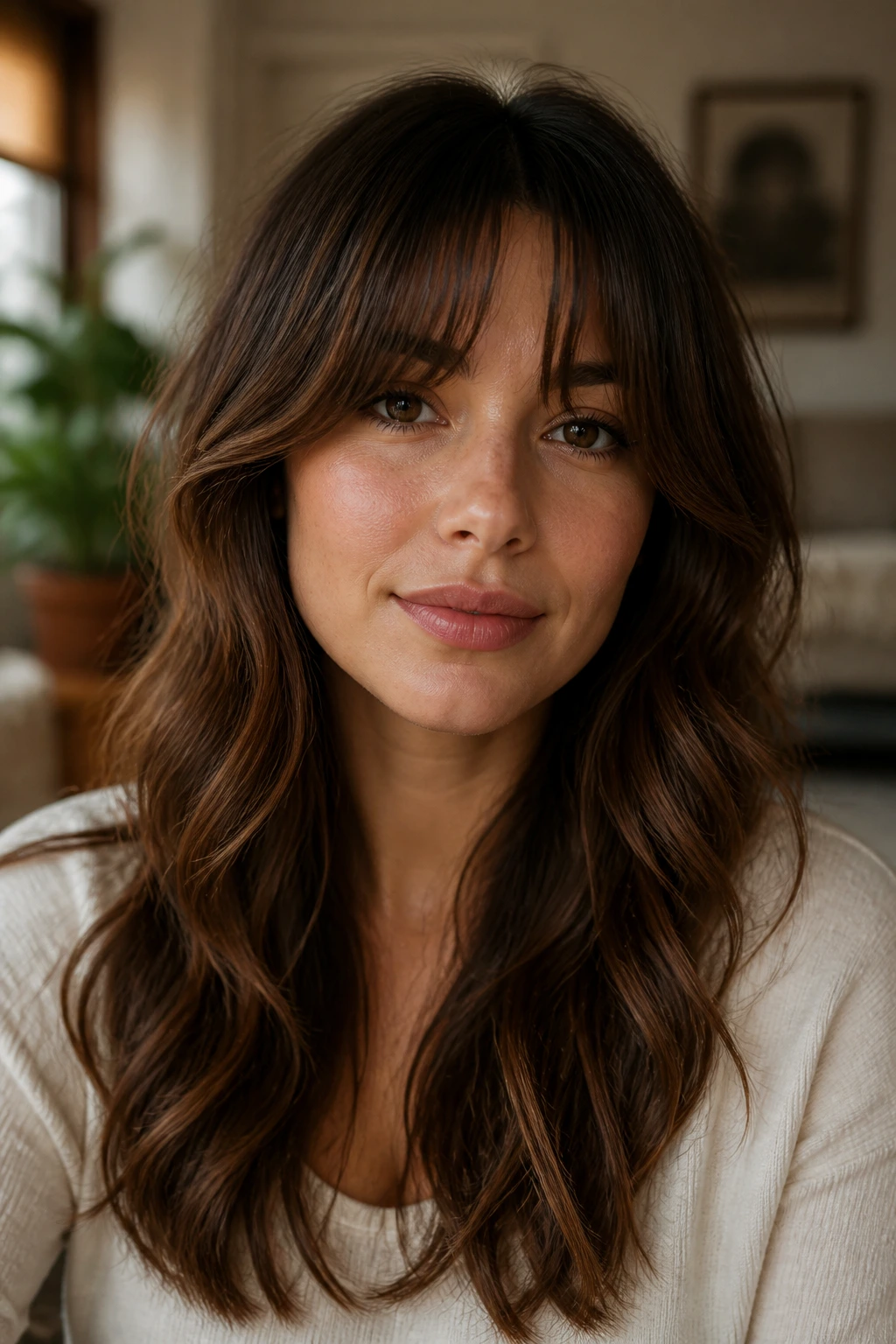
Straight-Hair Softness: If your hair is pin-straight, ask for beveled ends or point-cut edges so the fringe doesn’t look like a rigid line. Straight texture can handle a clearer bang shape, but it still needs a little movement around the temples to flatter a heart-shaped face.
Wavy-Hair Bend: Let the stylist cut your fringe with your natural wave pattern in mind, and leave a touch more length than you think you need. Wavy bangs bounce up when they dry, and that extra quarter-inch saves you from accidental baby bangs.
Curly-Fringe Balance: Curly hair does best with a longer fringe that can shrink safely into place. Keep the shortest point near the brow and let the sides fall longer, then diffuse gently rather than brushing the curl out of shape.
Low-Maintenance Grow-Out: If frequent trims make you miserable, start with curtain, bottleneck, or collarbone-grazing fringe. Those shapes let the bangs fade into layers instead of announcing every two-week trim reminder.
Sharper-Edge Version: If you like bolder hair, try a soft micro bang or a textured blunt fringe, but keep side pieces longer. That balance keeps the style from overpowering the forehead and gives the lower face a little more breathing room.
Growing Out Fringe Without the Weird Middle Stage
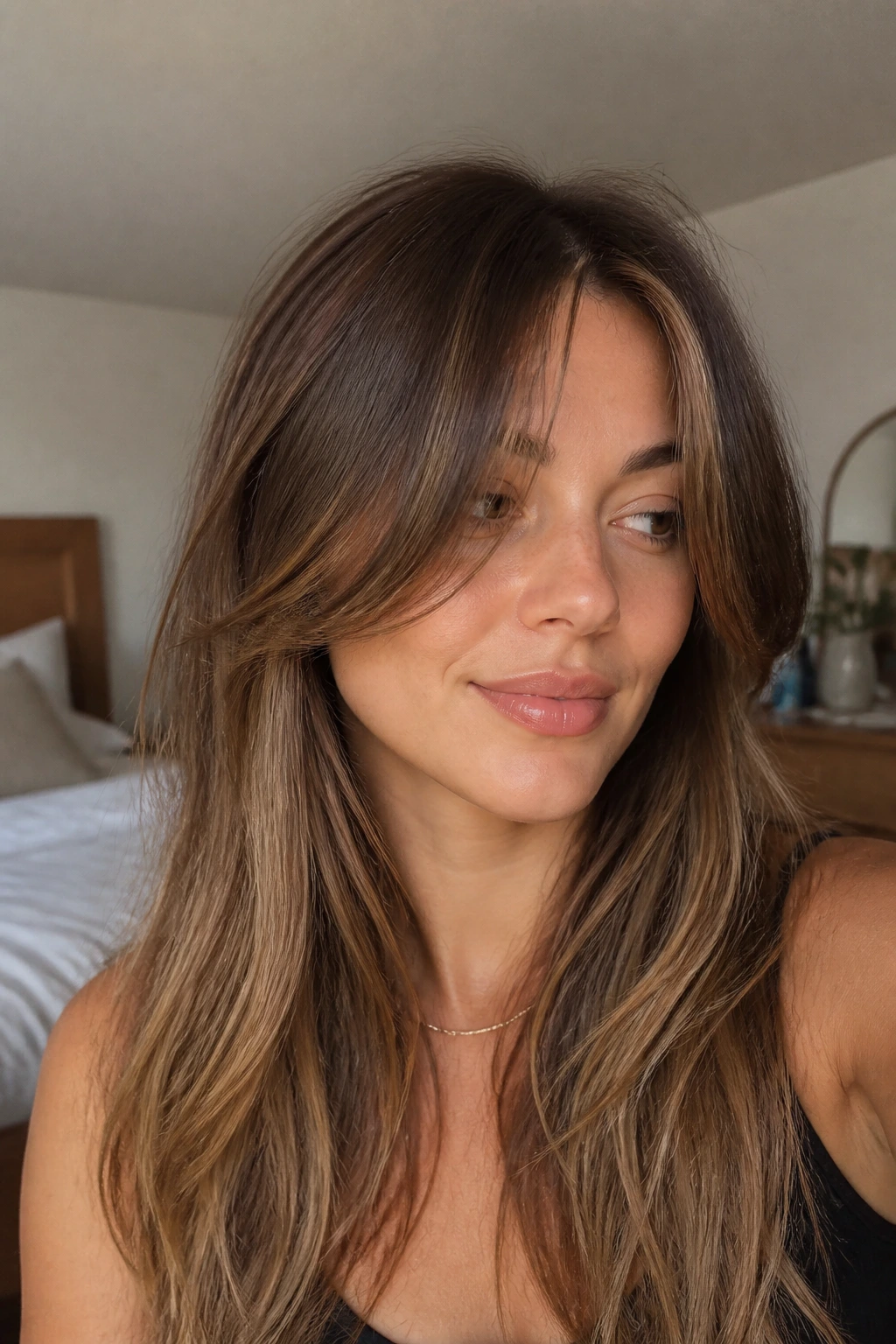
The easiest way to grow out bangs is to stop treating grow-out like failure. Long hair helps here. It can hide almost anything, which is one reason fringe and long lengths work so well together in the first place.
Start by shifting the part a little off center, then let the shortest pieces hit the cheekbones instead of trying to force them to disappear overnight. Pin the shorter front sections back on rough days. Tuck the sides behind the ears. Use a little dry shampoo at the roots so the front doesn’t separate into oily strings.
Trim the shape, not the length, every 4 to 6 weeks if you want the fringe to stay intentional while it grows. That sounds like a nuisance. It is. But it’s less annoying than living in the in-between where the bangs are too short to behave and too long to sit well.
The best grow-out styles are the ones that already have a built-in escape route: curtain bangs, bottleneck bangs, side-swept fringe, and longer face-framing blends. If you’re the type who likes to change your mind halfway through, start there.
Frequently Asked Questions

Which bangs are most flattering for a heart-shaped face?
Curtain bangs and bottleneck bangs usually give the easiest balance because they soften the forehead and let the side pieces fall toward the cheekbones. If you want something softer still, a long side-swept fringe or a face-framing blend is hard to mess up.
Can a heart-shaped face wear blunt bangs?
Yes, but the best version is softened, not heavy and boxy. Keep the edges a little broken, and leave the temples longer so the fringe doesn’t make the forehead feel wider than it is.
Are curtain bangs better than side bangs for long hair?
Curtain bangs are usually the more modern, flexible option, especially if you wear your hair center-parted. Side bangs are better if you like asymmetry or if your face feels widest when everything is split down the middle.
What if my hair is fine and bangs go limp?
Choose a lighter shape like wispy curtain bangs, brow-grazing feathered bangs, or a side-swept fringe. A small amount of root spray at the bang area and a quick round-brush blow-dry usually give enough lift without making the front feel stiff.
Do bangs make a heart-shaped face look wider?
They can, if they’re too short, too heavy, or cut in a straight block across the forehead. The trick is to let the fringe open at the sides or taper toward the cheekbones so the eye keeps moving downward.
How often do bangs need trimming?
Most fringe styles need a trim every 3 to 6 weeks if you want them to keep their shape. Longer, blended styles can stretch farther; short blunt or micro styles need more regular upkeep.
What if my bangs split in the middle every single day?
That usually means a cowlick or a root pattern that wants a part in a specific spot. Dry the fringe in the opposite direction first, then sweep it back. If that still fails, a longer center piece or a curtain-style shape will behave better than a short straight fringe.
Can curly hair wear bangs on a heart-shaped face?
Absolutely, but the bangs should be cut with the curl pattern in mind. A longer curly fringe that sits near the brows or cheekbones usually works better than a short blunt line, which can shrink too much once it dries.
The Fringe That Fits the Face
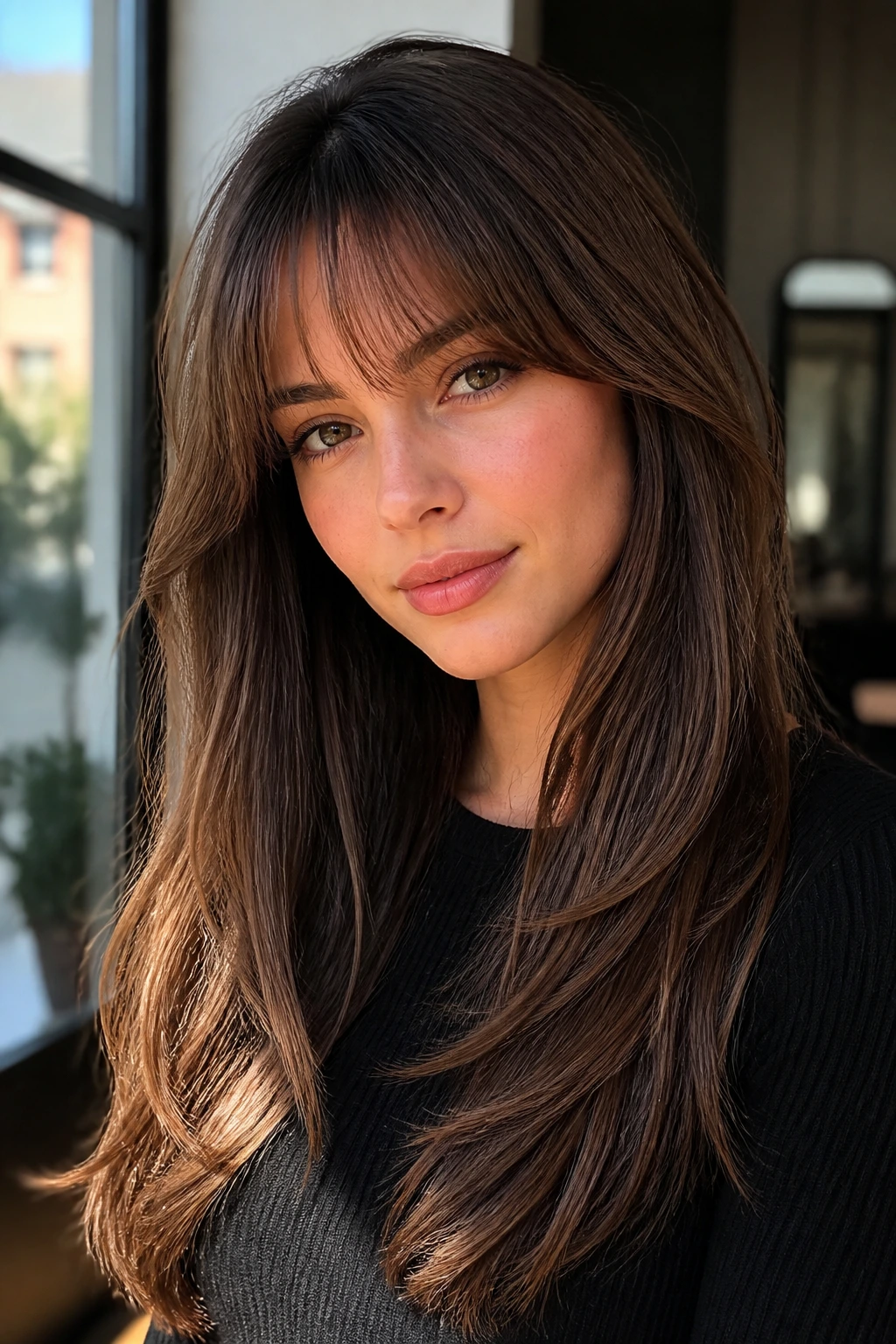
The best bangs for a heart-shaped face do not try to hide the forehead. They balance it. That’s the difference between a fringe that keeps fighting you and one that quietly makes the rest of the haircut make sense.
Long hair gives you room to play with that balance. You can go soft and split, a little sharper, more layered, more dramatic, or almost invisible. Start with the shape that matches how much upkeep you can handle, then let the rest of the cut support it instead of competing with it.
A good fringe should make the front of your hair feel lighter, the chin feel less narrow, and the whole cut feel a little more alive. If you get those three things, the style is doing its job — and it’s probably the one you’ll keep circling back to.