



Long hair can turn heavy fast. One minute it has swing, the next it hangs like a single sheet with split ends at the bottom and no real shape in the middle. Wispy layers with bangs for long hair fix that by cutting movement into the silhouette without chopping the length people usually want to keep.
The trick is balance. Too many short layers, and the ends look thin and needy. Too little layering, and the bangs sit there like a separate idea instead of part of the haircut. The good versions let hair move when you walk, bend when you blow-dry it, and grow out in a way that still looks intentional after the salon appointment starts fading into memory.
That’s why this cut shows up in so many different forms. Some versions are soft and romantic. Some lean airy and feathered. Some have a little edge around the face, then keep the rest long and clean. The shared goal is the same: give long hair a better shape, make the fringe feel lighter, and stop the whole thing from collapsing into one flat line.
Why This Collection Feels Different
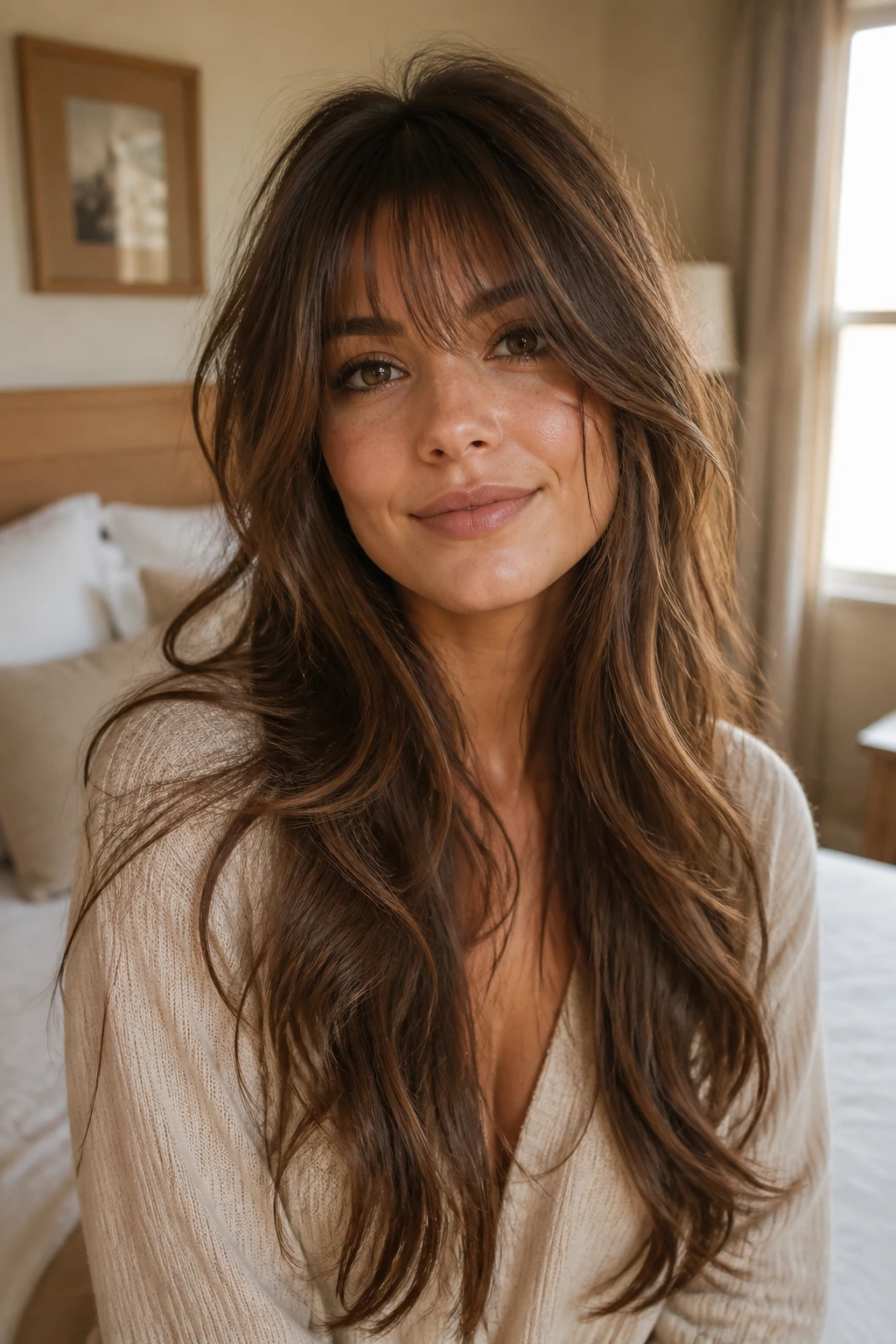
-
The length stays the star: These cuts keep the long silhouette intact, but remove enough weight that the ends don’t look like a curtain rod.
-
The bangs do real work: A good fringe shifts attention to the eyes and cheekbones, which makes the whole haircut feel more alive.
-
Grow-out matters here: Wispy layers and soft bangs usually forgive a few extra weeks between trims far better than blunt cuts do.
-
Texture changes the result: Wavy, straight, fine, and thick hair all land differently, and the best version depends on how your hair falls on a plain old air-dry day.
-
Styling doesn’t have to be dramatic: A round brush, a touch of mousse, or a quick bend with a flat iron is often enough to make the shape read properly.
-
The cut can go soft or edgy: The same basic idea can look polished, shaggy, romantic, or undone, depending on where the shortest pieces land.
1. Curtain Bangs with Butterfly Layers
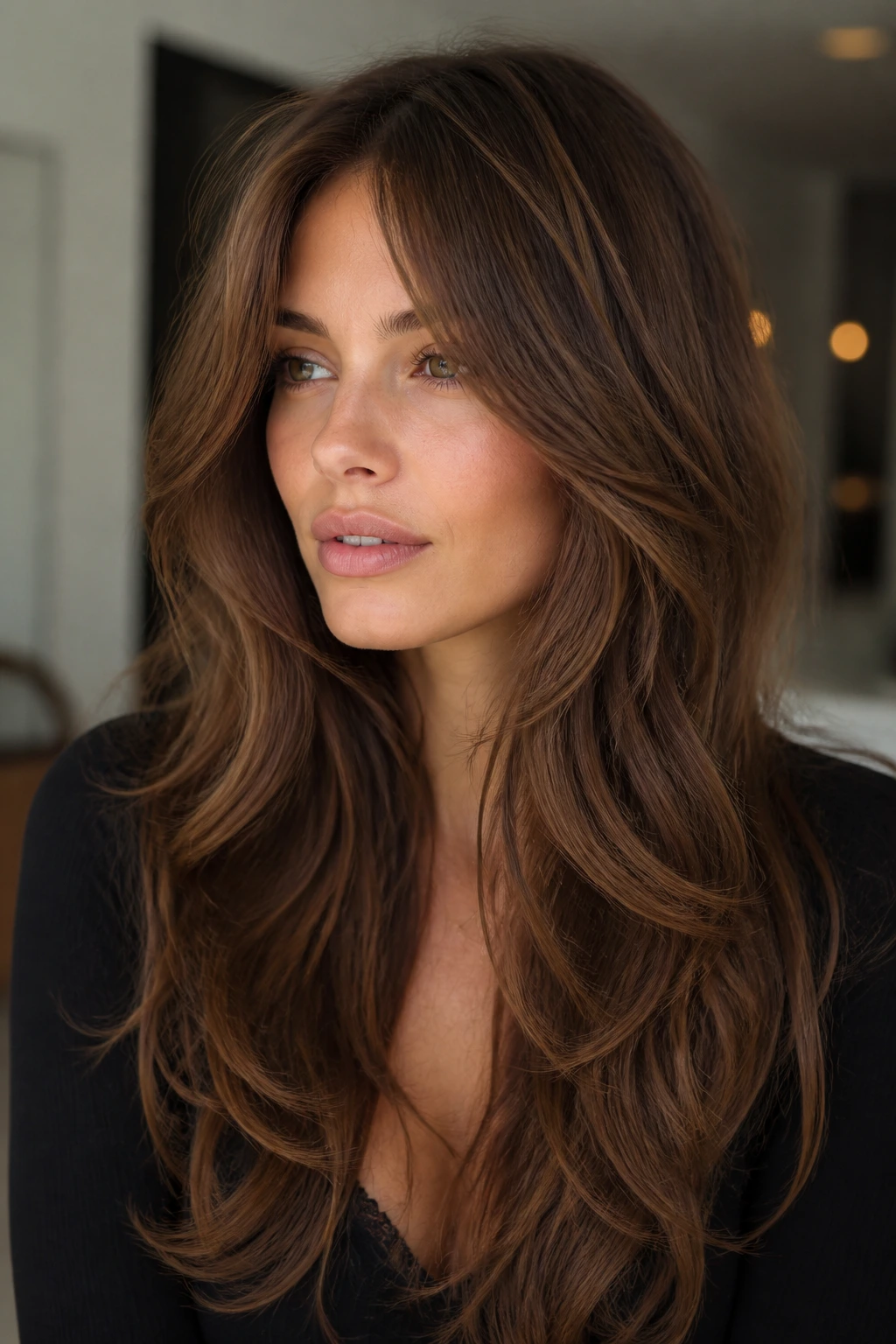
This is the version most people picture first, and for good reason. The front opens at the center, drops softly toward the cheekbones, and blends into longer layers that kick out around the chest. It gives long hair a lifted shape without making the ends look stripped.
What I like here is the contrast. The bangs feel airy, but the body of the hair still has enough length to look lush and deliberate. Ask for the shortest face-framing pieces to land around the cheekbone, then let the back layers stay long enough to keep that butterfly sweep. If you blow-dry only one style from this list, make it this one; a large round brush and a little root lift make the whole thing move.
2. Feathered Layers with Airy Fringe
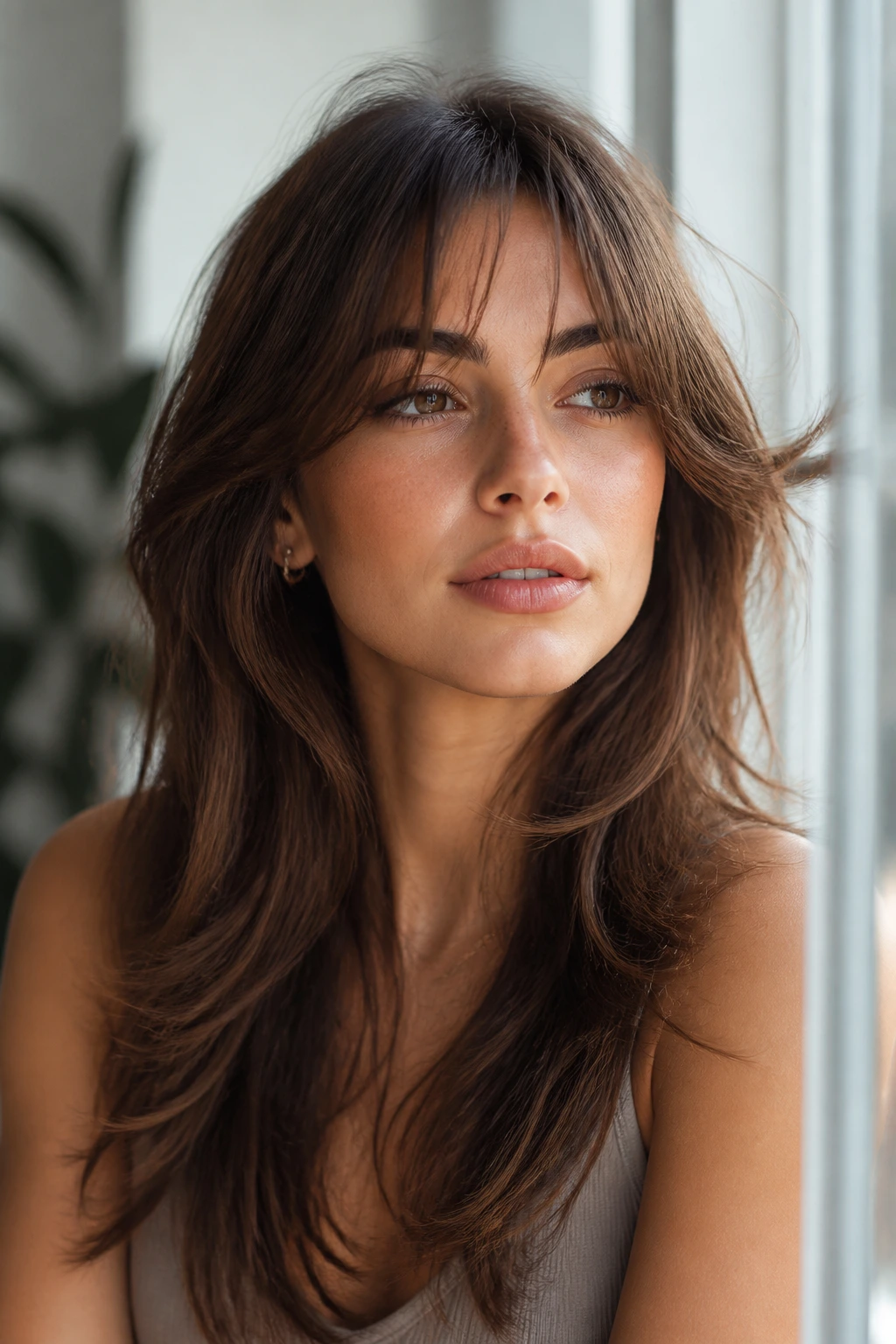
Feathering works when you want the haircut to look like it has a breeze in it. The layers are cut with soft point work so the edges don’t sit in one hard line, and the fringe is thin enough to show the forehead without looking sparse. It’s especially good on hair that feels dense at the ends.
- Ask for feathering through the mid-lengths, not just a tiny bit of texture at the bottom.
- Keep the fringe a touch longer at the temples so it blends instead of hovering like a shelf.
- Use light mousse or a root spray, not a heavy cream that flattens the movement.
This cut looks best when it’s not over-styled. A little bend is enough.
3. Soft Shag with Long Wispy Bangs
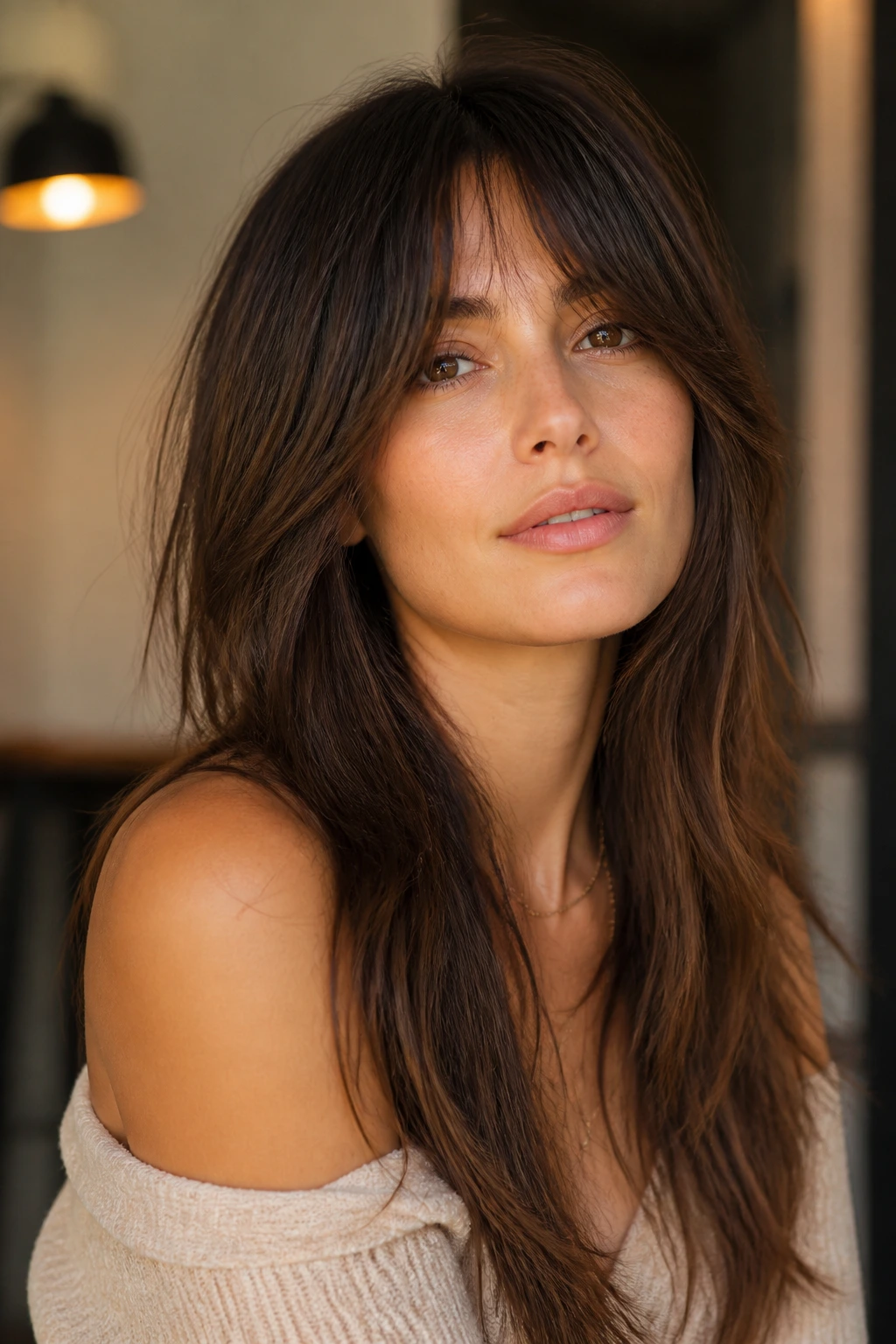
Can a shag still feel soft? Absolutely, if the shortest pieces are handled with restraint. This version keeps the crown a little looser, adds wispy bangs that can split in the middle or sweep to the side, and leaves enough length through the ends that the whole thing still reads as long hair.
The magic is in the texture. A soft shag gives you lift around the top without turning the haircut into a chopped-up mess. That’s the trap with this style: if the layers are cut too short or too aggressively, the whole shape goes fuzzy. Keep the fringe long enough to tuck behind one ear, and ask for the back to stay connected. Wavy hair loves this cut. Straight hair can wear it too, but it usually needs a round brush or a few lazy bends with a flat iron.
4. U-Shaped Cut with Whisper Bangs
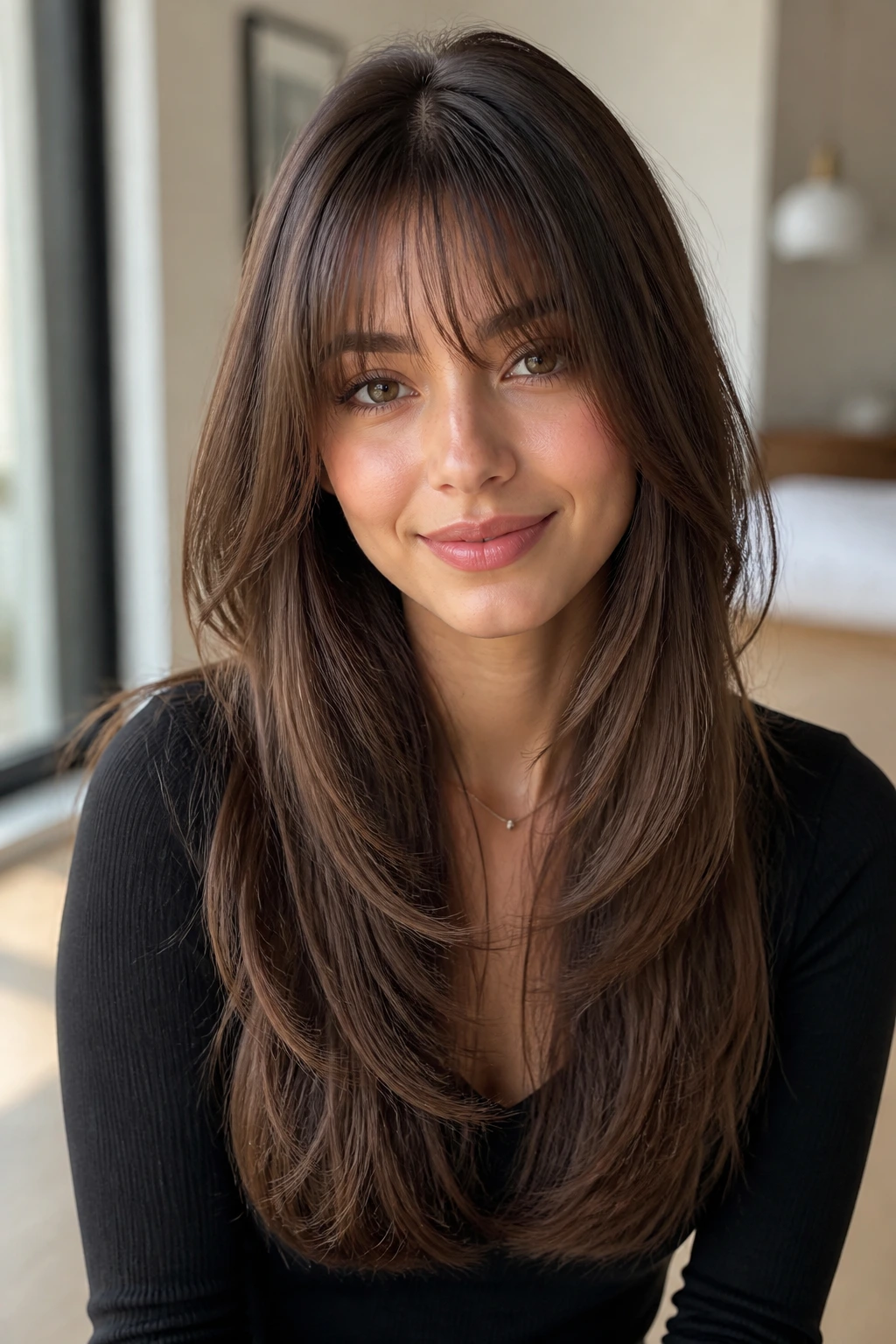
A U-shape is one of the quietest ways to add movement to long hair. The perimeter curves gently instead of falling straight across, and the layers inside the shape stay light enough to move. Add whisper bangs on top and the haircut suddenly stops looking heavy without losing its clean outline.
This one is for the person who wants softness, not drama. The bangs are light enough to brush off the forehead, and the longer sides melt into the rest of the cut instead of shouting for attention. It works well if your hair is straight or slightly wavy, because the shape is easy to see even when you don’t style it much. A blow-dry with a vent brush or a quick pass with a large round brush keeps the curve from collapsing at the bottom.
5. Bottleneck Bangs and Cheekbone Layers
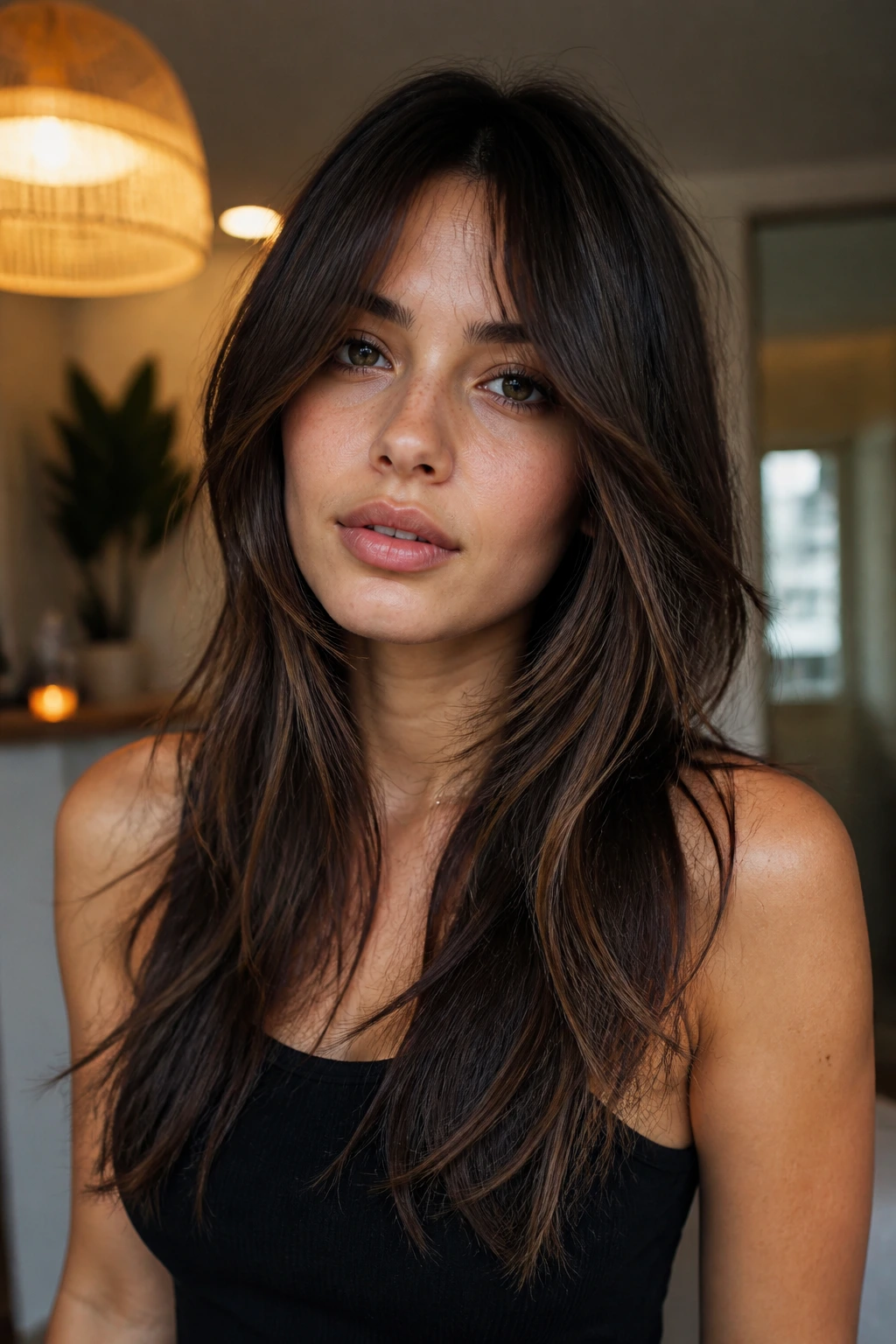
Bottleneck bangs narrow at the center, then open out toward the temples and cheekbones, which is a very good thing if you want fringe that frames the face without closing it in. Pair that with layers that start around the cheekbone and you get a shape that feels tailored, not bulky.
The reason this combo works so well is proportion. The bangs create a small focal point above the eyes, while the layers echo that line lower down along the cheeks and jaw. It’s flattering in a way that feels structural, not fussy. I like this on medium to thick hair because the shape has enough body to hold itself. If your hair is very fine, keep the layers longer and softer so the face frame doesn’t get wispy in a bad way.
6. Razored Length with Side-Swept Fringe
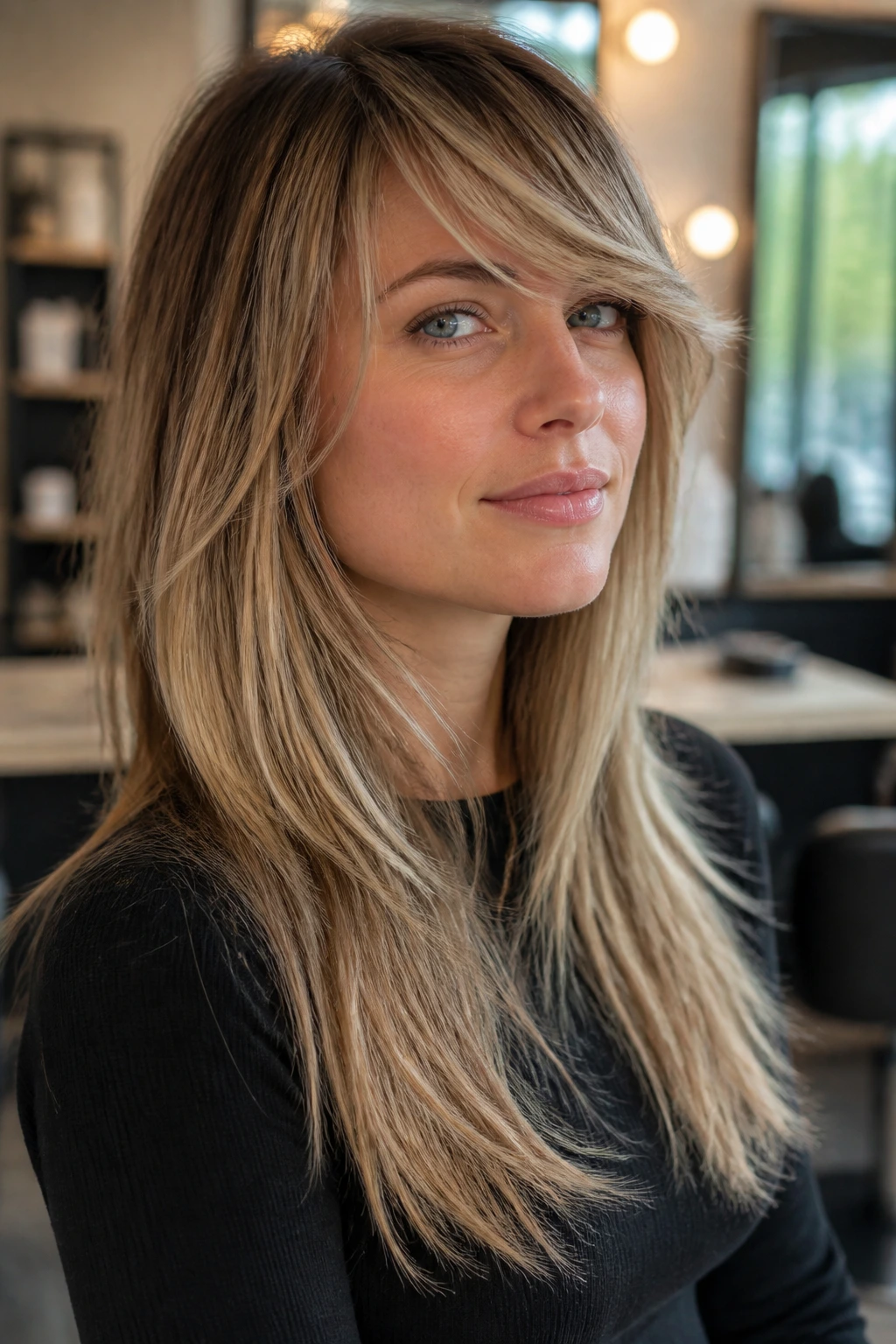
Razored layers can go wrong fast, so I only like them when they’re done with control. Here, the razor is used to soften the ends and create a bit of air through the lengths, while the side-swept fringe gives the forehead a softer edge than a blunt bang ever could.
This cut has a little more attitude than the curtain-bang versions. The side sweep keeps things from feeling overly symmetrical, and the razor work makes the hair swing instead of sit. It shines on medium-density hair with a natural bend. If your ends are already fragile, ask for a lighter hand—too much razor can make the bottom look scratched out. A smoothing cream on the mids and a touch of texturizing spray at the ends keeps the style from puffing up.
7. V-Cut Layers with Piecey Bangs
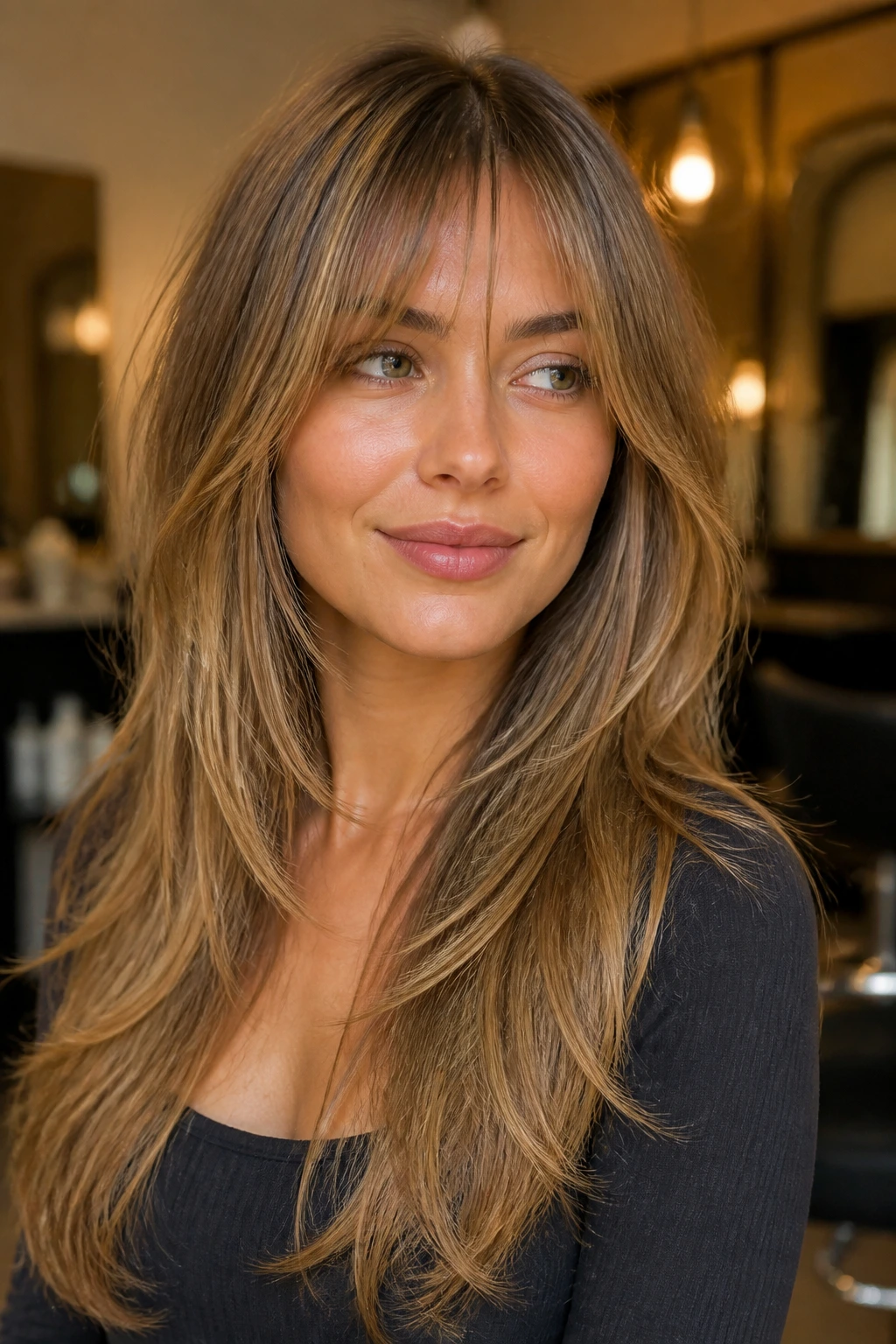
A V-cut gives you that tapering shape down the back, with the longest point centered and the sides sloping inward. Add piecey bangs and the whole haircut gets a sharper, more defined line without losing softness around the face.
This one is sneakily good for people who wear ponytails a lot. The front still falls in soft pieces, so even when the hair goes up, the haircut doesn’t disappear. The bangs should be separated, not sliced into one heavy chunk. Think light separation around the eyes and temples, not little shards. If you use a flat iron, bend a few of the front pieces away from the face and leave the rest alone. That unevenness is part of the charm.
8. Wavy Blowout Layers with Center-Part Curtain Fringe
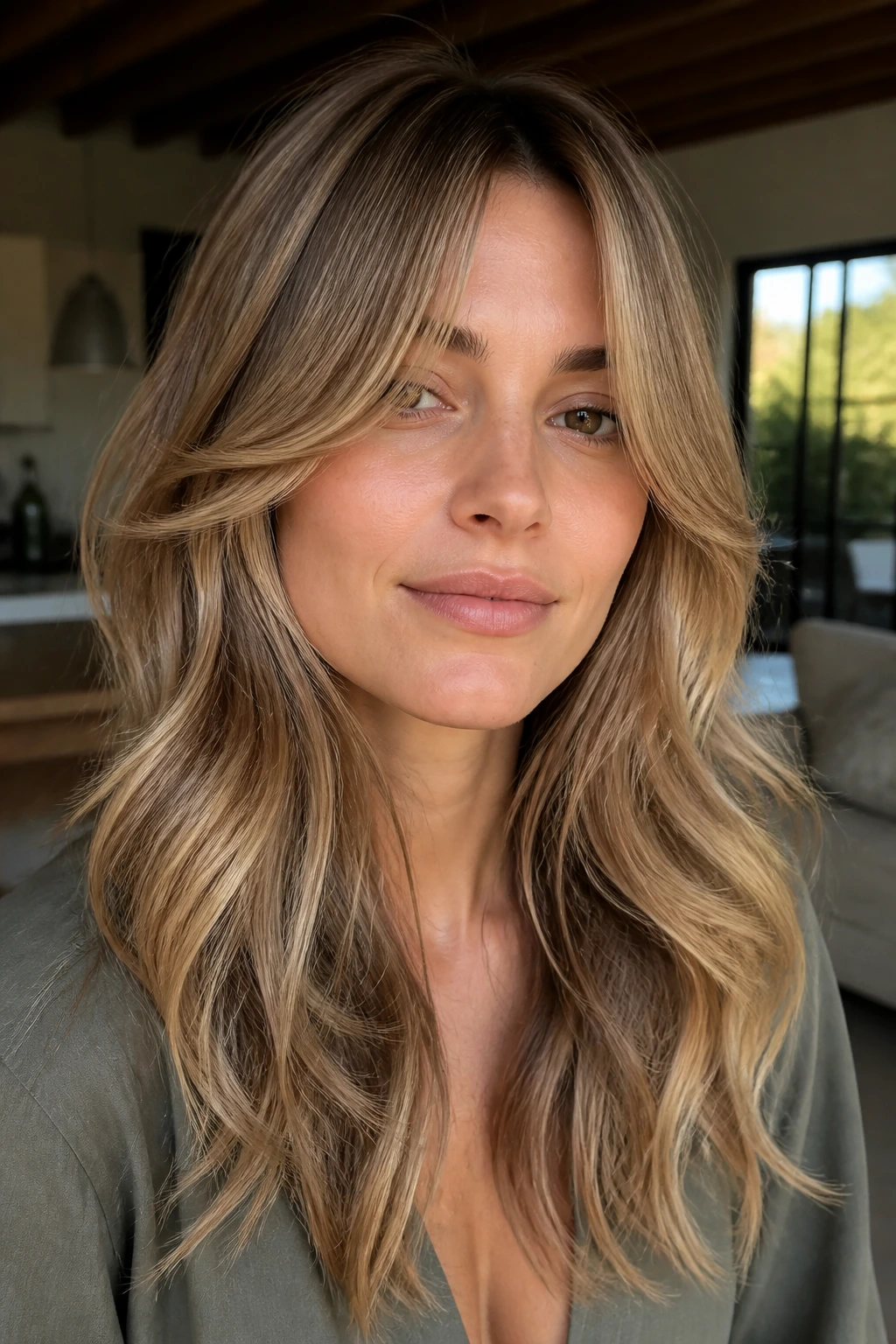
Some haircuts need a perfect finish to look right. This is not one of them. Wavy blowout layers with a center-part curtain fringe want a little body, a little bend, and enough looseness that the movement looks natural rather than stiff.
The key is where the layers sit. Keep the shortest pieces around the cheekbones, then let the waves drop into longer lengths that keep the whole shape stretched out. If you have natural waves, clip the fringe aside while the rest dries, then blow it forward at the end so it doesn’t separate too early. A barrel brush or a blowout brush works well here. I’d avoid heavy serum at the root; it kills the lift that makes this cut look good.
9. Blunt-Length Base with Hidden Face-Framing Layers
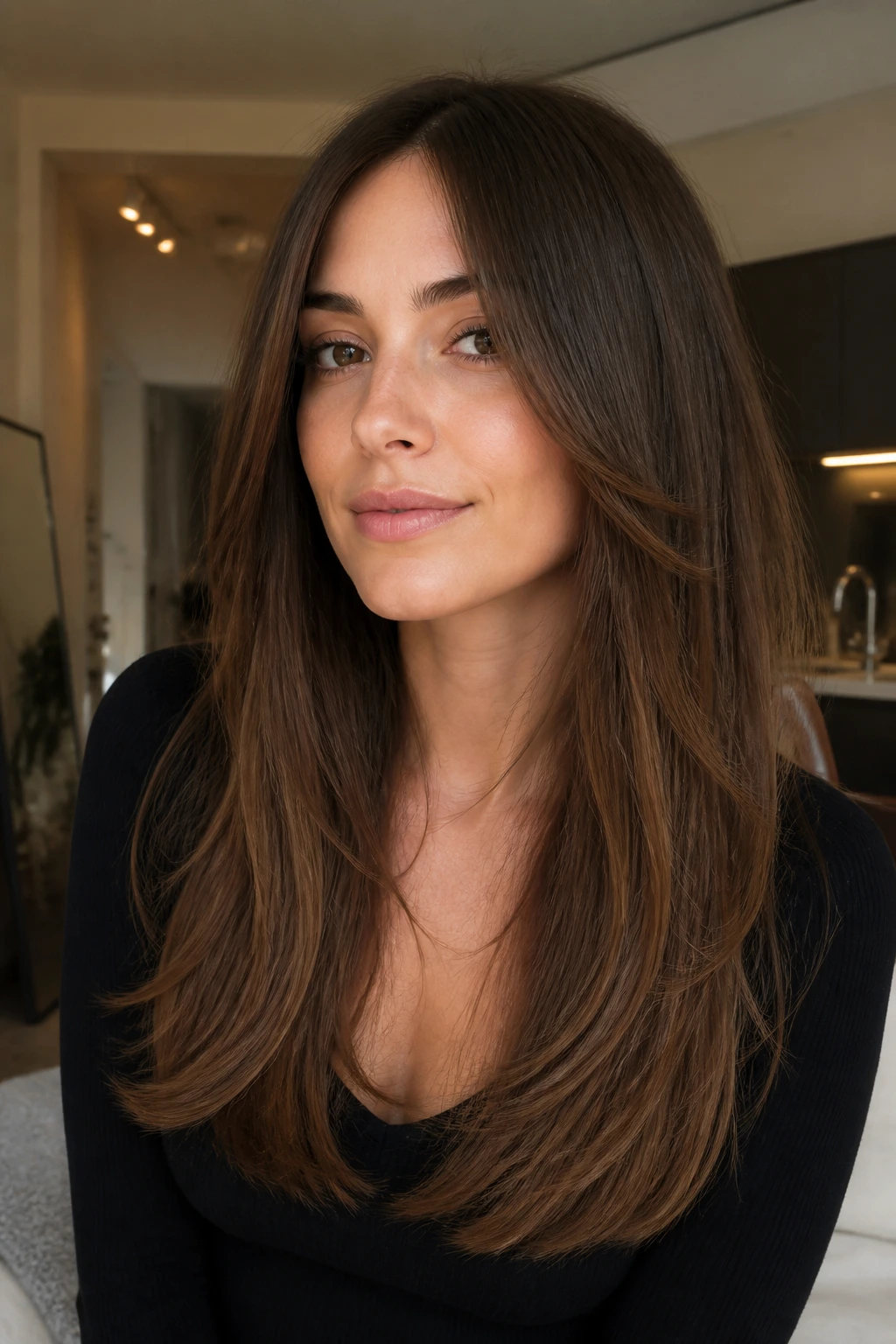
A blunt base sounds like the opposite of wispy layers, but that’s the fun part. Keep the perimeter full and solid, then tuck hidden face-framing layers underneath so the long line stays thick while the front still moves. Add soft bangs on top and the haircut looks fuller than a heavily layered cut, not thinner.
This is a smart choice for fine hair that needs help staying dense at the ends. The layers are there, but they’re buried enough that the silhouette still feels strong. Bring that detail to your stylist, because if the layers get too obvious, the whole point is gone. The best styling move is subtle wave and a little root lift, not curls all over. The blunt edge carries the polish.
10. Arched Fringe with Dimensional Mid-Length Layers
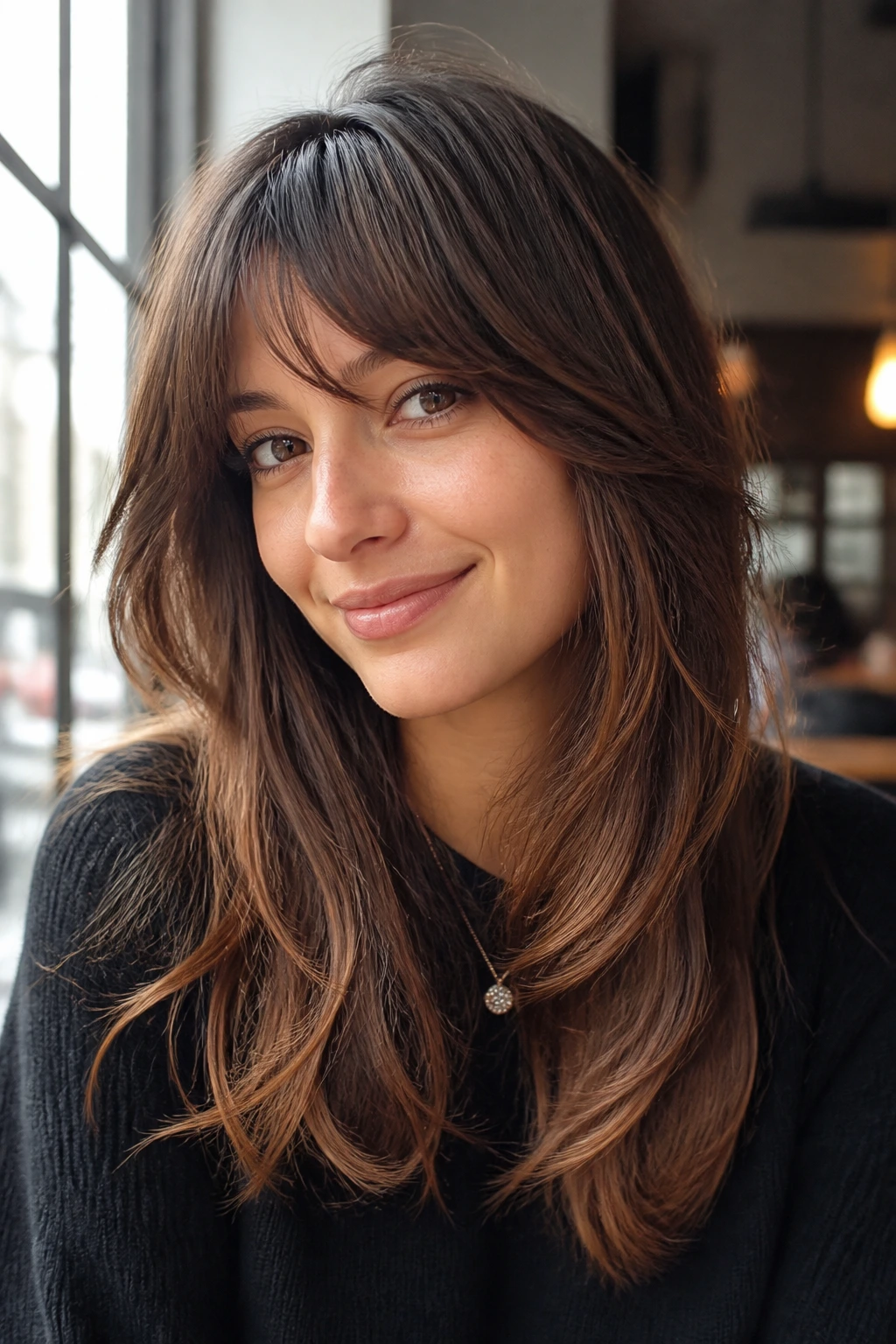
Arched bangs curve softly across the forehead, usually a touch longer at the sides so they blend into the face frame. Pair them with dimensional mid-length layers and you get a haircut that feels balanced from every angle, especially when the hair is worn loose.
What makes this cut feel different is the shape around the eyes. The fringe doesn’t cut straight across the face, so it opens things up while still giving a strong frame. The layers around the shoulders should be soft enough to move, but not so thin that the ends look tired. This is a good cut if you want the face frame to do some of the talking without leaning all the way into a shag. A light mist of volumizing spray at the roots and a round-brush finish keeps the arch visible.
11. Wolf Cut Lite with Long Bangs
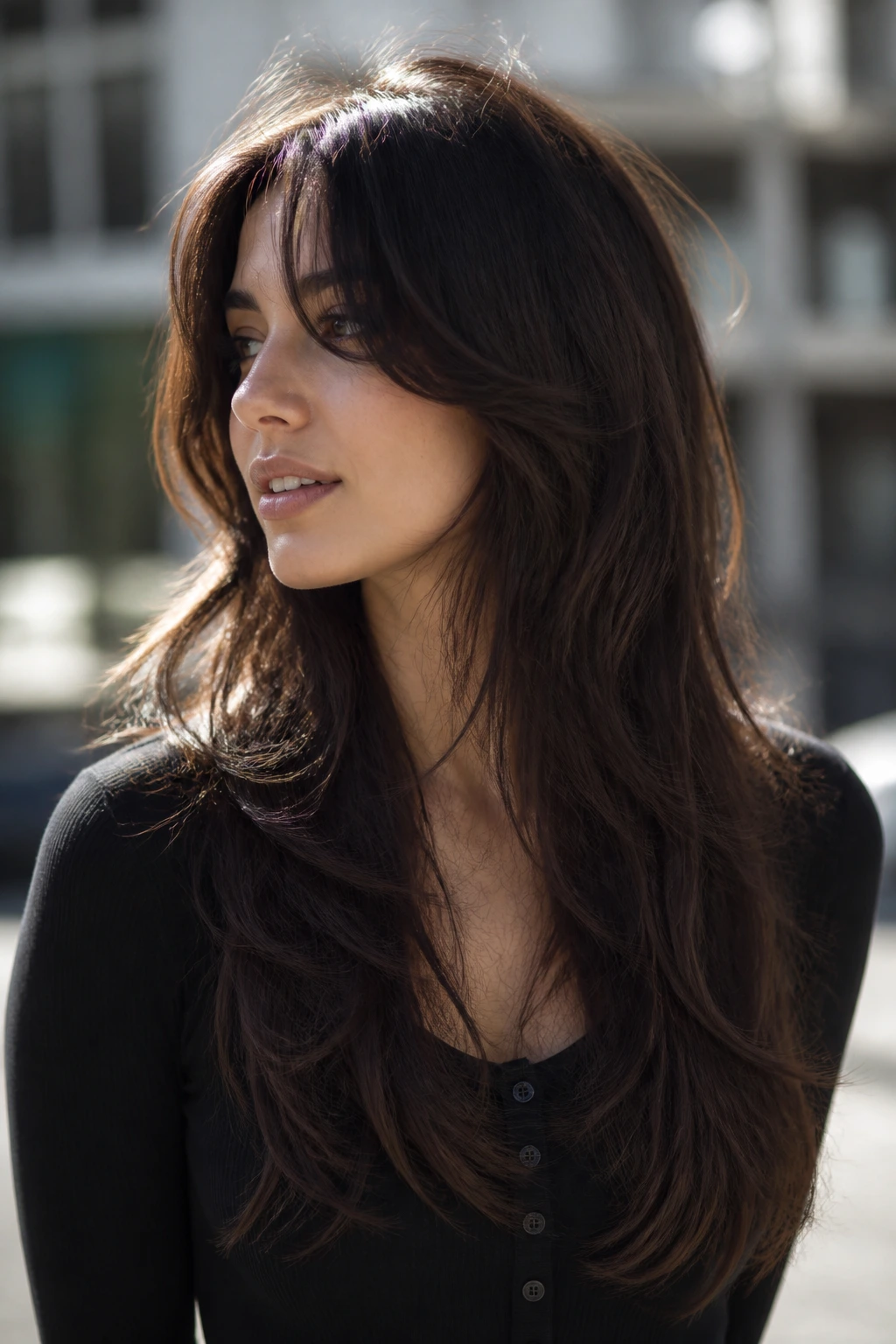
A full wolf cut can feel like a lot. The lite version keeps the shaggy energy, but the layers are more connected and the bangs stay long enough to feel wearable on a Tuesday morning, not just on a mood-board.
The whole haircut is about controlled mess. The crown gets enough lift to keep long hair from lying flat, but the lower lengths stay intact so you don’t lose that dramatic line. Long bangs help tie the top to the rest of the cut. If your hair has natural texture, this style can look good with almost no heat. If it’s straight, a little bend through the face frame and some matte texture spray at the ends will keep it from looking too tidy.
12. Air-Dry Layers with Tapered Fringe
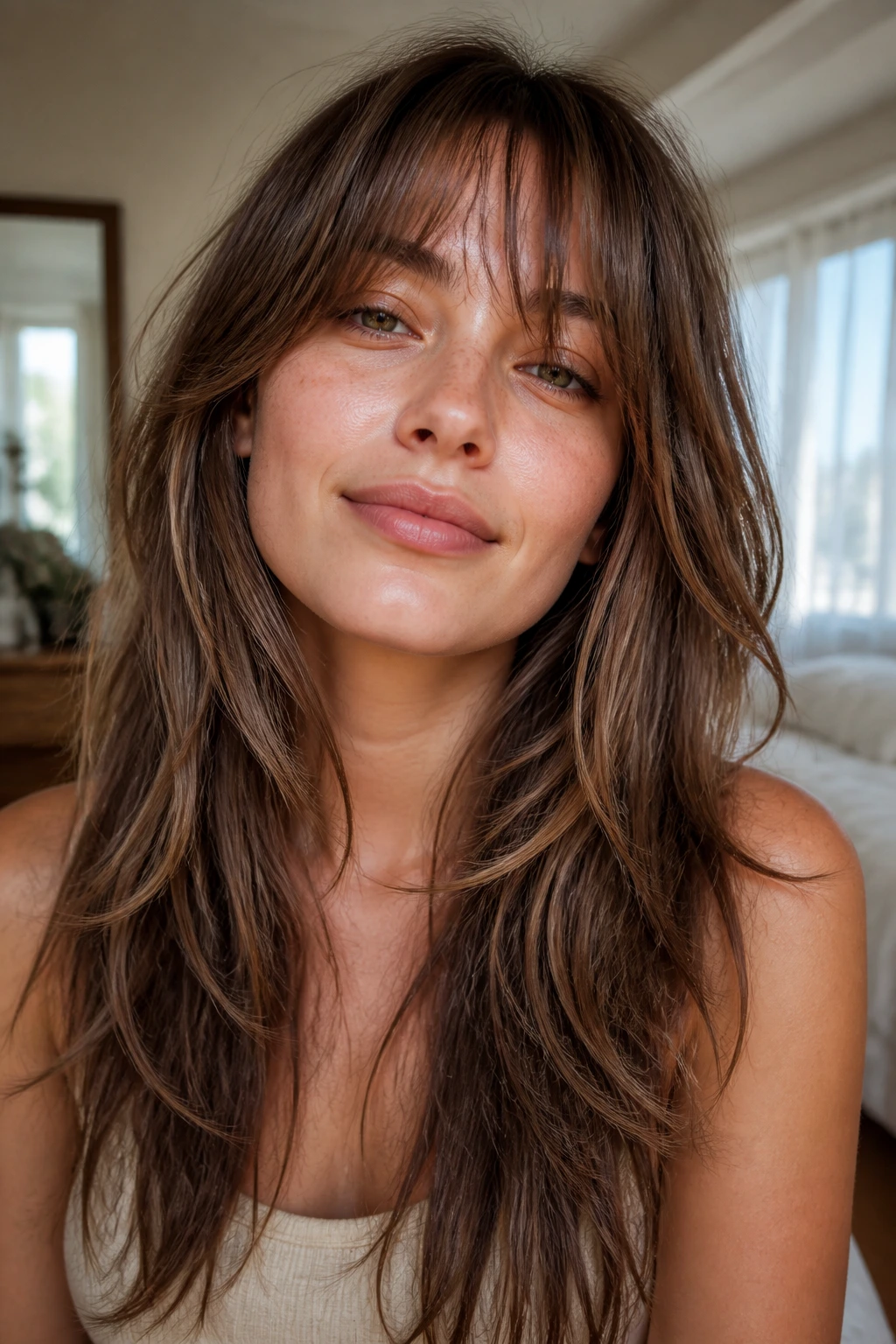
This is the cut for people who would rather not build a life around a round brush. The layers are placed so they fall into shape as the hair dries, and the fringe tapers at the sides so it doesn’t create one heavy panel across the forehead.
The trick is restraint. Air-dry layers should encourage movement, not rely on a lot of product. A small amount of leave-in conditioner through the mids and ends, then a dab of curl cream or lightweight mousse, is usually enough. If your hair is straight, scrunching won’t do much, so twist the face-framing pieces while they dry and clip the bangs to one side for a few minutes. That little bit of direction makes a big difference. This cut is not flashy. It just behaves.
13. Swoopy Blowout Layers with Curtain Fringe
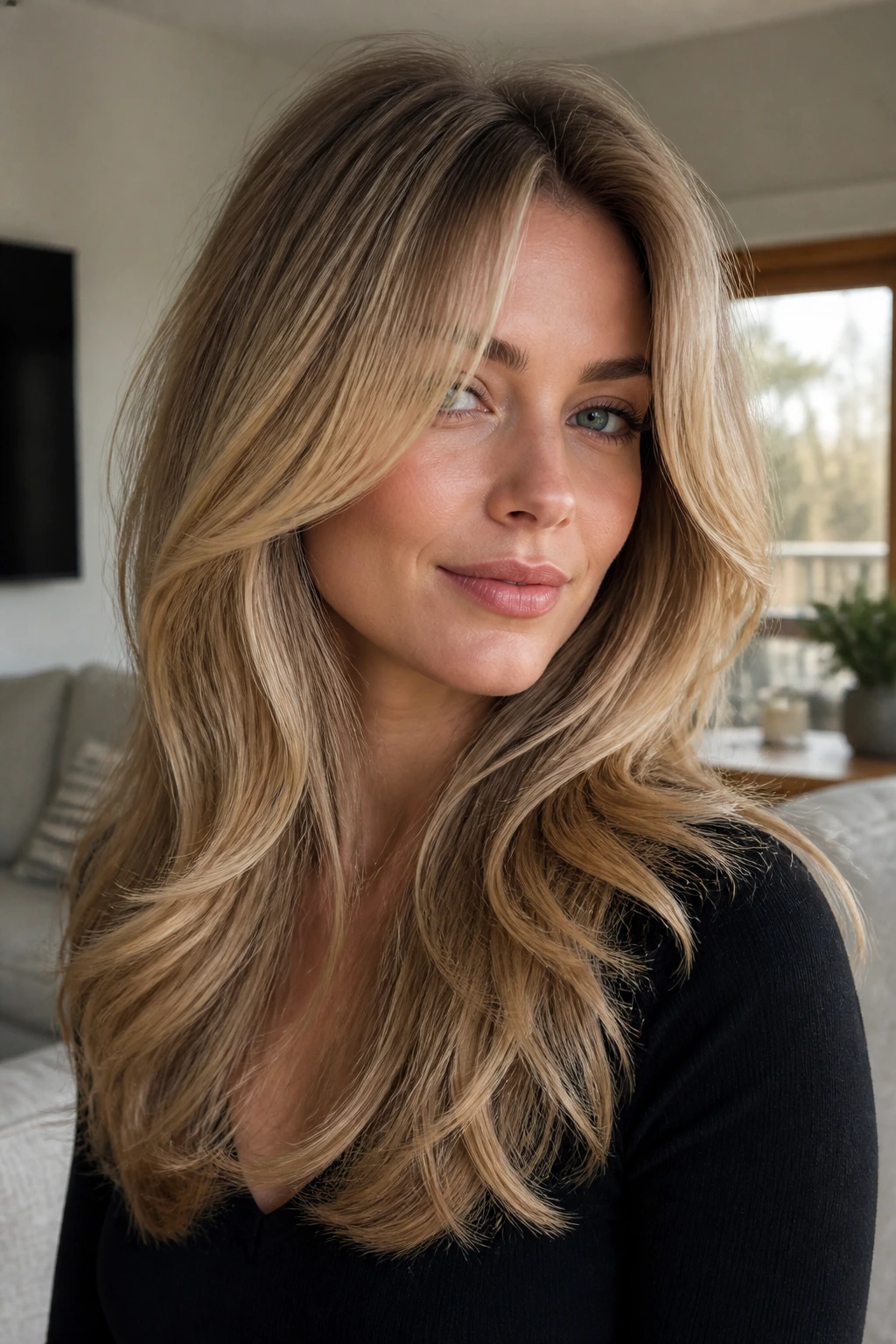
If you want long hair that looks like it went out for a nice dinner, this is the lane. Swoopy blowout layers build volume around the cheeks and collarbone, and the curtain fringe opens in the center with enough sweep to make the face look framed rather than covered.
The shortest pieces here usually start below the cheekbone, which keeps the look glamorous instead of severe. It suits thick straight hair especially well because that texture holds the bend without collapsing. Use a medium round brush, blow the hair up at the roots, and finish the ends with a soft turn under or away from the face. A light-hold hairspray is enough. Anything sticky will ruin the flow.
14. Whisper Layers for Fine Hair
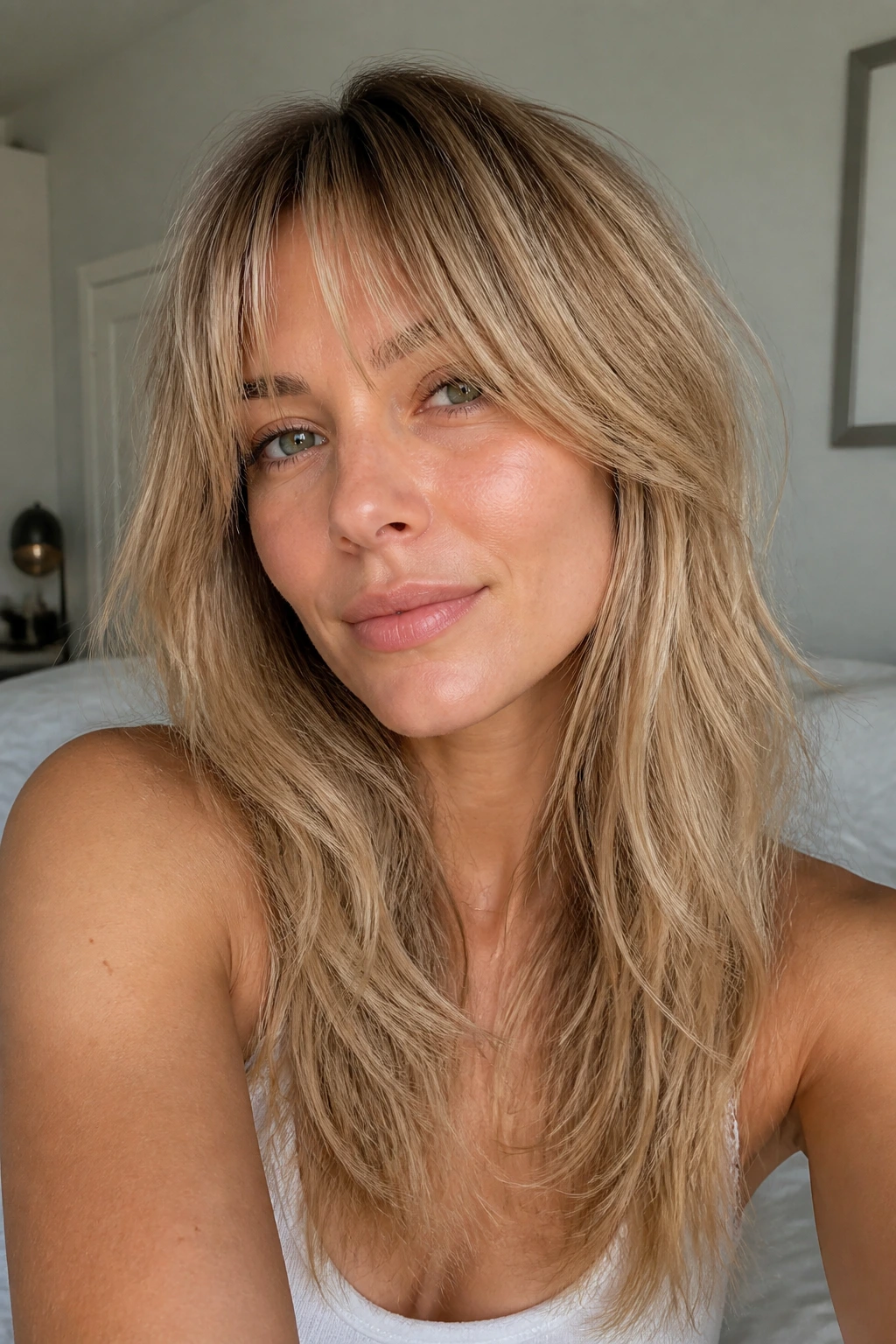
Fine hair needs a careful hand. Too many short layers and the ends start looking see-through; too little layering and the whole cut hangs like a flat ribbon. Whisper layers solve that by keeping the movement long, light, and barely there until the hair hits the shoulders.
- Keep the shortest face frame at or below the cheekbone.
- Ask for internal layering, not a lot of visible chopping at the bottom.
- Use mousse at the roots and a dry texturizer at the crown, not heavy oil through the mids.
This is one of the few times I’d say less is more in a haircutting sense, not as a cliché. The fringe should look airy, not sparse. If it’s cut too wispy, it can disappear on you by noon.
15. Weight-Removal Layers for Thick Hair
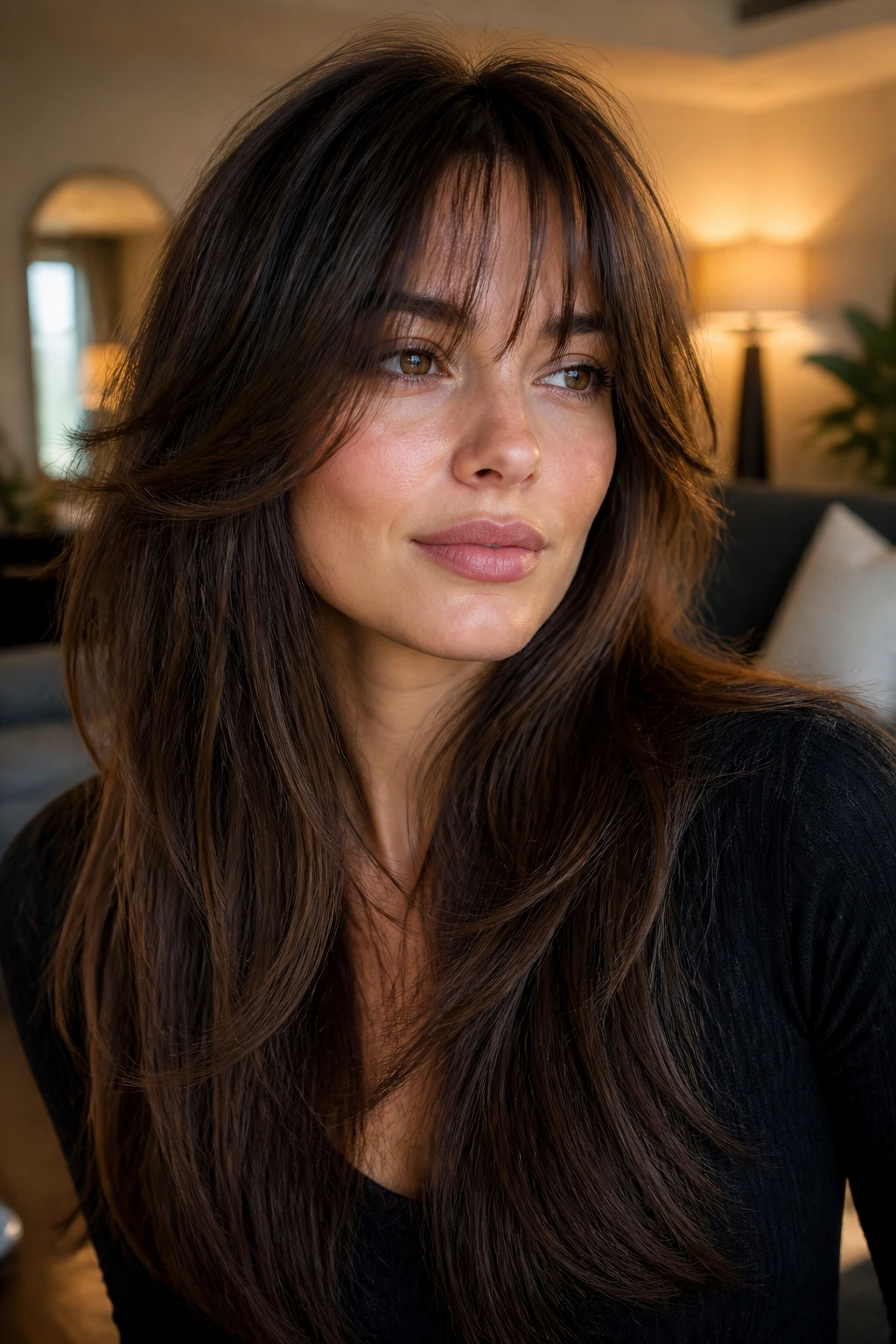
Thick hair is lucky in one sense and annoying in another. There’s plenty to work with, but if the cut is careless, the mass turns boxy and the bangs feel too dense. Weight-removal layers fix that by clearing space inside the shape while keeping the outline long and full.
What matters most is control. Ask for debulking through the interior, not a random set of short pieces that poke out in daylight. The fringe should stay soft at the ends and a little longer than you first think, because thick hair springs up and shrinks once it’s dry. I’d avoid leaving this cut in the hands of someone who loves thinning shears too much. A little goes a long way. A lot turns the perimeter frayed.
16. Eyebrow-Grazing Bangs with Romantic Layers
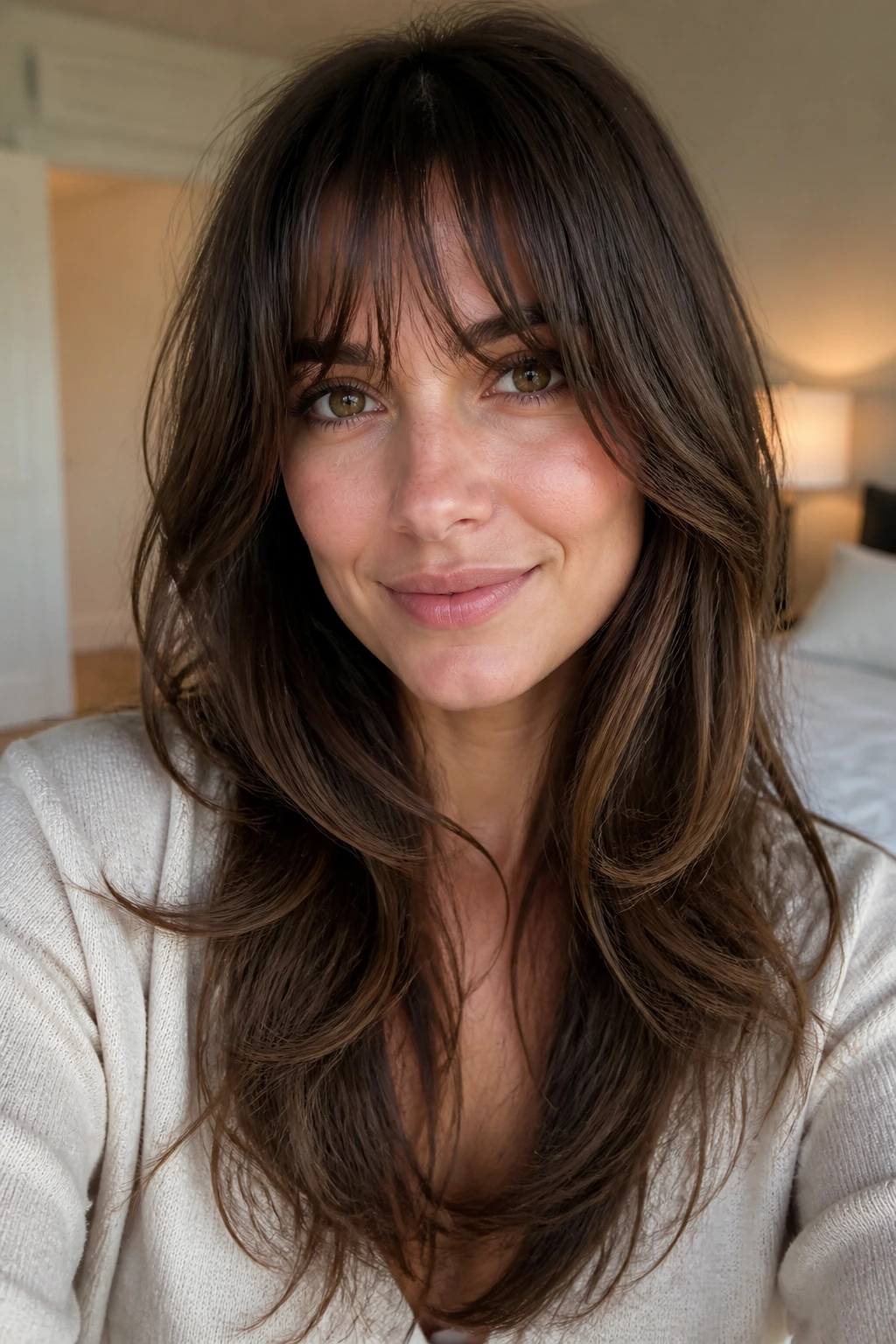
Eyebrow-grazing bangs are a sweet spot. They sit close enough to the eyes to make the face feel framed, but they’re still long enough to sweep aside when you don’t want them fully forward. Add romantic layers through the lengths and the whole look softens in a way that feels almost old-fashioned.
This version works beautifully with hair that bends naturally, because the layers catch a little curve around the face and the fringe lands in a gentle line instead of a blunt block. If you blow it out, use a medium brush and keep the heat moving so the bangs don’t get too straight or too stiff. A tiny bit of serum on the ends gives the layers a smoother fall. It’s a good cut for someone who wants pretty without looking precious.
17. Split Fringe with Coastal Waves
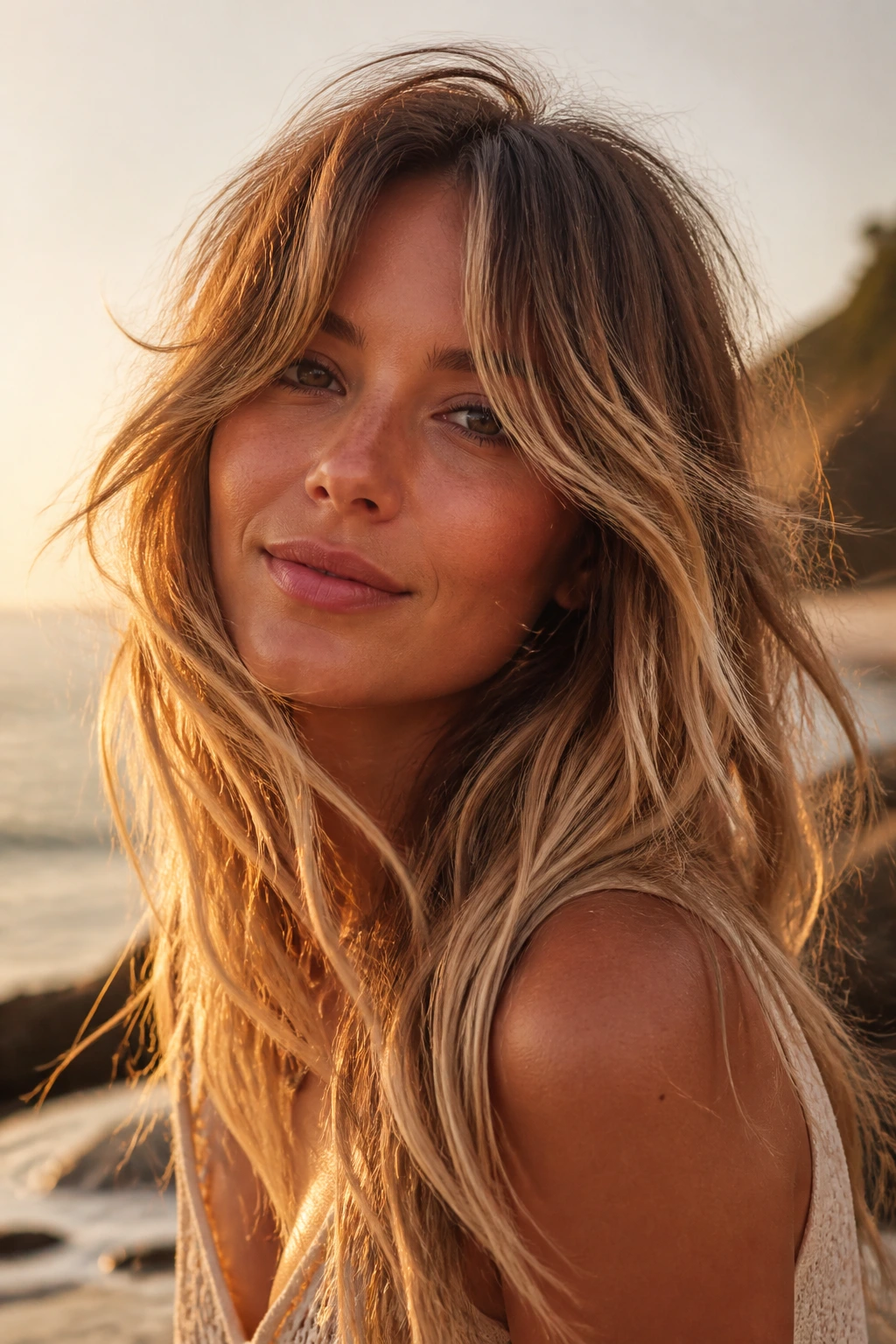
Split fringe sits in the middle or just off-center, then drifts away from the face the way waves do after a swim. Pair that with coastal texture and you get a cut that feels relaxed but still shaped. Not sloppy. Relaxed.
The beauty here is in the break. The fringe doesn’t hide the forehead, and the waves keep the layers from reading as too polished. That makes the haircut easy to wear with air-drying, braiding, or a loose wand curl set on the lower half only. A salt spray can help, but use it lightly; too much and the ends start feeling sticky instead of soft. If you want the front to open more, tuck the very front pieces behind the ears while they’re still warm from drying.
18. Choppy Ends with Bottleneck Fringe
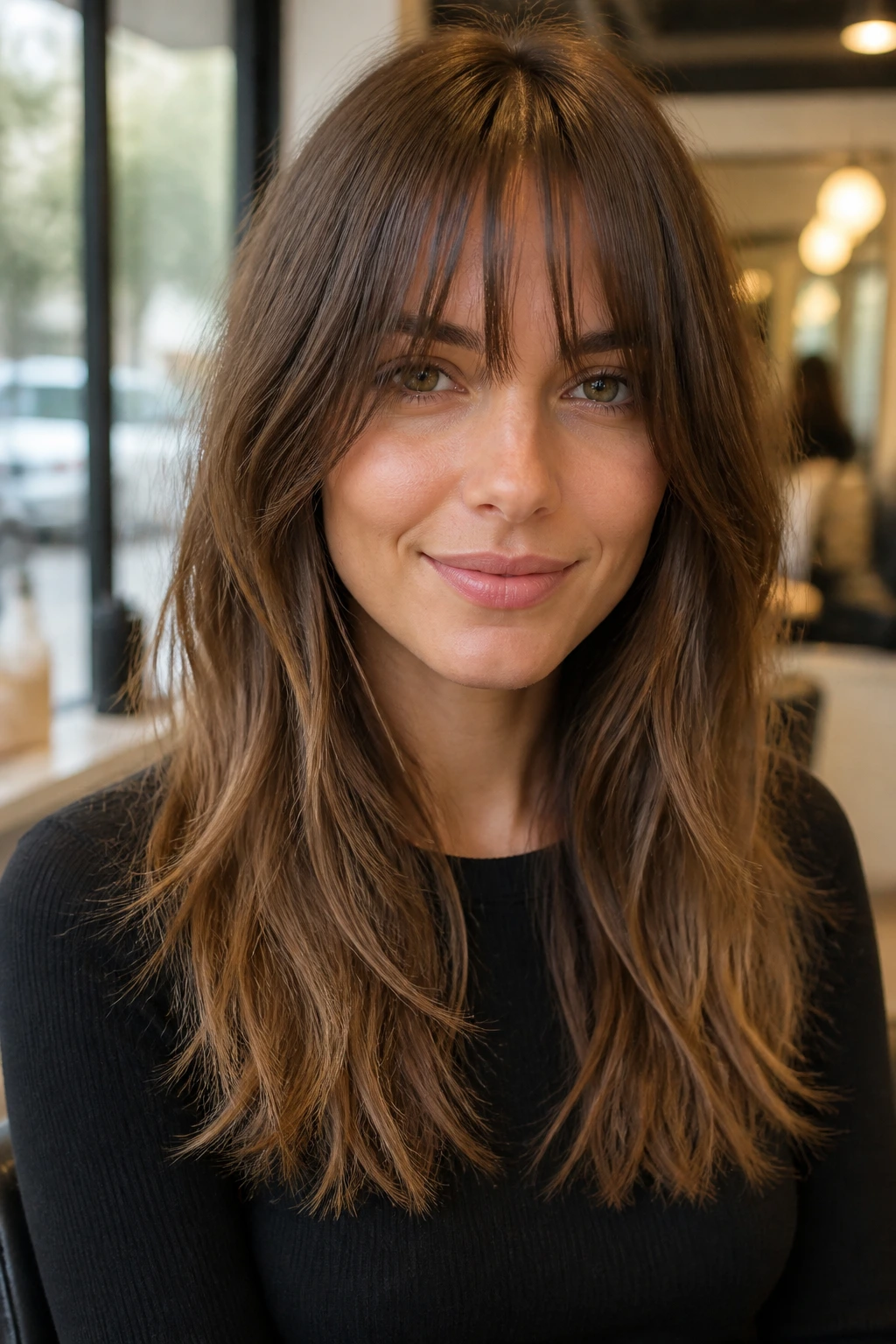
Choppy ends add edge, but the word “choppy” scares people because it can sound like damage. Done well, it’s just a little extra separation in the bottom few inches, enough to make the hair move differently. Bottleneck fringe keeps the top soft, so the result still feels wearable.
This one has a bit of a lived-in look. The ends don’t fall into one perfect curtain, and that’s the point. Ask for choppiness only through the final two to three inches if your hair is long; anything more and the length starts to look broken up. The fringe should stay narrow through the center and open at the sides. A flat iron wave through a few sections gives the edges more definition, but you do not need to curl everything. That would kill the attitude.
19. Sleek Straight Layers with Soft Broken Bangs
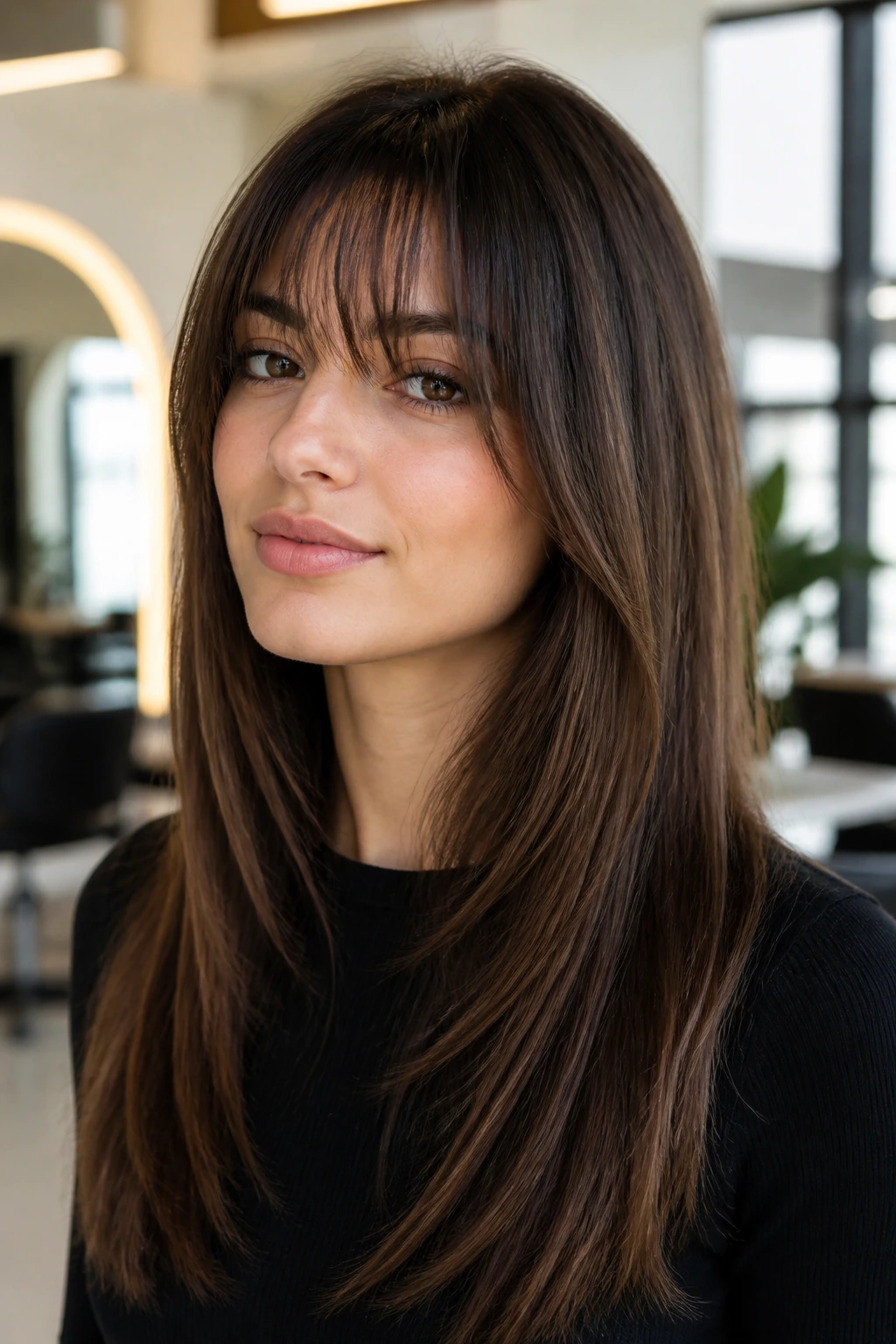
Not every wispy layered cut needs body and bounce. On straight hair, a sleek version can look even better because the shape reads cleanly. Soft broken bangs keep the forehead from feeling boxed in, and the long layers move just enough to avoid that ironed-flat look.
The important part is precision. You want the ends tidy, the layers light, and the fringe separated into pieces that sit near the brows instead of forming one thick line. A smoothing blow-dry and a drop of serum at the mids give the hair that polished finish without making it greasy. I’d keep this one off heavy texture sprays; they can make straight hair look dusty. If your hair is naturally sleek, this is probably one of the easiest cuts on the list to live with.
20. Grown-Out Curtain Bangs with Long Layers
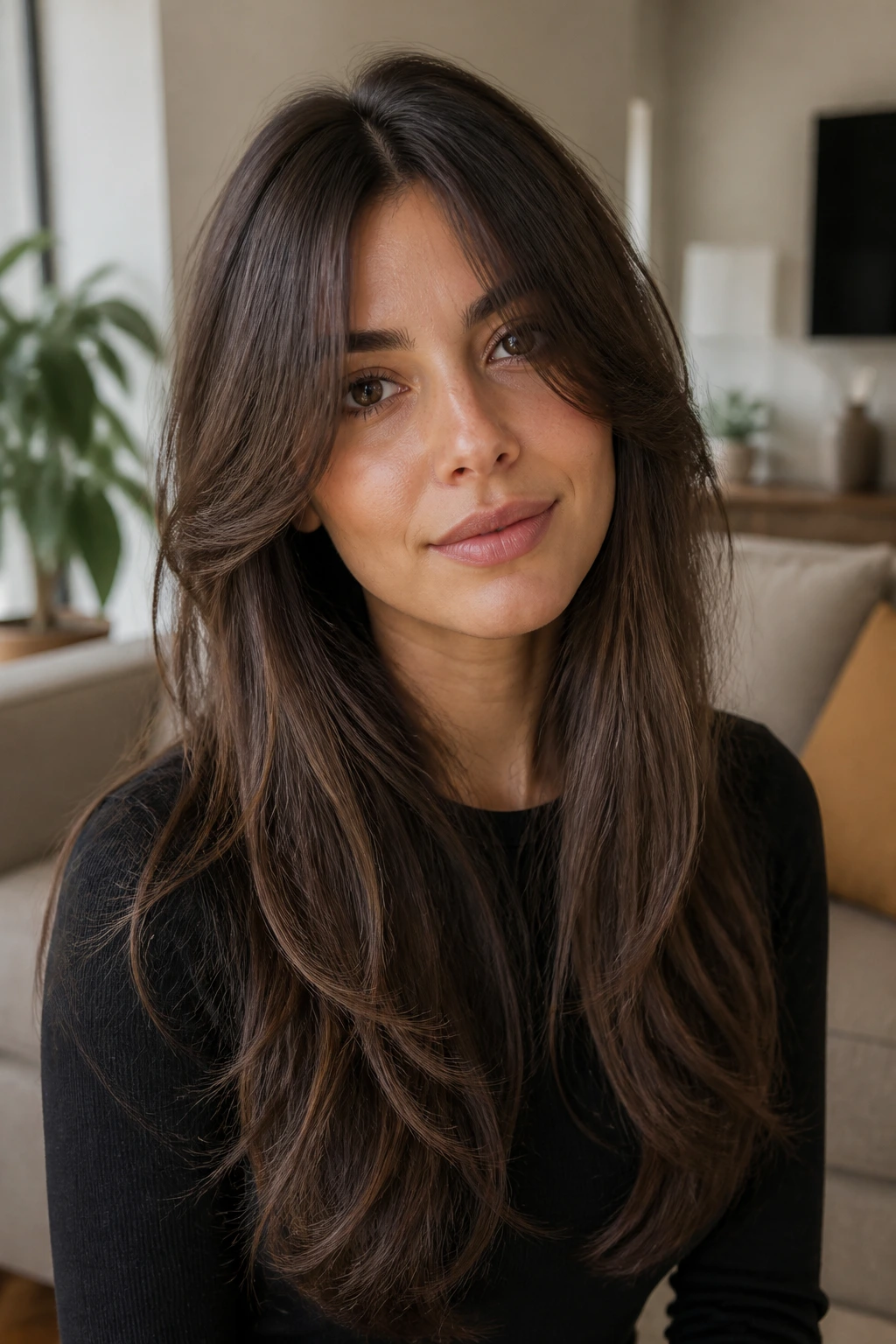
This is the version for people who like bangs but do not want to babysit them. The curtain fringe starts soft and stays soft as it grows, which means the haircut can sit around the cheekbone one month and near the jaw the next without looking like a mistake.
- Ask for longer front pieces from the start if you know you dislike frequent trims.
- Keep the layers connected, not chopped into visible steps.
- Use dry shampoo at the roots when the fringe starts losing lift.
There’s a reason this shape is everywhere in real life and not just in salon photos. It behaves on the way out. If you like tucking hair behind your ears or wearing it half-up, the grown-out curtain bang makes that easier, not harder.
21. See-Through Bangs with Hidden Face-Framing
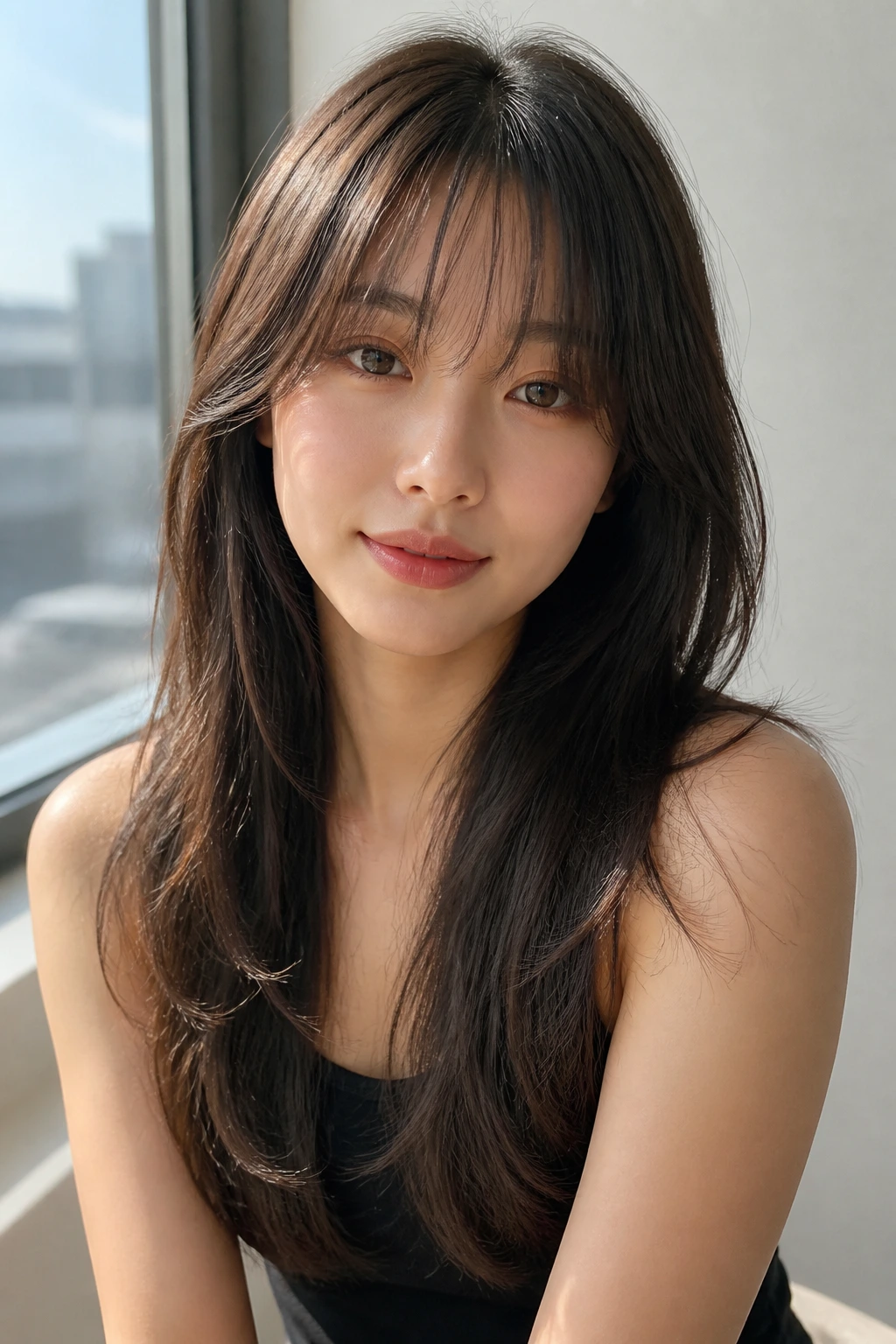
See-through bangs give you fringe without heavy forehead coverage. They’re airy, slightly separated, and soft enough that you can still see skin through them. Hidden face-framing layers echo that same lightness underneath the surface, which keeps the haircut from feeling crowded.
This style can look very refined on fine to medium hair because it doesn’t demand much density in the bang area. The catch is that it needs regular trimming to stay delicate instead of stringy. Blow the bangs forward, then split them with your fingers so they settle into a soft curtain rather than one dense strip. A tiny round brush or even a velcro roller for five minutes can give them enough shape. It’s a small effort. Worth it.
22. Big-Volume Layers with Brushed-Out Fringe
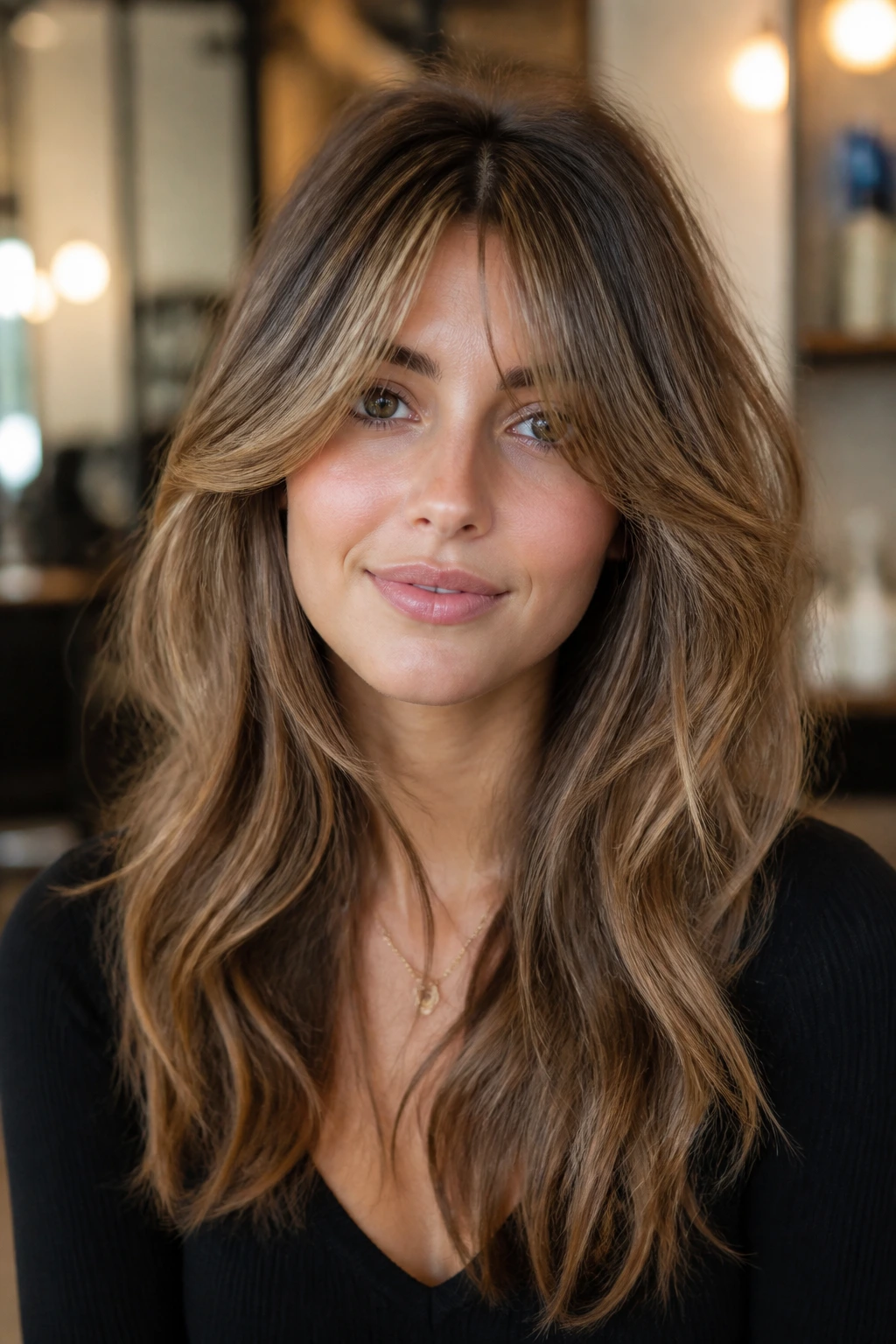
Big volume doesn’t mean big hair in the old-school sense. It means the layers actually hold air and the fringe gets brushed out instead of stuck in a severe line. This version is for long hair that needs lift, not just movement.
The look starts with a root set. Clip the crown while the hair cools, then brush the fringe away from the face so it keeps a soft curve. The layers should start where your hair is heaviest, usually around the collarbone or lower. If you keep the shortest pieces too high, the silhouette can get puffy at the top and thin at the bottom. A light finishing spray is enough to keep the shape. Crunchy product is the enemy here.
23. Chin-Skimming Fringe with Long Layered Ends
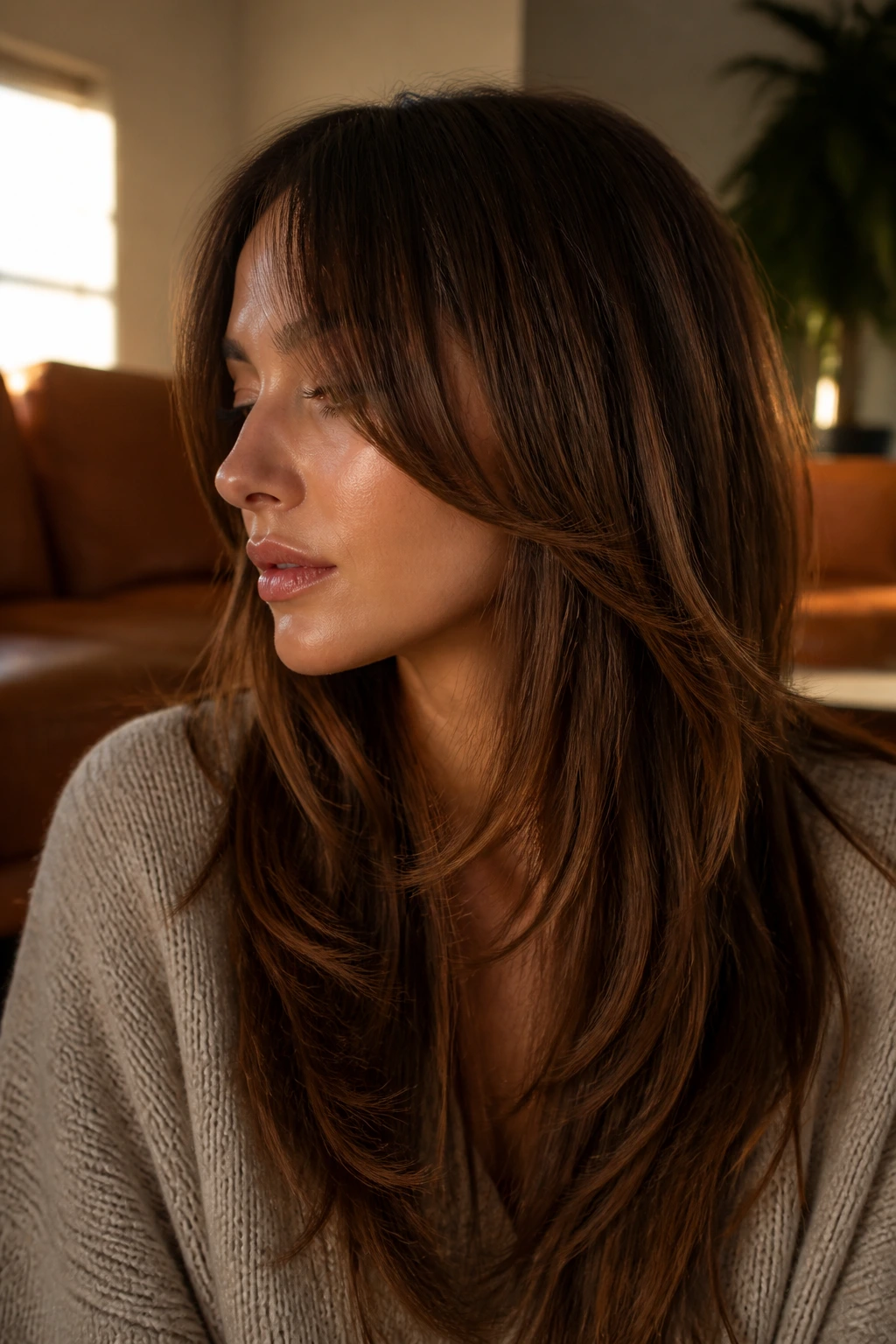
Chin-skimming fringe is a little misnamed, because it behaves more like long face-framing pieces than classic bangs. That’s what makes it good. You get front softness that can tuck, bend, or part away from the face, while the long layers keep the rest of the haircut easy.
This is a smart low-maintenance choice if you like the idea of bangs but hate sharp upkeep. The fringe can grow a few weeks and still look deliberate. Keep the ends long and light so the front pieces don’t turn into a chunk. It works especially well with hair that already has some wave, since the longer front sections can sit in a curve instead of fighting the natural pattern. A center or off-center part both fit here. Nice little bonus.
24. Curly Layers with Curly Fringe
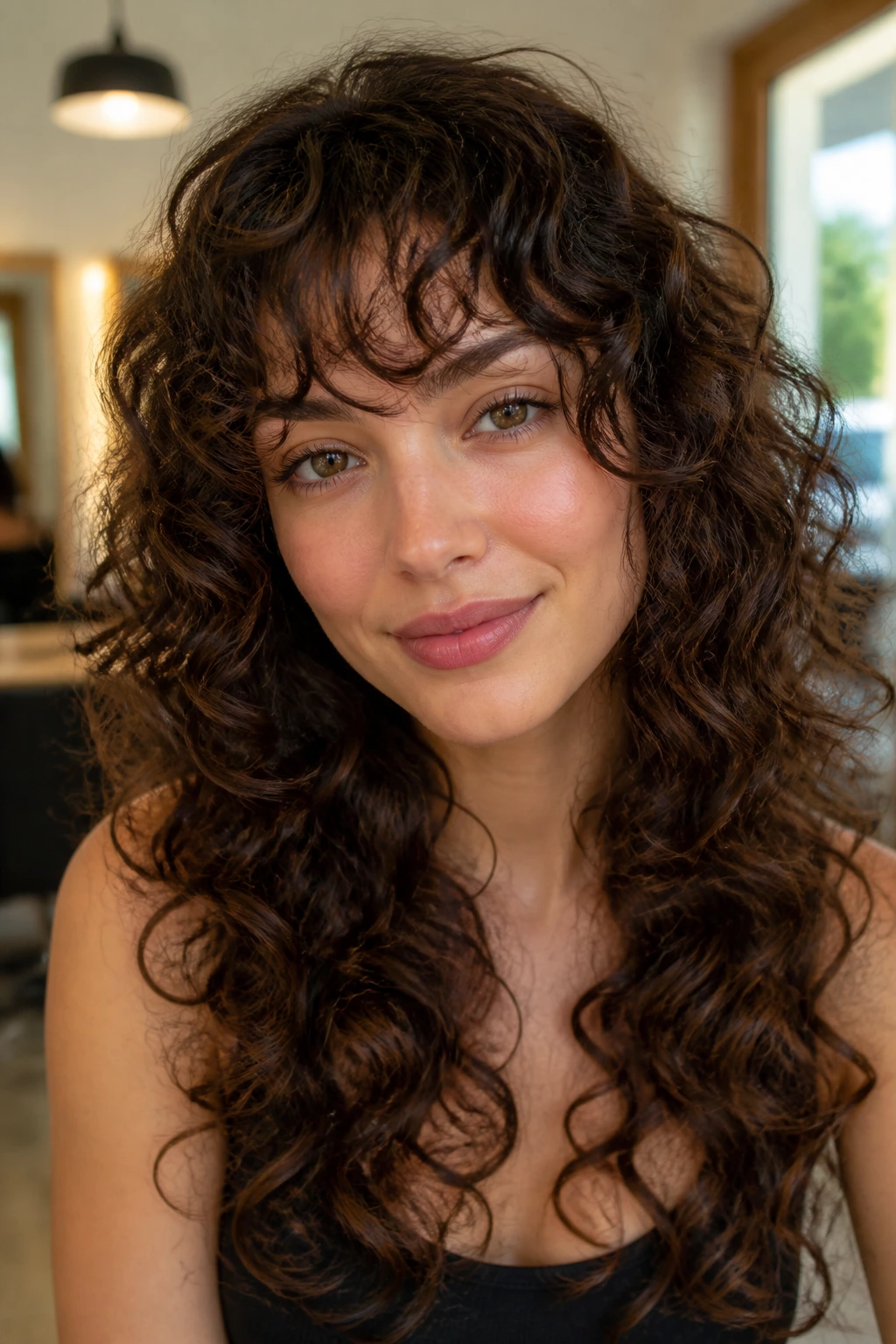
Curly hair can wear bangs. It just needs a different plan. The layers have to respect the curl pattern, and the fringe should be cut longer than you think, because curls spring up after they dry. Done well, curly layers with curly fringe look bouncy, shaped, and not at all apologetic.
- Ask for the haircut dry or mostly dry so the stylist can see how the curls collapse and spring.
- Keep the fringe long at first; you can shorten later, but you cannot glue hair back on.
- Use curl cream and a diffuser, then stop touching it.
The best curly versions frame the face without cutting straight across it. That’s the mistake people make. They aim for straight bangs on curly hair and end up with a shelf. Let the curls do what they do.
25. Eyelash Bangs with Long Straight Layers
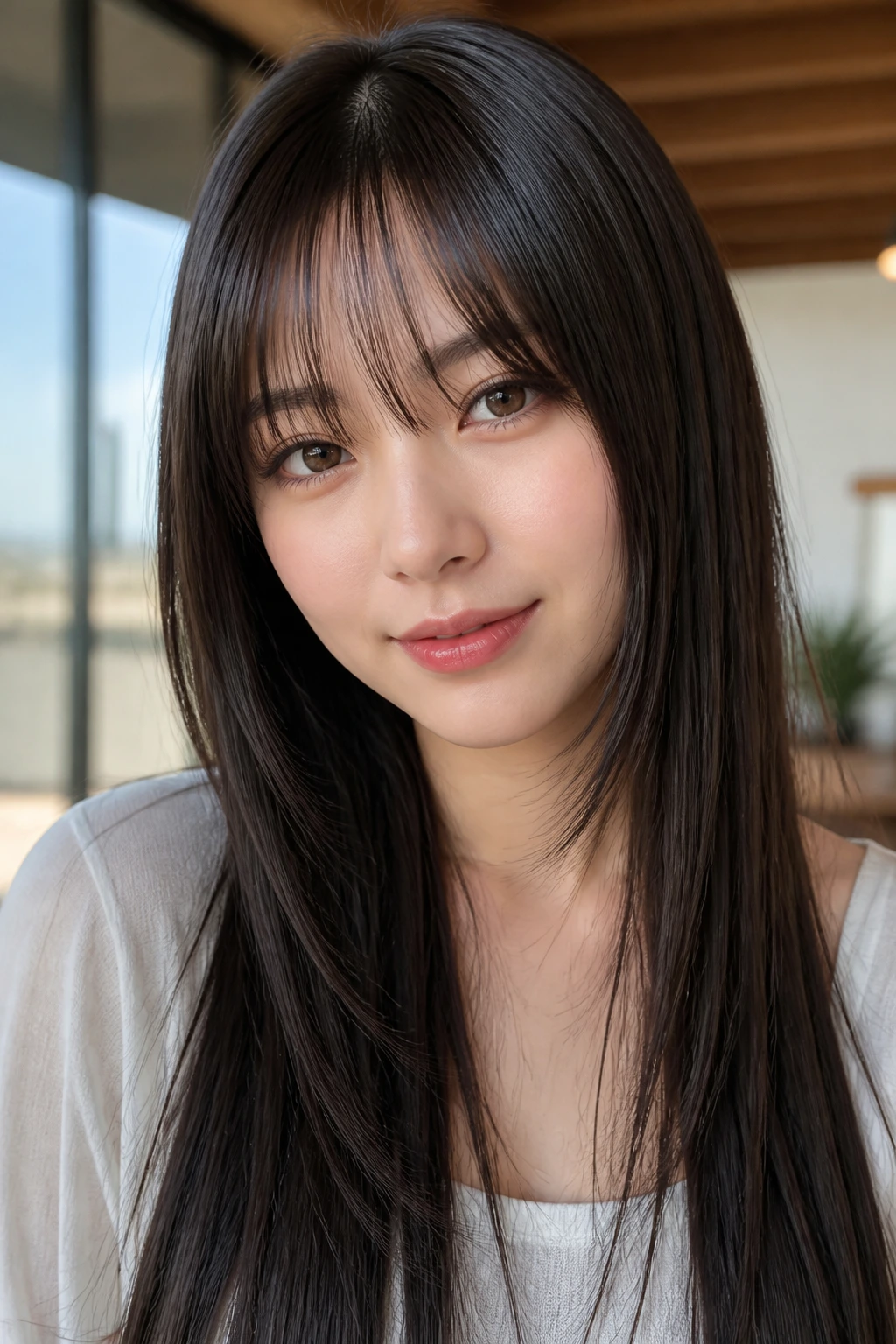
Eyelash bangs sit just long enough to graze the lashes, which gives long hair a soft, eye-framing finish without heavy coverage. Paired with straight layers that keep the length clean, the result feels gentle and polished at the same time.
This style is strongest when the bangs are soft at the ends, not blunt. A slight separation across the brow keeps them from looking too severe, and the layers should stay long enough that the whole haircut still reads sleek. It’s a good option if you like the idea of bangs but don’t want a dramatic front line. A narrow round brush or a quick bend with a flat iron is usually enough to make it sit right. If you’re the type who tucks hair behind one ear, this cut loves that move.
Why Wispy Layers Move Instead of Hanging Flat
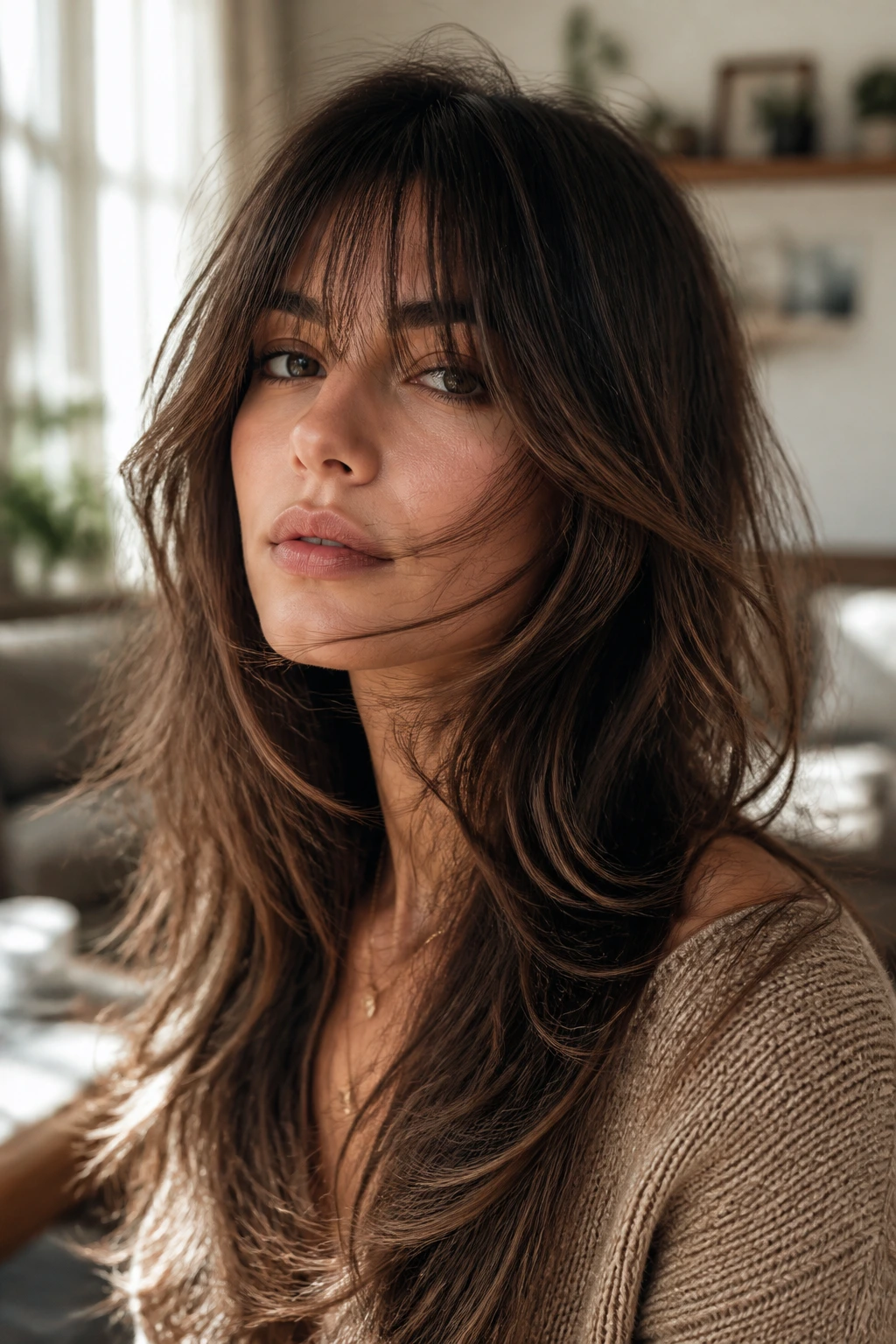
Long hair gets heavy by simple physics. The more length you add, the more the weight pulls down at the bottom, which is why a single-length cut can start looking tired even when the hair itself is healthy. Wispy layers solve that by moving weight around instead of just removing it everywhere.
The best versions use internal layering, point cutting, and soft face-framing pieces to create shape without shredding the outline. That matters. Short layers at the crown can make the top poof out while the ends go thin, which is the opposite of what most people want. A smarter cut keeps enough bulk at the bottom to feel full, then inserts movement where the hair naturally falls around the cheekbones, jaw, and collarbone.
Bangs help because they break the visual line at the top. A fringe, even a light one, gives the eye a place to land before it travels down the lengths. If your hair is straight, you’ll usually need a bit more styling to make that movement show. If it’s wavy or curly, the cut does more of the work on its own. Either way, the shape works because it is designed around gravity, not against it.
What to Ask for at the Salon When You Want Wispy Layers with Bangs
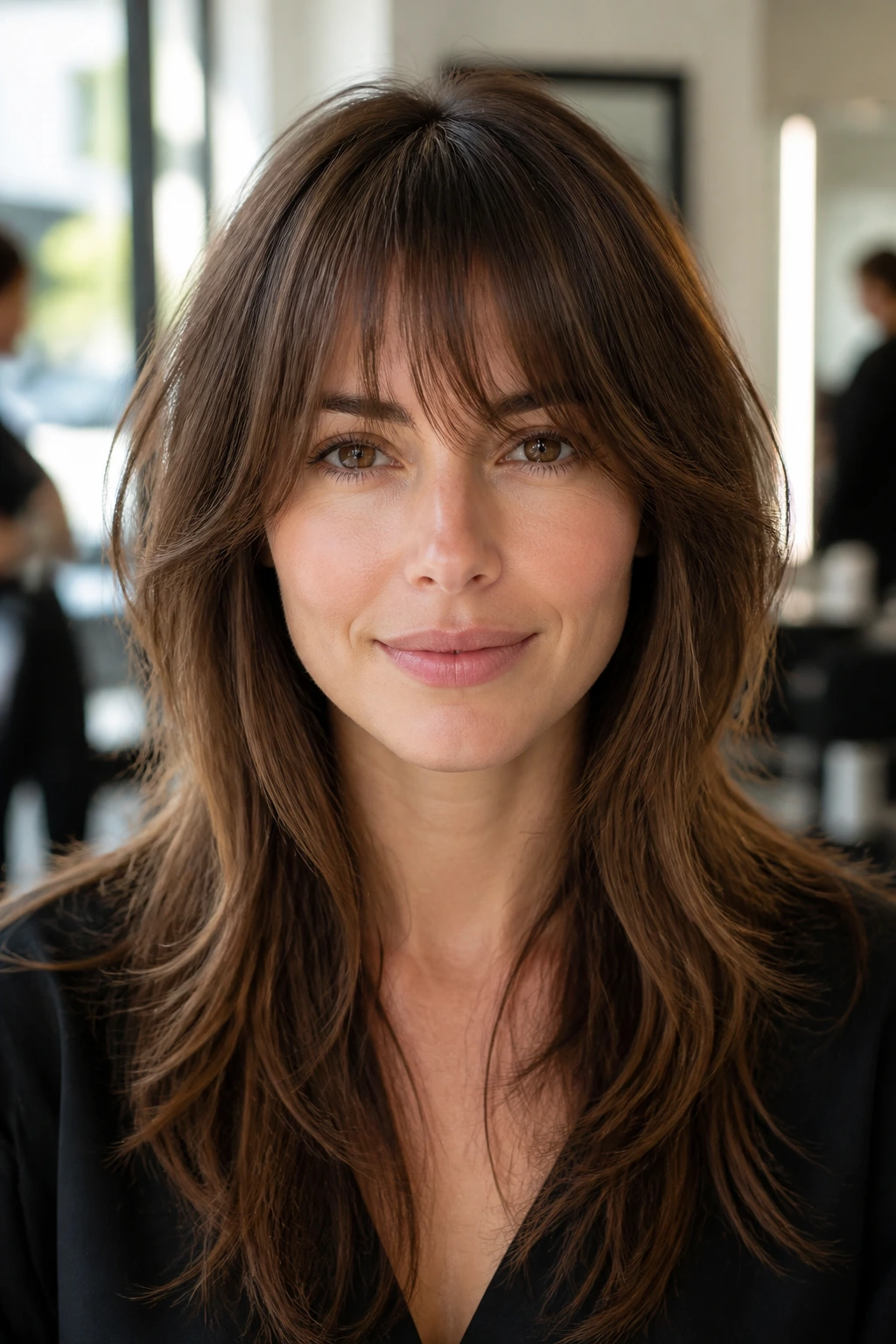
Bring photos. Real ones. One image of the front, one of the side, and one of the back will tell your stylist more than twenty words about wanting “something soft.”
Say Where You Want the Shortest Pieces
The shortest layer is the part that makes or breaks the cut. On long hair, asking for the face frame to start at the cheekbone, jaw, or collarbone creates a totally different result than starting at the eyebrow. If you want movement but you still like fullness, tell the stylist to keep the shortest layers long enough to tuck behind the ear.
Be Honest About Maintenance
If you trim your bangs every month, say that. If you hate blow-drying, say that too. A wispy fringe that needs a round brush every morning is not the same thing as a fringe that can air-dry and split on its own. The same goes for layers. Some versions are built for a polished finish; others are made to look good with a quick scrunch and a walk out the door.
Mention Your Natural Part and Density
Hair that naturally parts in the middle behaves differently from hair that always falls off-center. Dense hair can take more internal removal, while fine hair usually needs longer layers that preserve the body. Curls should be cut with the shrinkage in mind. Straight hair needs the shortest front pieces placed carefully, because every line shows.
Essential Tools for Cutting and Styling the Shape
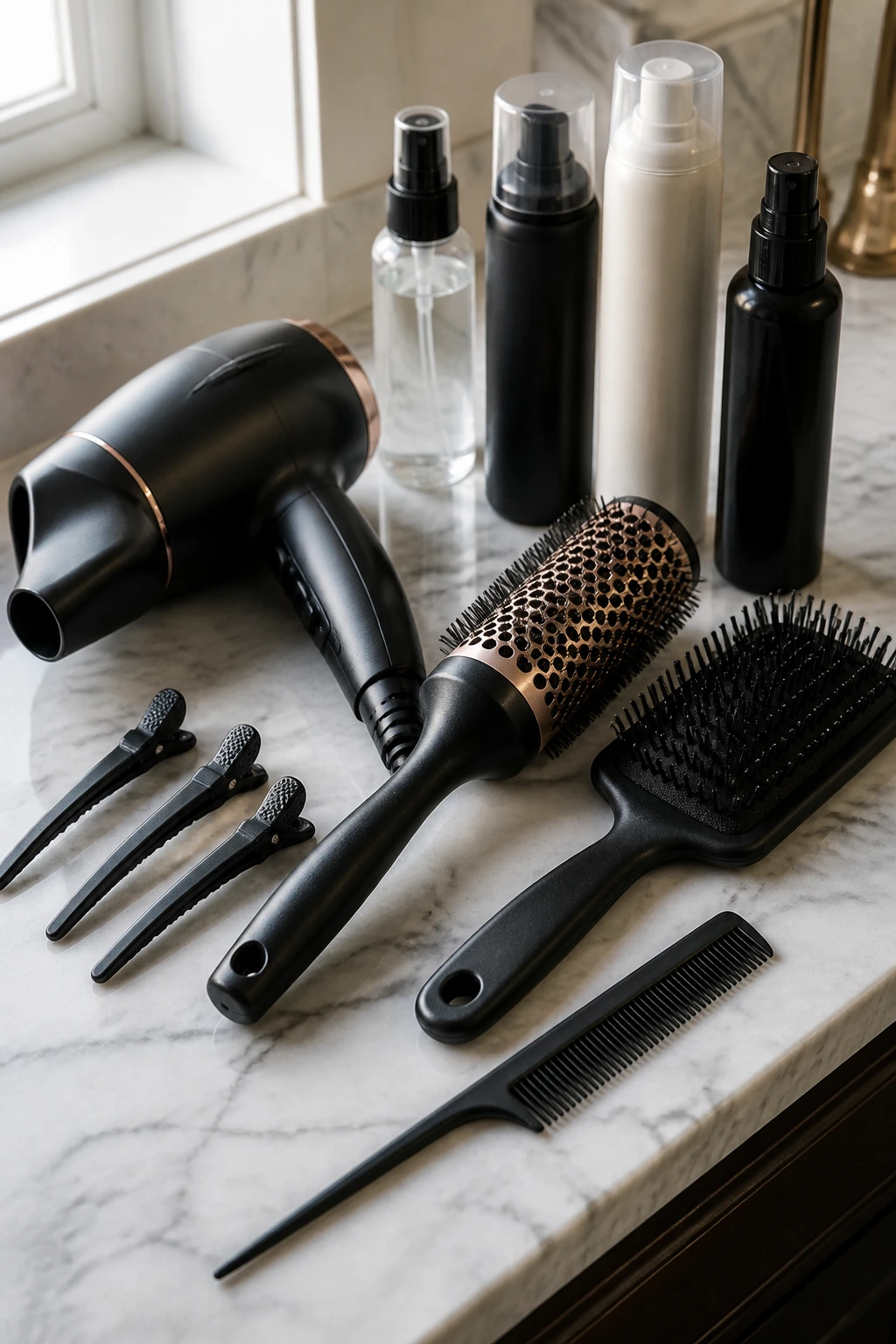
You do not need a drawer full of gadgets, but the right few tools matter a lot here.
- Blow-dryer with a nozzle: Directs the air so your bangs and face frame don’t puff in five different directions.
- 1.25-inch round brush: Big enough to smooth, small enough to bend the front pieces.
- Blowout brush or paddle brush: Handy on thicker hair when you want speed more than curl.
- Duckbill clips: Great for setting the fringe while it cools so it remembers the shape.
- Tail comb: Useful for clean parting and for lifting the front section before drying.
- Heat protectant spray: Non-negotiable if you’re using a dryer, brush, or iron on the same pieces often.
- Light mousse or root-lift foam: Gives wispy layers a little backbone without turning them sticky.
- Dry shampoo: Keeps bangs from collapsing as the roots pick up oil.
- Texturizing spray: Adds separation to piecey ends and curtain fringe, but use a light hand.
- Silk pillowcase or sleep bonnet: Helps the front pieces stay smoother overnight, which saves time in the morning.
How to Wear the Cut So It Falls in the Right Place
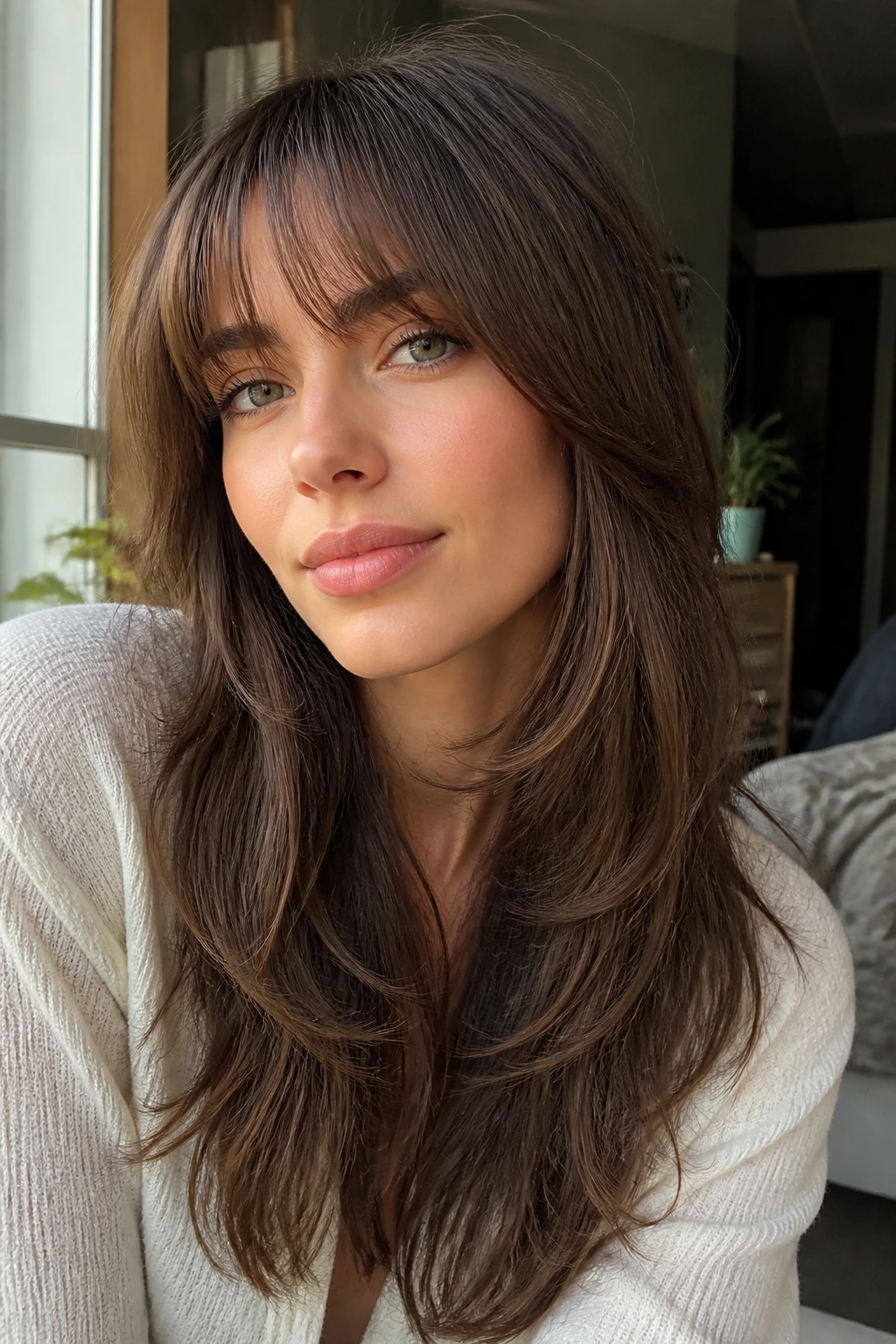
Presentation: Blow the fringe with the airflow going down and slightly forward, then bend the face-framing layers away from the face so the cut doesn’t stick to your cheeks. If the ends look too stiff, wrap just the bottom two inches around a brush or flat iron and let them cool before touching them.
Accompaniments: A center part makes curtain bangs and butterfly layers feel open; a soft off-center part can calm down a stronger fringe. Clips, headbands, and sunglasses all affect the front pieces more than people think, so place accessories high enough to avoid flattening the bangs.
Portions: Ask for the shortest layer to start around the cheekbone if you want drama, or closer to the collarbone if you want something easier to live with. The more hair your stylist removes near the crown, the lighter the top will feel—but the less full the lengths may look.
Best Pairing: Thick hair likes more internal removal. Fine hair likes longer layers and a lighter fringe. Wavy hair can usually wear the most texture with the least effort, which is a little unfair, but there it is.
Smart Product Choices for Wispy Layers and Bangs
A good cut still needs the right product habits, and this is where people go off track. Heavy oils, rich creams, and thick leave-ins can make wispy layers look limp by lunchtime, especially around the fringe. If your hair is fine or straight, start light and only add more where the ends feel dry.
For the shampoo and conditioner, I’d keep the root area clean and the mids protected. A smoothing conditioner belongs from ear level down, not on the bangs unless your hair is coarse and thirsty. If you have thick hair, a creamy conditioner can help the cut lie flatter in a good way. If your hair is fine, a lightweight conditioner and a volume foam at the roots usually work better.
Styling products should follow the texture of the cut. Mousse and root spray help the layers lift. Texturizing spray gives piecey bangs some separation. A tiny bit of serum on the ends keeps long layers from looking dusty. The wrong move is piling all of them on at once. Pick one job per product and stop there.
Additional Styling Tricks That Make the Fringe Behave
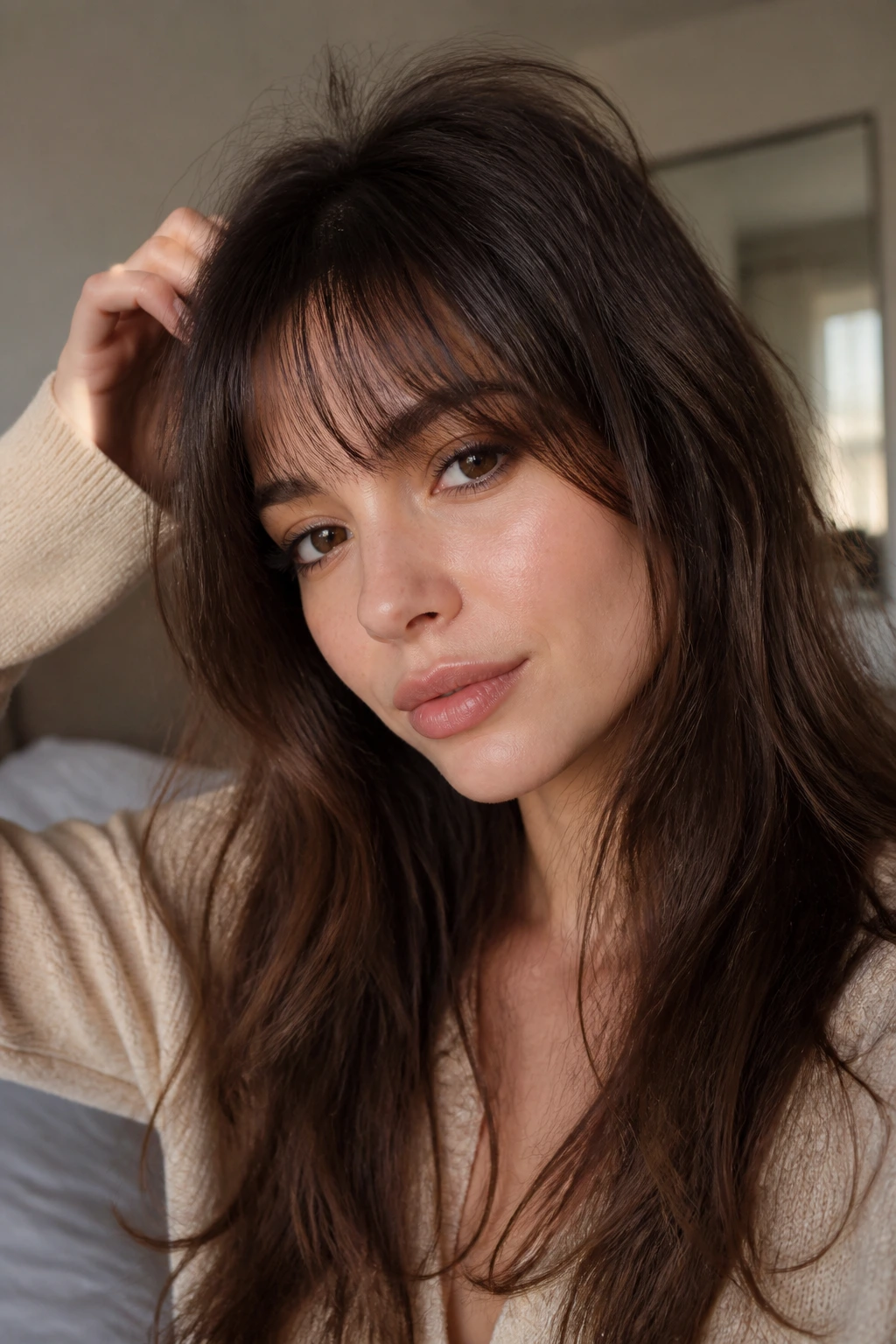
Root Lift: Clip the bangs up at the roots while they cool, even if you only keep them clipped for five minutes. That tiny pause can stop them from splitting flat down the center.
Shape Memory: If your layers tend to lose shape by midday, set just the front pieces around a large roller or brush them in the direction you want while they’re still warm. Hair remembers heat better than wishful thinking.
Finish Line: A pea-sized amount of lightweight serum on the mids and ends can make the layers slide instead of fluff. Put it on your palms first. Then keep it away from the fringe.
Quick Reset: A mist of water at the front, a quick blow-dry, and a little dry shampoo at the roots can revive a day-two style in under three minutes. That’s enough to save the cut from looking tired.
Common Mistakes That Flatten Long Hair or Make Bangs Look Choppy
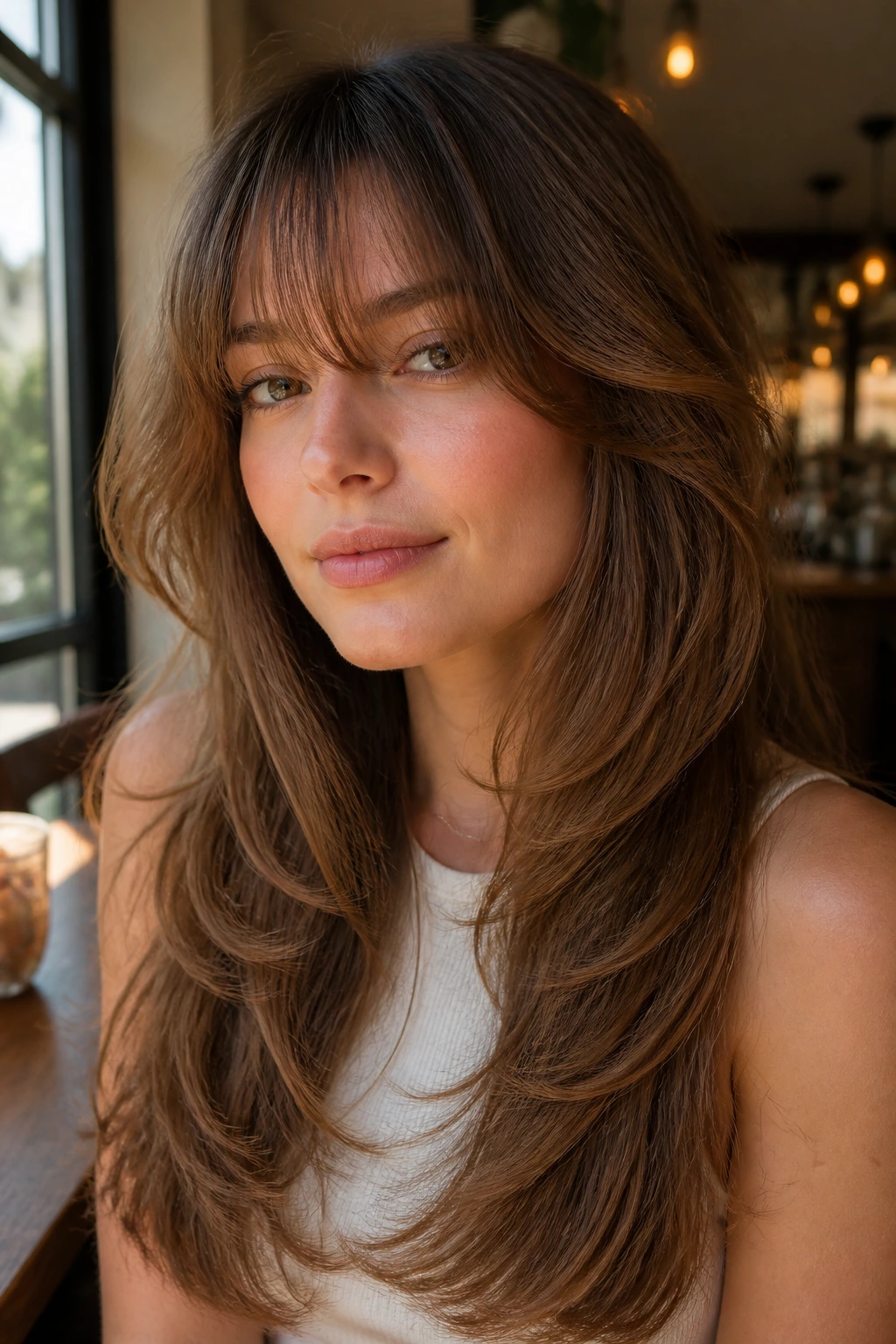
The first mistake is cutting the bangs too short because they look long when wet. Hair shrinks. Some of it shrinks a lot. If the fringe lands just right at the salon chair, it may end up several millimeters shorter once it dries, especially on waves and curls. The fix is simple: cut longer than you think and recheck after drying.
Another common problem is putting too many short layers around fine hair. The symptom is see-through ends and a top section that looks puffed out while the rest looks stringy. The fix is to keep the shortest layers long and let the movement happen lower down.
Over-thinning thick hair is its own disaster. You can end up with a halo of fuzzy ends and bangs that won’t sit together. Ask for controlled weight removal instead of aggressive thinning shears.
And then there’s product overload. If the fringe feels sticky or clumps into one piece, you’ve gone too far. Wispy layers want light hands, not a tub of cream and a prayer.
Variations and Adaptations for Different Hair Types
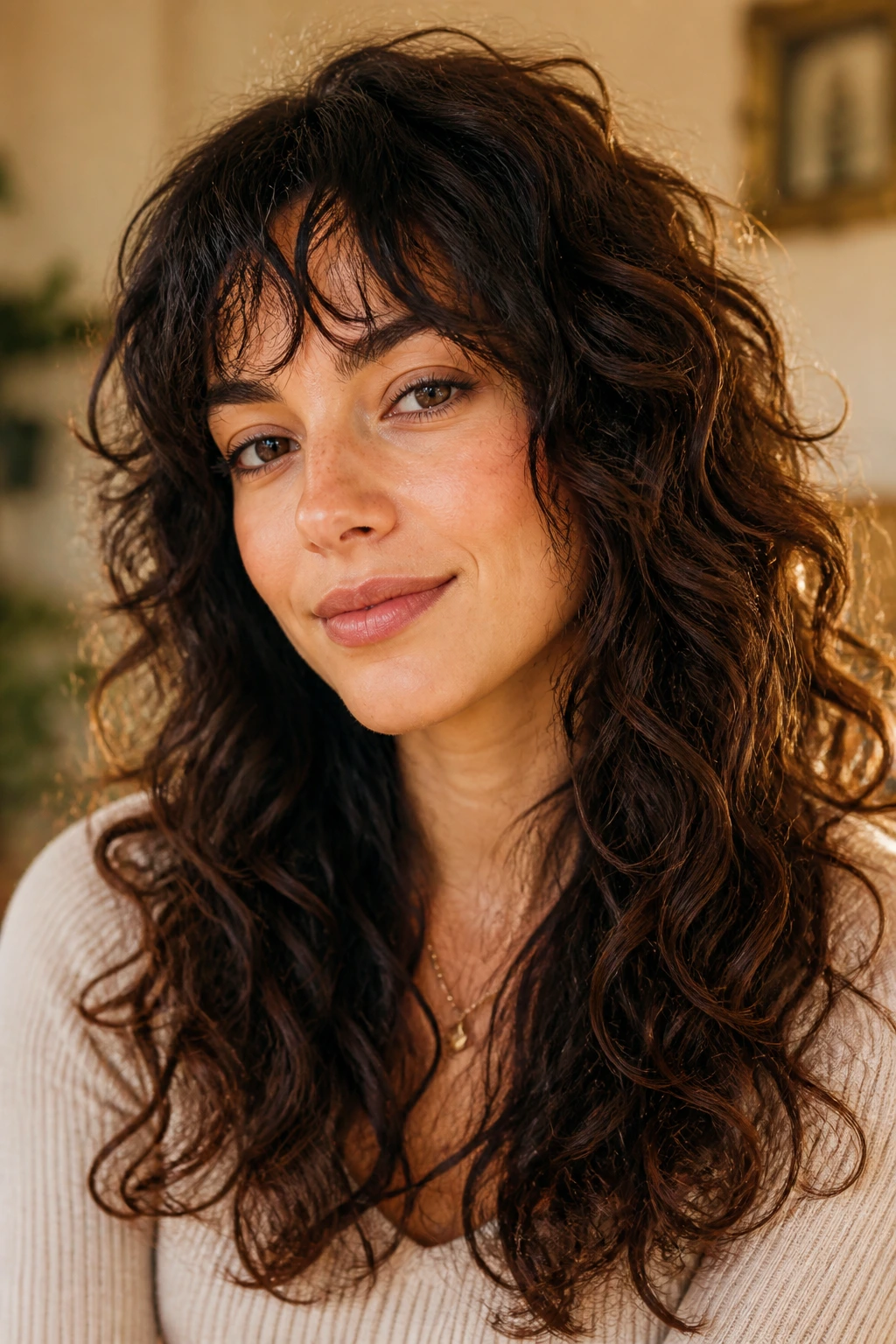
The Fine-Hair Lift: Keep the layers long, the fringe soft, and the perimeter full. This version builds movement without making the bottom look thin.
The Thick-Hair Release: Add internal debulking and a more open fringe so the hair loses bulk without losing shape. Great if your hair takes forever to dry and likes to sit heavy at the temples.
The Curly Version: Cut it dry, keep the fringe longer, and let the curl pattern decide how short the front pieces should really be. This keeps the shape from springing up into a shelf.
The Low-Maintenance Grow-Out: Start with curtain bangs that split easily and layers that begin below the cheekbone. This one stays presentable longer between salon visits.
The Sleek Straight Edit: Keep the ends blunt-ish and the bangs soft and broken. It’s the cleanest version on the list, and it reads polished even with minimal styling.
Keeping the Cut Fresh Between Salon Visits
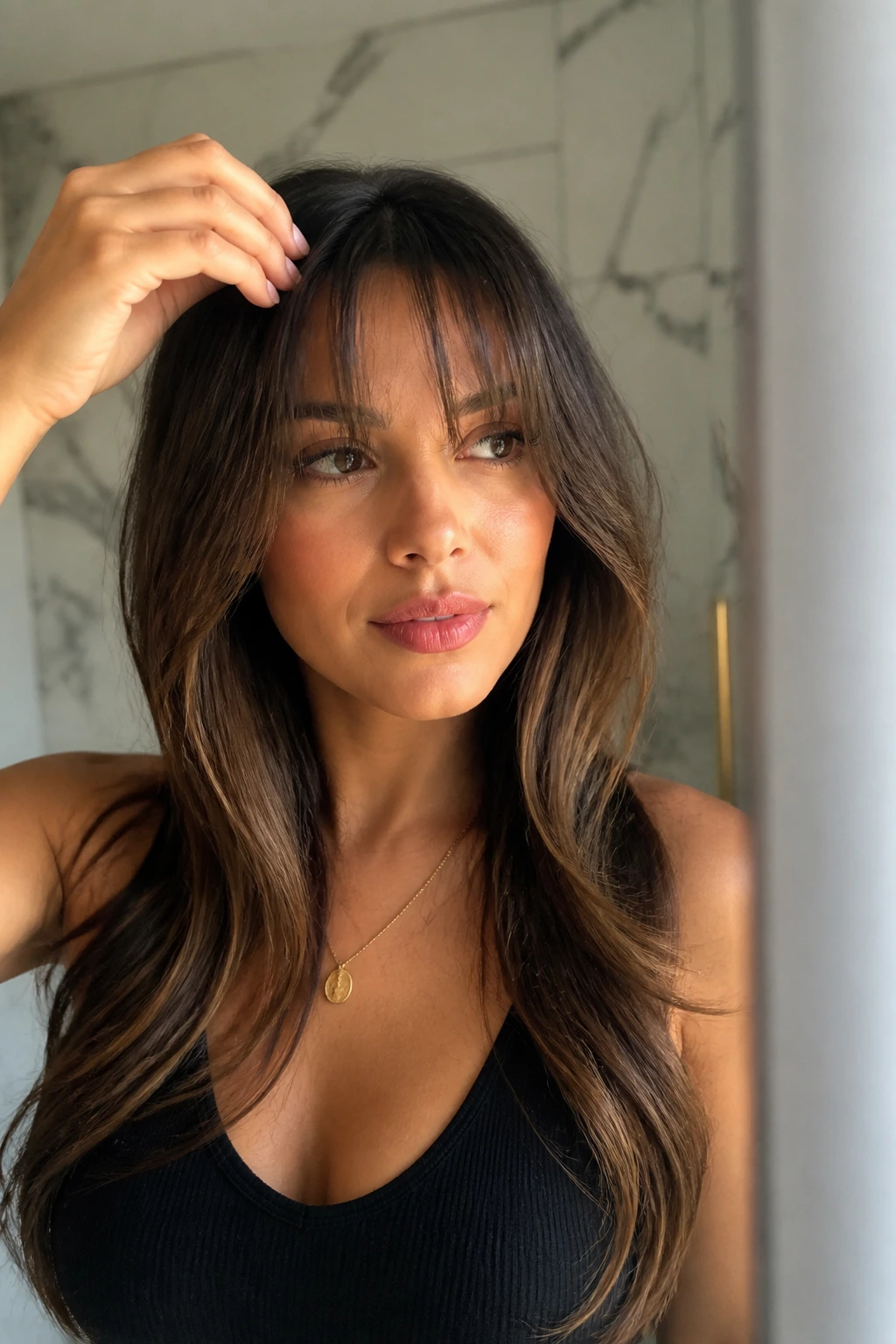
Bangs need attention sooner than the rest of the haircut. I’d plan on a fringe trim every 3 to 5 weeks if you want the shape to stay clear. The layers can usually go longer, often 8 to 12 weeks, depending on how fast your hair grows and how much movement you want to preserve.
The daily upkeep is more about small habits than big routines. If your bangs get oily, wash just the front section at the sink or with a quick shampoo at the hairline. If the layers lose bounce overnight, put the front pieces in a loose clip or a soft roller while you get dressed. A silk pillowcase helps, but the biggest difference comes from not sleeping on damp fringe.
Humidity, hats, and workouts all change how this haircut behaves. Dry shampoo at the roots after a sweaty day can save the front shape. A quick pass with a dryer on low heat usually beats trying to re-style the whole head from scratch. Keep the front clean, keep the ends light, and the haircut stays usable much longer than people expect.
Frequently Asked Questions About Wispy Layers with Bangs for Long Hair
Will wispy layers make my long hair look thinner?
Not if they’re cut well. The goal is to remove weight from the right places, not strip out the ends until they look fragile. Long, connected layers usually keep more fullness than short choppy ones.
Do wispy bangs work on a round face?
Yes, especially curtain bangs, bottleneck bangs, and longer face-framing fringe. Those shapes draw the eye down and outward instead of cutting the face in half with a blunt line.
How often do I need to trim the bangs?
Most wispy fringes need a tidy-up every 3 to 5 weeks if you want them to stay neat. If you like a grown-out look, you can stretch that longer, but the fringe will start sitting lower and splitting more.
Can I get this cut if my hair is curly?
Yes, but the haircut needs to respect shrinkage. Curly fringe should usually be cut dry or nearly dry, and the layers should be placed where the curl pattern actually falls, not where it looks like it falls when wet.
What if my hair is very fine and flat?
Keep the layers longer and ask for movement through the interior instead of lots of short pieces. A root-lift spray and a quick round-brush finish will help the bangs and front layers show up without flattening the rest.
How do I stop my bangs from splitting in the middle?
Start by drying them forward, not letting them air-dry in whatever direction they choose. A small round brush, a clip while they cool, and a touch of dry shampoo at the roots usually helps more than adding extra product.
Can I grow out wispy bangs without hating my life?
If they’re cut into a curtain or bottleneck shape, yes. Those styles blend into the layers as they get longer, which makes the in-between stage far less annoying than a blunt fringe.
What should I say to my stylist if I don’t want a shaggy look?
Ask for soft face-framing layers, internal movement, and a fringe that blends into the sides. Say you want the hair to move, not look heavily textured. That distinction matters.
A Cut That Keeps Its Shape
Long hair does not have to mean heavy hair. Once the layers are placed well and the bangs are cut with a light hand, the whole style starts doing more of the work for you. It bends better, grows out better, and stops looking like it needs rescuing every time you look in the mirror.
The best part is that these shapes aren’t locked into one personality. They can be soft, cool, polished, airy, or a little undone, depending on how you style them and how much texture your hair already has. Pick the version that suits your routine, not just the one that looks pretty in a photo. That’s the cut you’ll actually keep wearing.