



Fine hair at shoulder length can turn fussy fast. One wrong cut and the ends look see-through, the crown goes flat, and you spend the rest of the day nudging it back into place like it personally offended you. A layered shoulder-length bob for fine hair fixes that by keeping enough length to swing, while shifting weight out of the places that drag the whole shape down.
That balance matters. Fine hair does not need aggressive slicing or a thousand tiny snips. It needs a perimeter that still looks full, layers that start in the right place, and enough structure that the cut does not collapse the minute you step outside. The best versions of this haircut are careful, almost sneaky about it — the layers do the work, but they do not scream for attention.
I like this length because it gives you options without asking for heroic styling. You can blow it smooth, rough-dry it into a piecey bend, tuck one side back, or throw in a loose wave and still keep the ends from looking wispy. And if your hair is fine but dense, or fine and sparse, or fine with a little natural bend, there’s a version here that can make sense on your head instead of someone else’s.
Why These Shoulder-Length Layers Work on Fine Hair

The right layers create lift without exposing the ends. That’s the whole trick. Fine hair often looks thinner when the shortest pieces sit too high, so the smartest versions of this cut keep the weight line near the collarbone and use soft internal layers only where the hair can hide them.
- Keeps the hemline strong: A fuller bottom edge makes fine hair look denser from every angle, especially when the cut hits right at the collarbone or just below it.
- Moves weight off the wrong spots: Instead of thinning everything out, the best layering removes bulk where hair bends or sticks out, which helps the shape sit closer to the head.
- Adds motion where the eye lands: Layers around the cheekbone, jaw, and shoulder give the cut movement at face level, not just a puff of volume at the crown.
- Grows out with less drama: Shoulder-length bobs are forgiving because they can lose a little precision and still look intentional.
- Works with texture, not against it: Straight hair gets more body, wavy hair gets a cleaner outline, and softly curly hair gets a better shape.
Fine hair is not always thin hair. That distinction matters. You can have very fine strands and still have plenty of density, which means you can often handle more shape through the middle. If your density is low too, keep the layering softer and let the blunt edge do most of the visual work.
1. The Clean Collarbone Lob With Hidden Layers
This is the version I’d hand to someone who wants the safest, smartest place to start. The outer line stays blunt and clean, but the interior gets a few hidden layers so the hair does not hang like a curtain. It sits right at the collarbone, where the shape looks deliberate even when the styling is casual.
Why it works
The blunt perimeter gives fine hair a thicker-looking finish, while the hidden layers take out just enough weight to keep the cut from folding under its own softness. That matters on straight or slightly wavy hair, because those textures show every heavy spot.
Ask for the shortest internal layers to stay below the cheekbone. Any higher and you lose the dense look that makes this cut useful in the first place.
Good fit for
- Straight fine hair that goes flat at the crown
- Low-maintenance styling
- People who want movement without a choppy finish
2. The Side-Swept Face-Framing Lob
A side-swept lob has a little more drama, but not the annoying kind. The side part gives the roots a push in one direction, and the longer face-framing pieces create a soft diagonal that keeps the cut from feeling boxy. It’s a nice choice if your hair lies too close to the scalp and needs help standing up.
The front layers should start around the lips or chin, then slip into the rest of the cut without a harsh step. That keeps the shape light around the face while the back still feels full. If you tuck one side behind your ear, the whole thing looks cleaner and a little more awake.
Best for
- Rounder faces that want a longer line
- Flat roots that need a root lift
- Hair that looks better with a side part than a center part
3. The Choppy Piecey Bob With Airy Ends
This is the edgier option, but it needs a restrained hand. Choppy does not mean shredded. On fine hair, the goal is piecey movement at the tips, not a frayed outline that makes the ends look thinner than they are.
What makes it different
A point-cut finish or very light texturing around the lower two inches creates separation, so the bob moves instead of sitting like a helmet. The key is keeping the base line strong enough that the cut still reads as full from a distance.
- Keep the layers soft through the mid-lengths.
- Use a pea-size bit of styling cream, not a heavy wax.
- Let the ends bend in different directions for that lived-in look.
If your hair already looks stringy when it’s dry, keep this version lighter than the photos you’ve pinned. Too much texturizing on fine hair can go from airy to ragged in a hurry.
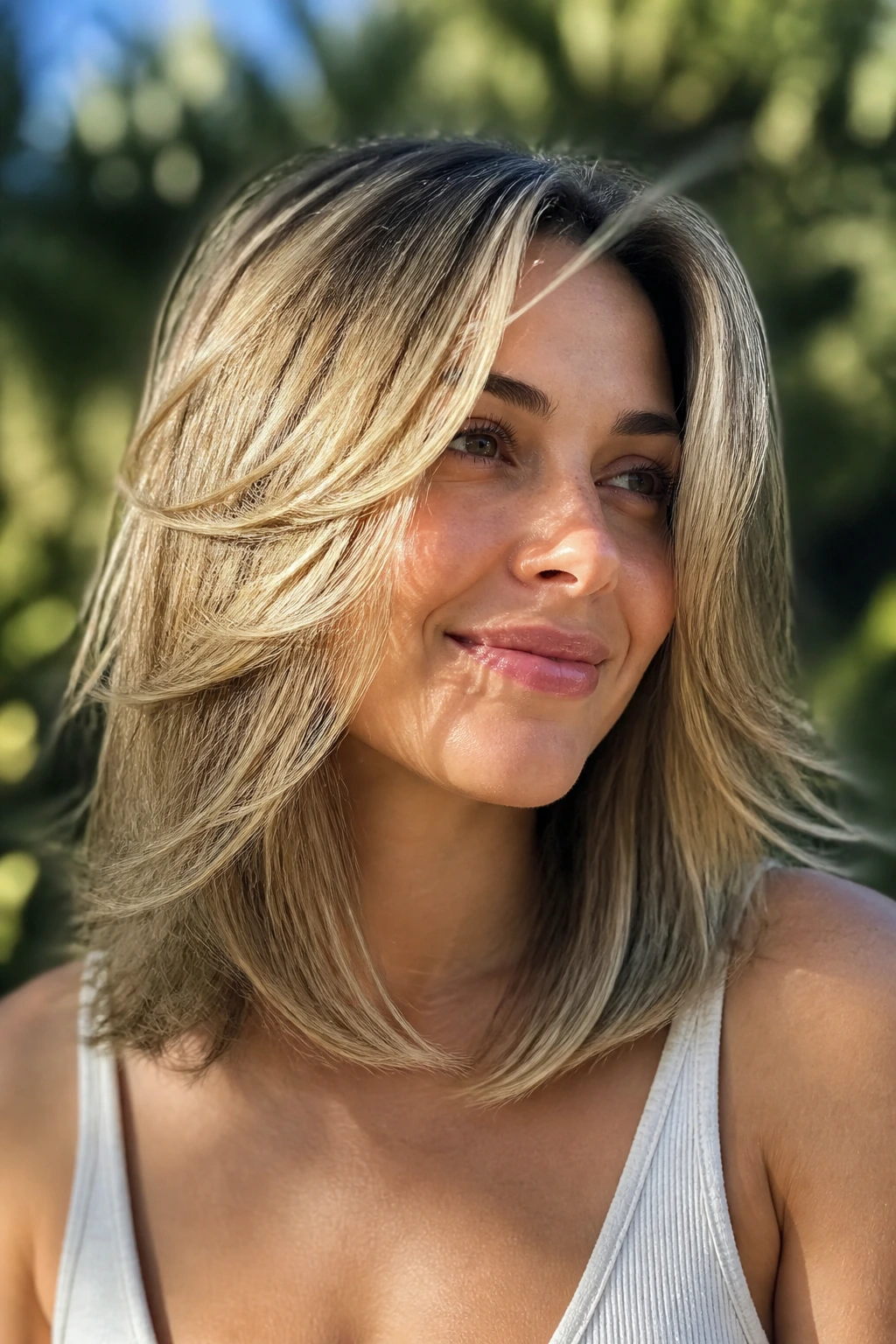
4. The Butterfly Lob With Long Crown Layers
The butterfly lob borrows the airy movement of a longer layered cut, but it stops at the shoulders before the shape gets too loose. The top layers stay long enough to flip back from the face, while the lower section keeps enough weight to preserve density. That’s why this one works better on fine hair than a heavily layered shag.
You get lift around the cheekbones and a little swing through the crown, but the ends still read as deliberate. I like this cut on hair that needs motion more than volume in the traditional teased sense. It feels lighter, but it does not look sparse.
5. The Deep Side-Part Volume Lob
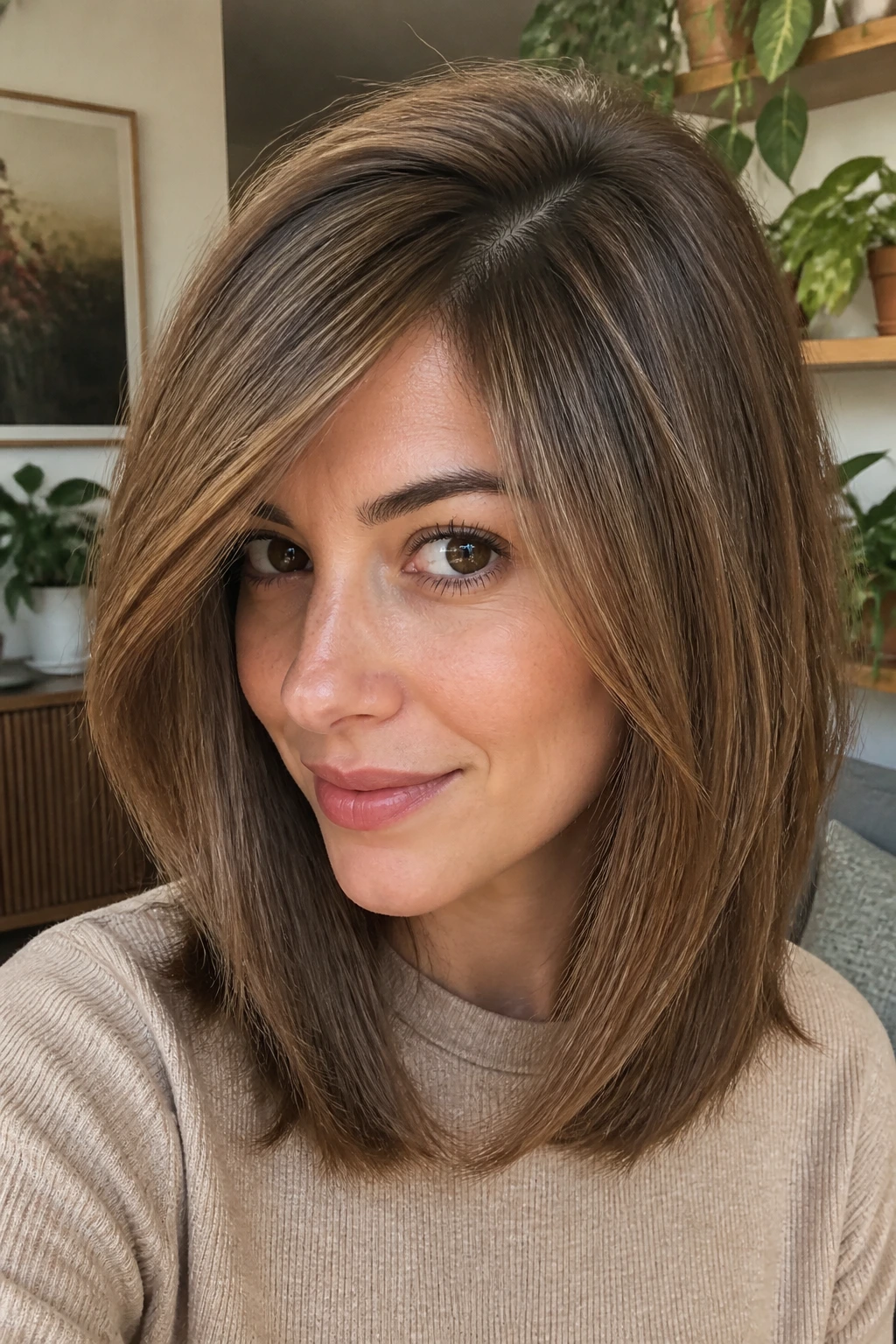
A deep side part can do more for fine hair than a dozen products, and I’m only half joking. It shifts the root direction, exposes a little more crown height, and gives the illusion of thicker hair on the heavier side. When paired with a layered lob, the result is a cut that looks fuller immediately.
Keep the layers long and blended so the side part has something to fall into. If the top is too short, the part can look flimsy and overworked. A medium round brush and a little root spray are enough here; don’t bury the style in product.
Quick styling note
Dry the hair in the opposite direction of the part first, then switch it back at the end. That old salon trick still works because it pushes the roots up before they settle.
6. The Invisible-Layer Bob For a Fuller Hem
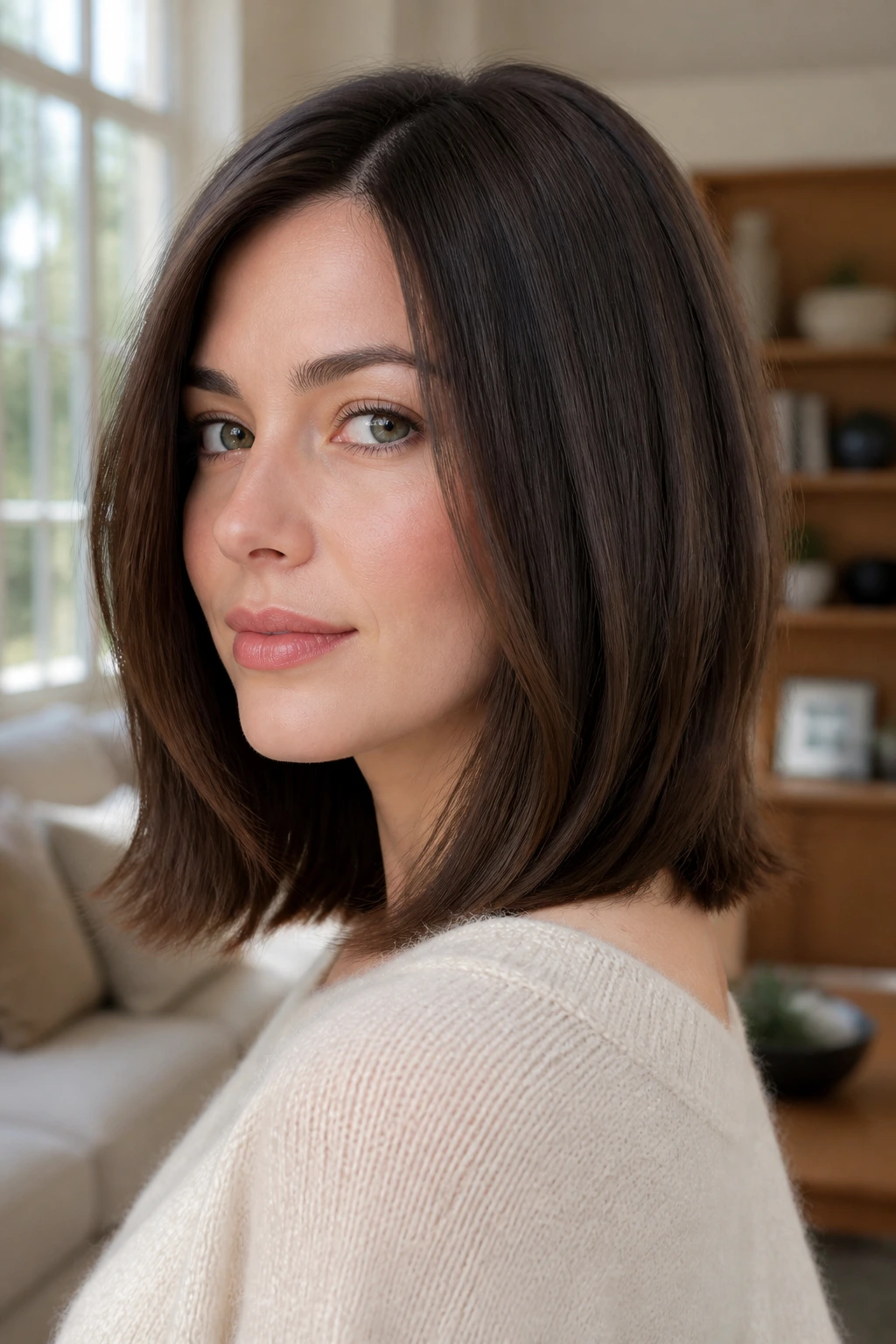
This is the cut for people who say they want layers, but what they really want is movement without losing density. The layers sit inside the shape instead of carving the outside, so the eye sees a fuller hemline. That matters when your ends already feel delicate.
The bob still gets shape. It just gets it quietly. This version looks especially good on straight fine hair because the perimeter stays clean, and the internal movement shows up when the light hits it or when you turn your head.
H3: What to ask for
Ask for internal layers only, with the shortest pieces kept well below the cheekbone. Say you want the outline to stay blunt or only slightly rounded, not shredded.
7. The Razor-Feathered Lob With Soft Tips
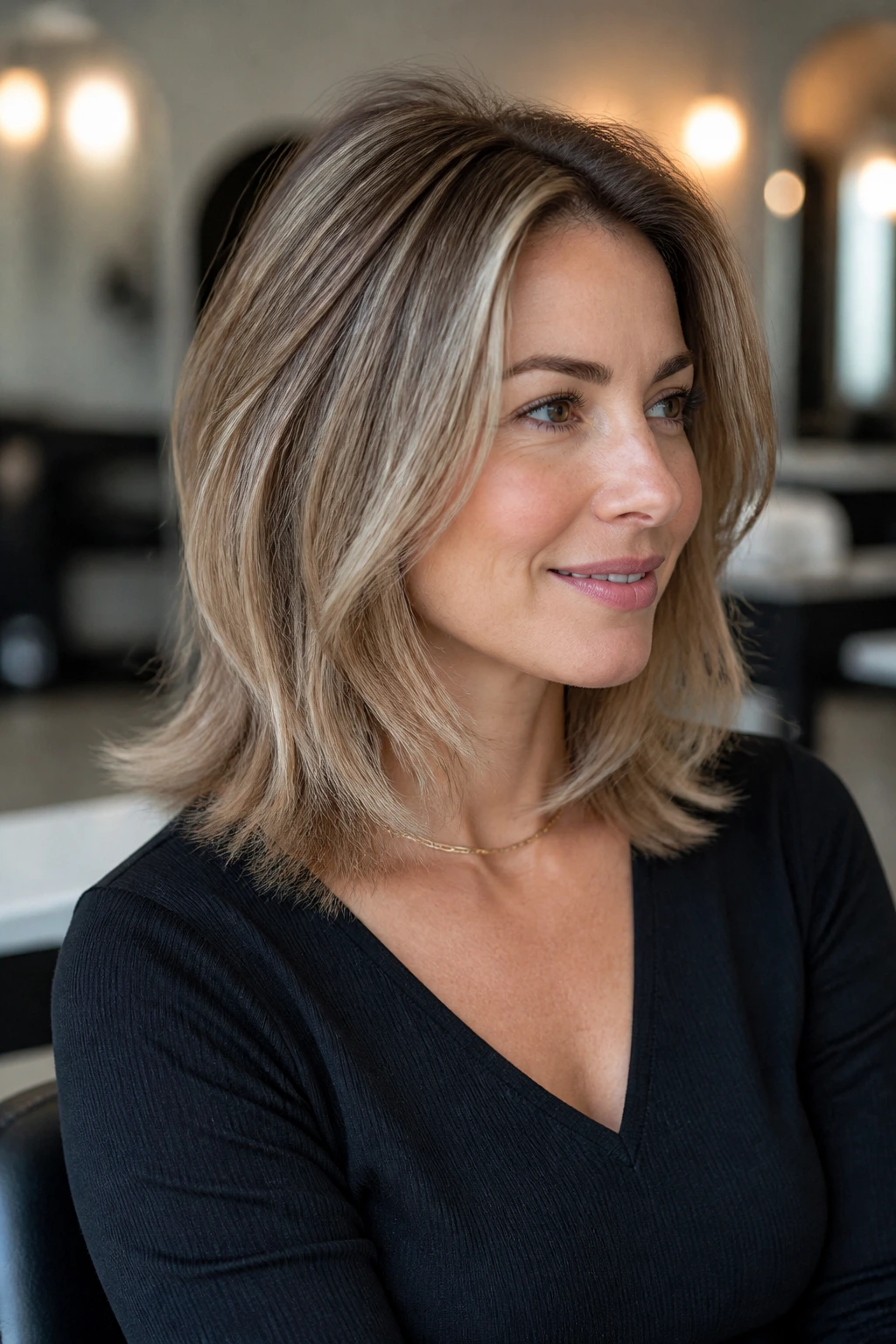
A razor can make fine hair look fluffy in the best sense, or it can make the ends disappear. The difference is how much is taken off. A feathered lob uses the razor to soften the lower edge just enough that the cut no longer looks stiff, but it keeps the overall shape intact.
This works best when the hair has some natural movement. On pin-straight strands, it can look too loose if overdone. I’d choose this cut when you want the bob to bend around the face and sit a little less formally than a blunt lob.
- Best on hair that frizzes only a little
- Needs a light hand from the stylist
- Looks better with a smooth blow-dry than with rough, heavy product
8. The C-Shaped Curved Bob
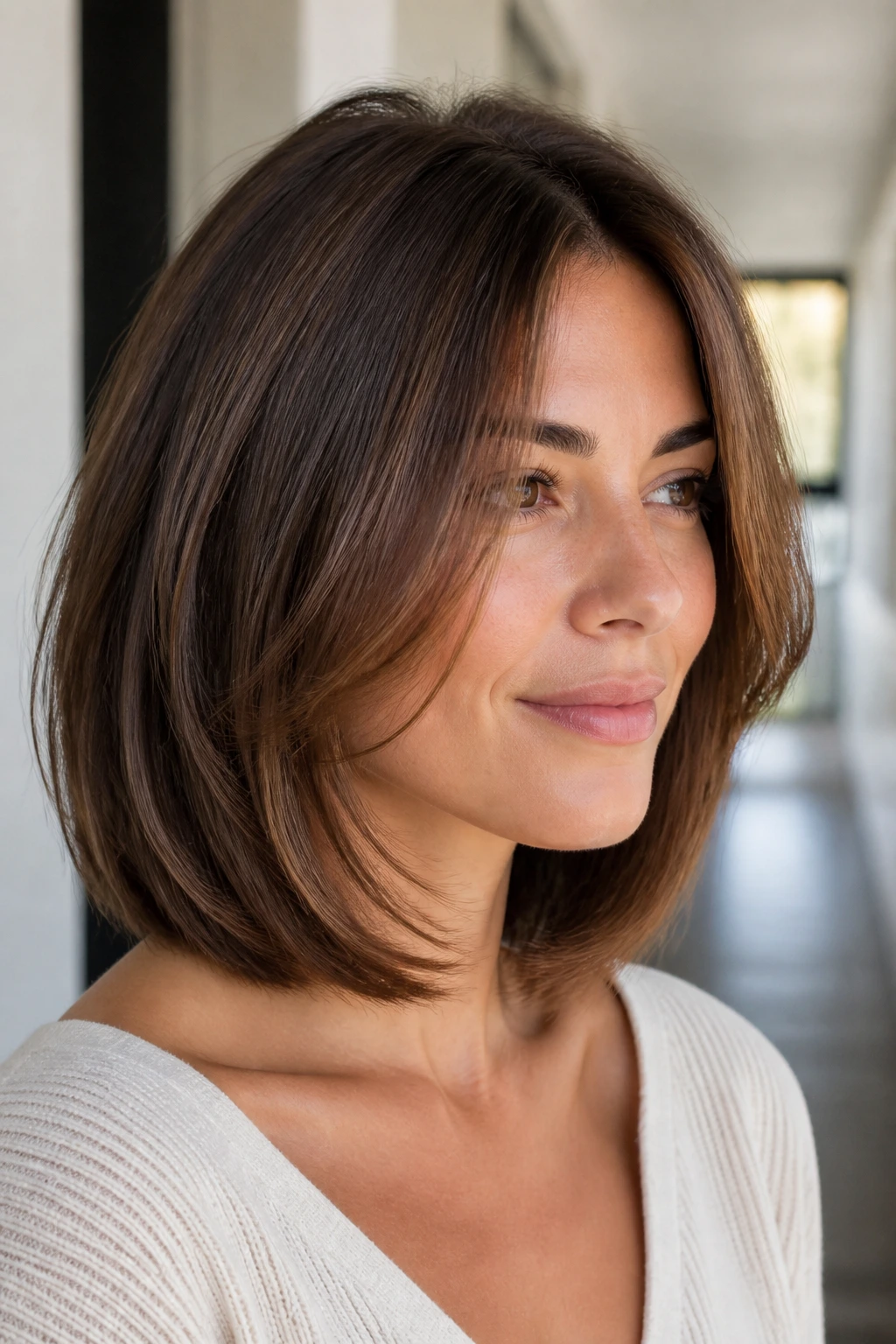
A C-shaped bob curves inward around the face and shoulders, which makes fine hair look more intentional than a straight cut that just drops down. The curve starts near the cheek or jaw and arcs down to the collarbone, giving the impression of softness without losing the edge of the bob.
This is one of those styles that looks expensive in the plainest possible way. Not flashy. Just clean. Fine hair benefits because the shape makes the outline look fuller, and the curve keeps the sides from flaring out when humidity hits.
9. The Flipped-Under Lob With Polished Ends
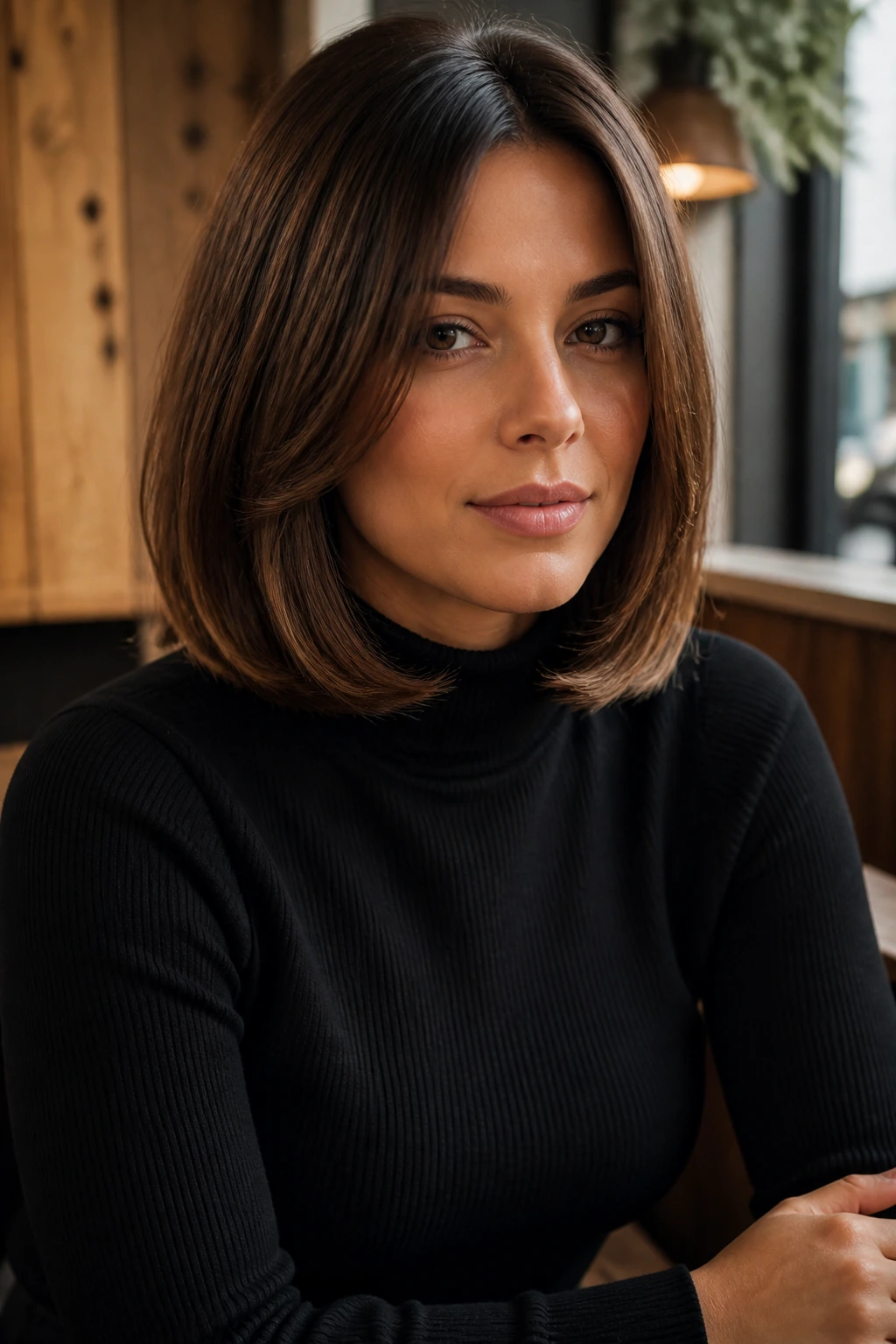
This cut is for the person who likes hair that looks finished, even when the rest of the outfit is casual. The ends are styled under with a round brush or a flat iron bend, which makes the perimeter look denser and neater. Fine hair often looks better with this bit of inward structure than with loose, airy ends.
The layers should be subtle enough that the flip-under line still reads as one piece. If the layering is too aggressive, the bend at the ends will expose the gaps between sections. Keep the finish soft, not barrel-curled.
Tip
A 1.25-inch round brush is the sweet spot for most shoulder-length bobs. Smaller brushes create too much curl and can make the hair look shorter than it is.
10. The Beach-Wave Lob With Loose Movement
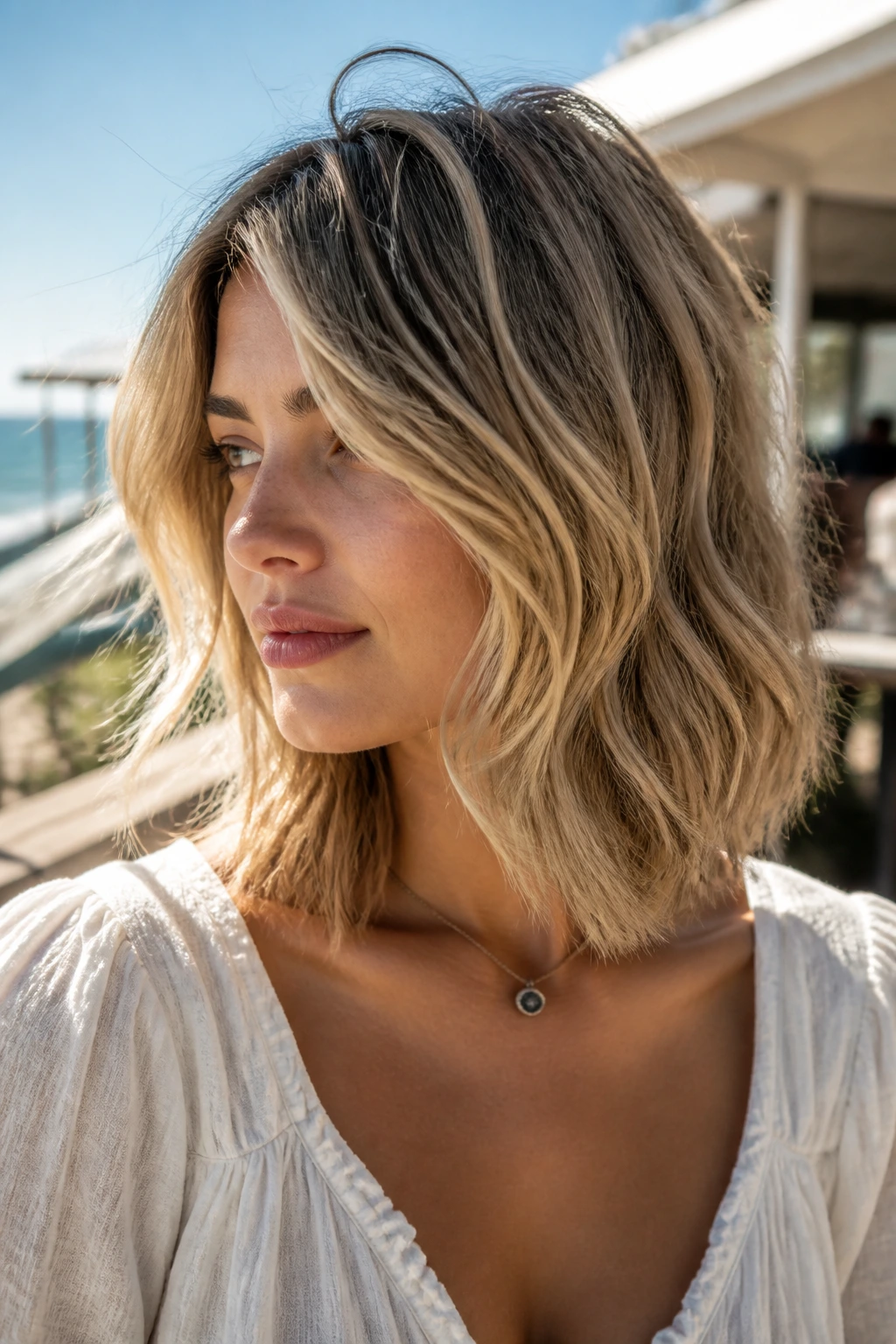
A beach-wave lob can work on fine hair if the wave is loose and spaced out. Tight, uniform curls make fine strands look sparse. Bigger bends give movement while the layered shape keeps the ends from collapsing.
The best version starts with a cut that has soft face-framing pieces and slightly longer layers in the back. Then you wave only mid-lengths and lower sections, leaving the root area calmer. That keeps the head from looking too round or too “done.”
What to avoid
- Curling every section the same direction
- Using too much salt spray
- Letting the waves start too high on the head
A few bends. That’s enough. Fine hair usually looks better when you stop before it starts trying too hard.
11. The Rounded Curly Lob For Fine Waves and Curls
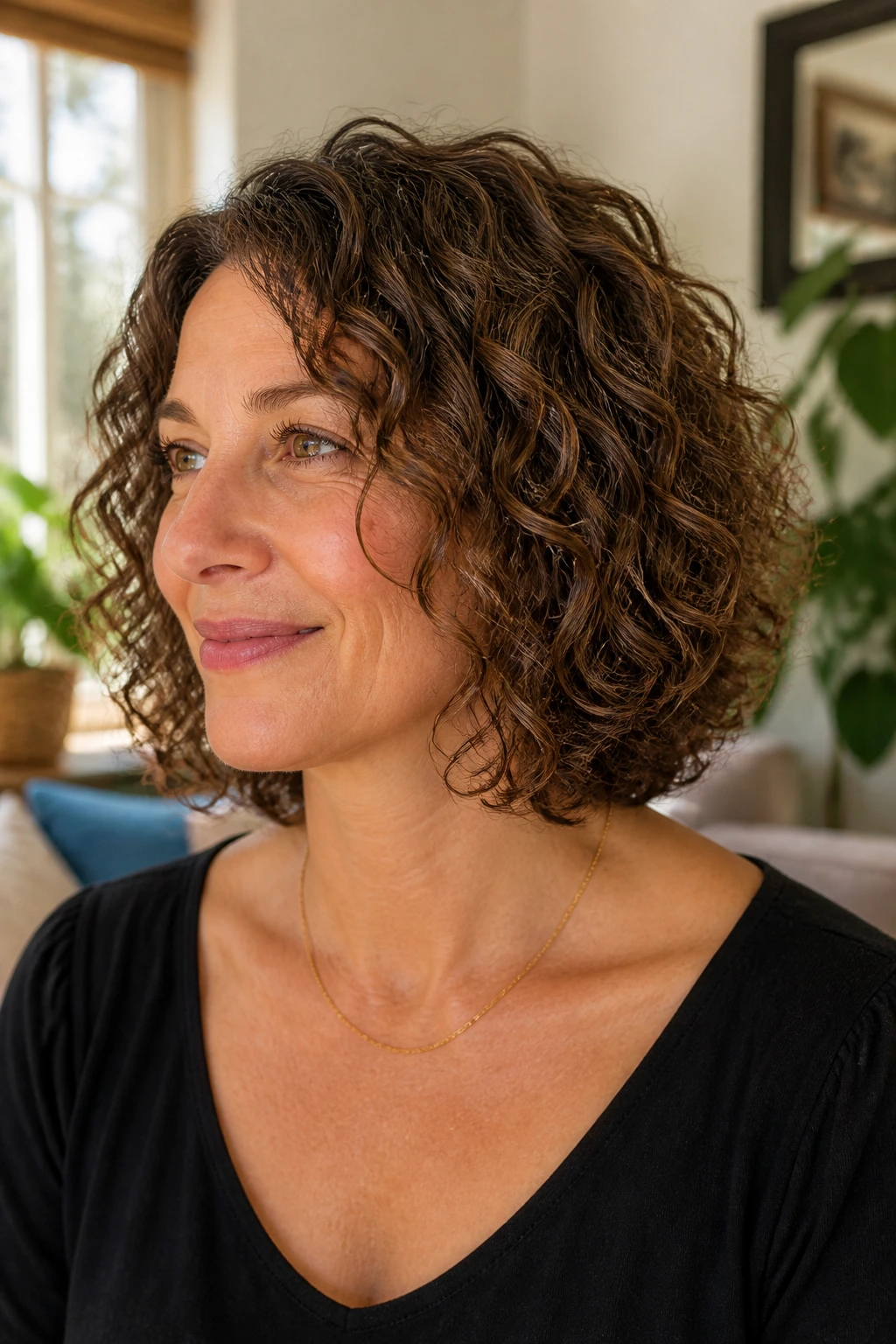
If your fine hair bends into waves or soft curls, the rounded lob is a smarter shape than a boxy one. A little curve through the sides and back gives the hair a better outline, so it doesn’t balloon at the shoulders or go flat at the top. The layers should follow the curl pattern, not fight it.
This cut works when the stylist leaves enough length for the curls to spring without tightening into a puff. Too short, and fine curls can look airy in a way that reads as thin. The rounded perimeter keeps the shape steady even on days when the weather has opinions.
12. The Sleek Glass Lob With Soft Underlayers
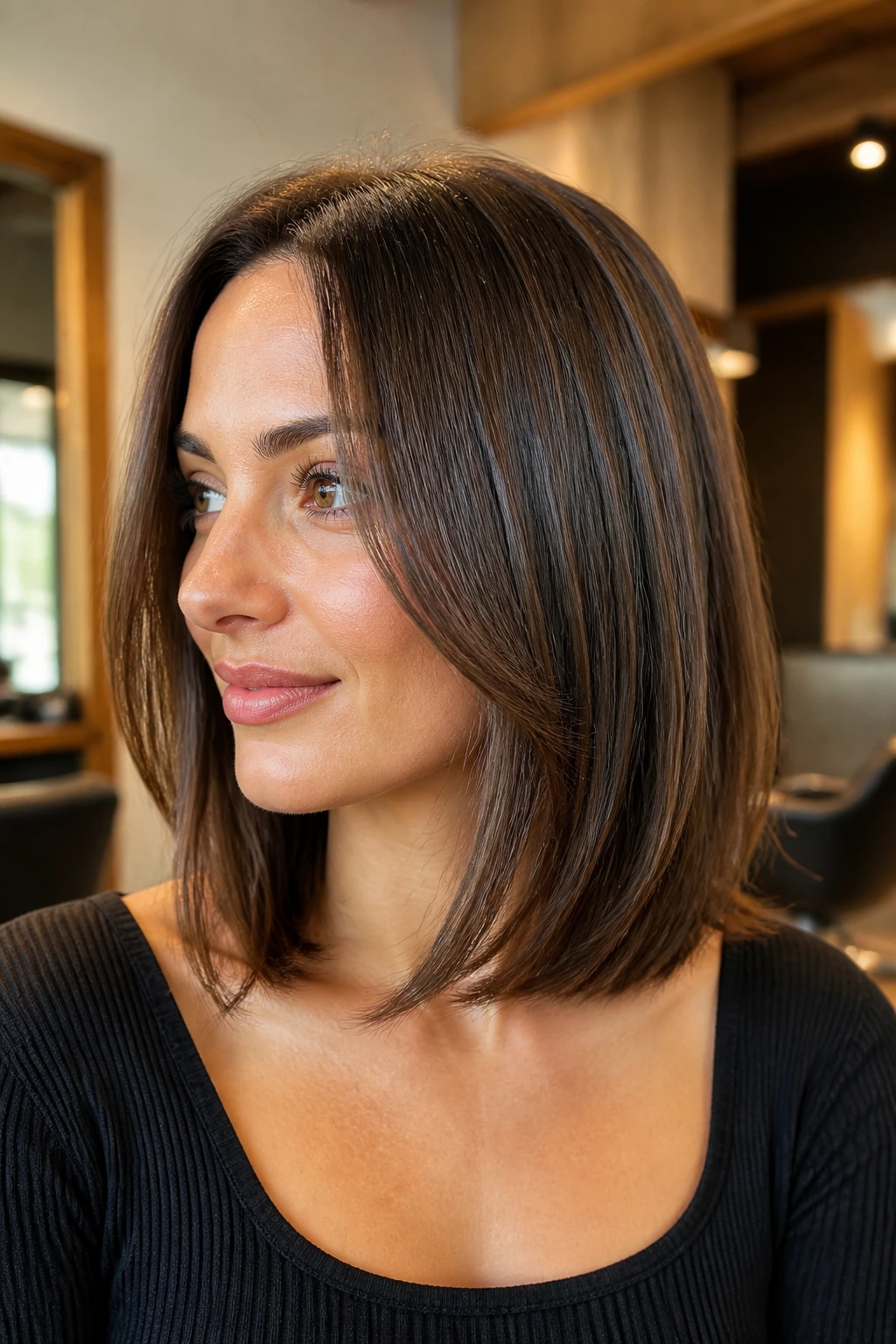
Sleek does not have to mean flat. A glassy lob on fine hair looks best when the outer surface is smooth and the inside has enough movement to keep it from looking like one sheet. The trick is soft underlayers that prevent the ends from turning into a thin, see-through line.
This version is good if you love a sharp finish. It looks polished with a center part, but an off-center part can make it feel a little less severe. Use a lightweight serum only on the final inch of hair; putting shine product too high will collapse the root lift.
13. The Wispy Bang Lob For a Light Fringe

A wispy fringe can be a smart match for fine hair because it adds interest up top without taking much density away from the bob itself. The bangs should be soft enough that they skim the forehead, not a heavy curtain that steals volume from the rest of the cut.
This style works best when the bob stays shoulder length and the layers around the face are restrained. Too much slicing near the fringe line can make the hair look sparse around the temples. Keep the bangs see-through enough to move, but not so thin they look like accidental leftover pieces.
Good for
- Softening a long forehead
- Adding face interest without changing the bob too much
- Hair that lies nicely when blow-dried forward
14. The Curtain Bang Lob With Cheekbone Layers

Curtain bangs give fine hair a little drama without the commitment of a full fringe. The split at the center opens the face, while the longest pieces fall into the cheekbones and blend into the lob. That is where this cut earns its keep: the bangs and layers work together instead of fighting for attention.
If your hair is very fine, keep the bangs long enough to tuck behind the ears on a bad day. Short curtain pieces that sit above the cheek can separate too fast and look wispy by noon. A round brush and a quick bend away from the face are usually enough.
15. The A-Line Lob With Longer Front Pieces
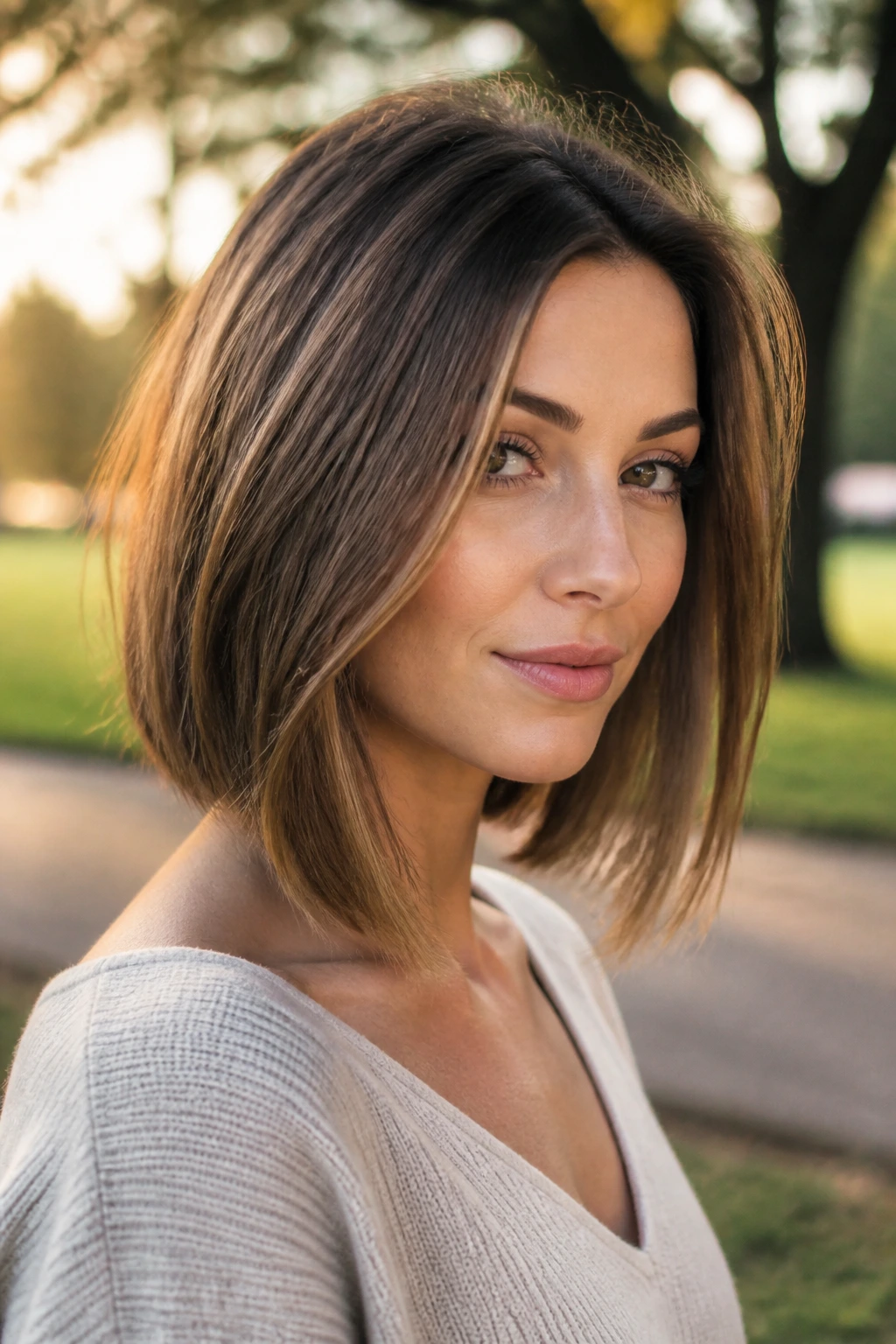
An A-line lob is shorter in back and longer in front, and that little angle helps fine hair look more structured. The longer front sections create a clean line down toward the collarbone, while the shorter back gives the crown a subtle lift. It’s a good move if your hair tends to cave in at the nape.
The angle should be soft, not severe. On fine hair, a dramatic A-line can expose the lack of density in the back. A gentle slope gives you shape without making the ends look stretched.
H3: When it shines
If you like to tuck one side behind the ear or wear statement earrings, this cut gives you that clean front panel without sacrificing movement in the back.
16. The Shaggy Lob With Soft Crown Texture
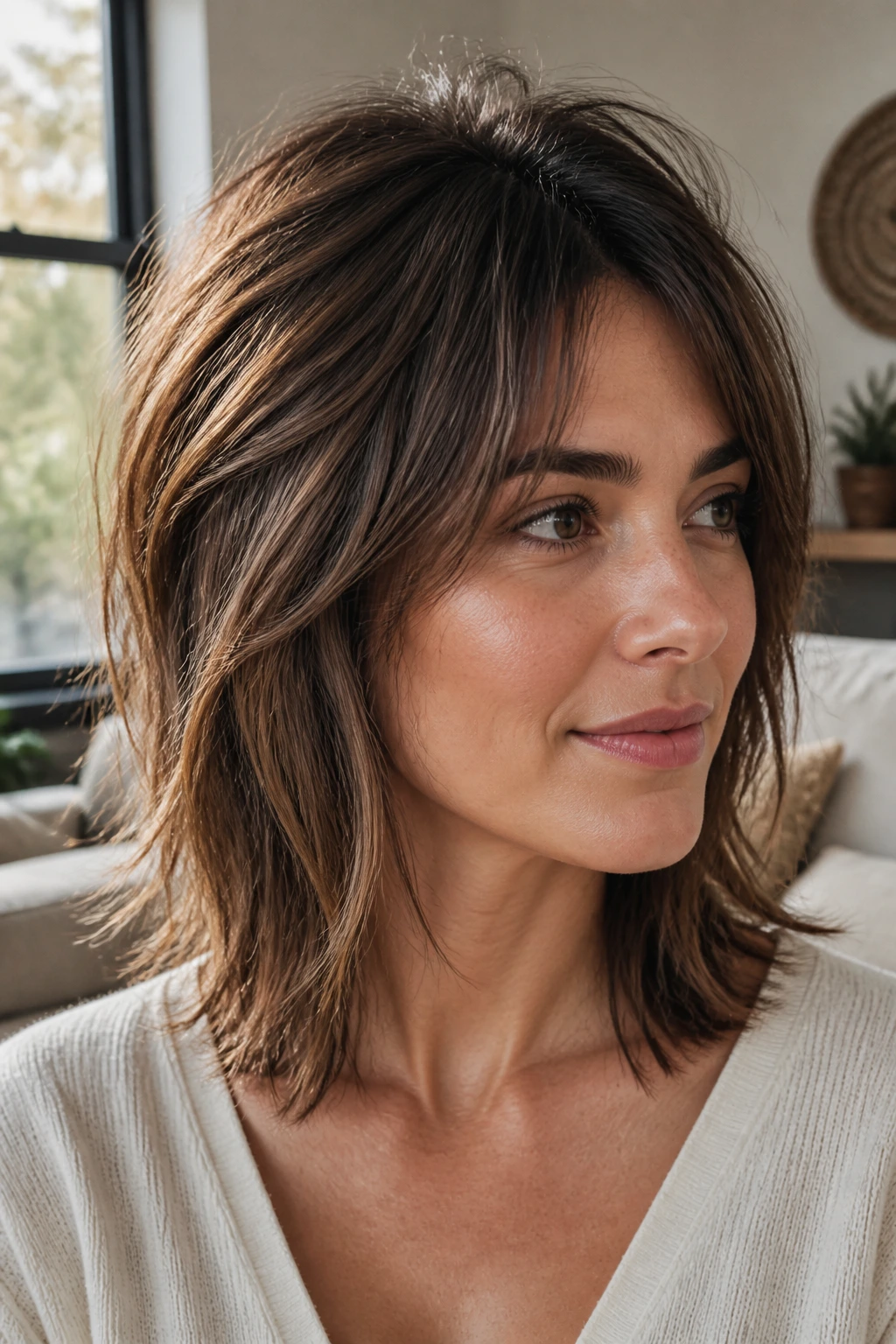
A shaggy lob on fine hair has to be handled with discipline. Too many layers and the cut turns wispy. Done right, though, it gives the top just enough lift and the lower lengths enough softness that the hair never looks nailed down.
Think of it as a restrained shag, not a full rock-and-roll chop. The crown gets some movement, the face frame gets a little air, and the ends stay honest. This is one of the better options if your hair has a natural bend and you do not want to spend ages blow-drying it into obedience.
17. The Boxy Bob With Minimal Layers
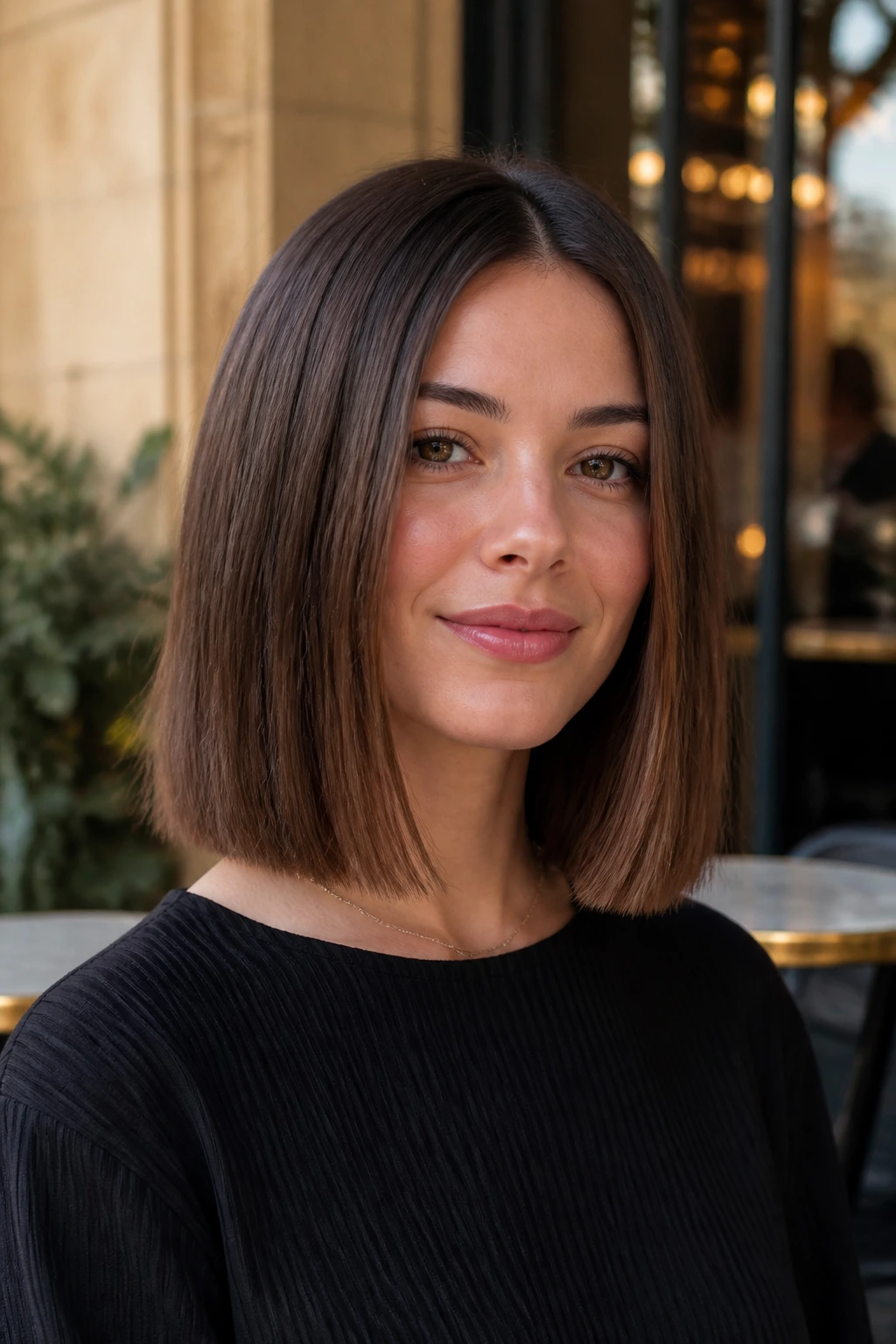
Sometimes the boldest move for fine hair is the least layered one. A boxier shoulder-length bob keeps the outline full and lets the density do the work. A few minimal layers around the face can prevent the shape from feeling severe, but the main line stays strong.
This cut is a favorite of mine for very fine straight hair because it can look thicker with less effort. It does not need texture sprayed all over it. It needs a good trim, a clean edge, and a blow-dry that respects the line.
18. The Tucked Bob With Ear-Skimming Fronts
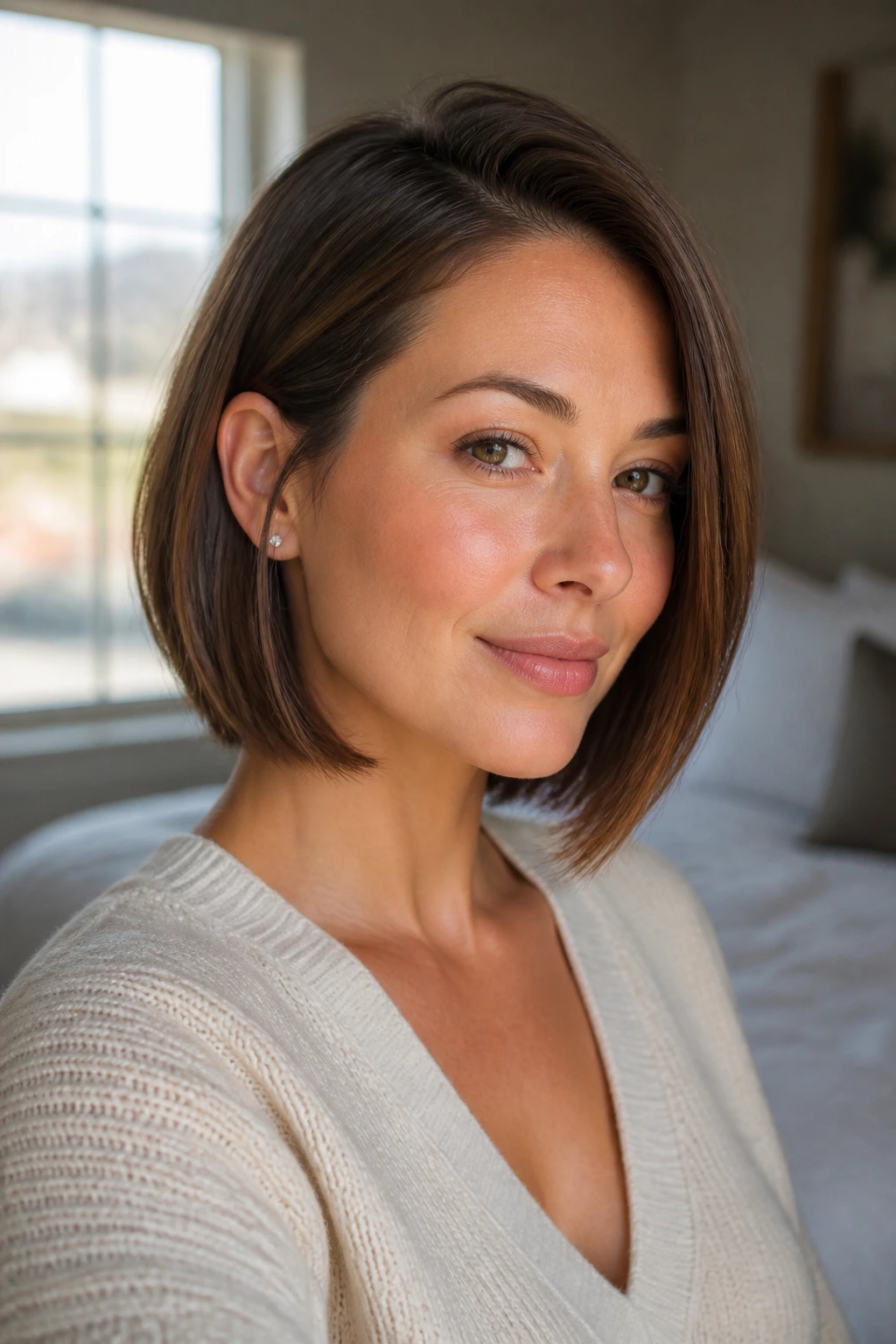
If you live for hair that can be tucked behind one ear and still look intentional, this one’s worth a look. The front pieces are cut so they land near the jaw or just below it, which leaves enough slack for glasses, earrings, and the occasional rushed morning. Fine hair often looks better when it has a little asymmetry built in.
The tucked bob works because the front stays soft while the back carries the main weight. That keeps the hair from collapsing around the face. It’s a useful everyday cut, especially if you wear a lot of collars or high necklines.
19. The Off-Center Part Lob With Built-In Lift
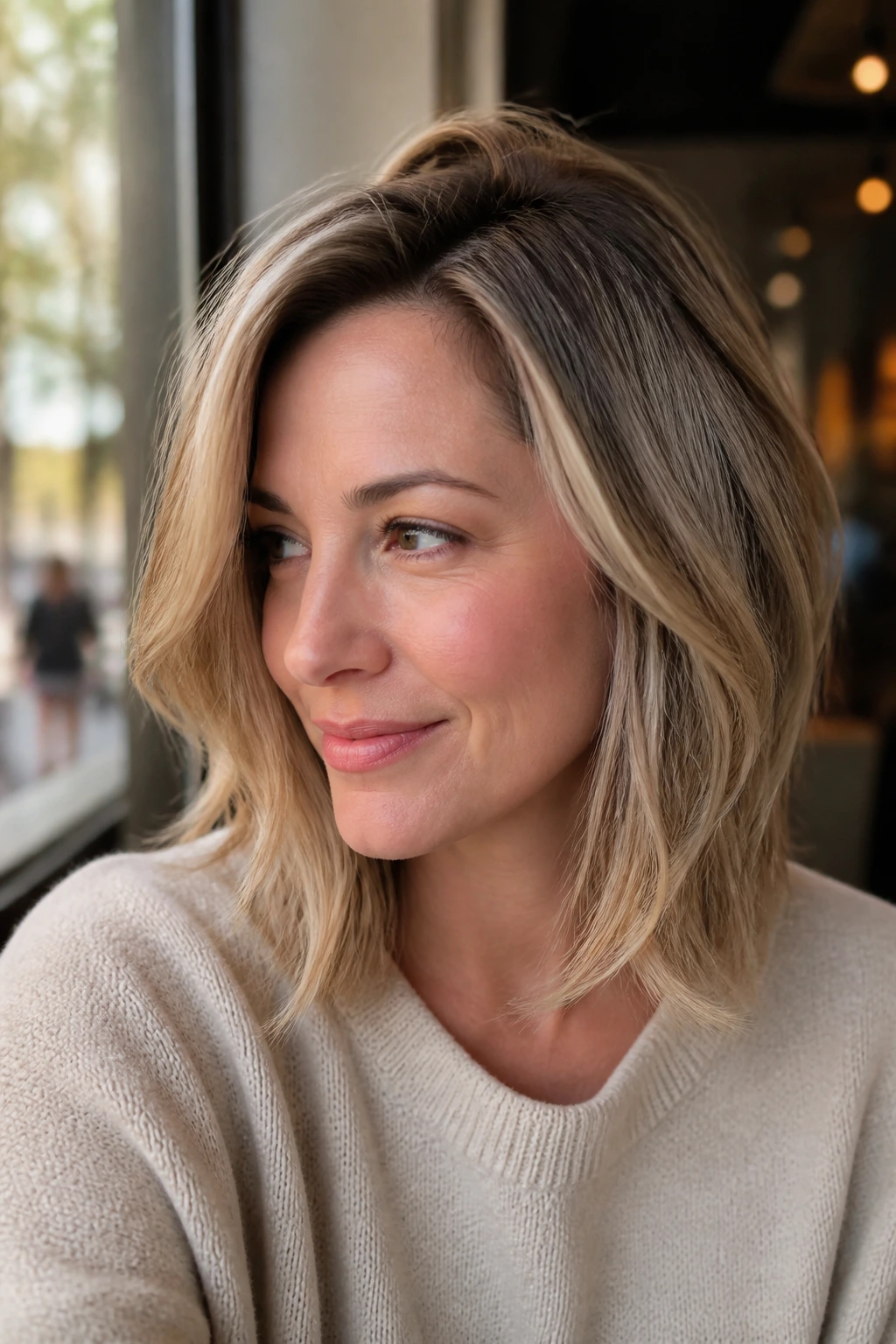
A tiny shift in the part can change the whole feel of a fine-hair lob. Moving it just off center creates a better root lift than a strict middle part, but it keeps the style looking modern and easy. The layers should follow the direction of the part so the hair falls in a soft sweep instead of splitting awkwardly.
This is one of the easiest styles to wear if your hair gets greasy quickly at the roots. The off-center line helps disguise flatness, and the lob length keeps the weight from dragging everything downward. A little dry shampoo at the root and you’re done.
20. The Round-Face Balancing Lob With Vertical Layers

Round faces usually benefit from a little vertical tension in the cut, and fine hair gets extra mileage from that shape. This lob uses longer face-framing layers to draw the eye down, not out. The perimeter stays around the shoulders, which helps the face appear longer and the hair look denser.
The layers should begin lower than the cheekbones if the goal is slimming rather than widening. Avoid too much width right beside the cheeks. A center or slightly off-center part can work, but keep the front pieces long enough to skim the jaw.
21. The Square-Jaw Softening Lob With Cloudy Ends
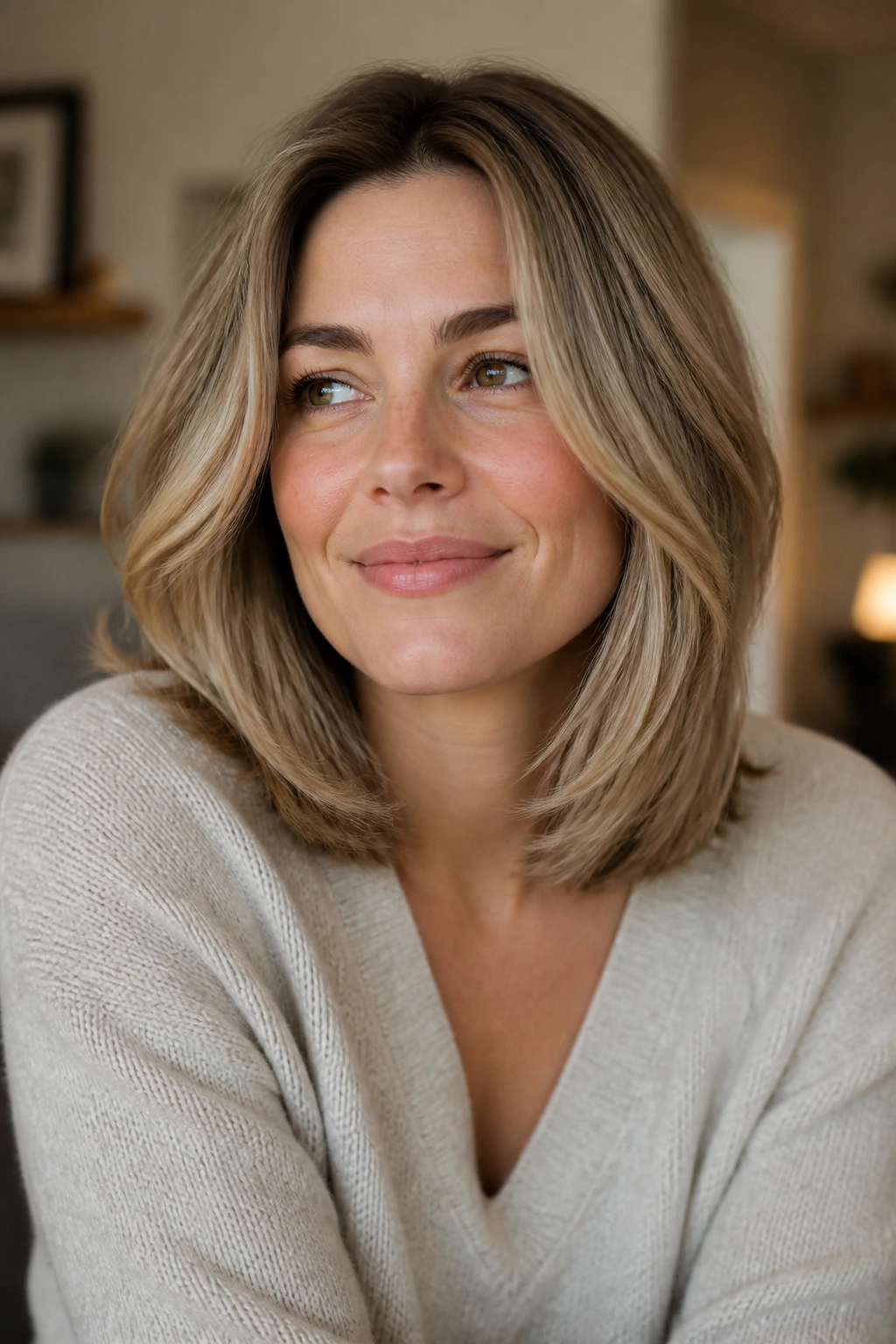
A square jaw can handle a bob, but the ends need to be soft so the shape does not feel severe. This version uses airy, cloud-like ends and slightly curved face-framing pieces to soften the angles without turning the cut into something fussy. Fine hair benefits because the shape still reads as full.
I’d keep the layers longer through the sides and avoid blunt lines that stop right at the jaw. That can emphasize the exact part of the face you may want to soften. A slight bend in the ends helps the cut sit around the jaw instead of cutting it off.
22. The Long-Face Balancing Lob With Fuller Sides
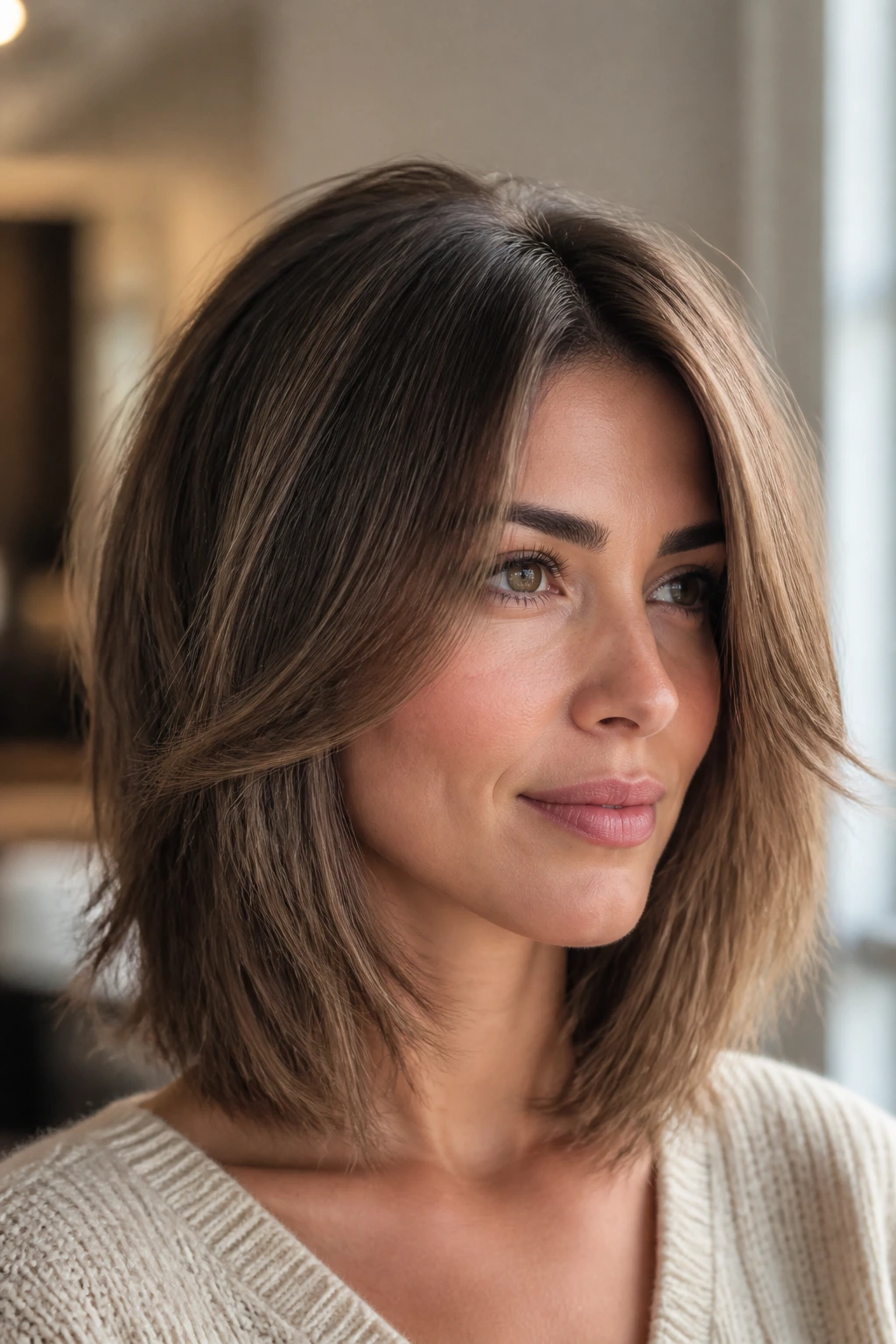
Long faces need width more than height, and this cut gives it without asking fine hair to become bigger than it is. Fuller side sections, a little face width around the cheekbones, and layers that do not all point downward help the face feel more balanced. It’s the kind of cut that quietly fixes proportion.
A blunt or softly side-swept fringe can also help here if you like bangs. Just keep the layers out of the crown area so the top of the head does not get even taller. Fine hair can handle a lot of things. Vertical volume all over is not one of them.
23. The U-Shaped Lob With A Soft Center Drop
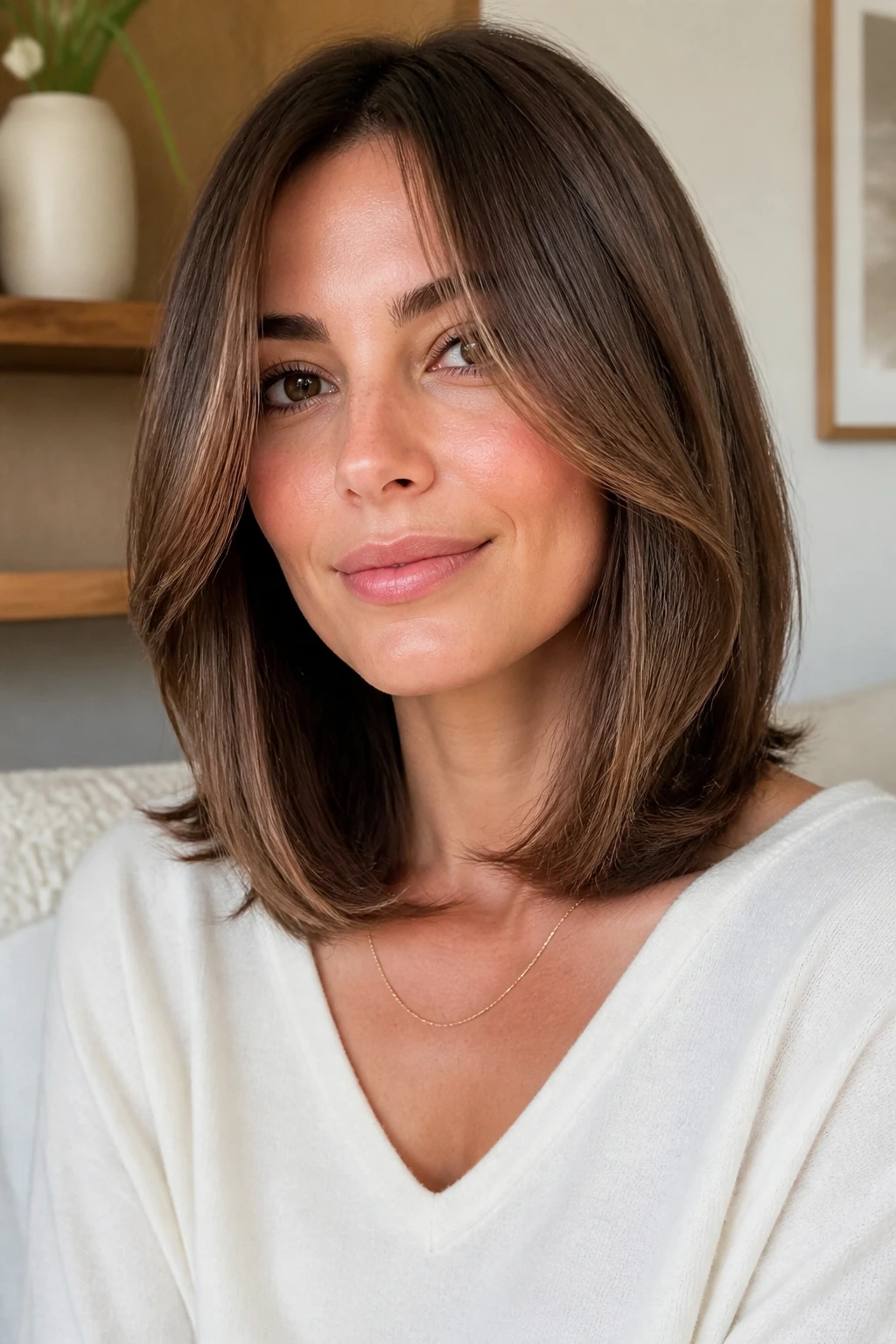
A U-shaped lob leaves the center a touch longer than the sides, which creates a gentle dip that helps fine hair look fuller in the middle. The silhouette is less rigid than a straight line, and that softness can be flattering if your ends tend to get wispy. It’s a good compromise between blunt and layered.
The trick is not to overcut the sides. The hair should still feel dense when it brushes the shoulders, with enough length in the center to keep the shape grounded. This version is especially nice if you like wearing the hair half-up, because the outline still looks neat when pulled back.
24. The Air-Dried Lob Shaped For Natural Bend
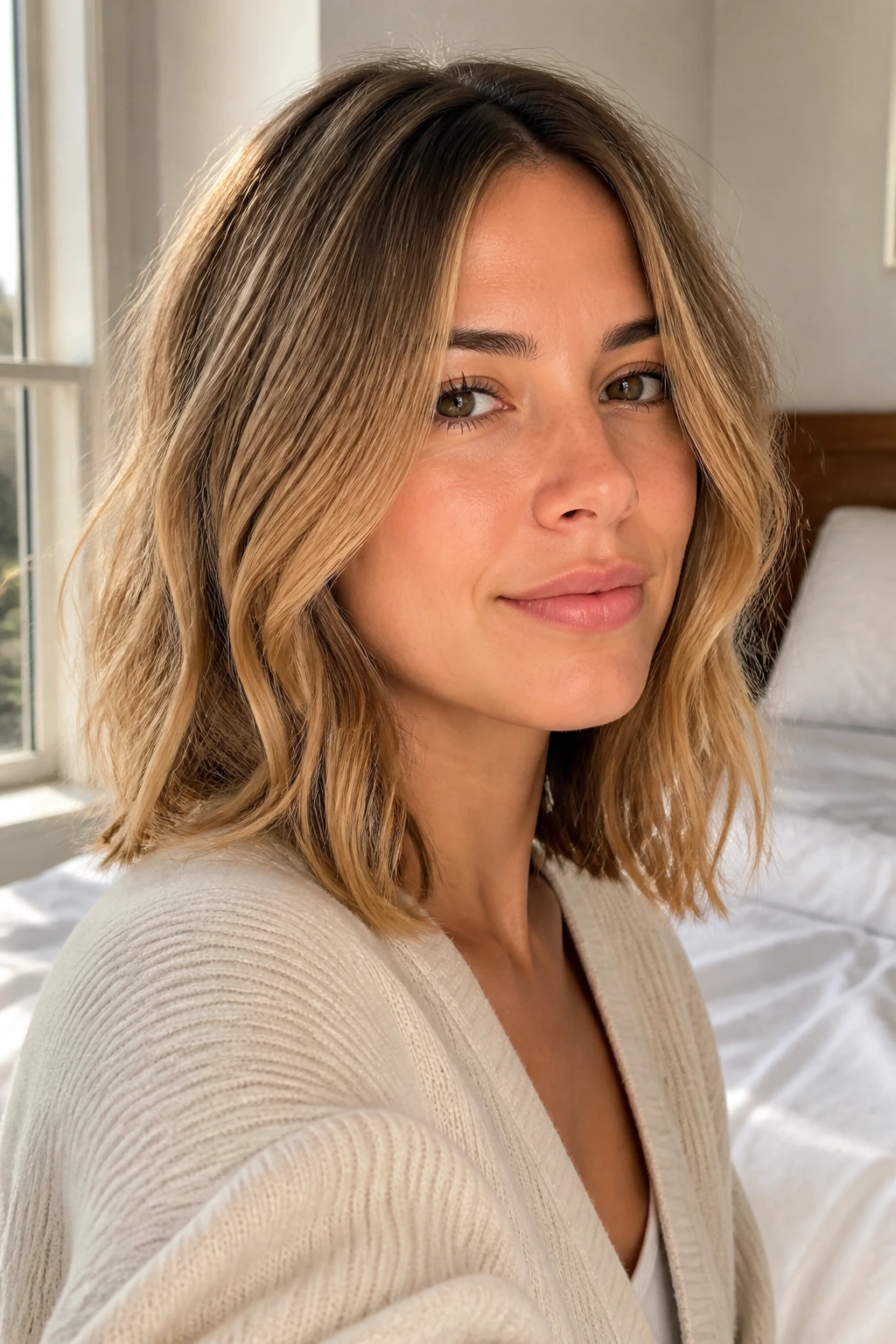
If you rarely heat-style your hair, cut it for how it behaves when it’s damp and left alone. That means layers placed where your natural wave or bend wants to sit, not where a blowout would fake volume. Fine hair often looks better in an air-dried lob when the shape is smart from the start.
Ask for a cut that keeps the ends from spreading too wide and the layers long enough to blend into your pattern. A little curl cream or lightweight mousse is enough. If the cut depends on a round brush to look decent, it’s not the right cut for your routine.
25. The Flat-Iron Bent Lob With Soft Curves

A bent lob uses a flat iron to create small, controlled curves through the mid-lengths and ends. That slight bend gives fine hair shape without turning it into obvious curls. It’s one of my favorite ways to make a shoulder-length cut look deliberate on a weekday.
The layers should be soft so the bends read as movement, not as separate pieces fighting for attention. Use a heat protectant, keep the iron moving, and curve the ends away from the face in alternating directions for a more natural finish. Too much uniformity can make the style look stiff.
26. The Blended Bob With Baby Layers
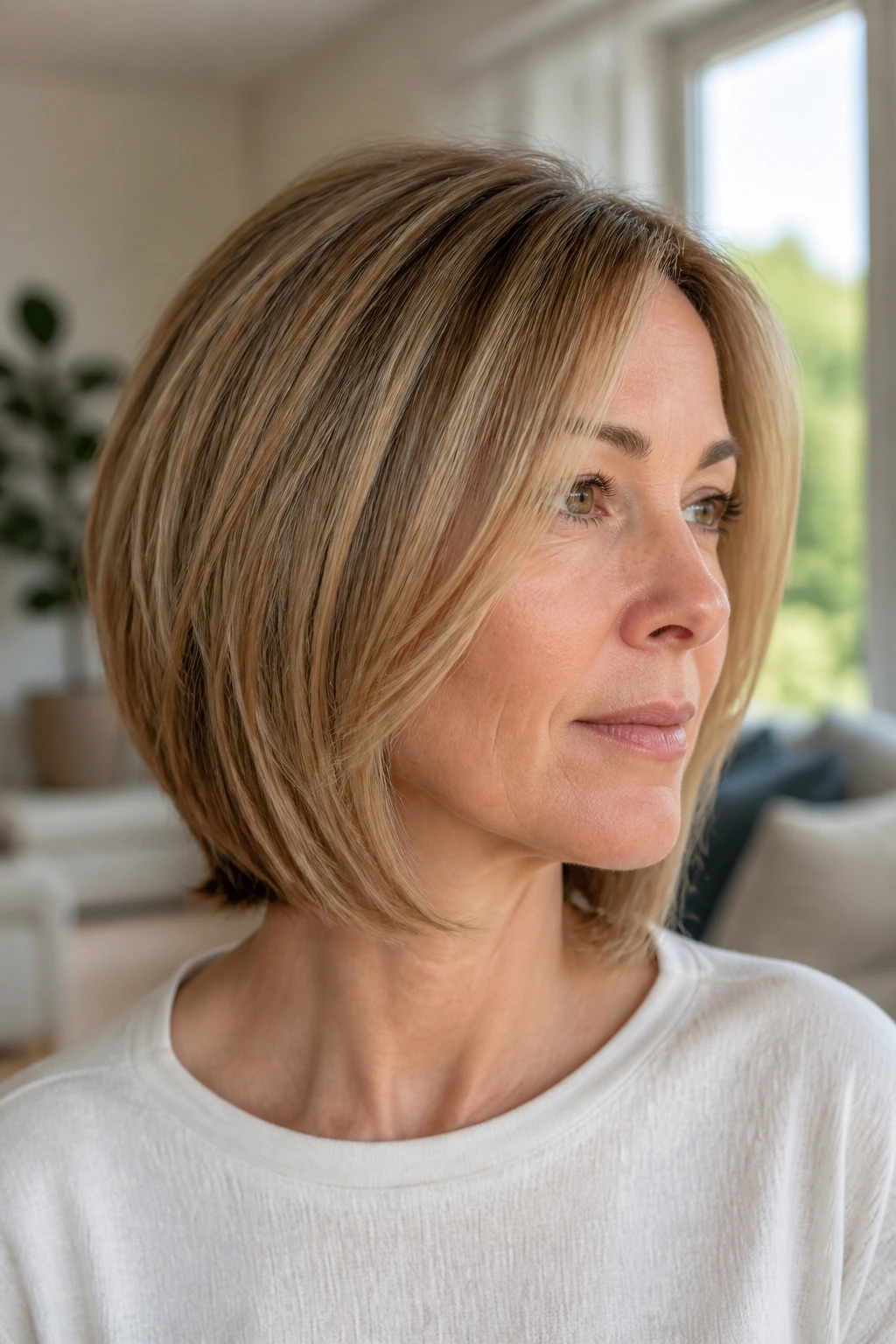
Baby layers are tiny, soft layers placed close to the face and nape, and they can be a smart move when you want movement without a big change in shape. On fine hair, they add a little air around the outline without hollowing out the ends. The blend matters here; you want the haircut to look like one shape, not five chopped parts.
This cut is good for people who say they want “something subtle” and mean it. It grows out quietly, frames the face, and avoids that heavy one-length look that can drag down very fine strands. Keep the overall line around the shoulders for the best balance.
27. The Grow-Out Friendly Graduated Lob
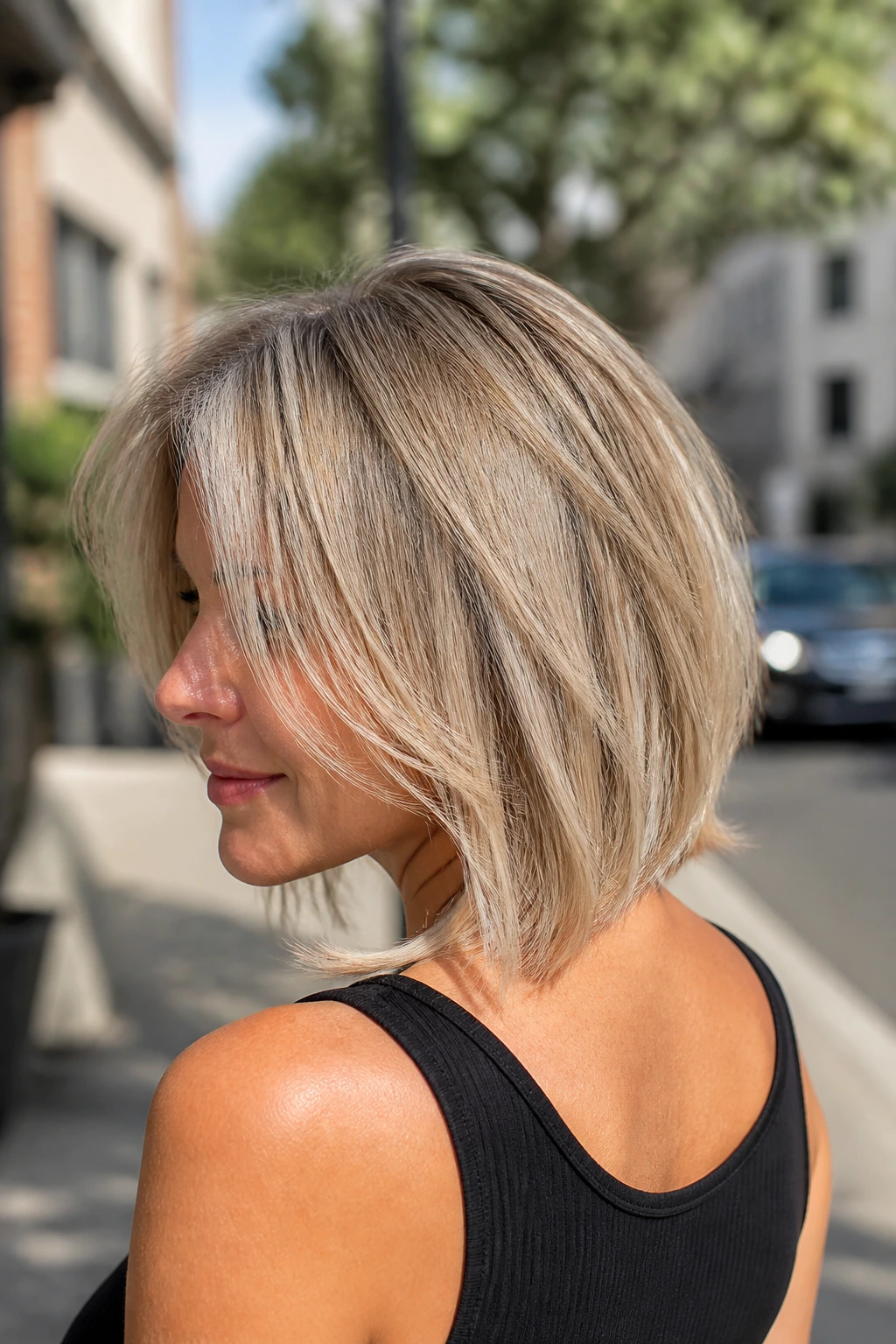
A graduated lob is slightly stacked in back and longer in front, but the graduation should stay soft if the hair is fine. That gives the nape a bit of lift while keeping the front pieces long enough to preserve the illusion of density. It’s a practical cut if you hate looking like you need a trim every single second.
The back should not be so short that it exposes the neck in a stark line. The best version still brushes the shoulders and blends into the front smoothly. As it grows out, the shape stays readable, which matters more than sounding fashionable in a salon chair.
28. The Micro-Layered Hemline Lob For Thin Ends
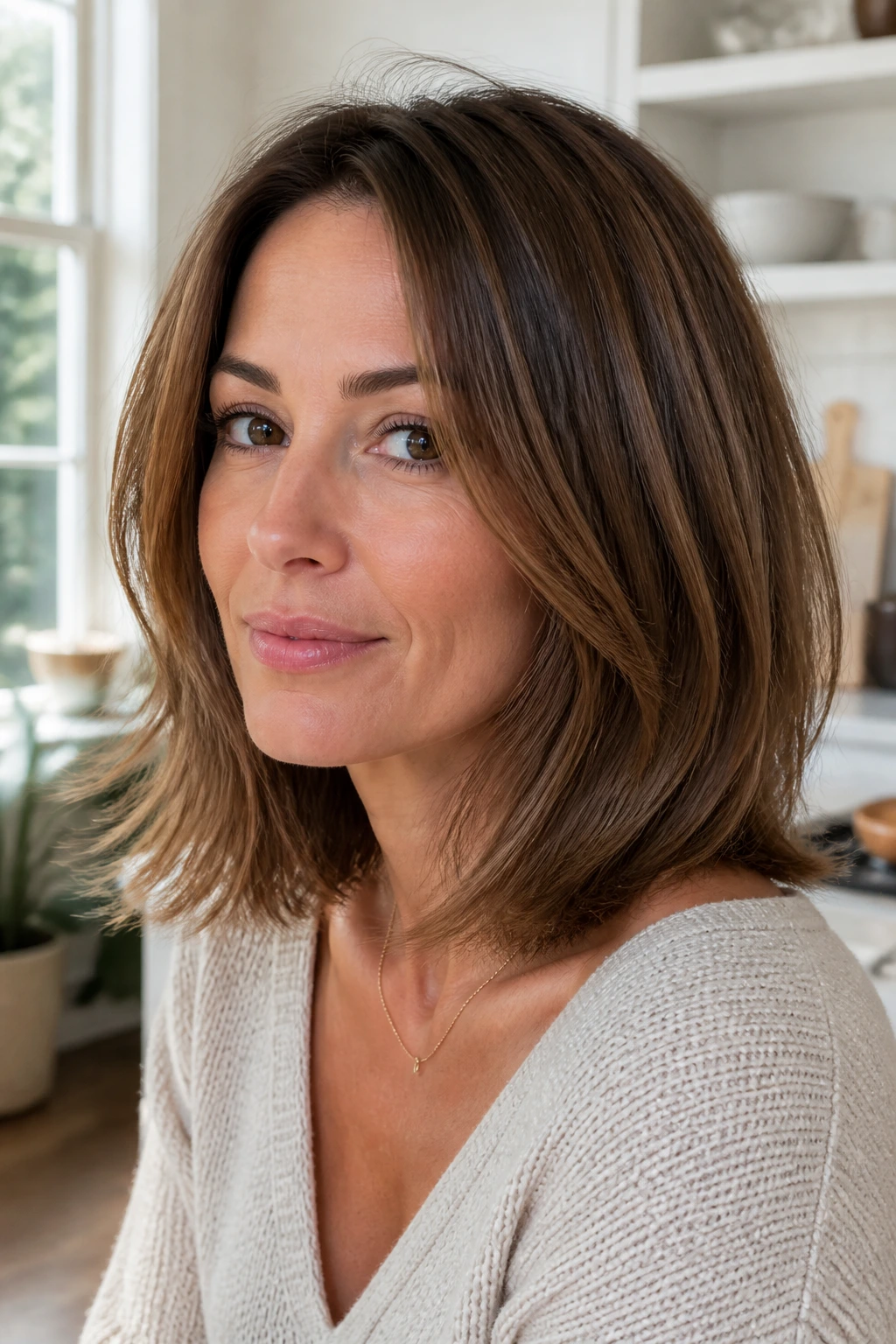
If your ends are the first thing to go see-through, this cut puts the attention where it belongs: right at the hemline. Micro-layers sit in the lowest portion of the haircut, just enough to keep the bottom from looking blunt in a thin, stringy way, but not so much that the shape loses its fullness. It’s a neat fix for hair that frays at the tips.
This is the most restrained version on the list, and that restraint is the point. Fine hair often looks better when the layers are almost invisible until the hair moves. If you want the safest route with the most density, this is the one I’d circle first.
What Makes Shoulder-Length Layers Work So Well on Fine Hair
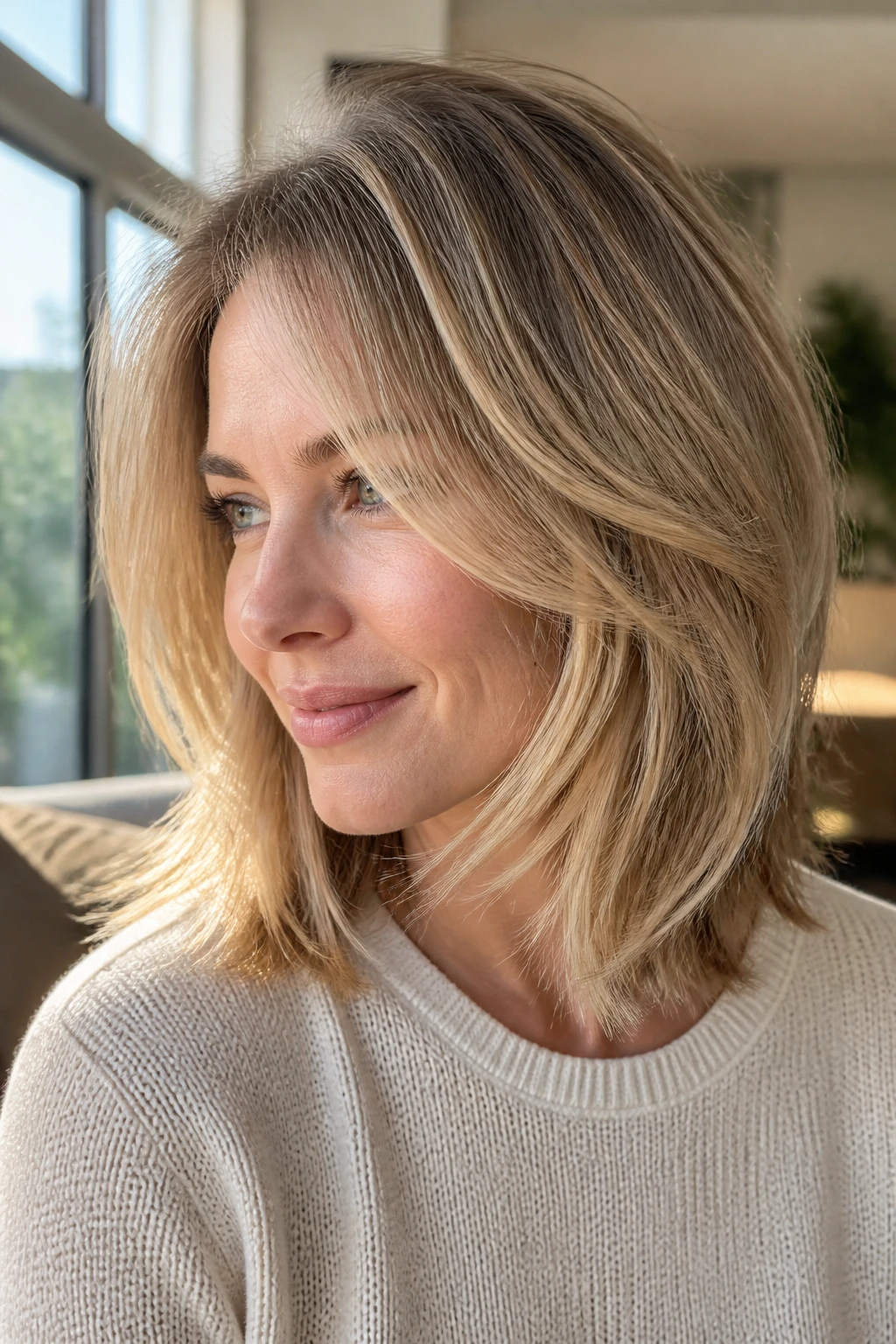
The reason this length keeps showing up in good haircuts is simple: it gives fine strands a place to stop. Once hair gets much longer, the ends start competing with gravity and often look thinner than they are. A shoulder-length bob gives the eye a solid edge to land on.
Layer placement matters more than layer count. Layers that start near the crown can make the top look see-through; layers that begin lower, around the lips, chin, or collarbone, tend to add movement without exposing the scalp line. That’s the difference between a cut that looks airy and one that looks overworked.
A good stylist will look at your density, not just your strand thickness. If you have fine but dense hair, you can take more shaping through the middle. If your density is lower, the safest bet is a stronger perimeter and softer internal movement. Same haircut family. Different blueprint.
The Tools That Make These Bobs Behave
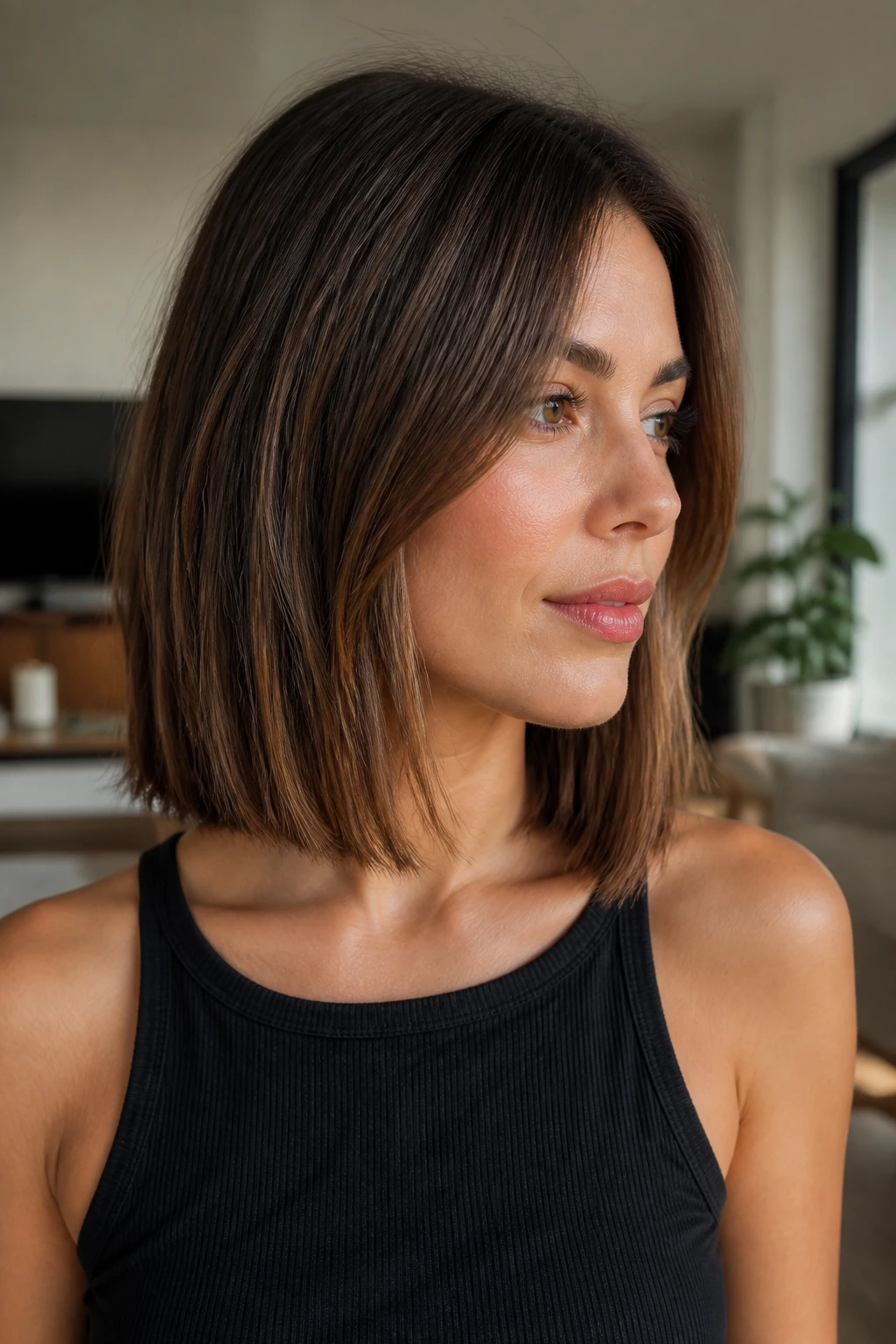
A layered shoulder-length bob for fine hair does not need a mountain of gear. It needs the right few things, and it needs them used lightly.
- Blow dryer with a concentrator nozzle: Directs air at the roots so you can build lift without puffing up the ends.
- 1.25-inch round brush: Big enough to smooth shoulder-length hair without making the ends curl too much.
- Paddle brush: Good for quick drying when you want a flatter, sleeker finish.
- Tail comb: Helpful for parting cleanly and lifting small sections at the crown.
- Lightweight mousse or root lift spray: Gives grip at the scalp without leaving the lengths sticky.
- Dry shampoo: Useful on day two or even day one if your roots go flat fast.
- Texture spray: Best when misted from mid-length down, not sprayed like hairspray.
- Flat iron with rounded edges: Lets you add soft bends without harsh creases.
- Velcro rollers or clips: Handy for setting the top while you finish makeup or get dressed.
- Light conditioner: Use it from ears down, because heavy product at the roots will kill the shape.
How to Ask for the Cut at the Salon
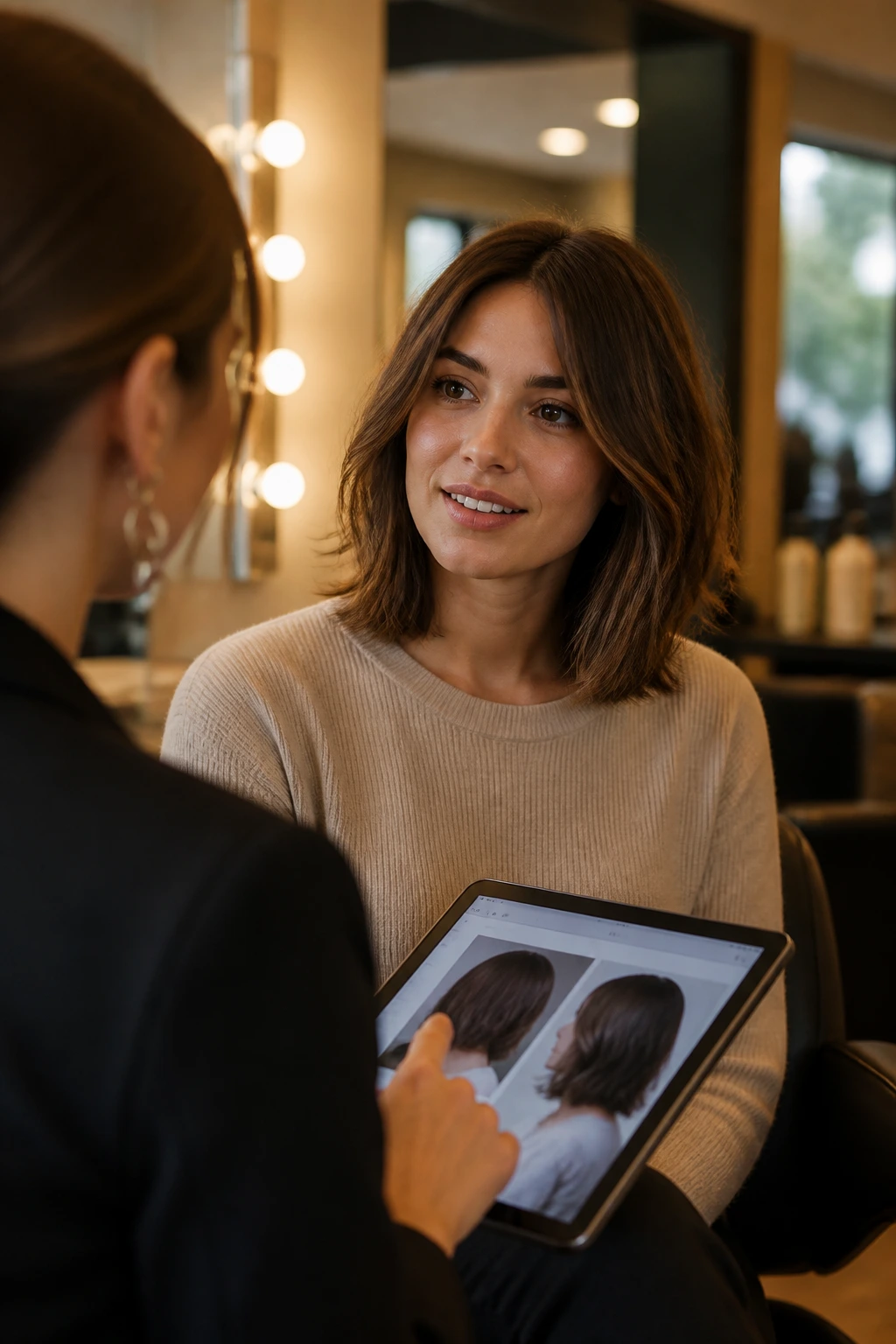
The best salon request I know is plain and specific. Tell the stylist you want a shoulder-length bob with a dense perimeter and soft internal layers, not a heavily thinned-out shape. That one sentence prevents a lot of bad surprises.
If you want to be even clearer, mention where you want the shortest layers to start. For fine hair, that often means around the lips, chin, or collarbone, not at the crown. You can also ask for the ends to be point-cut lightly rather than razored aggressively, which helps the outline keep its thickness.
Bring photos, but point out exactly what you like in them. Is it the part? The bend at the ends? The face frame? The softness at the shoulder? Stylists can work with almost anything, but not when the picture is doing three jobs at once and saying nothing out loud.
How to Wear These Shoulder-Length Bobs in Real Life

Presentation: Keep the roots controlled and the perimeter clean. A smooth crown with a little bend at the ends reads as fuller than a style that’s teased all over and frizzy at the bottom.
Accessories: Small claw clips, barrettes, thin headbands, and one-ear tuck moments work well because they show off the cut without crushing the volume. Heavy, thick headbands can flatten fine hair fast, so I’d skip them unless you’re using them for a short stretch, not a full day.
Outfits: Collared shirts, crewneck sweaters, square necklines, and simple earrings make the shape visible. A bob like this can disappear into bulky necklines if you let it, which is annoying because the cut is doing half the outfit’s work.
Best for daily life: Sleek for work, loose bend for dinner, air-dried and tucked for errands. That’s the whole charm. It doesn’t need a special occasion.
Little Volume Boosters That Do Real Work

Root Lift: Put mousse or root spray on damp roots only, then blow-dry the first 2 inches with a nozzle and lift the hair up and away from the scalp. That’s where the volume starts, not in the ends.
Texture: Mist dry shampoo or texture spray into the roots of clean hair before it goes flat, not only after it has already collapsed. A small amount gives the hair something to hold onto.
Shape Memory: Clip the crown up while the rest dries, or use Velcro rollers on the top sections for 10 to 15 minutes. The hair does not need an all-day set; it needs a reminder.
Make-It-Yours: If your hair is very fine and sparse, keep the layers longer and lean on the blunt edge. If your hair is fine but dense, you can add a little more face-framing movement and still keep the body.
Fast Fix: If the ends start looking thin by midday, bend them inward with a flat iron just on the bottom inch. It takes less time than a full restyle and usually restores the shape.
How to Keep the Shape Between Trims
Fine hair shows a haircut’s age faster than thick hair does, which is rude but true. For a crisp bob or a very structured lob, a trim every 6 to 8 weeks keeps the line from sagging. Softer, more layered versions can usually stretch to 8 to 10 weeks before they start looking tired.
Wash frequency depends on your roots, not on some moral rule. If your scalp gets oily quickly, washing every day or every other day may be the only way the cut keeps its lift. Use conditioner from the ears down, and keep the roots light.
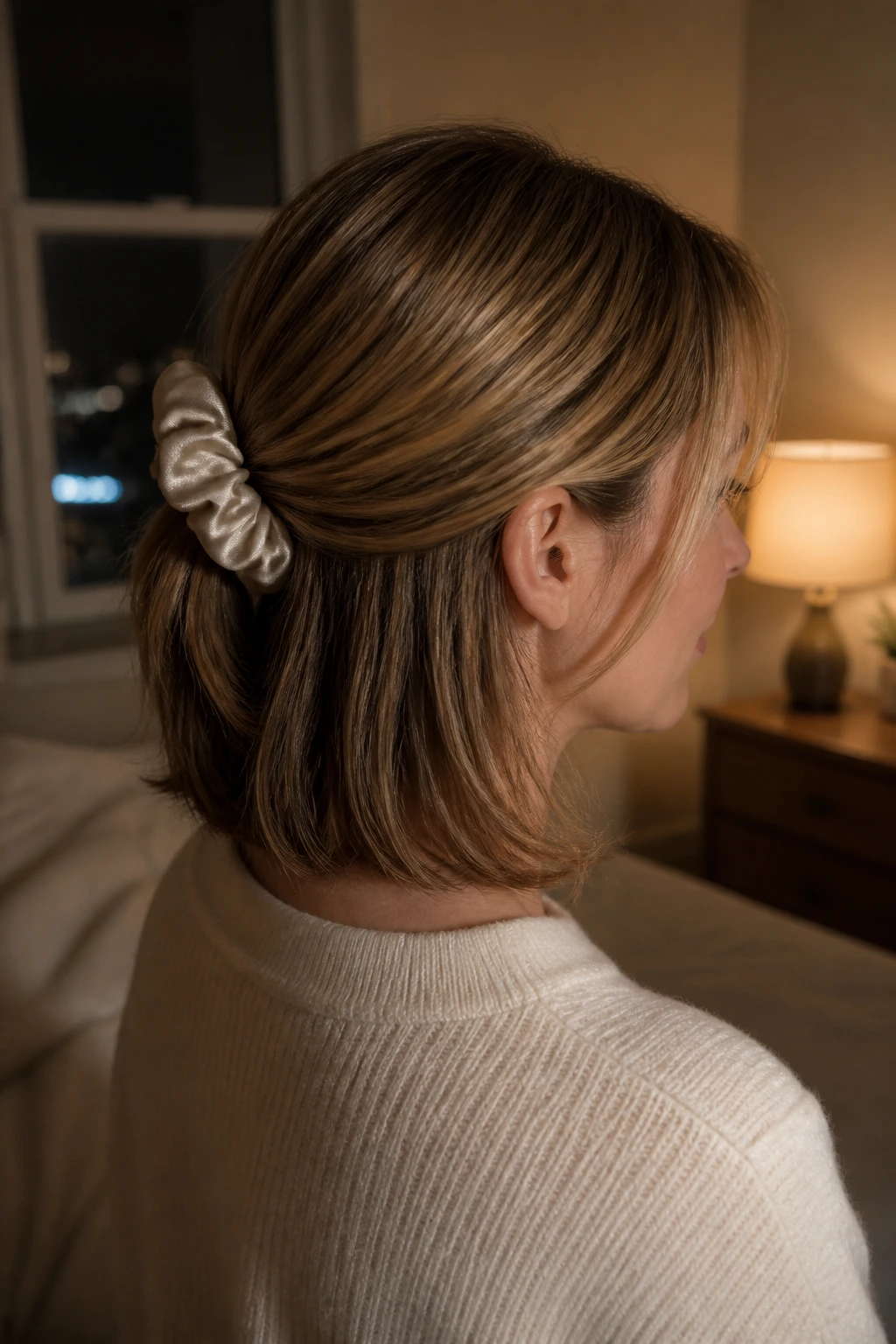
At night, a loose clip or silk scrunchie can save the shape from pillow flattening. If the hair bends oddly while you sleep, a quick pass with a round brush or a small bend from a flat iron in the morning is usually enough. No need to rebuild the whole thing.
Common Mistakes That Make Fine Hair Look Thinner

- Starting layers too high: You end up with see-through top sections and a limp crown. Ask for the shortest pieces to begin lower, around the cheek or jaw.
- Overtexturizing the ends: Hair that already lacks density can look ragged if too much weight is removed. Keep the outline blunt enough to read as full.
- Using heavy products at the root: Oils, rich creams, and thick leave-ins at the scalp crush fine hair in minutes. Save them for the mid-lengths and ends.
- Skipping regular trims: Shoulder-length cuts grow into shapeless, stringy versions of themselves if the ends split and soften too much. Book the trim before the shape disappears.
- Curling every section the same way: Uniform curls can make fine hair look smaller, not bigger. Alternate direction or leave some sections straighter for a looser look.
- Choosing a razor-heavy cut without testing it first: Razors can be useful, but they can also erase density fast. If your hair is fragile, ask for soft point-cutting instead.
Variations and Alternatives to Try
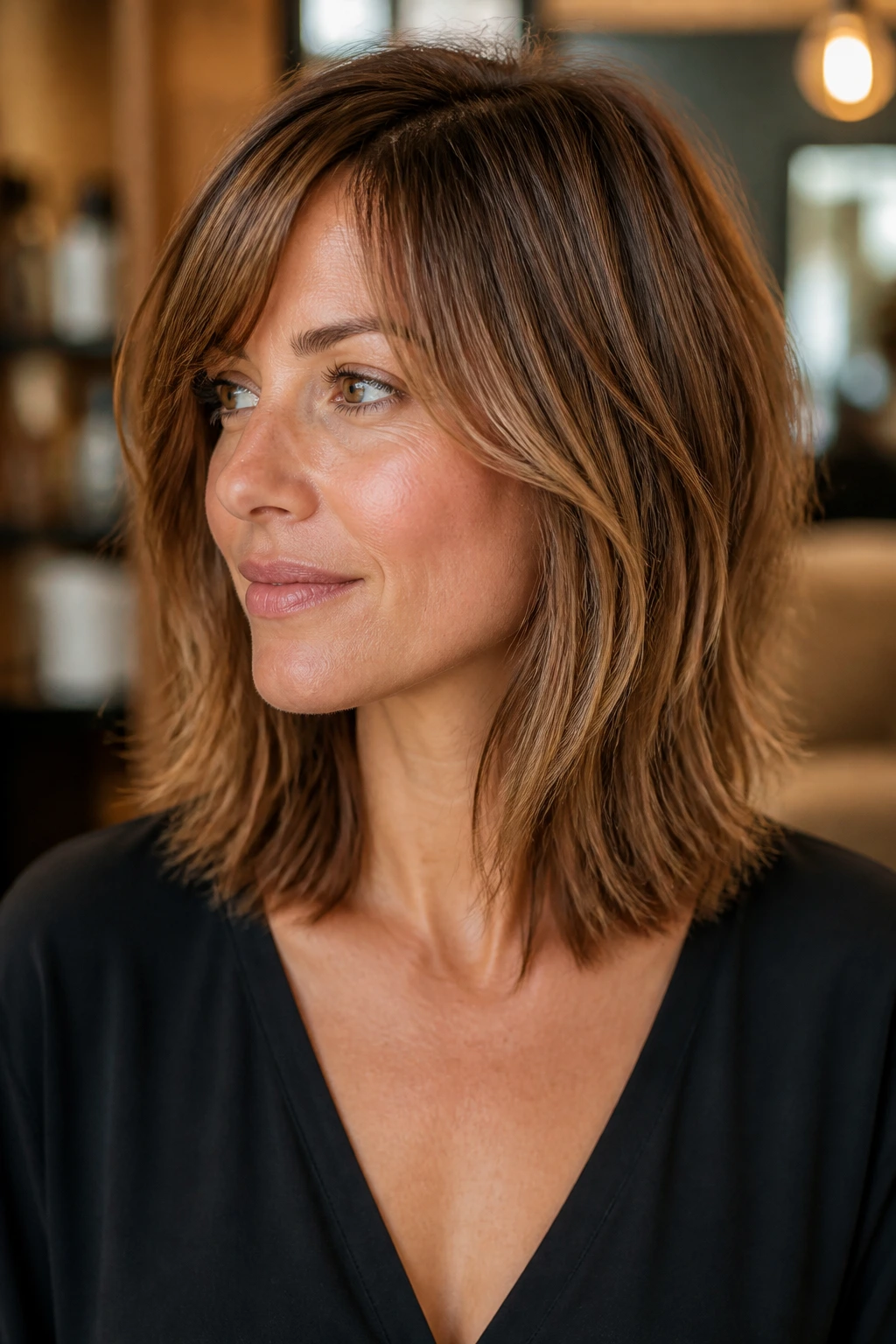
The Blowout-Smooth Version: Keep the cut long and blended, then style it with a round brush and a slight inward curve at the ends. This works well if you want a polished shape that still feels light.
The Air-Dried Piecey Version: Ask for longer layers around the face and a blunt hemline, then work in a little mousse and let the hair dry on its own. The result looks relaxed, but the cut still keeps its outline.
The Fringe-Forward Version: Add wispy bangs or curtain pieces if you want more focus up top. Just keep them long enough to sweep to the side on days when the fringe refuses to cooperate.
The Straight-Sleek Version: Go for a clean, glassy finish with hidden internal layers and a strong perimeter. This is the best pick if your fine hair behaves better when it’s smooth than when it’s waved.
The Soft Shag Version: Choose long crown layers and a little piecey movement through the sides, but keep the bottom line dense. It gives more texture while staying wearable.
Frequently Asked Questions
Which layered shoulder-length bob gives the most volume for fine hair?
A deep side-part lob with hidden internal layers usually gives the fastest lift because it changes the root direction and keeps the ends full. If your hair falls flat fast, that combination beats a heavily thinned cut almost every time.
Are layers bad for fine hair?
Not when they’re placed well. Fine hair only runs into trouble when the layers are too short, too high, or too many, which takes away the density that makes the cut look full.
Should I choose a bob or a lob if my hair is very thin?
A lob is often safer because the extra length gives the hair more visual weight. If the hair is truly sparse, keeping the cut near the collarbone can make it look denser than a shorter bob that exposes the ends too much.
Can this haircut work if my hair is wavy?
Yes, and sometimes it works better than on pin-straight hair. Wavy fine hair tends to benefit from soft layers that follow the bend, because the shape gets movement without needing lots of heat styling.
How often should I trim a fine-hair bob?
Most fine-hair bobs need attention every 6 to 8 weeks if you want the edge to stay crisp. Softer lob versions can go a bit longer, but once the ends start looking feathery, the shape is on borrowed time.
What if my crown is flat no matter what I do?
Move the part, not just the products. A side part or off-center part, plus root spray and a short blast of lift at the roots, often helps more than piling on mousse everywhere.
Can I ask for face-framing layers without losing thickness?
Yes — just keep them long. Tell the stylist you want the face frame to begin around the cheekbone or lip area and blend into the rest of the cut, not chop into the sides.
Why do some layered cuts make fine hair look frayed?
Usually because too much weight was removed from the ends or the layers were cut too high. Fine hair needs a solid edge, and once that edge disappears, the whole haircut starts looking tired.
A Shoulder-Length Cut That Still Holds Its Shape
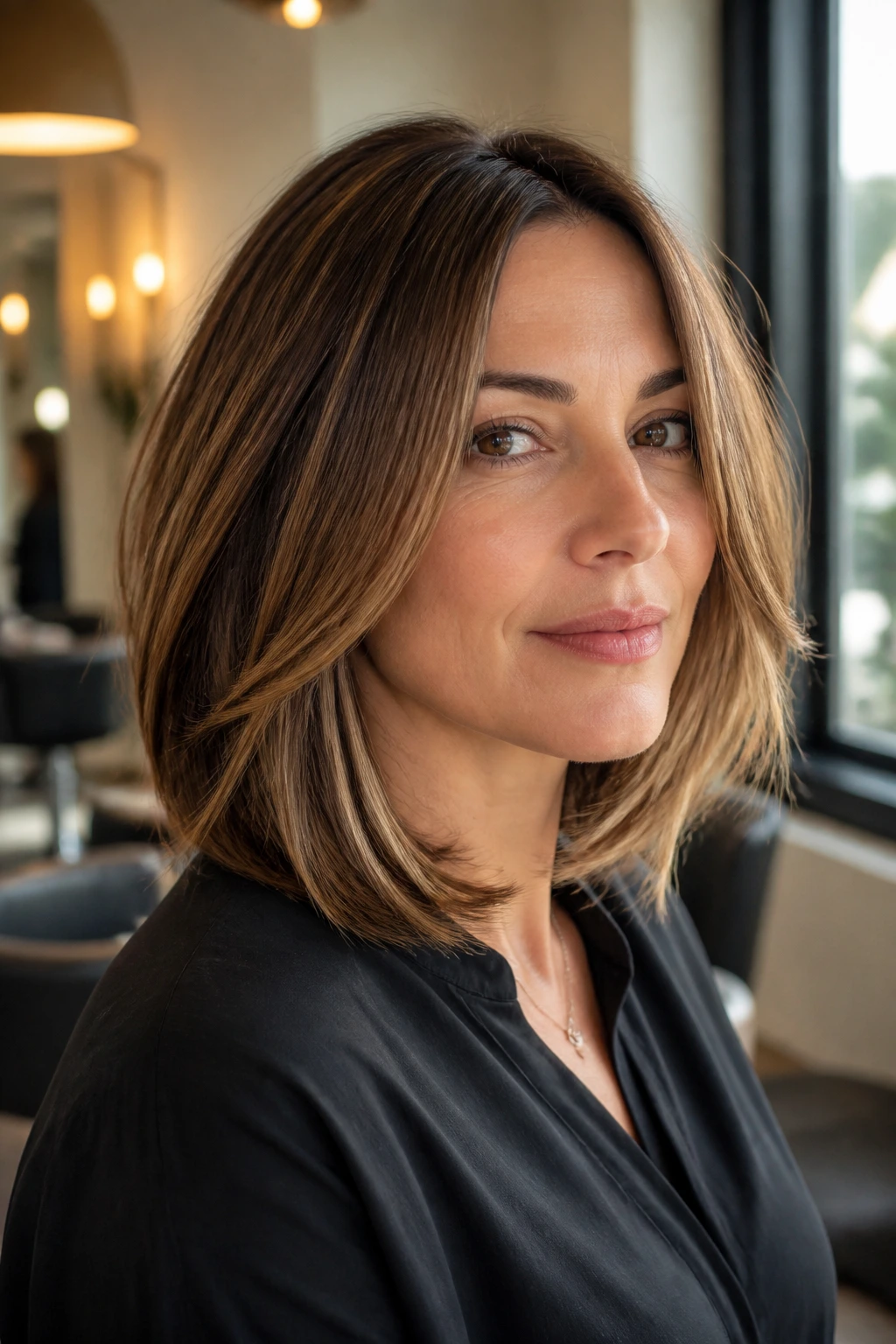
The best thing about these layered shoulder-length bobs is that they do not ask fine hair to become something it isn’t. They work with softness, not against it. That’s why the blunt hemline, the careful layer placement, and the right bit of movement matter so much.
If your hair has been fighting every cut you’ve had, start with the version that keeps the perimeter strongest and the layers softest. You can always add more texture later. It’s much harder to put thickness back once a stylist has taken it away.