



Thick, wavy hair can give a bob real presence—or make it flare at the corners like a bell if the cut is off by even half an inch. Square faces add another layer of geometry: a stronger jaw, a broader forehead, and angles that ask for softening rather than camouflage. The sweet spot lives somewhere between those two facts. Not too round. Not too blunt. Never puffy at the sides.
That’s why the right bob on this hair type has to do a few jobs at once. It needs enough weight to keep thick waves from exploding outward, enough movement to stop the silhouette from reading boxy, and enough length or fringe to break up the jawline in a way that feels intentional. A good cut does that before you ever touch a diffuser or a round brush. A bad one makes you fight your own hair every morning.
The styles below solve the problem in different ways. Some lean on curtain bangs. Some use angles. Some hide the heavy lifting inside the haircut so the outside line stays clean. A few are polished and neat; a few are a little messier on purpose. That’s the point.
Why These Bobs Earn Their Keep

-
Soft corners matter more than “short”: A bob that lands exactly at the jaw can make a square face look wider, while a cut that curves or drops below the jaw changes the whole read.
-
Thick waves need controlled space: These cuts remove bulk where it swells, but they leave enough weight at the perimeter so the ends don’t fray into a halo.
-
The part changes everything: A center part can work, a side part can work better, and the wrong part can flatten the crown or widen the face in one minute flat.
-
Fringe breaks up strong lines: Curtain bangs, bottleneck bangs, and side-swept fringe all interrupt the forehead-to-jaw line in ways blunt bangs sometimes don’t.
-
Length gives you a safety net: Lobs and shoulder-skimming bobs are less fussy because waves can settle without springing right up into the cheekbones.
-
These shapes grow out with less drama: A good bob for thick wavy hair should still look like a haircut six weeks later, not a hedge that needs emergency surgery.
1. Chin-Skimming French Bob with Wispy Fringe
A chin-skimming French bob is the sharpest little cut in this group, but the wispy fringe keeps it from turning severe. On thick wavy hair, I like it most when the perimeter stays clean and the interior is lightly debulked, so the sides don’t puff out by noon. It has that neat, swingy look that makes waves feel expensive without making them look overworked.
Why It Flatters a Square Face
The fringe interrupts the width of the forehead, and the chin-length line keeps the eye moving instead of landing dead on the jaw. If your stylist cuts the front exactly at the jawbone, you lose the magic fast. Ask for the line to hover just above or just below that point, and let the fringe be soft enough to skim the brows rather than sit there like a shelf.
This cut works best when your wave pattern bends into an S, not a tight coil. A little point cutting through the ends helps the bob collapse inward instead of ballooning sideways. That one detail matters more than most people think.
- Best if your hair has medium-to-thick density with a natural bend.
- Ask for the fringe to feather at the temples so it blends, not stops.
- Use a pea-sized amount of styling cream; too much and the fringe separates into strings.
- If your hair grows wide at the cheek, keep the sides slightly longer than the back.
Tiny detail that saves the shape: blow-dry the fringe first, while it’s still damp, so it doesn’t dry in a weird split pattern at the front.
2. Collarbone Lob with Curtain Bangs
If you want the safest place to start, this is the one. A collarbone lob gives thick waves room to settle, and curtain bangs soften the top half of the face without crowding the jaw. The cut has a little swing when you walk, which sounds minor until you notice how much better that movement is than a stiff, heavy bob.
The length is doing quiet work here. It sits long enough to avoid that “ends flipping out at the jaw” problem, but short enough to still read as a bob-adjacent shape instead of a generic shoulder cut. Curtain bangs split the difference between fringe and face-framing layers, which is useful when you want softness without full-on bangs maintenance.
I especially like this shape for people who wear their hair wavy most days and only heat-style it once in a while. The lob can air-dry with a natural bend and still look deliberate. That’s worth a lot.
3. Soft Angled Bob with a Deep Side Part
A soft angled bob makes the face look longer by sneaking the eye down one side. The back sits a touch shorter, the front slips past the jaw, and the deep side part adds a little height at the crown. On square faces, that combination breaks up symmetry in a way that feels flattering rather than fussy.
Unlike a bob that stops evenly at the jaw, this cut moves. That movement matters. Thick wavy hair tends to hold shape all day, which is great until the shape is too square. The angle creates a built-in diagonal line, and diagonals are your friend when the face already has strong horizontals.
This one is especially good if you like a tucked-behind-the-ear look on one side and a loose sweep on the other. It gives you two moods in one haircut. Clean on one side. Softer on the other. I’m a fan of that kind of imbalance.
4. Invisible-Layer Lob for Big Waves

Why do invisible layers matter so much? Because on thick wavy hair, the bulk usually lives inside the cut, not just at the ends. If the top sheet is left heavy, you get a puffed silhouette even when the perimeter looks decent. Hidden layers remove that weight from the inside, where it helps shape without advertising itself.
The result is a lob that lies smoother across the surface and moves better at the ends. That’s a big deal for square faces, because the haircut can soften the outer line without making the whole style choppy. You keep the clean outline, but the wave pattern has room to breathe underneath.
How to Wear It
This cut looks best when you let it dry about 80 percent on its own and then finish the last bit with a diffuser or a quick bend at the front. You’re not trying to force curls. You’re just steering the waves so they don’t all kick out in the same direction.
If your hair gets bulky near the ears, ask your stylist to keep the internal layers lower and longer. Short internal layers can create little shelves. Nobody wants shelves around the cheeks.
5. Rounded Bob with Cheekbone-Grazing Fringe

Picture a bob that hugs the cheekbone on the way down and curves back in just before the jaw. That rounded shape is exactly why this cut works. It softens the hard edges of a square face without losing the crispness that makes a bob feel like a bob.
The fringe should skim the cheekbone rather than sit straight across the forehead. That gives the face a little diagonal motion, and diagonal motion is what stops thick hair from looking static. If your wave pattern is looser, this shape can look polished. If your waves are stronger, it gets a little romantic. Either way, it avoids that blunt, boxy finish.
- Ask for the ends to be beveled inward, not razor-thinned to nothing.
- Keep the fringe long enough to tuck behind the ear if needed.
- Use a round brush only at the ends; you do not need a full blowout every day.
- Good for someone who likes shape but doesn’t want a harsh line.
My favorite part: when the cheekbone fringe lands right, it makes the jaw look narrower without erasing it. That’s the move.
6. Blunt Bob with Internal Weight Removal
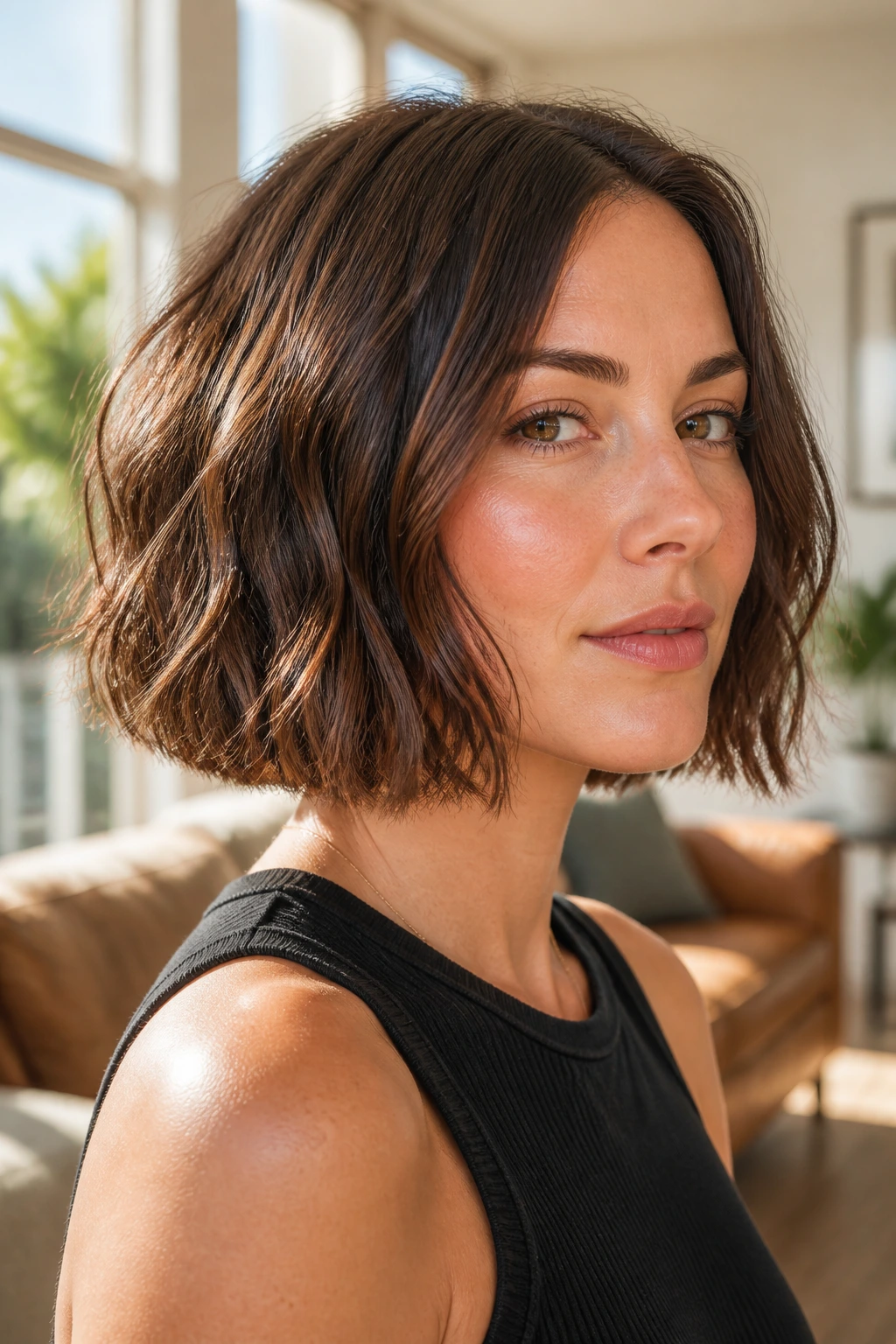
Yes, a blunt bob can work here. It just cannot be a lazy blunt bob. Thick wavy hair needs the inside of the cut thinned with intent, so the outer line stays strong while the bulk stays under control. Without that internal cleanup, the ends pile up into a wide shelf.
The blunt perimeter is what gives the cut its polish. The hidden removal is what keeps it from turning into a triangle. On a square face, that crisp outer line can look really good when the cut sits slightly below the jaw or slightly above it. Landing exactly on the jaw is the dangerous middle ground.
This is the version for someone who likes a structured look and is willing to do a quick bend with a dryer or iron. It’s not the most forgiving cut in humidity, but it has presence. Sharp. Clean. A little serious.
7. A-Line Bob with a Tapered Nape
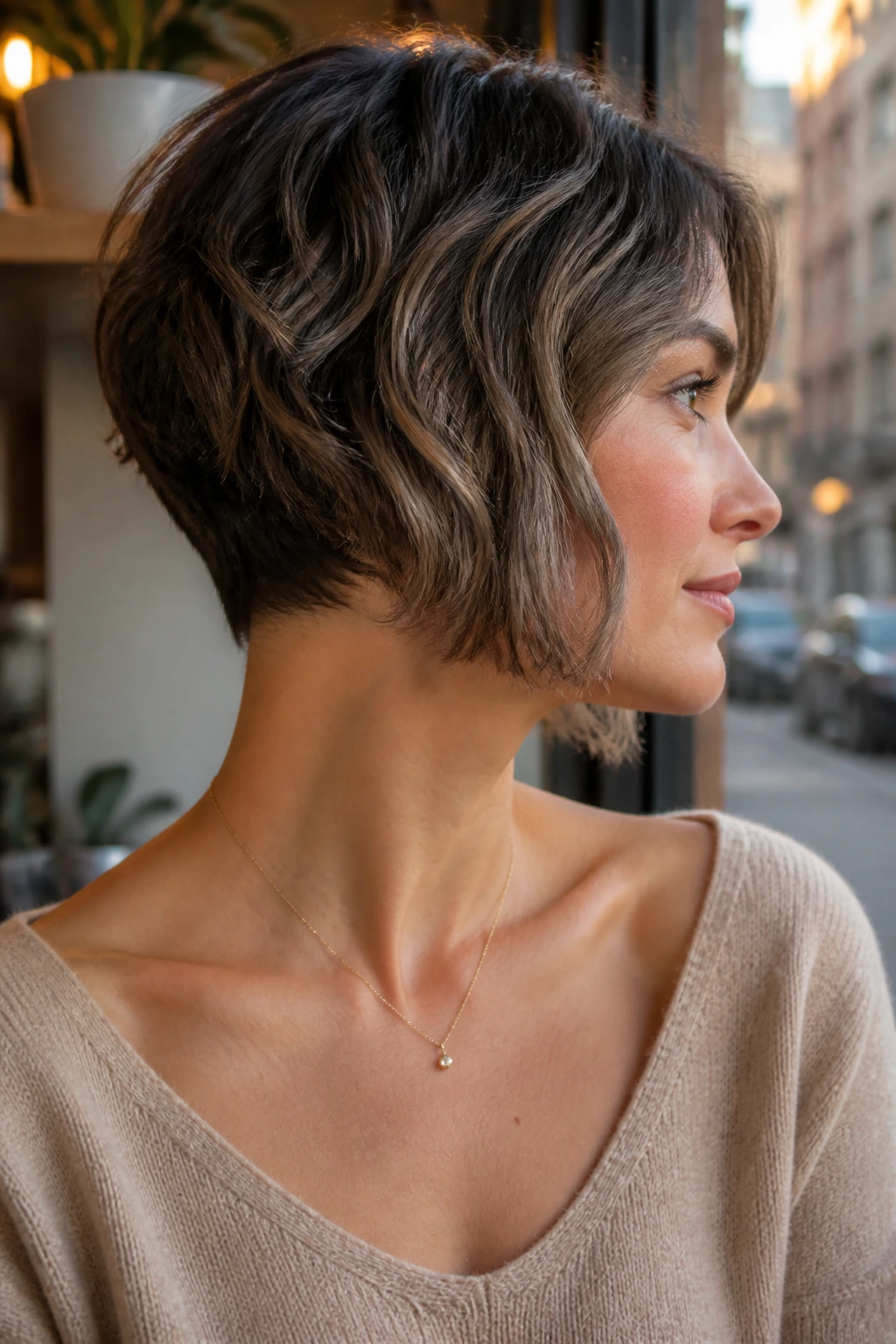
The back sits close to the neck. The front slides forward. That simple shift changes the whole face shape. An A-line bob gives square faces a little length through the front while the tapered nape keeps thick waves from feeling heavy at the collar.
What to Ask For
Ask for the back to be graduated just enough to lift it off the neck, then let the front hit somewhere between the jaw and collarbone. Too steep an angle can look dated and stiff. Too soft and you lose the point of the shape altogether.
This cut is especially helpful if your hair tends to grow wider at the sides when it dries. The shorter back keeps the weight from collapsing downward, and the longer front gives the face a softer frame. It’s practical, honestly. Not flashy, just smart.
If you wear scarves, high collars, or jackets with thicker necklines, the tapered nape keeps the whole haircut from bunching. Small thing. Big payoff.
8. Shaggy Bob with Airy Curtain Fringe

A shaggy bob can go wrong fast if it’s cut like someone was in a rush. The good version has controlled, airy layers that let the wave pattern do some of the work. On thick wavy hair, that means the cut feels light without getting wispy or ragged.
Curtain fringe keeps the top of the face open while softening the sides of a square jaw. I like this style for people who want movement first and polish second. It has a slightly undone look, but not in a careless way. More like the hair fell correctly on purpose.
The main thing to watch is over-texturizing. Thick waves already have plenty of body. If you remove too much, you can end up with frizz at the perimeter and short pieces that stick out around the cheeks. Keep the layers long and let the ends stay a little blunt. That mix is what gives the cut its shape.
9. Asymmetrical Bob with One-Side Sweep

A perfectly even bob can emphasize a square face more than you’d like. An asymmetrical bob fixes that by breaking the symmetry. One side sits a touch longer, the other side tucks shorter, and the result is a cut that keeps the eye moving instead of locking onto the jawline.
The side sweep is the part that makes it feel finished. You can tuck the shorter side behind the ear, let the longer side graze the cheek, and get a haircut that reads more directional than boxy. Thick wavy hair helps here because it gives the asymmetry some softness; straight hair can make it feel severe.
This is the cut I’d choose if you like a little edge. Not punk. Just enough attitude to stop the bob from feeling polite. If you’ve worn a center part forever, this is one of the easier ways to shake things up without losing length.
10. U-Shaped Lob with Long Face-Framing Pieces
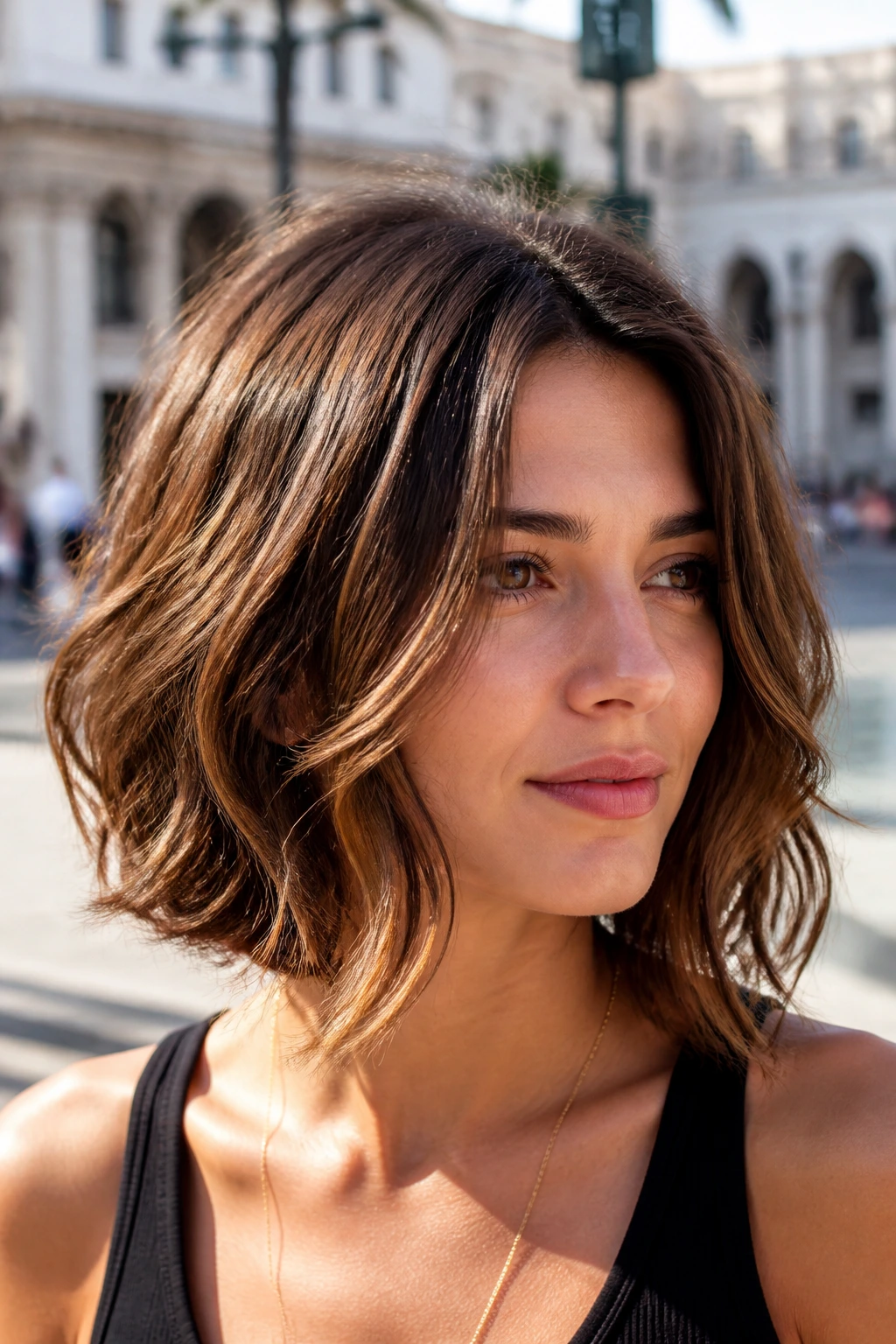
Why does a soft U shape feel gentler than a straight line? Because the center sits a touch longer, which lets the hair fall around the face instead of cutting it off across the jaw. On thick wavy hair, that shape also helps the waves tuck in a little more naturally at the front.
The face-framing pieces should start around the cheekbone or just below it. Too short and they can add width right where you do not want it. Too long and they stop doing the job. There’s a sweet spot, and it sits in that mid-face zone where the eye naturally likes to rest.
I’d call this the quiet achiever of the list. It doesn’t scream “I got a haircut,” but it changes the way the whole face reads. If you want a bob that grows out smoothly, this is one of the kinder options.
11. Box Bob with Soft Corners

A box bob sounds harsh on paper. In practice, soft corners change everything. The outline stays strong, which gives thick hair somewhere to land, but the ends are beveled just enough to avoid a literal square sitting under a square face. That would be too much geometry for one head.
The trick is restraint. Keep the perimeter full, but ask for the corners to be point-cut or softened so they don’t jut out at the jaw. A side part can help, too, because it interrupts the blocky read and gives the crown a bit of lift.
- Best if you like structured hair that still bends.
- Works well with a smoothing cream and a medium round brush.
- Ask your stylist not to over-thin the top layer; the shape needs substance.
- A little flip under at the ends keeps it from reading too severe.
The useful part: this is the cut for people who want the bob to look deliberate from across the room and softer up close.
12. Razored Bob with Piecey Ends
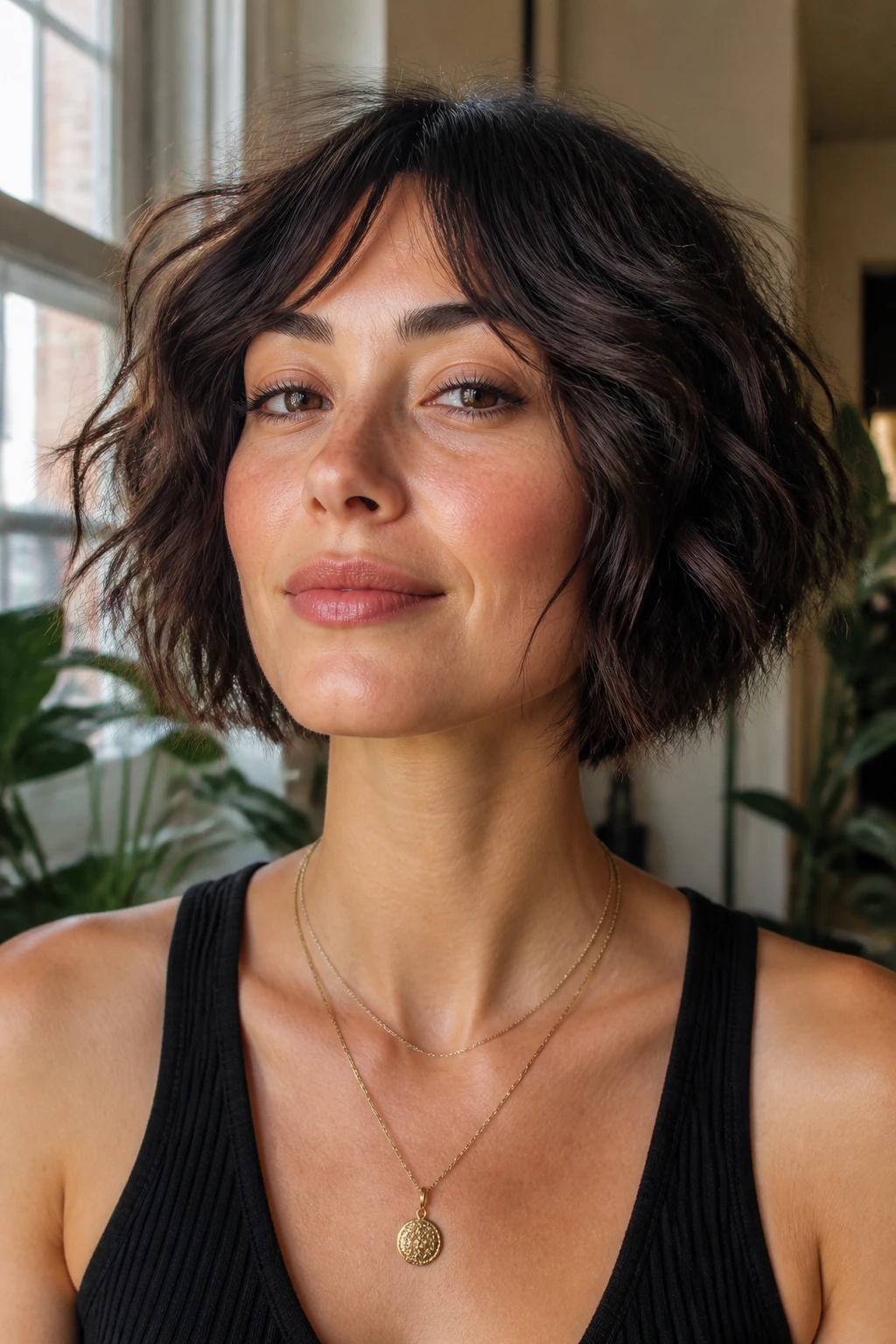
A razored finish can be lovely on thick wavy hair, but only if the razor is used with care. The goal is piecey movement at the ends, not shredded texture everywhere. When the edges are too aggressively thinned, thick waves frizz out and you lose the nice weight that makes the bob sit well.
This cut looks best when the perimeter still has some substance. Think of the razor as a softener, not a sculpting tool for the whole head. A square face benefits from the broken-up edge because it takes the firmness out of the jawline area.
I’d choose this shape if you like a little undone texture and don’t mind touching it with your fingers throughout the day. It’s less buttoned-up than a blunt bob and easier to make look relaxed. Just don’t let anyone confuse “piecey” with “strip-mined.”
13. Bubble Bob with a Lifted Crown
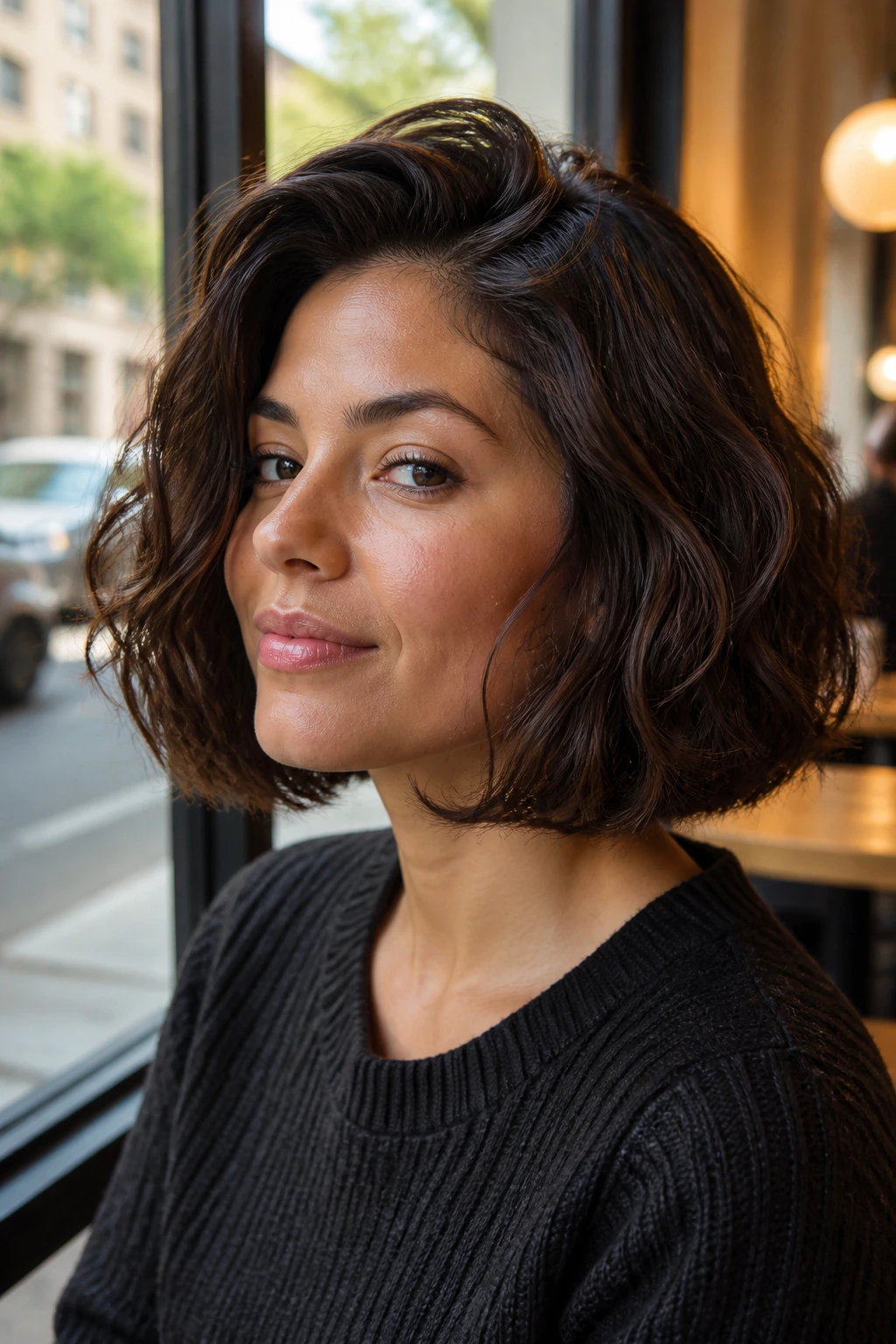
Roundness in the right place. That’s the whole trick. A bubble bob curves softly around the head, with a little lift at the crown and a narrower finish near the jaw. For square faces, that rounded shape can be useful because it removes the feeling of hard corners without flattening the silhouette.
The crown lift matters more than people think. If all the volume sits at the sides, the face can look wider. If the volume moves upward and the ends stay tucked, the haircut looks airy instead of heavy. Thick wavy hair makes this shape easier to wear because the wave pattern naturally wants to support that curve.
This is a strong choice if your hair gets flat at the top and bulky at the bottom. It redistributes the weight instead of just removing it. That’s a smarter fix than chasing texture for texture’s sake.
14. Jawline Bob with Long Side Bangs
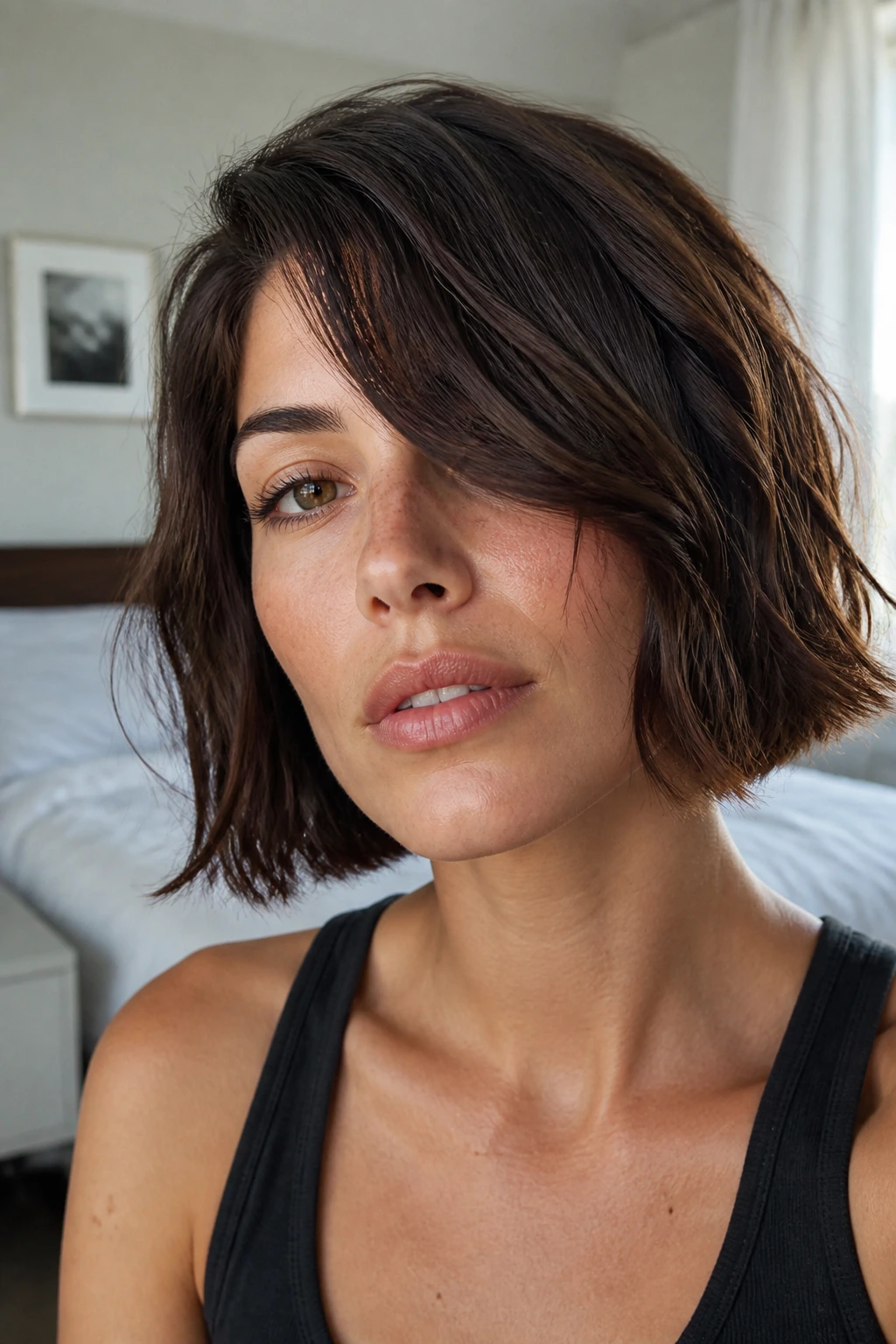
A bob that lands at the jawline can work, but only when something breaks up the line. Long side bangs do exactly that. They slide across the forehead, soften the upper face, and pull attention diagonally instead of horizontally. Without them, this length can read boxy in a hurry.
The bangs should be long enough to blend into the front pieces, not stop abruptly at the cheek. If they’re too short, they can widen the face instead of narrowing it. On thick wavy hair, the side bang also gives you a bit of control on second-day hair, because it can be re-bent with a brush or flat iron in a minute.
This cut is good for someone who likes a defined lower edge but doesn’t want the strong jawline to feel louder than everything else. It’s a balancing act, and the fringe does the balancing.
15. Micro Lob with a Loose Bend
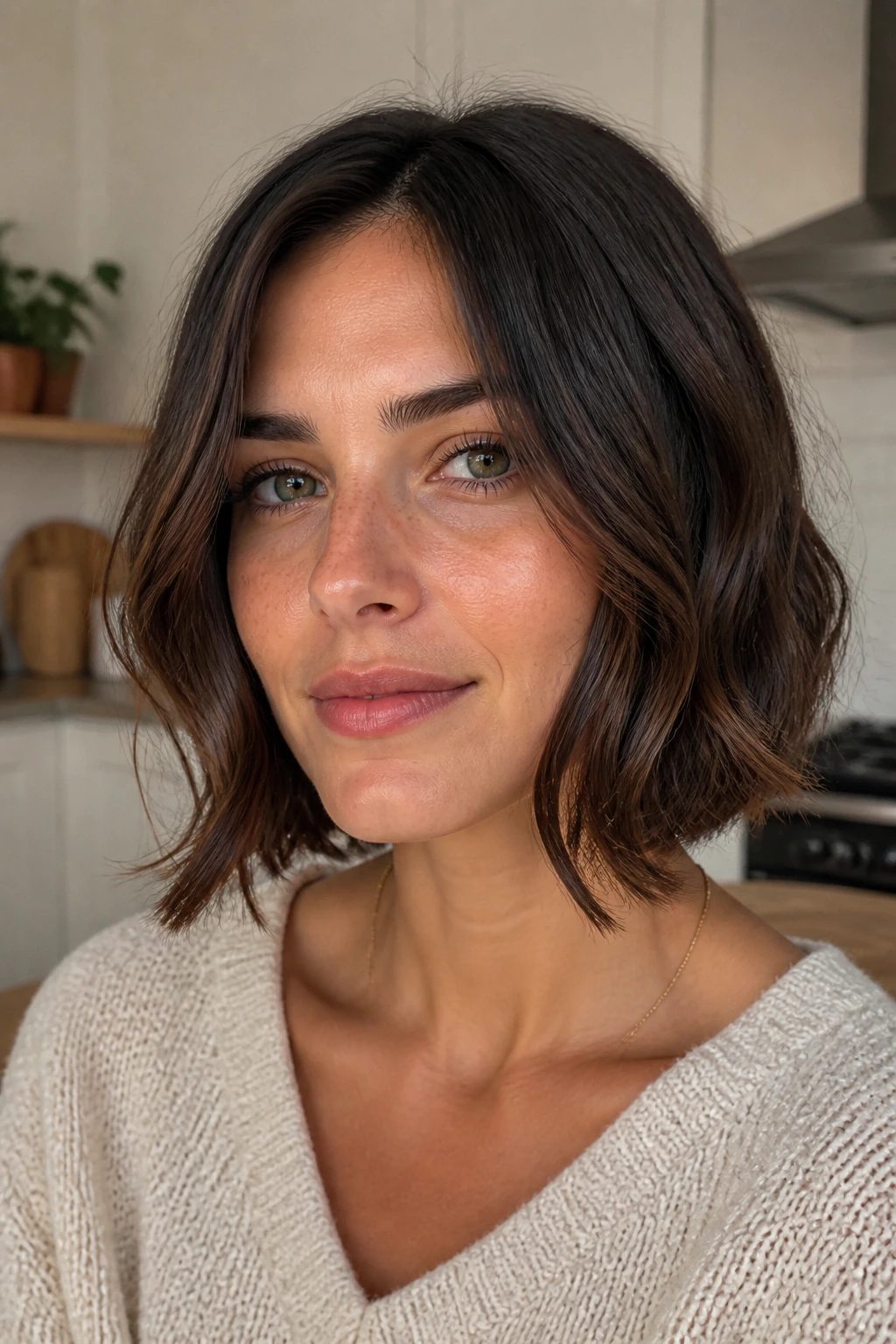
Unlike a true micro bob, this version leaves enough length to bend under the chin rather than bouncing at it. That matters on thick wavy hair, because waves shrink up and can turn a short cut into something much shorter than you planned. A loose bend keeps the style from feeling too severe.
The length sits somewhere between the jaw and the upper neck, which gives square faces some room. It doesn’t carve a hard line across the face. It drapes. That’s the key difference.
This is one of those cuts that looks very cool with minimal styling, but only if the perimeter is clean and the waves are encouraged to fall in the same direction. If your texture grows wide, keep the layers long and the ends beveled. Short, choppy layers here would be a mistake.
16. Graduated Bob with Built-In Lift
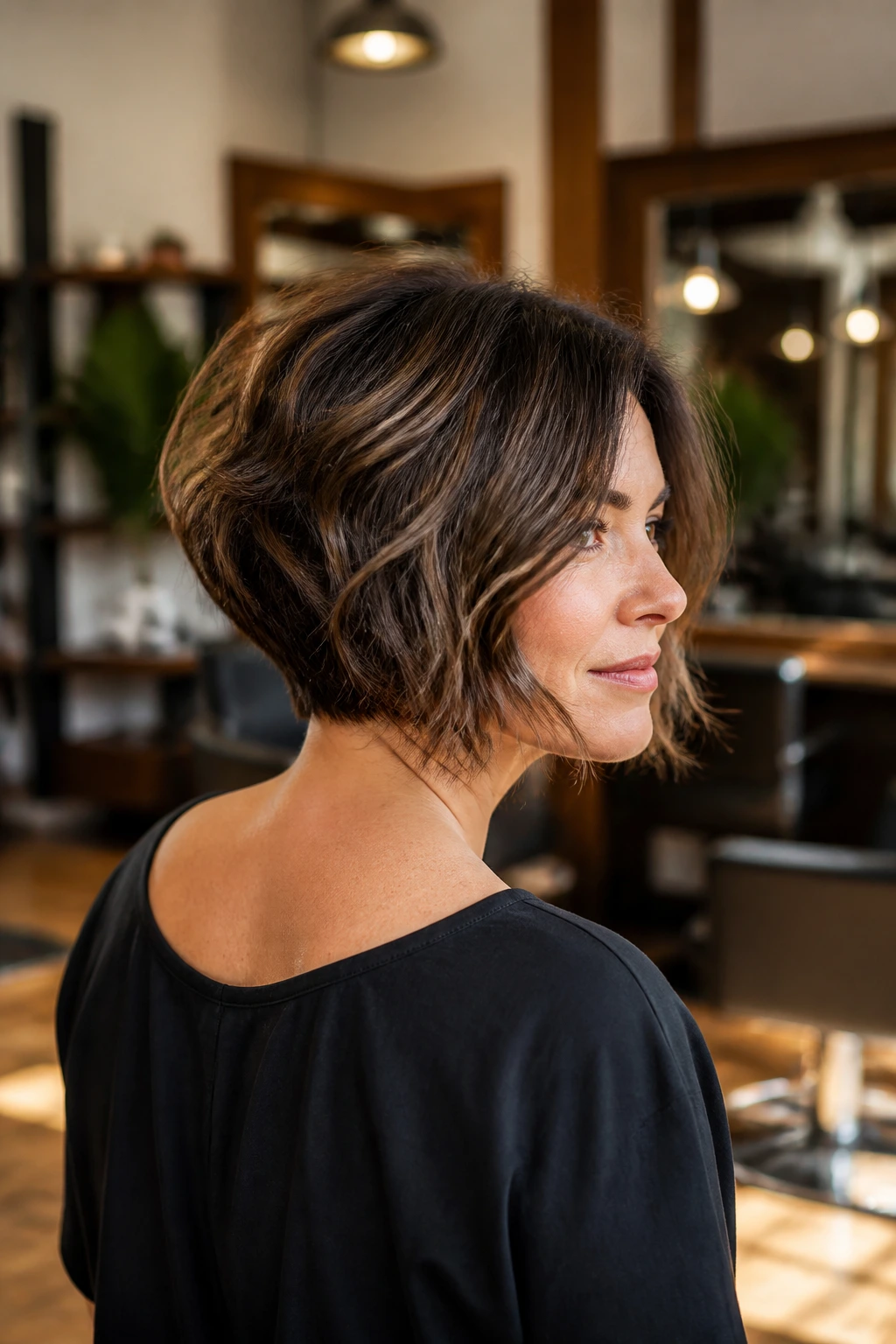
If your hair sits flat at the crown and heavy at the sides, this cut has a job to do. Graduation in the back lifts the shape off the neck and keeps the bulk from dragging the silhouette down. On thick wavy hair, that built-in lift can be a lifesaver, as long as the stack isn’t so high that it becomes a mushroom.
The front should still stay soft. That’s non-negotiable on a square face. A little length in the front keeps the jaw from taking over, while the back does the work of creating shape and motion. I like this cut for people who want their bob to feel full and structured, not flat or limp.
The danger is overgraduating the nape and then leaving too much width at the temples. That’s when the haircut starts shouting instead of speaking. Keep the lift controlled and the sides soft.
17. Choppy Bob with Bottleneck Bangs

Bottleneck bangs earn their place here because they open at the center and widen around the cheekbones, which means they soften the forehead without turning into a blunt wall. On square faces, that matters. The face gets shape at the top, then release at the sides.
The bob itself should stay choppy, but not shredded. Think uneven ends with purpose. Thick waves do well with this because the texture is already there; the haircut just needs to catch it in the right places. A middle part usually works best, though a slight off-center part can make the bangs sit more naturally.
This one reads a little trendier than the others, but not in a fragile way. It has movement, lightness, and enough edge to keep the style from going sweet. If you want the cut to look current without becoming high-maintenance, this is a good place to land.
18. Shoulder-Skimming Bob with S-Waves

Sometimes the best bob is the one that grazes the shoulders and refuses to fight them. That length gives thick wavy hair room to move while keeping the shape long enough to avoid the jawline trap. On a square face, it feels easy in the best sense of the word.
The S-wave finish is what makes it feel intentional. You don’t need perfect curls. You need a loose bend that starts near the cheek and softens at the ends. That’s enough to keep the cut from looking blunt or blocky, and it’s much easier to maintain than full blown-out perfection.
This is a solid choice if you’re growing out a shorter bob or you want something that can survive a busy week without a lot of coaxing. It looks good tucked, half-tucked, or left alone. That kind of flexibility is rare.
19. Curved Bob with Feathered Ends

A curved bob follows the shape of the head and then gently turns inward near the ends. Feathered edges keep the finish light, so the haircut doesn’t sit like a shelf at the jaw. For square faces, that inward motion is doing a lot of quiet work.
What Makes It Different
The curve is more flattering than a flat line because it removes the harsh stop-start feeling around the jaw. Thick wavy hair can make that stop-start effect even stronger if the cut is too even, so a curved perimeter solves a real problem instead of just adding style points.
This cut is especially nice when you want the bob to read clean from the front and softer from the side. It has a little bounce without looking curled under in an old-fashioned way. If you like neat hair with movement, this is one of the better options.
20. Center-Part Lob with Blended Layers

A center part can absolutely work on a square face, but it behaves best when the length is long enough to slide past the jaw. That’s where this lob earns its keep. The blended layers keep the wave pattern from stacking too heavily at the sides, which would only make the face look wider.
The beauty of this shape is how calm it is. No dramatic angles. No hard fringe. Just enough layering to let thick waves fall in a loose curtain around the face. If you spend most mornings doing a fast brush-through and a little product, this cut will meet you there.
I’d choose it for someone who likes a clean middle part, lives in textured hair, and does not want to babysit bangs. It feels modern without trying too hard. Which, honestly, is a relief.
21. Glossy Long Bob with Light Layers

This is the polished cousin in the group. The long bob keeps enough length to soften a square jaw, and the light layers stop thick waves from looking too square through the body. The real payoff comes when the cut gets a smooth finish—round brush, diffuser, or a quick bend with a flat iron.
Unlike a shaggy lob, this one stays more controlled. That makes it a strong option if your waves are coarse or if you like a cleaner look for work or events. The light layers should live mostly through the lower half of the cut so the top doesn’t get too airy.
It’s not the most carefree style here. It does ask for a little styling. But when it’s done well, it gives you that nice mix of weight and movement that thick hair wears so well.
22. Softly Messy Bob with Side-Swept Fringe

What if you want the haircut to look good after a nap, a car ride, and a little humidity? This is the one. A softly messy bob uses movement, not precision, to flatter a square face. The side-swept fringe breaks the forehead line, and the uneven texture keeps the jaw from looking too boxed in.
The cut should still have shape. Messy does not mean random. The ends need enough structure to sit somewhere near the collar or jaw, and the fringe should fall in a way that feels sweepy rather than separated into chunks. Thick wavy hair makes this style easy to wear, which is one reason I like it so much.
This is the least fussy look in the lineup. If your best hair days are the ones where you do almost nothing, this cut will probably make sense to you right away.
What Thick Waves and Square Faces Need From a Bob

A strong bob on this hair type is built on three things: where the length lands, where the bulk gets removed, and how the front of the haircut breaks the face line. Miss any one of those and the whole thing can feel off. Hit all three and the cut starts doing the heavy lifting for you.
The length question is the first one I always look at. If the cut ends exactly at the jaw, thick waves tend to swing outward and square faces get more width than they want. A little above or a little below is safer. That tiny shift changes how the eye reads the whole silhouette.
Bulk removal comes next, and it has to happen in the right place. Thick hair often needs weight taken out underneath, not blasted away at the top. When the top gets too thin, you lose control. When the inside stays too heavy, you get that wide triangle shape nobody asks for.
Face-framing pieces are the third lever. Curtain bangs, side bangs, cheekbone pieces, and angled fronts all soften the geometry around the square jaw. Some people want a clean blunt line, and I get that. But even then, a little softness somewhere near the face keeps the haircut from looking too fixed.
What to Tell Your Stylist at the Chair
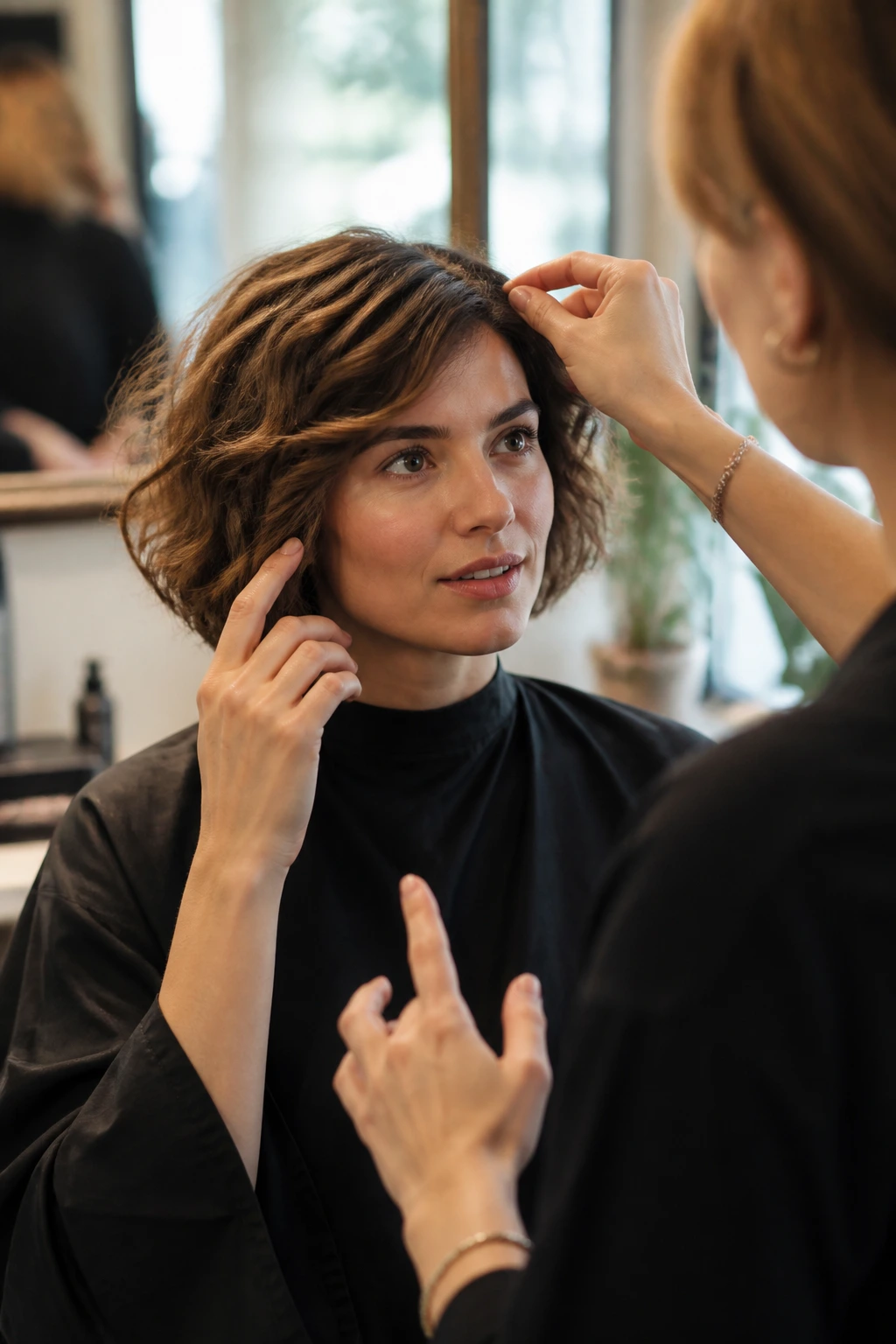
Show your stylist where you want the hair to land when it’s dry, not where it sits when it’s wet. Wavy hair shrinks and shifts, and thick hair can look shorter and wider once it starts to dry. If you don’t say that out loud, you can end up with a bob that’s two inches shorter than you meant.
Here’s the part I’d actually say in the chair:
- “My waves puff out at the sides.” That tells the stylist to keep the corners soft and the bulk controlled.
- “I want the front longer than the jaw.” That keeps the line from landing right on the widest part of the face.
- “Please remove weight underneath, not all over.” That matters if your hair is thick enough to sit heavy in the lower layers.
- “I wear a side part on most days” or “I want to live in the center part.” The part changes the entire cut.
- “Please leave the fringe long enough to bend.” Short bangs on wavy hair can spring up faster than you expect.
Bring photos, but bring the right photos. One front view is not enough. If possible, show a side shot too, because that’s where square faces and thick bobs either work together or fight each other.
The Tools That Keep the Shape from Puffing Out
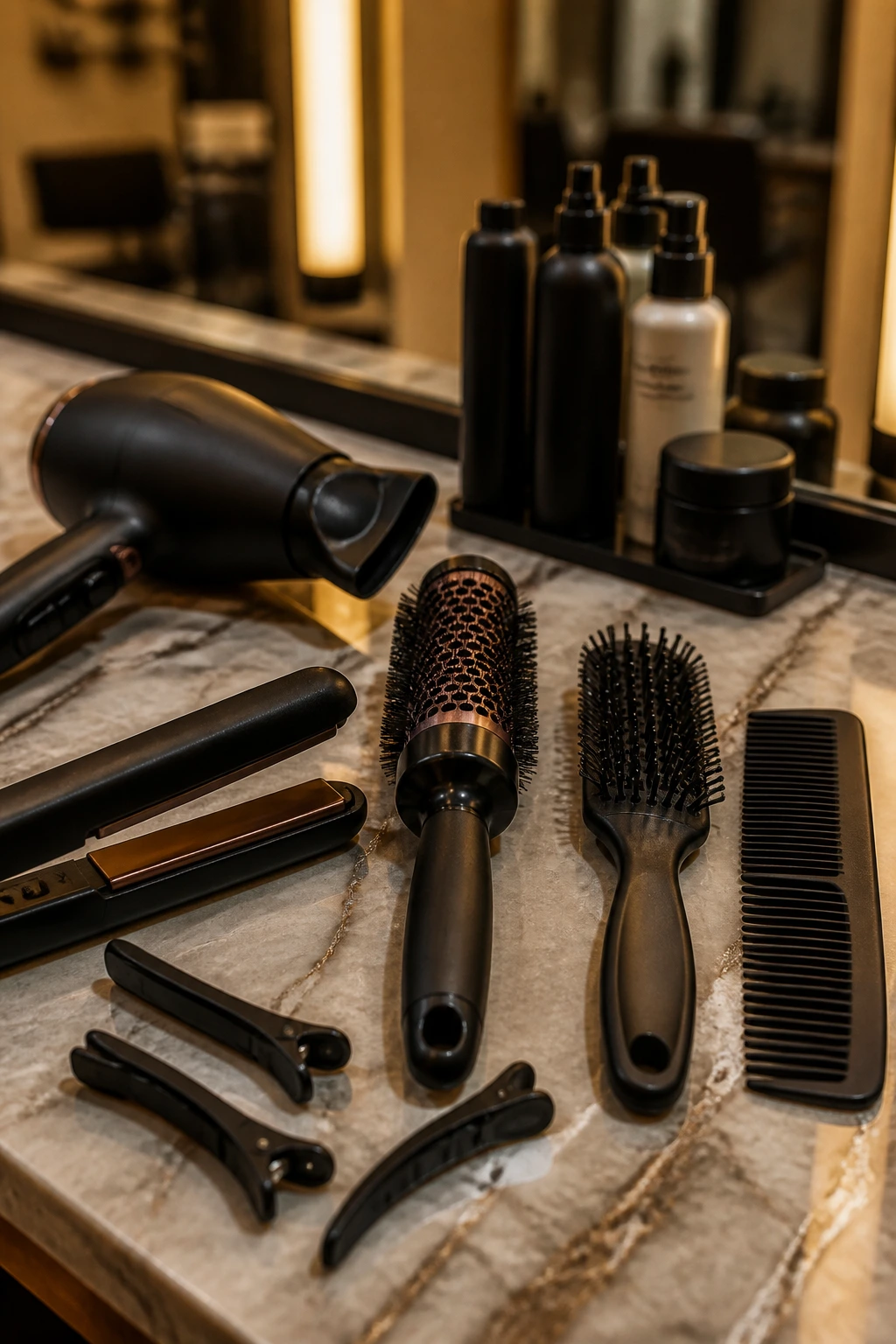
A bob like this does not need a giant drawer of gadgets. It needs a few things that earn their place.
- Blow dryer with a concentrator nozzle: Focuses airflow so the outer layer lies flatter and the ends are easier to direct.
- Medium round brush: Useful for bending the perimeter inward and smoothing fringe without flattening the crown.
- Diffuser attachment: Helps preserve wave pattern on air-dry days and keeps thick hair from frizzing apart.
- 1-inch curling iron or wand: Handy for re-setting the front pieces or giving the ends a soft bend the next morning.
- Wide-tooth comb: Better than a fine comb for detangling thick waves without pulling the shape wide.
- Heat protectant spray: Keeps the ends from drying out when you use hot tools, which thick hair can still do.
- Lightweight mousse or wave foam: Gives the roots some memory and helps the style hold without feeling sticky.
- Texturizing spray: Adds grip at the mid-lengths when the hair starts to look too smooth or too flat.
- Clips for sectioning: Useful when you’re working the top layer and want the underneath to stay out of the way.
- Dry shampoo: Not glamorous, but it buys you time when the roots get soft and the ends start separating.
How to Style the Cut Without Fighting Your Waves

Air-Dry Route: Start with damp hair, not dripping hair. Work a leave-in conditioner through the mid-lengths, then add a small amount of mousse from the roots to just below the ears. Scrunch once or twice, clip the crown for lift if it falls flat, and leave the ends alone until they’re mostly dry.
Blow-Dry Route: Rough dry the hair until it’s about 80 percent dry, then use a concentrator nozzle and a medium round brush to guide the ends inward. You do not need to chase every wave into submission. Bend only the front pieces and the perimeter; let the interior keep some movement.
Second-Day Route: Mist the hair lightly with water or a water-and-leave-in mix, then twist the front sections around your fingers to wake them back up. If the ends have gone puffy, use a flat iron or curling wand on just the last inch. That little touch-up often beats a full restyle.
Frizz Control: Put serum or smoothing cream only on the outer layer and the ends. If you smear heavy product at the roots, the hair can collapse and widen at the sides, which is exactly what you’re trying to avoid.
A small note, because it matters: thick wavy hair usually looks best when it’s not over-coaxed. If the style starts to look too polished, it can lose the texture that makes the bob feel alive.
Common Mistakes That Make a Good Bob Look Boxy

The most common mistake is landing the length right on the jaw. The symptom is instant: the hair flares outward at the face and makes the jaw look broader than it is. The fix is simple, though not always easy to accept—go a little shorter or a little longer, so the line clears the jaw instead of sitting on top of it.
Another mistake is removing too much weight from the crown. That can leave the top flat and the sides wide, which is a strange little triangle nobody wants. Ask for internal debulking lower in the cut, not a heavy thinning session through the top layers.
Over-texturizing is next on the list. If the ends look frayed, stringy, or oddly separated, the hair was probably cut too aggressively with a razor or thinning shear. Thick waves need some edge, not shredded ends. Keep the perimeter substantial.
Skipping the part decision is a sneaky one. A center part can be gorgeous, but if your face is very square and the front pieces are too short, the width shows fast. A side part or a slightly off-center part can shift that balance in a better direction.
Heavy cream is another trap. A lot of thick-wavy hair likes moisture, but too much creamy product can make the waves clump and then swell in weird places as the day goes on. Use less than you think, then add only if the ends still feel dry.
Ways to Change the Mood Without Changing the Cut
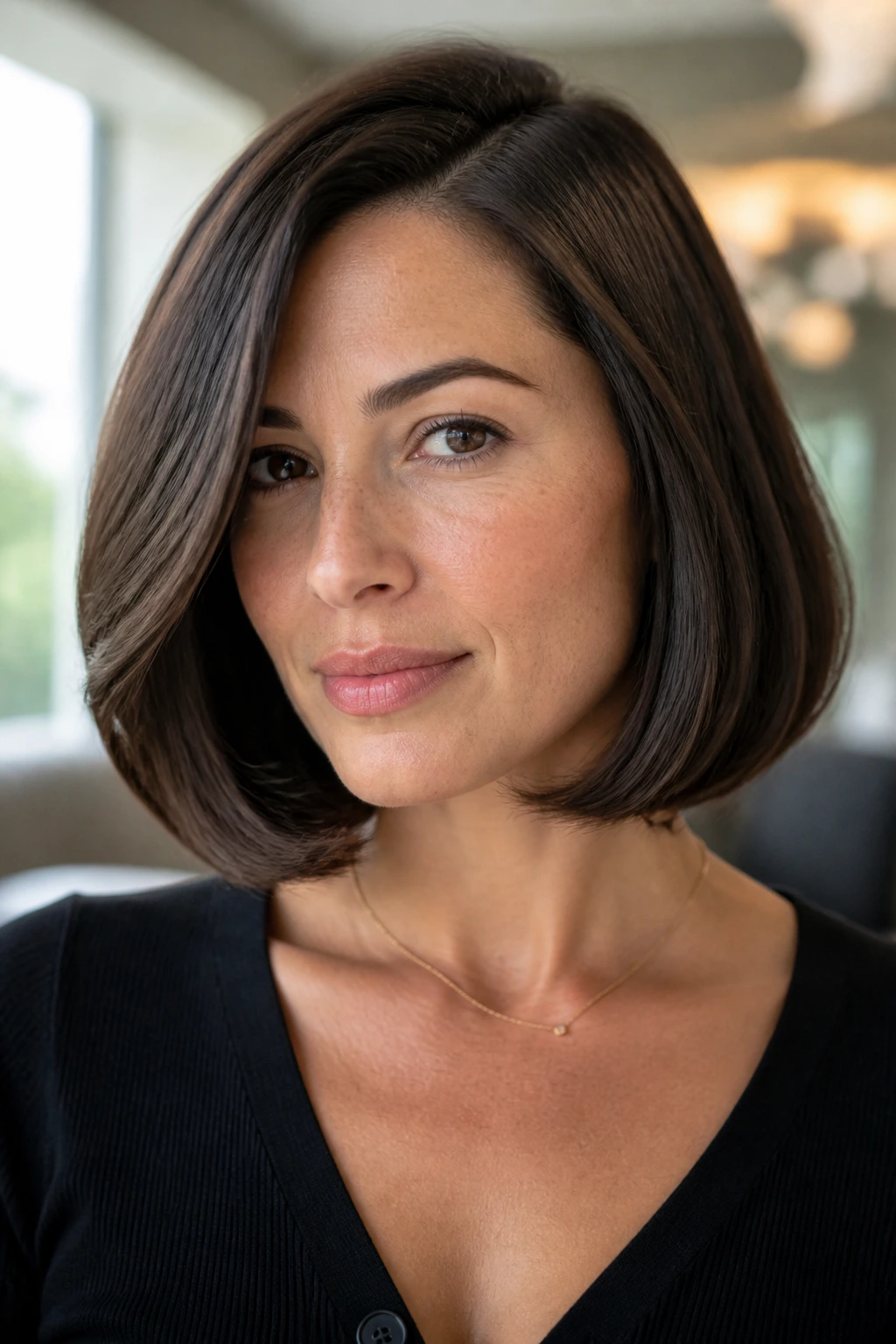
Air-Dry Minimalist: Keep the length at the collarbone or just below the jaw, add long face-framing pieces, and skip heavy layering. This version is easy to wear with a little leave-in and a diffuser puff at the crown. It’s the least demanding option when you want the hair to look like itself.
Glossy Blowout Bob: Choose a blunt or softly angled perimeter and style the ends under with a round brush. This version likes a smoother finish and looks especially good when the waves are still a little visible, not ironed flat. It reads cleaner and more dressed-up.
Edgy Side-Part Shape: Pick an asymmetrical bob or a deep side part with cheekbone-framing fringe. The shift in symmetry gives square faces more length and keeps the haircut from feeling too balanced. Small change. Big difference.
Grow-Out-Friendly Lob: Go for the collarbone length, invisible layers, and curtain bangs that can grow into face-framing pieces. This is the one if you hate salon panic and want a haircut that stretches its life a little.
Softly Textured Weekend Cut: Choose a shaggy bob or choppy bob with bottleneck bangs and keep the finish piecey. It looks best with a little movement and a little mess, which is handy if you rarely want to spend more than ten minutes styling.
Keeping the Shape Between Salon Visits
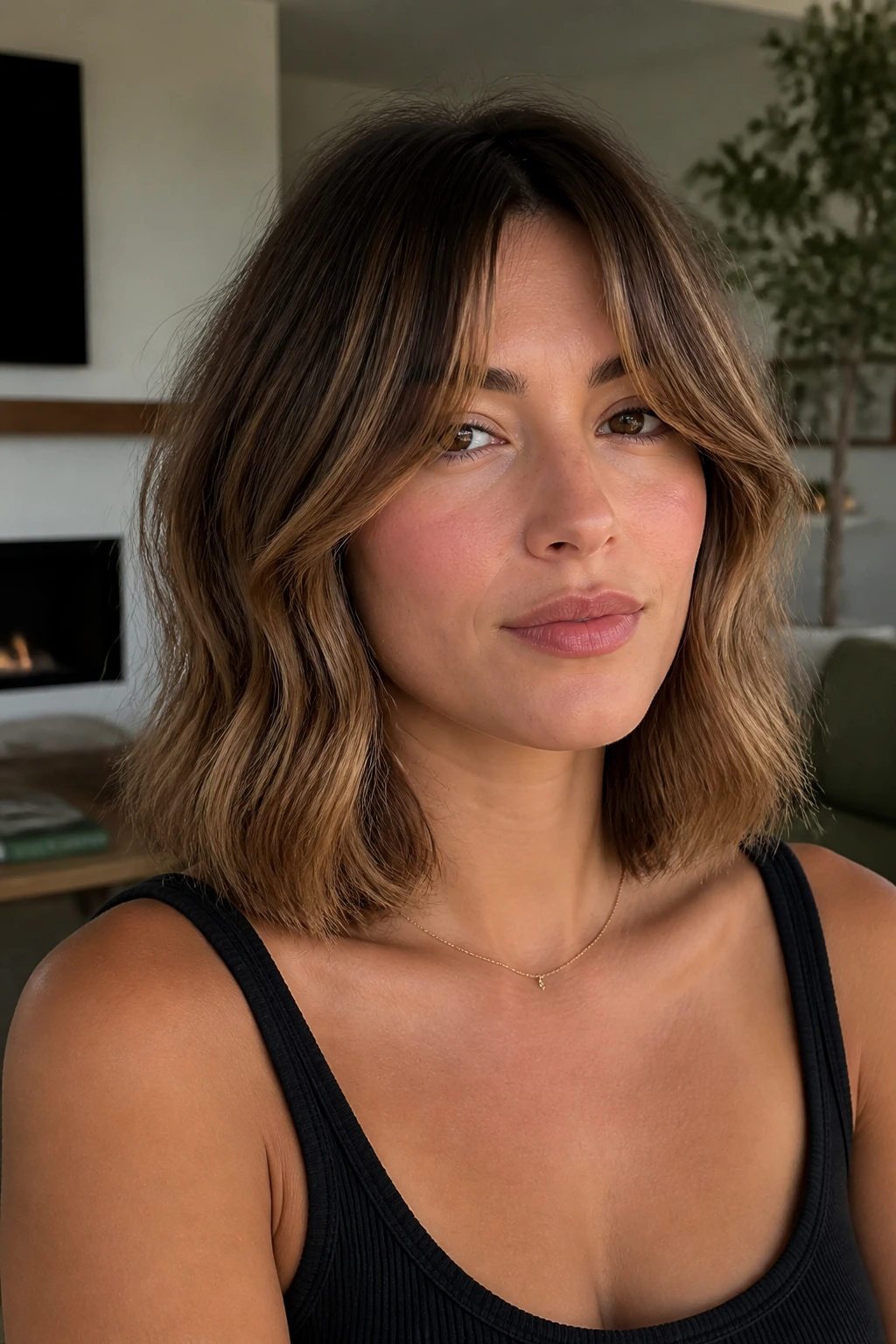
Short bobs need trims more often than people expect. A chin-length cut can start losing its outline after six to eight weeks, especially if your hair grows quickly or the waves kick out at the sides. Lobs usually buy you a little more time, often closer to eight to ten weeks, but the face-framing pieces may need a touch-up sooner.
Bang trims are their own thing. Curtain bangs and side fringe tend to need a small reset every three to four weeks if you want them to keep sitting in the right place. If you let them grow too far, they can drag the whole front of the bob down.
At home, the shape holds better if you don’t pile on heavy oils or masks at the roots. Use them from the mid-lengths down, then clarify every couple of weeks if your hair starts to feel coated. Thick wavy hair can hold product residue like a grudge.
Sleeping on a silk pillowcase helps, but the real trick is not crushing the front pieces into a weird angle. If your hair is long enough to clip back loosely at the sides, do that. If it’s shorter, just make sure it’s fully dry before bed. Damp bob, pillow, and pressure. Bad combo.
Frequently Asked Questions

Are bobs actually good for square faces?
Yes, as long as the cut softens the jaw or distracts from the width at the corners. A bob that lands right at the jaw with a hard line can feel harsh, but an angled, rounded, or layered version usually works well.
What bob length is most forgiving on thick wavy hair?
A collarbone lob is the easiest place to start because it gives the waves room to fall without puffing out at the cheeks. It also grows out more gracefully than a chin-length cut, which can be useful if you don’t want strict upkeep.
Should square faces avoid blunt bangs?
Not automatically, but blunt bangs can make the face look more geometric if the rest of the cut is also blunt. Curtain bangs, bottleneck bangs, or long side bangs tend to soften the front more easily.
Do thick wavy bobs need layers?
Usually, yes—but the right kind of layers. Internal layers or long, blended layers help remove bulk without making the silhouette frizzy. Short layers near the top can create a halo effect you’ll spend all morning trying to calm down.
Why does my bob flip outward at the ends?
That usually means the length is landing on a spot where the hair bends outward naturally, often the jaw or shoulders. A tiny shift in length, plus a beveled finish at the ends, usually fixes it better than adding more product.
Can I wear a center part with this hair type?
You can, especially if the length is a little longer and the face-framing pieces aren’t too short. A center part on a square face works best when the front pieces slide past the jaw instead of stopping right at it.
How often should I trim it?
Most chin-length bobs need attention every six to eight weeks. Lobs can go a little longer, though the fringe or face-framing pieces may need a smaller trim in between if they start hanging in your eyes.
What if my hair is very dense and poofy?
Then the inside of the cut matters even more than the outside line. Ask for weight removal in the lower layers, not dramatic thinning through the crown, and keep the perimeter solid enough to anchor the shape.
A Bob That Keeps Its Shape

The best thing about these cuts is that they do not ask thick wavy hair to become somebody else. They work with the bend, the density, and the jawline you already have. That’s the whole appeal. A good bob is not about hiding the face. It’s about giving the face a better frame.
Square faces often look strongest in cuts that add movement at the cheekbone, softness at the corners, and a little length where the eye needs room to travel. Thick waves make that easier, not harder, if the haircut respects their natural bulk. When the shape is right, you stop fussing with the sides every half hour. That alone is a small luxury.
Bring one photo you love and one you almost love, then talk honestly about where your waves puff out and where your jaw starts to feel widest. That conversation gets you much closer to the right bob than any vague promise ever will.