



A long bob can do more for a round face than a drawer full of contour sticks ever will. The right lob length pulls the eye down, the right layers stop the cheeks from looking overly wide, and the right wave pattern keeps the whole cut from turning puffy or boxy. That’s the magic here: long bobs for round faces and wavy hair don’t try to flatten your texture or fake angles that aren’t there. They work with the softness.
There’s a detail most haircut charts gloss over. A wavy lob that ends exactly at the chin can make a face look rounder, not slimmer, because the hair sits right at the widest part of the cheek. Move the hemline an inch or two lower, add some movement below the cheekbone, and the whole shape changes. Suddenly the cut feels lighter, a little longer, and much easier to wear on a Tuesday morning when you are not in the mood to wrestle with a round brush.
The 22 looks below range from polished and clean to airy and piecey. Some lean into subtle layers. Some rely on parting tricks. A few are quietly edgy. All of them are built to make wavy hair behave instead of explode, which is a much nicer goal.
Why These Long Bobs Work on Round Faces and Wavy Hair
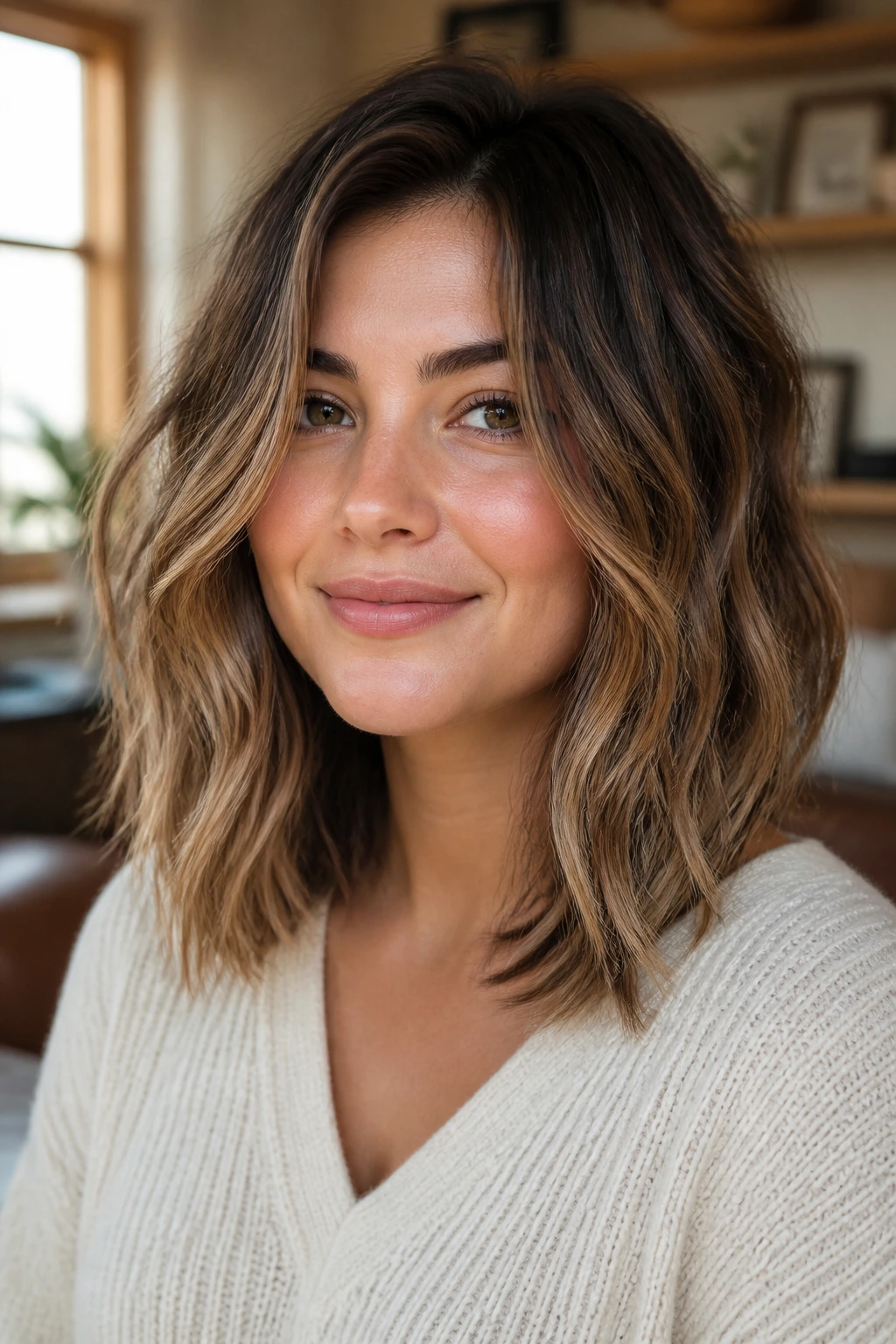
-
Length Below the Widest Point: A lob that lands at the collarbone or just below the jawline creates a vertical line, which is the simplest way to keep a round face from reading wider than it is.
-
Wave-Friendly Movement: Natural bends already give the cut shape, so you do not need a lot of aggressive layering. Too many short layers can make wavy hair puff out like a triangle.
-
Room to Change the Part: A long bob gives you space to switch between center, off-center, and deep side parts without the haircut losing its shape.
-
Face-Framing Without Clinging: The best versions skim away from the cheeks and mouth instead of stopping at the cheekbone. That small difference changes everything.
-
Easier Grow-Out: A lob stays wearable for longer than a chin-length bob. Even when it grows a bit, the line still looks intentional instead of awkward.
-
More Styling Options: You can wear it air-dried, brushed smooth, curled under, flipped out, or tucked behind one ear. Shorter bobs are fussier. This one gives you some breathing room.
1. Collarbone-Skimming Classic Lob
The collarbone-skimming lob is the cut I keep coming back to for round faces, because it does its job without trying too hard. It lands low enough to lengthen the face, but it still feels light and easy on wavy hair. If you want a shape that looks good with a bit of movement rather than a perfect blowout, this is the sensible choice.
Ask for the perimeter to sit right at the collarbone or a touch below it, with only soft internal texture at the ends. That keeps the line clean while letting the waves bend naturally. When your hair dries, the waves should curve through the mid-lengths, not flare out at the cheeks.
Best part of the cut
The collarbone gives the eye a resting place below the face, which is why this cut feels balanced even when the waves are doing their own thing. It’s a quiet shape, not a dramatic one. Sometimes quiet is better.
2. Soft A-Line Lob
A soft A-line lob is slightly shorter in the back and a little longer in the front, and that tiny angle does a lot of work on a round face. The front pieces create a gentle diagonal line that pulls attention downward, while the shorter back keeps the cut from feeling heavy on wavy hair.
I like this version when the hair has enough density to hold shape but not so much bulk that it needs major de-bulking. The angle should be subtle, maybe just a half-inch to an inch difference from back to front. If the front gets too long, the cut starts looking pendulum-heavy. Too short, and you lose the slimming effect.
- Ask for: a soft angle, not a steep one
- Best with: medium to thick waves
- Watch for: too much stacking in the back, which can puff up at the crown
3. Curtain-Bang Lob
Could curtain bangs make a round face look softer without making it look shorter? Yes — if they’re cut with some restraint. The trick is to keep the fringe longer at the temples and open through the center, so it frames the face instead of boxing it in.
With wavy hair, curtain bangs are one of those styles that looks better when it is a little imperfect. Blow them away from the face with a 1-inch or 1.25-inch round brush, or let them air-dry and separate them with a dab of styling cream. What you do not want is a heavy, blunt fringe that lands straight across the forehead. That can shrink the face in the wrong way.
How to wear it
Let the shortest point hover around the brow, with the longer edges brushing the cheekbones or jaw. That keeps the look open. It also gives you a clean grow-out if you decide bangs are not your forever thing.
4. Choppy Textured Lob
This is the lob for hair that has opinions. The choppy textured version uses point-cut ends and broken-up layers to stop thick waves from sitting in one heavy block around the face. On a round face, that airy separation matters more than people think.
The shape should feel piecey, not shredded. If the layers start too high, the whole cut can jump outward at the cheeks. I prefer this version when the hair is dense and naturally bends hard after washing. A little mousse, a little scrunching, and you’re done. No need to over-direct every strand.
It works especially well if you hate the feeling of hair that sits flat around the jaw. The movement creates space. The space creates shape. Simple.
5. Center-Part Sleek Lob
A center part on a round face is not forbidden. It just needs the right lob underneath it. The cut has to be long enough — usually collarbone length or longer — and the ends should have enough softness that the middle part doesn’t make the face look like a perfect circle.
This version looks best when the waves are controlled, not fluffy. Think brushed-out bends or a smooth air-dry with a little serum on the ends. If your hair grows wide at the sides, keep the fullness lower, around the mouth and collarbone, rather than up near the cheeks. That is the whole game here.
Quick styling note
Use a middle part that is exact, not vague. Then soften the front with a bent wave or two so the look feels intentional instead of severe.
6. Side-Swept Volume Lob
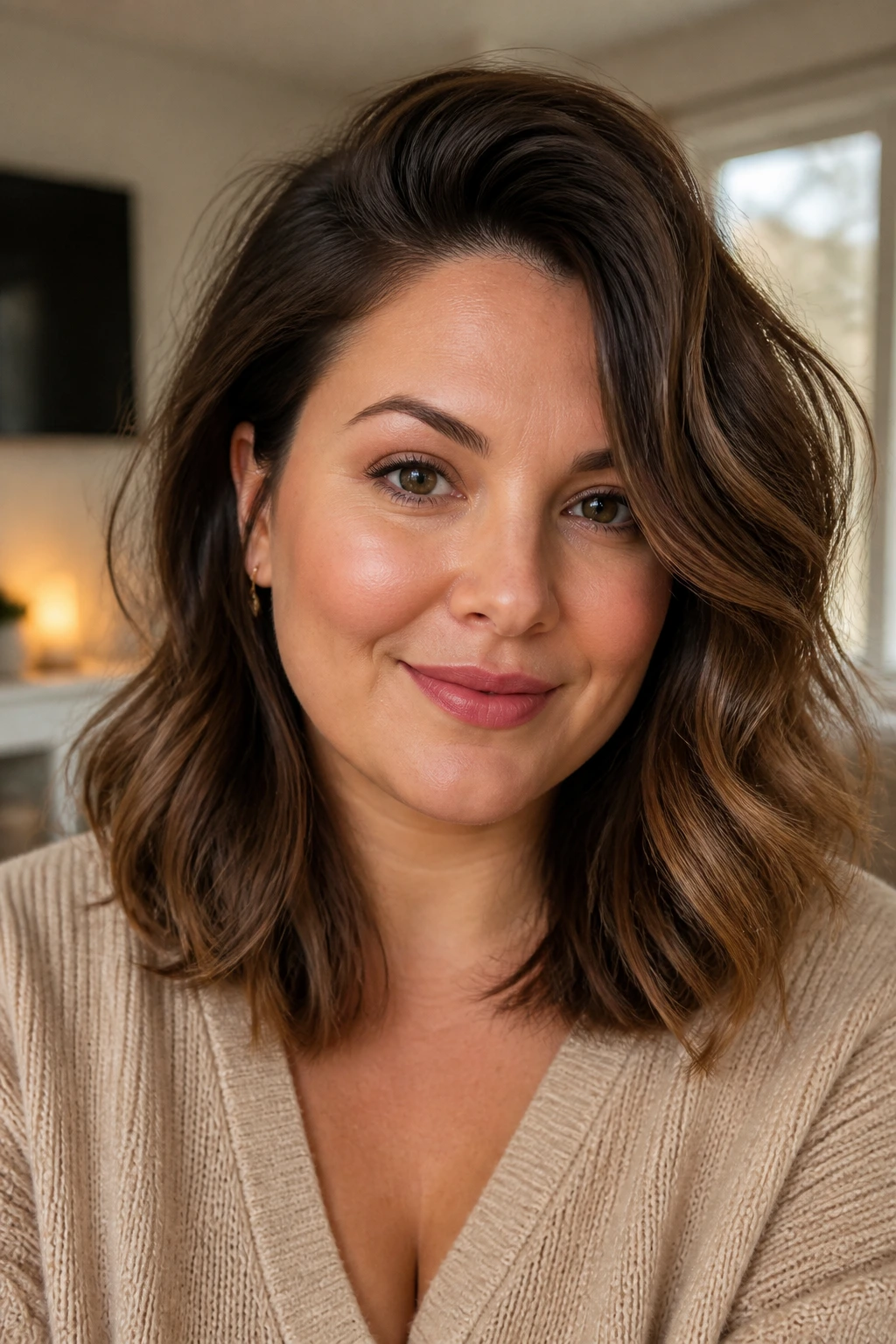
If your roots go flat fast, a deep side part can rescue the whole haircut. It lifts one side, breaks up the symmetry of a round face, and gives wavy hair a little drama without requiring a ton of effort. Honestly, it’s one of the easiest ways to make a lob feel more structured.
The part should sit a couple of inches off center, not way over by the ear unless you want full glam. Pair it with long layers that start below the cheekbone so the wave doesn’t balloon at the sides. That’s the detail people miss. Volume at the crown is flattering. Volume at the cheeks is not.
This cut is good for days when you want the hair to look styled even if you only spent ten minutes on it. A quick bend with a curling iron on the front sections is usually enough.
7. Invisible-Layer Lob
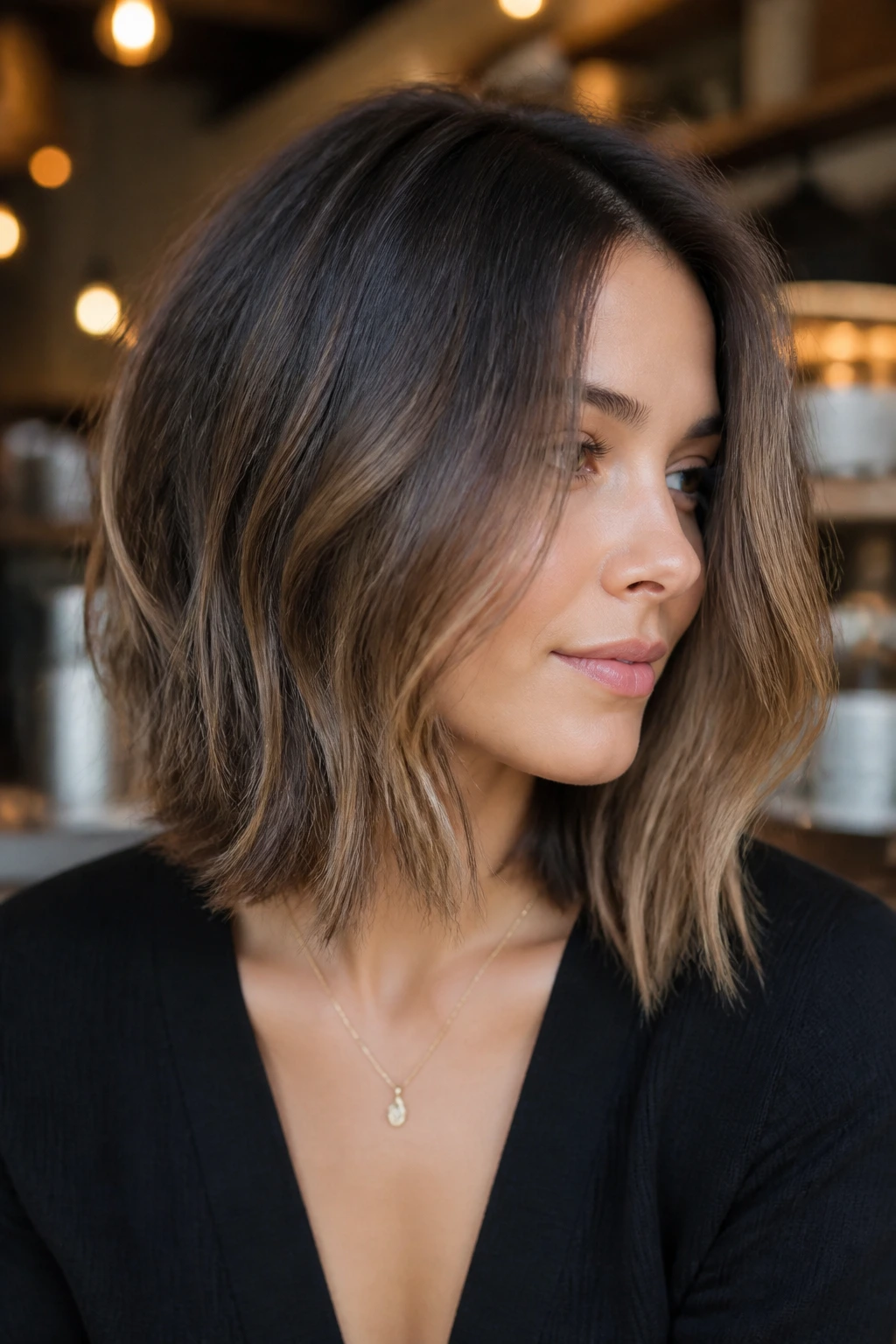
Invisible layers are my favorite trick when someone wants movement but hates choppy ends. The layers sit underneath the top surface, so the haircut still looks smooth from the outside. On wavy hair, that matters, because too much visible layering can create that fuzzy shelf shape no one wants.
This lob is especially smart for thicker hair that gets heavy at the bottom. The internal layers remove bulk where you can’t see it, which means the surface lies flatter and the waves fall more cleanly. For round faces, that clean exterior keeps the silhouette from spreading out at the sides.
Why it feels polished
The perimeter stays tidy. The movement happens underneath. You get swing without the fuss, and that is a much better deal than a heavily shredded cut that needs constant fixing.
8. French-Girl Wavy Lob
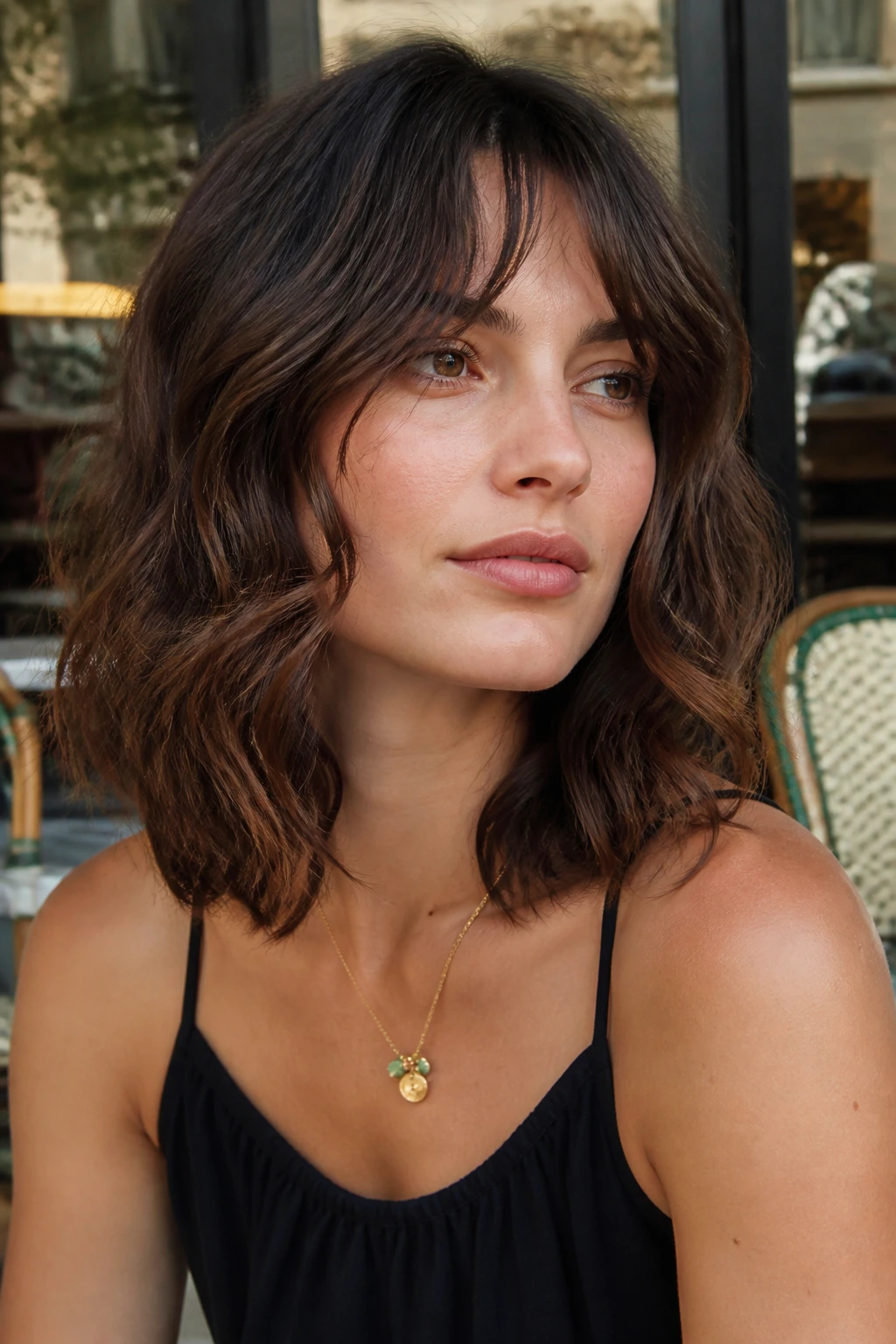
The French-girl version of the lob is all about loose texture, soft separation, and a slightly undone finish. It works because it doesn’t try to force the waves into uniform curls. On a round face, the irregularity keeps the cut from looking too round itself.
Keep the length near the collarbone and the front pieces slightly longer than the back. Add a soft fringe or short face-framing bits if you like, but don’t crowd the forehead. A little lift at the roots and a mist of texturizing spray through the ends is enough.
This is a good cut if you like hair that looks better after you’ve lived in it for a few hours. The shape loosens up in a nice way.
9. Razored Shag Lob

The razored shag lob is for someone who wants movement with edge. A razor cut thins out heavy waves and gives the ends a softer, feathered finish, which can be a lifesaver if your hair tends to poof around the face. The key is keeping the shag lean, not wild.
You want the shortest face-framing pieces to start below the cheekbone, with the rest of the layers falling in a long, soft cascade. That keeps the cut from widening the face. I would not do this with very fine waves unless the stylist is careful, because a razor can eat too much density fast.
Best case? Thick, wavy hair that turns into a triangle in humid weather. The shag shape keeps the sides from feeling bulky and adds just enough mess to look cool.
10. Blunt Ends With a Soft Bend
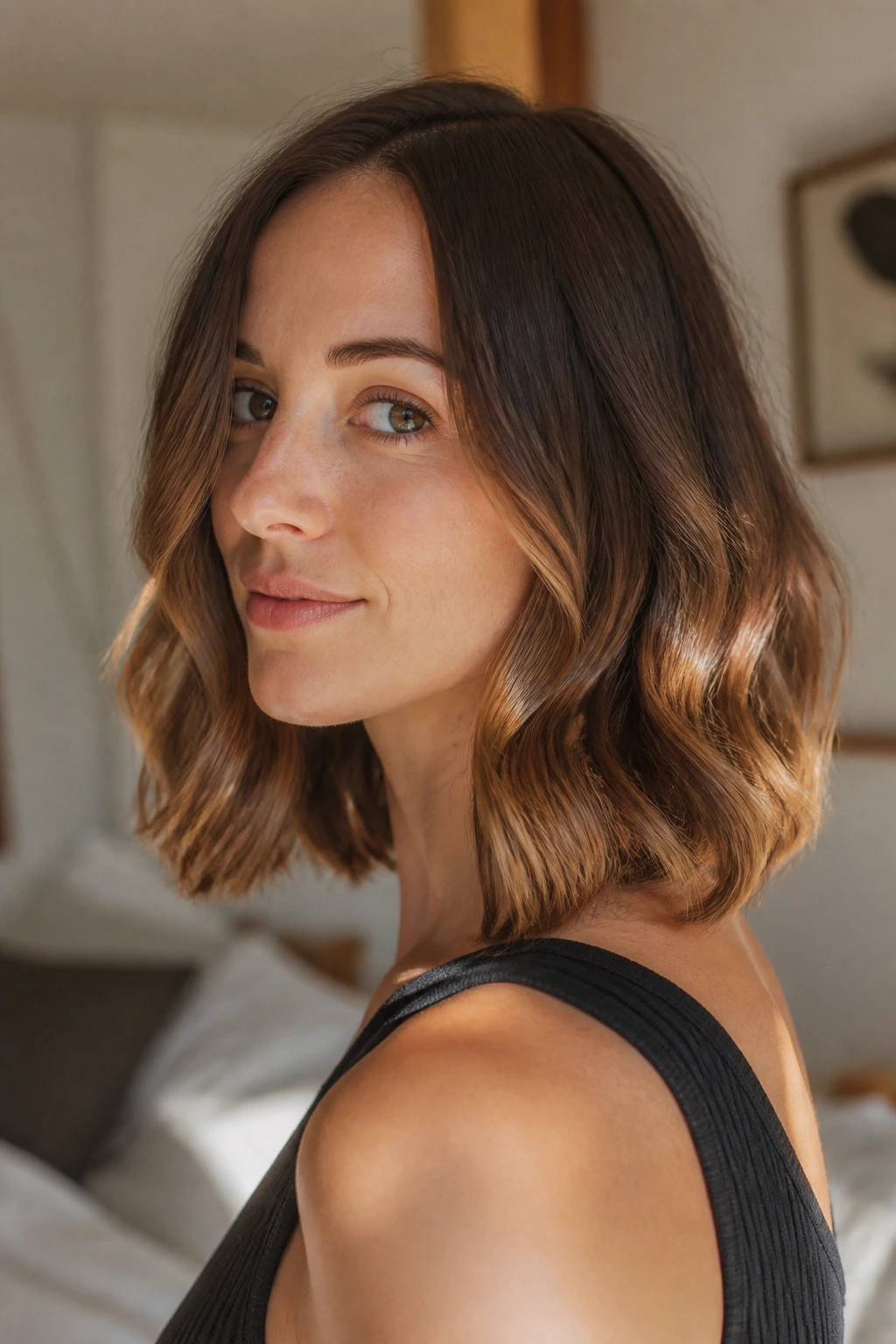
A blunt lob sounds severe, but on wavy hair it gets interesting fast if you leave the ends soft. The blunt line gives the haircut structure, and the soft bend keeps it from reading heavy. For a round face, that structure is useful. It gives the eye something crisp to follow.
The cut should stay mostly one length, with maybe the tiniest amount of face-framing at the front. Then style the ends with a gentle bend, not a tight curl. A 1.25-inch curling iron or a flat iron can create a loose S-shape at the last inch or two of hair. That small bend stops the blunt line from sitting like a helmet.
This version is especially nice if your hair is fine and needs the illusion of fullness without too many layers.
11. Bottleneck Bang Lob

Bottleneck bangs are clever on round faces because they narrow at the center and widen as they fall toward the temples. That opening gives the forehead some shape while the longer sides soften the cheeks. Paired with a lob, the effect is balanced and a little romantic.
The bangs should not be cut too short. Let the shortest bit touch around brow level, then taper the sides so they blend into the front layers. With wavy hair, that taper matters more than the bang itself, because waves can spring up and shrink the fringe faster than you expect.
Styling habit
Dry the fringe from side to side with a small brush so it doesn’t split weirdly. Then let the waves do the rest. If you try to force them straight every day, you’ll hate your life by Thursday.
12. Money-Piece Lob
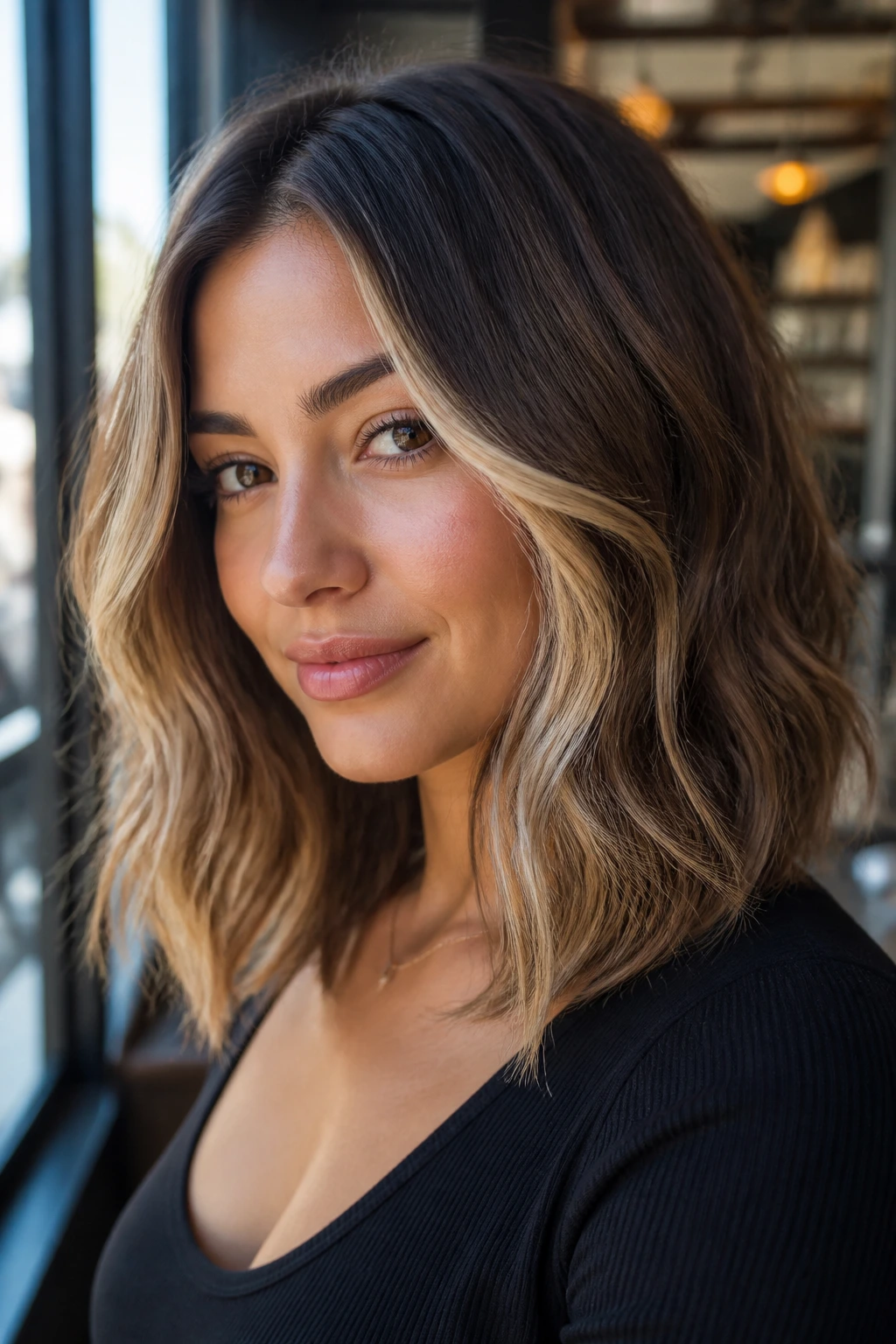
Color can shape a haircut as much as scissors can, and the money-piece lob proves it. Brightening the front sections draws the eye outward and upward, which helps balance a round face without changing the cut too much. It also makes wavy texture look richer because the bends catch the light in different places.
Keep the haircut itself long and soft, then place the lighter pieces around the face, not all over the head. Chunky streaks are a mess here. A subtle lift just in the front is enough. On a lob, that contrast makes the waves read as deliberate instead of random.
This is the version I’d suggest if you already have a cut you like and just want it to feel fresher. A good color placement can do a surprising amount of heavy lifting.
13. Tucked-Behind-Ears Lob

A tucked-behind-ears lob is one of those simple styles that changes the whole profile. It opens the face, shows the jawline, and creates a little asymmetry that keeps a round face from feeling too centered. On wavy hair, the tucked side looks intentional because the loose texture breaks up the clean line.
The cut should be long enough to tuck without flipping out awkwardly — usually somewhere between the jaw and collarbone. I like this best with one side slightly fuller than the other, so the ear tuck feels like a styling choice, not a survival tactic. Add a side part and the effect gets even sharper.
This one is easy to wear with glasses, hoops, or a strong lip color. It gives your face some open space.
14. Off-Center Part Lob

Why does an off-center part work so well? Because it changes the balance without making the haircut look dramatic. Moving the part even an inch or two off center breaks the perfect symmetry that can make a round face look wider, and it gives wavy hair a more relaxed fall.
This cut can be as simple as a collarbone-length lob with soft layers at the ends. The part does most of the work. If your hair naturally splits down the middle, train it slowly with damp styling and a little root clip at the crown. It takes a few washes to settle in, but it’s worth the effort.
- Best for: straight-to-wavy textures
- Ask for: a perimeter that lands below the jaw
- Use when: you want a visible change without a full haircut overhaul
15. Flipped-End Retro Lob

The flipped-end lob has a little personality, and round faces can handle it if the flip happens at the ends instead of around the cheeks. The outward bend creates a line that feels lifted, almost playful, and it keeps the wave pattern from collapsing inward toward the jaw.
Use a 1-inch or 1.25-inch iron and bend the bottom inch away from the face. Keep the roots smooth so the style does not balloon at the sides. That contrast — sleek up top, movement at the hem — is what makes it work. If the flip starts too high, the cut can turn into a mushroom fast.
This is a fun option when you want the lob to feel styled but not stiff. It has a little retro wink to it.
16. Rounded-Under Lob
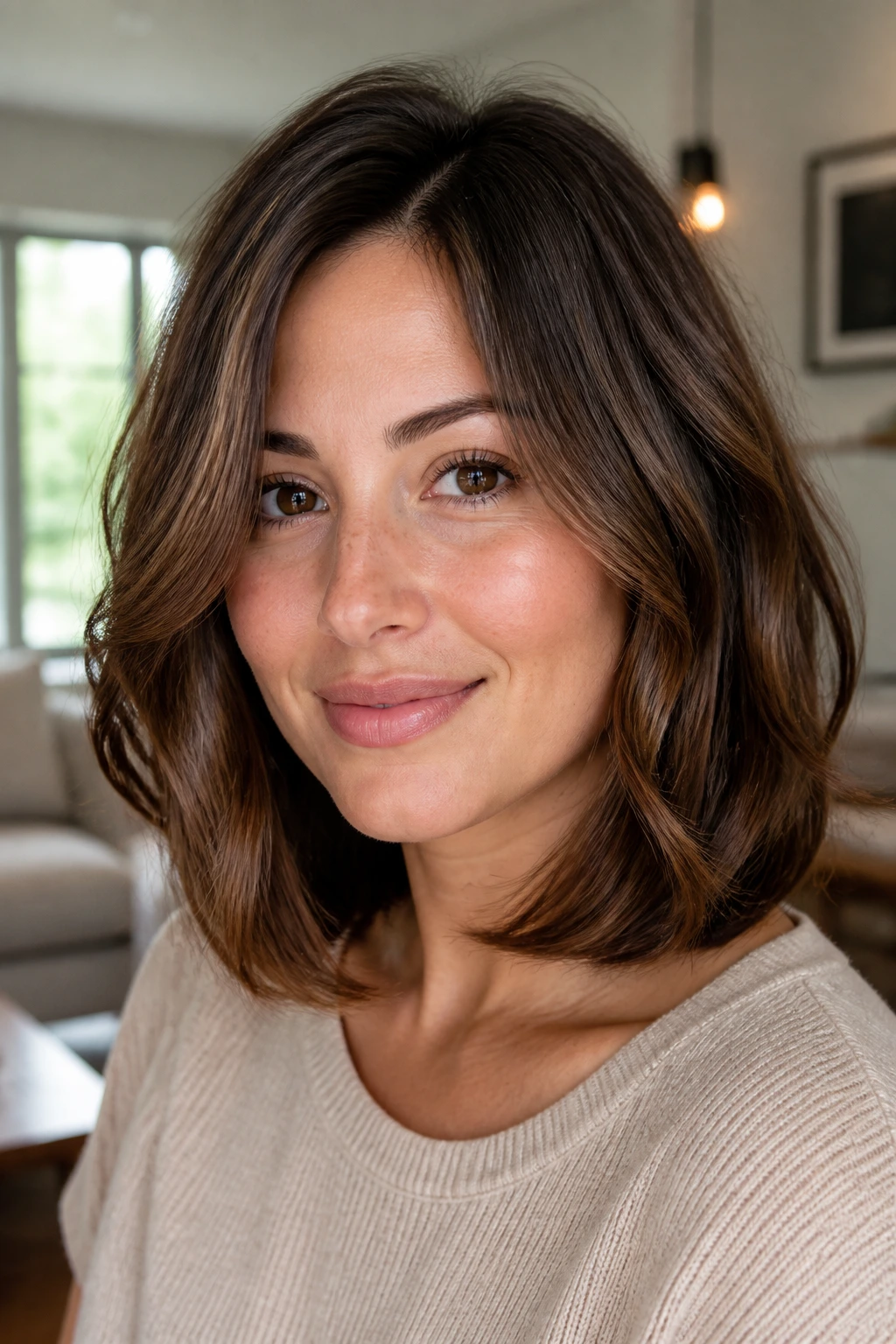
A rounded-under lob is not the same as an over-curled bob. The bend should be soft, just enough to tuck the ends inward by the last inch or so. On a round face, that gentle curve makes the hair look tidy without hugging the cheeks too closely.
The trick is not to round-brush the whole head like you’re building a helmet. Keep the root area lifted, then shape the ends only. Wavy hair often wants to bend under on its own, so you may only need a diffuser or a small brush to guide it. If your hair is thick, keep the layers longer and hidden.
This style looks neat on workdays and still soft enough for weekend wear. That’s a nice balance.
17. Shoulder-Skimming Layered Lob

When hair is thick or coarse, shoulder-skimming length can feel easier than something shorter and puffier. The extra inch or two gives the waves room to drop, which matters on a round face because it keeps the hair from expanding at cheek level. Long layers at the bottom add movement without stealing density from the top.
I like this version for people who want a lob but don’t want to spend a lot of time re-styling it. It’s forgiving. If the waves bend a little unevenly, the longer length smooths the whole shape out. You can tuck one side, part it off center, or wear it with loose bends.
The key is not to let the layers creep too high. Keep them low and soft, and the cut will stay wearable.
18. Grown-Out Bob With Long Layers
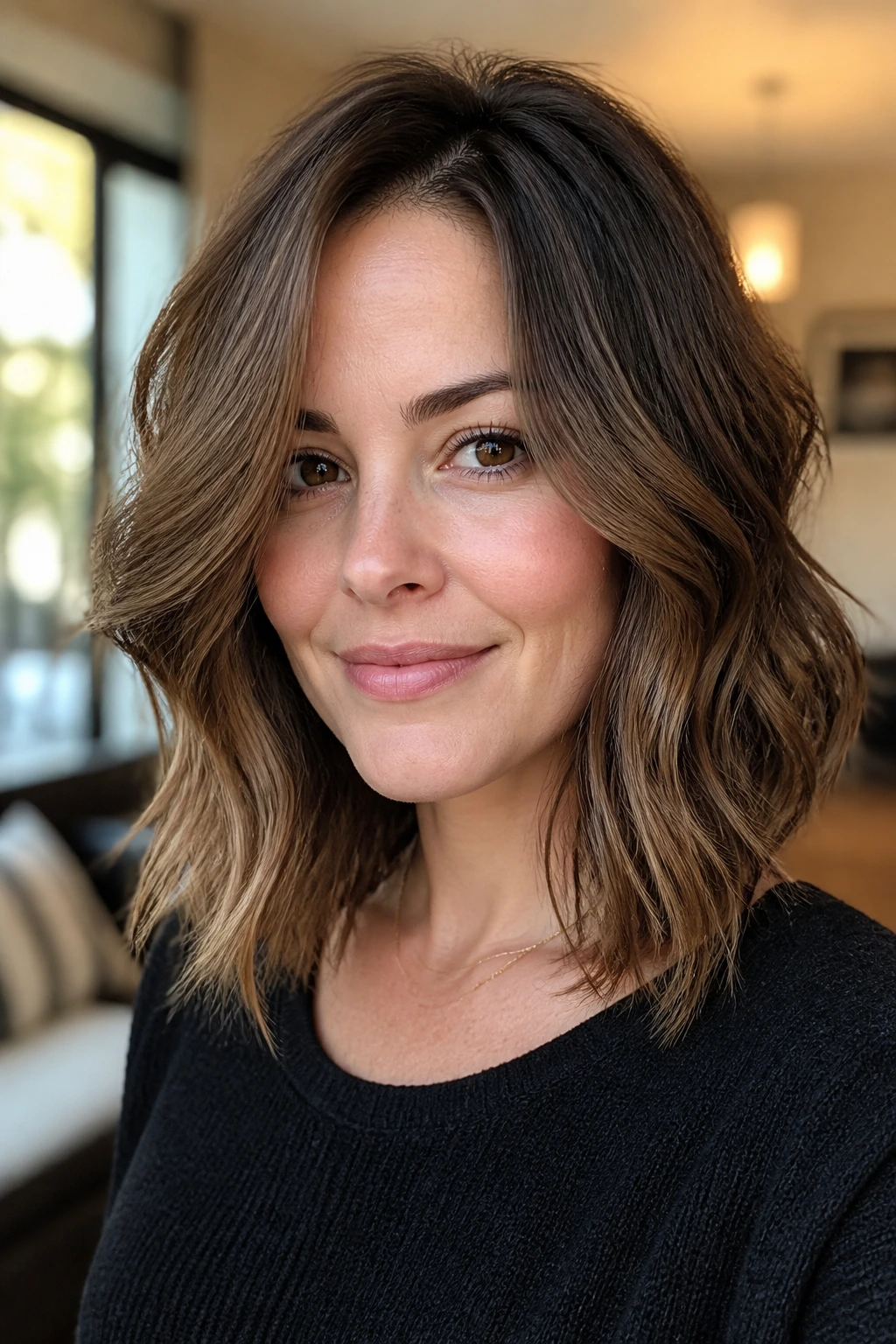
A grown-out bob sounds like an in-between phase, but it can be a deliberately good haircut. On round faces, the longer front pieces and softer layer pattern add length without making the style look heavy. Wavy hair loves this shape because it doesn’t have to fight a crisp line every single day.
This is a practical choice if you dislike frequent salon visits. It looks intentional even after it grows a little past the chin, especially if the front dips closer to the collarbone. Add a side part or a deep tuck behind one ear, and the shape gets even better.
Some cuts are built to look sharp on day one. This one is built to look good for weeks.
19. Air-Dry Lob

If your waves come alive on their own, an air-dry lob can save you a lot of time and a lot of heat damage. The haircut has to be cut with the natural bend in mind, because wavy hair dries differently from wet to dry. That means longer face-framing pieces, not short bits that spring up and widen the face.
Ask for a shape that lets the hair fall in soft vertical lines. A light curl cream, a touch of leave-in, and a scrunch are usually enough. If the hair tends to puff at the sides, clip the crown while it dries and keep the temples smooth. That gives you lift where you want it and control where you don’t.
This one is not a lazy haircut. It is a smart one.
20. Soft Wolf-Lob Hybrid

A soft wolf-lob hybrid gives you a bit of edge without the full drama of a wolf cut. The crown gets some lift, the top has movement, and the perimeter stays long enough to keep the face looking open. For round faces, that vertical lift is the whole point.
The best version is restrained. Think long, broken layers, not a choppy shag that explodes at the sides. Wavy hair is perfect for this because the texture fills in the shape naturally. You get a little attitude, a little softness, and a haircut that does not collapse the minute you leave the salon.
Best for
People who like texture and volume, but not a lot of styling effort. If you want something cooler than a classic lob, this is a strong move.
21. Glossy One-Length Lob
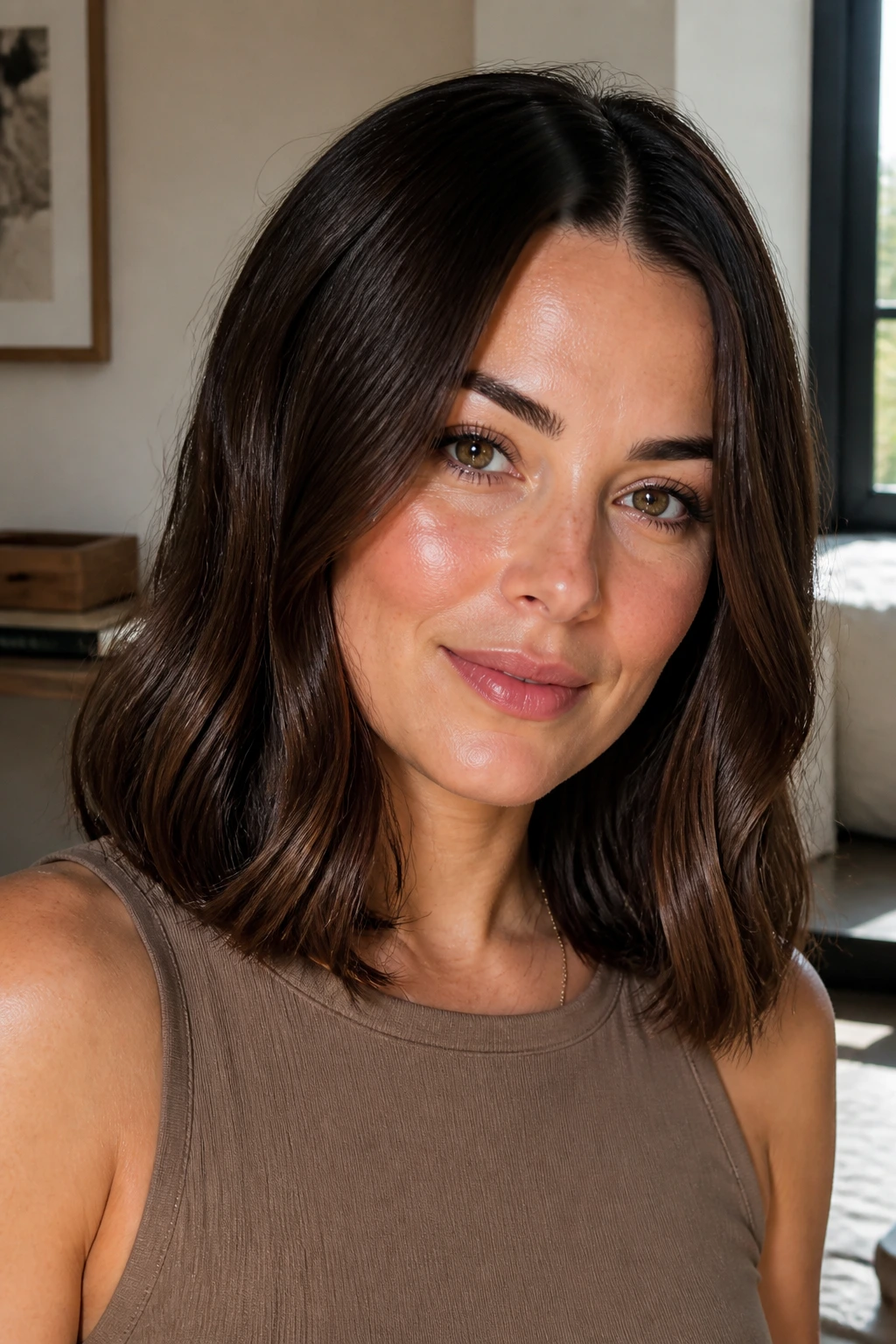
A one-length lob can flatter a round face if the length is right and the finish is smooth. The solid line creates structure, and the smooth surface keeps the waves from blooming too wide around the cheeks. It is a cleaner look, but not a boring one.
This cut works best when the hair has enough density to hold the shape. Fine waves can wear it too, but the perimeter should stay precise and the bend should stay soft. Use a smoothing cream or a little lightweight serum on the ends. Don’t drown it. You want shine, not slickness.
This is the style I’d recommend if you like tidy lines and low-maintenance polish. It doesn’t beg for attention. It just quietly looks put together.
22. Asymmetrical Lob

A subtle asymmetrical lob is a strong choice when you want the face to look a touch longer without leaning into heavy layers or bangs. One side sits maybe half an inch to an inch longer, which is enough to create movement without looking theatrical. That offset line can be especially flattering on a round face because it interrupts the symmetry.
Keep the difference small. If the asymmetry gets too extreme, the cut can look dated fast. On wavy hair, the unevenness is softened by the texture, so the effect stays modern and easy. A side part makes it even better.
This is the kind of cut that does not need much styling to feel intentional. One side tucked, one side loose, and the whole thing suddenly has shape.
How to Ask for the Right Long Bob Length and Shape
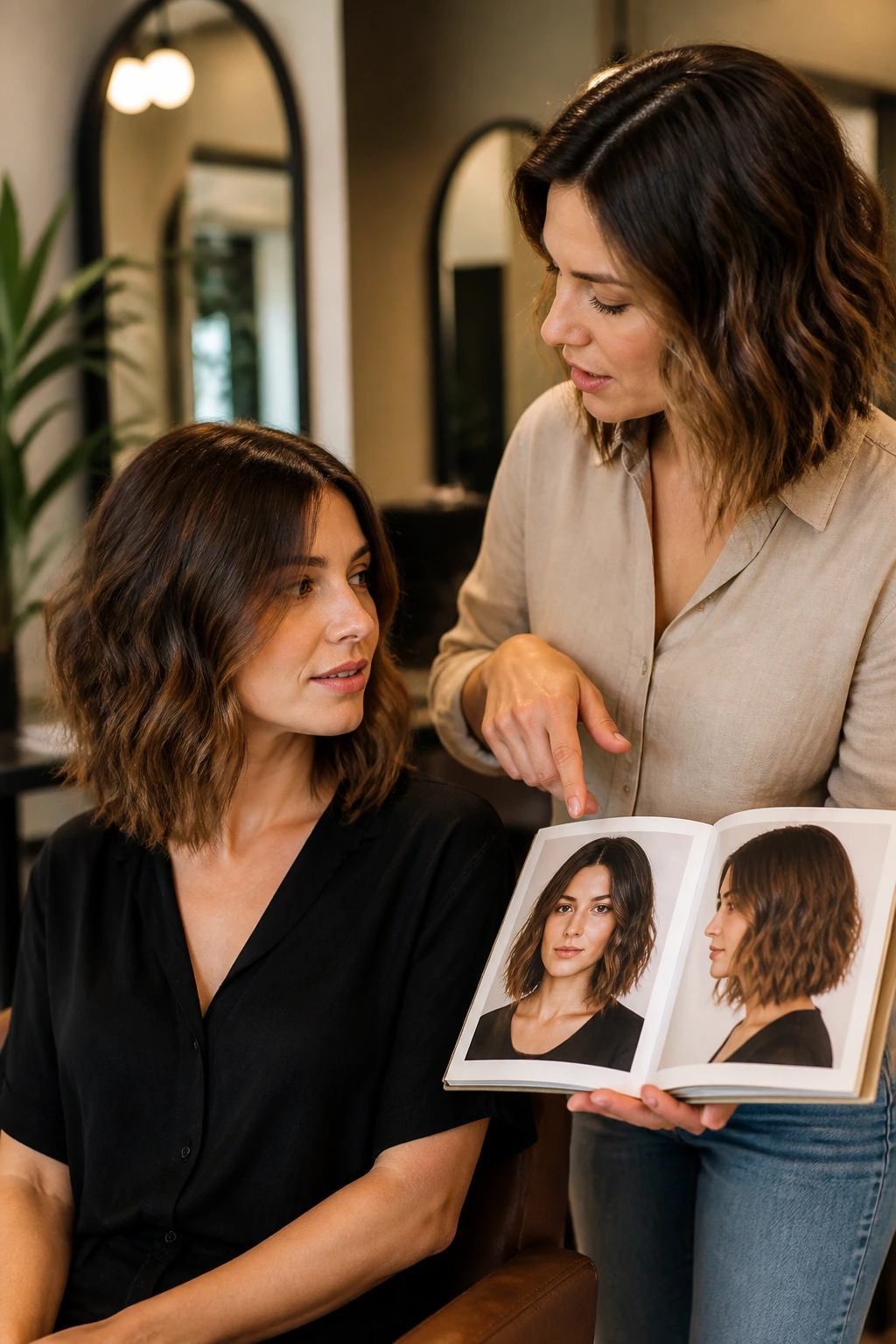
The cleanest way to get a good result is to talk about three things: length, layer placement, and parting. Tell your stylist you want a long bob that lands at or below the collarbone, not a cut that stops at the chin. Then specify where the face-framing pieces should begin. For round faces, I like hearing “start the shortest front pieces below the cheekbone, closer to the mouth or collarbone.”
Bring two photos if you can: one from the front and one from the side. The side view matters more than people think, because it shows the actual hemline. A cut that looks long in a selfie can sit much higher from profile.
If your hair is thick: ask for internal debulking, not a lot of short layers.
If your hair is fine: keep the perimeter blunt and use only light, low layers.
If your hair is very wavy: ask whether the cut should be done mostly dry, so the final shape follows the wave pattern instead of fighting it.
One more thing. Be honest about how you style your hair on a normal week, not your most polished week. That answer changes the cut more than the trendiest reference photo ever will.
Essential Tools and Styling Products
-
1-inch or 1.25-inch curling iron: Best for bending the ends away from the cheeks and creating soft waves that don’t look too done.
-
Diffuser attachment: Useful if your waves set better when dried gently instead of blasted flat with a nozzle.
-
Medium round brush, about 1.5 to 2 inches: Good for curtain bangs, root lift, and softening the front pieces.
-
Wide-tooth comb: Helps keep wavy hair from frizzing apart after washing.
-
Duckbill clips or root clips: Handy for lifting the crown while air-drying so the top doesn’t collapse.
-
Heat protectant spray: Worth using every single time you add heat, even on quick touch-ups.
-
Lightweight mousse or foam: Gives wave definition without the crunchy feel of old-school products.
-
Texturizing spray: Best for piecey movement at the ends, especially on choppier lobs.
-
Light serum or smoothing cream: A pea-sized amount on the mid-lengths and ends keeps the finish soft, not puffy.
-
Tail comb: Useful for clean parts and for directing sections before blow-drying.
The Shape That Keeps the Face Open
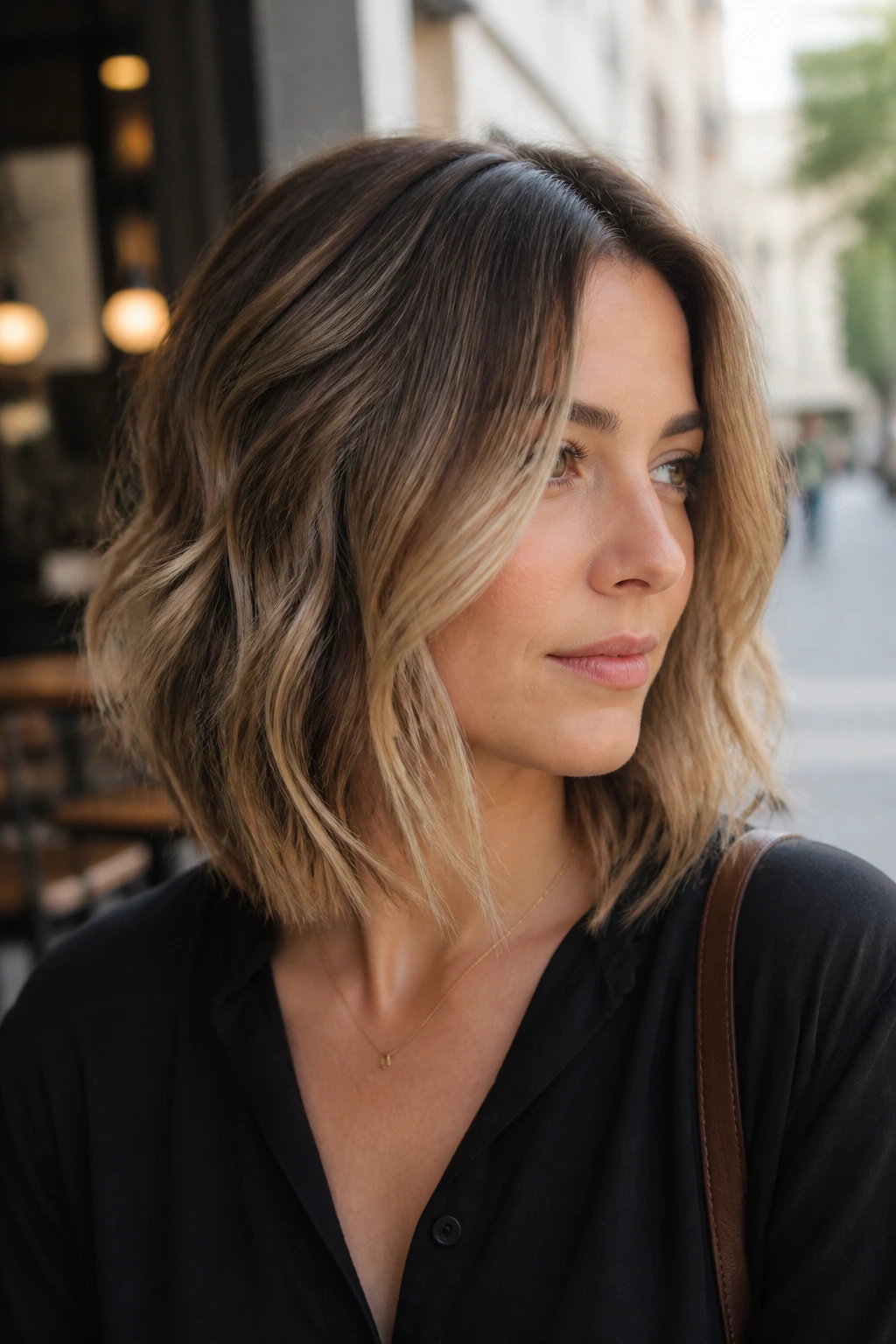
The biggest win with a long bob is not that it hides the face. It gives the face room to breathe. That sounds small, but it’s the whole difference between a cut that sits on top of you and a cut that seems built around you.
Round faces and wavy hair can be a tricky match when a haircut is too short, too layered, or too eager to curl inward at the cheeks. Get the hemline right, keep the layers thoughtful, and the lob does the rest. You end up with hair that moves, but doesn’t sprawl.
Keeping the Shape Between Trims

A good lob should hold its shape for about 8 to 10 weeks before it starts to lose the clean line at the ends. If you have curtain bangs or bottleneck bangs, plan on a fringe trim every 4 to 6 weeks so the front doesn’t start poking into your eyes. That tiny maintenance habit makes the whole haircut look more deliberate.
Wavy hair usually behaves best on a predictable rhythm. Wash it, style it, and let it settle. On day two, revive the ends with a light mist of water mixed with a pea-size amount of leave-in or cream, then scrunch from the bottom up. Don’t soak the roots unless you want to start over from scratch. A dab of dry shampoo at the crown can buy you another day without making the top gritty.
Sleep matters more than people like to admit. A silk or satin pillowcase cuts down on friction, which means fewer bent ends and less halo frizz around the face. If your hair tangles easily, clip the top section loosely at the back of the head before bed so the collarbone-length pieces don’t snag.
If you heat-style, touch up only the front and the ends. You do not need to re-curl the entire head every morning. A few minutes on the money pieces, a quick bend at the hem, and the cut usually snaps back into place.
Common Mistakes That Make a Lob Look Wider

-
Ending the cut at the chin: That’s the fastest way to make a round face look even rounder. The fix is simple: move the hem down to the collarbone or keep the front longer than the chin.
-
Too many short layers at cheek level: If the layers start around the cheekbone, wavy hair can puff outward right where you do not want it. Ask for layers that begin lower, or keep the front pieces longer.
-
Over-round-brushing the sides: A lot of volume at the cheeks creates width. Lift the roots, yes. But keep the bend lower and softer.
-
Cutting blunt bangs too short: Straight-across fringe can close off the face fast. If you want bangs, choose curtain or bottleneck shapes that open outward.
-
Ignoring wave pattern at the salon: A lob that looks tidy when wet can expand into a triangle when dry. A stylist who cuts wavy hair dry, or at least checks the dry shape, usually gets closer to the right line.
-
Skipping regular trims: Once the ends start fraying, the whole cut loses its clean edge. The shape turns mushy, and round faces need that edge to stay visible.
Variations and Adaptations to Try
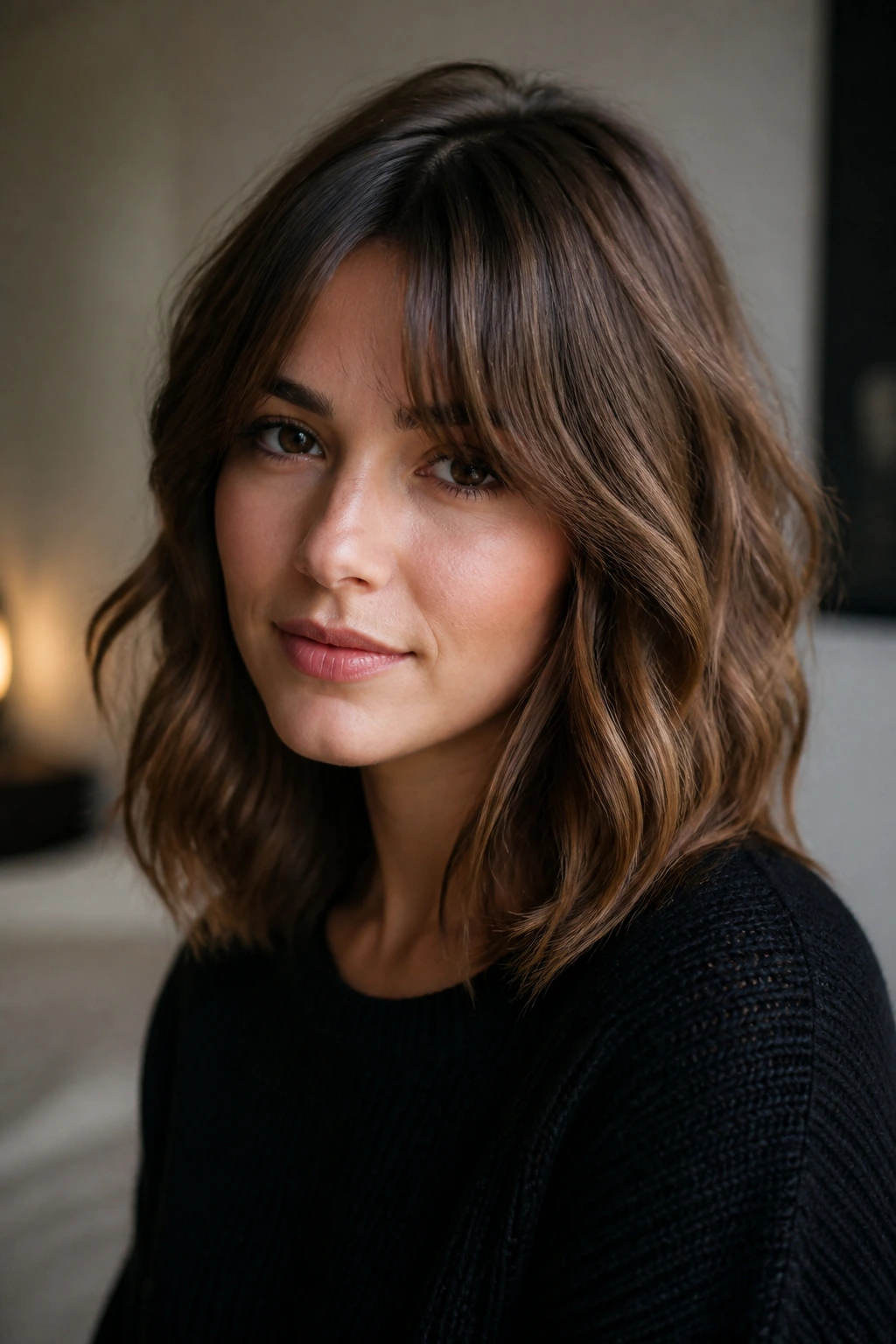
The Air-Dry Lob
This version is cut to fall well without heat. It uses longer face-framing layers and a low-maintenance perimeter that lets waves dry into soft vertical lines. It’s ideal if your texture already has enough shape on its own and you’d rather spend five minutes styling than fifteen.
The Blowout Lob
This one leans smoother, with polished ends and a bit of root lift. It works best if you like a neater finish and have a round face that benefits from extra length through the front. The tradeoff is upkeep, but the shape looks clean and expensive without needing complicated tricks.
The Fringe-Forward Lob
Curtain bangs or bottleneck bangs do the heavy lifting here. The fringe opens the face while the lob keeps the length below the jaw, so the whole style feels balanced. It’s a strong pick if your forehead feels broad or you want more shape up top.
The Thick-Hair Lob
For dense waves, ask for internal weight removal and a longer perimeter. The haircut should move, not explode. This version sits better on round faces because it keeps bulk away from the cheeks and lets the hair lie closer to the head.
The Fine-Hair Lob
Keep the line blunt and use only a few soft layers. Too much cutting can make fine waves look wispy in the wrong way. A clean hemline gives the illusion of fullness while still leaving enough movement to keep the cut from feeling flat.
Frequently Asked Questions

What length is most flattering for a round face?
Usually the most forgiving length lands at the collarbone or slightly below it. That keeps the eye moving downward and avoids stopping right at the widest part of the face.
Should wavy hair be cut into layers?
Yes, but the layers should be planned with care. Long, soft layers or invisible layers work better than a lot of short chops around the cheeks, because short layers can make wavy hair flare out.
Can I wear a center part with a round face?
You can, especially if the lob is long enough and the sides have movement. A center part works best when the front pieces fall below the jaw and the waves are shaped softly, not puffed up at the sides.
Do curtain bangs make a round face look wider?
Not if they’re cut with length and softness. Curtain bangs open the face instead of boxing it in, as long as the shortest point isn’t too short and the sides taper out gently.
How do I stop my lob from looking triangular?
Keep the layers lower, reduce bulk through the mid-lengths, and avoid over-drying the sides outward. A little product at the ends and a controlled bend away from the cheeks usually helps.
Is a blunt lob bad for wavy hair?
No, but it needs the right finish. A blunt perimeter can look sharp and flattering if the waves are soft and the ends have a little bend, not a big outward puff.
What should I tell my stylist if I want this cut?
Say you want a long bob that hits at or below the collarbone, with face-framing pieces that start below the cheekbone and layers that don’t widen the cheeks. That description is far more useful than saying you want “something cute.”
How often should I trim it?
Most lob shapes stay clean for about 8 to 10 weeks. If you have bangs, or if your ends start to flip out in odd ways, shorten that schedule a bit.
The Lob That Keeps Its Line
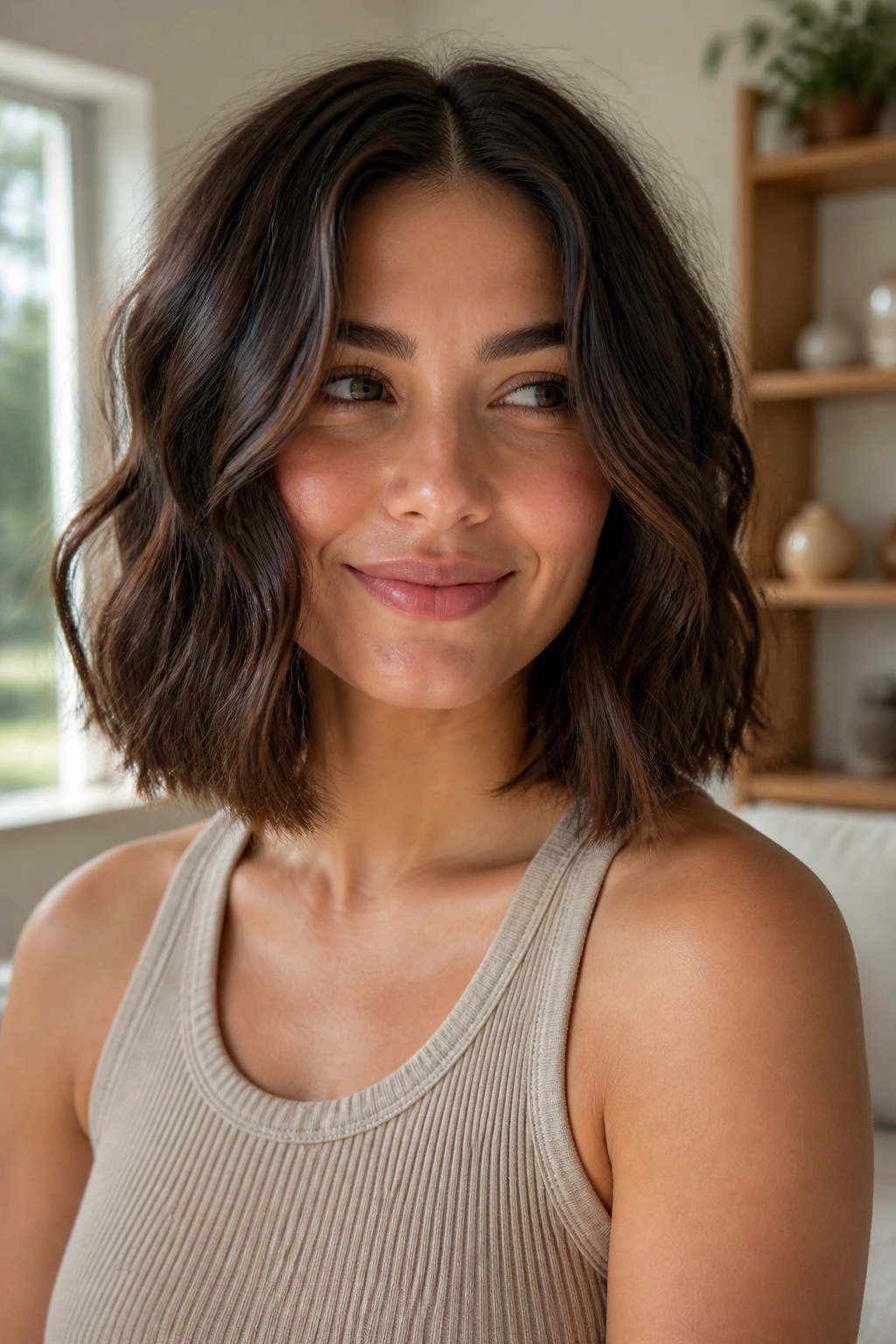
The best long bob is the one that makes your face look a little longer, your waves look a little clearer, and your morning routine feel a little less annoying. That’s the sweet spot. Not fussy. Not flat. Just a haircut with enough shape to do real work.
If you choose the length carefully and keep the layers low and thoughtful, the cut keeps paying rent long after you leave the salon. That’s why these long bobs for round faces and wavy hair hold up so well: they give you shape without forcing your texture into a box.