



A sleek bob has a particular kind of honesty to it. The line sits where it sits, the ends stay clean, and fine hair suddenly reads as denser because the eye sees one solid shape instead of a scatter of wispy ends.
That matters more after 40 than plenty of salon talk admits. Hair can soften at the temples, the crown can lose lift, and long layers often slide into a thin ribbon by lunchtime. A blunt edge, a shallow bevel, or a careful stack usually does more work than extra length ever does.
The best versions feel polished, not stiff. They move when you turn your head, tuck behind an ear without falling apart, and still look like a haircut after a long day — which is the real test.
Why These Cuts Earn Their Keep
-
Perimeter density: A clean line at the chin, jaw, or collarbone makes fine hair look fuller because the eye reads a solid outline instead of uneven, see-through ends.
-
Less styling drag: These cuts don’t need a lot of hot-tool work to look finished; one proper blow-dry and a quick pass with a flat iron can be enough.
-
Root lift without chaos: Side parts, soft graduation, and hidden layers can wake up a flat crown without turning the bob fluffy or blown apart.
-
Face framing that holds up: The right bob sits beside glasses, cheekbones, or a strong jawline instead of collapsing into them.
-
Better grow-out: Clean edges tend to age more gracefully between trims than heavily razored cuts, especially when hair is fine and every bit of shape matters.
Why Sleek Bobs Work So Well for Women Over 40 with Fine Hair
Fine hair wants a haircut that gives it somewhere to stop. That is the whole trick. When the ends are cut to one clear line, the hair looks thicker because the shape has a border, and borders are what the eye notices first.
By contrast, long layers on fine hair can do a strange thing: they spread the density too far apart. The top looks okay for a while, then the mid-lengths start to separate and the ends lose their weight. A bob keeps the hair’s strongest visual point near the face, where density reads fastest.
Bluntness helps. So does restraint.
I’m also partial to bobs because they respect real life. A cut that falls at the jaw or collarbone can still look tidy after a windy walk, a long day at work, or one of those mornings when styling time gets cut in half. That’s not a small thing. Fine hair often looks best when it isn’t being over-managed.
One more point: after 40, the hairline itself can change a bit — temples soften, the crown can go flatter, and the nape may grow in a different pattern than it used to. A sleek bob gives you a way to work with that shift rather than pretending it isn’t there. The cut can lean on parting, weight lines, and the right amount of bevel instead of trying to fake density with too many layers.
1. The Chin-Length Blunt Bob
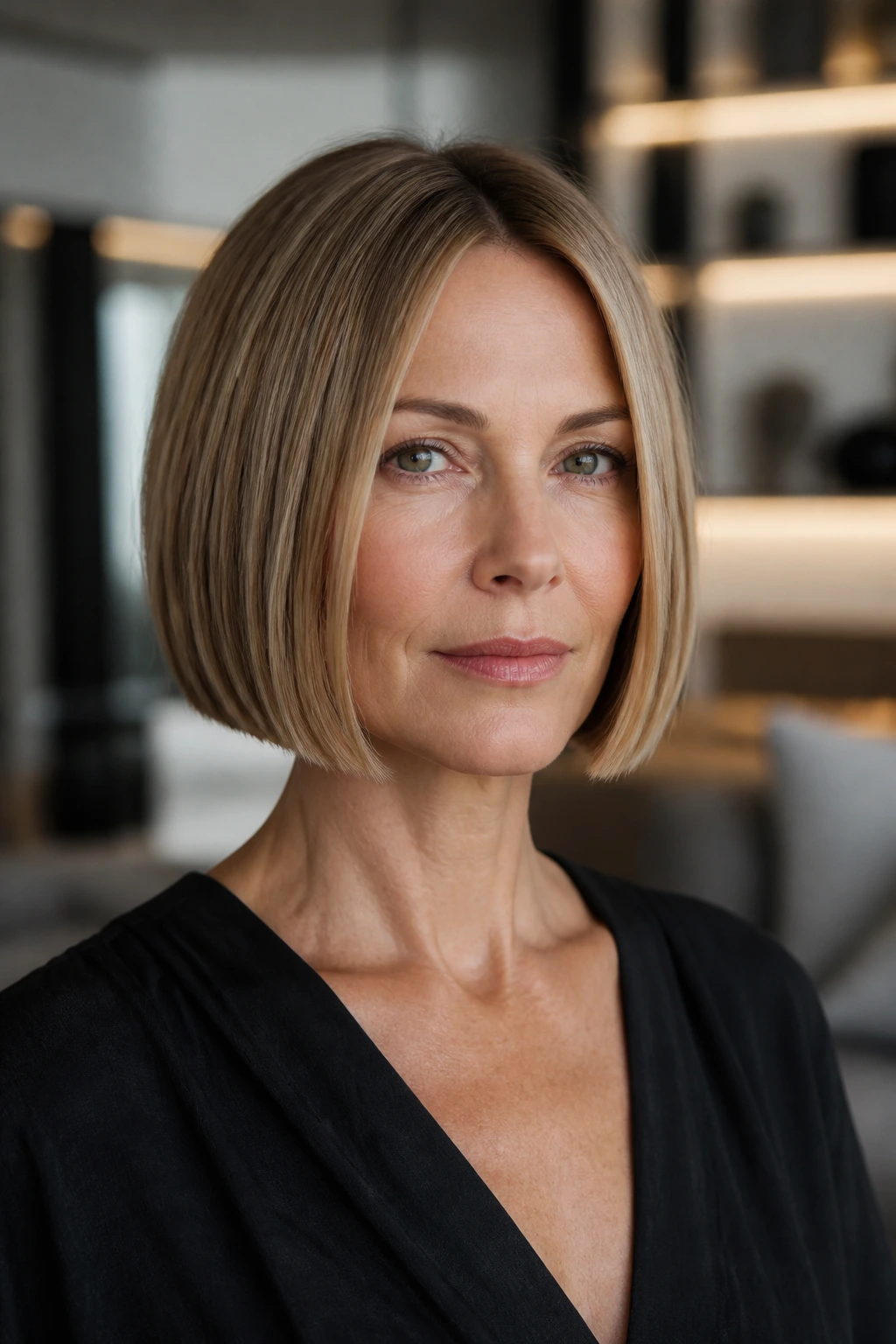
This is the first shape I think of when fine hair needs a hard-edged reset. The cut lands right at the chin or a whisper below it, and that short perimeter makes the whole head of hair read fuller because the ends are all sitting on the same plane.
I like this version best when the hair is naturally straight or only slightly bendy. A quick blow-dry with the nozzle pointed down the shaft, then a small inward bend at the ends, is enough to keep it from looking boxy. If your jaw is especially sharp, let the bob graze just below it. If your face is rounder, keep the line a touch lower so it doesn’t stop right at the widest part of the cheeks.
Best move: ask for a blunt perimeter with almost no texturizing around the edges. Fine hair can’t afford to lose density there.
2. The Side-Part Sleek Bob
Why does a side part change everything? Because it shifts the weight of the haircut to one side, and that little shift creates lift at the root without teasing, backcombing, or any of the old salon tricks that leave fine hair frayed.
What the side part fixes
- It gives the crown a little rise where a center part might flatten it.
- It can hide a sparse temple area without making the haircut look lopsided.
- It adds movement to a very straight bob, which keeps the shape from feeling too stiff.
Keep the part only slightly off-center if your hair is fine but not especially sparse. A dramatic part can expose too much scalp if the root density is low. I like this cut on anyone who wears glasses, too; the side sweep lets the frame arm sit naturally without fighting the shape of the bob.
3. The A-Line Bob
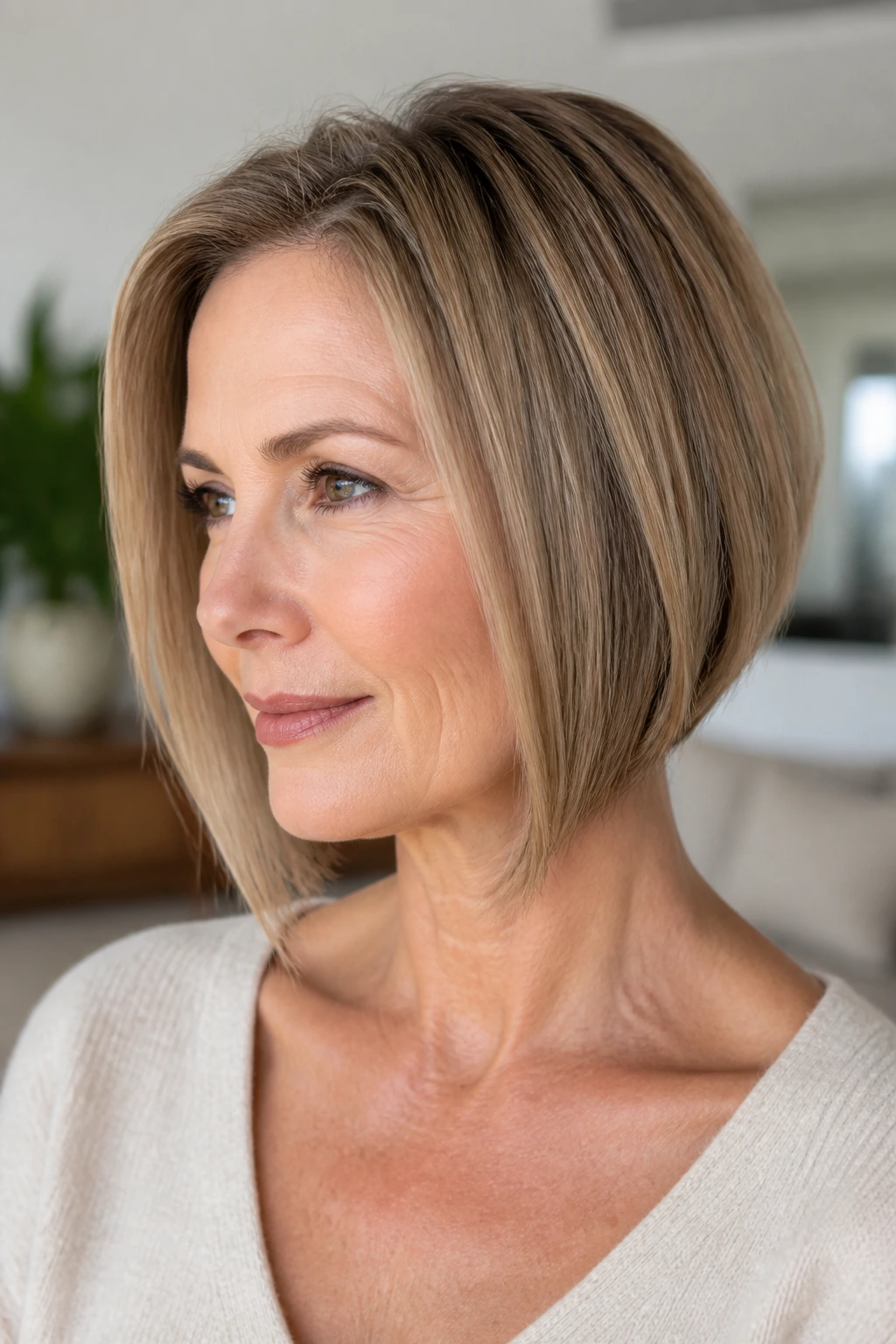
An A-line bob gives you a little forward swing without asking the back to do more than it can. The nape stays shorter, the front sits longer, and that forward angle helps the hair look intentional even when the density is on the delicate side.
The key is keeping the angle shallow. Go too steep and the front pieces can start to look thin before they look stylish, which is a bad trade on fine hair. A soft A-line — nothing severe — gives the face a frame and keeps the perimeter from feeling like a straight wall.
I like this shape for people who want something cleaner than layered hair but a touch more movement than a box bob. It’s neat, it’s tidy, and it gives you a line that feels fresh without needing much product.
4. The Collarbone Lob
The collarbone lob is the answer when you want sleekness without going all the way short. The hair skims the collarbone, which gives the ends a place to settle instead of hanging in space and fraying out at the bottom.
That little bit of length is useful on fine hair because it keeps some weight in the silhouette. You can tuck one side behind the ear, flip the part when you want lift, or let it fall straight for a more polished look. The only catch is that the ends need to stay blunt enough to keep their shape; too much thinning turns the lob into a narrow ribbon.
This is the most forgiving cut in the group. If you’re nervous about going jaw-length, start here.
5. The Rounded Bob
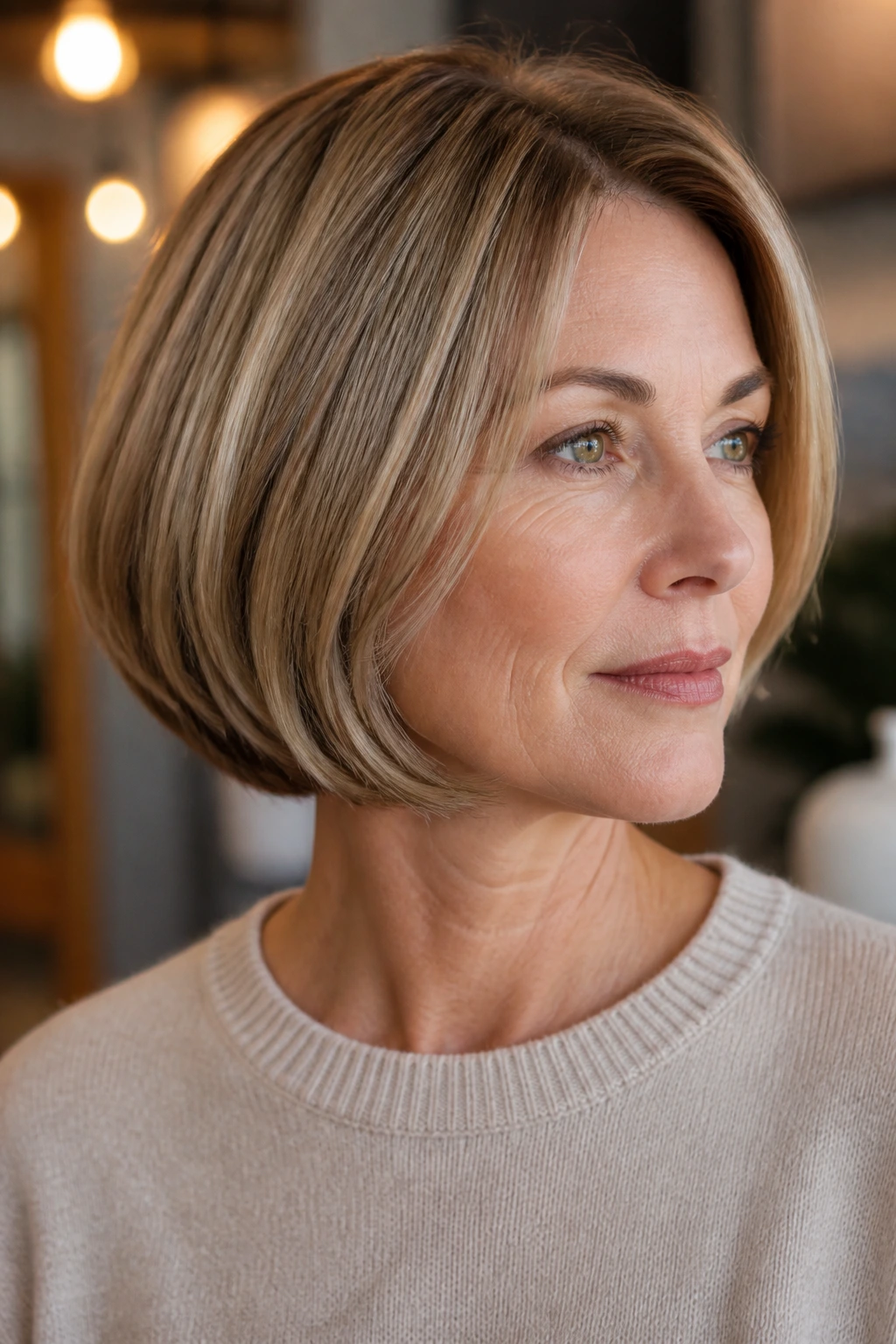
Straight-down hair can look sparse at the sides even when there’s enough density on paper. A rounded bob fixes that by curving the outline very slightly under the jaw, which makes the haircut read softer and fuller.
Where the curve matters
A gentle bend at the ends works better than a curl. You want the line to hug the face, not bounce away from it. If the hair tends to stick out at the sides, a round-brush finish and a cool shot at the ends can settle it into place.
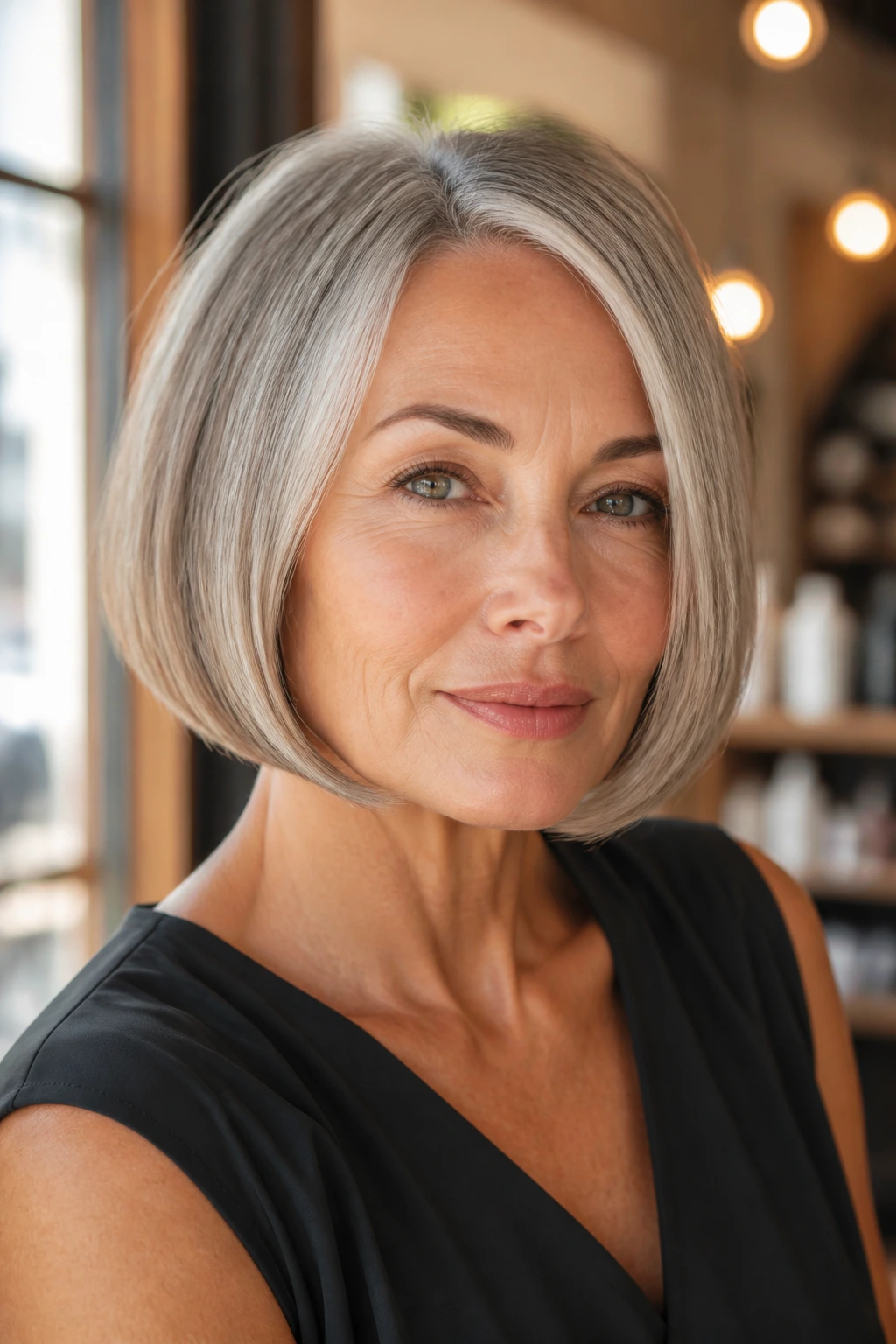
This shape is a strong option if your face is square or long and you want the bob to feel a little more forgiving. It also behaves nicely with gray hair, since the smooth curve gives silver strands a clean frame instead of letting them scatter.
6. The Hidden-Layer Bob
Layers are not the enemy. The wrong layers are.
The hidden-layer bob keeps the outside line blunt and full while removing a small amount of weight underneath, usually through the crown or back interior. That gives the hair room to bend without destroying the outline. On fine hair, that distinction matters. If the stylist slices the surface too much, the bob starts to look airy in the wrong way.
Ask for movement inside the haircut, not on the outside of it. That’s the part most people miss. The visible edge should still look like one clean sheet of hair, but the inside can have a little structure so the crown doesn’t lie flat against the head.
7. The Box Bob
The box bob is square, direct, and a little stern in the best way. The ends are kept even across the bottom, and the sides stay fuller rather than tapering inward. On fine hair, that compact shape can be a gift because it keeps the eye focused on the perimeter.
Best if you want a crisp silhouette
- Keep the ends blunt, not wispy.
- Skip heavy interior thinning.
- Let the bob sit at chin length or just below for the strongest line.
- Use a paddle brush or small flat brush to keep the sides smooth.
I like this cut on people who wear strong frames or bold earrings because the bob doesn’t fight those details. It sits beside them and lets them do their thing.
8. The Tucked-Ear Bob
A bob should look good tucked behind one ear. If it doesn’t, the cut probably needs more thought.
The tucked-ear bob is all about balance. The length needs to be long enough to slide behind the ear without popping out in a weird little shelf, and the front pieces need enough weight to hold their place when they’re not tucked. That makes it a smart choice for fine hair that needs movement without too much layering.
How to wear it
Keep one side slightly fuller if you like an asymmetrical tuck. The exposed ear can show off an earring or clean up the face line, while the other side stays smooth and uninterrupted. It’s a tidy, easy look, and it works especially well if your hairline around the temples has gotten a little lighter.
9. The Glass-Hair Bob
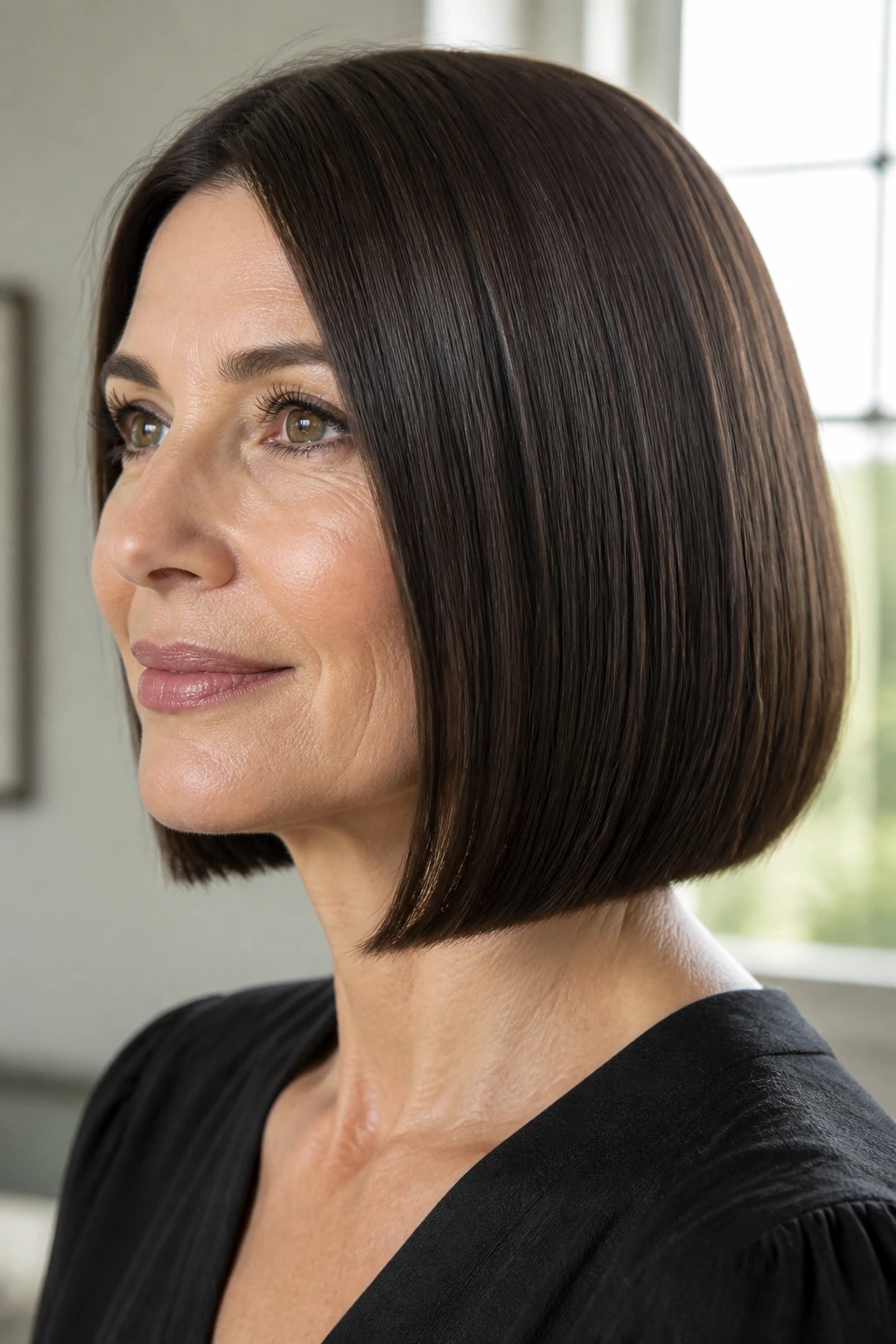
Shine changes the read of a bob fast. A glass-hair bob is all about a sleek, sealed finish from root to tip, and when fine hair is cut well, that shine can make it look compact and expensive instead of flat.
This style asks for discipline. Heat protectant first, then a careful blow-dry, then a flat iron in small sections — about an inch wide — with the tool kept moving so the hair doesn’t get scorched. Finish with a pea-sized amount of serum warmed between the palms and pressed lightly over the surface, not rubbed into the roots.
I love this look on straight hair because the line becomes the whole story. No fluff. No fuss. Just a clean, glossy shape that looks intentional from every angle.
10. The Curved Under Bob
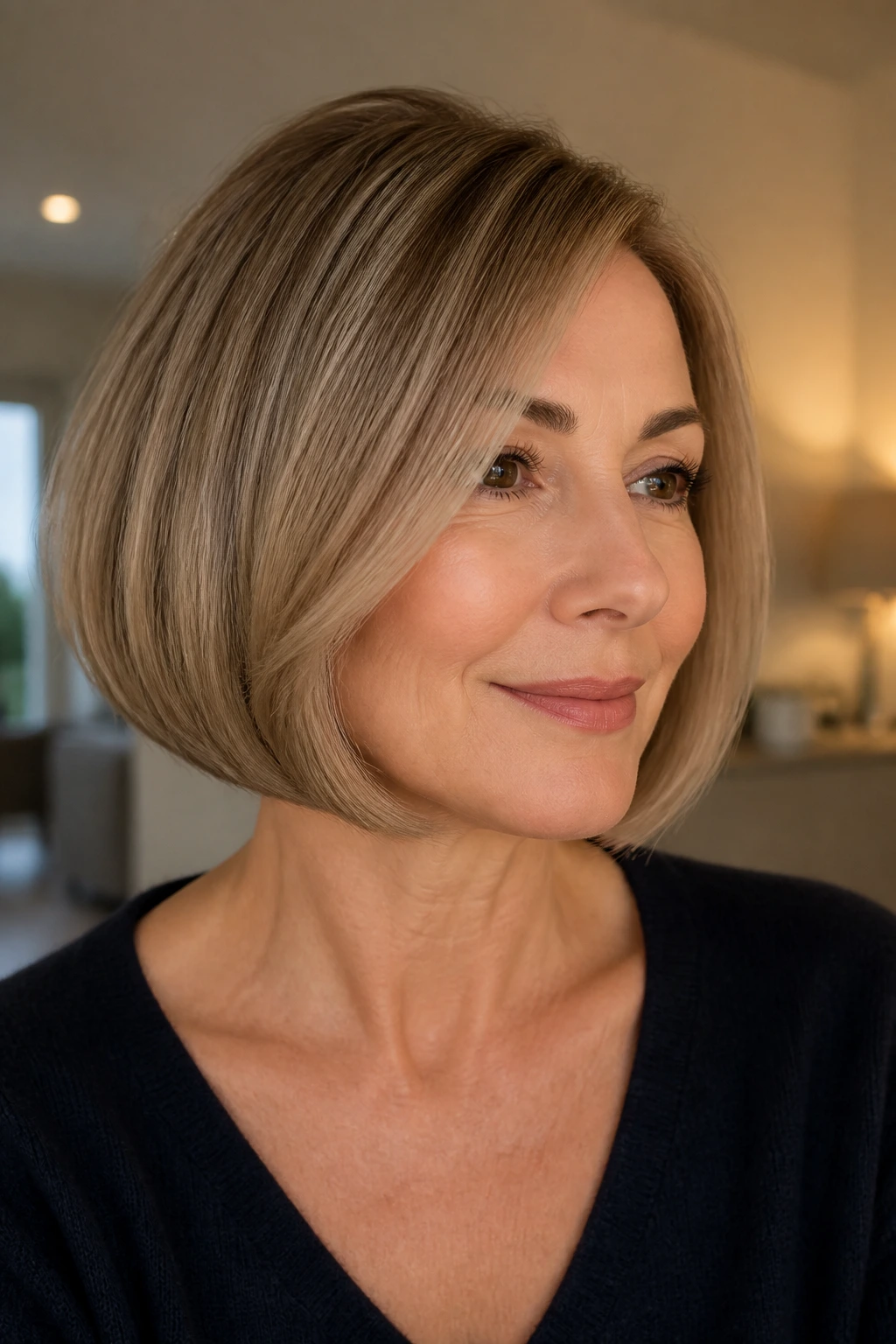
A curved-under bob is for anyone whose ends like to stick out instead of settle. The cut is still sleek, but the ends fold inward with a gentle bend, which keeps the whole shape looking neat around the jaw.
The difference between this and a rounded bob is subtle. A rounded bob leans softer and fuller; a curved-under bob leans cleaner and a little more graphic. That makes it a strong pick if you want the haircut to feel modern without looking severe.
If your hair has a little natural flip at the ends, this version can calm that down fast. A blow-dryer nozzle, a round brush, and a quick cool shot are usually enough.
11. The Soft Graduated Bob
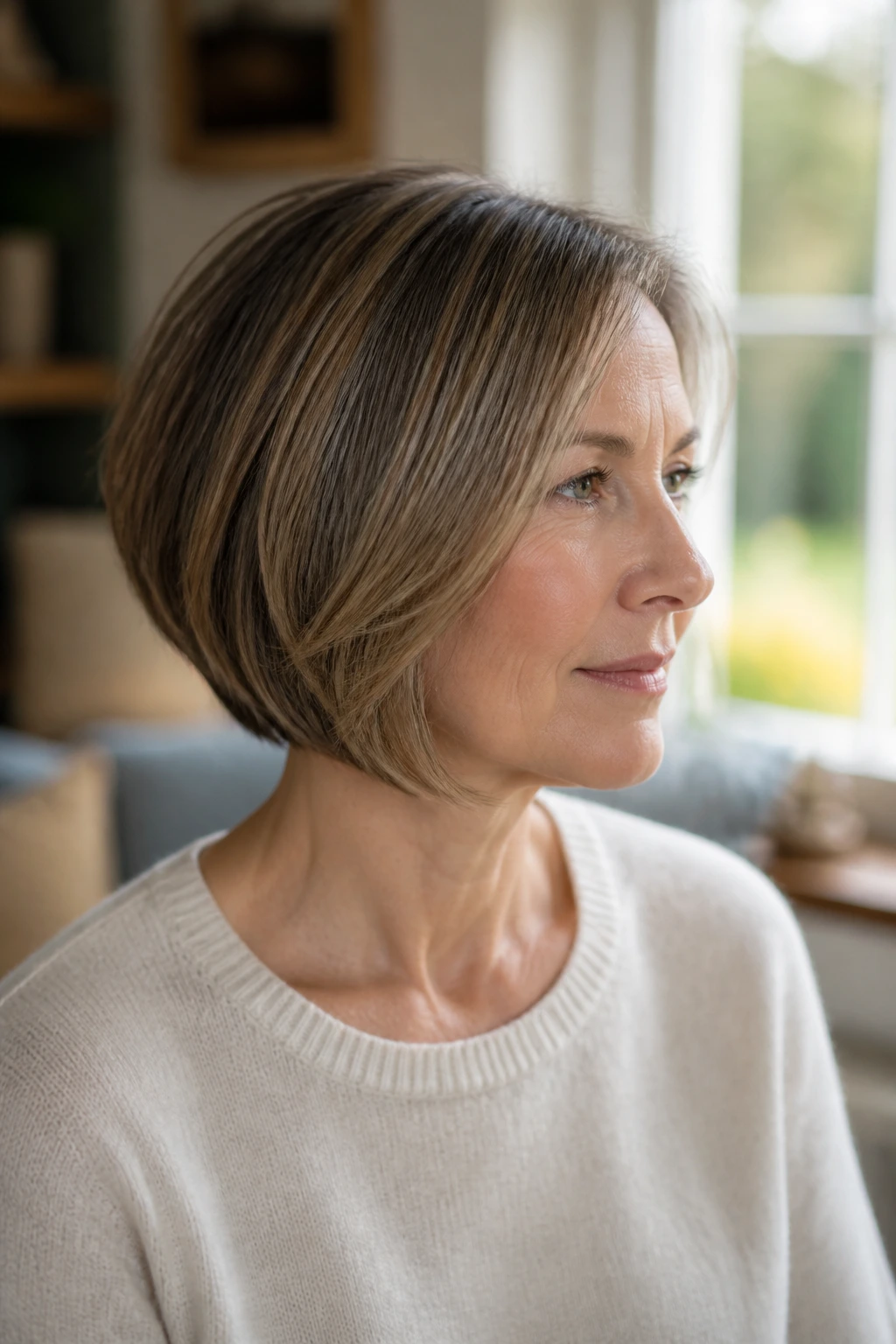
If the crown goes flat the second you leave the house, a soft graduated bob earns its keep fast. The back is slightly shorter, with a subtle lift built into the shape, but the graduation stays low and quiet enough that the haircut still reads sleek.
Where the lift lives
The lift should sit under the top layer, not in obvious steps. That’s the line I’d insist on. Too much graduation and the bob starts behaving like a wedge; too little and you lose the root support that fine hair often needs.
This cut works well when the nape lies flat and the top needs a little support. It also grows out nicely if the stylist keeps the graduation soft. The haircut should look like it was designed, not stacked for the sake of stacking.
12. The Curtain-Bang Bob

Curtain bangs can rescue a sleek bob from feeling too severe. The fringe opens in the middle or just off-center, and that little break around the face gives fine hair a softer frame without stealing too much density from the top.
Keep the bangs light. That’s the whole game. If the fringe gets too heavy, it can make the front of the haircut look sparse by comparison. I prefer curtain bangs that graze the cheekbones and then melt into the bob instead of sitting on top of it like a separate piece.
This version is good if you want the eyes and cheekbones to be part of the haircut. It’s also useful when the forehead feels a little too open in a one-length bob.
13. The French Bob

A French bob is short, blunt, and a little cheeky — but on fine hair it only works when the line is tidy. The length usually sits near the jaw, and the fringe, if you choose one, stays airy rather than dense.
The details that matter
- Keep the neckline clean so the shape doesn’t blur.
- Let the fringe stay soft at the temples.
- Avoid over-texturizing the ends.
- Ask for a blunt edge with only a tiny bevel if your hair kicks out.
This is a smart cut if you like a little edge without a lot of styling. It looks especially sharp with straight hair and clear glasses frames, because the face and the cut can share the same frame. Done badly, it can look chopped. Done well, it’s crisp.
14. The Deep Side-Part Bob
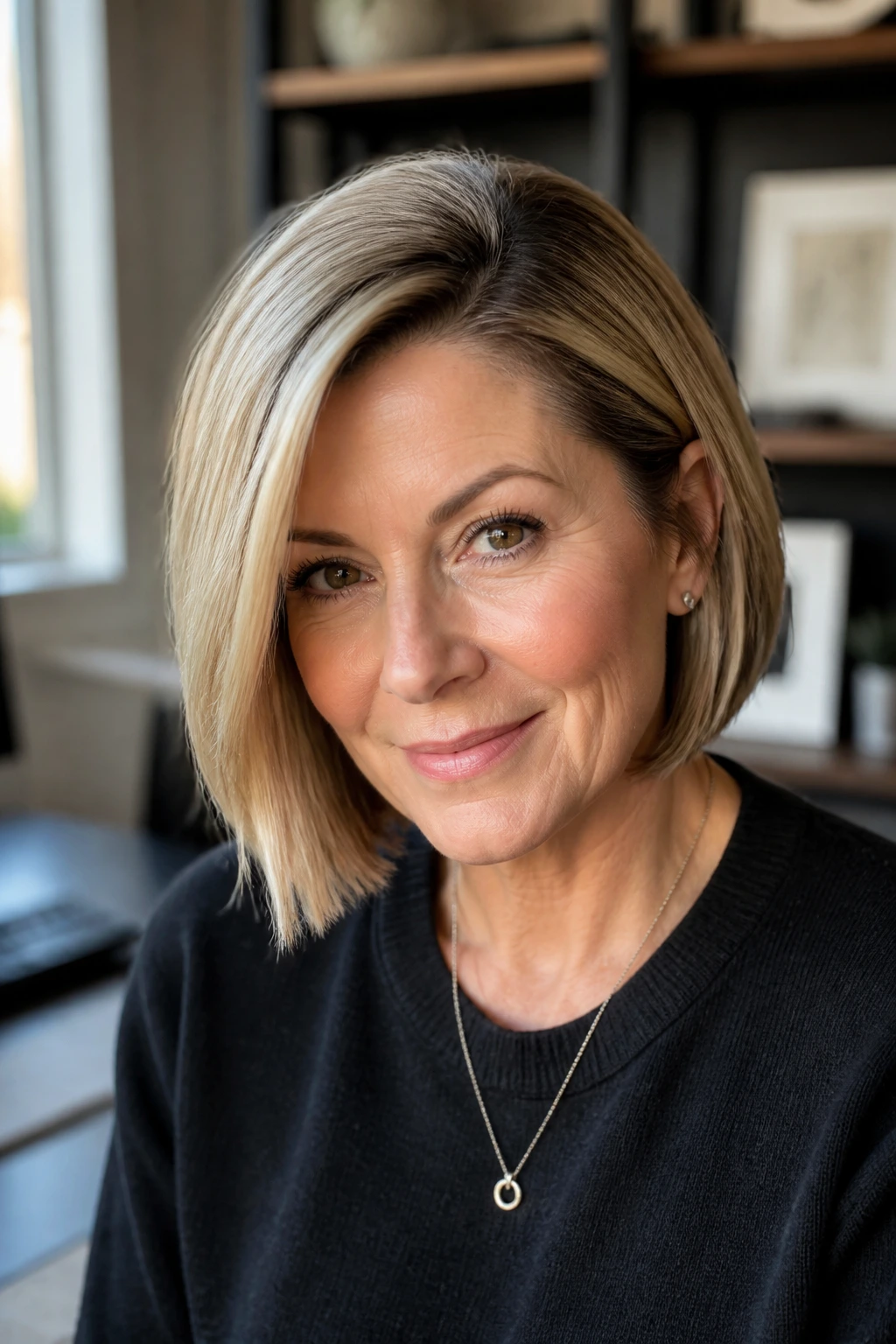
A deep side part doesn’t just change the mood; it changes where the eye reads density. That makes it a useful trick for fine hair, especially when the crown lies flat or one temple has gone a bit sparse.
The part should sit deep enough to create lift, but not so deep that the smaller side looks pinned back or overexposed. A good stylist will pay attention to the natural fall of your hairline and place the part where it gives the most support. That’s usually somewhere near the outer edge of one brow, not way off into dramatic territory.
I like this bob when you want instant height without teasing. It’s clean, fast, and very forgiving on mornings when the roots don’t want to cooperate.
15. The Asymmetrical Bob
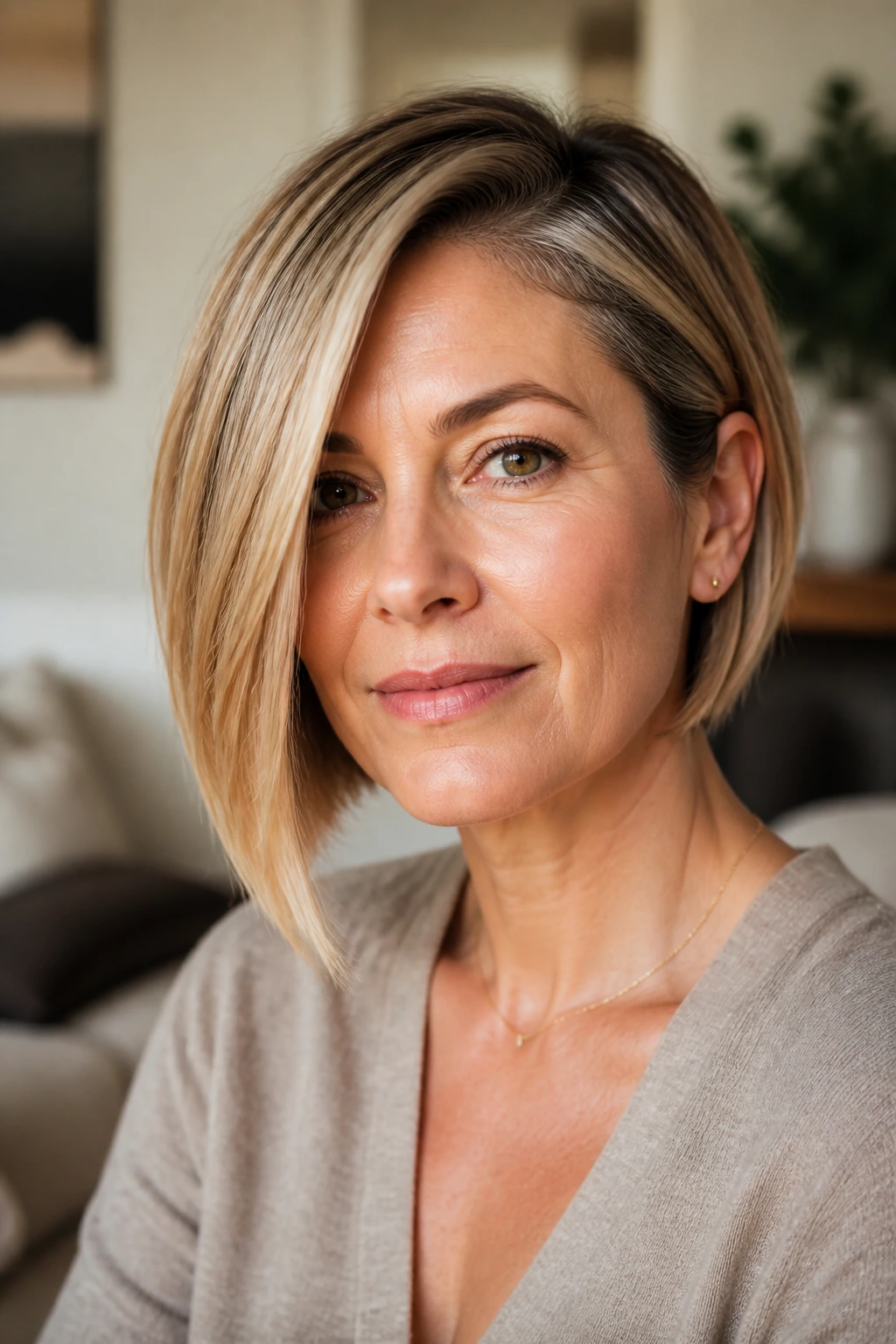
An asymmetrical bob is useful when you want the haircut to do some of the styling for you. One side hangs a little longer, the other stays shorter, and that difference creates movement even when the hair itself is fine and straight.
When asymmetry helps most
If one side of your hairline is thinner, the longer side can balance it out. If your jawline is very strong, the off-balance shape can soften it. If you wear one side tucked and the other loose, the asymmetry gives that styling choice a reason to exist.
The main warning: it has to be precise. A sloppy asymmetrical bob looks accidental in a hurry. It needs regular trims so the line stays clean, and the difference between the sides should be obvious enough to feel deliberate, not lopsided.
16. The Inverted Bob
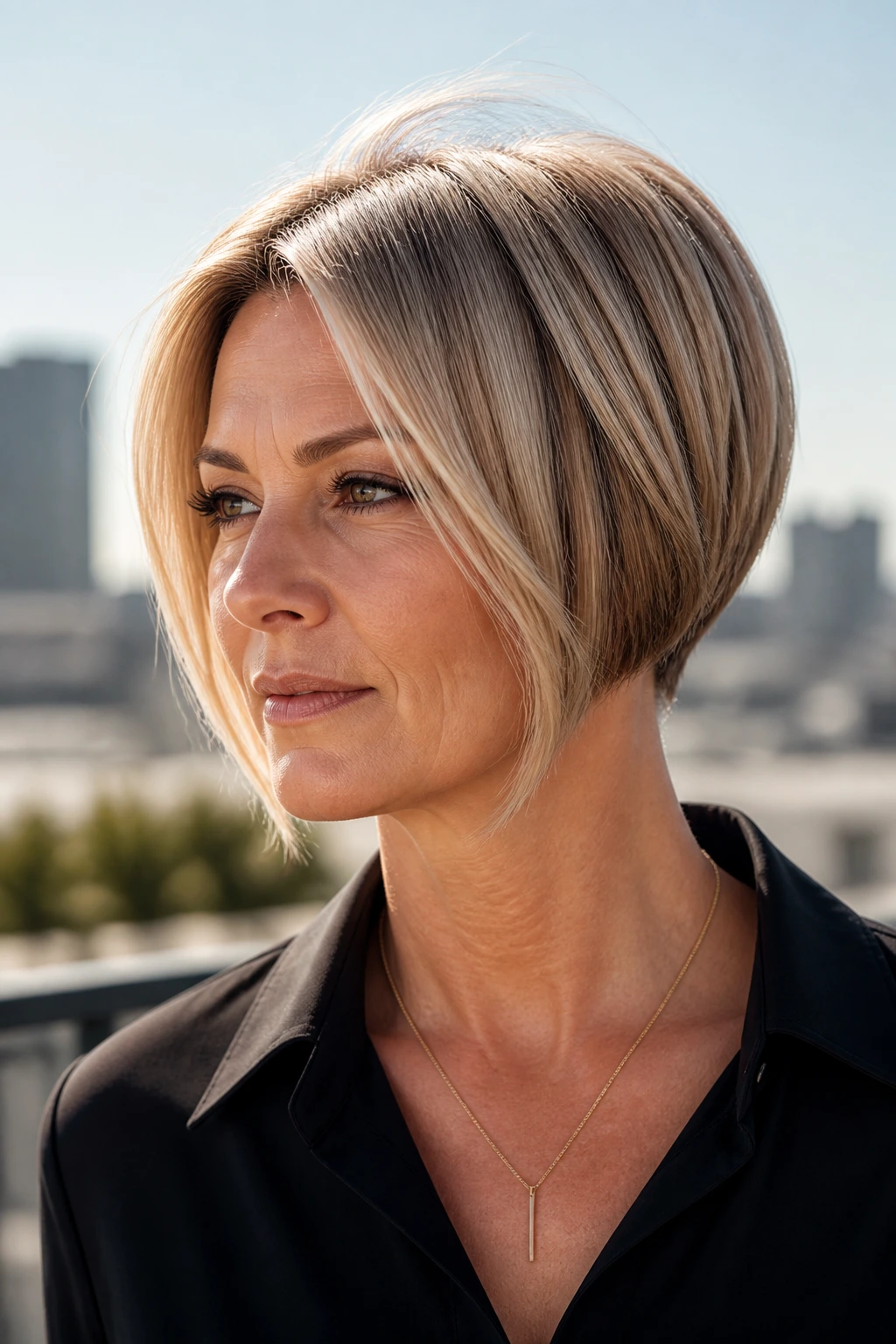
An inverted bob gives the back a little lift and the front a little sweep. It’s a cousin to the A-line, but with more shape built into the back, which can be useful when the nape grows flat and the crown needs support.
The best version is subtle. I’d keep the stack low and the front long enough to keep the haircut sleek. Too much stacking can make fine hair look puffed in the back and thin in the front, which is the opposite of what you want. A soft inversion gives you lift without the old wedge-bob silhouette that some people still remember too well.
This cut is strongest when the hair is straight or lightly bent. If your hair has a stubborn cowlick at the nape, ask the stylist to work with it instead of fighting it.
17. The Beveled Bob
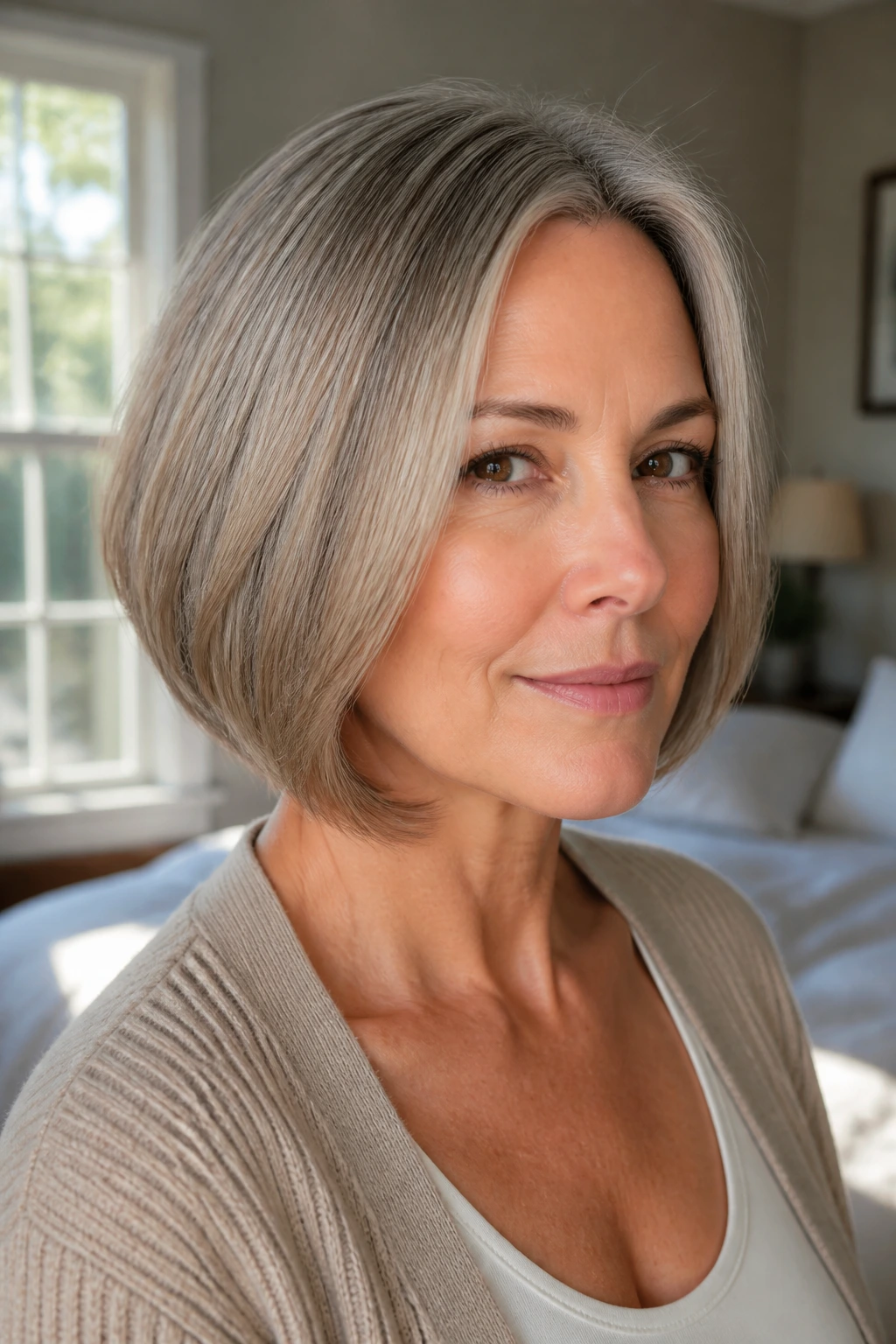
A beveled bob is what happens when a blunt line gets softened without losing shape. The ends angle inward just a bit, enough to keep the haircut from feeling hard, but not so much that the perimeter starts to disappear.
That small inward angle can be a lifesaver on fine hair. It gives the bob a finished look, and it helps the ends sit close to the neck or jaw instead of splaying outward. I’d choose this version over heavy layering almost any day when the goal is density.
The bevel should be modest. If you can see the shape working in the mirror without the ends looking curled, you’re in the right place.
18. The Invisible-Layer Lob
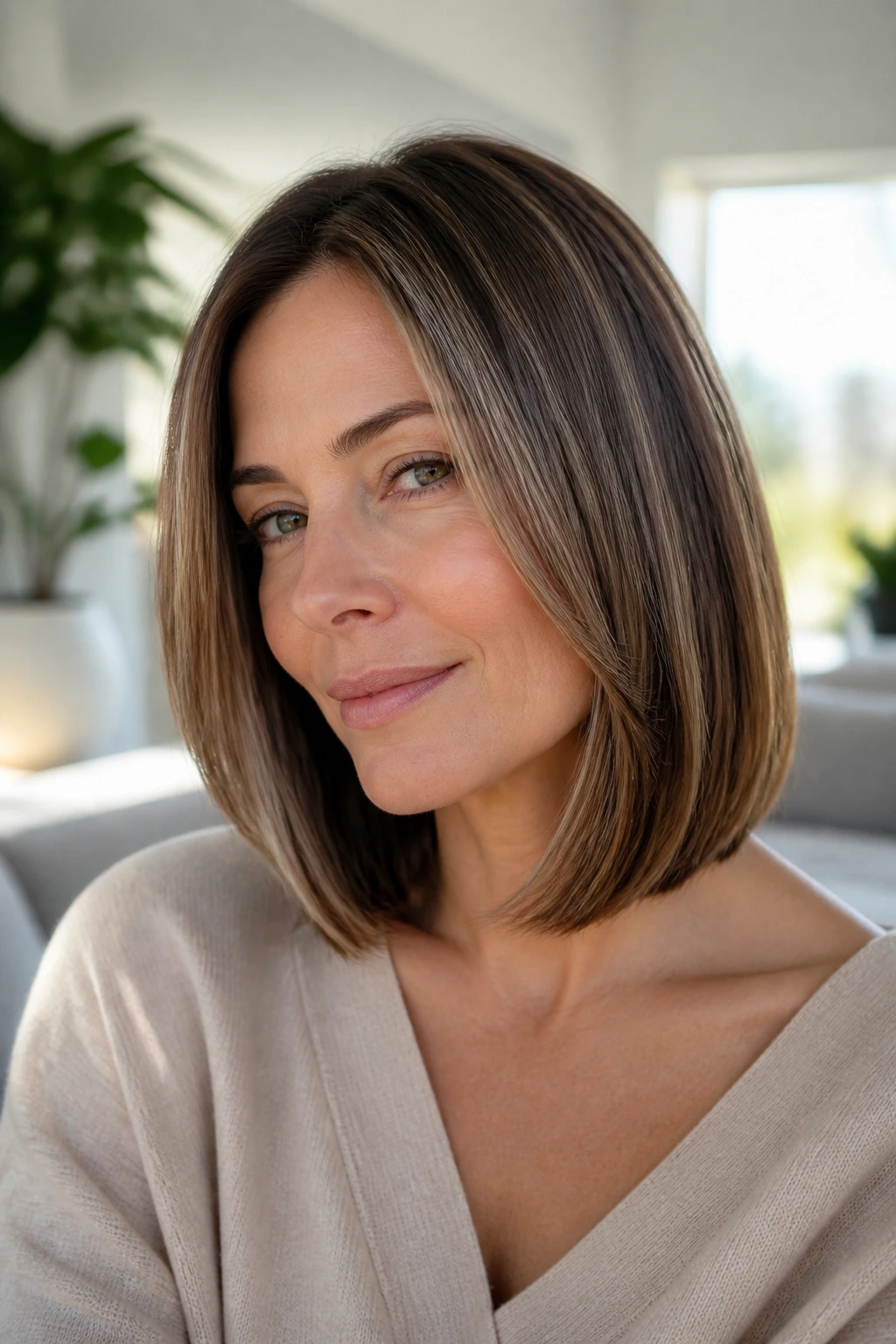
An invisible-layer lob keeps the outer line smooth but lets the inside move. That’s a good setup if you want a little length and still want the hair to look full at the bottom.
What to ask for
- Keep the visible perimeter blunt.
- Place layers underneath the top section only.
- Remove just enough weight for movement, not enough to make the ends see-through.
- Let the length sit around the collarbone or just above it.
This is the lob I’d point to for anyone who wants the least fuss with the most hair left on the head. It behaves well when air-dried with a smoothing cream, and it still looks polished when brushed out straight. It’s the quiet workhorse of the group.
19. The Center-Part Lob

A center-part lob looks crisp when the length is long enough to balance both sides. The middle part can be unforgiving on very sparse hair, but when the density is decent, it creates a calm, symmetrical shape that feels modern without trying too hard.
If your crown is flat, you’ll want a little root lift at the top before the part gets set. Dry the front pieces away from the face, then let them fall back into the center. That keeps the part from sitting like a crack in the scalp.
I like this version on faces that are already fairly balanced. It lets the cut stay simple, and simple can be a good thing when the hair itself doesn’t have a lot of body to spare.
20. The Slight-Stack Bob
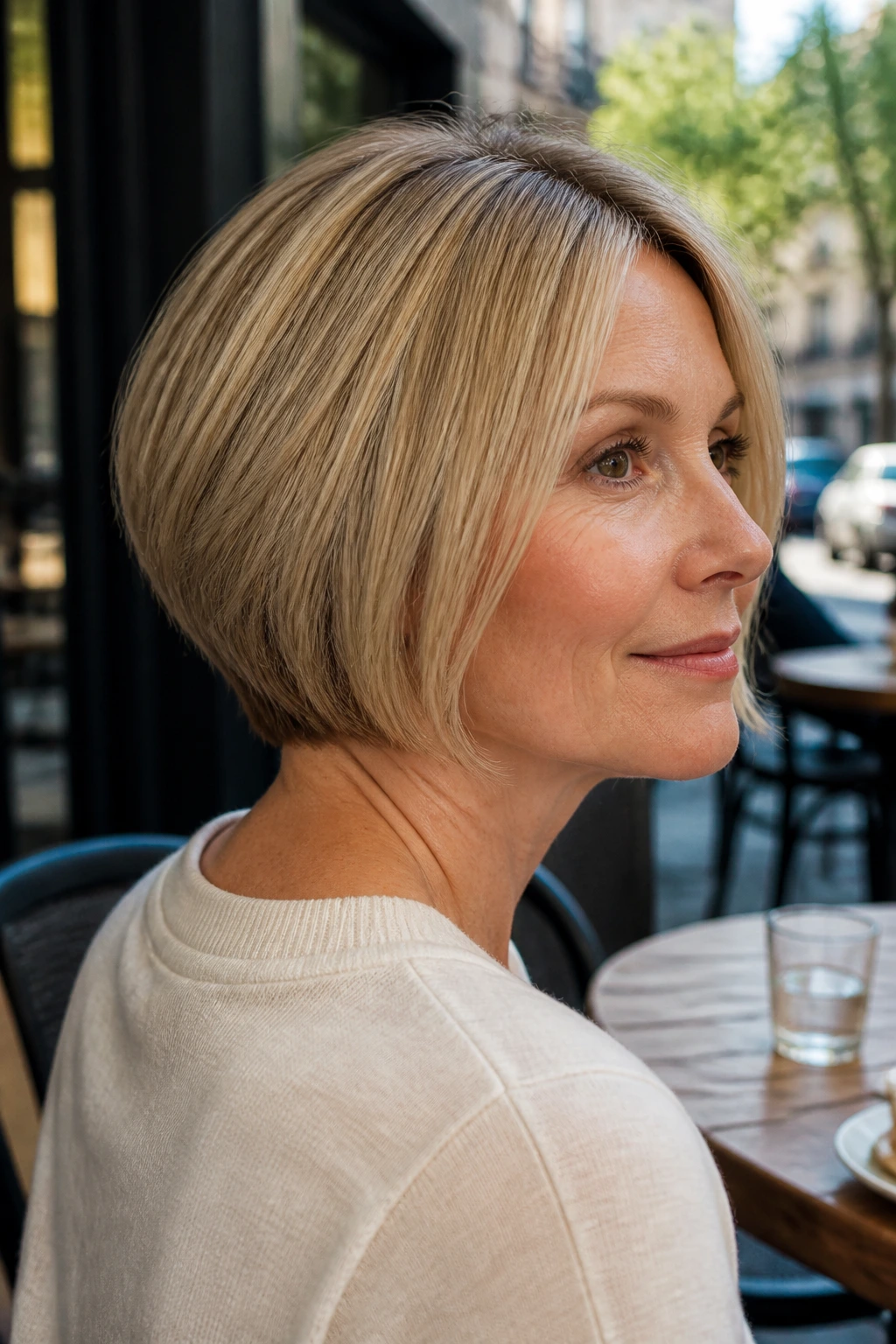
A slight stack is the gentlest way to get lift at the back without sliding into wedge territory. It gives the nape a little more structure, which keeps the silhouette from collapsing when the hair is fine and straight.
Why the stack matters
Fine hair often loses shape at the back first. The slight stack helps the head of hair sit up a little instead of lying flush against the neck. That can make the whole bob look more intentional, especially from the side and back.
Keep the stack soft enough that you don’t see steps. That’s the mistake people make. You want support, not architecture.
21. The Feather-Edge Lob
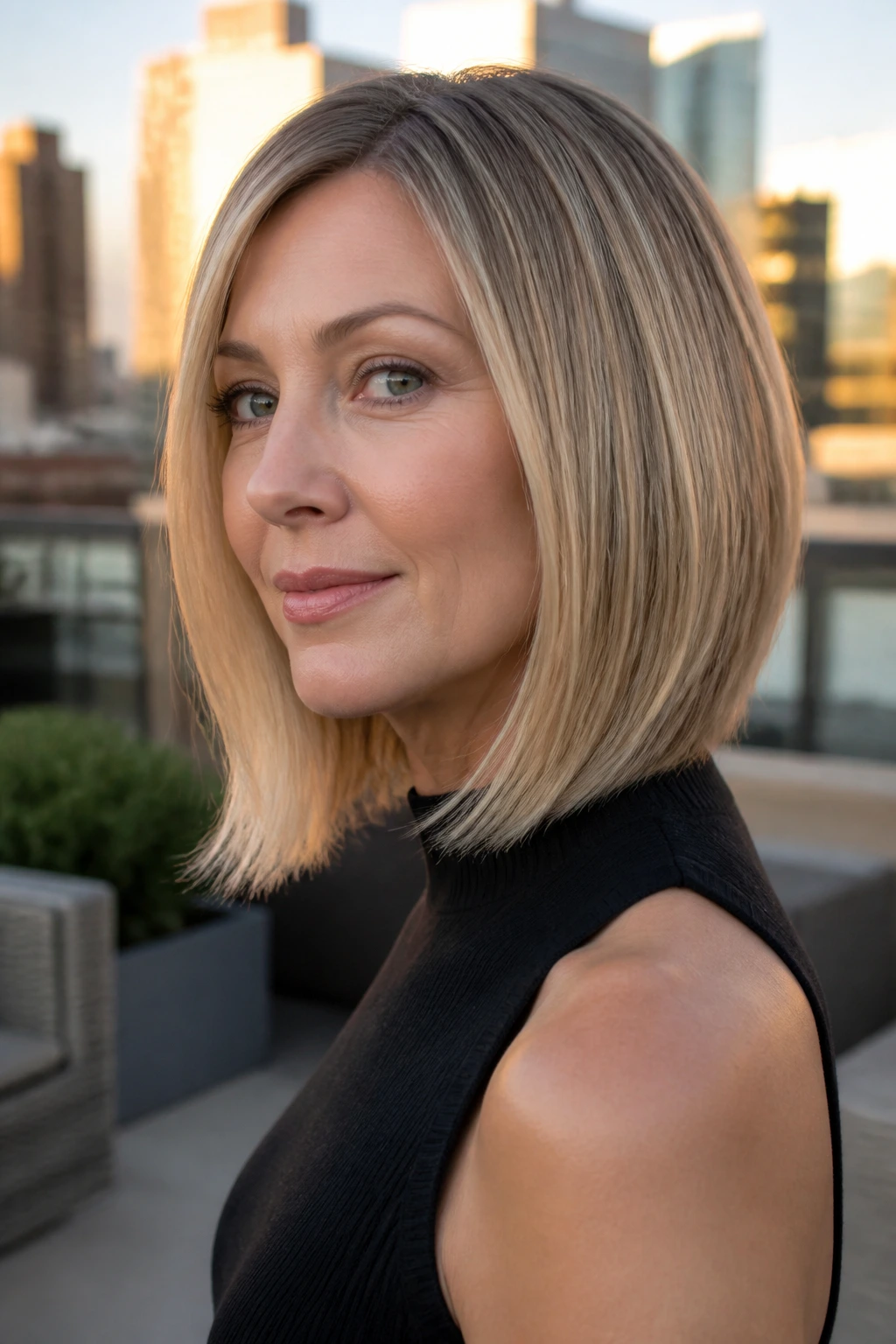
Feathering on fine hair is a tightrope. Done lightly on the last half-inch, it softens the edge; done too much, it hollows out the ends and leaves the lob looking thin where it should look full.
This is the version I’d choose if the hair is straight, the cut feels too hard, and the ends need a little air without losing their line. The trick is to feather only the very outer edge and leave the interior alone. That way you get movement around the shoulders without the scraggly finish that heavy texturizing can create.
I’m strict about this one because fine hair doesn’t forgive overworking. A careful feather can be lovely. Too much slicing can ruin the whole point.
22. The Jaw-Length Bob with a Soft Fringe

A jaw-length bob with a soft fringe is the most face-first choice here. The line frames the jaw, the fringe softens the forehead, and the whole haircut draws attention to the features instead of the amount of hair on the head.
The fringe should behave, not dominate
Keep the fringe light enough to split naturally or brush aside. Heavy bangs can crowd fine hair fast. A soft fringe, though, can help if the temples are a little sparse or if you want the haircut to sit closer to the eyes without feeling severe.
This is the cut I’d pick for someone who wants the bob to do the decorating. It’s neat, it’s polished, and it gives the face a clean frame without asking the rest of the hair to be anything but smooth.
Why Sleek Bobs Feel Better Than Over-Layered Cuts
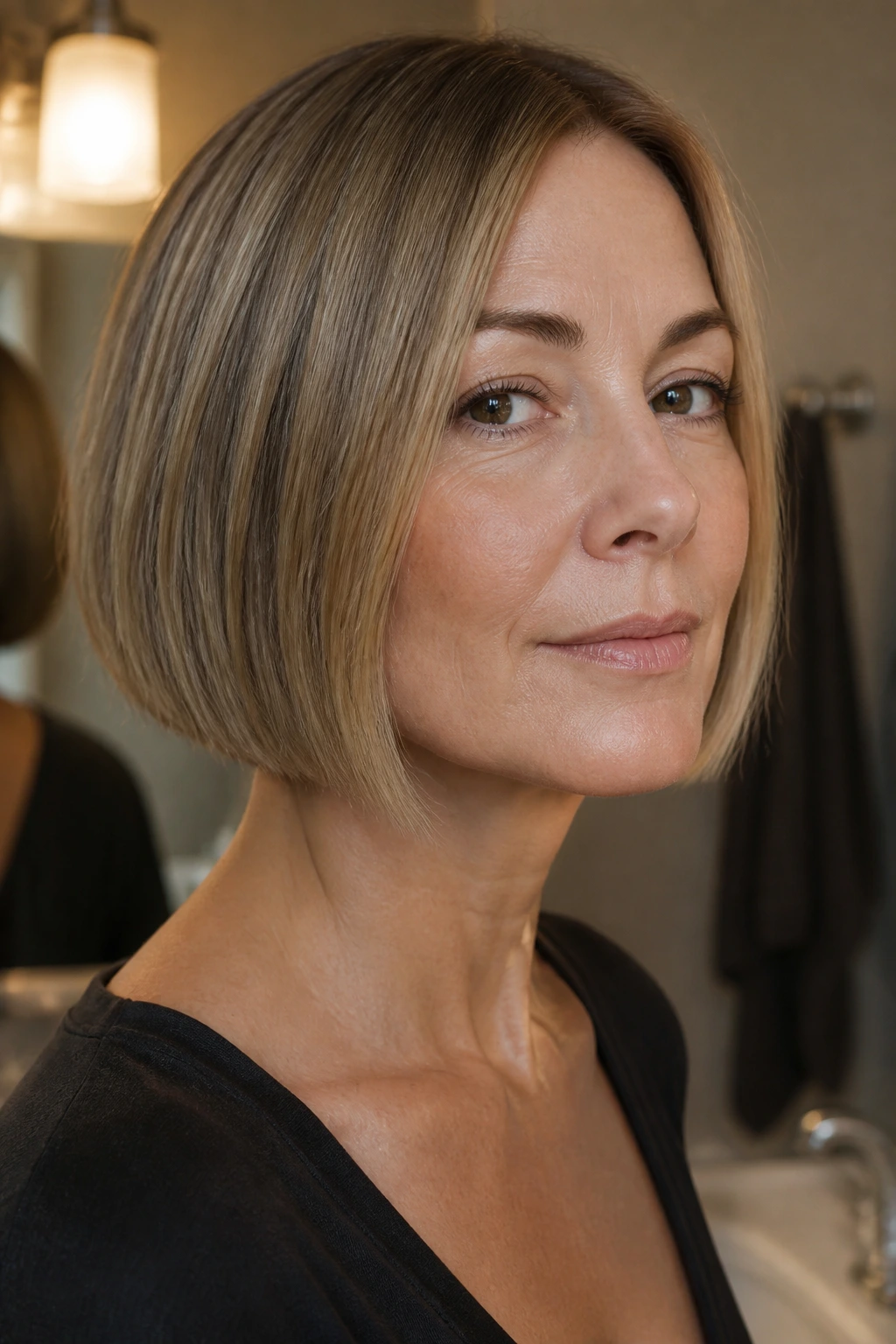
A sleek bob isn’t trying to win by volume alone. It wins by outline. That’s the part people miss when they ask for more layers, more texture, more movement, as if fine hair only needs to be broken up a little more to behave.
The perimeter is doing the work here. A clean bottom line, a careful part, and the right amount of bevel make the hair read as fuller because the eye gets a defined shape to follow. Once the edges blur, the whole haircut starts to look thinner, even if the total number of strands hasn’t changed.
There’s also the practical side. Sleek bobs are faster to finish because the cut itself carries more of the style. You don’t need a ton of styling tricks to make them feel deliberate. That’s the real appeal for a lot of women with fine hair: less wrestling, more polish.
How to Ask for the Cut Without Talking Past Each Other
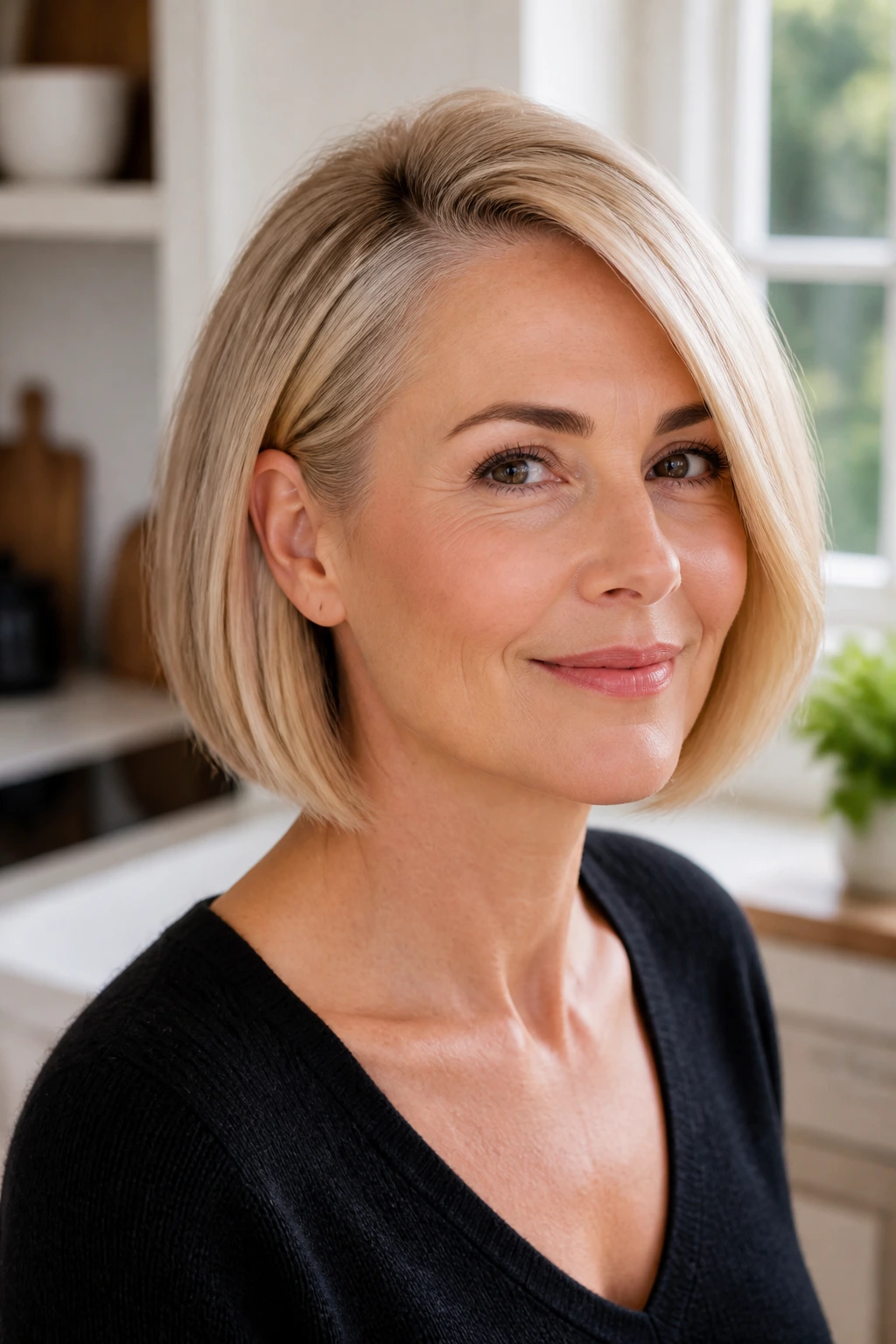
Bring photos, but bring the right photos. A front view tells only half the story. The side and back matter more with a bob, because that is where the weight line, the bevel, and the neckline live.
Length: Say exactly where you want the ends to fall — chin, jaw, collarbone, or just below. If you use a phrase like “short bob,” you’ll get a lot of wiggle room, and not all of it will be helpful.
Perimeter: Ask for a blunt edge or a soft bevel if you want the hair to look denser. If you don’t want the ends thinned out, say that plainly. Fine hair needs the full edge left intact.
Parting: Tell the stylist where you actually wear your part. A bob cut for a center part can behave very differently from one built for a deep side part.
Lifestyle: Mention whether you blow-dry, air-dry, or flat iron. A cut that looks wonderful only when fully styled is not the same thing as a cut that holds its shape when you’re rushing.
The Tools That Make a Sleek Bob Behave
-
Hair dryer with a nozzle attachment: Direct airflow matters on fine hair; the nozzle helps the cut lie smooth instead of puffing out.
-
1- to 1.5-inch round brush: Small enough to control the ends of a bob, large enough to give a gentle bend without making the hair look curled.
-
Paddle brush: Good for longer bobs and lobs when you want a flatter, cleaner finish with less hand work.
-
Flat iron with adjustable heat: Useful for one-pass polishing; keep the heat lower if your hair is color-treated or fragile.
-
Tail comb: Makes precise parts and helps section the crown cleanly.
-
Sectioning clips: Keep you from re-drying the same pieces over and over.
-
Heat protectant: Non-negotiable if you use a dryer or iron.
-
Lightweight mousse or root spray: Adds support at the crown without making the hair crunchy.
-
Smoothing cream or serum: Use sparingly on the mid-lengths and ends only; too much at the roots will flatten the style.
-
Dry shampoo: Helps on day two when the crown starts to lie down.
How to Style It So the Crown Stays Full

The trick is not more product. It’s better order.
Root lift: Start with towel-dried hair and put your mousse or root spray at the scalp, not through the ends. Lift the roots with your fingers and dry the crown first, working against your natural part for a few seconds before resetting it. That little bit of directional drying gives the top more memory.
Smooth the surface: Use a brush that matches the length of the cut. A small round brush works well for chin-length bobs; a paddle brush can be easier for lobs. Keep the nozzle pointed down the hair shaft so the cuticle lies flat.
Bend the ends: Don’t curl the bob under like a pageant set. Bend the last half-inch inward and stop. A bob looks crisp when the ends are guided, not forced.
Finish with restraint: Warm a tiny amount of serum between your palms and press it lightly over the surface. If the roots go shiny, you’ve used too much. If the ends still look dry, give the very tips one more small touch.
Day-two rescue: Dry shampoo belongs at the crown and part, not sprayed all over the head. Work it in with your fingertips, then run a brush through the perimeter to keep the outline clean.
Common Mistakes That Make Fine Hair Look Thinner
-
Over-layering the cut: If the ends look stringy or see-through, the haircut has been thinned too aggressively. Fine hair needs a strong perimeter more than it needs movement through every inch of the head.
-
Cutting the bob too high at the nape: A very short back can expose the neck in a way that makes the sides look sparse. Ask for a length that supports your natural hairline.
-
Using heavy cream at the roots: Roots coated in product lose lift fast and start to separate into thin pieces. Keep cream and oil on the mid-lengths and ends only.
-
Forcing the wrong part: If your part fights your growth pattern, the scalp can show more and the crown can collapse. Shift the part a little until the root settles.
-
Skipping trims for too long: Fine hair loses its shape quickly once the ends start to fray. A sleek bob depends on a clean line, and that line needs maintenance.
-
Using too much heat: One slow, hot pass can dull fine hair fast. Lower the temperature and make cleaner passes instead of baking the same section over and over.
Easy Variations and Alternatives to Try

The Collarbone Safety Net: If you want the sleek bob look without losing ponytail length, keep the cut grazing the collarbone. It still reads polished, but you can tuck it, pin it, or tie it back when you’re not in the mood to wear it down.
The Soft Fringe Reset: Curtain bangs or a gentle side fringe can make a sleek bob feel softer around the eyes and forehead. This works well if the temples are a little lighter or if a one-length bob feels too blunt on your face.
The Glass Finish: This version leans hard into shine. Use heat protectant, a careful blow-dry, and a flat iron on small sections, then finish with a whisper of serum. It’s the sharpest-looking option in the group.
The Air-Dry Bend: If you don’t want a hot-tool routine, ask for a slightly longer bob with a subtle bevel. A touch of smoothing cream and a quick tuck behind the ear can be enough to keep it looking deliberate.
The Gray-Blend Bob: Subtle lowlights, a clear gloss, or well-kept natural gray can make a sleek bob look thicker because the line and the shine are easier to read. The cut does the shape work; the color helps the shape pop.
How to Keep the Shape Sharp Between Salon Visits
A bob grows out in plain sight. You can see the corners soften long before anyone says a word. That’s why trim timing matters more with this haircut than with longer hair.
I’d plan on a trim every 6 to 8 weeks for most sleek bobs. If you wear fringe, the bangs may need a quick cleanup every 3 to 4 weeks so they don’t start poking into your eyes or disappearing into the rest of the cut. Let the neckline go too long and the whole bob can feel bottom-heavy.
Night care helps more than people think. A satin pillowcase keeps the ends from roughing up as much, and a loose clip at the crown can stop the part from setting in a weird dent. If the nape grows fast, ask for a small neckline cleanup between full appointments. That tiny appointment can buy you a lot of shape.
On non-wash days, use dry shampoo at the roots and then brush the perimeter back into place. If the ends flip, a quick directional blow-dry on just the front pieces usually fixes more than a full restyle.
Frequently Asked Questions
Which sleek bob makes fine hair look thickest?
A blunt chin-length bob or a box bob usually gives the strongest density effect because the perimeter stays compact and the eye reads one solid line. If you want a little more length, a collarbone lob with an invisible layer system can work too.
Is a blunt bob better than a layered bob for fine hair?
For most fine hair, yes — at least at the outside edge. A blunt perimeter keeps the ends looking full, while hidden internal layers can add movement without destroying the outline. Heavy visible layers are where things often go wrong.
Should I choose a side part or a center part?
Pick the part that gives your crown the most lift and your scalp the least exposure. A side part helps when the crown is flat or one temple is sparse; a center part can look crisp if your density is even on both sides.
Do bangs make a sleek bob look thinner?
They can, if they’re cut too heavy or too short. Soft curtain bangs or a light fringe usually work better on fine hair because they frame the face without stealing too much density from the front.
How short is too short for fine hair over 40?
That depends on your hairline and neck shape more than your age. If the bob sits so high that the nape looks exposed or the sides lose weight, it’s probably too short for your density. A chin-length or jaw-length cut is often the safest place to start.
Can I wear a sleek bob if my hair is wavy?
Yes, but ask for a slightly longer version and a gentle bevel so the shape still looks smooth when the wave expands. If you want it super straight, plan on a blow-dry or flat-iron finish.
What if my bob flips out at the ends?
The fix is usually in the cut and the drying direction. Ask for a softer bevel or a tiny inward curve, then blow-dry the ends in the direction you want them to settle. A flat iron can polish the last inch, but it shouldn’t be doing all the work.
How do I keep scalp show to a minimum?
A deeper side part, a bit more length at the crown, and a blunt perimeter usually help more than extra product. If the scalp is still showing too much, the cut may be too thin through the interior.
The Shape That Does More With Less
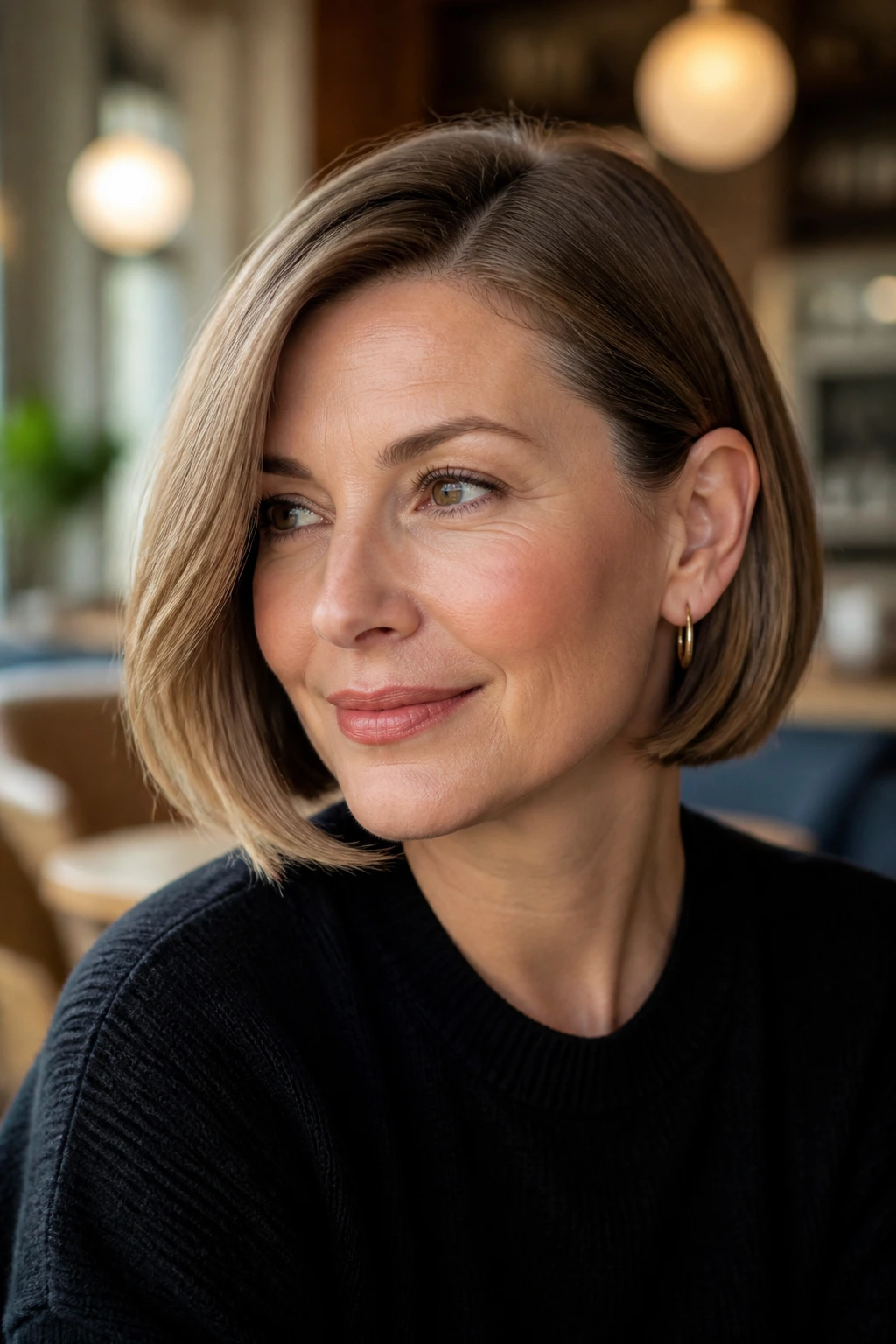
The best sleek bob doesn’t try to fake fullness. It uses line, weight, and parting to make the hair you have look deliberate. That’s a better trade than chasing volume that falls apart by noon.
Pick the version that matches your face, your root pattern, and the amount of styling you’re actually willing to do. That is where the right bob stops being a haircut and starts becoming a shortcut you can live with.