



Textured wavy bobs for curly hair with side-swept bangs have a useful trick built in: they look finished even when the curls are doing their own thing. The side sweep softens the forehead, the bob keeps the shape from swallowing your face, and the texture keeps the whole cut from feeling stiff or helmet-like. That balance is the whole reason this haircut keeps coming back into rotation.
The catch is that curly hair is never a one-note story. A chin-length bob on loose 2C waves behaves nothing like a stacked bob on dense 3B curls, and side-swept bangs can sit like a soft ribbon or turn into a curly curtain depending on how they’re cut. That’s why the best versions of this cut pay attention to shrinkage, weight, and where the curls want to bend on their own.
There’s also a practical upside that’s easy to miss until you live with the haircut for a few weeks. A good wavy bob gives you shape on wash day, but it also has to survive day two, day three, and the morning you’re running late and barely have time to mist the front pieces and leave. The styles below are built with that reality in mind.
Why These 22 Bobs Hold Their Shape on Curly Hair
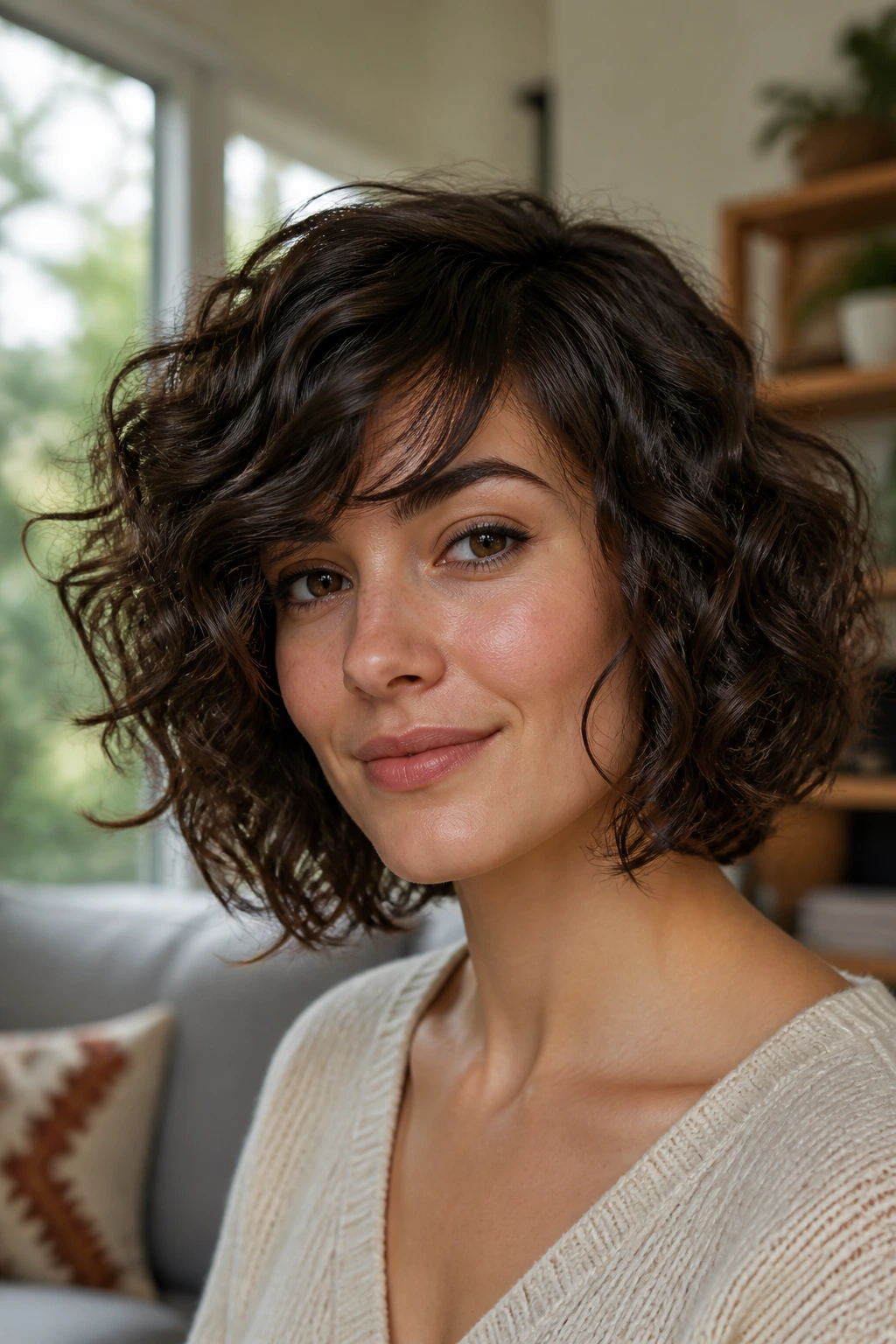
- The side sweep does real work: A diagonal fringe breaks up forehead space and keeps curly bobs from looking boxy, especially when the curls spring up after drying.
- Texture keeps the cut from going flat: Layers, internal debulking, or a little razor work give the bob room to move instead of turning into one solid puff.
- Length changes the whole mood: A chin-length version reads sharper, while a collarbone bob feels softer and easier to grow out without losing the shape.
- Curl pattern matters more than the photo: A cut that sits at the jaw on one person may land at the cheekbone on another, which is why curly hair should be judged dry, not just by the ruler.
- Side-swept bangs are the safety valve: They let you keep fringe without committing to blunt bangs that can separate, shrink, or need constant babysitting.
1. Chin-Length Curly Bob with a Long Side Sweep
This is the classic shape for people who want their curls to sit near the jaw and show the neck a little. The side-swept bangs are long enough to tuck into the rest of the cut, which keeps the front from looking chopped up when the curls dry tighter than expected.
What I like here is the clean line at the bottom. It gives loose waves enough structure without killing the texture, and on tighter curls it stops the cut from ballooning outward near the cheeks. If your curls shrink more than you think they will, ask for the front to be left a touch longer. That extra half-inch matters.
The sweet spot is a dry cut with the bangs angled toward the heavier side of your part. You want movement, not a hard diagonal stripe across your forehead.
2. Collarbone Wavy Bob with Feathered Bangs
This one is the easiest to live with if you’re nervous about going too short. The length grazes the collarbone, so the curls can stretch a bit on humid days and still look intentional. The side-swept bangs melt into the front layers instead of sitting like a separate section.
A collarbone bob is also nice when you’re growing out old layers or a previous shag. It has enough length to pull back with a clip, but the front pieces still frame the face when you let it dry naturally. That versatility matters more than most people admit.
If your curl pattern is loose and springy, ask for a soft feather around the face rather than a heavily stacked back. Too much stacking can make the front look thin.
3. Rounded French Bob with a Soft Swoop
The rounded French bob has a little old-world attitude, and curly hair gives it the charm that straight hair sometimes has to fake. The sides curve inward, the silhouette feels compact, and the side-swept bang keeps the face from getting boxed in.
This cut works best when the curls are bouncy rather than stretched out. Think soft bend, not ringlet chaos. A stylist who understands curl shrinkage can leave the fringe long enough to sweep properly once it dries. Short bangs on curly hair are where regret starts.
Who It Flatters
If your face is narrow or your forehead feels prominent, the soft swoop can be a lifesaver. It spreads attention across the face instead of stacking it all in one spot. The result is tidy, but not severe.
4. Stacked Curly Bob with Lifted Crown
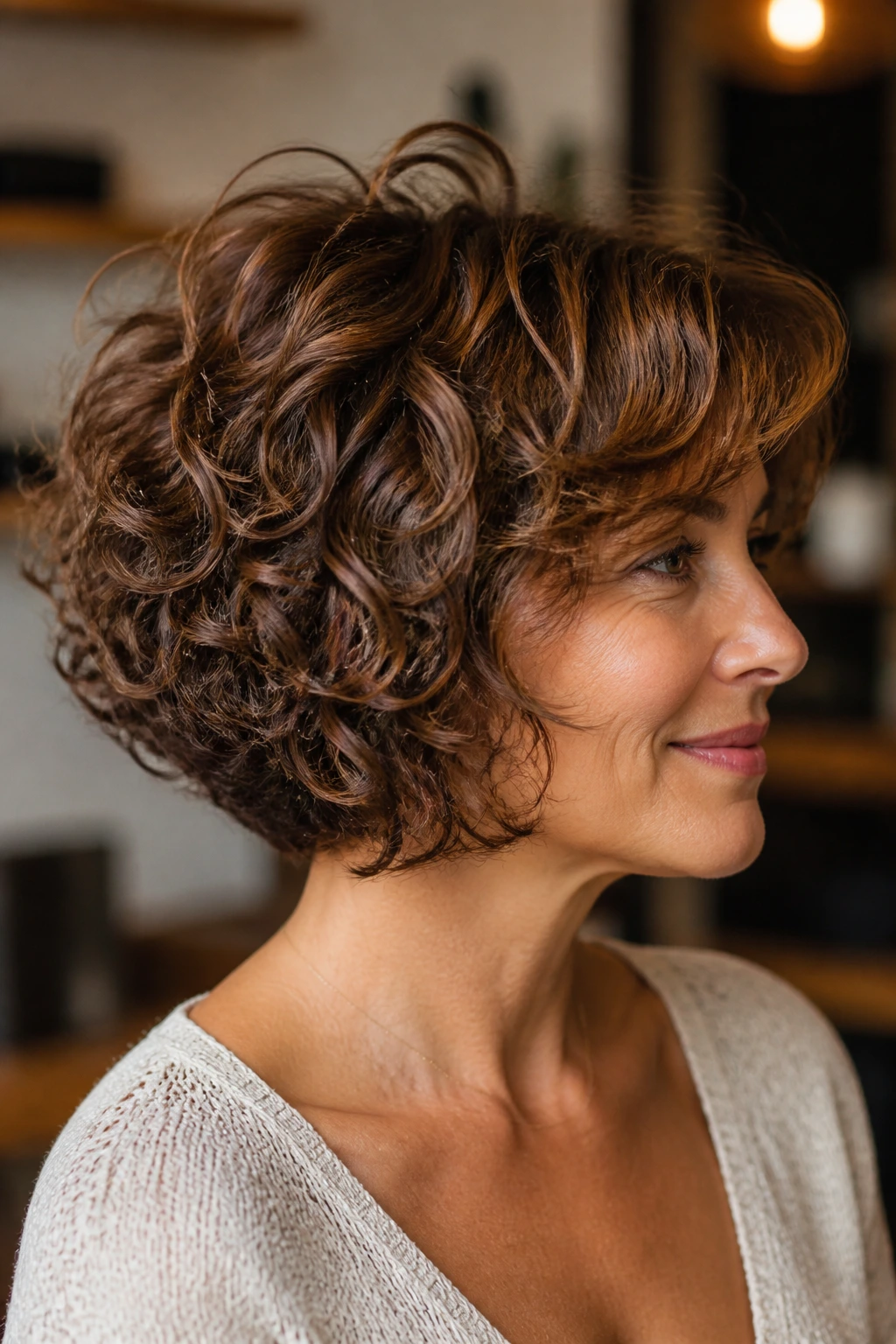
A stacked bob is the answer when your curls are dense and you want the back to do some of the heavy lifting. The shorter layers at the nape push the silhouette upward, which creates shape without depending on a lot of styling time. The side-swept bangs keep the front from feeling too architectural.
This is one of those cuts that looks especially good when the roots have some lift. Not teased, not crispy—just enough bend at the crown to keep the head shape round instead of flat. If your hair grows outward more than downward, this shape can clean that up fast.
It’s a strong choice for thick curls that tend to sit heavy around the neck. You get air under the cut, and air is the difference between a bob and a wet blanket.
5. Asymmetrical Bob with a Deep Side Part
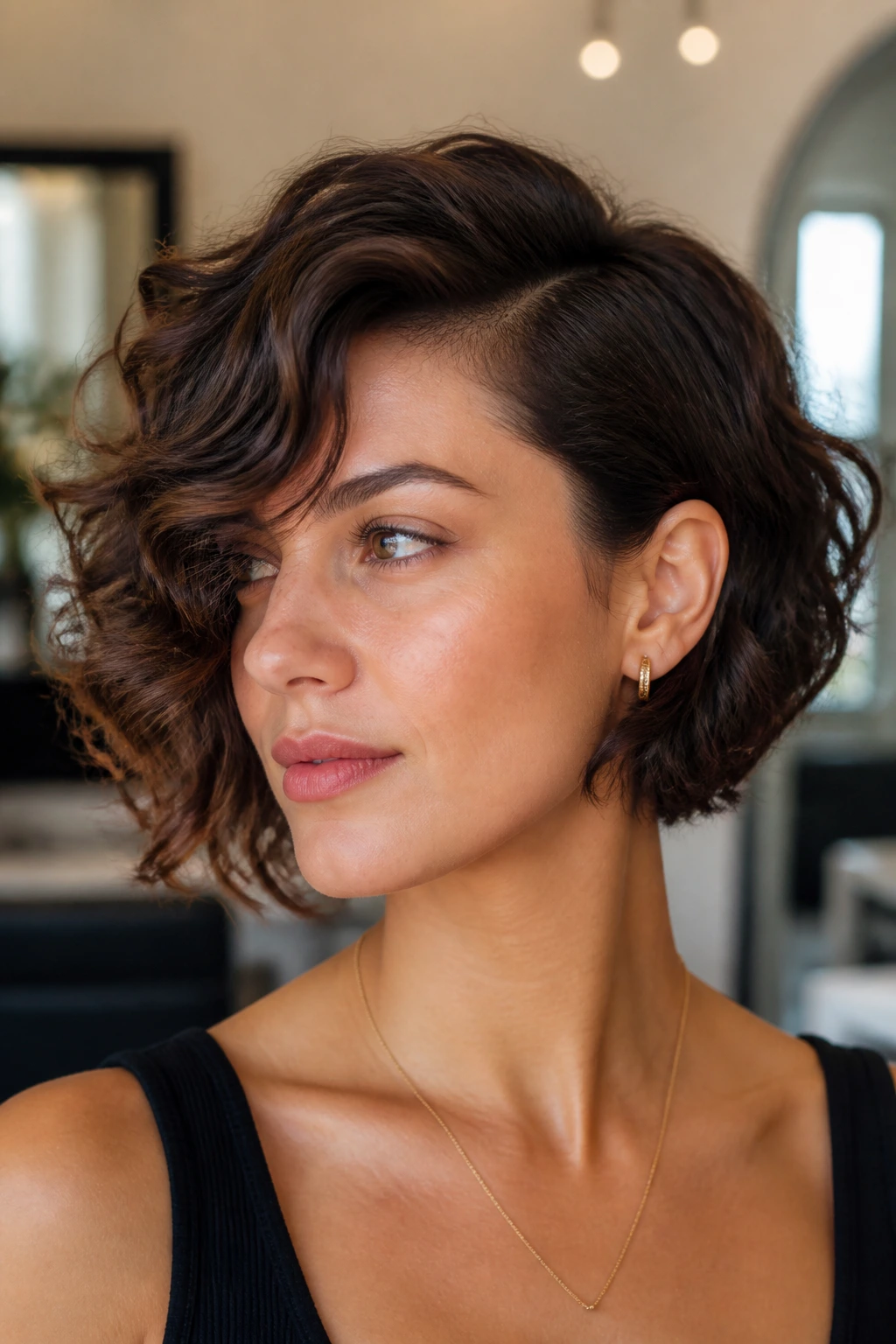
This is the bolder option, and it has a clean, dramatic line that curly hair can wear better than people expect. One side lands a little longer, the part sits deep, and the side-swept bangs travel across the forehead into the longer side. It’s a neat fix for hair that naturally wants to fall in one direction anyway.
I like this shape on people with a strong jaw or anyone who wants to make a simple bob feel less predictable. The asymmetry does the visual work so you don’t need a lot of product or elaborate styling. That said, precision matters. If the sides are off by too much, the whole thing starts looking accidental.
If you’re showing this to a stylist, bring a photo and point to the exact point where you want the longer side to hit—cheekbone, jawline, or just below.
6. Shaggy Bob with Bang Blend
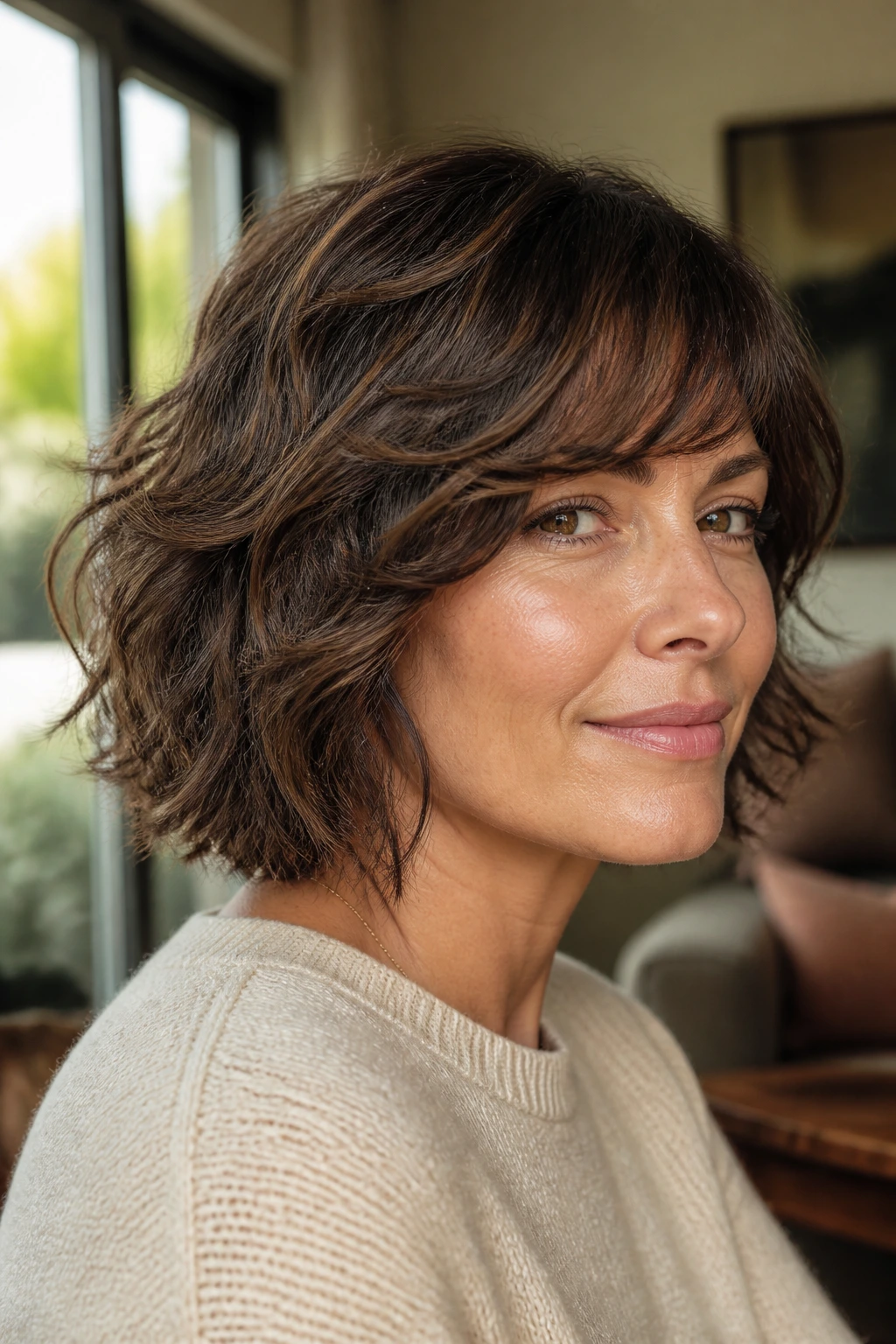
This is the version for people who hate the idea of a bob looking too polished. The shaggy bob mixes layers through the crown and around the face, so the side-swept bangs don’t sit separately—they dissolve into the rest of the cut. It feels airy, a little loose, and very forgiving on second-day curls.
A shaggy bob is especially good if your curls get bulky at the sides. The texture removes some weight, which helps the shape collapse inward instead of kicking out at the temples. That’s a small thing, but it changes the silhouette a lot.
For styling, use a light mousse and stop touching it while it dries. Seriously. The more you fuss, the more the fringe separates into random little pieces.
7. Blunt Curly Bob with a Soft Curved Fringe
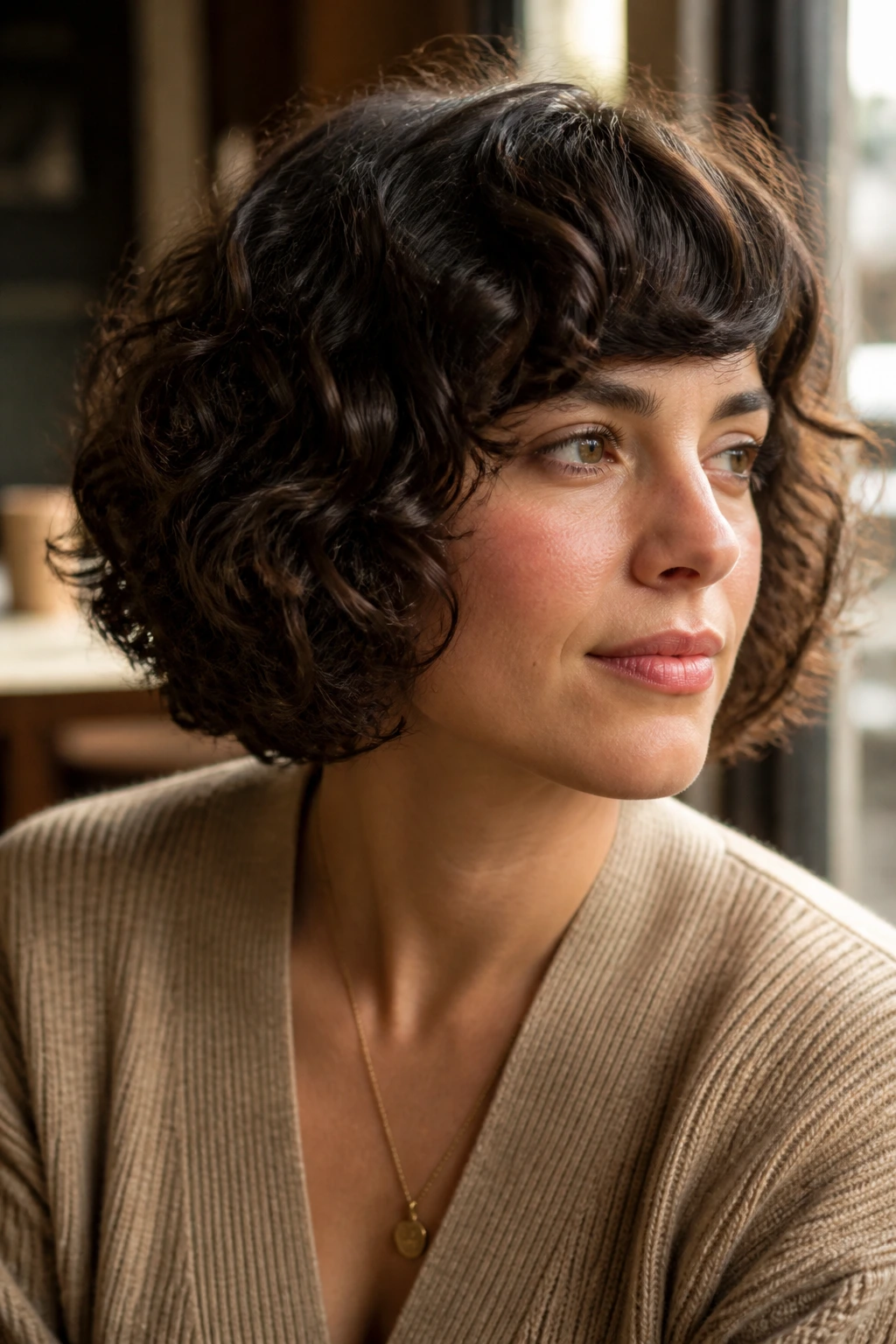
Blunt and curly can sound like a contradiction, but when it’s done well, the result is strong. The bottom edge stays cleaner and fuller, while the side-swept bangs soften the overall shape so it doesn’t feel too hard around the face. You get density at the ends and movement up top.
This cut is a smart choice for finer curls that need the illusion of thickness. The blunt edge makes the hair look more solid, which is useful when every strand counts. The trick is keeping the layers gentle enough that the bottom line doesn’t fray apart into a wispy halo.
A curved fringe works better here than a sharp, straight sweep. Curly hair likes a little bend built in. Pretending otherwise usually ends with extra styling time and a frustrated mirror stare.
8. Inverted Bob with a Sleeker Nape
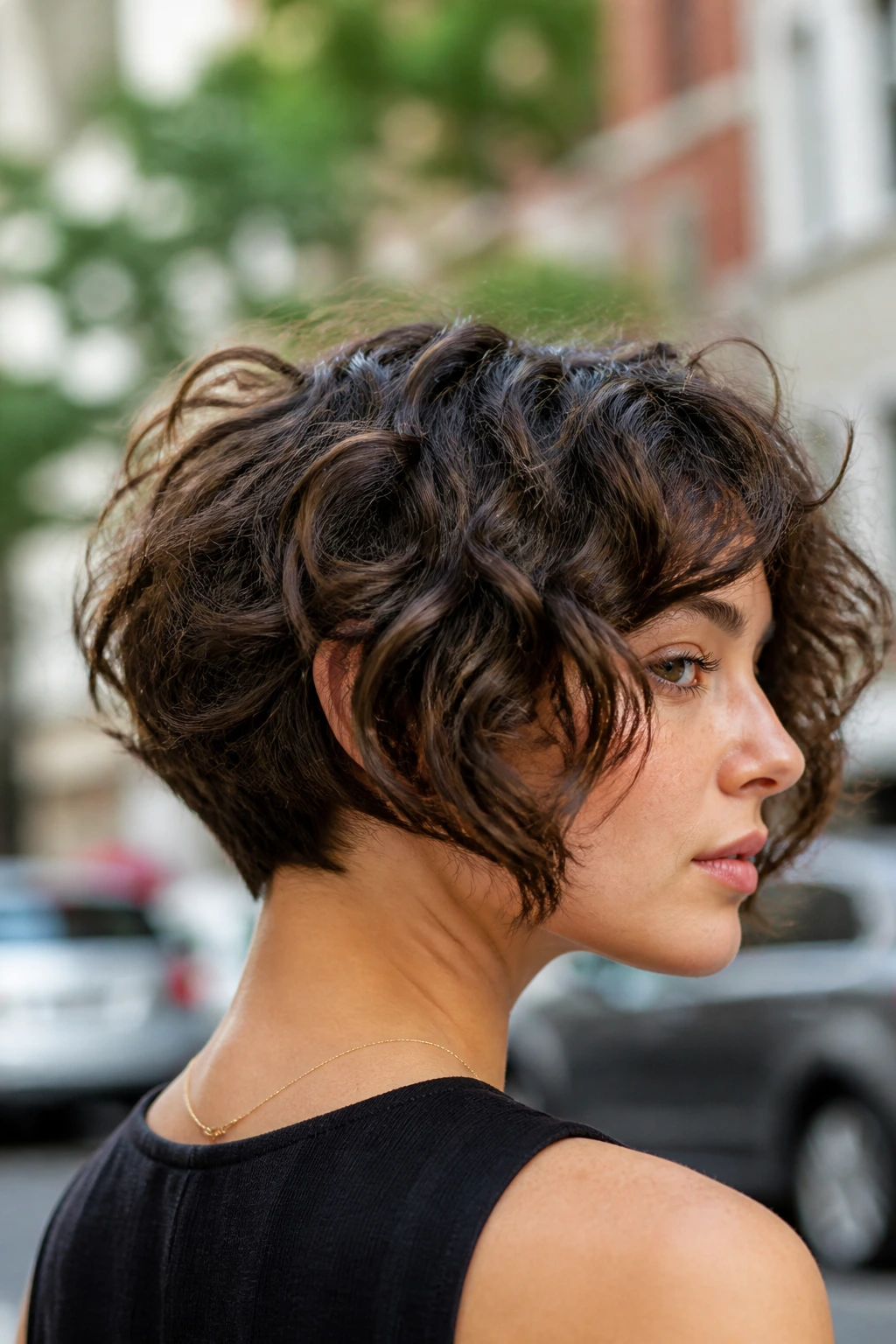
The inverted bob keeps the back shorter and the front longer, and curly texture makes that angle look softer than it would on straight hair. The side-swept bangs help the front transition into the longer corner, so the haircut feels deliberate instead of severe.
This shape is especially nice if your curls grow thick in the nape area. The shorter back removes bulk where you feel it most, which can make collars and scarves sit better too. That’s not glamorous, but it matters.
If you like a bob that has a little movement when you turn your head, this is a good one. It reads neat from the back and touchable from the front. No dead zones.
9. Razor-Cut Bob with Piecey Ends
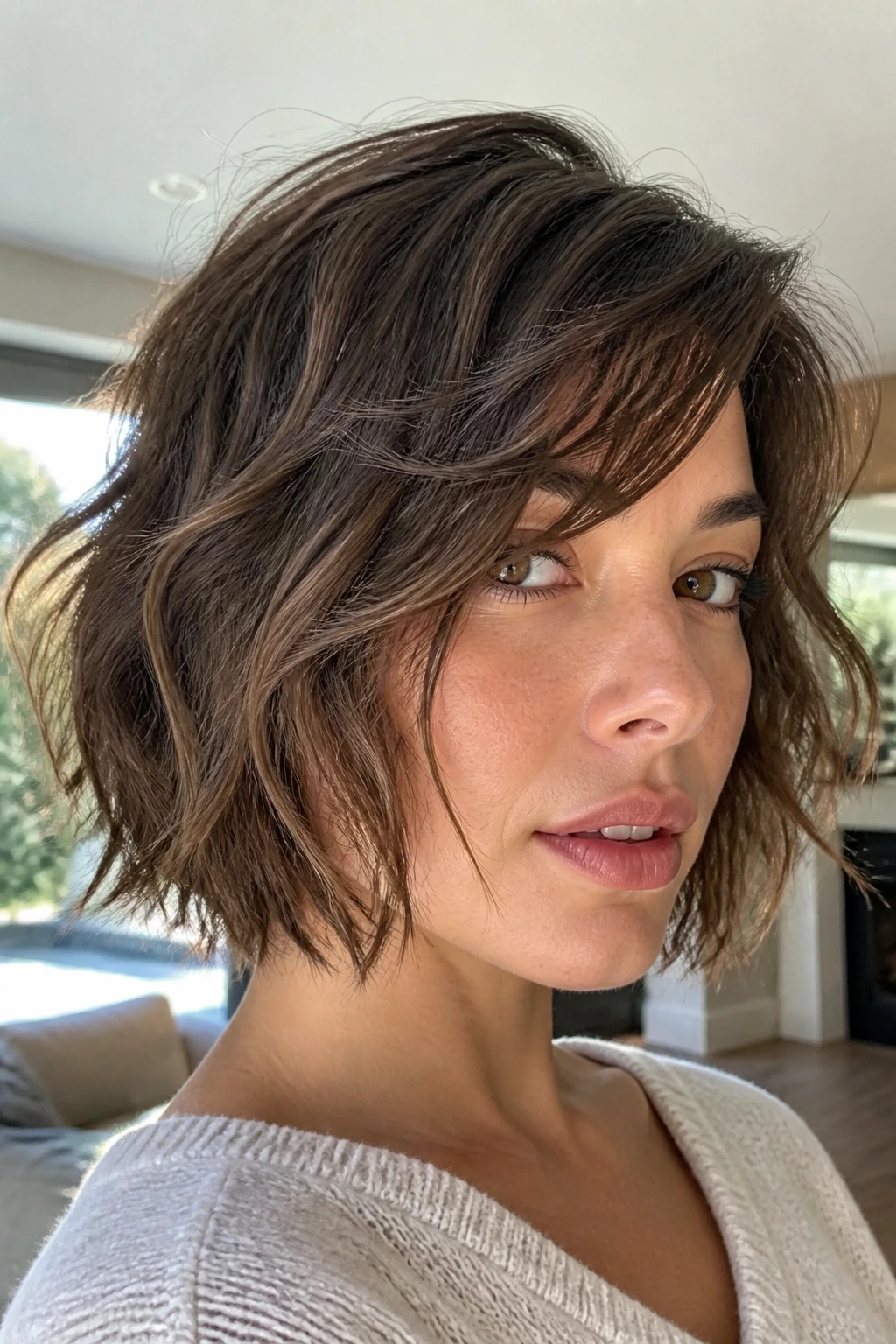
A razor-cut bob gives curly hair a light, broken edge that looks a little windblown in the best way. The side-swept bangs stay piecey instead of heavy, which helps when your curls tend to clump in thick sections. It’s less about one polished shape and more about controlled motion.
Not every stylist handles a razor well on curls. You want someone who knows when to stop before the ends get fuzzy or weak. A little razor work can open the shape; too much can chew it up. That line is thin.
This cut is a favorite for people who want their bob to move when they walk. It doesn’t sit still, and that’s the point.
10. Lob-Length Bob with Flip-Away Bangs
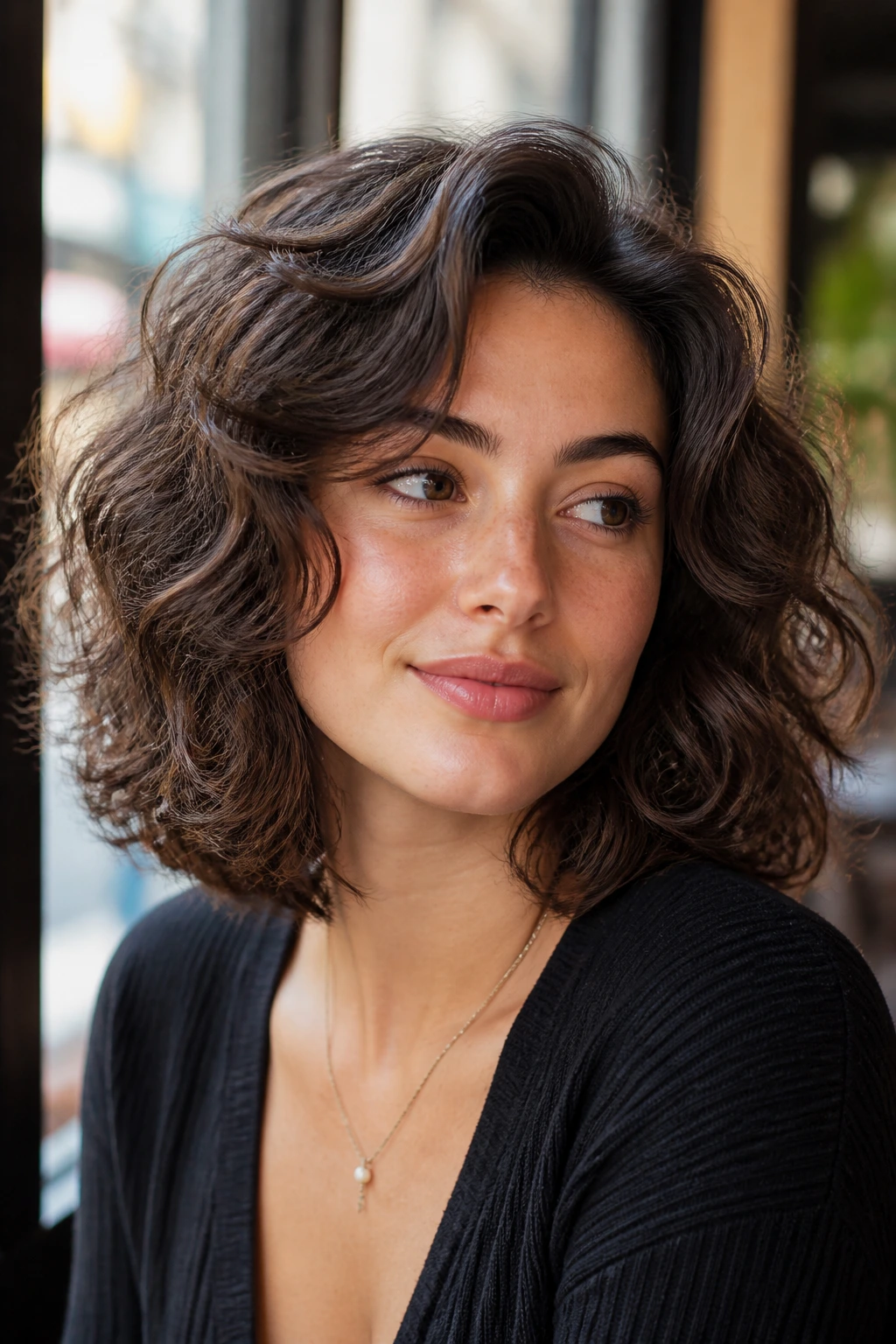
If chin length feels too short, this lob gives you breathing room. The hair lands around the shoulders or just above them, which makes it easier to wear up, pin back, or let dry naturally with less risk of triangle shape. The side-swept bangs flip away from the face instead of lying flat across it.
The longer length also helps loose curls keep their pattern. Some curls simply behave better with a little extra weight. When they’re cut too short, they bounce up and spread out. Here, they get enough length to stay organized.
This is the cut I’d point to for someone who wants something low-drama but not boring. It’s still a bob. It just has more range.
11. Tapered Bob for Dense Curls
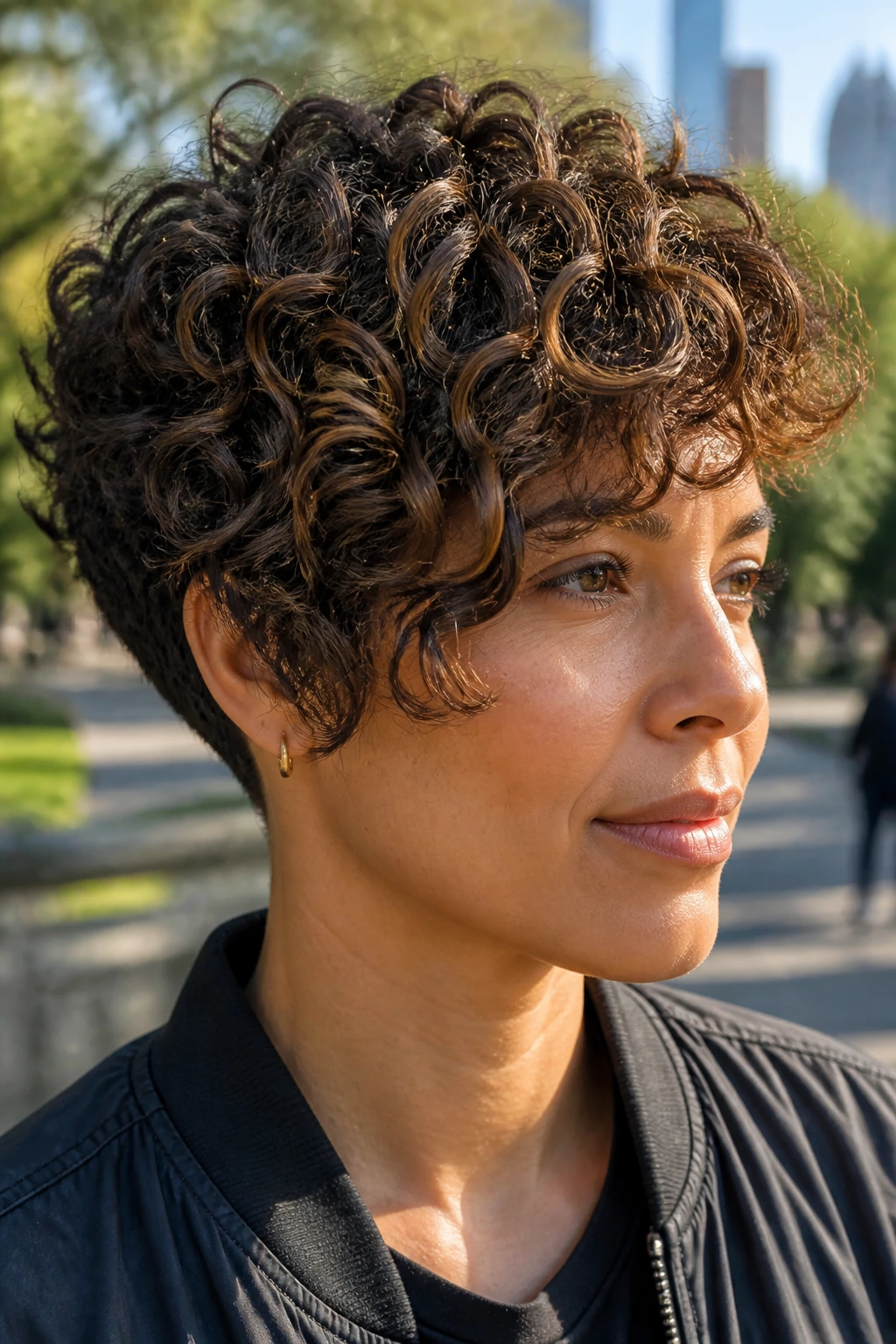
A tapered bob trims bulk through the sides and nape while leaving enough weight on top to keep the silhouette rounded. On dense curls, that balance can make the difference between a flattering shape and one that feels like it’s taking over your head. The side-swept bangs add softness to the front, which keeps the taper from looking too sharp.
This style depends on internal removal, not random thinning. That matters. You want the inside of the haircut to lose weight while the outside shape stays clean. Otherwise the ends start looking uneven and thirsty for a trim.
It’s a good pick if your hair feels heavy even when it’s freshly washed. Some bobs need more structure. This one needs less bulk.
12. Wedge Bob with Sculpted Side Sweep
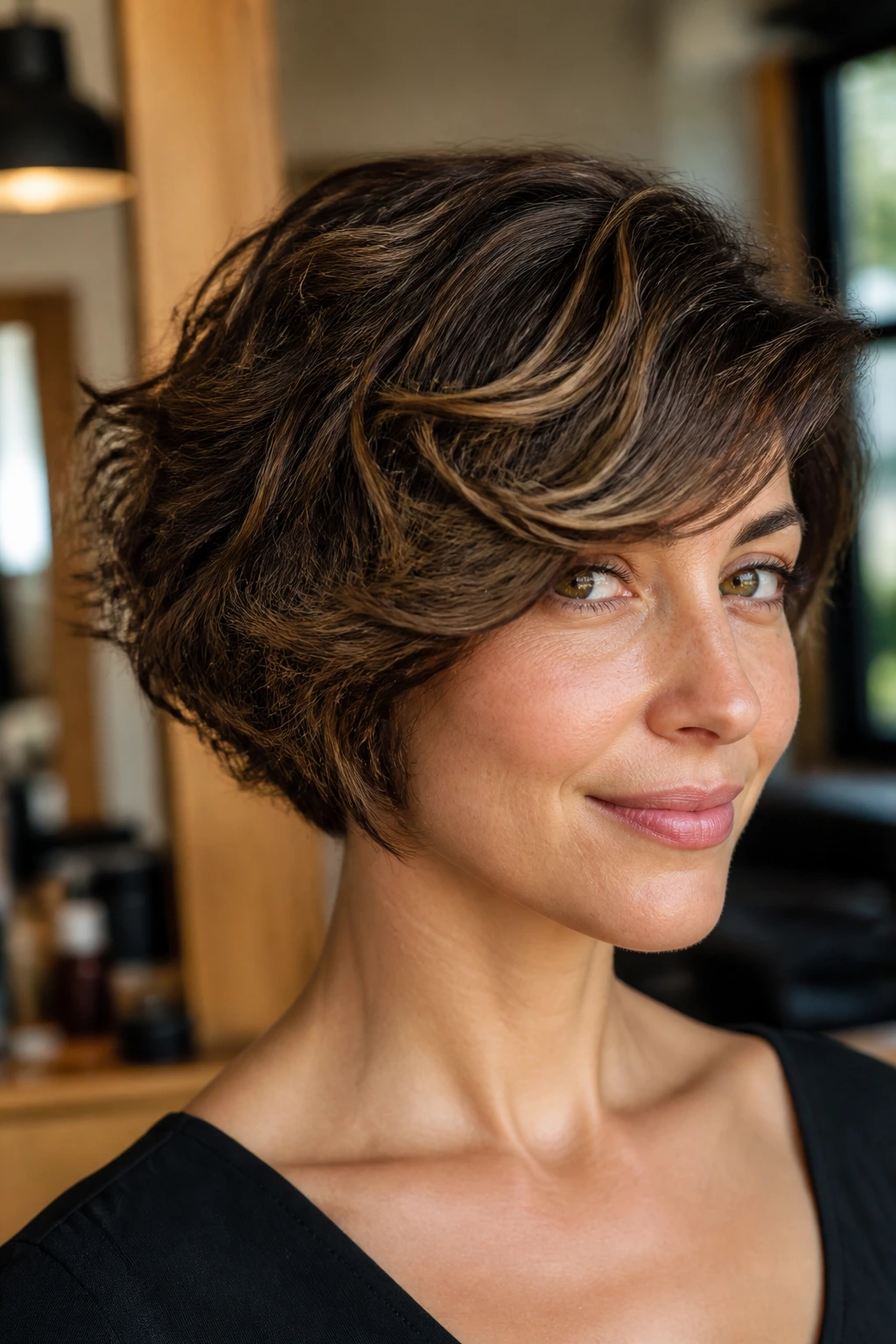
The wedge bob has a strong geometry to it, and curly texture turns that geometry into something a little more relaxed. Shorter layers lift at the back, the side sweep slides across the forehead, and the whole cut keeps a compact outline. It’s a shape with attitude.
This is not the friendliest bob to cut casually at home. It asks for clean sectioning and a stylist who knows how curls behave once they dry. The payoff is a cut that looks intentional even when you’re wearing minimal makeup and a plain shirt. The shape does the talking.
Best for someone who likes structure but doesn’t want a stiff finish. There’s room for texture here, but the backbone stays visible.
13. Salt-and-Pepper Textured Bob
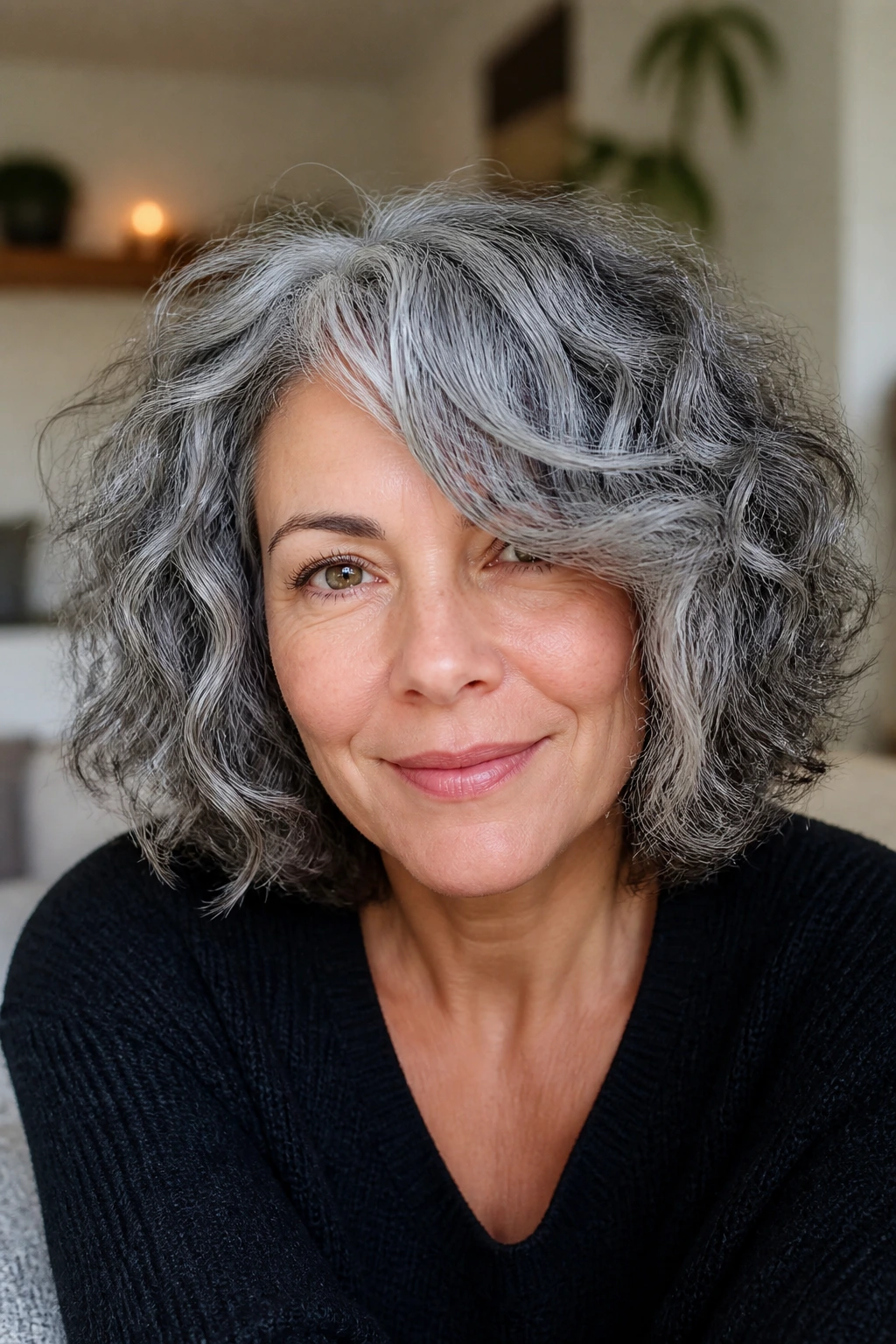
Gray and silver curls look especially good in textured bobs because the color catches the twists and bends in the hair. The side-swept bangs keep the front soft, which helps the transition from silver strands to darker roots feel natural instead of harsh. It’s a cut that lets the color do some of the work.
I’d ask for a shape that’s soft around the cheekbones and not too stacky at the crown. Too much height can make gray curls look wider than they are. A little internal layering is enough.
If your salt-and-pepper hair has a wiry texture, a light glossing cream can help the shine. Not grease. Shine. There’s a difference, and your haircut knows it.
14. Balayage Bob with Face-Framing Ribbons
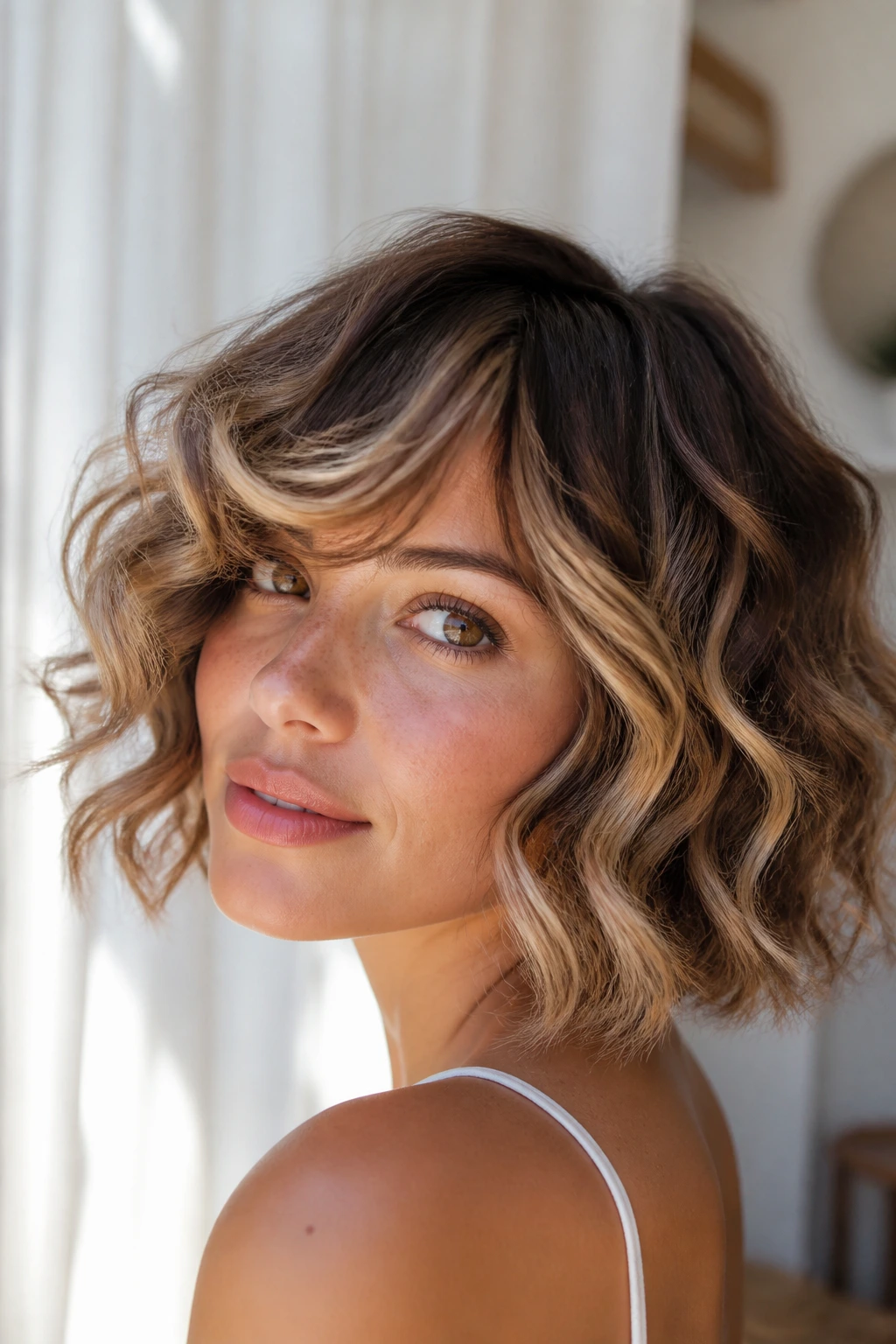
Balayage and a curly bob are a good pair because the lighter ribbons show off the bends in the hair. The side-swept bangs become part of the color story, which gives the front more depth without a harsh block of fringe. The haircut looks busier in a good way.
This style works best when the highlights are placed around the face and through the top layers. If the color sits too low, the bob can look flat from the front. If it’s too stripey, the curls lose that soft, layered feel. The sweet spot is subtle dimension, not loud contrast.
A balayage bob is a smart choice if you want the haircut to keep looking fresh between trims. The color helps disguise a little grow-out, and the texture keeps the whole cut from reading as one solid shape.
15. Air-Dried Bob with Soft Beach Texture
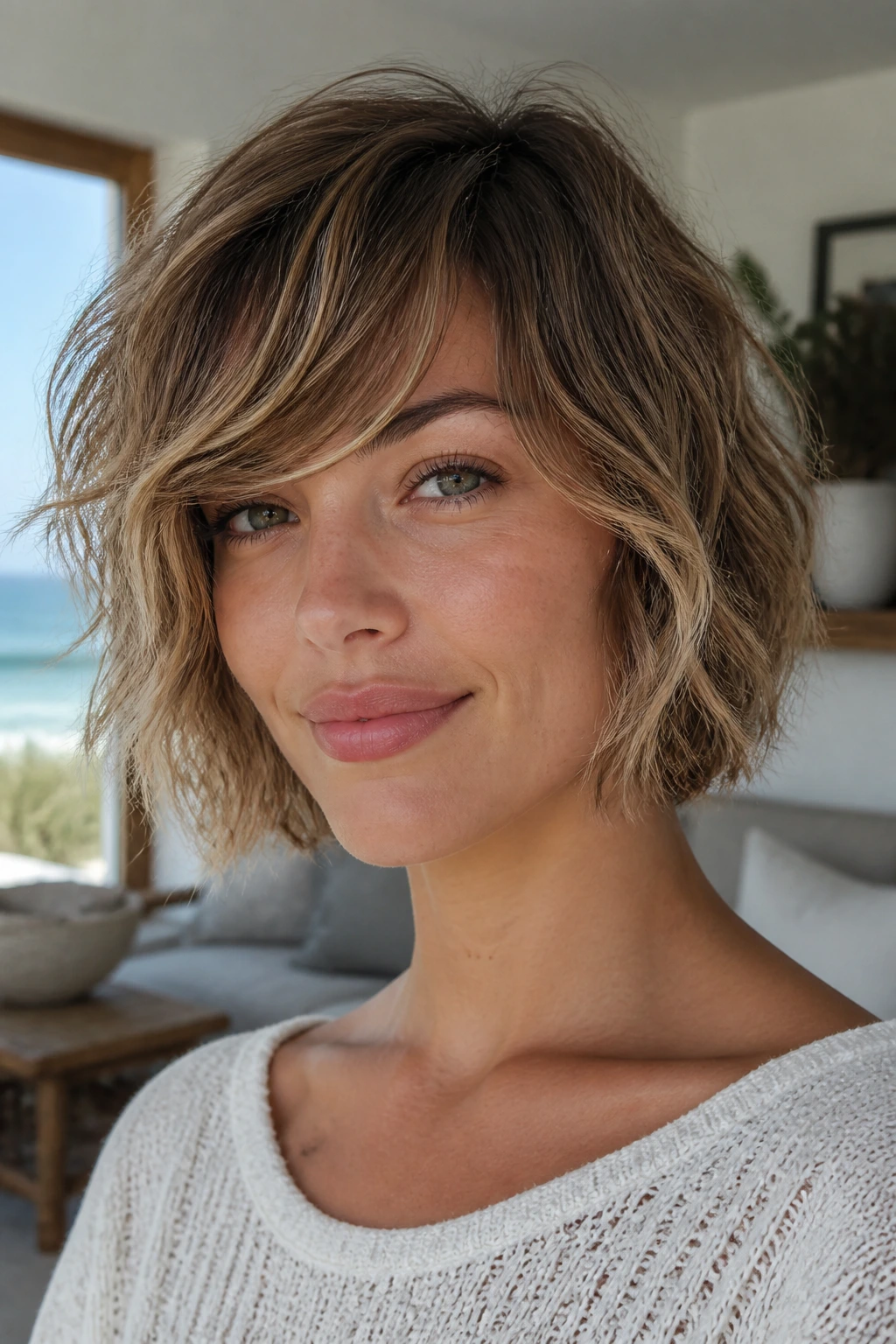
This one is for the person who wants the haircut to do the work while the dryer stays in the drawer. The shape is loose, the texture is soft, and the side-swept bangs are long enough to dry into a gentle diagonal instead of a stiff line. It’s the least fussy version in the bunch.
The trick is not overloading the hair with cream. Too much product and the ends get stringy. Too little and the waves puff up. A small amount of leave-in, a light gel, and hands-off drying usually get you where you need to go.
This bob looks best when it’s allowed to move a little. If you want a perfect curl pattern, this isn’t the cut. If you want believable texture with minimal effort, it’s one of the smartest choices here.
16. Curly Pixie Bob with a Side Fringe
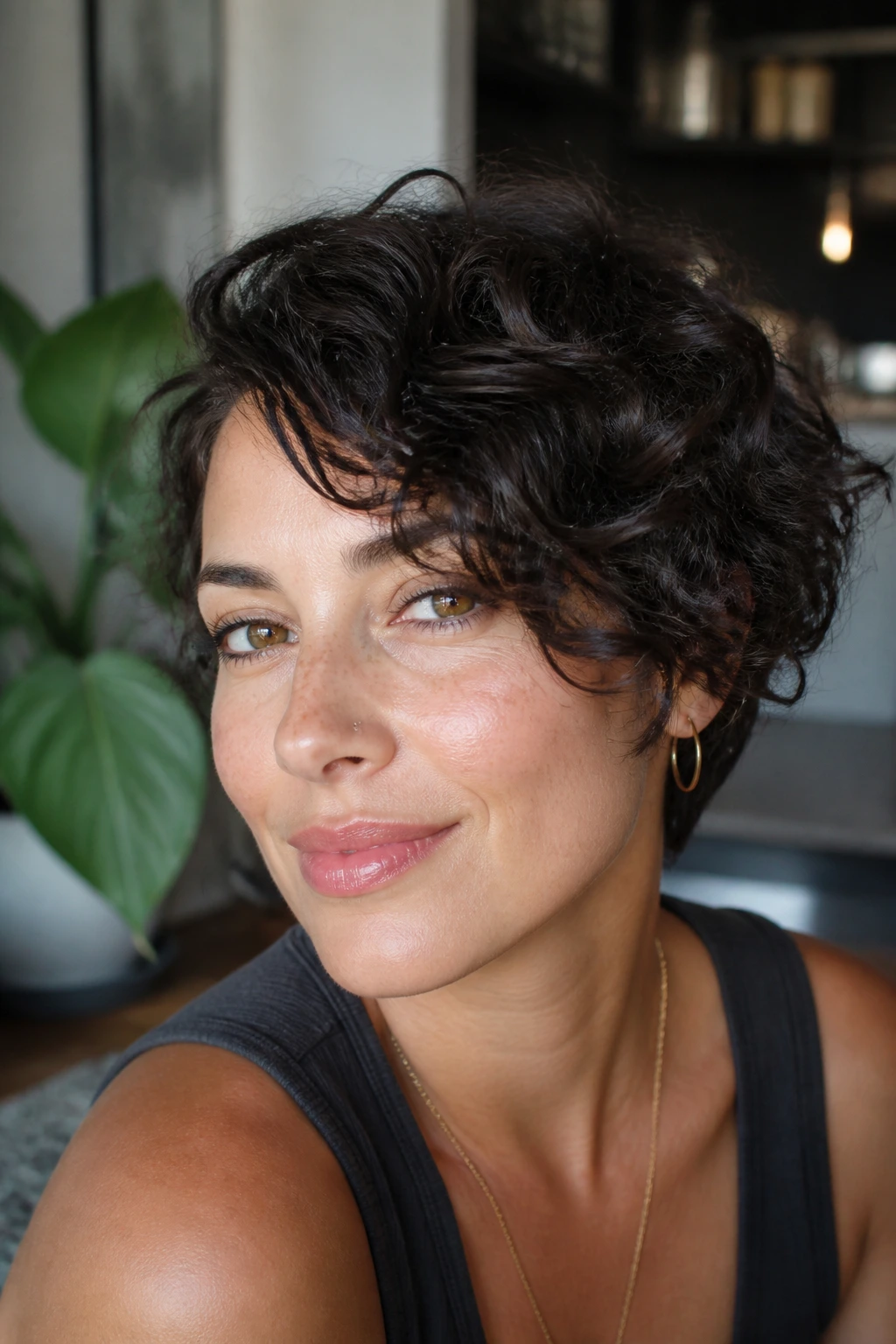
This is the short, cheeky option. The back is cropped close enough to feel light, but the front keeps enough length to qualify as a bob rather than a true pixie. The side fringe softens the cut and gives the curls somewhere to fall besides straight up.
I like this on tight curls and springy wave patterns that can handle a shorter silhouette. It shows off the jaw and the eyes fast. There’s no hiding here, which is part of the fun.
Maintenance is higher, though. Short curls lose shape faster, and side-swept bangs on a shorter cut need regular trims. If you want ease above all else, go longer.
17. Midlength Bob with Chin-Skimming Layers
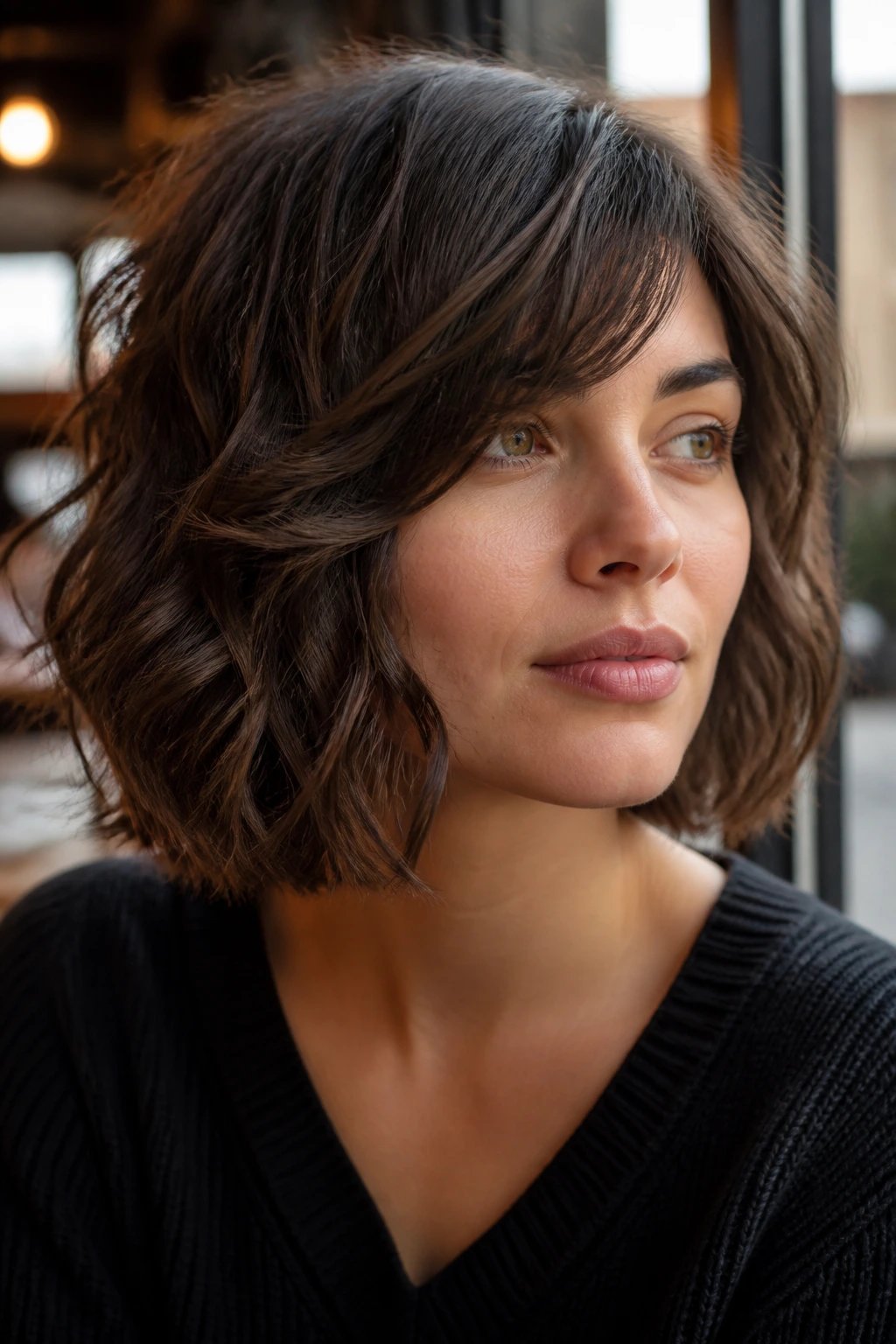
This is the compromise cut for people who want a bob shape but don’t want to feel like they’ve lost their hair. The ends skim the chin, the layers sit softly around the face, and the side-swept bangs blend into the front instead of standing apart. It’s balanced and easy to wear.
Chin-skimming layers are especially useful for round faces or fuller cheeks, because they create a vertical line without dragging the curls too low. The face gets framed, but not boxed. That’s the part that matters.
If your curl pattern changes from one season to another, this length gives you room to adapt. You can wear it fuller in humidity and more polished when the air gets drier.
18. Glossy Bob for Dressier Days
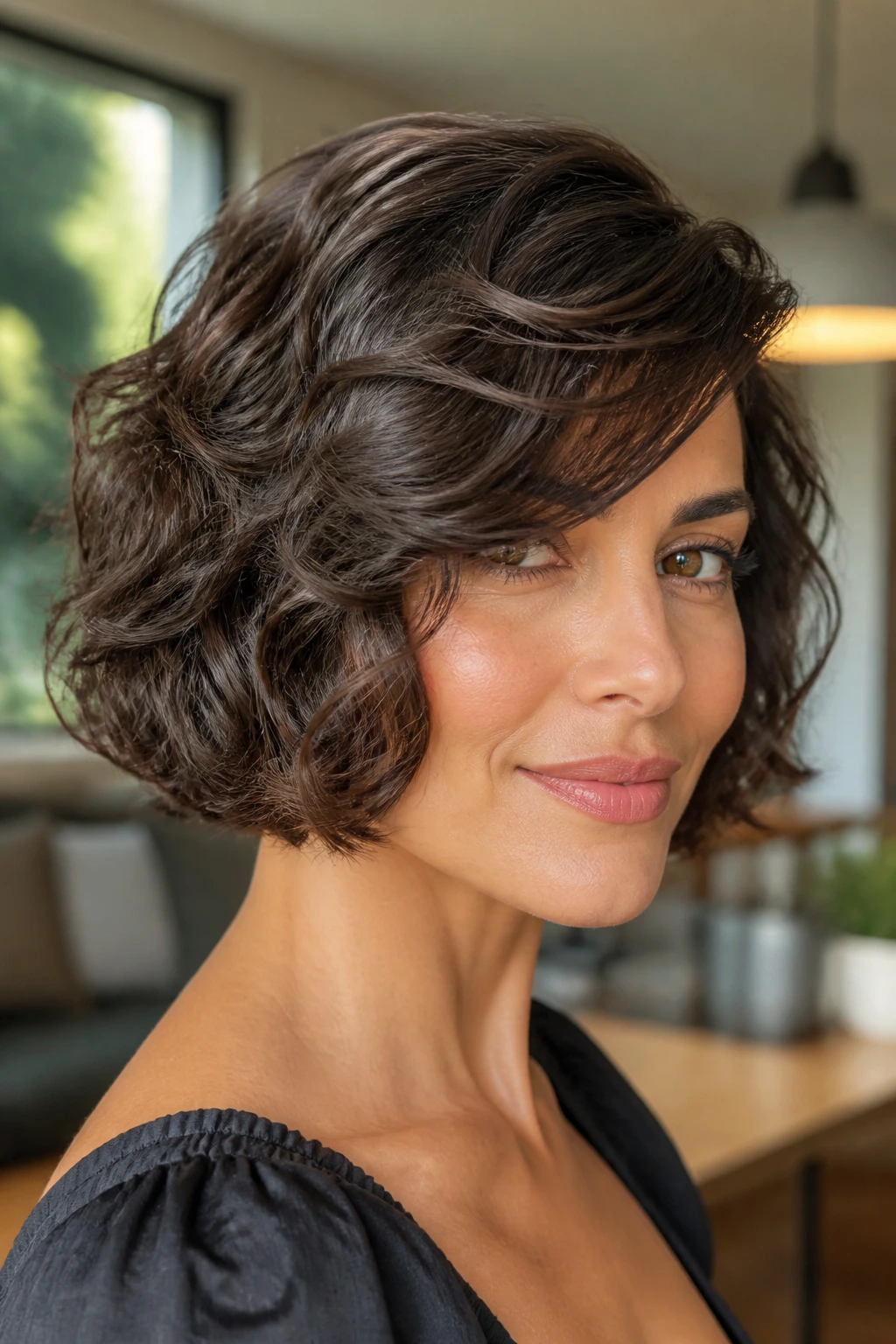
A glossy curly bob is less about the cut and more about the finish. The shape is still textured and side-swept, but the styling is smoother, with defined sections and a bit of shine. It’s the version you wear when you want curls to look deliberate instead of casual.
This style benefits from curl cream followed by a small amount of gel, then a diffuser on low heat until the cast sets. Once dry, scrunch out the crunch with dry hands. That sequence matters more than people think. Skip the gel and the shine tends to disappear.
It’s a useful reminder that curly bobs don’t have to look beachy all the time. Sometimes you want clean lines and glossy bends. Both can live in the same haircut.
19. Grow-Out Bob with Blended Bangs
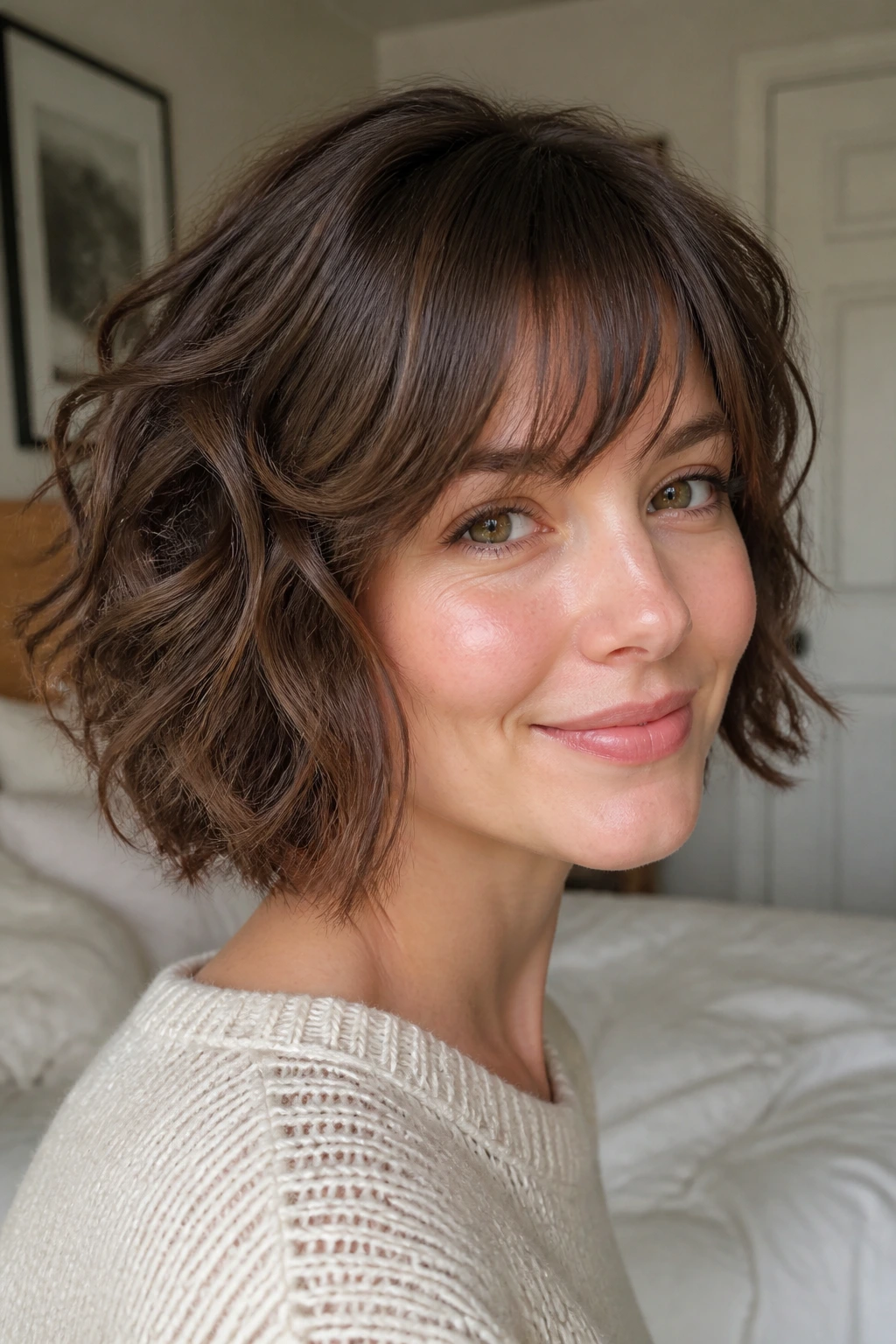
The grow-out bob is for people who don’t want a trim to turn into a life event. It keeps the side-swept bangs long enough to blend as the cut grows, and the overall length sits in a range that still looks like a bob after a few weeks of neglect. That grace period is worth a lot.
A good grow-out bob uses soft layers rather than extreme stacking. The ends stay a little blunt, the front pieces stay movable, and the bangs can tuck behind the ear if needed. It’s not the most dramatic version, but it’s one of the most forgiving.
If you know you’ll miss trims, tell your stylist that outright. Some shapes are pretty on day one and annoying on day twenty-one. This one is less needy.
20. Thick-Hair Bob with Internal Debulking
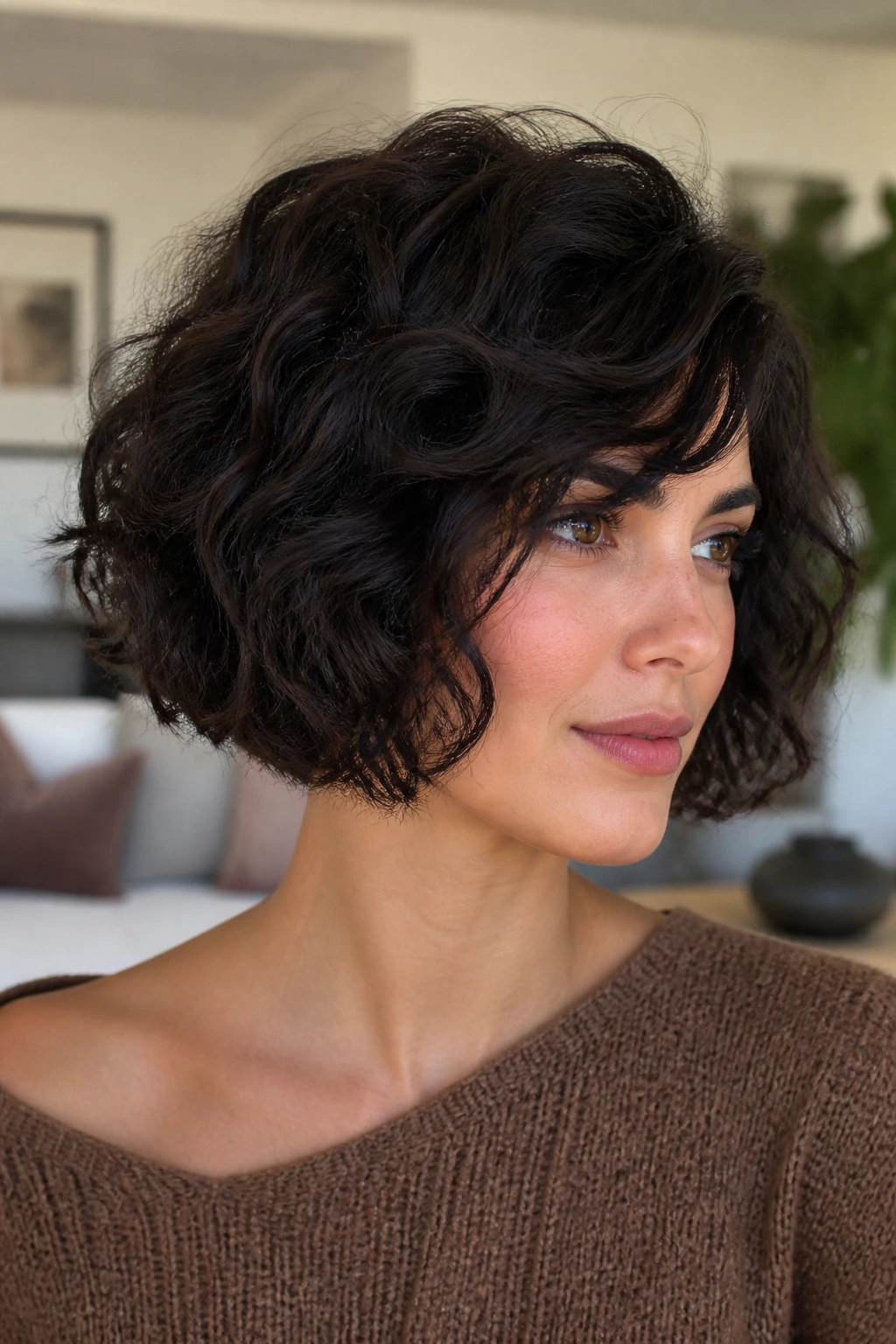
This is the cleanest fix for heavy hair that swells into a triangle by noon. The stylist removes weight from inside the cut so the outer line can stay full without feeling bulky. The side-swept bangs help the front stay open and light.
The mistake with thick hair is usually trying to thin the ends with scissors and calling it a day. That leaves the bottom wispy while the middle still feels huge. Internal debulking solves the shape from the inside out.
A thick-hair bob like this should still feel solid at the perimeter. If the outline is too shredded, the shape disappears. Keep the ends honest.
21. Fine-Hair Bob with Root Lift
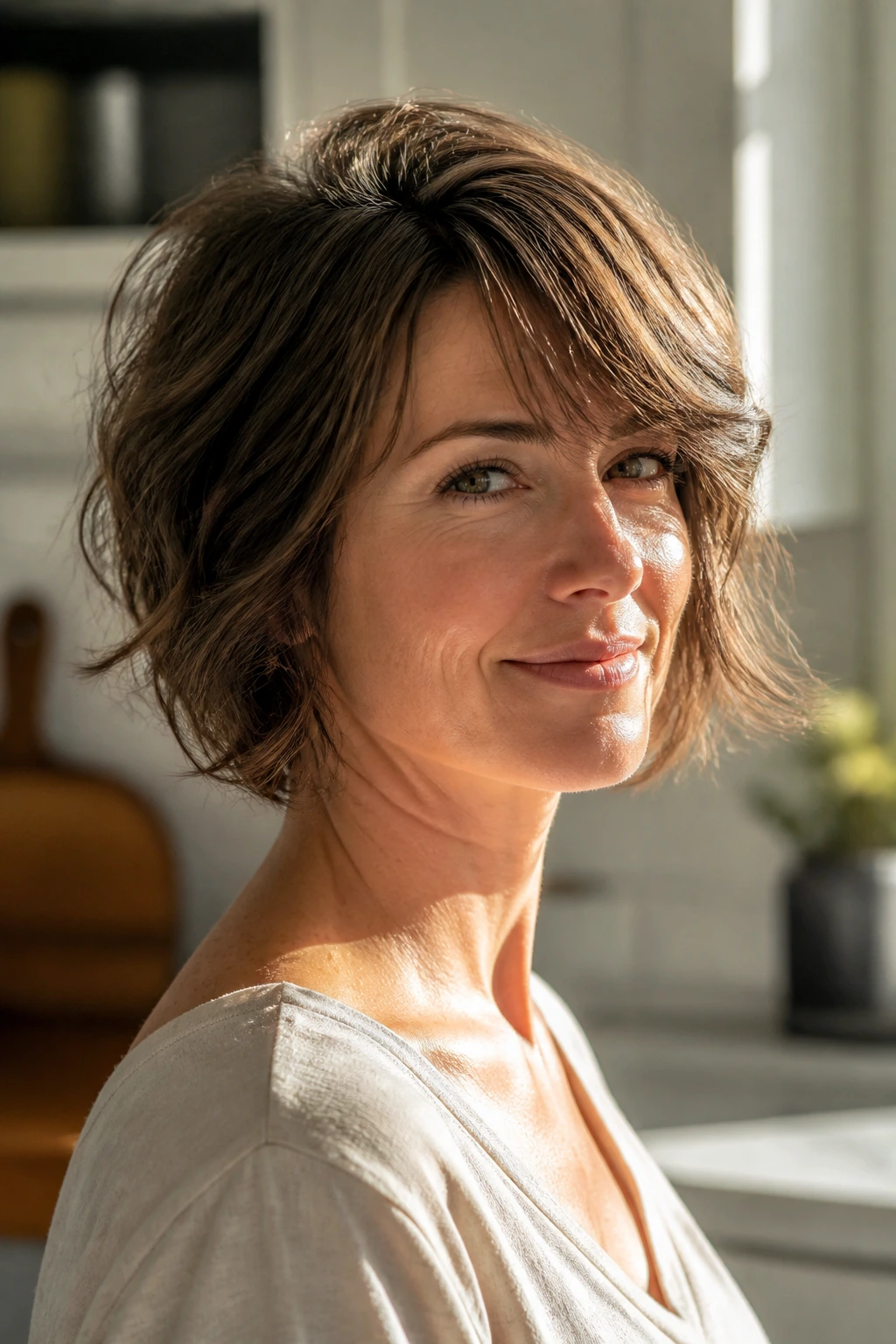
Fine curls need a different playbook. Too many layers and the cut can look see-through; too few and it collapses. A fine-hair bob with root lift uses a little stacking near the crown, a soft side sweep, and enough length to keep the strands from floating away.
The goal is fullness, not puff. A lightweight mousse and a diffuser on low speed usually do more than thick creams ever will. Heavy products tend to drag fine curls into strings.
This shape looks especially good when the side-swept bangs start a bit farther back on the head. That gives the front a bit of lift and avoids a flat curtain across the forehead.
22. Statement Bob with a Dramatic Side Sweep
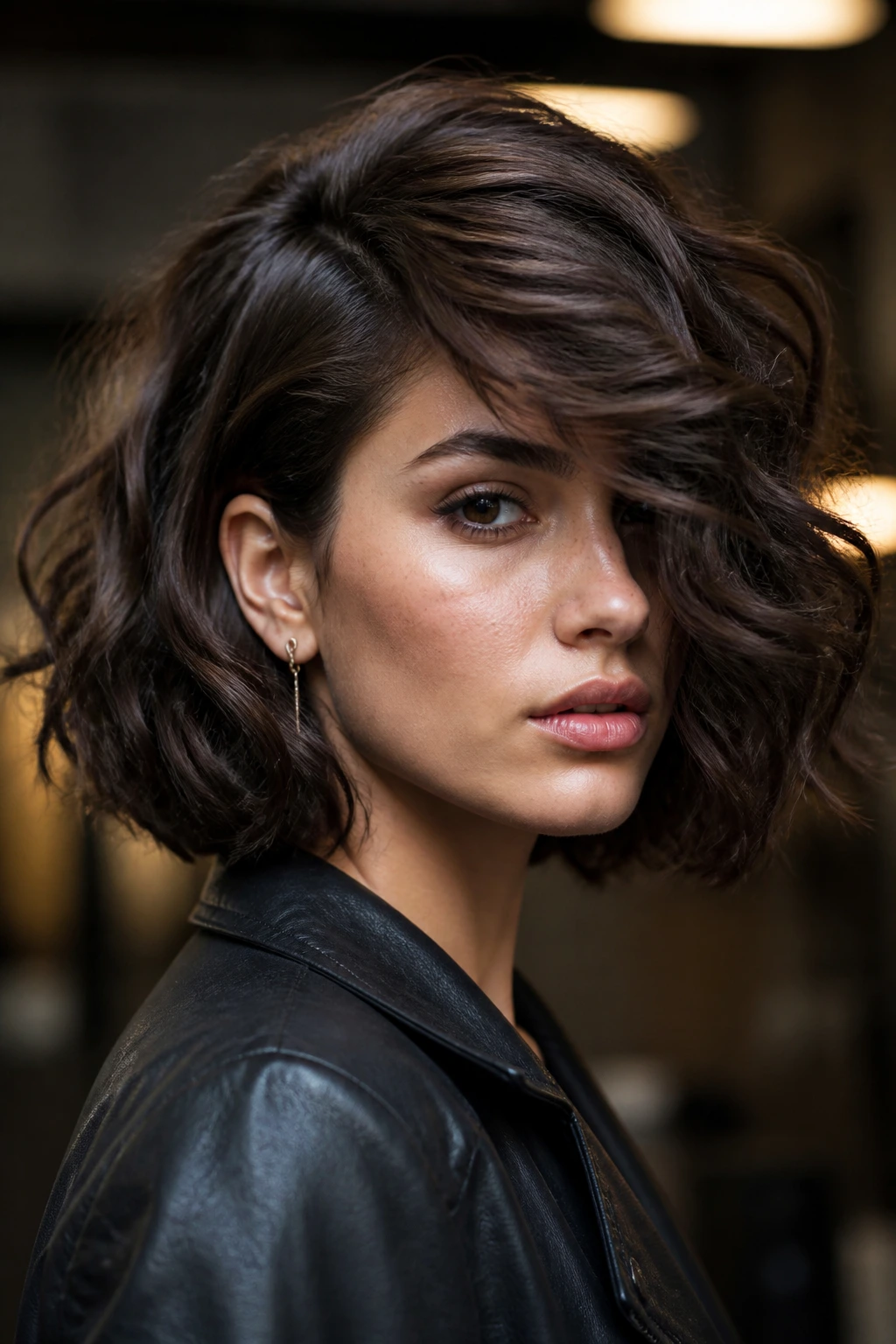
This is the one that makes people turn their heads. The part is deep, the sweep is wide, and the bob leans into asymmetry just enough to feel bold. Curly texture softens the drama, so it never looks harsh or overworked.
I’d reserve this for someone who likes a strong shape and doesn’t mind a little styling effort. The bangs need direction, usually from a diffuser or a clip while they dry. If you let them air-dry randomly, the whole point gets lost.
The best part is how this cut changes with motion. Stand still and it looks sculpted. Walk across a room and the front pieces shift in a way that feels alive.
What Makes This Shape Work in Real Life
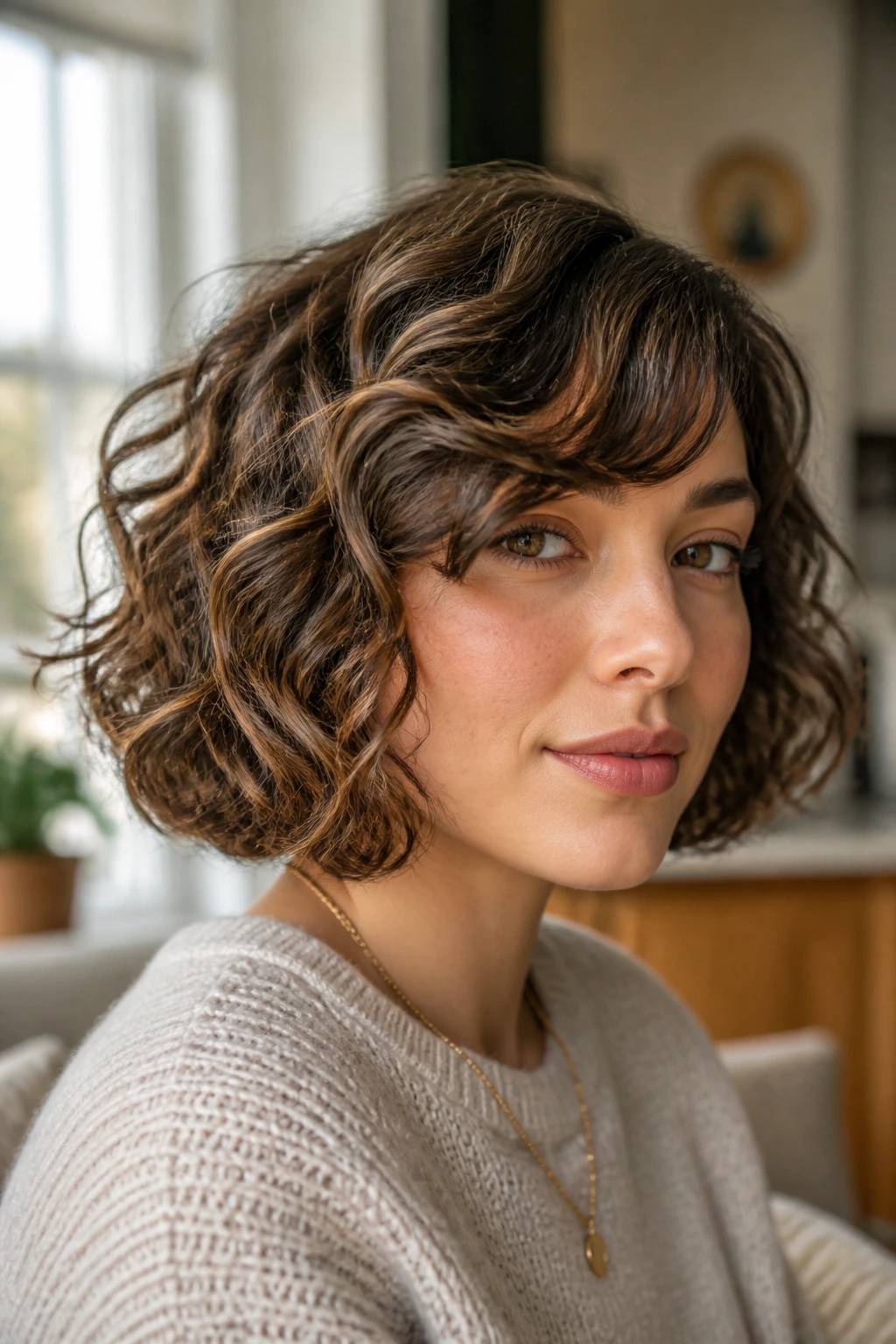
A good textured bob on curly hair is mostly a conversation between weight and movement. Take away too much weight and the cut puffs out. Leave too much and the curls collapse into a dark, shapeless block at the bottom. The sweet spot sits somewhere in the middle, and that middle changes with curl pattern, density, and how much the hair shrinks as it dries.
Side-swept bangs help because they give the front a direction. They don’t have to be identical on both sides. In fact, they usually shouldn’t be. A little asymmetry keeps the fringe from fighting the rest of the curl pattern, and it makes day-two hair easier to live with because you can redirect the sweep with a damp hand and a clip.
The best-looking curly bobs usually start with a dry cut or at least a curl-by-curl check after the hair dries. Wet hair lies. It also shrinks in ways that surprise even people who know their hair well. When a stylist ignores that, you end up with bangs that feel accidental and ends that sit an inch shorter than anyone wanted.
What to Tell Your Stylist Before the First Snip
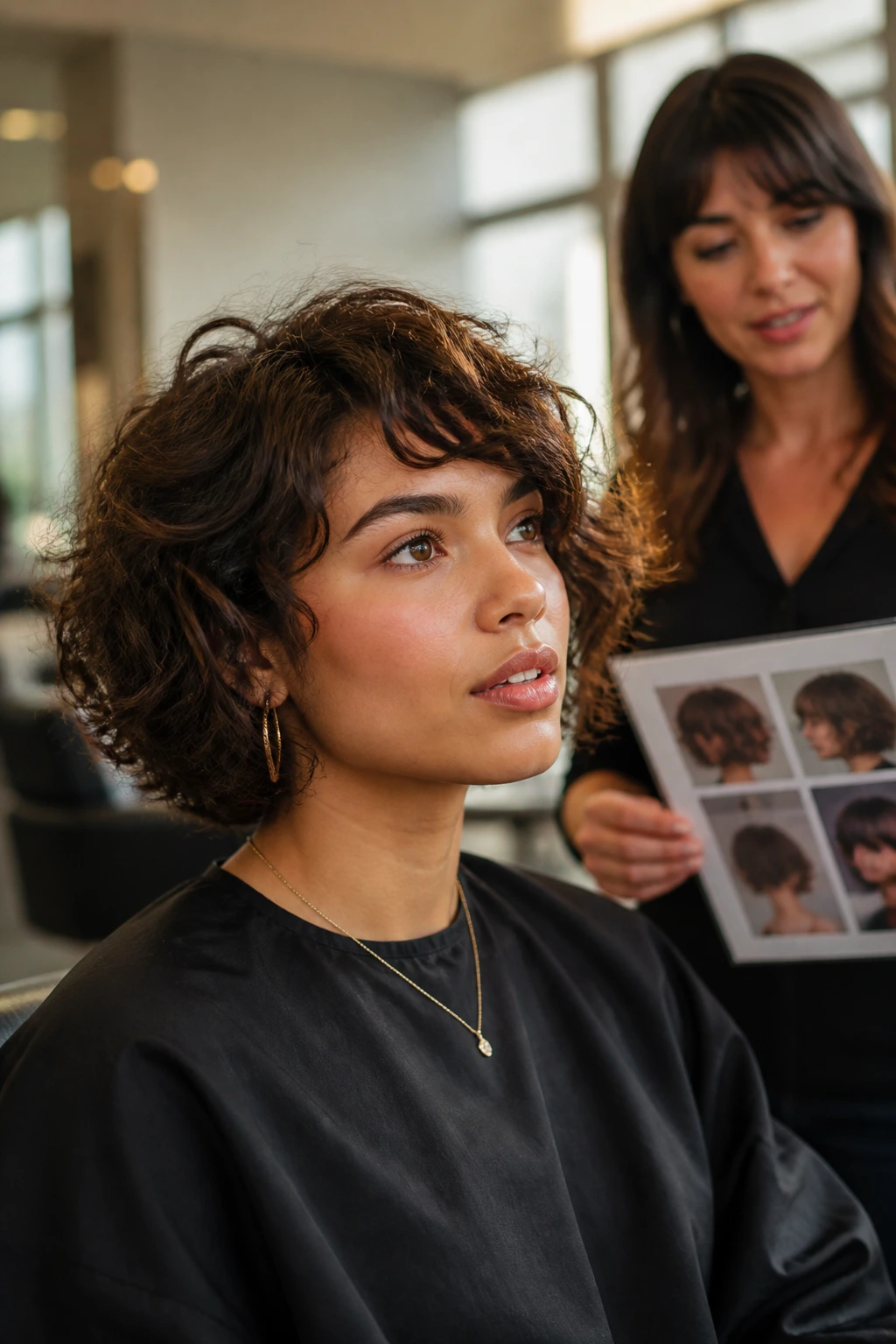
Bring more than one photo, and don’t bring only one photo of someone with a totally different curl pattern. That’s how people end up disappointed. What helps more is showing the overall shape you want: chin length, collarbone length, how much width at the sides, and whether the bangs should blend or stand apart.
Speak plainly about your curl behavior. If your hair springs up an inch, say that. If one side always wins the battle and parts harder than the other, say that too. A stylist can work with those details. They cannot guess them through magic.
The Three Things Worth Naming
Shrinkage: Tell them how much length you lose when your hair dries. That one detail changes everything about where the bob should land.
Parting: Say whether you wear a deep side part, a soft side part, or let the hair fall wherever it wants. The bangs need to match that habit.
Density: If your hair is thick in the back or fine at the ends, say so. Bob shape lives and dies on how weight is removed.
The Tools That Make Styling Easier
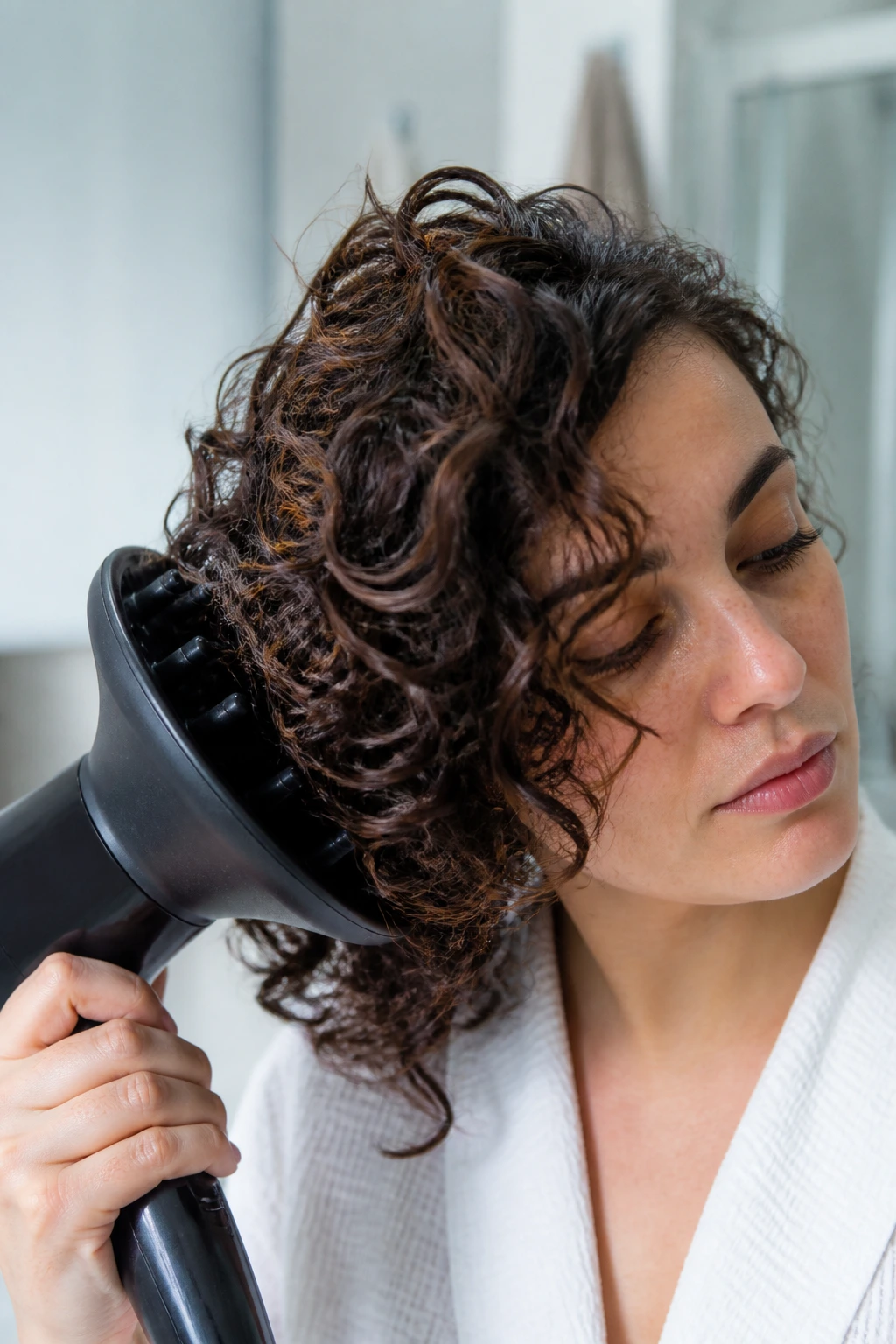
- Diffuser attachment: Helps set the curl pattern without blasting the fringe flat.
- Spray bottle with water: Useful for re-wetting side-swept bangs without washing the whole head.
- Microfiber towel or cotton T-shirt: Cuts frizz better than a rough bath towel.
- Wide-tooth comb: Good for distributing product through wet curls without breaking up the pattern.
- Duckbill or sectioning clips: Handy for pinning the bang sweep into place while it dries.
- Light mousse or curl foam: Gives lift at the roots without making the bob sticky.
- Curl cream or leave-in: Adds slip and keeps the front pieces from looking dry.
- Small round brush or Denman-style brush: Optional, but useful if you want the bangs to curve in a specific direction.
- Light-hold gel: Worth having if you want the cut to hold its shape through humidity.
- Hand mirror: Sounds simple, but it helps you check the back line and the nape.
How to Style a Textured Curly Bob Without Flattening It
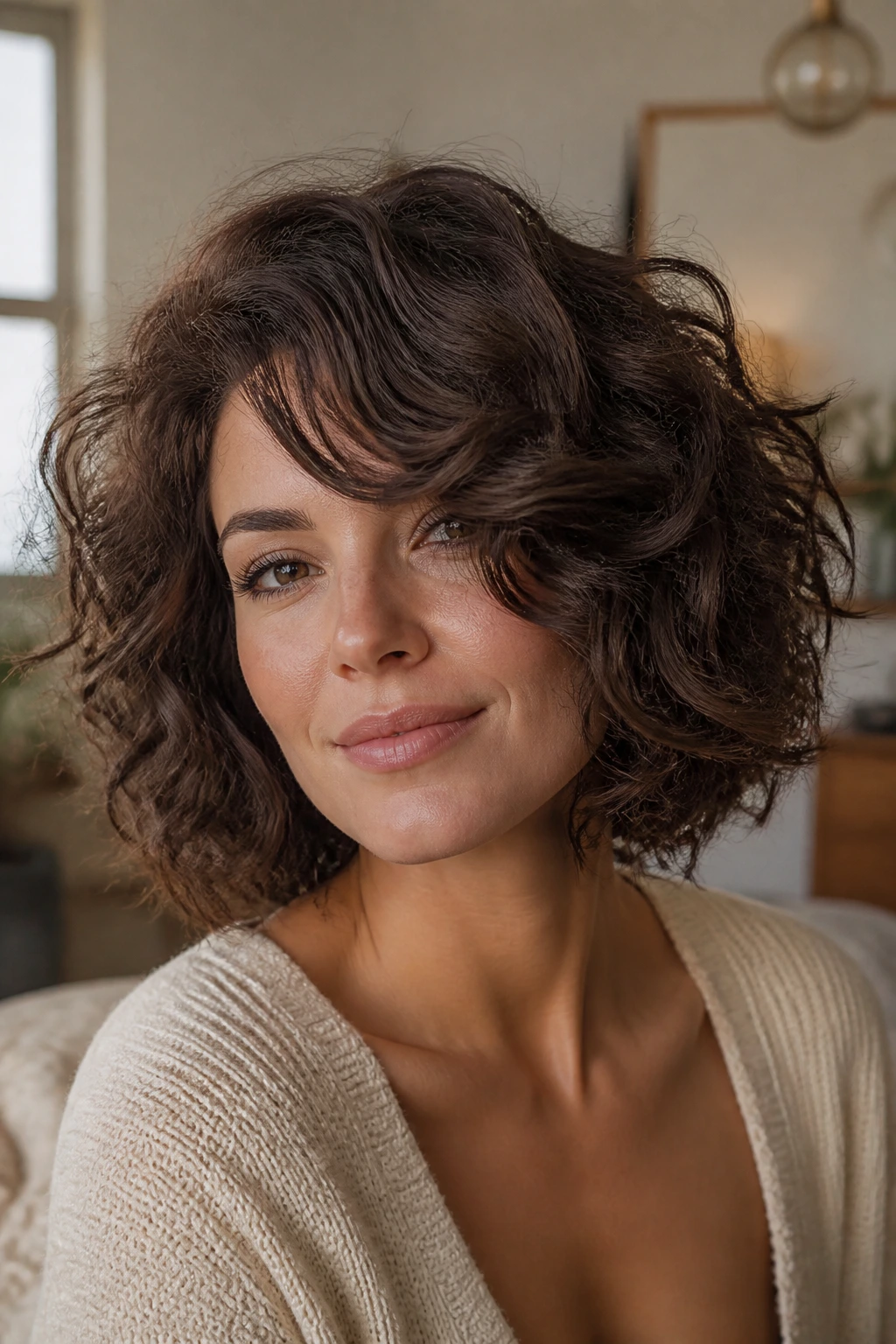
The easiest way to ruin a curly bob is to over-handle it. Wet hair needs product, sectioning, and then a pause. Once the curls are set, stop messing with them. That one habit saves more good hair days than any expensive serum ever will.
Start with leave-in on soaking-wet hair, then add mousse or a light gel depending on how much hold you want. Scrunch from the ends upward, but don’t squeeze the life out of the curls. The side-swept bangs usually need a separate pass: smooth them across the forehead with damp fingers, then clip them in place for ten to fifteen minutes so they learn the direction.
Diffuse on low heat if you want lift, or air-dry if you want a softer, looser finish. Either way, don’t touch the curls until they’re mostly dry. When they are, flip the head upside down for a few seconds if you need root lift, then stop. Too much flipping can turn a neat bob into a puffy one.
Small Tweaks That Change the Whole Look
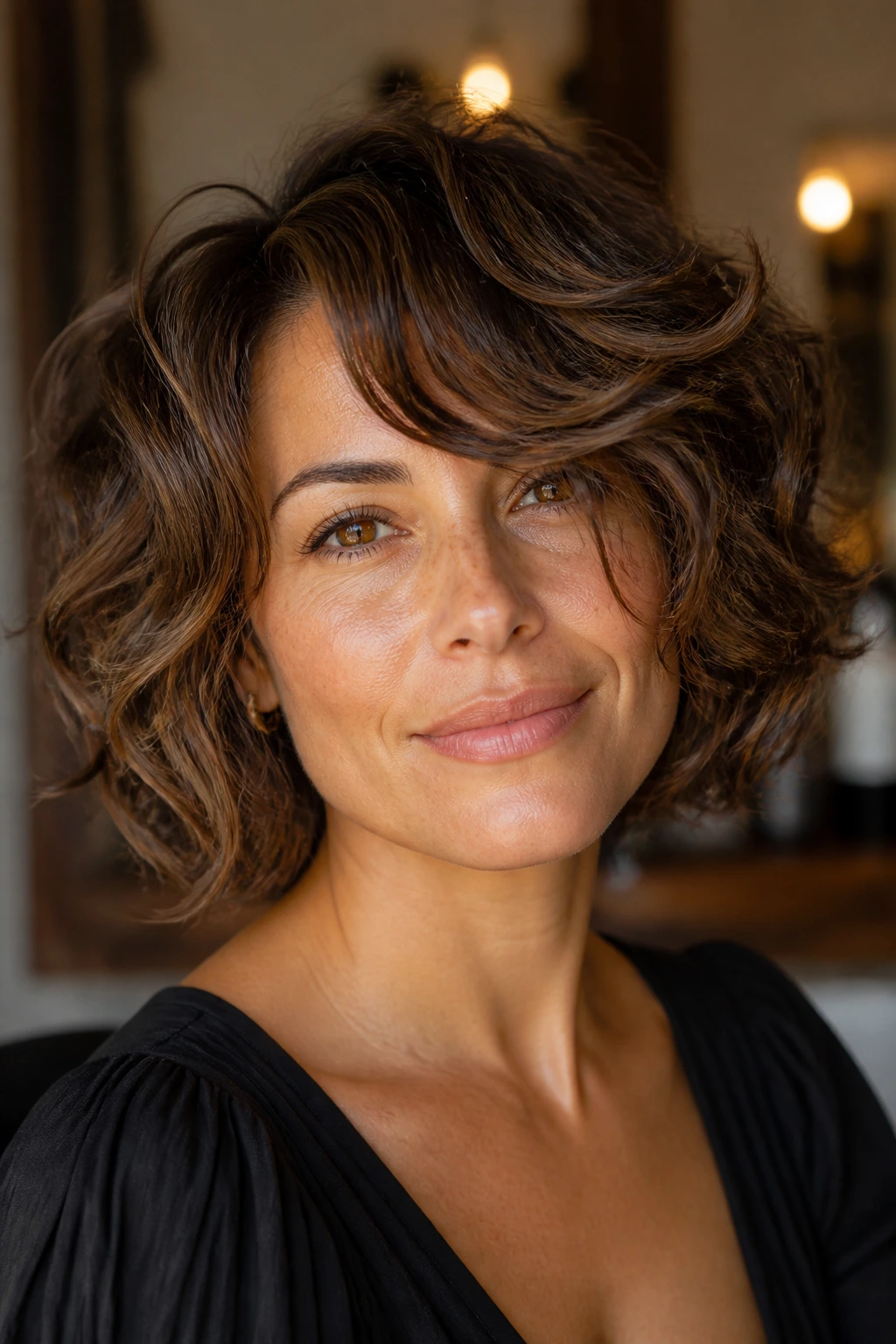
For Fine Curls: Ask for softer layering and less internal thinning. Fine hair needs support at the ends, not a bunch of airy holes in the middle.
For Thick Curls: Keep some weight in the perimeter and let the stylist remove bulk inside the shape. If the ends get too wispy, the bob starts to expand outward like a bell.
For a Softer Forehead Line: Let the side-swept bangs begin farther back and travel longer across the face. A short diagonal can feel harsh; a longer sweep looks calmer.
For a Stronger Jawline Frame: Choose a chin-length or asymmetrical shape with the front pieces landing near the jaw. It pulls attention there without shouting about it.
For Less Daily Styling: Pick one of the collarbone or grow-out-friendly bobs. The longer versions usually forgive a rougher air-dry and a later wash day.
Mistakes That Make Curly Bobs Frustrating
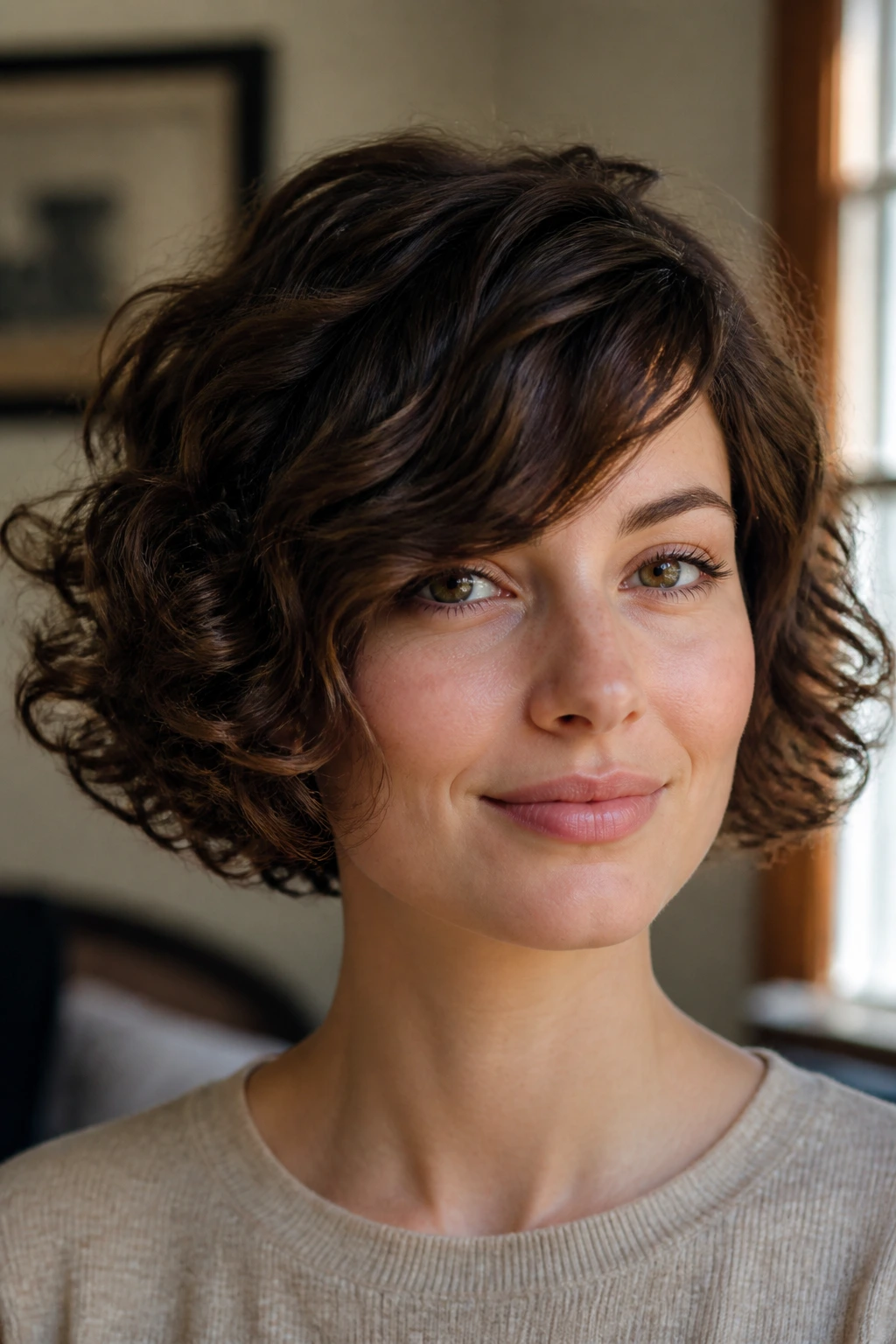
Cutting the bangs too short is the quickest way to create a bad week. Curly fringe springs up as it dries, and what looked like a gentle sweep in the chair can turn into a stubborn little shelf by lunch. Leave more length than you think you need.
Over-thinning is another one. When the inside of the cut gets stripped too aggressively, curls lose their support and frizz out around the edges. The silhouette gets fuzzy instead of airy. Ask for weight removal that respects the outline.
Heavy creams can also backfire. They’re useful on coarse or dry curls, but on fine or low-density hair they weigh the front down and erase the sweep. If the bangs keep falling into your eyes, the product may be the problem, not the cut.
One more: ignoring your natural part. A bob that fights your part every morning will wear you out fast. Side-swept bangs should follow the grain, not argue with it.
Ways to Rework the Same Cut
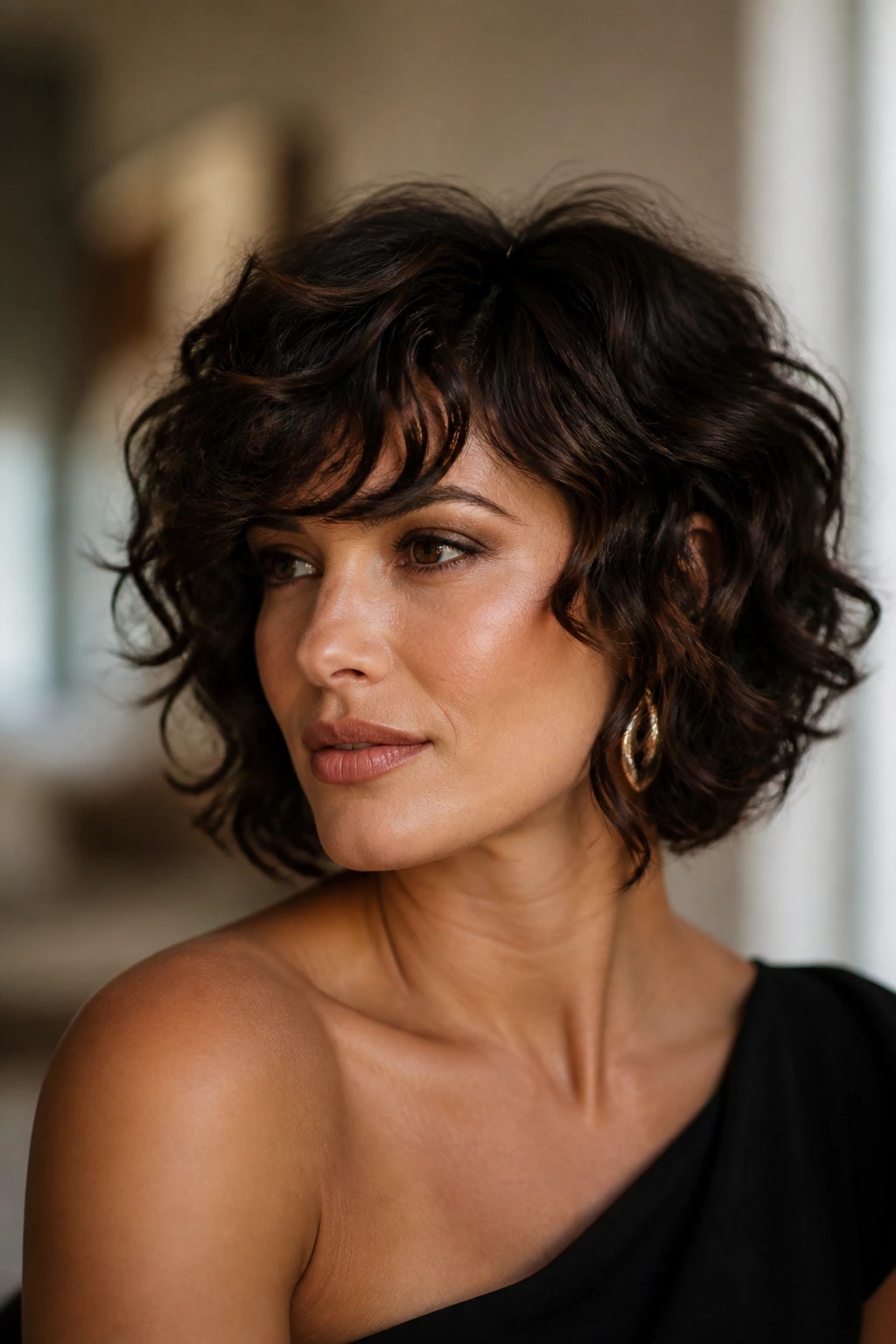
Soft Office Version: Keep the bob collarbone length and the fringe long enough to tuck behind one ear. It reads neat without looking stiff.
Weekend Messy Version: Use a little more mousse, diffuse until about 80 percent dry, then scrunch the ends with dry hands. The goal is piecey, not puffy.
Glossy Evening Version: Add a touch of serum only to the outer layer after the curls set. That gives the bob a polished surface without flattening the shape underneath.
Low-Fuss Grow-Out Version: Ask for blended layers and a bang that can become part of the front pieces as it grows. This is the safest bet if you hate frequent trims.
Keeping the Shape Between Salon Visits
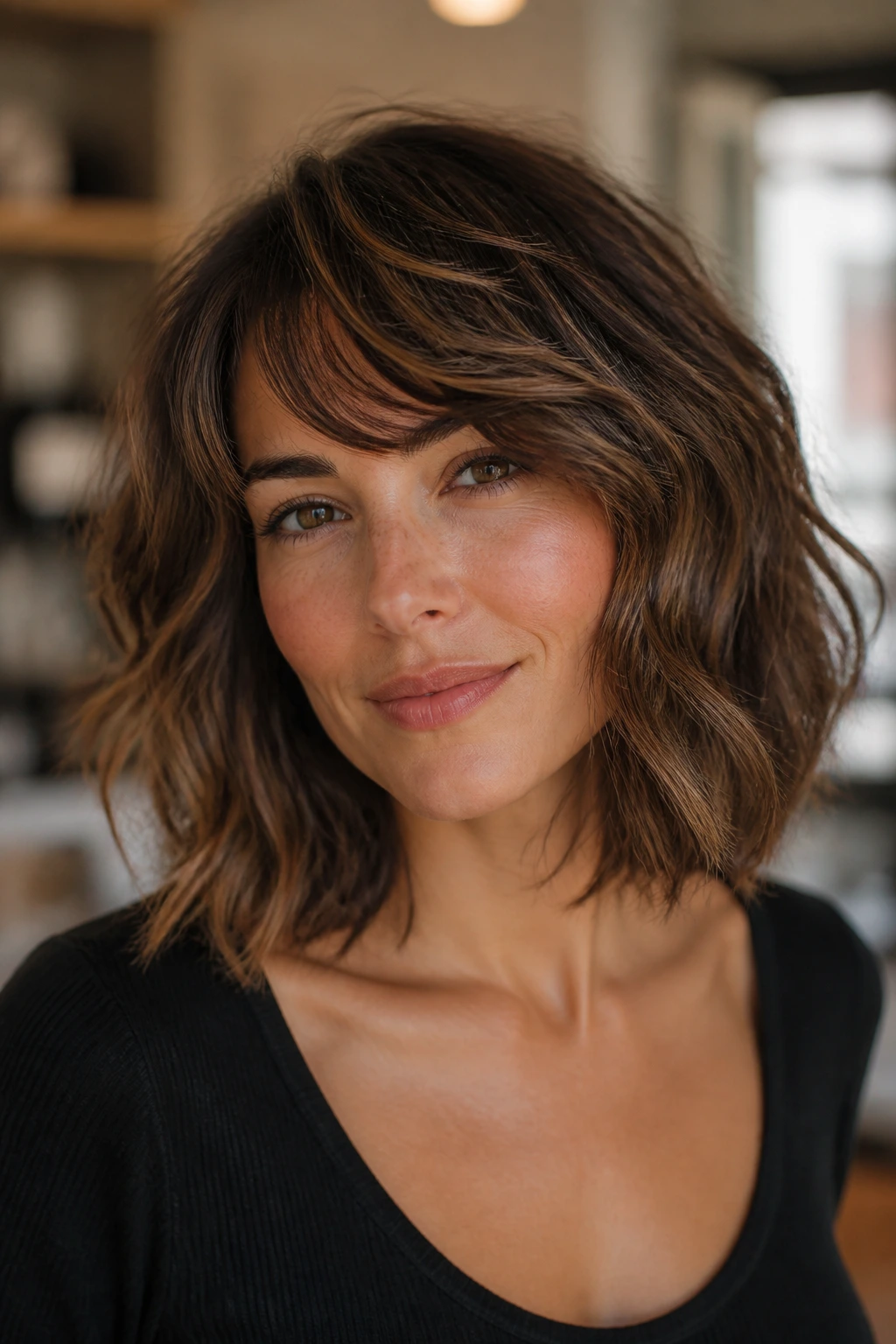
A curly bob doesn’t need constant salon attention, but it does need a little maintenance. Side-swept bangs usually ask for a trim every 4 to 6 weeks if you want them to keep the sweep. The bob itself can often go 8 to 12 weeks before it needs reshaping, depending on how fast your hair grows and how precise the silhouette is.
Between washes, use a spray bottle to wake up the front, then add a pea-sized amount of mousse or curl cream where the bang wants to separate. If the root area starts to collapse, clip the front up for 10 minutes while it dries. That small bit of lift changes the whole face frame.
Clarify once a month if you use heavy stylers. Product buildup makes curls limp, especially around the bangs and crown. Deep condition every 1 to 2 weeks if your ends feel crunchy or rough. Not every bob needs the same amount of moisture, but nearly all curly bobs punish neglect in the front first.
Frequently Asked Questions About Curly Bobs and Side-Swept Bangs
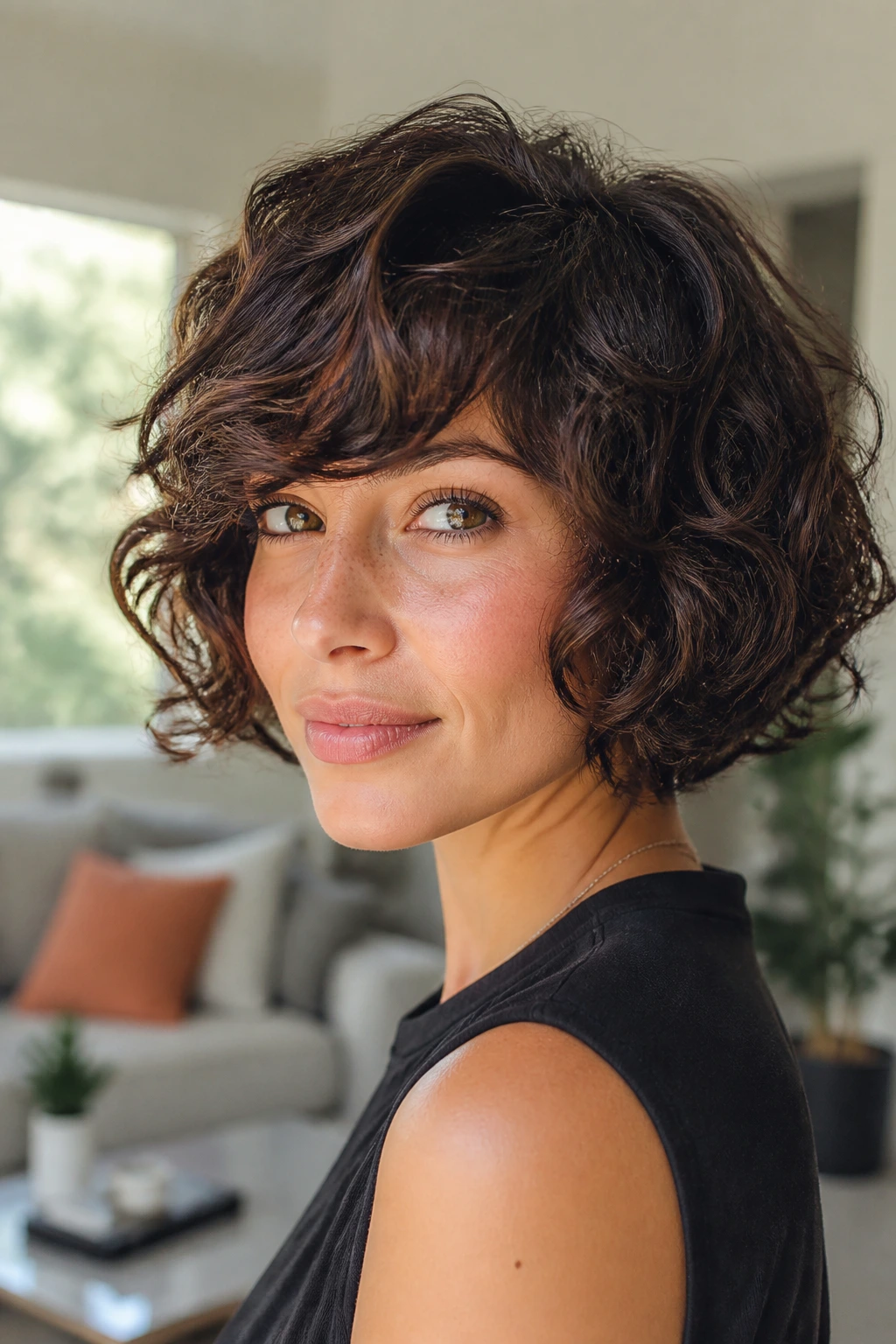
Do side-swept bangs work on curly hair, or do they just separate?
They work well when they’re cut with enough length and direction. The trick is to let them follow your natural part and curl pattern instead of forcing a straight diagonal line. If the fringe is cut too short, separation becomes the whole story.
Should a curly bob be cut wet or dry?
Dry cutting usually gives the clearest read on shape, especially around the bangs and perimeter. Wet cutting can still work if the stylist knows how much your hair shrinks and checks the result after it dries. For most curly bobs, some dry refinement is the part that saves the haircut.
What face shapes suit a side-swept curly bob best?
Almost all of them can wear one, but the length and angle change. Round faces often like chin-skimming or collarbone lengths, while longer faces usually do better with more width at the sides and a fuller sweep across the forehead.
How do I keep the bangs from puffing up?
Use less product at the root and more control in the direction. A light gel or mousse, plus clipping the bangs into the side sweep while they dry, usually works better than trying to flatten them after the fact. Once they puff, they tend to stay puffed.
Can fine curly hair wear a textured bob without looking thin?
Yes, if the cut keeps enough weight at the ends and avoids too many internal holes. Fine curls usually do better with a softer layered bob and a lightweight styling product. Heavy creams make the front go limp fast.
What if my curls are tighter than the photos I’m showing?
Ask for the same general shape, but leave extra length in the front and fringe. Tight curls shrink more, and the bangs need room to sweep rather than spring straight up. The photo is a reference for silhouette, not a direct measurement.
How often should I trim a curly bob?
The perimeter can often wait 8 to 12 weeks, but side-swept bangs usually need attention sooner, around 4 to 6 weeks. If the front starts covering your eyes or the sweep loses direction, that’s your sign.
What’s the easiest version to style on busy mornings?
The collarbone bob, the grow-out bob, and the air-dried bob all ask for less hands-on work. They keep enough length to settle on their own, and the side-swept bangs don’t need a perfect blowout to look intentional.
A Bob That Still Has Swing
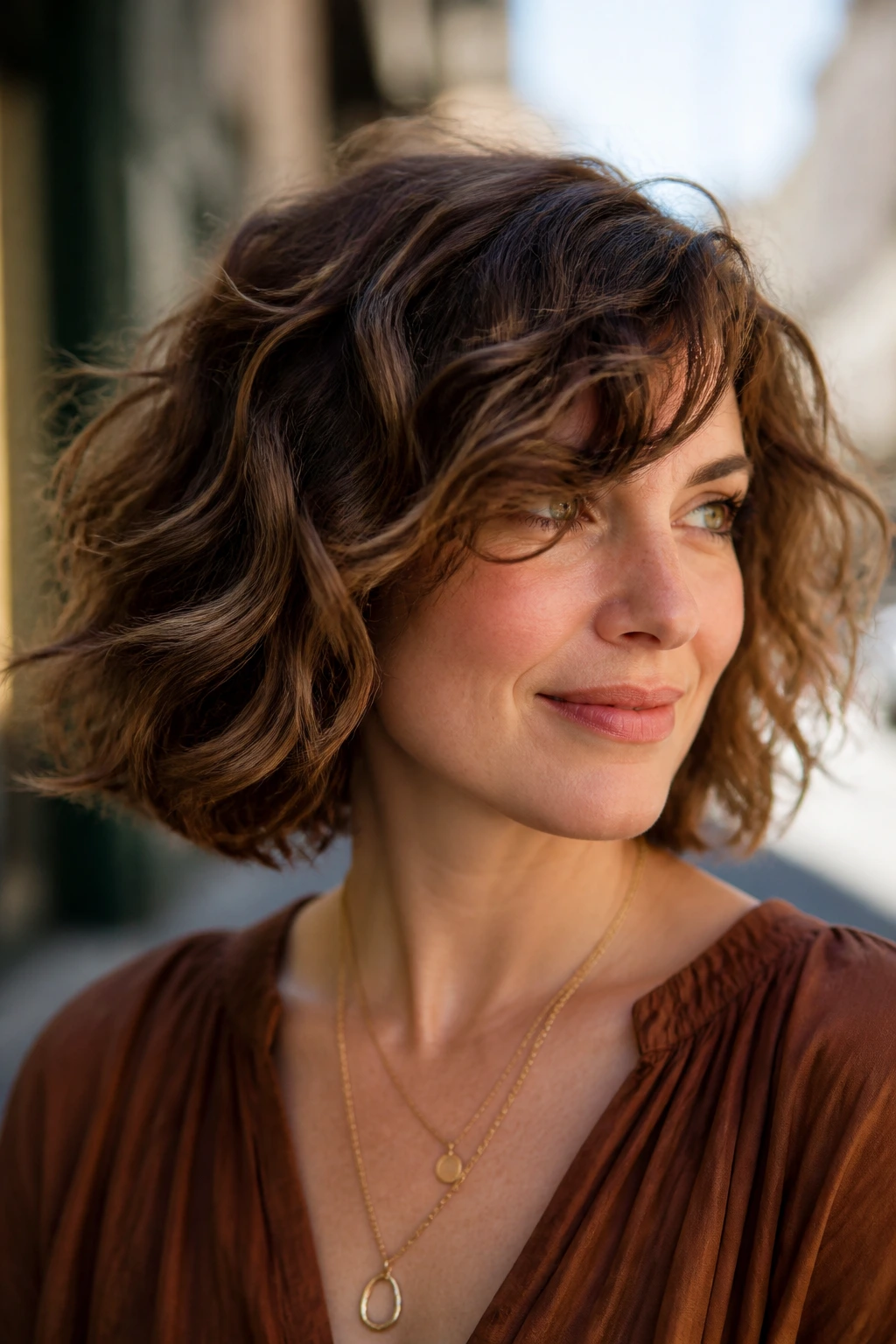
The best textured wavy bob for curly hair is the one that works with your curl pattern instead of arguing with it. Side-swept bangs help because they give the cut a direction, but the real magic is in how the length, layers, and weight removal all line up once the hair dries. Get that part right, and the haircut starts behaving like a shape instead of a compromise.
I’d keep this simple when you sit in the chair: show the silhouette you want, talk honestly about shrinkage, and leave room for the bangs to land lower than your first instinct says they should. Curly hair rewards patience there. Rush the front pieces, and you’ll spend the next month pinning them back. Give them a little room, and the whole cut starts moving the way it should.