



Square faces can wear a bob with confidence, but not every bob deserves the job. A blunt line that lands right on the jaw can make the lower face look wider than it is, and wavy hair will happily amplify that effect if the cut is too neat, too heavy, or too symmetrical.
A choppy bob changes the math. The broken ends, uneven texture, and little shifts in length keep the eye moving instead of letting it lock onto one hard horizontal line. That matters on a square face, where the goal is not to hide the angles. It’s to soften the edges around them.
The best versions feel lived-in without looking random. The weight sits where the hair needs support, the front pieces skim the cheek or collarbone, and the wave pattern gets room to bend instead of swelling out at the sides. I like a bob that looks deliberate from the front and a little undone in motion. That’s the sweet spot here.
Why These Cuts Work So Well Together

They break up the jawline: Choppy ends interrupt the straight edge that can make a square face look broader at the sides.
They respect the wave pattern: Wavy hair wants to move; a textured bob lets the bend happen instead of forcing it into a flat sheet.
They create softness without hiding the face: The right cut leaves the cheekbones and eyes visible while easing the heavier line around the lower face.
They can be styled fast: A little mousse, a rough dry, and a few finger-adjusted pieces are often enough.
They work at more than one length: Chin-length, jaw-skimming, and collarbone-grazing versions all solve the same problem in different ways.
1. Collarbone Choppy Bob with Curtain Bangs
A collarbone length is a kind choice for square faces because it slips past the widest part of the jaw. Curtain bangs split the forehead, pull attention inward, and keep the whole cut from feeling boxy.
What makes it flattering
The longer front pieces act like soft parentheses around the face. Wavy hair loves this length because the bend shows up clearly without puffing out into a triangle. Ask for point-cut ends and bangs that graze the cheekbone, not a fringe that stops high on the forehead.
- Best for: Loose to medium waves that fall in soft bends.
- Face effect: Lengthens the lower face without making it look heavy.
- Styling note: A center or near-center part keeps the curtain fringe balanced.
Tip: If your waves are strong, keep the layers long. Too much layering at the crown can make the top spring up while the sides flare out.
2. Jaw-Skimming Side-Part Bob
A deep side part changes the whole mood of a square face. It creates a diagonal line across the forehead and breaks the symmetry that can make strong jawlines feel extra rigid.
This version works because the hair does not sit evenly on both sides of the face. One side drops a little closer to the cheek, the other side opens up the eye area, and that offset is doing real work. I prefer this cut when the waves have enough body to hold shape but not so much bulk that they puff at the temples.
Keep the ends lightly shattered rather than blunt. If the line at the jaw is too clean, the whole cut starts shouting.
3. French Bob with Piecey Fringe
Why does a French bob work on a square face when it is short? Because the charm is in the mess. A good one has a soft fringe, broken ends, and enough texture that the edge never reads as a ruler.
The trick is to keep the fringe piecey, not helmet-like. Wavy hair gives this cut a little bounce, which is exactly what it needs; the hair should flick, separate, and move around the cheekbones. If your stylist reaches for the thinnest fringe possible, push back a little. You want wispy, not see-through.
How to wear it
Let it dry with a dab of mousse, then pinch a few strands apart with a drop of styling cream. The result should feel casual, but not careless.
4. A-Line Choppy Bob with Longer Front Pieces
Picture a bob that’s a touch shorter in back and drifts longer toward the face. That slope is useful on square features because it pulls the eye forward and down instead of letting it settle on the jaw.
The front pieces can graze the chin or go just below it, which gives wavy hair room to curve without flaring outward. This is one of my favorite shapes for people who want a haircut that looks intentional even when it air-dries imperfectly. The angle gives the style structure; the choppy ends keep it from feeling stiff.
Ask for soft graduation, not a dramatic stack in the back. Too much back volume can push the whole shape into 2008 territory, and that’s not the goal.
5. Shaggy Chin-Length Bob

A shaggy chin-length bob is for the person who wants movement first and polish second. The ends are broken, the layers are loose, and the whole cut has a little swing to it.
On square faces, the danger at chin length is a hard line that sits right on the jaw. Shagging the cut interrupts that line, and wavy hair gives it a natural lift that feels easy rather than fussy. I like this cut when the waves are medium to dense and need space to breathe. If your hair is fine, keep the layers light so the ends do not go wispy.
It wears best with a rough side part or a very soft off-center part. Center parts can work, but they make the shape a little more exact, and this bob looks better with a bit of looseness.
6. Razor-Cut Lob with Face-Framing Waves

Compared with a one-length lob, a razor-cut version lets the ends fall in thinner, softer pieces. That matters on square faces because the haircut stops acting like a box and starts acting like motion.
This is a smart choice if your waves are medium or coarse and need de-bulking near the ends. The razor work should be controlled, though. Too much razor cutting on fine hair can leave the tips ragged in a bad way. Ask for soft face-framing pieces that start below the cheekbone and blend into the front, not a sharp staircase.
It’s the cut I’d point to for someone who wants an easy grow-out. The length stays useful for months, and the face-framing still does its job even after a few weeks of growth.
7. Tucked-Nape Bob with Broken Ends
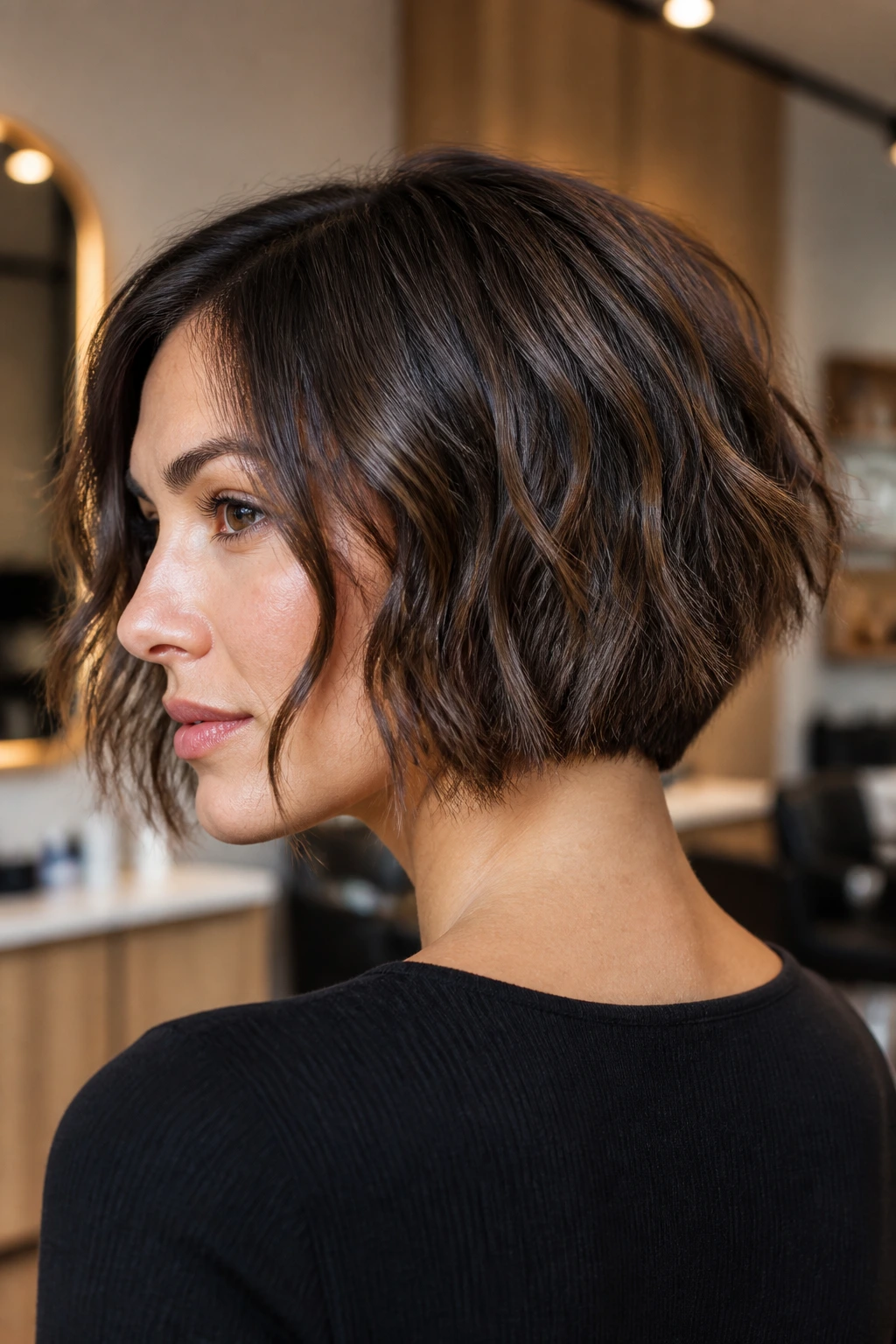
A tucked nape changes the shape without making the haircut feel short all over. The back sits neat and close, while the front pieces stay airy and broken up.
That contrast is useful on square faces because the clean nape keeps the silhouette tidy and the textured front keeps the jaw from looking boxed in. Wavy hair also behaves well here; the bend tends to start a little higher, which keeps the sides from ballooning. If you wear glasses, this cut is worth a serious look. It sits cleanly around frames and doesn’t fight them.
Ask your stylist to leave some softness around the ear line. A hard edge near the ears can make the cut feel too architectural.
8. Asymmetrical Choppy Bob

A little asymmetry goes a long way. When one side is longer, even by half an inch or an inch, the eye stops reading the haircut as a square frame around the face.
That offset works especially well if your waves fall unevenly from one side to the other anyway. Instead of fighting the natural bend, this cut uses it. I like the longer side to skim the cheekbone or chin, while the shorter side stays soft and broken at the ends. The difference should be visible, but not dramatic enough to look like a stunt haircut.
If your face is very square, keep the asymmetry subtle. Big, sharp differences can make the angles feel louder, not softer.
9. Bottleneck-Bang Bob

Bottleneck bangs are one of the smarter fringe choices for square faces because they open in the middle and lengthen toward the sides. That shape echoes the face without boxing it in.
On a wavy bob, the fringe should blend into the face-framing layers instead of sitting like a separate piece. That seam matters. If the bangs are cut too bluntly, they cut the face in half. If they’re too thin, they disappear. The sweet spot is a soft, slightly tapered fringe that brushes the brows and skims the temples.
This is a cut that looks better with a little movement than with perfect smoothness. A quick bend from a round brush is enough.
10. Inverted Bob with Soft Ends
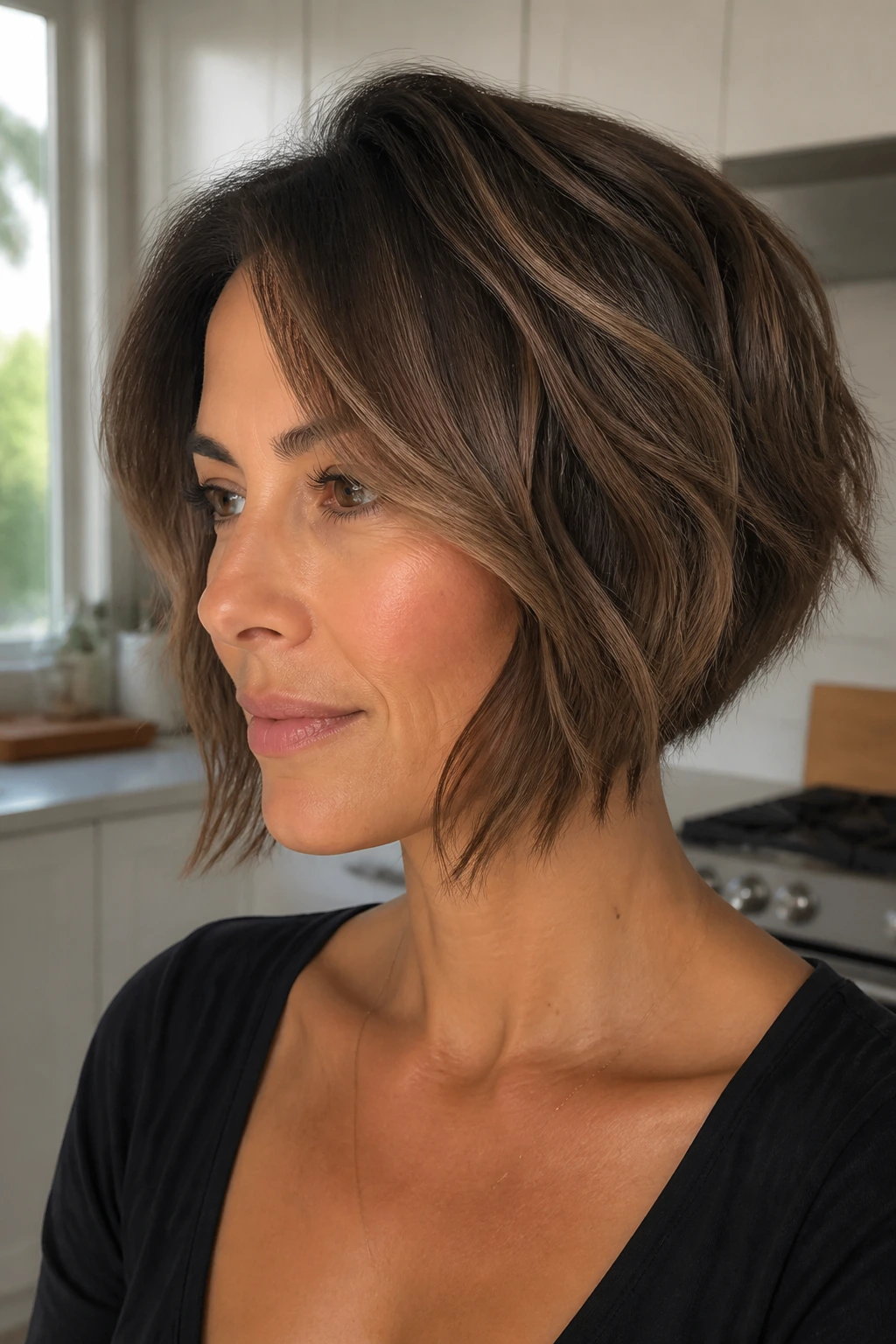
An inverted bob can be tricky on square faces, but a soft version works when the front is not too severe. The longer front corners should angle down gently, not spear forward.
The reason it helps is simple: the back gives lift, the front gives length, and the broken ends keep the whole shape from feeling like a helmet. Wavy hair is useful here because it interrupts the geometry. You want the silhouette to be visible, but not rigid. If the cut is over-stacked at the back, the whole thing can tip into old-school territory fast.
I’d choose this only if you like structure. If you want maximum softness, there are easier shapes in this list.
11. Invisible-Layer Lob

Invisible layers are one of those haircuts that sounds boring until you see what they do. The surface still looks clean, but the inside has enough movement that the waves do not sit in one heavy block.
For square faces, that hidden movement matters because it prevents the sides from flaring straight out. It also makes the lob easier to air-dry. You can scrunch, twist, and go, and the layers do the quiet work underneath. This is the cut I recommend for someone who hates obvious layering but still wants texture.
If your hair is thick, ask for the layers to start lower. Too much internal removal near the crown can make the top collapse while the ends stay bulky.
12. Flipped-Out Bob

A flipped-out bob gives the hair a little lift away from the jaw, which can be surprisingly flattering on square faces. The outward bend breaks the straight line that would otherwise sit too close to the cheek and chin.
I like this shape when the waves are relaxed and the ends need a little help finding direction. It has a playful feel without looking overly styled, especially if you keep the root area loose and let only the last inch or two turn outward. The effect should read as motion, not as a hard curl under a blowout brush.
Use a medium round brush or a flat brush with a quick wrist turn. You do not need much. One overworked flip and it starts looking dated.
13. Soft Box Bob
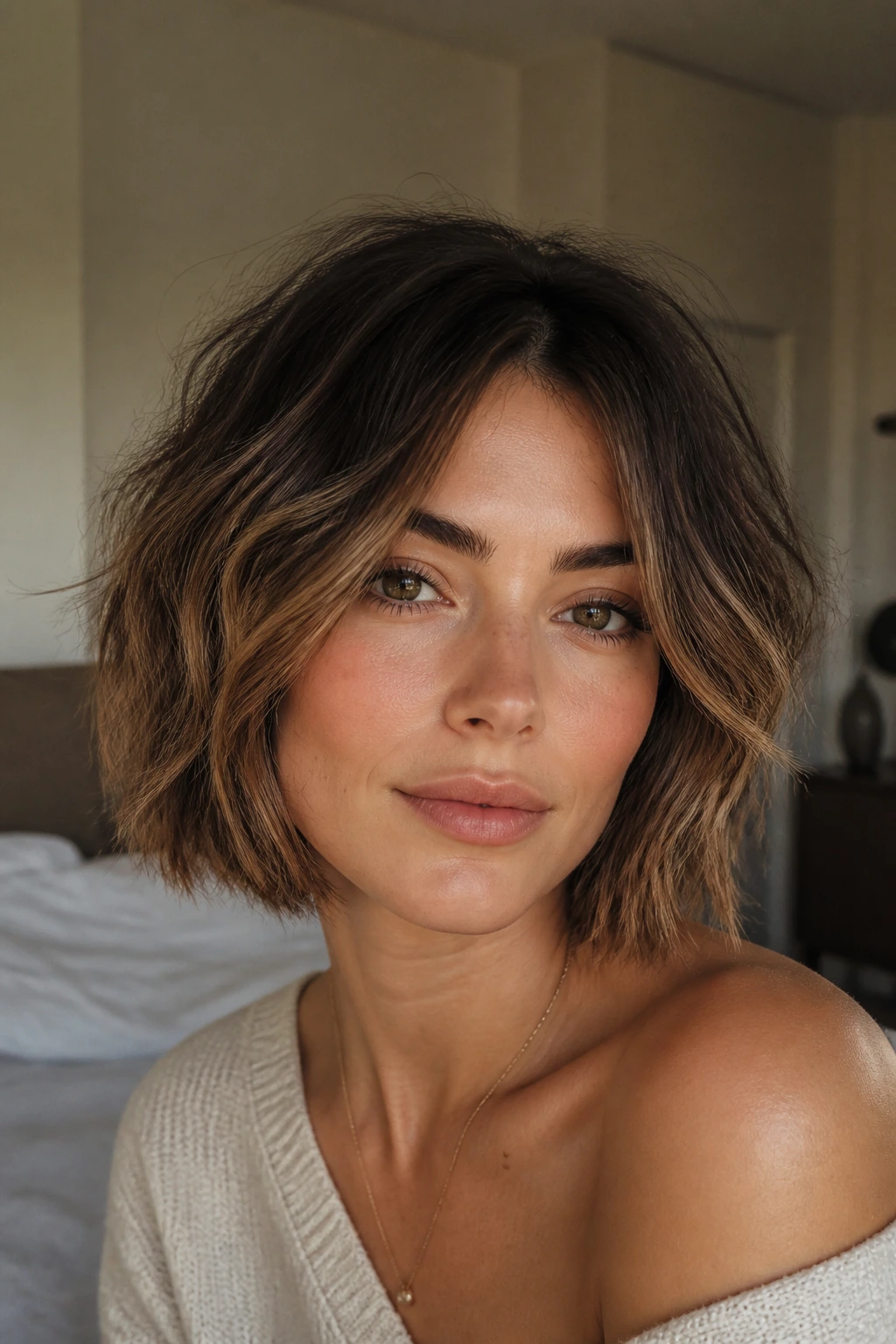
A soft box bob sounds contradictory, which is why it works. The outline stays compact, but the ends are shattered enough that the geometry never turns harsh.
This is a solid choice for square faces that can handle a little width if the line is broken. Wavy hair keeps the shape from feeling flat, and the strong perimeter gives fine hair a little more visual weight. I like it best when the length stops just below the jaw and the corners are softened rather than sharpened.
If you want structure without sweetness, this is a good middle ground. It has enough line to feel modern, but not enough bluntness to make the jaw the star of the show.
14. Deep Side-Sweep Bob
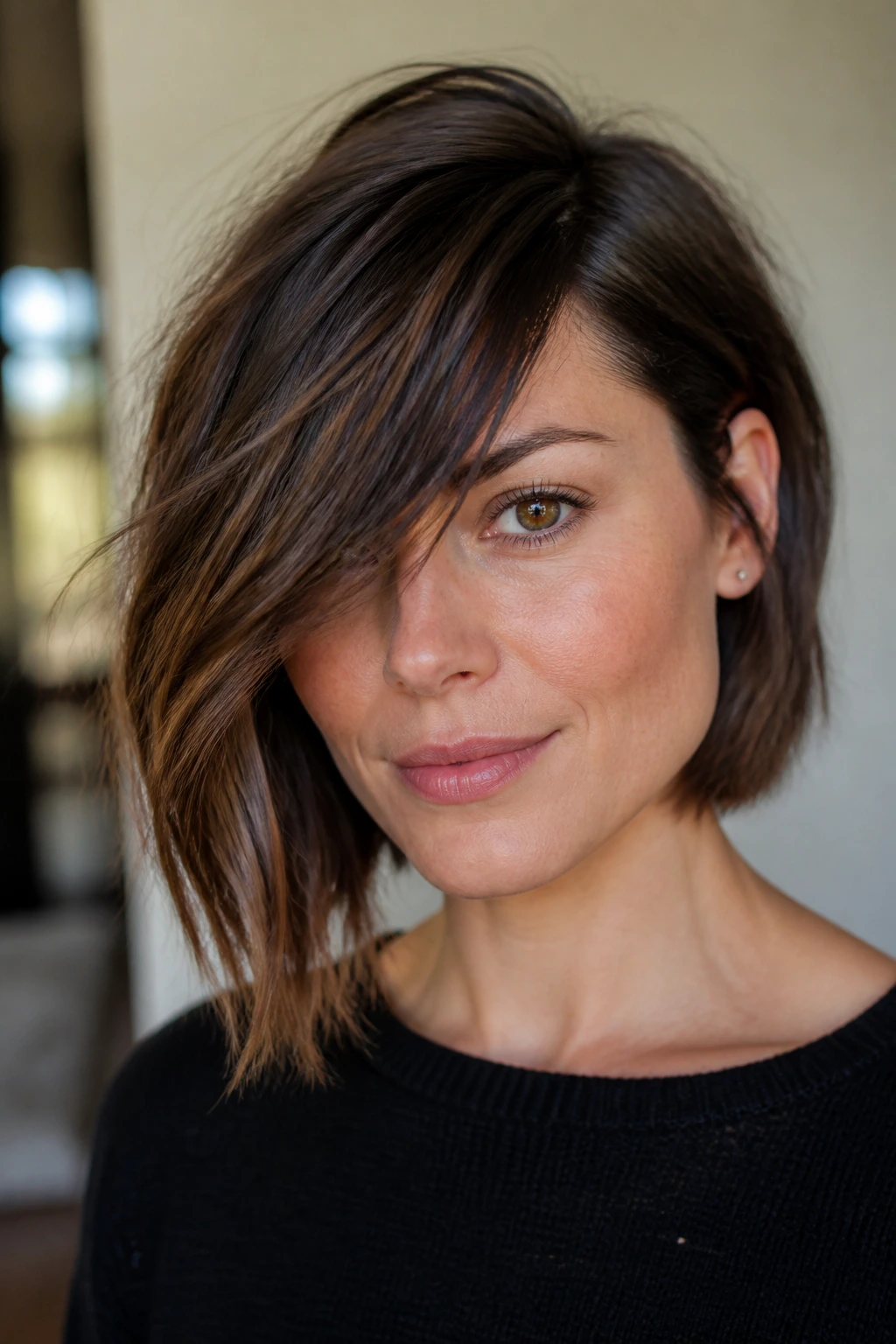
A deep side-sweep is one of the easiest ways to make a square face feel softer fast. The fringe angle crosses the forehead, the part moves off-center, and the hair falls in a diagonal instead of a block.
This cut looks especially good when one side tucks behind the ear and the other side grazes the cheek. That asymmetry keeps the face open without exposing every angle at once. Wavy hair gives the sweep a little bend, which is useful because straight hair can make the part look too crisp.
If your hair is prone to falling flat at the roots, use a root-lift spray at the part and rough dry it in place. That one move changes the whole haircut.
15. Airy Collarbone Lob

If you want more length, the airy collarbone lob is the calmest place to start. It lands low enough to avoid the jawline, but the ends are still short enough to feel like a bob, not a shoulder-length compromise.
The “airy” part matters. Ask for light face-framing and soft point cutting through the perimeter so the wave pattern can separate. On square faces, this shape lets the hair move around the cheeks rather than pinning them in place. It’s especially kind to thick or medium-density hair that tends to puff out at shorter lengths.
This is one of those cuts that improves as it settles in. A few weeks after the trim, it usually looks even better.
16. Feathered Mid-Neck Bob

Feathering through the mid-neck area changes the whole feel of the haircut. The edges stop looking heavy, and the waves get a softer landing point.
That helps square faces because the line no longer crashes right into the jaw. It breaks a little earlier, which makes the lower face look less boxy. I like this version for hair that bends easily but doesn’t want a lot of layering on top. The feathering should live through the mid-lengths, not turn the crown into fluff.
A lightweight styling cream is enough here. Heavy products can pull the feathered ends together, and then you lose the lift that makes the cut work.
17. Grown-Out Shag Bob

A grown-out shag bob is not a compromise haircut. It’s a shape that already knows how to live a little.
The layers are longer, the fringe is softer, and the ends are broken enough to keep the square face from feeling boxed in. Wavy hair makes this one shine because the natural bend acts like built-in styling. If you don’t want to fuss with hot tools every morning, this is one of the better picks in the whole list.
The caveat is maintenance of shape, not length. Once the layers grow too far down, the cut can lose its lift. A quick trim every six to eight weeks keeps it in the sweet spot.
18. Short Choppy Crop Bob

A short choppy crop bob works when you want the face and neck to feel open. It sits above the collarbone and often closer to the chin, but the ends are so shattered that it never reads as severe.
Square faces can wear this if the fringe is soft and the side pieces are slightly longer than the back corners. The hair should curve, not stop. Wavy texture does a lot of work here, because it keeps the short length from looking too strict. If your waves are springy, this cut can feel lively in a way longer bobs sometimes don’t.
I’d skip it if you hate re-styling. Shorter lengths show every sleep bend.
19. Curved-Under Choppy Bob
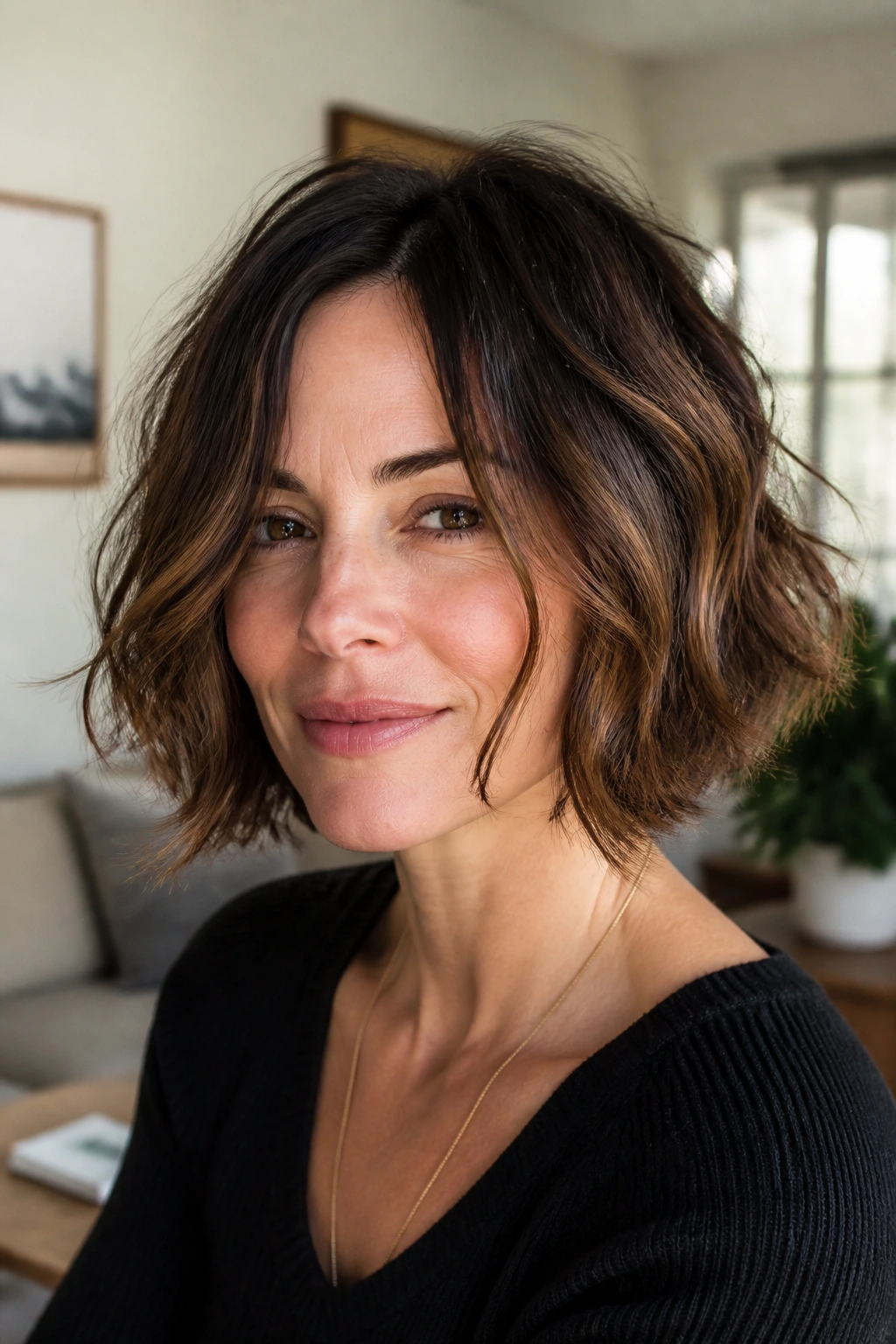
A curved-under bob keeps the outline neat while the texture keeps it from looking stiff. That combination is useful on square faces because the curve rounds the jaw slightly without turning the cut into a bubble.
The trick is to keep the bend soft and the ends broken. You want the hair to turn in just enough to skim the face, not so much that it clings to the jaw. Wavy hair helps because the natural bend keeps the curve from looking too polished. It’s a nice option for someone who likes a cleaner finish but still wants movement.
A quick blow-dry with a round brush at the ends is enough. Don’t overbuild the shape.
20. Thick-Hair De-Bulk Bob
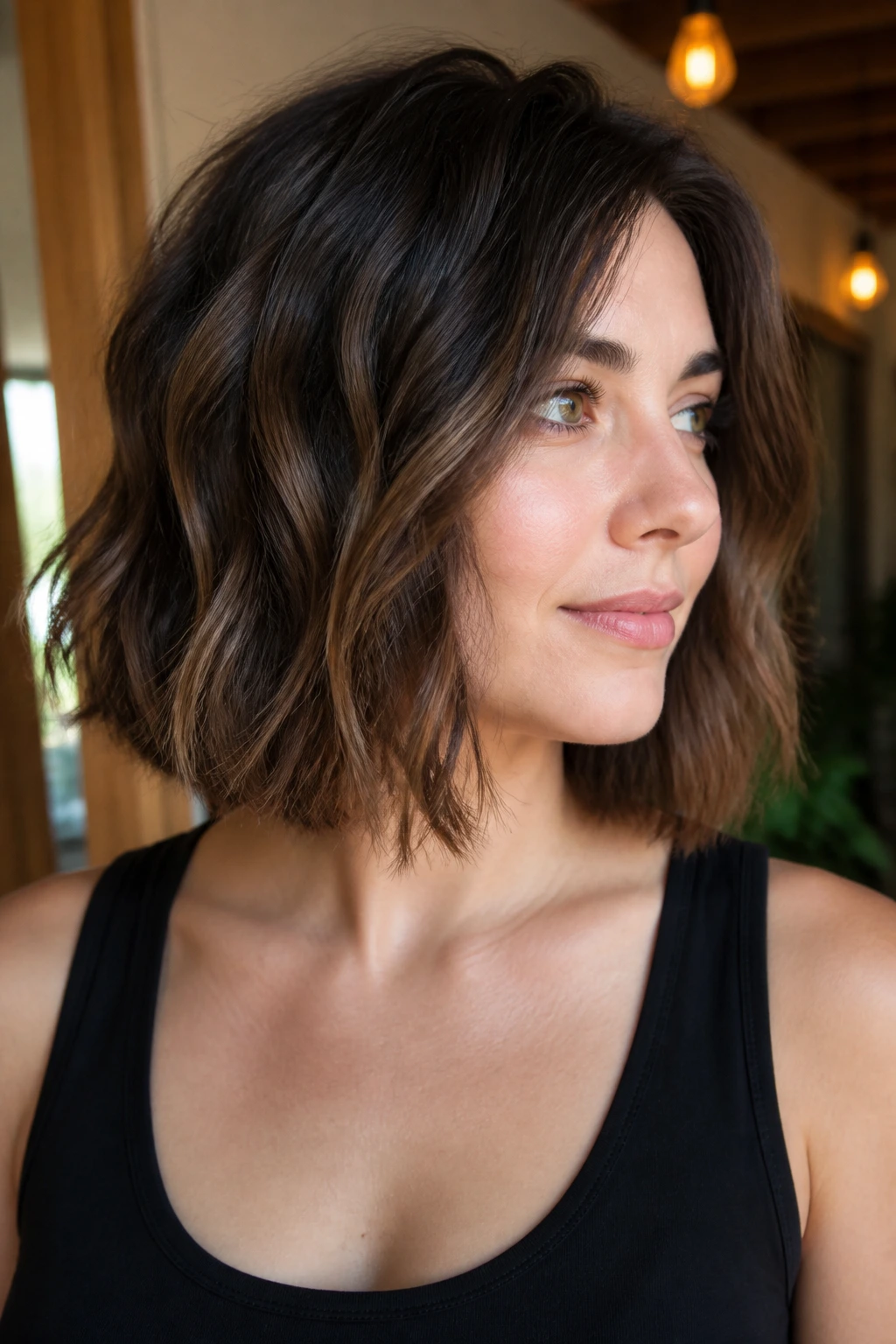
Thick hair needs its own plan. If the interior stays too heavy, the bob turns into a triangle or sits like a shelf at the sides.
A de-bulked choppy bob removes weight without stripping the ends thin. Ask for internal weight removal, not aggressive thinning on the surface. That keeps the outline solid while letting the wave pattern drop more freely. On square faces, this cut is useful because it prevents width from building at the jawline, which is the part that can look widest on dense hair.
I prefer this with a collarbone or slightly below-collarbone length. Shorter and thick can be a fight unless the stylist really knows how to shape it.
21. Fine-Hair Piecey Bob
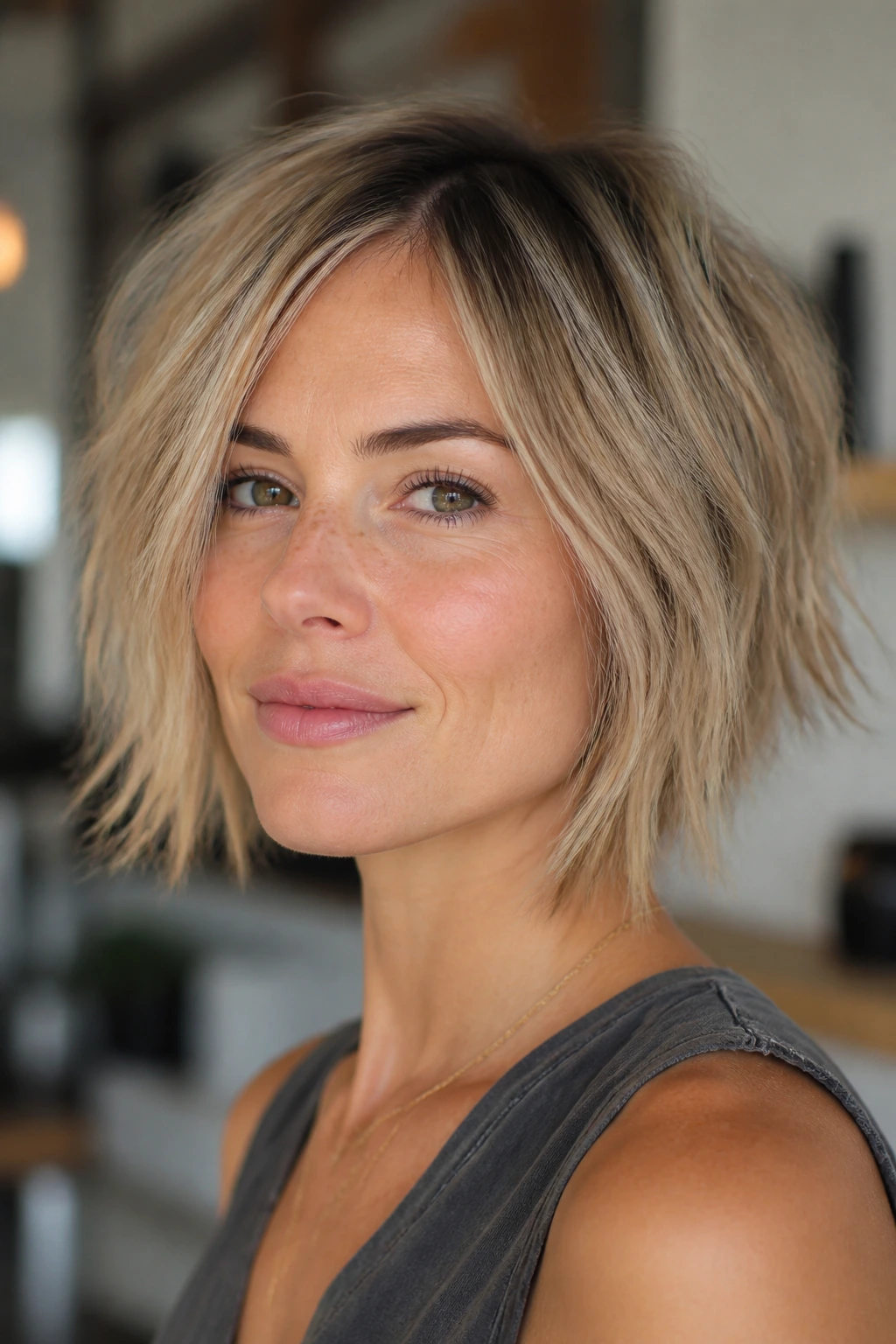
Fine hair needs a lighter touch. Too much layering and it goes wispy; too little and it lies flat against the head.
A piecey bob keeps enough perimeter to make the hair look fuller, while the choppy texture adds separation where you want it. For square faces, that separation prevents the cut from reading as one clean horizontal line. Wavy fine hair often has enough natural movement to carry this shape with very little product. A small amount of mousse at the roots and a touch of texture spray through the ends usually does the job.
If your fine hair frizzes easily, avoid over-brushing. Fingers are kinder than a brush here.
22. Center-Part Beach Bob

A center part can work on a square face when the bob is soft enough to offset it. The waves should fall loose and broken, not polished and exact.
This style sits nicely between casual and refined. The middle part opens the face, while the choppy ends keep the jaw from feeling framed too tightly. It works best if the front pieces are slightly longer than the back and if the waves have a loose S-shape instead of a tight bend. I like it for people who want symmetry but don’t want stiffness.
If your jaw is especially strong, keep the front pieces longer so the part doesn’t overexpose the lower face.
23. Rounded Wedge-Inspired Bob
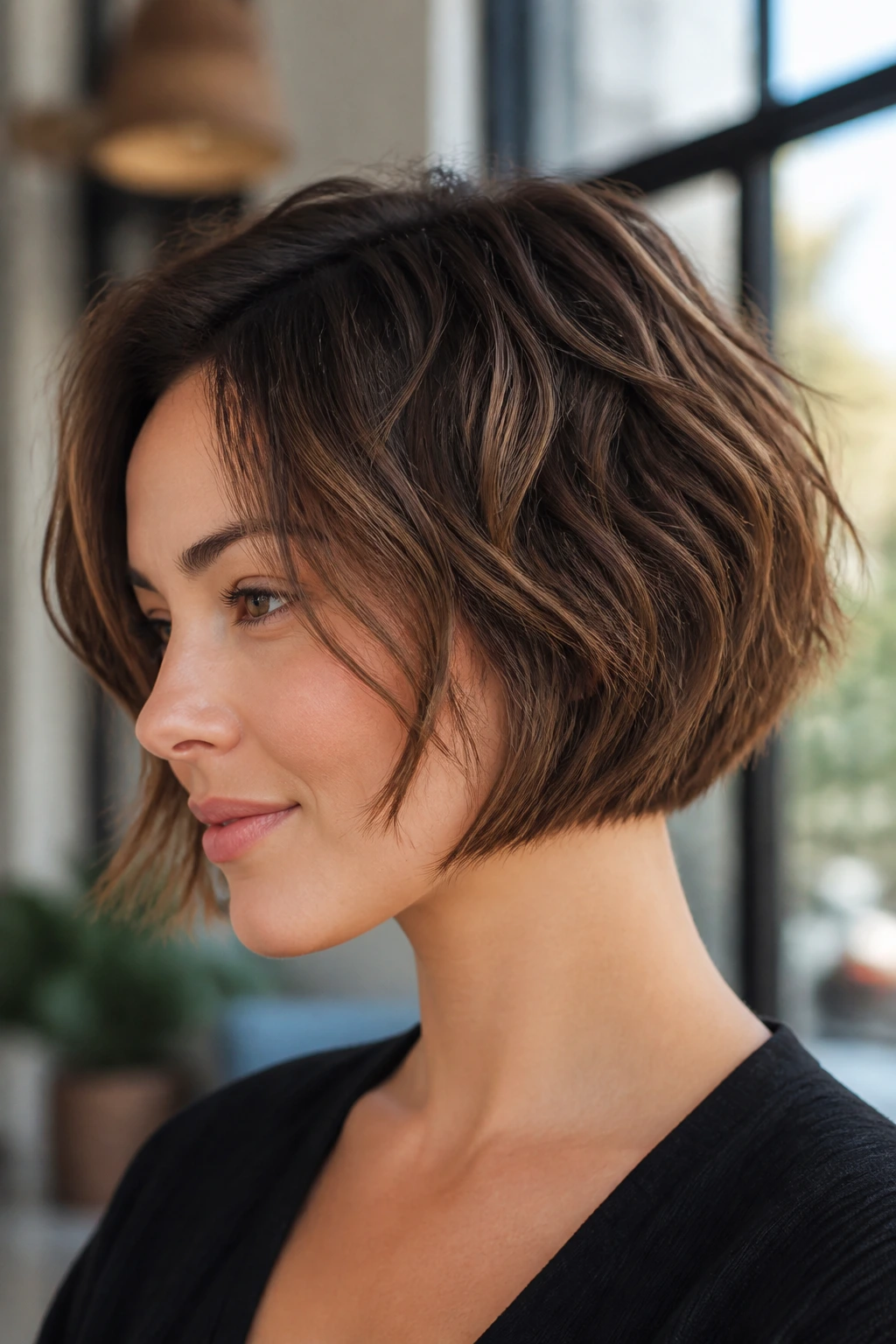
A wedge-inspired bob can look sharp in a bad way unless the corners are softened. With choppy texture, though, it becomes a neat little shape that still moves.
The rounded back gives lift, the sides taper gently, and the broken ends keep it from feeling old-fashioned. Square faces benefit from the curved outline because it blurs the angular edges around the jaw. Wavy hair helps smooth the transition from back to front, which is the part that usually makes wedge cuts look too exact.
This is a good choice if you like a tidy haircut that still has some looseness. It’s more structured than shaggy styles, less severe than a blunt bob.
24. Broken-Ends Lob

The broken-ends lob is the safe, useful choice when you want movement without a dramatic chop. It lands around the collarbone or a touch higher, and the ends are cut so they don’t all stop in the same place.
That staggered edge is why it flatters square faces. It softens the line that might otherwise sit right over the jaw. Wavy hair adds enough body that the cut never looks flat, but the length keeps it from puffing out too much at the sides. If you’re nervous about going shorter, this is the entry point I’d recommend first.
It also grows out well. That’s not a small thing.
25. Soft Jaw-Miss Bob with Curtain Fringe
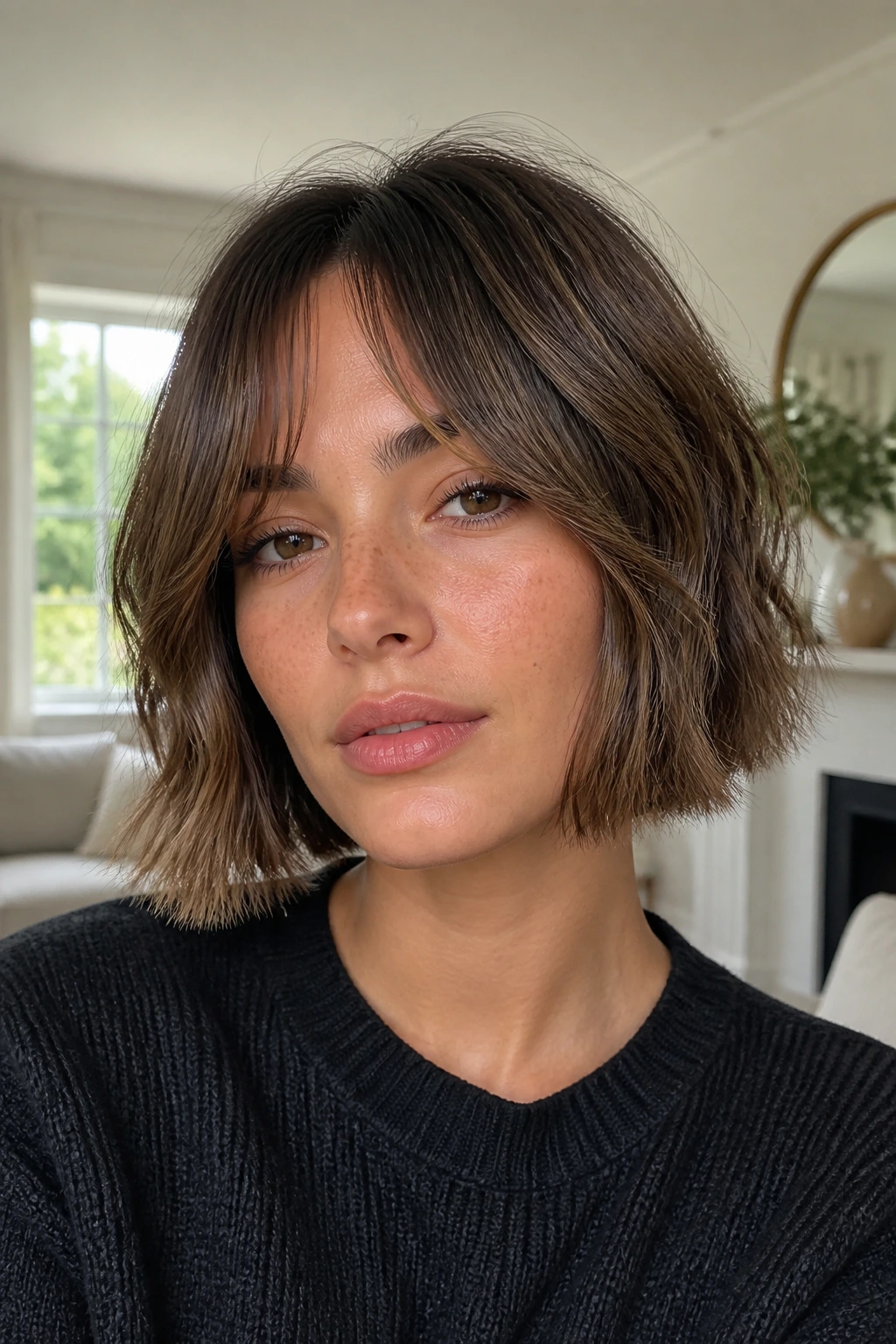
The soft jaw-miss bob is the most forgiving version in the whole group. The front pieces skim just below the jaw, the fringe parts in the middle, and the ends are broken enough that the haircut never feels harsh.
On a square face, the little bit of length past the jaw makes a big difference. It gives the waves space to curve before they hit the widest part of the face. I like this cut when you want the clean shape of a bob but need the face-softening effect to be obvious. It is polished enough for work, loose enough for weekends, and easy enough that you won’t fight it every morning.
If you only save one reference photo, make it this one.
Why Choppy Bobs Soften a Square Face Better Than Blunt Lines
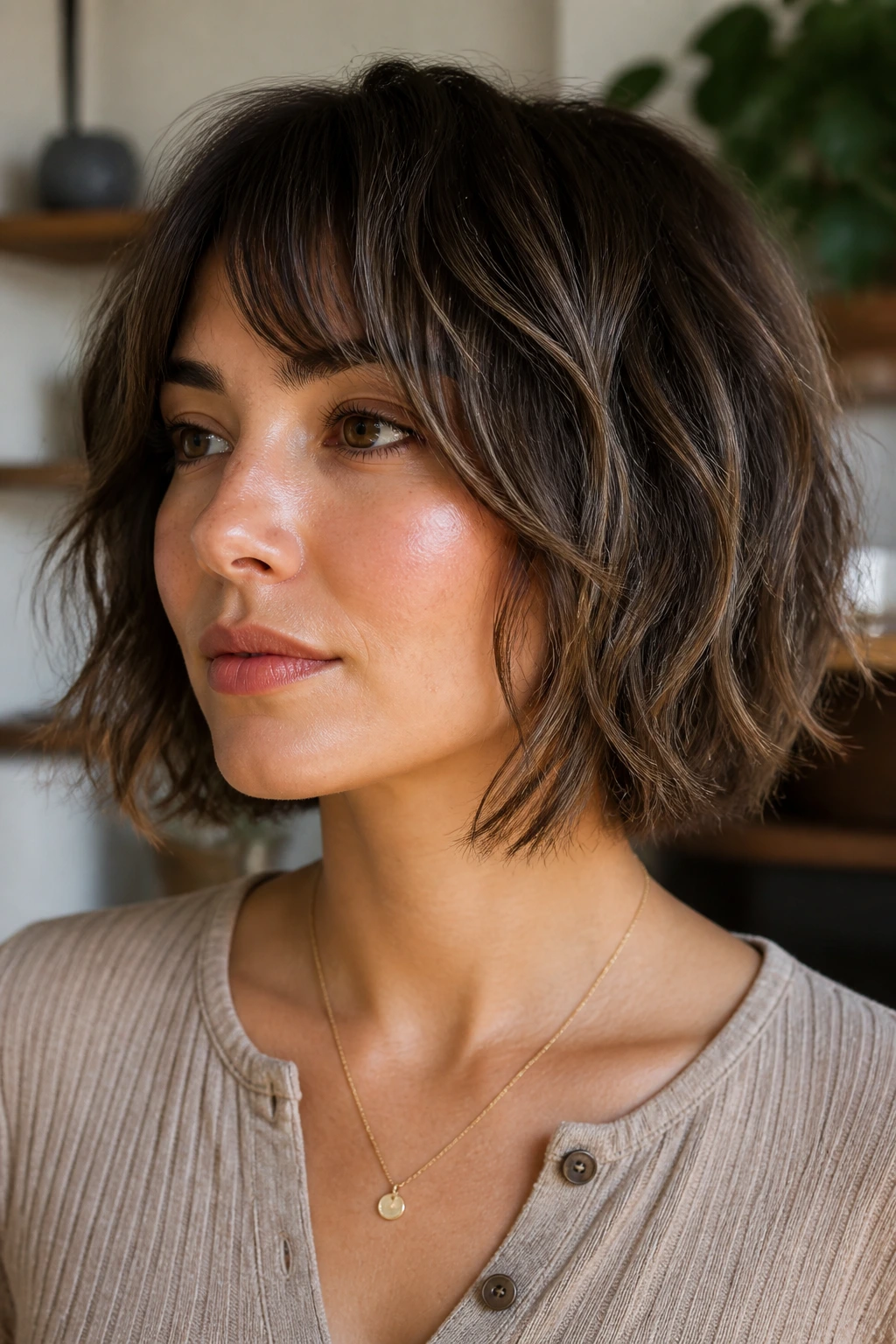
Square faces already have presence. That’s the point. The jaw is defined, the forehead has width, and the face shape reads strong before anyone even notices the haircut.
A blunt bob can exaggerate that structure if it lands right at the jaw or if the perimeter is cut into one hard line. Choppy bobs work differently. The broken edge keeps the eye from resting on a single boundary, and the waves help blur where the hair ends and the face begins. That blur is doing a lot of heavy lifting.
There’s also a movement issue. Wavy hair creates little bends, and those bends are more flattering when the cut gives them room to fall unevenly. A stiff shape tries to fight the wave. A textured shape works with it, which is why the result looks softer even when the haircut is short.
Choosing the Right Length for Your Jawline

The most useful length is not always the cutest one on a hanger-photo model. It’s the one that lands in the right place on your face.
If your jaw is the strongest part of your face, a cut that ends exactly there can look too square. A length that misses the jaw by an inch or two — either above it with softness or below it with weight broken up — usually reads better. Collarbone lengths are the easiest to live with. Chin-length cuts can look fantastic, but they need more careful shaping.
Your wave pattern matters here too. Loose waves can handle shorter bobs more easily because they don’t swell much. Dense waves or coarse hair often do better with a little extra length and some internal weight removal. Short hair with too much density can puff at the sides, and that is the thing that makes square faces look wider than they are.
If your jaw is wide
Choose a cut that starts to break around the cheekbone, not the chin.
If your hair is thick
Keep the perimeter clean and remove weight inside the shape.
If your waves are loose
You can usually go shorter without losing softness.
What to Tell Your Stylist at the Chair

Bring photos. Two or three, not twelve. One should show the front, one should show the side, and one should show the texture you actually want when the hair is dry.
The words matter too. Say “keep the edge soft”, “don’t let it sit right on the jaw”, and “point-cut the ends so the line breaks up.” If you want bangs, say whether you want them to land at the cheekbone, the brows, or split open in the middle. That detail changes the whole haircut.
If your hair waves a lot, ask whether the cut should be checked dry or partially dry. Wet hair can hide puffiness, and that’s how people end up with a bob that looked great in the chair and puffs out like a triangle at home. A stylist who knows wavy hair should be willing to watch the pattern settle before they call it done.
Tools and Products That Keep a Wavy Bob Looking Intentional
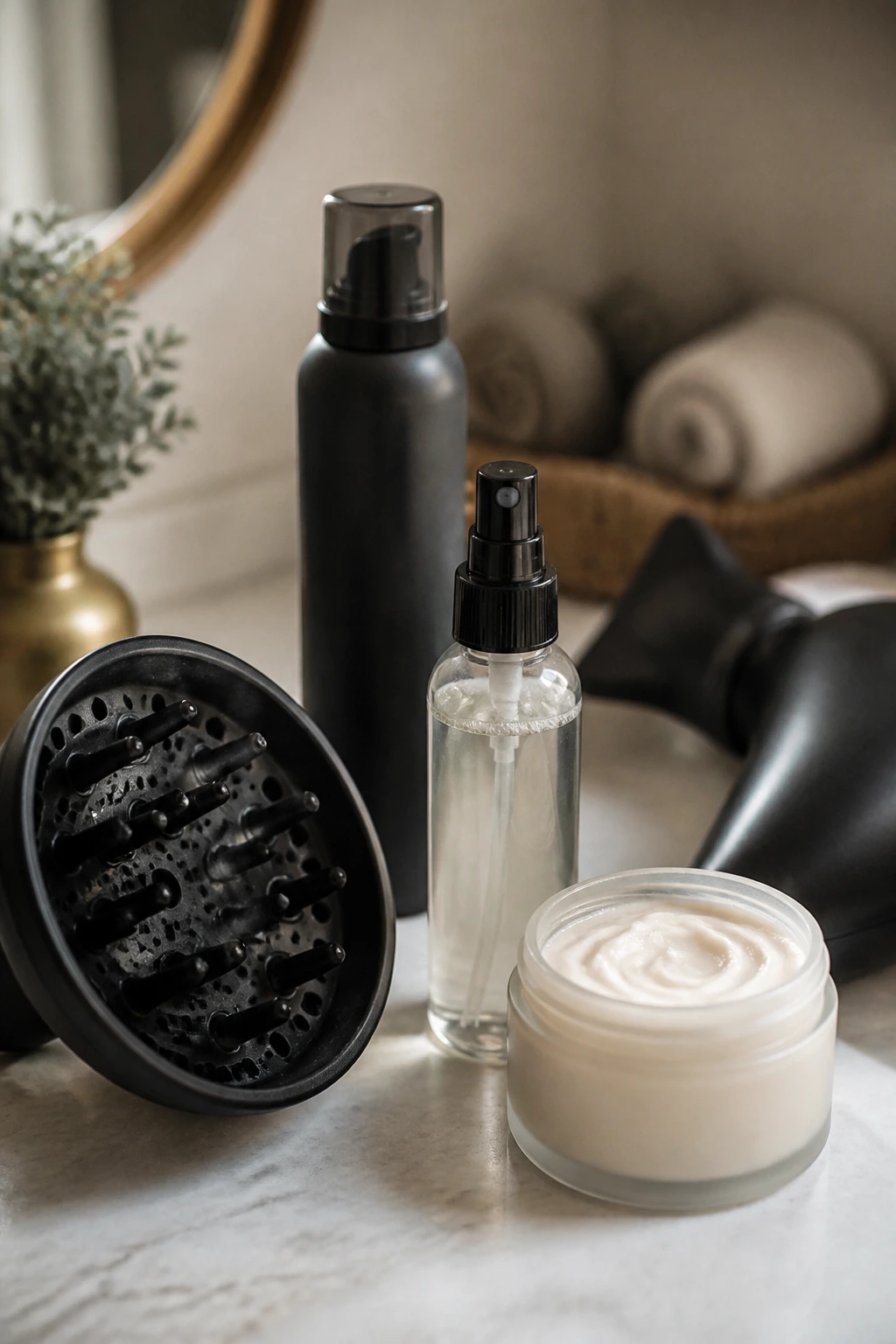
Diffuser: Useful when you want the waves to keep their shape without blasting them flat.
Microfiber towel or cotton T-shirt: Reduces frizz right after washing and keeps the cut from getting fuzzy at the ends.
Light mousse: Gives the roots some lift and helps the waves hold without getting crunchy.
Curl cream or styling lotion: Good for thicker or drier waves that need definition more than volume.
Sea salt spray or texture spray: Adds separation at the ends, but use a light hand or the bob can get gritty.
Heat protectant: Non-negotiable if you use a flat iron, round brush, or curling iron for touch-ups.
Wide-tooth comb: Better than a brush when the hair is wet and the wave pattern needs to stay intact.
Small round brush: Handy for flipping the front pieces away from the jaw or bending curtain bangs into place.
How to Style a Choppy Bob Without Fighting the Wave

The easiest route is often the least fussy one. Start with damp hair, work a small amount of mousse or curl cream through the mid-lengths, and scrunch the ends upward. Then either air-dry halfway and diffuse the rest, or diffuse from the start on low heat if your hair tends to go flat.
I like to keep the root area lifted with clips while the hair dries. That gives the bob a little space away from the scalp, which stops the sides from clinging to the face. Once it’s dry, shake out the ends with your fingers. Don’t brush out all the bend. That’s how the cut loses its point.
For a polished finish, bend only the front pieces with a 1-inch iron or a small round brush. Leave the back rough. That contrast looks better on this kind of haircut than making every strand behave the same way.
Common Mistakes That Make the Cut Look Boxy

Cutting it right on the jaw: The line lands where the face is widest and makes the jaw look even stronger. Move the length above or below that point.
Making the fringe too blunt: Heavy bangs can turn the whole haircut into a square frame. Keep them soft, split, or slightly tapered.
Over-thinning thick hair: If the ends get too sparse, the hair can puff at the sides while the tips look stringy. Remove weight inside the shape instead.
Using too much smoothing cream: The hair goes flat, the wave disappears, and the bob starts hanging like a curtain. Use lighter products first.
Forcing a center part on hair that hates it: The part exposes the full width of the face and can make the bob feel harder. Shift it a little and see what the hair wants.
Variations and Adaptations Worth Trying

The Softer Collarbone Version: Keep the length just below the collarbone and let the front pieces skim the jaw. This is the easiest adaptation if you want softness and low drama.
The Shorter French Version: Cut it to the cheekbone with a wispy fringe and broken ends. It’s chic, but it needs regular trims to stay from going mushroom-shaped.
The Thick-Hair De-Bulk Version: Keep the outline solid and remove weight inside the mid-lengths only. This works when the problem is bulk, not lack of shape.
The Fine-Hair Lift Version: Ask for fewer layers, a little root lift, and a piecey finish at the ends. Fine waves need support more than they need a lot of slicing.
The Air-Dry Version: Build the whole cut around how your hair dries on its own. That means soft edges, longer face-framing pieces, and no heavy fringe that needs daily heat.
How to Keep the Shape Between Trims

Choppy bobs look best when the ends still have a little bite. Once every strand grows to the same length, the whole point of the cut starts to disappear.
For chin-length and shorter versions, I’d plan on a trim every 6 to 8 weeks. Collarbone lobs can usually stretch to 8 or 10 weeks before they lose the shape around the face. Bangs are another story. Curtain or bottleneck fringe often needs a tiny tidy-up sooner, especially if they start splitting in odd places.
At home, sleep on a satin pillowcase if your waves frizz easily. On day two, mist the hair lightly with water, add a pea-sized bit of styling cream, and scrunch the front pieces back into place. If the roots fall flat, clip them up for 10 to 15 minutes while you get dressed. That small lift can save the whole morning.
Questions People Ask Before They Book This Cut

Can a square face wear a blunt bob?
Yes, but only if the line is softened somehow — with texture, a side part, or longer front pieces that break up the jaw. A hard blunt edge at the chin is the part that usually causes trouble.
Is a center part bad for square faces?
Not always. It works best when the cut has movement and the front pieces are long enough to soften the jaw. If the bob is short and blunt, a center part can make the face look wider.
What if my waves are frizzy?
Choose a cut with enough length to weigh the waves down a little, then use a lightweight cream or mousse instead of heavy oil. Frizz usually gets worse when the cut is too short and the perimeter is too blunt.
Does thick hair need fewer layers?
Usually, yes. Thick hair often looks better with controlled internal weight removal rather than lots of short layers around the crown. Too many layers can make the sides puff.
Can I get bangs with a square face?
Absolutely. Curtain bangs, bottleneck bangs, and soft side-swept fringe tend to be the easiest. Very blunt bangs are the ones to treat with caution.
What is the easiest bob to grow out?
A collarbone lob with broken ends grows out the most gracefully. It keeps its shape for longer and doesn’t turn into a hard shelf as fast.
How do I know if the cut is too short?
If the ends sit exactly on the jaw and the hair feels wider at the sides after drying, it’s probably too short for your face shape. A little extra length usually fixes the problem.
The Bob That Moves With You

The nicest thing about a choppy bob on a square face is that it doesn’t fight your structure. It takes the angles you already have and loosens them just enough that the face feels softer, lighter, and a little more open.
That’s the real value here. Not hiding the jaw. Not pretending waves are straight. Just using length, texture, and parting in a way that lets the haircut move instead of sit there and stare back at you. The best version is the one that still looks good when the wind touches it, which is a more useful test than any salon mirror.