



Dark hair does not need to be erased to go blonde. The cleanest versions of blonde on a brunette base keep some depth at the root, then thread in lighter pieces where the eye naturally lands: around the face, through the mid-lengths, inside waves, under layers that only show when the hair moves. That mix is what stops the result from looking chalky, stripy, or oddly one-note after the first few washes.
These going blonde hairstyles for dark hair with lowlights work because the darker strands give the blonde something to lean against. A few mocha ribbons, a smoky root shadow, or a mushroom-toned panel under the crown can make pale pieces read richer, not flatter. On dark brown or black hair, that contrast matters even more. Without it, the light pieces can start to look pasted on.
Some looks here are soft and wearable. Some are loud in a good way. A few are blunt-cuted and glossy, which is my favorite way to make blonde feel expensive without making it look fussy. The best part is that the lowlights do half the visual work for you, especially once the style starts to loosen and the root grows in.
Why These Blonde-Dark-Hair Pairings Work
-
The depth stays visible: Dark strands under the blonde keep the hair from reading like one solid pale sheet, which is what usually makes a color job look flat.
-
Grow-out is softer: Lowlights and root shadow blur the line between salon day and week six, so you’re not stuck with a hard stripe at the scalp.
-
The blonde looks richer: Beige, honey, ash, and champagne tones all look more deliberate when they’re framed by deeper ribbons instead of sitting alone.
-
The haircut matters more: A bob, shag, lob, or long wave changes how the light pieces move, which is why the same color can look polished in one cut and muddy in another.
-
You can lift slowly: On dark bases, staged lightening is safer and usually prettier than forcing the whole head pale in one appointment.
-
It works across textures: Straight hair shows the placement cleanly, while curls and waves let lowlights hide in the bends and pop back out when the hair moves.
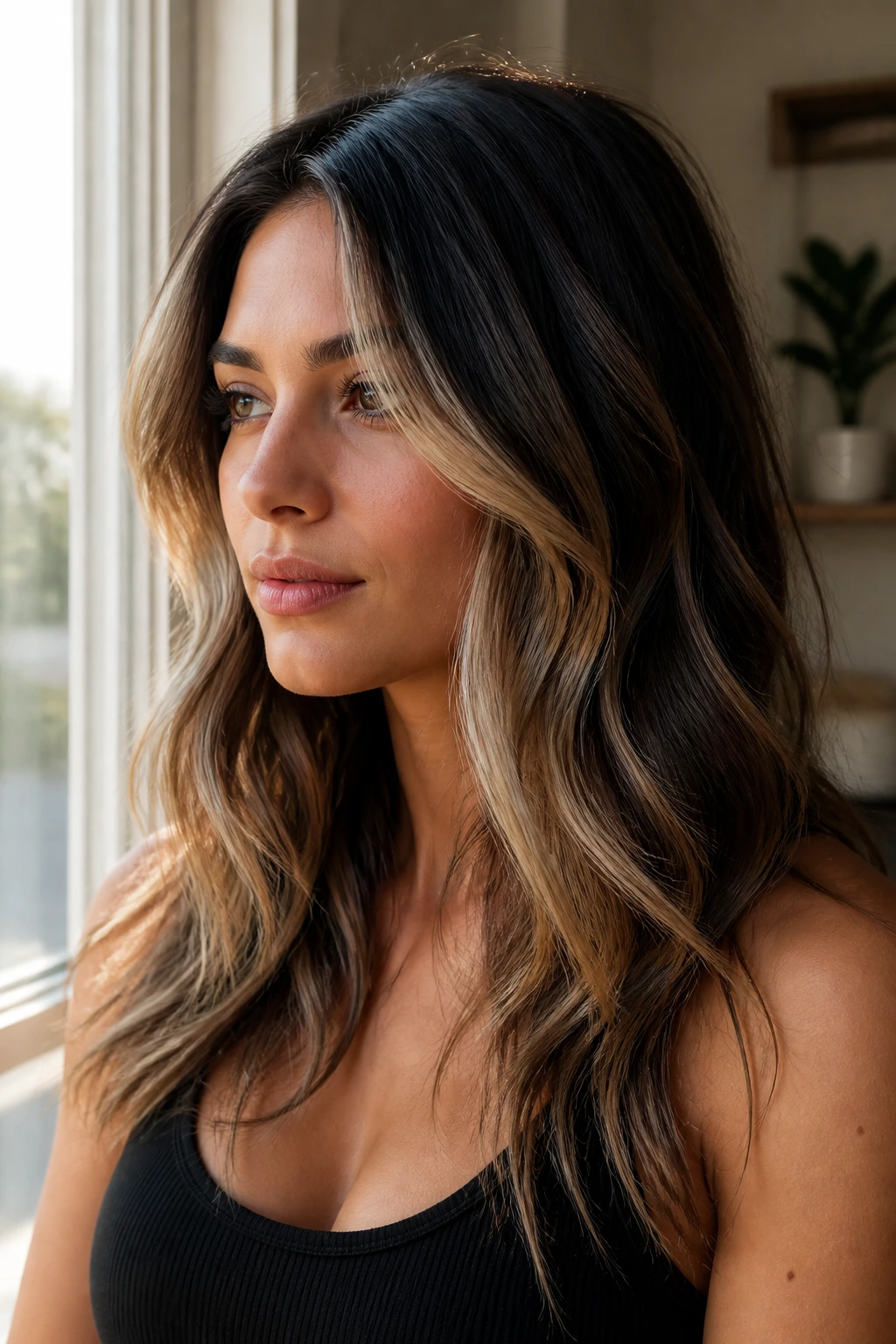
1. Caramel Ribbon Balayage with Loose Dark Waves
Caramel ribbons do their best work when they drift through a dark base instead of sitting on top of it. On loose waves, the blonde catches the bend of the hair and the lowlights tucked underneath keep the color from turning syrupy or flat.
Why It Feels Soft, Not Stripey
The trick is spacing. Ask for hand-painted caramel and beige blonde around the face, then keep the lowlights one or two levels deeper than your root so the whole thing stays dimensional as it grows out. A 1.25-inch curling iron and a center part make the ribbons show without looking too styled.
- Best on medium to long hair
- Looks strongest on layered cuts
- Use a wave pattern that changes direction every section
Best move: Leave the last inch of the ends a touch darker. It makes the blonde look more expensive and keeps the finish from getting wispy.
2. Face-Framing Money Piece on a Deep Brunette Lob
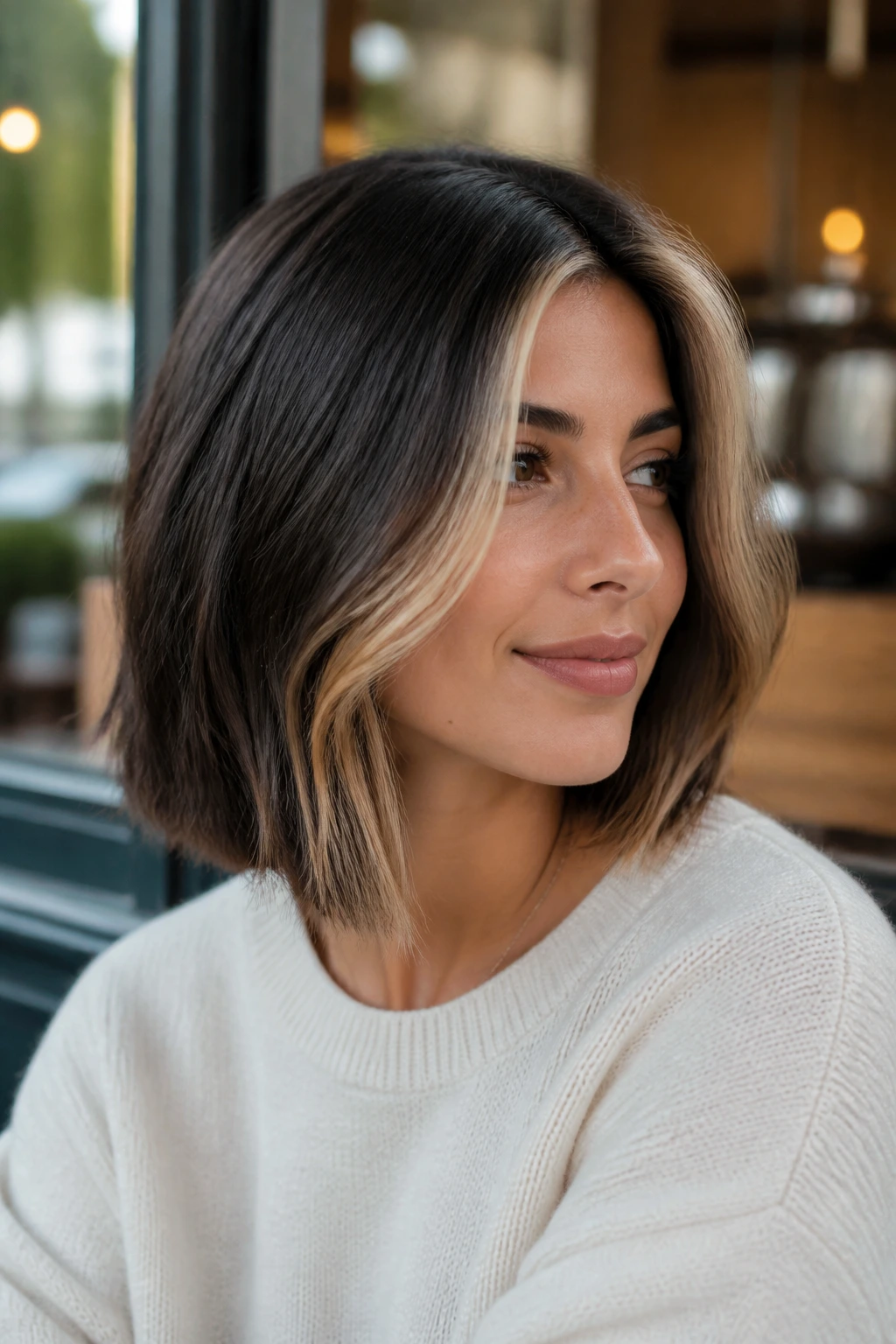
A money piece can look loud in the wrong hands. On a deep brunette lob, though, the front blonde panels work because the lowlights behind them make the face-framing pieces feel intentional instead of random.
What Makes It Click
Keep the money piece bright, but not paper-white. Beige or soft gold around the cheekbones gives the face a clean frame, while the rest of the bob stays grounded with darker interior strands. That contrast is the whole point here. It gives you a lighter look without having to bleach the full head.
A chin-to-collarbone lob is the sweet spot. Anything shorter can make the front pieces dominate, and anything longer can swallow the shape. If you like a side part, even better; it opens up one side and lets the blonde do its job.
Works best for: people who want the blonde visible on day one, not hidden in the back.
3. Ash Blonde Lob with Charcoal Lowlights
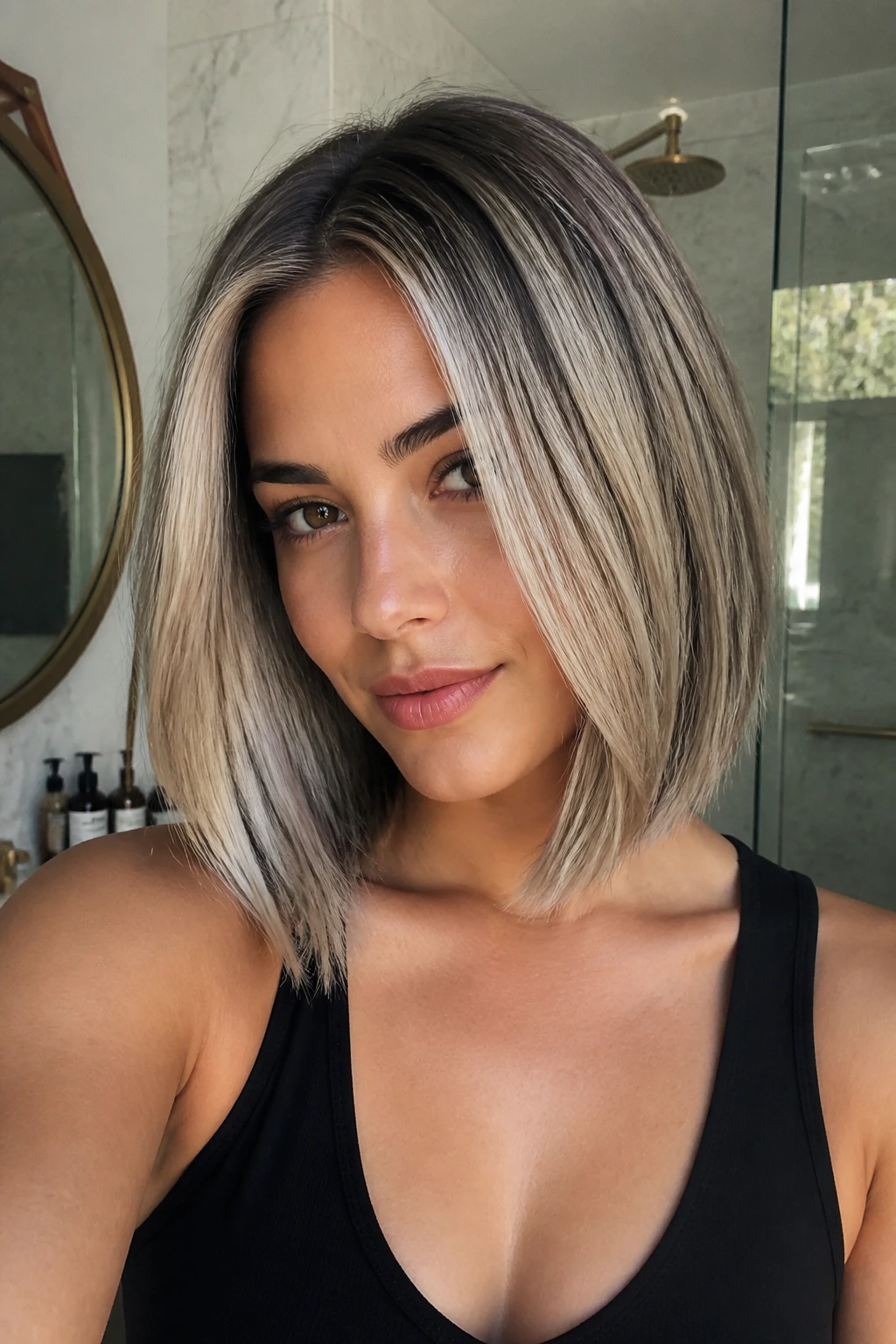
Why does ash blonde read so clean on dark hair? Because the lowlights keep the cool pieces from floating alone. The charcoal strands anchor the ash and stop the lob from turning into a pale, washed-out blur.
This one wants a sharp cut. A blunt or slightly rounded lob makes the cool tones look deliberate, and a glossy blow-dry helps the lowlight placement show through. If your skin runs cool or neutral, this shade family tends to sit better than warm gold.
How to Wear It
Keep the roots shadowed and the mids bright, then add fine charcoal or mushroom lowlights under the top layer. That way the ash pieces still catch light at the ends, but the whole style keeps some depth at the scalp.
No beachy texture here. The cleaner the finish, the better the color reads.
4. Honey Blonde Butterfly Layers
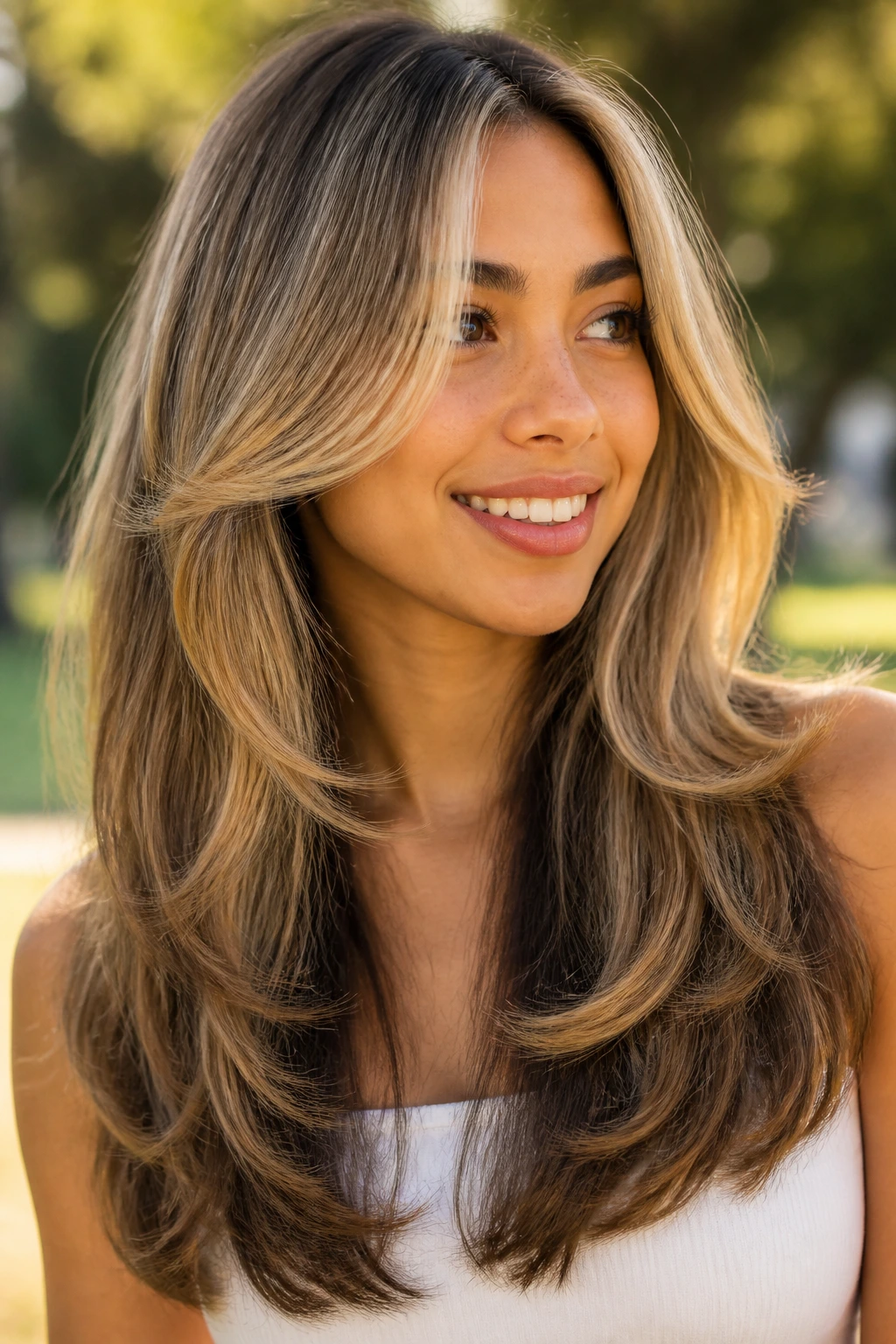
Honey blonde on long butterfly layers has a nice problem: the front pieces get lighter as they fall, while the shorter layers around the face keep the shape from looking heavy. Add a few chestnut lowlights underneath, and the whole cut starts to move.
The butterfly shape gives you lift without chopping off length. That matters when you’re going blonde from a dark base, because the eye needs places to land. Long layers with lighter ends and darker pockets underneath create that little rhythm the hair needs.
If you wear it with a soft blowout, the front sections sweep back and show the color change in one pass. If you wear it wavy, the lowlights peek through the interior of the curve.
Best for: thick hair that tends to look blocky when it’s all one color.
5. Sleek Straight Hair with Mushroom-Brunette Melt
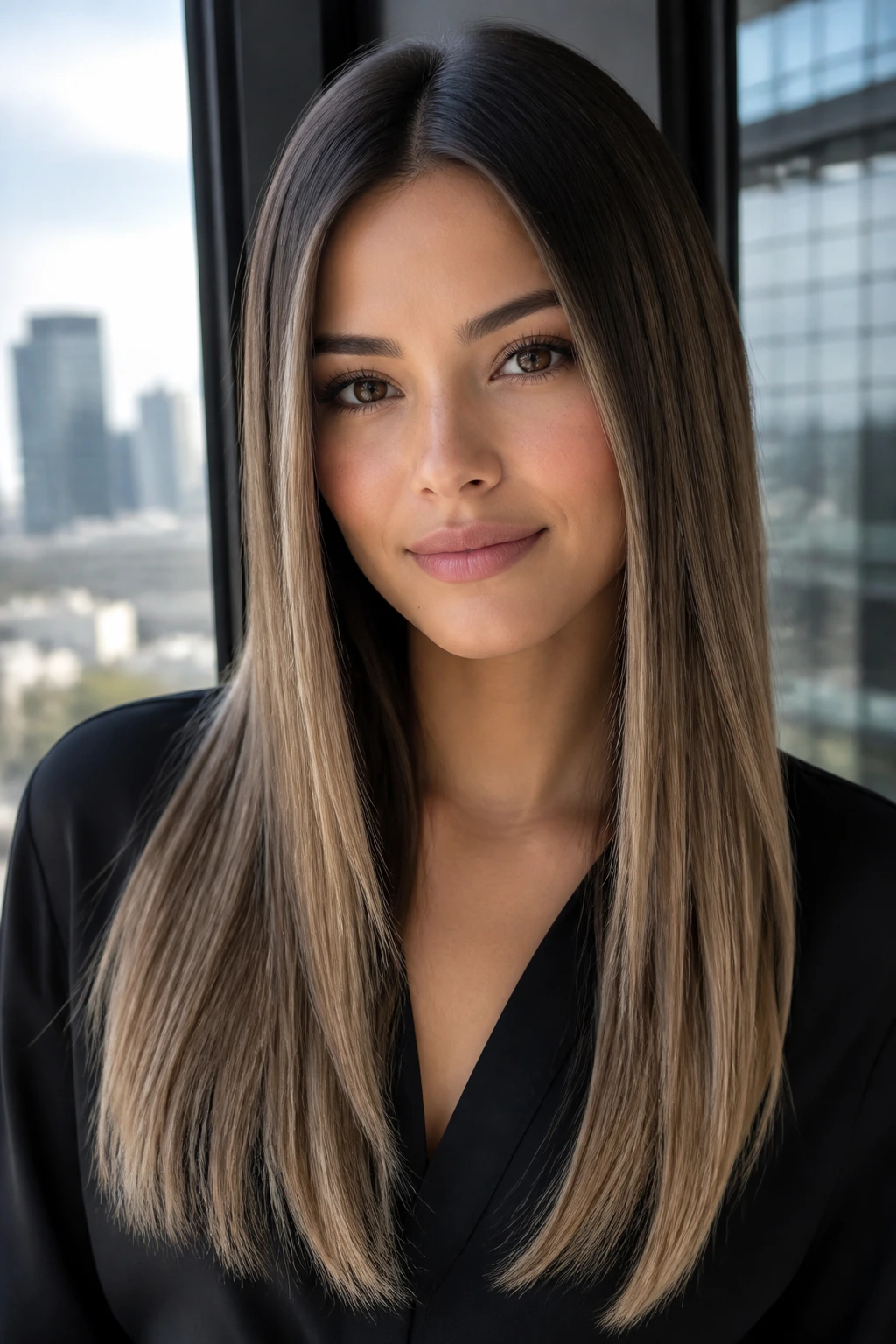
Straight hair can be unforgiving. It shows everything. That’s why a mushroom-brunette melt works so well here — the lowlights blur the line between dark brown and blonde, so the whole head reads like a controlled gradient instead of stripes.
The best version is glossy and long enough to hang with a little weight. If the ends are too thin, the lighter pieces can look dry even when the color is good. A center part makes the melt look deliberate, but a deep side part gives it a more dramatic sweep.
Use a smoothing cream before blow-drying and keep the flat iron on the lower side of the heat scale. Straight blonde on dark hair looks best when it stays sleek, not fried.
6. Beach Waves with Beige Blonde Ribbons
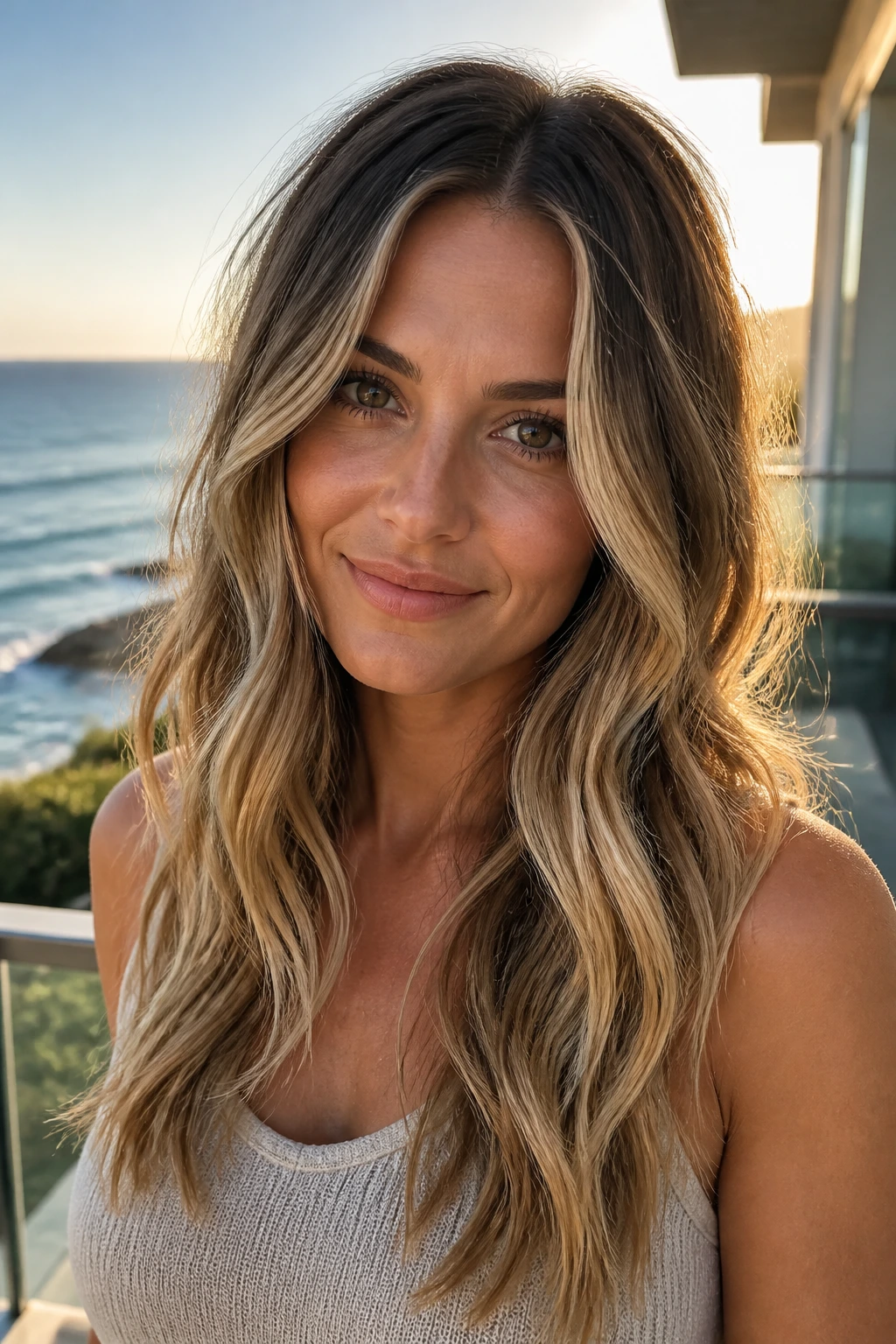
Beige blonde is the quiet workhorse of dark hair transformation. It’s not as gold as honey, not as cold as ash, and that in-between note gives beach waves a softer finish that lowlights can sit under without fighting.
These waves should look a little undone. Think loose, bent, and touchable rather than polished ringlets. The lowlights matter more in this style than they first appear, because they break up the lighter ribbons once the wave starts to relax.
A salt spray at the roots and a light cream on the ends is enough. Too much product kills the movement, and movement is the whole show here.
A good fit if: you want blonde that looks grown-in from the start.
7. Blunt Bob with Pearl Blonde Panels
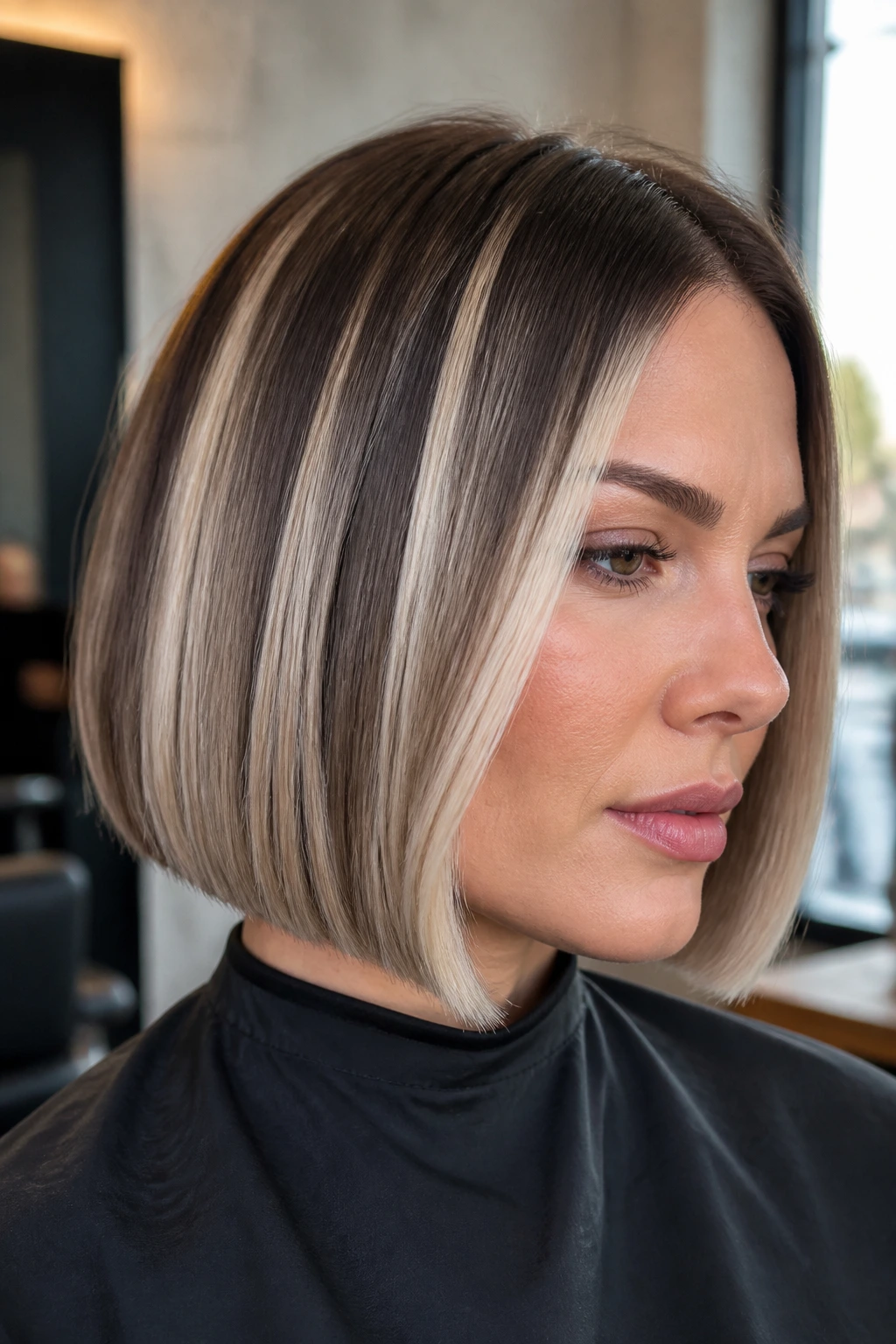
A blunt bob changes the whole conversation. Instead of chasing softness, this cut uses shape to make the blonde read sharper, and pearl-toned panels over a dark base give the edges a crisp edge that lowlights keep from flattening out.
The palette should stay cool-beige, not icy. That tiny bit of warmth prevents the bob from looking chalky. Ask for a few deeper panels under the crown and along the nape, where they won’t be obvious at first glance but will show when the head turns.
One thing I love here: the haircut does not need much styling. A quick round-brush bend under the ends is enough. The color is doing the drama.
8. Curtain Bangs with Rooted Blonde Layers
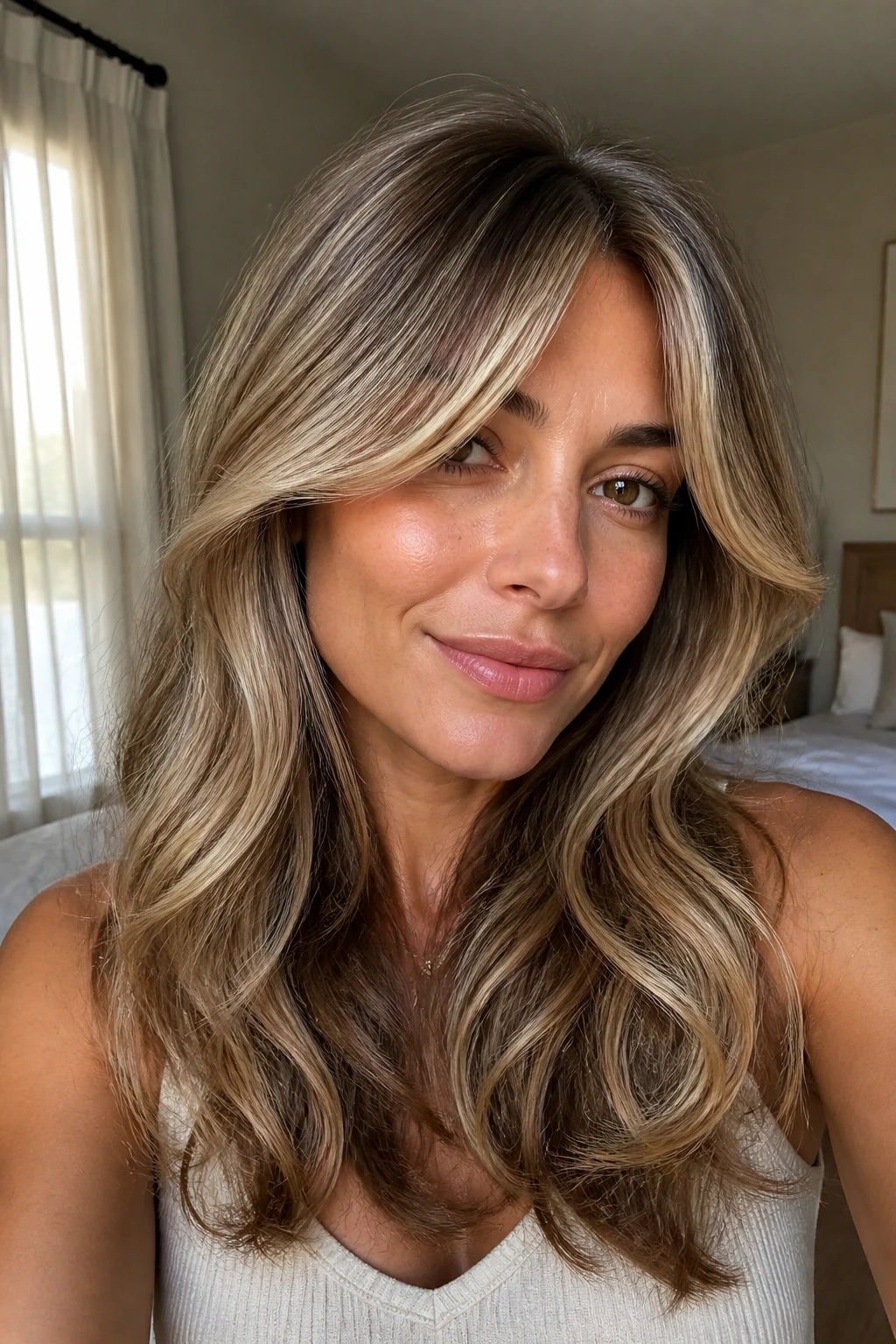
Curtain bangs are the easiest way to make blonde on dark hair feel less formal. They drop a bright frame into the face while the rooted layers behind them carry the lowlights and keep the whole style grounded.
The bangs should start soft, not chunky. If they’re too heavy, the blonde front can overwhelm the rest of the haircut. Let the lightest pieces sit around the cheekbones, then fade into darker lowlights through the mids. That gives the cut a little depth right where the eye goes first.
How to Wear It
Blow the bangs back and away from the face with a medium round brush. The bend matters more than perfection. If they sit too flat, the contrast between blonde and dark hair gets muddy; if they lift too much, they steal the whole look.
9. Long Vanilla Blonde Curls
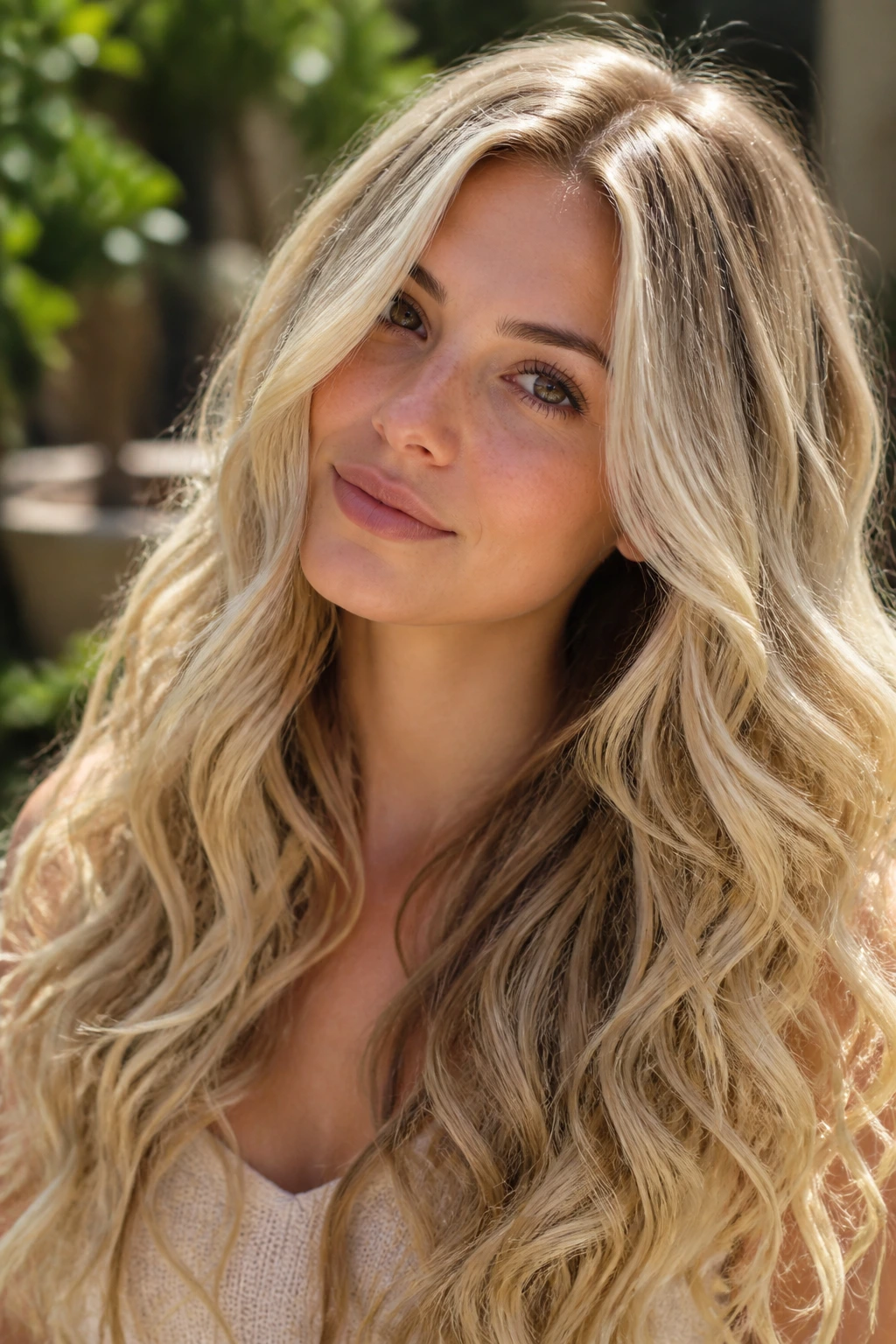
Vanilla blonde curls are the kind of blonde that needs a darker skeleton underneath. The lowlights, especially in the inner curve of the curl, keep the pale color from reading flat when the hair springs up.
Long curls show tone changes in a really honest way. The outer surface catches the light, while the darker strands beneath create shadows that make the curl look rounder. That’s why this style looks richer than a single-process blonde on the same length.
A curl cream and a diffuser will do more for this look than a heavy shine spray. Shine is fine. Grease is not. You want separation, not a slick helmet.
Best on: naturally curly or heat-set curls with a medium-to-large pattern.
10. Shag Cut with Toffee Lowlights
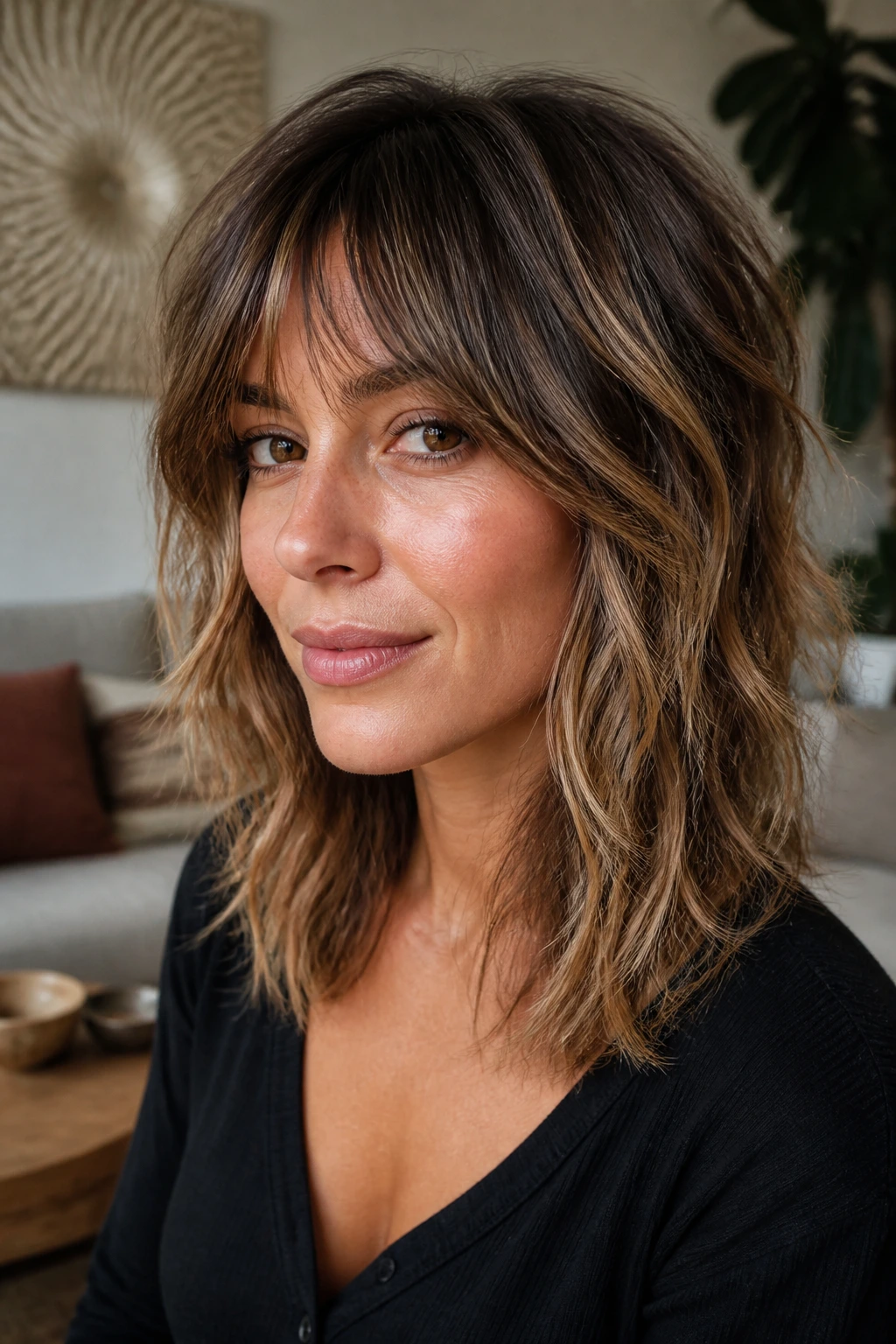
A shag gives blonde room to breathe. The choppy layers throw light in different directions, and toffee lowlights tucked through the underside keep the blonde from turning too soft or too sweet.
This is one of those cuts where the lowlights look better a little rough than perfectly even. That’s not a flaw. The shag likes irregularity. A few darker pieces near the crown and under the cheekbones make the textured layers stand up instead of collapsing into one blur.
If you like a little 1970s energy, this one delivers it. Dry it with a diffuser or air-dry with a texture cream and leave it alone.
11. High Ponytail with Hidden Blonde Pieces
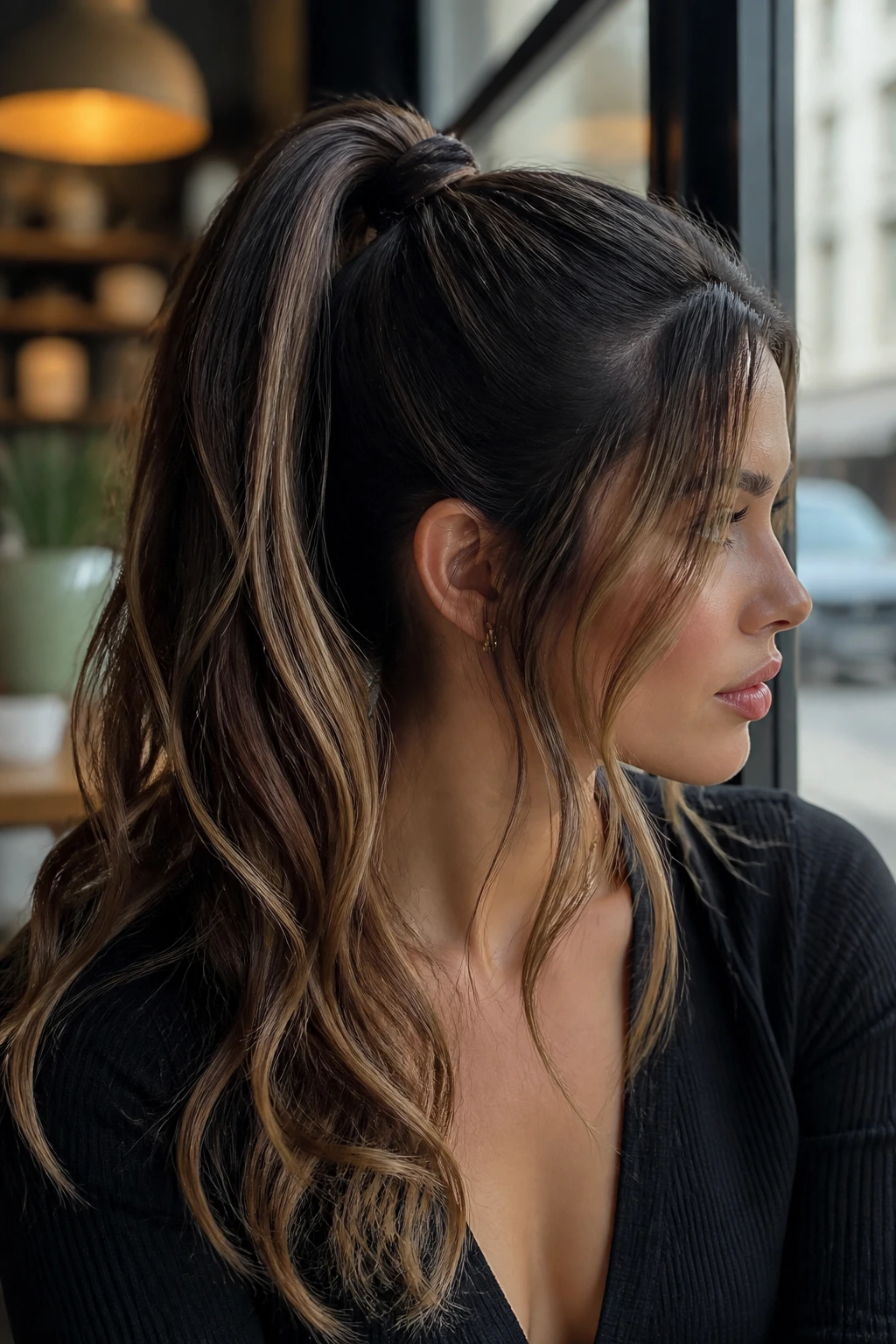
A high ponytail can be a sneaky way to wear blonde on dark hair without committing to an all-over bright look. The blonde lives in the lengths and the face-framing pieces, while the lowlights stay hidden under the base and inside the tail.
That’s the magic here. From the front, it looks polished and clean. From the side, the layered blonde strands swing against the darker sections and make the tail look fuller than it is.
Wrap a small section of hair around the elastic. Always. It’s a tiny move, but it keeps the finish from looking gym-only. If you want the blonde to show more, curl just the tail ends and leave the crown sleek.
12. Braided Crown with Mixed Blonde Strands
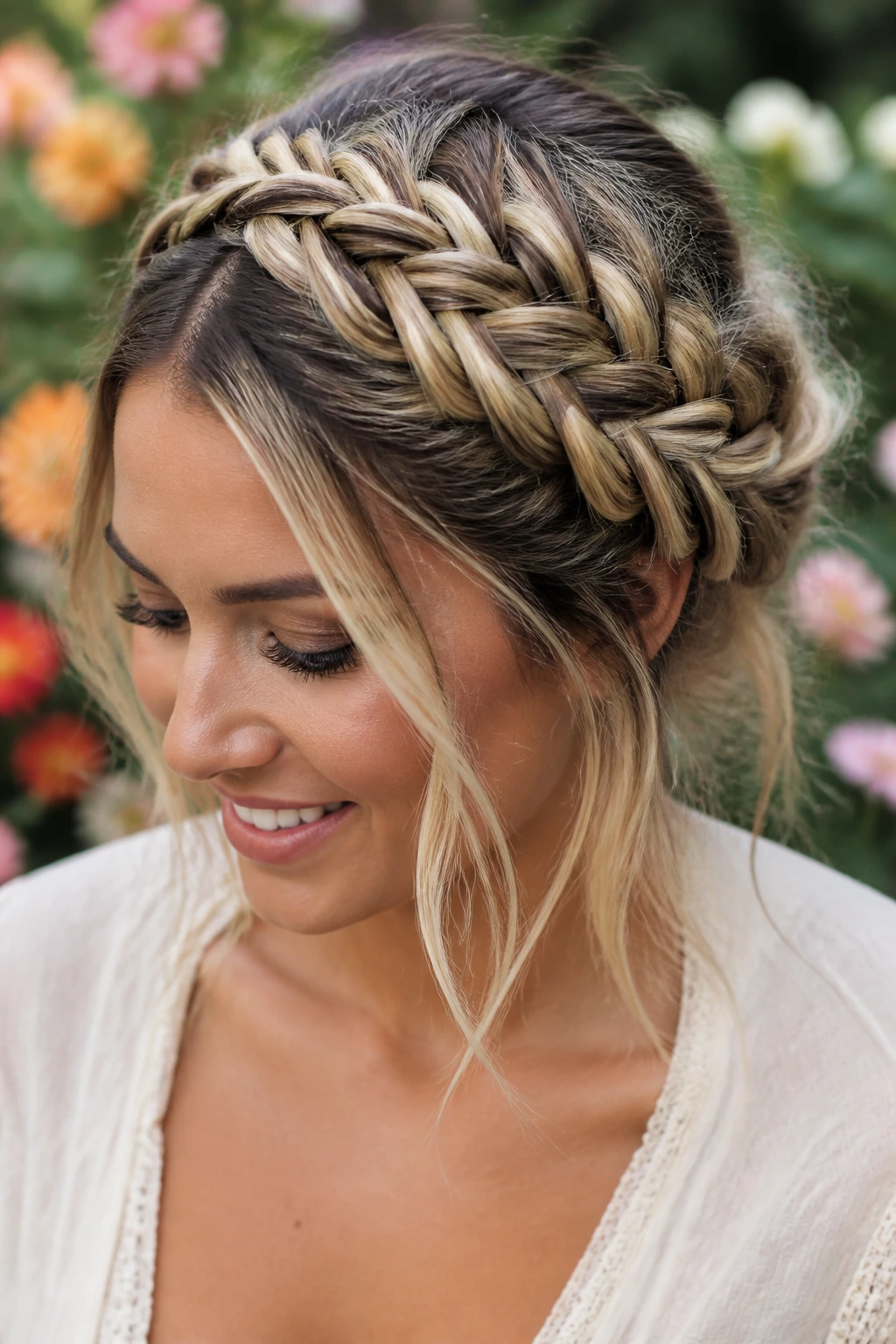
Braids do one thing better than almost any other style: they show placement. In a braided crown, the mix of blonde and lowlight pieces becomes a pattern instead of a color job, and that pattern is what makes the style worth wearing.
You do not need every strand to be light. In fact, the braid looks better when some pieces stay dark, because the darker strands make the lighter ones pop in the weave. That contrast is the whole reason a braid can look richer than loose hair.
A touch of shine cream on the hands before braiding helps, but don’t overdo it. Too much slip and the braid starts to unravel before lunch.
13. Blowout Layers with Cinnamon Lowlight Depth
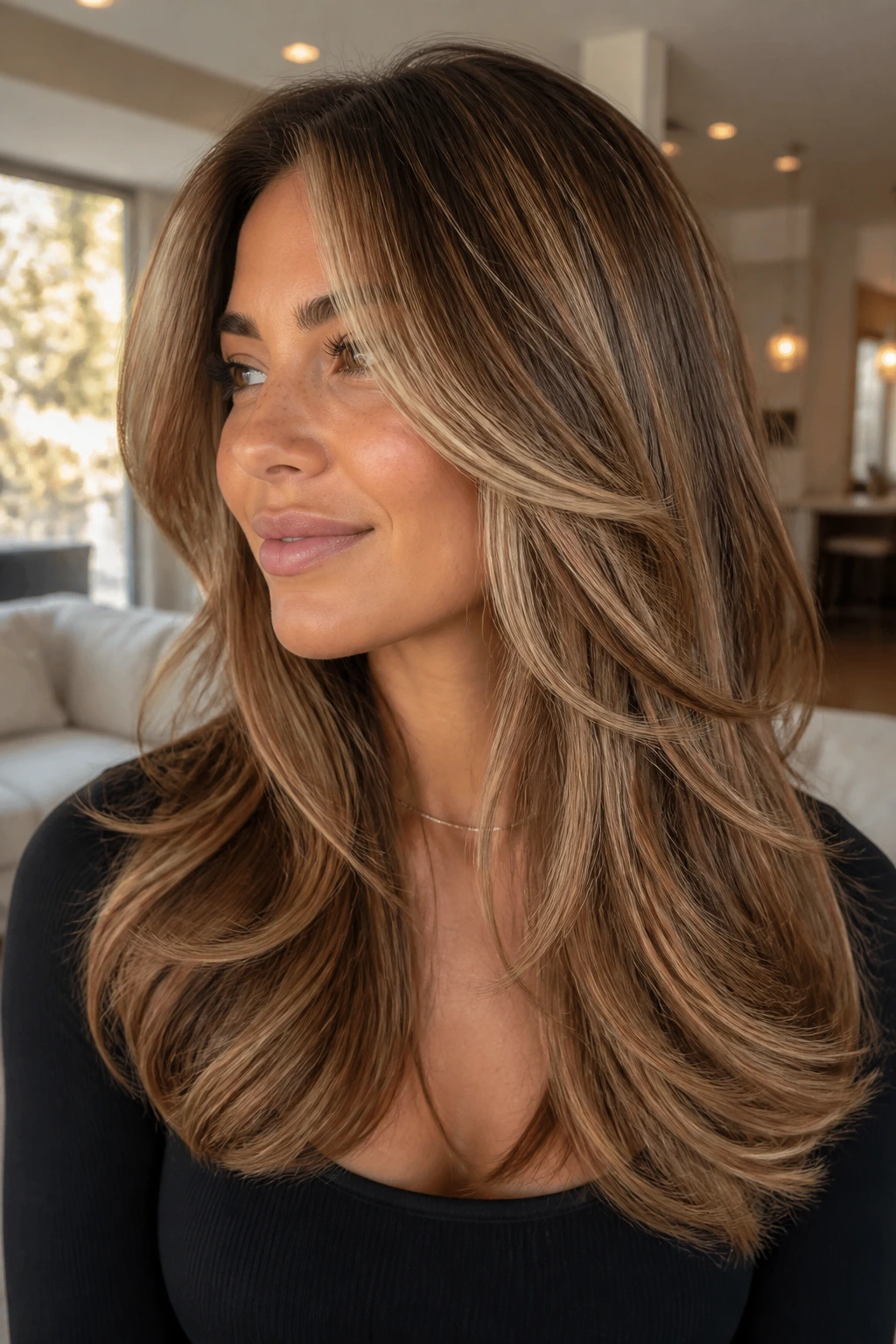
A salon-style blowout is where cinnamon lowlights earn their keep. The warm darker pieces nestle into the layers, then the lighter blonde flicks out around the face and ends, which gives the whole style a smooth, polished swing.
This look depends on movement. The round brush should lift the roots, then bend the ends under just enough to keep the layers visible. If the blowout is too stiff, the color loses its softness; if it’s too flat, the lowlights disappear.
I like this on shoulder-length to long hair because the layers have space to move. Shorter than that, and you lose the long sweep that makes the depth show.
14. Wolf Cut with Smoky Blonde Contrast
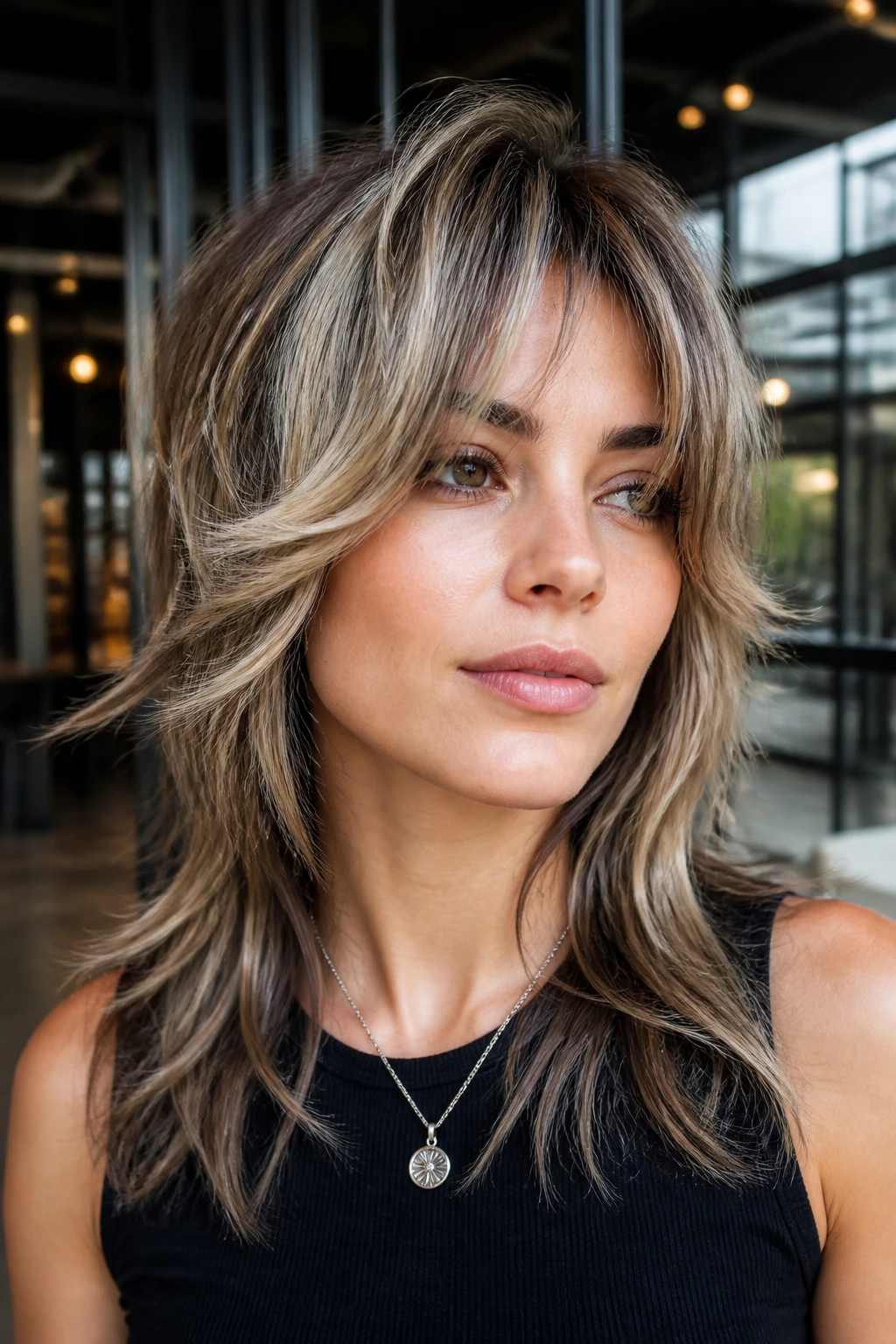
A wolf cut needs contrast. Badly. Without it, the texture can read messy instead of sharp. Smoky blonde pieces paired with darker lowlights solve that by making the choppy layers look intentional, especially around the crown and cheekbones.
The cut already gives you attitude. The color should back it up. Keep the roots shadowed, let the blonde hit the fringe and the top layers, then darken the underneath sections enough to hold the shape together. That balance is what keeps the style from turning into a fuzzy halo.
Use a matte texture spray if you want the piecey finish to stay visible. A glossy cream can flatten the whole thing.
15. Pixie Cut with Platinum Fringe
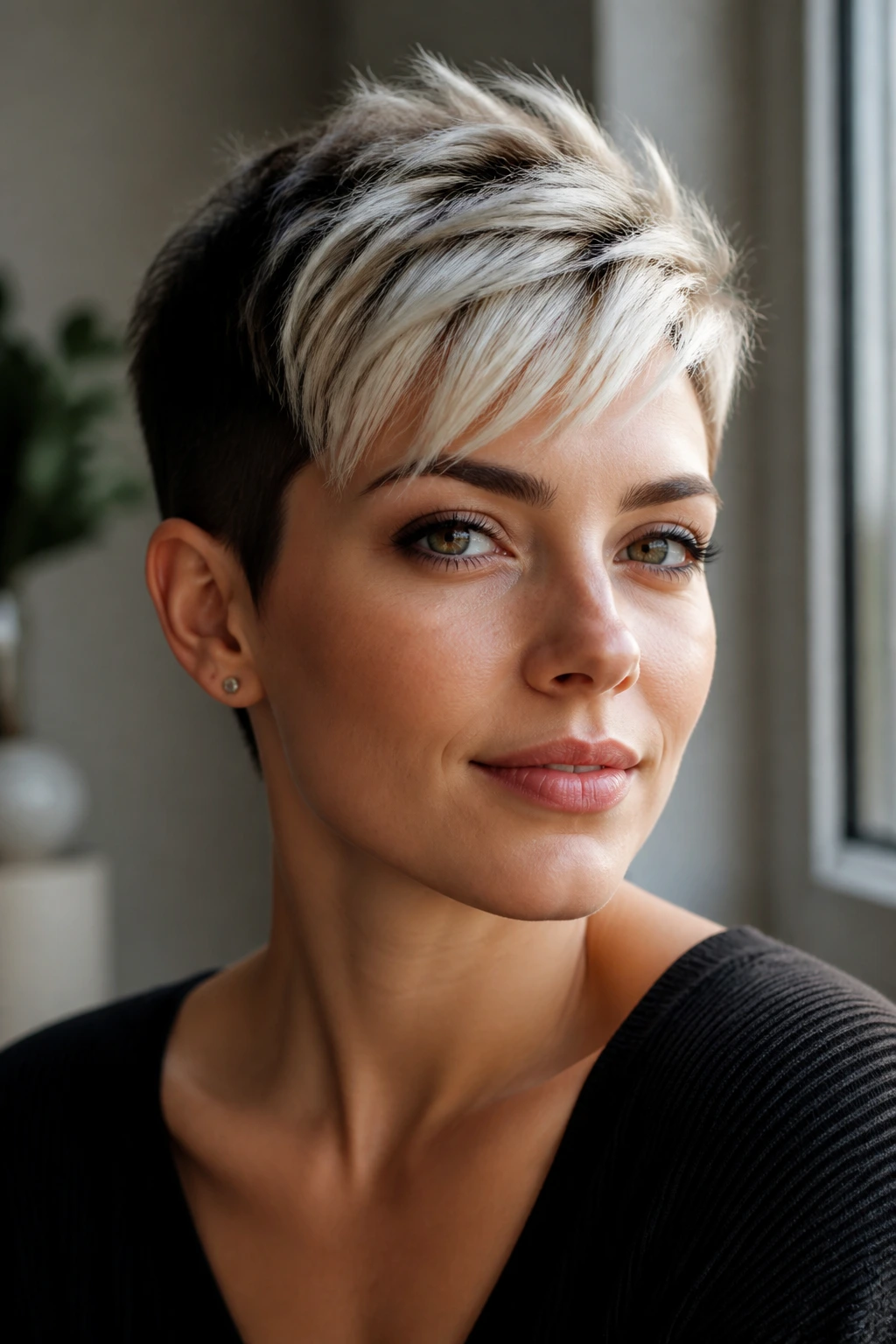
A pixie is not the obvious place for blonde dimension, which is why it works. The platinum fringe gives the front a sharp little hit of light, and the lowlights at the sides and nape stop the whole cut from turning into one bright blur.
Short hair makes every placement choice louder. A few dark strands under the crown are enough here. You do not need a lot. You need contrast where the cut already has movement, especially around the temple and neckline.
This one suits people who like a harder edge. It looks best with a bit of lift at the front and a clean neckline underneath. Fussy styling kills the point.
16. French Bob with Sandy Blonde Bend
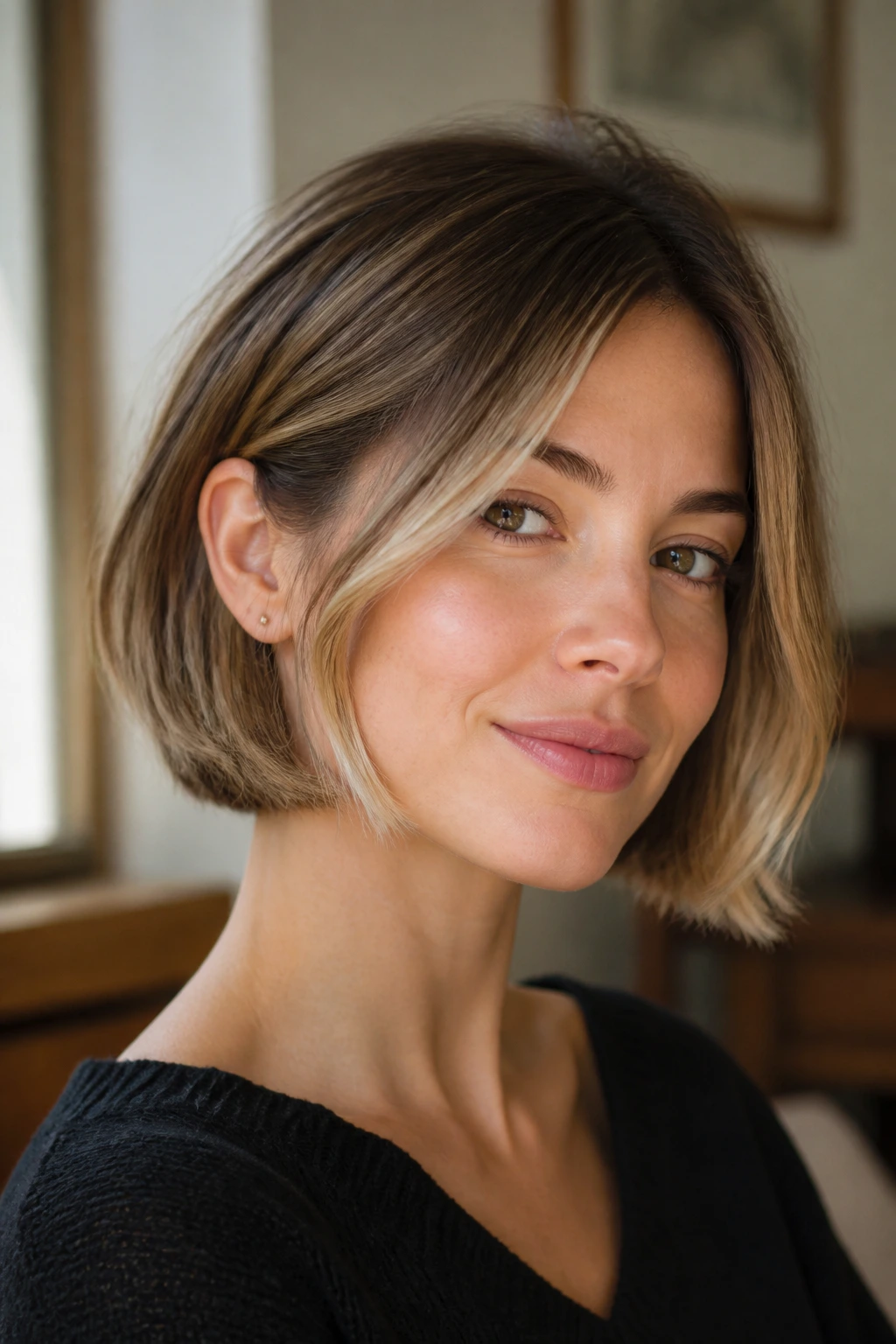
The French bob loves restraint. Sandy blonde, with lowlights tucked just under the surface, gives it a lived-in finish that feels expensive without being stiff. The bend around the jawline is what makes the color look intentional.
Keep the length at the cheek or just below the jaw. Any shorter and the blonde can dominate; any longer and the bob loses its little bite. The lowlights should sit in the underside and near the back, where they add weight without drawing attention away from the face.
A quick tuck behind one ear changes the whole read. Do that if you want the blonde to show off the shape of the cut.
17. Half-Up Twist with Creamy Blonde Ribbons
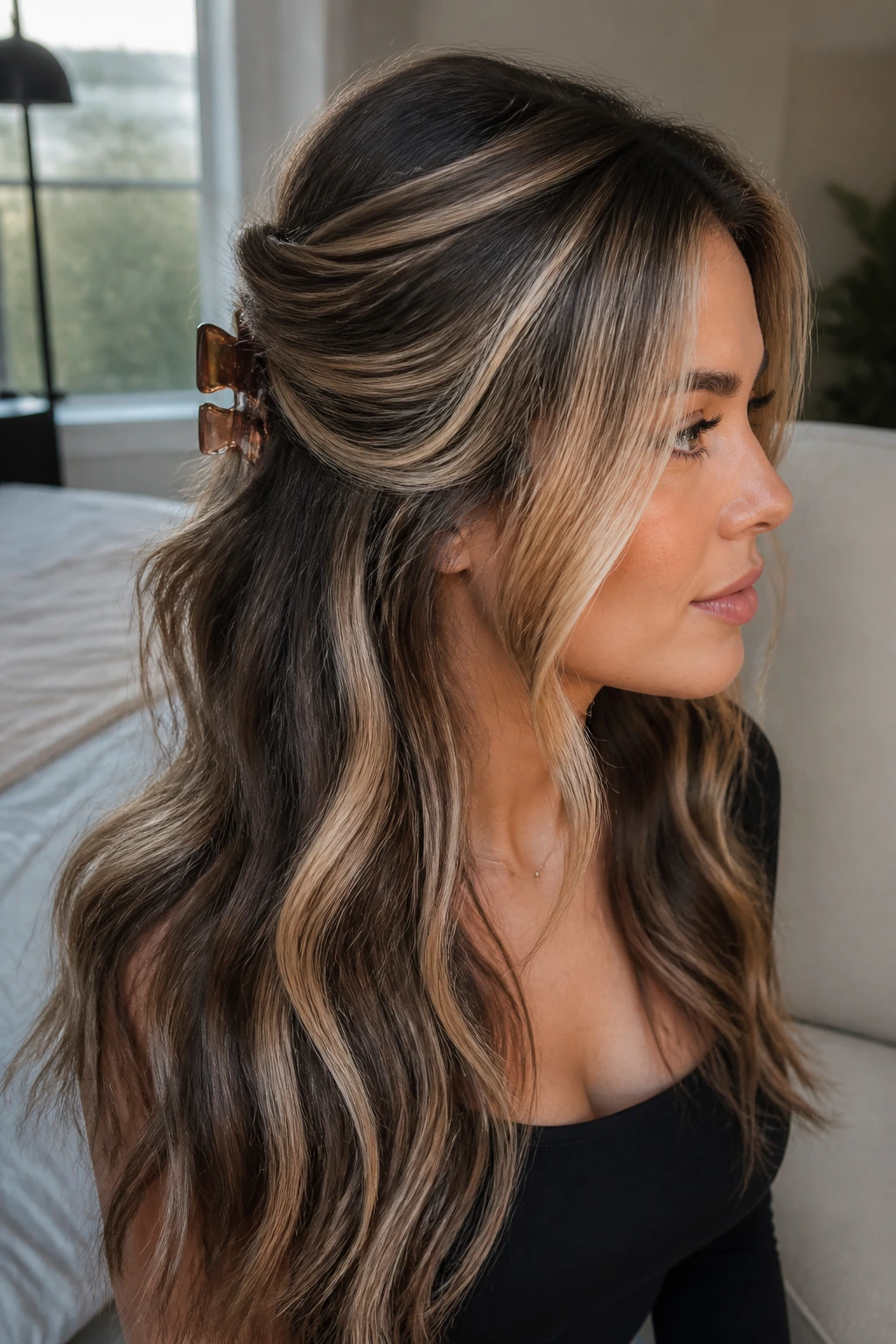
A half-up twist is one of the easiest ways to show off creamy blonde ribbons on dark hair, because it pulls the top section back and lets the lighter pieces underneath catch the light. The lowlights stay visible in the loose bottom half, which keeps the style from looking too sweet.
It’s a good option when your hair feels between lengths or when you want something polished without heating every strand. The twist also creates a little lift at the crown, which helps the contrast read better from the front.
Use a small claw clip or pins rather than a tight elastic. The style should look soft enough to move.
18. V-Cut with Buttery Blonde Ends
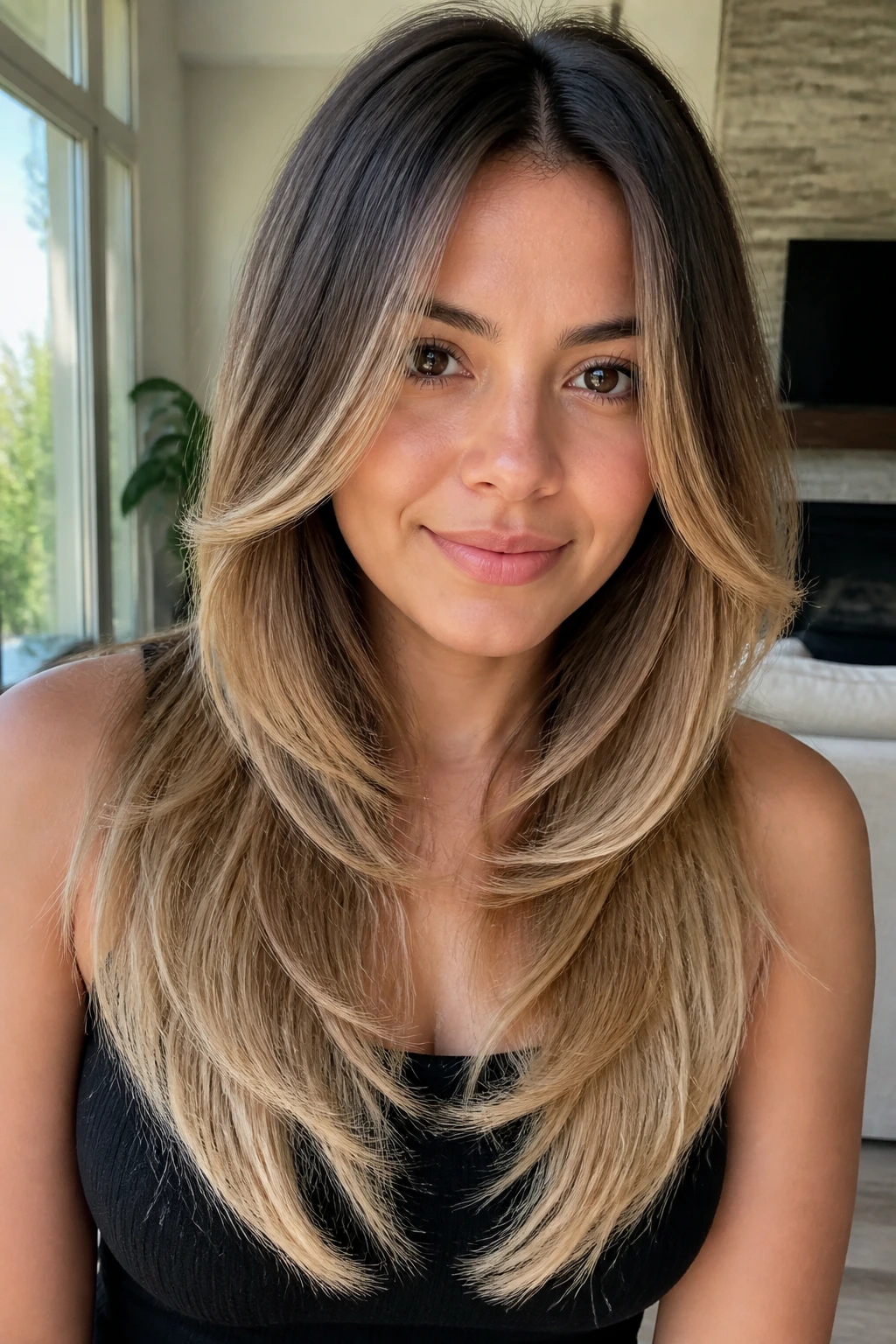
The V-cut is one of my favorite shapes for blonde on dark hair because it lets the ends become the lightest part of the whole style. Buttery blonde at the tips, with deeper lowlights above, gives the length a pointed finish that feels deliberate.
This is not the cut for someone who wants the same tone everywhere. It relies on the eye moving down the hair, from dark root to lighter ends, and the lowlights are what make that transition look smooth. Without them, the V shape can look thin.
If your hair is thick, this is especially good. The shape keeps the weight from getting heavy at the bottom.
19. Collarbone Cut with Sunlit Ends
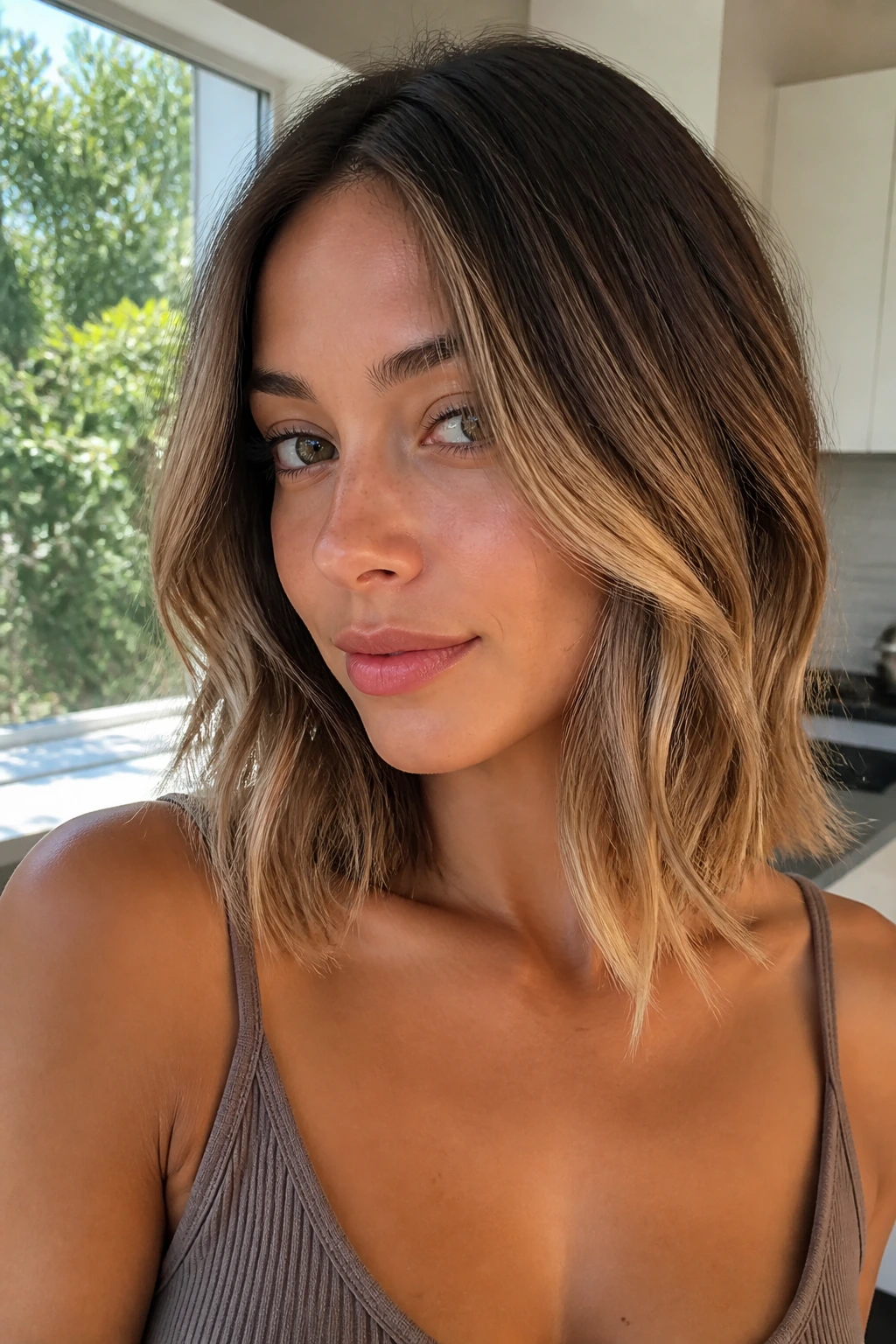
A collarbone cut is a nice middle ground when you want blonde without the commitment of long hair or the sharpness of a bob. Sunlit ends and lowlights through the mids make the cut feel airy, but not flimsy.
The length gives the color room to show every time you tuck it, flip it, or wear it behind the shoulders. That matters. On dark hair, this kind of movement keeps the blonde from disappearing into the overall shape.
Ask for a soft blend rather than a hard line. The lighter ends should look sun-touched, not dipped.
20. Side-Part Waves with Root Smudge
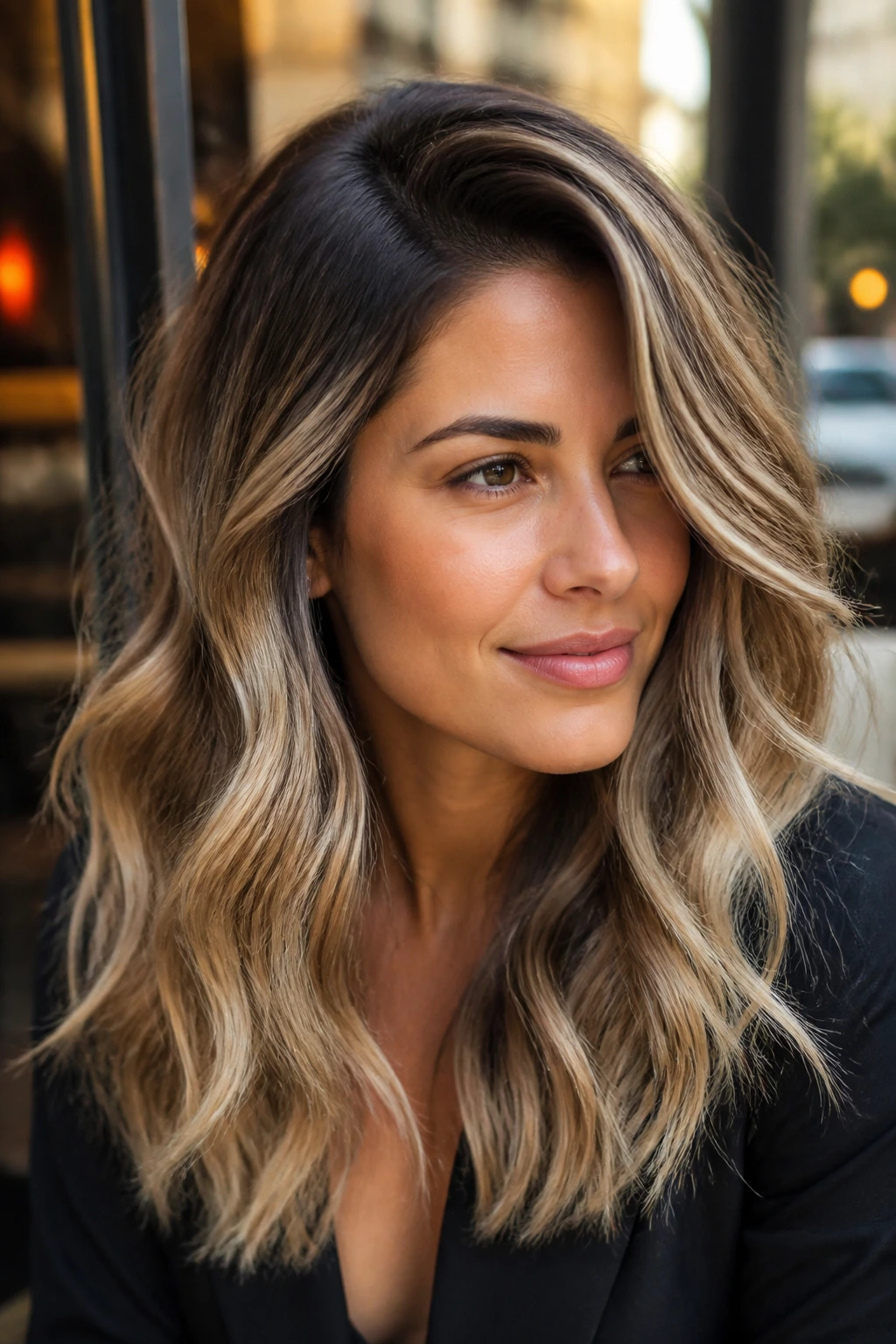
A deep side part changes the balance fast. It lifts one side, drops the other, and lets the blonde pieces hit differently on each half of the face. Add a root smudge and some lowlights, and the waves feel fuller without getting busy.
This style works because the root shadow supports the part. The darker base at the crown keeps the look grounded, while the lighter pieces on the heavy side of the part create that old-school glam sweep. It’s not subtle. That’s fine.
Use a medium barrel iron and brush the waves out once they cool. The shape should feel soft, not crunchy.
21. Sleek Low Bun with Peekaboo Blonde
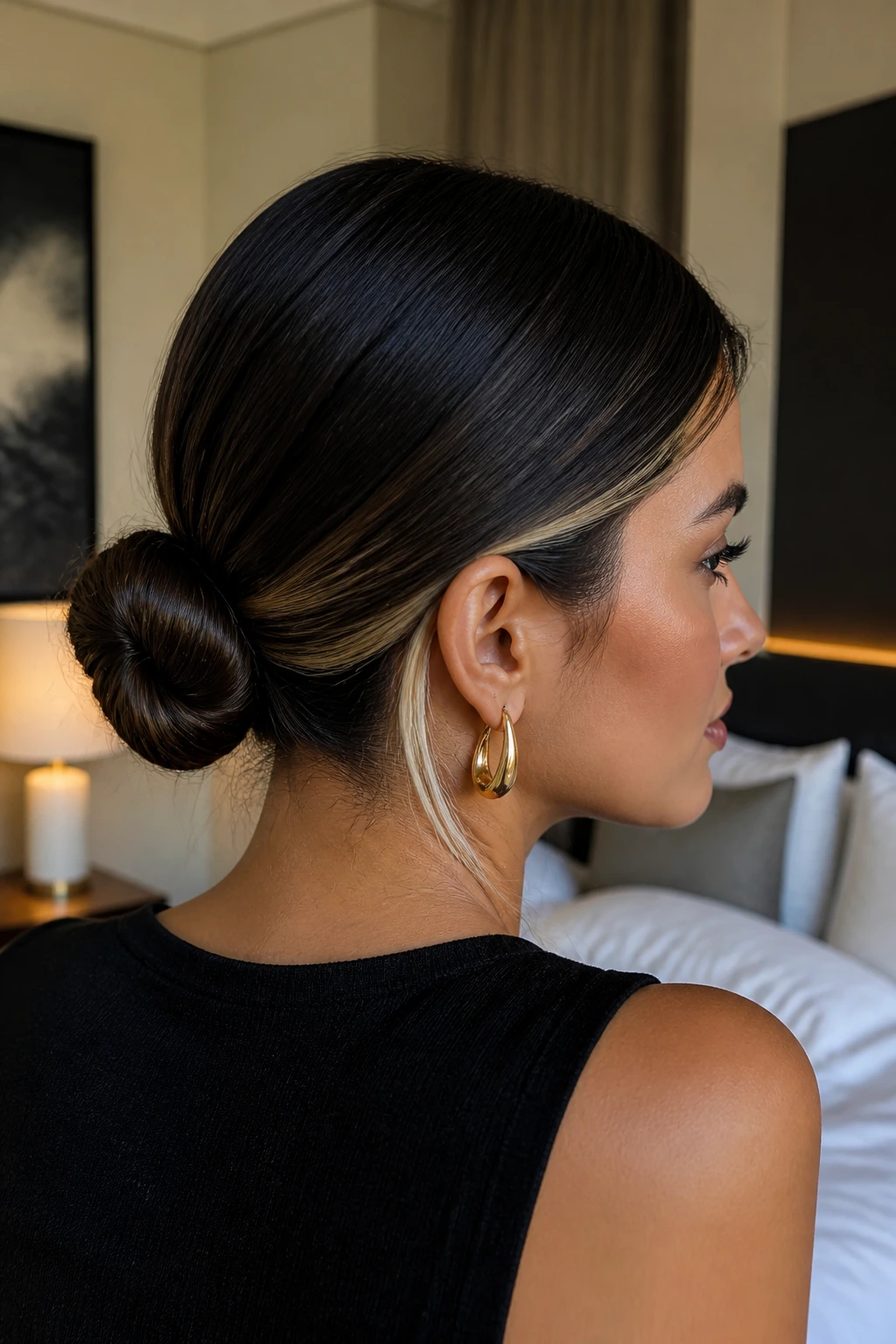
A low bun can still show dimension if the blonde lives in peekaboo sections around the nape and underlayers. That’s the appeal here. From the front, the style is clean and formal. From the back, the lighter strands flash through the twist and the lowlights stop it from looking flat.
This is one of the more practical ways to wear blonde on dark hair if your day involves some polish. You get the darker root and the blonde tone both working for you, and you don’t need much heat.
Keep the bun loose enough that a few textured pieces stay visible. If you pull everything too tight, you lose the color contrast.
22. Bronde Lob with Warm Maple Lowlights
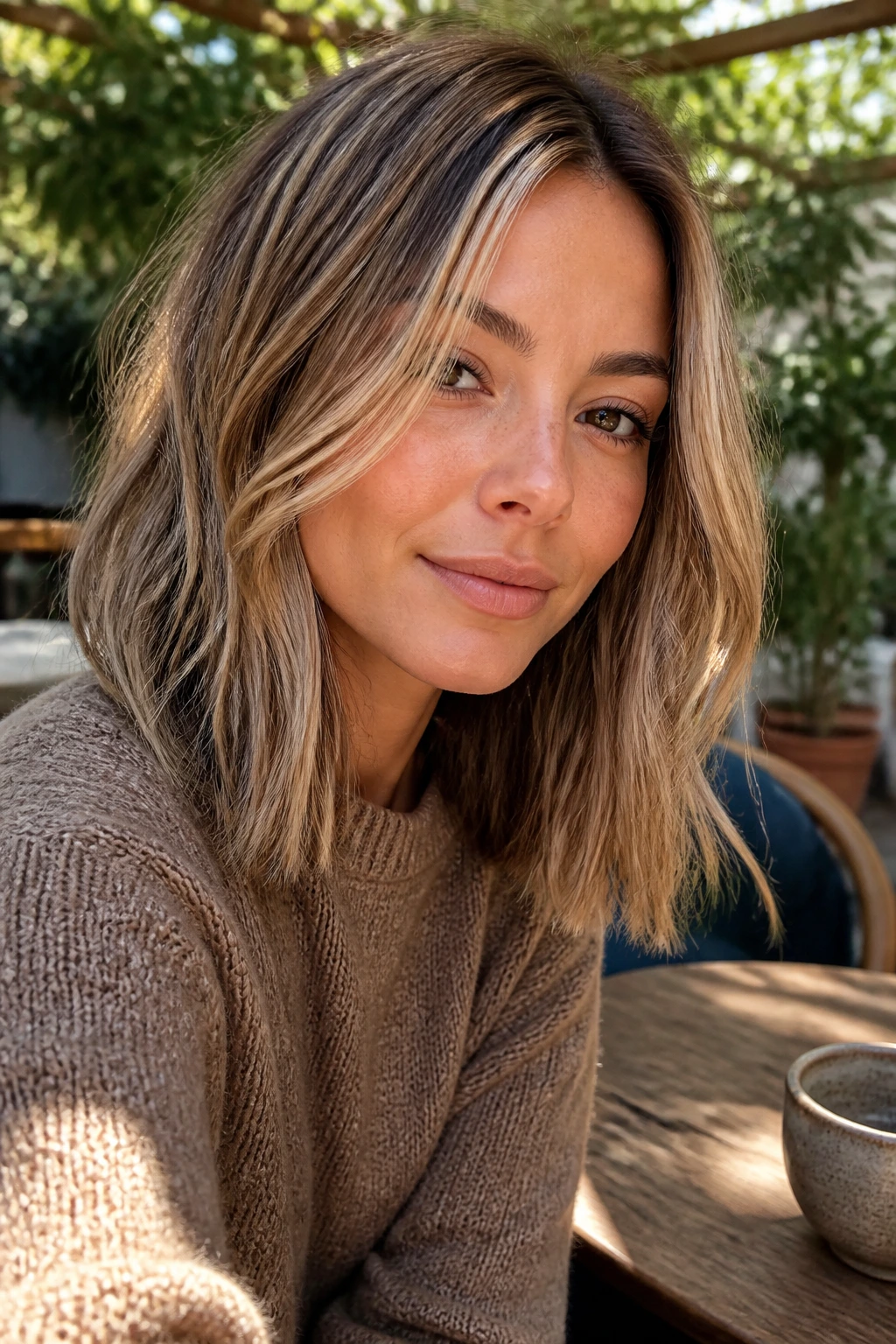
Bronde is the safe word people use when they want blonde but not blonde-blonde. On a lob, warm maple lowlights make the whole thing feel anchored, and that’s exactly why it works so well on dark hair.
The trick is to avoid making every strand look medium. A few brighter pieces around the front, then darker maple sections under the top layer, create a believable mix. It’s not about hiding the brunette base. It’s about making it look chosen.
This is a strong option if you want low upkeep. Bronde tends to grow out more gracefully than a high-contrast blonde.
23. Mermaid Waves with Champagne Dusting
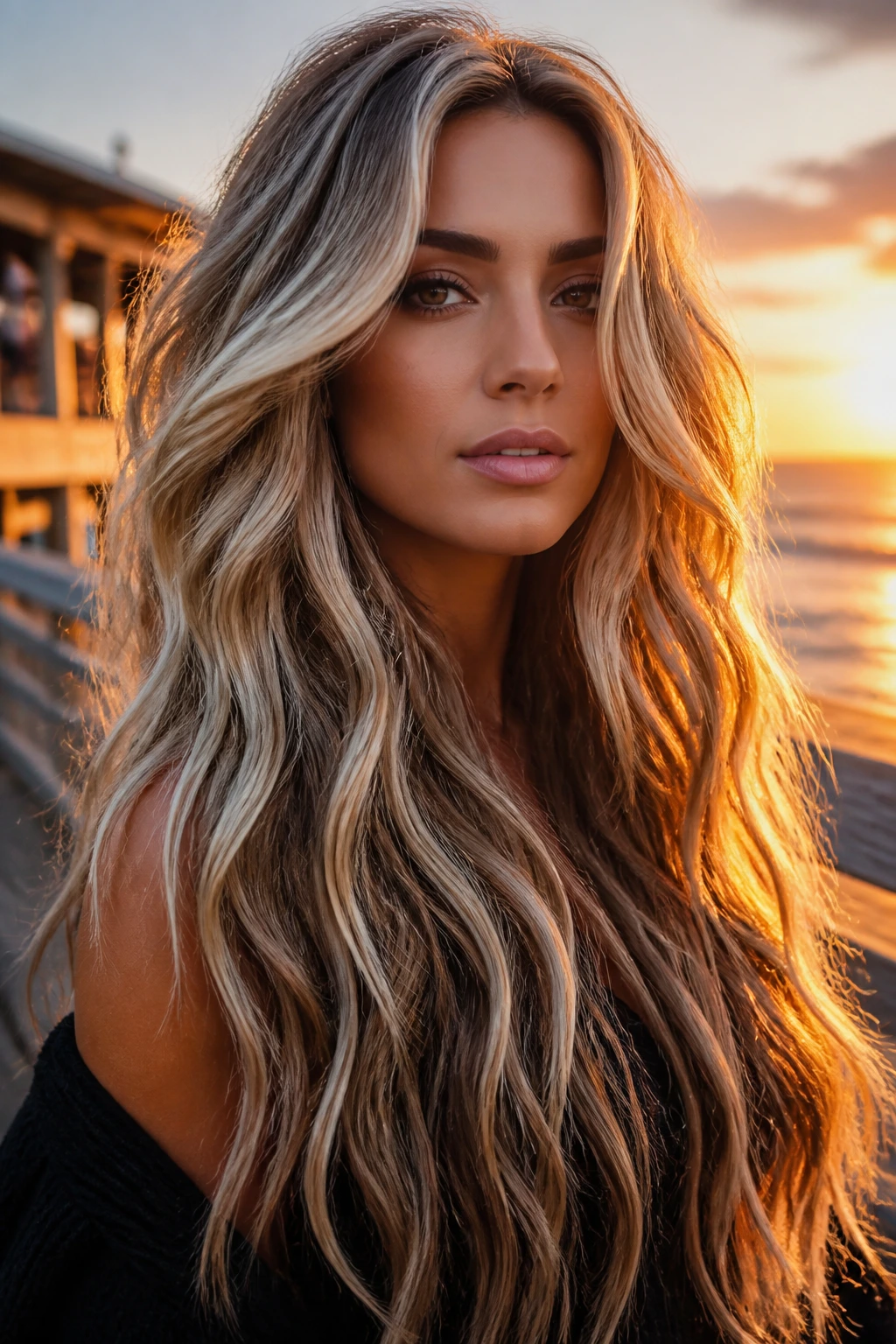
Long mermaid waves can swallow color if the placement is lazy. Champagne blonde at the surface, with darker lowlights inside the wave, keeps the length from turning into a pale sheet.
This style is all about the bend. The waves should be big enough to show tone changes as they fall, but not so big that the color blurs together. That’s where the lowlights matter most. They cut through the lightness and give the hair a little shadow.
A wide-barrel iron or a set of large braids overnight will both work. Just don’t flatten the roots too much. The lift is part of the effect.
24. Modern Mullet with Cream Blonde Top
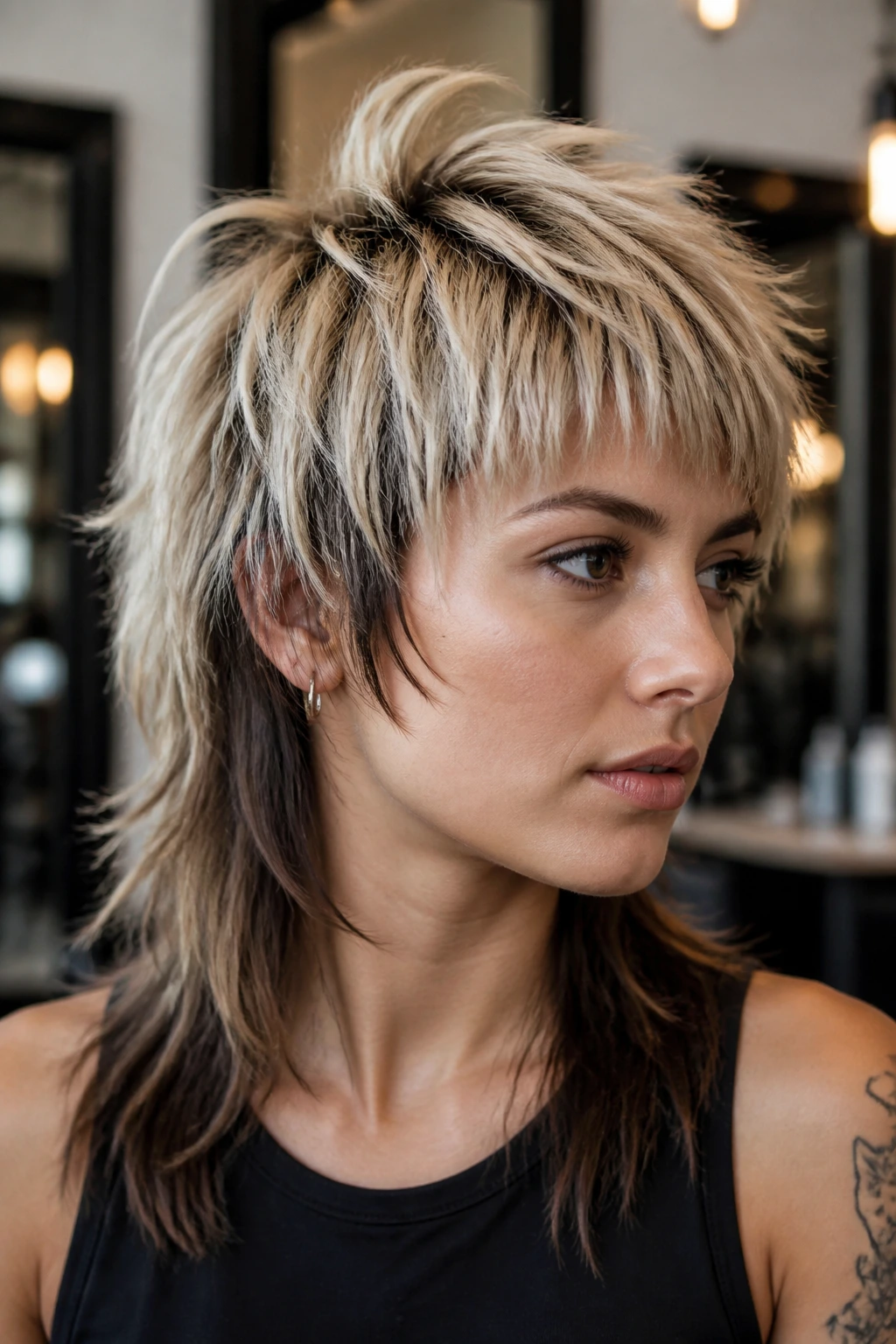
The modern mullet looks better with contrast than with polish. Cream blonde on top and darker lowlights underneath make the shape read cleaner, especially around the crown and the softer length at the back.
This cut can get too busy if every section is light. The lowlights stop that. They make the shorter layers feel sharper and keep the longer back from blending into one soft mass. That little bit of darkness gives the style structure.
It’s a good choice for someone who wants something fashion-forward without losing all softness. The cut already has edge. The color just supports it.
25. Ultra-Long Straight Hair with Ribbon Blonde
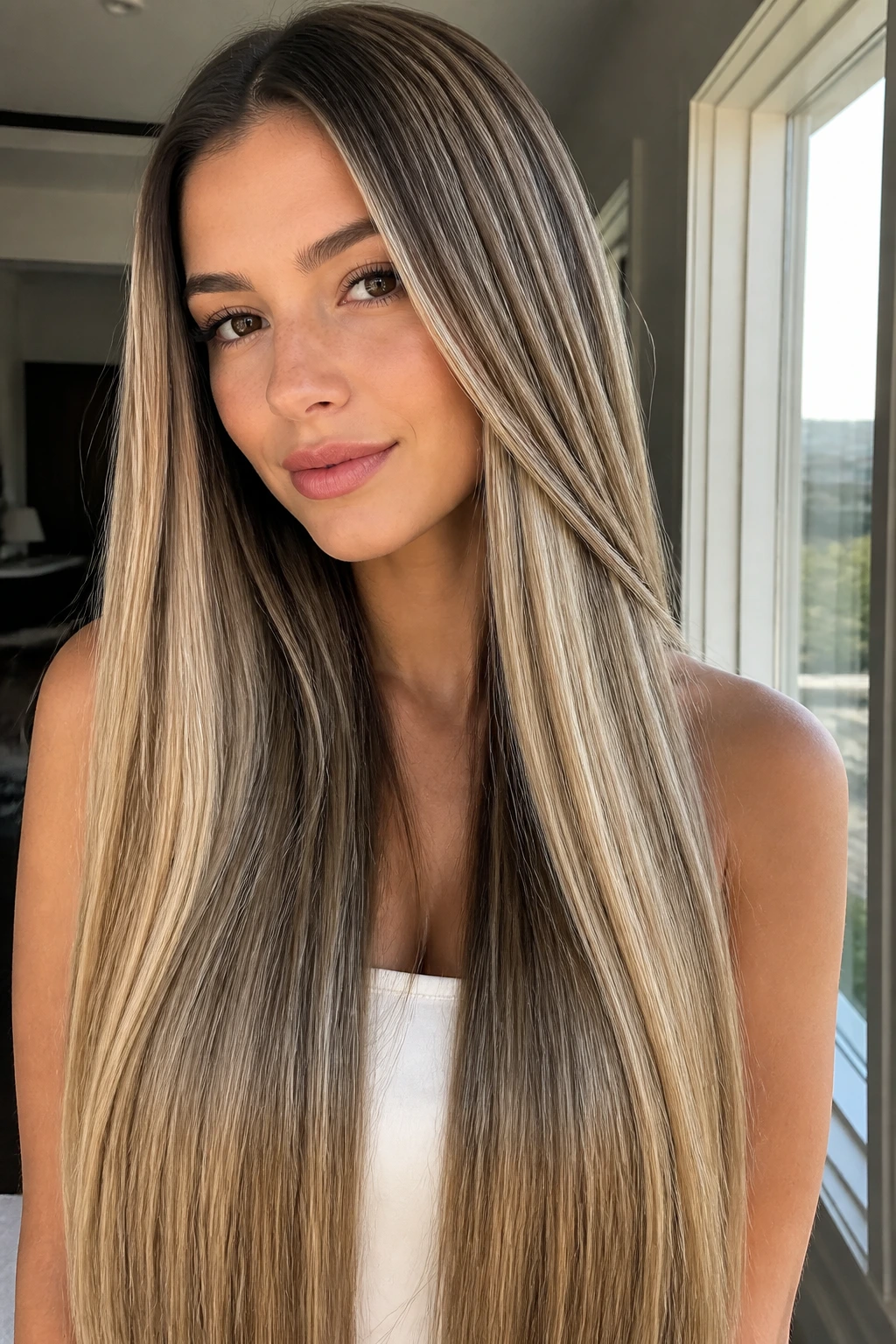
Straight, ultra-long hair is unforgiving in the nicest way. Every strand shows, which means ribbon blonde has to be placed well. With lowlights woven between the light pieces, the length gets that long, glossy curtain effect instead of a flat tan sheet.
The benefit of this look is control. The blonde can run through the mids and ends while the roots stay deeper, and the lowlights give the whole length a little shadow so it doesn’t blur in bright light. The result feels clean from a distance and detailed up close.
Flat iron only the top layer if the ends already fall straight. Over-styling long hair is the fastest way to make the color look tired.
26. Tousled Shoulder Cut with Beige Balayage
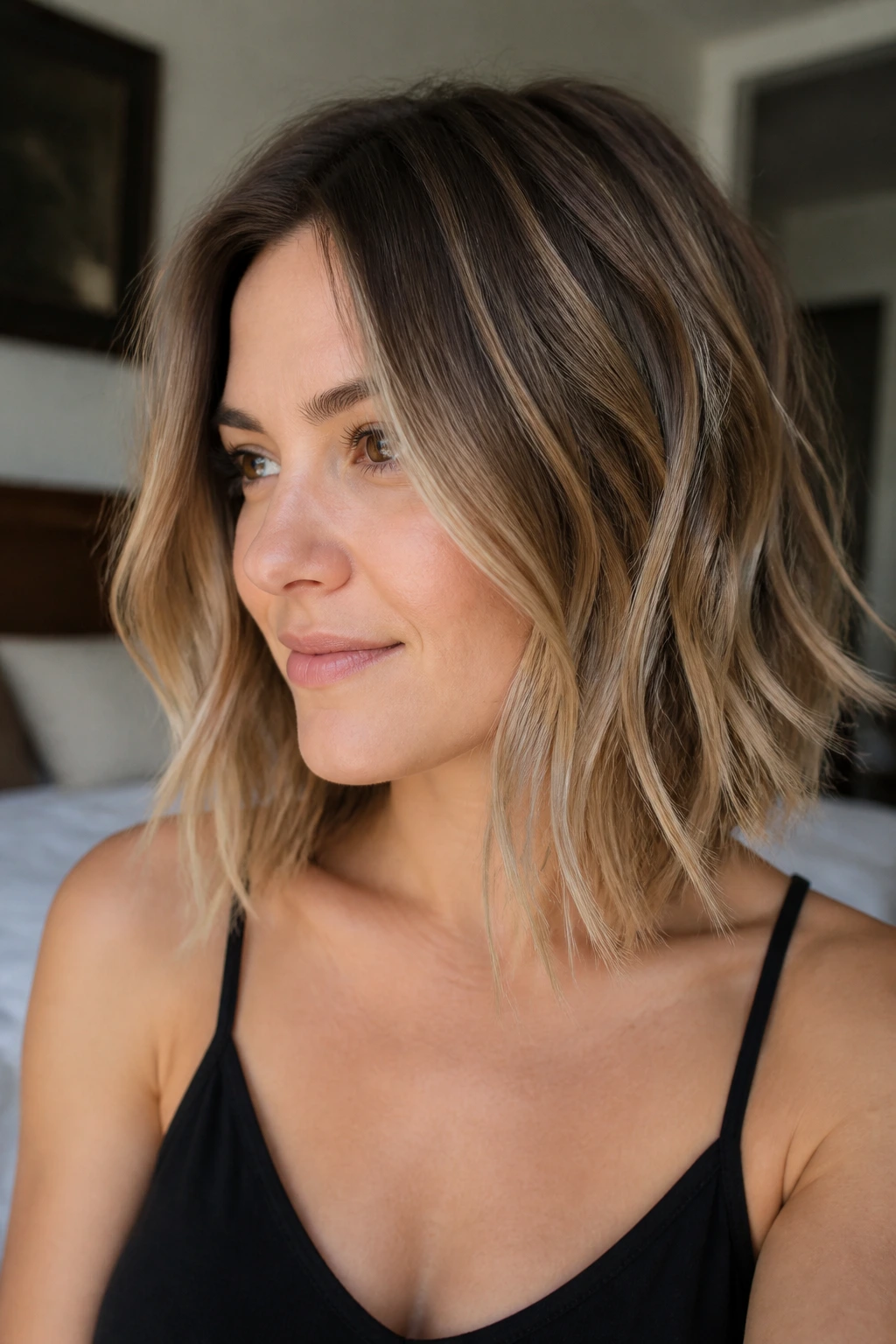
A shoulder cut is where beige balayage and lowlights meet the real world. It’s long enough to show a blend, short enough to manage without a whole afternoon of styling, and the tousled finish makes the darker strands look like part of the design.
This is one of the easiest looks to live with. The beige pieces brighten the face, the lowlights keep the body of the hair from puffing out, and the shoulder length keeps the shape from dragging down. If your hair has a slight wave, even better.
Air-dry cream and a quick bend with a flat iron on the front pieces is all it needs. Nothing fussy.
27. Layered Curls with Honey-Maple Blend
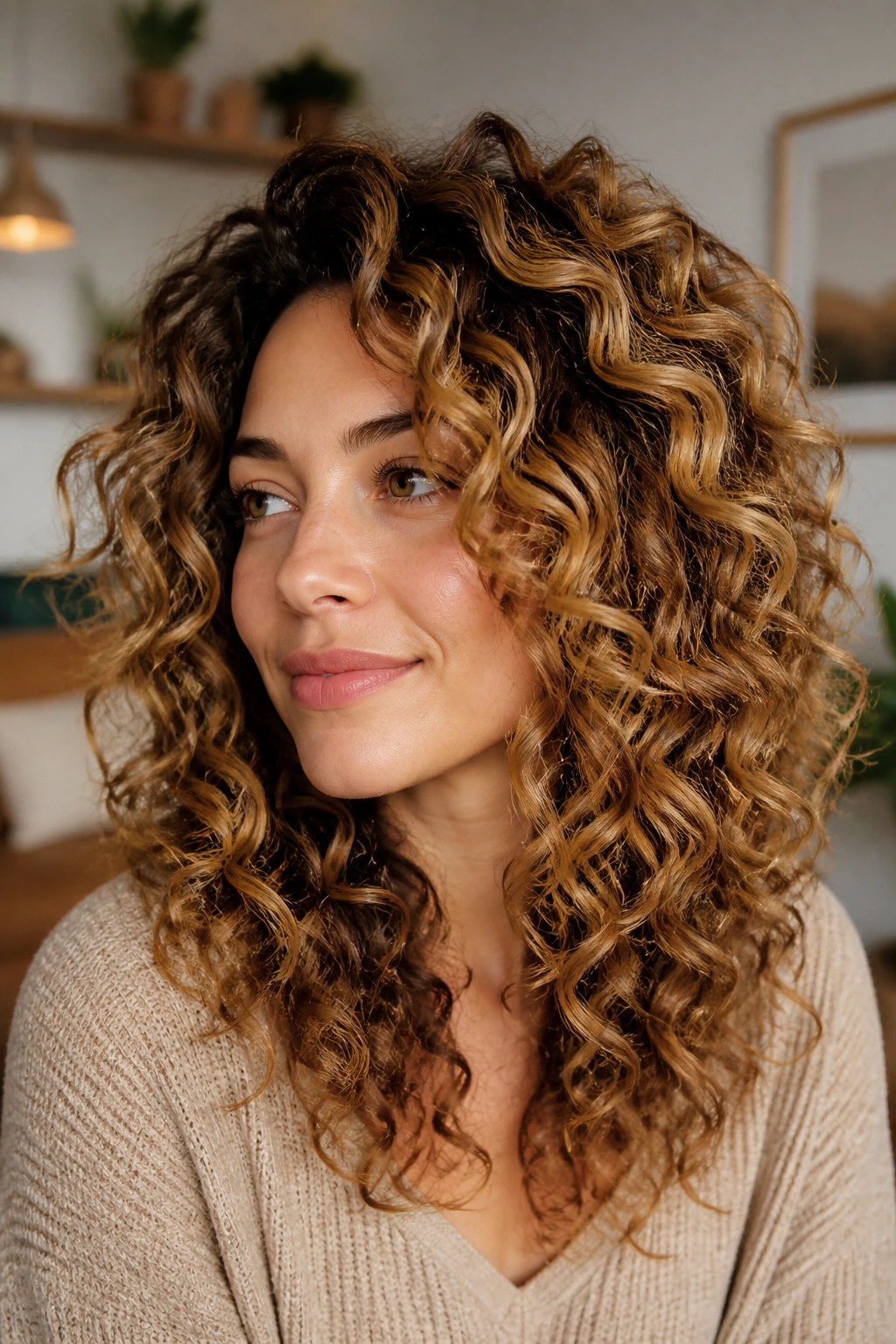
Curly hair loves a honey-maple blend because the lowlights can sit deep in the curl while the lighter pieces pop at the outer ring. The result is rounder, richer, and a lot less uniform than a single blonde tone.
What matters here is placement, not saturation. A few lighter strands around the top and face, then deeper lowlights through the underside, make the curls look carved instead of cloud-like. That matters especially on dark bases, where curls can lose shape if everything is too light.
Use a diffuser on low heat. High heat blows the curl pattern apart and makes the color work harder than it should.
28. Short Crop with Bright Blonde Fringe
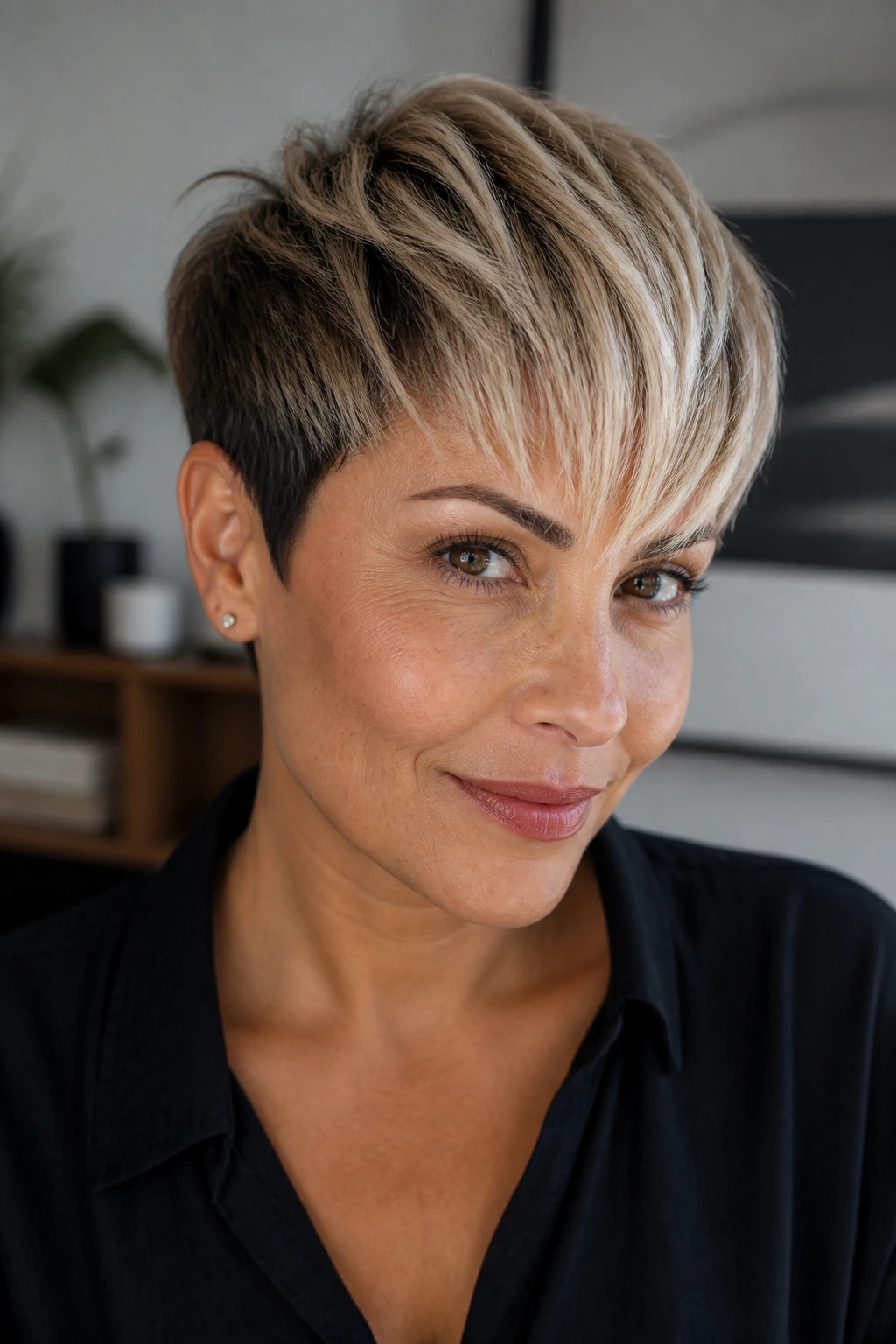
A short crop with a bright blonde fringe is a little dramatic, and that’s the fun of it. The fringe gives you the punch of blonde right at the face, while the darker lowlights through the sides and back keep the cut from becoming a solid helmet of light.
This one needs confidence and a decent trim schedule. Short hair grows fast enough that the shape can change in a blink. Still, if you like sharp edges and easy styling, it’s hard to beat. The blonde fringe gives the crop a point of focus, and the lowlights keep the back from disappearing.
Best for: anyone who wants the blonde to feel bold but still dimensional.
Why Lowlights Change the Whole Read of a Blonde Transformation
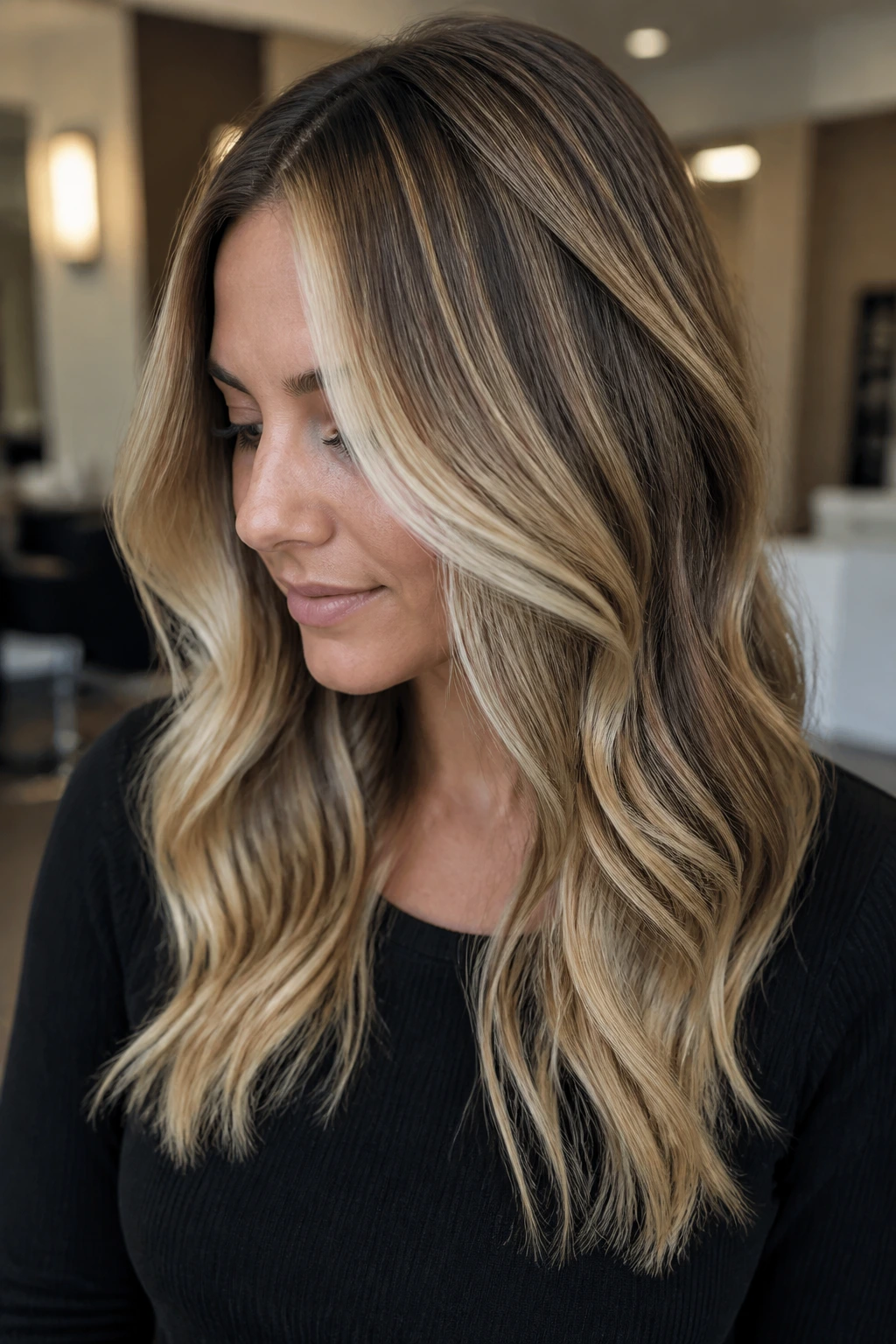
A blonde makeover on dark hair can go wrong in a couple of familiar ways. It gets too bright, too fast. Or it lifts evenly but loses all the depth that made the brunette base interesting in the first place. Lowlights solve both problems by putting some visual weight back into the hair.
The deeper strands are not filler. They give the blonde a place to land. When a wave bends or a braid twists or a lob swings forward, those darker pieces show up for a second and make the lighter sections look brighter by comparison. That tiny contrast is doing a lot of work.
There’s also the grow-out issue. Dark roots against pale blonde can look harsh after a few weeks. A rooted lowlight mix softens that line, especially if the colorist keeps the transition one or two levels apart rather than forcing a hard jump. It’s kinder to the hair, too, because the whole head does not have to live at the lightest possible level.
If you start from very dark hair, the first appointment may only get you to caramel, bronde, or beige blonde. That’s not a failure. It’s the first layer of a better result, and honestly, it usually looks more believable than trying to chase icy blonde in one sitting.
Essential Tools for These Looks
-
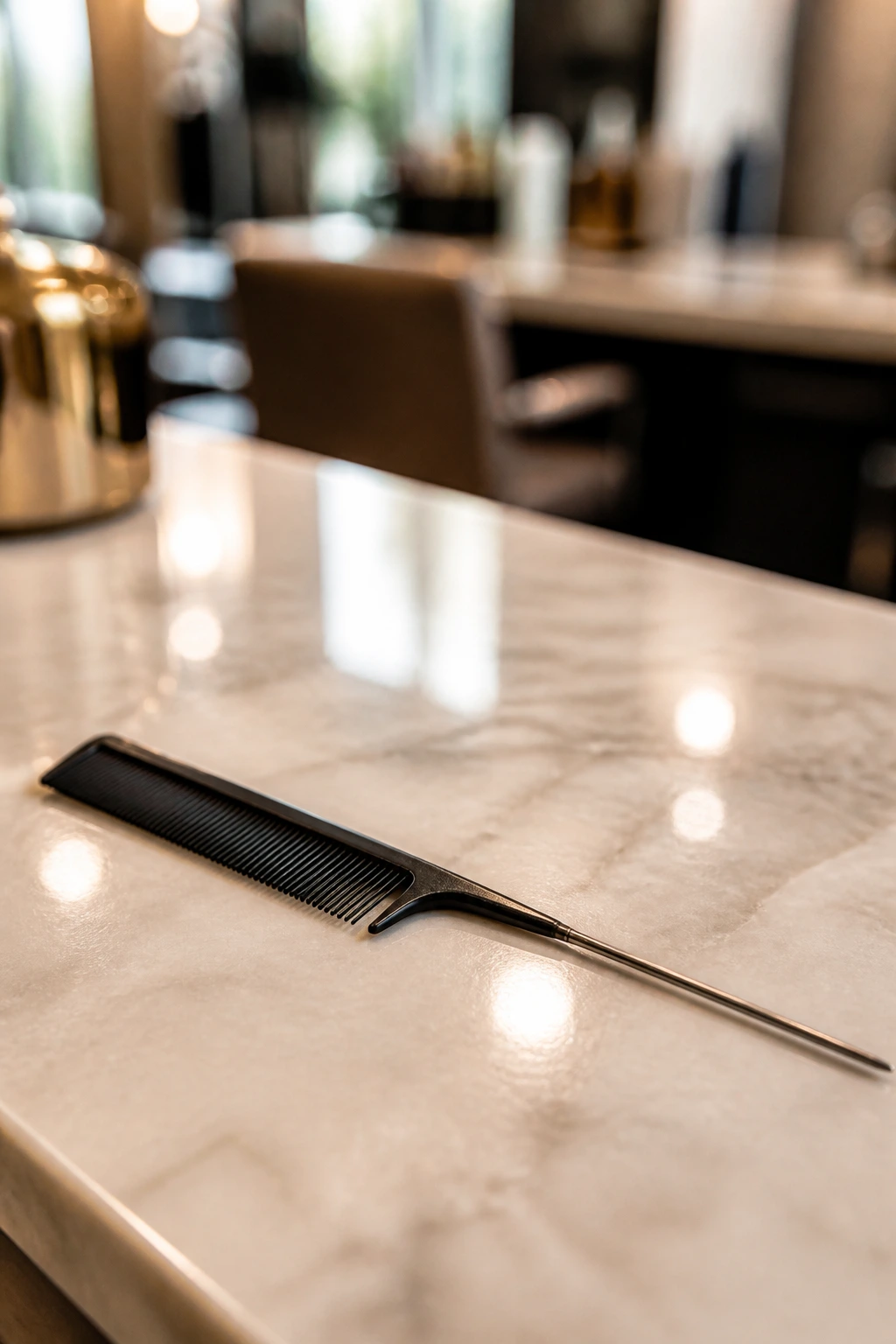
Tail comb: Clean parting matters when you want face-framing pieces and lowlights to sit in the right place.
-
Sectioning clips: These keep the crown, sides, and nape separate while you style or dry.
-
1-inch or 1.25-inch curling iron: Best for soft waves, ribbons, and the loose bend that shows off multi-tone color.
-
Round brush: Useful for blowouts, curtain bangs, and anything that needs root lift.
-
Heat protectant spray: Dark-to-blonde hair can get dry at the ends fast, especially if it has been lightened more than once.
-
Color-safe shampoo and conditioner: Regular formulas can strip tone quickly; color-safe ones keep the blonde from dulling early.
-
Purple or blue shampoo: Use sparingly and only when brass starts creeping in. More is not better.
-
Light styling cream or mousse: Good for holding shape without smearing the color into a heavy-looking finish.
-
Dry shampoo: Helps the roots stay lifted, which makes lowlights and blonde pieces show more clearly.
-
Silk scrunchie or silk pillowcase: Handy if you wear waves, braids, or a loose bun overnight and don’t want the color effect crushed flat.
Picking the Right Blonde, Lowlight, and Toner Shades
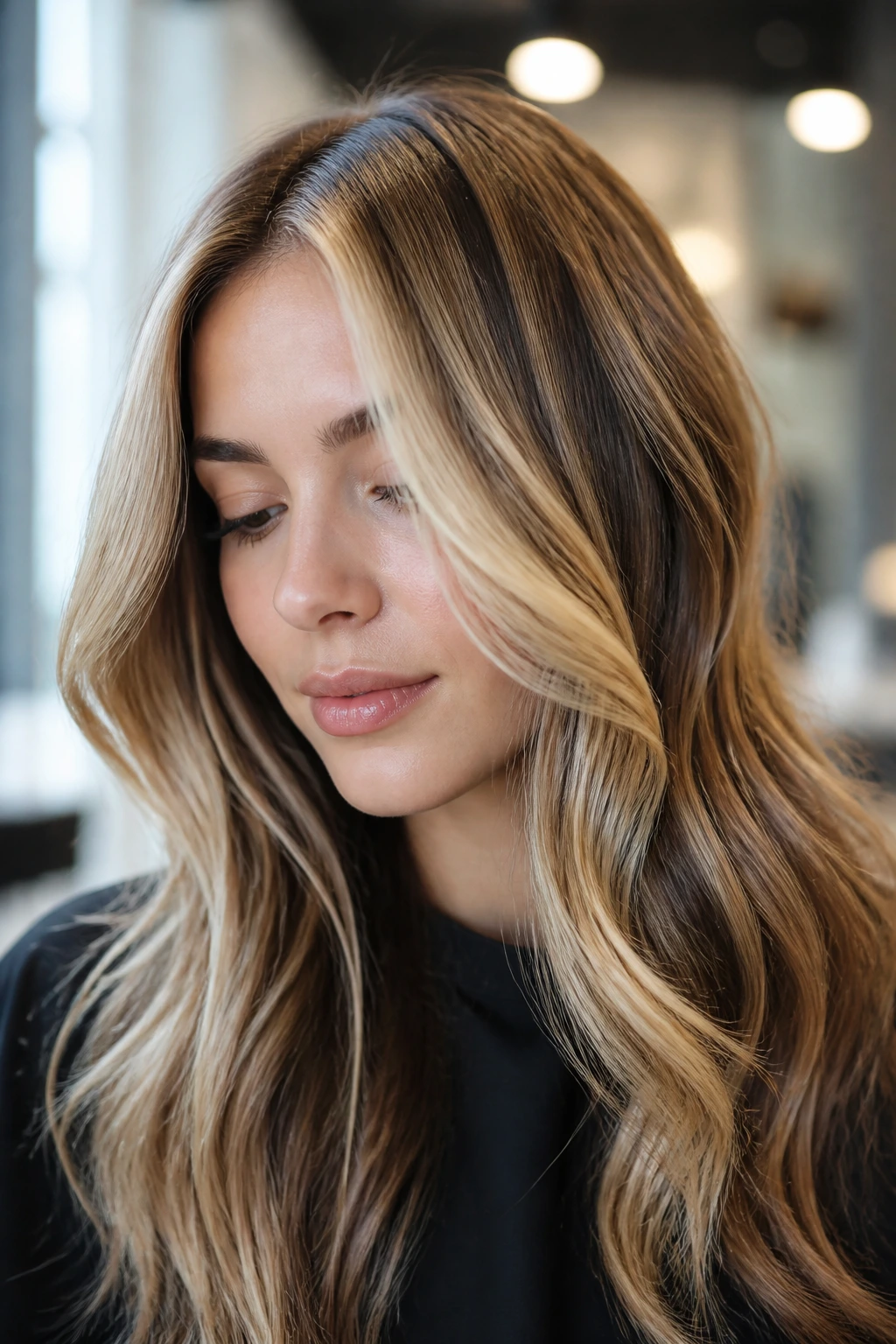
The shade choice matters more than the haircut most people think. On dark hair, a blonde that is too pale too soon can look harsh, while lowlights that are too dark can read like random streaks. The sweet spot is usually a few levels apart, not a giant leap.
If your base is deep brunette, caramel, honey, beige, and warm champagne tend to blend more naturally on the first pass. Ash, pearl, and mushroom tones can work too, but they need a careful hand. Too much cool toner on a dark base can leave the lengths looking dusty after a few washes, which is nobody’s favorite salon surprise.
Bring photos that show the placement, not just the color. One picture for the front pieces, one for the body of the hair, one for the ends. Colorists can read those three things faster than one screenshot of a perfect wave under studio lights.
A gloss matters here as much as the lightener. It softens the line between blonde and lowlight and helps the whole head read as one story. If your hair tends to go brassy, ask about a beige or neutral toner instead of defaulting to the iciest option in the bowl. The result usually wears better.
How to Wear These Looks
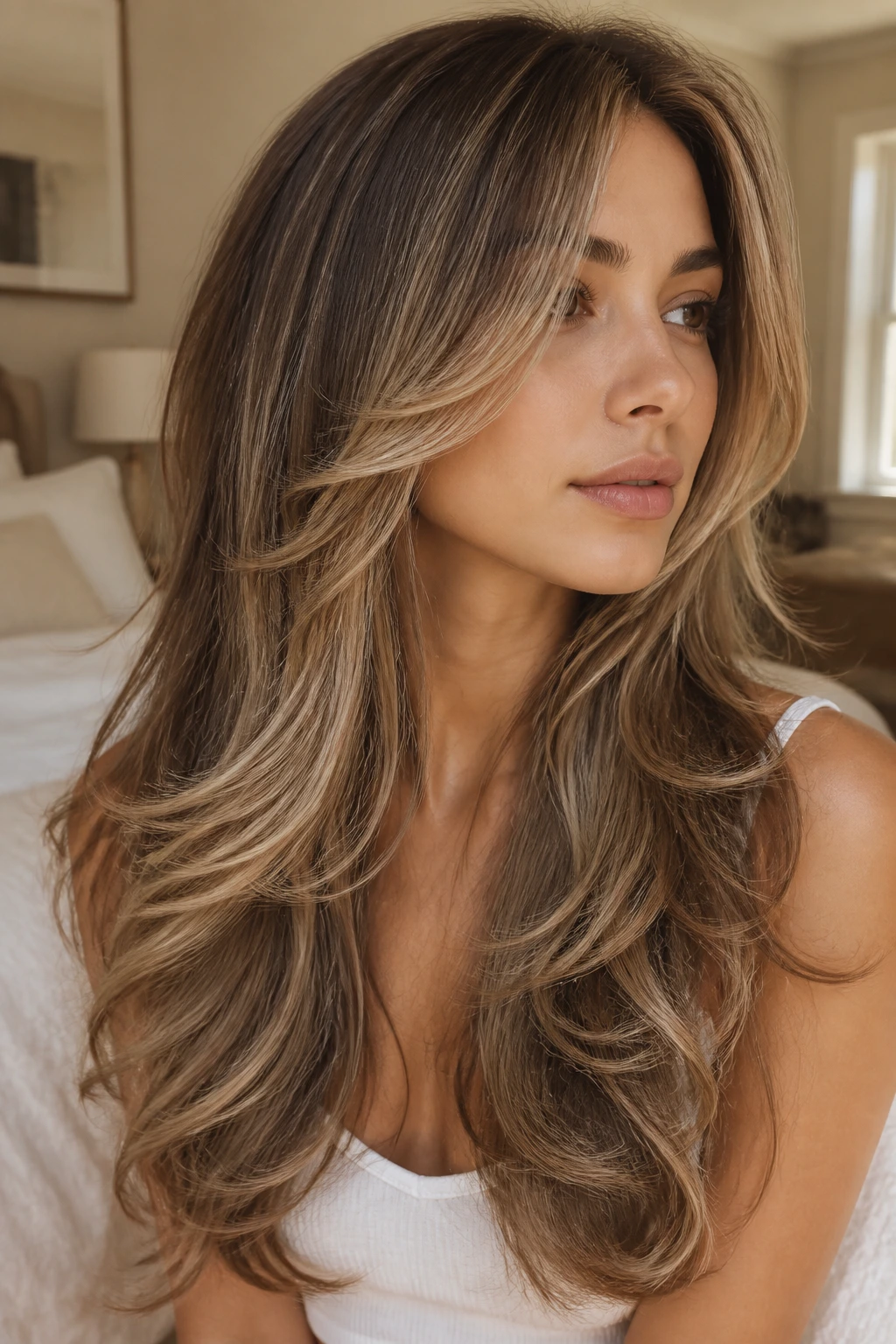
Shape: Long waves and butterfly layers give blonde room to move, while bobs, lobs, and blunt crops use shape to make the contrast read cleanly. If your cut is one-length and heavy, you may need more surface brightness so the lowlights don’t disappear.
Texture: Straight hair shows placement in a very honest way. Wavy and curly textures soften the transition between blonde and darker strands, which is handy when you want a gentler grow-out.
Accessories: Clips, silk bands, and simple pins let the color show through instead of hiding it. Oversized headbands can flatten the whole look, so use them carefully if the front pieces are doing the heavy lifting.
Occasion Fit: Sleek ponytails, blowouts, and blunt bobs feel sharper. Braids, half-up twists, and tousled waves feel softer. Pick the finish that matches how visible you want the lowlights to be that day.
Additional Tips and Color Boosters
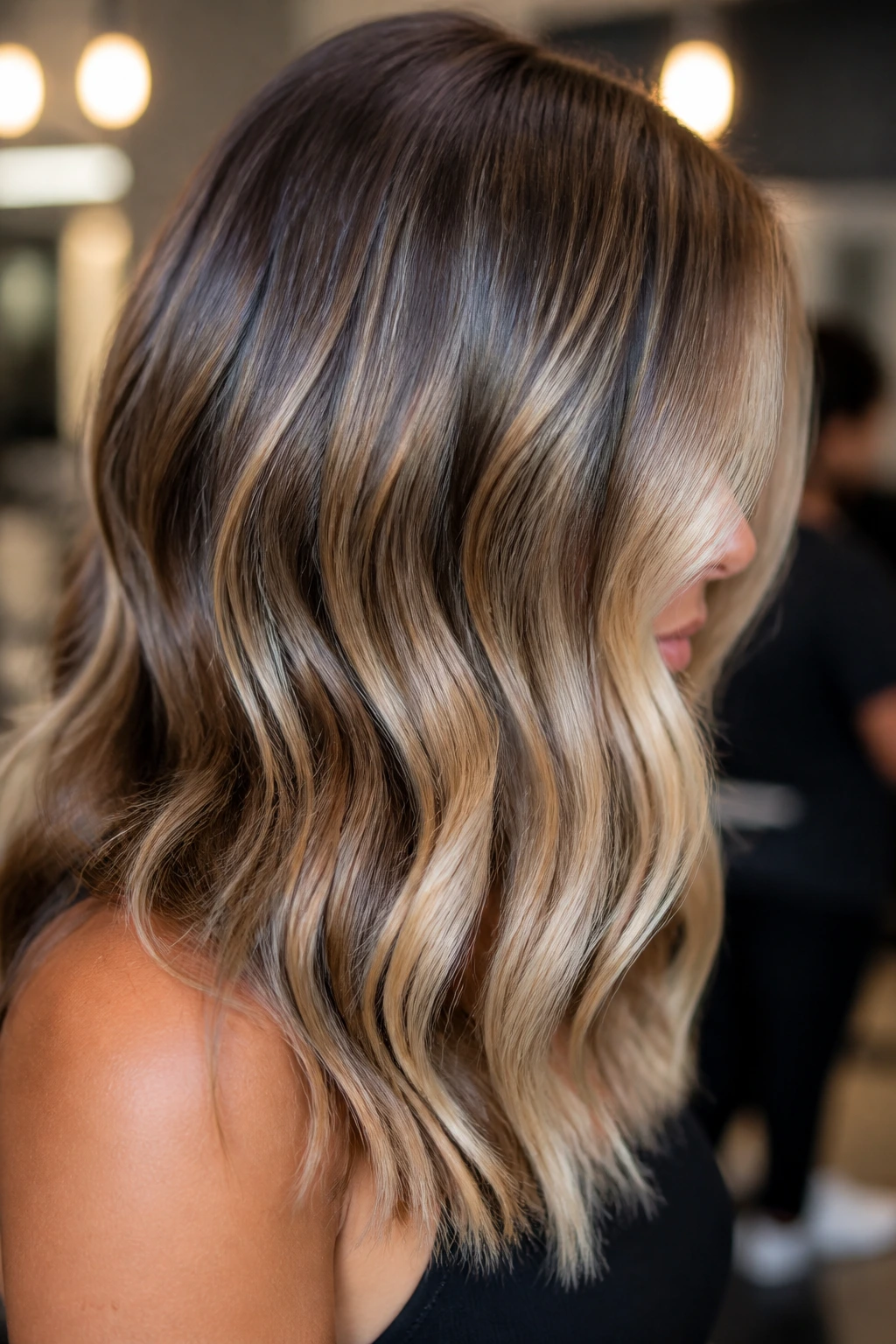
Gloss Layer: A clear or tinted gloss every 4 to 6 weeks keeps the blonde from looking tired. It also softens the contrast so the lowlights and lighter pieces still feel connected.
Placement Trick: Ask for the brightest pieces around the face and the lightest ends lower down, then keep some darker strands under the crown. That placement gives the eye a place to rest and makes the style look fuller.
Heat Control: Lightened ends do not need 450°F heat to cooperate. Stay closer to 300 to 320°F on hot tools and use fewer passes. The color looks better when the ends stay smooth instead of fried.
Make-It-Yours: If you want a softer, lower-maintenance finish, keep the roots 1 to 2 shades deeper than the lightest blonde. If you want more drama, widen the face-framing sections and let the lowlights stay mostly underneath.
Texture Boost: For waves and curls, a small amount of mousse at the root makes the blonde pieces separate better. Flat, silky hair can hide the color more than people expect.
Keeping the Blonde Fresh Between Salon Visits
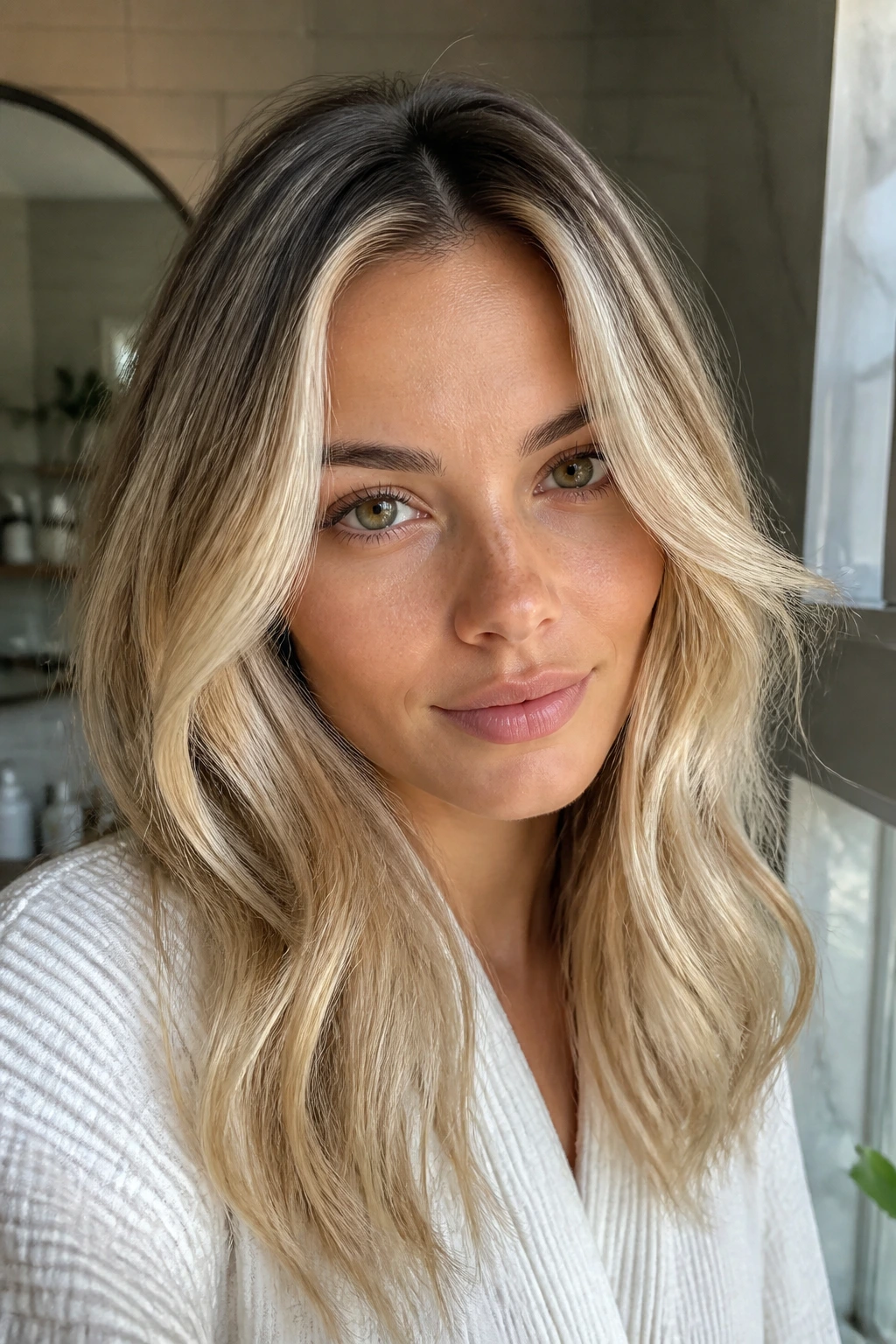
Blonde on dark hair asks for a little maintenance, but not the punishing kind. The easiest habit is washing less often and being picky about what goes on the mids and ends. Color-safe shampoo 2 or 3 times a week is plenty for most people, and a rich conditioner should live on the lower half of the hair, not the scalp.
Dry shampoo is your friend if you want the root shadow and lowlights to stay visible. Clean roots can look sleek, but a little lived-in texture often makes the dimension read better. For many of these styles, that second-day softness is the whole point.
Purple or blue shampoo should be used with restraint. Once every 1 to 2 weeks is usually enough for blonde that is drifting warm. If you use it too often, the lighter pieces can turn dull or grayish, and the ends can feel rough. That’s not a win.
For styling, think in terms of refreshes, not full restarts. A quick bend with a curling iron, a spritz of water plus leave-in on the front pieces, or a 5-minute round-brush blow-dry around the face can revive the shape without redoing the whole head. If your hair has been lightened a lot, a bond-building treatment every week or two can help the ends stay sane.
If you sleep on your hair, a loose braid, soft clip, or silk pillowcase can keep the blonde ribbons from getting crushed flat. The style lasts longer when the wave pattern survives the night.
Variations and Adaptations to Try
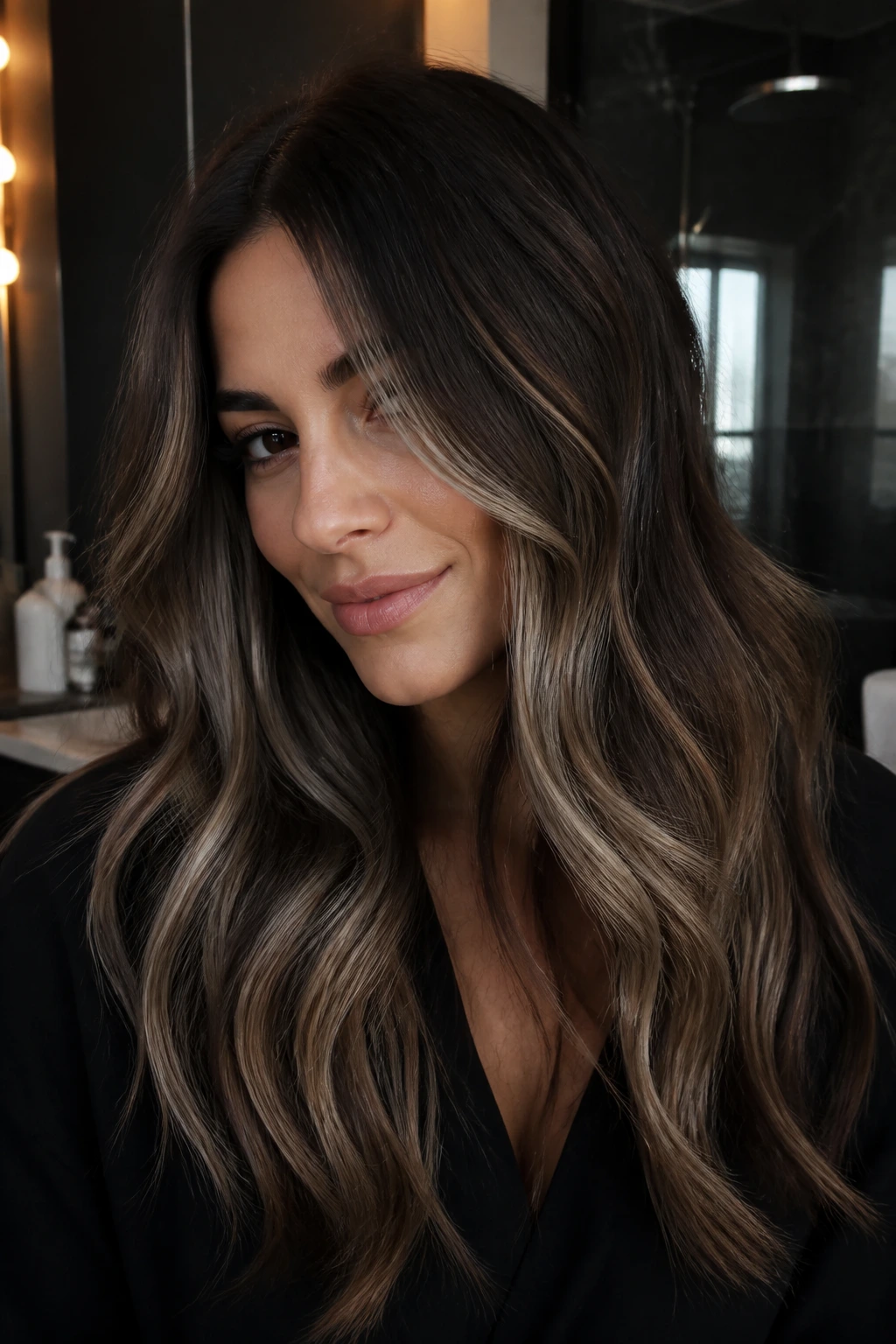
Cool Espresso Melt: Keep the lowlights near espresso or mushroom and pair them with ash blonde mids. This version suits cool skin tones and works best if you like a sharper, cleaner finish.
Honey Bronde Blur: Use honey blonde and medium brown lowlights so the line between brunette and blonde stays soft. It’s a lower-maintenance option if you want the color to grow out without obvious stripes.
Bright Face-Frame Pop: Lighten the front sections more aggressively and keep the rest of the hair rooted and shaded. This is the move when you want the blonde to show up in photos and at a glance.
Creamy Curl Dimension: On curly hair, let the blonde sit on the outer ring of the curl and keep the lowlights in the interior. The curl pattern does the blending for you, which is why this version looks so full.
Short-Cut Contrast: On pixies, bobs, and French cuts, keep the top lighter and the sides darker. The haircut does the rest, and the style stays easy to wear.
Low-Maintenance Root Shadow: Leave the root area 1 to 2 shades deeper than the mids and ends, then refresh with a gloss instead of full color. This is the one to choose if you want your hair to survive a busy stretch without looking neglected.
Common Mistakes to Avoid
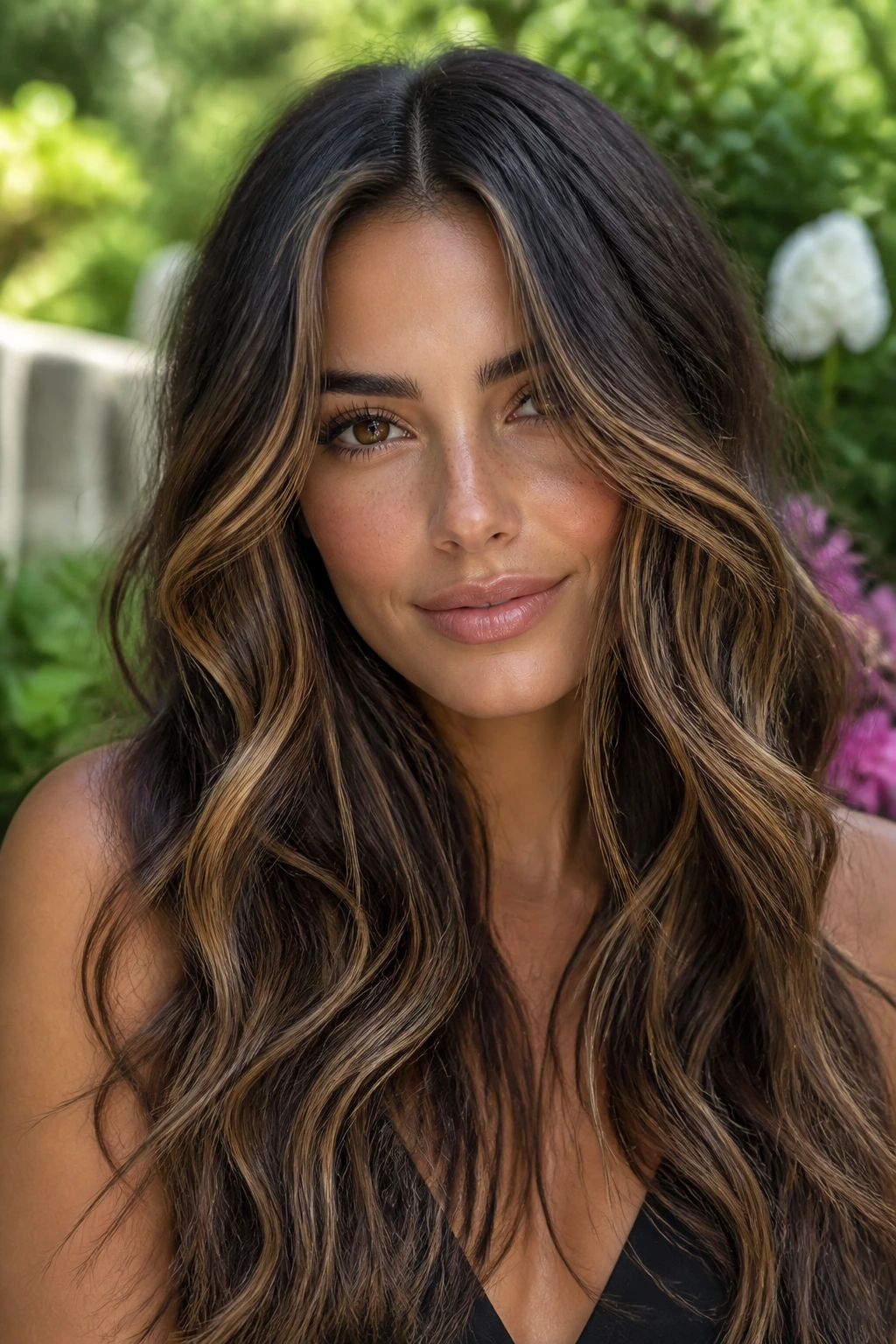
The first mistake is chasing one solid blonde tone on a dark base. It can look expensive in the chair and flat three shampoos later. Lowlights prevent that by giving the hair shadows to sit in, so resist the urge to bleach every visible strand.
Another problem is choosing lowlights that are too dark. If they drop too far below your base, they can look like stripes instead of depth. Keeping them one or two levels deeper than the root usually reads better.
Over-toning is a sneaky one. Purple shampoo and ash toner can be useful, but too much of either can leave the blonde looking dry, gray, or dusty. Use the toning products when brass shows up, not as a daily habit.
People also forget the cut. A one-length style with blunt ends can swallow dimension if the light pieces are all hidden underneath. Layers, bends, and face-framing sections help expose the color in movement.
Last, don’t style every look the same way. Tight curls, flat ironing, and heavy serum all change how the blonde and lowlights show up. The shape of the style is part of the color story.
Frequently Asked Questions
Can dark hair go blonde without losing its depth?
Yes, if the lift is staged and the lowlights stay part of the plan. The best brunette-to-blonde work keeps some darker strands at the root, through the mids, or underneath the surface so the final result has contrast instead of a washed-out finish.
What lowlight shade looks best on dark hair?
It usually depends on the base and the tone you want. Chocolate, mocha, mushroom, charcoal, and soft chestnut all work well, but the key is keeping the lowlights only a step or two deeper than your natural color so they don’t look painted on.
Is ash blonde or honey blonde better with lowlights?
Ash blonde suits cooler skin tones and gives a cleaner, more muted result. Honey blonde is warmer and tends to look softer on dark hair, especially if you want the blonde to feel sunlit rather than icy.
Will lowlights make blonde look darker?
They will add depth, yes, but that is the point. Lowlights do not cancel the blonde; they frame it. The lighter pieces still stand out, but the overall color looks richer and less flat.
Which of these hairstyles needs the least upkeep?
Rooted lob styles, bronde blends, shoulder-length waves, and softly layered cuts usually grow out the easiest. They let the dark base stay visible, which means you can go longer between gloss appointments without the color looking neglected.
Can curly hair wear blonde with lowlights?
Absolutely. Curly textures often look better with lowlights because the darker strands sit inside the curl and create depth. The trick is placement: keep the brightest pieces where the curl opens and let the darker tones live inside the bend.
What if my blonde turns brassy too fast?
Use a color-safe shampoo, cut back on heat, and add a purple or blue shampoo only once in a while. Brass tends to show up first on the lighter ends, so a gloss every few weeks usually helps more than piling on toning products.
Do bangs work with blonde on dark hair?
They do, especially curtain bangs or a soft fringe. Bangs give you a bright frame around the face, but they need a little root shadow or lowlight depth so they do not overpower the rest of the haircut.
The Blonde That Keeps Its Depth
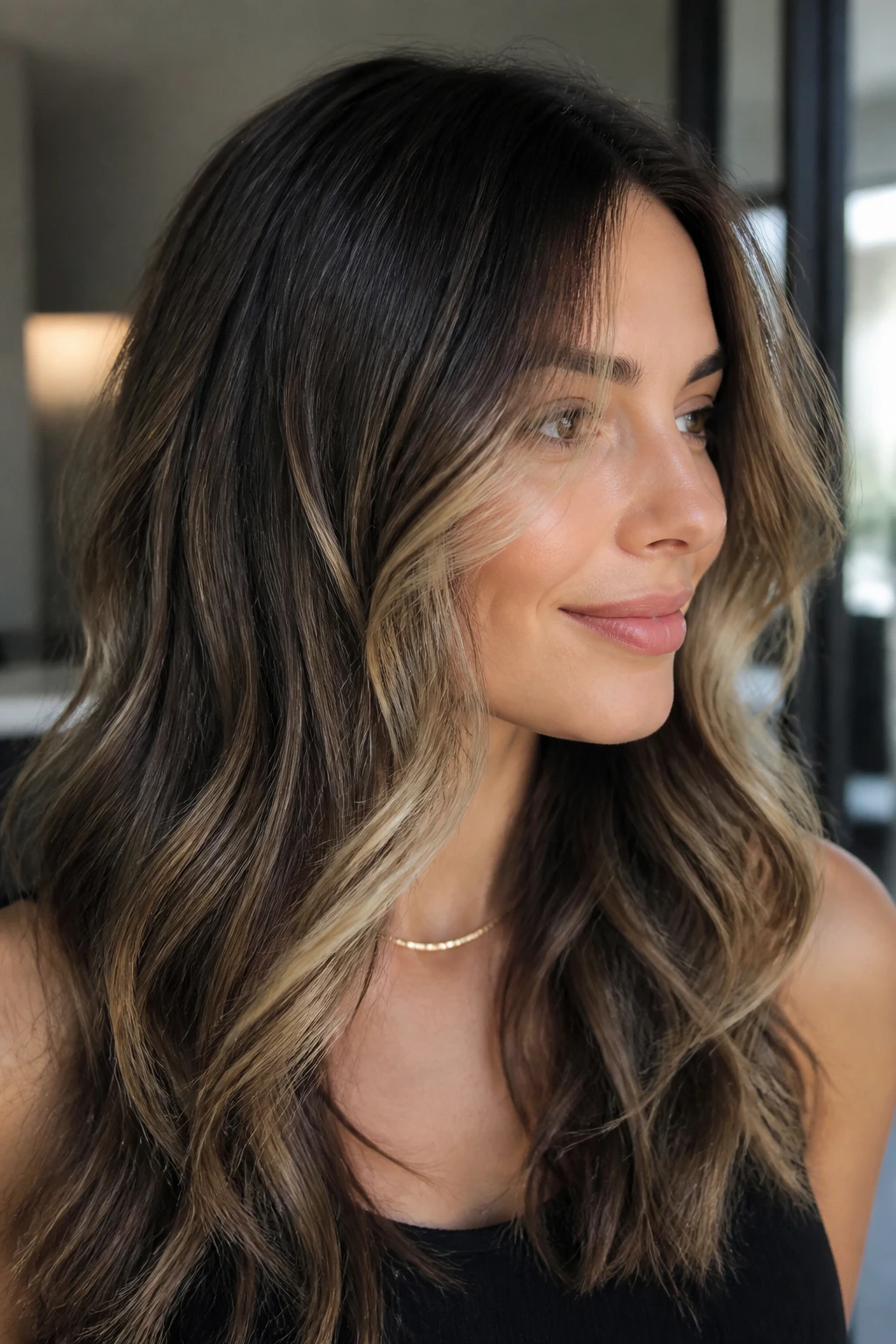
The strongest blonde transformations on dark hair do not try to erase the brunette underneath. They use it. That’s why the lowlights matter so much here: they keep the light pieces from floating away, and they make the haircut look like it was planned from every angle.
If you’re choosing one of these looks, think about where you want the eye to go first. The face-framing pieces can do the talking, or the ends can, or the whole shape can stay quiet and glossy with the contrast tucked underneath. That decision is what makes the color feel personal instead of copied.
Bring a couple of reference photos, not ten. One for tone, one for shape, one for the amount of contrast you actually want to live with. That’s usually the cleanest way to get blonde on dark hair without losing the depth that made the base interesting in the first place.