



Long layered bobs for square faces with lowlights have a specific job: soften the jaw, keep the neckline open, and stop the haircut from landing like a ruler across the widest part of the face. That sounds fussy until you’ve watched the wrong bob turn a strong jaw into a box. A good one does the opposite. It bends, flicks, shadows, and moves.
The lowlights matter more than people think. Darker ribbons tucked through the mids and underneath the top layer make the hair look deeper and less flat, which is exactly what a square face needs when the cut has clean lines. Chestnut on light brown hair, mocha on dark blond, walnut in brunette, espresso in deep brown — those shades create the kind of shadow that keeps the eye traveling.
The sweet spot is never a heavy helmet or a razor-sharp chin line. It’s collarbone length, cheekbone-aware layering, and color placed where it can do quiet work. Once those pieces are in place, the cut stops fighting the face and starts following it. The variations below lean in different directions, but they all keep that same promise.
Why These Long Layered Bobs Earn Their Keep
-
Jawline-softening length: The cleanest versions fall at the collarbone or just below, which keeps the strongest line away from the jaw’s widest point.
-
Shadow from the lowlights: A few darker ribbons through the mids make the shape look carved instead of flat, especially on hair that wants to puff out at the sides.
-
Movement without chaos: Layers give you bend and swing, but the perimeter still feels tidy. That balance matters on a square face.
-
Parting options that matter: Side parts, off-center parts, and curtain fringe all break up the face’s symmetry in a way a straight blunt line never will.
-
Grow-out that doesn’t look sloppy: When the ends move past the jaw and the color softens a little, the style usually looks softer, not worse.
1. Collarbone Chestnut Bob
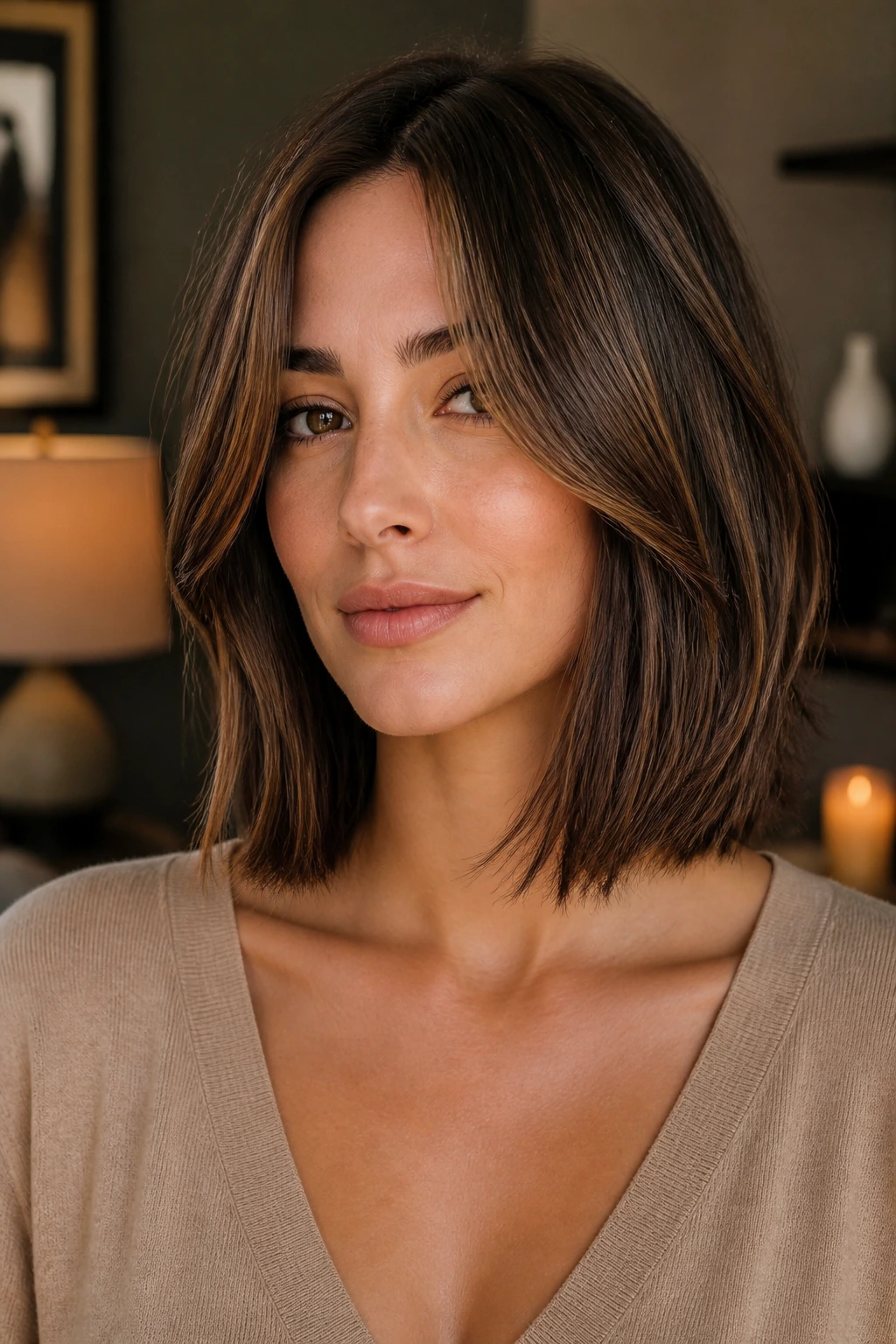
A collarbone bob does one thing beautifully for a square face: it slips past the jaw instead of stopping on it. Chestnut lowlights woven through the mids give the haircut a warm, velvety depth, so the whole shape feels softer the second it moves.
Why it works
- The length lands below the jawline, which keeps the strongest edge out of the face’s widest zone.
- Chestnut lowlights sit close to brunette and dark blond bases, so the color reads like shadow, not stripes.
- Soft face-framing layers begin around the cheekbone, where they can do the most good.
This is the cut I’d hand to someone who wants polish without a lot of fuss. A round brush, a quick bend under the ends, and maybe one piece tucked behind the ear — that’s enough. No need to force drama where the haircut already knows what to do.
2. Deep Side-Part Mocha Lob
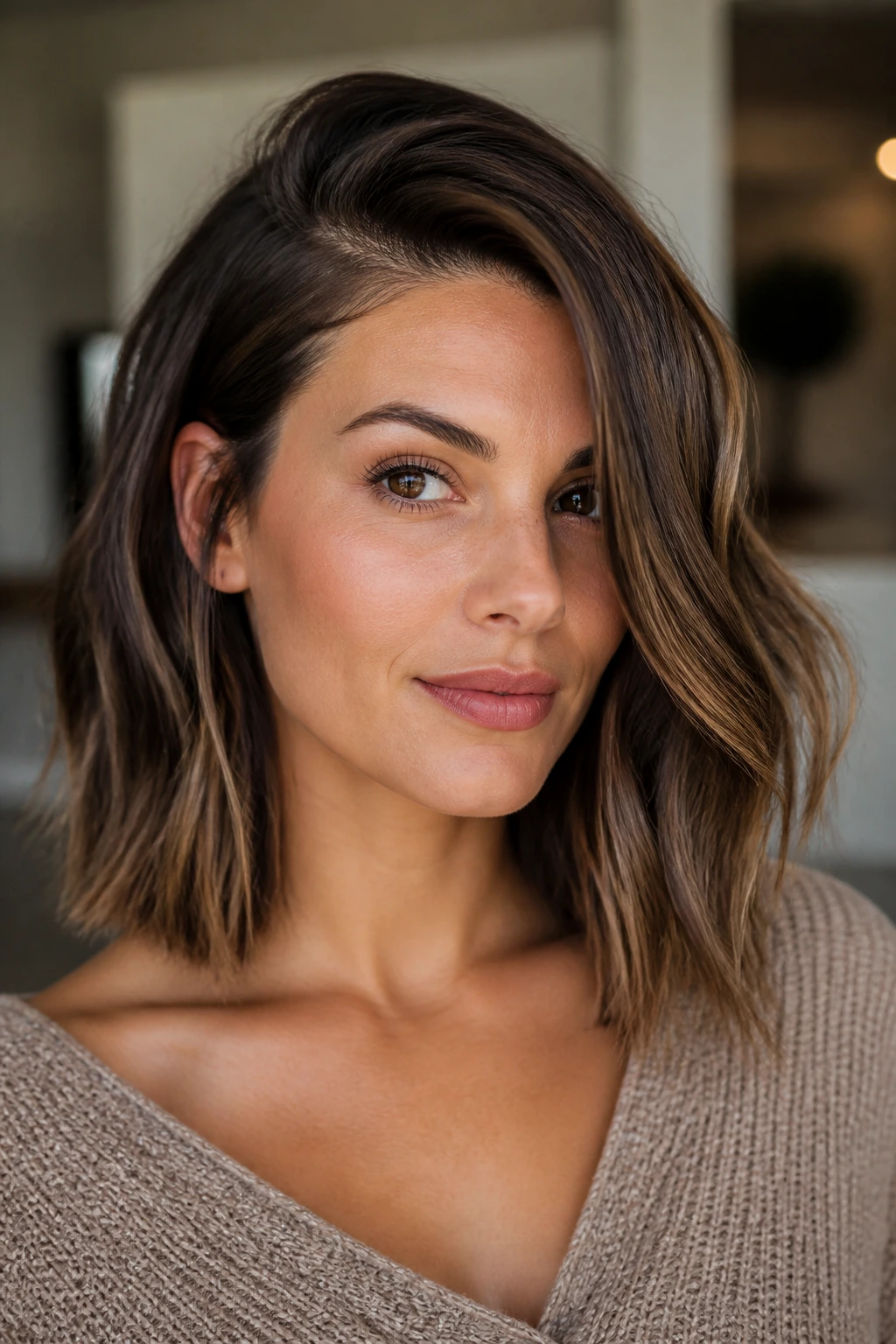
A deep side part is one of the fastest ways to break the squared-off feel of a strong jaw. Add mocha lowlights through the lower half and the lob stops looking symmetrical in a stiff, old-school way; it starts looking intentional.
The part does most of the shape work here. It lifts one side, gives the top some movement, and lets the front pieces sweep diagonally instead of sitting straight across the face. Mocha is a smart lowlight choice because it’s darker than brunette without turning into a harsh stripe. If your hair is light brown or dark blond, it creates depth without swallowing the cut.
I like this one on hair that already has a little body. A slight wave makes the side sweep feel lived-in, and even straight hair looks better when the ends are turned just a touch away from the face. Clean. Simple. Effective.
3. Curtain-Fringe Cocoa Lob
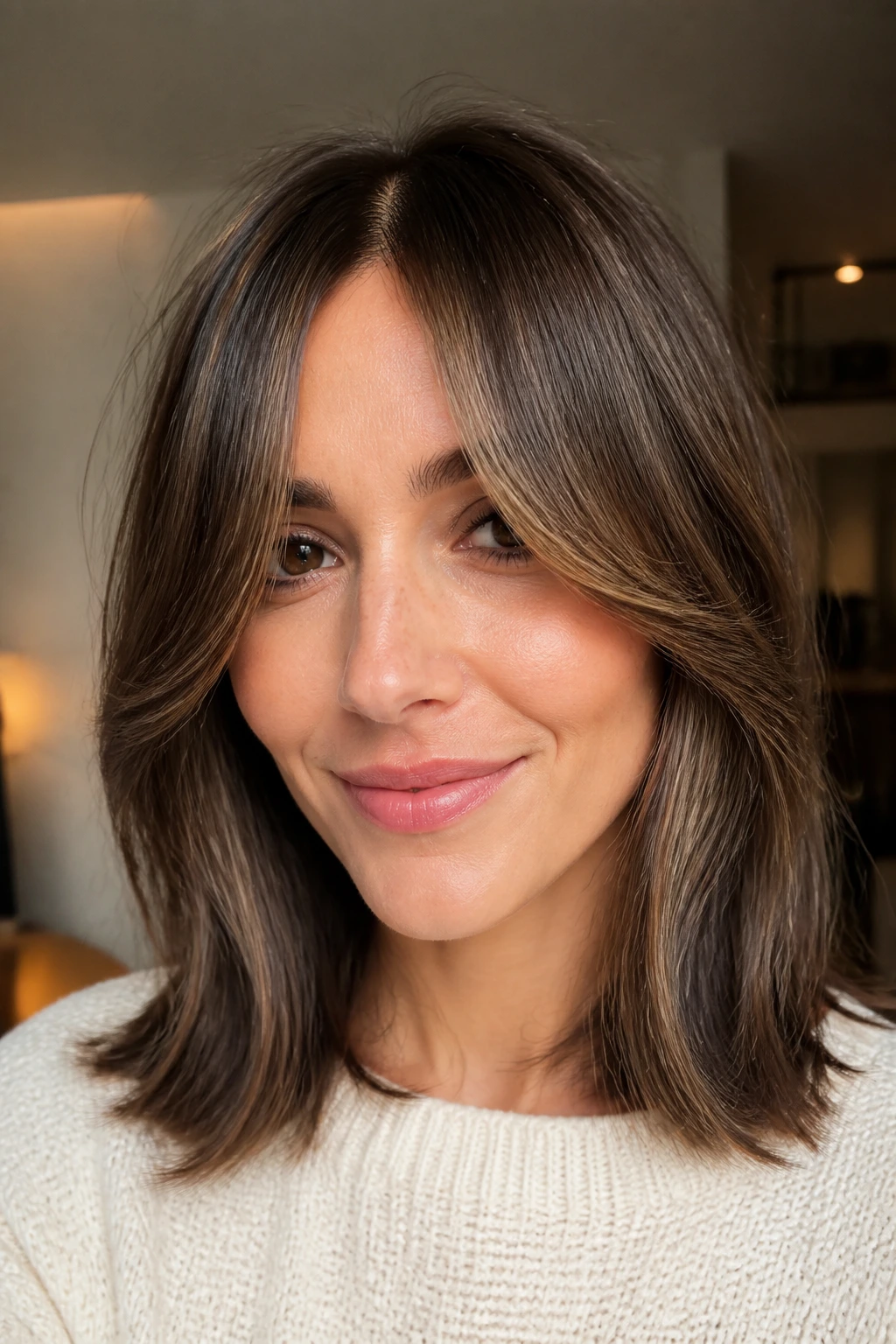
Can a fringe help a square face? Absolutely — if it splits, drapes, and moves instead of sitting in one blunt slab. Curtain fringe does exactly that, and cocoa lowlights keep the rest of the lob from looking too bright or too flat around the face.
The middle part opens the forehead, then the fringe drops toward the cheekbones, which changes the visual path of the haircut. That matters. It keeps the eye from traveling straight across the jaw. Cocoa lowlights underneath add a soft dark base that makes the front pieces pop without making them harsh.
Best way to wear it
Blow the fringe forward, then sweep it away from the face with a small round brush. Don’t overflip the ends. A tiny bend is enough. If the fringe is too curled or too polished, you lose the easy drape that makes this version work.
4. Caramel-Threaded Wavy Bob
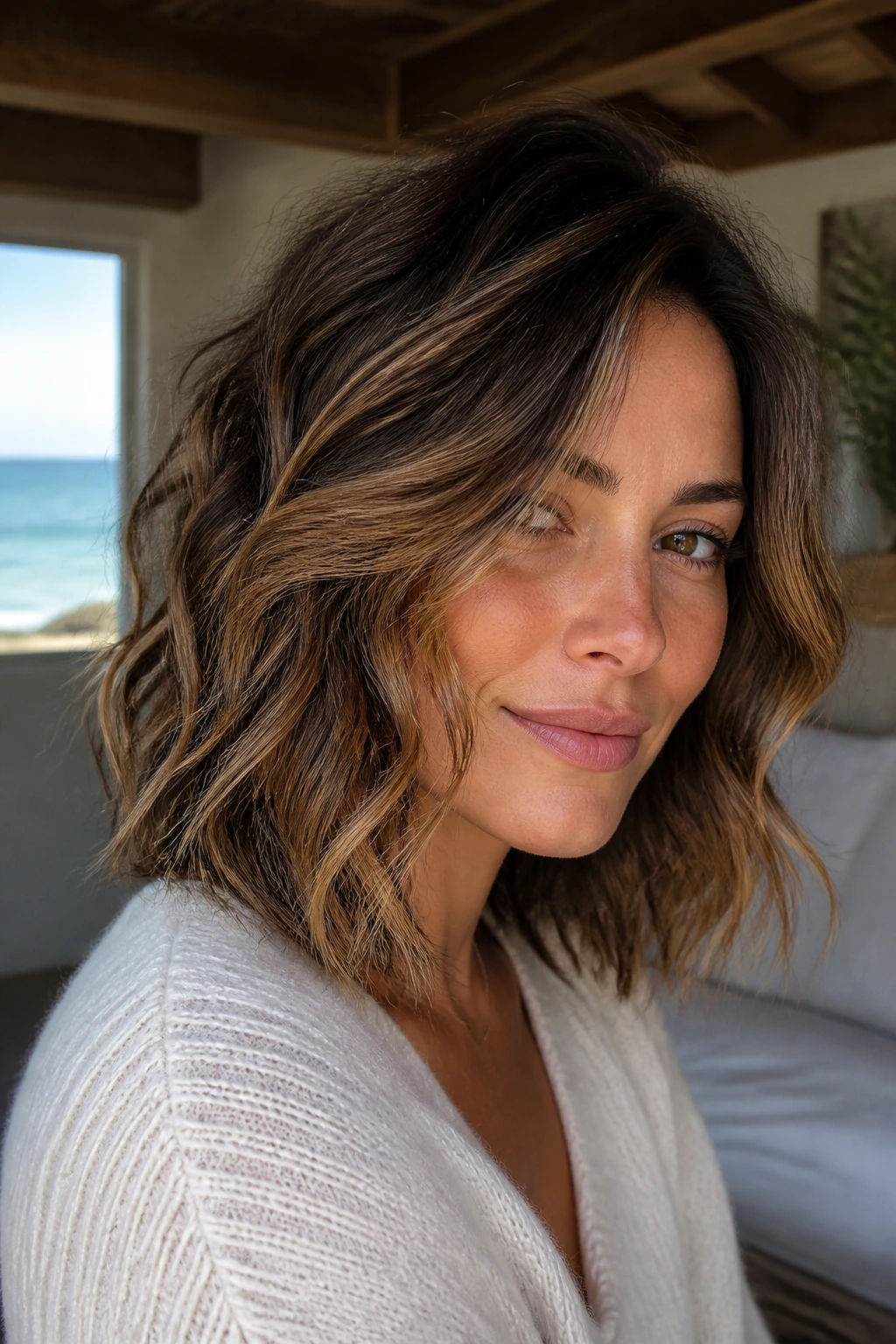
If your hair already wants to wave, don’t bully it into straightness. Let the texture do the work. Caramel lowlights threaded through a long layered bob make each bend look clearer, and that extra movement helps a square face feel less boxed in.
The key is placement. Put the darker ribbons through the mids and underlayers, not just on the surface. That way, the waves catch light on top while the lower sections hold the shadow. The result feels fuller at the right places and lighter around the jaw.
This cut likes a salt spray or a light mousse more than heavy cream. Scrunch it, rough-dry it, and leave the ends a little imperfect. That imperfect edge is the point. A wavy bob that moves around the face always looks softer than one that’s been forced into obedience.
5. Hidden-Layer Walnut Bob
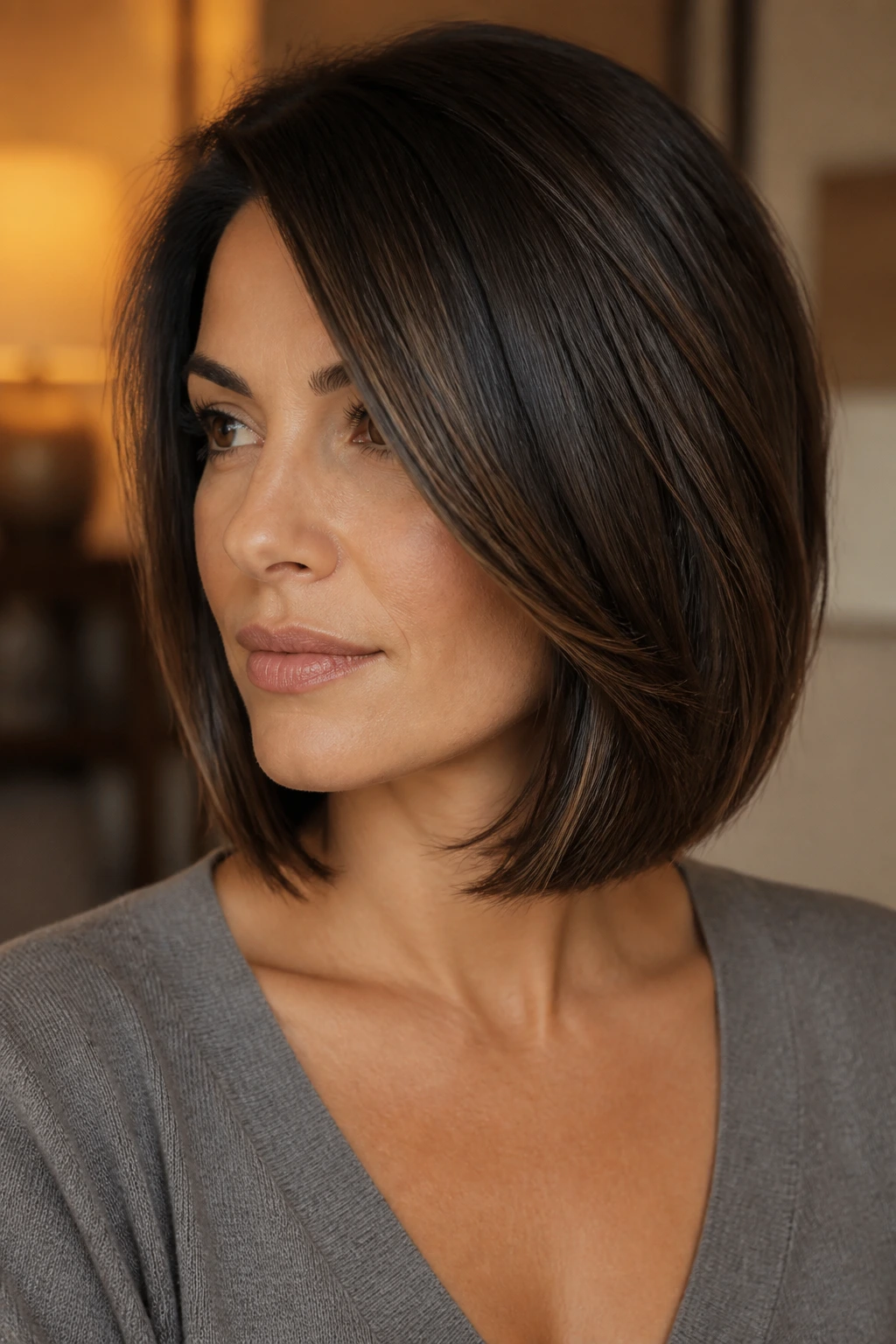
This is the quiet one. No chopped-up perimeter. No loud texture. Just a long bob with hidden layers tucked inside the shape and walnut lowlights peeking through the lower panels.
That hidden layering matters because it removes bulk without making the ends look thin or ragged. On a square face, that keeps the jaw area from feeling like the haircut is sitting on top of it. Walnut lowlights add depth where hair usually looks most flat — right around the back and underneath.
The nice part is how calm this cut feels in daily life. It can be blown smooth, air-dried with a little wave, or bent under at the ends. It doesn’t need a lot of styling gymnastics. If you like a cleaner silhouette and don’t want to spend your mornings chasing texture, this is one of the smartest options in the bunch.
6. Feathered Cinnamon Blowout Lob
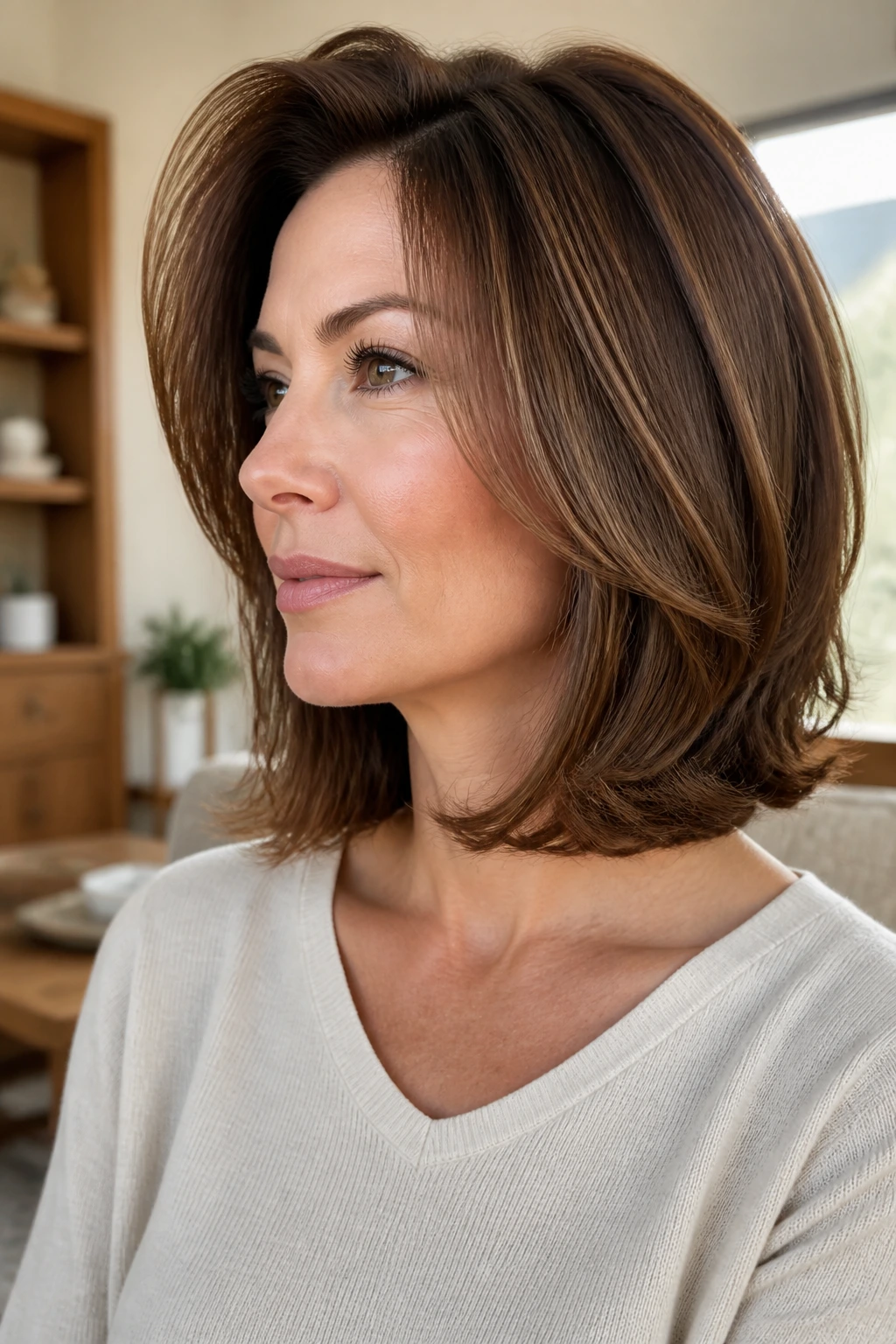
A feathered blowout changes the mood completely. Instead of a blunt edge, the ends flick and soften, which is exactly what a square face tends to need. Cinnamon lowlights bring warmth into the shape, especially if your hair is medium brown or dark blond.
The blowout matters more than the cut here. Use a round brush and direct the mid-lengths away from the jaw, then turn the very ends under just slightly. That tiny bend gives the bob a softer landing. If the ends flare out at the jaw, the whole haircut feels wider. If they curve in a little, the face gets the breathing room it wants.
This one looks especially good with side-swept volume at the crown. Not sky-high. Just enough lift to keep the shape from sitting flat against the head. Easy enough for everyday, polished enough for dinner. That balance is why people keep coming back to it.
7. Razor-Cut Smoky Brunette Bob
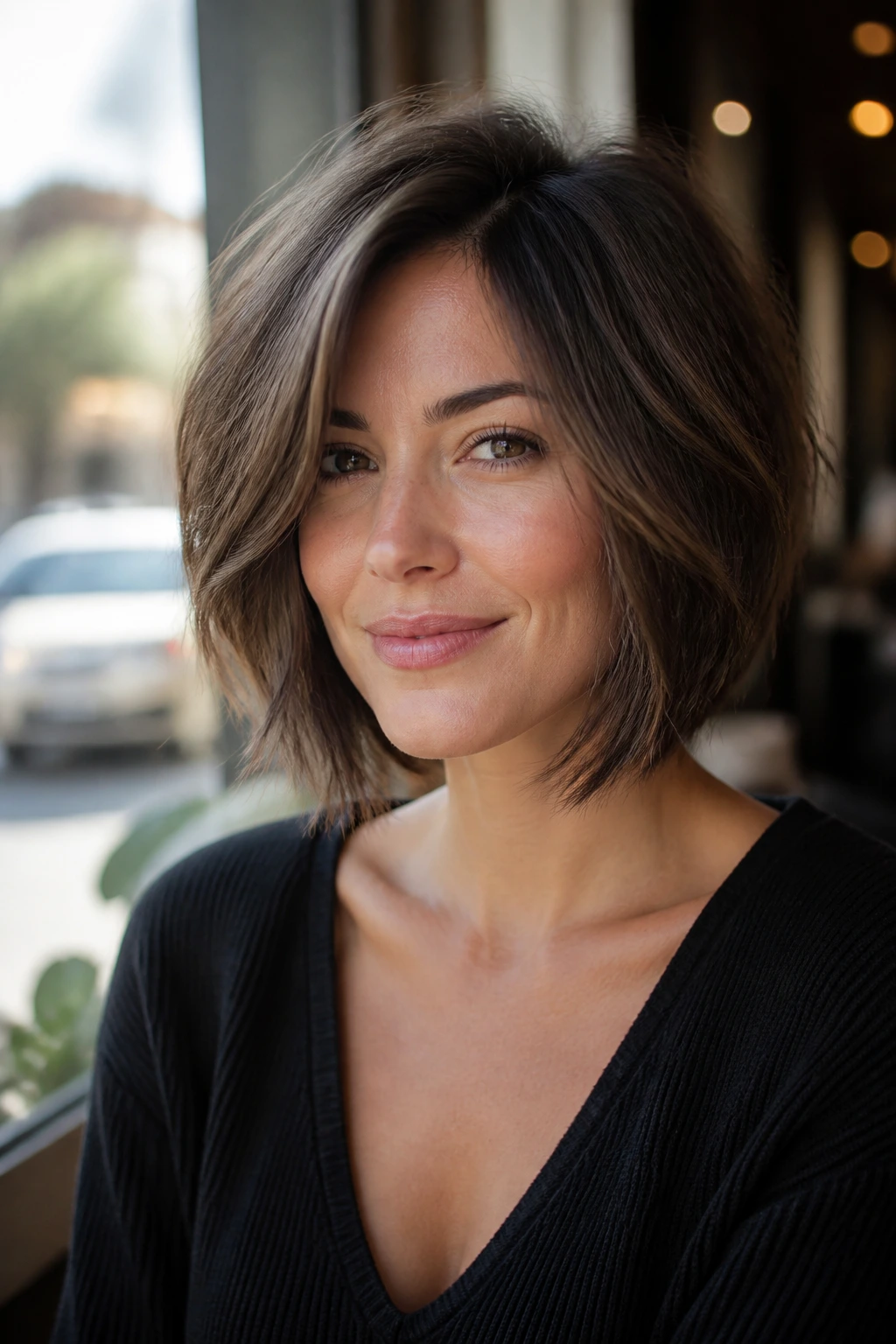
Need movement without bulk? Razor cutting can help, especially on thick hair that wants to balloon out around the jaw. The smoky brunette lowlights make the texture look denser in the right places and less heavy where the layers open up.
This cut has a little edge. Not messy, not shaggy in a tired way — just airy. The razor softens the ends so they don’t sit in one hard line, and that makes a square face look less rigid. If your hair is naturally straight but dense, this version is worth a serious look.
Use a smoothing cream at the ends and a touch of texture spray through the mids. Too much product ruins the point. You want separation, not grit. The best version feels light in motion and controlled when still. That’s harder to pull off than it sounds.
8. Angled Face-Framing Lob
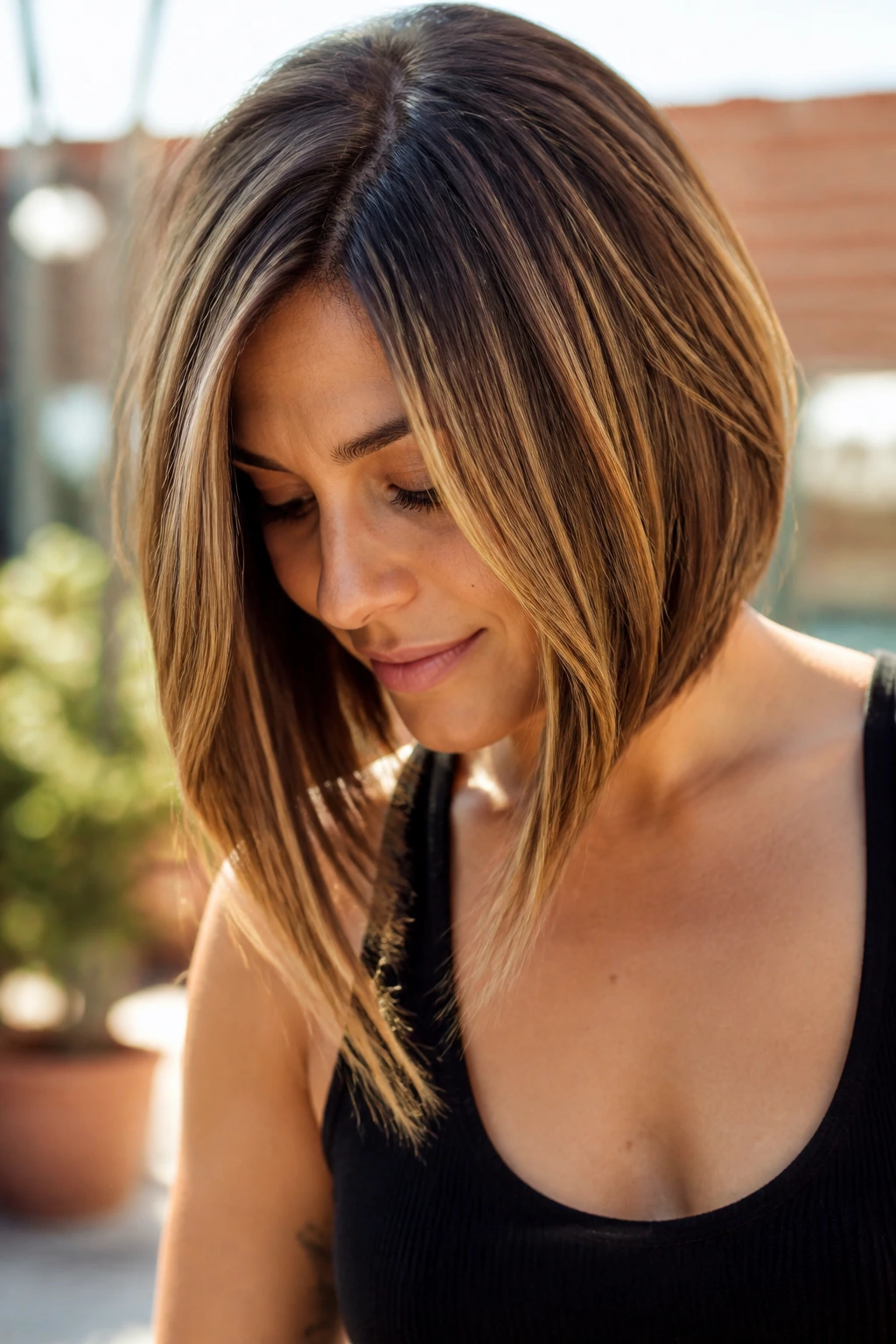
An angled lob is one of those shapes that looks obvious only after you see it. The front pieces sit a little longer, the back stays slightly shorter, and the whole line pulls the eye downward instead of outward. On a square face, that diagonal shift is doing real work.
Face-framing lowlights make the front panels look softer and richer. I like them placed just below the cheekbone and through the lower front sections, where they can dim the sides without making the face look flat. The angle should be gentle, not severe. Too much slope and the cut starts reading dated. Too little and you lose the point.
This is a good choice if you want the bob to feel structured but not sharp. It also plays nicely with straight hair, which can sometimes look boxy if the perimeter is too blunt. A little angle changes the whole mood.
9. Glassy Taupe Center-Part Bob
A center part can work on a square face when the rest of the haircut does the softening. Taupe lowlights are a smart match for straight or gently waved hair because they cool down brightness without making the color look flat or muddy.
The glassy finish is part of the appeal here. A smooth, shiny surface lets the lowlights show through the mids instead of hiding under frizz or rough texture. But the ends still need movement — just a slight bevel, not a poker-straight edge. That tiny bend keeps the bob from feeling like a sheet of hair.
If you wear your hair sleek, this cut gives you a clean line with some depth underneath. If you live in waves, the center part still works, but let the layers sit a touch looser around the cheekbones. Straight and severe is the wrong direction here. Sleek and soft is the target.
10. Bottleneck-Bang Chocolate Lob
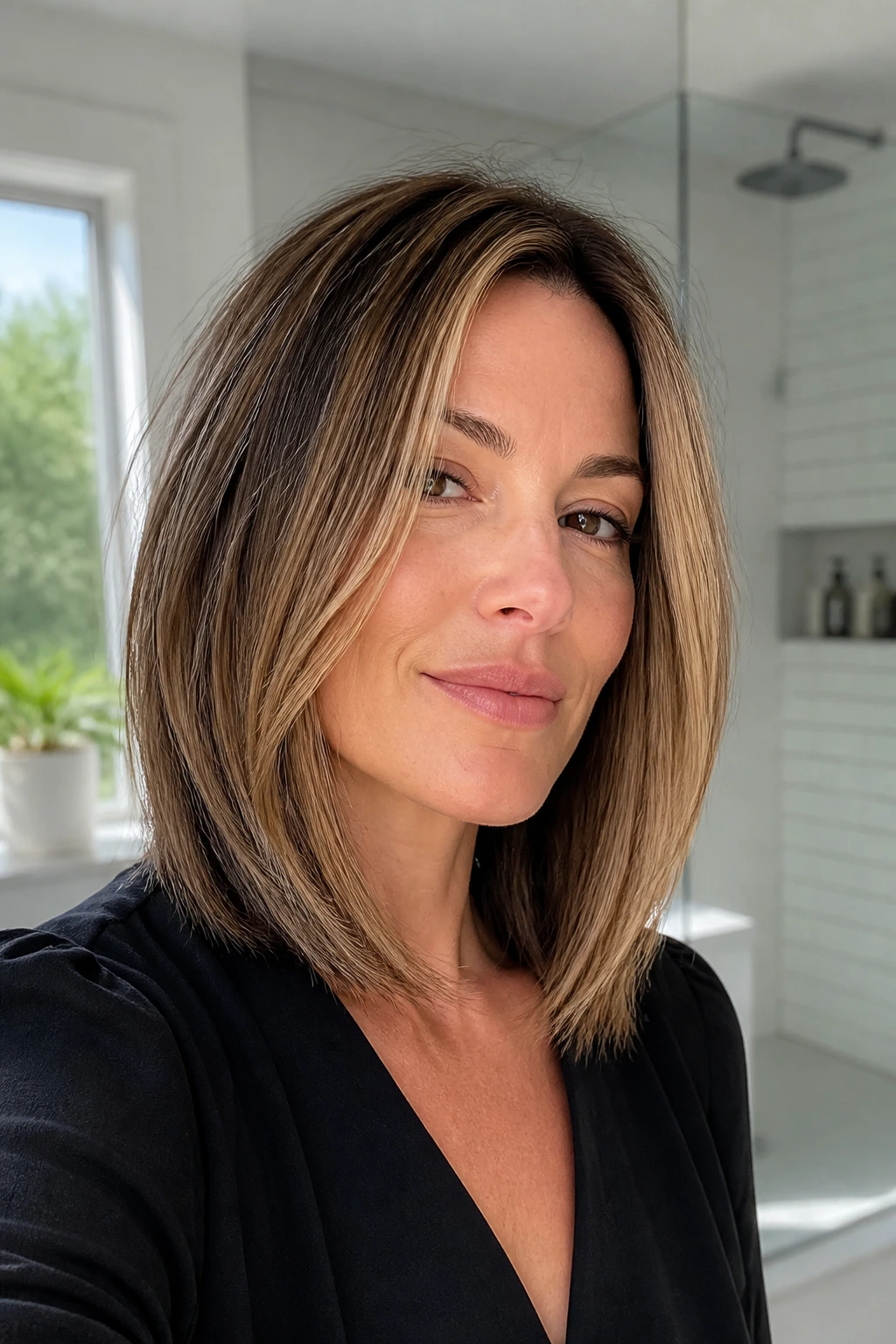
Bottleneck bangs are one of the better fringe choices for a square face because they start narrow, then open out as they hit the cheekbones. That shape keeps the forehead from feeling boxed in while still breaking up the top of the face. Chocolate lowlights make the rest of the lob feel grounded and rich.
This cut is especially useful if you like fringe but hate the hard line of a full blunt bang. The bottleneck shape gives you softness at the front and enough length to tuck the sides into the rest of the haircut. It feels less heavy. Less rigid too.
Keep the chocolate lowlights a shade or two deeper than your base, not four. Too much contrast and the front can get busy fast. A small bend through the layers and a soft, brushed fringe are enough. The whole style should feel like it was made to move, not sit in place.
11. Bronze Beach-Texture Bob
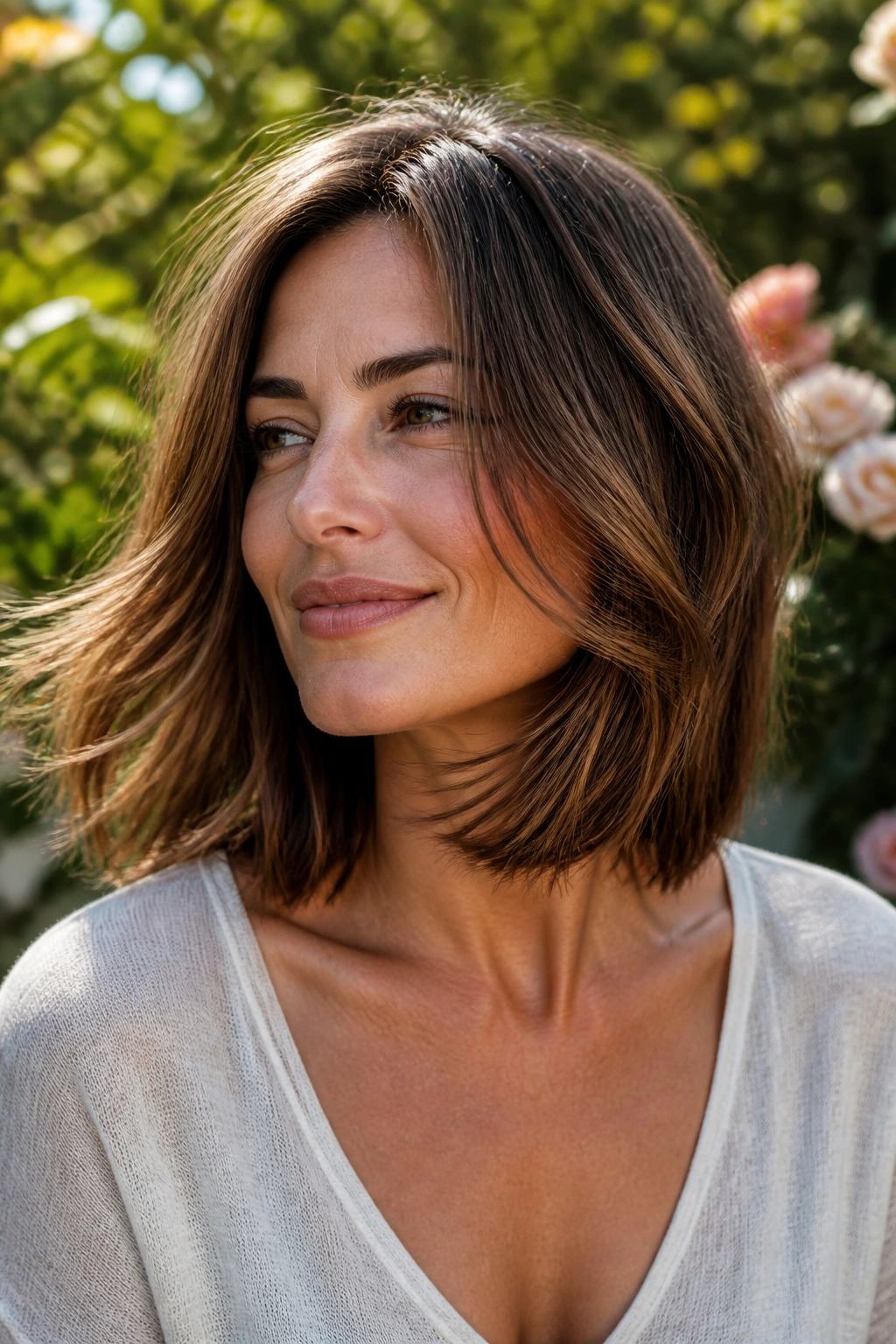
The good version of beach texture is loose, not puffy. That’s the line to remember. Bronze lowlights give this bob a sun-warmed depth that keeps the hair from looking frothy around a square jaw, while the long layers keep the wave pattern visible.
A little sea salt spray helps here, but only on hair that can handle it. Fine hair gets a light hand. Thicker hair needs a softer mousse or a curl cream so the ends don’t turn dry and rough. I’d leave the front pieces a little longer than the rest and let them bend away from the face.
What keeps it balanced
- The waves should start below the cheekbone, not right at the jaw.
- Bronze lowlights work best when they sit in the mid-lengths.
- A center or off-center part both work, as long as the top stays soft.
This one has a casual look, but it isn’t sloppy when done right. That’s the charm.
12. Inverted Subtle-Shade Bob
An inverted bob sounds dramatic, but the subtle version is much easier to wear on a square face. The back sits a little shorter, the front drapes longer, and the line angles forward just enough to keep the jaw from being the visual endpoint.
The lowlights here should stay subtle too. Think muted brunette, soft espresso, or cool brown ribbons that sit under the upper layer. Nothing chunky. Nothing stripey. The whole point is to make the silhouette look smoother and the color look deeper, not louder.
I like this cut best when the crown needs a little lift and the sides need to stop puffing out. That combination is common with thick or straight hair. If the back is too stacked, the shape can go old-fashioned fast. Keep it gentle. The shape should read as modern, not architectural.
13. Curly Mocha Lob
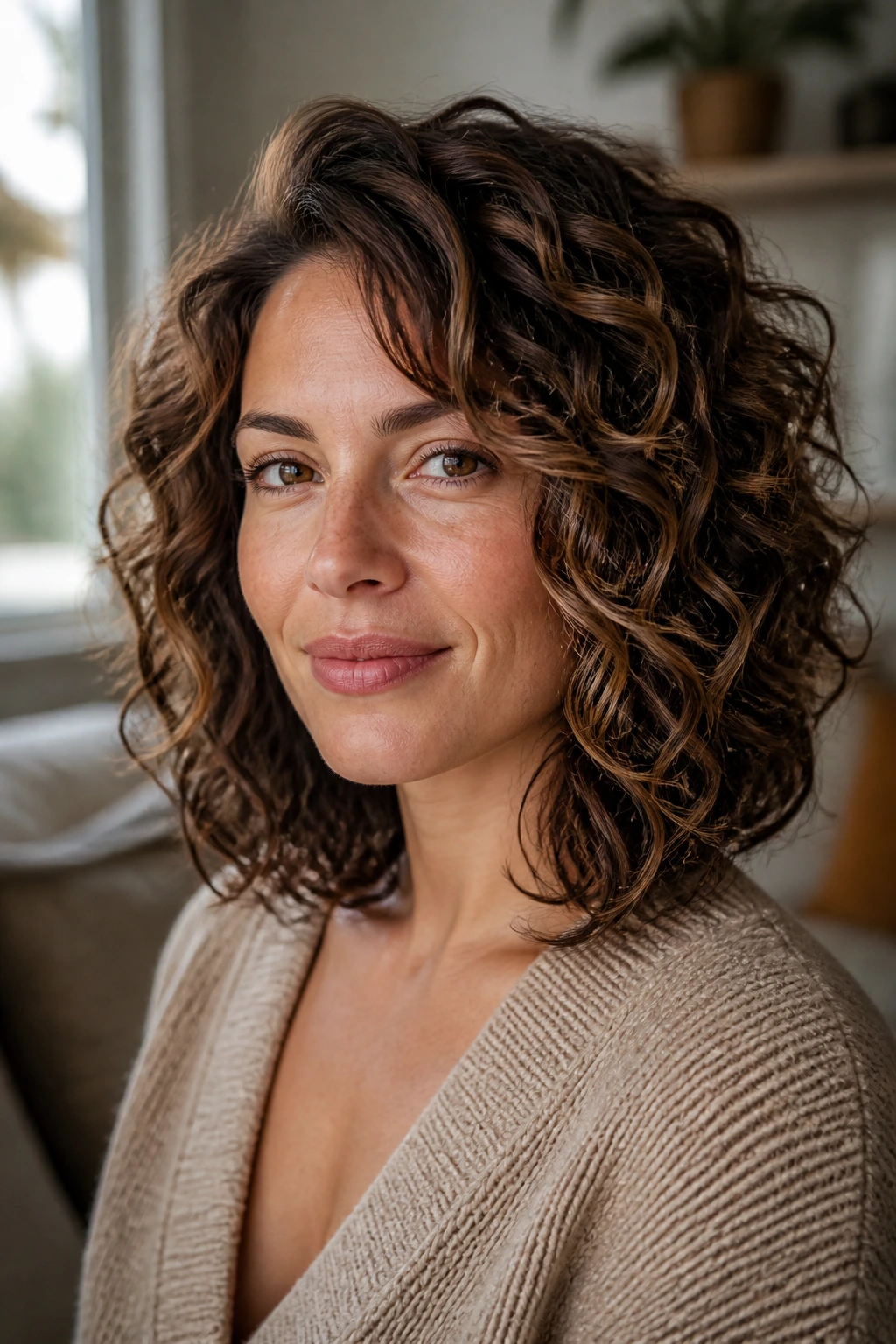
Can curls wear a long layered bob on a square face? Yes, and they often look better than straight hair because the curve of the curl already softens the jaw. Mocha lowlights help define the pattern so the shape doesn’t collapse into one bright, round mass.
The layer map matters here. Ask for longer internal layers that let the curls spring without building a triangle. The perimeter should still land below the jawline — if the curls sit at chin level, you lose the softening effect. Mocha lowlights through the lower panels and a few face-framing pieces add depth where curls can otherwise look one-note.
Use curl cream, not too much. Diffuse on low or air-dry if your pattern holds. The goal is definition with movement. Not every curl needs to be tame, and this is one of those cuts where a little wildness looks better than perfection.
14. Rooty Dimension Bob for Fine Hair
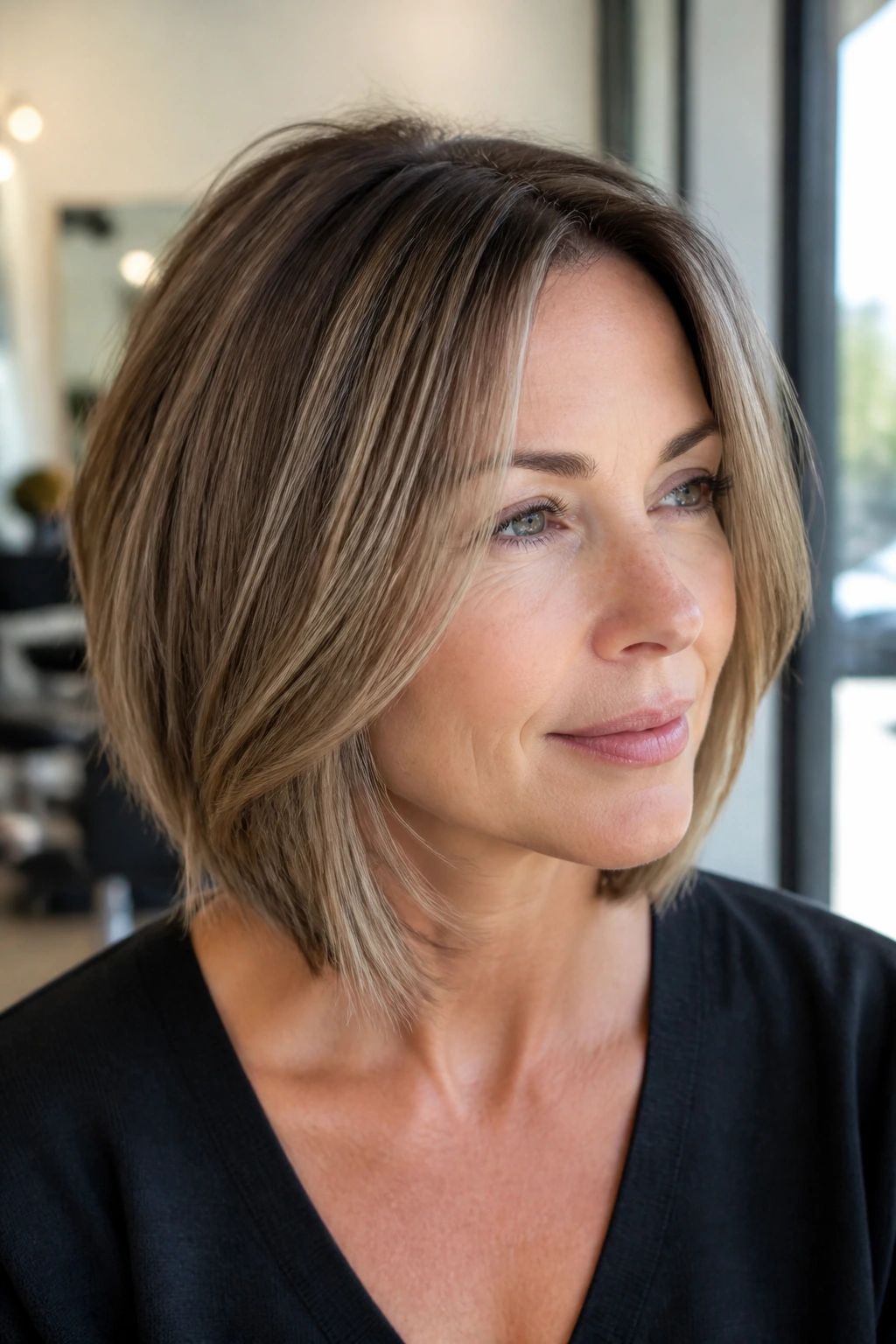
Fine hair and square faces need a little care, because too much layering can leave the ends wispy and the jawline too exposed. Rooty lowlights fix part of that problem by giving the hair visual depth right where it tends to look thin.
This version works best when the lowlights are soft and narrow, not chunky. A few cool brown or mushroom-brown pieces around the crown and lower mids make the hair look denser. The layers stay long and subtle, which keeps the perimeter from collapsing. That’s the trick. You want body without the kind of choppy ends that make fine hair look sparse.
A root-lift spray at the crown helps, and a round brush can give the front pieces a little bend. Don’t overload the mids with product. Fine hair shows every bit of it. The finish should feel airy, not sticky.
15. Debulked Espresso Lob for Thick Hair
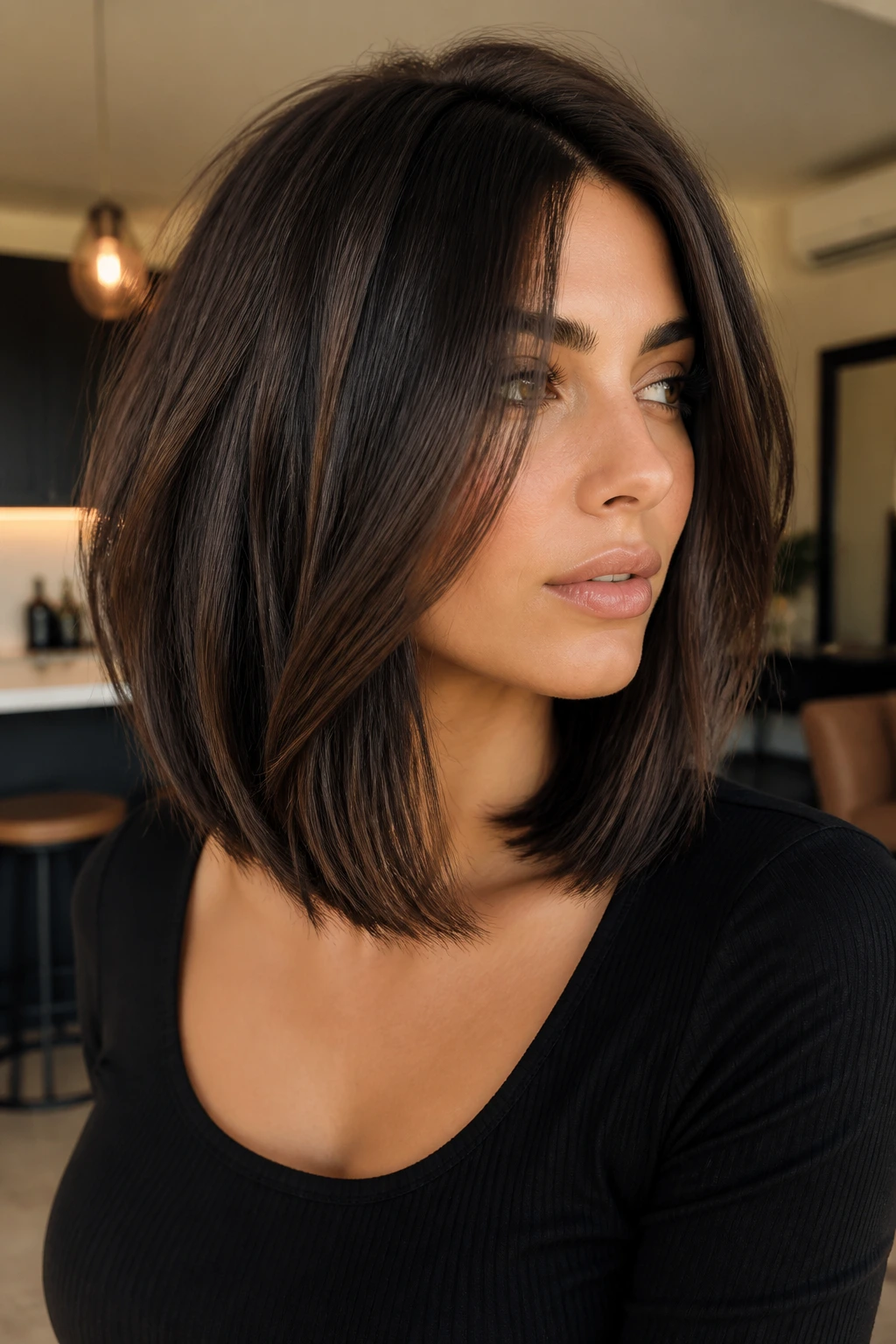
Thick hair wants relief, not more width. If the perimeter is left heavy, a square face can look even broader because the hair adds a second block of shape around it. Internal debulking changes that without sacrificing length.
Espresso lowlights are a strong choice here because they hide some of the bulk visually. Darker pieces inside the shape make the hair read as layered and dimensional instead of dense and one-color. I’d keep the outer line smooth and use point cutting or internal layering to remove weight where it collects.
This is one of those haircuts that looks expensive when it’s cut well and awkward when it isn’t. The difference is in the ends. If the layers are too short, thick hair puffs. If they’re too long and heavy, the bob loses movement. Somewhere between those two is the good stuff.
16. Soft Auburn Asymmetry Bob
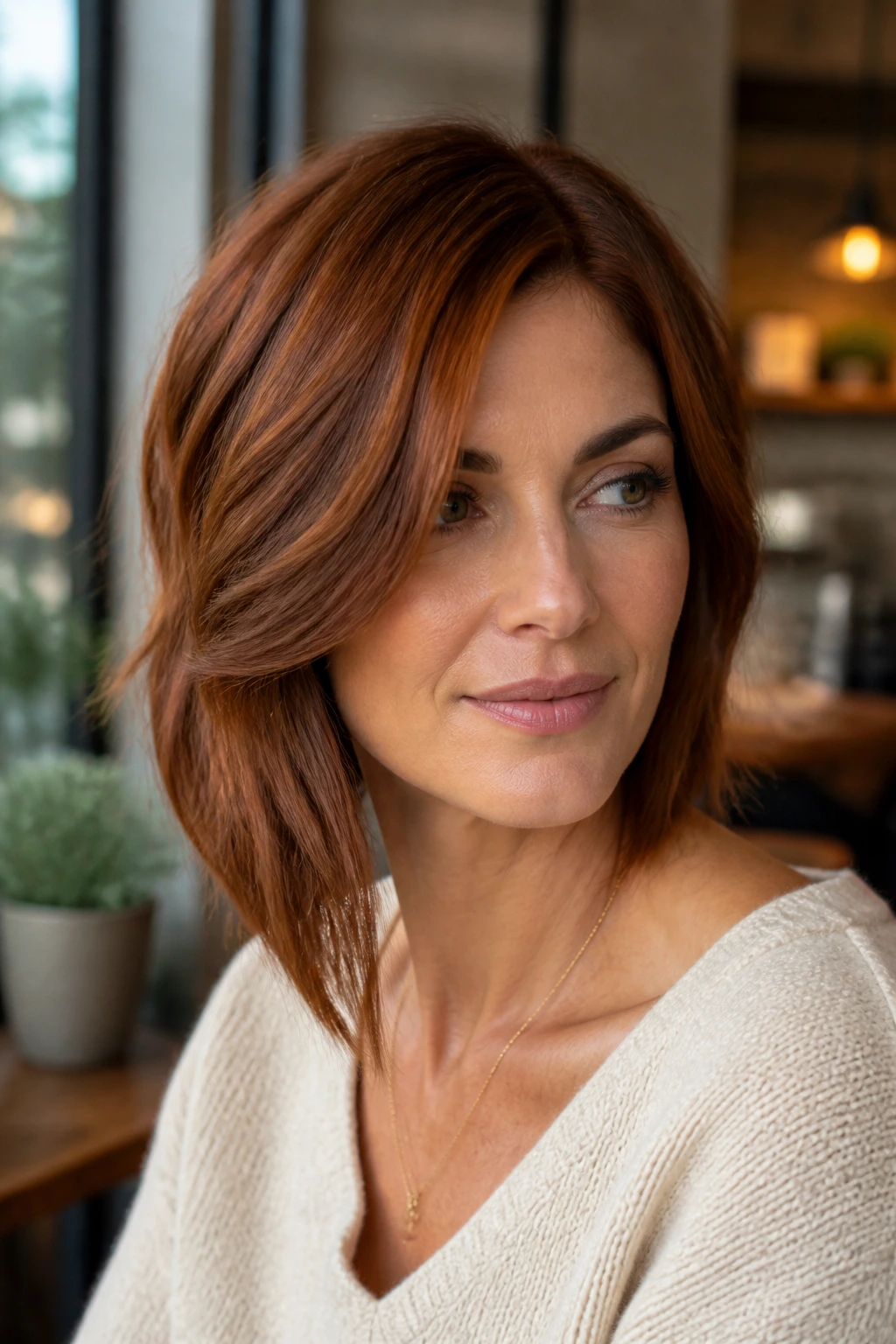
A soft asymmetry does a lot for a square face because it breaks the sense of perfect balance. One side sits a touch longer, and that small difference changes how the eye reads the jaw. Auburn lowlights add warmth and keep the haircut from feeling flat or severe.
This is a nice choice if you like a little personality in your hair without going full edgy. The asymmetry should be gentle — maybe half an inch to an inch longer on one side, not a dramatic diagonal that announces itself from across the room. Paired with loose waves, it looks fluid and modern.
Auburn lowlights are especially good on brunette or red-leaning bases. They add richness without turning the color heavy. If your skin runs warm, this shape can be especially flattering, because the color and line both feel softened by the same hand.
17. Mushroom-Brown French Lob
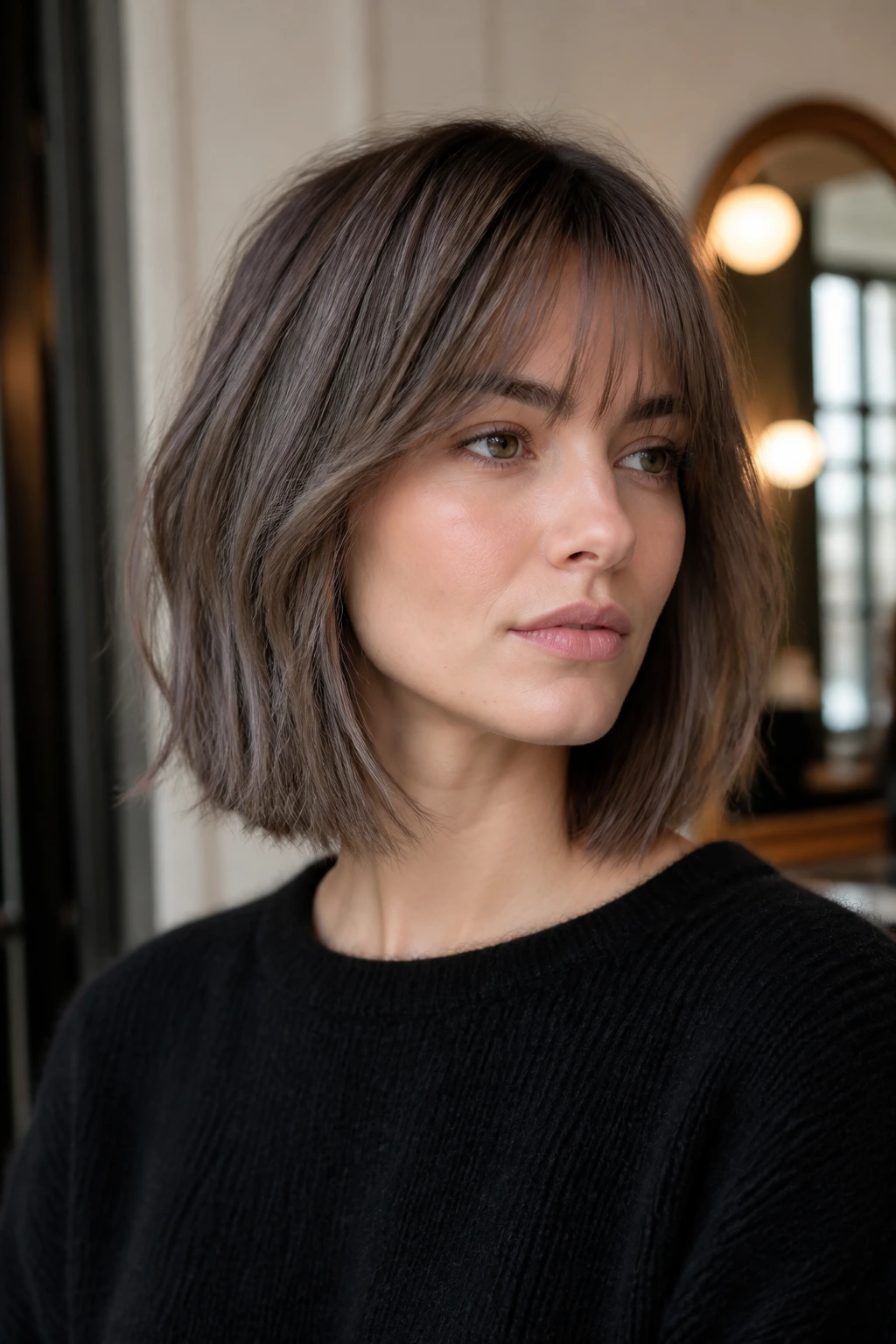
Mushroom brown is one of my favorite lowlight tones when a brunette wants depth without warmth shouting from the ends. It’s muted, a little cool, and very good at making layers look expensive rather than stripey. On a French-inspired lob, that muted shadow keeps the shape from feeling too tidy.
The French influence here is about ease. The layers are soft, the fringe is airy or brushed aside, and the ends sit around the collarbone with a slight bend. Nothing overworked. The face gets framed, but not boxed. That matters on a square face, where too much structure can start to feel like a frame around a frame.
This cut works best when you resist the urge to over-style it. A bend, a part, a bit of movement. That’s enough. Mushroom brown lowlights do their best work when they look like they’ve been there forever.
18. Air-Dried Cinnamon Bob
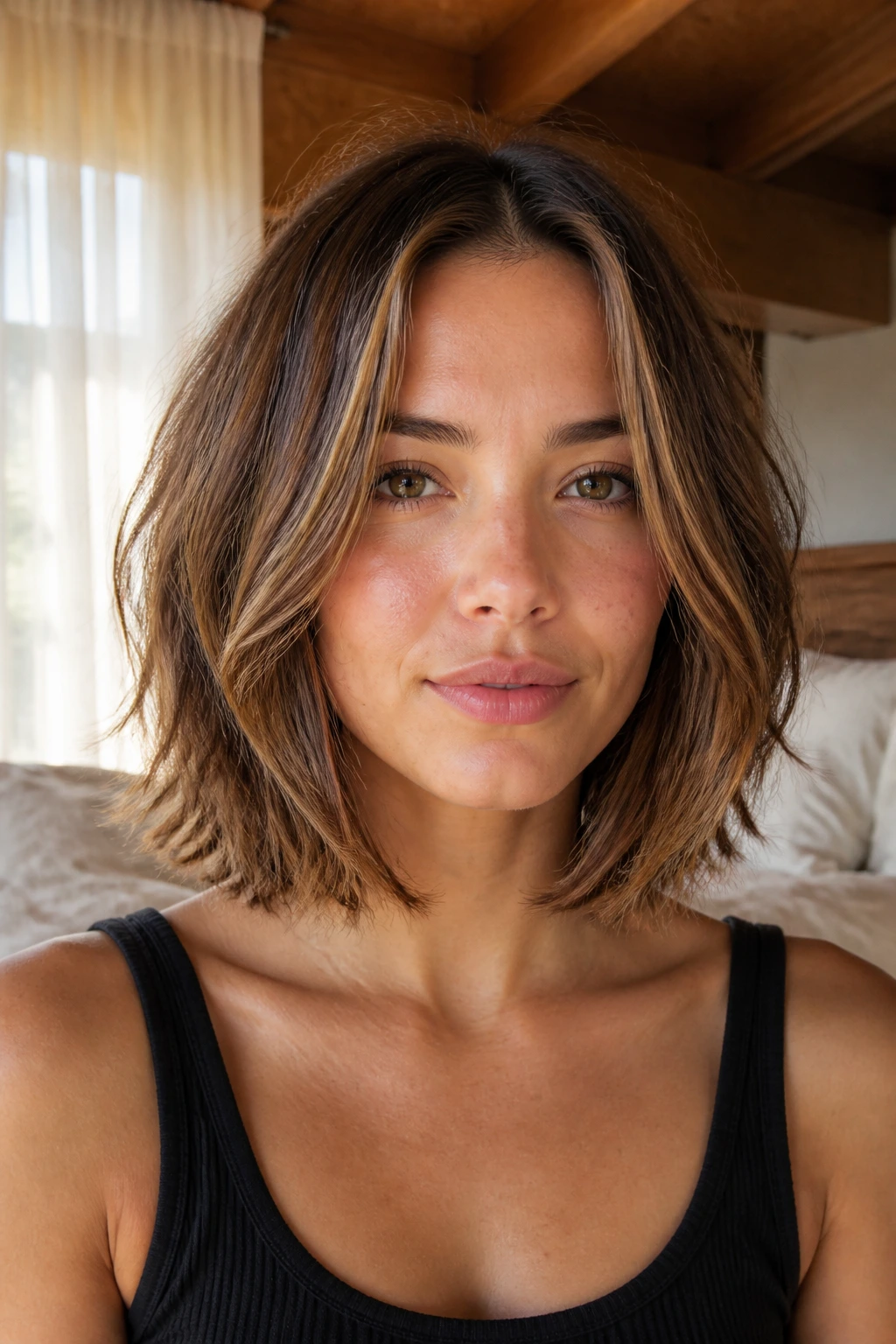
Air-dried hair can be lovely on a square face when the layers are cut with enough softness to move on their own. Cinnamon lowlights bring warmth and a little depth, which keeps the cut from turning flat as it dries.
The trick is prep. Work in a light leave-in and a mousse or curl cream while the hair is still damp, then twist a few face-framing pieces away from the jaw. Scrunch the ends. Don’t touch the roots too much while they dry. If you keep fussing, the hair expands in the wrong places.
Small details that help
- Use a microfiber towel or T-shirt to cut down on frizz.
- Keep the shortest layers below the cheekbone.
- Let the front pieces dry with a slight bend away from the face.
This is the low-maintenance option in the group, but it still needs a thoughtful cut. Air-dried hair shows every mistake.
19. Glam Caramel Blowout Lob
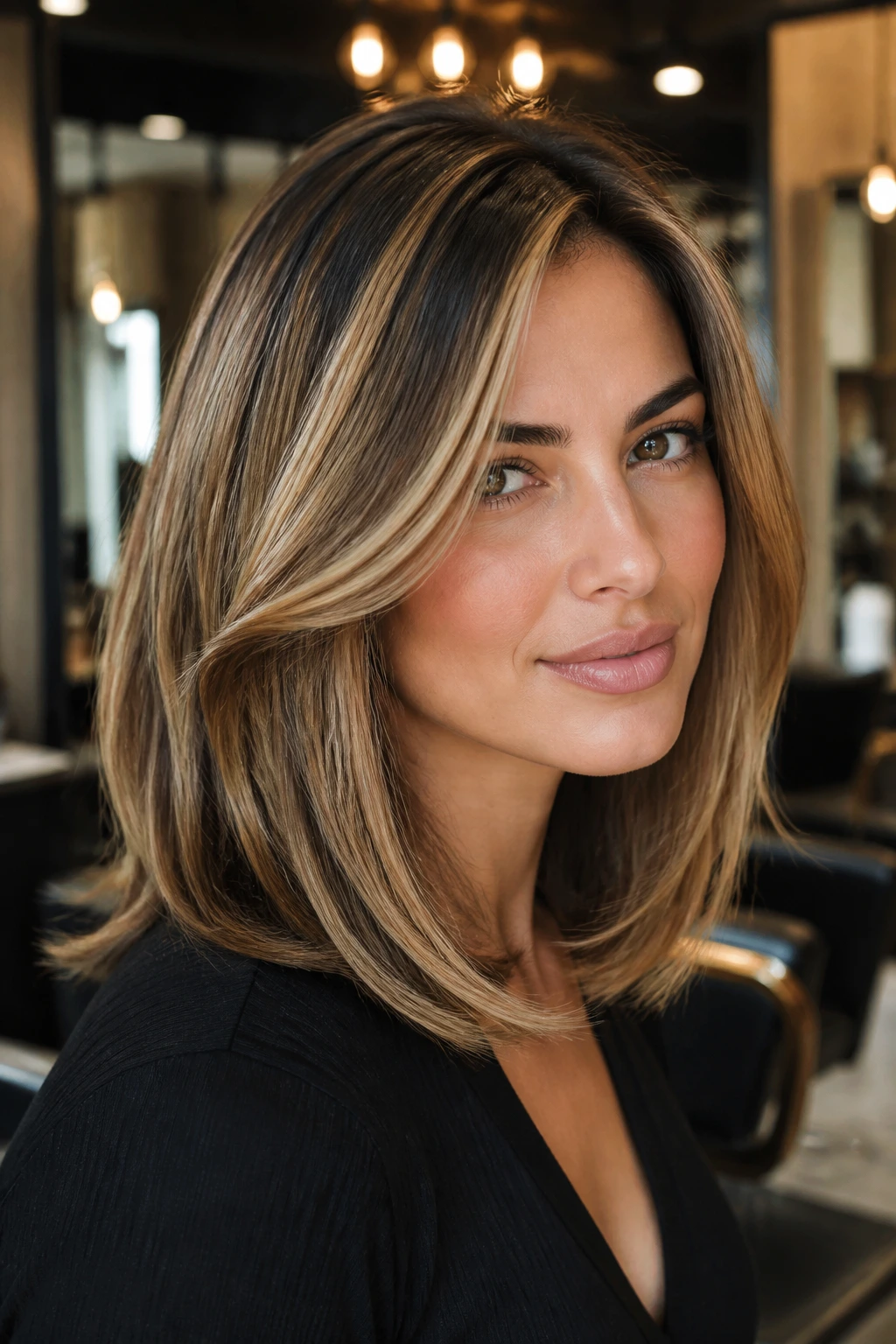
Want the polished version without losing softness? This is the lane. A blowout lob with caramel lowlights gives the haircut a rounded, lifted feel, and the lowlights keep the mids from looking too bright or wide.
The blowout should go up and out at the crown, then ease back toward the shoulders. That shape elongates the face a little and keeps attention on the movement, not the jawline. Caramel lowlights work nicely on light brown and dark blond bases because they create contrast that still feels warm and believable.
I’d use a medium round brush and a heat protectant with a little grip, not a slippery serum that makes the hair collapse. Once the shape is set, a tiny bit of shine cream on the ends is enough. Glam doesn’t have to mean stiff. In fact, stiffness is usually the thing that ruins it.
20. Underturned Bronze Bob
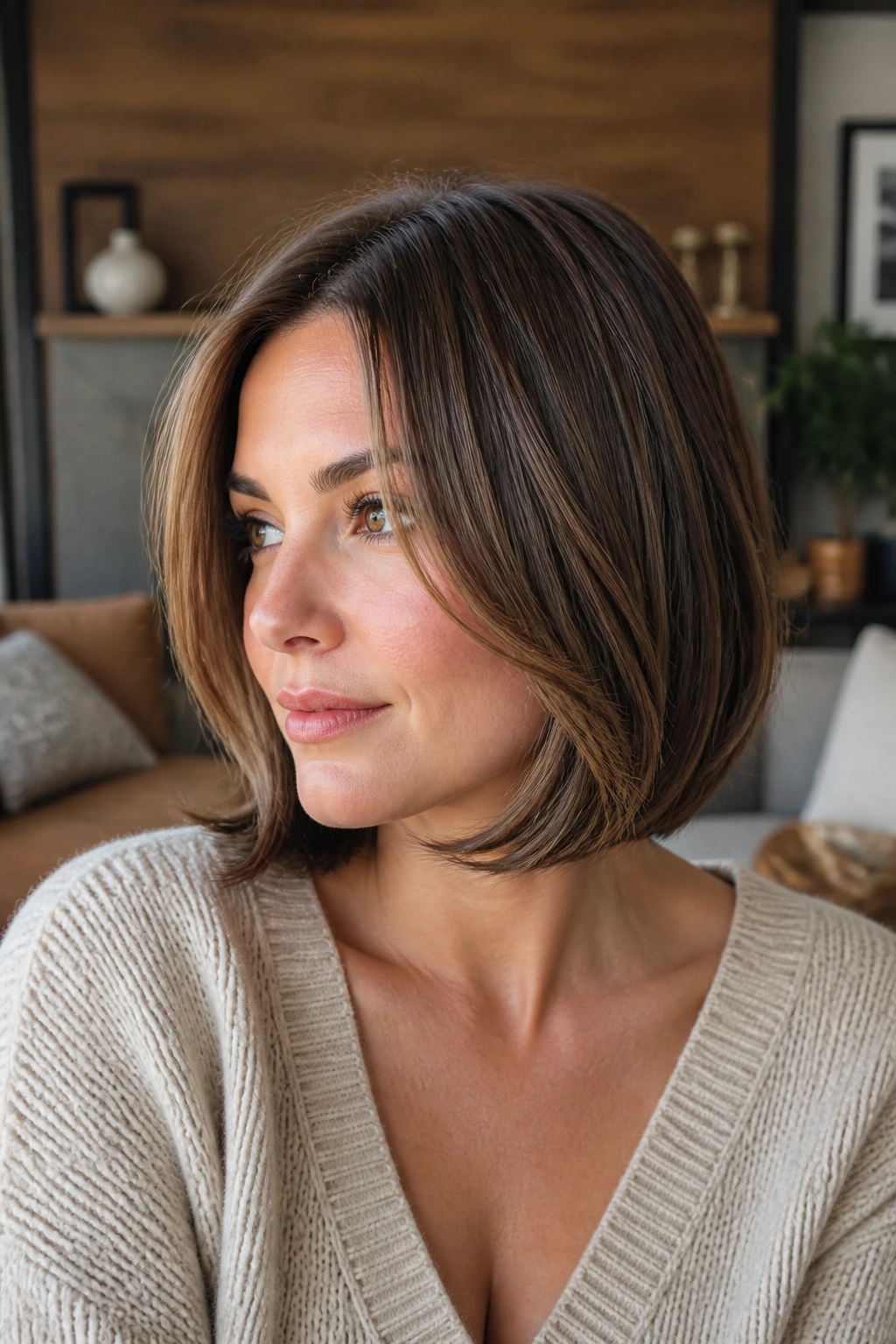
An underturned bob is a small detail with a big payoff. When the ends curve under instead of flicking out at the jaw, the face looks softer right away. Bronze lowlights deepen the lower half of the haircut so the line feels less blunt.
This is a very wearable option for straight or slightly wavy hair. The shape feels neat, but not severe. The underturn helps the ends hug the neckline a bit, which keeps the bob from widening out at the sides. If your hair tends to turn outward on its own, a round brush or a flat iron bend can correct it fast.
The best part is how easy it is to maintain. A little smoothing cream, a quick pass with heat, and you’re done. No big styling story. Just a shape that sits in the right place.
21. Feathered Coffee Shullet-Bob
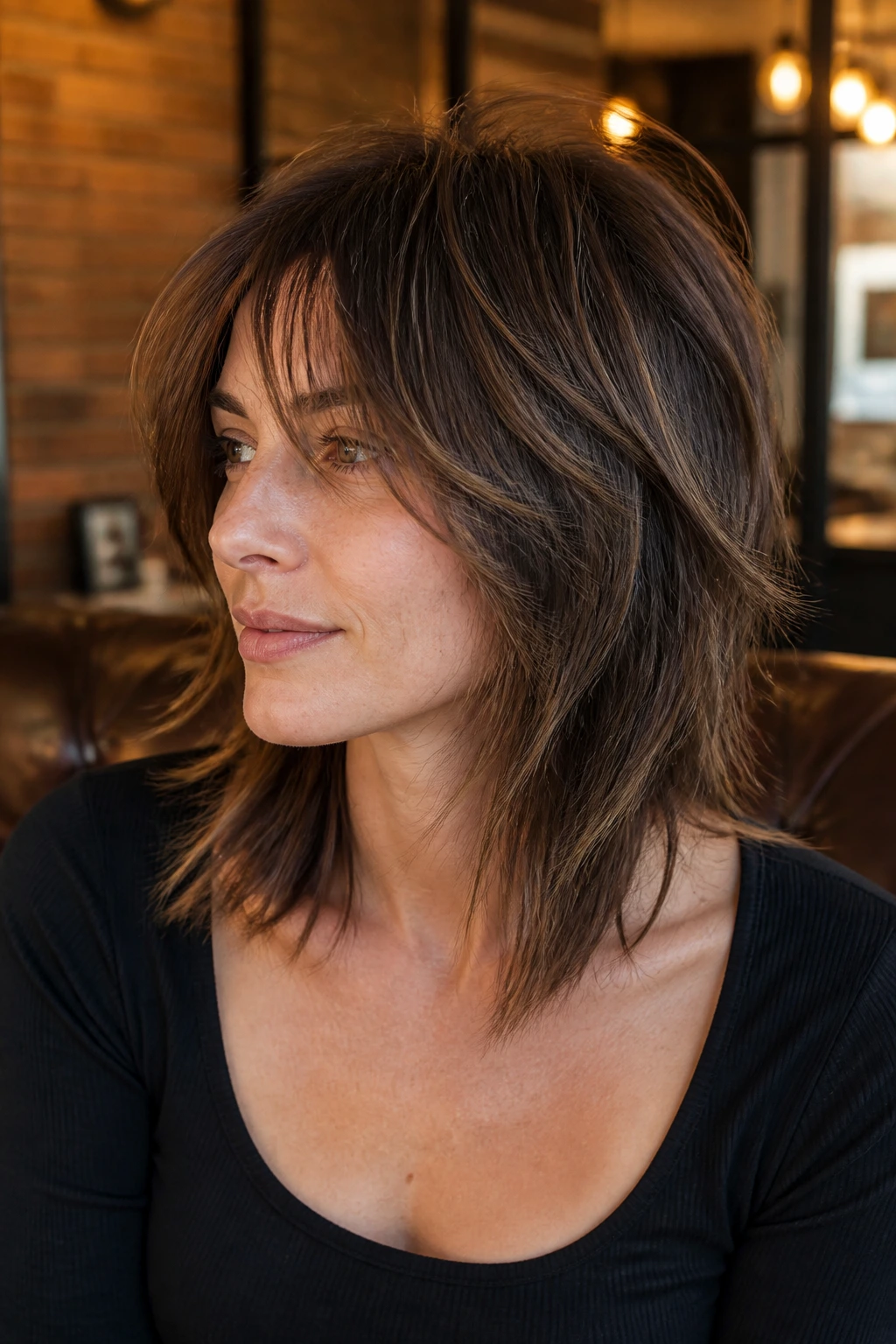
A feathered shullet-bob is not the most conservative choice, and that’s the point. The layers are softer and more piecey, the front stays longer, and the back has enough lift to keep the cut from lying heavy on a square face. Coffee lowlights deepen the movement and keep the texture from reading fluffy.
This works best for someone who likes a bit of edge and doesn’t mind visible layering. It’s less structured than a classic lob, but not so wild that it feels hard to wear. The feathering around the face breaks up the jawline in a very direct way, which can be useful if your face is especially square or your hair is naturally thick.
Keep the styling loose. A bend here, a bend there. If you make every piece identical, the haircut loses its charm. A little unpredictability is part of the appeal.
22. Diagonal-Part Melt Bob
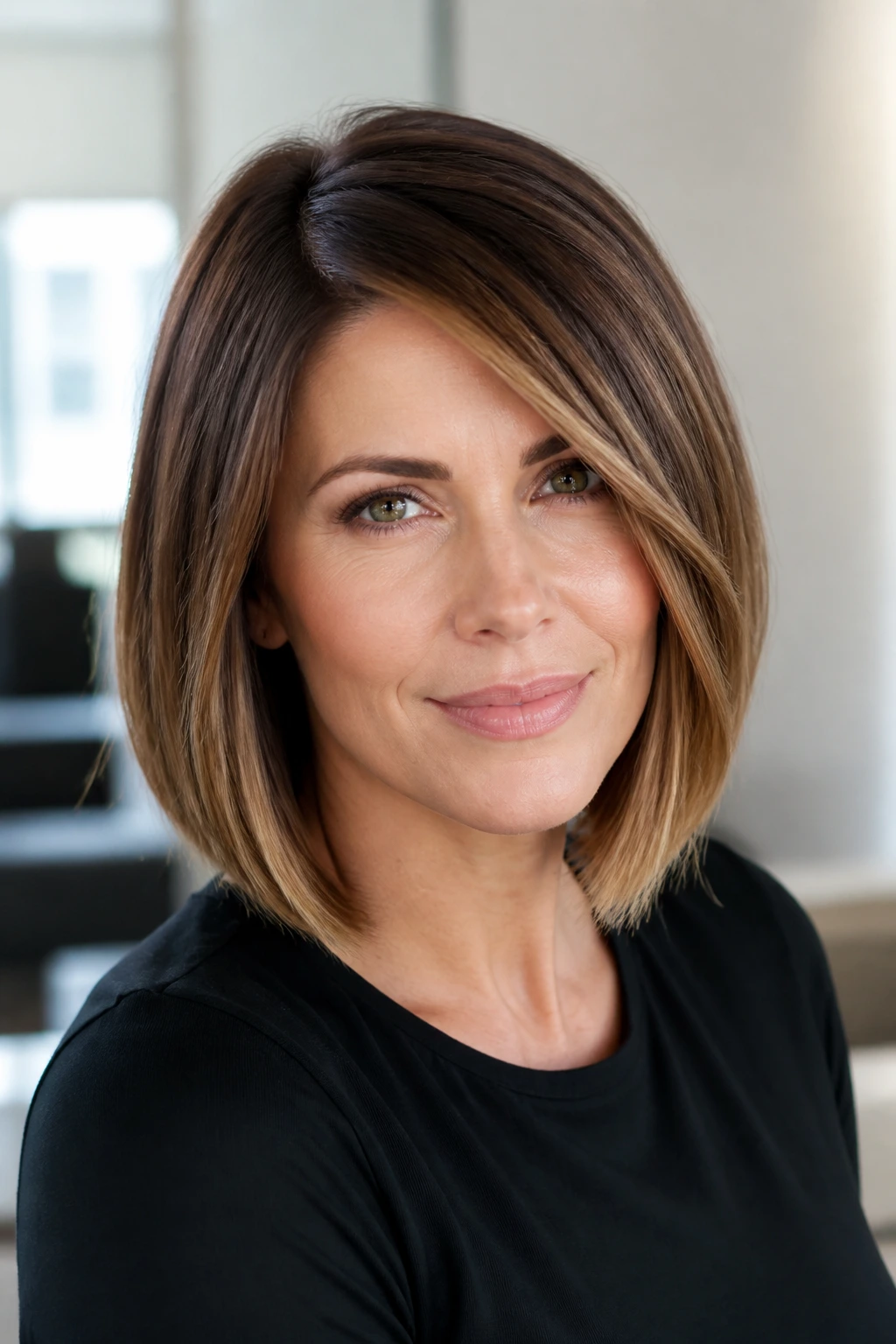
A diagonal part shifts the whole balance of the haircut. Instead of splitting the face straight down the middle, it sends the front pieces across the forehead and off to one side, which gives a square face a softer line right away. Pair that with a lowlight melt and the color feels layered rather than striped.
Why the diagonal line matters
The part cuts across the broadest points of the face instead of echoing them. That breaks the symmetry in a useful way. Then the lowlight melt — a gradual move from lighter top pieces into deeper mids — keeps the hair from looking chopped up.
This is a good choice if you want subtlety. The style looks polished in the office, but it still has movement when you rough it up a little. Keep the ends beveled and the color transitions soft. The cleaner the blend, the better the face shape reads.
23. Minimal-Texture Brunette Lob
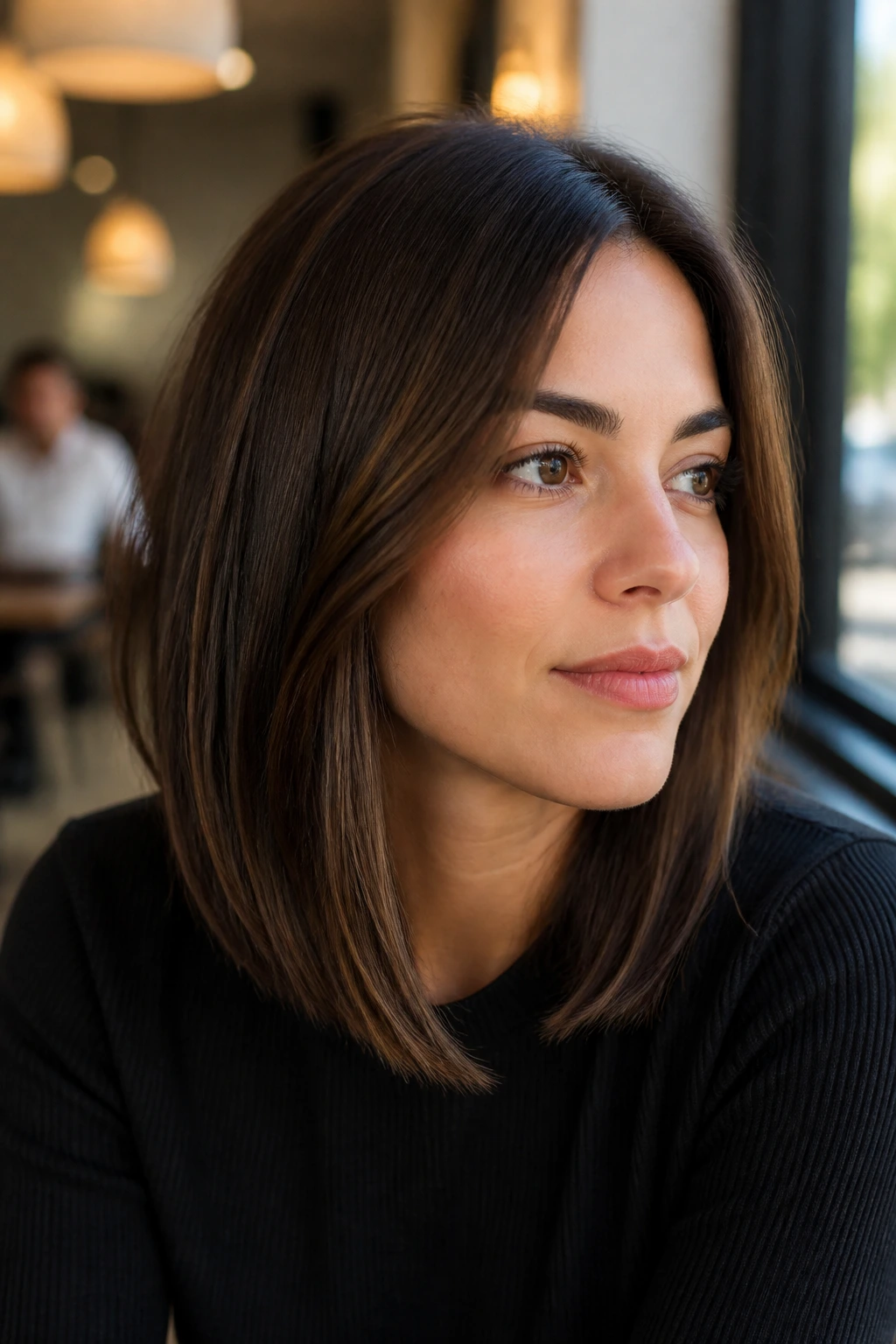
Not every square face needs choppy layers. Sometimes the cleanest answer is a lob with minimal texture and a very soft internal cut. Brunette lowlights keep the shape from turning into one flat panel of color, which is the risk with simpler cuts.
This version is especially good if you like straight hair and don’t want a lot of day-to-day styling. The outline stays tidy, but the lowlights add enough depth that the cut still feels dimensional. That combination is underrated. Too many people think softness has to mean big waves or heavy layering. It doesn’t.
Keep the length at or below the collarbone, and ask for the shortest front pieces to start away from the jaw. That single choice makes a huge difference. Simple doesn’t mean boring if the proportions are right.
24. Grown-Out Root Shadow Bob
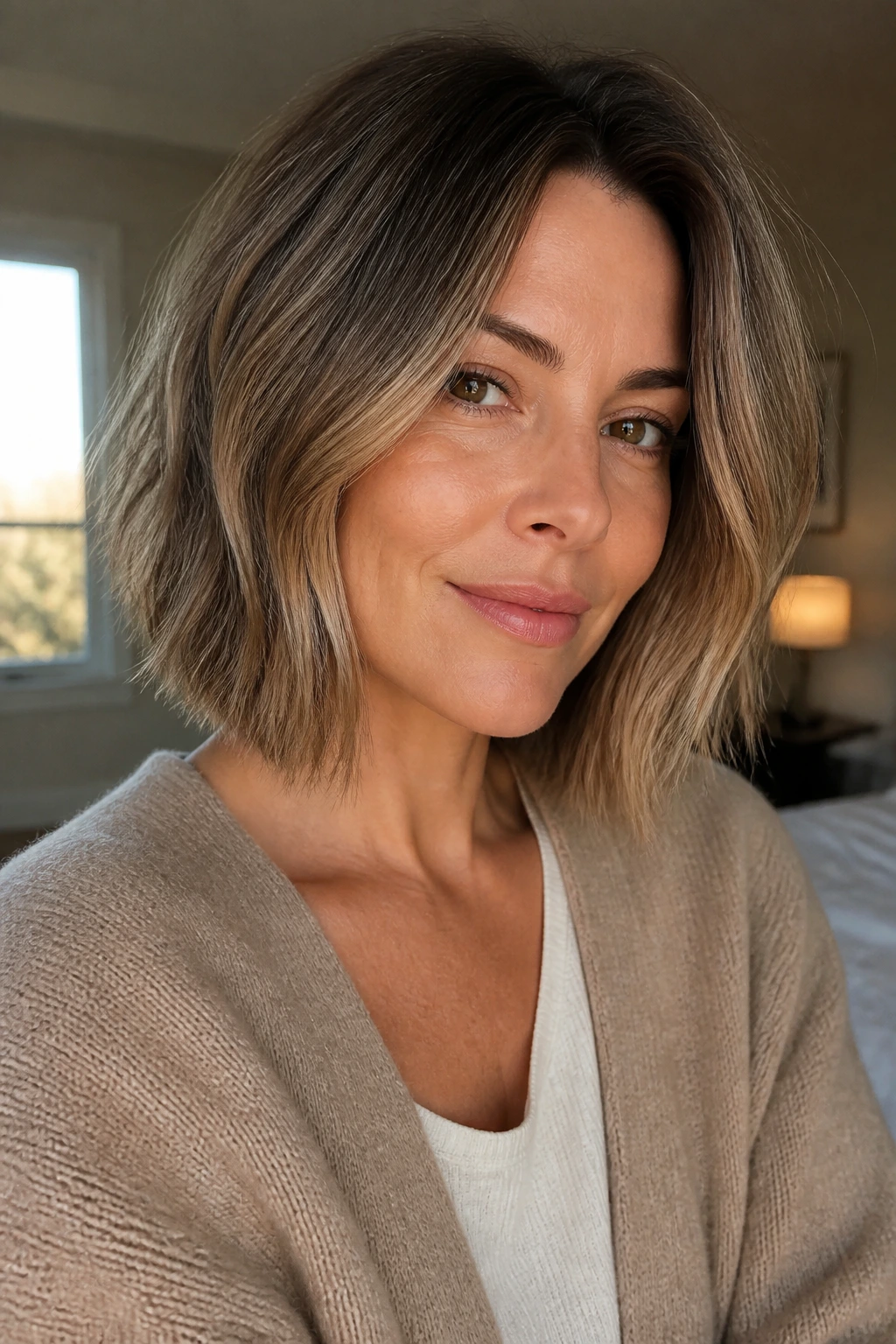
A grown-out bob sounds like an accident until you make it the plan. Root shadow and lowlights blend into each other so the color line stays soft, and that softness is kind to a square face. The haircut looks a little less staged, a little more lived-in.
This is the version for people who don’t want to babysit every appointment. The layers can be left a touch longer, the ends can be dusted instead of cut bluntly, and the lowlights can be refreshed without touching the whole head. The shape keeps its movement even as it grows, which is rare and useful.
If you like a slightly undone finish, this is a strong pick. It doesn’t need perfect styling to work. A rough blow-dry and a bit of texture through the mids are enough. Some haircuts demand too much. This one gives back.
25. Dimensional Beige-Over-Espresso Lob
The last one earns its place by contrast. Beige lowlights over an espresso base create depth without making the cut feel heavy, and that matters when a square face already brings enough structure of its own. The lighter muted tones soften the darkness, while the deeper base keeps the shape grounded.
This is a smart option if your hair tends to look too solid in one color. The dimensional placement lets the layers show up, especially when the hair moves. I’d keep the brightest pieces above the cheekbone and let the darker ribbons sit lower, where they can soften the jaw instead of spotlighting it.
It’s a clean, grown-up look. Not severe. Not fussy. If you want a bob that looks deliberate from every angle, this one has that quiet control.
Why Long Layers Do the Real Work Here
Square faces don’t need to be hidden. They need the haircut to stop mirroring the jaw exactly. That’s where long layers earn their keep. When the shortest pieces start around the cheekbone and the longest pieces drift past the chin, the whole shape starts bending instead of boxing.
Lowlights do the quieter part of the job. A few darker panels through the mids make the haircut look deeper, and depth is what keeps a bob from feeling flat against a strong face shape. If the color is stripey or too dark, the effect goes hard fast. If it’s soft and placed underneath the surface, it acts like shadow, which is exactly what you want.
The best versions also leave room for movement. A square face can handle structure, but it usually looks better with some bend at the ends, a side part, or a fringe that breaks the line of the forehead. Straight, blunt, and chin-level is the combo that causes trouble. Skip that, and the rest gets much easier.
How to Ask for the Cut and Color at the Salon
A good salon conversation saves a lot of fixing later. Start with length. Ask for the longest point to land at the collarbone or slightly below, and tell your stylist you want the ends to move past the jaw, not sit on it. That single detail changes the whole haircut.
Then talk about layer placement. The shortest face-framing pieces usually work best near the cheekbone or just under it. If they sit directly at the jaw, they can make a square face look wider. For the color, ask for lowlights one to two levels deeper than your base, painted mostly through the mids and underlayers. You want shadow, not stripes.
Parting: Tell the stylist whether you wear a middle part, off-center part, or deep side part most days. That changes where the softest pieces need to fall.
Texture: If you air-dry, say so. If you blow-dry smooth, say that too. A cut that only looks good with round-brush styling is not the same thing as a cut that fits your life.
Fringe: If you want bangs, mention curtain, bottleneck, or side-swept. A blunt fringe can work, but it needs more careful shaping.
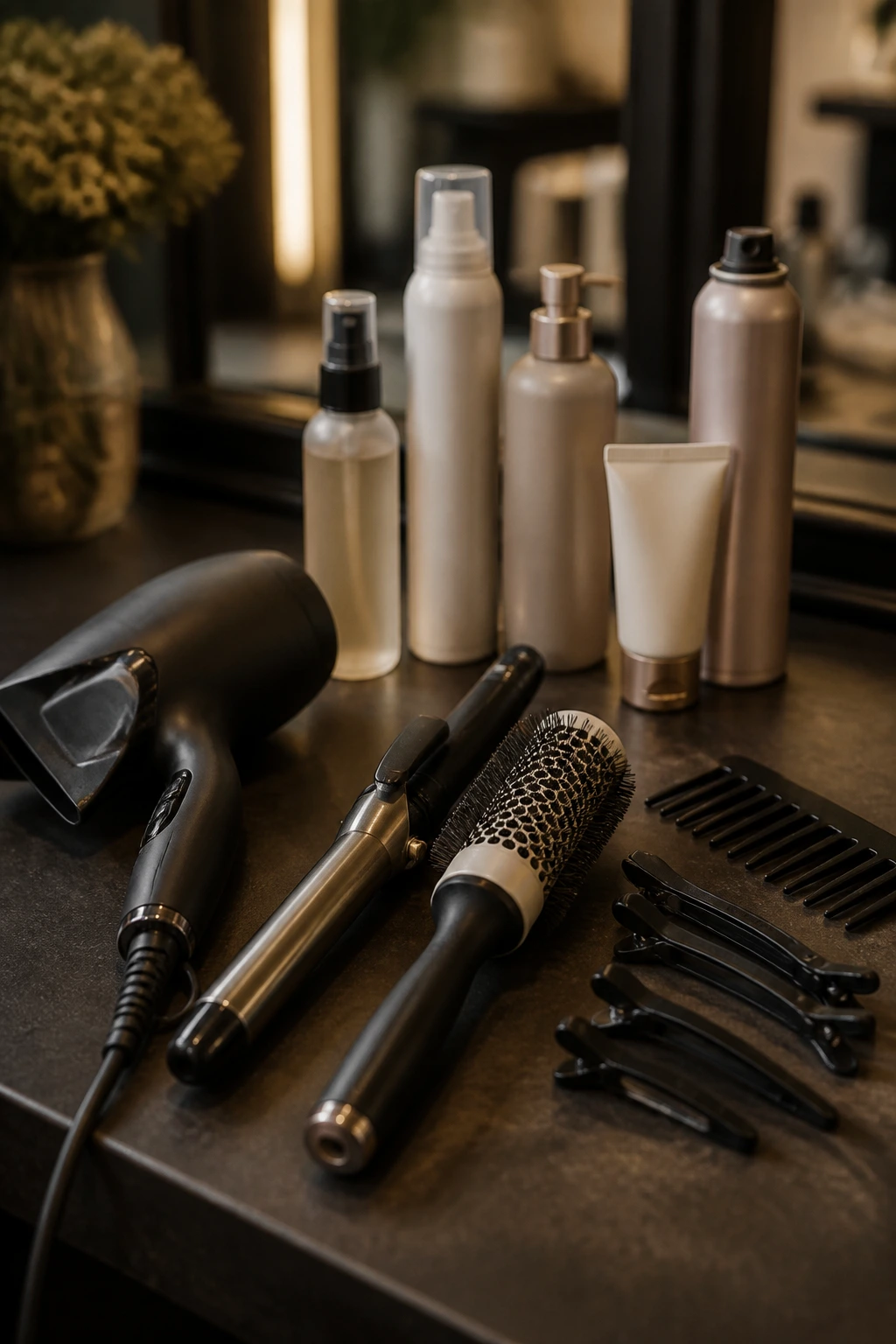
Essential Tools and Styling Products
-
Blow dryer with a nozzle attachment: The nozzle matters because it directs air down the hair shaft and keeps the finish smoother.
-
1.25-inch curling iron or wand: This size gives a bend that reads soft, not curled-to-death.
-
Medium round brush: Use it for underturning the ends and lifting the crown without making the bob feel huge.
-
Heat protectant spray: Do not skip this if you use hot tools. The ends of a layered bob can dry out fast.
-
Light mousse or root-lift spray: Good for keeping the top from collapsing, especially on fine hair.
-
Smoothing cream or serum: A pea-sized amount is enough for the mids and ends. More than that makes hair look greasy fast.
-
Texturizing spray: Useful on wavy or thick hair when you want separation without stiffness.
-
Duckbill clips: Great for setting face-framing sections while they cool.
-
Wide-tooth comb: Better than brushing through damp layers and wrecking the shape.
-
Color-safe shampoo and conditioner: Keeps lowlights from fading muddy or flat.
How to Choose the Right Lowlights for Your Base Color
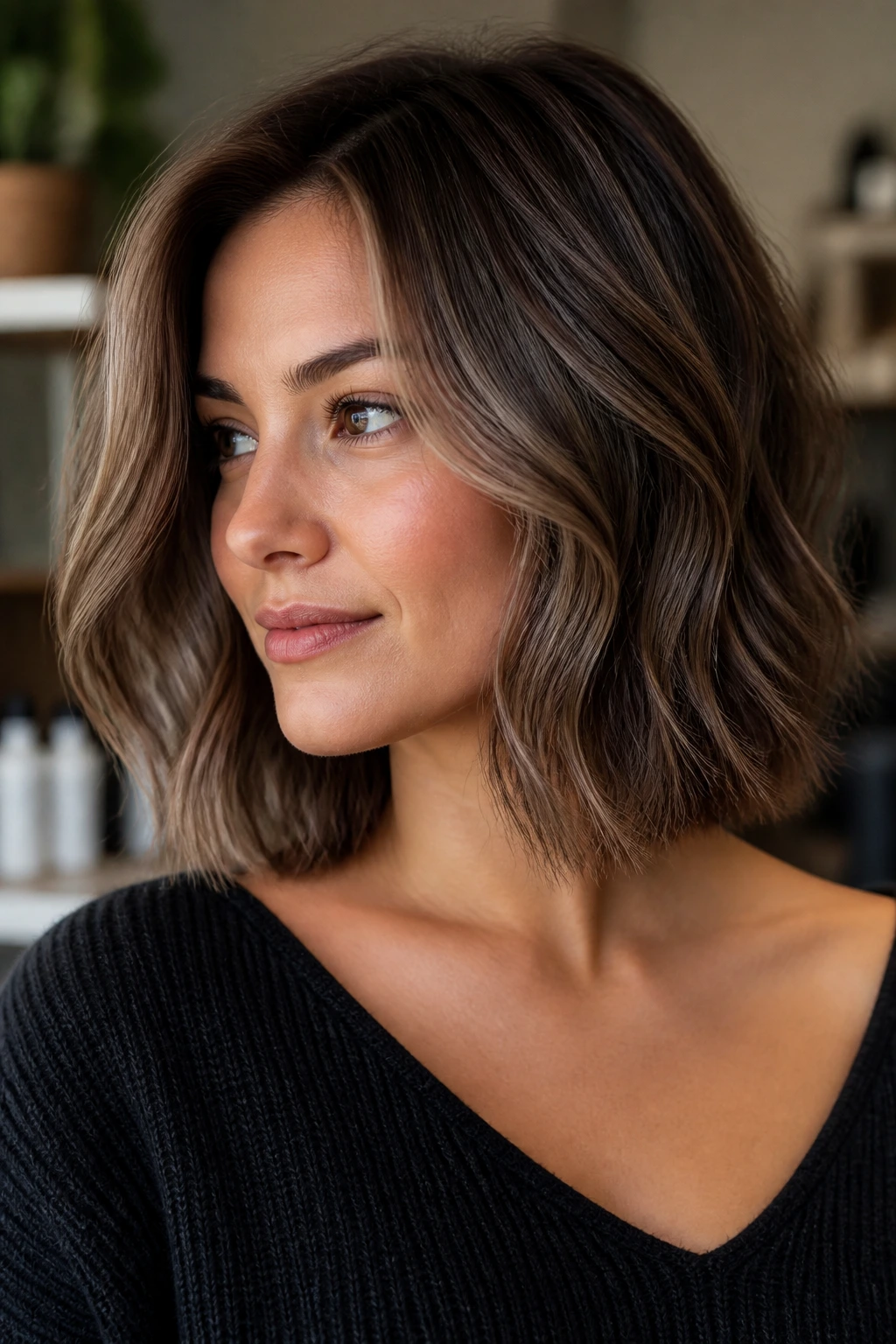
Start one or two levels deeper than your natural or colored base. That’s the cleanest rule. If the contrast gets too sharp, the lowlights start looking like stripes, and a square face does not need extra hard lines.
For light blond or dark blond hair, beige, mushroom, soft caramel, and light taupe lowlights work well. They add dimension without turning the bob muddy. For light brown to medium brunette, mocha, walnut, cocoa, and cool brown are the safest bets. They deepen the mids and give the haircut some shadow.
For red or auburn hair, cinnamon, chestnut, and muted copper-brown tones keep the color rich without screaming for attention. For deep brunette hair, espresso and soft black-brown lowlights can work, but the placement matters even more. Keep them subtle and mostly underneath, or the haircut can turn heavy fast.
If your face is especially square, I’d avoid chunky contrast at the sides. Put the darkness lower and a little behind the front line. That way the eyes read movement instead of width.
How to Style the Cut So It Stays Soft
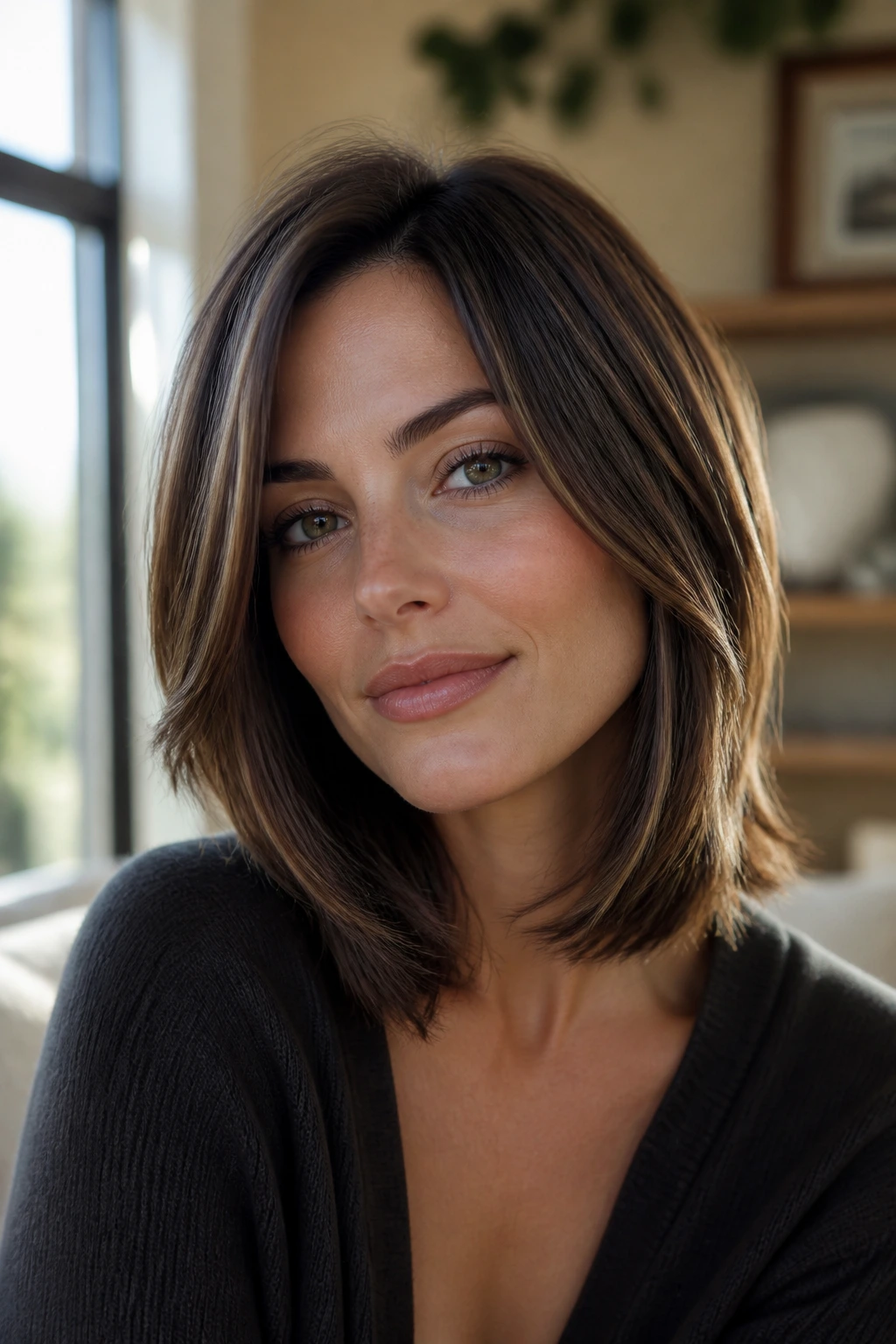
A square face looks best when the hair bends around it, not across it. That’s the whole game. So whether you blow-dry, wave, or air-dry, aim the shape away from the jaw and let the ends stay loose.
Blowout: Use a round brush to lift at the crown, then turn the mid-lengths under or just slightly away from the face. The bend should happen below the cheekbone, not at the jaw.
Waves: Wrap sections around a 1.25-inch iron, leave the last inch out, and alternate directions. That gives you motion without a pageant curl.
Air-dry: Work in mousse or cream, twist the front pieces away from the face, and don’t fuss with them once they start setting. Friction is the enemy here.
Sleek days: Flat iron once, slowly, and keep the ends softly beveled. Then tuck one side behind the ear or sweep the part deeper to break the symmetry.
If a style starts feeling wide, the fix is usually small. Move the part. Add a bend. Reduce volume at the sides. Tiny changes matter more here than people think.
Common Mistakes That Make the Jaw Look Wider
-
Cutting the ends right at the jaw: That’s the fastest way to echo the face instead of soften it. Ask for length below the jaw, even if only by an inch.
-
Using chunky lowlights all over the surface: The hair can start looking streaky and hard. Keep the darker pieces soft and mixed through the mids and underlayers.
-
Adding too much width at the sides: Round-brush volume is good; side puff is not. If the hair expands out at the jaw, the face looks broader.
-
Choosing a blunt fringe with blunt ends: Two hard lines at once can make the haircut feel boxed in. If you want bangs, break them up or soften the ends.
-
Overloading fine hair with product: The shape goes limp and claggy fast. A little mousse or spray goes farther than a heavy cream.
Nope. You do not need more product to make this work. You need better placement.
Variations and Alternatives to Try

The Soft Flip: Keep the collarbone length and let the ends turn out just a little. This works when you want movement without full waves.
The Curly Halo: Ask for longer layers that let curls sit around the face instead of ballooning at the jaw. Use lowlights underneath to give the curl pattern more depth.
The Polished Minimalist: Skip choppy layers and keep the perimeter clean, with only soft internal cutting. Best for straight hair and anyone who hates a fussy styling routine.
The Root-Shadow Grow-Out: Let the roots stay a touch darker and blend lowlights through the mids. This is the easiest version to maintain when you don’t want frequent color visits.
The Edgier Feathered Lob: Add more piecey texture and slightly stronger lowlights for a cut with movement and bite. Good if plain and tidy is not your thing.
Maintenance, Trims, and Grow-Out
Long layered bobs stay nicest when the ends don’t get too thick or too ragged. For a sharper shape, plan on a trim every 6 to 8 weeks. If you like the softer grown-out look, 8 to 10 weeks can still work. Past that, the layers start losing the bend that makes the cut flattering on a square face.
Lowlights are friendlier than highlights because they usually fade more quietly, but the tone still softens over time. A color gloss or demi-permanent refresh every 8 to 12 weeks keeps the depth from turning dull. If your hair is porous or heat-styled a lot, the mids can go flat faster, so a toner or shine treatment may help between bigger appointments.
At home, keep a small rhythm: heat protectant whenever tools touch the hair, a deep conditioner on the ends once a week, and a clarifying wash every couple of weeks if styling products build up. If you’re growing the cut out, ask for dusting rather than a full reshaping so the length stays useful while the layers stay alive.
Frequently Asked Questions
Can a square face wear a center part with a long layered bob?
Yes, if the rest of the haircut adds softness. The center part works best when the ends are beveled and the layers start below the cheekbones, so the face doesn’t get framed by a hard vertical line.
How dark should the lowlights be?
Usually one to two shades deeper than the base is the sweet spot. That gives the hair depth without making the color look striped or heavy.
Do curtain bangs help a square face?
They often do, because they open at the center and widen toward the cheekbones instead of cutting straight across the forehead. The soft drape helps break up the face’s symmetry.
What if my hair is very fine?
Keep the layers long and the lowlights subtle. Fine hair loses body fast when it’s over-layered, so the goal is visual depth, not a pile of chopped ends.
What if my hair is thick and puffy?
Ask for internal debulking and a perimeter that stays smooth. Thick hair needs weight removed from the inside, not shredded off the outside in a way that makes the ends frizz.
Can this cut work if I barely style my hair?
Yes, if you choose a version with soft layers and a root shadow or lowlight blend. The less maintenance you want, the more important the cut line becomes.
How often should I refresh the color?
Usually every 8 to 12 weeks, depending on how visible you want the depth to stay. If the lowlights are subtle and close to your base, they can stretch longer.
What if the haircut makes my jaw look wider than before?
The usual fix is small but specific: lengthen the front pieces, soften the ends, and move the lowlights lower or under the surface. A blunt jaw-level edge is usually the part that needs changing first.
A Shape That Keeps Moving
The best long layered bobs on square faces do not try to hide the face’s structure. They work with it, then soften the edges enough that the haircut feels alive instead of squared off. That’s the whole point of the lowlights, the length, the fringe choices, and the bend at the ends.
If you’re choosing between versions, start with the one that matches how you actually wear your hair. Straight, wavy, curly, polished, air-dried, high-maintenance, low-maintenance — the right bob always looks better when it fits the routine instead of fighting it. And when it sits just below the jaw with the right shadow in the mids, it has a way of making the whole face feel easier.